EP0024057B1 - Single step formation of pn junction in silicon cell and coating thereon - Google Patents
Single step formation of pn junction in silicon cell and coating thereon Download PDFInfo
- Publication number
- EP0024057B1 EP0024057B1 EP80104848A EP80104848A EP0024057B1 EP 0024057 B1 EP0024057 B1 EP 0024057B1 EP 80104848 A EP80104848 A EP 80104848A EP 80104848 A EP80104848 A EP 80104848A EP 0024057 B1 EP0024057 B1 EP 0024057B1
- Authority
- EP
- European Patent Office
- Prior art keywords
- dopant
- coating
- solution
- alkoxide
- silicon
- Prior art date
- Legal status (The legal status is an assumption and is not a legal conclusion. Google has not performed a legal analysis and makes no representation as to the accuracy of the status listed.)
- Expired
Links
Images


Classifications
-
- H—ELECTRICITY
- H10—SEMICONDUCTOR DEVICES; ELECTRIC SOLID-STATE DEVICES NOT OTHERWISE PROVIDED FOR
- H10F—INORGANIC SEMICONDUCTOR DEVICES SENSITIVE TO INFRARED RADIATION, LIGHT, ELECTROMAGNETIC RADIATION OF SHORTER WAVELENGTH OR CORPUSCULAR RADIATION
- H10F71/00—Manufacture or treatment of devices covered by this subclass
-
- H—ELECTRICITY
- H10—SEMICONDUCTOR DEVICES; ELECTRIC SOLID-STATE DEVICES NOT OTHERWISE PROVIDED FOR
- H10F—INORGANIC SEMICONDUCTOR DEVICES SENSITIVE TO INFRARED RADIATION, LIGHT, ELECTROMAGNETIC RADIATION OF SHORTER WAVELENGTH OR CORPUSCULAR RADIATION
- H10F77/00—Constructional details of devices covered by this subclass
- H10F77/30—Coatings
- H10F77/306—Coatings for devices having potential barriers
- H10F77/311—Coatings for devices having potential barriers for photovoltaic cells
- H10F77/315—Coatings for devices having potential barriers for photovoltaic cells the coatings being antireflective or having enhancing optical properties
-
- H—ELECTRICITY
- H10—SEMICONDUCTOR DEVICES; ELECTRIC SOLID-STATE DEVICES NOT OTHERWISE PROVIDED FOR
- H10P—GENERIC PROCESSES OR APPARATUS FOR THE MANUFACTURE OR TREATMENT OF DEVICES COVERED BY CLASS H10
- H10P32/00—Diffusion of dopants within, into or out of wafers, substrates or parts of devices
- H10P32/10—Diffusion of dopants within, into or out of semiconductor bodies or layers
- H10P32/14—Diffusion of dopants within, into or out of semiconductor bodies or layers within a single semiconductor body or layer in a solid phase; between different semiconductor bodies or layers, both in a solid phase
- H10P32/1408—Diffusion of dopants within, into or out of semiconductor bodies or layers within a single semiconductor body or layer in a solid phase; between different semiconductor bodies or layers, both in a solid phase from or through or into an external applied layer, e.g. photoresist or nitride layers
-
- H—ELECTRICITY
- H10—SEMICONDUCTOR DEVICES; ELECTRIC SOLID-STATE DEVICES NOT OTHERWISE PROVIDED FOR
- H10P—GENERIC PROCESSES OR APPARATUS FOR THE MANUFACTURE OR TREATMENT OF DEVICES COVERED BY CLASS H10
- H10P32/00—Diffusion of dopants within, into or out of wafers, substrates or parts of devices
- H10P32/10—Diffusion of dopants within, into or out of semiconductor bodies or layers
- H10P32/17—Diffusion of dopants within, into or out of semiconductor bodies or layers characterised by the semiconductor material
- H10P32/171—Diffusion of dopants within, into or out of semiconductor bodies or layers characterised by the semiconductor material being group IV material
-
- Y—GENERAL TAGGING OF NEW TECHNOLOGICAL DEVELOPMENTS; GENERAL TAGGING OF CROSS-SECTIONAL TECHNOLOGIES SPANNING OVER SEVERAL SECTIONS OF THE IPC; TECHNICAL SUBJECTS COVERED BY FORMER USPC CROSS-REFERENCE ART COLLECTIONS [XRACs] AND DIGESTS
- Y02—TECHNOLOGIES OR APPLICATIONS FOR MITIGATION OR ADAPTATION AGAINST CLIMATE CHANGE
- Y02E—REDUCTION OF GREENHOUSE GAS [GHG] EMISSIONS, RELATED TO ENERGY GENERATION, TRANSMISSION OR DISTRIBUTION
- Y02E10/00—Energy generation through renewable energy sources
- Y02E10/50—Photovoltaic [PV] energy
-
- Y—GENERAL TAGGING OF NEW TECHNOLOGICAL DEVELOPMENTS; GENERAL TAGGING OF CROSS-SECTIONAL TECHNOLOGIES SPANNING OVER SEVERAL SECTIONS OF THE IPC; TECHNICAL SUBJECTS COVERED BY FORMER USPC CROSS-REFERENCE ART COLLECTIONS [XRACs] AND DIGESTS
- Y10—TECHNICAL SUBJECTS COVERED BY FORMER USPC
- Y10S—TECHNICAL SUBJECTS COVERED BY FORMER USPC CROSS-REFERENCE ART COLLECTIONS [XRACs] AND DIGESTS
- Y10S252/00—Compositions
- Y10S252/95—Doping agent source material
Definitions
- a PN junction is formed by diffusing either boron or phosphorus into a silicon base material.
- the silicon base material may be obtained pre-doped so that it is either P type or N type and the opposite type dopant is used in the junction formation process.
- These diffusions are generally made from a vapor phase in a vacuum or in a non-oxidizing atmosphere such as nitrogen or argon as a carrier gas at temperatures of 850°C to 1100°C.
- One aspect of the invention resides broadly in a method applying an antireflective coating on silicon comprising the steps of:
- Another aspect of the invention resides broadly in a silicon chip made according to the above method.
- an anti-reflective coating is doped with a dopant compound, e.g., boron
- the dopant atom will diffuse into the silicon forming a P/N junction during the baking of the antireflective coating.
- the anti-reflective coating and the P/N junction is simultaneously formed. This eliminates the expensive procedures of diffusing the dopant into the silicon, and numerous other steps related to masking, cleaning, etc. of the substrate, associated with the present methods of diffusion and junction formation.
- the concentration of the dopant in the silicon which is diffused from titania-based optical coating in our new prcedure, is in the magnitude of 10 19 carriers per cm 3 , which is considered to be the ideal concentration for the optimum results.
- Previous techniques had produced concentrations of about 10 2 ° or 10 22 ). At these higher concentrations the junction depth had to be limited to only .3 to .4 microns in order to avoid recombination of the charges before they crossed the juncture. Because the technique of this invention results in a lower concentration of dopant in the silicon, control of the junction depth is less critical and juncture depths of one micron or more can be tolerated.
- Another advantage of this process is that extremely uniform dopant diffusion and junction depth can be obtained on large devices, photovoltaic or otherwise. This is due to the fact that the diffusion of dopant occurs from an optical film which is homogeneous in composition at the molecular level and uniform in thickness below the wavelength of light. Still another advantage is that multidopant integration and diffusion on well defined areas of a substrate can be obtained in a single step without the need to mask the substrate; this is done by applying solutions only on those areas.
- a silicon wafer 1 is composed of a P layer 2, a P/N junction 3, and an N layer 4 from which electricity is drawn by grids 5 and 6 attached thereto respectively.
- the antireflective coating 7 On the surface of wafer 1 which is exposed to light is the antireflective coating 7 according to this invention, about 1/4 optical wavelength in thickness and having an index of refraction equal to the square-root of the index of refraction of the substrate.
- the coating reduces the reflection of light back to its source and thereby enhances the efficiency of the solar cell.
- the captured light causes electrons to move from the P layer to the N layer thereby generating an electric current.
- the silicon starting material used in this invention is commercially available in the form of strips, i.e. web silicon, about one-half to one inch in width, and in form of chips about 2 to about 10 centimeters in diameter, though silicon of any dimension can be used.
- the silicon is commonly about .125 to about .25 mm (5 to 10 mils) in thickness.
- If undoped silicon is used, it is necessary to diffuse a P layer into the silicon from one surface and an N layer from the opposite surface in order to form a P/N junction. It is preferable to use a silicon material which has been pre-doped with a P or an N dopant throughout because diffusion into this silicon with a dopant of the opposite type forms a P/N junction in one step.
- silicon which has been doped with phosphorus that is, an N type silicon, is used because it has been found that the method of this invention works best using boron, which is a P type dopant.
- the dopant is diffused into the silicon from a solution derived from metal alkoxides.
- the precursor solution is a clear titanium oxide based solution, which is derived from partial hydrolysis and polymerization of titanium alkoxides.
- the preparation of this solution has been presented in detail in European Patent Specification EP-A-821 5, herein incorporated by reference.
- Alkoxides useful in preparing the solutions have the general formula iv)(OR)n.
- M represents a metal ion. This ion is preferably titanium as it is commercially the most important but it can also be tantalum. In this invention at least 40% of the resulting coating should be titania.
- the remainder can be up to 25% Si0 2 , up to 15% of another metal oxide of a metal which forms an alkoxide, or mixtures thereof. These alkoxides can be included in titania to alter the index of refraction of the coating as will be apparent to those skilled in the art.
- the small "n” in the formula is the valence of the M ion and can vary from 3 to 5.
- the R group is alkyl from C 1 to C e . Each R group may be independently selected if desired though they are usually the same.
- the R group is preferably ethyl, isopropyl, or butyl because these alkoxides are commercially available and inexpensive.
- the alcohols which are formed from these alkyl groups mix with water in the range of the invention.
- the alcohol used in preparing the coating solution can be any liquid solvent or alcohol, so long as it is dry or its water content is low and well defined and it does not react with alkoxides. Higher alcohols produce thicker films.
- the alcohol need not be the same alcohol that is produced by the hydrolysis of the alkoxide, and in some instances it is desirable that they be different in order to obtain different viscosities.
- the amount of alcohol used should be sufficient to produce a solution having a solids content of 0.1 to 15% by weight based on equivalent oxide. A greater solids content for the same degree of hydrolysis will cause the solution to gel and a lesser solids content results in undesirably thin coatings.
- a preferred solids content is about 2 to about 8% by weight based on equivalent oxide. Stated another way, the preferred maximum is about 1 mole alkoxide per liter of final solution.
- Metal alkoxides in general, hydrolyze quite vigorously when brought into contact with water, forming oxides and hydroxides as represented by the reactions.
- EP-A-821 5 describes a method of preparing soluble intermediate species from these alkoxides which are capable of polymerizing into an continuous oxide network. Precipitate formation and self-condensation which would normally occur during the hydrolysis of these alkoxides are prevented from occurring by a careful control of molecular interaction during the hydrolysis where certain amounts of OR groups are left in the molecular structure. This is done by controlling, first, the amount of water and dilution of the system, and second, by the presence of a critical amount of certain acids.
- the partially hydrolyzed alkoxide molecules include Ti(OR) 2 (OH) 2 and Ti(OR)(OH) 3 and can then form a polymer with other alkoxide molecules: which can again react with other partially hydrolyzed titanium species. Because of the alkyl groups in the polymer it remains soluble in the alcohol. To keep the polymer soluble, it is necessary that not all the alkoxide bonds be hydrolyzed. Thus, the amount of water added is absolutely critical. If the amount is less than 1.7 moles of water per mole of alkoxide the coatings may be permanently cloudy and if more than 8 moles of water per mole of alkoxide is used, the solution will gel fairly quickly. Preferably the amount of water should be 1.8 to 2.2 moles per mole of alkoxide.
- the dopant compound may be added directly to the alkoxide solution but preferably a separate solution is prepared which contains the dopant compound.
- the dopant compound is a compound of a P or N type dopant.
- the commonest N and P dopants are phosphorus and boron and they are preferred as they are the most efficient, but it may be possible to use other dopants such as aluminum or arsenic. Boron is the most preferred dopant because it has been found to work the best.
- a solution is prepared of a compound of the dopant such as, for example, an alkoxide or an acid. Alkoxides from C, to C 4 are preferred.
- These compounds include boron trimethoxide, boron triethoxide, boron triisopropoxide, phosphorus penta butoxide, phosphorus pentaethoxide, phosphorus pentamethoxide, etc.
- the three compounds which are particularly preferred are boron trimethoxide, B(OCH 3 ) 3 , boric acid, and phosphoric acid.
- the dopant atoms, boron or phosphorus migrate into the silicon to form the P/N junction.
- the dopant may be partially hydrolyzed with 1.0 to 1.5 moles of water per mole of alkoxide to prevent its vaporization. However, this may not be necessary if the base solution contains enough hydroxyl groups.
- the remainder of the solution is made up of alcohol. The alcohol concentration in the total solution controls the thickness of the film but it is not especially critical in the dopant solution and the solution of the dopant compound may contain no alcohol or up to 99% alcohol as is desired.
- the solution of the dopant compound or the dopant compound itself is then mixed with the alkoxide solution.
- This final solution should contain about 10% to about 30% by weight of dopant compound based on the total weight of the metal alkoxide and the dopant. More than 30% may be used but there is no additional benefit to using more than 20% because it does not increase the concentration of the dopant in the silicon. However, more may be useful in altering the index of refraction of the coating. Less than 10% reduces the dopant concentration in the silicon but this may be desirable under some circumstances.
- the solution once prepared, should be aged for a few hours to permit the polymerization to proceed and stabilization of its viscosity.
- the solution should be clear at this stage. A clear solution indicates that a single continuous phase has been made rather than a particulate suspension or a precipitate.
- the solution is applied to a silicon substrate. Application may be by dipping, spraying, printing, painting, spinning, or other suitable liquid application method, but dipping and spinning are the preferred methods as they are most easily adapted to mass production.
- the substrate is silicon either in the form of wafers or as a continuous strip.
- the surface of silicon reflects 35-38% of solar energy; since the reflected portion is not available for the conversion process, the overall efficiency is thereby reduced unless an antireflective coating is applied.
- Antireflective (AR) coatings must be highly transparent and stable in the outdoor environment. The refractive index and thickness of the AR coating must meet optical conditions described by Fresnel's equation to be antireflective in the desired wavelength range. Minimum reflection from a silicon cell can be achieved by using an AR coating that is of quarter wavelength optical thickness, about 7500 nm (750 A), with an index of refraction of approximately 2.0.
- the coating must meet these optical requirements. Since the coating is affected by this heat-treatment, the initial composition and thickness must be tailored to give the index of refraction 2 and thickness about (750 A) (7500 nm) after the heat treatment. If a boron or phosphorus dopant is used a preferred temperature range is about 850°C to about 1 100°C because at less than 850°C there is very low diffusion of the boron into the silicon and at more than 1100°C the silicon begins to deteriorate. A temperature of 900°C seems to work the best. The firing should be done in a vacuum or under nitrogen or argon or another inert gas to prevent the silicon from oxidizing. The film resulting after the heat treatment is continuous, has a uniform thickness within several angstroms, and is tenaciously bounded onto the substrate.
- a suitable carrier concentration and junction depth is produced for photovottaic sofar application by using N-type silicon (10 to 20 ohms) and diffusing boron from the AR coating at 900°C in vacuum for about 45 minutes.
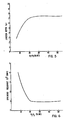
- Figure 2 shows the index of refraction of the coating at the end of this heat treatment as a function of boron concentration in the Ti0 2 based AR precursor solution.
- 8 2 O 3 must be used in the precursor solution.
- a suitable range of dopant concentration is from 1 to 50%.
- a preferred method of adjusting the index of the coating to 2 is to limit the boron addition to less than 30% and to lower the index by the addition of another constituent of low index such as SiO 2 .
- the SiO 2 component may also be added from alkoxides or partially hydrolyzed alkoxides similar to dopant introduction and is described in EP-A-821 5. (The data for Figures 2 to 7 was obtained using procedures described in Example 1. Measurements were done by spreading resistance).
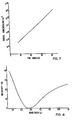
- Figure 7 which illustrates the data of the following table, shows the effect of bake time on the carrier concentration and the junction depth in N-type silicon (10 ohm resistance) for a 10% B 2 O 3 doped AR coating at 900°C in vacuum.
- junction depth can precisely be controlled by heat treatment time.
- a 3.5 weight percent equivalent TiO 2 containing solution was prepared as follows: 1.5 g H Z O, and 130 mg (4 drops) HNO 3 acid were added to 90 g of dry ethyl alcohol, C 2 H 5 OH. Then 10 g of Ti(OC 2 H 5 ) 4 was also added and mixed. A clear solution resulted.
- the indices of refraction of the optical coatings made in Example 1 at various amounts of boron dopings can be reduced to 2 to satisfy the Fresnel condition for antireflectivity on silicon.
- a 10% of silica-containing solution was prepared by hydrolyzing tetraethylsilicate, Si(OC 2 H 5 ) 4 . with 1.8 moles of water in ethanol. Using this solution and the boron and titania solutions described in Example 1 the following AR coating solution was prepared: 21 g, 10 wt. % eq B 2 0 3 containing solution and 10.4 g, 10% eq SiO 2 containing solutions were added to 150 g dry ethanol. 1.5 g H 2 O and 130 mg (4 drops) HN0 3 acid were also introduced. After mixing, 10 g of Ti(OC 2 H 5 ) 4 was added and mixed.
- This solution contained a total of 5 weight percent equivalent oxide which was made up by 70% Tio 2 , 20% B 2 0 3 and 10% SiO z .
- This solution was then spin-coated at 1000 rpm on 1-1/2 inches silicon wafers and heat treated at 900°C in vacuum for 45 minutes.
- Figure 8 shows the spectral reflectivity of the coating which indicates that an ideal single layer antireflective film on silicon has been produced that meets the index of refraction and thickness requirements.
- this sample had a carrier concentration of about 3x10 19 and a junction depth of about 0.5. Junction depth and carrier concentration was extremely uniform on the entire sample.
- Example 2 was repeated with using unhydrolyzed tetraethyl silicon which reacts with the hydroxyl groups of titania. The results were similar except the viscosity of the solution was different, It required an adjustment on the speed of application to obtain quarterwave optical thickness.
- Example 2 was repeated using unhydrolyzed B(OCH 3 ) 3 which again reacts with the hydroxyl groups of titania.
- the results were similar, except that due to the slightly different viscosity of the solution, the coating application rate needed to be different, e.g., 800 rpm.
- Example 2 was repeated using titanium butoxide, Ti(OC 4 H 9 ) 4 and titanium isopropoxide, Ti(OC 3 H 7 ) 4 . Also, various other alcohols were used. The results were similar.
- a 10% e.g. B 2 O 3 doped titania AR coating solution was prepared as described in Example 2. This solution was applied on N-type silicon wafers of .001 ohm per centimeter resistivity at 1000 rpm. The samples were baked at 900°C in vacuum for various lengths of time. The effect of time on carrier concentration, junction depth, and surface resistance for this composition and heat treatment is shown in Table A and Figure 7.
- Example 6 was repeated with 20% boron. The junction depth was found to be 0.50 after baking for 50 minutes and 0.75 after baking for 60 minutes.
- a 3.5 weight percent TiO 2 alkoxide precursor solution was prepared as in Example 1. Phosphoric acid was added to this solution to obtain 15 weight percent equivalent of P 2 0, based on Tio 2 concentration. The solution was applied to boron doped silicon wafers having .001 ohm per centimeter resistivity. The wafers were spun at 1000 rpm then heat treated at 1050°C in nitrogen for one hour. An excellent anti-reflective coating resulted. Tests on the product showed that a suitable phosphorus diffusion took place.
- Example 8 was repeated except 10% phosphorus was introduced from a triethyl phosphate solution. The junction was formed at 1000°C and an excellent antireflective coating with phosphor doping again resulted.
- a solution containing 5% total oxide which was in part made with 70% TiO 2 , 20% B 2 O 3 and 10% Si0 2 as described in Example 2 was prepared and spin coated on an N-type 10-12 ohm resistance silicon wafer 100 cm in diameter at 1000 rpm. The samples were baked at 900°C for 45 minutes and were divided 1 cm 2 photovoltaic cells. The results of these unoptimized cells are shown in the following table.
- sample number 4 was faulty in some respect. It is believed that still higher efficiencies which are listed in the next to the last column will be obtained under optimal conditions.
Landscapes
- Photovoltaic Devices (AREA)
- Paints Or Removers (AREA)
- Surface Treatment Of Optical Elements (AREA)
Applications Claiming Priority (2)
| Application Number | Priority Date | Filing Date | Title |
|---|---|---|---|
| US06/066,368 US4251285A (en) | 1979-08-14 | 1979-08-14 | Diffusion of dopant from optical coating and single step formation of PN junction in silicon solar cell and coating thereon |
| US66368 | 1979-08-14 |
Publications (2)
| Publication Number | Publication Date |
|---|---|
| EP0024057A1 EP0024057A1 (en) | 1981-02-18 |
| EP0024057B1 true EP0024057B1 (en) | 1984-03-21 |
Family
ID=22069056
Family Applications (1)
| Application Number | Title | Priority Date | Filing Date |
|---|---|---|---|
| EP80104848A Expired EP0024057B1 (en) | 1979-08-14 | 1980-08-14 | Single step formation of pn junction in silicon cell and coating thereon |
Country Status (14)
| Country | Link |
|---|---|
| US (1) | US4251285A (OSRAM) |
| EP (1) | EP0024057B1 (OSRAM) |
| JP (1) | JPS5660075A (OSRAM) |
| KR (1) | KR830002294B1 (OSRAM) |
| AU (1) | AU537352B2 (OSRAM) |
| BR (1) | BR8005034A (OSRAM) |
| DE (1) | DE3067142D1 (OSRAM) |
| ES (1) | ES8106817A1 (OSRAM) |
| HK (1) | HK29385A (OSRAM) |
| IL (1) | IL60807A (OSRAM) |
| IN (1) | IN152740B (OSRAM) |
| MX (1) | MX155893A (OSRAM) |
| MY (1) | MY8500900A (OSRAM) |
| ZA (1) | ZA804634B (OSRAM) |
Cited By (2)
| Publication number | Priority date | Publication date | Assignee | Title |
|---|---|---|---|---|
| US8507837B2 (en) | 2008-10-24 | 2013-08-13 | Suncore Photovoltaics, Inc. | Techniques for monitoring solar array performance and applications thereof |
| US8513514B2 (en) | 2008-10-24 | 2013-08-20 | Suncore Photovoltaics, Inc. | Solar tracking for terrestrial solar arrays with variable start and stop positions |
Families Citing this family (49)
| Publication number | Priority date | Publication date | Assignee | Title |
|---|---|---|---|---|
| US4619719A (en) * | 1982-01-28 | 1986-10-28 | Owens-Illinois, Inc. | Process for forming a doped oxide film and composite article |
| US4605450A (en) * | 1982-02-11 | 1986-08-12 | Owens-Illinois, Inc. | Process for forming a doped oxide film and doped semiconductor |
| US4571366A (en) * | 1982-02-11 | 1986-02-18 | Owens-Illinois, Inc. | Process for forming a doped oxide film and doped semiconductor |
| DE3340874A1 (de) * | 1983-11-11 | 1985-05-23 | Telefunken electronic GmbH, 7100 Heilbronn | Verfahren zum herstellen einer solarzelle |
| JPS60140880A (ja) * | 1983-12-28 | 1985-07-25 | Hitachi Ltd | 太陽電池の製造方法 |
| US4744973A (en) * | 1985-11-29 | 1988-05-17 | Westinghouse Electric Corp. | Inorganic polymeric cationic ion exchange matrix |
| US4808464A (en) * | 1987-07-23 | 1989-02-28 | Westinghouse Electric Corp. | Insulating ferromagnetic amorphous metal strips |
| US4759949A (en) * | 1987-07-23 | 1988-07-26 | Westinghouse Electric Corp. | Method of insulating ferromagnetic amorphous metal continuous strip |
| JPH0690014A (ja) * | 1992-07-22 | 1994-03-29 | Mitsubishi Electric Corp | 薄型太陽電池及びその製造方法,エッチング方法及び自動エッチング装置,並びに半導体装置の製造方法 |
| US5270248A (en) * | 1992-08-07 | 1993-12-14 | Mobil Solar Energy Corporation | Method for forming diffusion junctions in solar cell substrates |
| US5478776A (en) * | 1993-12-27 | 1995-12-26 | At&T Corp. | Process for fabricating integrated circuit containing shallow junction using dopant source containing organic polymer or ammonium silicate |
| JP3032422B2 (ja) * | 1994-04-28 | 2000-04-17 | シャープ株式会社 | 太陽電池セルとその製造方法 |
| US5792280A (en) * | 1994-05-09 | 1998-08-11 | Sandia Corporation | Method for fabricating silicon cells |
| AUPM996094A0 (en) * | 1994-12-08 | 1995-01-05 | Pacific Solar Pty Limited | Multilayer solar cells with bypass diode protection |
| US6278053B1 (en) * | 1997-03-25 | 2001-08-21 | Evergreen Solar, Inc. | Decals and methods for providing an antireflective coating and metallization on a solar cell |
| WO1999053529A2 (en) * | 1998-04-13 | 1999-10-21 | Trustees Of Princeton University | Modification of polymer optoelectronic properties after film formation impurity addition or removal |
| US7090890B1 (en) | 1998-04-13 | 2006-08-15 | The Trustees Of Princeton University | Modification of polymer optoelectronic properties after film formation by impurity addition or removal |
| AUPP437598A0 (en) * | 1998-06-29 | 1998-07-23 | Unisearch Limited | A self aligning method for forming a selective emitter and metallization in a solar cell |
| JP4812147B2 (ja) * | 1999-09-07 | 2011-11-09 | 株式会社日立製作所 | 太陽電池の製造方法 |
| US7402448B2 (en) * | 2003-01-31 | 2008-07-22 | Bp Corporation North America Inc. | Photovoltaic cell and production thereof |
| US20080057686A1 (en) * | 2006-08-31 | 2008-03-06 | Melgaard Hans L | Continuous dopant addition |
| US9012766B2 (en) | 2009-11-12 | 2015-04-21 | Silevo, Inc. | Aluminum grid as backside conductor on epitaxial silicon thin film solar cells |
| US20120301998A1 (en) * | 2009-12-28 | 2012-11-29 | Takahiro Hashimoto | Method for manufacturing solar cell |
| US20120318340A1 (en) * | 2010-05-04 | 2012-12-20 | Silevo, Inc. | Back junction solar cell with tunnel oxide |
| US9214576B2 (en) | 2010-06-09 | 2015-12-15 | Solarcity Corporation | Transparent conducting oxide for photovoltaic devices |
| US9773928B2 (en) | 2010-09-10 | 2017-09-26 | Tesla, Inc. | Solar cell with electroplated metal grid |
| US9800053B2 (en) | 2010-10-08 | 2017-10-24 | Tesla, Inc. | Solar panels with integrated cell-level MPPT devices |
| JP5723143B2 (ja) * | 2010-12-06 | 2015-05-27 | シャープ株式会社 | 裏面電極型太陽電池の製造方法、および裏面電極型太陽電池 |
| US9054256B2 (en) | 2011-06-02 | 2015-06-09 | Solarcity Corporation | Tunneling-junction solar cell with copper grid for concentrated photovoltaic application |
| JP2013026524A (ja) * | 2011-07-22 | 2013-02-04 | Hitachi Chem Co Ltd | n型拡散層形成組成物、n型拡散層の製造方法、太陽電池素子の製造方法、及び太陽電池 |
| WO2013043809A2 (en) * | 2011-09-21 | 2013-03-28 | Arizona Board Of Regents, A Body Corporate Of The State Of Arizona | Heterostructure si solar cells using wide-bandgap semiconductors |
| KR101381844B1 (ko) * | 2012-04-24 | 2014-04-24 | 에스티엑스 솔라주식회사 | 양면형 태양전지 제조방법 |
| EP2904643B1 (en) | 2012-10-04 | 2018-12-05 | SolarCity Corporation | Solar cell with electroplated metal grid |
| US9865754B2 (en) | 2012-10-10 | 2018-01-09 | Tesla, Inc. | Hole collectors for silicon photovoltaic cells |
| US9281436B2 (en) | 2012-12-28 | 2016-03-08 | Solarcity Corporation | Radio-frequency sputtering system with rotary target for fabricating solar cells |
| US9219174B2 (en) | 2013-01-11 | 2015-12-22 | Solarcity Corporation | Module fabrication of solar cells with low resistivity electrodes |
| US10074755B2 (en) | 2013-01-11 | 2018-09-11 | Tesla, Inc. | High efficiency solar panel |
| US9412884B2 (en) | 2013-01-11 | 2016-08-09 | Solarcity Corporation | Module fabrication of solar cells with low resistivity electrodes |
| US9624595B2 (en) | 2013-05-24 | 2017-04-18 | Solarcity Corporation | Electroplating apparatus with improved throughput |
| US10309012B2 (en) | 2014-07-03 | 2019-06-04 | Tesla, Inc. | Wafer carrier for reducing contamination from carbon particles and outgassing |
| US9899546B2 (en) | 2014-12-05 | 2018-02-20 | Tesla, Inc. | Photovoltaic cells with electrodes adapted to house conductive paste |
| US9947822B2 (en) | 2015-02-02 | 2018-04-17 | Tesla, Inc. | Bifacial photovoltaic module using heterojunction solar cells |
| US9761744B2 (en) | 2015-10-22 | 2017-09-12 | Tesla, Inc. | System and method for manufacturing photovoltaic structures with a metal seed layer |
| US9842956B2 (en) | 2015-12-21 | 2017-12-12 | Tesla, Inc. | System and method for mass-production of high-efficiency photovoltaic structures |
| US9496429B1 (en) | 2015-12-30 | 2016-11-15 | Solarcity Corporation | System and method for tin plating metal electrodes |
| US10115838B2 (en) | 2016-04-19 | 2018-10-30 | Tesla, Inc. | Photovoltaic structures with interlocking busbars |
| US10672919B2 (en) | 2017-09-19 | 2020-06-02 | Tesla, Inc. | Moisture-resistant solar cells for solar roof tiles |
| US11190128B2 (en) | 2018-02-27 | 2021-11-30 | Tesla, Inc. | Parallel-connected solar roof tile modules |
| EP3818570A4 (en) * | 2018-07-05 | 2022-04-20 | UNM Rainforest Innovations | LOW-COST, CRACK-TOLERANT SCREEN-PRINTABLE METALLIZATION FOR INCREASED MODULE RELIABILITY |
Family Cites Families (6)
| Publication number | Priority date | Publication date | Assignee | Title |
|---|---|---|---|---|
| US3437527A (en) * | 1966-10-26 | 1969-04-08 | Webb James E | Method for producing a solar cell having an integral protective covering |
| US3460956A (en) * | 1968-07-19 | 1969-08-12 | Joseph Dahle | Titanate product and method of making the same |
| US3993506A (en) * | 1975-09-25 | 1976-11-23 | Varian Associates | Photovoltaic cell employing lattice matched quaternary passivating layer |
| US4101351A (en) * | 1976-11-15 | 1978-07-18 | Texas Instruments Incorporated | Process for fabricating inexpensive high performance solar cells using doped oxide junction and insitu anti-reflection coatings |
| JPS5482992A (en) * | 1977-12-14 | 1979-07-02 | Sharp Corp | Solar battery and its manufacture |
| IN152814B (OSRAM) * | 1978-08-08 | 1984-04-14 | Westinghouse Electric Corp |
-
1979
- 1979-08-14 US US06/066,368 patent/US4251285A/en not_active Expired - Lifetime
-
1980
- 1980-07-30 ZA ZA00804634A patent/ZA804634B/xx unknown
- 1980-08-01 AU AU61001/80A patent/AU537352B2/en not_active Ceased
- 1980-08-02 IN IN882/CAL/80A patent/IN152740B/en unknown
- 1980-08-04 MX MX183426A patent/MX155893A/es unknown
- 1980-08-08 IL IL60807A patent/IL60807A/xx not_active IP Right Cessation
- 1980-08-11 BR BR8005034A patent/BR8005034A/pt not_active IP Right Cessation
- 1980-08-13 ES ES494214A patent/ES8106817A1/es not_active Expired
- 1980-08-14 KR KR1019800003221A patent/KR830002294B1/ko not_active Expired
- 1980-08-14 EP EP80104848A patent/EP0024057B1/en not_active Expired
- 1980-08-14 DE DE8080104848T patent/DE3067142D1/de not_active Expired
- 1980-08-14 JP JP11117080A patent/JPS5660075A/ja active Pending
-
1985
- 1985-04-11 HK HK293/85A patent/HK29385A/xx unknown
- 1985-12-30 MY MY900/85A patent/MY8500900A/xx unknown
Non-Patent Citations (1)
| Title |
|---|
| JOURNAL OF THE ELECTROCHEMICAL SOCIETY, vol. 125, no. 6, June 1978, pages 983-985, New York, U.S.A. H.J. HOVEL: "TiO2 Antireflection Coatings by a Low Temperature Spray Process" * |
Cited By (4)
| Publication number | Priority date | Publication date | Assignee | Title |
|---|---|---|---|---|
| US8946608B2 (en) | 2008-02-01 | 2015-02-03 | Suncore Photovoltaics, Inc. | Solar tracking system |
| US8507837B2 (en) | 2008-10-24 | 2013-08-13 | Suncore Photovoltaics, Inc. | Techniques for monitoring solar array performance and applications thereof |
| US8513514B2 (en) | 2008-10-24 | 2013-08-20 | Suncore Photovoltaics, Inc. | Solar tracking for terrestrial solar arrays with variable start and stop positions |
| US8890044B2 (en) | 2008-10-24 | 2014-11-18 | Suncore Photovoltaics, Incorporated | Solar cell system |
Also Published As
| Publication number | Publication date |
|---|---|
| IL60807A0 (en) | 1980-10-26 |
| US4251285A (en) | 1981-02-17 |
| MY8500900A (en) | 1985-12-31 |
| KR830003804A (ko) | 1983-06-22 |
| AU537352B2 (en) | 1984-06-21 |
| HK29385A (en) | 1985-04-19 |
| EP0024057A1 (en) | 1981-02-18 |
| AU6100180A (en) | 1981-02-19 |
| KR830002294B1 (ko) | 1983-10-21 |
| DE3067142D1 (en) | 1984-04-26 |
| ES494214A0 (es) | 1981-08-01 |
| ES8106817A1 (es) | 1981-08-01 |
| IL60807A (en) | 1983-10-31 |
| MX155893A (es) | 1988-05-18 |
| IN152740B (OSRAM) | 1984-03-24 |
| JPS5660075A (en) | 1981-05-23 |
| BR8005034A (pt) | 1981-02-24 |
| ZA804634B (en) | 1981-07-29 |
Similar Documents
| Publication | Publication Date | Title |
|---|---|---|
| EP0024057B1 (en) | Single step formation of pn junction in silicon cell and coating thereon | |
| US4346131A (en) | Polymerized solutions for depositing optical oxide coatings | |
| US4361598A (en) | Polymerized solutions for depositing optical oxide coatings | |
| Brinker et al. | Sol-gel derived antireflective coatings for silicon | |
| US7659475B2 (en) | Method for backside surface passivation of solar cells and solar cells with such passivation | |
| JP2017120873A (ja) | 絶縁性ペーストおよびその製造方法並びに太陽電池素子の製造方法 | |
| EP0008215B1 (en) | Polymerized solutions of an oxide; method of preparation thereof; method of preparing alkoxyde coatings on substrates, such as solar cells, and product so obtained | |
| US4571366A (en) | Process for forming a doped oxide film and doped semiconductor | |
| US20130109123A1 (en) | Diffusing agent composition and method of forming impurity diffusion layer | |
| US8864898B2 (en) | Coating formulations for optical elements | |
| US10749047B2 (en) | Solar cell element and method for manufacturing solar cell element | |
| CN109153787B (zh) | 聚硅氧烷、半导体用材料、半导体及太阳能电池制备方法 | |
| WO2013038613A1 (ja) | 拡散剤組成物、不純物拡散層の形成方法および太陽電池 | |
| Szlufcik et al. | Screen-printed titanium dioxide anti-reflection coating for silicon solar cells | |
| KR101198930B1 (ko) | 질화규소 반사방지막의 제조 방법 및 이를 이용한 실리콘 태양전지 | |
| US20150083209A1 (en) | Coatable diffusing agent composition, method for producing coatable diffusing agent composition, solar cell, and method for manufacturing solar cell | |
| TW201703855A (zh) | 用於高效結晶矽太陽能電池製造中作為擴散及合金化阻障物之可印刷糊狀物 | |
| JP2017069247A (ja) | 絶縁性ペーストおよびその製造方法並びに太陽電池素子の製造方法 | |
| Yoldas | Diffusion of Dopants from Optical Coatings and Single Step Formation of Antireflective Coating and P‐N Junction in Photovoltaic Cells | |
| JP6971769B2 (ja) | 太陽電池素子 | |
| US4605450A (en) | Process for forming a doped oxide film and doped semiconductor | |
| KR101133953B1 (ko) | 실리카 반사방지막의 제조 방법 및 이를 이용한 실리콘 태양전지 | |
| JPS623597B2 (OSRAM) | ||
| JP2015144243A (ja) | 表面被覆膜の形成方法及び表面被覆膜を有する太陽電池 | |
| WO2014054372A1 (ja) | 表面被覆膜の形成方法及び表面被覆膜を有する太陽電池 |
Legal Events
| Date | Code | Title | Description |
|---|---|---|---|
| PUAI | Public reference made under article 153(3) epc to a published international application that has entered the european phase |
Free format text: ORIGINAL CODE: 0009012 |
|
| AK | Designated contracting states |
Designated state(s): BE CH DE FR GB IT NL SE |
|
| 17P | Request for examination filed |
Effective date: 19810806 |
|
| ITF | It: translation for a ep patent filed | ||
| GRAA | (expected) grant |
Free format text: ORIGINAL CODE: 0009210 |
|
| AK | Designated contracting states |
Designated state(s): BE CH DE FR GB IT LI NL SE |
|
| REF | Corresponds to: |
Ref document number: 3067142 Country of ref document: DE Date of ref document: 19840426 |
|
| ET | Fr: translation filed | ||
| PLBE | No opposition filed within time limit |
Free format text: ORIGINAL CODE: 0009261 |
|
| STAA | Information on the status of an ep patent application or granted ep patent |
Free format text: STATUS: NO OPPOSITION FILED WITHIN TIME LIMIT |
|
| 26N | No opposition filed | ||
| ITTA | It: last paid annual fee | ||
| PG25 | Lapsed in a contracting state [announced via postgrant information from national office to epo] |
Ref country code: FR Effective date: 19930430 |
|
| PGFP | Annual fee paid to national office [announced via postgrant information from national office to epo] |
Ref country code: FR Payment date: 19930608 Year of fee payment: 14 |
|
| REG | Reference to a national code |
Ref country code: FR Ref legal event code: ST |
|
| PGFP | Annual fee paid to national office [announced via postgrant information from national office to epo] |
Ref country code: CH Payment date: 19940620 Year of fee payment: 15 |
|
| PGFP | Annual fee paid to national office [announced via postgrant information from national office to epo] |
Ref country code: SE Payment date: 19940627 Year of fee payment: 15 Ref country code: GB Payment date: 19940627 Year of fee payment: 15 |
|
| PGFP | Annual fee paid to national office [announced via postgrant information from national office to epo] |
Ref country code: BE Payment date: 19940714 Year of fee payment: 15 |
|
| PGFP | Annual fee paid to national office [announced via postgrant information from national office to epo] |
Ref country code: NL Payment date: 19940831 Year of fee payment: 15 |
|
| PGFP | Annual fee paid to national office [announced via postgrant information from national office to epo] |
Ref country code: DE Payment date: 19940930 Year of fee payment: 15 |
|
| EAL | Se: european patent in force in sweden |
Ref document number: 80104848.9 |
|
| PG25 | Lapsed in a contracting state [announced via postgrant information from national office to epo] |
Ref country code: GB Effective date: 19950814 |
|
| PG25 | Lapsed in a contracting state [announced via postgrant information from national office to epo] |
Ref country code: SE Effective date: 19950815 |
|
| PG25 | Lapsed in a contracting state [announced via postgrant information from national office to epo] |
Ref country code: LI Effective date: 19950831 Ref country code: CH Effective date: 19950831 Ref country code: BE Effective date: 19950831 |
|
| BERE | Be: lapsed |
Owner name: WESTINGHOUSE ELECTRIC CORP. Effective date: 19950831 |
|
| PG25 | Lapsed in a contracting state [announced via postgrant information from national office to epo] |
Ref country code: NL Effective date: 19960301 |
|
| GBPC | Gb: european patent ceased through non-payment of renewal fee |
Effective date: 19950814 |
|
| REG | Reference to a national code |
Ref country code: CH Ref legal event code: PL |
|
| NLV4 | Nl: lapsed or anulled due to non-payment of the annual fee |
Effective date: 19960301 |
|
| PG25 | Lapsed in a contracting state [announced via postgrant information from national office to epo] |
Ref country code: DE Effective date: 19960501 |
|
| EUG | Se: european patent has lapsed |
Ref document number: 80104848.9 |