WO2024203388A1 - 加熱調理器 - Google Patents
加熱調理器 Download PDFInfo
- Publication number
- WO2024203388A1 WO2024203388A1 PCT/JP2024/009983 JP2024009983W WO2024203388A1 WO 2024203388 A1 WO2024203388 A1 WO 2024203388A1 JP 2024009983 W JP2024009983 W JP 2024009983W WO 2024203388 A1 WO2024203388 A1 WO 2024203388A1
- Authority
- WO
- WIPO (PCT)
- Prior art keywords
- heating
- temperature
- cooking
- cooking space
- control unit
- Prior art date
- Legal status (The legal status is an assumption and is not a legal conclusion. Google has not performed a legal analysis and makes no representation as to the accuracy of the status listed.)
- Ceased
Links
Images





Classifications
-
- A—HUMAN NECESSITIES
- A47—FURNITURE; DOMESTIC ARTICLES OR APPLIANCES; COFFEE MILLS; SPICE MILLS; SUCTION CLEANERS IN GENERAL
- A47J—KITCHEN EQUIPMENT; COFFEE MILLS; SPICE MILLS; APPARATUS FOR MAKING BEVERAGES
- A47J27/00—Cooking-vessels
-
- A—HUMAN NECESSITIES
- A47—FURNITURE; DOMESTIC ARTICLES OR APPLIANCES; COFFEE MILLS; SPICE MILLS; SUCTION CLEANERS IN GENERAL
- A47J—KITCHEN EQUIPMENT; COFFEE MILLS; SPICE MILLS; APPARATUS FOR MAKING BEVERAGES
- A47J27/00—Cooking-vessels
- A47J27/08—Pressure-cookers; Lids or locking devices specially adapted therefor
Definitions
- This disclosure relates to a cooking device.
- Patent Document 1 Conventionally, cooking devices that store and heat food ingredients are known (see, for example, Patent Document 1 and Patent Document 2).
- the cooking device described in Patent Document 1 performs heat and pressure cooking, which involves heating and cooking by making the cooking space in the pot higher than atmospheric pressure.
- the cooking device described in Patent Document 2 induces the Maillard reaction in the heated object by cooking at a temperature of 140°C to 160°C.
- the Maillard reaction is a reaction that produces brown substances (melanoidins) when reducing sugars and amino compounds (amino acids, peptides, and proteins) are heated, and is also known as the browning reaction.
- the present disclosure aims to provide a cooking appliance that can improve cooking quality.
- the cooking device of the present disclosure comprises a pot, a heating unit, a main body, a lid, a lid temperature detection unit, an on-off valve, and a control unit.
- the pot has a cooking space.
- the heating unit heats the pot.
- the main body houses the pot and the heating unit.
- the lid covers the main body.
- the temperature detection unit detects the temperature of the cooking space.
- the on-off valve is disposed on the lid and seals or opens the cooking space.
- the control unit controls the heating unit and the on-off valve.
- the control unit executes a first heating and pressurizing process in which the temperature of the cooking space is increased to above the ambient temperature and below 100°C by the heating unit, and the internal pressure of the cooking space is increased above atmospheric pressure by closing the on-off valve.
- This disclosure makes it possible to provide a cooking device that improves cooking quality.
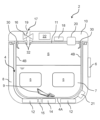
- FIG. 1 is a schematic diagram of a cooking device according to a first embodiment of the present disclosure.
- FIG. 2 is a graph showing changes in temperature and internal pressure of the cooking space during a cooking course performed by the cooking device according to the first embodiment.
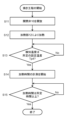
- FIG. 3 is a flowchart showing the process of a cooking course executed by the cooking device according to the first embodiment.
- FIG. 4 is a flowchart showing the process of the grilling step of the cooking course executed by the cooking device according to the first embodiment.
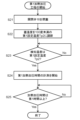
- FIG. 5 is a flowchart showing the process of the first heating and pressurizing step of the cooking course executed by the cooking device according to the first embodiment.
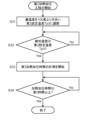
- FIG. 6 is a flowchart showing a process for executing the second heating and pressurizing step of the cooking course executed by the cooking device according to the first embodiment.
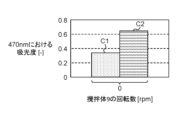
- FIG. 7 is a graph showing the difference in the progress of the Maillard reaction due to pressure difference.
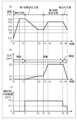
- FIG. 8 is a graph showing changes in temperature and pressure in the cooking space and the rotation speed of the stirrer during a cooking course performed by the cooking device according to the first modified example of the first embodiment.
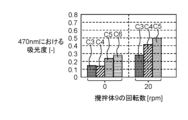
- FIG. 9 is a graph showing the progress of the Maillard reaction when the rotation speed of the stirrer is 0 rpm and 20 rpm.
- FIG. 10 is a graph showing the progress of the Maillard reaction when the rotation speed of the stirrer is 0 rpm and 50 rpm.
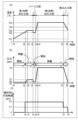
- FIG. 11 is a graph showing changes in temperature and pressure in the cooking space and the rotation speed of the stirrer during a cooking course performed by a cooking device according to a second modified example of the first embodiment.
- FIG. 12 is a graph showing changes in temperature and internal pressure of the cooking space during a cooking course performed by the cooking device according to the second embodiment of the present disclosure.
- FIG. 13 is a graph showing changes in temperature and internal pressure of the cooking space, as well as changes in the rotation speed of the stirrer, during a cooking course performed by a cooking device according to a first modified example of the second embodiment.
- FIG. 12 is a graph showing changes in temperature and internal pressure of the cooking space during a cooking course performed by the cooking device according to the second embodiment of the present disclosure.
- FIG. 13 is a graph showing changes in temperature and internal pressure of the cooking space, as well as changes in the rotation speed of the stirrer, during a cooking course performed by a cooking device according to a first modified example of the second embodiment.
- FIG. 14 is a graph showing changes in temperature and internal pressure of the cooking space, as well as changes in the rotation speed of the stirrer, during a cooking course performed by a cooking device according to a second modified example of the second embodiment.
- FIG. 15 is a graph showing the relative intensity of sweet aroma versus temperature condition under high pressure.
- FIG. 1 is a schematic diagram of a cooking device 2 according to this embodiment.
- the cooking device 2 shown in FIG. 1 is a cooking appliance for cooking an object to be heated 5, such as food.
- the cooking device 2 is an automatic cooking device in which an operating sequence is preprogrammed for each cooking menu.
- the user places the object 5 to be heated in the cooking space S of the pot 4, operates the operation display unit 6 to select a cooking menu, and starts cooking.
- the cooking device 2 cooks the object 5 according to a predetermined program depending on the type of cooking menu selected (stew, curry, etc.).
- the heating cooker 2 has a heating and pressurizing cooking function, which cooks with the internal pressure of the cooking space S set higher than atmospheric pressure.
- the user can select a menu for heating and pressurizing cooking on the operation and display unit 6.
- the operation and display unit 6 functions as a cooking menu selection unit for selecting a cooking menu.
- the cooking device 2 comprises a pot 4, a main body 8, a stirring body 9, and a lid 10.
- the main body 8 houses the pot 4.
- the pot 4 is a box-shaped member that forms a cooking space S, and has a bottom surface 4A, a side surface 4B, and an upward opening.
- the cooking space S is a space surrounded by the bottom surface 4A and the side surface 4B of the pot 4.
- an object to be heated 5 is housed in the cooking space S filled with moisture 7.
- the water 7 is a seasoning soup for stewing the object to be heated 5.
- the object to be heated 5 and the water 7 are not limited to being separated, and may be in an integrated state.
- the water 7 is not limited to being weakly viscous like water, but may be a highly viscous mixture of liquid and solid, such as curry or stew.
- the water 7 may also be added by the user during cooking.
- the main body 8 houses the removable pot 4 and components for operating the cooking device 2.
- the stirring body 9 stirs the heated object 5 housed in the pot 4.
- the stirring body 9 may have a continuously curved shape, or may have an angular shape such as an L-shape.
- the main body 8 houses the heating unit 12, the drive unit 14, and the pot temperature detection unit 15.
- the heating unit 12 is disposed within the main body 8 so as to heat the bottom surface 4A of the pot 4.
- the heating unit 12 is, for example, a sheathed heater.
- the heating unit 12 is controlled to be turned on and off by the control unit 22, which will be described later, and generates heat with an amount of heat corresponding to the applied voltage value.
- the drive unit 14 drives and rotates the stirrer 9.
- the drive unit 14 has a motor and a gear as a reduction mechanism.
- the pot temperature detection unit 15 is a temperature sensor arranged inside the main body 8 so as to detect the temperature of the bottom surface 4A of the pot 4.
- the control unit 22 receives information on the temperature detected by the pot temperature detection unit 15 (hereinafter referred to as the pot temperature).
- the heating unit 12 and the pot temperature detection unit 15 are disposed facing the bottom surface 4A of the pot 4.
- the pot temperature detection unit 15 is disposed close to the heating unit 12, and the pot temperature is easily affected by the heating unit 12.
- the lid 10 covers the main body 8 and can be opened and closed freely. When the lid 10 is closed to cover the pot 4, the cooking space S is sealed.
- the lid 10 has an inner lid 11 for sealing the pot 4.
- the inner lid 11 has a gasket 30 attached to its outer periphery.
- the gasket 30 abuts against the top end of the pot 4 and the upper side of the inner surface of the pot 4, so that the inner lid 11 seals the cooking space S.
- the gasket 30 expands and abuts against the inner surface of the pot 4.
- the inner lid 11 further has a gasket 32 located at an opening that communicates with the ventilation hole 17 described below.
- the lid 10 incorporates an on-off valve 16, a lid temperature detector 18, a pot pressure detector 20, and a controller 22, which are components for operating the cooking appliance 2.
- the lid 10 has an air vent 17 located at the top and a steam passage 19 located inside.
- the steam passage 19 connects the cooking space S with the air vent 17.
- the on-off valve 16 blocks and opens the steam passage 19. When the on-off valve 16 opens the steam passage 19, the internal pressure of the cooking space S becomes atmospheric pressure. When the on-off valve 16 blocks the steam passage 19, the cooking space S is sealed and the internal pressure of the cooking space S becomes a pressure independent of atmospheric pressure.
- the on-off valve 16 is, for example, a solenoid valve that operates under the control of the control unit 22.
- the on-off valve 16 may be a check valve that operates naturally according to the internal pressure of the cooking space S.
- the cooking device 2 may have a pressure regulating valve that opens naturally to maintain the internal pressure when the internal pressure of the cooking space S rises to a predetermined value suitable for pressurized cooking (e.g., 2.0 atm).
- the cooking device 2 may have a safety valve that is configured to open naturally when the internal pressure of the cooking space S rises to a predetermined value (e.g., 3.5 atm) that is much higher than the predetermined value suitable for pressurized cooking.
- the lid temperature detection unit 18 is a temperature sensor disposed on the lid 10 to detect the temperature of the cooking space S.
- the lid temperature detection unit 18 indirectly detects the temperature of the cooking space S by detecting the temperature of the lid 10.
- the control unit 22 receives information on the temperature detected by the lid temperature detection unit 18 (hereinafter referred to as the lid temperature). Because the lid temperature detection unit 18 is disposed farther from the heating unit 12 than the pan temperature detection unit 15, the lid temperature is less affected by the heat generated by the heating unit 12 than the pan temperature.
- the pot pressure detection unit 20 is a pressure sensor arranged on the lid 10 to detect the internal pressure of the cooking space S.
- the pot pressure detection unit 20 is arranged on the lid 10 so that a portion of it protrudes into the cooking space S, and directly detects the internal pressure of the cooking space S.
- the control unit 22 receives information on the internal pressure of the cooking space S detected by the pot pressure detection unit 20.
- the internal pressure of the cooking space S is referred to as pot pressure.
- the control unit 22 is a microcomputer for controlling the operation of the cooking device 2.
- the control unit 22 is electrically connected to the components of the cooking device 2, including the components specifically described below, so as to be capable of communicating with each other, and obtains output data from these components or controls these components.
- the control unit 22 controls the heating unit 12, the on-off valve 16, and the drive unit 14.
- the control unit 22 acquires output data from the pot temperature detection unit 15, the lid temperature detection unit 18, the pot pressure detection unit 20, etc., and controls the heating unit 12, the on-off valve 16, and the drive unit 14 based on the acquired data.
- the heating and pressurizing cooking device 2 executes one cooking course (heating and pressurizing cooking course) selected by the user from among multiple cooking courses via the operation display unit 6.
- FIG. 2 is a graph showing the changes in temperature and internal pressure in the cooking space S during the cooking course executed by the heating and pressurizing device 2.
- the heating and pressurizing cooking course is a cooking course that shows the changes in temperature and internal pressure as shown in FIG. 2.
- the heating and pressurizing cooking course includes a cooking process in which heating and pressurizing are performed simultaneously.
- Waveform (a) in FIG. 2 shows the change in temperature in cooking space S.
- Waveform (b) in FIG. 2 shows the change in internal pressure in cooking space S.
- initial pressure A0 is atmospheric pressure, i.e., the internal pressure in cooking space S when on-off valve 16 is open.
- Waveform (c) in FIG. 2 shows the pattern of heating control of heating unit 12 by control unit 22.
- the horizontal axis of the graph in FIG. 2 shows time.
- control unit 22 executes the baking process, the first heating and pressurizing process, the second heating and pressurizing process, and the stewing process in that order.
- the grilling process is a process in which the heating unit 12 heats the pot 4 to raise the temperature of the cooking space S from the cooking start temperature Tp1 to a set temperature Tp4 (waveform (a) in FIG. 2).
- the set temperature Tp4 is a predetermined temperature of 100°C or higher.
- the control unit 22 opens the on-off valve 16 to open the steam passage 19, and heats the object 5 to be heated by the heating unit 12 based on the lid temperature (time t0 in waveforms (a) to (c) in FIG. 2).
- the object to be heated 5 In the grilling process, only the object to be heated 5 is placed in the pot 4, and no water 7 is placed. As a result, the surface temperature of the object to be heated 5 rises as it is heated, and for example, if the object to be heated 5 is meat, the surface of the object to be heated 5 can be browned. This makes it possible to prevent the object to be heated 5 from falling apart during the stewing process described below.
- the control unit 22, with the on-off valve 16 open causes the heating unit 12 to raise the temperature of the heated object 5 to 100°C or higher.
- the air in the cooking space S is exhausted through the vent 17 by the steam from the heated object 5, and instead the cooking space S is filled with the steam from the heated object 5. This makes it possible to suppress oxidation of the heated object 5.
- the on-off valve 16 is open, so the internal pressure of the cooking space S remains at the initial pressure A0.
- the first heating and pressurizing process is a process in which the temperature of the cooking space S is lowered to below 100°C and the internal pressure of the cooking space S is increased to a predetermined value and maintained for a predetermined period of time (times t1 to t3 in waveforms (a) and (b) in Figure 2).
- the control unit 22 closes the on-off valve 16 to seal the cooking space S. With the on-off valve 16 closed, the control unit 22 waits until the temperature of the cooking space S drops from the set temperature Tp4 to the first set temperature Tp2 and the internal pressure of the cooking space S rises from the initial pressure A0 to the first pressure A1.
- the first set temperature Tp2 is a predetermined temperature less than 100°C.
- control unit 22 controls the heating unit 12 to maintain that state for a predetermined period of time (time t2 to time t3 in waveforms (a) to (c) in FIG. 2).
- the above control is performed based on the lid temperature or pot pressure.
- the control unit 22 sets the first set temperature Tp2 to a temperature equal to or higher than the cooking start temperature Tp1 and lower than 100°C depending on the type of cooking course. For example, in the example shown in FIG. 2, the first set temperature Tp2 is 70°C. Therefore, even if the temperature drops to the first set temperature Tp2, the cooking space S is still at a higher temperature than the ambient temperature.
- the internal pressure of the cooking space S increases due to steam from the heated object 5.
- the internal pressure of the cooking space S reaches the first pressure A1.
- the first pressure A1 is, for example, 1.3 atm. In other words, the internal pressure of the cooking space S is higher than atmospheric pressure.
- the control unit 22 may delay the start of cooking until the temperature of the cooking space S falls below 50°C.
- the second heating and pressurizing process is a process in which the temperature of the cooking space S is increased to 100°C or higher and 125°C or lower, and the internal pressure of the pot 4 is increased to a predetermined value and maintained in that state for a predetermined period of time (times t3 to t5 in waveforms (a) to (c) in Figure 2).
- control unit 22 closes the on-off valve 16 and operates the heating unit 12 (time t3 in FIG. 2). This causes the temperature of the cooking space S to rise to the second set temperature Tp3, and the internal pressure of the cooking space S to rise to the second pressure A2 (time t4 in FIG. 2 waveforms (a) and (b)).
- control unit 22 controls the heating unit 12 to maintain that state for a predetermined period of time (time t4 to time t5 in waveforms (a) to (c) in Figure 2).
- the above control is performed based on the lid temperature or pot pressure.
- the control unit 22 sets the second set temperature Tp3 to a predetermined temperature of 100°C or higher depending on the type of cooking course.
- the second set temperature Tp3 is 120°C.
- the second pressure A2 is, for example, 2.0 atm. That is, in the second heating and pressurizing process, the internal pressure of the cooking space S is higher than in the first heating and pressurizing process.
- the stewing process is a process for stewing the heated object 5 by stopping the operation of the heating unit 12 (times t5 to t6 in waveforms (a) to (c) in FIG. 2).
- the cooking space S is opened to the outside air, and the temperature of the cooking space S is maintained higher than the ambient temperature.
- control unit 22 opens the on-off valve 16 to open the steam passage 19 (time t5 in the waveform (b) of Figure 2), and operates the heating unit 12 so that the internal pressure of the cooking space S shows a predetermined progression.
- the above control is performed based on the lid temperature or the pot pressure.
- the control unit 22 may control the on-off valve 16 based on the passage of time to open the cooking space S to the outside air.
- the control unit 22 may close the on-off valve 16 until halfway through the stewing process to adjust the overall cooking time, and open the on-off valve 16 after a predetermined time has elapsed since the start of the stewing process.
- the cooking course ends (time t6 in Figure 2).
- a warming process may be provided after the cooking course ends.
- the control unit 22 controls the heating unit 12 to maintain the temperature of the cooking space S at 60°C.
- FIG. 3 is a flow chart showing the process for executing the cooking course shown in FIG. 2. Each process shown in FIG. 3 is executed by the control unit 22.
- the control unit 22 accepts the selection of a heating and pressurizing cooking course (step S1 in FIG. 3). Specifically, when the user selects the desired heating and pressurizing cooking course on the operation display unit 6 (see FIG. 1) and presses the cooking start button, the control unit 22 accepts the selection of the heating and pressurizing cooking course.
- control unit 22 When the control unit 22 accepts the selection of the heating and pressurizing cooking course, it executes the baking process (step S2 in FIG. 3) and browns the surface of the heated object 5. When the baking process ends at time t1 in FIG. 2, the control unit 22 stops the heating unit 12 and reduces the temperature of the cooking space S (step S3 in FIG. 3).
- control unit 22 causes the operation display unit 6 to display guidance urging the user to pour water and seasoning liquid into the pot 4.
- the user follows the guidance to open and close the lid 10 and pour water and seasoning liquid, and then inputs a signal to the operation display unit 6 that pouring is complete.
- the control unit 22 When the control unit 22 receives a signal from the operation display unit 6 indicating that loading is complete, it executes a first heating and pressurizing process (step S4 in FIG. 3). In the first heating and pressurizing process, the cooking space S is maintained at a temperature higher than the ambient temperature and less than 100°C, and at a pressure higher than atmospheric pressure, for a predetermined time (time t2 to time t3 in FIG. 2). When the first heating and pressurizing process is completed, the control unit 22 executes a second heating and pressurizing process (step S5 in FIG. 3).
- control unit 22 raises the temperature and internal pressure of the cooking space S to their respective targets, and maintains the temperature at or above 100°C and the internal pressure higher than in the first heating and pressurizing step for a predetermined period of time (time t4 to time t5 in the waveform (a) of Figure 2).
- control unit 22 stops the heating unit 12 and executes the stewing process (step S6 in FIG. 3).
- the cooking space S is gradually cooled and the pot pressure drops to atmospheric pressure.
- the control unit 22 ends the stewing process and notifies the end of cooking (step S7 in FIG. 3).
- the control unit 22 causes the operation display unit 6 to display a message indicating the end of heating and pressure cooking.
- the cooking device 2 executes a cooking course that shows the transitions in temperature and internal pressure of the cooking space S as shown in FIG. 2, by steps S1 to S7 in FIG. 3 described above, and can complete ingredients with improved taste in a short time. According to this embodiment, even if the second set temperature Tp3 is set within the range of 100°C to 125°C, the cooking time can be shortened and the cooking course can be completed within 90 to 120 minutes.
- the Maillard reaction can be caused in the heated object 5. This makes it easier to bring out the umami and richness, improving the taste.
- FIG. 4 is a flowchart showing the process for executing the baking process.
- the control unit 22 opens the on-off valve 16 to open the cooking space S to the outside air (step S11 in FIG. 4). With the cooking space S open to the outside air, the control unit 22 causes the heating unit 12 to heat the pot 4 (step S12 in FIG. 4). This heats the moisture 7 through the pot 4, and the temperature of the heated object 5 immersed in the moisture 7 increases.
- the ambient temperature is 20°C
- the cooking start temperature Tp1 of the cooking space S is the same as the ambient temperature, 20°C.
- the control unit 22 applies continuous current or intermittent current with a high current rate (waveform (c) in FIG. 2) to the heating unit 12 so that the lid temperature becomes the set temperature Tp4 (waveform (a) in FIG. 2).
- the control unit 22 determines whether the detected temperature has reached the set temperature Tp4 (step S13 in FIG. 4). Because the pan temperature is more susceptible to the influence of the heating unit 12 than the lid temperature, it is preferable to set the lid temperature as the detected temperature. However, the present disclosure is not limited to this, and the detected temperature may be the pan temperature.
- the set temperature Tp4 is a predetermined threshold temperature stored in a memory unit (e.g., a semiconductor memory) of the control unit 22.
- the set temperature Tp4 is set to a temperature close to the temperature at which the surface of the heated object 5 begins to brown.
- the set temperature Tp4 may be set to a value within the range of 130°C to 200°C, for example, and is 130°C in this embodiment.
- the set temperature Tp4 may have a certain degree of fluctuation (for example, ⁇ 1°C). Therefore, if the set temperature Tp4 is 130°C, and the detected temperature is in the range of 129°C to 131°C, the control unit 22 determines that the detected temperature is the set temperature Tp4.
- the control unit 22 waits until the detected temperature reaches the set temperature Tp4 while repeatedly executing the process of step S13 in FIG. 4.
- the control unit 22 starts measuring the heating time (step S14 in FIG. 4).
- the heated object 5 begins to brown. Therefore, in order to manage the duration of the baking process, measurement of the heating time begins when the detected temperature reaches the set temperature Tp4.
- control unit 22 When the detected temperature reaches the set temperature Tp4, the control unit 22 performs control to maintain the temperature of the cooking space S at the set temperature Tp4. To achieve this, the control unit 22 controls the heating unit 12, for example, by PID (Proportional-Integral-Differential) control.
- PID Proportional-Integral-Differential
- the control unit 22 determines whether the heating time is equal to or longer than a predetermined time (step S15 in FIG. 4).
- the predetermined time is a predetermined threshold value stored in the memory unit of the control unit 22, and is set according to the cooking course, etc.
- the control unit 22 repeatedly executes the process of step S15 in FIG. 4 while waiting until the heating time reaches or exceeds a predetermined time.
- the control unit 22 shifts the processing of the cooking course from the baking process to the first heating and pressurizing process.
- Figure 5 is a flow chart showing the processing for executing the first heating and pressurizing step.
- the control unit 22 closes the on-off valve 16 to increase the internal pressure of the cooking space S with steam from the object to be heated 5 (step S21 in FIG. 5).
- the control unit 22 also adjusts the temperature so that the lid temperature becomes the first set temperature Tp2 (step S22 in FIG. 5).
- the first set temperature Tp2 will be described later.
- the control unit 22 stops the heating unit 12. This causes the temperature of the cooking space S to decrease while the internal pressure of the cooking space S increases (time t1 to time t2 in waveforms (a) and (b) in FIG. 2).
- the cooking device 2 may be equipped with a cooling unit 21 (see FIG. 1) for cooling the cooking space S.
- the cooling unit 21 is, for example, a Peltier element or a cooling fan.
- the control unit 22 causes the cooling unit 21 to cool the pot 4, thereby lowering the temperature of the cooking space S.
- the control unit 22 determines whether the detected temperature has reached the first set temperature Tp2 (step S23 in FIG. 5).
- the first set temperature Tp2 is a predetermined threshold temperature stored in the memory unit of the control unit 22.
- the first set temperature Tp2 is set to a temperature higher than the cooking start temperature Tp1 and lower than 100°C.
- the first set temperature Tp2 may be set to a value within the range of 60°C to 80°C, for example, and is 70°C in this embodiment.
- the first set temperature Tp2 may have a certain degree of fluctuation (for example, ⁇ 1°C). Therefore, if the first set temperature Tp2 is 70°C, and the detected temperature is equal to or higher than 69°C and equal to or lower than 71°C, the control unit 22 determines that the detected temperature is the first set temperature Tp2.
- the control unit 22 waits until the detected temperature reaches the first set temperature Tp2 while repeatedly executing the process of step S23 in FIG. 5.
- the control unit 22 starts measuring the first heating and pressurizing time (step S24 in FIG. 5).
- the detected temperature reaches the first set temperature Tp2
- the temperature of the cooking space S becomes higher than the ambient temperature
- the internal pressure of the cooking space S becomes higher than the atmospheric pressure. This state is called the first heating and pressurizing state.
- the control unit 22 controls the heating unit 12, for example by PID control, to maintain the temperature of the cooking space S at the first set temperature Tp2.
- the control unit 22 starts measuring the first heating and pressurizing time to manage the duration of the first heating and pressurizing process. As shown in FIG. 2, at time t2, the temperature of the cooking space S reaches the first set temperature Tp2, and the internal pressure of the cooking space S reaches the first pressure A1.
- the control unit 22 determines whether the first heating and pressurizing time has reached the first time (step S25 in FIG. 5).
- the first time is a predetermined threshold time stored in the memory unit of the control unit 22, and is set according to the cooking course, etc.
- the control unit 22 repeatedly executes the process of step S25 in FIG. 5 and waits until the first heating and pressurizing time reaches or exceeds the first time.
- the control unit 22 shifts the processing of the cooking course from the first heating and pressurizing step to the second heating and pressurizing step.
- the time from time t2 to time t3 in FIG. 2 is the first hour.
- the control unit 22 controls the heating unit 12 to maintain the temperature of the cooking space S at the first set temperature Tp2 and to maintain the internal pressure of the cooking space S at the first pressure A1.
- Figure 6 is a flow chart showing the processing for executing the second heating and pressurizing step.
- the on-off valve 16 remains closed, as in the first heating and pressurizing process.
- the control unit 22 controls the heating unit 12 so that the lid temperature becomes a second set temperature Tp3 higher than 100°C (step S31 in FIG. 6).
- the internal pressure of the cooking space S is further raised by steam than in the first heating and pressurizing process.
- the second set temperature Tp3 will be described later.
- control unit 22 shifts the cooking course processing from the first heating and pressurizing step to the second heating and pressurizing step at time t3 in FIG. 2, it applies continuous current or intermittent current with a high current rate (waveform (c) in FIG. 2) to the heating unit 12. This causes the temperature of the cooking space S to rise again, and the internal pressure of the cooking space S to rise further.
- the control unit 22 determines whether the detected temperature has reached the second set temperature Tp3 (step S32 in FIG. 6).
- the second set temperature Tp3 is a predetermined threshold temperature stored in the memory unit of the control unit 22.
- the second set temperature Tp3 is set to a temperature equal to or higher than 100°C and equal to or lower than 125°C. In this embodiment, the second set temperature Tp3 is set to a value of, for example, 120°C.
- the second set temperature Tp3 may be set to a value of, for example, 115°C or more and 125°C or less. If the second set temperature Tp3 is a value within this range, the Maillard reaction can be promoted.
- the second set temperature Tp3 may have a certain degree of fluctuation (for example, ⁇ 1°C). Therefore, when the second set temperature Tp3 is 120°C, if the detected temperature is equal to or higher than 119°C and equal to or lower than 121°C, the control unit 22 determines that the detected temperature is the second set temperature Tp3.
- a certain degree of fluctuation for example, ⁇ 1°C
- the control unit 22 waits until the detected temperature reaches the second set temperature Tp3 while repeatedly executing the process of step S32 in FIG. 6.
- the control unit 22 starts measuring the second heating and pressurizing time (step S33 in FIG. 6).
- the control unit 22 starts measuring the second heating and pressurizing time in order to manage the duration of the second heating and pressurizing process.
- the control unit 22 determines whether the second heating and pressurizing time has reached the second time (step S34 in FIG. 6).
- the second time is a predetermined threshold value stored in the memory unit of the control unit 22, and is set according to the cooking course, etc.
- the control unit 22 waits until the second heating and pressurizing time reaches or exceeds the second time while repeatedly executing the process of step S34 in FIG. 6.
- the control unit 22 shifts the processing of the cooking course from the second heating and pressurizing step to the stewing step.
- the time from time t4 to time t5 in FIG. 2 is the second time.
- control unit 22 determines that the second heating and pressurizing time has reached the second time at time t5, it shifts the processing of the cooking course from the second heating and pressurizing process to the stewing process.
- the control unit 22 opens the on-off valve 16 to open the cooking space S to the outside air and reduce the internal pressure of the cooking space S to atmospheric pressure.
- the moisture in the heated object 5 does not evaporate easily, but opening the on-off valve 16 promotes the evaporation of the moisture in the heated object 5. This makes it easier for the flavor and richness of the cooked food to come out, improving the taste of the ingredients.
- the control unit 22 stops the heating unit 12. This causes the temperature of the cooking space S to drop to a temperature higher than the ambient temperature, for example, to the first set temperature Tp2. Between time t5 and time t6, the food 5 to be heated is simmered using the residual heat.
- the lid temperature is used as the detected temperature in each process of step S13 in FIG. 4, step S23 in FIG. 5, and step S32 in FIG. 6. This allows the judgment of each step to be performed more accurately than when the pan temperature is used as the detected temperature.
- the cooking device 2 of this embodiment includes the pot 4, the heating unit 12, the main body 8, the lid 10, the lid temperature detection unit 18, the on-off valve 16, and the control unit 22.
- the pot 4 has a cooking space S.
- the heating unit 12 heats the pot 4.
- the main body 8 houses the pot 4 and the heating unit 12.
- the lid 10 covers the main body 8.
- the lid temperature detection unit 18 detects the temperature of the cooking space S.
- the opening and closing valve 16 is disposed on the lid 10 and closes or opens the cooking space S.
- the control unit 22 controls the heating unit 12 and the opening and closing valve 16.
- the control unit 22 executes a first heating and pressurizing process in which the heating unit 12 raises the temperature of the cooking space S to a temperature equal to or higher than the cooking start temperature Tp1 and lower than 100°C, and closes the on-off valve 16 to raise the internal pressure of the cooking space S above atmospheric pressure.
- the internal pressure of the cooking space S is made higher than atmospheric pressure, which promotes the Maillard reaction and allows the heated object 5 to emit a sweet aroma.
- This aroma is, for example, an aroma called retronasal aroma, which passes from the mouth to the nose while the heated object 5 is being chewed.
- the main components of this aroma are isophthalic acid or di(2-isopropylphenyl) ester. According to this embodiment, the generation of these aromas can be promoted.
- Figure 15 shows the relative intensity of the sweet aroma against the temperature conditions of the cooking space S under conditions higher than atmospheric pressure (hereafter referred to as high pressure).
- the relative intensity of the sweet aroma refers to the relative intensity of the sweet aroma compared to normal pot cooking (no pressure, heated at 100°C). As shown in Figure 15, the lower the temperature, the stronger the sweet aroma.
- the relative intensity of the sweet aroma is a positive value, but the first set temperature Tp2 is set to a value in the temperature range At below 100°C because the effect of low-temperature cooking is taken into consideration.
- the effect of low-temperature cooking in the temperature range At below 100°C is that it makes it easier to bring out the flavor of the ingredients in the heated object 5.
- the heated object 5 is meat or fish, it is possible to prevent protein coagulation, and the softness of the heated object 5 can be maintained.
- the increased sweet aroma can stimulate the appetite of the user.
- the heated object 5 By carrying out the first heating and pressurizing process, it becomes easier to bring out the flavor of the ingredients in the heated object 5.
- the heated object 5 is meat or fish, it is possible to prevent the protein from coagulating, and the softness of the heated object 5 can be maintained.
- the cooking space S is not open to the outside air. This stabilizes the temperature of the cooking space S, and temperature unevenness in the cooking space S is suppressed. As a result, heat is transferred evenly to the object 5 to be heated, and temperature unevenness in the object to be heated can be suppressed.
- the control unit 22 After executing the first heating and pressurizing step, the control unit 22 causes the heating unit 12 to raise the temperature of the cooking space S to 100°C or higher and closes the on-off valve 16. This causes the control unit 22 to execute a second heating and pressurizing step in which the internal pressure of the pot in the cooking space S is made higher than that during the first heating and pressurizing step.
- the Maillard reaction can be activated by raising the temperature of the cooking space S to above 100°C and increasing the internal pressure of the cooking space S above atmospheric pressure. As explained below, the Maillard reaction can be activated more effectively under high pressure than under atmospheric pressure.
- Non-Patent Document 1 describes that in the early stages of the Maillard reaction, low molecular weight compounds that absorb short wavelength light are formed, and that the maximum absorption wavelength of the melanode reaction is 470 nm. In other words, the greater the absorbance value of light with a wavelength of 470 nm, the greater the progress of the melanode reaction.
- Figure 7 is a graph showing the difference in the progress of the Maillard reaction due to pressure difference.
- the graph in Figure 7 shows the results of measuring the absorbance of a sealed container containing 70 g of onion and 70 g of water under conditions C1 and C2.
- Condition C1 is to maintain the temperature of the cooking space S at 100°C and the internal pressure of the cooking space S at atmospheric pressure for 10 minutes.
- Condition C2 is to maintain the temperature of the cooking space S at 120°C and the internal pressure of the cooking space S at 1.2 atm for 10 minutes. In both cases, the wavelength of the light used in the experiment is 470 nm.
- the Maillard reaction in the baking process under atmospheric pressure, the Maillard reaction is activated because of the set temperature Tp4 of 130°C or higher.
- the Maillard reaction in the first heating and pressurizing process under high pressure, the Maillard reaction is promoted even if the first set temperature Tp2 is 130°C or lower.
- the Maillard reaction is promoted because of the second set temperature Tp3 of 130°C or lower.
- condition C1 nor C2 includes stirring by the stirrer 9.
- the object 5 Before the second heating and pressurizing process is performed, the object 5 is uniformly heated to the first set temperature Tp2 in the first heating and pressurizing process. Therefore, even after the temperature of the cooking space S exceeds 100°C in the second heating and pressurizing process, the temperature distribution of the object 5 is easily uniformly brought to the second set temperature Tp3, and the Maillard reaction can be uniformly promoted.
- the second heating and pressurizing process is a process that activates the Maillard reaction, which improves the taste.
- the temperature of the cooking space S is 115°C or higher and 125°C or lower (120°C in this embodiment), and the internal pressure of the cooking space S is 2.0 atm. With these temperature and pressure conditions, cooking can be easily performed even at home.
- control unit 22 operates the heating unit 12 with the on-off valve 16 open to execute a baking step in which the temperature of the cooking space S is raised to 130°C or higher. This allows the surface of the heated object 5 to be browned, preventing the food from falling apart during the stewing step. Preventing the food from falling apart improves the appearance of the cooked food.
- the meat juices are trapped inside the meat to prevent it from falling apart. This allows the user to feel the juices when biting into the meat, and makes it easier to sense the flavor and texture of the meat.
- the grilling process of this embodiment can prevent this deterioration in flavor.
- the baking process also activates the Maillard reaction, which improves the flavor of the food.
- the temperature of the cooking space S is raised to 130°C or higher with the on-off valve 16 open. This allows the air in the cooking space S to be replaced with steam, suppressing oxidation of the heated object 5.
- control unit 22 executes a stewing process in which the temperature of the cooking space S is lower than that of the second heating and pressurizing process and higher than the ambient temperature. This can promote the decomposition of proteins in the heated object 5 into amino acids.
- amino acids or peptides that are combinations of amino acids are known as the umami components of seasonings such as miso and soy sauce, and of foods such as ham, sausage, aged meat, and cheese.
- seasonings such as miso and soy sauce
- foods such as ham, sausage, aged meat, and cheese.
- the stewing process promotes the decomposition of proteins, improving the taste of the heated object 5.
- the cooking device 2 may further include a cooling unit 21 for cooling the cooking space S.
- a cooling unit 21 for cooling the cooking space S.
- the control unit 22 causes the heating unit 12 to maintain the cooking space S at the same temperature for a predetermined time.
- the first heating and pressurizing process is a process for activating the Maillard reaction that generates a sweet aroma from the heated object 5.
- Fig. 8 is a graph showing the transition of the temperature and pressure of the cooking space S and the rotation speed of the stirrer 9 in a cooking course performed by the cooking device 2 according to this modified example.
- Waveform (a) in FIG. 8 shows the change in temperature in the cooking space S.
- Waveform (b) in FIG. 8 shows the change in internal pressure in the cooking space S.
- Waveform (c) in FIG. 8 shows the pattern of control of the rotation speed of the agitator 9 by the control unit 22.
- the horizontal axis of the graph in FIG. 8 shows time.
- control unit 22 executes the baking process, the first heating and pressurizing process, the second heating and pressurizing process, and the stewing process in that order.
- the control unit 22 causes the drive unit 14 to stir the stirrer 9 in the first heating and pressurizing process, the second heating and pressurizing process, and the stewing process.
- configurations that are the same or substantially the same as those in embodiment 1 will be given the same names and symbols, and duplicate descriptions will be omitted.
- the details of the baking process, the first heating and pressurizing process, the second heating and pressurizing process, and the stewing process are the same as those in embodiment 1, and descriptions will be omitted.
- the control unit 22 starts the first heating and pressurizing process at time t1 and rotates the stirring body 9 at a rotation speed P2.
- the rotation speed P2 is, for example, 20 rpm.
- the control unit 22 rotates the stirrer 9 until time t5, at which time the second heating and pressurizing process is completed. At time t5, the control unit 22 rotates the stirrer 9 at the rotation speed P1, and opens the on-off valve 16 to start the stewing process. The control unit 22 stirs the stirrer 9 at the rotation speed P1 until the stewing process is completed at time t6.
- the rotation speed P1 is a lower value than the rotation speed P2, for example 10 rpm.
- the control unit 22 stops the stirring of the stirrer 9 when the simmering process is completed.
- the rotation speeds P1 and P2 are the maximum rotation speeds in each process.
- the stirring of the stirrer 9 may be by continuous rotation of the stirrer 9 or by intermittent rotation of the stirrer 9.
- the control unit 22 does not rotate the stirrer 9 until time t1 when the baking process ends. However, this is not always the case depending on the cooking course.
- the Maillard reaction can be promoted by stirring the object to be heated 5 even if the temperature of the cooking space S is below 130°C.
- Figure 9 is a graph showing the progress of the Maillard reaction when the rotation speed of the stirrer 9 is 0 rpm and 20 rpm.
- the graph in Figure 9 shows the results of measuring the absorbance of a sealed container containing 50 g of onion and 75 g of water under conditions C3, C4, C5, and C6.
- Condition C3 is to maintain the temperature of the cooking space S at 120°C for 10 minutes.
- Condition C4 is to maintain the temperature of the cooking space S at 120°C for 20 minutes.
- Condition C5 is to maintain the temperature of the cooking space S at 120°C for 30 minutes.
- Condition C6 is to maintain the temperature of the cooking space S at 130°C for 10 minutes.
- Figure 9 shows that under conditions C3, C4, and C5, the absorbance values were higher when the stirrer 9 was rotated than when it was not rotated, indicating that the Maillard reaction was proceeding.
- Figure 10 is a graph showing the progress of the Maillard reaction when the rotation speed of the stirrer 9 is 0 rpm and 50 rpm.
- the graph in Figure 10 shows the results of measuring the absorbance of a sealed container containing 70 g of onion and 75 g of water under conditions C3 and C6.
- the absorbance of light with a wavelength of 470 nm was measured under conditions C3 and C6 when the stirrer 9 was not rotated, and under condition C3 when the stirrer 9 was rotated at 20 rpm.
- the rotation speed of the stirrer 9 is higher than in the experiment shown in Figure 9.
- the stirrer 9 is rotated at 50 rpm under condition C3
- the Maillard reaction is promoted more than when the stirrer 9 is not rotated under condition C6.
- the cooking device 2 further includes a stirrer 9 and a drive unit 14.
- the stirrer 9 stirs the food (food to be heated 5) in the cooking space S.
- the drive unit 14 drives and rotates the stirrer 9 under the control of the control unit 22.
- the control unit 22 drives and rotates the stirrer in the second heating and pressurizing step.
- Fig. 11 is a graph showing the transition of the temperature and pressure of the cooking space S and the rotation speed of the stirrer 9 in a cooking course performed by the cooking device 2 according to this modified example.
- Waveform (a) in FIG. 11 shows the change in temperature in the cooking space S.
- Waveform (b) in FIG. 11 shows the change in internal pressure in the cooking space S.
- Waveform (c) in FIG. 11 shows the pattern of control of the rotation speed of the agitator 9 by the control unit 22.
- the horizontal axis of the graph in FIG. 11 shows time.
- the control unit 22 executes the grilling process, the first heating and pressurizing process, the second heating and pressurizing process, and the stewing process in that order.
- the details of the grilling process, the first heating and pressurizing process, and the second heating and pressurizing process are the same as those in Variation 1 of Embodiment 1, and so a description thereof will be omitted.
- a description will be given of the difference between this variation and the description in Variation 1 of Embodiment 1, namely, the stewing process of this variation.
- control unit 22 executes the stewing process for a longer time than in the first modified example of embodiment 1, and rotates the stirrer 9 at a lower rotation speed during the stewing process than in the first modified example of embodiment 1.
- the control unit 22 starts the first heating and pressurizing process at time t1 and rotates the stirring body 9 at a rotation speed P2.
- the rotation speed P2 is, for example, 20 rpm.
- the control unit 22 rotates the stirrer 9 at the rotation speed P3 and opens the on-off valve 16 to start the simmering process.
- the control unit 22 stirs the stirrer 9 at the rotation speed P3 until the simmering process ends at time t7.
- the rotation speed P3 is a value lower than the rotation speed P2, for example, 5 rpm.
- the control unit 22 stops stirring the stirrer 9 when the stewing process is completed.
- the stewing process of this modified example is carried out for a longer period of time than the stewing process of the first modified example of embodiment 1. Therefore, by reducing the rotation speed of the stirrer 9, it is possible to prevent the heated object 5 from falling apart.
- control unit 22 may intermittently rotate the stirrer 9 at a constant rotation speed, thereby lowering the average rotation speed of the stirrer 9 per unit time.
- control unit 22 does not rotate the stirrer 9 during the grilling process. However, this is not always the case depending on the cooking course.
- control unit 22 may prevent the stirring body 9 from rotating if the heated object 5 is relatively prone to falling apart when cooked.
- Fig. 12 is a graph showing changes in temperature and internal pressure of the cooking space S during a cooking course performed by the cooking device 2 according to the present embodiment.
- Waveform (a) in FIG. 12 shows the change in temperature in the cooking space S.
- Waveform (b) in FIG. 12 shows the change in internal pressure in the cooking space S.
- the horizontal axis of the graph in FIG. 12 shows time.
- the control unit 22 executes a first heating and pressurizing process, a second heating and pressurizing process, and a stewing process in that order.
- the cooking course of this embodiment differs from embodiment 1 in that it does not include a grilling process.
- water and seasoning liquid are added to the pot 4 before the heating and pressurizing process begins.
- the control unit 22 starts the first heating and pressurizing process.
- the control unit 22 closes the on-off valve 16 and operates the heating unit 12 to raise the temperature of the cooking space S from the cooking start temperature Tp1 to the first set temperature Tp2. This causes the internal pressure of the cooking space S to rise from the initial pressure A0 to the first pressure A1.
- the control unit 22 controls the heating unit 12 to maintain that state for a predetermined time (time t2 to time t3 in FIG. 12).
- the first set temperature Tp2 is a predetermined temperature higher than 50°C and lower than 100°C
- the first pressure A1 is a predetermined pressure higher than atmospheric pressure.
- the control unit 22 ends the first heating and pressurizing process at time t3 and starts the second heating and pressurizing process.
- the subsequent processes are the same as those in embodiment 1.
- the heated object 5 is a food ingredient that does not easily fall apart when cooked, or when there is no need to brown the surface of the heated object 5, it is possible to improve the taste.
- cooking can be done in a shorter time than in embodiment 1.
- Fig. 13 is a graph showing the transition of the temperature and pressure of the cooking space S and the rotation speed of the stirrer 9 in a cooking course performed by the cooking device 2 according to this modified example.
- Waveform (a) in FIG. 13 shows the change in temperature in the cooking space S.
- Waveform (b) in FIG. 13 shows the change in internal pressure in the cooking space S.
- Waveform (c) in FIG. 13 shows the pattern of control of the rotation speed of the stirrer 9 by the control unit 22.
- the horizontal axis of the graph in FIG. 13 shows time.
- the control unit 22 executes the first heating and pressurizing process, the second heating and pressurizing process, and the stewing process in that order.
- control unit 22 performs stirring using the stirrer 9 in the first heating and pressurizing step, the second heating and pressurizing step, and the stewing step of the cooking course of embodiment 2.
- the temperature of the cooking space S reaches the first set temperature Tp2 at time t2.
- the first set temperature Tp2 is a predetermined temperature higher than 50°C.
- the control unit 22 does not rotate the stirrer 9 until time tb.
- Time tb is a point in time before time t2 at which the temperature of the cooking space S reaches the first set temperature Tp2.
- the Maillard reaction can be promoted by stirring the stirrer 9 in the cooking space S under high pressure.
- the taste of the ingredients can be improved.
- Fig. 14 is a graph showing the transition of the temperature and pressure of the cooking space S and the rotation speed of the stirrer 9 in a cooking course performed by the cooking device 2 according to this modified example.
- Waveform (a) in FIG. 14 shows the change in temperature in the cooking space S.
- Waveform (b) in FIG. 14 shows the change in internal pressure in the cooking space S.
- Waveform (c) in FIG. 14 shows the pattern of control of the rotation speed of the stirrer 9 by the control unit 22.
- the horizontal axis of the graph in FIG. 14 shows time.
- the control unit 22 executes a first heating and pressurizing process, a purging process, a second heating and pressurizing process, and a stewing process in that order.
- the cooking course of this modified example differs from the first modified example of embodiment 2 in the following two points.
- the first point is that in the cooking course of the first modified example of embodiment 2 shown in FIG. 13, the on-off valve 16 is opened at time t0 and closed at time tb.
- time tb is a point in time before time t2 when the temperature of the cooking space S reaches the first set temperature Tp2.
- the second point is the opening process (purge process) of the on-off valve 16 provided as shown in FIG. 14 between the first heating and pressurizing process and the second heating and pressurizing process in the cooking course of the first modified example of embodiment 2 shown in FIG. 13 (waveforms (a) and (b) in FIG. 14).
- the purge process is a process in which the on-off valve 16 is temporarily opened to replace the air in the cooking space S with steam.
- the temperature of the cooking space S is less than 100°C, but the air in the cooking space S can be replaced with steam by the steam already generated from the heated object 5.
- the purge process is carried out for a predetermined time from time t3 to time ta, for example, a relatively short time of about 5 minutes. Therefore, the purge process allows the air in the cooking space S to be exhausted without the temperature of the cooking space S decreasing. In the purge process, steam exceeding 100°C does not forcefully come out of the ventilation opening 17. This prevents the internal pressure of the cooking space S from decreasing and the temperature of the cooking space S from decreasing.
- the control unit 22 desirably maintains the pressure at Aa by controlling the operation of the on-off valve 16.
- the pressure Aa is a predetermined value that is lower than the first pressure A1 of the first heating and pressurizing process and higher than the initial pressure A0. This makes it possible to omit external components such as a steam supply device, which contributes to the miniaturization of the heating cooker 2.
- the temperature of the cooking space S reaches the first set temperature Tp2.
- the control unit 22 may heat the cooking space S with the on-off valve 16 open until time tb, which is shortly before time t2. This allows the air in the cooking space S to be exhausted to the outside by the steam from the heated object 5.
- the control unit 22 closes the on-off valve 16 at time ta, a predetermined time after time t3, to end the purge process, and operates the heating unit 12 to start the second heating and pressurizing process.
- the control unit 22 executes the second heating and pressurizing process until the detected temperature reaches the second set temperature Tp3.
- control unit 22 executes an opening process (purging process) in which the on-off valve 16 is opened before the second heating and pressurizing process.
- opening process purging process
- the air in the cooking space S is replaced with steam, and then in the second heating and pressurizing process, the object 5 is heated and pressurized at a second set temperature Tp3 (e.g., 120°C) of 100°C or higher with the on-off valve 16 closed.
- cooking can be done under heat and pressure while suppressing oxidation caused by air, rather than filling the cooking space S with air.
- the taste of the ingredients can be improved.
- control unit 22 executes the processes of step S13 in FIG. 4, step S23 in FIG. 5, and step S32 in FIG. 6 using the lid temperature detected by the lid temperature detection unit 18.
- the present disclosure is not limited to this.
- the control unit 22 may use the pot temperature instead of the lid temperature as the detected temperature.
- the lid temperature detection unit 18 detects the temperature of the cooking space S by detecting the temperature of the lid 10.
- the lid temperature detection unit 18 may be in contact with the metal inner lid 11 of the lid 10 in FIG. 1 and indirectly detect the temperature of the cooking space S by detecting the temperature of the inner lid 11.
- the lid temperature detector 18 has a sealing structure disposed on the lid 10 and the inner lid 11, and may have a sensor portion that protrudes into the cooking space S, similar to the pot pressure detector 20. With this structure, the lid temperature detector 18 can directly measure the temperature of the cooking space S while preventing steam from entering the cooking space S.
- control unit 22 detects the temperature of the cooking space S using the lid temperature.
- the control unit 22 may estimate the temperature of the cooking space S based on the pot pressure.
- the temperature of the cooking space S can be estimated, for example, based on a table stored in the memory unit of the control unit 22. The table is created, for example, using Boyle's Charles' law.
- the first pressure A1 in the first heating and pressurizing step is 1.3 atm.
- the first pressure A1 in the first heating and pressurizing step may be a value of 1.1 atm or more and 1.5 atm or less.
- This disclosure is applicable to cooking appliances that heat and cook objects under high pressure.
Landscapes
- Engineering & Computer Science (AREA)
- Food Science & Technology (AREA)
- Cookers (AREA)
Priority Applications (2)
| Application Number | Priority Date | Filing Date | Title |
|---|---|---|---|
| CN202480019467.2A CN120897694A (zh) | 2023-03-24 | 2024-03-14 | 加热烹调器 |
| JP2025510466A JPWO2024203388A1 (https=) | 2023-03-24 | 2024-03-14 |
Applications Claiming Priority (2)
| Application Number | Priority Date | Filing Date | Title |
|---|---|---|---|
| JP2023048729 | 2023-03-24 | ||
| JP2023-048729 | 2023-03-24 |
Publications (1)
| Publication Number | Publication Date |
|---|---|
| WO2024203388A1 true WO2024203388A1 (ja) | 2024-10-03 |
Family
ID=92906001
Family Applications (1)
| Application Number | Title | Priority Date | Filing Date |
|---|---|---|---|
| PCT/JP2024/009983 Ceased WO2024203388A1 (ja) | 2023-03-24 | 2024-03-14 | 加熱調理器 |
Country Status (3)
| Country | Link |
|---|---|
| JP (1) | JPWO2024203388A1 (https=) |
| CN (1) | CN120897694A (https=) |
| WO (1) | WO2024203388A1 (https=) |
Citations (8)
| Publication number | Priority date | Publication date | Assignee | Title |
|---|---|---|---|---|
| JP2005230169A (ja) * | 2004-02-18 | 2005-09-02 | Toshiba Corp | 炊飯器 |
| JP2011015835A (ja) * | 2009-07-09 | 2011-01-27 | Panasonic Corp | 電気圧力鍋 |
| JP2013540546A (ja) * | 2010-10-27 | 2013-11-07 | セブ ソシエテ アノニム | 圧力炊飯器の制御方法およびこの方法を実施するための圧力炊飯器 |
| CN104000506A (zh) * | 2014-05-30 | 2014-08-27 | 浙江绍兴苏泊尔生活电器有限公司 | 家用电热烹饪器具的控制方法 |
| JP2014533962A (ja) * | 2011-11-28 | 2014-12-18 | コーニンクレッカ フィリップス エヌ ヴェ | デンプン含有食品の調理装置及び調理方法 |
| JP2018042830A (ja) * | 2016-09-15 | 2018-03-22 | 三菱電機株式会社 | 加熱調理器 |
| JP2020124291A (ja) * | 2019-02-01 | 2020-08-20 | シャープ株式会社 | 加熱調理器 |
| JP2022038113A (ja) * | 2020-08-26 | 2022-03-10 | タイガー魔法瓶株式会社 | 圧力式調理器、プログラムおよび制御方法 |
-
2024
- 2024-03-14 JP JP2025510466A patent/JPWO2024203388A1/ja active Pending
- 2024-03-14 WO PCT/JP2024/009983 patent/WO2024203388A1/ja not_active Ceased
- 2024-03-14 CN CN202480019467.2A patent/CN120897694A/zh active Pending
Patent Citations (8)
| Publication number | Priority date | Publication date | Assignee | Title |
|---|---|---|---|---|
| JP2005230169A (ja) * | 2004-02-18 | 2005-09-02 | Toshiba Corp | 炊飯器 |
| JP2011015835A (ja) * | 2009-07-09 | 2011-01-27 | Panasonic Corp | 電気圧力鍋 |
| JP2013540546A (ja) * | 2010-10-27 | 2013-11-07 | セブ ソシエテ アノニム | 圧力炊飯器の制御方法およびこの方法を実施するための圧力炊飯器 |
| JP2014533962A (ja) * | 2011-11-28 | 2014-12-18 | コーニンクレッカ フィリップス エヌ ヴェ | デンプン含有食品の調理装置及び調理方法 |
| CN104000506A (zh) * | 2014-05-30 | 2014-08-27 | 浙江绍兴苏泊尔生活电器有限公司 | 家用电热烹饪器具的控制方法 |
| JP2018042830A (ja) * | 2016-09-15 | 2018-03-22 | 三菱電機株式会社 | 加熱調理器 |
| JP2020124291A (ja) * | 2019-02-01 | 2020-08-20 | シャープ株式会社 | 加熱調理器 |
| JP2022038113A (ja) * | 2020-08-26 | 2022-03-10 | タイガー魔法瓶株式会社 | 圧力式調理器、プログラムおよび制御方法 |
Also Published As
| Publication number | Publication date |
|---|---|
| CN120897694A (zh) | 2025-11-04 |
| JPWO2024203388A1 (https=) | 2024-10-03 |
Similar Documents
| Publication | Publication Date | Title |
|---|---|---|
| JP6714794B2 (ja) | 炊飯器 | |
| JP6467629B2 (ja) | 圧力式炊飯器 | |
| JP6785138B2 (ja) | 炊飯器 | |
| TW200822892A (en) | Heating cooker and cooking method for increasing vitamin c | |
| JP7097231B2 (ja) | 加熱調理器 | |
| JP2008142228A (ja) | 炊飯器 | |
| JP2021102133A (ja) | 圧力式炊飯器 | |
| WO2018189921A1 (ja) | 加熱調理器 | |
| JP6838311B2 (ja) | 加熱調理器 | |
| WO2016199462A1 (ja) | 加熱調理器 | |
| JP2019080713A (ja) | 加熱調理器 | |
| JP7134655B2 (ja) | 加熱調理器 | |
| JP2020124291A (ja) | 加熱調理器 | |
| WO2024203388A1 (ja) | 加熱調理器 | |
| JP6796771B2 (ja) | 加熱調理器およびスチーム加熱方法 | |
| JP5289515B2 (ja) | 炊飯器 | |
| JP7278462B2 (ja) | 加熱調理器 | |
| JP6836943B2 (ja) | 炊飯器 | |
| WO2024070863A1 (ja) | 加熱調理器 | |
| JP2020168091A (ja) | 炊飯器 | |
| JP5910346B2 (ja) | 炊飯器 | |
| JP2005296366A (ja) | 電気炊飯器 | |
| JP2022183598A (ja) | 加熱調理器 | |
| JP7492264B2 (ja) | 加熱調理器、及び、プログラム | |
| JP2021194233A (ja) | 加熱調理器 |
Legal Events
| Date | Code | Title | Description |
|---|---|---|---|
| 121 | Ep: the epo has been informed by wipo that ep was designated in this application |
Ref document number: 24779517 Country of ref document: EP Kind code of ref document: A1 |
|
| ENP | Entry into the national phase |
Ref document number: 2025510466 Country of ref document: JP Kind code of ref document: A |
|
| WWE | Wipo information: entry into national phase |
Ref document number: 2025510466 Country of ref document: JP |
|
| WWE | Wipo information: entry into national phase |
Ref document number: CN2024800194672 Country of ref document: CN Ref document number: 202480019467.2 Country of ref document: CN |
|
| NENP | Non-entry into the national phase |
Ref country code: DE |
|
| WWP | Wipo information: published in national office |
Ref document number: 202480019467.2 Country of ref document: CN |
|
| 122 | Ep: pct application non-entry in european phase |
Ref document number: 24779517 Country of ref document: EP Kind code of ref document: A1 |