WO2024014066A1 - サーマルプリントヘッド - Google Patents
サーマルプリントヘッド Download PDFInfo
- Publication number
- WO2024014066A1 WO2024014066A1 PCT/JP2023/012247 JP2023012247W WO2024014066A1 WO 2024014066 A1 WO2024014066 A1 WO 2024014066A1 JP 2023012247 W JP2023012247 W JP 2023012247W WO 2024014066 A1 WO2024014066 A1 WO 2024014066A1
- Authority
- WO
- WIPO (PCT)
- Prior art keywords
- print head
- thermal print
- layer
- main surface
- protrusion
- Prior art date
- Legal status (The legal status is an assumption and is not a legal conclusion. Google has not performed a legal analysis and makes no representation as to the accuracy of the status listed.)
- Ceased
Links
Images

















Classifications
-
- B—PERFORMING OPERATIONS; TRANSPORTING
- B41—PRINTING; LINING MACHINES; TYPEWRITERS; STAMPS
- B41J—TYPEWRITERS; SELECTIVE PRINTING MECHANISMS, i.e. MECHANISMS PRINTING OTHERWISE THAN FROM A FORME; CORRECTION OF TYPOGRAPHICAL ERRORS
- B41J2/00—Typewriters or selective printing mechanisms characterised by the printing or marking process for which they are designed
- B41J2/315—Typewriters or selective printing mechanisms characterised by the printing or marking process for which they are designed characterised by selective application of heat to a heat sensitive printing or impression-transfer material
- B41J2/32—Typewriters or selective printing mechanisms characterised by the printing or marking process for which they are designed characterised by selective application of heat to a heat sensitive printing or impression-transfer material using thermal heads
- B41J2/335—Structure of thermal heads
-
- B—PERFORMING OPERATIONS; TRANSPORTING
- B41—PRINTING; LINING MACHINES; TYPEWRITERS; STAMPS
- B41J—TYPEWRITERS; SELECTIVE PRINTING MECHANISMS, i.e. MECHANISMS PRINTING OTHERWISE THAN FROM A FORME; CORRECTION OF TYPOGRAPHICAL ERRORS
- B41J2/00—Typewriters or selective printing mechanisms characterised by the printing or marking process for which they are designed
- B41J2/315—Typewriters or selective printing mechanisms characterised by the printing or marking process for which they are designed characterised by selective application of heat to a heat sensitive printing or impression-transfer material
- B41J2/32—Typewriters or selective printing mechanisms characterised by the printing or marking process for which they are designed characterised by selective application of heat to a heat sensitive printing or impression-transfer material using thermal heads
- B41J2/345—Typewriters or selective printing mechanisms characterised by the printing or marking process for which they are designed characterised by selective application of heat to a heat sensitive printing or impression-transfer material using thermal heads characterised by the arrangement of resistors or conductors
Definitions
- the present disclosure relates to a thermal print head.
- Patent Document 1 JP-A-2011-240641 discloses a thermal print head that includes a substrate, a heating resistor, a common electrode, and a plurality of individual electrodes.
- An object of the present disclosure is to provide a thermal print head that can prevent a sealing member that seals a drive circuit from coming into contact with a printing medium and can be miniaturized.
- the thermal print head of the present disclosure includes a substrate having a main surface, a wiring layer disposed on the main surface, a resistor layer, a drive circuit, a sealing member, and a first resin flow stopper.
- the resistor layer is arranged on the wiring layer and includes a plurality of heat generating parts.
- the wiring layer is electrically connected to the plurality of heat generating parts and is in contact with the resistor layer.
- the drive circuit is mounted on the main surface and electrically connected to the wiring layer.
- the sealing member is formed by curing a sealing resin material and seals the drive circuit.
- the first resin flow stopper stops the flow of the sealing resin material.
- the first resin flow stopper is disposed between the drive circuit and the resistor layer in a plan view of the main surface, and is in contact with the sealing member.
- the sealing member that seals the drive circuit can be prevented from contacting the print medium, and the thermal print head can be downsized.
- FIG. 1 is a schematic cross-sectional view of a thermal print head according to a first embodiment.
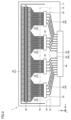
- FIG. 2 is a schematic plan view of the thermal print head according to the first embodiment.
- FIG. 3 is a schematic partially enlarged plan view of the thermal print head according to the first embodiment.
- FIG. 4 is a schematic partially enlarged cross-sectional view of the thermal print head according to the first embodiment.
- FIG. 5 is a schematic partial enlarged cross-sectional view of the thermal print head according to the first embodiment.
- FIG. 6 is a schematic partial enlarged sectional view showing one step of the method for manufacturing the thermal print head according to the first embodiment.
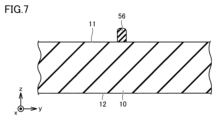
- FIG. 7 is a schematic partially enlarged cross-sectional view showing one step of the method for manufacturing the thermal print head according to the first embodiment.
- FIG. 1 is a schematic cross-sectional view of a thermal print head according to a first embodiment.
- FIG. 2 is a schematic plan view of the thermal print head according to the first embodiment.
- FIG. 3 is a schematic
- FIG. 8 is a schematic partially enlarged cross-sectional view showing the next step after the steps shown in FIGS. 6 and 7 in the method for manufacturing the thermal print head according to the first embodiment.
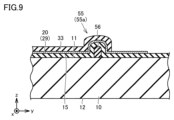
- FIG. 9 is a schematic partially enlarged cross-sectional view showing the next step after the steps shown in FIGS. 6 and 7 in the method for manufacturing a thermal print head according to the first embodiment.
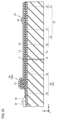
- FIG. 10 is a schematic partially enlarged sectional view showing the next step after the steps shown in FIGS. 8 and 9 in the method for manufacturing the thermal print head of the first embodiment.
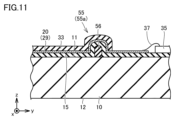
- FIG. 11 is a schematic partially enlarged cross-sectional view showing a step subsequent to the steps shown in FIGS. 8 and 9 in the method for manufacturing a thermal print head according to the first embodiment.
- FIG. 12 is a schematic partial enlarged cross-sectional view showing a step subsequent to the step shown in FIGS. 10 and 11 in the method for manufacturing a thermal print head according to the first embodiment.
- FIG. 13 is a schematic partial enlarged cross-sectional view showing a step subsequent to the step shown in FIGS. 10 and 11 in the method for manufacturing a thermal print head according to the first embodiment.
- FIG. 14 is a schematic partial enlarged cross-sectional view of the thermal print head according to the second embodiment.
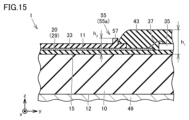
- FIG. 15 is a schematic partial enlarged cross-sectional view of the thermal print head according to the second embodiment.
- FIG. 16 is a schematic partial enlarged sectional view showing one step of the method for manufacturing a thermal print head according to the second embodiment.
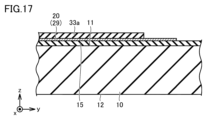
- FIG. 17 is a schematic partially enlarged sectional view showing one step of the method for manufacturing a thermal print head according to the second embodiment.
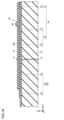
- FIG. 18 is a schematic partial enlarged sectional view showing the next step after the steps shown in FIGS. 16 and 17 in the method for manufacturing a thermal print head according to the second embodiment.
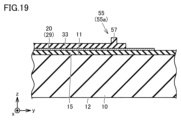
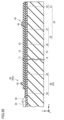
- FIG. 19 is a schematic partially enlarged sectional view showing the next step after the steps shown in FIGS. 16 and 17 in the method for manufacturing a thermal print head according to the second embodiment.
- FIG. 20 is a schematic partial enlarged sectional view showing the next step after the steps shown in FIGS. 18 and 19 in the method for manufacturing a thermal print head according to the second embodiment.
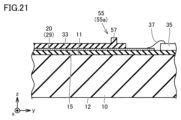
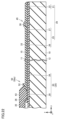
- FIG. 21 is a schematic partial enlarged sectional view showing the next step after the steps shown in FIGS.
- FIG. 22 is a schematic partial enlarged cross-sectional view showing the next step after the steps shown in FIGS. 20 and 21 in the method for manufacturing a thermal print head according to the second embodiment.
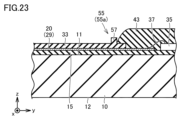
- FIG. 23 is a schematic partial enlarged sectional view showing the next step after the steps shown in FIGS. 20 and 21 in the method for manufacturing a thermal print head according to the second embodiment.
- FIG. 24 is a schematic partially enlarged cross-sectional view of the thermal print head according to the third embodiment.
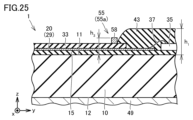
- FIG. 25 is a schematic partially enlarged cross-sectional view of the thermal print head according to the third embodiment.
- FIG. 26 is a schematic partially enlarged cross-sectional view showing one step of the method for manufacturing a thermal print head according to the third embodiment.
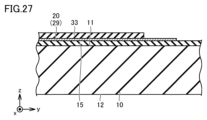
- FIG. 27 is a schematic partial enlarged cross-sectional view showing one step of the method for manufacturing a thermal print head according to the third embodiment.
- FIG. 28 is a schematic partial enlarged sectional view showing the next step after the steps shown in FIGS. 26 and 27 in the method for manufacturing a thermal print head according to the third embodiment.
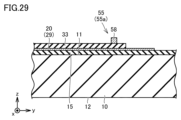
- FIG. 29 is a schematic partial enlarged sectional view showing the next step after the steps shown in FIGS. 26 and 27 in the method for manufacturing a thermal print head according to the third embodiment.
- FIG. 30 is a schematic partial enlarged sectional view showing the next step after the steps shown in FIGS.
- FIG. 31 is a schematic partial enlarged sectional view showing the next step after the steps shown in FIGS. 28 and 29 in the method for manufacturing a thermal print head according to the third embodiment.
- FIG. 32 is a schematic partial enlarged sectional view showing the next step after the steps shown in FIGS. 30 and 31 in the method for manufacturing a thermal print head according to the third embodiment.
- FIG. 33 is a schematic partial enlarged sectional view showing the next step after the steps shown in FIGS. 30 and 31 in the method for manufacturing a thermal print head according to the third embodiment.
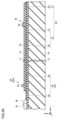
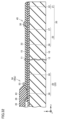
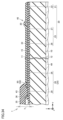
- FIG. 34 is a schematic partially enlarged cross-sectional view of the thermal print head according to the fourth embodiment.
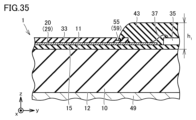
- FIG. 35 is a schematic partially enlarged cross-sectional view of the thermal print head according to the fourth embodiment.
- FIG. 36 is a schematic partial enlarged sectional view showing one step of the method for manufacturing a thermal print head according to the fourth embodiment.
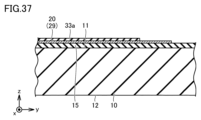
- FIG. 37 is a schematic partial enlarged sectional view showing one step of the method for manufacturing a thermal print head according to the fourth embodiment.
- FIG. 38 is a schematic partial enlarged sectional view showing the next step after the steps shown in FIGS. 36 and 37 in the method for manufacturing a thermal print head according to the fourth embodiment.
- FIG. 39 is a schematic partial enlarged sectional view showing the next step after the steps shown in FIGS. 36 and 37 in the method for manufacturing a thermal print head according to the fourth embodiment.
- FIG. 36 is a schematic partial enlarged sectional view showing one step of the method for manufacturing a thermal print head according to the fourth embodiment.
- FIG. 38 is a schematic partial enlarged sectional view showing the next step after the steps shown in FIGS. 36 and 37 in the method for
- FIG. 40 is a schematic partially enlarged sectional view showing the next step after the steps shown in FIGS. 38 and 39 in the method for manufacturing a thermal print head according to the fourth embodiment.
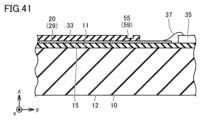
- FIG. 41 is a schematic partial enlarged sectional view showing the next step after the steps shown in FIGS. 38 and 39 in the method for manufacturing a thermal print head according to the fourth embodiment.
- FIG. 42 is a schematic partially enlarged sectional view showing the next step after the steps shown in FIGS. 40 and 41 in the method for manufacturing a thermal print head according to the fourth embodiment.
- FIG. 43 is a schematic partial enlarged sectional view showing the next step after the steps shown in FIGS. 40 and 41 in the method for manufacturing a thermal print head according to the fourth embodiment.
- the thermal print head 1 is an electronic device that prints on a print medium 47 such as thermal paper by selectively generating heat in a plurality of heat generating units 31 (see FIG. 3).
- the thermal print head 1 includes a substrate 10, a glaze layer 15, a wiring layer 20, a resistor layer 30, a protective layer 33, a drive circuit 35, conductive wires 36 and 37, a connector 40, and a sealing member. 43, a heat sink 49, a first resin flow stopper 50, and a second resin flow stopper 55.
- the first resin flow stopper 50 includes a protrusion 51
- the second resin flow stopper 55 includes a protrusion 56.
- the substrate 10 has a main surface 11 and a back surface 12 opposite to the main surface 11.
- the main surface 11 and the back surface 12 each extend in the x direction and the y direction perpendicular to the x direction.
- the x direction is the longitudinal direction of the substrate 10 and the main scanning direction of the thermal print head 1.
- the y direction is the lateral direction of the substrate 10 and the sub-scanning direction of the thermal print head 1.
- the z direction is the thickness direction of the substrate 10.
- the normal direction of the main surface 11 is the z direction perpendicular to the x direction and the y direction.
- the main surface 11 faces the +z direction.
- the back surface 12 faces the main surface 11 in the z direction.
- the back surface 12 faces the -z direction.
- the substrate 10 is, for example, a ceramic substrate such as alumina, or a glass substrate such as a soda lime glass substrate, a borosilicate glass substrate, or a quartz glass substrate.
- the substrate 10 has electrical insulation properties.
- the protrusion 51 is arranged on the main surface 11.
- protrusion 51 is arranged between resistor layer 30 and drive circuit 35 .
- the protrusion 51 is arranged between the resistor layer 30 and the terminal portions 28 of the plurality of individual wirings 25 .
- the longitudinal direction of the protrusion 51 is the x direction
- the transverse direction of the protrusion 51 is the y direction.
- the protrusion 56 is arranged on the main surface 11.
- the protrusion 56 is arranged between the drive circuit 35 and the connector 40.
- the longitudinal direction of the protrusion 56 is the x direction
- the transverse direction of the protrusion 56 is the y direction.
- the protrusions 51 and 56 are made of, for example, low-temperature co-fired ceramic (LTCC ceramic), high melting point metal, or glass mixed with silicon (Si) powder.
- LTCC ceramic is a ceramic material obtained by firing an LTCC slurry containing ceramic powder such as alumina and glass powder.
- the high melting point metal is, for example, tungsten (W), tantalum (Ta), molybdenum (Mo) or niobium (Nb).
- glaze layer 15 is disposed on at least a portion of main surface 11 and protrusions 51, 56, and covers at least a portion of main surface 11 and protrusions 51, 56. There is. Glaze layer 15 is arranged between substrate 10 and resistor layer 30 in the normal direction of main surface 11 . Glaze layer 15 may cover the entire main surface 11 .
- the glaze layer 15 is made of, for example, a material containing amorphous glass such as SiO 2 -BaO-Al 2 O 3 -SnO-ZnO glass.
- wiring layer 20 is arranged on main surface 11. Specifically, the wiring layer 20 is arranged on the glaze layer 15.
- the wiring layer 20 constitutes a conductive path for supplying electricity to the plurality of heat generating parts 31 of the resistor layer 30.
- the wiring layer 20 is electrically connected to the plurality of heat generating parts 31 and is in contact with the resistor layer 30 .
- the wiring layer 20 is made of a conductive material such as gold (Au) paste, for example.
- the thickness of the wiring layer 20 is, for example, 0.6 ⁇ m or more and 1.2 ⁇ m or less.
- the wiring layer 20 includes a common wiring 21, a plurality of individual wirings 25, and a plurality of lead wirings 29.
- the plurality of individual wirings 25 are separated from the common wiring 21 and the plurality of lead wirings 29.
- the common wiring 21 is electrically connected to the plurality of heat generating parts 31.
- the common wiring 21 includes a base 22 and a plurality of extensions 23.
- the base portion 22 is disposed on one side (+y side) in the y direction with respect to the resistor layer 30.
- the longitudinal direction of the base 22 is the x direction
- the lateral direction of the base 22 is the y direction.
- the base 22 is spaced apart from the resistor layer 30 in the y direction.
- the plurality of extending portions 23 extend from the base portion 22 toward the resistor layer 30 in the ⁇ y direction.
- the plurality of extension parts 23 are arranged at equal intervals along the x direction.
- Each of the plurality of individual wirings 25 is electrically connected to a corresponding one of the plurality of heat generating parts 31. Specifically, as shown in FIGS. 3 and 4, the plurality of individual wirings 25 are arranged along the x direction. Each of the plurality of individual wirings 25 includes a terminal portion 28 and an extension portion 26.
- the terminal portion 28 is arranged on the other side ( ⁇ y side) of the resistor layer 30 in the y direction.
- the terminal portion 28 is arranged on the side opposite to the base portion 22 of the common wiring 21 with respect to the resistor layer 30 in the y direction.
- the conductive wire 36 is bonded to the terminal portion 28 and the drive circuit 35.
- the terminal portion 28 is electrically connected to the drive circuit 35 through a conductive wire 36.
- the extending portion 26 is connected to the terminal portion 28.
- An end portion 27 of the extending portion 26 on the opposite side from the terminal portion 28 is in contact with the resistor layer 30 .
- the end portion 27 of the extension portion 26 overlaps with the resistor layer 30 .
- the plurality of lead wires 29 are arranged on the other side ( ⁇ y side) of the drive circuit 35 in the y direction.
- the plurality of lead wires 29 are arranged on the opposite side of the drive circuit 35 from the resistor layer 30 and the plurality of individual wires 25 .
- the conductive wire 37 is bonded to the drive circuit 35 and the plurality of lead wires 29.
- the plurality of lead wires 29 are electrically connected to the drive circuit 35 through conductive wires 37.
- the plurality of lead wires 29 are connected to the connector 40.
- the resistor layer 30 is arranged on the glaze layer 15 and the wiring layer 20.
- resistor layer 30 In the normal direction (z direction) of main surface 11 , resistor layer 30 is disposed on the opposite side of substrate 10 with respect to glaze layer 15 .
- the resistor layer 30 is in contact with the glaze layer 15.
- the longitudinal direction of the resistor layer 30 is the x direction
- the transversal direction of the resistor layer 30 is the y direction.
- the resistor layer 30 intersects the plurality of extensions 23 of the common wiring 21 and the ends 27 of the extensions 26 of the plurality of individual wirings 25 .
- the resistor layer 30 covers a part of each of the plurality of extensions 23 of the common wiring 21 and a part of the end 27 of each of the extensions 26 of the plurality of individual wirings 25.
- the resistor layer 30 straddles the plurality of extensions 23 of the common wiring 21 and the ends 27 of the extensions 26 of the plurality of individual wirings 25.
- the resistor layer 30 is made of a material having higher electrical resistivity than the wiring layer 20.
- the material of the resistor layer 30 is, for example, a conductive paste containing ruthenium oxide (RuO 2 ) particles and glass frit.
- the thickness of the resistor layer 30 is, for example, 6 ⁇ m or more and 10 ⁇ m or less.
- the resistor layer 30 includes a plurality of heat generating parts 31.
- the region sandwiched between is one of the plurality of heat generating parts 31.
- the plurality of heat generating parts 31 are in contact with the glaze layer 15.
- the plurality of heat generating parts 31 are arranged along the x direction.
- the protective layer 33 covers the glaze layer 15, the wiring layer 20, and the plurality of heat generating parts 31.
- the protective layer 33 is in contact with the glaze layer 15, the wiring layer 20, and the plurality of heat generating parts 31. Portions of the wiring layer 20 to which the conductive wires 36 and 37 are bonded (for example, the terminal portion 28 and the like) are exposed from the protective layer 33.
- the protective layer 33 is made of, for example, a material containing amorphous glass, similar to the glaze layer 15.
- the drive circuit 35 is mounted on the main surface 11.
- the drive circuit 35 is fixed to the glaze layer 15 using a bonding member (not shown) such as an adhesive.
- the drive circuit 35 may be mounted on a wiring board (not shown) separated from the board 10.
- the wiring board is, for example, a printed circuit board (PCB).
- the drive circuit 35 is electrically connected to the wiring layer 20 (specifically, the plurality of individual wirings 25 and the plurality of lead wirings 29).
- the drive circuit 35 individually applies current to the plurality of heat generating parts 31 through the plurality of individual wirings 25 .
- the heat generating part 31 to which the current is applied selectively generates heat.
- the connector 40 is arranged on the opposite side of the resistor layer 30 with respect to the drive circuit 35 in the y direction.
- the connector 40 is attached to the end of the substrate 10 in the y direction, for example.
- the connector 40 is electrically connected to the drive circuit 35 through the wiring layer 20 (specifically, the plurality of lead wires 29).
- connector 40 includes multiple pins (not shown). Some of the plurality of pins are electrically connected to the plurality of lead wires 29. Another part of the plurality of pins is electrically connected to a wiring (not shown) that is electrically connected to the base 22 of the common wiring 21 .
- Connector 40 is connected to a thermal printer. A constant voltage is applied from the thermal printer to the common wiring 21 through the connector 40.
- the sealing member 43 covers the drive circuit 35 and seals the drive circuit 35.
- the sealing member 43 further covers the conductive wires 36 and 37, and further seals the conductive wires 36 and 37.
- the sealing member 43 further covers portions of the plurality of individual wirings 25 that are exposed from the protective layer 33 (for example, the terminal portions 28, etc.).
- the sealing member 43 has electrical insulation.
- the viscosity of the sealing resin material is, for example, 65 Pa ⁇ s or less.
- the viscosity of the sealing resin material may be 60 Pa ⁇ s or less, or may be 55 Pa ⁇ s or less. Therefore, the height h1 of the sealing member 43 can be reduced.
- the viscosity of the sealing resin material is measured using a B-type rotational viscometer (Brookfield, spindle 5) at a temperature of 25.0° C. and a rotation speed of 20 rpm.
- the height h1 of the sealing member 43 is, for example, 300 ⁇ m or less. In this specification, the height h 1 of the sealing member 43 is the maximum height of the sealing member 43 from the main surface 11 .
- the sealing member 43 is made of an insulating resin material such as epoxy resin, for example.
- an insulating resin material such as epoxy resin manufactured by Henkel (model number COB011-3A) can be used.
- the heat sink 49 is arranged on the opposite side of the substrate 10 from the glaze layer 15 and the resistor layer 30 in the z direction.
- the heat sink 49 is attached to the back surface 12 of the substrate 10 by fasteners or bonding members (not shown) such as screws.
- Heat sink 49 supports substrate 10.
- the heat sink 49 is made of a highly thermally conductive material such as aluminum (Al), for example.
- Al aluminum
- a portion of the heat generated from the plurality of heat generating parts 31 of the resistor layer 30 is transmitted to the heat sink 49 through the substrate 10.
- the heat transmitted to the heat sink 49 is radiated to the outside of the thermal print head 1.
- the heat sink 49 can prevent excessive temperature rise of the substrate 10.
- the heat sink 49 supports the board 10 and the wiring board.
- the thermal print head 1 includes a protrusion 45 formed on the main surface 11.
- the protrusion 45 includes a glaze layer 15 , a wiring layer 20 , a plurality of heat generating parts 31 , and a protective layer 33 .
- the glaze layer 15, the wiring layer 20, the plurality of heat generating parts 31, and the protective layer 33 are laminated on the main surface 11 in this order in the normal direction (z direction) of the main surface 11.
- the first resin flow stopper 50 stops the flow of the sealing resin material.
- the first resin flow stopper 50 is in contact with the sealing member 43.
- the first resin flow stopper 50 is arranged between the drive circuit 35 and the resistor layer 30 .
- the first resin flow stopper 50 is arranged between the drive circuit 35 and the protrusion 45 . Therefore, the first resin flow stopper 50 prevents the sealing resin material from coming into contact with the resistor layer 30 and the protrusion 45 .
- the sealing member 43 is separated from the resistor layer 30 and the protrusion 45 by the first resin flow stopper 50 .
- the longitudinal direction of the first resin flow stopper 50 is the x direction
- the width direction of the first resin flow stopper 50 is the y direction.
- the first resin flow stopper 50 is, for example, a convex portion 50a formed on the main surface 11.
- the first resin flow stopper 50 (convex portion 50a) includes a protrusion 51, a glaze layer 15, a wiring layer 20 (specifically, a plurality of individual wirings 25), and a protective layer 33.
- the height h 2 of the first resin flow stopper 50 is lower than the height h 1 of the sealing member 43 .
- the height h2 of the first resin flow stopper 50 is, for example, 250 ⁇ m or less. In this specification, the height h2 of the first resin stop 50 is the maximum height of the first resin stop 50 from the main surface 11.
- the second resin flow stopper 55 stops the flow of the sealing resin material.
- the second resin flow stopper 55 is in contact with the sealing member 43 .
- the second resin flow stopper 55 is arranged between the drive circuit 35 and the connector 40 . Therefore, the second resin flow stopper 55 prevents the sealing resin material from coming into contact with the connector 40 .
- the sealing member 43 is separated from the connector 40 by the second resin flow stopper 55 .
- the longitudinal direction of the second resin stopper 55 is the x direction
- the lateral direction of the second resin stopper 55 is the y direction.
- the second resin flow stopper 55 is, for example, a convex portion 55a formed on the main surface 11.
- the second resin flow stopper 55 (convex portion 55a) includes a protrusion 56, a glaze layer 15, a wiring layer 20 (specifically, a plurality of lead wires 29), and a protective layer 33.
- the height h 3 of the second resin flow stopper 55 is lower than the height h 1 of the sealing member 43 .
- the height h3 of the second resin flow stopper 55 is, for example, 250 ⁇ m or less. In this specification, the height h3 of the second resin stop 55 is the maximum height of the second resin stop 55 from the main surface 11.
- thermal print head 1 of this embodiment A method of manufacturing the thermal print head 1 of this embodiment will be described with reference mainly to FIGS. 6 to 13.
- the method for manufacturing thermal print head 1 includes a step of forming protrusions 51 and 56 on main surface 11 of substrate 10.
- the protrusions 51 and 56 are made of, for example, LTCC ceramic, high melting point metal, or glass mixed with Si powder.
- the protrusions 51 and 56 are made of LTCC ceramic
- the protrusions 51 and 56 are formed, for example, by the following method.
- LTCC slurry is applied onto a portion of the main surface 11.
- the LTCC slurry includes LTCC semilac powder, glass, binder, and solvent.
- the LTCC slurry is fired. In this way, protrusions 51 and 56 are formed.
- the firing temperature of the LTCC slurry is, for example, 870°C or higher and 900°C or lower.
- the substrate 10 is a ceramic substrate
- the firing temperature of the LTCC slurry is lower than the firing temperature of the ceramic substrate.
- the substrate 10 is a glass substrate
- the firing temperature of the LTCC slurry is lower than the glass transition temperature of the glass substrate.
- the protrusions 51 and 56 are made of a high melting point metal
- the protrusions 51 and 56 are formed, for example, by one of the following three methods.
- a high melting point metal layer is deposited on the main surface 11. Etching the refractory metal layer.
- a mask with openings is formed on the main surface 11.
- a high melting point metal layer is deposited on the main surface 11 of the substrate 10 and the mask. Lift off the mask.
- a high melting point metal layer is evaporated onto a portion of the major surface 11 through a metal mask located between the evaporation source and the substrate 10 and provided with an opening.
- the protrusions 51 and 56 are formed of glass mixed with Si powder
- the protrusions 51 and 56 are formed, for example, by the following method.
- a paste containing glass mixed with Si powder is applied onto a portion of the main surface 11 by, for example, screen printing.
- the paste is fired. In this way, protrusions 51 and 56 are formed.
- the method for manufacturing thermal print head 1 includes a step of forming glaze layer 15 covering at least a portion of main surface 11 and protrusions 51 and 56. Specifically, a paste containing amorphous glass is applied onto the main surface 11 and the projections 51 and 56 by, for example, screen printing. The paste is fired. In this way, glaze layer 15 is formed.
- the method for manufacturing thermal print head 1 includes a step of forming wiring layer 20 on glaze layer 15. Specifically, a resinate paste containing gold as a main component is applied onto the glaze layer 15 by, for example, screen printing. The resinate paste is fired. The fired resinate paste is patterned by etching or the like. In this way, the wiring layer 20 is formed.
- the wiring layer 20 includes a common wiring 21, a plurality of individual wirings 25, and a plurality of lead wirings 29.
- the method for manufacturing thermal print head 1 of this embodiment includes a step of forming resistor layer 30 on glaze layer 15 and wiring layer 20. Specifically, a conductive paste is applied onto the glaze layer 15 and the wiring layer 20 by, for example, screen printing. The conductive paste is fired. In this way, the resistor layer 30 is formed.
- the resistor layer 30 includes a plurality of heat generating parts 31.
- the wiring layer 20 is electrically connected to the plurality of heat generating parts 31 and is in contact with the resistor layer 30 .
- the method for manufacturing the thermal print head 1 includes a step of forming a protective layer 33 that covers the plurality of heat generating parts 31 and the wiring layer 20. Specifically, a paste containing amorphous glass is applied onto the glaze layer 15, the plurality of heat generating parts 31, and a portion of the wiring layer 20 by, for example, screen printing. The paste is fired. In this way, the protective layer 33 is formed. Portions of the wiring layer 20 to which the conductive wires 36 and 37 are bonded (for example, the terminal portion 28 and the like) are exposed from the protective layer 33.
- the method for manufacturing thermal print head 1 of this embodiment includes a step of mounting drive circuit 35 on main surface 11.
- the drive circuit 35 is fixed to the glaze layer 15 using a bonding member (not shown) such as an adhesive.
- the method for manufacturing thermal print head 1 according to the present embodiment includes a step of bonding conductive wires 36 and 37.
- the conductive wire 36 is bonded to the drive circuit 35 and the terminal portions 28 of the plurality of individual wirings 25 using a wire bonder (not shown).
- the conductive wire 37 is bonded to the drive circuit 35 and the plurality of lead wires 29 using a wire bonder (not shown).
- the method for manufacturing the thermal print head 1 includes a step of sealing the drive circuit 35 with a sealing member 43.
- a sealing resin material is potted onto the drive circuit 35.
- the sealing resin material spreads.
- the first resin flow stopper 50 and the second resin flow stopper 55 stop the flow of the sealing resin material. Therefore, the sealing resin material remains in the area between the first resin stopper 50 and the second resin stopper 55.
- the first resin flow stopper 50 prevents the sealing resin material from contacting the resistor layer 30 and the projections 45 .
- the second resin flow stopper 55 prevents the sealing resin material from contacting the connector 40 .
- the sealing resin material is cured. In this way, the sealing member 43 is formed.
- the sealing member 43 is separated from the resistor layer 30 and the protrusion 45 by the first resin flow stopper 50 .
- the sealing member 43 is separated from the connector 40 by the second resin flow stopper 55 .
- the method for manufacturing the thermal print head 1 of this embodiment includes the step of attaching the connector 40 to the substrate 10.
- Connector 40 includes multiple pins (not shown). Some of the plurality of pins are electrically connected to the plurality of lead wires 29. Another part of the plurality of pins is electrically connected to a wiring (not shown) that is electrically connected to the base 22 of the common wiring 21 .
- the method of manufacturing the thermal print head 1 according to this embodiment includes the step of attaching a heat sink 49 to the substrate 10. Specifically, the heat sink 49 is attached to the back surface 12 of the substrate 10 by a fastening member or bonding member (not shown) such as a screw. In this way, the thermal print head 1 shown in FIGS. 1 to 5 is obtained.
- the protrusion 45 faces a platen roller 46 included in the thermal printer.
- the platen roller 46 sends out the print medium 47 toward the thermal print head 1 .
- the print medium 47 is sent out in the +y direction.
- a print medium 47 is sandwiched between the protrusion 45 and the platen roller 46.
- the drive circuit 35 individually applies current to the plurality of heat generating parts 31 through the plurality of individual wirings 25.
- the heat generating part 31 to which the current is applied selectively generates heat.
- Heat generated by the plurality of heat generating parts 31 is transmitted to the print medium 47. In this way, printing is performed on the print medium 47 using the thermal print head 1.
- a portion of the heat generated by the plurality of heat generating parts 31 is transmitted to the glaze layer 15. This heat is stored in the glaze layer 15. Glaze layer 15 functions as a heat storage layer. The remainder of the heat generated by the plurality of heat generating parts 31 is released to the outside of the thermal print head 1 through the substrate 10 and the heat sink 49.
- the thermal print head 1 of this embodiment includes a substrate 10 having a main surface 11, a wiring layer 20 disposed on the main surface 11, a resistor layer 30, a drive circuit 35, and a sealing member 43. , and a first resin flow stopper 50.
- the resistor layer 30 is arranged on the wiring layer 20 and includes a plurality of heat generating parts 31.
- the wiring layer 20 is electrically connected to the plurality of heat generating parts 31 and is in contact with the resistor layer 30 .
- the drive circuit 35 is mounted on the main surface 11 and electrically connected to the wiring layer 20.
- the sealing member 43 is formed by curing a sealing resin material, and seals the drive circuit 35.
- the first resin flow stopper 50 stops the flow of the sealing resin material.
- the first resin flow stopper 50 is disposed between the drive circuit 35 and the resistor layer 30 in a plan view of the main surface 11, and is in contact with the sealing member 43.
- the first resin flow stopper 50 prevents the sealing resin material from contacting the resistor layer 30. .
- the height h1 of the sealing member 43 can be reduced, and it can be ensured that the sealing member 43 is separated from the resistor layer 30. Therefore, even if the drive circuit 35 is placed closer to the resistor layer 30, the sealing member 43 can be prevented from coming into contact with the print medium 47.
- the size of the thermal print head 1 in the y direction can be reduced. According to the thermal print head 1 of this embodiment, the sealing member 43 that seals the drive circuit 35 can be prevented from coming into contact with the print medium 47, and the thermal print head 1 can be downsized.
- the height h2 of the first resin flow stopper 50 is lower than the height h1 of the sealing member 43.
- the sealing member 43 that seals the drive circuit 35 can be prevented from coming into contact with the print medium 47, and the thermal print head 1 can be downsized.
- the height h2 of the first resin flow stopper 50 is 250 ⁇ m or less.
- the sealing member 43 that seals the drive circuit 35 can be prevented from coming into contact with the print medium 47, and the thermal print head 1 can be downsized.
- the height h1 of the sealing member 43 is 300 ⁇ m or less.
- the sealing member 43 can be prevented from contacting the print medium 47.
- the sealing member 43 that seals the drive circuit 35 can be prevented from coming into contact with the print medium 47, and the thermal print head 1 can be downsized.
- the viscosity of the sealing resin material is 65 Pa ⁇ s or less.
- the height h1 of the sealing member 43 is reduced. Placing the drive circuit 35 closer to the resistor layer 30 may also prevent the sealing member 43 from contacting the print medium 47. According to the thermal print head 1 of this embodiment, the sealing member 43 that seals the drive circuit 35 can be prevented from coming into contact with the print medium 47, and the thermal print head 1 can be downsized.
- the first resin flow stopper 50 is a convex portion 50a formed on the main surface 11.
- the convex portion 50a prevents the sealing resin material from contacting the resistor layer 30.
- the height h1 of the sealing member 43 can be reduced, and it can be ensured that the sealing member 43 is separated from the resistor layer 30. Therefore, even if the drive circuit 35 is placed closer to the resistor layer 30, the sealing member 43 can be prevented from coming into contact with the print medium 47.
- the sealing member 43 that seals the drive circuit 35 can be prevented from coming into contact with the print medium 47, and the thermal print head 1 can be downsized.
- the convex portion 50a includes a protrusion 51 formed on the main surface 11. Even if the viscosity of the sealing resin material is lowered to reduce the height h1 of the sealing member 43, the convex portion 50a prevents the sealing resin material from contacting the resistor layer 30. The height h1 of the sealing member 43 can be reduced, and it can be ensured that the sealing member 43 is separated from the resistor layer 30. Therefore, even if the drive circuit 35 is placed closer to the resistor layer 30, the sealing member 43 can be prevented from coming into contact with the print medium 47. According to the thermal print head 1 of this embodiment, the sealing member 43 that seals the drive circuit 35 can be prevented from coming into contact with the print medium 47, and the thermal print head 1 can be downsized.
- the protrusion 51 is made of low-temperature co-fired ceramic, high melting point metal, or glass mixed with Si powder.
- the convex portion 50a prevents the sealing resin material from contacting the resistor layer 30.
- the height h1 of the sealing member 43 can be reduced, and it can be ensured that the sealing member 43 is separated from the resistor layer 30. Therefore, even if the drive circuit 35 is placed closer to the resistor layer 30, the sealing member 43 can be prevented from coming into contact with the print medium 47.
- the sealing member 43 that seals the drive circuit 35 can be prevented from coming into contact with the print medium 47, and the thermal print head 1 can be downsized.
- the thermal print head 1 of this embodiment further includes a connector 40 attached to the substrate 10 and a second resin flow stopper 55 that stops the flow of the sealing resin material.
- the connector 40 is disposed on the side opposite to the resistor layer 30 with respect to the drive circuit 35 in a plan view of the main surface 11, and is electrically connected to the drive circuit 35 through the wiring layer 20.
- the second resin flow stopper 55 is disposed between the drive circuit 35 and the connector 40 in a plan view of the main surface 11, and is in contact with the sealing member 43.
- the second resin flow stopper 55 prevents the sealing resin material from contacting the connector 40.
- the height h1 of the sealing member 43 can be reduced, the electrical connection function of the connector 40 can be secured, and even if the drive circuit 35 is placed closer to the resistor layer 30, the sealing member 43 can be printed. Contacting the medium 47 may be prevented.
- the size of the thermal print head 1 in the y direction can be reduced. According to the thermal print head 1 of this embodiment, the sealing member 43 that seals the drive circuit 35 can be prevented from coming into contact with the print medium 47, and the thermal print head 1 can be downsized.
- the wiring layer 20 includes a common wiring 21 and a plurality of individual wirings 25.
- the common wiring 21 is electrically connected to the plurality of heat generating parts 31.
- Each of the plurality of individual wirings 25 is electrically connected to a corresponding one of the plurality of heat generating parts 31.
- the first resin flow stopper 50 prevents the sealing resin material from contacting the resistor layer 30. .
- the height h1 of the sealing member 43 can be reduced, and it can be ensured that the sealing member 43 is separated from the resistor layer 30. Therefore, even if the drive circuit 35 is placed closer to the resistor layer 30, the sealing member 43 can be prevented from coming into contact with the print medium 47.
- the sealing member 43 that seals the drive circuit 35 can be prevented from coming into contact with the print medium 47, and the thermal print head 1 can be downsized.
- the thermal print head 1 of this embodiment further includes a glaze layer 15 that covers at least a portion of the main surface 11. Glaze layer 15 is arranged between substrate 10 and resistor layer 30 in the normal direction of main surface 11 .
- the glaze layer 15 stores heat emitted from the plurality of heat generating parts 31 of the resistor layer 30.
- the glaze layer 15 suppresses excessive transfer of heat emitted from the plurality of heat generating parts 31 of the resistor layer 30 to the substrate 10. Therefore, the print quality of the thermal print head 1 can be improved.
- the thermal print head 1 according to the present embodiment has the same configuration as the thermal print head 1 according to the first embodiment, but differs from the thermal print head 1 according to the first embodiment mainly in the convex portions 50a and 55a.
- the first resin flow stopper 50 is a convex portion 50a formed on the main surface 11.
- Protective layer 33 includes protrusions 52 .
- the protrusion 50a includes a protrusion 52 instead of the protrusion 51 of the first embodiment.
- the convex portion 50a includes a glaze layer 15, a wiring layer 20 (specifically, a plurality of individual wirings 25), and a protective layer 33 including a protrusion 52.
- the protrusion 52 stops the flow of the sealing resin material.
- the protrusion 52 is in contact with the sealing member 43.
- protrusion 52 is arranged between drive circuit 35 and resistor layer 30 .
- the protrusion 52 is arranged between the drive circuit 35 and the protrusion 45 . Therefore, the protrusion 52 prevents the sealing resin material from coming into contact with the resistor layer 30 and the protrusion 45 .
- the protrusion 52 separates the sealing member 43 from the resistor layer 30 and the protrusion 45 .
- the longitudinal direction of the protrusion 52 is the x direction
- the transverse direction of the protrusion 52 is the y direction.
- the second resin flow stopper 55 is a convex portion 55a formed on the main surface 11.
- Protective layer 33 includes protrusions 57 .
- the convex portion 55a includes a protrusion 57 instead of the protrusion 56 of the first embodiment.
- the convex portion 55 a includes a glaze layer 15 , a wiring layer 20 (specifically, a plurality of lead wires 29 ), and a protective layer 33 including a protrusion 57 .
- the protrusion 57 stops the flow of the sealing resin material.
- the protrusion 57 is in contact with the sealing member 43.
- the protrusion 57 is arranged between the drive circuit 35 and the connector 40. Therefore, the protrusion 57 prevents the sealing resin material from coming into contact with the connector 40.
- the protrusion 57 separates the sealing member 43 from the connector 40 .
- the longitudinal direction of the protrusion 57 is the x direction
- the transverse direction of the protrusion 57 is the y direction.
- a method for manufacturing the thermal print head 1 of this embodiment will be described with reference mainly to FIGS. 16 to 23.
- the method for manufacturing the thermal print head 1 according to the present embodiment includes the same steps as the method for manufacturing the thermal print head 1 according to the first embodiment, but mainly in the method for forming the convex portions 55a, 55a.
- the manufacturing method of the thermal print head 1 of the first embodiment is different from that of the first embodiment.
- the method for manufacturing thermal print head 1 includes the steps of forming a glaze layer 15 covering at least a portion of main surface 11, and forming a wiring layer 20 on glaze layer 15. and forming a resistor layer 30 on the glaze layer 15 and the wiring layer 20.
- the method for forming the glaze layer 15, the wiring layer 20, and the resistor layer 30 in this embodiment is the same as the method for forming the glaze layer 15, the wiring layer 20, and the resistor layer 30 in the first embodiment.
- the method for manufacturing the thermal print head 1 includes a step of forming a protective layer 33 that covers the plurality of heat generating parts 31 and the wiring layer 20.
- a paste containing amorphous glass is applied onto the glaze layer 15, the plurality of heat generating parts 31, and a portion of the wiring layer 20 by, for example, screen printing.
- the paste is fired.
- the base layer 33a is formed as shown in FIGS. 16 and 17.
- a portion of the wiring layer 20 to which the conductive wires 36 and 37 are bonded (for example, the terminal portion 28, etc.) is exposed from the base layer 33a.
- a paste containing amorphous glass is applied onto a portion of the base layer 33a, for example, by screen printing. Then, the paste is fired.
- protrusions 52 and 57 are formed on a portion of the base layer 33a.
- the protrusions 52 and 57 are made of, for example, the same material as the base layer 33a. In this way, the protective layer 33 composed of the base layer 33a and the protrusions 52 and 57 is formed.
- the method for manufacturing thermal print head 1 according to the present embodiment includes mounting drive circuit 35 on main surface 11, similar to the method for manufacturing thermal print head 1 according to Embodiment 1. and bonding the conductive wires 36 and 37.
- the method for manufacturing thermal print head 1 includes a step of sealing drive circuit 35 with sealing member 43.
- a sealing resin material is potted onto the drive circuit 35.
- the protrusions 52 and 57 stop the flow of the sealing resin material. Therefore, the protrusion 52 prevents the sealing resin material from coming into contact with the resistor layer 30 and the protrusion 45 .
- the protrusion 57 prevents the sealing resin material from contacting the connector 40.
- the sealing resin material remains in the area between the protrusions 52 and 57. Then, the sealing resin material is cured. In this way, the sealing member 43 is formed.
- the protrusion 52 separates the sealing member 43 from the resistor layer 30 and the protrusion 45 .
- the protrusion 57 separates the sealing member 43 from the connector 40 .
- the method for manufacturing the thermal print head 1 according to the present embodiment includes the steps of attaching the connector 40 to the substrate 10 and attaching the heat sink 49 to the substrate 10. Be prepared. In this way, the thermal print head 1 of this embodiment shown in FIGS. 14 and 15 is obtained.
- the thermal print head 1 of this embodiment has the following effects similar to the effects of the thermal print head 1 of the first embodiment.
- the thermal print head 1 of this embodiment further includes a protective layer 33 that covers the plurality of heat generating parts 31 and the wiring layer 20 and includes protrusions 52.
- the convex portion 50a includes a protrusion 52.
- the convex portion 50a prevents the sealing resin material from contacting the resistor layer 30.
- the height h1 of the sealing member 43 can be reduced, and it can be ensured that the sealing member 43 is separated from the resistor layer 30. Therefore, even if the drive circuit 35 is placed closer to the resistor layer 30, the sealing member 43 can be prevented from coming into contact with the print medium 47.
- the sealing member 43 that seals the drive circuit 35 can be prevented from coming into contact with the print medium 47, and the thermal print head 1 can be downsized.
- the thermal print head 1 according to the third embodiment will be described with reference to FIGS. 24 and 25.
- the thermal print head 1 according to the present embodiment has the same configuration as the thermal print head 1 according to the second embodiment, but differs from the thermal print head 1 according to the second embodiment mainly in the convex portions 50a and 55a.
- the first resin flow stopper 50 is a convex portion 50a formed on the main surface 11.
- the thermal print head 1 further includes a protrusion 53 provided on the protective layer 33.
- the protrusion 50a includes a protrusion 53 instead of the protrusion 52 of the second embodiment.
- the convex portion 50a includes a glaze layer 15, a wiring layer 20 (specifically, a plurality of individual wirings 25), a protective layer 33, and a protrusion 53.
- the protrusion 53 is made of a different material from the protective layer 33.
- the protrusion 53 is made of, for example, LTCC ceramic, a high melting point metal, or glass mixed with Si powder.
- the protrusion 53 stops the flow of the sealing resin material.
- the protrusion 53 is in contact with the sealing member 43.
- protrusion 53 is arranged between drive circuit 35 and resistor layer 30 .
- the protrusion 53 is arranged between the drive circuit 35 and the protrusion 45 . Therefore, the protrusion 53 prevents the sealing resin material from coming into contact with the resistor layer 30 and the protrusion 45 .
- the protrusion 53 separates the sealing member 43 from the resistor layer 30 and the protrusion 45 .
- the longitudinal direction of the protrusion 53 is the x direction
- the transverse direction of the protrusion 53 is the y direction.
- the second resin flow stopper 55 is a convex portion 55a formed on the main surface 11.
- the thermal print head 1 further includes a protrusion 58 provided on the protective layer 33.
- the convex portion 55a includes a protrusion 58 instead of the protrusion 57 of the second embodiment.
- the convex portion 55a includes a glaze layer 15, a wiring layer 20 (specifically, a plurality of lead wires 29), a protective layer 33, and a protrusion 58.
- the protrusion 58 is made of a different material from the protective layer 33.
- the protrusion 58 is made of, for example, LTCC ceramic, high melting point metal, or glass mixed with Si powder.
- the protrusion 58 stops the flow of the sealing resin material.
- the protrusion 58 is in contact with the sealing member 43.
- the protrusion 58 is arranged between the drive circuit 35 and the connector 40. Therefore, the protrusion 58 prevents the sealing resin material from contacting the connector 40.
- Protrusion 58 separates sealing member 43 from connector 40 .
- the longitudinal direction of the protrusion 58 is the x direction
- the transverse direction of the protrusion 58 is the y direction.
- a method for manufacturing the thermal print head 1 of this embodiment will be described with reference mainly to FIGS. 26 to 33.
- the method for manufacturing the thermal print head 1 according to the present embodiment includes the same steps as the method for manufacturing the thermal print head 1 according to the second embodiment, but mainly in the method for forming the convex portions 50a and 55a.
- the manufacturing method of the thermal print head 1 in No. 2 is different from that in No. 2.
- the method for manufacturing thermal print head 1 includes the steps of forming a glaze layer 15 covering at least a portion of main surface 11, and forming a wiring layer 20 on glaze layer 15. and forming a resistor layer 30 on the glaze layer 15 and the wiring layer 20.
- the method for forming the glaze layer 15, the wiring layer 20, and the resistor layer 30 in this embodiment is the same as the method for forming the glaze layer 15, the wiring layer 20, and the resistor layer 30 in the second embodiment.
- the method for manufacturing the thermal print head 1 includes a step of forming a protective layer 33 that covers the plurality of heat generating parts 31 and the wiring layer 20.
- the method for forming the protective layer 33 in this embodiment is the same as the method for forming the protective layer 33 in the first embodiment.
- the method for manufacturing thermal print head 1 includes a step of forming protrusions 53 and 58 on a portion of protective layer 33.
- the protrusions 53 and 58 are made of, for example, LTCC ceramic, high melting point metal, or glass mixed with Si powder.
- the protrusions 53 and 58 are made of LTCC ceramic
- the protrusions 53 and 58 are formed by the same method as in the case where the protrusions 51 and 56 are made of LTCC ceramic in the first embodiment.
- the protrusions 53 and 58 are made of a high melting point metal
- the protrusions 53 and 58 are formed by the same method as in the case where the protrusions 51 and 56 are made of a high melting point metal in the first embodiment.
- the protrusions 53 and 58 are formed of glass mixed with Si powder
- the protrusions 53 and 58 are different from those in which the protrusions 51 and 56 are formed of glass mixed with Si powder in the first embodiment. It is formed by the same method as in the case of
- the method for manufacturing the thermal print head 1 of the present embodiment includes mounting a drive circuit 35 on the main surface 11, similar to the method for manufacturing the thermal print head 1 of the second embodiment. and bonding the conductive wires 36 and 37.
- the method for manufacturing thermal print head 1 includes a step of sealing drive circuit 35 with sealing member 43.
- a sealing resin material is potted onto the drive circuit 35.
- the protrusions 53 and 58 stop the flow of the sealing resin material.
- the protrusion 53 prevents the sealing resin material from coming into contact with the resistor layer 30 and the protrusion 45 .
- the protrusion 58 prevents the sealing resin material from contacting the connector 40.
- the sealing resin material remains in the area between the protrusions 53 and 58. Then, the sealing resin material is cured. In this way, the sealing member 43 is formed.
- the protrusion 53 separates the sealing member 43 from the resistor layer 30 and the protrusion 45 .
- Protrusion 58 separates sealing member 43 from connector 40 .
- the method for manufacturing the thermal print head 1 according to the present embodiment includes the steps of attaching the connector 40 to the substrate 10 and attaching the heat sink 49 to the substrate 10. Be prepared. In this way, the thermal print head 1 of this embodiment shown in FIGS. 24 and 25 is obtained.
- the thermal print head 1 of this embodiment has the following effects similar to the effects of the thermal print head 1 of the second embodiment.
- the thermal print head 1 of the present embodiment further includes a protective layer 33 that covers the plurality of heat generating parts 31 and the wiring layer 20, and a protrusion 53 provided on the protective layer 33.
- the convex portion 50a includes a protrusion 53.
- the convex portion 50a prevents the sealing resin material from contacting the resistor layer 30.
- the height h1 of the sealing member 43 can be reduced, and it can be ensured that the sealing member 43 is separated from the resistor layer 30. Therefore, even if the drive circuit 35 is placed closer to the resistor layer 30, the sealing member 43 can be prevented from coming into contact with the print medium 47.
- the sealing member 43 that seals the drive circuit 35 can be prevented from coming into contact with the print medium 47, and the thermal print head 1 can be downsized.
- the protrusion 53 is made of low-temperature co-fired ceramic, high melting point metal, or glass mixed with Si powder.
- the convex portion 50a prevents the sealing resin material from contacting the resistor layer 30.
- the height h1 of the sealing member 43 can be reduced, and it can be ensured that the sealing member 43 is separated from the resistor layer 30. Therefore, even if the drive circuit 35 is placed closer to the resistor layer 30, the sealing member 43 can be prevented from coming into contact with the print medium 47.
- the sealing member 43 that seals the drive circuit 35 can be prevented from coming into contact with the print medium 47, and the thermal print head 1 can be downsized.
- the thermal print head 1 according to the fourth embodiment will be described with reference to FIGS. 34 and 35.
- the thermal print head 1 according to the present embodiment has the same configuration as the thermal print head 1 according to the second embodiment, but mainly the first resin flow stopper 50 and the second resin flow stopper 55 have the same structure as the thermal print head 1 according to the second embodiment. It is different from print head 1.
- a recess 54 is formed in the protective layer 33 in place of the protrusion 52 of the second embodiment.
- the first resin flow stopper 50 is a recess 54 .
- a portion of the sealing member 43 is within the recess 54 .
- the recess 54 stops the flow of the sealing resin material. Specifically, when the sealing resin material spreads over the protective layer 33 and flows into the recess 54, the spread of the sealing resin material stops at the recess 54 due to the surface tension of the sealing resin material.
- the recess 54 is arranged between the drive circuit 35 and the resistor layer 30 .
- the recess 54 is arranged between the drive circuit 35 and the protrusion 45 . Therefore, the recess 54 prevents the sealing resin material from coming into contact with the resistor layer 30 and the protrusion 45 .
- the sealing member 43 is separated from the resistor layer 30 and the protrusion 45 by the recess 54 .
- the longitudinal direction of the recess 54 is the x direction
- the lateral direction of the recess 54 is the y direction.
- a recess 59 is formed in the protective layer 33 in place of the protrusion 57 of the second embodiment.
- the second resin flow stopper 55 is a recess 59 .
- a portion of the sealing member 43 is within the recess 59 .
- the recess 59 stops the flow of the sealing resin material. Specifically, when the sealing resin material spreads over the protective layer 33 and flows into the recess 59, the spread of the sealing resin material stops at the recess 59 due to the surface tension of the sealing resin material.
- recess 59 is arranged between drive circuit 35 and connector 40 . Therefore, the recess 59 prevents the sealing resin material from coming into contact with the connector 40.
- the recess 59 separates the sealing member 43 from the connector 40 .
- the longitudinal direction of the recess 59 is the x direction
- the lateral direction of the recess 59 is the y direction.
- a method of manufacturing the thermal print head 1 of this embodiment will be described with reference mainly to FIGS. 36 to 43.
- the method for manufacturing the thermal print head 1 according to the present embodiment includes the same steps as the method for manufacturing the thermal print head 1 according to the second embodiment, but mainly includes the first resin flow stopper 50 and the second resin flow stopper.
- the method of forming 55 is different from the method of manufacturing the thermal print head 1 of the second embodiment.
- the method for manufacturing thermal print head 1 includes the steps of forming a glaze layer 15 covering at least a portion of main surface 11, and forming a wiring layer 20 on glaze layer 15. and forming a resistor layer 30 on the glaze layer 15 and the wiring layer 20.
- the method for forming the glaze layer 15, the wiring layer 20, and the resistor layer 30 in this embodiment is the same as the method for forming the glaze layer 15, the wiring layer 20, and the resistor layer 30 in the second embodiment.
- the method for manufacturing the thermal print head 1 includes a step of forming a protective layer 33 that covers the plurality of heat generating parts 31 and the wiring layer 20.
- a paste containing amorphous glass is applied onto the glaze layer 15, the plurality of heat generating parts 31, and a portion of the wiring layer 20 by, for example, screen printing.
- the paste is fired.
- a base layer 33a is formed.
- a portion of the wiring layer 20 to which the conductive wires 36 and 37 are bonded (for example, the terminal portion 28, etc.) is exposed from the base layer 33a.
- a paste containing amorphous glass is applied onto a portion of the base layer 33a, for example by screen printing.
- the paste is fired.
- recesses 54 and 59 are formed in the remaining portions of the base layer 33a to which the paste is not applied. In this way, the protective layer 33 provided with the recesses 54 and 59 is formed.
- the method for manufacturing thermal print head 1 according to the present embodiment includes mounting drive circuit 35 on main surface 11, similar to the method for manufacturing thermal print head 1 according to Embodiment 2. and bonding the conductive wires 36 and 37.
- the method for manufacturing thermal print head 1 includes a step of sealing drive circuit 35 with sealing member 43.
- a sealing resin material is potted onto the drive circuit 35.
- the recesses 54 and 59 stop the flow of the sealing resin material.
- the recess 54 prevents the sealing resin material from contacting the resistor layer 30 and the protrusion 45 .
- the recess 59 prevents the sealing resin material from contacting the connector 40.
- the sealing resin material remains in the area between recess 54 and recess 59.
- the sealing resin material is cured. In this way, the sealing member 43 is formed.
- the sealing member 43 is separated from the resistor layer 30 and the protrusion 45 by the recess 54 .
- the recess 59 separates the sealing member 43 from the connector 40 .
- the method for manufacturing the thermal print head 1 according to the present embodiment includes the steps of attaching the connector 40 to the substrate 10 and attaching the heat sink 49 to the substrate 10. Be prepared. In this way, the thermal print head 1 of this embodiment shown in FIGS. 34 and 35 is obtained.
- the thermal print head 1 of this embodiment has the following effects similar to the effects of the thermal print head 1 of the second embodiment.
- the thermal print head 1 of this embodiment further includes a protective layer 33 that covers the plurality of heat generating parts 31 and the wiring layer 20.
- the first resin flow stopper 50 is a recess 54 formed in the protective layer 33.
- the recess 54 prevents the sealing resin material from contacting the resistor layer 30.
- the height h1 of the sealing member 43 can be reduced, and it can be ensured that the sealing member 43 is separated from the resistor layer 30. Therefore, even if the drive circuit 35 is placed closer to the resistor layer 30, the sealing member 43 can be prevented from coming into contact with the print medium 47.
- the sealing member 43 that seals the drive circuit 35 can be prevented from coming into contact with the print medium 47, and the thermal print head 1 can be downsized.
- a substrate having a main surface; a wiring layer disposed on the main surface; a resistor layer; a drive circuit mounted on the main surface and electrically connected to the wiring layer; a sealing member formed by curing a sealing resin material and sealing the drive circuit; a first resin flow stopper that stops the flow of the sealing resin material;
- the resistor layer is arranged on the wiring layer and includes a plurality of heat generating parts, The wiring layer is electrically connected to the plurality of heat generating parts and is in contact with the resistor layer,
- the first resin flow stopper is disposed between the drive circuit and the resistor layer in a plan view of the main surface, and is in contact with the sealing member.
- thermo print head according to any one of appendices 1 to 3, wherein the height of the sealing member is 300 ⁇ m or less.
- Appendix 11 further comprising a protective layer covering the plurality of heat generating parts and the wiring layer,
- the thermal print head according to any one of appendices 1 to 5, wherein the first resin flow stopper is a recess formed in the protective layer.
- (Appendix 12) a connector attached to the board; further comprising a second resin flow stopper that stops the flow of the sealing resin material,
- the connector is disposed on a side opposite to the resistor layer with respect to the drive circuit in the plan view of the main surface, and is electrically connected to the drive circuit through the wiring layer.
- the second resin flow stopper is located between the drive circuit and the connector in the plan view of the main surface, and is in contact with the sealing member, any one of appendices 1 to 11. Thermal print head described in Crab.
- the wiring layer includes a common wiring and a plurality of individual wirings, The common wiring is electrically connected to the plurality of heat generating parts, The thermal print head according to any one of appendices 1 to 12, wherein each of the plurality of individual wirings is electrically connected to a corresponding one of the plurality of heat generating parts.
- Appendix 14 further comprising a glaze layer covering at least a portion of the main surface,
- the thermal print head according to any one of appendices 1 to 13, wherein the glaze layer is disposed between the substrate and the resistor layer in the normal direction of the main surface.
- Embodiment 1 to Embodiment 4 disclosed this time should be considered to be illustrative in all respects and not restrictive.
- the scope of the present disclosure is indicated by the claims rather than the above description, and is intended to include meanings equivalent to the claims and all changes within the range.
Landscapes
- Electronic Switches (AREA)
Priority Applications (1)
| Application Number | Priority Date | Filing Date | Title |
|---|---|---|---|
| JP2024533511A JPWO2024014066A1 (https=) | 2022-07-11 | 2023-03-27 |
Applications Claiming Priority (2)
| Application Number | Priority Date | Filing Date | Title |
|---|---|---|---|
| JP2022111197 | 2022-07-11 | ||
| JP2022-111197 | 2022-07-11 |
Publications (1)
| Publication Number | Publication Date |
|---|---|
| WO2024014066A1 true WO2024014066A1 (ja) | 2024-01-18 |
Family
ID=89536344
Family Applications (1)
| Application Number | Title | Priority Date | Filing Date |
|---|---|---|---|
| PCT/JP2023/012247 Ceased WO2024014066A1 (ja) | 2022-07-11 | 2023-03-27 | サーマルプリントヘッド |
Country Status (2)
| Country | Link |
|---|---|
| JP (1) | JPWO2024014066A1 (https=) |
| WO (1) | WO2024014066A1 (https=) |
Citations (8)
| Publication number | Priority date | Publication date | Assignee | Title |
|---|---|---|---|---|
| JPS63205249A (ja) * | 1987-02-20 | 1988-08-24 | Konica Corp | 感熱記録ヘツド |
| US6028619A (en) * | 1997-10-06 | 2000-02-22 | Seiko Instruments Inc. | Thermal head |
| JP2001071547A (ja) * | 1999-09-03 | 2001-03-21 | Rohm Co Ltd | サーマルプリントヘッド |
| JP2001113740A (ja) * | 1999-10-19 | 2001-04-24 | Rohm Co Ltd | サーマルプリントヘッドの発熱抵抗体、サーマルプリントヘッドおよびサーマルプリントヘッドの発熱抵抗体の製造方法 |
| JP2004175049A (ja) * | 2002-11-29 | 2004-06-24 | Kyocera Corp | サーマルヘッド及びそれを用いたサーマルプリンタ、並びに、サーマルヘッドの製造方法 |
| JP2005335264A (ja) * | 2004-05-28 | 2005-12-08 | Kyocera Corp | サーマルヘッド |
| WO2014132870A1 (ja) * | 2013-02-27 | 2014-09-04 | 京セラ株式会社 | サーマルヘッドおよびサーマルプリンタ |
| JP2019038184A (ja) * | 2017-08-25 | 2019-03-14 | ローム株式会社 | サーマルプリントヘッドおよびサーマルプリントヘッドの製造方法 |
-
2023
- 2023-03-27 WO PCT/JP2023/012247 patent/WO2024014066A1/ja not_active Ceased
- 2023-03-27 JP JP2024533511A patent/JPWO2024014066A1/ja active Pending
Patent Citations (8)
| Publication number | Priority date | Publication date | Assignee | Title |
|---|---|---|---|---|
| JPS63205249A (ja) * | 1987-02-20 | 1988-08-24 | Konica Corp | 感熱記録ヘツド |
| US6028619A (en) * | 1997-10-06 | 2000-02-22 | Seiko Instruments Inc. | Thermal head |
| JP2001071547A (ja) * | 1999-09-03 | 2001-03-21 | Rohm Co Ltd | サーマルプリントヘッド |
| JP2001113740A (ja) * | 1999-10-19 | 2001-04-24 | Rohm Co Ltd | サーマルプリントヘッドの発熱抵抗体、サーマルプリントヘッドおよびサーマルプリントヘッドの発熱抵抗体の製造方法 |
| JP2004175049A (ja) * | 2002-11-29 | 2004-06-24 | Kyocera Corp | サーマルヘッド及びそれを用いたサーマルプリンタ、並びに、サーマルヘッドの製造方法 |
| JP2005335264A (ja) * | 2004-05-28 | 2005-12-08 | Kyocera Corp | サーマルヘッド |
| WO2014132870A1 (ja) * | 2013-02-27 | 2014-09-04 | 京セラ株式会社 | サーマルヘッドおよびサーマルプリンタ |
| JP2019038184A (ja) * | 2017-08-25 | 2019-03-14 | ローム株式会社 | サーマルプリントヘッドおよびサーマルプリントヘッドの製造方法 |
Also Published As
| Publication number | Publication date |
|---|---|
| JPWO2024014066A1 (https=) | 2024-01-18 |
Similar Documents
| Publication | Publication Date | Title |
|---|---|---|
| CN109397884B (zh) | 热敏打印头 | |
| CN111716915A (zh) | 热敏打印头及热敏打印机 | |
| WO2024014066A1 (ja) | サーマルプリントヘッド | |
| JP7016642B2 (ja) | サーマルプリントヘッドおよびサーマルプリントヘッドの製造方法 | |
| JP5080335B2 (ja) | サーマルプリントヘッド | |
| CN111619240B (zh) | 热敏打印头 | |
| JP7801140B2 (ja) | サーマルプリントヘッド及びサーマルプリンタ | |
| JP2024009569A (ja) | サーマルプリントヘッド及びその製造方法 | |
| JP2010173128A (ja) | サーマルプリントヘッドおよびその製造方法 | |
| JP7610366B2 (ja) | サーマルプリントヘッド及びサーマルプリンタ | |
| JP7454696B2 (ja) | サーマルヘッドおよびサーマルプリンタ | |
| JP5329887B2 (ja) | サーマルヘッド | |
| CN114940027A (zh) | 蓄热层的形成方法、热敏打印头及制造方法和热敏打印机 | |
| CN116096580A (zh) | 热敏打印头及其制造方法和热敏打印机 | |
| JP5063018B2 (ja) | 記録ヘッド及びそれを用いたプリンタ | |
| JP2022114596A (ja) | サーマルプリントヘッドとその製造方法 | |
| JP6643207B2 (ja) | サーマルヘッドおよびサーマルプリンタ | |
| JP7557320B2 (ja) | サーマルプリントヘッド | |
| JP2024111468A (ja) | 絶縁基板、電気配線基板及びサーマルプリントヘッド並びにそれらの製造方法 | |
| JP2019098667A (ja) | サーマルプリントヘッド | |
| JP2023165460A (ja) | サーマルプリントヘッド | |
| JP2023128840A (ja) | サーマルプリントヘッド | |
| WO2025018043A1 (ja) | サーマルプリントヘッド | |
| JP2023153472A (ja) | サーマルプリントヘッドの製造方法、およびサーマルプリントヘッド | |
| JP2008001062A (ja) | サーマルプリントヘッド |
Legal Events
| Date | Code | Title | Description |
|---|---|---|---|
| 121 | Ep: the epo has been informed by wipo that ep was designated in this application |
Ref document number: 23839245 Country of ref document: EP Kind code of ref document: A1 |
|
| WWE | Wipo information: entry into national phase |
Ref document number: 2024533511 Country of ref document: JP |
|
| NENP | Non-entry into the national phase |
Ref country code: DE |
|
| 122 | Ep: pct application non-entry in european phase |
Ref document number: 23839245 Country of ref document: EP Kind code of ref document: A1 |