WO2023127944A1 - 制御方法、プログラム、記憶媒体、情報処理装置、情報処理システム及び保管装置 - Google Patents
制御方法、プログラム、記憶媒体、情報処理装置、情報処理システム及び保管装置 Download PDFInfo
- Publication number
- WO2023127944A1 WO2023127944A1 PCT/JP2022/048493 JP2022048493W WO2023127944A1 WO 2023127944 A1 WO2023127944 A1 WO 2023127944A1 JP 2022048493 W JP2022048493 W JP 2022048493W WO 2023127944 A1 WO2023127944 A1 WO 2023127944A1
- Authority
- WO
- WIPO (PCT)
- Prior art keywords
- user
- storage
- unit
- battery
- information
- Prior art date
- Legal status (The legal status is an assumption and is not a legal conclusion. Google has not performed a legal analysis and makes no representation as to the accuracy of the status listed.)
- Ceased
Links
Images






Classifications
-
- G—PHYSICS
- G06—COMPUTING OR CALCULATING; COUNTING
- G06Q—INFORMATION AND COMMUNICATION TECHNOLOGY [ICT] SPECIALLY ADAPTED FOR ADMINISTRATIVE, COMMERCIAL, FINANCIAL, MANAGERIAL OR SUPERVISORY PURPOSES; SYSTEMS OR METHODS SPECIALLY ADAPTED FOR ADMINISTRATIVE, COMMERCIAL, FINANCIAL, MANAGERIAL OR SUPERVISORY PURPOSES, NOT OTHERWISE PROVIDED FOR
- G06Q30/00—Commerce
- G06Q30/06—Buying, selling or leasing transactions
- G06Q30/0645—Rental transactions; Leasing transactions
Definitions
- the present invention relates to control methods, programs, storage media, information processing devices, information processing systems, and storage devices.
- Patent Literature 1 discloses a storage device that selects a battery to be provided to a user based on the user's home range information.
- Patent document Patent Document 1
- Patent Document 1 International Publication No. 2020/171056
- a first aspect of the present invention provides a control method for a storage device.
- the storage device includes, for example, a plurality of storage units that store articles.
- the control method described above has, for example, a step of specifying a user who transfers an article to and from the storage device.
- the above control method acquires desired storage section information indicating a user's desire regarding a transfer storage section, which is a storage section that receives articles from a user or provides articles to a user, among a plurality of storage sections. have a step to
- the above control method includes determining the transfer storage unit, for example, based on the desired storage unit information.
- the desired storage section information may indicate the user's desire regarding the placement of the transfer storage section.
- the step of determining the transfer storage section may include the step of extracting, from among the plurality of storage sections, a storage section that matches the user's desire indicated by the desired storage section information.
- the transfer storage unit may be identified by at least one of the extracted identification information of the storage unit and the extracted identification information of the article stored in the storage unit.
- the step of identifying the user may include the step of obtaining identification information of the user or the user's carry-on item from the user. Identifying the user may include identifying the user based on identification information of the user or the carried object.
- the storage device may include at least one of an identification section for identifying the user or the carried item, and an input section for receiving input of identification information from the user.
- the step of acquiring identification information may include the step of acquiring at least one of the identification information of the user or the carried object identified by the identification unit and the identification information received by the input unit.
- the step of acquiring desired storage section information may include a step of estimating the user's wishes regarding the transfer storage section based on the usage mode of the user.
- the usage mode of the above-mentioned user may be the usage mode of the above-mentioned storage device or another storage device different from the storage device. may be used.
- determining the transfer storage unit may include determining the transfer storage unit based on the estimated user's desire.
- the above-described control method is based on the time required to receive another article from the user when the user uses the storage device or another storage device different from the storage device, or the time required for the user to receive other items
- the step of estimating the desire of the user may include the step of estimating the desire of the user based on the time required for delivery.
- the starting point for measuring the time required for transfer is the point in time during which the user is using the storage device or another storage device, and the information indicating the storage unit determined as the transfer storage unit is used by the user. may be at the time presented in The starting point for measuring the time required for giving and receiving may be a point later than the above point.
- the above-described control method may have a step of correlating the transfer required time and the arrangement of the transfer storage unit and storing them as correspondence information when the user uses the storage device or another storage device.
- the step of estimating the desire of the user may include the step of estimating the desire of the user based on the correspondence information.
- a second aspect of the present invention provides a control method for a storage device.
- the storage device includes, for example, a plurality of storage units that store articles.
- the control method described above has, for example, a step of specifying a user who transfers an article to and from the storage device.
- the above control method can be used, for example, to determine the time required to receive another item from the user when the user uses the storage device or other storage device, or the time required to provide the item to the user. a step of obtaining required time information indicating the time required for transfer, which is the time required for the communication.
- the above control method has a step of determining, from among a plurality of storage units, a transfer storage unit, which is a storage unit that receives an item from a user or provides an item to a user, based on required time information. .
- the article may be a power storage device.
- the article may be a power storage device detachably attached to a power device that uses power.
- the article may be a power storage device that is detachably attached to a power device that uses power.
- the power device may be a vehicle.
- the article may be a power storage device detachably attached to a vehicle that runs on electric power.
- the article may be a power storage device detachably attached to a vehicle that runs on electric power.
- the vehicle described above may have wheels.
- the subject of each step may be a computer.
- a program is provided in a third aspect of the present invention.
- Said program is a program for making a computer perform the control method which concerns on said 1st aspect or 2nd aspect, for example.
- a computer-readable storage medium is provided in a fourth aspect of the present invention.
- the above storage medium stores, for example, programs.
- the above storage medium stores, for example, the program according to the above third aspect.
- the storage medium described above may be a non-transitory computer-readable medium.
- a fifth aspect of the present invention provides an information processing device.
- the information processing device described above controls, for example, a storage device.
- the storage device includes, for example, a plurality of storage units for storing articles.
- the information processing device described above includes, for example, a user identification unit that identifies a user who transfers an article to and from the storage device.
- the above-described information processing device stores desired storage section information indicating the user's desire regarding the transfer storage section, which is a storage section that receives articles from the user or provides articles to the user, among the plurality of storage sections.
- a desired acquisition unit is provided.
- the above information processing apparatus includes, for example, a determination unit that determines the transfer storage unit based on the desired storage unit information.
- a sixth aspect of the present invention provides an information processing device.
- the information processing device described above controls, for example, a storage device.
- the storage device includes, for example, a plurality of storage units for storing articles.
- the information processing device described above includes, for example, a user identification unit that identifies a user who transfers an article to and from the storage device. For example, when the user uses the storage device or another storage device, the information processing device described above can determine the time required to receive another item from the user, or the time required to provide the other item to the user.
- the above information processing device is a determination unit that determines, from among a plurality of storage units, a delivery/receipt storage unit that receives an item from a user or provides an item to a user, based on required time information. Prepare.
- the information processing device may be arranged inside the storage device.
- the information processing device described above may be arranged inside a housing different from the housing of the storage device.
- the above information processing device may be configured to be able to transmit and receive information to and from the storage device via a communication network.
- a seventh aspect of the present invention provides an information processing system.
- the above information processing system includes, for example, the information processing device according to the above fifth aspect or sixth aspect.
- the information processing system described above includes, for example, a storage device.
- a storage device is provided in an eighth aspect of the present invention.
- the storage device described above includes, for example, a plurality of storage units that store articles.
- the above-described storage device includes, for example, a user identification unit that identifies a user who exchanges articles with the storage device.
- the above-described storage device acquires desired storage section information indicating the user's desire regarding the transfer storage section, which is a storage section that receives articles from a user or provides articles to a user, among a plurality of storage sections. and a wish acquisition unit.
- the storage device described above includes, for example, a determination unit that determines the transfer storage unit based on the desired storage unit information.
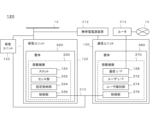
- FIG. 1 schematically shows an example of a system configuration of a battery management system 100;
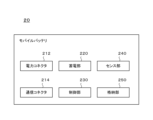
- An example of the internal configuration of the mobile battery 20 is shown schematically.
- An example of the internal configuration of the battery exchange 120 is schematically shown.
- An example of slot 124 condition and arrangement is shown schematically.
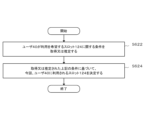
- An example of information processing in the battery exchange 120 is shown schematically.
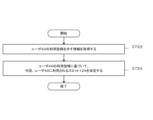
- 4 schematically shows an example of a process for determining slots to be used; 4 schematically shows another example of processing for determining a slot to be used;
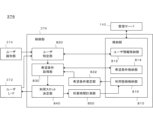
- An example of the internal configuration of the control unit 376 is shown schematically.
- An example of the internal configuration of the control unit 976 is shown schematically.
- An example of the internal configuration of the control unit 1076 is shown schematically.
- An example of the internal configuration of the control unit 1176 is shown schematically.
- An example of the internal configuration of the computer 3000 is shown schematically.
- FIG. 1 schematically shows an example of a system configuration of a battery management system 100.
- the battery management system 100 includes one or more (sometimes simply referred to as one or more) battery exchanges 120 and a management server 140 .
- the battery exchange machine 120 has one or more storage units 122 and a communication unit 126 .
- storage unit 122 includes one or more slots 124 .
- communication unit 126 includes communication interface 128 .
- each part of the battery management system 100 consumes power received from the power grid 12 to operate. Also, each unit of the battery management system 100 can transmit and receive information to and from each other via the communication network 14 . The one or more storage units 122 and the communication unit 126 can send and receive information to each other via wired or wireless communication lines (not shown).
- the battery management system 100 manages one or more (sometimes referred to as one or more) mobile batteries 20 .
- the case where the battery management system 100 provides the mobile battery 20 sharing service to the user 40 of the electric motorcycle 30 is taken as an example. Details are explained.
- the mobile battery 20 sharing service the above-described mobile battery 20 storage service, mobile battery 20 replacement service, mobile battery 20 charging service, and the like can be provided.
- the mobile battery 20 is exchanged between the user 40 and the battery management system 100 .
- the battery exchange 120 receives the mobile battery 20 from the user 40 .
- the battery exchange 120 provides the mobile battery 20 to the user 40 .
- each of the one or more slots 124 arranged in the storage unit 122 of the battery exchange machine 120 can store one or more mobile batteries 20 . Also, each of the one or more slots 124 arranged in the storage unit 122 of the battery exchange machine 120 can charge one or more mobile batteries 20 .
- a user 40 who has subscribed to the mobile battery 20 sharing service accesses the battery management system 100 using, for example, the communication terminal 42 and requests the mobile battery 20 to be rented.
- the user 40 may reserve the rental of the mobile battery 20 by designating the desired date and time and the place to rent the mobile battery 20 and the number of the mobile batteries 20 to be rented.
- the communication terminal 42 may access the battery management system 100 via the communication network 14 or may access the battery management system 100 via the battery exchanger 120 . Note that the user 40 may operate the battery exchange machine 120 to request the mobile battery 20 to be rented.
- the user 40 can take out the mobile battery 20 housed in the battery exchange 120 (sometimes referred to as disposing of the mobile battery 20). This allows the user 40 to replace the mobile battery 20 attached to the electric motorcycle 30 with the mobile battery 20 housed in the battery exchange machine 120 .
- the user 40 removes the mobile battery 20 attached to the electric motorcycle 30 from the electric motorcycle 30 .
- the user 40 returns the mobile battery 20 removed from the electric motorcycle 30 to the battery exchange machine 120 .
- the battery exchange machine 120 dispenses the charged mobile battery 20 housed in the battery exchange machine 120 .
- the user 40 receives the charged mobile battery 20 from the battery exchange 120 and mounts the charged mobile battery 20 on the electric motorcycle 30 . Thereby, the mobile battery 20 is exchanged between the electric motorcycle 30 and the battery exchange machine 120 .
- the slot 124 to which the mobile battery 20 is returned and/or the slot 124 to which the mobile battery 20 is paid out is selected from among the plurality of slots 124 arranged in the battery exchange machine 120. Processing is performed to determine. Note that the slot 124 to which the mobile battery 20 is returned and/or the slot 124 to which the mobile battery 20 is paid out may simply be referred to as a usage slot.
- the number of mobile batteries 20 to be replaced in one use is not particularly limited, and is set to any number by the service provider.
- the inventors have found that the ease of handling of the mobile battery 20 varies depending on the relationship between the state of the user 40 and the position of the slots to be used in the battery exchange 120 (sometimes referred to as the arrangement of slots to be used). I paid attention. Examples of the state of the user 40 include physique, physical strength, presence/absence of disability, degree of disability, and the like. Therefore, in the present embodiment, the arrangement of slots to be used is considered in the processing for determining slots to be used.
- the slot 124 at a position suitable for the user 40 is preferentially determined as a slot to be used.
- the position of the slot to be used in the height direction is considered, and the slot 124 arranged at a height suitable for the user 40 is preferentially determined as the slot to be used.
- the position of the slot to be used in the storage unit 122 in the left-right direction is taken into consideration, and the slot 124 arranged at the position suitable for the user 40 is preferentially determined as the slot to be used.
- the utilization slot allocated to the storage unit 122 arranged at the position suitable for the user 40 is preferentially determined as the utilization slot.
- the battery exchange 120 acquires from the user 40 information indicating the details of the conditions desired by the user 40 for the slots to be used (sometimes simply referred to as desired conditions).
- the above conditions may be conditions desired by the user regarding the allocation of slots to be used.
- the above conditions include (i) a condition regarding the height of the used slot, (ii) a condition regarding the absolute position of the used slot in the battery exchange 120, (iii) a condition regarding the relative position of the used slot in the battery exchange 120, and (iv) (v) a condition regarding the arrangement of the storage unit 122 to which the utilization slot is allocated among the plurality of storage units 122 included in the battery exchange 120; Examples include the relative position of the storage unit 122 in which the slots to be used are arranged, and the conditions related to the relative positions of the slots to be used in the storage unit 122 described above.
- Examples of the height of the slots used are upper, middle, and lower.
- An example of the relative position of the utilization slot in the battery exchange 120 is the relative position of the storage unit 122 in which the utilization slot is arranged with respect to the reference position of the battery exchange 120 .
- Examples of the reference position of the battery exchange 120 include the position of the communication unit 126, the position of the user interface arranged in the communication unit 126, and the like.
- the storage unit 122 arranged near the center of the storage unit 122 (referred to as the reference unit) ) are illustrated.
- the above relative positions are the right column of the reference slot, the same column as the reference slot, the left column of the reference slot, the rightmost column of the storage unit 122, the leftmost column of the storage unit 122, and the upper side of the reference slot. Examples include a row (sometimes referred to as a column), the same row as the reference slot, the row below the reference slot, the topmost row of storage unit 122, the bottommost row of storage unit 122, and the like.
- An example of the arrangement of the storage unit 122 in which the usage slot is arranged is the relative position of the storage unit 122 in which the usage slot is arranged with respect to the reference position of the battery changer 120 .
- the above conditions may include conditions desired by the user regarding the arrangement of the plurality of usage slots for receiving or providing each of the plurality of mobile batteries 20. good.
- the user's desired conditions regarding the arrangement of the plurality of slots to be used may include conditions regarding the relative positions of the slots to be used.
- the battery exchange 120 receives input of desired conditions from the user 40 via the user interface.
- the battery exchange 120 may acquire desired conditions from the communication terminal 42 used by the user 40 .
- the battery exchange 120 preferentially determines slots 124 that match the extracted desired conditions as slots to be used. Details of the desired condition may be as described above.
- the battery exchange 120 associates identification information (sometimes referred to as user identification information) for identifying each of the one or more users 40 with the desired conditions of each user.
- the desired conditions of the current user 40 are extracted by referring to the database.
- the battery exchange 120 preferentially determines slots 124 that match the extracted desired conditions as slots to be used.
- the battery exchange 120 estimates desired conditions based on the user's 40 usage mode. Desired conditions for battery changer A (for example, a particular battery changer 120) may be estimated based on how user 40 uses battery changer A. FIG. The desired condition of the battery exchange A may be estimated based on the user's 40 usage of the battery exchange B (for example, the battery exchange 120 different from the battery exchange A). The battery exchange 120 may estimate the desired condition based on the usage pattern of the user 40 in the past. The battery exchange 120 preferentially determines slots 124 that match the estimated desired conditions as utilization slots.
- the usage mode of the user 40 is exemplified by the time required when the user 40 uses one or more battery exchanges 120 managed by the battery management system 100 .
- the one or more battery exchangers 120 described above may be the battery exchanger 120 currently being used by the user 40 or may be another battery exchanger 120 .
- Examples of the required time are the time required for the battery exchange 120 to receive the mobile battery 20 from the user 40, or the time required for the battery exchange 120 to provide the mobile battery 20 to the user 40. .
- the battery exchanger 120 determines the slot to be used based on the usage mode of the user 40 described above. For example, by referring to a database in which utilization patterns are associated with utilization slot allocation conditions (sometimes referred to as allocation conditions), the allocation conditions corresponding to the utilization patterns of the user 40 are determined. The battery exchange 120 preferentially determines slots 124 that match the determined placement conditions as utilization slots. The battery exchange 120 may determine the arrangement condition according to the usage mode of the user 40 using an estimation model that inputs the usage mode and outputs the arrangement condition.
- the estimation model described above may be a machine learning model.
- communication network 14 conveys information.
- the communication network 14 may be a wired communication transmission line, a wireless communication transmission line, or a combination of a wireless communication transmission line and a wired communication transmission line.
- Communication network 14 may include wireless packet communication networks, the Internet, P2P networks, leased lines, VPNs, power line communication lines, and the like.
- the communication network 14 may include (i) a mobile communication network such as a mobile phone network, and (ii) a wireless MAN (eg, WiMAX®), a wireless LAN (eg, WiFi®). ), Bluetooth (registered trademark), Zigbee (registered trademark), NFC (Near Field Communication), and other wireless communication networks.
- Wireless LAN, Bluetooth (registered trademark), Zigbee (registered trademark), and NFC may be examples of short-range wireless communication.
- the mobile battery 20 stores electrical energy.
- the mobile battery 20 may be configured to be detachable from the electric motorcycle 30 (also referred to as detachable or easily detachable).
- Mobile battery 20 may be configured to be detachable from battery exchange 120 . This allows the user 40 to replace the mobile battery 20 attached to the electric motorcycle 30 with the mobile battery 20 housed in the battery exchange machine 120 .
- the mobile battery 20 can be used by general users who have less knowledge about maintenance than maintenance personnel who maintain the equipment to which the mobile battery 20 is attached. configured to be attachable to and detachable from the The mobile battery 20 is configured, for example, so that a general user can freely attach/detach the mobile battery 20 to/from the device without using a separate tool or a special tool.
- the mobile battery 20 is configured such that a general user can freely attach/detach the mobile battery 20 to/from the device using a tool attached to the mobile battery 20 or the device. In this way, mobile battery 20 can be detachably attached to other devices.
- the mobile battery 20 is configured so that when the mobile battery 20 is attached to or detached from the above device, the integrity as a unit is not greatly impaired.
- the general user or maintenance personnel can remove the mobile battery 20 from the above equipment.
- Mobile battery 20 can be easily removed.
- assembly work of the mobile battery 20 occurs when a general user or maintenance personnel attaches the mobile battery 20 to the above equipment, the general user or maintenance personnel must attach the mobile battery 20 to the above equipment. can be easily installed. In this way, mobile battery 20 can be configured to be easily attached to and detached from other devices.
- the mobile battery 20 is attached to the electric motorcycle 30 and supplies electric power to the electric motorcycle 30 .
- mobile battery 20 can be detachably attached to electric motorcycle 30 .
- the mobile battery 20 may be detachably attached to the electric motorcycle 30 .
- the mobile battery 20 may be easily attached to and detached from the electric motorcycle 30 .
- the mobile battery 20 is charged by the battery exchange 120 while it is housed in the battery exchange 120 .
- the mobile battery 20 may supply power to the battery exchange 120 while it is housed in the battery exchange 120 .
- the battery exchange 120 can use a part of the mobile battery 20 housed in the battery exchange 120 as, for example, an uninterruptible power supply (UPS).
- UPS uninterruptible power supply
- the electric motorcycle 30 is equipped with the mobile battery 20 .
- the electric motorcycle 30 may be equipped with multiple mobile batteries 20 .
- the electric motorcycle 30 uses power stored in the mobile battery 20 .
- the electric motorcycle 30 runs by consuming power supplied from the mobile battery 20 .
- the electric motorcycle 30 includes an electric motor that uses electric power to generate driving force, and a propulsion section that converts the force generated by the electric motor into propulsion force for the electric motorcycle 30 .
- the electric motorcycle 30 includes an electric motor that uses electric power to generate driving force, and wheels that apply the force generated by the electric motor to the road surface to propel the electric motorcycle 30 .
- the communication terminal 42 transmits and receives information to and from each unit of the battery management system 100 via the communication network 14 .
- the communication terminal 42 may function as a user interface when the user 40 accesses the battery management system 100 .
- the communication terminal 42 may be used for user authentication processing by the battery management system 100 .
- Examples of the communication terminal 42 include a personal computer and a mobile terminal.
- Examples of mobile terminals include mobile phones, smart phones, PDAs, tablets, notebook or laptop computers, wearable computers, and the like.
- the battery exchange machine 120 accommodates the mobile battery 20 .
- the battery exchanger 120 may accommodate multiple mobile batteries 20 . Thereby, the battery exchange machine 120 can store one or more mobile batteries 20 .
- the battery exchange 120 charges at least one of the one or more mobile batteries 20 .
- the battery exchanger 120 may charge the mobile battery 20 until the charging rate or voltage of the mobile battery 20 reaches a predetermined set value.
- the battery exchange machine 120 puts the fully charged mobile battery 20 in a removable state (sometimes referred to as dispensing). In response to a request from the user 40, the battery exchange 120 may dispense the mobile battery 20 that meets the request.
- the battery exchange machine 120 acquires from the management server 140 information indicating the payout condition, which is the condition for the mobile battery 20 to be paid out, and determines the mobile battery 20 to be actually paid out of the mobile batteries 20 that meet the payout condition. You may
- the battery exchange 120 may discharge at least some of the plurality of mobile batteries 20.
- the battery exchanger 120 may use the power output by discharging the mobile battery 20 .
- the battery exchange 120 operates by consuming power output by discharging the mobile battery 20 .
- the battery exchange 120 may stop or interrupt the charging operation of the other mobile batteries 20 when operating by consuming the power output by discharging one mobile battery 20 . Even in this case, the battery exchange machine 120 may continue the dispensing operation of the mobile battery 20 .
- the battery exchange 120 can use part of the mobile battery 20 housed in the battery exchange 120 as an uninterruptible power supply.
- the battery exchanger 120 for example, even when an abnormality occurs in power supply from the power system 12 to the battery exchanger 120, power supply to the control device can be continued. As a result, for example, the dispensing of the mobile battery 20 by the battery exchange machine 120 can be continued. Therefore, even if the battery exchange machine 120 is installed in an area where power outages occur relatively frequently, an environment can be provided in which the battery can be exchanged stably.
- the storage unit 122 holds multiple slots 124 .
- storage unit 122 is formed independently of communication unit 126 .
- the storage unit 122 may be installed separately from the communication unit 126 or may be installed in contact with the communication unit 126 .
- the storage unit 122 is a process flow including one or more processes for controlling operation of at least one of the plurality of slots 124 based on a first command sent from the communication unit 126. to generate The storage unit 122 determines whether or not each process can be executed for each of the one or more processes. Storage unit 122 generates a second command for controlling the slot 124 targeted by the process determined to be executable. Storage unit 122 controls the operation of slot 124 based on the generated second command. This may restrict the execution of some of the instructions indicated by the first command.
- the storage unit 122 performs the operations related to the safety. It is determined whether or not a condition for permitting execution is satisfied. If it is determined that the above conditions are met, the storage unit 122 determines that the process is executable. This controls the operation of slot 124 based on the second command for the process described above. On the other hand, if it is determined that the above conditions are not met, the storage unit 122 determines that the process cannot be executed. In this case, no second command relating to the above process is sent to slot 124 .
- the communication unit 126 outputs the first command based on a request from the management server 140, the safety of the mobile battery 20, the user 40, or the maintenance personnel can be ensured.
- the management server 140 does not issue the above request when the communication environment of the battery exchanger 120 is good. can be revoked.
- the storage unit 122 determines whether or not the second command can be executed according to the state of the battery exchange machine 120. Therefore, the battery exchange machine 120 does not wait for the cancellation request from the management server 140, It is possible to cancel or interrupt the execution of some processing.
- each of the multiple slots 124 stores one or more mobile batteries 20 . Also, each of the plurality of slots 124 includes an electrical terminal (not shown) electrically connected to one or more electrical terminals (not shown) of the mobile battery 20 . Thereby, each of the plurality of slots 124 can charge or discharge the mobile battery 20 stored in each slot.
- electrically connected is not limited to the case where two elements are physically directly connected.
- a third element may intervene between the above two elements.
- the input and output windings of a transformer are not physically connected, but are electrically connected. This allows the slot 124 to support not only wired charging and discharging of the mobile battery 20 but also wireless charging and discharging of the mobile battery 20 .
- Each of the plurality of slots 124 may have a communication terminal communicably connected to one or more mobile battery 20 communication terminals.
- the communication method between the communication terminal of the slot 124 and the communication terminal of the mobile battery 20 may be a wired communication method or a wireless communication method.
- each of the plurality of slots 124 can read information from or write information to the storage device (not shown) of the mobile battery 20 stored in each slot.
- the communication unit 126 executes various types of information processing in the battery exchange 120 .
- Communication unit 126 controls, for example, storage unit 122 .
- Communication unit 126 sends and receives information to, for example, user 40 or communication terminal 42 .
- Communication unit 126 may serve as a user interface for battery changer 120 .
- Communication unit 126 sends and receives information to, for example, management server 140 .
- the communication unit 126 is in charge of information processing involving at least one of the user 40 and the management server 140 among the information processing in the battery exchange 120 .
- communication unit 126 receives and responds to requests from user 40 and/or management server 140 .
- the communication unit 126 issues instructions (sometimes referred to as commands) to the storage unit 122 when it determines that the storage unit 122 needs to process a request from at least one of the user 40 and the management server 140 . ).
- the above first command may be an example of a command.
- communication unit 126 If communication unit 126 is capable of processing requests from user 40 and/or management server 140 without cooperating with storage unit 122, communication unit 126 sends commands to storage unit 122. It doesn't have to be. This simplifies information processing in the storage unit 122 .
- the communication unit 126 performs, for example, communication control processing with the outside of the battery exchange 120, authentication processing of the user 40, and selection processing of the slot 124 (sometimes referred to as determination processing) without cooperating with the storage unit 122. ), etc. can be executed.
- communication unit 126 performs any information processing in battery exchanger 120 .
- Communication unit 126 may perform information processing common to one or more storage units 122 included in battery changer 120 .
- the communication unit 126 executes communication control processing with the outside of the battery exchange 120, authentication processing of the user 40, selection processing of the slot 124, and the like.
- the communication unit 126 may perform various information processing in cooperation with one or more storage units 122 or may perform various information processing without cooperation with one or more storage units 122 .
- the communication unit 126 is formed independently of the storage unit 122 in this embodiment.
- the storage unit 122 may be installed separately from the communication unit 126 or may be installed in contact with the communication unit 126 .
- the communication interface 128 is configured to be able to communicate with an information processing device external to the battery exchange 120 .
- the communication interface 128 may support multiple communication schemes.
- the communication interface 128 may be compatible with a wired communication system or may be compatible with a wireless communication system.
- communication interface 128 sends and receives information to and from communication terminal 42 utilized by user 40 .
- communication interface 128 sends and receives information to and from management server 140 .
- the management server 140 is arranged outside the battery exchange 120 .
- the management server 140 can also transmit and receive information to and from the communication unit 126 of the battery exchange 120 via the communication network 14 .
- the management server 140 manages one or more mobile batteries 20. For example, the management server 140 manages each state of one or more mobile batteries 20 . The management server 140 may manage returning and dispensing of one or more mobile batteries 20 . The management server 140 may send various requests for managing the mobile battery 20 to at least one of the one or more battery exchanges 120 .
- the management server 140 may manage one or more battery exchangers 120 .
- Management server 140 may manage the status of each of one or more battery exchangers 120 .
- the state of the battery exchange 120 includes the external power supply state, the number of mobile batteries 20 that can be accepted, the number of mobile batteries 20 that can be dispensed, the presence or absence of the mobile batteries 20 that can be used as an uninterruptible power supply, the number, or the number of mobile batteries 20 that can be dispensed. Examples include identification information and the state of charge of the mobile battery 20 described above.
- the management server 140 may send various requests for managing the battery exchangers 120 to at least one of the one or more battery exchangers 120 .
- the management server 140 may determine, for at least some of the one or more battery exchanges 120, a payment condition, which is a condition regarding the mobile battery 20 to be paid.
- the payout conditions include the order of payout priority for each of the plurality of mobile batteries 20 housed in the battery exchange 120, the identification information of the mobile battery 20 to be paid out preferentially, and the characteristics of the mobile battery 20 to be paid out preferentially. exemplified.
- Each unit of the battery management system 100 may be implemented by hardware, software, or both hardware and software. At least part of each part of the battery management system 100 may be realized by a single server or may be realized by a plurality of servers. At least part of each part of the battery management system 100 may be realized on a virtual server or a cloud system. At least part of each part of the battery management system 100 may be realized by a personal computer or a mobile terminal. Examples of mobile terminals include mobile phones, smart phones, PDAs, tablets, notebook computers or laptop computers, wearable computers, and the like. Each part of the battery management system 100 may store information using distributed ledger technology or distributed networks such as blockchain.
- the constituent elements realized by the software define the operations of the constituent elements in an information processing apparatus having a general configuration. It may be realized by activating the program that
- the information processing apparatus having the above general configuration includes (i) a data processing apparatus having a processor such as a CPU and GPU, a ROM, a RAM, a communication interface, and the like; and (ii) a keyboard, pointing device, touch panel, camera, voice input Input devices such as devices, gesture input devices, various sensors, and GPS receivers, (iii) output devices such as display devices, audio output devices, and vibration devices, and (iv) storage devices such as memories, HDDs, and SSDs (external including a storage device).
- the data processing device or storage device may store the program.
- the program is executed by the processor to cause the information processing apparatus to perform operations specified by the program.
- the above program may be stored in a non-transitory computer-readable recording medium.
- the above program may be stored in a computer-readable medium such as a CD-ROM, DVD-ROM, memory, hard disk, etc., or may be stored in a storage device connected to a network.
- the above program may be a program for causing the computer to function as the battery management system 100 or a part thereof.
- the above program may include modules that define the operation of each part of the battery management system 100 . These programs or modules act on a data processing device, an input device, an output device, a storage device, etc. to cause the computer to function as each part of the battery management system 100, or instruct the computer to perform information processing in each part of the battery management system 100. or let it run.
- the above program may be installed in a computer that constitutes at least part of the battery management system 100 from a computer-readable medium or a network-connected storage device.
- a computer may function as at least a part of each part of the battery management system 100 by executing the above program.
- the information processing described in the above program is a concrete example of cooperation between software related to the program and various hardware resources of battery management system 100 or a part thereof when the program is read into a computer. function as a means of Then, the specific means described above realizes the calculation or processing of information according to the purpose of use of the computer in this embodiment, thereby constructing the battery management system 100 according to the purpose of use.
- the above program may be a program for causing the computer to function as the battery exchange 120, the management server 140, or a part of these.
- the above program may be a program for causing a computer to execute an information processing method in the battery exchange 120, the management server 140, or some of them.
- the above program may be stored in a computer readable medium.
- the computer-readable medium described above may be a non-transitory computer-readable recording medium.
- the above information processing method may be a storage device control method.
- the storage device described above includes, for example, a plurality of storage units that store articles.
- the control method described above has, for example, a step of specifying a user who transfers an article to and from the storage device.
- the above control method acquires desired storage section information indicating a user's desire regarding a transfer storage section, which is a storage section that receives articles from a user or provides articles to a user, among a plurality of storage sections. have a step to
- the above control method includes determining the transfer storage unit, for example, based on the desired storage unit information.
- the above information processing method may be a storage device control method.
- the storage device described above includes, for example, a plurality of storage units that store articles.
- the control method described above has, for example, a step of specifying a user who transfers an article to and from the storage device.
- the above control method for example, when the user uses the storage device or other storage device, the time taken to receive another item from the user, or the time taken to provide the other item to the user a step of obtaining required time information indicating the time required for delivery and reception, which is the time required for
- the above control method has a step of determining, from among a plurality of storage units, a transfer storage unit, which is a storage unit that receives an item from a user or provides an item to a user, based on required time information. .
- the mobile battery 20 may be an example of an article or other articles.
- the mobile battery 20 may be an example of a power storage device.
- the electric motorcycle 30 may be an example of a vehicle.
- User 40 may be an example of a user.
- Battery changer 120 may be an example of a storage device or other storage device.
- the battery exchange 120 may be an example of an information processing device or an information processing system.
- Storage unit 122 may be an example of a storage device or other storage device.
- Storage unit 122 may be an example of an information processing device or an information processing system.
- Slot 124 may be an example of a storage portion.
- the communication unit 126 may be an example of an information processing device.
- the mobile battery 20 may be an example of receiving an item. Dispensing the mobile battery 20 may be an example of providing an article.
- the slot 124 to which the mobile battery 20 is returned may be an example of a storage section that receives items from the user.
- the slot 124 that dispenses the mobile battery 20 may be an example of a storage unit that provides the user with articles.
- a usage slot may be an example of a transfer repository.
- the desired condition may be an example of user's desire or desired storage section information.
- the user's desired condition regarding the allocation of slots to be used may be an example of the user's desires regarding the allocation of slots to be used.
- the details of the battery management system 100 have been described by taking as an example the case where the battery management system 100 provides the mobile battery 20 sharing service.
- the services provided by the battery management system 100 are not limited to this embodiment.
- the battery management system 100 may provide the mobile battery 20 charging service to the user 40 of the mobile battery 20 .
- the details of the battery exchanger 120 have been described by taking as an example the case where the battery exchanger 120 operates using power received from the power system 12 .
- the battery exchange machine 120 is not limited to this embodiment.
- the battery changer 120 is stored in the battery changer 120, for example, if at least one of the one or more slots 124 disposed in the battery changer 120 includes a bi-directional DC/DC converter. At least one of the one or more mobile batteries 20 may operate using the discharged power.
- the details of the battery management system 100 have been described by taking as an example the case where the battery exchanger 120 includes one or more storage units 122 and a single communication unit 126 .
- the battery exchange machine 120 is not limited to this embodiment.
- the battery exchanger 120 may comprise multiple storage units 122 and multiple communication units 126 .
- the number of storage units 122 may be greater than the number of communication units 126 .
- the storage device is not limited to this embodiment.
- the storage device may be configured to be able to store arbitrary articles, and other examples of the storage device include lockers, shoeboxes, parking lots, bicycle parking lots, parking aprons, and the like.
- an example of the user of the battery management system 100 has been described, taking the case where the user 40 who is a natural person uses the battery management system 100 as an example.
- users of battery management system 100 are not limited to natural persons.
- the user may be a creature other than a human, or an autonomous mobile machine (sometimes referred to as a robot).
- An autonomous mobile machine may be an autonomously traveling vehicle, an autonomously flying aircraft, an autonomously navigating vessel, or a walking humanoid or animal machine. .
- an example of the battery management system 100 is a case in which a process for determining a slot to be used (sometimes referred to as a determination process, a selection process, etc.) is executed by the battery exchange 120. was explained.
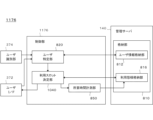
- the battery management system 100 is not limited to this embodiment. In another embodiment, part or all of the processing for determining the slots to be used may be executed by the management server 140. FIG.
- the battery management system 100 is not limited to this embodiment.
- the mobile battery 20 may be a power storage device detachably attached to any type of power device that uses power.
- the mobile battery 20 may be a power storage device that can be easily attached to and detached from any type of power device that uses power.
- the method of transporting mobile battery 20 to the position of battery exchange 120 is not limited to this embodiment.
- the mobile battery 20 is mounted on any type of vehicle and transported to the location of the battery exchange 120 while not electrically connected to the vehicle.
- Mobile battery 20 may be carried by user 40 .
- the mobile battery 20 is transported to the location of the battery exchange 120 while being attached to a power feeder that supplies power to the mobile battery 20 .
- the power feed described above may be carried by the vehicle or user 40 to the location of the battery changer 120 .
- the mode of providing the mobile battery 20 is not limited to this embodiment. In other embodiments, mobile battery 20 may be provided without the premise of being returned.
- the mobile battery 20 includes a power connector 212 , a communication connector 214 , a power storage section 220 , a control section 230 , a sensing section 240 and a storage section 250 .
- the power connector 212 includes electrical terminals for transmitting power to and from the slot 124 or the electric bike 30 .
- Power connector 212 may be a female connector or a male connector.
- communication connector 214 includes a communication terminal for transmitting information to and receiving information from slot 124 or electric bike 30 .
- the power storage unit 220 includes power storage cells that store power.
- control unit 230 controls the operation of the mobile battery 20.
- Control unit 230 may transmit and receive information to and from storage unit 122 when mobile battery 20 is stored in slot 124 .
- the sensing unit 240 acquires information indicating the state of the mobile battery 20.
- the sense portion 240 may include multiple types of sensors. A temperature sensor, a voltage sensor, a current sensor, and the like are exemplified as sensors included in the sensing unit 240 .
- the storage unit 250 stores various information related to the mobile battery 20.
- the storage unit 250 stores identification information of the mobile battery 20 .
- the storage unit 250 may store identification information of the electric motorcycle 30 electrically connected to the mobile battery 20, the battery exchanger 120, or the slot 124.
- the storage unit 250 may store the operation history of the mobile battery 20 .
- the storage unit 250 associates the time and the measurement result of the sensing unit 240 and stores them as the operation history of the mobile battery 20 .
- the power connector 212 may be an example of a first terminal. Time may be an example of time.
- FIG. 3 schematically shows an example of the internal configuration of the battery exchange 120.
- the battery changer 120 comprises one or more storage units 122 , a communication unit 126 , a communication line 310 , an uninterruptible power supply 312 and a router 314 .
- each of the one or more storage units 122 has a housing 320 and an onboard equipment 330 .
- the onboard equipment 330 includes one or more slots 124 , a sense unit 332 , a settings storage unit 334 and a control unit 336 .
- the communication unit 126 has a housing 360 and an on-board device 370 .
- onboard equipment 370 includes communication interface 128 , user interface 372 , user identifier 374 , and controller 376 .
- the communication line 310 connects each of the one or more storage units 122 and the communication unit 126 to each other.
- uninterruptible power supply 312 is disposed between power system 12 and communication unit 126 .
- the uninterruptible power supply 312 supplies power to the communication unit 126 when, for example, an abnormality occurs in the power supply from the power grid 12 .
- router 314 relays or forwards communications between communication unit 126 and communication network 14 .
- the housing 320 holds the mounted device 330 .
- the shape and material of the housing 320 are not particularly limited.
- the housing 320 may have a box shape, a plate shape, or a frame shape.
- the mounted equipment 330 is mounted on the housing 320 .
- the mounting mode of the mounting device 330 is not particularly limited. Mounted device 330 may be housed inside housing 320 or may be mounted on the surface of housing 320 .
- the sensing unit 332 acquires information indicating the state of the slot 124 or the mobile battery 20 stored in the slot 124 .
- the sense portion 332 may include multiple types of sensors. A temperature sensor, a voltage sensor, a current sensor, and the like are exemplified as sensors included in the sensing unit 240 .
- the setting storage section 334 stores various settings related to the storage unit 122 .
- the setting storage unit 334 may have a physical switch, and may have any type of storage medium such as memory and hard disk.
- the above settings may be (i) indicated by ON/OFF of a physical switch, and (ii) stored as electronic data in a storage medium. Examples of the above settings include settings related to the ID of the storage unit 122, settings related to the installation position of the storage unit 122, settings related to whether various operations in the storage unit 122 can be executed, and the like.
- control section 336 controls the operation of the storage unit 122 .
- Examples of the above operations include attaching or detaching the mobile battery 20 to or from the slot 124, charging or discharging the mobile battery 20, and the like.
- the controller 336 controls attachment or detachment of the mobile battery 20 to/from the slot 124 .
- the above controls include lock control of the shutter (not shown) arranged in the slot 124, control of the pull-out prevention member (not shown) arranged in the slot 124, and mobile shutter arranged in the slot 124. Examples include control of a mechanism (not shown) for restraining the battery 20, control of a movable connector (not shown) arranged in the slot 124, and the like.
- the movable connector may be a mechanical connector or an electric connector.
- control unit 336 controls charging or discharging of the mobile battery 20 stored in the slot 124.
- Examples of the above control include confirmation of connection of electrical terminals, adjustment of charging voltage, adjustment of charging current, adjustment of discharging voltage, and adjustment of discharging current. Thereby, charging or discharging of the mobile battery 20 via the electrical terminals can be controlled.
- the controller 336 may control the operation of the storage unit 122 based on commands received from the controller 376 .
- Controller 336 generates a process flow including one or more processes for controlling operation of at least one of plurality of slots 124 based on instructions received from controller 376, for example.
- the control unit 336 determines whether or not each process can be executed for each of the one or more processes.
- Control unit 336 generates a command for the process determined to be executable, and transmits the command to slot 124 to be controlled.
- the above instructions are not generated and sent for processes that are determined to be non-executable.
- the control unit 336 may transmit to the control unit 376 information indicating the execution result of the operation based on the command received from the control unit 376. For example, the controller 336 transmits information to the controller 376 indicating whether or not the storage unit 122 has performed the operation according to the command received from the controller 376 .
- the housing 360 holds the mounted device 370 .
- the shape and material of the housing 360 are not particularly limited.
- the housing 360 may have a box shape, a plate shape, or a frame shape.
- the mounted equipment 370 is mounted on the housing 360 .
- the mounting mode of the mounting device 370 is not particularly limited. Mounted device 370 may be housed inside housing 360 or may be mounted on the surface of housing 360 .
- the user interface 372 provides various information to the user 40 who uses the battery exchange 120 .
- User interface 372 also accepts input from user 40 who uses battery exchange 120 .
- Examples of the user interface 372 include a display, speaker, keyboard, pointing device, touch panel, microphone, camera, voice input system, gesture input system, and the like.
- the user interface 372 accepts input of various identification information from the user 40 .
- user interface 372 accepts input of user identification information.
- User interface 372 may accept input of a password.
- User interface 372 may accept input of biometric information.
- the user identification unit 374 identifies the user 40 who uses the battery exchange 120 .
- a known method can be adopted as a method for identifying the user 40 .
- the user identification unit 374 identifies the user 40 by analyzing the image of the user 40 and executing authentication processing for the user 40 .
- the user identification unit 374 may identify the user 40 by analyzing the biometric authentication information of the user 40 and performing authentication processing for the user 40 .
- the user identification unit 374 may identify the items carried by the user 40 .
- the user identification unit 374 may identify the user 40 by identifying the user's 40 belongings. For example, the user identification unit 374 identifies the user 40 by executing authentication processing for the user 40 using an ID card possessed by the user 40 .
- the user identification unit 374 may identify the user 40 by executing authentication processing for the user 40 using the communication terminal 42 possessed by the user 40 .
- control unit 376 executes various types of information processing in the battery exchange 120 .
- the controller 376 controls the storage unit 122, for example.
- the control unit 376 transmits and receives information to and from the user 40 or the communication terminal 42, for example.
- the controller 376 may function as a user interface for the battery exchanger 120 .
- the control unit 376 transmits and receives information to and from the management server 140, for example.
- control unit 376 is in charge of information processing involving at least one of the user 40 and the management server 140 among the information processing in the battery exchange 120 .
- the control unit 376 receives a request from at least one of the user 40 and the management server 140 and responds to the request.
- the control unit 376 determines that the storage unit 122 needs to process a request from at least one of the user 40 and the management server 140, the control unit 376 issues a command (for example, the first command described above) to the storage unit 122. .).
- the controller 376 can process a request from at least one of the user 40 and the management server 140 without cooperating with the storage unit 122, the controller 376 sends a command to the storage unit 122. It doesn't have to be.
- the control unit 376 can execute, for example, communication control processing with the outside of the battery exchange 120 , authentication processing of the user 40 , selection processing of the slot 124 , etc., without cooperating with the storage unit 122 .
- control unit 376 when the control unit 376 receives a request from at least one of the user 40 and the management server 140, the control unit 376 first creates a processing flow including one or more processes for processing the request. Generate. Next, the control unit 376 extracts processes including processing in the storage unit 122 from the above one or more processes. Control unit 376 generates a command indicating the content of processing in storage unit 122 for each of the extracted processes.
- the above command may include information indicating the storage unit 122 to be controlled (sometimes referred to as a target unit).
- the above command may include information indicating the slot 124 to be controlled (sometimes referred to as a target slot).
- the above command may include identification information of the target slot and information indicating the content of the operation in the target slot.
- control unit 376 transmits the above command to the storage unit 122 that is the target of the command.
- the control section 376 may acquire information indicating the result of execution of the above command from the storage unit 122 that received the above command.
- control unit 376 executes arbitrary information processing in the battery exchange 120.
- the controller 376 may execute information processing common to one or more storage units 122 included in the battery exchange 120 .
- the control unit 376 executes communication control processing with the outside of the battery exchange 120, authentication processing of the user 40, selection processing of the slot 124, and the like.
- the control section 376 may execute various types of information processing in cooperation with one or more storage units 122 or may execute various types of information processing without cooperation with one or more storage units 122 .
- the user interface 372 may be an example of an input unit.
- the user identification portion 374 may be an example of an identification portion.
- An ID card may be an example of a user's carry-on item.
- the communication terminal 42 may be an example of a user's carry-on item.
- FIG. 4 schematically shows an example of the state and arrangement of the slots 124.
- battery changer 120 comprises a plurality of storage units 122 .
- each of the plurality of battery exchanges 120 has a plurality of slots 124 .
- some of the plurality of slots 124 are arranged at positions corresponding to the upper stage 422 . Some of the plurality of slots 124 are arranged at positions corresponding to the middle stage 424 . Some of the plurality of slots 124 are arranged at positions corresponding to the lower stage 426 .
- a user 40 with a relatively small physique, a user 40 with relatively weak physical strength, a user 40 with a relatively large degree of disability, etc. can use the slot 124 arranged in the lower stage 426 to easily use the mobile battery 20. can handle.
- a user 40 with a relatively large physique, a user 40 with relatively strong physical strength, and the like can relatively easily handle the mobile battery 20 even when using the slot 124 arranged on the upper stage 422 .
- the plurality of slots 124 can be classified into, for example, three types according to their states.
- slot 442 is slot 124 that does not store mobile battery 20 .
- the slot 442 is used by the user 40 to return the mobile battery 20, for example.
- the battery exchanger 120 has more slots 442 than the number of the mobile batteries 20 to be replaced, the battery exchanger 120 has a plurality of slots.
- a utilization slot is determined from among 442 .
- the slot 444 is the slot 124 that stores the lendable mobile battery 20 .
- a slot to be used is determined from one or more slots 444 .
- the slot 446 is the slot 124 that stores the mobile battery 20 that cannot be rented.
- slot 446 stores mobile battery 20 during charging.
- FIG. 5 schematically shows an example of information processing in the battery exchange 120.
- FIG. An example of a control method for the storage unit 122 will be described with reference to FIG. Specifically, an example of the replacement process of the mobile battery 20 will be described.
- step 522 the step may be abbreviated as S
- the user 40 requests the battery exchange 120 to lend out one or more mobile batteries 20 .
- the communication unit 126 of the battery exchange 120 executes processing for accepting a lending request from the user 40 .
- the user 40 operates the user interface 372 of the battery exchange 120 to request the battery exchange 120 to lend one or more mobile batteries 20 .
- the control unit 376 acquires the lending request from the user interface 372 . Thereby, the lending request of the user 40 is accepted.
- the user 40 operates the communication terminal 42 to request the battery exchange 120 to lend one or more mobile batteries 20 .
- the control unit 376 acquires the lending request from the communication interface 128 . Thereby, the lending request of the user 40 is accepted.
- control unit 376 identifies the user 40 described above. First, the control unit 376 acquires the identification information of the user 40 or the user's 40-carried item from the user 40 . Next, the control unit 376 identifies the user 40 who uses the battery exchange 120 based on the identification information of the user 40 or the item carried by the user 40 .
- the user 40 brings an ID card for using the sharing service of the mobile battery 20 close to the user identification unit 374 .
- User identification information for identifying the user 40 is stored in the ID card, for example.
- User identification section 374 reads the user identification information stored in the ID card and outputs the user identification information to control section 376 .
- the control unit 376 can acquire the user identification information of the user 40 who uses the battery exchange 120 .
- the control unit 376 can identify the user 40 who uses the battery exchange 120 based on the acquired user identification information.
- control unit 376 can acquire information indicating the correspondence relationship between the identification information stored in the ID card and the user identification information of the user 40, the user identification information of the user 40 is stored in the ID card. Different identification information may be stored. In this case, the control unit 376 can acquire the user identification information of the user 40 based on the identification information read from the ID card and the information indicating the correspondence relationship.
- the control unit 376 determines the slots to be used. Specifically, the control unit 376 selects the slot 124 used for receiving the mobile battery 20 and/or the slot 124 used for dispensing the mobile battery 20 from among the plurality of slots 124 arranged in the battery exchange machine 120. Determine slot 124 . For example, the control unit 376 determines the slot 124 to be used for receiving the mobile battery 20 from among the one or more slots 442 . For example, the control unit 376 determines the slot 124 to be used for paying out the mobile battery 20 from among the one or more slots 444 . The details of the processing for determining slots to be used will be described later.
- the control unit 376 presents to the user 40 information indicating the slot 124 determined as the slot to be used.
- the control unit 376 causes a light emitting unit (not shown) provided in the slot 124 determined as the slot to be used to emit light.
- the control unit 376 causes the user interface 372 to output information indicating the slot 124 determined as the slot to be used.
- the control unit 376 transmits information indicating the slots 124 determined as slots to be used to the communication terminal 42 of the user 40 .
- the control unit 376 sends the state of the slot 124 to the storage unit 122 having the slot 124 determined as the slot to be used for returning the mobile battery 20. Send commands to state. This allows the user 40 to insert the mobile battery 20 into the slot 124 described above. When the user 40 inserts the mobile battery 20 into the slot 124 , the battery exchange machine 120 receives the mobile battery 20 .
- control unit 376 changes the state of the slot 124 to the state in which the mobile battery 20 can be dispensed for the storage unit 122 having the slot 124 determined as the slot to be used for dispensing the mobile battery 20. send a command for The control unit 376 may transmit the above command after confirming that the mobile battery 20 has been returned. This allows the user 40 to remove the mobile battery 20 from the slot 124 described above. When the user 40 takes out the mobile battery 20 from the slot 124 , the battery exchange machine 120 provides the mobile battery 20 .
- the control unit 376 controls the time required for the battery exchange machine 120 to receive the mobile battery 20 from the user 40 (sometimes referred to as the time required for reception) and/or the battery exchange machine 120
- the time required to provide the mobile battery 20 to the user 40 (sometimes referred to as the required time for provision) is measured.
- the start point for measuring the above-mentioned required time for reception and/or required time for provision is the point in time during the usage period of the battery exchange 120 by the user 40, and information indicating the slot 124 determined as the slot to be used is presented to the user 40. It may be the point of time (sometimes referred to as the point of presentation) or the point of time after the point of presentation.
- a light emitting unit such as an LED arranged in the slot to be used emits light.
- the user 40 can grasp the position of the used slot. Therefore, by setting the starting point for measuring the required reception time and/or the required time for provision to be the time when the light emitting unit emits light or the time after that, the state of the user 40 can be relatively accurately estimated using these required times. can be
- the control unit 376 may associate the required time for reception and/or the required time for provision with the arrangement of slots to be used and store them as correspondence information.
- the battery management system 100 may measure and store the required time each time the user 40 uses one or more battery exchanges 120 .
- the control unit 376 may transmit correspondence information to the management server 140 .
- the time required for receipt may be an example of the time required for delivery.
- the required time for provision may be an example of the required time for giving and receiving.
- the communication unit 126 reads the user identification information stored in the ID card carried by the user 40, so that the control unit 376 identifies the user 40 who uses the battery exchange 120 as an example.
- the control unit 376 may identify the user 40 who uses the battery exchange 120 by the communication unit 126 acquiring user identification information from the communication terminal 42 carried by the user 40 .
- control unit 376 may identify the user 40 who uses the battery exchange 120 by acquiring various identification information from the user 40 accepted by the user interface 372.
- identification information include user identification information, passwords, and biometric authentication information.
- the user identification information of the user 40 who last used the mobile battery 20 is stored in the storage unit 250 of the mobile battery 20 returned to the battery exchange 120 by the user 40 .
- the control unit 336 of the storage unit 122 that stores the mobile battery 20 returned from the user 40 reads the user identification information stored in the storage unit 250 of the mobile battery 20 and outputs the user identification information to the control unit 376. .
- user 40 operates user interface 372 to enter information for authenticating user 40 .
- the information for authenticating the user 40 include user identification information and password of the user 40, biometric authentication information of the user 40, and the like.
- User interface 372 outputs the above information to control unit 376 .
- FIG. 6 schematically shows an example of processing for determining slots to be used.
- An example of the processing for determining slots to be used in S526 described with reference to FIG. 5 will be described with reference to FIG.
- the control unit 376 acquires or estimates the desired conditions of the user 40.
- the control unit 376 extracts the desired conditions of the current user 40 by referring to a database in which the user identification information of each of the one or more users 40 and the desired conditions of each user are associated. . Thereby, the control unit 376 can acquire the desired conditions of the user 40 .
- the above database may be stored in the storage device (not shown) of the battery exchange 120, or may be stored in the storage device (not shown) of the management server 140.
- the above database may be transmitted from the management server 140 to the battery exchange 120 periodically or at any timing. As a result, the database stored in the storage device of battery exchange 120 is updated.
- control unit 376 may cooperate with the management server 140 to acquire the desired conditions of the user 40. For example, when the control unit 376 acquires the user identification information of the user 40 , the control unit 376 transmits the user identification information of the user 40 to the management server 140 and requests extraction of the desired conditions of the user 40 .
- the management server 140 refers to the database described above and extracts desired conditions that match the user identification information of the user 40 . Management server 140 transmits the extracted desired conditions to control unit 376 .
- control unit 376 receives input of desired conditions from the user 40 via the user interface 372 .
- the control unit 376 may acquire desired conditions from the communication terminal 42 used by the user 40 .
- control unit 376 estimates the desired conditions of the user 40 . Thereby, the control unit 376 can acquire the desired conditions of the user 40 .
- the control unit 376 estimates the desired conditions of the user 40 based on the usage mode of the user 40. As described above, the use mode of the user 40 is exemplified by the time required for receipt and/or the time required for provision described above. The control unit 376 may estimate the desired conditions of the user 40 based on the correspondence information of the user 40 .
- control unit 376 refers to a database in which the user identification information of each of the one or more users 40 and the correspondence information of each user are associated with each other, and extracts the correspondence information of the current user 40. .
- the correspondence information stores the required time for reception and/or the required time for provision, and the arrangement of slots to be used in association with each other.
- the placement of the used slots includes, for example, information about the height of the used slots.
- the placement of utilization slots may include information about the relative positions of utilization slots with respect to a reference position of battery changer 120 .
- the placement of utilization slots may include information regarding the relative positions of utilization slots in storage unit 122 .
- the arrangement of utilization slots may include information on the arrangement of storage units 122 to which utilization slots are allocated, among the plurality of storage units 122 included in the battery exchange 120 .
- the above database may be stored in the storage device of the battery exchange 120 or may be stored in the storage device of the management server 140.
- the above database may be transmitted from the management server 140 to the battery exchange 120 periodically or at any timing. As a result, the database stored in the storage device of battery exchange 120 is updated.
- the control unit 376 may cooperate with the management server 140 to acquire correspondence information of the user 40. For example, when the control unit 376 acquires the user identification information of the user 40 , the control unit 376 transmits the user identification information of the user 40 to the management server 140 and requests extraction of the corresponding information of the user 40 .
- the management server 140 refers to the database described above and extracts corresponding information that matches the user identification information of the user 40 . Management server 140 transmits the extracted correspondence information to control unit 376 .
- control unit 376 determines, for the current user 40, the arrangement of the slots 124 such that the required time for receipt and/or the required time for provision is smaller than a predetermined value. . For example, controller 376 determines the appropriate slot 124 height for current user 40 . The control unit 376 estimates desired conditions based on the determination result.
- the control unit 376 estimates that the current desired condition of the user 40 is "no desire".
- the control unit 376 estimates that the current desired condition of the user 40 is "middle or lower".
- the control unit 376 estimates that the current desired condition of the user 40 is "below the lower stage".
- the control unit 376 determines the slots to be used based on the obtained or estimated desired conditions. For example, the control unit 376 extracts slots 124 that match the user's wishes indicated by the acquired or estimated desired conditions from among the plurality of slots 124 . Of the extracted slots 124, the control unit 376 determines the number of slots 124 corresponding to the number of mobile batteries 20 paid out in response to the lending request as slots to be used.
- the used slot is identified by the extracted slot 124 identification information. In another embodiment, the used slot is identified by the identification information of the mobile battery 20 stored in the extracted slot 124 .
- FIG. 7 schematically shows another example of processing for determining slots to be used. Another example of the determination processing of slots to be used in S526 described with reference to FIG. 5 will be described with reference to FIG.
- the control unit 376 acquires information indicating the usage mode of the user 40.
- the use mode of the user 40 is exemplified by the time required for receipt and/or the time required for provision described above.
- the control unit 376 may acquire information indicating the usage mode of the user 40 by acquiring correspondence information of the user 40 .
- control unit 376 refers to a database in which the user identification information of each of the one or more users 40 and the correspondence information of each user are associated with each other, and extracts the correspondence information of the current user 40.
- the database described above may be stored in the storage device of the battery exchange 120 or may be stored in the storage device of the management server 140 .
- the control section 376 may cooperate with the management server 140 to acquire the correspondence information of the user 40 .
- the control unit 376 determines a utilization slot based on the user's 40 required time for reception and/or required time for provision. For example, the control unit 376 determines the arrangement of the slots 124 such that the required reception time and/or the required provision time is smaller than a predetermined value based on the required reception time and/or the required provision time of the user 40. do. For example, controller 376 determines the appropriate slot 124 height for current user 40 . The control unit 376 determines the slot to be used based on the determination result.
- FIG. 8 schematically shows an example of the internal configuration of the control section 376.
- the control unit 376 includes a storage unit 810, a user identification unit 820, a desired condition acquisition unit 830, a desired condition estimation unit 832, a utilization slot determination unit 840, and a required time measurement unit 850.
- the storage unit 810 includes a user information storage unit 812 , a desired condition storage unit 814 , and a usage mode storage unit 816 .
- the storage unit 810 stores various information. In one embodiment, the storage unit 810 stores various information used for information processing in the battery exchange 120 . In another embodiment, storage unit 810 stores various information generated by information processing in battery exchange 120 .
- the user information storage unit 812 stores information for specifying each of one or more users 40 .
- the user information storage unit 812 stores user identification information of each of the one or more users 40 and information for specifying each of the one or more users 40 in association with each other.
- Examples of information for specifying each of the one or more users 40 include names, dates of birth, addresses, telephone numbers, accounts for various services, and e-mail addresses.
- the user information storage unit 812 may store user identification information of each of the one or more users 40 and information for authenticating each of the one or more users 40 in association with each other. Examples of information for authenticating each of the one or more users 40 include passwords and biometric authentication information.
- the desired condition storage unit 814 stores desired conditions of each of one or more users 40 .
- the desired condition storage unit 814 stores, for example, user identification information for each of the one or more users 40 and desired conditions for each of the one or more users 40 in association with each other.
- the usage mode storage unit 816 stores information indicating the usage mode of each of one or more users 40 .
- the desired condition storage unit 814 stores, for example, user identification information of each of the one or more users 40 and information indicating usage modes of each of the one or more users 40 in association with each other.
- the user identification unit 820 identifies the user 40 who transfers the mobile battery 20 to and from the battery exchange 120 .
- the user identification unit 820 executes, for example, at least part of the processing in S524 described with reference to FIG.
- the desired condition acquisition unit 830 acquires the desired conditions of the user 40 identified by the user identification unit 820.
- the desired condition acquisition unit 830 executes, for example, at least part of the processing in S622 described with reference to FIG.
- the desired condition acquisition unit 830 may acquire the desired condition estimated by the desired condition estimation unit 832 .
- the desired condition estimation unit 832 estimates desired conditions of the user 40 identified by the user identification unit 820 .
- the desired condition estimation unit 832 executes, for example, at least part of the processing in S622 described with reference to FIG.
- Desired condition estimation section 832 may output information indicating the estimated desired condition to desired condition acquisition section 830 .
- the utilization slot determination unit 840 determines the slot 124 to be utilized by the user 40 identified by the user identification unit 820. For example, the utilization slot determination unit 840 performs at least part of the processing in S624 described with reference to FIG. 6, for example. In this embodiment, the utilization slot determination unit 840 determines the utilization slot based on the desired condition acquired by the desired condition acquisition unit 830 .
- the required time measurement unit 850 measures the above-described required time for reception and/or required time for provision. Further, the required time measurement unit 850 generates the correspondence information described above. The required time measurement unit 850 stores information indicating the required time for reception and/or the required time for provision in the utilization mode storage unit 816 in association with the user identification information of the user 40 . The required time measurement unit 850 may store the correspondence information in the usage mode storage unit 816 in association with the user identification information of the user 40 .
- the required time measuring unit 850 may transmit information indicating the required time for reception and/or the required time for provision to the management server 140 in association with the user identification information of the user 40 .
- the required time measuring unit 850 may associate the correspondence information with the user identification information of the user 40 and transmit it to the management server 140 .
- the user identification unit 820 may be an example of a user identification unit.
- the desired condition acquisition unit 830 may be an example of a desired condition acquisition unit.
- the desired condition estimation unit 832 may be an example of a desired acquisition unit.
- the utilization slot determination unit 840 may be an example of a determination unit.
- FIG. 9 schematically shows an example of the internal configuration of the control unit 976.
- FIG. Controller 976 may be another example of controller 376 .
- FIG. 8 an example of the control unit 376 has been described, taking the case where the control unit 376 is arranged inside the battery exchange 120 as an example.
- the control unit 976 differs from the control unit 376 described with reference to FIG. 8 in that part of the control unit 376 is arranged on the management server 140 .
- the control section 976 may have the same configuration as the control section 376 with respect to features other than the differences described above.
- the management server 140 has a housing different from that of the battery exchange 120 .
- the controller 976 is arranged inside the battery exchange 120 .
- the control unit 976 is configured to be able to transmit and receive information to and from the management server 140 via the communication network 14 .
- control unit 976 has been described with the storage unit 810 arranged inside the management server 140 as an example.
- the controller 976 is not limited to this embodiment. In other embodiments, part or all of the control unit 976 is arranged inside the management server 140 .
- the control unit 976 may be an example of an information processing device.
- Control unit 1076 schematically shows an example of the internal configuration of the control unit 1076.
- FIG. Control unit 1076 may be another example of control unit 376 .
- control unit 1076 includes a storage unit 810, a user identification unit 820, a utilization slot determination unit 1040, and a required time measurement unit 850.
- the storage unit 810 includes a user information storage unit 812 and a usage pattern storage unit 816 .
- the utilization slot determination section 1040 differs from the utilization slot determination section 840 in that it determines the utilization slot based on the utilization mode of the user 40 .
- slot usage determining section 1040 may have the same configuration as slot usage determining section 840 .
- the control unit 1076 may be an example of an information processing device.
- the utilization slot determination unit 1040 may be an example of a determination unit.
- FIG. 11 schematically shows an example of the internal configuration of the control unit 1176.
- FIG. Controller 1176 may be another example of controller 376 .
- Control unit 1176 may be another example of control unit 1076 .
- FIG. 10 an example of the control unit 1076 has been described with the case where the control unit 1076 is arranged inside the battery exchange 120 as an example.
- Control unit 1176 differs from control unit 1076 described with reference to FIG. 10 in that part of control unit 1076 is arranged in management server 140 .
- Control section 1176 may have the same configuration as control section 1076 with respect to features other than the above differences.
- control unit 1176 has been described using the case where the storage unit 810 is arranged inside the management server 140 as an example.
- the controller 1176 is not limited to this embodiment. In another embodiment, part or all of the control unit 1176 is arranged inside the management server 140 .
- the control unit 1176 may be an example of an information processing device.
- FIG. 12 illustrates an example computer 3000 in which aspects of the present invention may be embodied in whole or in part.
- At least part of battery management system 100 may be implemented by computer 3000 .
- the control unit 230 or part thereof is implemented by the computer 3000 .
- controller 336 or part thereof may be implemented by computer 3000 .
- controller 376 or part thereof may be implemented by computer 3000 .
- controller 976 or part thereof may be implemented by computer 3000 .
- the controller 1076 or part thereof may be implemented by the computer 3000 .
- controller 1176 or part thereof may be implemented by computer 3000 .
- Programs installed on the computer 3000 cause the computer 3000 to function as one or more "parts" of operations or one or more "parts” of an apparatus according to embodiments of the invention, or to and/or cause computer 3000 to perform a process or steps of a process according to embodiments of the present invention.
- Such programs may be executed by CPU 3012 to cause computer 3000 to perform certain operations associated with some or all of the blocks in the flowcharts and block diagrams described herein.
- a computer 3000 includes a CPU 3012, a RAM 3014, a GPU 3016, and a display device 3018, which are interconnected by a host controller 3010.
- Computer 3000 also includes input/output units such as communication interface 3022 , hard disk drive 3024 , DVD-ROM drive 3026 and IC card drive, which are connected to host controller 3010 via input/output controller 3020 .
- the computer also includes legacy input/output units such as ROM 3030 and keyboard 3042 , which are connected to input/output controller 3020 via input/output chip 3040 .
- the CPU 3012 operates according to programs stored in the ROM 3030 and RAM 3014, thereby controlling each unit.
- the GPU 3016 retrieves image data generated by the CPU 3012 into itself, such as a frame buffer provided in RAM 3014 , and causes the image data to be displayed on the display device 3018 .
- a communication interface 3022 communicates with other electronic devices via a network.
- Hard disk drive 3024 stores programs and data used by CPU 3012 within computer 3000 .
- DVD-ROM drive 3026 reads programs or data from DVD-ROM 3001 and provides programs or data to hard disk drive 3024 via RAM 3014 .
- the IC card drive reads programs and data from IC cards and/or writes programs and data to IC cards.
- ROM 3030 stores therein programs such as a boot program executed by computer 3000 upon activation and/or programs dependent on the hardware of computer 3000 .
- Input/output chip 3040 may also connect various input/output units to input/output controller 3020 via parallel ports, serial ports, keyboard ports, mouse ports, and the like.
- a program is provided by a computer-readable storage medium such as a DVD-ROM 3001 or an IC card.
- the program is read from a computer-readable storage medium, installed in hard disk drive 3024 , RAM 3014 , or ROM 3030 , which are also examples of computer-readable storage medium, and executed by CPU 3012 .
- the information processing described within these programs is read by computer 3000 to provide coordination between the programs and the various types of hardware resources described above.
- An apparatus or method may be configured by implementing information operations or processing according to the use of computer 3000 .
- the CPU 3012 executes a communication program loaded into the RAM 3014 and sends communication processing to the communication interface 3022 based on the processing described in the communication program. you can command.
- the communication interface 3022 reads the transmission data stored in the transmission buffer area provided in the recording medium such as the RAM 3014, the hard disk drive 3024, the DVD-ROM 3001, or the IC card. Data is transmitted to the network, or received data received from the network is written in a receive buffer area or the like provided on the recording medium.
- the CPU 3012 causes the RAM 3014 to read all or necessary portions of files or databases stored in external recording media such as a hard disk drive 3024, a DVD-ROM drive 3026 (DVD-ROM 3001), an IC card, etc. Various types of processing may be performed on the data in RAM 3014 . CPU 3012 may then write back the processed data to an external recording medium.
- external recording media such as a hard disk drive 3024, a DVD-ROM drive 3026 (DVD-ROM 3001), an IC card, etc.
- Various types of processing may be performed on the data in RAM 3014 .
- CPU 3012 may then write back the processed data to an external recording medium.
- CPU 3012 performs various types of operations on data read from RAM 3014, information processing, conditional decisions, conditional branching, unconditional branching, and information retrieval as specified throughout this disclosure and by instruction sequences of programs. Various types of processing may be performed, including /replace, etc., and the results written back to RAM 3014 . Also, the CPU 3012 may search for information in a file in a recording medium, a database, or the like.
- the CPU 3012 selects the first attribute from among the plurality of entries. search for an entry that matches the specified condition of the attribute value of the attribute, read the attribute value of the second attribute stored in the entry, and thereby determine the first attribute that satisfies the predetermined condition An attribute value of the associated second attribute may be obtained.
- the programs or software modules described above may be stored in a computer-readable storage medium on or near the computer 3000 .
- a recording medium such as a hard disk or RAM provided in a server system connected to a dedicated communication network or the Internet can be used as a computer-readable storage medium, whereby the above program can be transferred via a network. provided to the computer 3000;
Landscapes
- Business, Economics & Management (AREA)
- Accounting & Taxation (AREA)
- Finance (AREA)
- Development Economics (AREA)
- Economics (AREA)
- Marketing (AREA)
- Strategic Management (AREA)
- Physics & Mathematics (AREA)
- General Business, Economics & Management (AREA)
- General Physics & Mathematics (AREA)
- Engineering & Computer Science (AREA)
- Theoretical Computer Science (AREA)
- Cash Registers Or Receiving Machines (AREA)
- Charge And Discharge Circuits For Batteries Or The Like (AREA)
Priority Applications (1)
| Application Number | Priority Date | Filing Date | Title |
|---|---|---|---|
| JP2023571097A JP7615356B2 (ja) | 2021-12-28 | 2022-12-28 | 制御方法、プログラム、記憶媒体、情報処理装置、情報処理システム及び保管装置 |
Applications Claiming Priority (2)
| Application Number | Priority Date | Filing Date | Title |
|---|---|---|---|
| JP2021-214213 | 2021-12-28 | ||
| JP2021214213 | 2021-12-28 |
Publications (1)
| Publication Number | Publication Date |
|---|---|
| WO2023127944A1 true WO2023127944A1 (ja) | 2023-07-06 |
Family
ID=86999263
Family Applications (1)
| Application Number | Title | Priority Date | Filing Date |
|---|---|---|---|
| PCT/JP2022/048493 Ceased WO2023127944A1 (ja) | 2021-12-28 | 2022-12-28 | 制御方法、プログラム、記憶媒体、情報処理装置、情報処理システム及び保管装置 |
Country Status (2)
| Country | Link |
|---|---|
| JP (1) | JP7615356B2 (https=) |
| WO (1) | WO2023127944A1 (https=) |
Citations (3)
| Publication number | Priority date | Publication date | Assignee | Title |
|---|---|---|---|---|
| JP2011113332A (ja) * | 2009-11-27 | 2011-06-09 | Alpha Corp | ロッカー装置 |
| JP2017091426A (ja) * | 2015-11-17 | 2017-05-25 | オムロン株式会社 | 予約管理装置、予約管理システムおよび予約管理方法 |
| JP6395338B1 (ja) * | 2017-06-16 | 2018-09-26 | 株式会社デジジャパン | クリーニングシステム、販売データ処理装置及びプログラム |
-
2022
- 2022-12-28 WO PCT/JP2022/048493 patent/WO2023127944A1/ja not_active Ceased
- 2022-12-28 JP JP2023571097A patent/JP7615356B2/ja active Active
Patent Citations (3)
| Publication number | Priority date | Publication date | Assignee | Title |
|---|---|---|---|---|
| JP2011113332A (ja) * | 2009-11-27 | 2011-06-09 | Alpha Corp | ロッカー装置 |
| JP2017091426A (ja) * | 2015-11-17 | 2017-05-25 | オムロン株式会社 | 予約管理装置、予約管理システムおよび予約管理方法 |
| JP6395338B1 (ja) * | 2017-06-16 | 2018-09-26 | 株式会社デジジャパン | クリーニングシステム、販売データ処理装置及びプログラム |
Also Published As
| Publication number | Publication date |
|---|---|
| JPWO2023127944A1 (https=) | 2023-07-06 |
| JP7615356B2 (ja) | 2025-01-16 |
Similar Documents
| Publication | Publication Date | Title |
|---|---|---|
| JP7455102B2 (ja) | バッテリ利用システム及び情報処理装置 | |
| JP6882589B1 (ja) | シェアリングシステム | |
| CN112895925A (zh) | 车辆充电的方法、装置、电子设备及存储介质 | |
| KR20200008520A (ko) | 전기 차량 충전 주차 구조물 | |
| JP7681519B2 (ja) | 制御装置、充電装置、プログラム及び制御方法 | |
| US11984626B2 (en) | Control apparatus, electric power supply apparatus, working machine, management apparatus, control method, management method, and computer-readable recording medium | |
| CN116176334A (zh) | 基于自移动充电设备的充电方法、系统、设备及存储介质 | |
| US12519322B2 (en) | Control device, power supply device, computer-readable storage medium, and control method | |
| CN115699502A (zh) | 信息获取装置、信息处理系统、推定装置、信息获取方法、推定方法、控制方法、程序和计算机可读存储介质 | |
| JP7426417B2 (ja) | バッテリを管理するシステムおよび方法 | |
| CN115782672A (zh) | 一种车辆充电方法及装置 | |
| JP7551902B2 (ja) | 制御方法、プログラム、記憶媒体及び情報処理装置 | |
| WO2022173001A1 (ja) | 保管装置 | |
| US12010805B2 (en) | Stackable battery assemblies and methods of use | |
| CN115702535A (zh) | 充电控制装置以及信息处理方法 | |
| CN117640737A (zh) | 通知方法以及车辆管理系统 | |
| JP2022157359A (ja) | 情報処理方法 | |
| WO2023127944A1 (ja) | 制御方法、プログラム、記憶媒体、情報処理装置、情報処理システム及び保管装置 | |
| CN116945954A (zh) | 重新分配电动车辆的能源消耗 | |
| CN109427001A (zh) | 移动电源的租借管理设备及方法 | |
| JPWO2011161758A1 (ja) | 電力供給システム | |
| JP7623877B2 (ja) | 制御方法、プログラム、記憶媒体及び制御装置 | |
| WO2021079982A1 (ja) | 制御装置、保管装置、プログラム、及び、制御方法 | |
| CN118570923A (zh) | 自主移动体以及车辆系统 | |
| US20240211317A1 (en) | Management system and management method |
Legal Events
| Date | Code | Title | Description |
|---|---|---|---|
| 121 | Ep: the epo has been informed by wipo that ep was designated in this application |
Ref document number: 22916166 Country of ref document: EP Kind code of ref document: A1 |
|
| WWE | Wipo information: entry into national phase |
Ref document number: 2023571097 Country of ref document: JP |
|
| WWE | Wipo information: entry into national phase |
Ref document number: 202417049351 Country of ref document: IN |
|
| NENP | Non-entry into the national phase |
Ref country code: DE |
|
| 122 | Ep: pct application non-entry in european phase |
Ref document number: 22916166 Country of ref document: EP Kind code of ref document: A1 |