WO2022210560A1 - 抗菌フィルム、タッチパネル、複写機 - Google Patents
抗菌フィルム、タッチパネル、複写機 Download PDFInfo
- Publication number
- WO2022210560A1 WO2022210560A1 PCT/JP2022/015059 JP2022015059W WO2022210560A1 WO 2022210560 A1 WO2022210560 A1 WO 2022210560A1 JP 2022015059 W JP2022015059 W JP 2022015059W WO 2022210560 A1 WO2022210560 A1 WO 2022210560A1
- Authority
- WO
- WIPO (PCT)
- Prior art keywords
- antibacterial
- layer
- silver
- particles
- film
- Prior art date
- Legal status (The legal status is an assumption and is not a legal conclusion. Google has not performed a legal analysis and makes no representation as to the accuracy of the status listed.)
- Ceased
Links
Images
Classifications
-
- A—HUMAN NECESSITIES
- A01—AGRICULTURE; FORESTRY; ANIMAL HUSBANDRY; HUNTING; TRAPPING; FISHING
- A01N—PRESERVATION OF BODIES OF HUMANS OR ANIMALS OR PLANTS OR PARTS THEREOF; BIOCIDES, e.g. AS DISINFECTANTS, AS PESTICIDES OR AS HERBICIDES; PEST REPELLANTS OR ATTRACTANTS; PLANT GROWTH REGULATORS
- A01N25/00—Biocides, pest repellants or attractants, or plant growth regulators, characterised by their forms, or by their non-active ingredients or by their methods of application, e.g. seed treatment or sequential application; Substances for reducing the noxious effect of the active ingredients to organisms other than pests
- A01N25/08—Biocides, pest repellants or attractants, or plant growth regulators, characterised by their forms, or by their non-active ingredients or by their methods of application, e.g. seed treatment or sequential application; Substances for reducing the noxious effect of the active ingredients to organisms other than pests containing solids as carriers or diluents
- A01N25/10—Macromolecular compounds
-
- A—HUMAN NECESSITIES
- A01—AGRICULTURE; FORESTRY; ANIMAL HUSBANDRY; HUNTING; TRAPPING; FISHING
- A01N—PRESERVATION OF BODIES OF HUMANS OR ANIMALS OR PLANTS OR PARTS THEREOF; BIOCIDES, e.g. AS DISINFECTANTS, AS PESTICIDES OR AS HERBICIDES; PEST REPELLANTS OR ATTRACTANTS; PLANT GROWTH REGULATORS
- A01N25/00—Biocides, pest repellants or attractants, or plant growth regulators, characterised by their forms, or by their non-active ingredients or by their methods of application, e.g. seed treatment or sequential application; Substances for reducing the noxious effect of the active ingredients to organisms other than pests
- A01N25/18—Vapour or smoke emitting compositions with delayed or sustained release
-
- A—HUMAN NECESSITIES
- A01—AGRICULTURE; FORESTRY; ANIMAL HUSBANDRY; HUNTING; TRAPPING; FISHING
- A01N—PRESERVATION OF BODIES OF HUMANS OR ANIMALS OR PLANTS OR PARTS THEREOF; BIOCIDES, e.g. AS DISINFECTANTS, AS PESTICIDES OR AS HERBICIDES; PEST REPELLANTS OR ATTRACTANTS; PLANT GROWTH REGULATORS
- A01N59/00—Biocides, pest repellants or attractants, or plant growth regulators containing elements or inorganic compounds
- A01N59/16—Heavy metals; Compounds thereof
-
- A—HUMAN NECESSITIES
- A01—AGRICULTURE; FORESTRY; ANIMAL HUSBANDRY; HUNTING; TRAPPING; FISHING
- A01P—BIOCIDAL, PEST REPELLANT, PEST ATTRACTANT OR PLANT GROWTH REGULATORY ACTIVITY OF CHEMICAL COMPOUNDS OR PREPARATIONS
- A01P3/00—Fungicides
-
- B—PERFORMING OPERATIONS; TRANSPORTING
- B32—LAYERED PRODUCTS
- B32B—LAYERED PRODUCTS, i.e. PRODUCTS BUILT-UP OF STRATA OF FLAT OR NON-FLAT, e.g. CELLULAR OR HONEYCOMB, FORM
- B32B27/00—Layered products comprising a layer of synthetic resin
-
- B—PERFORMING OPERATIONS; TRANSPORTING
- B32—LAYERED PRODUCTS
- B32B—LAYERED PRODUCTS, i.e. PRODUCTS BUILT-UP OF STRATA OF FLAT OR NON-FLAT, e.g. CELLULAR OR HONEYCOMB, FORM
- B32B27/00—Layered products comprising a layer of synthetic resin
- B32B27/18—Layered products comprising a layer of synthetic resin characterised by the use of special additives
-
- G—PHYSICS
- G02—OPTICS
- G02B—OPTICAL ELEMENTS, SYSTEMS OR APPARATUS
- G02B1/00—Optical elements characterised by the material of which they are made; Optical coatings for optical elements
- G02B1/04—Optical elements characterised by the material of which they are made; Optical coatings for optical elements made of organic materials, e.g. plastics
-
- G—PHYSICS
- G02—OPTICS
- G02B—OPTICAL ELEMENTS, SYSTEMS OR APPARATUS
- G02B1/00—Optical elements characterised by the material of which they are made; Optical coatings for optical elements
- G02B1/10—Optical coatings produced by application to, or surface treatment of, optical elements
- G02B1/18—Coatings for keeping optical surfaces clean, e.g. hydrophobic or photo-catalytic films
-
- G—PHYSICS
- G02—OPTICS
- G02B—OPTICAL ELEMENTS, SYSTEMS OR APPARATUS
- G02B5/00—Optical elements other than lenses
- G02B5/02—Diffusing elements; Afocal elements
-
- G—PHYSICS
- G06—COMPUTING OR CALCULATING; COUNTING
- G06F—ELECTRIC DIGITAL DATA PROCESSING
- G06F3/00—Input arrangements for transferring data to be processed into a form capable of being handled by the computer; Output arrangements for transferring data from processing unit to output unit, e.g. interface arrangements
- G06F3/01—Input arrangements or combined input and output arrangements for interaction between user and computer
- G06F3/03—Arrangements for converting the position or the displacement of a member into a coded form
- G06F3/041—Digitisers, e.g. for touch screens or touch pads, characterised by the transducing means
Definitions
- the present invention relates to antibacterial films, touch panels and copiers.
- protective films and anti-scattering films are used for touch panels such as liquid crystal displays and organic EL displays. Since touch panels used in mobile devices such as game machines and mobile phones are frequently used, there are many opportunities for bacteria to adhere to them.
- display devices with touch panels installed in station ticket vending machines, automatic teller machines (ATMs) in banks, medical equipment in medical facilities, ordering devices in restaurants, etc. are used by an unspecified number of people. Therefore, there is a high possibility that various bacteria will adhere to it under the usage environment.
- an antibacterial film or sheet (hereinafter, both are collectively referred to as an antibacterial film) is provided on the surface of the touch panel. .
- Patent Document 1 discloses a substrate with an antibacterial layer, comprising a substrate having optical anisotropy and an antibacterial layer disposed on at least a part of the surface of the substrate, wherein the antibacterial layer is A substrate with an antibacterial layer is described, which contains antibacterial agent fine particles having a specific average particle size and a binder, has an antibacterial layer thickness of more than 5 ⁇ m and 15 ⁇ m or less, and has a tensile strength of 200 MPa or more.
- the inventors of the present invention have further studied the antibacterial film based on the technology described in Patent Document 1 etc., and found that at least the antibacterial film's finger sliding property, glare suppressing property, fingerprint visibility and fingerprint removal property One was inferior and it was difficult to obtain an antimicrobial film that was superior in all of the above simultaneously.
- a substrate at least one antimicrobial layer disposed on the substrate, the antimicrobial film comprising:
- the antibacterial layer contains a binder, light diffusion particles and antibacterial agent particles,
- the ratio of the water contact angle on the surface to the oleic acid contact angle on the surface of the antibacterial layer opposite to the substrate side is 7.0 or more,
- the arithmetic surface roughness of the surface of the antibacterial layer on the side opposite to the base material side is x ⁇ m and the average particle size of the light diffusion particles is Ps ⁇ m
- the relationship between the formula (1) described later and the formula (2) described later An antibacterial film that satisfies [2]
- the antibacterial film according to [1] which has a haze of 10% or less.
- the antibacterial film according to [1] or [2], wherein the light diffusing particles are acrylic resin particles.
- the antibacterial film according to any one of [1] to [4], wherein the antibacterial agent particles contain silver.
- the antibacterial film according to any one of [1] to [5], wherein the antibacterial agent particles contain a silver-carrying carrier.
- the antibacterial film according to any one of [1] to [6], wherein the content of the antibacterial agent particles is 0.1 to 20% by mass with respect to the total weight of the antibacterial layer.
- an antibacterial film that is excellent in all of finger sliding property, anti-glare property, fingerprint visibility and fingerprint removability. Further, according to the present invention, a touch panel and a copying machine can be provided.
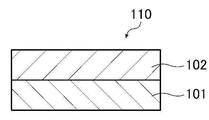
- FIG. 1 is a cross-sectional view showing an example of an antibacterial film according to the present invention.
- a numerical range represented by "-" means a range including the numerical values before and after "-" as lower and upper limits.
- the upper limit or lower limit described in a certain numerical range may be replaced with the upper limit or lower limit of another numerical range described stepwise.
- the upper limit or lower limit described in a certain numerical range may be replaced with the values shown in the examples.
- the amount of each component in the composition means the total amount of the multiple substances present in the composition unless otherwise specified when there are multiple substances corresponding to each component in the composition. do.
- the term "process” includes not only an independent process, but also if the intended purpose of the process is achieved even if it cannot be clearly distinguished from other processes. be In the present specification, a combination of two or more preferred aspects is a more preferred aspect.
- the antibacterial film according to the present invention (hereinafter also referred to as “this antibacterial film”) is a substrate; at least one antimicrobial layer disposed on a substrate, the antimicrobial film comprising:
- the antibacterial layer contains a binder, light diffusion particles and antibacterial agent particles,
- the ratio of the water contact angle on the surface of the antibacterial layer opposite to the substrate side to the oleic acid contact angle on the surface of the antibacterial layer opposite to the substrate side (hereinafter also referred to as "specific contact angle ratio”) is 7.0 or more,
- the arithmetic surface roughness of the surface of the antibacterial layer on the side opposite to the base material side is x ⁇ m and the average particle size of the light diffusion particles is Ps ⁇ m, the relationship between the formula (1) described later and the formula (2) described later meet.
- the present inventors speculate as follows. is doing. The present inventors found that the specific contact ratio is 7.0 or more and the components contained in the antibacterial layer (for example, the binder described later, the light diffusion It is speculated that by adjusting the particle size, Ra, and the particle size of the light diffusing particles, etc., excellent finger sliding properties, glare suppressing properties, fingerprint visibility, and fingerprint removability can be achieved.
- excellent effects of the present invention when at least one of the effects of finger sliding, anti-glare, fingerprint visibility and fingerprint removability is superior, it is also referred to as "excellent effects of the present invention".
- the configuration of the present antibacterial film will be described below.
- FIG. 1 is a cross-sectional view showing an example of the configuration of this antibacterial film.
- the antibacterial film 110 has a base material 101 and an antibacterial layer 102 .
- the antibacterial layer 102 includes a binder, light diffusion particles and antibacterial agent particles (not shown).
- the surface of the base material 101 and the antibacterial layer 102 are in direct contact.
- the present antibacterial film is not limited to the configuration shown in FIG. 1, and may have other configurations.
- the antibacterial layer 102 is arranged on one side surface of the base material 101, but the antibacterial layers may be arranged on both sides of the base material.
- the antibacterial layer 102 is arranged on the entire surface of the base material 101, but the antibacterial layer may be arranged only on a part of the base material.
- an adhesive layer may be arranged on the surface of the substrate 101 opposite to the surface on which the antibacterial layer 102 is arranged.
- a separator for protecting the adhesive layer may be attached to the surface of the adhesive layer opposite to the surface on which the substrate 101 is arranged.
- a protective sheet for protecting the antibacterial layer 102 may be arranged on the antibacterial layer 102 . If a protective sheet is placed, it is removed from the antimicrobial film during use.
- the substrate 101 and the antibacterial layer 102 are in direct contact, but a primer layer may be included between the substrate and the antibacterial layer.
- the specific contact angle ratio is the ratio of the water contact angle on the surface opposite to the substrate side of the antibacterial layer to the oleic acid contact angle on the surface opposite to the substrate side of the antibacterial layer (water contact angle / oleic acid contact angle).
- the specific contact angle ratio is 7.0 or more, preferably 8.0 or more, more preferably 10.0 or more, and even more preferably 11.0 or more.
- the upper limit is not particularly limited, it is preferably 100 or less, more preferably 50 or less.
- the water contact angle on the surface of the antibacterial layer opposite to the substrate is preferably 20 degrees or more, more preferably 50 degrees or more. Although the upper limit is not particularly limited, it is preferably 150 degrees or less, more preferably 100 degrees or less.
- the water contact angle refers to a water contact angle measured by the following method. Using a contact angle meter (Kyowa Interface Science Co., Ltd., FAMMS DM-701), pure water (droplet 2 ⁇ L) is dropped on the surface of the antibacterial layer held horizontally on the side opposite to the substrate side. After 20 seconds from dropping, the contact angle was measured at 10 points, and the arithmetic mean value of the measurement results was taken as the water contact angle of the antibacterial layer. In addition, the test conforms to the static drop method of JIS R 3257:1999 and is carried out at room temperature of 20°C.
- the oleic acid contact angle on the surface of the antibacterial layer opposite to the substrate side is often 150 degrees or less, preferably 100 degrees or less, more preferably 20 degrees or less, and even more preferably 10 degrees or less. Although the lower limit is not particularly limited, it is often over 0 degrees.
- the oleic acid contact angle refers to a contact angle measured in the same manner as in the measurement of the water contact angle described above, except that oleic acid is used instead of water.
- Examples of methods for adjusting the specific contact angle ratio include a method of changing the type of surfactant (for example, fluorine-based surfactant) and the content of the surfactant.
- the relationship of formula (1) is satisfied when the arithmetic surface roughness of the surface of the antibacterial layer opposite to the base material is x ⁇ m. 0.10 ⁇ x ⁇ 0.20 (1)
- x is 0.15.
- the antibacterial film preferably satisfies the relationship of formula (1-1), more preferably satisfies the relationship of formula (1-2), in that the effect of the present invention is more excellent. -3) is more preferably satisfied. 0.11 ⁇ x ⁇ 0.18 (1-1) 0.12 ⁇ x ⁇ 0.16 (1-2) 0.13 ⁇ x ⁇ 0.15 (1-3)
- the arithmetic surface roughness refers to arithmetic surface roughness measured by the following method. According to JIS B 0601: 1994, using a laser microscope (for example, "VK-9500” manufactured by KEYENCE), by analyzing the shape of a 10 ⁇ m square on the surface opposite to the base material side of the antibacterial layer , can be measured.
- a laser microscope for example, "VK-9500” manufactured by KEYENCE
- Methods for adjusting the arithmetic surface roughness include, for example, the average particle size of the light diffusing particles, the thickness of the antibacterial layer, the type and content of the binder, and the application conditions of the composition for forming the antibacterial layer in the method for producing an antibacterial film ( coating method, coating amount, etc.), and a method of adjusting the heating conditions of the coating layer in the antibacterial film manufacturing method to each suitable aspect described later.
- the above Ps refers to the average particle size measured by the following method.
- the 50% volume cumulative diameter (D50) is measured three times using a laser diffraction/scattering particle size distribution analyzer manufactured by Horiba, Ltd., and the arithmetic mean value of the measured values is used.
- said Ps observed the light-diffusion particle
- the particle size of 100 particles may be measured, and the average value thereof may be taken as the average particle size.
- the haze of the antibacterial film in the wavelength range of 380 to 750 nm is not particularly limited, but is preferably 10% or less, more preferably 8% or less. Although the lower limit is not particularly limited, 0% or more is preferable.
- the haze can be measured according to JIS K 7136 (2000) using a commercially available measuring device such as NDH5000 manufactured by Nippon Denshoku Industries Co., Ltd.
- As a method for adjusting the haze for example, there is a method of adjusting the content of the light diffusing particles.
- Each member constituting the antibacterial film will be described in detail below.
- the antimicrobial film has a substrate.
- the substrate is not particularly limited, and known substrates can be used.
- a transparent base material is preferable.
- that the base material is transparent means that the transmittance of light over a wavelength range of 380 to 780 nm is 80% or more.
- a base material subjected to stretching treatment is preferable, and a biaxially stretched base material is more preferable.
- the draw ratio is not particularly limited, but is preferably in the range of 1.5 times or more and 7 times or less. If the draw ratio is less than 1.5 times, the mechanical strength may be insufficient, and if the draw ratio exceeds 7 times, the uniformity of the thickness may be lacking.
- the draw ratio is more preferably in the range of 2 times or more and 5 times or less.
- Particularly preferable stretching directions and stretching ratios are in the range of 2 times or more and 5 times or less in two directions perpendicular to each other.
- the haze is 0.5 to 1.5% and the total light transmittance is 90% or more.
- the method for measuring haze is as described above.
- PET polyethylene terephthalate
- TAC triacetyl cellulose
- PC polycarbonate
- PBT polybutylene terephthalate
- PET base materials include “Lumirror (registered trademark) U34” manufactured by Toray Industries, Inc., “Cosmoshine (registered trademark) A4300” manufactured by Toyobo Co., Ltd., and "O3916W” manufactured by Teijin Limited.
- the shape of the substrate is not particularly limited, but includes film and sheet shapes. Further, the surface of the substrate on which the antibacterial layer described below is arranged may be flat or curved. A conventionally known easy adhesion layer (primer layer) may be formed on the surface of the substrate on which the antibacterial layer is arranged.
- the thickness of the substrate is not particularly limited, but is preferably 10 to 300 ⁇ m, more preferably 50 to 150 ⁇ m. The thickness of the substrate is determined by measuring the thickness of the substrate at arbitrary 10 points with a micrometer and taking the arithmetic mean value of the measurement results.
- the antimicrobial layer contains a binder, light diffusing particles and antimicrobial particles.
- the antibacterial agent particles are not particularly limited, and known particulate antibacterial agents can be used.
- the antibacterial agent particles those exhibiting a bactericidal effect against pathogenic bacteria represented by Staphylococcus aureus and Escherichia coli are preferably used.
- the shape of the antibacterial agent particles is not particularly limited, and may be, for example, spherical, ellipsoidal, rod-like, flat plate-like, needle-like, irregular shape, or the like.
- the antimicrobial particles comprise a metal.
- metal ions are generated from the metal contained in the antibacterial agent particles, and the metal ions act on microorganisms (hereinafter also referred to as “bacteria”), thereby exhibiting antibacterial properties.
- bacteria microorganisms
- it is also preferable in that it has antibacterial properties against fungi such as molds and antiviral properties against viruses.
- viruses include, for example, influenza virus, SARS coronavirus (SARS-CoV), and novel coronavirus (SARS-CoV-2).
- SARS-CoV SARS coronavirus
- SARS-CoV-2 novel coronavirus
- the antiviral activity value is preferably greater than 1.0, more preferably 2.0 or more, and even more preferably greater than 2.0.
- the metals include silver, mercury, zinc, iron, lead, bismuth, titanium, tin and nickel.
- the form of the metal contained in the antibacterial agent particles is not particularly limited, and examples include forms such as metal particles, metal ions and metal salts (including metal complexes).
- the metal is preferably copper, zinc or silver because the antibacterial layer has superior antibacterial properties, and silver is more preferred because of its high safety and wide antibacterial spectrum.
- the metal is preferably a metal salt.
- silver-containing antibacterial agent particles are preferable because the antibacterial layer has superior antibacterial properties. That is, the metal is preferably silver.
- the silver-based antibacterial agent is not particularly limited as long as it contains silver (silver atoms).
- the form of silver is also not particularly limited, and includes, for example, the form of metallic silver, silver ions, or silver salts (including silver complexes).
- silver-based antibacterial agents include silver particles that slowly release silver ions or inorganic antibacterial agents containing silver (for example, silver and/or silver ions supported on a carrier).
- silver complexes are included within the scope of silver salts.
- silver salts include silver acetate, silver acetylacetonate, silver azide, silver acetylide, silver arsenate, silver benzoate, silver hydrogen fluoride, silver bromate, silver bromide, silver carbonate, silver chloride, and chloric acid.
- silver complexes examples include histidine silver complexes, methionine silver complexes, cysteine silver complexes, aspartate silver complexes, pyrrolidone carboxylate silver complexes, oxotetrahydrofuran carboxylate silver complexes, and imidazole silver complexes.
- a silver-supported carrier containing a carrier and silver supported on the carrier is preferable in terms of superior antibacterial properties.
- a carrier and a metal-carrying carrier containing the above metal carried on the carrier are preferable, and a silver-carrying carrier is more preferable.
- the type of carrier is not particularly limited, and known carriers can be used. Examples of carriers include zeolite-based carriers, calcium silicate-based carriers, zirconium phosphate-based carriers, calcium phosphate-based carriers, zinc oxide-based carriers, soluble glass-based carriers, silica gel-based carriers, activated carbon-based carriers, titanium oxide-based carriers, and titania. carrier, organometallic carrier, ion exchanger ceramic carrier, layered phosphate-quaternary ammonium salt carrier, and antibacterial stainless steel carrier, but not limited thereto.
- the material constituting the carrier includes calcium zinc phosphate, calcium phosphate, zirconium phosphate, aluminum phosphate, calcium silicate, activated carbon, activated alumina, silica gel, zeolite, hydroxyapatite, zirconium phosphate, and phosphoric acid. Titanium, potassium titanate, hydrous bismuth oxide, hydrous zirconium oxide and hydrotalcite.
- zeolites include natural zeolites such as chabazite, mordenite, erionite and clinoptilolite, and synthetic zeolites such as A-type zeolite, X-type zeolite and Y-type zeolite.
- so-called ceramics are preferable as the carrier. That is, the antibacterial agent particles are preferably metal-supported ceramic particles, and more preferably silver-supported ceramic particles.
- the content of the metal is not particularly limited, but is preferably 0.1 to 30% by mass, and 0.5 to 20% by mass is more preferred.
- silver-based antibacterial agents include, for example, "Zeomic” manufactured by Sinanen Zeomic Co., Ltd., “Silwell” manufactured by Fuji Silysia Chemical Co., Ltd., and “Bactenone” manufactured by Nippon Electronic Materials Co., Ltd.; ” and “Atomy Ball” manufactured by Catalysts and Chemicals Co., Ltd.
- Silver-based antibacterial agents made by carrying silver on inorganic ion exchanger ceramics; Silver particles such as “Nanosilver” manufactured by Nippon Aeon Co., Ltd.; Examples include silver-loaded ceramic particles (silver ceramic particles) in which silver is chemically bonded to ceramics such as "Bactekiller" and "Bacterite".
- the average particle diameter of the antibacterial agent particles is preferably 0.1 to 10 ⁇ m, more preferably 0.3 to 3 ⁇ m, from the viewpoint of good balance between ease of handling and transparency of the antibacterial layer.
- the average particle diameter of the antibacterial agent particles is obtained by measuring the 50% volume cumulative diameter (D50) three times using a laser diffraction scattering particle size distribution analyzer manufactured by Horiba, and calculating the arithmetic mean value of the obtained measurement values. use.
- the average particle size of the antibacterial agent particles was determined by observing the particles with a scanning electron microscope (SEM) or a transmission electron microscope (TEM) and measuring the diameter (particle size) of each particle.
- SEM scanning electron microscope
- TEM transmission electron microscope
- the antibacterial agent particles may be used singly or in combination of two or more.
- the content of the antibacterial agent particles in the antibacterial layer is not particularly limited, it is preferably 0.1 to 20% by weight, more preferably 0.2 to 10% by weight, and 1.0 to 7%, based on the total weight of the antibacterial layer. % by mass is more preferred.
- the amount of the antibacterial agent particles applied is preferably 3.0 mg/ m2 or more in terms of the amount of metal per unit area of the antibacterial film from the viewpoint of imparting antiviral properties. It is more preferably 5.0 mg/m 2 or more.
- antibacterial agents other than the antibacterial agent particles may be used in combination with the antibacterial agent particles.
- Other antibacterial agents include, for example, phenol ether derivatives, imidazole derivatives, sulfone derivatives, N-haloalkylthio compounds, anilide derivatives, pyrrole derivatives, quaternary ammonium salts, pyridine compounds, triazine compounds, benzoisothiazoline compounds and Examples include organic antibacterial agents such as isothiazoline compounds.
- the organic antibacterial agents also include natural antibacterial agents. Examples of natural antibacterial agents include chitosan, which is a basic polysaccharide obtained by hydrolyzing chitin contained in crab or shrimp shells.
- the antimicrobial layer contains a binder.
- the binder is not particularly limited, and known binders can be used.
- binders include polyester resins, acrylic resins, methacrylic resins, methacrylic acid-maleic acid copolymer resins, polystyrene resins, fluororesins, polyimide resins, fluorinated polyimide resins, polyamide resins, polyamideimide resins, and polyethers.
- imide resin cellulose acylate resin, polyurethane resin, polyether ether ketone resin, polycarbonate resin, alicyclic polyolefin resin, polyarylate resin, polyether sulfone resin, polysulfone resin, cycloolefin copolymer resin, fluorene ring-modified polycarbonate resins, alicyclic-modified polycarbonate resins and fluorene-ring-modified polyester resins.
- a polymer having a hydrophilic group (hereinafter also referred to as "hydrophilic polymer”) is preferable.
- hydrophilic polymer By containing a hydrophilic polymer in the antibacterial layer, the antibacterial layer exhibits more hydrophilicity, has better antibacterial properties, and can be washed with a washing liquid such as water to remove contaminants attached to the surface of the antibacterial layer more easily. can be removed.
- hydrophilic group is not particularly limited. groups, etc.), amino groups, carboxyl groups, alkali metal salts of carboxyl groups, hydroxyl groups, alkoxy groups, amide groups, carbamoyl groups, sulfonamide groups, sulfamoyl groups, sulfonic acid groups, and alkali metal salts of sulfonic acid groups. .
- a polyoxyalkylene group is preferred.
- the structure of the main chain of the hydrophilic polymer is not particularly limited, and examples thereof include polyurethane, poly(meth)acrylate, polystyrene, polyester, polyamide, polyimide and polyurea.
- Poly(meth)acrylate is a concept that includes both polyacrylate and polymethacrylate.
- hydrophilic polymer a polymer obtained by polymerizing a monomer having a hydrophilic group (hereinafter also referred to as a “hydrophilic monomer”) is preferable.
- a hydrophilic monomer means a compound (monomer and/or oligomer) having the hydrophilic group and the polymerizable group.
- the number of hydrophilic groups in the hydrophilic monomer is not particularly limited, but is preferably 1 or more, more preferably 1 to 6, and even more preferably 1 to 3, in order to make the antibacterial layer more hydrophilic.
- the type of polymerizable group in the hydrophilic monomer is not particularly limited, and examples thereof include radically polymerizable groups, cationically polymerizable groups and anionically polymerizable groups.
- Radically polymerizable groups include (meth)acryloyl groups, acrylamide groups, vinyl groups, styryl groups and allyl groups.
- Cationically polymerizable groups include vinyl ether groups, oxiranyl groups and oxetanyl groups. Among them, a (meth)acryloyl group is preferred.
- a (meth)acryloyl group is a concept including both an acryloyl group and a methacryloyl group.
- the number of polymerizable groups in the hydrophilic monomer is not particularly limited, but is preferably 2 or more, more preferably 2 to 6, more preferably 2 to 3, in that the resulting antibacterial layer has better mechanical strength. preferable.
- a preferred embodiment of the hydrophilic monomer includes a compound represented by the following formula (A).
- R 1 represents a hydrogen atom or a substituent (monovalent substituent).
- the type of substituent is not particularly limited, and includes known substituents such as hydrocarbon groups optionally having a heteroatom (e.g., alkyl groups, aryl groups, etc.) and the above hydrophilic groups.
- R2 represents a polymerizable group. The definition of the polymerizable group is as described above.
- L 1 represents a single bond or a divalent linking group.
- the type of divalent linking group is not particularly limited, and examples thereof include -O-, -CO-, -NH-, -CO-NH-, -COO-, -O-COO-, alkylene group, arylene group, hetero Aryl groups and combinations thereof are included.
- L2 represents a polyoxyalkylene group.
- a polyoxyalkylene group means a group represented by the following formula (B).
- R3 represents an alkylene group (eg, ethylene group, propylene group).
- m represents an integer of 2 or more, preferably an integer of 2 to 10, more preferably an integer of 2 to 6. * represents a binding position.
- n represents an integer of 1-4.
- hydrophilic monomer having a hydrophilic group and a polymerizable group examples include "NK Ester A-GLY-9E” manufactured by Shin-Nakamura Chemical Co., Ltd., "Miramer M4004" manufactured by Toyo Chemicals, and "Miramer M3150” manufactured by Toyo Chemicals.
- a polyfunctional monomer having two or more polymerizable groups but no hydrophilic group in order to improve the mechanical strength of the antibacterial layer.
- the polyfunctional monomer acts as a so-called cross-linking agent, has a three-dimensional network structure in which metal ions such as silver ions can easily move, and can produce a hydrophilic polymer exhibiting more excellent antibacterial properties. From the above points, it is preferable to use two or more polyfunctional monomers.
- the polyfunctional monomer may or may not have a hydrophilic group.
- the number of polymerizable groups contained in the polyfunctional monomer is not particularly limited, and is preferably 2 to 10, more preferably 2 to 6, from the viewpoints of superior mechanical strength of the antibacterial layer and handleability.
- Polyfunctional monomers include, for example, trimethylolpropane triacrylate, tetramethylolmethane tetraacrylate, dipentaerythritol hexaacrylate, pentaerythritol triacrylate and pentaerythritol tetraacrylate.
- a commercial item can be used as such a polyfunctional monomer (crosslinking agent).
- Examples of such commercial products include “DPHA-76” (dipentaerythritol hexaacrylate) manufactured by Toshin Yushi Co., Ltd., and “KAYARAD PET-30” manufactured by Nippon Kayaku Co., Ltd. (a mixture of pentaerythritol triacrylate and pentaerythritol tetraacrylate). mixture) and “A-DPH” (dipentaerythritol hexaacrylate) manufactured by Shin-Nakamura Chemical Co., Ltd.
- the hydrophilic polymer is preferably a copolymer composed of the compound represented by the above formula (A) and a polyfunctional monomer.
- the mixing ratio of the compound represented by the formula (A) and the polyfunctional monomer is not particularly limited, but the ratio of the content of the compound represented by the formula (A) to the content of the polyfunctional monomer is the mass ratio is preferably 0.01 to 10, more preferably 0.03 to 1.
- a binder may be used individually by 1 type, or may use 2 or more types together.
- the content of the binder in the antimicrobial layer is not particularly limited, but is preferably 3 to 98% by mass, more preferably 5 to 95% by mass, and still more preferably 10 to 93% by mass, relative to the total mass of the antimicrobial layer.
- the antimicrobial layer contains light diffusing particles.
- the light diffusing particles are not particularly limited as long as they function as so-called matting agents, and may be organic particles, inorganic particles, or organic-inorganic composite particles.
- organic particles include resin particles. More specific examples include silicone resin particles, acrylic resin particles such as polymethyl methacrylate (PMMA), nylon resin particles, styrene resin particles, polyethylene particles, urethane resin particles and benzoguanamine particles.
- the organic particles may be particles having a hollow structure.
- inorganic particles particles such as diamond, titanium oxide, zirconium oxide, lead oxide, lead carbonate, zinc oxide, zinc sulfide, antimony oxide, silicon oxide and aluminum oxide can be used. From the standpoint of availability, titanium oxide or aluminum oxide is preferred.
- silicone resin particles or acrylic resin particles are preferable, and acrylic resin particles are more preferable, because they are superior in anti-glare function due to light scattering.
- the light diffusing particles may be used singly or in combination of two or more.
- the content of the light diffusing particles is not particularly limited, but is preferably 1 to 15% by mass, more preferably 2 to 12% by mass, and even more preferably 3 to 8% by mass, relative to the total mass of the antibacterial layer.
- the antibacterial layer may contain optional components other than the above as long as the effects of the present invention are exhibited.
- Optional components include, for example, dispersants, surfactants, photocatalytic materials, and hydrophilicity imparting agents.
- the antimicrobial layer may contain a dispersant.
- a dispersant is a compound having a function of improving the dispersibility of the antibacterial agent particles.
- the dispersant is not particularly limited, and a known dispersant can be used, but a dispersant having an acidic group is preferred. Acid groups include, for example, carboxy groups, sulfonic acid groups, and phosphoric acid groups.
- dispersing agents include, for example, DISPERBYK-102, DISPERBYK-106, DISPERBYK-108, DISPERBYK-110, DISPERBYK-111, DISPERBYK-140, DISPERBYK-142, DISPERBYK-9076, DISPERBYK-118 and DISPERBYK-180 ( Solsperse 26000, Solsperse 36000 and Solsperse 41000 (manufactured by Lubrizol); Ajisper PB821, Ajisper PB822, Ajisper PB824 and Ajisper PB881 (manufactured by Ajinomoto Fine-Techno Co., Inc.).
- a dispersing agent may be used individually by 1 type, or may use 2 or more types together.
- the content of the dispersant is preferably 10 to 500% by mass based on the total weight of the antibacterial agent particles.
- the antimicrobial layer may contain a surfactant.
- the surface active agent can adjust the water contact angle and the oleic acid contact angle on the surface of the antibacterial layer to a desired range. Further, when the antibacterial layer is formed by a coating method using the antibacterial layer-forming composition described below, it is easy to form a coating film having a more uniform thickness and/or a coating film having a smoother surface.
- the surfactant is not particularly limited, and known surfactants can be used. Examples of surfactants include nonionic surfactants, anionic surfactants, cationic surfactants and amphoteric surfactants. Nonionic surfactants are preferred, and fluorosurfactants are more preferred. preferable.
- nonionic surfactants include ester types such as glycerin fatty acid esters, sorbitan fatty acid esters, and sucrose fatty acid esters; ether types such as polyoxyethylene alkyl ethers and polyoxyethylene polyoxypropylene glycol; fatty acid polyethylene glycol; Examples include ester ether types such as polyoxyethylene sorbitan and alkanolamide types such as fatty acid alkanolamides. More specific nonionic surfactants include polyethylene glycol mono(meth)acrylate, polyethylene glycol monolauryl ether, polyethylene glycol monostearyl ether, polyethylene glycol monocetyl ether, polyethylene glycol monolauryl ester and polyethylene glycol monostearyl ester. mentioned.
- Ionic surfactants include anionic surfactants such as alkyl sulfates, alkylbenzene sulfonates and alkyl phosphates; cationic surfactants such as alkyltrimethylammonium salts and dialkyldimethylammonium salts; Examples include amphoteric surfactants such as betaine.
- fluorine-type surfactant is mentioned as surfactant.
- fluorine-based surfactants include compounds described in paragraphs [0082] to [0090] of JP-A-2014-119605.
- the fluorosurfactant preferably also contains a polymerizable group.
- surfactants containing a polymerizable group examples include X-71-1203E (manufactured by Shin-Etsu Chemical Co., Ltd.), Futergent series (manufactured by Neos), Fluorosurf (registered trademark) FS-7072 (manufactured by Fluoro Technology), and and Megafac® F-780-F, RS-101, RS-102, RS-718K and RS-72-K (manufactured by DIC Corporation).
- fluorine-based surfactants from the viewpoint of improving environmental friendliness, compounds having linear perfluoroalkyl groups having 7 or more carbon atoms, such as perfluorooctanoic acid (PFOA) and perfluorooctane sulfonic acid (PFOS), are used.
- PFOA perfluorooctanoic acid
- PFOS perfluorooctane sulfonic acid
- Surfactants derived from alternative materials are preferred.
- Surfactant may be used individually by 1 type, or may use 2 or more types together.
- the content of the surfactant is preferably 0.1 to 10% by weight with respect to the total weight of the antibacterial layer.
- the antimicrobial layer may include photocatalytic materials including metal oxides.
- the type of metal oxide contained in the photocatalytic material is not particularly limited, but examples include TiO2 , ZnO, SrTiO3 , CdS, GaP, InP, GaAs, BaTiO3 , BaTiO4 , BaTi4O9 , K2NbO3 .
- Nb2O5 Nb2O5 , Fe2O3 , Ta2O5 , K3Ta3Si2O3 , WO3 , SnO2 , Bi2O3 , BiVO4 , NiO , Cu2O , SiC, MoS2 , InPb, RuO 2 , CeO 2 and Ta 3 N 5 , and layered oxides having at least one element selected from the group consisting of Ti, Nb, Ta and V can be mentioned.
- metal oxides containing at least one metal atom selected from the group consisting of Zn, Ti, Ni, W, Cu, Sn, Fe, Sr and Bi are preferred.
- the average particle size of the photocatalytic material (excluding those used as antibacterial agent particles) is not particularly limited, but is preferably 1 nm or more and 2 ⁇ m or less.
- the average particle size of the photocatalytic material can be measured by a method similar to the method for measuring the average particle size of the antibacterial agent particles.
- the mass ratio of the mass of the antibacterial agent particles to the mass of the photocatalytic material is preferably 0.01 to 20, and 0 .1 to 10 are more preferred, and 0.3 to 3 are even more preferred.
- the antibacterial layer may contain a hydrophilic agent.
- the hydrophilicity-imparting agent is intended to be a compound that has the function of lowering the water contact angle on the surface of the antibacterial layer and that is not included in the above surfactants.
- the hydrophilicity-imparting agent is not particularly limited as long as it is a compound having a function of lowering the water contact angle on the surface of the antibacterial layer. Examples include ethyl (meth)acrylate, n-butyl (meth)acrylate and isobutyl (meth)acrylate. Acrylates are mentioned.
- the hydrophilicity-imparting agents may be used singly or in combination of two or more. When the antibacterial layer contains a hydrophilicity-imparting agent, the content of the hydrophilicity-imparting agent is preferably 0.1 to 30% by weight with respect to the total weight of the antibacterial layer.
- antibacterial layer may contain, for example, polymerization initiators, ultraviolet absorbers, fillers, anti-aging agents, antistatic agents, flame retardants, adhesion imparting agents, and antioxidants, which will be described later. , defoamers, leveling agents, matting agents, light stabilizers, deodorants, dyes, fragrances and pigments.
- the thickness of the antibacterial layer is not particularly limited, it is preferably 0.01 to 10 ⁇ m, more preferably 0.01 to 8 ⁇ m, and even more preferably 0.01 to 6 ⁇ m in terms of excellent durability and transparency in a well-balanced manner.
- the thickness of the antibacterial layer is measured by embedding a sample piece having the antibacterial layer in resin, cutting out a cross section with a microtome, and observing the cut out cross section with a scanning electron microscope.
- the thickness of the antibacterial layer is obtained by measuring the thickness of the antibacterial layer at arbitrary 10 positions of the antibacterial layer by the above method and taking the arithmetic mean value of the measured values.
- the antibacterial film may have layers other than the substrate and the antibacterial layer described above.
- Layers other than the substrate and the antibacterial layer include an adhesive layer, a release film, the protective sheet described above, and the easily adhesive layer (primer layer) described above.
- the antibacterial film may have an adhesive layer.
- the adhesive layer is for attaching the antibacterial film to the antibacterial layer forming surface of various devices. Any adhesive layer may be used as long as the antibacterial film can be attached to various antibacterial layer-forming surfaces, and may be formed using a known adhesive. Examples of adhesives that can be used in the adhesive layer include (meth)acrylic adhesives, rubber adhesives, silicone adhesives, urethane adhesives, and polyester adhesives. (Meth)acrylic pressure-sensitive adhesives are intended to be acrylic pressure-sensitive adhesives and/or methacrylic pressure-sensitive adhesives.
- the antibacterial layer is arranged on one surface of the substrate and the adhesive layer is arranged on the surface opposite to the surface of the substrate on which the antibacterial agent is arranged. As a result, when the antibacterial film is attached to the antibacterial layer forming surface of the device, the antibacterial layer is arranged closer to the exposed surface.
- the thickness of the adhesive layer is not particularly limited, it is preferably 1 to 30 ⁇ m, more preferably 2 to 20 ⁇ m.
- the adhesive strength of the adhesive layer is not particularly limited, but is preferably 2 to 20 cN/25 mm. When the adhesive strength is 2 cN/25 mm or more, it is difficult to cause peeling or the like when the adhesive is attached to the surface of a touch panel or the like for use. On the other hand, when the adhesive strength is 20 cN/25 mm or less, the antibacterial film can be peeled off smoothly.
- the antibacterial film When the antibacterial film has an adhesive layer, it is preferred that the antibacterial film further has a release film.
- a release film is adhered to the adhesive layer to protect the adhesive layer until the antimicrobial film is used. Any release film can be used as long as it can protect the adhesive layer, and known release films can be used. Examples of release films include release agents such as silicone-based compounds, long-chain alkyl-based compounds, and polyvinyl alcohol carbamate.
- the thickness of the release film is not particularly limited, but is preferably 1 to 30 ⁇ m, more preferably 2 to 20 ⁇ m.
- the method for producing the antibacterial film is not particularly limited as long as it is a method capable of producing an antibacterial film having a substrate and an antibacterial layer disposed on the substrate.
- Methods for producing an antibacterial film include, for example, a method of forming an antibacterial layer on a base material, a method of forming a base material on an antibacterial layer, a method of bonding a preformed antibacterial layer and a preformed base material together, and A method of adhering the antibacterial layer and the substrate while forming them by extrusion or the like can be used.
- a method in which an antibacterial layer-forming composition is applied to a predetermined position on a substrate to form a coating film, and the coating film is dried and/or cured to form an antibacterial film.
- a step of applying the antibacterial layer-forming composition to a predetermined position on the substrate to form a coating film a step of heating and drying the coating film, and irradiating the coating film with ultraviolet rays.
- a method comprising a step of curing the coating film to form an antibacterial layer is more preferable.
- the antibacterial layer-forming composition contains at least antibacterial agent particles, a binder, and light diffusion particles.
- the binder is a polymer obtained by polymerizing a monomer
- the antibacterial layer-forming composition may contain at least antibacterial agent particles, monomers (e.g., hydrophilic monomers and polyfunctional monomers) and light diffusion particles. .
- the antibacterial layer-forming composition will be described later.
- the method of applying the composition for forming an antibacterial layer to the surface of the substrate is not particularly limited, and a known application method can be applied.
- methods for applying the antibacterial layer-forming composition to the surface of the substrate include a spray method, a wire bar coating method, an extrusion coating method, a direct gravure coating method, a reverse gravure coating method, an inkjet method, a die coating method, and a static coating method. Electro-painting and wiping methods are included.
- the antibacterial layer is formed by drying and/or curing the coating film formed on the surface of the substrate by the coating method described above.
- Examples of the method for removing the solvent from the coating film of the antibacterial layer-forming composition and drying it include heat treatment.
- the conditions for the heat treatment are not particularly limited, for example, the heating temperature is preferably 20 to 150°C, more preferably 20 to 60°C. Also, the heating time is preferably 15 to 600 seconds.
- the antibacterial layer may be formed by curing the coating film of the antibacterial layer-forming composition containing the monomer by exposure treatment.
- the exposure treatment at this time is not particularly limited, but it is preferable to cure the coating film by irradiating ultraviolet rays with an irradiation amount of 190 mJ/cm 2 or more.
- the upper limit of the irradiation dose is not particularly limited, it is preferably 600 mJ/cm 2 or less.
- ultraviolet irradiation ultraviolet rays emitted from light beams such as ultra-high pressure mercury lamps, high pressure mercury lamps, low pressure mercury lamps, carbon arcs, xenon arcs and metal halide lamps can be used.
- composition for forming an antibacterial layer contains at least antibacterial agent particles, a binder or a monomer, and light diffusion particles.
- the composition for forming an antibacterial layer may contain the above optional components contained in the antibacterial layer.
- the composition for forming an antibacterial layer preferably contains a solvent.
- the composition for forming an antibacterial layer contains a monomer, it is preferable to further contain a polymerization initiator.
- the antimicrobial layer-forming material contains a polymerization initiator, the antimicrobial layer containing the polymer has better mechanical strength. Components other than the solvent and the polymerization initiator are as already explained, including their preferred embodiments.
- the solvent contained in the composition for forming an antibacterial layer is not particularly limited, and includes water and organic solvents. Among them, the solvent preferably contains an organic solvent in that the thickness of the coating film is likely to be more uniform.
- Organic solvents include, for example, methanol, ethanol, acetone, methyl ethyl ketone, cyclohexane, ethyl acetate, ethylene dichloride, tetrahydrofuran, toluene, ethylene glycol monomethyl ether, ethylene glycol monoethyl ether, ethylene glycol dimethyl ether, propylene glycol monomethyl ether, propylene glycol mono Ethyl ether, acetylacetone, cyclohexanone, diacetone alcohol, ethylene glycol monomethyl ether acetate, ethylene glycol ethyl ether acetate, ethylene glycol monoisopropyl ether, ethylene glycol monobutyl ether acetate, 3-meth
- a solvent may be used individually by 1 type, or may use 2 or more types together.
- the content of solids in the composition for forming an antibacterial layer, that is, the total content of components other than the solvent is not particularly limited. 1 to 50% by weight is preferred with respect to the total weight of.
- the polymerization initiator is not particularly limited, and known polymerization initiators can be used.
- Examples of polymerization initiators include thermal polymerization initiators and photopolymerization initiators, and photopolymerization initiators are preferred from the viewpoint of excellent reaction efficiency.
- Examples of polymerization initiators include aromatic ketones such as benzophenone and phenylphosphine oxide; ⁇ -hydroxyalkylphenone compounds (manufactured by BASF, IRGACURE184, 127, 2959, and DAROCUR1173, etc.); and phenylphosphine oxide. (monoacylphosphine oxide: IRGACURE TPO manufactured by BASF and bisacylphosphine oxide: IRGACURE 819 manufactured by BASF).
- a polymerization initiator may be used individually by 1 type, or may use 2 or more types together.
- the content of the polymerization initiator is not particularly limited, but is preferably 0.1 to 15% by mass, and 1 to 6% by mass, based on the content of the monomer. is more preferred.
- the antibacterial layer-forming composition can be prepared by mixing the above components.
- the order of mixing the above components is not particularly limited, but when the antibacterial layer-forming composition contains a dispersant, the antibacterial agent particles and the dispersant are first mixed to prepare a dispersion in which the antibacterial agent particles are dispersed. You may
- the antibacterial film can be applied to various uses. For example, antimicrobial properties can be imparted to the surfaces of various articles by placing antimicrobial films on the surfaces of the articles.
- the present antibacterial film can be placed on the surface of a transparent base material of a device such as a display and used as an antiglare antibacterial film with excellent image visibility.
- it is preferable to manufacture a touch panel with an antibacterial film by arranging the present antibacterial film on the surface of the image display portion of the touch panel.
- the antibacterial film exhibits good antibacterial properties, exhibits good antiglare properties, and provides good image visibility even in situations where fingers and the like frequently come into contact with the touch panel operation or the like.
- touch panel with antibacterial film are not particularly limited, for example, personal computers, mobile phones, game machines, medical equipment, automatic teller machines (ATM), ordering devices, ticket vending machines, copiers, car navigation systems, etc. It can be used as an input device and an image display device in electronic equipment.
- ATM automatic teller machines
- composition A-1 An antibacterial layer-forming composition (composition A-1).
- composition A-1 The solid content concentration of composition A-1 was 49.9% by mass.
- DPHA-76 dierythritol hexaacrylate, polyfunctional monomer, solid content 76% by mass
- Monomer 2 Nippon Kayaku Co., Ltd.
- “KAYARAD PET-30” (Mixture of pentaerythritol triacrylate and pentaerythritol tetraacrylate, polyfunctional monomer) 26.7 parts by mass Monomer 3: Shin-Nakamura Chemical Co., Ltd.
- "NK Ester A-GLY-9E” (ethylene oxide 9 mol modified glycerin tri Acrylate) 1.9 parts by mass
- MX-300 polymethyl methacrylate (PMMA), acrylic resin particles, average particle size 3.0 ⁇ m
- Polymerization initiator BASF " IRGACURE (Omnirad) 184" 1.0 parts by mass ⁇ Dispersing agent: BYK chemie "DISPERBYK-180" 0.2 parts by mass ⁇ Surfactant: Neos "Phtergent 650AC” (fluorosurfactant, solid 30% by mass) 0.2 parts by mass Solvent: 44.3 parts by mass of 1-methoxy-2-propanol
- the composition A-1 was applied to the surface of a 100 ⁇ m thick PET (Polyethylene terephthalate) base material (manufactured by Fujifilm Corporation) on which an easy-adhesion layer was laminated, on the side of the easy-adhesion layer.
- the coating film is dried by heating at 60° C. for 2 minutes, and then the coating film is irradiated with ultraviolet rays at an irradiation dose of 290 mJ/cm 2 to cure the monomer, forming an antibacterial layer B-1 to form an antibacterial layer.
- a film B-1 was obtained.
- the thickness of the formed antibacterial layer B-1 was 6.0 ⁇ m.
- the above PET base material was produced according to the description in the example of JP-A-2015-163457.
- the thickness of the antibacterial layer was measured by embedding the antibacterial film in the resin, scraping the cross section with a microtome, and observing the scraped cross section with a scanning electron microscope.
- the thickness of the antibacterial layer was obtained by measuring the thickness of the antibacterial layer at arbitrary 10 points by the above method and arithmetically averaging the measured values. In the following examples and comparative examples, the thickness of the antibacterial layer was measured by the same method.
- Example 2 An antibacterial film was obtained in the same manner as in Example 1, except that the amount of the silver zirconium phosphate antibacterial agent used in Example 1 was changed to 1.0 parts by mass.
- Example 3 An antibacterial film was obtained in the same manner as in Example 1, except that the amount of the silver zirconium phosphate antibacterial agent used in Example 1 was changed to 1.5 parts by mass.
- Example 4 An antibacterial film was obtained in the same manner as in Example 1, except that the dispersant DISPERBYK-180 in Example 1 was changed to Ajisper PB881 (manufactured by Ajinomoto Fine-Techno Co., Ltd.).
- Example 5 An antibacterial film was obtained in the same manner as in Example 1, except that the dispersant DISPERBYK-180 in Example 2 was changed to Ajisper PB881 (manufactured by Ajinomoto Fine-Techno Co., Ltd.).
- Coating composition A-2 was prepared and a film was produced in the same manner as in Example 1, except that "MX-300" manufactured by Soken Chemical Co., Ltd. was not added, to obtain antibacterial film B-2.
- composition A-3 An antibacterial layer-forming composition
- the solid content concentration of composition A-3 was 26.0% by mass.
- ⁇ Monomer 1 Toshin Oil Co., Ltd.
- DPHA-76 dipentaerythritol hexaacrylate, polyfunctional monomer, solid content 76% by mass
- Monomer 2 Nippon Kayaku Co., Ltd.
- “KAYARAD PET-30” (Mixture of pentaerythritol triacrylate and pentaerythritol tetraacrylate, polyfunctional monomer) 10.4 parts by mass Monomer 3: Shin-Nakamura Chemical Co., Ltd.
- "NK Ester A-GLY-9E” (ethylene oxide 9 mol modified glycerin tri Acrylate) 1.3 parts by mass Antibacterial agent particles: Zirconium phosphate silver antibacterial agent (manufactured by Fuji Chemical Co., average particle size 1.0 ⁇ m, silver content 3.7% by mass, zirconium phosphate carrier) 0. 7 parts by mass Light diffusion particles: Soken Chemical Co., Ltd.
- MX-300 (acrylic resin particles, average particle size 3.0 ⁇ m) 2.0 parts by mass Polymerization initiator: BASF "IRGACURE (Omnirad) 184" 0 .7 parts by mass Dispersant: BYK chemie “DISPERBYK-180” 3.3 parts by mass Surfactant: Shin-Etsu Chemical Co., Ltd.
- the composition A-3 obtained above was applied to the surface of the easy-adhesion layer side of a 100 ⁇ m-thick PET substrate (manufactured by Fuji Film Co., Ltd.) laminated with the easy-adhesion layer. Next, the coating film is dried by heating at 60° C. for 2 minutes, and then the coating film is irradiated with ultraviolet rays at an irradiation dose of 290 mJ/cm 2 to cure the monomer, forming an antibacterial layer B-3, and antibacterial. A film B-3 was obtained. The thickness of the formed antibacterial layer B-3 was 2.5 ⁇ m.
- composition A-4 [Comparative Example 3] [Preparation of composition for forming antibacterial layer] The following components were mixed in a vessel, and the resulting mixture was stirred to prepare an antibacterial layer-forming composition (composition A-4).
- Antibacterial agent particles Silver ceramic particle dispersion (manufactured by Fuji Chemical Co., Ltd.) (zinc calcium phosphate carrier, average particle size 0.55 ⁇ m, solid concentration 25% by mass) 40 parts by mass Solvent
- the composition A-4 was applied to the surface of a 100 ⁇ m-thick PET base material (manufactured by Fuji Film Co., Ltd.) laminated with an easy-adhesion layer on the side of the easy-adhesion layer. Next, the coating film is dried by heating at 60° C. for 2 minutes, and then the coating film is irradiated with ultraviolet rays at an irradiation dose of 290 mJ/cm 2 to cure the monomer, forming an antibacterial layer B-4 to form an antibacterial layer. A film B-4 was obtained. The thickness of the formed antibacterial layer B-4 was 10 ⁇ m.
- Comparative Example 4 An antibacterial film was obtained in the same manner as in Comparative Example 1, except that the amount of the silver zirconium phosphate-based antibacterial agent used in Comparative Example 1 was changed to 1.0 parts by mass.
- Comparative Example 5 An antibacterial film was obtained in the same manner as in Comparative Example 1, except that the amount of the silver zirconium phosphate-based antibacterial agent used in Comparative Example 1 was changed to 1.5 parts by mass.
- Comparative Example 6 An antibacterial film was obtained in the same manner as in Comparative Example 4, except that the dispersant DISPERBYK-180 in Comparative Example 4 was changed to Ajisper PB881 (manufactured by Ajinomoto Fine-Techno Co., Inc.).
- Comparative Example 7 An antibacterial film was obtained in the same manner as in Comparative Example 2, except that the amount of the silver zirconium phosphate-based antibacterial agent used in Comparative Example 2 was changed to 1.0 parts by mass.
- Comparative Example 8 An antibacterial film was obtained in the same manner as in Comparative Example 2, except that the amount of the silver zirconium phosphate antibacterial agent used in Comparative Example 2 was changed to 1.5 parts by mass.
- Comparative Example 9 An antibacterial film was obtained in the same manner as in Comparative Example 7, except that the dispersant DISPERBYK-180 in Comparative Example 7 was changed to Ajisper PB881 (manufactured by Ajinomoto Fine-Techno Co., Ltd.).
- the average particle diameter of the light diffusing particles in the antibacterial layer was obtained by taking a cross section of the antibacterial layer in each antibacterial film obtained above and measuring the diameter from an SEM ("JSM-6700F” manufactured by JEOL Ltd.) image. The particle diameters of 100 particles were measured, and the average value thereof was taken as the average particle diameter of the light diffusion particles.
- the obtained antibacterial film was evaluated for antiviral properties using a method conforming to ISO 21702. Using influenza A virus as the test virus, adjust the test virus concentration to 1.6 ⁇ 10 7 (PFU/mL), inoculate 0.4 mL on each antibacterial film, and inoculate the common logarithm of the infection titer 24 hours later The average (Ut) (PFU/cm 2 ) of each antibacterial film, and the average (At) (PFU/cm 2 ) of the common logarithm of the infection titer 24 hours after inoculation on an unprocessed PET film instead of each antibacterial film. was measured.
- the antiviral properties were evaluated by the same procedure as above, except that the influenza A virus was changed to the new coronavirus, and the anti-new coronavirus properties were obtained.
- Table 1 shows the structure, measurement results, and evaluation results of the antibacterial films produced in Examples and Comparative Examples.
- the "A/B” column represents the ratio of the water contact angle to the oleic acid contact angle (water contact angle/oleic acid contact angle).
- “A” indicates that each formula is satisfied, and "B” indicates that each formula is not satisfied.
Landscapes
- Life Sciences & Earth Sciences (AREA)
- Engineering & Computer Science (AREA)
- Physics & Mathematics (AREA)
- General Health & Medical Sciences (AREA)
- Health & Medical Sciences (AREA)
- Pest Control & Pesticides (AREA)
- General Physics & Mathematics (AREA)
- Environmental Sciences (AREA)
- Zoology (AREA)
- Wood Science & Technology (AREA)
- Plant Pathology (AREA)
- Agronomy & Crop Science (AREA)
- Chemical & Material Sciences (AREA)
- Dentistry (AREA)
- Optics & Photonics (AREA)
- Chemical Kinetics & Catalysis (AREA)
- Theoretical Computer Science (AREA)
- General Engineering & Computer Science (AREA)
- Toxicology (AREA)
- General Chemical & Material Sciences (AREA)
- Microbiology (AREA)
- Inorganic Chemistry (AREA)
- Human Computer Interaction (AREA)
- Mycology (AREA)
- Laminated Bodies (AREA)
Priority Applications (1)
| Application Number | Priority Date | Filing Date | Title |
|---|---|---|---|
| JP2023511275A JP7835733B2 (ja) | 2021-03-29 | 2022-03-28 | 抗菌フィルム、タッチパネル、複写機 |
Applications Claiming Priority (4)
| Application Number | Priority Date | Filing Date | Title |
|---|---|---|---|
| JP2021-055605 | 2021-03-29 | ||
| JP2021055605 | 2021-03-29 | ||
| JP2021080417 | 2021-05-11 | ||
| JP2021-080417 | 2021-05-11 |
Publications (1)
| Publication Number | Publication Date |
|---|---|
| WO2022210560A1 true WO2022210560A1 (ja) | 2022-10-06 |
Family
ID=83456354
Family Applications (1)
| Application Number | Title | Priority Date | Filing Date |
|---|---|---|---|
| PCT/JP2022/015059 Ceased WO2022210560A1 (ja) | 2021-03-29 | 2022-03-28 | 抗菌フィルム、タッチパネル、複写機 |
Country Status (2)
| Country | Link |
|---|---|
| JP (1) | JP7835733B2 (https=) |
| WO (1) | WO2022210560A1 (https=) |
Cited By (1)
| Publication number | Priority date | Publication date | Assignee | Title |
|---|---|---|---|---|
| WO2026023644A1 (ja) * | 2024-07-23 | 2026-01-29 | Toppanホールディングス株式会社 | 光学フィルム、および、表示装置 |
Citations (7)
| Publication number | Priority date | Publication date | Assignee | Title |
|---|---|---|---|---|
| JPH09316369A (ja) * | 1996-03-28 | 1997-12-09 | Dainippon Printing Co Ltd | 抗菌性電離放射線硬化型塗料及び抗菌性透明フィルム |
| JP2004346202A (ja) * | 2003-05-22 | 2004-12-09 | Toto Ltd | 水性塗料組成物、抗菌性部材及び塗膜形成方法 |
| JP2004346201A (ja) * | 2003-05-22 | 2004-12-09 | Toto Ltd | 水性塗料組成物、抗菌性部材及び塗膜形成方法 |
| JP2012158116A (ja) * | 2011-02-01 | 2012-08-23 | Nissha Printing Co Ltd | 抗菌性転写シート、及び抗菌性加飾成形品 |
| WO2016047568A1 (ja) * | 2014-09-22 | 2016-03-31 | 富士フイルム株式会社 | 抗菌シート、抗菌コート、積層体、抗菌液 |
| JP2016185686A (ja) * | 2015-03-27 | 2016-10-27 | 富士フイルム株式会社 | 抗菌層付き基材およびディスプレイ用フィルム |
| WO2021256560A1 (ja) * | 2020-06-19 | 2021-12-23 | 富士フイルム株式会社 | 抗菌フィルム、タッチパネル、抗菌フィルムの製造方法 |
Family Cites Families (1)
| Publication number | Priority date | Publication date | Assignee | Title |
|---|---|---|---|---|
| DE102014013528B4 (de) * | 2014-09-12 | 2022-06-23 | Schott Ag | Beschichtetes Glas-oder Glaskeramiksubstrat mit beständigen multifunktionellen Oberflächeneigenschaften, Verfahren zu dessen Herstellung und dessen Verwendung |
-
2022
- 2022-03-28 WO PCT/JP2022/015059 patent/WO2022210560A1/ja not_active Ceased
- 2022-03-28 JP JP2023511275A patent/JP7835733B2/ja active Active
Patent Citations (7)
| Publication number | Priority date | Publication date | Assignee | Title |
|---|---|---|---|---|
| JPH09316369A (ja) * | 1996-03-28 | 1997-12-09 | Dainippon Printing Co Ltd | 抗菌性電離放射線硬化型塗料及び抗菌性透明フィルム |
| JP2004346202A (ja) * | 2003-05-22 | 2004-12-09 | Toto Ltd | 水性塗料組成物、抗菌性部材及び塗膜形成方法 |
| JP2004346201A (ja) * | 2003-05-22 | 2004-12-09 | Toto Ltd | 水性塗料組成物、抗菌性部材及び塗膜形成方法 |
| JP2012158116A (ja) * | 2011-02-01 | 2012-08-23 | Nissha Printing Co Ltd | 抗菌性転写シート、及び抗菌性加飾成形品 |
| WO2016047568A1 (ja) * | 2014-09-22 | 2016-03-31 | 富士フイルム株式会社 | 抗菌シート、抗菌コート、積層体、抗菌液 |
| JP2016185686A (ja) * | 2015-03-27 | 2016-10-27 | 富士フイルム株式会社 | 抗菌層付き基材およびディスプレイ用フィルム |
| WO2021256560A1 (ja) * | 2020-06-19 | 2021-12-23 | 富士フイルム株式会社 | 抗菌フィルム、タッチパネル、抗菌フィルムの製造方法 |
Cited By (1)
| Publication number | Priority date | Publication date | Assignee | Title |
|---|---|---|---|---|
| WO2026023644A1 (ja) * | 2024-07-23 | 2026-01-29 | Toppanホールディングス株式会社 | 光学フィルム、および、表示装置 |
Also Published As
| Publication number | Publication date |
|---|---|
| JPWO2022210560A1 (https=) | 2022-10-06 |
| JP7835733B2 (ja) | 2026-03-25 |
Similar Documents
| Publication | Publication Date | Title |
|---|---|---|
| US20220211045A1 (en) | Antibacterial layer-attached base material and film for display | |
| US20230120388A1 (en) | Antibacterial film, touch panel, and manufacturing method for antibacterial film | |
| TWI522642B (zh) | 光學薄膜、偏光板、顯示面板及顯示器 | |
| JP5358976B2 (ja) | 近赤外線吸収材 | |
| JP6799176B2 (ja) | ハードコートフィルム、光学積層体および画像表示装置 | |
| CN109414021B (zh) | 抗菌组合物、抗菌膜、带抗菌膜的基材、抗菌膜的制造方法及带抗菌膜的基材的制造方法 | |
| CN105549128B (zh) | 功能性单层膜和具有该功能性单层膜的显示装置 | |
| KR102666261B1 (ko) | 방오층이 형성된 광학 필름 | |
| CN106163802B (zh) | 带抗菌层的基材、抗菌片、放射线摄影装置、触控面板 | |
| JP7395263B2 (ja) | 透明親水性紫外線吸収積層体、及び透明親水性紫外線吸収コーティング剤 | |
| JP7185101B2 (ja) | 防汚層付き光学フィルム | |
| CN102753998A (zh) | 提高透射率的膜 | |
| CN114966907A (zh) | 硬涂膜 | |
| WO2022014568A1 (ja) | 防汚層付き光学フィルム | |
| WO2022210560A1 (ja) | 抗菌フィルム、タッチパネル、複写機 | |
| CN105745074B (zh) | 带抗菌层的基材、抗菌片、放射线摄影装置、触控面板 | |
| JP2004300210A (ja) | コーティング組成物、その塗膜、反射防止膜、反射防止フィルム、及び画像表示装置 | |
| WO2024203191A1 (ja) | 抗菌または抗ウイルスフィルム | |
| WO2023224104A1 (ja) | 光学積層体及びこれを用いた画像表示装置 | |
| JP2024005770A (ja) | 積層体 | |
| JP2023080890A (ja) | 抗菌性積層体 | |
| WO2024204043A1 (ja) | コートフィルム及び物品 | |
| WO2022270148A1 (ja) | 抗ウイルスフィルム | |
| WO2025159027A1 (ja) | 光学フィルム、および、表示装置 | |
| JP2022053287A (ja) | 保護具 |
Legal Events
| Date | Code | Title | Description |
|---|---|---|---|
| 121 | Ep: the epo has been informed by wipo that ep was designated in this application |
Ref document number: 22780771 Country of ref document: EP Kind code of ref document: A1 |
|
| WWE | Wipo information: entry into national phase |
Ref document number: 2023511275 Country of ref document: JP |
|
| NENP | Non-entry into the national phase |
Ref country code: DE |
|
| 122 | Ep: pct application non-entry in european phase |
Ref document number: 22780771 Country of ref document: EP Kind code of ref document: A1 |