WO2022201711A1 - ゲームプログラム及びゲーム装置 - Google Patents
ゲームプログラム及びゲーム装置 Download PDFInfo
- Publication number
- WO2022201711A1 WO2022201711A1 PCT/JP2021/048333 JP2021048333W WO2022201711A1 WO 2022201711 A1 WO2022201711 A1 WO 2022201711A1 JP 2021048333 W JP2021048333 W JP 2021048333W WO 2022201711 A1 WO2022201711 A1 WO 2022201711A1
- Authority
- WO
- WIPO (PCT)
- Prior art keywords
- game
- sub
- provision
- games
- series
- Prior art date
- Legal status (The legal status is an assumption and is not a legal conclusion. Google has not performed a legal analysis and makes no representation as to the accuracy of the status listed.)
- Ceased
Links
Images



Classifications
-
- A—HUMAN NECESSITIES
- A63—SPORTS; GAMES; AMUSEMENTS
- A63F—CARD, BOARD, OR ROULETTE GAMES; INDOOR GAMES USING SMALL MOVING PLAYING BODIES; VIDEO GAMES; GAMES NOT OTHERWISE PROVIDED FOR
- A63F13/00—Video games, i.e. games using an electronically generated display having two or more dimensions
- A63F13/70—Game security or game management aspects
- A63F13/79—Game security or game management aspects involving player-related data, e.g. identities, accounts, preferences or play histories
- A63F13/792—Game security or game management aspects involving player-related data, e.g. identities, accounts, preferences or play histories for payment purposes, e.g. monthly subscriptions
-
- A—HUMAN NECESSITIES
- A63—SPORTS; GAMES; AMUSEMENTS
- A63F—CARD, BOARD, OR ROULETTE GAMES; INDOOR GAMES USING SMALL MOVING PLAYING BODIES; VIDEO GAMES; GAMES NOT OTHERWISE PROVIDED FOR
- A63F9/00—Games not otherwise provided for
-
- A—HUMAN NECESSITIES
- A63—SPORTS; GAMES; AMUSEMENTS
- A63F—CARD, BOARD, OR ROULETTE GAMES; INDOOR GAMES USING SMALL MOVING PLAYING BODIES; VIDEO GAMES; GAMES NOT OTHERWISE PROVIDED FOR
- A63F9/00—Games not otherwise provided for
- A63F9/24—Games using electronic circuits not otherwise provided for
Definitions
- the present invention relates to a game program and a game device, and more particularly to an electronic game involving provision of goods.
- Patent Document 1 There is a game device that provides articles with different printed contents depending on the result of the game.
- Patent Document 1 In the mode in which the printed content of the article is controlled according to the result of the game, as in Patent Document 1, it is difficult for some users to obtain a specific type of article.
- the game program of the present invention is provided to a computer that provides services including the provision of a series of game play experiences, on the condition that detection processing for detecting payment and payment for service provision start are detected. , a control process for controlling execution of a series of games, and a supply control process for causing a supply means to supply goods for the executed game, wherein the series of games comprises a main game and a sub-game.
- the providing control process causes the providing means to provide different types of goods for the main game and the sub-game.
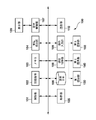
- FIG. 1 is a diagram illustrating the system configuration of a game system according to an embodiment and modifications of the present invention
- FIG. 1 is a block diagram illustrating the functional configuration of a game device 100 according to an embodiment of the present invention
- FIG. FIG. 4 is a diagram showing a configuration example of data used in the game system according to the embodiment and modifications of the present invention
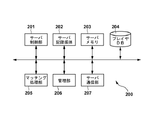
- FIG. 2 is a block diagram illustrating the functional configuration of the server 200 according to the embodiment and modifications of the present invention
- FIG. 10 is a diagram illustrating execution timings of various games in a series of games according to the embodiment and modifications of the present invention
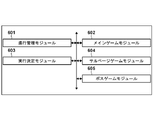
- FIG. 4 is a diagram exemplifying the configuration of functional modules realized by executing the presentation process according to the embodiment of the present invention
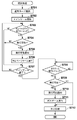
- 4 is a flowchart illustrating presentation processing according to an embodiment of the present invention
- One embodiment described below describes an example in which the present invention is applied to a game device configured to be able to provide goods as an example of a game device.
- the present invention is applicable to any device capable of providing services, including providing a game playing experience, and providing different types of goods.
- service provision means that a user (player) who has paid a fee is temporarily authorized to occupy and use the game device, and a series of games are played. means to provide services, including the provision of experiences; The start of service provision to one player is conditional on the detection of the payment of consideration while the service is not being provided, and basically the service is available for one service provision. The provisioning ends after the execution of the functions of the provided game device (including the execution of the series of games) is completed.
- FIG. 1 is a diagram showing the system configuration of the game system according to this embodiment. As illustrated, the game system is configured such that server 200 and each of one or more game devices 100 can communicate with each other via network 300 .
- the game for which a play experience is provided on the game device 100 is not limited to a battle game between players, and may include a game configured for one player.
- the server 200 determines the content of use of the player. Information managed for each player is updated based on (game play history).
- FIG. 2 is a block diagram showing the functional configuration of the game device 100 according to the embodiment of the present invention.
- the control unit 101 is, for example, a CPU, and controls the operation of each block included in the game device 100 . Specifically, the control unit 101 reads, for example, an operation program for each block recorded on the recording medium 102, develops it in the memory 103, and executes it, thereby controlling the operation of each block.
- the recording medium 102 is a recording device such as a non-volatile memory or an HDD that can permanently retain data.
- the recording medium 102 stores, in addition to the operation program of each block of the game device 100, parameter information necessary for the operation of each block, various graphics data used in the game executed by the game device 100, and the like. do.
- the memory 103 is a storage device, such as a volatile memory, used for temporary data storage. The memory 103 is used not only as a development area for the operation program of each block, but also as a storage area for temporarily storing data output in the operation of each block.
- Payment detection unit 104 detects that payment has been made on game device 100 .
- the payment is made, for example, by inserting a coin of a predetermined amount or equivalent into an insertion slot (not shown) of the game device 100, or by completing settlement processing based on communication with a chip related to predetermined electronic money. may be determined by detecting
- the game device 100 of the present embodiment will be described as starting to provide a service including providing a series of game play experiences based on the payment for starting service provision. Also, the payment of the price is configured to be detectable even after the start of service provision.
- Acquisition unit 105 is an interface related to acquisition of information from an article, provided in game device 100 of the present embodiment.
- the acquisition unit 105 includes a reader configured to acquire information attached to a plurality of types of articles.
- a plurality of types of articles from which information can be obtained by the obtaining unit 105 will be described as articles having a physical volume (actual articles) that can be provided by the game device 100 .
- each of the plurality of types of articles is a game card, each of which is associated with one game element (character, vehicle, item, etc.) appearing in a game provided with a play experience on the game device 100.
- described as being Which game element is associated with the game card can be specified by the acquisition unit 105 acquiring information (identification information) for specifying the game element attached to the game card.
- the addition of the identification information to the game card may be achieved, for example, by printing a one-dimensional or multi-dimensional code obtained by converting the identification information onto the game card. It may be realized by other methods such as being recorded in a tag for near field communication (NFC: Near Field Communication) included in a game card or in an IC chip.
- NFC Near Field Communication
- a single reader provided in the acquisition unit 105 acquires information from a plurality of types of game cards, but implementation of the present invention is not limited to this. . Needless to say, information acquisition from a plurality of types of game cards may be performed by a plurality of types of readers.
- the acquisition unit 105 also acquires information from articles on which player IDs are recorded in order to identify players who use the game device 100 .
- the item on which the player ID is recorded is a player card configured in the form of a card similar to the game card, and information can be obtained through a reader shared with the game card.
- implementation of the present invention is not limited to this, and player identification may be realized by adopting other items or methods.
- the element DB 106 is a database that manages information (element information) about each game element appearing in the game.
- a player places a game card to obtain information during game play, thereby allowing a game element associated with the game card to appear in the game.
- Element information managed for one game element is assigned to the game element in association with an element ID (identification information) 301 that uniquely identifies the game element, as shown in FIG.
- element ID identification information
- drawing information 303 including graphics data and the like used for screen generation when the game element appears in the game, and the name, attributes, etc.
- the parameter information 304 is information referred to in a game in which game elements appear, and is involved in progress control of the game.
- graphics data is stored in the element DB 106, and the element information includes these data.
- the element information may include information indicating the storage location of the corresponding data.
- the presentation control unit 107 controls presentation of various information to the player in the game device 100 .
- the game device 100 of the present embodiment is described as having a display unit 120 for displaying images (game screen, menu screen, etc.) as means for presenting various kinds of information, but the means for presenting information is not limited to these. Needless to say, alternatives or additions are possible.
- the display unit 120 which is an example of means for presenting information, is a display device that presents information visually, such as a liquid crystal display.
- an appropriate device such as a speaker for presenting information aurally is connected so as to be controllable by the presentation control unit 107 .
- the presentation control unit 107 includes a rendering device such as a GPU, and performs predetermined rendering processing when generating a screen to be displayed on the display unit 120 . Specifically, the presentation control unit 107 generates necessary drawing objects (graphics data) based on processing and commands performed by the control unit 101 while the game device 100 is running (during service provision or standby state). , and draws the screen. The generated screen is output to the display unit 120 and presented to the player by being displayed in a predetermined display area.
- a rendering device such as a GPU
- the provision control unit 108 controls the operations of the first provision unit 130, the second provision unit 140, and the third provision unit 150 so that the game card is provided in response to the payment for the use of the service.
- the first providing unit 130 and the second providing unit 140 are composed of card dispensers capable of providing the game cards contained in the containing unit one by one.
- the game device 100 of this embodiment includes three types of card dispensers (first providing unit 130, second providing unit 140, and third providing unit 150) inside the housing of the game device 100. Control is performed as to which one of them provides the game card.
- One card dispenser has a storage unit configured to store game cards in a vertically stacked manner, and the game cards held in the bottom layer are dispensed according to the supply command issued by the supply control unit 108. Equipped with a mechanism for feeding one sheet. The sent game card is guided to an accessible space through an unillustrated outlet and provided to the player.
- game elements are associated with the game cards provided by the game device 100 of the present embodiment, and the game elements can be made to appear in the game by using the game cards during game play.
- the progress of the game is controlled according to the parameter information 304 of the game element that has appeared, and the game element having the parameter information 304 that makes the progress more advantageous has a higher value in the game. Therefore, in this embodiment, the game cards are classified into two types according to the value of the associated game element in the game.
- the game device 100 of this embodiment is configured to be able to provide and share different game cards.
- the first providing unit 130, the second providing unit 140, and the third providing unit 150 store game cards of different types in the storage units, and provide the type of supply included in the provision command issued by the control unit 101.
- the provision control unit 108 drives the corresponding provision unit to provide a specific type of game card. For this reason, game cards are delivered to the store or the like where the game device 100 is installed for each type (first type and second type). It is assumed that the stack of game cards of the second type is stored in the storage units of the second providing unit 140 and the third providing unit 150 .
- the game cards accommodated in the second providing unit 140 and the third providing unit 150 have more value in the game (performance of associated game elements, etc.) than the game cards accommodated in the first providing unit 130. is set high, hereinafter, the game cards contained in the first providing unit 130 are referred to as normal cards, and the game cards contained in the second providing unit 140 and the third providing unit 150 are referred to as rare cards. . That is, the game device 100 of the present embodiment provides normal cards when the first providing unit 130 is driven, and provides rare cards when the second providing unit 140 and the third providing unit 150 are driven. configured to provide.
- the game cards stored in the second providing unit 140 and the third providing unit 150 are both of the same type from the viewpoint of rare cards, but the two are associated with different types of game elements, for example. , and shall be stored separately so that they can be provided and divided according to the application.
- the operation input unit 109 is a user interface of the game apparatus 100, such as an operation member for decision input and various sensors.
- the operation input unit 109 outputs a control signal corresponding to the operation input to the control unit 101 when it detects that an operation input has been made to the operation member.
- the operation input unit 109 may include a touch input detection sensor or the like that detects a touch input made on the screen of the display unit 120, for example.
- the communication unit 110 is a communication interface with an external device included in the game device 100 .
- the communication unit 110 can be connected to an external device via a communication network such as the Internet or a network 300 (whether wired or wireless), which can be a cable for connecting devices, and can transmit and receive data. can.
- the communication unit 110 converts, for example, information input as a transmission target into data in a predetermined format, and transmits the data to an external device such as the server 200 via the network 300 .
- the communication unit 110 decodes the information and stores it in the memory 103 .
- the server control unit 201 is, for example, a CPU, and controls the operation of each block of the server 200 . Specifically, the server control unit 201 reads an operation program of each block recorded in the recording medium 102, develops it in the memory 103, and executes it, thereby controlling the operation of each block.
- the server recording medium 202 is a recording device such as a non-volatile memory or HDD that can permanently retain data.
- the server recording medium 202 stores information such as parameters necessary for the operation of each block in addition to the operation program of each block that the server 200 has.
- the server memory 203 is a storage device, such as volatile memory, used for temporary data storage.
- the server memory 203 is used not only as a development area for the operation program of each block, but also as a storage area for temporarily storing data output in the operation of each block.
- the player DB 204 manages information (player information) indicating the usage status of the game associated with each user (player) for the game for which the play experience is provided by the game device 100. It is a database that The player information is information for managing usage history of game play functions and various game elements available for each player. The player information is sequentially updated according to the play result of the game performed using the player card in the game device 100, and is provided to the game device 100 when the player card is used again. As a result, the game device 100 can provide a game play that reflects the previous game play.
- the player information is associated with a player ID 311 that identifies the player, as shown in FIG.
- Possession information 313 indicating usable game elements
- strengthening status information 314 indicating the strengthening status of each usable game element
- rewards given to the player other types of game elements may include reward information 315 indicating the player
- the progress information 312 includes progress information 321 indicating which stage of a predetermined story has progressed, battle record information 322 indicating the battle record of the battle game, and evaluation information 323 that evaluates the player's play status. may contain.
- the possession information 313 is constructed by sequentially adding the element IDs 301 of the game elements associated with the game card used by the player when playing the game, that is, the game elements available to the player. manages the element level 332 as an index indicating the parameter changed by the strengthening in association with the element ID 331 of at least the game element that has been strengthened (changed from the initial state). It may be configured as follows.
- the enhancement status information 314 is described as being updated when the play result of the game played on the game device 100 is obtained in the present embodiment.
- the update may be performed in response to the fact that training result information is obtained by using a function related to training in the game device 100 .
- the matching processing unit 205 performs matching processing for a battle game (interpersonal battle) between players provided in the game system of this embodiment.
- a battle game internal battle
- the matching processing unit 205 performs matching processing for a battle game (interpersonal battle) between players provided in the game system of this embodiment.
- a battle game internal battle
- two game devices 100 that have sent matching requests at the same time are set up for a session, and a transition is made to a state in which information communication related to the competitive game is possible. be done.
- the management unit 206 manages the player's evaluation of the game based on the content of the game played on the game device 100 . More specifically, the management unit 206 evaluates the player based on the play content for each game play, and generates or updates the evaluation information 323 of the player information regarding the player.
- the server communication unit 207 is a communication interface with an external device that the server 200 has.
- the server communication unit 207 is connected to an external device via a communication network such as the Internet or a network 300 (whether wired or wireless), which may be a cable connecting devices, so that data can be sent and received. can be done.
- the server communication unit 207 converts, for example, information input as a transmission target into data in a predetermined format, and transmits the data to an external device such as the game device 100 via the network 300 .
- the server communication unit 207 decodes the information and stores it in the server memory 203 .
- the game device 100 When the power is turned on and activated, the game device 100 is connected to the server 200 and transitions to a standby state in which service provision can be received. When payment is detected in the standby state, the game device 100 transitions to the service provision state and starts providing services including provision of a series of game play experiences. Therefore, the payment of the price for shifting from the standby state to the service providing state corresponds to the payment of the price for starting the service provision.
- one service provision for the payment of the price for starting service provision includes the provision of one normal card and the subsequent execution of a series of games. More specifically, one service provision for the payment of the price related to the start of service provision consists of the provision of a playing experience of a main game included in one series of games, which will be described later, and the provision of one normal card for the main game. including.
- the number and timing of providing normal cards are not limited to this.
- a series of games consists of a main game (main game), which is a competitive game against a player or against the CPU, using game elements (game elements used) registered using a game card, and a random occurrence during one service provision. It is configured to include a sub-game (sub-game) different from the main game, which may be possible.
- the execution timing of the sub-game is set at a predetermined timing in a series of games
- a lottery process is performed to determine whether or not the sub-game will be executed at the execution timing, the lottery result is winning, and Executed in response to detection of further payment during service provision.
- lottery processing is performed each time a sub-game is executed at a timing set during a series of games, and execution of the sub-game is controlled.
- implementation of the present invention is not limited to this. That is, even if the game is controlled so that at least one sub-game execution opportunity is secured (subject to further payment of a price) in a series of games executed in relation to one service provision. good.
- the game device 100 of the present embodiment is controlled to provide one rare card each time the sub-game is executed.
- the provision control unit 108 controls the second provision unit 140 or the third provision unit 150 to provide one game card accordingly. Therefore, the provision control unit 108 of this embodiment is configured to provide different types of game cards for the main game and the sub-game.
- the main game and the sub-game are common in that they are games with content that has common game elements, but differ in the content of the play experience provided.
- the main game is a competitive game, and prior to the start, a group of game elements are created for each of the player and the opponent (matched other players or CPU characters) based on information obtained from the game cards.
- a group of registered game elements to be used progresses while performing battle action in a predetermined game field. At this time, the progress of the main game is controlled based on the operational inputs made to the used game elements and the parameters of the group of used game elements.
- sub-games include the following two types of games, as first sub-games and second sub-games according to the present invention, which each provide a play experience different from that of the main game.
- a salvage game is a game that provides a player with an opportunity to obtain game elements that can be used in the main game. Offer rare cards.
- the supply of rare cards in the salvage game is realized by driving the second supply unit 140 .
- the salvage game a game element randomly selected from among the game elements associated with the rare card is presented with an appearance effect for the game element in order to increase the interest in providing the rare card.
- the provision control unit 108 drives the second provision unit 140 to provide rare cards during or after presentation of the appearance effect.
- the other sub-game is a boss game as a second sub-game according to the present invention.
- the boss game is a game that provides the player with an opportunity to obtain game elements that can be used in the main game.
- This is a game including the required battle production.
- the boss game of the present embodiment is not a battle game in which a group of use game elements registered for an opponent is the target of battle action, but is configured to be more powerful than the use game elements (advantageously progressing the game), for example.
- This is a battle game in which a boss character whose command parameters are set is the object of the battle action.
- a boss game provides a rare card related to one game element after the end of the game including such battle effects. Provision of rare cards in the boss game is realized by driving the third provision unit 150 . That is, the provision control unit 108 drives the third provision unit 150 to provide rare cards after the battle game related to the boss character is finished.
- the sub-game is configured with different card dispensers that provide rare cards for each type, and with different effects to be presented.
- the difference between these sub-games also appears in the execution timing, maximum number of executions, and execution time in a series of games.
- FIG. 5 is a diagram exemplifying the execution timing of each of the main game, the salvage game, and the boss game in a series of games for which a play experience is provided by the game device 100 of this embodiment.
- the execution timing of the salvage game is provided multiple times during the execution period of the main game in a series of games.
- the execution timing of the boss game is provided only once before the end of the series of games and after the end of the main game. That is, in a series of games, the execution timing of the salvage game is provided prior to the execution timing of the boss game.
- each sub-game is not necessarily determined to be executed.
- the lottery process When the lottery process is won, it becomes executable.
- the game device 100 When the sub-game becomes executable, the game device 100 notifies that the corresponding sub-game (salvage game or boss game) can be executed on the condition of further payment during service provision. Then, on condition that payment of a further price is detected during or after notification of the notification, the corresponding sub-game is controlled to be executed.
- the lottery process for the salvage game and the boss game will be described as being performed using a predetermined probability of winning, respectively, in order to ensure fairness among players.
- the implementation of the present invention is not limited to this, and in order to improve interest, the winning probability is controlled to vary according to, for example, the number of times the salvage game is executed and the progress of the main game. There may be.
- the salvage game is executed by temporarily interrupting the processing of the main game during execution of the main game. It is preferable to be configured so that it can be terminated easily. Therefore, the salvage game of this embodiment does not require a specific operation input, or can be finished with only a simple operation such as a selection operation. On the other hand, since the boss game is executed after the main game is finished, it does not interfere with the player's concentration on the main game. Therefore, the boss game of the present embodiment is configured as a more interesting game including an effect of manipulating game elements, and the execution time is set longer than that of the salvage game accordingly. In other words, in the game device 100 of the present embodiment, the salvage game takes a shorter execution time than the boss game and requires fewer operation inputs during execution than the boss game.
- FIG. 6 is a diagram exemplifying a functional module group realized by the control unit 101 by executing a program related to service provision in the game device 100. As shown in FIG.
- the progress management module 601 is a functional module that manages the progress of services provided, including execution of a series of games.
- the progress management module 601 in response to the detection of the payment for the start of service provision, initiates processing relating to service provision (hereinafter referred to as provision processing), starts a series of game processing, and starts a series of game processing. Judgment is made as to whether or not the execution timing of each sub-game has been reached, judgment is made as to the end of processing of a series of games, and processing for terminating service provision is performed.
- a main game module 602, a salvage game module 604, and a boss game module 605 are functional modules that execute the main game, salvage game, and boss game of a series of games, respectively.
- the main game module 602 , salvage game module 604 , and boss game module 605 execute processing related to the corresponding game based on instructions from the progress management module 601 .
- the execution determination module 603 determines whether or not each sub-game can be executed when the execution timing of the sub-game is reached. More specifically, the execution determination module 603 executes lottery processing based on a predetermined winning probability at each execution timing, and determines whether or not the sub-game can be executed. The determination result is returned to the progress management module 601 and used to control the operation of the salvage game module 604 and boss game module 605 .
- the progress management module 601 causes the provision control unit 108 to provide a normal card for the current service provision.
- the provision control unit 108 drives the first provision unit 130 to provide the normal card based on the instruction from the progress management module 601 .
- the main game module 602 under the control of the progress management module 601, starts processing the main game related to the current service provision.
- the progress management module 601 determines whether or not it is time to execute the salvage game. As described above, the execution timing of the salvage game is provided multiple times during execution of the main game, and in this step, the progress management module 601 determines whether or not any execution timing has been reached. If the progress management module 601 determines that the execution timing of the salvage game has come, it moves the process to S704; otherwise, it moves the process to S707.
- the execution determination module 603 performs lottery processing under the control of the progress management module 601, and determines whether or not the salvage game can be executed. If the execution determination module 603 determines that the salvage game can be executed (won in the lottery process), the execution determination module 603 shifts the process to S705, and if it determines that the salvage game cannot be executed, shifts the process to S707.
- the progress management module 601 causes the presentation control unit 107 to notify that the salvage game can be executed by paying a further price. Then, the progress management module 601 shifts the process to S706 if a further payment is made during the notification or within a predetermined time after the notification. It should be noted that the progress management module 601 may move the process to S707 assuming that the salvage game will not be executed if no further payment is made during the relevant period.
- the salvage game module 604 executes the salvage game. More specifically, the salvage game module 604 causes the presentation control unit 107 to present an appearance effect of game elements, and causes the provision control unit 108 to provide rare cards related to the currently executed salvage game, thereby ending the salvage game. do.
- the provision control unit 108 drives the second provision unit 140 to provide rare cards based on an instruction from the salvage game module 604 .
- the progress management module 601 determines whether or not the processing of the main game has ended. If the progress management module 601 determines that the processing of the main game has ended, it moves the processing to S708, and if it determines that the processing of the main game has not ended, it returns the processing to S703.
- the progress management module 601 determines whether or not it is time to execute the boss game. If the progress management module 601 determines that the execution timing of the boss game has come, it moves the process to S709; otherwise, it repeats the process of this step.
- the execution determination module 603 performs lottery processing under the control of the progress management module 601, and determines whether or not the boss game can be executed.
- the execution determination module 603 shifts the process to S710 if it determines that the boss game can be executed, and shifts the process to S712 if it determines that the boss game cannot be executed.
- the progress management module 601 causes the presentation control unit 107 to notify that the boss game can be executed by paying a further price. Then, the progress management module 601 shifts the process to S711 if a further payment is made during the notification or within a predetermined time after the notification. It should be noted that the progress management module 601 may move the process to S712 assuming that the boss game will not be executed if no further payment is made during the relevant period.
- the boss game module 605 executes a boss game. More specifically, the boss game module 605 causes the provision control unit 108 to provide rare cards related to the boss game executed this time after executing the boss game including the effect of operating game elements, and ends the boss game. The provision control unit 108 drives the third provision unit 150 to provide rare cards based on an instruction from the boss game module 605 .
- the progress management module 601 executes processing for terminating the current service provision, transitions the state of the game device 100 from the service provisioning state to the standby state, and completes the present provision processing.
- the game device of the present embodiment if the sub-game is executed, it can be grasped that an article (rare card) of a different type from that of the main game is guaranteed to be provided. During execution of a series of games according to , the player can easily obtain a desired type of item, and as a result, a highly entertaining playing experience is provided.
- the present invention only needs to make it easier for the player to obtain various types of goods, and the goods provided for the sub-game may be of a different type from the goods provided for the main game.
- a game card real card
- a virtual game card an electronic card that functions in the same way as a real object in the game
- Goods may be provided.
- the present invention is not limited to the above embodiments, and various modifications and changes are possible within the scope of the invention without departing from the spirit and scope of the invention.
- the game device according to the present invention can also be realized by a program that causes one or more computers to function as the game device.
- the program can be provided/distributed by being recorded on a computer-readable recording medium or through an electric communication line.
Landscapes
- Engineering & Computer Science (AREA)
- Multimedia (AREA)
- Business, Economics & Management (AREA)
- Computer Security & Cryptography (AREA)
- General Business, Economics & Management (AREA)
- Management, Administration, Business Operations System, And Electronic Commerce (AREA)
Priority Applications (1)
| Application Number | Priority Date | Filing Date | Title |
|---|---|---|---|
| CN202180089229.5A CN116669824A (zh) | 2021-03-26 | 2021-12-24 | 游戏程序和游戏装置 |
Applications Claiming Priority (2)
| Application Number | Priority Date | Filing Date | Title |
|---|---|---|---|
| JP2021054105A JP7002687B1 (ja) | 2021-03-26 | 2021-03-26 | ゲームプログラム及びゲーム装置 |
| JP2021-054105 | 2021-03-26 |
Publications (1)
| Publication Number | Publication Date |
|---|---|
| WO2022201711A1 true WO2022201711A1 (ja) | 2022-09-29 |
Family
ID=80560896
Family Applications (1)
| Application Number | Title | Priority Date | Filing Date |
|---|---|---|---|
| PCT/JP2021/048333 Ceased WO2022201711A1 (ja) | 2021-03-26 | 2021-12-24 | ゲームプログラム及びゲーム装置 |
Country Status (3)
| Country | Link |
|---|---|
| JP (2) | JP7002687B1 (https=) |
| CN (1) | CN116669824A (https=) |
| WO (1) | WO2022201711A1 (https=) |
Families Citing this family (2)
| Publication number | Priority date | Publication date | Assignee | Title |
|---|---|---|---|---|
| JP2025114405A (ja) * | 2024-01-24 | 2025-08-05 | 株式会社バンダイ | プログラム、ゲーム管理装置、及びゲーム装置 |
| JP2025114402A (ja) * | 2024-01-24 | 2025-08-05 | 株式会社バンダイ | プログラム、ゲーム管理装置、及びゲーム装置 |
Citations (7)
| Publication number | Priority date | Publication date | Assignee | Title |
|---|---|---|---|---|
| JP3026207U (ja) * | 1995-12-22 | 1996-07-02 | 株式会社カプコン | 景品払出しゲーム機 |
| JP2017119083A (ja) * | 2016-09-16 | 2017-07-06 | 株式会社バンダイ | ゲーム装置、プログラム及び物品提供システム |
| JP2018171371A (ja) * | 2017-03-31 | 2018-11-08 | 株式会社バンダイ | ゲーム装置、ゲーム用物品、及びプログラム |
| JP2019122795A (ja) * | 2019-03-14 | 2019-07-25 | 株式会社バンダイ | ゲーム装置及びゲーム装置のプログラム |
| JP2019130332A (ja) * | 2019-03-18 | 2019-08-08 | 株式会社バンダイ | ゲーム装置、情報保持媒体、及びプログラム |
| JP2019155106A (ja) * | 2019-03-14 | 2019-09-19 | 株式会社バンダイ | ゲーム装置、ゲームシステム及びプログラム |
| JP2021003303A (ja) * | 2019-06-26 | 2021-01-14 | 株式会社セガ | ゲーム装置およびゲームプログラム |
Family Cites Families (5)
| Publication number | Priority date | Publication date | Assignee | Title |
|---|---|---|---|---|
| JP4370305B2 (ja) * | 2006-02-15 | 2009-11-25 | 株式会社コナミデジタルエンタテインメント | ジャックポット抽選装置並びにこれを用いた遊技機及び遊技システム |
| JP6397466B2 (ja) * | 2016-12-05 | 2018-09-26 | 株式会社カプコン | ゲーム機 |
| JP6561304B2 (ja) * | 2017-08-31 | 2019-08-21 | 株式会社コナミアミューズメント | ゲーム装置およびプログラム |
| JP6669711B2 (ja) * | 2017-11-17 | 2020-03-18 | 株式会社バンダイ | ゲーム装置、ゲームシステム及びプログラム |
| JP2021003369A (ja) * | 2019-06-26 | 2021-01-14 | 株式会社バンダイ | ゲーム装置、ゲームシステム及びプログラム |
-
2021
- 2021-03-26 JP JP2021054105A patent/JP7002687B1/ja active Active
- 2021-12-24 WO PCT/JP2021/048333 patent/WO2022201711A1/ja not_active Ceased
- 2021-12-24 CN CN202180089229.5A patent/CN116669824A/zh active Pending
- 2021-12-27 JP JP2021213014A patent/JP7633146B2/ja active Active
Patent Citations (7)
| Publication number | Priority date | Publication date | Assignee | Title |
|---|---|---|---|---|
| JP3026207U (ja) * | 1995-12-22 | 1996-07-02 | 株式会社カプコン | 景品払出しゲーム機 |
| JP2017119083A (ja) * | 2016-09-16 | 2017-07-06 | 株式会社バンダイ | ゲーム装置、プログラム及び物品提供システム |
| JP2018171371A (ja) * | 2017-03-31 | 2018-11-08 | 株式会社バンダイ | ゲーム装置、ゲーム用物品、及びプログラム |
| JP2019122795A (ja) * | 2019-03-14 | 2019-07-25 | 株式会社バンダイ | ゲーム装置及びゲーム装置のプログラム |
| JP2019155106A (ja) * | 2019-03-14 | 2019-09-19 | 株式会社バンダイ | ゲーム装置、ゲームシステム及びプログラム |
| JP2019130332A (ja) * | 2019-03-18 | 2019-08-08 | 株式会社バンダイ | ゲーム装置、情報保持媒体、及びプログラム |
| JP2021003303A (ja) * | 2019-06-26 | 2021-01-14 | 株式会社セガ | ゲーム装置およびゲームプログラム |
Also Published As
| Publication number | Publication date |
|---|---|
| JP2022151168A (ja) | 2022-10-07 |
| JP7002687B1 (ja) | 2022-01-20 |
| CN116669824A (zh) | 2023-08-29 |
| JP2022151574A (ja) | 2022-10-07 |
| JP7633146B2 (ja) | 2025-02-19 |
Similar Documents
| Publication | Publication Date | Title |
|---|---|---|
| JP5335969B1 (ja) | ゲームを提供するサーバ装置 | |
| JP7242739B2 (ja) | プログラム、情報処理装置、及び制御方法 | |
| CN111093785A (zh) | 游戏装置、游戏系统以及程序 | |
| JP6178464B1 (ja) | ゲーム装置、ゲームシステム及びプログラム | |
| JP6869128B2 (ja) | ゲーム装置、プログラム及びゲームシステム | |
| JP7633146B2 (ja) | ゲームプログラム及びゲーム装置 | |
| JP7013401B2 (ja) | ゲーム装置、ゲームシステム及びプログラム | |
| CN111346384A (zh) | 游戏装置、记录介质以及游戏系统 | |
| JP7013598B1 (ja) | ゲーム装置及びプログラム | |
| JP7387986B2 (ja) | 情報処理装置、ゲーム装置、及びプログラム | |
| WO2020262417A1 (ja) | ゲーム装置、ゲームシステム及びプログラム | |
| JP5335973B1 (ja) | ゲームを提供するサーバ装置 | |
| JP6814836B2 (ja) | ゲーム装置、プログラム及びゲームシステム | |
| JP5155806B2 (ja) | ゲーム機及びポイント連動システム | |
| JP7192020B2 (ja) | ゲームシステム及びサーバ | |
| JP7162717B1 (ja) | ゲーム装置及びプログラム | |
| JP7848109B2 (ja) | ゲーム装置、及び、プログラム | |
| JP7834910B1 (ja) | プログラム及びゲーム装置 | |
| JP7232857B2 (ja) | ゲームプログラム及びゲーム装置 | |
| JP2017217493A (ja) | ゲーム装置、ゲームシステム及びプログラム | |
| WO2018179888A1 (ja) | ゲームシステム、ゲーム装置、玩具体、ゲーム用物品、及びプログラム | |
| WO2025154482A1 (ja) | ゲーム装置及びプログラム | |
| JP2023171917A (ja) | プログラム、及び、ゲーム装置 | |
| CN115920411A (zh) | 程序及游戏装置 | |
| JP2021101884A (ja) | ゲーム装置、プログラムおよびゲームシステム |
Legal Events
| Date | Code | Title | Description |
|---|---|---|---|
| 121 | Ep: the epo has been informed by wipo that ep was designated in this application |
Ref document number: 21933301 Country of ref document: EP Kind code of ref document: A1 |
|
| WWE | Wipo information: entry into national phase |
Ref document number: 202180089229.5 Country of ref document: CN |
|
| NENP | Non-entry into the national phase |
Ref country code: DE |
|
| 122 | Ep: pct application non-entry in european phase |
Ref document number: 21933301 Country of ref document: EP Kind code of ref document: A1 |