WO2022085557A1 - ポリn-ビニルカルボン酸アミドおよびその製造方法 - Google Patents
ポリn-ビニルカルボン酸アミドおよびその製造方法 Download PDFInfo
- Publication number
- WO2022085557A1 WO2022085557A1 PCT/JP2021/038045 JP2021038045W WO2022085557A1 WO 2022085557 A1 WO2022085557 A1 WO 2022085557A1 JP 2021038045 W JP2021038045 W JP 2021038045W WO 2022085557 A1 WO2022085557 A1 WO 2022085557A1
- Authority
- WO
- WIPO (PCT)
- Prior art keywords
- acid amide
- poly
- vinylcarboxylic acid
- mass
- molecular weight
- Prior art date
- Legal status (The legal status is an assumption and is not a legal conclusion. Google has not performed a legal analysis and makes no representation as to the accuracy of the status listed.)
- Ceased
Links
Images

Classifications
-
- C—CHEMISTRY; METALLURGY
- C08—ORGANIC MACROMOLECULAR COMPOUNDS; THEIR PREPARATION OR CHEMICAL WORKING-UP; COMPOSITIONS BASED THEREON
- C08F—MACROMOLECULAR COMPOUNDS OBTAINED BY REACTIONS ONLY INVOLVING CARBON-TO-CARBON UNSATURATED BONDS
- C08F26/00—Homopolymers and copolymers of compounds having one or more unsaturated aliphatic radicals, each having only one carbon-to-carbon double bond, and at least one being terminated by a single or double bond to nitrogen or by a heterocyclic ring containing nitrogen
- C08F26/02—Homopolymers and copolymers of compounds having one or more unsaturated aliphatic radicals, each having only one carbon-to-carbon double bond, and at least one being terminated by a single or double bond to nitrogen or by a heterocyclic ring containing nitrogen by a single or double bond to nitrogen
Definitions
- the present invention relates to a polyN-vinylcarboxylic acid amide having at least one molecular terminal as a hydrophobic group.
- poly N-vinylacetamide which is one of the polymers of N-vinylcarboxylic acid amide monomer, has amphipathic properties, so it thickens and prepares water-based inks and paints, and various water-based compound coating liquids. It is used for various purposes such as films and adhesives.
- binder resin for secondary batteries binder resin for capacitors
- binder resin for capacitors such as solid electrolytic type and electric double layer, high conductivity. It is used as a molecular modifier, adhesive, paint, building material, polishing agent for chemical mechanical polishing, etc.
- the aqueous solution often has a high viscosity. If the viscosity is high, it is difficult to handle, the applicable fields are limited, and the dispersibility deteriorates, so that it cannot be used as a coating liquid. In general, from the viewpoint of upsizing and mass production, the viscosity of the coating liquid has a large effect, and high viscosity causes a significant decrease in yield. Further, when the viscosity is high, it is often difficult to form a uniform coating film.
- an aqueous solution of polyvinylpyrrolidone has a high molecular weight and a low viscosity, but is inferior in binding force due to its low polarity. Further, when a binding force is required, it is conceivable to use a large amount of a low molecular weight polymer, but when it is used in a large amount, there is a problem such as an increase in the internal resistance value in battery applications.
- Patent Document 1 Japanese Unexamined Patent Publication No. 2-29683
- Patent Document 1 Japanese Unexamined Patent Publication No. 2-29683
- a styrene-based water-soluble macromer having N-vinylamide as a repeating unit, which reacts polyN-vinylamide containing a hydroxyl group or a carboxy group with halomethylstyrene, has been disclosed, but it has a low molecular weight and is not always required for the above requirements. It wasn't enough.
- Comparative Example 1 of Patent Document 2 discloses an N-vinylacetamide polymer polymerized in ethyl acetate with an oil-soluble azo polymerization initiator (V-601).
- V-601 oil-soluble azo polymerization initiator
- Patent Document 3 Japanese Patent No. 382348 proposes that a thermoreversible polymer compound imparted with appropriate hydrophobicity can be obtained by combining a hydrophobic vinyl monomer with poly (N-vinylformamide). ing.
- Patent Document 4 Japanese Unexamined Patent Publication No. 2001-343378
- a hydrophobic monomer (A) such as aromatic divinyl
- a hydrophilic monomer (B) such as N-vinylcarboxylic acid amide are copolymerized.
- Patent Document 5 Japanese Unexamined Patent Publication No.
- an object of the present invention is to provide a water-soluble polymer having a high molecular weight and high polarity, but having a characteristic that the viscosity of an aqueous solution is low.
- the polyN-vinylcarboxylic acid amide has a hydrophobic group at least one molecular terminal and has a predetermined weight average molecular weight, or has a predetermined weight average molecular weight. And, as long as it has a predetermined inertial radius, it has been found that it can be sufficiently used for the above-mentioned applications while maintaining a balance between fluidity and binding property, and has completed the present invention.
- the configuration of the present invention is as follows.
- a polymer of N-vinylcarboxylic acid amide which is a polymer. At least one molecular end of the polymer is a hydrophobic group.
- the weight average molecular weight Mw is 300,000 or more,
- the viscosity of the 10% by mass aqueous solution is 500 mPa ⁇ s or less.
- Poly N-vinylcarboxylic acid amide [2] The poly N-vinyl carboxylic acid amide according to [1], wherein the poly N-vinyl carboxylic acid amide is a poly N-vinyl acetoamide.
- the weight average molecular weight Mw is 300,000 or more
- N-vinylcarboxylic acid amide is polymerized using a hydrophobic polymerization initiator.
- a polyN-vinylcarboxylic acid amide which is a water-soluble polymer having a high molecular weight and high polarity but a low viscosity of an aqueous solution, can be obtained. Since such a poly N-vinylcarboxylic acid amide has good handling when made into an aqueous solution, it is possible to provide a coating liquid having a high yield and excellent production efficiency.
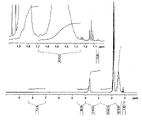
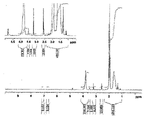
- 6 is a 1 H-NMR chart of PNVA-1 obtained in Example 1.
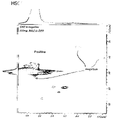
- the HMBC Heteronuclear Multiple Bond Coherence
- the HSQC Heteronuclear single-quantum correlation spectroscopy
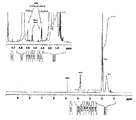
- 6 is a 1 H-NMR chart of PNVA-C1 obtained in Comparative Example 1.
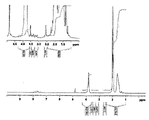
- 6 is a 1 H-NMR chart of the main component after the PNVA-C1 obtained in Comparative Example 1 was separated.
- 6 is a 1 H-NMR chart of a low molecular weight component after fractionation of PNVA-C1 obtained in Comparative Example 1.
- the poly N-vinyl carboxylic acid amide of the present embodiment is formed by polymerizing at least an N-vinyl carboxylic acid amide monomer, and at least one molecular terminal of the poly N-vinyl carboxylic acid amide is a hydrophobic group. ..
- One aspect of the present invention is that the weight average molecular weight (Mw) of the poly N-vinylcarboxylic acid amide is 300,000 or more, and the viscosity of the 10% by mass aqueous solution is 500 mPa ⁇ s or less.
- N-vinylcarboxylic acid amide monomer is represented by the following formula (1).
- R 1 represents a hydrogen atom or a hydrocarbon group having 1 to 6 carbon atoms.
- R 2 represents a hydrogen atom or a hydrocarbon group having 1 to 6 carbon atoms.
- R 1 is NR 2 .
- a cyclic structure may be formed with the above.
- Preferred R 1 is a hydrogen atom or a methyl group, and preferred R 2 is a hydrogen atom.
- Specific examples of the N-vinylcarboxylic acid amide monomer include N-vinylformamide, N-vinylacetamide, N-vinylpropionamide, N-vinylbenzamide, N-vinyl-N-methylformamide, and N-vinyl.
- N-vinylacetamide examples thereof include -N-ethylformamide, N-vinyl-N-methylacetamide, N-vinyl-N-ethylacetamide, and N-vinylpyrrolidone. Of these, N-vinylacetamide is particularly preferable. Two or more types of N-vinylcarboxylic acid amide monomers may be used in combination.
- the poly N-vinylcarboxylic acid amide may be a monomer or a copolymer with a monomer of another component.
- the monomer of the other component is not particularly limited, and examples thereof include an unsaturated carboxylic acid ester, an unsaturated carboxylic acid amide, and a styrene-based monomer.
- the molar ratio of the N-vinylcarboxylic acid amide monomer to the monomer of other components in the copolymer is adjusted in consideration of the balance between hydrophilicity and hydrophobicity, but is usually 100: 0 to 80:20. It is preferable, more preferably 100: 0 to 90:10, and even more preferably 100: 0.
- a copolymer having an appropriate balance between hydrophilicity and hydrophobicity can be obtained.
- the weight average molecular weight (Mw) of the poly N-vinylcarboxylic acid amide is 300,000 or more, preferably 350,000 or more, and more preferably 400,000 or more.
- the weight average molecular weight is measured by GPC with a light scattering detector. Specific conditions are as described in the examples.
- the weight average molecular weight (Mw) of the poly N-vinylcarboxylic acid amide is preferably 4 million or less, more preferably 1 million or less, and further preferably 500,000 or less. When the weight average molecular weight (Mw) is 300,000 or more, the coatability is good.
- the viscosity of the 10% by mass aqueous solution of poly N-vinylcarboxylic acid amide is 500 mPa ⁇ s or less, preferably 300 mPa ⁇ s or less, and more preferably 100 mPa ⁇ s or less.
- the viscosity of the poly N-vinylcarboxylic acid amide is preferably 5 mPa ⁇ s or more, more preferably 20 mPa ⁇ s or more, and further preferably 50 mPa ⁇ s or more.
- a B-type viscometer is used as a method for measuring the viscosity of the aqueous solution. Specific conditions are as described in the examples.
- the poly N-vinylcarboxylic acid amide of the present embodiment has a weight average molecular weight Mw of 300,000 or more, and the inertial radius of the poly N-vinylcarboxylic acid amide is 35 nm or less.
- the radius of inertia indicates the degree of spread of the polymer chain in the poly N-vinylacetamide solution measured by the multi-angle light scattering method (MALS).
- MALS multi-angle light scattering method
- the radius of inertia (rm) is calculated by the following equation 1 using the multi-angle light scattering method.
- at least one molecular terminal does not necessarily have to be a hydrophobic group, but is preferably a hydrophobic group.
- the weight average molecular weight (Mw) of the poly N-vinylcarboxylic acid amide is 300,000 or more, preferably 350,000 or more, and more preferably 400,000 or more, as in the above embodiment.
- the weight average molecular weight (Mw) of the poly N-vinylcarboxylic acid amide is preferably 4 million or less, more preferably 1 million or less, still more preferably 500,000 or less. When the weight average molecular weight (Mw) is 300,000 or more, the coatability is good.
- the radius of inertia is 35 nm or less, preferably 30 nm or less, and more preferably 28 nm or less. When the radius of inertia is in this range, the entanglement of the polymer chains is small and the viscosity of the aqueous solution is low.
- the radius of inertia is preferably 5 nm or more, more preferably 10 nm or more, and even more preferably 15 nm or more.
- the hydrophobic group constituting at least one molecular terminal of the poly N-vinyl carboxylic acid amide does not contain a hydrophilic group such as hydroxy, amino, carboxy, or oxime, and may contain a hydrocarbon group (may include a cyclic structure).
- hydrophobic groups are exemplified.
- the affinity with a metal or the like is strengthened and the binding property is improved.
- the spread of the molecule in water can be easily suppressed, and the poly N-vinylcarboxylic acid amide can be aggregated in water. This makes it possible to obtain a polyN-vinylacetamide having a higher molecular weight and a lower viscosity.
- the poly-N-vinylcarboxylic acid amide of the present embodiment has the characteristic that the viscosity of the aqueous solution is low while having the above-mentioned high molecular weight.
- the introduction of a hydrophobic group into at least one molecular terminal can also be carried out by copolymerizing with a hydrophobic monomer, but in terms of controlling the terminal modification, N- using a hydrophobic polymerization initiator.
- Polymerization of vinyl carboxylic acid amide is preferable in that a hydrophobic group derived from a polymerization initiator is introduced into the molecular terminal.
- the method for producing a poly N-vinylcarboxylic acid amide of the present embodiment is characterized by polymerizing the N-vinylcarboxylic acid amide using a hydrophobic polymerization initiator. Further, if necessary, the monomers of the above-mentioned other components may be copolymerized.
- the polymerization initiator used is not limited as long as it is hydrophobic, but is 2,2'-azobis (isobutyric acid) dimethyl, azobisisobutyronitrile, 1,1'-azobis (cyclohexane-1-).
- the azo-based polymerization initiator is preferable, 2,2'-azobis (isobutyric acid) dimethyl, azobisisobutyronitrile, 1,1'-azobis (cyclohexane-1-carbonitrile), 2,2'-.
- Azobis (2-methylbutyronitrile) is more preferred, and 2,2'-azobis (isobutyric acid) dimethyl is even more preferred. It does not contain cyano groups, does not generate corrosive decomposition products, and the 10-hour half-life temperature of the polymerization initiator (the temperature at which the concentration of azo groups in the solution is halved in 10 hours) is 60 to 90 ° C. Those in the range of 1 are preferable because it is easy to obtain the target molecular weight.
- the hydrophobic polymerization initiator is preferably used in an amount of 0.01 parts by mass or more and 5.0 parts by mass or less, more preferably 0.05 parts by mass or more, based on 100 parts by mass of the N-vinylcarboxylic acid amide. It is 3.0 parts by mass or less. When other monomers are contained, the total is 100 parts by mass.
- the polymerization of N-vinylcarboxylic acid amide is preferably solution polymerization using a solvent.
- the polymerization solvent is not particularly limited as long as it is a solvent in which N-vinylcarboxylic acid amide is dissolved, and various solvents can be used.
- Aromatic hydrocarbons such as toluene and xylene; aliphatic hydrocarbons such as hexane, cyclohexane, pentane and heptane; alcohols such as methanol, ethanol, n-propyl alcohol, isopropyl alcohol, n-butanol and isobutanol; methylene chloride , Hydrocarbons such as chloroform; Ketones such as acetone and methyl ethyl ketone; Esters such as methyl acetate, ethyl acetate and propyl acetate; Ethers such as diethyl ether and N-methyl-2-pyrrolidone, glycerin, N, N -Dimethylformamide, dimethylsulfoxide, acetonitrile, tetrahydrofuran, water can be used.
- ethyl acetate and water are preferable, and ethyl acetate is more preferable, considering the molecular weight band of the obtained polymer slurry and the drying step after the polymerization.
- Two or more kinds of solvents may be combined, but when ethyl acetate is used as a main component, ethyl acetate is preferably 90% by mass or more of the solvent.
- the polymerization start temperature is preferably 20 ° C to 100 ° C, more preferably 30 ° C to 80 ° C, and even more preferably 40 ° C to 70 ° C. Then, by adjusting the polymerization temperature and the polymerization time within the above range, the above-mentioned poly N-vinylcarboxylic acid amide having a predetermined weight average molecular weight Mw, 10% by mass aqueous solution viscosity, and inertia radius can be obtained.
- the obtained poly N-vinylcarboxylic acid amide is obtained in a state of being dissolved or dispersed in the solvent. Usually, the obtained poly N-vinylcarboxylic acid amide is purified to remove impurities.
- the obtained poly N-vinylcarboxylic acid amide can also be dried and provided as a powder. However, when used for applications such as coating liquids, it is often dissolved in a solvent such as water. Therefore, in the present embodiment, it is also a preferable embodiment to replace the reaction solvent with water or the like at the time of purification and provide the solution as a poly N-vinylcarboxylic acid amide solution.
- the coating liquid in one embodiment of the present embodiment contains a poly N-vinylcarboxylic acid amide and a solvent.
- the solvent is not particularly limited, but water or a volatile organic solvent is preferable. Further, as described later, various additives may be contained depending on the purpose of the coated product. As the organic solvent, alcohols, ketones, esters, ethers, cellosolves, aromatic hydrocarbons, aliphatic hydrocarbons and the like can be used. Further, a high boiling point organic solvent as described later may be contained. The content of the organic solvent in the coating liquid can be adjusted to such an extent that it can be coated or impregnated, and the amount used is not particularly limited as long as the evaporation cost is not increased. Usually, 50 to 99% by mass is preferable, and 65 to 98% by mass is more preferable.
- the component (solid content) other than the solvent in the coating liquid is preferably contained in an amount of 1 to 50% by mass, preferably 2 to 35% by mass, based on the mass of the coating liquid.
- the solid content may be only poly N-vinylcarboxylic acid amide, but may contain other solid content components, in which case the poly N-vinylcarboxylic acid amide is 0 with respect to the mass of the coating liquid. It is preferably contained in an amount of 1 to 3.0% by mass, preferably 0.3 to 1.0% by mass.
- the coating liquid includes high boiling point organic solvents such as conductive polymers, carbon blacks, conductive auxiliaries and ethylene glycol, and additives such as phosphoric acid compounds and colloidal silica as voltage resistance improving agents.
- a pH adjusting agent such as a binder, a surfactant, or triethanolamine for improving the mechanical strength of the coating film may be contained.
- polystyrene sulfonic acid-doped poly (3,4-ethylenedioxythiophene) PEDOT: PSS
- polystyrene sulfonic acid-doped poly methyl-3,4-ethylenedioxythiophene
- Polystyrene sulfonate-doped poly ethyl-3,4-ethylenedioxythiophene
- the content of the conductive polymer is preferably 1.0% by mass or more and 30% by mass or less, and particularly preferably 5 to 20% by mass, based on the mass of the coating liquid.
- carbon blacks include those having a large specific surface area, preferably activated carbon, activated carbon fibers, and porous carbon materials such as graphite-like microcrystalline carbon produced by activating a carbon material, and activated carbon is preferable.
- the content of the carbon blacks is preferably 1.0% by mass or more and 70% by mass or less, particularly preferably 5.0 to 50.0% by mass, based on the mass of the coating liquid.
- the conductive auxiliary agent include acetylene black, channel black, furnace black, and ketjen black.
- the content of the conductive auxiliary agent is preferably 0.01% by mass or more and 5.0% by mass or less, and particularly preferably 0.1 to 2.0% by mass, based on the mass of the coating liquid.
- the coating liquid may contain a high boiling point organic solvent.
- a high boiling point organic solvent having a boiling point of 150 to 250 ° C. is particularly preferable.
- the high boiling point organic solvent examples include N-methyl-2-pyrrolidone (boiling point 202 ° C.), dimethyl sulfoxide (boiling point 189 ° C.), ⁇ -butyrolactone (boiling point 204 ° C.), sulfolane (boiling point 285 ° C.), and dimethyl sulfone.
- Boiling point 233 ° C. ethylene glycol (boiling point 198 ° C.), diethylene glycol (boiling point 244 ° C.) and the like can be mentioned.
- ethylene glycol or ⁇ -butyrolactone is more preferable because it can form a conductive polymer-containing solid electrolyte layer having a uniform surface state.
- the content of the high boiling point organic solvent is preferably 5 to 30% by mass, particularly preferably 10 to 20% by mass, based on the mass of the coating liquid.
- the coating liquid of the present invention may contain an additive for the purpose of improving the withstand voltage of a solid electrolytic capacitor, for example.
- the additive examples include an oily phosphoric acid compound generally used as a resin plasticizer, colloidal silica and the like.
- colloidal silica is preferably mentioned because it is particularly excellent in the effect of improving the withstand voltage.
- the coating liquid may contain a binder resin, a surfactant, and an alkaline pH adjuster in order to adjust the coating film strength of the coated product.
- a binder resin a thermosetting resin or a thermoplastic resin is preferable.
- polyester such as polyethylene terephthalate, polybutylene terephthalate, polyethylene naphthalate, polyimide such as polyimide and polyamideimide, fluororesin such as polyvinylidene fluoride, polyvinyl chloride and polytetrafluoroethylene, polyvinyl alcohol, polyvinyl ether, etc. Examples thereof include polyvinyl butyral, polyvinyl acetate, polyvinyl chloride and copolymers thereof.
- surfactant examples include anionic surfactants, cationic surfactants, amphoteric surfactants, and nonionic surfactants.
- anionic surfactants include carboxylates, sulfonates, sulfate esters, phosphate esters and the like
- examples of cationic surfactants include tertiary amine salts and quaternary ammonium salts.
- amphoteric surfactant examples include carboxybetaine, aminocarboxylate, imidazolium betaine and the like
- nonionic surfactant include polyoxyethylene alkyl ether, polyoxyethylene glycerin fatty acid ester and ethylene glycol fatty acid. Examples thereof include esters and polyoxyethylene fatty acid amides.
- organic bases containing no metal salt are preferable, and examples thereof include triethylamine and triethanolamine, which are less corrosive. These components may be diluted with water or added to the coating liquid as an emulsion or an organic solvent solution.
- the coating liquid is contact-fixed with a base material made of a metal having a rectifying action to form a coating product.
- the preferred contact fixing method is coating or impregnation contact, and then heating and drying. This makes it possible to manufacture, for example, a member for a power storage device.
- the metal having a rectifying action used in one embodiment of the present invention one selected from the group consisting of aluminum, tantalum, niobium or titanium can be mentioned, and it is used in the form of a sintered body or a foil.
- the coating method of the coating liquid is not particularly limited, but in addition to spray coating, roll coating, bar coating, gravure coating, die coating, knife coating, inkjet coating, brush coating, dip coating, etc., roll-to-roll pattern coating device. It is also possible to apply continuously using.
- the impregnation method is not particularly limited, and a vacuum pressure impregnation method, a true impregnation method, an internal pressurization, an internal vacuum method, or the like can be used, but the gas removal rate of the metal foil portion and the filling rate into the pores can be determined. Considering this, the vacuum pressure impregnation method is preferable.
- the composition of the coated product corresponds to the composition of the coating liquid from which the solvent has been removed.
- the high boiling point solvent may remain.
- the coated product may contain unvolatile water or an organic solvent.
- the content of the poly N-vinylcarboxylic acid amide in the coated product is preferably 1.0% by mass or more and 50% by mass or less, particularly preferably 10 to 30% by mass, based on the mass of the coated product.
- the content of carbon blacks in the coated product is preferably 0.1% by mass or more and 30% by mass or less, and particularly preferably 0.1 to 5% by mass, based on the mass of the coated product.
- the content of the conductive auxiliary agent is preferably 0.001% by mass or more and 3.0% by mass or less, and particularly preferably 0.01 to 1.0% by mass, based on the mass of the coated material.
- the content of the additive in the coating is preferably 0.1 to 30% by mass, more preferably 0.2 to 20% by mass, and even more preferably 0.5 to 10% by mass. It's better. It is possible to manufacture a solid electrolytic capacitor having a particularly excellent withstand voltage within the above range.
- the content of the conductive polymer is preferably 0.1% by mass or more and 10% by mass or less, and particularly preferably 0.1 to 5% by mass, based on the mass of the coated material.
- the drying method is not particularly limited, and examples thereof include spin drying, vacuum drying, warm air drying, and infrared drying.
- the drying time is also not particularly limited.
- the thickness of the coating film can be appropriately selected depending on the intended purpose, but is generally preferably in the range of 10 nm to 10 ⁇ m, more preferably in the range of 50 nm to 5 ⁇ m.
- a coating film can be used for various power storage devices such as various secondary batteries, various capacitors, and air batteries. Of these, it can be suitably used for a conductive layer of a solid electrolytic capacitor or the like.
- the solid electrolytic capacitor has, for example, a positive electrode, a dielectric layer, a conductive layer, and a negative electrode in this order.
- Examples of the metal used for the positive electrode include aluminum, tantalum, niobium, titanium, or an alloy using these as a substrate.
- the shape of the positive electrode is not particularly limited, and is intended for the purpose of a porous burnt body of the metal, a plate-shaped body (including foil-shaped, ribbon-shaped, etc.) surface-treated by etching or the like. It can be selected as appropriate.
- the dielectric layer is an oxide of the metal itself constituting the positive electrode, and the surface of the positive electrode is coated in the form of a film.
- a conventionally known method can be used. For example, when an aluminum foil is used as a positive electrode, the surface of the aluminum foil is electrochemically etched and then electrochemically treated in an aqueous solution of boric acid and ammonium borate to form an aluminum foil on the aluminum foil. An oxide dielectric layer made of alumina can be formed. Further, when a sintered body of tantalum powder is used, for example, the positive electrode can be oxidized in an aqueous phosphoric acid solution to form an oxide film on the sintered body.
- the material used for the negative electrode is not particularly limited as long as it can be used for a solid electrolytic capacitor, and is formed by using, for example, a conductive paste such as carbon paste or silver paste. Further, the negative electrode may be a single layer or a plurality of layers.
- test method ⁇ viscosity> Dissolve 20 g of poly N-vinylacetamide in 180 g of water in a 300 ml tall beaker. Leave it in a constant temperature bath at 20 ° C for 12 hours or more to make it completely free of air bubbles inside. After that, put a beaker in a constant temperature water tank whose temperature was adjusted to 20 ° C, confirm that the test piece temperature was 20 ⁇ 0.5 ° C with a thermometer, and use the B-type viscometer shown in JIS K7117-1: 1999. The viscosity is measured under the following conditions.
- Viscometer DVE (Brookfield) Viscometer LV type Spindle: No. 6 Spindle rotation speed: 50 rpm Temperature: 20 ° C ⁇ Weight average molecular weight and radius of inertia> Adjust the poly N-vinylacetamide concentration to 0.05% by mass in a 0.1 mol / L phosphate buffer (sodium hydrogen phosphate 0.1 mol / L + disodium hydrogen phosphate 0.1 mol / L) solution. It was allowed to stand for 20 hours. This was filtered through a membrane filter having a pore size of 0.45 ⁇ m, and the filtrate was measured by GPC-MALS.
- a mol / L phosphate buffer sodium hydrogen phosphate 0.1 mol / L + disodium hydrogen phosphate 0.1 mol / L
- Example 1 A nitrogen gas insertion tube, a stirrer, a solvent dropping device, and a thermometer were attached to a 1000 ml 4-port separable flask, and 250 g of ethyl acetate (manufactured by Genuine Chemical Co., Ltd., special grade) and 100 g of N-vinylacetamide were placed under nitrogen gas inflow. The temperature was raised to 45 ° C. while stirring at 100 rpm.
- the 1 H-NMR chart of the obtained poly N-vinylacetamide is shown in FIG. Since the peaks of CH 3 in the main chain and CH 3 at the end overlapped and CH 3 at the end could not be confirmed, the HMBC (Heteronuclear Multiple Bond Coherence) chart shown in FIG. As a result of confirmation on the spectroscopic) chart, C of the terminal methyl group was confirmed.
- HMBC Heteronuclear Multiple Bond Coherence
- the obtained poly N-vinylacetamide is a polyN-vinylacetamide having a hydrophobic methyl at the molecular end.
- the obtained poly N-vinylacetamide is designated as PNVA-1.
- Example 2 A nitrogen gas insertion tube, a stirrer, a solvent dropping device, and a thermometer were attached to a 1000 ml 4-port separable flask, and 500 g of ethyl acetate and 100 g of N-vinylacetamide were put in the flask and stirred at 100 rpm under the inflow of nitrogen gas. The temperature was raised to ° C.
- AIBN azobisisobutyronitrile
- the filter After suction filtration of the obtained polymer slurry with Nutche and solvent washing with ethyl acetate, the filter is developed in a resin bat and placed in an inert oven under nitrogen gas at 50 ° C. under a stream with a nitrogen gas flow rate of 200 ml / min. The mixture was air-dried with nitrogen gas at the same temperature for 6 hours to obtain poly N-vinylacetamide. This is referred to as PNVA-2.
- Example 3 A nitrogen gas insertion tube, a stirrer, a solvent dropping device, and a thermometer are attached to a 1000 ml 4-port separable flask, and 500 g of toluene (manufactured by Genuine Chemical Co., Ltd., special grade) and 100 g of N-vinylacetamide are put in and the nitrogen gas flows in. The temperature was raised to 78 ° C. while stirring at 100 rpm.
- the filter After suction filtration of the obtained polymer slurry with Nutche and solvent washing with ethyl acetate, the filter is developed in a resin bat and placed in an inert oven under nitrogen gas at 50 ° C. under a stream with a nitrogen gas flow rate of 200 ml / min. The mixture was air-dried with nitrogen gas at the same temperature for 6 hours to obtain poly N-vinylacetamide. This is referred to as PNVA-3.
- Example 4 A nitrogen gas insertion tube, a stirrer, a solvent dropping device, and a thermometer are attached to a 1000 ml 4-port separable flask, 500 g of toluene and 100 g of N-vinylacetamide are placed, and the temperature is 78 ° C. while stirring at 100 rpm under the inflow of nitrogen gas. The temperature was raised to.
- VE-073 2,2'-azobis (2-methylbutyronitrile) (manufactured by Wako Pure Chemical Industries, Ltd., hereinafter also referred to as "VE-073”) dissolved in 10 g of toluene was added. It was injected with a syringe.
- the filter After suction filtration of the obtained polymer slurry with Nutche and solvent washing with ethyl acetate, the filter is developed in a resin bat and placed in an inert oven under nitrogen gas at 50 ° C. under a stream with a nitrogen gas flow rate of 200 ml / min. The mixture was air-dried with nitrogen gas at the same temperature for 6 hours to obtain poly N-vinylacetamide. This is referred to as PNVA-4.
- Comparative Example 1 A nitrogen gas insertion tube, a stirrer, a solvent dropping device, and a thermometer are attached to a 1000 ml 4-port separable flask, 500 g of ion-exchanged water and 100 g of N-vinylacetamide are put in the flask, and the mixture is stirred at 100 rpm under the inflow of nitrogen gas. The temperature was raised to 65 ° C.
- PNVA-C1 poly N-vinylacetamide
- the 1 H-NMR chart of PNVA-C1 obtained in Comparative Example 1 is shown in FIG.
- the NHCH 2 CH 3 peak at the polymer terminal was present at 3.5 ppm, and the NHCH 2 CH 3 peak considered to be derived from the initiator and the decomposition product was present at 3.2 ppm.
- FIG. 5 shows a 1 H-NMR chart of the main components after fractionation in Comparative Example 1.
- the 3.2 ppm peak had disappeared.
- FIG. 6 shows a 1 H-NMR chart of a low molecular weight component after fractionation of Comparative Example 1.
- a peak of 3.2 ppm derived from the terminal group of the polymerization initiator was confirmed.
- the obtained poly N-vinylacetamide has an initiator-derived group introduced at the molecular end, and the low molecular weight component contains a polymerization initiator, but the main component contains a polymerization initiator below the lower limit of detection. It has been found.
- Comparative Example 2 A nitrogen gas insertion tube, a stirrer, a solvent dropping device, and a thermometer are attached to a 1000 ml 4-port separable flask, 500 g of ion-exchanged water and 100 g of N-vinylacetamide are put in the flask, and the mixture is stirred at 100 rpm under the inflow of nitrogen gas. The temperature was raised to 70 ° C.
- PNVA-C2 poly N-vinylacetamide
- Comparative Example 3 A nitrogen gas insertion tube, a stirrer, a solvent dropping device, and a thermometer are attached to a 1000 ml four-necked separable flask, and 890 g of ion-exchanged water and 100 g of N-vinylacetamide are added and stirred at 100 rpm under the inflow of nitrogen gas. The temperature was raised to 93 ° C.
- the filter After suction filtration of the obtained polymer slurry with Nutche and solvent washing with ethyl acetate, the filter is developed in a resin bat and placed in an inert oven under nitrogen gas at 50 ° C. under a stream with a nitrogen gas flow rate of 200 ml / min. The mixture was air-dried with nitrogen gas at the same temperature for 6 hours to obtain poly N-vinylacetamide. This is referred to as PNVA-C4.
- the ratio of viscosity to molecular weight, ⁇ / Mw is an order of magnitude lower than that of the poly N-vinylacetamide of each comparative example. The lower the value, the lower the viscosity with respect to the molecular weight. Become.
- the index rw / Mw which is the ratio of the radius of inertia and the weight average molecular weight, showed a value smaller than that of Comparative Example 1-3 in any of the examples.
- Example 1 and 4 and Comparative Examples 1 and 2 the example showed higher peel strength even in the comparison in the same molecular weight band. It is considered that this is because the viscosity of the aqueous solution is low in the same molecular weight band, so that the polymer solution can enter into the fine irregularities on the surface of the adherend, and the contact area increases.
- Comparative Example 3 although the viscosity is low, the molecular weight is low, so that it is considered that the contact between the adherends is sufficient, but the strength itself is low due to the low molecular weight. Further, in Comparative Example 4, it is considered that the hydrophobic group is introduced at the end, but the molecular weight is low, so that the peel strength is low.
- a coating liquid was prepared using the poly N-vinylacetamides of Examples 1 to 4 and Comparative Examples 1 to 4 described above, immersed in a substrate, and then a fixing test was performed. Preparation of coating liquid The composition of the coating liquid was blended as shown in Table 2 below.
- PEDOT-PSS poly (3,4-ethylenedioxythiophene) / poly (4-styrenesulfonic acid) (hereinafter also referred to as "PEDOT-PSS”) (manufactured by Sigma Aldrich, 5% by mass) in a 50 ml glass bottle with a cap. 20 g of the dispersion liquid) is taken, 3.1 g of ion-exchanged water is added, 5.0 g of ethylene glycol, 1.0 g of 10 mass% sodium dodecylbenzene sulfonate, 2.0 g of 1-propanol, and poly N-vinylacetamide. 0.2 g was added, the mixture was tightly closed, and the mixture was manually shaken violently.
- the solution viscosity coating liquid was taken out from the refrigerator and adjusted to 20 ° C. in a constant temperature bath. After confirming that the specimen temperature is 20 ⁇ 0.5 ° C., the viscosity is measured under the following conditions using a B-type viscometer shown in JIS K7117-1: 1999.
- Viscometer DVE (Brookfield) Viscometer LV type Spindle: No. 63 Spindle rotation speed: 50 rpm Temperature: 20 ° C Impregnation rate, fixation rate, residual rate after vibration
- the weight of coiled aluminum was measured in advance and used as the initial weight. Then, the coiled aluminum was immersed in the coating liquid at 23 ° C. for 30 seconds, immediately immersed in methanol for 1 second, the surface of the removed aluminum coil was wiped off with paper, and the weight was measured after impregnation.
Landscapes
- Chemical & Material Sciences (AREA)
- Health & Medical Sciences (AREA)
- Chemical Kinetics & Catalysis (AREA)
- Medicinal Chemistry (AREA)
- Polymers & Plastics (AREA)
- Organic Chemistry (AREA)
- Addition Polymer Or Copolymer, Post-Treatments, Or Chemical Modifications (AREA)
- Paints Or Removers (AREA)
Priority Applications (1)
| Application Number | Priority Date | Filing Date | Title |
|---|---|---|---|
| JP2022557433A JPWO2022085557A1 (https=) | 2020-10-22 | 2021-10-14 |
Applications Claiming Priority (2)
| Application Number | Priority Date | Filing Date | Title |
|---|---|---|---|
| JP2020-177490 | 2020-10-22 | ||
| JP2020177490 | 2020-10-22 |
Publications (1)
| Publication Number | Publication Date |
|---|---|
| WO2022085557A1 true WO2022085557A1 (ja) | 2022-04-28 |
Family
ID=81290756
Family Applications (1)
| Application Number | Title | Priority Date | Filing Date |
|---|---|---|---|
| PCT/JP2021/038045 Ceased WO2022085557A1 (ja) | 2020-10-22 | 2021-10-14 | ポリn-ビニルカルボン酸アミドおよびその製造方法 |
Country Status (3)
| Country | Link |
|---|---|
| JP (1) | JPWO2022085557A1 (https=) |
| TW (1) | TW202229371A (https=) |
| WO (1) | WO2022085557A1 (https=) |
Citations (7)
| Publication number | Priority date | Publication date | Assignee | Title |
|---|---|---|---|---|
| US2231905A (en) * | 1939-03-03 | 1941-02-18 | Du Pont | Aliphatic vinyl tertiary amides |
| GB1082016A (en) * | 1963-08-15 | 1967-09-06 | Monsanto Co | Polymers of n-vinyl-n-methylacetamide |
| JPH1143374A (ja) * | 1997-07-24 | 1999-02-16 | Showa Denko Kk | セラミックス成形用バインダー及びセラミックス成形用組成物 |
| JP2001122911A (ja) * | 1999-10-28 | 2001-05-08 | Showa Denko Kk | 乳化重合法及び組成物 |
| US20030008993A1 (en) * | 2001-07-06 | 2003-01-09 | Isp Investments Inc. | Process for making vinyl caprolactam-based polymers |
| US6538088B1 (en) * | 1997-02-04 | 2003-03-25 | National Starch And Chemical Investment Holding Corporation | Methods for making polymers from N-vinyl acetamide monomer |
| JP2010158668A (ja) * | 2008-12-10 | 2010-07-22 | Sanyo Chem Ind Ltd | 高分子凝集剤 |
Family Cites Families (1)
| Publication number | Priority date | Publication date | Assignee | Title |
|---|---|---|---|---|
| JP2002105134A (ja) * | 2000-09-27 | 2002-04-10 | Mitsubishi Rayon Co Ltd | 光ファイバ鞘材用重合体、これを用いたプラスチック光ファイバ、光ファイバケーブル及びプラグ付き光ファイバケーブル |
-
2021
- 2021-10-14 JP JP2022557433A patent/JPWO2022085557A1/ja active Pending
- 2021-10-14 WO PCT/JP2021/038045 patent/WO2022085557A1/ja not_active Ceased
- 2021-10-21 TW TW110139117A patent/TW202229371A/zh unknown
Patent Citations (7)
| Publication number | Priority date | Publication date | Assignee | Title |
|---|---|---|---|---|
| US2231905A (en) * | 1939-03-03 | 1941-02-18 | Du Pont | Aliphatic vinyl tertiary amides |
| GB1082016A (en) * | 1963-08-15 | 1967-09-06 | Monsanto Co | Polymers of n-vinyl-n-methylacetamide |
| US6538088B1 (en) * | 1997-02-04 | 2003-03-25 | National Starch And Chemical Investment Holding Corporation | Methods for making polymers from N-vinyl acetamide monomer |
| JPH1143374A (ja) * | 1997-07-24 | 1999-02-16 | Showa Denko Kk | セラミックス成形用バインダー及びセラミックス成形用組成物 |
| JP2001122911A (ja) * | 1999-10-28 | 2001-05-08 | Showa Denko Kk | 乳化重合法及び組成物 |
| US20030008993A1 (en) * | 2001-07-06 | 2003-01-09 | Isp Investments Inc. | Process for making vinyl caprolactam-based polymers |
| JP2010158668A (ja) * | 2008-12-10 | 2010-07-22 | Sanyo Chem Ind Ltd | 高分子凝集剤 |
Also Published As
| Publication number | Publication date |
|---|---|
| TW202229371A (zh) | 2022-08-01 |
| JPWO2022085557A1 (https=) | 2022-04-28 |
Similar Documents
| Publication | Publication Date | Title |
|---|---|---|
| US12084349B2 (en) | Dispersions containing graphenic carbon nanoparticles and dispersant resins | |
| KR101959962B1 (ko) | 전기 화학 소자 전극용 도전성 접착제 조성물, 접착제층이 부착된 집전체 및 전기 화학 소자 전극 | |
| Kyeremateng et al. | Electrodeposited copolymer electrolyte into nanostructured titania electrodes for 3D Li-ion microbatteries | |
| JP5877791B2 (ja) | 非水電解質二次電池用負極合剤、非水電解質二次電池用負極および非水電解質二次電池 | |
| US10910634B2 (en) | Electroactive ionic liquids and surface-modified substrates containing them | |
| WO2015181347A1 (en) | Two or polyfunctional compounds as adhesion primers for conductive polymers | |
| JP6534734B2 (ja) | 電極構造体およびその製造方法 | |
| US20180145370A1 (en) | Solid polymer electrolyte and electrochemical devices comprising same | |
| KR20000004982A (ko) | 전기 분무로 도포할 수 있는 릴리이즈 피복물 | |
| KR20120104322A (ko) | 비수 전해질 2 차 전지용 합제, 비수 전해질 2 차 전지용 전극 및 비수 전해질 2 차 전지 | |
| TW201710308A (zh) | 共聚合物、二次電池之電極用黏合劑、二次電池之電極用組成物、二次電池用電極 | |
| US10236130B2 (en) | Electrolytic capacitor and method for manufacturing same | |
| Teixeira et al. | Molecular engineering of a π-conjugated polymer film of the azo dye Bismarck Brown Y | |
| JP2024022549A (ja) | ポリマーおよび電解質を含有する組成物、粘接着剤、粘接着剤の硬化物並びに接合体 | |
| WO2020012942A1 (ja) | 蓄電デバイス用組成物、蓄電デバイス電極用スラリー、蓄電デバイス電極及び蓄電デバイス | |
| US20140198428A1 (en) | Solid electrolytic capacitor and method for manufacturing same | |
| WO2022085557A1 (ja) | ポリn-ビニルカルボン酸アミドおよびその製造方法 | |
| JP2017534729A (ja) | 気−液界面プラズマ重合による高分子薄膜の製造方法及びこれにより製造された高分子薄膜 | |
| TW202030280A (zh) | 包含n-乙烯基羧酸醯胺之聚合物之水性塗佈液用組成物 | |
| JP6703771B2 (ja) | フッ素樹脂成形体の改質方法およびフッ素樹脂成形体の改質用の共重合体の製造方法 | |
| CN118103463B (zh) | 导电性颜料糊剂、复层材料糊剂以及锂离子电池用电极 | |
| EP3088425B1 (en) | Fluorinated macroinitiator and method for producing same | |
| US10340090B2 (en) | Electrolytic capacitor, and production method therefor | |
| CN113874408B (zh) | 水性涂覆液用组合物 | |
| JP6506072B2 (ja) | N−ビニルラクタム系重合体およびn−ビニルラクタム系重合体の製造方法 |
Legal Events
| Date | Code | Title | Description |
|---|---|---|---|
| 121 | Ep: the epo has been informed by wipo that ep was designated in this application |
Ref document number: 21882698 Country of ref document: EP Kind code of ref document: A1 |
|
| ENP | Entry into the national phase |
Ref document number: 2022557433 Country of ref document: JP Kind code of ref document: A |
|
| NENP | Non-entry into the national phase |
Ref country code: DE |
|
| 122 | Ep: pct application non-entry in european phase |
Ref document number: 21882698 Country of ref document: EP Kind code of ref document: A1 |