WO2022075456A1 - 電極形成用組成物、太陽電池素子及びアルミニウム/銀積層電極 - Google Patents
電極形成用組成物、太陽電池素子及びアルミニウム/銀積層電極 Download PDFInfo
- Publication number
- WO2022075456A1 WO2022075456A1 PCT/JP2021/037406 JP2021037406W WO2022075456A1 WO 2022075456 A1 WO2022075456 A1 WO 2022075456A1 JP 2021037406 W JP2021037406 W JP 2021037406W WO 2022075456 A1 WO2022075456 A1 WO 2022075456A1
- Authority
- WO
- WIPO (PCT)
- Prior art keywords
- electrode
- silver
- aluminum
- particles
- bismuth
- Prior art date
- Legal status (The legal status is an assumption and is not a legal conclusion. Google has not performed a legal analysis and makes no representation as to the accuracy of the status listed.)
- Ceased
Links
Images





Classifications
-
- H—ELECTRICITY
- H10—SEMICONDUCTOR DEVICES; ELECTRIC SOLID-STATE DEVICES NOT OTHERWISE PROVIDED FOR
- H10F—INORGANIC SEMICONDUCTOR DEVICES SENSITIVE TO INFRARED RADIATION, LIGHT, ELECTROMAGNETIC RADIATION OF SHORTER WAVELENGTH OR CORPUSCULAR RADIATION
- H10F77/00—Constructional details of devices covered by this subclass
- H10F77/20—Electrodes
Definitions
- the present invention relates to an electrode forming composition, a solar cell element, and an aluminum / silver laminated electrode.
- renewable energy examples include solar power, geothermal power, wind power, wave power, tidal power, and biomass.
- photovoltaic power generation is expected to be an effective solution to the growing energy problem, attracting attention as a clean natural energy that does not emit carbon dioxide during power generation while utilizing inexhaustible solar energy.
- a crystalline silicon solar cell using a silicon (Si) substrate as a semiconductor substrate is generally used.
- a current collecting electrode for collecting carriers and a carrier for taking out as an output are used.
- An output take-out electrode (bus bar electrode) is formed.
- the current collecting electrode on the light receiving surface is particularly called a finger electrode.
- a composition for forming a silver (Ag) electrode is used for forming the light receiving surface electrode, and printing of the finger electrode and the bus bar electrode portion is performed individually or collectively.
- a composition for forming a silver electrode is used for forming the bus bar electrode, and a composition for forming an aluminum (Al) electrode is used for the electrode for collecting current.
- Each electrode-forming composition contains conductive metal particles, glass particles, various additives and the like.
- Silver particles are generally used as the conductive metal particles in the composition for forming a silver electrode for forming the light receiving surface electrode and the back surface bus bar electrode.
- the reasons for this are that the volume resistivity of silver is low (1.47 ⁇ 10-6 ⁇ cm), the silver particles are self-reduced and sintered under the above heat treatment conditions, and the silver particles and the silicon substrate have good ohmic contact.
- the electrodes formed from the silver particles are excellent in wettability of the solder material, and the wiring material (tab wire or the like) for electrically connecting the solar cell elements can be suitably bonded.
- the aluminum in the composition for forming an aluminum electrode undergoes a eutectic reaction with silicon and a high concentration diffusion layer (p + ) is formed on the front surface of the back surface.
- p + high concentration diffusion layer
- -Si layer, Back Surface Field; BSF Back Surface Field
- the minority carrier recombination speed on the back surface is as fast as about 3 ⁇ 10 3 cm / s, which is a factor that lowers the power generation performance of the solar cell element. Can be.
- a PERC (Passivated Emitter, Real Cell) structure has attracted attention as a measure for reducing backside recombination loss (see, for example, Patent Document 1).
- the PERC structure is characterized in that the ohmic contact portion between the back surface electrode and the Si substrate, which is one of the causes of the back surface recombination, is restricted to a point shape or a line shape, and all parts other than the contact portion of the back surface electrode are covered with a passivation film. It has been.
- the back surface passivation film that can be used for the PERC structure include an amorphous aluminum oxide ( AlOX ) film produced by an atomic layer deposition method (ALD) or a CVD method (Chemical Vapor Deposition). It is known that the AlOX film obtained by the ALD method or the CVD method has a large negative fixed charge, and the PERC structure solar cell element to which this is applied is known to exhibit high power generation performance.
- a double-sided light receiving (biaxial) type solar cell element can be realized.
- One of the advantages of the biological-PERC structure is that the light inserted into the back surface can be utilized.
- an electrode forming composition containing silver and an electrode forming containing aluminum are formed.
- the composition for use is printed on a predetermined area of the substrate, dried, and then heat-treated collectively.
- the aluminum oxide (Al 2 O 3 ) film formed on the surface of the aluminum electrode and the solder covering the wiring material have poor wettability, so that the wiring material cannot be directly bonded to the aluminum electrode.
- the composition for forming a silver electrode is applied.
- the connection failure of the wiring material may occur due to the step (difference in thickness) between the aluminum electrode and the silver electrode as the back surface output extraction electrode, or as a solar cell. Reliability may be compromised.
- the silver electrode as the output take-out electrode is not continuously formed along the connection direction of the wiring material from the viewpoint of reducing the amount of the composition for forming the silver electrode, and is not formed continuously along the connection direction of the wiring material.
- an aluminum electrode may be formed between the silver electrode and the silver electrode.
- the thickness of the aluminum electrode after heat treatment (after firing) is generally 20 ⁇ m to 40 ⁇ m, and the thickness of the silver electrode as the back surface output take-out electrode may be 2 ⁇ m to 5 ⁇ m.
- an electrode formed on the substrate and the silver electrode formed on the aluminum electrode are laminated. It is considered effective to form an electrode (hereinafter, also referred to as an aluminum / silver laminated electrode).
- an electrode forming composition containing aluminum particles is applied to the back surface of a substrate in a desired pattern to form an aluminum particle-containing film, and then an electrode containing silver particles is formed. It is conceivable to print the composition for use on an aluminum particle-containing film in a desired pattern and heat the composition all at once.
- the void ratio of the aluminum electrode under the silver electrode tends to be high and the bulk strength tends to be low, so that sufficient connection strength with the wiring material may not be obtained. ..
- MBB multi-busbar structure
- the number of wiring materials for connecting the solar cell elements increases (for example, the number increases from the conventional 3 to 5 to 9 to 12).
- the shape of the wiring material is also being changed from the conventional ribbon shape to the wire shape.
- one embodiment of the present disclosure provides an electrode forming composition capable of forming an aluminum / silver laminated electrode having excellent connectivity with a wiring material. Further, the present invention provides a solar cell element and an aluminum / silver laminated electrode obtained by using this electrode forming composition.
- Means for carrying out the above tasks include the following embodiments.
- the mass ratio (Bi / G ratio) of the content of the bismuth-containing particles to the content of the glass particles is 0.5 to 10.0.
- ⁇ 6> The electrode forming device according to any one of ⁇ 1> to ⁇ 5>, wherein the content of the glass particles is 3.0% by mass to 15.0% by mass of the entire electrode forming composition.
- ⁇ 7> The electrode forming composition according to any one of ⁇ 1> to ⁇ 6>, further comprising at least one of a solvent and a resin.
- a solar cell element having an aluminum / silver laminated electrode.
- An aluminum / silver laminate comprising a first electrode containing aluminum and a second electrode containing silver arranged on the first electrode, wherein the first electrode further contains a bismuth oxide phase and a glass phase. electrode.
- an electrode forming composition capable of forming an aluminum / silver laminated electrode having excellent connectivity with a wiring material. Further, a solar cell element and an aluminum / silver laminated electrode obtained by using this electrode forming composition are provided.
- SEM scanning electron microscope
- EDX energy dispersive X-ray analysis
- the term "process” is included in this term not only as an independent process but also as long as the purpose of the process is achieved even if it cannot be clearly distinguished from other processes.
- the numerical range indicated by using "-" in the present disclosure indicates a range including the numerical values before and after "-" as the minimum value and the maximum value, respectively.
- the content of each component in the composition is the sum of the plurality of substances present in the composition unless otherwise specified, when a plurality of substances corresponding to each component are present in the composition. Means quantity.
- equivalent components are designated by the same reference numerals.
- the term “laminated” refers to stacking layers, and two or more layers may be bonded or the two or more layers may be removable.
- the term “cross section” means a surface obtained by cutting a solar cell element perpendicular to the surface direction of the semiconductor substrate.
- heat treatment includes heating (firing, etc.) performed under the condition that the particles contained in the object to be heat-treated are sintered or melted.
- the electrode-forming composition according to an embodiment of the present disclosure is an electrode-forming composition containing silver-containing particles, bismuth-containing particles, and glass particles.
- the electrode-forming composition containing silver-containing particles, bismuth-containing particles, and glass particles contains silver-containing particles and bismuth-containing particles, and is a connection material as compared with an electrode-forming composition containing no glass particles. It is possible to form an aluminum / silver laminated electrode having excellent connection strength with. The reason is not always clear, but it can be considered as follows.
- the electrode-forming composition containing the silver-containing particles and the bismuth-containing particles is applied to a desired region on the aluminum particle-containing film formed on the substrate, dried if necessary, and then heat-treated.
- the silver-containing particles contained in the electrode-forming composition are sintered to form a silver electrode
- the aluminum particles contained in the aluminum particle-containing film are sintered to form an aluminum electrode.
- the bismuth oxide phase formed by oxidizing bismuth contained in the bismuth-containing particles exhibits a property of suppressing mutual diffusion at the interface between the silver electrode and the aluminum electrode (hereinafter, also referred to as diffusion barrier property). Therefore, the concentration of aluminum in the silver electrode is suppressed to a low level, and the wettability to the wiring material is maintained well.
- the bismuth-containing particles is transferred to the aluminum particle-containing film by heat treatment to form a bismuth oxide phase between the aluminum particles or between the aluminum particles and the substrate.
- This improves the bulk strength of the formed aluminum electrode and the adhesion to the substrate.
- the composition for forming the electrode contains the glass particles, the melt of the glass particles is dissolved in the bismuth oxide phase formed by the bismuth-containing particles transferred to the aluminum particle-containing film, and the bulk strength of the aluminum electrode and the bulk strength of the aluminum electrode are increased. Adhesion to the substrate is further improved. As a result, the connection strength with the wiring material is further improved.
- the bismuth oxide phase formed by the bismuth-containing particles may dissolve the SiNX film for protecting the passivation film on the surface of the substrate on which the aluminum particle-containing film is formed, thereby reducing the passivation effect.
- the inclusion of the melt of the glass particles in the bismuth oxide phase reduces the bismuth concentration in the bismuth oxide phase and suppresses the dissolution of the SiNX film. As a result, it is considered that the power generation performance is maintained well.
- the electrode forming composition contains silver-containing particles.
- the silver-containing particles contained in the electrode forming composition may be only one kind or two or more kinds.
- the silver-containing particles are not particularly limited as long as they are silver-containing particles. Among them, at least one selected from silver particles and silver alloy particles is preferable, and at least one selected from silver particles and silver alloy particles having a silver content of 50.0% by mass or more is preferable.
- the silver content in silver particles is not particularly limited. For example, it can be 95.0% by mass or more of the whole silver particles, preferably 97.0% by mass or more, and more preferably 99.0% by mass or more.
- the silver alloy particles are not particularly limited as long as they are alloy particles containing silver. Above all, from the viewpoint of the melting point and sinterability of the silver alloy particles, the silver content is preferably 50.0% by mass or more, more preferably 60.0% by mass or more, and 70. It is more preferably 0% by mass or more, and particularly preferably 80.0% by mass or more. The content may be 95.0% by mass or less.
- silver alloys include Ag-Pd-based alloys, Ag-Pd-Au-based alloys, Ag-Pd-Cu-based alloys, Ag-Pd-In-based alloys, Ag-In-based alloys, Ag-Sn-based alloys, and Ag-Zn.
- system alloys and Ag-Sn-Zn system alloys include system alloys and Ag-Sn-Zn system alloys.
- the silver-containing particles may or may not contain components that do not correspond to silver and silver alloys. When the silver-containing particles contain a component that does not correspond to silver or a silver alloy, the content thereof can be 3.0% by mass or less in the silver-containing particles, preferably 1.0% by mass or less. ..
- the particle size of the silver-containing particles is not particularly limited, but the particle size (volume average particle size, hereinafter "D50%") when the accumulation from the small diameter side is 50% in the volume-based particle size distribution obtained by the laser diffraction / scattering method. It is preferably 100 nm or more and 50 ⁇ m or less, more preferably 150 nm or more and 40 ⁇ m or less, and further preferably 200 nm or more and 30 ⁇ m or less.
- D50% volume average particle size
- the particle size of the silver-containing particles is measured by a laser diffraction type particle size distribution meter (for example, Beckman Coulter Co., Ltd., LS13 320 type laser scattering diffraction method particle size distribution measuring device). Specifically, silver-containing particles are added to 125 g of a solvent (terpineol) in the range of 0.01% by mass to 0.3% by mass to prepare a dispersion. About 100 ml of this dispersion is injected into the cell and measured at 25 ° C. The particle size distribution is measured with the refractive index of the solvent as 1.48.
- a laser diffraction type particle size distribution meter for example, Beckman Coulter Co., Ltd., LS13 320 type laser scattering diffraction method particle size distribution measuring device. Specifically, silver-containing particles are added to 125 g of a solvent (terpineol) in the range of 0.01% by mass to 0.3% by mass to prepare a dispersion. About 100 ml of this dis
- the shape of the silver-containing particles is not particularly limited, and may be substantially spherical, flat, block-shaped, plate-shaped, scale-shaped, or the like. From the viewpoint of sinterability between silver-containing particles, it is preferably substantially spherical, flat or plate-shaped.
- the electrode forming composition contains bismuth-containing particles.
- the bismuth-containing particles contained in the electrode forming composition may be only one kind or two or more kinds.
- the bismuth-containing particles are not particularly limited as long as they are particles containing bismuth. Among them, at least one selected from metal bismuth particles, bismuth alloy particles and oxide bismuth particles is preferable, and metal bismuth particles, bismuth alloy particles having a bismuth content of 40.0% by mass or more and bismuth oxide particles are selected. It is preferable that the amount is at least one. In the present disclosure, when the bismuth-containing particles are glassy (that is, glass particles containing bismuth), they are not considered to be bismuth-containing particles.
- the content of bismuth in the metal bismuth particles is not particularly limited. For example, it can be 95.0% by mass or more of the total metal bismuth particles, preferably 97.0% by mass or more, and more preferably 99.0% by mass or more.
- the bismuth alloy particles are not particularly limited as long as they are alloy particles containing bismuth.
- the content of bismuth is preferably 40.0% by mass or more, more preferably 50.0% by mass or more, and 60. It is more preferably 0% by mass or more, and particularly preferably 70.0% by mass or more. The content may be 95.0% by mass or less.
- bismuth alloy examples include Bi-Sn-based alloys, Bi-Sn-Cu-based alloys, Bi-Pb-Sn-based alloys, Bi-Cd-based alloys, and the like.
- the bismuth oxide particles include bismuth trioxide (Bi 2 O 3 ) particles.
- the bismuth oxide particles are preferably used in combination with the metal bismuth particles from the viewpoint of exhibiting sufficient diffusion barrier properties and lowering the resistance of the aluminum / silver laminated electrode itself.
- the bismuth-containing particles may or may not contain components that do not correspond to metal bismuth, bismuth alloy, and bismuth oxide.
- the content of the bismuth-containing particles is 3.0 in the bismuth-containing particles from the viewpoint of the formation of the bismuth oxide phase and the barrier property of aluminum / silver. It can be mass% or less, preferably 1.0 mass% or less.
- the particle size of the bismuth-containing particles is not particularly limited, but the volume average particle size is preferably 100 nm or more and 50 ⁇ m or less, more preferably 150 nm or more and 40 ⁇ m or less, and further preferably 200 nm or more and 30 ⁇ m or less.
- the volume average particle size is preferably 100 nm or more and 50 ⁇ m or less, more preferably 150 nm or more and 40 ⁇ m or less, and further preferably 200 nm or more and 30 ⁇ m or less.
- the shape of the bismuth-containing particles is not particularly limited, and may be substantially spherical, flat, block-shaped, plate-shaped, scale-shaped, or the like. From the viewpoint of diffusion barrier property, it is preferably substantially spherical, flat or plate-shaped.
- the mass ratio (Bi / Ag ratio) of the content of the bismuth-containing particles to the content of the silver-containing particles in the electrode forming composition is preferably 0.30 to 1.40. It is more preferably 0.35 to 1.30, further preferably 0.40 to 1.20, and even more preferably 0.45 to 1.10.
- the electrode forming composition contains glass particles.
- the glass particles contained in the electrode forming composition may be only one kind or two or more kinds.
- the oxides contained in the glass constituting the glass particles include silicon dioxide (SiO 2 ), phosphorus oxide (P 2 O 5 ), aluminum oxide (Al 2 O 3 ), boron oxide (B 2 O 3 ), and vanadium oxide. (V 2 O 5 ), Potassium Oxide (K 2 O), Bismus Oxide (Bi 2 O 3 ), Sodium Oxide (Na 2 O), Lithium Oxide (Li 2 O), Barium Oxide (BaO), Strontium Oxide (SrO) ), Calcium oxide (CaO), magnesium oxide (MgO), beryllium oxide (BeO), zinc oxide (ZnO), cadmium oxide (CdO), tin oxide (SnO), zirconium oxide (ZrO 2 ), tungsten oxide (WO 3 ).
- Preference glass B 2 O 3 -Bi 2 O 3 system
- Such glass particles have a low softening point, and tend to improve the adhesion to the substrate (passivation protective film film-forming surface) after heat treatment.
- the composition of the glass constituting the glass particles is not particularly limited, but from the viewpoint of compatibility with the bismuth oxide phase in the heat treatment, adhesion to the substrate (particularly, SiNX film as a passion protective film), and suppression of its dissolution.
- Boron (B) -containing glass is preferable, and borate glass is more preferable.
- the borate glass means a glass in which boron oxide (B 2 O 3 ) is used as a network-forming oxide.
- lead-free glass containing substantially no lead examples include lead-free glass described in paragraphs 0024 to 0025 of JP-A-2006-313744, lead-free glass described in JP-A-2009-188281, and the like.
- the softening point of the glass particles is not particularly limited, but from the viewpoint of compatibility with the bismuth oxide phase in the heat treatment, adhesion to the substrate (particularly, SiNX film as a passivation protective film), and suppression of dissolution, the glass particles are softened.
- the point is preferably 650 ° C. or lower.
- the softening point of the glass particles is measured by a conventional method using a thermomechanical analyzer (TMA).
- the particle size of the glass particles is not particularly limited, but the volume average particle size is preferably 0.2 ⁇ m or more and 10 ⁇ m or less, and more preferably 0.5 ⁇ m or more and 8 ⁇ m or less.
- the volume average particle size is preferably 0.2 ⁇ m or more and 10 ⁇ m or less, and more preferably 0.5 ⁇ m or more and 8 ⁇ m or less.
- the shape of the glass particles is not particularly limited, and may be substantially spherical, flat, block-shaped, plate-shaped, scale-shaped, or the like. From the viewpoint of wettability with silver-containing particles and bismuth-containing particles, it is preferably substantially spherical, flat or plate-shaped.
- the content of the glass particles contained in the electrode forming composition is preferably 3.0% by mass to 15.0% by mass, and 3.5% by mass to 14.0% by mass, based on the entire electrode forming composition. It is more preferably 4.0% by mass to 12.0% by mass.
- the content of the glass particles is 3.0% by mass or more, the adhesion of the aluminum / silver laminated electrode to the substrate is more effectively improved, and the SiNX film on the substrate surface is dissolved by the bismuth oxide phase. It tends to be suppressed more effectively.
- the silver concentration on the surface of the silver electrode is sufficiently secured, and the connection strength of the connecting material (for example, the wettability of the solder) is well maintained. Tend to be.
- the mass ratio (Bi / G ratio) of the content of the bismuth-containing particles to the content of the glass particles contained in the electrode forming composition is preferably 0.5 to 15.0, preferably 1.0 to 12. It is more preferably 0, and even more preferably 1.5 to 10.0.
- the electrode forming composition may contain at least one of a solvent and a resin. By containing at least one of the solvent and the resin in the electrode forming composition, the liquidity (viscosity, surface tension, etc.) of the electrode forming composition is adjusted within a range suitable for the applying method when imparting to a substrate or the like. can do.
- the solvent or resin contained in the electrode forming composition may be only one type or two or more types, respectively.
- the solvent examples include hydrocarbon solvents such as hexane, cyclohexane and toluene, halogenated hydrocarbon solvents such as dichloroethylene, dichloroethane and dichlorobenzene, and cyclic compounds such as tetrahydrofuran, furan, tetrahydropyran, pyran, dioxane, 1,3-dioxolane and trioxane.
- hydrocarbon solvents such as hexane, cyclohexane and toluene
- halogenated hydrocarbon solvents such as dichloroethylene, dichloroethane and dichlorobenzene
- cyclic compounds such as tetrahydrofuran, furan, tetrahydropyran, pyran, dioxane, 1,3-dioxolane and trioxane.
- Ether solvent amide solvent such as N, N-dimethylformamide, N, N-dimethylacetamide, sulfoxide solvent such as dimethylsulfoxide and diethylsulfoxide, ketone solvent such as acetone, methylethylketone, diethylketone, cyclohexanone, ethanol, 2-propanol, Alcohol solvents such as 1-butanol and diacetone alcohol, 2,2,4-trimethyl-1,3-pentanediol monoacetate, 2,2,4-trimethyl-1,3 pentanediol monopropionate, 2,2 , 4-trimethyl-1,3-pentanediol monobutylate, ethylene glycol monobutyl ether acetate, diethylene glycol monobutyl ether acetate and other polyvalent alcohol ester solvents, butyl cell solve, diethylene glycol monobutyl ether, diethylene glycol diethyl ether and other polyvalent alcohols.
- Examples thereof include ether solvents, ⁇ -terpineol, ⁇ -terpineol, milsen, aloosimene, limonene, dipentene, ⁇ -pinene, ⁇ -pinene, tarpineol, carboxylic, osimene, ferlandren and the like.
- the solvent is selected from the group consisting of an ester solvent of a polyhydric alcohol, a terpene solvent and an ether solvent of a polyhydric alcohol from the viewpoint of imparting property (for example, coatability or printability) of the composition for forming an electrode. It is preferable to contain at least one kind, and it is more preferable to contain at least one kind selected from the group consisting of an ester solvent of a polyhydric alcohol and a terpene solvent.
- the resin is not particularly limited as long as it is a resin that can be thermally decomposed by heat treatment, and may be a natural polymer or a synthetic polymer.
- cellulose resins such as methyl cellulose, ethyl cellulose, carboxymethyl cellulose and nitrocellulose, polyvinyl alcohol compounds, polyvinyl pyrrolidone compounds, acrylic resins, vinyl acetate-acrylic acid ester copolymers, butyral resins such as polyvinyl butyral, and phenol-modified alkyds.
- examples thereof include resins, alkyd resins such as castor oil fatty acid-modified alkyd resins, epoxy resins, phenol resins, and rosin ester resins.
- the resin contains at least one selected from the group consisting of cellulose resin and acrylic resin.
- the weight average molecular weight of the resin is not particularly limited.
- the weight average molecular weight of the resin is preferably 5000 to 500,000, more preferably 10,000 to 300,000.
- the increase in the viscosity of the electrode forming composition tends to be suppressed. It can be considered that this is because, for example, the three-dimensional repulsive action when the resin is adsorbed on the particles is sufficient and the aggregation of the resin is suppressed.
- the weight average molecular weight of the resin is 500,000 or less, the resin is suppressed from aggregating in the solvent, and the increase in the viscosity of the electrode forming composition tends to be suppressed.
- the weight average molecular weight of the resin is 500,000 or less, it is suppressed that the resin does not burn and remains as a foreign substance when the electrode-forming composition is heat-treated, and there is a tendency that an electrode having a lower resistivity can be formed.
- the weight average molecular weight of the resin is obtained by converting the molecular weight distribution measured by GPC (gel permeation chromatography) using a standard polystyrene calibration curve.
- the calibration curve is approximated in three dimensions using a 5-sample set of standard polystyrene (PStQuick MP-H, PStQuick B, Tosoh Corporation).
- PStQuick MP-H standard polystyrene
- the content of the solvent and the resin can be selected according to the desired liquid physical characteristics of the electrode forming composition, the type of the solvent and the resin to be used, and the like.
- the total content of the solvent and the resin is preferably 3.0% by mass to 70.0% by mass, and preferably 20.0% by mass to 55.0% by mass, based on the entire composition for forming the electrode. More preferably, it is 30.0% by mass to 50.0% by mass.
- the total content of the solvent and the resin is within the above range, the aptitude for applying the electrode-forming composition to the substrate is improved, and an electrode having a desired width and height is more easily formed. Tend to be able to.
- the content ratio of the solvent and the resin shall be appropriately selected according to the type of the solvent and the resin used so that the electrode forming composition has the desired liquid physical characteristics. Can be done.
- the composition for forming an electrode is made of silver-containing particles, bismus-containing particles and glass particles from the viewpoints of the sintering property of silver-containing particles, the diffusion barrier property of bismuth-containing particles, and the improvement of the strength and adhesion of aluminum electrodes by glass particles.
- the total content is preferably 30.0% by mass or more and 97.0% by mass or less, more preferably 45.0% by mass or more and 80.0% by mass or less, and 50. It is more preferably 0.0% by mass or more and 70.0% by mass or less.
- the electrode-forming composition may further contain other components usually used in the art.
- other components include plasticizers, dispersants, surfactants, thickeners, inorganic binders, metal oxides (excluding bismuth oxide), ceramics, organic metal compounds and the like.
- the method for producing the electrode-forming composition is not particularly limited.
- silver-containing particles, bismuth-containing particles, glass particles, and other components such as solvents and resins used as needed may be dispersed and mixed using commonly used dispersion methods and kneading methods. Can be done.
- the dispersion method and the kneading method are not particularly limited, and can be appropriately selected and applied from the commonly used dispersion methods and mixing methods.
- the aluminum / silver laminated electrode according to the embodiment of the present disclosure includes a first electrode containing aluminum and a second electrode containing silver arranged on the first electrode, and the first electrode is bismuth oxide.
- An aluminum / silver laminated electrode further comprising a phase and a glass phase.
- the first electrode contains the bismuth oxide phase and the glass phase can be confirmed by using a transmission electron microscope. Specifically, when the magnification is expanded to several hundred thousand times, the presence of the bismuth oxide phase can be confirmed by the presence of the lattice fringes (arrangement of atoms) of the crystal Bi 2 O 3 . In addition, the presence of the glass phase can be confirmed by the presence of a structure peculiar to amorphous.
- the glass phase contained in the first electrode contains boron (B).
- the aluminum / silver laminated electrode having the above configuration is preferably arranged on the substrate constituting the solar cell element, and more preferably arranged on the side corresponding to the back surface of the solar cell element.
- “on the substrate” also includes a film such as a passivation film formed on the surface of the substrate and a protective film of the passivation film.
- the thickness of the first electrode containing aluminum (or the minimum thickness if the thickness is not constant) may be, for example, in the range of 0.5 ⁇ m to 50.0 ⁇ m.
- the thickness of the second electrode containing silver (or the minimum thickness if the thickness is not constant) may be, for example, in the range of 0.5 ⁇ m to 30.0 ⁇ m.
- FIG. 1 is a schematic cross-sectional view of a back surface electrode of a solar cell element having a PERC structure produced by using an electrode forming composition. As shown in FIG.
- a passivation film 18 and a protective film 19 are formed on the surface of the semiconductor substrate 1 in this order, and an aluminum electrode (also referred to as an aluminum particle sintered portion) 5 and aluminum are formed on the passivation film 18 and the protective film 19 (SiN X) in this order.
- / Silver laminated electrode 8 is formed.
- the aluminum / silver laminated electrode 8 includes a portion where the aluminum electrode and the silver electrode (also referred to as a silver particle sintered portion) are laminated.
- a silver particle sintered portion may be formed on the outermost surface of the aluminum / silver laminated electrode 8.
- the aluminum electrode 5 and the aluminum electrode constituting the aluminum / silver laminated electrode 8 may be formed at the same time.
- the method for producing an aluminum / silver laminated electrode using the electrode forming composition is not particularly limited. For example, a step of forming an aluminum particle-containing film on a semiconductor substrate, a step of applying an electrode-forming composition onto the aluminum particle-containing film and drying it as necessary, and forming an aluminum particle-containing film and an electrode. Examples thereof include a step of heat-treating the composition for use and a method of carrying out the steps in this order.
- the aluminum particle-containing film may be formed on a semiconductor substrate on which a passivation film and a protective film (SiN X ) are formed.
- the aluminum particle-containing film may be formed by drying the aluminum electrode forming composition applied onto the semiconductor substrate.
- the semiconductor substrate may be a silicon (Si) substrate.
- the method for applying the aluminum electrode forming composition to the semiconductor substrate includes a screen printing method, an inkjet method, a dispenser method and the like. From the viewpoint of productivity, the screen printing method is preferable.
- heat treatment conditions usually used in the art can be applied.
- Examples of the method for applying the electrode forming composition onto the aluminum particle-containing film include a screen printing method, an inkjet method, a dispenser method, and the like, and the screen printing method is preferable from the viewpoint of productivity.
- the electrode forming composition When the electrode forming composition is applied onto the aluminum particle-containing film by a screen printing method, the electrode forming composition is preferably in the form of a paste.
- the paste-like electrode-forming composition preferably has a viscosity in the range of 20 Pa ⁇ s to 1000 Pa ⁇ s. The viscosity of the electrode forming composition is measured at 25 ° C. using a Brookfield HBT viscometer.
- the amount of the electrode-forming composition applied to the aluminum particle-containing film can be appropriately selected according to the size of the electrode to be formed.
- the amount of the electrode-forming composition applied can be 1.0 mg / cm 2 to 20.0 mg / cm 2 , preferably 2.0 mg / cm 2 to 15.0 mg / cm 2 .
- the heat treatment conditions for forming the aluminum / silver laminated electrode using the electrode forming composition the heat treatment conditions usually used in the art can be applied.
- the heat treatment temperature a range of 700 ° C. to 900 ° C., which is used when manufacturing a general crystalline silicon solar cell element, can be preferably used.
- the heat treatment time can be appropriately selected according to the heat treatment temperature, and can be, for example, 1 second to 20 seconds.
- any one that can be heated to the above temperature can be appropriately adopted, and examples thereof include an infrared heating furnace, a tunnel furnace, and the like.
- the infrared heating furnace is highly efficient because electric energy is input to the heating material in the form of electromagnetic waves and converted into heat energy, and rapid heating in a shorter time is possible. Furthermore, since there are few products due to combustion and non-contact heating is used, it is possible to suppress contamination of the generated electrodes.
- the tunnel furnace automatically and continuously transports the sample from the inlet to the outlet and heat-treats it, it is possible to heat-treat more uniformly by classifying the furnace body and controlling the transport speed. From the viewpoint of the power generation performance of the solar cell element, it is preferable to heat-treat in a tunnel furnace.
- FIGS. 2A to 2C An example of a typical method for manufacturing an aluminum / silver laminated electrode is shown in FIGS. 2A to 2C.
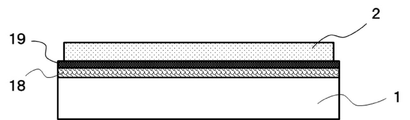
- the paste-like aluminum electrode forming composition 2 is applied to one surface of the semiconductor substrate 1 on which the passivation film 18 and the protective film (SiN X ) 19 are formed by a screen printing method. do. This is heated at a temperature of about 150 ° C. to remove the solvent in the composition 2 for forming an aluminum electrode.
- the aluminum particle-containing film 3 is formed on the semiconductor substrate 1 on which the passivation film 18 and the protective film ( SiNX ) 19 are formed.
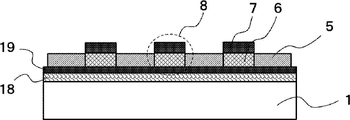
- the electrode-forming composition 4 is applied to a desired region on the aluminum particle-containing film 3, heated at a temperature of about 150 ° C., and dried.
- the electrode forming composition 4 When the electrode forming composition 4 is in the form of a paste, it is applied by a screen printing method in the same manner as the aluminum electrode forming composition 2. Then, this is heat-treated under the above-mentioned conditions. As a result, as shown in FIG. 2C, the aluminum / silver laminated electrode 8 is formed on the semiconductor substrate 1 on which the passivation film 18 and the protective film (SiN X ) 19 are formed.
- the aluminum / silver laminated electrode 8 has a silver particle sintered portion 7 arranged on the outermost surface, and is between the silver particle sintered portion 7 and the semiconductor substrate 1 on which the passion film 18 and the protective film (SiN X ) 19 are formed.
- the aluminum particle sintering portion / oxide bismuth phase mixing portion 6 is arranged in the.
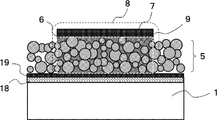
- FIG. 3 is an enlarged view of the formed portion of the aluminum / silver laminated electrode in FIG. 2C.
- the aluminum particle sintered portion / bismuth oxide phase mixing portion 6 includes an aluminum particle sintered portion 5 and a bismuth oxide phase 9 filled in a void portion of the aluminum particle sintered portion 5.
- the reason why the aluminum particle sintered portion / bismuth oxide phase mixing portion 6 has such a configuration is that, as described above, a part or the whole of the bismuth-containing particles in the electrode forming composition 4 is heat-treated to form an aluminum particle-containing film. This is to move to 3.
- the bismuth oxide phase 9 is arranged so as to separate the silver particle sintering portion 7 and the aluminum particle sintering portion 5, but the aluminum particles in the aluminum particle sintering portion 5 and the silver particle sintering portion 5 are arranged. A portion in contact with the portion 7 may be partially formed. In this case, the bismuth oxide phase 9 is arranged so as to separate the silver particle sintered portion 7 and the aluminum particle sintered portion 5 to the extent that excessive mutual diffusion between the aluminum particles and the silver particles is suppressed. preferable.
- the solar cell element according to the embodiment of the present disclosure is aluminum / silver including a semiconductor substrate, a passivation film provided on the semiconductor substrate, and a heat-treated product of the above-mentioned electrode forming composition provided on the passivation film. It is a solar cell element having a laminated electrode.
- the solar cell element may be provided with a protective film for protecting the passivation film provided on the semiconductor substrate, if necessary.
- the aluminum / silver laminated electrode of the solar cell element may be provided on the back surface of the semiconductor substrate. Further, the solar cell element may have a PERC structure.
- FIGS. 4, 5A, 5B, 6A, 6B and 6C An example of a typical solar cell element is shown in FIGS. 4, 5A, 5B, 6A, 6B and 6C.
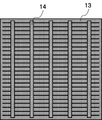
- FIG. 4 is a schematic plan view of the light receiving surface side of the solar cell element.
- the light receiving surface electrode 14 shown in FIG. 4 is generally formed by using a silver electrode paste. Specifically, a silver electrode paste is applied onto the antireflection film 13 in a desired pattern, dried, and then heat-treated at about 700 ° C. to 900 ° C. in the atmosphere to form the paste.
- FIG. 5A is a schematic plan view of the back surface of the solar cell element.
- An aluminum electrode 5 is formed on the entire surface of the back surface of the solar cell element shown in FIG. 5A.
- FIG. 5B is a schematic plan view of the back surface of the solar cell element when the aluminum finger electrode 20 and the aluminum bus bar electrode 21 are formed on a part of the back surface.
- the electrode forming composition is applied in a desired pattern and dried. Next, this is heat-treated at about 700 ° C. to 900 ° C. in the atmosphere to form an aluminum / silver laminated electrode. The heat treatment may be performed collectively with the heat treatment for forming the light receiving surface electrode 14 described above.
- an n + type diffusion layer 12 is formed near the surface of one surface of the semiconductor substrate 1, and an output extraction electrode 14 and reflection are formed on the n + type diffusion layer 12.
- the prevention film 13 is formed.
- FIG. 6A is a cut surface of the AA'part in FIG. 5A.
- the back surface has the structure shown in FIG. 6A.
- FIG. 6B is a cut surface of the BB'part in FIG. 5B. If the BB'cross section does not cross the opening of the backside passivation membrane, the backside has the structure shown in FIG. 6B.
- FIG. 6C is a cut surface of the CC'part in FIG. 5B. When the CC'cross section crosses the opening of the back surface passivation film (aluminum finger electrode 20), the back surface has the structure shown in FIG. 6C.
- the glass particles contained in the silver electrode paste forming the light receiving surface electrode 14 by heat treatment react (fire through) with the antireflection film 13 to cause a light receiving surface.
- the electrode 14 and the n + type diffusion layer 12 are electrically connected (omic contact).
- the aluminum in the aluminum electrode 5, the aluminum finger electrode 20, or the aluminum bus bar electrode 21 is diffused to a part of the back surface of the semiconductor substrate 1 (the portion where the back surface passivation film film-forming portion is removed by a laser or the like) by heat treatment.
- the p + type diffusion layer 15 an ohmic contact is partially formed between the semiconductor substrate 1 and the aluminum electrode 15.
- the shape of the glass particles was determined by observing using a TM-1000 scanning electron microscope manufactured by Hitachi High-Technologies Corporation.
- the particle size (D50%) of the glass particles was calculated using a Beckman Coulter Co., Ltd., LS13 320-type laser scattering diffraction method particle size distribution measuring device (measurement wavelength: 632 nm).
- the softening point of the glass particles was determined by a differential thermal (DTA) curve using a DT-60H differential thermal / thermogravimetric simultaneous measuring device manufactured by Shimadzu Corporation. Specifically, in the DTA curve, the softening point can be estimated from the endothermic portion.
- composition 1 for forming an electrode Silicon dioxide (SiO 2 ) 1.3% by mass, boron oxide (B 2 O 3 ) 6.0% by mass, bismuth oxide (Bi 2 O 3 ) 75.0% by mass ,
- a glass composed of 13.5% by mass of zinc oxide (ZnO) and 4.2% by mass of copper oxide (CuO) (hereinafter, may be abbreviated as "G01") was obtained.
- the softening point of the obtained glass G01 was 380 ° C.
- glass G01 particles having a particle diameter (D50%) of 3.9 ⁇ m were obtained.
- the shape was substantially spherical.
- Silver particles (Ag; particle size (D50%) is 0.6 ⁇ m, silver content is 99.9% by mass) by 34.8 parts by mass, metal bismuth particles (Bi; particle size (D50%) is 1.5 ⁇ m, 22.7 parts by mass of bismuth content), 6.5 parts by mass of glass G01 particles, 30.9 parts by mass of terpineol (TPO), and ethyl cellulose (EC; manufactured by Nissin Kasei Co., Ltd., STD- 10) was mixed by 5.1 parts by mass, mixed using a roll mill (BR-150HCV manufactured by IMEX) to form a paste, and the composition 1 for forming an electrode was prepared.
- a roll mill BR-150HCV manufactured by IMEX
- n + type diffusion layer, texture and antireflection (SiN X ) film are formed on the light receiving surface, and passivation is formed on the surface opposite to the light receiving surface (hereinafter, also referred to as “back surface”).
- a 160 ⁇ m-thick p-type silicon single crystal substrate in which an aluminum oxide (AlO X ) film and a protective film (SiN X ) film were formed in this order was prepared and cut into a size of 158.75 mm ⁇ 158.75 mm. rice field.
- the portion of the passivation film / protective film on the back surface where the aluminum finger electrode was formed was removed by a laser to expose the silicon substrate.
- a composition for forming a silver electrode (manufactured by DuPont, PV20) containing silver particles and lead glass particles is arranged on the light receiving surface so as to have an electrode pattern as shown in FIG. 4 (actually, the light receiving surface output extraction electrode 14).
- the number of the particles was set to 9), and the particles were given by screen printing. This was heated in a firing furnace (a tunnel furnace manufactured by Despatch) heated under the conditions of a set temperature of 250 ° C. and a transport speed of 240 inches / min, and the solvent was removed by evaporation.
- the aluminum electrode forming composition (RX8401 manufactured by Luxing Co., Ltd.) and the electrode forming composition 1 obtained above are subjected to screen printing to the electrodes as shown in FIG. 5B. It was added so as to be a pattern (actually, the number of aluminum bus bar electrodes 21 was set to 9, and the number of aluminum / silver laminated electrodes formed per aluminum bus bar electrode 21 was set to 6). Specifically, the composition for forming an aluminum electrode is printed with a fine line pattern of the aluminum finger electrode 20 and the aluminum bus bar electrode 21, dried to form an aluminum particle-containing film, and then the electrode forming composition 1 is formed on the aluminum particle-containing film. Was printed.
- the formed portion of the aluminum finger electrode was aligned with the exposed portion of the silicon substrate.
- the printing conditions of the aluminum electrode forming composition were appropriately adjusted so that the thickness of the aluminum electrode after the heat treatment was 30 ⁇ m.
- a pattern in which pad shapes having a size of 1.6 mm ⁇ 8.0 mm are arranged is used, and the printing conditions are set so that the coating amount is 8.0 mg / cm 2 . Adjusted appropriately.
- a solar cell in which a desired electrode was formed was subjected to heat treatment using a firing furnace (a tunnel furnace manufactured by Despatch) under the conditions of a set temperature of a maximum temperature of 870 ° C. and a transport speed of 240 inches / min in an atmospheric atmosphere.
- the element 1 was manufactured.
- Example 2 In Example 1, the content of silver particles was changed from 34.8 parts by mass to 36.8 parts by mass, the content of metal bismuth particles was changed from 22.7 parts by mass to 23.9 parts by mass, and glass G01.
- the electrode forming composition 2 was prepared in the same manner as in Example 1 except that the particle content was changed from 6.5 parts by mass to 3.3 parts by mass, and the solar cell element 2 was manufactured.
- Example 3 In Example 1, the content of silver particles was changed from 34.8 parts by mass to 36.2 parts by mass, the content of metal bismuth particles was changed from 22.7 parts by mass to 16.3 parts by mass, and the solvent was changed. Electrodes in the same manner as in Example 1 except that the content was changed from 30.9 parts by mass to 35.1 parts by mass and the resin content was changed from 5.1 parts by mass to 5.9 parts by mass. The forming composition 3 was prepared, and the solar cell element 3 was manufactured.
- Example 4 Silicon dioxide (SiO 2 ) 1.6% by mass, boron oxide (B 2 O 3 ) 13.4% by mass, bismuth oxide (Bi 2 O 3 ) 84.1% by mass and lithium oxide (Li 2 O) 0.9
- a glass consisting of% by mass (hereinafter, may be abbreviated as "G02") was adjusted.
- the softening point of the obtained glass G02 was 440 ° C.
- glass G02 particles having a particle diameter (D50%) of 1.1 ⁇ m were obtained.
- the shape was substantially spherical.
- the electrode forming composition 4 was prepared in the same manner as in Example 1 except that the type of glass particles was changed from G01 to G02 in Example 1, and the solar cell element 4 was manufactured.
- Example 5 metal bismuth particles and bismuth oxide particles were used in combination as bismuth-containing particles. Specifically, the silver particles (Ag; particle size (D50%) is 0.6 ⁇ m, the silver content is 99.9%) are 28.8 parts by mass, and the metal bismuth particles (Bi; particle size (D50%)) are.
- Example 6 An electrode forming composition 6 was prepared in the same manner as in Example 1 except that the particle size (D50%) of the glass G01 particles was changed from 3.9 ⁇ m to 1.5 ⁇ m in Example 1, and a solar cell was prepared. The element 6 was manufactured.
- Example 1 a commercially available silver paste for solar cells (manufactured by DuPont Co., Ltd., PV51M) was used when forming the back electrode. Specifically, the silver paste (PV51M) was first printed on the back surface and dried. The pattern of the back surface output take-out electrode formed by using the silver paste (PV51M) was composed of 1.8 mm ⁇ 8.0 mm, and was printed in the same arrangement as in Example 1. The printing conditions (screen plate mesh, printing speed, and printing pressure) were appropriately adjusted so that the thickness of the back surface output take-out electrode after the heat treatment was 5 ⁇ m.
- the aluminum electrode forming composition (RX8401) was printed on a place other than the place where the silver paste was printed and dried in the pattern described in Example 1, and dried. After that, the heat treatment was performed in the same manner as in Example 1 to produce the solar cell element C1.
- a solar cell element C2 was produced in the same manner as in Example 1 except that a commercially available silver paste for solar cells (PV51M) was used without using the electrode forming composition 1 in Example 1.
- PV51M commercially available silver paste for solar cells
- Example 3 an electrode-forming composition containing no glass particles was prepared. Specifically, the content of silver particles was changed from 34.8 parts by mass to 38.8 parts by mass, the content of bismuth particles was changed from 22.7 parts by mass to 25.2 parts by mass, and the content of glass particles was changed.
- the electrode forming composition C3 was prepared in the same manner as in Example 1 except that the content was changed from 6.5 parts by mass to 0 parts by mass, and the solar cell element C3 was produced.
- Table 1 summarizes the compositions of the particles contained in the electrode forming compositions used in Examples 1 to 6 and Comparative Example 3.
- connection strength of wiring material was measured by connecting the wiring material to the backside output take-out electrode of the manufactured solar cell element and implementing the peel strength. Specifically, the wiring material (Multi-Tabbing wire manufactured by Ulbrich, Sn-Pb-based eutectic solder coating, the size of the Cu core material is 0.4 mm in diameter) is placed on the back surface output take-out electrode and placed on the wiring material. It was connected by pressing a soldering iron from the top and melting the solder.
- the wiring material Multi-Tabbing wire manufactured by Ulbrich, Sn-Pb-based eutectic solder coating, the size of the Cu core material is 0.4 mm in diameter
- a desktop peel tester manufactured by Shimadzu Corporation, EZ-S was used to measure the connection strength of the wiring material, the tensile speed of the wiring material was set to 300 mm / min, and the strength when the wiring material was peeled off in the 180 ° direction. The connection strength was taken as the connection strength. The results are also shown in Table 2.
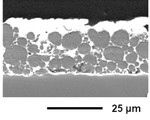
- an aluminum / silver laminated electrode as shown in FIG. 7 was formed on the back surface of the solar cell elements manufactured in Examples 1 to 6. Further, as can be seen from the EDX analysis results shown in FIG. 8, a silver particle sintered portion was formed on the outermost surface of the electrode, and a bismuth oxide phase was formed in the void portion of the aluminum electrode. Further, a part of the bismuth oxide phase reached the surface of the substrate in contact with the aluminum / silver laminated electrode.
- the power generation performance of the solar cell elements manufactured in Examples 1 to 6 showed almost the same power generation performance as the silver electrode not in the state of the aluminum / silver laminated electrode of Comparative Example 1.
- the connection strength of the wiring material in the backside output take-out electrode of the solar cell produced in Examples 1 to 6 was almost the same as that of the silver electrode not in the state of the aluminum / silver laminated electrode of Comparative Example 1.
- the aluminum / silver laminated electrode produced in the example showed superior connection strength of the wiring material as compared with the aluminum / silver laminated electrode of Comparative Example 3 formed by using the electrode forming composition containing no glass particles. rice field.
- the aluminum / silver laminated electrode formed by using the electrode forming composition containing glass particles in addition to the bismuth-containing particles in addition to the fact that a part of the bismuth oxide phase reaches the substrate, it is oxidized. It is considered that the bulk strength of the aluminum electrode and the adhesion to the substrate were further improved by the melt of the glass particles dissolved in the bismuth phase.
- the solar cell element produced in the example showed excellent power generation performance as compared with the solar cell element of Comparative Example 3 using the electrode forming composition containing no glass particles. It is considered that this is because the bismuth concentration was lowered due to the dissolution of the melt of the glass particles in the bismuth oxide phase, and as a result, the dissolution of SiNX by the bismuth oxide phase was suppressed and the passivation effect was well maintained.
Landscapes
- Photovoltaic Devices (AREA)
- Conductive Materials (AREA)
Priority Applications (1)
| Application Number | Priority Date | Filing Date | Title |
|---|---|---|---|
| JP2022555594A JPWO2022075456A1 (https=) | 2020-10-08 | 2021-10-08 |
Applications Claiming Priority (2)
| Application Number | Priority Date | Filing Date | Title |
|---|---|---|---|
| US202063089540P | 2020-10-08 | 2020-10-08 | |
| US63/089,540 | 2020-10-08 |
Publications (1)
| Publication Number | Publication Date |
|---|---|
| WO2022075456A1 true WO2022075456A1 (ja) | 2022-04-14 |
Family
ID=81126134
Family Applications (1)
| Application Number | Title | Priority Date | Filing Date |
|---|---|---|---|
| PCT/JP2021/037406 Ceased WO2022075456A1 (ja) | 2020-10-08 | 2021-10-08 | 電極形成用組成物、太陽電池素子及びアルミニウム/銀積層電極 |
Country Status (2)
| Country | Link |
|---|---|
| JP (1) | JPWO2022075456A1 (https=) |
| WO (1) | WO2022075456A1 (https=) |
Cited By (1)
| Publication number | Priority date | Publication date | Assignee | Title |
|---|---|---|---|---|
| CN116031314A (zh) * | 2023-02-14 | 2023-04-28 | 浙江晶科能源有限公司 | 光伏电池及光伏组件 |
Citations (7)
| Publication number | Priority date | Publication date | Assignee | Title |
|---|---|---|---|---|
| JP2005243500A (ja) * | 2004-02-27 | 2005-09-08 | Kyocera Chemical Corp | 導電性ペースト、太陽電池及び太陽電池の製造方法 |
| JP2008042095A (ja) * | 2006-08-09 | 2008-02-21 | Shin Etsu Handotai Co Ltd | 半導体基板並びに電極の形成方法及び太陽電池の製造方法 |
| JP2013074165A (ja) * | 2011-09-28 | 2013-04-22 | Yokohama Rubber Co Ltd:The | 太陽電池集電電極形成用導電性組成物、太陽電池セル、および太陽電池モジュール |
| WO2014014109A1 (ja) * | 2012-07-19 | 2014-01-23 | 日立化成株式会社 | パッシベーション層形成用組成物、パッシベーション層付半導体基板、パッシベーション層付半導体基板の製造方法、太陽電池素子、太陽電池素子の製造方法、及び太陽電池 |
| JP2015113371A (ja) * | 2013-12-10 | 2015-06-22 | 京都エレックス株式会社 | 半導体デバイスの導電膜形成用導電性ペースト、および半導体デバイス、並びに半導体デバイスの製造方法 |
| JP2017521826A (ja) * | 2014-06-19 | 2017-08-03 | イー・アイ・デュポン・ドウ・ヌムール・アンド・カンパニーE.I.Du Pont De Nemours And Company | 太陽電池用導体 |
| US20200243697A1 (en) * | 2019-01-28 | 2020-07-30 | Dupont Electronics, Inc. | Solar cell |
-
2021
- 2021-10-08 WO PCT/JP2021/037406 patent/WO2022075456A1/ja not_active Ceased
- 2021-10-08 JP JP2022555594A patent/JPWO2022075456A1/ja not_active Abandoned
Patent Citations (7)
| Publication number | Priority date | Publication date | Assignee | Title |
|---|---|---|---|---|
| JP2005243500A (ja) * | 2004-02-27 | 2005-09-08 | Kyocera Chemical Corp | 導電性ペースト、太陽電池及び太陽電池の製造方法 |
| JP2008042095A (ja) * | 2006-08-09 | 2008-02-21 | Shin Etsu Handotai Co Ltd | 半導体基板並びに電極の形成方法及び太陽電池の製造方法 |
| JP2013074165A (ja) * | 2011-09-28 | 2013-04-22 | Yokohama Rubber Co Ltd:The | 太陽電池集電電極形成用導電性組成物、太陽電池セル、および太陽電池モジュール |
| WO2014014109A1 (ja) * | 2012-07-19 | 2014-01-23 | 日立化成株式会社 | パッシベーション層形成用組成物、パッシベーション層付半導体基板、パッシベーション層付半導体基板の製造方法、太陽電池素子、太陽電池素子の製造方法、及び太陽電池 |
| JP2015113371A (ja) * | 2013-12-10 | 2015-06-22 | 京都エレックス株式会社 | 半導体デバイスの導電膜形成用導電性ペースト、および半導体デバイス、並びに半導体デバイスの製造方法 |
| JP2017521826A (ja) * | 2014-06-19 | 2017-08-03 | イー・アイ・デュポン・ドウ・ヌムール・アンド・カンパニーE.I.Du Pont De Nemours And Company | 太陽電池用導体 |
| US20200243697A1 (en) * | 2019-01-28 | 2020-07-30 | Dupont Electronics, Inc. | Solar cell |
Cited By (4)
| Publication number | Priority date | Publication date | Assignee | Title |
|---|---|---|---|---|
| CN116031314A (zh) * | 2023-02-14 | 2023-04-28 | 浙江晶科能源有限公司 | 光伏电池及光伏组件 |
| JP7488950B1 (ja) | 2023-02-14 | 2024-05-22 | ジョジアン ジンコ ソーラー カンパニー リミテッド | 太陽光発電電池及び太陽光発電モジュール |
| JP2024115505A (ja) * | 2023-02-14 | 2024-08-26 | ジョジアン ジンコ ソーラー カンパニー リミテッド | 太陽光発電電池及び太陽光発電モジュール |
| US12302647B2 (en) | 2023-02-14 | 2025-05-13 | Zhejiang Jinko Solar Co., Ltd. | Photovoltaic cell and photovoltaic module |
Also Published As
| Publication number | Publication date |
|---|---|
| JPWO2022075456A1 (https=) | 2022-04-14 |
Similar Documents
| Publication | Publication Date | Title |
|---|---|---|
| TWI502609B (zh) | 太陽電池元件以及太陽電池 | |
| CN104694778B (zh) | 电极用糊剂组合物及太阳能电池 | |
| CN103503079B (zh) | 电极用糊剂组合物、太阳能电池元件以及太阳能电池 | |
| CN103688365B (zh) | 元件及太阳能电池 | |
| JP6206491B2 (ja) | 電極形成用組成物、太陽電池素子及び太陽電池 | |
| JP5891599B2 (ja) | シリコン系太陽電池の電極用ペースト組成物 | |
| WO2022075456A1 (ja) | 電極形成用組成物、太陽電池素子及びアルミニウム/銀積層電極 | |
| JP2022143534A (ja) | 電極形成用組成物及び太陽電池素子 | |
| TW201539479A (zh) | 電極形成用組成物、電極、太陽電池元件及其製造方法以及太陽電池 | |
| WO2022075457A1 (ja) | 電極形成用組成物、太陽電池素子及びアルミニウム/銀積層電極 | |
| WO2022138385A1 (ja) | 電極形成用組成物、太陽電池素子及びアルミニウム/銀積層電極 | |
| WO2022181732A1 (ja) | 太陽電池素子及び太陽電池 | |
| WO2017033343A1 (ja) | 電極形成用組成物、電極、太陽電池素子、太陽電池及び太陽電池素子の製造方法 | |
| WO2022181730A1 (ja) | 太陽電池素子及び太陽電池 | |
| JP2022143533A (ja) | 電極形成用組成物及び太陽電池素子 | |
| JP2015195223A (ja) | 電極用ペースト組成物、太陽電池素子及び太陽電池 | |
| WO2022176520A1 (ja) | 電極形成用組成物、太陽電池素子及びアルミニウム/銀積層電極 | |
| WO2022181731A1 (ja) | 太陽電池素子及び太陽電池 | |
| JP2016189310A (ja) | 電極形成用組成物、電極、太陽電池素子及びその製造方法並びに太陽電池 | |
| WO2022176519A1 (ja) | 電極形成用組成物、太陽電池素子及びアルミニウム/銀積層電極 | |
| JP2014093491A (ja) | 太陽電池素子及びその製造方法、並びに太陽電池 | |
| JP2016189307A (ja) | 電極形成用組成物、電極、太陽電池素子及びその製造方法並びに太陽電池 | |
| JP6617427B2 (ja) | 電極形成用組成物、電極、太陽電池素子及びその製造方法並びに太陽電池 | |
| JP2016189447A (ja) | 太陽電池素子及びその製造方法並びに太陽電池 | |
| JP2016189311A (ja) | 電極形成用組成物、電極、太陽電池素子及びその製造方法並びに太陽電池 |
Legal Events
| Date | Code | Title | Description |
|---|---|---|---|
| 121 | Ep: the epo has been informed by wipo that ep was designated in this application |
Ref document number: 21877755 Country of ref document: EP Kind code of ref document: A1 |
|
| ENP | Entry into the national phase |
Ref document number: 2022555594 Country of ref document: JP Kind code of ref document: A |
|
| NENP | Non-entry into the national phase |
Ref country code: DE |
|
| 122 | Ep: pct application non-entry in european phase |
Ref document number: 21877755 Country of ref document: EP Kind code of ref document: A1 |