WO2022039165A1 - 多能性幹細胞の外胚葉、中胚葉及び内胚葉系細胞への分化誘導方法 - Google Patents
多能性幹細胞の外胚葉、中胚葉及び内胚葉系細胞への分化誘導方法 Download PDFInfo
- Publication number
- WO2022039165A1 WO2022039165A1 PCT/JP2021/030058 JP2021030058W WO2022039165A1 WO 2022039165 A1 WO2022039165 A1 WO 2022039165A1 JP 2021030058 W JP2021030058 W JP 2021030058W WO 2022039165 A1 WO2022039165 A1 WO 2022039165A1
- Authority
- WO
- WIPO (PCT)
- Prior art keywords
- cells
- cell
- differentiation
- region
- inducing
- Prior art date
- Legal status (The legal status is an assumption and is not a legal conclusion. Google has not performed a legal analysis and makes no representation as to the accuracy of the status listed.)
- Ceased
Links
Images








Classifications
-
- C—CHEMISTRY; METALLURGY
- C12—BIOCHEMISTRY; BEER; SPIRITS; WINE; VINEGAR; MICROBIOLOGY; ENZYMOLOGY; MUTATION OR GENETIC ENGINEERING
- C12N—MICROORGANISMS OR ENZYMES; COMPOSITIONS THEREOF; PROPAGATING, PRESERVING, OR MAINTAINING MICROORGANISMS; MUTATION OR GENETIC ENGINEERING; CULTURE MEDIA
- C12N5/00—Undifferentiated human, animal or plant cells, e.g. cell lines; Tissues; Cultivation or maintenance thereof; Culture media therefor
- C12N5/06—Animal cells or tissues; Human cells or tissues
- C12N5/0602—Vertebrate cells
- C12N5/0618—Cells of the nervous system
-
- C—CHEMISTRY; METALLURGY
- C12—BIOCHEMISTRY; BEER; SPIRITS; WINE; VINEGAR; MICROBIOLOGY; ENZYMOLOGY; MUTATION OR GENETIC ENGINEERING
- C12N—MICROORGANISMS OR ENZYMES; COMPOSITIONS THEREOF; PROPAGATING, PRESERVING, OR MAINTAINING MICROORGANISMS; MUTATION OR GENETIC ENGINEERING; CULTURE MEDIA
- C12N5/00—Undifferentiated human, animal or plant cells, e.g. cell lines; Tissues; Cultivation or maintenance thereof; Culture media therefor
- C12N5/06—Animal cells or tissues; Human cells or tissues
- C12N5/0602—Vertebrate cells
- C12N5/0696—Artificially induced pluripotent stem cells, e.g. iPS
-
- C—CHEMISTRY; METALLURGY
- C12—BIOCHEMISTRY; BEER; SPIRITS; WINE; VINEGAR; MICROBIOLOGY; ENZYMOLOGY; MUTATION OR GENETIC ENGINEERING
- C12N—MICROORGANISMS OR ENZYMES; COMPOSITIONS THEREOF; PROPAGATING, PRESERVING, OR MAINTAINING MICROORGANISMS; MUTATION OR GENETIC ENGINEERING; CULTURE MEDIA
- C12N13/00—Treatment of microorganisms or enzymes with electrical or wave energy, e.g. magnetism, sonic waves
-
- C—CHEMISTRY; METALLURGY
- C12—BIOCHEMISTRY; BEER; SPIRITS; WINE; VINEGAR; MICROBIOLOGY; ENZYMOLOGY; MUTATION OR GENETIC ENGINEERING
- C12N—MICROORGANISMS OR ENZYMES; COMPOSITIONS THEREOF; PROPAGATING, PRESERVING, OR MAINTAINING MICROORGANISMS; MUTATION OR GENETIC ENGINEERING; CULTURE MEDIA
- C12N2506/00—Differentiation of animal cells from one lineage to another; Differentiation of pluripotent cells
- C12N2506/45—Differentiation of animal cells from one lineage to another; Differentiation of pluripotent cells from artificially induced pluripotent stem cells
-
- C—CHEMISTRY; METALLURGY
- C12—BIOCHEMISTRY; BEER; SPIRITS; WINE; VINEGAR; MICROBIOLOGY; ENZYMOLOGY; MUTATION OR GENETIC ENGINEERING
- C12N—MICROORGANISMS OR ENZYMES; COMPOSITIONS THEREOF; PROPAGATING, PRESERVING, OR MAINTAINING MICROORGANISMS; MUTATION OR GENETIC ENGINEERING; CULTURE MEDIA
- C12N2513/00—3D culture
-
- C—CHEMISTRY; METALLURGY
- C12—BIOCHEMISTRY; BEER; SPIRITS; WINE; VINEGAR; MICROBIOLOGY; ENZYMOLOGY; MUTATION OR GENETIC ENGINEERING
- C12N—MICROORGANISMS OR ENZYMES; COMPOSITIONS THEREOF; PROPAGATING, PRESERVING, OR MAINTAINING MICROORGANISMS; MUTATION OR GENETIC ENGINEERING; CULTURE MEDIA
- C12N2533/00—Supports or coatings for cell culture, characterised by material
- C12N2533/50—Proteins
- C12N2533/52—Fibronectin; Laminin
-
- C—CHEMISTRY; METALLURGY
- C12—BIOCHEMISTRY; BEER; SPIRITS; WINE; VINEGAR; MICROBIOLOGY; ENZYMOLOGY; MUTATION OR GENETIC ENGINEERING
- C12N—MICROORGANISMS OR ENZYMES; COMPOSITIONS THEREOF; PROPAGATING, PRESERVING, OR MAINTAINING MICROORGANISMS; MUTATION OR GENETIC ENGINEERING; CULTURE MEDIA
- C12N2533/00—Supports or coatings for cell culture, characterised by material
- C12N2533/50—Proteins
- C12N2533/54—Collagen; Gelatin
-
- C—CHEMISTRY; METALLURGY
- C12—BIOCHEMISTRY; BEER; SPIRITS; WINE; VINEGAR; MICROBIOLOGY; ENZYMOLOGY; MUTATION OR GENETIC ENGINEERING
- C12N—MICROORGANISMS OR ENZYMES; COMPOSITIONS THEREOF; PROPAGATING, PRESERVING, OR MAINTAINING MICROORGANISMS; MUTATION OR GENETIC ENGINEERING; CULTURE MEDIA
- C12N2533/00—Supports or coatings for cell culture, characterised by material
- C12N2533/90—Substrates of biological origin, e.g. extracellular matrix, decellularised tissue
Definitions
- the present invention relates to a method for inducing differentiation from pluripotent stem cells to ectoderm cells and a method for producing them, a method for inducing differentiation from pluripotent stem cells to mesodermal cells, and a method for inducing differentiation from pluripotent stem cells to ectoderm cells, which are excellent in differentiation induction efficiency and culture operability.
- the present invention relates to a method for inducing differentiation of a capable stem cell into an endoderm cell.
- ALS amyotrophic lateral sclerosis
- iPS cells nerve cells induced to differentiate from induced pluripotent stem cells
- endometrial cells such as liver cells, small intestinal cells, and pancreatic cells, myocardial cells, skeletal muscle cells, or vascular endothelial cells, which have been induced to differentiate from induced pluripotent stem cells (iPS cells). It is increasing. By utilizing iPS cells derived from diseased patients, it is expected to elucidate the disease mechanism, drug discovery research, and regenerative medicine, which have been difficult in the past.
- embryoid bodies embryoid bodies
- neural stem cell aggregates called neurospheres
- Differentiation is induced.
- mesoderm bodies a process of forming pluripotent stem cell aggregates called embryoid bodies (embryoid bodies).
- embryoid bodies a process of forming pluripotent stem cell aggregates called embryoid bodies (embryoid bodies).
- embryoid bodies a process of forming pluripotent stem cell aggregates called embryoid bodies (embryoid bodies).
- embryoid bodies embryoid bodies
- the state of the embryoid body (embryoid body) in the process of inducing differentiation into the target cell greatly contributes to the cell fate such as the differentiation pathway, and how efficient the homogeneous embryoid body (embryoid body) is. The issue is whether it can be manufactured well.
- germ layers embryoid bodies
- neurospheres have been prepared by suspension culture methods such as Hanging drop culture (for example, Patent Document 1) and Non-adhesive surface culture (for example, Patent Document 2) (for example, Patent Document 2).
- suspension culture methods such as Hanging drop culture (for example, Patent Document 1) and Non-adhesive surface culture (for example, Patent Document 2) (for example, Patent Document 2).
- Patent Document 3 For example, Patent Document 3).
- cells are seeded on a cell non-adhesive substrate having a fine concavo-convex structure on the surface, and cells are settled to form cell aggregates according to the concavo-convex size.
- a cell non-adhesive substrate having a fine concavo-convex structure on the surface
- cells are settled to form cell aggregates according to the concavo-convex size.
- Patent Document 5 describes a cell culture substrate capable of efficiently forming spheroids in cells, a cell culture substrate having a high cell viability, a uniform size, and an arbitrary shape of spheroids, and the cell culture substrate. A method for producing a spheroid having an excellent cell viability inside the spheroid using the cell culture substrate is described.
- Patent Document 6 describes that ES cells were seeded on a substrate coated with 0.1% human recombinant type I collagen peptide or vitronectin to induce differentiation and produce an organoid having peristaltic movement similar to that of the intestine. Has been done.
- Patent Documents 1 to 3 have a problem that the efficiency of differentiation induction tends to differ among individuals because the size of the aggregates formed is non-uniform.
- aggregates of different sizes are arranged three-dimensionally, there is a risk of local malnutrition.
- the method described in Patent Document 4 since the aggregates are not immobilized on the surface of the substrate, a part of the aggregates is removed together with the medium when the medium is exchanged, and the culture operation requires proficiency. There was a problem that it was.
- due to the nature of the base material it is difficult to replace the entire amount of the medium, so that nutritional deficiencies such as differentiation-inducing factors are likely to occur, and there is a concern that the differentiation-inducing efficiency will be inferior.
- the formed organoids spontaneously exfoliate from the substrate about 30 days after the start of differentiation induction. If the organoid is exfoliated, there is a problem that it is difficult to handle it at the time of immunostaining for culture operation and cell function evaluation.
- An object of the present invention is to provide a method for inducing differentiation from pluripotent stem cells to ectoderm cells and a method for producing them, which are excellent in differentiation induction efficiency and culture operability.
- An object of the present invention is also to provide a method for inducing differentiation from pluripotent stem cells to mesoderm cells, which is excellent in differentiation induction efficiency and culture operability.
- An object of the present invention is also from pluripotent stem cells, which are excellent in the convenience of culture operations such as medium exchange and cell observation, and also in the operability of cell function evaluation such as immunostaining and secretion measurement test.
- the present invention is to provide a method for inducing differentiation into germ layer cells.
- the present inventors form germ layer (embryoid body) adhered on the cell culture substrate by inoculating pluripotent stem cells on the cell culture substrate having the cell adhesion region formed in an island shape. We have found that the above-mentioned problems can be solved by inducing differentiation of the adherent germ layer (embryoid body), and have completed the present invention.
- one aspect of the present invention is a method for inducing differentiation of ectoderm cells from pluripotent stem cells and a method for producing ectoderm cells, which comprises the following steps (1-1) to (1-4).
- a method for inducing differentiation of ectoderm cells from pluripotent stem cells which comprises the following steps (1-1) to (1-4).
- (1-1) Coating of a single substance or a plurality of substances selected from the group consisting of matrigel, laminin, fibronectin, vitronectin and collagen on a cell culture substrate having the following two regions (A) and (B). , And the step of seeding pluripotent stem cells.
- A An island-like region having an area of 0.001 to 5 mm 2 having cell adhesion and cell proliferation.
- B A region adjacent to the region (A) and having no cell adhesion or cell proliferation.
- 1-2 Pluripotent stem cell coagulation in which pluripotent stem cells seeded in the above step (1-1) were adherently cultured in the presence of an undifferentiated maintenance medium in a feeder-free manner and adhered to a cell culture substrate. The process of forming an aggregate.
- Pluripotent stem cell aggregates formed in the above step (1-2) are cultured in the presence of a medium containing a differentiation-inducing factor in a state of being adhered to a cell culture substrate, and embryoid bodies.
- the process of forming (embryoid body).
- the germ layer (embryoid body) formed in the above step (1-3) is cultivated in the presence of a medium containing a differentiation-inducing factor in a state of being adhered to a cell culture substrate, and then outside.
- the cell culture substrate contains a layer made of a hydrophilic polymer on the surface, and the region (A) is made of the hydrophilic polymer by any one of plasma treatment, ultraviolet treatment, corona discharge treatment, or a combination thereof.
- the method for inducing differentiation according to ⁇ 1> which is a region obtained by decomposing or modifying a part of the layer.
- the differentiation according to ⁇ 1> or ⁇ 2>, wherein the differentiation-inducing factor in the step (1-3) contains an ectoderm-inducing factor, a mesoderm-inducing factor, and an endoderm-inducing factor. Guidance method.
- ⁇ 4> The item according to any one of ⁇ 1> to ⁇ 3>, wherein the ectoderm cell aggregate formed in the step (1-4) has PAX6 and SOX1. Differentiation induction method.
- ⁇ 5> The method for inducing differentiation according to any one of ⁇ 1> to ⁇ 4>, wherein the ectoderm cells are neural stem cells or neural cells.
- ⁇ 6> The method for inducing differentiation according to any one of ⁇ 1> to ⁇ 5>, wherein the ectoderm cells are motor neurons.
- a method for producing cells in which pluripotent stem cells are induced to differentiate into ectoderm cells which comprises the following steps (1-1) to (1-4). .. (1-1) Coating of a single substance or a plurality of substances selected from the group consisting of matrigel, laminin, fibronectin, vitronectin and collagen on a cell culture substrate having the following two regions (A) and (B). , And the step of seeding pluripotent stem cells.
- A An island-like region having an area of 0.001 to 5 mm 2 having cell adhesion and cell proliferation.
- B A region adjacent to the region (A) and having no cell adhesion or cell proliferation.
- Pluripotent stem cell coagulation in which pluripotent stem cells seeded in the above step (1-1) were adherently cultured in the presence of an undifferentiated maintenance medium in a feeder-free manner and adhered to a cell culture substrate.
- the process of forming an aggregate (1-3) Pluripotent stem cell aggregates formed in the above step (1-2) are cultured in the presence of a medium containing a differentiation-inducing factor in a state of being adhered to a cell culture substrate, and embryoid bodies. The process of forming (embryoid body).
- the germ layer (embryoid body) formed in the above step (1-3) is cultivated in the presence of a medium containing a differentiation-inducing factor in a state of being adhered to a cell culture substrate, and then outside. The process of forming germ layer cell aggregates.
- the present invention includes each of the following aspects [1] to [8].
- a method for inducing differentiation of mesoderm cells from pluripotent stem cells which comprises the following steps (2-1) to (2-3).
- (2-1) Coating of a single substance or a plurality of substances selected from the group consisting of matrigel, laminin, fibronectin, vitronectin and collagen on a cell culture substrate having the following two regions (A) and (B). , And the step of seeding pluripotent stem cells.
- (B) A region adjacent to the region (A) and having no cell adhesion or cell proliferation.
- (2-2) The pluripotent stem cells seeded in the above step (2-1) were adherently cultured in the presence of an undifferentiated maintenance medium in a feeder-free manner, and the embryoid body (embryoid body) adhered onto the cell culture substrate. The process of forming the body).
- (2-3) The germ layer (embryoid body) formed in the above step (2-2) is cultured in the presence of a medium containing a differentiation-inducing factor in a state of being adhered to a cell culture substrate. The process of forming germ layer cell aggregates.
- the cell culture substrate has a layer containing a hydrophilic polymer on the surface, and the region (A) decomposes or decomposes the layer containing the hydrophilic polymer by plasma treatment, ultraviolet treatment and / or corona discharge treatment.
- the germ layer (embryoid body) is cultured until the number of cells per unit area of the region (A) is 1.0 ⁇ 10 4 cells / cm 2 or more.
- Method [6] The method for inducing differentiation according to any one of [1] to [5], wherein the differentiation-inducing factor in the step (2-3) contains a mesoderm-inducing factor.
- the mesoderm inducing factor is a single or multiple differentiation inducing factor selected from the group consisting of a GSK3 ⁇ inhibitor, a bone morphogenetic protein (BMP) and activin. Differentiation induction method.
- BMP bone morphogenetic protein
- One aspect of the present invention is a method for inducing differentiation of pluripotent stem cells into endoderm cells.
- (3-1) A composition containing at least one selected from laminin and a fragment thereof in a cell culture substrate having the following region (A) and the following region (B) is applied to the culture surface of the cell culture substrate.
- A An island-like region having an area of 0.001 to 5 mm 2 having cell adhesion and cell proliferation.
- step (3-1) A region adjacent to the region (A) and not having cell adhesion or cell proliferation
- step (3-3) The pluripotent stem cells seeded in step (3-1) are adherently cultured in the presence of an undifferentiated maintenance medium in a feeder-free manner to form adherent embryo-like bodies on the culture surface of the cell culture substrate.
- step (3-3) step (3-2) are cultured in the presence of a medium containing a differentiation-inducing factor in a state of being adhered to the culture surface of the cell culture substrate.
- the present invention relates to a method comprising the steps of inducing differentiation and forming aggregates of endometrial cells.
- One aspect of the present invention is a kit for inducing differentiation into trigermoid cells, which comprises a cell culture substrate having the following region (A) and the following region (B).
- A Island-like region having an area of 0.001 to 5 mm 2 having cell adhesion and cell proliferation
- B A region adjacent to the region (A) and not having cell adhesion or proliferation.
- the embryoid body whose differentiation is induced by the culture system fixed on the cell culture substrate having the above-mentioned regions (A) and (B) has an arbitrary shape (the diameter of the embryoid body (embryoid body)).
- the aspect ratio of the embryoid body can be maintained, and the influence of the concentration gradient of the differentiation-inducing factor is low, so that the differentiation progress of each cell can be synchronized.
- contamination with contaminants can be reduced.
- pluripotent stem cells to endoderm cells are excellent in the convenience of culture operations such as medium exchange and cell observation, and also in the operability of cell function evaluation such as immunostaining and secretion measurement test.
- a method for inducing differentiation into a cell and a kit for inducing differentiation can be provided.
- the differentiation induction method and the differentiation induction kit according to the present invention agglomerates of pluripotent stem cells can be efficiently formed, and the cells are consistently adhered from the induction of differentiation to endoderm cells to the evaluation of cell function. Since the cells can be cultured in the state of being allowed to grow, the convenience of the culture operation and the operability at the time of evaluating the cell function are excellent.
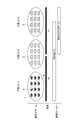
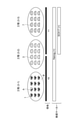
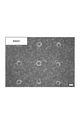
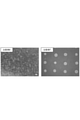
- FIG. 1 Phase-contrast micrographs showing the state of pseudopodia extension of the outer edge of the embryoid body (embryoid body) in Example 1 and Comparative Example 1. Phase-contrast micrographs of embryoid bodies (embryoid bodies) in Comparative Examples 2 and 3.
- FIG. 3 is a phase-contrast micrograph of the embryoid body in Example 3.
- the scale bar indicates 100 ⁇ m.
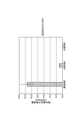
- the scale bar indicates 100 ⁇ m. It is a graph which shows the evaluation result of the gene expression level of the undifferentiated marker (NANOG) and the endoderm marker (SOX17) in Example 3 and Comparative Examples 6 and 7.
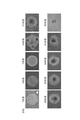
- 6 is a phase-contrast micrograph of the cells induced to differentiate in Example 4 taken over time.
- the scale bar indicates 200 ⁇ m. It is a phase-contrast micrograph and a fluorescence micrograph after immunostaining of the cells induced to differentiate in Examples 4 and 5.
- the scale bar indicates 200 ⁇ m. 3 is a phase-contrast micrograph of the cells induced to differentiate in Comparative Example 8 and Example 4.
- the scale bar indicates 200 ⁇ m. Arrows indicate cell clumps detached from the substrate.
- the present embodiment a mode for carrying out the present invention (hereinafter, simply referred to as “the present embodiment”) will be described in detail.
- the following embodiments of the present invention are examples for explaining the present invention, and are not intended to limit the present invention to the following contents.
- the present invention can be appropriately modified and carried out within the scope of the purpose.
- pluripotent stem cell refers to a cell having a characteristic (undifferentiated or pluripotent) capable of differentiating into various cells.
- ectoderm cell refers to a cell contained in the ectoderm formed by an early embryo (ectoderm cell) or a cell contained in a tissue derived from the ectoderm (nerve stem cell or nerve cell). Including).
- neural stem cells are glial cells (astrocytes, oligodendrocytes), central nerves (dopaminergic nerves, GABA nerves), and peripheral nerves (motor nerves, sensory nerves), as the induction of differentiation into nerve ectoblasts progresses. Shows cells in a state capable of inducing differentiation into.
- the “mesoderm cell” is a general term for cells contained in the mesoderm formed by the early embryo (mesoderm cells) or cells contained in the tissue derived from the mesoderm.
- endoderm lineage cell is a general term for cells contained in endoderm formed by early embryos (endoderm cells) and cells contained in tissues derived from endoderm.
- "maintenance of undifferentiated state” means a state in which cultured cells have pluripotency.
- the evaluation method for maintaining undifferentiated state is not particularly limited, but for example, analysis of cell surface markers by alkaline phosphatase staining, analysis of cell surface / intranuclear markers by immunostaining and flow cytometry, and gene expression level by real-time RT-PCR. , Confirmation of embryoid body (embryoid body) formation, which is a unique structure formed by pluripotent stem cells, and tera-toma assay for determining trigerm differentiation in In vivo from pathological sections.
- differentiation is a state in which expression of a cell type-specific membrane protein, transcription factor, etc. located downstream of the pluripotent stem cell is confirmed in the differentiation induction pathway of the pluripotent stem cell. Is shown. Furthermore, “induction of differentiation” indicates that the differentiation of cells is promoted by culturing the cells in the presence of a specific protein, gene, natural product, synthetic chemical substance, or the like. Further, in the present specification, the “cell aggregate (pluripotent stem cell aggregate)” refers to a three-dimensional structure formed by aggregating a plurality of cells (pluripotent stem cells).
- embryoid body is a spherical cell aggregate (aggregate of pluripotent stem cells) found in the early stage of embryogenesis, and is the ectoderm, mesoderm and endoderm as in the early embryo. Shows the properties of the germ layer.
- the "marker” indicates a protein or gene peculiar to a specific cell.
- the marker possessed by pluripotent stem cells is “undifferentiated marker”
- the marker possessed by ectoderm cells is “ectoderm marker”
- the marker possessed by mesoderm cells is “mesoderm marker”
- the marker possessed by endoderm cells is “endoderm”.
- the marker possessed by the nerve stem cell is referred to as “marker”
- the marker possessed by the nerve stem cell is referred to as “nerve stem cell marker”
- the marker possessed by the nerve cell is referred to as “nerve cell marker”
- the marker possessed by the small intestinal tissue cell is referred to as "intestinal epithelial cell marker”.
- Pluripotent stem cells do not have ectoderm markers, mesoderm markers and endoderm markers.
- the embryoid body (embryoid body) has an ectoderm marker, a mesoderm marker, and an endoderm marker.
- cell adhesion indicates the ease of adhesion to a cell culture substrate at a culture temperature
- having cell adhesion means that a cell has a cell culture substrate at a culture temperature. Indicates that it can be adhered to.
- not having cell adhesion means that cells cannot adhere to the cell culture substrate at the culture temperature.
- cell proliferation means the ease of cell proliferation at the culture temperature
- having cell proliferation means that the cells can grow at the culture temperature
- not having cell proliferation means that cells cannot grow at the culture temperature
- the method for inducing differentiation of ectoderm cells uses a cell culture substrate having the following two regions.
- A An island-like region having an area of 0.001 to 5 mm 2 having cell adhesion and cell proliferation.
- B A region adjacent to the region (A) and having no cell adhesion.
- pluripotent stem cells cannot be adherently cultured on the cell culture substrate, and germ layers (embryoid bodies) adhered to the cell culture substrate cannot be formed. Further, by using the cell culture substrate having the region (B) as the cell culture substrate, pluripotent stem cells can be proliferated only in the early (A) region, and the germ layer (embryoid body) of uniform size can be grown. ) Can be formed. By forming a germ layer (embryoid body) of uniform size, the efficiency of differentiation induction can be enhanced. If it does not have the region (B), it is not possible to form a germ layer (embryoid body) of uniform size.
- the area of the region (A) is more preferably 0.005 to 3 mm 2 because it is suitable for forming an embryoid body (embryoid body) having a size suitable for inducing differentiation into ectoderm cells.
- An area of 0.01 to 1.0 mm 2 is particularly preferable, and an area of 0.03 to 0.8 mm 2 is most preferable.
- the shape of the region (A) is not particularly limited, but a circle, an ellipse, or a regular polygon is preferable, and a circle is more preferable, because it is suitable for enhancing the differentiation induction efficiency.
- the shape of the region (B) is not limited except that it is adjacent to the region (A), but since it is suitable for producing an aggregate having a uniform size and shape, it is a boundary with the region (A). It is preferable that the region (B) is adjacent to the length of 20% or more of the line, 50% or more is more preferable, 80% or more is further preferable, and the periphery of the region (A) is all the region (B). Is most preferable. Further, since it is suitable for increasing the mass productivity of the cell culture substrate, it is preferable that the region (A) has an island-like structure and the region (B) has a sea-like sea-island structure.
- the area ratio of the region (A) and the region (B) is not particularly limited, but is suitable for increasing the number of cell aggregates that can be produced per unit area of the cell culture substrate (A).
- the area of the region is preferably 10% or more, more preferably 30% or more, further preferably 50% or more, and 70% or more with respect to the total area of the (A) region and the (B) region. Most preferred. Further, since it is suitable to provide a sufficient distance between the plurality of (A) regions and prevent the aggregates of the plurality of (A) regions from fusing to form a non-uniform shape, (B). )
- the area of the region is preferably 20% or more, more preferably 40% or more, further preferably 60% or more, and 80% or more with respect to the total area of the (A) region and the (B) region. Most preferred.
- the cell culture substrate used in the differentiation induction method of the present invention contains a layer made of a hydrophilic polymer on the surface in order to form a germ layer (embryoid body) of uniform size and to increase the efficiency of differentiation induction.
- (A) is preferably a region obtained by decomposing or modifying a part of the layer made of the hydrophilic polymer by any one of plasma treatment, ultraviolet treatment, corona discharge treatment, or a combination thereof.
- the region (A) is suitable for enhancing cell adhesion and cell proliferation and forming a germ layer (embryoid body) in a short time, the region (A) is further a plasma-treated region. preferable.
- the layer thickness of the layer made of the hydrophilic polymer is preferably 10 nm or more, more preferably 50 nm or more, and further preferably 100 nm or more because the region (B) is suitable for forming a region having no cell adhesion or cell proliferation. It is particularly preferable, and 500 nm or more is most preferable. Further, since the region (A) is suitable for a region having cell adhesion and cell proliferation, the layer thickness is preferably 1000 nm or less, more preferably 500 nm or less, particularly preferably 100 nm or less, and most preferably 50 nm or less.
- the method for forming the layer with the hydrophilic polymer at least one of a method of forming a chemical bond and a method of physical interaction can be used.
- the method for forming a chemical bond include a method for forming a reactive functional group such as ultraviolet irradiation, electron beam irradiation, gamma ray irradiation, plasma treatment, and corona treatment. It is also possible to carry out a cross-linking reaction to the surface of the substrate by an organic reaction using ions or radicals as a reaction source.
- coating, brush coating, dip coating, spin coating, bar coating, sink coating, and spraying using a matrix with excellent compatibility with the target hydrophilic polymer as a coating material It is possible to use techniques such as painting, roll coating, air knife coating, blade coating, gravure coating, microgravia coating, slot die coating and the like.
- the type of the hydrophilic polymer is not particularly limited, and examples thereof include those having a polar group such as a hydroxy group, an amino group and a polyethylene glycol group, and those having an amphoteric ionic structure such as a betaine structure and a phosphorylcholine group.
- a hydroxy group, a phosphorylcholine group, or a polyethylene glycol group is preferable, a hydroxy group or a phosphorylcholine group is more preferable, and a phosphorylcholine group is particularly preferable, because the region (B) is suitable for a region having no cell adhesion and cell proliferation. preferable.
- the hydrophilic polymer suppresses the elution of the hydrophilic polymer from the cell culture substrate, and suppresses the influence on the quality due to the mixing of the polymer in cell aggregates and embryonic bodies (embryonic bodies).
- a random copolymer or a block copolymer having both a hydrophilic monomer unit and a hydrophobic monomer unit is preferable, and a hydrophilic monomer unit and a hydrophilic monomer unit are preferable. More preferably, it is a random copolymer having both hydrophobic monomeric units.
- the hydrophilic monomer unit is 30 wt% or more because it is suitable to make the region (B) a region having no cell adhesion and cell proliferation. Is preferable, 40 wt% or more is more preferable, 50 wt% or more is particularly preferable, and 60 wt% or more is most preferable. Further, since it is suitable for suppressing the elution of the hydrophilic polymer, the hydrophobic monomer unit is preferably 20 wt% or more, more preferably 30 wt% or more, and particularly preferably 40 wt% or more. Most preferably 50 wt% or more.
- the hydrophilic monomer unit is not particularly limited except that it is hydrophilic, and for example, 2-dimethylaminoethyl acrylate, 2-dimethylaminoethyl methacrylate, 2-diethylaminoethyl acrylate, and 2-diethylaminoethyl.
- Those having an amino group such as methacrylate, N- [3- (dimethylamino) propyl] acrylamide; N- (3-sulfopropyl) -N-methacloyloxyethyl-N, N-dimethylammonium betaine, N-methacryloyloxy Those having betaine such as ethyl-N, N-dimethylammonium- ⁇ -N-methylcarboxybetaine; hydroxyethyl acrylate, hydroxyethyl methacrylate, N- (2-hydroxyethyl) acrylamide, polyethylene glycol monoacrylate, polyethylene glycol monomethacrylate.
- the hydrophobic monomer unit is not particularly limited except that it is hydrophobic, but for example, n-butyl acrylate, n-butyl methacrylate, isobutyl acrylate, isobutyl methacrylate, t-butyl acrylate, and t-butyl.
- Methacrylate, n-hexyl acrylate, n-hexyl methacrylate, n-octyl acrylate, n-octyl methacrylate, n-decyl acrylate, n-decyl methacrylate, n-dodecyl acrylate, n-dodecyl methacrylate, n-tetradecyl acrylate, n- Tetradecyl methacrylate and the like can be mentioned.
- the hydrophilic polymer is also suitable for suppressing the elution of the hydrophilic polymer, it is preferable that the hydrophilic polymer contains a monomer unit having reactivity.
- a UV-reactive monomer unit is preferable because a hydrophilic polymer can be immobilized on the substrate by a short treatment time, for example, 4-. Examples thereof include azidophenyl acrylate, 4-azidophenyl methacrylate, 2-((4-azidobenzoyl) oxy) ethyl acrylate, 2-((4-azidobenzoyl) oxy) ethyl methacrylate and the like.
- the hydrophilic polymer may also contain temperature-responsive monomeric units, eg, (meth) acrylamide compounds such as acrylamide, methacrylamide; N, N-diethylacrylamide, N-ethylacrylamide, N. -N-propylacrylamide, N-n-propyl Acrylamide, N-Isopropylacrylamide, N-Isopropyl Acrylamide, N-Cyclopropylacrylamide, N-Cyclopropyl Acrylamide, Nt-Butyl Acrylamide, N-ethoxyethylacrylamide , N-alkyl substituted (meth) acrylamide derivatives such as N-ethoxyethylmethacrylamide, N-tetrahydrofuruffle acrylamide, N-tetrahydrofuruffle methacrylamide; N, N-dimethyl (meth) acrylamide, N, N-ethylmethyl N, N-dialkyl-substituted (meth)
- a substance that promotes or inhibits cell adhesion to a part of the region on the cell culture substrate by a photolithography method or an inkjet method.
- a method of coating the substrate, a method of coating the surface of the cell culture substrate with any of plasma treatment, ultraviolet treatment, corona discharge treatment, or a combination thereof, and then coating the temperature-responsive polymer, etc. Can be mentioned.
- the cell culture substrate used in the differentiation induction method of the present invention may be sterilized.
- the sterilization method is not particularly limited, but high-pressure steam sterilization, UV sterility, ⁇ -ray sterility, ethylene oxide gas sterilization, and the like can be used.
- High-pressure steam sterilization, UV sterilization, and ethylene oxide gas sterilization are preferable because they are suitable for suppressing denaturation of block copolymers, and UV sterilization or ethylene oxide gas sterilization is preferable because they are suitable for suppressing deformation of the substrate.
- ethylene oxide gas sterilization is particularly preferable because the cell culture base material is excellent in mass productivity.
- the substrate used for producing the cell culture substrate is not particularly limited, but commonly used polymer compounds such as glass, polystyrene, polycarbonate, polyethylene terephthalate, polyvinylidene fluoride, polyethylene, polypropylene, polyethylene methacrylate, and ceramics. , And metals can be used. Polystyrene is most preferable because it has excellent transparency and is easy to mold and surface modify.
- the method for inducing differentiation and the method for producing the present invention are characterized in that differentiation is induced through the following steps (1-1) to (1-4).
- (1-1) Coating of a single substance or a plurality of substances selected from the group consisting of matrigel, laminin, fibronectin, vitronectin, collagen and fragments thereof, and seeding of pluripotent stem cells on a cell culture substrate. The process to be performed.
- (1-2) Pluripotent stem cell coagulation in which pluripotent stem cells seeded in the above step (1-1) were adherently cultured in the presence of an undifferentiated maintenance medium in a feeder-free manner and adhered to a cell culture substrate. The process of forming an aggregate.
- Pluripotent stem cell aggregates formed in the above step (1-2) are cultured in the presence of a medium containing a differentiation-inducing factor in a state of being adhered to a cell culture substrate, and embryoid bodies. The process of forming (embryoid body).
- the germ layer (embryoid body) formed in the above step (1-3) is cultivated in the presence of a medium containing a differentiation-inducing factor in a state of being adhered to a cell culture substrate, and then outside. The process of forming germ layer cell aggregates.
- step (1-1) in the method for inducing differentiation of the present invention a single or a plurality of substances selected from the group consisting of matrigel, laminin, fibronectin, vitronectin, collagen and fragments thereof are coated on the cell culture substrate.
- This is the process of seeding pluripotent stem cells.
- the region (A) can be imparted with cell adhesion and cell proliferation. can.
- the matrigel, laminin, vitronectin, fibronectin, collagen and fragments thereof may be natural products, artificially synthesized by genetic recombination technology or the like, fragments cleaved with restriction enzymes or the like, or fragments thereof. It may be a synthetic protein or a synthetic peptide based on these biological substances.
- Matrigel for example, Matrigel (manufactured by Corning Inc.) or Geltrex (manufactured by Gibco) can be preferably used as a commercially available product because of its availability.
- laminin is not particularly limited, but for example, laminin 511, laminin 521 or laminin 511- are reported to show high activity against ⁇ 6 ⁇ 1 integrin expressed on the surface of human iPS cells. E8 fragments can be used.
- the laminin may be a natural product, may be artificially synthesized by a genetic recombination technique or the like, or may be a synthetic protein or a synthetic peptide based on the laminin. From the viewpoint of availability, for example, iMatrix-511 (manufactured by Nippi Co., Ltd.) can be preferably used as a commercially available product.
- the vitronectin may be a natural product, may be artificially synthesized by a gene recombination technique or the like, or may be a synthetic protein or a synthetic peptide based on the vitronectin.
- vitronectin human plasma-derived (manufactured by Wako Pure Chemical Industries, Ltd.), synthemax (manufactured by Corning Inc.), and Vitronectin (manufactured by Gibco) can be preferably used as commercially available products. can.
- the fibronectin may be a natural product, may be artificially synthesized by a genetic recombination technique or the like, or may be a synthetic protein or a synthetic peptide based on the fibronectin.
- fibronectin solution human plasma-derived (manufactured by Wako Pure Chemical Industries, Ltd.) and Retronectin (manufactured by Takara Bio Inc.) can be preferably used as commercially available products.
- the type of collagen is not particularly limited, but for example, typeI collagen and typeIV collagen can be used.
- the collagen may be a natural product, may be artificially synthesized by a genetic recombination technique or the like, or may be a synthetic peptide based on the collagen. From the viewpoint of availability, for example, collagen I, human (manufactured by Corning Incorporated) or collagen IV, human (manufactured by Corning Incorporated) can be preferably used as a commercially available product.
- the cell type in the step (1-1) can be appropriately selected from stem cells having pluripotency such as ES cells and iPS cells, and the method for inducing differentiation of the present invention can be applied to regenerative medicine and drug discovery.
- IPS cells are preferred because they are suitable for application.
- the cell seeding method in the step (1-1) is not particularly limited, but a method of adding a cell suspension in which cells are monodispersed to a cell culture substrate or a method of adding cell aggregates to a cell culture substrate is available. In addition, since cell aggregates are uniformly formed in the region (A), it is preferable to disperse and disperse the cells uniformly.
- ROCK Rho-binding kinase
- Examples of the ROCK inhibitor include (R)-(+)-trans-N- (4-pyridyl) -4- (1-aminoethyl) -cyclohexanecarboxamide, 2HCl, H2O (manufactured by Fuji Film Wako Pure Chemical Industries, Ltd.). , Product name: Y-27632) and the like can be used.
- the concentration of the ROCK inhibitor added to the medium is a range effective for maintaining the survival of human cells and does not affect the undifferentiated state of human cells, preferably 1 ⁇ M to 50 ⁇ M. It is more preferably 3 ⁇ M to 20 ⁇ M, further preferably 5 ⁇ M to 15 ⁇ M, and most preferably 8 ⁇ M to 12 ⁇ M. Further, it is preferable to remove the ROCK inhibitor by a method such as replacement with a medium containing no ROCK inhibitor 24 hours after seeding the cells.
- the cell recovery method is not particularly limited, but for example, enzymatic treatment such as trypsin or collagenase, chelation treatment with ethylenediamineacetic acid (EDTA), and physical treatment such as scraper can be used alone or in combination.
- enzyme treatment it is preferable that the animal-derived component is free.
- TrypLE Select manufactured by Gibco
- TrypLE Express Gibco
- Accutase manufactured by Nacalai Tesque
- Accumax manufactured by Nacalai Tesque
- the cell seeding density in the step (1-1) is preferably 1.0 ⁇ 10 2 cells / cm 2 or more, preferably 1.2 ⁇ 10 because it is suitable for forming uniform cell aggregates in a short time.
- 3 cells / cm 2 or more is more preferable, 2.0 ⁇ 10 3 cells / cm 2 or more is particularly preferable, and 3.0 ⁇ 10 3 cells / cm 2 or more is most preferable.
- 1.0 ⁇ 10 5 cells / cm 2 or less is preferable, 5.0 ⁇ 10 4 cells / cm 2 or less is more preferable, and 2.5.
- X10 4 cells / cm 2 or less is particularly preferable, and 5.0 ⁇ 10 3 cells / cm 2 or less is most preferable.
- pluripotent stem cells seeded in step (1-1) are adherently cultured in the presence of an undifferentiated maintenance medium in a feeder-free manner, and a cell culture group is used. It forms pluripotent stem cell aggregates that adhere to the material.
- feeder-free refers to a method of directly seeding and culturing pluripotent stem cells on a cell culture substrate without using cells inactivated by gamma ray irradiation or the like (feeder cells).
- the pluripotent stem cells proliferate in the region (A) and become a substrate. It is possible to form cell aggregates layered in the out-of-plane direction. When an undifferentiated maintenance medium is not used, cell aggregates lose their pluripotency and the efficiency of inducing differentiation into ectoderm cells decreases. In addition, by culturing in a feeder-free manner, it is easy to maintain the nutrition of the medium during culturing, and it is possible to enhance the cell viability and the maintenance of undifferentiated cells.
- the adhesive culture facilitates the medium exchange work as compared with the suspension culture, the culture workability is excellent, and the total amount of the medium can be exchanged, so that the concentration of waste products discharged from the cells is low. Can be kept in a state.
- the influence of the concentration gradient in the culture system is small, the differentiation induction efficiency is excellent.
- the undifferentiated maintenance medium includes, for example, basic fibroblast growth factor (bFGF), transforming growth factor ⁇ (TGF- ⁇ ), and insulin-like growth factor as factors that act to maintain the undifferentiated state of pluripotent stem cells.
- bFGF basic fibroblast growth factor
- TGF- ⁇ transforming growth factor ⁇
- IGF insulin-like growth factor
- activin A activin A
- Wnt insulin
- transferase transferase
- ethanolamine 2-mercaptoethanol
- selenic acid oleic acid
- sodium hydrogen carbonate sodium hydrogen carbonate
- the type of medium is not particularly limited, but for example, culture in which a culture supplement such as a factor acting to maintain undifferentiated state and a non-essential amino acid is added to a basal medium such as DMEM, Ham's F12, D-MEM / Ham's F12.
- a culture supplement such as a factor acting to maintain undifferentiated state and a non-essential amino acid is added to a basal medium such as DMEM, Ham's F12, D-MEM / Ham's F12.
- Examples thereof include commercially available undifferentiated maintenance media such as Bio (manufactured by Bio Co., Ltd.), GS2-M (manufactured by Takara Bio Co., Ltd.), hPSC Growth Medium DXF (manufactured by PromoCell Co., Ltd.). Since it is suitable for stably maintaining the undifferentiated state of cells, Primate ES Cell Medium, StemFit AK02N, and StemFit AK03 are preferable, and StemFit AK02N and StemFit AK03 are more preferable, and StemFit AK02N (Ajinomoto Co., Inc.) Is the most preferable. In addition, since serum generally used as a cell culture medium also contains a differentiation-inducing factor, it is preferable that the undifferentiated maintenance medium for pluripotent stem cells is a serum-free medium.
- the undifferentiated maintenance medium for pluripotent stem cells is a serum-free medium.
- the same ROCK inhibitor as in the step (1-1) may be added in order to increase the survival rate of pluripotent stem cells.
- the types and concentrations of suitable ROCK inhibitors are the same as described above.
- the number of cells per unit area in the region (A) is increased. It is preferable to incubate until 1.0 ⁇ 10 4 cells / cm 2 or more, more preferably 2.0 ⁇ 10 4 cells / cm 2 or more, and particularly preferably 5.0 ⁇ 10 4 cells / cm 2 or more. 7.5 ⁇ 10 4 cells / cm 2 or more is most preferable.
- the number of cells per unit area of the region (A) is 5.0 ⁇ 106 .
- step (1-3) It is preferable to proceed to the step (1-3) at cells / cm 2 or less, more preferably 1.0 ⁇ 10 6 cells / cm 2 or less, and particularly preferably 5.0 ⁇ 10 5 cells / cm 2 or less. Most preferably 0 ⁇ 10 5 cells / cm 2 or less.
- step (1-3) in the method for inducing differentiation of the present invention pluripotent stem cell aggregates formed in step (1-2) above are placed on a cell culture substrate in the presence of a medium containing a differentiation-inducing factor. It is cultured in a state of being adhered to the embryo to form a germ layer (embryoid body).
- the differentiation-inducing factor in the above step (1-3) contains an ectoderm-inducing factor, a mesoderm-inducing factor, and an endoderm-inducing factor because it is suitable for increasing the efficiency of inducing differentiation into the embryoid body (embryoid body). Is preferable.
- the ectoderm-inducing factor is Noggin (BMP inhibitor), dorsomorpin (BMP inhibitor), SB431542 (TGF- ⁇ inhibitor) because it is suitable for enhancing the efficiency of inducing differentiation into the embryoid body (embryoid body).
- Activin inhibitor and more preferably BMP inhibitor and TGF- ⁇ inhibitor.
- any one of activin A, CHIR99021 (GSK3 ⁇ inhibitor), and Bone morphogenetic protein (BMP) 4 is suitable for enhancing the efficiency of inducing differentiation into the embryoid body (embryoid body). Is preferable, and it is more preferable to contain a GSK3 ⁇ inhibitor.
- examples of the endoderm-inducing factor include small molecule compounds such as activin A and CHIR99021.
- the concentration of the differentiation-inducing factor added to the medium is not particularly limited, but is preferably 0.1 to 10 ⁇ M because it is suitable for increasing the efficiency of inducing differentiation into the germ layer (embryoid body). It is preferably 1.0 to 7.5 ⁇ M, and most preferably 2.0 to 5.0 ⁇ M.
- the medium containing the differentiation-inducing factor is preferably replaced every 24:00 during the culture in order to sufficiently promote the differentiation induction. By exchanging the medium within 24 hours, it is possible to prevent a shortage of differentiation-inducing factors in the medium and uniformly differentiate all cells.
- PAX6, Nestin, SOX1, SOX2, SOX10, Notch1, E Cadherin, MAP2 are preferable, and PAX6, Nestin, SOX1 , SOX2 is more preferred.
- PAX6, Nestin, SOX1 , SOX2 is more preferred.
- the mesoderm marker Tbx1, Brachyury, MSX1 and Flk-1 are preferable, and Tbx1 and Brachyury are even more preferable.
- FOXA2, SOX17, GATA4, GATA6, CXCR4, HNF3 ⁇ , HNF4 ⁇ , ⁇ FP are preferable, and FOXA2 and SOX17 are more preferable.
- PAX6, Nestin, Olig2, SOX1, SOX2 and DCX are preferable, and PAX6, Nestin, SOX1 and Olig2 are more preferable.
- step (1-4) in the method for inducing differentiation of the present invention the germ layer (embryoid body) formed in step (1-3) is used as a cell culture substrate in the presence of a medium containing a differentiation inducing factor. It is cultured in a state of being adhered to the top to form ectoderm cell aggregates.
- a differentiation inducing factor By inducing differentiation of the embryoid body (embryoid body) formed in the above step (1-3) in a state of being adhered to the cell culture substrate, the influence of the concentration gradient of the above-mentioned inducing factor is small, so that it is uniform. It is expected that differentiation will progress.
- the medium is not particularly limited, and examples thereof include a culture medium in which a factor acting for ectoderm induction and a culture supplement are added to a basal medium such as DMEM, Ham's F12, D-MEM / Ham's F12.
- a basal medium such as DMEM, Ham's F12, D-MEM / Ham's F12.
- the type of cell that induces differentiation from the germ layer (germ-like body) in the step (1-4) is not particularly limited except that it is an ectoderm lineage cell, and for example, epidermal ectoderm-derived cells and neuroectodermal leaves. Derived cells are preferable, and since they are suitable for use in regenerative medicine and drug discovery, neuroectodermal-derived cells are even more preferable.
- the neurons derived from neuroendoblasts are not particularly limited, and for example, schwan precursor cells, myelin schwan cells, non-myelin schwan cells, radial glial cells, oligodendrocyte precursor cells, and glial cells such as oligodendrocytes and astrosites.
- Nerve cells such as glutamate-operated neurons, GABA-operated neurons, dopaminergic neurons, serotoninergic neurons, cholinergic neurons, motor neurons and sensory neurons are preferred.
- the ectoderm-derived cells are nerve cells, they are cultured for 5 to 14 days in the presence of a medium containing B27 supplements, TGF- ⁇ inhibitor, GSK3 ⁇ inhibitor, LIF, bFGF, retinoic acid, and Purmorphamine, and then B27 supplements and TGF. -Preferably, the cells are cultured for 3 to 5 days in the presence of a medium containing a ⁇ inhibitor, a GSK3 ⁇ inhibitor, LIF, bFGF, retinoic acid, Purmorphamine, and DAPT.
- a medium containing B27 supplements rhBDNF, rhGDNF, ascorbic acid, retinoic acid, and DAPT after culturing the neurons as described above.
- the method for inducing differentiation of the present invention uses a cell culture substrate having the following two regions (A) and (B).
- A An island-like region having an area of 0.001 to 5 mm 2 having cell adhesion and cell proliferation.
- B A region adjacent to the region (A) and having no cell adhesion or cell proliferation.
- pluripotent stem cells can be adherently cultured on the cell culture substrate in the step (2-2) described later, and also. It is possible to form an embryoid body (embryoid body) adhered to a cell culture substrate.
- the region (A) is not provided, pluripotent stem cells cannot be adherently cultured on the cell culture substrate, and germ layers (embryoid bodies) adhered to the cell culture substrate cannot be formed.
- pluripotent stem cells can be proliferated only in the early (A) region, and the germ layer (embryoid body) of uniform size can be grown.
- the area of the region (A) is more preferably 0.005 to 3 mm 2 because it is suitable for forming an embryoid body (embryoid body) having a size suitable for inducing differentiation into mesoderm cells.
- An area of 0.01 to 1.0 mm 2 is particularly preferable, and an area of 0.03 to 0.8 mm 2 is most preferable.
- the shape of the region (A) is the same as ⁇ Method for inducing differentiation of ectoderm cells>.
- the shape of the region (B) is the same as that of ⁇ Method for inducing differentiation of ectoderm cells>.
- the area ratios of the (A) region and the (B) region are the same as in ⁇ Method for inducing differentiation of ectoderm cells>.
- the cell culture substrate used in the differentiation induction method of the present invention has a layer containing a hydrophilic polymer on the surface because it is suitable for forming a germ layer (embryoid body) of uniform size and increasing the efficiency of differentiation induction.
- the region (A) is a region obtained by decomposing or modifying the layer containing the hydrophilic polymer by plasma treatment, ultraviolet treatment and / or corona discharge treatment. Since the cell culture substrate has a layer containing a hydrophilic polymer on the surface, it suppresses the adsorption of proteins that contribute to the substrate-cell adhesion in the region (B), and does not have cell adhesion or cell proliferation. It can be an area.
- the region (A) is suitable for enhancing cell adhesion and cell proliferation and forming a germ layer (embryoid body) in a short time, the region (A) is further a plasma-treated region. preferable.
- the region (A) is a region having no hydrophilic polymer and the region (B) is a hydrophilic polymer. It is preferable that the region has a layer containing the above, the region (A) is a region where the surface of the substrate modified by plasma treatment, ultraviolet treatment and / or corona discharge treatment is exposed, and the region (A) is hydrophilic. It is more preferable that the region having no polymer and the region (B) have a layer containing a hydrophilic polymer.
- the layer thickness of the layer containing the hydrophilic polymer is the same as ⁇ Method for inducing differentiation of ectoderm cells>.
- the method for forming the layer containing the hydrophilic polymer is the same as the ⁇ method for inducing differentiation of ectoderm cells>.
- the type of the hydrophilic polymer is the same as ⁇ Method for inducing differentiation of ectoderm cells>.
- the hydrophilic polymer suppresses the elution of the hydrophilic polymer from the cell culture substrate, and suppresses the influence on the quality due to the mixing of the polymer in cell aggregates and embryonic bodies (embryonic bodies).
- a random copolymer or a block copolymer having both a hydrophilic monomer unit and a hydrophobic monomer unit is preferable, and a hydrophilic monomer unit and a hydrophilic monomer unit are preferable. More preferably, it is a random copolymer having both hydrophobic monomeric units.
- the composition ratio of the copolymer is the same as that in ⁇ Method for inducing differentiation of ectoderm cells>.
- the hydrophilic monomer unit is the same as ⁇ Method for inducing differentiation of ectoderm cells>.
- the hydrophobic monomer unit is the same as ⁇ Method for inducing differentiation of ectoderm cells>.
- the hydrophilic polymer is also suitable for suppressing the elution of the hydrophilic polymer, it is preferable that the hydrophilic polymer contains a monomer unit having reactivity.
- the reactive monomer unit is the same as ⁇ Method for inducing differentiation of ectoderm cells>.
- the hydrophilic polymer may also contain a temperature-responsive monomer unit, and the temperature-responsive monomer unit is the same as in ⁇ Method for inducing differentiation of ectoderm cells>.
- Another method for producing a cell culture substrate used in the method for inducing differentiation of the present invention is the same as ⁇ Method for inducing differentiation of ectoderm cells>.
- the cell culture substrate used in the differentiation induction method of the present invention may be sterilized.
- the method of sterilization is the same as ⁇ Method of inducing differentiation of ectoderm cells>.
- the substrate used for producing the cell culture substrate is the same as ⁇ method for inducing differentiation of ectoderm cells>.
- the method for inducing differentiation of the present invention is characterized in that differentiation is induced through the following steps (2-1) to (2-3).
- (2-1) Coating of a single substance or a plurality of substances selected from the group consisting of matrigel, laminin, fibronectin, vitronectin, collagen and fragments thereof, and seeding of pluripotent stem cells on a cell culture substrate. The process to be performed.
- (2-2) The pluripotent stem cells seeded in the above step (2-1) were adherently cultured in the presence of an undifferentiated maintenance medium in a feeder-free manner, and the embryoid body (embryoid body) adhered onto the cell culture substrate. The process of forming the body).
- the germ layer (embryoid body) formed in the above step (2-2) is cultured in the presence of a medium containing a differentiation-inducing factor in a state of being adhered to a cell culture substrate.
- step (2-1) in the method for inducing differentiation of the present invention a single or a plurality of substances selected from the group consisting of matrigel, laminin, fibronectin, vitronectin, collagen and fragments thereof are coated on the cell culture substrate. This is the process of seeding pluripotent stem cells.
- the region (A) can be imparted with cell adhesion and cell proliferation.
- the region (A) can be imparted with cell adhesion and cell proliferation.
- a combination of at least four types containing laminin is more preferable, and any combination of laminin and matrigel, laminin and fibronectin, or laminin and collagen is preferable. Is particularly preferable, and laminin alone is most preferable.
- matrigel The above-mentioned matrigel, laminin, fibronectin, vitronectin, collagen and fragments thereof are the same as in ⁇ Method for inducing differentiation of ectoderm cells>.
- the cell type in the step (2-1) can be appropriately selected from stem cells having pluripotency such as ES cells and iPS cells, and the method for inducing differentiation of the present invention can be applied to regenerative medicine and drug discovery.
- IPS cells are preferred because they are suitable for application.
- the cell seeding method in the step (2-1) is not particularly limited, but a method of adding a cell suspension in which cells are monodispersed to a cell culture substrate or a method of adding cell aggregates to a cell culture substrate is available. In addition, since cell aggregates are uniformly formed in the region (A), it is preferable to disperse and disperse the cells uniformly.
- ROCK Rho-binding kinase
- the cell seeding density in the step (2-1) is preferably 1.0 ⁇ 10 2 cells / cm 2 or more, preferably 1.2 ⁇ 10 because it is suitable for forming uniform cell aggregates in a short time.
- 3 cells / cm 2 or more is more preferable, 2.0 ⁇ 10 3 cells / cm 2 or more is particularly preferable, and 3.0 ⁇ 10 3 cells / cm 2 or more is most preferable.
- 1.0 ⁇ 10 6 cells / cm 2 or less is preferable, 5.0 ⁇ 10 5 cells / cm 2 or less is more preferable, and 2.5.
- X10 4 cells / cm 2 or less is particularly preferable, and 5.0 ⁇ 10 3 cells / cm 2 or less is most preferable.
- pluripotent stem cells seeded in step (2-1) are adherently cultured in the presence of an undifferentiated maintenance medium in a feeder-free manner, and a cell culture group is used. It forms a germ layer (embryoid body) adhered to the wood.
- feeder-free refers to a method of directly seeding and culturing pluripotent stem cells on a cell culture substrate without using cells inactivated by gamma ray irradiation or the like (feeder cells).
- the pluripotent stem cells proliferate in the region (A) and become a substrate.
- Embryoid bodies layered in the out-of-plane direction can be formed.
- the embryoid body loses pluripotency and the efficiency of inducing differentiation into mesoderm lineage cells decreases.
- the adhesive culture facilitates the medium exchange work as compared with the suspension culture, the culture workability is excellent, and the total amount of the medium can be exchanged, so that the concentration of waste products discharged from the cells is low. Can be kept in a state.
- the influence of the concentration gradient in the culture system is small, the differentiation induction efficiency is excellent.
- the undifferentiated maintenance medium is the same as ⁇ Method for inducing differentiation of ectoderm cells>.
- the same ROCK inhibitor as in the step (2-1) may be added in order to increase the survival rate of pluripotent stem cells.
- the types and concentrations of suitable ROCK inhibitors are the same as described above.
- the number of cells per unit area of the region (A) is 1.0 ⁇ 10 4 because it is suitable for increasing the differentiation induction efficiency in the step (2-3) described later. It is preferable to culture until cells / cm 2 or more, 2.0 ⁇ 10 4 cells / cm 2 or more is more preferable, 5.0 ⁇ 10 4 cells / cm 2 or more is particularly preferable, and 7.5 ⁇ 10 4 is particularly preferable. Most preferably cells / cm 2 or more. In addition, since it is suitable for maintaining the nutrition of the medium and increasing the viability of the cells in the step (2-3), the number of cells per unit area of the region (A) is 5.0 ⁇ 106 cells / cm 2 or less.
- 1.0 ⁇ 10 6 cells / cm 2 or less is more preferable, 5.0 ⁇ 10 5 cells / cm 2 or less is particularly preferable, and 1.0 ⁇ 10 5 cells / cm /. Most preferably cm 2 or less.
- the number of cells per unit area of the region (A) it is preferable to culture for 1 to 48 hours in the step (2-2), more preferably 6 to 36 hours, and 12 to 36 hours. It is particularly preferable, and 18 to 30 hours is most preferable.
- the shape of the germ layer (embryoid body) formed in the step (2-2) can be appropriately set.
- a closed shape consisting of a circle, an ellipse, a polygon, an irregular straight line or a curved line, and the like can be mentioned.
- a circle, an ellipse, or a polygon is preferable, a circle, an ellipse, or a rectangle is more preferable, and a circle, an ellipse, or a square is particularly preferable. Often, circles or ellipses are most preferred.
- the aspect ratio of the island-shaped shape is preferably 5 or less, more preferably 2 or less, and particularly preferably 1.5 or less. , 1.1 or less is most preferable.
- the "aspect ratio" indicates a major axis / minor axis which is a ratio of a maximum diameter (major diameter) to a minimum diameter (minor diameter) of a shape.
- step (2-3) in the method for inducing differentiation of the present invention the germ layer (embryoid body) formed in step (2-2) is used as a cell culture substrate in the presence of a medium containing a differentiation inducing factor. It is cultured in a state of being adhered to the top to form mesoderm lineage cells.
- the differentiation-inducing factor in the step (2-3) above contains the mesoderm-inducing factor.
- the mesoderm-inducing factor a single or single selected from the group consisting of GSK3 ⁇ inhibitor, Bone morphogenetic protein (BMP) and activin because it is suitable for enhancing the efficiency of inducing differentiation into the embryoid body (embryoid body). It is preferably a plurality of differentiation-inducing factors, and particularly preferably contains any one of activin A, CHIR99021 (GSK3 ⁇ inhibitor), and BMP4.
- the concentration of the differentiation-inducing factor added to the medium is not particularly limited, but is preferably 1000 to 500 ng / mL because it is suitable for increasing the efficiency of inducing differentiation into the germ layer (embryoid body). It is preferably 500 to 100 ng / mL, and most preferably 100 ng / mL or less.
- the medium containing the differentiation-inducing factor every 24:00 during the culture in order to sufficiently promote the differentiation induction.
- By exchanging the medium within 24 hours it is possible to prevent a shortage of differentiation-inducing factors in the medium and uniformly differentiate all cells.
- the mesoderm markers contained in the germ layer (embryoid body) formed in the step (2-2) above include FLK-1, MESP1, MESS2, FOXF1, HAND1, EVX1, IRX3, CDX2, TBX6, MIXL1, and SNAI1.
- FOXC1 and PDGFR ⁇ are preferable, and BRACHYURY is most preferable.
- step (2-3) in the method for inducing differentiation of the present invention the germ layer (embryoid body) formed in step (2-2) is used as a cell culture substrate in the presence of a medium containing a differentiation inducing factor. It is cultured in a state of being adhered to the top to form mesoderm cell aggregates.
- a differentiation inducing factor By inducing differentiation of the germ layer (embryoid body) formed in the above step (2-2) in a state of being adhered to the cell culture substrate, the influence of the concentration gradient of the above-mentioned inducing factor is small, so that it is uniform. It is expected that differentiation will progress.
- the medium used in the step (2-3) is not particularly limited, but is a culture medium obtained by adding a mesoderm differentiation inducing factor and a culture supplement to a basal medium such as DMEM, Ham's F12, D-MEM / Ham's F12, for example. Can be mentioned.
- the type of cell that induces differentiation from the embryonic body (embryonic body) in the step (2-3) is not particularly limited except that it is a mesenchymal cell, but for example, blood cells, smooth muscle cells, and germ cells. Is preferable, and bone cells, myocardial cells, skeletal muscle cells, and renal cells are more preferable because they are suitable for use in regenerative medicine and drug discovery.
- a cell culture substrate having the following regions (A) and (B) is used.
- B A region adjacent to the region (A) and having no cell adhesion or cell proliferation.
- pluripotent stem cells can be adherently cultured on the cell culture substrate in the step (3-2) described later, and the cells can also be adherently cultured. It is possible to form an embryoid body adhered to a culture substrate.
- the cell culture substrate does not have the region (A)
- pluripotent stem cells cannot be adherently cultured on the cell culture substrate, and embryoid bodies adhered to the cell culture substrate cannot be formed.
- a cell culture substrate having a region (B) as a cell culture substrate pluripotent stem cells can be proliferated only in the region (A), and an embryoid body of uniform size can be formed. can. By forming an embryoid body of uniform size, the efficiency of differentiation induction can be enhanced. If the cell culture substrate does not have the region (B), it is not possible to form embryoid bodies of uniform size.
- 0.005 to 3 mm 2 is more preferable, and 0.02 to 2. 5 mm 2 is more preferable, and 0.03 to 2.0 mm 2 is most preferable.
- the shape of the region (A) is the same as ⁇ Method for inducing differentiation of ectoderm cells>.
- the cell culture substrate used in the method for inducing differentiation of the present invention has a layer containing a hydrophilic polymer on the surface because it is suitable for forming embryoid bodies of uniform size and increasing the efficiency of inducing differentiation (A).
- Region is preferably a region obtained by decomposing or modifying a layer containing a hydrophilic polymer by at least one treatment selected from the group consisting of plasma treatment, ultraviolet treatment and corona discharge treatment.
- the region (A) can be a region that does not have proliferation. Further, since a part of the layer containing the hydrophilic polymer is decomposed or modified, cell adhesion and cell proliferation can be imparted to the region (A). Further, since the region (A) is suitable for enhancing cell adhesion and cell proliferation and forming an embryoid body in a short time, the region (A) may be a region decomposed or modified by plasma treatment. More preferred.
- the region (A) is a region having no hydrophilic polymer, and the region (B) is a hydrophilic polymer. It is preferable that the region has a layer containing the above, the region (A) is a region where the surface of the substrate modified by plasma treatment, ultraviolet treatment and / or corona discharge treatment is exposed, and the region (B) is hydrophilic. It is more preferable that the region has a layer containing a polymer.
- the layer thickness of the layer containing the hydrophilic polymer is the same as ⁇ Method for inducing differentiation of ectoderm cells>.
- the same method as that exemplified for the method for inducing differentiation of ectoderm cells can be mentioned.
- hydrophilic polymer examples include the same hydrophilic polymers as those exemplified for the method for inducing the differentiation of ectoderm cells.
- the above-mentioned hydrophilic polymer is suitable for suppressing the elution of the hydrophilic polymer from the cell culture substrate and suppressing the influence on the quality due to the contamination of the cell aggregate or embryo-like body with the polymer. Therefore, it is preferable that it is a random copolymer or a block copolymer having both a hydrophilic monomer unit and a hydrophobic monomer unit, and a hydrophilic monomer unit and a hydrophobic simple polymer are preferable. More preferably, it is a random copolymer having both weight units.
- the composition ratio of the above-mentioned copolymer is the same as that in ⁇ Method for inducing differentiation of ectoderm cells>.
- the hydrophilic monomer unit is the same as ⁇ Method for inducing differentiation of ectoderm cells>.
- the hydrophobic monomer unit is the same as ⁇ Method for inducing differentiation of ectoderm cells>.
- the hydrophilic polymer is also suitable for suppressing the elution of the hydrophilic polymer, it is preferable that the hydrophilic polymer contains a monomer unit having reactivity.
- the reactive monomer unit is the same as ⁇ Method for inducing differentiation of ectoderm cells>.
- the hydrophilic polymer may also contain a temperature-responsive monomeric unit.
- the temperature-responsive monomer unit is the same as ⁇ Method for inducing differentiation of ectoderm cells>.
- Another method for producing a cell culture substrate used in the method for inducing differentiation of the present invention is the same as ⁇ Method for inducing differentiation of ectoderm cells>.
- the region (B) is adjacent to the region (A) and does not have cell adhesion or cell proliferation. Since the region (B) is adjacent to the region (A) and does not have cell proliferation, when cells are cultured, cell aggregates are formed only in the region (A), and (A). It is possible to form a cell-free state around the region. Further, since it is suitable for uniformizing the size and shape of the aggregate to be produced, it is preferable that the region (B) has not only cell proliferation but also cell adhesion.
- the shape of the region (B) is the same as that of ⁇ Method for inducing differentiation of ectoderm cells>.
- the area ratios of the (A) region and the (B) region are the same as in ⁇ Method for inducing differentiation of ectoderm cells>.
- the cell culture substrate used in the differentiation induction method of the present invention may be sterilized.
- the method of sterilization is the same as ⁇ Method of inducing differentiation of ectoderm cells>.
- the substrate used for producing the cell culture substrate is the same as ⁇ method for inducing differentiation of ectoderm cells>.
- the method for inducing differentiation of the present invention includes the following steps (3-1), step (3-2) and step (3-3).
- Step (3-1) A composition containing at least one selected from laminin and fragments thereof in the cell culture substrate having the above-mentioned regions (A) and (B) is added to the culture surface of the cell culture substrate.
- Step (3-3) The embryoid body formed in step (3-2) is cultured in the presence of a medium containing a differentiation-inducing factor in a state of being adhered to the culture surface of the cell culture substrate. A step of inducing differentiation to form aggregates of endometrial cells.
- a composition containing at least one selected from laminin and a fragment thereof in the above-mentioned cell culture substrate is mixed with laminin and its fragments based on the area of the culture surface of the cell culture substrate. It is a step of adding so that the total amount of the fragments is 1 to 100 ⁇ g / cm 2 , and seeding the pluripotent stem cells.
- the culture surface of the cell culture substrate is a surface that is in contact with the medium during culture and to which cells can adhere (usually a surface perpendicular to the vertical direction because the cells settle due to gravity).
- a composition containing at least one selected from laminin and its fragments is at least one selected from laminin and its fragments, as it is suitable for maintaining cell adhesion during culture during differentiation induction. It is more preferable that the composition contains only.
- the amount of the composition containing at least one selected from laminin and its fragments is such that the total amount of laminin and its fragments is 1.2 to 50 ⁇ g / cm 2 based on the area of the culture surface of the cell culture substrate.
- the amount of the culture medium is more preferable, and the amount of the culture medium is most preferably 1.5 to 10 ⁇ g / cm 2 .
- the addition amount is less than 1 ⁇ g / cm 2 , cell adhesion cannot be maintained during the culture during the induction of differentiation.
- a solution (composition) obtained by diluting at least one selected from laminin and its fragments with PBS or the like is used as a cell culture group.
- a precoat method may be used in which the material is added to the material and allowed to stand for several hours, and a composition containing at least one selected from laminin and fragments thereof is used as a cell suspension for seeding pluripotent stem cells.
- You may use the addition method of adding to the cell culture substrate in the state of being mixed with. That is, in step (3-1), the addition of the composition containing at least one selected from laminin and fragments thereof may be carried out prior to the seeding of pluripotent stem cells, or may be carried out at the same time. good.
- Laminin and its fragments are the same as ⁇ Method for inducing differentiation of ectoderm cells>.
- the type of pluripotent stem cell seeded in step (3-1) can be appropriately selected from stem cells having pluripotent differentiation such as ES cells and iPS cells, but it is applied to regenerative medicine and drug discovery. Therefore, iPS cells are preferable.
- the method for seeding pluripotent stem cells in step (3-1) is not particularly limited, but a cell suspension in which pluripotent stem cells are monodispersed is added to a cell culture substrate, or cell aggregates are used as a cell culture group. Examples include a method of adding to the material. Of these methods, since cell aggregates are uniformly formed in the region (A), it is preferable to disperse and seed the cells uniformly.
- ROCK Rho-binding kinase
- the cell seeding density in the step (3-1) is preferably 1.0 ⁇ 10 2 cells / cm 2 or more, preferably 1.2 ⁇ 10 3 because it is suitable for forming uniform cell aggregates in a short time. More preferably, cells / cm 2 or more, more preferably 2.0 ⁇ 10 3 cells / cm 2 or more, and most preferably 3.0 ⁇ 10 3 cells / cm 2 or more. Further, since it is suitable for suppressing cell death due to insufficient nutrition of the medium, 1.0 ⁇ 10 6 cells / cm 2 or less is preferable, 5.0 ⁇ 10 5 cells / cm 2 or less is more preferable, and 1.0. ⁇ 10 5 cells / cm 2 or less is more preferable, and 2.5 ⁇ 10 4 cells / cm 2 or less is most preferable.
- the pluripotent stem cells seeded in the step (3-1) are adherently cultured in the presence of an undifferentiated maintenance medium in a feeder-free manner and placed on the culture surface of the cell culture substrate. This is the process of forming an adhered embryoid body.
- the term "feeder-free” refers to a method of directly seeding and culturing pluripotent stem cells on a cell culture substrate without using cells inactivated by gamma-ray irradiation or the like (feeder cells).
- the pluripotent stem cells proliferate in the region (A) and the substrate surface. It is possible to form an outwardly layered embryonic body.
- the undifferentiated maintenance medium is not used, the embryoid body loses pluripotency and the efficiency of inducing differentiation into endoderm cells is reduced.
- the cell viability can be increased, and the maintenance of undifferentiated state becomes easy.
- the adhesive culture facilitates the medium exchange work as compared with the suspension culture, the culture workability is excellent, and the total amount of the medium can be exchanged, so that the concentration of waste products discharged from the cells is low. Can be kept in a state.
- the influence of the concentration gradient in the culture system is small, the differentiation induction efficiency is excellent.
- the above-mentioned undifferentiated maintenance medium is the same as ⁇ Method for inducing differentiation of ectoderm cells>.
- step (3-2) the same ROCK inhibitor as in step (3-1) may be added in order to increase the survival rate of pluripotent stem cells.
- the types and concentrations of suitable ROCK inhibitors are the same as described above.
- the number of cells per unit area of the region (A) is 1.0 ⁇ 10 4 cells / cm because it is suitable for increasing the differentiation induction efficiency in the step (3-3) described later. It is preferably cultured until it becomes 2 or more, 2.0 ⁇ 10 4 cells / cm 2 or more is more preferable, 5.0 ⁇ 10 4 cells / cm 2 or more is more preferable, and 7.5 ⁇ 10 4 cells / cm. 2 or more is most preferable. In addition, since it is suitable for maintaining the nutrition of the medium and increasing the viability of the cells in the step (3-3), the number of cells per unit area of the region (A) is 5.0 ⁇ 106 cells / cm 2 or less.
- 1.0 ⁇ 10 6 cells / cm 2 or less is more preferable, 5.0 ⁇ 10 5 cells / cm 2 or less is further preferable, and 1.0 ⁇ 10 5 cells / cm /. Most preferably cm 2 or less.
- the culture for 1 to 48 hours in the step (3-2), more preferably 6 to 36 hours, and 12 to 12 to. 36 hours is more preferred, and 18-30 hours is most preferred.
- the shape of the embryoid body formed in step (3-2) can be appropriately set, and examples thereof include a closed shape consisting of a sphere, an ellipsoid, a polyhedron, and an amorphous plane and / or curved surface. Can be done.
- the shape of the embryoid body formed in the step (3-2) is preferably spherical or hemispherical because it is suitable for increasing the differentiation induction efficiency in the step (3-3) described later.
- the shape of the embryoid body can be controlled by the shape of the region (A) (island-shaped shape) of the cell culture substrate.
- a circle, an ellipse, or a polygon is preferable, and a circle, an ellipse, or a rectangle is more preferable, because it is suitable for producing an embryoid body having a shape close to a sphere (for example, a sphere or a hemisphere).
- Circles, ellipses or squares are particularly preferred, with circles or ellipses being most preferred.
- the aspect ratio of the island-shaped shape is preferably 5 or less, more preferably 2 or less, and 1 5.5 or less is particularly preferable, and 1.1 or less is most preferable.
- the "aspect ratio" indicates a major axis / minor axis which is a ratio of a maximum diameter (major diameter) and a minimum diameter (minor diameter) of a shape.
- step (3-3) the embryoid body formed in step (3-2) is cultured in the presence of a medium containing a differentiation-inducing factor in a state of being adhered to the culture surface of the cell culture substrate. This is a step of inducing differentiation to form aggregates of endometrial cells.
- differentiation-inducing factor examples include a TGF- ⁇ inhibitor, an ATP competitive inhibitor and a GSK3 inhibitor.
- the differentiation-inducing factor may be used alone or in combination of two or more.
- the differentiation-inducing factor in step (3-3) contains an endoderm differentiation-inducing factor.
- the endometrial differentiation-inducing factor at least one differentiation-inducing factor selected from the group consisting of Wnt protein, Bone morphogenetic protein (BMP), insulin-like growth factor and activin because it is suitable for enhancing the differentiation-inducing efficiency. It is more preferable to contain any one of Wnt3a, BMP4, IGFI and activin A.
- the concentration of the above-mentioned differentiation-inducing factor added to the medium is not particularly limited, but is preferably 1000 to 500 ng / mL, more preferably 500 to 100 ng / mL because it is suitable for increasing the differentiation-inducing efficiency. Most preferably, it is 100 ng / mL or less.
- FOXA2, CXCR4, NKX2.1, AFP, SERPINA1, SST, ISL1, IPF1, IAPP, PAX4 and TAT are preferable, and SOX17 is preferable. Most preferred.
- step (3-3) the embryoid body is cultured in a state of being adhered to the culture surface of the cell culture substrate.
- the medium used in step (3-3) is not particularly limited, but for example, culture in which an endoderm differentiation-inducing factor and a culture supplement are added to a basal medium such as DMEM, Ham's F12, D-MEM / Ham's F12. Medium is mentioned.
- the type of cell that induces differentiation from the embryo-like body in step (3-3) is not particularly limited except that it is an endoderm cell, but for example, thyroid cells and urinary tract cells are preferable, and regenerative medicine or Gastric epithelial cells, liver cells, pancreatic cells and intestinal epithelial cells are more preferable because they are suitable for use in drug discovery.
- the intestinal epithelial cells preferably have at least one cell selected from the group consisting of enterocytes, cup cells, intestinal endocrine cells, Paneth cells and intestinal epithelial stem cells, and enterocytes, cup cells, intestinal endocrine cells, and the like. It is more preferable to include all Paneth cells and intestinal epithelial stem cells.
- Enterocytes have unique markers. For example, CDX2 as an enterocyte marker, VIL1 as an absorptive epithelial cell marker, MUC2 as an embryonic cell marker, CGA as an intestinal endocrine cell marker, DEFA6 as a Paneth cell marker, and LGR5 as an intestinal epithelial stem cell marker.
- the shape of the aggregate of endoderm cells obtained in step (3-3) is usually the same as the shape of the embryoid body formed in step (3-2).
- Specific examples of the shape of the agglomerate include a shape close to a sphere (for example, a sphere or a hemisphere).
- the differentiation induction kit into triembryonic cells which comprises a cell culture substrate having the following region (A) and the following region (B), is selected from the group consisting of Matrigel, laminin, fibronectin, vitronectin, collagen and fragments thereof.
- a single or a plurality of substances (substrates) may be further provided, a medium containing a differentiation-inducing factor (differentiation-inducing medium) may be further provided, and a substrate and a differentiation-inducing medium may be further provided.
- A Island-like region having an area of 0.001 to 5 mm 2 having cell adhesion and cell proliferation
- B A region adjacent to the region (A) and not having cell adhesion or proliferation.
- a composition containing the above-mentioned substrate was added to a cell culture substrate having the following regions (A) and (B), based on the area of the culture surface of the cell culture substrate.
- the total amount of the substrate is 1 to 100 ⁇ g / cm 2 and the amount of the substrate is 1 to 100 ⁇ g / cm 2.
- Matrigel, laminin, fibronectin, vitronectin, collagen and their fragments are the same as in ⁇ Method for inducing differentiation of ectoderm cells>.
- Three germ layer cells is a general term for ectoderm cells, mesoderm cells, and endoderm cells.
- the concentration of the ectoderm-inducing factor exemplified in ⁇ method of inducing differentiation of ectoderm cells> to the medium exemplified in ⁇ method of inducing differentiation of ectoderm cells> can be used in.
- the concentration of the mesoderm-inducing factor exemplified in ⁇ method for inducing mesoderm cell differentiation> to the medium exemplified in ⁇ method for inducing mesoderm cell differentiation> is added.
- the concentration of the mesoderm-inducing factor exemplified in ⁇ method for inducing mesoderm cell differentiation> to the medium exemplified in ⁇ method for inducing mesoderm cell differentiation> is added.
- the endoderm differentiation-inducing factor exemplified in ⁇ method for inducing differentiation of endoderm cells> is added to the medium exemplified in ⁇ method for inducing differentiation of endoderm cells>.
- the aspect ratio (major axis / minor axis) was calculated from the obtained major axis and minor axis lengths and used for evaluation of the germ layer (embryoid body) morphology.
- a circular pattern is formed, and the aspect ratio is theoretically 1.0.
- Differentiation-inducing medium 1 80% DMEM / F-12 (Fuji Film Wako Pure Chemical Industries, Ltd.), 20% KnockOut Serum Solution XenoFree (manufactured by Thermo Fisher), 0.1 mM non-essential amino acid (manufactured by Sigma Aldrich), 0.
- StemFitAK02N manufactured by Ajinomoto Co., Inc.
- Nippi Co., Ltd. was added at a concentration of 2.5 ⁇ L / mL.
- the cells were cultured in an environment of 37 ° C. and a CO 2 concentration of 5%.
- Y-27632 manufactured by Fuji Film Wako Pure Chemical Industries, Ltd.
- concentration 10 ⁇ M was added to the medium until 24 hours after cell seeding.
- FIG. 3 is a phase-contrast micrograph of the embryoid body (embryoid body) on the cell culture substrate in Example 1. The time point at which the differentiation-inducing medium 1 was added was defined as "day 0 of differentiation”. Then, the differentiation-inducing medium 1 was replaced every 24 hours of culture until "5th day of differentiation”.
- FIG. 4 is a graph showing changes over time in the diameter and aspect ratio of the germ layer (embryoid body) in Example 1.
- the vertical axis (left) in FIG. 4 shows the diameter ( ⁇ m) of the germ layer, and the vertical axis (right) is the aspect ratio (the ratio of the maximum diameter (major diameter) to the minimum diameter (minor diameter) of the shape).
- Diameter is shown, and the horizontal axis shows the number of days from the 0th day of differentiation to the 5th day of differentiation.
- the central portion means a portion including the center of the cell adhesion surface in the dish, and the outer edge portion means a portion in the dish including the boundary between the cell adhesion surface and the side surface of the dish.
- the aspect ratio is maintained at 1.0 until the 5th day of differentiation, and the shape of the embryoid body (embryoid body) is uniform, which constitutes the germ layer (embryoid body). It was suggested that the progress of cell differentiation was synchronized.
- the cell exfoliating solution is removed, 1.0 mL / dish of differentiation-inducing medium 1 containing Y-27632 (concentration 10 ⁇ M) is added, and germ layers are added from the substrate using a cell scraper (manufactured by IWAKI).
- the body was exfoliated and dispersed.
- the obtained cell suspension was collected and the number of cells was counted using an automatic Luna cell counting device (manufactured by Logos Biosystems).
- the cell exfoliating solution is removed, 1.0 mL / dish of differentiation-inducing medium 1 containing Y-27632 (concentration 10 ⁇ M) is added, and germ layers are added from the substrate using a cell scraper (manufactured by IWAKI).
- the body was exfoliated and dispersed.
- the obtained cell suspension was collected and the number of cells was counted using an automatic Luna cell counting device (manufactured by Logos Biosystems).
- 0.5 mL / tube of 4% paraformaldehyde (manufactured by Fuji Film Wako Pure Chemical Industries, Ltd.) was added, dispersed, and then allowed to stand at room temperature for 20 minutes for immobilization treatment. After the immobilization treatment, centrifugation (room temperature, 800 ⁇ g, 5 minutes) was performed, the supernatant was removed, and 0.5 mL / tube of PBS ( ⁇ ) was added for washing. The cleaning operation was repeated 3 times. After washing, 0.5 mL / tube of the membrane permeation treatment solution was added, dispersed, and then allowed to stand at room temperature for 15 minutes for membrane permeation treatment. After the membrane permeation treatment, centrifugation was performed, the supernatant was removed, and 0.5 mL / tube of PBS (-) was added for washing.
- paraformaldehyde manufactured by Fuji Film Wako Pure Chemical Industries, Ltd.
- Table 1 shows the results of cell flow cytometry analysis on "day 5 of differentiation induction”
- Table 2 shows the results of flow cytometry analysis of cells on "day 19 of differentiation induction”.
- 20.0% of the cells had the ectoderm marker
- PAX6, 26.3% of the cells had the mesodermal marker TBX1, and 28.3% of the cells had the inside.
- FOXA2, which is a germ layer marker, and 20.8% of cells have SOX1, which is an endoderm marker, confirming the preparation of a germ layer (embryonic body) -like structure.
- Example 1 Undifferentiated maintenance culture on cell culture substrate
- the undifferentiated maintenance medium StemFitAK02N manufactured by Ajinomoto Co., Inc.
- the undifferentiated maintenance medium StemFitAK02N manufactured by Ajinomoto Co., Inc.
- Culture was performed (until "5th day of differentiation induction” in Example 1).
- Day 1 of differentiation induction (“Day 1 of differentiation induction” in Example)
- pseudopodia extension of the outer edge of the germ layer (embryoid body) confirmed in Example 1 was not confirmed, and it worked to maintain undifferentiation. It was confirmed that there was.
- ⁇ Preparation of ectoderm cell aggregates The germ layer (embryoid body) was induced to differentiate into an ectodermal cell aggregate according to the method described in Example 1. It was confirmed that 100% confluence was reached on the "7th to 10th day of differentiation", and on the "16th day of differentiation", the phenomenon that the germ layer (embryoid body) peeled into a sheet during the medium exchange was confirmed ( FIG. 6).
- ⁇ Flow cytometry analysis> Flow cytometry analysis was performed according to the method described in Example 1. Table 1 shows the results of flow cytometry analysis of cells on "day 5 of differentiation induction", and Table 2 shows the results of flow cytometry analysis of cells on "day 19 of differentiation induction”. On the "19th day of differentiation induction", 10.6% of the cells had NCAM1 which is a nerve cell marker, and 26.1% of the cells had TUBB3. It was confirmed to be inferior.
- Example 3 Undifferentiated maintenance culture on polystyrene substrate for cell culture
- the human iPS cells used in the seeding of Example 1 were directly analyzed by flow cytometry by the same method as in Example 1 without performing all the differentiation induction operations in Example 1.
- Differentiation induction medium 1 STEMdiff Trilineage Mesoderm Medium (manufactured by Stemcell Technologies)
- Cell stripping solution A 1: 1 mixture of TrypLE select (manufactured by Thermo Fisher) and 0.5 mM EDTA solution (manufactured by Invitrogen) [Example]
- a dish manufactured by Sumitomo Bakelite Co., Ltd., trade name: Prime Surface (registered trademark) coated with a hydrophilic polymer having a diameter of 35 mm has a diameter of 0.
- a metal mask manufactured by Mitani Micronix Co., Ltd.
- a plasma irradiation device manufactured by Vacuum Device Co., Ltd., trade name Plasma Ion Bomberda PIB-20
- a cell culture substrate having a region (A) having cell adhesion and cell proliferation was prepared.
- StemFitAK02N manufactured by Ajinomoto Co., Inc.
- Nippi was added at a concentration of 2.5 ⁇ L / mL.
- the cells were cultured in an environment of 37 ° C. and a CO 2 concentration of 5%.
- Y-27632 manufactured by Fuji Film Wako Pure Chemical Industries, Ltd.
- concentration 10 ⁇ M was added to the medium until 24 hours after cell seeding.
- the cell exfoliating solution is removed, 1.0 mL / dish of the differentiation-inducing medium 1 is added, and the germ layer (embryoid body) is exfoliated from the substrate using a cell scraper (manufactured by IWAKI). Dispersed. The obtained cell suspension was collected and the number of cells was counted using an automatic Luna cell counting device (manufactured by Logos Biosystems).
- mesoderm markers BRACHYURY
- NANOG undifferentiated markers
- RNase-free Water manufactured by Takara Bio Inc.
- FIGS. 10 and 11 The results of gene expression analysis of cells on "6th day of differentiation induction" are shown in FIGS. 10 and 11.
- the vertical axis of FIG. 10 shows the relative gene expression level of BRACHYURY with respect to GAPDH
- the vertical axis of FIG. 11 shows the relative gene expression level of NANOG with respect to GAPDH.
- the horizontal axis is Example 2, Comparative Example 4 or Comparative Example 5.
- the production of the germ layer (embryoid body) -like structure was confirmed on the “6th day of differentiation induction”, the cells lost the undifferentiated marker NANOG and had the mesoderm marker BRACHYURY. It was confirmed.
- the expression level of BRACHYURY was increased by patterning the cells, it was confirmed that the adhesive culture by patterning significantly promoted the differentiation.
- Differentiation induction medium 1 STEMdiff Trilineage Mesoderm Medium (manufactured by Stemcell Technologies)
- Differentiation induction medium 2 85% KnockOut DMEM (manufactured by Thermo Fisher), 15% KnockOut Serum Replacement XenoFree (manufactured by Thermo Fisher), 0.1 mM non-essential amino acid (manufactured by Sigma Aldrich), 2 mM Glut Machine (manufactured by Sigma Aldrich), 2 mM GlutaMax / ML Basic fibroblast growth factor (bFGF, manufactured by PEPRO TECH), 50 ⁇ g / mL L (+)-ascorbic acid (Fuji Film Wako Pure Chemical Industries, Ltd.), 10 ng / mL Helegulin- ⁇ -1 (Fuji Film Wako) Kojunyaku Co., Ltd.), 200 ng / mL Long (R) R3I
- FIG. 12 is a diagram showing an outline of the culture method.
- FIG. 1 is a schematic view (cross-sectional view) of a cell culture substrate.
- FIGS. 1 and 12 description will be made with reference to FIGS. 1 and 12 as necessary.
- a dish with a diameter of 35 mm (manufactured by Sumitomo Bakelite Co., Ltd., trade name: Plasma Surface (registered trademark)) whose surface is coated with a hydrophilic polymer is a metal mask having a plurality of circular holes with a diameter of 0.2 mm (Mitani Micronics Co., Ltd.). ), And plasma treatment from the top of the metal mask using a plasma irradiation device (manufactured by Vacuum Device Co., Ltd., trade name Plasma Ion Bomberda PIB-20) (under 20 Pa gas pressure, conductive current 20 mA, irradiation time 30 seconds).
- a plasma irradiation device manufactured by Vacuum Device Co., Ltd., trade name Plasma Ion Bomberda PIB-20
- a region ((A) region) having cell adhesion and cell proliferation was formed in the plasma-treated portion. Further, the region (B) was formed in the portion masked with the metal mask (the portion not subjected to plasma treatment).
- the outline of the obtained cell culture substrate is as shown in the schematic diagram of FIG. That is, in the cell culture substrate 30 shown in FIG. 1, the surface of the substrate 21 is covered with the hydrophilic polymer 20, and in the portion further plasma-treated, the hydrophilic polymer 20 is decomposed and shown by A (A). ) Region is formed. Further, in the portion not treated with plasma, the hydrophilic polymer 20 remains as it is, and the region (B) indicated by B is formed. This was used as a cell culture substrate.
- Step (3-1) As shown in step (3-1) of FIG. 12, the seeded human iPS cell 201B7 strain (indicated by reference numeral 1 in FIG.
- GPDH Housekeeping gene markers
- NANOG undifferentiated markers
- SOX17 endoderm markers
- the expression level was quantified.
- the cells of "6th day of differentiation" collected by cell counting were taken into 1.5 mL sample tubes at 1.0 ⁇ 10 6 cells / tube. Centrifugation (room temperature, 800 ⁇ g, 5 minutes) was performed to remove the supernatant.
- RNA was extracted from cells using RNeasy Plus Mini Kit (manufactured by QIAGEN).
- the concentration of the extracted RNA was measured with a Qubit4 Fluorometer, and the concentration was adjusted with RNase-free Water (manufactured by Takara Bio Inc.) so as to be 1 ⁇ g / 6 ⁇ L.
- RNase-free Water manufactured by Takara Bio Inc.
- RiverTra Ace qRT Master Mix with gDNA Remover manufactured by Toyobo Co., Ltd.
- FIG. 15 is a graph showing the evaluation results of the gene expression levels of the undifferentiated marker (NANOG) and the endoderm marker (SOX17).
- the vertical axis of FIG. 15 shows the relative gene expression level of NANOG or SOX17 with respect to GAPDH, and the horizontal axis is Example 3, Comparative Example 6 or Comparative Example 7.
- Example 3 the formation of embryoid bodies was confirmed, and from FIG. 15, the expression of SOX17, which is an endoderm marker, was confirmed as a result of the evaluation of the gene expression level in the cells on the “6th day of differentiation induction”.
- iMatrix-511 solution (Laminine fragment solution, manufactured by Nippi Co., Ltd.) was added at a concentration of 1.5 ⁇ g / cm 2 based on the area of the culture surface of the cell culture substrate.
- the cells were cultured in an environment of 37 ° C. and a CO 2 concentration of 5%.
- Y-27632 manufactured by Fuji Film Wako Pure Chemical Industries, Ltd.
- concentration 10 ⁇ M was added to the medium 24 hours after seeding of the cells.
- FIG. 14 shows the state of the 6th day of differentiation induction. As can be seen from FIG. 14 (left figure), the cells aggregated.
- FIG. 14 shows the state of the 6th day of differentiation induction.
- Example 4 ⁇ Preparation of pluripotent stem cell aggregates> A 35 mm diameter dish (manufactured by Sumitomo Bakelite Co., Ltd., trade name: Prime Surface (registered trademark)) whose surface is coated with a hydrophilic polymer is a metal mask (Mitani Micronics Co., Ltd.) having a plurality of circular holes with a diameter of 0.8 mm. ), And plasma treatment was performed under the same conditions as in Example 3 to form regions ((A) region) and (B) regions having cell adhesion and cell proliferation. This was used as a cell culture substrate.
- Prime Surface registered trademark
- FIG. 16 is a phase-contrast micrograph of cells induced to differentiate over time. The scale bar indicates 200 ⁇ m. As shown in FIG. 16, it was confirmed that cell culture was possible in a state of being adhered to the cell culture substrate from the 0th day to the 64th day of differentiation.
- VILLIN absorptive epithelial cell marker
- Villin Polyclonal Antibody Alexa Fluor 488 Conjugated (1 ⁇ g / ⁇ L, manufactured by Bioss) was used as a fluorescently labeled antibody.
- 1.0 mL / dish of 4% paraformaldehyde manufactured by Fuji Film Wako Pure Chemical Industries, Ltd. was added, and the cells were allowed to stand at room temperature for 20 minutes for immobilization treatment.
- FIG. 17 is a phase-contrast micrograph of cells induced to differentiate (64th day of differentiation) and a fluorescence micrograph after immunostaining.
- Example 17 also shows a phase-contrast micrograph of the cells induced to differentiate in Example 5 described later and a fluorescence micrograph after immunostaining.
- the scale bar indicates 200 ⁇ m.
- the cells that had been induced to differentiate for 64 days showed positive VILLIN, a marker for absorptive epithelial cells. That is, it was confirmed that pluripotent stem cells can be induced to differentiate into intestinal epithelial cells with the cells adhered to the cell culture substrate.
- Example 5 A cell culture substrate was prepared in the same manner as in Example 4 except that a metal mask having a plurality of circular holes having a diameter of 1.5 mm was used instead of the metal mask having a plurality of circular holes having a diameter of 0.8 mm. .. Further, using the obtained cell culture substrate, agglomerates of pluripotent stem cells were prepared and differentiation of pluripotent stem cells into intestinal epithelial cells was induced in the same manner as in Example 4.
- Example 4 Immunostaining analysis was performed on the cells on the 64th day of differentiation induction in the same manner as in Example 4.
- the cells on the 64th day of differentiation induction showed positive VILLIN of the absorptive epithelial cell marker while maintaining the adhesive state with the substrate (FIG. 17). From this result, it was found that even if the diameter of the region (A) is expanded to 1.5 mm, it is possible to induce the differentiation of pluripotent stem cells into intestinal epithelial cells with the cells adhered to the cell culture substrate. confirmed.
- Y-27632 manufactured by Fuji Film Wako Pure Chemical Industries, Ltd.
- concentration 10 ⁇ M concentration 10 ⁇ M
- FIG. 18 is a phase-contrast micrograph of the cells induced to differentiate in Comparative Examples 8 and 4.
- the scale bar indicates 200 ⁇ m.
- the cell culture substrate of Comparative Example 8 in which the laminin fragment (laminin 511-E8) was coated under the condition of 0.9 ⁇ g / cm 2 based on the area of the culture surface of the cell culture substrate was pluripotent immediately after seeding. Adhesion of sexual stem cells was observed, but after 24 hours, cell detachment from the cell adhesion region was confirmed. It was confirmed that under the covering conditions of Comparative Example 8, it was difficult to culture the cells in a state where they were adhered and maintained on the cell culture substrate.
- FIG. 19 shows the state of cells (phase-contrast micrograph) on the 55th day of differentiation induction. On the 55th day of differentiation induction, it was confirmed that the cells were detached from the cell culture substrate. It was confirmed that under the culture conditions of Comparative Example 9, the cells under induction of differentiation could not be adhered and maintained on the cell culture substrate.
Landscapes
- Health & Medical Sciences (AREA)
- Engineering & Computer Science (AREA)
- Life Sciences & Earth Sciences (AREA)
- Biomedical Technology (AREA)
- Wood Science & Technology (AREA)
- Organic Chemistry (AREA)
- Chemical & Material Sciences (AREA)
- Zoology (AREA)
- Bioinformatics & Cheminformatics (AREA)
- Genetics & Genomics (AREA)
- Biotechnology (AREA)
- Microbiology (AREA)
- Biochemistry (AREA)
- General Engineering & Computer Science (AREA)
- General Health & Medical Sciences (AREA)
- Cell Biology (AREA)
- Neurology (AREA)
- Neurosurgery (AREA)
- Transplantation (AREA)
- Developmental Biology & Embryology (AREA)
- Micro-Organisms Or Cultivation Processes Thereof (AREA)
- Apparatus Associated With Microorganisms And Enzymes (AREA)
Priority Applications (4)
| Application Number | Priority Date | Filing Date | Title |
|---|---|---|---|
| JP2022543959A JPWO2022039165A1 (https=) | 2020-08-18 | 2021-08-17 | |
| EP21858309.4A EP4180515A4 (en) | 2020-08-18 | 2021-08-17 | METHOD FOR INDUCING DIFFERENTIATION OF PLURIPOTENT STEM CELLS INTO ECTODERMAL, MESODERMAL AND ENDODERMAL CELLS |
| US18/021,475 US20230332102A1 (en) | 2020-08-18 | 2021-08-17 | Method for inducing differentiation of pluripotent stem cells into ectodermal, mesodermal, and endodermal cells |
| CN202180070010.0A CN116368218A (zh) | 2020-08-18 | 2021-08-17 | 分化诱导为多能干细胞的外胚层、中胚层和内胚层系细胞的方法 |
Applications Claiming Priority (4)
| Application Number | Priority Date | Filing Date | Title |
|---|---|---|---|
| JP2020-138106 | 2020-08-18 | ||
| JP2020138106 | 2020-08-18 | ||
| JP2021-075272 | 2021-04-27 | ||
| JP2021075272 | 2021-04-27 |
Publications (1)
| Publication Number | Publication Date |
|---|---|
| WO2022039165A1 true WO2022039165A1 (ja) | 2022-02-24 |
Family
ID=80350402
Family Applications (1)
| Application Number | Title | Priority Date | Filing Date |
|---|---|---|---|
| PCT/JP2021/030058 Ceased WO2022039165A1 (ja) | 2020-08-18 | 2021-08-17 | 多能性幹細胞の外胚葉、中胚葉及び内胚葉系細胞への分化誘導方法 |
Country Status (5)
| Country | Link |
|---|---|
| US (1) | US20230332102A1 (https=) |
| EP (1) | EP4180515A4 (https=) |
| JP (1) | JPWO2022039165A1 (https=) |
| CN (1) | CN116368218A (https=) |
| WO (1) | WO2022039165A1 (https=) |
Cited By (2)
| Publication number | Priority date | Publication date | Assignee | Title |
|---|---|---|---|---|
| WO2022230734A1 (ja) * | 2021-04-27 | 2022-11-03 | 東ソー株式会社 | 細胞培養基材及びその製造方法、多能性幹細胞の分化誘導方法、並びに細胞培養キット |
| JP2023058788A (ja) * | 2021-10-14 | 2023-04-26 | 大日本印刷株式会社 | 組織の製造方法 |
Families Citing this family (2)
| Publication number | Priority date | Publication date | Assignee | Title |
|---|---|---|---|---|
| JP2020062009A (ja) * | 2018-10-16 | 2020-04-23 | 東ソー株式会社 | 細胞培養基材、細胞培養基材の製造方法、及びスフェロイドの製造方法 |
| CN116731967B (zh) * | 2023-08-16 | 2023-11-17 | 南京大学 | 从多能干细胞通过诱导分化制备巨噬细胞的方法 |
Citations (15)
| Publication number | Priority date | Publication date | Assignee | Title |
|---|---|---|---|---|
| JP2002291469A (ja) | 2001-03-30 | 2002-10-08 | Japan Science & Technology Corp | 胚性幹細胞からの神経幹細胞、運動ニューロン及びgaba作動性ニューロンの製造法 |
| WO2008001938A1 (en) | 2006-06-27 | 2008-01-03 | Shiseido Company, Ltd. | Cell cluster comprising plural kinds of cells derived from soma with ability to form primitive organ-like structure |
| WO2011118211A1 (ja) * | 2010-03-23 | 2011-09-29 | 株式会社クラレ | 多能性哺乳細胞を分化させる培養方法 |
| JP2014236716A (ja) * | 2013-06-10 | 2014-12-18 | 大日本印刷株式会社 | 腸構造体を分化誘導する方法 |
| JP2015015943A (ja) * | 2013-06-10 | 2015-01-29 | 大日本印刷株式会社 | 人工多能性幹細胞の分化誘導方法 |
| WO2017115865A1 (ja) * | 2015-12-29 | 2017-07-06 | 株式会社クラレ | 幹細胞の凝集塊の集団の調製方法 |
| WO2017123791A1 (en) | 2016-01-14 | 2017-07-20 | Ohio State Innovation Foundation | A neural organoid composition and methods of use |
| JP2017522889A (ja) * | 2014-07-29 | 2017-08-17 | ユニヴェルシテ・ピエール・エ・マリ・キュリ・(パリ・6) | 脂肪前駆細胞及び脂肪細胞のインビトロにおける作製のための方法 |
| WO2018123663A1 (ja) | 2016-12-28 | 2018-07-05 | Agcテクノグラス株式会社 | 細胞培養基材及びその製造方法 |
| JP2019000014A (ja) | 2017-06-13 | 2019-01-10 | 大日本印刷株式会社 | 腸オルガノイド及びその作製方法 |
| JP2019146492A (ja) * | 2018-02-26 | 2019-09-05 | 日本ゼオン株式会社 | 人工多能性幹細胞の分化誘導方法 |
| WO2019204817A1 (en) * | 2018-04-20 | 2019-10-24 | FUJIFILM Cellular Dynamics, Inc. | Method for differentiation of ocular cells and use thereof |
| JP2020062009A (ja) | 2018-10-16 | 2020-04-23 | 東ソー株式会社 | 細胞培養基材、細胞培養基材の製造方法、及びスフェロイドの製造方法 |
| WO2020218579A1 (ja) * | 2019-04-26 | 2020-10-29 | 国立大学法人京都大学 | 分化誘導のために馴化された多能性幹細胞の作製方法 |
| JP2021158960A (ja) * | 2020-03-31 | 2021-10-11 | 東ソー株式会社 | 多能性幹細胞から外胚葉系細胞を分化誘導する方法及び製造方法 |
Family Cites Families (8)
| Publication number | Priority date | Publication date | Assignee | Title |
|---|---|---|---|---|
| CA2669939A1 (en) * | 2006-10-12 | 2008-05-22 | Massachusetts Institute Of Technology | Multi-well micropatterning by ablation |
| WO2011026221A1 (en) * | 2009-09-01 | 2011-03-10 | Mcmaster University | Methods of culturing embryoid bodies |
| JP6821166B2 (ja) * | 2015-11-26 | 2021-01-27 | 学校法人 創価大学 | 胚様体を外胚葉へと分化誘導する方法 |
| JP2017209081A (ja) * | 2016-05-27 | 2017-11-30 | クアーズテック株式会社 | 細胞培養担体および細胞培養モジュール |
| CN106754653B (zh) * | 2017-03-06 | 2019-09-27 | 广州润虹医药科技股份有限公司 | iPS细胞分化成内胚层祖细胞的无血清诱导培养基及诱导方法 |
| CN106754652B (zh) * | 2017-03-06 | 2019-04-02 | 广州润虹医药科技股份有限公司 | iPS细胞分化成外胚层祖细胞的无血清诱导培养基及诱导方法 |
| US20220106551A1 (en) * | 2019-01-30 | 2022-04-07 | Dai Nippon Printing Co., Ltd. | Cell culture substrate |
| CN113692442A (zh) * | 2019-04-17 | 2021-11-23 | 学校法人庆应义塾 | 诱导多能干细胞的制造方法以及试剂盒 |
-
2021
- 2021-08-17 WO PCT/JP2021/030058 patent/WO2022039165A1/ja not_active Ceased
- 2021-08-17 JP JP2022543959A patent/JPWO2022039165A1/ja active Pending
- 2021-08-17 EP EP21858309.4A patent/EP4180515A4/en active Pending
- 2021-08-17 CN CN202180070010.0A patent/CN116368218A/zh active Pending
- 2021-08-17 US US18/021,475 patent/US20230332102A1/en active Pending
Patent Citations (15)
| Publication number | Priority date | Publication date | Assignee | Title |
|---|---|---|---|---|
| JP2002291469A (ja) | 2001-03-30 | 2002-10-08 | Japan Science & Technology Corp | 胚性幹細胞からの神経幹細胞、運動ニューロン及びgaba作動性ニューロンの製造法 |
| WO2008001938A1 (en) | 2006-06-27 | 2008-01-03 | Shiseido Company, Ltd. | Cell cluster comprising plural kinds of cells derived from soma with ability to form primitive organ-like structure |
| WO2011118211A1 (ja) * | 2010-03-23 | 2011-09-29 | 株式会社クラレ | 多能性哺乳細胞を分化させる培養方法 |
| JP2014236716A (ja) * | 2013-06-10 | 2014-12-18 | 大日本印刷株式会社 | 腸構造体を分化誘導する方法 |
| JP2015015943A (ja) * | 2013-06-10 | 2015-01-29 | 大日本印刷株式会社 | 人工多能性幹細胞の分化誘導方法 |
| JP2017522889A (ja) * | 2014-07-29 | 2017-08-17 | ユニヴェルシテ・ピエール・エ・マリ・キュリ・(パリ・6) | 脂肪前駆細胞及び脂肪細胞のインビトロにおける作製のための方法 |
| WO2017115865A1 (ja) * | 2015-12-29 | 2017-07-06 | 株式会社クラレ | 幹細胞の凝集塊の集団の調製方法 |
| WO2017123791A1 (en) | 2016-01-14 | 2017-07-20 | Ohio State Innovation Foundation | A neural organoid composition and methods of use |
| WO2018123663A1 (ja) | 2016-12-28 | 2018-07-05 | Agcテクノグラス株式会社 | 細胞培養基材及びその製造方法 |
| JP2019000014A (ja) | 2017-06-13 | 2019-01-10 | 大日本印刷株式会社 | 腸オルガノイド及びその作製方法 |
| JP2019146492A (ja) * | 2018-02-26 | 2019-09-05 | 日本ゼオン株式会社 | 人工多能性幹細胞の分化誘導方法 |
| WO2019204817A1 (en) * | 2018-04-20 | 2019-10-24 | FUJIFILM Cellular Dynamics, Inc. | Method for differentiation of ocular cells and use thereof |
| JP2020062009A (ja) | 2018-10-16 | 2020-04-23 | 東ソー株式会社 | 細胞培養基材、細胞培養基材の製造方法、及びスフェロイドの製造方法 |
| WO2020218579A1 (ja) * | 2019-04-26 | 2020-10-29 | 国立大学法人京都大学 | 分化誘導のために馴化された多能性幹細胞の作製方法 |
| JP2021158960A (ja) * | 2020-03-31 | 2021-10-11 | 東ソー株式会社 | 多能性幹細胞から外胚葉系細胞を分化誘導する方法及び製造方法 |
Non-Patent Citations (2)
| Title |
|---|
| CÉLINE LIU BAUWENS, RAHEEM PEERANI, SYLVIA NIEBRUEGGE, KIMBERLY A. WOODHOUSE, EUGENIA KUMACHEVA, MANSOOR HUSAIN, PETER W. ZANDSTRA: "Control of Human Embryonic Stem Cell Colony and Aggregate Size Heterogeneity Influences Differentiation Trajectories", STEM CELLS, vol. 26, no. 9, 1 September 2008 (2008-09-01), pages 2300 - 2310, XP055067257, ISSN: 10665099, DOI: 10.1634/stemcells.2008-0183 * |
| See also references of EP4180515A4 |
Cited By (3)
| Publication number | Priority date | Publication date | Assignee | Title |
|---|---|---|---|---|
| WO2022230734A1 (ja) * | 2021-04-27 | 2022-11-03 | 東ソー株式会社 | 細胞培養基材及びその製造方法、多能性幹細胞の分化誘導方法、並びに細胞培養キット |
| JP2023058788A (ja) * | 2021-10-14 | 2023-04-26 | 大日本印刷株式会社 | 組織の製造方法 |
| JP7829851B2 (ja) | 2021-10-14 | 2026-03-16 | 大日本印刷株式会社 | 組織の製造方法 |
Also Published As
| Publication number | Publication date |
|---|---|
| US20230332102A1 (en) | 2023-10-19 |
| EP4180515A4 (en) | 2024-08-28 |
| JPWO2022039165A1 (https=) | 2022-02-24 |
| CN116368218A (zh) | 2023-06-30 |
| EP4180515A1 (en) | 2023-05-17 |
Similar Documents
| Publication | Publication Date | Title |
|---|---|---|
| JP7088496B2 (ja) | 網膜組織の製造方法 | |
| WO2022039165A1 (ja) | 多能性幹細胞の外胚葉、中胚葉及び内胚葉系細胞への分化誘導方法 | |
| JP2025000860A (ja) | 多能性幹細胞から外胚葉系細胞を分化誘導する方法及び製造方法 | |
| JP5784266B2 (ja) | 規定細胞培養表面及び使用方法 | |
| JP5761816B2 (ja) | 多能性幹細胞から神経前駆細胞への分化誘導法 | |
| US20130224857A1 (en) | Method of differentiating stem cells | |
| CN103380212A (zh) | 用于单细胞分选与增强ipsc重新编程的细胞培养平台 | |
| KR20110091768A (ko) | 마이크로-캐리어 상의 만능 줄기 세포 배양 | |
| WO2012073238A1 (en) | Methods of generating corneal cells and cell populations comprising same | |
| US10570374B2 (en) | Adhesive signature-based methods for the isolation of stem cells and cells derived therefrom | |
| CA3007107A1 (en) | Methods of differentiating retinal cells | |
| Wen et al. | Production of neural stem cells from human pluripotent stem cells | |
| JPWO2016133208A1 (ja) | 新規軟骨細胞誘導方法 | |
| JP2025090847A (ja) | 細胞培養基材及びその製造方法、多能性幹細胞の分化誘導方法、並びに細胞培養キット | |
| CN106047791A (zh) | 模拟胰岛的制造方法 | |
| WO2021079992A1 (ja) | 多能性幹細胞からの胚盤胞様構造体の作製法 | |
| JP2007228815A (ja) | 胚性幹細胞の維持方法 | |
| CA3199729A1 (en) | Induced stem cells | |
| WO2020130147A1 (ja) | ルブリシン局在軟骨様組織、その製造方法及びそれを含む関節軟骨損傷治療用組成物 | |
| Bosch et al. | A new alternative for corneal endothelial regeneration using autologous dental pulp stem cells | |
| US20240360420A1 (en) | Reprogramming Somatic Cells on Microcarriers | |
| Karamil | Soft tissue stiffness influences early commitment of mouse embryonic stem cells towards endodermal lineage |
Legal Events
| Date | Code | Title | Description |
|---|---|---|---|
| 121 | Ep: the epo has been informed by wipo that ep was designated in this application |
Ref document number: 21858309 Country of ref document: EP Kind code of ref document: A1 |
|
| ENP | Entry into the national phase |
Ref document number: 2022543959 Country of ref document: JP Kind code of ref document: A |
|
| ENP | Entry into the national phase |
Ref document number: 2021858309 Country of ref document: EP Effective date: 20230210 |
|
| NENP | Non-entry into the national phase |
Ref country code: DE |