WO2021153545A1 - 共重合体、これを含む防錆コーティング組成物、分散剤およびレジスト樹脂 - Google Patents
共重合体、これを含む防錆コーティング組成物、分散剤およびレジスト樹脂 Download PDFInfo
- Publication number
- WO2021153545A1 WO2021153545A1 PCT/JP2021/002592 JP2021002592W WO2021153545A1 WO 2021153545 A1 WO2021153545 A1 WO 2021153545A1 JP 2021002592 W JP2021002592 W JP 2021002592W WO 2021153545 A1 WO2021153545 A1 WO 2021153545A1
- Authority
- WO
- WIPO (PCT)
- Prior art keywords
- monomer
- meth
- copolymer
- acrylate
- mol
- Prior art date
- Legal status (The legal status is an assumption and is not a legal conclusion. Google has not performed a legal analysis and makes no representation as to the accuracy of the status listed.)
- Ceased
Links
Classifications
-
- C—CHEMISTRY; METALLURGY
- C08—ORGANIC MACROMOLECULAR COMPOUNDS; THEIR PREPARATION OR CHEMICAL WORKING-UP; COMPOSITIONS BASED THEREON
- C08F—MACROMOLECULAR COMPOUNDS OBTAINED BY REACTIONS ONLY INVOLVING CARBON-TO-CARBON UNSATURATED BONDS
- C08F220/00—Copolymers of compounds having one or more unsaturated aliphatic radicals, each having only one carbon-to-carbon double bond, and only one being terminated by only one carboxyl radical or a salt, anhydride ester, amide, imide or nitrile thereof
- C08F220/02—Monocarboxylic acids having less than ten carbon atoms; Derivatives thereof
- C08F220/10—Esters
- C08F220/26—Esters containing oxygen in addition to the carboxy oxygen
- C08F220/30—Esters containing oxygen in addition to the carboxy oxygen containing aromatic rings in the alcohol moiety
- C08F220/303—Esters containing oxygen in addition to the carboxy oxygen containing aromatic rings in the alcohol moiety and one or more carboxylic moieties in the chain
-
- C—CHEMISTRY; METALLURGY
- C09—DYES; PAINTS; POLISHES; NATURAL RESINS; ADHESIVES; COMPOSITIONS NOT OTHERWISE PROVIDED FOR; APPLICATIONS OF MATERIALS NOT OTHERWISE PROVIDED FOR
- C09K—MATERIALS FOR MISCELLANEOUS APPLICATIONS, NOT PROVIDED FOR ELSEWHERE
- C09K23/00—Use of substances as emulsifying, wetting, dispersing, or foam-producing agents
- C09K23/34—Higher-molecular-weight carboxylic acid esters
-
- C—CHEMISTRY; METALLURGY
- C08—ORGANIC MACROMOLECULAR COMPOUNDS; THEIR PREPARATION OR CHEMICAL WORKING-UP; COMPOSITIONS BASED THEREON
- C08F—MACROMOLECULAR COMPOUNDS OBTAINED BY REACTIONS ONLY INVOLVING CARBON-TO-CARBON UNSATURATED BONDS
- C08F220/00—Copolymers of compounds having one or more unsaturated aliphatic radicals, each having only one carbon-to-carbon double bond, and only one being terminated by only one carboxyl radical or a salt, anhydride ester, amide, imide or nitrile thereof
- C08F220/02—Monocarboxylic acids having less than ten carbon atoms; Derivatives thereof
- C08F220/04—Acids; Metal salts or ammonium salts thereof
-
- C—CHEMISTRY; METALLURGY
- C08—ORGANIC MACROMOLECULAR COMPOUNDS; THEIR PREPARATION OR CHEMICAL WORKING-UP; COMPOSITIONS BASED THEREON
- C08F—MACROMOLECULAR COMPOUNDS OBTAINED BY REACTIONS ONLY INVOLVING CARBON-TO-CARBON UNSATURATED BONDS
- C08F220/00—Copolymers of compounds having one or more unsaturated aliphatic radicals, each having only one carbon-to-carbon double bond, and only one being terminated by only one carboxyl radical or a salt, anhydride ester, amide, imide or nitrile thereof
- C08F220/02—Monocarboxylic acids having less than ten carbon atoms; Derivatives thereof
- C08F220/10—Esters
- C08F220/12—Esters of monohydric alcohols or phenols
- C08F220/16—Esters of monohydric alcohols or phenols of phenols or of alcohols containing two or more carbon atoms
- C08F220/18—Esters of monohydric alcohols or phenols of phenols or of alcohols containing two or more carbon atoms with acrylic or methacrylic acids
-
- C—CHEMISTRY; METALLURGY
- C08—ORGANIC MACROMOLECULAR COMPOUNDS; THEIR PREPARATION OR CHEMICAL WORKING-UP; COMPOSITIONS BASED THEREON
- C08F—MACROMOLECULAR COMPOUNDS OBTAINED BY REACTIONS ONLY INVOLVING CARBON-TO-CARBON UNSATURATED BONDS
- C08F220/00—Copolymers of compounds having one or more unsaturated aliphatic radicals, each having only one carbon-to-carbon double bond, and only one being terminated by only one carboxyl radical or a salt, anhydride ester, amide, imide or nitrile thereof
- C08F220/02—Monocarboxylic acids having less than ten carbon atoms; Derivatives thereof
- C08F220/10—Esters
- C08F220/26—Esters containing oxygen in addition to the carboxy oxygen
-
- C—CHEMISTRY; METALLURGY
- C08—ORGANIC MACROMOLECULAR COMPOUNDS; THEIR PREPARATION OR CHEMICAL WORKING-UP; COMPOSITIONS BASED THEREON
- C08F—MACROMOLECULAR COMPOUNDS OBTAINED BY REACTIONS ONLY INVOLVING CARBON-TO-CARBON UNSATURATED BONDS
- C08F220/00—Copolymers of compounds having one or more unsaturated aliphatic radicals, each having only one carbon-to-carbon double bond, and only one being terminated by only one carboxyl radical or a salt, anhydride ester, amide, imide or nitrile thereof
- C08F220/02—Monocarboxylic acids having less than ten carbon atoms; Derivatives thereof
- C08F220/10—Esters
- C08F220/26—Esters containing oxygen in addition to the carboxy oxygen
- C08F220/28—Esters containing oxygen in addition to the carboxy oxygen containing no aromatic rings in the alcohol moiety
- C08F220/285—Esters containing oxygen in addition to the carboxy oxygen containing no aromatic rings in the alcohol moiety and containing a polyether chain in the alcohol moiety
-
- C—CHEMISTRY; METALLURGY
- C08—ORGANIC MACROMOLECULAR COMPOUNDS; THEIR PREPARATION OR CHEMICAL WORKING-UP; COMPOSITIONS BASED THEREON
- C08F—MACROMOLECULAR COMPOUNDS OBTAINED BY REACTIONS ONLY INVOLVING CARBON-TO-CARBON UNSATURATED BONDS
- C08F220/00—Copolymers of compounds having one or more unsaturated aliphatic radicals, each having only one carbon-to-carbon double bond, and only one being terminated by only one carboxyl radical or a salt, anhydride ester, amide, imide or nitrile thereof
- C08F220/02—Monocarboxylic acids having less than ten carbon atoms; Derivatives thereof
- C08F220/10—Esters
- C08F220/26—Esters containing oxygen in addition to the carboxy oxygen
- C08F220/30—Esters containing oxygen in addition to the carboxy oxygen containing aromatic rings in the alcohol moiety
-
- C—CHEMISTRY; METALLURGY
- C08—ORGANIC MACROMOLECULAR COMPOUNDS; THEIR PREPARATION OR CHEMICAL WORKING-UP; COMPOSITIONS BASED THEREON
- C08L—COMPOSITIONS OF MACROMOLECULAR COMPOUNDS
- C08L33/00—Compositions of homopolymers or copolymers of compounds having one or more unsaturated aliphatic radicals, each having only one carbon-to-carbon double bond, and only one being terminated by only one carboxyl radical, or of salts, anhydrides, esters, amides, imides or nitriles thereof; Compositions of derivatives of such polymers
- C08L33/04—Homopolymers or copolymers of esters
- C08L33/14—Homopolymers or copolymers of esters of esters containing halogen, nitrogen, sulfur, or oxygen atoms in addition to the carboxy oxygen
-
- C—CHEMISTRY; METALLURGY
- C09—DYES; PAINTS; POLISHES; NATURAL RESINS; ADHESIVES; COMPOSITIONS NOT OTHERWISE PROVIDED FOR; APPLICATIONS OF MATERIALS NOT OTHERWISE PROVIDED FOR
- C09D—COATING COMPOSITIONS, e.g. PAINTS, VARNISHES OR LACQUERS; FILLING PASTES; CHEMICAL PAINT OR INK REMOVERS; INKS; CORRECTING FLUIDS; WOODSTAINS; PASTES OR SOLIDS FOR COLOURING OR PRINTING; USE OF MATERIALS THEREFOR
- C09D133/00—Coating compositions based on homopolymers or copolymers of compounds having one or more unsaturated aliphatic radicals, each having only one carbon-to-carbon double bond, and at least one being terminated by only one carboxyl radical, or of salts, anhydrides, esters, amides, imides, or nitriles thereof; Coating compositions based on derivatives of such polymers
- C09D133/04—Homopolymers or copolymers of esters
- C09D133/14—Homopolymers or copolymers of esters of esters containing halogen, nitrogen, sulfur or oxygen atoms in addition to the carboxy oxygen
-
- C—CHEMISTRY; METALLURGY
- C09—DYES; PAINTS; POLISHES; NATURAL RESINS; ADHESIVES; COMPOSITIONS NOT OTHERWISE PROVIDED FOR; APPLICATIONS OF MATERIALS NOT OTHERWISE PROVIDED FOR
- C09D—COATING COMPOSITIONS, e.g. PAINTS, VARNISHES OR LACQUERS; FILLING PASTES; CHEMICAL PAINT OR INK REMOVERS; INKS; CORRECTING FLUIDS; WOODSTAINS; PASTES OR SOLIDS FOR COLOURING OR PRINTING; USE OF MATERIALS THEREFOR
- C09D5/00—Coating compositions, e.g. paints, varnishes or lacquers, characterised by their physical nature or the effects produced; Filling pastes
- C09D5/08—Anti-corrosive paints
-
- C—CHEMISTRY; METALLURGY
- C09—DYES; PAINTS; POLISHES; NATURAL RESINS; ADHESIVES; COMPOSITIONS NOT OTHERWISE PROVIDED FOR; APPLICATIONS OF MATERIALS NOT OTHERWISE PROVIDED FOR
- C09K—MATERIALS FOR MISCELLANEOUS APPLICATIONS, NOT PROVIDED FOR ELSEWHERE
- C09K23/00—Use of substances as emulsifying, wetting, dispersing, or foam-producing agents
-
- C—CHEMISTRY; METALLURGY
- C23—COATING METALLIC MATERIAL; COATING MATERIAL WITH METALLIC MATERIAL; CHEMICAL SURFACE TREATMENT; DIFFUSION TREATMENT OF METALLIC MATERIAL; COATING BY VACUUM EVAPORATION, BY SPUTTERING, BY ION IMPLANTATION OR BY CHEMICAL VAPOUR DEPOSITION, IN GENERAL; INHIBITING CORROSION OF METALLIC MATERIAL OR INCRUSTATION IN GENERAL
- C23F—NON-MECHANICAL REMOVAL OF METALLIC MATERIAL FROM SURFACE; INHIBITING CORROSION OF METALLIC MATERIAL OR INCRUSTATION IN GENERAL; MULTI-STEP PROCESSES FOR SURFACE TREATMENT OF METALLIC MATERIAL INVOLVING AT LEAST ONE PROCESS PROVIDED FOR IN CLASS C23 AND AT LEAST ONE PROCESS COVERED BY SUBCLASS C21D OR C22F OR CLASS C25
- C23F11/00—Inhibiting corrosion of metallic material by applying inhibitors to the surface in danger of corrosion or adding them to the corrosive agent
-
- G—PHYSICS
- G03—PHOTOGRAPHY; CINEMATOGRAPHY; ANALOGOUS TECHNIQUES USING WAVES OTHER THAN OPTICAL WAVES; ELECTROGRAPHY; HOLOGRAPHY
- G03F—PHOTOMECHANICAL PRODUCTION OF TEXTURED OR PATTERNED SURFACES, e.g. FOR PRINTING, FOR PROCESSING OF SEMICONDUCTOR DEVICES; MATERIALS THEREFOR; ORIGINALS THEREFOR; APPARATUS SPECIALLY ADAPTED THEREFOR
- G03F7/00—Photomechanical, e.g. photolithographic, production of textured or patterned surfaces, e.g. printing surfaces; Materials therefor, e.g. comprising photoresists; Apparatus specially adapted therefor
- G03F7/004—Photosensitive materials
- G03F7/027—Non-macromolecular photopolymerisable compounds having carbon-to-carbon double bonds, e.g. ethylenic compounds
- G03F7/032—Non-macromolecular photopolymerisable compounds having carbon-to-carbon double bonds, e.g. ethylenic compounds with binders
- G03F7/033—Non-macromolecular photopolymerisable compounds having carbon-to-carbon double bonds, e.g. ethylenic compounds with binders the binders being polymers obtained by reactions only involving carbon-to-carbon unsaturated bonds, e.g. vinyl polymers
Definitions
- the present invention relates to a copolymer, a rust preventive coating composition containing the copolymer, a dispersant and a resist resin.
- Steels containing iron as the main component, metals such as magnesium, aluminum and titanium, and alloys containing them as the main components are widely used as structural materials in various fields such as marine structures, port facilities, ships, construction, civil engineering structures, and automobiles. Although it is used, it has the problem of corroding when exposed to the natural environment. High durability is required as a structural material, and depending on the usage environment, it is necessary to withstand harsh environments such as exposure to seawater, and various rust preventive treatment methods are used to prevent corrosion.
- Chromate treatment and phosphoric acid chromate treatment using highly toxic chromium compounds are generally used as one of the rust preventive treatment methods, but it has been pointed out that there is a risk of being regulated due to their toxicity in the future.
- a method of coating a metal surface with a polymer to prevent contact with oxygen, water, and salt that cause corrosion has been proposed.
- Examples of the monomer having an excellent effect of improving the adhesion include a monomer having a hydroxy group such as hydroxyethyl (meth) acrylate and glycerin mono (meth) acrylate, and a monomer having a carboxy group such as acrylic acid and methacrylic acid.
- Patent Document 1 shows that glycerin monomethacrylate is added as an adhesion improving component.
- Patent Document 2 discloses a dental adhesive in which a cured composition containing a gallic acid or tannic acid derivative and a pyrophosphate ester of methacrylic acid has excellent adhesiveness to dentin and an antibacterial effect. ..
- Dispersion compositions in which dispersions of organic and inorganic powders are dispersed in a solvent are used in various industrial fields.
- the organic powder include organic pigments
- dispersion compositions containing organic pigments are used in paints, inks, color resists, and the like.
- the inorganic powder include ceramic powder and metal powder
- the dispersion composition containing the ceramic powder includes electronic components such as a dielectric layer of a multilayer ceramic capacitor, a semiconductor substrate, and various sensors. In addition, it is used as an abrasive material and a fireproof material.
- the dispersion composition containing a metal powder is widely used as a circuit forming material for an electrode layer of a laminated ceramic capacitor or a substrate as a conductive paste or a conductive ink, for example.
- a dispersant is generally used for the purpose of improving the fluidity and storage stability of the dispersion composition. ing.
- the conventional polymer-based dispersant tends to cause cross-linking aggregation in which the dispersant is adsorbed across the particles, so that the initial dispersibility is lowered.
- the surface area of the dispersion increases, the surface free energy of the dispersion increases, the dispersion system tends to become unstable, and even if the dispersion can be dispersed once, the dispersion tries to reduce the apparent surface area of the dispersion again.
- the dispersant is required to have a high concentration of the dispersion, a low-viscosity dispersion composition can be obtained, and a performance capable of stably dispersing the dispersion without sedimentation for a long period of time is required.
- Patent Document 3 a polymer-based dispersant as shown in Patent Document 3, for example, polyacrylic acid, a copolymer thereof, or a copolymerization of a polyoxyalkylene derivative and maleic anhydride Things etc. have been proposed.
- the photoresist material is widely applied, and is an indispensable microfabrication material in the manufacturing process or processing process of electronic parts such as image sensors used in image display devices such as televisions and digital cameras.
- the image display device and the image pickup device have an insulating film, a color filter, and a spacer, which are made of a photoresist material.
- improvement of resist performance is strongly desired.
- a pigment-dispersed resist composition used for forming a color filter reduction of resin components in the composition and increase of pigment concentration have been studied, but sensitivity is likely to be lowered and adhesion to a substrate is likely to be lowered. Improvement of adhesion to the resist composition is required.
- adhesion in a high temperature and high humidity environment is also required.
- Patent Document 4 discloses a method of adding a silane coupling agent such as epoxy, (meth) acrylic, or vinyl to a photosensitive resin composition. Further, as a method for improving the adhesion at room temperature and further at high temperature and high humidity, Patent Document 5 discloses a method of adding (meth) acrylic and an organosilicon compound having a urethane structure.
- a silane coupling agent such as epoxy, (meth) acrylic, or vinyl
- Patent Document 5 discloses a method of adding (meth) acrylic and an organosilicon compound having a urethane structure.
- Japanese Unexamined Patent Publication No. 2014-118508 Japanese Unexamined Patent Publication No. 7-138119 JP 2016-222852 Japanese Unexamined Patent Publication No. 10-133370 JP-A-2018-159930
- a polymer composed of a monomer as described in Patent Document 1 has a high adsorptive power to a metal surface, so that it exhibits excellent adhesion and a certain rust preventive effect can be obtained.
- a harsh environment such as a beach
- the contact of moisture with the metal surface could not be completely prevented, and the rust preventive effect was not sufficient.
- the polymer composed of the monomer as described in Patent Document 2 needs to be cured by ultraviolet rays or heat, and the adhesion to the metal substrate as the coating material and the rust preventive effect are not sufficient. As described above, a coating material showing an excellent rust preventive effect even under harsh conditions is required.
- the dispersant described in Patent Document 3 is sufficient in that it contains the dispersion in a high concentration, obtains a dispersion composition having a low viscosity, and stably disperses the dispersion for a long time without sedimentation. It wasn't.
- Patent Documents 4 and 5 the adhesion is improved by adding each component, but there is a concern that the stability of the composition with time may be lowered by adding the additive. Further, in Patent Documents 4 and 5, a known compound is used as the resist resin which is the main component of the resist resin composition, and the characteristics of the resist resin have not been improved.
- An object of the present invention is to provide a dispersant capable of dispersing a fine particle dispersion in a solvent at a high concentration and providing excellent dispersion stability.
- Another object of the present invention is to provide a resist resin capable of obtaining a pattern having good adhesion even under room temperature and high temperature and high humidity conditions.
- the present inventor focused on a structure containing adjacent phenolic hydroxyl groups in the polymer, and the adjacent phenolic hydroxyl groups formed a chelate structure with the metal surface to form a strong structure. It has been found that a coordination bond is constructed, excellent adhesion is exhibited, and an excellent rust preventive effect is exhibited even under harsh conditions, and the above-mentioned problems can be solved.
- the present inventor has focused on a structure containing an adjacent phenolic hydroxyl group in the polymer. Adjacent phenolic hydroxyl groups exert a strong adsorption force on the powder surface by forming a chelate structure and ⁇ - ⁇ interaction by aromatic rings, thereby providing excellent initial dispersibility and dispersion stability even for fine particles.
- the present inventor has found that a resist resin composed of a monomer having a specific structure having a structure containing an adjacent phenolic hydroxyl group in the polymer can solve the above-mentioned problems.
- the present invention is as follows.
- the molar ratio of the monomer (A) represented by the following general formula (1) is 1 to 99 mol%, and the molar ratio of the (meth) acrylic acid alkyl ester (B) having 1 to 22 carbon atoms is 1 to 1. It is 99 mol%, the molar ratio of the other copolymerizable monomer (C) is 0 to 98 mol%, and the weight average molecular weight is 3,000 to 1,000,000.
- R is a hydrogen atom or a methyl group
- X represents an alkylene group having 2 to 5 carbon atoms or an alkylene group having 1 hydroxy group and 2 to 5 carbon atoms.
- a rust-preventive coating composition containing the copolymer of (1) and an organic solvent.
- the copolymer is a copolymer containing a component derived from the monomer (C), and the monomer (C) is a (meth) acrylic acid polyoxyalkylene ester represented by the following general formula (2).
- the dispersant according to (3) which is characterized by the above.
- R 1 is a hydrogen atom or a methyl group
- R 2 is a hydrogen atom or an alkyl group having 1 to 22 carbon atoms.
- OA is an oxyalkylene group having 2 to 4 carbon atoms.
- n is the average number of moles of the oxyalkylene group added, which is 1 to 50.
- a dispersion composition comprising the dispersant of (3) or (4), a solvent, and a dispersion dispersed by the dispersant.
- a resist resin made of the copolymer of (1) The molar ratio of the monomer (A) is 1 to 40 mol%, the molar ratio of the (meth) acrylic acid alkyl ester (B) is 1 to 94 mol%, and the other monomer (C) is a carboxyl group.
- the monomer (C1) having a carboxyl group is contained at least, the molar ratio of the monomer (C1) having a carboxyl group is 5 to 40 mol%, and other copolymerization other than the monomer (C1) having a carboxyl group is possible.
- the copolymer of the present invention is a novel copolymer containing a monomer having a specific structure containing adjacent phenolic hydroxyl groups. Since the adjacent phenolic hydroxyl groups are strongly coordinated with respect to the metal surface, the rust preventive coating composition containing the present copolymer can impart an excellent rust preventive effect to the metal. As a result, the metal material using the rust-preventive coating composition of the present invention has excellent durability due to its high rust-preventive effect.
- a fine particle dispersion such as an organic powder or an inorganic powder having a particle size of 1 ⁇ m or less can be dispersed in a solvent at a high concentration, and excellent dispersion stability is achieved. Gender can be imparted.
- a resin film having good adhesion can be obtained even under room temperature and high temperature and high humidity conditions.
- R is a hydrogen atom or a methyl group, and the methyl group is particularly preferable from the viewpoint of the stability of the monomer and the ease of polymerization.
- X represents an alkylene group having 2 to 5 carbon atoms or an alkylene group having 1 hydroxyl group and having 2 to 5 carbon atoms.
- An alkylene group having one hydroxyl group has a carbon chain of an alkylene group and one hydroxy group on the carbon chain. From the viewpoint of hydrophilicity and ease of synthesis, X is preferably an alkylene group having one hydroxyl group, more preferably 2 to 4 carbon atoms, and particularly preferably 3 carbon atoms.
- substitution position of the hydroxy group with respect to the alkylene group is preferably 2-position or 3-position, and more preferably 2-position.
- Specific examples of X include an ethylene group, a propylene group, a butylene group, a pentylene group, a 1-hydroxyethylene group, a 2-hydroxypropylene group, a 2-hydroxybutylene group, a 3-hydroxybutylene group and a 2-hydroxypentylene group. Examples thereof include a group and a 3-hydroxypentylene group.
- the substitution position of XOC (O) -on the benzene ring is the 4-position or 5-position on the benzene ring, but the structure derived from gallic acid at the 5-position is particularly preferable from the viewpoint of obtaining raw materials.
- One type of the monomer (A) may be used alone, or two or more types may be used in combination.
- the molar ratio of the monomer (A) is 1 mol% or more. If the molar ratio of the monomer (A) is too low, the adhesion may be lowered. Therefore, the content is 5 mol% or more, preferably 7 mol% or more, and more preferably 10 mol% or more.
- the molar ratio of the monomer (A) is 99 mol% or less.
- the molar ratio of the monomer (A) is preferably 50 mol% or less, more preferably 40 mol% or less, and particularly preferably 30 mol% or less from the viewpoint of easiness of polymerization.
- the monomer (B) used in the present invention is a (meth) acrylic acid alkyl ester having 1 to 22 carbon atoms.
- the alkyl chain length of the (meth) acrylic acid alkyl ester is 1 to 22 carbon atoms, preferably 2 to 22 carbon atoms, and more preferably 4 to 18 carbon atoms from the viewpoint of dispersibility and solubility in various solvents.
- examples of the (meth) acrylic acid ester monomer include methyl (meth) acrylate, ethyl (meth) acrylate, propyl (meth) acrylate, butyl (meth) acrylate, and pentyl (meth) acrylate.
- the alkyl chain length of the (meth) acrylic acid alkyl ester is 1 to 22 carbon atoms, preferably 1 to 12 carbon atoms from the viewpoint of adhesiveness and the glass transition point of the copolymer. 2 to 10 are more preferable.
- the (meth) acrylic acid ester monomer include methyl (meth) acrylate, ethyl (meth) acrylate, propyl (meth) acrylate, butyl (meth) acrylate, pentyl (meth) acrylate, and (meth).
- the alkyl chain length of the aliphatic alkyl chain of the (meth) acrylic acid alkyl ester has 1 to 22 carbon atoms, and the number of carbon atoms is 1 from the viewpoint of adhesiveness and the glass transition point of the polymer. It is preferably from 12 to 12, more preferably 1 to 8 carbon atoms, further preferably 1 to 4 carbon atoms, and particularly preferably 1 carbon atom.
- the (meth) acrylic acid ester monomer include methyl (meth) acrylate, ethyl (meth) acrylate, propyl (meth) acrylate, butyl (meth) acrylate, pentyl (meth) acrylate, and (meth).
- Examples include stearyl (meth) acrylate, behenyl (meth) acrylate, methyl (meth) acrylate, ethyl (meth) acrylate, butyl (meth) acrylate, hexyl (meth) acrylate, (meth) acrylic.
- 2-Ethylhexyl acid, octyl (meth) acrylate are preferable, and methyl (meth) acrylate is more preferable.
- the alicyclic alkyl chain of the (meth) acrylic acid alkyl ester has an alkyl chain length of 6 to 12, preferably 6 to 10 carbon atoms from the viewpoint of heat resistance and chemical resistance, and has 6 carbon atoms. More preferred.
- Examples of the alicyclic (meth) acrylic acid ester monomer include cyclohexyl (meth) acrylate, tert-butylcyclohexyl (meth) acrylate, and dicyclopentanyl (meth) acrylate, and cyclohexyl (meth) acrylate is preferable. ..
- One type of the monomer (B) may be used alone, or two or more types may be used in combination.
- the molar ratio of the monomer (B) is 1 mol% or more. If the molar ratio of the monomer (B) is too low, the solubility in a solvent may decrease. Therefore, the content is 1 mol% or more, preferably 10 mol% or more, and more preferably 20 mol% or more.
- the molar ratio of the monomer (B) is 99 mol% or less, preferably 70 mol% or less, and more preferably 30 mol% or less from the viewpoint of dispersibility.
- the molar ratio of the monomer (B) is 1 mol% or more when the total amount of the monomers constituting the copolymer is 100 mol%. If the molar ratio of the monomer (B) is too low, the adhesion may be lowered. Therefore, the content is 1 mol% or more, preferably 50 mol% or more, and more preferably 65 mol% or more.
- the monomer (A) and the other monomer (C) copolymerizable with the monomer (B) are not particularly limited as long as they are a monomer copolymerizable with the monomer (A) and the monomer (B).
- One or more may be contained, but (meth) acrylic acid ester excluding (meth) acrylic acid alkyl ester, aromatic vinyl compound, and acrylamide compound are preferable.
- the acrylamide compound examples include (meth) acrylamide, N, N-dimethyl (meth) acrylamide, N, N-diethyl (meth) acrylamide, N-isopropyl (meth) acrylamide, (meth) acryloylmorpholine, and the like.
- acrylamide compound examples include (meth) acrylamide, N, N-dimethyl (meth) acrylamide, N, N-diethyl (meth) acrylamide, N-isopropyl (meth) acrylamide, (meth) acryloylmorpholine, and the like.
- meta) acrylamide, N, N-dimethyl (meth) acrylamide, and N, N-diethyl (meth) acrylamide meta) acrylamide, N, N-dimethyl (meth) acrylamide, and N, N-diethyl (meth) acrylamide.
- the (meth) acrylic acid polyoxyalkylene ester represented by the following general formula (2) is preferable.
- R 1 is a hydrogen atom or a methyl group
- R 2 is a hydrogen atom or an alkyl group having 1 to 22 carbon atoms.
- OA is an oxyalkylene group having 2 to 4 carbon atoms.
- n is the average number of moles of the oxyalkylene group added, which is 1 to 50.
- the number of moles of oxyalkylene groups added to the (meth) acrylic acid polyoxyalkylene ester is 1 to 50, preferably 3 to 30 from the viewpoint of dispersibility and polymerizable property, and more preferably 5 to 20.
- the site represented by R2 is a hydrogen atom or an alkyl group having 1 to 22 carbon atoms, preferably a hydrogen atom or an alkyl group having 1 to 18 carbon atoms from the viewpoint of affinity with a solvent or a dispersion, preferably a hydrogen atom or an alkyl group having 1 to 18 carbon atoms.
- 1 to 12 are more preferable, a hydrogen atom or a methyl group is further preferable, and a hydrogen atom is particularly preferable.
- Examples of the oxyalkylene group include an oxyethylene group, an oxypropylene group and an oxybutylene group, and an oxyethylene group and an oxypropylene group are preferable from the viewpoint of controlling hydrophobicity and hydrophilicity.
- These oxyalkylene groups may contain one type or two or more types, and when two or more types are contained, they may have a random structure or a block structure.
- the monomer having a carboxyl group (C1) is a monomer having one or more carboxyl groups in the molecule. It is more preferable that the number of carboxyl groups of the monomer (C1) is one.
- Specific examples of the monomer (C1) include acrylic acid, methacrylic acid, crotonic acid, maleic acid, fumaric acid, citraconic acid, mesaconic acid, itaconic acid and the like. Acrylic acid and methacrylic acid are preferable because of the ease of use.
- the monomer (C1) one type may be used alone, or two or more types may be used in combination.
- the other copolymerizable monomer (C2) is not particularly limited as long as it is a monomer copolymerizable with the monomers (A), (B) and (C1), and may contain one or more. Although good, (meth) acrylic acid esters excluding (meth) acrylic acid alkyl esters and aromatic vinyl compounds are preferable.
- Examples of the (meth) acrylic acid ester monomer excluding the (meth) acrylic acid alkyl ester include (meth) phenylacrylic acid, benzyl (meth) acrylic acid, -2-methoxyethyl (meth) acrylic acid, and (meth). -3-methoxybutyl acrylate, -2-hydroxyethyl (meth) acrylate, glyceryl (meth) acrylate, hydroxypropyl (meth) acrylate, hydroxybutyl (meth) acrylate, ethylene oxide of (meth) acrylate Additives and the like can be mentioned, and benzyl (meth) acrylate is preferable. From the viewpoint of developability, -2-hydroxyethyl (meth) acrylate, glyceryl (meth) acrylate, and hydroxypropyl (meth) acrylate are preferable.
- the weight average molecular weight of the copolymer of the present invention can be determined in terms of polystyrene using gel permeation chromatography (GPC), preferably 10,000 to 500,000, more preferably 20,000 to 100, It is 000. If the weight average molecular weight of the copolymer is too low, the coating film becomes brittle and the rust preventive effect is lowered, and if the weight average molecular weight is too high, the coatability may be lowered due to solvent solubility and thickening. ..
- the weight average molecular weight of the copolymer constituting the dispersant of the present invention can be determined in terms of polystyrene using gel permeation chromatography (GPC), preferably 3,000 to 800,000, more preferably 5. It is 000 to 50,000, more preferably 10,000 to 30,000. If the weight average molecular weight of the copolymer is too low or too high, the dispersibility may decrease.
- GPC gel permeation chromatography
- the content ratio of the other copolymerizable monomers (C2) is 0 to 93. Mol%.
- the monomer (A) of the present invention is a monomer having three adjacent hydroxy groups on the benzene ring.
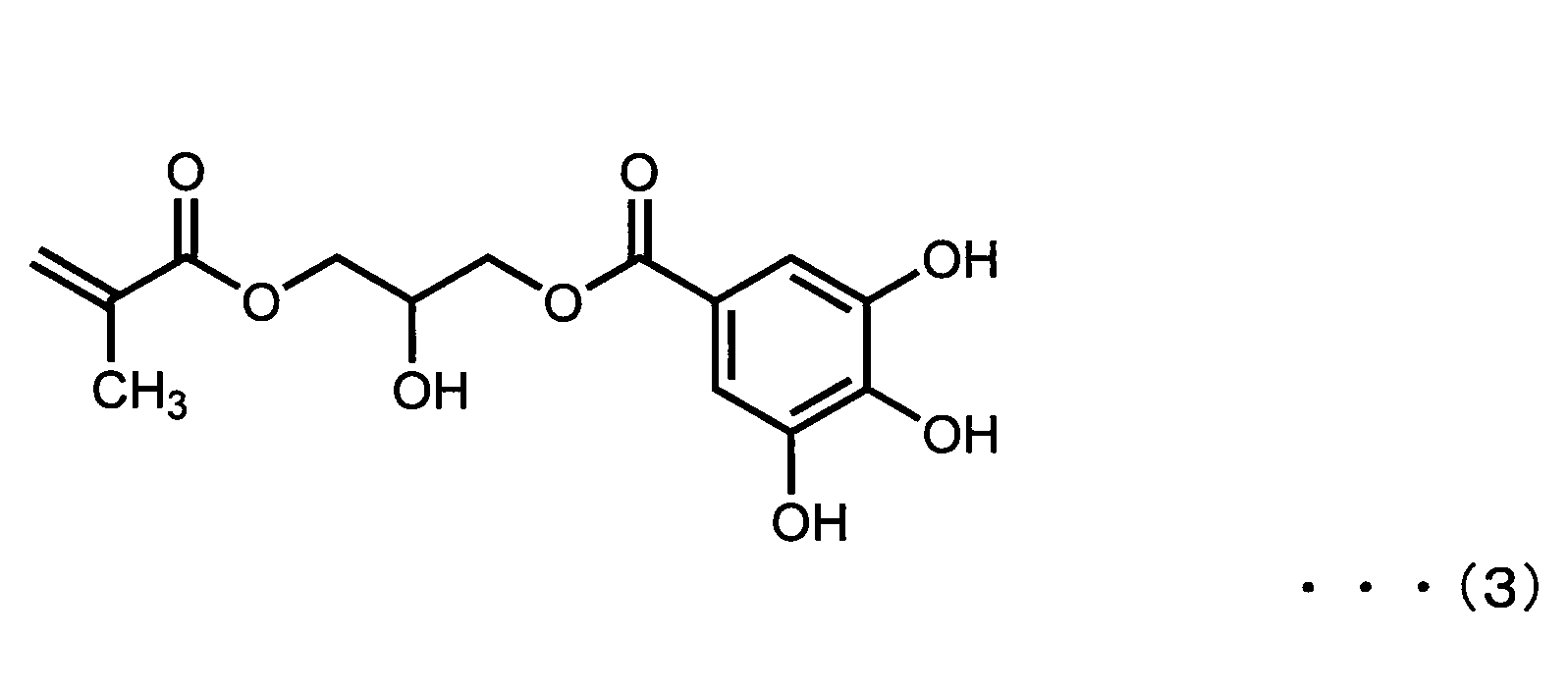
- the monomer (A) can be obtained, for example, by subjecting a compound having three adjacent hydroxy groups and a carboxylic acid on the benzene ring to an addition reaction with a compound having a (meth) acryloyl group and an epoxy group. Examples thereof include monomers having the structure shown in 3).
- Examples of the compound having three adjacent hydroxy groups and a carboxylic acid on the benzene ring include gallic acid and 2,3,4-trihydroxybenzoic acid, and gallic acid is preferable from the viewpoint of availability. ..
- Examples of the compound having a (meth) acryloyl group and an epoxy group include glycidyl (meth) acrylate, and glycidyl methacrylate is preferable from the viewpoint of easiness of synthesizing the monomer (A).
- the reaction can be carried out by a known method by mixing the two and raising the temperature if desired. If necessary, a catalyst may be added.
- the temperature is preferably 50 to 150 ° C, more preferably 70 to 110 ° C. If the temperature is low, the reaction may not proceed sufficiently, while if the temperature is high, gelation may occur.
- a catalyst may be used for the addition reaction, and a known catalyst can be used as the catalyst.
- a tertiary amine, a quaternary ammonium salt, an organic phosphorus, an organic metal catalyst, a metal oxide, and a metal hydroxide can be used. Is preferable, and is preferable to the tertiary amine and the quaternary ammonium salt.
- Examples thereof include triethylamine and tributylamine which are tertiary amines, N, N-dimethylbutylamine, and tetrabutylammonium bromide, tetrabutylammonium chloride, trimethylbenzylammonium chloride and triethylbenzylammonium chloride which are quaternary ammonium salts.
- the amount of the catalyst used is preferably 0.01 to 30% by mass, more preferably 0.1 to 15% by mass, based on the compound having a phenolic hydroxyl group. If the amount of the catalyst used is small, the reaction may not proceed sufficiently, and if the amount of the catalyst used is large, there is a concern of coloring.
- a gas having a polymerization inhibitory effect may be introduced into the reaction system, or a polymerization inhibitor may be added.
- a gas having a polymerization inhibitory effect may be introduced into the reaction system, or a polymerization inhibitor may be added.
- air can be mentioned as the gas
- hydroquinone, methquinone, 2,6-di-t-butylphenol and the like can be mentioned as the polymerization inhibitor.
- the amount of the banning agent used is preferably 0.01 to 3% by mass, more preferably 0.04 to 1% by mass, based on the compound having a (meth) acryloyl group and an epoxy group.
- a gas having a polymerization inhibitory effect When a gas having a polymerization inhibitory effect is introduced into the reaction system, it may be dehydrated with a desiccant such as silica gel.
- a desiccant such as silica gel.
- structural isomers are produced in this reaction, they may be isolated and used, or the isomer mixture may be used as it is.
- the above reaction may be carried out using a solvent, for example, in the presence of acetone, methyl ethyl ketone, ethyl acetate, butyl acetate, toluene, xylene, methanol, ethanol, tetrahydrofuran, dioxane and the like.
- the monomer obtained by the reaction may be used as it is, or may be purified by a known method such as crystallization or crystallization.
- the copolymer in the present invention can be obtained by radical polymerization of a mixture of a plurality of necessary monomers.
- the polymerization can be carried out by a known method.
- solution polymerization, suspension polymerization, emulsion polymerization and the like can be mentioned, but solution polymerization and suspension polymerization are preferable in that the weight average molecular weight of the copolymer can be easily adjusted within the above range.
- a known polymerization initiator can be used.
- di (4-t-butylcyclohexyl) peroxydicarbonate organic peroxides such as 1,1,3,3-tetramethylbutylperoxy-2-ethylhexanoate, 2,2'-azobis.
- examples thereof include an azo-based polymerization initiator such as isobutyronitrile. Only one kind of these polymerization initiators may be used, or two or more kinds thereof may be used in combination. The amount of the polymerization initiator used can be appropriately set according to the combination of the monomers used, the reaction conditions, and the like.
- the entire amount may be charged in a batch, a part may be charged in a batch and the rest may be added dropwise, or the entire amount may be added dropwise. Further, it is preferable to add the polymerization initiator together with the monomer because the reaction can be easily controlled, and further, it is preferable to add the polymerization initiator after dropping the monomer because the residual monomer can be reduced.
- the polymerization solvent used in solution polymerization one in which the monomer and the polymerization initiator are dissolved can be used. Specifically, methanol, ethanol, 2-propanol, acetone, toluene, methyl ethyl ketone, and propylene glycol monomethyl can be used. Ether and the like can be mentioned.
- the concentration of the monomer (total amount) with respect to the polymerization solvent is preferably 10 to 70% by mass, more preferably 10 to 60% by mass, and particularly preferably 20 to 50% by mass. If the concentration of the monomer mixture is too low, the monomer tends to remain, and the molecular weight of the obtained copolymer may decrease. If the concentration of the monomer is too high, it may be difficult to control the heat generation.
- the monomer is added, for example, the entire amount may be charged in a batch, a part may be charged in a batch and the rest may be dropped, or the entire amount may be dropped. From the viewpoint of easy control of heat generation, it is preferable to prepare a part in a batch and drop the rest, or drop the whole amount.
- the polymerization temperature depends on the type of polymerization solvent and the like, and is, for example, 50 ° C to 110 ° C.
- the polymerization time depends on the type of polymerization initiator and the polymerization temperature. For example, when di (4-t-butylcyclohexyl) peroxydicarbonate is used as the polymerization initiator, the polymerization is carried out at a polymerization temperature of 70 ° C. A suitable time is about 6 hours.
- a copolymer according to the resin composition of the present invention can be obtained.
- the obtained copolymer may be used as it is, or the reaction solution after the polymerization reaction may be isolated by filtration or purification.
- the copolymer of the present invention is particularly suitable as a rust preventive coating composition.
- a solvent and, if necessary, other components such as a rust preventive agent and an antioxidant can be blended.
- the solvent examples include hydrocarbon solvents such as toluene and xylene, ester solvents such as ethyl acetate and butyl acetate, alcohol solvents such as methanol, ethanol, isopropyl alcohol, isobutyl alcohol, 1-butanol and diacetone alcohol, and diethyl ether.
- hydrocarbon solvents such as toluene and xylene
- ester solvents such as ethyl acetate and butyl acetate
- alcohol solvents such as methanol, ethanol, isopropyl alcohol, isobutyl alcohol, 1-butanol and diacetone alcohol, and diethyl ether.
- ether solvents such as tetrahydrofuran, glycol ether solvents such as ethylene glycol monobutyl ether, propylene glycol monomethyl ether and propylene glycol monoethyl ether, glycol ethers such as diethylene glycol monoethyl ether acetate, diethylene glycol monobutyl ether acetate and propylene glycol monomethyl ether acetate.
- Examples thereof include acetate solvents, tarpineol solvents such as tarpineol, dihydro tarpineol and dihydro tarpineol acetate, and ketone solvents such as acetone, methyl ethyl ketone and methyl isobutyl ketone, which are used alone or in admixture of two or more. be able to.
- tarpineol solvents such as tarpineol, dihydro tarpineol and dihydro tarpineol acetate
- ketone solvents such as acetone, methyl ethyl ketone and methyl isobutyl ketone
- the content of the copolymer in the rust preventive coating composition is preferably 5 to 80% by weight, more preferably 10 to 50% by weight.
- the dispersion composition of the present invention contains a dispersant, a dispersion, and a solvent.
- the total mass of the dispersant, the dispersion, and the solvent is 100% by mass.
- the content of the dispersant is preferably 0.05 to 20% by mass. If the content of the dispersant is less than 0.05% by mass, sufficient initial dispersibility and dispersion stability may not be obtained, and even if the content exceeds 20% by mass, an effect commensurate with the content can be obtained. It may not be possible.
- the content of the dispersant is preferably 0.1 to 15% by mass, more preferably 0.5 to 10% by mass, from the viewpoint of initial dispersibility and dispersion stability.
- inorganic powders include silicate minerals, other silicic acid compounds, carbonic acid compounds, sulfuric acid compounds, hydroxyl compounds, oxidized compounds, nitrided compounds, carbonized compounds, and titanic acid compounds.
- silicate minerals include silicate minerals, other silicic acid compounds, carbonic acid compounds, sulfuric acid compounds, hydroxyl compounds, oxidized compounds, nitrided compounds, carbonized compounds, and titanic acid compounds.
- Examples of the solvent (organic solvent) that serves as a dispersion medium for dispersing the dispersion in the dispersion composition of the present invention include aromatic hydrocarbon solvents such as toluene and xylene, hydrocarbon solvents such as cyclohexane, acetone, and methyl ethyl ketone.
- Ethylene glycol mono n-butyl ether diethylene glycol monoethyl ether, diethylene glycol mono n-butyl ether, propylene glycol monomethyl ether, propylene glycol monoethyl ether, propylene glycol mono n-propyl ether, propylene glycol mono n-butyl ether, dipropylene glycol monomethyl ether , Dipropylene glycol monoethyl ether, Dipropylene glycol mono n-propyl ether, Dipropylene glycol mono n-butyl ether and other glycol ether solvents, ethylene glycol monoethyl ether acetate, ethylene glycol monoisopropyl acetate, ethylene glycol mono n-butyl ether Acetate, diethylene glycol monoethyl ether acetate, diethylene glycol mono n-butyl ether acetate, propylene glycol monomethyl ether acetate, propylene glyco
- the dispersion composition of the present invention can be produced according to a known method for producing a dispersion composition. For example, a method of adding the dispersion to a solvent in which the dispersion is dissolved and then stirring and mixing at room temperature, a method of adding a solvent and a dispersant to the dispersion, and then stirring and mixing at room temperature, etc. Can be mentioned.
- photopolymerization initiator of the present invention examples include benzophenone, N, N'-tetraalkyl-4,4'-diaminobenzophenone, 2-benzyl-2-dimethylamino-1- (4-morpholinophenyl) -butanone-.
- the content ratio of the photopolymerization initiator is preferably 0.01% by mass to 50% by mass, more preferably 0.1% by mass to 40% by mass, based on the total solid content of the photosensitive resin composition. It is more preferably 0.1% by mass to 30% by mass.
- the polymerizable compound is a compound having at least one polymerizable functional group, and any known compound can be used.
- the polymerizable compound include 2-hydroxyethyl (meth) acrylate, carbitol (meth) acrylate, isobolonyl (meth) acrylate, ethylene glycol di (meth) acrylate, diethylene glycol di (meth) acrylate, and tetraethylene glycol di (meth).
- the content ratio of the polymerizable compound is preferably 3% by mass to 200% by mass, more preferably 5% by mass to 150% by mass, still more preferably, based on the total solid content of the photosensitive resin composition. Is 10% by mass to 100% by mass.
- solvent any known solvent can be used, and two or more kinds may be used in combination.
- Solvents include methyl alcohol, ethyl alcohol, ethyl acetate, butyl acetate, acetone, methyl ethyl ketone, N, N-dimethylformamide, tetrahydrofuran, benzene, toluene, methoxyethoxyethanol, ethoxyethoxyethanol, diethylene glycol ethylmethyl ether, propylene glycol monomethyl ether, Examples thereof include 2-methoxyethyl acetate and propylene glycol monomethyl ether acetate.
- Other components such as a leveling agent can be added to the resist resin composition as long as the effects of the present invention are not impaired.
- Example 1 Isopropanol (manufactured by Kishida Chemical Co., Ltd.) 150 g, monomer (A) 11.0 g, glycerin monomethacrylate (product name: Blemmer GLM) in a 1 L separable flask equipped with a stirrer, thermometer, cooler and nitrogen introduction tube. 4 g of (manufactured by Nichiyu Co., Ltd.) and 85 g of 2-ethylhexyl methacrylate (manufactured by Tokyo Chemical Industry Co., Ltd.) were charged, and the inside of the flask was replaced with nitrogen to create a nitrogen atmosphere.
- Example 2 The copolymer of Example 2 was obtained by the same method as in Example 1 except that the amount of the monomer (A) used was changed to 13 g, the glycerin monomethacrylate was changed to 5 g, and the ethylhexyl methacrylate was changed to 82 g.
- Example 3 The copolymer of Example 3 was obtained in the same manner as in Example 1 except that the amount of the monomer (A) used was 30 g, the amount of glycerin monomethacrylate used was 0 g, and the amount of ethylhexyl methacrylate used was 70 g.
- Example 4 in the same manner as in Example 1 except that the amount of monomer (A) used was 13 g, glycerin monomethacrylate was used in 5 g, and methyl methacrylate (manufactured by Tokyo Chemical Industry Co., Ltd.) was used instead of ethylhexyl methacrylate. Copolymer was obtained.
- Example 6 The copolymer of Example 6 was obtained in the same manner as in Example 1 except that the amount of the monomer (A) used was 5 g and the amount of ethylhexyl methacrylate was 95 g.
- Example 7 The copolymer of Example 7 was obtained by the same method as in Example 1 except that the amount of monomer (A) used was 11 g, the amount of glycerin monomethacrylate used was 4 g, and styrene was 85 g instead of ethylhexyl methacrylate. ..
- Comparative Example 1 A copolymer of Comparative Example 1 was obtained by the same method as in Example 1 except that the amount of the monomer (A) used was 0 g and the amount of ethylhexyl methacrylate used was 100.0 g.
- Comparative Example 2 A copolymer of Comparative Example 2 was obtained by the same method as in Example 4 except that the amount of the monomer (A) used was 0 g, the amount of ethylhexyl methacrylate was 90 g, and the amount of glycerin monomethacrylate was 10 g.
- Copolymer B was obtained in the same manner as in Polymerization Example 1 except that the amount of 2,2'-azobis (2,4-dimethylvaleronitrile) used was changed from 3.0 g to 1.0 g.
- copolymer D was obtained by the same method as in Polymerization Example 1 except that the amount of the monomer (A) used was 50.0 g and the amount of the polypropylene glycol monomethacrylate used was 30.0 g.
- Example 21 350 g of propylene glycol monomethyl ether was placed in a 1 L separable flask equipped with a stirrer, a thermometer, a cooler, a dropping funnel and a nitrogen introduction tube, and the inside of the flask was replaced with nitrogen to create a nitrogen atmosphere.
- Example 22 Comparison was performed in the same manner as in Example 21 except that the monomer solution was changed to 12.9 g of methacrylic acid, 24.9 g of methyl methacrylate and 62.2 g of styrene, and the amount of the initiator solution of the polymerization initiator solution was changed to 3.0 g.
- the resist resin of Example 22 was obtained.
- the resist resin solution was spin-coated on a silicon wafer and dried at 120 ° C. to obtain a resin film having a film thickness of 3 ⁇ m.
- This silicon wafer was immersed in a 1% aqueous sodium hydroxide solution for 30 seconds.
- the silicon wafer after immersion was visually observed to evaluate the presence or absence of residual polymer.
- the case where the resist resin did not remain was evaluated as " ⁇ "
- the case where the resist resin remained was evaluated as "x”.
Landscapes
- Chemical & Material Sciences (AREA)
- Organic Chemistry (AREA)
- Materials Engineering (AREA)
- Engineering & Computer Science (AREA)
- Chemical Kinetics & Catalysis (AREA)
- Polymers & Plastics (AREA)
- Health & Medical Sciences (AREA)
- Medicinal Chemistry (AREA)
- Life Sciences & Earth Sciences (AREA)
- Wood Science & Technology (AREA)
- Mechanical Engineering (AREA)
- Metallurgy (AREA)
- Physics & Mathematics (AREA)
- Spectroscopy & Molecular Physics (AREA)
- General Physics & Mathematics (AREA)
- Addition Polymer Or Copolymer, Post-Treatments, Or Chemical Modifications (AREA)
- Emulsifying, Dispersing, Foam-Producing Or Wetting Agents (AREA)
Abstract
Description
また車載電子機器の増加や海外への輸送の増加により、高温度、高湿度の環境下における密着性も求められるようになっている。
以上のように、過酷な条件下においても優れた防錆効果を示すコーティング材料が求められる。
このため、単独でも金属微粒子とセラミックス微粒子に対して高い分散性や分散安定性を有する分散剤が望まれていた。
また、本発明の課題は、防錆効果に優れたコーティング材料を提供することである。
更に、本発明者は、前記課題を解決すべく検討した結果、ポリマー中に隣接したフェノール性水酸基を含む構造を有する特定構造のモノマーからなるレジスト樹脂が上記課題を解決できることを見出した。
(1) 下記一般式(1)で示されるモノマー(A)のモル比が1~99モル%であり、炭素数1~22の(メタ)アクリル酸アルキルエステル(B)のモル比が1~99モル%であり、共重合可能なその他のモノマー(C)のモル比が0~98モル%であり、重量平均分子量が3,000~1,000,000であることを特徴とする、共重合体。
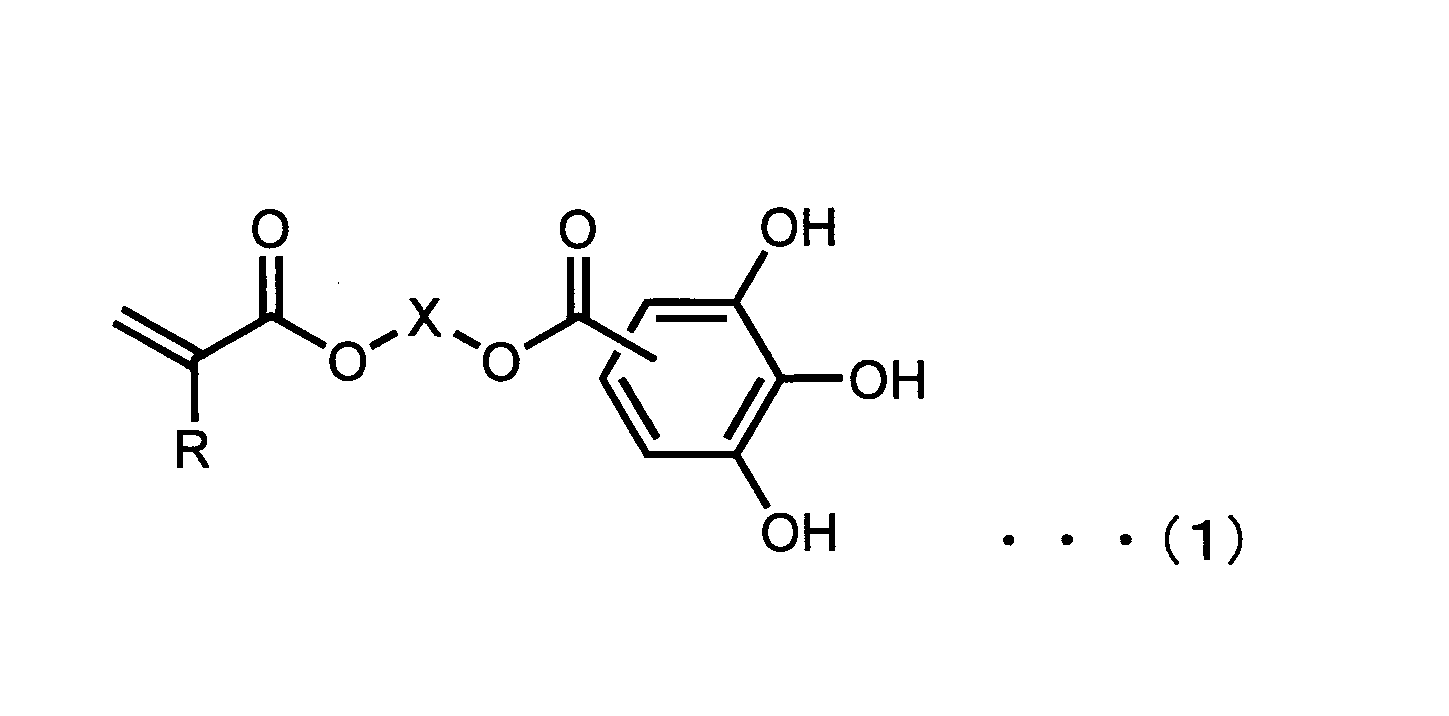
(式(1)において、
Rは水素原子またはメチル基であり,
Xは、炭素数2~5のアルキレン基またはヒドロキシ基を1つ有する炭素数2~5のアルキレン基を示す。)
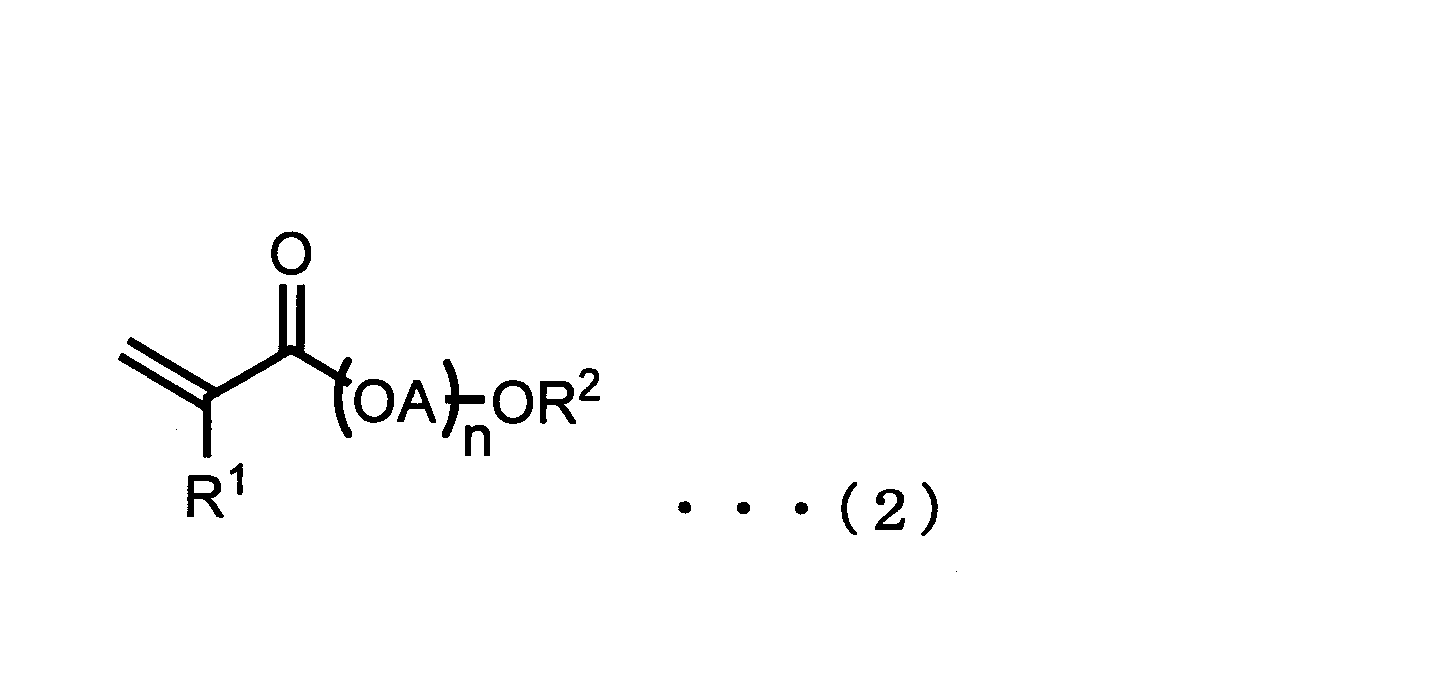
(式(2)において、
R1は水素原子またはメチル基であり、
R2は水素原子または炭素数1~22のアルキル基であり、
OAは炭素数2~4のオキシアルキレン基であり、
nは前記オキシアルキレン基の平均付加モル数であり、1~50である。)
前記モノマー(A)のモル比が1~40モル%であり、前記(メタ)アクリル酸アルキルエステル(B)のモル比が1~94モル%であり、前記その他のモノマー(C)がカルボキシル基を有するモノマー(C1)を少なくとも含んでおり、前記カルボキシル基を有するモノマー(C1)のモル比が5~40モル%であり、前記カルボキシル基を有するモノマー(C1)以外のその他の共重合可能なモノマー(C2)のモル比が0~93モル%であり、重量平均分子量が3,000~100,000であることを特徴とする、レジスト樹脂。
〔モノマー(A)〕
本発明で用いるモノマー(A)は、下記一般式(1)で示される。
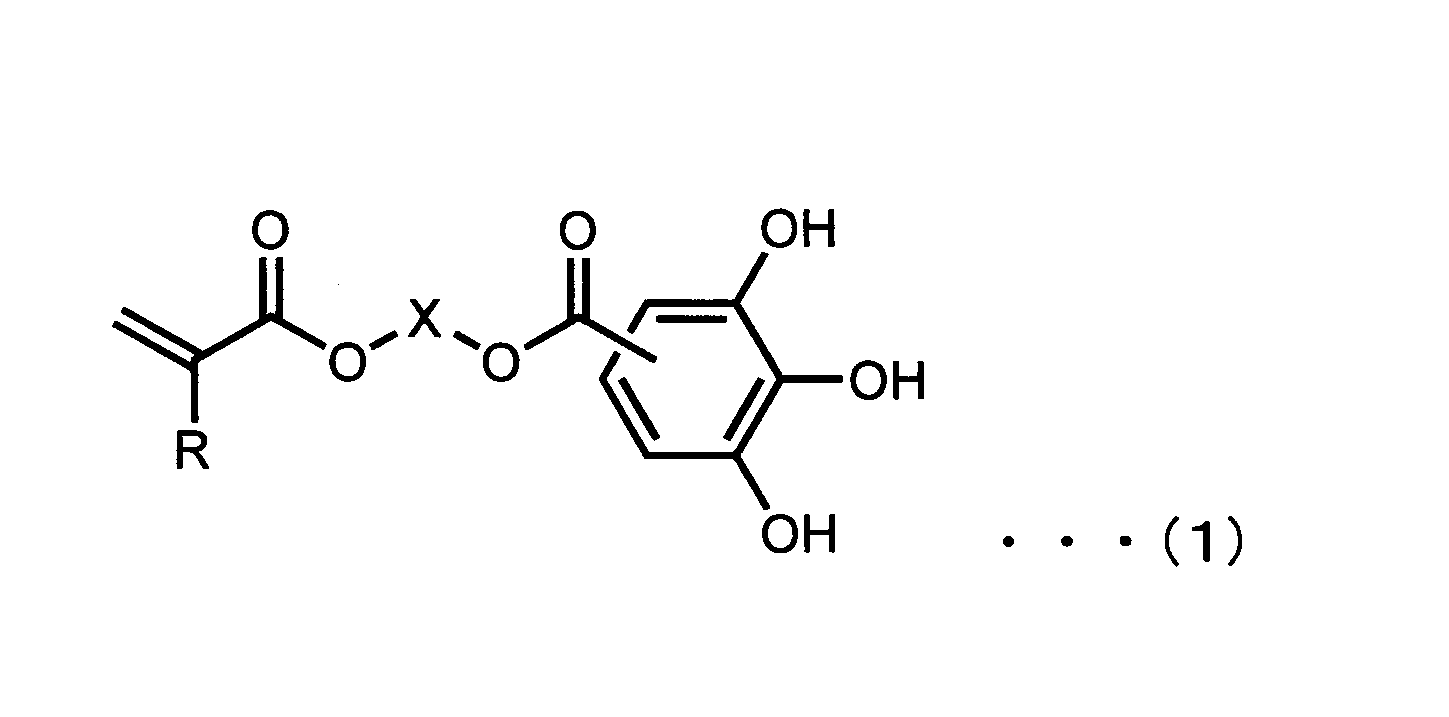
Xは、炭素数2~5のアルキレン基またはヒドロキシル基を1つ有する炭素数2~5のアルキレン基を示す。ヒドロキシル基を1つ有するアルキレン基はアルキレン基の炭素鎖と、この炭素鎖上に1つのヒドロキシ基とを有する。親水性と合成のしやすさの観点から、Xはヒドロキシル基を1つ有するアルキレン基が好ましく、さらにXの炭素数は2~4が好ましく、炭素数3のものが特に好ましい。また、アルキレン基に対するヒドロキシ基の置換位置は、2-位または3-位が好ましく、2-位がさらに好ましい。また、Xの具体例としては、エチレン基、プロピレン基、ブチレン基、ペンチレン基、1-ヒドロキシエチレン基、2-ヒドロキシプロピレン基、2-ヒドロキシブチレン基、3-ヒドロキシブチレン基、2-ヒドロキシペンチレン基、3-ヒドロキシペンチレン基を例示できる。
XOC(O)-のベンゼン環上の置換位置は、ベンゼン環上の4-位または5-位であるが、原料入手の観点から5-位の没食子酸由来の構造が特に好ましい。
モノマー(A)は一種類を単独で用いてもよく、2種類以上を併用してもよい。
モノマー(A)のモル比は、重合の容易さの観点から50モル%以下とすることが好ましく、40モル%以下とすることがさらに好ましく、30モル%以下とすることが特に好ましい。
本発明で用いるモノマー(B)は炭素数1~22の(メタ)アクリル酸アルキルエステルである。
(メタ)アクリル酸アルキルエステルのアルキル鎖長は炭素数1~22であり、分散性や各種溶媒への溶解性の観点から炭素数2~22が好ましく、炭素数4~18がより好ましい。例えば(メタ)アクリル酸エステル単量体としては、例えば(メタ)アクリル酸メチル、(メタ)アクリル酸エチル、(メタ)アクリル酸プロピル、(メタ)アクリル酸ブチル、(メタ)アクリル酸ペンチル、(メタ)アクリル酸ヘキシル、(メタ)アクリル酸シクロヘキシル、(メタ)アクリル酸ヘプチル、(メタ)アクリル酸オクチル、(メタ)アクリル酸-2-エチルヘキシル、(メタ)アクリル酸ノニル、(メタ)アクリル酸デシル、(メタ)アクリル酸ドデシル、(メタ)アクリル酸ステアリル、(メタ)アクリル酸ベヘニルなどが挙げられ、(メタ)アクリル酸ブチル、(メタ)アクリル酸ヘキシル、(メタ)アクリル酸オクチル、(メタ)アクリル酸ステアリルなどの直鎖アルキル基が好ましく、(メタ)アクリル酸ブチルまたは(メタ)アクリル酸ステアリルがより好ましく、(メタ)アクリル酸ブチルが更に好ましい。
(メタ)アクリル酸アルキルエステルの脂環式のアルキル鎖としては、アルキル鎖長は炭素数6~12であり、耐熱性と耐薬品性の観点から炭素数6~10が好ましく、炭素数6がより好ましい。脂環式(メタ)アクリル酸エステル単量体としては、シクロヘキシル(メタ)アクリレート、tert-ブチルシクロヘキシル(メタ)アクリレート、ジシクロペンタニル(メタ)アクリレートなどが挙げられ、シクロヘキシル(メタ)アクリレートが好ましい。
共重合体を構成するモノマー全体を100mol%としたとき、モノマー(B)のモル比は、1モル%以上とする。モノマー(B)のモル比が低すぎると、溶媒への溶解性が低下するおそれがあるので、1モル%以上とするが、10モル%以上が好ましく、20モル%以上が更に好ましい。また、モノマー(B)のモル比は99モル%以下とするが、分散性の観点から70モル%以下が好ましく、30モル%以下が更に好ましい。
分散剤の場合には、共重合体を構成するモノマー全体を100mol%としたとき、モノマー(B)のモル比は、1モル%以上とする。モノマー(B)のモル比が低すぎると、密着性が低下するおそれがあるので、1モル%以上とするが、50モル%以上が好ましく、65モル%以上が更に好ましい。
モノマー(A)およびモノマー(B)と共重合可能なその他のモノマー(C)としては、モノマー(A)およびモノマー(B)と共重合が可能であるモノマーであれば特に限定されるものではなく、1種または2種以上含んでも良いが、(メタ)アクリル酸アルキルエステルを除く(メタ)アクリル酸エステルや芳香族ビニル化合物、アクリルアミド化合物が好ましい。
分散剤の場合には、モノマー(C)のモル比が0~98モル%とするが、分散性や溶媒溶解性の観点から10~70モル%とすることが好ましく、50~70モル%とすることが更に好ましい。
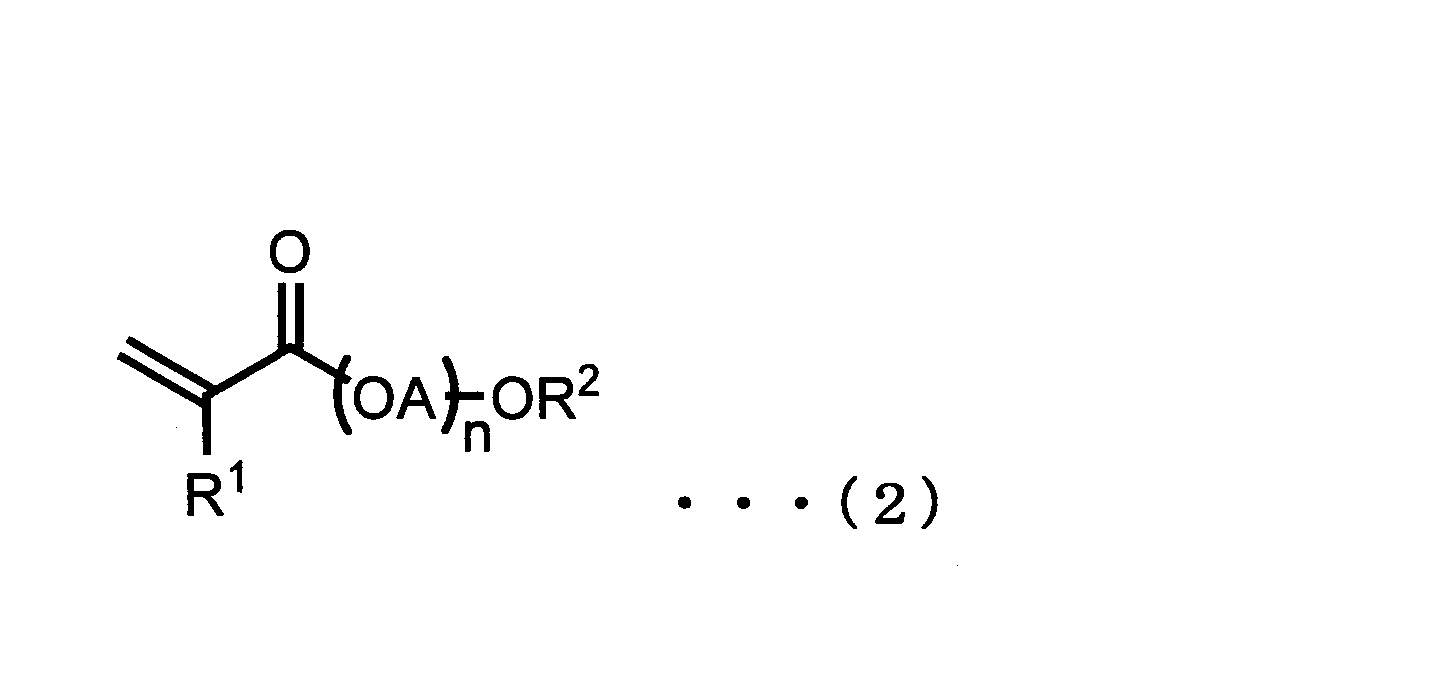
(式(2)において、
R1は水素原子またはメチル基であり、
R2は水素原子または炭素数1~22のアルキル基であり、
OAは炭素数2~4のオキシアルキレン基であり、
nは前記オキシアルキレン基の平均付加モル数であり、1~50である。)
カルボキシル基を有するモノマー(C1)は、カルボキシル基を分子内に一つ以上有するモノマーである。モノマー(C1)のカルボキシル基の数は一つであることがさらに好ましい。モノマー(C1)の具体例としては、アクリル酸、メタクリル酸、クロトン酸、マレイン酸、フマル酸、シトラコン酸、メサコン酸、イタコン酸等が挙げられ、共重合反応性、アルカリ水溶液に対する溶解性及び入手の容易性からアクリル酸、メタクリル酸が好ましい。モノマー(C1)は、一種類を単独で用いてもよく、2種類以上を併用してもよい。
その他の共重合可能なモノマー(C2)としては、モノマー(A)(B)(C1)と共重合が可能であるモノマーであれば特に限定されるものではなく、1種または2種以上含んでも良いが、(メタ)アクリル酸アルキルエステルを除く(メタ)アクリル酸エステルや芳香族ビニル化合物が好ましい。
本発明の共重合体の重量平均分子量は、ゲルパーミエーションクロマトグラフィー(GPC)を用いてポリスチレン換算で求めることができ、好ましくは10,000~500、000、より好ましくは20,000~100,000である。共重合体の重量平均分子量が低すぎると、コーティング膜が脆くなり、防錆効果が低下し、重量平均分子量が高すぎると、溶媒溶解性や増粘による塗工性の低下が生じるおそれがある。
本発明の分散剤を構成する共重合体の重量平均分子量は、ゲルパーミエーションクロマトグラフィー(GPC)を用いてポリスチレン換算で求めることができ、好ましくは3,000~800,000、より好ましくは5,000~50,000、更に好ましくは10,000~30,000である。共重合体の重量平均分子量が低すぎたり高すぎたりすると、分散性が低下するおそれがある。
レジスト樹脂の重量平均分子量は、ゲルパーミエーションクロマトグラフィー(GPC)を用いてポリスチレン換算で求めることができ、3,000~100,000であり、好ましくは4,000~50,000、より好ましくは5,000~30,000である。レジスト樹脂の重量平均分子量が低すぎると、密着性が不足し、重量平均分子量が高すぎると、現像性などレジスト特性が悪化するおそれがある。
重合体を構成するモノマー(A)、(B)、(C1)、および(C2)の合計量を100モル%としたとき、モノマー(A)の含有割合は、1~40モル%とするが、好ましくは3~30モル%、より好ましくは5~30モル%であり、特に好ましくは5~20モル%である。
重合体を構成するモノマー(A)、(B)(C1)および(C2)の合計量を100モル%としたとき、モノマー(C1)の含有割合は、5~40モル%とするが、好ましくは7~30モル%、より好ましくは10~20モル%である。
本発明のモノマー(A)は、ベンゼン環上に3つの隣接したヒドロキシ基を有するモノマーである。
上記モノマー(A)は例えば、ベンゼン環上に3つの隣接したヒドロキシ基とカルボン酸を有する化合物と(メタ)アクリロイル基とエポキシ基を有する化合物を付加反応させることにより得ることができ、下記式(3)に示す構造のモノマーが挙げられる。
前記反応の条件としては、温度は50~150℃が好ましく、70~110℃がさらに好ましい。温度が低いと、反応が充分進行しないことがあり、一方、温度が高いとゲル化するおそれがある。
前記反応で得られたモノマーをそのまま使用しても良く、結晶化、晶析等の公知の方法で精製してもよい。
次に、本発明の共重合体を製造する方法について説明する。
本発明における共重合体は、必要な複数種のモノマーの混合物をラジカル重合させることにより得ることができる。重合は公知の方法で行うことができる。例えば、溶液重合、懸濁重合、乳化重合などが挙げられるが、共重合体の重量平均分子量を上記範囲内に調整しやすいという面で、溶液重合や懸濁重合が好ましい。
重合開始剤の使用量は、用いるモノマーの組み合わせや、反応条件などに応じて適宜設定することができる。
モノマーを投入するに際しては、例えば、全量を一括仕込みしても良いし、一部を一括仕込みして残りを滴下しても良いし、あるいは全量を滴下しても良い。発熱の制御しやすさから、一部を一括仕込みして残りを滴下するか、または全量を滴下するのが好ましい。
本発明の共重合体は、防錆コーティング組成物として特に好適である。防錆コーティングの組成物としては本発明の共重合体の他に溶媒や必要に応じて防錆剤、酸化防止剤などのその他の成分を配合することができる。
本発明の分散体組成物は、分散剤、分散体、および溶媒を含有する。
ここで、分散剤、分散体および溶媒の合計質量を100質量%とする。この場合、分散剤の含有量は、0.05~20質量%が好ましい。分散剤の含有量が0.05質量%未満であると、十分な初期分散性および分散安定性が得られないおそれがあり、含有量が20質量%を超えても含有量に見合う効果が得られないおそれがある。分散剤の含有量は、初期分散性および分散安定性の観点から、好ましくは0.1~15質量%であり、さらに好ましくは0.5~10質量%である。
有機粉体としては、例えば、アゾ系、ジアゾ系、縮合アゾ系、チオインジゴ系、インダスロン系、キナクリドン系、アントラキノン系、ベンゾイミダゾロン系、ペニレン系、フタロシアニン系、アントラピリジン系、およびジオキサジン系などの有機顔料が挙げられる。
溶剤の含有量は、分散体組成物中、通常5~50質量%であり、好ましくは10~40質量%、さらに好ましくは10~30質量%である。
本発明のレジスト樹脂は光重合開始剤、重合性化合物、溶剤からなるレジスト樹脂組成物として使用しても良い。
光重合開始剤は、光照射により重合性化合物の重合反応の起点となる化合物であり、公知のいかなる光重合開始剤も使用することができる。波長については特に限定されるものではないが、波長に適した開始剤種を選択し使用することができる。本発明における光重合開始剤は単独で又は2種以上を組み合わせて使用することができる。
光重合開始剤の含有割合としては、感光性樹脂組成物の全固形分に対して、0.01質量%~50質量%とすることが好ましく、より好ましくは0.1質量%~40質量%であり、さらに好ましくは0.1質量%~30質量%である。
重合性化合物としては例えば、2-ヒドロキシエチル(メタ)アクリレート、カルビトール(メタ)アクリレート、イソボロニル(メタ)アクリレート、エチレングリコールジ(メタ)アクリレート、ジエチレングリコールジ(メタ)アクリレート、テトラエチレングリコールジ(メタ)アクリレート、プロピレングリコールジ(メタ)アクリレート、ポリプロピレングリコールジ(メタ)アクリレート、ブチレングリコールジ(メタ)アクリレート、ネオペンチルグリコールジ(メタ)アクリレート、1,6-ヘキサングリコールジ(メタ)アクリレート、トリメチロールプロパントリ(メタ)アクリレート、グリセリンジ(メタ)アクリレート、ペンタエリスリトールトリアクリレート、ペンタエリスリトールテトラアクリレート、ジペンタエリスリトールペンタアクリレート、ジペンタエリスリトールヘキサアクリレート、ペンタエリスリトールジ(メタ)アクリレート、ペンタエリスリトールトリ(メタ)アクリレート、ペンタエリスリトールテトラ(メタ)アクリレート、ジペンタエリスリトールペンタ(メタ)アクリレート、ジペンタエリスリトールヘキサ(メタ)アクリレート等が挙げられ、2個以上の重合性官能基を有する化合物が好ましく、2種以上を併用してもよい。
レジスト樹脂組成物には、本発明の効果を損なわない限り、レベリング剤等その他成分を添加することができる。
(モノマーの合成)
撹拌機、温度計、冷却器、滴下ロートを取り付けた1Lフラスコにエタノール(キシダ化学(株)製)、没食子酸一水和物(東京化成工業(株)製)50.0g、トリエチルアミン2.4gを仕込み、メタクリル酸グリシジル(製品名:ブレンマーGH(日油(株)製))51.3gを滴下ロートから30分で滴下し、80℃で10時間反応させた。反応液に酢酸ブチル(キシダ化学(株)製)100gを加え、0.1M炭酸水素ナトリウム水溶液、飽和食塩水で順次洗浄した。洗浄後の酢酸ブチル層を濃縮し、下記式(3)に示す構造のモノマーを得た。
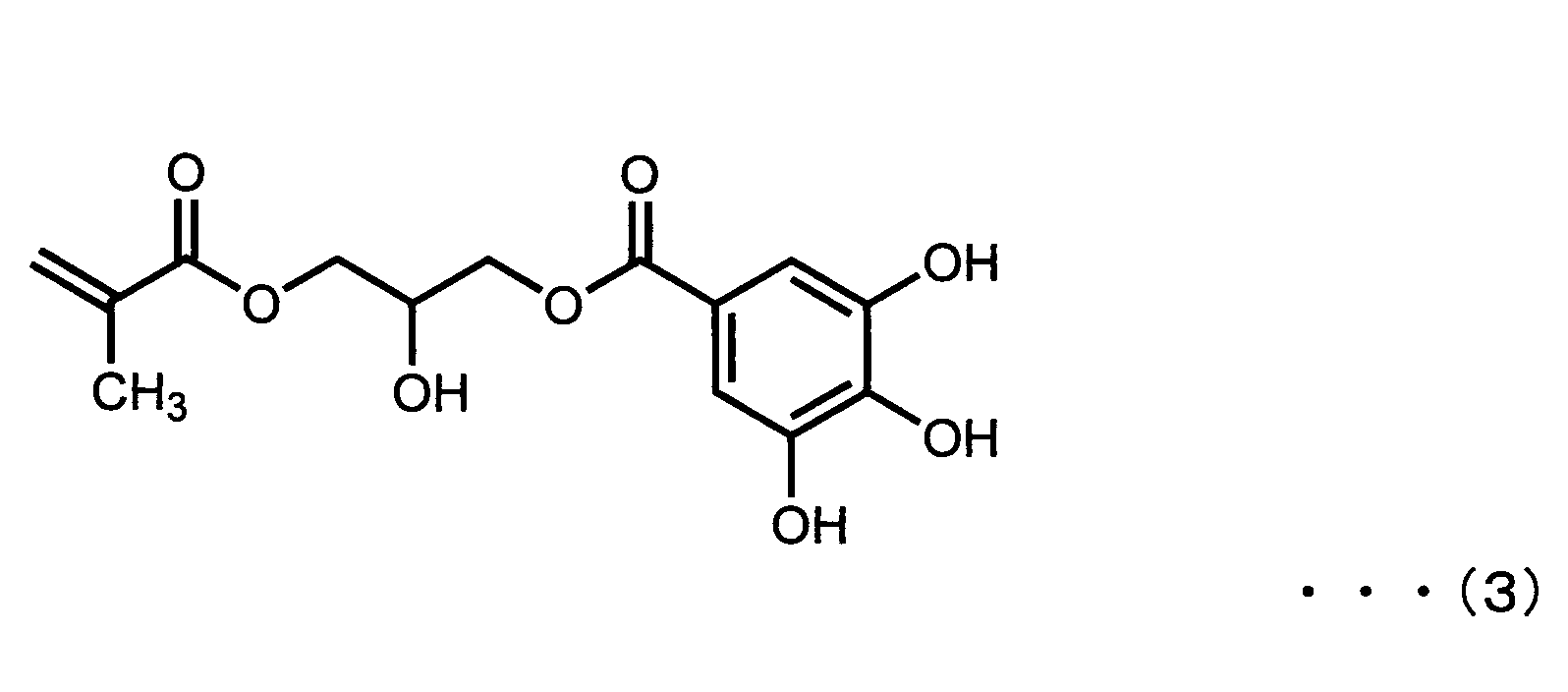
撹拌機、温度計、冷却器及び窒素導入管を取り付けた1Lセパラブルフラスコに、イソプロパノール(キシダ化学(株)製)150g、モノマー(A)11.0g、グリセリンモノメタクリレート(製品名:ブレンマーGLM(日油(株)製))4g、2-エチルヘキシルメタクリレート(東京化成工業(株)製)85gを仕込み、フラスコ内を窒素置換して、窒素雰囲気下にした。その後2,2‘-アゾビス(2,4-ジメチルバレロニトリル)(製品名:V-65(和光純薬工業(株)製))0.5gを加え、75℃まで昇温し、3時間反応させ共重合体Aのイソプロパノール溶液を得た。ついで、60℃減圧下で180分かけ脱溶剤し、実施例1の共重合体を得た。
モノマー(A)の使用量を13g、グリセリンモノメタクリレートを5g、エチルヘキシルメタクリレートを82gに変更したこと以外は実施例1と同様の手法で、実施例2の共重合体を得た。
モノマー(A)の使用量を30g、グリセリンモノメタクリレートを0g、エチルヘキシルメタクリレート70g使用したこと以外は実施例1と同様の手法で、実施例3の共重合体を得た。
モノマー(A)の使用量を13g、グリセリンモノメタクリレートを5g、エチルヘキシルメタクリレートではなくメチルメタクリレート(東京化成工業(株)製)を82g使用したこと以外は実施例1と同様の手法で、実施例4の共重合体を得た。
2,2‘-アゾビス(2,4-ジメチルバレロニトリル)の使用量を0.5gから0.1gに変更したこと以外は実施例1と同様の手法で、実施例5の共重合体を得た。
モノマー(A)の使用量を5g、エチルヘキシルメタクリレートを95gとしたこと以外は実施例1と同様の手法で、実施例6の共重合体を得た。
モノマー(A)の使用量を11g、グリセリンモノメタクリレートの使用量を4g、エチルヘキシルメタクリレートではなくスチレンを85gとしたこと以外は実施例1と同様の手法で、実施例7の共重合体を得た。
モノマー(A)の使用量を0g、エチルヘキシルメタクリレートの使用量を100.0gとしたこと以外は実施例1と同様の手法で、比較例1の共重合体を得た。
モノマー(A)の使用量を0g、エチルヘキシルメタクリレートを90g、グリセリンモノメタクリレートを10gとしたこと以外は実施例4と同様の手法で、比較例2の共重合体を得た。
ガラス基板(26mm×76mm)をエタノール、ヘキサン、アセトンで洗浄し、テトラヒドロフラン(THF)に溶かした各種共重合体溶液を1.2mg/cm2になるように塗布し、室温で12時間乾燥させた。試験はクロスカット法(JIS-K5600-5-6付着性、1mm間隔)で行った。
評価基準
◎: 剥がれなし
〇: 4マス以下の剥がれあり
×: 5マス以上の剥がれあり
スチール基板(SPCC-SD 1mm×25mm×100mm)に溶かした共重合体を0.8mg/cm2になるように塗布し、室温で12時間乾燥させ、サンプル片を作成した。サンプル片を3.5%NaCl水溶液に浸漬し錆の有無と塗膜の変化を目視で確認した。
評価基準
◎: 錆が生じていない
〇: 錆の生じた面積が全体の10%未満
×: 錆が生じた面積が全体の10%以上
スチール基板(SPCC-SD 1mm×25mm×100mm)に溶かした共重合体を0.8mg/cm2になるように塗布し、室温で12時間乾燥させサンプル片を作成した。作成した塗膜を目視で観察し、表面の欠陥の有無で平滑性を評価した。
評価基準
◎: 欠陥が見られない
〇: わずかに欠陥が見られる
×: 明確な欠陥が見られる

一方、比較例1においては、モノマー(A)を共重合体に含有させていないが、密着性および防錆性が低かった。また、比較例2においては、モノマー(A)を重合体に含有させていないが、防錆性および平滑性が低かった。
(モノマーの合成)
撹拌機、温度計、冷却器、滴下ロートを取り付けた1Lフラスコにエタノール(キシダ化学(株)製)、没食子酸一水和物(東京化成工業(株)製)50.0g、トリエチルアミン2.4gを仕込み、メタクリル酸グリシジル(製品名:ブレンマーGH(日油(株)製))51.3gを滴下ロートから30分で滴下し、80℃で10時間反応させた。反応液に酢酸ブチル(キシダ化学(株)製)100gを加え、0.1M炭酸水素ナトリウム水溶液、飽和食塩水で順次洗浄した。洗浄後の酢酸ブチル層を濃縮し、下記式(3)に示す構造を主成分とするモノマーを得た。
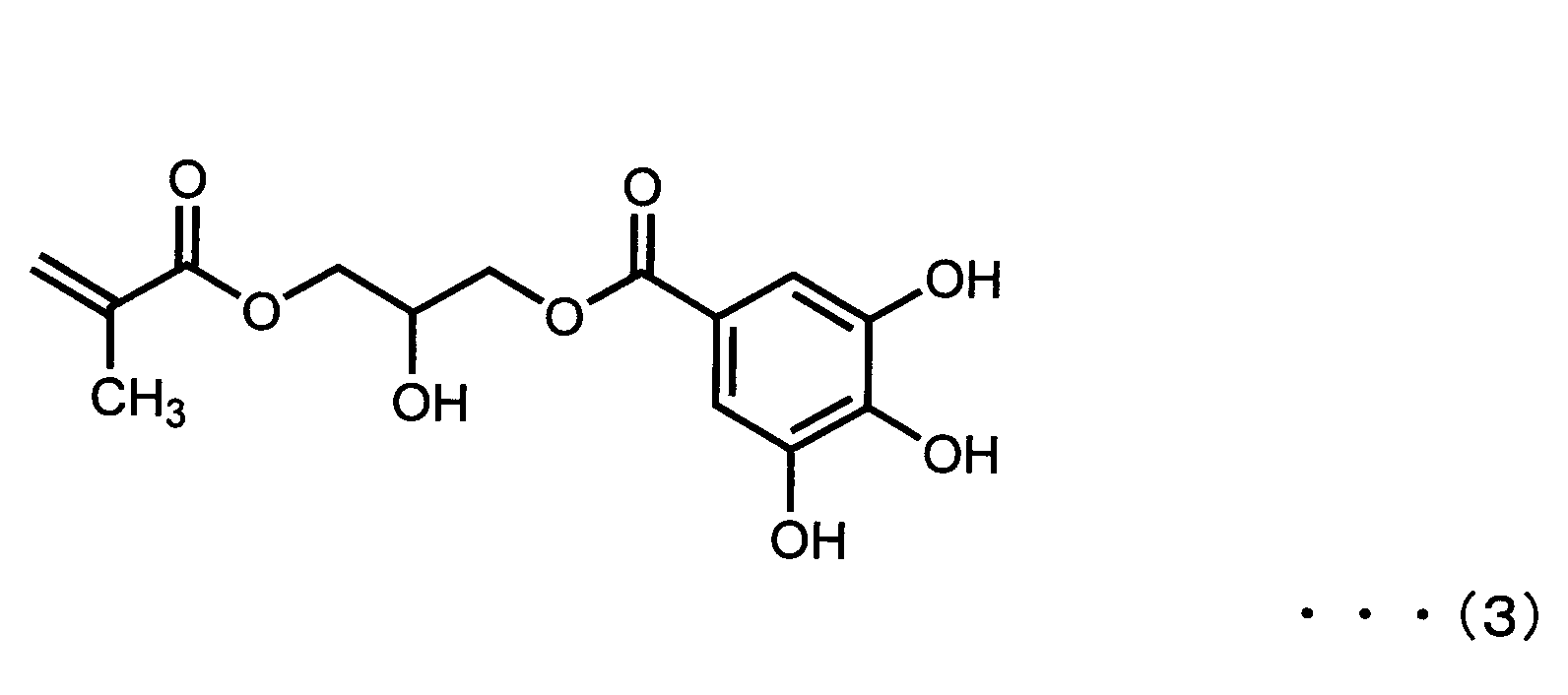
撹拌機、温度計、冷却器及び窒素導入管を取り付けた1Lセパラブルフラスコに、イソプロパノール(キシダ化学(株)製)400g、モノマー(A)10.0g、ブチルメタクリレート(東京化成工業(株)製)20.0g、ポリプロピレングリコールモノメタクリレート(ブレンマーPP-800、日油(株)製)70.0gを仕込み、フラスコ内を窒素置換して、窒素雰囲気下にした。その後2,2‘-アゾビス(2,4-ジメチルバレロニトリル)(製品名:V-65(和光純薬工業(株)製))3.0gを加え、75℃まで昇温し、3時間反応させ共重合体Aのイソプロパノール溶液を得た。ついで、60℃減圧下で180分かけ脱溶剤し、共重合体Aを得た。
2,2‘-アゾビス(2,4-ジメチルバレロニトリル)の使用量を3.0gから1.0gに変更したこと以外は重合例1と同様の手法で共重合体Bを得た。
モノマー(A)の使用量を20.0g、ポリプロピレングリコールモノメタクリレートの使用量を60.0gとしたこと以外は重合例1と同様の手法で共重合体Cを得た。
モノマー(A)の使用量を50.0g、ポリプロピレングリコールモノメタクリレートの使用量を30.0gとしたこと以外は重合例1と同様の手法で共重合体Dを得た。
ポリプロピレングリコールモノメタクリレートではなくメトキシポリエチレングリコールモノメタクリレート(ブレンマーPME-400、日油(株)製)を使用したことしたこと以外は重合例1と同様の手法で共重合体Eを得た。
ポリプロピレングリコールモノメタクリレートではなくステアリルメタクリレート(ブレンマーSMA、日油(株)製)を使用したことしたこと以外は重合例1と同様の手法で共重合体Fを得た。
モノマー(A)の使用量を0g、ポリプロピレングリコールモノメタクリレートを100.0g使用したことしたこと以外は重合例1と同様の手法で共重合体Gを得た。
モノマー(A)の使用量を0g、メトキシポリエチレングリコールモノメタクリレートの使用量を100.0gとしたこと以外は重合例1と同様の手法で共重合体Hを得た。
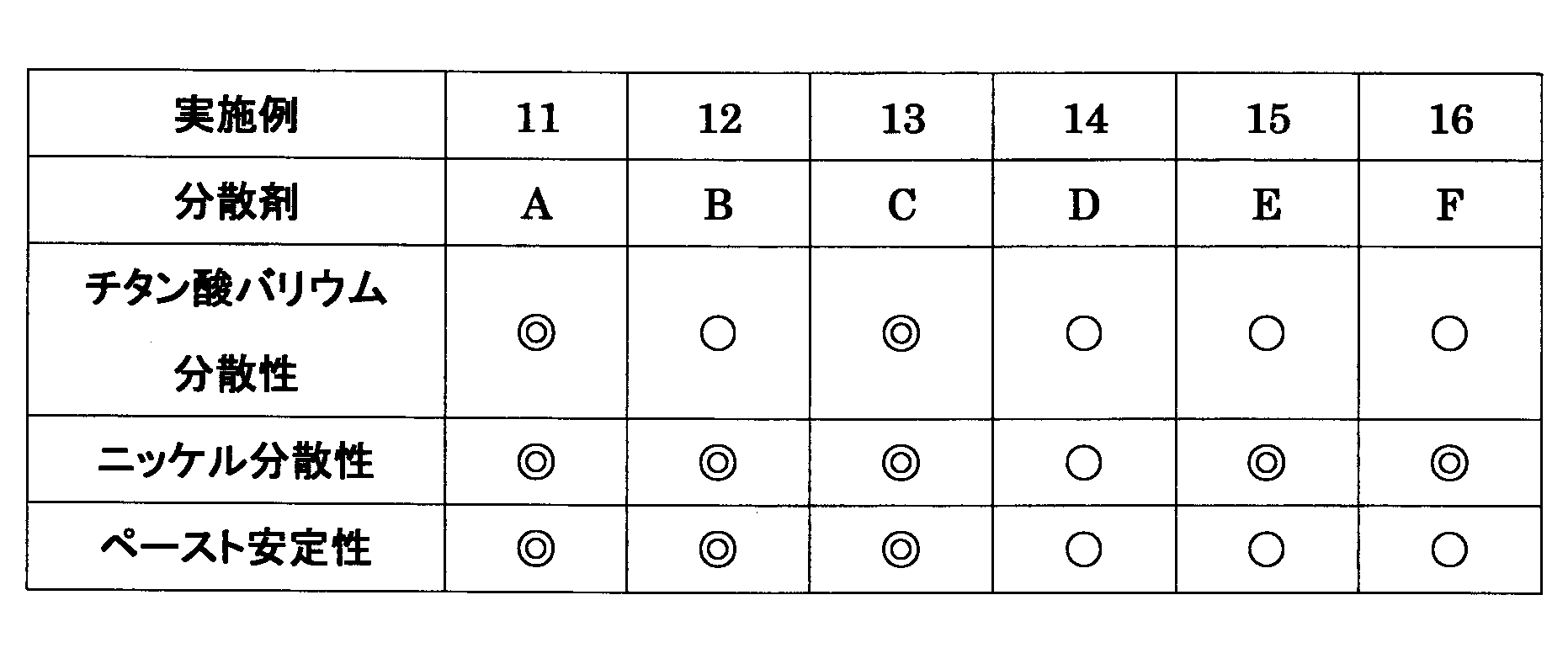
50mLスクリュー管に、チタン酸バリウム粉体(平均粒径:0.1μm、SEMを用いた電子顕微鏡法により測定)20.0g、トルエン/エタノール混合溶媒(3/7、質量比)5.0g、および分散剤0.4gを秤量し、自転公転型ミキサーで5分間攪拌し、予備分散を行った。その後、1.0mmのジルコニアビーズを用いてビーズミルで3 時間分散することにより、スラリー状の分散体組成物を得た。
各分散体組成物について、動的粘弾性装置(Paar Physica MCR-302、Anton Paar社製)を用いて、温度25℃、せん断速度が0.1~100(1/s)に対するせん断粘度を測定した。
◎: 3s-1での粘度が10Pa・s以下
〇: 3s-1での粘度が500Pa・s未満
×: 3s-1での粘度が500Pa・s以上
50mLスクリュー管に、ニッケル粉体(平均粒径:0.1μm、SEMを用いた電子顕微鏡法により測定)20.0g、ジヒドロターピネオール5.0g、および分散剤0.2gを秤量し、自転公転型ミキサーで5分間攪拌し、スラリー状の分散体組成物を得た。
各分散体組成物について、動的粘弾性装置(Paar Physica MCR-302、Anton Paar社製)を用いて、温度25℃、せん断速度が0.1~100(1/s)に対するせん断粘度を測定した。
◎: 3s-1での粘度が10Pa・s以下
〇: 3s-1での粘度が50Pa・s未満
×: 3s-1での粘度が50Pa・s以上
Ni粉(JFEミネラル製:NFP201S)100重量部に対して、チタン酸バリウム10重量部、分散剤を1重量部、エチルセルロース(Dow製、STD100)を3重量部、ジヒドロターピネオールを90重量部加える。これらの混合物を遊星式混練機を使用し攪拌後、3本ロールにて混練しNiペーストを得た。得られたペーストを25℃で保管し、ペーストの沈降、分離の有無を目視にて確認した。
◎: 28日まで沈降やチタン酸バリウムの分離が見られない
〇: 7日以上で沈降やチタン酸バリウムの分離が見られない
×: 7日以内で沈降やチタン酸バリウムの分離が見られる

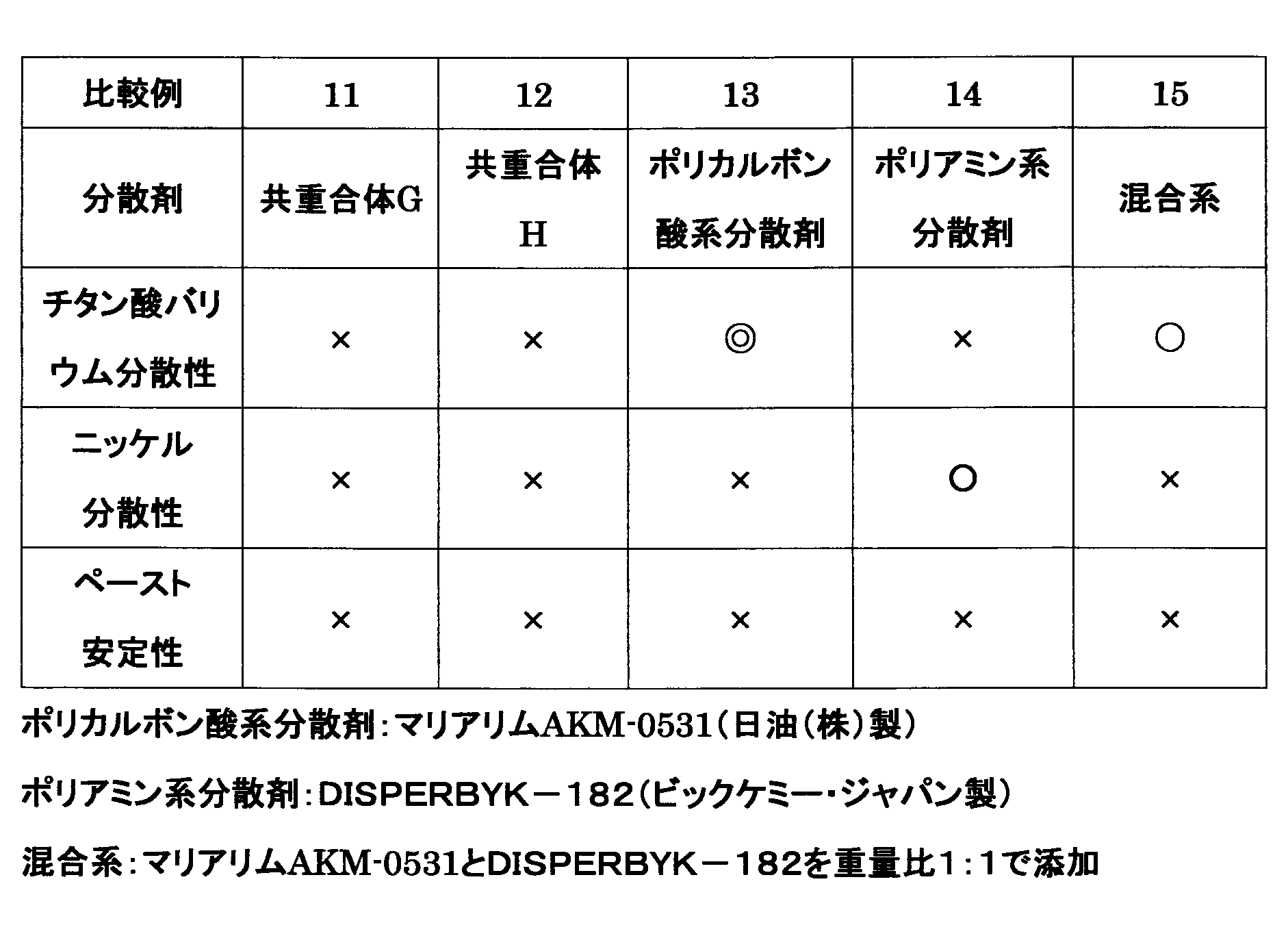
比較例13の重合体では、ポリカルボン酸系重合体を用いているが、ニッケル分散性およびペースト安定性がいずれも低かった。
比較例14の重合体では、ポリアミン系重合体を用いているが、チタン酸バリウム分散性およびペースト安定性がいずれも低かった。
比較例15の重合体では、ポリカルボン酸系重合体とポリアミン系重合体を併用しているが、ニッケル分散性およびペースト安定性がいずれも低かった。
(モノマーA1の合成)
撹拌機、温度計、冷却器、滴下ロートを取り付けた1Lフラスコにエタノール(キシダ化学(株)製)、没食子酸一水和物(東京化成工業(株)製)50.0g、トリエチルアミン2.4gを仕込み、メタクリル酸グリシジル(製品名:ブレンマーGH(日油(株)製))51.3gを滴下ロートから30分で滴下し、80℃で10時間反応させた。反応液に酢酸ブチル(キシダ化学(株)製)100gを加え、0.1M炭酸水素ナトリウム水溶液、飽和食塩水で順次洗浄した。洗浄後の酢酸ブチル層を濃縮し下記式(3)に示す構造のモノマーA1を得た。

撹拌機、温度計、冷却器、滴下ロート及び窒素導入管を取り付けた1Lセパラブルフラスコに、プロピレングリコールモノメチルエーテル350gを仕込み、フラスコ内を窒素置換して、窒素雰囲気下にした。モノマーA1を18.3g、メタクリル酸(株式会社クラレ製「MAAモノマー」)7.6g、およびメタクリル酸シクロヘキシル(日油株式会社製「ブレンマーCHMA」)74.1gを混合したモノマー溶液、及びプロピレングリコールモノメチルエーテル50gと2,2‘-アゾビス(2,4-ジメチルバレロニトリル)(製品名:V-65(和光純薬工業(株)製))6.3gを混合した重合開始剤溶液をそれぞれ調製した。
モノマー溶液をモノマーA1 26.7g、アクリル酸(日本触媒株式会社製「アクリル酸」)12.3g、メタクリル酸メチル(株式会社クラレ製「MMAモノマー」) 34.2g、スチレン(NSスチレンモノマー株式会社製「NSスチレン」) 26.6gに変更したこと以外は実施例21と同様の手法で、実施例22のレジスト樹脂を得た。
モノマー溶液をモノマーA1 47.0g、メタクリル酸 6.5g、メタクリル酸シクロヘキシル 46.5gに変更したこと以外は実施例21と同様の手法で、実施例23のレジスト樹脂を得た。
モノマー溶液をモノマーA1 5.8g、メタクリル酸 8.1g、メタクリル酸シクロヘキシル 86.1gに、重合開始剤溶液の開始剤量を3.0gに変更したこと以外は実施例21と同様の手法で、実施例24のレジスト樹脂を得た。
モノマー溶液をアクリル酸 5.8g、メタクリル酸メチル 40.2g、メタクリル酸シクロヘキシル 54.0gに、重合開始剤溶液の開始剤量を3.0gに変更したこと以外は実施例21と同様の手法で、比較例21のレジスト樹脂を得た。
モノマー溶液をメタクリル酸 12.9g、メタクリル酸メチル 24.9g、スチレン 62.2gに、重合開始剤溶液の開始剤量を3.0gに変更したこと以外は実施例21と同様の手法で、比較例22のレジスト樹脂を得た。
ゲルパーミエーションクロマトグラフィー(GPC)を用いて以下の条件により、重量平均分子量(Mw)を求めた。
装置: 東ソー(株)社製、HLC-8220
カラム: shodex社製、LF-804
標準物質: ポリスチレン
溶離液: THF(テトラヒドロフラン)
流量: 1.0ml/min
カラム温度: 40℃
検出器: RI(示差屈折率検出器)
レジスト樹脂溶液をシリコンウエハにスピンコートし、120℃で乾燥させ、膜厚3μmの樹脂膜を得た。このシリコンウエハを1%水酸化ナトリウム水溶液に30秒間浸漬した。浸漬後のシリコンウエハを目視にて観察し、重合体の残存の有無を評価した。レジスト樹脂が残存していない場合を「○」、残存している場合を「×」とした。
レジスト樹脂溶液をアルカリガラスにバーコーターで塗布し、120℃で5分乾燥させ、膜厚5μmの樹脂膜を得た。この膜に100マスの切り込みを入れ、セロテープ(登録商標)(ニチバン製)を貼り付け、セロテープ(登録商標)を剥離し、残存したマス数および外観で密着性を評価した。
剥離したマスが無く角の欠けも無いものを「〇」、剥離したマスは無いが角が欠けているマスがあるものを「△」、剥離したマスがあるものを「×」とした。また剥離したマスの個数を数え、剥離マス数/全マス数で評価した。
レジスト樹脂溶液10gにプロピレングリコールモノメチルエーテル10gを混合した希釈溶液をアルカリガラスにバーコーターで塗布し、120℃で5分乾燥させ、膜厚5μmの樹脂膜を得た。この膜を温度100℃、湿度100%に設定した恒温恒湿機((株)平山製作所製 HASTEST PC-242HSR2)に入れ、2時間静置した。高温高湿度処理後の膜の外観を目視で評価した。
レジスト樹脂溶液10gにプロピレングリコールモノメチルエーテル10gを混合した希釈溶液をアルカリガラスにバーコーターで塗布し、120℃で5分乾燥させ、膜厚5μmの樹脂膜を得た。この膜を温度100℃、湿度100%に設定した恒温恒湿機((株)平山製作所製 HASTEST PC-242HSR2)に入れ、3時間静置した。高温高湿度処理後の膜に100マスの切り込みを入れ、セロテープ(ニチバン製)を貼り付け、セロテープを剥離し、マス数および外観で密着性を評価した。
剥離したマスが無く角の欠けも無いものを「◎」、剥離したマスは無いが角が欠けているマスがあるものを「〇」、剥離したマスがあるものを「×」とした。また剥離したマスの個数を数え、剥離マス数/全マス数で評価した。
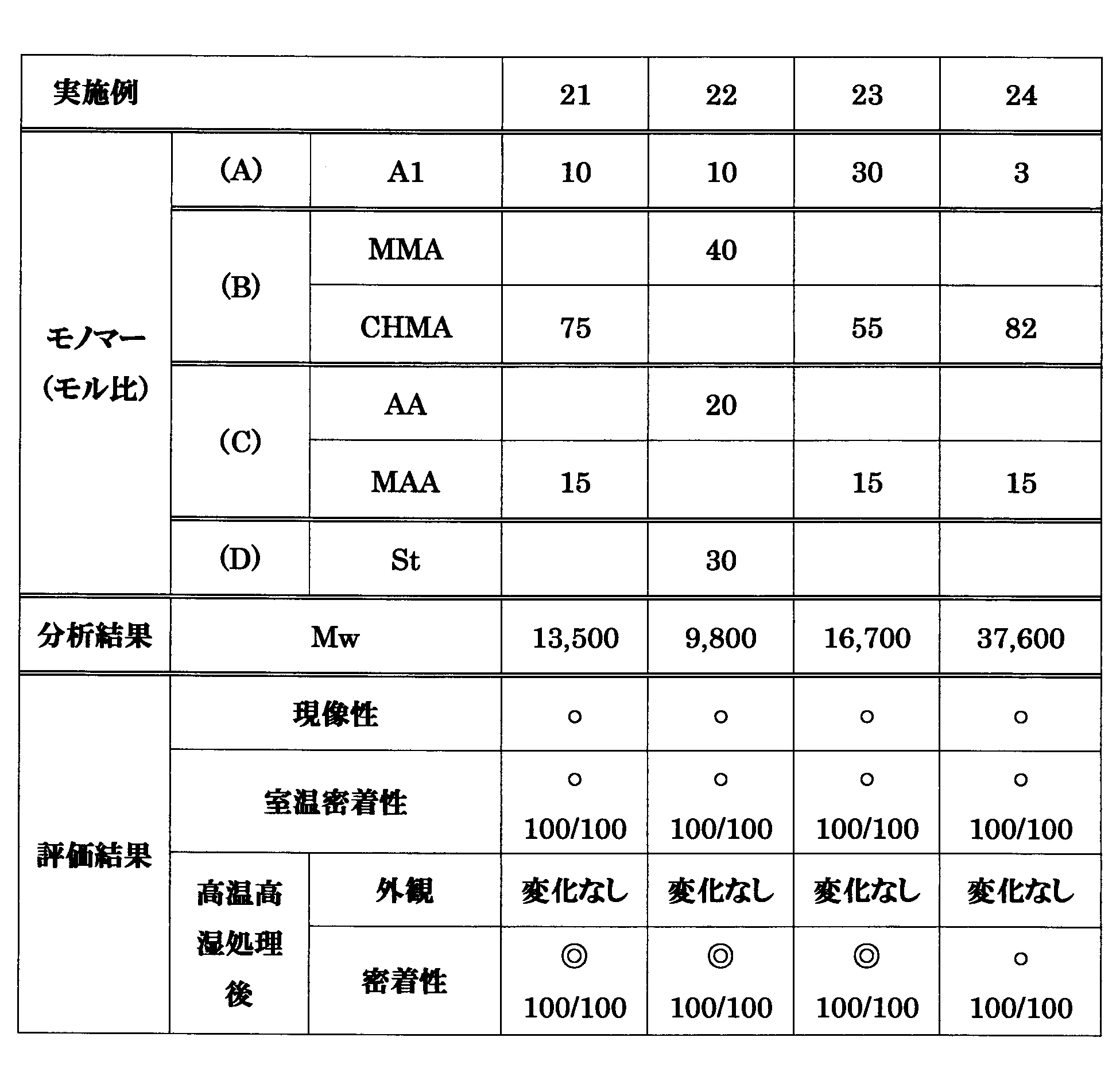
MMA: メタクリル酸メチル
CHMA: メタクリル酸シクロヘキシル
AA: アクリル酸
MAA: メタクリル酸
St: スチレン
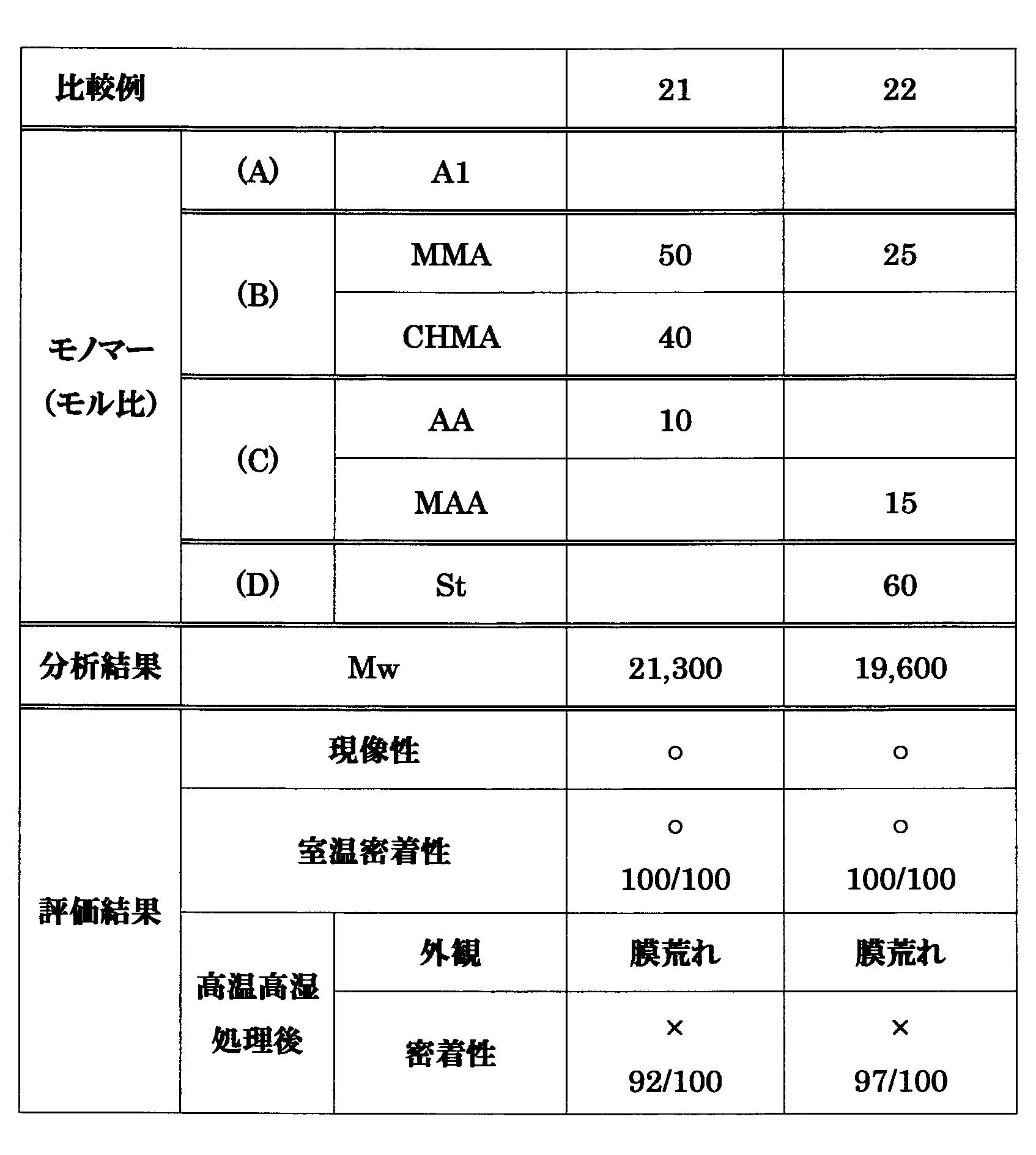
MMA: メタクリル酸メチル
CHMA: メタクリル酸シクロヘキシル
AA: アクリル酸
MAA: メタクリル酸
St: スチレン
Claims (6)
- 下記一般式(1)で示されるモノマー(A)のモル比が1~99モル%であり、炭素数1~22の(メタ)アクリル酸アルキルエステル(B)のモル比が1~99モル%であり、共重合可能なその他のモノマー(C)のモル比が0~98モル%であり、重量平均分子量が3,000~1,000,000であることを特徴とする、共重合体。

(式(1)において、
Rは水素原子またはメチル基であり,
Xは、炭素数2~5のアルキレン基またはヒドロキシ基を1つ有する炭素数2~5のアルキレン基を示す。)
- 請求項1記載の共重合体および有機溶媒を含有することを特徴とする、防錆コーティング組成物
- 請求項1記載の共重合体からなることを特徴とする、分散剤。
- 前記共重合体が前記モノマー(C)に由来する構成成分を含む共重合体であり、前記モノマー(C)が、下記一般式(2)で示される(メタ)アクリル酸ポリオキシアルキレンエステルであることを特徴とする、請求項3記載の分散剤。
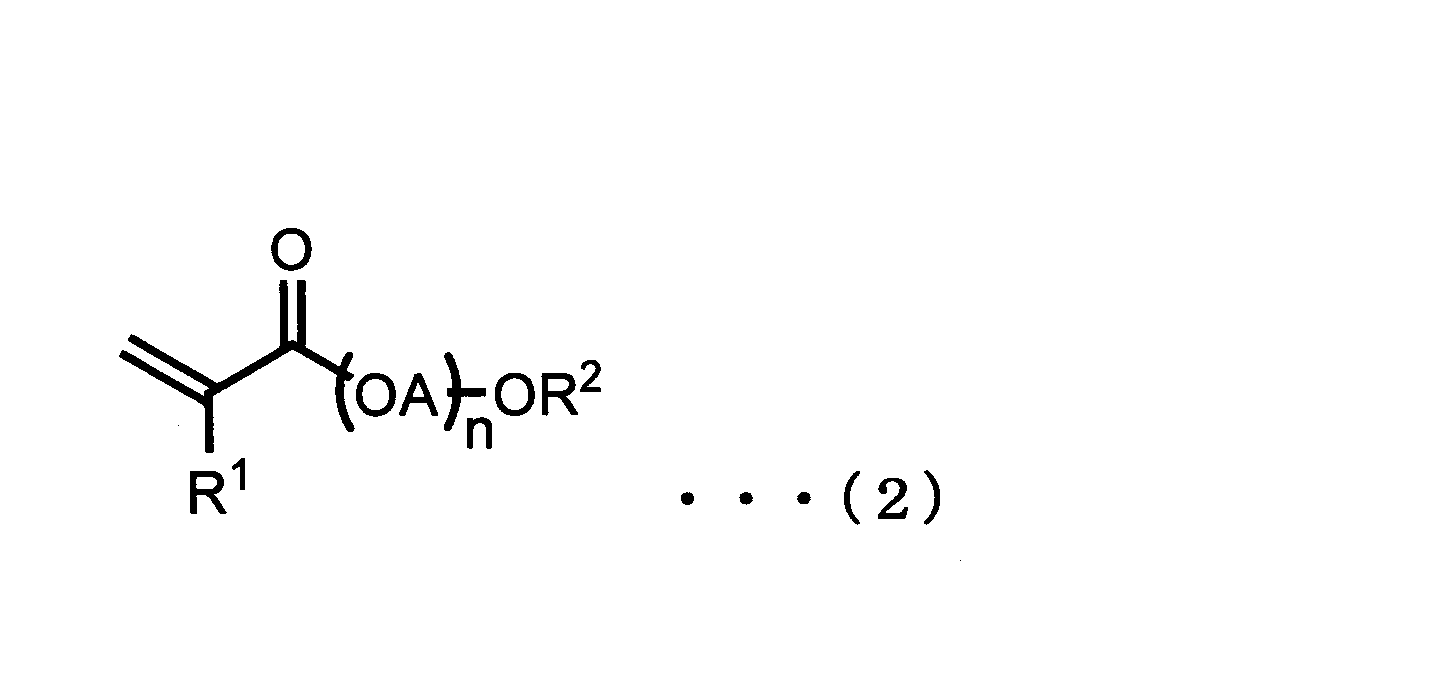
R1は水素原子またはメチル基であり、
R2は水素原子または炭素数1~22のアルキル基であり、
OAは炭素数2~4のオキシアルキレン基であり、
nは前記オキシアルキレン基の平均付加モル数であり、1~50である。)
- 請求項3または4記載の分散剤、溶媒、および前記分散剤によって分散された分散体を含有することを特徴とする、分散体組成物。
- 請求項1記載の共重合体からなるレジスト樹脂であって、
前記モノマー(A)のモル比が1~40モル%であり、前記(メタ)アクリル酸アルキルエステル(B)のモル比が1~94モル%であり、前記その他のモノマー(C)がカルボキシル基を有するモノマー(C1)を少なくとも含んでおり、前記カルボキシル基を有するモノマー(C1)のモル比が5~40モル%であり、前記カルボキシル基を有するモノマー(C1)以外のその他の共重合可能なモノマー(C2)のモル比が0~93モル%であり、重量平均分子量が3,000~100,000であることを特徴とする、レジスト樹脂。
Priority Applications (3)
| Application Number | Priority Date | Filing Date | Title |
|---|---|---|---|
| JP2021574046A JP7618131B2 (ja) | 2020-01-31 | 2021-01-26 | 共重合体、これを含む防錆コーティング組成物、分散剤およびレジスト樹脂 |
| CN202180007795.7A CN114930251A (zh) | 2020-01-31 | 2021-01-26 | 共聚物、含该共聚物的防锈涂料组合物、含该共聚物的分散剂及含该共聚物的抗蚀树脂 |
| KR1020227022333A KR20220134527A (ko) | 2020-01-31 | 2021-01-26 | 공중합체, 이것을 포함하는 방청 코팅 조성물, 분산제 및 레지스트 수지 |
Applications Claiming Priority (6)
| Application Number | Priority Date | Filing Date | Title |
|---|---|---|---|
| JP2020015315 | 2020-01-31 | ||
| JP2020015321 | 2020-01-31 | ||
| JP2020-015315 | 2020-01-31 | ||
| JP2020-015330 | 2020-01-31 | ||
| JP2020-015321 | 2020-01-31 | ||
| JP2020015330 | 2020-01-31 |
Publications (1)
| Publication Number | Publication Date |
|---|---|
| WO2021153545A1 true WO2021153545A1 (ja) | 2021-08-05 |
Family
ID=77078920
Family Applications (1)
| Application Number | Title | Priority Date | Filing Date |
|---|---|---|---|
| PCT/JP2021/002592 Ceased WO2021153545A1 (ja) | 2020-01-31 | 2021-01-26 | 共重合体、これを含む防錆コーティング組成物、分散剤およびレジスト樹脂 |
Country Status (5)
| Country | Link |
|---|---|
| JP (1) | JP7618131B2 (ja) |
| KR (1) | KR20220134527A (ja) |
| CN (1) | CN114930251A (ja) |
| TW (1) | TW202138405A (ja) |
| WO (1) | WO2021153545A1 (ja) |
Cited By (3)
| Publication number | Priority date | Publication date | Assignee | Title |
|---|---|---|---|---|
| JP2021155537A (ja) * | 2020-03-26 | 2021-10-07 | 三井化学株式会社 | 防錆剤 |
| JP2022135586A (ja) * | 2021-03-05 | 2022-09-15 | 三菱ケミカル株式会社 | アクリル系樹脂、およびこれを用いてなる粘着剤組成物、粘着剤、粘着フィルム、マスキング用粘着剤、マスキング用粘着フィルム |
| JP2023128369A (ja) * | 2022-03-03 | 2023-09-14 | 三菱ケミカル株式会社 | ポリマーおよびそれを含有する粘着剤 |
Families Citing this family (2)
| Publication number | Priority date | Publication date | Assignee | Title |
|---|---|---|---|---|
| CN115586702B (zh) * | 2022-10-19 | 2025-04-11 | 深圳市容大感光科技股份有限公司 | 一种碱可溶树脂、其组合物及其用途 |
| CN117923896A (zh) * | 2024-01-26 | 2024-04-26 | 阜新德尔汽车部件股份有限公司 | 陶瓷浆料、压电陶瓷层、压电陶瓷致动器及其制备方法 |
Citations (4)
| Publication number | Priority date | Publication date | Assignee | Title |
|---|---|---|---|---|
| JPH01198742A (ja) * | 1988-02-03 | 1989-08-10 | Fuji Photo Film Co Ltd | ハロゲン化銀写真感光材料 |
| JP2001215732A (ja) * | 2000-02-01 | 2001-08-10 | Fuji Photo Film Co Ltd | タンニング現像薬、ハロゲン化銀感光材料、タンニング現像液およびレリーフ画像形成方法 |
| JP2006091662A (ja) * | 2004-09-27 | 2006-04-06 | Fuji Photo Film Co Ltd | ポジ型レジスト組成物及びそれを用いたパターン形成方法 |
| WO2019131351A1 (ja) * | 2017-12-27 | 2019-07-04 | 富士フイルム株式会社 | レジスト組成物、レジスト膜、パターン形成方法、及び電子デバイスの製造方法 |
Family Cites Families (8)
| Publication number | Priority date | Publication date | Assignee | Title |
|---|---|---|---|---|
| JP3479331B2 (ja) | 1993-11-12 | 2003-12-15 | デンツプライ三金株式会社 | 歯科用接着剤 |
| JPH10133370A (ja) | 1996-11-01 | 1998-05-22 | Mitsubishi Chem Corp | カラーフィルター用レジスト組成物及びカラーフィルター |
| JP5442315B2 (ja) * | 2009-05-08 | 2014-03-12 | ツヤック株式会社 | 防錆剤、防錆処理方法、及びその除去方法 |
| JP5969375B2 (ja) | 2012-12-18 | 2016-08-17 | オリジン電気株式会社 | 紫外線硬化型接着剤組成物、それを用いた積層体 |
| JP6621250B2 (ja) | 2015-06-02 | 2019-12-18 | 株式会社日本触媒 | ポリカルボン酸系重合体水溶液及びその製造方法 |
| CN107522239A (zh) * | 2017-08-02 | 2017-12-29 | 四川大学 | 一种基于没食子酸‑金属离子配位化学调控纳米四氧化三铁分散度及粒径的方法 |
| JP2018159930A (ja) | 2018-05-14 | 2018-10-11 | 三菱ケミカル株式会社 | 感光性樹脂組成物、これを硬化させてなる硬化物、ブラックマトリックス及び画像表示装置 |
| CN110054956B (zh) * | 2019-04-02 | 2021-09-28 | 上海涤宝科技有限公司 | 一种用于金属表面处理的镀膜剂的制备方法 |
-
2021
- 2021-01-26 JP JP2021574046A patent/JP7618131B2/ja active Active
- 2021-01-26 KR KR1020227022333A patent/KR20220134527A/ko not_active Ceased
- 2021-01-26 WO PCT/JP2021/002592 patent/WO2021153545A1/ja not_active Ceased
- 2021-01-26 CN CN202180007795.7A patent/CN114930251A/zh active Pending
- 2021-01-27 TW TW110103008A patent/TW202138405A/zh unknown
Patent Citations (4)
| Publication number | Priority date | Publication date | Assignee | Title |
|---|---|---|---|---|
| JPH01198742A (ja) * | 1988-02-03 | 1989-08-10 | Fuji Photo Film Co Ltd | ハロゲン化銀写真感光材料 |
| JP2001215732A (ja) * | 2000-02-01 | 2001-08-10 | Fuji Photo Film Co Ltd | タンニング現像薬、ハロゲン化銀感光材料、タンニング現像液およびレリーフ画像形成方法 |
| JP2006091662A (ja) * | 2004-09-27 | 2006-04-06 | Fuji Photo Film Co Ltd | ポジ型レジスト組成物及びそれを用いたパターン形成方法 |
| WO2019131351A1 (ja) * | 2017-12-27 | 2019-07-04 | 富士フイルム株式会社 | レジスト組成物、レジスト膜、パターン形成方法、及び電子デバイスの製造方法 |
Cited By (5)
| Publication number | Priority date | Publication date | Assignee | Title |
|---|---|---|---|---|
| JP2021155537A (ja) * | 2020-03-26 | 2021-10-07 | 三井化学株式会社 | 防錆剤 |
| JP7540896B2 (ja) | 2020-03-26 | 2024-08-27 | 三井化学株式会社 | 防錆剤 |
| JP2022135586A (ja) * | 2021-03-05 | 2022-09-15 | 三菱ケミカル株式会社 | アクリル系樹脂、およびこれを用いてなる粘着剤組成物、粘着剤、粘着フィルム、マスキング用粘着剤、マスキング用粘着フィルム |
| JP7635583B2 (ja) | 2021-03-05 | 2025-02-26 | 三菱ケミカル株式会社 | アクリル系樹脂、およびこれを用いてなる粘着剤組成物、粘着剤、粘着フィルム、マスキング用粘着剤、マスキング用粘着フィルム |
| JP2023128369A (ja) * | 2022-03-03 | 2023-09-14 | 三菱ケミカル株式会社 | ポリマーおよびそれを含有する粘着剤 |
Also Published As
| Publication number | Publication date |
|---|---|
| JP7618131B2 (ja) | 2025-01-21 |
| JPWO2021153545A1 (ja) | 2021-08-05 |
| KR20220134527A (ko) | 2022-10-05 |
| TW202138405A (zh) | 2021-10-16 |
| CN114930251A (zh) | 2022-08-19 |
Similar Documents
| Publication | Publication Date | Title |
|---|---|---|
| WO2021153545A1 (ja) | 共重合体、これを含む防錆コーティング組成物、分散剤およびレジスト樹脂 | |
| JP6886827B2 (ja) | アルカリ可溶性樹脂、感光性樹脂組成物及びその用途 | |
| JP4547642B2 (ja) | 活性エネルギー線硬化型塗料組成物、その硬化物、及び新規硬化性樹脂 | |
| JP6667560B2 (ja) | ペースト組成物、ならびに焼成体およびその製造方法 | |
| JP5638243B2 (ja) | グラフトポリマー及びそれを含む感光性樹脂組成物 | |
| CN104145196A (zh) | 黑矩阵用感光性树脂组合物及其制造方法 | |
| JP6633000B2 (ja) | 粘着剤組成物および粘着シート | |
| JPH11209558A (ja) | 光重合性顔料分散剤、感光性着色組成物及び遮光層用組成物 | |
| WO2020152939A1 (ja) | 重合体、導電性ペースト組成物、セラミックス用バインダー樹脂、セラミックススラリー組成物および導電ペースト用バインダー樹脂 | |
| CN113621274A (zh) | 用于黑矩阵的颜料分散组合物和用于黑矩阵的颜料分散光阻组合物 | |
| JPH11209554A (ja) | 光重合性顔料分散剤、感光性着色組成物及び遮光層用組成物 | |
| WO2005111674A1 (ja) | カラーフィルター用黒色レジスト組成物 | |
| JP2019196446A (ja) | 重合体およびペースト組成物 | |
| WO2022050062A1 (ja) | 重合体、コーティング組成物、レジスト組成物及び物品 | |
| JP7794338B2 (ja) | 共重合体および当該共重合体を含むコーティング組成物又はレジスト組成物 | |
| TWI682809B (zh) | 氧化鋯粒子分散體組成物及其硬化物 | |
| JP2004315719A (ja) | 焼成用樹脂組成物 | |
| JP4485171B2 (ja) | 樹脂被覆アルミニウム顔料 | |
| JP6829571B2 (ja) | 顔料分散組成物 | |
| WO2012029585A1 (ja) | 不飽和基含有ポリカルボン酸樹脂を含む分散剤 | |
| CN102033430B (zh) | 感光性导电糊剂及其制造方法 | |
| JP7796506B2 (ja) | ラジカル重合性重合体および感光性組成物 | |
| JPH11349842A (ja) | 光重合性顔料分散剤、感光性着色組成物及び遮光層用組成物 | |
| JP2023004059A (ja) | ラジカル重合性重合体およびその感光性組成物 | |
| JP7821560B2 (ja) | カーボンナノチューブ分散用重合体及びカーボンナノチューブ分散液 |
Legal Events
| Date | Code | Title | Description |
|---|---|---|---|
| 121 | Ep: the epo has been informed by wipo that ep was designated in this application |
Ref document number: 21747028 Country of ref document: EP Kind code of ref document: A1 |
|
| ENP | Entry into the national phase |
Ref document number: 2021574046 Country of ref document: JP Kind code of ref document: A |
|
| NENP | Non-entry into the national phase |
Ref country code: DE |
|
| 122 | Ep: pct application non-entry in european phase |
Ref document number: 21747028 Country of ref document: EP Kind code of ref document: A1 |
|
| WWR | Wipo information: refused in national office |
Ref document number: 1020227022333 Country of ref document: KR |