WO2021039854A1 - 皮膚常在微生物採取用粘着テープ、被験者の身体状態を評価する方法、被験者に情報を提示する方法及び身体状態を改善又は予防する物質をスクリーニングする方法、並びに、皮膚代謝物採取用粘着テープ - Google Patents
皮膚常在微生物採取用粘着テープ、被験者の身体状態を評価する方法、被験者に情報を提示する方法及び身体状態を改善又は予防する物質をスクリーニングする方法、並びに、皮膚代謝物採取用粘着テープ Download PDFInfo
- Publication number
- WO2021039854A1 WO2021039854A1 PCT/JP2020/032217 JP2020032217W WO2021039854A1 WO 2021039854 A1 WO2021039854 A1 WO 2021039854A1 JP 2020032217 W JP2020032217 W JP 2020032217W WO 2021039854 A1 WO2021039854 A1 WO 2021039854A1
- Authority
- WO
- WIPO (PCT)
- Prior art keywords
- skin
- collecting
- adhesive tape
- subject
- physical condition
- Prior art date
- Legal status (The legal status is an assumption and is not a legal conclusion. Google has not performed a legal analysis and makes no representation as to the accuracy of the status listed.)
- Ceased
Links
Images




Classifications
-
- G—PHYSICS
- G01—MEASURING; TESTING
- G01N—INVESTIGATING OR ANALYSING MATERIALS BY DETERMINING THEIR CHEMICAL OR PHYSICAL PROPERTIES
- G01N33/00—Investigating or analysing materials by specific methods not covered by groups G01N1/00 - G01N31/00
- G01N33/48—Biological material, e.g. blood, urine; Haemocytometers
- G01N33/50—Chemical analysis of biological material, e.g. blood, urine; Testing involving biospecific ligand binding methods; Immunological testing
-
- C—CHEMISTRY; METALLURGY
- C12—BIOCHEMISTRY; BEER; SPIRITS; WINE; VINEGAR; MICROBIOLOGY; ENZYMOLOGY; MUTATION OR GENETIC ENGINEERING
- C12Q—MEASURING OR TESTING PROCESSES INVOLVING ENZYMES, NUCLEIC ACIDS OR MICROORGANISMS; COMPOSITIONS OR TEST PAPERS THEREFOR; PROCESSES OF PREPARING SUCH COMPOSITIONS; CONDITION-RESPONSIVE CONTROL IN MICROBIOLOGICAL OR ENZYMOLOGICAL PROCESSES
- C12Q1/00—Measuring or testing processes involving enzymes, nucleic acids or microorganisms; Compositions therefor; Processes of preparing such compositions
- C12Q1/02—Measuring or testing processes involving enzymes, nucleic acids or microorganisms; Compositions therefor; Processes of preparing such compositions involving viable microorganisms
- C12Q1/24—Methods of sampling, or inoculating or spreading a sample; Methods of physically isolating an intact microorganisms
-
- A—HUMAN NECESSITIES
- A61—MEDICAL OR VETERINARY SCIENCE; HYGIENE
- A61B—DIAGNOSIS; SURGERY; IDENTIFICATION
- A61B5/00—Measuring for diagnostic purposes; Identification of persons
- A61B5/44—Detecting, measuring or recording for evaluating the integumentary system, e.g. skin, hair or nails
- A61B5/441—Skin evaluation, e.g. for skin disorder diagnosis
- A61B5/443—Evaluating skin constituents, e.g. elastin, melanin, water
-
- A—HUMAN NECESSITIES
- A61—MEDICAL OR VETERINARY SCIENCE; HYGIENE
- A61B—DIAGNOSIS; SURGERY; IDENTIFICATION
- A61B10/00—Instruments for taking body samples for diagnostic purposes; Other methods or instruments for diagnosis, e.g. for vaccination diagnosis, sex determination or ovulation-period determination; Throat striking implements
-
- A—HUMAN NECESSITIES
- A61—MEDICAL OR VETERINARY SCIENCE; HYGIENE
- A61B—DIAGNOSIS; SURGERY; IDENTIFICATION
- A61B10/00—Instruments for taking body samples for diagnostic purposes; Other methods or instruments for diagnosis, e.g. for vaccination diagnosis, sex determination or ovulation-period determination; Throat striking implements
- A61B10/0045—Devices for taking samples of body liquids
- A61B10/0064—Devices for taking samples of body liquids for taking sweat or sebum samples
-
- A—HUMAN NECESSITIES
- A61—MEDICAL OR VETERINARY SCIENCE; HYGIENE
- A61B—DIAGNOSIS; SURGERY; IDENTIFICATION
- A61B10/00—Instruments for taking body samples for diagnostic purposes; Other methods or instruments for diagnosis, e.g. for vaccination diagnosis, sex determination or ovulation-period determination; Throat striking implements
- A61B10/02—Instruments for taking cell samples or for biopsy
-
- C—CHEMISTRY; METALLURGY
- C12—BIOCHEMISTRY; BEER; SPIRITS; WINE; VINEGAR; MICROBIOLOGY; ENZYMOLOGY; MUTATION OR GENETIC ENGINEERING
- C12M—APPARATUS FOR ENZYMOLOGY OR MICROBIOLOGY; APPARATUS FOR CULTURING MICROORGANISMS FOR PRODUCING BIOMASS, FOR GROWING CELLS OR FOR OBTAINING FERMENTATION OR METABOLIC PRODUCTS, i.e. BIOREACTORS OR FERMENTERS
- C12M1/00—Apparatus for enzymology or microbiology
- C12M1/26—Inoculator or sampler
-
- C—CHEMISTRY; METALLURGY
- C12—BIOCHEMISTRY; BEER; SPIRITS; WINE; VINEGAR; MICROBIOLOGY; ENZYMOLOGY; MUTATION OR GENETIC ENGINEERING
- C12Q—MEASURING OR TESTING PROCESSES INVOLVING ENZYMES, NUCLEIC ACIDS OR MICROORGANISMS; COMPOSITIONS OR TEST PAPERS THEREFOR; PROCESSES OF PREPARING SUCH COMPOSITIONS; CONDITION-RESPONSIVE CONTROL IN MICROBIOLOGICAL OR ENZYMOLOGICAL PROCESSES
- C12Q1/00—Measuring or testing processes involving enzymes, nucleic acids or microorganisms; Compositions therefor; Processes of preparing such compositions
- C12Q1/02—Measuring or testing processes involving enzymes, nucleic acids or microorganisms; Compositions therefor; Processes of preparing such compositions involving viable microorganisms
- C12Q1/025—Measuring or testing processes involving enzymes, nucleic acids or microorganisms; Compositions therefor; Processes of preparing such compositions involving viable microorganisms for testing or evaluating the effect of chemical or biological compounds, e.g. drugs, cosmetics
-
- C—CHEMISTRY; METALLURGY
- C12—BIOCHEMISTRY; BEER; SPIRITS; WINE; VINEGAR; MICROBIOLOGY; ENZYMOLOGY; MUTATION OR GENETIC ENGINEERING
- C12Q—MEASURING OR TESTING PROCESSES INVOLVING ENZYMES, NUCLEIC ACIDS OR MICROORGANISMS; COMPOSITIONS OR TEST PAPERS THEREFOR; PROCESSES OF PREPARING SUCH COMPOSITIONS; CONDITION-RESPONSIVE CONTROL IN MICROBIOLOGICAL OR ENZYMOLOGICAL PROCESSES
- C12Q1/00—Measuring or testing processes involving enzymes, nucleic acids or microorganisms; Compositions therefor; Processes of preparing such compositions
- C12Q1/68—Measuring or testing processes involving enzymes, nucleic acids or microorganisms; Compositions therefor; Processes of preparing such compositions involving nucleic acids
- C12Q1/6876—Nucleic acid products used in the analysis of nucleic acids, e.g. primers or probes
- C12Q1/6888—Nucleic acid products used in the analysis of nucleic acids, e.g. primers or probes for detection or identification of organisms
- C12Q1/689—Nucleic acid products used in the analysis of nucleic acids, e.g. primers or probes for detection or identification of organisms for bacteria
-
- C—CHEMISTRY; METALLURGY
- C40—COMBINATORIAL TECHNOLOGY
- C40B—COMBINATORIAL CHEMISTRY; LIBRARIES, e.g. CHEMICAL LIBRARIES
- C40B30/00—Methods of screening libraries
- C40B30/06—Methods of screening libraries by measuring effects on living organisms, tissues or cells
-
- G—PHYSICS
- G01—MEASURING; TESTING
- G01N—INVESTIGATING OR ANALYSING MATERIALS BY DETERMINING THEIR CHEMICAL OR PHYSICAL PROPERTIES
- G01N1/00—Sampling; Preparing specimens for investigation
- G01N1/02—Devices for withdrawing samples
- G01N1/04—Devices for withdrawing samples in the solid state, e.g. by cutting
-
- G—PHYSICS
- G01—MEASURING; TESTING
- G01N—INVESTIGATING OR ANALYSING MATERIALS BY DETERMINING THEIR CHEMICAL OR PHYSICAL PROPERTIES
- G01N1/00—Sampling; Preparing specimens for investigation
- G01N1/28—Preparing specimens for investigation including physical details of (bio-)chemical methods covered elsewhere, e.g. G01N33/50, C12Q
- G01N1/2813—Producing thin layers of samples on a substrate, e.g. smearing, spinning-on
-
- G—PHYSICS
- G01—MEASURING; TESTING
- G01N—INVESTIGATING OR ANALYSING MATERIALS BY DETERMINING THEIR CHEMICAL OR PHYSICAL PROPERTIES
- G01N33/00—Investigating or analysing materials by specific methods not covered by groups G01N1/00 - G01N31/00
- G01N33/15—Medicinal preparations ; Physical properties thereof, e.g. dissolubility
-
- G—PHYSICS
- G01—MEASURING; TESTING
- G01N—INVESTIGATING OR ANALYSING MATERIALS BY DETERMINING THEIR CHEMICAL OR PHYSICAL PROPERTIES
- G01N33/00—Investigating or analysing materials by specific methods not covered by groups G01N1/00 - G01N31/00
- G01N33/48—Biological material, e.g. blood, urine; Haemocytometers
-
- G—PHYSICS
- G01—MEASURING; TESTING
- G01N—INVESTIGATING OR ANALYSING MATERIALS BY DETERMINING THEIR CHEMICAL OR PHYSICAL PROPERTIES
- G01N33/00—Investigating or analysing materials by specific methods not covered by groups G01N1/00 - G01N31/00
- G01N33/48—Biological material, e.g. blood, urine; Haemocytometers
- G01N33/50—Chemical analysis of biological material, e.g. blood, urine; Testing involving biospecific ligand binding methods; Immunological testing
- G01N33/53—Immunoassay; Biospecific binding assay; Materials therefor
- G01N33/569—Immunoassay; Biospecific binding assay; Materials therefor for microorganisms, e.g. protozoa, bacteria, viruses
-
- G—PHYSICS
- G01—MEASURING; TESTING
- G01N—INVESTIGATING OR ANALYSING MATERIALS BY DETERMINING THEIR CHEMICAL OR PHYSICAL PROPERTIES
- G01N33/00—Investigating or analysing materials by specific methods not covered by groups G01N1/00 - G01N31/00
- G01N33/48—Biological material, e.g. blood, urine; Haemocytometers
- G01N33/50—Chemical analysis of biological material, e.g. blood, urine; Testing involving biospecific ligand binding methods; Immunological testing
- G01N33/68—Chemical analysis of biological material, e.g. blood, urine; Testing involving biospecific ligand binding methods; Immunological testing involving proteins, peptides or amino acids
-
- A—HUMAN NECESSITIES
- A61—MEDICAL OR VETERINARY SCIENCE; HYGIENE
- A61B—DIAGNOSIS; SURGERY; IDENTIFICATION
- A61B10/00—Instruments for taking body samples for diagnostic purposes; Other methods or instruments for diagnosis, e.g. for vaccination diagnosis, sex determination or ovulation-period determination; Throat striking implements
- A61B10/02—Instruments for taking cell samples or for biopsy
- A61B2010/0216—Sampling brushes
-
- G—PHYSICS
- G01—MEASURING; TESTING
- G01N—INVESTIGATING OR ANALYSING MATERIALS BY DETERMINING THEIR CHEMICAL OR PHYSICAL PROPERTIES
- G01N1/00—Sampling; Preparing specimens for investigation
- G01N1/02—Devices for withdrawing samples
- G01N2001/028—Sampling from a surface, swabbing, vaporising
-
- G—PHYSICS
- G01—MEASURING; TESTING
- G01N—INVESTIGATING OR ANALYSING MATERIALS BY DETERMINING THEIR CHEMICAL OR PHYSICAL PROPERTIES
- G01N1/00—Sampling; Preparing specimens for investigation
- G01N1/28—Preparing specimens for investigation including physical details of (bio-)chemical methods covered elsewhere, e.g. G01N33/50, C12Q
- G01N1/2813—Producing thin layers of samples on a substrate, e.g. smearing, spinning-on
- G01N2001/2833—Collecting samples on a sticky, tacky, adhesive surface
-
- G—PHYSICS
- G01—MEASURING; TESTING
- G01N—INVESTIGATING OR ANALYSING MATERIALS BY DETERMINING THEIR CHEMICAL OR PHYSICAL PROPERTIES
- G01N2500/00—Screening for compounds of potential therapeutic value
- G01N2500/10—Screening for compounds of potential therapeutic value involving cells
Definitions
- the present invention relates to an adhesive tape for collecting skin-resident microorganisms, a method for evaluating the physical condition of a subject, a method for presenting information to a subject, a method for screening a substance for improving or preventing the physical condition, and an adhesive for collecting skin biotransformers.
- tape for collecting skin-resident microorganisms
- a method for evaluating the physical condition of a subject a method for presenting information to a subject
- a method for screening a substance for improving or preventing the physical condition a method for screening a substance for improving or preventing the physical condition
- an adhesive for collecting skin biotransformers Regarding tape.
- human skin condition is evaluated by indexes such as firmness, texture, age spots, wrinkles, water content, oil content, and water evaporation amount (barrier function).
- indexes such as firmness, texture, age spots, wrinkles, water content, oil content, and water evaporation amount (barrier function).
- questionnaire survey image analysis of the skin surface disclosed in Patent Document 1 and the like (tension, texture, stain, wrinkle, etc.), and measurement by equipment (water content, oil content, water evaporation amount, etc.) are used. Has been done.
- the factors that affect the skin condition are not necessarily limited to the above-mentioned indexes, and there are skin conditions that are difficult to evaluate by the conventional technology that depends on the above-mentioned indexes. There is an increasing need for technology that can evaluate such skin conditions. This need is not limited to the skin condition, but the same applies to the general physical condition.
- the applicants have described the method of evaluating the physical condition of a subject as a technique for evaluating a skin condition that can be objectively evaluated and is not easily affected by changes in skin quality due to face washing or the like.
- the value of the skin microflora collected from the skin surface of the subject is determined, and the correlation is described. It has a process to be compared with the sex standard, and the physical condition is skin age, greasy skin, skin stain, dullness, sagging, wrinkle, swelling condition, skin condition which is at least one of pore condition, or hair.
- Teeth, urine, bones, internal organs, blood, urine, or a method related to nerves see Patent Document 2.
- Non-Patent Document 1 if skin metabolites can be collected from the skin surface, there is a possibility that the physical condition can be evaluated from the collected skin metabolites (see Non-Patent Document 1). Therefore, it is also desired to collect skin metabolites on the skin surface well.
- the present invention has been made in view of the above-mentioned conventional circumstances, and an adhesive tape for collecting skin-resident microorganisms and an adhesive tape for collecting skin metabolites, which can improve the amount of skin-resident microorganisms collected on the skin surface, and these. It is an object of the present invention to provide a method for evaluating the physical condition of a subject used, a method for presenting information to the subject, and a method for screening a substance for improving or preventing the physical condition.
- the amount of skin-resident microorganisms collected on the skin surface can be improved by using an adhesive tape for collecting skin-resident microorganisms that has an adhesive layer containing a rubber-based adhesive and has specific adhesive strength and peeling power.
- the present invention has been completed. It was also found that the skin metabolites on the skin surface can be satisfactorily collected by using an adhesive tape for collecting skin metabolites having a pressure-sensitive adhesive layer containing a rubber-based pressure-sensitive adhesive and having a specific adhesive force and peeling power.
- An adhesive tape for collecting skin-resident microorganisms used for collecting skin-resident microorganisms on the skin surface. It has a base material and an adhesive layer provided on at least a part of the surface of the base material.
- the pressure-sensitive adhesive layer contains a pressure-sensitive adhesive, and the pressure-sensitive adhesive contains a rubber-based pressure-sensitive adhesive.
- JIS Z 0237: 2009 the adhesive strength when measured at a test piece width of 12 mm, an adherend bakelite plate, a crimping method of 2 kg roller 1 reciprocation, a tensile speed of 300 mm / min, and a tensile angle of 90 ° is 10.0 N or more.
- the peeling force when measured at a tensile speed of 300 mm / min and a tensile angle of 180 ° using a test piece 12 mm wide, silicone-treated woodfree paper as a release paper is 0.25 N or more.
- Adhesive tape for collecting skin-resident microorganisms is 0.25 N or more.
- a method for evaluating the physical condition of a subject For the abundance ratio of skin-resident microorganisms on the skin surface or parameters based on the abundance ratio for which the correlation standard with the physical condition has been prepared, the value of the skin flora collected from the skin surface of the subject is determined, and the above-mentioned It has a process to compare with the correlation standard, The skin flora collected from the skin surface of the subject was collected by using the skin resident microorganisms on the skin surface using the adhesive tape for collecting skin resident microorganisms according to any one of (1) to (3) above. The way it is.
- a method of presenting information to the subject The step of evaluating the physical condition of the subject by the method described in (4) or (5) above, and When it is evaluated that the physical condition is not in the target state, the abundance ratio or the abundance ratio or the numerical range indicated by the abundance ratio or the parameter is obtained based on the correlation criterion when the physical condition is in the target state.
- a method of screening for substances that improve or prevent physical condition A step of selecting the candidate substance based on the change of the candidate substance with respect to the abundance ratio of the skin-resident microorganisms on the skin surface or the value of the parameter based on the abundance ratio for which the correlation standard with the physical condition has been prepared.
- Have, The skin flora collected from the skin surface is collected from the skin-resident microorganisms on the skin surface of the subject using the adhesive tape for collecting skin-resident microorganisms according to any one of (1) to (3). The way it is.
- An adhesive tape for collecting skin metabolites used for collecting skin metabolites on the surface of the skin It has a base material and an adhesive layer provided on at least a part of the surface of the base material.
- the pressure-sensitive adhesive layer contains a pressure-sensitive adhesive
- the pressure-sensitive adhesive contains a rubber-based pressure-sensitive adhesive.
- JIS Z 0237: 2009 the adhesive strength when measured at a test piece width of 12 mm, an adherend bakelite plate, a crimping method of 2 kg roller 1 reciprocation, a tensile speed of 300 mm / min, and a tensile angle of 90 ° is 10.0 N or more.
- the peeling force when measured at a tensile speed of 300 mm / min and a tensile angle of 180 ° using a test piece 12 mm wide, silicone-treated woodfree paper as a release paper is 0.25 N or more.
- Adhesive tape for collecting skin metabolites is 0.25 N or more.
- a method for evaluating the physical condition of a subject For the abundance ratio of skin metabolites on the skin surface or parameters based on the abundance ratio for which the correlation standard with the physical condition has been prepared, the value of the skin metamorphic substances collected from the skin surface of the subject is determined, and the correlation is determined. It has a process to compare with the sex standard, The skin biotransforms collected from the skin surface of the subject are collected by using the skin metametase collecting adhesive tape according to any one of claims (9) to (12). The way it is.
- a method of presenting information to a subject The step of evaluating the physical condition of the subject by the method according to (13) or (14), and When it is evaluated that the physical condition is not in the target state, the abundance ratio or the abundance ratio or the numerical range indicated by the abundance ratio or the parameter is obtained based on the correlation criterion when the physical condition is in the target state.
- a method of screening for substances that improve or prevent physical condition A step of selecting the candidate substance based on the change due to the candidate substance with respect to the abundance ratio of skin biotransforms on the skin surface or the value of the parameter based on the abundance ratio for which the correlation standard with the physical condition has been prepared.
- Have and The skin metabolite collected from the skin surface is obtained by collecting the skin metabolite on the skin surface of the subject using the adhesive tape for collecting skin metabolite according to any one of (9) to (12). There is a way.
- an adhesive tape for collecting skin-resident microorganisms that can improve the amount of skin-resident microorganisms collected on the skin surface. Further, it is possible to provide an adhesive tape for collecting skin metabolites, which can satisfactorily collect skin metabolites on the skin surface.
- this adhesive tape for collecting skin-resident microorganisms and the adhesive tape for collecting skin metabolites a highly accurate method for evaluating the physical condition of the subject, a method for presenting information to the subject, and improving the physical condition can be achieved. A method of screening for substances to be prevented can be provided.
- the adhesive tape for collecting skin-resident microorganisms of the present invention is an adhesive tape for collecting skin-resident microorganisms used for collecting skin-resident microorganisms on the skin surface, and is a base material and at least a part of the surface of the base material. It has an adhesive layer provided in.
- the pressure-sensitive adhesive layer contains a pressure-sensitive adhesive, and the pressure-sensitive adhesive contains a rubber-based pressure-sensitive adhesive.
- the adhesive tape for collecting skin-resident microorganisms was measured by JIS Z 0237: 2009 with a test piece width of 12 mm, an adherend bakelite plate, a crimping method of 2 kg roller 1 reciprocation, a tensile speed of 300 mm / min, and a tensile angle of 90 °.
- the adhesive strength is 10.0 N or more
- JIS Z 0237: 2009 a test piece 12 mm wide, silicone-treated high-quality paper is used as a release paper, and the tensile speed is 300 mm / min and the tensile angle is 180 °.
- the peeling force at the time of measurement is 0.25 N or more.
- FIG. 1 is a perspective view showing an example of an adhesive tape for collecting skin-resident microorganisms of the present invention.
- the adhesive tape 1 for collecting skin-resident microorganisms of the present invention has a base material 2 and an adhesive layer 3 provided on the surface of the base material 2.
- the adhesive layer 3 is provided on the entire surface of one surface of the base material 2, but the pressure-sensitive adhesive layer 3 may be provided on at least a part of the surface of the base material 2, for example, a base.
- the adhesive layer 3 may not be provided on a part of the surface of the material 2, and the base material 2 may be exposed.
- the pressure-sensitive adhesive layer 3 contains a pressure-sensitive adhesive, and the pressure-sensitive adhesive contains a rubber-based pressure-sensitive adhesive.
- the rubber-based pressure-sensitive adhesive contained in the pressure-sensitive adhesive layer 3 may be one or more selected from natural rubber and synthetic rubber, but preferably contains natural rubber.
- the adhesive tape for collecting skin-resident microorganisms of the present invention has a test piece width of 12 mm, an adherend bakelite plate, a crimping method of 2 kg, one reciprocation of a roller, a tensile speed of 300 mm / min, and a tensile angle of 90 according to JIS Z 0237: 2009.
- the adhesive strength when measured at ° (hereinafter, also simply referred to as “adhesive strength”) is 10.0 N or more, preferably 11.0 N or more, more preferably 12.0 N or more, still more preferably 13.0 N or more. ..
- the upper limit of the adhesive strength is not particularly limited, but is, for example, 20.0 N or less, preferably 19.0 N or less, more preferably 18.0 N or less, still more preferably 17.0 N or less.
- the adhesive tape for collecting microorganisms resident on the skin of the present invention uses JIS Z 0237: 2009 with a test piece width of 12 mm, a high-quality silicone-treated paper as a release paper, a tensile speed of 300 mm / min, and a tensile angle of 180.
- the peeling force (hereinafter, also simply referred to as “peeling force”) when measured at ° is 0.25 N or more, preferably 0.26 N or more, more preferably 0.27 N or more, still more preferably 0.28 N or more. ..
- the upper limit of the peeling force is not particularly limited, but is, for example, 0.50 N or less, preferably 0.45 N or less, more preferably 0.40 N or less, still more preferably 0.35 N or less.
- the adhesive tape for collecting skin-resident microorganisms having the adhesive layer 3 containing the rubber-based adhesive and having an adhesive strength of 10.0 N or more and a peeling power of 0.25 N or more is used, which will be described later.
- the amount of skin-resident microorganisms collected on the skin surface can be improved as compared with the conventional tape. Therefore, using an adhesive tape for collecting indigenous skin microorganisms having an adhesive layer containing such a rubber-based adhesive and having an adhesive force of 10.0 N or more and a peeling force of 0.25 N or more, the skin surface is normal.
- the indigenous microorganisms When the indigenous microorganisms are collected, they are comparable to the case where the skin indigenous microorganisms on the skin surface are wet-collected using, for example, a swab (cotton stick) capable of satisfactorily collecting the skin indigenous microorganisms on the skin surface.
- a swab cotton stick
- the tape since the tape is used for collection, the collection procedure is easy.
- the thickness of the adhesive tape for collecting skin-resident microorganisms of the present invention is not particularly limited, but may be, for example, 0.01 mm or more, 0.10 mm or more, or 0.20 mm or more. Further, the upper limit of the thickness is not particularly limited, but may be, for example, 0.50 mm or less, 0.40 mm or less, or 0.30 mm or less.
- the place where the skin flora is collected by the adhesive tape for collecting skin-resident microorganisms of the present invention is not particularly limited, and examples thereof include the face, scalp, armpits, and navel, and the face, especially the forehead is particularly preferable.
- the adhesive tape for collecting skin-resident microorganisms of the present invention is preferably used for collecting skin-resident microorganisms on the skin surface having a sebum amount of 75 or more.
- the adhesive tape for collecting skin-resident microorganisms of the present invention can extremely improve the amount of skin-resident microorganisms collected on the skin surface having a sebum amount of 75 or more.
- the skin-resident microorganisms on the skin surface having a sebum amount of less than 75 may be used for collecting skin-resident microorganisms on the skin surface having a sebum amount of less than 75. Since the amount of sebum on the skin surface of a subject changes depending on the environment, physical condition, etc., for example, even when collecting skin-resident microorganisms on the skin surface having a sebum amount of 75 or more, it should be collected from a wide range of subjects. Can be done.
- the skin-resident microorganisms collected by the adhesive tape for collecting skin-resident microorganisms of the present invention are not particularly limited and may be bacteria or fungi, and bacteria are particularly preferable.
- Specific examples of skin-resident microorganisms include bacteria belonging to the phylum Proteobacteria, bacteria belonging to the phylum Proteobacteria, and bacteria belonging to the phylum Firmicutes, and bacteria belonging to Proteobacteria acnes (also referred to as Cutibacterium acnes in recent years).
- the adhesive tape for collecting skin-resident microorganisms is stored after collecting the skin-resident microorganisms on the skin surface with the adhesive tape for collecting skin-resident microorganisms of the present invention (for example, the adhesive tape for collecting skin-resident microorganisms).
- the adhesive tape for collecting skin-resident microorganisms After collecting the skin-resident microorganisms on the skin surface, after a while, when analyzing the collected skin microorganism flora), store the adhesive tape for collecting skin-resident microorganisms in the state where the skin-resident microorganisms have been collected.
- the temperature is not particularly limited, and it may be stored at room temperature, or it may be stored refrigerated or frozen.
- the adhesive tape for collecting skin-resident microorganisms of the present invention can be used as a method for evaluating the physical condition of a subject.
- the method for evaluating the physical condition of the subject is that the skin collected from the skin surface of the subject with respect to the abundance ratio or the parameter based on the abundance ratio of the skin indigenous microorganisms on the skin surface for which the correlation standard with the physical condition has been prepared.
- the skin flora collected from the skin surface of the subject has a step of determining the value of the microbial flora and comparing it with the correlation criterion, and the skin resident microorganism on the skin surface is used for collecting the skin resident microorganism of the present invention. It is collected using an adhesive tape.
- the adhesive tape for collecting skin-resident microorganisms of the present invention can be used as a method for presenting information to a subject.
- the method of presenting information to the subject is a step of evaluating the physical condition of the subject by the method of evaluating the physical condition of the subject, and when it is evaluated that the physical condition is not in the target state, the physical condition becomes the target state.
- a method having a step of presenting information registered in a database as a component capable of deriving the value of the abundance ratio or the parameter toward the numerical range indicated by the abundance ratio or the parameter based on a correlation criterion at a certain time. is there. This makes it possible to personalize and present information on the improvement of the physical condition to the subject.
- the information referred to here refers to the name of the ingredient or the ingredient-containing preparation, the usage / dose of the ingredient / preparation, the expected improvement method and degree of the physical condition, side effects, and the like.
- the information is provided based on the step of re-evaluating the physical condition of the subject after ingesting the component by the method of evaluating the physical condition of the subject and the degree of improvement of the re-evaluated physical condition. It is preferable to further have a step of updating. As a result, it is expected that the information in the database will be improved and the accuracy of improvement of the physical condition will be further improved.
- the timing of the evaluation again is not particularly limited, and may be, for example, when the time expected to improve the physical condition (which can be included in the information in the database) has passed after the use of the ingredient.
- the adhesive tape for collecting skin-resident microorganisms of the present invention can be used as a method for screening a substance that improves or prevents a physical condition.
- the method of screening for a substance that improves or prevents the physical condition is a candidate substance regarding the abundance ratio of skin-resident microorganisms on the skin surface or the value of a parameter based on the abundance ratio, for which a correlation standard with the physical condition has been prepared.
- the skin flora collected from the skin surface has a step of selecting candidate substances based on the change due to the above, and the skin resident microorganisms on the skin surface of the subject are collected using the above-mentioned adhesive tape for collecting skin resident microorganisms. It is a thing. As a result, it is expected that substances that improve or prevent physical condition will be screened with high probability.
- the existence probability of a substance that improves or prevents a physical condition is higher in the candidate substance group after screening than in the candidate substance group before screening, and the candidate substance after screening is It is not always necessary to be able to improve or prevent physical condition. Therefore, it is preferable to further perform a step of confirming that the screened candidate substance has an effect of improving or preventing the physical condition.
- the skin-resident microorganism may be a bacterium or a fungus, and the bacterium is particularly preferable. Its abundance may be for any of the phylum, class, order, family, genus and species. For example, it may be the abundance ratio of at least one bacterium selected from the group consisting of bacteria belonging to the phylum Proteobacteria, bacteria belonging to the phylum Proteobacteria, and bacteria belonging to the phylum Firmicutes. The abundance ratio of acnes bacteria can be mentioned.
- the parameters are not particularly limited as long as they are based on the abundance ratio of skin-resident microorganisms, and may be the difference, sum, product, ratio, exponent, logarithm or a combination thereof among the abundance ratios of a plurality of skin-resident microorganisms. It may be a ratio, a difference or a combination thereof. For example, there is a difference in the relative amount of the bacterial species belonging to the phylum Proteobacteria and the bacterial species belonging to the phylum Firmicutes. Alternatively, the parameter may be a skin-resident microbial diversity index. Such parameters may correlate with the coordinate axes when each sample data of the population is plotted in the coordinate space using a dimension reduction method (for example, principal component analysis, principal component analysis).
- a dimension reduction method for example, principal component analysis, principal component analysis
- the physical condition is not particularly limited as long as it has a correlation with the abundance ratio of skin-resident microorganisms on the skin surface or parameters based on the abundance ratio, and the skin, hair, teeth, urine, bones, internal organs, blood, and nerves. It can be a state related to any part such as.
- Skin conditions include skin age, greasy skin, acne skin, freckles on the skin, texture, yellowing, dryness, shine, age spots, dullness, sagging, wrinkles, swelling, pores, and yellowing of the skin.
- Examples of the condition of the hair include thinning hair and hair loss.
- Examples of the tooth condition include periodontal disease and alveolar pyorrhea.
- Examples of bone, internal organs, blood, urine, and nerve conditions include liver function, hyperuric acid, knee pain, osteoporosis, autonomic imbalance, and diabetes.
- female hormones and menopause, which can affect cosmetology are also included in the physical condition.
- the correlation standard is a standard that can qualitatively or quantitatively identify the goodness or severity of the physical condition to be evaluated based on the above-mentioned abundance ratio or parameter value obtained from the skin flora.
- Examining the abundance ratio of bacteria to bacteria belonging to the Firmicutes phylum it is possible to examine various facial skin conditions such as acne and widened pores, and various physical symptoms not limited to the face such as periodontal disease and thinning hair / hair loss of the head. The likelihood of occurrence can be evaluated.
- the relative amount of a particular bacterial species correlates with the likelihood of causing other physical symptoms. For example, high uric acid level (genus Rothia, genus Brevibacterium, genus Erythrobacteraceae, etc.), osteoporosis (genus Pseudomonas, genus Methirobacterium), decreased liver function (genus Campylobacter, genus Russia, etc.), yellowing of the skin ), Diabetes (bacteria belonging to the order Actinomycetales), etc. show a correlation with the relative amount of the bacterial species in parentheses, respectively.
- the aging skin index calculated from the presence or absence of sagging, wrinkles, and firmness of the skin of the face is a group of bacteria that can be called "aging skin bacteria” consisting of bacterial species belonging to the Gammaproteobacteria class and Propionibacteria granulosum bacteria. Shows correlation with abundance.
- the correlation criteria may be created for a quasi-population classified by at least one species selected from the group consisting of age, gender, place of residence, nationality and race of the population. This makes it possible to accurately evaluate the physical condition of the subject, taking into consideration the age, gender, area of residence, nationality, race, and the like.
- the method of presenting information to the subject it is possible to present more appropriate information in consideration of the subject's age, gender, area of residence, nationality and race. Therefore, in addition to the above abundance ratio or parameters, at least one input selected from the group consisting of age, gender, place of residence, nationality and race regarding the subject is preferable.
- the screening method for substances that improve or prevent physical condition it becomes easy to obtain substances that can improve or prevent physical condition suitable for the age, gender, residential area, nationality and race of the user.
- the place where the skin flora is collected is not particularly limited, and may be the face, scalp, armpits, navel, etc., particularly the face, especially the forehead.
- the place where the skin flora is collected is preferably the surface of the skin having a sebum amount of 75 or more. This is because the adhesive tape for collecting skin-resident microorganisms can extremely improve the amount of skin-resident microorganisms collected on the skin surface having a sebum amount of 75 or more. Of course, the amount of sebum may be less than 75 at the place where the skin flora is collected.
- the amount of sebum on the skin surface of the subject changes depending on the environment, physical condition, etc., a wide range of subjects can be applied even when the skin flora is collected on the skin surface having a sebum amount of 75 or more. can do. It is preferable that the collection location of the population sample for which the correlation standard is created coincides with the collection location of the subject sample.
- the value of the skin flora collected from the skin surface of the subject is determined by analyzing the skin flora collected from the skin surface of the subject using the above-mentioned adhesive tape for collecting skin-resident microorganisms of the present invention. ..
- the analysis of the bacterial flora on the skin surface is preferably performed by analyzing the DNA existing on the skin surface.
- the method of examining the bacterial flora by DNA can examine the bacterial flora more accurately than the method of estimating the bacterial flora by culturing the bacteria collected from the skin surface on an agar medium. This is because the proportion of microorganisms that can be cultivated on agar is said to be about 1%, and most microbial species are difficult to cultivate.
- the method of analyzing DNA the bacterial flora collected from the skin surface can be analyzed accurately as it is.
- a peeling step of peeling the adhesive tape 1 for collecting skin-resident microorganisms in which the pressure-sensitive adhesive layer 3 is brought into contact with the skin surface from the skin surface and adhering bacteria existing on the skin surface to the pressure-sensitive adhesive layer.
- An extraction step in which the pressure-sensitive adhesive layer 3 to which the bacterium is attached is brought into contact with a liquid to extract DNA contained in the bacterium. It is preferable to carry out by a method including a genome analysis step of performing genome analysis of the extracted DNA.
- the adhesive tape 1 for collecting indigenous skin microorganisms in which the adhesive layer 3 is in contact with the skin surface is peeled off from the skin surface, and the bacteria existing on the skin surface remain attached to the adhesive layer 3. Collect (peeling step).
- peeling step the bacteria existing on the skin surface, the bacteria on the skin surface in contact with the adhesive layer 3 adhere to the adhesive layer 3 side of the adhesive tape 1 for collecting indigenous microorganisms on the skin in the same distribution and are collected. Therefore, unlike the method of scraping the skin surface with a cotton swab, there is no possibility that the data of the bacterial flora will vary depending on the scraping force and the scraping range.
- the bacterial flora on the surface of the skin can be faithfully copied.
- the pressure-sensitive adhesive layer 3 to which the bacteria are attached is brought into contact with the liquid to extract the DNA contained in the bacteria (extraction step). Therefore, compared to the method in which substances adhering to the surface of the pressure-sensitive adhesive layer are separated using a magnifying glass or the like and used as a sample, a state of a DNA solution capable of measuring a bacterial flora extremely quickly from a pressure-sensitive adhesive member to which bacteria have adhered. Can be. Therefore, it is possible to minimize changes in the bacterial flora during the elapsed time for sampling. Then, if the extracted DNA is analyzed by a next-generation sequencer (NGS) or the like, the bacterial flora existing on the skin surface can be easily and uniformly measured.
- NGS next-generation sequencer
- the adhesive tape for collecting skin biotransforms of the present invention is an adhesive tape for collecting skin biotransforms used for collecting skin biotransforms on the skin surface, and is provided on a base material and at least a part of the surface of the base material. It has an adhesive layer.
- the pressure-sensitive adhesive layer contains a pressure-sensitive adhesive, and the pressure-sensitive adhesive contains a rubber-based pressure-sensitive adhesive.
- the adhesive tape for collecting skin metabolites was measured by JIS Z 0237: 2009 with a test piece width of 12 mm, an adherend bakelite plate, a crimping method of 2 kg, one reciprocation of a roller, a tensile speed of 300 mm / min, and a tensile angle of 90 °.
- JIS Z 0237: 2009 measures with a test piece width of 12 mm, silicone-treated high-quality paper as a release paper, a tensile speed of 300 mm / min, and a tensile angle of 180 °.
- the peeling force is 0.25 N or more.
- Such an adhesive tape for collecting skin biotransformers of the present invention has the same configuration as the adhesive tape 1 for collecting indigenous skin microorganisms.
- the adhesive tape for collecting skin metabolites of the present invention has a base material and an adhesive layer provided on the surface of the base material.
- the pressure-sensitive adhesive layer may be provided on at least a part of the surface of the base material.
- the pressure-sensitive adhesive layer may be provided on the entire surface of one surface of the base material, or one of the surfaces of the base material.
- the base material may be exposed without the pressure-sensitive adhesive layer provided on the portion.
- the pressure-sensitive adhesive layer contains a pressure-sensitive adhesive, and the pressure-sensitive adhesive contains a rubber-based pressure-sensitive adhesive.
- the rubber-based pressure-sensitive adhesive contained in the pressure-sensitive adhesive layer may be one or more selected from natural rubber and synthetic rubber, but preferably contains natural rubber.
- the adhesive tape for collecting skin biotransforms of the present invention has a test piece width of 12 mm, an adherend bakelite plate, a crimping method of 2 kg, one reciprocation of a roller, a tensile speed of 300 mm / min, and a tensile angle of 90 ° according to JIS Z 0237: 2009.
- the adhesive strength (hereinafter, also simply referred to as “adhesive strength”) as measured in 1 above is 10.0 N or more, preferably 11.0 N or more, more preferably 12.0 N or more, still more preferably 13.0 N or more.
- the upper limit of the adhesive strength is not particularly limited, but is, for example, 20.0 N or less, preferably 19.0 N or less, more preferably 18.0 N or less, still more preferably 17.0 N or less.
- the adhesive tape for collecting skin metabolites of the present invention uses JIS Z 0237: 2009 with a test piece width of 12 mm, a high-quality silicone-treated paper as a release paper, a tensile speed of 300 mm / min, and a tensile angle of 180 °.
- the peeling force (hereinafter, also simply referred to as “peeling force”) measured in 1) is 0.25N or more, preferably 0.26N or more, more preferably 0.27N or more, still more preferably 0.28N or more.
- the upper limit of the peeling force is not particularly limited, but is, for example, 0.50 N or less, preferably 0.45 N or less, more preferably 0.40 N or less, still more preferably 0.35 N or less.
- an adhesive tape for collecting skin metabolites having an adhesive layer containing a rubber-based adhesive and having an adhesive force of 10.0 N or more and a peeling force of 0.25 N or more
- the skin surface concretely
- metabolites on the skin and on the surface of the skin can be collected well.
- the adhesive tape for collecting skin metabolites is used, the amount of metabolites collected on the skin surface is extremely large as compared with the case where the conventional tape is used. Therefore, a skin metabolite on the skin surface is used with an adhesive tape for collecting skin metabolites having an adhesive layer containing such a rubber-based adhesive and having an adhesive strength of 10.0 N or more and a peeling power of 0.25 N or more.
- the collection procedure is easy because the collection is performed with tape.
- the thickness of the adhesive tape for collecting skin metabolites of the present invention is not particularly limited, but may be, for example, 0.01 mm or more, 0.10 mm or more, or 0.20 mm or more. Further, the upper limit of the thickness is not particularly limited, but may be, for example, 0.50 mm or less, 0.40 mm or less, or 0.30 mm or less.
- the place where the skin biotransformer is collected by the adhesive tape for collecting the skin biotransformer of the present invention is not particularly limited, and examples thereof include the face, scalp, armpits, and navel, and the face, particularly the forehead is preferable.
- the adhesive tape for collecting skin metabolites of the present invention is preferably used for collecting skin metabolites on the skin surface having a sebum amount of 75 or more.
- the adhesive tape for collecting skin biotransformers of the present invention can extremely improve the amount of skin metabolites collected on the skin surface having a sebum amount of 75 or more. Of course, it may be used for collecting skin metabolites on the skin surface having a sebum amount of less than 75.
- the amount of sebum on the skin surface of a subject changes depending on the environment, physical condition, etc., for example, even when collecting skin metabolites on the skin surface having a sebum amount of 75 or more, it is possible to collect from a wide range of subjects. it can.
- Skin biotransformers of the present invention are not particularly limited, but are, for example, soluble proteins.
- the total amount of soluble protein can be measured, for example, by biochemical quantitative analysis (BCA method or the like).
- identification and quantification of individual soluble proteins can be performed by, for example, a biochemical method using an antibody (Western blotting method, ELISA method, etc.) or a mass spectrometer.
- the adhesive tape for collecting skin metabolites is stored after collecting the skin metabolites on the skin surface with the adhesive tape for collecting skin metabolites of the present invention (for example, the skin on the skin surface is stored with the adhesive tape for collecting skin metabolites).
- the temperature at which the adhesive tape for collecting skin metabolites in the collected skin metabolites is stored is not particularly limited. It may be stored at room temperature, or it may be stored refrigerated or frozen.
- the adhesive tape for collecting skin metabolites of the present invention can be used as a method for evaluating the physical condition of a subject.
- the method for evaluating the physical condition of the subject is that the skin metabolism collected from the skin surface of the subject with respect to the abundance ratio or the parameter based on the abundance ratio of the skin metatransformers on the skin surface for which the correlation standard with the physical condition has been prepared.
- the skin metabolites collected from the skin surface of the subject which has a step of determining the value of the substance and comparing with the correlation standard, are the skin metabolites on the skin surface, and the adhesive tape for collecting the skin metabolites of the present invention. It is collected by using.
- the adhesive tape for collecting skin metabolites of the present invention can be used as a method for presenting information to a subject.
- the method of presenting information to the subject is a step of evaluating the physical condition of the subject by the method of evaluating the physical condition of the subject, and when it is evaluated that the physical condition is not in the target state, the physical condition becomes the target state.
- a method having a step of presenting information registered in a database as a component capable of deriving the value of the abundance ratio or the parameter toward the numerical range indicated by the abundance ratio or the parameter based on a correlation criterion at a certain time. is there. This makes it possible to personalize and present information on the improvement of the physical condition to the subject.
- the information referred to here refers to the name of the ingredient or the ingredient-containing preparation, the usage / dose of the ingredient / preparation, the expected improvement method and degree of the physical condition, side effects, and the like.
- the information is provided based on the step of re-evaluating the physical condition of the subject after ingesting the component by the method of evaluating the physical condition of the subject and the degree of improvement of the re-evaluated physical condition. It is preferable to further have a step of updating. As a result, it is expected that the information in the database will be improved and the accuracy of improvement of the physical condition will be further improved.
- the timing of the evaluation again is not particularly limited, and may be, for example, when the time expected to improve the physical condition (which can be included in the information in the database) has passed after the use of the ingredient.
- the adhesive tape for collecting skin biotransforms of the present invention can be used as a method for screening a substance that improves or prevents a physical condition.
- the method of screening for a substance that improves or prevents the physical condition depends on the candidate substance regarding the abundance ratio of skin biotransforms on the skin surface or the value of a parameter based on the abundance ratio, for which a correlation standard with the physical condition has been prepared. It has a step of selecting candidate substances based on the change, and the skin biotransforms collected from the skin surface are those obtained by collecting the skin biotransforms on the skin surface of the subject using the above-mentioned adhesive tape for collecting skin metatransforms. is there. As a result, it is expected that substances that improve or prevent physical condition will be screened with high probability.
- the existence probability of a substance that improves or prevents a physical condition is higher in the candidate substance group after screening than in the candidate substance group before screening, and the candidate substance after screening is It is not always necessary to be able to improve or prevent physical condition. Therefore, it is preferable to further perform a step of confirming that the screened candidate substance has an effect of improving or preventing the physical condition.
- the parameters are not particularly limited as long as they are based on the abundance ratio of skin biotransformers, and may be the difference, sum, product, ratio, exponent, logarithm or a combination thereof, among others, the ratio. It may be a difference or a combination thereof.
- the parameter may be a skin metabolite diversity index.
- Such parameters may correlate with the coordinate axes when each sample data of the population is plotted in the coordinate space using a dimension reduction method (for example, principal component analysis, principal component analysis).
- the physical condition is not particularly limited as long as it has a correlation with the abundance ratio of skin metabolites on the skin surface or parameters based on the abundance ratio, and the skin, hair, teeth, urine, bones, internal organs, blood, nerves, etc. It can be a condition for any part of. Skin conditions include skin age, greasy skin, acne skin, freckles on the skin, texture, yellowing, dryness, shine, age spots, dullness, sagging, wrinkles, swelling, pores, and yellowing of the skin. Can be mentioned. Examples of the condition of the hair include thinning hair and hair loss. Examples of the tooth condition include periodontal disease and alveolar pyorrhea.
- Examples of bone, internal organs, blood, urine, and nerve conditions include liver function, hyperuric acid, knee pain, osteoporosis, autonomic imbalance, and diabetes.
- female hormones and menopause, which can affect cosmetology are also included in the physical condition.
- the correlation standard is a standard that can qualitatively or quantitatively identify the goodness or severity of the physical condition to be evaluated based on the above-mentioned abundance ratio or parameter value obtained from the skin biotransformer.
- the correlation criterion is preferably after exclusion of the effects of at least one of the events known to correlate with the physical condition. This makes it possible to suppress the influence on the presence or absence and degree of the above-mentioned other events related to the subject, and to evaluate the physical condition more accurately based on the abundance ratio of skin metabolites or the value of the parameter.
- the method of presenting information to the subject it is possible to present more appropriate information in consideration of the presence or absence and degree of the above-mentioned other events related to the subject.
- the correlation criteria may be created for a quasi-population classified by at least one species selected from the group consisting of age, gender, place of residence, nationality and race of the population. This makes it possible to accurately evaluate the physical condition of the subject, taking into consideration the age, gender, area of residence, nationality, race, and the like.
- the method of presenting information to the subject it is possible to present more appropriate information in consideration of the subject's age, gender, area of residence, nationality and race. Therefore, in addition to the above abundance ratio or parameters, at least one input selected from the group consisting of age, gender, place of residence, nationality and race regarding the subject is preferable.
- the screening method for substances that improve or prevent physical condition it becomes easy to obtain substances that can improve or prevent physical condition suitable for the age, gender, residential area, nationality and race of the user.
- the place where the skin metabolites are collected is not particularly limited, and may be the face, scalp, armpits, navel, etc., particularly the face, especially the forehead.
- the place where the skin metabolites are collected is preferably the surface of the skin having a sebum amount of 75 or more. This is because the adhesive tape for collecting skin metabolites can extremely improve the amount of skin metabolites collected on the skin surface having a sebum amount of 75 or more. Of course, the amount of sebum may be less than 75 at the place where the skin metabolites are collected.
- the amount of sebum on the skin surface of the subject changes depending on the environment, physical condition, etc., a wide range of subjects can be applied even when the skin metabolite is collected on the skin surface having a sebum amount of 75 or more. can do. It is preferable that the collection location of the population sample for which the correlation standard is created coincides with the collection location of the subject sample.
- the value of the skin biotransforms collected from the skin surface of the subject is determined by the bacteria simultaneously collected from the amount of the skin metatransforms collected from the skin surface of the subject using the above-mentioned adhesive tape for collecting skin metatransforms of the present invention. It is preferable to calculate as a value excluding the amount of skin biotransforms derived from. Since the amount of skin biotransformers derived from the collected bacteria is extremely small compared to the amount of skin metabolites collected, the value of the collected skin biotransformers is used as it is for the evaluation of the physical condition. May be good. In detail, most of the soluble proteins collected by the adhesive tape for collecting skin metabolites are considered to be proteins derived from human skin cells.
- the amount of total protein derived from bacteria is 0 per adhesive tape for collecting skin metabolites. This is because it is estimated to be 1 ⁇ g or less. For this calculation, a known value was used, in which the number of 16S rRNA genes contained in one bacterium was about 4, and the total amount of protein was about 0.1 pg.
- the adhesive tape for collecting skin metabolites in which the adhesive layer is brought into contact with the skin surface is peeled off from the skin surface, and the skin metabolites existing on the skin surface are collected while being attached to the adhesive layer ( Peeling process).
- Peeling process As a result, among the skin metabolites existing on the skin surface, the skin metamorphosis on the skin surface in contact with the adhesive layer adheres to the adhesive layer side of the adhesive tape for collecting skin metabolites in the same distribution and is collected. Therefore, unlike the method of scraping the skin surface with a cotton swab, there is no possibility that the data of skin metabolites will vary depending on the scraping force and the scraping range. In addition, skin metabolites on the skin surface can be faithfully copied.
- the pressure-sensitive adhesive layer to which the skin metatransformers are attached is brought into contact with a liquid (for example, PBS: phosphate buffer), and if necessary, ultrasonic treatment or the like is performed to extract the skin metabolites (extraction step). ..
- a solution capable of measuring skin biotransforms extremely quickly from an adhesive member to which skin metatransforms are attached as compared with a method in which substances adhering to the surface of the adhesive layer are separated using a magnifying glass or the like and used as a sample. Can be in the state of. Therefore, changes in skin metabolites during the elapsed time for sampling can be minimized.
- the extracted skin metabolite is analyzed with a commercially available soluble protein measuring kit or the like, the amount of the soluble protein or the like present on the skin surface can be easily and uniformly measured.
- the means for extracting and analyzing skin metabolites are not particularly limited.
- Adhesive tape for collecting microorganisms resident on the skin >> ⁇ Example 1> (Collection of bacterial flora and measurement of total DNA amount) Bacterial flora was collected from each of the subjects A to E. Bacterial flora was collected and the total amount of DNA was measured according to the flowchart shown in FIG. -Contact step S1 and peeling step S2 The adhesive tape 1 for collecting microorganisms resident on the skin shown in FIG. 1 is prepared.
- the adhesive tape 1 for collecting microorganisms resident on the skin has a structure in which an adhesive layer 3 made of an adhesive is provided on a flaky tape base material 2 as a base. Therefore, the contact step S1 can be easily performed by attaching it to human skin in the same manner as an ordinary adhesive plaster or dressing tape.
- the adhesive tape 1 for collecting microorganisms resident on the skin was attached to a release paper (not shown), and was sent to the subject together with latex gloves in an aluminum bag containing a sealable desiccant.
- the subject wore latex gloves immediately after waking up and before washing his face, opened the aluminum bag, took out the release paper to which the adhesive tape 1 for collecting skin-resident microorganisms was attached, and peeled off the adhesive tape 1 for collecting skin-resident microorganisms. Paste it on the subject's forehead. Then, after maintaining the adhered state for 5 minutes, the adhesive tape 1 for collecting microorganisms resident on the skin was peeled off, put back on the release paper, and put in an aluminum bag together with a desiccant and sealed. Then, it was stored frozen until the DNA analysis test was performed. Table 1 shows the types of the base material and the adhesive of the adhesive tape 1 for collecting microorganisms resident on the skin.
- DNA was extracted directly from the adhesive tape 1 for collecting indigenous microorganisms on the skin according to the method of Morita et al. (Microbes Environ. Vol22, No. 3, 214-222, 2007) to prepare a DNA solution. Then, the total amount of DNA was measured from the DNA solution. Specifically, 1/20 of the DNA solution is used as a sample sample, and a real-time PCR reagent containing KAPA SYBR (registered trademark) DNA polymerase enzyme (manufactured by KAPA Biosystems, product name: KAPA SYBR (registered trademark) FAST qPCR).
- KAPA SYBR registered trademark
- FAST qPCR real-time PCR reagent containing KAPA SYBR (registered trademark) DNA polymerase enzyme
- a copy number analysis was performed on the 16S rRNA gene with a real-time PCR device (manufactured by Applied Biosystem, product name: StepOnePlusTM).
- a calibration curve was prepared using a DNA fragment having the same amplification efficiency as the target molecule as an internal standard.
- the measurement was avoided.
- the amount of sebum is classified according to the skin type, and the amount of sebum on the cheeks is "dry / less sebum” when it is 70 or less, “normal” when it is 70-180, and “greasy” when it is 180 or more.
- the amount of sebum was 146.3 for subject A, 137.0 for subject B, 104.7 for subject C, 82.7 for subject D, and 76.3 for subject E.
- a test piece 10 having a width of 12 mm was prepared from the adhesive tape 1 for collecting microorganisms resident on the skin.
- the adhesive strength was measured according to JIS Z 0237: 2009. Specifically, a test piece 10 prepared from an adhesive tape 1 for collecting skin-resident microorganisms composed of a base material 1 and an adhesive layer 3 is placed on a bakelite plate as an adherend 11, and the adhesive layer 3 is adhered to the bakelite plate. The 2 kg roller was reciprocated once so as to be on the 11 side for lamination. Then, as shown in FIG. 3, the adhesive strength was measured at a tensile speed of 300 mm / min and a tensile angle of 90 ° using a tensile tester according to JIS B7721: 2009.
- test piece 20 having a width of 12 mm was prepared from the adhesive tape 1 for collecting microorganisms resident on the skin.
- the peeling force was measured using this test piece 20 in accordance with JIS Z 0237: 2009.
- the test piece 20 prepared from the adhesive tape 1 for collecting skin-resident microorganisms composed of the base material 1 and the adhesive layer 3 is put on a high-quality paper subjected to silicone treatment as a release paper 21, and the adhesive layer 3 is applied.
- the release paper 21 was on the surface side of the release paper 21 subjected to the silicone treatment. Then, as shown in FIG.
- Table 1 shows the measurement results of the adhesive force and the peeling force of the adhesive tape 1 for collecting skin-resident microorganisms, and the thickness of the adhesive tape 1 for collecting skin-resident microorganisms.
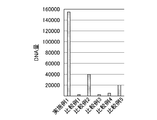
- the measurement result of subject A is shown in FIG. 5
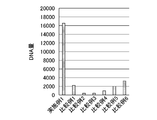
- the measurement result of subject B is shown in FIG. 6
- the measurement result of subject C is shown in FIG. 7
- the measurement result of subject D is shown in FIG. The measurement results are shown in FIG.
- Adhesive tape for collecting skin metabolites >> (Collection of soluble protein and measurement of the amount of soluble protein) For each of the subjects A and C to E, soluble protein was collected in the following steps S1 and S2, and the soluble protein was extracted in the following steps S3, and the amount of the soluble protein was measured.
- -Contact step S1 and peeling step S2 The adhesive tape 1 for collecting skin-resident microorganisms used in Example 1 is used as an adhesive tape for collecting skin metabolites.
- the adhesive tape for collecting skin metabolites (adhesive tape for collecting indigenous microorganisms on the skin 1) has a structure in which an adhesive layer made of an adhesive is provided on a flaky tape base material as a base. There is.
- the contact step S1 can be easily performed by attaching it to human skin in the same manner as an ordinary adhesive plaster or dressing tape.
- the adhesive tape for collecting skin biotransforms was attached to a release paper and sent to the subject together with latex gloves in an aluminum bag containing a sealable desiccant.
- the subject wore latex gloves immediately after waking up and before washing his face, opened the aluminum bag, took out the release paper with the adhesive tape for collecting skin biotransforms, and peeled off the adhesive tape for collecting skin biotransforms on the subject's forehead. paste.
- the adhesive tape for collecting skin biotransformers was peeled off, put back on the release paper, and put in an aluminum bag together with a desiccant and sealed. Then, it was stored frozen until the amount of soluble protein was measured.
- -Extraction step S3 Use PBS (manufactured by Fuji Film Wako Pure Chemical Industries, Ltd.) for the adhesive tape for collecting skin biotransforms obtained in the contact step S1 and the peeling step S2 and the adhesive tape for collecting skin biotransforms to which no skin metatransforms are attached as a control. It was placed in a container to which 2 mL was added, and the container was subjected to ultrasonic crushing treatment for 15 minutes. The ultrasonic crushing treatment was carried out for 30 cycles of 15 seconds on and 15 seconds off using an ultrasonic crusher (Bioruptor (registered trademark) Pico, manufactured by diagene).
- an ultrasonic crusher Bioruptor (registered trademark) Pico, manufactured by diagene
- the amount of soluble protein derived from human skin cells Ultrasonic crushing solution obtained in extraction step S3, measuring kit: Micro BCA Protein Assay Kit (manufactured by Thermo Fisher Scientific) and measuring device: Nanodrop ND-1000 (manufactured by Thermo Fisher Scientific).
- the total amount of soluble protein was measured under the condition of 562 nm spectrophotometer using Thermo Fisher Scientific).
- the amount of soluble protein derived from bacteria, which is simultaneously collected by the adhesive tape for collecting skin metabolites is the number of 16S rRNA gene copies ⁇ the number of 16S rRNA retained per unit bacterium (3.5) ⁇ the amount of protein retained per unit bacterium. It was calculated at (0.1 pg).
- the amount of soluble protein derived from bacteria per tape was as small as 0.04 ⁇ g or less. From the total amount of soluble proteins extracted from the adhesive tape for collecting skin metabolites obtained in the contact step S1 and the peeling step S2, the protein extracted from the adhesive tape for collecting skin metabolites to which no skin metabolites are attached The value excluding the amount and the amount of soluble protein estimated to be derived from bacteria was taken as the amount of soluble protein derived from human skin cells.
- the measurement was avoided.
- the amount of sebum is classified according to the skin type, and the amount of sebum on the cheeks is "dry / less sebum” when it is 70 or less, “normal” when it is 70-180, and “greasy” when it is 180 or more.
- the amount of sebum was 146.3 for subject A, 104.7 for subject C, 61.3 for subject D, and 74.0 for subject E.
- results of subject A are shown in Table 2
- results of subject C are shown in Table 3
- results of subject D are shown in Table 4.
- results of subject E are shown in Table 5.
- Example 1 skin-resident microorganisms in which the adhesive layer contains a rubber-based adhesive, the adhesive strength is 10 N / 12 mm or more, and the peeling power is 0.25 N / mm or more.
- Example 1 using the adhesive tape for collection the total amount of DNA was extremely high as compared with Comparative Examples 1 to 6.
- Tables 2 to 5 an adhesive tape for collecting skin metabolites, in which the adhesive layer contains a rubber-based adhesive, the adhesive strength is 10 N / 12 mm or more, and the peeling power is 0.25 N / mm or more.
- Example 1 used the amount of soluble protein was extremely high as compared with Comparative Examples 1, 2 and 6.
- Adhesive tape for collecting indigenous microorganisms on the skin 2 Base material 3 Adhesive layer
Landscapes
- Health & Medical Sciences (AREA)
- Life Sciences & Earth Sciences (AREA)
- Chemical & Material Sciences (AREA)
- Engineering & Computer Science (AREA)
- Molecular Biology (AREA)
- General Health & Medical Sciences (AREA)
- Organic Chemistry (AREA)
- Immunology (AREA)
- Analytical Chemistry (AREA)
- Pathology (AREA)
- Biochemistry (AREA)
- Biomedical Technology (AREA)
- Physics & Mathematics (AREA)
- Proteomics, Peptides & Aminoacids (AREA)
- Wood Science & Technology (AREA)
- Zoology (AREA)
- Bioinformatics & Cheminformatics (AREA)
- Biotechnology (AREA)
- Microbiology (AREA)
- Medicinal Chemistry (AREA)
- Hematology (AREA)
- General Physics & Mathematics (AREA)
- Urology & Nephrology (AREA)
- Biophysics (AREA)
- General Engineering & Computer Science (AREA)
- Genetics & Genomics (AREA)
- Food Science & Technology (AREA)
- Veterinary Medicine (AREA)
- Public Health (AREA)
- Animal Behavior & Ethology (AREA)
- Surgery (AREA)
- Medical Informatics (AREA)
- Heart & Thoracic Surgery (AREA)
- Cell Biology (AREA)
- Dermatology (AREA)
- Tropical Medicine & Parasitology (AREA)
- Virology (AREA)
- Chemical Kinetics & Catalysis (AREA)
- General Chemical & Material Sciences (AREA)
- Toxicology (AREA)
Priority Applications (4)
| Application Number | Priority Date | Filing Date | Title |
|---|---|---|---|
| JP2021542971A JP7684903B2 (ja) | 2019-08-26 | 2020-08-26 | 皮膚常在微生物採取用粘着テープ、被験者の身体状態を評価する方法、被験者に情報を提示する方法及び身体状態を改善又は予防する物質をスクリーニングする方法、並びに、皮膚代謝物採取用粘着テープ |
| US17/753,261 US20220338795A1 (en) | 2019-08-26 | 2020-08-26 | Adhesive tape for collecting skin indigenous microorganisms, method of evaluating physical condition of subject, method of presenting information to subject and method of screening for substance capable of improving or preventing physical condition, and adhesive tape for collecting skin metabolites |
| CN202080060320.XA CN114391101B (zh) | 2019-08-26 | 2020-08-26 | 粘合胶带、以及从受试者的皮肤表面采集的皮肤微生物群落和皮肤代谢物的应用 |
| EP20857703.1A EP4023745B1 (en) | 2019-08-26 | 2020-08-26 | Adhesive tape for collecting skin microorganisms or skin metabolites |
Applications Claiming Priority (2)
| Application Number | Priority Date | Filing Date | Title |
|---|---|---|---|
| JP2019-154041 | 2019-08-26 | ||
| JP2019154041 | 2019-08-26 |
Publications (1)
| Publication Number | Publication Date |
|---|---|
| WO2021039854A1 true WO2021039854A1 (ja) | 2021-03-04 |
Family
ID=74685059
Family Applications (1)
| Application Number | Title | Priority Date | Filing Date |
|---|---|---|---|
| PCT/JP2020/032217 Ceased WO2021039854A1 (ja) | 2019-08-26 | 2020-08-26 | 皮膚常在微生物採取用粘着テープ、被験者の身体状態を評価する方法、被験者に情報を提示する方法及び身体状態を改善又は予防する物質をスクリーニングする方法、並びに、皮膚代謝物採取用粘着テープ |
Country Status (5)
| Country | Link |
|---|---|
| US (1) | US20220338795A1 (https=) |
| EP (1) | EP4023745B1 (https=) |
| JP (1) | JP7684903B2 (https=) |
| CN (1) | CN114391101B (https=) |
| WO (1) | WO2021039854A1 (https=) |
Cited By (1)
| Publication number | Priority date | Publication date | Assignee | Title |
|---|---|---|---|---|
| JP2023057330A (ja) * | 2021-10-11 | 2023-04-21 | 株式会社コーセー | 肌状態の推定方法 |
Families Citing this family (2)
| Publication number | Priority date | Publication date | Assignee | Title |
|---|---|---|---|---|
| CN114983492A (zh) * | 2022-06-24 | 2022-09-02 | 广东粤港澳大湾区国家纳米科技创新研究院 | 皮肤表面微生物的采集方法及检测方法 |
| CN118228332B (zh) * | 2024-04-07 | 2024-09-13 | 江苏元一胶囊科技有限公司 | 基于皮膜特征的辅料开发方法及系统 |
Citations (6)
| Publication number | Priority date | Publication date | Assignee | Title |
|---|---|---|---|---|
| JPS6046849B2 (ja) | 1977-02-16 | 1985-10-18 | ソニー株式会社 | トランジスタ増巾回路 |
| JPS63106558A (ja) * | 1986-06-13 | 1988-05-11 | Pola Chem Ind Inc | 角質層標本の作成方法 |
| JP2001161697A (ja) * | 1999-12-03 | 2001-06-19 | Sony Cp Laboratories Inc | 皮膚表皮採取用粘着テープ |
| JP3142919U (ja) * | 2008-04-16 | 2008-07-03 | 順一 今 | 動物用皮膚チェックシート |
| JP2013188326A (ja) | 2012-03-13 | 2013-09-26 | Shiseido Co Ltd | 肌状態解析方法、肌状態解析装置、及び、肌状態解析システム、並びに、該肌状態解析方法を実行させるためのプログラム、及び、該プログラムを記録した記録媒体 |
| WO2018043636A1 (ja) * | 2016-08-31 | 2018-03-08 | 株式会社ヤクルト本社 | 皮膚分析又は観察用検体の調製方法 |
Family Cites Families (7)
| Publication number | Priority date | Publication date | Assignee | Title |
|---|---|---|---|---|
| JP5297180B2 (ja) * | 2008-12-22 | 2013-09-25 | 東洋紡株式会社 | 表皮材用積層ポリエステルフィルムおよびこれを用いた触感が改善された複合成型体 |
| JP5596391B2 (ja) * | 2010-03-30 | 2014-09-24 | バンドー化学株式会社 | キネシオロジーテープ |
| US11072832B2 (en) * | 2013-06-18 | 2021-07-27 | Prodermiq, Inc. | Customized skin care products and personal care products based on the analysis of skin flora |
| JP2015193597A (ja) * | 2014-03-20 | 2015-11-05 | 東レ株式会社 | 皮膚粘着シートおよび薬液シート |
| JP6046849B1 (ja) * | 2015-07-21 | 2016-12-21 | TAK−Circulator株式会社 | 身体状態の評価方法、情報の提示方法、および身体状態を改善又は予防する物質のスクリーニング方法 |
| EP3589213A4 (en) * | 2017-03-03 | 2021-03-31 | Children's Hospital Medical Center | NON-INVASIVE SKIN SAMPLE COLLECTION AND ANALYSIS METHODS |
| CN107773275B (zh) * | 2017-11-20 | 2023-10-13 | 珠海伊斯佳科技股份有限公司 | 一种皮肤检测采样包及其应用 |
-
2020
- 2020-08-26 US US17/753,261 patent/US20220338795A1/en active Pending
- 2020-08-26 JP JP2021542971A patent/JP7684903B2/ja active Active
- 2020-08-26 CN CN202080060320.XA patent/CN114391101B/zh active Active
- 2020-08-26 EP EP20857703.1A patent/EP4023745B1/en active Active
- 2020-08-26 WO PCT/JP2020/032217 patent/WO2021039854A1/ja not_active Ceased
Patent Citations (6)
| Publication number | Priority date | Publication date | Assignee | Title |
|---|---|---|---|---|
| JPS6046849B2 (ja) | 1977-02-16 | 1985-10-18 | ソニー株式会社 | トランジスタ増巾回路 |
| JPS63106558A (ja) * | 1986-06-13 | 1988-05-11 | Pola Chem Ind Inc | 角質層標本の作成方法 |
| JP2001161697A (ja) * | 1999-12-03 | 2001-06-19 | Sony Cp Laboratories Inc | 皮膚表皮採取用粘着テープ |
| JP3142919U (ja) * | 2008-04-16 | 2008-07-03 | 順一 今 | 動物用皮膚チェックシート |
| JP2013188326A (ja) | 2012-03-13 | 2013-09-26 | Shiseido Co Ltd | 肌状態解析方法、肌状態解析装置、及び、肌状態解析システム、並びに、該肌状態解析方法を実行させるためのプログラム、及び、該プログラムを記録した記録媒体 |
| WO2018043636A1 (ja) * | 2016-08-31 | 2018-03-08 | 株式会社ヤクルト本社 | 皮膚分析又は観察用検体の調製方法 |
Non-Patent Citations (4)
| Title |
|---|
| ANONYMOUS: "POLA Chemical thoroughly investigates men's skin The shine of the forehead increases significantly from 4 hours after washing the face, etc.", NEWS RELEASE P O HOLDINGS, 18 March 2009 (2009-03-18), pages 1 - 3, XP055916086 * |
| MORITA ET AL., MICROBES ENVIRON, vol. 22, no. 3, 2007, pages 214 - 222 |
| See also references of EP4023745A4 |
| ZOUBOULIS, C.C.STRATAKIS, C.A.CHROUSOS, G.P. ET AL.: "Metabolism and skin diseases", REV ENDOCR METAB DISORD, vol. 17, 2016, pages 241 - 246, XP036116402, DOI: 10.1007/s11154-016-9396-6 |
Cited By (1)
| Publication number | Priority date | Publication date | Assignee | Title |
|---|---|---|---|---|
| JP2023057330A (ja) * | 2021-10-11 | 2023-04-21 | 株式会社コーセー | 肌状態の推定方法 |
Also Published As
| Publication number | Publication date |
|---|---|
| EP4023745A4 (en) | 2023-11-15 |
| JPWO2021039854A1 (https=) | 2021-03-04 |
| CN114391101A (zh) | 2022-04-22 |
| EP4023745C0 (en) | 2025-10-08 |
| EP4023745B1 (en) | 2025-10-08 |
| JP7684903B2 (ja) | 2025-05-28 |
| US20220338795A1 (en) | 2022-10-27 |
| CN114391101B (zh) | 2025-04-25 |
| EP4023745A1 (en) | 2022-07-06 |
Similar Documents
| Publication | Publication Date | Title |
|---|---|---|
| JP6874244B2 (ja) | 身体状態の評価方法、情報の提示方法、および身体状態を改善又は予防する物質のスクリーニング方法 | |
| WO2021039854A1 (ja) | 皮膚常在微生物採取用粘着テープ、被験者の身体状態を評価する方法、被験者に情報を提示する方法及び身体状態を改善又は予防する物質をスクリーニングする方法、並びに、皮膚代謝物採取用粘着テープ | |
| Whiteman et al. | Determinants of melanocyte density in adult human skin | |
| JP2020074769A (ja) | 被験体の皮膚細胞に由来する核酸の調製方法 | |
| Carvalho et al. | Skin microbiota and the cosmetic industry | |
| Kamaraj et al. | An evaluation of microbial profile in halitosis with tongue coating using PCR (polymerase chain reaction)-a clinical and microbiological study | |
| CN105699654B (zh) | 皮肤角质层的ngal的表达量的用途 | |
| Piérard et al. | Cyanoacrylate skin surface stripping and the 3S‐Biokit advent in tropical dermatology: a look from Liège | |
| JP4805794B2 (ja) | 角層蛋白質の検出方法並びにこれを利用する表皮ターンオーバーの評価方法及び肌状態評価方法 | |
| JP2017009426A (ja) | 発毛の状態及び頭皮の圧縮応力の評価方法 | |
| WO2012114932A1 (ja) | 皮膚のストレス蓄積度の評価方法 | |
| JP7190266B2 (ja) | 特定の肌状態と相関のある特定の環境由来菌の菌量に基づく、肌状態の診断方法、皮膚常在細菌叢の多様性の推測方法、特定の環境由来菌の菌量の推測方法、特定の肌状態と相関のある菌の属性を解析する方法、肌状態改善作用を有する物質又は美容方法のスクリーニング方法 | |
| JPWO2020195829A1 (ja) | 皮膚の状態を評価する方法 | |
| JP7845827B2 (ja) | 月経前症候群の重症度検出方法 | |
| Dubljanin et al. | Onychomycosis: clinical findings, etiological agents and evaluation of laboratory methods | |
| DE102009046128A1 (de) | Nicht-invasives Screeningverfahren für Wirkstoffe gegen Hautalterung | |
| JP2023075830A (ja) | 皮膚外用製剤の有効性の評価方法 | |
| WO2020195829A1 (ja) | 皮膚の状態を評価する方法 | |
| JP2024033289A (ja) | 皮膚弾力性のマーカー及びその利用 | |
| Yuan | Exploratory research for pathogenesis of papulopustular rosacea and skin barrier research in Besançon and Shanghai | |
| JP2017009427A (ja) | 頭皮の圧縮応力の評価方法 | |
| Villanueva-Reyes et al. | Comparative evaluation of conventional and nanopore approaches in onychomycosis diagnosis | |
| JP2023069413A (ja) | 被膜の皮膚保湿効果の評価方法 | |
| JP2016114517A (ja) | 皮膚粘弾性のマーカー及びその利用 | |
| JP2025015487A (ja) | 肌状態の推定方法、被験者に適した組成物及び/又は刺激の提案方法 |
Legal Events
| Date | Code | Title | Description |
|---|---|---|---|
| 121 | Ep: the epo has been informed by wipo that ep was designated in this application |
Ref document number: 20857703 Country of ref document: EP Kind code of ref document: A1 |
|
| DPE1 | Request for preliminary examination filed after expiration of 19th month from priority date (pct application filed from 20040101) | ||
| ENP | Entry into the national phase |
Ref document number: 2021542971 Country of ref document: JP Kind code of ref document: A |
|
| NENP | Non-entry into the national phase |
Ref country code: DE |
|
| ENP | Entry into the national phase |
Ref document number: 2020857703 Country of ref document: EP Effective date: 20220328 |
|
| WWG | Wipo information: grant in national office |
Ref document number: 202080060320.X Country of ref document: CN |
|
| WWG | Wipo information: grant in national office |
Ref document number: 2020857703 Country of ref document: EP |