WO2021015040A1 - 育毛剤、およびこれを含む飲食品 - Google Patents
育毛剤、およびこれを含む飲食品 Download PDFInfo
- Publication number
- WO2021015040A1 WO2021015040A1 PCT/JP2020/027260 JP2020027260W WO2021015040A1 WO 2021015040 A1 WO2021015040 A1 WO 2021015040A1 JP 2020027260 W JP2020027260 W JP 2020027260W WO 2021015040 A1 WO2021015040 A1 WO 2021015040A1
- Authority
- WO
- WIPO (PCT)
- Prior art keywords
- hyp
- gly
- hair
- pro
- collagen
- Prior art date
- Legal status (The legal status is an assumption and is not a legal conclusion. Google has not performed a legal analysis and makes no representation as to the accuracy of the status listed.)
- Ceased
Links
Images

Classifications
-
- A—HUMAN NECESSITIES
- A61—MEDICAL OR VETERINARY SCIENCE; HYGIENE
- A61K—PREPARATIONS FOR MEDICAL, DENTAL OR TOILETRY PURPOSES
- A61K38/00—Medicinal preparations containing peptides
- A61K38/04—Peptides having up to 20 amino acids in a fully defined sequence; Derivatives thereof
- A61K38/06—Tripeptides
-
- A—HUMAN NECESSITIES
- A23—FOODS OR FOODSTUFFS; TREATMENT THEREOF, NOT COVERED BY OTHER CLASSES
- A23L—FOODS, FOODSTUFFS OR NON-ALCOHOLIC BEVERAGES, NOT OTHERWISE PROVIDED FOR; PREPARATION OR TREATMENT THEREOF
- A23L2/00—Non-alcoholic beverages; Dry compositions or concentrates therefor; Preparation or treatment thereof
- A23L2/38—Other non-alcoholic beverages
-
- A—HUMAN NECESSITIES
- A23—FOODS OR FOODSTUFFS; TREATMENT THEREOF, NOT COVERED BY OTHER CLASSES
- A23L—FOODS, FOODSTUFFS OR NON-ALCOHOLIC BEVERAGES, NOT OTHERWISE PROVIDED FOR; PREPARATION OR TREATMENT THEREOF
- A23L33/00—Modifying nutritive qualities of foods; Dietetic products; Preparation or treatment thereof
- A23L33/10—Modifying nutritive qualities of foods; Dietetic products; Preparation or treatment thereof using additives
- A23L33/17—Amino acids, peptides or proteins
- A23L33/175—Amino acids
-
- A—HUMAN NECESSITIES
- A61—MEDICAL OR VETERINARY SCIENCE; HYGIENE
- A61K—PREPARATIONS FOR MEDICAL, DENTAL OR TOILETRY PURPOSES
- A61K31/00—Medicinal preparations containing organic active ingredients
- A61K31/185—Acids; Anhydrides, halides or salts thereof, e.g. sulfur acids, imidic, hydrazonic or hydroximic acids
- A61K31/19—Carboxylic acids, e.g. valproic acid
- A61K31/195—Carboxylic acids, e.g. valproic acid having an amino group
- A61K31/197—Carboxylic acids, e.g. valproic acid having an amino group the amino and the carboxyl groups being attached to the same acyclic carbon chain, e.g. gamma-aminobutyric acid [GABA], beta-alanine, epsilon-aminocaproic acid or pantothenic acid
- A61K31/198—Alpha-amino acids, e.g. alanine or edetic acid [EDTA]
-
- A—HUMAN NECESSITIES
- A61—MEDICAL OR VETERINARY SCIENCE; HYGIENE
- A61K—PREPARATIONS FOR MEDICAL, DENTAL OR TOILETRY PURPOSES
- A61K31/00—Medicinal preparations containing organic active ingredients
- A61K31/33—Heterocyclic compounds
- A61K31/395—Heterocyclic compounds having nitrogen as a ring hetero atom, e.g. guanethidine or rifamycins
- A61K31/40—Heterocyclic compounds having nitrogen as a ring hetero atom, e.g. guanethidine or rifamycins having five-membered rings with one nitrogen as the only ring hetero atom, e.g. sulpiride, succinimide, tolmetin, buflomedil
- A61K31/401—Proline; Derivatives thereof, e.g. captopril
-
- A—HUMAN NECESSITIES
- A61—MEDICAL OR VETERINARY SCIENCE; HYGIENE
- A61K—PREPARATIONS FOR MEDICAL, DENTAL OR TOILETRY PURPOSES
- A61K38/00—Medicinal preparations containing peptides
- A61K38/04—Peptides having up to 20 amino acids in a fully defined sequence; Derivatives thereof
- A61K38/05—Dipeptides
-
- A—HUMAN NECESSITIES
- A61—MEDICAL OR VETERINARY SCIENCE; HYGIENE
- A61K—PREPARATIONS FOR MEDICAL, DENTAL OR TOILETRY PURPOSES
- A61K38/00—Medicinal preparations containing peptides
- A61K38/16—Peptides having more than 20 amino acids; Gastrins; Somatostatins; Melanotropins; Derivatives thereof
- A61K38/17—Peptides having more than 20 amino acids; Gastrins; Somatostatins; Melanotropins; Derivatives thereof from animals; from humans
- A61K38/39—Connective tissue peptides, e.g. collagen, elastin, laminin, fibronectin, vitronectin, cold insoluble globulin [CIG]
-
- A—HUMAN NECESSITIES
- A61—MEDICAL OR VETERINARY SCIENCE; HYGIENE
- A61K—PREPARATIONS FOR MEDICAL, DENTAL OR TOILETRY PURPOSES
- A61K8/00—Cosmetics or similar toiletry preparations
- A61K8/18—Cosmetics or similar toiletry preparations characterised by the composition
- A61K8/30—Cosmetics or similar toiletry preparations characterised by the composition containing organic compounds
- A61K8/64—Proteins; Peptides; Derivatives or degradation products thereof
-
- A—HUMAN NECESSITIES
- A61—MEDICAL OR VETERINARY SCIENCE; HYGIENE
- A61K—PREPARATIONS FOR MEDICAL, DENTAL OR TOILETRY PURPOSES
- A61K8/00—Cosmetics or similar toiletry preparations
- A61K8/18—Cosmetics or similar toiletry preparations characterised by the composition
- A61K8/30—Cosmetics or similar toiletry preparations characterised by the composition containing organic compounds
- A61K8/64—Proteins; Peptides; Derivatives or degradation products thereof
- A61K8/65—Collagen; Gelatin; Keratin; Derivatives or degradation products thereof
-
- A—HUMAN NECESSITIES
- A61—MEDICAL OR VETERINARY SCIENCE; HYGIENE
- A61P—SPECIFIC THERAPEUTIC ACTIVITY OF CHEMICAL COMPOUNDS OR MEDICINAL PREPARATIONS
- A61P17/00—Drugs for dermatological disorders
- A61P17/14—Drugs for dermatological disorders for baldness or alopecia
-
- A—HUMAN NECESSITIES
- A61—MEDICAL OR VETERINARY SCIENCE; HYGIENE
- A61P—SPECIFIC THERAPEUTIC ACTIVITY OF CHEMICAL COMPOUNDS OR MEDICINAL PREPARATIONS
- A61P43/00—Drugs for specific purposes, not provided for in groups A61P1/00-A61P41/00
-
- A—HUMAN NECESSITIES
- A61—MEDICAL OR VETERINARY SCIENCE; HYGIENE
- A61Q—SPECIFIC USE OF COSMETICS OR SIMILAR TOILETRY PREPARATIONS
- A61Q7/00—Preparations for affecting hair growth
-
- A—HUMAN NECESSITIES
- A23—FOODS OR FOODSTUFFS; TREATMENT THEREOF, NOT COVERED BY OTHER CLASSES
- A23L—FOODS, FOODSTUFFS OR NON-ALCOHOLIC BEVERAGES, NOT OTHERWISE PROVIDED FOR; PREPARATION OR TREATMENT THEREOF
- A23L2/00—Non-alcoholic beverages; Dry compositions or concentrates therefor; Preparation or treatment thereof
- A23L2/52—Adding ingredients
-
- A—HUMAN NECESSITIES
- A23—FOODS OR FOODSTUFFS; TREATMENT THEREOF, NOT COVERED BY OTHER CLASSES
- A23L—FOODS, FOODSTUFFS OR NON-ALCOHOLIC BEVERAGES, NOT OTHERWISE PROVIDED FOR; PREPARATION OR TREATMENT THEREOF
- A23L33/00—Modifying nutritive qualities of foods; Dietetic products; Preparation or treatment thereof
- A23L33/10—Modifying nutritive qualities of foods; Dietetic products; Preparation or treatment thereof using additives
- A23L33/17—Amino acids, peptides or proteins
- A23L33/18—Peptides; Protein hydrolysates
-
- A—HUMAN NECESSITIES
- A23—FOODS OR FOODSTUFFS; TREATMENT THEREOF, NOT COVERED BY OTHER CLASSES
- A23V—INDEXING SCHEME RELATING TO FOODS, FOODSTUFFS OR NON-ALCOHOLIC BEVERAGES AND LACTIC OR PROPIONIC ACID BACTERIA USED IN FOODSTUFFS OR FOOD PREPARATION
- A23V2002/00—Food compositions, function of food ingredients or processes for food or foodstuffs
-
- A—HUMAN NECESSITIES
- A23—FOODS OR FOODSTUFFS; TREATMENT THEREOF, NOT COVERED BY OTHER CLASSES
- A23V—INDEXING SCHEME RELATING TO FOODS, FOODSTUFFS OR NON-ALCOHOLIC BEVERAGES AND LACTIC OR PROPIONIC ACID BACTERIA USED IN FOODSTUFFS OR FOOD PREPARATION
- A23V2200/00—Function of food ingredients
- A23V2200/30—Foods, ingredients or supplements having a functional effect on health
- A23V2200/318—Foods, ingredients or supplements having a functional effect on health having an effect on skin health and hair or coat
Definitions
- the present invention relates to a hair restorer and foods and drinks containing the same.
- Collagen hydrolyzate (hereinafter, also referred to as "collagen peptide mixture”) is known to exhibit various physiological activities on living organisms.
- Patent Document 1 discloses that collagen peptide mixture is used as a therapeutic or prophylactic agent for diabetes because it acts on an enzyme that controls insulin secretion.
- Patent Document 2 discloses that the collagen peptide mixture is used as an articular cartilage regeneration promoter because the collagen peptide mixture has an action of promoting cartilage regeneration.
- Japanese Unexamined Patent Publication No. 2005-209488 Patent Document 3 discloses that a collagen peptide mixture is used as a blood pressure lowering agent because the collagen peptide mixture exhibits a blood pressure lowering effect.
- Patent Document 4 Japanese Patent Application Laid-Open No. 2009-161509 (Patent Document 4) and Non-Patent Document 1 disclose that XVII type collagen has a hair loss inhibitory effect and a hair depigmentation inhibitory effect. It has not been known so far that the peptide mixture has an action of promoting hair growth or hair growth in hair or an action of preventing the progression of hair loss. For this reason, research has been enthusiastically pursued as a new physiological activity of the collagen peptide mixture and the collagen-derived amino acids and peptides contained therein to promote hair growth or hair growth in hair or prevent the progression of hair loss. ing.
- the present invention provides a hair restorer containing amino acids, peptides, etc., which promotes hair growth or hair growth in hair, or prevents the progression of hair loss, and foods and drinks containing the same. With the goal.
- the present inventors While searching for a new physiological activity of the collagen peptide mixture, the present inventors have a predetermined amino acid contained in the collagen peptide mixture, a predetermined peptide, and the like to promote hair growth or hair growth in the hair, or to remove hair. It was found that it exerts at least one of the action of preventing the progression of collagen, and the present invention was reached. Specifically, the present invention is as follows.
- the hair restorer according to the present invention includes Hyp, Pro-Hyp, Hyp-Gly, Gly-Pro, Leu-Hyp, Phe-Hyp, Pro-Ala, Pro-Gly, Pro-Pro, Glu-Hyp, Gly-Pro- One or more amino acids or peptides selected from the group consisting of Hyp, Ala-Hyp-Gly, Glu-Hyp-Gly, Pro-Ala-Gly and Ser-Hyp-Gly, or salts thereof, or chemically modified products thereof. contains.
- the amino acids and peptides are preferably derived from collagen.
- the hair restorer is preferably a collagen peptide mixture containing at least one of the amino acids or the peptides.
- the weight average molecular weight of the collagen peptide mixture is preferably 100 Da or more and 8000 Da or less.
- the hair restorer is preferably a cell growth promoter for dermal papilla cells.
- the hair restorer is preferably an agent for promoting hair growth or hair growth on the hair, or an agent for preventing the progression of hair loss.
- the food and drink according to the present invention contains the above-mentioned hair restorer.
- a hair restorer containing amino acids, peptides, etc., which promotes hair growth or hair growth in hair or prevents the progression of hair loss, and foods and drinks containing the same.
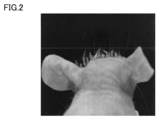
- FIG. 5 is a drawing-substituting photograph showing the heads of 11-week-old hairless mice of the first group fed with a magnesium-deficient special diet containing Pro-Hyp.
- the notation in the form of "A to B” means the upper and lower limits of the range (that is, A or more and B or less), and there is no description of the unit in A, and the unit is described only in B. In the case, the unit of A and the unit of B are the same.
- the term "hair growth” in “hair growth agent” means not only “hair growth” which means the action of growing hair, but also “hair growth” which means the action of growing new hair and promoting its growth.
- prevention of progression of hair loss which expresses the action of making it difficult for hair to come off, shall be included.
- the hair restorer according to the present invention includes Hyp, Pro-Hyp, Hyp-Gly, Gly-Pro, Leu-Hyp, Phe-Hyp, Pro-Ala, Pro-Gly, Pro-Pro, Glu-Hyp, Gly-Pro- One or more amino acids or peptides selected from the group consisting of Hyp, Ala-Hyp-Gly, Glu-Hyp-Gly, Pro-Ala-Gly and Ser-Hyp-Gly, or salts thereof, or chemically modified products thereof. contains.
- a hair restorer having such characteristics has an action of promoting cell proliferation of dermal papilla cells, and thus can exert at least one of an action of promoting hair growth or hair growth in hair or an action of preventing the progression of hair loss.
- the hair restorers are Hyp, Pro-Hyp, Hyp-Gly, Gly-Pro, Leu-Hyp, Phe-Hyp, Pro-Ala, Pro-Gly, Pro-Pro, Glu-Hyp, Gly-Pro-Hyp. , Ala-Hyp-Gly, Glu-Hyp-Gly, Pro-Ala-Gly and Ser-Hyp-Gly containing one or more amino acids or peptides selected from the group, or salts thereof, or chemically modified products thereof. To do.
- amino acid is represented by an abbreviation of three-letter notation unless otherwise specified. Further, “amino acid” means an L-type amino acid unless otherwise specified.
- peptide means, for example, "Pro-Hyp", a peptide (dipeptide) arranged from the N-terminal side toward the C-terminal side in the order of proline and hydroxyproline, and "Glu-Hyp-” In the case of “Gly”, it means a peptide (tripeptide) in which glutamate, hydroxyproline, and glycine are arranged in this order from the N-terminal side toward the C-terminal side. This also applies to the description of dipeptides and tripeptides other than "Pro-Hyp" and "Glu-Hyp-Gly”.
- Hair restorers include Hyp, Pro-Hyp, Hyp-Gly, Gly-Pro, Pro-Ala, Pro-Gly, Pro-Pro, Gly-Pro-Hyp, Ala-Hyp-Gly, Glu-Hyp-Gly and Pro- It preferably contains one or more amino acids or peptides selected from the group consisting of Ala-Gly, salts thereof, or chemically modified products thereof. It is more preferable that the hair restorer contains at least one peptide of Pro-Hyp or Hyp-Gly, a salt thereof, or a chemically modified product thereof. Further, the hair restorer may be in a mode containing a combination of Hyp and Pro, or a mode containing a combination of Hyp and Gly. In these cases, the hair restorer can more prominently exhibit the cell growth promoting action of the dermal papilla cells.
- the "salt" of the amino acid or peptide is, for example, an inorganic acid salt such as a hydrochloride, sulfate or phosphate of the amino acid or peptide, a methanesulfonate, a benzenesulfonate, a succinate, a oxalate or the like. It is formed as an inorganic base salt such as an organic acid salt, a sodium salt, a potassium salt and a calcium salt, and an organic base salt such as a triethylammonium salt.
- an inorganic acid salt such as a hydrochloride, sulfate or phosphate of the amino acid or peptide, a methanesulfonate, a benzenesulfonate, a succinate, a oxalate or the like. It is formed as an inorganic base salt such as an organic acid salt, a sodium salt, a potassium salt and a calcium salt, and an organic base salt such as
- the "chemically modified product" of the above amino acid and peptide means a compound in which the free functional group of the amino acid residue as a constituent unit is chemically modified.
- Chemical modification can be carried out, for example, on the hydroxyl group of hydroxyproline, the amino group of the amino acid on the N-terminal (amino-terminal) side, and the carboxyl group of the amino acid on the C-terminal (carboxyl-terminal) side.
- Conventionally known chemical modification techniques for amino acids and peptides are applied to specific means of chemical modification and treatment conditions thereof.
- the chemically modified product of the amino acid and peptide can exhibit an effect of improving solubility from weakly acidic to neutral, and an effect of improving compatibility with other active ingredients.
- a Glu-Hyp-Gly tripeptide can be subjected to O-acetylation or the like as a chemical modification of the hydroxyl group in hydroxyproline.
- This O-acetylation can be carried out, for example, by allowing acetic anhydride to act in an aqueous or non-aqueous solvent.
- esterification, amidation and the like can be performed as a chemical modification of the carboxyl group in glycine.
- the esterification can be carried out by suspending the peptide in methanol and then aerating it with dry hydrogen chloride gas.
- the amidation can be carried out by allowing carbodiimide or the like to act on the peptide.
- methylation can be performed as a chemical modification of the free amino group in the peptide.
- At least one of phosphorylation and sulfation can be performed as a chemical modification of the free hydroxyl group in the peptide.
- the amino acids and peptides are preferably derived from collagen.
- collagen as a raw material has conventionally been used for animal skins, skins, bones, cartilage, tendons, etc. represented by cows, pigs, sheep, chickens, ostriches, etc., or fish bones, skins, scales, etc. It can be obtained by performing known degreasing or decalcification treatment, extraction treatment and the like.
- gelatin can be used as a raw material for the peptide. Gelatin can be obtained by treating the collagen obtained as described above by a conventionally known method such as hot water extraction. Commercially available collagen and gelatin can also be used as raw materials.
- the amino acids and peptides can be obtained by hydrolyzing two or more kinds of endo-type protease and exo-type protease with respect to both or one of the above-mentioned collagen and gelatin.
- the amino acid and peptide are obtained as a collagen peptide mixture mixed with other collagen peptides by the above hydrolysis, and the collagen peptide mixture itself and a partially purified mixture thereof can be used as the hair restorer according to the present invention. it can. That is, the hair restorer is preferably a collagen peptide mixture containing at least one of the above amino acids or the above peptides.
- a purified product containing either the amino acid or the peptide described above can be obtained with high purity.
- the amino acids and peptides are derived from collagen, it is preferable to obtain them by using a method of enzymatically treating collagen or gelatin described later in two steps.
- the weight average molecular weight of the collagen peptide mixture is 100 Da or more and 8000 Da or less.
- the weight average molecular weight of the collagen peptide mixture is more preferably 100 Da or more and 6000 Da or less, and further preferably 100 Da or more and 4000 Da or less.
- the hair restorer exhibits a cell proliferation effect of hair papilla cells more prominently, thereby promoting hair growth and hair growth in the hair and preventing the progression of hair loss. At least one of the actions can be more fully obtained.
- the weight average molecular weight exceeds 8000 Da, the above-mentioned effect of the hair restorer may be insufficient.
- the weight average molecular weight of the collagen peptide mixture can be determined by performing size exclusion chromatography (SEC) under the following measurement conditions.
- a sample containing about 0.2 g of the collagen peptide mixture is added to about 100 ml of distilled water, stirred, and then filtered using a 0.2 ⁇ m filter to measure the weight average molecular weight. (Target object) is prepared. By subjecting this test object to the above-mentioned size exclusion chromatography, the weight average molecular weight of the collagen peptide mixture can be determined.
- the amino acid or peptide contained in the hair restorer can be obtained by a conventionally known method.
- the above amino acid (Hyp) can be obtained by purchasing a commercially available amino acid.
- the amino acids can also be obtained by using a method of hydrolyzing collagen or gelatin.
- the peptides can be obtained by using conventionally known liquid phase or solid phase peptide synthesis methods or methods of hydrolyzing collagen or gelatin, respectively. Can be done. From the viewpoint of efficiency, the peptide is preferably produced by a chemical synthesis method using an amino acid described later, or a method of treating collagen or gelatin described later with an enzyme in two steps.
- the above peptide is a method of treating collagen or gelatin with an enzyme in two steps, a method of omitting a primary enzyme and treating with an enzyme only with a secondary enzyme, and a method of simultaneously performing an enzyme treatment with a primary enzyme and a secondary enzyme. It is also possible to manufacture by using.
- "Glu-Hyp-Gly" will be focused on from the peptides contained in the hair restorer, and a method for producing the same will be described as an example of a method for producing the peptide contained in the hair restorer.
- the above peptide can be obtained by using a general peptide synthesis method.
- a solid phase synthesis method and a liquid phase synthesis method are known.
- the Fmoc method and the Boc method are known as solid-phase synthesis methods.
- the peptide can be obtained by using either the Fmoc method or the Boc method.
- a solid-phase synthesis method of a peptide a method for synthesizing a tripeptide represented by Glu-Hyp-Gly can be carried out as follows.
- beads of polystyrene polymer gel with a diameter of about 0.1 mm whose surface is modified with an amino group are prepared as a solid phase.
- Diisopropylcarbodiimide is separately prepared as a condensing agent.
- the amino group of glycine which is an amino acid on the C-terminal (carboxyl terminal) side, is protected by an Fmoc (fluorenyl-methoxy-carbonyl) group, and the carboxyl of the glycine is subjected to a dehydration reaction using the condensing agent.
- the group and the amino group of the solid phase are peptide-bonded.
- the solid phase is washed with a solvent to remove the residual condensing agent and amino acids, and then the protecting group of the amino group of glycine peptide-bonded to the solid phase is removed (deprotected).
- hydroxyproline whose amino group is protected with an Fmoc group is prepared, and the carboxyl group of this hydroxyproline and the deprotected amino group of glycine are peptide-bonded by using the condensing agent.
- Glu- A tripeptide represented by Hyper-Gly is synthesized.
- the tripeptide can be produced by deprotecting the amino group of the glutamic acid and further immersing the tripeptide from the solid phase with trifluoroacetic acid to cleave it.
- enzyme treatment of collagen or gelatin in two steps means the following. That is, an enzyme having aminopeptidase N activity, an enzyme having both aminopeptidase N activity and prolyltripeptidylaminopeptidase activity, after performing primary enzyme treatment by a conventionally known method for cleaving the peptide bond of collagen or gelatin.
- the secondary enzyme treatment is carried out by a combination of an enzyme having an aminopeptidase N activity and an enzyme having a prolyltripeptidyl aminopeptidase activity.
- the collagen peptide mixture containing the Glu-Hyp-Gly can be obtained from the collagen peptide mixture precursor.
- the method of enzymatically treating collagen or gelatin in two steps will be described in more detail below.
- the enzyme used in the primary enzyme treatment is not particularly limited as long as it is an enzyme capable of cleaving the peptide bond of collagen or gelatin, and any proteolytic enzyme can be used. Specific examples thereof include collagenase, thiol protease, serine protease, acidic protease, alkaline protease, metal protease and the like, and one selected from these groups may be used alone, or two or more thereof may be used in combination. You may. As the thiol protease, plant-derived chymopapain, papain, bromelain, ficin, animal-derived cathepsin, calcium-dependent protease and the like can be used.
- serine protease trypsin, cathepsin D and the like can be used.
- acidic protease pepsin, chymotrypsin and the like can be used.
- an enzyme derived from a pathogenic microorganism should not be used, and another enzyme should be used. Is preferable.
- the amount of enzyme in the primary enzyme treatment for example, it is preferable that the above-mentioned enzyme is 0.1 to 5 parts by mass with respect to 100 parts by mass of collagen or gelatin.
- the treatment temperature in the primary enzyme treatment is preferably 30 to 65 ° C., and the treatment time is preferably 10 minutes to 72 hours.
- the weight average molecular weight of the collagen peptide mixture precursor obtained by the above-mentioned primary enzyme treatment is preferably 500 to 20000 Da, more preferably 500 to 10000 Da, and further preferably 500 to 8000 Da. If the weight average molecular weight is within the above range, it can be said that a peptide having an appropriate molecular weight is sufficiently produced.
- the enzyme can be inactivated as needed.
- the deactivation temperature in this case is preferably, for example, 70 to 100 ° C.
- the weight average molecular weight of the collagen peptide mixture precursor can be determined by the method using SEC described above.
- Examples of the enzyme used in the secondary enzyme treatment include an enzyme having aminopeptidase N activity, an enzyme having both aminopeptidase N activity and prolyltripeptidylaminopeptidase activity, or an enzyme having aminopeptidase N activity and prolyltripeptidylaminopeptidase.
- a combination of active enzymes can be mentioned.
- the "enzyme having aminopeptidase N activity” in the present specification is a peptidase having a function of releasing an amino acid from the N-terminal side of a peptide chain, and is the second non-proline or hydroxyproline from the N-terminal side.
- An enzyme that acts in the presence of amino acids is a peptidase having a function of releasing an amino acid from the N-terminal side of a peptide chain, and is the second non-proline or hydroxyproline from the N-terminal side.
- the term "enzyme having prolyltripeptidylaminopeptidase activity” refers to a peptidase that releases only the N-terminal 3 amino acid residue from a peptide in which the third N-terminal side is proline or hydroxyproline. ..
- the enzyme used in the secondary enzyme treatment when considering the use of the hair restorer according to the present invention in pharmaceuticals, foods for specified health uses, etc., it is possible to use other enzymes without using enzymes derived from pathogenic microorganisms. preferable.
- Examples of the enzyme having aminopeptidase N activity include aminopeptidase N (EC 3.4.11.2 .; T. Yoshimoto et al., Agric. Biol. Chem., 52: 217-225 (1988)). be able to. Further, for example, an enzyme having aminopeptidase N activity derived from the genus Aspergillus can be mentioned. Examples of the enzyme having prolyltripeptidylaminopeptidase activity include prolyltripeptidylaminopeptidase (EC 3.4.14 .; A. Banbula et al., J. Biol. Chem., 274: 9246-9252 (1999)). ) And so on.
- a collagen peptide mixture containing a peptide that was not contained in the collagen peptide mixture precursor can be obtained.
- a collagen peptide mixture containing the above Glu-Hyp-Gly can be obtained.
- the amount of enzyme in the secondary enzyme treatment for example, it is preferable that the above-mentioned enzyme is 0.01 to 5 parts by mass with respect to 100 parts by mass of the collagen peptide mixture precursor.
- the treatment temperature in the secondary enzyme treatment is preferably 30 to 65 ° C., and the treatment time is preferably 10 minutes to 72 hours.
- the weight average molecular weight of the collagen peptide mixture obtained by the above secondary enzyme treatment is preferably 100 to 10000 Da, more preferably 100 to 8000 Da, and further preferably 100 to 4000 Da.
- the weight average molecular weight of the collagen peptide mixture can also be determined by the method using SEC described above.
- the secondary enzyme treatment is carried out mainly for the purpose of producing the above-mentioned Glu-Hyp-Gly tripeptide. Therefore, it is preferable to adjust the amount of enzyme, the treatment temperature, the treatment time and the pH in the secondary enzyme treatment so that the peptide contained in the collagen peptide mixture precursor is not excessively hydrolyzed. Thereby, it is preferable that the collagen peptide mixture is within the range of the above-mentioned weight average molecular weight.
- the enzyme needs to be inactivated.
- the deactivation temperature is preferably, for example, 70 to 100 ° C.
- an enzyme having different activities can be used, and two kinds of enzymes having different activities can be used.
- the above can be used together. This makes it possible to decompose and remove by-products.
- the enzyme used in this case is preferably selected as appropriate according to the type of collagen as a raw material and the type of enzyme used for the primary enzyme treatment. Examples of the different activities described above include dipeptidase activity such as proridase activity and hydroxyproridase activity. As a result, dipeptides and the like, which are by-products, can be decomposed and removed.
- the aminopeptidase N activity is basically an activity that releases amino acids on the N-terminal side one by one. Therefore, when the collagen peptide mixture precursor obtained by the primary enzyme treatment contains a peptide having an extremely large molecular weight, the treatment time is significantly prolonged when the secondary enzyme treatment is performed only with an enzyme having aminopeptidase N activity. To do.
- prolyl oligopeptidase which is an endopeptidase having an activity of hydrolyzing the carboxyl group side of proline (proridase activity)
- prolyl oligopeptidase which is an endopeptidase having an activity of hydrolyzing the carboxyl group side of proline (proridase activity)
- a peptide having a relatively large molecular weight can be produced by the primary enzyme treatment.
- This peptide can have, for example, the amino acid sequence represented by [X 1 -Gly-X 2- Glu-Hyp-Gly] (X 1 and X 2 ⁇ Hyp).
- an enzyme having aminopeptidase N activity acts on the peptide represented by the above [X 1 -Gly-X 2- Glu-Hyp-Gly], and X 1 at the N-terminal is released.
- a peptide having an amino acid sequence represented by [Gly-X 2- Glu-Hyp-Gly] is obtained.
- an enzyme having aminopeptidase N activity acts twice on the peptide represented by the above [Gly-X 2- Glu-Hyp-Gly] to release glycine and X 2 , thereby [Glu-Hyp. -Gly] is obtained.
- a collagen peptide mixture containing Glu-Hyp-Gly By carrying out the above-mentioned two-step enzyme treatment, a collagen peptide mixture containing Glu-Hyp-Gly can be produced. Since the collagen peptide mixture also contains peptides other than the tripeptide represented by Glu-Hyp-Gly, it is preferable to purify it as necessary.
- a conventionally known method can be used, for example, various liquid chromatography such as ultrafiltration, size exclusion chromatography, ion exchange chromatography, reverse phase chromatography, affinity chromatography and the like are used. be able to.
- the collagen peptide mixture can be purified by the following operation. That is, about 2 g / 10 mL of the collagen peptide mixture is loaded on an ion exchange column (for example, trade name: "Toyopearl (registered trademark) DEAE-650", manufactured by Tosoh Corporation), and then the first void volume eluted with distilled water. Collect the fraction. Next, the first void volume fraction is loaded on a column having an ion exchange group opposite to that of the ion exchange column (for example, trade name: "Toyopearl (registered trademark) SP-650", manufactured by Tosoh Corporation), and then distilled. Collect the second void volume fraction eluted with water.
- an ion exchange column for example, trade name: "Toyopearl (registered trademark) DEAE-650", manufactured by Tosoh Corporation
- the first void volume fraction is loaded on a column having an ion exchange group opposite to that of the ion exchange column (for example
- the second void volume fraction was loaded on a gel filtration column (for example, trade name: "Sephadex LH-20", manufactured by GE Healthcare Japan Co., Ltd.) and eluted with a 30 mass% methanol aqueous solution.
- a fraction containing the Glu-Hyp-Gly tripeptide is collected.
- 0.1 mass% trifluoroacetic acid was added to this fraction using high performance liquid chromatography (HPLC) loaded with a reverse phase column (for example, trade name: " ⁇ Bondasphere 5 ⁇ C18 300 ⁇ column", manufactured by Waters).
- HPLC high performance liquid chromatography
- the hair restorer according to the present invention is preferably a cell growth promoter for hair papilla cells.
- the hair restorer is Hyp, Pro-Hyp, Hyp-Gly, Gly-Pro, Leu-Hyp, Ph-Hyp, Pro-Ala, Pro-Gly, Pro-Pro, Glu-Hyp, Gly-Pro- One or more amino acids or peptides selected from the group consisting of Hyp, Ala-Hyp-Gly, Glu-Hyp-Gly, Pro-Ala-Gly and Ser-Hyp-Gly, or salts thereof, or chemically modified products thereof.
- the hair restorer can exert at least one of a hair growth or hair growth promoting action on the hair or a hair loss progression preventing action. Therefore, the hair restorer can be applied as an agent for promoting cell proliferation of dermal papilla cells to promote cell proliferation of dermal papilla cells.
- the hair restorer contains the above amino acids, peptides, salts thereof, or chemically modified substances thereof, it is also preferable that the hair restorer is an agent for promoting hair growth or hair growth in hair, or an agent for preventing the progression of hair loss.
- the hair restorer has a cell proliferation promoting action of hair papilla cells as described above, it is suitable for a treatment that promotes hair growth or hair growth by proliferating hair papilla cells as an agent for promoting hair growth or hair growth in hair. Can be used.
- the hair restorer can also be used for the purpose of suppressing or preventing the progression of hair loss caused by the decrease of hair papilla cells by proliferating the hair papilla cells as a hair loss progression preventive agent in the hair.
- the hair restorer can be administered orally or parenterally in various forms.
- the dosage form can be, for example, tablets, granules, capsules, powders, liquids, suspensions, emulsified preparations and the like.
- the above-mentioned dosage form hair restorer can be mixed with food and drink.
- Hair restorers include, for example, at least one of the amino acids, amino acid combinations, or peptides described above, which are rapidly absorbed in the intestinal tract and can be taken by oral administration.
- the hair restorer When administered parenterally, can be in the form of an external preparation such as an ointment, cream or lotion, or a transdermal preparation. Further, it can be used as a liquid agent or a coating agent for direct application to the scalp.
- the dose of the hair restorer varies depending on the subject's age, gender, body weight, sensitivity difference, administration method, administration interval, type of preparation, etc.
- the dose is preferably 0.0001 to 2500 mg / kg, more preferably 0.0001 to 500 mg / kg, for example, per day for an adult.
- the dosage form is, for example, a tablet
- the hair restorer is a tablet containing 0.001 to 80% by mass of the hair restorer, and when the dosage form is, for example, 0.001 to 100% by mass of the hair restorer. It can be a contained powder.
- the above-mentioned dose can be appropriately determined with reference to the dose in the case of oral administration, such as when it is administered parenterally or when it is administered by a preparation in another form.
- the hair restorer can be administered once to several times a day, or once every one to several days.
- the hair restorer can appropriately contain other active ingredients, carriers for preparations, etc. as long as it does not adversely affect the effects of the present invention.
- active ingredients include inulin, caffeic acid, quinic acid and derivatives thereof, extracts from majorum, gold-free, polygala japonica and various herbal medicines such as white eyebrows, hawk claws, royal jelly, extracts from echinacea. , Extract from caffeic acid, extract from cupuas, etc.
- diluents binders (syrup, gum arabic, gelatin, sorbitol, tragacant, polyvinylpyrrolidone), excipients (lactose, sucrose, corn starch) , Potassium phosphate, sorbitol, glycine), lubricants (magnesium stearate, talc, polyethylene glycol, silica), disintegrants (potassium starch) and wetting agents (sodium lauryl sulfate) and the like.
- the hair restorer according to the present invention includes Hyp, Pro-Hyp, Hyp-Gly, Gly-Pro, Leu-Hyp, Phe-Hyp, Pro-Ala, Pro-Gly, Pro-Pro, Glu-Hyp, One or more amino acids or peptides selected from the group consisting of Gly-Pro-Hyp, Ala-Hyp-Gly, Glu-Hyp-Gly, Pro-Ala-Gly and Ser-Hyp-Gly, or salts thereof, or salts thereof. Contains a chemically modified product.
- the hair restorer has an action of promoting cell proliferation of dermal papilla cells as an unknown attribute of the above-mentioned amino acid or peptide, and thus exerts at least one of an action of promoting hair growth or hair growth in hair or an action of preventing the progression of hair loss.
- the present invention can be said to be the above-mentioned amino acid or peptide for promoting hair growth or hair growth in hair or for preventing the progression of hair loss, or a salt thereof, or a chemically modified product thereof.
- the food and drink according to the present invention contains the above-mentioned hair restorer.
- the above-mentioned peptide which is preferably contained in a hair restorer, is rapidly absorbed in the intestinal tract as described above, and thus can be ingested by oral administration. Therefore, the present invention can be mixed with a meal or a beverage as a food or drink containing the above-mentioned hair restorer. Further, the food or drink according to the present invention can also be used as a food for specified health use or a food with functional claims.
- the concentration of the hair restorer contained in food and drink is preferably 0.001 to 100% by mass.
- Example 1 Cell biological test (in vitro test)]
- Sample preparation ⁇ Preparation of amino acid, peptide and collagen peptide mixture>
- amino acids, amino acid combinations, dipeptides, tripeptides and collagen peptide mixtures shown in Tables 1 and 2 described later are produced by the methods described above, or from manufacturers described below. Prepared by obtaining.
- amino acids amino acid combinations and peptides shown in Table 1, abbreviations for expressing amino acids in one letter are used.
- PO is a dipeptide represented by proline-hydroxyproline (trade name: “G-3025”, manufactured by BACHEEM)
- OG is a dipeptide represented by hydroxyproline-glycine (trade name: “G-3025”, manufactured by BACHEEM).
- GPO is a tripeptide (manufactured by PH Japan Co., Ltd.) represented by glycine-proline-hydroxyproline.
- PO means a peptide arranged from the N-terminal side toward the C-terminal side in the order of proline and hydroxyproline. This also applies to the description of peptides other than "PO”.
- AOG is a tripeptide represented by alanine-hydroxyproline-glycine (manufactured by PH Japan Co., Ltd.)
- EOG is a tripeptide represented by glutamic acid-hydroxyproline-glycine (manufactured by PH Japan Co., Ltd.).
- SOG is a tripeptide represented by serine-hydroxyproline-glycine (manufactured by PH Japan Co., Ltd.)
- GP is a dipeptide represented by glycine-proline (trade name: "G-3015", (Made by BACHEEM).
- LO is a dipeptide represented by leucine-hydroxyproline (manufactured by PH Japan Co., Ltd.)
- FO is a dipeptide represented by phenylalanine-hydroxyproline (manufactured by PH Japan Co., Ltd.)
- EO is a dipeptide represented by glutamic acid-hydroxyproline (manufactured by PH Japan Co., Ltd.).
- PA is a dipeptide represented by proline-alanine (manufactured by PAH Japan Co., Ltd.)
- PAG is a tripeptide represented by proline-alanine-glycine (manufactured by PAH Japan Co., Ltd.).
- PG is a dipeptide represented by proline-glycine (manufactured by PH Japan Co., Ltd.).
- PP is a dipeptide represented by proline-proline (manufactured by PH Japan Co., Ltd.).
- the collagen peptide mixture A (trade name: "TYPE-S", manufactured by Nitta Gelatin Co., Ltd., weight average molecular weight (Mw): about 750 Da) shown in Table 2 was subjected to LC- under the conditions described later.
- MS / MS the following composition was included.
- the collagen peptide mixture B (trade name: "Korapep PU", manufactured by Nitta Gelatin Co., Ltd., weight average molecular weight (Mw): about 630 Da) shown in Table 2 was subjected to LC-MS / MS under the conditions described later. In the quantitative analysis by, the following composition was included. Pro-Hyp: 8ppm, Hyp-Gly: 3447ppm, Gly-Pro-Hyp: 36ppm, Ala-Hyp-Gly: 436ppm, Glu-Hyp-Gly: 4ppm, Ser-Hyp-Gly: 120ppm, Gly-Pro: 2379ppm, Pro-Ala-Gly: 2645 ppm, total: 9074 ppm.
- a basal medium (trade name: “Follicle Dermal Paper Cell Basic Medium”, manufactured by Takara Bio Co., Ltd.) containing a growth factor attached at the time of obtaining the above-mentioned hair papilla cells was supplied to each well, and each well The dermal papilla cells were precultured in wells for 24 hours at 37 ° C.
- the basal medium in each well was used as another basal medium containing no growth factor (trade name: "Follicle Thermal Papilla Cell Basic Medium”). , Made by Takara Bio Co., Ltd.) was replaced with 200 ⁇ L. Based on the above, dermal papilla cells for determining whether or not cell proliferation is promoted by adding the above sample were prepared.
- the number of surviving cells was counted for each dermal papilla cell in the well to which purified water or each sample was added by the neutral red method.
- the neutral red method is a method in which neutral red is added into a well in which cells are cultured so that the final concentration becomes 150 ⁇ g / mL, and after culturing for 20 minutes, PBS (phosphate buffered saline) is used. Then, 200 ⁇ L of a 50 mass% ethanol solution containing 1 mass% acetic acid is added as an extract into the well, and the mixture is stirred. Then, it refers to a method of measuring the number of viable cells in the well by measuring the absorbance of the well containing neutral red at a wavelength of 540 nm.
- the number of viable cells of the dermal papilla cells in the well to which each sample was added was determined as the cell proliferation rate (%) with respect to the number of viable cells of the dermal papilla cells (control specimen) in the well to which purified water was added.
- the cell growth promoting action of dermal papilla cells possessed by each sample was evaluated.
- the significance of the cell growth promoting action of the dermal papilla cells possessed by each sample was evaluated by statistically processing the cell growth rate (%). To evaluate this significance, software (trade name: "Excel Statistics (Ver2.1)", manufactured by Social Information Service Co., Ltd.) was used as statistical processing, and Threshold-Grubbs (two-sided test) was executed, and the significance level was evaluated.
- 0.05 was set as the threshold value as (P value). After that, it was decided to make a judgment by executing Student's t-test (t test). The results are shown in Tables 1 and 2. Among the samples 1 to 2, it was judged that the cell proliferation promoting action of the dermal papilla cells was significant in the samples marked with "++”. In the samples marked with "+”, the cell proliferation rate (%) was determined. It exceeded 100.
- One or more amino acids or peptides selected from the group consisting of Hyp, Ala-Hyp-Gly, Glu-Hyp-Gly, Pro-Ala-Gly and Ser-Hyp-Gly all have a cell growth promoting action on hair papilla cells.
- a collagen peptide mixture containing these amino acids or peptides also had a cell growth promoting effect on dermal papilla cells.
- the combination of Pro and Hyp amino acids and the combination of Hyp and Gly amino acids also had a cell growth promoting effect on dermal papilla cells.
- the above amino acids and peptides, and the collagen peptide mixture containing them are effective as a hair growth agent, specifically, a cell growth promoter for hair papilla cells, a hair growth or hair growth promoter in hair, or a hair loss progression preventive agent. It was suggested that.
- Example 2 Confirmation test of hair growth effect and hair growth effect using hairless mouse (in vivo test)]
- Thirty hairless mice containing a mixture of males and females 8 weeks old were prepared by obtaining them from Hoshino Experimental Animal Co., Ltd.
- the above hairless mice were divided into the following 5 groups of 6 mice without distinguishing between males and females. That is, the above multiple groups are the normal group fed with normal feed (trade name: "Lab MR Stock", manufactured by Nippon Agricultural Industry Co., Ltd.) and the magnesium deficiency special feed (trade name: "HR-AD feed”, manufactured by Nippon Agricultural Products Co., Ltd.).
- the control group given (manufactured by Kogyo Co., Ltd.), the first group fed with a mixed feed in which Pro-Hyp was added to the magnesium deficiency special feed so that its content was 0.3% by mass, and the magnesium deficiency
- the collagen peptide mixture C is a collagen peptide mixture under development by Nitta Gelatin Co., Ltd., and contained the following composition in a quantitative analysis by LC-MS / MS performed under the above conditions.
- FIG. 1 shows the heads of 11-week-old hairless mice in the control group fed a magnesium-deficient special diet.
- FIG. 2 shows the heads of 11-week-old hairless mice in the first group fed a magnesium-deficient special diet containing Pro-Hyp.
- Pro-Hyp, collagen peptide mixture A and collagen peptide mixture C have a cell growth promoting effect on hair papilla cells, and thus, as a hair growth agent, specifically, a cell growth promoting agent for hair papilla cells, It was suggested that it is effective as an agent for promoting hair growth and hair growth in hair and as an agent for preventing the progression of hair loss.
- Example 3 Control test (cell biology test: in vitro test)]
- Sample preparation ⁇ Preparation of amino acid, peptide and collagen peptide mixture>
- Commercially available amino acids alanine (trade name: "L-alanine", manufactured by Kanto Chemical Co., Ltd., catalog number: 01101-30) and arginine (trade name: "" are used as samples for evaluating the cell growth promoting action on hair papilla cells.
- the dermal papilla cells were prepared by the same method as described in the item ⁇ Preparation of dermal papilla cells> in Example 1 described above.
- Table 4 suggests that alanine, arginine, glutami, and proline have a negative cell growth-promoting effect on hair papilla cells, and that only specific amino acids such as Hyp have a cell growth-promoting effect on hair papilla cells. It was.
Landscapes
- Health & Medical Sciences (AREA)
- Life Sciences & Earth Sciences (AREA)
- Chemical & Material Sciences (AREA)
- Engineering & Computer Science (AREA)
- Veterinary Medicine (AREA)
- Public Health (AREA)
- General Health & Medical Sciences (AREA)
- Animal Behavior & Ethology (AREA)
- Pharmacology & Pharmacy (AREA)
- Medicinal Chemistry (AREA)
- Proteomics, Peptides & Aminoacids (AREA)
- Epidemiology (AREA)
- Bioinformatics & Cheminformatics (AREA)
- Gastroenterology & Hepatology (AREA)
- Immunology (AREA)
- Nutrition Science (AREA)
- Food Science & Technology (AREA)
- Polymers & Plastics (AREA)
- Dermatology (AREA)
- Mycology (AREA)
- Nuclear Medicine, Radiotherapy & Molecular Imaging (AREA)
- Organic Chemistry (AREA)
- General Chemical & Material Sciences (AREA)
- Chemical Kinetics & Catalysis (AREA)
- Molecular Biology (AREA)
- Birds (AREA)
- Zoology (AREA)
- Biomedical Technology (AREA)
- Cosmetics (AREA)
- Medicines That Contain Protein Lipid Enzymes And Other Medicines (AREA)
- Peptides Or Proteins (AREA)
- Coloring Foods And Improving Nutritive Qualities (AREA)
Priority Applications (6)
| Application Number | Priority Date | Filing Date | Title |
|---|---|---|---|
| CA3137531A CA3137531A1 (en) | 2019-07-25 | 2020-07-13 | Hair growing agent and food or beverage product comprising same |
| CN202080047594.5A CN114096270B (zh) | 2019-07-25 | 2020-07-13 | 生发剂 |
| JP2021533956A JPWO2021015040A1 (https=) | 2019-07-25 | 2020-07-13 | |
| US17/606,115 US20220305090A1 (en) | 2019-07-25 | 2020-07-13 | Hair growing agent and food or beverage product comprising same |
| KR1020227004846A KR102926860B1 (ko) | 2019-07-25 | 2020-07-13 | 육모제, 및 이를 포함하는 음식품 |
| JP2024130906A JP2024150778A (ja) | 2019-07-25 | 2024-08-07 | 育毛剤、およびこれを含む飲食品 |
Applications Claiming Priority (2)
| Application Number | Priority Date | Filing Date | Title |
|---|---|---|---|
| JP2019137125 | 2019-07-25 | ||
| JP2019-137125 | 2019-07-25 |
Publications (1)
| Publication Number | Publication Date |
|---|---|
| WO2021015040A1 true WO2021015040A1 (ja) | 2021-01-28 |
Family
ID=74193036
Family Applications (1)
| Application Number | Title | Priority Date | Filing Date |
|---|---|---|---|
| PCT/JP2020/027260 Ceased WO2021015040A1 (ja) | 2019-07-25 | 2020-07-13 | 育毛剤、およびこれを含む飲食品 |
Country Status (6)
| Country | Link |
|---|---|
| US (1) | US20220305090A1 (https=) |
| JP (2) | JPWO2021015040A1 (https=) |
| KR (1) | KR102926860B1 (https=) |
| CN (1) | CN114096270B (https=) |
| CA (1) | CA3137531A1 (https=) |
| WO (1) | WO2021015040A1 (https=) |
Families Citing this family (2)
| Publication number | Priority date | Publication date | Assignee | Title |
|---|---|---|---|---|
| WO2021015041A1 (ja) * | 2019-07-25 | 2021-01-28 | 新田ゼラチン株式会社 | 老化の進行抑制剤、およびこれを含む飲食品 |
| KR102750813B1 (ko) * | 2023-11-20 | 2025-01-09 | (주)아모레퍼시픽 | 콜라겐 펩타이드를 포함하는 모발 윤기 증진용 조성물 |
Citations (3)
| Publication number | Priority date | Publication date | Assignee | Title |
|---|---|---|---|---|
| JP2004307370A (ja) * | 2003-04-04 | 2004-11-04 | Kyowa Hakko Kogyo Co Ltd | プロアントシアニジンを含む組成物 |
| JP2005281277A (ja) * | 2004-03-31 | 2005-10-13 | Yaizu Suisankagaku Industry Co Ltd | 経口摂取用育毛・養毛組成物及び該組成物を含有する飲食品 |
| JP2016088933A (ja) * | 2014-11-01 | 2016-05-23 | 育宏 南 | AGEs産生抑制剤およびその用途 |
Family Cites Families (19)
| Publication number | Priority date | Publication date | Assignee | Title |
|---|---|---|---|---|
| JP2005029488A (ja) | 2003-07-09 | 2005-02-03 | National Institute Of Advanced Industrial & Technology | 血圧降下剤およびGly−Pro |
| JP4461261B2 (ja) * | 2004-05-27 | 2010-05-12 | 国立大学法人京都大学 | 新規な育毛剤 |
| JP4033877B2 (ja) * | 2005-09-29 | 2008-01-16 | 株式会社ファンケル | I型コラーゲン産生促進用組成物 |
| JP4972348B2 (ja) * | 2006-06-27 | 2012-07-11 | 花王株式会社 | ジペプチド誘導体及びその製造方法 |
| JP2008081483A (ja) * | 2006-09-28 | 2008-04-10 | Meishou:Kk | 分子ピーリング方法およびピーリング剤 |
| CL2008001640A1 (es) * | 2007-06-08 | 2008-11-07 | Bergen Teknologioverforing As | Uso de hidroxiprolina para preparar una composicion de alemento destinada a promover el crecimiento de un animal, como peces, aves y mamiferos. |
| JP2009120512A (ja) | 2007-11-13 | 2009-06-04 | Nitta Gelatin Inc | 関節軟骨再生促進剤 |
| JP2009161509A (ja) | 2008-05-21 | 2009-07-23 | Kanazawa Univ | Xvii型コラーゲンに関する脱毛抑制剤、毛髪の脱色素化抑制剤 |
| JP4995155B2 (ja) * | 2008-07-23 | 2012-08-08 | 株式会社ディーエイチシー | 生体コラーゲン合成促進剤並びに生体コラーゲン合成促進用化粧品及び医薬部外品 |
| JP4490498B2 (ja) * | 2008-09-30 | 2010-06-23 | 新田ゼラチン株式会社 | 疾病抑制剤 |
| TWI507203B (zh) * | 2011-01-27 | 2015-11-11 | Nitta Gelatin Kk | The use of a collagen peptide mixture for the manufacture of a therapeutic or prophylactic agent for diabetes mellitus |
| WO2014092150A1 (ja) * | 2012-12-13 | 2014-06-19 | 新田ゼラチン株式会社 | 筋芽細胞分化促進剤 |
| JP6100364B2 (ja) * | 2013-04-26 | 2017-03-22 | 新田ゼラチン株式会社 | 美白促進剤またはアトピー性皮膚炎改善剤 |
| WO2015112866A2 (en) * | 2014-01-23 | 2015-07-30 | The University Of Kansas | Compounds and methods for increasing hair growth |
| KR101966266B1 (ko) * | 2014-10-31 | 2019-04-05 | 가부시키 가이샤 파마푸즈 | 발모 및 육모 촉진제 및 이들의 이용 |
| JP6860877B2 (ja) * | 2016-09-30 | 2021-04-21 | 株式会社ニッピ | 骨芽細胞の分化促進剤および骨形成促進剤 |
| KR101859421B1 (ko) * | 2017-01-31 | 2018-05-21 | 주식회사 케라메딕스 | 탈모방지 또는 발모촉진용 주사용 조성물 |
| CA3111178A1 (en) * | 2019-02-28 | 2020-09-03 | Nitta Gelatin Inc. | Brain function regulating agent, and food or beverage product containing same |
| WO2021015041A1 (ja) * | 2019-07-25 | 2021-01-28 | 新田ゼラチン株式会社 | 老化の進行抑制剤、およびこれを含む飲食品 |
-
2020
- 2020-07-13 JP JP2021533956A patent/JPWO2021015040A1/ja active Pending
- 2020-07-13 WO PCT/JP2020/027260 patent/WO2021015040A1/ja not_active Ceased
- 2020-07-13 KR KR1020227004846A patent/KR102926860B1/ko active Active
- 2020-07-13 US US17/606,115 patent/US20220305090A1/en not_active Abandoned
- 2020-07-13 CN CN202080047594.5A patent/CN114096270B/zh active Active
- 2020-07-13 CA CA3137531A patent/CA3137531A1/en active Pending
-
2024
- 2024-08-07 JP JP2024130906A patent/JP2024150778A/ja active Pending
Patent Citations (3)
| Publication number | Priority date | Publication date | Assignee | Title |
|---|---|---|---|---|
| JP2004307370A (ja) * | 2003-04-04 | 2004-11-04 | Kyowa Hakko Kogyo Co Ltd | プロアントシアニジンを含む組成物 |
| JP2005281277A (ja) * | 2004-03-31 | 2005-10-13 | Yaizu Suisankagaku Industry Co Ltd | 経口摂取用育毛・養毛組成物及び該組成物を含有する飲食品 |
| JP2016088933A (ja) * | 2014-11-01 | 2016-05-23 | 育宏 南 | AGEs産生抑制剤およびその用途 |
Also Published As
| Publication number | Publication date |
|---|---|
| CN114096270A (zh) | 2022-02-25 |
| US20220305090A1 (en) | 2022-09-29 |
| JP2024150778A (ja) | 2024-10-23 |
| KR102926860B1 (ko) | 2026-02-13 |
| CA3137531A1 (en) | 2021-01-28 |
| KR20220041113A (ko) | 2022-03-31 |
| CN114096270B (zh) | 2025-07-18 |
| JPWO2021015040A1 (https=) | 2021-01-28 |
Similar Documents
| Publication | Publication Date | Title |
|---|---|---|
| JP4490498B2 (ja) | 疾病抑制剤 | |
| JP5612131B2 (ja) | 糖尿病の治療または予防剤 | |
| JP2024150778A (ja) | 育毛剤、およびこれを含む飲食品 | |
| JP2024160399A (ja) | 脳機能調整剤、およびこれを含む飲食品 | |
| JP2009120512A (ja) | 関節軟骨再生促進剤 | |
| JP2024167913A (ja) | 老化の進行抑制剤、およびこれを含む飲食品 | |
| WO2012081531A1 (ja) | 疾病抑制剤 | |
| TW202228755A (zh) | 育毛劑及包含其之飲食品 | |
| TWI879875B (zh) | 老化之進行抑制劑、及包含其之飲食品 | |
| Sato | Methodologies for bioavailability assessment of food-derived peptide | |
| WO2025115623A1 (ja) | プロスタグランジンe2産生抑制剤、それを含む飲食品、プロスタグランジンe2産生抑制方法、およびプロスタグランジンe2産生抑制剤の製造方法 |
Legal Events
| Date | Code | Title | Description |
|---|---|---|---|
| 121 | Ep: the epo has been informed by wipo that ep was designated in this application |
Ref document number: 20843146 Country of ref document: EP Kind code of ref document: A1 |
|
| ENP | Entry into the national phase |
Ref document number: 2021533956 Country of ref document: JP Kind code of ref document: A |
|
| ENP | Entry into the national phase |
Ref document number: 3137531 Country of ref document: CA |
|
| NENP | Non-entry into the national phase |
Ref country code: DE |
|
| ENP | Entry into the national phase |
Ref document number: 20227004846 Country of ref document: KR Kind code of ref document: A |
|
| 122 | Ep: pct application non-entry in european phase |
Ref document number: 20843146 Country of ref document: EP Kind code of ref document: A1 |
|
| WWG | Wipo information: grant in national office |
Ref document number: 202080047594.5 Country of ref document: CN |