WO2020261523A1 - 転写型感光性フィルム、樹脂硬化膜の形成方法及び樹脂硬化膜付基板の製造方法 - Google Patents
転写型感光性フィルム、樹脂硬化膜の形成方法及び樹脂硬化膜付基板の製造方法 Download PDFInfo
- Publication number
- WO2020261523A1 WO2020261523A1 PCT/JP2019/025750 JP2019025750W WO2020261523A1 WO 2020261523 A1 WO2020261523 A1 WO 2020261523A1 JP 2019025750 W JP2019025750 W JP 2019025750W WO 2020261523 A1 WO2020261523 A1 WO 2020261523A1
- Authority
- WO
- WIPO (PCT)
- Prior art keywords
- film
- intermediate layer
- photosensitive resin
- resin layer
- transfer
- Prior art date
- Legal status (The legal status is an assumption and is not a legal conclusion. Google has not performed a legal analysis and makes no representation as to the accuracy of the status listed.)
- Ceased
Links
Images

Classifications
-
- G—PHYSICS
- G01—MEASURING; TESTING
- G01N—INVESTIGATING OR ANALYSING MATERIALS BY DETERMINING THEIR CHEMICAL OR PHYSICAL PROPERTIES
- G01N27/00—Investigating or analysing materials by the use of electric, electrochemical, or magnetic means
-
- G—PHYSICS
- G03—PHOTOGRAPHY; CINEMATOGRAPHY; ANALOGOUS TECHNIQUES USING WAVES OTHER THAN OPTICAL WAVES; ELECTROGRAPHY; HOLOGRAPHY
- G03F—PHOTOMECHANICAL PRODUCTION OF TEXTURED OR PATTERNED SURFACES, e.g. FOR PRINTING, FOR PROCESSING OF SEMICONDUCTOR DEVICES; MATERIALS THEREFOR; ORIGINALS THEREFOR; APPARATUS SPECIALLY ADAPTED THEREFOR
- G03F7/00—Photomechanical, e.g. photolithographic, production of textured or patterned surfaces, e.g. printing surfaces; Materials therefor, e.g. comprising photoresists; Apparatus specially adapted therefor
- G03F7/004—Photosensitive materials
-
- G—PHYSICS
- G03—PHOTOGRAPHY; CINEMATOGRAPHY; ANALOGOUS TECHNIQUES USING WAVES OTHER THAN OPTICAL WAVES; ELECTROGRAPHY; HOLOGRAPHY
- G03F—PHOTOMECHANICAL PRODUCTION OF TEXTURED OR PATTERNED SURFACES, e.g. FOR PRINTING, FOR PROCESSING OF SEMICONDUCTOR DEVICES; MATERIALS THEREFOR; ORIGINALS THEREFOR; APPARATUS SPECIALLY ADAPTED THEREFOR
- G03F7/00—Photomechanical, e.g. photolithographic, production of textured or patterned surfaces, e.g. printing surfaces; Materials therefor, e.g. comprising photoresists; Apparatus specially adapted therefor
- G03F7/004—Photosensitive materials
- G03F7/09—Photosensitive materials characterised by structural details, e.g. supports, auxiliary layers
- G03F7/11—Photosensitive materials characterised by structural details, e.g. supports, auxiliary layers having cover layers or intermediate layers, e.g. subbing layers
Definitions
- the present invention relates to a transfer type photosensitive film, a method for forming a resin cured film, and a method for manufacturing a substrate with a resin cured film.
- a capacitance type touch sensor board As a sensor board used for an image display device such as a touch panel, a capacitance type touch sensor board is known.
- a transparent electrode such as ITO and wiring such as copper or copper / nickel alloy are provided on the touch sensor substrate, and a protective film may be provided to protect these electrodes and wiring. In this case, it is necessary to form the protective film with a material having excellent light transmission so as not to affect the image quality.
- Patent Document 1 discloses a comb-shaped electrode pattern for collecting fine particles in a liquid sample such as a microorganism by a dielectrophoresis method.
- a dielectric film for electrical insulation from the liquid sample may be provided on this electrode pattern.
- a transfer type photosensitive film having a photosensitive resin layer containing a binder polymer, a photopolymerizable compound and a photopolymerization initiator is known.
- a resin cured film having a predetermined pattern shape can be easily formed by laminating a photosensitive resin layer on a substrate and performing exposure and development.
- a protective film or a dielectric film is provided on the above-mentioned touch sensor substrate or biosensor substrate, it is required to make the film thinner from the viewpoint of improving sensitivity.
- the thickness of the photosensitive resin layer is reduced, there is a problem that voids (air bubbles) are likely to be generated during laminating.
- a sensor such as a touch panel or a microorganism measuring device is provided with a delicate pattern, and voids are likely to remain in the recesses thereof.
- the present invention provides a transfer-type photosensitive film capable of satisfactorily forming a thin resin-cured film while sufficiently suppressing the generation of voids even on a substrate having a step, a method for forming a resin-cured film, and resin curing. It is an object of the present invention to provide a method for manufacturing a substrate with a film.
- the present inventors have made a thin film by providing an intermediate layer containing a water-soluble polymer and having a predetermined thickness between the support film and the photosensitive resin layer. It has been found that even when the photosensitive resin layer is laminated on a base material having a step, the generation of voids can be sufficiently suppressed without significantly impairing the developability and the resolvability. Furthermore, the present inventors can reduce the number of large particles present in the intermediate layer by adjusting the dissolution conditions of the water-soluble polymer when forming the intermediate layer containing the water-soluble polymer, thereby increasing the number of large particles. We also found that the problems caused by particles can be solved. Then, based on these findings, the present invention has been completed.
- the present invention has a structure in which a support film, an intermediate layer containing a water-soluble polymer, and a photosensitive resin layer are laminated in this order, the thickness of the photosensitive resin layer is 2 ⁇ m or less, and the intermediate layer.
- a transfer-type photosensitive film having a thickness of 5 to 20 ⁇ m and having a particle size of more than 0.5 times the thickness of the intermediate layer and having a particle size of 50 particles / m 2 or less. provide.
- the transfer type photosensitive film of the present invention by having an intermediate layer containing a water-soluble polymer and having a predetermined thickness between the support film and the photosensitive resin layer, the transfer type can be obtained at the time of lamination.
- the ability of the photosensitive resin layer to follow the step is improved, and after laminating, the intermediate layer can be removed by development to leave only the thin resin cured film.
- the influence on the photosensitive resin layer for example, the dent of the photosensitive layer and the photosensitive resin of the particle portion).
- the content of particles existing in the intermediate layer and having a particle size of 5 ⁇ m or more is preferably 60 particles / m 2 or less.
- the intermediate layer may contain 45% by mass or more of polyvinyl alcohol from the viewpoint of improving the followability at the time of laminating.
- the thickness of the intermediate layer is preferably 5 to 15 ⁇ m.
- the transfer-type photosensitive film of the present invention may be used to form a protective film on a biosensor substrate.
- the transfer-type photosensitive film of the present invention may be used to form a protective film on the dielectrophoretic electrode of the biosensor substrate having the dielectrophoretic electrode.
- the present invention also includes a step of laminating the transfer-type photosensitive film according to the present invention on a base material having a step on one main surface so that a photosensitive resin layer covers the step, and a step on the base material.
- a photosensitive resin layer covers the step
- a step on the base material By irradiating a predetermined portion of the photosensitive resin layer with light and bringing the developing solution into contact with the photosensitive resin layer and the intermediate layer from the intermediate layer side in a state where the support film is removed, the photosensitive resin layer is predetermined.
- a method for forming a resin-cured film which comprises a step of removing a portion other than a portion and an intermediate layer and forming a resin-cured film covering a step.
- a thin resin cured film can be formed on a base material having a step while sufficiently suppressing the generation of voids.
- the transfer type photosensitive film is provided with a protective film on the side opposite to the intermediate layer of the photosensitive resin layer, it is possible to prevent the photosensitive resin layer from peeling off together with the protective film when the protective film is peeled off, and to protect the film.
- the film is wound without a film, it is possible to prevent the photosensitive resin layer from peeling off to the adjacent support film side when the transfer type photosensitive film is pulled out.
- the step may be a step caused by a transparent electrode and / or wiring provided on the main surface of the base material.
- the step may be a step caused by a dielectrophoretic electrode provided on the main surface of the base material.
- the present invention also provides a transfer-type photosensitive film according to the present invention on a substrate having a transparent electrode and / or wiring on one main surface, so that a photosensitive resin layer covers the transparent electrode and / or wiring.
- First production of a substrate with a resin-cured film which comprises a step of removing a portion other than a predetermined portion of the photosensitive resin layer and an intermediate layer and forming a resin-cured film covering a transparent electrode and / or wiring by contacting the resin.
- a protective film for transparent electrodes and / or wiring it is possible to obtain a substrate having a resin cured film which is a thin film but has sufficiently few voids.
- This substrate can be suitably used as a touch sensor.
- the present invention also includes a step of laminating the transfer-type photosensitive film according to the present invention on a substrate having a dielectricing electrode on one main surface so that a photosensitive resin layer covers the dielectricing electrode, and a substrate.
- a step of laminating the transfer-type photosensitive film according to the present invention on a substrate having a dielectricing electrode on one main surface so that a photosensitive resin layer covers the dielectricing electrode, and a substrate.
- the dielectric film of the dielectrophoresis electrode it is possible to obtain a substrate having a resin cured film which is a thin film but has sufficiently few voids.
- This substrate can be suitably used as a biosensor.
- a transfer type photosensitive film capable of forming a thin resin cured film while sufficiently suppressing the generation of voids even on a substrate having a step, a method for forming a resin cured film, and resin curing.
- a method for manufacturing a substrate with a film can be provided.
- (meth) acrylic acid means acrylic acid or methacrylic acid
- (meth) acrylate means acrylate or the corresponding methacrylate.
- a or B may include either A or B, or both.
- the term “layer” includes not only the structure of the shape formed on the entire surface but also the structure of the shape formed in a part when observed as a plan view.
- the term “process” is used not only as an independent process but also as a term as long as the desired action of the process is achieved even when it cannot be clearly distinguished from other processes. included.
- the numerical range indicated by using "-” indicates a range including the numerical values before and after "-" as the minimum value and the maximum value, respectively.
- each component in the composition is the sum of the plurality of substances present in the composition unless otherwise specified, when a plurality of substances corresponding to each component are present in the composition. Means quantity. Further, the exemplary materials may be used alone or in combination of two or more unless otherwise specified.
- the upper limit value or the lower limit value of the numerical range of one step may be replaced with the upper limit value or the lower limit value of the numerical range of another step.
- the upper limit value or the lower limit value of the numerical range may be replaced with the value shown in the examples.
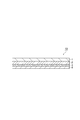
- FIG. 1 is a schematic cross-sectional view of the transfer type photosensitive film according to the present embodiment.
- the transfer-type photosensitive film 10 of the present embodiment has a structure in which the support film 1, the intermediate layer 2, the photosensitive resin layer 3, and the protective film 4 are laminated in this order.
- the transfer-type photosensitive film of the present embodiment may be one in which the protective film 4 is omitted and wound. In this case, the photosensitive resin layer is protected by adjoining the support film of the inner transfer-type photosensitive film to the photosensitive resin layer of the outer transfer-type photosensitive film.
- a polymer film can be used as the support film 1.
- Examples of the material of the polymer film include polyethylene terephthalate, polycarbonate, polyethylene, polypropylene, polyether sulfone, cycloolefin polymer and the like.
- the thickness of the support film 1 is preferably 5 to 100 ⁇ m, preferably 10 to 70 ⁇ m, from the viewpoint of ensuring the covering property and suppressing a decrease in resolution when irradiating light (active light) through the support film 1. It is more preferably 15 to 40 ⁇ m, and particularly preferably 15 to 35 ⁇ m.
- the intermediate layer 2 can contain a water-soluble polymer.
- the water-soluble polymer include polyvinyl alcohol, polyvinyl ether-maleic anhydride water-soluble salts, carboxyalkyl starch water-soluble salts, polyacrylamide, polyamide, polyacrylic acid water-soluble salts, gelatin, polypropylene glycol, polyvinylpyrrolidone and the like. ..
- the intermediate layer preferably contains polyvinyl alcohol in an amount of 45% by mass or more, more preferably 50% by mass or more, further preferably 60% by mass or more, 65. It is even more preferably contained in an amount of mass% or more.
- the content of polyvinyl alcohol in the intermediate layer is preferably 70% by mass or less, and more preferably 68% by mass or less.
- the content of polyvinyl alcohol in the intermediate layer may be 45 to 80 parts by mass or 50 to 70 parts by mass with respect to 100 parts by mass of the total amount of the water-soluble polymer.
- the saponification degree of polyvinyl alcohol is preferably 80 mol% or more, more preferably 83 mol% or more, still more preferably 85 mol% or more. From the viewpoint of developability, the saponification degree of polyvinyl alcohol is preferably 95 mol% or less, more preferably 93 mol% or less, still more preferably 90 mol% or less.
- the intermediate layer preferably contains polyvinylpyrrolidone from the viewpoint of ensuring adhesion with the photosensitive resin layer.
- the content of polyvinylpyrrolidone in the intermediate layer is preferably 20 to 50 parts by mass, preferably 30 to 40 parts by mass, based on 100 parts by mass of the total amount of the water-soluble polymer, from the viewpoint of ensuring adhesion to the photosensitive resin layer. More preferable. Further, from the viewpoint of further reducing the number of particles in the intermediate layer while ensuring the adhesion to the photosensitive resin layer, the content of polyvinylpyrrolidone in the intermediate layer is 25 with respect to 100 parts by mass of the total amount of the water-soluble polymer. It is preferably up to 40 parts by mass, more preferably 30 to 35 parts by mass.
- the intermediate layer preferably contains polyvinyl alcohol and polyvinylpyrrolidone.
- the mass ratio (PVA / PVP) of polyvinyl alcohol to polyvinylpyrrolidone is preferably 80/20 to 50/50, more preferably 70/30 to 60/40.
- the intermediate layer may contain additives such as a leveling agent, a mold release agent, and an adhesion imparting agent.
- the thickness of the intermediate layer is preferably 5 to 20 ⁇ m from the viewpoint of achieving both developability and void suppressing effect at a high level, and 5 to 15 ⁇ m from the viewpoint of developability and resolution. preferable.
- the content of particles existing in the intermediate layer and having a particle size exceeding 0.5 times the thickness of the intermediate layer is preferably 50 particles / m 2 or less. , 30 pieces / m 2 or less, and even more preferably 0 pieces / m 2 .
- the foreign matter part of the intermediate layer is marked by visual inspection, and the foreign matter is particles or other things (for example, dents, filamentous foreign matter) by microscopic observation of the marking part. , Bubbles, etc.) and can be counted by measuring the size of the particles when viewed from above.
- the outer edge of the particle can be confirmed as light and dark in color by microscopic observation.
- the transfer-type photosensitive film of the present embodiment preferably has a particle content of 60 particles / m 2 or less, which is present in the intermediate layer and has a particle size of 5 ⁇ m or more. It is more preferably 50 pieces / m 2 or less, further preferably 40 pieces / m 2 or less, further preferably 30 pieces / m 2 or less, and 20 pieces / m 2 or less. Especially preferable.
- the particles are considered to be an undissolved substance of a water-soluble polymer, for example, when preparing a coating liquid for forming an intermediate layer, the water solubility is high.
- Controlling the conditions under which the molecule is dissolved in the solvent can be mentioned. Specifically, it is preferable to dissolve in a closed system (for example, pressurize to 0.1 MPa or more) rather than an open system.
- the temperature at the time of melting is preferably 60 ° C. or higher, and more preferably 90 ° C. or higher.
- the upper limit of the temperature is preferably 150 ° C. or lower, more preferably 120 ° C. or lower, from the viewpoint of suppressing decomposition of the water-soluble polymer.
- the photosensitive resin layer 3 includes a binder polymer (hereinafter, also referred to as (A) component), a photopolymerizable compound (hereinafter, also referred to as (B) component), and a photopolymerization initiator (hereinafter, also referred to as (C) component). ), And can be formed from a photosensitive resin composition containing.
- A binder polymer
- B photopolymerizable compound
- C photopolymerization initiator
- the component (A) is preferably a copolymer containing a structural unit derived from (a1) (meth) acrylic acid and a structural unit derived from (a2) (meth) acrylic acid alkyl ester.
- the alkyl of the alkyl ester referred to here also includes an alkyl group having a substituent and a cycloalkyl group.
- the content ratio of the structural unit derived from (a1) (meth) acrylic acid in the component (A) is based on the total mass of the monomers constituting the component (A) from the viewpoint of excellent rust prevention.
- the blending amount of the above is preferably 30% by mass or less, more preferably 25% by mass or less, and further preferably 20% by mass or less.
- Examples of the (a2) (meth) acrylic acid alkyl ester include (meth) acrylic acid methyl ester, (meth) acrylic acid ethyl ester, (meth) acrylic acid butyl ester, (meth) acrylic acid 2-ethylhexyl ester, and ( Included are cyclohexyl (meth) acrylate, cyclopentanyl (meth) acrylate, dicyclopentanyl (meth) acrylate and hydroxylethyl (meth) acrylate.
- the content ratio of the structural unit derived from the (a2) (meth) acrylic acid alkyl ester in the component (A) is the blending amount of the (meth) acrylic acid alkyl ester based on the total mass of the monomers constituting the component (A). , 90% by mass or less, more preferably 89% by mass or less, and further preferably 88% by mass or less. Further, the blending amount of the (meth) acrylic acid alkyl ester based on the total mass of the monomers constituting the component (A) is preferably 20% by mass or more.
- the component (A) preferably has a group containing an alicyclic structure in the side chain.
- a group can be introduced by a monomer containing a group having an alicyclic structure in the side chain.
- a monomer for example, cyclohexyl (meth) acrylate, cyclopentanyl (meth) acrylate, and dicyclopentanyl (meth) acrylate exemplified as the component (a2) can be used.
- the blending amount of the monomer containing a group having an alicyclic structure in the side chain is preferably 5 to 70% by mass, preferably 20 to 60% by mass, based on the total mass of the monomers constituting the component (A). More preferably, it is more preferably 30 to 50% by mass.
- the copolymer may further contain a structural unit derived from another monomer capable of copolymerizing with the component (a1) and / or the component (a2).
- Examples of other monomers that can be copolymerized with the above component (a1) and / or the component (a2) include (meth) acrylic acid tetrahydrofurfuryl ester, (meth) acrylic acid dimethylaminoethyl ester, and (meth) acrylic acid.
- Acid diethylaminoethyl ester (meth) acrylic acid glycidyl ester, (meth) acrylic acid benzyl ester, 2,2,2-trifluoroethyl (meth) acrylate, 2,2,3,3-tetrafluoropropyl (meth) acrylate , (Meta) acrylamide, (meth) acrylonitrile, diacetone (meth) acrylamide, styrene, and vinyl toluene.
- A When synthesizing the binder polymer, one type of the above-mentioned monomer may be used alone, or two or more types may be used in combination.
- the weight average molecular weight of the binder polymer (A) is preferably 10,000 to 200,000, more preferably 15,000 to 150,000, and 30,000 to 150,000 from the viewpoint of resolution. It is more preferably 30,000 to 100,000, particularly preferably 40,000 to 100,000.
- the measurement conditions for the weight average molecular weight are the same as those in the examples of the present specification.
- the acid value of the binder polymer (A) is preferably 75 to 200 mgKOH / g, more preferably 75 to 150 mgKOH / g, and 75 to 120 mgKOH / g in terms of excellent patterning property. Is even more preferable.
- the acid value of the binder polymer as the component (A) can be measured in the same manner as in the examples of the present specification.
- the glass transition temperature (Tg) of the binder polymer as the component (A) is preferably 60 to 200 ° C., more preferably 80 to 200 ° C., and 100 to 200 ° C. from the viewpoint of ensuring reliability. Is more preferable.
- the glass transition temperature of the binder polymer which is the component (A) can be measured in the same manner as in the examples of the present specification.
- a photopolymerizable compound having an ethylenically unsaturated group can be used as the photopolymerizable compound as the component (B).
- Examples of the photopolymerizable compound having an ethylenically unsaturated group include a monofunctional vinyl monomer, a bifunctional vinyl monomer, and a polyfunctional vinyl monomer having at least three polymerizable ethylenically unsaturated groups.
- Examples of the monofunctional vinyl monomer include (meth) acrylic acid, (meth) acrylic acid alkyl ester exemplified in the description of the component (A) above, and a monomer copolymerizable with them.
- bifunctional vinyl monomer examples include polyethylene glycol di (meth) acrylate, trimethyl propandi (meth) acrylate, polypropylene glycol di (meth) acrylate, and bisphenol A polyoxyethylene polyoxypropylene di (meth) acrylate (2).
- the photosensitive resin composition of the present embodiment preferably contains a compound having a tricyclodecane skeleton or a tricyclodecene skeleton.
- a compound having a tricyclodecane skeleton or a tricyclodecene skeleton examples include a di (meth) acrylate compound represented by the following general formula (B-1).
- R 6 and R 7 each independently represent a hydrogen atom or a methyl group
- X represents a divalent group having a tricyclodecane skeleton or a tricyclodecane skeleton
- R 8 and R 9 each independently represent an alkylene group having 1 to 4 carbon atoms
- n and m each independently represent an integer of 0 to 2
- p and q each independently represent an integer of 0 or more.
- P + q 0 to 10.
- R 8 and R 9 are preferably an ethylene group or a propylene group, and more preferably an ethylene group.
- the propylene group may be either an n-propylene group or an isopropylene group.
- the divalent group having a tricyclodecane skeleton or a tricyclodecene skeleton contained in X has a bulky structure, so that the cured film is low. Moisture permeability can be improved.
- the "tricyclodecane skeleton" and the “tricyclodecene skeleton" in the present specification refer to the following structures (each having an arbitrary joint).
- Examples of the compound having a tricyclodecane skeleton or a tricyclodecene skeleton include tricyclodecanedimethanol di (meth) acrylate from the viewpoint of low moisture permeability of the obtained cured film pattern and improvement of adhesion to a conductor containing ITO.
- Compounds having a tricyclodecane skeleton are preferred. These are available as DCP and A-DCP (both manufactured by Shin Nakamura Chemical Industry Co., Ltd.).
- the proportion of the compound having a tricyclodecane skeleton or a tricyclodecene skeleton in the component (B) is 100 parts by mass of the total amount of the photopolymerizable compounds contained in the photosensitive resin composition from the viewpoint of improving reliability. It is preferably 25 parts by mass or more, more preferably 50 parts by mass or more, further preferably 70 parts by mass or more, and even more preferably 80 parts by mass or more. From the viewpoint of improving reliability, it is preferable that the component (B) contains a compound having a tricyclodecane skeleton or a tricyclodecene skeleton in an amount of 25 to 100% by mass based on the total amount of the component (B).
- Examples of the polyfunctional vinyl monomer having at least three polymerizable ethylenically unsaturated groups include trimethylolpropane tri (meth) acrylate, tetramethylolmethanetri (meth) acrylate, and tetramethylolmethanetetra (meth) acrylate.
- Polyhydric alcohols such as pentaerythritol tri (meth) acrylate, dipentaerythritol penta (meth) acrylate, dipentaerythritol hexa (meth) acrylate, dimethylolpropane tetraacrylate and ⁇ , ⁇ -unsaturated carboxylic acids (eg, acrylic acid) , Metaacrylic acid, etc.); Trimethylolpropane Triglycidyl ether A compound obtained by addition reaction of a glycidyl group-containing compound such as tri (meth) acrylate with ⁇ , ⁇ -unsaturated carboxylic acid. Examples thereof include compounds obtained by adding diglycerin such as diglycerin (meth) acrylate and ⁇ , ⁇ -unsaturated carboxylic acid.
- diglycerin such as diglycerin (meth) acrylate and ⁇ , ⁇ -unsaturated carboxylic acid.
- the photosensitive resin composition of the present embodiment preferably contains a polyfunctional vinyl monomer having at least three polymerizable ethylenically unsaturated groups from the viewpoint of ensuring reliability by improving the crosslink density. Further, from the viewpoint of ensuring reliability by improving the cross-linking density, it has a (meth) acrylate compound having a skeleton derived from pentaerythritol, a (meth) acrylate compound having a skeleton derived from dipentaerythritol, and a skeleton derived from trimethylolpropane ( It is preferable to contain at least one selected from the meta) acrylate compound, and at least one selected from the (meth) acrylate compound having a skeleton derived from dipentaerythritol and the (meth) acrylate compound having a skeleton derived from trimethylolpropane. More preferably, it contains seeds.
- the (meth) acrylate having a skeleton derived from dipentaerythritol means an esterified product of dipentaerythritol and (meth) acrylic acid, and the esterified product is a compound modified with an alkyleneoxy group. Is also included.
- the above esterified product preferably has 6 ester bonds in one molecule, but a compound having 1 to 5 ester bonds may be mixed.
- the (meth) acrylate compound having a skeleton derived from trimethylolpropane means an esterified product of trimethylolpropane and (meth) acrylic acid, and the esterified product is a compound modified with an alkyleneoxy group. Is also included.
- the above esterified product preferably has 3 ester bonds in one molecule, but a compound having 1 to 2 ester bonds may be mixed.
- a compound obtained by dimerizing the trimethylolpropane di (meth) acrylate compound may be used as the (meth) acrylate compound having a skeleton derived from trimethylolpropane.
- the above compounds can be used alone or in combination of two or more.
- the proportion of the monomer having at least three polymerizable ethylenically unsaturated groups in the component (B) is the total of the photopolymerizable compounds contained in the photosensitive resin composition from the viewpoint of ensuring reliability by improving the crosslink density.
- the amount of 100 parts by mass it is preferably 10 parts by mass or more, more preferably 30 parts by mass or more, and further preferably 50 parts by mass or more.
- the contents of the component (A) and the component (B) in the photosensitive resin composition of the present embodiment are 35 to 35 parts by mass of the total amount of the component (A) and the component (B), respectively. It is preferably 85 parts by mass, the component (B) is preferably 15 to 65 parts by mass, the component (A) is more preferably 40 to 80 parts by mass, and the component (B) is 20 to 60 parts by mass, more preferably (A). ) Component is 50 to 70 parts by mass, (B) component is 30 to 50 parts by mass, (A) component is 55 to 65 parts by mass, and (B) component is 35 to 45 parts by mass. Is particularly preferable.
- the contents of the components (A) and (B) are (A) with respect to 100 parts by mass of the total amount of the components (A) and (B).
- the component is preferably 35 parts by mass or more, more preferably 40 parts by mass or more, further preferably 50 parts by mass or more, particularly preferably 55 parts by mass or more, and the component (B). However, it is preferably 15 parts by mass or more, more preferably 20 parts by mass or more, further preferably 30 parts by mass or more, and particularly preferably 35 parts by mass or more.
- the component (C) is not particularly limited as long as it can cure the photosensitive resin layer by irradiation with light (active light). From the viewpoint of transparency, an acylphosphine oxide-based photopolymerization initiator and an oxime ester-based photopolymerization initiator are preferable.
- acylphosphine oxide-based photopolymerization initiator 2,4,6-trimethylbenzoyl-diphenyl-phosphine oxide, bis (2,4,6-trimethylbenzoyl) -phenylphosphine oxide, 2,4,6- Examples thereof include trimethylbenzoyl-phosphinate.
- the acylphosphine oxide-based photopolymerization initiator is available as IRGACURE TPO, IRGACURE 819, or IRGACURE TPO-L (above, manufactured by BASF Japan Ltd., product name).
- Examples of the oxime ester-based photopolymerization initiator include a compound represented by the following general formula (1), a compound represented by the following general formula (2), and a compound represented by the following general formula (3).
- R 11 and R 12 independently represent an alkyl group having 1 to 12 carbon atoms, a cycloalkyl group having 4 to 10 carbon atoms, a phenyl group or a tolyl group, and have 1 to 8 carbon atoms. It is preferably an alkyl group, a cycloalkyl group having 4 to 6 carbon atoms, a phenyl group or a tolyl group, and is an alkyl group having 1 to 4 carbon atoms, a cycloalkyl group having 4 to 6 carbon atoms, a phenyl group or a tolyl group.
- R 13 represents -H, -OH, -COOH, -O (CH 2 ) OH, -O (CH 2 ) 2 OH, -COO (CH 2 ) OH or -COO (CH 2 ) 2 OH.
- H, -O (CH 2 ) OH, -O (CH 2 ) 2 OH, -COO (CH 2 ) OH, or -COO (CH 2 ) 2 OH is preferable, and -H, -O (CH 2). ) 2 OH or -COO (CH 2 ) 2 OH is more preferable.
- the two R 14s independently represent an alkyl group having 1 to 6 carbon atoms, and are preferably a propyl group.
- R 15 represents NO 2 or ArCO (where Ar represents an aryl group), and Ar is preferably a tolyl group.
- R 16 and R 17 each independently represent an alkyl group, a phenyl group, or a tolyl group having 1 to 12 carbon atoms, and are preferably a methyl group, a phenyl group, or a tolyl group.
- R 18 represents an alkyl group having 1 to 6 carbon atoms, and is preferably an ethyl group.
- R 19 is an organic group having an acetal bond, and is preferably a substituent corresponding to R 19 contained in a commercially available compound described later.
- R 20 and R 21 each independently represent an alkyl group, a phenyl group or a tolyl group having 1 to 12 carbon atoms, and are preferably a methyl group, a phenyl group or a tolyl group, and more preferably a methyl group. ..
- R 22 represents a hydrogen atom or an alkyl group.
- ADEKA OPTMER N-1919 manufactured by ADEKA Corporation, product name
- IRGACURE OXE 02 manufactured by BASF Japan Ltd., product name
- the content of the component (C) is preferably 0.1 to 10 parts by mass with respect to 100 parts by mass of the total amount of the components (A) and (B) in terms of excellent light sensitivity and resolution. It is more preferably to 8 parts by mass, further preferably 1 to 6 parts by mass, and particularly preferably 1 to 4 parts by mass.
- a polymerization inhibitor hereinafter, may be referred to as (D) component
- E. Leveling agent
- F Anticorrosive agent
- G Adhesion aid
- (G) component Adhesion aid
- the photosensitive resin layer preferably has a total light transmittance of 85% or more, more preferably 90% or more, and further preferably 95% or more in the visible light region having a wavelength of 400 to 700 nm.
- the total light transmittance in the visible light region can be measured by the method described in the examples of the present specification.
- the cured resin film after curing has the above-mentioned total light transmittance.
- b * in the CIELAB color system is preferably ⁇ 0.2 to 1.0, more preferably 0.0 to 0.7, and 0.1 to 0. It is more preferably 0.4.
- b * in the CIELAB color system can be measured by the method described in the examples of the present specification.
- the cured resin film after curing has the above b * .
- the thickness of the photosensitive resin layer can be 2.5 ⁇ m or less after drying, and is more preferably 0.5 ⁇ m or more and 2.0 ⁇ m or less from the viewpoint of ensuring reliability and improving sensing sensitivity. It is more preferably 0.6 ⁇ m or more and 1.4 ⁇ m or less, and particularly preferably 0.8 ⁇ m or more and 1.2 ⁇ m or less.
- the haze value of the photosensitive resin layer after curing is 0.01 from the viewpoint of improving the sensing sensitivity (for example, bacterial identification, quantification, etc.) on a substrate or the like provided with a dielectrophoresis electrode used for a biosensor or the like. It is preferably ⁇ 1.0%, more preferably 0.01 to 0.50%, further preferably 0.01 to 0.30%, and 0.01 to 0.25%. It is particularly preferable to have.
- the photosensitive resin layer and the intermediate layer are transferred to a polycarbonate (PC) substrate having a thickness of 1.0 mm, exposed under predetermined conditions, and then the intermediate layer is removed. It is obtained from the value obtained by measuring the laminated body of the PC substrate / cured film thus obtained from the cured film side.
- PC polycarbonate
- a polymer film can be used as the protective film 4 (cover film).
- the polymer film include a film made of polyethylene, polypropylene, polyethylene terephthalate, polycarbonate, a polyethylene-vinyl acetate copolymer, and a laminated film of a polyethylene-vinyl acetate copolymer and polyethylene.
- the thickness of the protective film 4 is preferably about 5 to 100 ⁇ m, but from the viewpoint of rolling and storing the protective film 4, it is preferably 70 ⁇ m or less, more preferably 60 ⁇ m or less, and further preferably 50 ⁇ m or less. It is preferably 40 ⁇ m or less, and particularly preferably 40 ⁇ m or less.
- the transfer type photosensitive film 10 can be rolled and stored or used.
- the coating liquid for forming an intermediate layer is applied onto the support film 1 and dried, and then the coating liquid for forming a photosensitive resin layer is applied and dried on the intermediate layer 2. It can be formed by sticking the protective film 40 on the formed photosensitive resin layer 3.
- an intermediate layer is formed by preparing a coating liquid for forming an intermediate layer and a coating liquid for forming a photosensitive resin layer, applying the coating liquid on the support film 1 and the protective film 4, respectively, and drying the coating liquid.
- a transfer-type photosensitive film can also be formed by laminating the supported film and the protective film on which the photosensitive resin layer is formed so that the intermediate layer and the photosensitive resin layer face each other.
- the coating liquid for forming the intermediate layer and the coating liquid for forming the photosensitive resin layer can be prepared by uniformly dissolving or dispersing the components contained in the intermediate layer and the components contained in the photosensitive resin layer described above in a solvent, respectively.
- the solvent is not particularly limited, and known ones can be used. For example, acetone, methyl ethyl ketone, methyl isobutyl ketone, toluene, methanol, ethanol, propanol, butanol, methylene glycol, ethylene glycol, propylene glycol, ethylene glycol monomethyl ether, etc.
- Examples thereof include ethylene glycol monoethyl ether, diethylene glycol dimethyl ether, diethylene glycol ethyl methyl ether, diethylene glycol diethyl ether, propylene glycol monomethyl ether, ethylene glycol monobutyl ether acetate, diethylene glycol monoethyl ether acetate, propylene glycol monomethyl ether acetate, chloroform, and methylene chloride.
- Water can also be used to prepare the coating liquid for forming the intermediate layer.
- One of these solvents may be used alone, or may be used as a mixed solvent composed of two or more kinds of solvents.
- alcohols such as water, methanol, ethanol and isopropanol are preferable, and water and isopropanol are more preferable as the solvent used in the coating liquid for forming the intermediate layer.
- Examples of the coating method include a doctor blade coating method, a Meyer bar coating method, a roll coating method, a screen coating method, a spinner coating method, an inkjet coating method, a spray coating method, a dip coating method, a gravure coating method, a curtain coating method, and the like.
- the die coating method can be mentioned.
- the drying conditions are not particularly limited, but the drying temperature is preferably 60 to 130 ° C., and the drying time is preferably 0.5 to 30 minutes.
- the temperature of the heat roll is 20 to 80 ° C.
- the pressure is 0.2 to 0.8 MPa
- the pressure is 0.2 to 0.8 MPa.
- the roll speed can be set to 0.2 to 4.0 m / min.
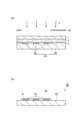
- ⁇ Method of forming a cured resin film> 2 and 3 are schematic cross-sectional views for explaining a method of forming a resin cured film according to the present embodiment.
- the transfer type photosensitive film 10 of the present embodiment described above is formed on a base material 20 (base material with steps 24) having a step 22 on one main surface as a protective film.
- Step S1 (see (a) and (b) of FIG. 2) in which the photosensitive resin layer 3 is laminated so as to cover the step 22 while peeling or after peeling 4 and the photosensitive resin on the base material.
- step S2 see FIG.
- the photosensitive resin layer 3 and the intermediate layer 2 are developed from the intermediate layer 2 side in a state where the support film is removed.
- the step S3 (see FIG. 3B) of forming the resin cured film 5 covering the step 22 by removing the portion other than the predetermined portion of the photosensitive resin layer 3 and the intermediate layer 2 by bringing the liquids into contact with each other. Be prepared. In this way, the base material 40 with a resin cured film is obtained.
- Examples of the base material 20 include polyethylene terephthalate and polycarbonate.
- the step 22 includes a transparent electrode such as ITO, wiring such as copper, copper / nickel alloy, gold, platinum, ruthenium, palladium, rhodium, silver, aluminum, nickel, chromium, zinc, tin, or a dielectric containing metal materials thereof. Examples thereof include those caused by a running electrode, an optical sensor, and the like. These may be provided in two or more types, or may be provided in two or more types.
- a transparent electrode such as ITO
- wiring such as copper, copper / nickel alloy, gold, platinum, ruthenium, palladium, rhodium, silver, aluminum, nickel, chromium, zinc, tin, or a dielectric containing metal materials thereof. Examples thereof include those caused by a running electrode, an optical sensor, and the like. These may be provided in two or more types, or may be provided in two or more types.
- Examples of the stepped base material 24 include a substrate provided with a dielectrophoresis electrode used for a biosensor or the like, an optical sensor substrate, a touch sensor substrate for a touch panel, and the like.
- Examples of the laminating means in step S1 of the present embodiment include crimping rolls.
- the crimping roll may be provided with a heating means so that it can be heat crimped.
- the heating temperature at the time of heat-bonding is such that the constituent components of the photosensitive resin layer are not easily cured or thermally decomposed from the viewpoint of obtaining adhesion between the photosensitive resin layer and the base material and followability to the step.
- the temperature is preferably 10 to 180 ° C, more preferably 20 to 160 ° C, and even more preferably 30 to 150 ° C.
- the crimping pressure at the time of heat crimping is preferably 50 to 1 ⁇ 10 5 N / m in terms of linear pressure from the viewpoint of ensuring adhesion, and is 2.5 ⁇ 10 2 to 5 ⁇ 10 4 N / m. 5 ⁇ 10 2 to 4 ⁇ 10 4 N / m is more preferable.
- the transfer-type photosensitive film is heated as described above, it is not necessary to preheat the substrate, but the substrate is preheated from the viewpoint of further improving the adhesion between the photosensitive resin layer and the substrate. It is preferable to do so.
- the preheating temperature at this time is preferably 30 to 180 ° C.
- step S2 of the present embodiment a predetermined portion of the photosensitive resin layer is irradiated with light (active light) L in a pattern via a photomask 30 (see (a) of FIG. 3).
- the active light When irradiating the active light, if the support film on the intermediate layer is transparent, the active light is irradiated as it is (for example, when a transparent polymer film is used as the support film, the polymer film remains). If it is opaque, it can be removed and then irradiated with active light.
- a known active light source can be used, and examples thereof include a carbon arc lamp, an ultra-high pressure mercury lamp, a high pressure mercury lamp, a xenon lamp, and those that effectively radiate ultraviolet rays are preferable. Can be used for.
- the irradiation amount of the active light L is usually 1 ⁇ 10 2 to 1 ⁇ 10 4 J / m 2 , and heating may be accompanied at the time of irradiation.
- the amount of the activated light irradiation is within the above range, it becomes easy to achieve both sufficient photocuring and suppressing discoloration of the photosensitive resin layer.
- step S3 of the present embodiment the photosensitive resin layer and the intermediate layer after irradiation with the active light are developed with a developing solution, and the portion of the photosensitive resin layer not irradiated with the active light (that is, the photosensitive resin layer). (Other than the predetermined portion) and the intermediate layer are removed to form a resin cured film 5 that covers the step (see (b) of FIG. 3).
- the resin cured film 5 to be formed can have a predetermined pattern.
- the support film After irradiation with the active light beam, if the support film is laminated on the intermediate layer, it is removed, and then the portion not irradiated with the active light beam is removed with a developing solution.
- a known developing solution such as an alkaline aqueous solution, an aqueous developer, or an organic solvent is used to develop by a known method such as spraying, showering, rocking dipping, brushing, and scrubbing to remove unnecessary parts.
- a known method such as spraying, showering, rocking dipping, brushing, and scrubbing to remove unnecessary parts.
- alkali hydroxide hydrooxide of lithium, sodium or potassium, etc.
- alkali carbonate carbonate or bicarbonate of lithium, sodium or potassium, etc.
- alkali metal phosphate potassium phosphate, etc.
- Sodium phosphate, etc. alkali metal pyrophosphate
- tetramethylammonium hydroxide triethanolamine, etc.
- tetramethylammonium hydroxide and the like are preferable. Be done.
- An aqueous solution of sodium carbonate is also preferably used.
- a dilute solution of sodium carbonate 0.5 to 5% by mass aqueous solution
- 20 to 50 ° C. is preferably used.
- the developing temperature and time can be adjusted according to the developability of the photosensitive resin layer and the intermediate layer of the present embodiment.
- a surfactant a defoaming agent, a small amount of organic solvent for accelerating development, etc. can be mixed in the alkaline aqueous solution.
- the base of the alkaline aqueous solution remaining in the photosensitive resin layer after development and photocuring is subjected to a known method such as spraying, rocking dipping, brushing, scrubbing or the like using an organic acid, an inorganic acid or an aqueous acid solution thereof. It can be acid-treated (neutralized).
- the resin cured film pattern may be further cured by irradiation with active light rays (for example, 5 ⁇ 10 3 to 2 ⁇ 10 4 J / m 2 ). Further, if necessary, heat treatment (80 to 250 ° C.) may be performed instead of the irradiation of the activated light rays after development or in combination with the irradiation of the active rays.
- active light rays for example, 5 ⁇ 10 3 to 2 ⁇ 10 4 J / m 2
- heat treatment 80 to 250 ° C.
- the above-described method for forming a cured resin film of the present embodiment can be used as a method for manufacturing a sensor substrate with a cured resin film. That is, as the stepped base material 24, a substrate having a transparent electrode and / or wiring on one main surface (for example, a touch sensor substrate) or a substrate having a dielectrophoresis electrode (for example, a biosensor substrate) is prepared. By going through the same steps as described above, a sensor substrate with a resin cured film provided with a transparent electrode and / or wiring, or a resin cured film covering the dielectrophoresis electrode can be obtained.
- the sensor substrate with a resin cured film provided with a dielectrophoresis electrode can also function as a dielectric film, and can be applied to an apparatus (for example, a microorganism measuring apparatus) that may come into contact with a liquid sample. ..
- the stepped base material is an optical sensor substrate having an optical sensor on one main surface
- a resin cured film having a sufficiently small effect on the optical characteristics of the sensor is used as a protective film to prevent damage or deterioration of the sensor.
- Such a sensor substrate with a resin cured film can be applied to a device (for example, a food inspection device) that may be contaminated by moisture or the like.
- Binder polymer solution A1 Binder polymer solution A1 (1) shown in Table 1 was placed in a flask equipped with a stirrer, a reflux condenser, an inert gas inlet and a thermometer, and the temperature was raised to 80 ° C. in a nitrogen gas atmosphere. While maintaining the reaction temperature at 80 ° C. ⁇ 2 ° C., (2) shown in Table 1 was uniformly added dropwise over 4 hours. After the dropping of (2), stirring was continued at 80 ° C. ⁇ 2 ° C. for 6 hours to obtain a solution (solid content 50% by mass) (A1) of a binder polymer having a weight average molecular weight of 45,000. The acid value of the binder polymer was 114.2 mgKOH / g. The glass transition temperature (Tg) was 60 ° C.
- the weight average molecular weight, acid value and glass transition temperature of the binder polymer were determined by the following measurement methods.
- the acid value was measured by the neutralization titration method based on JIS K0070 as shown below. First, the solution of the binder polymer was heated at 130 ° C. for 1 hour to remove the volatile matter to obtain a solid content. Then, 1.0 g of this solid polymer was precisely weighed, and then 30 g of acetone was added to this polymer, and this was uniformly dissolved to obtain a resin solution. Next, an appropriate amount of phenolphthalein, which is an indicator, was added to the resin solution, and titration was performed using a 0.1 mol / L potassium hydroxide aqueous solution. Then, the acid value was calculated by the following formula.
- Acid value 0.1 x V x f 1 x 56.1 / (Wp x I / 100)
- V indicates the titration amount (mL) of the 0.1 mol / L potassium hydroxide aqueous solution used for titration
- f 1 indicates the factor (concentration conversion coefficient) of the 0.1 mol / L potassium hydroxide aqueous solution.
- Wp indicates the measured mass (g) of the resin solution
- I indicates the ratio of the non-volatile content (mass%) in the measured resin solution.
- Tg glass transition temperature
- the film was exposed.
- the exposed film was heated on a hot plate at 65 ° C. for 2 minutes, then at 95 ° C. for 8 minutes, and heat-treated at 180 ° C. for 60 minutes in a hot air convection dryer.
- the formed cured film was peeled off from the polyethylene terephthalate film, and the coefficient of thermal expansion of the cured film when the temperature was raised at a temperature rising rate of 5 ° C./min was measured using TMA / SS6000 manufactured by Seiko Instruments. The inflection point obtained from the curve was determined as the glass transition temperature Tg.
- Coating liquid R1 for forming a photosensitive resin layer containing a photosensitive resin composition for forming a photosensitive resin layer by mixing each component shown in Table 3 in an amount (unit: parts by mass) shown in the same table.
- the blending amounts other than the solvent in Table 3 are the blending amounts in terms of solid content.
- A-TMPT Trimethylolpropane triacrylate (manufactured by Shin Nakamura Chemical Industry Co., Ltd., product name "A-TMPT")
- A-DCP Tricyclodecanedimethanol diacrylate (manufactured by Shin Nakamura Chemical Industry Co., Ltd., product name "A-DCP")
- BPE-100 Ethoxylated bisphenol A dimethacrylate (manufactured by Shin Nakamura Chemical Industry Co., Ltd., product name "BPE-100")
- Solvent MEK Methyl ethyl ketone (manufactured by Tonen Chemical Corporation)
- the coating liquid R1 for forming the photosensitive resin layer was uniformly applied onto the intermediate layer formed above using a bar coater, dried on a hot plate at 80 ° C. for 5 minutes, and the thickness after drying is shown in Table 4.
- a photosensitive resin layer was formed so as to have the indicated layer thickness.
- a polypropylene film as a protective film is laminated on the formed photosensitive resin layer, and a support film, an intermediate layer, a photosensitive resin layer, and a protective film are laminated in this order. I got a film.
- the developability of the intermediate layer, the resolution of the photosensitive resin layer, and the reliability were evaluated by the following methods.
- a photosensitive resin layer was laminated on a glass substrate (length 6 cm ⁇ width 6 cm, thickness 1 mm) while peeling off the protective film of the transfer type photosensitive film.
- Lamination was performed using a laminator "MRK-650Y” (manufactured by MCK Co., Ltd., product name) under the conditions of a heat roll temperature of 110 ° C., a pressure of 0.40 MPa, and a roll speed of 0.6 m / min. In this way, a laminated body 1 in which a glass substrate, a photosensitive resin layer, an intermediate layer, and a support film were laminated in this order was obtained.
- the exposed laminate 2 was developed with a 1% by mass aqueous sodium carbonate solution.
- the developing was carried out using a developing machine under the conditions of a spray pressure of 0.2 MPa, a temperature of 30 ° C., and a developing time of 30 seconds to obtain a laminate 3.
- a photosensitive resin layer was laminated on a PET film (manufactured by Toyobo Co., Ltd., trade name A4300) while peeling off the protective film of the transfer type photosensitive film.
- Lamination was performed using a laminator "MRK-650Y” (manufactured by MCK Co., Ltd., product name) under the conditions of a heat roll temperature of 110 ° C., a pressure of 0.40 MPa, and a roll speed of 0.6 m / min. In this way, a laminate 1A in which the PET film, the photosensitive resin layer, the intermediate layer, and the support film were laminated in this order was obtained.
- the laminated body 1A was irradiated with ultraviolet rays from the support film side using a parallel light exposure machine "EXM1201" (manufactured by ORC Manufacturing Co., Ltd., product name) to obtain the laminated body 2A.
- EXM1201 manufactured by ORC Manufacturing Co., Ltd., product name
- a PET photomask having a wiring pattern with a line width / space width of 30/30 to 200/200 (unit: ⁇ m) is brought into close contact with the support film, and ultraviolet rays are irradiated through the photomask. did.
- the exposure amount was the amount required to obtain 9/4 1 step with a 41-step step tablet manufactured by Hitachi Chemical Co., Ltd.
- the exposed laminate 2A was developed with a 1% by mass aqueous sodium carbonate solution.
- the development was carried out using a developing machine under the conditions of a spray pressure of 0.2 MPa, a temperature of 30 ° C., and a development time of 30 seconds to obtain a pattern substrate 3A.
- the obtained pattern substrate 3A was observed with an optical microscope, and among the patterns remaining as lines and spaces, there were no defects such as chips in the lines, and the space between the lines was bridged by the residue of the photosensitive resin.
- the numerical value of the minimum line width / space width that never existed was examined and set as the resolution ( ⁇ m). From the numerical value of this resolution, the resolution was evaluated according to the following criteria. [Criteria] A: Resolution ⁇ 50 ⁇ m B: 50 ⁇ m ⁇ resolution ⁇ 200 ⁇ m C: Resolution> 200 ⁇ m
- the reliability was evaluated by the following method.
- a polyethylene terephthalate film with sputtered copper having a thickness of 0.1 ⁇ m (hereinafter referred to as “copper PET”) was prepared in a size of 15 cm ⁇ 15 cm.
- the transfer-type photosensitive film produced above was laminated on a main surface provided with sputtered copper of copper PET while peeling off the protective film, and the sputtered copper was coated with a photosensitive resin layer.
- Lamination was performed using a laminator "MRK-650Y” (manufactured by MCK Co., Ltd., product name) under the conditions of a heat roll temperature of 110 ° C., a pressure of 0.40 MPa, and a roll speed of 0.6 m / min. In this way, a laminate 3B in which the copper PET, the photosensitive resin layer, the intermediate layer, and the support film were laminated in this order was obtained.
- MRK-650Y manufactured by MCK Co., Ltd., product name
- the laminate 4B was developed with a 1% by mass aqueous sodium carbonate solution.
- the development was carried out using a developing machine under the conditions of a spray pressure of 0.2 MPa, a temperature of 30 ° C., and a development time of 30 seconds.
- ultraviolet rays were irradiated from the photosensitive resin layer side with an exposure amount of 1000 mJ / cm 2 (i-line (wavelength 365 nm)) to obtain a reliability evaluation substrate.
- the prepared reliability evaluation substrate was stored in a high temperature and high humidity bath for 48 hours.
- the conditions inside the tank were a temperature of 60 ° C. and a humidity of 90%.
- the surface of the substrate after storage was observed, and the reliability was evaluated according to the following criteria.
Landscapes
- Physics & Mathematics (AREA)
- General Physics & Mathematics (AREA)
- Chemical & Material Sciences (AREA)
- General Health & Medical Sciences (AREA)
- Health & Medical Sciences (AREA)
- Life Sciences & Earth Sciences (AREA)
- Analytical Chemistry (AREA)
- Biochemistry (AREA)
- Electrochemistry (AREA)
- Chemical Kinetics & Catalysis (AREA)
- Immunology (AREA)
- Pathology (AREA)
- Engineering & Computer Science (AREA)
- Architecture (AREA)
- Structural Engineering (AREA)
- Materials For Photolithography (AREA)
Priority Applications (2)
| Application Number | Priority Date | Filing Date | Title |
|---|---|---|---|
| JP2021528816A JPWO2020261523A1 (https=) | 2019-06-27 | 2019-06-27 | |
| PCT/JP2019/025750 WO2020261523A1 (ja) | 2019-06-27 | 2019-06-27 | 転写型感光性フィルム、樹脂硬化膜の形成方法及び樹脂硬化膜付基板の製造方法 |
Applications Claiming Priority (1)
| Application Number | Priority Date | Filing Date | Title |
|---|---|---|---|
| PCT/JP2019/025750 WO2020261523A1 (ja) | 2019-06-27 | 2019-06-27 | 転写型感光性フィルム、樹脂硬化膜の形成方法及び樹脂硬化膜付基板の製造方法 |
Publications (1)
| Publication Number | Publication Date |
|---|---|
| WO2020261523A1 true WO2020261523A1 (ja) | 2020-12-30 |
Family
ID=74061558
Family Applications (1)
| Application Number | Title | Priority Date | Filing Date |
|---|---|---|---|
| PCT/JP2019/025750 Ceased WO2020261523A1 (ja) | 2019-06-27 | 2019-06-27 | 転写型感光性フィルム、樹脂硬化膜の形成方法及び樹脂硬化膜付基板の製造方法 |
Country Status (2)
| Country | Link |
|---|---|
| JP (1) | JPWO2020261523A1 (https=) |
| WO (1) | WO2020261523A1 (https=) |
Cited By (1)
| Publication number | Priority date | Publication date | Assignee | Title |
|---|---|---|---|---|
| WO2024024864A1 (ja) * | 2022-07-28 | 2024-02-01 | 富士フイルム株式会社 | 感光性転写材料及びその製造方法、樹脂パターンの製造方法、並びに、回路配線の製造方法 |
Citations (5)
| Publication number | Priority date | Publication date | Assignee | Title |
|---|---|---|---|---|
| WO2009096292A1 (ja) * | 2008-01-29 | 2009-08-06 | Asahi Kasei E-Materials Corporation | 感光性樹脂積層体 |
| KR20110077753A (ko) * | 2009-12-30 | 2011-07-07 | 코오롱인더스트리 주식회사 | 드라이 필름 포토레지스트 |
| WO2016175220A1 (ja) * | 2015-04-28 | 2016-11-03 | 富士フイルム株式会社 | 積層体およびキット |
| WO2017018299A1 (ja) * | 2015-07-30 | 2017-02-02 | 日立化成株式会社 | 感光性エレメント、バリア層形成用樹脂組成物、レジストパターンの形成方法及びプリント配線板の製造方法 |
| JP2017111044A (ja) * | 2015-12-17 | 2017-06-22 | 凸版印刷株式会社 | 電気化学測定装置、および、電気化学測定方法 |
-
2019
- 2019-06-27 JP JP2021528816A patent/JPWO2020261523A1/ja active Pending
- 2019-06-27 WO PCT/JP2019/025750 patent/WO2020261523A1/ja not_active Ceased
Patent Citations (5)
| Publication number | Priority date | Publication date | Assignee | Title |
|---|---|---|---|---|
| WO2009096292A1 (ja) * | 2008-01-29 | 2009-08-06 | Asahi Kasei E-Materials Corporation | 感光性樹脂積層体 |
| KR20110077753A (ko) * | 2009-12-30 | 2011-07-07 | 코오롱인더스트리 주식회사 | 드라이 필름 포토레지스트 |
| WO2016175220A1 (ja) * | 2015-04-28 | 2016-11-03 | 富士フイルム株式会社 | 積層体およびキット |
| WO2017018299A1 (ja) * | 2015-07-30 | 2017-02-02 | 日立化成株式会社 | 感光性エレメント、バリア層形成用樹脂組成物、レジストパターンの形成方法及びプリント配線板の製造方法 |
| JP2017111044A (ja) * | 2015-12-17 | 2017-06-22 | 凸版印刷株式会社 | 電気化学測定装置、および、電気化学測定方法 |
Cited By (1)
| Publication number | Priority date | Publication date | Assignee | Title |
|---|---|---|---|---|
| WO2024024864A1 (ja) * | 2022-07-28 | 2024-02-01 | 富士フイルム株式会社 | 感光性転写材料及びその製造方法、樹脂パターンの製造方法、並びに、回路配線の製造方法 |
Also Published As
| Publication number | Publication date |
|---|---|
| JPWO2020261523A1 (https=) | 2020-12-30 |
Similar Documents
| Publication | Publication Date | Title |
|---|---|---|
| TWI689852B (zh) | 觸控式面板用電極的保護膜的形成方法、感光性樹脂組成物與感光性元件、以及觸控式面板的製造方法 | |
| CN103975294B (zh) | 触摸面板用电极的保护膜的形成方法、感光性树脂组合物及感光性元件、以及触摸面板的制造方法 | |
| JP6566982B2 (ja) | 転写フィルム、電極保護膜、積層体、静電容量型入力装置および転写フィルムの製造方法 | |
| WO2013084282A1 (ja) | 樹脂硬化膜パターンの形成方法、感光性樹脂組成物及び感光性エレメント | |
| JP6361191B2 (ja) | 感光性樹脂組成物、感光性エレメント、レジストパターンの形成方法及びタッチパネルの製造方法 | |
| WO2013084284A1 (ja) | タッチパネル用電極の保護膜の形成方法、感光性樹脂組成物及び感光性エレメント | |
| TW201217905A (en) | in which the Haze of the support film is 0.01-2.0%, and the total particles with diameter greater than 5 μm and agglutinate with diameter greater than 5 μm in the support film are less than 5 per mm<SP>2</SP> | |
| WO2014050567A1 (ja) | 感光性樹脂組成物、感光性エレメント、レジストパターンの形成方法及びタッチパネルの製造方法 | |
| WO2020261523A1 (ja) | 転写型感光性フィルム、樹脂硬化膜の形成方法及び樹脂硬化膜付基板の製造方法 | |
| WO2017155003A1 (ja) | 転写フィルム、電極保護膜、積層体、静電容量型入力装置、静電容量型入力装置の製造方法、および転写フィルムの製造方法 | |
| JP2019067818A (ja) | 転写形導電フィルム及び積層体 | |
| TWI707202B (zh) | 感光性樹脂組成物、感光性元件、抗蝕劑圖案的形成方法及觸控面板的製造方法 | |
| WO2020054075A1 (ja) | 転写型感光性フィルム、樹脂硬化膜の形成方法及び樹脂硬化膜付センサ基板の製造方法 | |
| JPWO2017056131A1 (ja) | 転写形感光性屈折率調整フィルム | |
| CN102393604B (zh) | 感光性树脂组合物、感光性元件、抗蚀图的形成方法及印刷电路板的制造方法 | |
| JP2017198878A (ja) | 感光性導電フィルム及びそれを用いた導電パターン、導電パターン基板、タッチパネルセンサの製造方法 | |
| WO2020261512A1 (ja) | 被覆膜付き基体及びその製造方法、並びに、検査センサ | |
| TWI921991B (zh) | 感光性樹脂積層體、及光阻圖案之形成方法以及具有導體圖案之配線板之製造方法 | |
| JP7084491B2 (ja) | 転写フィルム、積層体の製造方法、積層体、静電容量型入力装置、及び、画像表示装置 | |
| WO2018181209A1 (ja) | 感光性エレメント及び感光性エレメントロール | |
| JP3724608B2 (ja) | 感光性樹脂組成物およびこれを用いた感光性フィルム | |
| WO2018181205A1 (ja) | 感光性エレメント | |
| WO2019207648A1 (ja) | 感光性樹脂組成物、転写型感光性フィルム、硬化膜付き基材及びセンシングデバイス | |
| WO2018008697A1 (ja) | 感光性樹脂組成物、感光性エレメント、タッチパネル電極の保護膜、タッチパネル、及びタッチパネル電極の保護膜の製造方法 | |
| WO2017130427A1 (ja) | 感光性樹脂組成物、感光性エレメント、レジストパターンの形成方法及びタッチパネルの製造方法 |
Legal Events
| Date | Code | Title | Description |
|---|---|---|---|
| 121 | Ep: the epo has been informed by wipo that ep was designated in this application |
Ref document number: 19935348 Country of ref document: EP Kind code of ref document: A1 |
|
| ENP | Entry into the national phase |
Ref document number: 2021528816 Country of ref document: JP Kind code of ref document: A |
|
| NENP | Non-entry into the national phase |
Ref country code: DE |
|
| 32PN | Ep: public notification in the ep bulletin as address of the adressee cannot be established |
Free format text: NOTING OF LOSS OF RIGHTS PURSUANT TO RULE 112(1) EPC (EPO FORM 1205A DATED 12.04.2022) |
|
| 122 | Ep: pct application non-entry in european phase |
Ref document number: 19935348 Country of ref document: EP Kind code of ref document: A1 |