WO2020022355A1 - ポリテトラフルオロエチレン及び延伸体 - Google Patents
ポリテトラフルオロエチレン及び延伸体 Download PDFInfo
- Publication number
- WO2020022355A1 WO2020022355A1 PCT/JP2019/028926 JP2019028926W WO2020022355A1 WO 2020022355 A1 WO2020022355 A1 WO 2020022355A1 JP 2019028926 W JP2019028926 W JP 2019028926W WO 2020022355 A1 WO2020022355 A1 WO 2020022355A1
- Authority
- WO
- WIPO (PCT)
- Prior art keywords
- group
- carbon atoms
- compound
- preferable
- less
- Prior art date
- Legal status (The legal status is an assumption and is not a legal conclusion. Google has not performed a legal analysis and makes no representation as to the accuracy of the status listed.)
- Ceased
Links
- 0 **(O[N+]([O-])[Cu])=I Chemical compound **(O[N+]([O-])[Cu])=I 0.000 description 2
- OZAQJIUXSZILLG-UHFFFAOYSA-N CC(C)[S@@](C)(C(C)(C)C)Cl Chemical compound CC(C)[S@@](C)(C(C)(C)C)Cl OZAQJIUXSZILLG-UHFFFAOYSA-N 0.000 description 1
- HVVDKJAWHJXIAQ-GXUPAZJSSA-O CC/C=C\C(\[SH+](C)(C1=CCCC=C1)Cl)=C/C Chemical compound CC/C=C\C(\[SH+](C)(C1=CCCC=C1)Cl)=C/C HVVDKJAWHJXIAQ-GXUPAZJSSA-O 0.000 description 1
- DEKBVRSDKKEVAB-UHFFFAOYSA-N Cc1ccc(CCC(CCc2ccc[o]2)O)[o]1 Chemical compound Cc1ccc(CCC(CCc2ccc[o]2)O)[o]1 DEKBVRSDKKEVAB-UHFFFAOYSA-N 0.000 description 1
Classifications
-
- C—CHEMISTRY; METALLURGY
- C08—ORGANIC MACROMOLECULAR COMPOUNDS; THEIR PREPARATION OR CHEMICAL WORKING-UP; COMPOSITIONS BASED THEREON
- C08L—COMPOSITIONS OF MACROMOLECULAR COMPOUNDS
- C08L27/00—Compositions of homopolymers or copolymers of compounds having one or more unsaturated aliphatic radicals, each having only one carbon-to-carbon double bond, and at least one being terminated by a halogen; Compositions of derivatives of such polymers
- C08L27/02—Compositions of homopolymers or copolymers of compounds having one or more unsaturated aliphatic radicals, each having only one carbon-to-carbon double bond, and at least one being terminated by a halogen; Compositions of derivatives of such polymers not modified by chemical after-treatment
- C08L27/12—Compositions of homopolymers or copolymers of compounds having one or more unsaturated aliphatic radicals, each having only one carbon-to-carbon double bond, and at least one being terminated by a halogen; Compositions of derivatives of such polymers not modified by chemical after-treatment containing fluorine atoms
- C08L27/18—Homopolymers or copolymers or tetrafluoroethene
-
- C—CHEMISTRY; METALLURGY
- C08—ORGANIC MACROMOLECULAR COMPOUNDS; THEIR PREPARATION OR CHEMICAL WORKING-UP; COMPOSITIONS BASED THEREON
- C08F—MACROMOLECULAR COMPOUNDS OBTAINED BY REACTIONS ONLY INVOLVING CARBON-TO-CARBON UNSATURATED BONDS
- C08F14/00—Homopolymers and copolymers of compounds having one or more unsaturated aliphatic radicals, each having only one carbon-to-carbon double bond, and at least one being terminated by a halogen
- C08F14/18—Monomers containing fluorine
- C08F14/26—Tetrafluoroethene
-
- C—CHEMISTRY; METALLURGY
- C08—ORGANIC MACROMOLECULAR COMPOUNDS; THEIR PREPARATION OR CHEMICAL WORKING-UP; COMPOSITIONS BASED THEREON
- C08J—WORKING-UP; GENERAL PROCESSES OF COMPOUNDING; AFTER-TREATMENT NOT COVERED BY SUBCLASSES C08B, C08C, C08F, C08G or C08H
- C08J3/00—Processes of treating or compounding macromolecular substances
- C08J3/12—Powdering or granulating
-
- C—CHEMISTRY; METALLURGY
- C08—ORGANIC MACROMOLECULAR COMPOUNDS; THEIR PREPARATION OR CHEMICAL WORKING-UP; COMPOSITIONS BASED THEREON
- C08J—WORKING-UP; GENERAL PROCESSES OF COMPOUNDING; AFTER-TREATMENT NOT COVERED BY SUBCLASSES C08B, C08C, C08F, C08G or C08H
- C08J5/00—Manufacture of articles or shaped materials containing macromolecular substances
- C08J5/18—Manufacture of films or sheets
-
- C—CHEMISTRY; METALLURGY
- C08—ORGANIC MACROMOLECULAR COMPOUNDS; THEIR PREPARATION OR CHEMICAL WORKING-UP; COMPOSITIONS BASED THEREON
- C08J—WORKING-UP; GENERAL PROCESSES OF COMPOUNDING; AFTER-TREATMENT NOT COVERED BY SUBCLASSES C08B, C08C, C08F, C08G or C08H
- C08J7/00—Chemical treatment or coating of shaped articles made of macromolecular substances
- C08J7/08—Heat treatment
-
- C—CHEMISTRY; METALLURGY
- C08—ORGANIC MACROMOLECULAR COMPOUNDS; THEIR PREPARATION OR CHEMICAL WORKING-UP; COMPOSITIONS BASED THEREON
- C08J—WORKING-UP; GENERAL PROCESSES OF COMPOUNDING; AFTER-TREATMENT NOT COVERED BY SUBCLASSES C08B, C08C, C08F, C08G or C08H
- C08J2327/00—Characterised by the use of homopolymers or copolymers of compounds having one or more unsaturated aliphatic radicals, each having only one carbon-to-carbon double bond, and at least one being terminated by a halogen; Derivatives of such polymers
- C08J2327/02—Characterised by the use of homopolymers or copolymers of compounds having one or more unsaturated aliphatic radicals, each having only one carbon-to-carbon double bond, and at least one being terminated by a halogen; Derivatives of such polymers not modified by chemical after-treatment
- C08J2327/12—Characterised by the use of homopolymers or copolymers of compounds having one or more unsaturated aliphatic radicals, each having only one carbon-to-carbon double bond, and at least one being terminated by a halogen; Derivatives of such polymers not modified by chemical after-treatment containing fluorine atoms
- C08J2327/18—Homopolymers or copolymers of tetrafluoroethylene
-
- C—CHEMISTRY; METALLURGY
- C08—ORGANIC MACROMOLECULAR COMPOUNDS; THEIR PREPARATION OR CHEMICAL WORKING-UP; COMPOSITIONS BASED THEREON
- C08J—WORKING-UP; GENERAL PROCESSES OF COMPOUNDING; AFTER-TREATMENT NOT COVERED BY SUBCLASSES C08B, C08C, C08F, C08G or C08H
- C08J3/00—Processes of treating or compounding macromolecular substances
- C08J3/12—Powdering or granulating
- C08J3/16—Powdering or granulating by coagulating dispersions
-
- C—CHEMISTRY; METALLURGY
- C08—ORGANIC MACROMOLECULAR COMPOUNDS; THEIR PREPARATION OR CHEMICAL WORKING-UP; COMPOSITIONS BASED THEREON
- C08L—COMPOSITIONS OF MACROMOLECULAR COMPOUNDS
- C08L2203/00—Applications
- C08L2203/30—Applications used for thermoforming
Definitions
- the present disclosure relates to polytetrafluoroethylene and a stretched body.
- porous polytetrafluoroethylene film When polytetrafluoroethylene is molded and stretched to a high degree in an unfired state, a porous polytetrafluoroethylene film is obtained.
- This porous film allows gas such as water vapor to pass, but does not allow water droplets to pass due to the strong water repellency of polytetrafluoroethylene. Utilizing this unique property, it is applied to clothing and separation membranes.
- Patent Document 1 discloses a method for polymerizing a fluoromonomer in a polymerization reactor to form a dispersion of fluoropolymer particles in an aqueous medium, wherein the method includes an initial period, and a method for forming a dispersion of the initial period.
- a subsequent stabilization period wherein said initial period comprises: preparing an initial dispersion of fluoropolymer particles in said aqueous medium in said polymerization reactor, wherein said stabilization period comprises: fluoromonomer in said polymerization reactor And the step of adding a hydrocarbon-containing surfactant to the polymerization reactor, wherein no fluorine-based surfactant is added during the stabilization period.
- US Pat. No. 5,077,086 discloses a method for polymerizing a fluoromonomer in a polymerization reactor to form a dispersion of fluoropolymer particles in an aqueous medium, the method comprising: A) an aqueous medium, (b) a water-soluble hydrocarbon-containing compound, (c) a decomposer, (d) a fluoromonomer, and (e) a polymerization initiator.
- a method is described in which no surfactant is added and the decomposing agent is added before the polymerization initiator.
- Patent Document 3 discloses a method for polymerizing a fluoromonomer in a polymerization reactor to form a dispersion of fluoropolymer particles in an aqueous medium, wherein the polymerization reactor includes: an aqueous medium, a polymerization initiator , A fluoromonomer, and a hydrocarbon-containing surfactant, and a method for inactivating the hydrocarbon-containing surfactant.
- Patent Document 4 discloses a method for reducing heat-induced discoloration of a fluorinated polymer resin, wherein the fluorinated polymer resin polymerizes a fluoromonomer in an aqueous dispersion medium to form an aqueous fluorinated polymer dispersion. Isolating the fluorinated polymer from the aqueous medium by separating the wet form of the fluorinated polymer resin from the aqueous medium, and drying to produce a dry form of the fluorinated polymer resin. The method is described wherein the method comprises exposing the fluorinated polymer resin in wet or dry form to an oxidizing agent.
- the present disclosure provides polytetrafluoroethylene having excellent stretchability and a stretched body composed of the polytetrafluoroethylene.
- the present disclosure preferably provides a stretched body having excellent breaking strength and stress relaxation time.
- the present disclosure relates to polytetrafluoroethylene having a standard specific gravity of 2.175 or less and a thermal instability index (TII) of 20 or more.
- the present disclosure also relates to polytetrafluoroethylene, which has a standard specific gravity of 2.175 or less and a 0.1% mass loss temperature of 400 ° C. or less.
- the present disclosure also relates to polytetrafluoroethylene, which has a standard specific gravity of 2.175 or less and a 1.0% weight loss temperature of 492 ° C. or less.
- the present disclosure also relates to polytetrafluoroethylene, which has a breaking strength of 10.0 N or more and a thermal instability index (TII) of 20 or more.
- the present disclosure also relates to polytetrafluoroethylene, which has a breaking strength of 10.0 N or more and a 0.1% mass loss temperature of 400 ° C. or less.
- the present disclosure also relates to polytetrafluoroethylene, which has a breaking strength of 10.0 N or more and a 1.0% mass loss temperature of 492 ° C. or less.
- the polytetrafluoroethylene of the present disclosure preferably has a stress relaxation time of 50 seconds or more.
- the polytetrafluoroethylene of the present disclosure preferably has an extrusion pressure of 30.0 MPa or less.
- the polytetrafluoroethylene of the present disclosure is obtained by shaping polytetrafluoroethylene and heat-treating it at 100 ° C.
- the polytetrafluoroethylene according to the present disclosure is obtained by molding polytetrafluoroethylene and subjecting it to a heat treatment at 100 ° C. for 2 hours, 200 ° C. for 4 hours, and 370 ° C. for 5 hours. It is preferably at least 0.0%.
- the polytetrafluoroethylene of the present disclosure is obtained by molding polytetrafluoroethylene, heating at 100 ° C. for 2 hours, 200 ° C. for 4 hours, and 370 ° C. for 5 hours.
- the contact angle of the surface corresponding to the inside of the fired body is 107 ° or more.
- the polytetrafluoroethylene of the present disclosure is preferably a powder.
- the present disclosure also relates to a stretched body made of the above-mentioned polytetrafluoroethylene.
- the polytetrafluoroethylene of the present disclosure has the above-described configuration, it is excellent in stretchability. Since the stretched body of the present disclosure has the above configuration, the stretched body is excellent in breaking strength and stress relaxation time.
- the “organic group” means a group containing one or more carbon atoms or a group formed by removing one hydrogen atom from an organic compound.
- Examples of the "organic group” include: An alkyl group optionally having one or more substituents, An alkenyl group optionally having one or more substituents, An alkynyl group optionally having one or more substituents, A cycloalkyl group optionally having one or more substituents, A cycloalkenyl group optionally having one or more substituents, A cycloalkadienyl group optionally having one or more substituents, An aryl group optionally having one or more substituents, An aralkyl group optionally having one or more substituents, A non-aromatic heterocyclic group optionally having one or more substituents, A heteroaryl group optionally having one or more substituents, Cyano group, Formyl group, RaO-, RaCO-, RaSO 2- , RaCOO
- substituteduent means a substitutable group.
- substitutable group examples include an aliphatic group, an aromatic group, a heterocyclic group, an acyl group, an acyloxy group, an acylamino group, an aliphatic oxy group, an aromatic oxy group, a heterocyclic oxy group, and an aliphatic oxycarbonyl group.
- the aliphatic group may be saturated or unsaturated, and may have a hydroxy group, an aliphatic oxy group, a carbamoyl group, an aliphatic oxycarbonyl group, an aliphatic thio group, an amino group, or an aliphatic amino group.
- the aliphatic group include an alkyl group having 1 to 8, preferably 1 to 4 carbon atoms, such as a methyl group, an ethyl group, a vinyl group, a cyclohexyl group, and a carbamoylmethyl group.
- aromatic group examples include a nitro group, a halogen atom, an aliphatic oxy group, a carbamoyl group, an aliphatic oxycarbonyl group, an aliphatic thio group, an amino group, an aliphatic amino group, an acylamino group, and a carbamoylamino group. It may be.
- aromatic group examples include aryl groups having 6 to 12 carbon atoms, preferably 6 to 10 carbon atoms, such as phenyl, 4-nitrophenyl, 4-acetylaminophenyl, and 4-methanesulfonylphenyl. And the like.
- the heterocyclic group has a halogen atom, a hydroxy group, an aliphatic oxy group, a carbamoyl group, an aliphatic oxycarbonyl group, an aliphatic thio group, an amino group, an aliphatic amino group, an acylamino group, a carbamoylamino group, and the like. You may.
- Examples of the heterocyclic group include a 5- to 6-membered heterocyclic ring having a total of 2 to 12, preferably 2 to 10, carbon atoms, such as a 2-tetrahydrofuryl group and a 2-pyrimidyl group.
- the acyl group is an aliphatic carbonyl group, an arylcarbonyl group, a heterocyclic carbonyl group, a hydroxy group, a halogen atom, an aromatic group, an aliphatic oxy group, a carbamoyl group, an aliphatic oxycarbonyl group, an aliphatic thio group, or an amino group.
- the acyl group include acyl groups having 2 to 8 carbon atoms, preferably 2 to 4 carbon atoms, such as acetyl, propanoyl, benzoyl, and 3-pyridinecarbonyl.
- the acylamino group may have an aliphatic group, an aromatic group, a heterocyclic group and the like, for example, has an acetylamino group, a benzoylamino group, a 2-pyridinecarbonylamino group, a propanoylamino group and the like. May be.
- the acylamino group include acylamino groups having 2 to 12 carbon atoms, preferably 2 to 8 carbon atoms, alkylcarbonylamino groups having 2 to 8 carbon atoms, such as acetylamino group, benzoylamino group and 2-pyridinecarbonylamino. Group, propanoylamino group and the like.
- the aliphatic oxycarbonyl group may be saturated or unsaturated, and may be a hydroxy group, an aliphatic oxy group, a carbamoyl group, an aliphatic oxycarbonyl group, an aliphatic thio group, an amino group, an aliphatic group. It may have an amino group, an acylamino group, a carbamoylamino group and the like.
- Examples of the aliphatic oxycarbonyl group include alkoxycarbonyl groups having 2 to 8, preferably 2 to 4 carbon atoms, such as methoxycarbonyl, ethoxycarbonyl, and (t) -butoxycarbonyl group.
- the carbamoyl group may have an aliphatic group, an aromatic group, a heterocyclic group, and the like.
- Examples of the carbamoyl group include an unsubstituted carbamoyl group, an alkylcarbamoyl group having a total of 2 to 9 carbon atoms, preferably an unsubstituted carbamoyl group, an alkylcarbamoyl group having a total of 2 to 5 carbon atoms, for example, N-methylcarbamoyl group, N, N-dimethylcarbamoyl group, N-phenylcarbamoyl group and the like can be mentioned.
- the aliphatic sulfonyl group may be saturated or unsaturated, and may have a hydroxy group, an aromatic group, an aliphatic oxy group, a carbamoyl group, an aliphatic oxycarbonyl group, an aliphatic thio group, or an amino group.
- Examples of the aliphatic sulfonyl group include an alkylsulfonyl group having 1 to 6 carbon atoms, preferably 1 to 4 carbon atoms, such as methanesulfonyl.
- the aromatic sulfonyl group includes a hydroxy group, an aliphatic group, an aliphatic oxy group, a carbamoyl group, an aliphatic oxycarbonyl group, an aliphatic thio group, an amino group, an aliphatic amino group, an acylamino group, a carbamoylamino group, and the like. It may be.
- the aromatic sulfonyl group include an arylsulfonyl group having 6 to 10 carbon atoms, such as benzenesulfonyl.
- the amino group may have an aliphatic group, an aromatic group, a heterocyclic group, and the like.
- the acylamino group may have, for example, an acetylamino group, a benzoylamino group, a 2-pyridinecarbonylamino group, a propanoylamino group, and the like.
- the acylamino group is preferably an acylamino group having 2 to 12 carbon atoms, preferably 2 to 8 carbon atoms, more preferably an alkylcarbonylamino group having 2 to 8 carbon atoms, for example, acetylamino group, benzoylamino. Group, 2-pyridinecarbonylamino group, propanoylamino group and the like.
- the aliphatic sulfonamide group, aromatic sulfonamide group, and heterocyclic sulfonamide group may be, for example, a methanesulfonamide group, a benzenesulfonamide group, a 2-pyridinesulfonamide group, or the like.
- the sulfamoyl group may have an aliphatic group, an aromatic group, a heterocyclic group, and the like.
- Examples of the sulfamoyl group include a sulfamoyl group, an alkylsulfamoyl group having 1 to 9 carbon atoms, a dialkylsulfamoyl group having 2 to 10 carbon atoms, and an arylsulfamoyl group having 7 to 13 carbon atoms.
- a heterocyclic sulfamoyl group having 2 to 12 carbon atoms more preferably a sulfamoyl group, an alkylsulfamoyl group having 1 to 7 carbon atoms, a dialkylsulfamoyl group having 3 to 6 carbon atoms, and a total carbon atom.
- the aliphatic oxy group may be saturated or unsaturated, and may have a methoxy group, an ethoxy group, an i-propyloxy group, a cyclohexyloxy group, a methoxyethoxy group, or the like.
- Examples of the aliphatic oxy group include an alkoxy group having 1 to 8, preferably 1 to 6, carbon atoms, such as a methoxy group, an ethoxy group, an i-propyloxy group, a cyclohexyloxy group, and a methoxyethoxy group.
- the aromatic amino group and the heterocyclic amino group are an aliphatic group, an aliphatic oxy group, a halogen atom, a carbamoyl group, a heterocyclic group fused with the aryl group, an aliphatic oxycarbonyl group, and preferably a total carbon atom.
- the aliphatic thio group may be saturated or unsaturated, and may be an alkylthio group having 1 to 8 carbon atoms, more preferably 1 to 6 carbon atoms, such as a methylthio group or an ethylthio group. Carbamoylmethylthio group, t-butylthio group and the like.
- the carbamoylamino group may have an aliphatic group, an aryl group, a heterocyclic group, and the like.
- the carbamoylamino group includes a carbamoylamino group, an alkylcarbamoylamino group having 2 to 9 total carbon atoms, a dialkylcarbamoylamino group having 3 to 10 total carbon atoms, an arylcarbamoylamino group having 7 to 13 total carbon atoms, Heterocyclic carbamoylamino group having 3 to 12 carbon atoms, preferably carbamoylamino group, alkylcarbamoylamino group having 2 to 7 carbon atoms, dialkylcarbamoylamino group having 3 to 6 carbon atoms, total carbon atom 7-11 arylcarbamoylamino group, heterocyclic carbamoylamino group having 3-10 total carbon atoms, for example, carbamoylamino group,
- ranges represented by endpoints include all numbers subsumed within that range (eg, 1 to 10 include 1.4, 1.9, 2.33, 5. 75, 9.98, etc.).
- the term “at least 1” includes all numerical values of 1 or more (eg, at least 2, at least 4, at least 6, at least 8, at least 10, at least 25, at least 50, at least 50). 100 etc.).
- Polytetrafluoroethylene (hereinafter sometimes referred to as “PTFE”) of the present disclosure has a standard specific gravity of 2.175 or less and a thermal instability index (TII) of 20 or more. (Hereinafter, it may be referred to as the first PTFE of the present disclosure.)
- the first PTFE of the present disclosure preferably has a breaking strength of 10.0 N or more.
- the first PTFE of the present disclosure may have a 0.1% weight loss temperature of 400 ° C. or less.
- the first PTFE of the present disclosure may have a 1.0% weight loss temperature of 492 ° C or less.
- the PTFE of the present disclosure also has a standard specific gravity of 2.175 or less and a 0.1% mass loss temperature of 400 ° C. or less. (Hereinafter, it may be referred to as the second PTFE of the present disclosure.)
- the second PTFE of the present disclosure preferably has a breaking strength of 10.0 N or more.
- the second PTFE of the present disclosure preferably has a thermal instability index (TII) of 20 or more.
- TII thermal instability index
- the second PTFE of the present disclosure may have a 1.0% weight loss temperature of 492 ° C or less.
- the PTFE of the present disclosure also has a standard specific gravity of 2.175 or less and a 1.0% weight loss temperature of 492 ° C. or less. (Hereinafter, this may be referred to as a third PTFE of the present disclosure.)
- the third PTFE of the present disclosure preferably has a breaking strength of 10.0 N or more.
- the third PTFE of the present disclosure preferably has a thermal instability index (TII) of 20 or more.
- TII thermal instability index
- the third PTFE of the present disclosure may have a 0.1% weight loss temperature of 400 ° C. or less.
- the first to third PTFEs of the present disclosure are suitable for stretch molding because the standard specific gravity (SSG) is 2.175 or less. Further, a stretched body having excellent breaking strength and stress relaxation time can be obtained.
- SSG standard specific gravity
- the PTFE of the present disclosure also has a breaking strength of 10.0 N or more and a thermal instability index (TII) of 20 or more. (Hereinafter, this may be referred to as a fourth PTFE of the present disclosure.)
- the fourth PTFE of the present disclosure preferably has a standard specific gravity of 2.175 or less.
- the fourth PTFE of the present disclosure may have a 0.1% weight loss temperature of 400 ° C. or less.
- the fourth PTFE of the present disclosure may have a 1.0% weight loss temperature of 492 ° C or less.
- the PTFE of the present disclosure also has a breaking strength of 10.0 N or more and a 0.1% mass reduction temperature of 400 ° C. or less. (Hereinafter, it may be referred to as a fifth PTFE of the present disclosure.)
- the fifth PTFE of the present disclosure preferably has a standard specific gravity of 2.175 or less.
- the fifth PTFE of the present disclosure preferably has a thermal instability index (TII) of 20 or more.
- TII thermal instability index
- the fifth PTFE of the present disclosure may have a 1.0% weight loss temperature of 492 ° C. or less.
- the PTFE of the present disclosure also has a breaking strength of 10.0 N or more and a 1.0% mass loss temperature of 492 ° C. or less. (Hereinafter, this may be referred to as the sixth PTFE of the present disclosure.)
- the sixth PTFE of the present disclosure preferably has a standard specific gravity of 2.175 or less.
- the sixth PTFE of the present disclosure preferably has a thermal instability index (TII) of 20 or more.
- TII thermal instability index
- the sixth PTFE of the present disclosure may have a 0.1% weight loss temperature of 400 ° C. or less.
- the fourth to sixth PTFEs of the present disclosure are suitable for stretch molding because the breaking strength is 10.0 N or more. Further, a stretched body having excellent breaking strength and stress relaxation time can be obtained.
- the PTFE of the present disclosure has a breaking strength of 10.0 N or more and is substantially free of a fluorine-containing surfactant. (Hereinafter, this may be referred to as the seventh PTFE of the present disclosure.)
- the seventh PTFE of the present disclosure preferably has a standard specific gravity of 2.175 or less.
- the seventh PTFE of the present disclosure preferably has a thermal instability index (TII) of 20 or more.
- the seventh PTFE of the present disclosure may have a 0.1% weight loss temperature of 400 ° C. or less.
- the seventh PTFE of the present disclosure may have a 1.0% weight loss temperature of 492 ° C. or less.
- the PTFE of the present disclosure also has a standard specific gravity of 2.175 or less and is substantially free of a fluorinated surfactant. (Hereinafter, this may be referred to as the eighth PTFE of the present disclosure.)
- the eighth PTFE of the present disclosure preferably has a breaking strength of 10.0 N or more.
- the eighth PTFE of the present disclosure preferably has a thermal instability index (TII) of 20 or more.
- the eighth PTFE of the present disclosure may have a 0.1% weight loss temperature of 400 ° C. or less.
- the eighth PTFE of the present disclosure may have a 1.0% weight loss temperature of 492 ° C or less.
- the seventh to eighth PTFEs of the present disclosure are suitable for stretch molding by being substantially free of a fluorine-containing surfactant. Further, a stretched body having excellent breaking strength and stress relaxation time can be obtained.
- PTFE of the present disclosure means the first to eighth PTFE of the present disclosure.
- the PTFE of the present disclosure has a standard specific gravity (SSG) of 2.175, preferably 2.170 or less, more preferably 2.165 or less, and still more preferably 2.160 or less, 2.155 or less.
- SSG standard specific gravity
- the SSG is measured using a sample molded in accordance with ASTM D-4895-89 by a water displacement method in accordance with ASTM D-792.
- PTFE having a thermal instability index (TII) of 20 or more can be obtained by using a hydrocarbon-based surfactant.
- TII is preferably 25 or more, more preferably 30 or more, and even more preferably 35 or more. It is particularly preferred that it is 40 or more.
- the TII is measured in accordance with ASTM D 4895-89.
- PTFE having a 0.1% mass reduction temperature of 400 ° C. or less can be obtained by using a hydrocarbon-based surfactant.
- the 0.1% mass reduction temperature is a value measured by the following method. Approximately 10 mg of PTFE powder having no history of heating to a temperature of 300 ° C. or more is precisely weighed, stored in a dedicated aluminum pan, and measured for TG / DTA (simultaneous differential thermal / thermogravimetric measuring device).
- the 0.1% mass reduction temperature is a temperature corresponding to a point at which the aluminum pan is heated at a temperature of 25 ° C. to 600 ° C. in an air atmosphere at a rate of 10 ° C./min and the weight is reduced by 0.1 mass%.
- PTFE having a 1.0% mass reduction temperature of 492 ° C. or lower can be obtained by using a hydrocarbon-based surfactant.
- the 1.0% mass reduction temperature is a value measured by the following method. Approximately 10 mg of PTFE powder having no history of heating to a temperature of 300 ° C. or more is precisely weighed, stored in a dedicated aluminum pan, and measured for TG / DTA (simultaneous differential thermal / thermogravimetric measuring device).
- the 1.0% mass reduction temperature is a temperature corresponding to a point at which a weight loss of 1.0 mass% is obtained by raising the temperature of an aluminum pan in an air atmosphere from 25 ° C. to 600 ° C. under a condition of 10 ° C./min.
- the PTFE of the present disclosure preferably has an average primary particle diameter of 150 nm or more, and more preferably 180 nm or more.
- the upper limit is not particularly limited, but may be 500 nm. From the viewpoint of productivity in the polymerization step, the upper limit is preferably 350 nm.
- the average primary particle diameter is determined by diluting the PTFE aqueous dispersion with water until the solid content becomes 0.15% by mass, and transmitting the 550 nm projection light with respect to the unit length of the obtained diluted latex and the transmission.
- a standard curve was prepared by measuring the diameter in a fixed direction determined by measuring the diameter in a fixed direction with a scanning electron microscope photograph, and a calibration curve was prepared. Using this calibration curve, the measured transmission of 550 nm projection light of each sample was measured. Determined from rates.
- the extrusion pressure of the PTFE of the present disclosure is preferably 30.0 MPa or less, more preferably 29.0 MPa or less, further preferably 28.0 MPa or less, and further preferably 25.0 MPa or less. More preferably, it is 5.0 MPa or more, more preferably 10.0 MPa or more.
- the extrusion pressure is a value determined by the following method according to the method described in JP-A-2002-201217. 21.7 g of a lubricant (trade name: Isopar H (registered trademark), manufactured by Exxon) is added to 100 g of PTFE powder, and mixed at room temperature in a glass bottle for 3 minutes.
- the glass bottle is left at room temperature (25 ° C.) for at least one hour before extrusion to obtain a lubricating resin.
- the lubricated resin is extruded through an orifice (2.5 mm diameter, land length 11 mm, introduction angle 30 °) at room temperature at a reduction ratio of 100: 1 to obtain a uniform beading (extruded product).
- the extrusion speed ie, the ram speed, is 20 inches / minute (51 cm / minute).
- the extrusion pressure is a value obtained by measuring the load when the extrusion load is in an equilibrium state in the paste extrusion and dividing by the cross-sectional area of the cylinder used for the paste extrusion.
- the PTFE of the present disclosure is preferably one that can be stretched.
- “stretchable” is determined based on the following criteria.
- the bead obtained by the above paste extrusion is heated at 230 ° C. for 30 minutes to remove the lubricant from the bead.
- the bead (extruded product) is cut into an appropriate length, and each end is fixed to a clamp so that the clamp interval is 1.5 inches (38 mm). Heat.
- the clamp is released at a desired speed (stretch speed) until a separation distance corresponding to a desired stretch (total stretch) is obtained, and a stretch test (stretch test) is performed.
- This stretching method essentially follows the method disclosed in US Pat. No.
- the PTFE of the present disclosure has a breaking strength of preferably 13.0 N or more, more preferably 16.0 N or more, still more preferably 19.0 N or more, and more preferably 22.0 N or more. Is still more preferably 23.0 N or more, still more preferably 25.0 N or more, still more preferably 28.0 N or more, and even more preferably 29.0 N or more. Is more preferably 30.0 N or more, still more preferably 32.0 N or more, still more preferably 35.0 N or more, and even more preferably 37.0 N or more. , And even more preferably 40.0 N or more. The higher the breaking strength, the better, but it may be 100.0 N or less, 80.0 N or less, or 50.0 N or less.
- the breaking strength is a value obtained by the following method.
- the stretched bead (made by stretching the bead) obtained in the above stretching test was pinched and fixed in a movable jaw having a gauge length of 5.0 cm, and a tensile test was performed at 25 ° C. at a speed of 300 mm / min.
- the strength at the time of breaking is defined as the breaking strength.
- the stress relaxation time is preferably 50 seconds or more, more preferably 80 seconds or more, further preferably 100 seconds or more, and may be 120 seconds or more, or 150 seconds or more. Or more, may be 190 seconds or more, may be 200 seconds or more, may be 220 seconds or more, may be 240 seconds or more, or may be 300 seconds or more. Good.
- the stress relaxation time is a value measured by the following method. Both ends of the stretched bead obtained in the stretching test are connected to a fixture, and a bead sample having a total length of 8 inches (20 cm) stretched tight is obtained. Keep the oven at 390 ° C. and insert the fixture into the oven through the (covered) slit on the side of the oven. The time required from the point of insertion into the oven until the bead sample breaks is defined as the stress relaxation time.
- the PTFE of the present disclosure has a lightness L * of a sheet cut from a fired body obtained by molding PTFE and heat-treating it at 100 ° C. for 2 hours, at 200 ° C. for 4 hours, and at 370 ° C. for 5 hours. Or less, 80 or less, 70 or less, 60 or less, or 50 or less.
- the lightness L * is a value measured by the following method.
- a mold having an inner diameter of 50 mm is filled with 210 g of powder, pressure is applied over about 30 seconds until the final pressure becomes about 200 kg / cm 2, and the pressure is maintained for further 5 minutes to prepare a preform.
- the preform is removed from the mold, and the preform is heat-treated in a hot air circulating electric furnace at 100 ° C.
- the heat shrinkage of a fired body obtained by molding PTFE and heat-treating it at 100 ° C. for 2 hours, 200 ° C. for 4 hours, and 370 ° C. for 5 hours is 7.0% or more. And may be 6.5% or more.
- the heat shrinkage is a value measured by the following method. A mold having an inner diameter of 50 mm is filled with 210 g of powder, pressure is applied over about 30 seconds until the final pressure becomes about 200 kg / cm 2, and the pressure is maintained for further 5 minutes to prepare a preform. The preform is removed from the mold and the diameter (A) of the preform is measured. Thereafter, the preform is heat-treated at 100 ° C. for 2 hours, 200 ° C.
- the PTFE of the present disclosure corresponds to the inside of the fired body of a sheet cut from a fired body obtained by molding PTFE and heat-treating at 100 ° C. for 2 hours, 200 ° C. for 4 hours, and 370 ° C. for 5 hours.
- the contact angle of the surface to be formed is preferably at least 107 °, more preferably at least 108 °, further preferably at least 109 °, particularly preferably at least 110 °.
- the contact angle is a value measured by the following method. A mold having an inner diameter of 50 mm is filled with 210 g of powder, pressure is applied over about 30 seconds until the final pressure becomes about 200 kg / cm 2, and the pressure is maintained for further 5 minutes to prepare a preform.
- the preform is removed from the mold, and the preform is heat-treated in a hot air circulating electric furnace at 100 ° C. for 2 hours, 200 ° C. for 4 hours, and 370 ° C. for 5 hours, and then to room temperature at a rate of 50 ° C./hour.
- the temperature was lowered to obtain a cylindrical fired body.
- This fired body is cut along the side surface to produce a 0.5 mm-thick strip-shaped sheet.
- a test piece of 50 mm ⁇ 50 mm is cut out from the band-shaped sheet, and the contact angle of a surface corresponding to the inside of the band-shaped sheet is measured using a portable contact angle meter (PCA-1 manufactured by Kyowa Interface Chemical Co., Ltd.).
- the radius (r) and height (h) of the droplet image are obtained by image processing using a CCD camera, taking the shape of the droplet as an image using a CCD camera, and substituting it into the following equation.
- ⁇ 2 arctan (h / r)
- the PTFE of the present disclosure preferably has a peak temperature of 348 ° C or lower, more preferably 346 ° C or lower, and still more preferably 344 ° C or lower.
- the peak temperature is a value measured by the following method. About 10 mg of powder having no history of heating to a temperature of 300 ° C. or more is precisely weighed, stored in a special aluminum pan, and measured for TG / DTA (simultaneous differential thermal / thermogravimetric measuring device). The peak temperature was set to a temperature corresponding to the minimum value of the differential heat (DTA) curve by raising the temperature of the aluminum pan in an air atmosphere from 25 ° C. to 600 ° C. at a rate of 10 ° C./min.
- DTA differential thermal / thermogravimetric measuring device
- the melting point of the PTFE of the present disclosure is preferably 348 ° C or lower, more preferably 346 ° C or lower, and even more preferably 344 ° C or lower.
- the above melting point is a value measured by the following method. About 10 mg of powder having no history of heating to a temperature of 300 ° C. or more is precisely weighed, stored in a special aluminum pan, and measured for TG / DTA (simultaneous differential thermal / thermogravimetric measuring device). The melting point was determined by raising the temperature of an aluminum pan in an air atmosphere in a temperature range from 25 ° C. to 600 ° C. under a condition of 10 ° C./min to a temperature corresponding to the minimum value of the differential heat (DTA) curve.
- DTA differential thermal / thermogravimetric measuring device
- the PTFE of the present disclosure does not substantially contain a fluorine-containing surfactant.
- “substantially not containing a fluorine-containing surfactant” means that the fluorine-containing surfactant is 10 ppm or less based on the PTFE.
- the content of the fluorinated surfactant is preferably 1 ppm or less, more preferably 100 ppb or less, still more preferably 10 ppb or less, still more preferably 1 ppb or less, and particularly preferably liquid chromatography.
- the fluorine-containing surfactant is below the detection limit, as measured by mass spectrometry (LC / MS / MS).
- the amount of the fluorinated surfactant can be determined by a known method. For example, it can be quantified by LC / MS / MS analysis.
- the obtained PTFE powder is extracted into an organic solvent of methanol, and molecular weight information is extracted from the LC / MS / MS spectrum of the extract to confirm the agreement with the structural formula of the candidate surfactant.
- an aqueous solution of the confirmed surfactant having a concentration of 5 levels or more is prepared, and LC / MS / MS analysis of each concentration is performed to prepare a calibration curve with the area area.
- the obtained PTFE powder is subjected to Soxhlet extraction with methanol, and the extract can be quantitatively measured by LC / MS / MS analysis.
- the fluorinated surfactant is the same as that exemplified in the production method described later.
- a surfactant containing a fluorine atom having a total carbon number of 20 or less in a portion excluding an anionic group may be used, and a surfactant containing a fluorine having a molecular weight of 800 or less in an anionic portion may be used. It may be 3.5 or less fluorinated surfactant.
- the said "anionic part” means the part except the cation of the said fluorinated surfactant.
- the portion is “F (CF 2 ) n1 COO”.
- anionic fluorinated surfactant examples include a compound represented by the general formula (N 0 ). Specifically, a compound represented by the general formula (N 1 ) and a compound represented by the general formula (N 2 ) A compound represented by the general formula (N 3 ), a compound represented by the general formula (N 4 ), and a compound represented by the general formula (N 5 ).
- the PTFE of the present disclosure is heat-treated at a temperature of 240 ° C., and has a breaking strength of 29.0 N or more measured under the following condition (X) of the stretched bead produced under the following condition (A), and substantially has a fluorine-containing surfactant. Preferably, it does not contain an agent.
- the lubricated resin is extruded through an orifice (2.5 mm diameter, land length 11 mm, introduction angle 30 °) at room temperature at a reduction ratio of 100: 1 to obtain a uniform beading (extruded product).
- the extrusion speed, ie, the ram speed, is 20 inches / minute (51 cm / minute).
- the PTFE extruded bead containing the lubricant obtained by the above paste extrusion is dried at 230 ° C. for 30 minutes, and the lubricant is removed from the bead to obtain a dried PTFE extruded bead.
- the dried PTFE extruded bead is cut to an appropriate length, and each end is fixed to a clamp so that a clamp interval is 1.5 inches (38 mm). Heat.
- the clamps are then separated at 1000% / sec until a separation distance of 2400% is reached and a stretch test is performed to obtain a stretch bead.
- This stretching method essentially follows the method disclosed in US Pat. No. 4,576,869, except that the extrusion speed (51 cm / min instead of 84 cm / min) is different. "Stretch" is the increase in length due to stretching and is usually expressed in relation to the original length. In the above manufacturing method, the stretching speed is 1000% / sec, and the total stretching is 2400%.
- the lubricant is composed of 100% isoparaffin hydrocarbon, having an initial boiling point of 180 ° C., a dry point of 188 ° C., a flash point of 54 ° C., a density (15 ° C.) of 0.758 g / cm 3 , and a KB (Kauri-butanol value) of 26.
- a lubricant having an aniline point of 85 ° C. and an aromatic content of ⁇ 0.01% by mass can be used.
- Isopar H registered trademark
- Exxon can be used as such a lubricant. .
- the PTFE of the present disclosure is heat-treated at a temperature of 240 ° C., has a breaking strength of 29.0 N or more measured under the condition (X) of the stretched body produced under the condition (A), and has a thermal instability index (TII) of 20. It is preferable that it is above.
- the PTFE of the present disclosure preferably has a breaking strength of 29.0 N or more measured under the condition (X) of the stretched body produced under the condition (A).
- the breaking strength is more preferably 30.0 N or more, still more preferably 32.0 N or more, and more preferably 35.0 N or more.
- the breaking strength may be 80.0 N or less, or 50.0 N or less.
- the breaking strength is a value obtained by the following method. After the heat treatment, the stretched body produced under the condition (A) was sandwiched and fixed by a movable jaw having a gauge length of 5.0 cm, and a tensile test was performed at 25 ° C. at a speed of 300 mm / min to break. The strength at the time is defined as the breaking strength.
- the PTFE of the present disclosure is heat-treated at a temperature of 240 ° C., has a breaking strength of 22.0 N or more measured under the condition (X) of the stretched bead produced under the following condition (B), and is substantially a fluorine-containing surfactant. Is preferably not contained.
- the lubricated resin is extruded through an orifice (2.5 mm diameter, land length 11 mm, introduction angle 30 °) at room temperature at a reduction ratio of 100: 1 to obtain a uniform beading (extruded product).
- the extrusion speed, ie, the ram speed, is 20 inches / minute (51 cm / minute).
- the PTFE extruded bead containing the lubricant obtained by the above paste extrusion is dried at 230 ° C. for 30 minutes, and the lubricant is removed from the bead to obtain a dried PTFE extruded bead.
- the dried PTFE extruded bead is cut into a suitable length, and each end is fixed to a clamp so that a clamp interval is 2.0 inches (51 mm). Heat.
- the clamps are then separated at 100% / sec until a separation distance corresponding to 2400% desired stretch (total stretch) and a stretch test is performed to obtain a stretch bead.
- This stretching method essentially follows the method disclosed in US Pat. No. 4,576,869, except that the extrusion speed (51 cm / min instead of 84 cm / min) is different. "Stretch" is the increase in length due to stretching and is usually expressed in relation to the original length.
- the lubricant is composed of 100% isoparaffin hydrocarbon, having an initial boiling point of 180 ° C., a dry point of 188 ° C., a flash point of 54 ° C., a density (15 ° C.) of 0.758 g / cm 3 , and a KB (Kauri-butanol value) of 26.
- a lubricant having an aniline point of 85 ° C. and an aromatic content of ⁇ 0.01% by mass can be used.
- Isopar H registered trademark
- Exxon can be used as such a lubricant. .
- the PTFE of the present disclosure is preferably heat-treated at a temperature of 240 ° C., and the stretched body produced under the condition (B) has a breaking strength of 22.0 N or more and a thermal instability index (TII) of 20 or more.
- TII thermal instability index
- the PTFE of the present disclosure preferably has a breaking strength of 22.0 N or more measured under the condition (X) of the stretched body produced under the condition (B).
- the breaking strength is more preferably 23.0 N or more, further preferably 25.0 N or more, more preferably 28.0 N or more, and particularly preferably 30.0 N or more.
- the breaking strength may be 80.0 ° N or less, or may be 50.0N or less.
- the breaking strength is a value determined by the following method.
- the PTFE of the present disclosure has a PTFE content of 99.0% by mass or more, a component other than PTFE of preferably 1.0% by mass or less, and a PTFE content of 99.5% by mass or more based on the total mass of the solid content. It is more preferable that components other than PTFE are 0.5% by mass or less, PTFE is 99.9% by mass or more, and it is further preferable that components other than PTFE are 0.1% by mass or less, It is particularly preferred that the PTFE is substantially 100.0% by weight.
- the PTFE of the present disclosure may be a wet powder and may contain 0.0001 to 50% by weight of an aqueous medium.
- the amount of aqueous medium may be from 0.0001 to 1.0% by weight, and may be from 0.0001 to 0.01% by weight.
- the amount of the aqueous medium can be determined by the weight loss when dried at 150 ° C. for 60 minutes.
- the heat treatment is performed at 240 ° C. More specifically, the reaction is performed at 240 ° C. for 18 hours.
- the heat treatment may be for drying the PTFE of the present disclosure.
- the PTFE of the present disclosure is a PTFE wet powder
- the PTFE may be one that dries the moisture contained in the wet powder.
- the production of the stretched body is preferably performed under the above condition (A) or condition (B).
- the PTFE of the present disclosure has an extrusion pressure of 50.0 MPa or less, a breaking strength of the stretched body prepared under the condition (A) measured under the condition (X) of 29.0 N or more, and a substantially fluorine-containing surfactant. It is preferred that no agent is included.
- the extrusion pressure is more preferably 40.0 MPa or less, preferably 8.0 MPa or more, and more preferably 10.0 MPa or more.
- the PTFE of the present disclosure has an extrusion pressure of 50.0 MPa or less, a breaking strength of the stretched body produced under the condition (A) measured under the condition (X) of 29.0 N or more, and a thermal instability index (TII). Is preferably 20 or more.
- the extrusion pressure is more preferably 40.0 MPa or less, preferably 8.0 MPa or more, and more preferably 10.0 MPa or more.
- the PTFE of the present disclosure preferably has a breaking strength of 34.0 N or more measured under the condition (X) of the stretched body produced under the condition (A), and preferably does not substantially contain a fluorine-containing surfactant.
- the breaking strength is more preferably 35.0 N or more, still more preferably 37.0 N or more, and more preferably 40.0 N or more. The higher the breaking strength is, the better, but the upper limit of the breaking strength is, for example, 100.0 N.
- the PTFE of the present disclosure preferably has a breaking strength of 34.0 N or more and a thermal instability index (TII) of 20 or more measured under the condition (X) of the stretched body produced under the condition (A).
- the breaking strength is more preferably 35.0 N or more, still more preferably 37.0 N or more, and more preferably 40.0 N or more. The higher the breaking strength is, the better, but the upper limit of the breaking strength is, for example, 100.0 N.
- the PTFE of the present disclosure preferably has a breaking strength of 29.0 N or more measured under the condition (X) of the stretched body produced under the condition (B), and preferably does not substantially contain a fluorine-containing surfactant.
- the breaking strength is more preferably 30.0 N or more, still more preferably 32.0 N or more, and more preferably 35.0 N or more.
- the higher the breaking strength, the better the upper limit of the breaking strength is not limited.
- the breaking strength may be 100.0 N or less, or 80.0 N or less.
- the PTFE of the present disclosure preferably has a breaking strength of 29.0 N or more and a thermal instability index (TII) of 20 or more measured under the condition (X) of the stretched body produced under the condition (B).
- the breaking strength is more preferably 30.0 N or more, still more preferably 32.0 N or more, and more preferably 35.0 N or more.
- the higher the breaking strength, the better the upper limit of the breaking strength is not limited.
- the breaking strength may be 100.0 N or less, or 80.0 N or less.
- the PTFE of the present disclosure is preferably one that can be stretched.
- “stretchable” is determined based on the following criteria. 21.7 g of a lubricant (trade name: Isopar H (registered trademark), manufactured by Exxon) is added to 100 g of PTFE powder, and mixed at room temperature in a glass bottle for 3 minutes. Next, the glass bottle is left at room temperature (25 ° C.) for at least one hour before extrusion to obtain a lubricating resin. The lubricated resin is paste-extruded through an orifice (2.5 mm in diameter, land length 11 mm, introduction angle 30 °) at room temperature at a reduction ratio of 100: 1 to obtain a uniform bead.
- a lubricant trade name: Isopar H (registered trademark), manufactured by Exxon
- the extrusion speed ie, the ram speed
- the bead obtained by paste extrusion is heated at 230 ° C. for 30 minutes to remove the lubricant from the bead.
- the bead (extruded product) is cut into an appropriate length, and each end is fixed to a clamp so that the clamp interval is 1.5 inches (38 mm). Heat.
- the clamps are then released at the desired speed (stretch speed) until the separation distance corresponds to the desired stretch (total stretch) and a stretch test is performed.
- This stretching method essentially follows the method disclosed in US Pat. No.
- the PTFE of the present disclosure preferably has an average particle size (average secondary particle size) of 100 to 2000 ⁇ m.
- the lower limit of the average secondary particle diameter is more preferably 200 ⁇ m or more, and further preferably 300 ⁇ m or more.
- the upper limit of the average secondary particle diameter is preferably 1,000 ⁇ m or less, more preferably 800 ⁇ m or less, and particularly preferably 700 ⁇ m or less.
- the average particle diameter is a value measured according to JIS @ K # 6891.
- the PTFE of the present disclosure typically has stretchability, fibrillation properties, and non-melt fabrication.
- the non-melt secondary workability means a property in which a melt flow rate cannot be measured at a temperature higher than a peak temperature in accordance with ASTM D-1238 and D-2116, that is, a property that does not easily flow even in a melting temperature range. .
- the PTFE of the present disclosure may be a tetrafluoroethylene (TFE) homopolymer, or may be a modified PTFE obtained by copolymerizing TFE and a modified monomer.
- the PTFE of the present disclosure can be stretched even in the case of a TFE homopolymer.
- the present disclosure provides PTFE, which is a TFE homopolymer and is stretchable.
- the PTFE of the present disclosure has higher breaking strength when modified PTFE.
- the present disclosure provides PTFE, which is a modified PTFE and has a breaking strength of 10.0 N or more.
- the modified monomer is not particularly limited as long as it can be copolymerized with TFE, and examples thereof include perfluoroolefins such as hexafluoropropylene [HFP]; and hydrogens such as trifluoroethylene and vinylidene fluoride [VDF]. Containing fluoroolefin; perfluorovinyl ether; (perfluoroalkyl) ethylene, ethylene and the like.
- one type of modified monomer may be used, or a plurality of types may be used.
- the “perfluoroorganic group” means an organic group in which all hydrogen atoms bonded to carbon atoms are replaced by fluorine atoms.
- the perfluoro organic group may have ether oxygen.
- perfluorovinyl ether examples include perfluoro (alkyl vinyl ether) [PAVE] in which Rf is a perfluoroalkyl group having 1 to 10 carbon atoms in the general formula (A).
- the perfluoroalkyl group preferably has 1 to 5 carbon atoms.
- Examples of the perfluoroalkyl group in the above PAVE include a perfluoromethyl group, a perfluoroethyl group, a perfluoropropyl group, a perfluorobutyl group, a perfluoropentyl group, a perfluorohexyl group, and the like.
- perfluorovinyl ether examples include those in which Rf is a perfluoro (alkoxyalkyl) group having 4 to 9 carbon atoms in the general formula (A), and Rf is the following formula:
- Rf is a group represented by the following formula:
- n an integer of 1 to 4.
- the (perfluoroalkyl) ethylene is not particularly limited, and includes, for example, (perfluorobutyl) ethylene (PFBE), (perfluorohexyl) ethylene and the like.
- a comonomer (3) having a monomer reactivity ratio of 0.1 to 8 is also preferably exemplified.
- PTFE particles having a small particle diameter can be obtained, and an aqueous dispersion having high dispersion stability can be obtained.
- the monomer reactivity ratio in the copolymerization with TFE is a rate constant when the growing radical reacts with TFE when the growing radical is less than the repeating unit based on TFE. It is the value divided by the rate constant when reacting. A lower value indicates that the comonomer is more reactive with TFE.
- the monomer reactivity ratio can be calculated from the Feynman-Loss equation by determining the composition in the resulting polymer immediately after copolymerization of TFE and a comonomer.
- the copolymerization was carried out in a stainless steel autoclave having an inner volume of 6.0 L using 3600 g of deionized degassed water, 1000 ppm of ammonium perfluorooctanoate and 100 g of paraffin wax based on the water, and a pressure of 0.78 MPa. Performed at a temperature of 70 ° C. 0.05 g, 0.1 g, 0.2 g, 0.5 g, and 1.0 g of comonomer were added to the reactor, and 0.072 g of ammonium persulfate (20 ppm with respect to water) was added to maintain a polymerization pressure of 0.78 MPa. TFE is continuously supplied in order to perform the above operation.
- the comonomer (3) having a monomer reactivity ratio of 0.1 to 8 is preferably at least one selected from the group consisting of the comonomers represented by the formulas (3a) to (3d).
- CH 2 CHCH-Rf 1 (3a) (In the formula, Rf 1 is a perfluoroalkyl group having 1 to 10 carbon atoms.)
- CF 2 CFCF—O—Rf 2 (3b) (In the formula, Rf 2 is a perfluoroalkyl group having 1 to 2 carbon atoms.)
- n CF CF 2 (3c) (In the formula, n is 1 or 2.)
- X 3 and X 4 are F, Cl or a methoxy group
- Y is a formula Y 1 or Y 2.
- Z and Z ′ are F or a fluorinated alkyl group having 1 to 3 carbon atoms.
- the content of the comonomer (3) is preferably in the range of 0.00001 to 1.0% by mass based on PTFE. As a minimum, 0.0001 mass% is more preferred, 0.001 mass% is still more preferred, 0.005 mass% is still more preferred, and 0.009 mass% is especially preferred.
- the upper limit is preferably 0.90% by mass, more preferably 0.50% by mass, still more preferably 0.40% by mass, still more preferably 0.30% by mass, and still more preferably 0.10% by mass. 0.05 mass% is particularly preferred.
- the average primary particle diameter of the modified polytetrafluoroethylene particles is small, the aspect ratio of the primary particles is small, and an aqueous dispersion having excellent stability can be obtained, so that hexafluoropropylene, vinylidene fluoride, At least one selected from the group consisting of fluoro (alkyl vinyl ether), (perfluoroalkyl) ethylene, ethylene, and a modified monomer having a functional group reactive with radical polymerization and a hydrophilic group is preferable.
- the modified monomer it is possible to obtain an aqueous dispersion of PTFE having a smaller average primary particle diameter, a smaller primary particle aspect ratio, and excellent dispersion stability.
- an aqueous dispersion containing less uncoagulated polymer can be obtained.
- the modified monomer preferably contains at least one selected from the group consisting of hexafluoropropylene, perfluoro (alkyl vinyl ether) and (perfluoroalkyl) ethylene. More preferably, it is selected from the group consisting of hexafluoropropylene, perfluoro (methyl vinyl ether), perfluoro (propyl vinyl ether), (perfluorobutyl) ethylene, (perfluorohexyl) ethylene, and (perfluorooctyl) ethylene. At least one kind.
- the total amount of the above hexafluoropropylene unit, perfluoro (alkyl vinyl ether) unit and (perfluoroalkyl) ethylene unit is preferably in the range of 0.00001 to 1.0% by mass based on PTFE.
- the lower limit of the total amount is more preferably 0.0001% by mass, further preferably 0.0005% by mass, still more preferably 0.001% by mass, still more preferably 0.005% by mass, and 0.009% by mass.
- % Is particularly preferred. As a maximum, 0.50 mass% is more preferred, 0.40 mass% is still more preferred, 0.30 mass% is still more preferred, 0.10 mass% is still more preferred, and 0.08 mass% is still more preferred. It is particularly preferably 0.05% by weight, particularly preferably 0.01% by weight.
- the modified monomer includes a modified monomer having a functional group capable of reacting by radical polymerization and a hydrophilic group (hereinafter referred to as “modified monomer (A)”).
- PTFE particles having a small primary particle diameter can be obtained, and an aqueous dispersion having high dispersion stability can be obtained. Also, the amount of uncoagulated polymer can be reduced. Further, the aspect ratio of the primary particles can be reduced.
- the amount of the modified monomer (A) used is preferably more than an amount corresponding to 0.1 ppm of the aqueous medium, more preferably more than 0.5 ppm, and more preferably more than 1.0 ppm. More preferably, it is still more preferably 5 ppm or more, particularly preferably 10 ppm or more. If the amount of the modified monomer (A) is too small, the average primary particle size of the obtained PTFE may not be reduced.
- the modified monomer (A) may be in the above-mentioned range, and for example, the upper limit can be 5000 ppm. In the above production method, the modified monomer (A) may be added to the system during the reaction in order to improve the stability of the aqueous dispersion during or after the reaction.
- modified monomer (A) Since the modified monomer (A) has high water solubility, even if the unreacted modified monomer (A) remains in the aqueous dispersion, removal in the concentration step or the coagulation / washing step is easy.
- the above-mentioned modified monomer (A) is incorporated into the produced polymer in the course of polymerization.
- concentration of the modified monomer (A) in the polymerization system itself is low and the amount incorporated into the polymer is small, the heat resistance of PTFE decreases. There is no problem of coloring after firing or firing.
- hydrophilic group in the modified monomer (A) examples include —NH 2 , —PO 3 M, —OPO 3 M, —SO 3 M, —OSO 3 M, and —COOM (where M is H , metal atom, NR 7 4, which may imidazolium substituted phosphonium may have a good pyridinium or substituted group which may have a substituent, R 7 is, H, or an organic group And any two may be bonded to each other to form a ring.)
- hydrophilic group examples include -SO 3 M and -COOM.
- an organic group of H or C 1-10 is preferable, an organic group of H or C 1-4 is more preferable, and an alkyl group of H or C 1-4 is more preferable.
- the metal atom include monovalent and divalent metal atoms, such as an alkali metal (Group 1) and an alkaline earth metal (Group 2), and Na, K or Li is preferable.
- Examples of the “functional group capable of reacting by radical polymerization” in the modified monomer (A) include groups having an ethylenically unsaturated bond such as a vinyl group and an allyl group.
- the above-mentioned modified monomer (A) has a functional group capable of reacting by radical polymerization, when used in the above-mentioned polymerization, it reacts with the fluorinated monomer in the early stage of the polymerization reaction and has a hydrophilic group derived from the above-mentioned modified monomer (A). It is speculated that particles with high stability are formed. Therefore, it is considered that the number of particles increases when the polymerization is performed in the presence of the modified monomer (A).
- one kind of the modified monomer (A) may be present, or two or more kinds of the modified monomer (A) may be present.
- a compound having an unsaturated bond can be used as the modified monomer (A).
- hydrophilic group examples include —NH 2 , —PO 3 M, —OPO 3 M, —SO 3 M, —OSO 3 M, and —COOM (where M is H, a metal atom, and NR 7 4 R 7 is an imidazolium which may have a substituent, a pyridinium which may have a substituent or a phosphonium which may have a substituent, R 7 is the same or different, And any two may be bonded to each other to form a ring).
- —SO 3 M or —COOM is particularly preferable.
- R 7 is preferably H or a C 1-10 organic group, more preferably H or a C 1-4 organic group, and still more preferably H or a C 1-4 alkyl group.
- the metal atom include monovalent and divalent metal atoms, such as an alkali metal (Group 1) and an alkaline earth metal (Group 2), and Na, K or Li is preferable.
- Ra is a linking group.
- linking group refers to a divalent linking group.
- the linking group may be a single bond, and preferably contains at least one carbon atom.
- the number of carbon atoms may be 2 or more, 4 or more, or 8 or more. , May be 10 or more, and may be 20 or more.
- the upper limit is not limited, but may be, for example, 100 or less, or may be 50 or less.
- the linking group may be linear or branched, cyclic or acyclic, saturated or unsaturated, substituted or unsubstituted, and may optionally include one or more selected from the group consisting of sulfur, oxygen, and nitrogen.
- the linking group does not contain a carbon atom and may be a catenary heteroatom such as oxygen, sulfur or nitrogen.
- Ra is preferably, for example, a catenary heteroatom such as oxygen, sulfur, or nitrogen, or a divalent organic group.
- the hydrogen atom bonded to the carbon atom may be replaced with a halogen other than fluorine, such as chlorine, and may or may not contain a double bond.
- R a is linear and may be either branched, may be either cyclic or acyclic.
- Ra may include a functional group (for example, ester, ether, ketone, amine, halide, and the like). Ra may also be a non-fluorinated divalent organic group or a partially fluorinated or perfluorinated divalent organic group.
- R a is — (CH 2 ) a —, — (CF 2 ) a —, —O— (CF 2 ) a —, — (CF 2 ) a —O— (CF 2 ) b —, —O.
- a, b, c and d are independently at least one or more.
- a, b, c, and d may be independently 2 or more, 3 or more, 4 or more, 10 or more, or 20 or more.
- the upper limit of a, b, c and d is, for example, 100.
- -R a- (CZ 1 Z 2 ) k includes -CF 2 -O-CF 2- , -CF 2 -O-CF (CF 3 )-, and -CF 2 -O-.
- Specific examples of the compound represented by the general formula (4) include: (In the formula, X j and Y 3 are the same as above, and n is an integer of 1 to 10.).
- Z 1 and Z 2 are one of Is more preferably F and the other is CF 3 .
- the compound represented by the general formula (4) has a CF bond and does not have a CH bond except for the hydrophilic group (Y 3 ). That is, in the general formula (4), X i , X j , and X k are all F, and Ra is preferably a perfluoroalkylene group having 1 or more carbon atoms, and the perfluoroalkylene group is preferably , May be any of a chain and a branch, may be a cyclic or acyclic, and may contain at least one catenary heteroatom.
- the perfluoroalkylene group may have 2 to 20 carbon atoms, and may have 4 to 18 carbon atoms.
- the compound represented by the general formula (4) may be partially fluorinated. That is, the compound represented by the general formula (4) has at least one hydrogen atom bonded to a carbon atom and has at least one fluorine atom bonded to a carbon atom except for the hydrophilic group (Y 3 ). It is also preferred.
- the compound represented by the general formula (4) is also preferably a compound represented by the following formula (4a).
- CF 2 CFCF—O—Rf 0 —Y 3 (4a) (Wherein Y 3 is a hydrophilic group, Rf 0 is perfluorinated, and may have a linear or branched, cyclic or acyclic structure, saturated or unsaturated, substituted or unsubstituted, A perfluorinated divalent linking group optionally containing one or more heteroatoms selected from the group consisting of sulfur, oxygen, and nitrogen.)
- the compound represented by the general formula (4) is also preferably a compound represented by the following formula (4b).
- CH 2 CHCH—O—Rf 0 —Y 3 (4b) (In the formula, Y 3 is a hydrophilic group, and Rf 0 is a perfluorinated divalent linking group defined by the formula (4a).)
- Y 3 is —OSO 3 M.
- polymerized units based on the compound represented by the general formula (4) include — [CF 2 CF (OCF 2 CF 2 CH 2 OSO 3 M)] — and — [CH 2 CH ((CF 2 ) 4 CH 2 OSO 3 M)]-,-[CF 2 CF (O (CF 2 ) 4 CH 2 OSO 3 M)]-,-[CF 2 CF (OCF 2 CF (CF 3 ) CH 2 OSO 3 M)] -, - [CF 2 CF (OCF 2 CF (CF 3) OCF 2 CF 2 CH 2 OSO 3 M)] -, - [CH 2 CH ((CF 2) 4 CH 2 OSO 3 M)] -, - [ CF 2 CF (OCF 2 CF 2 SO 2 N (CH 3) CH 2 CH 2 OSO 3 M)] -, - [CH 2 CH (CF)
- Y 3 is —SO 3 M.
- polymerized units based on the compound represented by the general formula (4) include — [CF 2 CF (OCF 2 CF 2 SO 3 M)] — and — [CF 2 CF (O (CF 2 ) 4 SO 3 M)]-,-[CF 2 CF (OCF 2 CF (CF 3 ) SO 3 M)]-,-[CF 2 CF (OCF 2 CF (CF 3 ) OCF 2 CF) 2 SO 3 M)]-,-[CH 2 CH (CF 2 CF 2 SO 3 M)]-,-[CF 2 CF (OCF 2 CF (CF 3 ) OCF 2 CF 2 CF 2 CF 2 SO 3 M) ]-,-[CH 2 CH ((CF 2 ) 4 SO 3 M)]-,-[CH 2 CH (CF 2 CF 2 SO 3 M)]-,-[CH 2 CH ((CF 2 ) 4 SO 3 M)]-,-[CH 2 CH (CF 2 CF 2 SO 3 M)
- Y 3 is —COOM.
- polymerized units based on the compound represented by the general formula (4) include — [CF 2 CF (OCF 2 CF 2 COOM)] — and — [CF 2 CF (O (CF 2) 5 COOM)] -, - [CF 2 CF (OCF 2 CF (CF 3) COOM)] -, - [CF 2 CF (OCF 2 CF (CF 3) O (CF 2) n COOM)] - ( n is greater than 1),-[CH 2 CH (CF 2 CF 2 COOM)]-,-[CH 2 CH ((CF 2 ) 4 COOM)]-,-[CH 2 CH (CF 2 CF 2 COOM) ]-,-[CH 2 CH ((CF 2 ) 4 COOM)]-,-[CF 2 CF (OCF 2 CF 2 SO 2 NR'CH 2 COOM)]-,-[CF 2
- one of the preferable embodiments is that Y 3 is —OPO 3 M.
- the polymerized unit based on the compound represented by the general formula (4) includes — [CF 2 CF (OCF 2 CF 2 CH 2 OP (O) (OM) 2 )].
- Y 3 is —PO 3 M.
- polymerized units based on the compound represented by the general formula (4) include — [CF 2 CF (OCF 2 CF 2 P (O) (OM) 2 )] —, - [CF 2 CF (O ( CF 2) 4 P (O) (OM) 2)] -, - [CF 2 CF (OCF 2 CF (CF 3) P (O) (OM) 2)] -, - [CF 2 CF (OCF 2 CF (CF 3 ) OCF 2 CF 2 P (O) (OM) 2 )]-,-[CH 2 CH (CF 2 CF 2 P (O) (OM) 2 )]-, -[CH 2 CH ((CF 2 ) 4 P (O) (OM) 2 )]-,-[CH 2 CH (CF 2 CF 2 P (O) (OM) 2 )]-, and-[CH 2 CH (
- X is -H or -F.
- X may be both -F, or at least one may be -H.
- one may be -F and the other may be -H, or both may be -H.
- Y is -H, -F, an alkyl group or a fluorinated alkyl group.
- the alkyl group is an alkyl group containing no fluorine atom, and may have one or more carbon atoms.
- the alkyl group has preferably 6 or less carbon atoms, more preferably 4 or less, still more preferably 3 or less.
- the fluorine-containing alkyl group is an alkyl group containing at least one fluorine atom, and may have at least one carbon atom.
- the number of carbon atoms of the fluorine-containing alkyl group is preferably 6 or less, more preferably 4 or less, and still more preferably 3 or less.
- Y is preferably -H, -F or -CF 3 , more preferably -F.
- Z is the same or different and is -H, -F, an alkyl group or a fluoroalkyl group.
- the alkyl group is an alkyl group containing no fluorine atom, and may have one or more carbon atoms.
- the alkyl group has preferably 6 or less carbon atoms, more preferably 4 or less, still more preferably 3 or less.
- the fluorine-containing alkyl group is an alkyl group containing at least one fluorine atom, and may have at least one carbon atom.
- the number of carbon atoms of the fluorine-containing alkyl group is preferably 6 or less, more preferably 4 or less, and still more preferably 3 or less.
- Z is preferably -H, -F or -CF 3 , more preferably -F.
- At least one of X, Y and Z preferably contains a fluorine atom.
- X may be -H and Y and Z may be -F.
- Rf is a fluorinated alkylene group having 1 to 40 carbon atoms or a fluorinated alkylene group having 2 to 100 carbon atoms having an ether bond.
- the fluorine-containing alkylene group preferably has 2 or more carbon atoms. Further, it is preferably 30 or less, more preferably 20 or less, and still more preferably 10 or less.
- fluorinated alkylene group -CF 2 -, - CH 2 CF 2 -, - CF 2 CF 2 -, - CF 2 CH 2 -, - CF 2 CF 2 CH 2 -, - CF (CF 3) - , -CF (CF 3) CF 2 -, - CF (CF 3) CH 2 - and the like.
- the fluorinated alkylene group is preferably a perfluoroalkylene group.
- the fluorine-containing alkylene group having an ether bond preferably has 3 or more carbon atoms. Further, it is preferably 60 or less, more preferably 30 or less, and still more preferably 12 or less.
- fluorine-containing alkylene group having an ether bond examples include —CF (CF 3 ) CF 2 —O—CF (CF 3 ) — and — (CF (CF 3 ) CF 2 —O) n —CF (CF 3 )-(where n is an integer of 1 to 10), -CF (CF 3 ) CF 2 -O-CF (CF 3 ) CH 2 -,-(CF (CF 3 ) CF 2 -O) n- CF (CF 3 ) CH 2 — (where n is an integer of 1 to 10), —CH 2 CF 2 CF 2 O—CH 2 CF 2 CH 2 —, —CF 2 CF 2 CF 2 O—CF 2 CF 2 —, —CF 2 CF 2 CF 2 O—CF 2 CF 2 CH 2 —, —CF 2 CF 2 O—CF 2 —, —CF 2 CF 2 O—CF 2 CH 2 —, —CF (CF 3 ) CH 2- and the
- Y 3 is, -COOM, -SO 3 M or -OSO 3 M
- M is, H, a metal atom, NR 7 4, good imidazolium be substituted
- R 7 is pyridinium which may have a group or phosphonium which may have a substituent, R 7 may be the same or different, and any two may be bonded to each other, May form a ring).
- R 7 is preferably H or a C 1-10 organic group, more preferably H or a C 1-4 organic group, and still more preferably H or a C 1-4 alkyl group.
- the metal atom examples include an alkali metal (Group 1), an alkaline earth metal (Group 2) and the like, and Na, K or Li is preferable.
- M -H, preferably is a metal atom or -NR 7 4, -H, alkali metal (Group 1), alkaline earth metal (Group 2) or -NR 7 4, more preferably, -H, -Na , -K, -Li or -NH 4 are more preferable, -Na, preferably from -K or -NH 4 further particularly preferred -Na or -NH 4, -NH 4 is most preferred.
- Y 3 is preferably —COOM or —SO 3 M, more preferably —COOM.
- n5 is preferably 0 or an integer of 1 to 5, more preferably 0, 1 or 2, from the viewpoint that PTFE particles having a small primary particle diameter can be obtained. Or 1 is more preferred.
- the above Y 3 is preferably —COOM from the viewpoint of obtaining appropriate water solubility and surface activity, and the above M is unlikely to remain as an impurity, and the obtained composition and the stretched body obtained from the composition are preferably H or NH 4 is preferred from the viewpoint of improving heat resistance.
- the monomer represented by the general formula (5) is preferably a monomer (5b) represented by the following general formula (5b).
- Z 1 is F or CF 3 ;
- Z 2 and Z 3 are each H or F;
- Z 4 is H, F or CF 3 ;
- p1 + q1 + r1 is an integer of 0 to 10;
- s1 is 0 or 1;
- Integers of up to 5 and Y 3 are the same as described above, provided that when Z 3 and Z 4 are both H, p1 + q1 + r1 + s1 is not 0). More specifically,
- Y 3 in the formula (5b) is preferably —COOM, and particularly, CH 2 CFCFCF 2 OCF (CF 3 ) COOM and CH 3 2 CFCFCF 2 OCF (CF 3 ) CF 2 OCF (CF 3 ) COOM (wherein, M is the same as defined above) is preferred, and CH 2 CFCFCF 2 OCF (CF 3 ) COOM is more preferred.
- the monomer represented by the general formula (5) is preferably a monomer (5c) represented by the following general formula (5c).
- CX 2 2 CFCF 2 —O— (CF (CF 3 ) CF 2 O) n5 —CF (CF 3 ) —Y 3 (5c) (Wherein, each X 2 is the same and represents F or H. n5 represents 0 or an integer of 1 to 10, and Y 3 has the same definition as above.)
- n5 is preferably 0 or an integer of 1 to 5, more preferably 0, 1 or 2, and 0 or 1 in view of the stability of the obtained aqueous dispersion. Is more preferable.
- the above-mentioned Y 3 is preferably -COOM 1 from the viewpoint of obtaining appropriate water solubility and stability of the aqueous dispersion, and the above-mentioned M 1 hardly remains as an impurity, and the heat resistance of the obtained molded article is low. From the viewpoint of improvement, H or NH 4 is preferable.
- perfluorovinylalkyl compound represented by the above formula (5c) for example, CH 2 CFCFCF 2 OCF (CF 3 ) COOM 1 , CH 2 CFCFCF 2 OCF (CF 3 ) CF 2 OCF (CF 3 ) COOM 1 (wherein M 1 is the same as defined above).
- Examples of the monomer represented by the general formula (5) include a monomer represented by the following general formula (5d) and a monomer represented by the following general formula (5e).
- X is -H or -F.
- X may be both -F, or at least one may be -H.
- one may be -F and the other may be -H, or both may be -H.
- Y is -H, -F, an alkyl group or a fluorinated alkyl group.
- the alkyl group is an alkyl group containing no fluorine atom, and may have one or more carbon atoms.
- the alkyl group has preferably 6 or less carbon atoms, more preferably 4 or less, still more preferably 3 or less.
- the fluorine-containing alkyl group is an alkyl group containing at least one fluorine atom, and may have at least one carbon atom.
- the number of carbon atoms of the fluorine-containing alkyl group is preferably 6 or less, more preferably 4 or less, and still more preferably 3 or less.
- Y is preferably -H, -F or -CF 3 , more preferably -F.
- At least one of X and Y preferably contains a fluorine atom.
- X may be -H and Y and Z may be -F.
- Rf is a fluorinated alkylene group having 1 to 40 carbon atoms or a fluorinated alkylene group having 2 to 100 carbon atoms having an ether bond.
- the fluorine-containing alkylene group preferably has 2 or more carbon atoms. Further, it is preferably 30 or less, more preferably 20 or less, and still more preferably 10 or less.
- fluorinated alkylene group -CF 2 -, - CH 2 CF 2 -, - CF 2 CF 2 -, - CF 2 CH 2 -, - CF 2 CF 2 CH 2 -, - CF (CF 3) - , -CF (CF 3) CF 2 -, - CF (CF 3) CH 2 - and the like.
- the fluorinated alkylene group is preferably a perfluoroalkylene group.
- the monomer represented by the general formula (6) is at least one selected from the group consisting of monomers represented by the following general formulas (6a), (6b), (6c) and (6d). Is preferred.
- CF 2 CF- (CF 2 ) n1 -Y 3 (6a) (In the formula, n1 represents an integer of 1 to 10, Y 3 represents —SO 3 M 1 or —COOM 1 , and M 1 has H, a metal atom, NR 7 4 , and a substituent.
- CF 2 CF- (CF 2 C (CF 3 ) F) n2 -Y 3 (6b) (Wherein, n2 represents an integer of 1 ⁇ 5, Y 3 is as previously defined.) CF 2 CFCF—O— (CFX 1 ) n3 —Y 3 (6c) (Wherein, X 1 represents F or CF 3 , n 3 represents an integer of 1 to 10, and Y 3 has the same definition as above.) CF 2 CFCF—O— (CF 2 CFX 1 O) n4 —CF 2 CF 2 —Y 3 (6d) (In the formula, n4 represents an integer of 1 to 10, and Y 3 and X 1 are the same as defined above.)
- n1 is preferably an integer of 5 or less, more preferably an integer of 2 or less.
- the Y 3 are points obtained stability proper water solubility and an aqueous dispersion is preferably -COOM 1, M 1 is less likely to remain as an impurity, the heat resistance of the resulting molded article improved In view of this, H or NH 4 is preferable.
- perfluorovinylalkyl compound represented by the above formula (6a) for example, CF 2 CFCFCF 2 COOM 1 (where M 1 is the same as defined above) can be mentioned.
- n2 is in terms of stability of the resulting aqueous dispersion is preferably 3 or less an integer
- Y 3 is the stability of the proper water solubility and an aqueous dispersion obtained
- M 1 is preferably H or NH 4 in that it hardly remains as an impurity and the heat resistance of the obtained molded body is improved.
- n3 is preferably 5 or less integer in terms of water-soluble
- the Y 3 is in that the stability of the proper water solubility and an aqueous dispersion is obtained
- -COOM preferably 1 a
- the M 1 is in that the dispersion stability is improved, it is preferable that H or NH 4.
- X 1 is preferably —CF 3 from the viewpoint of stability of the aqueous dispersion
- n4 is preferably an integer of 5 or less from the viewpoint of water solubility
- Y 3 is preferably —COOM 1 from the viewpoint of obtaining appropriate water solubility and stability of the aqueous dispersion
- M 1 is preferably H or NH 4 .
- perfluorovinyl ether compound represented by the above formula (6d) for example, CF 2 CFCFOCF 2 CF (CF 3 ) OCF 2 CF 2 COOM 1 (where M 1 is H, NH 4 or an alkali metal Represents.).
- Rf is preferably a fluorinated alkylene group having 1 to 40 carbon atoms.
- at least one of X and Y preferably contains a fluorine atom.
- the Y 3 are, -SO 3 M 1 or -COOM 1 is preferably, M 1 is, H, a metal atom, NR 7 4, good imidazolium be substituted, it may have a substituent Preference is given to good pyridinium or phosphonium optionally having substituents.
- R 7 represents H or an organic group.
- n1 is preferably an integer of 5 or less, more preferably an integer of 2 or less.
- the Y 3 are points obtained stability proper water solubility and an aqueous dispersion is preferably -COOM 1, M 1 is less likely to remain as an impurity, the heat resistance of the resulting molded article improved In view of this, H or NH 4 is preferable.
- Examples of the perfluorovinylalkyl compound represented by the above formula (7a) include CF 2 CFCF 2 COOM 1 (wherein M 1 is the same as defined above).
- n2 is in terms of stability of the resulting aqueous dispersion is preferably 3 or less an integer
- Y 3 is the stability of the proper water solubility and an aqueous dispersion obtained
- M 1 is preferably H or NH 4 in that it hardly remains as an impurity and the heat resistance of the obtained molded body is improved.
- the modified monomer preferably contains the modified monomer (A), and is represented by the general formula (5c), the general formula (6a), the general formula (6b), the general formula (6c), and the general formula (6d). It is preferable to include at least one selected from the group consisting of compounds represented by the general formula (5c), and more preferable to include the compound represented by the general formula (5c).
- the content of the modified monomer (A) is preferably in the range of 0.00001 to 1.0% by mass. As a minimum, 0.0001 mass% is more preferred, 0.0005 mass% is still more preferred, 0.001 mass% is still more preferred, 0.005 mass% is still more preferred, and 0.009 mass% is particularly preferred. .
- the upper limit is preferably 0.90% by mass, more preferably 0.50% by mass, still more preferably 0.40% by mass, still more preferably 0.30% by mass, and even more preferably 0.10% by mass. 0.08% by weight is still more preferred, 0.05% by weight is particularly preferred, and 0.01% by weight is particularly preferred.
- a high-strength stretched body can be obtained, and therefore at least one selected from the group consisting of hexafluoropropylene, vinylidene fluoride, fluoro (alkyl vinyl ether), (perfluoroalkyl) ethylene, and ethylene Species are preferred, and at least one selected from the group consisting of perfluoro (methyl vinyl ether), perfluoro (propyl vinyl ether), (perfluorobutyl) ethylene, (perfluorohexyl) ethylene, and (perfluorooctyl) ethylene Is more preferable, and perfluoro (methyl vinyl ether) is still more preferable.
- the modified PTFE preferably has a modified monomer unit in the range of 0.00001 to 1.0% by mass.
- the lower limit of the modified monomer unit is more preferably 0.0001% by mass, further preferably 0.0005% by mass, still more preferably 0.001% by mass, still more preferably 0.005% by mass, and 0.009% by mass. Is particularly preferred.
- the upper limit of the modified monomer unit is preferably 0.90% by mass, more preferably 0.50% by mass, still more preferably 0.30% by mass, even more preferably 0.10% by mass, and 0.08% by mass. Still more preferably, 0.05% by weight is particularly preferred, and 0.01% by weight is particularly preferred.
- the above-mentioned modified monomer unit is a part of the molecular structure of the modified PTFE and means a portion derived from the modified monomer, and the total monomer unit is defined as all the monomer units in the molecular structure of the modified PTFE. It means a part derived from the body.
- each monomer constituting PTFE can be calculated by appropriately combining NMR, FT-IR, elemental analysis, and X-ray fluorescence analysis according to the type of monomer.
- the PTFE has no history of heating at a temperature equal to or higher than the primary peak temperature.
- the PTFE may be unfired PTFE or semi-fired PTFE. Unfired PTFE is preferred from the standpoint of a simple process or easy control of thickness and pore size. From the viewpoint of increasing the strength of the biaxially stretched film or reducing the pore size, semi-baked PTFE is preferred. Examples of unfired PTFE include PTFE that has been polymerized.
- the unfired PTFE is PTFE having no history heated to a temperature equal to or higher than the secondary peak temperature
- the semi-fired PTFE is PTFE having no history heated at a temperature equal to or higher than the primary peak temperature, PTFE heated at a temperature below the primary peak temperature and above the secondary peak temperature.
- the primary peak temperature means a maximum peak temperature of an endothermic curve appearing on a crystal melting curve when unfired PTFE is measured by a differential scanning calorimeter.
- the secondary peak temperature means the maximum peak temperature of an endothermic curve that appears on a crystal melting curve when PTFE heated to a temperature equal to or higher than the primary peak temperature (for example, 360 ° C.) is measured by a differential scanning calorimeter.
- the endothermic curve is obtained by using a differential scanning calorimeter to increase the temperature at a rate of 10 ° C./min.
- the PTFE may have a core-shell structure.
- the polytetrafluoroethylene having a core-shell structure include, for example, a modified polytetrafluoroethylene containing a high-molecular-weight polytetrafluoroethylene core and a lower-molecular-weight polytetrafluoroethylene or modified polytetrafluoroethylene shell in particles. Fluoroethylene. Examples of such modified polytetrafluoroethylene include polytetrafluoroethylene described in JP-T-2005-527652.
- the PTFE of the present disclosure can be prepared by emulsion polymerization of tetrafluoroethylene alone or emulsion polymerization of tetrafluoroethylene and a modified monomer copolymerizable with tetrafluoroethylene in the presence of a specific hydrocarbon-based surfactant. And a production method including a step of continuously adding a specific hydrocarbon-based surfactant in the above step and the above step.
- the PTFE of the present disclosure is preferably obtained by the above-described production method.
- To continuously add a specific hydrocarbon-based surfactant means, for example, to add the specific hydrocarbon-based surfactant not all at once but over time, without interruption, or divided.
- hydrocarbon surfactants include, for example, hydrocarbon surfactants having one or more carbonyl groups (excluding carbonyl groups in carboxyl groups) or carbonyl groups (provided that carbonyl groups in carboxyl groups are different).
- This is a hydrocarbon-based surfactant obtained by subjecting a hydrocarbon-based surfactant having at least one group (excluding a group) to a radical treatment or an oxidation treatment.
- the radical treatment may be any treatment that generates radicals in a hydrocarbon surfactant having at least one carbonyl group (excluding the carbonyl group in the carboxyl group).
- the oxidation treatment is a treatment in which an oxidizing agent is added to a hydrocarbon surfactant having at least one carbonyl group (excluding a carbonyl group in a carboxyl group).
- the oxidizing agent include oxygen, ozone, aqueous hydrogen peroxide, manganese (IV) oxide, potassium permanganate, potassium dichromate, nitric acid, sulfur dioxide, and the like.
- the present disclosure also relates to emulsion polymerization of tetrafluoroethylene alone or emulsion polymerization of tetrafluoroethylene and a modified monomer copolymerizable with tetrafluoroethylene in an aqueous medium in the presence of a specific hydrocarbon-based surfactant. And a polytetrafluoroethylene obtained by a production method including a step of continuously adding a specific hydrocarbon-based surfactant in the above step.
- the step of continuously adding the specific hydrocarbon-based surfactant may comprise the step of: when the solid content of PTFE formed in the aqueous medium is less than 0.60% by mass, It is preferable that the addition of the surfactant to the aqueous medium be started. When the content is 0.5% by mass or less, it is preferable that the specific hydrocarbon-based surfactant be started to be added to the aqueous medium. More preferably, the specific hydrocarbon-based surfactant is added when the solid content is 0.3% by mass or less, and more preferably, when the solid content is 0.2% by mass or less.
- the addition be started when the content is 0.1% by mass or less, and it is particularly preferable that the addition be started when the polymerization is started.
- the solid content is a concentration based on the sum of the aqueous medium and PTFE.
- the amount of the specific hydrocarbon surfactant added is 0.01 to 10% by mass based on 100% by mass of the aqueous medium. Is preferred. A more preferred lower limit is 0.05% by mass, a still more preferred lower limit is 0.1% by mass, a more preferred upper limit is 5% by mass, and a still more preferred upper limit is 1% by mass.
- a step of performing emulsion polymerization of tetrafluoroethylene alone or emulsion polymerization of tetrafluoroethylene and a modified monomer copolymerizable with tetrafluoroethylene in an aqueous medium in the presence of the above specific hydrocarbon surfactant is preferably large, and is preferably 0.0001 to 10% by mass relative to 100% by mass of the aqueous medium.
- a more preferred lower limit is 0.001% by mass and a more preferred upper limit is 1% by mass. If the amount is less than 0.0001% by mass, the dispersing power may be insufficient.
- the amount of the specific hydrocarbon-based surfactant is appropriately determined depending on the type of the monomer used, the molecular weight of the target PTFE, and the like.
- Examples of the specific hydrocarbon surfactant include a compound represented by the formula: R—X (where R is one or more carbonyl groups (excluding a carbonyl group in a carboxyl group) and having 1 to 2,000 carbon atoms).
- R—X where R is one or more carbonyl groups (excluding a carbonyl group in a carboxyl group) and having 1 to 2,000 carbon atoms).
- X is, -OSO 3 X 1, -COOX 1 or -SO 3 X 1
- X 1 is, H, a metal atom, NR 1 4, good imidazolium be substituted
- Agents are preferred.
- R preferably has a carbon number of 500 or less, more preferably 100 or less, further preferably 50 or less, and still more preferably 30 or less.
- R 1a is a linear or branched alkyl group having 1 or more carbon atoms or a cyclic alkyl group having 3 or more carbon atoms, and a hydrogen atom bonded to a carbon atom forms a hydroxy group or an ester bond. May be substituted by a monovalent organic group containing a carbonyl group having 2 or more carbon atoms, or a monovalent or divalent heterocyclic ring having 3 or more carbon atoms.
- R 2a and R 3a are independently a single bond or a divalent linking group .
- R 1a, R 2a and R 3a are 6 or more carbon atoms in total .
- X a Is H, a metal atom, NR 4a 4 , an optionally substituted imidazolium, an optionally substituted pyridinium or an optionally substituted phosphonium, and R 4a is H or an organic group, which may be the same or different .
- R 1a, R 2a and R 3a is that attached to any 2 Tsugaotagai, may form a ring surfactant represented by) (a), the following formula (b): (Wherein, R 1b is a linear or branched alkyl group having 1 or more carbon atoms which may have a substituent or a cyclic alkyl group having 3 or more carbon atoms which may have a substituent.
- R 2b and R 4b may be the case of three or more carbon atoms to form a ring include a monovalent or divalent heterocyclic are independently H or a substituent .
- R 3b is , An alkylene group having 1 to 10 carbon atoms which may have a substituent, n is an integer of 1 or more, p and q are each independently an integer of 0 or more, and X b is H , A metal atom, NR 5b 4 , an optionally substituted imidazolium, an optionally substituted pyridinium or an optionally substituted phosphonium, and R 5b is H or organic.
- a group may be the same or different .
- R 1b, R 2b, R 3b and R 4b have Re or bind to 2 Tsugaotagai may .L other to form a ring is a single bond, -CO 2 -B - *, - OCO-B - *, - CONR 6b -B - *, - NR 6b CO-B- * or -CO- (excluding the carbonyl group contained in -CO 2 -B-, -OCO-B-, -CONR 6b -B-, and -NR 6 CO-B-) B is a single bond or an alkylene group having 1 to 10 carbon atoms which may have a substituent, and R 6b is H or an alkyl group having 1 to 4 carbon atoms which may have a substituent.
- a surfactant (b) represented by the following formula (c): (Wherein, R 1c is a linear or branched alkyl group having 1 or more carbon atoms or a cyclic alkyl group having 3 or more carbon atoms, and a hydrogen atom bonded to a carbon atom forms a hydroxy group or an ester bond. May be substituted by a monovalent organic group containing a carbonyl group having 2 or more carbon atoms, or a monovalent or divalent heterocyclic ring having 3 or more carbon atoms.
- R 2c and R 3c are independently a single bond or a divalent linking group .
- R 1c, R 2c and R 3c are 5 or more total carbon atoms .
- a c Is -COOX c or -SO 3 X c (X c is H, a metal atom, NR 4c 4 , an imidazolium which may have a substituent, a pyridinium which may have a substituent or a substituent is a good phosphonium also have a, R 4c is Or an organic group and may be the same or different.)
- Surfactant (c) the following formula (d): (Wherein, R 1d is a linear or branched alkyl group having 1 or more carbon atoms which may have a substituent or a cyclic alkyl group having 3 or more carbon
- R 2d and R 4d be the case of 3 or more carbon atoms to form a ring include a monovalent or divalent heterocyclic are independently H or a substituent .
- R 3d is , a is .n alkylene group having 1 to 10 carbon atoms which may have a substituent, a is .p and q is an integer of 1 or more, independently, an integer of 0 or more .
- a d is - SO 3 X d or —COOX d (X d is H, a metal atom, NR 5d 4 , imidazolium optionally having a substituent, pyridinium optionally having a substituent, or a substituent even though a good phosphonium, R 5d is H or an organic group and may be the same or different.
- R 1d, R 2d, R 3d and R 4d are attached to one or two Tsugaotagai, they may form a ring .
- L is a single bond, -CO 2 -B - *, - OCO -B - *, - CONR 6d -B - *, - NR 6d CO-B- *, or, -CO- (where, -CO 2 -B -, - OCO -B -, - CONR 6d -B-, -NR 6d CO-B- excluding a carbonyl group),
- B is a single bond or an alkylene group having 1 to 10 carbon atoms which may have a substituent, and
- R 6d is H or substituted Is an alkyl group having 1 to 4 carbon atoms, which may have a group.
- Xe is the same or different at each occurrence, and is a divalent linking group or a bond;
- a e are the same or different at each occurrence, -COOM e, -SO 3 M e or -OSO 3 M e (M e is H, a metal atom, NR 7e 4, which may have a substituent Imidazolium, optionally substituted pyridinium or optionally substituted phosphonium, R 7e is H or an organic group);
- R 8e is H or an organic group
- R 6e is the same or different at each occurrence, and is an alkyl group having 2 or more carbon atoms which may contain at least one selected from the group consisting of a carbonyl group, an ester group, an amide group and a sulfonyl group between carbon-carbon atoms.
- the surfactant (a) will be described.
- R 1a is a linear or branched alkyl group having 1 or more carbon atoms or a cyclic alkyl group having 3 or more carbon atoms.
- the alkyl group may include a monovalent or divalent heterocyclic ring, or may form a ring.
- the heterocyclic ring is preferably an unsaturated heterocyclic ring, more preferably an oxygen-containing unsaturated heterocyclic ring, and examples include a furan ring.
- the “carbon number” of the alkyl group includes the number of carbon atoms constituting the carbonyl group and the number of carbon atoms constituting the heterocyclic ring.
- the group represented by-has 7 carbon atoms, and the group represented by CH 3 -C ( O)-has 2 carbon atoms.
- a hydrogen atom bonded to a carbon atom may be substituted by a functional group.
- the hydrogen atom may be substituted by a hydroxyl group (—OH) or a monovalent organic group containing an ester bond.
- a monovalent organic group containing an ester bond Preferably it is not substituted by any functional group.
- alkyl group 75% or less of a hydrogen atom bonded to a carbon atom may be substituted with a halogen atom, 50% or less may be substituted with a halogen atom, and 25% or less may be substituted with a halogen atom.
- a non-halogenated alkyl group containing no halogen atom such as a fluorine atom and a chlorine atom.
- R 2a and R 3a are each independently a single bond or a divalent linking group.
- R 2a and R 3a are each independently a single bond, a linear or branched alkylene group having 1 or more carbon atoms, or a cyclic alkylene group having 3 or more carbon atoms.
- the alkylene group constituting R 2a and R 3a preferably does not contain a carbonyl group.
- a hydrogen atom bonded to a carbon atom may be substituted with a functional group. Preferably, it is not substituted by any functional group.
- R 102a is an alkyl group.
- 75% or less of hydrogen atoms bonded to carbon atoms may be substituted with a halogen atom, 50% or less may be substituted with a halogen atom, and 25% or less may be substituted with a halogen atom.
- R 1a , R 2a and R 3a have a total of 6 or more carbon atoms.
- the total carbon number is preferably 8 or more, more preferably 9 or more, still more preferably 10 or more, preferably 20 or less, more preferably 18 or less, and even more preferably 15 or less. Any two of R 1a , R 2a and R 3a may be bonded to each other to form a ring.
- Xa is H, a metal atom, NR 4a 4 , an imidazolium which may have a substituent, a pyridinium which may have a substituent, or a group which has a substituent.
- a good phosphonium and R 4a is H or an organic group.
- the four R 4a may be the same or different.
- As the organic group for R 4a an alkyl group is preferable.
- R 4a is preferably H or an organic group having 1 to 10 carbon atoms, more preferably H or an organic group having 1 to 4 carbon atoms, and even more preferably H or an alkyl group having 1 to 4 carbon atoms.
- Examples of the metal atom include an alkali metal (Group 1), an alkaline earth metal (Group 2) and the like, and Na, K or Li is preferable.
- Xa is NH 4 , the solubility of the surfactant in an aqueous medium is excellent, and the metal component hardly remains in the PTFE or the final product.
- R 1a is a linear or branched alkyl group having 1 to 8 carbon atoms not containing a carbonyl group, a cyclic alkyl group having 3 to 8 carbon atoms not containing a carbonyl group, and 1 to 10 carbonyl groups And a linear or branched alkyl group having 2 to 45 carbon atoms, a cyclic alkyl group having 3 to 45 carbon atoms including a carbonyl group, or a monovalent or divalent complex having 3 to 45 carbon atoms Alkyl groups containing rings are preferred.
- R 1a is represented by the following formula: (In the formula, n 11a is an integer of 0 to 10, R 11a is a linear or branched alkyl group having 1 to 5 carbon atoms or a cyclic alkyl group having 3 to 5 carbon atoms, and R 12a Is an alkylene group having 0 to 3 carbon atoms. When n 11a is an integer of 2 to 10, R 12a may be the same or different.
- n 11a is preferably an integer of 0 to 5, more preferably an integer of 0 to 3, and still more preferably an integer of 1 to 3.
- the alkyl group as R 11a preferably does not contain a carbonyl group.
- a hydrogen atom bonded to a carbon atom may be substituted by a functional group, for example, a hydrogen group (—OH) or a monovalent organic group containing an ester bond. However, it is preferably not substituted by any functional group.
- the hydrogen atom bonded to the carbon atom may be substituted with a halogen atom, 50% or less may be substituted with a halogen atom, and 25% or less may be substituted with a halogen atom.
- a halogen atom such as a fluorine atom and a chlorine atom.
- R 12a is an alkylene group having 0 to 3 carbon atoms. The number of carbon atoms is preferably 1 to 3.
- the alkylene group as R 12a may be linear or branched.
- the alkylene group as R 12a preferably does not contain a carbonyl group.
- R 12a is more preferably an ethylene group (—C 2 H 4 —) or a propylene group (—C 3 H 6 —).
- a hydrogen atom bonded to a carbon atom may be substituted by a functional group, for example, a hydrogen atom (—OH) or a monovalent organic group containing an ester bond. However, it is preferable that it is not substituted by any functional group.
- R 104a is an alkyl group.
- the alkylene group as R 12a 75% or less of a hydrogen atom bonded to a carbon atom may be substituted with a halogen atom, 50% or less may be substituted with a halogen atom, and 25% or less may be substituted with a halogen atom.
- it may be substituted by an atom, it is preferably a non-halogenated alkylene group containing no halogen atom such as a fluorine atom and a chlorine atom.
- R 2a and R 3a independently, an alkylene group having 1 or more carbon atoms not containing a carbonyl group is preferable, an alkylene group having 1 to 3 carbon atoms not containing a carbonyl group is more preferable, and an ethylene group (—C 2 H 4 -) or propylene group (-C 3 H 6 -) is more preferred.
- surfactant (a) examples include the following surfactants.
- Xa is as described above.
- the surfactant (a) is a novel compound and can be produced, for example, by the following production method.
- the surfactant (a) has the formula: (Wherein the R 3a as described above, E a is a leaving group.)
- R 3a , R 201a and E a are as described above, to obtain a compound (11a) represented by the following formula (11a): Compound (11a) and a compound represented by the formula: (.
- R 21a represents a single bond or a divalent linking group
- an olefin represented by the formula: (Wherein R 1a , R 21a , R 3a and E a are as described above) (12a) to obtain a compound (12a)
- the leaving group of the compound (12a) is removed to form a compound represented by the formula: (Wherein R 1a , R 21a and R 3a are as described above) (13a) to obtain a compound (13a) represented by the formula: Compound (13a) and a compound represented by the formula: (Wherein Xa is as described above), and reacted with a sulfonic acid chloride represented by the formula: (Wherein R 1a , R 21a , R 3a and Xa are as described above), and can be produced by a production method including a step (14a) of obtaining a compound (14a) represented by the following formula:
- R 1a contains a furan ring
- the furan ring may be opened with an acid to convert to a dicarbonyl derivative.
- the acid include acetic acid, hydrochloric acid, p-toluenesulfone and the like, with acetic acid being preferred.
- step (11a) it is preferable to react the lithium and the chlorosilane compound in advance to obtain a siloxylithium compound, and then to react the siloxylithium compound with the compound (10a) to obtain the compound (11a).
- Ea represents a leaving group.
- the leaving group include a tert-butyldimethylsilyl (TBS) group, a triethylsilyl (TES) group, a triisopropylsilyl (TIPS) group, a tert-butyldiphenylsilyl (TBDPS) group, and a benzyl (Bn) group.
- TBS tert-butyldimethylsilyl
- TES triethylsilyl
- TIPS triisopropylsilyl
- TDPS tert-butyldiphenylsilyl
- Bn benzyl
- R 21a a single bond or a linear or branched alkylene group having 1 or more carbon atoms is preferable.
- chlorosilane compound for example, Is mentioned.
- any reaction in step (11a) can be performed in a solvent.
- a solvent an organic solvent is preferable, an aprotic polar solvent is more preferable, and ether is more preferable.
- the ether include ethyl methyl ether, diethyl ether, monoglyme (ethylene glycol dimethyl ether), diglyme (diethylene glycol dimethyl ether), triglyme (triethylene glycol dimethyl ether), tetrahydrofuran, tetraglyme (tetraethylene glycol dimethyl ether), and crown ether (15-crown). -5,18-crown-6), among which tetrahydrofuran and diethyl ether are preferred.
- the temperature of the reaction between lithium and the chlorosilane compound in the step (11a) is preferably from 10 to 40 ° C., and more preferably from 20 to 30 ° C.
- the reaction temperature of the siloxylithium compound with the compound (10a) in the step (11a) is preferably -100 to 0 ° C, more preferably -80 to -50 ° C.
- the reaction pressure of lithium and the chlorosilane compound in the step (11a) is preferably 0.1 to 5 MPa, more preferably 0.1 to 1 MPa.
- the pressure of the reaction between the siloxylithium compound and compound (10a) in step (11a) is preferably 0.1 to 5 MPa, more preferably 0.1 to 1 MPa.
- the reaction time of the lithium and the chlorosilane compound in the step (11a) is preferably 0.1 to 72 hours, more preferably 6 to 10 hours.
- the reaction time of the siloxylithium compound with the compound (10a) in the step (11a) is preferably 0.1 to 72 hours, more preferably 1 to 2 hours.
- the reaction ratio of the compound (11a) and the olefin is 1 to 2 with respect to 1 mol of the compound (11a) in consideration of an improvement in yield and a reduction in waste.
- Mole preferably 1 to 1.1 mole.
- the reaction in the step (12a) can be carried out in a solvent in the presence of a thiazolium salt and a base.
- thiazolium salt examples include 3-ethyl-5- (2-hydroxyethyl) -4-methylthiazolium bromide and 3-benzyl-5- (2-hydroxyethyl) -4-methylthiazolium chloride.
- Examples of the base include 1,8-diazabicyclo [5.4.0] -7-undecene, triethylamine and the like.
- an organic solvent is preferable, an aprotic polar solvent is more preferable, and an alcohol and an ether are further preferable.
- Examples of the alcohol include methanol, ethanol, 1-propanol and isopropanol.
- ether examples include ethyl methyl ether, diethyl ether, monoglyme (ethylene glycol dimethyl ether), diglyme (diethylene glycol dimethyl ether), triglyme (triethylene glycol dimethyl ether), tetrahydrofuran, tetraglyme (tetraethylene glycol dimethyl ether), and crown ether (15-crown). -5,18-crown-6), among which tetrahydrofuran and diethyl ether are preferred.
- the reaction temperature in the step (12a) is preferably from 40 to 60 ° C, more preferably from 50 to 55 ° C.
- the reaction pressure in the step (12a) is preferably from 0.1 to 5 MPa, more preferably from 0.1 to 1 MPa.
- the reaction time in the step (12a) is preferably 0.1 to 72 hours, more preferably 6 to 10 hours.
- the elimination reaction of the leaving group in the step (13a) can be carried out by using a fluoride ion or an acid.
- the method for removing the leaving group include a method using hydrofluoric acid, a method using an amine complex of hydrogen fluoride such as pyridine / nHF or triethylamine / nHF, cesium fluoride, potassium fluoride, and lithium borofluoride. (LiBF 4 ), a method using an inorganic salt such as ammonium fluoride, and a method using an organic salt such as tetrabutylammonium fluoride (TBAF).
- TBAF tetrabutylammonium fluoride
- the elimination reaction of the leaving group in the step (13a) can be carried out in a solvent.
- a solvent an organic solvent is preferable, an aprotic polar solvent is more preferable, and ether is more preferable.
- ether examples include ethyl methyl ether, diethyl ether, monoglyme (ethylene glycol dimethyl ether), diglyme (diethylene glycol dimethyl ether), triglyme (triethylene glycol dimethyl ether), tetrahydrofuran, tetraglyme (tetraethylene glycol dimethyl ether), and crown ether (15-crown). -5,18-crown-6), among which tetrahydrofuran and diethyl ether are preferred.
- the reaction temperature in the step (13a) is preferably from 0 to 40 ° C, more preferably from 0 to 20 ° C.
- the reaction pressure in the step (13a) is preferably from 0.1 to 5 MPa, more preferably from 0.1 to 1 MPa.
- the reaction time in step (13a) is preferably from 0.1 to 72 hours, more preferably from 3 to 8 hours.
- the reaction ratio between the compound (13a) and the chlorinated sulfonic acid is determined based on 1 mol of the compound (13a) with respect to 1 mol of the compound (13a) in consideration of an improvement in yield and a reduction in waste. Is preferably 1 to 2 mol, more preferably 1 to 1.1 mol.
- the reaction in step (14a) is preferably performed in the presence of a base.
- a base examples include an alkali metal hydroxide, an alkaline earth metal hydroxide, and an amine. Among them, an amine is preferable.
- Examples of the amine in the step (14a) include trimethylamine, triethylamine, tributylamine, N, N-dimethylaniline, dimethylbenzylamine, and N, N, N ′, N′-tetramethyl-1,8-naphthalenediamine.
- Heteroaromatic amines such as tertiary amines, pyridine, pyrrole, uracil, collidine, lutidine and the like, 1,8-diaza-bicyclo [5.4.0] -7-undecene, 1,5-diaza-bicyclo [4.3. 0] -5-nonene and the like. Of these, triethylamine and pyridine are preferred.
- the amount of the base to be used in step (14a) is preferably 1 to 2 mol, more preferably 1 to 1.1 mol, per 1 mol of compound (13a), in consideration of an increase in yield and a reduction in waste. More preferred.
- the reaction in step (14a) can be performed in a polar solvent.
- a polar solvent an organic solvent is preferable, an aprotic polar solvent is more preferable, and ether is more preferable.
- ether examples include ethyl methyl ether, diethyl ether, monoglyme (ethylene glycol dimethyl ether), diglyme (diethylene glycol dimethyl ether), triglyme (triethylene glycol dimethyl ether), tetrahydrofuran, tetraglyme (tetraethylene glycol dimethyl ether), and crown ether (15-crown). -5,18-crown-6), among which diethyl ether is preferable.
- the reaction temperature in step (14a) is preferably from 0 to 40 ° C, more preferably from 0 to 20 ° C.
- the reaction pressure in the step (14a) is preferably from 0.1 to 5 MPa, more preferably from 0.1 to 1 MPa.
- the reaction time in step (14a) is preferably 0.1 to 72 hours, more preferably 3 to 12 hours.
- a solution containing the compound (14a) is obtained after the completion of the reaction.
- the mixture may be allowed to stand to be separated into two phases, the aqueous phase may be recovered, and the solvent may be distilled off to recover the high-purity compound (14a).
- —OSO 3 H that is, when X is H
- an aqueous alkali solution such as an aqueous sodium hydrogen carbonate solution or aqueous ammonia instead of water, It is also possible to convert -OSO 3 H to sulfate groups.
- the purity of the obtained compound may be increased by distilling off the solvent, or performing distillation, purification or the like.
- Surfactant (a) also has the formula: (. Wherein the R 3a as described above, is R 22a 1 monovalent organic group, E a is a leaving group) with a ketone represented by the formula: (Wherein, R 1a is as described above, and R 23a is a monovalent organic group.) (Wherein R 1a , R 3a and E a are as described above, and R 24a is a single bond or a divalent linking group).
- R 1a contains a furan ring
- the furan ring may be opened with an acid to convert to a dicarbonyl derivative.
- the acid include acetic acid, hydrochloric acid, p-toluenesulfone and the like, with acetic acid being preferred.
- Ea represents a leaving group.
- the leaving group include a tert-butyldimethylsilyl (TBS) group, a triethylsilyl (TES) group, a triisopropylsilyl (TIPS) group, a tert-butyldiphenylsilyl (TBDPS) group, and a benzyl (Bn) group.
- TBS tert-butyldimethylsilyl
- TES triethylsilyl
- TIPS triisopropylsilyl
- TDPS tert-butyldiphenylsilyl
- Bn benzyl
- R 22a a linear or branched alkyl group having 1 or more carbon atoms is preferable, and a methyl group is more preferable.
- R 23a a linear or branched alkyl group having 1 or more carbon atoms is preferable, and a methyl group is more preferable.
- R 24a a linear or branched alkylene group having 1 or more carbon atoms is preferable, and a methylene group (—CH 2 —) is more preferable.
- the reaction in the step (21a) can be carried out in a solvent in the presence of a base.
- Examples of the base include sodium amide, sodium hydride, sodium methoxide, sodium ethoxide and the like.
- an organic solvent is preferable, an aprotic polar solvent is more preferable, and an alcohol and an ether are more preferable.
- Examples of the alcohol include methanol, ethanol, 1-propanol and isopropanol.
- ether examples include ethyl methyl ether, diethyl ether, monoglyme (ethylene glycol dimethyl ether), diglyme (diethylene glycol dimethyl ether), triglyme (triethylene glycol dimethyl ether), tetrahydrofuran, tetraglyme (tetraethylene glycol dimethyl ether), and crown ether (15-crown). -5,18-crown-6), among which tetrahydrofuran and diethyl ether are preferred.
- the reaction temperature in the step (21a) is preferably from 0 to 40 ° C, more preferably from 0 to 20 ° C.
- the reaction pressure in the step (21a) is preferably from 0.1 to 5 MPa, more preferably from 0.1 to 1 MPa.
- the reaction time in the step (21a) is preferably 0.1 to 72 hours, more preferably 3 to 8 hours.
- the elimination reaction of the leaving group in the step (22a) can be carried out by using a fluoride ion or an acid.
- the method for removing the leaving group include a method using hydrofluoric acid, a method using an amine complex of hydrogen fluoride such as pyridine / nHF or triethylamine / nHF, cesium fluoride, potassium fluoride, and lithium borofluoride. (LiBF 4 ), a method using an inorganic salt such as ammonium fluoride, and a method using an organic salt such as tetrabutylammonium fluoride (TBAF).
- TBAF tetrabutylammonium fluoride
- the elimination reaction of the leaving group in the step (22a) can be carried out in a solvent.
- a solvent an organic solvent is preferable, an aprotic polar solvent is more preferable, and ether is more preferable.
- ether examples include ethyl methyl ether, diethyl ether, monoglyme (ethylene glycol dimethyl ether), diglyme (diethylene glycol dimethyl ether), triglyme (triethylene glycol dimethyl ether), tetrahydrofuran, tetraglyme (tetraethylene glycol dimethyl ether), and crown ether (15-crown). -5,18-crown-6), among which tetrahydrofuran and diethyl ether are preferred.
- the reaction temperature in the step (22a) is preferably from 0 to 40 ° C, more preferably from 0 to 20 ° C.
- the reaction pressure in the step (22a) is preferably from 0.1 to 5 MPa, more preferably from 0.1 to 1 MPa.
- the reaction time in the step (22a) is preferably 0.1 to 72 hours, more preferably 3 to 8 hours.
- the reaction ratio of the compound (22a) with the chlorosulfonic acid is preferably 1 mole of the compound (22a) with respect to 1 mole of the compound (22a) in consideration of an improvement in yield and a reduction in waste. Is preferably 1 to 2 mol, more preferably 1 to 1.1 mol.
- the reaction in step (23a) is preferably performed in the presence of a base.
- a base examples include an alkali metal hydroxide, an alkaline earth metal hydroxide, and an amine. Among them, an amine is preferable.
- Examples of the amine in the step (23a) include trimethylamine, triethylamine, tributylamine, N, N-dimethylaniline, dimethylbenzylamine, and N, N, N ′, N′-tetramethyl-1,8-naphthalenediamine.
- Heteroaromatic amines such as primary amine, pyridine, pyrrole, uracil, collidine, lutidine, etc., 1,8-diaza-bicyclo [5.4.0] -7-undecene, 1,5-diaza-bicyclo [4.3. 0] -5-nonene and the like. Of these, triethylamine and pyridine are preferred.
- the amount of the base to be used in the step (23a) is preferably 1 to 2 mol, preferably 1 to 1.1 mol, per 1 mol of the compound (22a), in consideration of improvement in yield and reduction in waste. More preferred.
- the reaction in step (23a) can be performed in a polar solvent.
- a polar solvent an organic solvent is preferable, an aprotic polar solvent is more preferable, and ether is more preferable.
- ether examples include ethyl methyl ether, diethyl ether, monoglyme (ethylene glycol dimethyl ether), diglyme (diethylene glycol dimethyl ether), triglyme (triethylene glycol dimethyl ether), tetrahydrofuran, tetraglyme (tetraethylene glycol dimethyl ether), and crown ether (15-crown). -5,18-crown-6), among which diethyl ether is preferable.
- the reaction temperature in the step (23a) is preferably from 0 to 40 ° C, more preferably from 0 to 20 ° C.
- the reaction pressure in the step (23a) is preferably from 0.1 to 5 MPa, more preferably from 0.1 to 1 MPa.
- the reaction time in step (23a) is preferably 0.1 to 72 hours, more preferably 3 to 12 hours.
- a solution containing the compound (23a) is obtained after the completion of the reaction. After adding water to the solution, the solution may be allowed to stand and separated into two phases, the aqueous phase may be recovered, and the solvent may be distilled off to recover the high-purity compound (23a).
- the compound (23a) has a group represented by —OSO 3 H (that is, when X is H)
- an aqueous alkali solution such as an aqueous sodium hydrogen carbonate solution or aqueous ammonia is used in place of water, It is also possible to convert -OSO 3 H to sulfate groups.
- the purity of the obtained compound may be increased by distilling off the solvent, or performing distillation, purification or the like.
- Surfactant (a) also has the formula: Y a -R 3a -OE a (Wherein R 3a is a halogen atom and E a is a leaving group as described above), and an alkyl halide represented by the formula: (Wherein R 1a is as described above), and reacted with lithium acetylide represented by the formula: (Wherein R 1a , R 3a and E a are as described above) (31a) to obtain a compound (31a) Compound (31a) is oxidized to give a compound of formula (Wherein R 1a , R 3a and E a are as described above) (32a) to obtain a compound (32a) The leaving group of compound (32a) is removed to form a compound represented by the formula: (Wherein R 1a and R 3a are as described above) (33a) to obtain a compound (33a) represented by the formula: Compound (33a) and a compound represented by the formula: (Wherein Xa is as described
- R 1a contains a furan ring
- the furan ring may be opened with an acid to convert to a dicarbonyl derivative.
- the acid include acetic acid, hydrochloric acid, p-toluenesulfone and the like, with acetic acid being preferred.
- Ea represents a leaving group.
- the leaving group include a tert-butyldimethylsilyl (TBS) group, a triethylsilyl (TES) group, a triisopropylsilyl (TIPS) group, a tert-butyldiphenylsilyl (TBDPS) group, and a benzyl (Bn) group.
- TBS tert-butyldimethylsilyl
- TES triethylsilyl
- TIPS triisopropylsilyl
- TDPS tert-butyldiphenylsilyl
- Bn benzyl
- the reaction ratio of the alkyl halide to the lithium acetylide is determined based on the ratio of the lithium acetylide to 1 mole of the alkyl halide in consideration of an improvement in yield and a reduction in waste.
- the amount is preferably 2 to 2 mol, more preferably 1 to 1.2 mol.
- the reaction in step (31a) can be performed in a solvent.
- Hexane is preferred as the solvent.
- the temperature of the reaction in the step (31a) is preferably from -100 to -40 ° C, more preferably from -80 to -50 ° C.
- the reaction pressure in the step (31a) is preferably from 0.1 to 5 MPa, more preferably from 0.1 to 1 MPa.
- the reaction time in the step (31a) is preferably 0.1 to 72 hours, more preferably 6 to 10 hours.
- the oxidation in the step (32a) is performed by [(Cn * ) Ru III (CF 3 CO 2 ) 3 ] ⁇ H 2 O (where Cn * is 1,4,7-trimethyl-1,4,7-triazabicyclo Nonane) is treated with (NH 4 ) 2 Ce (NO 3 ) 6 and trifluoroacetic acid, and then carried out in a nitrile solvent using a complex formed by adding sodium perchlorate.
- the compound (32a) may be neutralized with an alkali and the compound (32a) may be extracted using an organic solvent such as ether.
- the reaction temperature in the step (32a) is preferably from 30 to 100 ° C, more preferably from 40 to 90 ° C.
- the reaction pressure in the step (32a) is preferably from 0.1 to 5 MPa, more preferably from 0.1 to 1 MPa.
- the reaction time in the step (32a) is preferably 0.1 to 72 hours, more preferably 3 to 8 hours.
- the elimination reaction of the leaving group in the step (33a) can be carried out by using a fluoride ion or an acid.
- the method for removing the leaving group include a method using hydrofluoric acid, a method using an amine complex of hydrogen fluoride such as pyridine / nHF or triethylamine / nHF, cesium fluoride, potassium fluoride, and lithium borofluoride. (LiBF 4 ), a method using an inorganic salt such as ammonium fluoride, and a method using an organic salt such as tetrabutylammonium fluoride (TBAF).
- TBAF tetrabutylammonium fluoride
- the elimination reaction of the leaving group in the step (33a) can be carried out in a solvent.
- a solvent an organic solvent is preferable, an aprotic polar solvent is more preferable, and ether is more preferable.
- ether examples include ethyl methyl ether, diethyl ether, monoglyme (ethylene glycol dimethyl ether), diglyme (diethylene glycol dimethyl ether), triglyme (triethylene glycol dimethyl ether), tetrahydrofuran, tetraglyme (tetraethylene glycol dimethyl ether), and crown ether (15-crown). -5,18-crown-6), among which tetrahydrofuran and diethyl ether are preferred.
- the reaction temperature in step (33a) is preferably from 0 to 40 ° C, more preferably from 0 to 20 ° C.
- the reaction pressure in the step (33a) is preferably from 0.1 to 5 MPa, more preferably from 0.1 to 1 MPa.
- the reaction time in the step (33a) is preferably 0.1 to 72 hours, more preferably 3 to 8 hours.
- the reaction ratio between the compound (33a) and the chlorinated sulfonic acid is determined based on 1 mol of the compound (33a) with respect to 1 mol of the compound (33a) in consideration of an improvement in yield and a reduction in waste. Is preferably 1 to 2 mol, more preferably 1 to 1.1 mol.
- the reaction in step (34a) is preferably performed in the presence of a base.
- a base examples include an alkali metal hydroxide, an alkaline earth metal hydroxide, and an amine. Among them, an amine is preferable.
- Examples of the amine in the step (34a) include trimethylamine, triethylamine, tributylamine, N, N-dimethylaniline, dimethylbenzylamine, and N, N, N ′, N′-tetramethyl-1,8-naphthalenediamine.
- Heteroaromatic amines such as primary amine, pyridine, pyrrole, uracil, collidine, lutidine, etc., 1,8-diaza-bicyclo [5.4.0] -7-undecene, 1,5-diaza-bicyclo [4.3. 0] -5-nonene and the like. Of these, triethylamine and pyridine are preferred.
- the amount of the base to be used in step (34a) is preferably 1 to 2 mol, and preferably 1 to 1.1 mol, per 1 mol of compound (33a), in consideration of improvement in yield and reduction in waste. More preferred.
- the reaction in step (34a) can be performed in a polar solvent.
- a polar solvent an organic solvent is preferable, an aprotic polar solvent is more preferable, and ether is more preferable.
- ether examples include ethyl methyl ether, diethyl ether, monoglyme (ethylene glycol dimethyl ether), diglyme (diethylene glycol dimethyl ether), triglyme (triethylene glycol dimethyl ether), tetrahydrofuran, tetraglyme (tetraethylene glycol dimethyl ether), and crown ether (15-crown). -5,18-crown-6), among which diethyl ether is preferable.
- the reaction temperature in the step (34a) is preferably from 0 to 40 ° C, more preferably from 0 to 20 ° C.
- the reaction pressure in the step (34a) is preferably from 0.1 to 5 MPa, more preferably from 0.1 to 1 MPa.
- the reaction time in step (34a) is preferably 0.1 to 72 hours, more preferably 3 to 12 hours.
- a solution containing the compound (34a) is obtained after the completion of the reaction.
- the mixture may be allowed to stand to be separated into two phases, the aqueous phase may be recovered, and the solvent may be distilled off to recover the high-purity compound (34a).
- the compound (34a) has a group represented by —OSO 3 H (that is, when X is H)
- an aqueous alkali solution such as an aqueous sodium hydrogen carbonate solution or aqueous ammonia instead of water, It is also possible to convert -OSO 3 H to sulfate groups.
- the purity of the obtained compound may be increased by distilling off the solvent, or performing distillation, purification or the like.
- Surfactant (a) also has the formula: (. Wherein the R 1a as described above, R 21a represents a single bond or a divalent linking group) and alkene represented by the formula: ( Wherein , Y 51a is an alkoxyl group) by reacting with an alkyne represented by the formula: (In the formula, R 1a and R 21a are as described above.) (41a) obtaining a compound (41a) represented by Compound (41a) has the formula: (Wherein Xa is as described above), and reacted with a sulfonic acid chloride represented by the formula: (Wherein R 1a , R 21a and Xa are as described above).
- R 1a contains a furan ring
- the furan ring may be opened with an acid to convert to a dicarbonyl derivative.
- the acid include acetic acid, hydrochloric acid, p-toluenesulfone and the like, with acetic acid being preferred.
- R 21a a single bond or a linear or branched alkylene group having 1 or more carbon atoms is preferable.
- the reaction ratio of the alkene to the alkyne is 0.5 to 2 mols per 1 mol of the alkynes in consideration of an improvement in yield and a reduction in waste. Preferably, it is 0.6 to 1.2 moles.
- the reaction in the step (41a) is preferably performed in the presence of a metal catalyst.
- the metal includes ruthenium and the like.
- the amount of the metal catalyst used in the step (41a) is preferably 0.01 to 0.4 mol, more preferably 0.05 to 0.4 mol, per 1 mol of the alkene, in consideration of an improvement in yield and a reduction in waste. 0.1 mole is more preferred.
- the reaction in step (41a) can be performed in a polar solvent.
- a polar solvent water, acetonitrile, dimethylacetamide, and dimethylformamide are preferable.
- the reaction temperature in the step (41a) is preferably from 20 to 160 ° C, more preferably from 40 to 140 ° C.
- the reaction pressure in the step (41a) is preferably from 0.1 to 5 MPa, more preferably from 0.1 to 1 MPa.
- the reaction time in the step (41a) is preferably 0.1 to 72 hours, more preferably 4 to 8 hours.
- the reaction ratio between the compound (41a) and the chlorosulfonic acid is determined based on 1 mol of the compound (41a) with respect to 1 mole of the compound (41a) in consideration of an improvement in yield and a reduction in waste. Is preferably 1 to 2 mol, more preferably 1 to 1.1 mol.
- the reaction in the step (42a) is preferably performed in the presence of a base.
- a base include an alkali metal hydroxide, an alkaline earth metal hydroxide, and an amine. Among them, an amine is preferable.
- Examples of the amine in the step (42a) include trimethylamine, triethylamine, tributylamine, N, N-dimethylaniline, dimethylbenzylamine, and N, N, N ′, N′-tetramethyl-1,8-naphthalenediamine.
- Heteroaromatic amines such as primary amine, pyridine, pyrrole, uracil, collidine, lutidine, etc., 1,8-diaza-bicyclo [5.4.0] -7-undecene, 1,5-diaza-bicyclo [4.3. 0] -5-nonene and the like. Of these, triethylamine and pyridine are preferred.
- the amount of the base used in the step (42a) is preferably 1 to 2 mol, more preferably 1 to 1.1 mol, per 1 mol of the compound (41a), in consideration of an improvement in yield and a reduction in waste. More preferred.
- the reaction in step (42a) can be performed in a polar solvent.
- a polar solvent an organic solvent is preferable, an aprotic polar solvent is more preferable, and ether is more preferable.
- ether examples include ethyl methyl ether, diethyl ether, monoglyme (ethylene glycol dimethyl ether), diglyme (diethylene glycol dimethyl ether), triglyme (triethylene glycol dimethyl ether), tetrahydrofuran, tetraglyme (tetraethylene glycol dimethyl ether), and crown ether (15-crown). -5,18-crown-6), among which diethyl ether is preferable.
- the reaction temperature in the step (42a) is preferably from 0 to 40 ° C, more preferably from 0 to 20 ° C.
- the reaction pressure in the step (42a) is preferably from 0.1 to 5 MPa, more preferably from 0.1 to 1 MPa.
- the reaction time in the step (42a) is preferably 0.1 to 72 hours, more preferably 3 to 12 hours.
- a solution containing the compound (42a) is obtained after the completion of the reaction.
- the mixture may be allowed to stand and separated into two phases, the aqueous phase may be recovered, and the solvent may be distilled off to recover the high-purity compound (42a).
- an aqueous alkali solution such as an aqueous sodium hydrogen carbonate solution or aqueous ammonia is used in place of water, It is also possible to convert -OSO 3 H to sulfate groups.
- the purity of the obtained compound may be increased by distilling off the solvent, or performing distillation, purification or the like.
- R 1b represents a linear or branched alkyl group having 1 or more carbon atoms which may have a substituent or a cyclic alkyl group having 3 or more carbon atoms which may have a substituent. Group.
- the alkyl group may include a monovalent or divalent heterocyclic ring, or may form a ring.
- the heterocyclic ring is preferably an unsaturated heterocyclic ring, more preferably an oxygen-containing unsaturated heterocyclic ring, and examples include a furan ring.
- the “carbon number” of the alkyl group includes the number of carbon atoms constituting the heterocyclic ring.
- Examples of the substituent which the alkyl group as R 1b may have include a halogen atom, a linear or branched alkyl group having 1 to 10 carbon atoms, a cyclic alkyl group having 3 to 10 carbon atoms, A hydroxy group is preferred, and a methyl group and an ethyl group are particularly preferred.
- the alkyl group as R 1b preferably does not contain a carbonyl group.
- 75% or less of a hydrogen atom bonded to a carbon atom may be substituted with a halogen atom, 50% or less may be substituted with a halogen atom, and 25% or less may be substituted with a halogen atom.
- it is preferably a non-halogenated alkyl group containing no halogen atom such as a fluorine atom and a chlorine atom.
- the alkyl group does not have any substituents.
- R 1b is preferably a linear or branched alkyl group having 1 to 10 carbon atoms which may have a substituent or a cyclic alkyl group having 3 to 10 carbon atoms which may have a substituent. And a linear or branched alkyl group having 1 to 10 carbon atoms not containing a carbonyl group or a cyclic alkyl group having 3 to 10 carbon atoms not containing a carbonyl group is more preferable. A straight-chain or branched-chain alkyl group having 1 to 10 is more preferable, and a straight-chain or branched-chain alkyl group having 1 to 3 carbon atoms having no substituent is further more preferable. 3 ) or an ethyl group (—C 2 H 5 ) is particularly preferred, and a methyl group (—CH 3 ) is most preferred.
- R 2b and R 4b are independently H or a substituent.
- a plurality of R 2b and R 4b may be the same or different.
- R 2b and R 4b is preferably a halogen atom, a linear or branched alkyl group having 1 to 10 carbon atoms, a cyclic alkyl group having 3 to 10 carbon atoms, or a hydroxy group. And an ethyl group are particularly preferred.
- the alkyl group as R 2b and R 4b preferably does not contain a carbonyl group.
- 75% or less of a hydrogen atom bonded to a carbon atom may be substituted with a halogen atom, 50% or less may be substituted with a halogen atom, and 25% or less may be substituted with a halogen atom.
- it is preferably a non-halogenated alkyl group containing no halogen atom such as a fluorine atom and a chlorine atom.
- the alkyl group does not have any substituents.
- Examples of the alkyl group as R 2b and R 4b include a linear or branched alkyl group having 1 to 10 carbon atoms not containing a carbonyl group or a cyclic alkyl group having 3 to 10 carbon atoms not containing a carbonyl group. And more preferably a straight-chain or branched-chain alkyl group having 1 to 10 carbon atoms not containing a carbonyl group, and a straight-chain or branched-chain alkyl group having 1 to 3 carbon atoms having no substituent. Is more preferable, and a methyl group (—CH 3 ) or an ethyl group (—C 2 H 5 ) is particularly preferable.
- R 2b and R 4b are independently preferably H or a linear or branched alkyl group having 1 to 10 carbon atoms and not containing a carbonyl group, and H or 1 to 3 carbon atoms having no substituent. Is more preferably H, a methyl group (—CH 3 ) or an ethyl group (—C 2 H 5 ), and H is particularly preferable.
- R 3b is an alkylene group having 1 to 10 carbon atoms which may have a substituent. When a plurality of R 3b are present, they may be the same or different.
- the alkylene group preferably does not contain a carbonyl group.
- 75% or less of hydrogen atoms bonded to carbon atoms may be substituted with a halogen atom, 50% or less may be substituted with a halogen atom, and 25% or less may be substituted with a halogen atom.
- it is preferably a non-halogenated alkyl group containing no halogen atom such as a fluorine atom and a chlorine atom.
- the alkylene group preferably does not have any substituent.
- alkylene group examples include a linear or branched alkylene group having 1 to 10 carbon atoms which may have a substituent or a cyclic alkylene group having 3 to 10 carbon atoms which may have a substituent.
- a linear or branched alkylene group having 1 to 10 carbon atoms not containing a carbonyl group or a cyclic alkylene group having 3 to 10 carbon atoms not containing a carbonyl group is preferred.
- a linear or branched alkylene group of 1 to 10 is more preferable, and a methylene group (—CH 2 —), an ethylene group (—C 2 H 4 —), an isopropylene group (—CH (CH 3 ) CH 2 ) -) Or a propylene group (-C 3 H 6- ) is more preferred.
- R 1b , R 2b , R 3b and R 4b may be bonded to each other to form a ring, but preferably do not form a ring.
- n is an integer of 1 or more.
- n is preferably an integer of 1 to 40, more preferably an integer of 1 to 30, further preferably an integer of 5 to 25, particularly preferably an integer of 5 to 9, and 11 to 25.
- p and q are each independently an integer of 0 or more.
- p is preferably an integer of 0 to 10, more preferably 0 or 1.
- q is preferably an integer of 0 to 10, and more preferably an integer of 0 to 5.
- n, p and q are integers of 5 or more in total.
- the total of n, p and q is more preferably an integer of 8 or more.
- the total of n, p and q is also preferably an integer of 60 or less, more preferably an integer of 50 or less, and further preferably an integer of 40 or less.
- X b represents H, a metal atom, NR 5b 4 , an imidazolium optionally having a substituent, a pyridinium optionally having a substituent, or a pyridium which may have a substituent.
- a good phosphonium and R 5b is H or an organic group.
- the four R 5b may be the same or different.
- As the organic group for R 5b an alkyl group is preferable.
- R 5b is preferably H or an organic group having 1 to 10 carbon atoms, more preferably H or an organic group having 1 to 4 carbon atoms, and even more preferably H or an alkyl group having 1 to 4 carbon atoms.
- X b may be a metal atom or NR 5b 4 (R 5b is as described above).
- Xb is NH 4 , the solubility of the surfactant in an aqueous medium is excellent, and the metal component hardly remains in the PTFE or the final product.
- L is a single bond, -CO 2 -B- *, -OCO-B- *, -CONR 6b -B- *, -NR 6b CO-B- *, or -CO- ( However, carbonyl groups included in —CO 2 —B—, —OCO—B—, —CONR 6b —B—, and —NR 6 CO—B— are excluded.)
- B has a single bond or a substituent. Is an alkylene group having 1 to 10 carbon atoms, and R 6b is H or an alkyl group having 1 to 4 carbon atoms which may have a substituent. More preferably, the alkylene group has 1 to 5 carbon atoms. Further, R 6 is more preferably H or a methyl group. * Indicates the side that binds to —OSO 3 Xb in the formula.
- L is preferably a single bond.
- the above surfactant (b) preferably has an integral value of all peak intensities observed in a chemical shift range of 2.0 to 5.0 ppm in a 1 H-NMR spectrum of 10% or more.
- the surfactant (b) has an integrated value of all peak intensities observed in a chemical shift range of 2.0 to 5.0 ppm in the 1 H-NMR spectrum within the above range.
- the surfactant preferably has a ketone structure in the molecule.
- the integrated value is more preferably 15 or more, preferably 95 or less, more preferably 80 or less, and still more preferably 70 or less.
- the above integral value is measured at room temperature in a heavy water solvent. Heavy water is set to 4.79 ppm.
- the surfactant (b) for example, CH 3 C (O) CH 2 CH 2 CH 2 CH 2 CH 2 CH 2 CH 2 CH 2 CH 2 CH 2 CH 2 CH 2 OSO 3 Na, CH 3 C (O) CH 2 CH 2 CH 2 CH 2 CH 2 CH 2 CH 2 OSO 3 Na, CH 3 C (O) CH 2 CH 2 CH 2 CH 2 CH 2 OSO 3 Na, CH 3 C (O) CH 2 CH 2 CH 2 CH 2 CH 2 OSO 3 Na, CH 3 C (O) CH 2 CH 2 CH 2 CH 2 OSO 3 Na, CH 3 C (O) CH 2 CH 2 CH 2 OSO 3 Na, (CH 3) 3 CC (O ) CH 2 CH 2 CH 2 CH 2 CH 2 CH 2 CH 2 CH 2 OSO 3 Na, (CH 3) 2 CHC (O ) CH 2 CH 2 CH 2 CH 2 CH 2 CH 2 CH 2 OSO 3 Na, (CH 2) 5 CHC (O ) CH 2 CH 2 CH 2 CH 2 CH 2 CH 2 CH 2 CH 2 CH 2 OSO 3 Na, (CH 2) 5 CHC (O ) CH
- Surfactant (b) is a novel compound and can be produced, for example, by the following production method.
- R 11b is H, a linear or branched alkyl group having 1 or more carbon atoms which may have a substituent.) Or a cyclic alkyl group having 3 or more carbon atoms which may have a substituent, and having 3 or more carbon atoms may contain a monovalent or divalent heterocyclic ring or form a ring.
- L is a single bond, -CO 2 -B- *, -OCO-B- *, -CONR 6b -B- *, -NR 6b CO-B- *, or -CO- (however, -CO 2 -B-, -OCO-B-, -CONR 6b -B- and -NR 6b except for the carbonyl group contained in CO-B-), and B is a single bond or a carbon which may have a substituent.
- R 6b is, H, or may have a substituent group, an alkyl group having 1 to 4 carbon atoms ..
- the alkyl group as R 11b preferably does not contain a carbonyl group.
- 75% or less of the hydrogen atom bonded to the carbon atom may be substituted with a halogen atom, 50% or less may be substituted with a halogen atom, and 25% or less may be substituted with a halogen atom.
- it may be substituted by an atom, it is preferably a non-halogenated alkyl group containing no halogen atom such as a fluorine atom and a chlorine atom.
- the alkyl group does not have any substituents.
- R 11b is H, a linear or branched alkyl group having 1 to 9 carbon atoms which may have a substituent, or a cyclic alkyl group having 3 to 9 carbon atoms which may have a substituent.
- An alkyl group is preferable, and a linear or branched alkyl group having 1 to 9 carbon atoms not containing H or a carbonyl group or a cyclic alkyl group having 3 to 9 carbon atoms not containing a carbonyl group is more preferable.
- a straight-chain or branched-chain alkyl group having 1 to 9 carbon atoms having no substituent is more preferable, and H, a methyl group (—CH 3 ) or an ethyl group (—C 2 H 5 ) is still more preferable.
- H or a methyl group (—CH 3 ) is particularly preferred, and H is most preferred.
- the hydroxylation in the step (11b) can be performed, for example, by (1) a method of reacting the compound (10b) with iron phthalocyanine (II) (Fe (Pc)) and sodium borohydride in an oxygen atmosphere, or (2) a compound ( After reacting isopinocampheylborane (IpcBH 2 ) with 10b), the resulting intermediate (dialkylborane) can be oxidized.
- II iron phthalocyanine
- IpcBH 2 isopinocampheylborane
- the amount of the iron (II) phthalocyanine may be a catalytic amount, and can be used in an amount of 0.001 to 1.2 mol based on 1 mol of the compound (10b).
- sodium borohydride can be used in an amount of 0.5 to 20 mol based on 1 mol of the compound (10b).
- the reaction of the method (1) can be carried out in a solvent.
- the solvent is preferably an organic solvent, and examples thereof include ethers, halogenated hydrocarbons, aromatic hydrocarbons, nitriles, and nitrogen-containing polar organic compounds.
- ether examples include diethyl ether, tetrahydrofuran, dioxane, diethylene glycol diethyl ether and the like, and among them, diethyl ether and tetrahydrofuran are preferable.
- halogenated hydrocarbon examples include dichloromethane, dichloroethane, chloroform, chlorobenzene, o-dichlorobenzene and the like, and among them, dichloromethane and chloroform are preferable.
- aromatic hydrocarbon examples include benzene, toluene, xylene and the like, among which benzene and toluene are preferable.
- nitrile examples include acetonitrile, propionitrile, butyronitrile, isobutyronitrile, and benzonitrile, and among them, acetonitrile is preferable.
- nitrogen-containing polar organic compound examples include N, N-dimethylformamide, N, N-dimethylacetamide, N-methyl-2-pyrrolidone, 2-pyrrolidone, 1,3-dimethyl-2-imidazolidinone, and the like. Among them, N, N-dimethylformamide, N, N-dimethylacetamide and N-methyl-2-pyrrolidone are preferred.
- the reaction temperature of the method (1) is preferably -78 to 200 ° C, more preferably 0 to 150 ° C.
- the reaction pressure in the method (1) is preferably from 0 to 5.0 MPa, more preferably from 0.1 to 1.0 MPa.
- the reaction time of the method (1) is preferably 0.1 to 72 hours, more preferably 0.1 to 48 hours.
- isopinocampheylborane can be used in an amount of 1.0 to 10.0 mol based on 1 mol of the compound (10b).
- the reaction between compound (10b) and isopinocampheylborane can be carried out in a solvent.
- a solvent an organic solvent is preferable, and examples thereof include ethers, halogenated hydrocarbons, and aromatic hydrocarbons.
- ether examples include diethyl ether, tetrahydrofuran, dioxane, diethylene glycol diethyl ether and the like, and among them, diethyl ether and tetrahydrofuran are preferable.
- halogenated hydrocarbon examples include dichloromethane, dichloroethane, chloroform, chlorobenzene, o-dichlorobenzene and the like, and among them, dichloromethane and chloroform are preferable.
- aromatic hydrocarbon examples include benzene, toluene, xylene and the like, among which benzene and toluene are preferable.
- the reaction temperature of the compound (10b) with isopinocampheylborane is preferably from -78 to 200 ° C, more preferably from 0 to 150 ° C.
- the pressure for the reaction between the compound (10b) and isopinocampheylborane is preferably from 0 to 5.0 MPa, more preferably from 0.1 to 1.0 MPa.
- the reaction time of the compound (10b) with isopinocampheylborane is preferably from 0.1 to 72 hours, more preferably from 0.1 to 48 hours.
- the oxidation in the method (2) can be carried out by allowing an oxidizing agent to act on the above intermediate.
- the oxidizing agent include hydrogen peroxide.
- the oxidizing agent can be used in an amount of 0.7 to 10 mol based on 1 mol of the intermediate.
- the oxidation in the method (2) can be performed in a solvent.
- the solvent include water, methanol, ethanol and the like, with water being preferred.
- the oxidation temperature in the method (2) is preferably from 0 to 100 ° C, more preferably from 0 to 80 ° C.
- the oxidation pressure in the method (2) is preferably from 0 to 5.0 MPa, more preferably from 0.1 to 1.0 MPa.
- the oxidation time in the method (2) is preferably 0.1 to 72 hours, more preferably 0.1 to 48 hours.
- step (12b) as a method for oxidizing the compound (11b), for example, (a) a method using Jones reagent (CrO 3 / H 2 SO 4 ) (Jones oxidation), (b) Dess-Martin periodinane ( DMP) (Dess-Martin oxidation), (c) Pyridinium chlorochromate (PCC), (d) Bleaching agent (about 5-6% aqueous solution of NaOCl in the presence of nickel compound such as NiCl 2 ) (E) a method of reacting a hydrogen acceptor such as an aldehyde or a ketone in the presence of an aluminum catalyst such as Al (CH 3 ) 3 or Al [OCH (CH 3 ) 2 ] 3 (Oppenauer oxidation) Is mentioned.
- a hydrogen acceptor such as an aldehyde or a ketone
- an aluminum catalyst such as Al (CH 3 ) 3 or Al [OCH (CH 3 ) 2 ] 3 (Oppenauer oxidation
- the oxidation in step (12b) can be performed in a solvent.
- the solvent is preferably water or an organic solvent, and includes water, ketone, ether, halogenated hydrocarbon, aromatic hydrocarbon, nitrile and the like.
- ketone examples include acetone, methyl ethyl ketone, methyl isobutyl ketone, cyclohexanone, diacetone alcohol and the like, and among them, acetone is preferable.
- ether examples include diethyl ether, tetrahydrofuran, dioxane, diethylene glycol diethyl ether and the like, and among them, diethyl ether and tetrahydrofuran are preferable.
- halogenated hydrocarbon examples include dichloromethane, dichloroethane, chloroform, chlorobenzene, o-dichlorobenzene and the like, and among them, dichloromethane and chloroform are preferable.
- aromatic hydrocarbon examples include benzene, toluene, xylene and the like, among which benzene and toluene are preferable.
- nitrile examples include acetonitrile, propionitrile, butyronitrile, isobutyronitrile, and benzonitrile, and among them, acetonitrile is preferable.
- the oxidation temperature in the step (12b) is preferably -78 to 200 ° C, and can be appropriately selected depending on the method to be adopted.
- the oxidation pressure in the step (12b) is preferably 0 to 5.0 MPa, and can be appropriately selected according to the method to be adopted.
- the oxidation time in the step (12b) is preferably 0.1 to 72 hours, and can be appropriately selected according to the method to be adopted.
- the sulfate esterification in the step (13b) can be carried out by reacting the compound (12b) with a sulfate reagent.
- a sulfate reagent examples include sulfur trioxide pyridine complex, sulfur trioxide trimethylamine complex, sulfur trioxide amine complex such as sulfur trioxide amine complex, sulfur trioxide amide complex such as dimethyl formamide complex, and sulfuric acid-dicyclohexylcarbodiimide. , Chlorosulfuric acid, concentrated sulfuric acid, sulfamic acid and the like.
- the amount of the sulfating reagent to be used is preferably 0.5 to 10 mol, more preferably 0.5 to 5 mol, and still more preferably 0.7 to 4 mol, per 1 mol of compound (12b).
- the sulfate esterification in the step (13b) can be performed in a solvent.
- the solvent is preferably an organic solvent, and examples thereof include ether, halogenated hydrocarbon, aromatic hydrocarbon, pyridine, dimethyl sulfoxide, sulfolane, and nitrile.
- ether examples include diethyl ether, tetrahydrofuran, dioxane, diethylene glycol diethyl ether and the like, and among them, diethyl ether and tetrahydrofuran are preferable.
- halogenated hydrocarbon examples include dichloromethane, dichloroethane, chloroform, chlorobenzene, o-dichlorobenzene and the like, and among them, dichloromethane and chloroform are preferable.
- aromatic hydrocarbon examples include benzene, toluene, xylene and the like, among which benzene and toluene are preferable.
- nitrile examples include acetonitrile, propionitrile, butyronitrile, isobutyronitrile, and benzonitrile, and among them, acetonitrile is preferable.
- the temperature of the sulfate esterification in the step (13b) is preferably from -78 to 200 ° C, more preferably from -20 to 150 ° C.
- the pressure for sulfate esterification in the step (13b) is preferably 0 to 10 MPa, more preferably 0.1 to 5 MPa.
- the time for sulfate esterification in the step (13b) is preferably 0.1 to 72 hours, more preferably 0.1 to 48 hours.
- Surfactant (b) also has the following formula: (Wherein L, R 1b to R 4b , n, p and q are as described above, and R 101b is an organic group). ( Where L, R 1b to R 4b , n, p and q are as described above) (21b) to obtain a compound (21b) represented by the following formula: Compound (21b) is sulfated to give the following formula: (Wherein L, R 1b to R 4b , n, p, q and Xb are as described above), and can be produced by a production method including a step (22b) of obtaining a compound (22b) represented by the following formula:
- R 101b is preferably an alkyl group having 1 to 20 carbon atoms.
- the two R 101b may be the same or different.
- the ozonolysis in the step (21b) can be carried out by reacting the compound (20b) with ozone and then performing a post-treatment with a reducing agent.
- Ozone can be generated by silent discharge in oxygen gas.
- Examples of the reducing agent used for the post-treatment include zinc, dimethyl sulfide, thiourea, and phosphines, and among them, phosphines are preferable.
- the ozonolysis in step (21b) can be performed in a solvent.
- the solvent is preferably water or an organic solvent, and includes water, alcohol, carboxylic acids, ether, halogenated hydrocarbon, aromatic hydrocarbon and the like.
- Examples of the alcohol include methanol, ethanol, 1-propanol and isopropanol. Of these, methanol and ethanol are preferred.
- carboxylic acids examples include acetic acid and propionic acid. Of these, acetic acid is preferred.
- ether examples include diethyl ether, tetrahydrofuran, dioxane, diethylene glycol diethyl ether and the like, and among them, diethyl ether and tetrahydrofuran are preferable.
- halogenated hydrocarbon examples include dichloromethane, dichloroethane, chloroform, chlorobenzene, o-dichlorobenzene and the like, and among them, dichloromethane and chloroform are preferable.
- aromatic hydrocarbon examples include benzene, toluene, xylene and the like, among which benzene and toluene are preferable.
- the ozonolysis temperature in the step (21b) is preferably -78 to 200 ° C, more preferably 0 to 150 ° C.
- the pressure for ozonolysis in the step (21b) is preferably 0 to 5.0 MPa, more preferably 0.1 to 1.0 MPa.
- the ozonolysis time in the step (21b) is preferably 0.1 to 72 hours, more preferably 0.1 to 48 hours.
- the sulfate esterification in the step (22b) can be carried out by reacting the compound (21b) with a sulfate reagent, and the same conditions as the sulfate esterification in the step (13b) can be employed.
- R 21b is H, a linear or branched C 1 or more carbon atom which may have a substituent.
- An alkyl group or a cyclic alkyl group having 3 or more carbon atoms which may have a substituent, and having 3 or more carbon atoms forms a ring including a monovalent or divalent heterocyclic ring.
- Epoxidized compound (30b) represented by the following formula: (where L, R 2b to R 4b , R 21b , n, p and q are as described above) (31b) to obtain a compound (31b) Compound (31b) and R 22b 2 CuLi (R 22b is a linear or branched alkyl group having 1 or more carbon atoms which may have a substituent or 3 carbon atoms which may have a substituent The above-mentioned cyclic alkyl group, and when it has 3 or more carbon atoms, it may contain a monovalent or divalent heterocyclic ring or may form a ring.) The following formula: ( Where L, R 2b to R 4b , R 21b , R 22b , n, p and q are as described above) (32b) to obtain a compound (32b) Compound (32b) is oxidized to give the following formula: (where L, R 2b to R 4b , R 21b , R
- the alkyl group as R 21b preferably does not contain a carbonyl group.
- 75% or less of a hydrogen atom bonded to a carbon atom may be substituted with a halogen atom, 50% or less may be substituted with a halogen atom, and 25% or less of a halogen atom may be substituted with a halogen atom.
- it may be substituted by an atom, it is preferably a non-halogenated alkyl group containing no halogen atom such as a fluorine atom and a chlorine atom.
- the alkyl group does not have any substituents.
- R 21b is H, a linear or branched alkyl group having 1 to 8 carbon atoms which may have a substituent, or a cyclic alkyl group having 3 to 8 carbon atoms which may have a substituent.
- An alkyl group is preferable, and a linear or branched alkyl group having 1 to 8 carbon atoms not containing H or a carbonyl group or a cyclic alkyl group having 3 to 8 carbon atoms not containing a carbonyl group is more preferable.
- a linear or branched alkyl group having 1 to 8 carbon atoms having no substituent is more preferable, H or a methyl group (-CH 3 ) is particularly preferable, and H is most preferable.
- the alkyl group as R 22b preferably does not contain a carbonyl group.
- 75% or less of the hydrogen atom bonded to the carbon atom may be substituted with a halogen atom, 50% or less may be substituted with a halogen atom, and 25% or less may be substituted with a halogen atom.
- it may be substituted by an atom, it is preferably a non-halogenated alkyl group containing no halogen atom such as a fluorine atom and a chlorine atom.
- the alkyl group does not have any substituents.
- R 22b is a linear or branched alkyl group having 1 to 9 carbon atoms which may have a substituent, or a cyclic alkyl group having 3 to 9 carbon atoms which may have a substituent. And a linear or branched alkyl group having 1 to 9 carbon atoms not containing a carbonyl group or a cyclic alkyl group having 3 to 9 carbon atoms not containing a carbonyl group is more preferable, and having no substituent.
- a linear or branched alkyl group having 1 to 9 carbon atoms is more preferable, a methyl group (—CH 3 ) or an ethyl group (—C 2 H 5 ) is particularly preferable, and a methyl group (—CH 3 ) is most preferable. preferable.
- the two R 22b may be the same or different.
- R 21b and R 22b preferably have a total of 1 to 7 carbon atoms, more preferably 1 to 2, and most preferably 1.
- the epoxidation in the step (31b) can be carried out by reacting the compound (30b) with an epoxidizing agent.
- the epoxidizing agent examples include metachloroperbenzoic acid (m-CPBA), perbenzoic acid, hydrogen peroxide, peracids such as tert-butyl hydroperoxide, dimethyldioxirane, methyltrifluoromethyldioxirane, and the like. Of these, peracids are preferred, and metachloroperbenzoic acid is more preferred.
- the epoxidizing agent can be used in an amount of 0.5 to 10.0 mol based on 1 mol of the compound (30b).
- Epoxidation in step (31b) can be performed in a solvent.
- the solvent is preferably an organic solvent, and examples thereof include ketones, ethers, halogenated hydrocarbons, aromatic hydrocarbons, nitriles, pyridine, nitrogen-containing polar organic compounds, and dimethyl sulfoxide. Of these, dichloromethane is preferable.
- ketone examples include acetone, methyl ethyl ketone, methyl isobutyl ketone, cyclohexanone, diacetone alcohol and the like, and among them, acetone is preferable.
- ether examples include diethyl ether, tetrahydrofuran, dioxane, diethylene glycol diethyl ether and the like, and among them, diethyl ether and tetrahydrofuran are preferable.
- halogenated hydrocarbon examples include dichloromethane, dichloroethane, chloroform, chlorobenzene, o-dichlorobenzene and the like, and among them, dichloromethane and chloroform are preferable.
- aromatic hydrocarbon examples include benzene, toluene, xylene and the like, among which benzene and toluene are preferable.
- nitrile examples include acetonitrile, propionitrile, butyronitrile, isobutyronitrile, and benzonitrile, and among them, acetonitrile is preferable.
- nitrogen-containing polar organic compound examples include N, N-dimethylformamide, N, N-dimethylacetamide, N-methyl-2-pyrrolidone, 2-pyrrolidone, 1,3-dimethyl-2-imidazolidinone, and the like. Among them, N, N-dimethylformamide, N, N-dimethylacetamide and N-methyl-2-pyrrolidone are preferred.
- the epoxidation temperature in the step (31b) is preferably from -78 to 200 ° C, more preferably from -40 to 150 ° C.
- the epoxidation pressure in the step (31b) is preferably from 0 to 5.0 MPa, more preferably from 0.1 to 1.0 MPa.
- the epoxidation time in the step (31b) is preferably 0.1 to 72 hours, more preferably 0.1 to 48 hours.
- the lithium dialkyl copper can be used in an amount of 0.5 to 10.0 mol based on 1 mol of the compound (31b).
- the reaction of step (32b) can be performed in a solvent.
- a solvent an organic solvent is preferable, and examples thereof include ethers, halogenated hydrocarbons, and aromatic hydrocarbons.
- ether examples include diethyl ether, tetrahydrofuran, dioxane, diethylene glycol diethyl ether and the like, and among them, diethyl ether and tetrahydrofuran are preferable.
- halogenated hydrocarbon examples include dichloromethane, dichloroethane, chloroform, chlorobenzene, o-dichlorobenzene and the like, and among them, dichloromethane and chloroform are preferable.
- aromatic hydrocarbon examples include benzene, toluene, xylene and the like, among which benzene and toluene are preferable.
- the reaction temperature in the step (32b) is preferably from -78 to 200 ° C, more preferably from -40 to 150 ° C.
- the reaction pressure in the step (32b) is preferably 0 to 5.0 MPa, more preferably 0.1 to 1.0 MPa.
- the reaction time in the step (32b) is preferably 0.1 to 72 hours, more preferably 0.1 to 48 hours.
- step (33b) as a method for oxidizing the compound (32b), for example, (a) a method using a Jones reagent (CrO 3 / H 2 SO 4 ) (Jones oxidation), and (b) Dess-Martin periodinane ( DMP) (Dess-Martin oxidation), (c) Pyridinium chlorochromate (PCC), (d) Bleaching agent (about 5-6% aqueous solution of NaOCl in the presence of nickel compound such as NiCl 2 ) (E) a method of reacting a hydrogen acceptor such as an aldehyde or a ketone in the presence of an aluminum catalyst such as Al (CH 3 ) 3 or Al [OCH (CH 3 ) 2 ] 3 (Oppenauer oxidation) Is mentioned.
- a hydrogen acceptor such as an aldehyde or a ketone
- an aluminum catalyst such as Al (CH 3 ) 3 or Al [OCH (CH 3 ) 2 ] 3 (Oppen
- the oxidation in step (33b) can be performed in a solvent.
- the solvent is preferably water or an organic solvent, and includes water, ketone, alcohol, ether, halogenated hydrocarbon, aromatic hydrocarbon, nitrile and the like.
- ketone examples include acetone, methyl ethyl ketone, methyl isobutyl ketone, cyclohexanone, diacetone alcohol and the like, and among them, acetone is preferable.
- Examples of the alcohol include methanol, ethanol, 1-propanol and isopropanol. Of these, methanol and ethanol are preferred.
- ether examples include diethyl ether, tetrahydrofuran, dioxane, diethylene glycol diethyl ether and the like, and among them, diethyl ether and tetrahydrofuran are preferable.
- halogenated hydrocarbon examples include dichloromethane, dichloroethane, chloroform, chlorobenzene, o-dichlorobenzene and the like, and among them, dichloromethane and chloroform are preferable.
- aromatic hydrocarbon examples include benzene, toluene, xylene and the like, among which benzene and toluene are preferable.
- nitrile examples include acetonitrile, propionitrile, butyronitrile, isobutyronitrile, and benzonitrile, and among them, acetonitrile is preferable.
- the oxidation temperature in the step (33b) is preferably -78 to 200 ° C, and can be appropriately selected depending on the method to be adopted.
- the oxidation pressure in the step (33b) is preferably from 0 to 5.0 MPa, and can be appropriately selected according to the method to be adopted.
- the oxidation time in the step (33b) is preferably 0.1 to 72 hours, and can be appropriately selected depending on the method to be adopted.
- the sulfate esterification in the step (34b) can be carried out by reacting the compound (33b) with a sulfate reagent, and the same conditions as in the sulfate esterification in the step (13b) can be employed.
- the oxidation in the step (41b) can be carried out by allowing an oxidizing agent to act on the compound (10b) in the presence of water and a palladium compound.
- the oxidizing agent examples include copper chloride, copper acetate, copper cyanide, monovalent or divalent copper salts such as copper trifluoromethanethiol, iron chloride, iron acetate, iron cyanide, iron trifluoromethanethiol, and iron hexacyano.
- Benzoquinones such as iron salts, 1,4-benzoquinone, 2,3-dichloro-5,6-dicyano-1,4-benzoquinone, tetrachloro-1,2-benzoquinone, tetrachloro-1,4-benzoquinone, H Examples include 2 O 2 , MnO 2 , KMnO 4 , RuO 4 , m-chloroperbenzoic acid, oxygen and the like. Of these, copper salts, iron salts and benzoquinones are preferred, and copper chloride, iron chloride and 1,4-benzoquinone are more preferred.
- the oxidizing agent can be used in an amount of 0.001 to 10 mol based on 1 mol of the compound (10b).
- the water can be used in an amount of 0.5 to 1000 mol per 1 mol of compound (10b).
- Examples of the palladium compound include palladium dichloride.
- the amount of the palladium compound may be a catalytic amount, and can be used in an amount of 0.0001 to 1.0 mol based on 1 mol of the compound (10b).
- the oxidation in step (41b) can be performed in a solvent.
- the solvent include water, ester, aliphatic hydrocarbon, aromatic hydrocarbon, alcohol, carboxylic acid, ether, halogenated hydrocarbon, nitrogen-containing polar organic compound, nitrile, dimethyl sulfoxide, and sulfolane.
- ester examples include ethyl acetate, butyl acetate, ethylene glycol monomethyl ether acetate, propylene glycol monomethyl ether acetate (PGMEA; also known as 1-methoxy-2-acetoxypropane), and among them, ethyl acetate is preferable.
- PGMEA propylene glycol monomethyl ether acetate
- Examples of the above-mentioned aliphatic hydrocarbon include hexane, cyclohexane, heptane, octane, nonane, decane, undecane, dodecane, mineral spirit and the like. Among them, cyclohexane and heptane are preferable.
- aromatic hydrocarbon examples include benzene, toluene, xylene and the like, among which benzene and toluene are preferable.
- Examples of the alcohol include methanol, ethanol, 1-propanol and isopropanol.
- carboxylic acids examples include acetic acid and propionic acid. Of these, acetic acid is preferred.
- ether examples include diethyl ether, tetrahydrofuran, dioxane, diethylene glycol diethyl ether and the like, and among them, diethyl ether and tetrahydrofuran are preferable.
- halogenated hydrocarbon examples include dichloromethane, dichloroethane, chloroform, chlorobenzene, o-dichlorobenzene and the like, and among them, dichloromethane and chloroform are preferable.
- nitrogen-containing polar organic compound examples include N, N-dimethylformamide, N, N-dimethylacetamide, N-methyl-2-pyrrolidone, 2-pyrrolidone, 1,3-dimethyl-2-imidazolidinone, and the like. Among them, N, N-dimethylformamide, N, N-dimethylacetamide and N-methyl-2-pyrrolidone are preferred.
- nitrile examples include acetonitrile, propionitrile, butyronitrile, isobutyronitrile, and benzonitrile, and among them, acetonitrile is preferable.
- the oxidation temperature in the step (41b) is preferably -78 to 200 ° C, more preferably -20 to 150 ° C.
- the oxidation pressure in the step (41b) is preferably from 0 to 10 MPa, more preferably from 0.1 to 5.0 MPa.
- the oxidation time in the step (41b) is preferably 0.1 to 72 hours, more preferably 0.1 to 48 hours.
- the sulfate esterification in the step (42b) can be carried out by reacting the compound (41b) with a sulfate reagent, and the same conditions as in the sulfate esterification in the step (13b) can be employed.
- halogenating agent used in the step (51b) examples include N-bromosuccinimide, N-chlorosuccinimide and the like.
- the halogenating agent can be used in an amount of 0.5 to 10.0 mol per 1 mol of compound (50b).
- the reaction of the step (51b) can be carried out in the presence of a phosphine such as triphenylphosphine.
- a phosphine such as triphenylphosphine.
- the above phosphines can be used in an amount of 0.5 to 10.0 mol per 1 mol of compound (50b).
- the reaction of step (51b) can be performed in a solvent.
- a solvent an organic solvent is preferable, and examples thereof include ethers, halogenated hydrocarbons, and aromatic hydrocarbons.
- ether examples include diethyl ether, tetrahydrofuran, dioxane, diethylene glycol diethyl ether and the like, and among them, diethyl ether and tetrahydrofuran are preferable.
- halogenated hydrocarbon examples include dichloromethane, dichloroethane, chloroform, chlorobenzene, o-dichlorobenzene and the like, and among them, dichloromethane and chloroform are preferable.
- aromatic hydrocarbon examples include benzene, toluene, xylene and the like, among which benzene and toluene are preferable.
- the reaction temperature in the step (51b) is preferably from -78 to 200 ° C, more preferably from -40 to 150 ° C.
- the pressure for the reaction in the step (51b) is preferably 0 to 5.0 MPa, more preferably 0.1 to 1.0 MPa.
- the reaction time in the step (51b) is preferably 0.1 to 72 hours, more preferably 0.1 to 48 hours.
- the alkylene glycol can be used in an amount of 0.5 to 10.0 mol based on 1 mol of the compound (51b).
- the reaction of Step (52b) can be carried out in the presence of a base.
- a base examples include sodium hydride, sodium hydroxide, potassium hydroxide and the like.
- the above base can be used in an amount of 0.5 to 10.0 mol based on 1 mol of compound (51b).
- the reaction of step (52b) can be performed in a solvent.
- the solvent is preferably an organic solvent, and examples thereof include a nitrogen-containing polar organic compound, ether, halogenated hydrocarbon, and aromatic hydrocarbon.
- nitrogen-containing polar organic compound examples include N, N-dimethylformamide, N, N-dimethylacetamide, N-methyl-2-pyrrolidone, 2-pyrrolidone, 1,3-dimethyl-2-imidazolidinone, and the like. Among them, N, N-dimethylformamide, N, N-dimethylacetamide and N-methyl-2-pyrrolidone are preferred.
- ether examples include diethyl ether, tetrahydrofuran, dioxane, diethylene glycol diethyl ether and the like, and among them, diethyl ether and tetrahydrofuran are preferable.
- halogenated hydrocarbon examples include dichloromethane, dichloroethane, chloroform, chlorobenzene, o-dichlorobenzene and the like, and among them, dichloromethane and chloroform are preferable.
- aromatic hydrocarbon examples include benzene, toluene, xylene and the like, among which benzene and toluene are preferable.
- the reaction temperature in the step (52b) is preferably -78 to 200 ° C, more preferably -40 to 150 ° C.
- the pressure of the reaction in the step (52b) is preferably 0 to 5.0 MPa, more preferably 0.1 to 1.0 MPa.
- the reaction time in the step (52b) is preferably 0.1 to 72 hours, more preferably 0.1 to 48 hours.
- the oxidation in the step (53b) can be carried out by allowing an oxidizing agent to act on the compound (52b) in the presence of water and a palladium compound, and the same conditions as in the oxidation in the step (41b) can be employed.
- the sulfate esterification in the step (54b) can be carried out by reacting the compound (53b) with a sulfate reagent, and the same conditions as in the sulfate esterification in the step (13b) can be employed.
- the purity of the obtained compound may be increased by distilling off the solvent, or performing distillation, purification, or the like.
- the obtained compound has a group represented by -OSO 3 H (that is, when Xb is H)
- the compound is brought into contact with an alkali such as sodium carbonate or ammonia to convert -OSO 3 H into a sulfate base.
- an alkali such as sodium carbonate or ammonia
- the production method including the steps (41b) and (42b) is preferable.
- the surfactant (c) will be described.
- R 1c is a linear or branched alkyl group having 1 or more carbon atoms or a cyclic alkyl group having 3 or more carbon atoms.
- the alkyl group may include a monovalent or divalent heterocyclic ring, or may form a ring.
- the heterocyclic ring is preferably an unsaturated heterocyclic ring, more preferably an oxygen-containing unsaturated heterocyclic ring, and examples include a furan ring.
- the “carbon number” of the alkyl group includes the number of carbon atoms constituting the carbonyl group and the number of carbon atoms constituting the heterocyclic ring.
- the group represented by-has 7 carbon atoms, and the group represented by CH 3 -C ( O)-has 2 carbon atoms.
- a hydrogen atom bonded to a carbon atom may be substituted by a functional group.
- the hydrogen atom may be substituted by a hydroxyl group (—OH) or a monovalent organic group containing an ester bond.
- a monovalent organic group containing an ester bond Preferably it is not substituted by any functional group.
- alkyl group 75% or less of a hydrogen atom bonded to a carbon atom may be substituted with a halogen atom, 50% or less may be substituted with a halogen atom, and 25% or less may be substituted with a halogen atom.
- a non-halogenated alkyl group containing no halogen atom such as a fluorine atom and a chlorine atom.
- R 2c and R 3c are each independently a single bond or a divalent linking group.
- R 2c and R 3c are each independently a single bond, a linear or branched alkylene group having 1 or more carbon atoms or a cyclic alkylene group having 3 or more carbon atoms.
- the alkylene group constituting R 2c and R 3c preferably does not contain a carbonyl group.
- a hydrogen atom bonded to a carbon atom may be substituted with a functional group. Preferably, it is not substituted by any functional group.
- R 102c is an alkyl group.
- 75% or less of hydrogen atoms bonded to carbon atoms may be substituted with a halogen atom, 50% or less may be substituted with a halogen atom, and 25% or less may be substituted with a halogen atom.
- R 1c , R 2c and R 3c have a total of 5 or more carbon atoms.
- the total carbon number is preferably 7 or more, more preferably 9 or more, preferably 20 or less, more preferably 18 or less, and even more preferably 15 or less. Any two of R 1c , R 2c and R 3c may be bonded to each other to form a ring.
- R 4c is H or an organic group, which may be the same or different.
- an alkyl group is preferable.
- R 4c is preferably H or an organic group having 1 to 10 carbon atoms, more preferably H or an organic group having 1 to 4 carbon atoms, and even more preferably H or an alkyl group having 1 to 4 carbon atoms.
- Examples of the metal atom include an alkali metal (Group 1), an alkaline earth metal (Group 2) and the like, and Na, K or Li is preferable.
- X c is a NH 4
- the metal component is less likely to remain in or in the final product PTFE.
- R 1c is a linear or branched alkyl group having 1 to 8 carbon atoms not containing a carbonyl group, a cyclic alkyl group having 3 to 8 carbon atoms not containing a carbonyl group, and 1 to 10 carbonyl groups And a linear or branched alkyl group having 2 to 45 carbon atoms, a cyclic alkyl group having 3 to 45 carbon atoms including a carbonyl group, or a monovalent or divalent complex having 3 to 45 carbon atoms Alkyl groups containing rings are preferred.
- R 1c is represented by the following formula: (Wherein, n 11c is an integer of 0 to 10, R 11c is a linear or branched alkyl group having 1 to 5 carbon atoms or a cyclic alkyl group having 3 to 5 carbon atoms, and R 12c Is an alkylene group having 0 to 3 carbon atoms. When n 11c is an integer of 2 to 10, R 12c may be the same or different.
- n 11c is preferably an integer of 0 to 5, more preferably an integer of 0 to 3, and still more preferably an integer of 1 to 3.
- the alkyl group as R 11c preferably does not contain a carbonyl group.
- a hydrogen atom bonded to a carbon atom may be substituted with a functional group, for example, a hydrogen group (—OH) or a monovalent organic group containing an ester bond is substituted.
- a functional group for example, a hydrogen group (—OH) or a monovalent organic group containing an ester bond is substituted.
- the hydrogen atom bonded to the carbon atom may be substituted with a halogen atom, 50% or less may be substituted with a halogen atom, and 25% or less may be substituted with a halogen atom.
- a halogen atom such as a fluorine atom and a chlorine atom.
- R 12c is an alkylene group having 0 to 3 carbon atoms. The number of carbon atoms is preferably 1 to 3.
- the alkylene group as R 12c may be linear or branched.
- the alkylene group as R 12c preferably does not contain a carbonyl group.
- R 12c is more preferably an ethylene group (—C 2 H 4 —) or a propylene group (—C 3 H 6 —).
- a hydrogen atom bonded to a carbon atom may be substituted by a functional group, for example, a hydroxyl group (—OH) or a monovalent organic group containing an ester bond. However, it is preferably not substituted by any functional group.
- R 104c is an alkyl group.
- the alkylene group as R 12c 75% or less of the hydrogen atom bonded to the carbon atom may be substituted with a halogen atom, 50% or less may be substituted with a halogen atom, and 25% or less may be substituted with a halogen atom.
- it may be substituted by an atom, it is preferably a non-halogenated alkylene group containing no halogen atom such as a fluorine atom and a chlorine atom.
- R 2c and R 3c are independently preferably an alkylene group having 1 or more carbon atoms not containing a carbonyl group, more preferably an alkylene group having 1 to 3 carbon atoms not containing a carbonyl group, and an ethylene group (—C 2 H 4 -) or propylene group (-C 3 H 6 -) is more preferred.
- surfactant (c) examples include the following surfactants.
- Ac is as described above.
- Surfactant (c) is a novel compound and can be produced, for example, by the following production method.
- Surfactant (c) has the formula: (Wherein, R 3c is as described above, E c is a leaving group), lithium, and a compound represented by the formula: R 201c 3 Si—Cl (where R 201c is Independently, an alkyl group or an aryl group.) (Wherein, R 3c , R 201c and E c are as described above) (11c) to obtain a compound (11c) Compound (11c) and a compound represented by the formula: (Wherein, R 1c is as described above, and R 21c is a single bond or a divalent linking group).
- R 1c contains a furan ring
- the furan ring may be opened with an acid to convert to a dicarbonyl derivative.
- the acid include acetic acid, hydrochloric acid, p-toluenesulfone and the like, with acetic acid being preferred.
- step (11c) it is preferable to react the lithium and the chlorosilane compound in advance to obtain a siloxylithium compound, and then to react the siloxylithium compound with the compound (10c) to obtain a compound (11c).
- E c represents a leaving group.
- the leaving group include a tert-butyldimethylsilyl (TBS) group, a triethylsilyl (TES) group, a triisopropylsilyl (TIPS) group, a tert-butyldiphenylsilyl (TBDPS) group, and a benzyl (Bn) group.
- TBS tert-butyldimethylsilyl
- TES triethylsilyl
- TIPS triisopropylsilyl
- TDPS tert-butyldiphenylsilyl
- Bn benzyl
- R 21c a single bond or a linear or branched alkylene group having 1 or more carbon atoms is preferable.
- chlorosilane compound for example, Is mentioned.
- any of the reactions in step (11c) can be performed in a solvent.
- a solvent an organic solvent is preferable, an aprotic polar solvent is more preferable, and ether is more preferable.
- the ether include ethyl methyl ether, diethyl ether, monoglyme (ethylene glycol dimethyl ether), diglyme (diethylene glycol dimethyl ether), triglyme (triethylene glycol dimethyl ether), tetrahydrofuran, tetraglyme (tetraethylene glycol dimethyl ether), and crown ether (15-crown). -5,18-crown-6), among which tetrahydrofuran and diethyl ether are preferred.
- the reaction temperature of lithium and the chlorosilane compound in step (11c) is preferably -78 to 100 ° C, more preferably 10 to 40 ° C.
- the reaction temperature of the siloxylithium compound with the compound (10c) in the step (11c) is preferably from -100 to 0 ° C, more preferably from -80 to -50 ° C.
- the reaction pressure of lithium and the chlorosilane compound in the step (11c) is preferably 0.1 to 5 MPa, more preferably 0.1 to 1 MPa.
- the pressure of the reaction between the siloxylithium compound and compound (10c) in step (11c) is preferably 0.1 to 5 MPa, more preferably 0.1 to 1 MPa.
- the reaction time of the lithium and the chlorosilane compound in the step (11c) is preferably 0.1 to 72 hours, more preferably 6 to 10 hours.
- the reaction time of the siloxylithium compound with the compound (10c) in the step (11c) is preferably 0.1 to 72 hours, more preferably 1 to 2 hours.
- the reaction ratio between the compound (11c) and the olefin is preferably 1 to 2 with respect to 1 mol of the compound (11c) in consideration of an improvement in yield and a reduction in waste.
- Mole preferably 1 to 1.1 mole.
- step (12c) can be performed in a solvent in the presence of a thiazolium salt and a base.
- thiazolium salt examples include 3-ethyl-5- (2-hydroxyethyl) -4-methylthiazolium bromide and 3-benzyl-5- (2-hydroxyethyl) -4-methylthiazolium chloride.
- Examples of the base include 1,8-diazabicyclo [5.4.0] -7-undecene, triethylamine and the like.
- an organic solvent is preferable, an aprotic polar solvent is more preferable, and an alcohol or ether is more preferable.
- Examples of the alcohol include methanol, ethanol, 1-propanol and isopropanol.
- ether examples include ethyl methyl ether, diethyl ether, monoglyme (ethylene glycol dimethyl ether), diglyme (diethylene glycol dimethyl ether), triglyme (triethylene glycol dimethyl ether), tetrahydrofuran, tetraglyme (tetraethylene glycol dimethyl ether), and crown ether (15-crown). -5,18-crown-6), among which tetrahydrofuran and diethyl ether are preferred.
- the reaction temperature in the step (12c) is preferably from 40 to 60 ° C, more preferably from 50 to 55 ° C.
- the reaction pressure in the step (12c) is preferably from 0.1 to 5 MPa, more preferably from 0.1 to 1 MPa.
- the reaction time in the step (12c) is preferably 0.1 to 72 hours, more preferably 6 to 10 hours.
- the elimination reaction of the leaving group in the step (13c) can be carried out by using a fluoride ion or an acid.
- the method for removing the leaving group include a method using hydrofluoric acid, a method using an amine complex of hydrogen fluoride such as pyridine / nHF or triethylamine / nHF, cesium fluoride, potassium fluoride, and lithium borofluoride. (LiBF 4 ), a method using an inorganic salt such as ammonium fluoride, and a method using an organic salt such as tetrabutylammonium fluoride (TBAF).
- TBAF tetrabutylammonium fluoride
- the elimination reaction of the leaving group in the step (13c) can be carried out in a polar solvent.
- a polar solvent an organic solvent is preferable, an aprotic polar solvent is more preferable, and ether is more preferable.
- ether examples include ethyl methyl ether, diethyl ether, monoglyme (ethylene glycol dimethyl ether), diglyme (diethylene glycol dimethyl ether), triglyme (triethylene glycol dimethyl ether), tetrahydrofuran, tetraglyme (tetraethylene glycol dimethyl ether), and crown ether (15-crown). -5,18-crown-6), among which tetrahydrofuran and diethyl ether are preferred.
- the reaction temperature in step (13c) is preferably from 0 to 40 ° C, more preferably from 0 to 20 ° C.
- the reaction pressure in the step (13c) is preferably from 0.1 to 5 MPa, more preferably from 0.1 to 1 MPa.
- the reaction time in step (13c) is preferably 0.1 to 72 hours, more preferably 3 to 8 hours.
- the oxidation in step (14c) can be performed in a solvent in the presence of sodium chlorite.
- the solvent examples include alcohols such as methanol, ethanol, 1-propanol, isopropanol, 1-butanol, and tert-butyl alcohol, and water.
- a disodium hydrogen phosphate solution may be used as the buffer.
- Compound (14c) may be contacted with an alkali to convert -COOH to a salt form.
- alkali include sodium hydroxide, potassium hydroxide, lithium hydroxide, and ammonia, and it is preferable to use an aqueous solution of ammonia.
- the purity of the obtained compound may be increased by distilling off the solvent, or performing distillation, purification or the like.
- Surfactant (c) also has the formula: (. Wherein, the R 3c as described above, the R 22c 1 monovalent organic group, E c is a leaving group) with a ketone represented by the formula: (Wherein, R 1c is as described above, and R 23c is a monovalent organic group).
- R 1c contains a furan ring
- the furan ring may be opened with an acid to convert to a dicarbonyl derivative.
- the acid include acetic acid, hydrochloric acid, p-toluenesulfone and the like, with acetic acid being preferred.
- E c represents a leaving group.
- the leaving group include a tert-butyldimethylsilyl (TBS) group, a triethylsilyl (TES) group, a triisopropylsilyl (TIPS) group, a tert-butyldiphenylsilyl (TBDPS) group, and a benzyl (Bn) group.
- TBS tert-butyldimethylsilyl
- TES triethylsilyl
- TIPS triisopropylsilyl
- TDPS tert-butyldiphenylsilyl
- Bn benzyl
- R 22c a linear or branched alkyl group having 1 or more carbon atoms is preferable, and a methyl group is more preferable.
- R 23c a linear or branched alkyl group having 1 or more carbon atoms is preferable, and a methyl group is more preferable.
- R 24c a linear or branched alkylene group having 1 or more carbon atoms is preferable, and a methylene group (—CH 2 —) is more preferable.
- step (21c) can be carried out in a solvent in the presence of a base.
- Examples of the base include sodium amide, sodium hydride, sodium methoxide, sodium ethoxide and the like.
- an organic solvent is preferable, an aprotic polar solvent is more preferable, and an alcohol and an ether are more preferable.
- Examples of the alcohol include methanol, ethanol, 1-propanol and isopropanol.
- ether examples include ethyl methyl ether, diethyl ether, monoglyme (ethylene glycol dimethyl ether), diglyme (diethylene glycol dimethyl ether), triglyme (triethylene glycol dimethyl ether), tetrahydrofuran, tetraglyme (tetraethylene glycol dimethyl ether), and crown ether (15-crown). -5,18-crown-6), among which tetrahydrofuran and diethyl ether are preferred.
- the reaction temperature in the step (21c) is preferably from 0 to 40 ° C., and more preferably from 0 to 20.
- the reaction pressure in the step (21c) is preferably 0.1 to 5 MPa, more preferably 0.1 to 1 MPa.
- the reaction time in the step (21c) is preferably 0.1 to 72 hours, more preferably 3 to 8 hours.
- the elimination reaction of the leaving group in the step (22c) can be carried out by using a fluoride ion or an acid.
- the method for removing the leaving group include a method using hydrofluoric acid, a method using an amine complex of hydrogen fluoride such as pyridine / nHF or triethylamine / nHF, cesium fluoride, potassium fluoride, and lithium borofluoride. (LiBF 4 ), a method using an inorganic salt such as ammonium fluoride, and a method using an organic salt such as tetrabutylammonium fluoride (TBAF).
- TBAF tetrabutylammonium fluoride
- the elimination reaction of the leaving group in the step (22c) can be carried out in a solvent.
- a solvent an organic solvent is preferable, an aprotic polar solvent is more preferable, and ether is more preferable.
- ether examples include ethyl methyl ether, diethyl ether, monoglyme (ethylene glycol dimethyl ether), diglyme (diethylene glycol dimethyl ether), triglyme (triethylene glycol dimethyl ether), tetrahydrofuran, tetraglyme (tetraethylene glycol dimethyl ether), and crown ether (15-crown). -5,18-crown-6), among which tetrahydrofuran and diethyl ether are preferred.
- the reaction temperature in the step (22c) is preferably from 0 to 40 ° C, more preferably from 0 to 20 ° C.
- the reaction pressure in the step (22c) is preferably from 0.1 to 5 MPa, more preferably from 0.1 to 1 MPa.
- the reaction time in the step (22c) is preferably 0.1 to 72 hours, more preferably 3 to 8 hours.
- the oxidation in step (23c) can be performed in a solvent in the presence of sodium chlorite.
- alcohol and water can be used as the solvent.
- a disodium hydrogen phosphate solution may be used as the buffer.
- Compound (23c) may be contacted with an alkali to convert -COOH to a salt form.
- alkali include sodium hydroxide, potassium hydroxide, lithium hydroxide, and ammonia, and it is preferable to use an aqueous solution of ammonia.
- the purity of the obtained compound may be increased by distilling off the solvent, or performing distillation, purification or the like.
- Surfactant (c) also has the formula: Y c -R 3c -CH 2 -OE c (. Wherein, the R 3c as described above, the Y c a halogen atom, E c is a leaving group) and an alkyl halide represented by the formula: (Wherein R 1c is as described above), and reacted with lithium acetylide represented by the formula: (Wherein R 1c , R 3c and E c are as described above) (31c) to obtain a compound (31c) Compound (31c) is oxidized to give a compound of formula (Wherein R 1c , R 3c and E c are as described above) (32c) to obtain a compound (32c) The leaving group of compound (32c) is removed to form a compound represented by the formula: (Wherein R 1c and R 3c are as described above) (33c) to obtain a compound (33c) represented by the formula: Compound (33c) is oxidized to give
- R 1c contains a furan ring
- the furan ring may be opened with an acid to convert to a dicarbonyl derivative.
- the acid include acetic acid, hydrochloric acid, p-toluenesulfone and the like, with acetic acid being preferred.
- E c represents a leaving group.
- the leaving group include a tert-butyldimethylsilyl (TBS) group, a triethylsilyl (TES) group, a triisopropylsilyl (TIPS) group, a tert-butyldiphenylsilyl (TBDPS) group, and a benzyl (Bn) group.
- TBS tert-butyldimethylsilyl
- TES triethylsilyl
- TIPS triisopropylsilyl
- TDPS tert-butyldiphenylsilyl
- Bn benzyl
- the reaction ratio of the alkyl halide to the lithium acetylide is determined based on the ratio of the lithium acetylide to 1 mole of the alkyl halide in consideration of an improvement in yield and a reduction in waste.
- the amount is preferably 2 to 2 mol, more preferably 1 to 1.2 mol.
- the reaction in the step (31c) can be carried out in a solvent.
- Hexane is preferred as the solvent.
- the temperature of the reaction in the step (31c) is preferably from -100 to -40 ° C, more preferably from -80 to -50 ° C.
- the reaction pressure in the step (31c) is preferably 0.1 to 5 MPa, more preferably 0.1 to 1 MPa.
- the reaction time in the step (31c) is preferably 0.1 to 72 hours, more preferably 6 to 10 hours.
- the oxidation in the step (32c) is performed by [(Cn * ) Ru III (CF 3 CO 2 ) 3 ] ⁇ H 2 O (where Cn * is 1,4,7-trimethyl-1,4,7-triazabicyclo Nonane) is treated with (NH 4 ) 2 Ce (NO 3 ) 6 and trifluoroacetic acid, and then carried out in a nitrile solvent using a complex formed by adding sodium perchlorate.
- the compound (32c) may be neutralized with an alkali and extracted using an organic solvent such as ether.
- the reaction temperature in step (32c) is preferably from 30 to 100 ° C, more preferably from 40 to 90 ° C.
- the reaction pressure in the step (32c) is preferably from 0.1 to 5 MPa, more preferably from 0.1 to 1 MPa.
- the reaction time in the step (32c) is preferably 0.1 to 72 hours, more preferably 3 to 8 hours.
- the elimination reaction of the leaving group in the step (33c) can be carried out by using a fluoride ion or an acid.
- the method for removing the leaving group include a method using hydrofluoric acid, a method using an amine complex of hydrogen fluoride such as pyridine / nHF or triethylamine / nHF, cesium fluoride, potassium fluoride, and lithium borofluoride. (LiBF 4 ), a method using an inorganic salt such as ammonium fluoride, and a method using an organic salt such as tetrabutylammonium fluoride (TBAF).
- TBAF tetrabutylammonium fluoride
- the elimination reaction of the leaving group in the step (33c) can be carried out in a solvent.
- a solvent an organic solvent is preferable, an aprotic polar solvent is more preferable, and ether is more preferable.
- ether examples include ethyl methyl ether, diethyl ether, monoglyme (ethylene glycol dimethyl ether), diglyme (diethylene glycol dimethyl ether), triglyme (triethylene glycol dimethyl ether), tetrahydrofuran, tetraglyme (tetraethylene glycol dimethyl ether), and crown ether (15-crown). -5,18-crown-6), among which tetrahydrofuran and diethyl ether are preferred.
- the reaction temperature in step (33c) is preferably from 0 to 40 ° C, more preferably from 0 to 20 ° C.
- the reaction pressure in the step (33c) is preferably 0.1 to 5 MPa, more preferably 0.1 to 1 MPa.
- the reaction time in the step (33c) is preferably 0.1 to 72 hours, more preferably 3 to 8 hours.
- the oxidation in step (34c) can be performed in a solvent in the presence of sodium chlorite.
- alcohol and water can be used as the solvent.
- a disodium hydrogen phosphate solution may be used as the buffer.
- Compound (34c) may be contacted with an alkali to convert -COOH to a salt form.
- alkali include sodium hydroxide, potassium hydroxide, lithium hydroxide, and ammonia, and it is preferable to use an aqueous solution of ammonia.
- the purity of the obtained compound may be increased by distilling off the solvent, or performing distillation, purification or the like.
- Surfactant (c) also has the formula: And a divinyl ketone represented by the formula: By reacting with 2-methylfuran represented by the formula: (51c) obtaining a compound (51c) represented by Compound (51c) and formula: By reacting with furan represented by the formula: (52c) obtaining a compound (52c) represented by By heating compound (52c) in the presence of an acid, a compound of the formula: A step (53c) of obtaining a compound (53c) represented by Compound (53c) is oxidized to give a compound of the formula: A step (54c) of obtaining a compound (54c) represented by Can be suitably produced by a production method including
- the reaction ratio of divinyl ketone and 2-methylfuran is 0.5 to 2 mol of divinyl ketone with respect to 1 mol of divinyl ketone in consideration of improvement in yield and reduction of waste. It is preferably from 1 to 1 mol, more preferably from 0.6 to 0.9 mol.
- the reaction in the step (51c) is preferably carried out in the presence of an acid.
- the acid include acetic acid, hydrochloric acid, p-toluenesulfonic acid and the like, and among them, acetic acid is preferable.
- the amount of the acid used in the step (51c) is preferably from 0.1 to 2 mol, and more preferably from 0.1 to 1 mol, per 1 mol of divinyl ketone, in consideration of improvement in yield and reduction of waste. More preferred.
- the reaction in the step (51c) can be carried out in a polar solvent.
- a polar solvent water and acetonitrile are preferable.
- the reaction temperature in the step (51c) is preferably from 20 to 100 ° C, more preferably from 40 to 100 ° C.
- the reaction pressure in the step (51c) is preferably 0.1 to 5 MPa, more preferably 0.1 to 1 MPa.
- the reaction time in the step (51c) is preferably 0.1 to 72 hours, more preferably 4 to 8 hours.
- the reaction ratio between the compound (51c) and the furan is 1 to 2 mol of the furan per 1 mol of the compound (51c) in consideration of an improvement in yield and a decrease in waste.
- the amount is 1 to 1.1 mol.
- the reaction in the step (52c) is preferably carried out in the presence of an acid.
- the acid include acetic acid, hydrochloric acid, p-toluenesulfone and the like, among which acetic acid is preferable.
- the amount of the acid to be used in the step (52c) is preferably 0.1 to 2 mol, more preferably 0.1 to 1 mol, per 1 mol of the compound (51c), in consideration of improvement in yield and reduction of waste. Molar is more preferred.
- the reaction in step (52c) can be performed in a polar solvent.
- the solvent water is preferable.
- the reaction temperature in the step (52c) is preferably from 20 to 100 ° C, more preferably from 40 to 100 ° C.
- the reaction pressure in the step (52c) is preferably from 0.1 to 5 MPa, more preferably from 0.1 to 1 MPa.
- the reaction time in the step (52c) is preferably 0.1 to 72 hours, more preferably 4 to 8 hours.
- the furan ring is opened by heating the compound (52c) in the presence of an acid.
- hydrochloric acid and sulfuric acid are preferable.
- the reaction in the step (53c) can be carried out in a polar solvent.
- a polar solvent water is preferable.
- the reaction temperature in step (53c) is preferably from 50 to 100 ° C, more preferably from 70 to 100 ° C.
- the reaction pressure in the step (53c) is preferably from 0.1 to 5 MPa, more preferably from 0.1 to 1 MPa.
- the reaction time in the step (53c) is preferably 0.1 to 72 hours, more preferably 1 to 12 hours.
- the oxidation in step (54c) can be performed in a solvent in the presence of sodium chlorite.
- tert-butyl alcohol and water can be used as the solvent.
- a disodium hydrogen phosphate solution may be used as the buffer.
- Compound (54c) may be contacted with an alkali to convert -COOH to a salt form.
- alkali include sodium hydroxide, potassium hydroxide, lithium hydroxide, and ammonia, and it is preferable to use an aqueous solution of ammonia.
- the purity of the obtained compound may be increased by distilling off the solvent, or performing distillation, purification or the like.
- Surfactant (c) also has the formula: (. Wherein, the R 1c as described above, R 21c represents a single bond or a divalent linking group) and alkene represented by the formula: ( Wherein , Y 61c is an alkyl ester group), and reacted with an alkyne represented by the formula: (Wherein R 1c , R 21c and Y 61c are as described above) (61c) to obtain a compound (61c) represented by the formula: Compound (61c) is reacted with an acid and then an acid to give a compound of the formula: (Wherein R 1c and R 21c are as described above) (62c) to obtain a compound (62c) Can be suitably produced by a production method including
- R 1c contains a furan ring
- the furan ring may be opened with an acid to convert to a dicarbonyl derivative.
- the acid include acetic acid, hydrochloric acid, p-toluenesulfone and the like, with acetic acid being preferred.
- R 21c a single bond or a linear or branched alkylene group having 1 or more carbon atoms is preferable.
- the reaction ratio of the alkene to the alkyne may be 0.5 to 2 mols per 1 mol of the alkynes in consideration of an improvement in yield and a reduction in waste. Preferably, it is 0.6 to 1.2 moles.
- the reaction in the step (61c) is preferably performed in the presence of a metal catalyst.
- the metal includes ruthenium and the like.
- the amount of the metal catalyst used in the step (61c) is preferably 0.01 to 0.4 mol, more preferably 0.05 to 0.4 mol, per 1 mol of the alkene, in consideration of an improvement in yield and a reduction in waste. 0.1 mole is more preferred.
- the reaction in the step (61c) can be carried out in a polar solvent.
- a polar solvent water, acetonitrile, dimethylacetamide, and dimethylformamide are preferable.
- the reaction temperature in step (61c) is preferably from 20 to 160 ° C, more preferably from 40 to 140 ° C.
- the reaction pressure in the step (61c) is preferably from 0.1 to 5 MPa, more preferably from 0.1 to 1 MPa.
- the reaction time in the step (61c) is preferably 0.1 to 72 hours, more preferably 4 to 8 hours.
- the reaction ratio between the compound (61c) and the alkali is preferably 0.6 to 0.6 mol / mol of the compound (61c) in consideration of an improvement in yield and a decrease in waste. It is preferably 2 mol, more preferably 0.8 to 1.1 mol.
- the amount of the acid to be used in the step (62c) is preferably 1.0 to 20.0 mol, more preferably 1.0 to 20.0 mol, per 1 mol of the compound (61c), in consideration of an improvement in yield and a decrease in waste. ⁇ 10.0 mol is more preferred.
- the reaction in the step (62c) can be carried out in a polar solvent.
- a polar solvent water is preferable.
- the reaction temperature in step (62c) is preferably from 0 to 100 ° C, more preferably from 20 to 100 ° C.
- the reaction pressure in the step (62c) is preferably from 0.1 to 5 MPa, more preferably from 0.1 to 1 MPa.
- the reaction time in the step (62c) is preferably 0.1 to 72 hours, more preferably 4 to 8 hours.
- Compound (62c) may be contacted with an alkali to convert -COOH to a salt form.
- alkali include sodium hydroxide, potassium hydroxide, lithium hydroxide, and ammonia, and it is preferable to use an aqueous solution of ammonia.
- the purity of the obtained compound may be increased by distilling off the solvent, or performing distillation, purification or the like.
- the surfactant (d) will be described.
- R 1d represents a linear or branched alkyl group having 1 or more carbon atoms which may have a substituent or a cyclic alkyl group having 3 or more carbon atoms which may have a substituent. Group.
- the alkyl group may include a monovalent or divalent heterocyclic ring, or may form a ring.
- the heterocyclic ring is preferably an unsaturated heterocyclic ring, more preferably an oxygen-containing unsaturated heterocyclic ring, and examples include a furan ring.
- the “carbon number” of the alkyl group includes the number of carbon atoms constituting the heterocyclic ring.
- Examples of the substituent which the alkyl group as R 1d may have include a halogen atom, a linear or branched alkyl group having 1 to 10 carbon atoms, a cyclic alkyl group having 3 to 10 carbon atoms, A hydroxy group is preferred, and a methyl group and an ethyl group are particularly preferred.
- the alkyl group as R 1d preferably does not contain a carbonyl group.
- 75% or less of a hydrogen atom bonded to a carbon atom may be substituted with a halogen atom, 50% or less may be substituted with a halogen atom, and 25% or less may be substituted with a halogen atom.
- it is preferably a non-halogenated alkyl group containing no halogen atom such as a fluorine atom and a chlorine atom.
- the alkyl group does not have any substituents.
- R 1d is preferably a linear or branched alkyl group having 1 to 10 carbon atoms which may have a substituent or a cyclic alkyl group having 3 to 10 carbon atoms which may have a substituent. And a linear or branched alkyl group having 1 to 10 carbon atoms not containing a carbonyl group or a cyclic alkyl group having 3 to 10 carbon atoms not containing a carbonyl group is more preferable. A straight-chain or branched-chain alkyl group having 1 to 10 is more preferable, and a straight-chain or branched-chain alkyl group having 1 to 3 carbon atoms having no substituent is further more preferable. 3 ) or an ethyl group (—C 2 H 5 ) is particularly preferred, and a methyl group (—CH 3 ) is most preferred.
- R 2d and R 4d are independently H or a substituent.
- a plurality of R 2d and R 4d may be the same or different.
- R 2d and R 4d is preferably a halogen atom, a linear or branched alkyl group having 1 to 10 carbon atoms, a cyclic alkyl group having 3 to 10 carbon atoms, or a hydroxy group. And an ethyl group are particularly preferred.
- the alkyl group as R 2d and R 4d preferably does not contain a carbonyl group.
- 75% or less of a hydrogen atom bonded to a carbon atom may be substituted with a halogen atom, 50% or less may be substituted with a halogen atom, and 25% or less may be substituted with a halogen atom.
- it is preferably a non-halogenated alkyl group containing no halogen atom such as a fluorine atom and a chlorine atom.
- the alkyl group does not have any substituents.
- the alkyl group as R 2d and R 4d includes a linear or branched alkyl group having 1 to 10 carbon atoms not containing a carbonyl group or a cyclic alkyl group having 3 to 10 carbon atoms not containing a carbonyl group.
- a methyl group (—CH 3 ) or an ethyl group (—C 2 H 5 ) is particularly preferable.
- R 2d and R 4d are each independently preferably H or a linear or branched alkyl group having 1 to 10 carbon atoms and not containing a carbonyl group, and H or 1 to 3 carbon atoms having no substituent. Is more preferably H, a methyl group (—CH 3 ) or an ethyl group (—C 2 H 5 ), and H is particularly preferable.
- R 3d is an alkylene group having 1 to 10 carbon atoms which may have a substituent. When a plurality of R 3d are present, they may be the same or different.
- the alkylene group preferably does not contain a carbonyl group.
- 75% or less of hydrogen atoms bonded to carbon atoms may be substituted with a halogen atom, 50% or less may be substituted with a halogen atom, and 25% or less may be substituted with a halogen atom.
- it is preferably a non-halogenated alkyl group containing no halogen atom such as a fluorine atom and a chlorine atom.
- the alkylene group preferably does not have any substituent.
- alkylene group examples include a linear or branched alkylene group having 1 to 10 carbon atoms which may have a substituent or a cyclic alkylene group having 3 to 10 carbon atoms which may have a substituent.
- a linear or branched alkylene group having 1 to 10 carbon atoms not containing a carbonyl group or a cyclic alkylene group having 3 to 10 carbon atoms not containing a carbonyl group is preferred.
- a linear or branched alkylene group of 1 to 10 is more preferable, and a methylene group (—CH 2 —), an ethylene group (—C 2 H 4 —), an isopropylene group (—CH (CH 3 ) CH 2 ) -) Or a propylene group (-C 3 H 6- ) is more preferred.
- R 1d , R 2d , R 3d and R 4d may be bonded to each other to form a ring.
- n is an integer of 1 or more. n is preferably an integer of 1 to 40, more preferably an integer of 1 to 30, and still more preferably an integer of 5 to 25.
- p and q are each independently an integer of 0 or more.
- p is preferably an integer of 0 to 10, more preferably 0 or 1.
- q is preferably an integer of 0 to 10, and more preferably an integer of 0 to 5.
- n, p, and q are an integer of 6 or more.
- the total of n, p and q is more preferably an integer of 8 or more.
- the total of n, p and q is also preferably an integer of 60 or less, more preferably an integer of 50 or less, and further preferably an integer of 40 or less.
- a d is -SO 3 X d or -COOX d
- X d has H, a metal atom, NR 5d 4, good imidazolium be substituted
- R 5d is H or an organic group, which may be the same or different).
- an alkyl group is preferable.
- R 5d is preferably H or an organic group having 1 to 10 carbon atoms, more preferably H or an organic group having 1 to 4 carbon atoms, and even more preferably H or an alkyl group having 1 to 4 carbon atoms.
- the metal atom include an alkali metal (Group 1), an alkaline earth metal (Group 2) and the like, and Na, K or Li is preferable.
- X d may be a metal atom or NR 5d 4 (R 5d is as described above).
- H an alkali metal (Group 1), an alkaline earth metal (Group 2) or NR 5d 4 is preferable, and H, Na, K, Li or NH 4 is more preferable because it is easily dissolved in water.
- Na, K or NH 4 is more preferred because it is more soluble in water, Na or NH 4 is particularly preferred, and NH 4 is most preferred because it is easier to remove.
- X d is NH 4
- the solubility of the surfactant in an aqueous medium is excellent, and the metal component hardly remains in the PTFE or the final product.
- L is a single bond, -CO 2 -B- *, -OCO-B- *, -CONR 6d -B- *, -NR 6d CO-B- *, or -CO- ( However, carbonyl groups contained in —CO 2 —B—, —OCO—B—, —CONR 6d —B—, and —NR 6d CO—B— are excluded.)
- B has a single bond or a substituent. May be an alkylene group having 1 to 10 carbon atoms, and R 6d is H or an alkyl group having 1 to 4 carbon atoms which may have a substituent. More preferably, the alkylene group has 1 to 5 carbon atoms. Further, R 6d is more preferably H or a methyl group. * Refers to the side that binds to Ad in the formula.
- L is preferably a single bond.
- the above surfactant preferably has an integral value of all peak intensities observed in a chemical shift range of 2.0 to 5.0 ppm in a 1 H-NMR spectrum of 10 or more.
- the above surfactant preferably has an integrated value of all peak intensities observed in a chemical shift range of 2.0 to 5.0 ppm in the 1 H-NMR spectrum within the above range.
- the surfactant preferably has a ketone structure in the molecule.
- the integral is more preferably 15 or more, preferably 95 or less, more preferably 80 or less, and still more preferably 70 or less.
- the above integral value is measured at room temperature in a heavy water solvent. Heavy water is set to 4.79 ppm.
- the surfactant (d) for example, CH 3 C (O) CH 2 CH 2 CH 2 CH 2 CH 2 CH 2 CH 2 CH 2 CH 2 CH 2 COOK, CH 3 C (O) CH 2 CH 2 CH 2 CH 2 CH 2 CH 2 COONa, CH 3 C (O) CH 2 CH 2 CH 2 CH 2 CH 2 COONa, CH 3 C (O) CH 2 CH 2 CH 2 CH 2 COONa, CH 3 C (O) CH 2 CH 2 CH 2 CH 2 COONa, CH 3 C (O) CH 2 CH 2 CH 2 COONa, CH 3 C (O) CH 2 CH 2 CH 2 CH 2 CH 2 CH 2 CH 2 CH 2 COONa, CH 3 C (O) CH 2 CH 2 CH 2 CH 2 CH 2 CH 2 CH 2 CH 2 COONa, CH 3 C (O) CH 2 CH 2 CH 2 CH 2 CH 2 CH 2 CH 2 CH 2 CH 2 COONa, CH 3 C (O) CH 2 CH 2 CH 2 CH 2 CH 2 CH 2 CH 2 CH 2 CH 2 CH 2 COONa, (CH 3 ) 3 CC (O)
- Surfactant (d) is a novel compound and can be produced, for example, by the following production method.
- the surfactant (d) has the following formula: (In the formula, R 1d , R 2d and n are as described above.) And a compound (10d) represented by the following formula: (Wherein, R 3d is as described above. L is a single bond, —CO 2 —B— *, —OCO—B— *, —CONR 6d —B— *, —NR 6d CO—B— * Or -CO- (however, excluding the carbonyl group contained in -CO 2 -B-, -OCO-B-, -CONR 6d -B-, -NR 6d CO-B-), and B Is a single bond or an alkylene group having 1 to 10 carbon atoms which may have a substituent, and R 6d is H or an alkyl group having 1 to 4 carbon atoms which may have a substituent.
- L is a single bond, —CO 2 —B— *, —OCO—B— *, —CONR 6d —B— * , —NR 6d CO—B— *, or —CO— (provided that —CO 2 —B—, —OCO—B—, —CONR 6d —B—, and —NR 6d CO—B— B is a single bond or an alkylene group having 1 to 10 carbon atoms which may have a substituent, and R 6d is H or a carbon atom having 1 carbon atom which may have a substituent. And 4 to 4.
- An asterisk (*) indicates a side bonded to —OSO 3 X d in the formula.)
- Can be suitably produced by a production method including a step (11d) of obtaining a compound (11d) represented by the following formula:
- the reaction in the step (11d) can be carried out in the presence of a base.
- a base examples include sodium hydride, sodium hydroxide, potassium hydroxide, triethylamine and the like.
- the above base can be used in an amount of 0.5 to 20 mol based on 1 mol of compound (10d).
- the reaction in step (11d) can be performed in a solvent.
- a solvent an organic solvent is preferable, and an aprotic polar solvent is more preferable.
- the organic solvent include ethers, aromatic compounds, nitriles, and halogenated hydrocarbons.
- the ether include diethyl ether, tetrahydrofuran, dioxane, diethylene glycol diethyl ether and the like, and among them, diethyl ether and tetrahydrofuran are preferable.
- the aromatic compound include benzene, toluene, xylene and the like, with benzene being preferred.
- nitrile examples include acetonitrile, propionitrile, butyronitrile, isobutyronitrile, benzonitrile, and the like. Of these, acetonitrile is preferable.
- halogenated hydrocarbon examples include dichloromethane, dichloroethane, chloroform, chlorobenzene, o-dichlorobenzene and the like, and among them, dichloromethane and chloroform are preferable.
- the reaction temperature in the step (11d) is preferably -78 to 150 ° C, more preferably -20 to 100 ° C.
- the reaction pressure in the step (11d) is preferably from 0 to 10 MPa, more preferably from 0 to 1.0 MPa.
- the reaction time in the step (11d) is preferably 0.1 to 72 hours, more preferably 0.1 to 48 hours.
- Surfactant (d) also has the following formula: (Wherein R 1d to R 4d , n, p and q are as described above.
- L is a single bond, —CO 2 -B *, —OCO-B- *, —CONR 6d -B- * , —NR 6d CO—B— *, or —CO— (provided that —CO 2 —B—, —OCO—B—, —CONR 6d —B—, and —NR 6d CO—B— B is a single bond or an alkylene group having 1 to 10 carbon atoms which may have a substituent, and R 6d is H or a carbon atom having 1 carbon atom which may have a substituent.
- L is a single bond, —CO 2 -B *, —OCO-B- *, —CONR 6d ⁇ B- *, -NR 6d CO-B- * or -CO- (provided that -CO 2 -B-, -OCO-B-, -CONR 6d -B-, -NR 6d CO-B- B is a single bond or an alkylene group having 1 to 10 carbon atoms which may have a substituent, and R 6d is H or an optionally substituted substituent. an alkyl group having 1 to 4 carbon atoms. * denotes the side to be bonded to the -CH 2 -COOX d in the formula.) Can be suitably produced by a production method including a step (21d) of obtaining a compound (21d) represented by
- the oxidation in the step (21d) can be carried out by reacting the compound (20d) with a nitrosating agent.
- nitrosating agent sodium nitrite, nitrosylsulfuric acid, isoamyl nitrite and the like can be used.
- the nitrosating agent can be used in an amount of 0.5 to 10 mol based on 1 mol of the compound (20d).
- the oxidation in step (21d) can be performed in a solvent.
- a solvent trifluoroacetic acid, acetonitrile and the like can be used.
- the oxidation temperature in the step (21d) is preferably -78 to 200 ° C, more preferably -20 to 100 ° C.
- the oxidation pressure in the step (21d) is preferably from 0 to 10 MPa, more preferably from 0 to 1.0 MPa.
- the oxidation time in the step (21d) is preferably 0.1 to 72 hours, more preferably 0.1 to 24 hours.
- R 11d -CH CH-Y 1d -OH
- R 11d is H, a linear or branched alkyl group having 1 or more carbon atoms which may have a substituent, or a cyclic group having 3 or more carbon atoms which may have a substituent.
- Y 1d represents-(CR 2d 2 ) n- or- (CR 2d 2 ) n- (OR 3d ) p- (CR 4d 2 ) q -L-CH 2- (R 2d -R 4d , n, p and q are as described above, L is a single bond, -CO 2 -B- *, -OCO-B- *, -CONR 6d -B- *, -NR 6d CO-B- *, or -CO- (provided
- the alkyl group as R 11d preferably does not contain a carbonyl group.
- 75% or less of hydrogen atoms bonded to carbon atoms may be substituted with halogen atoms, 50% or less may be substituted with halogen atoms, and 25% or less of halogen atoms may be substituted with halogen atoms.
- it may be substituted by an atom, it is preferably a non-halogenated alkyl group containing no halogen atom such as a fluorine atom and a chlorine atom.
- the alkyl group does not have any substituents.
- R 11d is H, a linear or branched alkyl group having 1 to 9 carbon atoms which may have a substituent, or a cyclic alkyl group having 3 to 9 carbon atoms which may have a substituent.
- An alkyl group is preferable, and a linear or branched alkyl group having 1 to 9 carbon atoms not containing H or a carbonyl group or a cyclic alkyl group having 3 to 9 carbon atoms not containing a carbonyl group is more preferable.
- a straight-chain or branched-chain alkyl group having 1 to 9 carbon atoms having no substituent is more preferable, and H, a methyl group (—CH 3 ) or an ethyl group (—C 2 H 5 ) is still more preferable.
- H or a methyl group (—CH 3 ) is particularly preferred, and H is most preferred.
- the hydroxylation in the step (101d) is performed, for example, by (1d) a method of reacting the compound (100d) with iron (II) phthalocyanine (Fe (Pc)) and sodium borohydride in an oxygen atmosphere, or a method of (2d) 100d) is reacted with isopinocampheylborane (IpcBH 2 ), and then the resulting intermediate (dialkylborane) is oxidized.
- the amount of the iron (II) phthalocyanine may be a catalytic amount, and can be used in an amount of 0.001 to 1.2 mol based on 1 mol of the compound (100d).
- sodium borohydride can be used in an amount of 0.5 to 20 mol based on 1 mol of the compound (100d).
- the reaction of the method (1d) can be carried out in a solvent.
- the solvent is preferably an organic solvent, and examples thereof include ethers, halogenated hydrocarbons, aromatic hydrocarbons, nitriles, and nitrogen-containing polar organic compounds.
- ether examples include diethyl ether, tetrahydrofuran, dioxane, diethylene glycol diethyl ether and the like, and among them, diethyl ether and tetrahydrofuran are preferable.
- halogenated hydrocarbon examples include dichloromethane, dichloroethane, chloroform, chlorobenzene, o-dichlorobenzene and the like, and among them, dichloromethane and chloroform are preferable.
- aromatic hydrocarbon examples include benzene, toluene, xylene and the like, among which benzene and toluene are preferable.
- nitrile examples include acetonitrile, propionitrile, butyronitrile, isobutyronitrile, and benzonitrile, and among them, acetonitrile is preferable.
- nitrogen-containing polar organic compound examples include N, N-dimethylformamide, N, N-dimethylacetamide, N-methyl-2-pyrrolidone, 2-pyrrolidone, 1,3-dimethyl-2-imidazolidinone, and the like. Among them, N, N-dimethylformamide, N, N-dimethylacetamide and N-methyl-2-pyrrolidone are preferred.
- the reaction temperature of the method (1d) is preferably -78 to 200 ° C, more preferably 0 to 150 ° C.
- the reaction pressure in the method (1d) is preferably from 0 to 5.0 MPa, more preferably from 0.1 to 1.0 MPa.
- the reaction time of the method (1d) is preferably 0.1 to 72 hours, more preferably 0.1 to 48 hours.
- isopinocampheylborane can be used in an amount of 1.0 to 10.0 mol based on 1 mol of the compound (100d).
- the reaction of compound (100d) with isopinocampheylborane can be carried out in a solvent.
- a solvent an organic solvent is preferable, and examples thereof include ethers, halogenated hydrocarbons, and aromatic hydrocarbons.
- ether examples include diethyl ether, tetrahydrofuran, dioxane, diethylene glycol diethyl ether and the like, and among them, diethyl ether and tetrahydrofuran are preferable.
- halogenated hydrocarbon examples include dichloromethane, dichloroethane, chloroform, chlorobenzene, o-dichlorobenzene and the like, and among them, dichloromethane and chloroform are preferable.
- aromatic hydrocarbon examples include benzene, toluene, xylene and the like, among which benzene and toluene are preferable.
- the reaction temperature of the compound (100d) with isopinocampheylborane is preferably from -78 to 200 ° C, more preferably from 0 to 150 ° C.
- the pressure for the reaction between the compound (100d) and isopinocampheylborane is preferably from 0 to 5.0 MPa, more preferably from 0.1 to 1.0 MPa.
- the reaction time of the compound (100d) with isopinocampheylborane is preferably 0.1 to 72 hours, more preferably 0.1 to 48 hours.
- the oxidation in the method (2d) can be carried out by allowing an oxidizing agent to act on the above intermediate.
- the oxidizing agent include hydrogen peroxide.
- the oxidizing agent can be used in an amount of 0.7 to 10 mol based on 1 mol of the intermediate.
- the oxidation in the method (2d) can be performed in a solvent.
- the solvent include water, methanol, ethanol and the like, with water being preferred.
- the oxidation temperature in the method (2d) is preferably from 0 to 100 ° C, more preferably from 0 to 80 ° C.
- the oxidation pressure in the method (2d) is preferably from 0 to 5.0 MPa, more preferably from 0.1 to 1.0 MPa.
- the oxidation time in the method (2d) is preferably 0.1 to 72 hours, more preferably 0.1 to 48 hours.
- step (102d) as a method for oxidizing the compound (101d), for example, (a) a method using Jones reagent (CrO 3 / H 2 SO 4 ) (Jones oxidation), and (d) Dess-Martin periodinane ( DMP) (Dess-Martin oxidation), (c) Pyridinium chlorochromate (PCC), (d) Bleaching agent (about 5-6% aqueous solution of NaOCl in the presence of nickel compound such as NiCl 2 ) (E) a method of reacting a hydrogen acceptor such as an aldehyde or a ketone in the presence of an aluminum catalyst such as Al (CH 3 ) 3 or Al [OCH (CH 3 ) 2 ] 3 (Oppenauer oxidation) Is mentioned.
- a hydrogen acceptor such as an aldehyde or a ketone
- an aluminum catalyst such as Al (CH 3 ) 3 or Al [OCH (CH 3 ) 2 ] 3 (Oppenauer
- the oxidation in step (102d) can be performed in a solvent.
- the solvent is preferably water or an organic solvent, and includes water, ketone, ether, halogenated hydrocarbon, aromatic hydrocarbon, nitrile and the like.
- ketone examples include acetone, methyl ethyl ketone, methyl isobutyl ketone, cyclohexanone, diacetone alcohol and the like, and among them, acetone is preferable.
- ether examples include diethyl ether, tetrahydrofuran, dioxane, diethylene glycol diethyl ether and the like, and among them, diethyl ether and tetrahydrofuran are preferable.
- halogenated hydrocarbon examples include dichloromethane, dichloroethane, chloroform, chlorobenzene, o-dichlorobenzene and the like, and among them, dichloromethane and chloroform are preferable.
- aromatic hydrocarbon examples include benzene, toluene, xylene and the like, among which benzene and toluene are preferable.
- nitrile examples include acetonitrile, propionitrile, butyronitrile, isobutyronitrile, and benzonitrile, and among them, acetonitrile is preferable.
- the oxidation temperature in the step (102d) is preferably -78 to 200 ° C, and can be appropriately selected according to the method to be adopted.
- the oxidation pressure in the step (102d) is preferably 0 to 5.0 MPa, and can be appropriately selected according to the method to be adopted.
- the oxidation time in the step (102d) is preferably 0.1 to 72 hours, and can be appropriately selected depending on the method to be adopted.
- Compound (10d) and compound (20d) also have the following formula: (Wherein, R 1d and Y 1d are as described above; R 101d is an organic group). (Wherein, R 1d and Y 1d are as described above), which can be produced by a production method including a step (201d) of obtaining a compound (201d) represented by the following formula:
- R 101d an alkyl group having 1 to 20 carbon atoms is preferable.
- the two R 101d may be the same or different.
- the ozonolysis in the step (201d) can be carried out by reacting the compound (200d) with ozone and then performing post-treatment with a reducing agent.
- Ozone can be generated by silent discharge in oxygen gas.
- Examples of the reducing agent used for the post-treatment include zinc, dimethyl sulfide, thiourea, and phosphines, and among them, phosphines are preferable.
- the ozonolysis in the step (201d) can be performed in a solvent.
- the solvent is preferably water or an organic solvent, and includes water, alcohol, carboxylic acids, ether, halogenated hydrocarbon, aromatic hydrocarbon and the like.
- Examples of the alcohol include methanol, ethanol, 1-propanol and isopropanol. Of these, methanol and ethanol are preferred.
- carboxylic acids examples include acetic acid and propionic acid. Of these, acetic acid is preferred.
- ether examples include diethyl ether, tetrahydrofuran, dioxane, diethylene glycol diethyl ether and the like, and among them, diethyl ether and tetrahydrofuran are preferable.
- halogenated hydrocarbon examples include dichloromethane, dichloroethane, chloroform, chlorobenzene, o-dichlorobenzene and the like, and among them, dichloromethane and chloroform are preferable.
- aromatic hydrocarbon examples include benzene, toluene, xylene and the like, among which benzene and toluene are preferable.
- the temperature of the ozonolysis in the step (201d) is preferably -78 to 200 ° C, more preferably 0 to 150 ° C.
- the pressure for the ozonolysis in the step (201d) is preferably from 0 to 5.0 MPa, more preferably from 0.1 to 1.0 MPa.
- the time for ozonolysis in the step (201d) is preferably 0.1 to 72 hours, more preferably 0.1 to 48 hours.
- R 21d -CH CH-Y 1d -OH
- Y 1d is as described above.
- R 21d is H, a linear or branched alkyl group having 1 or more carbon atoms which may have a substituent or a substituent.
- the alkyl group as R 21d preferably does not contain a carbonyl group.
- 75% or less of hydrogen atoms bonded to carbon atoms may be substituted with halogen atoms, 50% or less may be substituted with halogen atoms, and 25% or less of halogen atoms may be substituted with halogen atoms.
- it may be substituted by an atom, it is preferably a non-halogenated alkyl group containing no halogen atom such as a fluorine atom and a chlorine atom.
- the alkyl group does not have any substituents.
- R 21d is H, a linear or branched alkyl group having 1 to 8 carbon atoms which may have a substituent or a cyclic alkyl group having 3 to 8 carbon atoms which may have a substituent.
- An alkyl group is preferable, and a linear or branched alkyl group having 1 to 8 carbon atoms not containing H or a carbonyl group or a cyclic alkyl group having 3 to 8 carbon atoms not containing a carbonyl group is more preferable.
- a linear or branched alkyl group having 1 to 8 carbon atoms having no substituent is more preferable, H or a methyl group (—CH 3 ) is particularly preferable, and H is most preferable.
- the alkyl group as R 22d preferably does not contain a carbonyl group.
- 75% or less of hydrogen atoms bonded to carbon atoms may be substituted with halogen atoms, 50% or less may be substituted with halogen atoms, and 25% or less of halogen atoms may be substituted with halogen atoms.
- it may be substituted by an atom, it is preferably a non-halogenated alkyl group containing no halogen atom such as a fluorine atom and a chlorine atom.
- the alkyl group does not have any substituents.
- R 22d is a linear or branched alkyl group having 1 to 9 carbon atoms which may have a substituent, or a cyclic alkyl group having 3 to 9 carbon atoms which may have a substituent. More preferably, a linear or branched alkyl group having 1 to 9 carbon atoms which does not contain a carbonyl group or a cyclic alkyl group having 3 to 9 carbon atoms which does not contain a carbonyl group is more preferable, and has no substituent.
- a linear or branched alkyl group having 1 to 9 carbon atoms is more preferable, a methyl group (—CH 3 ) or an ethyl group (—C 2 H 5 ) is particularly preferable, and a methyl group (—CH 3 ) is most preferable. preferable.
- the two R 22d may be the same or different.
- R 21d and R 22d preferably have a total of 1 to 7 carbon atoms, more preferably 1 to 2, and most preferably 1.
- Epoxidation in the step (301d) can be carried out by reacting the compound (300d) with an epoxidizing agent.
- the epoxidizing agent examples include metachloroperbenzoic acid (m-CPBA), perbenzoic acid, hydrogen peroxide, peracids such as tert-butyl hydroperoxide, dimethyldioxirane, methyltrifluoromethyldioxirane, and the like. Of these, peracids are preferred, and metachloroperbenzoic acid is more preferred.
- the epoxidizing agent can be used in an amount of 0.5 to 10.0 mol based on 1 mol of the compound (300d).
- Epoxidation in step (301d) can be performed in a solvent.
- the solvent is preferably an organic solvent, and examples thereof include ketones, ethers, halogenated hydrocarbons, aromatic hydrocarbons, nitriles, pyridine, nitrogen-containing polar organic compounds, and dimethyl sulfoxide. Of these, dichloromethane is preferable.
- ketone examples include acetone, methyl ethyl ketone, methyl isobutyl ketone, cyclohexanone, diacetone alcohol and the like, and among them, acetone is preferable.
- ether examples include diethyl ether, tetrahydrofuran, dioxane, diethylene glycol diethyl ether and the like, and among them, diethyl ether and tetrahydrofuran are preferable.
- halogenated hydrocarbon examples include dichloromethane, dichloroethane, chloroform, chlorobenzene, o-dichlorobenzene and the like, and among them, dichloromethane and chloroform are preferable.
- aromatic hydrocarbon examples include benzene, toluene, xylene and the like, among which benzene and toluene are preferable.
- nitrile examples include acetonitrile, propionitrile, butyronitrile, isobutyronitrile, and benzonitrile, and among them, acetonitrile is preferable.
- nitrogen-containing polar organic compound examples include N, N-dimethylformamide, N, N-dimethylacetamide, N-methyl-2-pyrrolidone, 2-pyrrolidone, 1,3-dimethyl-2-imidazolidinone, and the like. Among them, N, N-dimethylformamide, N, N-dimethylacetamide and N-methyl-2-pyrrolidone are preferred.
- the epoxidation temperature in the step (301d) is preferably -78 to 200 ° C, more preferably -40 to 150 ° C.
- the epoxidation pressure in the step (301d) is preferably from 0 to 5.0 MPa, more preferably from 0.1 to 1.0 MPa.
- the epoxidation time in the step (301d) is preferably 0.1 to 72 hours, more preferably 0.1 to 48 hours.
- the dialkyl copper lithium can be used in an amount of 0.5 to 10.0 mol based on 1 mol of the compound (301d).
- the reaction of step (302d) can be performed in a solvent.
- a solvent an organic solvent is preferable, and examples thereof include ethers, halogenated hydrocarbons, and aromatic hydrocarbons.
- ether examples include diethyl ether, tetrahydrofuran, dioxane, diethylene glycol diethyl ether and the like, and among them, diethyl ether and tetrahydrofuran are preferable.
- halogenated hydrocarbon examples include dichloromethane, dichloroethane, chloroform, chlorobenzene, o-dichlorobenzene and the like, and among them, dichloromethane and chloroform are preferable.
- aromatic hydrocarbon examples include benzene, toluene, xylene and the like, among which benzene and toluene are preferable.
- the reaction temperature in the step (302d) is preferably from -78 to 200 ° C, more preferably from -40 to 150 ° C.
- the reaction pressure in the step (302d) is preferably from 0 to 5.0 MPa, more preferably from 0.1 to 1.0 MPa.
- the reaction time in the step (302d) is preferably 0.1 to 72 hours, more preferably 0.1 to 48 hours.
- step (303d) as a method for oxidizing the compound (302d), for example, (a) a method using a Jones reagent (CrO 3 / H 2 SO 4 ) (Jones oxidation), (d) Dess-Martin periodinane ( DMP) (Dess-Martin oxidation), (c) Pyridinium chlorochromate (PCC), (d) Bleaching agent (about 5-6% aqueous solution of NaOCl in the presence of nickel compound such as NiCl 2 ) (E) a method of reacting a hydrogen acceptor such as an aldehyde or a ketone in the presence of an aluminum catalyst such as Al (CH 3 ) 3 or Al [OCH (CH 3 ) 2 ] 3 (Oppenauer oxidation) Is mentioned.
- a hydrogen acceptor such as an aldehyde or a ketone
- an aluminum catalyst such as Al (CH 3 ) 3 or Al [OCH (CH 3 ) 2 ] 3 (Oppenauer
- the oxidation in step (303d) can be performed in a solvent.
- the solvent is preferably water or an organic solvent, and includes water, ketone, alcohol, ether, halogenated hydrocarbon, aromatic hydrocarbon, nitrile and the like.
- ketone examples include acetone, methyl ethyl ketone, methyl isobutyl ketone, cyclohexanone, diacetone alcohol and the like, and among them, acetone is preferable.
- Examples of the alcohol include methanol, ethanol, 1-propanol and isopropanol. Of these, methanol and ethanol are preferred.
- ether examples include diethyl ether, tetrahydrofuran, dioxane, diethylene glycol diethyl ether and the like, and among them, diethyl ether and tetrahydrofuran are preferable.
- halogenated hydrocarbon examples include dichloromethane, dichloroethane, chloroform, chlorobenzene, o-dichlorobenzene and the like, and among them, dichloromethane and chloroform are preferable.
- aromatic hydrocarbon examples include benzene, toluene, xylene and the like, among which benzene and toluene are preferable.
- nitrile examples include acetonitrile, propionitrile, butyronitrile, isobutyronitrile, and benzonitrile, and among them, acetonitrile is preferable.
- the oxidation temperature in the step (303d) is preferably -78 to 200 ° C, and can be appropriately selected depending on the method to be adopted.
- the oxidation pressure in the step (303d) is preferably from 0 to 5.0 MPa, and can be appropriately selected according to the method to be adopted.
- the oxidation time in the step (303d) is preferably 0.1 to 72 hours, and can be appropriately selected depending on the method to be adopted.
- the oxidation in the step (401d) can be carried out by allowing an oxidizing agent to act on the compound (100d) in the presence of water and a palladium compound.
- the oxidizing agent examples include copper chloride, copper acetate, copper cyanide, monovalent or divalent copper salts such as copper trifluoromethanethiol, iron chloride, iron acetate, iron cyanide, iron trifluoromethanethiol, and iron hexacyano.
- Benzoquinones such as iron salts, 1,4-benzoquinone, 2,3-dichloro-5,6-dicyano-1,4-benzoquinone, tetrachloro-1,2-benzoquinone, tetrachloro-1,4-benzoquinone, H Examples include 2 O 2 , MnO 2 , KMnO 4 , RuO 4 , m-chloroperbenzoic acid, oxygen and the like. Of these, copper salts, iron salts and benzoquinones are preferred, and copper chloride, iron chloride and 1,4-benzoquinone are more preferred.
- the oxidizing agent can be used in an amount of 0.001 to 10 mol based on 1 mol of the compound (100d).
- the water can be used in an amount of 0.5 to 1000 mol per 1 mol of compound (100d).
- Examples of the palladium compound include palladium dichloride.
- the amount of the palladium compound may be a catalytic amount, and can be used in an amount of 0.0001 to 1.0 mol based on 1 mol of the compound (100d).
- the oxidation in step (401d) can be performed in a solvent.
- the solvent include water, ester, aliphatic hydrocarbon, aromatic hydrocarbon, alcohol, carboxylic acid, ether, halogenated hydrocarbon, nitrogen-containing polar organic compound, nitrile, dimethyl sulfoxide, and sulfolane.
- ester examples include ethyl acetate, butyl acetate, ethylene glycol monomethyl ether acetate, propylene glycol monomethyl ether acetate (PGMEA; also known as 1-methoxy-2-acetoxypropane), and among them, ethyl acetate is preferable.
- PGMEA propylene glycol monomethyl ether acetate
- Examples of the above-mentioned aliphatic hydrocarbon include hexane, cyclohexane, heptane, octane, nonane, decane, undecane, dodecane, mineral spirit and the like. Among them, cyclohexane and heptane are preferable.
- aromatic hydrocarbon examples include benzene, toluene, xylene and the like, among which benzene and toluene are preferable.
- Examples of the alcohol include methanol, ethanol, 1-propanol and isopropanol.
- carboxylic acids examples include acetic acid and propionic acid. Of these, acetic acid is preferred.
- ether examples include diethyl ether, tetrahydrofuran, dioxane, diethylene glycol diethyl ether and the like, and among them, diethyl ether and tetrahydrofuran are preferable.
- halogenated hydrocarbon examples include dichloromethane, dichloroethane, chloroform, chlorobenzene, o-dichlorobenzene and the like, and among them, dichloromethane and chloroform are preferable.
- nitrogen-containing polar organic compound examples include N, N-dimethylformamide, N, N-dimethylacetamide, N-methyl-2-pyrrolidone, 2-pyrrolidone, 1,3-dimethyl-2-imidazolidinone, and the like. Among them, N, N-dimethylformamide, N, N-dimethylacetamide and N-methyl-2-pyrrolidone are preferred.
- nitrile examples include acetonitrile, propionitrile, butyronitrile, isobutyronitrile, and benzonitrile, and among them, acetonitrile is preferable.
- the oxidation temperature in the step (401d) is preferably -78 to 200 ° C, more preferably -20 to 150 ° C.
- the oxidation pressure in the step (401d) is preferably from 0 to 10 MPa, more preferably from 0.1 to 5.0 MPa.
- the oxidation time in the step (401d) is preferably 0.1 to 72 hours, more preferably 0.1 to 48 hours.
- L is a single bond, —CO 2 —B— *, —OCO—B— *, —CONR 6d -B- *, -NR 6d CO-B- *, or -CO- (however, -CO 2 -B-, -OCO-B-, -CONR 6d -B-, -NR 6d CO-B- B is a single bond or an alkylene group having 1 to 10 carbon atoms which may have a substituent, and R 6d is H or a group having a substituent. It is preferably an alkyl group having 1 to 4 carbon atoms, more preferably 1 to 5 carbon atoms, and R 6d is more preferably H or a methyl group.
- the compound can be produced by a production method including a step (31d) of obtaining a compound (31d).
- the oxidation in the step (31d) can be carried out by allowing an oxidizing agent to act on the compound (30d) in the presence of water and a palladium compound, and the same conditions as in the oxidation in the step (401d) can be employed.
- the purity of the obtained compound may be increased by distilling off the solvent, or performing distillation, purification, or the like.
- the obtained compound is a compound in which X d is H, such as —SO 3 H or —COOH, these groups can be converted to a salt form by contacting the compound with an alkali such as sodium carbonate or ammonia.
- the surfactant (e) will be described.
- R 1e to R 5e represent H or a monovalent substituent, provided that at least one of R 1e and R 3e is a group represented by the general formula: —Y e —R 6e , R 2e and R 5e represent at least one group represented by the general formula: -X e -A e or a group represented by the general formula: -Y e -R 6e . Any two of R 1e to R 5e may be bonded to each other to form a ring.
- Examples of the substituent which the alkyl group as R 1e may have include a halogen atom, a linear or branched alkyl group having 1 to 10 carbon atoms, a cyclic alkyl group having 3 to 10 carbon atoms, A hydroxy group is preferred, and a methyl group and an ethyl group are particularly preferred.
- the alkyl group as R 1e preferably does not contain a carbonyl group.
- 75% or less of a hydrogen atom bonded to a carbon atom may be substituted with a halogen atom, 50% or less may be substituted with a halogen atom, and 25% or less may be substituted with a halogen atom.
- it is preferably a non-halogenated alkyl group containing no halogen atom such as a fluorine atom and a chlorine atom.
- the alkyl group does not have any substituents.
- R 1e is preferably a linear or branched alkyl group having 1 to 10 carbon atoms which may have a substituent or a cyclic alkyl group having 3 to 10 carbon atoms which may have a substituent. And a linear or branched alkyl group having 1 to 10 carbon atoms not containing a carbonyl group or a cyclic alkyl group having 3 to 10 carbon atoms not containing a carbonyl group is more preferable. A straight-chain or branched-chain alkyl group having 1 to 10 is more preferable, and a straight-chain or branched-chain alkyl group having 1 to 3 carbon atoms having no substituent is further more preferable. 3 ) or an ethyl group (—C 2 H 5 ) is particularly preferred, and a methyl group (—CH 3 ) is most preferred.
- Examples of the monovalent substituent include a group represented by the general formula: —Y e —R 6e , a group represented by the general formula: —X e —A e , —H, and C 1 which may have a substituent.
- An alkyl group of -20 , -NH 2 , -NHR 9e (R 9e is an organic group), -OH, -COOR 9e (R 9e is an organic group) or -OR 9e (R 9e is an organic group) is preferable.
- the alkyl group preferably has 1 to 10 carbon atoms.
- R 9e is preferably a C 1-10 alkyl group or a C 1-10 alkylcarbonyl group, and more preferably a C 1-4 alkyl group or a C 1-4 alkylcarbonyl group.
- Xe is the same or different at each occurrence, and represents a divalent linking group or a bond. If R 6e does not contain any carbonyl group, an ester group, an amide group and a sulfonyl group, X e is at least one selected from the group consisting of a carbonyl group, an ester group, an amide group and a sulfonyl group 2 It is preferably a valent linking group.
- R 8e represents H or an organic group.
- the organic group for R 8e is preferably an alkyl group.
- the R 8e preferably an organic radical H or C 1-10, more preferably an organic group of H or C 1-4, alkyl group more preferably H or C 1-4, H is more preferred.
- a e are the same or different at each occurrence, -COOM e, -SO 3 M e or -OSO 3 M e (M e is H, a metal atom, NR 7e 4, a substituent Imidazolium which may be possessed, pyridinium which may be substituted or phosphonium which may be substituted, R 7e is H or an organic group, and four R 7e are the same or different. May be represented).
- M e is H, a metal atom, NR 7e 4, a substituent Imidazolium which may be possessed, pyridinium which may be substituted or phosphonium which may be substituted
- R 7e is H or an organic group
- four R 7e are the same or different. May be represented.
- one of the preferable embodiments is that A e is —COOM e .
- R 7e an alkyl group is preferable.
- R 7e is preferably H or a C 1-10 organic group, more preferably H or a C 1-4 organic group, and even more preferably H or a C 1-4 alkyl group.
- the metal atom include an alkali metal (Group 1), an alkaline earth metal (Group 2) and the like, and Na, K or Li is preferable.
- the M e, H preferably a metal atom or NR 7e 4, H, an alkali metal (Group 1), alkaline earth metal (Group 2) or NR 7e 4 are more preferable, H, Na, K, Li or NH 4 is more preferred, Na, K or NH 4 is even more preferred, Na or NH 4 is particularly preferred, and NH 4 is most preferred.
- R 8e represents a divalent linking group or a bond selected from the group consisting of H and an organic group.
- Y e is preferably a divalent linking group selected from the group consisting of a bond, —O—, —COO—, —OCO—, —CONR 8e — and —NR 8e CO—, and a bond, —COO
- a divalent linking group selected from the group consisting of-and -OCO- is more preferable.
- the organic group for R 8e is preferably an alkyl group.
- the R 8e preferably an organic radical H or C 1-10, more preferably an organic group of H or C 1-4, alkyl group more preferably H or C 1-4, H is more preferred.
- R 6e is the same or different at each occurrence and is a carbon atom which may contain at least one selected from the group consisting of a carbonyl group, an ester group, an amide group and a sulfonyl group between carbon-carbon atoms. Represents an alkyl group of two or more.
- the carbon number of the organic group represented by R 6e is preferably 2 to 20, more preferably 2 to 10.
- the alkyl group of R 6e may include one or more selected from the group consisting of a carbonyl group, an ester group, an amide group, and a sulfonyl group between carbon-carbon atoms. Does not include these groups.
- 75% or less of hydrogen atoms bonded to carbon atoms may be substituted with halogen atoms, 50% or less may be substituted with halogen atoms, and 25% or less of halogen atoms may be substituted with halogen atoms. May be substituted, but is preferably a non-halogenated alkyl group containing no halogen atom such as a fluorine atom and a chlorine atom.
- R 6e A group represented by the general formula: —R 10e —CO—R 11e , A group represented by the general formula: —R 10e —COO—R 11e , A group represented by the general formula: —R 11e , A group represented by the general formula: —R 10e —NR 8e CO—R 11e , or A group represented by the general formula: —R 10e —CONR 8e —R 11e , (Wherein, R 8e represents H or an organic group; R 10e is an alkylene group, and R 11e is an alkyl group which may have a substituent). As R 6e , a group represented by the general formula: —R 10e —CO—R 11e is more preferable.
- the organic group for R 8e is preferably an alkyl group.
- the R 8e preferably an organic radical H or C 1-10, more preferably an organic group of H or C 1-4, alkyl group more preferably H or C 1-4, H is more preferred.
- the carbon number of the alkylene group represented by R 10e is preferably 1 or more, more preferably 3 or more, preferably 20 or less, more preferably 12 or less, still more preferably 10 or less, and particularly preferably 8 or less. Further, the carbon number of the alkylene group of R 10e is preferably 1 to 20, more preferably 1 to 10, and still more preferably 3 to 10.
- the carbon number of the alkyl group for R 11e may be 1 to 20, preferably 1 to 15, more preferably 1 to 12, still more preferably 1 to 10, still more preferably 1 to 8, and 1 to 6 Particularly preferably, 1 to 3 are still more preferred, 1 or 2 is particularly preferred, and 1 is most preferred.
- the alkyl group of R 11e is preferably composed of only primary carbon, secondary carbon, and tertiary carbon, and particularly preferably composed of only primary carbon and secondary carbon. That is, R 11e is preferably a methyl group, an ethyl group, an n-propyl group, or an isopropyl group, and particularly preferably a methyl group.
- R 2e and R 5e are a group represented by the general formula: —X e —A e , wherein A e is preferably —COOM e .
- a e is preferably —COOM e .
- a compound represented by the general formula (e-1), a compound represented by the general formula (e-2) or a compound represented by the general formula (e-3) is preferable.
- the compound represented by e-1) or the compound represented by formula (e-2) is more preferred.
- the group represented by the general formula: -X e -A e includes: —COOM e , —R 12e COOM e , —SO 3 Me , -OSO 3 M e, -R 12e SO 3 M e, -R 12e OSO 3 M e, —OCO—R 12e —COOM e , -OCO-R 12e -SO 3 M e , -OCO-R 12e -OSO 3 M e , —COO—R 12e —COOM e , -COO-R 12e -SO 3 M e , -COO-R 12e -OSO 3 M e , —CONR 8e —R 12e —COOM e , -CONR 8e -R 12e -SO 3 M e , -CONR 8e -R 12e -SO 3 M e , -CONR 8e -R 12e -OSO
- alkylene group represented by R 12e 75% or less of hydrogen atoms bonded to carbon atoms may be substituted with halogen atoms, 50% or less may be substituted with halogen atoms, and 25% or less of halogen atoms may be substituted with halogen atoms. May be substituted, but is preferably a non-halogenated alkylene group containing no halogen atom such as a fluorine atom and a chlorine atom.
- a group represented by the general formula: -Y e -R 6e A group represented by the general formula: —R 10e —CO—R 11e , A group represented by the general formula: —OCO—R 10e —CO—R 11e , A group represented by the general formula: —COO—R 10e —CO—R 11e , A group represented by the general formula: —OCO—R 10e —COO—R 11e , A group represented by the general formula: -COO-R 11e , A group represented by the general formula: —NR 8e CO—R 10e —CO—R 11e , or A group represented by the general formula: —CONR 8e —R 10e —NR 8e CO—R 11e (wherein, R 8e , R 10e and R 11e are as defined above) is preferable.
- R 4e and R 5e are independently preferably H or a C 1-4 alkyl group.
- 75% or less of hydrogen atoms bonded to carbon atoms may be substituted with halogen atoms, 50% or less may be substituted with halogen atoms, and 25% or less.
- R 3e in the general formula (e-1) H or a C 1-20 alkyl group which may have a substituent is preferable, and H or a C 1-20 alkyl group having no substituent is preferred. Is more preferable, and H is still more preferable.
- the alkyl group represented by R 3e 75% or less of hydrogen atoms bonded to carbon atoms may be substituted with halogen atoms, 50% or less may be substituted with halogen atoms, and 25% or less of halogen atoms may be substituted with halogen atoms. May be substituted, but is preferably a non-halogenated alkyl group containing no halogen atom such as a fluorine atom and a chlorine atom.
- H, OH or substituted preferably an alkyl group optionally C 1-20 also has no H, OH or a substituent C 1- 20 alkyl groups are more preferred, and H or OH is even more preferred.
- the alkyl group represented by R 2e 75% or less of hydrogen atoms bonded to carbon atoms may be substituted with halogen atoms, 50% or less may be substituted with halogen atoms, and 25% or less of halogen atoms may be substituted with halogen atoms. May be substituted, but is preferably a non-halogenated alkyl group containing no halogen atom such as a fluorine atom and a chlorine atom.
- Surfactant (e) can be produced by a known production method.
- the specific hydrocarbon surfactant is a carboxylic acid type hydrocarbon surfactant.
- the carboxylic acid type hydrocarbon surfactant is not limited as long as it has a carboxyl group (—COOH) or a group in which a hydrogen atom of the carboxyl group is substituted by an inorganic cation (for example, a metal atom or ammonium).
- an inorganic cation for example, a metal atom or ammonium
- a hydrocarbon surfactant having a group in which a carboxyl group or a hydrogen atom of a carboxyl group is substituted with an inorganic cation can be used. .
- the carboxylic acid type hydrocarbon surfactant is preferably selected from the group consisting of a surfactant (c) represented by the above formula (c) and a surfactant (d) represented by the above formula (d).
- a surfactant (c) represented by the above formula (c) and a surfactant (d) represented by the above formula (d).
- a surfactant (c) represented by the above formula (c) and a surfactant (d) represented by the above formula (d).
- the PTFE of the present disclosure can be efficiently produced by using at least one of the above specific hydrocarbon surfactants. Further, the PTFE of the present disclosure may be produced by using two or more of the above specific hydrocarbon-based surfactants at the same time, or may be volatile, or may remain in a molded article made of PTFE or the like. If so, the compound may be produced by simultaneously using a compound having another surface activity other than the above-mentioned specific hydrocarbon surfactant.
- JP-A-2013-542308, JP-A-2013-542309, and JP-A-2013-542310 can be used.
- the other compound having a surfactant property may be a surfactant having a hydrophilic part and a hydrophobic part on the same molecule, for example, a hydrocarbon-based surfactant. These may be cationic, non-ionic or anionic.
- Cationic surfactants typically have a positively charged hydrophilic moiety, such as an alkylated ammonium halide, such as an alkylated ammonium bromide, and a hydrophobic moiety, such as a long chain fatty acid.
- Anionic surfactants typically have a hydrophilic portion, such as a carboxylate, sulfonate, or sulfate, and a hydrophobic portion that is a long-chain hydrocarbon portion, such as alkyl.
- Nonionic surfactants usually do not contain charged groups and have a hydrophobic moiety that is a long chain hydrocarbon.
- the hydrophilic portion of the non-ionic surfactant contains water-soluble functional groups such as chains of ethylene ether derived from polymerization with ethylene oxide.
- nonionic surfactants Polyoxyethylene alkyl ether, polyoxyethylene alkyl phenyl ether, polyoxyethylene alkyl ester, sorbitan alkyl ester, polyoxyethylene sorbitan alkyl ester, glycerol ester, and derivatives thereof.
- polyoxyethylene alkyl ethers polyoxyethylene lauryl ether, polyoxyethylene cetyl ether, polyoxyethylene stearyl ether, polyoxyethylene oleyl ether, polyoxyethylene behenyl ether and the like.
- polyoxyethylene alkyl phenyl ether polyoxyethylene nonyl phenyl ether, polyoxyethylene octyl phenyl ether and the like.
- polyoxyethylene alkyl esters polyethylene glycol monolaurate, polyethylene glycol monooleate, polyethylene glycol monostearate and the like.
- sorbitan alkyl esters polyoxyethylene sorbitan monolaurate, polyoxyethylene sorbitan monopalmitate, polyoxyethylene sorbitan monostearate, polyoxyethylene sorbitan monooleate and the like.
- polyoxyethylene sorbitan alkyl ester polyoxyethylene sorbitan monolaurate, polyoxyethylene sorbitan monopalmitate, polyoxyethylene sorbitan monostearate and the like.
- glycerol esters glycerol monomyristate, glycerol monostearate, glycerol monooleate and the like.
- polyoxyethylene alkylamine polyoxyethylene alkylphenyl-formaldehyde condensate, polyoxyethylene alkyl ether phosphate, and the like.
- the ethers and esters may have an HLB value of 10-18.
- nonionic surfactant examples include Triton (registered trademark) Triton (registered trademark) X series (X15, X45, X100, etc.), Tergitol (registered trademark) 15-S series, and Tergitol (registered trademark) manufactured by Dow Chemical Company.
- TMN series TMN-6, TMN-10, TMN-100, etc.
- Tergitol (registered trademark) L series Tergitol (registered trademark) L series
- anionic hydrocarbon surfactant examples include Versatic (registered trademark) 10 manufactured by Resolution Performance Products, and Avanel S series manufactured by BASF (S-70, S-74, etc.).
- RLM (where R is a linear or branched alkyl group having 1 or more carbon atoms which may have a substituent, It is a cyclic alkyl group having 3 or more carbon atoms which may have a group, and in the case of having 3 or more carbon atoms, may contain a monovalent or divalent heterocyclic ring or may form a ring.
- L is, -ArSO 3 -, -SO 3 - , -SO 4 -, - PO 3 - or -COO - a and, M is, H, a metal atom, NR 5 4 (R 5 are be the same or different Or H or an organic group), imidazolium which may have a substituent, pyridinium which may have a substituent, or phosphonium which may have a substituent.
- -ArSO 3 -. is an aryl sulfonic acid salts) anionic surfactants represented by It may also be mentioned.
- R 5 is preferably H or an organic group having 1 to 10 carbon atoms, more preferably H or an organic group having 1 to 4 carbon atoms.
- CH 3 — (CH 2 ) n —LM (where n is an integer of 6 to 17, where L and M are the same as described above) as represented by lauric acid What is represented is mentioned.
- R is an alkyl group having 12 to 16 carbon atoms and LM is sulfate or sodium dodecyl sulfate (SDS) can also be used.
- R 6 (-LM) 2 (wherein R 6 is a linear or branched alkylene having 1 or more carbon atoms which may have a substituent.)
- a group or a cyclic alkylene group having 3 or more carbon atoms which may have a substituent, and having 3 or more carbon atoms, may contain a monovalent or divalent heterocyclic ring, or form a ring.
- R 7 (-LM) 3 (wherein R 7 is a linear or branched alkylidene having 1 or more carbon atoms which may have a substituent.)
- R 7 is a linear or branched alkylidene having 1 or more carbon atoms which may have a substituent.
- Group or a cyclic alkylidene group having 3 or more carbon atoms which may have a substituent, and having 3 or more carbon atoms, may contain a monovalent or divalent heterocyclic ring, or form a ring.
- L is, -ArSO 3 -, -SO 3 - , -SO 4 -, - PO 3 - or -COO - a and, M is, H, a metal atom, NR 5 4, have a substituent
- —ArSO 3 — is an arylsulfonic acid salt. ) Is also included.
- siloxane hydrocarbon-based surfactant examples include Silicone Surfactants, R.A. M. Hill, Marcel Dekker, Inc. , ISBN: 0-8247-1004.
- the structure of the siloxane surfactant contains distinct hydrophobic and hydrophilic moieties.
- the hydrophobic moiety comprises one or more dihydrocarbylsiloxane units, wherein the substituents on the silicone atom are completely hydrocarbon.
- These siloxane surfactants can also be considered as hydrocarbon surfactants, in the sense that a carbon atom of the hydrocarbyl group can be completely replaced by a hydrogen atom if it can be replaced by a halogen, such as fluorine.
- the monovalent substituent on a carbon atom of a hydrocarbyl group is hydrogen.
- the hydrophilic portion of the siloxane hydrocarbon surfactant includes sulfate, sulfonate, phosphonate, phosphate, carboxylate, carbonate, sulfosuccinate, taurate (as free acid, salt or ester), phosphine oxide, betaine, betaine It may include one or more polar moieties containing ionic groups, such as copolyols, quaternary ammonium salts. The ionic hydrophobic moiety may also include an ionically functionalized siloxane graft.
- siloxane hydrocarbon-based surfactants include, for example, polydimethylsiloxane-graft- (meth) acrylate, polydimethylsiloxane-graft-polyacrylate salt and polydimethylsiloxane-grafted quaternary amine.
- the polar portion of the hydrophilic portion of the siloxane surfactant includes polyethers such as polyethylene oxide (PEO) and mixed polyethylene oxide / propylene oxide polyethers (PEO / PPO); mono- and disaccharides; and pyrrolidinones It may contain a non-ionic group formed by a water-soluble heterocycle.
- the ratio of ethylene oxide to propylene oxide (EO / PO) can be varied in the mixed polyethylene oxide / propylene oxide polyether.
- the hydrophilic portion of the siloxane hydrocarbon-based surfactant can also include a combination of ionic and non-ionic portions.
- Such moieties include, for example, ionically terminally functionalized or randomly functionalized polyethers or polyols.
- Preferred for practice of the present disclosure are siloxanes having a non-ionic moiety, ie, non-ionic siloxane hydrocarbon-based surfactants.
- the arrangement of the hydrophobic and hydrophilic portions of the structure of the siloxane hydrocarbon-based surfactant includes diblock polymer (AB), triblock polymer (ABA) (where "B” represents the siloxane portion of the molecule), Alternatively, it may be in the form of a multi-block polymer. Alternatively, the siloxane hydrocarbon-based surfactant may include a graft polymer.
- Siloxane hydrocarbon surfactants are also disclosed in U.S. Patent No. 6,841,616.
- siloxane-based anionic hydrocarbon-based surfactants examples include Lubrizol Advanced Materials, Inc. SilSense TM PE-100 silicone, SilSense TM CA-1 silicone available from Noveon® Consumer Specialties, Inc.
- anionic hydrocarbon surfactant examples include a sulfosuccinate surfactant Lancropol (registered trademark) K8300 manufactured by Akzo Nobel Surface Chemistry LLC.
- sulfosuccinate surfactant examples include diisodecyl Na sulfosuccinate, (Emulsogen (registered trademark) SB10 manufactured by Clariant), and diisotridecyl Na salt sulfosuccinate (Polyrol (registered trademark) TR / LNA manufactured by Cesapinia Chemicals).
- an anionic hydrocarbon surfactant As the other compound having surface activity, it is preferable to use an anionic hydrocarbon surfactant.
- anionic hydrocarbon surfactant those described above can be employed.
- the following hydrocarbon surfactants can be suitably employed.
- anionic hydrocarbon surfactant examples include the following formula ( ⁇ ): R 100 -COOM ( ⁇ ) (Wherein, R 100 is a monovalent organic group containing one or more carbon atoms. M is H, a metal atom, NR 101 4 , an optionally substituted imidazolium, R 101 is H or an organic group, which may be the same or different, and may be a pyridinium which may have a group or a phosphonium which may have a substituent. No. As the organic group for R 101 , an alkyl group is preferable.
- R 101 is preferably H or an organic group having 1 to 10 carbon atoms, more preferably H or an organic group having 1 to 4 carbon atoms, and even more preferably H or an alkyl group having 1 to 4 carbon atoms.
- the number of carbon atoms of R 100 is preferably 2 or more, 3 or more is more preferable. From the viewpoint of water solubility, the number of carbon atoms of R 100 is, preferably 29 or less, more preferably 23 or less.
- the metal atom of M include an alkali metal (Group 1), an alkaline earth metal (Group 2) and the like, and Na, K or Li is preferable.
- M is preferably H, a metal atom or NR 101 4, more preferably H, an alkali metal (Group 1), an alkaline earth metal (Group 2) or NR 101 4 , and H, Na, K, Li or NH 4 Is more preferred, Na, K or NH 4 is still more preferred, Na or NH 4 is particularly preferred, and NH 4 is most preferred.
- Examples of the compound ( ⁇ ) include R 102 -COOM (wherein, R 102 is a linear or branched alkyl group, alkenyl group, alkylene group having 1 or more carbon atoms which may have a substituent or An alkenylene group, or a cyclic alkyl group, alkenyl group, alkylene group or alkenylene group having 3 or more carbon atoms which may have a substituent, which may contain an ether bond. May contain a monovalent or divalent heterocyclic ring, or may form a ring. M is the same as described above.). Specific examples include those represented by CH 3 — (CH 2 ) n —COOM (where n is an integer of 2 to 28, and M is the same as described above).
- the compound ( ⁇ ) may not contain a carbonyl group (excluding the carbonyl group in the carboxyl group) from the viewpoint of emulsion stability.
- the hydrocarbon-containing surfactant containing no carbonyl group for example, the following formula (B): R 103 -COO-M (B) Wherein R 103 is an alkyl, alkenyl, alkylene or alkenylene group containing 6 to 17 carbon atoms, which may contain an ether bond.
- M is H, a metal atom, NR 101 4 , imidazolium which may have a substituent, pyridinium which may have a substituent, or phosphonium which may have a substituent, wherein R 101 is the same or different, H or an organic group).
- R 103 is preferably an alkyl group or an alkenyl group (these may include an ether group).
- Alkyl or alkenyl groups represented by R 103 may be a branched be linear.
- the number of carbon atoms in the R 103 is not limited to, for example, 2-29.
- R 103 When the alkyl group is linear, R 103 preferably has 3 to 29 carbon atoms, and more preferably 5 to 23 carbon atoms. When the alkyl group is branched, R 103 preferably has 5 to 35 carbon atoms, and more preferably 11 to 23 carbon atoms. When the alkenyl group is linear, R 103 preferably has 2 to 29 carbon atoms, and more preferably 9 to 23 carbon atoms. When the alkenyl group is branched, R 103 preferably has 2 to 29 carbon atoms, and more preferably 9 to 23 carbon atoms.
- alkyl group and alkenyl group examples include a methyl group, an ethyl group, an isobutyl group, a t-butyl group, and a vinyl group.
- Other compounds having a surface activity include, for example, butyric acid, valeric acid, caproic acid, enanthic acid, caprylic acid, pelargonic acid, capric acid, lauric acid, myristic acid, pentadecyl acid, palmitic acid, palmitoleic acid, margarine Acid, stearic acid, oleic acid, vaccenic acid, linoleic acid, (9,12,15) -linolenic acid, (6,9,12) linolenic acid, eleostearic acid, arachidic acid, 8,11-eicosadienoic acid, Mead acid, arachidonic acid, behenic acid, lignoceric acid, nervonic acid, cerotic acid, montanic acid, melicic acid, crotonic acid, myristoleic acid, palmitoleic acid, sapienic acid, oleic acid, elaidic acid, vaccenic acid, gad
- At least one selected from the group consisting of lauric acid, capric acid, myristic acid, pentadecylic acid, palmitic acid, and salts thereof is preferable.
- the salt the metal atom of the formula M hydrogen of the carboxyl groups mentioned above, NR 11 4, which may imidazolium substituted, pyridinium which may have a substituent, or a substituent Examples thereof include those which may have phosphonium, but are not particularly limited.
- anionic hydrocarbon surfactant examples include the following formula (1-0A): (Wherein, R 1A to R 5A are H, a monovalent hydrocarbon group which may contain an ester group between carbon and carbon atoms, or a group represented by the general formula: -X A -A. , R 2A and R 5A represent a group represented by the general formula: -X A -A.
- X A is the same or different at each occurrence, and is a divalent hydrocarbon group or a bond; A may be the same or different at each occurrence, -COOM (M is H, a metal atom, NR 7 4, which may imidazolium substituted, pyridinium which may have a substituent group or a substituted A phosphonium optionally having a group, R 7 is H or an organic group); Any two of R 1A to R 5A may be bonded to each other to form a ring. )) And the like (1-0A).
- the monovalent hydrocarbon group which may include an ester group between carbon-carbon atoms preferably has 1 to 50 carbon atoms, and has 5 to 20 carbon atoms. Is more preferable. Any two of R 1A to R 5A may be bonded to each other to form a ring.
- the monovalent hydrocarbon group which may contain an ester group between carbon atoms an alkyl group is preferable.
- the divalent carbon number of the hydrocarbon group is 1 to 50, more preferably 5 to 20.
- the divalent hydrocarbon group include an alkylene group and an alkanediyl group, and an alkylene group is preferable.
- R 2A and R 5A are preferably a group represented by the general formula: -X A -A, and R 2A is preferably a group represented by the general formula: -X A- The group represented by A is more preferable.
- R 2A is a group represented by the general formula: -X A -A, and R 1A , R 3A , R 4A and R 5A are H. It is.
- X A is preferably a bond or an alkylene group having 1 to 5 carbon atoms.
- R 2A is a group represented by the general formula: -X A -A, and R 1A and R 3A are represented by -Y A -R 6.
- Y A is the same or different at each occurrence, —COO—, —OCO—, or a bond; and
- R 6 is the same or different at each occurrence, and is an alkyl group having 2 or more carbon atoms. It is the aspect which is. In this case, it is preferable that R 4A and R 5A are H.
- hydrocarbon surfactant represented by the general formula (1-0A) examples include glutaric acid or a salt thereof, adipic acid or a salt thereof, pimelic acid or a salt thereof, suberic acid or a salt thereof, azelaic acid or a salt thereof. Salt, sebacic acid or a salt thereof, and the like.
- the aliphatic carboxylic acid type hydrocarbon-based surfactant represented by the general formula (1-0A) may be a two-chain two-hydrophilic group-type synthetic surfactant, for example, a gemini-type surfactant.
- Examples thereof include Gemini Surf (Chukyo Yushi Co., Ltd.), Gemsurf ⁇ 142 (12 carbon atoms lauryl group), Gemsurf ⁇ 102 (10 carbon atoms), Gemsurf ⁇ 182 (14 carbon atoms) and the like.
- the PTFE of the present disclosure can be prepared by using tetrafluoroethylene in an aqueous medium having a pH of 4.0 or more in the presence of a hydrocarbon-based surfactant and a polymerization initiator even when the specific hydrocarbon-based surfactant is not used. Only, or it can be obtained by a production method including a polymerization step of obtaining PTFE by polymerizing tetrafluoroethylene and a modified monomer copolymerizable with the above tetrafluoroethylene. Conventionally, in the polymerization step for producing PTFE, a polymerization initiator exhibiting acidity was used, so that the pH of the aqueous medium used in the polymerization was less than 4.0.
- the present inventors have conducted intensive studies and, surprisingly, it has been found that by setting the pH of the aqueous medium used for polymerization to 4.0 or more, the stability of polymerization is improved, and PTFE having a high molecular weight can be produced.
- the above production method only tetrafluoroethylene or a modified monomer copolymerizable with tetrafluoroethylene and the above tetrafluoroethylene is polymerized in an aqueous medium having a pH of 4.0 or more.
- the above pH may be 4.0 or more, preferably more than 4.0, more preferably 4.5 or more, still more preferably 5.0 or more, still more preferably 5.5 or more, and particularly preferably 6.0 or more.
- the upper limit of the pH is not particularly limited, but may be, for example, 13.0 or less. From the viewpoint of corrosion of the polymerization tank, it is preferably 12.0 or less, more preferably 11.5 or less, and even more preferably 11.0 or less.
- the pH can be measured with a pH meter.
- the method for adjusting the pH of the aqueous medium to 4.0 or more is not limited.
- an alkaline aqueous solution, an alkaline aqueous dispersion, or a pH adjuster is used.
- the pH can be increased to 4.0 or more, but is not particularly limited.
- the pH can be adjusted to 4.0 or more by further adding an alkali compound such as sodium hydroxide.
- the above-mentioned alkali compound may be any compound that dissolves in water and ionizes to generate OH ⁇ , such as a hydroxide of an alkali metal such as sodium hydroxide or potassium hydroxide; a hydroxide of an alkaline earth metal; Ammonia; amines and the like are mentioned, but not particularly limited.
- the polymerization step may include a step of adding an alkali compound to the aqueous medium.
- the pH of the aqueous medium may be 4.0 or more in all periods of the polymerization step. Further, the pH may be 4.0 or higher in the middle stage of the polymerization step, or the pH may be 4.0 or higher in the latter half of the polymerization step. Further, the pH may be 4.0 or more in the middle and second half of the polymerization step.
- the pH of the aqueous medium is preferably 4.0 or more.
- the above-mentioned production method comprises, in the presence of a hydrocarbon-based surfactant and a polymerization initiator, only tetrafluoroethylene in an aqueous medium, or a modified monomer copolymerizable with tetrafluoroethylene and the above tetrafluoroethylene.
- the aqueous medium has a pH of 4.0 or more when the polymer solid content concentration is 3% by mass or more, including a polymerization step of obtaining PTFE by polymerization.
- the aqueous medium preferably has a pH of 4.0 or more when the polymer solids concentration is 5% by mass or more, and has a pH of 4.0 or more when the polymer solids concentration is 8% by mass or more. More preferably, when the polymer solid content concentration is 10% by mass or more, the pH is even more preferably 4.0 or more. When the polymer solids concentration is 15% by mass or more, the pH is 4.0 or more. It is particularly preferable that the pH be 4.0 or more when the polymer solid content concentration is 18% by mass or more, and it is more preferable that the pH be 4.0 or more when the polymer solid content concentration is 20% by mass or more. More preferably, when the content is 25% by mass or more, the pH is 4.0 or more.
- the polymerization step is preferably a step of maintaining the pH of the aqueous medium at 4.0 or more from the time when the polymer solid content concentration becomes 25% by mass to the completion of the polymerization, and from the time when the concentration becomes 20% by mass. More preferably, the pH of the aqueous medium is maintained at 4.0 or more until the completion of the polymerization, and the pH of the aqueous medium is maintained at 4.0 or more from the time when the concentration becomes 18% by mass until the completion of the polymerization. More preferably, the pH of the aqueous medium is maintained at 4.0 or more from the time when the amount of the aqueous medium becomes 15% by mass to the completion of the polymerization.
- the pH be maintained at 4.0 or more, and it is particularly preferable that the pH of the aqueous medium is maintained at 4.0 or more from the time when the concentration becomes 8% by mass to the end of the polymerization. More preferably, the pH of the aqueous medium is maintained at 4.0 or more from the time when the amount becomes 3% by mass to the completion of the polymerization, and the pH of the aqueous medium is 4.0 or more from the time when the amount becomes 3% by mass to the completion of the polymerization. It is more preferable to maintain In the above polymerization step, when the polymer solid content concentration is less than 15% by mass, the pH of the aqueous medium is preferably 4.0 or more.
- the pH of the aqueous medium when the polymer solid content concentration is 3% by mass or more and less than 15% by mass, the pH of the aqueous medium is more preferably 4.0 or more, and is preferably 5% by mass or more and less than 15% by mass. Sometimes, the pH of the aqueous medium is more preferably 4.0 or more, and when it is 8% by mass or more and less than 15% by mass, the pH of the aqueous medium is even more preferably 4.0 or more, and 10% by mass. As described above, when the amount is less than 15% by mass, the pH of the aqueous medium is still more preferably 4.0 or more.
- the polymerization step preferably maintains the pH of the aqueous medium at 4.0 or more while the polymer solid content concentration is 10% by mass or more and 15% by mass or more, and is preferably 8% by mass or more and 15% by mass or more. %, More preferably maintain the pH of the aqueous medium at 4.0 or more, and more preferably maintain the pH of the aqueous medium at 4.0 or more between 5% and 15% by mass. Is more preferable.
- the pH of the aqueous medium is preferably higher than 4.0, more preferably 4.5 or higher, still more preferably 5.0 or higher, still more preferably 5.5 or higher, and preferably 6.0 or higher. Particularly preferably, it is particularly preferably 6.5 or more, more preferably 7.0 or more, still more preferably 7.5 or more, and still more preferably 8.0 or more.
- the polymer solid content concentration is 3% by mass (preferably 5% by mass, more preferably 8% by mass, still more preferably 10% by mass, still more preferably 15% by mass, and particularly more It is preferably 60% or more (preferably 70% or more, more preferably 80% or more, even more preferably 90% or more, up to the point of preferably 18% by weight, particularly still more preferably 20% by weight, particularly preferably 25% by weight).
- the pH of the aqueous medium is preferably 4.0 or more for a period of more preferably 95% or more, particularly preferably 99% or more, and particularly preferably 100%).
- the polymer solid content concentration becomes 15% by mass (preferably 8% by mass, more preferably 5% by mass, still more preferably 3% by mass, and still more preferably the polymerization initiation).
- 60% or more preferably 70% or more, more preferably 80% or more, still more preferably 90% or more, even more preferably 95% or more, particularly preferably 99% or more, particularly preferably 100% or more, up to the point of the mass%.
- the pH of the aqueous medium is preferably 4.0 or more.
- 60% or more (preferably 70% by mass) of the polymer solid content concentration from 15% by mass to the polymer solid content concentration of 18% by mass (preferably 20% by mass, more preferably 25% by mass).
- the pH of the aqueous medium is 4.0. It is preferable that it is above.
- the polymer solid content concentration is 25% by mass (preferably 20% by mass, more preferably 18% by mass, still more preferably 15% by mass, still more preferably 10% by mass, particularly preferably 8% by mass, particularly preferably 8% by mass.
- 60% or more preferably 70% or more, more preferably 80% or more, still more preferably 90% from the point of preferably 5% by mass, more preferably 3% by mass, and still more preferably the start of polymerization to the end of polymerization.
- the pH of the aqueous medium is preferably 4.0 or more during a period of more preferably 95% or more, more preferably 99% or more, and particularly preferably 100%).
- the pH of the aqueous medium is preferably higher than 4.0, more preferably 4.5 or higher, still more preferably 5.0 or higher, still more preferably 5.5 or higher, and preferably 6.0 or higher.
- it is particularly preferably 6.5 or more, more preferably 7.0 or more, still more preferably 7.5 or more, and still more preferably 8.0 or more.
- the hydrocarbon surfactant is preferably an anionic hydrocarbon surfactant, and more preferably a carboxylic acid type hydrocarbon surfactant.
- the anionic hydrocarbon-based surfactant and the carboxylic acid-type hydrocarbon-based surfactant are not particularly limited, but, for example, the compound ( ⁇ ) exemplified among the other compounds having the above-mentioned surface activity is suitable. Can be used for
- the method includes a polymerization step of obtaining PTFE by polymerizing tetrafluoroethylene and a modified monomer copolymerizable with the tetrafluoroethylene, wherein the hydrocarbon surfactant includes a salt of the hydrocarbon surfactant.
- the anionic hydrocarbon surfactant in the polymerization step is in the form of a salt.
- the present inventors have conducted intensive studies, and surprisingly, the stability of polymerization is improved by the anionic hydrocarbon surfactant containing a salt of the anionic hydrocarbon surfactant, and the molecular weight is increased. Has been found to be able to produce PTFE having a large.
- the anionic hydrocarbon surfactant will be described later. Whether the anionic hydrocarbon surfactant contains a salt of the hydrocarbon surfactant can be confirmed by measuring the conductivity.
- the anionic hydrocarbon-based surfactant has a salt concentration of the anionic hydrocarbon-based surfactant of 50% by mass based on the total mass of the anionic hydrocarbon-based surfactant.
- the proportion of the salt can be measured by the solution concentration and the conductivity.
- the hydrocarbon surfactant is a carboxylic acid type hydrocarbon surfactant.
- the cation that replaces the hydrogen atom of the acid is, for example, a metal atom, NR y 4 (R y is the same or different, respectively).
- imidazolium which may have a substituent pyridinium which may have a substituent or phosphonium which may have a substituent.
- Ry is preferably H or an alkyl group, more preferably H or an alkyl group having 1 to 10 carbon atoms, and even more preferably H or an alkyl group having 1 to 4 carbon atoms.
- a metal atom, or, preferably NR y 4, more preferably NR y 4, NH 4 is more preferred. Since the effect of temperature on the conductivity greatly changes, the conductivity is measured after maintaining the temperature of the sample solution at 25 ° C. and using the same temperature of the cell of the pH meter using a thermostat.
- the polymerization step be one in which the polymerization is carried out substantially in the absence of the hydrocarbon surfactant in the form of an organic acid.
- the stability of polymerization is further improved, and high molecular weight PTFE can be obtained.
- Substantially in the absence of the hydrocarbon surfactant in the form of an organic acid preferably means that the concentration of the organic acid is 1.0% by mass or less based on the mass of the obtained aqueous dispersion.
- organic acid refers to an organic compound exhibiting acidity.
- examples of the organic acid include a carboxylic acid having a —COOH group, a sulfonic acid having a —SO 3 H group, and the like. From the viewpoint that it is easy to adjust the pH of the aqueous solution containing the organic acid, the carboxylic acid is used. preferable.
- the “form of an organic acid” is a form in which H of an acidic group (eg, a —COOH group, a —SO 3 H group, etc.) contained in the organic acid is not released.
- the hydrocarbon surfactant is an anionic hydrocarbon surfactant.
- the amount of the hydrocarbon surfactant at the start of the polymerization is preferably more than 50 ppm based on the aqueous medium.
- the amount of the hydrocarbon surfactant at the start of the polymerization is preferably at least 60 ppm, more preferably at least 70 ppm, further preferably at least 80 ppm, still more preferably at least 100 ppm.
- the upper limit is not particularly limited, for example, it is preferably 10,000 ppm, and more preferably 5000 ppm.
- U.S. Pat. No. 3,391,099 includes two separate stages of the polymerization process, first the formation of polymer nuclei as nucleation sites, and then the polymerization of established particles. Dispersion polymerization of tetrafluoroethylene in an aqueous medium comprising a growth stage is disclosed. The polymerization is normally started when both the monomer to be polymerized and the polymerization initiator are charged into the reactor.
- a nucleation agent an additive relating to formation of a nucleation site is referred to as a nucleation agent.
- the polymerization step preferably includes an addition step of adding a composition containing a hydrocarbon surfactant after the initiation of the polymerization.
- a composition containing a hydrocarbon surfactant may be, for example, in the form of a solid (for example, a powder of the hydrocarbon surfactant) or in the form of a liquid.
- the composition may be any one containing a hydrocarbon-based surfactant, and may be composed of only a hydrocarbon-based surfactant, or a hydrocarbon containing a hydrocarbon-based surfactant and a liquid medium. It may be a solution or dispersion of a system surfactant.
- the above-mentioned addition step can be said to be a step of adding a hydrocarbon-based surfactant alone or a composition containing a hydrocarbon-based surfactant after initiation of polymerization.
- the hydrocarbon surfactant is not limited to one type, and may be a mixture of two or more types.
- the liquid medium may be any of an aqueous medium and an organic solvent, and may be a combination of an aqueous medium and an organic solvent.
- Specific examples of the composition include an aqueous solution in which a hydrocarbon surfactant is dissolved in an aqueous medium, and an aqueous dispersion in which the hydrocarbon surfactant is dispersed in an aqueous medium.
- the amount of the hydrocarbon surfactant added in the above-mentioned addition step is preferably 0.0001 to 10% by mass based on the aqueous medium.
- the content is more preferably 0.001% by mass or more, more preferably 0.01% by mass or more, and particularly preferably 0.05% by mass or more, based on the aqueous medium. Further, the content is more preferably 5% by mass or less, still more preferably 3% by mass or less, particularly preferably 1% by mass or less, based on the aqueous medium.
- the composition is preferably an aqueous solution containing a hydrocarbon-based surfactant and having a pH of 5.0 or more, since the stability of polymerization is improved and a higher molecular weight PTFE is obtained.
- the pH of the aqueous solution is more preferably 6.0 or more, still more preferably 6.5 or more, still more preferably 7.0 or more, particularly preferably 7.5 or more, and particularly preferably 8.0 or more.
- the upper limit of the pH is not particularly limited, but may be 12.0 or less, or may be 11.0 or less.
- the hydrocarbon surfactant in the addition step is preferably an anionic hydrocarbon surfactant, and more preferably a carboxylic acid type hydrocarbon surfactant.
- the anionic hydrocarbon-based surfactant and the carboxylic acid-type hydrocarbon-based surfactant are not particularly limited, but, for example, the compound ( ⁇ ) exemplified among the other compounds having the above-mentioned surface activity is suitable. Can be used for
- Examples of the carboxylic acid type hydrocarbon surfactant used in the polymerization step and the addition step include the surfactant (e) and the anionic interface represented by the above formula: R 6 (-LM) 2 .
- the carboxyl group (—COOH) or the hydrogen atom of the carboxyl group is an inorganic cation (for example, metal) A group having a group substituted with an atom, ammonium, etc.), the compound ( ⁇ ), the surfactant (1-0A), and a group obtained by subjecting these surfactants to a radical treatment or an oxidation treatment. It is preferably at least one selected from the following.
- the carboxylic acid type hydrocarbon surfactant may be used alone or in a mixture of two or more.
- the compound ( ⁇ ) includes an anionic hydrocarbon-based surfactant represented by the above formula: R 102 —COOM (wherein R 102 and M are the same as those described above) (preferably, a compound represented by the formula (B) ),
- the above surfactants (d) include those having a carboxyl group (—COOH) or a group in which a hydrogen atom of the carboxyl group is substituted by an inorganic cation (for example, a metal atom or ammonium).
- the carboxylic acid type hydrocarbon surfactant, the compound (alpha) is preferably a compound represented by the formula (B), Compound A c is -COOX c in the above formula (c), the formula compound a d is -COOX d (d), the compound a e is a -COOM e in the formula (e), the compound in the formula (1-0A) a is -COOM, and, of these It is more preferable that the compound is at least one selected from the group consisting of those subjected to radical treatment or oxidation treatment, and the compound represented by the above formula (A) and the compound subjected to radical treatment or oxidation treatment At least one selected from the group consisting of In particular, lauric acid, capric acid, myristic acid, pentadecylic acid, palmitic acid, and salts thereof, and at least one selected from the group consisting of those compounds subjected to radical treatment or oxidation treatment are preferable.
- the metal atom of the formula M hydrogen of the carboxyl groups mentioned above, NR 101 4, which may imidazolium substituted, pyridinium which may have a substituent, or a substituent Examples thereof include those which may have phosphonium, but are not particularly limited.
- the production method polymerizes tetrafluoroethylene in the substantial absence of a fluorine-containing surfactant.
- substantially in the absence of a fluorinated surfactant means that the fluorinated surfactant is 10 ppm or less relative to the aqueous medium, preferably 1 ppm or less, It is preferably at most 100 ppb, more preferably at most 10 ppb, even more preferably at most 1 ppb.
- fluorinated surfactant examples include an anionic fluorinated surfactant.
- the anionic fluorinated surfactant may be, for example, a surfactant containing a fluorine atom having a total carbon number of 20 or less excluding an anionic group.
- the fluorine-containing surfactant may be a surfactant containing fluorine having a molecular weight of 800 or less in the anionic portion.
- the said "anionic part” means the part except the cation of the said fluorinated surfactant.
- F (CF 2 ) n1 COOM represented by the formula (I) to be described later
- the portion is “F (CF 2 ) n1 COO”.
- Examples of the fluorinated surfactant include a fluorinated surfactant having a LogPOW of 3.5 or less.
- the above-mentioned LogPOW is a partition coefficient between 1-octanol and water, and LogP [where P is an octanol / water (1: 1) mixed solution containing a fluorinated surfactant in octanol at the time of phase separation. Represents the ratio of the concentration of the fluorinated surfactant to the concentration of the concentration of the fluorinated surfactant in water].
- HPLC is performed to prepare a calibration curve between each elution time and a known octanol / water partition coefficient. Based on the calibration curve, calculation is made from the HPLC elution time in the sample solution.
- fluorinated surfactant examples include U.S. Patent Application Publication No. 2007/0015864, U.S. Patent Application Publication No. 2007/0015865, U.S. Patent Application Publication No. 2007/0015866, and U.S. Pat. Application Publication No. 2007/0276103, U.S. Patent Application Publication No. 2007/0117914, U.S. Patent Application Publication No. 2007/142541, U.S. Patent Application Publication No. 2008/0015319, U.S. Pat. No. 3,250,808 No., US Pat. No.
- anionic fluorinated surfactant the following general formula (N 0 ): X n0 -Rf n0 -Y 0 (N 0 ) ( Wherein X n0 is H, Cl or F. Rf n0 has 3 to 20 carbon atoms, is linear, branched or cyclic, and part or all of H is substituted by F. And the alkylene group may contain one or more ether bonds, and a part of H may be substituted by Cl. Y 0 is an anionic group.) Is mentioned. Anionic group Y 0 is, -COOM, -SO 2 M, or may be a -SO 3 M, -COOM, or may be a -SO 3 M.
- M is H, a metal atom, NR 7 4 , an optionally substituted imidazolium, an optionally substituted pyridinium, or an optionally substituted phosphonium, and R 7 Is H or an organic group.
- the metal atom include an alkali metal (Group 1), an alkaline earth metal (Group 2) and the like, for example, Na, K or Li.
- R 7 may be H or a C 1-10 organic group, may be an H or C 1-4 organic group, or may be an H or C 1-4 alkyl group.
- M may be H, a metal atom or NR 7 4 , H may be an alkali metal (Group 1), an alkaline earth metal (Group 2) or NR 7 4 , H, Na, K, Li or it may be NH 4.
- Rf n0 may be one in which 50% or more of H is substituted by fluorine.
- Rf n2 (CH 2 ) m3- (Rf n3 ) q -Y 0 (N 3 )
- Rf n2 is a partially or fully fluorinated alkyl group which may contain an ether bond having 1 to 13 carbon atoms
- m3 is an integer of 1 to 3
- Rf n3 is a linear Or a branched perfluoroalkylene group having 1 to 3 carbon atoms
- q is 0 or 1
- Y 0 is as defined above.
- a compound represented by the following general formula (N 4 ) Rf n4 —O— (CY n1 Y n2 ) p CF 2 —Y 0 (N 4 )
- Rf n4 is a linear or branched portion or a perfluorinated alkyl group which may contain an ether bond having 1 to 12 carbon atoms
- X n2 , X n3 and X n4 may be the same or different, and may be H, F, or a straight-chain or branched-chain portion which may contain an ether bond having 1 to 6 carbon atoms, or Rf n5 is a linear or branched, partially or completely fluorinated alkylene group which may contain an ether bond having 1 to 3 carbon atoms, and L is a linking group.
- Y 0 are as defined above, provided that the total number of carbon atoms of X n2 , X n3 , X n4 and Rf n5 is 18 or less.
Landscapes
- Chemical & Material Sciences (AREA)
- Health & Medical Sciences (AREA)
- Chemical Kinetics & Catalysis (AREA)
- Medicinal Chemistry (AREA)
- Polymers & Plastics (AREA)
- Organic Chemistry (AREA)
- Engineering & Computer Science (AREA)
- Manufacturing & Machinery (AREA)
- Materials Engineering (AREA)
- Physics & Mathematics (AREA)
- Thermal Sciences (AREA)
- Addition Polymer Or Copolymer, Post-Treatments, Or Chemical Modifications (AREA)
- Compositions Of Macromolecular Compounds (AREA)
- Molding Of Porous Articles (AREA)
- Manufacture Of Macromolecular Shaped Articles (AREA)
Abstract
本開示は、延伸性に優れるポリテトラフルオロエチレンを提供する。 本開示は、標準比重が2.175以下であり、熱不安定指数(TII)が20以上であることを特徴とするポリテトラフルオロエチレンである。
Description
本開示は、ポリテトラフルオロエチレン及び延伸体に関する。
ポリテトラフルオロエチレンは、成形し未焼成状態で高度に延伸すると多孔質ポリテトラフルオロエチレンフィルムが得られる。この多孔質フィルムは、水蒸気などの気体を通すが、ポリテトラフルオロエチレンの強い撥水性のため水滴は通さない。このユニークな性質を利用して、衣類や分離膜などに応用されている。
特許文献1には、重合反応器において、フルオロモノマーを重合して、水性媒体中のフルオロポリマー粒子の分散体を形成するための方法であって、前記方法が、初期期間、および前記初期期間の後の安定化期間を含み、前記初期期間が:前記重合反応器において前記水性媒体中のフルオロポリマー粒子の初期分散体を調製する工程を含み、前記安定化期間が:前記重合反応器においてフルオロモノマーを重合する工程と、炭化水素含有界面活性剤を前記重合反応器に加える工程とを含み、前記安定化期間中、フッ素系界面活性剤が加えられない方法が記載されている。
特許文献2には、重合反応器において、フルオロモノマーを重合して、水性媒体中のフルオロポリマー粒子の分散体を形成するための方法であって、前記方法が、前記重合反応器に:(a)水性媒体、(b)水溶性炭化水素含有化合物、(c)分解剤、(d)フルオロモノマー、および(e)重合開始剤を加える工程を含む初期期間を含み、前記初期期間中、フッ素系界面活性剤は加えられず、前記分解剤が、前記重合開始剤の前に加えられる方法が記載されている。
特許文献3には、重合反応器において、フルオロモノマーを重合して、水性媒体中のフルオロポリマー粒子の分散体を形成するための方法であって、前記重合反応器に:水性媒体、重合開始剤、フルオロモノマー、および炭化水素含有界面活性剤を加える工程と、前記炭化水素含有界面活性剤を不活性化する工程とを含む方法が記載されている。
特許文献4には、フッ素化ポリマー樹脂の熱誘起変色を低減させる方法であって、前記フッ素化ポリマー樹脂は、水性分散媒体中のフルオロモノマーを重合して水性フッ素化ポリマー分散体を形成するステップ、前記水性媒体から湿潤形態のフッ素化ポリマー樹脂を分離することにより前記水性媒体から前記フッ素化ポリマーを単離するステップ、および、乾燥させて乾燥形態のフッ素化ポリマー樹脂を生成するステップにより生成され、前記方法は、湿潤もしくは乾燥形態の前記フッ素化ポリマー樹脂を酸化剤に曝露させるステップを含む方法が記載されている。
本開示は、延伸性に優れるポリテトラフルオロエチレン及び該ポリテトラフルオロエチレンからなる延伸体を提供する。本開示は、好ましくは破断強度及び応力緩和時間に優れる延伸体を提供する。
本開示は、標準比重が2.175以下であり、熱不安定指数(TII)が20以上であることを特徴とするポリテトラフルオロエチレンに関する。
本開示はまた、標準比重が2.175以下であり、0.1%質量減少温度が400℃以下であることを特徴とするポリテトラフルオロエチレンに関する。
本開示はまた、標準比重が2.175以下であり、1.0%質量減少温度が492℃以下であることを特徴とするポリテトラフルオロエチレンに関する。
本開示はまた、破断強度が10.0N以上であり、熱不安定指数(TII)が20以上であることを特徴とするポリテトラフルオロエチレンに関する。
本開示はまた、破断強度が10.0N以上であり、0.1%質量減少温度が400℃以下であることを特徴とするポリテトラフルオロエチレンに関する。
本開示はまた、破断強度が10.0N以上であり、1.0%質量減少温度が492℃以下であることを特徴とするポリテトラフルオロエチレンに関する。
本開示のポリテトラフルオロエチレンは、応力緩和時間が50秒以上であることが好ましい。
本開示のポリテトラフルオロエチレンは、押出圧力が30.0MPa以下であることが好ましい。
本開示のポリテトラフルオロエチレンは、ポリテトラフルオロエチレンを成形し、100℃で2時間、200℃で4時間、及び、370℃で5時間熱処理して得られた焼成体から切り出したシートの明度L*が90.0以下であることが好ましい。
本開示のポリテトラフルオロエチレンは、ポリテトラフルオロエチレンを成形し、100℃で2時間、200℃で4時間、及び、370℃で5時間熱処理して得られた焼成体の熱収縮率が7.0%以上であることが好ましい。
本開示のポリテトラフルオロエチレンは、ポリテトラフルオロエチレンを成形し、100℃で2時間、200℃で4時間、及び、370℃で5時間熱処理して得られた焼成体から切り出したシートの前記焼成体の内側に相当する面の接触角が107°以上であることが好ましい。
本開示のポリテトラフルオロエチレンは、粉末であることが好ましい。
本開示はまた、上述のポリテトラフルオロエチレンからなる延伸体に関する。
本開示はまた、標準比重が2.175以下であり、0.1%質量減少温度が400℃以下であることを特徴とするポリテトラフルオロエチレンに関する。
本開示はまた、標準比重が2.175以下であり、1.0%質量減少温度が492℃以下であることを特徴とするポリテトラフルオロエチレンに関する。
本開示はまた、破断強度が10.0N以上であり、熱不安定指数(TII)が20以上であることを特徴とするポリテトラフルオロエチレンに関する。
本開示はまた、破断強度が10.0N以上であり、0.1%質量減少温度が400℃以下であることを特徴とするポリテトラフルオロエチレンに関する。
本開示はまた、破断強度が10.0N以上であり、1.0%質量減少温度が492℃以下であることを特徴とするポリテトラフルオロエチレンに関する。
本開示のポリテトラフルオロエチレンは、応力緩和時間が50秒以上であることが好ましい。
本開示のポリテトラフルオロエチレンは、押出圧力が30.0MPa以下であることが好ましい。
本開示のポリテトラフルオロエチレンは、ポリテトラフルオロエチレンを成形し、100℃で2時間、200℃で4時間、及び、370℃で5時間熱処理して得られた焼成体から切り出したシートの明度L*が90.0以下であることが好ましい。
本開示のポリテトラフルオロエチレンは、ポリテトラフルオロエチレンを成形し、100℃で2時間、200℃で4時間、及び、370℃で5時間熱処理して得られた焼成体の熱収縮率が7.0%以上であることが好ましい。
本開示のポリテトラフルオロエチレンは、ポリテトラフルオロエチレンを成形し、100℃で2時間、200℃で4時間、及び、370℃で5時間熱処理して得られた焼成体から切り出したシートの前記焼成体の内側に相当する面の接触角が107°以上であることが好ましい。
本開示のポリテトラフルオロエチレンは、粉末であることが好ましい。
本開示はまた、上述のポリテトラフルオロエチレンからなる延伸体に関する。
本開示のポリテトラフルオロエチレンは、上記構成を有することから、延伸性に優れる。本開示の延伸体は、上記構成を有することから、破断強度及び応力緩和時間に優れる。
本明細書中、特に断りのない限り、「有機基」は、1個以上の炭素原子を含有する基、又は有機化合物から1個の水素原子を除去して形成される基を意味する。
当該「有機基」の例は、
1個以上の置換基を有していてもよいアルキル基、
1個以上の置換基を有していてもよいアルケニル基、
1個以上の置換基を有していてもよいアルキニル基、
1個以上の置換基を有していてもよいシクロアルキル基、
1個以上の置換基を有していてもよいシクロアルケニル基、
1個以上の置換基を有していてもよいシクロアルカジエニル基、
1個以上の置換基を有していてもよいアリール基、
1個以上の置換基を有していてもよいアラルキル基、
1個以上の置換基を有していてもよい非芳香族複素環基、
1個以上の置換基を有していてもよいヘテロアリール基、
シアノ基、
ホルミル基、
RaO-、
RaCO-、
RaSO2-、
RaCOO-、
RaNRaCO-、
RaCONRa-、
RaOCO-、
RaOSO2-、及び、
RaNRbSO2-
(これらの式中、Raは、独立して、
1個以上の置換基を有していてもよいアルキル基、
1個以上の置換基を有していてもよいアルケニル基、
1個以上の置換基を有していてもよいアルキニル基、
1個以上の置換基を有していてもよいシクロアルキル基、
1個以上の置換基を有していてもよいシクロアルケニル基、
1個以上の置換基を有していてもよいシクロアルカジエニル基、
1個以上の置換基を有していてもよいアリール基、
1個以上の置換基を有していてもよいアラルキル基、
1個以上の置換基を有していてもよい非芳香族複素環基、又は
1個以上の置換基を有していてもよいヘテロアリール基、
Rbは、独立して、H又は1個以上の置換基を有していてもよいアルキル基である)
を包含する。
上記有機基としては、1個以上の置換基を有していてもよいアルキル基が好ましい。
当該「有機基」の例は、
1個以上の置換基を有していてもよいアルキル基、
1個以上の置換基を有していてもよいアルケニル基、
1個以上の置換基を有していてもよいアルキニル基、
1個以上の置換基を有していてもよいシクロアルキル基、
1個以上の置換基を有していてもよいシクロアルケニル基、
1個以上の置換基を有していてもよいシクロアルカジエニル基、
1個以上の置換基を有していてもよいアリール基、
1個以上の置換基を有していてもよいアラルキル基、
1個以上の置換基を有していてもよい非芳香族複素環基、
1個以上の置換基を有していてもよいヘテロアリール基、
シアノ基、
ホルミル基、
RaO-、
RaCO-、
RaSO2-、
RaCOO-、
RaNRaCO-、
RaCONRa-、
RaOCO-、
RaOSO2-、及び、
RaNRbSO2-
(これらの式中、Raは、独立して、
1個以上の置換基を有していてもよいアルキル基、
1個以上の置換基を有していてもよいアルケニル基、
1個以上の置換基を有していてもよいアルキニル基、
1個以上の置換基を有していてもよいシクロアルキル基、
1個以上の置換基を有していてもよいシクロアルケニル基、
1個以上の置換基を有していてもよいシクロアルカジエニル基、
1個以上の置換基を有していてもよいアリール基、
1個以上の置換基を有していてもよいアラルキル基、
1個以上の置換基を有していてもよい非芳香族複素環基、又は
1個以上の置換基を有していてもよいヘテロアリール基、
Rbは、独立して、H又は1個以上の置換基を有していてもよいアルキル基である)
を包含する。
上記有機基としては、1個以上の置換基を有していてもよいアルキル基が好ましい。
また、本明細書において、「置換基」は、置換可能な基を意味する。当該「置換基」の例は、脂肪族基、芳香族基、ヘテロ環基、アシル基、アシルオキシ基、アシルアミノ基、脂肪族オキシ基、芳香族オキシ基、ヘテロ環オキシ基、脂肪族オキシカルボニル基、芳香族オキシカルボニル基、ヘテロ環オキシカルボニル基、カルバモイル基、脂肪族スルホニル基、芳香族スルホニル基、ヘテロ環スルホニル基、脂肪族スルホニルオキシ基、芳香族スルホニルオキシ基、ヘテロ環スルホニルオキシ基、スルファモイル基、脂肪族スルホンアミド基、芳香族スルホンアミド基、ヘテロ環スルホンアミド基、アミノ基、脂肪族アミノ基、芳香族アミノ基、ヘテロ環アミノ基、脂肪族オキシカルボニルアミノ基、芳香族オキシカルボニルアミノ基、ヘテロ環オキシカルボニルアミノ基、脂肪族スルフィニル基、芳香族スルフィニル基、脂肪族チオ基、芳香族チオ基、ヒドロキシ基、シアノ基、スルホ基、カルボキシ基、脂肪族オキシアミノ基、芳香族オキシアミノ基、カルバモイルアミノ基、スルファモイルアミノ基、ハロゲン原子、スルファモイルカルバモイル基、カルバモイルスルファモイル基、ジ脂肪族オキシホスフィニル基、及び、ジ芳香族オキシホスフィニル基を包含する。
上記脂肪族基は、飽和であっても不飽和であってもよく、また、ヒドロキシ基、脂肪族オキシ基、カルバモイル基、脂肪族オキシカルボニル基、脂肪族チオ基、アミノ基、脂肪族アミノ基、アシルアミノ基、カルバモイルアミノ基等を有していてもよい。上記脂肪族基としては、総炭素原子数1~8、好ましくは1~4のアルキル基、例えば、メチル基、エチル基、ビニル基、シクロヘキシル基、カルバモイルメチル基等が挙げられる。
上記芳香族基は、例えば、ニトロ基、ハロゲン原子、脂肪族オキシ基、カルバモイル基、脂肪族オキシカルボニル基、脂肪族チオ基、アミノ基、脂肪族アミノ基、アシルアミノ基、カルバモイルアミノ基等を有していてもよい。上記芳香族基としては、炭素数6~12、好ましくは総炭素原子数6~10のアリール基、例えば、フェニル基、4-ニトロフェニル基、4-アセチルアミノフェニル基、4-メタンスルホニルフェニル基等が挙げられる。
上記ヘテロ環基は、ハロゲン原子、ヒドロキシ基、脂肪族オキシ基、カルバモイル基、脂肪族オキシカルボニル基、脂肪族チオ基、アミノ基、脂肪族アミノ基、アシルアミノ基、カルバモイルアミノ基等を有していてもよい。上記ヘテロ環基としては、総炭素原子数2~12、好ましくは2~10の5~6員へテロ環、例えば2-テトラヒドロフリル基、2-ピリミジル基等が挙げられる。
上記アシル基は、脂肪族カルボニル基、アリールカルボニル基、ヘテロ環カルボニル基、ヒドロキシ基、ハロゲン原子、芳香族基、脂肪族オキシ基、カルバモイル基、脂肪族オキシカルボニル基、脂肪族チオ基、アミノ基、脂肪族アミノ基、アシルアミノ基、カルバモイルアミノ基等を有していてもよい。上記アシル基としては、総炭素原子数2~8、好ましくは2~4のアシル基、例えばアセチル基、プロパノイル基、ベンゾイル基、3-ピリジンカルボニル基等が挙げられる。
上記アシルアミノ基は、脂肪族基、芳香族基、ヘテロ環基等を有していてもよく、例えば、アセチルアミノ基、ベンゾイルアミノ基、2-ピリジンカルボニルアミノ基、プロパノイルアミノ基等を有していてもよい。上記アシルアミノ基としては、総炭素原子数2~12、好ましくは2~8のアシルアミノ基、総炭素原子数2~8のアルキルカルボニルアミノ基、例えばアセチルアミノ基、ベンゾイルアミノ基、2-ピリジンカルボニルアミノ基、プロパノイルアミノ基等が挙げられる。
上記脂肪族オキシカルボニル基は、飽和であっても不飽和であってもよく、また、ヒドロキシ基、脂肪族オキシ基、カルバモイル基、脂肪族オキシカルボニル基、脂肪族チオ基、アミノ基、脂肪族アミノ基、アシルアミノ基、カルバモイルアミノ基等を有していてもよい。上記脂肪族オキシカルボニル基としては、総炭素原子数2~8、好ましくは2~4のアルコキシカルボニル基、例えばメトキシカルボニル、エトキシカルボニル、(t)-ブトキシカルボニル基等が挙げられる。
上記カルバモイル基は、脂肪族基、芳香族基、へテロ環基等を有していてもよい。上記カルバモイル基としては、無置換のカルバモイル基、総炭素数2~9のアルキルカルバモイル基、好ましくは無置換のカルバモイル基、総炭素原子数2~5のアルキルカルバモイル基、例えばN-メチルカルバモイル基、N,N-ジメチルカルバモイル基、N-フェニルカルバモイル基等が挙げられる。
上記脂肪族スルホニル基は、飽和であっても不飽和であってもよく、また、ヒドロキシ基、芳香族基、脂肪族オキシ基、カルバモイル基、脂肪族オキシカルボニル基、脂肪族チオ基、アミノ基、脂肪族アミノ基、アシルアミノ基、カルバモイルアミノ基等を有していてもよい。上記脂肪族スルホニル基としては、総炭素原子数1~6、好ましくは総炭素原子数1~4のアルキルスルホニル基、例えばメタンスルホニル等が挙げられる。
上記芳香族スルホニル基は、ヒドロキシ基、脂肪族基、脂肪族オキシ基、カルバモイル基、脂肪族オキシカルボニル基、脂肪族チオ基、アミノ基、脂肪族アミノ基、アシルアミノ基、カルバモイルアミノ基等を有していてもよい。上記芳香族スルホニル基としては、総炭素原子数6~10のアリールスルホニル基、例えばベンゼンスルホニル等が挙げられる。
上記アミノ基は、脂肪族基、芳香族基、ヘテロ環基等を有していてもよい。
上記アシルアミノ基は、例えば、アセチルアミノ基、ベンゾイルアミノ基、2-ピリジンカルボニルアミノ基、プロパノイルアミノ基等を有していてもよい。上記アシルアミノ基としては、総炭素原子数2~12、好ましくは総炭素原子数2~8のアシルアミノ基、より好ましくは総炭素原子数2~8のアルキルカルボニルアミノ基、例えばアセチルアミノ基、ベンゾイルアミノ基、2-ピリジンカルボニルアミノ基、プロパノイルアミノ基等が挙げられる。
上記脂肪族スルホンアミド基、芳香族スルホンアミド基、ヘテロ環スルホンアミド基は、例えば、メタンスルホンアミド基、ベンゼンスルホンアミド基、2-ピリジンスルホンアミド基等であってもよい。
上記スルファモイル基は、脂肪族基、芳香族基、ヘテロ環基等を有していてもよい。上記スルファモイル基としては、スルファモイル基、総炭素原子数1~9のアルキルスルファモイル基、総炭素原子数2~10のジアルキルスルファモイル基、総炭素原子数7~13のアリールスルファモイル基、総炭素原子数2~12のヘテロ環スルファモイル基、より好ましくはスルファモイル基、総炭素原子数1~7のアルキルスルファモイル基、総炭素原子数3~6のジアルキルスルファモイル基、総炭素原子数6~11のアリールスルファモイル基、総炭素原子数2~10のヘテロ環スルファモイル基、例えば、スルファモイル基、メチルスルファモイル基、N,N-ジメチルスルファモイル基、フェニルスルファモイル基、4-ピリジンスルファモイル基等が挙げられる。
上記脂肪族オキシ基は、飽和であっても不飽和であってもよく、また、メトキシ基、エトキシ基、i-プロピルオキシ基、シクロヘキシルオキシ基、メトキシエトキシ基等を有していてもよい。上記脂肪族オキシ基としては、総炭素原子数1~8、好ましくは1~6のアルコキシ基、例えばメトキシ基、エトキシ基、i-プロピルオキシ基、シクロヘキシルオキシ基、メトキシエトキシ基等が挙げられる。
上記芳香族アミノ基、へテロ環アミノ基は、脂肪族基、脂肪族オキシ基、ハロゲン原子、カルバモイル基、該アリール基と縮環したヘテロ環基、脂肪族オキシカルボニル基、好ましくは総炭素原子数1~4の脂肪族基、総炭素原子数1~4の脂肪族オキシ基、ハロゲン原子、総炭素原子数1~4のカルバモイル基、ニトロ基、総炭素原子数2~4の脂肪族オキシカルボニル基を有していてもよい。
上記脂肪族チオ基は、飽和であっても不飽和であってもよく、また、総炭素原子数1~8、より好ましくは総炭素原子数1~6のアルキルチオ基、例えばメチルチオ基、エチルチオ基、カルバモイルメチルチオ基、t-ブチルチオ基等が挙げられる。
上記カルバモイルアミノ基は、脂肪族基、アリール基、ヘテロ環基等を有していてもよい。上記カルバモイルアミノ基としては、カルバモイルアミノ基、総炭素原子数2~9のアルキルカルバモイルアミノ基、総炭素原子数3~10のジアルキルカルバモイルアミノ基、総炭素原子数7~13のアリールカルバモイルアミノ基、総炭素原子数3~12のヘテロ環カルバモイルアミノ基、好ましくはカルバモイルアミノ基、総炭素原子数2~7のアルキルカルバモイルアミノ基、総炭素原子数3~6のジアルキルカルバモイルアミノ基、総炭素原子数7~11のアリールカルバモイルアミノ基、総炭素原子数3~10のヘテロ環カルバモイルアミノ基、例えば、カルバモイルアミノ基、メチルカルバモイルアミノ基、N,N-ジメチルカルバモイルアミノ基、フェニルカルバモイルアミノ、4-ピリジンカルバモイルアミノ基等が挙げられる。
本明細書においては更に、端点によって表わされる範囲には、その範囲内に含まれるすべての数値が含まれる(例えば、1~10には、1.4、1.9、2.33、5.75、9.98等が含まれる)。
本明細書においては更に、「少なくとも1」の記載には、1以上の全ての数値が含まれる(例えば、少なくとも2、少なくとも4、少なくとも6、少なくとも8、少なくとも10、少なくとも25、少なくとも50、少なくとも100等)。
次に、本開示のポリテトラフルオロエチレンを具体的に説明する。
本開示のポリテトラフルオロエチレン(以下、「PTFE」と表記することがある)は、標準比重が2.175以下であり、熱不安定指数(TII)が20以上である。(以下、本開示の第1のPTFEということがある。)
本開示の第1のPTFEは、破断強度が10.0N以上であることが好ましい。本開示の第1のPTFEは、0.1%質量減少温度が400℃以下であってよい。本開示の第1のPTFEは、1.0%質量減少温度が492℃以下であってよい。
本開示の第1のPTFEは、破断強度が10.0N以上であることが好ましい。本開示の第1のPTFEは、0.1%質量減少温度が400℃以下であってよい。本開示の第1のPTFEは、1.0%質量減少温度が492℃以下であってよい。
本開示のPTFEはまた、標準比重が2.175以下であり、0.1%質量減少温度が400℃以下である。(以下、本開示の第2のPTFEということがある。)
本開示の第2のPTFEは、破断強度が10.0N以上であることが好ましい。本開示の第2のPTFEは、熱不安定指数(TII)が20以上であることが好ましい。本開示の第2のPTFEは、1.0%質量減少温度が492℃以下であってよい。
本開示の第2のPTFEは、破断強度が10.0N以上であることが好ましい。本開示の第2のPTFEは、熱不安定指数(TII)が20以上であることが好ましい。本開示の第2のPTFEは、1.0%質量減少温度が492℃以下であってよい。
本開示のPTFEはまた、標準比重が2.175以下であり、1.0%質量減少温度が492℃以下である。(以下、本開示の第3のPTFEということがある。)
本開示の第3のPTFEは、破断強度が10.0N以上であることが好ましい。本開示の第3のPTFEは、熱不安定指数(TII)が20以上であることが好ましい。本開示の第3のPTFEは、0.1%質量減少温度が400℃以下であってよい。
本開示の第3のPTFEは、破断強度が10.0N以上であることが好ましい。本開示の第3のPTFEは、熱不安定指数(TII)が20以上であることが好ましい。本開示の第3のPTFEは、0.1%質量減少温度が400℃以下であってよい。
本開示の第1~3のPTFEは、標準比重(SSG)が2.175以下であることによって、延伸成形に適する。また、破断強度及び応力緩和時間に優れる延伸体を得ることができる。
本開示のPTFEはまた、破断強度が10.0N以上であり、熱不安定指数(TII)が20以上である。(以下、本開示の第4のPTFEということがある。)
本開示の第4のPTFEは、標準比重が2.175以下であることが好ましい。本開示の第4のPTFEは、0.1%質量減少温度が400℃以下であってよい。本開示の第4のPTFEは、1.0%質量減少温度が492℃以下であってよい。
本開示の第4のPTFEは、標準比重が2.175以下であることが好ましい。本開示の第4のPTFEは、0.1%質量減少温度が400℃以下であってよい。本開示の第4のPTFEは、1.0%質量減少温度が492℃以下であってよい。
本開示のPTFEはまた、破断強度が10.0N以上であり、0.1%質量減少温度が400℃以下である。(以下、本開示の第5のPTFEということがある。)
本開示の第5のPTFEは、標準比重が2.175以下であることが好ましい。本開示の第5のPTFEは、熱不安定指数(TII)が20以上であることが好ましい。本開示の第5のPTFEは、1.0%質量減少温度が492℃以下であってよい。
本開示の第5のPTFEは、標準比重が2.175以下であることが好ましい。本開示の第5のPTFEは、熱不安定指数(TII)が20以上であることが好ましい。本開示の第5のPTFEは、1.0%質量減少温度が492℃以下であってよい。
本開示のPTFEはまた、破断強度が10.0N以上であり、1.0%質量減少温度が492℃以下である。(以下、本開示の第6のPTFEということがある。)
本開示の第6のPTFEは、標準比重が2.175以下であることが好ましい。本開示の第6のPTFEは、熱不安定指数(TII)が20以上であることが好ましい。本開示の第6のPTFEは、0.1%質量減少温度が400℃以下であってよい。
本開示の第6のPTFEは、標準比重が2.175以下であることが好ましい。本開示の第6のPTFEは、熱不安定指数(TII)が20以上であることが好ましい。本開示の第6のPTFEは、0.1%質量減少温度が400℃以下であってよい。
本開示の第4~6のPTFEは、破断強度が10.0N以上であることによって延伸成形に適する。また、破断強度及び応力緩和時間に優れる延伸体を得ることができる。
本開示のPTFEはまた、破断強度が10.0N以上であり、含フッ素界面活性剤を実質的に含まない。(以下、本開示の第7のPTFEということがある。)
本開示の第7のPTFEは、標準比重が2.175以下であることが好ましい。本開示の第7のPTFEは、熱不安定指数(TII)が20以上であることが好ましい。本開示の第7のPTFEは、0.1%質量減少温度が400℃以下であってよい。本開示の第7のPTFEは、1.0%質量減少温度が492℃以下であってよい。
本開示の第7のPTFEは、標準比重が2.175以下であることが好ましい。本開示の第7のPTFEは、熱不安定指数(TII)が20以上であることが好ましい。本開示の第7のPTFEは、0.1%質量減少温度が400℃以下であってよい。本開示の第7のPTFEは、1.0%質量減少温度が492℃以下であってよい。
本開示のPTFEはまた、標準比重が2.175以下であり、含フッ素界面活性剤を実質的に含まない。(以下、本開示の第8のPTFEということがある。)
本開示の第8のPTFEは、破断強度が10.0N以上であることが好ましい。本開示の第8のPTFEは、熱不安定指数(TII)が20以上であることが好ましい。本開示の第8のPTFEは、0.1%質量減少温度が400℃以下であってよい。本開示の第8のPTFEは、1.0%質量減少温度が492℃以下であってよい。
本開示の第8のPTFEは、破断強度が10.0N以上であることが好ましい。本開示の第8のPTFEは、熱不安定指数(TII)が20以上であることが好ましい。本開示の第8のPTFEは、0.1%質量減少温度が400℃以下であってよい。本開示の第8のPTFEは、1.0%質量減少温度が492℃以下であってよい。
本開示の第7~8のPTFEは、含フッ素界面活性剤を実質的に含まないことによって延伸成形に適する。また、破断強度及び応力緩和時間に優れる延伸体を得ることができる。
本明細書中、特に断りのない限り、「本開示のPTFE」は、本開示の第1~8のPTFEを意味する。
本開示のPTFEは、標準比重(SSG)が2.175であり、2.170以下であることが好ましく、2.165以下であることがより好ましく、2.160以下であることが更に好ましく、2.155以下であってもよい。上記SSGは、ASTM D 4895-89に準拠して成形されたサンプルを用い、ASTM D-792に準拠した水置換法により測定する。
熱不安定指数(TII)が20以上であるPTFEは、炭化水素系界面活性剤を用いることにより得られる。TIIは、25以上であることが好ましく、30以上であることがより好ましく、35以上であることが更に好ましい。40以上であることが特に好ましい。上記TIIは、ASTM D 4895-89に準拠して測定する。
0.1%質量減少温度が400℃以下であるPTFEは、炭化水素系界面活性剤を用いることにより得られる。上記0.1%質量減少温度は、下記方法にて測定した値である。
300℃以上の温度に加熱した履歴のないPTFEの粉末約10mgを精秤し、専用のアルミパンに収納してTG・DTA(示差熱・熱重量同時測定装置)を測定する。0.1%質量減少温度は、アルミパンを大気雰囲気下、25℃から600℃までの温度範囲を10℃/分の条件で昇温させ、0.1mass%の重量減少した点に対応する温度とした。
300℃以上の温度に加熱した履歴のないPTFEの粉末約10mgを精秤し、専用のアルミパンに収納してTG・DTA(示差熱・熱重量同時測定装置)を測定する。0.1%質量減少温度は、アルミパンを大気雰囲気下、25℃から600℃までの温度範囲を10℃/分の条件で昇温させ、0.1mass%の重量減少した点に対応する温度とした。
1.0%質量減少温度が492℃以下であるPTFEは、炭化水素系界面活性剤を用いることにより得られる。上記1.0%質量減少温度は、下記方法にて測定した値である。
300℃以上の温度に加熱した履歴のないPTFEの粉末約10mgを精秤し、専用のアルミパンに収納してTG・DTA(示差熱・熱重量同時測定装置)を測定する。1.0%質量減少温度は、アルミパンを大気雰囲気下、25℃から600℃までの温度範囲を10℃/分の条件で昇温させ、1.0mass%の重量減少した点に対応する温度とした。
300℃以上の温度に加熱した履歴のないPTFEの粉末約10mgを精秤し、専用のアルミパンに収納してTG・DTA(示差熱・熱重量同時測定装置)を測定する。1.0%質量減少温度は、アルミパンを大気雰囲気下、25℃から600℃までの温度範囲を10℃/分の条件で昇温させ、1.0mass%の重量減少した点に対応する温度とした。
本開示のPTFEは、平均一次粒子径が150nm以上であることが好ましく、180nm以上であることがより好ましい。PTFEの平均一次粒子径が大きいほど、その粉末を用いてペースト押出成形をする際に、ペースト押出圧力の上昇を抑えられ、造膜性にも優れる。上限は特に限定されないが500nmであってよい。重合工程における生産性の観点からは、上限は350nmであることが好ましい。上記平均一次粒子径は、PTFE水性分散液を水で固形分含有量が0.15質量%になるまで希釈し、得られた希釈ラテックスの単位長さに対する550nmの投射光の透過率と、透過型電子顕微鏡写真により定方向径を測定して決定した数基準長さ平均粒子径とを測定して、検量線を作成し、この検量線を用いて、各試料の550nmの投射光の実測透過率から決定する。
本開示のPTFEは、押出圧力が30.0MPa以下であることが好ましく、29.0MPa以下であることがより好ましく、28.0MPa以下であることが更に好ましく、25.0MPa以下であることが更により好ましく、5.0MPa以上であることが好ましく、10.0MPa以上であることがより好ましい。上記押出圧力は、特開2002-201217号公報記載の方法に従い、下記方法で求めた値である。
PTFEの粉末100gに、潤滑剤(商品名:アイソパーH(登録商標)、エクソン社製)21.7gを添加し、室温にてガラスビン中で3分間混合する。次いで、ガラスビンを、押出前少なくとも1時間、室温(25℃)に放置し、潤滑化樹脂を得る。潤滑化樹脂をオリフィス(直径2.5mm、ランド長11mm、導入角30°)を通して、室温で100:1の減速比でペースト押出し、均一なビード(beading;押出成形体)を得る。押出スピード、すなわち、ラムスピードは、20インチ/分(51cm/分)とする。押出圧力は、ペースト押出において押出負荷が平衡状態になった時の負荷を測定し、ペースト押出に用いたシリンダーの断面積で除した値である。
PTFEの粉末100gに、潤滑剤(商品名:アイソパーH(登録商標)、エクソン社製)21.7gを添加し、室温にてガラスビン中で3分間混合する。次いで、ガラスビンを、押出前少なくとも1時間、室温(25℃)に放置し、潤滑化樹脂を得る。潤滑化樹脂をオリフィス(直径2.5mm、ランド長11mm、導入角30°)を通して、室温で100:1の減速比でペースト押出し、均一なビード(beading;押出成形体)を得る。押出スピード、すなわち、ラムスピードは、20インチ/分(51cm/分)とする。押出圧力は、ペースト押出において押出負荷が平衡状態になった時の負荷を測定し、ペースト押出に用いたシリンダーの断面積で除した値である。
本開示のPTFEは、延伸可能なものであることが好ましい。本明細書において「延伸可能」とは、下記の基準で判断する。
上記のペースト押出により得られたビードを230℃で30分加熱することにより、潤滑剤をビードから除去する。次に、ビード(押出成形体)を適当な長さに切断し、クランプ間隔が1.5インチ(38mm)の間隔となるよう、各末端をクランプに固定し、空気循環炉中で300℃に加熱する。次いでクランプを所望のストレッチ(総ストレッチ)に相当する分離距離となるまで所望の速度(ストレッチ速度)で離し、ストレッチ試験(延伸試験)を実施する。このストレッチ方法は、押出スピード(84cm/分でなく51cm/分)が異なることを除いて、本質的に米国特許第4,576,869号明細書に開示された方法に従う。『ストレッチ』とは、延伸による長さの増加であり、通常元の長さと関連して表される。上記作製方法において、上記ストレッチ速度は、1000%/秒であり、上記総ストレッチは2400%である。この延伸試験で切断せずに、均一な外観を持つ延伸ビードが得られることを意味する。
上記のペースト押出により得られたビードを230℃で30分加熱することにより、潤滑剤をビードから除去する。次に、ビード(押出成形体)を適当な長さに切断し、クランプ間隔が1.5インチ(38mm)の間隔となるよう、各末端をクランプに固定し、空気循環炉中で300℃に加熱する。次いでクランプを所望のストレッチ(総ストレッチ)に相当する分離距離となるまで所望の速度(ストレッチ速度)で離し、ストレッチ試験(延伸試験)を実施する。このストレッチ方法は、押出スピード(84cm/分でなく51cm/分)が異なることを除いて、本質的に米国特許第4,576,869号明細書に開示された方法に従う。『ストレッチ』とは、延伸による長さの増加であり、通常元の長さと関連して表される。上記作製方法において、上記ストレッチ速度は、1000%/秒であり、上記総ストレッチは2400%である。この延伸試験で切断せずに、均一な外観を持つ延伸ビードが得られることを意味する。
本開示のPTFEは、破断強度が13.0N以上であることがより好ましく、16.0N以上であることが更に好ましく、19.0N以上であることが更により好ましく、22.0N以上であることが更により好ましく、23.0N以上であることが更により好ましく、25.0N以上であることが更により好ましく、28.0N以上であることが更により好ましく、29.0N以上であることが更により好ましく、30.0N以上であることが更により好ましく、32.0N以上であることが更により好ましく、35.0N以上であることが更により好ましく、37.0N以上であることが更により好ましく、40.0N以上であることが更により好ましい。破断強度は高ければ高いほどよいが、100.0N以下であってよく、80.0N以下であってよく、50.0N以下であってよい。上記破断強度は、下記方法で求めた値である。
上記延伸試験で得られた延伸ビード(ビードをストレッチすることによって作製されたもの)について、5.0cmのゲージ長である可動ジョーにおいて挟んで固定し、25℃で300mm/分の速度で引っ張り試験を行い、破断した時の強度を破断強度とする。
上記延伸試験で得られた延伸ビード(ビードをストレッチすることによって作製されたもの)について、5.0cmのゲージ長である可動ジョーにおいて挟んで固定し、25℃で300mm/分の速度で引っ張り試験を行い、破断した時の強度を破断強度とする。
本開示のPTFEは、応力緩和時間が50秒以上であることが好ましく、80秒以上であることがより好ましく、100秒以上であることが更に好ましく、120秒以上であってもよく、150秒以上であってもよく、190秒以上であってもよく、200秒以上であってもよく、220秒以上であってもよく、240秒以上であってもよく、300秒以上であってもよい。上記応力緩和時間は、下記方法にて測定した値である。
上記延伸試験で得られた延伸ビードの両方の末端を固定具につなげ、ぴんと張られた全長8インチ(20cm)のビードサンプルとする。オーブンを390℃に保ち、オーブン側部にある(覆われた)スリットを通して固定具をオーブン中に挿入する。オーブンに挿入した時点からビードサンプルが破断するまでに要する時間を応力緩和時間とする。
上記延伸試験で得られた延伸ビードの両方の末端を固定具につなげ、ぴんと張られた全長8インチ(20cm)のビードサンプルとする。オーブンを390℃に保ち、オーブン側部にある(覆われた)スリットを通して固定具をオーブン中に挿入する。オーブンに挿入した時点からビードサンプルが破断するまでに要する時間を応力緩和時間とする。
本開示のPTFEは、PTFEを成形し、100℃で2時間、200℃で4時間、及び、370℃で5時間熱処理して得られた焼成体から切り出したシートの明度L*が90.0以下であってよく、80以下でもよく、70以下でもよく、60以下でもよく、50以下でもよい。上記明度L*は、下記方法にて測定した値である。
内径50mmの金型に210gの粉末を充填し、約30秒かけて最終圧力が約200kg/cm2となるまで圧力を加え、さらに5分間その圧力を保持し、予備成形体を作製する。金型から予備成形体を取り出し、予備成形体を熱風循環式電気炉にて100℃で2時間、200℃で4時間、及び370℃で5時間熱処理したのち50℃/時間の速度で室温まで降温して円柱状の焼成体を得た。この焼成体を側面に沿って切削加工して厚さ0.5mmの帯状シートを作製する。この帯状シートから100mm×50mm寸法に試験片を切り取り、色彩色差計(コニカミノルタオプティクス社製、CR-400)を用いて帯状シートの明度(L*)を測定した。
内径50mmの金型に210gの粉末を充填し、約30秒かけて最終圧力が約200kg/cm2となるまで圧力を加え、さらに5分間その圧力を保持し、予備成形体を作製する。金型から予備成形体を取り出し、予備成形体を熱風循環式電気炉にて100℃で2時間、200℃で4時間、及び370℃で5時間熱処理したのち50℃/時間の速度で室温まで降温して円柱状の焼成体を得た。この焼成体を側面に沿って切削加工して厚さ0.5mmの帯状シートを作製する。この帯状シートから100mm×50mm寸法に試験片を切り取り、色彩色差計(コニカミノルタオプティクス社製、CR-400)を用いて帯状シートの明度(L*)を測定した。
本開示のPTFEは、PTFEを成形し、100℃で2時間、200℃で4時間、及び、370℃で5時間熱処理して得られた焼成体の熱収縮率が7.0%以上であってよく、6.5%以上であってもよい。上記熱収縮率は、下記方法にて測定した値である。
内径50mmの金型に210gの粉末を充填し、約30秒かけて最終圧力が約200kg/cm2となるまで圧力を加え、さらに5分間その圧力を保持し、予備成形体を作製する。金型から予備成形体を取り出し、予備成形体の径(A)を測定する。その後、予備成形体を熱風循環式電気炉にて100℃で2時間、200℃で4時間、及び370℃で5時間熱処理したのち50℃/時間の速度で室温まで降温して円柱状の焼成体を得た。得られた焼成体の径(B)を測定し、次式により熱収縮率を算出した。
熱収縮率=((A)―(B))/(A)*100
内径50mmの金型に210gの粉末を充填し、約30秒かけて最終圧力が約200kg/cm2となるまで圧力を加え、さらに5分間その圧力を保持し、予備成形体を作製する。金型から予備成形体を取り出し、予備成形体の径(A)を測定する。その後、予備成形体を熱風循環式電気炉にて100℃で2時間、200℃で4時間、及び370℃で5時間熱処理したのち50℃/時間の速度で室温まで降温して円柱状の焼成体を得た。得られた焼成体の径(B)を測定し、次式により熱収縮率を算出した。
熱収縮率=((A)―(B))/(A)*100
本開示のPTFEは、PTFEを成形し、100℃で2時間、200℃で4時間、及び、370℃で5時間熱処理して得られた焼成体から切り出したシートの前記焼成体の内側に相当する面の接触角が107°以上であることが好ましく、108°以上であることがより好ましく、109°以上であることが更に好ましく、110°以上であることが特に好ましい。上記接触角は、下記方法にて測定した値である。
内径50mmの金型に210gの粉末を充填し、約30秒かけて最終圧力が約200kg/cm2となるまで圧力を加え、さらに5分間その圧力を保持し、予備成形体を作製する。金型から予備成形体を取り出し、予備成形体を熱風循環式電気炉にて100℃で2時間、200℃で4時間、及び370℃で5時間熱処理したのち50℃/時間の速度で室温まで降温して円柱状の焼成体を得た。この焼成体を側面に沿って切削加工して厚さ0.5mmの帯状シートを作製する。この帯状シートから50mm×50mm寸法に試験片を切り取り、ポータブル接触角度計(協和界面化学社製、PCA-1)を用いて、帯状シートの内側に相当する面の接触角を測定する。接触角は、水滴を試験片上に着滴させ、その液滴形状をCCDカメラで画像として取り込み、画像処理により液滴画像の半径(r)と高さ(h)を求め、次式へ代入して算出した。(θ/2法)
θ=2arctan(h/r)
内径50mmの金型に210gの粉末を充填し、約30秒かけて最終圧力が約200kg/cm2となるまで圧力を加え、さらに5分間その圧力を保持し、予備成形体を作製する。金型から予備成形体を取り出し、予備成形体を熱風循環式電気炉にて100℃で2時間、200℃で4時間、及び370℃で5時間熱処理したのち50℃/時間の速度で室温まで降温して円柱状の焼成体を得た。この焼成体を側面に沿って切削加工して厚さ0.5mmの帯状シートを作製する。この帯状シートから50mm×50mm寸法に試験片を切り取り、ポータブル接触角度計(協和界面化学社製、PCA-1)を用いて、帯状シートの内側に相当する面の接触角を測定する。接触角は、水滴を試験片上に着滴させ、その液滴形状をCCDカメラで画像として取り込み、画像処理により液滴画像の半径(r)と高さ(h)を求め、次式へ代入して算出した。(θ/2法)
θ=2arctan(h/r)
本開示のPTFEは、ピーク温度が348℃以下であることが好ましく、346℃以下であることがより好ましく、344℃以下が更に好ましい。上記ピーク温度は、下記方法にて測定した値である。
300℃以上の温度に加熱した履歴のない粉末約10mgを精秤し、専用のアルミパンに収納してTG・DTA(示差熱・熱重量同時測定装置)を測定する。ピーク温度は、アルミパンを大気雰囲気下、25℃から600℃までの温度範囲を10℃/分の条件で昇温させ、示差熱(DTA)曲線の極小値に対応する温度とした。
300℃以上の温度に加熱した履歴のない粉末約10mgを精秤し、専用のアルミパンに収納してTG・DTA(示差熱・熱重量同時測定装置)を測定する。ピーク温度は、アルミパンを大気雰囲気下、25℃から600℃までの温度範囲を10℃/分の条件で昇温させ、示差熱(DTA)曲線の極小値に対応する温度とした。
本開示のPTFEは、融点が348℃以下であることが好ましく、346℃以下であることがより好ましく、344℃以下が更に好ましい。上記融点は、下記方法にて測定した値である。
300℃以上の温度に加熱した履歴のない粉末約10mgを精秤し、専用のアルミパンに収納してTG・DTA(示差熱・熱重量同時測定装置)を測定する。融点は、アルミパンを大気雰囲気下、25℃から600℃までの温度範囲を10℃/分の条件で昇温させ、示差熱(DTA)曲線の極小値に対応する温度とした。
300℃以上の温度に加熱した履歴のない粉末約10mgを精秤し、専用のアルミパンに収納してTG・DTA(示差熱・熱重量同時測定装置)を測定する。融点は、アルミパンを大気雰囲気下、25℃から600℃までの温度範囲を10℃/分の条件で昇温させ、示差熱(DTA)曲線の極小値に対応する温度とした。
本開示のPTFEは、含フッ素界面活性剤を実質的に含まないことが好ましい。本開示のPTFEにおいて、「実質的に含フッ素界面活性剤を含まない」とは、PTFEに対して含フッ素界面活性剤が10ppm以下であることを意味する。含フッ素界面活性剤の含有量は、好ましくは1ppm以下であり、より好ましくは100ppb以下であり、更により好ましくは10ppb以下であり、更により好ましくは1ppb以下であり、特に好ましくは、液体クロマトグラフィー-質量分析法(LC/MS/MS)による測定による、含フッ素界面活性剤が検出限界以下である。
上記含フッ素界面活性剤量は、公知な方法で定量できる。例えば、LC/MS/MS分析にて定量することが出来る。まず、得られたPTFEの粉末をメタノールの有機溶剤に抽出し、抽出液をLC/MS/MSスペクトルから、分子量情報を抜出し、候補となる界面活性剤の構造式との一致を確認する。
その後、確認された界面活性剤を5水準以上の濃度の水溶液を作成し、それぞれの濃度のLC/MS/MS分析を行ない、エリア面積との検量線を作成する。
得られたPTFEの粉末をメタノールにてソックスレー抽出を行ない、抽出液をLC/MS/MS分析を行なうことで定量測定することが出来る。
上記含フッ素界面活性剤としては、後述する製造方法において例示するものと同じである。例えば、アニオン性基を除く部分の総炭素数が20以下のフッ素原子を含む界面活性剤であってよく、アニオン性部分の分子量が800以下のフッ素を含む界面活性剤であってよく、LogPOWが3.5以下の含フッ素界面活性剤であってよい。
なお、上記「アニオン性部分」は、上記含フッ素界面活性剤のカチオンを除く部分を意味する。例えば、後述する式(I)で表されるF(CF2)n1COOMの場合には、「F(CF2)n1COO」の部分である。
上記アニオン性含フッ素界面活性剤としては、上記一般式(N0)で表される化合物が挙げられ、具体的には、一般式(N1)で表される化合物、一般式(N2)で表される化合物、一般式(N3)で表される化合物、一般式(N4)で表される化合物、及び、一般式(N5)で表される化合物で表される化合物が挙げられる。より具体的には、一般式(I)で表されるパーフルオロカルボン酸(I)、一般式(II)で表されるω-Hパーフルオロカルボン酸(II)、一般式(III)で表されるパーフルオロポリエーテルカルボン酸(III)、一般式(IV)で表されるパーフルオロアルキルアルキレンカルボン酸(IV)、一般式(V)で表されるパーフルオロアルコキシフルオロカルボン酸(V)、一般式(VI)で表されるパーフルオロアルキルスルホン酸(VI)、一般式(VII)で表されるω-Hパーフルオロスルホン酸(VII)、一般式(VIII)で表されるパーフルオロアルキルアルキレンスルホン酸(VIII)、一般式(IX)で表されるアルキルアルキレンカルボン酸(IX)、一般式(X)で表されるフルオロカルボン酸(X)、一般式(XI)で表されるアルコキシフルオロスルホン酸(XI)、及び、一般式(XII)で表される化合物(XII)が挙げられる。
上記含フッ素界面活性剤量は、公知な方法で定量できる。例えば、LC/MS/MS分析にて定量することが出来る。まず、得られたPTFEの粉末をメタノールの有機溶剤に抽出し、抽出液をLC/MS/MSスペクトルから、分子量情報を抜出し、候補となる界面活性剤の構造式との一致を確認する。
その後、確認された界面活性剤を5水準以上の濃度の水溶液を作成し、それぞれの濃度のLC/MS/MS分析を行ない、エリア面積との検量線を作成する。
得られたPTFEの粉末をメタノールにてソックスレー抽出を行ない、抽出液をLC/MS/MS分析を行なうことで定量測定することが出来る。
上記含フッ素界面活性剤としては、後述する製造方法において例示するものと同じである。例えば、アニオン性基を除く部分の総炭素数が20以下のフッ素原子を含む界面活性剤であってよく、アニオン性部分の分子量が800以下のフッ素を含む界面活性剤であってよく、LogPOWが3.5以下の含フッ素界面活性剤であってよい。
なお、上記「アニオン性部分」は、上記含フッ素界面活性剤のカチオンを除く部分を意味する。例えば、後述する式(I)で表されるF(CF2)n1COOMの場合には、「F(CF2)n1COO」の部分である。
上記アニオン性含フッ素界面活性剤としては、上記一般式(N0)で表される化合物が挙げられ、具体的には、一般式(N1)で表される化合物、一般式(N2)で表される化合物、一般式(N3)で表される化合物、一般式(N4)で表される化合物、及び、一般式(N5)で表される化合物で表される化合物が挙げられる。より具体的には、一般式(I)で表されるパーフルオロカルボン酸(I)、一般式(II)で表されるω-Hパーフルオロカルボン酸(II)、一般式(III)で表されるパーフルオロポリエーテルカルボン酸(III)、一般式(IV)で表されるパーフルオロアルキルアルキレンカルボン酸(IV)、一般式(V)で表されるパーフルオロアルコキシフルオロカルボン酸(V)、一般式(VI)で表されるパーフルオロアルキルスルホン酸(VI)、一般式(VII)で表されるω-Hパーフルオロスルホン酸(VII)、一般式(VIII)で表されるパーフルオロアルキルアルキレンスルホン酸(VIII)、一般式(IX)で表されるアルキルアルキレンカルボン酸(IX)、一般式(X)で表されるフルオロカルボン酸(X)、一般式(XI)で表されるアルコキシフルオロスルホン酸(XI)、及び、一般式(XII)で表される化合物(XII)が挙げられる。
本開示のPTFEは、240℃の温度で熱処理し、下記条件(A)で作製した延伸ビードの下記条件(X)で測定した破断強度が29.0N以上であり、実質的に含フッ素界面活性剤を含まないことが好ましい。
条件(A):
PTFE粉末100gに、潤滑剤21.7gを添加し、室温にてガラスビン中で3分間混合する。次いで、ガラスビンを、押出前少なくとも1時間、室温(25℃)に放置し、潤滑化樹脂を得る。潤滑化樹脂をオリフィス(直径2.5mm、ランド長11mm、導入角30°)を通して、室温で100:1の減速比でペースト押出し、均一なビード(beading;押出成形体)を得る。押出スピード、すなわち、ラムスピードは、20インチ/分(51cm/分)とする。
上記のペースト押出により得られた潤滑剤を含むPTFE押出ビードを230℃で30分間乾燥し、潤滑剤をビードから除去することで乾燥されたPTFE押出ビードを得る。次に、乾燥されたPTFE押出ビードを適当な長さに切断し、クランプ間隔が1.5インチ(38mm)の間隔となるよう、各末端をクランプに固定し、空気循環炉中で300℃に加熱する。次いでクランプを2400%に相当する分離距離となるまで1000%/秒で離し、ストレッチ試験を実施して延伸ビードを得る。このストレッチ方法は、押出スピード(84cm/分でなく51cm/分)が異なることを除いて、本質的に米国特許第4,576,869号明細書に開示された方法に従う。『ストレッチ』とは、延伸による長さの増加であり、通常元の長さと関連して表される。上記作製方法において、上記ストレッチ速度は、1000%/秒であり、上記総ストレッチは2400%である。
条件(X):
上記延伸ビード(ビードをストレッチすることによって作製されたもの)について、5.0cmのゲージ長である可動ジョーにおいて挟んで固定し、25℃で300mm/分の速度で引っ張り試験を行い、破断した時の強度を破断強度とする。
上記潤滑剤としては、イソパラフィン炭化水素100%からなり、初留点180℃、乾点188℃、引火点54℃、密度(15℃)0.758g/cm3、KB(カウリ・ブタノール値)26、アニリン点85℃、芳香族含有量<0.01質量%である潤滑剤を使用することができ、このような潤滑剤として具体的にはエクソン社製のアイソパーH(登録商標)を使用できる。
条件(A):
PTFE粉末100gに、潤滑剤21.7gを添加し、室温にてガラスビン中で3分間混合する。次いで、ガラスビンを、押出前少なくとも1時間、室温(25℃)に放置し、潤滑化樹脂を得る。潤滑化樹脂をオリフィス(直径2.5mm、ランド長11mm、導入角30°)を通して、室温で100:1の減速比でペースト押出し、均一なビード(beading;押出成形体)を得る。押出スピード、すなわち、ラムスピードは、20インチ/分(51cm/分)とする。
上記のペースト押出により得られた潤滑剤を含むPTFE押出ビードを230℃で30分間乾燥し、潤滑剤をビードから除去することで乾燥されたPTFE押出ビードを得る。次に、乾燥されたPTFE押出ビードを適当な長さに切断し、クランプ間隔が1.5インチ(38mm)の間隔となるよう、各末端をクランプに固定し、空気循環炉中で300℃に加熱する。次いでクランプを2400%に相当する分離距離となるまで1000%/秒で離し、ストレッチ試験を実施して延伸ビードを得る。このストレッチ方法は、押出スピード(84cm/分でなく51cm/分)が異なることを除いて、本質的に米国特許第4,576,869号明細書に開示された方法に従う。『ストレッチ』とは、延伸による長さの増加であり、通常元の長さと関連して表される。上記作製方法において、上記ストレッチ速度は、1000%/秒であり、上記総ストレッチは2400%である。
条件(X):
上記延伸ビード(ビードをストレッチすることによって作製されたもの)について、5.0cmのゲージ長である可動ジョーにおいて挟んで固定し、25℃で300mm/分の速度で引っ張り試験を行い、破断した時の強度を破断強度とする。
上記潤滑剤としては、イソパラフィン炭化水素100%からなり、初留点180℃、乾点188℃、引火点54℃、密度(15℃)0.758g/cm3、KB(カウリ・ブタノール値)26、アニリン点85℃、芳香族含有量<0.01質量%である潤滑剤を使用することができ、このような潤滑剤として具体的にはエクソン社製のアイソパーH(登録商標)を使用できる。
本開示のPTFEは、240℃の温度で熱処理し、条件(A)で作製した延伸体の条件(X)で測定した破断強度が29.0N以上であり、熱不安定指数(TII)が20以上であることが好ましい。
本開示のPTFEは、条件(A)で作製した延伸体の条件(X)で測定した破断強度が29.0N以上であることが好ましい。上記破断強度は、30.0N以上がより好ましく、32.0N以上が更に好ましく、35.0N以上がより好ましい。破断強度は高ければ高いほどよく破断強度の上限は限定されないが、例えば、80.0N以下であってよく、50.0N以下であってよい。上記破断強度は、下記方法で求めた値である。
上記の熱処理の後、条件(A)で作製された延伸体について、5.0cmのゲージ長である可動ジョーにおいて挟んで固定し、25℃で300mm/分の速度で引っ張り試験を行い、破断した時の強度を破断強度とする。
上記の熱処理の後、条件(A)で作製された延伸体について、5.0cmのゲージ長である可動ジョーにおいて挟んで固定し、25℃で300mm/分の速度で引っ張り試験を行い、破断した時の強度を破断強度とする。
本開示のPTFEは、240℃の温度で熱処理し、下記条件(B)で作製した延伸ビードの条件(X)で測定した破断強度が22.0N以上であり、実質的に含フッ素界面活性剤を含まないことが好ましい。
条件(B):
PTFE粉末100gに、潤滑剤21.7gを添加し、室温にてガラスビン中で3分間混合する。次いで、ガラスビンを、押出前少なくとも1時間、室温(25℃)に放置し、潤滑化樹脂を得る。潤滑化樹脂をオリフィス(直径2.5mm、ランド長11mm、導入角30°)を通して、室温で100:1の減速比でペースト押出し、均一なビード(beading;押出成形体)を得る。押出スピード、すなわち、ラムスピードは、20インチ/分(51cm/分)とする。
上記のペースト押出により得られた潤滑剤を含むPTFE押出ビードを230℃で30分間乾燥し、潤滑剤をビードから除去することで乾燥されたPTFE押出ビードを得る。次に、乾燥されたPTFE押出ビードを適当な長さに切断し、クランプ間隔が2.0インチ(51mm)の間隔となるよう、各末端をクランプに固定し、空気循環炉中で300℃に加熱する。次いでクランプを2400%所望のストレッチ(総ストレッチ)に相当する分離距離となるまで100%/秒で離し、ストレッチ試験を実施して延伸ビードを得る。このストレッチ方法は、押出スピード(84cm/分でなく51cm/分)が異なることを除いて、本質的に米国特許第4,576,869号明細書に開示された方法に従う。『ストレッチ』とは、延伸による長さの増加であり、通常元の長さと関連して表される。
条件(X):
上記延伸ビード(ビードをストレッチすることによって作製されたもの)について、5.0cmのゲージ長である可動ジョーにおいて挟んで固定し、25℃で300mm/分の速度で引っ張り試験を行い、破断した時の強度を破断強度とする。
上記潤滑剤としては、イソパラフィン炭化水素100%からなり、初留点180℃、乾点188℃、引火点54℃、密度(15℃)0.758g/cm3、KB(カウリ・ブタノール値)26、アニリン点85℃、芳香族含有量<0.01質量%である潤滑剤を使用することができ、このような潤滑剤として具体的にはエクソン社製のアイソパーH(登録商標)を使用できる。
条件(B):
PTFE粉末100gに、潤滑剤21.7gを添加し、室温にてガラスビン中で3分間混合する。次いで、ガラスビンを、押出前少なくとも1時間、室温(25℃)に放置し、潤滑化樹脂を得る。潤滑化樹脂をオリフィス(直径2.5mm、ランド長11mm、導入角30°)を通して、室温で100:1の減速比でペースト押出し、均一なビード(beading;押出成形体)を得る。押出スピード、すなわち、ラムスピードは、20インチ/分(51cm/分)とする。
上記のペースト押出により得られた潤滑剤を含むPTFE押出ビードを230℃で30分間乾燥し、潤滑剤をビードから除去することで乾燥されたPTFE押出ビードを得る。次に、乾燥されたPTFE押出ビードを適当な長さに切断し、クランプ間隔が2.0インチ(51mm)の間隔となるよう、各末端をクランプに固定し、空気循環炉中で300℃に加熱する。次いでクランプを2400%所望のストレッチ(総ストレッチ)に相当する分離距離となるまで100%/秒で離し、ストレッチ試験を実施して延伸ビードを得る。このストレッチ方法は、押出スピード(84cm/分でなく51cm/分)が異なることを除いて、本質的に米国特許第4,576,869号明細書に開示された方法に従う。『ストレッチ』とは、延伸による長さの増加であり、通常元の長さと関連して表される。
条件(X):
上記延伸ビード(ビードをストレッチすることによって作製されたもの)について、5.0cmのゲージ長である可動ジョーにおいて挟んで固定し、25℃で300mm/分の速度で引っ張り試験を行い、破断した時の強度を破断強度とする。
上記潤滑剤としては、イソパラフィン炭化水素100%からなり、初留点180℃、乾点188℃、引火点54℃、密度(15℃)0.758g/cm3、KB(カウリ・ブタノール値)26、アニリン点85℃、芳香族含有量<0.01質量%である潤滑剤を使用することができ、このような潤滑剤として具体的にはエクソン社製のアイソパーH(登録商標)を使用できる。
本開示のPTFEは、240℃の温度で熱処理し、条件(B)で作製した延伸体の破断強度が22.0N以上であり、熱不安定指数(TII)が20以上であることが好ましい。
本開示のPTFEは、条件(B)で作製した延伸体の条件(X)で測定した破断強度が22.0N以上であることが好ましい。上記破断強度は、23.0N以上がより好ましく、25.0N以上が更に好ましく、28.0N以上がより好ましく、30.0N以上が特に好ましい。破断強度は高ければ高いほどよく破断強度の上限は限定されないが、例えば、80.0 N以下であってよく、50.0N以下であってよい。上記破断強度は、下記方法で求めた値である。
本開示のPTFEは、固形分全質量に対して、PTFEが99.0質量%以上であり、PTFE以外の成分が1.0質量%以下であることが好ましく、PTFEが99.5質量%以上であり、PTFE以外の成分が0.5質量%以下であることがより好ましく、PTFEが99.9質量%以上であり、PTFE以外の成分が0.1質量%以下であることが更に好ましく、PTFEが実質的に100.0質量%であることが特に好ましい。
本開示のPTFEは、湿潤粉末であってよく、0.0001~50質量%の水性媒体を含むものであってよい。水性媒体の量は、0.0001~1.0質量%であってよく、また、0.0001~0.01質量%であってよい。
上記水性媒体の量は、150℃、60分の条件で乾燥した時の重量減少によって求めることができる。
上記水性媒体の量は、150℃、60分の条件で乾燥した時の重量減少によって求めることができる。
本開示のPTFEにおいて、上記熱処理は240℃で行う。より具体的には、240℃、18時間の条件で行う。
上記熱処理は、本開示のPTFEを乾燥するものであってよい。例えば、本開示のPTFEが、PTFEの湿潤粉末である場合、該湿潤粉末中に含まれる水分を乾燥させるものであってよい。
上記熱処理は、本開示のPTFEを乾燥するものであってよい。例えば、本開示のPTFEが、PTFEの湿潤粉末である場合、該湿潤粉末中に含まれる水分を乾燥させるものであってよい。
本開示のPTFEにおいて、延伸体の作製は上記条件(A)または条件(B)で行うことが好ましい。
本開示のPTFEは、押出圧力が50.0MPa以下であり、条件(A)で作製した延伸体の条件(X)で測定した破断強度が29.0N以上であり、実質的に含フッ素界面活性剤を含まないことが好ましい。上記押出圧力は、40.0MPa以下であることがより好ましく、8.0MPa以上であることが好ましく、10.0MPa以上であることがより好ましい。
本開示のPTFEは、押出圧力が50.0MPa以下であり、条件(A)で作製した延伸体の条件(X)で測定した破断強度が29.0N以上であり、熱不安定指数(TII)が20以上であることが好ましい。上記押出圧力は、40.0MPa以下であることがより好ましく、8.0MPa以上であることが好ましく、10.0MPa以上であることがより好ましい。
本開示のPTFEは、上記条件(A)で作製した延伸体の条件(X)で測定した破断強度が34.0N以上であり、実質的に含フッ素界面活性剤を含まないことが好ましい。上記破断強度は、35.0N以上であることがより好ましく、37.0N以上であることが更に好ましく、40.0N以上であることがより好ましい。破断強度は高ければ高いほどよいが、破断強度の上限は、例えば、100.0Nである。
本開示のPTFEは、上記条件(A)で作製した延伸体の条件(X)で測定した破断強度が34.0N以上であり、熱不安定指数(TII)が20以上であることが好ましい。上記破断強度は、35.0N以上であることがより好ましく、37.0N以上であることが更に好ましく、40.0N以上であることがより好ましい。破断強度は高ければ高いほどよいが、破断強度の上限は、例えば、100.0Nである。
本開示のPTFEは、上記条件(B)で作製した延伸体の条件(X)で測定した破断強度が29.0N以上であり、実質的に含フッ素界面活性剤を含まないことが好ましい。上記破断強度は、30.0N以上がより好ましく、32.0N以上が更に好ましく、35.0N以上がより好ましい。破断強度は高ければ高いほどよく破断強度の上限は限定されないが、例えば、100.0N以下であってよく、80.0N以下であってよい。
本開示のPTFEは、上記条件(B)で作製した延伸体の条件(X)で測定した破断強度が29.0N以上であり、熱不安定指数(TII)が20以上であることが好ましい。上記破断強度は、30.0N以上がより好ましく、32.0N以上が更に好ましく、35.0N以上がより好ましい。破断強度は高ければ高いほどよく破断強度の上限は限定されないが、例えば、100.0N以下であってよく、80.0N以下であってよい。
本開示のPTFEは、延伸可能なものであることが好ましい。本明細書において「延伸可能」とは、下記の基準で判断する。
PTFEの粉末100gに、潤滑剤(商品名:アイソパーH(登録商標)、エクソン社製)21.7gを添加し、室温にてガラスビン中で3分間混合する。次いで、ガラスビンを、押出前少なくとも1時間、室温(25℃)に放置し、潤滑化樹脂を得る。潤滑化樹脂をオリフィス(直径2.5mm、ランド長11mm、導入角30°)を通して、室温で100:1の減速比でペースト押出し、均一なビードを得る。押出スピード、すなわち、ラムスピードは、20インチ/分(51cm/分)とする。ペースト押出により得られたビードを230℃で30分加熱することにより、潤滑剤をビードから除去する。次に、ビード(押出成形体)を適当な長さに切断し、クランプ間隔が1.5インチ(38mm)の間隔となるよう、各末端をクランプに固定し、空気循環炉中で300℃に加熱する。次いでクランプを所望のストレッチ(総ストレッチ)に相当する分離距離となるまで所望の速度(ストレッチ速度)で離し、ストレッチ試験を実施する。このストレッチ方法は、押出スピード(84cm/分でなく51cm/分)が異なることを除いて、本質的に米国特許第4,576,869号明細書に開示された方法に従う。『ストレッチ』とは、延伸による長さの増加であり、通常元の長さと関連して表される。上記作製方法において、上記ストレッチ速度は、1000%/秒であり、上記総ストレッチは2400%である。このストレッチ試験で切断せずに、均一な外観を持つ延伸ビードが得られることを意味する。
PTFEの粉末100gに、潤滑剤(商品名:アイソパーH(登録商標)、エクソン社製)21.7gを添加し、室温にてガラスビン中で3分間混合する。次いで、ガラスビンを、押出前少なくとも1時間、室温(25℃)に放置し、潤滑化樹脂を得る。潤滑化樹脂をオリフィス(直径2.5mm、ランド長11mm、導入角30°)を通して、室温で100:1の減速比でペースト押出し、均一なビードを得る。押出スピード、すなわち、ラムスピードは、20インチ/分(51cm/分)とする。ペースト押出により得られたビードを230℃で30分加熱することにより、潤滑剤をビードから除去する。次に、ビード(押出成形体)を適当な長さに切断し、クランプ間隔が1.5インチ(38mm)の間隔となるよう、各末端をクランプに固定し、空気循環炉中で300℃に加熱する。次いでクランプを所望のストレッチ(総ストレッチ)に相当する分離距離となるまで所望の速度(ストレッチ速度)で離し、ストレッチ試験を実施する。このストレッチ方法は、押出スピード(84cm/分でなく51cm/分)が異なることを除いて、本質的に米国特許第4,576,869号明細書に開示された方法に従う。『ストレッチ』とは、延伸による長さの増加であり、通常元の長さと関連して表される。上記作製方法において、上記ストレッチ速度は、1000%/秒であり、上記総ストレッチは2400%である。このストレッチ試験で切断せずに、均一な外観を持つ延伸ビードが得られることを意味する。
本開示のPTFEは、平均粒子径(平均二次粒子径)が100~2000μmであることが好ましい。平均二次粒子径の下限は、200μm以上であることがより好ましく、300μm以上であることが更に好ましい。平均二次粒子径の上限は1000μm以下であることが好ましく、800μm以下であることが更に好ましく、700μm以下が特に好ましい。上記平均粒子径は、JIS K 6891に準拠して測定した値である。
本開示のPTFEは、通常、延伸性、フィブリル化特性および非溶融二次加工性を有する。
上記非溶融二次加工性とは、ASTM D-1238及びD-2116に準拠して、ピーク温度より高い温度でメルトフローレートを測定できない性質、すなわち溶融温度領域でも容易に流動しない性質を意味する。
上記非溶融二次加工性とは、ASTM D-1238及びD-2116に準拠して、ピーク温度より高い温度でメルトフローレートを測定できない性質、すなわち溶融温度領域でも容易に流動しない性質を意味する。
本開示のPTFEは、テトラフルオロエチレン(TFE)単独重合体であってもよいし、TFEと変性モノマーを共重合することにより得られた変性PTFEであってもよい。
本開示のPTFEは、TFE単独重合体の場合であっても、延伸可能である。本開示は、TFE単独重合体であり、かつ、延伸可能であることを特徴とするPTFEを提供する。
本開示のPTFEは、変性PTFEの場合、より高い破断強度を有する。本開示は、変性PTFEであり、かつ、破断強度が10.0N以上であることを特徴とするPTFEを提供する。
これらのPTFEは、本開示の第1~8のPTFEで説明した種々の構成を適宜採用できる。
本開示のPTFEは、TFE単独重合体の場合であっても、延伸可能である。本開示は、TFE単独重合体であり、かつ、延伸可能であることを特徴とするPTFEを提供する。
本開示のPTFEは、変性PTFEの場合、より高い破断強度を有する。本開示は、変性PTFEであり、かつ、破断強度が10.0N以上であることを特徴とするPTFEを提供する。
これらのPTFEは、本開示の第1~8のPTFEで説明した種々の構成を適宜採用できる。
上記変性モノマーとしては、TFEとの共重合が可能なものであれば特に限定されず、例えば、ヘキサフルオロプロピレン〔HFP〕等のパーフルオロオレフィン;トリフルオロエチレン、フッ化ビニリデン〔VDF〕等の水素含有フルオロオレフィン;パーフルオロビニルエーテル;(パーフルオロアルキル)エチレン、エチレン等が挙げられる。また、用いる変性モノマーは1種であってもよいし、複数種であってもよい。
上記パーフルオロビニルエーテルとしては特に限定されず、例えば、下記一般式(A):
CF2=CF-ORf (A)
(式中、Rfは、パーフルオロ有機基を表す。)で表されるパーフルオロ不飽和化合物等が挙げられる。本明細書において、上記「パーフルオロ有機基」とは、炭素原子に結合する水素原子が全てフッ素原子に置換されてなる有機基を意味する。上記パーフルオロ有機基は、エーテル酸素を有していてもよい。
CF2=CF-ORf (A)
(式中、Rfは、パーフルオロ有機基を表す。)で表されるパーフルオロ不飽和化合物等が挙げられる。本明細書において、上記「パーフルオロ有機基」とは、炭素原子に結合する水素原子が全てフッ素原子に置換されてなる有機基を意味する。上記パーフルオロ有機基は、エーテル酸素を有していてもよい。
上記パーフルオロビニルエーテルとしては、例えば、上記一般式(A)において、Rfが炭素数1~10のパーフルオロアルキル基であるパーフルオロ(アルキルビニルエーテル)〔PAVE〕が挙げられる。上記パーフルオロアルキル基の炭素数は、好ましくは1~5である。
上記PAVEにおけるパーフルオロアルキル基としては、例えば、パーフルオロメチル基、パーフルオロエチル基、パーフルオロプロピル基、パーフルオロブチル基、パーフルオロペンチル基、パーフルオロヘキシル基等が挙げられる。
上記パーフルオロビニルエーテルとしては、更に、上記一般式(A)において、Rfが炭素数4~9のパーフルオロ(アルコキシアルキル)基であるもの、Rfが下記式:
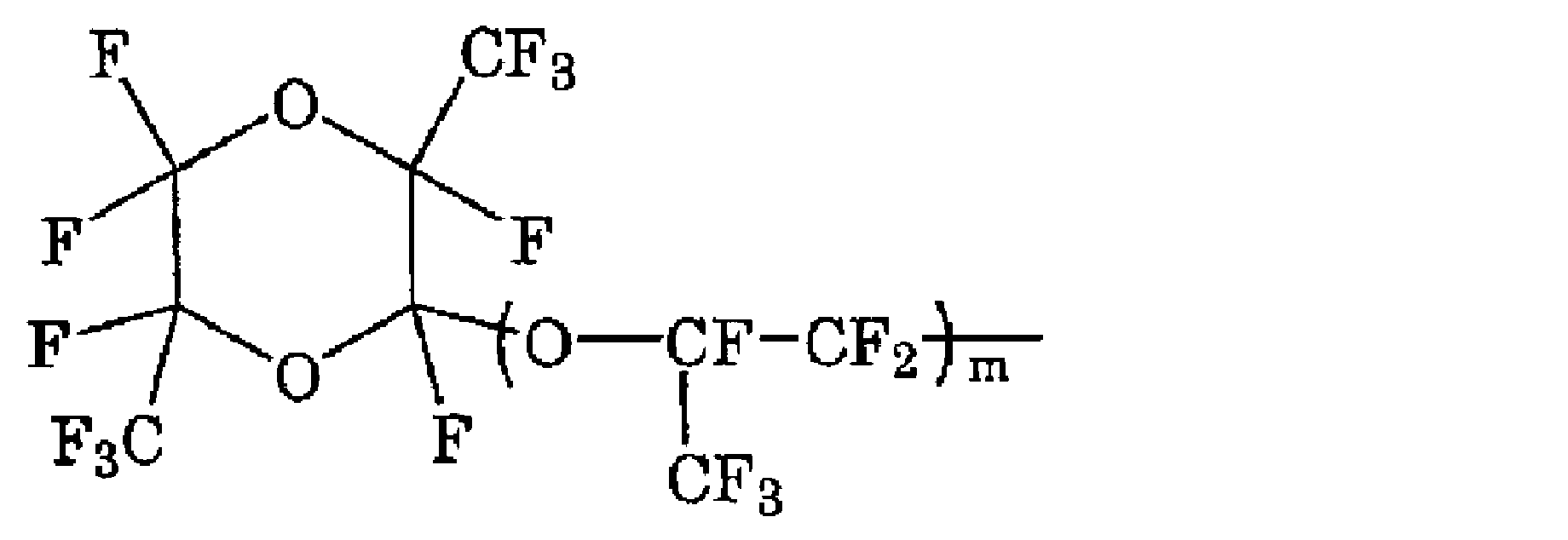
(式中、mは、0又は1~4の整数を表す。)で表される基であるもの、Rfが下記式:

(式中、nは、1~4の整数を表す。)で表される基であるもの等が挙げられる。
(パーフルオロアルキル)エチレン(PFAE)としては特に限定されず、例えば、(パーフルオロブチル)エチレン(PFBE)、(パーフルオロヘキシル)エチレン等が挙げられる。
上記変性モノマーとしては、モノマー反応性比が0.1~8であるコモノマー(3)も好ましく例示される。コモノマー(3)を存在させることによって、粒子径が小さいPTFE粒子を得ることができ、分散安定性の高い水性分散液を得ることができる。
ここで、TFEとの共重合におけるモノマー反応性比とは、成長ラジカルがTFEに基づく繰り返し単位未満であるときに、該成長ラジカルがTFEと反応する場合の速度定数を、該成長ラジカルがコモノマーと反応する場合の速度定数で除した値である。この値が低いほど、コモノマーがTFEと高反応性であることを表す。モノマー反応性比は、TFEとコモノマーとを共重合して開始直後の生成ポリマー中の組成を求め、ファインマン-ロスの式より算出できる。
上記共重合は、内容積6.0Lのステンレス製オートクレーブに3600gの脱イオン脱気水、上記水に対して1000ppmのパーフルオロオクタン酸アンモニウム、100gのパラフィンワックスを使用して、圧力0.78MPa、温度70℃で実施する。0.05g、0.1g、0.2g、0.5g、1.0gのコモノマーをそれぞれ反応器に加え、0.072gの過硫酸アンモニウム(対水20ppm)を加えて、重合圧力0.78MPaを維持させるため、TFEを連続的に供給する。TFE仕込量が1000gに到達したとき、撹拌を停止して、反応器が大気圧になるまで脱圧を行なう。冷却後、パラフィンワックスを分離することにより、生成ポリマーを含む水性分散液が得られる。上記水性分散液を撹拌して生成ポリマーを凝析させ、150℃で乾燥させる。得られた生成ポリマー中の組成を、NMR、FT-IR、元素分析、蛍光X線分析をモノマーの種類によって適宜組み合わせることで算出する。
モノマー反応性比が0.1~8であるコモノマー(3)としては、式(3a)~(3d)で表されるコモノマーからなる群より選択される少なくとも1種であることが好ましい。
CH2=CH-Rf1 (3a)
(式中、Rf1は炭素数が1~10のパーフルオロアルキル基である。)
CF2=CF-O-Rf2 (3b)
(式中、Rf2は炭素数が1~2のパーフルオロアルキル基である。)
CF2=CF-O-(CF2)nCF=CF2 (3c)
(式中、nは1又は2である。)
CH2=CH-Rf1 (3a)
(式中、Rf1は炭素数が1~10のパーフルオロアルキル基である。)
CF2=CF-O-Rf2 (3b)
(式中、Rf2は炭素数が1~2のパーフルオロアルキル基である。)
CF2=CF-O-(CF2)nCF=CF2 (3c)
(式中、nは1又は2である。)

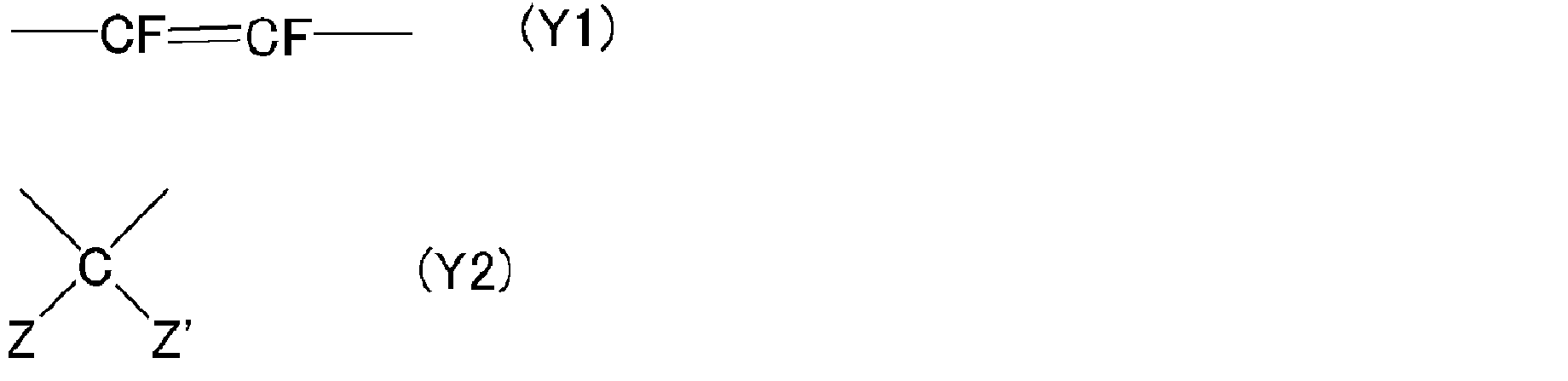
コモノマー(3)の含有量は、PTFEに対して0.00001~1.0質量%の範囲であることが好ましい。下限としては、0.0001質量%がより好ましく、0.001質量%が更に好ましく、0.005質量%が更により好ましく、0.009質量%が特に好ましい。上限としては、0.90質量%が好ましく、0.50質量%がより好ましく、0.40質量%が更に好ましく、0.30質量%が更により好ましく、0.10質量%が殊更に好ましく、0.05質量%が特に好ましい。
上記変性モノマーとしては、変性ポリテトラフルオロエチレン粒子の平均一次粒子径が小さく、一次粒子のアスペクト比が小さく、安定性に優れる水性分散液を得ることができることから、ヘキサフルオロプロピレン、フッ化ビニリデン、フルオロ(アルキルビニルエーテル)、(パーフルオロアルキル)エチレン、エチレン、及び、ラジカル重合で反応可能な官能基と親水基とを有する変性モノマーからなる群より選択される少なくとも1種が好ましい。上記変性モノマーを使用することで、より平均一次粒子径が小さく、一次粒子のアスペクト比が小さく、分散安定性に優れるPTFEの水性分散液を得ることができる。また、未凝析ポリマーが少ない水性分散液を得ることができる。
上記変性モノマーは、TFEとの反応性の観点からは、ヘキサフルオロプロピレン、パーフルオロ(アルキルビニルエーテル)及び(パーフルオロアルキル)エチレンからなる群より選択される少なくとも1種を含むことが好ましい。
より好ましくは、ヘキサフルオロプロピレン、パーフルオロ(メチルビニルエーテル)、パーフルオロ(プロピルビニルエーテル)、(パーフルオロブチル)エチレン、(パーフルオロヘキシル)エチレン、及び、(パーフルオロオクチル)エチレンからなる群より選択される少なくとも1種を含むことである。
上記ヘキサフルオロプロピレン単位、パーフルオロ(アルキルビニルエーテル)単位及び(パーフルオロアルキル)エチレン単位の合計量は、PTFEに対して、0.00001~1.0質量%の範囲であることが好ましい。上記合計量の下限としては、0.0001質量%がより好ましく、0.0005質量%が更に好ましく、0.001質量%が更により好ましく、0.005質量%が更により好ましく、0.009質量%が特に好ましい。上限としては、0.50質量%がより好ましく、0.40質量%が更に好ましく、0.30質量%が更により好ましく、0.10質量%が更により好ましく、0.08質量%が更により好ましく、0.05質量%が特に好ましく、0.01質量%が殊更特に好ましい。
より好ましくは、ヘキサフルオロプロピレン、パーフルオロ(メチルビニルエーテル)、パーフルオロ(プロピルビニルエーテル)、(パーフルオロブチル)エチレン、(パーフルオロヘキシル)エチレン、及び、(パーフルオロオクチル)エチレンからなる群より選択される少なくとも1種を含むことである。
上記ヘキサフルオロプロピレン単位、パーフルオロ(アルキルビニルエーテル)単位及び(パーフルオロアルキル)エチレン単位の合計量は、PTFEに対して、0.00001~1.0質量%の範囲であることが好ましい。上記合計量の下限としては、0.0001質量%がより好ましく、0.0005質量%が更に好ましく、0.001質量%が更により好ましく、0.005質量%が更により好ましく、0.009質量%が特に好ましい。上限としては、0.50質量%がより好ましく、0.40質量%が更に好ましく、0.30質量%が更により好ましく、0.10質量%が更により好ましく、0.08質量%が更により好ましく、0.05質量%が特に好ましく、0.01質量%が殊更特に好ましい。
上記変性モノマーは、ラジカル重合で反応可能な官能基と親水基とを有する変性モノマー(以下「変性モノマー(A)」と記載する。)を含むことも好ましい。
上記変性モノマー(A)を存在させることによって、一次粒子径が小さいPTFE粒子を得ることができ、分散安定性の高い水性分散液を得ることができる。また、未凝析ポリマー量を少なくすることもできる。更に、一次粒子のアスペクト比を小さくすることができる。
上記変性モノマー(A)の使用量は、水性媒体の0.1ppmに相当する量を超える量であることが好ましく、0.5ppmを超える量であることがより好ましく、1.0ppmを超える量であることが更に好ましく、5ppm以上であることが更により好ましく、10ppm以上であることが特に好ましい。上記変性モノマー(A)が少なすぎると、得られるPTFEの平均一次粒子径が小さくならないおそれがある。
上記変性モノマー(A)は、上記範囲であればよいが、例えば、上限を5000ppmとすることができる。また、上記製造方法では、反応中または反応後の水性分散液の安定性を向上させるために、反応途中で変性モノマー(A)を系中に追加してもよい。
上記変性モノマー(A)は、上記範囲であればよいが、例えば、上限を5000ppmとすることができる。また、上記製造方法では、反応中または反応後の水性分散液の安定性を向上させるために、反応途中で変性モノマー(A)を系中に追加してもよい。
上記変性モノマー(A)は水溶性が高いので、未反応の変性モノマー(A)が水性分散液中に残存したとしても、濃縮工程、あるいは凝析・洗浄工程での除去は容易である。
上記変性モノマー(A)は、重合の過程で生成ポリマー中に取り込まれるが、重合系中の変性モノマー(A)の濃度そのものが低く、ポリマーに取り込まれる量が少ないため、PTFEの耐熱性が低下したり焼成後に着色したりする問題はない。
上記変性モノマー(A)における親水基としては、例えば、-NH2、-PO3M、-OPO3M、-SO3M、-OSO3M、-COOM(各式において、(Mは、H、金属原子、NR7
4、置換基を有していてもよいイミダゾリウム、置換基を有していてもよいピリジニウム又は置換基を有していてもよいホスホニウム、R7は、H又は有機基であり、同一でも異なっていてもよい。いずれか2つがお互いに結合して、環を形成してもよい。)が挙げられる。上記親水基としては、なかでも、-SO3M又は-COOMが好ましい。R7としては、H又はC1-10の有機基が好ましく、H又はC1-4の有機基がより好ましく、H又はC1-4のアルキル基が更に好ましい。
上記金属原子としては、1、2価の金属原子が挙げられ、アルカリ金属(1族)、アルカリ土類金属(2族)等が挙げられ、Na、K又はLiが好ましい。
上記金属原子としては、1、2価の金属原子が挙げられ、アルカリ金属(1族)、アルカリ土類金属(2族)等が挙げられ、Na、K又はLiが好ましい。
上記変性モノマー(A)における「ラジカル重合で反応可能な官能基」としては、例えば、ビニル基、アリル基等のエチレン性不飽和結合を有する基が挙げられる。エチレン性不飽和結合を有する基は、下記式:
CXeXg=CXfR-
(式中、Xe、Xf及びXgは、それぞれ独立して、F、Cl、H、CF3、CF2H、CFH2、又は、CH3であり;Rは連結基である。)で示すことができる。Rの連結基としては後述するRaとしての連結基が挙げられる。好ましくは-CH=CH2、-CF=CH2、-CH=CF2、-CF=CF2、-CH2-CH=CH2、-CF2-CF=CH2、-CF2-CF=CF2、-(C=O)-CH=CH2、-(C=O)-CF=CH2、-(C=O)-CH=CF2、-(C=O)-CF=CF2、-(C=O)-C(CH3)=CH2、-(C=O)-C(CF3)=CH2、-(C=O)-C(CH3)=CF2、-(C=O)-C(CF3)=CF2、-O-CH2-CH=CH2、-O-CF2-CF=CH2、-O-CH2-CH=CF2、-O-CF2-CF=CF2等の不飽和結合を有する基が挙げられる。
CXeXg=CXfR-
(式中、Xe、Xf及びXgは、それぞれ独立して、F、Cl、H、CF3、CF2H、CFH2、又は、CH3であり;Rは連結基である。)で示すことができる。Rの連結基としては後述するRaとしての連結基が挙げられる。好ましくは-CH=CH2、-CF=CH2、-CH=CF2、-CF=CF2、-CH2-CH=CH2、-CF2-CF=CH2、-CF2-CF=CF2、-(C=O)-CH=CH2、-(C=O)-CF=CH2、-(C=O)-CH=CF2、-(C=O)-CF=CF2、-(C=O)-C(CH3)=CH2、-(C=O)-C(CF3)=CH2、-(C=O)-C(CH3)=CF2、-(C=O)-C(CF3)=CF2、-O-CH2-CH=CH2、-O-CF2-CF=CH2、-O-CH2-CH=CF2、-O-CF2-CF=CF2等の不飽和結合を有する基が挙げられる。
上記変性モノマー(A)は、ラジカル重合で反応可能な官能基を有するので、上記重合において使用すると、重合反応初期に含フッ素モノマーと反応し、上記変性モノマー(A)に由来する親水基を有し安定性が高い粒子が形成されると推測される。このため、上記変性モノマー(A)の存在下に重合を行うと、粒子数が多くなると考えられる。
上記重合は、上記変性モノマー(A)を1種存在させるものであってもよいし、2種以上存在させるものであってもよい。
上記重合において、上記変性モノマー(A)として、不飽和結合を有する化合物を使用することができる。
変性モノマー(A)は、一般式(4):
CXiXk=CXjRa-(CZ1Z2)k-Y3 (4)
(式中、Xi、Xj及びXkは、それぞれ独立して、F、Cl、H又はCF3であり;Y3は、親水基であり;Raは連結基であり;Z1及びZ2は、それぞれ独立して、H、F又はCF3であり、kは0又は1である)で表される化合物が好ましい。
上記親水基としては、例えば、-NH2、-PO3M、-OPO3M、-SO3M、-OSO3M、-COOM(各式において、Mは、H、金属原子、NR7 4、置換基を有していてもよいイミダゾリウム、置換基を有していてもよいピリジニウム又は置換基を有していてもよいホスホニウム、R7は、H又は有機基であり、同一でも異なっていてもよい。いずれか2つがお互いに結合して、環を形成してもよい。)が挙げられる。上記親水基としては、なかでも、-SO3M又は-COOMが好ましい。R7としては、H又はC1-10の有機基が好ましく、H又はC1-4の有機基がより好ましく、H又はC1-4のアルキル基が更に好ましい。
上記金属原子としては、1、2価の金属原子が挙げられ、アルカリ金属(1族)、アルカリ土類金属(2族)等が挙げられ、Na、K又はLiが好ましい。
上記変性モノマー(A)を用いることによって、より平均一次粒子径が小さく、より安定性に優れる水性分散液を得ることができる。また、一次粒子のアスペクト比をより小さくすることもできる。
CXiXk=CXjRa-(CZ1Z2)k-Y3 (4)
(式中、Xi、Xj及びXkは、それぞれ独立して、F、Cl、H又はCF3であり;Y3は、親水基であり;Raは連結基であり;Z1及びZ2は、それぞれ独立して、H、F又はCF3であり、kは0又は1である)で表される化合物が好ましい。
上記親水基としては、例えば、-NH2、-PO3M、-OPO3M、-SO3M、-OSO3M、-COOM(各式において、Mは、H、金属原子、NR7 4、置換基を有していてもよいイミダゾリウム、置換基を有していてもよいピリジニウム又は置換基を有していてもよいホスホニウム、R7は、H又は有機基であり、同一でも異なっていてもよい。いずれか2つがお互いに結合して、環を形成してもよい。)が挙げられる。上記親水基としては、なかでも、-SO3M又は-COOMが好ましい。R7としては、H又はC1-10の有機基が好ましく、H又はC1-4の有機基がより好ましく、H又はC1-4のアルキル基が更に好ましい。
上記金属原子としては、1、2価の金属原子が挙げられ、アルカリ金属(1族)、アルカリ土類金属(2族)等が挙げられ、Na、K又はLiが好ましい。
上記変性モノマー(A)を用いることによって、より平均一次粒子径が小さく、より安定性に優れる水性分散液を得ることができる。また、一次粒子のアスペクト比をより小さくすることもできる。
上記Raは、連結基である。本明細書において「連結基」は、二価連結基を指す。連結基は、単結合であってもよく、少なくとも1個の炭素原子を含むことが好ましく、炭素原子の数は、2以上であってよく、4以上であってよく、8以上であってよく、10以上であってよく、20以上であってもよい。上限は限定されないが、例えば、100以下であってよく、50以下であってよい。
上記連結基は、鎖状又は分岐状、環状又は非環状構造、飽和又は不飽和、置換又は非置換であってよく、所望により硫黄、酸素、及び窒素からなる群から選択される1つ以上のヘテロ原子を含み、所望によりエステル、アミド、スルホンアミド、カルボニル、カーボネート、ウレタン、尿素及びカルバメートからなる群から選択される1つ以上の官能基を含んでよい。上記連結基は、炭素原子を含まず、酸素、硫黄又は窒素等のカテナリーヘテロ原子であってもよい。
上記連結基は、鎖状又は分岐状、環状又は非環状構造、飽和又は不飽和、置換又は非置換であってよく、所望により硫黄、酸素、及び窒素からなる群から選択される1つ以上のヘテロ原子を含み、所望によりエステル、アミド、スルホンアミド、カルボニル、カーボネート、ウレタン、尿素及びカルバメートからなる群から選択される1つ以上の官能基を含んでよい。上記連結基は、炭素原子を含まず、酸素、硫黄又は窒素等のカテナリーヘテロ原子であってもよい。
上記Raは、例えば、酸素、硫黄、窒素等のカテナリーヘテロ原子、又は、2価の有機基であることが好ましい。
Raが2価の有機基である場合、炭素原子に結合する水素原子は、フッ素以外のハロゲン、例えば塩素等で置き換えられてもよく、二重結合を含んでも含まなくてもよい。また、Raは、鎖状及び分岐状のいずれでもよく、環状及び非環状のいずれでもよい。また、Raは、官能基(例えば、エステル、エーテル、ケトン、アミン、ハロゲン化物等)を含んでもよい。
Raはまた、非フッ素の2価の有機基であってもよいし、部分フッ素化又は過フッ素化された2価の有機基であってもよい。
Raとしては、例えば、炭素原子にフッ素原子が結合していない炭化水素基、炭素原子に結合する水素原子の一部がフッ素原子で置換された炭化水素基、炭素原子に結合する水素原子の全てがフッ素原子で置換された炭化水素基、-(C=O)-、-(C=O)-O-、又は、-(C=O)-を含有する炭化水素基であってもよく、これらは酸素原子を含んでいてもよく、二重結合を含んでいてもよく、官能基を含んでいてもよい。
Raが2価の有機基である場合、炭素原子に結合する水素原子は、フッ素以外のハロゲン、例えば塩素等で置き換えられてもよく、二重結合を含んでも含まなくてもよい。また、Raは、鎖状及び分岐状のいずれでもよく、環状及び非環状のいずれでもよい。また、Raは、官能基(例えば、エステル、エーテル、ケトン、アミン、ハロゲン化物等)を含んでもよい。
Raはまた、非フッ素の2価の有機基であってもよいし、部分フッ素化又は過フッ素化された2価の有機基であってもよい。
Raとしては、例えば、炭素原子にフッ素原子が結合していない炭化水素基、炭素原子に結合する水素原子の一部がフッ素原子で置換された炭化水素基、炭素原子に結合する水素原子の全てがフッ素原子で置換された炭化水素基、-(C=O)-、-(C=O)-O-、又は、-(C=O)-を含有する炭化水素基であってもよく、これらは酸素原子を含んでいてもよく、二重結合を含んでいてもよく、官能基を含んでいてもよい。
Raは、-(C=O)-、-(C=O)-O-、又は、エーテル結合を含んでいてもよく、カルボニル基を含んでいてもよい炭素数1~100の炭化水素基であることが好ましく、該炭化水素基は、炭素原子に結合する水素原子の一部又は全部がフッ素に置換されていてもよい。
Raとして好ましくは、-(CH2)a-、-(CF2)a-、-O-(CF2)a-、-(CF2)a-O-(CF2)b-、-O(CF2)a-O-(CF2)b-、-(CF2)a-[O-(CF2)b]c-、-O(CF2)a-[O-(CF2)b]c-、-[(CF2)a-O]b-[(CF2)c-O]d-、-O[(CF2)a-O]b-[(CF2)c-O]d-、-O-[CF2CF(CF3)O]a-(CF2)b-、-(C=O)-、-(C=O)-O-、-(C=O)-(CH2)a-、-(C=O)-(CF2)a-、-(C=O)-O-(CH2)a-、-(C=O)-O-(CF2)a-、-(C=O)-[(CH2)a-O]b-、-(C=O)-[(CF2)a-O]b-、-(C=O)-O[(CH2)a-O]b-、-(C=O)-O[(CF2)a-O]b-、-(C=O)-O[(CH2)a-O]b-(CH2)c-、-(C=O)-O[(CF2)a-O]b-(CF2)c-、-(C=O)-(CH2)a-O-(CH2)b-、-(C=O)-(CF2)a-O-(CF2)b-、-(C=O)-O-(CH2)a-O-(CH2)b-、-(C=O)-O-(CF2)a-O-(CF2)b-、-(C=O)-O-C6H4-、及び、これらの組み合わせから選択される少なくとも1種である。
式中、a、b、c及びdは独立して少なくとも1以上である。a、b、c及びdは独立して、2以上であってよく、3以上であってよく、4以上であってよく、10以上であってよく、20以上であってよい。a、b、c及びdの上限は、例えば、100である。
Raとして好ましくは、-(CH2)a-、-(CF2)a-、-O-(CF2)a-、-(CF2)a-O-(CF2)b-、-O(CF2)a-O-(CF2)b-、-(CF2)a-[O-(CF2)b]c-、-O(CF2)a-[O-(CF2)b]c-、-[(CF2)a-O]b-[(CF2)c-O]d-、-O[(CF2)a-O]b-[(CF2)c-O]d-、-O-[CF2CF(CF3)O]a-(CF2)b-、-(C=O)-、-(C=O)-O-、-(C=O)-(CH2)a-、-(C=O)-(CF2)a-、-(C=O)-O-(CH2)a-、-(C=O)-O-(CF2)a-、-(C=O)-[(CH2)a-O]b-、-(C=O)-[(CF2)a-O]b-、-(C=O)-O[(CH2)a-O]b-、-(C=O)-O[(CF2)a-O]b-、-(C=O)-O[(CH2)a-O]b-(CH2)c-、-(C=O)-O[(CF2)a-O]b-(CF2)c-、-(C=O)-(CH2)a-O-(CH2)b-、-(C=O)-(CF2)a-O-(CF2)b-、-(C=O)-O-(CH2)a-O-(CH2)b-、-(C=O)-O-(CF2)a-O-(CF2)b-、-(C=O)-O-C6H4-、及び、これらの組み合わせから選択される少なくとも1種である。
式中、a、b、c及びdは独立して少なくとも1以上である。a、b、c及びdは独立して、2以上であってよく、3以上であってよく、4以上であってよく、10以上であってよく、20以上であってよい。a、b、c及びdの上限は、例えば、100である。
Raとして好適な具体例としては、-CF2-O-、-CF2-O-CF2-、-CF2-O-CH2-、-CF2-O-CH2CF2-、-CF2-O-CF2CF2-、-CF2-O-CF2CH2-、-CF2-O-CF2CF2CH2-、-CF2-O-CF(CF3)-、-CF2-O-CF(CF3)CF2-、-CF2-O-CF(CF3)CF2-O-、-CF2-O-CF(CF3)CH2-、-(C=O)-、-(C=O)-O-、-(C=O)-(CH2)-、-(C=O)-(CF2)-、-(C=O)-O-(CH2)-、-(C=O)-O-(CF2)-、-(C=O)-[(CH2)2-O]n-、
-(C=O)-[(CF2)2-O]n-、-(C=O)-O[(CH2)2-O]n-、-(C=O)-O[(CF2)2-O]n-、-(C=O)-O[(CH2)2-O]n-(CH2)-、-(C=O)-O[(CF2)2-O]n-(CF2)-、-(C=O)-(CH2)2-O-(CH2)-、-(C=O)-(CF2)2-O-(CF2)-、-(C=O)-O-(CH2)2-O-(CH2)-、-(C=O)-O-(CF2)2-O-(CF2)-、-(C=O)-O-C6H4-等が挙げられる。中でも、上記Raは、具体的には、-CF2-O-、-CF2-O-CF2-、-CF2-O-CF2CF2-、-CF2-O-CF(CF3)-、-CF2-O-CF(CF3)CF2-、-CF2-O-CF(CF3)CF2-O-、-(C=O)-、-(C=O)-O-、-(C=O)-(CH2)-、-(C=O)-O-(CH2)-、-(C=O)-O[(CH2)2-O]n-、-(C=O)-O[(CH2)2-O]n-(CH2)-、-(C=O)-(CH2)2-O-(CH2)-、又は、-(C=O)-O-C6H4-が好ましい。
上記式中、nは1~10の整数である。
-(C=O)-[(CF2)2-O]n-、-(C=O)-O[(CH2)2-O]n-、-(C=O)-O[(CF2)2-O]n-、-(C=O)-O[(CH2)2-O]n-(CH2)-、-(C=O)-O[(CF2)2-O]n-(CF2)-、-(C=O)-(CH2)2-O-(CH2)-、-(C=O)-(CF2)2-O-(CF2)-、-(C=O)-O-(CH2)2-O-(CH2)-、-(C=O)-O-(CF2)2-O-(CF2)-、-(C=O)-O-C6H4-等が挙げられる。中でも、上記Raは、具体的には、-CF2-O-、-CF2-O-CF2-、-CF2-O-CF2CF2-、-CF2-O-CF(CF3)-、-CF2-O-CF(CF3)CF2-、-CF2-O-CF(CF3)CF2-O-、-(C=O)-、-(C=O)-O-、-(C=O)-(CH2)-、-(C=O)-O-(CH2)-、-(C=O)-O[(CH2)2-O]n-、-(C=O)-O[(CH2)2-O]n-(CH2)-、-(C=O)-(CH2)2-O-(CH2)-、又は、-(C=O)-O-C6H4-が好ましい。
上記式中、nは1~10の整数である。
上記一般式(4)における-Ra-(CZ1Z2)kとしては、-CF2-O-CF2-、-CF2-O-CF(CF3)-、-CF2-O-C(CF3)2-、-CF2-O-CF2-CF2-、-CF2-O-CF2-CF(CF3)-、-CF2-O-CF2-C(CF3)2-、-CF2-O-CF2CF2-CF2-、-CF2-O-CF2CF2-CF(CF3)-、-CF2-O-CF2CF2-C(CF3)2-、-CF2-O-CF(CF3)-CF2-、-CF2-O-CF(CF3)-CF(CF3)-、-CF2-O-CF(CF3)-C(CF3)2-、-CF2-O-CF(CF3)-CF2-、-CF2-O-CF(CF3)-CF(CF3)-、-CF2-O-CF(CF3)-C(CF3)2-、-CF2-O-CF(CF3)CF2-CF2-、-CF2-O-CF(CF3)CF2-CF(CF3)-、-CF2-O-CF(CF3)CF2-C(CF3)2-、-CF2-O-CF(CF3)CF2-O-CF2-、-CF2-O-CF(CF3)CF2-O-CF(CF3)-、-CF2-O-CF(CF3)CF2-O-C(CF3)2-、-(C=O)-、-(C=O)-O-、-(C=O)-(CH2)-、-(C=O)-(CF2)-、-(C=O)-O-(CH2)-、-(C=O)-O-(CF2)-、-(C=O)-[(CH2)2-O]n-(CH2)-、-(C=O)-[(CF2)2-O]n-(CF2)-、-(C=O)-[(CH2)2-O]n-(CH2)-(CH2)-、-(C=O)-[(CF2)2-O]n-(CF2)-(CF2)-、-(C=O)-O[(CH2)2-O]n-(CF2)-、-(C=O)-O[(CH2)2-O]n-(CH2)-(CH2)-、-(C=O)-O[(CF2)2-O]n-(CF2)-、-(C=O)-O[(CF2)2-O]n-(CF2)-(CF2)-、-(C=O)-(CH2)2-O-(CH2)-(CH2)-、-(C=O)-(CF2)2-O-(CF2)-(CF2)-、-(C=O)-O-(CH2)2-O-(CH2)-(CH2)-、-(C=O)-O-(CF2)2-O-(CF2)-(CF2)-、-(C=O)-O-(CH2)2-O-(CH2)-C(CF3)2-、-(C=O)-O-(CF2)2-O-(CF2)-C(CF3)2-、又は、-(C=O)-O-C6H4-C(CF3)2-が好ましく、-CF2-O-CF(CF3)-、-CF2-O-CF2-CF(CF3)-、-CF2-O-CF2CF2-CF(CF3)-、-CF2-O-CF(CF3)-CF(CF3)-、-CF2-O-CF(CF3)CF2-CF(CF3)-、-CF2-O-CF(CF3)CF2-O-CF(CF3)-、-(C=O)-、-(C=O)-O-(CH2)-、-(C=O)-O-(CH2)-(CH2)-、-(C=O)-O[(CH2)2-O]n-(CH2)-(CH2)-、-(C=O)-O-(CH2)2-O-(CH2)-C(CF3)2-、又は、-(C=O)-O-C6H4-C(CF3)2-がより好ましい。
上記式中、nは1~10の整数である。
上記式中、nは1~10の整数である。
一般式(4)で表される化合物の具体例としては、
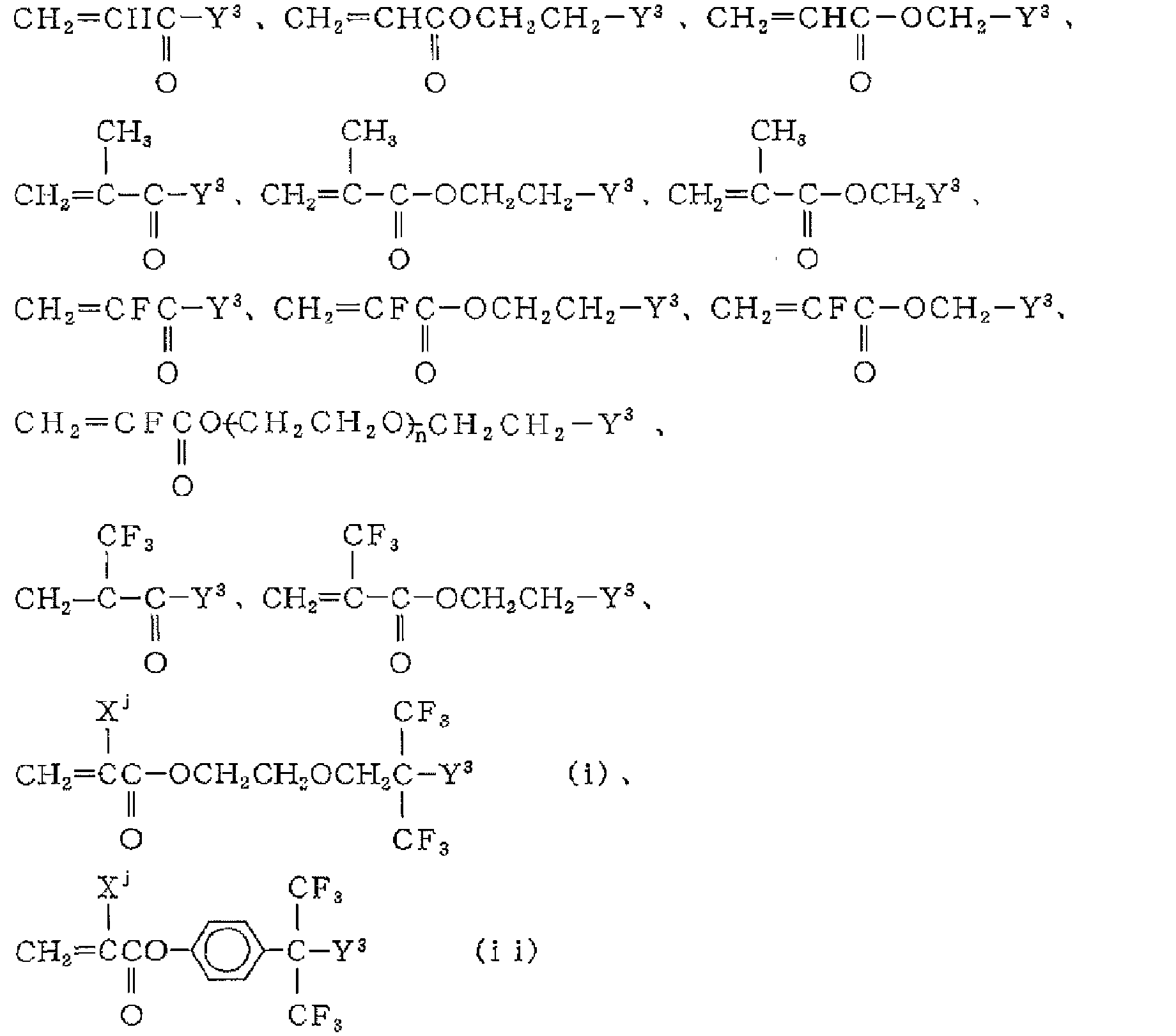
(式中、Xj及びY3は上記と同じ。nは1~10の整数である。)等が挙げられる。
Raとしては、下記一般式(r1):
-(C=O)h-(O)i-CF2-O-(CX6 2)e-{O-CF(CF3)}f-(O)g- (r1)
(式中、X6はそれぞれ独立してH、F又はCF3であり、eは0~3の整数であり、fは0~3の整数であり、gは0又は1であり、hは0又は1であり、iは0又は1である)で表される2価の基が好ましく、下記一般式(r2):
-(C=O)h-(O)i-CF2-O-(CX7 2)e-(O)g- (r2)
(式中、X7はそれぞれ独立してH、F又はCF3であり、eは0~3の整数であり、gは0又は1であり、hは0又は1であり、iは0又は1である。)で表される2価の基も好ましい。
-(C=O)h-(O)i-CF2-O-(CX6 2)e-{O-CF(CF3)}f-(O)g- (r1)
(式中、X6はそれぞれ独立してH、F又はCF3であり、eは0~3の整数であり、fは0~3の整数であり、gは0又は1であり、hは0又は1であり、iは0又は1である)で表される2価の基が好ましく、下記一般式(r2):
-(C=O)h-(O)i-CF2-O-(CX7 2)e-(O)g- (r2)
(式中、X7はそれぞれ独立してH、F又はCF3であり、eは0~3の整数であり、gは0又は1であり、hは0又は1であり、iは0又は1である。)で表される2価の基も好ましい。
上記一般式(4)の-Ra-CZ1Z2-としてはまた、下記式(t1):
-(C=O)h-(O)i-CF2-O-(CX6 2)e-{O-CF(CF3)}f-(O)g-CZ1Z2- (t1)
(式中、X6はそれぞれ独立してH、F又はCF3であり、eは0~3の整数であり、fは0~3の整数であり、gは0又は1であり、hは0又は1であり、iは0又は1であり、Z1及びZ2は、それぞれ独立して、F又はCF3である)で表される2価の基も好ましく、式(t1)において、Z1及びZ2は、一方がFで他方がCF3であることがより好ましい。
また、上記一般式(4)において、-Ra-CZ1Z2-としては、下記式(t2):
-(C=O)h-(O)i-CF2-O-(CX7 2)e-(O)g-CZ1Z2- (t2)
(式中、X7はそれぞれ独立してH、F又はCF3であり、eは0~3の整数であり、gは0又は1であり、hは0又は1であり、iは0又は1であり、Z1及びZ2は、それぞれ独立して、H、F又はCF3である)で表される2価の基も好ましく、式(t2)において、Z1及びZ2は、一方がFで他方がCF3であることがより好ましい。
-(C=O)h-(O)i-CF2-O-(CX6 2)e-{O-CF(CF3)}f-(O)g-CZ1Z2- (t1)
(式中、X6はそれぞれ独立してH、F又はCF3であり、eは0~3の整数であり、fは0~3の整数であり、gは0又は1であり、hは0又は1であり、iは0又は1であり、Z1及びZ2は、それぞれ独立して、F又はCF3である)で表される2価の基も好ましく、式(t1)において、Z1及びZ2は、一方がFで他方がCF3であることがより好ましい。
また、上記一般式(4)において、-Ra-CZ1Z2-としては、下記式(t2):
-(C=O)h-(O)i-CF2-O-(CX7 2)e-(O)g-CZ1Z2- (t2)
(式中、X7はそれぞれ独立してH、F又はCF3であり、eは0~3の整数であり、gは0又は1であり、hは0又は1であり、iは0又は1であり、Z1及びZ2は、それぞれ独立して、H、F又はCF3である)で表される2価の基も好ましく、式(t2)において、Z1及びZ2は、一方がFで他方がCF3であることがより好ましい。
一般式(4)で表される化合物は、親水基(Y3)を除いて、C-F結合を有し、C-H結合を有していないことも好ましい。すなわち、一般式(4)において、Xi、Xj、及びXkの全てがFであり、Raは炭素数が1以上のパーフルオロアルキレン基であることが好ましく、上記パーフルオロアルキレン基は、鎖状及び分岐状のいずれでもよく、環状及び非環状のいずれでもよく、少なくとも1つのカテナリーヘテロ原子を含んでもよい。上記パーフルオロアルキレン基の炭素数は、2~20であってよく、4~18であってもよい。
一般式(4)で表される化合物は、部分フッ素化されたものであってもよい。すなわち、一般式(4)で表される化合物は、親水基(Y3)を除いて、炭素原子に結合した少なくとも1つの水素原子を有し、炭素原子に結合した少なくとも1つのフッ素原子を有することも好ましい。
一般式(4)で表される化合物は、下記式(4a)で示される化合物であることも好ましい。
CF2=CF-O-Rf0-Y3 (4a)
(式中、Y3は親水基であり、Rf0は、過フッ素化されており、鎖状又は分岐状、環状又は非環状構造、飽和又は不飽和、置換又は非置換であってもよく、硫黄、酸素、及び窒素からなる群から選択される1つ以上のヘテロ原子を任意追加的に含有する過フッ素化二価連結基である。)
CF2=CF-O-Rf0-Y3 (4a)
(式中、Y3は親水基であり、Rf0は、過フッ素化されており、鎖状又は分岐状、環状又は非環状構造、飽和又は不飽和、置換又は非置換であってもよく、硫黄、酸素、及び窒素からなる群から選択される1つ以上のヘテロ原子を任意追加的に含有する過フッ素化二価連結基である。)
一般式(4)で表される化合物は、下記式(4b)で示される化合物であることも好ましい。
CH2=CH-O-Rf0-Y3 (4b)
(式中、Y3は親水基であり、Rf0は式(4a)で定義される過フッ素化二価連結基である。)
CH2=CH-O-Rf0-Y3 (4b)
(式中、Y3は親水基であり、Rf0は式(4a)で定義される過フッ素化二価連結基である。)
一般式(4)において、Y3は-OSO3Mであることが好ましい形態の一つである。Y3が-OSO3Mである場合、一般式(4)で表される化合物に基づく重合単位としては、-[CF2CF(OCF2CF2CH2OSO3M)]-、-[CH2CH((CF2)4CH2OSO3M)]-、-[CF2CF(O(CF2)4CH2OSO3M)]-、-[CF2CF(OCF2CF(CF3)CH2OSO3M)]-、-[CF2CF(OCF2CF(CF3)OCF2CF2CH2OSO3M)]-、-[CH2CH((CF2)4CH2OSO3M)]-、-[CF2CF(OCF2CF2SO2N(CH3)CH2CH2OSO3M)]-、-[CH2CH(CF2CF2CH2OSO3M)]-、-[CF2CF(OCF2CF2CF2CF2SO2N(CH3)CH2CH2OSO3M)]-、-[CH2CH(CF2CF2CH2OSO3M)]-等が挙げられる。上記式中、Mは上記と同じである。
一般式(4)において、Y3は-SO3Mであることも好ましい形態の一つである。Y3が-SO3Mである場合、一般式(4)で表される化合物に基づく重合単位としては、-[CF2CF(OCF2CF2SO3M)]-、-[CF2CF(O(CF2)4SO3M)]-、-[CF2CF(OCF2CF(CF3)SO3M)]-、-[CF2CF(OCF2CF(CF3)OCF2CF2SO3M)]-、-[CH2CH(CF2CF2SO3M)]-、-[CF2CF(OCF2CF(CF3)OCF2CF2CF2CF2SO3M)]-、-[CH2CH((CF2)4SO3M)]-、-[CH2CH(CF2CF2SO3M)]-、-[CH2CH((CF2)4SO3M)]-等が挙げられる。上記式中、Mは上記と同じである。
一般式(4)において、Y3は-COOMであることも好ましい形態の一つである。Y3が-COOMである場合、一般式(4)で表される化合物に基づく重合単位としては、-[CF2CF(OCF2CF2COOM)]-、-[CF2CF(O(CF2)5COOM)]-、-[CF2CF(OCF2CF(CF3)COOM)]-、-[CF2CF(OCF2CF(CF3)O(CF2)nCOOM)]-(nは1より大きい)、-[CH2CH(CF2CF2COOM)]-、-[CH2CH((CF2)4COOM)]-、-[CH2CH(CF2CF2COOM)]-、-[CH2CH((CF2)4COOM)]-、-[CF2CF(OCF2CF2SO2NR’CH2COOM)]-、-[CF2CF(O(CF2)4SO2NR’CH2COOM)]-、-[CF2CF(OCF2CF(CF3)SO2NR’CH2COOM)]-、-[CF2CF(OCF2CF(CF3)OCF2CF2SO2NR’CH2COOM)]-、-[CH2CH(CF2CF2SO2NR’CH2COOM)]-、-[CF2CF(OCF2CF(CF3)OCF2CF2CF2CF2SO2NR’CH2COOM)]-、-[CH2CH((CF2)4SO2NR’CH2COOM)]-、-[CH2CH(CF2CF2SO2NR’CH2COOM)]-、-[CH2CH((CF2)4SO2NR’CH2COOM)]-等が挙げられる。上記式中、R’はH又はC1-4アルキル基であり、Mは上記と同じである。
一般式(4)において、Y3は-OPO3Mであることも好ましい形態の一つである。Y3が-OPO3Mである場合、一般式(4)で表される化合物に基づく重合単位としては、-[CF2CF(OCF2CF2CH2OP(O)(OM)2)]-、-[CF2CF(O(CF2)4CH2OP(O)(OM)2)]-、-[CF2CF(OCF2CF(CF3)CH2OP(O)(OM)2)]-、-[CF2CF(OCF2CF(CF3)OCF2CF2CH2OP(O)(OM)2)]-、-[CF2CF(OCF2CF2SO2N(CH3)CH2CH2OP(O)(OM)2)]-、-[CF2CF(OCF2CF2CF2CF2SO2N(CH3)CH2CH2OP(O)(OM)2)]-、-[CH2CH(CF2CF2CH2OP(O)(OM)2)]-、-[CH2CH((CF2)4CH2OP(O)(OM)2)]-、-[CH2CH(CF2CF2CH2OP(O)(OM)2)]-、-[CH2CH((CF2)4CH2OP(O)(OM)2)]-等が挙げられる。上記式中、Mは上記と同じである。
一般式(4)において、Y3は-PO3Mであることも好ましい形態の一つである。Y3が-PO3Mである場合、一般式(4)で表される化合物に基づく重合単位としては、-[CF2CF(OCF2CF2P(O)(OM)2)]-、-[CF2CF(O(CF2)4P(O)(OM)2)]-、-[CF2CF(OCF2CF(CF3)P(O)(OM)2)]-、-[CF2CF(OCF2CF(CF3)OCF2CF2P(O)(OM)2)]-、-[CH2CH(CF2CF2P(O)(OM)2)]-、-[CH2CH((CF2)4P(O)(OM)2)]-、-[CH2CH(CF2CF2P(O)(OM)2)]-、及び-[CH2CH((CF2)4P(O)(OM)2)]-が挙げられ、式中、Mは上記と同じである。
上記一般式(4)で表される化合物としては、下記一般式(5):
CX2=CY(-CZ2-O-Rf-Y3) (5)
(式中、Xは、同一又は異なって、-H又は-Fであり、Yは-H、-F、アルキル基又は含フッ素アルキル基であり、Zは、同一又は異なって、-H、-F、アルキル基又は含フッ素アルキル基である。Rfは炭素数1~40の含フッ素アルキレン基、又は、炭素数2~100のエーテル結合を有する含フッ素アルキレン基である。Y3は、前記と同じ。)である。)で表される単量体、下記一般式(6):
CX2=CY(-O-Rf-Y3) (6)
(式中、Xは、同一又は異なって、-H又は-Fであり、Yは-H、-F、アルキル基又は含フッ素アルキル基であり、Rfは炭素数1~40の含フッ素アルキレン基、又は、炭素数2~100のエーテル結合を有する含フッ素アルキレン基である。Y3は、前記と同じである。)で表される単量体、及び、下記一般式(7):
CX2=CY(-Rf-Y3) (7)
(式中、Xは、同一又は異なって、-H又は-Fであり、Yは-H、-F、アルキル基又は含フッ素アルキル基であり、Rfは炭素数1~40の含フッ素アルキレン基、又は、炭素数2~100のエーテル結合を有する含フッ素アルキレン基である。Y3は、前記と同じである。)で表される単量体、からなる群より選択される少なくとも1種であることが好ましい。
CX2=CY(-CZ2-O-Rf-Y3) (5)
(式中、Xは、同一又は異なって、-H又は-Fであり、Yは-H、-F、アルキル基又は含フッ素アルキル基であり、Zは、同一又は異なって、-H、-F、アルキル基又は含フッ素アルキル基である。Rfは炭素数1~40の含フッ素アルキレン基、又は、炭素数2~100のエーテル結合を有する含フッ素アルキレン基である。Y3は、前記と同じ。)である。)で表される単量体、下記一般式(6):
CX2=CY(-O-Rf-Y3) (6)
(式中、Xは、同一又は異なって、-H又は-Fであり、Yは-H、-F、アルキル基又は含フッ素アルキル基であり、Rfは炭素数1~40の含フッ素アルキレン基、又は、炭素数2~100のエーテル結合を有する含フッ素アルキレン基である。Y3は、前記と同じである。)で表される単量体、及び、下記一般式(7):
CX2=CY(-Rf-Y3) (7)
(式中、Xは、同一又は異なって、-H又は-Fであり、Yは-H、-F、アルキル基又は含フッ素アルキル基であり、Rfは炭素数1~40の含フッ素アルキレン基、又は、炭素数2~100のエーテル結合を有する含フッ素アルキレン基である。Y3は、前記と同じである。)で表される単量体、からなる群より選択される少なくとも1種であることが好ましい。
上記一般式(5)において、Xは-H又は-Fである。Xは、両方が-Fであってもよいし、少なくとも1つが-Hであってよい。例えば、片方が-Fで他方が-Hであってもよいし、両方が-Hであってもよい。
上記一般式(5)において、Yは-H、-F、アルキル基又は含フッ素アルキル基である。
上記アルキル基は、フッ素原子を含有しないアルキル基であり、炭素数は1以上であればよい。上記アルキル基の炭素数は6以下が好ましく、4以下がより好ましく、3以下が更に好ましい。
上記含フッ素アルキル基は、フッ素原子を少なくとも1つ含有するアルキル基であり、炭素数は1以上であればよい。上記含フッ素アルキル基の炭素数は6以下が好ましく、4以下がより好ましく、3以下が更に好ましい。
上記Yとしては、-H、-F又は-CF3が好ましく、-Fがより好ましい。
上記アルキル基は、フッ素原子を含有しないアルキル基であり、炭素数は1以上であればよい。上記アルキル基の炭素数は6以下が好ましく、4以下がより好ましく、3以下が更に好ましい。
上記含フッ素アルキル基は、フッ素原子を少なくとも1つ含有するアルキル基であり、炭素数は1以上であればよい。上記含フッ素アルキル基の炭素数は6以下が好ましく、4以下がより好ましく、3以下が更に好ましい。
上記Yとしては、-H、-F又は-CF3が好ましく、-Fがより好ましい。
上記一般式(5)において、Zは、同一又は異なって、-H、-F、アルキル基又はフルオロアルキル基である。
上記アルキル基は、フッ素原子を含有しないアルキル基であり、炭素数は1以上であればよい。上記アルキル基の炭素数は6以下が好ましく、4以下がより好ましく、3以下が更に好ましい。
上記含フッ素アルキル基は、フッ素原子を少なくとも1つ含有するアルキル基であり、炭素数は1以上であればよい。上記含フッ素アルキル基の炭素数は6以下が好ましく、4以下がより好ましく、3以下が更に好ましい。
上記Zとしては、-H、-F又は-CF3が好ましく、-Fがより好ましい。
上記アルキル基は、フッ素原子を含有しないアルキル基であり、炭素数は1以上であればよい。上記アルキル基の炭素数は6以下が好ましく、4以下がより好ましく、3以下が更に好ましい。
上記含フッ素アルキル基は、フッ素原子を少なくとも1つ含有するアルキル基であり、炭素数は1以上であればよい。上記含フッ素アルキル基の炭素数は6以下が好ましく、4以下がより好ましく、3以下が更に好ましい。
上記Zとしては、-H、-F又は-CF3が好ましく、-Fがより好ましい。
上記一般式(5)において、上記X、Y及びZの少なくとも1つはフッ素原子を含むことが好ましい。例えば、Xが-Hであり、Y及びZが-Fであってよい。
上記一般式(5)において、上記Rfは炭素数1~40の含フッ素アルキレン基、又は、炭素数2~100のエーテル結合を有する含フッ素アルキレン基である。
上記含フッ素アルキレン基の炭素数は2以上が好ましい。また、30以下が好ましく、20以下がより好ましく、10以下が更に好ましい。上記含フッ素アルキレン基としては、-CF2-、-CH2CF2-、-CF2CF2-、-CF2CH2-、-CF2CF2CH2-、-CF(CF3)-、-CF(CF3)CF2-、-CF(CF3)CH2-等が挙げられる。上記含フッ素アルキレン基は、パーフルオロアルキレン基であることが好ましい。
上記含フッ素アルキレン基の炭素数は2以上が好ましい。また、30以下が好ましく、20以下がより好ましく、10以下が更に好ましい。上記含フッ素アルキレン基としては、-CF2-、-CH2CF2-、-CF2CF2-、-CF2CH2-、-CF2CF2CH2-、-CF(CF3)-、-CF(CF3)CF2-、-CF(CF3)CH2-等が挙げられる。上記含フッ素アルキレン基は、パーフルオロアルキレン基であることが好ましい。
上記エーテル結合を有する含フッ素アルキレン基の炭素数は3以上が好ましい。また、60以下が好ましく、30以下がより好ましく、12以下が更に好ましい。
例えば、下記式:

(式中、Z1はFまたはCF3;Z2及びZ3はそれぞれHまたはF;Z4はH、FまたはCF3;p1+q1+r1が0~10の整数;s1は0または1;t1は0~5の整数、ただし、Z3及びZ4がともにHの場合、p1+q1+r1+s1が0でない)で表される2価の基であることも好ましい。
上記エーテル結合を有する含フッ素アルキレン基として具体的には、-CF(CF3)CF2-O-CF(CF3)-、-(CF(CF3)CF2-O)n-CF(CF3)-(式中、nは1~10の整数)、-CF(CF3)CF2-O-CF(CF3)CH2-、-(CF(CF3)CF2-O)n-CF(CF3)CH2-(式中、nは1~10の整数)、-CH2CF2CF2O-CH2CF2CH2-、-CF2CF2CF2O-CF2CF2-、-CF2CF2CF2O-CF2CF2CH2-、-CF2CF2O-CF2-、-CF2CF2O-CF2CH2-、-CF(CF3)CH2-等が挙げられる。
上記エーテル結合を有する含フッ素アルキレン基は、パーフルオロアルキレン基であることが好ましい。
例えば、下記式:
上記エーテル結合を有する含フッ素アルキレン基として具体的には、-CF(CF3)CF2-O-CF(CF3)-、-(CF(CF3)CF2-O)n-CF(CF3)-(式中、nは1~10の整数)、-CF(CF3)CF2-O-CF(CF3)CH2-、-(CF(CF3)CF2-O)n-CF(CF3)CH2-(式中、nは1~10の整数)、-CH2CF2CF2O-CH2CF2CH2-、-CF2CF2CF2O-CF2CF2-、-CF2CF2CF2O-CF2CF2CH2-、-CF2CF2O-CF2-、-CF2CF2O-CF2CH2-、-CF(CF3)CH2-等が挙げられる。
上記エーテル結合を有する含フッ素アルキレン基は、パーフルオロアルキレン基であることが好ましい。
上記一般式(5)において、Y3は、-COOM、-SO3M又は-OSO3M(Mは、H、金属原子、NR7
4、置換基を有していてもよいイミダゾリウム、置換基を有していてもよいピリジニウム又は置換基を有していてもよいホスホニウム、R7は、H又は有機基であり、同一でも異なっていてもよい。いずれか2つがお互いに結合して、環を形成してもよい。)である。
R7としては、H又はC1-10の有機基が好ましく、H又はC1-4の有機基がより好ましく、H又はC1-4のアルキル基が更に好ましい。
上記金属原子としては、アルカリ金属(1族)、アルカリ土類金属(2族)等が挙げられ、Na、K又はLiが好ましい。
上記Mとしては、-H、金属原子又は-NR7 4が好ましく、-H、アルカリ金属(1族)、アルカリ土類金属(2族)又は-NR7 4がより好ましく、-H、-Na、-K、-Li又は-NH4が更に好ましく、-Na、-K又は-NH4が更により好ましく、-Na又は-NH4が特に好ましく、-NH4が最も好ましい。
上記Y3としては、-COOM又は-SO3Mが好ましく、-COOMがより好ましい。
R7としては、H又はC1-10の有機基が好ましく、H又はC1-4の有機基がより好ましく、H又はC1-4のアルキル基が更に好ましい。
上記金属原子としては、アルカリ金属(1族)、アルカリ土類金属(2族)等が挙げられ、Na、K又はLiが好ましい。
上記Mとしては、-H、金属原子又は-NR7 4が好ましく、-H、アルカリ金属(1族)、アルカリ土類金属(2族)又は-NR7 4がより好ましく、-H、-Na、-K、-Li又は-NH4が更に好ましく、-Na、-K又は-NH4が更により好ましく、-Na又は-NH4が特に好ましく、-NH4が最も好ましい。
上記Y3としては、-COOM又は-SO3Mが好ましく、-COOMがより好ましい。
一般式(5)で表される単量体としては、例えば、下記式(5a):
CXh 2=CFCF2-O-(CF(CF3)CF2O)n5-CF(CF3)-Y3 (5a)
(式中、各Xhは、同一であり、F又はHを表す。n5は0又は1~10の整数を表し、Y3は、上記定義と同じ。)で表されるフルオロアリルエーテル化合物が好適なものとして例示される。
一般式(5a)において、上記n5は一次粒子径が小さいPTFE粒子を得ることができる点で0又は1~5の整数であることが好ましく、0、1又は2であることがより好ましく、0又は1であることが更に好ましい。上記Y3は、適度な水溶性と界面活性が得られる点で-COOMであることが好ましく、上記Mは、不純物として残留しにくく、得られた組成物及び該組成物から得られる延伸体の耐熱性が向上する点で、H又はNH4であることが好ましい。
CXh 2=CFCF2-O-(CF(CF3)CF2O)n5-CF(CF3)-Y3 (5a)
(式中、各Xhは、同一であり、F又はHを表す。n5は0又は1~10の整数を表し、Y3は、上記定義と同じ。)で表されるフルオロアリルエーテル化合物が好適なものとして例示される。
一般式(5a)において、上記n5は一次粒子径が小さいPTFE粒子を得ることができる点で0又は1~5の整数であることが好ましく、0、1又は2であることがより好ましく、0又は1であることが更に好ましい。上記Y3は、適度な水溶性と界面活性が得られる点で-COOMであることが好ましく、上記Mは、不純物として残留しにくく、得られた組成物及び該組成物から得られる延伸体の耐熱性が向上する点で、H又はNH4であることが好ましい。
一般式(5)で表される単量体は、下記一般式(5b)で表される単量体(5b)であることが好ましい。
CH2=CF(-CF2-O-Rf-Y3) (5b)
(式中、Rf及びY3は前記と同じ。)
CH2=CF(-CF2-O-Rf-Y3) (5b)
(式中、Rf及びY3は前記と同じ。)
一般式(5b)で表される単量体として具体的には、下記式
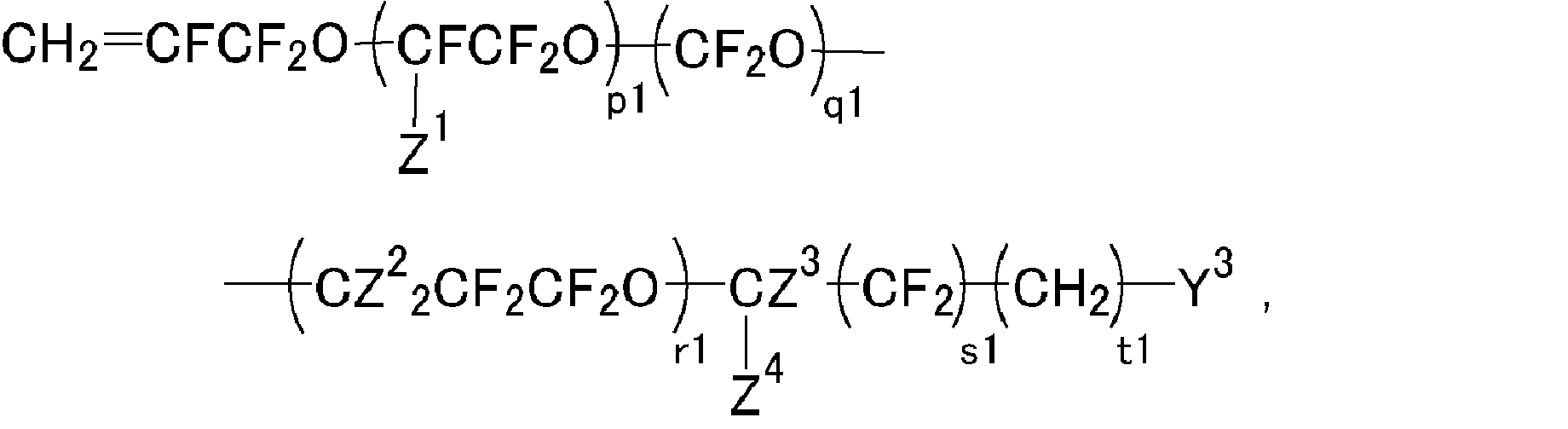
(式中、Z1はFまたはCF3;Z2及びZ3はそれぞれHまたはF;Z4はH、FまたはCF3;p1+q1+r1が0~10の整数;s1は0または1;t1は0~5の整数、Y3は前記と同じ。ただし、Z3及びZ4がともにHの場合、p1+q1+r1+s1が0でない)で表される単量体が挙げられる。より具体的には、
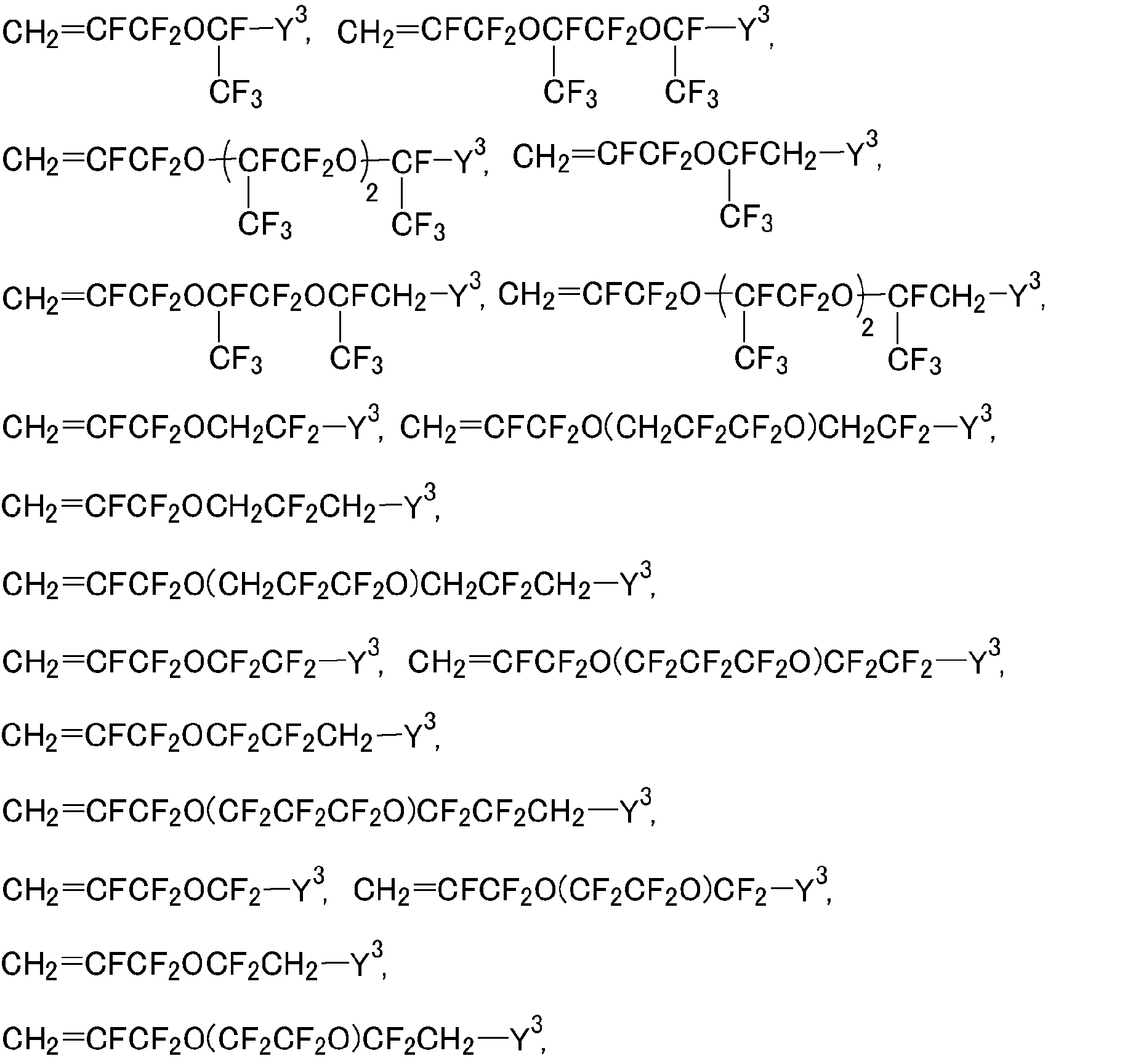
などが好ましく挙げられ、なかでも
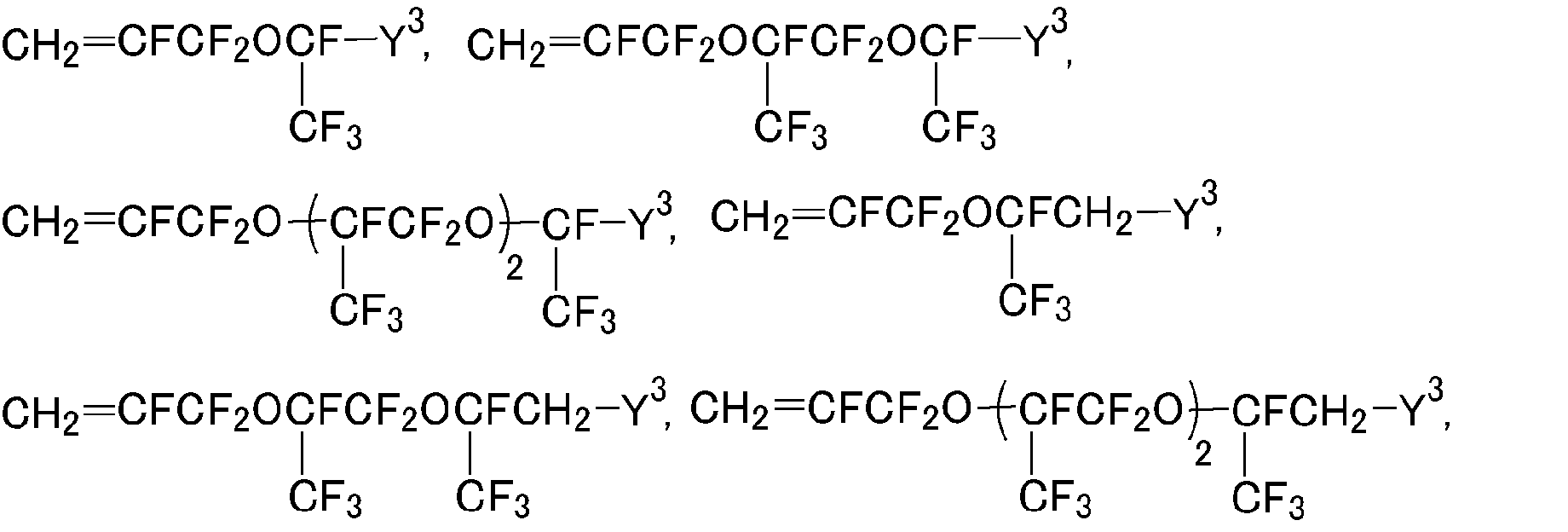
であることが好ましい。
上記一般式(5b)で表される単量体としては、式(5b)中のY3が-COOMであることが好ましく、特に、CH2=CFCF2OCF(CF3)COOM、及び、CH2=CFCF2OCF(CF3)CF2OCF(CF3)COOM(式中、Mは上記定義と同じ。)からなる群より選択される少なくとも1種が好ましく、CH2=CFCF2OCF(CF3)COOMがより好ましい。
一般式(5)で表される単量体は、下記一般式(5c)で表される単量体(5c)であることが好ましい。
CX2 2=CFCF2-O-(CF(CF3)CF2O)n5-CF(CF3)-Y3 (5c)
(式中、各X2は、同一であり、F又はHを表す。n5は、0又は1~10の整数を表し、Y3は、前記定義と同じ。)
CX2 2=CFCF2-O-(CF(CF3)CF2O)n5-CF(CF3)-Y3 (5c)
(式中、各X2は、同一であり、F又はHを表す。n5は、0又は1~10の整数を表し、Y3は、前記定義と同じ。)
上記式(5c)において、上記n5は、得られる水性分散液の安定性の点で0又は1~5の整数であることが好ましく、0、1又は2であることがより好ましく、0又は1であることが更に好ましい。上記Y3は、適度な水溶性と水性分散液の安定性が得られる点で-COOM1であることが好ましく、上記M1は、不純物として残留しにくく、得られた成形体の耐熱性が向上する点で、H又はNH4であることが好ましい。
上記式(5c)で表されるパーフルオロビニルアルキル化合物としては、例えば、CH2=CFCF2OCF(CF3)COOM1、CH2=CFCF2OCF(CF3)CF2OCF(CF3)COOM1(式中、M1は上記定義と同じ。)が挙げられる。
また、一般式(5)で表される単量体としては、下記一般式(5d)で表される単量体、下記一般式(5e)で表される単量体等も挙げられる。
CF2=CFCF2-O-Rf-Y3 (5d)
CF2=CF-Rf-Y3 (5e)
(式中、Rf及びY3は上記と同じ)
CF2=CF-Rf-Y3 (5e)
(式中、Rf及びY3は上記と同じ)
より具体的には、
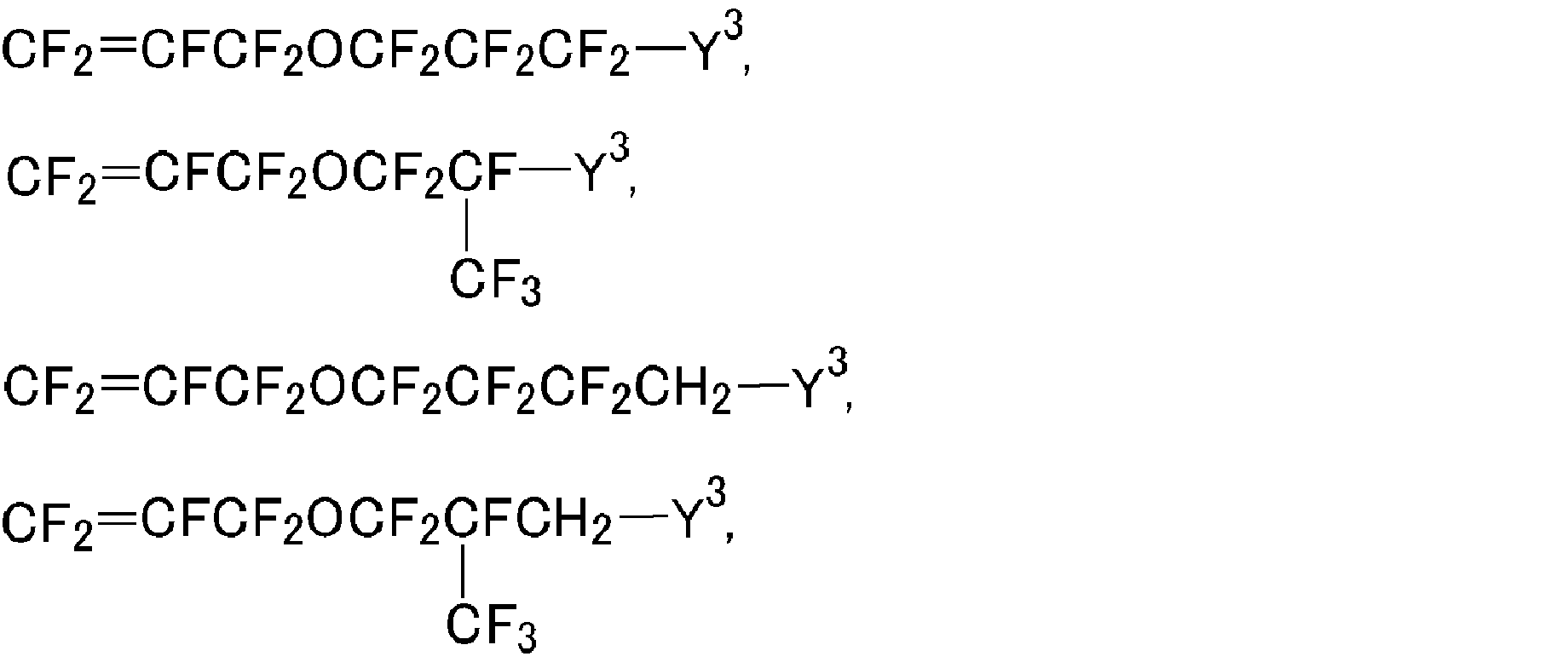
等が挙げられる。
上記一般式(6)において、Xは-H又は-Fである。Xは、両方が-Fであってもよいし、少なくとも1つが-Hであってよい。例えば、片方が-Fで他方が-Hであってもよいし、両方が-Hであってもよい。
上記一般式(6)において、Yは-H、-F、アルキル基又は含フッ素アルキル基である。
上記アルキル基は、フッ素原子を含有しないアルキル基であり、炭素数は1以上であればよい。上記アルキル基の炭素数は6以下が好ましく、4以下がより好ましく、3以下が更に好ましい。
上記含フッ素アルキル基は、フッ素原子を少なくとも1つ含有するアルキル基であり、炭素数は1以上であればよい。上記含フッ素アルキル基の炭素数は6以下が好ましく、4以下がより好ましく、3以下が更に好ましい。
上記Yとしては、-H、-F又は-CF3が好ましく、-Fがより好ましい。
上記アルキル基は、フッ素原子を含有しないアルキル基であり、炭素数は1以上であればよい。上記アルキル基の炭素数は6以下が好ましく、4以下がより好ましく、3以下が更に好ましい。
上記含フッ素アルキル基は、フッ素原子を少なくとも1つ含有するアルキル基であり、炭素数は1以上であればよい。上記含フッ素アルキル基の炭素数は6以下が好ましく、4以下がより好ましく、3以下が更に好ましい。
上記Yとしては、-H、-F又は-CF3が好ましく、-Fがより好ましい。
上記一般式(6)において、上記X及びYの少なくとも1つはフッ素原子を含むことが好ましい。例えば、Xが-Hであり、Y及びZが-Fであってよい。
上記一般式(6)において、上記Rfは炭素数1~40の含フッ素アルキレン基、又は、炭素数2~100のエーテル結合を有する含フッ素アルキレン基である。
上記含フッ素アルキレン基の炭素数は2以上が好ましい。また、30以下が好ましく、20以下がより好ましく、10以下が更に好ましい。上記含フッ素アルキレン基としては、-CF2-、-CH2CF2-、-CF2CF2-、-CF2CH2-、-CF2CF2CH2-、-CF(CF3)-、-CF(CF3)CF2-、-CF(CF3)CH2-等が挙げられる。上記含フッ素アルキレン基は、パーフルオロアルキレン基であることが好ましい。
上記含フッ素アルキレン基の炭素数は2以上が好ましい。また、30以下が好ましく、20以下がより好ましく、10以下が更に好ましい。上記含フッ素アルキレン基としては、-CF2-、-CH2CF2-、-CF2CF2-、-CF2CH2-、-CF2CF2CH2-、-CF(CF3)-、-CF(CF3)CF2-、-CF(CF3)CH2-等が挙げられる。上記含フッ素アルキレン基は、パーフルオロアルキレン基であることが好ましい。
上記一般式(6)で表される単量体は、下記一般式(6a)、(6b)、(6c)及び(6d)で表される単量体からなる群より選択される少なくとも1種が好ましい。
CF2=CF-(CF2)n1-Y3 (6a)
(式中、n1は、1~10の整数を表し、Y3は、-SO3M1又は-COOM1を表し、M1は、H、金属原子、NR7 4、置換基を有していてもよいイミダゾリウム、置換基を有していてもよいピリジニウム又は置換基を有していてもよいホスホニウム、R7は、H又は有機基を表す。)
CF2=CF-(CF2C(CF3)F)n2-Y3 (6b)
(式中、n2は、1~5の整数を表し、Y3は、前記定義と同じ。)
CF2=CF-O-(CFX1)n3-Y3 (6c)
(式中、X1は、F又はCF3を表し、n3は、1~10の整数を表し、Y3は、前記定義と同じ。)
CF2=CF-O-(CF2CFX1O)n4-CF2CF2-Y3 (6d)
(式中、n4は、1~10の整数を表し、Y3及びX1は、前記定義と同じ。)
CF2=CF-(CF2)n1-Y3 (6a)
(式中、n1は、1~10の整数を表し、Y3は、-SO3M1又は-COOM1を表し、M1は、H、金属原子、NR7 4、置換基を有していてもよいイミダゾリウム、置換基を有していてもよいピリジニウム又は置換基を有していてもよいホスホニウム、R7は、H又は有機基を表す。)
CF2=CF-(CF2C(CF3)F)n2-Y3 (6b)
(式中、n2は、1~5の整数を表し、Y3は、前記定義と同じ。)
CF2=CF-O-(CFX1)n3-Y3 (6c)
(式中、X1は、F又はCF3を表し、n3は、1~10の整数を表し、Y3は、前記定義と同じ。)
CF2=CF-O-(CF2CFX1O)n4-CF2CF2-Y3 (6d)
(式中、n4は、1~10の整数を表し、Y3及びX1は、前記定義と同じ。)
上記式(6a)において、上記n1は、5以下の整数であることが好ましく、2以下の整数であることがより好ましい。上記Y3は、適度な水溶性及び水性分散液の安定性を得られる点で、-COOM1であることが好ましく、M1は、不純物として残留しにくく、得られる成形体の耐熱性が向上する点で、H又はNH4であることが好ましい。
上記式(6a)で表されるパーフルオロビニルアルキル化合物としては、例えば、CF2=CFCF2COOM1(式中、M1は上記定義と同じ。)が挙げられる。
上記式(6b)において、上記n2は、得られる水性分散液の安定性の点で、3以下の整数であることが好ましく、Y3は、適度な水溶性及び水性分散液の安定性が得られる点で、-COOM1であることが好ましく、M1は、不純物として残留しにくく、得られる成形体の耐熱性が向上する点で、H又はNH4であることが好ましい。
上記式(6c)において、上記n3は、水溶性の点で5以下の整数であることが好ましく、上記Y3は、適度な水溶性及び水性分散液の安定性が得られる点で、-COOM1であることが好ましく、上記M1は、分散安定性がよくなる点で、H又はNH4であることが好ましい。
上記式(6d)において、上記X1は、水性分散液の安定性の点で、-CF3であることが好ましく、上記n4は、水溶性の点で5以下の整数であることが好ましく、上記Y3は、適度な水溶性と水性分散液の安定性が得られる点で-COOM1であることが好ましく、上記M1は、H又はNH4であることが好ましい。
上記式(6d)で表されるパーフルオロビニルエーテル化合物としては、例えば、CF2=CFOCF2CF(CF3)OCF2CF2COOM1(式中、M1は、H、NH4又はアルカリ金属を表す。)が挙げられる。
上記一般式(7)において、Rfは、炭素数1~40の含フッ素アルキレン基であることが好ましい。一般式(7)において、X及びYの少なくとも1つはフッ素原子を含むことが好ましい。
上記一般式(7)で表される単量体は、下記一般式(7a):
CF2=CF-(CF2)n1-Y3 (7a)
(式中、n1は、1~10の整数を表し、Y3は、前記定義と同じ。)で表される単量体、及び、下記一般式(7b):
CF2=CF-(CF2C(CF3)F)n2-Y3 (7b)
(式中、n2は、1~5の整数を表し、Y3は、前記定義と同じ。)で表される単量体からなる群より選択される少なくとも1種が好ましい。
上記Y3は、-SO3M1又は-COOM1が好ましく、M1は、H、金属原子、NR7 4、置換基を有していてもよいイミダゾリウム、置換基を有していてもよいピリジニウム又は置換基を有していてもよいホスホニウムであることが好ましい。上記R7は、H又は有機基を表す。
CF2=CF-(CF2)n1-Y3 (7a)
(式中、n1は、1~10の整数を表し、Y3は、前記定義と同じ。)で表される単量体、及び、下記一般式(7b):
CF2=CF-(CF2C(CF3)F)n2-Y3 (7b)
(式中、n2は、1~5の整数を表し、Y3は、前記定義と同じ。)で表される単量体からなる群より選択される少なくとも1種が好ましい。
上記Y3は、-SO3M1又は-COOM1が好ましく、M1は、H、金属原子、NR7 4、置換基を有していてもよいイミダゾリウム、置換基を有していてもよいピリジニウム又は置換基を有していてもよいホスホニウムであることが好ましい。上記R7は、H又は有機基を表す。
上記式(7a)において、上記n1は、5以下の整数であることが好ましく、2以下の整数であることがより好ましい。上記Y3は、適度な水溶性及び水性分散液の安定性を得られる点で、-COOM1であることが好ましく、M1は、不純物として残留しにくく、得られる成形体の耐熱性が向上する点で、H又はNH4であることが好ましい。
上記式(7a)で表されるパーフルオロビニルアルキル化合物としては、例えば、CF2=CFCF2COOM1(式中、M1は上記定義と同じ。)が挙げられる。
上記式(7a)で表されるパーフルオロビニルアルキル化合物としては、例えば、CF2=CFCF2COOM1(式中、M1は上記定義と同じ。)が挙げられる。
上記式(7b)において、上記n2は、得られる水性分散液の安定性の点で、3以下の整数であることが好ましく、Y3は、適度な水溶性及び水性分散液の安定性が得られる点で、-COOM1であることが好ましく、M1は、不純物として残留しにくく、得られる成形体の耐熱性が向上する点で、H又はNH4であることが好ましい。
上記変性モノマーは、変性モノマー(A)を含むことが好ましく、一般式(5c)、一般式(6a)、一般式(6b)、一般式(6c)、及び、一般式(6d)で表される化合物からなる群より選択される少なくとも1種を含むことが好ましく、一般式(5c)で表される化合物を含むことがより好ましい。
上記変性モノマー(A)の含有量としては0.00001~1.0質量%の範囲であることが好ましい。下限としては、0.0001質量%がより好ましく、0.0005質量%が更に好ましく、0.001質量%が更により好ましく、0.005質量%が更により好ましく、0.009質量%が特に好ましい。上限としては、0.90質量%が好ましく、0.50質量%がより好ましく、0.40質量%が更に好ましく、0.30質量%が更により好ましく、0.10質量%が更により好ましく、0.08質量%が更により好ましく、0.05質量%が特に好ましく、0.01質量%が殊更特に好ましい。
上記変性モノマーとしては、高強度の延伸体が得られることから、ヘキサフルオロプロピレン、フッ化ビニリデン、フルオロ(アルキルビニルエーテル)、(パーフルオロアルキル)エチレン、及び、エチレンからなる群より選択される少なくとも1種が好ましく、パーフルオロ(メチルビニルエーテル)、パーフルオロ(プロピルビニルエーテル)、(パーフルオロブチル)エチレン、(パーフルオロヘキシル)エチレン、及び、(パーフルオロオクチル)エチレンからなる群より選択される少なくとも1種がより好ましく、パーフルオロ(メチルビニルエーテル)が更に好ましい。
上記変性PTFEは、変性モノマー単位が0.00001~1.0質量%の範囲であることが好ましい。変性モノマー単位の下限としては、0.0001質量%がより好ましく、0.0005質量%が更に好ましく、0.001質量%が更により好ましく、0.005質量%が更に好ましく、0.009質量%が特に好ましい。変性モノマー単位の上限としては、0.90質量%が好ましく、0.50質量%がより好ましく、0.30質量%が更に好ましく、0.10質量%が更により好ましく、0.08質量%が更により好ましく、0.05質量%が殊更好ましく、0.01質量%が殊更特に好ましい。本明細書において、上記変性モノマー単位とは、変性PTFEの分子構造の一部分であって変性モノマーに由来する部分を意味し、全単量体単位とは、変性PTFEの分子構造における全ての単量体に由来する部分を意味する。
本明細書において、PTFEを構成する各単量体の含有量は、NMR、FT-IR、元素分析、蛍光X線分析を単量体の種類によって適宜組み合わせることで算出できる。
上記PTFEは、一次ピーク温度以上の温度で加熱された履歴のないPTFEであることが好ましい。
上記PTFEは、未焼成のPTFEであってもよいし、半焼成されたPTFEであってもよい。簡便なプロセス、または厚みや孔径の制御のし易さという観点からは、未焼成のPTFEが好ましい。二軸延伸膜の強度を高める、または孔径を小さくする観点からは、半焼成されたPTFEが好ましい。
未焼成のPTFEとしては、例えば、重合上がりのPTFEが挙げられる。
上記未焼成のPTFEとは、二次ピーク温度以上の温度に加熱した履歴のないPTFEであり、半焼成のPTFEとは、一次ピーク温度以上の温度で加熱された履歴のないPTFEであって、一次ピーク温度以下、かつ二次ピーク温度以上の温度で加熱されたPTFEである。
上記一次ピーク温度は、未焼成のPTFEを示差走査熱量計で測定した場合に、結晶融解曲線上に現れる吸熱カーブの最大ピーク温度を意味する。
上記二次ピーク温度は、一次ピーク温度以上の温度(例えば、360℃)に加熱したPTFEを示差走査熱量計で測定した場合に、結晶融解曲線上に現れる吸熱カーブの最大ピーク温度を意味する。
本明細書において、上記吸熱カーブは、示差走査熱量計を用いて、昇温速度10℃/分の条件で昇温させて得られたものである。
上記PTFEは、未焼成のPTFEであってもよいし、半焼成されたPTFEであってもよい。簡便なプロセス、または厚みや孔径の制御のし易さという観点からは、未焼成のPTFEが好ましい。二軸延伸膜の強度を高める、または孔径を小さくする観点からは、半焼成されたPTFEが好ましい。
未焼成のPTFEとしては、例えば、重合上がりのPTFEが挙げられる。
上記未焼成のPTFEとは、二次ピーク温度以上の温度に加熱した履歴のないPTFEであり、半焼成のPTFEとは、一次ピーク温度以上の温度で加熱された履歴のないPTFEであって、一次ピーク温度以下、かつ二次ピーク温度以上の温度で加熱されたPTFEである。
上記一次ピーク温度は、未焼成のPTFEを示差走査熱量計で測定した場合に、結晶融解曲線上に現れる吸熱カーブの最大ピーク温度を意味する。
上記二次ピーク温度は、一次ピーク温度以上の温度(例えば、360℃)に加熱したPTFEを示差走査熱量計で測定した場合に、結晶融解曲線上に現れる吸熱カーブの最大ピーク温度を意味する。
本明細書において、上記吸熱カーブは、示差走査熱量計を用いて、昇温速度10℃/分の条件で昇温させて得られたものである。
上記PTFEは、コアシェル構造を有していてもよい。コアシェル構造を有するポリテトラフルオロエチレンとしては、例えば、粒子中に高分子量のポリテトラフルオロエチレンのコアと、より低分子量のポリテトラフルオロエチレンまたは変性のポリテトラフルオロエチレンのシェルとを含む変性ポリテトラフルオロエチレンが挙げられる。
このような変性ポリテトラフルオロエチレンとしては、例えば、特表2005-527652号公報に記載されるポリテトラフルオロエチレンが挙げられる。
このような変性ポリテトラフルオロエチレンとしては、例えば、特表2005-527652号公報に記載されるポリテトラフルオロエチレンが挙げられる。
本開示のPTFEは、特定の炭化水素系界面活性剤の存在下、テトラフルオロエチレンのみの乳化重合、又は、テトラフルオロエチレンと上記テトラフルオロエチレンと共重合可能な変性モノマーとの乳化重合を水性媒体中で行う工程、及び、上記工程において、特定の炭化水素系界面活性剤を連続的に添加する工程を含む製造方法により得られる。本開示のPTFEは、上記製造方法により得られることが好ましい。
特定の炭化水素系界面活性剤を連続的に添加するとは、例えば、特定の炭化水素系界面活性剤を一括ではなく、経時的に、かつ、間断なく又は分割して、添加することである。特定の炭化水素系界面活性剤は、例えば、カルボニル基(但し、カルボキシル基中のカルボニル基を除く)を1つ以上有する炭化水素系界面活性剤、又は、カルボニル基(但し、カルボキシル基中のカルボニル基を除く)を1つ以上有する炭化水素系界面活性剤にラジカル処理または酸化処理を行った炭化水素系界面活性剤である。上記ラジカル処理とは、カルボニル基(但し、カルボキシル基中のカルボニル基を除く)を1つ以上有する炭化水素系界面活性剤にラジカルを発生させる処理であればよく、例えば、反応器に、脱イオン水、炭化水素系界面活性剤を加え、反応器を密閉し、系内を窒素で置換し、反応器を昇温・昇圧した後、重合開始剤を仕込み、一定時間撹拌した後、反応器を大気圧になるまで脱圧を行い、冷却を行う処理である。上記酸化処理とは、カルボニル基(但し、カルボキシル基中のカルボニル基を除く)を1つ以上有する炭化水素系界面活性剤に酸化剤を添加させる処理である。酸化剤としては、例えば、酸素、オゾン、過酸化水素水、酸化マンガン(IV)、過マンガン酸カリウム、二クロム酸カリウム、硝酸、二酸化硫黄などが挙げられる。本開示のPTFEは、このような製造方法で得られることにより、炭化水素系界面活性剤の存在下に得られた場合でも、SSGを2.175以下にすることができ、優れた延伸性を有することができる。すなわち、特定の炭化水素系界面活性剤を使用する上記製造方法により、驚くべきことに、従来の含フッ素界面活性剤を使用せずとも、従来の含フッ素界面活性剤を使用する製造方法と同等の分子量を有するPTFEを製造可能である。
特定の炭化水素系界面活性剤を連続的に添加するとは、例えば、特定の炭化水素系界面活性剤を一括ではなく、経時的に、かつ、間断なく又は分割して、添加することである。特定の炭化水素系界面活性剤は、例えば、カルボニル基(但し、カルボキシル基中のカルボニル基を除く)を1つ以上有する炭化水素系界面活性剤、又は、カルボニル基(但し、カルボキシル基中のカルボニル基を除く)を1つ以上有する炭化水素系界面活性剤にラジカル処理または酸化処理を行った炭化水素系界面活性剤である。上記ラジカル処理とは、カルボニル基(但し、カルボキシル基中のカルボニル基を除く)を1つ以上有する炭化水素系界面活性剤にラジカルを発生させる処理であればよく、例えば、反応器に、脱イオン水、炭化水素系界面活性剤を加え、反応器を密閉し、系内を窒素で置換し、反応器を昇温・昇圧した後、重合開始剤を仕込み、一定時間撹拌した後、反応器を大気圧になるまで脱圧を行い、冷却を行う処理である。上記酸化処理とは、カルボニル基(但し、カルボキシル基中のカルボニル基を除く)を1つ以上有する炭化水素系界面活性剤に酸化剤を添加させる処理である。酸化剤としては、例えば、酸素、オゾン、過酸化水素水、酸化マンガン(IV)、過マンガン酸カリウム、二クロム酸カリウム、硝酸、二酸化硫黄などが挙げられる。本開示のPTFEは、このような製造方法で得られることにより、炭化水素系界面活性剤の存在下に得られた場合でも、SSGを2.175以下にすることができ、優れた延伸性を有することができる。すなわち、特定の炭化水素系界面活性剤を使用する上記製造方法により、驚くべきことに、従来の含フッ素界面活性剤を使用せずとも、従来の含フッ素界面活性剤を使用する製造方法と同等の分子量を有するPTFEを製造可能である。
本開示はまた、特定の炭化水素系界面活性剤の存在下、テトラフルオロエチレンのみの乳化重合、又は、テトラフルオロエチレンと上記テトラフルオロエチレンと共重合可能な変性モノマーとの乳化重合を水性媒体中で行う工程、及び、上記工程において、特定の炭化水素系界面活性剤を連続的に添加する工程を含む製造方法により得られたポリテトラフルオロエチレンを提供する。
上記製造方法において、上記特定の炭化水素系界面活性剤を連続的に添加する工程は、水性媒体中に形成されるPTFEの固形分含有量が0.60質量%未満であるときに、炭化水素系界面活性剤を水性媒体中に添加し始めるものであることが好ましい。0.5質量%以下であるときに、上記特定の炭化水素系界面活性剤を水性媒体中に添加し始めるものであることが好ましい。上記特定の炭化水素系界面活性剤は、上記固形分含有量が0.3質量%以下であるときに添加し始めることがより好ましく、0.2質量%以下であるときに添加し始めることが更に好ましく、0.1質量%以下であるときに添加し始めることが更により好ましく、重合開始とともに、添加し始めることが特に好ましい。上記固形分含有量は、水性媒体及びPTFEの合計に対する濃度である。
上記の特定の炭化水素系界面活性剤を連続的に添加する工程において、上記特定の炭化水素系界面活性剤の添加量は、水性媒体100質量%に対して0.01~10質量%であることが好ましい。より好ましい下限は0.05質量%であり、更に好ましい下限は0.1質量%であり、より好ましい上限は5質量%であり、更に好ましい上限は1質量%である。
上記の特定の炭化水素系界面活性剤の存在下、テトラフルオロエチレンのみの乳化重合、又は、テトラフルオロエチレンと上記テトラフルオロエチレンと共重合可能な変性モノマーとの乳化重合を水性媒体中で行う工程において、上記特定の炭化水素系界面活性剤の量は、多いことが好ましく、水性媒体100質量%に対して0.0001~10質量%であることが好ましい。より好ましい下限は0.001質量%であり、より好ましい上限は1質量%である。0.0001質量%未満であると、分散力が不充分となるおそれがあり、10質量%を超えると、量に見合った効果が得られず、却って重合速度の低下や反応停止が起こるおそれがある。上記特定の炭化水素系界面活性剤の量は、使用するモノマーの種類、目的とするPTFEの分子量等によって適宜決定される。
上記特定の炭化水素系界面活性剤としては、式:R-X(式中、Rは、カルボニル基(但し、カルボキシル基中のカルボニル基を除く)を1つ以上有する炭素数1~2000のフッ素非含有有機基であり、Xは、-OSO3X1、-COOX1又は-SO3X1(X1は、H、金属原子、NR1
4、置換基を有していてもよいイミダゾリウム、置換基を有していてもよいピリジニウム又は置換基を有していてもよいホスホニウムであり、R1はH又は有機基であり、同一でも異なっていてもよい。))で示される界面活性剤が好ましい。Rは、炭素数が500以下であることが好ましく、100以下であることがより好ましく、50以下であることが更に好ましく、30以下であることが更により好ましい。
上記特定の炭化水素系界面活性剤としては、下記式(a):

(式中、R1aは、炭素数1以上の直鎖状若しくは分岐鎖状のアルキル基又は炭素数3以上の環状のアルキル基であり、炭素原子に結合した水素原子がヒドロキシ基又はエステル結合を含む1価の有機基により置換されていてもよく、炭素数が2以上の場合はカルボニル基を含んでもよく、炭素数が3以上の場合は1価又は2価の複素環を含んでも環を形成していてもよい。R2a及びR3aは、独立に、単結合又は2価の連結基である。R1a、R2a及びR3aは、炭素数が合計で6以上である。Xaは、H、金属原子、NR4a
4、置換基を有していてもよいイミダゾリウム、置換基を有していてもよいピリジニウム又は置換基を有していてもよいホスホニウムであり、R4aはH又は有機基であり、同一でも異なっていてもよい。R1a、R2a及びR3aは、いずれか2つがお互いに結合して、環を形成してもよい。)で示される界面活性剤(a)、下記式(b):

(式中、R1bは、置換基を有してもよい炭素数1以上の直鎖状若しくは分岐鎖状のアルキル基又は置換基を有してもよい炭素数3以上の環状のアルキル基であり、炭素数が3以上の場合は1価又は2価の複素環を含んでも環を形成していてもよい。R2b及びR4bは、独立に、H又は置換基である。R3bは、置換基を有してもよい炭素数1~10のアルキレン基である。nは、1以上の整数である。p及びqは、独立に、0以上の整数である。Xbは、H、金属原子、NR5b
4、置換基を有していてもよいイミダゾリウム、置換基を有していてもよいピリジニウム又は置換基を有していてもよいホスホニウムであり、R5bはH又は有機基であり、同一でも異なっていてもよい。R1b、R2b、R3b及びR4bは、いずれか2つがお互いに結合して、環を形成してもよい。Lは、単結合、-CO2-B-*、-OCO-B-*、-CONR6b-B-*、-NR6bCO-B-*、又は、-CO-(但し、-CO2-B-、-OCO-B-、-CONR6b-B-、-NR6CO-B-に含まれるカルボニル基を除く。)であり、Bは単結合もしくは置換基を有してもよい炭素数1から10のアルキレン基であり、R6bは、H又は置換基を有していてもよい、炭素数1~4のアルキル基である。*は、式中の-OSO3Xbに結合する側を指す。)で示される界面活性剤(b)、下記式(c):

(式中、R1cは、炭素数1以上の直鎖状若しくは分岐鎖状のアルキル基又は炭素数3以上の環状のアルキル基であり、炭素原子に結合した水素原子がヒドロキシ基又はエステル結合を含む1価の有機基により置換されていてもよく、炭素数が2以上の場合はカルボニル基を含んでもよく、炭素数が3以上の場合は1価又は2価の複素環を含んでも環を形成していてもよい。R2c及びR3cは、独立に、単結合又は2価の連結基である。R1c、R2c及びR3cは、炭素数が合計で5以上である。Acは、-COOXc又は-SO3Xc(Xcは、H、金属原子、NR4c
4、置換基を有していてもよいイミダゾリウム、置換基を有していてもよいピリジニウム又は置換基を有していてもよいホスホニウムであり、R4cはH又は有機基であり、同一でも異なっていてもよい。)である。R1c、R2c及びR3cは、いずれか2つがお互いに結合して、環を形成してもよい。)で示される界面活性剤(c)、下記式(d):

(式中、R1dは、置換基を有してもよい炭素数1以上の直鎖状若しくは分岐鎖状のアルキル基又は置換基を有してもよい炭素数3以上の環状のアルキル基であり、炭素数が3以上の場合は1価又は2価の複素環を含んでも環を形成していてもよい。R2d及びR4dは、独立に、H又は置換基である。R3dは、置換基を有してもよい炭素数1~10のアルキレン基である。nは、1以上の整数である。p及びqは、独立に、0以上の整数である。Adは、-SO3Xd又は-COOXd(Xdは、H、金属原子、NR5d
4、置換基を有していてもよいイミダゾリウム、置換基を有していてもよいピリジニウム又は置換基を有していてもよいホスホニウムであり、R5dはH又は有機基であり、同一でも異なっていてもよい。)である。R1d、R2d、R3d及びR4dは、いずれか2つがお互いに結合して、環を形成してもよい。Lは、単結合、-CO2-B-*、-OCO-B-*、-CONR6d-B-*、-NR6dCO-B-*、又は、-CO-(但し、-CO2-B-、-OCO-B-、-CONR6d-B-、-NR6dCO-B-に含まれるカルボニル基を除く。)であり、Bは単結合もしくは置換基を有してもよい炭素数1から10のアルキレン基であり、R6dは、H又は置換基を有していてもよい、炭素数1~4のアルキル基である。*は、式中のAdに結合する側を指す。)で示される界面活性剤(d)、及び、下記式(e):

(式中、R1e~R5eはH又は一価の置換基を表し、但し、R1e及びR3eのうち、少なくとも1つは、一般式:-Ye-R6eで示される基、R2e及びR5eのうち、少なくとも1つは、一般式:-Xe-Aeで示される基、又は、一般式:-Ye-R6eで示される基を表す。
また、Xeは、各出現において同一又は異なって、2価の連結基、又は、結合手;
Aeは、各出現において同一又は異なって、-COOMe、-SO3Me又は-OSO3Me(Meは、H、金属原子、NR7e 4、置換基を有していてもよいイミダゾリウム、置換基を有していてもよいピリジニウム又は置換基を有していてもよいホスホニウム、R7eは、H又は有機基);
Yeは、各出現において同一又は異なって、-S(=O)2-、-O-、-COO-、-OCO-、-CONR8e-及び-NR8eCO-からなる群より選択される2価の連結基、又は、結合手、R8eはH又は有機基;
R6eは、各出現において同一又は異なって、カルボニル基、エステル基、アミド基及びスルホニル基からなる群より選択される少なくとも1種を炭素-炭素原子間に含んでもよい炭素数2以上のアルキル基;
を表す。
R1e~R5eのうち、いずれか2つがお互いに結合して、環を形成してもよい。)で示される界面活性剤(e)からなる群より選択される少なくとも1種がより好ましい。
上記特定の炭化水素系界面活性剤としては、下記式(a):
また、Xeは、各出現において同一又は異なって、2価の連結基、又は、結合手;
Aeは、各出現において同一又は異なって、-COOMe、-SO3Me又は-OSO3Me(Meは、H、金属原子、NR7e 4、置換基を有していてもよいイミダゾリウム、置換基を有していてもよいピリジニウム又は置換基を有していてもよいホスホニウム、R7eは、H又は有機基);
Yeは、各出現において同一又は異なって、-S(=O)2-、-O-、-COO-、-OCO-、-CONR8e-及び-NR8eCO-からなる群より選択される2価の連結基、又は、結合手、R8eはH又は有機基;
R6eは、各出現において同一又は異なって、カルボニル基、エステル基、アミド基及びスルホニル基からなる群より選択される少なくとも1種を炭素-炭素原子間に含んでもよい炭素数2以上のアルキル基;
を表す。
R1e~R5eのうち、いずれか2つがお互いに結合して、環を形成してもよい。)で示される界面活性剤(e)からなる群より選択される少なくとも1種がより好ましい。
界面活性剤(a)について説明する。
式(a)中、R1aは、炭素数1以上の直鎖状若しくは分岐鎖状のアルキル基又は炭素数3以上の環状のアルキル基である。
上記アルキル基は、炭素数が3以上の場合、2つの炭素原子間にカルボニル基(-C(=O)-)を含んでもよい。また、上記アルキル基は、炭素数が2以上の場合、上記アルキル基の末端に上記カルボニル基を含むこともできる。すなわち、CH3-C(=O)-で示されるアセチル基等のアシル基も、上記アルキル基に含まれる。
また、上記アルキル基は、炭素数が3以上の場合は1価又は2価の複素環を含むこともできるし、環を形成することもできる。上記複素環としては、不飽和複素環が好ましく、含酸素不飽和複素環がより好ましく、例えば、フラン環等が挙げられる。R1aにおいて、2価の複素環が2つの炭素原子間に挿入されていてもよいし、2価の複素環が末端に位置して-C(=O)-と結合してもよいし、1価の複素環が上記アルキル基の末端に位置してもよい。
上記アルキル基は、炭素数が3以上の場合、2つの炭素原子間にカルボニル基(-C(=O)-)を含んでもよい。また、上記アルキル基は、炭素数が2以上の場合、上記アルキル基の末端に上記カルボニル基を含むこともできる。すなわち、CH3-C(=O)-で示されるアセチル基等のアシル基も、上記アルキル基に含まれる。
また、上記アルキル基は、炭素数が3以上の場合は1価又は2価の複素環を含むこともできるし、環を形成することもできる。上記複素環としては、不飽和複素環が好ましく、含酸素不飽和複素環がより好ましく、例えば、フラン環等が挙げられる。R1aにおいて、2価の複素環が2つの炭素原子間に挿入されていてもよいし、2価の複素環が末端に位置して-C(=O)-と結合してもよいし、1価の複素環が上記アルキル基の末端に位置してもよい。
なお、本明細書において、上記アルキル基の「炭素数」には、カルボニル基を構成する炭素原子の数及び上記複素環を構成する炭素原子の数も含めるものとする。例えば、CH3-C(=O)-CH2-で示される基は炭素数が3であり、CH3-C(=O)-C2H4-C(=O)-C2H4-で示される基は炭素数が7であり、CH3-C(=O)-で示される基は炭素数が2である。
上記アルキル基は、炭素原子に結合した水素原子が官能基により置換されていてもよく、例えば、ヒドロキシ基(-OH)又はエステル結合を含む1価の有機基により置換されていてもよいが、如何なる官能基によっても置換されていないことが好ましい。
上記エステル結合を含む1価の有機基としては、式:-O-C(=O)-R101a(式中、R101aはアルキル基)で示される基が挙げられる。
上記アルキル基は、炭素原子に結合した水素原子の75%以下がハロゲン原子により置換されていてもよく、50%以下がハロゲン原子により置換されていてもよく、25%以下がハロゲン原子により置換されていてもよいが、フッ素原子、塩素原子等のハロゲン原子を含まない非ハロゲン化アルキル基であることが好ましい。
上記エステル結合を含む1価の有機基としては、式:-O-C(=O)-R101a(式中、R101aはアルキル基)で示される基が挙げられる。
上記アルキル基は、炭素原子に結合した水素原子の75%以下がハロゲン原子により置換されていてもよく、50%以下がハロゲン原子により置換されていてもよく、25%以下がハロゲン原子により置換されていてもよいが、フッ素原子、塩素原子等のハロゲン原子を含まない非ハロゲン化アルキル基であることが好ましい。
式中、R2a及びR3aは、独立に、単結合又は2価の連結基である。
R2a及びR3aは、独立に、単結合又は炭素数1以上の直鎖状若しくは分岐鎖状のアルキレン基又は炭素数3以上の環状のアルキレン基であることが好ましい。
R2a及びR3aを構成する上記アルキレン基は、カルボニル基を含まないことが好ましい。
R2a及びR3aは、独立に、単結合又は炭素数1以上の直鎖状若しくは分岐鎖状のアルキレン基又は炭素数3以上の環状のアルキレン基であることが好ましい。
R2a及びR3aを構成する上記アルキレン基は、カルボニル基を含まないことが好ましい。
上記アルキレン基は、炭素原子に結合した水素原子が官能基により置換されていてもよく、例えば、ヒドロキシ基(-OH)又はエステル結合を含む1価の有機基により置換されていてもよいが、如何なる官能基によっても置換されていないことが好ましい。
上記エステル結合を含む1価の有機基としては、式:-O-C(=O)-R102a(式中、R102aはアルキル基)で示される基が挙げられる。
上記アルキレン基は、炭素原子に結合した水素原子の75%以下がハロゲン原子により置換されていてもよく、50%以下がハロゲン原子により置換されていてもよく、25%以下がハロゲン原子により置換されていてもよいが、フッ素原子、塩素原子等のハロゲン原子を含まない非ハロゲン化アルキレン基であることが好ましい。
上記エステル結合を含む1価の有機基としては、式:-O-C(=O)-R102a(式中、R102aはアルキル基)で示される基が挙げられる。
上記アルキレン基は、炭素原子に結合した水素原子の75%以下がハロゲン原子により置換されていてもよく、50%以下がハロゲン原子により置換されていてもよく、25%以下がハロゲン原子により置換されていてもよいが、フッ素原子、塩素原子等のハロゲン原子を含まない非ハロゲン化アルキレン基であることが好ましい。
R1a、R2a及びR3aは、炭素数が合計で6以上である。合計の炭素数としては、8以上が好ましく、9以上がより好ましく、10以上が更に好ましく、20以下が好ましく、18以下がより好ましく、15以下が更に好ましい。
R1a、R2a及びR3aは、いずれか2つがお互いに結合して、環を形成してもよい。
R1a、R2a及びR3aは、いずれか2つがお互いに結合して、環を形成してもよい。
式(a)中、Xaは、H、金属原子、NR4a
4、置換基を有していてもよいイミダゾリウム、置換基を有していてもよいピリジニウム又は置換基を有していてもよいホスホニウムであり、R4aはH又は有機基である。4つのR4aは、同一でも異なっていてもよい。R4aにおける有機基としてはアルキル基が好ましい。R4aとしては、H又は炭素数1~10の有機基が好ましく、H又は炭素数1~4の有機基がより好ましく、H又は炭素数1~4のアルキル基が更に好ましい。上記金属原子としては、アルカリ金属(1族)、アルカリ土類金属(2族)等が挙げられ、Na、K又はLiが好ましい。
Xaとしては、H、アルカリ金属(1族)、アルカリ土類金属(2族)又はNR4a 4が好ましく、水に溶解しやすいことから、H、Na、K、Li又はNH4がより好ましく、水に更に溶解しやすいことから、Na、K又はNH4が更に好ましく、Na又はNH4が特に好ましく、除去が容易であることから、NH4が最も好ましい。XaがNH4であると、上記界面活性剤の水性媒体への溶解性が優れるとともに、PTFE中又は最終製品中に金属成分が残留しにくい。
Xaとしては、H、アルカリ金属(1族)、アルカリ土類金属(2族)又はNR4a 4が好ましく、水に溶解しやすいことから、H、Na、K、Li又はNH4がより好ましく、水に更に溶解しやすいことから、Na、K又はNH4が更に好ましく、Na又はNH4が特に好ましく、除去が容易であることから、NH4が最も好ましい。XaがNH4であると、上記界面活性剤の水性媒体への溶解性が優れるとともに、PTFE中又は最終製品中に金属成分が残留しにくい。
R1aとしては、カルボニル基を含まない炭素数1~8の直鎖状若しくは分岐鎖状のアルキル基、カルボニル基を含まない炭素数3~8の環状のアルキル基、1~10個のカルボニル基を含む炭素数2~45の直鎖状若しくは分岐鎖状のアルキル基、カルボニル基を含む炭素数3~45の環状のアルキル基、又は、炭素数が3~45の1価又は2価の複素環を含むアルキル基が好ましい。
また、R1aとしては、下記式:

(式中、n11aは0~10の整数であり、R11aは炭素数1~5の直鎖状若しくは分岐鎖状のアルキル基又は炭素数3~5の環状のアルキル基であり、R12aは炭素数0~3のアルキレン基である。n11aが2~10の整数である場合、R12aは各々同じであっても異なっていてもよい。)で示される基がより好ましい。
n11aとしては、0~5の整数が好ましく、0~3の整数がより好ましく、1~3の整数が更に好ましい。
R11aとしての上記アルキル基は、カルボニル基を含まないことが好ましい。
R11aとしての上記アルキル基は、炭素原子に結合した水素原子が官能基により置換されていてもよく、例えば、ヒドロキシ基(-OH)又はエステル結合を含む1価の有機基により置換されていてもよいが、如何なる官能基によっても置換されていないことが好ましい。
上記エステル結合を含む1価の有機基としては、式:-O-C(=O)-R103a(式中、R103aはアルキル基)で示される基が挙げられる。
R11aとしての上記アルキル基は、炭素原子に結合した水素原子の75%以下がハロゲン原子により置換されていてもよく、50%以下がハロゲン原子により置換されていてもよく、25%以下がハロゲン原子により置換されていてもよいが、フッ素原子、塩素原子等のハロゲン原子を含まない非ハロゲン化アルキル基であることが好ましい。
R11aとしての上記アルキル基は、炭素原子に結合した水素原子が官能基により置換されていてもよく、例えば、ヒドロキシ基(-OH)又はエステル結合を含む1価の有機基により置換されていてもよいが、如何なる官能基によっても置換されていないことが好ましい。
上記エステル結合を含む1価の有機基としては、式:-O-C(=O)-R103a(式中、R103aはアルキル基)で示される基が挙げられる。
R11aとしての上記アルキル基は、炭素原子に結合した水素原子の75%以下がハロゲン原子により置換されていてもよく、50%以下がハロゲン原子により置換されていてもよく、25%以下がハロゲン原子により置換されていてもよいが、フッ素原子、塩素原子等のハロゲン原子を含まない非ハロゲン化アルキル基であることが好ましい。
R12aは炭素数0~3のアルキレン基である。上記炭素数は1~3が好ましい。
R12aとしての上記アルキレン基は、直鎖状又は分岐鎖状であってよい。
R12aとしての上記アルキレン基は、カルボニル基を含まないことが好ましい。R12aとしては、エチレン基(-C2H4-)又はプロピレン基(-C3H6-)がより好ましい。
R12aとしての上記アルキレン基は、炭素原子に結合した水素原子が官能基により置換されていてもよく、例えば、ヒドロキシ基(-OH)又はエステル結合を含む1価の有機基により置換されていてもよいが、如何なる官能基によっても置換されていないことが好ましい。
上記エステル結合を含む1価の有機基としては、式:-O-C(=O)-R104a(式中、R104aはアルキル基)で示される基が挙げられる。
R12aとしての上記アルキレン基は、炭素原子に結合した水素原子の75%以下がハロゲン原子により置換されていてもよく、50%以下がハロゲン原子により置換されていてもよく、25%以下がハロゲン原子により置換されていてもよいが、フッ素原子、塩素原子等のハロゲン原子を含まない非ハロゲン化アルキレン基であることが好ましい。
R12aとしての上記アルキレン基は、直鎖状又は分岐鎖状であってよい。
R12aとしての上記アルキレン基は、カルボニル基を含まないことが好ましい。R12aとしては、エチレン基(-C2H4-)又はプロピレン基(-C3H6-)がより好ましい。
R12aとしての上記アルキレン基は、炭素原子に結合した水素原子が官能基により置換されていてもよく、例えば、ヒドロキシ基(-OH)又はエステル結合を含む1価の有機基により置換されていてもよいが、如何なる官能基によっても置換されていないことが好ましい。
上記エステル結合を含む1価の有機基としては、式:-O-C(=O)-R104a(式中、R104aはアルキル基)で示される基が挙げられる。
R12aとしての上記アルキレン基は、炭素原子に結合した水素原子の75%以下がハロゲン原子により置換されていてもよく、50%以下がハロゲン原子により置換されていてもよく、25%以下がハロゲン原子により置換されていてもよいが、フッ素原子、塩素原子等のハロゲン原子を含まない非ハロゲン化アルキレン基であることが好ましい。
R2a及びR3aとしては、独立に、カルボニル基を含まない炭素数1以上のアルキレン基が好ましく、カルボニル基を含まない炭素数1~3のアルキレン基がより好ましく、エチレン基(-C2H4-)又はプロピレン基(-C3H6-)が更に好ましい。
界面活性剤(a)としては、次の界面活性剤が例示できる。各式中、Xaは上述のとおりである。

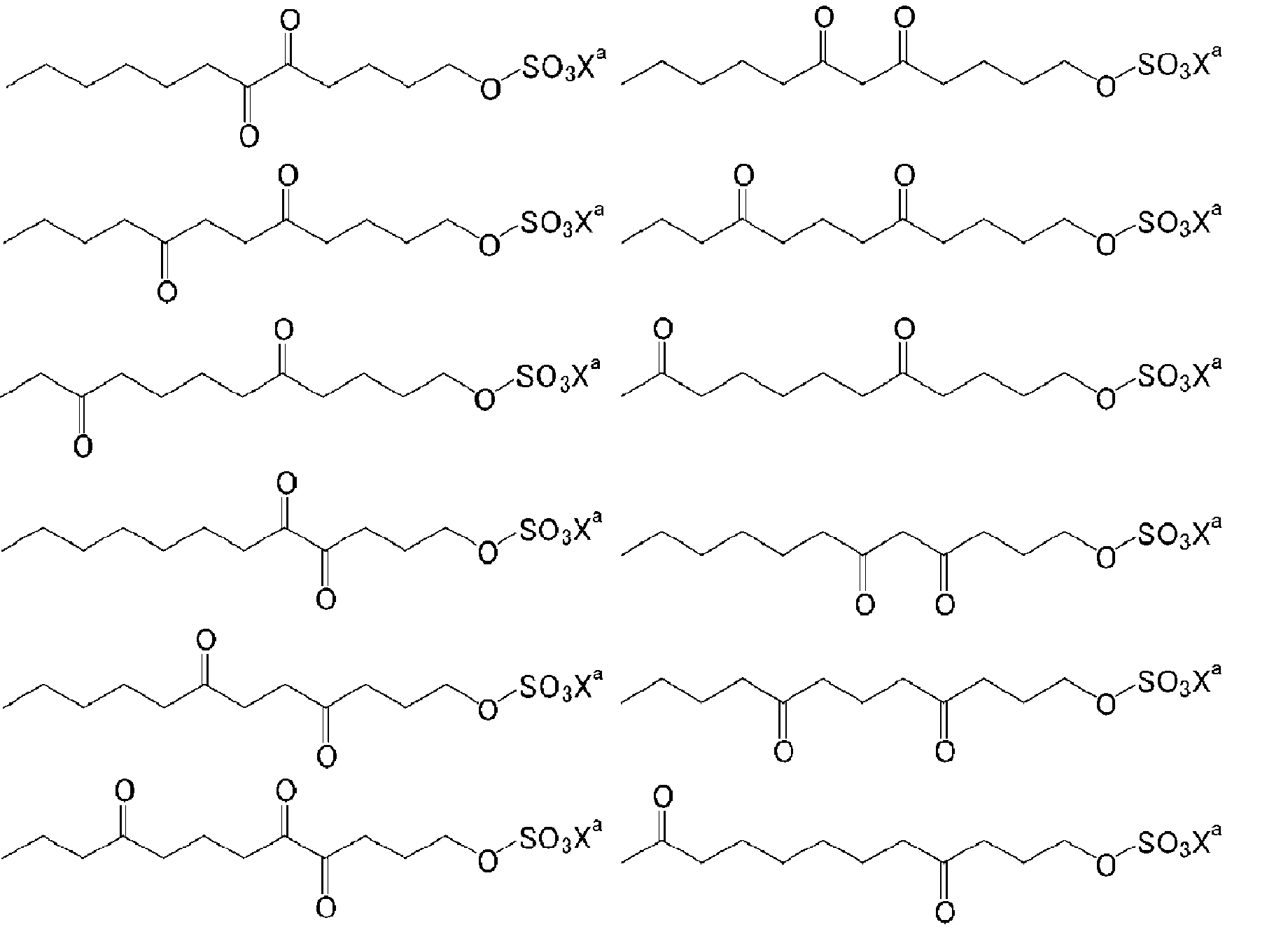

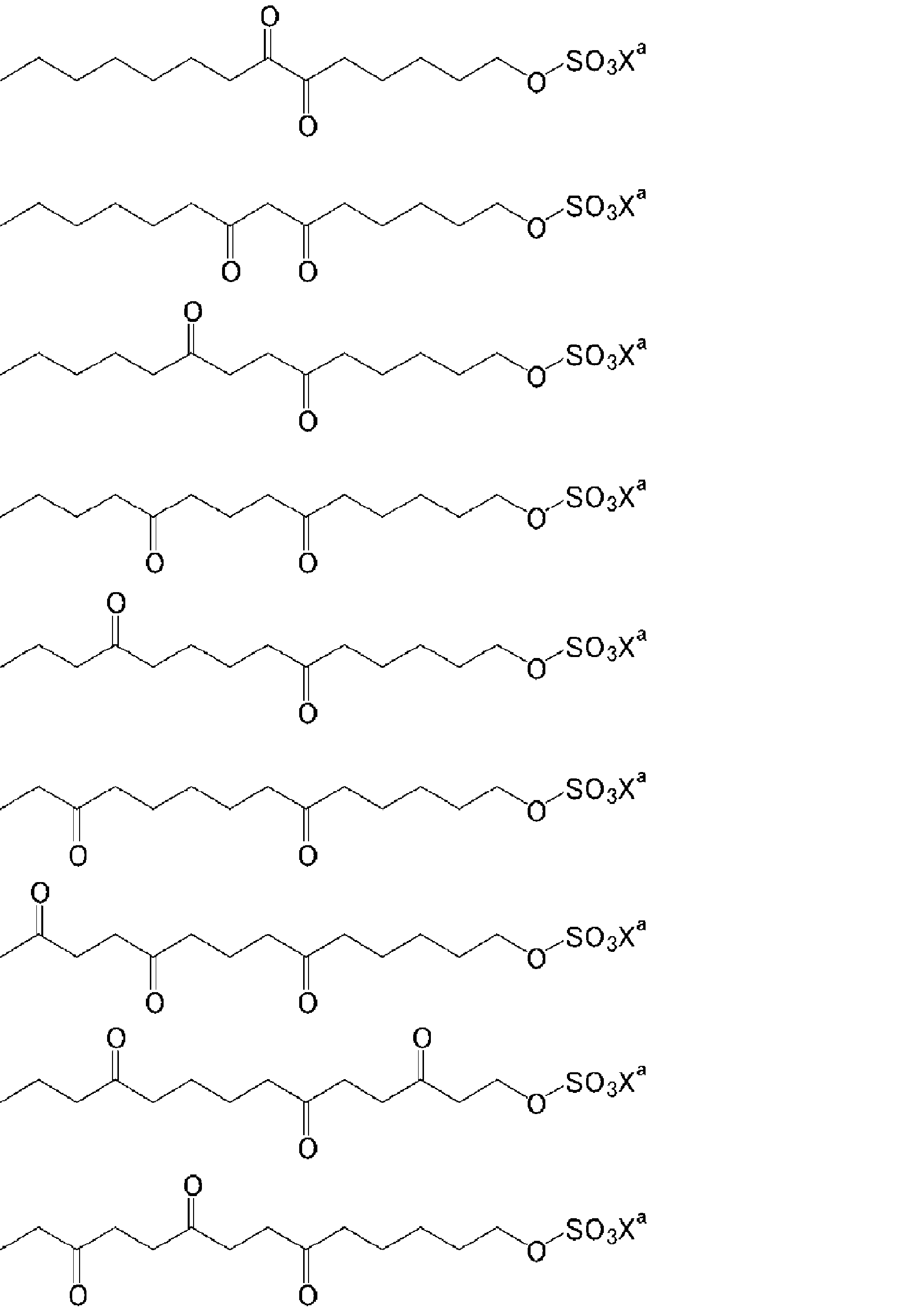
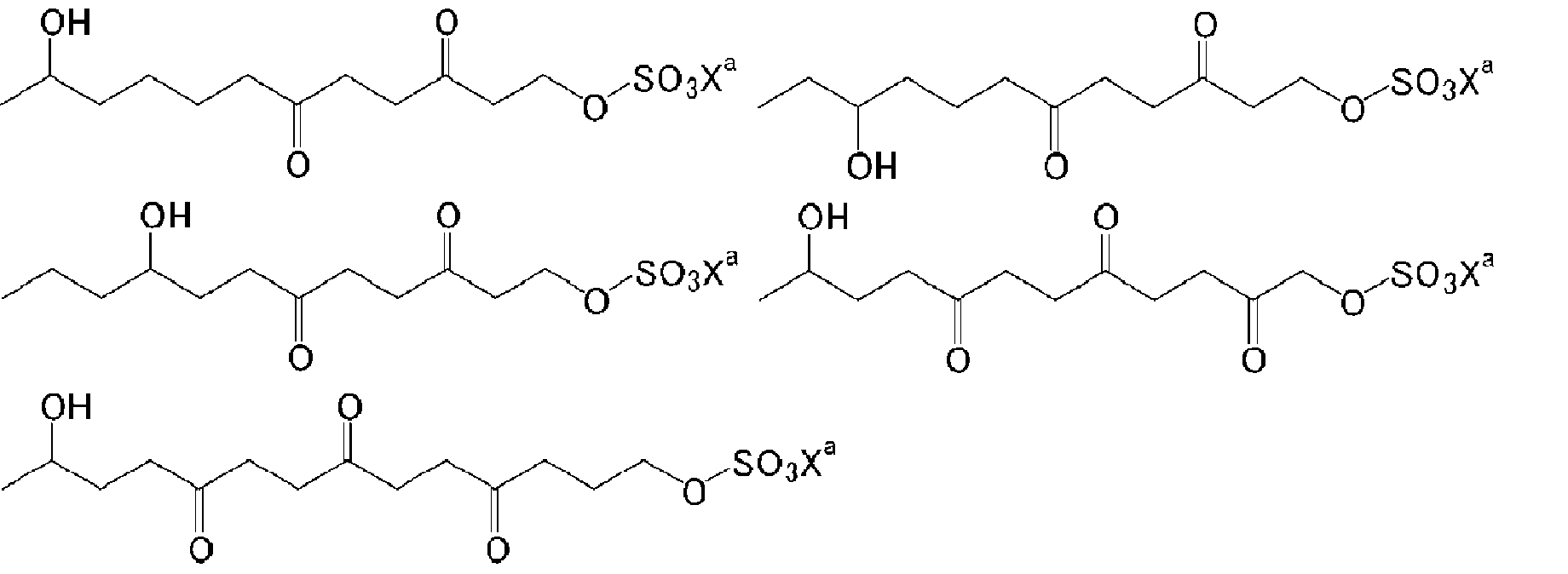
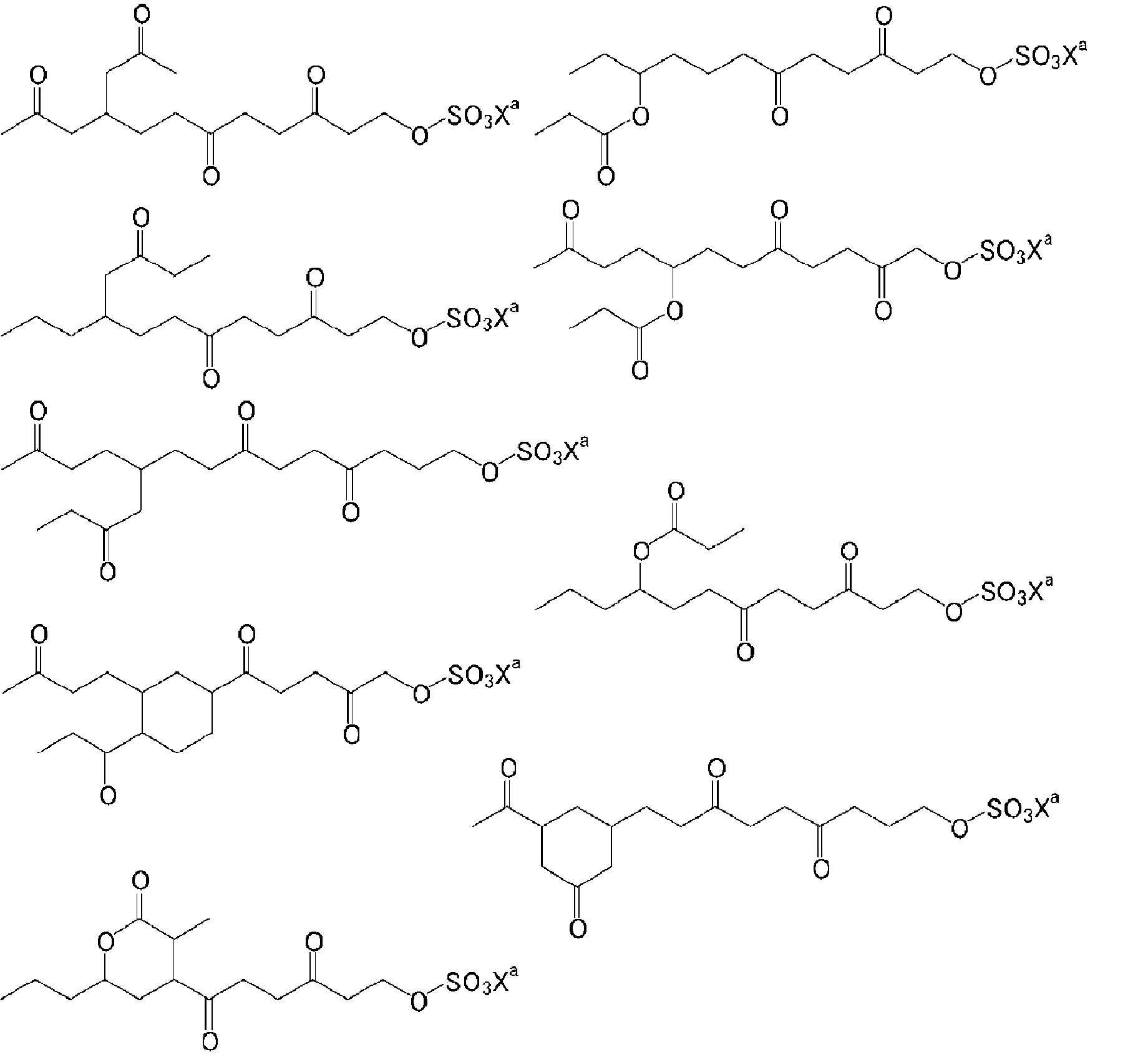


界面活性剤(a)は、新規化合物であり、例えば、次に例示する製造方法により製造することができる。
界面活性剤(a)は、式:
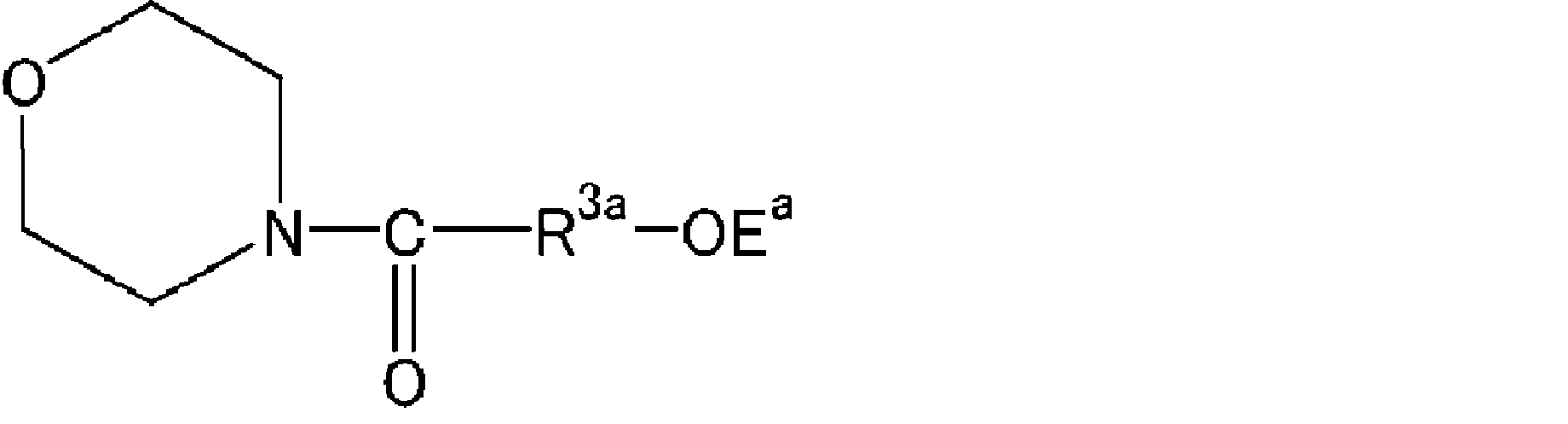
(式中、R3aは上述のとおり、Eaは脱離基である。)で示される化合物(10a)と、リチウム、及び、式:R201a
3Si-Cl(式中、R201aは、独立に、アルキル基又はアリール基である。)で示されるクロロシラン化合物とを反応させて、式:

(式中、R3a、R201a及びEaは上述のとおりである。)で示される化合物(11a)を得る工程(11a)、
化合物(11a)と、式:
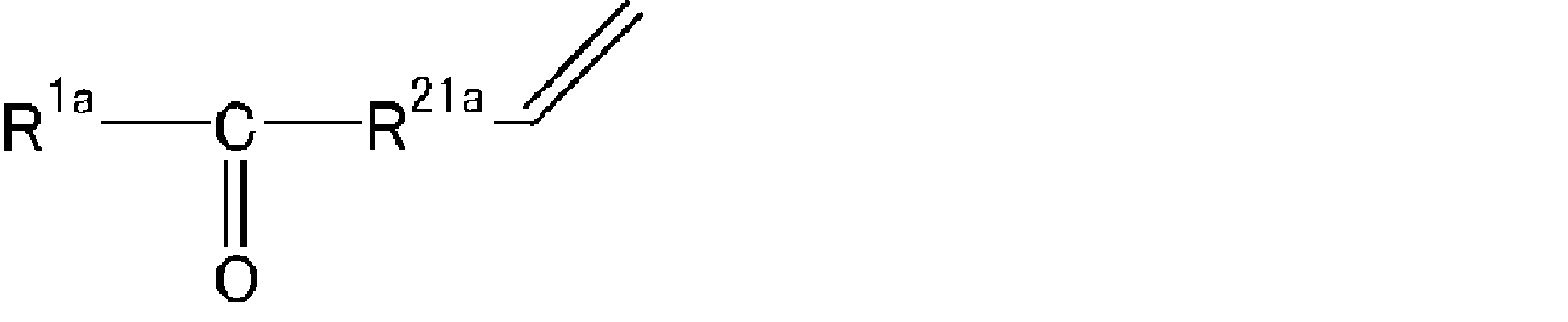
(式中、R1aは上述のとおり、R21aは単結合又は2価の連結基である。)で示されるオレフィンとを反応させて、式:

(式中、R1a、R21a、R3a及びEaは上述のとおりである。)で示される化合物(12a)を得る工程(12a)、
化合物(12a)が有する脱離基を脱離させて、式:

(式中、R1a、R21a及びR3aは上述のとおりである。)で示される化合物(13a)を得る工程(13a)、及び、
化合物(13a)と、式:

(式中、Xaは、上述したとおりである。)で示される塩化スルホン酸とを反応させて、式:

(式中、R1a、R21a、R3a及びXaは上述のとおりである。)で示される化合物(14a)を得る工程(14a)を含む製造方法により製造できる。
化合物(11a)と、式:
化合物(12a)が有する脱離基を脱離させて、式:
化合物(13a)と、式:
R1aにフラン環を含む場合は、例えば酸によりフラン環を開環しジカルボニル誘導体に変換してもよい。酸としては酢酸、塩酸、p-トルエンスルホン等があげられ、中でも酢酸が好ましい。
工程(11a)では、リチウム及び上記クロロシラン化合物を予め反応させて、シロキシリチウム化合物を得た後、上記シロキシリチウム化合物と化合物(10a)とを反応させて、化合物(11a)を得ることが好ましい。
Eaは脱離基を表す。上記脱離基としては、tert-ブチルジメチルシリル(TBS)基、トリエチルシリル(TES)基、トリイソプロピルシリル(TIPS)基、tert-ブチルジフェニルシリル(TBDPS)基、ベンジル(Bn)基等が挙げられる。
R21aとしては、単結合又は炭素数1以上の直鎖状若しくは分岐鎖状のアルキレン基が好ましい。
上記クロロシラン化合物としては、例えば、

が挙げられる。
工程(11a)におけるいずれの反応も、溶媒中で実施することができる。上記溶媒としては、有機溶媒が好ましく、非プロトン性極性溶媒がより好ましく、エーテルが更に好ましい。上記エーテルとしては、エチルメチルエーテル、ジエチルエーテル、モノグライム(エチレングリコールジメチルエーテル)、ジグライム(ジエチレングリコールジメチルエーテル)、トリグライム(トリエチレングリコールジメチルエーテル)、テトラヒドロフラン、テトラグライム(テトラエチレングリコールジメチルエーテル)、クラウンエーテル(15-クラウン-5,18-クラウン-6)等が挙げられ、なかでも、テトラヒドロフラン、ジエチルエーテルが好ましい。
工程(11a)におけるリチウム及び上記クロロシラン化合物の反応の温度としては、10~40℃が好ましく、20~30℃がより好ましい。
工程(11a)における上記シロキシリチウム化合物と化合物(10a)との反応の温度としては、-100~0℃が好ましく、-80~-50℃がより好ましい。
工程(11a)における上記シロキシリチウム化合物と化合物(10a)との反応の温度としては、-100~0℃が好ましく、-80~-50℃がより好ましい。
工程(11a)におけるリチウム及び上記クロロシラン化合物の反応の圧力としては、0.1~5MPaが好ましく、0.1~1MPaがより好ましい。
工程(11a)における上記シロキシリチウム化合物と化合物(10a)との反応の圧力としては、0.1~5MPaが好ましく、0.1~1MPaがより好ましい。
工程(11a)における上記シロキシリチウム化合物と化合物(10a)との反応の圧力としては、0.1~5MPaが好ましく、0.1~1MPaがより好ましい。
工程(11a)におけるリチウム及び上記クロロシラン化合物の反応の時間としては、0.1~72時間が好ましく、6~10時間がより好ましい。
工程(11a)における上記シロキシリチウム化合物と化合物(10a)との反応の時間としては、0.1~72時間が好ましく、1~2時間がより好ましい。
工程(11a)における上記シロキシリチウム化合物と化合物(10a)との反応の時間としては、0.1~72時間が好ましく、1~2時間がより好ましい。
工程(12a)において、化合物(11a)と上記オレフィンとの反応割合としては、収率の向上及び廃棄物の減少を考慮して、化合物(11a)1モルに対して、上記オレフィンが1~2モルであることが好ましく、1~1.1モルがより好ましい。
工程(12a)における反応は、チアゾリウム塩及び塩基の存在下、溶媒中で実施できる。
上記チアゾリウム塩としては、3-エチル-5-(2-ヒドロキシエチル)-4-メチルチアゾリウムブロミド、3-ベンジル-5-(2-ヒドロキシエチル)-4-メチルチアゾリウムクロリド等が挙げられる。
上記塩基としては、1,8-ジアザビシクロ[5.4.0]-7-ウンデセン、トリエチルアミン等が挙げられる。
上記溶媒としては、有機溶媒が好ましく、非プロトン性極性溶媒がより好ましく、アルコール、エーテルが更に好ましい。
上記アルコールとしては、メタノール、エタノール、1-プロパノール、イソプロパノール等が挙げられる。
上記エーテルとしては、エチルメチルエーテル、ジエチルエーテル、モノグライム(エチレングリコールジメチルエーテル)、ジグライム(ジエチレングリコールジメチルエーテル)、トリグライム(トリエチレングリコールジメチルエーテル)、テトラヒドロフラン、テトラグライム(テトラエチレングリコールジメチルエーテル)、クラウンエーテル(15-クラウン-5,18-クラウン-6)等が挙げられ、なかでも、テトラヒドロフラン、ジエチルエーテルが好ましい。
工程(12a)における反応の温度としては、40~60℃が好ましく、50~55℃がより好ましい。
工程(12a)における反応の圧力としては、0.1~5MPaが好ましく、0.1~1MPaがより好ましい。
工程(12a)における反応の時間としては、0.1~72時間が好ましく、6~10時間がより好ましい。
工程(13a)における脱離基の脱離反応は、フッ化物イオンや酸を使用することにより、実施できる。脱離基の脱離させる方法としては、例えば、フッ酸を用いる方法、ピリジン・nHFやトリエチルアミン・nHFのようなフッ化水素のアミン錯体を用いる方法、フッ化セシウム、フッ化カリウム、ホウフッ化リチウム(LiBF4)、フッ化アンモニウムのような無機塩を用いる方法、テトラブチルアンモニウムフルオリド(TBAF)のような有機塩を用いる方法が挙げられる。
工程(13a)における脱離基の脱離反応は、溶媒中で実施できる。上記溶媒としては、有機溶媒が好ましく、非プロトン性極性溶媒がより好ましく、エーテルが更に好ましい。
上記エーテルとしては、エチルメチルエーテル、ジエチルエーテル、モノグライム(エチレングリコールジメチルエーテル)、ジグライム(ジエチレングリコールジメチルエーテル)、トリグライム(トリエチレングリコールジメチルエーテル)、テトラヒドロフラン、テトラグライム(テトラエチレングリコールジメチルエーテル)、クラウンエーテル(15-クラウン-5,18-クラウン-6)等が挙げられ、なかでも、テトラヒドロフラン、ジエチルエーテルが好ましい。
工程(13a)における反応の温度としては、0~40℃が好ましく、0~20℃がより好ましい。
工程(13a)における反応の圧力としては、0.1~5MPaが好ましく、0.1~1MPaがより好ましい。
工程(13a)における反応の時間としては、0.1~72時間が好ましく、3~8時間がより好ましい。
工程(14a)において、化合物(13a)と上記塩化スルホン酸との反応割合としては、収率の向上及び廃棄物の減少を考慮して、化合物(13a)1モルに対して、上記塩化スルホン酸が1~2モルであることが好ましく、1~1.1モルがより好ましい。
工程(14a)における反応は、塩基の存在下に実施することが好ましい。上記塩基としては、アルカリ金属水酸化物、アルカリ土類金属水酸化物、アミン等があげられ、なかでも、アミンが好ましい。
工程(14a)における上記アミンとしては、トリメチルアミン、トリエチルアミン、トリブチルアミン、N,N-ジメチルアニリン、ジメチルベンジルアミン、N,N,N’,N’-テトラメチル-1,8-ナフタレンジアミン等の三級アミン、ピリジン、ピロール、ウラシル、コリジン、ルチジン等の複素芳香族アミン、1,8-ジアザ-ビシクロ[5.4.0]-7-ウンデセン、1,5-ジアザ-ビシクロ[4.3.0]-5-ノネン等の環状アミン等が挙げられる。なかでも、トリエチルアミン、ピリジンが好ましい。
工程(14a)における上記塩基の使用量は、収率の向上及び廃棄物の減少を考慮して、化合物(13a)1モルに対して、1~2モルが好ましく、1~1.1モルがより好ましい。
工程(14a)における反応は、極性溶媒中で実施できる。上記溶媒としては、有機溶媒が好ましく、非プロトン性極性溶媒がより好ましく、エーテルが更に好ましい。
上記エーテルとしては、エチルメチルエーテル、ジエチルエーテル、モノグライム(エチレングリコールジメチルエーテル)、ジグライム(ジエチレングリコールジメチルエーテル)、トリグライム(トリエチレングリコールジメチルエーテル)、テトラヒドロフラン、テトラグライム(テトラエチレングリコールジメチルエーテル)、クラウンエーテル(15-クラウン-5,18-クラウン-6)等が挙げられ、なかでも、ジエチルエーテルが好ましい。
工程(14a)における反応の温度としては、0~40℃が好ましく、0~20℃がより好ましい。
工程(14a)における反応の圧力としては、0.1~5MPaが好ましく、0.1~1MPaがより好ましい。
工程(14a)における反応の時間としては、0.1~72時間が好ましく、3~12時間がより好ましい。
工程(14a)における反応を溶媒中で実施すると、上記反応の終了後に化合物(14a)を含む溶液が得られる。上記溶液に水を加えた後、静置して2相に分離させ、水相を回収し、溶媒を留去することにより、高純度の化合物(14a)を回収してもよい。化合物(14a)が-OSO3Hで示される基を有する場合は(すなわちXがHである場合は)、水に代えて、炭酸水素ナトリウム水溶液やアンモニア水等のアルカリ水溶液を使用することにより、-OSO3Hを硫酸塩基に変換することも可能である。
各工程の終了後、溶媒を留去したり、蒸留、精製等を実施したりして、得られる化合物の純度を高めてもよい。
界面活性剤(a)は、また、式:

(式中、R3aは上述のとおり、R22aは1価の有機基、Eaは脱離基である。)で示されるケトンと、式:

(式中、R1aは上述のとおり、R23aは1価の有機基である。)で示されるカルボン酸エステルとを反応させて、式:

(式中、R1a、R3a及びEaは上述のとおり、R24aは単結合又は2価の連結基である。)で示される化合物(21a)を得る工程(21a)、
化合物(21a)が有する脱離基を脱離させて、式:

(式中、R1a、R24a及びR3aは上述のとおりである。)で示される化合物(22a)を得る工程(22a)、及び、
化合物(22a)と、式:

(式中、Xaは、上述したとおりである。)で示される塩化スルホン酸とを反応させて、式:

(式中、R1a、R24a、R3a及びXaは上述のとおりである。)で示される化合物(23a)を得る工程(23a)を含む製造方法により製造できる。
化合物(21a)が有する脱離基を脱離させて、式:
化合物(22a)と、式:
R1aにフラン環を含む場合は、例えば酸によりフラン環を開環しジカルボニル誘導体に変換してもよい。酸としては酢酸、塩酸、p-トルエンスルホン等があげられ、中でも酢酸が好ましい。
Eaは脱離基を表す。上記脱離基としては、tert-ブチルジメチルシリル(TBS)基、トリエチルシリル(TES)基、トリイソプロピルシリル(TIPS)基、tert-ブチルジフェニルシリル(TBDPS)基、ベンジル(Bn)基等が挙げられる。
R22aとしては、炭素数1以上の直鎖状又は分岐鎖状のアルキル基が好ましく、メチル基がより好ましい。
R23aとしては、炭素数1以上の直鎖状又は分岐鎖状のアルキル基が好ましく、メチル基がより好ましい。
R24aとしては、炭素数1以上の直鎖状又は分岐鎖状のアルキレン基が好ましく、メチレン基(-CH2-)がより好ましい。
R23aとしては、炭素数1以上の直鎖状又は分岐鎖状のアルキル基が好ましく、メチル基がより好ましい。
R24aとしては、炭素数1以上の直鎖状又は分岐鎖状のアルキレン基が好ましく、メチレン基(-CH2-)がより好ましい。
工程(21a)における反応は、塩基の存在下、溶媒中で実施できる。
上記塩基としては、ナトリウムアミド、水素化ナトリウム、ナトリウムメトキシド、ナトリウムエトキシド等が挙げられる。
上記溶媒としては、有機溶媒が好ましく、非プロトン性極性溶媒がより好ましく、アルコール、エーテルが更に好ましい。
上記アルコールとしては、メタノール、エタノール、1-プロパノール、イソプロパノール等が挙げられる。
上記エーテルとしては、エチルメチルエーテル、ジエチルエーテル、モノグライム(エチレングリコールジメチルエーテル)、ジグライム(ジエチレングリコールジメチルエーテル)、トリグライム(トリエチレングリコールジメチルエーテル)、テトラヒドロフラン、テトラグライム(テトラエチレングリコールジメチルエーテル)、クラウンエーテル(15-クラウン-5,18-クラウン-6)等が挙げられ、なかでも、テトラヒドロフラン、ジエチルエーテルが好ましい。
工程(21a)における反応の温度としては、0~40℃が好ましく、0~20℃がより好ましい。
工程(21a)における反応の圧力としては、0.1~5MPaが好ましく、0.1~1MPaがより好ましい。
工程(21a)における反応の時間としては、0.1~72時間が好ましく、3~8時間がより好ましい。
工程(22a)における脱離基の脱離反応は、フッ化物イオンや酸を使用することにより、実施できる。脱離基の脱離させる方法としては、例えば、フッ酸を用いる方法、ピリジン・nHFやトリエチルアミン・nHFのようなフッ化水素のアミン錯体を用いる方法、フッ化セシウム、フッ化カリウム、ホウフッ化リチウム(LiBF4)、フッ化アンモニウムのような無機塩を用いる方法、テトラブチルアンモニウムフルオリド(TBAF)のような有機塩を用いる方法が挙げられる。
工程(22a)における脱離基の脱離反応は、溶媒中で実施できる。上記溶媒としては、有機溶媒が好ましく、非プロトン性極性溶媒がより好ましく、エーテルが更に好ましい。
上記エーテルとしては、エチルメチルエーテル、ジエチルエーテル、モノグライム(エチレングリコールジメチルエーテル)、ジグライム(ジエチレングリコールジメチルエーテル)、トリグライム(トリエチレングリコールジメチルエーテル)、テトラヒドロフラン、テトラグライム(テトラエチレングリコールジメチルエーテル)、クラウンエーテル(15-クラウン-5,18-クラウン-6)等が挙げられ、なかでも、テトラヒドロフラン、ジエチルエーテルが好ましい。
工程(22a)における反応の温度としては、0~40℃が好ましく、0~20℃がより好ましい。
工程(22a)における反応の圧力としては、0.1~5MPaが好ましく、0.1~1MPaがより好ましい。
工程(22a)における反応の時間としては、0.1~72時間が好ましく、3~8時間がより好ましい。
工程(23a)において、化合物(22a)と上記塩化スルホン酸との反応割合としては、収率の向上及び廃棄物の減少を考慮して、化合物(22a)1モルに対して、上記塩化スルホン酸が1~2モルであることが好ましく、1~1.1モルがより好ましい。
工程(23a)における反応は、塩基の存在下に実施することが好ましい。上記塩基としては、アルカリ金属水酸化物、アルカリ土類金属水酸化物、アミン等があげられ、なかでも、アミンが好ましい。
工程(23a)における上記アミンとしては、トリメチルアミン、トリエチルアミン、トリブチルアミン、N,N-ジメチルアニリン、ジメチルベンジルアミン、N,N,N’,N’-テトラメチル-1,8-ナフタレンジアミン等の三級アミン、ピリジン、ピロール、ウラシル、コリジン、ルチジン等の複素芳香族アミン、1,8-ジアザ-ビシクロ[5.4.0]-7-ウンデセン、1,5-ジアザ-ビシクロ[4.3.0]-5-ノネン等の環状アミン等が挙げられる。なかでも、トリエチルアミン、ピリジンが好ましい。
工程(23a)における上記塩基の使用量は、収率の向上及び廃棄物の減少を考慮して、化合物(22a)1モルに対して、1~2モルが好ましく、1~1.1モルがより好ましい。
工程(23a)における反応は、極性溶媒中で実施できる。上記溶媒としては、有機溶媒が好ましく、非プロトン性極性溶媒がより好ましく、エーテルが更に好ましい。
上記エーテルとしては、エチルメチルエーテル、ジエチルエーテル、モノグライム(エチレングリコールジメチルエーテル)、ジグライム(ジエチレングリコールジメチルエーテル)、トリグライム(トリエチレングリコールジメチルエーテル)、テトラヒドロフラン、テトラグライム(テトラエチレングリコールジメチルエーテル)、クラウンエーテル(15-クラウン-5,18-クラウン-6)等が挙げられ、なかでも、ジエチルエーテルが好ましい。
工程(23a)における反応の温度としては、0~40℃が好ましく、0~20℃がより好ましい。
工程(23a)における反応の圧力としては、0.1~5MPaが好ましく、0.1~1MPaがより好ましい。
工程(23a)における反応の時間としては、0.1~72時間が好ましく、3~12時間がより好ましい。
工程(23a)における反応を溶媒中で実施すると、上記反応の終了後に化合物(23a)を含む溶液が得られる。上記溶液に水を加えた後、静置して2相に分離させ、水相を回収し、溶媒を留去することにより、高純度の化合物(23a)を回収してもよい。化合物(23a)が-OSO3Hで示される基を有する場合は(すなわちXがHである場合は)、水に代えて、炭酸水素ナトリウム水溶液やアンモニア水等のアルカリ水溶液を使用することにより、-OSO3Hを硫酸塩基に変換することも可能である。
各工程の終了後、溶媒を留去したり、蒸留、精製等を実施したりして、得られる化合物の純度を高めてもよい。
界面活性剤(a)は、また、式:Ya-R3a-OEa
(式中、R3aは上述のとおり、Yaはハロゲン原子、Eaは脱離基である。)で示されるハロゲン化アルキルと、式:

(式中、R1aは上述のとおりである。)で示されるリチウムアセチリドとを反応させて、式:

(式中、R1a、R3a及びEaは上述のとおりである。)で示される化合物(31a)を得る工程(31a)、
化合物(31a)を酸化して、式
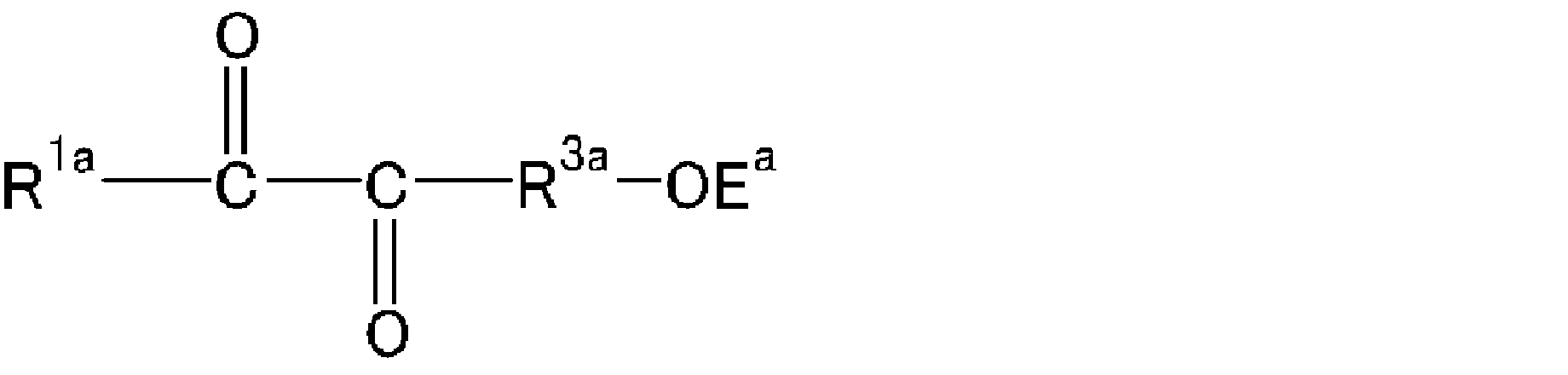
(式中、R1a、R3a及びEaは上述のとおりである。)で示される化合物(32a)を得る工程(32a)、
化合物(32a)が有する脱離基を脱離させて、式:

(式中、R1a及びR3aは上述のとおりである。)で示される化合物(33a)を得る工程(33a)、及び、
化合物(33a)と、式:

(式中、Xaは、上述したとおりである。)で示される塩化スルホン酸とを反応させて、式:
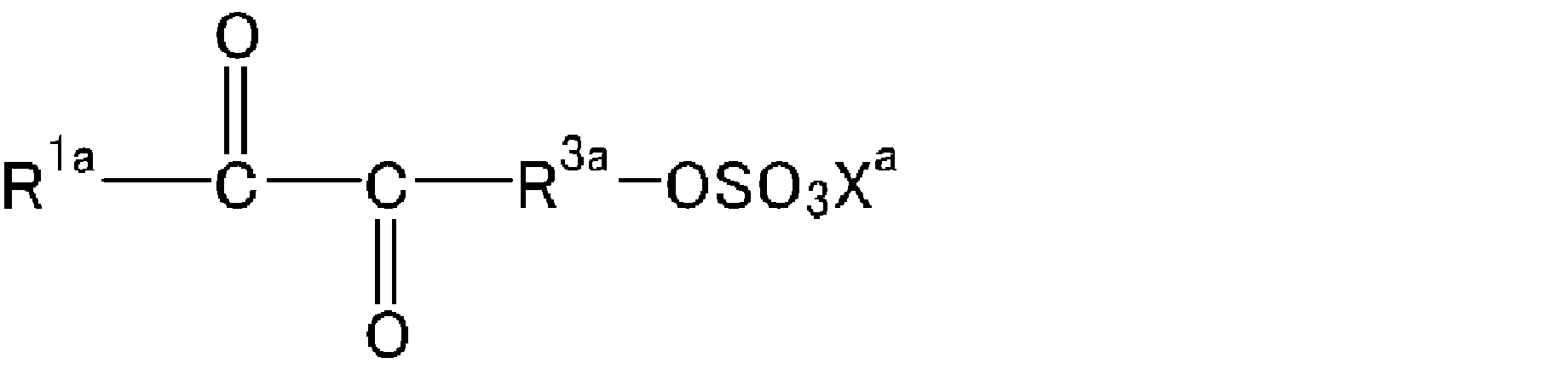
(式中、R1a、R3a及びXaは上述のとおりである。)で示される化合物(34a)を得る工程(34a)を含む製造方法により製造できる。
(式中、R3aは上述のとおり、Yaはハロゲン原子、Eaは脱離基である。)で示されるハロゲン化アルキルと、式:
化合物(31a)を酸化して、式
化合物(32a)が有する脱離基を脱離させて、式:
化合物(33a)と、式:
R1aにフラン環を含む場合は、例えば酸によりフラン環を開環しジカルボニル誘導体に変換してもよい。酸としては酢酸、塩酸、p-トルエンスルホン等があげられ、中でも酢酸が好ましい。
Eaは脱離基を表す。上記脱離基としては、tert-ブチルジメチルシリル(TBS)基、トリエチルシリル(TES)基、トリイソプロピルシリル(TIPS)基、tert-ブチルジフェニルシリル(TBDPS)基、ベンジル(Bn)基等が挙げられる。
工程(31a)において、上記ハロゲン化アルキルと上記リチウムアセチリドとの反応割合としては、収率の向上及び廃棄物の減少を考慮して、上記ハロゲン化アルキル1モルに対して、上記リチウムアセチリドが1~2モルであることが好ましく、1~1.2モルがより好ましい。
工程(31a)における反応は、溶媒中で実施できる。上記溶媒としては、ヘキサンが好ましい。
工程(31a)における反応の温度としては、-100~-40℃が好ましく、-80~-50℃がより好ましい。
工程(31a)における反応の圧力としては、0.1~5MPaが好ましく、0.1~1MPaがより好ましい。
工程(31a)における反応の時間としては、0.1~72時間が好ましく、6~10時間がより好ましい。
工程(32a)における酸化は、[(Cn*)RuIII(CF3CO2)3]・H2O(式中、Cn*は1,4,7-トリメチルー1,4,7-トリアザビシクロノナンを表す)を、(NH4)2Ce(NO3)6及びトリフルオロ酢酸で処理した後、過塩素酸ナトリウムを添加することにより生じる錯体を使用して、ニトリル系溶媒中で実施できる。
酸化終了後に、アルカリにより中和し、エーテル等の有機溶媒を使用して化合物(32a)を抽出してもよい。
工程(32a)における反応の温度としては、30~100℃が好ましく、40~90℃がより好ましい。
工程(32a)における反応の圧力としては、0.1~5MPaが好ましく、0.1~1MPaがより好ましい。
工程(32a)における反応の時間としては、0.1~72時間が好ましく、3~8時間がより好ましい。
工程(33a)における脱離基の脱離反応は、フッ化物イオンや酸を使用することにより、実施できる。脱離基の脱離させる方法としては、例えば、フッ酸を用いる方法、ピリジン・nHFやトリエチルアミン・nHFのようなフッ化水素のアミン錯体を用いる方法、フッ化セシウム、フッ化カリウム、ホウフッ化リチウム(LiBF4)、フッ化アンモニウムのような無機塩を用いる方法、テトラブチルアンモニウムフルオリド(TBAF)のような有機塩を用いる方法が挙げられる。
工程(33a)における脱離基の脱離反応は、溶媒中で実施できる。上記溶媒としては、有機溶媒が好ましく、非プロトン性極性溶媒がより好ましく、エーテルが更に好ましい。
上記エーテルとしては、エチルメチルエーテル、ジエチルエーテル、モノグライム(エチレングリコールジメチルエーテル)、ジグライム(ジエチレングリコールジメチルエーテル)、トリグライム(トリエチレングリコールジメチルエーテル)、テトラヒドロフラン、テトラグライム(テトラエチレングリコールジメチルエーテル)、クラウンエーテル(15-クラウン-5,18-クラウン-6)等が挙げられ、なかでも、テトラヒドロフラン、ジエチルエーテルが好ましい。
工程(33a)における反応の温度としては、0~40℃が好ましく、0~20℃がより好ましい。
工程(33a)における反応の圧力としては、0.1~5MPaが好ましく、0.1~1MPaがより好ましい。
工程(33a)における反応の時間としては、0.1~72時間が好ましく、3~8時間がより好ましい。
工程(34a)において、化合物(33a)と上記塩化スルホン酸との反応割合としては、収率の向上及び廃棄物の減少を考慮して、化合物(33a)1モルに対して、上記塩化スルホン酸が1~2モルであることが好ましく、1~1.1モルがより好ましい。
工程(34a)における反応は、塩基の存在下に実施することが好ましい。上記塩基としては、アルカリ金属水酸化物、アルカリ土類金属水酸化物、アミン等があげられ、なかでも、アミンが好ましい。
工程(34a)における上記アミンとしては、トリメチルアミン、トリエチルアミン、トリブチルアミン、N,N-ジメチルアニリン、ジメチルベンジルアミン、N,N,N’,N’-テトラメチル-1,8-ナフタレンジアミン等の三級アミン、ピリジン、ピロール、ウラシル、コリジン、ルチジン等の複素芳香族アミン、1,8-ジアザ-ビシクロ[5.4.0]-7-ウンデセン、1,5-ジアザ-ビシクロ[4.3.0]-5-ノネン等の環状アミン等が挙げられる。なかでも、トリエチルアミン、ピリジンが好ましい。
工程(34a)における上記塩基の使用量は、収率の向上及び廃棄物の減少を考慮して、化合物(33a)1モルに対して、1~2モルが好ましく、1~1.1モルがより好ましい。
工程(34a)における反応は、極性溶媒中で実施できる。上記溶媒としては、有機溶媒が好ましく、非プロトン性極性溶媒がより好ましく、エーテルが更に好ましい。
上記エーテルとしては、エチルメチルエーテル、ジエチルエーテル、モノグライム(エチレングリコールジメチルエーテル)、ジグライム(ジエチレングリコールジメチルエーテル)、トリグライム(トリエチレングリコールジメチルエーテル)、テトラヒドロフラン、テトラグライム(テトラエチレングリコールジメチルエーテル)、クラウンエーテル(15-クラウン-5,18-クラウン-6)等が挙げられ、なかでも、ジエチルエーテルが好ましい。
工程(34a)における反応の温度としては、0~40℃が好ましく、0~20℃がより好ましい。
工程(34a)における反応の圧力としては、0.1~5MPaが好ましく、0.1~1MPaがより好ましい。
工程(34a)における反応の時間としては、0.1~72時間が好ましく、3~12時間がより好ましい。
工程(34a)における反応を溶媒中で実施すると、上記反応の終了後に化合物(34a)を含む溶液が得られる。上記溶液に水を加えた後、静置して2相に分離させ、水相を回収し、溶媒を留去することにより、高純度の化合物(34a)を回収してもよい。化合物(34a)が-OSO3Hで示される基を有する場合は(すなわちXがHである場合は)、水に代えて、炭酸水素ナトリウム水溶液やアンモニア水等のアルカリ水溶液を使用することにより、-OSO3Hを硫酸塩基に変換することも可能である。
各工程の終了後、溶媒を留去したり、蒸留、精製等を実施したりして、得られる化合物の純度を高めてもよい。
界面活性剤(a)は、また、式:
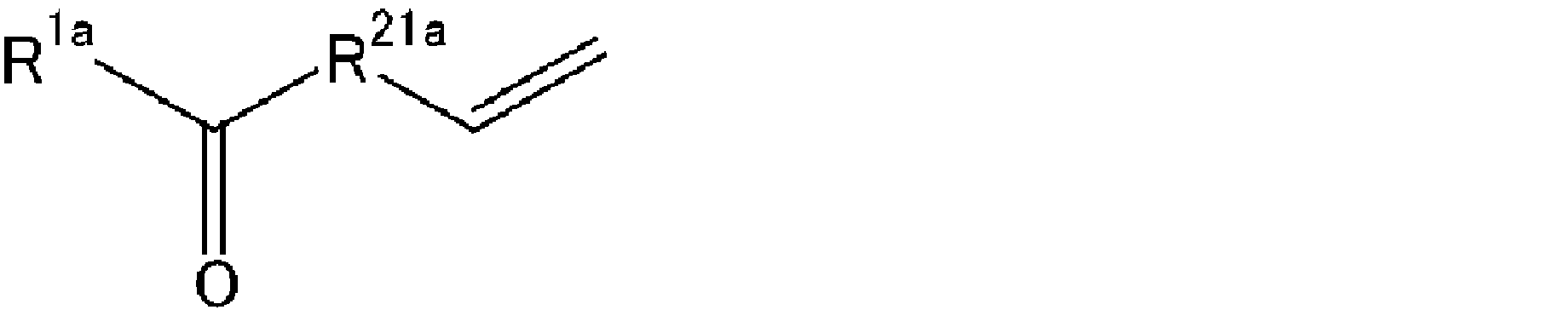
(式中、R1aは上述のとおり、R21aは単結合又は2価の連結基である。)で示されるアルケンと、式:

(式中、Y51aはアルコキシル基である。)で示されるアルキンとを反応させて、式:

(式中、R1a及びR21aは上述のとおりである。)
で示される化合物(41a)を得る工程(41a)、及び、
化合物(41a)に、式:

(式中、Xaは、上述したとおりである。)で示される塩化スルホン酸とを反応させて、式:

(式中、R1a、R21a及びXaは上述のとおりである。)で示される化合物(42a)を得る工程(42a)を含む製造方法により製造できる。
で示される化合物(41a)を得る工程(41a)、及び、
化合物(41a)に、式:
R1aにフラン環を含む場合は、例えば酸によりフラン環を開環しジカルボニル誘導体に変換してもよい。酸としては酢酸、塩酸、p-トルエンスルホン等があげられ、中でも酢酸が好ましい。
R21aとしては、単結合又は炭素数1以上の直鎖状若しくは分岐鎖状のアルキレン基が好ましい。
工程(41a)において、上記アルケンと上記アルキンとの反応割合としては、収率の向上及び廃棄物の減少を考慮して、上記アルキン1モルに対して、上記アルケンが0.5~2モルであることが好ましく、0.6~1.2モルがより好ましい。
工程(41a)における反応は、金属触媒存在下に実施することが好ましい。上記金属としては、ルテニウム等があげられる。
工程(41a)における上記金属触媒の使用量は、収率の向上及び廃棄物の減少を考慮して、上記アルケン1モルに対して、0.01~0.4モルが好ましく、0.05~0.1モルがより好ましい。
工程(41a)における反応は、極性溶媒中で実施できる。上記溶媒としては、水、アセトニトリル、ジメチルアセトアミド、ジメチルホルムアミドが好ましい。
工程(41a)における反応の温度としては、20~160℃が好ましく、40~140℃がより好ましい。
工程(41a)における反応の圧力としては、0.1~5MPaが好ましく、0.1~1MPaがより好ましい。
工程(41a)における反応の時間としては、0.1~72時間が好ましく、4~8時間がより好ましい。
工程(42a)において、化合物(41a)と上記塩化スルホン酸との反応割合としては、収率の向上及び廃棄物の減少を考慮して、化合物(41a)1モルに対して、上記塩化スルホン酸が1~2モルであることが好ましく、1~1.1モルがより好ましい。
工程(42a)における反応は、塩基の存在下に実施することが好ましい。上記塩基としては、アルカリ金属水酸化物、アルカリ土類金属水酸化物、アミン等があげられ、なかでも、アミンが好ましい。
工程(42a)における上記アミンとしては、トリメチルアミン、トリエチルアミン、トリブチルアミン、N,N-ジメチルアニリン、ジメチルベンジルアミン、N,N,N’,N’-テトラメチル-1,8-ナフタレンジアミン等の三級アミン、ピリジン、ピロール、ウラシル、コリジン、ルチジン等の複素芳香族アミン、1,8-ジアザ-ビシクロ[5.4.0]-7-ウンデセン、1,5-ジアザ-ビシクロ[4.3.0]-5-ノネン等の環状アミン等が挙げられる。なかでも、トリエチルアミン、ピリジンが好ましい。
工程(42a)における上記塩基の使用量は、収率の向上及び廃棄物の減少を考慮して、化合物(41a)1モルに対して、1~2モルが好ましく、1~1.1モルがより好ましい。
工程(42a)における反応は、極性溶媒中で実施できる。上記溶媒としては、有機溶媒が好ましく、非プロトン性極性溶媒がより好ましく、エーテルが更に好ましい。
上記エーテルとしては、エチルメチルエーテル、ジエチルエーテル、モノグライム(エチレングリコールジメチルエーテル)、ジグライム(ジエチレングリコールジメチルエーテル)、トリグライム(トリエチレングリコールジメチルエーテル)、テトラヒドロフラン、テトラグライム(テトラエチレングリコールジメチルエーテル)、クラウンエーテル(15-クラウン-5,18-クラウン-6)等が挙げられ、なかでも、ジエチルエーテルが好ましい。
工程(42a)における反応の温度としては、0~40℃が好ましく、0~20℃がより好ましい。
工程(42a)における反応の圧力としては、0.1~5MPaが好ましく、0.1~1MPaがより好ましい。
工程(42a)における反応の時間としては、0.1~72時間が好ましく、3~12時間がより好ましい。
工程(42a)における反応を溶媒中で実施すると、上記反応の終了後に化合物(42a)を含む溶液が得られる。上記溶液に水を加えた後、静置して2相に分離させ、水相を回収し、溶媒を留去することにより、高純度の化合物(42a)を回収してもよい。化合物(42a)が-OSO3Hで示される基を有する場合は(すなわちXがHである場合は)、水に代えて、炭酸水素ナトリウム水溶液やアンモニア水等のアルカリ水溶液を使用することにより、-OSO3Hを硫酸塩基に変換することも可能である。
各工程の終了後、溶媒を留去したり、蒸留、精製等を実施したりして、得られる化合物の純度を高めてもよい。
次に界面活性剤(b)について説明する。
式(b)中、R1bは、置換基を有してもよい炭素数1以上の直鎖状若しくは分岐鎖状のアルキル基又は置換基を有してもよい炭素数3以上の環状のアルキル基である。
上記アルキル基は、炭素数が3以上の場合は1価又は2価の複素環を含むこともできるし、環を形成することもできる。上記複素環としては、不飽和複素環が好ましく、含酸素不飽和複素環がより好ましく、例えば、フラン環等が挙げられる。R1bにおいて、2価の複素環が2つの炭素原子間に挿入されていてもよいし、2価の複素環が末端に位置して-C(=O)-と結合してもよいし、1価の複素環が上記アルキル基の末端に位置してもよい。
上記アルキル基は、炭素数が3以上の場合は1価又は2価の複素環を含むこともできるし、環を形成することもできる。上記複素環としては、不飽和複素環が好ましく、含酸素不飽和複素環がより好ましく、例えば、フラン環等が挙げられる。R1bにおいて、2価の複素環が2つの炭素原子間に挿入されていてもよいし、2価の複素環が末端に位置して-C(=O)-と結合してもよいし、1価の複素環が上記アルキル基の末端に位置してもよい。
なお、本明細書において、上記アルキル基の「炭素数」には、上記複素環を構成する炭素原子の数も含めるものとする。
R1bとしての上記アルキル基が有してもよい上記置換基としては、ハロゲン原子、炭素数1~10の直鎖状若しくは分岐鎖状のアルキル基又は炭素数3~10の環状のアルキル基、ヒドロキシ基が好ましく、メチル基、エチル基が特に好ましい。
R1bとしての上記アルキル基は、カルボニル基を含まないことが好ましい。
上記アルキル基は、炭素原子に結合した水素原子の75%以下がハロゲン原子により置換されていてもよく、50%以下がハロゲン原子により置換されていてもよく、25%以下がハロゲン原子により置換されていてもよいが、フッ素原子、塩素原子等のハロゲン原子を含まない非ハロゲン化アルキル基であることが好ましい。
上記アルキル基は、如何なる置換基も有していないことが好ましい。
上記アルキル基は、炭素原子に結合した水素原子の75%以下がハロゲン原子により置換されていてもよく、50%以下がハロゲン原子により置換されていてもよく、25%以下がハロゲン原子により置換されていてもよいが、フッ素原子、塩素原子等のハロゲン原子を含まない非ハロゲン化アルキル基であることが好ましい。
上記アルキル基は、如何なる置換基も有していないことが好ましい。
R1bとしては、置換基を有してもよい炭素数1~10の直鎖状若しくは分岐鎖状のアルキル基又は置換基を有してもよい炭素数3~10の環状のアルキル基が好ましく、カルボニル基を含まない炭素数1~10の直鎖状若しくは分岐鎖状のアルキル基又はカルボニル基を含まない炭素数3~10の環状のアルキル基がより好ましく、置換基を有さない炭素数1~10の直鎖状又は分岐鎖状のアルキル基が更に好ましく、置換基を有さない炭素数1~3の直鎖状又は分岐鎖状のアルキル基が更により好ましく、メチル基(-CH3)又はエチル基(-C2H5)が特に好ましく、メチル基(-CH3)が最も好ましい。
式(b)中、R2b及びR4bは、独立に、H又は置換基である。複数個のR2b及びR4bは、それぞれ同一でも異なっていてもよい。
R2b及びR4bとしての上記置換基としては、ハロゲン原子、炭素数1~10の直鎖状若しくは分岐鎖状のアルキル基又は炭素数3~10の環状のアルキル基、ヒドロキシ基が好ましく、メチル基、エチル基が特に好ましい。
R2b及びR4bとしての上記アルキル基は、カルボニル基を含まないことが好ましい。
上記アルキル基は、炭素原子に結合した水素原子の75%以下がハロゲン原子により置換されていてもよく、50%以下がハロゲン原子により置換されていてもよく、25%以下がハロゲン原子により置換されていてもよいが、フッ素原子、塩素原子等のハロゲン原子を含まない非ハロゲン化アルキル基であることが好ましい。
上記アルキル基は、如何なる置換基も有していないことが好ましい。
上記アルキル基は、炭素原子に結合した水素原子の75%以下がハロゲン原子により置換されていてもよく、50%以下がハロゲン原子により置換されていてもよく、25%以下がハロゲン原子により置換されていてもよいが、フッ素原子、塩素原子等のハロゲン原子を含まない非ハロゲン化アルキル基であることが好ましい。
上記アルキル基は、如何なる置換基も有していないことが好ましい。
R2b及びR4bとしての上記アルキル基としては、カルボニル基を含まない炭素数1~10の直鎖状若しくは分岐鎖状のアルキル基又はカルボニル基を含まない炭素数3~10の環状のアルキル基が好ましく、カルボニル基を含まない炭素数1~10の直鎖状又は分岐鎖状のアルキル基がより好ましく、置換基を有さない炭素数1~3の直鎖状又は分岐鎖状のアルキル基が更に好ましく、メチル基(-CH3)又はエチル基(-C2H5)が特に好ましい。
R2b及びR4bとしては、独立に、H又はカルボニル基を含まない炭素数1~10の直鎖状若しくは分岐鎖状のアルキル基が好ましく、H又は置換基を有さない炭素数1~3の直鎖状若しくは分岐鎖状のアルキル基がより好ましく、H、メチル基(-CH3)又はエチル基(-C2H5)が更により好ましく、Hが特に好ましい。
式(b)中、R3bは、置換基を有してもよい炭素数1~10のアルキレン基である。R3bは、複数個存在する場合、同一でも異なっていてもよい。
上記アルキレン基は、カルボニル基を含まないことが好ましい。
上記アルキレン基は、炭素原子に結合した水素原子の75%以下がハロゲン原子により置換されていてもよく、50%以下がハロゲン原子により置換されていてもよく、25%以下がハロゲン原子により置換されていてもよいが、フッ素原子、塩素原子等のハロゲン原子を含まない非ハロゲン化アルキル基であることが好ましい。
上記アルキレン基は、如何なる置換基も有していないことが好ましい。
上記アルキレン基は、炭素原子に結合した水素原子の75%以下がハロゲン原子により置換されていてもよく、50%以下がハロゲン原子により置換されていてもよく、25%以下がハロゲン原子により置換されていてもよいが、フッ素原子、塩素原子等のハロゲン原子を含まない非ハロゲン化アルキル基であることが好ましい。
上記アルキレン基は、如何なる置換基も有していないことが好ましい。
上記アルキレン基としては、置換基を有してもよい炭素数1~10の直鎖状若しくは分岐鎖状のアルキレン基又は置換基を有してもよい炭素数3~10の環状のアルキレン基が好ましく、カルボニル基を含まない炭素数1~10の直鎖状若しくは分岐鎖状のアルキレン基又はカルボニル基を含まない炭素数3~10の環状のアルキレン基が好ましく、置換基を有さない炭素数1~10の直鎖状又は分岐鎖状のアルキレン基がより好ましく、メチレン基(-CH2-)、エチレン基(-C2H4-)、イソプロピレン基(-CH(CH3)CH2-)又はプロピレン基(-C3H6-)が更に好ましい。
R1b、R2b、R3b及びR4bは、いずれか2つがお互いに結合して、環を形成してもよいが、環を形成していないことが好ましい。
式(b)中、nは、1以上の整数である。nとしては、1~40の整数が好ましく、1~30の整数がより好ましく、5~25の整数が更に好ましく、5~9、11~25の整数が特に好ましい。
式(b)中、p及びqは、独立に、0以上の整数である。pとしては、0~10の整数が好ましく、0又は1がより好ましい。qとしては、0~10の整数が好ましく、0~5の整数がより好ましい。
n、p及びqは、合計が5以上の整数であることが好ましい。n、p及びqの合計は8以上の整数であることがより好ましい。n、p及びqの合計はまた、60以下の整数であることが好ましく、50以下の整数であることがより好ましく、40以下の整数であることが更に好ましい。
式(b)中、Xbは、H、金属原子、NR5b
4、置換基を有していてもよいイミダゾリウム、置換基を有していてもよいピリジニウム又は置換基を有していてもよいホスホニウムであり、R5bはH又は有機基である。4つのR5bは、同一でも異なっていてもよい。R5bにおける有機基としてはアルキル基が好ましい。R5bとしては、H又は炭素数1~10の有機基が好ましく、H又は炭素数1~4の有機基がより好ましく、H又は炭素数1~4のアルキル基が更に好ましい。上記金属原子としては、アルカリ金属(1族)、アルカリ土類金属(2族)等が挙げられ、Na、K又はLiが好ましい。Xbは金属原子又はNR5b
4(R5bは上記のとおり)であってよい。
Xbとしては、H、アルカリ金属(1族)、アルカリ土類金属(2族)又はNR5b 4が好ましく、水に溶解しやすいことから、H、Na、K、Li又はNH4がより好ましく、水に更に溶解しやすいことから、Na、K又はNH4が更に好ましく、Na又はNH4が特に好ましく、除去が容易であることから、NH4が最も好ましい。XbがNH4であると、上記界面活性剤の水性媒体への溶解性が優れるとともに、PTFE中又は最終製品中に金属成分が残留しにくい。
Xbとしては、H、アルカリ金属(1族)、アルカリ土類金属(2族)又はNR5b 4が好ましく、水に溶解しやすいことから、H、Na、K、Li又はNH4がより好ましく、水に更に溶解しやすいことから、Na、K又はNH4が更に好ましく、Na又はNH4が特に好ましく、除去が容易であることから、NH4が最も好ましい。XbがNH4であると、上記界面活性剤の水性媒体への溶解性が優れるとともに、PTFE中又は最終製品中に金属成分が残留しにくい。
式(b)中、Lは、単結合、-CO2-B-*、-OCO-B-*、-CONR6b-B-*、-NR6bCO-B-*、又は、-CO-(但し、-CO2-B-、-OCO-B-、-CONR6b-B-、-NR6CO-B-に含まれるカルボニル基を除く。)であり、Bは単結合もしくは置換基を有してもよい炭素数1~10のアルキレン基であり、R6bは、H又は置換基を有していてもよい、炭素数1~4のアルキル基である。上記アルキレン基は、炭素数が1~5であることがより好ましい。また、上記R6は、H又はメチル基であることがより好ましい。*は、式中の-OSO3Xbに結合する側を指す。
Lは単結合であることが好ましい。
界面活性剤(b)としては、下記式:

(式中、R1b、R2b、L、n及びXbは、上記のとおり。)で示される化合物が好ましい。
上記界面活性剤(b)は、1H-NMRスペクトルにおいて、ケミカルシフト2.0~5.0ppmの領域に観測される全ピーク強度の積分値が10%以上であることが好ましい。
上記界面活性剤(b)は、1H-NMRスペクトルにおいて、ケミカルシフト2.0~5.0ppmの領域に観測される全ピーク強度の積分値が上記範囲内にあることが好ましい。この場合、上記界面活性剤は分子中にケトン構造を有することが好ましい。
上記界面活性剤(b)において、上記積分値は、15以上がより好ましく、95以下が好ましく、80以下がより好ましく、70以下が更に好ましい
上記積分値は、重水溶媒にて室温下に測定する。重水を4.79ppmとする。
界面活性剤(b)としては、例えば、
CH3C(O)CH2CH2CH2CH2CH2CH2CH2CH2CH2OSO3Na、
CH3C(O)CH2CH2CH2CH2CH2CH2CH2CH2OSO3Na、
CH3C(O)CH2CH2CH2CH2CH2CH2CH2OSO3Na、
CH3C(O)CH2CH2CH2CH2CH2CH2OSO3Na、
CH3C(O)CH2CH2CH2CH2CH2OSO3Na、
CH3C(O)CH2CH2CH2CH2OSO3Na、
(CH3)3CC(O)CH2CH2CH2CH2CH2CH2CH2CH2CH2OSO3Na、
(CH3)2CHC(O)CH2CH2CH2CH2CH2CH2CH2CH2CH2OSO3Na、
(CH2)5CHC(O)CH2CH2CH2CH2CH2CH2CH2CH2CH2OSO3Na、
CH3CH2C(O)CH2CH2CH2CH2CH2CH2CH2CH2OSO3Na、
CH3CH2CH2C(O)CH2CH2CH2CH2CH2CH2CH2OSO3Na、
CH3CH2CH2CH2C(O)CH2CH2CH2CH2CH2CH2OSO3Na、
CH3CH2CH2CH2CH2C(O)CH2CH2CH2CH2CH2OSO3Na、
CH3CH2CH2CH2CH2CH2C(O)CH2CH2CH2CH2OSO3Na、
CH3CH2CH2CH2CH2CH2CH2C(O)CH2CH2CH2OSO3Na、
CH3CH2CH2CH2CH2CH2CH2CH2C(O)CH2CH2OSO3Na、
CH3CH2CH2CH2CH2CH2CH2CH2CH2C(O)CH2OSO3Na、
CH3C(O)CH2CH2CH2CH2CH2CH2CH2CH2CH2OCH2CH2OSO3Na、
CH3C(O)CH2CH2CH2CH2CH2CH2CH2CH2CH2C(O)NHCH2OSO3Na、
CH3C(O)CH2CH2CH2CH2CH2CH2CH2CH2CH2NHC(O)CH2OSO3Na、
CH3C(O)CH2CH2CH2CH2CH2CH2CH2CH2CH2C(O)OSO3Na、
CH3C(O)CH2CH2CH2CH2CH2CH2CH2CH2CH2C(O)OCH2OSO3Na、
CH3C(O)CH2CH2CH2CH2CH2CH2CH2CH2CH2OC(O)CH2OSO3Na、
CH3C(O)CH2CH2CH2CH2CH2CH2CH2CH2CH2OSO3H、
CH3C(O)CH2CH2CH2CH2CH2CH2CH2CH2CH2OSO3Li、
CH3C(O)CH2CH2CH2CH2CH2CH2CH2CH2CH2OSO3K、
CH3C(O)CH2CH2CH2CH2CH2CH2CH2CH2CH2OSO3NH4、
CH3C(O)CH2CH2CH2CH2CH2CH2CH2CH2CH(CH3)2OSO3Na、
CH3C(O)CH2CH2CH2CH2CH2CH2CH2CH2CH2CH2CH2CH2CH2CH2CH2CH2CH2OSO3Na、
CH3C(O)CH2CH2CH2CH2CH2CH2CH2CH2CH2CH2CH2CH2CH2CH2CH2CH2OSO3Na、
CH3C(O)CH2CH2CH2CH2CH2CH2CH2CH2CH2CH2CH2CH2CH2CH2CH2OSO3Na、
CH3C(O)CH2CH2CH2CH2CH2CH2CH2CH2CH2CH2CH2CH2CH2CH2OSO3Na、
CH3C(O)CH2CH2CH2CH2CH2CH2CH2CH2CH2CH2CH2CH2CH2OSO3Na、
CH3C(O)CH2CH2CH2CH2CH2CH2CH2CH2CH2CH2CH2CH2OSO3Na、
CH3C(O)CH2CH2CH2CH2CH2CH2CH2CH2CH2CH2CH2OSO3Na、
CH3C(O)CH2CH2CH2CH2CH2CH2CH2CH2CH2CH2OSO3Na、
(CH3)3CC(O)CH2CH2CH2CH2CH2CH2CH2CH2CH2CH2CH2CH2CH2CH2CH2CH2CH2OSO3Na、
(CH3)2CHC(O)CH2CH2CH2CH2CH2CH2CH2CH2CH2CH2CH2CH2CH2CH2CH2CH2CH2OSO3Na、
(CH2)5CHC(O)CH2CH2CH2CH2CH2CH2CH2CH2CH2CH2CH2CH2CH2CH2CH2CH2CH2OSO3Na、
CH3CH2C(O)CH2CH2CH2CH2CH2CH2CH2CH2CH2CH2CH2CH2CH2CH2CH2CH2OSO3Na、
CH3CH2CH2CH2CH2C(O)CH2CH2CH2CH2CH2CH2CH2CH2CH2CH2CH2CH2CH2OSO3Na、
CH3CH2CH2CH2CH2CH2CH2CH2C(O)CH2CH2CH2CH2CH2CH2CH2CH2CH2CH2OSO3Na、
CH3CH2CH2CH2CH2CH2CH2CH2CH2CH2CH2C(O)CH2CH2CH2CH2CH2CH2CH2OSO3Na、
CH3CH2CH2CH2CH2CH2CH2CH2CH2CH2CH2CH2CH2CH2C(O)CH2CH2CH2CH2OSO3Na、
CH3CH2C(O)CH2CH2CH2CH2CH2CH2CH2CH2CH2CH2CH2CH2CH2CH2CH2CH2OCH2CH2OSO3Na、
CH3CH2C(O)CH2CH2CH2CH2CH2CH2CH2CH2CH2CH2CH2CH2CH2CH2CH2CH2C(O)NHCH2CH2OSO3Na、
CH3CH2C(O)CH2CH2CH2CH2CH2CH2CH2CH2CH2CH2CH2CH2CH2CH2CH2CH2NHC(O)CH2CH2OSO3Na、
CH3CH2C(O)CH2CH2CH2CH2CH2CH2CH2CH2CH2CH2CH2CH2CH2CH2CH2CH2C(O)OCH2CH2OSO3Na、
CH3CH2C(O)CH2CH2CH2CH2CH2CH2CH2CH2CH2CH2CH2CH2CH2CH2CH2CH2OC(O)CH2CH2OSO3Na、
CH3CH2C(O)CH2CH2CH2CH2CH2CH2CH2CH2CH2CH2CH2CH2CH2CH2CH2CH2C(O)OSO3Na、
CH3CH2C(O)CH2CH2CH2CH2CH2CH2CH2CH2CH2CH2CH2CH2CH2CH2CH2CH2OSO3H、
CH3CH2C(O)CH2CH2CH2CH2CH2CH2CH2CH2CH2CH2CH2CH2CH2CH2CH2CH2OSO3Li、
CH3CH2C(O)CH2CH2CH2CH2CH2CH2CH2CH2CH2CH2CH2CH2CH2CH2CH2CH2OSO3K、
CH3CH2C(O)CH2CH2CH2CH2CH2CH2CH2CH2CH2CH2CH2CH2CH2CH2CH2CH2OSO3NH4、
CH3C(O)CH2CH2CH2CH2CH2CH2CH2CH2CH2CH2CH2CH2CH2CH2CH2CH2CH2CH2CH2CH2CH2OSO3Na等が挙げられる。
CH3C(O)CH2CH2CH2CH2CH2CH2CH2CH2CH2OSO3Na、
CH3C(O)CH2CH2CH2CH2CH2CH2CH2CH2OSO3Na、
CH3C(O)CH2CH2CH2CH2CH2CH2CH2OSO3Na、
CH3C(O)CH2CH2CH2CH2CH2CH2OSO3Na、
CH3C(O)CH2CH2CH2CH2CH2OSO3Na、
CH3C(O)CH2CH2CH2CH2OSO3Na、
(CH3)3CC(O)CH2CH2CH2CH2CH2CH2CH2CH2CH2OSO3Na、
(CH3)2CHC(O)CH2CH2CH2CH2CH2CH2CH2CH2CH2OSO3Na、
(CH2)5CHC(O)CH2CH2CH2CH2CH2CH2CH2CH2CH2OSO3Na、
CH3CH2C(O)CH2CH2CH2CH2CH2CH2CH2CH2OSO3Na、
CH3CH2CH2C(O)CH2CH2CH2CH2CH2CH2CH2OSO3Na、
CH3CH2CH2CH2C(O)CH2CH2CH2CH2CH2CH2OSO3Na、
CH3CH2CH2CH2CH2C(O)CH2CH2CH2CH2CH2OSO3Na、
CH3CH2CH2CH2CH2CH2C(O)CH2CH2CH2CH2OSO3Na、
CH3CH2CH2CH2CH2CH2CH2C(O)CH2CH2CH2OSO3Na、
CH3CH2CH2CH2CH2CH2CH2CH2C(O)CH2CH2OSO3Na、
CH3CH2CH2CH2CH2CH2CH2CH2CH2C(O)CH2OSO3Na、
CH3C(O)CH2CH2CH2CH2CH2CH2CH2CH2CH2OCH2CH2OSO3Na、
CH3C(O)CH2CH2CH2CH2CH2CH2CH2CH2CH2C(O)NHCH2OSO3Na、
CH3C(O)CH2CH2CH2CH2CH2CH2CH2CH2CH2NHC(O)CH2OSO3Na、
CH3C(O)CH2CH2CH2CH2CH2CH2CH2CH2CH2C(O)OSO3Na、
CH3C(O)CH2CH2CH2CH2CH2CH2CH2CH2CH2C(O)OCH2OSO3Na、
CH3C(O)CH2CH2CH2CH2CH2CH2CH2CH2CH2OC(O)CH2OSO3Na、
CH3C(O)CH2CH2CH2CH2CH2CH2CH2CH2CH2OSO3H、
CH3C(O)CH2CH2CH2CH2CH2CH2CH2CH2CH2OSO3Li、
CH3C(O)CH2CH2CH2CH2CH2CH2CH2CH2CH2OSO3K、
CH3C(O)CH2CH2CH2CH2CH2CH2CH2CH2CH2OSO3NH4、
CH3C(O)CH2CH2CH2CH2CH2CH2CH2CH2CH(CH3)2OSO3Na、
CH3C(O)CH2CH2CH2CH2CH2CH2CH2CH2CH2CH2CH2CH2CH2CH2CH2CH2CH2OSO3Na、
CH3C(O)CH2CH2CH2CH2CH2CH2CH2CH2CH2CH2CH2CH2CH2CH2CH2CH2OSO3Na、
CH3C(O)CH2CH2CH2CH2CH2CH2CH2CH2CH2CH2CH2CH2CH2CH2CH2OSO3Na、
CH3C(O)CH2CH2CH2CH2CH2CH2CH2CH2CH2CH2CH2CH2CH2CH2OSO3Na、
CH3C(O)CH2CH2CH2CH2CH2CH2CH2CH2CH2CH2CH2CH2CH2OSO3Na、
CH3C(O)CH2CH2CH2CH2CH2CH2CH2CH2CH2CH2CH2CH2OSO3Na、
CH3C(O)CH2CH2CH2CH2CH2CH2CH2CH2CH2CH2CH2OSO3Na、
CH3C(O)CH2CH2CH2CH2CH2CH2CH2CH2CH2CH2OSO3Na、
(CH3)3CC(O)CH2CH2CH2CH2CH2CH2CH2CH2CH2CH2CH2CH2CH2CH2CH2CH2CH2OSO3Na、
(CH3)2CHC(O)CH2CH2CH2CH2CH2CH2CH2CH2CH2CH2CH2CH2CH2CH2CH2CH2CH2OSO3Na、
(CH2)5CHC(O)CH2CH2CH2CH2CH2CH2CH2CH2CH2CH2CH2CH2CH2CH2CH2CH2CH2OSO3Na、
CH3CH2C(O)CH2CH2CH2CH2CH2CH2CH2CH2CH2CH2CH2CH2CH2CH2CH2CH2OSO3Na、
CH3CH2CH2CH2CH2C(O)CH2CH2CH2CH2CH2CH2CH2CH2CH2CH2CH2CH2CH2OSO3Na、
CH3CH2CH2CH2CH2CH2CH2CH2C(O)CH2CH2CH2CH2CH2CH2CH2CH2CH2CH2OSO3Na、
CH3CH2CH2CH2CH2CH2CH2CH2CH2CH2CH2C(O)CH2CH2CH2CH2CH2CH2CH2OSO3Na、
CH3CH2CH2CH2CH2CH2CH2CH2CH2CH2CH2CH2CH2CH2C(O)CH2CH2CH2CH2OSO3Na、
CH3CH2C(O)CH2CH2CH2CH2CH2CH2CH2CH2CH2CH2CH2CH2CH2CH2CH2CH2OCH2CH2OSO3Na、
CH3CH2C(O)CH2CH2CH2CH2CH2CH2CH2CH2CH2CH2CH2CH2CH2CH2CH2CH2C(O)NHCH2CH2OSO3Na、
CH3CH2C(O)CH2CH2CH2CH2CH2CH2CH2CH2CH2CH2CH2CH2CH2CH2CH2CH2NHC(O)CH2CH2OSO3Na、
CH3CH2C(O)CH2CH2CH2CH2CH2CH2CH2CH2CH2CH2CH2CH2CH2CH2CH2CH2C(O)OCH2CH2OSO3Na、
CH3CH2C(O)CH2CH2CH2CH2CH2CH2CH2CH2CH2CH2CH2CH2CH2CH2CH2CH2OC(O)CH2CH2OSO3Na、
CH3CH2C(O)CH2CH2CH2CH2CH2CH2CH2CH2CH2CH2CH2CH2CH2CH2CH2CH2C(O)OSO3Na、
CH3CH2C(O)CH2CH2CH2CH2CH2CH2CH2CH2CH2CH2CH2CH2CH2CH2CH2CH2OSO3H、
CH3CH2C(O)CH2CH2CH2CH2CH2CH2CH2CH2CH2CH2CH2CH2CH2CH2CH2CH2OSO3Li、
CH3CH2C(O)CH2CH2CH2CH2CH2CH2CH2CH2CH2CH2CH2CH2CH2CH2CH2CH2OSO3K、
CH3CH2C(O)CH2CH2CH2CH2CH2CH2CH2CH2CH2CH2CH2CH2CH2CH2CH2CH2OSO3NH4、
CH3C(O)CH2CH2CH2CH2CH2CH2CH2CH2CH2CH2CH2CH2CH2CH2CH2CH2CH2CH2CH2CH2CH2OSO3Na等が挙げられる。
界面活性剤(b)は、新規化合物であり、例えば、次に例示する製造方法により製造することができる。
界面活性剤(b)は、下記式:
R11b-CH=CH-(CR2b 2)n-(OR3b)p-(CR4b 2)q-L-OH
(式中、R2b~R4b、n、p及びqは、上記のとおり。R11bは、H、置換基を有してもよい炭素数1以上の直鎖状若しくは分岐鎖状のアルキル基、又は、置換基を有してもよい炭素数3以上の環状のアルキル基であり、炭素数が3以上の場合は1価又は2価の複素環を含んでも環を形成していてもよい。Lは、単結合、-CO2-B-*、-OCO-B-*、-CONR6b-B-*、-NR6bCO-B-*、又は、-CO-(但し、-CO2-B-、-OCO-B-、-CONR6b-B-、-NR6bCO-B-に含まれるカルボニル基を除く。)であり、Bは単結合もしくは置換基を有してもよい炭素数1~10のアルキレン基であり、R6bは、H又は置換基を有していてもよい、炭素数1~4のアルキル基である。*は、式中の-OHに結合する側を指す。)で示される化合物(10b)をヒドロキシ化して、下記式:

(式中、L、R2b~R4b、R11b、n、p及びqは、上記のとおり。)で示される化合物(11b)を得る工程(11b)、
化合物(11b)を酸化して、下記式:

(式中、L、R2b~R4b、R11b、n、p及びqは、上記のとおり。)で示される化合物(12b)を得る工程(12b)、及び、
化合物(12b)を硫酸エステル化して、下記式:

(式中、L、R2b~R4b、R11b、n、p、q及びXbは、上記のとおり。)で示される化合物(13b)を得る工程(13b)を含む製造方法により製造できる。
R11b-CH=CH-(CR2b 2)n-(OR3b)p-(CR4b 2)q-L-OH
(式中、R2b~R4b、n、p及びqは、上記のとおり。R11bは、H、置換基を有してもよい炭素数1以上の直鎖状若しくは分岐鎖状のアルキル基、又は、置換基を有してもよい炭素数3以上の環状のアルキル基であり、炭素数が3以上の場合は1価又は2価の複素環を含んでも環を形成していてもよい。Lは、単結合、-CO2-B-*、-OCO-B-*、-CONR6b-B-*、-NR6bCO-B-*、又は、-CO-(但し、-CO2-B-、-OCO-B-、-CONR6b-B-、-NR6bCO-B-に含まれるカルボニル基を除く。)であり、Bは単結合もしくは置換基を有してもよい炭素数1~10のアルキレン基であり、R6bは、H又は置換基を有していてもよい、炭素数1~4のアルキル基である。*は、式中の-OHに結合する側を指す。)で示される化合物(10b)をヒドロキシ化して、下記式:
化合物(11b)を酸化して、下記式:
化合物(12b)を硫酸エステル化して、下記式:
R11bとしての上記アルキル基は、カルボニル基を含まないことが好ましい。
R11bとしての上記アルキル基は、炭素原子に結合した水素原子の75%以下がハロゲン原子により置換されていてもよく、50%以下がハロゲン原子により置換されていてもよく、25%以下がハロゲン原子により置換されていてもよいが、フッ素原子、塩素原子等のハロゲン原子を含まない非ハロゲン化アルキル基であることが好ましい。
上記アルキル基は、如何なる置換基も有していないことが好ましい。
R11bとしての上記アルキル基は、炭素原子に結合した水素原子の75%以下がハロゲン原子により置換されていてもよく、50%以下がハロゲン原子により置換されていてもよく、25%以下がハロゲン原子により置換されていてもよいが、フッ素原子、塩素原子等のハロゲン原子を含まない非ハロゲン化アルキル基であることが好ましい。
上記アルキル基は、如何なる置換基も有していないことが好ましい。
R11bとしては、H、置換基を有してもよい炭素数1~9の直鎖状若しくは分岐鎖状のアルキル基、又は、置換基を有してもよい炭素数3~9の環状のアルキル基が好ましく、H、カルボニル基を含まない炭素数1~9の直鎖状若しくは分岐鎖状のアルキル基又はカルボニル基を含まない炭素数3~9の環状のアルキル基がより好ましく、H、又は、置換基を有さない炭素数1~9の直鎖状若しくは分岐鎖状のアルキル基が更に好ましく、H、メチル基(-CH3)又はエチル基(-C2H5)が更により好ましく、H又はメチル基(-CH3)が特に好ましく、Hが最も好ましい。
工程(11b)におけるヒドロキシ化は、例えば、(1)酸素雰囲気中で化合物(10b)にフタロシアニン鉄(II)(Fe(Pc))及び水素化ホウ素ナトリウムを作用させる方法や、(2)化合物(10b)にイソピノカンフェイルボラン(IpcBH2)を作用させた後、得られる中間体(ジアルキルボラン)を酸化する方法により実施できる。
方法(1)において、フタロシアニン鉄(II)の量は、触媒量であってよく、化合物(10b)1モルに対して、0.001~1.2モルの量で使用できる。
方法(1)において、水素化ホウ素ナトリウムは、化合物(10b)1モルに対して、0.5~20モルの量で使用できる。
方法(1)の反応は、溶媒中で実施できる。上記溶媒としては、有機溶媒が好ましく、エーテル、ハロゲン化炭化水素、芳香族炭化水素、ニトリル、含窒素極性有機化合物等が挙げられる。
上記エーテルとしては、ジエチルエーテル、テトラヒドロフラン、ジオキサン、ジエチレングリコールジエチルエーテル等が挙げられ、なかでも、ジエチルエーテル、テトラヒドロフランが好ましい。
上記ハロゲン化炭化水素としては、ジクロロメタン、ジクロロエタン、クロロホルム、クロロベンゼン、o-ジクロロベンゼン等が挙げられ、なかでも、ジクロロメタン、クロロホルムが好ましい。
上記芳香族炭化水素としては、ベンゼン、トルエン、キシレン等が挙げられ、なかでも、ベンゼン、トルエンが好ましい。
上記ニトリルとしては、アセトニトリル、プロピオニトリル、ブチロニトリル、イソブチロニトリル、ベンゾニトリル等が挙げられ、なかでも、アセトニトリルが好ましい。
上記含窒素極性有機化合物としては、N,N-ジメチルホルムアミド、N,N-ジメチルアセトアミド、N-メチル-2-ピロリドン、2-ピロリドン、1,3-ジメチル-2-イミダゾリジノン等が挙げられ、なかでも、N,N-ジメチルホルムアミド、N,N-ジメチルアセトアミド、N-メチル-2-ピロリドンが好ましい。
方法(1)の反応の温度としては、-78~200℃が好ましく、0~150℃がより好ましい。
方法(1)の反応の圧力としては、0~5.0MPaが好ましく、0.1~1.0MPaがより好ましい。
方法(1)の反応の時間としては、0.1~72時間が好ましく、0.1~48時間がより好ましい。
方法(2)において、イソピノカンフェイルボランは、化合物(10b)1モルに対して、1.0~10.0モルの量で使用できる。
化合物(10b)とイソピノカンフェイルボランとの反応は、溶媒中で実施できる。上記溶媒としては、有機溶媒が好ましく、エーテル、ハロゲン化炭化水素、芳香族炭化水素等が挙げられる。
上記エーテルとしては、ジエチルエーテル、テトラヒドロフラン、ジオキサン、ジエチレングリコールジエチルエーテル等が挙げられ、なかでも、ジエチルエーテル、テトラヒドロフランが好ましい。
上記ハロゲン化炭化水素としては、ジクロロメタン、ジクロロエタン、クロロホルム、クロロベンゼン、o-ジクロロベンゼン等が挙げられ、なかでも、ジクロロメタン、クロロホルムが好ましい。
上記芳香族炭化水素としては、ベンゼン、トルエン、キシレン等が挙げられ、なかでも、ベンゼン、トルエンが好ましい。
化合物(10b)とイソピノカンフェイルボランとの反応の温度としては、-78~200℃が好ましく、0~150℃がより好ましい。
化合物(10b)とイソピノカンフェイルボランとの反応の圧力としては、0~5.0MPaが好ましく、0.1~1.0MPaがより好ましい。
化合物(10b)とイソピノカンフェイルボランとの反応の時間としては、0.1~72時間が好ましく、0.1~48時間がより好ましい。
方法(2)における酸化は、上記中間体に酸化剤を作用させることにより実施できる。上記酸化剤としては、過酸化水素が挙げられる。上記酸化剤は、上記中間体1モルに対して、0.7~10モルの量で使用できる。
方法(2)における酸化は、溶媒中で実施できる。上記溶媒としては、水、メタノール、エタノール等が挙げられ、なかでも水が好ましい。
方法(2)における酸化の温度としては、0~100℃が好ましく、0~80℃がより好ましい。
方法(2)における酸化の圧力としては、0~5.0MPaが好ましく、0.1~1.0MPaがより好ましい。
方法(2)における酸化の時間としては、0.1~72時間が好ましく、0.1~48時間がより好ましい。
工程(12b)において、化合物(11b)を酸化する方法としては、例えば、(a)ジョーンズ試薬(CrO3/H2SO4)を用いる方法(ジョーンズ酸化)、(b)デス・マーチン・ペルヨージナン(DMP)を用いる方法(デス・マーチン酸化)、(c)クロロクロム酸ピリジニウム(PCC)を用いる方法、(d)NiCl2等のニッケル化合物の存在下に漂白剤(NaOClの約5~6%水溶液)を作用させる方法、(e)Al(CH3)3、Al[OCH(CH3)2]3等のアルミニウム触媒の存在下にアルデヒド、ケトン等の水素受容体を作用させる方法(オッペナウアー酸化)が挙げられる。
工程(12b)における酸化は、溶媒中で実施できる。上記溶媒としては、水及び有機溶媒が好ましく、水、ケトン、エーテル、ハロゲン化炭化水素、芳香族炭化水素、ニトリル等が挙げられる。
上記ケトンとしては、アセトン、メチルエチルケトン、メチルイソブチルケトン、シクロヘキサノン、ジアセトンアルコール等が挙げられ、なかでも、アセトンが好ましい。
上記エーテルとしては、ジエチルエーテル、テトラヒドロフラン、ジオキサン、ジエチレングリコールジエチルエーテル等が挙げられ、なかでも、ジエチルエーテル、テトラヒドロフランが好ましい。
上記ハロゲン化炭化水素としては、ジクロロメタン、ジクロロエタン、クロロホルム、クロロベンゼン、o-ジクロロベンゼン等が挙げられ、なかでも、ジクロロメタン、クロロホルムが好ましい。
上記芳香族炭化水素としては、ベンゼン、トルエン、キシレン等が挙げられ、なかでも、ベンゼン、トルエンが好ましい。
上記ニトリルとしては、アセトニトリル、プロピオニトリル、ブチロニトリル、イソブチロニトリル、ベンゾニトリル等が挙げられ、なかでも、アセトニトリルが好ましい。
工程(12b)における酸化の温度としては、-78~200℃が好ましく、採用する方法に応じて適宜選択することができる。
工程(12b)における酸化の圧力としては、0~5.0MPaが好ましく、採用する方法に応じて適宜選択することができる。
工程(12b)における酸化の時間としては、0.1~72時間が好ましく、採用する方法に応じて適宜選択することができる。
工程(13b)における硫酸エステル化は、化合物(12b)と硫酸化試薬とを反応させることにより実施できる。上記硫酸化試薬としては、三酸化硫黄ピリジン錯体、三酸化硫黄トリメチルアミン錯体、三酸化硫黄トリエチルアミン錯体等の三酸化硫黄アミン錯体、三酸化硫黄ジメチルホルムアミド錯体等の三酸化硫黄アミド錯体、硫酸-ジシクロヘキシルカルボジイミド、クロロ硫酸、濃硫酸、スルファミン酸等が挙げられる。上記硫酸化試薬の使用量としては、化合物(12b)1モルに対して、0.5~10モルが好ましく、0.5~5モルがより好ましく、0.7~4モルが更に好ましい。
工程(13b)における硫酸エステル化は、溶媒中で実施できる。上記溶媒としては、有機溶媒が好ましく、エーテル、ハロゲン化炭化水素、芳香族炭化水素、ピリジン、ジメチルスルホキシド、スルホラン、ニトリル等が挙げられる。
上記エーテルとしては、ジエチルエーテル、テトラヒドロフラン、ジオキサン、ジエチレングリコールジエチルエーテル等が挙げられ、なかでも、ジエチルエーテル、テトラヒドロフランが好ましい。
上記ハロゲン化炭化水素としては、ジクロロメタン、ジクロロエタン、クロロホルム、クロロベンゼン、o-ジクロロベンゼン等が挙げられ、なかでも、ジクロロメタン、クロロホルムが好ましい。
上記芳香族炭化水素としては、ベンゼン、トルエン、キシレン等が挙げられ、なかでも、ベンゼン、トルエンが好ましい。
上記ニトリルとしては、アセトニトリル、プロピオニトリル、ブチロニトリル、イソブチロニトリル、ベンゾニトリル等が挙げられ、なかでも、アセトニトリルが好ましい。
工程(13b)における硫酸エステル化の温度としては、-78~200℃が好ましく、-20~150℃がより好ましい。
工程(13b)における硫酸エステル化の圧力としては、0~10MPaが好ましく、0.1~5MPaがより好ましい。
工程(13b)における硫酸エステル化の時間としては、0.1~72時間が好ましく、0.1~48時間がより好ましい。
界面活性剤(b)は、また、下記式:

(式中、L、R1b~R4b、n、p及びqは、上記のとおり。R101bは、有機基である。)で示される化合物(20b)をオゾン分解して、下記式:

(式中、L、R1b~R4b、n、p及びqは、上記のとおり。)で示される化合物(21b)を得る工程(21b)、及び、
化合物(21b)を硫酸エステル化して、下記式:

(式中、L、R1b~R4b、n、p、q及びXbは、上記のとおり。)で示される化合物(22b)を得る工程(22b)を含む製造方法により製造できる。
化合物(21b)を硫酸エステル化して、下記式:
R101bとしては、炭素数1~20のアルキル基が好ましい。2個のR101bは、同一でも異なっていてもよい。
工程(21b)におけるオゾン分解は、化合物(20b)にオゾンを作用させた後、還元剤で後処理することにより実施できる。
オゾンは、酸素ガス中の無声放電によって発生させることができる。
上記後処理に用いる還元剤としては、亜鉛、ジメチルスルフィド、チオウレア、ホスフィン類等が挙げられ、なかでもホスフィン類が好ましい。
工程(21b)におけるオゾン分解は、溶媒中で実施できる。上記溶媒としては、水及び有機溶媒が好ましく、水、アルコール、カルボン酸類、エーテル、ハロゲン化炭化水素、芳香族炭化水素等が挙げられる。
上記アルコールとしては、メタノール、エタノール、1-プロパノール、イソプロパノール等が挙げられる。なかでも、メタノール、エタノールが好ましい。
上記カルボン酸類としては、酢酸、プロピオン酸等が挙げられる。なかでも、酢酸が好ましい。
上記エーテルとしては、ジエチルエーテル、テトラヒドロフラン、ジオキサン、ジエチレングリコールジエチルエーテル等が挙げられ、なかでも、ジエチルエーテル、テトラヒドロフランが好ましい。
上記ハロゲン化炭化水素としては、ジクロロメタン、ジクロロエタン、クロロホルム、クロロベンゼン、o-ジクロロベンゼン等が挙げられ、なかでも、ジクロロメタン、クロロホルムが好ましい。
上記芳香族炭化水素としては、ベンゼン、トルエン、キシレン等が挙げられ、なかでも、ベンゼン、トルエンが好ましい。
工程(21b)におけるオゾン分解の温度としては、-78~200℃が好ましく、0~150℃がより好ましい。
工程(21b)におけるオゾン分解の圧力としては、0~5.0MPaが好ましく、0.1~1.0MPaがより好ましい。
工程(21b)におけるオゾン分解の時間としては、0.1~72時間が好ましく、0.1~48時間がより好ましい。
工程(22b)における硫酸エステル化は、化合物(21b)と硫酸化試薬とを反応させることにより実施でき、工程(13b)における硫酸エステル化と同様の条件が採用できる。
界面活性剤(b)は、また、下記式:
R21b-CH=CH-(CR2b 2)n-(OR3b)p-(CR4b 2)q-L-OH
(式中、L、R2b~R4b、n、p及びqは、上記のとおり。R21bは、H、置換基を有してもよい炭素数1以上の直鎖状若しくは分岐鎖状のアルキル基、又は、置換基を有してもよい炭素数3以上の環状のアルキル基であり、炭素数が3以上の場合は1価又は2価の複素環を含んでも環を形成していてもよい。)で示される化合物(30b)をエポキシ化して、下記式:

(式中、L、R2b~R4b、R21b、n、p及びqは、上記のとおり。)で示される化合物(31b)を得る工程(31b)、
化合物(31b)と、R22b 2CuLi(R22bは、置換基を有してもよい炭素数1以上の直鎖状若しくは分岐鎖状のアルキル基又は置換基を有してもよい炭素数3以上の環状のアルキル基であり、炭素数が3以上の場合は1価又は2価の複素環を含んでも環を形成していてもよい。)で示されるジアルキル銅リチウムとを反応させて、下記式:

(式中、L、R2b~R4b、R21b、R22b、n、p及びqは、上記のとおり。)で示される化合物(32b)を得る工程(32b)、
化合物(32b)を酸化して、下記式:

(式中、L、R2b~R4b、R21b、R22b、n、p及びqは、上記のとおり。)で示される化合物(33b)を得る工程(33b)、及び、
化合物(33b)を硫酸エステル化して、下記式:

(式中、L、R2b~R4b、R21b、R22b、n、p、q及びXbは、上記のとおり。)で示される化合物(34b)を得る工程(34b)を含む製造方法により製造できる。
R21b-CH=CH-(CR2b 2)n-(OR3b)p-(CR4b 2)q-L-OH
(式中、L、R2b~R4b、n、p及びqは、上記のとおり。R21bは、H、置換基を有してもよい炭素数1以上の直鎖状若しくは分岐鎖状のアルキル基、又は、置換基を有してもよい炭素数3以上の環状のアルキル基であり、炭素数が3以上の場合は1価又は2価の複素環を含んでも環を形成していてもよい。)で示される化合物(30b)をエポキシ化して、下記式:
化合物(31b)と、R22b 2CuLi(R22bは、置換基を有してもよい炭素数1以上の直鎖状若しくは分岐鎖状のアルキル基又は置換基を有してもよい炭素数3以上の環状のアルキル基であり、炭素数が3以上の場合は1価又は2価の複素環を含んでも環を形成していてもよい。)で示されるジアルキル銅リチウムとを反応させて、下記式:
化合物(32b)を酸化して、下記式:
化合物(33b)を硫酸エステル化して、下記式:
R21bとしての上記アルキル基は、カルボニル基を含まないことが好ましい。
R21bとしての上記アルキル基は、炭素原子に結合した水素原子の75%以下がハロゲン原子により置換されていてもよく、50%以下がハロゲン原子により置換されていてもよく、25%以下がハロゲン原子により置換されていてもよいが、フッ素原子、塩素原子等のハロゲン原子を含まない非ハロゲン化アルキル基であることが好ましい。
上記アルキル基は、如何なる置換基も有していないことが好ましい。
R21bとしての上記アルキル基は、炭素原子に結合した水素原子の75%以下がハロゲン原子により置換されていてもよく、50%以下がハロゲン原子により置換されていてもよく、25%以下がハロゲン原子により置換されていてもよいが、フッ素原子、塩素原子等のハロゲン原子を含まない非ハロゲン化アルキル基であることが好ましい。
上記アルキル基は、如何なる置換基も有していないことが好ましい。
R21bとしては、H、置換基を有してもよい炭素数1~8の直鎖状若しくは分岐鎖状のアルキル基、又は、置換基を有してもよい炭素数3~8の環状のアルキル基が好ましく、H、カルボニル基を含まない炭素数1~8の直鎖状若しくは分岐鎖状のアルキル基又はカルボニル基を含まない炭素数3~8の環状のアルキル基がより好ましく、H、又は、置換基を有さない炭素数1~8の直鎖状若しくは分岐鎖状のアルキル基が更に好ましく、H又はメチル基(-CH3)が特に好ましく、Hが最も好ましい。
R22bとしての上記アルキル基は、カルボニル基を含まないことが好ましい。
R22bとしての上記アルキル基は、炭素原子に結合した水素原子の75%以下がハロゲン原子により置換されていてもよく、50%以下がハロゲン原子により置換されていてもよく、25%以下がハロゲン原子により置換されていてもよいが、フッ素原子、塩素原子等のハロゲン原子を含まない非ハロゲン化アルキル基であることが好ましい。
上記アルキル基は、如何なる置換基も有していないことが好ましい。
R22bとしての上記アルキル基は、炭素原子に結合した水素原子の75%以下がハロゲン原子により置換されていてもよく、50%以下がハロゲン原子により置換されていてもよく、25%以下がハロゲン原子により置換されていてもよいが、フッ素原子、塩素原子等のハロゲン原子を含まない非ハロゲン化アルキル基であることが好ましい。
上記アルキル基は、如何なる置換基も有していないことが好ましい。
R22bとしては、置換基を有してもよい炭素数1~9の直鎖状若しくは分岐鎖状のアルキル基、又は、置換基を有してもよい炭素数3~9の環状のアルキル基が好ましく、カルボニル基を含まない炭素数1~9の直鎖状若しくは分岐鎖状のアルキル基又はカルボニル基を含まない炭素数3~9の環状のアルキル基がより好ましく、置換基を有さない炭素数1~9の直鎖状若しくは分岐鎖状のアルキル基が更に好ましく、メチル基(-CH3)又はエチル基(-C2H5)が特に好ましく、メチル基(-CH3)が最も好ましい。
2個のR22bは、同一でも異なっていてもよい。
R21b及びR22bは、炭素数が合計で1~7であることが好ましく、1~2であることがより好ましく、1であることが最も好ましい。
工程(31b)におけるエポキシ化は、化合物(30b)にエポキシ化剤を作用させることにより実施できる。
上記エポキシ化剤としては、メタクロロ過安息香酸(m-CPBA)、過安息香酸、過酸化水素、tert-ブチルヒドロペルオキシド等の過酸、ジメチルジオキシラン、メチルトリフルオロメチルジオキシラン等が挙げられ、なかでも過酸が好ましく、メタクロロ過安息香酸がより好ましい。
上記エポキシ化剤は、化合物(30b)1モルに対して、0.5~10.0モルの量で使用できる。
上記エポキシ化剤は、化合物(30b)1モルに対して、0.5~10.0モルの量で使用できる。
工程(31b)におけるエポキシ化は、溶媒中で実施できる。上記溶媒としては、有機溶媒が好ましく、ケトン、エーテル、ハロゲン化炭化水素、芳香族炭化水素、ニトリル、ピリジン、含窒素極性有機化合物、ジメチルスルホキシド等が挙げられ、なかでもジクロロメタンが好ましい。
上記ケトンとしては、アセトン、メチルエチルケトン、メチルイソブチルケトン、シクロヘキサノン、ジアセトンアルコール等が挙げられ、なかでも、アセトンが好ましい。
上記エーテルとしては、ジエチルエーテル、テトラヒドロフラン、ジオキサン、ジエチレングリコールジエチルエーテル等が挙げられ、なかでも、ジエチルエーテル、テトラヒドロフランが好ましい。
上記ハロゲン化炭化水素としては、ジクロロメタン、ジクロロエタン、クロロホルム、クロロベンゼン、o-ジクロロベンゼン等が挙げられ、なかでも、ジクロロメタン、クロロホルムが好ましい。
上記芳香族炭化水素としては、ベンゼン、トルエン、キシレン等が挙げられ、なかでも、ベンゼン、トルエンが好ましい。
上記ニトリルとしては、アセトニトリル、プロピオニトリル、ブチロニトリル、イソブチロニトリル、ベンゾニトリル等が挙げられ、なかでも、アセトニトリルが好ましい。
上記含窒素極性有機化合物としては、N,N-ジメチルホルムアミド、N,N-ジメチルアセトアミド、N-メチル-2-ピロリドン、2-ピロリドン、1,3-ジメチル-2-イミダゾリジノン等が挙げられ、なかでも、N,N-ジメチルホルムアミド、N,N-ジメチルアセトアミド、N-メチル-2-ピロリドンが好ましい。
工程(31b)におけるエポキシ化の温度としては、-78~200℃が好ましく、-40~150℃がより好ましい。
工程(31b)におけるエポキシ化の圧力としては、0~5.0MPaが好ましく、0.1~1.0MPaがより好ましい。
工程(31b)におけるエポキシ化の時間としては、0.1~72時間が好ましく、0.1~48時間がより好ましい。
工程(32b)において、上記ジアルキル銅リチウムは、化合物(31b)1モルに対して、0.5~10.0モルの量で使用できる。
工程(32b)の反応は、溶媒中で実施できる。上記溶媒としては、有機溶媒が好ましく、エーテル、ハロゲン化炭化水素、芳香族炭化水素等が挙げられる。
上記エーテルとしては、ジエチルエーテル、テトラヒドロフラン、ジオキサン、ジエチレングリコールジエチルエーテル等が挙げられ、なかでも、ジエチルエーテル、テトラヒドロフランが好ましい。
上記ハロゲン化炭化水素としては、ジクロロメタン、ジクロロエタン、クロロホルム、クロロベンゼン、o-ジクロロベンゼン等が挙げられ、なかでも、ジクロロメタン、クロロホルムが好ましい。
上記芳香族炭化水素としては、ベンゼン、トルエン、キシレン等が挙げられ、なかでも、ベンゼン、トルエンが好ましい。
工程(32b)の反応の温度としては、-78~200℃が好ましく、-40~150℃がより好ましい。
工程(32b)の反応の圧力としては、0~5.0MPaが好ましく、0.1~1.0MPaがより好ましい。
工程(32b)の反応の時間としては、0.1~72時間が好ましく、0.1~48時間がより好ましい。
工程(33b)において、化合物(32b)を酸化する方法としては、例えば、(a)ジョーンズ試薬(CrO3/H2SO4)を用いる方法(ジョーンズ酸化)、(b)デス・マーチン・ペルヨージナン(DMP)を用いる方法(デス・マーチン酸化)、(c)クロロクロム酸ピリジニウム(PCC)を用いる方法、(d)NiCl2等のニッケル化合物の存在下に漂白剤(NaOClの約5~6%水溶液)を作用させる方法、(e)Al(CH3)3、Al[OCH(CH3)2]3等のアルミニウム触媒の存在下にアルデヒド、ケトン等の水素受容体を作用させる方法(オッペナウアー酸化)が挙げられる。
工程(33b)における酸化は、溶媒中で実施できる。上記溶媒としては、水及び有機溶媒が好ましく、水、ケトン、アルコール、エーテル、ハロゲン化炭化水素、芳香族炭化水素、ニトリル等が挙げられる。
上記ケトンとしては、アセトン、メチルエチルケトン、メチルイソブチルケトン、シクロヘキサノン、ジアセトンアルコール等が挙げられ、なかでも、アセトンが好ましい。
上記アルコールとしては、メタノール、エタノール、1-プロパノール、イソプロパノール等が挙げられる。なかでも、メタノール、エタノールが好ましい。
上記エーテルとしては、ジエチルエーテル、テトラヒドロフラン、ジオキサン、ジエチレングリコールジエチルエーテル等が挙げられ、なかでも、ジエチルエーテル、テトラヒドロフランが好ましい。
上記ハロゲン化炭化水素としては、ジクロロメタン、ジクロロエタン、クロロホルム、クロロベンゼン、o-ジクロロベンゼン等が挙げられ、なかでも、ジクロロメタン、クロロホルムが好ましい。
上記芳香族炭化水素としては、ベンゼン、トルエン、キシレン等が挙げられ、なかでも、ベンゼン、トルエンが好ましい。
上記ニトリルとしては、アセトニトリル、プロピオニトリル、ブチロニトリル、イソブチロニトリル、ベンゾニトリル等が挙げられ、なかでも、アセトニトリルが好ましい。
工程(33b)における酸化の温度としては、-78~200℃が好ましく、採用する方法に応じて適宜選択することができる。
工程(33b)における酸化の圧力としては、0~5.0MPaが好ましく、採用する方法に応じて適宜選択することができる。
工程(33b)における酸化の時間としては、0.1~72時間が好ましく、採用する方法に応じて適宜選択することができる。
工程(34b)における硫酸エステル化は、化合物(33b)と硫酸化試薬とを反応させることにより実施でき、工程(13b)における硫酸エステル化と同様の条件が採用できる。
界面活性剤(b)は、また、下記式:
R11b-CH=CH-(CR2b 2)n-(OR3b)p-(CR4b 2)q-L-OH
(式中、L、R2b~R4b、R11b、n、p及びqは、上記のとおり。)で示される化合物(10b)を酸化して、下記式:

(式中、L、R2b~R4b、R11b、n、p及びqは、上記のとおり。)で示される化合物(41b)を得る工程(41b)、及び、
化合物(41b)を硫酸エステル化して、下記式:

(式中、L、R2b~R4b、R11b、n、p、q及びXbは、上記のとおり。)で示される化合物(42b)を得る工程(42b)を含む製造方法により製造できる。
R11b-CH=CH-(CR2b 2)n-(OR3b)p-(CR4b 2)q-L-OH
(式中、L、R2b~R4b、R11b、n、p及びqは、上記のとおり。)で示される化合物(10b)を酸化して、下記式:
化合物(41b)を硫酸エステル化して、下記式:
工程(41b)における酸化は、水及びパラジウム化合物の存在下で、化合物(10b)に酸化剤を作用させることにより実施できる。
上記酸化剤としては、塩化銅、酢酸銅、シアン化銅、トリフルオロメタンチオール銅等の一価又は二価の銅塩、塩化鉄、酢酸鉄、シアン化鉄、トリフルオロメタンチオール鉄、ヘキサシアノ鉄等の鉄塩、1,4-ベンゾキノン、2,3-ジクロロ-5,6-ジシアノ-1,4-ベンゾキノン、テトラクロロ-1,2-ベンゾキノン、テトラクロロ-1,4-ベンゾキノン等のベンゾキノン類、H2O2、MnO2、KMnO4、RuO4、m-クロロ過安息香酸、酸素等が挙げられる。なかでも、銅塩、鉄塩、ベンゾキノン類が好ましく、塩化銅、塩化鉄、1,4-ベンゾキノンがより好ましい。
上記酸化剤は、化合物(10b)1モルに対して、0.001~10モルの量で使用できる。
上記酸化剤は、化合物(10b)1モルに対して、0.001~10モルの量で使用できる。
上記水は、化合物(10b)1モルに対して、0.5~1000モルの量で使用できる。
上記パラジウム化合物としては、二塩化パラジウムが挙げられる。上記パラジウム化合物の量は、触媒量であってよく、化合物(10b)1モルに対して、0.0001~1.0モルの量で使用できる。
工程(41b)における酸化は、溶媒中で実施できる。上記溶媒としては、水、エステル、脂肪族炭化水素、芳香族炭化水素、アルコール、カルボン酸類、エーテル、ハロゲン化炭化水素、含窒素極性有機化合物、ニトリル、ジメチルスルホキシド、スルホランが挙げられる。
上記エステルとしては、酢酸エチル、酢酸ブチル、エチレングリコールモノメチルエーテルアセテート、プロピレングリコールモノメチルエーテルアセテート(PGMEA;別名1-メトキシ-2-アセトキシプロパン)等が挙げられ、なかでも、酢酸エチルが好ましい。
上記脂肪族炭化水素としては、ヘキサン、シクロヘキサン、ヘプタン、オクタン、ノナン、デカン、ウンデカン、ドデカン、ミネラルスピリット等が挙げられ、なかでも、シクロヘキサン、ヘプタンが好ましい。
上記芳香族炭化水素としては、ベンゼン、トルエン、キシレン等が挙げられ、なかでも、ベンゼン、トルエンが好ましい。
上記アルコールとしては、メタノール、エタノール、1-プロパノール、イソプロパノール等が挙げられる。
上記カルボン酸類としては、酢酸、プロピオン酸等が挙げられる。なかでも、酢酸が好ましい。
上記エーテルとしては、ジエチルエーテル、テトラヒドロフラン、ジオキサン、ジエチレングリコールジエチルエーテル等が挙げられ、なかでも、ジエチルエーテル、テトラヒドロフランが好ましい。
上記ハロゲン化炭化水素としては、ジクロロメタン、ジクロロエタン、クロロホルム、クロロベンゼン、o-ジクロロベンゼン等が挙げられ、なかでも、ジクロロメタン、クロロホルムが好ましい。
上記含窒素極性有機化合物としては、N,N-ジメチルホルムアミド、N,N-ジメチルアセトアミド、N-メチル-2-ピロリドン、2-ピロリドン、1,3-ジメチル-2-イミダゾリジノン等が挙げられ、なかでも、N,N-ジメチルホルムアミド、N,N-ジメチルアセトアミド、N-メチル-2-ピロリドンが好ましい。
上記ニトリルとしては、アセトニトリル、プロピオニトリル、ブチロニトリル、イソブチロニトリル、ベンゾニトリル等が挙げられ、なかでも、アセトニトリルが好ましい。
工程(41b)における酸化の温度としては、-78~200℃が好ましく、-20~150℃がより好ましい。
工程(41b)における酸化の圧力としては、0~10MPaが好ましく、0.1~5.0MPaがより好ましい。
工程(41b)における酸化の時間としては、0.1~72時間が好ましく、0.1~48時間がより好ましい。
工程(42b)における硫酸エステル化は、化合物(41b)と硫酸化試薬とを反応させることにより実施でき、工程(13b)における硫酸エステル化と同様の条件が採用できる。
界面活性剤(b)は、また、下記式:
R11b-CH=CH-(CR2b 2)n-OH
(式中、R2b、R11b及びnは、上記のとおり。)で示される化合物(50b)とハロゲン化剤とを反応させて、下記式:
R11b-CH=CH-(CR2b 2)n-Z51b
(式中、R2b、R11b及びnは、上記のとおり。Z51bは、ハロゲン原子である。)で示される化合物(51b)を得る工程(51b)、
化合物(51b)と、HO-R3b-L-OH(L、R3bは、上記のとおり。)で示されるアルキレングリコールとを反応させて、下記式:
R11b-CH=CH-(CR2b 2)n-O-R3b-L-OH
(式中、L、R2b、R3b、R11b及びnは、上記のとおり。)で示される化合物(52b)を得る工程(52b)、
化合物(52b)を酸化して、下記式:

(式中、L、R2b、R3b、R11b及びnは、上記のとおり。)で示される化合物(53b)を得る工程(53b)、及び、
化合物(53b)を硫酸エステル化して、下記式:

(式中、L、R2b、R3b、R11b、n及びXbは、上記のとおり。)で示される化合物(54b)を得る工程(54b)を含む製造方法により製造できる。
R11b-CH=CH-(CR2b 2)n-OH
(式中、R2b、R11b及びnは、上記のとおり。)で示される化合物(50b)とハロゲン化剤とを反応させて、下記式:
R11b-CH=CH-(CR2b 2)n-Z51b
(式中、R2b、R11b及びnは、上記のとおり。Z51bは、ハロゲン原子である。)で示される化合物(51b)を得る工程(51b)、
化合物(51b)と、HO-R3b-L-OH(L、R3bは、上記のとおり。)で示されるアルキレングリコールとを反応させて、下記式:
R11b-CH=CH-(CR2b 2)n-O-R3b-L-OH
(式中、L、R2b、R3b、R11b及びnは、上記のとおり。)で示される化合物(52b)を得る工程(52b)、
化合物(52b)を酸化して、下記式:
化合物(53b)を硫酸エステル化して、下記式:
Z51bとしては、F、Cl、Br又はIが好ましく、Brがより好ましい。
工程(51b)で使用するハロゲン化剤としては、N-ブロモスクシンイミド、N-クロロスクシンイミド等が挙げられる。
上記ハロゲン化剤は、化合物(50b)1モルに対して、0.5~10.0モルの量で使用できる。
上記ハロゲン化剤は、化合物(50b)1モルに対して、0.5~10.0モルの量で使用できる。
工程(51b)の反応は、トリフェニルホスフィン等のホスフィン類の存在下に実施できる。
上記ホスフィン類は、化合物(50b)1モルに対して、0.5~10.0モルの量で使用できる。
上記ホスフィン類は、化合物(50b)1モルに対して、0.5~10.0モルの量で使用できる。
工程(51b)の反応は、溶媒中で実施できる。上記溶媒としては、有機溶媒が好ましく、エーテル、ハロゲン化炭化水素、芳香族炭化水素等が挙げられる。
上記エーテルとしては、ジエチルエーテル、テトラヒドロフラン、ジオキサン、ジエチレングリコールジエチルエーテル等が挙げられ、なかでも、ジエチルエーテル、テトラヒドロフランが好ましい。
上記ハロゲン化炭化水素としては、ジクロロメタン、ジクロロエタン、クロロホルム、クロロベンゼン、o-ジクロロベンゼン等が挙げられ、なかでも、ジクロロメタン、クロロホルムが好ましい。
上記芳香族炭化水素としては、ベンゼン、トルエン、キシレン等が挙げられ、なかでも、ベンゼン、トルエンが好ましい。
工程(51b)の反応の温度としては、-78~200℃が好ましく、-40~150℃がより好ましい。
工程(51b)の反応の圧力としては、0~5.0MPaが好ましく、0.1~1.0MPaがより好ましい。
工程(51b)の反応の時間としては、0.1~72時間が好ましく、0.1~48時間がより好ましい。
工程(52b)において、上記アルキレングリコールは、化合物(51b)1モルに対して、0.5~10.0モルの量で使用できる。
工程(52b)の反応は、塩基の存在下に実施できる。上記塩基としては、水素化ナトリウム、水酸化ナトリウム、水酸化カリウム等が挙げられる。
上記塩基は、化合物(51b)1モルに対して、0.5~10.0モルの量で使用できる。
上記塩基は、化合物(51b)1モルに対して、0.5~10.0モルの量で使用できる。
工程(52b)の反応は、溶媒中で実施できる。上記溶媒としては、有機溶媒が好ましく、含窒素極性有機化合物、エーテル、ハロゲン化炭化水素、芳香族炭化水素等が挙げられる。
上記含窒素極性有機化合物としては、N,N-ジメチルホルムアミド、N,N-ジメチルアセトアミド、N-メチル-2-ピロリドン、2-ピロリドン、1,3-ジメチル-2-イミダゾリジノン等が挙げられ、なかでも、N,N-ジメチルホルムアミド、N,N-ジメチルアセトアミド、N-メチル-2-ピロリドンが好ましい。
上記エーテルとしては、ジエチルエーテル、テトラヒドロフラン、ジオキサン、ジエチレングリコールジエチルエーテル等が挙げられ、なかでも、ジエチルエーテル、テトラヒドロフランが好ましい。
上記ハロゲン化炭化水素としては、ジクロロメタン、ジクロロエタン、クロロホルム、クロロベンゼン、o-ジクロロベンゼン等が挙げられ、なかでも、ジクロロメタン、クロロホルムが好ましい。
上記芳香族炭化水素としては、ベンゼン、トルエン、キシレン等が挙げられ、なかでも、ベンゼン、トルエンが好ましい。
工程(52b)の反応の温度としては、-78~200℃が好ましく、-40~150℃がより好ましい。
工程(52b)の反応の圧力としては、0~5.0MPaが好ましく、0.1~1.0MPaがより好ましい。
工程(52b)の反応の時間としては、0.1~72時間が好ましく、0.1~48時間がより好ましい。
工程(53b)における酸化は、水及びパラジウム化合物の存在下で、化合物(52b)に酸化剤を作用させることにより実施でき、工程(41b)における酸化と同様の条件が採用できる。
工程(54b)における硫酸エステル化は、化合物(53b)と硫酸化試薬とを反応させることにより実施でき、工程(13b)における硫酸エステル化と同様の条件が採用できる。
上述したいずれの製造方法においても、各工程の終了後、溶媒を留去したり、蒸留、精製等を実施したりして、得られる化合物の純度を高めてもよい。また、得られる化合物が-OSO3Hで示される基を有する場合は(すなわちXbがHである場合は)、炭酸ナトリウム、アンモニア等のアルカリと接触させることにより、-OSO3Hを硫酸塩基に変換できる。
界面活性剤(b)の製造方法のなかでも、上記工程(41b)及び(42b)を含む製造方法が好ましい。
界面活性剤(c)について説明する。
式(c)中、R1cは、炭素数1以上の直鎖状若しくは分岐鎖状のアルキル基又は炭素数3以上の環状のアルキル基である。
上記アルキル基は、炭素数が3以上の場合、2つの炭素原子間にカルボニル基(-C(=O)-)を含んでもよい。また、上記アルキル基は、炭素数が2以上の場合、上記アルキル基の末端に上記カルボニル基を含むこともできる。すなわち、CH3-C(=O)-で示されるアセチル基等のアシル基も、上記アルキル基に含まれる。
また、上記アルキル基は、炭素数が3以上の場合は1価又は2価の複素環を含むこともできるし、環を形成することもできる。上記複素環としては、不飽和複素環が好ましく、含酸素不飽和複素環がより好ましく、例えば、フラン環等が挙げられる。R1cにおいて、2価の複素環が2つの炭素原子間に挿入されていてもよいし、2価の複素環が末端に位置して-C(=O)-と結合してもよいし、1価の複素環が上記アルキル基の末端に位置してもよい。
上記アルキル基は、炭素数が3以上の場合、2つの炭素原子間にカルボニル基(-C(=O)-)を含んでもよい。また、上記アルキル基は、炭素数が2以上の場合、上記アルキル基の末端に上記カルボニル基を含むこともできる。すなわち、CH3-C(=O)-で示されるアセチル基等のアシル基も、上記アルキル基に含まれる。
また、上記アルキル基は、炭素数が3以上の場合は1価又は2価の複素環を含むこともできるし、環を形成することもできる。上記複素環としては、不飽和複素環が好ましく、含酸素不飽和複素環がより好ましく、例えば、フラン環等が挙げられる。R1cにおいて、2価の複素環が2つの炭素原子間に挿入されていてもよいし、2価の複素環が末端に位置して-C(=O)-と結合してもよいし、1価の複素環が上記アルキル基の末端に位置してもよい。
なお、本明細書において、上記アルキル基の「炭素数」には、カルボニル基を構成する炭素原子の数及び上記複素環を構成する炭素原子の数も含めるものとする。例えば、CH3-C(=O)-CH2-で示される基は炭素数が3であり、CH3-C(=O)-C2H4-C(=O)-C2H4-で示される基は炭素数が7であり、CH3-C(=O)-で示される基は炭素数が2である。
上記アルキル基は、炭素原子に結合した水素原子が官能基により置換されていてもよく、例えば、ヒドロキシ基(-OH)又はエステル結合を含む1価の有機基により置換されていてもよいが、如何なる官能基によっても置換されていないことが好ましい。
上記エステル結合を含む1価の有機基としては、式:-O-C(=O)-R101c(式中、R101cはアルキル基)で示される基が挙げられる。
上記アルキル基は、炭素原子に結合した水素原子の75%以下がハロゲン原子により置換されていてもよく、50%以下がハロゲン原子により置換されていてもよく、25%以下がハロゲン原子により置換されていてもよいが、フッ素原子、塩素原子等のハロゲン原子を含まない非ハロゲン化アルキル基であることが好ましい。
上記エステル結合を含む1価の有機基としては、式:-O-C(=O)-R101c(式中、R101cはアルキル基)で示される基が挙げられる。
上記アルキル基は、炭素原子に結合した水素原子の75%以下がハロゲン原子により置換されていてもよく、50%以下がハロゲン原子により置換されていてもよく、25%以下がハロゲン原子により置換されていてもよいが、フッ素原子、塩素原子等のハロゲン原子を含まない非ハロゲン化アルキル基であることが好ましい。
式(c)中、R2c及びR3cは、独立に、単結合又は2価の連結基である。
R2c及びR3cは、独立に、単結合又は炭素数1以上の直鎖状又は分岐鎖状のアルキレン基又は炭素数3以上の環状のアルキレン基であることが好ましい。
R2c及びR3cを構成する上記アルキレン基は、カルボニル基を含まないことが好ましい。
R2c及びR3cは、独立に、単結合又は炭素数1以上の直鎖状又は分岐鎖状のアルキレン基又は炭素数3以上の環状のアルキレン基であることが好ましい。
R2c及びR3cを構成する上記アルキレン基は、カルボニル基を含まないことが好ましい。
上記アルキレン基は、炭素原子に結合した水素原子が官能基により置換されていてもよく、例えば、ヒドロキシ基(-OH)又はエステル結合を含む1価の有機基により置換されていてもよいが、如何なる官能基によっても置換されていないことが好ましい。
上記エステル結合を含む1価の有機基としては、式:-O-C(=O)-R102c(式中、R102cはアルキル基)で示される基が挙げられる。
上記アルキレン基は、炭素原子に結合した水素原子の75%以下がハロゲン原子により置換されていてもよく、50%以下がハロゲン原子により置換されていてもよく、25%以下がハロゲン原子により置換されていてもよいが、フッ素原子、塩素原子等のハロゲン原子を含まない非ハロゲン化アルキレン基であることが好ましい。
上記エステル結合を含む1価の有機基としては、式:-O-C(=O)-R102c(式中、R102cはアルキル基)で示される基が挙げられる。
上記アルキレン基は、炭素原子に結合した水素原子の75%以下がハロゲン原子により置換されていてもよく、50%以下がハロゲン原子により置換されていてもよく、25%以下がハロゲン原子により置換されていてもよいが、フッ素原子、塩素原子等のハロゲン原子を含まない非ハロゲン化アルキレン基であることが好ましい。
R1c、R2c及びR3cは、炭素数が合計で5以上である。合計の炭素数としては、7以上が好ましく、9以上がより好ましく、20以下が好ましく、18以下がより好ましく、15以下が更に好ましい。
R1c、R2c及びR3cは、いずれか2つがお互いに結合して、環を形成してもよい。
R1c、R2c及びR3cは、いずれか2つがお互いに結合して、環を形成してもよい。
式(c)中、式中、Acは、-COOXc又は-SO3Xc(Xcは、H、金属原子、NR4c
4、置換基を有していてもよいイミダゾリウム、置換基を有していてもよいピリジニウム又は置換基を有していてもよいホスホニウムであり、R4cはH又は有機基であり、同一でも異なっていてもよい。)である。R4cにおける有機基としてはアルキル基が好ましい。R4cとしては、H又は炭素数1~10の有機基が好ましく、H又は炭素数1~4の有機基がより好ましく、H又は炭素数1~4のアルキル基が更に好ましい。上記金属原子としては、アルカリ金属(1族)、アルカリ土類金属(2族)等が挙げられ、Na、K又はLiが好ましい。
Xcとしては、H、アルカリ金属(1族)、アルカリ土類金属(2族)又はNR4c 4が好ましく、水に溶解しやすいことから、H、Na、K、Li又はNH4がより好ましく、水に更に溶解しやすいことから、Na、K又はNH4が更に好ましく、Na又はNH4が特に好ましく、除去が容易であることから、NH4が最も好ましい。XcがNH4であると、上記界面活性剤の水性媒体への溶解性が優れるとともに、PTFE中又は最終製品中に金属成分が残留しにくい。
Xcとしては、H、アルカリ金属(1族)、アルカリ土類金属(2族)又はNR4c 4が好ましく、水に溶解しやすいことから、H、Na、K、Li又はNH4がより好ましく、水に更に溶解しやすいことから、Na、K又はNH4が更に好ましく、Na又はNH4が特に好ましく、除去が容易であることから、NH4が最も好ましい。XcがNH4であると、上記界面活性剤の水性媒体への溶解性が優れるとともに、PTFE中又は最終製品中に金属成分が残留しにくい。
R1cとしては、カルボニル基を含まない炭素数1~8の直鎖状若しくは分岐鎖状のアルキル基、カルボニル基を含まない炭素数3~8の環状のアルキル基、1~10個のカルボニル基を含む炭素数2~45の直鎖状若しくは分岐鎖状のアルキル基、カルボニル基を含む炭素数3~45の環状のアルキル基、又は、炭素数が3~45の1価又は2価の複素環を含むアルキル基が好ましい。
また、R1cとしては、下記式:

(式中、n11cは0~10の整数であり、R11cは炭素数1~5の直鎖状又は分岐鎖状のアルキル基又は炭素数3~5の環状のアルキル基であり、R12cは炭素数0~3のアルキレン基である。n11cが2~10の整数である場合、R12cは各々同じであっても異なっていてもよい。)で示される基がより好ましい。
n11cとしては、0~5の整数が好ましく、0~3の整数がより好ましく、1~3の整数が更に好ましい。
R11cとしての上記アルキル基は、カルボニル基を含まないことが好ましい。
R11cとしての上記アルキル基は、炭素原子に結合した水素原子が官能基により置換されていてもよく、例えば、ヒドロキシ基(-OH)又はエステル結合を含む1価の有機基により置換されていてもよいが、如何なる官能基によっても置換されていないことが好ましい。
上記エステル結合を含む1価の有機基としては、式:-O-C(=O)-R103c(式中、R103cはアルキル基)で示される基が挙げられる。
R11cとしての上記アルキル基は、炭素原子に結合した水素原子の75%以下がハロゲン原子により置換されていてもよく、50%以下がハロゲン原子により置換されていてもよく、25%以下がハロゲン原子により置換されていてもよいが、フッ素原子、塩素原子等のハロゲン原子を含まない非ハロゲン化アルキル基であることが好ましい。
R11cとしての上記アルキル基は、炭素原子に結合した水素原子が官能基により置換されていてもよく、例えば、ヒドロキシ基(-OH)又はエステル結合を含む1価の有機基により置換されていてもよいが、如何なる官能基によっても置換されていないことが好ましい。
上記エステル結合を含む1価の有機基としては、式:-O-C(=O)-R103c(式中、R103cはアルキル基)で示される基が挙げられる。
R11cとしての上記アルキル基は、炭素原子に結合した水素原子の75%以下がハロゲン原子により置換されていてもよく、50%以下がハロゲン原子により置換されていてもよく、25%以下がハロゲン原子により置換されていてもよいが、フッ素原子、塩素原子等のハロゲン原子を含まない非ハロゲン化アルキル基であることが好ましい。
R12cは炭素数0~3のアルキレン基である。上記炭素数は1~3が好ましい。
R12cとしての上記アルキレン基は、直鎖状又は分岐鎖状であってよい。
R12cとしての上記アルキレン基は、カルボニル基を含まないことが好ましい。R12cとしては、エチレン基(-C2H4-)又はプロピレン基(-C3H6-)がより好ましい。
R12cとしての上記アルキレン基は、炭素原子に結合した水素原子が官能基により置換されていてもよく、例えば、ヒドロキシ基(-OH)又はエステル結合を含む1価の有機基により置換されていてもよいが、如何なる官能基によっても置換されていないことが好ましい。
上記エステル結合を含む1価の有機基としては、式:-O-C(=O)-R104c(式中、R104cはアルキル基)で示される基が挙げられる。
R12cとしての上記アルキレン基は、炭素原子に結合した水素原子の75%以下がハロゲン原子により置換されていてもよく、50%以下がハロゲン原子により置換されていてもよく、25%以下がハロゲン原子により置換されていてもよいが、フッ素原子、塩素原子等のハロゲン原子を含まない非ハロゲン化アルキレン基であることが好ましい。
R12cとしての上記アルキレン基は、直鎖状又は分岐鎖状であってよい。
R12cとしての上記アルキレン基は、カルボニル基を含まないことが好ましい。R12cとしては、エチレン基(-C2H4-)又はプロピレン基(-C3H6-)がより好ましい。
R12cとしての上記アルキレン基は、炭素原子に結合した水素原子が官能基により置換されていてもよく、例えば、ヒドロキシ基(-OH)又はエステル結合を含む1価の有機基により置換されていてもよいが、如何なる官能基によっても置換されていないことが好ましい。
上記エステル結合を含む1価の有機基としては、式:-O-C(=O)-R104c(式中、R104cはアルキル基)で示される基が挙げられる。
R12cとしての上記アルキレン基は、炭素原子に結合した水素原子の75%以下がハロゲン原子により置換されていてもよく、50%以下がハロゲン原子により置換されていてもよく、25%以下がハロゲン原子により置換されていてもよいが、フッ素原子、塩素原子等のハロゲン原子を含まない非ハロゲン化アルキレン基であることが好ましい。
R2c及びR3cとしては、独立に、カルボニル基を含まない炭素数1以上のアルキレン基が好ましく、カルボニル基を含まない炭素数1~3のアルキレン基がより好ましく、エチレン基(-C2H4-)又はプロピレン基(-C3H6-)が更に好ましい。
上記界面活性剤(c)としては、次の界面活性剤が例示できる。各式中、Acは上述のとおりである。
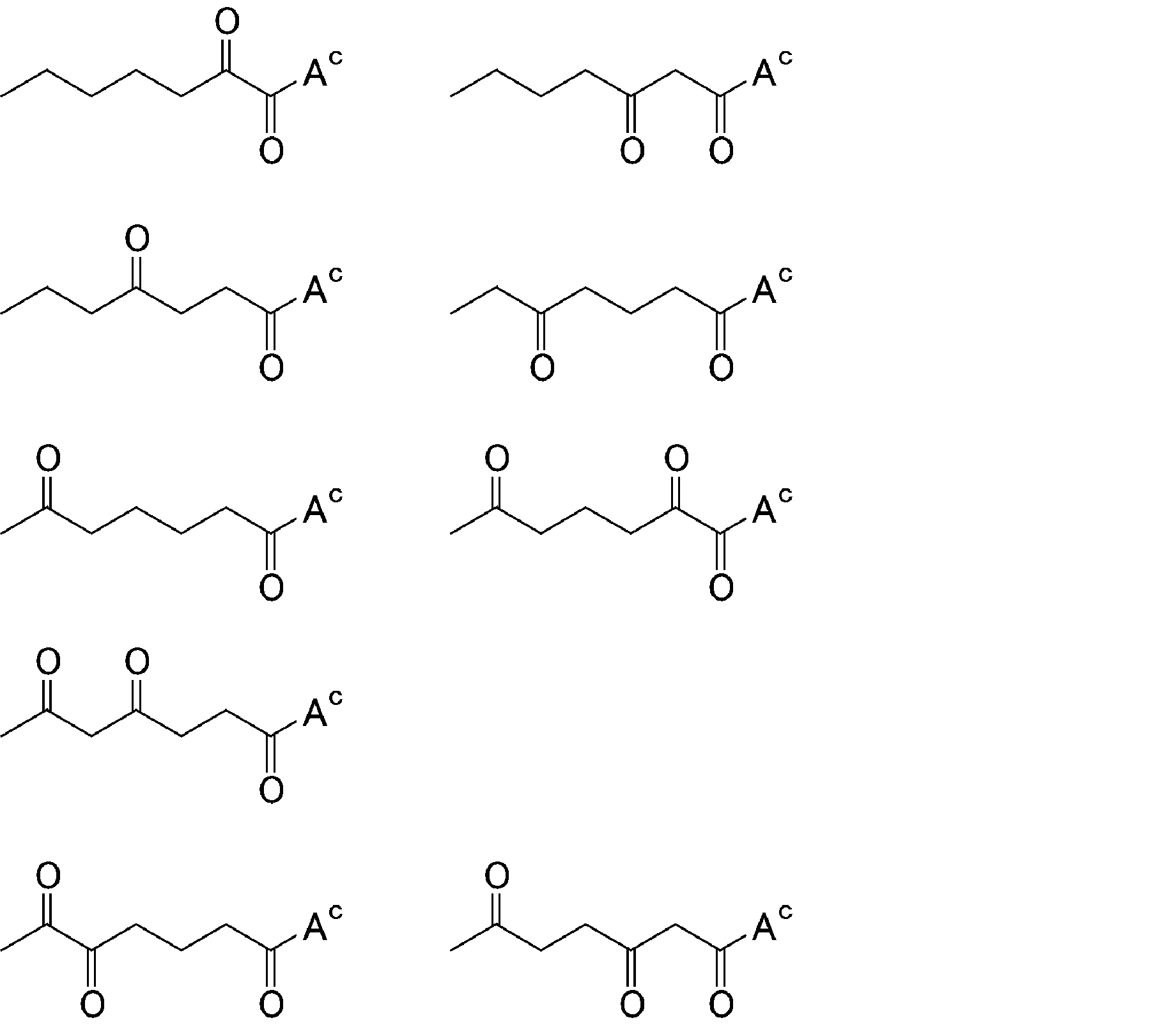
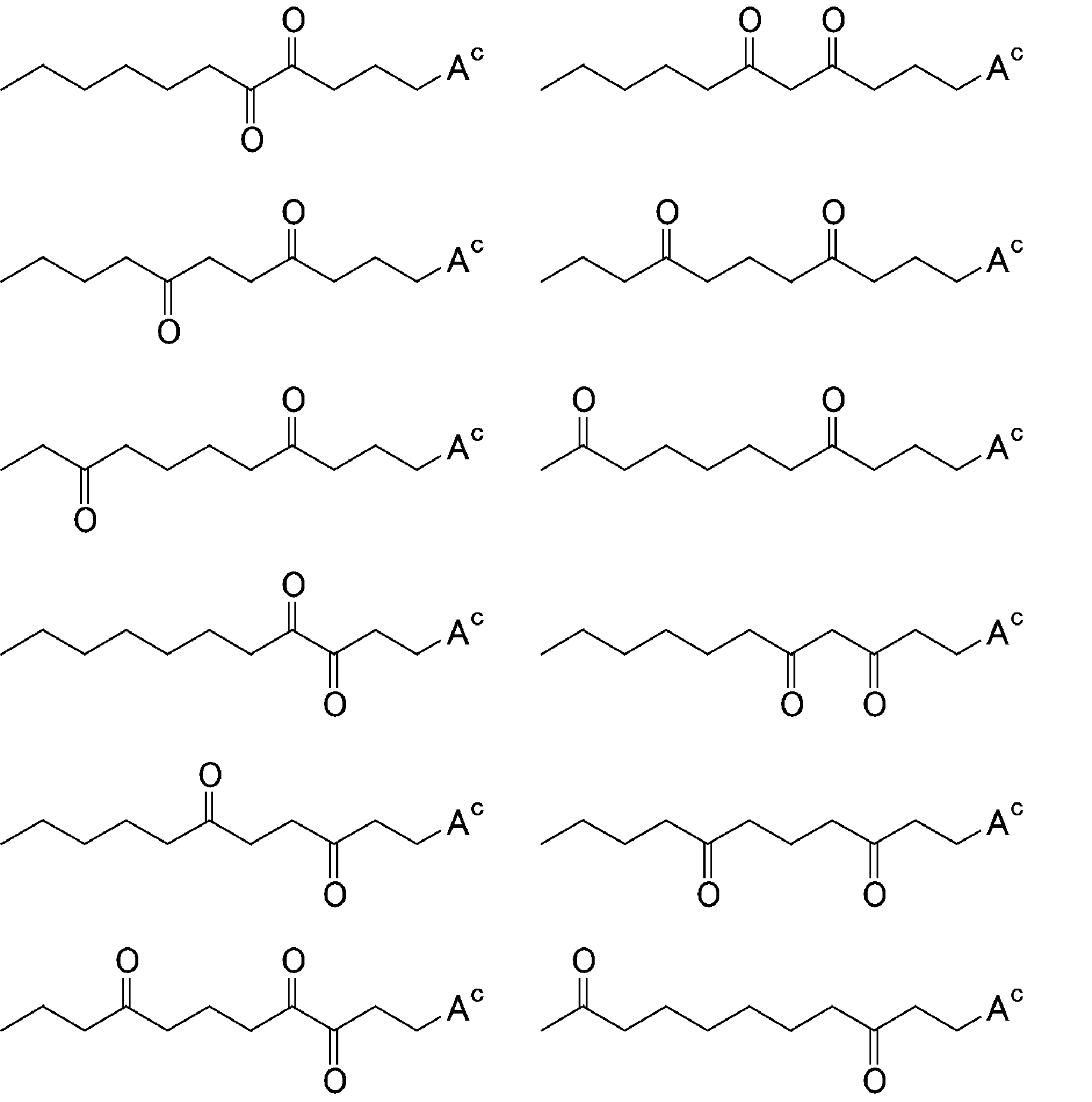
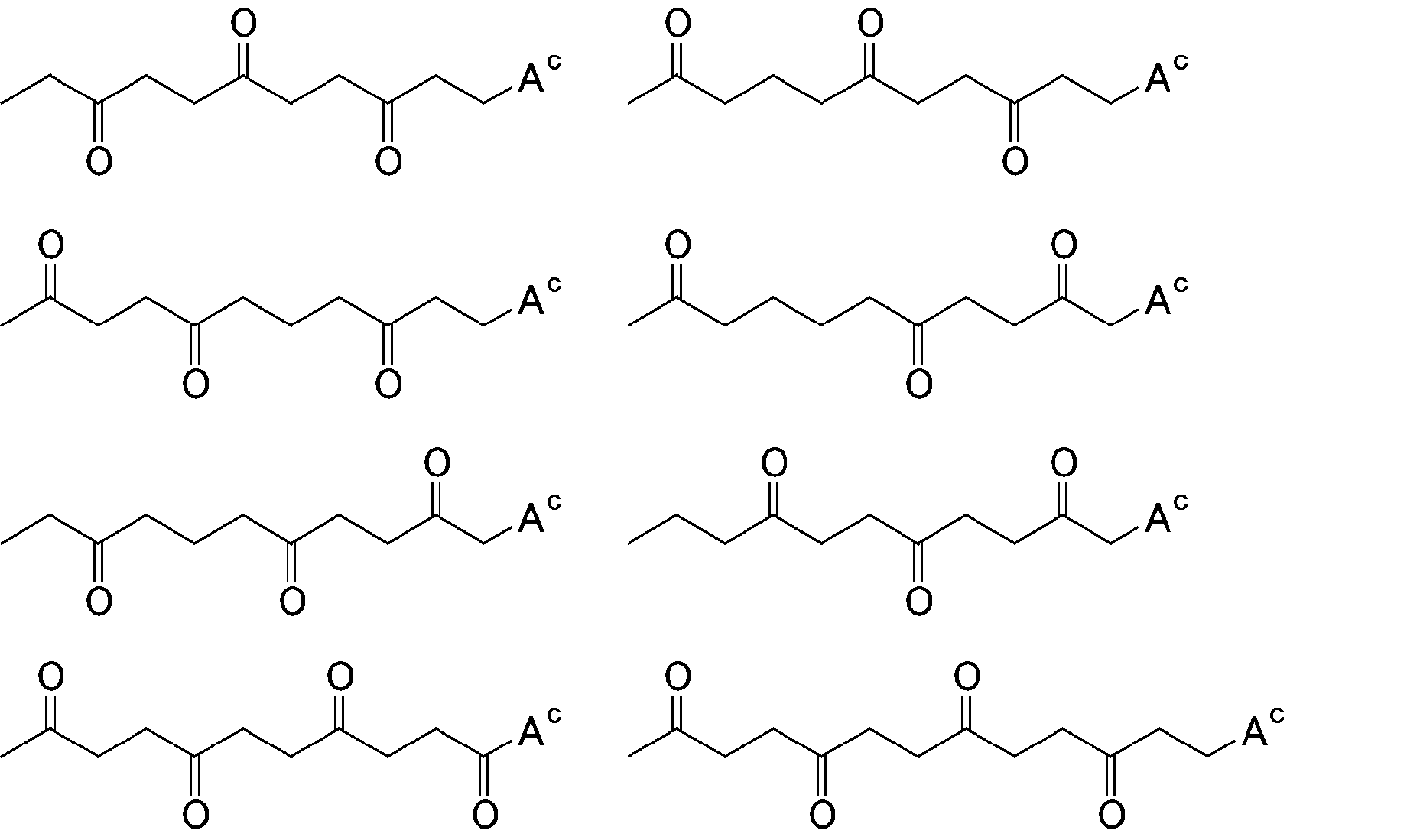
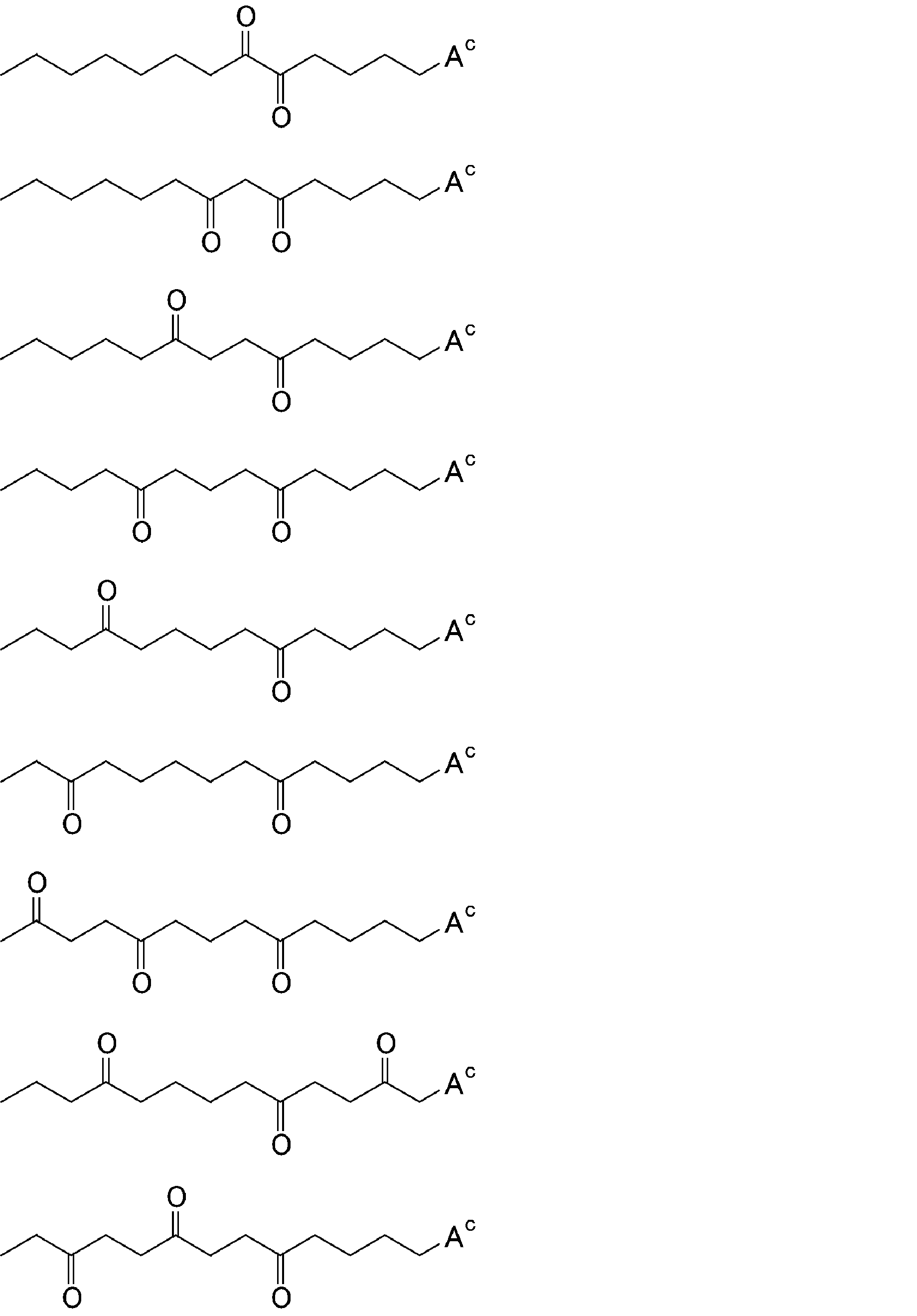
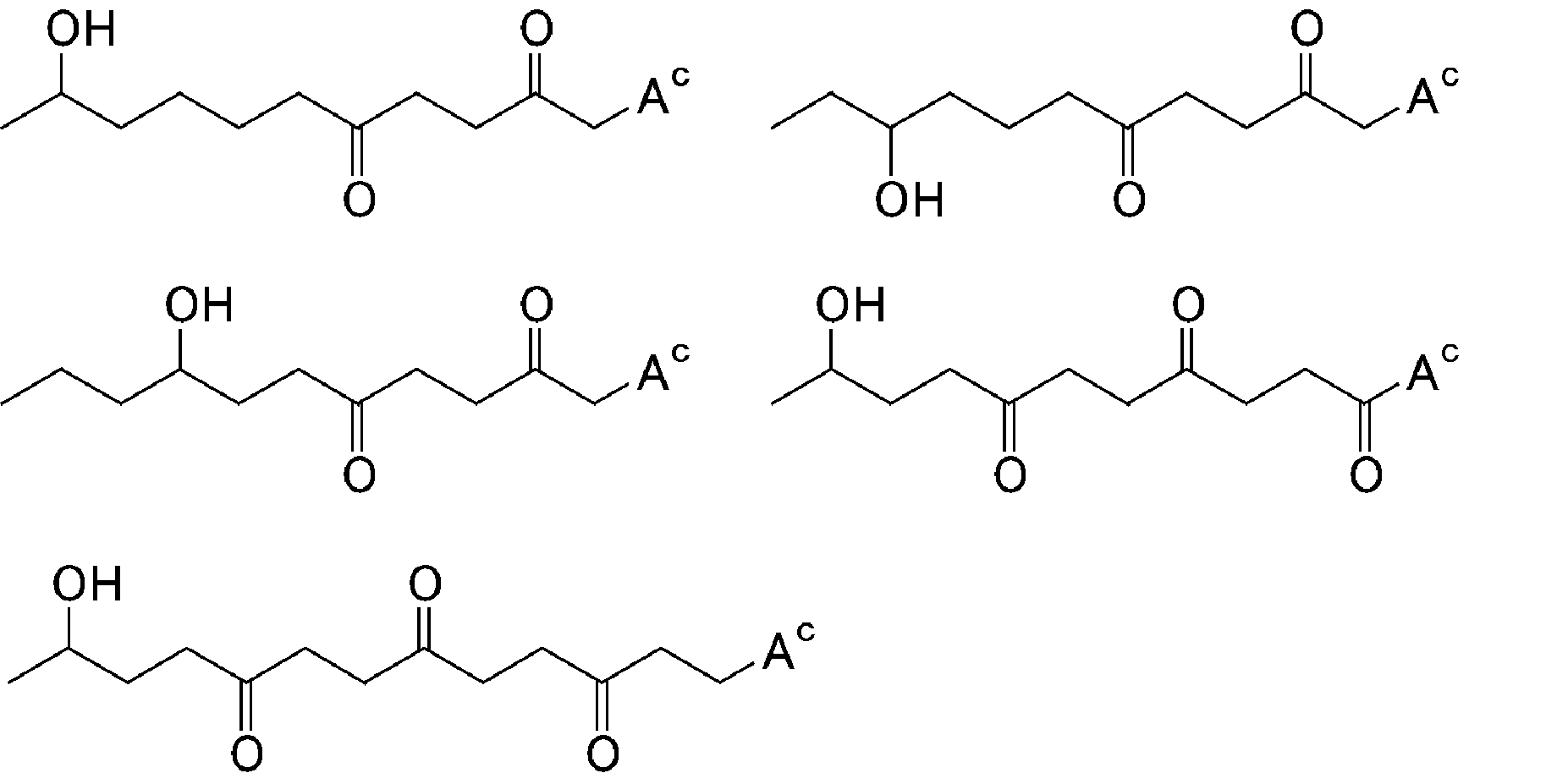
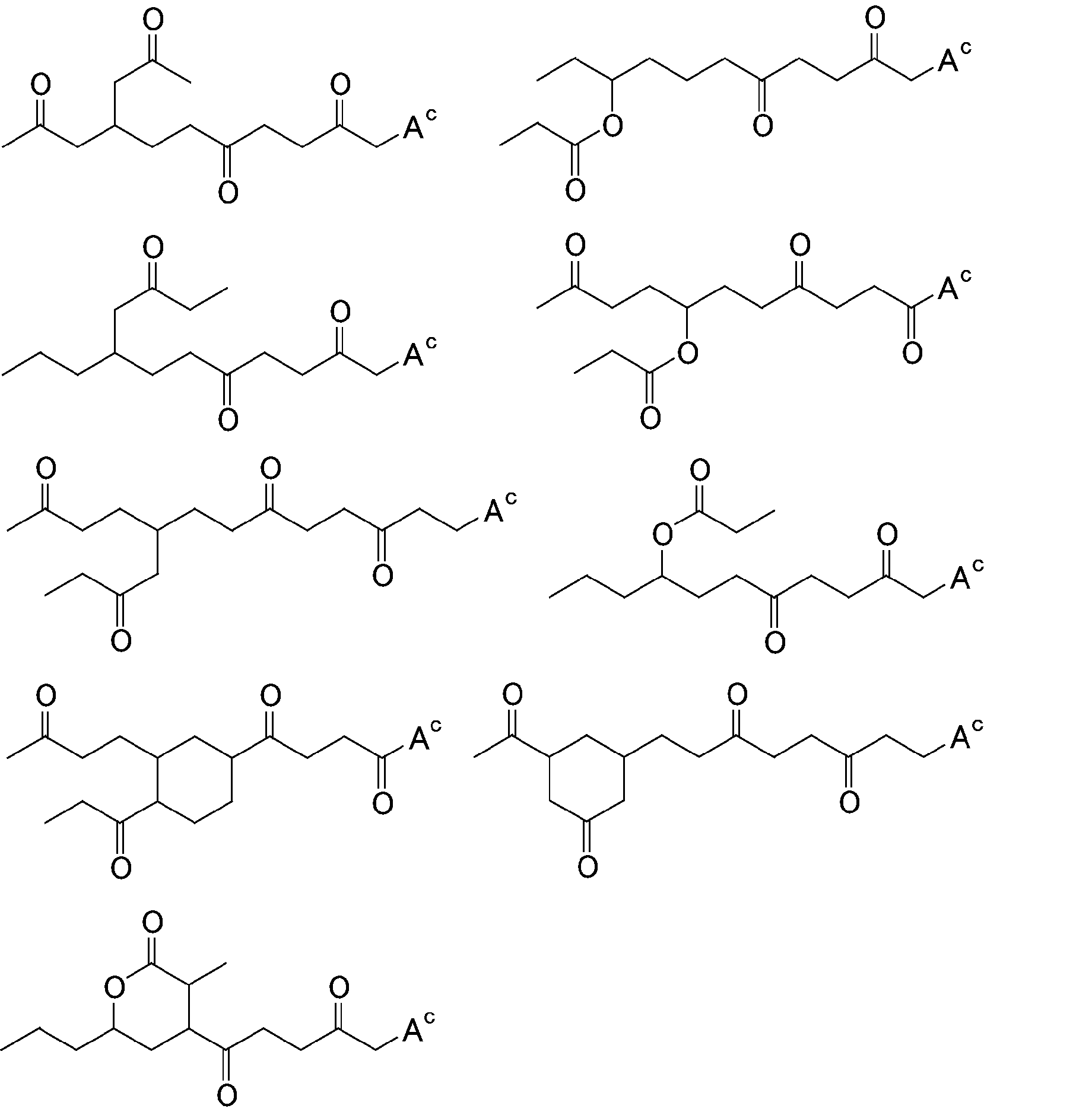
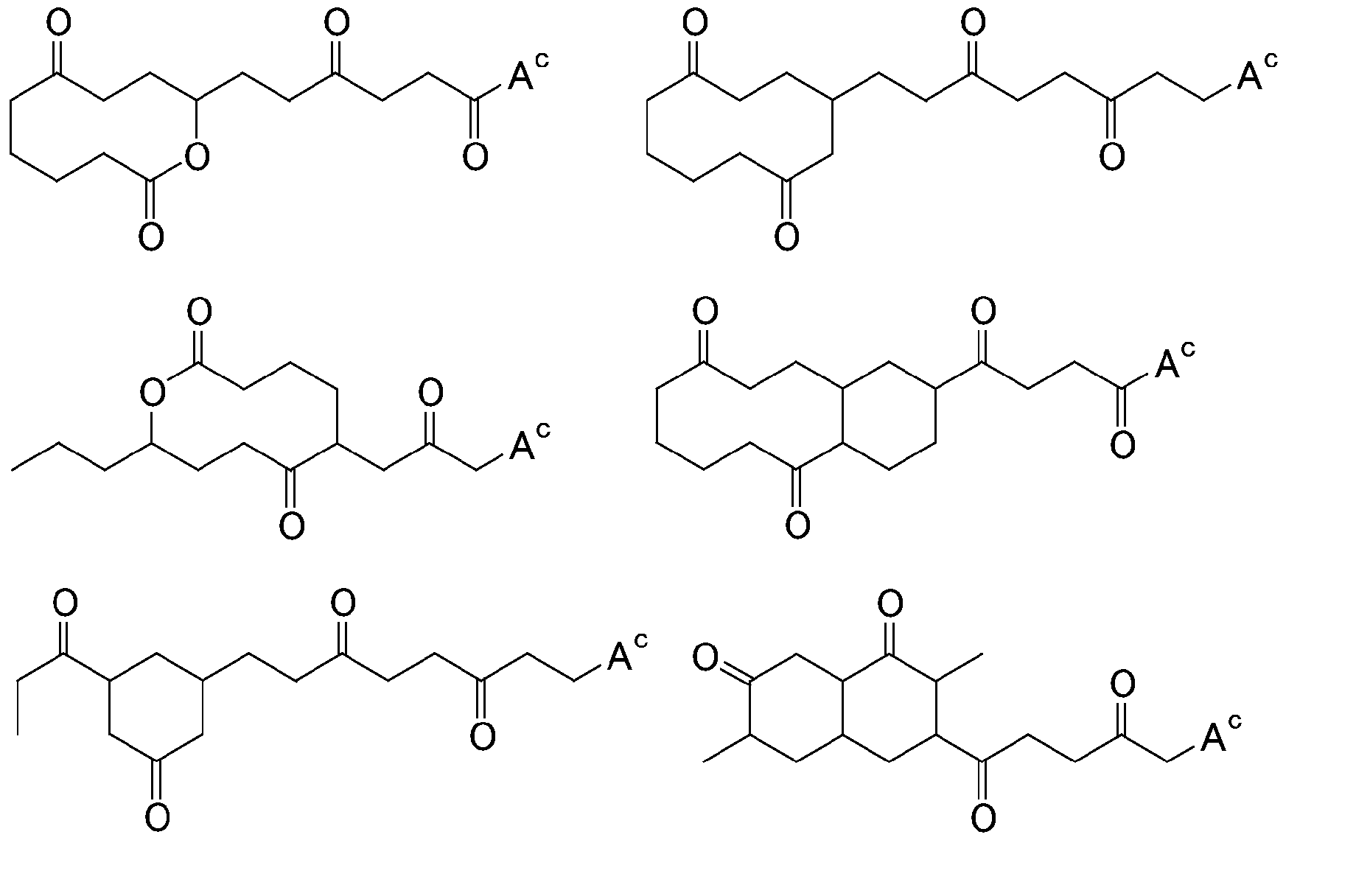
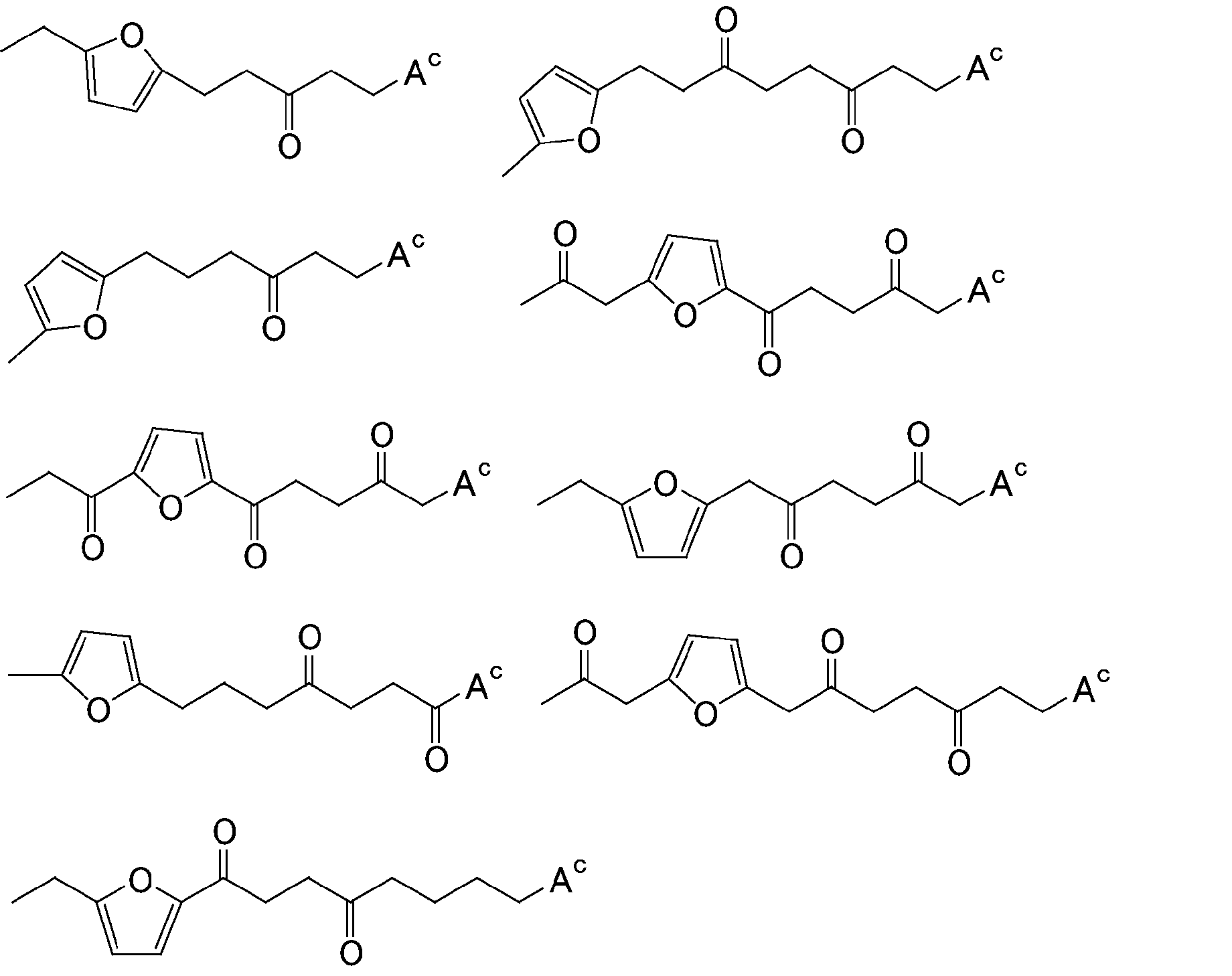
界面活性剤(c)は、新規化合物であり、例えば、次に例示する製造方法により製造することができる。
界面活性剤(c)は、式:

(式中、R3cは上述のとおり、Ecは脱離基である。)で示される化合物(10c)と、リチウム、及び、式:R201c
3Si-Cl(式中、R201cは、独立に、アルキル基又はアリール基である。)で示されるクロロシラン化合物とを反応させて、式:

(式中、R3c、R201c及びEcは上述のとおりである。)で示される化合物(11c)を得る工程(11c)、
化合物(11c)と、式:

(式中、R1cは上述のとおり、R21cは単結合又は2価の連結基である。)で示されるオレフィンとを反応させて、式:

(式中、R1c、R21c、R3c及びEcは上述のとおりである。)で示される化合物(12c)を得る工程(12c)、
化合物(12c)が有する脱離基を脱離させて、式:

(式中、R1c、R21c及びR3cは上述のとおりである。)で示される化合物(13c)を得る工程(13c)、及び、
化合物(13c)を酸化させて、式:

(式中、R1c、R21c及びR3cは上述のとおりである。)で示される化合物(14c)を得る工程(14c)、
を含む製造方法により、好適に製造できる。
化合物(11c)と、式:
化合物(12c)が有する脱離基を脱離させて、式:
化合物(13c)を酸化させて、式:
を含む製造方法により、好適に製造できる。
R1cにフラン環を含む場合は、例えば酸によりフラン環を開環しジカルボニル誘導体に変換してもよい。酸としては酢酸、塩酸、p-トルエンスルホン等があげられ、中でも酢酸が好ましい。
工程(11c)では、リチウム及び上記クロロシラン化合物を予め反応させて、シロキシリチウム化合物を得た後、上記シロキシリチウム化合物と化合物(10c)とを反応させて、化合物(11c)を得ることが好ましい。
Ecは脱離基を表す。上記脱離基としては、tert-ブチルジメチルシリル(TBS)基、トリエチルシリル(TES)基、トリイソプロピルシリル(TIPS)基、tert-ブチルジフェニルシリル(TBDPS)基、ベンジル(Bn)基等が挙げられる。
R21cとしては、単結合又は炭素数1以上の直鎖状又は分岐鎖状のアルキレン基が好ましい。
上記クロロシラン化合物としては、例えば、

が挙げられる。
工程(11c)におけるいずれの反応も、溶媒中で実施することができる。上記溶媒としては、有機溶媒が好ましく、非プロトン性極性溶媒がより好ましく、エーテルが更に好ましい。上記エーテルとしては、エチルメチルエーテル、ジエチルエーテル、モノグライム(エチレングリコールジメチルエーテル)、ジグライム(ジエチレングリコールジメチルエーテル)、トリグライム(トリエチレングリコールジメチルエーテル)、テトラヒドロフラン、テトラグライム(テトラエチレングリコールジメチルエーテル)、クラウンエーテル(15-クラウン-5,18-クラウン-6)等が挙げられ、なかでも、テトラヒドロフラン、ジエチルエーテルが好ましい。
工程(11c)におけるリチウム及び上記クロロシラン化合物の反応の温度としては、-78~100℃が好ましく、10~40℃がより好ましい。
工程(11c)における上記シロキシリチウム化合物と化合物(10c)との反応の温度としては、-100~0℃が好ましく、-80~-50℃がより好ましい。
工程(11c)における上記シロキシリチウム化合物と化合物(10c)との反応の温度としては、-100~0℃が好ましく、-80~-50℃がより好ましい。
工程(11c)におけるリチウム及び上記クロロシラン化合物の反応の圧力としては、0.1~5MPaが好ましく、0.1~1MPaがより好ましい。
工程(11c)における上記シロキシリチウム化合物と化合物(10c)との反応の圧力としては、0.1~5MPaが好ましく、0.1~1MPaがより好ましい。
工程(11c)における上記シロキシリチウム化合物と化合物(10c)との反応の圧力としては、0.1~5MPaが好ましく、0.1~1MPaがより好ましい。
工程(11c)におけるリチウム及び上記クロロシラン化合物の反応の時間としては、0.1~72時間が好ましく、6~10時間がより好ましい。
工程(11c)における上記シロキシリチウム化合物と化合物(10c)との反応の時間としては、0.1~72時間が好ましく、1~2時間がより好ましい。
工程(11c)における上記シロキシリチウム化合物と化合物(10c)との反応の時間としては、0.1~72時間が好ましく、1~2時間がより好ましい。
工程(12c)において、化合物(11c)と上記オレフィンとの反応割合としては、収率の向上及び廃棄物の減少を考慮して、化合物(11c)1モルに対して、上記オレフィンが1~2モルであることが好ましく、1~1.1モルがより好ましい。
工程(12c)における反応は、チアゾリウム塩及び塩基の存在下、溶媒中で実施できる。
上記チアゾリウム塩としては、3-エチル-5-(2-ヒドロキシエチル)-4-メチルチアゾリウムブロミド、3-ベンジル-5-(2-ヒドロキシエチル)-4-メチルチアゾリウムクロリド等が挙げられる。
上記塩基としては、1,8-ジアザビシクロ[5.4.0]-7-ウンデセン、トリエチルアミン等が挙げられる。
上記溶媒としては、有機溶媒が好ましく、非プロトン性極性溶媒がより好ましく、アルコール又はエーテルが更に好ましい。
上記アルコールとしては、メタノール、エタノール、1-プロパノール、イソプロパノール等が挙げられる。
上記エーテルとしては、エチルメチルエーテル、ジエチルエーテル、モノグライム(エチレングリコールジメチルエーテル)、ジグライム(ジエチレングリコールジメチルエーテル)、トリグライム(トリエチレングリコールジメチルエーテル)、テトラヒドロフラン、テトラグライム(テトラエチレングリコールジメチルエーテル)、クラウンエーテル(15-クラウン-5,18-クラウン-6)等が挙げられ、なかでも、テトラヒドロフラン、ジエチルエーテルが好ましい。
工程(12c)における反応の温度としては、40~60℃が好ましく、50~55℃がより好ましい。
工程(12c)における反応の圧力としては、0.1~5MPaが好ましく、0.1~1MPaがより好ましい。
工程(12c)における反応の時間としては、0.1~72時間が好ましく、6~10時間がより好ましい。
工程(13c)における脱離基の脱離反応は、フッ化物イオンや酸を使用することにより、実施できる。脱離基を脱離させる方法としては、例えば、フッ酸を用いる方法、ピリジン・nHFやトリエチルアミン・nHFのようなフッ化水素のアミン錯体を用いる方法、フッ化セシウム、フッ化カリウム、ホウフッ化リチウム(LiBF4)、フッ化アンモニウムのような無機塩を用いる方法、テトラブチルアンモニウムフルオリド(TBAF)のような有機塩を用いる方法が挙げられる。
工程(13c)における脱離基の脱離反応は、極性溶媒中で実施できる。上記溶媒としては、有機溶媒が好ましく、非プロトン性極性溶媒がより好ましく、エーテルが更に好ましい。
上記エーテルとしては、エチルメチルエーテル、ジエチルエーテル、モノグライム(エチレングリコールジメチルエーテル)、ジグライム(ジエチレングリコールジメチルエーテル)、トリグライム(トリエチレングリコールジメチルエーテル)、テトラヒドロフラン、テトラグライム(テトラエチレングリコールジメチルエーテル)、クラウンエーテル(15-クラウン-5,18-クラウン-6)等が挙げられ、なかでも、テトラヒドロフラン、ジエチルエーテルが好ましい。
工程(13c)における反応の温度としては、0~40℃が好ましく、0~20℃がより好ましい。
工程(13c)における反応の圧力としては、0.1~5MPaが好ましく、0.1~1MPaがより好ましい。
工程(13c)における反応の時間としては、0.1~72時間が好ましく、3~8時間がより好ましい。
工程(14c)における酸化は、亜塩素酸ナトリウムの存在下に、溶媒中で実施できる。
上記溶媒としては、メタノール、エタノール、1-プロパノール、イソプロパノール、1-ブタノール、tert-ブチルアルコール等のアルコール及び水が使用できる。緩衝液として、リン酸水素二ナトリウム溶液を使用してもよい。
化合物(14c)をアルカリと接触させて、-COOHを塩型に変換してもよい。上記アルカリとしては、水酸化ナトリウム、水酸化カリウム、水酸化リチウム、アンモニア等が挙げられ、アンモニアの水溶液を使用することが好ましい。
各工程の終了後、溶媒を留去したり、蒸留、精製等を実施したりして、得られる化合物の純度を高めてもよい。
界面活性剤(c)は、また、式:

(式中、R3cは上述のとおり、R22cは1価の有機基、Ecは脱離基である。)で示されるケトンと、式:

(式中、R1cは上述のとおり、R23cは1価の有機基である。)で示されるカルボン酸エステルとを反応させて、式:

(式中、R1c、R3c及びEcは上述のとおり、R24cは単結合又は2価の連結基である。)で示される化合物(21c)を得る工程(21c)、
化合物(21c)が有する脱離基を脱離させて、式:

(式中、R1c、R24c及びR3cは上述のとおりである。)で示される化合物(22c)を得る工程(22c)、及び、
化合物(22c)を酸化させて、式:

(式中、R1c、R24c及びR3cは上述のとおりである。)で示される化合物(23c)を得る工程(23c)、
を含む製造方法により、好適に製造できる。
化合物(21c)が有する脱離基を脱離させて、式:
化合物(22c)を酸化させて、式:
を含む製造方法により、好適に製造できる。
R1cにフラン環を含む場合は、例えば酸によりフラン環を開環しジカルボニル誘導体に変換してもよい。酸としては酢酸、塩酸、p-トルエンスルホン等があげられ、中でも酢酸が好ましい。
Ecは脱離基を表す。上記脱離基としては、tert-ブチルジメチルシリル(TBS)基、トリエチルシリル(TES)基、トリイソプロピルシリル(TIPS)基、tert-ブチルジフェニルシリル(TBDPS)基、ベンジル(Bn)基等が挙げられる。
R22cとしては、炭素数1以上の直鎖状又は分岐鎖状のアルキル基が好ましく、メチル基がより好ましい。
R23cとしては、炭素数1以上の直鎖状又は分岐鎖状のアルキル基が好ましく、メチル基がより好ましい。
R24cとしては、炭素数1以上の直鎖状又は分岐鎖状のアルキレン基が好ましく、メチレン基(-CH2-)がより好ましい。
R23cとしては、炭素数1以上の直鎖状又は分岐鎖状のアルキル基が好ましく、メチル基がより好ましい。
R24cとしては、炭素数1以上の直鎖状又は分岐鎖状のアルキレン基が好ましく、メチレン基(-CH2-)がより好ましい。
工程(21c)における反応は、塩基の存在下、溶媒中で実施できる。
上記塩基としては、ナトリウムアミド、水素化ナトリウム、ナトリウムメトキシド、ナトリウムエトキシド等が挙げられる。
上記溶媒としては、有機溶媒が好ましく、非プロトン性極性溶媒がより好ましく、アルコール、エーテルが更に好ましい。
上記アルコールとしては、メタノール、エタノール、1-プロパノール、イソプロパノール等が挙げられる。
上記エーテルとしては、エチルメチルエーテル、ジエチルエーテル、モノグライム(エチレングリコールジメチルエーテル)、ジグライム(ジエチレングリコールジメチルエーテル)、トリグライム(トリエチレングリコールジメチルエーテル)、テトラヒドロフラン、テトラグライム(テトラエチレングリコールジメチルエーテル)、クラウンエーテル(15-クラウン-5,18-クラウン-6)等が挙げられ、なかでも、テトラヒドロフラン、ジエチルエーテルが好ましい。
工程(21c)における反応の温度としては、0~40℃が好ましく、0~20がより好ましい。
工程(21c)における反応の圧力としては、0.1~5MPaが好ましく、0.1~1MPaがより好ましい。
工程(21c)における反応の時間としては、0.1~72時間が好ましく、3~8時間がより好ましい。
工程(22c)における脱離基の脱離反応は、フッ化物イオンや酸を使用することにより、実施できる。脱離基の脱離させる方法としては、例えば、フッ酸を用いる方法、ピリジン・nHFやトリエチルアミン・nHFのようなフッ化水素のアミン錯体を用いる方法、フッ化セシウム、フッ化カリウム、ホウフッ化リチウム(LiBF4)、フッ化アンモニウムのような無機塩を用いる方法、テトラブチルアンモニウムフルオリド(TBAF)のような有機塩を用いる方法が挙げられる。
工程(22c)における脱離基の脱離反応は、溶媒中で実施できる。上記溶媒としては、有機溶媒が好ましく、非プロトン性極性溶媒がより好ましく、エーテルが更に好ましい。
上記エーテルとしては、エチルメチルエーテル、ジエチルエーテル、モノグライム(エチレングリコールジメチルエーテル)、ジグライム(ジエチレングリコールジメチルエーテル)、トリグライム(トリエチレングリコールジメチルエーテル)、テトラヒドロフラン、テトラグライム(テトラエチレングリコールジメチルエーテル)、クラウンエーテル(15-クラウン-5,18-クラウン-6)等が挙げられ、なかでも、テトラヒドロフラン、ジエチルエーテルが好ましい。
工程(22c)における反応の温度としては、0~40℃が好ましく、0~20℃がより好ましい。
工程(22c)における反応の圧力としては、0.1~5MPaが好ましく、0.1~1MPaがより好ましい。
工程(22c)における反応の時間としては、0.1~72時間が好ましく、3~8時間がより好ましい。
工程(23c)における酸化は、亜塩素酸ナトリウムの存在下に、溶媒中で実施できる。
上記溶媒としては、アルコール及び水が使用できる。緩衝液として、リン酸水素二ナトリウム溶液を使用してもよい。
化合物(23c)をアルカリと接触させて、-COOHを塩型に変換してもよい。上記アルカリとしては、水酸化ナトリウム、水酸化カリウム、水酸化リチウム、アンモニア等が挙げられ、アンモニアの水溶液を使用することが好ましい。
各工程の終了後、溶媒を留去したり、蒸留、精製等を実施したりして、得られる化合物の純度を高めてもよい。
界面活性剤(c)は、また、式:Yc-R3c-CH2-OEc
(式中、R3cは上述のとおり、Ycはハロゲン原子、Ecは脱離基である。)で示されるハロゲン化アルキルと、式:

(式中、R1cは上述のとおりである。)で示されるリチウムアセチリドとを反応させて、式:

(式中、R1c、R3c及びEcは上述のとおりである。)で示される化合物(31c)を得る工程(31c)、
化合物(31c)を酸化して、式

(式中、R1c、R3c及びEcは上述のとおりである。)で示される化合物(32c)を得る工程(32c)、
化合物(32c)が有する脱離基を脱離させて、式:

(式中、R1c及びR3cは上述のとおりである。)で示される化合物(33c)を得る工程(33c)、及び、
化合物(33c)を酸化させて、式:

(式中、R1c及びR3cは上述のとおりである。)で示される化合物(34c)を得る工程(34c)、
を含む製造方法により、好適に製造できる。
(式中、R3cは上述のとおり、Ycはハロゲン原子、Ecは脱離基である。)で示されるハロゲン化アルキルと、式:
化合物(31c)を酸化して、式
化合物(32c)が有する脱離基を脱離させて、式:
化合物(33c)を酸化させて、式:
を含む製造方法により、好適に製造できる。
R1cにフラン環を含む場合は、例えば酸によりフラン環を開環しジカルボニル誘導体に変換してもよい。酸としては酢酸、塩酸、p-トルエンスルホン等があげられ、中でも酢酸が好ましい。
Ecは脱離基を表す。上記脱離基としては、tert-ブチルジメチルシリル(TBS)基、トリエチルシリル(TES)基、トリイソプロピルシリル(TIPS)基、tert-ブチルジフェニルシリル(TBDPS)基、ベンジル(Bn)基等が挙げられる。
工程(31c)において、上記ハロゲン化アルキルと上記リチウムアセチリドとの反応割合としては、収率の向上及び廃棄物の減少を考慮して、上記ハロゲン化アルキル1モルに対して、上記リチウムアセチリドが1~2モルであることが好ましく、1~1.2モルがより好ましい。
工程(31c)における反応は、溶媒中で実施できる。上記溶媒としては、ヘキサンが好ましい。
工程(31c)における反応の温度としては、-100~-40℃が好ましく、-80~-50℃がより好ましい。
工程(31c)における反応の圧力としては、0.1~5MPaが好ましく、0.1~1MPaがより好ましい。
工程(31c)における反応の時間としては、0.1~72時間が好ましく、6~10時間がより好ましい。
工程(32c)における酸化は、[(Cn*)RuIII(CF3CO2)3]・H2O(式中、Cn*は1,4,7-トリメチルー1,4,7-トリアザビシクロノナンを表す)を、(NH4)2Ce(NO3)6及びトリフルオロ酢酸で処理した後、過塩素酸ナトリウムを添加することにより生じる錯体を使用して、ニトリル系溶媒中で実施できる。
酸化終了後に、アルカリにより中和し、エーテル等の有機溶媒を使用して化合物(32c)を抽出してもよい。
工程(32c)における反応の温度としては、30~100℃が好ましく、40~90℃がより好ましい。
工程(32c)における反応の圧力としては、0.1~5MPaが好ましく、0.1~1MPaがより好ましい。
工程(32c)における反応の時間としては、0.1~72時間が好ましく、3~8時間がより好ましい。
工程(33c)における脱離基の脱離反応は、フッ化物イオンや酸を使用することにより、実施できる。脱離基の脱離させる方法としては、例えば、フッ酸を用いる方法、ピリジン・nHFやトリエチルアミン・nHFのようなフッ化水素のアミン錯体を用いる方法、フッ化セシウム、フッ化カリウム、ホウフッ化リチウム(LiBF4)、フッ化アンモニウムのような無機塩を用いる方法、テトラブチルアンモニウムフルオリド(TBAF)のような有機塩を用いる方法が挙げられる。
工程(33c)における脱離基の脱離反応は、溶媒中で実施できる。上記溶媒としては、有機溶媒が好ましく、非プロトン性極性溶媒がより好ましく、エーテルが更に好ましい。
上記エーテルとしては、エチルメチルエーテル、ジエチルエーテル、モノグライム(エチレングリコールジメチルエーテル)、ジグライム(ジエチレングリコールジメチルエーテル)、トリグライム(トリエチレングリコールジメチルエーテル)、テトラヒドロフラン、テトラグライム(テトラエチレングリコールジメチルエーテル)、クラウンエーテル(15-クラウン-5,18-クラウン-6)等が挙げられ、なかでも、テトラヒドロフラン、ジエチルエーテルが好ましい。
工程(33c)における反応の温度としては、0~40℃が好ましく、0~20℃がより好ましい。
工程(33c)における反応の圧力としては、0.1~5MPaが好ましく、0.1~1MPaがより好ましい。
工程(33c)における反応の時間としては、0.1~72時間が好ましく、3~8時間がより好ましい。
工程(34c)における酸化は、亜塩素酸ナトリウムの存在下に、溶媒中で実施できる。
上記溶媒としては、アルコール及び水が使用できる。緩衝液として、リン酸水素二ナトリウム溶液を使用してもよい。
化合物(34c)をアルカリと接触させて、-COOHを塩型に変換してもよい。上記アルカリとしては、水酸化ナトリウム、水酸化カリウム、水酸化リチウム、アンモニア等が挙げられ、アンモニアの水溶液を使用することが好ましい。
各工程の終了後、溶媒を留去したり、蒸留、精製等を実施したりして、得られる化合物の純度を高めてもよい。
界面活性剤(c)は、また、式:

で示されるジビニルケトンと、式:

で示される2-メチルフランとを反応させて、式:
で示される化合物(51c)を得る工程(51c)、
化合物(51c)と式:

で示されるフランとを反応させて、式:
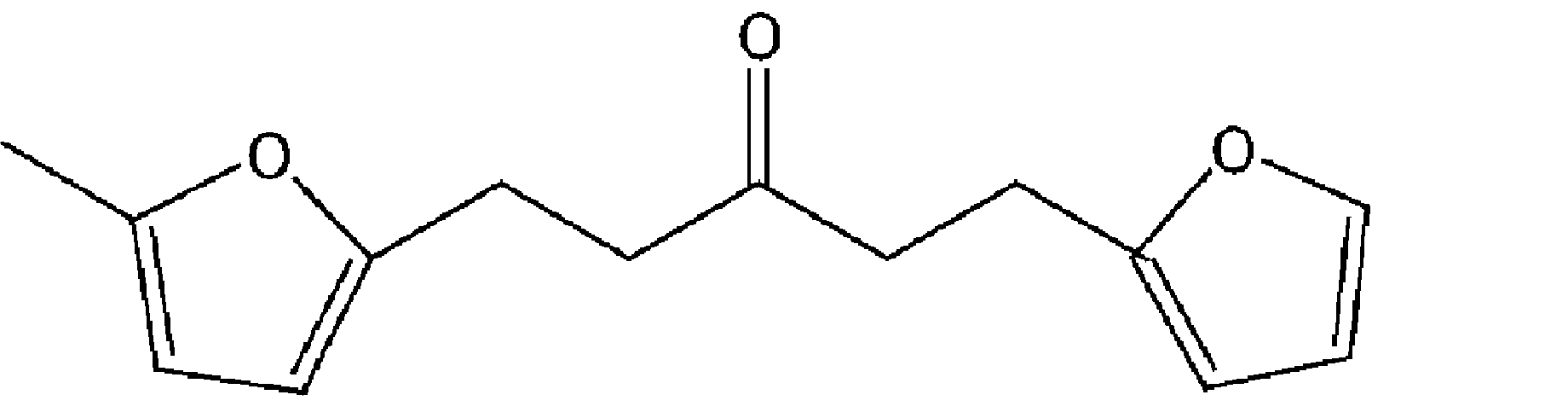
で示される化合物(52c)を得る工程(52c)、
化合物(52c)を酸の存在下で加熱することにより、式:
で示される化合物(53c)を得る工程(53c)、及び、
化合物(53c)を酸化させて、式:
で示される化合物(54c)を得る工程(54c)、
を含む製造方法により、好適に製造できる。
化合物(51c)と式:
化合物(52c)を酸の存在下で加熱することにより、式:
化合物(53c)を酸化させて、式:
を含む製造方法により、好適に製造できる。
工程(51c)において、ジビニルケトンと2-メチルフランとの反応割合としては、収率の向上及び廃棄物の減少を考慮して、ジビニルケトン1モルに対して、2-メチルフランが0.5~1モルであることが好ましく、0.6~0.9モルがより好ましい。
工程(51c)における反応は、酸の存在下に実施することが好ましい。上記酸としては、酢酸、塩酸、p-トルエンスルホン酸等があげられ、なかでも、酢酸が好ましい。
工程(51c)における上記酸の使用量は、収率の向上及び廃棄物の減少を考慮して、ジビニルケトン1モルに対して、0.1~2モルが好ましく、0.1~1モルがより好ましい。
工程(51c)における反応は、極性溶媒中で実施できる。上記溶媒としては、水、アセトニトリルが好ましい。
工程(51c)における反応の温度としては、20~100℃が好ましく、40~100℃がより好ましい。
工程(51c)における反応の圧力としては、0.1~5MPaが好ましく、0.1~1MPaがより好ましい。
工程(51c)における反応の時間としては、0.1~72時間が好ましく、4~8時間がより好ましい。
工程(52c)において、化合物(51c)とフランとの反応割合としては、収率の向上及び廃棄物の減少を考慮して、化合物(51c)1モルに対してフランが1~2モルであることが好ましく、1~1.1モルがより好ましい。
工程(52c)における反応は、酸の存在下に実施することが好ましい。上記酸としては、酢酸、塩酸、p-トルエンスルホン等があげられ、なかでも、酢酸が好ましい。
工程(52c)における上記酸の使用量は、収率の向上及び廃棄物の減少を考慮して、化合物(51c)1モルに対して、0.1~2モルが好ましく、0.1~1モルがより好ましい。
工程(52c)における反応は、極性溶媒中で実施できる。上記溶媒としては、水が好ましい。
工程(52c)における反応の温度としては、20~100℃が好ましく、40~100℃がより好ましい。
工程(52c)における反応の圧力としては、0.1~5MPaが好ましく、0.1~1MPaがより好ましい。
工程(52c)における反応の時間としては、0.1~72時間が好ましく、4~8時間がより好ましい。
工程(53c)では、化合物(52c)を酸の存在下で加熱することにより、フラン環を開環させる。
上記酸としては、塩酸、硫酸が好ましい。
工程(53c)における反応は、極性溶媒中で実施できる。上記溶媒としては、水が好ましい。
工程(53c)における反応の温度としては、50~100℃が好ましく、70~100℃がより好ましい。
工程(53c)における反応の圧力としては、0.1~5MPaが好ましく、0.1~1MPaがより好ましい。
工程(53c)における反応の時間としては、0.1~72時間が好ましく、1~12時間がより好ましい。
工程(54c)における酸化は、亜塩素酸ナトリウムの存在下に、溶媒中で実施できる。
上記溶媒としては、tert-ブチルアルコール及び水が使用できる。緩衝液として、リン酸水素二ナトリウム溶液を使用してもよい。
化合物(54c)をアルカリと接触させて、-COOHを塩型に変換してもよい。上記アルカリとしては、水酸化ナトリウム、水酸化カリウム、水酸化リチウム、アンモニア等が挙げられ、アンモニアの水溶液を使用することが好ましい。
各工程の終了後、溶媒を留去したり、蒸留、精製等を実施したりして、得られる化合物の純度を高めてもよい。
界面活性剤(c)は、また、式:

(式中、R1cは上述のとおり、R21cは単結合又は2価の連結基である。)で示されるアルケンと、式:

(式中、Y61cはアルキルエステル基である。)で示されるアルキンとを反応させて、式:

(式中、R1c、R21c及びY61cは上述のとおりである。)で示される化合物(61c)を得る工程(61c)、及び、
化合物(61c)に、アルカリを作用させたのちに酸を作用させて、式:

(式中、R1c及びR21cは上述のとおりである。)で示される化合物(62c)を得る工程(62c)、
を含む製造方法により、好適に製造できる。
化合物(61c)に、アルカリを作用させたのちに酸を作用させて、式:
を含む製造方法により、好適に製造できる。
R1cにフラン環を含む場合は、例えば酸によりフラン環を開環しジカルボニル誘導体に変換してもよい。酸としては酢酸、塩酸、p-トルエンスルホン等があげられ、中でも酢酸が好ましい。
R21cとしては、単結合又は炭素数1以上の直鎖状又は分岐鎖状のアルキレン基が好ましい。
工程(61c)において、上記アルケンと上記アルキンとの反応割合としては、収率の向上及び廃棄物の減少を考慮して、上記アルキン1モルに対して、上記アルケンが0.5~2モルであることが好ましく、0.6~1.2モルがより好ましい。
工程(61c)における反応は、金属触媒存在下に実施することが好ましい。上記金属としては、ルテニウム等があげられる。
工程(61c)における上記金属触媒の使用量は、収率の向上及び廃棄物の減少を考慮して、上記アルケン1モルに対して、0.01~0.4モルが好ましく、0.05~0.1モルがより好ましい。
工程(61c)における反応は、極性溶媒中で実施できる。上記溶媒としては、水、アセトニトリル、ジメチルアセトアミド、ジメチルホルムアミドが好ましい。
工程(61c)における反応の温度としては、20~160℃が好ましく、40~140℃がより好ましい。
工程(61c)における反応の圧力としては、0.1~5MPaが好ましく、0.1~1MPaがより好ましい。
工程(61c)における反応の時間としては、0.1~72時間が好ましく、4~8時間がより好ましい。
工程(62c)において、化合物(61c)と上記アルカリとの反応割合としては、収率の向上及び廃棄物の減少を考慮して、化合物(61c)1モルに対して上記アルカリが0.6~2モルであることが好ましく、0.8~1.1モルがより好ましい。
工程(62c)における上記酸の使用量は、収率の向上及び廃棄物の減少を考慮して、化合物(61c)1モルに対して、1.0~20.0モルが好ましく、1.0~10.0モルがより好ましい。
工程(62c)における反応は、極性溶媒中で実施できる。上記溶媒としては、水が好ましい。
工程(62c)における反応の温度としては、0~100℃が好ましく、20~100℃がより好ましい。
工程(62c)における反応の圧力としては、0.1~5MPaが好ましく、0.1~1MPaがより好ましい。
工程(62c)における反応の時間としては、0.1~72時間が好ましく、4~8時間がより好ましい。
化合物(62c)をアルカリと接触させて、-COOHを塩型に変換してもよい。上記アルカリとしては、水酸化ナトリウム、水酸化カリウム、水酸化リチウム、アンモニア等が挙げられ、アンモニアの水溶液を使用することが好ましい。
各工程の終了後、溶媒を留去したり、蒸留、精製等を実施したりして、得られる化合物の純度を高めてもよい。
界面活性剤(d)について説明する。
式(d)中、R1dは、置換基を有してもよい炭素数1以上の直鎖状若しくは分岐鎖状のアルキル基又は置換基を有してもよい炭素数3以上の環状のアルキル基である。
上記アルキル基は、炭素数が3以上の場合は1価又は2価の複素環を含むこともできるし、環を形成することもできる。上記複素環としては、不飽和複素環が好ましく、含酸素不飽和複素環がより好ましく、例えば、フラン環等が挙げられる。R1dにおいて、2価の複素環が2つの炭素原子間に挿入されていてもよいし、2価の複素環が末端に位置して-C(=O)-と結合してもよいし、1価の複素環が上記アルキル基の末端に位置してもよい。
上記アルキル基は、炭素数が3以上の場合は1価又は2価の複素環を含むこともできるし、環を形成することもできる。上記複素環としては、不飽和複素環が好ましく、含酸素不飽和複素環がより好ましく、例えば、フラン環等が挙げられる。R1dにおいて、2価の複素環が2つの炭素原子間に挿入されていてもよいし、2価の複素環が末端に位置して-C(=O)-と結合してもよいし、1価の複素環が上記アルキル基の末端に位置してもよい。
なお、本明細書において、上記アルキル基の「炭素数」には、上記複素環を構成する炭素原子の数も含めるものとする。
R1dとしての上記アルキル基が有してもよい上記置換基としては、ハロゲン原子、炭素数1~10の直鎖状若しくは分岐鎖状のアルキル基又は炭素数3~10の環状のアルキル基、ヒドロキシ基が好ましく、メチル基、エチル基が特に好ましい。
R1dとしての上記アルキル基は、カルボニル基を含まないことが好ましい。
上記アルキル基は、炭素原子に結合した水素原子の75%以下がハロゲン原子により置換されていてもよく、50%以下がハロゲン原子により置換されていてもよく、25%以下がハロゲン原子により置換されていてもよいが、フッ素原子、塩素原子等のハロゲン原子を含まない非ハロゲン化アルキル基であることが好ましい。
上記アルキル基は、如何なる置換基も有していないことが好ましい。
上記アルキル基は、炭素原子に結合した水素原子の75%以下がハロゲン原子により置換されていてもよく、50%以下がハロゲン原子により置換されていてもよく、25%以下がハロゲン原子により置換されていてもよいが、フッ素原子、塩素原子等のハロゲン原子を含まない非ハロゲン化アルキル基であることが好ましい。
上記アルキル基は、如何なる置換基も有していないことが好ましい。
R1dとしては、置換基を有してもよい炭素数1~10の直鎖状若しくは分岐鎖状のアルキル基又は置換基を有してもよい炭素数3~10の環状のアルキル基が好ましく、カルボニル基を含まない炭素数1~10の直鎖状若しくは分岐鎖状のアルキル基又はカルボニル基を含まない炭素数3~10の環状のアルキル基がより好ましく、置換基を有さない炭素数1~10の直鎖状又は分岐鎖状のアルキル基が更に好ましく、置換基を有さない炭素数1~3の直鎖状又は分岐鎖状のアルキル基が更により好ましく、メチル基(-CH3)又はエチル基(-C2H5)が特に好ましく、メチル基(-CH3)が最も好ましい。
式(d)中、R2d及びR4dは、独立に、H又は置換基である。複数個のR2d及びR4dは、それぞれ同一でも異なっていてもよい。
R2d及びR4dとしての上記置換基としては、ハロゲン原子、炭素数1~10の直鎖状若しくは分岐鎖状のアルキル基又は炭素数3~10の環状のアルキル基、ヒドロキシ基が好ましく、メチル基、エチル基が特に好ましい。
R2d及びR4dとしての上記アルキル基は、カルボニル基を含まないことが好ましい。
上記アルキル基は、炭素原子に結合した水素原子の75%以下がハロゲン原子により置換されていてもよく、50%以下がハロゲン原子により置換されていてもよく、25%以下がハロゲン原子により置換されていてもよいが、フッ素原子、塩素原子等のハロゲン原子を含まない非ハロゲン化アルキル基であることが好ましい。
上記アルキル基は、如何なる置換基も有していないことが好ましい。
上記アルキル基は、炭素原子に結合した水素原子の75%以下がハロゲン原子により置換されていてもよく、50%以下がハロゲン原子により置換されていてもよく、25%以下がハロゲン原子により置換されていてもよいが、フッ素原子、塩素原子等のハロゲン原子を含まない非ハロゲン化アルキル基であることが好ましい。
上記アルキル基は、如何なる置換基も有していないことが好ましい。
R2d及びR4dとしての上記アルキル基としては、カルボニル基を含まない炭素数1~10の直鎖状若しくは分岐鎖状のアルキル基又はカルボニル基を含まない炭素数3~10の環状のアルキル基が好ましく、カルボニル基を含まない炭素数1~10の直鎖状又は分岐鎖状のアルキル基がより好ましく、置換基を有さない炭素数1~3の直鎖状又は分岐鎖状のアルキル基が更に好ましく、メチル基(-CH3)又はエチル基(-C2H5)が特に好ましい。
R2d及びR4dとしては、独立に、H又はカルボニル基を含まない炭素数1~10の直鎖状若しくは分岐鎖状のアルキル基が好ましく、H又は置換基を有さない炭素数1~3の直鎖状若しくは分岐鎖状のアルキル基がより好ましく、H、メチル基(-CH3)又はエチル基(-C2H5)が更により好ましく、Hが特に好ましい。
式(d)中、R3dは、置換基を有してもよい炭素数1~10のアルキレン基である。R3dは、複数個存在する場合、同一でも異なっていてもよい。
上記アルキレン基は、カルボニル基を含まないことが好ましい。
上記アルキレン基は、炭素原子に結合した水素原子の75%以下がハロゲン原子により置換されていてもよく、50%以下がハロゲン原子により置換されていてもよく、25%以下がハロゲン原子により置換されていてもよいが、フッ素原子、塩素原子等のハロゲン原子を含まない非ハロゲン化アルキル基であることが好ましい。
上記アルキレン基は、如何なる置換基も有していないことが好ましい。
上記アルキレン基は、炭素原子に結合した水素原子の75%以下がハロゲン原子により置換されていてもよく、50%以下がハロゲン原子により置換されていてもよく、25%以下がハロゲン原子により置換されていてもよいが、フッ素原子、塩素原子等のハロゲン原子を含まない非ハロゲン化アルキル基であることが好ましい。
上記アルキレン基は、如何なる置換基も有していないことが好ましい。
上記アルキレン基としては、置換基を有してもよい炭素数1~10の直鎖状若しくは分岐鎖状のアルキレン基又は置換基を有してもよい炭素数3~10の環状のアルキレン基が好ましく、カルボニル基を含まない炭素数1~10の直鎖状若しくは分岐鎖状のアルキレン基又はカルボニル基を含まない炭素数3~10の環状のアルキレン基が好ましく、置換基を有さない炭素数1~10の直鎖状又は分岐鎖状のアルキレン基がより好ましく、メチレン基(-CH2-)、エチレン基(-C2H4-)、イソプロピレン基(-CH(CH3)CH2-)又はプロピレン基(-C3H6-)が更に好ましい。
R1d、R2d、R3d及びR4dは、いずれか2つがお互いに結合して、環を形成してもよい。
式(d)中、nは、1以上の整数である。nとしては、1~40の整数が好ましく、1~30の整数がより好ましく、5~25の整数が更に好ましい。
式(d)中、p及びqは、独立に、0以上の整数である。pとしては、0~10の整数が好ましく、0又は1がより好ましい。qとしては、0~10の整数が好ましく、0~5の整数がより好ましい。
n、p及びqは、合計が6以上の整数であることが好ましい。n、p及びqの合計は8以上の整数であることがより好ましい。n、p及びqの合計はまた、60以下の整数であることが好ましく、50以下の整数であることがより好ましく、40以下の整数であることが更に好ましい。
式(d)中、Adは、-SO3Xd又は-COOXd(Xdは、H、金属原子、NR5d
4、置換基を有していてもよいイミダゾリウム、置換基を有していてもよいピリジニウム又は置換基を有していてもよいホスホニウムであり、R5dはH又は有機基であり、同一でも異なっていてもよい。)である。R5dにおける有機基としてはアルキル基が好ましい。R5dとしては、H又は炭素数1~10の有機基が好ましく、H又は炭素数1~4の有機基がより好ましく、H又は炭素数1~4のアルキル基が更に好ましい。上記金属原子としては、アルカリ金属(1族)、アルカリ土類金属(2族)等が挙げられ、Na、K又はLiが好ましい。Xdは金属原子又はNR5d
4(R5dは上記のとおり)であってよい。
Xdとしては、H、アルカリ金属(1族)、アルカリ土類金属(2族)又はNR5d 4が好ましく、水に溶解しやすいことから、H、Na、K、Li又はNH4がより好ましく、水に更に溶解しやすいことから、Na、K又はNH4が更に好ましく、Na又はNH4が特に好ましく、除去が容易であることから、NH4が最も好ましい。XdがNH4であると、上記界面活性剤の水性媒体への溶解性が優れるとともに、PTFE中又は最終製品中に金属成分が残留しにくい。
Xdとしては、H、アルカリ金属(1族)、アルカリ土類金属(2族)又はNR5d 4が好ましく、水に溶解しやすいことから、H、Na、K、Li又はNH4がより好ましく、水に更に溶解しやすいことから、Na、K又はNH4が更に好ましく、Na又はNH4が特に好ましく、除去が容易であることから、NH4が最も好ましい。XdがNH4であると、上記界面活性剤の水性媒体への溶解性が優れるとともに、PTFE中又は最終製品中に金属成分が残留しにくい。
式(d)中、Lは、単結合、-CO2-B-*、-OCO-B-*、-CONR6d-B-*、-NR6dCO-B-*、又は、-CO-(但し、-CO2-B-、-OCO-B-、-CONR6d-B-、-NR6dCO-B-に含まれるカルボニル基を除く。)であり、Bは単結合もしくは置換基を有してもよい炭素数1~10のアルキレン基であり、R6dは、H又は置換基を有していてもよい、炭素数1~4のアルキル基である。上記アルキレン基は、炭素数が1~5であることがより好ましい。また、上記R6dは、H又はメチル基であることがより好ましい。*は、式中のAdに結合する側を指す。
Lは単結合であることが好ましい。
上記界面活性剤は、1H-NMRスペクトルにおいて、ケミカルシフト2.0~5.0ppmの領域に観測される全ピーク強度の積分値が10以上であることが好ましい。
上記界面活性剤は、1H-NMRスペクトルにおいて、ケミカルシフト2.0~5.0ppmの領域に観測される全ピーク強度の積分値が上記範囲内にあることが好ましい。この場合、上記界面活性剤は分子中にケトン構造を有することが好ましい。
上記界面活性剤において、上記積分値は、15以上がより好ましく、95以下が好ましく、80以下がより好ましく、70以下が更に好ましい。
上記積分値は、重水溶媒にて室温下に測定する。重水を4.79ppmとする。
上記界面活性剤(d)としては、例えば、
CH3C(O)CH2CH2CH2CH2CH2CH2CH2CH2COOK、
CH3C(O)CH2CH2CH2CH2CH2CH2CH2COONa、
CH3C(O)CH2CH2CH2CH2CH2CH2COONa、
CH3C(O)CH2CH2CH2CH2CH2COONa、
CH3C(O)CH2CH2CH2CH2COONa、
CH3C(O)CH2CH2CH2COONa、
CH3C(O)CH2CH2CH2CH2CH2CH2CH2CH2CH2CH2CH2CH2CH2COONa、
CH3C(O)CH2CH2CH2CH2CH2CH2CH2CH2CH2CH2CH2CH2CH2CH2CH2CH2CH2CH2COONa、
(CH3)3CC(O)CH2CH2CH2CH2CH2CH2CH2CH2COONa、
(CH3)2CHC(O)CH2CH2CH2CH2CH2CH2CH2CH2COONa、
(CH2)5CHC(O)CH2CH2CH2CH2CH2CH2CH2CH2COONa、
CH3CH2C(O)CH2CH2CH2CH2CH2CH2CH2COONa、
CH3CH2CH2C(O)CH2CH2CH2CH2CH2CH2COONa、
CH3CH2CH2CH2C(O)CH2CH2CH2CH2CH2COONa、
CH3CH2CH2CH2CH2C(O)CH2CH2CH2CH2COONa、
CH3CH2CH2CH2CH2CH2C(O)CH2CH2CH2COONa、
CH3CH2CH2CH2CH2CH2CH2C(O)CH2CH2COONa、
CH3CH2CH2CH2CH2CH2CH2CH2C(O)CH2COONa、
CH3C(O)CH2CH2CH2CH2CH2CH2CH2CH2OCH2CH2COONa、
CH3C(O)CH2CH2CH2CH2CH2CH2CH2CH2C(O)NHCH2COOK、
CH3C(O)CH2CH2CH2CH2CH2CH2CH2CH2NHC(O)CH2COOK、
CH3C(O)CH2CH2CH2CH2CH2CH2CH2CH2C(O)OCH2COONa、
CH3C(O)CH2CH2CH2CH2CH2CH2CH2CH2OC(O)CH2COONa、
CH3C(O)CH2CH2CH2CH2CH2CH2CH2CH2C(O)COONa、
CH3C(O)CH2CH2CH2CH2CH2CH2CH2CH2C(O)COOH、
CH3C(O)CH2CH2CH2CH2CH2CH2CH2CH2C(O)COOLi、
CH3C(O)CH2CH2CH2CH2CH2CH2CH2CH2C(O)COONH4、
CH3C(O)CH2CH2CH2CH2CH2CH2CH2CH2C(O)COONa、CH3C(O)CH2CH2CH2CH2CH2CH2CH2C(CH3)2COOK、
CH3C(O)CH2CH2CH2CH2CH2CH2CH2CH2CH2SO3Na、
CH3C(O)CH2CH2CH2CH2CH2CH2CH2CH2SO3Na、
CH3C(O)CH2CH2CH2CH2CH2CH2CH2SO3Na、
CH3C(O)CH2CH2CH2CH2CH2CH2SO3Na、
CH3C(O)CH2CH2CH2CH2CH2SO3Na、
CH3C(O)CH2CH2CH2CH2SO3Na、
CH3C(O)CH2CH2CH2CH2CH2CH2CH2CH2CH2CH2CH2CH2CH2SO3Na、
CH3C(O)CH2CH2CH2CH2CH2CH2CH2CH2CH2CH2CH2CH2CH2CH2CH2CH2CH2CH2SO3Na、
CH3C(O)CH2CH2CH2CH2CH2CH2CH2CH2CH2CH2SO3Na、
(CH3)3CC(O)CH2CH2CH2CH2CH2CH2CH2CH2CH2SO3Na、
(CH3)2CHC(O)CH2CH2CH2CH2CH2CH2CH2CH2CH2SO3Na、
(CH2)5CHC(O)CH2CH2CH2CH2CH2CH2CH2CH2CH2SO3Na、
CH3C(O)CH2CH2CH2CH2CH2CH2CH2CH2SO3Na、
CH3C(O)CH2CH2CH2CH2CH2CH2CH2SO3Na、
CH3C(O)CH2CH2CH2CH2CH2CH2SO3Na、
CH3C(O)CH2CH2CH2CH2CH2SO3Na、
CH3C(O)CH2CH2CH2CH2SO3Na、
CH3C(O)CH2CH2CH2SO3Na、
CH3C(O)CH2CH2SO3Na、
CH3C(O)CH2SO3Na、
CH3C(O)CH2CH2CH2CH2CH2CH2CH2CH2CH2OCH2CH2CH2SO3Na、
CH3C(O)CH2CH2CH2CH2CH2CH2CH2CH2CH2C(O)NHCH2SO3Na、
CH3C(O)CH2CH2CH2CH2CH2CH2CH2CH2CH2NHC(O)CH2SO3Na、
CH3C(O)CH2CH2CH2CH2CH2CH2CH2CH2CH2C(O)SO3Na、
CH3C(O)CH2CH2CH2CH2CH2CH2CH2CH2CH2C(O)OCH2SO3Na、
CH3C(O)CH2CH2CH2CH2CH2CH2CH2CH2CH2OC(O)CH2SO3Na、
CH3C(O)CH2CH2CH2CH2CH2CH2CH2CH2CH2SO3H、
CH3C(O)CH2CH2CH2CH2CH2CH2CH2CH2CH2SO3K、
CH3C(O)CH2CH2CH2CH2CH2CH2CH2CH2CH2SO3Li、
CH3C(O)CH2CH2CH2CH2CH2CH2CH2CH2CH2SO3NH4、
CH3C(O)CH2CH2CH2CH2CH2CH2CH2CH2C(CH3)2SO3Na
等が挙げられる。
CH3C(O)CH2CH2CH2CH2CH2CH2CH2CH2COOK、
CH3C(O)CH2CH2CH2CH2CH2CH2CH2COONa、
CH3C(O)CH2CH2CH2CH2CH2CH2COONa、
CH3C(O)CH2CH2CH2CH2CH2COONa、
CH3C(O)CH2CH2CH2CH2COONa、
CH3C(O)CH2CH2CH2COONa、
CH3C(O)CH2CH2CH2CH2CH2CH2CH2CH2CH2CH2CH2CH2CH2COONa、
CH3C(O)CH2CH2CH2CH2CH2CH2CH2CH2CH2CH2CH2CH2CH2CH2CH2CH2CH2CH2COONa、
(CH3)3CC(O)CH2CH2CH2CH2CH2CH2CH2CH2COONa、
(CH3)2CHC(O)CH2CH2CH2CH2CH2CH2CH2CH2COONa、
(CH2)5CHC(O)CH2CH2CH2CH2CH2CH2CH2CH2COONa、
CH3CH2C(O)CH2CH2CH2CH2CH2CH2CH2COONa、
CH3CH2CH2C(O)CH2CH2CH2CH2CH2CH2COONa、
CH3CH2CH2CH2C(O)CH2CH2CH2CH2CH2COONa、
CH3CH2CH2CH2CH2C(O)CH2CH2CH2CH2COONa、
CH3CH2CH2CH2CH2CH2C(O)CH2CH2CH2COONa、
CH3CH2CH2CH2CH2CH2CH2C(O)CH2CH2COONa、
CH3CH2CH2CH2CH2CH2CH2CH2C(O)CH2COONa、
CH3C(O)CH2CH2CH2CH2CH2CH2CH2CH2OCH2CH2COONa、
CH3C(O)CH2CH2CH2CH2CH2CH2CH2CH2C(O)NHCH2COOK、
CH3C(O)CH2CH2CH2CH2CH2CH2CH2CH2NHC(O)CH2COOK、
CH3C(O)CH2CH2CH2CH2CH2CH2CH2CH2C(O)OCH2COONa、
CH3C(O)CH2CH2CH2CH2CH2CH2CH2CH2OC(O)CH2COONa、
CH3C(O)CH2CH2CH2CH2CH2CH2CH2CH2C(O)COONa、
CH3C(O)CH2CH2CH2CH2CH2CH2CH2CH2C(O)COOH、
CH3C(O)CH2CH2CH2CH2CH2CH2CH2CH2C(O)COOLi、
CH3C(O)CH2CH2CH2CH2CH2CH2CH2CH2C(O)COONH4、
CH3C(O)CH2CH2CH2CH2CH2CH2CH2CH2C(O)COONa、CH3C(O)CH2CH2CH2CH2CH2CH2CH2C(CH3)2COOK、
CH3C(O)CH2CH2CH2CH2CH2CH2CH2CH2CH2SO3Na、
CH3C(O)CH2CH2CH2CH2CH2CH2CH2CH2SO3Na、
CH3C(O)CH2CH2CH2CH2CH2CH2CH2SO3Na、
CH3C(O)CH2CH2CH2CH2CH2CH2SO3Na、
CH3C(O)CH2CH2CH2CH2CH2SO3Na、
CH3C(O)CH2CH2CH2CH2SO3Na、
CH3C(O)CH2CH2CH2CH2CH2CH2CH2CH2CH2CH2CH2CH2CH2SO3Na、
CH3C(O)CH2CH2CH2CH2CH2CH2CH2CH2CH2CH2CH2CH2CH2CH2CH2CH2CH2CH2SO3Na、
CH3C(O)CH2CH2CH2CH2CH2CH2CH2CH2CH2CH2SO3Na、
(CH3)3CC(O)CH2CH2CH2CH2CH2CH2CH2CH2CH2SO3Na、
(CH3)2CHC(O)CH2CH2CH2CH2CH2CH2CH2CH2CH2SO3Na、
(CH2)5CHC(O)CH2CH2CH2CH2CH2CH2CH2CH2CH2SO3Na、
CH3C(O)CH2CH2CH2CH2CH2CH2CH2CH2SO3Na、
CH3C(O)CH2CH2CH2CH2CH2CH2CH2SO3Na、
CH3C(O)CH2CH2CH2CH2CH2CH2SO3Na、
CH3C(O)CH2CH2CH2CH2CH2SO3Na、
CH3C(O)CH2CH2CH2CH2SO3Na、
CH3C(O)CH2CH2CH2SO3Na、
CH3C(O)CH2CH2SO3Na、
CH3C(O)CH2SO3Na、
CH3C(O)CH2CH2CH2CH2CH2CH2CH2CH2CH2OCH2CH2CH2SO3Na、
CH3C(O)CH2CH2CH2CH2CH2CH2CH2CH2CH2C(O)NHCH2SO3Na、
CH3C(O)CH2CH2CH2CH2CH2CH2CH2CH2CH2NHC(O)CH2SO3Na、
CH3C(O)CH2CH2CH2CH2CH2CH2CH2CH2CH2C(O)SO3Na、
CH3C(O)CH2CH2CH2CH2CH2CH2CH2CH2CH2C(O)OCH2SO3Na、
CH3C(O)CH2CH2CH2CH2CH2CH2CH2CH2CH2OC(O)CH2SO3Na、
CH3C(O)CH2CH2CH2CH2CH2CH2CH2CH2CH2SO3H、
CH3C(O)CH2CH2CH2CH2CH2CH2CH2CH2CH2SO3K、
CH3C(O)CH2CH2CH2CH2CH2CH2CH2CH2CH2SO3Li、
CH3C(O)CH2CH2CH2CH2CH2CH2CH2CH2CH2SO3NH4、
CH3C(O)CH2CH2CH2CH2CH2CH2CH2CH2C(CH3)2SO3Na
等が挙げられる。
界面活性剤(d)は、新規化合物であり、例えば、次に例示する製造方法により製造することができる。
界面活性剤(d)は、下記式:

(式中、R1d、R2d及びnは、上記のとおりである。)
で示される化合物(10d)と、下記式:

(式中、R3dは、上記のとおりである。Lは、単結合、-CO2-B-*、-OCO-B-*、-CONR6d-B-*、-NR6dCO-B-*、又は、-CO-(但し、-CO2-B-、-OCO-B-、-CONR6d-B-、-NR6dCO-B-に含まれるカルボニル基を除く。)であり、Bは単結合もしくは置換基を有してもよい炭素数1~10のアルキレン基であり、R6dは、H又は置換基を有していてもよい、炭素数1~4のアルキル基である。*は、式中の-S(=O)2-に結合する側を指す。)で示されるサルトンとを反応させて、下記式:

(式中、R1d~R3d、n及びXdは、上記のとおりである。Lは、単結合、-CO2-B-*、-OCO-B-*、-CONR6d-B-*、-NR6dCO-B-*、又は、-CO-(但し、-CO2-B-、-OCO-B-、-CONR6d-B-、-NR6dCO-B-に含まれるカルボニル基を除く。)であり、Bは単結合もしくは置換基を有してもよい炭素数1~10のアルキレン基であり、R6dは、H又は置換基を有していてもよい、炭素数1~4のアルキル基である。*は、式中の-OSO3Xdに結合する側を指す。)
で示される化合物(11d)を得る工程(11d)を含む製造方法により、好適に製造できる。
で示される化合物(10d)と、下記式:
で示される化合物(11d)を得る工程(11d)を含む製造方法により、好適に製造できる。
工程(11d)における反応は、塩基の存在下に実施できる。
上記塩基としては、水素化ナトリウム、水酸化ナトリウム、水酸化カリウム、トリエチルアミン等が挙げられる。上記塩基は、化合物(10d)1モルに対して、0.5~20モルの量で使用できる。
上記塩基としては、水素化ナトリウム、水酸化ナトリウム、水酸化カリウム、トリエチルアミン等が挙げられる。上記塩基は、化合物(10d)1モルに対して、0.5~20モルの量で使用できる。
工程(11d)における反応は、溶媒中で実施できる。
上記溶媒としては、有機溶媒が好ましく、非プロトン性極性溶媒がより好ましい。上記有機溶媒としては、エーテル、芳香族化合物、ニトリル、ハロゲン化炭化水素等が挙げられる。
上記エーテルとしては、ジエチルエーテル、テトラヒドロフラン、ジオキサン、ジエチレングリコールジエチルエーテル等が挙げられ、なかでも、ジエチルエーテル、テトラヒドロフランが好ましい。
上記芳香族化合物としては、ベンゼン、トルエン、キシレン等が挙げられ、なかでも、ベンゼンが好ましい。
上記ニトリルとしては、アセトニトリル、プロピオニトリル、ブチロニトリル、イソブチロニトリル、ベンゾニトリル等が挙げられ、なかでも、アセトニトリルが好ましい。
上記ハロゲン化炭化水素としては、ジクロロメタン、ジクロロエタン、クロロホルム、クロロベンゼン、o-ジクロロベンゼン等が挙げられ、なかでも、ジクロロメタン、クロロホルムが好ましい。
上記溶媒としては、有機溶媒が好ましく、非プロトン性極性溶媒がより好ましい。上記有機溶媒としては、エーテル、芳香族化合物、ニトリル、ハロゲン化炭化水素等が挙げられる。
上記エーテルとしては、ジエチルエーテル、テトラヒドロフラン、ジオキサン、ジエチレングリコールジエチルエーテル等が挙げられ、なかでも、ジエチルエーテル、テトラヒドロフランが好ましい。
上記芳香族化合物としては、ベンゼン、トルエン、キシレン等が挙げられ、なかでも、ベンゼンが好ましい。
上記ニトリルとしては、アセトニトリル、プロピオニトリル、ブチロニトリル、イソブチロニトリル、ベンゾニトリル等が挙げられ、なかでも、アセトニトリルが好ましい。
上記ハロゲン化炭化水素としては、ジクロロメタン、ジクロロエタン、クロロホルム、クロロベンゼン、o-ジクロロベンゼン等が挙げられ、なかでも、ジクロロメタン、クロロホルムが好ましい。
工程(11d)における反応の温度としては、-78~150℃が好ましく、-20~100℃がより好ましい。
工程(11d)における反応の圧力としては、0~10MPaが好ましく、0~1.0MPaがより好ましい。
工程(11d)における反応の時間としては、0.1~72時間が好ましく、0.1~48時間がより好ましい。
界面活性剤(d)は、また、下記式:

(式中、R1d~R4d、n、p及びqは上記のとおりである。Lは、単結合、-CO2-B-*、-OCO-B-*、-CONR6d-B-*、-NR6dCO-B-*、又は、-CO-(但し、-CO2-B-、-OCO-B-、-CONR6d-B-、-NR6dCO-B-に含まれるカルボニル基を除く。)であり、Bは単結合もしくは置換基を有してもよい炭素数1~10のアルキレン基であり、R6dは、H又は置換基を有していてもよい、炭素数1~4のアルキル基である。*は、式中の-CH2-OHに結合する側を指す。)
で示される化合物(20d)を酸化させて、下記式:

(式中、R1d~R4d、n、p、q及びXdは上記のとおりである。Lは、単結合、-CO2-B-*、-OCO-B-*、-CONR6d-B-*、-NR6dCO-B-*、又は、-CO-(但し、-CO2-B-、-OCO-B-、-CONR6d-B-、-NR6dCO-B-に含まれるカルボニル基を除く。)であり、Bは単結合もしくは置換基を有してもよい炭素数1~10のアルキレン基であり、R6dは、H又は置換基を有していてもよい、炭素数1~4のアルキル基である。*は、式中の-CH2-COOXdに結合する側を指す。)
で示される化合物(21d)を得る工程(21d)を含む製造方法により、好適に製造できる。
で示される化合物(20d)を酸化させて、下記式:
で示される化合物(21d)を得る工程(21d)を含む製造方法により、好適に製造できる。
工程(21d)における酸化は、化合物(20d)にニトロソ化剤を作用させることにより実施できる。
上記ニトロソ化剤としては、亜硝酸ナトリウム、ニトロシル硫酸及び亜硝酸イソアミル等が使用できる。
上記ニトロソ化剤は、化合物(20d)1モルに対して、0.5~10モルの量で使用できる。
工程(21d)における酸化は、溶媒中で実施できる。上記溶媒としては、トリフルオロ酢酸、アセトニトリル等が使用できる。
工程(21d)における酸化の温度としては、-78~200℃が好ましく、-20~100℃がより好ましい。
工程(21d)における酸化の圧力としては、0~10MPaが好ましく、0~1.0MPaがより好ましい。
工程(21d)における酸化の時間としては、0.1~72時間が好ましく、0.1~24時間がより好ましい。
化合物(10d)及び化合物(20d)は、下記式:
R11d-CH=CH-Y1d-OH
(式中、R11dは、H、置換基を有してもよい炭素数1以上の直鎖状若しくは分岐鎖状のアルキル基、又は、置換基を有してもよい炭素数3以上の環状のアルキル基であり、炭素数が3以上の場合は1価又は2価の複素環を含んでも環を形成していてもよい。Y1dは、-(CR2d 2)n-又は-(CR2d 2)n-(OR3d)p-(CR4d 2)q-L-CH2-(R2d~R4d、n、p及びqは、上記のとおり。Lは、単結合、-CO2-B-*、-OCO-B-*、-CONR6d-B-*、-NR6dCO-B-*、又は、-CO-(但し、-CO2-B-、-OCO-B-、-CONR6d-B-、-NR6dCO-B-に含まれるカルボニル基を除く。)であり、Bは単結合もしくは置換基を有してもよい炭素数1~10のアルキレン基であり、R6dは、H又は置換基を有していてもよい、炭素数1~4のアルキル基である。*は、式中の-CH2-に結合する側を指す。)である。)で示される化合物(100d)をヒドロキシ化して、下記式:

(式中、R11d及びY1dは、上記のとおり。)で示される化合物(101d)を得る工程(101d)、及び、
化合物(101d)を酸化して、下記式:

(式中、R11d及びY1dは、上記のとおり。)で示される化合物(102d)を得る工程(102d)を含む製造方法により製造できる。
R11d-CH=CH-Y1d-OH
(式中、R11dは、H、置換基を有してもよい炭素数1以上の直鎖状若しくは分岐鎖状のアルキル基、又は、置換基を有してもよい炭素数3以上の環状のアルキル基であり、炭素数が3以上の場合は1価又は2価の複素環を含んでも環を形成していてもよい。Y1dは、-(CR2d 2)n-又は-(CR2d 2)n-(OR3d)p-(CR4d 2)q-L-CH2-(R2d~R4d、n、p及びqは、上記のとおり。Lは、単結合、-CO2-B-*、-OCO-B-*、-CONR6d-B-*、-NR6dCO-B-*、又は、-CO-(但し、-CO2-B-、-OCO-B-、-CONR6d-B-、-NR6dCO-B-に含まれるカルボニル基を除く。)であり、Bは単結合もしくは置換基を有してもよい炭素数1~10のアルキレン基であり、R6dは、H又は置換基を有していてもよい、炭素数1~4のアルキル基である。*は、式中の-CH2-に結合する側を指す。)である。)で示される化合物(100d)をヒドロキシ化して、下記式:
化合物(101d)を酸化して、下記式:
R11dとしての上記アルキル基は、カルボニル基を含まないことが好ましい。
R11dとしての上記アルキル基は、炭素原子に結合した水素原子の75%以下がハロゲン原子により置換されていてもよく、50%以下がハロゲン原子により置換されていてもよく、25%以下がハロゲン原子により置換されていてもよいが、フッ素原子、塩素原子等のハロゲン原子を含まない非ハロゲン化アルキル基であることが好ましい。
上記アルキル基は、如何なる置換基も有していないことが好ましい。
R11dとしての上記アルキル基は、炭素原子に結合した水素原子の75%以下がハロゲン原子により置換されていてもよく、50%以下がハロゲン原子により置換されていてもよく、25%以下がハロゲン原子により置換されていてもよいが、フッ素原子、塩素原子等のハロゲン原子を含まない非ハロゲン化アルキル基であることが好ましい。
上記アルキル基は、如何なる置換基も有していないことが好ましい。
R11dとしては、H、置換基を有してもよい炭素数1~9の直鎖状若しくは分岐鎖状のアルキル基、又は、置換基を有してもよい炭素数3~9の環状のアルキル基が好ましく、H、カルボニル基を含まない炭素数1~9の直鎖状若しくは分岐鎖状のアルキル基又はカルボニル基を含まない炭素数3~9の環状のアルキル基がより好ましく、H、又は、置換基を有さない炭素数1~9の直鎖状若しくは分岐鎖状のアルキル基が更に好ましく、H、メチル基(-CH3)又はエチル基(-C2H5)が更により好ましく、H又はメチル基(-CH3)が特に好ましく、Hが最も好ましい。
工程(101d)におけるヒドロキシ化は、例えば、(1d)酸素雰囲気中で化合物(100d)にフタロシアニン鉄(II)(Fe(Pc))及び水素化ホウ素ナトリウムを作用させる方法や、(2d)化合物(100d)にイソピノカンフェイルボラン(IpcBH2)を作用させた後、得られる中間体(ジアルキルボラン)を酸化する方法により実施できる。
方法(1d)において、フタロシアニン鉄(II)の量は、触媒量であってよく、化合物(100d)1モルに対して、0.001~1.2モルの量で使用できる。
方法(1d)において、水素化ホウ素ナトリウムは、化合物(100d)1モルに対して、0.5~20モルの量で使用できる。
方法(1d)の反応は、溶媒中で実施できる。上記溶媒としては、有機溶媒が好ましく、エーテル、ハロゲン化炭化水素、芳香族炭化水素、ニトリル、含窒素極性有機化合物等が挙げられる。
上記エーテルとしては、ジエチルエーテル、テトラヒドロフラン、ジオキサン、ジエチレングリコールジエチルエーテル等が挙げられ、なかでも、ジエチルエーテル、テトラヒドロフランが好ましい。
上記ハロゲン化炭化水素としては、ジクロロメタン、ジクロロエタン、クロロホルム、クロロベンゼン、o-ジクロロベンゼン等が挙げられ、なかでも、ジクロロメタン、クロロホルムが好ましい。
上記芳香族炭化水素としては、ベンゼン、トルエン、キシレン等が挙げられ、なかでも、ベンゼン、トルエンが好ましい。
上記ニトリルとしては、アセトニトリル、プロピオニトリル、ブチロニトリル、イソブチロニトリル、ベンゾニトリル等が挙げられ、なかでも、アセトニトリルが好ましい。
上記含窒素極性有機化合物としては、N,N-ジメチルホルムアミド、N,N-ジメチルアセトアミド、N-メチル-2-ピロリドン、2-ピロリドン、1,3-ジメチル-2-イミダゾリジノン等が挙げられ、なかでも、N,N-ジメチルホルムアミド、N,N-ジメチルアセトアミド、N-メチル-2-ピロリドンが好ましい。
方法(1d)の反応の温度としては、-78~200℃が好ましく、0~150℃がより好ましい。
方法(1d)の反応の圧力としては、0~5.0MPaが好ましく、0.1~1.0MPaがより好ましい。
方法(1d)の反応の時間としては、0.1~72時間が好ましく、0.1~48時間がより好ましい。
方法(2d)において、イソピノカンフェイルボランは、化合物(100d)1モルに対して、1.0~10.0モルの量で使用できる。
化合物(100d)とイソピノカンフェイルボランとの反応は、溶媒中で実施できる。上記溶媒としては、有機溶媒が好ましく、エーテル、ハロゲン化炭化水素、芳香族炭化水素等が挙げられる。
上記エーテルとしては、ジエチルエーテル、テトラヒドロフラン、ジオキサン、ジエチレングリコールジエチルエーテル等が挙げられ、なかでも、ジエチルエーテル、テトラヒドロフランが好ましい。
上記ハロゲン化炭化水素としては、ジクロロメタン、ジクロロエタン、クロロホルム、クロロベンゼン、o-ジクロロベンゼン等が挙げられ、なかでも、ジクロロメタン、クロロホルムが好ましい。
上記芳香族炭化水素としては、ベンゼン、トルエン、キシレン等が挙げられ、なかでも、ベンゼン、トルエンが好ましい。
化合物(100d)とイソピノカンフェイルボランとの反応の温度としては、-78~200℃が好ましく、0~150℃がより好ましい。
化合物(100d)とイソピノカンフェイルボランとの反応の圧力としては、0~5.0MPaが好ましく、0.1~1.0MPaがより好ましい。
化合物(100d)とイソピノカンフェイルボランとの反応の時間としては、0.1~72時間が好ましく、0.1~48時間がより好ましい。
方法(2d)における酸化は、上記中間体に酸化剤を作用させることにより実施できる。上記酸化剤としては、過酸化水素が挙げられる。上記酸化剤は、上記中間体1モルに対して、0.7~10モルの量で使用できる。
方法(2d)における酸化は、溶媒中で実施できる。上記溶媒としては、水、メタノール、エタノール等が挙げられ、なかでも水が好ましい。
方法(2d)における酸化の温度としては、0~100℃が好ましく、0~80℃がより好ましい。
方法(2d)における酸化の圧力としては、0~5.0MPaが好ましく、0.1~1.0MPaがより好ましい。
方法(2d)における酸化の時間としては、0.1~72時間が好ましく、0.1~48時間がより好ましい。
工程(102d)において、化合物(101d)を酸化する方法としては、例えば、(a)ジョーンズ試薬(CrO3/H2SO4)を用いる方法(ジョーンズ酸化)、(d)デス・マーチン・ペルヨージナン(DMP)を用いる方法(デス・マーチン酸化)、(c)クロロクロム酸ピリジニウム(PCC)を用いる方法、(d)NiCl2等のニッケル化合物の存在下に漂白剤(NaOClの約5~6%水溶液)を作用させる方法、(e)Al(CH3)3、Al[OCH(CH3)2]3等のアルミニウム触媒の存在下にアルデヒド、ケトン等の水素受容体を作用させる方法(オッペナウアー酸化)が挙げられる。
工程(102d)における酸化は、溶媒中で実施できる。上記溶媒としては、水及び有機溶媒が好ましく、水、ケトン、エーテル、ハロゲン化炭化水素、芳香族炭化水素、ニトリル等が挙げられる。
上記ケトンとしては、アセトン、メチルエチルケトン、メチルイソブチルケトン、シクロヘキサノン、ジアセトンアルコール等が挙げられ、なかでも、アセトンが好ましい。
上記エーテルとしては、ジエチルエーテル、テトラヒドロフラン、ジオキサン、ジエチレングリコールジエチルエーテル等が挙げられ、なかでも、ジエチルエーテル、テトラヒドロフランが好ましい。
上記ハロゲン化炭化水素としては、ジクロロメタン、ジクロロエタン、クロロホルム、クロロベンゼン、o-ジクロロベンゼン等が挙げられ、なかでも、ジクロロメタン、クロロホルムが好ましい。
上記芳香族炭化水素としては、ベンゼン、トルエン、キシレン等が挙げられ、なかでも、ベンゼン、トルエンが好ましい。
上記ニトリルとしては、アセトニトリル、プロピオニトリル、ブチロニトリル、イソブチロニトリル、ベンゾニトリル等が挙げられ、なかでも、アセトニトリルが好ましい。
工程(102d)における酸化の温度としては、-78~200℃が好ましく、採用する方法に応じて適宜選択することができる。
工程(102d)における酸化の圧力としては、0~5.0MPaが好ましく、採用する方法に応じて適宜選択することができる。
工程(102d)における酸化の時間としては、0.1~72時間が好ましく、採用する方法に応じて適宜選択することができる。
化合物(10d)及び化合物(20d)は、また、下記式:

(式中、R1d及びY1dは、上記のとおり。R101dは、有機基である。)で示される化合物(200d)をオゾン分解して、下記式:

(式中、R1d及びY1dは、上記のとおり。)で示される化合物(201d)を得る工程(201d)を含む製造方法により製造できる。
R101dとしては、炭素数1~20のアルキル基が好ましい。2個のR101dは、同一でも異なっていてもよい。
工程(201d)におけるオゾン分解は、化合物(200d)にオゾンを作用させた後、還元剤で後処理することにより実施できる。
オゾンは、酸素ガス中の無声放電によって発生させることができる。
上記後処理に用いる還元剤としては、亜鉛、ジメチルスルフィド、チオウレア、ホスフィン類等が挙げられ、なかでもホスフィン類が好ましい。
工程(201d)におけるオゾン分解は、溶媒中で実施できる。上記溶媒としては、水及び有機溶媒が好ましく、水、アルコール、カルボン酸類、エーテル、ハロゲン化炭化水素、芳香族炭化水素等が挙げられる。
上記アルコールとしては、メタノール、エタノール、1-プロパノール、イソプロパノール等が挙げられる。なかでも、メタノール、エタノールが好ましい。
上記カルボン酸類としては、酢酸、プロピオン酸等が挙げられる。なかでも、酢酸が好ましい。
上記エーテルとしては、ジエチルエーテル、テトラヒドロフラン、ジオキサン、ジエチレングリコールジエチルエーテル等が挙げられ、なかでも、ジエチルエーテル、テトラヒドロフランが好ましい。
上記ハロゲン化炭化水素としては、ジクロロメタン、ジクロロエタン、クロロホルム、クロロベンゼン、o-ジクロロベンゼン等が挙げられ、なかでも、ジクロロメタン、クロロホルムが好ましい。
上記芳香族炭化水素としては、ベンゼン、トルエン、キシレン等が挙げられ、なかでも、ベンゼン、トルエンが好ましい。
工程(201d)におけるオゾン分解の温度としては、-78~200℃が好ましく、0~150℃がより好ましい。
工程(201d)におけるオゾン分解の圧力としては、0~5.0MPaが好ましく、0.1~1.0MPaがより好ましい。
工程(201d)におけるオゾン分解の時間としては、0.1~72時間が好ましく、0.1~48時間がより好ましい。
化合物(10d)及び化合物(20d)は、また、下記式:
R21d-CH=CH-Y1d-OH
(式中、Y1dは、上記のとおり。R21dは、H、置換基を有してもよい炭素数1以上の直鎖状若しくは分岐鎖状のアルキル基、又は、置換基を有してもよい炭素数3以上の環状のアルキル基であり、炭素数が3以上の場合は1価又は2価の複素環を含んでも環を形成していてもよい。)で示される化合物(300d)をエポキシ化して、下記式:

(式中、R21d及びY1dは、上記のとおり。)で示される化合物(301d)を得る工程(301d)、
化合物(301d)と、R22d 2CuLi(R22dは、置換基を有してもよい炭素数1以上の直鎖状若しくは分岐鎖状のアルキル基又は置換基を有してもよい炭素数3以上の環状のアルキル基であり、炭素数が3以上の場合は1価又は2価の複素環を含んでも環を形成していてもよい。)で示されるジアルキル銅リチウムとを反応させて、下記式:

(式中、R21d、R22d及びY1dは、上記のとおり。)で示される化合物(302d)を得る工程(302d)、及び、
化合物(302d)を酸化して、下記式:

(式中、R21d、R22d及びY1dは、上記のとおり。)で示される化合物(303d)を得る工程(303d)を含む製造方法により製造できる。
R21d-CH=CH-Y1d-OH
(式中、Y1dは、上記のとおり。R21dは、H、置換基を有してもよい炭素数1以上の直鎖状若しくは分岐鎖状のアルキル基、又は、置換基を有してもよい炭素数3以上の環状のアルキル基であり、炭素数が3以上の場合は1価又は2価の複素環を含んでも環を形成していてもよい。)で示される化合物(300d)をエポキシ化して、下記式:
化合物(301d)と、R22d 2CuLi(R22dは、置換基を有してもよい炭素数1以上の直鎖状若しくは分岐鎖状のアルキル基又は置換基を有してもよい炭素数3以上の環状のアルキル基であり、炭素数が3以上の場合は1価又は2価の複素環を含んでも環を形成していてもよい。)で示されるジアルキル銅リチウムとを反応させて、下記式:
化合物(302d)を酸化して、下記式:
R21dとしての上記アルキル基は、カルボニル基を含まないことが好ましい。
R21dとしての上記アルキル基は、炭素原子に結合した水素原子の75%以下がハロゲン原子により置換されていてもよく、50%以下がハロゲン原子により置換されていてもよく、25%以下がハロゲン原子により置換されていてもよいが、フッ素原子、塩素原子等のハロゲン原子を含まない非ハロゲン化アルキル基であることが好ましい。
上記アルキル基は、如何なる置換基も有していないことが好ましい。
R21dとしての上記アルキル基は、炭素原子に結合した水素原子の75%以下がハロゲン原子により置換されていてもよく、50%以下がハロゲン原子により置換されていてもよく、25%以下がハロゲン原子により置換されていてもよいが、フッ素原子、塩素原子等のハロゲン原子を含まない非ハロゲン化アルキル基であることが好ましい。
上記アルキル基は、如何なる置換基も有していないことが好ましい。
R21dとしては、H、置換基を有してもよい炭素数1~8の直鎖状若しくは分岐鎖状のアルキル基、又は、置換基を有してもよい炭素数3~8の環状のアルキル基が好ましく、H、カルボニル基を含まない炭素数1~8の直鎖状若しくは分岐鎖状のアルキル基又はカルボニル基を含まない炭素数3~8の環状のアルキル基がより好ましく、H、又は、置換基を有さない炭素数1~8の直鎖状若しくは分岐鎖状のアルキル基が更に好ましく、H又はメチル基(-CH3)が特に好ましく、Hが最も好ましい。
R22dとしての上記アルキル基は、カルボニル基を含まないことが好ましい。
R22dとしての上記アルキル基は、炭素原子に結合した水素原子の75%以下がハロゲン原子により置換されていてもよく、50%以下がハロゲン原子により置換されていてもよく、25%以下がハロゲン原子により置換されていてもよいが、フッ素原子、塩素原子等のハロゲン原子を含まない非ハロゲン化アルキル基であることが好ましい。
上記アルキル基は、如何なる置換基も有していないことが好ましい。
R22dとしての上記アルキル基は、炭素原子に結合した水素原子の75%以下がハロゲン原子により置換されていてもよく、50%以下がハロゲン原子により置換されていてもよく、25%以下がハロゲン原子により置換されていてもよいが、フッ素原子、塩素原子等のハロゲン原子を含まない非ハロゲン化アルキル基であることが好ましい。
上記アルキル基は、如何なる置換基も有していないことが好ましい。
R22dとしては、置換基を有してもよい炭素数1~9の直鎖状若しくは分岐鎖状のアルキル基、又は、置換基を有してもよい炭素数3~9の環状のアルキル基が好ましく、カルボニル基を含まない炭素数1~9の直鎖状若しくは分岐鎖状のアルキル基又はカルボニル基を含まない炭素数3~9の環状のアルキル基がより好ましく、置換基を有さない炭素数1~9の直鎖状若しくは分岐鎖状のアルキル基が更に好ましく、メチル基(-CH3)又はエチル基(-C2H5)が特に好ましく、メチル基(-CH3)が最も好ましい。
2個のR22dは、同一でも異なっていてもよい。
R21d及びR22dは、炭素数が合計で1~7であることが好ましく、1~2であることがより好ましく、1であることが最も好ましい。
工程(301d)におけるエポキシ化は、化合物(300d)にエポキシ化剤を作用させることにより実施できる。
上記エポキシ化剤としては、メタクロロ過安息香酸(m-CPBA)、過安息香酸、過酸化水素、tert-ブチルヒドロペルオキシド等の過酸、ジメチルジオキシラン、メチルトリフルオロメチルジオキシラン等が挙げられ、なかでも過酸が好ましく、メタクロロ過安息香酸がより好ましい。
上記エポキシ化剤は、化合物(300d)1モルに対して、0.5~10.0モルの量で使用できる。
上記エポキシ化剤は、化合物(300d)1モルに対して、0.5~10.0モルの量で使用できる。
工程(301d)におけるエポキシ化は、溶媒中で実施できる。上記溶媒としては、有機溶媒が好ましく、ケトン、エーテル、ハロゲン化炭化水素、芳香族炭化水素、ニトリル、ピリジン、含窒素極性有機化合物、ジメチルスルホキシド等が挙げられ、なかでもジクロロメタンが好ましい。
上記ケトンとしては、アセトン、メチルエチルケトン、メチルイソブチルケトン、シクロヘキサノン、ジアセトンアルコール等が挙げられ、なかでも、アセトンが好ましい。
上記エーテルとしては、ジエチルエーテル、テトラヒドロフラン、ジオキサン、ジエチレングリコールジエチルエーテル等が挙げられ、なかでも、ジエチルエーテル、テトラヒドロフランが好ましい。
上記ハロゲン化炭化水素としては、ジクロロメタン、ジクロロエタン、クロロホルム、クロロベンゼン、o-ジクロロベンゼン等が挙げられ、なかでも、ジクロロメタン、クロロホルムが好ましい。
上記芳香族炭化水素としては、ベンゼン、トルエン、キシレン等が挙げられ、なかでも、ベンゼン、トルエンが好ましい。
上記ニトリルとしては、アセトニトリル、プロピオニトリル、ブチロニトリル、イソブチロニトリル、ベンゾニトリル等が挙げられ、なかでも、アセトニトリルが好ましい。
上記含窒素極性有機化合物としては、N,N-ジメチルホルムアミド、N,N-ジメチルアセトアミド、N-メチル-2-ピロリドン、2-ピロリドン、1,3-ジメチル-2-イミダゾリジノン等が挙げられ、なかでも、N,N-ジメチルホルムアミド、N,N-ジメチルアセトアミド、N-メチル-2-ピロリドンが好ましい。
工程(301d)におけるエポキシ化の温度としては、-78~200℃が好ましく、-40~150℃がより好ましい。
工程(301d)におけるエポキシ化の圧力としては、0~5.0MPaが好ましく、0.1~1.0MPaがより好ましい。
工程(301d)におけるエポキシ化の時間としては、0.1~72時間が好ましく、0.1~48時間がより好ましい。
工程(302d)において、上記ジアルキル銅リチウムは、化合物(301d)1モルに対して、0.5~10.0モルの量で使用できる。
工程(302d)の反応は、溶媒中で実施できる。上記溶媒としては、有機溶媒が好ましく、エーテル、ハロゲン化炭化水素、芳香族炭化水素等が挙げられる。
上記エーテルとしては、ジエチルエーテル、テトラヒドロフラン、ジオキサン、ジエチレングリコールジエチルエーテル等が挙げられ、なかでも、ジエチルエーテル、テトラヒドロフランが好ましい。
上記ハロゲン化炭化水素としては、ジクロロメタン、ジクロロエタン、クロロホルム、クロロベンゼン、o-ジクロロベンゼン等が挙げられ、なかでも、ジクロロメタン、クロロホルムが好ましい。
上記芳香族炭化水素としては、ベンゼン、トルエン、キシレン等が挙げられ、なかでも、ベンゼン、トルエンが好ましい。
工程(302d)の反応の温度としては、-78~200℃が好ましく、-40~150℃がより好ましい。
工程(302d)の反応の圧力としては、0~5.0MPaが好ましく、0.1~1.0MPaがより好ましい。
工程(302d)の反応の時間としては、0.1~72時間が好ましく、0.1~48時間がより好ましい。
工程(303d)において、化合物(302d)を酸化する方法としては、例えば、(a)ジョーンズ試薬(CrO3/H2SO4)を用いる方法(ジョーンズ酸化)、(d)デス・マーチン・ペルヨージナン(DMP)を用いる方法(デス・マーチン酸化)、(c)クロロクロム酸ピリジニウム(PCC)を用いる方法、(d)NiCl2等のニッケル化合物の存在下に漂白剤(NaOClの約5~6%水溶液)を作用させる方法、(e)Al(CH3)3、Al[OCH(CH3)2]3等のアルミニウム触媒の存在下にアルデヒド、ケトン等の水素受容体を作用させる方法(オッペナウアー酸化)が挙げられる。
工程(303d)における酸化は、溶媒中で実施できる。上記溶媒としては、水及び有機溶媒が好ましく、水、ケトン、アルコール、エーテル、ハロゲン化炭化水素、芳香族炭化水素、ニトリル等が挙げられる。
上記ケトンとしては、アセトン、メチルエチルケトン、メチルイソブチルケトン、シクロヘキサノン、ジアセトンアルコール等が挙げられ、なかでも、アセトンが好ましい。
上記アルコールとしては、メタノール、エタノール、1-プロパノール、イソプロパノール等が挙げられる。なかでも、メタノール、エタノールが好ましい。
上記エーテルとしては、ジエチルエーテル、テトラヒドロフラン、ジオキサン、ジエチレングリコールジエチルエーテル等が挙げられ、なかでも、ジエチルエーテル、テトラヒドロフランが好ましい。
上記ハロゲン化炭化水素としては、ジクロロメタン、ジクロロエタン、クロロホルム、クロロベンゼン、o-ジクロロベンゼン等が挙げられ、なかでも、ジクロロメタン、クロロホルムが好ましい。
上記芳香族炭化水素としては、ベンゼン、トルエン、キシレン等が挙げられ、なかでも、ベンゼン、トルエンが好ましい。
上記ニトリルとしては、アセトニトリル、プロピオニトリル、ブチロニトリル、イソブチロニトリル、ベンゾニトリル等が挙げられ、なかでも、アセトニトリルが好ましい。
工程(303d)における酸化の温度としては、-78~200℃が好ましく、採用する方法に応じて適宜選択することができる。
工程(303d)における酸化の圧力としては、0~5.0MPaが好ましく、採用する方法に応じて適宜選択することができる。
工程(303d)における酸化の時間としては、0.1~72時間が好ましく、採用する方法に応じて適宜選択することができる。
化合物(10d)及び化合物(20d)は、また、下記式:
R11d-CH=CH-Y1d-OH
(式中、R11d及びY1dは、上記のとおり。)で示される化合物(100d)を酸化して、下記式:

(式中、R11d及びY1dは、上記のとおり。)で示される化合物(401d)を得る工程(401d)を含む製造方法により製造できる。
R11d-CH=CH-Y1d-OH
(式中、R11d及びY1dは、上記のとおり。)で示される化合物(100d)を酸化して、下記式:
工程(401d)における酸化は、水及びパラジウム化合物の存在下で、化合物(100d)に酸化剤を作用させることにより実施できる。
上記酸化剤としては、塩化銅、酢酸銅、シアン化銅、トリフルオロメタンチオール銅等の一価又は二価の銅塩、塩化鉄、酢酸鉄、シアン化鉄、トリフルオロメタンチオール鉄、ヘキサシアノ鉄等の鉄塩、1,4-ベンゾキノン、2,3-ジクロロ-5,6-ジシアノ-1,4-ベンゾキノン、テトラクロロ-1,2-ベンゾキノン、テトラクロロ-1,4-ベンゾキノン等のベンゾキノン類、H2O2、MnO2、KMnO4、RuO4、m-クロロ過安息香酸、酸素等が挙げられる。なかでも、銅塩、鉄塩、ベンゾキノン類が好ましく、塩化銅、塩化鉄、1,4-ベンゾキノンがより好ましい。
上記酸化剤は、化合物(100d)1モルに対して、0.001~10モルの量で使用できる。
上記酸化剤は、化合物(100d)1モルに対して、0.001~10モルの量で使用できる。
上記水は、化合物(100d)1モルに対して、0.5~1000モルの量で使用できる。
上記パラジウム化合物としては、二塩化パラジウムが挙げられる。上記パラジウム化合物の量は、触媒量であってよく、化合物(100d)1モルに対して、0.0001~1.0モルの量で使用できる。
工程(401d)における酸化は、溶媒中で実施できる。上記溶媒としては、水、エステル、脂肪族炭化水素、芳香族炭化水素、アルコール、カルボン酸類、エーテル、ハロゲン化炭化水素、含窒素極性有機化合物、ニトリル、ジメチルスルホキシド、スルホランが挙げられる。
上記エステルとしては、酢酸エチル、酢酸ブチル、エチレングリコールモノメチルエーテルアセテート、プロピレングリコールモノメチルエーテルアセテート(PGMEA;別名1-メトキシ-2-アセトキシプロパン)等が挙げられ、なかでも、酢酸エチルが好ましい。
上記脂肪族炭化水素としては、ヘキサン、シクロヘキサン、ヘプタン、オクタン、ノナン、デカン、ウンデカン、ドデカン、ミネラルスピリット等が挙げられ、なかでも、シクロヘキサン、ヘプタンが好ましい。
上記芳香族炭化水素としては、ベンゼン、トルエン、キシレン等が挙げられ、なかでも、ベンゼン、トルエンが好ましい。
上記アルコールとしては、メタノール、エタノール、1-プロパノール、イソプロパノール等が挙げられる。
上記カルボン酸類としては、酢酸、プロピオン酸等が挙げられる。なかでも、酢酸が好ましい。
上記エーテルとしては、ジエチルエーテル、テトラヒドロフラン、ジオキサン、ジエチレングリコールジエチルエーテル等が挙げられ、なかでも、ジエチルエーテル、テトラヒドロフランが好ましい。
上記ハロゲン化炭化水素としては、ジクロロメタン、ジクロロエタン、クロロホルム、クロロベンゼン、o-ジクロロベンゼン等が挙げられ、なかでも、ジクロロメタン、クロロホルムが好ましい。
上記含窒素極性有機化合物としては、N,N-ジメチルホルムアミド、N,N-ジメチルアセトアミド、N-メチル-2-ピロリドン、2-ピロリドン、1,3-ジメチル-2-イミダゾリジノン等が挙げられ、なかでも、N,N-ジメチルホルムアミド、N,N-ジメチルアセトアミド、N-メチル-2-ピロリドンが好ましい。
上記ニトリルとしては、アセトニトリル、プロピオニトリル、ブチロニトリル、イソブチロニトリル、ベンゾニトリル等が挙げられ、なかでも、アセトニトリルが好ましい。
工程(401d)における酸化の温度としては、-78~200℃が好ましく、-20~150℃がより好ましい。
工程(401d)における酸化の圧力としては、0~10MPaが好ましく、0.1~5.0MPaがより好ましい。
工程(401d)における酸化の時間としては、0.1~72時間が好ましく、0.1~48時間がより好ましい。
界面活性剤(d)は、また、下記式:
R11d-CH=CH-(CR2d 2)n-(OR3d)p-(CR4d 2)q-L-COOXd
(式中、R2d~R4d、R11d、n、p、q及びXdは、上記のとおり。Lは、単結合、-CO2-B-*、-OCO-B-*、-CONR6d-B-*、-NR6dCO-B-*、又は、-CO-(但し、-CO2-B-、-OCO-B-、-CONR6d-B-、-NR6dCO-B-に含まれるカルボニル基を除く。)であり、Bは単結合もしくは置換基を有してもよい炭素数1~10のアルキレン基であり、R6dは、H又は置換基を有していてもよい、炭素数1~4のアルキル基である。上記アルキレン基は、炭素数が1~5であることがより好ましい。また、上記R6dは、H又はメチル基であることがより好ましい。*は、式中の-COOXdに結合する側を指す。)で示される化合物(30d)を酸化して、下記式:

(R2d~R4d、L、R11d、n、p、q及びXdは、上記のとおり。)で示される化合物(31d)を得る工程(31d)を含む製造方法により製造できる。
R11d-CH=CH-(CR2d 2)n-(OR3d)p-(CR4d 2)q-L-COOXd
(式中、R2d~R4d、R11d、n、p、q及びXdは、上記のとおり。Lは、単結合、-CO2-B-*、-OCO-B-*、-CONR6d-B-*、-NR6dCO-B-*、又は、-CO-(但し、-CO2-B-、-OCO-B-、-CONR6d-B-、-NR6dCO-B-に含まれるカルボニル基を除く。)であり、Bは単結合もしくは置換基を有してもよい炭素数1~10のアルキレン基であり、R6dは、H又は置換基を有していてもよい、炭素数1~4のアルキル基である。上記アルキレン基は、炭素数が1~5であることがより好ましい。また、上記R6dは、H又はメチル基であることがより好ましい。*は、式中の-COOXdに結合する側を指す。)で示される化合物(30d)を酸化して、下記式:
工程(31d)における酸化は、水及びパラジウム化合物の存在下で、化合物(30d)に酸化剤を作用させることにより実施でき、工程(401d)における酸化と同様の条件が採用できる。
上述したいずれの製造方法においても、各工程の終了後、溶媒を留去したり、蒸留、精製等を実施したりして、得られる化合物の純度を高めてもよい。また、得られる化合物が-SO3H、-COOH等のXdがHである化合物である場合は、炭酸ナトリウム、アンモニア等のアルカリと接触させることにより、これらの基を塩型に変換できる。
界面活性剤(e)について説明する。
式(e)中、R1e~R5eはH又は一価の置換基を表し、但し、R1e及びR3eのうち、少なくとも1つは、一般式:-Ye-R6eで示される基、R2e及びR5eのうち、少なくとも1つは、一般式:-Xe-Aeで示される基、又は、一般式:-Ye-R6eで示される基を表す。R1e~R5eのうち、いずれか2つがお互いに結合して、環を形成してもよい。
R1eとしての上記アルキル基が有してもよい上記置換基としては、ハロゲン原子、炭素数1~10の直鎖状若しくは分岐鎖状のアルキル基又は炭素数3~10の環状のアルキル基、ヒドロキシ基が好ましく、メチル基、エチル基が特に好ましい。
R1eとしての上記アルキル基は、カルボニル基を含まないことが好ましい。
上記アルキル基は、炭素原子に結合した水素原子の75%以下がハロゲン原子により置換されていてもよく、50%以下がハロゲン原子により置換されていてもよく、25%以下がハロゲン原子により置換されていてもよいが、フッ素原子、塩素原子等のハロゲン原子を含まない非ハロゲン化アルキル基であることが好ましい。
上記アルキル基は、如何なる置換基も有していないことが好ましい。
上記アルキル基は、炭素原子に結合した水素原子の75%以下がハロゲン原子により置換されていてもよく、50%以下がハロゲン原子により置換されていてもよく、25%以下がハロゲン原子により置換されていてもよいが、フッ素原子、塩素原子等のハロゲン原子を含まない非ハロゲン化アルキル基であることが好ましい。
上記アルキル基は、如何なる置換基も有していないことが好ましい。
R1eとしては、置換基を有してもよい炭素数1~10の直鎖状若しくは分岐鎖状のアルキル基又は置換基を有してもよい炭素数3~10の環状のアルキル基が好ましく、カルボニル基を含まない炭素数1~10の直鎖状若しくは分岐鎖状のアルキル基又はカルボニル基を含まない炭素数3~10の環状のアルキル基がより好ましく、置換基を有さない炭素数1~10の直鎖状又は分岐鎖状のアルキル基が更に好ましく、置換基を有さない炭素数1~3の直鎖状又は分岐鎖状のアルキル基が更により好ましく、メチル基(-CH3)又はエチル基(-C2H5)が特に好ましく、メチル基(-CH3)が最も好ましい。
一価の置換基としては、一般式:-Ye-R6eで示される基、一般式:-Xe-Aeで示される基、-H、置換基を有していてもよいC1-20のアルキル基、-NH2、-NHR9e(R9eは有機基)、-OH、-COOR9e(R9eは有機基)又は-OR9e(R9eは有機基)が好ましい。上記アルキル基の炭素数は1~10が好ましい。
R9eとしては、C1-10のアルキル基又はC1-10のアルキルカルボニル基が好ましく、C1-4のアルキル基又はC1-4のアルキルカルボニル基がより好ましい。
式中、Xeは、各出現において同一又は異なって、2価の連結基、又は、結合手を表す。
R6eがカルボニル基、エステル基、アミド基及びスルホニル基のいずれをも含まない場合は、Xeはカルボニル基、エステル基、アミド基及びスルホニル基からなる群より選択される少なくとも1種を含む2価の連結基であることが好ましい。
R6eがカルボニル基、エステル基、アミド基及びスルホニル基のいずれをも含まない場合は、Xeはカルボニル基、エステル基、アミド基及びスルホニル基からなる群より選択される少なくとも1種を含む2価の連結基であることが好ましい。
Xeとしては、-CO-、-S(=O)2-、-O-、-COO-、-OCO-、-S(=O)2-O-、-O-S(=O)2-、-CONR8e-及び-NR8eCO-からなる群より選択される少なくとも1種の結合を含む2価の連結基、C1-10のアルキレン基、又は、結合手が好ましい。R8eはH又は有機基を表す。
R8eにおける有機基としてはアルキル基が好ましい。R8eとしては、H又はC1-10の有機基が好ましく、H又はC1-4の有機基がより好ましく、H又はC1-4のアルキル基が更に好ましく、Hが更により好ましい。
式(e)中、Aeは、各出現において同一又は異なって、-COOMe、-SO3Me又は-OSO3Me(Meは、H、金属原子、NR7e
4、置換基を有していてもよいイミダゾリウム、置換基を有していてもよいピリジニウム又は置換基を有していてもよいホスホニウム、R7eはH又は有機基である。4つのR7eは、同一でも異なっていてもよい。)を表す。式(e)において、Aeは-COOMeであることが好適な態様の一つである。
R7eにおける有機基としてはアルキル基が好ましい。R7eとしては、H又はC1-10の有機基が好ましく、H又はC1-4の有機基がより好ましく、H又はC1-4のアルキル基が更に好ましい。
上記金属原子としては、アルカリ金属(1族)、アルカリ土類金属(2族)等が挙げられ、Na、K又はLiが好ましい。
上記金属原子としては、アルカリ金属(1族)、アルカリ土類金属(2族)等が挙げられ、Na、K又はLiが好ましい。
Meとしては、H、金属原子又はNR7e
4が好ましく、H、アルカリ金属(1族)、アルカリ土類金属(2族)又はNR7e
4がより好ましく、H、Na、K、Li又はNH4が更に好ましく、Na、K又はNH4が更により好ましく、Na又はNH4が特に好ましく、NH4が最も好ましい。
式(e)中、Yeは、各出現において同一又は異なって、-S(=O)2-、-O-、-COO-、-OCO-、-CONR8e-及び-NR8eCO-からなる群より選択される2価の連結基、又は、結合手、R8eはH又は有機基を表す。
Yeとしては、結合手、-O-、-COO-、-OCO-、-CONR8e-及び-NR8eCO-からなる群より選択される2価の連結基が好ましく、結合手、-COO-及び-OCO-からなる群より選択される2価の連結基がより好ましい。
R8eにおける有機基としてはアルキル基が好ましい。R8eとしては、H又はC1-10の有機基が好ましく、H又はC1-4の有機基がより好ましく、H又はC1-4のアルキル基が更に好ましく、Hが更により好ましい。
式(e)中、R6eは、各出現において同一又は異なって、カルボニル基、エステル基、アミド基及びスルホニル基からなる群より選択される少なくとも1種を炭素-炭素原子間に含んでもよい炭素数2以上のアルキル基を表す。上記R6eの有機基の炭素数は、2~20が好ましく、2~10がより好ましい。
R6eのアルキル基は、炭素-炭素原子間にカルボニル基、エステル基、アミド基及びスルホニル基からなる群より選択される少なくとも1種を1又は2以上含むことができるが、上記アルキル基の末端にこれらの基を含まない。上記R6eのアルキル基は、炭素原子に結合した水素原子の75%以下がハロゲン原子により置換されていてもよく、50%以下がハロゲン原子により置換されていてもよく、25%以下がハロゲン原子により置換されていてもよいが、フッ素原子、塩素原子等のハロゲン原子を含まない非ハロゲン化アルキル基であることが好ましい。
R6eとしては、
一般式:-R10e-CO-R11eで示される基、
一般式:-R10e-COO-R11eで示される基、
一般式:-R11eで示される基、
一般式:-R10e-NR8eCO-R11eで示される基、又は、
一般式:-R10e-CONR8e-R11eで示される基、
(式中、R8eはH又は有機基を表す。R10eはアルキレン基、R11eは置換基を有してもよいアルキル基)が好ましい。
R6eとしては、一般式:-R10e-CO-R11eで示される基がより好ましい。
一般式:-R10e-CO-R11eで示される基、
一般式:-R10e-COO-R11eで示される基、
一般式:-R11eで示される基、
一般式:-R10e-NR8eCO-R11eで示される基、又は、
一般式:-R10e-CONR8e-R11eで示される基、
(式中、R8eはH又は有機基を表す。R10eはアルキレン基、R11eは置換基を有してもよいアルキル基)が好ましい。
R6eとしては、一般式:-R10e-CO-R11eで示される基がより好ましい。
R8eにおける有機基としてはアルキル基が好ましい。R8eとしては、H又はC1-10の有機基が好ましく、H又はC1-4の有機基がより好ましく、H又はC1-4のアルキル基が更に好ましく、Hが更により好ましい。
R10eのアルキレン基の炭素数は、1以上が好ましく、3以上がより好ましく、20以下が好ましく、12以下がより好ましく、10以下が更に好ましく、8以下が特に好ましい。また、R10eのアルキレン基の炭素数は、1~20が好ましく、1~10がより好ましく、3~10が更に好ましい。
R11eのアルキル基の炭素数は、1~20であってよく、1~15が好ましく、1~12がより好ましく、1~10が更に好ましく、1~8が更により好ましく、1~6が殊更好ましく、1~3が尚更に好ましく、1又は2が特に好ましく、1が最も好ましい。また、上記R11eのアルキル基は、1級炭素、2級炭素、3級炭素のみで構成されていることが好ましく、1級炭素、2級炭素のみで構成されるのが特に好ましい。すなわち、R11eとしては、メチル基、エチル基、n-プロピル基、イソプロピル基が好ましく、特にメチル基が最も好ましい。
式(e)において、R2e及びR5eのうち、少なくとも1つは、一般式:-Xe-Aeで示される基であり、該Aeは-COOMeであることも好適な態様の一つである。
界面活性剤(e)としては、一般式(e-1)で示される化合物、一般式(e-2)で示される化合物又は一般式(e-3)で示される化合物が好ましく、一般式(e-1)で示される化合物又は一般式(e-2)で示される化合物がより好ましい。
一般式(e-1):

(式中、R3e~R6e、Xe、Ae及びYeは、上記のとおり。)
一般式(e-2):
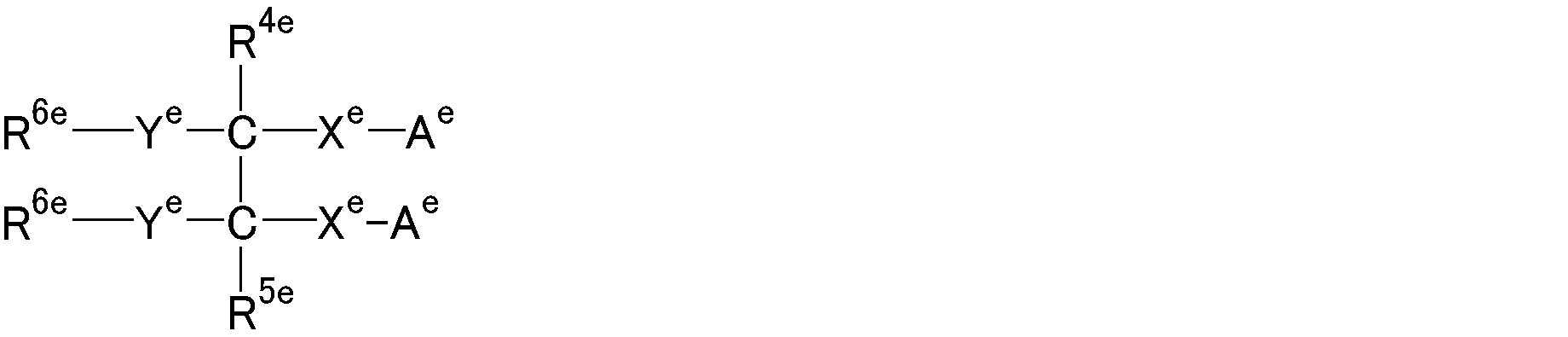
(式中、R4e~R6e、Xe、Ae及びYeは、上記のとおり。)
一般式(e-3):
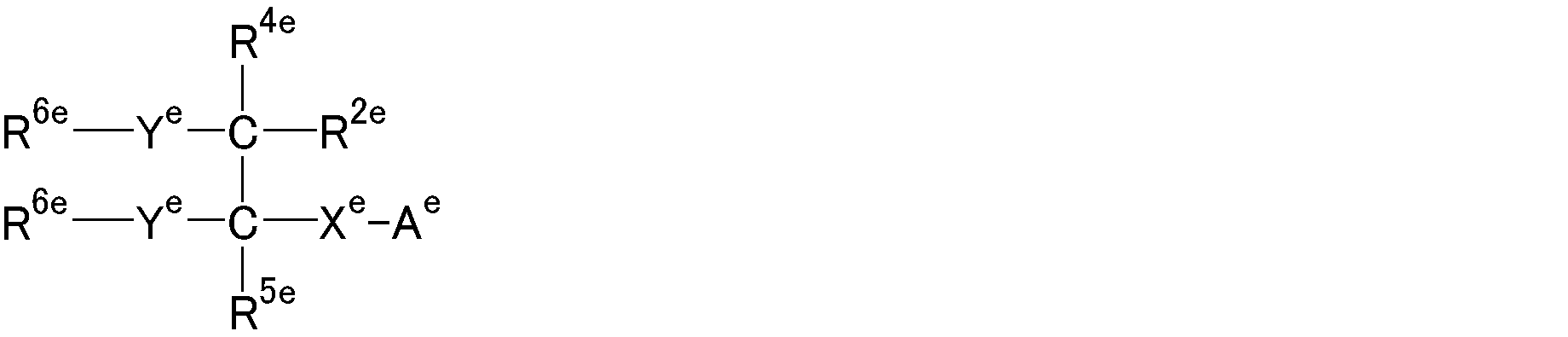
(式中、R2e、R4e~R6e、Xe、Ae及びYeは、上記のとおり。)
一般式:-Xe-Aeで示される基としては、
-COOMe、
-R12eCOOMe、
-SO3Me、
-OSO3Me、
-R12eSO3Me、
-R12eOSO3Me、
-OCO-R12e-COOMe、
-OCO-R12e-SO3Me、
-OCO-R12e-OSO3Me、
-COO-R12e-COOMe、
-COO-R12e-SO3Me、
-COO-R12e-OSO3Me、
-CONR8e-R12e-COOMe、
-CONR8e-R12e-SO3Me、
-CONR8e-R12e-OSO3Me、
-NR8eCO-R12e-COOMe、
-NR8eCO-R12e-SO3Me、
-NR8eCO-R12e-OSO3Me、
-OS(=O)2-R12e-COOMe、
-OS(=O)2-R12e-SO3Me、又は
-OS(=O)2-R12e-OSO3Me
(式中、R8e及びMeは、上記のとおり。R12eはC1-10のアルキレン基。)が好ましい。
上記R12eのアルキレン基は、炭素原子に結合した水素原子の75%以下がハロゲン原子により置換されていてもよく、50%以下がハロゲン原子により置換されていてもよく、25%以下がハロゲン原子により置換されていてもよいが、フッ素原子、塩素原子等のハロゲン原子を含まない非ハロゲン化アルキレン基であることが好ましい。
-COOMe、
-R12eCOOMe、
-SO3Me、
-OSO3Me、
-R12eSO3Me、
-R12eOSO3Me、
-OCO-R12e-COOMe、
-OCO-R12e-SO3Me、
-OCO-R12e-OSO3Me、
-COO-R12e-COOMe、
-COO-R12e-SO3Me、
-COO-R12e-OSO3Me、
-CONR8e-R12e-COOMe、
-CONR8e-R12e-SO3Me、
-CONR8e-R12e-OSO3Me、
-NR8eCO-R12e-COOMe、
-NR8eCO-R12e-SO3Me、
-NR8eCO-R12e-OSO3Me、
-OS(=O)2-R12e-COOMe、
-OS(=O)2-R12e-SO3Me、又は
-OS(=O)2-R12e-OSO3Me
(式中、R8e及びMeは、上記のとおり。R12eはC1-10のアルキレン基。)が好ましい。
上記R12eのアルキレン基は、炭素原子に結合した水素原子の75%以下がハロゲン原子により置換されていてもよく、50%以下がハロゲン原子により置換されていてもよく、25%以下がハロゲン原子により置換されていてもよいが、フッ素原子、塩素原子等のハロゲン原子を含まない非ハロゲン化アルキレン基であることが好ましい。
一般式:-Ye-R6eで示される基としては、
一般式:-R10e-CO-R11eで示される基、
一般式:-OCO-R10e-CO-R11eで示される基、
一般式:-COO-R10e-CO-R11eで示される基、
一般式:-OCO-R10e-COO-R11eで示される基、
一般式:-COO-R11eで示される基で示される基、
一般式:-NR8eCO-R10e-CO-R11eで示される基、又は、
一般式:-CONR8e-R10e-NR8eCO-R11eで示される基
(式中、R8e、R10e及びR11eは上記のとおり。)が好ましい。
一般式:-R10e-CO-R11eで示される基、
一般式:-OCO-R10e-CO-R11eで示される基、
一般式:-COO-R10e-CO-R11eで示される基、
一般式:-OCO-R10e-COO-R11eで示される基、
一般式:-COO-R11eで示される基で示される基、
一般式:-NR8eCO-R10e-CO-R11eで示される基、又は、
一般式:-CONR8e-R10e-NR8eCO-R11eで示される基
(式中、R8e、R10e及びR11eは上記のとおり。)が好ましい。
式中、R4e及びR5eとしては、独立に、H又はC1-4のアルキル基が好ましい。
上記R4e及びR5eのアルキル基は、炭素原子に結合した水素原子の75%以下がハロゲン原子により置換されていてもよく、50%以下がハロゲン原子により置換されていてもよく、25%以下がハロゲン原子により置換されていてもよいが、フッ素原子、塩素原子等のハロゲン原子を含まない非ハロゲン化アルキル基であることが好ましい。
上記R4e及びR5eのアルキル基は、炭素原子に結合した水素原子の75%以下がハロゲン原子により置換されていてもよく、50%以下がハロゲン原子により置換されていてもよく、25%以下がハロゲン原子により置換されていてもよいが、フッ素原子、塩素原子等のハロゲン原子を含まない非ハロゲン化アルキル基であることが好ましい。
一般式(e-1)におけるR3eとしては、H又は置換基を有していてもよいC1-20のアルキル基が好ましく、H又は置換基を有していないC1-20のアルキル基がより好ましく、Hが更に好ましい。
上記R3eのアルキル基は、炭素原子に結合した水素原子の75%以下がハロゲン原子により置換されていてもよく、50%以下がハロゲン原子により置換されていてもよく、25%以下がハロゲン原子により置換されていてもよいが、フッ素原子、塩素原子等のハロゲン原子を含まない非ハロゲン化アルキル基であることが好ましい。
上記R3eのアルキル基は、炭素原子に結合した水素原子の75%以下がハロゲン原子により置換されていてもよく、50%以下がハロゲン原子により置換されていてもよく、25%以下がハロゲン原子により置換されていてもよいが、フッ素原子、塩素原子等のハロゲン原子を含まない非ハロゲン化アルキル基であることが好ましい。
一般式(e-3)におけるR2eとしては、H、OH又は置換基を有していてもよいC1-20のアルキル基が好ましく、H、OH又は置換基を有していないC1-20のアルキル基がより好ましく、H又はOHが更に好ましい。
上記R2eのアルキル基は、炭素原子に結合した水素原子の75%以下がハロゲン原子により置換されていてもよく、50%以下がハロゲン原子により置換されていてもよく、25%以下がハロゲン原子により置換されていてもよいが、フッ素原子、塩素原子等のハロゲン原子を含まない非ハロゲン化アルキル基であることが好ましい。
上記R2eのアルキル基は、炭素原子に結合した水素原子の75%以下がハロゲン原子により置換されていてもよく、50%以下がハロゲン原子により置換されていてもよく、25%以下がハロゲン原子により置換されていてもよいが、フッ素原子、塩素原子等のハロゲン原子を含まない非ハロゲン化アルキル基であることが好ましい。
界面活性剤(e)は、公知の製造方法により製造することができる。
上記特定の炭化水素系界面活性剤は、カルボン酸型炭化水素系界面活性剤であることも好ましい。上記カルボン酸型炭化水素系界面活性剤としては、カルボキシル基(-COOH)又はカルボキシル基の水素原子が無機陽イオン(例えば、金属原子、アンモニウム等)で置換された基を有するものであれば限定されず、例えば、上述した特定の炭化水素系界面活性剤の中から、カルボキシル基又はカルボキシル基の水素原子が無機陽イオンに置換された基を有する炭化水素系界面活性剤を使用することができる。
上記カルボン酸型炭化水素系界面活性剤として好ましくは、上記式(c)で示される界面活性剤(c)、及び、上記式(d)で示される界面活性剤(d)からなる群より選択される少なくとも1種のうち、カルボキシル基(-COOH)又はカルボキシル基の水素原子が無機陽イオン(例えば、金属原子、アンモニウム等)で置換された基を有するものが好ましい。
本開示のPTFEは、上記特定の炭化水素系界面活性剤を少なくとも1種用いれば、効率よく製造することが可能である。また、本開示のPTFEは、上記特定の炭化水素系界面活性剤を2種以上同時に用いて製造してもよいし、揮発性を有するもの又はPTFEからなる成形体等に残存してもよいものであれば、上記特定の炭化水素系界面活性剤以外のその他の界面活性能を有する化合物を同時に使用して製造してもよい。
上記その他の界面活性能を有する化合物としては、例えば、特表2013-542308号公報、特表2013-542309号公報、特表2013-542310号公報に記載されているもの等を使用することができる。
その他の界面活性能を有する化合物は、同じ分子上に親水性部分及び疎水性部分を有する界面活性剤、例えば、炭化水素系界面活性剤であってよい。これらは、カチオン性、非イオン性またはアニオン性であってよい。
カチオン性界面活性剤は、通常、アルキル化臭化アンモニウムなどのアルキル化ハロゲン化アンモニウムなどの正に帯電した親水性部分と、長鎖脂肪酸などの疎水性部分を有する。
アニオン性界面活性剤は、通常、カルボン酸塩、スルホン酸塩又は硫酸塩などの親水性部分と、アルキルなどの長鎖炭化水素部分である疎水性部分とを有する。
非イオン性界面活性剤は、通常、帯電した基を含まず、長鎖炭化水素である疎水性部分を有する。非イオン性界面活性剤の親水性部分は、エチレンオキシドとの重合から誘導されるエチレンエーテルの鎖などの水溶性官能基を含む。
非イオン性界面活性剤の例
ポリオキシエチレンアルキルエーテル、ポリオキシエチレンアルキルフェニルエーテル、ポリオキシエチレンアルキルエステル、ソルビタンアルキルエステル、ポリオキシエチレンソルビタンアルキルエステル、グリセロールエステル、それらの誘導体。
ポリオキシエチレンアルキルエーテル、ポリオキシエチレンアルキルフェニルエーテル、ポリオキシエチレンアルキルエステル、ソルビタンアルキルエステル、ポリオキシエチレンソルビタンアルキルエステル、グリセロールエステル、それらの誘導体。
ポリオキシエチレンアルキルエーテルの具体例:ポリオキシエチレンラウリルエーテル、ポリオキシエチレンセチルエーテル、ポリオキシエチレンステアリルエーテル、ポリオキシエチレンオレイルエーテル、ポリオキシエチレンベヘニルエーテル等。
ポリオキシエチレンアルキルフェニルエーテルの具体例:ポリオキシエチレンノニルフェニルエーテル、ポリオキシエチレンオクチルフェニルエーテル等。
ポリオキシエチレンアルキルエステルの具体例:ポリエチレングリコールモノラウリレート、ポリエチレングリコールモノオレエート、ポリエチレングリコールモノステアレート等。
ソルビタンアルキルエステルの具体例:ポリオキシエチレンソルビタンモノラウリレート、ポリオキシエチレンソルビタンモノパルミテート、ポリオキシエチレンソルビタンモノステアレート、ポリオキシエチレンソルビタンモノオレエート等。
ポリオキシエチレンソルビタンアルキルエステルの具体例:ポリオキシエチレンソルビタンモノラウリレート、ポリオキシエチレンソルビタンモノパルミテート、ポリオキシエチレンソルビタンモノステアレート等。
グリセロールエステルの具体例:モノミリスチン酸グリセロール、モノステアリン酸グリセロール、モノオレイン酸グリセロール等。
上記誘導体の具体例:ポリオキシエチレンアルキルアミン、ポリオキシエチレンアルキルフェニル-ホルムアルデヒド凝縮物、ポリオキシエチレンアルキルエーテルホスフェート等。
上記エーテル及びエステルは、10~18のHLB値を有してよい。
非イオン性界面活性剤としては、Dow Chemical Company製のTriton(登録商標)Triton(登録商標)Xシリーズ(X15、X45、X100等)、Tergitol(登録商標)15-Sシリーズ、Tergitol(登録商標)TMNシリーズ(TMN-6、TMN-10、TMN-100等)、Tergitol(登録商標)Lシリーズ、BASF製のPluronic(登録商標)Rシリーズ(31R1、17R2、10R5、25R4(m~22、n~23)、Iconol(登録商標)TDAシリーズ(TDA-6、TDA-9、TDA-10)等が挙げられる。
アニオン性の炭化水素系界面活性剤としては、Resolution Performance Products社製のVersatic(登録商標)10、BASF社製のAvanel Sシリーズ(S-70、S-74等)等が挙げられる。
その他の界面活性能を有する化合物としては、R-L-M(式中、Rが、置換基を有してもよい炭素数1以上の直鎖状若しくは分岐鎖状のアルキル基、又は、置換基を有してもよい炭素数3以上の環状のアルキル基であり、炭素数が3以上の場合は1価又は2価の複素環を含んでもよいし、環を形成していてもよい。Lが、-ArSO3
-、-SO3
-、-SO4-、-PO3
-又は-COO-であり、Mが、H、金属原子、NR5
4(R5は、同一でも異なっていてもよく、H又は有機基)、置換基を有していてもよいイミダゾリウム、置換基を有していてもよいピリジニウム、又は、置換基を有していてもよいホスホニウムである。-ArSO3
-は、アリールスルホン酸塩である。)によって表されるアニオン性界面活性剤も挙げられる。R5は、H又は炭素数1~10の有機基が好ましく、H又は炭素数1~4の有機基がより好ましい。
具体的には、ラウリル酸に代表されるようなCH3-(CH2)n-L-M(式中、nが、6~17の整数である。LおよびMが、上記と同じ)によって表されるものが挙げられる。
Rが、12~16個の炭素原子を有するアルキル基であり、L-Mが、硫酸塩又はドデシル硫酸ナトリウム(SDS)であるものの混合物も使用できる。
その他の界面活性能を有する化合物としては、R6(-L-M)2(式中、R6が、置換基を有してもよい炭素数1以上の直鎖状若しくは分岐鎖状のアルキレン基、又は、置換基を有してもよい炭素数3以上の環状のアルキレン基であり、炭素数が3以上の場合は1価又は2価の複素環を含んでもよいし、環を形成していてもよい。Lが、-ArSO3 -、-SO3 -、-SO4-、-PO3 -又は-COO-であり、Mが、H、金属原子、NR5 4、置換基を有していてもよいイミダゾリウム、置換基を有していてもよいピリジニウム又は置換基を有していてもよいホスホニウム、R5は、H又は有機基、-ArSO3 -は、アリールスルホン酸塩である。)によって表されるアニオン性界面活性剤も挙げられる。
その他の界面活性能を有する化合物としては、R7(-L-M)3(式中、R7が、置換基を有してもよい炭素数1以上の直鎖状若しくは分岐鎖状のアルキリジン基、又は、置換基を有してもよい炭素数3以上の環状のアルキリジン基であり、炭素数が3以上の場合は1価又は2価の複素環を含んでもよいし、環を形成していてもよい。Lが、-ArSO3 -、-SO3 -、-SO4-、-PO3 -又は-COO-であり、Mが、H、金属原子、NR5 4、置換基を有していてもよいイミダゾリウム、置換基を有していてもよいピリジニウム又は置換基を有していてもよいホスホニウム、R5はH又は有機基である。-ArSO3 -は、アリールスルホン酸塩である。)によって表されるアニオン性界面活性剤も挙げられる。
具体的には、ラウリル酸に代表されるようなCH3-(CH2)n-L-M(式中、nが、6~17の整数である。LおよびMが、上記と同じ)によって表されるものが挙げられる。
Rが、12~16個の炭素原子を有するアルキル基であり、L-Mが、硫酸塩又はドデシル硫酸ナトリウム(SDS)であるものの混合物も使用できる。
その他の界面活性能を有する化合物としては、R6(-L-M)2(式中、R6が、置換基を有してもよい炭素数1以上の直鎖状若しくは分岐鎖状のアルキレン基、又は、置換基を有してもよい炭素数3以上の環状のアルキレン基であり、炭素数が3以上の場合は1価又は2価の複素環を含んでもよいし、環を形成していてもよい。Lが、-ArSO3 -、-SO3 -、-SO4-、-PO3 -又は-COO-であり、Mが、H、金属原子、NR5 4、置換基を有していてもよいイミダゾリウム、置換基を有していてもよいピリジニウム又は置換基を有していてもよいホスホニウム、R5は、H又は有機基、-ArSO3 -は、アリールスルホン酸塩である。)によって表されるアニオン性界面活性剤も挙げられる。
その他の界面活性能を有する化合物としては、R7(-L-M)3(式中、R7が、置換基を有してもよい炭素数1以上の直鎖状若しくは分岐鎖状のアルキリジン基、又は、置換基を有してもよい炭素数3以上の環状のアルキリジン基であり、炭素数が3以上の場合は1価又は2価の複素環を含んでもよいし、環を形成していてもよい。Lが、-ArSO3 -、-SO3 -、-SO4-、-PO3 -又は-COO-であり、Mが、H、金属原子、NR5 4、置換基を有していてもよいイミダゾリウム、置換基を有していてもよいピリジニウム又は置換基を有していてもよいホスホニウム、R5はH又は有機基である。-ArSO3 -は、アリールスルホン酸塩である。)によって表されるアニオン性界面活性剤も挙げられる。
シロキサン炭化水素系界面活性剤としては、Silicone Surfactants,R.M.Hill,Marcel Dekker,Inc.,ISBN:0-8247-00104に記載されているものが挙げられる。シロキサン界面活性剤の構造は、明確な疎水性部分および親水性部分を含む。疎水性部分は、1つ以上のジヒドロカルビルシロキサン単位を含み、ここで、シリコーン原子上の置換基が、完全に炭化水素である。
ヒドロカルビル基の炭素原子が、フッ素などのハロゲンによって置換され得る場合に、水素原子によって完全に置換されるという意味では、これらのシロキサン界面活性剤は、炭化水素界面活性剤とみなすこともでき、すなわち、ヒドロカルビル基の炭素原子上の一価置換基は水素である。
ヒドロカルビル基の炭素原子が、フッ素などのハロゲンによって置換され得る場合に、水素原子によって完全に置換されるという意味では、これらのシロキサン界面活性剤は、炭化水素界面活性剤とみなすこともでき、すなわち、ヒドロカルビル基の炭素原子上の一価置換基は水素である。
シロキサン炭化水素系界面活性剤の親水性部分は、スルフェート、スルホネート、ホスホネート、リン酸エステル、カルボキシレート、カーボネート、スルホサクシネート、タウレート(遊離酸、塩またはエステルとしての)、ホスフィンオキシド、ベタイン、ベタインコポリオール、第4級アンモニウム塩などのイオン性基を含む1つ以上の極性部分を含んでもよい。イオン性疎水性部分は、イオン的に官能化されたシロキサングラフトも含み得る。
このようなシロキサン炭化水素系界面活性剤としては、例えば、ポリジメチルシロキサン-グラフト-(メタ)アクリル酸塩、ポリジメチルシロキサン-グラフト-ポリアクリレート塩およびポリジメチルシロキサングラフト化第4級アミンが挙げられる。
シロキサン界面活性剤の親水性部分の極性部分は、ポリエチレンオキシド(PEO)、および混合されたポリエチレンオキシド/プロピレンオキシドポリエーテル(PEO/PPO)などのポリエーテル;単糖類および二糖類;およびピロリジノンなどの水溶性複素環によって形成される非イオン性基を含み得る。エチレンオキシド対プロピレンオキシド(EO/PO)の比率は、混合されたポリエチレンオキシド/プロピレンオキシドポリエーテルにおいて変化され得る。
このようなシロキサン炭化水素系界面活性剤としては、例えば、ポリジメチルシロキサン-グラフト-(メタ)アクリル酸塩、ポリジメチルシロキサン-グラフト-ポリアクリレート塩およびポリジメチルシロキサングラフト化第4級アミンが挙げられる。
シロキサン界面活性剤の親水性部分の極性部分は、ポリエチレンオキシド(PEO)、および混合されたポリエチレンオキシド/プロピレンオキシドポリエーテル(PEO/PPO)などのポリエーテル;単糖類および二糖類;およびピロリジノンなどの水溶性複素環によって形成される非イオン性基を含み得る。エチレンオキシド対プロピレンオキシド(EO/PO)の比率は、混合されたポリエチレンオキシド/プロピレンオキシドポリエーテルにおいて変化され得る。
シロキサン炭化水素系界面活性剤の親水性部分は、イオン性部分と非イオン性部分との組合せも含み得る。このような部分としては、例えば、イオン的に末端官能化されたまたはランダムに官能化されたポリエーテルまたはポリオールが挙げられる。本開示の実施に好ましいのは、非イオン性部分を有するシロキサン、すなわち、非イオン性シロキサン炭化水素系界面活性剤である。
シロキサン炭化水素系界面活性剤の構造の疎水性および親水性部分の配置は、ジブロックポリマー(AB)、トリブロックポリマー(ABA)(ここで、「B」は、分子のシロキサン部分を表す)、またはマルチブロックポリマーの形態をとってもよい。あるいは、シロキサン炭化水素系界面活性剤は、グラフトポリマーを含んでいてもよい。
シロキサン炭化水素系界面活性剤については、米国特許第6,841,616号明細書にも開示されている。
シロキサンベースのアニオン性炭化水素系界面活性剤としては、Lubrizol Advanced Materials,Inc.社製のNoveon(登録商標)Consumer Specialtiesから入手可能なSilSenseTMPE-100シリコーン、SilSenseTMCA-1シリコーン等が挙げられる。
アニオン性の炭化水素系界面活性剤としては、Akzo Nobel Surface Chemistry LLC社製のスルホサクシネート界面活性剤Lankropol(登録商標)K8300等も挙げられる。
スルホサクシネート界面活性剤としては、スルホコハク酸ジイソデシルNa塩、(Clariant社製のEmulsogen(登録商標)SB10)、スルホコハク酸ジイソトリデシルNa塩(Cesapinia Chemicals社製のPolirol(登録商標)TR/LNA)等が挙げられる。
スルホサクシネート界面活性剤としては、スルホコハク酸ジイソデシルNa塩、(Clariant社製のEmulsogen(登録商標)SB10)、スルホコハク酸ジイソトリデシルNa塩(Cesapinia Chemicals社製のPolirol(登録商標)TR/LNA)等が挙げられる。
その他の界面活性能を有する化合物としては、Omnova Solutions,Inc.社製のPolyFox(登録商標)界面活性剤(PolyFoxTMPF-156A、PolyFoxTMPF-136A等)も挙げられる。
その他の界面活性能を有する化合物としては、アニオン性の炭化水素系界面活性剤であることが好ましい。アニオン性の炭化水素系界面活性剤としては上述したものを採用できるが、例えば、下記の炭化水素系界面活性剤を好適に採用できる。
上記アニオン性の炭化水素系界面活性剤としては、例えば、下記式(α):
R100-COOM (α)
(式中、R100は、1個以上の炭素原子を含有する1価の有機基である。Mは、H、金属原子、NR101 4、置換基を有していてもよいイミダゾリウム、置換基を有していてもよいピリジニウム又は置換基を有していてもよいホスホニウムであり、R101はH又は有機基であり、同一でも異なっていてもよい。)で示される化合物(α)が挙げられる。R101の有機基としてはアルキル基が好ましい。R101としてはH又は炭素数1~10の有機基が好ましく、H又は炭素数1~4の有機基がより好ましく、H又は炭素数1~4のアルキル基が更に好ましい。
界面活性能の観点から、R100の炭素数は2個以上が好ましく、3個以上がより好ましい。また、水溶性の観点から、R100の炭素数は、29個以下であることが好ましく、23個以下がより好ましい。
上記Mの金属原子としては、アルカリ金属(1族)、アルカリ土類金属(2族)等が挙げられ、Na、K又はLiが好ましい。Mとしては、H、金属原子又はNR101 4が好ましく、H、アルカリ金属(1族)、アルカリ土類金属(2族)又はNR101 4がより好ましく、H、Na、K、Li又はNH4が更に好ましく、Na、K又はNH4が更により好ましく、Na又はNH4が特に好ましく、NH4が最も好ましい。
R100-COOM (α)
(式中、R100は、1個以上の炭素原子を含有する1価の有機基である。Mは、H、金属原子、NR101 4、置換基を有していてもよいイミダゾリウム、置換基を有していてもよいピリジニウム又は置換基を有していてもよいホスホニウムであり、R101はH又は有機基であり、同一でも異なっていてもよい。)で示される化合物(α)が挙げられる。R101の有機基としてはアルキル基が好ましい。R101としてはH又は炭素数1~10の有機基が好ましく、H又は炭素数1~4の有機基がより好ましく、H又は炭素数1~4のアルキル基が更に好ましい。
界面活性能の観点から、R100の炭素数は2個以上が好ましく、3個以上がより好ましい。また、水溶性の観点から、R100の炭素数は、29個以下であることが好ましく、23個以下がより好ましい。
上記Mの金属原子としては、アルカリ金属(1族)、アルカリ土類金属(2族)等が挙げられ、Na、K又はLiが好ましい。Mとしては、H、金属原子又はNR101 4が好ましく、H、アルカリ金属(1族)、アルカリ土類金属(2族)又はNR101 4がより好ましく、H、Na、K、Li又はNH4が更に好ましく、Na、K又はNH4が更により好ましく、Na又はNH4が特に好ましく、NH4が最も好ましい。
上記化合物(α)としては、R102-COOM(式中、R102が、置換基を有してもよい炭素数1以上の直鎖状若しくは分岐鎖状のアルキル基、アルケニル基、アルキレン基又はアルケニレン基、若しくは、置換基を有してもよい炭素数3以上の環状のアルキル基、アルケニル基、アルキレン基又はアルケニレン基であり、これらはエーテル結合を含んでもよい。炭素数が3以上の場合は1価又は2価の複素環を含んでもよいし、環を形成していてもよい。Mは上記と同じ。)によって表されるアニオン性界面活性剤も挙げられる。
具体的には、CH3-(CH2)n-COOM(式中、nが、2~28の整数である。Mは上記と同じ)によって表されるものが挙げられる。
具体的には、CH3-(CH2)n-COOM(式中、nが、2~28の整数である。Mは上記と同じ)によって表されるものが挙げられる。
上記化合物(α)は、乳化安定性の観点で、カルボニル基(但し、カルボキシル基中のカルボニル基を除く)を含まないものであってもよい。
上記カルボニル基を含まない炭化水素含有界面活性剤としては、例えば、下記式(B):
R103-COO-M (B)
(式中、R103は、6~17個の炭素原子を含有するアルキル基、アルケニル基、アルキレン基又はアルケニレン基であり、これらはエーテル結合を含んでもよい。Mは、H、金属原子、NR101 4、置換基を有していてもよいイミダゾリウム、置換基を有していてもよいピリジニウム、又は、置換基を有していてもよいホスホニウムである。R101は、同一又は異なって、H又は有機基である。)の化合物が好ましく例示される。
上記式(B)において、R103は、アルキル基又はアルケニル基(これらはエーテル基を含んでいてもよい)であることが好ましい。上記R103におけるアルキル基又はアルケニル基は、直鎖状でも分岐状でもよい。上記R103の炭素数は限定されないが、例えば、2~29である。
上記カルボニル基を含まない炭化水素含有界面活性剤としては、例えば、下記式(B):
R103-COO-M (B)
(式中、R103は、6~17個の炭素原子を含有するアルキル基、アルケニル基、アルキレン基又はアルケニレン基であり、これらはエーテル結合を含んでもよい。Mは、H、金属原子、NR101 4、置換基を有していてもよいイミダゾリウム、置換基を有していてもよいピリジニウム、又は、置換基を有していてもよいホスホニウムである。R101は、同一又は異なって、H又は有機基である。)の化合物が好ましく例示される。
上記式(B)において、R103は、アルキル基又はアルケニル基(これらはエーテル基を含んでいてもよい)であることが好ましい。上記R103におけるアルキル基又はアルケニル基は、直鎖状でも分岐状でもよい。上記R103の炭素数は限定されないが、例えば、2~29である。
上記アルキル基が直鎖状である場合、R103の炭素数は3~29であることが好ましく、5~23であることがより好ましい。上記アルキル基が分岐状である場合、R103の炭素数は5~35であることが好ましく、11~23であることがより好ましい。
上記アルケニル基が直鎖状である場合、R103の炭素数は2~29であることが好ましく、9~23であることがより好ましい。上記アルケニル基が分岐状である場合、R103の炭素数は2~29であることが好ましく、9~23であることがより好ましい。
上記アルケニル基が直鎖状である場合、R103の炭素数は2~29であることが好ましく、9~23であることがより好ましい。上記アルケニル基が分岐状である場合、R103の炭素数は2~29であることが好ましく、9~23であることがより好ましい。
上記アルキル基及びアルケニル基としては、例えば、メチル基、エチル基、イソブチル基、t-ブチル基、ビニル基等が挙げられる。
その他の界面活性能を有する化合物としては、例えば、ブチル酸、バレリアン酸、カプロン酸、エナント酸、カプリル酸、ペラルゴン酸、カプリン酸、ラウリン酸、ミリスチン酸、ペンタデシル酸、パルミチン酸、パルミトレイン酸、マルガリン酸、ステアリン酸、オレイン酸、バクセン酸、リノール酸、(9,12,15)-リノレン酸、(6,9,12)リノレン酸、エレオステアリン酸、アラキジン酸、8、11-エイコサジエン酸、ミード酸、アラキドン酸、ベヘン酸、リグノセリン酸、ネルボン酸、セロチン酸、モンタン酸、メリシン酸、クロトン酸、ミリストレイン酸、パルミトレイン酸、サピエン酸、オレイン酸、エライジン酸、バクセン酸、ガドレイン酸、エイコセン酸、エルカ酸、ネルボン酸、リノール酸、エイコサジエン酸、ドコサジエン酸、リノレン酸、ピノレン酸、α-エレオステアリン酸、β-エレオステアリン酸、ミード酸、ジホモ-γ-リノレン酸、エイコサトリエン酸、ステアリドン酸、アラキドン酸、エイコサテトラエン酸、アドレン酸、ボセオペンタエン酸、エイコサペンタエン酸、オズボンド酸、イワシ酸、テトラコサペンタエン酸、ドコサヘキサエン酸、ニシン酸、及びこれらの塩が挙げられる。
特に、ラウリン酸、カプリン酸、ミリスチン酸、ペンタデシル酸、パルミチチン酸、及び、これらの塩からなる群より選択される少なくとも1種が好ましい。
上記塩としては、カルボキシル基の水素が上述した式Mの金属原子、NR11 4、置換基を有していてもよいイミダゾリウム、置換基を有していてもよいピリジニウム、又は、置換基を有していてもよいホスホニウムであるものが挙げられるが特に限定されない。
特に、ラウリン酸、カプリン酸、ミリスチン酸、ペンタデシル酸、パルミチチン酸、及び、これらの塩からなる群より選択される少なくとも1種が好ましい。
上記塩としては、カルボキシル基の水素が上述した式Mの金属原子、NR11 4、置換基を有していてもよいイミダゾリウム、置換基を有していてもよいピリジニウム、又は、置換基を有していてもよいホスホニウムであるものが挙げられるが特に限定されない。
上記アニオン性の炭化水素系界面活性剤としては、下記式(1-0A):
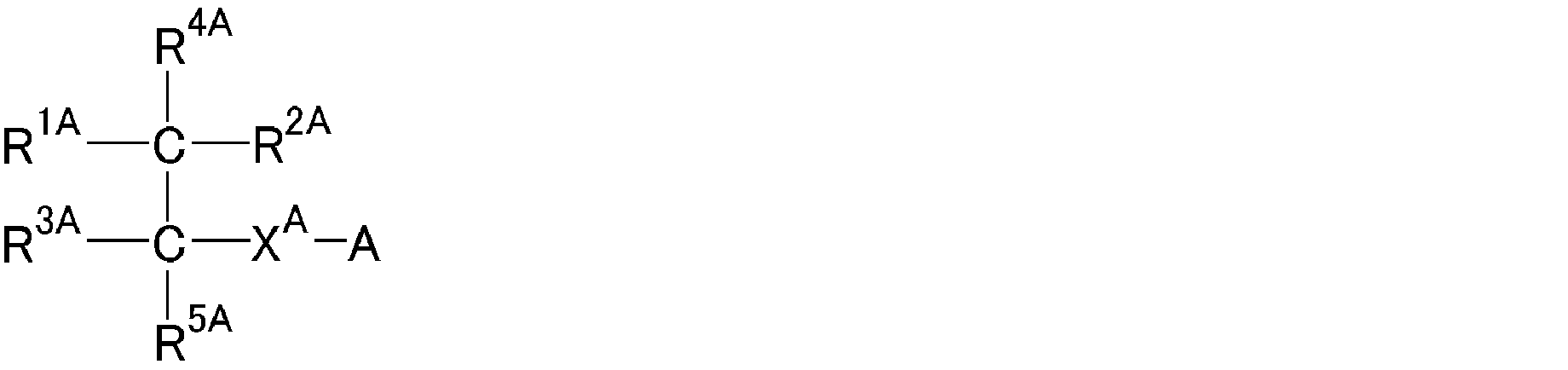
(式中、R1A~R5Aは、H、炭素-炭素原子間にエステル基を含んでもよい1価の炭化水素基、又は、一般式:-XA-Aで示される基である。但し、R2A及びR5Aの少なくとも1つは、一般式:-XA-Aで示される基を表す。
XAは、各出現において同一又は異なって、2価の炭化水素基、又は、結合手;
Aは、各出現において同一又は異なって、-COOM(Mは、H、金属原子、NR7 4、置換基を有していてもよいイミダゾリウム、置換基を有していてもよいピリジニウム又は置換基を有していてもよいホスホニウム、R7は、H又は有機基);
R1A~R5Aのうち、いずれか2つがお互いに結合して、環を形成してもよい。)で示される界面活性剤(1-0A)等も挙げられる。
XAは、各出現において同一又は異なって、2価の炭化水素基、又は、結合手;
Aは、各出現において同一又は異なって、-COOM(Mは、H、金属原子、NR7 4、置換基を有していてもよいイミダゾリウム、置換基を有していてもよいピリジニウム又は置換基を有していてもよいホスホニウム、R7は、H又は有機基);
R1A~R5Aのうち、いずれか2つがお互いに結合して、環を形成してもよい。)で示される界面活性剤(1-0A)等も挙げられる。
一般式(1-0A)中、R1A~R5Aにおいて、炭素-炭素原子間にエステル基を含んでもよい1価の炭化水素基の炭素数は1~50であることが好ましく、5~20であることがより好ましい。R1A~R5Aのうち、いずれか2つがお互いに結合して、環を形成してもよい。上記炭素-炭素原子間にエステル基を含んでもよい1価の炭化水素基としては、アルキル基が好ましい。
式中、XAにおいて、2価の炭化水素基の炭素数は1~50であることが好ましく、5~20であることがより好ましい。上記2価の炭化水素基としては、アルキレン基、アルカンジイル基等が挙げられ、アルキレン基が好ましい。
式中、XAにおいて、2価の炭化水素基の炭素数は1~50であることが好ましく、5~20であることがより好ましい。上記2価の炭化水素基としては、アルキレン基、アルカンジイル基等が挙げられ、アルキレン基が好ましい。
一般式(1-0A)中、R2A及びR5Aのいずれか1つが、上記一般式:-XA-Aで示される基であることが好ましく、R2Aが上記一般式:-XA-Aで示される基であることがより好ましい。
一般式(1-0A)中、好適な態様としては、R2Aが、一般式:-XA-Aで示される基であり、R1A、R3A、R4A及びR5AがHである態様である。この場合、XAは結合手又は炭素数1~5のアルキレン基であることが好ましい。
一般式(1-0A)中、好適な態様としてはまた、R2Aが、一般式:-XA-Aで示される基であり、R1A及びR3Aが-YA-R6で示される基であり、YAは、各出現において同一又は異なって、-COO-、-OCO-、又は、結合手であり、、R6は各出現において同一又は異なって、炭素数2以上のアルキル基である態様である。この場合、R4A及びR5AがHであることが好ましい。
一般式(1-0A)で表される炭化水素系界面活性剤としては、例えば、グルタル酸又はその塩、アジピン酸又はその塩、ピメリン酸又はその塩、スベリン酸又はその塩、アゼライン酸又はその塩、セバシン酸又はその塩等が挙げられる。
また、一般式(1-0A)で表される脂肪族型のカルボン酸型炭化水素系界面活性剤は2鎖2親水基型合成界面活性剤であってもよく、例えば、ジェミニ型界面活性剤として、ジェミニサ-フ(中京油脂株式会社)、Gemsurf α142(炭素数12 ラウリル基)、Gemsurf α102(炭素数10)、Gemsurf α182(炭素数14)等が挙げられる。
また、一般式(1-0A)で表される脂肪族型のカルボン酸型炭化水素系界面活性剤は2鎖2親水基型合成界面活性剤であってもよく、例えば、ジェミニ型界面活性剤として、ジェミニサ-フ(中京油脂株式会社)、Gemsurf α142(炭素数12 ラウリル基)、Gemsurf α102(炭素数10)、Gemsurf α182(炭素数14)等が挙げられる。
本開示のPTFEは、上記特定の炭化水素系界面活性剤を使用しない場合でも、炭化水素系界面活性剤及び重合開始剤の存在下、pHが4.0以上の水性媒体中で、テトラフルオロエチレンのみ、又は、テトラフルオロエチレンと上記テトラフルオロエチレンと共重合可能な変性モノマーとを重合してPTFEを得る重合工程を含む製造方法により得ることができる。
従来、PTFEを製造するための重合工程は酸性を示す重合開始剤が使用されていたため、重合で使用される水性媒体のpHは4.0未満であった。本開示者等が鋭意検討したところ、意外なことに、重合に用いる水性媒体のpHを4.0以上にすることによって重合の安定性が向上し、分子量が高いPTFEを製造することができることが見出された。
上記製造方法は、pHが4.0以上の水性媒体中でテトラフルオロエチレンのみ、又は、テトラフルオロエチレンと上記テトラフルオロエチレンと共重合可能な変性モノマーとをを重合する。上記pHは4.0以上であればよく、4.0超が好ましく、4.5以上がより好ましく、5.0以上が更に好ましく、5.5以上が更により好ましく、6.0以上が殊更に好ましく、6.5以上が特に好ましく、7.0以上が特に好ましく、7.5以上が特に好ましく、8.0以上が特に好ましい。上記pHの上限値は特に限定されないが、例えば、13.0以下であってよい。重合槽の腐食の観点からは、12.0以下であることが好ましく、11.5以下であることがより好ましく、11.0以下であることがより好ましい。
上記pHは、pHメーターにより測定することができる。
従来、PTFEを製造するための重合工程は酸性を示す重合開始剤が使用されていたため、重合で使用される水性媒体のpHは4.0未満であった。本開示者等が鋭意検討したところ、意外なことに、重合に用いる水性媒体のpHを4.0以上にすることによって重合の安定性が向上し、分子量が高いPTFEを製造することができることが見出された。
上記製造方法は、pHが4.0以上の水性媒体中でテトラフルオロエチレンのみ、又は、テトラフルオロエチレンと上記テトラフルオロエチレンと共重合可能な変性モノマーとをを重合する。上記pHは4.0以上であればよく、4.0超が好ましく、4.5以上がより好ましく、5.0以上が更に好ましく、5.5以上が更により好ましく、6.0以上が殊更に好ましく、6.5以上が特に好ましく、7.0以上が特に好ましく、7.5以上が特に好ましく、8.0以上が特に好ましい。上記pHの上限値は特に限定されないが、例えば、13.0以下であってよい。重合槽の腐食の観点からは、12.0以下であることが好ましく、11.5以下であることがより好ましく、11.0以下であることがより好ましい。
上記pHは、pHメーターにより測定することができる。
上記製造方法において、水性媒体のpHを4.0以上にする方法は限定されないが、例えば、アルカリ性水溶液を使用したり、アルカリ性を示す水性分散液を使用したり、pH調整剤を使用したりすることによってpHを4.0以上にすることができるが、特に限定されるものではない。
また、水性媒体に溶解させた時に酸性を示す重合開始剤を使用する場合でも、更に、水酸化ナトリウム等のアルカリ化合物を加えることでpHを4.0以上に調整することもできる。上記アルカリ化合物としては、水に溶けて電離し、OH-を生じる化合物であればよく、例えば、水酸化ナトリウム、水酸化カリウム等のアルカリ金属の水酸化物;アルカリ土類金属の水酸化物;アンモニア;アミン等が挙げられるが、特に限定されるものではない。上記重合工程は、アルカリ化合物を水性媒体に添加する工程を含んでもよい。
また、水性媒体に溶解させた時に酸性を示す重合開始剤を使用する場合でも、更に、水酸化ナトリウム等のアルカリ化合物を加えることでpHを4.0以上に調整することもできる。上記アルカリ化合物としては、水に溶けて電離し、OH-を生じる化合物であればよく、例えば、水酸化ナトリウム、水酸化カリウム等のアルカリ金属の水酸化物;アルカリ土類金属の水酸化物;アンモニア;アミン等が挙げられるが、特に限定されるものではない。上記重合工程は、アルカリ化合物を水性媒体に添加する工程を含んでもよい。
上記製造方法は、重合工程の全ての期間において水性媒体のpHが4.0以上であってもよい。また、重合工程の中盤においてpHが4.0以上であってもよいし、重合工程の後半でpHが4.0以上であってもよい。また、重合工程の中盤及び後半でpHが4.0以上であってもよい。
例えば、上記重合工程は、ポリマー固形分濃度が3質量%以上である時に、水性媒体のpHが4.0以上であることが好ましい。言い換えると、上記製造方法は、炭化水素系界面活性剤及び重合開始剤の存在下、水性媒体中でテトラフルオロエチレンのみ、又は、テトラフルオロエチレンと上記テトラフルオロエチレンと共重合可能な変性モノマーとを重合してPTFEを得る重合工程を含み、上記水性媒体は、ポリマー固形分濃度が3質量%以上である時にpHが4.0以上であることが好ましい。上記水性媒体は、ポリマー固形分濃度が5質量%以上である時にpHが4.0以上であることがより好ましく、ポリマー固形分濃度が8質量%以上である時にpHが4.0以上であることが更に好ましく、ポリマー固形分濃度が10質量%以上である時にpHが4.0以上であることが更により好ましく、ポリマー固形分濃度が15質量%以上である時にpHが4.0以上であることが殊更に好ましく、ポリマー固形分濃度が18質量%以上である時にpHが4.0以上であることが特に好ましく、20質量%以上である時にpHが4.0以上であることがより好ましく、25質量%以上である時にpHが4.0以上であることが更に好ましい。
また、上記重合工程は、ポリマー固形分濃度が25質量%となった時点から重合終了まで水性媒体のpHを4.0以上で維持するものであることが好ましく、20質量%となった時点から重合終了まで水性媒体のpHを4.0以上で維持するものであることがより好ましく、18質量%となった時点から重合終了まで水性媒体のpHを4.0以上で維持するものであることが更に好ましく、15質量%となった時点から重合終了まで水性媒体のpHを4.0以上で維持するものであることが更により好ましく、10質量%となった時点から重合終了まで水性媒体のpHを4.0以上で維持するものであることが殊更に好ましく、8質量%となった時点から重合終了まで水性媒体のpHを4.0以上で維持するものであることが特に好ましく、5質量%となった時点から重合終了まで水性媒体のpHを4.0以上で維持するものであることがより好ましく、3質量%となった時点から重合終了まで水性媒体のpHを4.0以上で維持するものであることが更に好ましい。
また、上記重合工程は、ポリマー固形分濃度が15質量%未満である時に、水性媒体のpHが4.0以上であることも好ましい。上記重合工程は、ポリマー固形分濃度が3質量%以上、15質量%未満である時に、水性媒体のpHが4.0以上であることがより好ましく、5質量%以上、15質量%未満である時に、水性媒体のpHが4.0以上であることがより好ましく、8質量%以上、15質量%未満である時に、水性媒体のpHが4.0以上であることが更に好ましく、10質量%以上、15質量%未満である時に、水性媒体のpHが4.0以上であることが更により好ましい。
また、上記重合工程は、ポリマー固形分濃度が10質量%以上、15質量%までの間、水性媒体のpHを4.0以上で維持するものであることが好ましく、8質量%以上、15質量%までの間、水性媒体のpHを4.0以上で維持するものであることがより好ましく、5質量%以上、15質量%までの間、水性媒体のpHを4.0以上で維持するものであることが更に好ましい。
上記水性媒体のpHは、いずれの場合においても、4.0超が好ましく、4.5以上がより好ましく、5.0以上が更に好ましく、5.5以上が更により好ましく、6.0以上が殊更に好ましく、6.5以上が特に好ましく、7.0以上がより好ましく、7.5以上が更に好ましく、8.0以上が更により好ましい。
例えば、上記重合工程は、ポリマー固形分濃度が3質量%以上である時に、水性媒体のpHが4.0以上であることが好ましい。言い換えると、上記製造方法は、炭化水素系界面活性剤及び重合開始剤の存在下、水性媒体中でテトラフルオロエチレンのみ、又は、テトラフルオロエチレンと上記テトラフルオロエチレンと共重合可能な変性モノマーとを重合してPTFEを得る重合工程を含み、上記水性媒体は、ポリマー固形分濃度が3質量%以上である時にpHが4.0以上であることが好ましい。上記水性媒体は、ポリマー固形分濃度が5質量%以上である時にpHが4.0以上であることがより好ましく、ポリマー固形分濃度が8質量%以上である時にpHが4.0以上であることが更に好ましく、ポリマー固形分濃度が10質量%以上である時にpHが4.0以上であることが更により好ましく、ポリマー固形分濃度が15質量%以上である時にpHが4.0以上であることが殊更に好ましく、ポリマー固形分濃度が18質量%以上である時にpHが4.0以上であることが特に好ましく、20質量%以上である時にpHが4.0以上であることがより好ましく、25質量%以上である時にpHが4.0以上であることが更に好ましい。
また、上記重合工程は、ポリマー固形分濃度が25質量%となった時点から重合終了まで水性媒体のpHを4.0以上で維持するものであることが好ましく、20質量%となった時点から重合終了まで水性媒体のpHを4.0以上で維持するものであることがより好ましく、18質量%となった時点から重合終了まで水性媒体のpHを4.0以上で維持するものであることが更に好ましく、15質量%となった時点から重合終了まで水性媒体のpHを4.0以上で維持するものであることが更により好ましく、10質量%となった時点から重合終了まで水性媒体のpHを4.0以上で維持するものであることが殊更に好ましく、8質量%となった時点から重合終了まで水性媒体のpHを4.0以上で維持するものであることが特に好ましく、5質量%となった時点から重合終了まで水性媒体のpHを4.0以上で維持するものであることがより好ましく、3質量%となった時点から重合終了まで水性媒体のpHを4.0以上で維持するものであることが更に好ましい。
また、上記重合工程は、ポリマー固形分濃度が15質量%未満である時に、水性媒体のpHが4.0以上であることも好ましい。上記重合工程は、ポリマー固形分濃度が3質量%以上、15質量%未満である時に、水性媒体のpHが4.0以上であることがより好ましく、5質量%以上、15質量%未満である時に、水性媒体のpHが4.0以上であることがより好ましく、8質量%以上、15質量%未満である時に、水性媒体のpHが4.0以上であることが更に好ましく、10質量%以上、15質量%未満である時に、水性媒体のpHが4.0以上であることが更により好ましい。
また、上記重合工程は、ポリマー固形分濃度が10質量%以上、15質量%までの間、水性媒体のpHを4.0以上で維持するものであることが好ましく、8質量%以上、15質量%までの間、水性媒体のpHを4.0以上で維持するものであることがより好ましく、5質量%以上、15質量%までの間、水性媒体のpHを4.0以上で維持するものであることが更に好ましい。
上記水性媒体のpHは、いずれの場合においても、4.0超が好ましく、4.5以上がより好ましく、5.0以上が更に好ましく、5.5以上が更により好ましく、6.0以上が殊更に好ましく、6.5以上が特に好ましく、7.0以上がより好ましく、7.5以上が更に好ましく、8.0以上が更により好ましい。
上記重合工程は、重合開始の時点から、ポリマー固形分濃度が3質量%(好ましくは5質量%、より好ましくは8質量%、更に好ましくは10質量%、更により好ましくは15質量%、殊更に好ましくは18質量%、殊更により好ましくは20質量%、特に好ましくは25質量%)の時点迄の60%以上(好ましくは70%以上、より好ましくは80%以上、更に好ましくは90%以上、更により好ましくは95%以上、殊更に好ましくは99%以上、特に好ましくは100%)の期間で水性媒体のpHが4.0以上であることが好ましい。
上記重合工程は、ポリマー固形分濃度が10質量%(好ましくは8質量、より好ましくは5質量%、更に好ましくは3質量%、更により好ましくは重合開始)の時点から、ポリマー固形分濃度が15質量%の時点迄の60%以上(好ましくは70%以上、より好ましくは80%以上、更に好ましくは90%以上、更により好ましくは95%以上、殊更に好ましくは99%以上、特に好ましくは100%)の期間で水性媒体のpHが4.0以上であることが好ましい。
上記重合工程は、ポリマー固形分濃度が15質量%の時点から、ポリマー固形分濃度が18質量%(好ましくは20質量%、より好ましくは25質量%)の時点迄の60%以上(好ましくは70%以上、より好ましくは80%以上、更に好ましくは90%以上、更により好ましくは95%以上、殊更に好ましくは99%以上、特に好ましくは100%)の期間で水性媒体のpHが4.0以上であることが好ましい。
上記重合工程は、ポリマー固形分濃度が25質量%(好ましくは20質量、より好ましくは18質量%、更に好ましくは15質量%、更により好ましくは10質量%、殊更に好ましくは8質量%、特に好ましくは5質量%、より好ましくは3質量%、更に好ましくは重合開始)の時点から、重合終了時点迄の60%以上(好ましくは70%以上、より好ましくは80%以上、更に好ましくは90%以上、更により好ましくは95%以上、より好ましくは99%以上、特に好ましくは100%)の期間で水性媒体のpHが4.0以上であることが好ましい。
上記水性媒体のpHは、いずれの場合においても、4.0超が好ましく、4.5以上がより好ましく、5.0以上が更に好ましく、5.5以上が更により好ましく、6.0以上が殊更に好ましく、6.5以上が特に好ましく、7.0以上がより好ましく、7.5以上が更に好ましく、8.0以上が更により好ましい。
上記重合工程は、ポリマー固形分濃度が10質量%(好ましくは8質量、より好ましくは5質量%、更に好ましくは3質量%、更により好ましくは重合開始)の時点から、ポリマー固形分濃度が15質量%の時点迄の60%以上(好ましくは70%以上、より好ましくは80%以上、更に好ましくは90%以上、更により好ましくは95%以上、殊更に好ましくは99%以上、特に好ましくは100%)の期間で水性媒体のpHが4.0以上であることが好ましい。
上記重合工程は、ポリマー固形分濃度が15質量%の時点から、ポリマー固形分濃度が18質量%(好ましくは20質量%、より好ましくは25質量%)の時点迄の60%以上(好ましくは70%以上、より好ましくは80%以上、更に好ましくは90%以上、更により好ましくは95%以上、殊更に好ましくは99%以上、特に好ましくは100%)の期間で水性媒体のpHが4.0以上であることが好ましい。
上記重合工程は、ポリマー固形分濃度が25質量%(好ましくは20質量、より好ましくは18質量%、更に好ましくは15質量%、更により好ましくは10質量%、殊更に好ましくは8質量%、特に好ましくは5質量%、より好ましくは3質量%、更に好ましくは重合開始)の時点から、重合終了時点迄の60%以上(好ましくは70%以上、より好ましくは80%以上、更に好ましくは90%以上、更により好ましくは95%以上、より好ましくは99%以上、特に好ましくは100%)の期間で水性媒体のpHが4.0以上であることが好ましい。
上記水性媒体のpHは、いずれの場合においても、4.0超が好ましく、4.5以上がより好ましく、5.0以上が更に好ましく、5.5以上が更により好ましく、6.0以上が殊更に好ましく、6.5以上が特に好ましく、7.0以上がより好ましく、7.5以上が更に好ましく、8.0以上が更により好ましい。
上記製造方法において、上記炭化水素系界面活性剤は、アニオン性の炭化水素系界面活性剤であることが好ましく、カルボン酸型の炭化水素系界面活性剤であることがより好ましい。アニオン性炭化水素系界面活性剤及びカルボン酸型の炭化水素系界面活性剤としては特に限定されないが、例えば、上述したその他の界面活性能を有する化合物の中で例示した化合物(α)等を好適に使用できる。
本開示のPTFEは、上記特定の炭化水素系界面活性剤を使用しない場合でも、アニオン性の炭化水素系界面活性剤及び重合開始剤の存在下、水性媒体中で、テトラフルオロエチレンのみ、又は、テトラフルオロエチレンと上記テトラフルオロエチレンと共重合可能な変性モノマーとを重合してPTFEを得る重合工程を含み、上記炭化水素系界面活性剤が、該炭化水素系界面活性剤の塩を含む。言い換えると、上記重合工程におけるアニオン性の炭化水素系界面活性剤の少なくとも一部が塩の形態である。
本開示者等が鋭意検討したところ、意外なことに、アニオン性の炭化水素系界面活性剤が、アニオン性の炭化水素系界面活性剤の塩を含むことによって重合の安定性が向上し、分子量が大きいPTFEを製造することができることが見出された。
上記アニオン性の炭化水素系界面活性剤については後述する。
上記アニオン性の炭化水素系界面活性剤が、該炭化水素系界面活性剤の塩を含むことは、導電率の測定により確認することができる。
上記製造方法において、上記アニオン性の炭化水素系界面活性剤は、アニオン性の炭化水素系界面活性剤の塩の濃度が、アニオン性の炭化水素系界面活性剤の総質量に対して50質量%以上であることが好ましく、60質量%以上がより好ましく、70質量%以上が更に好ましく、80質量%以上が更により好ましく、90質量%以上が殊更に好ましく、95質量%以上が特に好ましい。
上記塩の割合は、溶液濃度と導電率により測定することができる。
上記製造方法において、上記炭化水素系界面活性剤は、カルボン酸型の炭化水素系界面活性剤であることがより好ましい。
アニオン性の炭化水素系界面活性剤の塩において、酸の水素原子を置き換える陽イオン(但し、水素原子を除く)は、例えば、金属原子、NRy 4(Ryは、各々、同一でも異なっていてもよく、H又は有機基である)、置換基を有していてもよいイミダゾリウム、置換基を有していてもよいピリジニウム又は置換基を有していてもよいホスホニウムである。上記RyはH又はアルキル基が好ましく、H又は炭素数1~10のアルキル基がより好ましく、H又は炭素数1~4のアルキル基が更に好ましい。
アニオン性の炭化水素系界面活性剤の塩における上記陽イオンとしては、金属原子、又は、NRy 4が好ましく、NRy 4がより好ましく、NH4が更に好ましい。
導電率は、温度の影響が大きく変化することから、恒温槽を用いて、サンプル液温を25℃に保ち、pHメーターのセルの温度も同じにしてから導電率を測定する。
本開示者等が鋭意検討したところ、意外なことに、アニオン性の炭化水素系界面活性剤が、アニオン性の炭化水素系界面活性剤の塩を含むことによって重合の安定性が向上し、分子量が大きいPTFEを製造することができることが見出された。
上記アニオン性の炭化水素系界面活性剤については後述する。
上記アニオン性の炭化水素系界面活性剤が、該炭化水素系界面活性剤の塩を含むことは、導電率の測定により確認することができる。
上記製造方法において、上記アニオン性の炭化水素系界面活性剤は、アニオン性の炭化水素系界面活性剤の塩の濃度が、アニオン性の炭化水素系界面活性剤の総質量に対して50質量%以上であることが好ましく、60質量%以上がより好ましく、70質量%以上が更に好ましく、80質量%以上が更により好ましく、90質量%以上が殊更に好ましく、95質量%以上が特に好ましい。
上記塩の割合は、溶液濃度と導電率により測定することができる。
上記製造方法において、上記炭化水素系界面活性剤は、カルボン酸型の炭化水素系界面活性剤であることがより好ましい。
アニオン性の炭化水素系界面活性剤の塩において、酸の水素原子を置き換える陽イオン(但し、水素原子を除く)は、例えば、金属原子、NRy 4(Ryは、各々、同一でも異なっていてもよく、H又は有機基である)、置換基を有していてもよいイミダゾリウム、置換基を有していてもよいピリジニウム又は置換基を有していてもよいホスホニウムである。上記RyはH又はアルキル基が好ましく、H又は炭素数1~10のアルキル基がより好ましく、H又は炭素数1~4のアルキル基が更に好ましい。
アニオン性の炭化水素系界面活性剤の塩における上記陽イオンとしては、金属原子、又は、NRy 4が好ましく、NRy 4がより好ましく、NH4が更に好ましい。
導電率は、温度の影響が大きく変化することから、恒温槽を用いて、サンプル液温を25℃に保ち、pHメーターのセルの温度も同じにしてから導電率を測定する。
上記製造方法において、上記重合工程は、実質的に有機酸の形態の上記炭化水素系界面活性剤の非存在下で重合するものであることが好ましい。実質的に有機酸の形態の前記炭化水素系界面活性剤の非存在下で重合するものであることによって、重合の安定性がより向上し、高分子量のPTFEを得ることができる。
実質的に有機酸の形態の上記炭化水素系界面活性剤の非存在下とは、有機酸の濃度が得られた水性分散液の質量に対して、1.0質量%以下であることが好ましく、0.5質量%以下がより好ましく、0.1質量%以下が更に好ましく、0.05質量%以下が殊更好ましく、0.01質量%以下が特に好ましい。
本明細書中で「有機酸」とは、酸性を示す有機化合物を意味する。有機酸としては、-COOH基を有するカルボン酸や、-SO3H基を有するスルホン酸等が挙げられ、有機酸を含む水溶液のpHを調整するのが容易であるとの観点からカルボン酸が好ましい。
また、「有機酸の形態」とは、有機酸に含まれる酸性基(例えば、-COOH基、-SO3H基等)のHが遊離していない形態である。
上記製造方法において、上記炭化水素系界面活性剤は、アニオン性の炭化水素系界面活性剤である。
実質的に有機酸の形態の上記炭化水素系界面活性剤の非存在下とは、有機酸の濃度が得られた水性分散液の質量に対して、1.0質量%以下であることが好ましく、0.5質量%以下がより好ましく、0.1質量%以下が更に好ましく、0.05質量%以下が殊更好ましく、0.01質量%以下が特に好ましい。
本明細書中で「有機酸」とは、酸性を示す有機化合物を意味する。有機酸としては、-COOH基を有するカルボン酸や、-SO3H基を有するスルホン酸等が挙げられ、有機酸を含む水溶液のpHを調整するのが容易であるとの観点からカルボン酸が好ましい。
また、「有機酸の形態」とは、有機酸に含まれる酸性基(例えば、-COOH基、-SO3H基等)のHが遊離していない形態である。
上記製造方法において、上記炭化水素系界面活性剤は、アニオン性の炭化水素系界面活性剤である。
上記重合工程において、重合開始時の炭化水素系界面活性剤の量は、水性媒体に対して50ppm超であることが好ましい。重合開始時の炭化水素系界面活性剤の量は、好ましくは60ppm以上であり、より好ましくは70ppm以上であり、更に好ましくは80ppm以上であり、更により好ましくは100ppm以上である。上限は特に限定されないが、例えば、10000ppmであることが好ましく、5000ppmであることがより好ましい。重合開始時の炭化水素系界面活性剤の量は、上記範囲であることによって、より平均一次粒子径が小さく、より安定性に優れる水性分散液を得ることができる。
なお、重合は、反応器中の気体TFEがPTFEになり、反応器中の圧力降下が起こる時に開始したということができる。米国特許第3,391,099号明細書(Punderson)には、重合プロセスの2つの別個の段階、まず、核形成部位としてのポリマー核の形成、および次に、確立された粒子の重合を含む成長段階からなる、水性媒体中のテトラフルオロエチレンの分散重合が開示されている。なお、重合は通常、重合されるモノマーと重合開始剤との両方が反応器に充填された時に開始される。また、本開示では、核形成部位の形成に関する添加剤を核形成剤とする。
なお、重合は、反応器中の気体TFEがPTFEになり、反応器中の圧力降下が起こる時に開始したということができる。米国特許第3,391,099号明細書(Punderson)には、重合プロセスの2つの別個の段階、まず、核形成部位としてのポリマー核の形成、および次に、確立された粒子の重合を含む成長段階からなる、水性媒体中のテトラフルオロエチレンの分散重合が開示されている。なお、重合は通常、重合されるモノマーと重合開始剤との両方が反応器に充填された時に開始される。また、本開示では、核形成部位の形成に関する添加剤を核形成剤とする。
上記重合工程は、炭化水素系界面活性剤を含む組成物を重合開始後に添加する添加工程を含むことが好ましい。上記添加工程によって、重合の安定性がより向上し、より高分子量のPTFEが得られる。
上記炭化水素系界面活性剤は、例えば、固体(例えば、炭化水素系界面活性剤の粉末)の形態であってもよいし、液体の形態であってもよい。
上記組成物は、炭化水素系界面活性剤を含むものであればよく、炭化水素系界面活性剤のみからなるものであってもよいし、炭化水素系界面活性剤と液状媒体とを含む炭化水素系界面活性剤の溶液又は分散体であってもよい。従って、上記添加工程は、炭化水素系界面活性剤単体又は炭化水素系界面活性剤を含む組成物を重合開始後に添加する工程ということもできる。
炭化水素系界面活性剤は1種類に限定されず、2種類以上の混合物であってもよい。
上記液状媒体としては、水性媒体及び有機溶媒のいずれでもよく、水性媒体及び有機溶媒を組み合わせて用いてもよい。
上記組成物として具体的には、炭化水素系界面活性剤が水性媒体に溶解した水溶液、炭化水素系界面活性剤が水性媒体に分散した水性分散液等が挙げられる。
上記炭化水素系界面活性剤は、例えば、固体(例えば、炭化水素系界面活性剤の粉末)の形態であってもよいし、液体の形態であってもよい。
上記組成物は、炭化水素系界面活性剤を含むものであればよく、炭化水素系界面活性剤のみからなるものであってもよいし、炭化水素系界面活性剤と液状媒体とを含む炭化水素系界面活性剤の溶液又は分散体であってもよい。従って、上記添加工程は、炭化水素系界面活性剤単体又は炭化水素系界面活性剤を含む組成物を重合開始後に添加する工程ということもできる。
炭化水素系界面活性剤は1種類に限定されず、2種類以上の混合物であってもよい。
上記液状媒体としては、水性媒体及び有機溶媒のいずれでもよく、水性媒体及び有機溶媒を組み合わせて用いてもよい。
上記組成物として具体的には、炭化水素系界面活性剤が水性媒体に溶解した水溶液、炭化水素系界面活性剤が水性媒体に分散した水性分散液等が挙げられる。
上記添加工程において添加される炭化水素系界面活性剤は、水性媒体に対して、0.0001~10質量%であることが好ましい。水性媒体に対して、より好ましくは、0.001質量%以上であり、更に好ましくは、0.01質量%以上であり、特に好ましくは、0.05質量%以上である。また、水性媒体に対して、より好ましくは5質量%以下であり、更に好ましくは、3質量%以下であり、特に好ましくは、1質量%以下である。
重合の安定性が向上し、より高分子量のPTFEが得られることから、上記組成物は、炭化水素系界面活性剤を含み、pHが5.0以上である水溶液であることが好ましい。
上記水溶液のpHは、6.0以上がより好ましく、6.5以上が更に好ましく、7.0以上が更により好ましく、7.5以上が殊更に好ましく、8.0以上が特に好ましい。また、pHの上限は特に限定されないが、12.0以下であってよく、また、11.0以下であってもよい。
上記水溶液のpHは、6.0以上がより好ましく、6.5以上が更に好ましく、7.0以上が更により好ましく、7.5以上が殊更に好ましく、8.0以上が特に好ましい。また、pHの上限は特に限定されないが、12.0以下であってよく、また、11.0以下であってもよい。
上記添加工程における炭化水素系界面活性剤は、アニオン性炭化水素系界面活性剤であることが好ましく、カルボン酸型の炭化水素系界面活性剤であることがより好ましい。
アニオン性炭化水素系界面活性剤及びカルボン酸型の炭化水素系界面活性剤としては特に限定されないが、例えば、上述したその他の界面活性能を有する化合物の中で例示した化合物(α)等を好適に使用できる。
アニオン性炭化水素系界面活性剤及びカルボン酸型の炭化水素系界面活性剤としては特に限定されないが、例えば、上述したその他の界面活性能を有する化合物の中で例示した化合物(α)等を好適に使用できる。
上記重合工程及び添加工程で使用するカルボン酸型の炭化水素系界面活性剤としては、上記界面活性剤(e)、上述した式:R6(-L-M)2によって表されるアニオン性界面活性剤、及び、上述した式:R7(-L-M)3によって表されるアニオン性界面活性剤のうち、カルボキシル基(-COOH)又はカルボキシル基の水素原子が無機陽イオン(例えば、金属原子、アンモニウム等)で置換された基を有するもの、上記化合物(α)、上記界面活性剤(1-0A)、並びに、これらの界面活性剤にラジカル処理または酸化処理を行ったものからなる群より選択される少なくとも1種であることが好ましい。上記カルボン酸型の炭化水素系界面活性剤は、1種で用いてもよいし、2種以上の混合物であってもよい。
上記化合物(α)には、上述した式:R102-COOM(式中、R102及びMは上記と同じ。)によって表されるアニオン性の炭化水素系界面活性剤(好ましくは、式(B)で表される化合物)だけでなく、上述した式:R-L-M(式中、R、L及びMは上記と同じ)によって表されるアニオン性界面活性剤、上記界面活性剤(c)及び上記界面活性剤(d)のうち、カルボキシル基(-COOH)又はカルボキシル基の水素原子が無機陽イオン(例えば、金属原子、アンモニウム等)で置換された基を有するもの等も含まれる。
上記化合物(α)には、上述した式:R102-COOM(式中、R102及びMは上記と同じ。)によって表されるアニオン性の炭化水素系界面活性剤(好ましくは、式(B)で表される化合物)だけでなく、上述した式:R-L-M(式中、R、L及びMは上記と同じ)によって表されるアニオン性界面活性剤、上記界面活性剤(c)及び上記界面活性剤(d)のうち、カルボキシル基(-COOH)又はカルボキシル基の水素原子が無機陽イオン(例えば、金属原子、アンモニウム等)で置換された基を有するもの等も含まれる。
上記カルボン酸型の炭化水素系界面活性剤は、上記化合物(α)が好ましく、上記式(B)で表される化合物、上記式(c)においてAcが-COOXcである化合物、上記式(d)においてAdが-COOXdである化合物、上記式(e)においてAeが-COOMeである化合物、上記式(1-0A)においてAが-COOMである化合物、並びに、これらの化合物にラジカル処理または酸化処理を行ったものからなる群より選択される少なくとも1種であることがより好ましく、上記式(A)で表される化合物及び該化合物にラジカル処理または酸化処理を行ったものからなる群より選択される少なくとも1種が更に好ましい。
特に、ラウリン酸、カプリン酸、ミリスチン酸、ペンタデシル酸、パルミチチン酸、及び、これらの塩、並びに、これらの化合物にラジカル処理または酸化処理を行ったものからなる群より選択される少なくとも1種が好ましい。上記塩としては、カルボキシル基の水素が上述した式Mの金属原子、NR101 4、置換基を有していてもよいイミダゾリウム、置換基を有していてもよいピリジニウム、又は、置換基を有していてもよいホスホニウムであるものが挙げられるが特に限定されない
特に、ラウリン酸、カプリン酸、ミリスチン酸、ペンタデシル酸、パルミチチン酸、及び、これらの塩、並びに、これらの化合物にラジカル処理または酸化処理を行ったものからなる群より選択される少なくとも1種が好ましい。上記塩としては、カルボキシル基の水素が上述した式Mの金属原子、NR101 4、置換基を有していてもよいイミダゾリウム、置換基を有していてもよいピリジニウム、又は、置換基を有していてもよいホスホニウムであるものが挙げられるが特に限定されない
上記製造方法は、実質的に含フッ素界面活性剤の非存在下に、テトラフルオロエチレンを重合するものであることが好ましい。
上記製造方法において「実質的に含フッ素界面活性剤の非存在下に」とは、水性媒体に対して含フッ素界面活性剤が10ppm以下であることを意味し、好ましくは1ppm以下であり、より好ましくは100ppb以下であり、更に好ましくは10ppb以下であり、更により好ましくは1ppb以下である。
上記製造方法において「実質的に含フッ素界面活性剤の非存在下に」とは、水性媒体に対して含フッ素界面活性剤が10ppm以下であることを意味し、好ましくは1ppm以下であり、より好ましくは100ppb以下であり、更に好ましくは10ppb以下であり、更により好ましくは1ppb以下である。
上記含フッ素界面活性剤としては、アニオン性含フッ素界面活性剤等が挙げられる。
上記アニオン性含フッ素界面活性剤は、例えば、アニオン性基を除く部分の総炭素数が20以下のフッ素原子を含む界面活性剤であってよい。
上記アニオン性含フッ素界面活性剤は、例えば、アニオン性基を除く部分の総炭素数が20以下のフッ素原子を含む界面活性剤であってよい。
上記含フッ素界面活性剤としてはまた、アニオン性部分の分子量が800以下のフッ素を含む界面活性剤であってよい。
なお、上記「アニオン性部分」は、上記含フッ素界面活性剤のカチオンを除く部分を意味する。例えば、後述する式(I)で表されるF(CF2)n1COOMの場合には、「F(CF2)n1COO」の部分である。
なお、上記「アニオン性部分」は、上記含フッ素界面活性剤のカチオンを除く部分を意味する。例えば、後述する式(I)で表されるF(CF2)n1COOMの場合には、「F(CF2)n1COO」の部分である。
上記含フッ素界面活性剤としてはまた、LogPOWが3.5以下の含フッ素界面活性剤が挙げられる。上記LogPOWは、1-オクタノールと水との分配係数であり、LogP[式中、Pは、含フッ素界面活性剤を含有するオクタノール/水(1:1)混合液が相分離した際のオクタノール中の含フッ素界面活性剤濃度/水中の含フッ素界面活性剤濃度比を表す]で表されるものである。
上記LogPOWは、カラム;TOSOH ODS-120Tカラム(φ4.6mm×250mm、東ソー(株)製)、溶離液;アセトニトリル/0.6質量%HClO4水=1/1(vol/vol%)、流速;1.0ml/分、サンプル量;300μL、カラム温度;40℃、検出光;UV210nmの条件で、既知のオクタノール/水分配係数を有する標準物質(ヘプタン酸、オクタン酸、ノナン酸及びデカン酸)についてHPLCを行い、各溶出時間と既知のオクタノール/水分配係数との検量線を作成し、この検量線に基づき、試料液におけるHPLCの溶出時間から算出する。
上記LogPOWは、カラム;TOSOH ODS-120Tカラム(φ4.6mm×250mm、東ソー(株)製)、溶離液;アセトニトリル/0.6質量%HClO4水=1/1(vol/vol%)、流速;1.0ml/分、サンプル量;300μL、カラム温度;40℃、検出光;UV210nmの条件で、既知のオクタノール/水分配係数を有する標準物質(ヘプタン酸、オクタン酸、ノナン酸及びデカン酸)についてHPLCを行い、各溶出時間と既知のオクタノール/水分配係数との検量線を作成し、この検量線に基づき、試料液におけるHPLCの溶出時間から算出する。
上記含フッ素界面活性剤として具体的には、米国特許出願公開第2007/0015864号明細書、米国特許出願公開第2007/0015865号明細書、米国特許出願公開第2007/0015866号明細書、米国特許出願公開第2007/0276103号明細書、米国特許出願公開第2007/0117914号明細書、米国特許出願公開第2007/142541号明細書、米国特許出願公開第2008/0015319号明細書、米国特許第3250808号明細書、米国特許第3271341号明細書、特開2003-119204号公報、国際公開第2005/042593号、国際公開第2008/060461号、国際公開第2007/046377号、国際公開第2007/119526号、国際公開第2007/046482号、国際公開第2007/046345号、米国特許出願公開第2014/0228531号、国際公開第2013/189824号、国際公開第2013/189826号に記載されたもの等が挙げられる。
上記アニオン性含フッ素界面活性剤としては、下記一般式(N0):
Xn0-Rfn0-Y0 (N0)
(式中、Xn0は、H、Cl又は及びFである。Rfn0は、炭素数3~20で、鎖状、分枝鎖状または環状で、一部または全てのHがFにより置換されたアルキレン基であり、該アルキレン基は1つ以上のエーテル結合を含んでもよく、一部のHがClにより置換されていてもよい。Y0はアニオン性基である。)で表される化合物が挙げられる。
Y0のアニオン性基は、-COOM、-SO2M、又は、-SO3Mであってよく、-COOM、又は、-SO3Mであってよい。
Mは、H、金属原子、NR7 4、置換基を有していてもよいイミダゾリウム、置換基を有していてもよいピリジニウム又は置換基を有していてもよいホスホニウムであり、R7は、H又は有機基である。
上記金属原子としては、アルカリ金属(1族)、アルカリ土類金属(2族)等が挙げられ、例えば、Na、K又はLiである。
R7としては、H又はC1-10の有機基であってよく、H又はC1-4の有機基であってよく、H又はC1-4のアルキル基であってよい。
Mは、H、金属原子又はNR7 4であってよく、H、アルカリ金属(1族)、アルカリ土類金属(2族)又はNR7 4であってよく、H、Na、K、Li又はNH4であってよい。
上記Rfn0は、Hの50%以上がフッ素に置換されているものであってよい。
Xn0-Rfn0-Y0 (N0)
(式中、Xn0は、H、Cl又は及びFである。Rfn0は、炭素数3~20で、鎖状、分枝鎖状または環状で、一部または全てのHがFにより置換されたアルキレン基であり、該アルキレン基は1つ以上のエーテル結合を含んでもよく、一部のHがClにより置換されていてもよい。Y0はアニオン性基である。)で表される化合物が挙げられる。
Y0のアニオン性基は、-COOM、-SO2M、又は、-SO3Mであってよく、-COOM、又は、-SO3Mであってよい。
Mは、H、金属原子、NR7 4、置換基を有していてもよいイミダゾリウム、置換基を有していてもよいピリジニウム又は置換基を有していてもよいホスホニウムであり、R7は、H又は有機基である。
上記金属原子としては、アルカリ金属(1族)、アルカリ土類金属(2族)等が挙げられ、例えば、Na、K又はLiである。
R7としては、H又はC1-10の有機基であってよく、H又はC1-4の有機基であってよく、H又はC1-4のアルキル基であってよい。
Mは、H、金属原子又はNR7 4であってよく、H、アルカリ金属(1族)、アルカリ土類金属(2族)又はNR7 4であってよく、H、Na、K、Li又はNH4であってよい。
上記Rfn0は、Hの50%以上がフッ素に置換されているものであってよい。
上記一般式(N0)で表される化合物としては、
下記一般式(N1):
Xn0-(CF2)m1-Y0 (N1)
(式中、Xn0は、H、Cl及びFであり、m1は3~15の整数であり、Y0は、上記定義したものである。)で表される化合物、下記一般式(N2):
Rfn1-O-(CF(CF3)CF2O)m2CFXn1-Y0 (N2)
(式中、Rfn1は、炭素数1~5のパーフルオロアルキル基であり、m2は、0~3の整数であり、Xn1は、F又はCF3であり、Y0は、上記定義したものである。)で表される化合物、下記一般式(N3):
Rfn2(CH2)m3-(Rfn3)q-Y0 (N3)
(式中、Rfn2は、炭素数1~13のエーテル結合を含み得る、部分または完全フッ素化されたアルキル基であり、m3は、1~3の整数であり、Rfn3は、直鎖状又は分岐状の炭素数1~3のパーフルオロアルキレン基であり、qは0又は1であり、Y0は、上記定義したものである。)で表される化合物、下記一般式(N4):
Rfn4-O-(CYn1Yn2)pCF2-Y0 (N4)
(式中、Rfn4は、炭素数1~12のエーテル結合を含み得る直鎖状または分枝鎖状の部分または完全フッ素化されたアルキル基であり、Yn1及びYn2は、同一若しくは異なって、H又はFであり、pは0又は1であり、Y0は、上記定義したものである。)で表される化合物、及び、
下記一般式(N5):
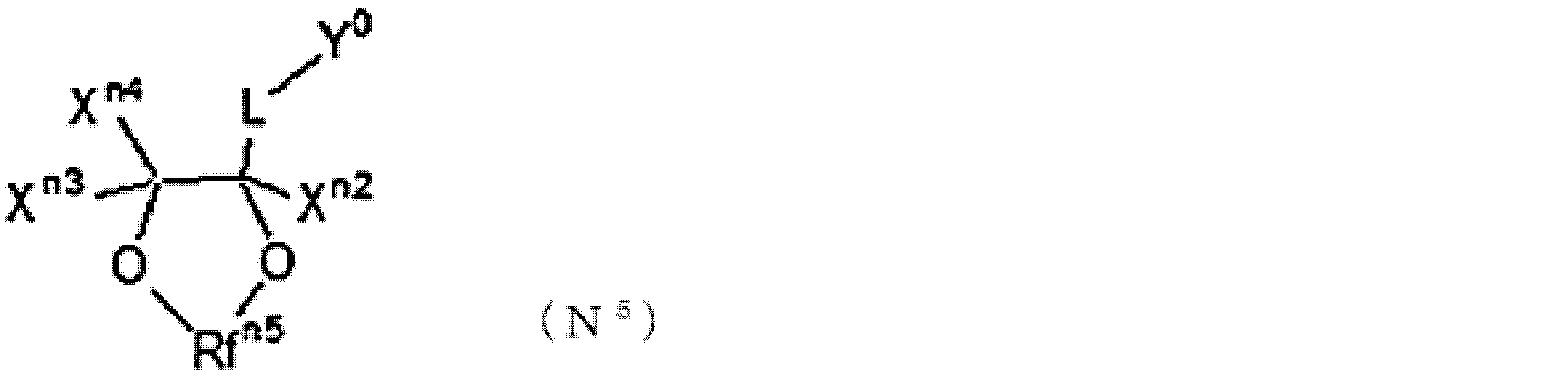
(式中、Xn2、Xn3及びXn4は、同一若しくは異なってもよく、H、F、又は、炭素数1~6のエーテル結合を含んでよい直鎖状または分岐鎖状の部分または完全フッ素化されたアルキル基である。Rfn5は、炭素数1~3のエーテル結合を含み得る直鎖状または分岐鎖状の部分または完全フッ素化されたアルキレン基であり、Lは連結基であり、Y0は、上記定義したものである。但し、Xn2、Xn3、Xn4及びRfn5の合計炭素数は18以下である。)で表される化合物が挙げられる。
下記一般式(N1):
Xn0-(CF2)m1-Y0 (N1)
(式中、Xn0は、H、Cl及びFであり、m1は3~15の整数であり、Y0は、上記定義したものである。)で表される化合物、下記一般式(N2):
Rfn1-O-(CF(CF3)CF2O)m2CFXn1-Y0 (N2)
(式中、Rfn1は、炭素数1~5のパーフルオロアルキル基であり、m2は、0~3の整数であり、Xn1は、F又はCF3であり、Y0は、上記定義したものである。)で表される化合物、下記一般式(N3):
Rfn2(CH2)m3-(Rfn3)q-Y0 (N3)
(式中、Rfn2は、炭素数1~13のエーテル結合を含み得る、部分または完全フッ素化されたアルキル基であり、m3は、1~3の整数であり、Rfn3は、直鎖状又は分岐状の炭素数1~3のパーフルオロアルキレン基であり、qは0又は1であり、Y0は、上記定義したものである。)で表される化合物、下記一般式(N4):
Rfn4-O-(CYn1Yn2)pCF2-Y0 (N4)
(式中、Rfn4は、炭素数1~12のエーテル結合を含み得る直鎖状または分枝鎖状の部分または完全フッ素化されたアルキル基であり、Yn1及びYn2は、同一若しくは異なって、H又はFであり、pは0又は1であり、Y0は、上記定義したものである。)で表される化合物、及び、
下記一般式(N5):
上記一般式(N0)で表される化合物としてより具体的には、下記一般式(I)で表されるパーフルオロカルボン酸(I)、下記一般式(II)で表されるω-Hパーフルオロカルボン酸(II)、下記一般式(III)で表されるパーフルオロポリエーテルカルボン酸(III)、下記一般式(IV)で表されるパーフルオロアルキルアルキレンカルボン酸(IV)、下記一般式(V)で表されるパーフルオロアルコキシフルオロカルボン酸(V)、下記一般式(VI)で表されるパーフルオロアルキルスルホン酸(VI)、下記一般式(VII)で表されるω-Hパーフルオロスルホン酸(VII)、下記一般式(VIII)で表されるパーフルオロアルキルアルキレンスルホン酸(VIII)、下記一般式(IX)で表されるアルキルアルキレンカルボン酸(IX)、下記一般式(X)で表されるフルオロカルボン酸(X)、下記一般式(XI)で表されるアルコキシフルオロスルホン酸(XI)、及び、下記一般式(XII)で表される化合物(XII)、が挙げられる。
上記パーフルオロカルボン酸(I)は、下記一般式(I)
F(CF2)n1COOM (I)
(式中、n1は、3~14の整数であり、Mは、H、金属原子、NR7 4、置換基を有していてもよいイミダゾリウム、置換基を有していてもよいピリジニウム又は置換基を有していてもよいホスホニウムであり、R7は、H又は有機基である。)で表されるものである。
F(CF2)n1COOM (I)
(式中、n1は、3~14の整数であり、Mは、H、金属原子、NR7 4、置換基を有していてもよいイミダゾリウム、置換基を有していてもよいピリジニウム又は置換基を有していてもよいホスホニウムであり、R7は、H又は有機基である。)で表されるものである。
上記ω-Hパーフルオロカルボン酸(II)は、下記一般式(II)
H(CF2)n2COOM (II)
(式中、n2は、4~15の整数であり、Mは、上記定義したものである。)で表されるものである。
H(CF2)n2COOM (II)
(式中、n2は、4~15の整数であり、Mは、上記定義したものである。)で表されるものである。
上記パーフルオロポリエーテルカルボン酸(III)は、下記一般式(III)
Rf1-O-(CF(CF3)CF2O)n3CF(CF3)COOM (III)
(式中、Rf1は、炭素数1~5のパーフルオロアルキル基であり、n3は、0~3の整数であり、Mは、上記定義したものである。)で表されるものである。
Rf1-O-(CF(CF3)CF2O)n3CF(CF3)COOM (III)
(式中、Rf1は、炭素数1~5のパーフルオロアルキル基であり、n3は、0~3の整数であり、Mは、上記定義したものである。)で表されるものである。
上記パーフルオロアルキルアルキレンカルボン酸(IV)は、下記一般式(IV)
Rf2(CH2)n4Rf3COOM (IV)
(式中、Rf2は、炭素数1~5のパーフルオロアルキル基であり、Rf3は、直鎖状又は分岐状の炭素数1~3のパーフルオロアルキレン基、n4は、1~3の整数であり、Mは、上記定義したものである。)で表されるものである。
Rf2(CH2)n4Rf3COOM (IV)
(式中、Rf2は、炭素数1~5のパーフルオロアルキル基であり、Rf3は、直鎖状又は分岐状の炭素数1~3のパーフルオロアルキレン基、n4は、1~3の整数であり、Mは、上記定義したものである。)で表されるものである。
上記アルコキシフルオロカルボン酸(V)は、下記一般式(V)
Rf4-O-CY1Y2CF2-COOM (V)
(式中、Rf4は、炭素数1~12のエーテル結合を含み得る直鎖状または分枝鎖状の部分または完全フッ素化されたアルキル基であり、Y1及びY2は、同一若しくは異なって、H又はFであり、Mは、上記定義したものである。)で表されるものである。
Rf4-O-CY1Y2CF2-COOM (V)
(式中、Rf4は、炭素数1~12のエーテル結合を含み得る直鎖状または分枝鎖状の部分または完全フッ素化されたアルキル基であり、Y1及びY2は、同一若しくは異なって、H又はFであり、Mは、上記定義したものである。)で表されるものである。
上記パーフルオロアルキルスルホン酸(VI)は、下記一般式(VI)
F(CF2)n5SO3M (VI)
(式中、n5は、3~14の整数であり、Mは、上記定義したものである。)で表されるものである。
F(CF2)n5SO3M (VI)
(式中、n5は、3~14の整数であり、Mは、上記定義したものである。)で表されるものである。
上記ω-Hパーフルオロスルホン酸(VII)は、下記一般式(VII)
H(CF2)n6SO3M (VII)
(式中、n6は、4~14の整数であり、Mは、上記定義したものである。)で表されるものである。
H(CF2)n6SO3M (VII)
(式中、n6は、4~14の整数であり、Mは、上記定義したものである。)で表されるものである。
上記パーフルオロアルキルアルキレンスルホン酸(VIII)は、下記一般式(VIII)
Rf5(CH2)n7SO3M (VIII)
(式中、Rf5は、炭素数1~13のパーフルオロアルキル基であり、n7は、1~3の整数であり、Mは、上記定義したものである。)で表されるものである。
Rf5(CH2)n7SO3M (VIII)
(式中、Rf5は、炭素数1~13のパーフルオロアルキル基であり、n7は、1~3の整数であり、Mは、上記定義したものである。)で表されるものである。
上記アルキルアルキレンカルボン酸(IX)は、下記一般式(IX)
Rf6(CH2)n8COOM (IX)
(式中、Rf6は、炭素数1~13のエーテル結合を含み得る直鎖状または分岐鎖状の部分または完全フッ素化されたアルキル基であり、n8は、1~3の整数であり、Mは、上記定義したものである。)で表されるものである。
Rf6(CH2)n8COOM (IX)
(式中、Rf6は、炭素数1~13のエーテル結合を含み得る直鎖状または分岐鎖状の部分または完全フッ素化されたアルキル基であり、n8は、1~3の整数であり、Mは、上記定義したものである。)で表されるものである。
上記フルオロカルボン酸(X)は、下記一般式(X)
Rf7-O-Rf8-O-CF2-COOM (X)
(式中、Rf7は、炭素数1~6のエーテル結合を含み得る直鎖状または分枝鎖状の部分または完全フッ素化されたアルキル基であり、Rf8は、炭素数1~6の直鎖状または分枝鎖状の部分または完全フッ素化されたアルキル基であり、Mは、上記定義したものである。)で表されるものである。
Rf7-O-Rf8-O-CF2-COOM (X)
(式中、Rf7は、炭素数1~6のエーテル結合を含み得る直鎖状または分枝鎖状の部分または完全フッ素化されたアルキル基であり、Rf8は、炭素数1~6の直鎖状または分枝鎖状の部分または完全フッ素化されたアルキル基であり、Mは、上記定義したものである。)で表されるものである。
上記アルコキシフルオロスルホン酸(XI)は、下記一般式(XI)
Rf9-O-CY1Y2CF2-SO3M (XI)
(式中、Rf9は、炭素数1~12のエーテル結合を含み得る直鎖状または分枝鎖状であって、塩素を含んでもよい、部分または完全フッ素化されたアルキル基であり、Y1及びY2は、同一若しくは異なって、H又はFであり、Mは、上記定義したものである。)で表されるものである。
Rf9-O-CY1Y2CF2-SO3M (XI)
(式中、Rf9は、炭素数1~12のエーテル結合を含み得る直鎖状または分枝鎖状であって、塩素を含んでもよい、部分または完全フッ素化されたアルキル基であり、Y1及びY2は、同一若しくは異なって、H又はFであり、Mは、上記定義したものである。)で表されるものである。
上記化合物(XII)は、下記一般式(XII):

式中、X1、X2及びX3は、同一若しくは異なってもよく、H、F及び炭素数1~6のエーテル結合を含み得る直鎖状または分岐鎖状の部分または完全フッ素化されたアルキル基であり、Rf10は、炭素数1~3のパーフルオロアルキレン基であり、Lは連結基であり、Y0はアニオン性基である。)で表されるものである。
Y0は、-COOM、-SO2M、又は、-SO3Mであってよく、-SO3M、又は、COOMであってよい(式中、Mは上記定義したものである。)。
Lとしては、例えば、単結合、炭素数1~10のエーテル結合を含みうる部分又は完全フッ素化されたアルキレン基が挙げられる。
Y0は、-COOM、-SO2M、又は、-SO3Mであってよく、-SO3M、又は、COOMであってよい(式中、Mは上記定義したものである。)。
Lとしては、例えば、単結合、炭素数1~10のエーテル結合を含みうる部分又は完全フッ素化されたアルキレン基が挙げられる。
上述したように上記アニオン性含フッ素界面活性剤としては、カルボン酸系界面活性剤、スルホン酸系界面活性剤等が挙げられる。
本開示のPTFEは、ラジカル捕捉剤及び重合開始剤の分解剤からなる群より選択される少なくとも1種を添加する添加工程を含む製造方法により好適に製造できる。上記添加工程は、上述した乳化重合を水性媒体中で行う工程中に行われる。ラジカル捕捉剤又は重合開始剤の分解剤を添加することで、重合中のラジカル濃度を調整することができる。ラジカル濃度を低下させる観点からはラジカル捕捉剤が好ましい。
上記ラジカル捕捉剤としては、重合系内の遊離基に付加もしくは連鎖移動した後に再開始能力を有しない化合物が用いられる。具体的には、一次ラジカルまたは成長ラジカルと容易に連鎖移動反応を起こし、その後単量体と反応しない安定ラジカルを生成するか、あるいは、一次ラジカルまたは成長ラジカルと容易に付加反応を起こして安定ラジカルを生成するような機能を有する化合物が用いられる。
一般的に連鎖移動剤と呼ばれるものは、その活性は連鎖移動定数と再開始効率で特徴づけられるが連鎖移動剤の中でも再開始効率がほとんど0%のものがラジカル捕捉剤と称される。
上記ラジカル捕捉剤は、例えば、重合温度におけるTFEとの連鎖移動定数が重合速度定数より大きく、かつ、再開始効率が実質的にゼロ%の化合物ということもできる。「再開始効率が実質的にゼロ%」とは、発生したラジカルがラジカル捕捉剤を安定ラジカルにすることを意味する。
好ましくは、重合温度におけるTFEとの連鎖移動定数(Cs)(=連鎖移動速度定数(kc)/重合速度定数(kp))が0.1より大きい化合物であり、上記化合物は、連鎖移動定数(Cs)が0.5以上であることがより好ましく、1.0以上であることが更に好ましく、5.0以上であることが更により好ましく、10以上であることが特に好ましい。
一般的に連鎖移動剤と呼ばれるものは、その活性は連鎖移動定数と再開始効率で特徴づけられるが連鎖移動剤の中でも再開始効率がほとんど0%のものがラジカル捕捉剤と称される。
上記ラジカル捕捉剤は、例えば、重合温度におけるTFEとの連鎖移動定数が重合速度定数より大きく、かつ、再開始効率が実質的にゼロ%の化合物ということもできる。「再開始効率が実質的にゼロ%」とは、発生したラジカルがラジカル捕捉剤を安定ラジカルにすることを意味する。
好ましくは、重合温度におけるTFEとの連鎖移動定数(Cs)(=連鎖移動速度定数(kc)/重合速度定数(kp))が0.1より大きい化合物であり、上記化合物は、連鎖移動定数(Cs)が0.5以上であることがより好ましく、1.0以上であることが更に好ましく、5.0以上であることが更により好ましく、10以上であることが特に好ましい。
本開示における上記ラジカル捕捉剤としては、例えば、芳香族ヒドロキシ化合物、芳香族アミン類、N,N-ジエチルヒドロキシルアミン、キノン化合物、テルペン、チオシアン酸塩、及び、塩化第二銅(CuCl2)からなる群より選択される少なくとも1種が好ましい。
芳香族ヒドロキシ化合物としては、非置換フェノール、多価フェノール、サリチル酸、m-又はp-のサリチル酸、没食子酸、ナフトール等が挙げられる。
上記非置換フェノールとしては、о-、m-又はp-のニトロフェノール、о-、m-又はp-のアミノフェノール、p-ニトロソフェノール等が挙げられる。多価フェノールとしては、カテコール、レゾルシン、ハイドロキノン、ピロガロール、フロログルシン、ナフトレゾルシノール等が挙げられる。
芳香族アミン類としては、о-、m-又はp-のフェニレンジアミン、ベンジジン等が挙げられる。
上記キノン化合物としては、о-、m-又はp-のベンゾキノン、1,4-ナフトキノン、アリザリン等が挙げられる。
チオシアン酸塩としては、チオシアン酸アンモン(NH4SCN)、チオシアン酸カリ(KSCN)、チオシアン酸ソーダ(NaSCN)等が挙げられる。
上記ラジカル捕捉剤としては、なかでも、芳香族ヒドロキシ化合物が好ましく、非置換フェノール又は多価フェノールがより好ましく、ハイドロキノンが更に好ましい。
芳香族ヒドロキシ化合物としては、非置換フェノール、多価フェノール、サリチル酸、m-又はp-のサリチル酸、没食子酸、ナフトール等が挙げられる。
上記非置換フェノールとしては、о-、m-又はp-のニトロフェノール、о-、m-又はp-のアミノフェノール、p-ニトロソフェノール等が挙げられる。多価フェノールとしては、カテコール、レゾルシン、ハイドロキノン、ピロガロール、フロログルシン、ナフトレゾルシノール等が挙げられる。
芳香族アミン類としては、о-、m-又はp-のフェニレンジアミン、ベンジジン等が挙げられる。
上記キノン化合物としては、о-、m-又はp-のベンゾキノン、1,4-ナフトキノン、アリザリン等が挙げられる。
チオシアン酸塩としては、チオシアン酸アンモン(NH4SCN)、チオシアン酸カリ(KSCN)、チオシアン酸ソーダ(NaSCN)等が挙げられる。
上記ラジカル捕捉剤としては、なかでも、芳香族ヒドロキシ化合物が好ましく、非置換フェノール又は多価フェノールがより好ましく、ハイドロキノンが更に好ましい。
上記ラジカル捕捉剤の添加量は、標準比重を小さくする観点から、
重合開始剤濃度の3~500%(モル基準)に相当する量が好ましい。より好ましい下限は5%(モル基準)であり、更に好ましくは8%(モル基準)であり、更に好ましくは10%(モル基準)であり、更により好ましくは15%(モル基準)であり、殊更に好ましくは20%(モル基準)であり、特に好ましくは25%(モル基準)であり、特に好ましくは30%(モル基準)であり、特に好ましくは35%(モル基準)である。より好ましい上限は400%(モル基準)であり、更に好ましくは300%(モル基準)であり、更により好ましくは200%(モル基準)であり、殊更に好ましくは100%(モル基準)である。
重合開始剤濃度の3~500%(モル基準)に相当する量が好ましい。より好ましい下限は5%(モル基準)であり、更に好ましくは8%(モル基準)であり、更に好ましくは10%(モル基準)であり、更により好ましくは15%(モル基準)であり、殊更に好ましくは20%(モル基準)であり、特に好ましくは25%(モル基準)であり、特に好ましくは30%(モル基準)であり、特に好ましくは35%(モル基準)である。より好ましい上限は400%(モル基準)であり、更に好ましくは300%(モル基準)であり、更により好ましくは200%(モル基準)であり、殊更に好ましくは100%(モル基準)である。
重合開始剤の分解剤としては、使用する重合開始剤を分解できる化合物であればよく、例えば、亜硫酸塩、重亜硫酸塩、臭素酸塩、ジイミン、ジイミン塩、シュウ酸、シュウ酸塩、銅塩、及び、鉄塩からなる群より選択される少なくとも1種が好ましい。亜硫酸塩としては、亜硫酸ナトリウム、亜硫酸アンモニウムが挙げられる。銅塩としては、硫酸銅(II)、鉄塩としては硫酸鉄(II)が挙げられる。
上記重合開始剤の分解剤の添加量は、重合開始剤(後述するレドックス開始剤)として組み合わされる酸化剤の量に対して、25~300質量%の範囲で添加する。好ましくは25~150質量%、更に好ましくは50~100質量%である。
上記重合開始剤の分解剤の添加量は、標準比重を小さくする観点から、重合開始剤濃度の3~500%(モル基準)に相当する量が好ましい。より好ましい下限は5%(モル基準)であり、更に好ましくは8%(モル基準)であり、更に好ましくは10%(モル基準)であり、更に好ましくは13%(モル基準)であり、更により好ましくは15%(モル基準)である。より好ましい上限は400%(モル基準)であり、更に好ましくは300%(モル基準)であり、更により好ましくは200%(モル基準)であり、殊更に好ましくは100%(モル基準)である。
上記重合開始剤の分解剤の添加量は、重合開始剤(後述するレドックス開始剤)として組み合わされる酸化剤の量に対して、25~300質量%の範囲で添加する。好ましくは25~150質量%、更に好ましくは50~100質量%である。
上記重合開始剤の分解剤の添加量は、標準比重を小さくする観点から、重合開始剤濃度の3~500%(モル基準)に相当する量が好ましい。より好ましい下限は5%(モル基準)であり、更に好ましくは8%(モル基準)であり、更に好ましくは10%(モル基準)であり、更に好ましくは13%(モル基準)であり、更により好ましくは15%(モル基準)である。より好ましい上限は400%(モル基準)であり、更に好ましくは300%(モル基準)であり、更により好ましくは200%(モル基準)であり、殊更に好ましくは100%(モル基準)である。
ラジカル捕捉剤及び重合開始剤の分解剤からなる群より選択される少なくとも1種は、水性媒体中に形成されるPTFEの濃度が5質量%以上である時に添加することが好ましい。より好ましくは、10質量%以上である時である。
また、水性媒体中に形成されるPTFEの濃度が40質量%以下である時に添加することが好ましい。より好ましくは、35質量%以下である時であり、更に好ましくは、30質量%以下である時である。
また、水性媒体中に形成されるPTFEの濃度が40質量%以下である時に添加することが好ましい。より好ましくは、35質量%以下である時であり、更に好ましくは、30質量%以下である時である。
上記添加工程は、ラジカル捕捉剤及び重合開始剤の分解剤からなる群より選択される少なくとも1種を連続的に添加する工程であってもよい。
ラジカル捕捉剤及び重合開始剤の分解剤からなる群より選択される少なくとも1種を連続的に添加するとは、例えば、ラジカル捕捉剤及び重合開始剤の分解剤からなる群より選択される少なくとも1種を一括ではなく、経時的に、かつ、間断なく又は分割して、添加することである。
ラジカル捕捉剤及び重合開始剤の分解剤からなる群より選択される少なくとも1種を連続的に添加するとは、例えば、ラジカル捕捉剤及び重合開始剤の分解剤からなる群より選択される少なくとも1種を一括ではなく、経時的に、かつ、間断なく又は分割して、添加することである。
上記重合工程は、更に核形成剤の存在下に、テトラフルオロエチレンを重合するものであってもよい。
上記核形成剤としては、例えば、フルオロポリエーテル、非イオン性界面活性剤、及び、連鎖移動剤からなる群より選択される少なくとも1種であることが好ましい。
この場合、上記重合工程は、炭化水素系界面活性剤及び上記核形成剤の存在下に、水性媒体中でテトラフルオロエチレンを重合することによりPTFEを得る工程であることが好ましい。
この場合、上記重合工程は、炭化水素系界面活性剤及び上記核形成剤の存在下に、水性媒体中でテトラフルオロエチレンを重合することによりPTFEを得る工程であることが好ましい。
上記フルオロポリエーテルとしては、パーフルオロポリエーテルが好ましい。
上記フルオロポリエーテルは、式(1a)~(1d)で表される繰り返し単位を有するものであることが好ましい。
(-CFCF3-CF2-O-)n (1a)
(-CF2-CF2-CF2-O-)n (1b)
(-CF2-CF2-O-)n-(-CF2-O-)m (1c)
(-CF2-CFCF3-O-)n-(-CF2-O-)m (1d)
(式(1a)~(1d)中、m及びnは1以上の整数である。)
(-CFCF3-CF2-O-)n (1a)
(-CF2-CF2-CF2-O-)n (1b)
(-CF2-CF2-O-)n-(-CF2-O-)m (1c)
(-CF2-CFCF3-O-)n-(-CF2-O-)m (1d)
(式(1a)~(1d)中、m及びnは1以上の整数である。)
上記フルオロポリエーテルとしては、フルオロポリエーテル酸又はその塩が好ましく、上記フルオロポリエーテル酸は、カルボン酸、スルホン酸、スルホンアミド、又は、ホスホン酸であることが好ましく、カルボン酸であることがより好ましい。フルオロポリエーテル酸又はその塩のなかでも、フルオロポリエーテル酸の塩が好ましく、フルオロポリエーテル酸のアンモニウム塩がより好ましく、フルオロポリエーテルカルボン酸のアンモニウム塩が更に好ましい。
上記フルオロポリエーテル酸又はその塩は、分子の主鎖中の酸素原子が、1~3個の炭素原子を有する飽和フルオロカーボン基により分離されているいずれかの鎖構造を有することが可能である。2種以上のタイプのフルオロカーボン基が分子中に存在し得る。
上記フルオロポリエーテル酸又はその塩としては、下記式:
CF3-CF2-CF2-O(-CFCF3-CF2-O-)nCFCF3-COOH、
CF3-CF2-CF2-O(-CF2-CF2-CF2-O-)n-CF2-CF2COOH、又は、
HOOC-CF2-O(-CF2-CF2-O-)n-(-CF2-O-)mCF2COOH
(式中、m及びnは前記と同じ。)
で表わされる化合物又はそれらの塩であることが好ましい。
CF3-CF2-CF2-O(-CFCF3-CF2-O-)nCFCF3-COOH、
CF3-CF2-CF2-O(-CF2-CF2-CF2-O-)n-CF2-CF2COOH、又は、
HOOC-CF2-O(-CF2-CF2-O-)n-(-CF2-O-)mCF2COOH
(式中、m及びnは前記と同じ。)
で表わされる化合物又はそれらの塩であることが好ましい。
これらの構造は、J.Appl.Polymer Sci.、57、797(1995年)においてKasaiにより検討されている。ここに開示されているとおり、このようなフルオロポリエーテルは、一端または両端に、カルボン酸基またはその塩を有することが可能である。同様に、このようなフルオロポリエーテルは、一端または両端に、スルホン酸またはホスホン酸基またはその塩を有し得る。加えて、両端に酸官能基を有するフルオロポリエーテルは、異なる基を各端部に有し得る。単官能性フルオロポリエーテルについて、分子の他端は通常は過フッ素化されているが、水素または塩素原子を含有していてもよい。
一端または両端に酸基を有するフルオロポリエーテルは、少なくとも2つのエーテル酸素、好ましくは少なくとも4つのエーテル酸素、およびさらにより好ましくは少なくとも6つのエーテル酸素を有する。好ましくは、エーテル酸素を分離するフルオロカーボン基の少なくとも1つ、より好ましくはこのようなフルオロカーボン基の少なくとも2つは、2または3個の炭素原子を有する。さらにより好ましくは、エーテル酸素を分離するフルオロカーボン基の少なくとも50%が2または3個の炭素原子を有する。また、好ましくは、フルオロポリエーテルは合計で少なくとも15個の炭素原子を有し、例えば、上記の繰り返し単位構造中のnまたはn+mの好ましい最小値は、少なくとも5である。酸基を一端または両端に有する2種以上のフルオロポリエーテルを、本開示による方法において用いることが可能である。典型的には、単一種の特定のフルオロポリエーテル化合物の製造において特別な注意が払われない限り、フルオロポリエーテルは、平均分子量に対する分子量範囲内の様々な割合で複数種の化合物を含有し得る。
上記フルオロポリエーテルは、数平均分子量が800g/mol以上であることが好ましい。フルオロポリエーテル酸又はその塩は、水性媒体中への分散が困難であるおそれがあることから、数平均分子量が6000g/mol未満であることが好ましい。フルオロポリエーテル酸又はその塩は、数平均分子量が800~3500g/molであることがより好ましく、1000~2500g/molであることが更に好ましい。
上記フルオロポリエーテルの量は、水性媒体に対して5~3000ppmであることが好ましく、5~2000ppmであることがより好ましく、さらに好ましい下限は10ppm、さらに好ましい上限は、100ppmである。
上記核形成剤としての非イオン性界面活性剤としては、上述した非イオン性界面活性剤が挙げられ、フッ素を含有しない非イオン性界面活性剤であることが好ましい。例えば、上記非イオン性界面活性剤としては、下記一般式(i)
R3-O-A1-H (i)
(式中、R3は、炭素数8~18の直鎖状若しくは分岐鎖状の1級又は2級アルキル基であり、A1は、ポリオキシアルキレン鎖である。)により表される化合物が挙げられる。
R3の炭素数は10~16が好ましく、12~16がより好ましい。R3の炭素数が18以下であると水性分散液の良好な分散安定性が得られやすい。またR3の炭素数が18を超えると流動温度が高いため取扱い難い。R3の炭素数が8より小さいと水性分散液の表面張力が高くなり、浸透性やぬれ性が低下しやすい。
R3-O-A1-H (i)
(式中、R3は、炭素数8~18の直鎖状若しくは分岐鎖状の1級又は2級アルキル基であり、A1は、ポリオキシアルキレン鎖である。)により表される化合物が挙げられる。
R3の炭素数は10~16が好ましく、12~16がより好ましい。R3の炭素数が18以下であると水性分散液の良好な分散安定性が得られやすい。またR3の炭素数が18を超えると流動温度が高いため取扱い難い。R3の炭素数が8より小さいと水性分散液の表面張力が高くなり、浸透性やぬれ性が低下しやすい。
ポリオキシアルキレン鎖はオキシエチレンとオキシプロピレンとからなるものであってもよい。オキシエチレン基の平均繰り返し数5~20およびオキシプロピレン基の平均繰り返し数0~2からなるポリオキシアルキレン鎖であり、親水基である。オキシエチレン単位数は、通常提供される広いまたは狭い単峰性分布、またはブレンドすることによって得られるより広いまたは二峰性分布のいずれかを含み得る。オキシプロピレン基の平均繰り返し数が0超の場合、ポリオキシアルキレン鎖におけるオキシエチレン基とオキシプロピレン基はブロック状に配列しても、ランダム状に配列してもよい。
水性分散液の粘度および安定性の点からは、オキシエチレン基の平均繰り返し数7~12およびオキシプロピレン基の平均繰り返し数0~2より構成されるポリオキシアルキレン鎖が好ましい。特にA1がオキシプロピレン基を平均して0.5~1.5有すると低起泡性が良好であり好ましい。
水性分散液の粘度および安定性の点からは、オキシエチレン基の平均繰り返し数7~12およびオキシプロピレン基の平均繰り返し数0~2より構成されるポリオキシアルキレン鎖が好ましい。特にA1がオキシプロピレン基を平均して0.5~1.5有すると低起泡性が良好であり好ましい。
より好ましくは、R3は、(R’)(R’’)HC-であり、ここで、R’及びR’’は、同じか又は異なる直鎖、分岐鎖、又は環式のアルキル基であり、炭素原子の合計量は、少なくとも5個、好ましくは7~17個である。好ましくは、R’またはR’’のうちの少なくとも一つは、分岐状または環状炭化水素基である。
上記ポリオキシエチレンアルキルエーテルの具体例としては、C13H27-O-(C2H4O)10-H、C12H25-O-(C2H4O)10-H、C10H21CH(CH3)CH2-O-(C2H4O)9-H、C13H27-O-(C2H4O)9-(CH(CH3)CH2O)-H、C16H33-O-(C2H4O)10-H、HC(C5H11)(C7H15)-O-(C2H4O)9-H等が挙げられる。上記ポリオキシエチレンアルキルエーテルの市販品としては、例えば、Genapol X080(製品名、クラリアント社製)、ノイゲンTDS-80(商品名)を例とするノイゲンTDSシリーズ(第一工業製薬社製)、レオコールTD-90(商品名)を例とするレオコールTDシリーズ(ライオン社製)、ライオノール(登録商標)TDシリーズ(ライオン社製)、T-Det A138(商品名)を例とするT-Det Aシリーズ(Harcros Chemicals社製)、タージトール(登録商標)15Sシリーズ(ダウ社製)等が挙げられる。
上記非イオン界面活性剤は、平均約4~約18個のエチレンオキシド単位を有する2,6,8-トリメチル-4-ノナノールのエトキシレート、平均約6~約12個のエチレンオキシド単位を有する2,6,8-トリメチル-4-ノナノールのエトキシレート、またはその混合物であることも好ましい。この種類の非イオン性界面活性剤は、例えば、TERGITOL TMN-6、TERGITOL TMN-10、及びTERGITOL TMN-100X(いずれも製品名、ダウ・ケミカル社製)としても市販されている。
また、非イオン性界面活性剤の疎水基は、アルキルフェノール基、直鎖アルキル基及び分岐アルキル基の何れかであってもよい。
例えば、ポリオキシエチレンアルキルフェニルエーテル系非イオン性化合物としては、例えば、下記一般式(ii)
R4-C6H4-O-A2-H (ii)
(式中、R4は、炭素数4~12の直鎖状又は分岐鎖状の1級若しくは2級のアルキル基であり、A2は、ポリオキシアルキレン鎖である。)で示される化合物が挙げられる。記ポリオキシエチレンアルキルフェニルエーテル系非イオン性化合物として具体的には、トライトンX-100(商品名、Dow Chemical社製)等が挙げられる。
例えば、ポリオキシエチレンアルキルフェニルエーテル系非イオン性化合物としては、例えば、下記一般式(ii)
R4-C6H4-O-A2-H (ii)
(式中、R4は、炭素数4~12の直鎖状又は分岐鎖状の1級若しくは2級のアルキル基であり、A2は、ポリオキシアルキレン鎖である。)で示される化合物が挙げられる。記ポリオキシエチレンアルキルフェニルエーテル系非イオン性化合物として具体的には、トライトンX-100(商品名、Dow Chemical社製)等が挙げられる。
上記非イオン性界面活性剤としてはポリオール化合物も挙げられる。具体的には、国際公開第2011/014715号に記載されたもの等が挙げられる。
ポリオール化合物の典型例としては、ポリオール単位として1個以上の糖単位を有する化合物が挙げられる。糖単位は、少なくとも1個の長鎖を含有するように変性されてもよい。少なくとも1つの長鎖部分を含有する好適なポリオール化合物としては、例えば、アルキルグリコシド、変性アルキルグリコシド、糖エステル、及びこれらの組み合わせが挙げられる。糖としては、単糖、オリゴ糖、及びソルビタンが挙げられるが、これらに限定されない。単糖としては、五炭糖及び六炭糖が挙げられる。単糖の典型例としては、リボース、グルコース、ガラクトース、マンノース、フルクトース、アラビノース、キシロースが挙げられる。オリゴ糖としては、2~10個の同一又は異なる単糖のオリゴマーが挙げられる。オリゴ糖の例としては、サッカロース、マルトース、ラクトース、ラフィノース、及びイソマルトースが挙げられるが、これらに限定されない。
ポリオール化合物の典型例としては、ポリオール単位として1個以上の糖単位を有する化合物が挙げられる。糖単位は、少なくとも1個の長鎖を含有するように変性されてもよい。少なくとも1つの長鎖部分を含有する好適なポリオール化合物としては、例えば、アルキルグリコシド、変性アルキルグリコシド、糖エステル、及びこれらの組み合わせが挙げられる。糖としては、単糖、オリゴ糖、及びソルビタンが挙げられるが、これらに限定されない。単糖としては、五炭糖及び六炭糖が挙げられる。単糖の典型例としては、リボース、グルコース、ガラクトース、マンノース、フルクトース、アラビノース、キシロースが挙げられる。オリゴ糖としては、2~10個の同一又は異なる単糖のオリゴマーが挙げられる。オリゴ糖の例としては、サッカロース、マルトース、ラクトース、ラフィノース、及びイソマルトースが挙げられるが、これらに限定されない。
典型的に、ポリオール化合物として使用するのに好適な糖としては、4個の炭素原子と1個のヘテロ原子(典型的に、酸素又は硫黄であるが、好ましくは酸素原子)との五員環を含有する環状化合物、又は5個の炭素原子と上述のような1個のヘテロ原子、好ましくは酸素原子との六員環を含有する環状化合物が挙げられる。これらは、炭素環原子に結合している少なくとも2個の又は少なくとも3個のヒドロキシ基(-OH基)を更に含有する。典型的に、糖は、エーテル又はエステル結合が長鎖残基と糖部分との間に作製されるように、炭素環原子に結合しているヒドロキシ基(及び/又はヒドロキシアルキル基)の水素原子のうちの1個以上が、長鎖残基によって置換されているという点で変性されている。
糖系ポリオールは、1個の糖単位又は複数の糖単位を含有してもよい。1個の糖単位又は複数の糖単位は、上述のような長鎖部分で変性されてもよい。糖系ポリオール化合物の特定の例としては、グリコシド、糖エステル、ソルビタンエステル、並びにこれらの混合物及び組み合わせが挙げられる。
糖系ポリオールは、1個の糖単位又は複数の糖単位を含有してもよい。1個の糖単位又は複数の糖単位は、上述のような長鎖部分で変性されてもよい。糖系ポリオール化合物の特定の例としては、グリコシド、糖エステル、ソルビタンエステル、並びにこれらの混合物及び組み合わせが挙げられる。
ポリオール化合物の好ましい種類は、アルキル又は変性アルキルグルコシドである。これらの種類の界面活性剤は、少なくとも1個のグルコース部分を含有する。

(式中、xは、0、1、2、3、4、又は5を表し、R1及びR2は、独立して、H又は少なくとも6個の炭素原子を含有する長鎖単位を表すが、但しR1及びR2のうちの少なくとも1個はHではない)によって表される化合物が挙げられる。R1及びR2の典型例としては、脂肪族アルコール残基が挙げられる。脂肪族アルコールの例としては、ヘキサノール、ヘプタノール、オクタノール、ノナノール、デカノール、ウンデカノール、ドデカノール(ラウリルアルコール)、テトラデカノール、ヘキサデカノール(セチルアルコール)、ヘプタデカノール、オクタデカノール(ステアリルアルコール)、エイコサン酸、及びこれらの組み合わせ挙げられる。
上記の式は、ピラノース形態のグルコースを示すアルキルポリグルコシドの特定の例を表すが、他の糖又は同じ糖であるが異なる鏡像異性体又はジアステレオマー形態である糖を用いてもよいことが理解される。
アルキルグルコシドは、例えば、グルコース、デンプン、又はn-ブチルグルコシドと脂肪族アルコールとの酸触媒反応によって入手可能であり、これからは、典型例に、様々なアルキルグルコシドの混合物が得られる(Alkylpolygylcoside,Rompp,Lexikon Chemie,Version 2.0,Stuttgart/New York,Georg Thieme Verlag,1999)。脂肪族アルコールの例としては、ヘキサノール、ヘプタノール、オクタノール、ノナノール、デカノール、ウンデカノール、ドデカノール(ラウリルアルコール)、テトラデカノール、ヘキサデカノール(セチルアルコール)、ヘプタデカノール、オクタデカノール(ステアリルアルコール)、エイコサン酸、及びこれらの組み合わせ挙げられる。また、アルキルグルコシドは、Cognis GmbH,Dusseldorf,Germanyから商品名GLUCOPON又はDISPONILとして市販されている。
上記の式は、ピラノース形態のグルコースを示すアルキルポリグルコシドの特定の例を表すが、他の糖又は同じ糖であるが異なる鏡像異性体又はジアステレオマー形態である糖を用いてもよいことが理解される。
アルキルグルコシドは、例えば、グルコース、デンプン、又はn-ブチルグルコシドと脂肪族アルコールとの酸触媒反応によって入手可能であり、これからは、典型例に、様々なアルキルグルコシドの混合物が得られる(Alkylpolygylcoside,Rompp,Lexikon Chemie,Version 2.0,Stuttgart/New York,Georg Thieme Verlag,1999)。脂肪族アルコールの例としては、ヘキサノール、ヘプタノール、オクタノール、ノナノール、デカノール、ウンデカノール、ドデカノール(ラウリルアルコール)、テトラデカノール、ヘキサデカノール(セチルアルコール)、ヘプタデカノール、オクタデカノール(ステアリルアルコール)、エイコサン酸、及びこれらの組み合わせ挙げられる。また、アルキルグルコシドは、Cognis GmbH,Dusseldorf,Germanyから商品名GLUCOPON又はDISPONILとして市販されている。
その他の非イオン性界面活性剤として、BASFからPluronic(登録商標)Rシリーズとして供給される二官能基ブロックコポリマー、BASF CorporationからIconol(登録商標)TDAシリーズとして供給されるトリデシルアルコールアルコキシレート、炭化水素含有シロキサン界面活性剤、好ましくは炭化水素界面活性剤であり、ここで、上記のヒドロカルビル基は、フッ素などのハロゲンによって置換され得る場合に、水素原子によって完全に置換され、それによって、これらのシロキサン界面活性剤は、炭化水素界面活性剤とみなすこともでき、すなわち、ヒドロカルビル基上の一価置換基は水素である。
また、上記製造方法において、上記特定の炭化水素系界面活性剤と、所望により用いるその他の界面活性能を有する化合物に加え、各化合物を安定化するため添加剤を使用することができる。上記添加剤としては、緩衝剤、pH調整剤、安定化助剤、分散安定剤などが挙げられる。
安定化助剤としては、パラフィンワックス、フッ素系オイル、フッ素系溶剤、シリコーンオイルなどが好ましい。安定化助剤は、1種単独で又は2種以上を組み合わせて用いてもよい。安定化助剤としては、パラフィンワックスがより好ましい。パラフィンワックスとしては、室温で液体でも、半固体でも、固体であってもよいが、炭素数12以上の飽和炭化水素が好ましい。パラフィンワックスの融点は、通常40~65℃が好ましく、50~65℃がより好ましい。
安定化助剤の使用量は、使用する水性媒体の質量基準で0.1~12質量%が好ましく、0.1~8質量%がより好ましい。安定化助剤は十分に疎水的で、TFEの乳化重合後にPTFE水性乳化液と完全に分離されて、コンタミ成分とならないことが望ましい。
上記製造方法において、乳化重合は、重合反応器に、水性媒体、上記炭化水素系界面活性剤、モノマー及び必要に応じて他の添加剤を仕込み、反応器の内容物を撹拌し、そして反応器を所定の重合温度に保持し、次に所定量の重合開始剤を加え、重合反応を開始することにより行うことができる。重合反応開始後に、目的に応じて、モノマー、重合開始剤、連鎖移動剤及び上記界面活性剤等を追加添加してもよい。上記炭化水素系界面活性剤を重合反応が開始した後に添加してもよい。
上記乳化重合において、重合温度、重合圧力は、使用するモノマーの種類、目的とするPTFEの分子量、反応速度によって適宜決定される。通常、重合温度は、5~150℃であり、10℃以上が好ましく、30℃以上がより好ましく、50℃以上が更に好ましい。また、120℃以下がより好ましく、100℃以下が更に好ましい。
重合圧力は、0.05~10MPaGである。重合圧力は、0.3MPaG以上がより好ましく、0.5MPaG以上が更に好ましい。また、5.0MPaG以下がより好ましく、3.0MPaG以下が更に好ましい。
特に、得量を向上させる観点からは、1.0MPaG以上が好ましく、1.2MPaG以上がより好ましく、1.5MPaG以上が更に好ましく、1.8MPaG以上が更により好ましく、2.0MPaG以上が特に好ましい。
重合圧力は、0.05~10MPaGである。重合圧力は、0.3MPaG以上がより好ましく、0.5MPaG以上が更に好ましい。また、5.0MPaG以下がより好ましく、3.0MPaG以下が更に好ましい。
特に、得量を向上させる観点からは、1.0MPaG以上が好ましく、1.2MPaG以上がより好ましく、1.5MPaG以上が更に好ましく、1.8MPaG以上が更により好ましく、2.0MPaG以上が特に好ましい。
上記乳化重合において、炭化水素系界面活性剤は、水性媒体中に形成されるPTFEの濃度が0.60質量%未満であるときに添加することが好ましい。より好ましくは、上記濃度が0.50質量%以下であり、更に好ましくは0.36質量%以下であり、更により好ましくは0.30質量%以下であり、殊更に好ましくは0.20質量%以下であり、特に好ましくは0.10質量%以下であり、重合開始とともに、添加することが最も好ましい。上記濃度は、水性媒体及びPTFEの合計に対する濃度である。
また、上記乳化重合において、重合開始時の炭化水素系界面活性剤の量は、水性媒体に対して1ppm以上であることが好ましい。重合開始時の炭化水素系界面活性剤の量は、好ましくは10ppm以上であり、より好ましくは50ppm以上であり、更に好ましくは100ppm以上であり、更により好ましくは200ppm以上である。上限は特に限定されないが、例えば、100000ppmであることが好ましく、50000ppmであることがより好ましい。重合開始時の炭化水素系界面活性剤の量は、上記範囲であることによって、より平均一次粒子径が小さく、より安定性に優れる水性分散液を得ることができる。
また、上記乳化重合において、重合開始時の炭化水素系界面活性剤の量は、水性媒体に対して1ppm以上であることが好ましい。重合開始時の炭化水素系界面活性剤の量は、好ましくは10ppm以上であり、より好ましくは50ppm以上であり、更に好ましくは100ppm以上であり、更により好ましくは200ppm以上である。上限は特に限定されないが、例えば、100000ppmであることが好ましく、50000ppmであることがより好ましい。重合開始時の炭化水素系界面活性剤の量は、上記範囲であることによって、より平均一次粒子径が小さく、より安定性に優れる水性分散液を得ることができる。
上記重合開始剤としては、上記重合温度範囲でラジカルを発生しうるものであれば特に限定されず、公知の油溶性及び/又は水溶性の重合開始剤を使用することができる。更に、還元剤等と組み合わせてレドックスとして重合を開始することもできる。上記重合開始剤の濃度は、モノマーの種類、目的とするPTFEの分子量、反応速度によって適宜決定される。
上記重合開始剤としては、油溶性ラジカル重合開始剤、または水溶性ラジカル重合開始剤を使用できる。
油溶性ラジカル重合開始剤としては、公知の油溶性の過酸化物であってよく、たとえばジイソプロピルパーオキシジカーボネート、ジsec-ブチルパーオキシジカーボネートなどのジアルキルパーオキシカーボネート類、t-ブチルパーオキシイソブチレート、t-ブチルパーオキシピバレートなどのパーオキシエステル類、ジt-ブチルパーオキサイドなどのジアルキルパーオキサイド類などが、また、ジ(ω-ハイドロ-ドデカフルオロヘプタノイル)パーオキサイド、ジ(ω-ハイドロ-テトラデカフルオロヘプタノイル)パーオキサイド、ジ(ω-ハイドロ-ヘキサデカフルオロノナノイル)パーオキサイド、ジ(パーフルオロブチリル)パーオキサイド、ジ(パーフルオロバレリル)パーオキサイド、ジ(パーフルオロヘキサノイル)パーオキサイド、ジ(パーフルオロヘプタノイル)パーオキサイド、ジ(パーフルオロオクタノイル)パーオキサイド、ジ(パーフルオロノナノイル)パーオキサイド、ジ(ω-クロロ-ヘキサフルオロブチリル)パーオキサイド、ジ(ω-クロロ-デカフルオロヘキサノイル)パーオキサイド、ジ(ω-クロロ-テトラデカフルオロオクタノイル)パーオキサイド、ω-ハイドロ-ドデカフルオロヘプタノイル-ω-ハイドロヘキサデカフルオロノナノイル-パーオキサイド、ω-クロロ-ヘキサフルオロブチリル-ω-クロ-デカフルオロヘキサノイル-パーオキサイド、ω-ハイドロドデカフルオロヘプタノイル-パーフルオロブチリル-パーオキサイド、ジ(ジクロロペンタフルオロブタノイル)パーオキサイド、ジ(トリクロロオクタフルオロヘキサノイル)パーオキサイド、ジ(テトラクロロウンデカフルオロオクタノイル)パーオキサイド、ジ(ペンタクロロテトラデカフルオロデカノイル)パーオキサイド、ジ(ウンデカクロロドトリアコンタフルオロドコサノイル)パーオキサイドのジ[パーフロロ(またはフルオロクロロ)アシル]パーオキサイド類などが代表的なものとしてあげられる。
水溶性ラジカル重合開始剤としては、公知の水溶性過酸化物であってよく、たとえば、過硫酸、過ホウ酸、過塩素酸、過リン酸、過炭酸などのアンモニウム塩、カリウム塩、ナトリウム塩、t-ブチルパーマレエート、t-ブチルハイドロパーオキサイドなどがあげられる。サルファイト類、亜硫酸塩類のような還元剤も併せて含んでもよく、その使用量は過酸化物に対して0.1~20倍であってよい。
例えば、30℃以下の低温で重合を実施する場合等では、重合開始剤として、酸化剤と還元剤を組み合わせるレドックス開始剤を用いるのが好ましい。酸化剤としては、過硫酸塩、有機過酸化物、過マンガン酸カリウム、三酢酸マンガン、セリウム硝酸アンモニウム、臭素酸塩等が挙げられる。還元剤としては、亜硫酸塩、重亜硫酸塩、臭素酸塩、ジイミン、シュウ酸等が挙げられる。過硫酸塩としては、過硫酸アンモニウム、過硫酸カリウムが挙げられる。亜硫酸塩としては、亜硫酸ナトリウム、亜硫酸アンモニウムが挙げられる。開始剤の分解速度を上げるため、レドックス開始剤の組み合わせには、銅塩、鉄塩を加えることも好ましい。銅塩としては、硫酸銅(II)、鉄塩としては硫酸鉄(II)が挙げられる。
上記レドックス開始剤としては、酸化剤が、過マンガン酸又はその塩、過硫酸塩、三酢酸マンガン、セリウム(IV)塩、若しくは、臭素酸又はその塩であり、還元剤が、ジカルボン酸又はその塩、若しくは、ジイミンであることが好ましい。
より好ましくは、酸化剤が、過マンガン酸又はその塩、過硫酸塩、若しくは、臭素酸又はその塩であり、還元剤が、ジカルボン酸又はその塩である。
より好ましくは、酸化剤が、過マンガン酸又はその塩、過硫酸塩、若しくは、臭素酸又はその塩であり、還元剤が、ジカルボン酸又はその塩である。
上記レドックス開始剤としては、例えば、過マンガン酸カリウム/シュウ酸、過マンガン酸カリウム/シュウ酸アンモニウム、三酢酸マンガン/シュウ酸、三酢酸マンガン/シュウ酸アンモニウム、セリウム硝酸アンモニウム/シュウ酸、セリウム硝酸アンモニウム/シュウ酸アンモニウム等の組合せが挙げられる。
レドックス開始剤を用いる場合は、酸化剤又は還元剤のいずれかをあらかじめ重合槽に仕込み、ついでもう一方を連続的又は断続的に加えて重合を開始させてもよい。例えば、過マンガン酸カリウム/シュウ酸アンモニウムを用いる場合、重合槽にシュウ酸アンモニウムを仕込み、そこへ過マンガン酸カリウムを連続的に添加することが好ましい。
なお、本明細書のレドックス開始剤において、「過マンガン酸カリウム/シュウ酸アンモニウム」と記載した場合、過マンガン酸カリウムとシュウ酸アンモニウムとの組合せを意味する。他の化合物においても同じである。
上記レドックス開始剤としては、レドックス開始剤水溶液のpHを4.0以上とすることができる酸化剤又は還元剤を使用することが好ましい。上記レドックス開始剤水溶液とは、酸化剤の0.50質量%濃度水溶液、または、還元剤の0.50質量%濃度水溶液を意味する。
すなわち、酸化剤の0.50質量%濃度水溶液、及び、還元剤の0.50質量%濃度水溶液の少なくとも一方のpHが4.0以上であればよく、酸化剤の0.50質量%濃度水溶液、及び、還元剤の0.50質量%濃度水溶液の両方のpHが4.0以上であることが好ましい。
上記レドックス開始剤水溶液(酸化剤の0.50質量%濃度水溶液、又は、還元剤の0.50質量%濃度水溶液)のpHは、それぞれ、5.0以上がより好ましく、5.5以上が更に好ましく、6.0以上が特に好ましい。
レドックス開始剤を用いる場合は、酸化剤又は還元剤のいずれかをあらかじめ重合槽に仕込み、ついでもう一方を連続的又は断続的に加えて重合を開始させてもよい。例えば、過マンガン酸カリウム/シュウ酸アンモニウムを用いる場合、重合槽にシュウ酸アンモニウムを仕込み、そこへ過マンガン酸カリウムを連続的に添加することが好ましい。
なお、本明細書のレドックス開始剤において、「過マンガン酸カリウム/シュウ酸アンモニウム」と記載した場合、過マンガン酸カリウムとシュウ酸アンモニウムとの組合せを意味する。他の化合物においても同じである。
上記レドックス開始剤としては、レドックス開始剤水溶液のpHを4.0以上とすることができる酸化剤又は還元剤を使用することが好ましい。上記レドックス開始剤水溶液とは、酸化剤の0.50質量%濃度水溶液、または、還元剤の0.50質量%濃度水溶液を意味する。
すなわち、酸化剤の0.50質量%濃度水溶液、及び、還元剤の0.50質量%濃度水溶液の少なくとも一方のpHが4.0以上であればよく、酸化剤の0.50質量%濃度水溶液、及び、還元剤の0.50質量%濃度水溶液の両方のpHが4.0以上であることが好ましい。
上記レドックス開始剤水溶液(酸化剤の0.50質量%濃度水溶液、又は、還元剤の0.50質量%濃度水溶液)のpHは、それぞれ、5.0以上がより好ましく、5.5以上が更に好ましく、6.0以上が特に好ましい。
上記レドックス開始剤は特に、塩である酸化剤と塩である還元剤との組み合わせであることが好ましい。
例えば、上記塩である酸化剤は、過硫酸塩、過マンガン酸塩、セリウム(IV)塩及び臭素酸塩からなる群より選択される少なくとも1種がより好ましく、過マンガン酸塩が更に好ましく、過マンガン酸カリウムが特に好ましい。
また、上記塩である還元剤は、シュウ酸塩、マロン酸塩、コハク酸塩、グルタル酸塩及び臭素酸塩からなる群より選択される少なくとも1種がより好ましく、シュウ酸塩が更に好ましく、シュウ酸アンモニウムが特に好ましい。
例えば、上記塩である酸化剤は、過硫酸塩、過マンガン酸塩、セリウム(IV)塩及び臭素酸塩からなる群より選択される少なくとも1種がより好ましく、過マンガン酸塩が更に好ましく、過マンガン酸カリウムが特に好ましい。
また、上記塩である還元剤は、シュウ酸塩、マロン酸塩、コハク酸塩、グルタル酸塩及び臭素酸塩からなる群より選択される少なくとも1種がより好ましく、シュウ酸塩が更に好ましく、シュウ酸アンモニウムが特に好ましい。
上記レドックス開始剤として具体的には、過マンガン酸カリウム/シュウ酸アンモニウム、臭素酸カリウム/亜硫酸アンモニウム、三酢酸マンガン/シュウ酸アンモニウム、及び、セリウム硝酸アンモニウム/シュウ酸アンモニウムからなる群より選択される少なくとも1種であることが好ましく、過マンガン酸カリウム/シュウ酸アンモニウム、臭素酸カリウム/亜硫酸アンモニウム、及び、セリウム硝酸アンモニウム/シュウ酸アンモニウムからなる群より選択される少なくとも1種であることが好ましい。
上記重合工程でレドックス開始剤を用いることによって、得られるPTFEの分子量を高くすることができる。そのため、SSGを小さくすることができ、延伸可能なものとすることができる。
また、上記重合工程でレドックス開始剤を用いることによって、水性分散液中に生成されるPTFEの粒子数を多くすることができる。また、PTFEの得量を高くすることもできる。
レドックス開始剤を使用する場合、重合初期に酸化剤と還元剤を一括で添加してもよいし、重合初期に還元剤を一括で添加し、酸化剤を連続して添加してもよいし、重合初期に酸化剤を一括で添加し、還元剤を連続して添加してもよいし、酸化剤と還元剤の両方を連続して添加してもよい。
重合開始剤としてレドックス開始剤を使用する場合、水性媒体に対して、酸化剤の添加量が5~10000ppmであることが好ましく、10~1000ppmであることがより好ましく、還元剤の添加量が5~10000ppmであることが好ましく、10~1000ppmであることがより好ましい。
また、上記重合工程でレドックス開始剤を用いる場合、重合温度は、100℃以下が好ましく、95℃以下がより好ましく、90℃以下が更に好ましい。また、10℃以上が好ましく、20℃以上がより好ましく、30℃以上が更に好ましい。
また、上記重合工程でレドックス開始剤を用いることによって、水性分散液中に生成されるPTFEの粒子数を多くすることができる。また、PTFEの得量を高くすることもできる。
レドックス開始剤を使用する場合、重合初期に酸化剤と還元剤を一括で添加してもよいし、重合初期に還元剤を一括で添加し、酸化剤を連続して添加してもよいし、重合初期に酸化剤を一括で添加し、還元剤を連続して添加してもよいし、酸化剤と還元剤の両方を連続して添加してもよい。
重合開始剤としてレドックス開始剤を使用する場合、水性媒体に対して、酸化剤の添加量が5~10000ppmであることが好ましく、10~1000ppmであることがより好ましく、還元剤の添加量が5~10000ppmであることが好ましく、10~1000ppmであることがより好ましい。
また、上記重合工程でレドックス開始剤を用いる場合、重合温度は、100℃以下が好ましく、95℃以下がより好ましく、90℃以下が更に好ましい。また、10℃以上が好ましく、20℃以上がより好ましく、30℃以上が更に好ましい。
重合開始剤の添加量は、特に限定はないが、重合速度が著しく低下しない程度の量(たとえば、数ppm対水濃度)以上を重合の初期に一括して、または逐次的に、または連続して添加すればよい。上限は、装置面から重合反応熱で除熱を行いながら、反応温度を上昇させてもよい範囲であり、より好ましい上限は、装置面から重合反応熱を除熱できる範囲である。より具体的には、例えば、水性媒体に対して1ppm以上が好ましく、10ppm以上がより好ましく、50ppm以上が更に好ましい。また、100000ppm以下が好ましく、10000ppm以下がより好ましく、5000ppm以下が更に好ましい。
上記水性媒体は、重合を行わせる反応媒体であって、水を含む液体を意味する。上記水性媒体は、水を含むものであれば特に限定されず、水と、例えば、アルコール、エーテル、ケトン等のフッ素非含有有機溶媒、及び/又は、沸点が40℃以下であるフッ素含有有機溶媒とを含むものであってもよい。
上記乳化重合において、更に、目的に応じて、公知の連鎖移動剤を添加し、重合速度、分子量の調整を行うこともできる。
上記連鎖移動剤としては、たとえばマロン酸ジメチル、マロン酸ジエチル、酢酸メチル、酢酸エチル、酢酸ブチル、コハク酸ジメチルなどのエステル類のほか、イソペンタン、メタン、エタン、プロパン、イソブタン、メタノール、エタノール、イソプロパノール、アセトン、各種メルカプタン、四塩化炭素などの各種ハロゲン化炭化水素、シクロヘキサンなどがあげられる。
連鎖移動剤として臭素化合物又はヨウ素化合物を使用してもよい。臭素化合物又はヨウ素化合物を使用して行う重合方法としては、たとえば、実質的に無酸素状態で、臭素化合物又はヨウ素化合物の存在下に、水性媒体中でフルオロモノマーの重合を行う方法があげられる(ヨウ素移動重合法)。使用する臭素化合物又はヨウ素化合物の代表例としては、たとえば、一般式:
RaIxBry
(式中、xおよびyはそれぞれ0~2の整数であり、かつ1≦x+y≦2を満たすものであり、Raは炭素数1~16の飽和もしくは不飽和のフルオロ炭化水素基またはクロロフルオロ炭化水素基、または炭素数1~3の炭化水素基であり、酸素原子を含んでいてもよい)で表される化合物があげられる。臭素化合物又はヨウ素化合物を使用することによって、ヨウ素または臭素が重合体に導入され、架橋点として機能する。
RaIxBry
(式中、xおよびyはそれぞれ0~2の整数であり、かつ1≦x+y≦2を満たすものであり、Raは炭素数1~16の飽和もしくは不飽和のフルオロ炭化水素基またはクロロフルオロ炭化水素基、または炭素数1~3の炭化水素基であり、酸素原子を含んでいてもよい)で表される化合物があげられる。臭素化合物又はヨウ素化合物を使用することによって、ヨウ素または臭素が重合体に導入され、架橋点として機能する。
ヨウ素化合物としては、たとえば1,3-ジヨードパーフルオロプロパン、2-ヨードパーフルオロプロパン、1,3-ジヨード-2-クロロパーフルオロプロパン、1,4-ジヨードパーフルオロブタン、1,5-ジヨード-2,4-ジクロロパーフルオロペンタン、1,6-ジヨードパーフルオロヘキサン、1,8-ジヨードパーフルオロオクタン、1,12-ジヨードパーフルオロドデカン、1,16-ジヨードパーフルオロヘキサデカン、ジヨードメタン、1,2-ジヨードエタン、1,3-ジヨード-n-プロパン、CF2Br2、BrCF2CF2Br、CF3CFBrCF2Br、CFClBr2、BrCF2CFClBr、CFBrClCFClBr、BrCF2CF2CF2Br、BrCF2CFBrOCF3、1-ブロモ-2-ヨードパーフルオロエタン、1-ブロモ-3-ヨードパーフルオロプロパン、1-ブロモ-4-ヨードパーフルオロブタン、2-ブロモ-3-ヨードパーフルオロブタン、3-ブロモ-4-ヨードパーフルオロブテン-1、2-ブロモ-4-ヨードパーフルオロブテン-1、ベンゼンのモノヨードモノブロモ置換体、ジヨードモノブロモ置換体、ならびに(2-ヨードエチル)および(2-ブロモエチル)置換体などがあげられ、これらの化合物は、単独で使用してもよく、相互に組み合わせて使用することもできる。
これらのなかでも、重合反応性、架橋反応性、入手容易性などの点から、1,4-ジヨードパーフルオロブタン、1,6-ジヨードパーフルオロヘキサン、2-ヨードパーフルオロプロパンを用いるのが好ましい。
上記連鎖移動剤の使用量は、通常、供給されるフルオロモノマー全量に対して、1~50,000ppmであり、好ましくは1~20,000ppmである。
上記連鎖移動剤は、重合開始前に一括して反応容器中に添加してもよいし、重合開始後に一括して添加してもよいし、重合中に複数回に分割して添加してもよいし、また、重合中に連続的に添加してもよい。
上記製造方法によりPTFE水性分散液を得ることができる。上記PTFE水性分散液は、通常、本開示のPTFEと水性媒体とを含む。PTFE水性分散液の固形分濃度は限定されないが、例えば、1.0~70質量%であってよい。上記固形分濃度は、8.0質量%以上が好ましく、10.0質量%以上がより好ましく、また、60.0質量%以下が好ましく、50.0質量%以下がより好ましい。
上記製造方法において、付着量は、最終的に得られたPTFEに対して、3.0質量%以下が好ましく、2.0質量%以下がより好ましく、1.0質量%以下がより好ましく、0.8質量%以下が更に好ましく、0.7質量%以下が更により好ましく、0.6質量%以下が特に好ましい。
PTFE水性分散液の用途としては特に限定されず、水性分散液のまま適用するものとして、基材上に塗布し乾燥した後必要に応じて焼成することよりなる塗装;不織布、樹脂成形品等の多孔性支持体を含浸させ乾燥した後、好ましくは焼成することよりなる含浸;ガラス等の基材上に塗布し乾燥した後、必要に応じて水中に浸漬し、基材を剥離して薄膜を得ることよりなるキャスト製膜等が挙げられ、これら適用例としては、水性分散型塗料、電極用結着剤、電極用撥水剤等が挙げられる。
上記製造方法において、付着量は、最終的に得られたPTFEに対して、3.0質量%以下が好ましく、2.0質量%以下がより好ましく、1.0質量%以下がより好ましく、0.8質量%以下が更に好ましく、0.7質量%以下が更により好ましく、0.6質量%以下が特に好ましい。
PTFE水性分散液の用途としては特に限定されず、水性分散液のまま適用するものとして、基材上に塗布し乾燥した後必要に応じて焼成することよりなる塗装;不織布、樹脂成形品等の多孔性支持体を含浸させ乾燥した後、好ましくは焼成することよりなる含浸;ガラス等の基材上に塗布し乾燥した後、必要に応じて水中に浸漬し、基材を剥離して薄膜を得ることよりなるキャスト製膜等が挙げられ、これら適用例としては、水性分散型塗料、電極用結着剤、電極用撥水剤等が挙げられる。
上記PTFE水性分散液は、含フッ素界面活性剤を実質的に含まないことが好ましい。本明細書の水性分散液において、「含フッ素界面活性剤を実質的に含まない」とは、ポリテトラフルオロエチレンに対して含フッ素界面活性剤が10ppm以下であることを意味する。含フッ素界面活性剤の含有量は、好ましくは1ppm以下であり、より好ましくは100ppb以下であり、更により好ましくは10ppb以下であり、更により好ましくは1ppb以下であり、特に好ましくは、液体クロマトグラフィー-質量分析法(LC/MS/MS)による測定による、含フッ素界面活性剤が検出限界以下である。
上記含フッ素界面活性剤量は、公知な方法で定量できる。例えば、LC/MS/MS分析にて定量することが出来る。まず、得られた水性分散液をメタノールの有機溶剤に抽出し、抽出液をLC/MS/MSスペクトルから、分子量情報を抜出し、候補となる界面活性剤の構造式との一致を確認する。
その後、確認された界面活性剤を5水準以上の濃度の水溶液を作成し、それぞれの濃度のLC/MS/MS分析を行ない、エリア面積との検量線を作成する。
得られた水性分散液をメタノールにてソックスレー抽出を行ない、抽出液をLC/MS/MS分析を行なうことで定量測定することが出来る。
上記含フッ素界面活性剤としては、上述した本開示の製造方法において例示したものと同じである。例えば、アニオン性基を除く部分の総炭素数が20以下のフッ素原子を含む界面活性剤であってよく、アニオン性部分の分子量が800以下のフッ素を含む界面活性剤であってよく、LogPOWが3.5以下の含フッ素界面活性剤であってよい。
上記アニオン性含フッ素界面活性剤としては、上記一般式(N0)で表される化合物が挙げられ、具体的には、一般式(N1)で表される化合物、一般式(N2)で表される化合物、一般式(N3)で表される化合物、一般式(N4)で表される化合物、及び、一般式(N5)で表される化合物で表される化合物が挙げられる。より具体的には、一般式(I)で表されるパーフルオロカルボン酸(I)、一般式(II)で表されるω-Hパーフルオロカルボン酸(II)、一般式(III)で表されるパーフルオロポリエーテルカルボン酸(III)、一般式(IV)で表されるパーフルオロアルキルアルキレンカルボン酸(IV)、一般式(V)で表されるパーフルオロアルコキシフルオロカルボン酸(V)、一般式(VI)で表されるパーフルオロアルキルスルホン酸(VI)、一般式(VII)で表されるω-Hパーフルオロスルホン酸(VII)、一般式(VIII)で表されるパーフルオロアルキルアルキレンスルホン酸(VIII)、一般式(IX)で表されるアルキルアルキレンカルボン酸(IX)、一般式(X)で表されるフルオロカルボン酸(X)、一般式(XI)で表されるアルコキシフルオロスルホン酸(XI)、及び、一般式(XII)で表される化合物(XII)が挙げられる。
上記含フッ素界面活性剤量は、公知な方法で定量できる。例えば、LC/MS/MS分析にて定量することが出来る。まず、得られた水性分散液をメタノールの有機溶剤に抽出し、抽出液をLC/MS/MSスペクトルから、分子量情報を抜出し、候補となる界面活性剤の構造式との一致を確認する。
その後、確認された界面活性剤を5水準以上の濃度の水溶液を作成し、それぞれの濃度のLC/MS/MS分析を行ない、エリア面積との検量線を作成する。
得られた水性分散液をメタノールにてソックスレー抽出を行ない、抽出液をLC/MS/MS分析を行なうことで定量測定することが出来る。
上記含フッ素界面活性剤としては、上述した本開示の製造方法において例示したものと同じである。例えば、アニオン性基を除く部分の総炭素数が20以下のフッ素原子を含む界面活性剤であってよく、アニオン性部分の分子量が800以下のフッ素を含む界面活性剤であってよく、LogPOWが3.5以下の含フッ素界面活性剤であってよい。
上記アニオン性含フッ素界面活性剤としては、上記一般式(N0)で表される化合物が挙げられ、具体的には、一般式(N1)で表される化合物、一般式(N2)で表される化合物、一般式(N3)で表される化合物、一般式(N4)で表される化合物、及び、一般式(N5)で表される化合物で表される化合物が挙げられる。より具体的には、一般式(I)で表されるパーフルオロカルボン酸(I)、一般式(II)で表されるω-Hパーフルオロカルボン酸(II)、一般式(III)で表されるパーフルオロポリエーテルカルボン酸(III)、一般式(IV)で表されるパーフルオロアルキルアルキレンカルボン酸(IV)、一般式(V)で表されるパーフルオロアルコキシフルオロカルボン酸(V)、一般式(VI)で表されるパーフルオロアルキルスルホン酸(VI)、一般式(VII)で表されるω-Hパーフルオロスルホン酸(VII)、一般式(VIII)で表されるパーフルオロアルキルアルキレンスルホン酸(VIII)、一般式(IX)で表されるアルキルアルキレンカルボン酸(IX)、一般式(X)で表されるフルオロカルボン酸(X)、一般式(XI)で表されるアルコキシフルオロスルホン酸(XI)、及び、一般式(XII)で表される化合物(XII)が挙げられる。
上記PTFE水性分散液は、上述した重合を行うことにより得られる水性分散液、この水性分散液を濃縮するか又は分散安定化処理して得られるディスパージョン、及び、PTFEからなる粉末を、上記界面活性剤の存在下に水性媒体に分散させたものの何れであってもよい。
上記PTFE水性分散液を製造する方法としてはまた、上記重合により得られた水性分散液を、非イオン性界面活性剤の存在下に、陰イオン交換樹脂又は陰イオン交換樹脂及び陽イオン交換樹脂を含む混床と接触させる工程(I)、及び/又は、固形分濃度が水性分散液100質量%に対して30~70質量%となるように濃縮する工程(II)により精製水性分散液を製造することができる。
非イオン性界面活性剤は、特に限定されるものではないが、後述のものを用いることができる。上記陰イオン交換樹脂は、特に限定されるものではないが、公知のものを用いることができる。また、上記陰イオン交換樹脂と接触させる方法は、公知の方法を用いることができる。
上記PTFE水性分散液を製造する方法としては、上記重合より得られた水性分散液に工程(I)を行ない、工程(I)で得られた水性分散液に工程(II)を行なって精製水性分散液を製造することができる。また、工程(I)を行なわずに、工程(II)を行ない精製水性分散液を製造することもできる。また、工程(I)及び工程(II)を繰り返し行うこともできるし、組み合わせることも可能である。
非イオン性界面活性剤は、特に限定されるものではないが、後述のものを用いることができる。上記陰イオン交換樹脂は、特に限定されるものではないが、公知のものを用いることができる。また、上記陰イオン交換樹脂と接触させる方法は、公知の方法を用いることができる。
上記PTFE水性分散液を製造する方法としては、上記重合より得られた水性分散液に工程(I)を行ない、工程(I)で得られた水性分散液に工程(II)を行なって精製水性分散液を製造することができる。また、工程(I)を行なわずに、工程(II)を行ない精製水性分散液を製造することもできる。また、工程(I)及び工程(II)を繰り返し行うこともできるし、組み合わせることも可能である。
上記陰イオン交換樹脂としては、例えば、官能基として-N+X-(CH3)3基(Xは、Cl又はOHを表す。)を有する強塩基性陰イオン交換樹脂、-N+X-(CH3)3(C2H4OH)基(Xは、上記と同じ。)を有する強塩基性陰イオン交換樹脂等、公知のものが挙げられる。具体的には、国際公開第99/62858号、国際公開第03/020836号、国際公開第2004/078836号、国際公開第2013/027850号、国際公開第2014/084399号に記載されたもの等が挙げられる。
上記陽イオン交換樹脂としては特に限定されず、例えば、官能基として-SO3
-基を有する強酸性陽イオン交換樹脂、官能基として-COO-基を有する弱酸性陽イオン交換樹脂等、公知のものが挙げられるが、なかでも、除去効率の観点から、強酸性陽イオン交換樹脂が好ましく、H+型の強酸性陽イオン交換樹脂がより好ましい。
上記「陽イオン交換樹脂と陰イオン交換樹脂とからなる混床」としては特に限定されず、両者が同一のカラムに充填されている場合、両者がそれぞれ異なるカラムに充填されている場合、両者が水性分散液に分散している場合等を含むものである。
上記濃縮の方法としては公知の方法が採用される。具体的には、国際公開第2007/046482号、国際公開第2014/084399号に記載されたもの等が挙げられる。
例えば相分離、遠心沈降、曇点濃縮、電気濃縮、電気泳動、限外ろ過を用いた濾過処理、逆浸透膜(RO膜)を用いた濾過処理、ナノ濾過処理等が挙げられる。上記濃縮は、用途に応じて、PTFE濃度を30~70質量%に濃縮することができる。濃縮によりディスパージョンの安定性が損なわれることがあるが、その場合は更に分散安定剤を添加してもよい。
上記分散安定剤としては、上記非イオン性界面活性剤や、その他の各種の界面活性剤を添加してもよい。
例えば相分離、遠心沈降、曇点濃縮、電気濃縮、電気泳動、限外ろ過を用いた濾過処理、逆浸透膜(RO膜)を用いた濾過処理、ナノ濾過処理等が挙げられる。上記濃縮は、用途に応じて、PTFE濃度を30~70質量%に濃縮することができる。濃縮によりディスパージョンの安定性が損なわれることがあるが、その場合は更に分散安定剤を添加してもよい。
上記分散安定剤としては、上記非イオン性界面活性剤や、その他の各種の界面活性剤を添加してもよい。
上記非イオン性界面活性剤としては、例えば、上述した核形成剤として例示した化合物を適宜採用できる。
非イオン性界面活性剤の曇点は、水への界面活性剤の溶解性の尺度である。本開示の水性分散液中で使用される界面活性剤は、曇点約30℃~約90℃、好ましくは約35℃~約85℃を有する。
非イオン性界面活性剤の曇点は、水への界面活性剤の溶解性の尺度である。本開示の水性分散液中で使用される界面活性剤は、曇点約30℃~約90℃、好ましくは約35℃~約85℃を有する。
上記分散安定剤の総量は、上記ディスパージョンの固形分に対し0.5~20質量%の濃度である。0.5質量%未満であると、分散安定性に劣る場合があり、20質量%を超えると、存在量に見合った分散効果がなく実用的でない。上記分散安定剤のより好ましい下限は2質量%であり、より好ましい上限は12質量%である。
上記の濃縮操作によって、上記界面活性剤を除去してもよい。
上記重合を行うことにより得られた水性分散液は、また、用途によっては濃縮せずに分散安定化処理して、ポットライフの長い水性分散液に調製することもできる。使用する分散安定剤としては上記と同じものを挙げることができる。
上記PTFE水性分散液の用途としては特に限定されず、水性分散液のまま適用するものとして、基材上に塗布し乾燥した後必要に応じて焼成することよりなる塗装;不織布、樹脂成形品等の多孔性支持体を含浸させ乾燥した後、好ましくは焼成することよりなる含浸;ガラス等の基材上に塗布し乾燥した後、必要に応じて水中に浸漬し、基材を剥離して薄膜を得ることよりなるキャスト製膜等が挙げられ、これら適用例としては、水性分散型塗料、テント膜、コンベアベルト、電極用結着剤、電極用撥水剤等が挙げられる。
上記PTFE水性分散液は、公知の顔料、増粘剤、分散剤、消泡剤、凍結防止剤、成膜助剤等の配合剤を配合することにより、又は、更に他の高分子化合物を複合して、コーティング用水性塗料として用いることができる。
また添加剤用途として、電極の活物質の脱落を抑える結着剤、バインダー用途、ドリップ防止剤などのコンパウンド用途等に用いることができる。
また添加剤用途として、電極の活物質の脱落を抑える結着剤、バインダー用途、ドリップ防止剤などのコンパウンド用途等に用いることができる。
上記PTFE水性分散液の粘度を調整する目的で、あるいは顔料、フィラーなどの混和性改良の目的で、アニオン性界面活性剤を好ましく含むことができる。アニオン性界面活性剤は、経済面、環境面で問題のない範囲で適宜添加することができる。
上記アニオン性界面活性剤としては、非フッ素化アニオン性界面活性剤や含フッ素アニオン性界面活性剤が挙げられるが、フッ素を含まない非フッ素化アニオン性界面活性剤、即ち炭化水素アニオン界面活性剤が好ましい。
粘度を調整する目的の場合、公知のアニオン性界面活性剤であれば種類は特に限定されないが、例えば国際公開第2013/146950号や国際公開第2013/146947号に記載されているアニオン性界面活性剤を用いることができる。例えば、炭素数6~40、好ましくは炭素数8~20、より好ましくは炭素数9~13の飽和又は不飽和の脂肪族鎖を有するものが挙げられる。上記飽和又は不飽和の脂肪族鎖は、直鎖又は分岐鎖の何れであってもよく、環状構造を有するものであってもよい。上記炭化水素は、芳香族性であってもよいし、芳香族基を有するものであってもよい。上記炭化水素は、酸素、窒素、硫黄等のヘテロ原子を有するものであってもよい。
アニオン性界面活性剤としては、アルキルスルホネート、アルキルサルフェート、アルキルアリールサルフェート及びそれらの塩;脂肪族(カルボン)酸及びその塩;リン酸アルキルエステル、リン酸アルキルアリールエステル又はそれらの塩;等が挙げられるが、中でも、アルキルスルホネート、アルキルサルフェート、脂肪族カルボン酸またはそれらの塩が好ましい。
アルキルサルフェートまたはその塩としては、ラウリル硫酸アンモニウム、またはラウリル硫酸ナトリウム等が好ましい。
脂肪族カルボン酸またはその塩としては、コハク酸、デカン酸、ウンデカン酸、ウンデセン酸、ラウリン酸、ハイドロドデカン酸、またはそれらの塩が好ましい。
アニオン性界面活性剤としては、アルキルスルホネート、アルキルサルフェート、アルキルアリールサルフェート及びそれらの塩;脂肪族(カルボン)酸及びその塩;リン酸アルキルエステル、リン酸アルキルアリールエステル又はそれらの塩;等が挙げられるが、中でも、アルキルスルホネート、アルキルサルフェート、脂肪族カルボン酸またはそれらの塩が好ましい。
アルキルサルフェートまたはその塩としては、ラウリル硫酸アンモニウム、またはラウリル硫酸ナトリウム等が好ましい。
脂肪族カルボン酸またはその塩としては、コハク酸、デカン酸、ウンデカン酸、ウンデセン酸、ラウリン酸、ハイドロドデカン酸、またはそれらの塩が好ましい。
アニオン性界面活性剤の添加量は、アニオン界面活性剤やその他配合剤の種類にもよるが、PTFEの固形分質量に対して10ppm~5000ppmであることが好ましい。
アニオン性界面活性剤の添加量の下限としては、50ppm以上がより好ましく、100ppm以上が更に好ましい。添加量が少なすぎると、粘度調整効果が乏しい。
アニオン性界面活性剤の添加量の上限としては、3000ppm以下がより好ましく、2000ppm以下が更に好ましい。添加量が多すぎると水性分散液の機械的安定性、貯蔵安定性が損なわれることがある。
アニオン性界面活性剤の添加量の下限としては、50ppm以上がより好ましく、100ppm以上が更に好ましい。添加量が少なすぎると、粘度調整効果が乏しい。
アニオン性界面活性剤の添加量の上限としては、3000ppm以下がより好ましく、2000ppm以下が更に好ましい。添加量が多すぎると水性分散液の機械的安定性、貯蔵安定性が損なわれることがある。
上記PTFE水性分散液の粘度を調整する目的で、アニオン性界面活性剤以外に、例えば、メチルセルロース、アルミナゾル、ポリビニルアルコール、カルボキシル化ビニルポリマー等を配合することもできる。
上記水性分散液のpHを調整する目的で、アンモニア水などのpH調整剤を配合することもできる。
上記水性分散液のpHを調整する目的で、アンモニア水などのpH調整剤を配合することもできる。
上記PTFE水性分散液に、必要に応じ、水性分散液の特徴を損なわない範囲でその他の水溶性高分子化合物を含有するものであってもよい。
上記その他の水溶性高分子化合物としては特に限定されず、例えば、ポリエチレンオキサイド(分散安定剤)、ポリエチレングリコール(分散安定剤)、ポリビニルピロリドン(分散安定剤)、フェノール樹脂、尿素樹脂、エポキシ樹脂、メラミン樹脂、ポリエステル樹脂、ポリエーテル樹脂、アクリルシリコーン樹脂、シリコーン樹脂、シリコーンポリエステル樹脂、ポリウレタン樹脂等が挙げられる。
更に、イソチアゾロン系、アゾール系、プロノポール、クロロタロニル、メチルスルホニルテトラクロルピロジン、カルベンタジム、フルオロフォルベット、二酢酸ナトリウム、ジヨードメチルパラトリルスルホンなどの防腐剤を含有してもよい。
上記その他の水溶性高分子化合物としては特に限定されず、例えば、ポリエチレンオキサイド(分散安定剤)、ポリエチレングリコール(分散安定剤)、ポリビニルピロリドン(分散安定剤)、フェノール樹脂、尿素樹脂、エポキシ樹脂、メラミン樹脂、ポリエステル樹脂、ポリエーテル樹脂、アクリルシリコーン樹脂、シリコーン樹脂、シリコーンポリエステル樹脂、ポリウレタン樹脂等が挙げられる。
更に、イソチアゾロン系、アゾール系、プロノポール、クロロタロニル、メチルスルホニルテトラクロルピロジン、カルベンタジム、フルオロフォルベット、二酢酸ナトリウム、ジヨードメチルパラトリルスルホンなどの防腐剤を含有してもよい。
本開示のPTFEは、更に、上述の方法で得られたPTFE水性分散液を回収する工程、
PTFE水性分散液中のPTFEを凝集させる工程、
凝集したPTFEを回収する工程、及び、
回収したPTFEを100~300℃で乾燥させる工程、
のうち、少なくとも1つの工程を含む製造方法で好適に得ることができる。乾燥温度の上限は、250℃が好ましい。
PTFE水性分散液中のPTFEを凝集させる工程、
凝集したPTFEを回収する工程、及び、
回収したPTFEを100~300℃で乾燥させる工程、
のうち、少なくとも1つの工程を含む製造方法で好適に得ることができる。乾燥温度の上限は、250℃が好ましい。
上記水性分散液に含まれるPTFEを凝集させることにより粉末を製造できる。本開示のPTFEは、粉末であってよい。上記PTFEの水性分散液は、凝集、洗浄、乾燥を経て粉末として各種用途に使用することができる。上記PTFEの水性分散液に対して凝集を行う場合、通常、ポリマーラテックス等の重合により得た水性分散液を、水を用いて10~20質量%のポリマー濃度になるように希釈し、場合によっては、pHを中性又はアルカリ性に調整した後、撹拌機付きの容器中で反応中の撹拌よりも激しく撹拌して行う。上記凝集は、メタノール、アセトン等の水溶性有機化合物、硝酸カリウム、炭酸アンモニウム等の無機塩や、塩酸、硫酸、硝酸等の無機酸等を凝析剤として添加しながら撹拌を行ってもよい。上記凝集は、また、インラインミキサー等を使用して連続的に行ってもよい。
上記凝集前や凝集中に、着色のための顔料や機械的性質を改良するための各種充填剤を添加することにより、顔料や充填剤が均一に混合した顔料入り又は充填剤入りのPTFEの粉末を得ることができる。
上記PTFEを凝集して得られた湿潤粉末の乾燥は、通常、上記湿潤粉末をあまり流動させない状態、好ましくは静置の状態を保ちながら、真空、高周波、熱風等の手段を用いて行う。粉末同士の、特に高温での摩擦は、一般にファインパウダー型のPTFEに好ましくない影響を与える。これは、この種のPTFEからなる粒子が小さな剪断力によっても簡単にフィブリル化して、元の安定な粒子構造の状態を失う性質を持っているからである。上記乾燥は、10~300℃、好ましくは100~300℃の乾燥温度で行うことができる。乾燥温度の上限は、250℃が好ましい。
本開示のPTFEが粉末である場合、粉末は、平均粒子径(平均二次粒子径)が100~2000μmであることが好ましい。平均二次粒子径の下限は、200μm以上であることがより好ましく、300μm以上であることが更に好ましい。平均二次粒子径の上限は1000μm以下であることが好ましく、800μm以下であることが更に好ましく、700μm以下が特に好ましい。上記平均粒子径は、JIS K 6891に準拠して測定した値である。
上記粉末は、含フッ素界面活性剤を実質的に含まないことが好ましい。本明細書の粉末において、「含フッ素界面活性剤を実質的に含まない」とは、ポリテトラフルオロエチレンに対して含フッ素界面活性剤が10ppm以下であることを意味する。含フッ素界面活性剤の含有量は、好ましくは1ppm以下であり、より好ましくは100ppb以下であり、更により好ましくは10ppb以下であり、更により好ましくは1ppb以下であり、特に好ましくは、液体クロマトグラフィー-質量分析法(LC/MS/MS)による測定による、含フッ素界面活性剤が検出限界以下である。
上記含フッ素界面活性剤量は、公知な方法で定量できる。例えば、LC/MS/MS分析にて定量することが出来る。まず、得られた粉末をメタノールの有機溶剤に抽出し、抽出液をLC/MS/MSスペクトルから、分子量情報を抜出し、候補となる界面活性剤の構造式との一致を確認する。
その後、確認された界面活性剤を5水準以上の濃度の水溶液を作成し、それぞれの濃度のLC/MS/MS分析を行ない、エリア面積との検量線を作成する。
得られた粉末をメタノールにてソックスレー抽出を行ない、抽出液をLC/MS/MS分析を行なうことで定量測定することが出来る。
上記含フッ素界面活性剤としては、上述した製造方法において例示したものと同じである。例えば、アニオン性基を除く部分の総炭素数が20以下のフッ素原子を含む界面活性剤であってよく、アニオン性部分の分子量が800以下のフッ素を含む界面活性剤であってよく、LogPOWが3.5以下の含フッ素界面活性剤であってよい。
上記アニオン性含フッ素界面活性剤としては、上記一般式(N0)で表される化合物が挙げられ、具体的には、一般式(N1)で表される化合物、一般式(N2)で表される化合物、一般式(N3)で表される化合物、一般式(N4)で表される化合物、及び、一般式(N5)で表される化合物で表される化合物が挙げられる。より具体的には、一般式(I)で表されるパーフルオロカルボン酸(I)、一般式(II)で表されるω-Hパーフルオロカルボン酸(II)、一般式(III)で表されるパーフルオロポリエーテルカルボン酸(III)、一般式(IV)で表されるパーフルオロアルキルアルキレンカルボン酸(IV)、一般式(V)で表されるパーフルオロアルコキシフルオロカルボン酸(V)、一般式(VI)で表されるパーフルオロアルキルスルホン酸(VI)、一般式(VII)で表されるω-Hパーフルオロスルホン酸(VII)、一般式(VIII)で表されるパーフルオロアルキルアルキレンスルホン酸(VIII)、一般式(IX)で表されるアルキルアルキレンカルボン酸(IX)、一般式(X)で表されるフルオロカルボン酸(X)、一般式(XI)で表されるアルコキシフルオロスルホン酸(XI)、及び、一般式(XII)で表される化合物(XII)が挙げられる。
上記含フッ素界面活性剤量は、公知な方法で定量できる。例えば、LC/MS/MS分析にて定量することが出来る。まず、得られた粉末をメタノールの有機溶剤に抽出し、抽出液をLC/MS/MSスペクトルから、分子量情報を抜出し、候補となる界面活性剤の構造式との一致を確認する。
その後、確認された界面活性剤を5水準以上の濃度の水溶液を作成し、それぞれの濃度のLC/MS/MS分析を行ない、エリア面積との検量線を作成する。
得られた粉末をメタノールにてソックスレー抽出を行ない、抽出液をLC/MS/MS分析を行なうことで定量測定することが出来る。
上記含フッ素界面活性剤としては、上述した製造方法において例示したものと同じである。例えば、アニオン性基を除く部分の総炭素数が20以下のフッ素原子を含む界面活性剤であってよく、アニオン性部分の分子量が800以下のフッ素を含む界面活性剤であってよく、LogPOWが3.5以下の含フッ素界面活性剤であってよい。
上記アニオン性含フッ素界面活性剤としては、上記一般式(N0)で表される化合物が挙げられ、具体的には、一般式(N1)で表される化合物、一般式(N2)で表される化合物、一般式(N3)で表される化合物、一般式(N4)で表される化合物、及び、一般式(N5)で表される化合物で表される化合物が挙げられる。より具体的には、一般式(I)で表されるパーフルオロカルボン酸(I)、一般式(II)で表されるω-Hパーフルオロカルボン酸(II)、一般式(III)で表されるパーフルオロポリエーテルカルボン酸(III)、一般式(IV)で表されるパーフルオロアルキルアルキレンカルボン酸(IV)、一般式(V)で表されるパーフルオロアルコキシフルオロカルボン酸(V)、一般式(VI)で表されるパーフルオロアルキルスルホン酸(VI)、一般式(VII)で表されるω-Hパーフルオロスルホン酸(VII)、一般式(VIII)で表されるパーフルオロアルキルアルキレンスルホン酸(VIII)、一般式(IX)で表されるアルキルアルキレンカルボン酸(IX)、一般式(X)で表されるフルオロカルボン酸(X)、一般式(XI)で表されるアルコキシフルオロスルホン酸(XI)、及び、一般式(XII)で表される化合物(XII)が挙げられる。
本開示のPTFEは、延伸性及び非溶融加工性を有し、延伸体(多孔体)の原料としても有用である。本開示のPTFEは、延伸することにより破断強度及び応力緩和時間に優れた延伸体を得ることができる。例えば押出助剤と混合した本開示のPTFEの粉末をペースト押出し、必要に応じて圧延を行い、乾燥により押出助剤を除去した後、少なくとも1方向に延伸して延伸体を得ることができる。延伸することにより、本開示のPTFEは容易にフィブリル化し、結節と繊維からなる延伸体となる。この延伸体は、高い空孔率を持つ多孔体でもある。
本開示はまた、上述のPTFEからなる延伸体に関する。
本開示の延伸体は、上述のPTFEをペースト押出し圧延後、未焼成又は半焼成し、少なくとも1方向に延伸して(好ましくは、圧延方向にロール延伸し次いでテンターにより幅方向に延伸して)、製造することができる。延伸条件としては、5~1000%/秒の速度、500%以上の延伸倍率が好ましく採用される。延伸することによりPTFEは容易にフィブリル化し、結節と繊維からなる延伸体となる。延伸体の空孔率は、特に制限されないが、一般的に50~99%の範囲が好ましい。本開示の延伸体は、PTFEのみを含むものであってもよいし、PTFEと上記の顔料や充填剤を含むものであってもよいが、PTFEのみを含むものであることが好ましい。
本開示の延伸体は、上述のPTFEをペースト押出し圧延後、未焼成又は半焼成し、少なくとも1方向に延伸して(好ましくは、圧延方向にロール延伸し次いでテンターにより幅方向に延伸して)、製造することができる。延伸条件としては、5~1000%/秒の速度、500%以上の延伸倍率が好ましく採用される。延伸することによりPTFEは容易にフィブリル化し、結節と繊維からなる延伸体となる。延伸体の空孔率は、特に制限されないが、一般的に50~99%の範囲が好ましい。本開示の延伸体は、PTFEのみを含むものであってもよいし、PTFEと上記の顔料や充填剤を含むものであってもよいが、PTFEのみを含むものであることが好ましい。
本開示の延伸体は、ピーク温度が325~350℃の間に存在することが好ましい。また、本開示の延伸体は、ピーク温度が325~350℃の間と、360~390℃の間のいずれにも存在することが好ましい。上記ピーク温度は、延伸体について示差走査熱量計〔DSC〕を用いて10℃/分の速度で昇温したときの融解熱曲線における極大値に対応する温度である。
本開示の延伸体は、破断強度が13.0N以上であることがより好ましく、16.0N以上であることが更に好ましく、19.0N以上であることが更により好ましく、22.0N以上であることが更により好ましく、23.0N以上であることが更により好ましく、25.0N以上であることが更により好ましく、28.0N以上であることが更により好ましく、29.0N以上であることが更により好ましく、30.0N以上であることが更により好ましく、32.0N以上であることが更により好ましく、35.0N以上であることが更により好ましく、37.0N以上であることが更により好ましく、40.0N以上であることが更により好ましい。破断強度は高ければ高いほどよいが、100N以下であってよく、80.0N以下であってよく、50.0N以下であってよい。
上記延伸体の破断強度は、延伸体を5.0cmのゲージ長である可動ジョーにおいて挟んで固定し、25℃で300mm/分の速度で引っ張り試験を行い、破断した時の強度を破断強度とする。
上記延伸体の破断強度は、延伸体を5.0cmのゲージ長である可動ジョーにおいて挟んで固定し、25℃で300mm/分の速度で引っ張り試験を行い、破断した時の強度を破断強度とする。
本開示の延伸体は、応力緩和時間が50秒以上であることが好ましく、80秒以上であることがより好ましく、100秒以上であることが更に好ましく、120秒以上であってもよく、150秒以上であってもよく、190秒以上であってもよく、200秒以上であってもよく、220秒以上であってもよく、240秒以上であってもよく、300秒以上であってもよい。上記応力緩和時間は、下記方法にて測定した値である。
上記延伸体の応力緩和時間は、延伸体の両方の末端を固定具につなげ、ぴんと張られた全長8インチ(20cm)のサンプルとし、オーブンを390℃に保ち、オーブン側部にある(覆われた)スリットを通して固定具をオーブン中に挿入する。オーブンに挿入した時点からサンプルが破断するまでに要する時間を応力緩和時間とする。
上記延伸体の応力緩和時間は、延伸体の両方の末端を固定具につなげ、ぴんと張られた全長8インチ(20cm)のサンプルとし、オーブンを390℃に保ち、オーブン側部にある(覆われた)スリットを通して固定具をオーブン中に挿入する。オーブンに挿入した時点からサンプルが破断するまでに要する時間を応力緩和時間とする。
本開示の延伸体は、空孔率が30%~99%の範囲が好ましい。空孔率は60%以上が好ましく、70%以上がより好ましい。延伸体におけるPTFEの割合が小さ過ぎると、延伸体の強度が十分でなくなるおそれがあるので、空孔率は98%以下が好ましく、95%以下が好ましく、90%以下がより好ましい。
延伸体の空孔率は、見掛け密度ρを用いて下記式から算出することができる。
空孔率(%)=[(2.2-ρ)/2.2]×100
上記式中、2.2はPTFEの真密度(g/cm3)である。
上記延伸体の密度ρは、延伸体が膜またはシート状の場合、特定の大きさにカットした試料の質量を精密天秤にて測定し、測定した資料の質量及び膜厚みから、以下の式により試料の密度を計算する。
ρ=M/(4.0×12.0×t)
ρ=密度(膜密度)(g/cm3)
M=質量(g)
t=膜厚み(cm)
3か所について上記測定および計算を行い、それらの平均値を膜密度とする。
膜厚みは、膜厚計を使用し、延伸体を5枚重ねて全体の膜厚みを測定し、その値を5で割った数値を1枚の膜厚みとする。
延伸体が円柱状の場合、上記延伸体の密度ρは、一定の長さにカットした試料の質量を精密天秤にて測定し、測定した試料の質量及び外径から、以下の式により試料の密度を計算する。
ρ=M/(r×r×π)×L
ρ=密度(g/cm3)
M=質量(g)
r=半径(cm)
L=長さ(cm)
π=円周率
延伸体の外径はレーザ式変位センサを使用して測定する。半径はその値を2で割った数値とする。
3か所について上記測定および計算を行い、それらの平均値を密度とする。
延伸体の空孔率は、見掛け密度ρを用いて下記式から算出することができる。
空孔率(%)=[(2.2-ρ)/2.2]×100
上記式中、2.2はPTFEの真密度(g/cm3)である。
上記延伸体の密度ρは、延伸体が膜またはシート状の場合、特定の大きさにカットした試料の質量を精密天秤にて測定し、測定した資料の質量及び膜厚みから、以下の式により試料の密度を計算する。
ρ=M/(4.0×12.0×t)
ρ=密度(膜密度)(g/cm3)
M=質量(g)
t=膜厚み(cm)
3か所について上記測定および計算を行い、それらの平均値を膜密度とする。
膜厚みは、膜厚計を使用し、延伸体を5枚重ねて全体の膜厚みを測定し、その値を5で割った数値を1枚の膜厚みとする。
延伸体が円柱状の場合、上記延伸体の密度ρは、一定の長さにカットした試料の質量を精密天秤にて測定し、測定した試料の質量及び外径から、以下の式により試料の密度を計算する。
ρ=M/(r×r×π)×L
ρ=密度(g/cm3)
M=質量(g)
r=半径(cm)
L=長さ(cm)
π=円周率
延伸体の外径はレーザ式変位センサを使用して測定する。半径はその値を2で割った数値とする。
3か所について上記測定および計算を行い、それらの平均値を密度とする。
本開示の延伸体は、含フッ素界面活性剤を実質的に含まないことが好ましい。本明細書の延伸体において、「含フッ素界面活性剤を実質的に含まない」とは、ポリテトラフルオロエチレンに対して含フッ素界面活性剤が10ppm以下であることを意味する。含フッ素界面活性剤の含有量は、好ましくは1ppm以下であり、より好ましくは100ppb以下であり、更により好ましくは10ppb以下であり、更により好ましくは1ppb以下であり、特に好ましくは、液体クロマトグラフィー-質量分析法(LC/MS/MS)による測定による、含フッ素界面活性剤が検出限界以下である。
上記含フッ素界面活性剤量は、公知な方法で定量できる。例えば、LC/MS/MS分析にて定量することが出来る。まず、得られた微細化された延伸体をメタノールの有機溶剤に抽出し、抽出液をLC/MS/MSスペクトルから、分子量情報を抜出し、候補となる界面活性剤の構造式との一致を確認する。
その後、確認された界面活性剤を5水準以上の濃度の水溶液を作成し、それぞれの濃度のLC/MS/MS分析を行ない、エリア面積との検量線を作成する。
得られた微細化された延伸体をメタノールにてソックスレー抽出を行ない、抽出液をLC/MS分析を行なうことで定量測定することが出来る。
上記含フッ素界面活性剤としては、上述した本開示の製造方法において例示したものと同じである。例えば、アニオン性基を除く部分の総炭素数が20以下のフッ素原子を含む界面活性剤であってよく、アニオン性部分の分子量が800以下のフッ素を含む界面活性剤であってよく、LogPOWが3.5以下の含フッ素界面活性剤であってよい。
上記アニオン性含フッ素界面活性剤としては、上記一般式(N0)で表される化合物が挙げられ、具体的には、一般式(N1)で表される化合物、一般式(N2)で表される化合物、一般式(N3)で表される化合物、一般式(N4)で表される化合物、及び、一般式(N5)で表される化合物で表される化合物が挙げられる。より具体的には、一般式(I)で表されるパーフルオロカルボン酸(I)、一般式(II)で表されるω-Hパーフルオロカルボン酸(II)、一般式(III)で表されるパーフルオロポリエーテルカルボン酸(III)、一般式(IV)で表されるパーフルオロアルキルアルキレンカルボン酸(IV)、一般式(V)で表されるパーフルオロアルコキシフルオロカルボン酸(V)、一般式(VI)で表されるパーフルオロアルキルスルホン酸(VI)、一般式(VII)で表されるω-Hパーフルオロスルホン酸(VII)、一般式(VIII)で表されるパーフルオロアルキルアルキレンスルホン酸(VIII)、一般式(IX)で表されるアルキルアルキレンカルボン酸(IX)、一般式(X)で表されるフルオロカルボン酸(X)、一般式(XI)で表されるアルコキシフルオロスルホン酸(XI)、及び、一般式(XII)で表される化合物(XII)が挙げられる。
上記含フッ素界面活性剤量は、公知な方法で定量できる。例えば、LC/MS/MS分析にて定量することが出来る。まず、得られた微細化された延伸体をメタノールの有機溶剤に抽出し、抽出液をLC/MS/MSスペクトルから、分子量情報を抜出し、候補となる界面活性剤の構造式との一致を確認する。
その後、確認された界面活性剤を5水準以上の濃度の水溶液を作成し、それぞれの濃度のLC/MS/MS分析を行ない、エリア面積との検量線を作成する。
得られた微細化された延伸体をメタノールにてソックスレー抽出を行ない、抽出液をLC/MS分析を行なうことで定量測定することが出来る。
上記含フッ素界面活性剤としては、上述した本開示の製造方法において例示したものと同じである。例えば、アニオン性基を除く部分の総炭素数が20以下のフッ素原子を含む界面活性剤であってよく、アニオン性部分の分子量が800以下のフッ素を含む界面活性剤であってよく、LogPOWが3.5以下の含フッ素界面活性剤であってよい。
上記アニオン性含フッ素界面活性剤としては、上記一般式(N0)で表される化合物が挙げられ、具体的には、一般式(N1)で表される化合物、一般式(N2)で表される化合物、一般式(N3)で表される化合物、一般式(N4)で表される化合物、及び、一般式(N5)で表される化合物で表される化合物が挙げられる。より具体的には、一般式(I)で表されるパーフルオロカルボン酸(I)、一般式(II)で表されるω-Hパーフルオロカルボン酸(II)、一般式(III)で表されるパーフルオロポリエーテルカルボン酸(III)、一般式(IV)で表されるパーフルオロアルキルアルキレンカルボン酸(IV)、一般式(V)で表されるパーフルオロアルコキシフルオロカルボン酸(V)、一般式(VI)で表されるパーフルオロアルキルスルホン酸(VI)、一般式(VII)で表されるω-Hパーフルオロスルホン酸(VII)、一般式(VIII)で表されるパーフルオロアルキルアルキレンスルホン酸(VIII)、一般式(IX)で表されるアルキルアルキレンカルボン酸(IX)、一般式(X)で表されるフルオロカルボン酸(X)、一般式(XI)で表されるアルコキシフルオロスルホン酸(XI)、及び、一般式(XII)で表される化合物(XII)が挙げられる。
本開示の延伸体は、その形状が膜、チューブ、繊維、ロッドであることも好ましい。
本開示の延伸体が膜(延伸膜または多孔膜)である場合、公知のPTFE延伸方法によって延伸することができる。
好ましくは、シート状または棒状のペースト押出物を押出方向にロール延伸することで、一軸延伸膜を得ることができる。
更に、テンター等により幅方向に延伸して、二軸延伸膜も得ることができる。
延伸前に半焼成処理を行うことも好ましい。
好ましくは、シート状または棒状のペースト押出物を押出方向にロール延伸することで、一軸延伸膜を得ることができる。
更に、テンター等により幅方向に延伸して、二軸延伸膜も得ることができる。
延伸前に半焼成処理を行うことも好ましい。
本開示の延伸体は、高い空孔率を持つ多孔体であり、
エアフィルター、薬液フィルター等の各種精密濾過フィルターの濾材、高分子電解質膜の支持材等として好適に利用できる。
また、繊維分野、医療分野、エレクトロケミカル分野、シール材分野、空気濾過分野、換気/内圧調整分野、液濾過分野、一般消費材分野等で使用する製品の素材としても有用である。
以下に、具体的な用途を例示する。
エアフィルター、薬液フィルター等の各種精密濾過フィルターの濾材、高分子電解質膜の支持材等として好適に利用できる。
また、繊維分野、医療分野、エレクトロケミカル分野、シール材分野、空気濾過分野、換気/内圧調整分野、液濾過分野、一般消費材分野等で使用する製品の素材としても有用である。
以下に、具体的な用途を例示する。
エレクトロケミカル分野
誘電材料プリプレグ、EMI遮蔽材料、伝熱材料等。より詳細には、プリント配線基板、電磁遮蔽シールド材、絶縁伝熱材料、絶縁材料等。
シール材分野
ガスケット、パッキン、ポンプダイアフラム、ポンプチューブ、航空機用シール材等。
誘電材料プリプレグ、EMI遮蔽材料、伝熱材料等。より詳細には、プリント配線基板、電磁遮蔽シールド材、絶縁伝熱材料、絶縁材料等。
シール材分野
ガスケット、パッキン、ポンプダイアフラム、ポンプチューブ、航空機用シール材等。
空気濾過分野
ULPAフィルター(半導体製造用)、HEPAフィルター(病院・半導体製造用)、円筒カートリッジフィルター(産業用)、バグフィルター(産業用)、耐熱バグフィルタ-(排ガス処理用)、耐熱プリーツフィルター(排ガス処理用)、SINBRANフィルター(産業用)、触媒フィルター(排ガス処理用)、吸着剤付フィルター(HDD組込み)、吸着剤付ベントフィルター(HDD組込み用)、ベントフィルター(HDD組込み用他)、掃除機用フィルター(掃除機用)、汎用複層フェルト材、GT用カートリッジフィルター(GT向け互換品用)、クーリングフィルター(電子機器筐体用)等。
ULPAフィルター(半導体製造用)、HEPAフィルター(病院・半導体製造用)、円筒カートリッジフィルター(産業用)、バグフィルター(産業用)、耐熱バグフィルタ-(排ガス処理用)、耐熱プリーツフィルター(排ガス処理用)、SINBRANフィルター(産業用)、触媒フィルター(排ガス処理用)、吸着剤付フィルター(HDD組込み)、吸着剤付ベントフィルター(HDD組込み用)、ベントフィルター(HDD組込み用他)、掃除機用フィルター(掃除機用)、汎用複層フェルト材、GT用カートリッジフィルター(GT向け互換品用)、クーリングフィルター(電子機器筐体用)等。
換気/内圧調整分野
凍結乾燥用の容器等の凍結乾燥用材料、電子回路やランプ向けの自動車用換気材料、容器キャップ向け等の容器用途、タブレット端末や携帯電話端末等の小型端末を含む電子機器向け等の保護換気用途、医療用換気用途等。
凍結乾燥用の容器等の凍結乾燥用材料、電子回路やランプ向けの自動車用換気材料、容器キャップ向け等の容器用途、タブレット端末や携帯電話端末等の小型端末を含む電子機器向け等の保護換気用途、医療用換気用途等。
液濾過分野
半導体液ろ過フィルター(半導体製造用)、親水性PTFEフィルター(半導体製造用)、化学薬品向けフィルター(薬液処理用)、純水製造ライン用フィルター(純水製造用)、逆洗型液ろ過フィルター(産業排水処理用)等。
半導体液ろ過フィルター(半導体製造用)、親水性PTFEフィルター(半導体製造用)、化学薬品向けフィルター(薬液処理用)、純水製造ライン用フィルター(純水製造用)、逆洗型液ろ過フィルター(産業排水処理用)等。
一般消費材分野
衣類、ケーブルガイド(バイク向け可動ワイヤ)、バイク用衣服、キャストライナー(医療サポーター)、掃除機フィルター、バグパイプ(楽器)、ケーブル(ギター用信号ケーブル等)、弦(弦楽器用)等。
衣類、ケーブルガイド(バイク向け可動ワイヤ)、バイク用衣服、キャストライナー(医療サポーター)、掃除機フィルター、バグパイプ(楽器)、ケーブル(ギター用信号ケーブル等)、弦(弦楽器用)等。
繊維分野
PTFE繊維(繊維材料)、ミシン糸(テキスタイル)、織糸(テキスタイル)、ロープ等。
PTFE繊維(繊維材料)、ミシン糸(テキスタイル)、織糸(テキスタイル)、ロープ等。
医療分野
体内埋設物(延伸品)、人工血管、カテーテル、一般手術(組織補強材料)、頭頸部製品(硬膜代替)、口内健康(組織再生医療)、整形外科(包帯)等。
体内埋設物(延伸品)、人工血管、カテーテル、一般手術(組織補強材料)、頭頸部製品(硬膜代替)、口内健康(組織再生医療)、整形外科(包帯)等。
つぎに本開示を実施例をあげて説明するが、本開示はかかる実施例のみに限定されるものではない。
実施例において、各物性の測定は以下の方法により行った。
(1)標準比重(SSG)
ASTM D4895-89に準拠して成形されたサンプルを用い、ASTM D-792に準拠した水置換法により測定する。
(2)熱不安定指数(TII)
ASTM D 4895-89に準拠して測定した。
ASTM D4895-89に準拠して成形されたサンプルを用い、ASTM D-792に準拠した水置換法により測定する。
(2)熱不安定指数(TII)
ASTM D 4895-89に準拠して測定した。
(3)ポリマー固形分含有量
PTFE水性分散液1gを、送風乾燥機中で150℃、60分の条件で乾燥し、水性分散液の質量(1g)に対する、加熱残分の質量の割合を百分率で表した値を採用する。
PTFE水性分散液1gを、送風乾燥機中で150℃、60分の条件で乾燥し、水性分散液の質量(1g)に対する、加熱残分の質量の割合を百分率で表した値を採用する。
(4)平均一次粒子径
PTFE水性分散液を水で固形分含有量が0.15質量%になるまで希釈し、得られた希釈ラテックスの単位長さに対する550nmの投射光の透過率と、透過型電子顕微鏡写真により定方向径を測定して決定した数基準長さ平均粒子径とを測定して、検量線を作成する。この検量線を用いて、各試料の550nmの投射光の実測透過率から平均一次粒子径を決定する。
PTFE水性分散液を水で固形分含有量が0.15質量%になるまで希釈し、得られた希釈ラテックスの単位長さに対する550nmの投射光の透過率と、透過型電子顕微鏡写真により定方向径を測定して決定した数基準長さ平均粒子径とを測定して、検量線を作成する。この検量線を用いて、各試料の550nmの投射光の実測透過率から平均一次粒子径を決定する。
(5)押出圧力の測定
微粉末100gに、潤滑剤(商品名:アイソパーH(登録商標)、エクソン社製)21.7gを添加し、室温にてガラスビン中で3分間混合する。次いで、ガラスビンを、押出前少なくとも1時間、室温(25℃)に放置し、潤滑化樹脂を得る。潤滑化樹脂をオリフィス(直径2.5mm、ランド長11mm、導入角30°)を通して、室温で100:1の減速比でペースト押出し、均一なビード(beading;押出成形体)を得る。押出スピード、すなわち、ラムスピードは、20インチ/分(51cm/分)とする。押出圧力は、ペースト押出において押出負荷が平衡状態になった時の負荷を測定し、ペースト押出に用いたシリンダーの断面積で除した値とする。
微粉末100gに、潤滑剤(商品名:アイソパーH(登録商標)、エクソン社製)21.7gを添加し、室温にてガラスビン中で3分間混合する。次いで、ガラスビンを、押出前少なくとも1時間、室温(25℃)に放置し、潤滑化樹脂を得る。潤滑化樹脂をオリフィス(直径2.5mm、ランド長11mm、導入角30°)を通して、室温で100:1の減速比でペースト押出し、均一なビード(beading;押出成形体)を得る。押出スピード、すなわち、ラムスピードは、20インチ/分(51cm/分)とする。押出圧力は、ペースト押出において押出負荷が平衡状態になった時の負荷を測定し、ペースト押出に用いたシリンダーの断面積で除した値とする。
(6)延伸試験
上記のペースト押出により得られたビードを230℃で30分加熱することにより、潤滑剤をビードから除去する。次に、ビード(押出成形体)を適当な長さに切断し、クランプ間隔が1.5インチ(38mm)の間隔となるよう、各末端をクランプに固定し、空気循環炉中で300℃に加熱する。次いでクランプを所望のストレッチ(総ストレッチ)に相当する分離距離となるまで所望の速度(ストレッチ速度)で離し、ストレッチ試験を実施する。このストレッチ方法は、押出スピード(84cm/分でなく51cm/分)が異なることを除いて、本質的に米国特許第4,576,869号明細書に開示された方法に従う。『ストレッチ』とは、延伸による長さの増加であり、通常元の長さと関連して表される。上記作製方法において、上記ストレッチ速度は、1000%/秒であり、上記総ストレッチは2400%である。
上記のペースト押出により得られたビードを230℃で30分加熱することにより、潤滑剤をビードから除去する。次に、ビード(押出成形体)を適当な長さに切断し、クランプ間隔が1.5インチ(38mm)の間隔となるよう、各末端をクランプに固定し、空気循環炉中で300℃に加熱する。次いでクランプを所望のストレッチ(総ストレッチ)に相当する分離距離となるまで所望の速度(ストレッチ速度)で離し、ストレッチ試験を実施する。このストレッチ方法は、押出スピード(84cm/分でなく51cm/分)が異なることを除いて、本質的に米国特許第4,576,869号明細書に開示された方法に従う。『ストレッチ』とは、延伸による長さの増加であり、通常元の長さと関連して表される。上記作製方法において、上記ストレッチ速度は、1000%/秒であり、上記総ストレッチは2400%である。
(7-1)破断強度A
上記延伸試験で得られた延伸ビード(ビードをストレッチすることによって作製されたもの)について、5.0cmのゲージ長である可動ジョーにおいて挟んで固定し、25℃で300mm/分の速度で引っ張り試験を行い、破断した時の強度を破断強度として測定する。
上記延伸試験で得られた延伸ビード(ビードをストレッチすることによって作製されたもの)について、5.0cmのゲージ長である可動ジョーにおいて挟んで固定し、25℃で300mm/分の速度で引っ張り試験を行い、破断した時の強度を破断強度として測定する。
(7-2)破断強度B
上記延伸試験でクランプ間隔を2.0インチ(51mm)、及び、ストレッチ速度が100%/秒に変更する以外は同じ方法で得られた延伸ビードについて、25℃で300mm/分の速度で引っ張り試験を行い、破断した時の強度を破断強度Bとして測定した。
上記延伸試験でクランプ間隔を2.0インチ(51mm)、及び、ストレッチ速度が100%/秒に変更する以外は同じ方法で得られた延伸ビードについて、25℃で300mm/分の速度で引っ張り試験を行い、破断した時の強度を破断強度Bとして測定した。
(7-3)破断強度C
得られた湿潤PTFE粉末を285℃で18時間乾燥し、PTFE粉末を得た。得られたPTFE粉末を上記押出圧力の測定方法と同じ方法で押出を行ない、ビードを得た。得られたビードを上記延伸試験と同じ方法で延伸ビードを得た。得られた延伸ビードについて、25℃で300mm/分の速度で引っ張り試験を行い、破断した時の強度を破断強度Cとして測定した。
得られた湿潤PTFE粉末を285℃で18時間乾燥し、PTFE粉末を得た。得られたPTFE粉末を上記押出圧力の測定方法と同じ方法で押出を行ない、ビードを得た。得られたビードを上記延伸試験と同じ方法で延伸ビードを得た。得られた延伸ビードについて、25℃で300mm/分の速度で引っ張り試験を行い、破断した時の強度を破断強度Cとして測定した。
(7-4)破断強度D
得られた湿潤PTFE粉末を285℃で18時間乾燥し、PTFE粉末を得た。得られたPTFE粉末を上記押出圧力の測定方法と同じ方法で押出を行ない、ビードを得た。延伸試験でクランプ間隔を2.0インチ(51mm)、及び、ストレッチ速度を100%/秒に変更する以外は上記破断強度Cの測定と同じ方法で延伸ビードを得た。得られた延伸ビードについて、25℃で300mm/分の速度で引っ張り試験を行い、破断した時の強度を破断強度Dとして測定した。
得られた湿潤PTFE粉末を285℃で18時間乾燥し、PTFE粉末を得た。得られたPTFE粉末を上記押出圧力の測定方法と同じ方法で押出を行ない、ビードを得た。延伸試験でクランプ間隔を2.0インチ(51mm)、及び、ストレッチ速度を100%/秒に変更する以外は上記破断強度Cの測定と同じ方法で延伸ビードを得た。得られた延伸ビードについて、25℃で300mm/分の速度で引っ張り試験を行い、破断した時の強度を破断強度Dとして測定した。
(8)応力緩和時間
上記延伸試験で得られた延伸ビードの両方の末端を固定具につなげ、ぴんと張られた全長8インチ(20cm)のビードサンプルとする。オーブンを390℃に保ち、オーブン側部にある(覆われた)スリットを通して固定具をオーブン中に挿入する。オーブンに挿入した時点からビードサンプルが破断するまでに要する時間を応力緩和時間として測定する。
上記延伸試験で得られた延伸ビードの両方の末端を固定具につなげ、ぴんと張られた全長8インチ(20cm)のビードサンプルとする。オーブンを390℃に保ち、オーブン側部にある(覆われた)スリットを通して固定具をオーブン中に挿入する。オーブンに挿入した時点からビードサンプルが破断するまでに要する時間を応力緩和時間として測定する。
(9)延伸物の外観
上記延伸試験で得られた延伸ビード(ビードをストレッチすることによって作製されたもの)の外観を目視で観察する。
上記延伸試験で得られた延伸ビード(ビードをストレッチすることによって作製されたもの)の外観を目視で観察する。
(10)0.1%質量減少温度
300℃以上の温度に加熱した履歴のない粉末約10mgを精秤し、専用のアルミパンに収納してTG・DTA(示差熱・熱重量同時測定装置)を測定する。0.1%質量減少温度は、アルミパンを大気雰囲気下、25℃から600℃までの温度範囲を10℃/分の条件で昇温させ、0.1mass%の重量減少した点に対応する温度とする。
300℃以上の温度に加熱した履歴のない粉末約10mgを精秤し、専用のアルミパンに収納してTG・DTA(示差熱・熱重量同時測定装置)を測定する。0.1%質量減少温度は、アルミパンを大気雰囲気下、25℃から600℃までの温度範囲を10℃/分の条件で昇温させ、0.1mass%の重量減少した点に対応する温度とする。
(11)1.0%質量減少温度
300℃以上の温度に加熱した履歴のない粉末約10mgを精秤し、専用のアルミパンに収納してTG・DTA(示差熱・熱重量同時測定装置)を測定する。1.0%質量減少温度は、アルミパンを大気雰囲気下、25℃から600℃までの温度範囲を10℃/分の条件で昇温させ、1.0mass%の重量減少した点に対応する温度とする。
300℃以上の温度に加熱した履歴のない粉末約10mgを精秤し、専用のアルミパンに収納してTG・DTA(示差熱・熱重量同時測定装置)を測定する。1.0%質量減少温度は、アルミパンを大気雰囲気下、25℃から600℃までの温度範囲を10℃/分の条件で昇温させ、1.0mass%の重量減少した点に対応する温度とする。
(12)明度(L*)
内径50mmの金型に210gの粉末を充填し、約30秒かけて最終圧力が約200kg/cm2となるまで圧力を加え、さらに5分間その圧力を保持し、予備成形体を作製する。金型から予備成形体を取り出し、予備成形体を熱風循環式電気炉にて100℃で2時間、200℃で4時間、及び370℃で5時間熱処理したのち50℃/時間の速度で室温まで降温して円柱状の焼成体を得た。この焼成体を側面に沿って切削加工して厚さ0.5mmの帯状シートを作製する。この帯状シートから100mm×50mm寸法に試験片を切り取り、色彩色差計(コニカミノルタオプティクス社製、CR-400)を用いて帯状シートの明度(L*)を測定する。
内径50mmの金型に210gの粉末を充填し、約30秒かけて最終圧力が約200kg/cm2となるまで圧力を加え、さらに5分間その圧力を保持し、予備成形体を作製する。金型から予備成形体を取り出し、予備成形体を熱風循環式電気炉にて100℃で2時間、200℃で4時間、及び370℃で5時間熱処理したのち50℃/時間の速度で室温まで降温して円柱状の焼成体を得た。この焼成体を側面に沿って切削加工して厚さ0.5mmの帯状シートを作製する。この帯状シートから100mm×50mm寸法に試験片を切り取り、色彩色差計(コニカミノルタオプティクス社製、CR-400)を用いて帯状シートの明度(L*)を測定する。
(13)熱収縮率
内径50mmの金型に210gの粉末を充填し、約30秒かけて最終圧力が約200kg/cm2となるまで圧力を加え、さらに5分間その圧力を保持し、予備成形体を作製する。金型から予備成形体を取り出し、予備成形体の径(A)を測定する。その後、予備成形体を熱風循環式電気炉にて100℃で2時間、200℃で4時間、及び370℃で5時間熱処理したのち50℃/時間の速度で室温まで降温して円柱状の焼成体を得た。得られた焼成体の径(B)を測定し、次式により熱収縮率を算出する。
熱収縮率=((A)―(B))/(A)*100
内径50mmの金型に210gの粉末を充填し、約30秒かけて最終圧力が約200kg/cm2となるまで圧力を加え、さらに5分間その圧力を保持し、予備成形体を作製する。金型から予備成形体を取り出し、予備成形体の径(A)を測定する。その後、予備成形体を熱風循環式電気炉にて100℃で2時間、200℃で4時間、及び370℃で5時間熱処理したのち50℃/時間の速度で室温まで降温して円柱状の焼成体を得た。得られた焼成体の径(B)を測定し、次式により熱収縮率を算出する。
熱収縮率=((A)―(B))/(A)*100
(14)接触角
内径50mmの金型に210gの粉末を充填し、約30秒かけて最終圧力が約200kg/cm2となるまで圧力を加え、さらに5分間その圧力を保持し、予備成形体を作製する。金型から予備成形体を取り出し、予備成形体を熱風循環式電気炉にて100℃で2時間、200℃で4時間、及び370℃で5時間熱処理したのち50℃/時間の速度で室温まで降温して円柱状の焼成体を得た。この焼成体を側面に沿って切削加工して厚さ0.5mmの帯状シートを作製する。この帯状シートから50mm×50mm寸法に試験片を切り取り、ポータブル接触角度計(協和界面化学社製、PCA-1)を用いて、帯状シートの内側に相当する面の接触角を測定する。接触角は、水滴を試験片上に着滴させ、その液滴形状をCCDカメラで画像として取り込み、画像処理により液滴画像の半径(r)と高さ(h)を求め、次式へ代入して算出した。(θ/2法)
θ=2arctan(h/r)
内径50mmの金型に210gの粉末を充填し、約30秒かけて最終圧力が約200kg/cm2となるまで圧力を加え、さらに5分間その圧力を保持し、予備成形体を作製する。金型から予備成形体を取り出し、予備成形体を熱風循環式電気炉にて100℃で2時間、200℃で4時間、及び370℃で5時間熱処理したのち50℃/時間の速度で室温まで降温して円柱状の焼成体を得た。この焼成体を側面に沿って切削加工して厚さ0.5mmの帯状シートを作製する。この帯状シートから50mm×50mm寸法に試験片を切り取り、ポータブル接触角度計(協和界面化学社製、PCA-1)を用いて、帯状シートの内側に相当する面の接触角を測定する。接触角は、水滴を試験片上に着滴させ、その液滴形状をCCDカメラで画像として取り込み、画像処理により液滴画像の半径(r)と高さ(h)を求め、次式へ代入して算出した。(θ/2法)
θ=2arctan(h/r)
(15)ピーク温度
300℃以上の温度に加熱した履歴のない粉末約10mgを精秤し、専用のアルミパンに収納してTG・DTA(示差熱・熱重量同時測定装置)を測定する。ピーク温度は、アルミパンを大気雰囲気下、25℃から600℃までの温度範囲を10℃/分の条件で昇温させ、示差熱(DTA)曲線の極小値に対応する温度とする。
300℃以上の温度に加熱した履歴のない粉末約10mgを精秤し、専用のアルミパンに収納してTG・DTA(示差熱・熱重量同時測定装置)を測定する。ピーク温度は、アルミパンを大気雰囲気下、25℃から600℃までの温度範囲を10℃/分の条件で昇温させ、示差熱(DTA)曲線の極小値に対応する温度とする。
(16)融点
300℃以上の温度に加熱した履歴のない粉末約10mgを精秤し、専用のアルミパンに収納してTG・DTA(示差熱・熱重量同時測定装置)を測定する。融点は、アルミパンを大気雰囲気下、25℃から600℃までの温度範囲を10℃/分の条件で昇温させ、示差熱(DTA)曲線の極小値に対応する温度とする。
300℃以上の温度に加熱した履歴のない粉末約10mgを精秤し、専用のアルミパンに収納してTG・DTA(示差熱・熱重量同時測定装置)を測定する。融点は、アルミパンを大気雰囲気下、25℃から600℃までの温度範囲を10℃/分の条件で昇温させ、示差熱(DTA)曲線の極小値に対応する温度とする。
合成例1
10-ウンデセン-1-オール(16g)、1,4-ベンゾキノン(10.2g)、DMF(160mL)、水(16mL)及びPdCl2(0.34g)の混合物を90℃で12時間加熱撹拌した。
その後減圧下に溶媒を留去した。得られた残渣を分液及びカラムクロマトグラフィーで精製し、11-ヒドロキシウンデカン-2-オン(15.4g)を得た。
得られた11-ヒドロキシウンデカン-2-オンのスペクトルデータを以下に示す。
1H-NMR(CDCl3) δppm:1.29-1.49(m,14H)、2.08(s,3H)、2.45(J=7.6,t,2H)、3.51(J=6.5,t,2H)
11-ヒドロキシウンデカン-2-オン(13g)、三酸化硫黄トリエチルアミン錯体(13.9g)、テトラヒドロフラン(140mL)の混合物を50℃下12時間撹拌した。ナトリウムメトキシド(3.8g)/メタノール(12mL)溶液を反応液に滴下した。
析出固体を減圧濾過し、酢酸エチルで洗浄し、10-オキソウンデシル硫酸ナトリウム(15.5g)(以下、界面活性剤Aという)を得た。得られた10-オキソウンデシル硫酸ナトリウムのスペクトルデータを以下に示す。
1H-NMR(CDCl3) δppm:1.08(J=6.8,m,10H)、1.32(m,2H)、1.45(m,2H)、1.98(s,3H)、2.33(J=7.6,t,2H)、3.83(J=6.5,t,2H)
10-ウンデセン-1-オール(16g)、1,4-ベンゾキノン(10.2g)、DMF(160mL)、水(16mL)及びPdCl2(0.34g)の混合物を90℃で12時間加熱撹拌した。
その後減圧下に溶媒を留去した。得られた残渣を分液及びカラムクロマトグラフィーで精製し、11-ヒドロキシウンデカン-2-オン(15.4g)を得た。
得られた11-ヒドロキシウンデカン-2-オンのスペクトルデータを以下に示す。
1H-NMR(CDCl3) δppm:1.29-1.49(m,14H)、2.08(s,3H)、2.45(J=7.6,t,2H)、3.51(J=6.5,t,2H)
11-ヒドロキシウンデカン-2-オン(13g)、三酸化硫黄トリエチルアミン錯体(13.9g)、テトラヒドロフラン(140mL)の混合物を50℃下12時間撹拌した。ナトリウムメトキシド(3.8g)/メタノール(12mL)溶液を反応液に滴下した。
析出固体を減圧濾過し、酢酸エチルで洗浄し、10-オキソウンデシル硫酸ナトリウム(15.5g)(以下、界面活性剤Aという)を得た。得られた10-オキソウンデシル硫酸ナトリウムのスペクトルデータを以下に示す。
1H-NMR(CDCl3) δppm:1.08(J=6.8,m,10H)、1.32(m,2H)、1.45(m,2H)、1.98(s,3H)、2.33(J=7.6,t,2H)、3.83(J=6.5,t,2H)
合成例2
内容積1Lの攪拌機付きガラス製の反応器に、588.6gの脱イオン水、70.0gの界面活性剤Aを加え、反応器を密閉し、系内を窒素で置換を行い、酸素を取り除いた。反応器を90℃に昇温し、窒素で0.4MPaに昇圧する。41.4gの過硫酸アンモニウム(APS)を仕込み、3時間撹拌した。撹拌を停止し、反応器を大気圧になるまで脱圧を行い、冷却を行い、界面活性剤水溶液Bを得た。
内容積1Lの攪拌機付きガラス製の反応器に、588.6gの脱イオン水、70.0gの界面活性剤Aを加え、反応器を密閉し、系内を窒素で置換を行い、酸素を取り除いた。反応器を90℃に昇温し、窒素で0.4MPaに昇圧する。41.4gの過硫酸アンモニウム(APS)を仕込み、3時間撹拌した。撹拌を停止し、反応器を大気圧になるまで脱圧を行い、冷却を行い、界面活性剤水溶液Bを得た。
実施例1
内容積6Lの攪拌機付きSUS製の反応器に、3600gの脱イオン脱気水、180gのパラフィンワックス、及び0.540gの界面活性剤Aを加え、反応器を密閉し、系内を窒素で置換を行い、酸素を取り除いた。反応器を70℃に昇温し、TFEを反応器に充填して、反応器を2.70MPaにする。重合開始剤として0.620gの過硫酸アンモニウム(APS)、1.488gのジコハク酸パーオキサイド(DSP)を仕込んだ。反応圧が2.70MPa一定となるようにTFEを仕込んだ。TFEを仕込み始めたと同時に界面活性剤水溶液Bを連続的に仕込み始めた。TFEを1400g仕込んだ時に、撹拌を停止し、反応器が大気圧になるまで脱圧を行なった。反応終了までに界面活性剤水溶液Bは103g仕込んだ。内容物を反応器より取り出して、冷却後、パラフィンワックスを分離し、PTFE水性分散液を得た。
得られたPTFE水性分散液の固形分含有量は28.0質量%であり、平均一次粒子径は、322nmであった。
得られたPTFE水性分散液を脱イオン水で固形分含有量が約10質量%となるように希釈して、高速撹拌条件下で凝固させた。凝固した湿潤粉末を210℃で18時間乾燥した。得られたPTFE粉末の各種物性を測定した。結果を表1、表2に示す。
融点は、ピーク温度と同じ339℃であった。
内容積6Lの攪拌機付きSUS製の反応器に、3600gの脱イオン脱気水、180gのパラフィンワックス、及び0.540gの界面活性剤Aを加え、反応器を密閉し、系内を窒素で置換を行い、酸素を取り除いた。反応器を70℃に昇温し、TFEを反応器に充填して、反応器を2.70MPaにする。重合開始剤として0.620gの過硫酸アンモニウム(APS)、1.488gのジコハク酸パーオキサイド(DSP)を仕込んだ。反応圧が2.70MPa一定となるようにTFEを仕込んだ。TFEを仕込み始めたと同時に界面活性剤水溶液Bを連続的に仕込み始めた。TFEを1400g仕込んだ時に、撹拌を停止し、反応器が大気圧になるまで脱圧を行なった。反応終了までに界面活性剤水溶液Bは103g仕込んだ。内容物を反応器より取り出して、冷却後、パラフィンワックスを分離し、PTFE水性分散液を得た。
得られたPTFE水性分散液の固形分含有量は28.0質量%であり、平均一次粒子径は、322nmであった。
得られたPTFE水性分散液を脱イオン水で固形分含有量が約10質量%となるように希釈して、高速撹拌条件下で凝固させた。凝固した湿潤粉末を210℃で18時間乾燥した。得られたPTFE粉末の各種物性を測定した。結果を表1、表2に示す。
融点は、ピーク温度と同じ339℃であった。
実施例2
TFEを540g仕込んだ時に、0.76gのハイドロキノンを溶かした脱イオン脱気水を20g添加し、TFEを1200g仕込んだ時に撹拌を停止した以外は、実施例1と同様にPTFE水性分散液を得た。
得られたPTFE水性分散液の固形分含有量は25.9質量%であり、平均一次粒子径は290nmであった。
実施例1と同様に得られたPTFE粉末の各種物性を測定した。結果を表1、表2に示す。
融点は、ピーク温度と同じ344℃であった。
TFEを540g仕込んだ時に、0.76gのハイドロキノンを溶かした脱イオン脱気水を20g添加し、TFEを1200g仕込んだ時に撹拌を停止した以外は、実施例1と同様にPTFE水性分散液を得た。
得られたPTFE水性分散液の固形分含有量は25.9質量%であり、平均一次粒子径は290nmであった。
実施例1と同様に得られたPTFE粉末の各種物性を測定した。結果を表1、表2に示す。
融点は、ピーク温度と同じ344℃であった。
実施例3
内容量6Lの撹拌機付きSUS製の反応器に、3480gの脱イオン水、100gのパラフィンワックス、及び0.122gの界面活性剤Aを加え、反応器を密閉し、系内を窒素で置換を行ない、酸素を取り除いた。次いで、反応器の内容物を60℃に昇温し、TFEで更に置換を行なった。反応器中にTFEを0.73MPaの圧力となるまで加えた。20gの脱イオン水に溶解した420mgの過硫酸アンモニウム(APS)開始剤と700mgのジコハク酸パーオキサイド(DSP)を反応器に注入し、反応器を0.78MPaの圧力にした。開始剤の注入後に圧力の低下が起こり重合の開始が観測された。反応圧を0.78MPa一定となるように、TFEを仕込んだ。重合開始後、直ちに界面活性剤水溶液Bを連続的に反応器に添加した。TFE単量体を反応器に加えて圧力を保ち、740gのTFEを仕込んだ時に撹拌を停止し、反応を終了した。反応終了までに36.8gの界面活性剤水溶液Bを添加した。その後に、反応器内の圧力が常圧になるまで排気し、内容物を反応器から取り出して冷却した。冷却後、パラフィンワックスをPTFE水性分散液から取り除いた。
得られたPTFE水性分散液の固形分含有量は17.5質量%であり、平均一次粒子径は317nmであった。
得られたPTFE水性分散液を脱イオン水で固形分含有量が約10質量%となるように希釈し、高速撹拌条件下で凝固させ、凝固した湿潤粉末と凝析排水に分離した。凝固した湿潤粉末を210℃で18時間乾燥した。得られたPTFE粉末の各種物性を測定した。結果を表1、表2に示す。
融点は、ピーク温度と同じ344℃であった。
内容量6Lの撹拌機付きSUS製の反応器に、3480gの脱イオン水、100gのパラフィンワックス、及び0.122gの界面活性剤Aを加え、反応器を密閉し、系内を窒素で置換を行ない、酸素を取り除いた。次いで、反応器の内容物を60℃に昇温し、TFEで更に置換を行なった。反応器中にTFEを0.73MPaの圧力となるまで加えた。20gの脱イオン水に溶解した420mgの過硫酸アンモニウム(APS)開始剤と700mgのジコハク酸パーオキサイド(DSP)を反応器に注入し、反応器を0.78MPaの圧力にした。開始剤の注入後に圧力の低下が起こり重合の開始が観測された。反応圧を0.78MPa一定となるように、TFEを仕込んだ。重合開始後、直ちに界面活性剤水溶液Bを連続的に反応器に添加した。TFE単量体を反応器に加えて圧力を保ち、740gのTFEを仕込んだ時に撹拌を停止し、反応を終了した。反応終了までに36.8gの界面活性剤水溶液Bを添加した。その後に、反応器内の圧力が常圧になるまで排気し、内容物を反応器から取り出して冷却した。冷却後、パラフィンワックスをPTFE水性分散液から取り除いた。
得られたPTFE水性分散液の固形分含有量は17.5質量%であり、平均一次粒子径は317nmであった。
得られたPTFE水性分散液を脱イオン水で固形分含有量が約10質量%となるように希釈し、高速撹拌条件下で凝固させ、凝固した湿潤粉末と凝析排水に分離した。凝固した湿潤粉末を210℃で18時間乾燥した。得られたPTFE粉末の各種物性を測定した。結果を表1、表2に示す。
融点は、ピーク温度と同じ344℃であった。
調製例1
16gの脱イオン水に0.273gのラウリン酸を入れて攪拌しながら2.77gのアンモニア2.8%水溶液を徐々に加えて水溶液Cを得た。
16gの脱イオン水に0.273gのラウリン酸を入れて攪拌しながら2.77gのアンモニア2.8%水溶液を徐々に加えて水溶液Cを得た。
調製例2
100gの脱イオン水に10gのラウリン酸を入れて攪拌しながら25gのアンモニア10%水溶液を徐々に加えて水溶Dを得た。このときのpHは、9.6を示した。
100gの脱イオン水に10gのラウリン酸を入れて攪拌しながら25gのアンモニア10%水溶液を徐々に加えて水溶Dを得た。このときのpHは、9.6を示した。
実施例4
内容積3LのSUS製の撹拌機付き反応器に1748gの脱イオン水、90gのパラフィンワックス、水溶液C、0.5gのシュウ酸アンモニウムを加えた。この時の水性分散液のpHは9.0であった。反応器を密閉し、系内を窒素で置換を行ない、酸素を取り除いた。反応器を70℃に昇温し、2.0gのHFPを加え、さらに、TFEにて昇圧し、2.70MPaとした。重合開始剤として、0.5質量%の過マンガン酸カリウム水溶液を反応器に連続的に仕込むことで反応を行なった。反応圧を2.70MPa一定となるようにTFEを仕込んだ。80gのTFEを仕込んだ時に撹拌を停止し、反応圧が大気圧になるまで脱圧を行なった。直ちに、反応器にTFEを充填し、反応圧を2.70MPaとし、撹拌を再開して、反応を継続した。
水溶液Dを直ちに反応器に連続的に仕込み始めた。590gのTFEを仕込んだ時に、撹拌を停止し、反応器を大気圧になるまで脱圧を行なった。反応終了までに72.4gの過マンガン酸カリウム水溶液と30gの水溶液Dを仕込んだ。水性分散液を反応器から取り出し、冷却後、パラフィンワックスを分離し、PTFE水性分散液を得た。得られたPTFE水性分散液のpHは8.3であった。
得られたPTFE水性分散液を、10%濃度に水で希釈した後、高速撹拌条件下で、凝固させ、水と分離して、湿潤PTFE粉末を得た。得られた湿潤PTFE粉末を240℃で18時間乾燥した。得られたPTFE粉体の物性を下記表2~4に示す。
内容積3LのSUS製の撹拌機付き反応器に1748gの脱イオン水、90gのパラフィンワックス、水溶液C、0.5gのシュウ酸アンモニウムを加えた。この時の水性分散液のpHは9.0であった。反応器を密閉し、系内を窒素で置換を行ない、酸素を取り除いた。反応器を70℃に昇温し、2.0gのHFPを加え、さらに、TFEにて昇圧し、2.70MPaとした。重合開始剤として、0.5質量%の過マンガン酸カリウム水溶液を反応器に連続的に仕込むことで反応を行なった。反応圧を2.70MPa一定となるようにTFEを仕込んだ。80gのTFEを仕込んだ時に撹拌を停止し、反応圧が大気圧になるまで脱圧を行なった。直ちに、反応器にTFEを充填し、反応圧を2.70MPaとし、撹拌を再開して、反応を継続した。
水溶液Dを直ちに反応器に連続的に仕込み始めた。590gのTFEを仕込んだ時に、撹拌を停止し、反応器を大気圧になるまで脱圧を行なった。反応終了までに72.4gの過マンガン酸カリウム水溶液と30gの水溶液Dを仕込んだ。水性分散液を反応器から取り出し、冷却後、パラフィンワックスを分離し、PTFE水性分散液を得た。得られたPTFE水性分散液のpHは8.3であった。
得られたPTFE水性分散液を、10%濃度に水で希釈した後、高速撹拌条件下で、凝固させ、水と分離して、湿潤PTFE粉末を得た。得られた湿潤PTFE粉末を240℃で18時間乾燥した。得られたPTFE粉体の物性を下記表2~4に示す。
実施例5
実施例4と同様にして反応を行ない、680gのTFEを仕込んだ時に攪拌を停止した。反応終了までに56.0gの過マンガン酸カリウム水溶液と26.2gの水溶液Dを仕込んだ。得られたPTFE水性分散液のpHは8.8であった。
実施例4と同様にして凝固・乾燥した。得られたPTFE粉末の物性を下記表2~4に示す。
実施例4と同様にして反応を行ない、680gのTFEを仕込んだ時に攪拌を停止した。反応終了までに56.0gの過マンガン酸カリウム水溶液と26.2gの水溶液Dを仕込んだ。得られたPTFE水性分散液のpHは8.8であった。
実施例4と同様にして凝固・乾燥した。得られたPTFE粉末の物性を下記表2~4に示す。
調製例3
100gの脱イオン水に、9.9gのラウリン酸を入れて攪拌しながら、14gのアンモニア10%水溶液を仕込んで水溶液Eを得た。この時のpHは9.5であった。
100gの脱イオン水に、9.9gのラウリン酸を入れて攪拌しながら、14gのアンモニア10%水溶液を仕込んで水溶液Eを得た。この時のpHは9.5であった。
実施例6
水溶液Cの代わりに0.273gのラウリン酸を使用したこと以外は実施例4と同様に反応器に仕込んだ。この時の水性分散液のpHは6.7であった。
その後、実施例4と同様にして反応を行なった。反応途中で水溶液Dの代わりに水溶液Eを反応器に連続的に仕込む以外は同様に反応を継続した。800gのTFEを仕込んだ時に攪拌を停止し、実施例4と同様な操作を行なった。反応終了までに52.2gの過マンガン酸カリウム水溶液と25.5gの水溶液Eを仕込んだ。
得られたPTFE水性分散液のpHは8.2であった。実施例4と同様にして凝固・乾燥した。得られたPTFE粉末の物性を下記表2~4に示す。
水溶液Cの代わりに0.273gのラウリン酸を使用したこと以外は実施例4と同様に反応器に仕込んだ。この時の水性分散液のpHは6.7であった。
その後、実施例4と同様にして反応を行なった。反応途中で水溶液Dの代わりに水溶液Eを反応器に連続的に仕込む以外は同様に反応を継続した。800gのTFEを仕込んだ時に攪拌を停止し、実施例4と同様な操作を行なった。反応終了までに52.2gの過マンガン酸カリウム水溶液と25.5gの水溶液Eを仕込んだ。
得られたPTFE水性分散液のpHは8.2であった。実施例4と同様にして凝固・乾燥した。得られたPTFE粉末の物性を下記表2~4に示す。
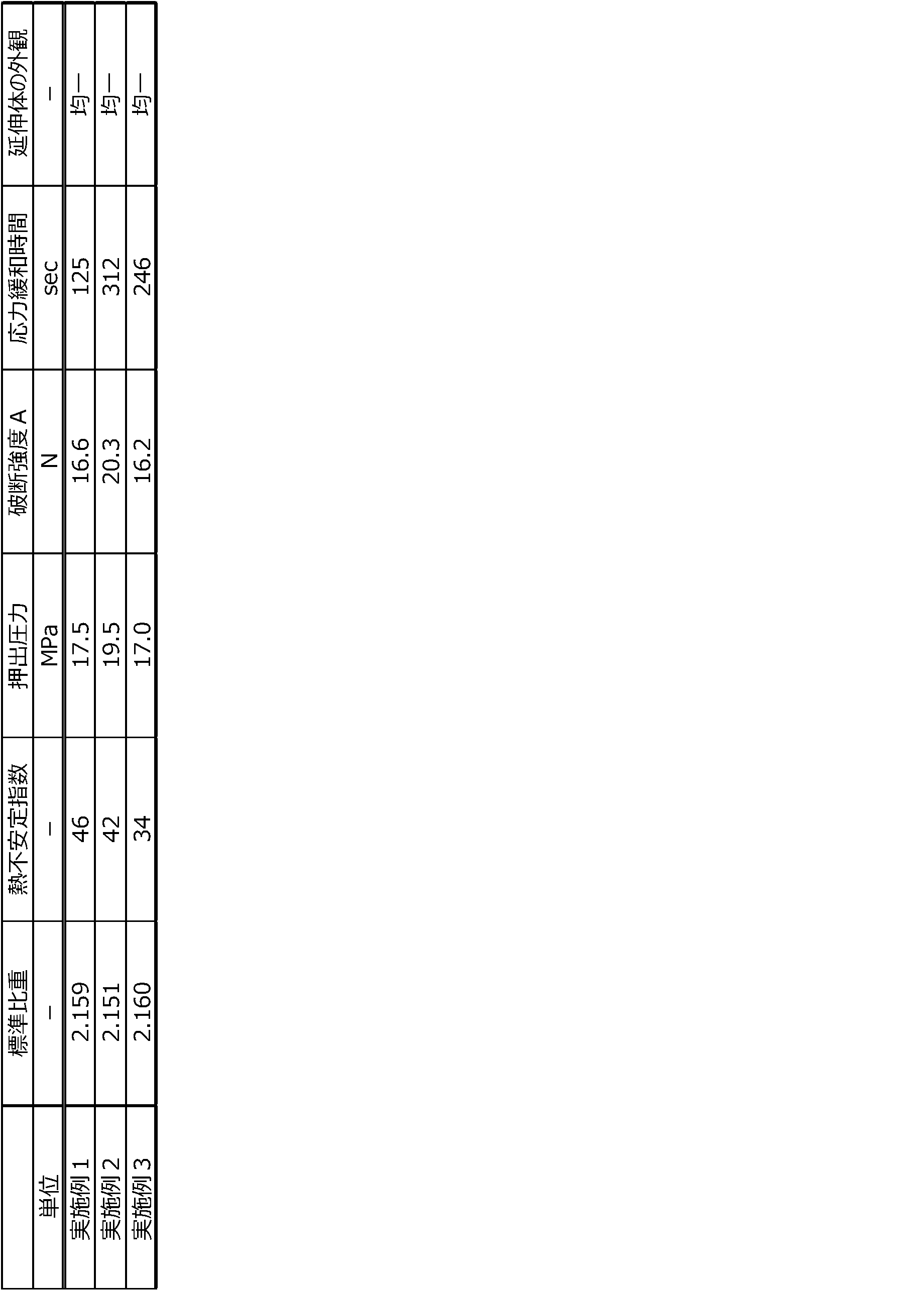
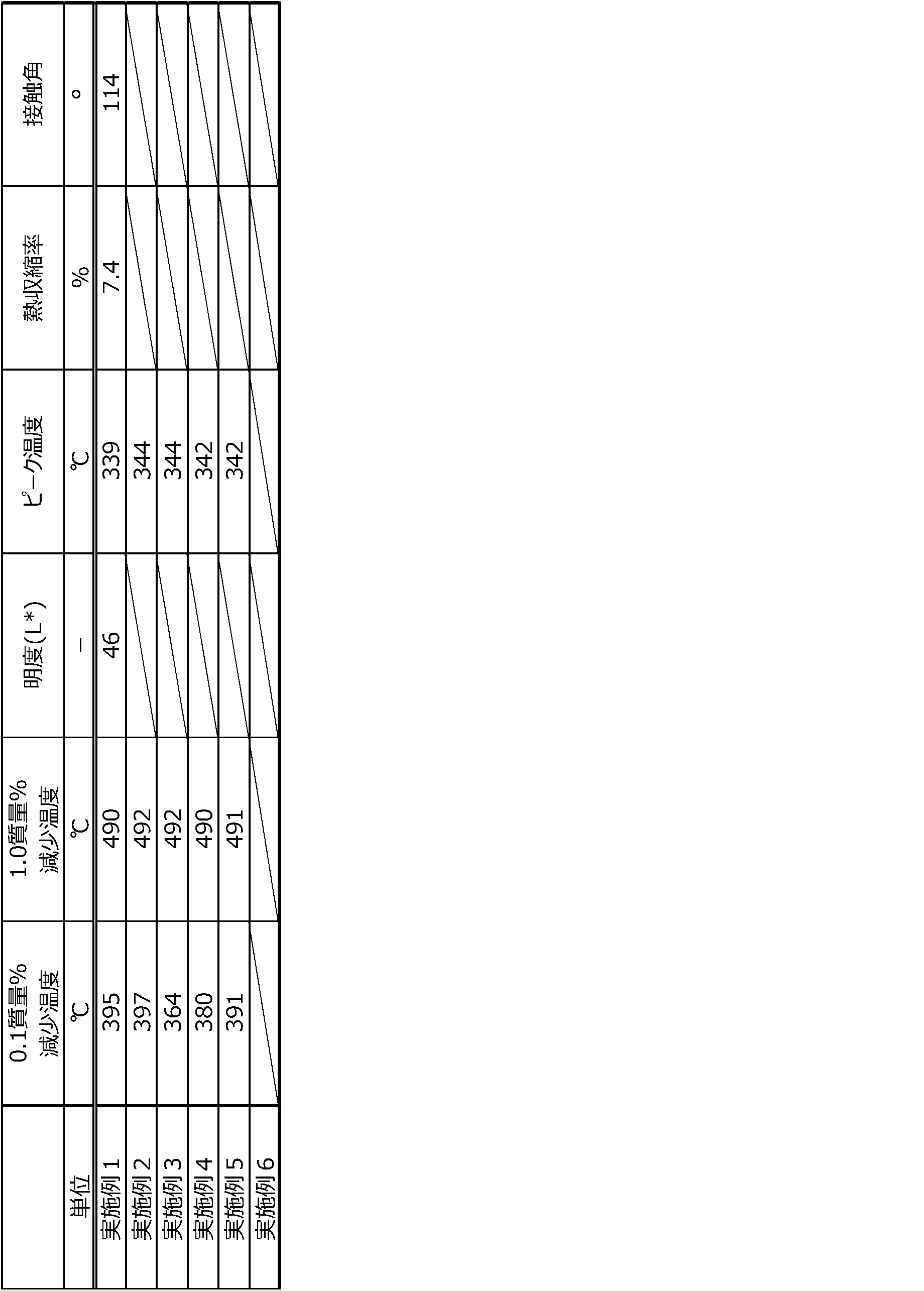
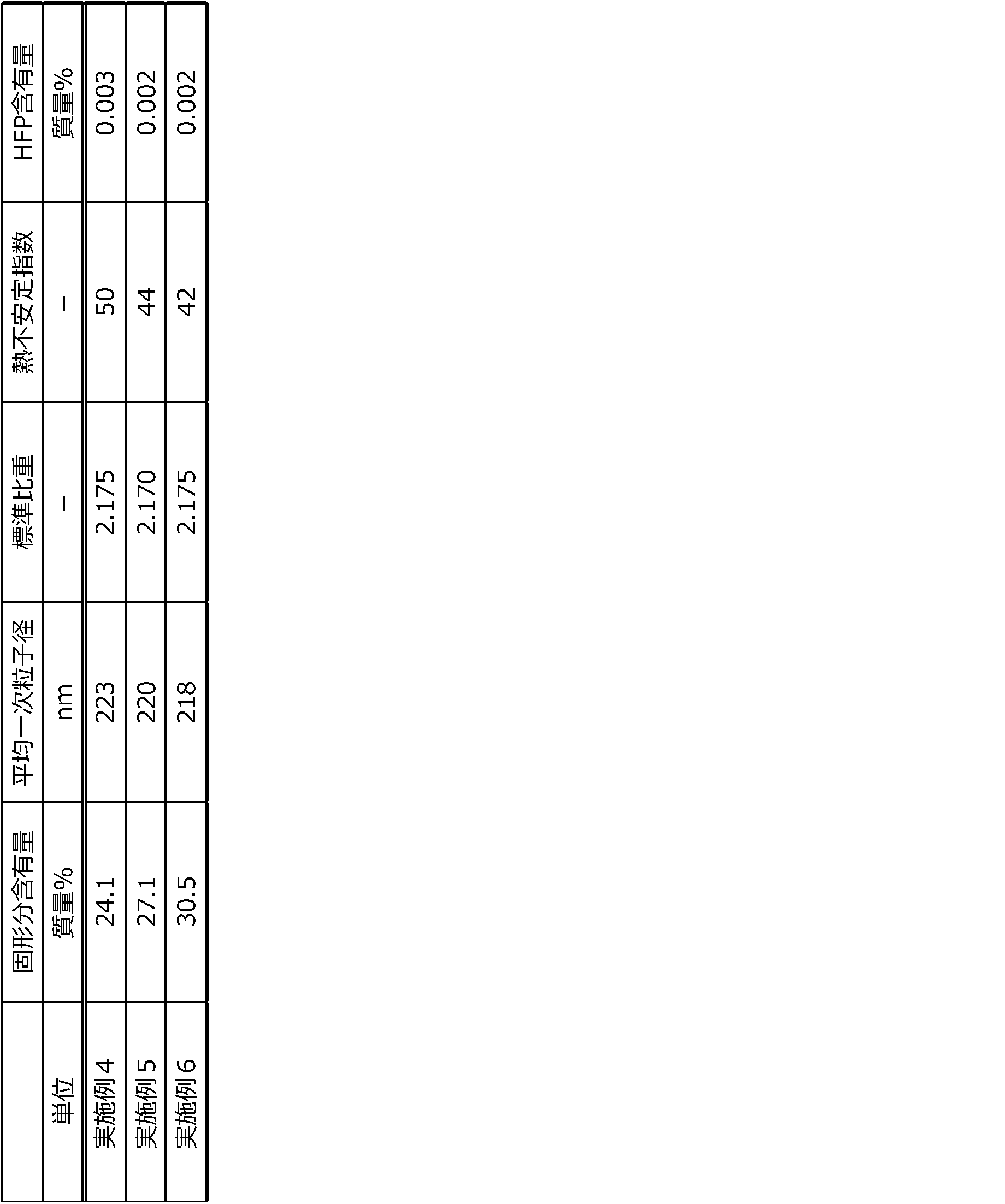
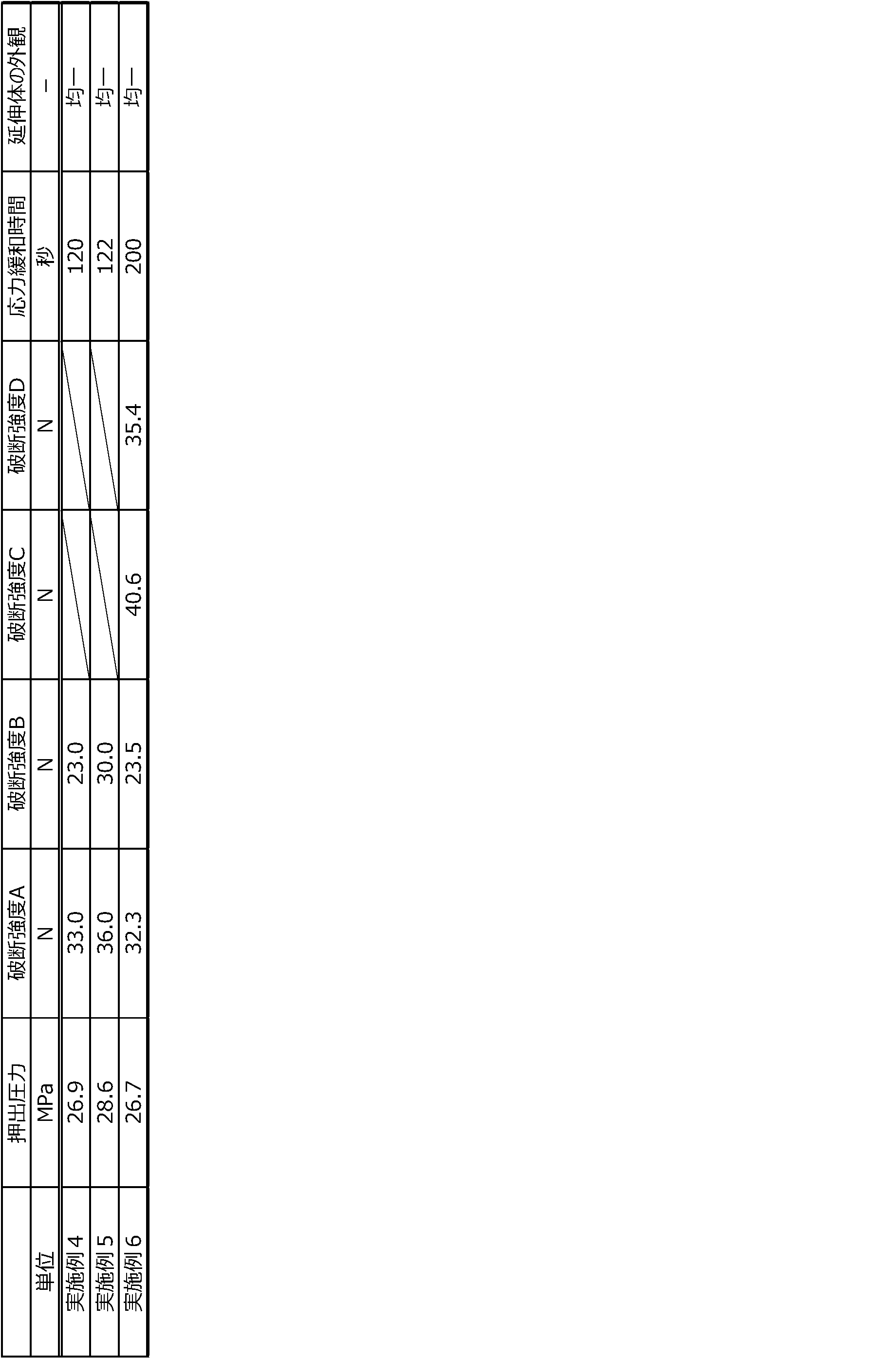
Claims (13)
- 標準比重が2.175以下であり、
熱不安定指数(TII)が20以上である
ことを特徴とするポリテトラフルオロエチレン。 - 標準比重が2.175以下であり、
0.1%質量減少温度が400℃以下である
ことを特徴とするポリテトラフルオロエチレン。 - 標準比重が2.175以下であり、
1.0%質量減少温度が492℃以下である
ことを特徴とするポリテトラフルオロエチレン。 - 破断強度が10.0N以上であり、
熱不安定指数(TII)が20以上である
ことを特徴とするポリテトラフルオロエチレン。 - 破断強度が10.0N以上であり、
0.1%質量減少温度が400℃以下である
ことを特徴とするポリテトラフルオロエチレン。 - 破断強度が10.0N以上であり、
1.0%質量減少温度が492℃以下である
ことを特徴とするポリテトラフルオロエチレン。 - 応力緩和時間が50秒以上である
請求項1~6のいずれかに記載のポリテトラフルオロエチレン。 - 押出圧力が30.0MPa以下である請求項1~7のいずれかに記載のポリテトラフルオロエチレン。
- ポリテトラフルオロエチレンを成形し、100℃で2時間、200℃で4時間、及び、370℃で5時間熱処理して得られた焼成体から切り出したシートの明度L*が90.0以下である
請求項1~8のいずれかに記載のポリテトラフルオロエチレン。 - ポリテトラフルオロエチレンを成形し、100℃で2時間、200℃で4時間、及び、370℃で5時間熱処理して得られた焼成体の熱収縮率が7.0%以上である
請求項1~9のいずれかに記載のポリテトラフルオロエチレン。 - ポリテトラフルオロエチレンを成形し、100℃で2時間、200℃で4時間、及び、370℃で5時間熱処理して得られた焼成体から切り出したシートの前記焼成体の内側に相当する面の接触角が107°以上である
請求項1~10のいずれかに記載のポリテトラフルオロエチレン。 - 粉末である請求項1~11のいずれかに記載のポリテトラフルオロエチレン。
- 請求項1~12のいずれかに記載のポリテトラフルオロエチレンからなる延伸体。
Priority Applications (7)
| Application Number | Priority Date | Filing Date | Title |
|---|---|---|---|
| EP19840194.5A EP3828208A4 (en) | 2018-07-23 | 2019-07-23 | POLYTETRAFLUORETHYLENE AND STRETCHED BODY |
| US17/262,368 US20210221992A1 (en) | 2018-07-23 | 2019-07-23 | Polytetrafluoroethylene and stretched body |
| CN201980048577.0A CN112638957A (zh) | 2018-07-23 | 2019-07-23 | 聚四氟乙烯和拉伸体 |
| JP2020532425A JP7531395B2 (ja) | 2018-07-23 | 2019-07-23 | ポリテトラフルオロエチレン及び延伸体 |
| JP2022099842A JP7644365B2 (ja) | 2018-07-23 | 2022-06-21 | ポリテトラフルオロエチレン及び延伸体 |
| JP2024079676A JP2024109699A (ja) | 2018-07-23 | 2024-05-15 | ポリテトラフルオロエチレン及び延伸体 |
| US19/027,813 US20250171627A1 (en) | 2018-07-23 | 2025-01-17 | Polytetrafluoroethylene and stretched body |
Applications Claiming Priority (6)
| Application Number | Priority Date | Filing Date | Title |
|---|---|---|---|
| JP2018-137567 | 2018-07-23 | ||
| JP2018137567 | 2018-07-23 | ||
| JP2018-177519 | 2018-09-21 | ||
| JP2018177519 | 2018-09-21 | ||
| JP2019017364 | 2019-02-01 | ||
| JP2019-017364 | 2019-02-01 |
Related Child Applications (2)
| Application Number | Title | Priority Date | Filing Date |
|---|---|---|---|
| US17/262,368 A-371-Of-International US20210221992A1 (en) | 2018-07-23 | 2019-07-23 | Polytetrafluoroethylene and stretched body |
| US19/027,813 Continuation US20250171627A1 (en) | 2018-07-23 | 2025-01-17 | Polytetrafluoroethylene and stretched body |
Publications (1)
| Publication Number | Publication Date |
|---|---|
| WO2020022355A1 true WO2020022355A1 (ja) | 2020-01-30 |
Family
ID=69180456
Family Applications (1)
| Application Number | Title | Priority Date | Filing Date |
|---|---|---|---|
| PCT/JP2019/028926 Ceased WO2020022355A1 (ja) | 2018-07-23 | 2019-07-23 | ポリテトラフルオロエチレン及び延伸体 |
Country Status (5)
| Country | Link |
|---|---|
| US (2) | US20210221992A1 (ja) |
| EP (1) | EP3828208A4 (ja) |
| JP (3) | JP7531395B2 (ja) |
| CN (1) | CN112638957A (ja) |
| WO (1) | WO2020022355A1 (ja) |
Cited By (12)
| Publication number | Priority date | Publication date | Assignee | Title |
|---|---|---|---|---|
| WO2021015291A1 (ja) * | 2019-07-23 | 2021-01-28 | ダイキン工業株式会社 | フルオロポリマーの製造方法、ポリテトラフルオロエチレン組成物及びポリテトラフルオロエチレン粉末 |
| JPWO2022071237A1 (ja) * | 2020-09-30 | 2022-04-07 | ||
| WO2024034675A1 (ja) | 2022-08-10 | 2024-02-15 | ダイキン工業株式会社 | 変性ポリテトラフルオロエチレン、及び、延伸体 |
| WO2024154804A1 (ja) | 2023-01-18 | 2024-07-25 | ダイキン工業株式会社 | ポリテトラフルオロエチレン組成物 |
| WO2024154803A1 (ja) | 2023-01-18 | 2024-07-25 | ダイキン工業株式会社 | テトラフルオロエチレン系ポリマー組成物、電気化学デバイス用バインダー、電極合剤、電極、及び、二次電池 |
| WO2024154805A1 (ja) | 2023-01-18 | 2024-07-25 | ダイキン工業株式会社 | テトラフルオロエチレン系ポリマー組成物、固体二次電池用バインダー、電解質層用合剤、電極合剤、電極、及び、固体二次電池 |
| WO2024154806A1 (ja) | 2023-01-18 | 2024-07-25 | ダイキン工業株式会社 | 電気化学デバイス用合剤自立膜、電極、及び、電気化学デバイス |
| WO2024154786A1 (ja) | 2023-01-18 | 2024-07-25 | ダイキン工業株式会社 | 電気化学デバイス用合剤、電気化学デバイス用合剤シート、電極、及び、電気化学デバイス |
| WO2025154813A1 (ja) | 2024-01-18 | 2025-07-24 | ダイキン工業株式会社 | テトラフルオロエチレン系ポリマー組成物、電気化学デバイス用バインダー、電極合剤、電極、及び、二次電池 |
| WO2025154806A1 (ja) | 2024-01-18 | 2025-07-24 | ダイキン工業株式会社 | 電気化学デバイス、組成物、電極合剤、電極、及び、二次電池 |
| EP4657572A1 (en) | 2024-01-18 | 2025-12-03 | Daikin Industries, Ltd. | Composition, electrochemical device binder, electrode mixture, electrode, and secondary battery |
| US12612477B2 (en) | 2019-07-23 | 2026-04-28 | Daikin Industries, Ltd. | Method for producing fluoropolymer, polytetrafluoroethylene composition, and polytetrafluoroethylene powder |
Families Citing this family (3)
| Publication number | Priority date | Publication date | Assignee | Title |
|---|---|---|---|---|
| CN113071176B (zh) * | 2021-04-23 | 2023-06-02 | 刘显志 | 一种适用于有机固体废弃物堆肥发酵的ePTFE除臭膜 |
| CN113774502B (zh) * | 2021-09-08 | 2022-09-06 | 深圳市明鑫高分子技术有限公司 | 一种高频稳相的ptfe膜材料及其制造方法 |
| JP7807691B2 (ja) * | 2023-12-12 | 2026-01-28 | ダイキン工業株式会社 | テトラフルオロエチレン系ポリマー組成物、電気化学デバイス用バインダー、電極合剤、電極、及び、二次電池 |
Citations (32)
| Publication number | Priority date | Publication date | Assignee | Title |
|---|---|---|---|---|
| US3250808A (en) | 1963-10-31 | 1966-05-10 | Du Pont | Fluorocarbon ethers derived from hexafluoropropylene epoxide |
| US3271341A (en) | 1961-08-07 | 1966-09-06 | Du Pont | Aqueous colloidal dispersions of polymer |
| US3391099A (en) | 1966-04-25 | 1968-07-02 | Du Pont | Polymerization process |
| US4576869A (en) | 1984-06-18 | 1986-03-18 | E. I. Du Pont De Nemours And Company | Tetrafluoroethylene fine powder and preparation thereof |
| JP2002201217A (ja) | 2000-10-30 | 2002-07-19 | Asahi Glass Co Ltd | 強度に優れるテトラフルオロエチレン重合体 |
| JP2003119204A (ja) | 2001-10-05 | 2003-04-23 | Daikin Ind Ltd | 含フッ素重合体ラテックスの製造方法 |
| US6841616B2 (en) | 2003-03-28 | 2005-01-11 | Arkema Inc. | Polymerization of halogen-containing monomers using siloxane surfactant |
| WO2005042593A1 (ja) | 2003-10-31 | 2005-05-12 | Daikin Industries, Ltd. | 含フッ素重合体水性分散体の製造方法及び含フッ素重合体水性分散体 |
| JP2005527652A (ja) | 2002-01-04 | 2005-09-15 | イー・アイ・デュポン・ドウ・ヌムール・アンド・カンパニー | 濃縮フルオロポリマー分散液 |
| US20070015864A1 (en) | 2005-07-15 | 2007-01-18 | 3M Innovative Properties Company | Method of making fluoropolymer dispersion |
| US20070015865A1 (en) | 2005-07-15 | 2007-01-18 | 3M Innovative Properties Company | Aqueous emulsion polymerization of fluorinated monomers using a perfluoropolyether surfactant |
| US20070015866A1 (en) | 2005-07-15 | 2007-01-18 | 3M Innovative Properties Company | Aqueous emulsion polymerization of fluorinated monomers using a fluorinated surfactant |
| WO2007046482A1 (ja) | 2005-10-20 | 2007-04-26 | Asahi Glass Company, Limited | ポリテトラフルオロエチレン水性分散液およびその製品 |
| WO2007046345A1 (ja) | 2005-10-17 | 2007-04-26 | Asahi Glass Company, Limited | ポリテトラフルオロエチレン水性乳化液、それから得られるポリテトラフルオロエチレンファインパウダーおよび多孔体 |
| WO2007046377A1 (ja) | 2005-10-20 | 2007-04-26 | Asahi Glass Company, Limited | 溶融成形可能なフッ素樹脂の製造方法 |
| US20070117914A1 (en) | 2005-11-24 | 2007-05-24 | 3M Innovative Properties Company | Fluorinated surfactants for use in making a fluoropolymer |
| US20070142541A1 (en) | 2005-12-21 | 2007-06-21 | 3M Innovative Properties Company | Fluorinated surfactants for making fluoropolymers |
| WO2007119526A1 (ja) | 2006-04-14 | 2007-10-25 | Bridgestone Corporation | インラインヒータ及びその製造方法 |
| US20070276103A1 (en) | 2006-05-25 | 2007-11-29 | 3M Innovative Properties Company | Fluorinated Surfactants |
| US20080015319A1 (en) | 2006-07-13 | 2008-01-17 | Klaus Hintzer | Explosion taming surfactants for the production of perfluoropolymers |
| WO2008060461A1 (en) | 2006-11-09 | 2008-05-22 | E. I. Du Pont De Nemours And Company | Aqueous polymerization of fluorinated monomer using polymerization agent comprising fluoropolyether acid or salt and short chain fluorosurfactant |
| JP2009521586A (ja) * | 2005-12-23 | 2009-06-04 | スリーエム イノベイティブ プロパティズ カンパニー | フルオロポリマー分散体及びそれを製造する方法 |
| WO2011014715A2 (en) | 2009-07-31 | 2011-02-03 | 3M Innovative Properties Company | Fluoropolymer compositions containing a polyol compound and methods of making them |
| JP2013528663A (ja) * | 2010-09-30 | 2013-07-11 | ダイキン工業株式会社 | ポリテトラフルオロエチレンファインパウダーの製造方法 |
| WO2013169581A1 (en) | 2012-05-09 | 2013-11-14 | E. I. Du Pont De Nemours And Company | Fluoropolymer resin treatment employing oxidizing agent to reduce discoloration |
| JP2013542310A (ja) | 2010-11-09 | 2013-11-21 | イー・アイ・デュポン・ドウ・ヌムール・アンド・カンパニー | 水性分散体フルオロモノマーの重合における炭化水素含有界面活性剤のテロゲン性挙動の低下 |
| JP2013542308A (ja) | 2010-11-09 | 2013-11-21 | イー・アイ・デュポン・ドウ・ヌムール・アンド・カンパニー | 炭化水素界面活性剤を用いたフルオロモノマーの水性重合 |
| JP2013542309A (ja) | 2010-11-09 | 2013-11-21 | イー・アイ・デュポン・ドウ・ヌムール・アンド・カンパニー | フルオロモノマーの水性重合における核形成 |
| WO2013189826A1 (en) | 2012-06-20 | 2013-12-27 | Solvay Specialty Polymers Italy S.P.A. | Tetrafluoroethylene copolymers |
| WO2013189824A1 (en) | 2012-06-20 | 2013-12-27 | Solvay Specialty Polymers Italy S.P.A. | Tetrafluoroethylene copolymers |
| US20140228531A1 (en) | 2008-07-08 | 2014-08-14 | Solvay Solexis S.P.A. | Method for manufacturing fluoropolymers |
| JP2015232082A (ja) * | 2014-06-10 | 2015-12-24 | 旭硝子株式会社 | ペースト押出成形用テトラフルオロエチレン共重合体、該共重合体の製造方法および成形物 |
Family Cites Families (10)
| Publication number | Priority date | Publication date | Assignee | Title |
|---|---|---|---|---|
| JPS6356532A (ja) * | 1986-08-27 | 1988-03-11 | Daikin Ind Ltd | 変性ポリテトラフルオロエチレンファインパウダ−及びその製造方法 |
| WO2010114033A1 (ja) * | 2009-03-31 | 2010-10-07 | ダイキン工業株式会社 | 低分子量ポリテトラフルオロエチレン粉末及びその製造方法 |
| CN105793300B (zh) | 2013-11-29 | 2018-01-05 | 大金工业株式会社 | 改性聚四氟乙烯细粉和单向拉伸多孔质体 |
| WO2017030094A1 (ja) | 2015-08-19 | 2017-02-23 | 旭硝子株式会社 | 変性ポリテトラフルオロエチレンの水性乳化液、ファインパウダーおよび延伸多孔体の製造方法 |
| CN110461883B (zh) * | 2017-03-31 | 2021-11-30 | 大金工业株式会社 | 含氟聚合物的制造方法、聚合用表面活性剂和表面活性剂的使用 |
| SG11202000862YA (en) * | 2017-08-10 | 2020-02-27 | Daikin Ind Ltd | Method for producing purified polytetrafluoroethylene aqueous dispersion liquid, method for producing modified polytetrafluoroethylene powder, method for producing polytetrafluoroethylene molded body, and composition |
| WO2019031617A1 (ja) * | 2017-08-10 | 2019-02-14 | ダイキン工業株式会社 | 精製ポリテトラフルオロエチレン水性分散液の製造方法、改質ポリテトラフルオロエチレン粉末の製造方法、ポリテトラフルオロエチレン成形体の製造方法、及び、組成物 |
| CN111148774A (zh) | 2017-09-28 | 2020-05-12 | Agc株式会社 | 改性聚四氟乙烯、成形物、拉伸多孔体的制造方法 |
| JP7014976B2 (ja) * | 2017-12-25 | 2022-02-15 | ダイキン工業株式会社 | ポリテトラフルオロエチレン粉末の製造方法 |
| US12583947B2 (en) * | 2018-03-07 | 2026-03-24 | Daikin Industries, Ltd. | Method for producing fluoropolymer |
-
2019
- 2019-07-23 WO PCT/JP2019/028926 patent/WO2020022355A1/ja not_active Ceased
- 2019-07-23 JP JP2020532425A patent/JP7531395B2/ja active Active
- 2019-07-23 CN CN201980048577.0A patent/CN112638957A/zh active Pending
- 2019-07-23 US US17/262,368 patent/US20210221992A1/en active Pending
- 2019-07-23 EP EP19840194.5A patent/EP3828208A4/en active Pending
-
2022
- 2022-06-21 JP JP2022099842A patent/JP7644365B2/ja active Active
-
2024
- 2024-05-15 JP JP2024079676A patent/JP2024109699A/ja active Pending
-
2025
- 2025-01-17 US US19/027,813 patent/US20250171627A1/en active Pending
Patent Citations (32)
| Publication number | Priority date | Publication date | Assignee | Title |
|---|---|---|---|---|
| US3271341A (en) | 1961-08-07 | 1966-09-06 | Du Pont | Aqueous colloidal dispersions of polymer |
| US3250808A (en) | 1963-10-31 | 1966-05-10 | Du Pont | Fluorocarbon ethers derived from hexafluoropropylene epoxide |
| US3391099A (en) | 1966-04-25 | 1968-07-02 | Du Pont | Polymerization process |
| US4576869A (en) | 1984-06-18 | 1986-03-18 | E. I. Du Pont De Nemours And Company | Tetrafluoroethylene fine powder and preparation thereof |
| JP2002201217A (ja) | 2000-10-30 | 2002-07-19 | Asahi Glass Co Ltd | 強度に優れるテトラフルオロエチレン重合体 |
| JP2003119204A (ja) | 2001-10-05 | 2003-04-23 | Daikin Ind Ltd | 含フッ素重合体ラテックスの製造方法 |
| JP2005527652A (ja) | 2002-01-04 | 2005-09-15 | イー・アイ・デュポン・ドウ・ヌムール・アンド・カンパニー | 濃縮フルオロポリマー分散液 |
| US6841616B2 (en) | 2003-03-28 | 2005-01-11 | Arkema Inc. | Polymerization of halogen-containing monomers using siloxane surfactant |
| WO2005042593A1 (ja) | 2003-10-31 | 2005-05-12 | Daikin Industries, Ltd. | 含フッ素重合体水性分散体の製造方法及び含フッ素重合体水性分散体 |
| US20070015864A1 (en) | 2005-07-15 | 2007-01-18 | 3M Innovative Properties Company | Method of making fluoropolymer dispersion |
| US20070015865A1 (en) | 2005-07-15 | 2007-01-18 | 3M Innovative Properties Company | Aqueous emulsion polymerization of fluorinated monomers using a perfluoropolyether surfactant |
| US20070015866A1 (en) | 2005-07-15 | 2007-01-18 | 3M Innovative Properties Company | Aqueous emulsion polymerization of fluorinated monomers using a fluorinated surfactant |
| WO2007046345A1 (ja) | 2005-10-17 | 2007-04-26 | Asahi Glass Company, Limited | ポリテトラフルオロエチレン水性乳化液、それから得られるポリテトラフルオロエチレンファインパウダーおよび多孔体 |
| WO2007046482A1 (ja) | 2005-10-20 | 2007-04-26 | Asahi Glass Company, Limited | ポリテトラフルオロエチレン水性分散液およびその製品 |
| WO2007046377A1 (ja) | 2005-10-20 | 2007-04-26 | Asahi Glass Company, Limited | 溶融成形可能なフッ素樹脂の製造方法 |
| US20070117914A1 (en) | 2005-11-24 | 2007-05-24 | 3M Innovative Properties Company | Fluorinated surfactants for use in making a fluoropolymer |
| US20070142541A1 (en) | 2005-12-21 | 2007-06-21 | 3M Innovative Properties Company | Fluorinated surfactants for making fluoropolymers |
| JP2009521586A (ja) * | 2005-12-23 | 2009-06-04 | スリーエム イノベイティブ プロパティズ カンパニー | フルオロポリマー分散体及びそれを製造する方法 |
| WO2007119526A1 (ja) | 2006-04-14 | 2007-10-25 | Bridgestone Corporation | インラインヒータ及びその製造方法 |
| US20070276103A1 (en) | 2006-05-25 | 2007-11-29 | 3M Innovative Properties Company | Fluorinated Surfactants |
| US20080015319A1 (en) | 2006-07-13 | 2008-01-17 | Klaus Hintzer | Explosion taming surfactants for the production of perfluoropolymers |
| WO2008060461A1 (en) | 2006-11-09 | 2008-05-22 | E. I. Du Pont De Nemours And Company | Aqueous polymerization of fluorinated monomer using polymerization agent comprising fluoropolyether acid or salt and short chain fluorosurfactant |
| US20140228531A1 (en) | 2008-07-08 | 2014-08-14 | Solvay Solexis S.P.A. | Method for manufacturing fluoropolymers |
| WO2011014715A2 (en) | 2009-07-31 | 2011-02-03 | 3M Innovative Properties Company | Fluoropolymer compositions containing a polyol compound and methods of making them |
| JP2013528663A (ja) * | 2010-09-30 | 2013-07-11 | ダイキン工業株式会社 | ポリテトラフルオロエチレンファインパウダーの製造方法 |
| JP2013542310A (ja) | 2010-11-09 | 2013-11-21 | イー・アイ・デュポン・ドウ・ヌムール・アンド・カンパニー | 水性分散体フルオロモノマーの重合における炭化水素含有界面活性剤のテロゲン性挙動の低下 |
| JP2013542308A (ja) | 2010-11-09 | 2013-11-21 | イー・アイ・デュポン・ドウ・ヌムール・アンド・カンパニー | 炭化水素界面活性剤を用いたフルオロモノマーの水性重合 |
| JP2013542309A (ja) | 2010-11-09 | 2013-11-21 | イー・アイ・デュポン・ドウ・ヌムール・アンド・カンパニー | フルオロモノマーの水性重合における核形成 |
| WO2013169581A1 (en) | 2012-05-09 | 2013-11-14 | E. I. Du Pont De Nemours And Company | Fluoropolymer resin treatment employing oxidizing agent to reduce discoloration |
| WO2013189826A1 (en) | 2012-06-20 | 2013-12-27 | Solvay Specialty Polymers Italy S.P.A. | Tetrafluoroethylene copolymers |
| WO2013189824A1 (en) | 2012-06-20 | 2013-12-27 | Solvay Specialty Polymers Italy S.P.A. | Tetrafluoroethylene copolymers |
| JP2015232082A (ja) * | 2014-06-10 | 2015-12-24 | 旭硝子株式会社 | ペースト押出成形用テトラフルオロエチレン共重合体、該共重合体の製造方法および成形物 |
Non-Patent Citations (1)
| Title |
|---|
| J. APPL. POLYMER SCI., vol. 57, 1995, pages 797 |
Cited By (17)
| Publication number | Priority date | Publication date | Assignee | Title |
|---|---|---|---|---|
| WO2021015291A1 (ja) * | 2019-07-23 | 2021-01-28 | ダイキン工業株式会社 | フルオロポリマーの製造方法、ポリテトラフルオロエチレン組成物及びポリテトラフルオロエチレン粉末 |
| EP4006063A4 (en) * | 2019-07-23 | 2023-10-25 | Daikin Industries, Ltd. | METHOD FOR PRODUCING A FLUROPOLYMER, POLYTETRAFLUORETHYLENE COMPOSITION AND POLYTETRAFLUORETHYLENE POWDER |
| US12612477B2 (en) | 2019-07-23 | 2026-04-28 | Daikin Industries, Ltd. | Method for producing fluoropolymer, polytetrafluoroethylene composition, and polytetrafluoroethylene powder |
| JPWO2022071237A1 (ja) * | 2020-09-30 | 2022-04-07 | ||
| WO2022071237A1 (ja) * | 2020-09-30 | 2022-04-07 | 株式会社 潤工社 | フッ素樹脂フィルム |
| JP7245424B2 (ja) | 2020-09-30 | 2023-03-24 | 株式会社潤工社 | フッ素樹脂フィルム |
| WO2024034675A1 (ja) | 2022-08-10 | 2024-02-15 | ダイキン工業株式会社 | 変性ポリテトラフルオロエチレン、及び、延伸体 |
| JP2024025761A (ja) * | 2022-08-10 | 2024-02-26 | ダイキン工業株式会社 | 変性ポリテトラフルオロエチレン、及び、延伸体 |
| WO2024154803A1 (ja) | 2023-01-18 | 2024-07-25 | ダイキン工業株式会社 | テトラフルオロエチレン系ポリマー組成物、電気化学デバイス用バインダー、電極合剤、電極、及び、二次電池 |
| WO2024154805A1 (ja) | 2023-01-18 | 2024-07-25 | ダイキン工業株式会社 | テトラフルオロエチレン系ポリマー組成物、固体二次電池用バインダー、電解質層用合剤、電極合剤、電極、及び、固体二次電池 |
| WO2024154806A1 (ja) | 2023-01-18 | 2024-07-25 | ダイキン工業株式会社 | 電気化学デバイス用合剤自立膜、電極、及び、電気化学デバイス |
| WO2024154786A1 (ja) | 2023-01-18 | 2024-07-25 | ダイキン工業株式会社 | 電気化学デバイス用合剤、電気化学デバイス用合剤シート、電極、及び、電気化学デバイス |
| WO2024154804A1 (ja) | 2023-01-18 | 2024-07-25 | ダイキン工業株式会社 | ポリテトラフルオロエチレン組成物 |
| WO2025154813A1 (ja) | 2024-01-18 | 2025-07-24 | ダイキン工業株式会社 | テトラフルオロエチレン系ポリマー組成物、電気化学デバイス用バインダー、電極合剤、電極、及び、二次電池 |
| WO2025154806A1 (ja) | 2024-01-18 | 2025-07-24 | ダイキン工業株式会社 | 電気化学デバイス、組成物、電極合剤、電極、及び、二次電池 |
| EP4645423A1 (en) | 2024-01-18 | 2025-11-05 | Daikin Industries, Ltd. | Electrochemical device, composition, electrode mixture, electrode, and secondary battery |
| EP4657572A1 (en) | 2024-01-18 | 2025-12-03 | Daikin Industries, Ltd. | Composition, electrochemical device binder, electrode mixture, electrode, and secondary battery |
Also Published As
| Publication number | Publication date |
|---|---|
| JPWO2020022355A1 (ja) | 2021-08-02 |
| JP2024109699A (ja) | 2024-08-14 |
| EP3828208A4 (en) | 2022-07-13 |
| JP2022126769A (ja) | 2022-08-30 |
| US20250171627A1 (en) | 2025-05-29 |
| CN112638957A (zh) | 2021-04-09 |
| EP3828208A1 (en) | 2021-06-02 |
| US20210221992A1 (en) | 2021-07-22 |
| JP7644365B2 (ja) | 2025-03-12 |
| JP7531395B2 (ja) | 2024-08-09 |
Similar Documents
| Publication | Publication Date | Title |
|---|---|---|
| JP7644365B2 (ja) | ポリテトラフルオロエチレン及び延伸体 | |
| JP7277799B2 (ja) | ポリテトラフルオロエチレンの製造方法 | |
| JP7174272B2 (ja) | 変性ポリテトラフルオロエチレンの製造方法及び組成物 | |
| JP7678353B2 (ja) | 組成物及び延伸体 | |
| JP7231868B2 (ja) | 組成物およびその製造方法 | |
| WO2019031617A1 (ja) | 精製ポリテトラフルオロエチレン水性分散液の製造方法、改質ポリテトラフルオロエチレン粉末の製造方法、ポリテトラフルオロエチレン成形体の製造方法、及び、組成物 | |
| JP2025038067A (ja) | ポリテトラフルオロエチレンの製造方法およびポリテトラフルオロエチレンを含有する組成物 | |
| JP7104354B2 (ja) | 組成物、延伸体及びその製造方法 | |
| JP7029099B2 (ja) | ポリテトラフルオロエチレンの製造方法 | |
| JP7060826B2 (ja) | ポリテトラフルオロエチレンの製造方法 |
Legal Events
| Date | Code | Title | Description |
|---|---|---|---|
| 121 | Ep: the epo has been informed by wipo that ep was designated in this application |
Ref document number: 19840194 Country of ref document: EP Kind code of ref document: A1 |
|
| ENP | Entry into the national phase |
Ref document number: 2020532425 Country of ref document: JP Kind code of ref document: A |
|
| NENP | Non-entry into the national phase |
Ref country code: DE |
|
| ENP | Entry into the national phase |
Ref document number: 2019840194 Country of ref document: EP Effective date: 20210223 |