WO2020013232A1 - パラミロン系樹脂、成形用材料および成形体、並びにパラミロン系樹脂の製造方法 - Google Patents
パラミロン系樹脂、成形用材料および成形体、並びにパラミロン系樹脂の製造方法 Download PDFInfo
- Publication number
- WO2020013232A1 WO2020013232A1 PCT/JP2019/027350 JP2019027350W WO2020013232A1 WO 2020013232 A1 WO2020013232 A1 WO 2020013232A1 JP 2019027350 W JP2019027350 W JP 2019027350W WO 2020013232 A1 WO2020013232 A1 WO 2020013232A1
- Authority
- WO
- WIPO (PCT)
- Prior art keywords
- paramylon
- acid
- chain
- resin
- group
- Prior art date
- Legal status (The legal status is an assumption and is not a legal conclusion. Google has not performed a legal analysis and makes no representation as to the accuracy of the status listed.)
- Ceased
Links
Classifications
-
- C—CHEMISTRY; METALLURGY
- C08—ORGANIC MACROMOLECULAR COMPOUNDS; THEIR PREPARATION OR CHEMICAL WORKING-UP; COMPOSITIONS BASED THEREON
- C08B—POLYSACCHARIDES; DERIVATIVES THEREOF
- C08B37/00—Preparation of polysaccharides not provided for in groups C08B1/00 - C08B35/00; Derivatives thereof
- C08B37/0006—Homoglycans, i.e. polysaccharides having a main chain consisting of one single sugar, e.g. colominic acid
- C08B37/0024—Homoglycans, i.e. polysaccharides having a main chain consisting of one single sugar, e.g. colominic acid beta-D-Glucans; (beta-1,3)-D-Glucans, e.g. paramylon, coriolan, sclerotan, pachyman, callose, scleroglucan, schizophyllan, laminaran, lentinan or curdlan; (beta-1,6)-D-Glucans, e.g. pustulan; (beta-1,4)-D-Glucans; (beta-1,3)(beta-1,4)-D-Glucans, e.g. lichenan; Derivatives thereof
-
- A—HUMAN NECESSITIES
- A61—MEDICAL OR VETERINARY SCIENCE; HYGIENE
- A61K—PREPARATIONS FOR MEDICAL, DENTAL OR TOILETRY PURPOSES
- A61K36/00—Medicinal preparations of undetermined constitution containing material from algae, lichens, fungi or plants, or derivatives thereof, e.g. traditional herbal medicines
- A61K36/02—Algae
Definitions
- the present invention relates to a paramylon resin, a molding material and a molded article, and a method for producing a paramylon resin.
- Bioplastics made from plant ingredients can contribute to measures against petroleum depletion and global warming.In addition to general products such as packaging, containers, and textiles, their use has also begun in durable products such as electronic devices and automobiles. .
- cellulose which is a main component of wood and vegetation, is representative, and a bioplastic using this has been developed and partially commercialized.
- Cellulose is obtained by removing lignin and hemicellulose contained in wood and the like using chemicals. Alternatively, since cotton is almost made of cellulose, it can be used as it is. Cellulose is a polymer in which ⁇ -1,4 glucose is polymerized, but has no thermoplasticity because it has strong intermolecular force due to hydrogen bonds derived from hydroxy groups. Except for special solvents, they have low solvent solubility. Furthermore, since it has many hydroxyl groups which are hydrophilic groups, it has high water absorption and low water resistance.
- the hydrogen atom of the hydroxy group of cellulose is replaced with a short-chain acyl group such as an acetyl group to reduce the intermolecular force of cellulose, and thermoplasticity is imparted by adding a plasticizer. Furthermore, since thermoplasticity and water resistance are insufficient with only a short-chain organic group such as an acetyl group, it is necessary to introduce a long-chain organic group having more carbon atoms into cellulose in addition to the short-chain organic group. Has been done. The introduced long-chain organic group functions as a hydrophobic internal plasticizer, and the thermoplasticity and water resistance of the cellulose derivative are improved.
- Algal biomass has attracted attention as a plant material of non-edible components other than cellulose.
- Algae can be cultivated even on land that is not suitable for agricultural land, does not compete with food production, and can be repeatedly cultivated cyclically by CO 2 , nutrients, and sunlight. Therefore, sustainable use as a substitute for fossil resources is possible.
- algae can efficiently produce useful organic components, particularly long-chain fatty acids and polysaccharides, which are effective as main components of bioplastics.
- ⁇ -1,3 glucan paramylon
- Paramylon is a polymer of glucose (degree of polymerization 700-750) and is characterized by being composed of only ⁇ -1,3 bonds.
- paramylon does not have thermoplasticity because it has strong intermolecular force due to hydrogen bonds derived from hydroxy groups.
- paramylon derivatives having thermoplasticity have been developed by adding acetyl groups or long-chain organic groups to paramylon.
- Patent Document 1 describes a transparent fiber having orientation, which is mainly composed of a paramylon ester derivative in which at least one hydroxy group of paramylon is substituted with an alkylcarbonyl group.
- Patent Document 2 discloses that a hydroxy group of paramylon is a short-chain acyl group (including a short-chain aliphatic hydrocarbon group having 1 to 5 carbon atoms or a phenyl group) and a long-chain acyl group (including a long-chain acyl group having 13 or more carbon atoms).
- Paramylon derivatives substituted with aliphatic hydrocarbon groups are described. It is also described that this paramylon derivative has good thermoplasticity and is suitable for molding.
- Patent Literature 3 describes a paramylon derivative in which at least a part of the hydroxy group of paramylon is bonded to cardanol or a derivative thereof by an ester bond, an ether bond, or a urethane bond. It describes that it has plasticity and is suitable for molding.
- An object of the present invention is to provide a paramylon resin having excellent mechanical properties and thermoplasticity, a molding material and a molded article using the same, and a method for producing the paramylon resin.
- paramylon has a weight average molecular weight in the range of 70,000 to 140,000, and the hydrogen atom of the hydroxy group of paramylon is a long-chain saturated aliphatic acyl group having 14 or more carbon atoms.
- the degree of substitution (DS Lo ) by the long-chain component and the degree of substitution (DS Sh ) by the short-chain component satisfy the following conditional expressions (1) and (2): Izod impact strength is 5.0 kJ / m 2 or more,
- a paramylon-based resin having an MFR (melt flow rate at 210 ° C. and a load of 5 kg) of 2 g / 10 min or more is provided.
- a molding material containing the paramylon resin there is provided a molding material containing the paramylon resin.
- a method for producing the above paramylon resin In the presence of an acid scavenger, under heating, Paramylon having a weight average molecular weight of 70,000 to 140,000 dispersed in a solvent; Acetyl chloride and / or propionyl chloride; Reacting a long-chain reactant that is an acid chloride of a long-chain fatty acid having the long-chain component to acylate the hydroxy group of paramylon constituting the paramylon;
- a method for producing a paramylon-based resin comprising a step of separating the acylated paramylon obtained in the acylation step from the solvent.
- the paramylon resin according to the embodiment of the present invention includes a long-chain component in which the hydrogen atom of the hydroxy group of paramylon is a linear saturated aliphatic acyl group having 14 or more carbon atoms and an acyl group having 2 or 3 carbon atoms (acetyl). And / or a propionyl group).
- the degree of substitution (DS Lo ) by the long-chain component and the degree of substitution (DS Sh ) of the short-chain component satisfy the following conditional expressions (1) and (2). 2.2 ⁇ DS Lo + DS Sh ⁇ 2.8 (1) 5 ⁇ DS Sh / DS Lo ⁇ 25 (2)
- DS Lo is particularly preferably in the range of 0.1 to 0.5, more preferably in the range of 0.1 to 0.4, and further preferably in the range of 0.15 to 0.4. preferable.
- DS Sh is particularly preferably in the range of 2.0 to 2.5.
- the paramylon resin according to an embodiment of the present invention is obtained by introducing the long-chain component and the short-chain component into paramylon having a weight-average molecular weight in the range of 70,000 to 140,000 using the hydroxyl group of the paramylon. Preferably, there is.
- the weight average molecular weight (Mw) of the paramylon resin according to the embodiment of the present invention is preferably in the range of 100,000 to 350,000, and more preferably in the range of 150,000 to 350,000.
- the molecular weights of the paramylon (before the introduction of the long-chain component and the short-chain component) and the paramylon-based resin (after the introduction of the long-chain component and the short-chain component) are values measured by GPC (gel permeation chromatography) under the following conditions. is there.
- Such a paramylon resin can have excellent mechanical properties and thermoplasticity.
- As the mechanical properties for example, a resin excellent in impact resistance can be obtained. If the molecular weight of paramylon or paramylon-based resin is too low, a molded article using the produced resin may have insufficient mechanical properties such as impact resistance. Conversely, if the weight-average molecular weight of paramylon or paramylon-based resin is too high, the fluidity of the produced resin becomes too low, which may hinder molding.
- thermoplasticity and water resistance can be increased, and by having a long-chain component and a short-chain component in a specific ratio, bending strength, elastic modulus, impact resistance, etc. Mechanical properties can be enhanced.
- the carbon number of the long chain component is particularly preferably in the range of 16 to 22.
- the average number of hydroxy groups per glucose unit (hydroxyl residue, DS OH ) is 0.8 or less from the viewpoint of fluidity, water resistance, impact resistance, and the like. Is preferred.
- the paramylon resin according to the embodiment of the present invention preferably has an Izod impact strength of 5.0 kJ / m 2 or more. Further, it is preferable that the MFR (melt flow rate at 210 ° C. and a load of 5 kg) of the paramylon resin according to the embodiment of the present invention is 2 g / 10 min or more. This Izod impact strength is a notched Izod impact strength measured according to JIS K7110.
- the MFR is preferably 2 g / 10 min or more, more preferably 5 g / 10 min or more, and even more preferably 10 g / 10 min or more, from the viewpoint of preventing fluidity from becoming too low and hindering the molding.
- this MFR is not particularly limited, it can generally be set to 200 g / 10 min or less, can be set to 180 g / 10 min or less, and can be set to 150 g / 10 min or less.
- the MFR is too large, the molecular weight of the resin tends to be low, and accordingly, the impact resistance tends to be low.
- the solvent may be a solvent having a retention rate of 90% by volume or more with a cotton fiber filter paper.
- the acid capturing component contains triethylamine or pyridine.
- the reaction temperature in the acylation step is preferably 50 to 100 ° C.
- the amount (mass ratio) of the solvent is preferably 10 to 50 times the dry mass of paramylon.
- the method may further include a step of adding an alkaline aqueous solution and keeping the mixture at 25 to 75 ° C. for 1 to 5 hours.
- Paramylon is a linear polymer in which a ⁇ -D-glucose molecule ( ⁇ -D-glucopyranose) represented by the following formula (1) is polymerized through ⁇ (1 ⁇ 3) glycosidic bonds.
- ⁇ -D-glucose molecule ⁇ -D-glucopyranose
- Each glucose unit constituting paramylon has three hydroxy groups (n in the formula is a natural number).
- n in the formula is a natural number.
- a short-chain organic group and a long-chain organic group can be introduced into such a paramylon by utilizing these hydroxy groups.
- Paramylon is a main component of algae, and can be obtained by separating other components such as proteins from the algae.
- Paramylon is a polysaccharide accumulated in Euglena as a storage polysaccharide, and is stored or consumed as an energy source depending on the environment such as nutritional conditions.
- Paramylon consists only of glucose, and the average degree of polymerization of paramylon obtained from Euglena gracilis is known to be about 700 to 750 in glucose units.
- the weight average molecular weight of paramylon measured by GPC is about 240,000.
- the weight average molecular weight of paramylon used in the embodiment of the present invention is preferably in a range of 70,000 to 140,000, more preferably in a range of 70,000 to 120,000, and further preferably in a range of 70,000 to 100,000. If the weight average molecular weight of paramylon is too low, the impact resistance of the produced resin may not be sufficient. Conversely, if the weight average molecular weight is too high, the fluidity of the produced resin becomes too low, which may hinder molding. By hydrolyzing paramylon with an acid or an alkali, the molecular weight of paramylon can be adjusted. The molecular weight can be controlled by the hydrolysis conditions.
- Paramylon may be mixed with similar structures such as cellulose, chitin, chitosan, hemicellulose, xylan, glucomannan, curdlan, and the like.
- similar structures such as cellulose, chitin, chitosan, hemicellulose, xylan, glucomannan, curdlan, and the like.
- the content of the similar structures is preferably 30% by mass or less, preferably 20% by mass or less, more preferably 10% by mass or less based on the whole mixture. .
- the present invention is applicable to ordinary non-edible polysaccharides, that is, cellulose, chitin, chitosan, hemicellulose, xylan, glucomannan, curdlan, and the like. is there.
- the paramylon-based resin according to an embodiment of the present invention is obtained by introducing the long-chain component in addition to the short-chain component using a hydroxy group of paramylon.
- Such a long-chain component can be introduced by reacting a hydroxy group in paramylon with a long-chain reactant.
- This long-chain component corresponds to an acyl group introduced in place of the hydrogen atom of the hydroxy group of paramylon.
- the long-chain organic group of the long-chain component and the pyranose ring of paramylon can be bonded via an ester bond.
- the introduced acyl group is a straight-chain saturated aliphatic acyl group having 14 or more carbon atoms, such as a straight-chain saturated aliphatic acyl group having 14 to 30 carbon atoms, and a straight-chain saturated aliphatic acyl group having 14 to 22 carbon atoms.
- Saturated aliphatic acyl groups are preferred, myristic acid, palmitic acid, stearic acid, arachidic acid, a group obtained by removing OH from the carboxyl group of behenic acid (tetradecanoyl group, hexadecanoyl group, octadecanoyl group, icosanoyl group, Docosanoyl group) is more preferred.
- the long-chain reactant is a compound having at least one functional group capable of reacting with a hydroxy group in paramylon, and for example, a compound having a carboxyl group, a carboxylic acid halide group, or a carboxylic anhydride group can be used.
- a long-chain carboxylic acid having 14 or more carbon atoms and an acid halide or acid anhydride of the long-chain carboxylic acid can be used. It is desirable that the degree of saturation of these carboxylic acids or carboxylic acid derivatives is as high as possible, and linear saturated fatty acids, acid halides or anhydrides thereof are preferred.
- long-chain carboxylic acids include, for example, linearly saturated linear acids such as myristic acid, pentadecylic acid, palmitic acid, margaric acid, stearic acid, arachidic acid, behenic acid, lignoceric acid, serotinic acid, montanic acid, and melicic acid Fatty acids are mentioned, and myristic acid, palmitic acid, stearic acid, arachidic acid and behenic acid are preferred. Further, the long-chain carboxylic acid is preferably a carboxylic acid obtained from a natural product from the viewpoint of environmental harmony.
- the long chain component preferably has 14 or more carbon atoms, and particularly preferably has 16 or more carbon atoms. In light of reaction efficiency at the time of introducing the long-chain component, those having 48 or less carbon atoms are preferable, those having 36 or less carbon atoms are more preferable, and those having 22 or less carbon atoms are particularly preferable.
- the long chain component may be used alone or in combination of two or more.
- DS Lo Average number of introduced long-chain components per glucose unit of paramylon (DS Lo ) (long-chain component introduction ratio), that is, long-chain components per glucose unit (straight-chain saturated aliphatic acyl group having 14 or more carbon atoms) It is preferable that the average number of hydroxy groups substituted by (the degree of hydroxyl group substitution) satisfies the conditions of the above formulas (1) and (2). Further, DS Lo is in the range of, for example, 0.1 to 0.5 depending on the structure and amount of the short-chain component, the structure of the long-chain component, the physical properties required for the target product, and the efficiency at the time of production. Can be set.
- DS Lo is preferably 0.14 or more, more preferably 0.15 or more, from the viewpoint of obtaining a sufficient effect of introducing a long-chain component, and from the viewpoint of production efficiency and durability (strength, heat resistance, and the like). , 0.4 or less.
- the paramylon-based resin according to an embodiment of the present invention is one in which the short-chain component is introduced in addition to the long-chain component using a hydroxy group of paramylon.
- the short-chain component an acetyl group and / or a propionyl group are preferable, it is preferable that at least a propionyl group is contained, and a propionyl group is particularly preferable.
- Such a short-chain component can be introduced by reacting a hydroxy group in paramylon with a short-chain reactant.
- This short-chain component corresponds to an acyl group moiety introduced in place of the hydrogen atom of the hydroxy group of paramylon.
- the short-chain organic group (methyl group or ethyl group) of the short-chain component and the pyranose ring of paramylon can be bonded via an ester bond.
- the short-chain reactant is a compound having at least one functional group capable of reacting with a hydroxy group in paramylon, and examples thereof include a compound having a carboxyl group, a carboxylic acid halide group, and a carboxylic anhydride group. Specific examples include aliphatic monocarboxylic acids, their acid halides, and their acid anhydrides.
- This short-chain component preferably has 2 to 3 carbon atoms, more preferably 3 carbon atoms, and the hydrogen atom of the hydroxy group of paramylon is an acyl group having 2 to 3 carbon atoms (acetyl). , A propionyl group), and more preferably an acyl group having at least 3 carbon atoms (a propionyl group).
- DS SH Average number of short-chain components introduced per glucose unit of paramylon (DS Sh ) (introduction ratio of short-chain components), that is, hydroxy groups substituted by short-chain components (acetyl group and / or propionyl group) per glucose unit Preferably satisfies the conditions of the above formulas (1) and (2) (3 ⁇ DS Lo + DS Sh ).
- DS SH can be set in a range of 2.0 to 2.5.
- DS SH is preferably 2.0 or more from the viewpoint of sufficiently obtaining the effect of introducing the short-chain component, and particularly DS Sh is preferably 2.1 or more from the viewpoints of water resistance and fluidity.
- DS Sh is preferably 2.5 or less, more preferably 2.4 or less, still more preferably 2.3 or less, from the viewpoint of sufficiently obtaining the effect of the long-chain component while obtaining the effect of introducing the short-chain component.
- the intermolecular force (intermolecular bond) of paramylon can be reduced, and the mechanical properties such as elastic modulus, physical properties such as chemical resistance and surface hardness can be reduced. Can be enhanced.
- the ratio of the ratio of the long-chain component to the ratio of the short-chain component is preferably 5 or more and 25 or less. If this ratio is less than 5, the material tends to be too flexible and the strength and heat resistance tend to decrease. Conversely, if it exceeds 25, the thermoplasticity becomes insufficient, making it unsuitable for molding applications. From these points, DS Sh / DS Lo is preferably 5 or more, more preferably 6 or more, preferably 25 or less, more preferably 18 or less, and may be set to 10 or less.
- the sum of the ratio of the long chain component and the ratio of the short chain component is preferably 2.2 or more and 2.8 or less.
- DS Lo + DS Sh is preferably 2.2 or more, more preferably 2.3 or more, and 2.8 from the viewpoint of mechanical properties and the like. The following is preferred, and 2.7 or less is more preferred.
- DS OH can be set in the range of 0.2 to 0.8.
- Hydroxy groups may remain from the viewpoints of mechanical properties such as maximum strength and durability such as heat resistance.
- the hydroxyl group residual degree can be set to 0.01 or more, and further can be set to 0.1 or more. .
- the residual hydroxyl group of the final product paramylon resin is preferably 0.1 or more, more preferably 0.2 or more, and 0.8 or less from the viewpoint of water resistance in addition to fluidity.
- it is 0.6 or less, more preferably 0.5 or less, from the viewpoints of impact resistance and the like in addition to water resistance.
- an activation treatment Before the reaction step for introducing a long-chain component and a short-chain component into paramylon, an activation treatment (pretreatment step) can be performed to increase the reactivity of paramylon.
- an activation treatment usually performed before acetylation of paramylon can be applied.
- the activation treatment is performed by, for example, contacting paramylon with the solvent by a wet method such as a method of spraying an activation solvent having an affinity for paramylon onto paramylon, or a method of dipping paramylon in the activation solvent (immersion method). And allow the paramylon to swell. This makes it easier for the reactant to penetrate between the paramylon molecular chains (when a solvent or a catalyst is used, it becomes easy to penetrate with them), thereby improving the reactivity of paramylon.
- a wet method such as a method of spraying an activation solvent having an affinity for paramylon onto paramylon, or a method of dipping paramylon in the activation solvent (immersion method).
- the activating solvent is, for example, water; carboxylic acids such as acetic acid, propionic acid, butyric acid, valeric acid, caproic acid, enanthic acid, caprylic acid, pelargonic acid, and stearic acid; and methanol, ethanol, propanol, and isopropanol.
- carboxylic acids such as acetic acid, propionic acid, butyric acid, valeric acid, caproic acid, enanthic acid, caprylic acid, pelargonic acid, and stearic acid
- methanol, ethanol, propanol, and isopropanol Alcohols
- nitrogen-containing compounds such as dimethylformamide, formamide, ethanolamine and pyridine
- sulfoxide compounds such as dimethylsulfoxide. Two or more of these can be used in combination.
- water, acetic acid, pyridine, and dimethyl sulfoxide can be used.
- ⁇ ⁇ Activation can also be performed by introducing paramylon into long-chain fatty acids.
- the melting point of the long-chain fatty acid is equal to or higher than room temperature, it can be heated to the melting point or higher.
- the amount of the activating solvent used can be set to, for example, 10 parts by mass or more, preferably 20 parts by mass or more, more preferably 30 parts by mass or more based on 100 parts by mass of paramylon.
- the mass can be set to, for example, 1 time or more, preferably 5 times or more, more preferably 10 times or more with respect to paramylon. It is preferably 300 times or less, more preferably 100 times or less, and still more preferably 50 times or less, from the viewpoint of the burden of removing the activated solvent after the pretreatment and the reduction of material costs.
- the temperature of the activation treatment can be set as appropriate, for example, in the range of 0 to 100 ° C. From the viewpoint of activation efficiency and reduction of energy cost, the temperature is preferably from 10 to 40 ° C, more preferably from 15 to 35 ° C.
- paramylon In the case where paramylon is charged while the long-chain fatty acid is melted, it may be heated to a temperature higher than the melting point of the long-chain fatty acid.
- the time of the activation treatment can be appropriately set, for example, in the range of 0.1 to 72 hours. From the viewpoint of sufficiently activating and suppressing the processing time, 0.1 to 24 hours is preferable, and 0.5 to 3 hours is more preferable.
- the excess activation solvent can be removed by a solid-liquid separation method such as suction filtration, filter press, and compression.
- the activation solvent contained in paramylon can be replaced with a solvent used in the reaction.
- the substitution treatment can be performed according to the above-mentioned immersion method of the activation treatment instead of the activating solvent used in the reaction.
- paramylon derivative (paramylon-based resin) according to the embodiment of the present invention can be produced by the following method.
- the method for producing a paramylon derivative comprises a method for preparing paramylon, a short-chain reactant (short-chain acylating agent) and a long-chain reactant dispersed in a solvent in a solvent in the presence of an acid-trapping component under heating.
- the short-chain reactant (short-chain acylating agent) and the long-chain reactant (long-chain acylating agent) are preferably dissolved in a solvent. Acid scavenging components can also be used as solvents.
- an acid chloride of the above-mentioned linear saturated fatty acid is preferable, and one type may be used alone or two or more types may be used in combination.
- a short-chain reactant for introducing a short-chain component into paramylon acetyl chloride and / or propionyl chloride are preferable, and propionyl chloride is more preferable.
- the addition amount of the long-chain reactant and the short-chain reactant can be set according to the degree of substitution (DS Lo ) by the long-chain component and the degree of substitution (DS Sh ) by the short-chain component of the objective paramylon derivative. If the amount of the short-chain reactant is too large, the amount of binding of the long-chain component tends to decrease, and the degree of substitution (DS Lo ) by the long-chain component tends to decrease.
- a solvent having a liquid retention rate of 90% by volume or more with a cotton fiber filter paper can be used.
- Liquid retention rate can be measured by the following method. A cotton fiber filter paper (5B, 40 mm ⁇ , water content about 2%) is immersed in each solvent at room temperature for 1 hour. The weight before and after immersion is measured, and the liquid retention rate (vol%) is obtained by applying the following equation. The weight was measured when dripping of the solvent stopped from the sample after immersion.
- Solvents having a liquid retention of 90 vol% or more by the above method include water (liquid retention: 145 vol%), acetic acid (liquid retention: 109 vol%), dioxane (liquid retention: 93 vol%), and pyridine (liquid retention: 109 vol%). ), N-methylpyrrolidone (liquid retention 104 vol%), N, N-dimethylacetamide (liquid retention 112 vol%), N, N-dimethylformamide (liquid retention 129 vol%), dimethylsulfoxide (liquid retention 180 vol%) ).
- the acid-trapping component is not particularly limited as long as it is a base that neutralizes by-product acids (such as hydrochloric acid, acetic acid, and propionic acid), and alkali metal hydroxides such as sodium hydroxide and potassium hydroxide; Alkaline earth metal hydroxides such as calcium hydroxide and barium hydroxide; metal alkoxides such as sodium methoxide and sodium ethoxide; nitrogen-containing nucleophiles such as diazabicycloundecene, diazabicyclononene, triethylamine and pyridine Examples thereof include compounds, and among them, triethylamine and pyridine are preferable, and pyridine is particularly preferable because it can be used as a solvent.
- by-product acids such as hydrochloric acid, acetic acid, and propionic acid
- alkali metal hydroxides such as sodium hydroxide and potassium hydroxide
- Alkaline earth metal hydroxides such as calcium hydroxide and barium hydro
- the acid capturing component When the acid capturing component is added separately from the solvent, the acid capturing component is preferably present in the reaction system from the start of the reaction. If the acid trapping component is present in the reaction system at the start of the reaction, it may be added before or after adding the acylating agent.
- the amount of the acid scavenging component to be added is preferably 0.1 to 10 equivalents relative to the total charge of the long-chain reactant (long-chain acylating agent) and the short-chain reactant (short-chain acylating agent), preferably 0.5 to 10 equivalents. ⁇ 5 equivalents are more preferred.
- a nitrogen-containing nucleophilic compound is used as a solvent, the present invention is not limited to this range.
- the amount of the acid scavenger added is small, the efficiency of the acylation reaction decreases. Also, if the amount of the acid scavenger added is large, paramylon may be decomposed to lower the molecular weight.
- the reaction temperature in this acylation step is preferably from 50 to 100 ° C, more preferably from 75 to 95 ° C.
- the reaction time can be set from 2 hours to 5 hours, and is preferably set from 3 hours to 4 hours. If the reaction temperature is sufficiently high, the reaction rate can be increased, so that the acylation reaction can be completed in a relatively short time, and the reaction efficiency can be increased. When the reaction temperature is in the above range, a decrease in molecular weight due to heating can be suppressed.
- the amount of the solvent can be set to 10 to 50 times the dry mass of the raw material paramylon, and is preferably set to 10 to 40 times (mass ratio).
- the temperature during aging is preferably from 25 to 75 ° C., preferably from 40 to 70 ° C., and the aging time can be set in the range from 1 to 5 hours, preferably from 1 to 3 hours.
- the amount of the alkaline aqueous solution to be added can be set to an amount equivalent to 3 to 30% by mass based on the solvent used, and is preferably 5 to 20% by mass.
- alkaline aqueous solution examples include aqueous solutions of potassium hydroxide, sodium carbonate, sodium hydrogen carbonate and the like, and an aqueous solution of sodium hydroxide is preferable.
- concentration of the alkaline aqueous solution is preferably 1 to 30% by mass, more preferably 5 to 20% by mass.
- the long-chain component and the short-chain component once bonded are partially hydrolyzed, and the hydroxyl groups can be restored uniformly, and mechanical properties such as strength and impact resistance can be enhanced.
- Good properties fine particles can be obtained in the subsequent precipitation step.
- the paramylon derivative (product) into which the long-chain component and the short-chain component have been introduced can be recovered from the reaction solution according to a general recovery method, and the method is not limited.
- a recovery method of solid-liquid separation of the reaction solution and the product is preferable from the viewpoint of production energy.
- the reaction solution can be distilled off and the product can be recovered as a residue.
- the precipitated product may be collected by solid-liquid separation by adding a poor solvent for the product to the reaction solution.
- the short-chain reactant, the reaction solvent and the catalyst are preferably those having a low boiling point, but the catalyst can be removed from the product by a washing solvent or the like without distilling off the catalyst.
- the distillation is stopped when the product is deposited, and then the remaining reaction solution and the deposited product are separated by solid-liquid separation. Items can also be collected.
- solid-liquid separation method examples include filtration (natural filtration, vacuum filtration, pressure filtration, centrifugal filtration, and hot filtration thereof), natural sedimentation / floating, liquid separation, centrifugal separation, and compression. It may be performed in combination.
- the product (paramylon derivative) dissolved in the filtrate after solid-liquid separation can be precipitated by adding a poor solvent to the product, and can be recovered by solid-liquid separation.
- the solid content (paramylon derivative) recovered from the reaction solution can be washed if necessary and dried by a usual method.
- the paramylon derivative produced by the present method can have a crystal structure reinforced by paramylon main chain crystals in a thermoplastic matrix. This is derived from the unreacted portion of the acylated paramylon raw material.
- a paramylon main chain crystal can be evaluated, for example, by an X-ray diffraction method. At the time of this evaluation, for example, the signal can be easily confirmed by pressing the paramylon derivative to increase the density.
- a paramylon resin By using a mixed acid anhydride having a long-chain component and a short-chain component as an acylating agent and acylating paramylon in a solid-liquid heterogeneous system, a paramylon resin can be obtained.
- paramylon is activated.
- the activation treatment can be performed by a usual method.
- Acylation is carried out at 45 to 65 ° C. in a solvent (eg, dioxane, eg, 80 to 120 times the weight of dry paramylon) in which the liquid retention rate of the cotton fiber filter paper is 90% or more in the presence of an acid catalyst (eg, sulfuric acid). With stirring for 2 to 5 hours. Thereafter, it is preferable to add water and ripen the mixture under heating (for example, 55 to 75 ° C.) for several hours (for example, 1 to 3 hours).
- a solvent eg, dioxane, eg, 80 to 120 times the weight of dry paramylon
- an acid catalyst eg, sulfuric acid
- a poor solvent such as a mixed solvent of water / methanol is added to sufficiently precipitate the product dissolved in the liquid phase, and the product can be recovered by performing solid-liquid separation. Thereafter, washing and drying can be performed.
- Acylation may be performed in a homogeneous dissolution system in which paramylon and the acylating agent are dissolved in a solvent.
- paramylon is activated.
- the activation treatment can be performed by a usual method.
- a solvent having a high affinity for paramylon such as N, N-dimethylacetamide, pyridine, N-methylpyrrolidinone, or the like is used.
- acylating agent a mixed acid anhydride having a long-chain component and a short-chain component is formed in the same solvent as the solvent used for acylation, and can be used.
- a product is precipitated by adding a poor solvent such as methanol, and the product can be recovered by performing solid-liquid separation. Thereafter, washing and drying can be performed.
- a poor solvent such as methanol
- the paramylon derivative according to the embodiment of the present invention can obtain a resin composition suitable for a molding material by adding an additive according to desired characteristics.
- This paramylon derivative can be compatible with additives that are compatible with ordinary paramylon derivatives.
- thermoplasticity and elongation at break can be further improved.
- plasticizer include phthalic acid such as dibutyl phthalate, diaryl phthalate, diethyl phthalate, dimethyl phthalate, di-2-methoxyethyl phthalate, ethylphthalylethyl glycolate, and methylphthalylethyl glycolate.
- Esters Tartrate esters such as dibutyl tartrate; adipic esters such as dioctyl adipate and diisononyl adipate; polyhydric alcohol esters such as triacetin, diacetylglycerin, tripropionitrile glycerin, glycerin monostearate; triethyl phosphate, triphosphate phosphate Phosphate esters such as phenyl and tricresyl phosphate; dibasic fatty acid esters such as dibutyl adipate, dioctyl adipate, dibutyl azelate, dioctyl azelate and dioctyl sebacate; citric acid Citrate esters such as ethyl, acetyltriethyl citrate and acetyl tributyl citrate; epoxidized vegetable oils such as epoxidized soybean oil and epoxidized l
- plasticizer such as dioctyl adipate, benzyl-2-butoxyethoxyethyl adipate, tricresyl phosphate, diphenylcresyl phosphate, or diphenyloctyl phosphate is added, not only thermoplasticity and elongation at break, but also resistance to Impact properties can also be effectively improved.
- plasticizers include cyclohexanedicarboxylates such as dihexyl cyclohexanedicarboxylate, dioctyl cyclohexanedicarboxylate and di-2-methyloctyl cyclohexanedicarboxylate; trihexyl such as dihexyl trimellitate, diethylhexyl trimellitate and dioctyl trimellitate.
- Melellitic acid esters examples include pyromellitic acid esters such as dihexyl pyromellitic acid, diethylhexyl pyromellitic acid, and dioctyl pyromellitic acid.
- an inorganic or organic granular or fibrous filler can be added to the paramylon derivative according to the embodiment of the present invention, if necessary. By adding a filler, strength and rigidity can be further improved.
- the filler for example, mineral particles (talc, mica, calcined siliceous earth, kaolin, sericite, bentonite, smectite, clay, silica, quartz powder, glass beads, glass powder, glass flake, milled fiber, warast Knight (or wollastonite), boron-containing compounds (boron nitride, boron carbide, titanium boride, etc.), metal carbonates (magnesium carbonate, heavy calcium carbonate, light calcium carbonate, etc.), metal silicates (calcium silicate, etc.) , Aluminum silicate, magnesium silicate, magnesium aluminosilicate, etc.), metal oxide (eg, magnesium oxide), metal hydroxide (eg, aluminum hydroxide, calcium hydroxide, magnesium
- fibrous filler examples include organic fibers (natural fibers, papers, etc.), inorganic fibers (glass fibers, asbestos fibers, carbon fibers, silica fibers, silica / alumina fibers, wollastonite, zirconia fibers, potassium titanate fibers). Etc.), metal fibers and the like. These fillers can be used alone or in combination of two or more.
- a flame retardant can be added to the paramylon derivative according to the embodiment of the present invention, if necessary. Flame retardancy can be imparted by adding a flame retardant.
- the flame retardant include magnesium hydroxide, aluminum hydroxide, metal hydrates such as hydrotalcite, basic magnesium carbonate, calcium carbonate, silica, alumina, talc, clay, zeolite, brominated flame retardant, Examples include antimony oxide, phosphoric acid-based flame retardants (such as aromatic phosphates and condensed aromatic phosphates), and compounds containing phosphorus and nitrogen (phosphazene compounds). These flame retardants can be used alone or in combination of two or more.
- An impact modifier can be added to the paramylon derivative according to the embodiment of the present invention, if necessary. By adding an impact resistance improver, the impact resistance can be improved.
- the impact modifier include a rubber component and a silicone compound.
- the rubber component include natural rubber, epoxidized natural rubber, and synthetic rubber.
- the silicone compound an alkylsiloxane, an organic polysiloxane formed by polymerization of an alkylphenylsiloxane or the like, or a polyether, methylstyryl, alkyl, higher fatty acid ester, alkoxy, or a side chain or terminal of the organic polysiloxane is used.
- Modified silicone compounds modified with fluorine, amino group, epoxy group, carboxyl group, carbinol group, methacryl group, mercapto group, phenol group and the like can be mentioned. These impact modifiers can be used alone or in combination of two or more.
- a modified silicone compound (modified polysiloxane compound) is preferable.
- This modified silicone compound has a main chain composed of repeating units of dimethylsiloxane, and a part of a side chain or a terminal methyl group has an amino group, an epoxy group, a carbinol group, a phenol group, a mercapto group, Organic containing at least one group selected from a carboxyl group, a methacryl group, a long-chain alkyl group, an aralkyl group, a phenyl group, a phenoxy group, an alkylphenoxy group, a long-chain fatty acid ester group, a long-chain fatty acid amide group, and a polyether group.
- Modified polydimethylsiloxane having a structure substituted with a substituent is preferred.
- the modified silicone compound has improved affinity for the above-mentioned paramylon derivative, dispersibility in the paramylon derivative is improved, and a resin composition having excellent impact resistance can be obtained. .
- a modified silicone compound As such a modified silicone compound, a compound produced according to a usual method can be used.
- Examples of the organic substituents contained in the modified silicone compound include those represented by the following formulas (2) to (20).
- a and b each represent an integer of 1 to 50.
- R 1 to R 10 , R 12 to R 15 , R 19 and R 21 each represent a divalent organic group.
- the divalent organic group include an alkylene group such as a methylene group, an ethylene group, a propylene group, and a butylene group, an alkylarylene group such as a phenylene group and a tolylene group, and — (CH 2 —CH 2 —O) c — (c 1 represents an integer from 50), - [CH 2 -CH (CH 3) -O] d - (d is an integer of 1 to 50) oxyalkylene group or polyoxyalkylene group such as, - (CH 2 ) E-NHCO- (e represents an integer of 1 to 8).
- an alkylene group is preferable, and an ethylene group and a propylene group are particularly preferable.
- R 11 , R 16 to R 18 , R 20 and R 22 each represent an alkyl group having 20 or less carbon atoms.
- the alkyl group include methyl, ethyl, propyl, butyl, pentyl, hexyl, heptyl, octyl, nonyl, decyl, undecyl, dodecyl, tridecyl, tetradecyl, and pentadecyl. Is mentioned.
- the structure of the alkyl group may have one or more unsaturated bonds.
- the total average content of the organic substituents in the modified silicone compound is determined by dispersing the modified silicone compound in an appropriate particle size (for example, 0.1 ⁇ m or more and 100 ⁇ m or less) in the paramylon derivative of the matrix during the production of the paramylon derivative composition. It is desirable to set the range as possible.
- the total average content of such organic substituents is preferably 0.01% by mass or more, more preferably 0.1% by mass or more, and preferably 70% by mass or less, and more preferably 50% by mass or less.
- the modified silicone compound contains an appropriate amount of the organic substituent, the affinity with the paramylon resin is improved, and the modified silicone compound can be dispersed with an appropriate particle size in the paramylon derivative. Bleed-out due to separation can be suppressed. If the total average content of the organic substituents is too small, it is difficult to disperse the particles in a paramylon-based resin with an appropriate particle size.
- the average content of the organic substituent in the modified polydimethylsiloxane compound can be obtained from the following equation (I).
- the organic substituent equivalent is an average value of the mass of the modified silicone compound per 1 mol of the organic substituent.
- the organic substituent in the modified polydimethylsiloxane compound is a phenoxy group, an alkylphenoxy group, a long-chain alkyl group, an aralkyl group, a long-chain fatty acid ester group, or a long-chain fatty acid amide group
- the organic substitution in the modified polydimethylsiloxane compound The average group content can be determined from the following formula (II).
- x is the average value of the mole fraction of the organic-substituent-containing siloxane repeating unit relative to all the siloxane repeating units in the modified polydimethylsiloxane compound
- w is the formula weight of the organic substituent
- the average content of the phenyl group in the modified polydimethylsiloxane compound can be determined from the following formula (III).
- x is an average value of the mole fraction of the phenyl group-containing siloxane repeating unit with respect to all the siloxane repeating units in the modified polydimethylsiloxane compound (A).
- the average content of the polyether group in the modified polydimethylsiloxane compound can be determined from the following formula (IV).
- ⁇ Average polyether group content HLB value / 20 ⁇ 100 ⁇ (IV)
- the HLB value is a value indicating the degree of affinity of the surfactant to water and oil, and is defined by the following formula (V) based on the Griffin method.
- ⁇ HLB value 20 ⁇ (sum of formula weight of hydrophilic part / molecular weight) ⁇ (V)
- modified silicone compounds having different affinities for the derivative may be added to the paramylon derivative of the present embodiment.
- the dispersibility of the modified silicone compound (A1) having a relatively low affinity is improved by the modified silicone compound (A2) having a relatively high affinity, and the paramylon resin composition having more excellent impact resistance Can be obtained.
- the total average content of organic substituents of the modified silicone compound (A1) having a relatively low affinity is preferably 0.01% by mass or more, more preferably 0.1% by mass or more, and preferably 15% by mass or less. , And more preferably 10% by mass or less.
- the total average content of organic substituents of the modified silicone compound (A2) having relatively high affinity is preferably 15% by mass or more, more preferably 20% by mass or more, and further preferably 90% by mass or less.
- the mixing ratio (mass ratio) of the modified silicone compound (A1) and the modified silicone compound (A2) can be set in the range of 10/90 to 90/10.
- the dimethylsiloxane repeating unit and the organic substituent-containing siloxane repeating unit may be of the same kind, connected continuously, alternately, or randomly.
- the modified silicone compound may have a branched structure.
- the number average molecular weight of the modified silicone compound is preferably 900 or more, more preferably 1,000 or more, preferably 1,000,000 or less, more preferably 300,000 or less, and even more preferably 100,000 or less.
- the molecular weight of the modified silicone compound is sufficiently large, loss due to volatilization during kneading with the melted paramylon derivative during production of the paramylon derivative composition can be suppressed.
- the modified silicone compound has an appropriate size without a too large molecular weight, a uniform molded article having good dispersibility can be obtained.
- the number average molecular weight can be a value measured by GPC of a 0.1% solution of chloroform in a sample (calibrated with a polystyrene standard sample).
- the amount of the modified silicone compound to be added is preferably 1% by mass or more, more preferably 2% by mass or more based on the whole paramylon derivative composition, from the viewpoint of obtaining a sufficient effect of addition. It is preferably 20% by mass or less, more preferably 10% by mass or less, from the viewpoint of sufficiently securing the properties such as the strength of the paramylon resin and suppressing bleed-out.
- the modified silicone compound By adding such a modified silicone compound to the paramylon derivative, the modified silicone compound can be dispersed in the resin at an appropriate particle size (for example, 0.1 to 100 ⁇ m), thereby improving the impact resistance of the resin composition. it can.
- the paramylon derivative of the present embodiment may optionally contain additives, such as a coloring agent, an antioxidant, and a heat stabilizer, which are applied to ordinary resin compositions.
- thermoplastic resin may be added to the paramylon derivative of the present embodiment, if necessary.
- thermoplastic resin a polyester can be added, and a linear aliphatic polyester can be preferably used.
- linear aliphatic polyester (Y) linear aliphatic polyesters of the following (Y1) and (Y2) are preferable, and examples thereof include polybutylene succinate, polybutylene succinate adipate, and polycaprolactone. .
- (Y1) Linear aliphatic polyester containing at least one of the following formulas (21) and (22): — (CO—R 23 —COO—R 24 —O —) — (21) -(CO-R 25 -O-)-(22)
- R 23 represents a divalent aliphatic group, and has 1 to 12, preferably 2 to 8, and more preferably 2 to 4 carbon atoms.
- R 24 represents a divalent aliphatic group, and has 2 to 12, preferably 2 to 8, and more preferably 2 to 4 carbon atoms.
- R 25 represents a divalent aliphatic group, and has 2 to 10, preferably 2 to 8, and more preferably 2 to 4 carbon atoms.
- a straight-chain aliphatic polyester comprising a ring-opening polymer of (Y2) cyclic ester.
- the linear aliphatic polyester (Y1) is obtained, for example, by a condensation reaction of at least one selected from the group consisting of an aliphatic dicarboxylic acid, an acid anhydride thereof, and a diester thereof with an aliphatic diol.
- the aliphatic dicarboxylic acid has, for example, 3 to 12 carbon atoms, preferably 3 to 9 carbon atoms, and more preferably 3 to 5 carbon atoms.
- the aliphatic carboxylic acid is, for example, an alkanedicarboxylic acid, and specific examples include, for example, malonic acid, succinic acid, adipic acid, sebacic acid, azelaic acid, dodecanedicarboxylic acid and the like.
- the aliphatic dicarboxylic acid for example, any one kind may be used, or two or more kinds may be used in combination.
- the aliphatic diol has, for example, 2 to 12 carbon atoms, preferably 2 to 8 carbon atoms, and more preferably 2 to 6 carbon atoms.
- the aliphatic diol is, for example, an alkylene glycol, and specific examples thereof include, for example, ethylene glycol, 1,3-propylene glycol, 1,4-butanediol, 1,6-hexanediol, 1,9-nonanediol, Examples thereof include 1,10-decanediol and 1,12-dodecanediol.
- straight-chain aliphatic diols having 2 to 6 carbon atoms are preferable, and ethylene glycol, 1,3-propylene glycol, 1,4-butanediol, and 1,6-hexanediol are particularly preferable.
- the aliphatic diol for example, any one kind may be used, or two or more kinds may be used in combination.
- the linear aliphatic polyester (Y2) is a linear aliphatic polyester obtained by ring-opening polymerization of a cyclic ester.
- the cyclic ester include lactones having 2 to 12 carbon atoms, and specific examples include ⁇ -acetolactone, ⁇ -propiolactone, ⁇ -butyrolactone, and ⁇ -valerolactone.
- the cyclic ester for example, any one kind may be used, or two or more kinds may be used in combination.
- the number average molecular weight of the linear aliphatic polyester (Y) is not particularly limited, and the lower limit is, for example, preferably 10,000 or more, more preferably 20,000 or more, and the upper limit is, for example, 200,000 or less. , More preferably 100,000 or less.
- the molecular weight of the aliphatic polyester is not particularly limited, and the lower limit is, for example, preferably 10,000 or more, more preferably 20,000 or more, and the upper limit is, for example, 200,000 or less. , More preferably 100,000 or less.
- ⁇ As the number average molecular weight, for example, a value measured by GPC (calibrated with a polystyrene standard sample) for a 0.1% solution of chloroform in a sample can be adopted.
- the impact resistance can be improved by adding a thermoplastic resin having excellent flexibility, such as a thermoplastic polyurethane elastomer (TPU), to the paramylon derivative according to the embodiment of the present invention.
- a thermoplastic resin having excellent flexibility such as a thermoplastic polyurethane elastomer (TPU)
- TPU thermoplastic polyurethane elastomer
- the addition amount of such a thermoplastic resin (particularly, TPU) is preferably 1% by mass or more, and more preferably 5% by mass or more based on the whole composition containing the paramylon derivative of the present embodiment, from the viewpoint of obtaining a sufficient addition effect. More preferred.
- thermoplastic polyurethane elastomer (TPU) suitable for improving impact resistance may be prepared using a polyol, a diisocyanate, and a chain extender.
- polyol examples include polyester polyol, polyester ether polyol, polycarbonate polyol, and polyether polyol.
- polyester polyols examples include aliphatic dicarboxylic acids (succinic acid, adipic acid, sebacic acid, azelaic acid, etc.), aromatic dicarboxylic acids (phthalic acid, terephthalic acid, isophthalic acid, naphthalenedicarboxylic acid, etc.), alicyclic dicarboxylic acids Polycarboxylic acids such as acids (hexahydrophthalic acid, hexahydroterephthalic acid, hexahydroisophthalic acid, etc.) or their acid esters or acid anhydrides, and ethylene glycol, 1,3-propylene glycol, 1,2-propylene Glycol, 1,3-butanediol, 1,4-butanediol, 1,5-pentanediol, 1,6-hexanediol, 3-methyl-1,5-pentanediol, neopentyl glycol, 1,3-octan
- polyester ether polyols examples include aliphatic dicarboxylic acids (succinic acid, adipic acid, sebacic acid, azelaic acid, etc.), aromatic dicarboxylic acids (phthalic acid, terephthalic acid, isophthalic acid, naphthalenedicarboxylic acid, etc.), alicyclics Polycarboxylic acids such as dicarboxylic acids (hexahydrophthalic acid, hexahydroterephthalic acid, hexahydroisophthalic acid, etc.) or their acid esters or acid anhydrides, and diethylene glycol or alkylene oxide adducts (propylene oxide adducts, etc.) And a compound obtained by a dehydration-condensation reaction with glycol or a mixture thereof.
- dicarboxylic acids such as dicarboxylic acids (hexahydrophthalic acid, hexahydroterephthalic acid, hexahydrois
- polycarbonate polyol examples include ethylene glycol, 1,3-propylene glycol, 1,2-propylene glycol, 1,3-butanediol, 1,4-butanediol, 1,5-pentanediol, 1,6
- One or more polyhydric alcohols such as -hexanediol, 3-methyl-1,5-pentanediol, neopentyl glycol, 1,8-octanediol, 1,9-nonanediol, diethylene glycol, and diethylene carbonate And dimethyl carbonate, diethyl carbonate and the like.
- PCL polycaprolactone polyol
- PHL polyhexamethylene carbonate
- polyether polyols examples include polyethylene glycol, polypropylene glycol, polytetramethylene ether glycol, etc. obtained by polymerizing cyclic ethers such as ethylene oxide, propylene oxide, and tetrahydrofuran, respectively, and copolyethers thereof.
- Examples of the diisocyanate used for forming the TPU include tolylene diisocyanate (TDI), 4,4′-diphenylmethane diisocyanate (MDI), 1,5-naphthylene diisocyanate (NDI), tolidine diisocyanate, and 1,6-hexamethylene.
- TDI tolylene diisocyanate
- MDI 4,4′-diphenylmethane diisocyanate
- NDI 1,5-naphthylene diisocyanate
- tolidine diisocyanate 1,6-hexamethylene.
- Diisocyanate (HDI), isophorone diisocyanate (IPDI), xylylene diisocyanate (XDI), hydrogenated XDI, triisocyanate, tetramethyl xylene diisocyanate (TMXDI), 1,6,11-undecane triisocyanate, 1,8-diisocyanatomethyloctane , Lysine ester triisocyanate, 1,3,6-hexamethylene triisocyanate, bicycloheptane triisocyanate, dicyclohexylmethane diisocyanate Over preparative (hydrogenated MDI; HMDI) or the like. Among them, 4,4'-diphenylmethane diisocyanate (MDI) and 1,6-hexamethylene diisocyanate (HDI) can be preferably used.
- MDI isophorone diisocyanate
- XDI xylylene diisocyanate
- HDI
- a low molecular weight polyol can be used as the chain extender used for forming the TPU.
- the low molecular weight polyol include ethylene glycol, 1,3-propylene glycol, 1,2-propylene glycol, 1,3-butanediol, 1,4-butanediol, 1,5-pentanediol, 1,6 Aliphatic polyols such as -hexanediol, 3-methyl-1,5-pentanediol, neopentyl glycol, 1,8-octanediol, 1,9-nonanediol, diethylene glycol, 1,4-cyclohexanedimethanol, glycerin;
- aromatic glycols such as 1,4-dimethylolbenzene, bisphenol A, and ethylene oxide or propylene oxide adducts of bisphenol A.
- thermoplastic polyurethane elastomer (TPU) obtained from these materials is copolymerized with a silicone compound, more excellent impact resistance can be obtained.
- thermoplastic polyurethane elastomers may be used alone or in combination.
- the method for producing a resin composition in which various additives and a thermoplastic resin are added to the paramylon derivative according to the embodiment of the present invention is not particularly limited.
- various additives and a paramylon-based resin are hand-mixed, and a known mixer is used.
- a known mixer is used.
- it can be manufactured by melt-mixing with a compounding device such as a tumbler mixer, a ribbon blender, a single-screw or multi-screw mixing extruder, a kneading kneader, a kneading roll, etc., and granulating into an appropriate shape as required.
- a mixed composition of various additives and a resin dispersed in a solvent such as an organic solvent, and various additives and a resin are mixed, and if necessary, a coagulating solvent is added. And then evaporating the solvent.
- the paramylon resin according to the embodiment described above can be used as a base resin of a molding material (resin composition).
- a molding material using the paramylon-based resin as a base resin is suitable for a molded article such as a housing such as an exterior of an electronic device.
- the base resin means a main component in the molding material, and means that it is allowed to contain other components within a range that does not hinder the function of the main component. Is not specified, but includes that the main component accounts for 50% by mass or more, preferably 70% by mass or more, more preferably 80% by mass or more, particularly preferably 90% by mass or more in the composition. It is.
- paramylon 1 The raw material paramylon was treated with an aqueous hydrochloric acid solution to obtain paramylon 1 whose molecular weight was adjusted. Next, paramylon 1 was acylated in a solid-liquid heterogeneous system to obtain a paramylon resin of this example. Specifically, a paramylon resin (paramylon propionate stearate) was prepared as described below.
- paramylon 1 15 g of raw material paramylon (weight average molecular weight: 242,000) and 150 g of a 1% aqueous hydrochloric acid solution were charged into a reactor, stirred at 100 ° C. for 4 hours, and washed with water to obtain paramylon 1 having a adjusted molecular weight.
- the weight average molecular weight (Mw) of Paramylon 1 was 139000.
- paramylon 1 in terms of dry mass, 27.8 mmol / glucose unit
- Activation was performed by stirring overnight.
- paramylon dispersion was cooled to 10 ° C. or lower, and 1.68 g (5.6 mmol) of stearoyl chloride and 7.70 g (83.3 mmol) of propionyl chloride were preliminarily mixed and maintained in the reactor at 10 ° C. or lower. I put it in.
- paramylon resin paramylon propionate stearate
- DS Lo 0.16
- DS Sh 0.16.
- the glass transition point was determined by performing differential scanning calorimetry (DSC) under the following conditions.
- the measurement device used was EXSTAR2000, DSC6200 manufactured by Seiko Instruments Inc.
- the temperature of the paramylon resin was raised from 20 ° C. to 200 ° C. at 10 ° C./min, and then rapidly cooled from 200 ° C. to ⁇ 30 ° C. at 50 ° C./min.
- the glass transition point (Tg) when the temperature was raised from ⁇ 30 ° C. to 200 ° C. at 20 ° C./min was measured.
- MFR Melt flow rate
- Example 2 15 g of raw material paramylon (weight average molecular weight 242,000) and 150 g of a 3% hydrochloric acid aqueous solution were charged into a reactor, stirred at 100 ° C. for 4 hours, and washed with water to obtain paramylon 2 having a adjusted molecular weight.
- the weight average molecular weight (Mw) of Paramylon 2 was 83,700.
- a paramylon resin (paramylon propionate stearate) was produced according to the same amount and method as in Example 1 except that paramylon 1 was changed to paramylon 2 (yield 9.3 g, 99%).
- Example 3 15 g of raw material paramylon (weight average molecular weight: 242,000) and 150 g of a 3% hydrochloric acid aqueous solution were charged into a reactor, stirred at 100 ° C. for 6 hours, and washed with water to obtain paramylon 3 having adjusted molecular weight.
- the weight average molecular weight (Mw) of Paramylon 3 was 71200.
- a paramylon-based resin (paramylon propionate stearate) was produced in the same amount and method as in Example 1 except that paramylon 1 was changed to paramylon 3 (yield 8.9 g, 93%).
- Example 1 A paramylon resin (paramylon propionate stearate) was prepared according to the same amount and method as in Example 1 except that the raw material paramylon (weight average molecular weight: 242,000) was acylated without being treated with an aqueous hydrochloric acid solution (yield: 8.9 g). , Yield 93%).
- the paramylon resin was evaluated for mechanical properties such as impact strength and fluidity in the same manner as in Example 1. Table 1 shows the results. In addition, the GPC measurement was not performed because the paramylon resin of Comparative Example 1 was not sufficiently dissolved in chloroform.
- Table 1 shows the long-chain component (octadecanoyl group (corresponding to the acyl group portion contained in stearic acid)), short-chain component (propionyl group), and their components of the produced paramylon resin (paramylon propionate stearate).
- the evaluation results of mechanical properties such as degree of substitution, impact strength, and fluidity were summarized.
- paramylon resins (paramylon derivatives) of Examples according to the embodiments of the present invention are all excellent in mechanical properties (impact strength and the like) and thermoplasticity (fluidity: MFR).
- the paramylon resin of Comparative Example 1 produced using paramylon having a weight average molecular weight not in the range of 70,000 to 140,000 has high inhomogeneity of the product, low flexural elongation at break, poor impact strength, It turns out that thermoplasticity (fluidity: MFR) is also insufficient.
- Example 4 Following the same procedure as in Example 1 except that the amounts of the long-chain reactant and the short-chain reactant were changed to 3.36 g (11.1 mmol) of stearoyl chloride and 7.70 g (83.3 mmol) of propionyl chloride, the paramylon resin ( Paramylon propionate stearate) was produced (8.3 g, 82% yield).
- the paramylon resin was evaluated for mechanical properties such as impact strength and fluidity in the same manner as in Example 1. Table 2 shows the results. In addition, GPC measurement was not performed because the obtained paramylon resin was not sufficiently dissolved in chloroform.
- Example 5 Following the same procedure as in Example 1 except that the amounts of the long-chain reactant and the short-chain reactant were changed to 2.10 g (6.90 mmol) of stearoyl chloride and 6.41 g (69.4 mmol) of propionyl chloride, the paramylon resin ( Paramylon propionate stearate) was produced (9.3 g, 96% yield).
- the paramylon resin Paramylon propionate stearate
- the paramylon resin was evaluated for mechanical properties such as impact strength and fluidity in the same manner as in Example 1. Table 2 shows the results. In addition, GPC measurement was not performed because the obtained paramylon resin was not sufficiently dissolved in chloroform.
- Example 6 Following the same method as in Example 1 except that the amounts of the long-chain reactant and the short-chain reactant were changed to 0.84 g (2.80 mmol) of stearoyl chloride and 7.70 g (83.3 mmol) of propionyl chloride, the paramylon resin ( Paramylon propionate stearate) was produced (9.3 g, 95% yield).
- the paramylon resin Paramylon propionate stearate
- Example 7 Example 1 except that paramylon 2 was used in place of paramylon 1 and the amounts of the long and short chain reactants were changed to 3.36 g (11.1 mmol) of stearoyl chloride and 7.70 g (83.3 mmol) of propionyl chloride. According to the same method as in Example 1, a paramylon resin (paramylon propionate stearate) was produced (9.0 g, 89% yield).
- Example 8 Example 1 except that paramylon 3 was used instead of paramylon 1 and the amounts of the long-chain reactant and the short-chain reactant were changed to 3.36 g (11.1 mmol) of stearoyl chloride and 7.70 g (83.3 mmol) of propionyl chloride. According to the same method as in Example 1, a paramylon resin (paramylon propionate stearate) was produced (yield 9.5 g, 91%).
- paramylon resin paramylon propionate stearate
- DS Lo 0.35
- DS Sh 2.2.
- the paramylon resin was evaluated for mechanical properties such as impact strength and fluidity in the same manner as in Example 1. Table 2 shows the results. In addition, GPC measurement was not performed because the obtained paramylon resin was not sufficiently dissolved in chloroform.
- Example 3 (Comparative Example 3) Example 1 except that paramylon 2 was used instead of paramylon 1 and the amounts of the long-chain reactant and the short-chain reactant were changed to 6.73 g (22.2 mmol) of stearoyl chloride and 7.70 g (83.3 mmol) of propionyl chloride. According to the same method as in Example 1, a paramylon resin (paramylon propionate stearate) was produced (yield 11.4 g, 96%).
- Example 4 Example 1 except that paramylon 2 was used instead of paramylon 1 and the amounts of the long and short chain reactants were changed to 1.68 g (5.60 mmol) of stearoyl chloride and 6.16 g (66.6 mmol) of propionyl chloride. According to the same method as in Example 1, a paramylon resin (paramylon propionate stearate) was produced (8.1 g, 92% yield).
- paramylon resins (paramylon derivatives) of Examples according to the embodiments of the present invention are all excellent in mechanical properties (impact strength and the like) and thermoplasticity (flowability: MFR).
- the paramylon resin of Comparative Example 2 produced using paramylon having a weight average molecular weight not in the range of 70,000 to 140,000 has the same long chain and short chain addition amounts (DS Lo , DS Sh ) as in Example 4.
- the molecular weight of paramylon is higher than that of Example 4 (as a result, the molecular weight of the obtained paramylon resin is higher)
- the thermoplasticity fluidity: MFR
- flexibility is increased if the added amount of long chain (DS Lo ) is too high as in Comparative Example 3, so that the maximum bending stress and bending elasticity are increased.
- Example 9 Example 1 was repeated except that paramylon 3 was used in place of paramylon 1, the amount of stearoyl chloride was changed to 4.20 g (13.9 mmol), and the short-chain reactant was changed to 6.54 g (83.3 mmol) of acetyl chloride. According to the same method as in Example 1, a paramylon resin (paramylon acetate stearate) was produced (yield 9.5 g, 97%).
- Example 10 Paramylon 3 was used in place of paramylon 1, the amount of stearoyl chloride was changed to 4.20 g (13.9 mmol), and the short-chain reactants were 3.27 g (41.6 mmol) of acetyl chloride and 3.85 g of propionyl chloride ( A paramylon-based resin (paramylon acetate propionate stearate) was produced in the same manner as in Example 1 except that the amount was changed to 41.6 mmol) (yield 10.2 g, 97%).
- a paramylon-based resin paramylon acetate propionate stearate
- paramylon resin paramylon acetate propionate stearate
- DS Lo 0.31
- DS Sh of the acetyl group (Ac) was 1.4
- DS Sh of the propionyl group (Pr) was 0.88.
- the paramylon resin was evaluated for mechanical properties such as impact strength and fluidity in the same manner as in Example 1. Table 3 shows the results. In addition, GPC measurement was not performed because the obtained paramylon resin was not sufficiently dissolved in chloroform.
- paramylon resin paramylon acetate propionate stearate
- DS Lo 0.35
- DS Sh of acetyl group (Ac) was 1.2
- DS Sh of the propionyl group (Pr) was 0.72.
- the paramylon resin was evaluated for mechanical properties such as impact strength and fluidity in the same manner as in Example 1. Table 3 shows the results. In addition, GPC measurement was not performed because the obtained paramylon resin was not sufficiently dissolved in chloroform.
- paramylon resins (paramylon derivatives) of the examples according to the embodiments of the present invention are all excellent in mechanical properties (impact strength and the like) and thermoplasticity (fluidity: MFR).
- the paramylon resins of Comparative Examples 5 and 6 produced using paramylon having a weight average molecular weight not in the range of 70,000 to 140,000 have the same short and long chain addition amounts as in Examples 9 and 10, respectively. Nevertheless, since the molecular weight of paramylon is too high, the impact resistance and the thermoplasticity (flowability: MFR) are low.
- Example 11 15 g of raw material paramylon (weight average molecular weight 242,000) and 150 g of a 5% aqueous hydrochloric acid solution were charged into a reactor, stirred at 90 ° C. for 4 hours, and washed with water to obtain paramylon 4 having a adjusted molecular weight.
- the weight average molecular weight (Mw) of Paramylon 4 was 96,700.
- Example 1 except that paramylon 1 was changed to paramylon 4, the amount of the mixture was changed to 51 mL of N-methylpyrrolidone and 7.1 mL of pyridine, and to palmitoyl chloride as a long-chain reactant was changed to 3.05 g (11.1 mmol). According to the same method as in Example 1, a paramylon resin (paramylon propionate palmitate) was prepared (yield 9.9 g, 100%).
- Example 12 Example 1 except that paramylon 1 was changed to paramylon 4, the amount of the mixture was changed to 51 mL of N-methylpyrrolidone and 7.1 mL of pyridine, and to 2.74 g (11.1 mmol) of myristoyl chloride as a long-chain reactant. According to the same method as in Example 1, a paramylon resin (paramylon propionate myristate) was produced (yield 9.3 g, 95%).
Landscapes
- Chemical & Material Sciences (AREA)
- Life Sciences & Earth Sciences (AREA)
- Health & Medical Sciences (AREA)
- Biochemistry (AREA)
- Molecular Biology (AREA)
- Engineering & Computer Science (AREA)
- General Health & Medical Sciences (AREA)
- Materials Engineering (AREA)
- Chemical Kinetics & Catalysis (AREA)
- Medicinal Chemistry (AREA)
- Polymers & Plastics (AREA)
- Organic Chemistry (AREA)
- Polysaccharides And Polysaccharide Derivatives (AREA)
- Compositions Of Macromolecular Compounds (AREA)
Abstract
パラミロンの重量平均分子量が70000~140000の範囲にあり、このパラミロンのヒドロキシ基の水素原子が、炭素数14以上の直鎖状飽和脂肪族アシル基である長鎖成分と、炭素数2又は3のアシル基(アセチル基又は/及びプロピオニル基)である短鎖成分で置換されたパラミロン系樹脂であって、前記長鎖成分による置換度(DSLo)と前記短鎖成分による置換度(DSSh)が、以下の条件式(1)及び(2)を満たし、アイゾット衝撃強度が5.0kJ/m2以上であり、MFR(210℃、荷重5kgにおけるメルトフローレート)が2g/10min以上である、パラミロン系樹脂。機械特性および熱可塑性に優れたパラミロン系樹脂を提供する。 2.2 ≦ DSLo+DSSh ≦ 2.8 (1) 5≦ DSSh/DSLo ≦ 25 (2)
Description
本発明は、パラミロン系樹脂、成形用材料および成形体、並びにパラミロン系樹脂の製造方法に関するものである。
植物成分を原料とするバイオプラスチックは、石油枯渇対策や温暖化対策に寄与できるため、包装、容器、繊維などの一般製品に加え、電子機器、自動車等の耐久製品への利用も開始されている。
しかし、通常のバイオプラスチックは、デンプン等の食用成分を原料としているため、将来の食料不足への懸念から、非食用の植物成分を原料とする新しいバイオプラスチックの開発が求められている。
非食用の植物成分としては、木材や草木の主要成分であるセルロースが代表的であり、これを利用したバイオプラスチックが開発され、一部製品化されている。
セルロースは、木材等に含まれるリグニンやヘミセルロースを、薬剤を用いて除くことで得られる。または、綿はほぼセルロースでできているため、このまま用いることができる。セルロースは、β-1,4グルコースが重合した高分子であるが、ヒドロキシ基に由来する水素結合によって強力な分子間力を持つため熱可塑性がない。また、特殊な溶媒を除き、溶媒溶解性も低い。さらに、親水性基であるヒドロキシ基を多く有するため吸水性が高く、耐水性が低い。
このため、セルロースのヒドロキシ基の水素原子をアセチル基等の短鎖アシル基で置換してセルロースの分子間力を下げ、さらに可塑剤を添加することで熱可塑性が付与されている。さらに、アセチル基のような短鎖有機基だけでは熱可塑性や耐水性は不十分であるため、短鎖有機基に加えて、より炭素数の多い長鎖有機基をセルロースに導入することが行われている。導入された長鎖有機基が疎水性の内部可塑剤として機能し、セルロース誘導体の熱可塑性や耐水性が改良される。
セルロース以外の非食用成分の植物原料として、藻類バイオマスに注目が集まっている。藻類は農地に適さない土地でも培養でき、食糧生産と競合することがない上に、CO2、栄養塩、太陽光によって循環的に培養を繰り返すことができる。そのため、化石資源の代替として持続的な利用が可能である。さらに藻類は、有用な有機成分、特にバイオプラスチックの主要成分として有効な長鎖脂肪酸や多糖類などを高効率で生産することも可能である。このような藻類由来の多糖類として、β-1,3グルカン(パラミロン)が知られている。パラミロンはグルコースの重合体(重合度700-750)で、β-1,3結合のみで構成されるという特徴を持つ。セルロースと同様に、パラミロンもヒドロキシ基に由来する水素結合によって強力な分子間力を持つため、熱可塑性がない。
このため、パラミロンを使ったバイオプラスチックに関しては、セルロースと同様に、パラミロンにアセチル基や長鎖有機基などを付加させることで、熱可塑性を有するパラミロン誘導体が開発されている。
例えば、特許文献1には、パラミロンのヒドロキシ基の少なくとも一つがアルキルカルボニル基で置換されているパラミロンエステル誘導体を主成分とした、配向性を備えた透明な繊維が記載されている。
また、特許文献2には、パラミロンのヒドロキシ基が短鎖アシル基(炭素数1~5の短鎖脂肪族炭化水素基またはフェニル基を含む)及び長鎖アシル基(炭素数13以上の長鎖脂肪族炭化水素基を含む)で置換されたパラミロン誘導体が記載されている。また、このパラミロン誘導体は、良好な熱可塑性を有し、成形加工に適していることが記載されている。
特許文献3には、パラミロンのヒドロキシ基の少なくとも一部と、カルダノールまたはその誘導体とを、エステル結合、エーテル結合、またはウレタン結合により結合させたパラミロン誘導体が記載され、このパラミロン誘導体は、良好な熱可塑性を有し、成形加工に適していることが記載されている。
本発明の目的は、機械特性および熱可塑性に優れたパラミロン系樹脂、これを用いた成形用材料および成形体、並びにパラミロン系樹脂の製造方法を提供することにある。
本発明の一態様によれば、パラミロンの重量平均分子量が70000~140000の範囲にあり、該パラミロンのヒドロキシ基の水素原子が、炭素数14以上の直鎖状飽和脂肪族アシル基である長鎖成分と、炭素数2又は3のアシル基(アセチル基又は/及びプロピオニル基)である短鎖成分で置換されたパラミロン系樹脂であって、
前記長鎖成分による置換度(DSLo)と前記短鎖成分による置換度(DSSh)が、以下の条件式(1)及び(2)を満たし、
アイゾット衝撃強度が5.0kJ/m2以上であり、
MFR(210℃、荷重5kgにおけるメルトフローレート)が2g/10min以上である、パラミロン系樹脂が提供される。
2.2 ≦ DSLo+DSSh ≦ 2.8 (1)
5≦ DSSh/DSLo ≦ 25 (2)
前記長鎖成分による置換度(DSLo)と前記短鎖成分による置換度(DSSh)が、以下の条件式(1)及び(2)を満たし、
アイゾット衝撃強度が5.0kJ/m2以上であり、
MFR(210℃、荷重5kgにおけるメルトフローレート)が2g/10min以上である、パラミロン系樹脂が提供される。
2.2 ≦ DSLo+DSSh ≦ 2.8 (1)
5≦ DSSh/DSLo ≦ 25 (2)
本発明の他の態様によれば、上記のパラミロン系樹脂を含む成形用材料が提供される。
本発明の他の態様によれば、上記の成形用材料を用いて形成された成形体が提供される。
本発明の他の態様によれば、上記のパラミロン系樹脂を製造する方法であって、
酸捕捉成分の存在下、加温下で、
溶媒中に分散された重量平均分子量70000~140000のパラミロンと、
塩化アセチル又は/及び塩化プロピオニルと、
前記長鎖成分を有する長鎖脂肪酸の酸塩化物である長鎖反応剤とを反応させて、該パラミロンを構成するパラミロンのヒドロキシ基をアシル化する工程と、
前記アシル化工程により得られたアシル化パラミロンを前記溶媒から分離する工程を含む、パラミロン系樹脂の製造方法が提供される。
酸捕捉成分の存在下、加温下で、
溶媒中に分散された重量平均分子量70000~140000のパラミロンと、
塩化アセチル又は/及び塩化プロピオニルと、
前記長鎖成分を有する長鎖脂肪酸の酸塩化物である長鎖反応剤とを反応させて、該パラミロンを構成するパラミロンのヒドロキシ基をアシル化する工程と、
前記アシル化工程により得られたアシル化パラミロンを前記溶媒から分離する工程を含む、パラミロン系樹脂の製造方法が提供される。
本発明の実施形態によれば、機械特性および熱可塑性に優れたパラミロン系樹脂、これを用いた成形用材料および成形体、並びにパラミロン系樹脂の製造方法が提供できる。
本発明の実施形態によるパラミロン系樹脂は、パラミロンのヒドロキシ基の水素原子が、炭素数14以上の直鎖状飽和脂肪族アシル基である長鎖成分と、炭素数2又は3のアシル基(アセチル基又は/及びプロピオニル基)である短鎖成分で置換されたパラミロン誘導体である。
前記長鎖成分による置換度(DSLo)と前記短鎖成分の置換度(DSSh)が、以下の条件式(1)及び(2)を満たすことが好ましい。
2.2 ≦ DSLo+DSSh ≦ 2.8 (1)
5≦ DSSh/DSLo ≦ 25 (2)
2.2 ≦ DSLo+DSSh ≦ 2.8 (1)
5≦ DSSh/DSLo ≦ 25 (2)
またDSLoが特に0.1~0.5の範囲にあることが好ましく、0.1~0.4の範囲にあることがより好ましく、0.15~0.4の範囲にあることがさらに好ましい。またDSShが特に2.0~2.5の範囲にあることが好ましい。
本発明の実施形態によるパラミロン系樹脂は、重量平均分子量が70000~140000の範囲にあるパラミロンに、そのパラミロンのヒドロキシ基を利用して、前記長鎖成分と前記短鎖成分が導入されたものであることが好ましい。本発明の実施形態によるパラミロン系樹脂の重量平均分子量(Mw)は、10万~35万の範囲が好ましく、15万~35万の範囲がより好ましい。このパラミロン(長鎖成分と短鎖成分の導入前)とパラミロン系樹脂(長鎖成分と短鎖成分の導入後)の分子量は、GPC(ゲルパーミエーションクロマトグラフィ)により以下の条件で測定した値である。
(パラミロンのGPC測定条件)
カラム:PLgel20μmMIXED-A(製品名、アジレントテクノロジー(株)製)
溶離液:ジメチルアセトアミド(DMAc)溶液(0.1M LiCl)
流速:0.5mL/min
検出器:RI(示差屈折率)(東ソー(株)製RI-71)
温度:23.0℃
標準試料:Pullulan standard
カラム:PLgel20μmMIXED-A(製品名、アジレントテクノロジー(株)製)
溶離液:ジメチルアセトアミド(DMAc)溶液(0.1M LiCl)
流速:0.5mL/min
検出器:RI(示差屈折率)(東ソー(株)製RI-71)
温度:23.0℃
標準試料:Pullulan standard
(パラミロン系樹脂のGPC測定条件)
カラム:SHIMPAC GPC-80MC×2本、GPC-8025C×1本(製品名、島津製作所(株)製)
溶離液:クロロホルム(CHCl3)
流速:1.0mL/min
検出器:RI(示差屈折率)(島津製作所製 RID-10A)
温度:40.0℃
標準試料:Polystyrene standard
カラム:SHIMPAC GPC-80MC×2本、GPC-8025C×1本(製品名、島津製作所(株)製)
溶離液:クロロホルム(CHCl3)
流速:1.0mL/min
検出器:RI(示差屈折率)(島津製作所製 RID-10A)
温度:40.0℃
標準試料:Polystyrene standard
このようなパラミロン系樹脂は、優れた機械特性および熱可塑性を有することができる。機械特性としては、例えば耐衝撃性に優れた樹脂を得ることができる。パラミロンやパラミロン系樹脂の分子量が低すぎると、製造した樹脂を用いた成形体の耐衝撃性等の機械特性が十分でない場合がある。逆に、パラミロンやパラミロン系樹脂の重量平均分子量が高すぎると、製造した樹脂の流動性が低くなりすぎて、成形に支障をきたす場合がある。
長鎖成分の導入により、熱可塑性や耐水性を高めることができ、また、この長鎖成分と短鎖成分とを特定の比率で有することにより、曲げ強度や、弾性率、耐衝撃性等の機械特性を高めることができる。長鎖成分の炭素数は、特に16~22の範囲にあることが好ましい。
本発明の実施形態によるパラミロン系樹脂においては、流動性、耐水性、耐衝撃性等の観点から、グルコース単位あたりのヒドロキシ基の平均個数(水酸基残存度、DSOH)が0.8以下であることが好ましい。
本発明の実施形態によるパラミロン系樹脂は、アイゾット衝撃強度が5.0kJ/m2以上であることが好ましい。また、本発明の実施形態によるパラミロン系樹脂のMFR(210℃、荷重5kgにおけるメルトフローレート)が2g/10min以上であることが好ましい。このアイゾット衝撃強度は、JIS K7110に準拠して測定したノッチ付きアイゾット衝撃強度である。このMFRは、流動性が低くなりすぎて成形への支障を防ぐ点から2g/10min以上が好ましく、5g/10min以上がより好ましく、10g/10min以上がさらに好ましい。このMFRの上限は特に制限されないが、一般に200g/10min以下に設定することができ、また180g/10min以下に設定することができ、さらに150g/10min以下に設定することができる。MFRが大きすぎる場合は、樹脂の分子量が低い傾向にあり、これに応じて耐衝撃性が低くなる傾向がある。
本発明の実施形態によるパラミロン系樹脂の製造方法においては、前記溶媒が、綿繊維製のろ紙による保液率が90体積%以上となる溶媒を用いることができる。また、前記酸捕捉成分は、トリエチルアミンまたはピリジンを含むことが好ましい。また、前記アシル化工程の反応温度は50~100℃であることが好ましい。また、前記溶媒の量(質量比)は、前記パラミロンの乾燥質量に対して10~50倍量であることが好ましい。また、前記のアシル化工程の後、アルカリ性水溶液を加えて、25~75℃で1~5時間保持する工程をさらに含むことができる。
(パラミロン)
パラミロンは、下記式(1)で示されるβ-D-グルコース分子(β-D-グルコピラノース)がβ(1→3)グリコシド結合により重合した直鎖状の高分子である。パラミロンを構成する各グルコース単位は三つのヒドロキシ基を有している(式中のnは自然数を示す)。本発明の実施形態では、このようなパラミロンに、これらのヒドロキシ基を利用して、短鎖有機基および長鎖有機基を導入することができる。
パラミロンは、下記式(1)で示されるβ-D-グルコース分子(β-D-グルコピラノース)がβ(1→3)グリコシド結合により重合した直鎖状の高分子である。パラミロンを構成する各グルコース単位は三つのヒドロキシ基を有している(式中のnは自然数を示す)。本発明の実施形態では、このようなパラミロンに、これらのヒドロキシ基を利用して、短鎖有機基および長鎖有機基を導入することができる。
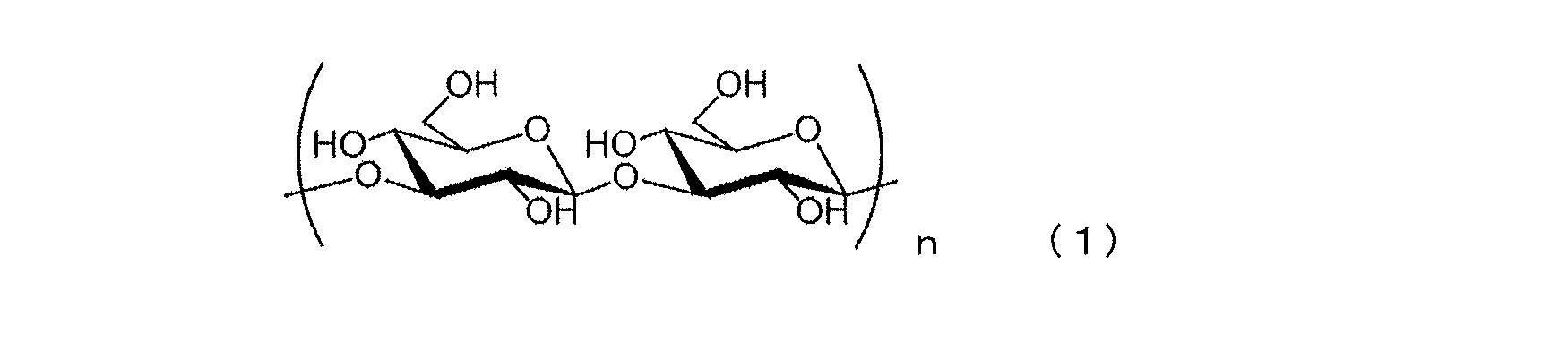
パラミロンは、藻類の主成分であり、藻類からたんぱく質等の他の成分を分離処理することによって得られる。パラミロンは、ユーグレナに貯蔵多糖として蓄積された多糖類であり、栄養条件などの環境によりエネルギー源として貯蔵または消費されるものである。パラミロンはグルコースからのみ成り、Euglena gracilisから得たパラミロンの平均重合度は、グルコース単位で約700~750であることが知られている。GPCにより測定したパラミロンの重量平均分子量は240000程度である。
本発明の実施形態に用いるパラミロンの重量平均分子量は、70000~140000の範囲にあることが好ましく、70000~120000の範囲にあることがより好ましく、70000~100000の範囲にあることがさらに好ましい。パラミロンの重量平均分子量が低すぎると、製造した樹脂の耐衝撃性が十分でない場合がある。逆に、重量平均分子量が高すぎると、製造した樹脂の流動性が低くなりすぎて、成形に支障をきたす場合がある。パラミロンを酸やアルカリで加水分解することで、パラミロンの分子量を調整することができる。分子量は加水分解条件により制御することが可能である。
パラミロンには、類似の構造物、例えばセルロース、キチン、キトサン、ヘミセルロース、キシラン、グルコマンナン、カードラン等が混合されていてもよい。このような類似の構造物が混合されている場合は、その類似の構造物の含有量は混合物全体に対して30質量%以下が好ましく、20質量%以下が好ましく、10質量%以下がさらに好ましい。
上記説明はパラミロンを対象としているが、この類縁体として、通常の非食用の多糖類、すなわち、セルロース、キチン、キトサン、ヘミセルロース、キシラン、グルコマンナン、カードランなどにも、本発明は適用可能である。
(長鎖成分)
本発明の実施形態によるパラミロン系樹脂は、パラミロンのヒドロキシ基を利用して、前記短鎖成分に加えて前記長鎖成分が導入されたものである。
本発明の実施形態によるパラミロン系樹脂は、パラミロンのヒドロキシ基を利用して、前記短鎖成分に加えて前記長鎖成分が導入されたものである。
このような長鎖成分は、パラミロン中のヒドロキシ基と長鎖反応剤とを反応させることで導入することができる。この長鎖成分は、パラミロンのヒドロキシ基の水素原子に代えて導入されたアシル基に相当する。また長鎖成分の長鎖有機基とパラミロンのピラノース環は、エステル結合を介して結合することができる。この導入されたアシル基は炭素数14以上の直鎖状飽和脂肪族アシル基であり、炭素数14~30の直鎖状飽和脂肪族アシル基が挙げられ、炭素数14~22の直鎖状飽和脂肪族アシル基が好ましく、ミリスチン酸、パルミチン酸、ステアリン酸、アラキジン酸、ベヘン酸のカルボキシル基からOHを除いた基(テトラデカノイル基、ヘキサデカノイル基、オクタデカノイル基、イコサノイル基、ドコサノイル基)がより好ましい。
長鎖反応剤は、パラミロン中のヒドロキシ基と反応できる官能基を少なくとも一つ持つ化合物であり、例えばカルボキシル基、カルボン酸ハライド基、又はカルボン酸無水物基を有する化合物を用いることができる。
長鎖反応剤には、例えば、その炭素数が14以上の長鎖カルボン酸、およびその長鎖カルボン酸の酸ハライド又は酸無水物を用いることができる。これらのカルボン酸又はカルボン酸誘導体の飽和度ができるだけ高いことが望ましく、直鎖状飽和脂肪酸、その酸ハライド又は無水物が好ましい。長鎖カルボン酸の具体例としては、例えば、ミリスチン酸、ペンタデシル酸、パルミチン酸、マルガリン酸、ステアリン酸、アラキジン酸、ベヘン酸、リグノセリン酸、セロチン酸、モンタン酸、メリシン酸等の直鎖状飽和脂肪酸が挙げられ、ミリスチン酸、パルミチン酸、ステアリン酸、アラキジン酸、ベヘン酸が好ましい。さらに長鎖カルボン酸としては、環境調和性の観点からは、天然物から得られるカルボン酸であることが好ましい。
この長鎖成分は、炭素数14以上のもの好ましく、16以上のものが特に好ましい。長鎖成分導入時の反応効率の点から、炭素数が48以下のものが好ましく、36以下のものがより好ましく、22以下のものが特に好ましい。この長鎖成分は一種単独であってもよいし、2種以上を含んでいてもよい。
パラミロンのグルコース単位あたりの導入された長鎖成分の平均個数(DSLo)(長鎖成分導入比率)、すなわちグルコース単位あたりの長鎖成分(炭素数14以上の直鎖状飽和脂肪族アシル基)で置換されたヒドロキシ基の平均個数(水酸基置換度)は、前記の式(1)及び(2)の条件を満たすことが好ましい。また、DSLoは、短鎖成分の構造および導入量、長鎖成分の構造、目的の生成物に要求される物性、製造時の効率に応じて、例えば0.1~0.5の範囲に設定することができる。より十分な長鎖成分の導入効果を得る点からDSLoは、0.14以上が好ましく、0.15以上がより好ましく、製造時の効率や耐久性(強度、耐熱性など)の観点からは、0.4以下が好ましい。
上述の長鎖成分をパラミロン又はその誘導体に導入することにより、その特性を改質することができ、例えば耐水性や熱可塑性、機械特性を向上することができる。
(短鎖成分)
本発明の実施形態によるパラミロン系樹脂は、パラミロンのヒドロキシ基を利用して、前記長鎖成分に加えて、前記短鎖成分が導入されたものである。短鎖成分として、アセチル基又は/及びプロピオニル基が好ましく、少なくともプロピオニル基を含むことが好ましく、プロピオニル基が特に好ましい。
本発明の実施形態によるパラミロン系樹脂は、パラミロンのヒドロキシ基を利用して、前記長鎖成分に加えて、前記短鎖成分が導入されたものである。短鎖成分として、アセチル基又は/及びプロピオニル基が好ましく、少なくともプロピオニル基を含むことが好ましく、プロピオニル基が特に好ましい。
このような短鎖成分は、パラミロン中のヒドロキシ基と短鎖反応剤とが反応することで導入することができる。この短鎖成分は、パラミロンのヒドロキシ基の水素原子に代えて導入されたアシル基部分に相当する。また短鎖成分の短鎖有機基(メチル基又はエチル基)とパラミロンのピラノース環は、エステル結合を介して結合することができる。
この短鎖反応剤は、パラミロン中のヒドロキシ基と反応できる官能基を少なくとも一つ持つ化合物であり、例えばカルボキシル基、カルボン酸ハライド基、カルボン酸無水物基を有する化合物が挙げられる。具体的には、脂肪族モノカルボン酸、その酸ハロゲン化物、その酸無水物が挙げられる。
この短鎖成分は、その炭素数が2~3であることが好ましく、その炭素数が3であることがより好ましく、パラミロンのヒドロキシ基の水素原子が、炭素数2~3のアシル基(アセチル基、プロピオニル基)で置き換えられていることが好ましく、少なくとも炭素数3のアシル基(プロピオニル基)で置き換えられていることがより好ましい。
パラミロンのグルコース単位あたりの導入された短鎖成分の平均個数(DSSh)(短鎖成分導入比率)、すなわちグルコース単位あたりの短鎖成分(アセチル基又は/及びプロピオニル基)で置換されたヒドロキシ基の平均個数(水酸基置換度)は、前記の式(1)及び(2)の条件を満たすことが好ましい(なお、3≧DSLo+DSShである)。また、DSSHは、2.0~2.5の範囲に設定することができる。短鎖成分の導入効果を十分に得る点から、DSSHは2.0以上が好ましく、特に、耐水性、流動性などの観点からは、DSShは2.1以上が好ましい。短鎖成分の導入効果を得ながら、長鎖成分の効果を十分に得る点から、DSShは2.5以下が好ましく、2.4以下がより好ましく、2.3以下がさらに好ましい。
上述の短鎖成分をパラミロン又はその誘導体に導入することにより、パラミロンの分子間力(分子間結合)を低減することができ、弾性率等の機械特性や、耐薬品性、表面硬度の物性を高めることができる。
式(2)に示す通り、長鎖成分の比率と短鎖成分の比率の比(DSSh/DSLo)は5以上25以下であることが好ましい。この比が5未満の場合は、材料が柔軟になりすぎて、強度・耐熱性が低下する傾向があり、逆に25を上回ると熱可塑性が不足して成形用途に不適となる。これらの点から、DSSh/DSLoは5以上が好ましく、6以上がより好ましく、25以下が好ましく、18以下がより好ましく、10以下に設定してもよい。
式(1)に示す通り、長鎖成分の比率と短鎖成分の比率の合計(DSLo+DSSh)は、2.2以上2.8以下が好ましい。長鎖成分と短鎖成分の十分な導入効果を得る点から、DSLo+DSShは、2.2以上が好ましく、2.3以上がより好ましく、また、機械特性等の観点から、2.8以下が好ましく、2.7以下がより好ましい。
(パラミロン系樹脂のヒドロキシ基の残存量)
ヒドロキシ基の残存量が多いほど、パラミロン系樹脂の最大強度や耐熱性が大きくなる傾向がある一方で、吸水性が高くなる傾向がある。一方、ヒドロキシ基の変換率(置換度)が高いほど、吸水性が低下し、可塑性や破断歪みが増加する傾向がある一方で、最大強度や耐熱性が低下する傾向がある。これらの傾向等を考慮して、ヒドロキシ基の変換率を適宜設定することができる。
ヒドロキシ基の残存量が多いほど、パラミロン系樹脂の最大強度や耐熱性が大きくなる傾向がある一方で、吸水性が高くなる傾向がある。一方、ヒドロキシ基の変換率(置換度)が高いほど、吸水性が低下し、可塑性や破断歪みが増加する傾向がある一方で、最大強度や耐熱性が低下する傾向がある。これらの傾向等を考慮して、ヒドロキシ基の変換率を適宜設定することができる。
最終生成パラミロン系樹脂のグルコース単位あたりの残存するヒドロキシ基の平均個数(水酸基残存度、DSOH)は、0~0.8の範囲に設定することができる(なお、DSLo+DSSh+DSOH=3である)。DSLo+DSShが2.2~2.8の範囲にある場合は、DSOHは0.2~0.8の範囲に設定できる。ヒドロキシ基は、最大強度等の機械特性や耐熱性等の耐久性の観点から、残存していてもよく、例えば、水酸基残存度は0.01以上に設定でき、さらに0.1以上に設定できる。特に、流動性の観点からは、最終生成パラミロン系樹脂の水酸基残存度は0.1以上が好ましく、0.2以上がより好ましく、流動性に加えて耐水性などの観点から0.8以下が好ましく、耐水性に加えてさらに耐衝撃性などの観点から0.6以下が好ましく、0.5以下がより好ましい。
(パラミロンの活性化)
パラミロンに長鎖成分と短鎖成分を導入するための反応工程の前に、パラミロンの反応性を上げるために、活性化処理(前処理工程)を行うことができる。この活性化処理は、パラミロンのアセチル化の前に通常行われる活性化処理を適用できる。
パラミロンに長鎖成分と短鎖成分を導入するための反応工程の前に、パラミロンの反応性を上げるために、活性化処理(前処理工程)を行うことができる。この活性化処理は、パラミロンのアセチル化の前に通常行われる活性化処理を適用できる。
活性化処理は、例えば、パラミロンに親和する活性化溶媒をパラミロンに対して噴霧する方法、あるいはパラミロンを活性化溶媒に浸漬する方法(浸漬法)などの湿式法で、パラミロンと当該溶媒とを接触させ、パラミロンを膨潤させる。これにより、パラミロン分子鎖間に反応剤が浸入しやすくなるため(溶媒や触媒を用いている場合はこれらとともに浸入しやすくなるため)、パラミロンの反応性が向上する。ここで、活性化溶媒は、例えば、水;酢酸、プロピオン酸、酪酸、吉草酸、カプロン酸、エナント酸、カプリル酸、ペラルゴン酸、ステアリン酸などのカルボン酸;メタノール、エタノール、プロパノール、イソプロパノールなどのアルコール;ジメチルホルムアミド、ホルムアミド、エタノールアミン、ピリジンなどの含窒素化合物;ジメチルスルホキシド等のスルホキシド化合物が挙げられ、これらの2種以上を組み合わせて使用できる。特に好ましくは、水、酢酸、ピリジン、ジメチルスルホキシドを使用できる。
長鎖脂肪酸中にパラミロンを投入し、活性化を行うこともできる。長鎖脂肪酸の融点が室温以上である場合、当該融点以上に加熱することもできる。
活性化溶媒の使用量は、パラミロン100質量部に対して例えば10質量部以上、好ましくは20質量部以上、より好ましくは30質量部以上に設定できる。パラミロンを活性化溶媒に浸漬する場合は、パラミロンに対して質量で例えば1倍以上、好ましくは5倍以上、より好ましくは10倍以上に設定することができる。前処理後の活性化溶媒の除去の負担や材料コスト低減等の点から300倍以下が好ましく、100倍以下がより好ましく、50倍以下がさらに好ましい。
活性化処理の温度は、例えば0~100℃の範囲で適宜設定できる。活性化の効率やエネルギーコスト低減の観点から10~40℃が好ましく、15~35℃がより好ましい。
長鎖脂肪酸を溶融させた中にパラミロンを投入する場合、当該長鎖脂肪酸の融点以上に加熱することもできる。
活性化処理の時間は、例えば0.1時間~72時間の範囲で適宜設定できる。十分な活性化を行い且つ処理時間を抑える観点から、0.1時間~24時間が好ましく、0.5時間~3時間がより好ましい。
活性化処理後、過剰な活性化溶媒は吸引濾過、フィルタープレス、圧搾などの固液分離方法により除去することができる。
活性化処理後、パラミロンに含まれる活性化溶媒を反応時に用いる溶媒に置換することができる。例えば、活性化溶媒を反応時に用いる溶媒に代えて上記の活性化処理の浸漬法に従って置換処理を行うことができる。
(長鎖成分よび短鎖成分の導入方法)
本発明の実施形態によるパラミロン誘導体(パラミロン系樹脂)は、以下に示す方法によって製造することができる。
本発明の実施形態によるパラミロン誘導体(パラミロン系樹脂)は、以下に示す方法によって製造することができる。
本発明の実施形態によるパラミロン誘導体の製造方法は、溶媒中、酸捕捉成分の存在下、加温下で、この溶媒中に分散されたパラミロンと短鎖反応剤(短鎖アシル化剤)および長鎖反応剤(長鎖アシル化剤)とを反応させて、パラミロンのヒドロキシ基をアシル化する工程を有する。短鎖反応剤(短鎖アシル化剤)と長鎖反応剤(長鎖アシル化剤)は溶媒に溶解していることが好ましい。酸捕捉成分を溶媒として用いることもできる。
パラミロンに長鎖成分を導入するための長鎖反応剤としては、前記の直鎖状飽和脂肪酸の酸塩化物が好ましく、一種を単独で用いてもよいし、二種以上を併用してもよい。パラミロンに短鎖成分を導入するための短鎖反応剤としては、塩化アセチル又は/及び塩化プロピオニルが好ましく、塩化プロピオニルがより好ましい。
長鎖反応剤および短鎖反応剤の添加量は、目的のパラミロン誘導体の長鎖成分による置換度(DSLo)及び短鎖成分による置換度(DSSh)に応じて設定することができる。短鎖反応剤が多すぎると、長鎖成分の結合量が低下し、長鎖成分による置換度(DSLo)が低下する傾向がある。
溶媒としては、綿繊維製のろ紙による保液率が90体積%以上となる溶媒を用いることができる。
「保液率」は以下の方法で測定することができる。
綿繊維製のろ紙(5B、40mmφ、含水率約2%)を各溶媒に室温下1hr浸漬する。浸漬前後の重量を測定し、下式に当てはめて保液率(vol%)を求める。浸漬後の試料から溶媒のしたたりがとまった時点で重量を測定した。
綿繊維製のろ紙(5B、40mmφ、含水率約2%)を各溶媒に室温下1hr浸漬する。浸漬前後の重量を測定し、下式に当てはめて保液率(vol%)を求める。浸漬後の試料から溶媒のしたたりがとまった時点で重量を測定した。
保液率(vol%)=(浸漬後重量-浸漬前重量)/浸漬前重量/溶媒比重×100
上記の手法で保液率90vol%以上となる溶媒としては、水(保液率145vol%)、酢酸(保液率109vol%)、ジオキサン(保液率93vol%)、ピリジン(保液率109vol%)、N-メチルピロリドン(保液率104vol%)、N,N-ジメチルアセトアミド(保液率112vol%)、N,N-ジメチルホルムアミド(保液率129vol%)、ジメチルスルホキシド(保液率180vol%)が挙げられる。
酸捕捉成分としては、副生する酸(塩酸、酢酸、プロピオン酸など)を中和する塩基であれば特に限定されるものではなく、水酸化ナトリウム、水酸化カリウムなどのアルカリ金属水酸化物;水酸化カルシウム、水酸化バリウムなどのアルカリ土類金属水酸化物;ナトリウムメトキシド、ナトリウムエトキシドなどの金属アルコキシド;ジアザビシクロウンデセン、ジアザビシクロノネン、トリエチルアミン、ピリジンなどの含窒素求核性化合物が挙げられ、中でもトリエチルアミンやピリジンが好ましく、溶媒としても使用できる点でピリジンが特に好ましい。酸捕捉成分を溶媒とは別に添加する場合、反応開始時から酸捕捉成分が反応系に存在することが好ましい。酸捕捉成分が反応開始時に反応系に存在していれば、アシル化剤を添加する前に添加しても後に添加しても構わない。
酸捕捉成分の添加量は、長鎖反応剤(長鎖アシル化剤)と短鎖反応剤(短鎖アシル化剤)の合計仕込み量に対して0.1~10当量が好ましく、0.5~5当量がより好ましい。ただし、含窒素求核性化合物を溶媒として用いる場合はこの範囲に限定されない。酸捕捉剤の添加量が少ないとアシル化反応の効率が低下する。また、酸捕捉剤の添加量が多いとパラミロンが分解して分子量が低下することがある。
このアシル化工程における反応温度は、50~100℃が好ましく、75~95℃がより好ましい。反応時間は、2時間から5時間に設定でき、3時間から4時間に設定することが好ましい。反応温度が十分に高いと反応速度を高くできるため、比較的短い時間でアシル化反応を完了させることができ、反応効率を高めることができる。また、反応温度が上記範囲にあれば、加熱による分子量の低下を抑えることができる。
溶媒の量は、原料のパラミロンの乾燥質量に対して10~50倍量に設定することができ、10~40倍量(質量比)に設定することが好ましい。
(熟成工程)
上記のアシル化の工程の後、アルカリ性水溶液を加えて、加温しながら保持(熟成)することが好ましい。この熟成時の温度は25~75℃が好ましく、40~70℃が好ましく、熟成の時間は1~5時間の範囲に設定でき、1~3時間の範囲が好ましい。
上記のアシル化の工程の後、アルカリ性水溶液を加えて、加温しながら保持(熟成)することが好ましい。この熟成時の温度は25~75℃が好ましく、40~70℃が好ましく、熟成の時間は1~5時間の範囲に設定でき、1~3時間の範囲が好ましい。
アルカリ性水溶液の添加量は、使用する溶媒に対して3~30質量%相当量に設定することができ、5~20質量%相当量が好ましい。
アルカリ性水溶液としては、水酸化カリウム、炭酸ナトリウム、炭酸水素ナトリウムなどの水溶液が挙げられ、水酸化ナトリウムの水溶液が好ましい。アルカリ性水溶液の濃度は1~30質量%が好ましく、5~20質量%がより好ましい。
このような熟成によって一旦結合した長鎖成分と短鎖成分が部分的に加水分解し、均質に水酸基を復活させることができ、強度や耐衝撃性などの機械特性を高めることができ、また、その後の析出工程で良好な性状(微粒状)の生成物を得ることができる。
(回収工程)
長鎖成分および短鎖成が導入されたパラミロン誘導体(生成物)は、通常の回収方法に従って反応溶液から回収することができ、その方法は限定されるものではないが、生成物が反応溶液に溶解していない場合は、反応溶液と生成物とを固液分離する回収方法が製造エネルギーの観点から好ましい。生成物が反応溶液に溶解ないし親和して固液分離が困難な場合は、反応溶液を留去し生成物を残留分として回収することができる。あるいは、反応溶液に、生成物に対する貧溶媒を添加することにより、析出した生成物を固液分離して回収してもよい。
長鎖成分および短鎖成が導入されたパラミロン誘導体(生成物)は、通常の回収方法に従って反応溶液から回収することができ、その方法は限定されるものではないが、生成物が反応溶液に溶解していない場合は、反応溶液と生成物とを固液分離する回収方法が製造エネルギーの観点から好ましい。生成物が反応溶液に溶解ないし親和して固液分離が困難な場合は、反応溶液を留去し生成物を残留分として回収することができる。あるいは、反応溶液に、生成物に対する貧溶媒を添加することにより、析出した生成物を固液分離して回収してもよい。
反応溶液を留去する場合、短鎖反応剤や反応溶媒、触媒は沸点が低いものが好ましいが、触媒を留去せずに、洗浄溶媒等により生成物から除去することもできる。また、反応溶液から溶媒等の生成物以外の成分を留去する際に、生成物が析出した時点で留去を止め、その後、残る反応溶液と析出した生成物とを固液分離して生成物を回収することもできる。
固液分離方法としては、濾過(自然ろ過、減圧ろ過、加圧ろ過、遠心ろ過、およびこれらの熱時ろ過)、自然沈降・浮上、分液、遠心分離、圧搾等が挙げられ、これらを適宜組み合わせて行ってもよい。
固液分離後の濾液に溶解した生成物(パラミロン誘導体)は、生成物に対する貧溶媒を添加することにより析出させ、さらに固液分離して回収することができる。
反応溶液から回収した固形分(パラミロン誘導体)は、必要に応じて洗浄し、通常の方法で乾燥することができる。
本方法で製造されたパラミロン誘導体は、熱可塑性のマトリックスの中にパラミロン主鎖結晶による補強結晶構造を有することができる。これは、パラミロン原料をアシル化した際の未反応部分に由来する。このようなパラミロン主鎖結晶は、例えば、X線回折法により評価できる。この評価時には、例えば、パラミロン誘導体をプレスして密度を上げることで、信号を確認しやすくすることもできる。
(その他のパラミロン誘導体の製造方法)
アシル化剤として長鎖成分と短鎖成分を有する混合酸無水物を用い、固液不均一系でパラミロンをアシル化することで、パラミロン系樹脂を得ることができる。パラミロンは活性化処理することが好ましい。活性化処理は通常の方法で行うことができる。
アシル化剤として長鎖成分と短鎖成分を有する混合酸無水物を用い、固液不均一系でパラミロンをアシル化することで、パラミロン系樹脂を得ることができる。パラミロンは活性化処理することが好ましい。活性化処理は通常の方法で行うことができる。
アシル化は、綿繊維製のろ紙による保液率90%以上となる溶媒(例えばジオキサン、乾燥パラミロン重量の例えば80~120倍量)中、酸触媒(例えば硫酸)の存在下、45~65℃で2~5時間攪拌して行うことができる。その後、水を加えて、数時間(例えば1~3時間)、加熱下(例えば55~75℃)で熟成させることが好ましい。
反応終了後は、水/メタノール混合溶媒等の貧溶媒を加えて液相に溶解している生成物を十分に析出させ、固液分離を行って生成物を回収することができる。その後、洗浄、乾燥を行うことができる。
また、アシル化は、パラミロン及びアシル化剤が溶媒に溶解した均一溶解系で行ってもよい。パラミロンは活性化処理することが好ましい。活性化処理は通常の方法で行うことができる。
アシル化の際の溶媒としては、N,N-ジメチルアセトアミド、ピリジン、N-メチルピロリジノン等のパラミロンと親和性の高い溶媒を用いる。
アシル化剤としては、アシル化に用いる溶媒と同じ溶媒中で、長鎖成分と短鎖成分を有する混合酸無水物を形成し、これを用いることができる。
反応終了後は、メタノール等の貧溶媒を加えて生成物を析出させ、固液分離を行って生成物を回収することができる。その後、洗浄、乾燥を行うことができる。
(成形用樹脂組成物および添加剤)
本発明の実施形態によるパラミロン誘導体は、所望の特性に応じて添加剤を加え、成形用材料に好適な樹脂組成物を得ることができる。このパラミロン誘導体は、通常のパラミロン誘導体と相溶する添加剤と相溶させることができる。
本発明の実施形態によるパラミロン誘導体は、所望の特性に応じて添加剤を加え、成形用材料に好適な樹脂組成物を得ることができる。このパラミロン誘導体は、通常のパラミロン誘導体と相溶する添加剤と相溶させることができる。
本発明の実施形態によるパラミロン誘導体には、通常の熱可塑性樹脂に使用する各種の添加剤を適用できる。例えば、可塑剤を添加することで、熱可塑性や破断時の伸びを一層向上できる。このような可塑剤としては、フタル酸ジブチル、フタル酸ジアリール、フタル酸ジエチル、フタル酸ジメチル、フタル酸ジ-2-メトキシエチル、エチルフタリルエチルグリコレート、メチルフタリルエチルグリコレート等のフタル酸エステル;酒石酸ジブチル等の酒石酸エステル;アジピン酸ジオクチル、アジピン酸ジイソノニル等のアジピン酸エステル;トリアセチン、ジアセチルグリセリン、トリプロピオニトリルグリセリン、グリセリンモノステアレートなどの多価アルコールエステル;リン酸トリエチル、リン酸トリフェニル、リン酸トリクレシルなどのリン酸エステル;ジブチルアジペート、ジオクチルアジペート、ジブチルアゼレート、ジオクチルアゼレート、ジオクチルセバケート等の二塩基性脂肪酸エステル;クエン酸トリエチル、クエン酸アセチルトリエチル、アセチルクエン酸トリブチル等のクエン酸エステル;エポキシ化大豆油、エポキシ化亜麻仁油等のエポキシ化植物油;ヒマシ油およびその誘導体;O-ベンゾイル安息香酸エチル等の安息香酸エステル;セバシン酸エステル、アゼライン酸エステル等の脂肪族ジカルボン酸エステル;マレイン酸エステル等の不飽和ジカルボン酸エステル;その他、N-エチルトルエンスルホンアミド、トリアセチン、p-トルエンスルホン酸O-クレジル、トリプロピオニンなどが挙げられる。中でも特に、アジピン酸ジオクチル、アジピン酸ベンジル-2ブトキシエトキシエチル、リン酸トリクレジル、リン酸ジフェニルクレジル、リン酸ジフェニルオクチルなどの可塑剤を添加すると、熱可塑性や破断時の伸びだけでなく、耐衝撃性も効果的に向上させることができる。
その他の可塑剤として、シクロヘキサンジカルボン酸ジヘキシル、シクロヘキサンジカルボン酸ジオクチル、シクロヘキサンジカルボン酸ジ-2-メチルオクチル等のシクロヘキサンジカルボン酸エステル;トリメリット酸ジヘキシル、トリメリット酸ジエチルヘキシル、トリメリット酸ジオクチル等のトリメリット酸エステル;ピロメリット酸ジヘキシル、ピロメリット酸ジエチルヘキシル、ピロメリット酸ジオクチル等のピロメリット酸エステルが挙げられる。
本発明の実施形態によるパラミロン誘導体には、必要に応じて、無機系もしくは有機系の粒状または繊維状の充填剤を添加できる。充填剤を添加することによって、強度や剛性を一層向上できる。充填剤としては、例えば、鉱物質粒子(タルク、マイカ、焼成珪成土、カオリン、セリサイト、ベントナイト、スメクタイト、クレイ、シリカ、石英粉末、ガラスビーズ、ガラス粉、ガラスフレーク、ミルドファイバー、ワラストナイト(またはウォラストナイト)など)、ホウ素含有化合物(窒化ホウ素、炭化ホウ素、ホウ化チタンなど)、金属炭酸塩(炭酸マグネシウム、重質炭酸カルシウム、軽質炭酸カルシウムなど)、金属珪酸塩(珪酸カルシウム、珪酸アルミニウム、珪酸マグネシウム、アルミノ珪酸マグネシウムなど)、金属酸化物(酸化マグネシウムなど)、金属水酸化物(水酸化アルミニウム、水酸化カルシウム、水酸化マグネシウムなど)、金属硫酸塩(硫酸カルシウム、硫酸バリウムなど)、金属炭化物(炭化ケイ素、炭化アルミニウム、炭化チタンなど)、金属窒化物(窒化アルミニウム、窒化ケイ素、窒化チタンなど)、ホワイトカーボン、各種金属箔が挙げられる。繊維状の充填剤としては、有機繊維(天然繊維、紙類など)、無機繊維(ガラス繊維、アスベスト繊維、カーボン繊維、シリカ繊維、シリカ・アルミナ繊維、ウォラストナイト、ジルコニア繊維、チタン酸カリウム繊維など)、金属繊維などが挙げられる。これらの充填剤は、単独で又は二種以上組み合わせて使用できる。
本発明の実施形態によるパラミロン誘導体には、必要に応じて、難燃剤を添加できる。難燃剤を添加することによって、難燃性を付与できる。難燃剤としては、例えば、水酸化マグネシウム、水酸化アルミニウム、ハイドロタルサイトのような金属水和物、塩基性炭酸マグネシウム、炭酸カルシウム、シリカ、アルミナ、タルク、クレイ、ゼオライト、臭素系難燃剤、三酸化アンチモン、リン酸系難燃剤(芳香族リン酸エステル類、芳香族縮合リン酸エステル類など)、リンと窒素を含む化合物(フォスファゼン化合物)などが挙げられる。これらの難燃剤は、単独で又は二種以上組み合わせて使用できる。
本発明の実施形態によるパラミロン誘導体には、必要に応じて、耐衝撃性改良剤を添加できる。耐衝撃性改良剤を添加することによって、耐衝撃性を向上できる。耐衝撃性改良剤としては、ゴム成分やシリコーン化合物を挙げられる。ゴム成分としては、天然ゴム、エポキシ化天然ゴム、合成ゴムなどが挙げられる。また、シリコーン化合物としては、アルキルシロキサン、アルキルフェニルシロキサンなどの重合によって形成された有機ポリシロキサン、もしくは、前記有機ポリシロキサンの側鎖または末端をポリエーテル、メチルスチリル、アルキル、高級脂肪酸エステル、アルコキシ、フッ素、アミノ基、エポキシ基、カルボキシル基、カルビノール基、メタクリル基、メルカプト基、フェノール基などで変性した変性シリコーン化合物などが挙げられる。これらの耐衝撃性改良剤は、単独で又は二種以上組み合わせて使用できる。
このシリコーン化合物としては、変性シリコーン化合物(変性ポリシロキサン化合物)が好ましい。この変性シリコーン化合物としては、ジメチルシロキサンの繰り返し単位から構成される主鎖を持ち、その側鎖または末端のメチル基の一部が、アミノ基、エポキシ基、カルビノール基、フェノール基、メルカプト基、カルボキシル基、メタクリル基、長鎖アルキル基、アラルキル基、フェニル基、フェノキシ基、アルキルフェノキシ基、長鎖脂肪酸エステル基、長鎖脂肪酸アミド基、ポリエーテル基から選ばれる少なくとも1種類の基を含む有機置換基で置換された構造を有する変性ポリジメチルシロキサンが好ましい。変性シリコーン化合物は、このような有機置換基を有することによって、前述のパラミロン誘導体に対する親和性が改善され、パラミロン誘導体中の分散性が向上し、耐衝撃性に優れる樹脂組成物を得ることができる。
このような変性シリコーン化合物は、通常の方法に従って製造されるものを用いることができる。
この変性シリコーン化合物に含まれる上記の有機置換基としては、下記式(2)~(20)で表されるものを挙げることができる。

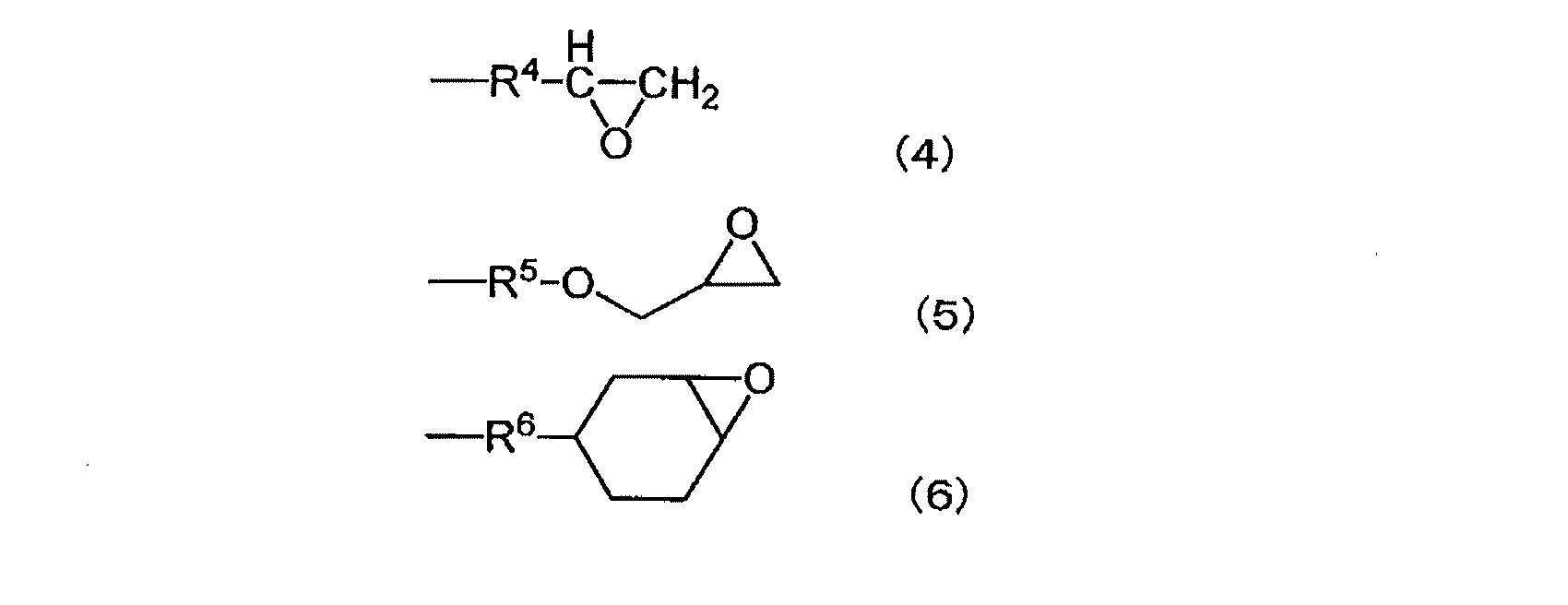
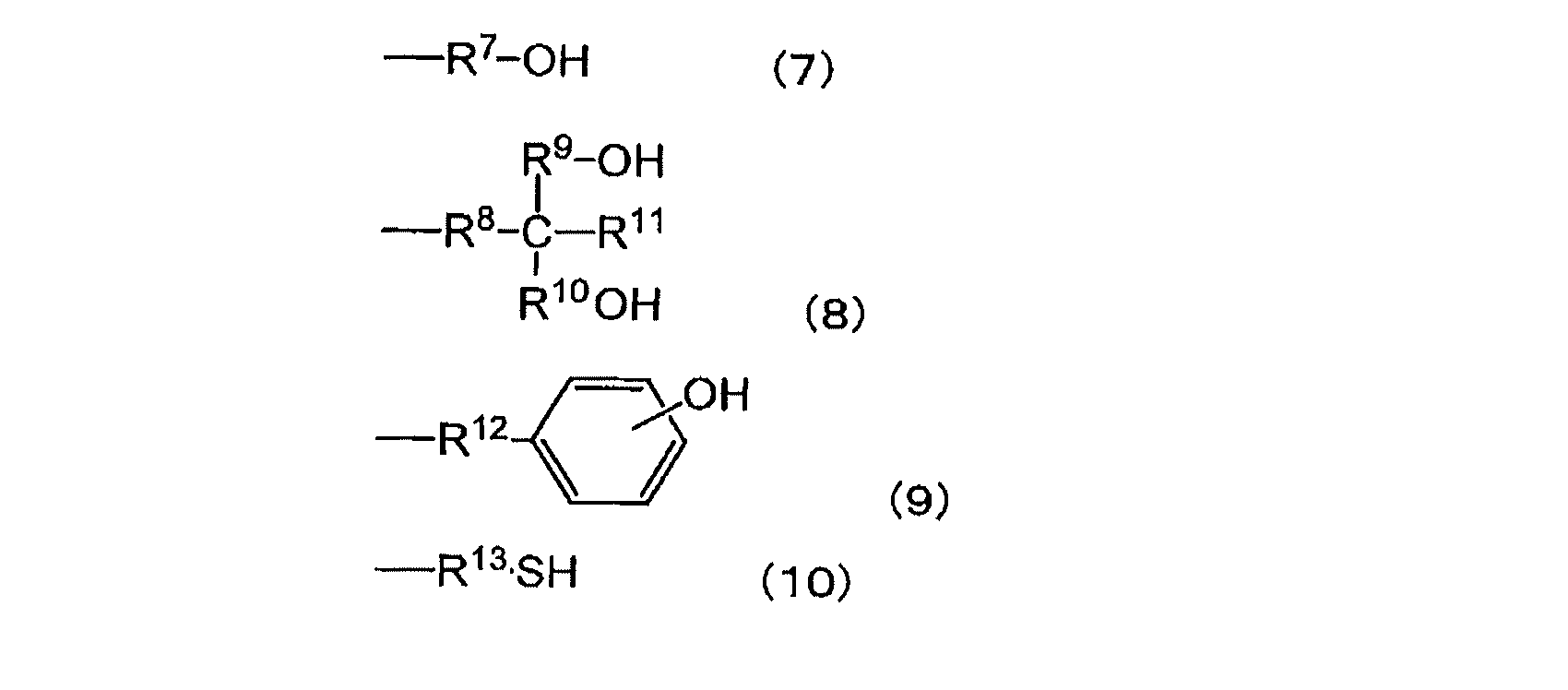

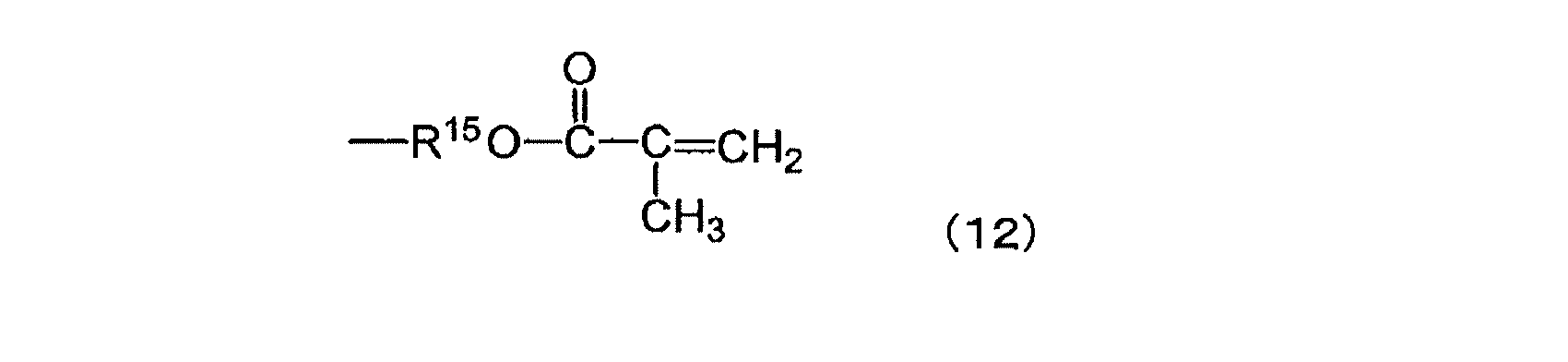

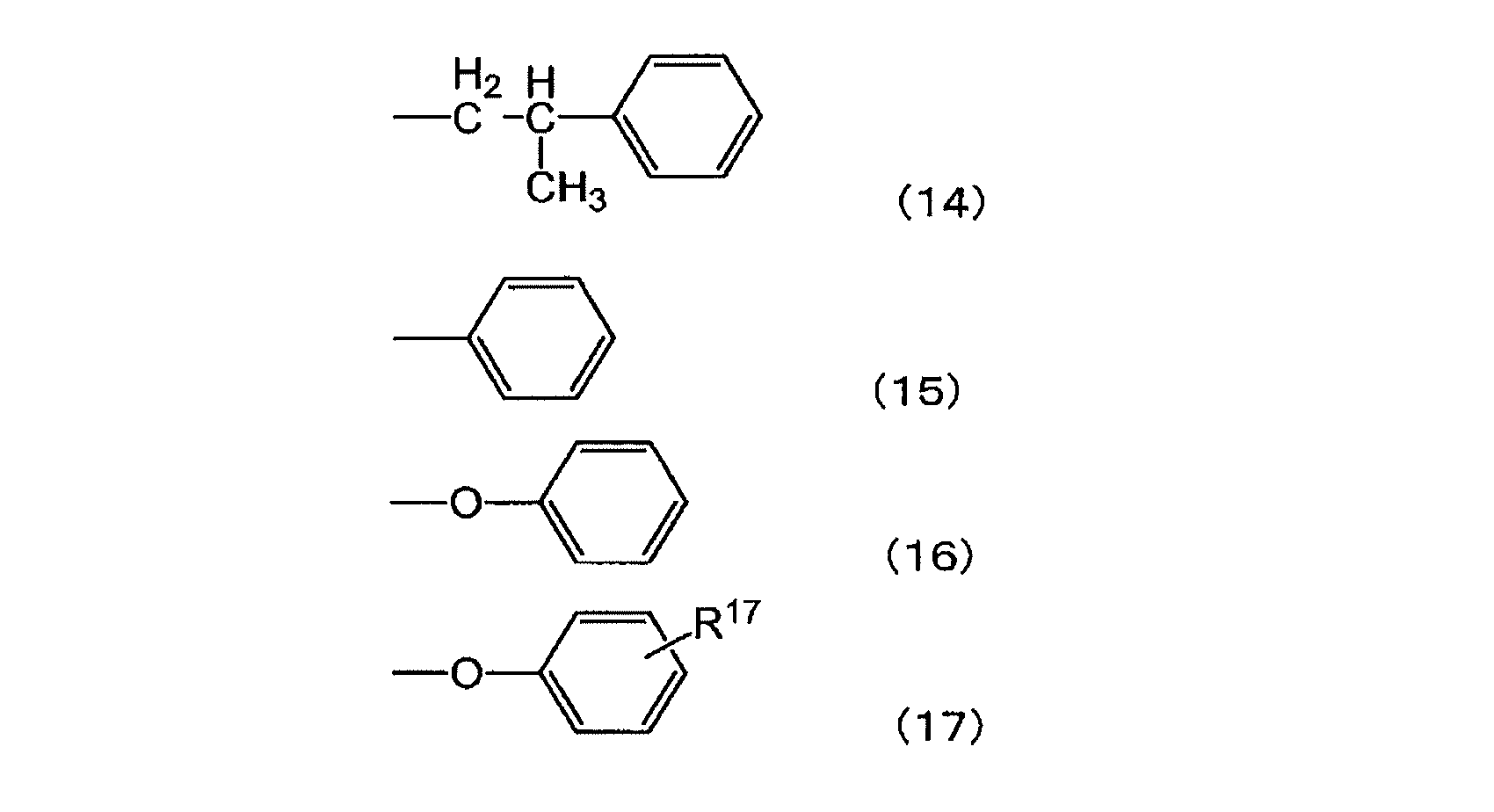


上記の式中、a、bはそれぞれ1から50の整数を表す。
上記の式中、R1~R10、R12~R15、R19、R21は、それぞれ2価の有機基を表す。2価の有機基としては、メチレン基、エチレン基、プロピレン基、ブチレン基等のアルキレン基、フェニレン基、トリレン基等のアルキルアリーレン基、-(CH2-CH2-O)c-(cは1から50の整数を表す)、-〔CH2-CH(CH3)-O〕d-(dは1から50の整数を表す)等のオキシアルキレン基やポリオキシアルキレン基、-(CH2)e-NHCO-(eは1から8の整数を表す)を挙げることができる。これらのうち、アルキレン基が好ましく、特に、エチレン基、プロピレン基が好ましい。
上記の式中、R11、R16~R18、R20、R22は、それぞれ炭素数20以下のアルキル基を表す。アルキル基としては、メチル基、エチル基、プロピル基、ブチル基、ペンチル基、ヘキシル基、ヘプチル基、オクチル基、ノニル基、デシル基、ウンデシル基、ドデシル基、トリデシル基、テトラデシル基、ペンタデシル基などが挙げられる。また、上記アルキル基の構造中に、1つ以上の不飽和結合を有していてもよい。
変性シリコーン化合物中の有機置換基の合計平均含有量は、パラミロン誘導体組成物の製造時において、当該変性シリコーン化合物がマトリックスのパラミロン誘導体中に適度な粒径(例えば0.1μm以上100μm以下)で分散可能な範囲とすることが望ましい。パラミロン誘導体中において、変性シリコーン化合物が適度な粒径で分散すると、弾性率の低いシリコーン領域の周囲への応力集中が効果的に発生し、優れた耐衝撃性を有する樹脂成形体を得ることができる。かかる有機置換基の合計平均含有量は、0.01質量%以上が好ましく、0.1質量%以上がより好ましく、また、70質量%以下が好ましく、50質量%以下がより好ましい。変性シリコーン化合物は、有機置換基が適度に含有されていれば、パラミロン系樹脂との親和性が向上し、パラミロン誘導体中において適度な粒径で分散でき、さらに、成形品において当該変性シリコーン化合物の分離によるブリードアウトを抑制することができる。有機置換基の合計平均含有量が少なすぎると、パラミロン系樹脂中において適度な粒径での分散が困難になる。
変性ポリジメチルシロキサン化合物中の有機置換基がアミノ基、エポキシ基、カルビノール基、フェノール基、メルカプト基、カルボキシル基、メタクリル基の場合、この変性ポリジメチルシロキサン化合物中の有機置換基の平均含有量は下記式(I)から求めることができる。
有機置換基平均含有量(%)=
(有機置換基の式量/有機置換基当量)×100 (I)
(有機置換基の式量/有機置換基当量)×100 (I)
式(I)中、有機置換基当量は、有機置換基1モルあたりの変性シリコーン化合物の質量の平均値である。
変性ポリジメチルシロキサン化合物中の有機置換基がフェノキシ基、アルキルフェノキシ基、長鎖アルキル基、アラルキル基、長鎖脂肪酸エステル基、長鎖脂肪酸アミド基の場合、この変性ポリジメチルシロキサン化合物中の有機置換基の平均含有量は下記式(II)から求めることができる。
有機置換基平均含有量(%)=
x×w/[(1-x)×74+x×(59+w)]×100 (II)
x×w/[(1-x)×74+x×(59+w)]×100 (II)
式(II)中、xは変性ポリジメチルシロキサン化合物中の全シロキサン繰り返し単位に対する有機置換基含有シロキサン繰り返し単位のモル分率の平均値であり、wは有機置換基の式量である。
変性ポリジメチルシロキサン化合物中の有機置換基がフェニル基の場合、この変性ポリジメチルシロキサン化合物中のフェニル基の平均含有量は下記式(III)から求めることができる。
フェニル基平均含有量(%)=
154×x/[74×(1-x)+198×x]×100 (III)
154×x/[74×(1-x)+198×x]×100 (III)
式(III)中、xは変性ポリジメチルシロキサン化合物(A)中の全シロキサン繰り返し単位に対するフェニル基含有シロキサン繰り返し単位のモル分率の平均値である。
変性ポリジメチルシロキサン化合物中の有機置換基がポリエーテル基の場合、この変性ポリジメチルシロキサン化合物中のポリエーテル基の平均含有量は下記式(IV)から求めることができる。
ポリエーテル基平均含有量(%)=HLB値/20×100 (IV)
式(IV)中、HLB値は界面活性剤の水と油への親和性の程度を表す値であり、グリフィン法に基づいて下記の式(V)により定義される。
HLB値=20×(親水部の式量の総和/分子量) (V)
本実施形態のパラミロン誘導体へは、当該誘導体に対する親和性が異なる2種類以上の変性シリコーン化合物を添加してもよい。この場合、比較的親和性の低い変性シリコーン化合物(A1)の分散性が、比較的親和性の高い変性シリコーン化合物(A2)によって改善され、より一層優れた耐衝撃性を有するパラミロン系樹脂組成物を得ることができる。比較的親和性の低い変性シリコーン化合物(A1)の有機置換基の合計平均含有量としては、0.01質量%以上が好ましく、0.1質量%以上がより好ましく、また15質量%以下が好ましく、10質量%以下がより好ましい。比較的親和性の高い変性シリコーン化合物(A2)の有機置換基の合計平均含有量は、15質量%以上が好ましく、20質量%以上がより好ましく、また90質量%以下が好ましい。
変性シリコーン化合物(A1)と変性シリコーン化合物(A2)との配合比(質量比)は、10/90~90/10の範囲で設定できる。
変性シリコーン化合物においては、ジメチルシロキサン繰返し単位および有機置換基含有シロキサン繰り返し単位が、同種のものが連続して接続されても、交互に接続されても、また、ランダムに接続されていてもよい。変性シリコーン化合物は、分岐構造を有していてもよい。
変性シリコーン化合物の数平均分子量は、900以上が好ましく、1000以上がより好ましく、また1000000以下が好ましく、300000以下がより好ましく、100000以下がさらに好ましい。変性シリコーン化合物の分子量が十分に大きいと、パラミロン誘導体組成物の製造時において、溶融した当該パラミロン誘導体と混練時に揮発による喪失を抑制することができる。また、変性シリコーン化合物の分子量が大きすぎることなく適度な大きさであると、分散性がよく均一な成形品を得ることができる。
数平均分子量は、試料のクロロホルム0.1%溶液のGPCによる測定値(ポリスチレン標準試料で較正)を採用することができる。
このような変性シリコーン化合物の添加量は、十分な添加効果を得る点から、パラミロン誘導体組成物全体に対して1質量%以上が好ましく、2質量%以上がより好ましい。パラミロン系樹脂の強度等の特性を十分に確保し、またブリードアウトを抑制する点から20質量%以下が好ましく、10質量%以下がより好ましい。
このような変性シリコーン化合物をパラミロン誘導体に添加することにより、樹脂中に変性シリコーン化合物を適度な粒径(例えば0.1~100μm)で分散させることができ、樹脂組成物の耐衝撃性を向上できる。
本実施形態のパラミロン誘導体には、必要に応じて、着色剤、酸化防止剤、熱安定剤など、通常の樹脂組成物に適用される添加剤を添加してもよい。
本実施形態のパラミロン誘導体には、必要に応じて、一般的な熱可塑性樹脂を添加してもよい。
熱可塑性樹脂として、ポリエステルを添加することができ、直鎖状脂肪族ポリエステルを好適に用いることができる。この直鎖状脂肪族ポリエステル(Y)としては、下記(Y1)及び(Y2)の直鎖状脂肪族ポリエステルが好ましく、例えば、ポリブチレンサクシネート、ポリブチレンサクシネートアジペート、ポリカプロラクトン等が挙げられる。
(Y1)下記式(21)及び式(22)の少なくとも一方の繰り返し単位を含む直鎖状脂肪族ポリエステル
-(CO-R23-COO-R24-O-)- (21)
-(CO-R25-O-)- (22)
-(CO-R23-COO-R24-O-)- (21)
-(CO-R25-O-)- (22)
前記式(21)中、R23は、二価脂肪族基を表し、その炭素数は、1~12であり、好ましくは2~8であり、より好ましくは2~4である。またR24は、二価脂肪族基を表し、その炭素数は、2~12であり、好ましくは2~8であり、より好ましくは2~4である。
前記式(22)中、R25は、二価脂肪族基を表し、その炭素数は、2~10であり、好ましくは2~8であり、より好ましくは2~4である。
(Y2)環状エステルの開環重合物からなる直鎖状脂肪族ポリエステル。
前記直鎖状脂肪族ポリエステル(Y1)は、例えば、脂肪族ジカルボン酸、その酸無水物及びそのジエステル体からなる群から選択された少なくとも一種と、脂肪族ジオールとの縮合反応により得られる。
前記脂肪族ジカルボン酸は、例えば、炭素数3~12であり、好ましくは炭素数3~9であり、より好ましくは炭素数3~5である。この脂肪族カルボン酸は、例えば、アルカンジカルボン酸であり、具体例として、例えば、マロン酸、コハク酸、アジピン酸、セバシン酸、アゼライン酸、ドデカンジカルボン酸等があげられる。前記脂肪族ジカルボン酸は、例えば、いずれか一種類を使用してもよいし、二種類以上を併用してもよい。
前記脂肪族ジオールは、例えば、炭素数2~12であり、好ましくは炭素数2~8であり、より好ましくは炭素数2~6である。この脂肪族ジオールは、例えば、アルキレングリコールであり、具体例として、例えば、エチレングリコール、1,3-プロピレングリコール、1,4-ブタンジオール、1,6-ヘキサンジオール、1,9-ノナンジオール、1,10-デカンジオール及び1,12-ドデカンジオール等があげられる。中でも、炭素数2~6の直鎖型脂肪族ジオールが好ましく、特に、エチレングリコール、1,3-プロピレングリコール、1,4-ブタンジオール、1,6-ヘキサンジオールが好ましい。前記脂肪族ジオールは、例えば、いずれか一種類を使用してもよいし、二種類以上を併用してもよい。
前記直鎖状脂肪族ポリエステル(Y2)は、環状エステルが開環重合した直鎖状脂肪族ポリエステルである。この環状エステルは、例えば、炭素数2~12のラクトンがあげられ、具体例として、例えば、α-アセトラクトン、β-プロピオラクトン、γ-ブチロラクトン及びδ-バレロラクトン等があげられる。前記環状エステルは、例えば、いずれか一種類を使用してもよいし、二種類以上を併用してもよい。
前記直鎖状脂肪族ポリエステル(Y)の数平均分子量は、特に制限されず、下限は、例えば、10000以上が好ましく、より好ましくは20000以上であり、また、上限は、例えば、200000以下が好ましく、より好ましくは100000以下である。前記脂肪族ポリエステルは、その分子量を前記範囲に設定することで、例えば、より分散性に優れ、より均一な成形体を得ることができる。
前記数平均分子量は、例えば、試料のクロロホルム0.1%溶液に関する、GPCによる測定値(ポリスチレン標準試料で較正)を採用できる。
本発明の実施形態によるパラミロン誘導体には、熱可塑性ポリウレタンエラストマー(TPU)などの柔軟性に優れる熱可塑性樹脂を添加することにより、耐衝撃性を向上できる。このような熱可塑性樹脂(特にTPU)の添加量は、十分な添加効果を得る点から、本実施形態のパラミロン誘導体を含む組成物全体に対して1質量%以上が好ましく、5質量%以上がより好ましい。
耐衝撃性向上に好適な熱可塑性ポリウレタンエラストマー(TPU)は、ポリオール、ジイソシアネート、および鎖延長剤を用いて調製されるものを用いることができる。
このポリオールとしては、ポリエステルポリオール、ポリエステルエーテルポリオール、ポリカーボネートポリオール、ポリエーテルポリオールが挙げられる。
上記のポリエステルポリオールとしては、脂肪族ジカルボン酸(コハク酸、アジピン酸、セバシン酸、アゼライン酸等)、芳香族ジカルボン酸(フタル酸、テレフタル酸、イソフタル酸、ナフタレンジカルボン酸等)、脂環族ジカルボン酸(ヘキサヒドロフタル酸、ヘキサヒドロテレフタル酸、ヘキサヒドロイソフタル酸等)等の多価カルボン酸又はこれらの酸エステルもしくは酸無水物と、エチレングリコール、1,3-プロピレングリコール、1,2-プロピレングリコール、1,3-ブタンジオール、1,4-ブタンジオール、1,5-ペンタンジオール、1,6-ヘキサンジオール、3-メチル-1,5-ペンタンジオール、ネオペンチルグリコール、1,3-オクタンジオール、1,9-ノナンジオール等の多価アルコール又はこれらの混合物との脱水縮合反応で得られるポリエステルポリオール;ε-カプロラクトン等のラクトンモノマーの開環重合で得られるポリラクトンジオール等が挙げられる。
上記のポリエステルエーテルポリオールとしては、脂肪族ジカルボン酸(コハク酸、アジピン酸、セバシン酸、アゼライン酸等)、芳香族ジカルボン酸(フタル酸、テレフタル酸、イソフタル酸、ナフタレンジカルボン酸等)、脂環族ジカルボン酸(ヘキサヒドロフタル酸、ヘキサヒドロテレフタル酸、ヘキサヒドロイソフタル酸等)等の多価カルボン酸又はこれらの酸エステルもしくは酸無水物と、ジエチレングリコールもしくはアルキレンオキサイド付加物(プロピレンオキサイド付加物等)等のグリコール等又はこれらの混合物との脱水縮合反応で得られる化合物が挙げられる。
上記のポリカーボネートポリオールとしては、例えば、エチレングリコール、1,3-プロピレングリコール、1,2-プロピレングリコール、1,3-ブタンジオール、1,4-ブタンジオール、1,5-ペンタンジオール、1,6-ヘキサンジオール、3-メチル-1,5-ペンタンジオール、ネオペンチルグリコール、1,8-オクタンジオール、1,9-ノナンジオール、ジエチレングリコール等の多価アルコールの1種または2種以上と、ジエチレンカーボネート、ジメチルカーボネート、ジエチルカーボネート等とを反応させて得られるポリカーボネートポリオールが挙げられる。また、ポリカプロラクトンポリオール(PCL)とポリヘキサメチレンカーボネート(PHL)との共重合体であってもよい。
上記のポリエーテルポリオールとしては、エチレンオキサイド、プロピレンオキサイド、テトラヒドロフラン等の環状エーテルをそれぞれ重合させて得られるポリエチレングリコール、ポリプロピレングリコール、ポリテトラメチレンエーテルグリコール等、及び、これらのコポリエーテルが挙げられる。
TPUの形成に用いられるジイソシアネートとしては、例えば、トリレンジイソシアネート(TDI)、4,4’-ジフェニルメタンジイソシアネート(MDI)、1,5-ナフチレンジイソシアネート(NDI)、トリジンジイソシアネート、1,6-ヘキサメチレンジイソシアネート(HDI)、イソホロンジイソシアネート(IPDI)、キシリレンジイソシアネート(XDI)、水添XDI、トリイソシアネート、テトラメチルキシレンジイソシアネート(TMXDI)、1,6,11-ウンデカントリイソシアネート、1,8-ジイソシアネートメチルオクタン、リジンエステルトリイソシアネート、1,3,6-ヘキサメチレントリイソシアネート、ビシクロヘプタントリイソシアネート、ジシクロヘキシルメタンジイソシアネート(水素添加MDI;HMDI)等が挙げられる。これらの中でも、4,4’-ジフェニルメタンジイソシアネート(MDI)及び1,6-ヘキサメチレンジイソシアネート(HDI)を好適なものとして用いることができる。
TPUの形成に用いられる鎖延長剤としては、低分子量ポリオールが使用できる。この低分子量ポリオールとしては、例えば、エチレングリコール、1,3-プロピレングリコール、1,2-プロピレングリコール、1,3-ブタンジオール、1,4-ブタンジオール、1,5-ペンタンジオール、1,6-ヘキサンジオール、3-メチル-1,5-ペンタンジオール、ネオペンチルグリコール、1,8-オクタンジオール、1,9-ノナンジオール、ジエチレングリコール、1,4-シクロヘキサンジメタノール、グリセリン等の脂肪族ポリオール;1,4-ジメチロールベンゼン、ビスフェノールA、ビスフェノールAのエチレンオキサイドもしくはプロピレンオキサイド付加物等の芳香族グリコールが挙げられる。
これらの材料から得られる熱可塑性ポリウレタンエラストマー(TPU)に、シリコーン化合物が共重合されていると、さらに優れた耐衝撃性を得ることができる。
これらの熱可塑性ポリウレタンエラストマー(TPU)は、単独で用いても、組み合わせて用いてもよい。
本発明の実施形態によるパラミロン誘導体に各種添加剤や熱可塑性樹脂を添加した樹脂組成物の製造方法については、特に限定はなく、例えば各種添加剤とパラミロン系樹脂をハンドミキシングや、公知の混合機、例えばタンブラーミキサー、リボンブレンダー、単軸や多軸混合押出機、混練ニーダー、混練ロール等のコンパウンディング装置で溶融混合し、必要に応じ適当な形状に造粒等を行うことにより製造できる。また別の好適な製造方法として、有機溶媒等の溶剤に分散させた、各種添加剤と樹脂を混合し、さらに必要に応じて、凝固用溶剤を添加して各種添加剤と樹脂の混合組成物を得て、その後、溶剤を蒸発させる製造方法がある。
以上に説明した実施形態によるパラミロン系樹脂は、成形用材料(樹脂組成物)のベース樹脂として用いることができる。当該パラミロン系樹脂をベース樹脂として用いた成形用材料は、電子機器用外装などの筺体などの成形体に好適である。
ここでベース樹脂とは、成形用材料中の主成分を意味し、この主成分の機能を妨げない範囲で他の成分を含有することを許容することを意味し、特にこの主成分の含有割合を特定するものではないが、この主成分が組成物中の50質量%以上、好ましくは70質量%以上、より好ましくは80質量%以上、特に好ましくは90質量%以上を占めることを包含するものである。
ここでベース樹脂とは、成形用材料中の主成分を意味し、この主成分の機能を妨げない範囲で他の成分を含有することを許容することを意味し、特にこの主成分の含有割合を特定するものではないが、この主成分が組成物中の50質量%以上、好ましくは70質量%以上、より好ましくは80質量%以上、特に好ましくは90質量%以上を占めることを包含するものである。
以下、具体例を挙げて本発明をさらに詳しく説明する。
[重量平均分子量の測定]
パラミロン及びパラミロン系樹脂の重量平均分子量はGPCにより以下の条件で測定して求めた。測定結果を表1~3に示す。
パラミロン及びパラミロン系樹脂の重量平均分子量はGPCにより以下の条件で測定して求めた。測定結果を表1~3に示す。
(パラミロンのGPC測定条件)
カラム:PLgel20μmMIXED-A(製品名、アジレントテクノロジー(株)製)
溶離液:ジメチルアセトアミド(DMAc)溶液(0.1M LiCl)
流速:0.5mL/min
検出器:RI(示差屈折率)( 東ソー(株)製RI-71)
温度:23.0℃
標準試料:Pullulan standard
ポンプ:島津製作所製LC-20AD
オートサンプラ―:島津製作所製SIL-20ACHT
カラムオーブン:東ソー製CTO-20AC
カラム:PLgel20μmMIXED-A(製品名、アジレントテクノロジー(株)製)
溶離液:ジメチルアセトアミド(DMAc)溶液(0.1M LiCl)
流速:0.5mL/min
検出器:RI(示差屈折率)( 東ソー(株)製RI-71)
温度:23.0℃
標準試料:Pullulan standard
ポンプ:島津製作所製LC-20AD
オートサンプラ―:島津製作所製SIL-20ACHT
カラムオーブン:東ソー製CTO-20AC
(パラミロン系樹脂のGPC測定条件)
カラム:SHIMPAC GPC-80MC×2本、GPC-8025C×1本(製品名、島津製作所(株)製)
溶離液:クロロホルム(CHCl3)
流速:1.0mL/min
検出器:RI(示差屈折率)(島津製作所製 RID-10A)
温度:40.0℃
標準試料:Polystyrene standard
ポンプ:島津製作所製LC-20AD
オートサンプラ―:島津製作所製SIL-20A
カラムオーブン:島津製作所製CTO-20A
カラム:SHIMPAC GPC-80MC×2本、GPC-8025C×1本(製品名、島津製作所(株)製)
溶離液:クロロホルム(CHCl3)
流速:1.0mL/min
検出器:RI(示差屈折率)(島津製作所製 RID-10A)
温度:40.0℃
標準試料:Polystyrene standard
ポンプ:島津製作所製LC-20AD
オートサンプラ―:島津製作所製SIL-20A
カラムオーブン:島津製作所製CTO-20A
(実施例1)
原料パラミロンを塩酸水溶液で処理することで、分子量を調整したパラミロン1を得た。次に、パラミロン1を固液不均一系でアシル化することで、本実施例のパラミロン系樹脂を得た。具体的には、下記に従ってパラミロン系樹脂(パラミロンプロピオネートステアレート)を作製した。
原料パラミロンを塩酸水溶液で処理することで、分子量を調整したパラミロン1を得た。次に、パラミロン1を固液不均一系でアシル化することで、本実施例のパラミロン系樹脂を得た。具体的には、下記に従ってパラミロン系樹脂(パラミロンプロピオネートステアレート)を作製した。
原料パラミロン(重量平均分子量242000)15g及び1%塩酸水溶液150gを反応器に投入し、100℃で4時間撹拌後、水で洗浄することで、分子量を調整したパラミロン1を得た。パラミロン1の重量平均分子量(Mw)は、139000であった。
パラミロン1の4.5g(乾燥質量換算、27.8mmol/グルコース単位)を反応器に投入し、窒素雰囲気下で59mlのN-メチルピロリドンと8.2mLのピリジンの混合液に分散させ、室温で一晩撹拌して活性化を行った。
その後、パラミロンの分散液を10℃以下に冷却し、ステアロイルクロリド1.68g(5.6mmol)と塩化プロピオニル7.70g(83.3mmol)を予め混合して10℃以下を維持しながら反応器に投入した。
90℃で4時間加熱しながら撹拌した後、65℃まで冷却し、メタノール67mlを滴下して30分程度撹拌した。
さらに水を15ml加えて生成物を析出させ、吸引ろ過で回収した。得られた固形分を100mlのメタノール/水混合液(9/1v/v)でろ液の色が消えるまで(5回)洗浄した。
洗浄した固形分を105℃で5時間真空乾燥し、粉末状のパラミロン系樹脂(パラミロンプロピオネートステアレート)9.44g(収率100%)を得た。
得られたパラミロン系樹脂(パラミロンプロピオネートステアレート)を1H-NMR(Bruker社製、AV-400、400MHz、溶媒:CDCl3)によって測定したところ、DSLoは0.16、DSShは2.4であった。
また、このパラミロン系樹脂について、下記に従って評価を行った。結果を表1に示す。
[ガラス転移点(Tg)の測定]
ガラス転移点は、下記の条件で示差走査熱量測定(DSC:Differential scanning calorimetry)を行って求めた。測定装置は、セイコーインスツルメンツ社のEXSTAR2000,DSC6200を用いた。
パラミロン系樹脂を20℃から200℃まで10℃/minで昇温した後、200℃から-30℃まで50℃/minで急冷した。そして、-30℃から200℃まで20℃/minで昇温した時のガラス転移点(Tg)を測定した。
ガラス転移点は、下記の条件で示差走査熱量測定(DSC:Differential scanning calorimetry)を行って求めた。測定装置は、セイコーインスツルメンツ社のEXSTAR2000,DSC6200を用いた。
パラミロン系樹脂を20℃から200℃まで10℃/minで昇温した後、200℃から-30℃まで50℃/minで急冷した。そして、-30℃から200℃まで20℃/minで昇温した時のガラス転移点(Tg)を測定した。
[射出成形体の作製]
射出成形(Thermo Electron Corporation製、HAAKE MiniJet II)を使用して、上記で得たパラミロン系樹脂から下記形状の成形体を作製した。
成形体サイズ:厚み2.4mm、幅12.4mm、長さ80mm
その際、成形機のシリンダー温度を200℃、金型温度を65℃、射出圧力1200bar(120MPa)で5秒間、保圧600bar(60MPa)で20秒間の成形条件に設定した。
射出成形(Thermo Electron Corporation製、HAAKE MiniJet II)を使用して、上記で得たパラミロン系樹脂から下記形状の成形体を作製した。
成形体サイズ:厚み2.4mm、幅12.4mm、長さ80mm
その際、成形機のシリンダー温度を200℃、金型温度を65℃、射出圧力1200bar(120MPa)で5秒間、保圧600bar(60MPa)で20秒間の成形条件に設定した。
[曲げ特性の測定]
上記の成形体について、JIS K7171に基づいて曲げ試験を行い、最大曲げ応力、曲げ弾性率、曲げ破断伸びを測定した。
上記の成形体について、JIS K7171に基づいて曲げ試験を行い、最大曲げ応力、曲げ弾性率、曲げ破断伸びを測定した。
[アイゾット衝撃強度の測定]
上記の成形体について、JIS K7110に記載の条件でノッチ付きアイゾット衝撃強度を測定した。
上記の成形体について、JIS K7110に記載の条件でノッチ付きアイゾット衝撃強度を測定した。
得られたデータは下記の基準で評価した。
アイゾット衝撃強度の評価基準
○:5.0kJ/m2以上
×:5.0kJ/m2未満
アイゾット衝撃強度の評価基準
○:5.0kJ/m2以上
×:5.0kJ/m2未満
[流動性(メルトフローレート(MFR))の測定]
高下式フローテスター(島津製作所株式会社製、製品名:CFT-500D)を用い、JIS7210:1990に基づいて、温度210℃、荷重5kg、ダイ2mmφ×10mm(穴の直径2mm、穴の長さ10mm)、余熱2分(試料をシリンダー充填してピストンを挿入した時点から荷重をかけるまでの時間)の条件でMFRを測定した。
高下式フローテスター(島津製作所株式会社製、製品名:CFT-500D)を用い、JIS7210:1990に基づいて、温度210℃、荷重5kg、ダイ2mmφ×10mm(穴の直径2mm、穴の長さ10mm)、余熱2分(試料をシリンダー充填してピストンを挿入した時点から荷重をかけるまでの時間)の条件でMFRを測定した。
得られたデータは下記の基準で評価した。
MFRの評価基準
○:2g/10min以上
×:2g/10min未満
MFRの評価基準
○:2g/10min以上
×:2g/10min未満
(実施例2)
原料パラミロン(重量平均分子量242000)15g及び3%塩酸水溶液150gを反応器に投入し、100℃で4時間撹拌後、水で洗浄することで、分子量を調整したパラミロン2を得た。パラミロン2の重量平均分子量(Mw)は、83700であった。パラミロン1をパラミロン2に変更した以外は実施例1と同様の分量と方法に従って、パラミロン系樹脂(パラミロンプロピオネートステアレート)を作製した(収量9.3g、収率99%)。
原料パラミロン(重量平均分子量242000)15g及び3%塩酸水溶液150gを反応器に投入し、100℃で4時間撹拌後、水で洗浄することで、分子量を調整したパラミロン2を得た。パラミロン2の重量平均分子量(Mw)は、83700であった。パラミロン1をパラミロン2に変更した以外は実施例1と同様の分量と方法に従って、パラミロン系樹脂(パラミロンプロピオネートステアレート)を作製した(収量9.3g、収率99%)。
得られたパラミロン系樹脂(パラミロンプロピオネートステアレート)を実施例1と同様に1H-NMRによって測定したところ、DSLoは0.14、DSShは2.4であった。
また、このパラミロン系樹脂について、実施例1と同様の方法に従って衝撃強度等の機械特性と流動性の評価を行った。結果を表1に示す。
(実施例3)
原料パラミロン(重量平均分子量242000)15g及び3%塩酸水溶液150gを反応器に投入し、100℃で6時間撹拌後、水で洗浄することで、分子量を調整したパラミロン3を得た。パラミロン3の重量平均分子量(Mw)は、71200であった。パラミロン1をパラミロン3に変更した以外は実施例1と同様の分量と方法に従って、パラミロン系樹脂(パラミロンプロピオネートステアレート)を作製した(収量8.9g、収率93%)。
原料パラミロン(重量平均分子量242000)15g及び3%塩酸水溶液150gを反応器に投入し、100℃で6時間撹拌後、水で洗浄することで、分子量を調整したパラミロン3を得た。パラミロン3の重量平均分子量(Mw)は、71200であった。パラミロン1をパラミロン3に変更した以外は実施例1と同様の分量と方法に従って、パラミロン系樹脂(パラミロンプロピオネートステアレート)を作製した(収量8.9g、収率93%)。
得られたパラミロン系樹脂(パラミロンプロピオネートステアレート)を実施例1と同様に1H-NMRによって測定したところ、DSLoは0.16、DSShは2.5であった。
また、このパラミロン系樹脂について、実施例1と同様の方法に従って衝撃強度等の機械特性と流動性の評価を行った。結果を表1に示す。
(比較例1)
原料パラミロン(重量平均分子量242000)を塩酸水溶液で処理しないでアシル化した以外は実施例1と同様の分量と方法に従って、パラミロン系樹脂(パラミロンプロピオネートステアレート)を作製した(収量8.9g、収率93%)。
原料パラミロン(重量平均分子量242000)を塩酸水溶液で処理しないでアシル化した以外は実施例1と同様の分量と方法に従って、パラミロン系樹脂(パラミロンプロピオネートステアレート)を作製した(収量8.9g、収率93%)。
得られたパラミロン系樹脂(パラミロンプロピオネートステアレート)を実施例1と同様に1H-NMRによって測定したところ、DSLoは0.16、DSShは2.3であった。
また、このパラミロン系樹脂について、実施例1と同様の方法に従って衝撃強度等の機械特性と流動性の評価を行った。結果を表1に示す。なお、比較例1のパラミロン系樹脂はクロロホルムに十分に溶解しなかったためGPC測定を行えなかった。
表1に、製造したパラミロン系樹脂(パラミロンプロピオネートステアレート)の長鎖成分(オクタデカノイル基(ステアリン酸に含まれるアシル基部分に相当))、短鎖成分(プロピオニル基)及びそれらの置換度、並びに衝撃強度等の機械特性及び流動性の評価結果をまとめた。
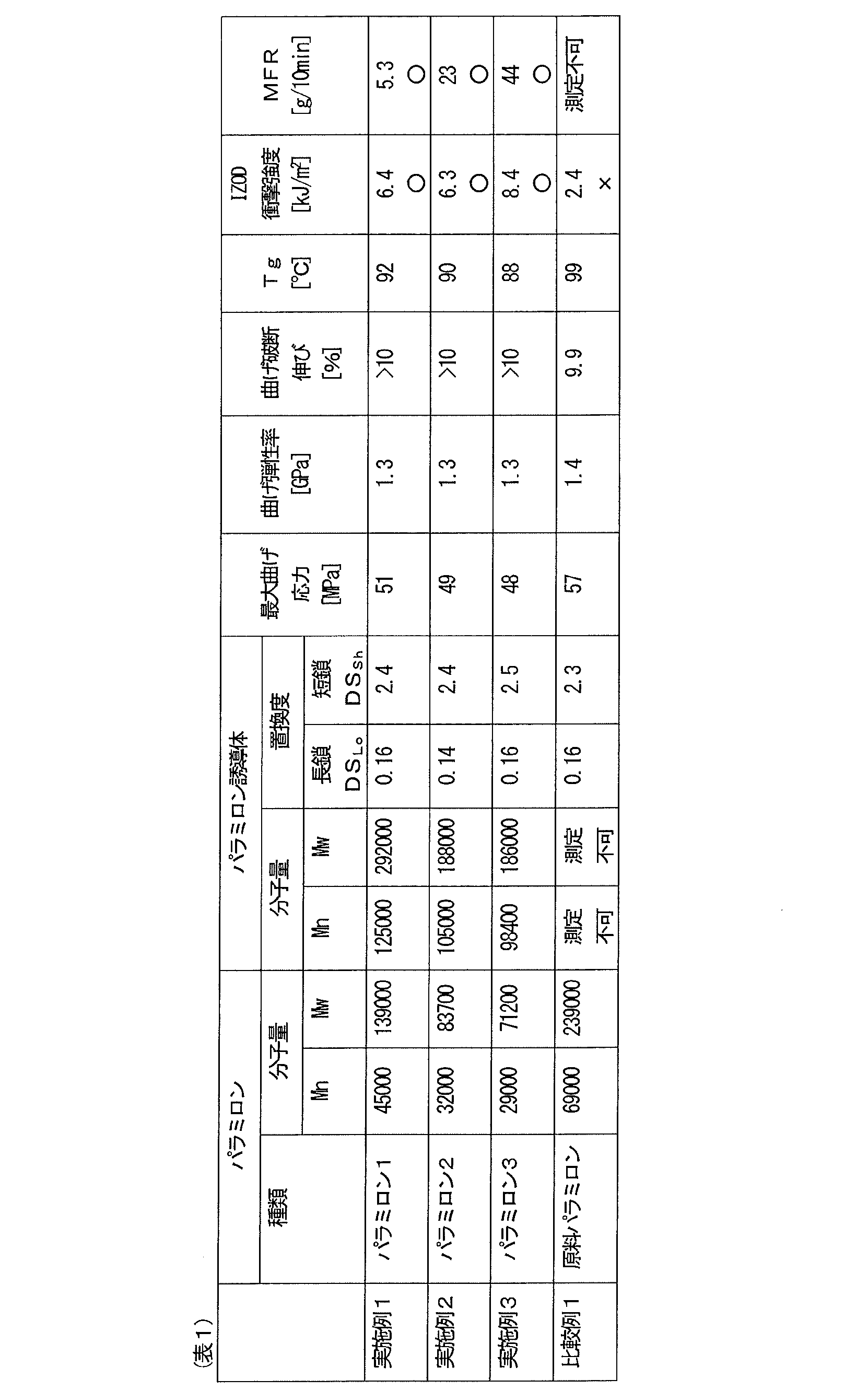
表1が示すように、本発明の実施形態による実施例のパラミロン系樹脂(パラミロン誘導体)は、いずれも機械特性(衝撃強度等)および熱可塑性(流動性:MFR)に優れることが分かる。
一方、重量平均分子量が70000~140000の範囲にないパラミロンを用いて作製した比較例1のパラミロン系樹脂は、生成物の不均質性が高く、曲げ破断伸びが低下し、衝撃強度が劣るとともに、熱可塑性(流動性:MFR)も不十分であることが分かる。
(実施例4)
長鎖反応剤と短鎖反応剤の量をステアロイルクロリド3.36g(11.1mmol)と塩化プロピオニル7.70g(83.3mmol)へ変更した以外は実施例1と同じ方法に従って、パラミロン系樹脂(パラミロンプロピオネートステアレート)を作製した(収量8.3g、収率82%)。
長鎖反応剤と短鎖反応剤の量をステアロイルクロリド3.36g(11.1mmol)と塩化プロピオニル7.70g(83.3mmol)へ変更した以外は実施例1と同じ方法に従って、パラミロン系樹脂(パラミロンプロピオネートステアレート)を作製した(収量8.3g、収率82%)。
得られたパラミロン系樹脂(パラミロンプロピオネートステアレート)を実施例1と同様に1H-NMRによって測定したところ、DSLoは0.32、DSShは2.1であった。
また、このパラミロン系樹脂について、実施例1と同様の方法に従って衝撃強度等の機械特性と流動性の評価を行った。結果を表2に示す。なお、得られたパラミロン系樹脂はクロロホルムに十分に溶解しなかったためGPC測定を行えなかった。
(実施例5)
長鎖反応剤と短鎖反応剤の量をステアロイルクロリド2.10g(6.90mmol)と塩化プロピオニル6.41g(69.4mmol)へ変更した以外は実施例1と同じ方法に従って、パラミロン系樹脂(パラミロンプロピオネートステアレート)を作製した(収量9.3g、収率96%)。
長鎖反応剤と短鎖反応剤の量をステアロイルクロリド2.10g(6.90mmol)と塩化プロピオニル6.41g(69.4mmol)へ変更した以外は実施例1と同じ方法に従って、パラミロン系樹脂(パラミロンプロピオネートステアレート)を作製した(収量9.3g、収率96%)。
得られたパラミロン系樹脂(パラミロンプロピオネートステアレート)を実施例1と同様に1H-NMRによって測定したところ、DSLoは0.27、DSShは2.1であった。
また、このパラミロン系樹脂について、実施例1と同様の方法に従って衝撃強度等の機械特性と流動性の評価を行った。結果を表2に示す。なお、得られたパラミロン系樹脂はクロロホルムに十分に溶解しなかったためGPC測定を行えなかった。
(実施例6)
長鎖反応剤と短鎖反応剤の量をステアロイルクロリド0.84g(2.80mmol)と塩化プロピオニル7.70g(83.3mmol)へ変更した以外は実施例1と同じ方法に従って、パラミロン系樹脂(パラミロンプロピオネートステアレート)を作製した(収量9.3g、収率95%)。
長鎖反応剤と短鎖反応剤の量をステアロイルクロリド0.84g(2.80mmol)と塩化プロピオニル7.70g(83.3mmol)へ変更した以外は実施例1と同じ方法に従って、パラミロン系樹脂(パラミロンプロピオネートステアレート)を作製した(収量9.3g、収率95%)。
得られたパラミロン系樹脂(パラミロンプロピオネートステアレート)を実施例1と同様に1H-NMRによって測定したところ、DSLoは0.10、DSShは2.5であった。
また、このパラミロン系樹脂について、実施例1と同様の方法に従って衝撃強度等の機械特性と流動性の評価を行った。結果を表2に示す。
(実施例7)
パラミロン1に代えてパラミロン2を用い、長鎖反応剤と短鎖反応剤の量をステアロイルクロリド3.36g(11.1mmol)と塩化プロピオニル7.70g(83.3mmol)へ変更した以外は実施例1と同じ方法に従って、パラミロン系樹脂(パラミロンプロピオネートステアレート)を作製した(収量9.0g、収率89%)。
パラミロン1に代えてパラミロン2を用い、長鎖反応剤と短鎖反応剤の量をステアロイルクロリド3.36g(11.1mmol)と塩化プロピオニル7.70g(83.3mmol)へ変更した以外は実施例1と同じ方法に従って、パラミロン系樹脂(パラミロンプロピオネートステアレート)を作製した(収量9.0g、収率89%)。
得られたパラミロン系樹脂(パラミロンプロピオネートステアレート)を実施例1と同様に1H-NMRによって測定したところ、DSLoは0.30、DSShは2.1であった。
また、このパラミロン系樹脂について、実施例1と同様の方法に従って衝撃強度等の機械特性と流動性の評価を行った。結果を表2に示す。
(実施例8)
パラミロン1に代えてパラミロン3を用い、長鎖反応剤と短鎖反応剤の量をステアロイルクロリド3.36g(11.1mmol)と塩化プロピオニル7.70g(83.3mmol)へ変更した以外は実施例1と同じ方法に従って、パラミロン系樹脂(パラミロンプロピオネートステアレート)を作製した(収量9.5g、収率91%)。
パラミロン1に代えてパラミロン3を用い、長鎖反応剤と短鎖反応剤の量をステアロイルクロリド3.36g(11.1mmol)と塩化プロピオニル7.70g(83.3mmol)へ変更した以外は実施例1と同じ方法に従って、パラミロン系樹脂(パラミロンプロピオネートステアレート)を作製した(収量9.5g、収率91%)。
得られたパラミロン系樹脂(パラミロンプロピオネートステアレート)を実施例1と同様に1H-NMRによって測定したところ、DSLoは0.35、DSShは2.2であった。
また、このパラミロン系樹脂について、実施例1と同様の方法に従って衝撃強度等の機械特性と流動性の評価を行った。結果を表2に示す。
(比較例2)
原料パラミロンを塩酸水溶液で処理しないでアシル化を行い、長鎖反応剤と短鎖反応剤の量をステアロイルクロリド3.99g(13.2mmol)と塩化プロピオニル8.54g(92.3mmol)へ変更した以外は実施例1と同じ方法に従って、パラミロン系樹脂(パラミロンプロピオネートステアレート)を作製した(収量8.5g、収率83%)。
原料パラミロンを塩酸水溶液で処理しないでアシル化を行い、長鎖反応剤と短鎖反応剤の量をステアロイルクロリド3.99g(13.2mmol)と塩化プロピオニル8.54g(92.3mmol)へ変更した以外は実施例1と同じ方法に従って、パラミロン系樹脂(パラミロンプロピオネートステアレート)を作製した(収量8.5g、収率83%)。
得られたパラミロン系樹脂(パラミロンプロピオネートステアレート)を実施例1と同様に1H-NMRによって測定したところ、DSLoは0.31、DSShは2.2であった。
また、このパラミロン系樹脂について、実施例1と同様の方法に従って衝撃強度等の機械特性と流動性の評価を行った。結果を表2に示す。なお、得られたパラミロン系樹脂はクロロホルムに十分に溶解しなかったためGPC測定を行えなかった。
(比較例3)
パラミロン1に代えてパラミロン2を用い、長鎖反応剤と短鎖反応剤の量をステアロイルクロリド6.73g(22.2mmol)と塩化プロピオニル7.70g(83.3mmol)へ変更した以外は実施例1と同じ方法に従って、パラミロン系樹脂(パラミロンプロピオネートステアレート)を作製した(収量11.4g、収率96%)。
パラミロン1に代えてパラミロン2を用い、長鎖反応剤と短鎖反応剤の量をステアロイルクロリド6.73g(22.2mmol)と塩化プロピオニル7.70g(83.3mmol)へ変更した以外は実施例1と同じ方法に従って、パラミロン系樹脂(パラミロンプロピオネートステアレート)を作製した(収量11.4g、収率96%)。
得られたパラミロン系樹脂(パラミロンプロピオネートステアレート)を実施例1と同様に1H-NMRによって測定したところ、DSLoは0.60、DSShは1.9であった。
また、このパラミロン系樹脂について、実施例1と同様の方法に従って衝撃強度等の機械特性と流動性の評価を行った。結果を表2に示す。
(比較例4)
パラミロン1に代えてパラミロン2を用い、長鎖反応剤と短鎖反応剤の量をステアロイルクロリド1.68g(5.60mmol)と塩化プロピオニル6.16g(66.6mmol)へ変更した以外は実施例1と同じ方法に従って、パラミロン系樹脂(パラミロンプロピオネートステアレート)を作製した(収量8.1g、収率92%)。
パラミロン1に代えてパラミロン2を用い、長鎖反応剤と短鎖反応剤の量をステアロイルクロリド1.68g(5.60mmol)と塩化プロピオニル6.16g(66.6mmol)へ変更した以外は実施例1と同じ方法に従って、パラミロン系樹脂(パラミロンプロピオネートステアレート)を作製した(収量8.1g、収率92%)。
得られたパラミロン系樹脂(パラミロンプロピオネートステアレート)を実施例1と同様に1H-NMRによって測定したところ、DSLoは0.16、DSShは2.0であった。
また、このパラミロン系樹脂について、実施例1と同様の方法に従って衝撃強度等の機械特性と流動性の評価を行った。結果を表2に示す。

表2が示すように、本発明の実施形態による実施例のパラミロン系樹脂(パラミロン誘導体)は、いずれも機械特性(衝撃強度等)および熱可塑性(流動性:MFR)に優れることが分かる。
一方、重量平均分子量が70000~140000の範囲にないパラミロンを用いて作製した比較例2のパラミロン系樹脂は、実施例4と同様の長鎖及び短鎖の付加量(DSLo、DSSh)であるが、実施例4に比べてパラミロンの分子量が高いため(結果、得られたパラミロン系樹脂の分子量も高いため)、熱可塑性(流動性:MFR)が低いことが分かる。
また、パラミロンの重量平均分子量が70000~140000の範囲内であっても、比較例3のように長鎖の付加量(DSLo)が高すぎると柔軟性が高まるため、最大曲げ応力、曲げ弾性率および耐熱性(Tg)は低下することが分かる。
逆に、比較例4のように長鎖の付加量(DSLo)が低く、且つ長鎖と短鎖の付加量(DSLo+DSSh)が小さいと、耐衝撃性および熱可塑性(流動性:MFR)が低下することが分かる。
また、パラミロンの重量平均分子量が70000~140000の範囲内であっても、比較例3のように長鎖の付加量(DSLo)が高すぎると柔軟性が高まるため、最大曲げ応力、曲げ弾性率および耐熱性(Tg)は低下することが分かる。
逆に、比較例4のように長鎖の付加量(DSLo)が低く、且つ長鎖と短鎖の付加量(DSLo+DSSh)が小さいと、耐衝撃性および熱可塑性(流動性:MFR)が低下することが分かる。
(実施例9)
パラミロン1に代えてパラミロン3を用い、ステアロイルクロリドの量を4.20g(13.9mmol)へ変更し、さらに短鎖反応剤を塩化アセチル6.54g(83.3mmol)へ変更した以外は実施例1と同じ方法に従って、パラミロン系樹脂(パラミロンアセテートステアレート)を作製した(収量9.5g、収率97%)。
パラミロン1に代えてパラミロン3を用い、ステアロイルクロリドの量を4.20g(13.9mmol)へ変更し、さらに短鎖反応剤を塩化アセチル6.54g(83.3mmol)へ変更した以外は実施例1と同じ方法に従って、パラミロン系樹脂(パラミロンアセテートステアレート)を作製した(収量9.5g、収率97%)。
得られたパラミロン系樹脂(パラミロンアセテートステアレート)を実施例1と同様に1H-NMRによって測定したところ、DSLoは0.32、DSShは2.4であった。
また、このパラミロン系樹脂について、実施例1と同様の方法に従って衝撃強度等の機械特性と流動性の評価を行った。結果を表3に示す。
(実施例10)
パラミロン1に代えてパラミロン3を用い、ステアロイルクロリドの量を4.20g(13.9mmol)へ変更し、さらに短鎖反応剤を塩化アセチル3.27g(41.6mmol)及び塩化プロピオニル3.85g(41.6mmol)へ変更した以外は実施例1と同じ方法に従って、パラミロン系樹脂(パラミロンアセテートプロピオネートステアレート)を作製した(収量10.2g、収率97%)。
パラミロン1に代えてパラミロン3を用い、ステアロイルクロリドの量を4.20g(13.9mmol)へ変更し、さらに短鎖反応剤を塩化アセチル3.27g(41.6mmol)及び塩化プロピオニル3.85g(41.6mmol)へ変更した以外は実施例1と同じ方法に従って、パラミロン系樹脂(パラミロンアセテートプロピオネートステアレート)を作製した(収量10.2g、収率97%)。
得られたパラミロン系樹脂(パラミロンアセテートプロピオネートステアレート)を実施例1と同様に1H-NMRによって測定したところ、DSLoは0.31、アセチル基(Ac)のDSShは1.4、プロピオニル基(Pr)のDSShは0.88であった。
また、このパラミロン系樹脂について、実施例1と同様の方法に従って衝撃強度等の機械特性と流動性の評価を行った。結果を表3に示す。
(比較例5)
原料パラミロンを塩酸水溶液で処理しないでアシル化を行い、ステアロイルクロリドの量を4.44g(14.6mmol)へ変更し、さらに短鎖反応剤を塩化アセチル6.90g(87.9mmol)へ変更した以外は実施例1と同じ方法に従って、パラミロン系樹脂(パラミロンアセテートステアレート)を作製した(収量8.5g、収率94%)。
原料パラミロンを塩酸水溶液で処理しないでアシル化を行い、ステアロイルクロリドの量を4.44g(14.6mmol)へ変更し、さらに短鎖反応剤を塩化アセチル6.90g(87.9mmol)へ変更した以外は実施例1と同じ方法に従って、パラミロン系樹脂(パラミロンアセテートステアレート)を作製した(収量8.5g、収率94%)。
得られたパラミロン系樹脂(パラミロンアセテートステアレート)を実施例1と同様に1H-NMRによって測定したところ、DSLoは0.26、DSShは2.2であった。
また、このパラミロン系樹脂について、実施例1と同様の方法に従って衝撃強度等の機械特性と流動性の評価を行った。結果を表3に示す。なお、得られたパラミロン系樹脂はクロロホルムに十分に溶解しなかったためGPC測定を行えなかった。
(比較例6)
原料パラミロンを塩酸水溶液で処理しないでアシル化を行い、ステアロイルクロリドの量を3.74g(12.3mmol)へ変更し、さらに短鎖反応剤を塩化アセチル2.90g(36.9mmol)及び塩化プロピオニル3.42g(37.0mmol)へ変更した以外は実施例1と同じ方法に従って、パラミロン系樹脂(パラミロンアセテートプロピオネートステアレート)を作製した(収量9.3g、収率96%)。
原料パラミロンを塩酸水溶液で処理しないでアシル化を行い、ステアロイルクロリドの量を3.74g(12.3mmol)へ変更し、さらに短鎖反応剤を塩化アセチル2.90g(36.9mmol)及び塩化プロピオニル3.42g(37.0mmol)へ変更した以外は実施例1と同じ方法に従って、パラミロン系樹脂(パラミロンアセテートプロピオネートステアレート)を作製した(収量9.3g、収率96%)。
得られたパラミロン系樹脂(パラミロンアセテートプロピオネートステアレート)を実施例1と同様に1H-NMRによって測定したところ、DSLoは0.35、アセチル基(Ac)のDSShは1.2、プロピオニル基(Pr)のDSShは0.72であった。
また、このパラミロン系樹脂について、実施例1と同様の方法に従って衝撃強度等の機械特性と流動性の評価を行った。結果を表3に示す。なお、得られたパラミロン系樹脂はクロロホルムに十分に溶解しなかったためGPC測定を行えなかった。
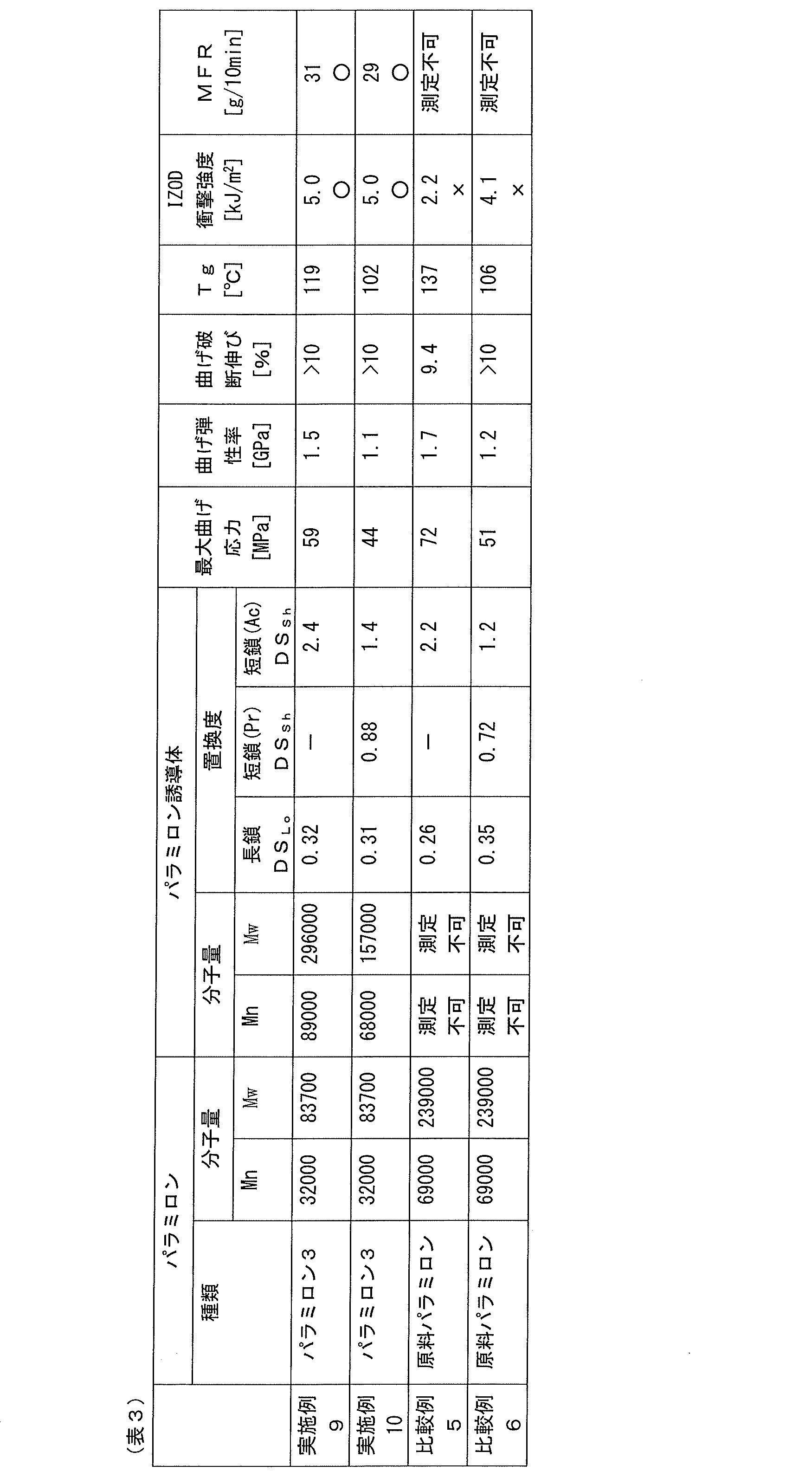
表3が示すように、本発明の実施形態による実施例のパラミロン系樹脂(パラミロン誘導体)は、いずれも機械特性(衝撃強度等)および熱可塑性(流動性:MFR)に優れることが分かる。
一方、重量平均分子量が70000~140000の範囲にないパラミロンを用いて作製した比較例5及び6のパラミロン系樹脂は、それぞれ実施例9及び10と同様の短鎖及び長鎖の付加量であるにもかかわらず、パラミロンの分子量が高すぎるため、耐衝撃性および熱可塑性(流動性:MFR)は低いことが分かる。
(実施例11)
原料パラミロン(重量平均分子量242000)15g及び5%塩酸水溶液150gを反応器に投入し、90℃で4時間撹拌後、水で洗浄することで、分子量を調整したパラミロン4を得た。パラミロン4の重量平均分子量(Mw)は、96700であった。
原料パラミロン(重量平均分子量242000)15g及び5%塩酸水溶液150gを反応器に投入し、90℃で4時間撹拌後、水で洗浄することで、分子量を調整したパラミロン4を得た。パラミロン4の重量平均分子量(Mw)は、96700であった。
パラミロン1をパラミロン4に変更し、混合液の量をN-メチルピロリドン51mLとピリジン7.1mLに変更し、長鎖反応剤としてパルミトイルクロリド3.05g(11.1mmol)へ変更した以外は実施例1と同じ方法に従って、パラミロン系樹脂(パラミロンプロピオネートパルミテート)を作製した(収量9.9g、収率100%)。
得られたパラミロン系樹脂(パラミロンプロピオネートパルミテート)を実施例1と同様に1H-NMRによって測定したところ、DSLoは0.26、DSShは2.3であった。
また、このパラミロン系樹脂について、実施例1と同様の方法に従って衝撃強度等の機械特性と流動性の評価を行った。結果を表4に示す。
(実施例12)
パラミロン1をパラミロン4に変更し、混合液の量をN-メチルピロリドン51mLとピリジン7.1mLに変更し、長鎖反応剤としてミリストイルクロリド2.74g(11.1mmol)へ変更した以外は実施例1と同じ方法に従って、パラミロン系樹脂(パラミロンプロピオネートミリステート)を作製した(収量9.3g、収率95%)。
パラミロン1をパラミロン4に変更し、混合液の量をN-メチルピロリドン51mLとピリジン7.1mLに変更し、長鎖反応剤としてミリストイルクロリド2.74g(11.1mmol)へ変更した以外は実施例1と同じ方法に従って、パラミロン系樹脂(パラミロンプロピオネートミリステート)を作製した(収量9.3g、収率95%)。
得られたパラミロン系樹脂(パラミロンプロピオネートミリステート)を実施例1と同様に1H-NMRによって測定したところ、DSLoは0.29、DSShは2.4であった。
また、このパラミロン系樹脂について、実施例1と同様の方法に従って衝撃強度等の機械特性と流動性の評価を行った。結果を表4に示す。
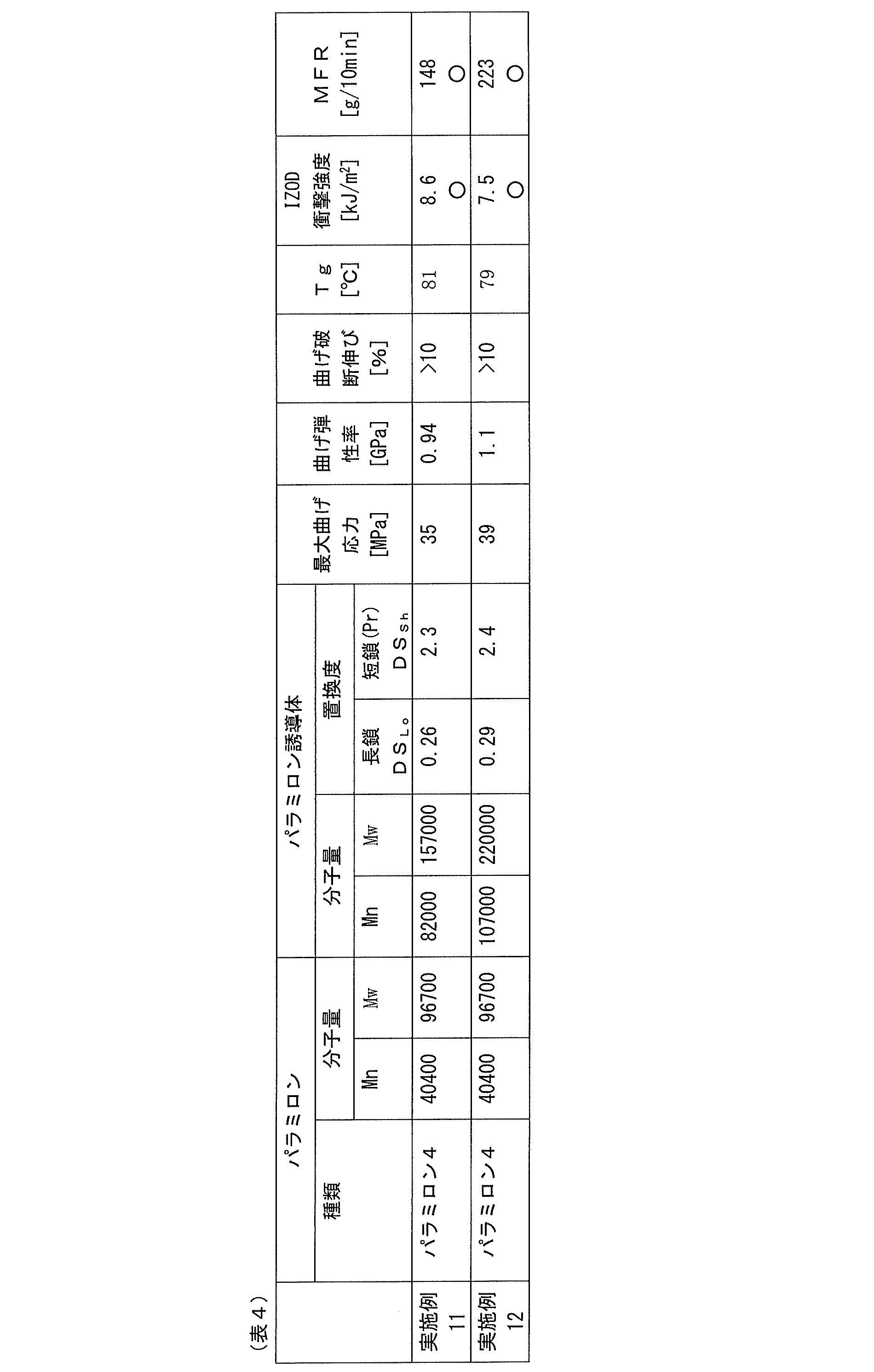
表4が示すように、本発明の実施形態による実施例のパラミロン系樹脂(パラミロン誘導体)は、いずれも機械特性(衝撃強度等)および熱可塑性(流動性:MFR)に優れることが分かる。
以上、実施形態及び実施例を参照して本発明を説明したが、本発明は上記実施形態及び実施例に限定されるものではない。本発明の構成や詳細には、本発明の範囲内で当業者が理解し得る様々な変更をすることができる。
この出願は、2018年7月10日に出願された日本出願特願2018-130984を基礎とする優先権を主張し、その開示の全てをここに取り込む。
Claims (9)
- パラミロンの重量平均分子量が70000~140000の範囲にあり、該パラミロンのヒドロキシ基の水素原子が、炭素数14以上の直鎖状飽和脂肪族アシル基である長鎖成分と、炭素数2又は3のアシル基(アセチル基又は/及びプロピオニル基)である短鎖成分で置換されたパラミロン系樹脂であって、
前記長鎖成分による置換度(DSLo)と前記短鎖成分による置換度(DSSh)が、以下の条件式(1)及び(2)を満たし、
アイゾット衝撃強度が5.0kJ/m2以上であり、
MFR(210℃、荷重5kgにおけるメルトフローレート)が2g/10min以上である、パラミロン系樹脂。
2.2 ≦ DSLo+DSSh ≦ 2.8 (1)
5≦ DSSh/DSLo ≦ 25 (2) - DSLoが0.1~0.5の範囲にあり、DSShが2.0~2.5の範囲にある、請求項1に記載のパラミロン系樹脂。
- 前記長鎖成分がミリスチン酸、パルミチン酸、ステアリン酸、アラキジン酸、ベヘン酸から選ばれる少なくとも一種の脂肪酸のアシル基部分である、請求項1又は2に記載のパラミロン系樹脂。
- 請求項1から3のいずれか一項に記載のパラミロン系樹脂を含む成形用材料。
- 請求項4に記載の成形用材料を用いて形成された成形体。
- 請求項1から3のいずれか一項に記載のパラミロン系樹脂を製造する方法であって、
酸捕捉成分の存在下、加温下で、
溶媒中に分散された重量平均分子量70000~140000のパラミロンと、
塩化アセチル又は/及び塩化プロピオニルと、
前記長鎖成分を有する長鎖脂肪酸の酸塩化物である長鎖反応剤とを反応させて、該パラミロンのヒドロキシ基をアシル化する工程と、
前記アシル化工程により得られたアシル化パラミロンを前記溶媒から分離する工程を含む、パラミロン系樹脂の製造方法。 - 前記溶媒が、水、酢酸、ジオキサン、ピリジン、N-メチルピロリドン、N,N-ジメチルアセトアミド、N,N-ジメチルホルムアミド、ジメチルスルホキシドから選ばれる少なくとも1種である、請求項6又は7に記載のパラミロン系樹脂の製造方法。
- 前記酸捕捉成分は、トリエチルアミンまたはピリジンを含む、請求項6又は7に記載のパラミロン系樹脂の製造方法。
- 前記溶媒の量は、前記パラミロンの乾燥質量に対して10~50倍量である、請求項6から8のいずれか一項に記載のパラミロン系樹脂の製造方法。
Priority Applications (3)
| Application Number | Priority Date | Filing Date | Title |
|---|---|---|---|
| US17/258,955 US20210340282A1 (en) | 2018-07-10 | 2019-07-10 | Paramylon-based resin, molding material, molded body, and method for producing paramylon-based resin |
| JP2020530230A JP7349079B2 (ja) | 2018-07-10 | 2019-07-10 | パラミロン系樹脂の製造方法 |
| US18/136,931 US12522671B2 (en) | 2018-07-10 | 2023-04-20 | Paramylon-based resin, molding material, molded body, and method for producing paramylon-based resin |
Applications Claiming Priority (2)
| Application Number | Priority Date | Filing Date | Title |
|---|---|---|---|
| JP2018-130984 | 2018-07-10 | ||
| JP2018130984 | 2018-07-10 |
Related Child Applications (2)
| Application Number | Title | Priority Date | Filing Date |
|---|---|---|---|
| US17/258,955 A-371-Of-International US20210340282A1 (en) | 2018-07-10 | 2019-07-10 | Paramylon-based resin, molding material, molded body, and method for producing paramylon-based resin |
| US18/136,931 Division US12522671B2 (en) | 2018-07-10 | 2023-04-20 | Paramylon-based resin, molding material, molded body, and method for producing paramylon-based resin |
Publications (1)
| Publication Number | Publication Date |
|---|---|
| WO2020013232A1 true WO2020013232A1 (ja) | 2020-01-16 |
Family
ID=69141763
Family Applications (1)
| Application Number | Title | Priority Date | Filing Date |
|---|---|---|---|
| PCT/JP2019/027350 Ceased WO2020013232A1 (ja) | 2018-07-10 | 2019-07-10 | パラミロン系樹脂、成形用材料および成形体、並びにパラミロン系樹脂の製造方法 |
Country Status (3)
| Country | Link |
|---|---|
| US (2) | US20210340282A1 (ja) |
| JP (1) | JP7349079B2 (ja) |
| WO (1) | WO2020013232A1 (ja) |
Cited By (9)
| Publication number | Priority date | Publication date | Assignee | Title |
|---|---|---|---|---|
| WO2021111917A1 (ja) * | 2019-12-04 | 2021-06-10 | 株式会社Lixil | β-1,3-グルカンエステル誘導体の精製方法 |
| WO2021225172A1 (ja) | 2020-05-08 | 2021-11-11 | 日本電気株式会社 | パラミロン系樹脂、成形用材料および成形体、並びにパラミロン系樹脂の製造方法 |
| WO2021246006A1 (ja) | 2020-06-02 | 2021-12-09 | 株式会社Lixil | β-1,3-グルカンエステル誘導体及びβ-1,4-グルカンエステル誘導体 |
| CN113831608A (zh) * | 2020-06-23 | 2021-12-24 | 株式会社理光 | 树脂组合物,成型品,电子部件和电子设备 |
| WO2022255447A1 (ja) | 2021-06-03 | 2022-12-08 | 株式会社Lixil | βグルカンエステル誘導体 |
| JP2023111484A (ja) * | 2022-01-31 | 2023-08-10 | 日本電気株式会社 | 海洋生分解性を有するパラミロンエステル誘導体、成形用樹脂組成物及び成形体 |
| WO2023209790A1 (ja) * | 2022-04-26 | 2023-11-02 | 日本電気株式会社 | パラミロン系樹脂及びその製造方法、成形用樹脂組成物、並びに成形体 |
| WO2023248911A1 (ja) * | 2022-06-22 | 2023-12-28 | 日東電工株式会社 | 粘着剤組成物、粘着シート、積層体、及びβ-1,3-グルカン誘導体の製造方法 |
| WO2025053227A1 (ja) * | 2023-09-05 | 2025-03-13 | 日本電気株式会社 | 多糖類系バイオマスプラスチック、これを用いた成形用樹脂組成物及び成形体 |
Citations (4)
| Publication number | Priority date | Publication date | Assignee | Title |
|---|---|---|---|---|
| WO2014077340A1 (ja) * | 2012-11-14 | 2014-05-22 | 独立行政法人産業技術総合研究所 | β-1,3-グルカン誘導体、及びβ-1,3-グルカン誘導体の製造方法 |
| JP2014098095A (ja) * | 2012-11-14 | 2014-05-29 | National Institute Of Advanced Industrial & Technology | β−1,3−グルカン誘導体、及びβ−1,3−グルカン誘導体の製造方法 |
| JP2017193667A (ja) * | 2016-04-21 | 2017-10-26 | 国立研究開発法人産業技術総合研究所 | β−1,3−グルカン誘導体及びその製造方法、並びに成形体 |
| JP2017218566A (ja) * | 2016-06-03 | 2017-12-14 | 株式会社ユーグレナ | パラミロンエステル誘導体及び繊維 |
Family Cites Families (4)
| Publication number | Priority date | Publication date | Assignee | Title |
|---|---|---|---|---|
| JP2003227939A (ja) * | 2002-02-04 | 2003-08-15 | Mitsubishi Electric Corp | 光ファイバの余長収納機構 |
| JP6093947B2 (ja) | 2012-08-17 | 2017-03-15 | 国立研究開発法人産業技術総合研究所 | β−1,3−グルカンナノファイバー及びその製造方法 |
| JP6528684B2 (ja) * | 2013-10-25 | 2019-06-12 | 日本電気株式会社 | セルロース誘導体の製造方法、セルロース誘導体、成形用樹脂組成物および成形体 |
| JP6750778B2 (ja) | 2016-03-31 | 2020-09-02 | 国立研究開発法人産業技術総合研究所 | パラミロン誘導体及びその製造方法、並びにナノファイバー及びその製造方法 |
-
2019
- 2019-07-10 WO PCT/JP2019/027350 patent/WO2020013232A1/ja not_active Ceased
- 2019-07-10 US US17/258,955 patent/US20210340282A1/en not_active Abandoned
- 2019-07-10 JP JP2020530230A patent/JP7349079B2/ja active Active
-
2023
- 2023-04-20 US US18/136,931 patent/US12522671B2/en active Active
Patent Citations (4)
| Publication number | Priority date | Publication date | Assignee | Title |
|---|---|---|---|---|
| WO2014077340A1 (ja) * | 2012-11-14 | 2014-05-22 | 独立行政法人産業技術総合研究所 | β-1,3-グルカン誘導体、及びβ-1,3-グルカン誘導体の製造方法 |
| JP2014098095A (ja) * | 2012-11-14 | 2014-05-29 | National Institute Of Advanced Industrial & Technology | β−1,3−グルカン誘導体、及びβ−1,3−グルカン誘導体の製造方法 |
| JP2017193667A (ja) * | 2016-04-21 | 2017-10-26 | 国立研究開発法人産業技術総合研究所 | β−1,3−グルカン誘導体及びその製造方法、並びに成形体 |
| JP2017218566A (ja) * | 2016-06-03 | 2017-12-14 | 株式会社ユーグレナ | パラミロンエステル誘導体及び繊維 |
Non-Patent Citations (4)
| Title |
|---|
| SHIBAKAMI MOTONARI ET AL.: "One-pot synthesis of thermoplastic mixed paramylon esters using trifluoroacetic anhydride", CARBOHYDRATE POLYMERS, vol. 119, 24 November 2014 (2014-11-24), pages 1 - 7, XP029128119, ISSN: 0144-8617, DOI: 10.1016/j.carbpol.2014.11.036 * |
| SHIBAKAMI MOTONARI ET AL.: "Synthesis and thermal properties of paramylon mixed esters and optical, mechanical, and crystal properties of their hot-pressed films", CARBOHYDRATE POLYMERS, vol. 155, 29 August 2016 (2016-08-29), pages 416 - 424, XP029756492, ISSN: 0144-8617, DOI: 10.1016/j.carbpol.2016.08.093 * |
| SHIBAKAMI MOTONARI ET AL.: "Thermoplasticization of euglenoid beta -1,3-glucans by mixed esterification", CARBOHYDRATE POLYMERS, vol. 105, 27 January 2014 (2014-01-27), pages 90 - 96, XP028843787, ISSN: 0144-8617, DOI: 10.1016/j.carbpol.2014.01.053 * |
| SHIBAKAMI MOTONARI: "Thickening and water-absorbing agent made from euglenoid polysaccharide", CARBOHYDRATE POLYMERS, vol. 173, 6 June 2017 (2017-06-06), pages 451 - 464, XP085134584, ISSN: 0144-8617, DOI: 10.1016/j.carbpol.2017.06.025 * |
Cited By (18)
| Publication number | Priority date | Publication date | Assignee | Title |
|---|---|---|---|---|
| WO2021111917A1 (ja) * | 2019-12-04 | 2021-06-10 | 株式会社Lixil | β-1,3-グルカンエステル誘導体の精製方法 |
| JP7495676B2 (ja) | 2020-05-08 | 2024-06-05 | 日本電気株式会社 | パラミロン系樹脂、成形用材料および成形体、並びにパラミロン系樹脂の製造方法 |
| WO2021225172A1 (ja) | 2020-05-08 | 2021-11-11 | 日本電気株式会社 | パラミロン系樹脂、成形用材料および成形体、並びにパラミロン系樹脂の製造方法 |
| JPWO2021225172A1 (ja) * | 2020-05-08 | 2021-11-11 | ||
| US12570769B2 (en) | 2020-05-08 | 2026-03-10 | Nec Corporation | Paramylon-based resin, molding material, molded body, and production method for paramylon-based resin |
| WO2021246006A1 (ja) | 2020-06-02 | 2021-12-09 | 株式会社Lixil | β-1,3-グルカンエステル誘導体及びβ-1,4-グルカンエステル誘導体 |
| CN113831608A (zh) * | 2020-06-23 | 2021-12-24 | 株式会社理光 | 树脂组合物,成型品,电子部件和电子设备 |
| EP3940001A1 (en) * | 2020-06-23 | 2022-01-19 | Ricoh Company, Ltd. | Resin composition, molded article, electronic component, and electronic device |
| JP7535241B2 (ja) | 2020-06-23 | 2024-08-16 | 株式会社リコー | 樹脂組成物、成形体、電子部品及び電子機器 |
| US12065561B2 (en) | 2020-06-23 | 2024-08-20 | Ricoh Company, Ltd. | Resin composition, molded article, electronic component, and electronic device |
| JP2022003113A (ja) * | 2020-06-23 | 2022-01-11 | 株式会社リコー | 樹脂組成物、成形体、電子部品及び電子機器 |
| WO2022255447A1 (ja) | 2021-06-03 | 2022-12-08 | 株式会社Lixil | βグルカンエステル誘導体 |
| JP2023111484A (ja) * | 2022-01-31 | 2023-08-10 | 日本電気株式会社 | 海洋生分解性を有するパラミロンエステル誘導体、成形用樹脂組成物及び成形体 |
| WO2023209790A1 (ja) * | 2022-04-26 | 2023-11-02 | 日本電気株式会社 | パラミロン系樹脂及びその製造方法、成形用樹脂組成物、並びに成形体 |
| JPWO2023209790A1 (ja) * | 2022-04-26 | 2023-11-02 | ||
| JP7794301B2 (ja) | 2022-04-26 | 2026-01-06 | 日本電気株式会社 | パラミロン系樹脂及びその製造方法、成形用樹脂組成物、並びに成形体 |
| WO2023248911A1 (ja) * | 2022-06-22 | 2023-12-28 | 日東電工株式会社 | 粘着剤組成物、粘着シート、積層体、及びβ-1,3-グルカン誘導体の製造方法 |
| WO2025053227A1 (ja) * | 2023-09-05 | 2025-03-13 | 日本電気株式会社 | 多糖類系バイオマスプラスチック、これを用いた成形用樹脂組成物及び成形体 |
Also Published As
| Publication number | Publication date |
|---|---|
| US20230272123A1 (en) | 2023-08-31 |
| JP7349079B2 (ja) | 2023-09-22 |
| US20210340282A1 (en) | 2021-11-04 |
| US12522671B2 (en) | 2026-01-13 |
| JPWO2020013232A1 (ja) | 2021-08-02 |
Similar Documents
| Publication | Publication Date | Title |
|---|---|---|
| JP7349079B2 (ja) | パラミロン系樹脂の製造方法 | |
| JP7435563B2 (ja) | セルロース系樹脂、成形用材料、成形体及びセルロース系樹脂の製造方法 | |
| JP6572903B2 (ja) | セルロース誘導体を含む成形体用樹脂組成物、成形体および筐体 | |
| US10005849B2 (en) | Process for producing cellulose derivative and cellulose derivative | |
| US10982009B2 (en) | Cellulose derivative and use thereof | |
| JP2018059125A (ja) | セルロース誘導体、樹脂組成物および成形体 | |
| US11161917B2 (en) | Method for producing cellulose derivative, and cellulose derivative | |
| JP7495676B2 (ja) | パラミロン系樹脂、成形用材料および成形体、並びにパラミロン系樹脂の製造方法 | |
| US11572416B2 (en) | Cellulose resin, molding material, molded body, and method for producing cellulose resin | |
| US12139560B2 (en) | Cellulose resin, molding material, molded body, and method for producing cellulose resin | |
| JP2023111484A (ja) | 海洋生分解性を有するパラミロンエステル誘導体、成形用樹脂組成物及び成形体 |
Legal Events
| Date | Code | Title | Description |
|---|---|---|---|
| 121 | Ep: the epo has been informed by wipo that ep was designated in this application |
Ref document number: 19833448 Country of ref document: EP Kind code of ref document: A1 |
|
| ENP | Entry into the national phase |
Ref document number: 2020530230 Country of ref document: JP Kind code of ref document: A |
|
| NENP | Non-entry into the national phase |
Ref country code: DE |
|
| 122 | Ep: pct application non-entry in european phase |
Ref document number: 19833448 Country of ref document: EP Kind code of ref document: A1 |