WO2019187983A1 - ポリアセタール樹脂組成物 - Google Patents
ポリアセタール樹脂組成物 Download PDFInfo
- Publication number
- WO2019187983A1 WO2019187983A1 PCT/JP2019/008116 JP2019008116W WO2019187983A1 WO 2019187983 A1 WO2019187983 A1 WO 2019187983A1 JP 2019008116 W JP2019008116 W JP 2019008116W WO 2019187983 A1 WO2019187983 A1 WO 2019187983A1
- Authority
- WO
- WIPO (PCT)
- Prior art keywords
- parts
- polyacetal resin
- mass
- copolymer
- resin composition
- Prior art date
- Legal status (The legal status is an assumption and is not a legal conclusion. Google has not performed a legal analysis and makes no representation as to the accuracy of the status listed.)
- Ceased
Links
Classifications
-
- C—CHEMISTRY; METALLURGY
- C08—ORGANIC MACROMOLECULAR COMPOUNDS; THEIR PREPARATION OR CHEMICAL WORKING-UP; COMPOSITIONS BASED THEREON
- C08K—Use of inorganic or non-macromolecular organic substances as compounding ingredients
- C08K5/00—Use of organic ingredients
- C08K5/16—Nitrogen-containing compounds
- C08K5/17—Amines; Quaternary ammonium compounds
-
- C—CHEMISTRY; METALLURGY
- C08—ORGANIC MACROMOLECULAR COMPOUNDS; THEIR PREPARATION OR CHEMICAL WORKING-UP; COMPOSITIONS BASED THEREON
- C08L—COMPOSITIONS OF MACROMOLECULAR COMPOUNDS
- C08L33/00—Compositions of homopolymers or copolymers of compounds having one or more unsaturated aliphatic radicals, each having only one carbon-to-carbon double bond, and only one being terminated by only one carboxyl radical, or of salts, anhydrides, esters, amides, imides or nitriles thereof; Compositions of derivatives of such polymers
- C08L33/02—Homopolymers or copolymers of acids; Metal or ammonium salts thereof
-
- C—CHEMISTRY; METALLURGY
- C08—ORGANIC MACROMOLECULAR COMPOUNDS; THEIR PREPARATION OR CHEMICAL WORKING-UP; COMPOSITIONS BASED THEREON
- C08L—COMPOSITIONS OF MACROMOLECULAR COMPOUNDS
- C08L59/00—Compositions of polyacetals; Compositions of derivatives of polyacetals
Definitions
- the present invention relates to a polyacetal resin composition in which the amount of formaldehyde generated is remarkably suppressed and the moldability is excellent.
- Polyacetal resin has excellent mechanical properties, fatigue resistance, friction and wear resistance, chemical resistance and moldability, so it can be used for automobile parts, electrical / electronic equipment parts, other precision machine parts, building materials / piping members, Widely used in fields such as daily life and cosmetic parts and medical parts.
- the demand for quality has been increasing.
- An object of the present invention is to provide a polyacetal resin composition that generates less formaldehyde even in a molded product molded under severe molding conditions such as high temperature and long-term residence.
- the present invention has been achieved by the following.
- R1, R2, and R3 represent a hydrogen atom, a hydroxyalkyl group having 1 to 4 carbon atoms, or a hydrocarbon group having 1 to 9 carbon atoms, and at least one of R1, R2, and R3 has 1 to 4 carbon atoms.
- a hydroxyalkyl group 2. 2.
- the present invention also includes a polyacetal resin molded article composed of the polyacetal resin composition.
- the polyacetal resin composition of the present invention is (A) Polyacetal resin 100 parts by mass (B) Copolymer of ethylene and at least one selected from acrylic acid and methacrylic acid (C) represented by the following formula (1) 0.01 to 10 parts by mass of an amine compound, It is characterized by containing.
- R1, R2, and R3 represent a hydrogen atom, a hydroxyalkyl group having 1 to 4 carbon atoms, or a hydrocarbon group having 1 to 9 carbon atoms, and at least one of R1, R2, and R3 has 1 to 4 carbon atoms.
- the polyacetal resin of the present invention is a polymer compound having an oxymethylene group (—OCH 2 —) as a main structural unit, and is a polyacetal homopolymer (for example, trade name “Delrin” manufactured by DuPont, USA, Asahi Kasei Corporation) And a polyacetal copolymer containing other comonomer units in addition to the oxymethylene group (for example, trade name “Duracon”, etc., manufactured by Polyplastics Co., Ltd.).
- a polyacetal homopolymer for example, trade name “Delrin” manufactured by DuPont, USA, Asahi Kasei Corporation
- a polyacetal copolymer containing other comonomer units in addition to the oxymethylene group for example, trade name “Duracon”, etc., manufactured by Polyplastics Co., Ltd.
- the comonomer unit includes an oxyalkylene unit (for example, an oxyethylene group (—OCH 2 CH 2 —), an oxypropylene group, an oxytetramethylene group having about 2 to 6 carbon atoms (preferably about 2 to 4 carbon atoms). Group).
- the comonomer unit content is, for example, from 0.01 to 20 mol%, preferably from 0.03 to 10 mol% (eg, 0.05 to 5 mol%), more preferably from 0.1 to 20 mol%, based on the whole polyacetal resin. It can be selected from the range of about 1 to 5 mol%.
- the polyacetal copolymer may be a copolymer composed of two components, a terpolymer composed of three components, or the like.
- the polyacetal copolymer may be a random copolymer, a block copolymer, a graft copolymer, or the like.
- the polyacetal resin may have a branched structure as well as a linear structure, and may have a crosslinked structure. Furthermore, the terminal of the polyacetal resin may be stabilized by esterification with a carboxylic acid such as acetic acid or propionic acid or an anhydride thereof.
- the polymerization degree, branching degree, and crosslinking degree of the polyacetal are not particularly limited as long as it can be melt-molded.
- the polyacetal resin is obtained by, for example, homopolymerizing formaldehyde, copolymerizing trioxane with cyclic ether or cyclic formal such as ethylene oxide, propylene oxide, 1,3-dioxolane, diethylene glycol formal, 1,4-butanediol formal. Can be manufactured.
- the copolymer of ethylene and at least one selected from acrylic acid and methacrylic acid according to the present invention (hereinafter also referred to as ethylene copolymer) is composed of at least one selected from acrylic acid and methacrylic acid and ethylene. It is a copolymer, and acrylic acid or methacrylic acid is contained in an amount of 0.5 to 40% by mass, preferably 1 to 30% by mass.
- the ethylene copolymer of the present invention is commercially available, for example, as AC polyethylene (manufactured by Honeywell), Nucrel (manufactured by Mitsui / DuPont Polychemical).
- the ethylene copolymer of the present invention is, for example, 0.001 to 10 parts by mass, preferably 0.005 to 1 part by mass, particularly preferably 0.01 to 0.5 parts by mass with respect to 100 parts by mass of the polyacetal resin. .
- the amine compound of the present invention (hereinafter sometimes referred to as the amine compound (C) of the present invention) is a compound represented by the following formula (1).
- R1, R2, and R3 represent a hydrogen atom, a hydroxyalkyl group having 1 to 4 carbon atoms, or a hydrocarbon group having 1 to 9 carbon atoms, and at least one of R1, R2, and R3 has 1 to 4 carbon atoms.
- the amine compound (C) of the present invention preferably has a basicity pKb in the range of 4-8.
- pKb is a logarithmic value of the reciprocal of the base dissociation constant in an aqueous solution at 25 ° C., and in the case of multi-stage dissociation, the first-stage dissociation constant (ie, pKb 1 ) is used.
- the amine compound (C) of the present invention is contained in an amount of 0.01 to 10 parts by mass, preferably 0.02 to 5 parts by mass, and most preferably 0.05 to 2 parts by mass with respect to 100 parts by mass of the polyacetal resin.
- the polyacetal resin composition of the present invention may further contain an antioxidant, an alkali or alkaline earth metal compound and a stabilizer.
- antioxidant a known antioxidant can be used, and examples thereof include phenolic (such as hindered phenols), amine, phosphorus, sulfur, hydroquinone, and quinoline antioxidants. It is done. These antioxidants can be used alone or in combination of two or more.
- antioxidants can be used alone or in combination of two or more.
- the content of the antioxidant is, for example, in the range of 0.01 to 5 parts by weight, preferably 0.05 to 2.5 parts by weight, particularly about 0.1 to 1 part by weight with respect to 100 parts by weight of the polyacetal resin. You can choose from.
- Alkali or alkaline earth metal compounds include aliphatic carboxylic acids (eg, acetic acid, propionic acid, succinic acid, adipic acid, etc.), aromatic carboxylic acids (eg, benzoic acid, phthalic acid, phenylacetic acid, etc.), single bases Sodium, calcium, magnesium metal salts of C 1-10 carboxylic acids such as dibasic or tribasic oxycarboxylic acids (eg, lactic acid, mandelic acid, malic acid, citric acid, etc.); metal oxides such as CaO, MgO; Examples thereof include metal hydroxides such as Ca (OH) 2 and Mg (OH) 2 ; metal carbonates such as CaCO 3 and MgCO 3 .
- aliphatic carboxylic acids eg, acetic acid, propionic acid, succinic acid, adipic acid, etc.
- aromatic carboxylic acids eg, benzoic acid, phthalic acid, phenylacetic acid, etc.
- the alkali or alkaline earth metal compounds can be used alone or in combination of two or more, and the proportion thereof is 0.001 to 10 parts by mass, preferably 0.001 to 5 parts by mass with respect to 100 parts by mass of the polyacetal resin. Part (especially 0.001 to 2 parts by mass).
- stabilizers include processing stabilizers and weathering (light) stabilizers.
- processing stabilizer at least one selected from known polyalkylene glycols, fatty acid esters, fatty acid amides, fatty acid metal salts and the like can be used.
- the processing stabilizers can be used alone or in combination.
- the proportion of the processing stabilizer is about 0.01 to 10 parts by weight, preferably about 0.03 to 5 parts by weight (eg 0.05 to 3 parts by weight), particularly 0.05 to 100 parts by weight of the polyacetal resin. About 2 parts by mass can be contained.
- (a) benzotriazole compound, (b) benzophenone compound, (c) aromatic benzoate compound, (d) cyanoacrylate compound, (e) oxalic acid anilide compound, (F) A hindered amine compound can be exemplified.
- the weathering (light) stabilizer may be used alone, but is preferably used alone or in combination of two or more, (a) benzotriazole compounds, (b) benzophenone compounds, (c) aromatic A combination of a weather resistant (light) stabilizer of a group benzoate compound, (d) a cyanoacrylate compound, and / or (e) an oxalic acid anilide compound, and (f) a hindered amine compound is preferred.
- the addition amount of the weathering (light) stabilizer is, for example, 0.01 to 5 parts by mass (for example, 0.01 to 3 parts by mass), preferably 0.01 to 2 parts by mass, relative to 100 parts by mass of the polyacetal resin More preferably, it is about 0.1 to 2 parts by mass (for example, 0.1 to 1.5 parts by mass).
- the antioxidant, alkali or alkaline earth metal compound and stabilizer may be used alone or in combination of two or more as required.
- a colorant with the polyacetal resin composition of the present invention.
- Various dyes or pigments can be used as the colorant.
- the dye is preferably a solvent dye, and examples thereof include azo dyes, anthraquinone dyes, phthalocyanine dyes, and naphthoquinone dyes.
- As the pigment any of inorganic pigments and organic pigments can be used, and they may be used alone or in combination with a plurality of colorants.
- the content of the colorant is, for example, 0 to 5 parts by mass (for example, 0.01 to 5 parts by mass), preferably 0.1 to 4 parts by mass, and more preferably 0.1 parts by mass with respect to 100 parts by mass of the polyacetal resin. About 3 to 3 parts by mass.
- a mold release agent In addition to the polyacetal resin composition of the present invention, a mold release agent, a nucleating agent, an antistatic agent, a flame retardant, a surfactant, various polymers, a filler, and the like are added in combination of one or more as necessary. May be.
- the polyacetal resin composition of the present invention may be a powdery granular mixture or a molten mixture.
- the polyacetal resin, the ethylene copolymer of the present invention and the amine compound of the present invention, and other additives, if necessary, are conventionally used. It can be prepared by mixing by the method. For example, each component is mixed, kneaded by a single or twin screw extruder, extruded to prepare pellets, and then molded, and once a pellet (master batch) with a different composition is prepared, a predetermined amount of the pellets are prepared.
- a powder of a polyacetal resin as a substrate for example, a powder obtained by pulverizing part or all of a polyacetal resin
- other components amine compound, ethylene copolymer
- Molded articles obtained from the composition of the present invention are most suitable for use in the automotive field, but other mechanical / electrical parts such as mechanical parts (active parts and passive parts), building materials / piping, daily necessities (life). -It is suitably used as parts / members in the cosmetics field and medical field (medical / therapeutic field).
- the mechanical parts in the automotive field include inner handles, fael trunk openers, seat belt buckles, assist wraps, various interior parts such as switches, knobs, levers, clips, electrical system parts such as meters and connectors, Examples include in-vehicle electrical and electronic parts such as audio equipment and car navigation equipment, parts that come into contact with metal, such as window regulator carrier plates, door lock actuator parts, mirror parts, wiper motor system parts, fuel system parts, etc. it can.
- the amount of formaldehyde generated from the molded products was evaluated as follows.
- reaction product of DNPH and formaldehyde is extracted from the DNPH collection tube with acetonitrile, and the amount of generated formaldehyde is obtained by a calibration curve method using a standard substance of the reaction product of DNPH and formaldehyde by high performance liquid chromatography.
- the amount of formaldehyde generated per unit weight ( ⁇ g / g) was calculated.
- Molding machine FANUC ROBOSHOT ⁇ -S100ia * Molding conditions: Cylinder temperature (° C) nozzle -C1-C2-C3 220 220 220 220 Injection pressure 60 (MPa) Injection speed 1.0 (m / min) Residence time in molding machine 30 minutes Mold temperature 80 (°C)
- Polyacetal resin (A-1) a polyacetal copolymer obtained by copolymerizing 96.7% by mass of trioxane and 3.3% by mass of 1,3-dioxolane (measured at a melt index (190 ° C., load 2160 g) ): 9 g / 10 min)
- Ethylene copolymer (B-1): ethylene-acrylic acid copolymer, acrylic acid modification rate: 5% by mass, manufactured by Honeywell, “A-C540” (B-2): Ethylene-methacrylic acid copolymer, methacrylic acid modification rate: 4% by mass Mitsui DuPont Polychemical Co., Ltd. “Nucleel AN4214C” (B-3): Ethylene-methacrylic acid copolymer, methacrylic acid modification rate: 15% by mass, Mitsui-DuPont Polychemical Co., Ltd. “Nucleel N1525”
- C Amine compound (C-1): Tris (hydroxymethyl) aminomethane (THAM) pKb: 5.7 (C-2): 2-amino-2-methyl-propanol (AMP) pKb: 4.3 (C-3): Melamine pKb: 9 (C-4): Benzoguanamine pKb: 10.1 4).
- D Hindered phenol antioxidant (D-1): Pentaerythritol tetrakis [3- (3,5-di-t-butyl-4-hydroxyphenyl) propionate]
- the resin compositions of the examples have a very small amount of formaldehyde generated from molded products molded under severe molding conditions of high temperature and long-time retention compared to the comparative examples. Therefore, the quality of the molded product can be improved.
Landscapes
- Chemical & Material Sciences (AREA)
- Health & Medical Sciences (AREA)
- Chemical Kinetics & Catalysis (AREA)
- Medicinal Chemistry (AREA)
- Polymers & Plastics (AREA)
- Organic Chemistry (AREA)
- Compositions Of Macromolecular Compounds (AREA)
Abstract
本発明の目的は、高温、長時間滞留等の厳しい成形条件下で成形された成形品においてもホルムアルデヒドの発生の少ないポリアセタール樹脂組成物を提供することである。 少なくとも、 (A)ポリアセタール樹脂100質量部、(B)アクリル酸およびメタクリル酸から選択される少なくとも1種と、エチレンとの共重合体0.001~10質量部、(C)下記式(1)で表されるアミン化合物0.01~10質量部、とを含有するポリアセタール樹脂組成物。 R1、R2、R3は、水素原子、炭素数1~4のヒドロキシアルキル基または炭素数1~9の炭化水素基を表し、R1、R2、R3の少なくとも1つが炭素数1~4のヒドロキシアルキル基である。
Description
本発明は、ホルムアルデヒド発生量が著しく抑制され、成形加工性に優れたポリアセタール樹脂組成物に関する。
ポリアセタール樹脂は、機械的性質、耐疲労性、耐摩擦・摩耗性、耐薬品性及び成形性に優れているため、自動車部品、電気・電子機器部品、その他の精密機械部品、建材・配管部材、生活・化粧用部品、医用部品などの分野において広く利用されている。
しかしながら、用途の拡大、多様化に伴い、その品質に対する要求はより高度化する傾向を示している。特に自動車部品としての、最終製品の使用周辺の環境をホルムアルデヒドの汚染から守るための要求は、極めて高いものがある。
しかしながら、用途の拡大、多様化に伴い、その品質に対する要求はより高度化する傾向を示している。特に自動車部品としての、最終製品の使用周辺の環境をホルムアルデヒドの汚染から守るための要求は、極めて高いものがある。
自動車業界では、ポリアセタール樹脂からホルムアルデヒドの発生を定める種々の規格を制定している。例えばVDA275(ドイツ自動車工業会規格)は、代表的な評価であり一般的によく使用されているが、ポリアセタール樹脂の汎用性が高まるにつれ、さらに厳しい種々の条件を満足することが必要となっている。
ホルムアルデヒドの発生を低減させるためにポリアセタールホモポリマー樹脂に、第1級アミンまたは第2級アミンを含有させる技術や、厳しい条件にも耐えられるポリアセタール樹脂組成物として、ヒドラジド化合物を含有させる技術が提案されている(特許文献1、2)。また、ポリアセタールコポリマー樹脂に、エチレン-メタクリル酸共重合体を含有させる技術が提案されている(特許文献3)。
ホルムアルデヒドの発生を低減させるためにポリアセタールホモポリマー樹脂に、第1級アミンまたは第2級アミンを含有させる技術や、厳しい条件にも耐えられるポリアセタール樹脂組成物として、ヒドラジド化合物を含有させる技術が提案されている(特許文献1、2)。また、ポリアセタールコポリマー樹脂に、エチレン-メタクリル酸共重合体を含有させる技術が提案されている(特許文献3)。
自動車業界において新たに設けられた規格も含め広範囲な目標を満足するポリアセタール樹脂が要求されているが、上記の技術では満足するものはいまだ存在していなかった。
本発明の目的は、高温、長時間滞留等の厳しい成形条件下で成形された成形品においてもホルムアルデヒドの発生の少ないポリアセタール樹脂組成物を提供することである。
本発明の目的は、高温、長時間滞留等の厳しい成形条件下で成形された成形品においてもホルムアルデヒドの発生の少ないポリアセタール樹脂組成物を提供することである。
本発明は、下記によって達成された。
1.少なくとも、
(A)ポリアセタール樹脂100質量部
(B)アクリル酸およびメタクリル酸から選択される少なくとも1種と、エチレンとの共重合体0.001~10質量部
(C)下記式(1)で表されるアミン化合物0.01~10質量部、
とを含有するポリアセタール樹脂組成物。
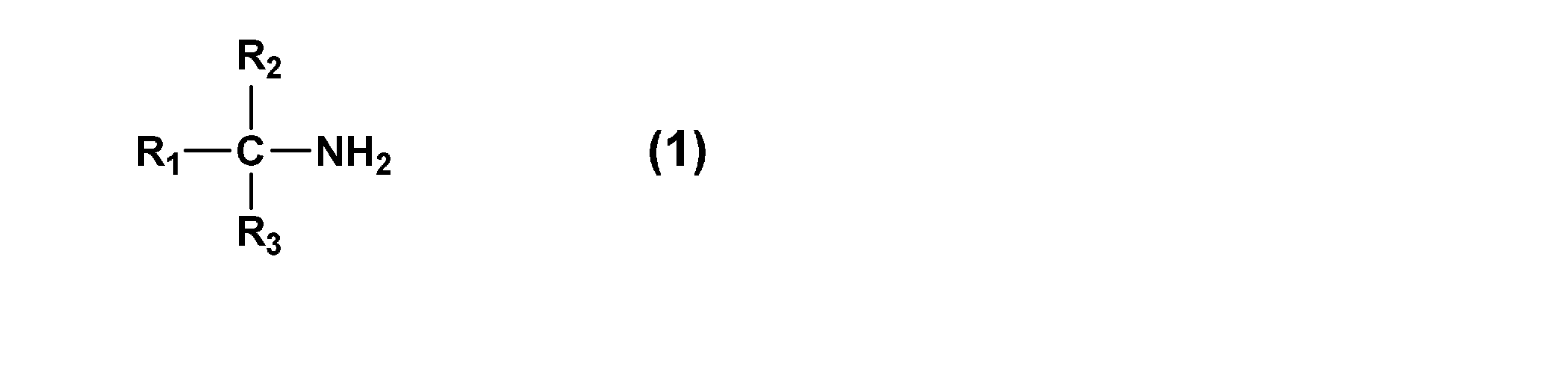
ここで、R1、R2、R3は、水素原子、炭素数1~4のヒドロキシアルキル基または炭素数1~9の炭化水素基を表し、R1、R2、R3の少なくとも1つが炭素数1~4のヒドロキシアルキル基である。
2.前記(B)共重合体が、アクリル酸およびメタクリル酸から選択される少なくとも1種が0.5~40質量%である共重合体である前記1記載のポリアセタール樹脂組成物。
3.前記(C)が、トリス(ヒドロキシメチル)アミノメタン、2-アミノ-2-エチル-プロパンジオール、および、2-アミノ-2-メチル-プロパノールで表される請求項1または2記載のポリアセタール樹脂組成物。
1.少なくとも、
(A)ポリアセタール樹脂100質量部
(B)アクリル酸およびメタクリル酸から選択される少なくとも1種と、エチレンとの共重合体0.001~10質量部
(C)下記式(1)で表されるアミン化合物0.01~10質量部、
とを含有するポリアセタール樹脂組成物。
2.前記(B)共重合体が、アクリル酸およびメタクリル酸から選択される少なくとも1種が0.5~40質量%である共重合体である前記1記載のポリアセタール樹脂組成物。
3.前記(C)が、トリス(ヒドロキシメチル)アミノメタン、2-アミノ-2-エチル-プロパンジオール、および、2-アミノ-2-メチル-プロパノールで表される請求項1または2記載のポリアセタール樹脂組成物。
本発明によれば、高温、長時間滞留等の厳しい成形条件下で成形された成形品においてもホルムアルデヒドの発生の少ないポリアセタール樹脂組成物を提供することができる。
以下、本発明の実施形態について説明する。なお、本発明は以下の実施形態に限定されない。本発明には、前記ポリアセタール樹脂組成物で構成されたポリアセタール樹脂成形品も含まれる。
<ポリアセタール樹脂組成物>
本発明のポリアセタール樹脂組成物は、
(A)ポリアセタール樹脂100質量部
(B)アクリル酸およびメタクリル酸から選択される少なくとも1種と、エチレンとの共重合体0.001~10質量部
(C)下記式(1)で表されるアミン化合物0.01~10質量部、
とを含有することを特徴とする。
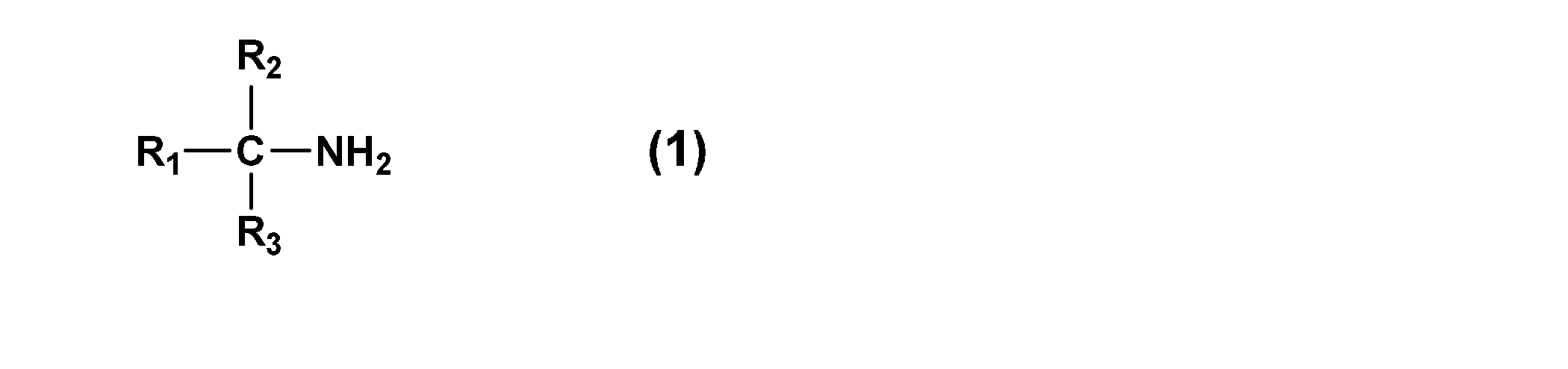
ここで、R1、R2、R3は、水素原子、炭素数1~4のヒドロキシアルキル基または炭素数1~9の炭化水素基を表し、R1、R2、R3の少なくとも1つが炭素数1~4のヒドロキシアルキル基である。
本発明のポリアセタール樹脂組成物は、
(A)ポリアセタール樹脂100質量部
(B)アクリル酸およびメタクリル酸から選択される少なくとも1種と、エチレンとの共重合体0.001~10質量部
(C)下記式(1)で表されるアミン化合物0.01~10質量部、
とを含有することを特徴とする。
≪ポリアセタール樹脂≫
本発明のポリアセタール樹脂とは、オキシメチレン基(-OCH2-)を主たる構成単位とする高分子化合物であり、ポリアセタールホモポリマー(例えば、米国デュポン社製、商品名「デルリン」、旭化成(株)製、商品名「テナック4010」など)、オキシメチレン基以外に他のコモノマー単位を含有するポリアセタールコポリマー(例えば、ポリプラスチックス(株)製、商品名「ジュラコン」など)が含まれる。
本発明のポリアセタール樹脂とは、オキシメチレン基(-OCH2-)を主たる構成単位とする高分子化合物であり、ポリアセタールホモポリマー(例えば、米国デュポン社製、商品名「デルリン」、旭化成(株)製、商品名「テナック4010」など)、オキシメチレン基以外に他のコモノマー単位を含有するポリアセタールコポリマー(例えば、ポリプラスチックス(株)製、商品名「ジュラコン」など)が含まれる。
コポリマーにおいて、コモノマー単位には、炭素数2~6程度(好ましくは炭素数2~4程度)のオキシアルキレン単位(例えば、オキシエチレン基(-OCH2CH2-)、オキシプロピレン基、オキシテトラメチレン基など)が含まれる。
コモノマー単位の含有量は、例えば、ポリアセタール樹脂全体に対して、0.01~20モル%、好ましくは0.03~10モル%(例えば、0.05~5モル%)、さらに好ましくは0.1~5モル%程度の範囲から選択できる。
コモノマー単位の含有量は、例えば、ポリアセタール樹脂全体に対して、0.01~20モル%、好ましくは0.03~10モル%(例えば、0.05~5モル%)、さらに好ましくは0.1~5モル%程度の範囲から選択できる。
ポリアセタールコポリマーは、二成分で構成されたコポリマー、三成分で構成されたターポリマーなどであってもよい。ポリアセタールコポリマーは、ランダムコポリマーの他、ブロックコポリマー、グラフトコポリマーなどであってもよい。
また、ポリアセタール樹脂は、線状のみならず分岐構造であってもよく、架橋構造を有していてもよい。さらに、ポリアセタール樹脂の末端は、例えば、酢酸、プロピオン酸などのカルボン酸又はそれらの無水物とのエステル化などにより安定化してもよい。ポリアセタールの重合度、分岐度や架橋度も特に制限はなく、溶融成形可能であればよい。
前記ポリアセタール樹脂は、例えば、ホルムアルデヒドの単独重合、トリオキサンと、エチレンオキサイド、プロピレンオキサイド、1、3-ジオキソラン、ジエチレングリコールホルマール、1、4-ブタンジオールホルマールなどの環状エーテルや環状ホルマールを共重合することにより製造できる。
≪アクリル酸およびメタクリル酸から選択される少なくとも1種、とエチレンとの共重合体≫
本発明のアクリル酸およびメタクリル酸から選択される少なくとも1種とエチレンとの共重合体(以下、エチレン共重合体ともいう)は、アクリル酸およびメタクリル酸から選択される少なくとも1種とエチレンとの共重合体であり、アクリル酸またはメタクリル酸は、共重合体中0.5~40質量%含まれるものであり、好ましくは、1~30質量%含まれるものである。
本発明のエチレン共重合体は、例えば、A-Cポリエチレン(ハネウェル社製)、ニュクレル(三井・デュポンポリケミカル社製)などとして市販されている。
本発明のアクリル酸およびメタクリル酸から選択される少なくとも1種とエチレンとの共重合体(以下、エチレン共重合体ともいう)は、アクリル酸およびメタクリル酸から選択される少なくとも1種とエチレンとの共重合体であり、アクリル酸またはメタクリル酸は、共重合体中0.5~40質量%含まれるものであり、好ましくは、1~30質量%含まれるものである。
本発明のエチレン共重合体は、例えば、A-Cポリエチレン(ハネウェル社製)、ニュクレル(三井・デュポンポリケミカル社製)などとして市販されている。
本発明のエチレン共重合体は、ポリアセタール樹脂100質量部に対して、例えば、0.001~10質量部、好ましくは0.005~1質量部、特に0.01~0.5質量部が好ましい。
≪下記式(1)で表されるアミン化合物≫
本発明のアミン化合物(以下、本発明のアミン化合物(C)ということもある)は、下記式(1)で表される化合物である。

ここで、R1、R2、R3は、水素原子、炭素数1~4のヒドロキシアルキル基または炭素数1~9の炭化水素基を表し、R1、R2、R3の少なくとも1つが炭素数1~4のヒドロキシアルキル基である。
本発明のアミン化合物(C)は、好ましくは、4~8の範囲の塩基性度pKbを有する。本明細書において、pKbとは、25℃の水溶液中における塩基解離定数の逆数の対数値であり、多段解離の場合、第1段の解離定数(すなわちpKb1)を使用する。
本発明のアミン化合物(以下、本発明のアミン化合物(C)ということもある)は、下記式(1)で表される化合物である。
本発明のアミン化合物(C)は、好ましくは、4~8の範囲の塩基性度pKbを有する。本明細書において、pKbとは、25℃の水溶液中における塩基解離定数の逆数の対数値であり、多段解離の場合、第1段の解離定数(すなわちpKb1)を使用する。
具体例には、これらに限定はされないが、例えば、トリス(ヒドロキシメチル)アミノメタン、2-アミノ-2-エチル-プロパンジオール、および2-アミノ-2-メチル-プロパノールが挙げられ、特にトリス(ヒドロキシメチル)アミノメタンが好ましい。
本発明のアミン化合物(C)は、ポリアセタール樹脂100質量部に対し0.01~10質量部、好ましくは0.02~5質量部、そして最も好ましくは0.05~2質量部含有させる。
<その他の添加剤>
本発明のポリアセタール樹脂組成物は、さらに、酸化防止剤、アルカリ又はアルカリ土類金属化合物及び安定剤などを含んでもよい。
本発明のアミン化合物(C)は、ポリアセタール樹脂100質量部に対し0.01~10質量部、好ましくは0.02~5質量部、そして最も好ましくは0.05~2質量部含有させる。
<その他の添加剤>
本発明のポリアセタール樹脂組成物は、さらに、酸化防止剤、アルカリ又はアルカリ土類金属化合物及び安定剤などを含んでもよい。
酸化防止剤には、公知の酸化防止剤を使用することができ、例えば、フェノール系(ヒンダードフェノール類など)、アミン系、リン系、イオウ系、ヒドロキノン系、キノリン系酸化防止剤などが挙げられる。これらの酸化防止剤は一種又は二種以上併用することができる。
これらの酸化防止剤は単独で又は二種以上使用できる。酸化防止剤の含有量は、例えば、ポリアセタール樹脂100質量部に対して、0.01~5質量部、好ましくは0.05~2.5質量部、特に0.1~1質量部程度の範囲から選択できる。
アルカリ又はアルカリ土類金属化合物としては、脂肪族カルボン酸(例えば、酢酸、プロピオン酸、コハク酸、アジピン酸など)、芳香族カルボン酸(例えば、安息香酸、フタル酸、フェニル酢酸など)、一塩基、二塩基又は三塩基オキシカルボン酸(例えば、乳酸、マンデル酸、リンゴ酸、クエン酸など)などのC1-10カルボン酸のナトリウム、カルシウム、マグネシウム金属塩;CaO、MgOなどの金属酸化物;Ca(OH)2、Mg(OH)2などの金属水酸化物;CaCO3、MgCO3などの金属炭酸塩などが例示できる。
前記アルカリ又はアルカリ土類金属化合物は、単独又は二種以上を組合せて使用でき、その割合は、ポリアセタール樹脂100質量部に対して、0.001~10質量部、好ましくは0.001~5質量部(特に0.001~2質量部)程度の範囲から選択できる。
安定剤としては、特に加工安定剤や耐候(光)安定剤などが挙げられる。加工安定剤としては、公知のポリアルキレングリコール、脂肪酸エステル、脂肪酸アミド及び脂肪酸金属塩などから選択された少なくとも一種が使用できる。前記加工安定剤は、一種又は二種以上組合せて使用できる。
加工安定剤の割合は、ポリアセタール樹脂100質量部に対して、0.01~10質量部、好ましくは0.03~5質量部(例えば、0.05~3質量部)程度、特に0.05~2質量部程度含有させることができる。
耐候(光)安定剤としては、(a)ベンゾトリアゾール系化合物、(b)ベンゾフェノン系化合物、(c)芳香族ベンゾエート系化合物、(d)シアノアクリレート系化合物、(e)シュウ酸アニリド系化合物、(f)ヒンダードアミン系化合物などが例示できる。
耐候(光)安定剤は、単独で用いてもよいが、1種又は2種以上を組み合わせて使用するのが好ましく、(a)ベンゾトリアゾール系化合物、(b)ベンゾフェノン系化合物、(c)芳香族ベンゾエート系化合物、(d)シアノアクリレート系化合物、及び/又は(e)シュウ酸アニリド系化合物の耐候(光)安定剤と、(f)ヒンダードアミン系化合物との併用が好ましい。
耐候(光)安定剤の添加量は、例えば、ポリアセタール樹脂100質量部に対して0.01~5質量部(例えば、0.01~3質量部)、好ましくは0.01~2質量部、さらに好ましくは0.1~2質量部(例えば、0.1~1.5質量部)程度である。
耐候(光)安定剤の添加量は、例えば、ポリアセタール樹脂100質量部に対して0.01~5質量部(例えば、0.01~3質量部)、好ましくは0.01~2質量部、さらに好ましくは0.1~2質量部(例えば、0.1~1.5質量部)程度である。
前記酸化防止剤、アルカリ又はアルカリ土類金属化合物及び安定剤は、それぞれ単独で用いてもよく、必要に応じて二種以上を組み合わせて使用してもよい。
本発明のポリアセタール樹脂組成物に、さらに着色剤を混合することも可能である。着色剤としては、各種染料または顔料が使用できる。染料はソルベント染料が好ましく、アゾ系染料、アントラキノン系染料、フタロシアニン系染料、又はナフトキノン系染料などが挙げられる。顔料については、無機顔料及び有機顔料のいずれも使用でき、単独で用いてもよく、また複数の着色剤を組み合わせて用いてもよい。
着色剤の含有量は、例えば、ポリアセタール樹脂100質量部に対して、0~5質量部(例えば、0.01~5質量部)、好ましくは0.1~4質量部、さらに好ましくは0.3~3質量部程度である。
本発明のポリアセタール樹脂組成物には、必要に応じてその他、離型剤、核剤、帯電防止剤、難燃剤、界面活性剤、各種ポリマー、充填剤などを1種又は2種以上組み合わせて添加してもよい。
<ポリアセタール樹脂組成物の製造方法>
本発明のポリアセタール樹脂組成物は、粉粒状混合物や溶融混合物であってもよく、ポリアセタール樹脂と、本発明のエチレン共重合体および本発明のアミン化合物と、必要により他の添加剤とを慣用の方法で混合することにより調製できる。例えば、各成分を混合して、一軸又は二軸の押出機により混練して押出してペレットを調製した後、成形する方法、一旦組成の異なるペレット(マスターバッチ)を調製し、そのペレットを所定量混合(希釈)して成形に供し、所定の組成の成形品を得る方法、ポリアセタール樹脂のペレットに抑制剤を散布などにより付着させた後、成形し、所定の組成の成形品を得る方法などが採用できる。
本発明のポリアセタール樹脂組成物は、粉粒状混合物や溶融混合物であってもよく、ポリアセタール樹脂と、本発明のエチレン共重合体および本発明のアミン化合物と、必要により他の添加剤とを慣用の方法で混合することにより調製できる。例えば、各成分を混合して、一軸又は二軸の押出機により混練して押出してペレットを調製した後、成形する方法、一旦組成の異なるペレット(マスターバッチ)を調製し、そのペレットを所定量混合(希釈)して成形に供し、所定の組成の成形品を得る方法、ポリアセタール樹脂のペレットに抑制剤を散布などにより付着させた後、成形し、所定の組成の成形品を得る方法などが採用できる。
また、成形品に用いられる組成物の調製において、基体であるポリアセタール樹脂の粉粒体(例えば、ポリアセタール樹脂の一部又は全部を粉砕した粉粒体)と他の成分(アミン化合物、エチレン共重合体、アミン化合物とエチレン共重合体とのマスターバッチなど)を混合して溶融混練すると、添加物の分散を向上させるのに有利である。
本発明の組成物から得られる成形品は、自動車分野での使用に最も適しているが、その他電気・電子分野の機構部品(能動部品や受動部品など)、建材・配管分野、日用品(生活)・化粧品分野、及び医用分野(医療・治療分野)の部品・部材として好適に使用される。
より具体的には、自動車分野の機構部品としては、インナーハンドル、フェーエルトランクオープナー、シートベルトバックル、アシストラップ、各種スイッチ、ノブ、レバー、クリップなどの内装部品、メーターやコネクターなどの電気系統部品、オーディオ機器やカーナビゲーション機器などの車載電気・電子部品、ウインドウレギュレーターのキャリアープレートに代表される金属と接触する部品、ドアロックアクチェーター部品、ミラー部品、ワイパーモーターシステム部品、燃料系統の部品などが例示できる。
以下に、実施例に基づいて本発明をより詳細に説明するが、本発明はこれらの実施例により限定されるものではない。
なお、実施例及び比較例において、成形品からのホルムアルデヒドの発生量について、以下のようにして評価した。
[成形品からのホルムアルデヒド発生量]
実施例及び比較例で調製したポリアセタール樹脂組成物を用い、下記条件で平板状試験片(100mm×40mm×2mm)を成形した。この平板状試験片を23℃、50%RHの雰囲気下で放置した後、平板状試験片2枚を10Lのフッ化ビニル製サンプリングバッグに封入し脱気して、4Lの窒素を入れ、65℃で2時間加熱した後、サンプリングバッグ内の窒素を0.5ml/minで3L抜き取り、発生したホルムアルデヒドをDNPH(2、4-ジニトロフェニルヒドラジン)捕集管(Waters社製 Sep-Pak DNPH-Silica)に吸着させた。その後、DNPH捕集管からDNPHとホルムアルデヒドとの反応物をアセトニトリルで溶媒抽出し、高速液体クロマトグラフでDNPHとホルムアルデヒドとの反応物の標準物質を用いた検量線法により、発生したホルムアルデヒド量を求め、試験片単位重量あたりのホルムアルデヒド発生量(μg/g)を算出した。
実施例及び比較例で調製したポリアセタール樹脂組成物を用い、下記条件で平板状試験片(100mm×40mm×2mm)を成形した。この平板状試験片を23℃、50%RHの雰囲気下で放置した後、平板状試験片2枚を10Lのフッ化ビニル製サンプリングバッグに封入し脱気して、4Lの窒素を入れ、65℃で2時間加熱した後、サンプリングバッグ内の窒素を0.5ml/minで3L抜き取り、発生したホルムアルデヒドをDNPH(2、4-ジニトロフェニルヒドラジン)捕集管(Waters社製 Sep-Pak DNPH-Silica)に吸着させた。その後、DNPH捕集管からDNPHとホルムアルデヒドとの反応物をアセトニトリルで溶媒抽出し、高速液体クロマトグラフでDNPHとホルムアルデヒドとの反応物の標準物質を用いた検量線法により、発生したホルムアルデヒド量を求め、試験片単位重量あたりのホルムアルデヒド発生量(μg/g)を算出した。
* 成形機 :FANUC ROBOSHOT α―S100ia
* 成形条件:シリンダー温度(℃)ノズル -C1-C2-C3
220 220 220 220
射出圧力 60(MPa)
射出速度 1.0(m/min)
成形機内滞留時間 30分
金型温度 80(℃)
* 成形条件:シリンダー温度(℃)ノズル -C1-C2-C3
220 220 220 220
射出圧力 60(MPa)
射出速度 1.0(m/min)
成形機内滞留時間 30分
金型温度 80(℃)
実施例及び比較例としてポリアセタール樹脂100質量部に、表1、表2に示す材料、割合で混合した後、二軸押出機により溶融混合し、ペレット状の組成物を調製した。さらに、射出成形機により、試験片を成形し、この試験片からのホルムアルデヒド発生量を測定した。評価を表3に示す。なお、表1、表2における数値の単位は、質量部である。
実施例および比較例で使用したポリアセタール樹脂等の材料は、以下の通りである。
1.(A)ポリアセタール樹脂
(A-1):トリオキサン96.7質量%と1、3-ジオキソラン3.3質量%とを共重合させてなるポリアセタール共重合体(メルトインデックス(190℃、荷重2160gで測定):9g/10min)
1.(A)ポリアセタール樹脂
(A-1):トリオキサン96.7質量%と1、3-ジオキソラン3.3質量%とを共重合させてなるポリアセタール共重合体(メルトインデックス(190℃、荷重2160gで測定):9g/10min)
2.(B)エチレン共重合体
(B-1):エチレン-アクリル酸共重合体、アクリル酸変性率:5質量%ハネウェル社製、「A-C540」
(B-2):エチレン-メタクリル酸共重合体、メタクリル酸変性率:4質量%三井・デュポンポリケミカル(株)製、「ニュクレルAN4214C」
(B-3):エチレン-メタクリル酸共重合体、メタクリル酸変性率:15質量%三井・デュポンポリケミカル(株)製、「ニュクレルN1525」
(B-1):エチレン-アクリル酸共重合体、アクリル酸変性率:5質量%ハネウェル社製、「A-C540」
(B-2):エチレン-メタクリル酸共重合体、メタクリル酸変性率:4質量%三井・デュポンポリケミカル(株)製、「ニュクレルAN4214C」
(B-3):エチレン-メタクリル酸共重合体、メタクリル酸変性率:15質量%三井・デュポンポリケミカル(株)製、「ニュクレルN1525」
3.(C)アミン化合物
(C-1):トリス(ヒドロキシメチル)アミノメタン(THAM)pKb:5.7
(C-2):2-アミノ-2-メチル-プロパノール(AMP)pKb:4.3
(C-3):メラミン pKb:9
(C-4):ベンゾグアナミン pKb:10.1
4.(D)ヒンダートフェノール系酸化防止剤
(D-1):ペンタエリスリトールテトラキス[3-(3、5-ジ-t-ブチル-4-ヒドロキシフェニル)プロピオネート]
(C-1):トリス(ヒドロキシメチル)アミノメタン(THAM)pKb:5.7
(C-2):2-アミノ-2-メチル-プロパノール(AMP)pKb:4.3
(C-3):メラミン pKb:9
(C-4):ベンゾグアナミン pKb:10.1
4.(D)ヒンダートフェノール系酸化防止剤
(D-1):ペンタエリスリトールテトラキス[3-(3、5-ジ-t-ブチル-4-ヒドロキシフェニル)プロピオネート]

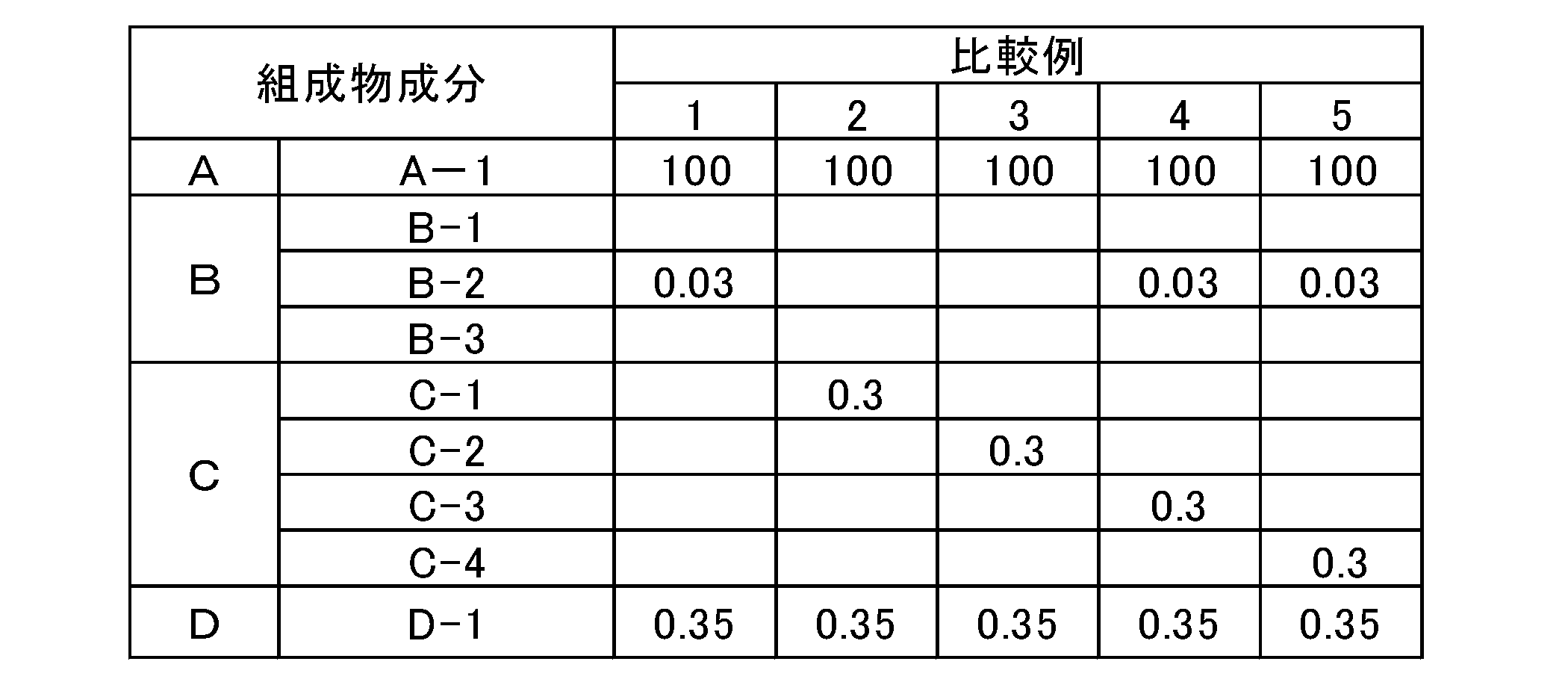

表1~表3より明らかなように、比較例に比べて、実施例の樹脂組成物は、高温、長時間滞留という厳しい成形条件下で成形された成形品からのホルムアルデヒドの発生量が極めて小さいため、成形品の品質を向上できる。
Claims (3)
- 少なくとも、
(A)ポリアセタール樹脂100質量部
(B)アクリル酸およびメタクリル酸から選択される少なくとも1種と、エチレンとの共重合体0.001~10質量部
(C)下記式(1)で表されるアミン化合物0.01~10質量部、
とを含有するポリアセタール樹脂組成物。

- 前記(B)共重合体が、アクリル酸およびメタクリル酸から選択される少なくとも1種が0.5~40質量%である共重合体である請求項1記載のポリアセタール樹脂組成物。
- 前記(C)が、トリス(ヒドロキシメチル)アミノメタン、2-アミノ-2-エチル-プロパンジオール、および、2-アミノ-2-メチル-プロパノールから選択される少なくとの1種である請求項1または2記載のポリアセタール樹脂組成物。
Applications Claiming Priority (2)
| Application Number | Priority Date | Filing Date | Title |
|---|---|---|---|
| JP2018066451A JP7109962B2 (ja) | 2018-03-30 | 2018-03-30 | ポリアセタール樹脂組成物 |
| JP2018-066451 | 2018-03-30 |
Publications (1)
| Publication Number | Publication Date |
|---|---|
| WO2019187983A1 true WO2019187983A1 (ja) | 2019-10-03 |
Family
ID=68061488
Family Applications (1)
| Application Number | Title | Priority Date | Filing Date |
|---|---|---|---|
| PCT/JP2019/008116 Ceased WO2019187983A1 (ja) | 2018-03-30 | 2019-03-01 | ポリアセタール樹脂組成物 |
Country Status (2)
| Country | Link |
|---|---|
| JP (1) | JP7109962B2 (ja) |
| WO (1) | WO2019187983A1 (ja) |
Families Citing this family (1)
| Publication number | Priority date | Publication date | Assignee | Title |
|---|---|---|---|---|
| WO2019204863A1 (en) | 2018-04-23 | 2019-10-31 | Netcomm Wireless Limited | Lightweight radome for housing an antenna |
Citations (7)
| Publication number | Priority date | Publication date | Assignee | Title |
|---|---|---|---|---|
| JPH09286899A (ja) * | 1996-04-24 | 1997-11-04 | Polyplastics Co | ポリアセタール樹脂組成物 |
| JP2000239484A (ja) * | 1998-12-22 | 2000-09-05 | Polyplastics Co | ポリアセタール樹脂組成物及び成形品 |
| WO2000078898A1 (en) * | 1999-06-22 | 2000-12-28 | The Lubrizol Corporation | Aromatic mannich compound-containing composition and process for making same |
| JP2001192530A (ja) * | 2000-01-07 | 2001-07-17 | Du Pont Kk | 成形用ポリアセタール樹脂材料、芳香を発するスライドファスナーなどの成形品、および芳香を発する成形品の製造方法 |
| JP2002020579A (ja) * | 2000-07-11 | 2002-01-23 | Mitsubishi Engineering Plastics Corp | ポリアセタール樹脂組成物 |
| JP2002020580A (ja) * | 2000-07-11 | 2002-01-23 | Mitsubishi Engineering Plastics Corp | ポリアセタール樹脂組成物 |
| JP2002541288A (ja) * | 1999-04-07 | 2002-12-03 | イー・アイ・デュポン・ドウ・ヌムール・アンド・カンパニー | ホルムアルデヒド臭が低減されたポリアセタール樹脂 |
Family Cites Families (1)
| Publication number | Priority date | Publication date | Assignee | Title |
|---|---|---|---|---|
| JP2001142176A (ja) * | 1999-11-12 | 2001-05-25 | Fuji Photo Film Co Ltd | 写真感光材料用成形品 |
-
2018
- 2018-03-30 JP JP2018066451A patent/JP7109962B2/ja active Active
-
2019
- 2019-03-01 WO PCT/JP2019/008116 patent/WO2019187983A1/ja not_active Ceased
Patent Citations (7)
| Publication number | Priority date | Publication date | Assignee | Title |
|---|---|---|---|---|
| JPH09286899A (ja) * | 1996-04-24 | 1997-11-04 | Polyplastics Co | ポリアセタール樹脂組成物 |
| JP2000239484A (ja) * | 1998-12-22 | 2000-09-05 | Polyplastics Co | ポリアセタール樹脂組成物及び成形品 |
| JP2002541288A (ja) * | 1999-04-07 | 2002-12-03 | イー・アイ・デュポン・ドウ・ヌムール・アンド・カンパニー | ホルムアルデヒド臭が低減されたポリアセタール樹脂 |
| WO2000078898A1 (en) * | 1999-06-22 | 2000-12-28 | The Lubrizol Corporation | Aromatic mannich compound-containing composition and process for making same |
| JP2001192530A (ja) * | 2000-01-07 | 2001-07-17 | Du Pont Kk | 成形用ポリアセタール樹脂材料、芳香を発するスライドファスナーなどの成形品、および芳香を発する成形品の製造方法 |
| JP2002020579A (ja) * | 2000-07-11 | 2002-01-23 | Mitsubishi Engineering Plastics Corp | ポリアセタール樹脂組成物 |
| JP2002020580A (ja) * | 2000-07-11 | 2002-01-23 | Mitsubishi Engineering Plastics Corp | ポリアセタール樹脂組成物 |
Also Published As
| Publication number | Publication date |
|---|---|
| JP2019178186A (ja) | 2019-10-17 |
| JP7109962B2 (ja) | 2022-08-01 |
Similar Documents
| Publication | Publication Date | Title |
|---|---|---|
| CN101583666A (zh) | 聚缩醛树脂组合物 | |
| JP6046482B2 (ja) | ポリアセタール樹脂組成物 | |
| WO2020129663A1 (ja) | ポリアセタール樹脂組成物 | |
| US20250051562A1 (en) | Polyoxymethylene compositions | |
| JP5079265B2 (ja) | 安定化ポリアセタール樹脂の製造方法 | |
| WO2019187983A1 (ja) | ポリアセタール樹脂組成物 | |
| JP7612507B2 (ja) | ポリアセタール樹脂組成物 | |
| EP3091051B1 (en) | Polyoxymethylene resin composition and molded article containing same | |
| CN110016201A (zh) | 聚缩醛树脂组合物 | |
| JPH07228751A (ja) | ポリオキシメチレン組成物及びその成形品 | |
| JP3696337B2 (ja) | ポリオキシメチレン組成物 | |
| JP4676167B2 (ja) | ポリアセタール樹脂組成物およびそれからなる成形品 | |
| WO1999005217A1 (en) | Polyoxymethylene composition | |
| JP2021004337A (ja) | ポリアセタ−ル樹脂組成物及びその製造方法 | |
| JP2005263921A (ja) | ポリアセタール樹脂組成物およびそれからなる成形品 | |
| JP3696364B2 (ja) | ポリアセタール樹脂組成物 | |
| JP2019218443A (ja) | ポリアセタール樹脂組成物 | |
| EP0884362A1 (en) | Polyoxymethylene composition | |
| JP2002226704A (ja) | 制電性組成物 | |
| KR102441590B1 (ko) | 폴리옥시메틸렌 수지 조성물 및 이로부터 제조된 성형품 | |
| JP4969720B2 (ja) | ポリオキシメチレン樹脂組成物及び成形品 | |
| JP2008156504A (ja) | ポリアセタール樹脂組成物 | |
| CN105820373A (zh) | 一种用于塑料的抗静电剂及其制备方法 | |
| JPH07309994A (ja) | ポリオキシメチレン樹脂組成物 | |
| JP2003213138A (ja) | 制電性樹脂組成物 |
Legal Events
| Date | Code | Title | Description |
|---|---|---|---|
| 121 | Ep: the epo has been informed by wipo that ep was designated in this application |
Ref document number: 19778394 Country of ref document: EP Kind code of ref document: A1 |
|
| 122 | Ep: pct application non-entry in european phase |
Ref document number: 19778394 Country of ref document: EP Kind code of ref document: A1 |