WO2018180402A1 - 固形薬剤収容体及び水処理方法 - Google Patents
固形薬剤収容体及び水処理方法 Download PDFInfo
- Publication number
- WO2018180402A1 WO2018180402A1 PCT/JP2018/009392 JP2018009392W WO2018180402A1 WO 2018180402 A1 WO2018180402 A1 WO 2018180402A1 JP 2018009392 W JP2018009392 W JP 2018009392W WO 2018180402 A1 WO2018180402 A1 WO 2018180402A1
- Authority
- WO
- WIPO (PCT)
- Prior art keywords
- water
- soluble
- container
- solid drug
- soluble solid
- Prior art date
- Legal status (The legal status is an assumption and is not a legal conclusion. Google has not performed a legal analysis and makes no representation as to the accuracy of the status listed.)
- Ceased
Links
Images



Classifications
-
- B—PERFORMING OPERATIONS; TRANSPORTING
- B01—PHYSICAL OR CHEMICAL PROCESSES OR APPARATUS IN GENERAL
- B01F—MIXING, e.g. DISSOLVING, EMULSIFYING OR DISPERSING
- B01F21/00—Dissolving
-
- C—CHEMISTRY; METALLURGY
- C02—TREATMENT OF WATER, WASTE WATER, SEWAGE, OR SLUDGE
- C02F—TREATMENT OF WATER, WASTE WATER, SEWAGE, OR SLUDGE
- C02F1/00—Treatment of water, waste water, or sewage
-
- C—CHEMISTRY; METALLURGY
- C02—TREATMENT OF WATER, WASTE WATER, SEWAGE, OR SLUDGE
- C02F—TREATMENT OF WATER, WASTE WATER, SEWAGE, OR SLUDGE
- C02F1/00—Treatment of water, waste water, or sewage
- C02F1/50—Treatment of water, waste water, or sewage by addition or application of a germicide or by oligodynamic treatment
Definitions
- the present invention relates to a solid drug container containing a water-soluble solid drug. Specifically, the active ingredient is continuously dissolved in the water to be treated while gradually dissolving the water-soluble solid drug by contact with the water to be treated.
- TECHNICAL FIELD The present invention relates to a solid drug container having a function of releasing water and a water treatment method for performing water treatment using the solid drug container.
- a solid medicine dissolving apparatus As a technique for continuously releasing an active ingredient while gradually dissolving a water-soluble solid medicine (hereinafter referred to as a water-soluble solid medicine) in water to be treated, a solid medicine dissolving apparatus is used as an inner cylinder.
- Water to be treated which flows into the inner cylindrical body by changing the degree of overlap of the communication holes formed in the inner cylindrical body and the outer cylindrical body by rotating the inner cylindrical body.
- Patent Document 1 has been disclosed that adjusts the dissolution rate of a water-soluble solid drug filled in the inner cylinder.
- the present invention made to solve the above-mentioned problems can release the active ingredient of the water-soluble solid drug continuously over a long period of time, and can easily adjust the dissolution rate of the water-soluble solid drug.
- An object of the present invention is to provide a solid medicine container that can be used.
- the present inventors can easily adjust the dissolution rate of the water-soluble solid drug by stacking the water-soluble solid drug inside the storage container in the vertical direction through the water-soluble film. It has been found that the active ingredient of the active solid drug can be released continuously over a long period of time.
- a solid drug container in which a water-soluble solid drug is filled in a storage container, the storage container storing a plurality of water-soluble solid drugs, and water to be treated in the storage space An inflow port through which the water to be treated flows out and an outflow port through which the water to be treated flows out from the storage space, and a part or all of the water-soluble solid medicine is laminated vertically in the storage space through the water-soluble film.
- a solid drug container in which at least a part of the water-soluble film is disposed above the inlet and the outlet.
- An accommodation space that can accommodate a plurality of water-soluble solid medicines, an inflow port that allows the water to be treated to flow into the accommodation space, and an outflow port that allows the water to be treated to flow out from the accommodation space.
- the drug is not exposed to the water to be treated flowing through the flow path formed between the inlet and the outlet of the storage container,
- the drug placed on the water-soluble film above the drug that is being dissolved by being exposed to the water to be treated flowing through the flow path is the water-soluble film, even while the drug just below the drug is being dissolved. Due to the presence of water, contact with the water to be treated is hindered and wetting is reduced.
- medical agent can be reduced and the residual rate of the active ingredient of a chemical
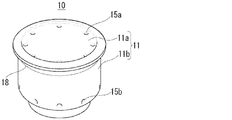
- FIG. 1 It is a perspective view showing the outline of the storage container concerning one embodiment of a solid medicine container. It is a vertical sectional view of the solid medicine container shown in FIG. It is a vertical sectional view of a solid medicine container for explaining a first embodiment of a method for using a solid medicine container. It is a schematic explanatory drawing of the usage method of a solid chemical
- the solid drug container of the present invention is a solid drug container in which a water-soluble solid drug is filled in a storage container, the storage container including a storage space capable of storing a plurality of water-soluble solid drugs, It has an inflow port through which treated water flows into the accommodation space and an outflow port through which treated water flows out of the accommodation space, and a part or all of the water-soluble solid drug is placed in the accommodation space via a water-soluble film. And at least a part of the water-soluble film is disposed above the inlet and the outlet.
- the active ingredient of the water-soluble solid drug can be continuously released over a long period of time, and the water-soluble solid drug can be released.
- the dissolution rate of the drug can be easily adjusted.
- a solid drug container filled with a water-soluble solid drug used for water treatment of cooling water in a cooling tower will be described.
- the storage container has an inlet for allowing the water to be treated to flow into the container and an outlet for allowing the water to be treated that has flowed into the container to flow out of the container at the lower part of the container.
- the container includes a cylindrical portion, an upper surface portion and a lower surface portion that seal both ends of the cylindrical portion, the cylindrical portion and / or an inlet provided in the lower surface portion, the cylindrical portion, And / or an outlet provided in the lower surface portion.
- the inlet may also serve as the outlet.
- a storage container 10 having a substantially cylindrical container body 11 can be used.
- a partition wall 12 is provided inside the container body 11.
- the interior of the container body 11 is partitioned by a partition wall 12 into a storage space 13 that stores the water-soluble solid medicine S1 and a non-storage space 14 that does not store the water-soluble solid medicine.
- the partition wall 12 has an opening in the lower part.
- the container body 11 includes an upper member 11a and a lower member 11b.
- the upper member 11 a and the lower member 11 b are fitted to form the container body 11.
- the shape and size of the container main body are not particularly limited as long as it can accommodate a water-soluble solid medicine.
- the shape and size of the container main body can be appropriately determined from the viewpoints of the size of the cooling tower, the carrying and handling of the container, and the like.
- the shape of the container main body can be, for example, a circular, elliptical, or polygonal cylindrical section, or a shape with a rounded outer surface. From the viewpoint of easy handling of the container body, the size of the container body is preferably set to such an extent that it can be lifted with one hand.
- Container communication paths 15a, 15b, and 15c are provided at the top of the upper member 11a, near the bottom of the side periphery of the lower member 11b, and at the bottom of the lower member 11b. Cooling water flows between the outside of the container body 11 and the non-accommodating space 14 via these container communication paths 15a, 15b, and 15c.
- the shape, size, arrangement, and number of the container communication paths 15a, 15b, and 15c are not particularly limited as long as the cooling water can be circulated, and are appropriately determined according to the desired circulation amount of the cooling water. be able to.
- the shape of the container communication paths 15a, 15b, and 15c can be, for example, a round hole shape, a square hole shape, a slit shape, a mesh shape, or the like.
- the container communication path 15 a is disposed above the non-accommodating space 14, and the non-accommodating space 14 communicates with the outside of the storage container 10 through the container communication path 15 a.
- the partition wall 12 has a cylindrical shape and is suspended from the top inner wall of the upper member 11a.
- the space inside the partition wall 12 is the accommodating space 13 and the outer space is the non-accommodating space 14.
- the shape, size, and arrangement of the partition wall 12 are determined so that it is easy to perform operations for newly storing or supplementing a water-soluble solid medicine in the storage space. Specifically, the shape, size, and arrangement of the partition wall 12 are determined so that the accommodation space 13 inside the partition wall 12 has a size obtained by adding a space (play) to the size of the water-soluble solid medicine S1. It is done.
- the partition wall 12 is disposed so as not to contact the bottom surface of the lower member 11b. A gap between the lower end of the partition wall 12 and the bottom surface of the lower member 11 b facing the partition wall 12 becomes the partition wall communication path 16.
- the cooling water flows between the accommodation space 13 and the non-accommodation space 14 through the partition wall communication path 16.
- the partition wall communication path 16 functions as an “inlet” and an “outlet”
- the container communication paths 15 b and 15 c function as an “outlet”.
- the shape, size, arrangement, and number of the partition wall communication path 16 are not particularly limited as long as cooling water can be circulated, and are appropriately determined according to a desired circulation amount of the cooling water. Can do. Examples of the shape include a round hole shape, a square hole shape, a slit shape, and a mesh shape.
- the partition wall has a cylindrical shape, the lower end of the partition wall is in contact with the bottom surface of the container body facing the partition wall, and there is a gap in at least a part between the partition wall and the bottom surface of the container body.
- the partition wall communication path may be formed in such a manner as to have.
- the partition wall communication path is at least 1 from the viewpoint of more reliably circulating the cooling water between the accommodating space and the non-accommodating space. It is preferable that the one extends to the bottom surface of the container body.
- the storage container 10 of the present embodiment is made of translucent polypropylene. From the viewpoint of allowing the state of the water-soluble solid drug inside the container to be easily visually observed from the outside of the container, the container body and the partition wall preferably have transparency. Moreover, since it uses in a cooling tower, it is preferable that it is a product made from plastics from viewpoints, such as handling ease and water resistance.
- Water-soluble solid drug Although a water-soluble solid chemical
- medical agent used as a water treatment agent of the cooling water of a cooling tower is not specifically limited, A halogen type oxidizing agent, an organic type agent, etc. are illustrated.
- a halogen-based oxidizing agent and an organic-based agent are used in combination, and the organic fungicide is reactive with the halogen-based oxidizing agent, both agents are prevented from reacting at an early stage.
- Solid drug (A) The solid drug (A) containing a halogen-based oxidant as an active ingredient has an effect of sterilization and slime suppression in a water treatment agent.
- the halogen-based oxidizing agent include halogenated hydantoin-based compounds and isocyanuric acid-based compounds.
- the halogenated hydantoin-based compound is a solid organic halogen-based oxidizing agent, and releases an active halogen having strong oxidizing power when in contact with water. From the viewpoint of solubility in water, etc., it is suitable for releasing active halogen continuously over a long period of time.
- the halogen-based oxidizing agents that are commercially available as sustained-release tablets include calcium hypochlorite, sodium chlorite, dichloroisocyanuric acid, trichloroisocyanuric acid, and the like as active ingredients. There is.
- halogen-based oxidants those containing a halogenated hydantoin-based compound as an active ingredient have a relatively low elution rate. According to the knowledge, it can be said that a halogenated hydantoin compound is most suitable from the viewpoint of maintaining an excellent drug effect in combination with a solid drug containing an organic fungicide. Moreover, the halogenated hydantoin compounds are preferable from the viewpoint of safety during handling because they generate relatively little odor when they come into contact with water.
- halogenated hydantoin compound examples include 1-bromo-3-chloro-5,5-dimethylhydantoin (hereinafter abbreviated as BCDMH), 1,3-dichloro-5,5-dimethylhydantoin, 1,3-dibromo-5,5-dimethylhydantoin, 1-bromo-3-chloro-5,5-diethylhydantoin, 1,3-dichloro-5,5-diethylhydantoin, 1-bromo-3-chloro-5 -Methyl-5-ethylhydantoin and the like. These may be used alone or in combination of two or more. Of these, BCDMH and 1,3-dichloro-5,5-dimethylhydantoin are preferable from the viewpoints of balance between the dissolution rate when contacted with water and the solid drug (B) and availability.
- BCDMH 1-bromo-3-chloro-5,5-dimethylhy
- the form of the halogen-based oxidizing agent as described above is preferably a tablet.
- the manufacturing method of a tablet is not specifically limited, It can manufacture by a well-known method. Usually, it is produced by pressure molding using additives such as excipients and binders.
- the dissolution rate of the tablet in the water to be treated can be adjusted by adjusting the type and amount of the excipient and binder.
- a commercial item can also be used as a tablet.
- the content of the halogen-based oxidizing agent in the solid drug (A) is effective chlorine (Cl2) when all the effective halogen components are regarded as effective chlorine. It is preferably 10% by mass or more in terms of conversion, more preferably 30 to 90% by mass, still more preferably 40 to 70% by mass. From the viewpoint of bactericidal action against Legionella spp.,
- the effective halogen (Cl2 equivalent) concentration in the water to be treated by the solid drug (A) is preferably 0.1 mg / L or more, more preferably 0.1 to 5 mg / L L, more preferably 0.1 to 2 mg / L.
- Solid medicine (B) A synergistic effect of bactericidal action can be obtained by using a solid drug (B) containing an organic fungicide having reactivity with the halogen-based oxidizing agent in combination with the solid drug (A).
- the organic disinfectant has reactivity with the halogen-based oxidant. Since the reaction with the halogen-based oxidant generates a toxic halogen-based substance such as chlorine gas, it is difficult to mix with the halogen-based oxidant to form a single agent. For this reason, in order to formulate an organic disinfectant, it is necessary to use a separate agent from the halogen-based oxidizing agent. Therefore, in the present embodiment, the solid drug (B) is formulated separately from the solid drug (A).
- the active ingredient in the organic fungicide preferably contains an isothiazoline compound from the viewpoint of sterilization performance when used in combination with a halogen oxidizing agent.
- the isothiazoline compound include 5-chloro-2-methyl-4-isothiazolin-3-one (hereinafter abbreviated as Cl-MIT), 2-methyl-4-isothiazolin-3-one, 4,5-dichloro-2-methyl-4-isothiazolin-3-one, 2-ethyl-4-isothiazolin-3-one, 2-n-octyl-4-isothiazolin-3-one, 5-chloro-2- Ethyl-4-isothiazolin-3-one, 5-chloro-2-t-octyl-4-isothiazolin-3-one, 4,5-dichloro-2-n-octyl-4-isothiazolin-3-one, 4, Examples include 5-dichloro-2-cyclohexyl-4-isothiazolin
- Cl-MIT is preferred from the viewpoints of solubility in water, sterilization performance, and availability.
- a solid agent (A) of a halogen-based oxidizing agent containing BCDMH as an active ingredient, and a solid agent (B) containing an organic fungicide containing Cl-MIT as an active ingredient is preferable.
- the active ingredient is Cl-MIT and the elution amount of the organic fungicide solid drug (B), which is an active ingredient, is the halogen-based oxidizing agent of the solid drug (A).
- the concentration of Cl-MIT (unit: mg / L) in the treated water is 0 with respect to the effective halogen (Cl2 equivalent) concentration (unit: mg / L) of BCDMH in the treated water. It is preferably 0.0001 to 100 times, more preferably 0.01 to 30 times, and still more preferably 0.1 to 1 times.
- the concentration of Cl-MIT in the water to be treated is preferably 0.0001 to 5 mg / L, more preferably 0.001 to 3 mg / L, and still more preferably 0.001 to 2 mg / L.
- Solid agent (B) may contain other known compounds used from the viewpoint of anticorrosion and scale prevention in the water treatment agent in addition to the organic fungicide.
- organic fungicide for example, triazole compound, phosphonic acid compound, sulfamic acid compound, amethrin, 2,2-dibromo-3-nitrilopropionamide, bronopol, 2,2-dibromo-2-nitroethanol, zinc pyrithione, thiabendazole, acrylic acid And a coagulant made of a maleic acid-based low molecular weight polymer.
- triazole compound phosphonic acid compound
- sulfamic acid compound amethrin
- 2,2-dibromo-3-nitrilopropionamide bronopol
- 2,2-dibromo-2-nitroethanol zinc pyrithione
- thiabendazole acrylic acid
- acrylic acid for example, acrylic acid
- the form of the solid drug (B) is not particularly limited as in the form of the solid drug (A), but from the viewpoints of ease of use amount adjustment, ease of handling, and the like, pellets and tablets From the viewpoints of workability and the like when accommodated in a container, the tablet is more preferable.
- the manufacturing method of a tablet is not specifically limited, It can manufacture by a well-known method. Usually, it is produced by pressure molding using additives such as excipients and binders. The dissolution rate of the tablet in the water to be treated can be adjusted by adjusting the type and amount of the excipient and binder. As these additives, for example, magnesium stearate, silica, magnesium oxide and the like are used.
- a commercial item can also be used as a solid chemical
- the solid drug (B) preferably has an organic fungicide content of 1 to 40% by mass, more preferably 2 to 35% by mass, from the viewpoint of allowing the organic fungicide to have an appropriate dissolution rate. %, More preferably 5 to 30% by mass.
- the form of the water-soluble solid drug is not particularly limited, but is preferably a tablet or granule such as a pellet or tablet from the viewpoint of ease of adjustment of the amount used and ease of handling, From the viewpoint of workability and the like when stored in the storage container, the tablet is more preferable.
- the manufacturing method of a tablet is not specifically limited, It can manufacture by a well-known method. Usually, it is produced by pressure molding using additives such as excipients and binders. The dissolution rate of the tablet in the water to be treated can be adjusted by adjusting the type and amount of the excipient and binder.
- water-soluble film examples include those derived from synthetic resins and natural products such as polyvinyl alcohol (hereinafter PVA), polyethylene oxide, polyvinyl ether, polyvinyl pyrrolidone, pullulan, and cellulose derivatives. Among these, the optimal one can be used as appropriate according to the type of the water-soluble solid drug.
- PVA polyvinyl alcohol
- polyethylene oxide polyethylene oxide
- polyvinyl ether polyvinyl ether
- polyvinyl pyrrolidone polyvinyl pyrrolidone
- pullulan cellulose derivatives
- the water-soluble solid drug is a water treatment agent
- a PVA film is formed by forming a raw material containing a polyvinyl alcohol resin (hereinafter referred to as “PVA resin”).
- the PVA resin a resin obtained by saponifying a vinyl ester polymer obtained by polymerizing a vinyl ester compound can be used.
- a resin obtained by saponifying a vinyl ester polymer obtained by polymerizing a vinyl ester compound can be used.
- not only one type of PVA-based resin but also two or more types can be used in combination.
- vinyl ester compound examples include vinyl acetate, vinyl formate, vinyl trifluoroacetate, vinyl propionate, vinyl butyrate, vinyl caprate, vinyl laurate, vinyl versatate, vinyl palmitate, vinyl stearate, etc. Two or more are used.
- the water-soluble film used in the present invention preferably has a complete dissolution time in 23 ° C. water (a time until a film having a thickness of 50 ⁇ m is dissolved 95% or more) of 8 seconds or more and 99 seconds or less, 12 seconds or more, It is more preferably 99 seconds or less, and still more preferably 57 seconds or more and 99 seconds or less.
- the complete dissolution time in 23 ° C. water is a value obtained by measuring the time until the film is completely dissolved in accordance with the method described as [Evaluation of water solubility of film] in Examples described later.
- the water-soluble film used in the present invention preferably has a disintegration time in 23 ° C. water (a time until the film having a thickness of 50 ⁇ m is broken) of 40 seconds or less, and more preferably 30 seconds or less.
- the disintegration time in water at 23 ° C. is a value obtained by measuring the time until the film is torn according to the method described as [Evaluation of water solubility of film] in Examples described later, and the thickness of the film is 50 ⁇ m. Is a value converted to a film thickness of 50 ⁇ m according to the following formula (2).
- Equivalent disintegration time (seconds) [50 / film thickness ( ⁇ m)] 2 ⁇ sample disintegration time (seconds) .... Formula (2)
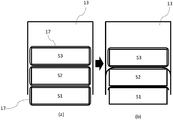
- the water-soluble solid medicines S 1 to S 3 packaged with the water-soluble film 17 are accommodated in the accommodation space 13.
- the storage container 10 storing the water-soluble solid medicines S1 to S3 in the storage space 13 is arranged in the cooling tower so that the falling cooling water hits the top outer wall of the storage container 10.
- the counterflow type (round type) cooling tower when a sound deadening mat is disposed, it is preferably placed on the sound deadening mat.
- the top of a watering board etc. may be sufficient.
- it can also arrange
- a mounting portion of the storage container 10 is provided in the cooling tower, for example, in the vicinity of the louver on the cooling tower side peripheral portion, and the storage container 10 is disposed on the mounting portion. May be.
- the cooling water flows into the non-accommodating space 14 through the container communication path 15 a, and flows into the accommodating space 13 from the non-accommodating space 14 through the partition wall flow passage 16.
- the cooling water that has flowed into the accommodation space 13 first elutes the water-soluble film 17 that has packaged the water-soluble solid medicine S1 located at the bottom of the accommodation space 13, and then elutes the water-soluble solid medicine S1.
- the cooling water (eluent) from which the water-soluble solid medicine S1 has been eluted flows out of the storage container 10 through the container communication paths 15b and 15c. With such a flow of cooling water, water treatment of the cooling water in the cooling tower is performed using the water-soluble solid chemical.
- the amount of cooling water staying in the non-accommodating space varies depending on the size of the non-accommodating space and the inflow and outflow speeds of the cooling water, but the higher the amount of residence, the lower the elution rate of the water-soluble solid drug. be able to.
- FIG. 3 a state in which a film is stretched across the horizontal cross section in the accommodation space 13, that is, a state in which the gap between the water-soluble solid medicine S 2 and the accommodation space 13 is closed by the water-soluble film 17 is formed.
- the water vapor generated by the evaporation of the cooling water flowing into the accommodation space remains below the membrane, so that the phenomenon that the water-soluble solid medicine S3 above the membrane gets wet with the water vapor can be suppressed.
- the capillary phenomenon of the water-soluble solid drug itself can be considered as a factor that causes the water-soluble solid drug to get wet
- the water-soluble film 17 remaining between the water-soluble solid drugs S1 and S2 and the water-soluble solid drug Since the water-soluble film 17 between the medicines S2 and S3 prevents the cooling water from being sucked up by the capillary action of the water-soluble solid medicine, wetting can be suppressed due to the capillary action of the water-soluble solid medicine.
- the water content of the water-soluble solid drug can be reduced, and the residual ratio of the active ingredient of the water-soluble solid drug can be increased.
- the storage container 10 in which the water-soluble solid medicines S1 to S3 are stored in the storage space 13 is placed at least on the surface of the cooling water in the cooling water pit in the cooling tower. Float so that the outside wall is exposed above the water surface.
- the cooling water pit may be an upper pit or a lower pit in which water to be sprayed is stored.
- the container is made of a material or form that floats on the water surface.
- the container can be floated by using a container set that uses a frame that plays the role of “floating”.
- the container may be moored or a fence for fixing the floating area may be provided.
- the cooling water flows into the non-accommodating space 14 through the container communication paths 15 b and 15 c, and flows into the accommodating space 13 from the non-accommodating space 14 through the partition wall flow passage 16.
- the water-soluble solid medicine S1 in the storage space 13 is eluted in contact with the flowing cooling water.
- the cooling water that has flowed into the accommodation space 13 first elutes the water-soluble film 17 that has packaged the water-soluble solid medicine S1 located at the bottom of the accommodation space 13, and then elutes the water-soluble solid medicine S1.
- the cooling water (eluent) from which the water-soluble solid medicine S1 has been eluted flows out of the storage container 10 through the container communication paths 15b and 15c.
- the container communication path 15a serves as a vent.
- the cooling water may flow into the non-accommodating space 14 also from the container communication path 15a.
- the water content of the water-soluble solid medicine can be reduced by suppressing the wetting of the water-soluble solid medicine S3, and the active ingredient of the water-soluble solid medicine, as in the above ⁇ First embodiment> The residual rate of can be increased.
- the water-soluble solid medicine is packaged one by one with the water-soluble film 17, but a plurality of tablets may be packaged together with the water-soluble film.
- a water-soluble solid medicine and a water-soluble film may be alternately arranged from the bottom in the accommodation space 13 to form a laminated structure of the water-soluble solid medicine and the water-soluble film.
- the layer made of the water-soluble solid drug may be one layer or two or more layers
- the layer made of the water-soluble film may be one layer or two or more layers.
- the layer which consists of a water-soluble solid medicine may be comprised from 1 tablet of water-soluble solid medicine, and may be comprised from 2 or more water-soluble solid medicine.
- a granular water-soluble solid drug may be spread in a container, and a water-soluble film may be placed thereon, and a granular water-soluble solid drug may be further spread on the container. From the water-soluble solid drug and the water-soluble film, Such a set may be stacked over a plurality of sets.
- “dried XRV” means XRV dried in a constant temperature bath at 60 ° C. for 1 day (24 hours).
- the water-soluble film used in the present invention can be appropriately selected according to the type and use of the water-soluble solid drug.
- the complete dissolution time is 8 seconds or more and 99 seconds or less. It is preferable that A starch-based water-soluble film does not completely dissolve even after 30 minutes. Therefore, when used in the present invention, it is assumed that the starch-based water-soluble film will adhere to the surface of a water-soluble solid drug and promote dissolution, which is not preferable.
- the water content of the water-soluble solid drug was measured by the following procedure. The sample taken out from the cooling tower was placed in a constant temperature bath at 40 ° C. and dried until there was no mass change. The water content was calculated from the weight loss before and after drying.
- ⁇ Measurement method of residual ratio of total phosphoric acid The residual ratio of total phosphoric acid in the water-soluble solid drug was measured by the following procedure. The dried solid drug was dissolved in pure water to 1 g / L, and after thermal decomposition, it was measured by a molybdenum blue absorptiometry using a ratio beam spectrophotometer U-5100 (Hitachi High-Tech Science Co., Ltd.).
- Water-soluble solid drug Water-soluble solid drug containing 7% by mass of benzotriazole ⁇ Sample>
- Example 1 4 tablets of water-soluble solid medicine (packed one by one with Kuraray Poval Film “VF-HP220” (thickness 40 ⁇ m))
- Example 2 4 tablets of water-soluble solid medicine (packed one by one with PVA film “ADVASOL XRV (“ XRV ”in Table 1)” (thickness 50 ⁇ m) manufactured by Sekisui Chemical) ⁇ Procedure> 1.
- the sample was stored in a cylindrical storage container. 2.
- the storage container containing the sample was installed in a round cooling tower that was showering. 3.
- a sample was taken out after one week, and the water content of the water-soluble solid drug at the top (fourth tablet from the bottom) and the residual ratio of benzotriazole were examined.
- the water content of the water-soluble solid drug was measured by the following procedure. The sample taken out from the cooling tower was placed in a constant temperature bath at 40 ° C. and dried until there was no change in mass. The water content was calculated from the weight loss before and after drying.
- the residual ratio of benzotriazole in the water-soluble solid drug was measured by the following procedure.
- the dried solid drug was dissolved in pure water to 1 g / L and measured using high performance liquid chromatography Agilent 1260 (Agilent Technologies Japan, Ltd.).
- Example 1 Moisture content (24.7%), residual ratio of benzotriazole (80.0%)
- Example 2 Water content (5.4%), residual ratio of benzotriazole (100%) As described above, it was confirmed that the component was lost at a moisture content of 24.7%, but the component was not lost at a moisture content of 5.4%.
Landscapes
- Chemical & Material Sciences (AREA)
- Life Sciences & Earth Sciences (AREA)
- Hydrology & Water Resources (AREA)
- Engineering & Computer Science (AREA)
- Environmental & Geological Engineering (AREA)
- Water Supply & Treatment (AREA)
- Organic Chemistry (AREA)
- Chemical Kinetics & Catalysis (AREA)
- Agricultural Chemicals And Associated Chemicals (AREA)
- Pharmaceuticals Containing Other Organic And Inorganic Compounds (AREA)
- Medicinal Preparation (AREA)
Abstract
収納容器の内部に、水溶性固形薬剤を充填した固形薬剤収容体であって、該収納容器は、複数の水溶性固形薬剤を収容可能な収容空間と、該収容空間に被処理水を流入させる流入口と、該収容空間から被処理水を流出させる流出口を有し、該収容空間に、水溶性固形薬剤の一部若しくは全部を、水溶性フィルムを介して垂直方向に積層し、該水溶性フィルムの少なくとも一部を、該流入口及び該流出口よりも上方に配置した、固形薬剤収容体
Description
本発明は、水溶性固形薬剤を収容した固形薬剤収容体に関し、具体的には、被処理水との接触によって水溶性固形薬剤を除々に溶解させながら、その有効成分を持続的に被処理水中に放出する機能を有する固形薬剤収容体、及びその固形薬剤収容体を用いて水処理を行う水処理方法に関する。
被処理水に対し、水溶性の固形薬剤(以下、水溶性固形薬剤という)を除々に溶解させながら、その有効成分を持続的に放出するための技術として、固形薬剤溶解装置を、内筒体と外筒体から構成し、内筒体を回転させることにより、内筒体と外筒体のそれぞれに形成した連通孔の重なり程度を変化させて、内筒体の内部に流入する被処理水の量を調整し、内筒体の内部に充填した水溶性固形薬剤の溶解速度を調整する技術が開示されている(特許文献1)。
しかし、特許文献1に記載の技術で水溶性固形薬剤の溶解速度を調整するためには、被処理水の流量や流速等の変動に応じて、その都度、人手により内筒体を回転させて、内筒体の内部に流入する被処理水の量を調整する必要があり、操作が煩わしいものであった。
上記の課題を解決するためになされた本発明は、水溶性固形薬剤の有効成分を長期間に亘って持続的に放出することができ、しかも、水溶性固形薬剤の溶解速度の調整を簡便に行うことができる固形薬剤収容体を提供することを目的とするものである。
本発明者らは、収納容器の内部に、水溶性固形薬剤を、水溶性フィルムを介して垂直方向に積層することで、水溶性固形薬剤の溶解速度の調整を簡便に行うことができ、水溶性固形薬剤の有効成分を長期間に亘って持続的に放出することができることを見出した。
本発明は上記の知見に基づきなされたものであり、以下の[1]~[14]を提供する。
[1] 収納容器の内部に、水溶性固形薬剤を充填した固形薬剤収容体であって、該収納容器は、複数の水溶性固形薬剤を収容可能な収容空間と、該収容空間に被処理水を流入させる流入口と、該収容空間から被処理水を流出させる流出口を有し、該収容空間に、水溶性固形薬剤の一部若しくは全部を、水溶性フィルムを介して垂直方向に積層し、該水溶性フィルムの少なくとも一部を、該流入口及び該流出口よりも上方に配置した、固形薬剤収容体。
[2] 前記収納容器が、略円筒状の容器本体を有する、上記[1]に記載の固形薬剤収容体。
[3] 前記容器本体の内部に、略円筒状の区画壁を備え、該区画壁の内側の空間を前記収容空間とした、上記[2]に記載の固形薬剤収容体。
[4] 前記容器本体が、上部部材と下部部材を嵌合してなる、上記[3]に記載の固形薬剤収容体。
[5] 前記水溶性フィルムが、前記水溶性固形薬剤を包む包材である、上記[1]~[4]の何れかに記載の固形薬剤収容体。
[6] 前記水溶性フィルムが、ポリビニルアルコール系樹脂を含有する原料を製膜してなる、上記[1]~[5]の何れかに記載の固形薬剤収容体。
[7] 前記水溶性フィルムは、23℃の水中での溶解時間が、8秒以上、99秒以下である、上記[1]~[6]の何れかに記載の固形薬剤収容体。
[8] 複数の水溶性固形薬剤を収容可能な収容空間と、該収容空間に被処理水を流入させる流入口と、該収容空間から被処理水を流出させる流出口を有し、該収容空間に水溶性固形薬剤を充填した固形薬剤収容体を用いて水処理を行う水処理方法であって、
該複数の水溶性固形薬剤の、一部若しくは全部を、水溶性フィルムを介して垂直方向に積層し、かつ、該水溶性フィルムの少なくとも一部を、該流入口及び該流出口よりも上方に配置して水処理を行う、水処理方法。
[9] 前記流入口及び前記流出口よりも下方に配置された水溶性固形薬剤の溶解時に、該流入口及び該流出口よりも上方に配置された水溶性フィルムが部分的に溶解し、該部分的に溶解した水溶性フィルムの残存部が、該残存部上に配置された水溶性固形薬剤と被処理水との接触を妨げる、上記[8]に記載の水処理方法。
[10] 前記残存部が、前記収容空間の水平断面を閉塞する、上記[9]に記載の水処理方法。
[11] ハロゲン系酸化剤を有効成分とする水溶性固形薬剤と有機系酸化剤を有効成分とする水溶性固形薬剤とを、別々の固形薬剤収容体に収容して水処理を行う、上記[8]~[10]の何れかに記載の水処理方法。
[12] 前記ハロゲン系酸化剤を有効成分とする水溶性固形薬剤におけるハロゲン系酸化剤の含有量が、有効ハロゲン成分をすべて有効塩素とみなした場合、有効塩素(Cl2)換算で10質量%以上である、上記[11]に記載の水処理方法。
[13] 前記有機系酸化剤を有効成分とする水溶性固形薬剤における有機系殺菌剤の含有量が1~40質量%である、上記[11]に記載の水処理方法。
[14] 前記水溶性固形薬剤が賦形剤及び結合剤を含む、上記[8]~[13]の何れかに記載の水処理方法。
[1] 収納容器の内部に、水溶性固形薬剤を充填した固形薬剤収容体であって、該収納容器は、複数の水溶性固形薬剤を収容可能な収容空間と、該収容空間に被処理水を流入させる流入口と、該収容空間から被処理水を流出させる流出口を有し、該収容空間に、水溶性固形薬剤の一部若しくは全部を、水溶性フィルムを介して垂直方向に積層し、該水溶性フィルムの少なくとも一部を、該流入口及び該流出口よりも上方に配置した、固形薬剤収容体。
[2] 前記収納容器が、略円筒状の容器本体を有する、上記[1]に記載の固形薬剤収容体。
[3] 前記容器本体の内部に、略円筒状の区画壁を備え、該区画壁の内側の空間を前記収容空間とした、上記[2]に記載の固形薬剤収容体。
[4] 前記容器本体が、上部部材と下部部材を嵌合してなる、上記[3]に記載の固形薬剤収容体。
[5] 前記水溶性フィルムが、前記水溶性固形薬剤を包む包材である、上記[1]~[4]の何れかに記載の固形薬剤収容体。
[6] 前記水溶性フィルムが、ポリビニルアルコール系樹脂を含有する原料を製膜してなる、上記[1]~[5]の何れかに記載の固形薬剤収容体。
[7] 前記水溶性フィルムは、23℃の水中での溶解時間が、8秒以上、99秒以下である、上記[1]~[6]の何れかに記載の固形薬剤収容体。
[8] 複数の水溶性固形薬剤を収容可能な収容空間と、該収容空間に被処理水を流入させる流入口と、該収容空間から被処理水を流出させる流出口を有し、該収容空間に水溶性固形薬剤を充填した固形薬剤収容体を用いて水処理を行う水処理方法であって、
該複数の水溶性固形薬剤の、一部若しくは全部を、水溶性フィルムを介して垂直方向に積層し、かつ、該水溶性フィルムの少なくとも一部を、該流入口及び該流出口よりも上方に配置して水処理を行う、水処理方法。
[9] 前記流入口及び前記流出口よりも下方に配置された水溶性固形薬剤の溶解時に、該流入口及び該流出口よりも上方に配置された水溶性フィルムが部分的に溶解し、該部分的に溶解した水溶性フィルムの残存部が、該残存部上に配置された水溶性固形薬剤と被処理水との接触を妨げる、上記[8]に記載の水処理方法。
[10] 前記残存部が、前記収容空間の水平断面を閉塞する、上記[9]に記載の水処理方法。
[11] ハロゲン系酸化剤を有効成分とする水溶性固形薬剤と有機系酸化剤を有効成分とする水溶性固形薬剤とを、別々の固形薬剤収容体に収容して水処理を行う、上記[8]~[10]の何れかに記載の水処理方法。
[12] 前記ハロゲン系酸化剤を有効成分とする水溶性固形薬剤におけるハロゲン系酸化剤の含有量が、有効ハロゲン成分をすべて有効塩素とみなした場合、有効塩素(Cl2)換算で10質量%以上である、上記[11]に記載の水処理方法。
[13] 前記有機系酸化剤を有効成分とする水溶性固形薬剤における有機系殺菌剤の含有量が1~40質量%である、上記[11]に記載の水処理方法。
[14] 前記水溶性固形薬剤が賦形剤及び結合剤を含む、上記[8]~[13]の何れかに記載の水処理方法。
本発明の固形薬剤収容体では、収納容器に収納した複数の水溶性固形薬剤のうち、収納容器の流入口と流出口の間に形成される流路を流れる被処理水に晒されない薬剤、即ち、前記の流路を流れる被処理水に晒されて溶解しつつある薬剤の上方で水溶性フィルムの上に配置された薬剤は、その直下の薬剤が溶解しつつある最中でも、その水溶性フィルムの存在によって、被処理水との接触が妨げられて濡れが低減される。このため、水溶性フィルムの存在以外は同じ条件の構成とした場合と比べて、水溶性固形薬剤の含水率を低減し、薬剤の有効成分の残存率を高めることができる。
したがって、本発明によれば、水溶性固形薬剤の有効成分を長期間に亘って持続的に放出することができ、しかも、水溶性固形薬剤の溶解速度の調整を簡便に行うことができる。
したがって、本発明によれば、水溶性固形薬剤の有効成分を長期間に亘って持続的に放出することができ、しかも、水溶性固形薬剤の溶解速度の調整を簡便に行うことができる。
以下、本発明について詳細に説明する。
本発明の固形薬剤収容体は、収納容器の内部に、水溶性固形薬剤を充填した固形薬剤収容体であって、該収納容器は、複数の水溶性固形薬剤を収容可能な収容空間と、該収容空間に被処理水を流入させる流入口と、該収容空間から被処理水を流出させる流出口を有し、該収容空間に、水溶性固形薬剤の一部若しくは全部を、水溶性フィルムを介して垂直方向に積層し、該水溶性フィルムの少なくとも一部を、該流入口及び該流出口よりも上方に配置したものである。
水溶性固形薬剤をこのような構成で固形薬剤収容体に収容して使用することにより、水溶性固形薬剤の有効成分を長期間に亘って持続的に放出することができ、しかも、水溶性固形薬剤の溶解速度の調整を簡便に行うことができる。
本実施形態では、冷却塔の冷却水の水処理に用いる水溶性固形薬剤を充填した固形薬剤収容体について説明する。
本発明の固形薬剤収容体は、収納容器の内部に、水溶性固形薬剤を充填した固形薬剤収容体であって、該収納容器は、複数の水溶性固形薬剤を収容可能な収容空間と、該収容空間に被処理水を流入させる流入口と、該収容空間から被処理水を流出させる流出口を有し、該収容空間に、水溶性固形薬剤の一部若しくは全部を、水溶性フィルムを介して垂直方向に積層し、該水溶性フィルムの少なくとも一部を、該流入口及び該流出口よりも上方に配置したものである。
水溶性固形薬剤をこのような構成で固形薬剤収容体に収容して使用することにより、水溶性固形薬剤の有効成分を長期間に亘って持続的に放出することができ、しかも、水溶性固形薬剤の溶解速度の調整を簡便に行うことができる。
本実施形態では、冷却塔の冷却水の水処理に用いる水溶性固形薬剤を充填した固形薬剤収容体について説明する。
[収納容器]
収納容器は、容器下部に、被処理水を容器内に流入させる流入口と、容器内に流入した被処理水を容器外に流出させる流出口を有する。例えば、収容容器は、筒状部と、筒状部の両端を封止する上面部及び下面部と、該筒状部及び/又は該下面部に設けられた流入口と、該筒状部及び/又は該下面部に設けられた流出口とを有するものである。なお、流入口は流出口を兼ねてもよい。
収納容器は、容器下部に、被処理水を容器内に流入させる流入口と、容器内に流入した被処理水を容器外に流出させる流出口を有する。例えば、収容容器は、筒状部と、筒状部の両端を封止する上面部及び下面部と、該筒状部及び/又は該下面部に設けられた流入口と、該筒状部及び/又は該下面部に設けられた流出口とを有するものである。なお、流入口は流出口を兼ねてもよい。
例えば、図1に示すように、略円筒状の容器本体11を有する収納容器10を用いることができる。図2に示すように、該容器本体11の内部には、区画壁12を備える。容器本体11の内部は、区画壁12によって、水溶性固形薬剤S1を収容する収容空間13と、水溶性固形薬剤を収容しない非収容空間14とに区画されている。区画壁12は、下部に開口部を有する。
(容器本体11)
容器本体11は、上部部材11aと下部部材11bとからなる。
上部部材11aと下部部材11bは嵌合して容器本体11を構成する。
容器本体を分割可能であり、かつ、容易に一体化しやすい構造とすることで、収容空間内に水溶性固形薬剤を新たに収容したり追加補充したりする作業を簡単に行うことができる。
容器本体の形状や大きさは、水溶性固形薬剤を収容することができるものであれば、特に限定されるものではない。容器本体の形状や大きさは、冷却塔の大きさや容器の持ち運び、取り扱いやすさ等の観点から、適宜定めることができる。
容器本体の形状は、例えば、断面が円形状や楕円状、多角形状の筒状体や、外表面全体が丸みを帯びた形状とすることができる。
容器本体の取り扱いやすさの観点から、容器本体の大きさは、片手で持ち上げることができる程度とすることが好ましい。
容器本体11は、上部部材11aと下部部材11bとからなる。
上部部材11aと下部部材11bは嵌合して容器本体11を構成する。
容器本体を分割可能であり、かつ、容易に一体化しやすい構造とすることで、収容空間内に水溶性固形薬剤を新たに収容したり追加補充したりする作業を簡単に行うことができる。
容器本体の形状や大きさは、水溶性固形薬剤を収容することができるものであれば、特に限定されるものではない。容器本体の形状や大きさは、冷却塔の大きさや容器の持ち運び、取り扱いやすさ等の観点から、適宜定めることができる。
容器本体の形状は、例えば、断面が円形状や楕円状、多角形状の筒状体や、外表面全体が丸みを帯びた形状とすることができる。
容器本体の取り扱いやすさの観点から、容器本体の大きさは、片手で持ち上げることができる程度とすることが好ましい。
上部部材11aの天部、下部部材11bの側周部の底部近傍、及び下部部材11bの底部には、容器連通路15a、15b及び15cを有する。
これらの容器連通路15a、15b及び15cを介して、容器本体11の外部と非収容空間14との間を冷却水が流通する。
容器連通路15a,15b及び15cは、冷却水が流通可能であれば、その形状や大きさ、配置、数は特に限定されるものではなく、冷却水の所望の流通量に応じて、適宜定めることができる。容器連通路15a,15b及び15cの形状は、例えば、丸孔状、角孔状、スリット状、網目状等にすることができる。容器連通路15aは、非収容空間14の上方に配置されており、この容器連通路15aによって、非収容空間14は収納容器10の外部と連通している。
これらの容器連通路15a、15b及び15cを介して、容器本体11の外部と非収容空間14との間を冷却水が流通する。
容器連通路15a,15b及び15cは、冷却水が流通可能であれば、その形状や大きさ、配置、数は特に限定されるものではなく、冷却水の所望の流通量に応じて、適宜定めることができる。容器連通路15a,15b及び15cの形状は、例えば、丸孔状、角孔状、スリット状、網目状等にすることができる。容器連通路15aは、非収容空間14の上方に配置されており、この容器連通路15aによって、非収容空間14は収納容器10の外部と連通している。
(区画壁12)
区画壁12は、円筒形状を有し、上部部材11aの天部内壁から垂設されている。上部部材11aと下部部材11bとが嵌合してなる容器本体11において、区画壁12より内側の空間が収容空間13、外側の空間が非収容空間14となる。
区画壁12は、円筒形状を有し、上部部材11aの天部内壁から垂設されている。上部部材11aと下部部材11bとが嵌合してなる容器本体11において、区画壁12より内側の空間が収容空間13、外側の空間が非収容空間14となる。
区画壁12の形状や大きさ、配置は、収容空間内に水溶性固形薬剤を新たに収容したり追加補充したりする作業が行いやすいように、決められる。
具体的には、区画壁12より内側の収容空間13が、水溶性固形薬剤S1のサイズに、ゆとり(遊び)を追加したサイズとなるように、区画壁12の形状や大きさ、配置が決められる。
具体的には、区画壁12より内側の収容空間13が、水溶性固形薬剤S1のサイズに、ゆとり(遊び)を追加したサイズとなるように、区画壁12の形状や大きさ、配置が決められる。
区画壁12は、下部部材11bの底面には接しないように配置されている。区画壁12の下端と、これと対向する下部部材11bの底面との隙間が、区画壁連通路16となる。
冷却水は、この区画壁連通路16を通って、収容空間13と非収容空間14との間を流通する。
本実施形態では、この区画壁連通路16が「流入口」及び「流出口」として機能し、容器連通路15b及び15cが「流出口」として機能する。
冷却水は、この区画壁連通路16を通って、収容空間13と非収容空間14との間を流通する。
本実施形態では、この区画壁連通路16が「流入口」及び「流出口」として機能し、容器連通路15b及び15cが「流出口」として機能する。
なお、区画壁連通路16は、冷却水が流通可能であれば、その形状や大きさ、配置、数は特に限定されるものではなく、冷却水の所望の流通量に応じて、適宜定めることができる。形状としては、例えば、丸孔状、角孔状、スリット状、網目状等にすることができる。また、区画壁が円筒形状の場合において、該区画壁の下端と、これと対向する容器本体の底面とが接しており、該区画壁と該容器本体の底面との間の少なくとも一部に隙間を有するような態様で区画壁連通路が形成されていてもよい。
ただし、非収容空間に流入した冷却水の水位が低い場合であっても、収容空間と非収容空間との間の冷却水の流通をより確実にする観点から、区画壁連通路は、少なくとも1つが、容器本体の底面まで延在していることが好ましい。
ただし、非収容空間に流入した冷却水の水位が低い場合であっても、収容空間と非収容空間との間の冷却水の流通をより確実にする観点から、区画壁連通路は、少なくとも1つが、容器本体の底面まで延在していることが好ましい。
本実施形態の収納容器10は、半透明のポリプロピレン製である。
容器内部の水溶性固形薬剤の状態を容器外側から簡便に目視観察できるようにする観点から、容器本体及び区画壁は、透明性を有することが好ましい。また、冷却塔内で使用するため、取り扱いやすさや耐水性等の観点から、プラスチック製であることが好ましい。
容器内部の水溶性固形薬剤の状態を容器外側から簡便に目視観察できるようにする観点から、容器本体及び区画壁は、透明性を有することが好ましい。また、冷却塔内で使用するため、取り扱いやすさや耐水性等の観点から、プラスチック製であることが好ましい。
[水溶性固形薬剤]
水溶性固形薬剤は特に限定されないが、例えば、冷却塔の冷却水の水処理剤である固形薬剤の他に、下水の水処理剤である固形薬剤などが例示される。
水溶性固形薬剤は特に限定されないが、例えば、冷却塔の冷却水の水処理剤である固形薬剤の他に、下水の水処理剤である固形薬剤などが例示される。
冷却塔の冷却水の水処理剤として用いる水溶性固形薬剤は、特に限定されないが、ハロゲン系酸化剤、有機系剤などが例示される。なお、ハロゲン系酸化剤と有機系剤とを併用する場合であって、当該有機系殺菌剤がハロゲン系酸化剤と反応性を有する場合は、両薬剤が早期に反応してしまうことを防止する観点から、ハロゲン系酸化剤を有効成分とする固形薬剤(A)と有機系酸化剤を有効成分とする固形薬剤(B)とを、別々の収納容器に収容することが好ましい。
(固形薬剤(A))
ハロゲン系酸化剤を有効成分とする固形薬剤(A)は、水処理剤において殺菌消毒やスライム抑制の作用を奏する。ハロゲン系酸化剤としては、ハロゲン化ヒダントイン系化合物、イソシアヌル酸系化合物などが例示される。
(固形薬剤(A))
ハロゲン系酸化剤を有効成分とする固形薬剤(A)は、水処理剤において殺菌消毒やスライム抑制の作用を奏する。ハロゲン系酸化剤としては、ハロゲン化ヒダントイン系化合物、イソシアヌル酸系化合物などが例示される。
ハロゲン化ヒダントイン系化合物は、固体の有機ハロゲン系酸化剤であり、水と接触すると、強力な酸化力を有する活性ハロゲンを放出する。
水に対する溶解性等の観点から、活性ハロゲンを長期間にわたって持続的に放出させる上で好適である。徐放性錠剤として市販されているハロゲン系酸化剤としては、ハロゲン化ヒダントイン系化合物以外にも、次亜塩素酸カルシウム、亜塩素酸ナトリウム、ジクロロイソシアヌル酸、トリクロロイソシアヌル酸等を有効成分とするものがある。本発明者らは、これらのハロゲン系酸化剤のうち、ハロゲン化ヒダントイン系化合物を有効成分とするものが、比較的溶出速度が小さいことを見出した。当該知見によると、有機系殺菌剤を含む固形薬剤との併用による優れた薬剤効果を持続させる観点からは、ハロゲン化ヒダントイン系化合物が最も好適であると言える。しかも、ハロゲン化ヒダントイン系化合物は、水と接触した際に生じる臭気も比較的少ないため、取り扱い時の安全性の観点からも好ましい。
水に対する溶解性等の観点から、活性ハロゲンを長期間にわたって持続的に放出させる上で好適である。徐放性錠剤として市販されているハロゲン系酸化剤としては、ハロゲン化ヒダントイン系化合物以外にも、次亜塩素酸カルシウム、亜塩素酸ナトリウム、ジクロロイソシアヌル酸、トリクロロイソシアヌル酸等を有効成分とするものがある。本発明者らは、これらのハロゲン系酸化剤のうち、ハロゲン化ヒダントイン系化合物を有効成分とするものが、比較的溶出速度が小さいことを見出した。当該知見によると、有機系殺菌剤を含む固形薬剤との併用による優れた薬剤効果を持続させる観点からは、ハロゲン化ヒダントイン系化合物が最も好適であると言える。しかも、ハロゲン化ヒダントイン系化合物は、水と接触した際に生じる臭気も比較的少ないため、取り扱い時の安全性の観点からも好ましい。
ハロゲン化ヒダントイン系化合物としては、具体的には、1-ブロモ-3-クロロ-5,5-ジメチルヒダントイン(以下、BCDMHと略称する。)、1,3-ジクロロ-5,5-ジメチルヒダントイン、1,3-ジブロモ-5,5-ジメチルヒダントイン、1-ブロモ-3-クロロ-5,5-ジエチルヒダントイン、1,3-ジクロロ-5,5-ジエチルヒダントイン、1-ブロモ-3-クロロ-5-メチル-5-エチルヒダントイン等が挙げられる。これらは、1種単独で用いても、2種以上を併用してもよい。これらのうち、水と接触した場合の溶出速度の固形薬剤(B)とのバランスや入手容易性等の観点から、BCDMH、及び1,3-ジクロロ-5,5-ジメチルヒダントインが好ましい。
上記のようなハロゲン系酸化剤の形態は、錠剤であることが好ましい。錠剤の製造方法は、特に限定されるものではなく、公知の方法により製造することができる。通常は、賦形剤や結合剤等の添加剤を用いて、加圧成形することにより作製される。賦形剤や結合剤の種類や添加量を調整することにより、被処理水中への錠剤の溶出速度を調節することができる。
錠剤としては、市販品を用いることもできる。
錠剤としては、市販品を用いることもできる。
ハロゲン系酸化剤が適度な溶出速度で溶出するようにする観点から、固形薬剤(A)におけるハロゲン系酸化剤の含有量は、有効ハロゲン成分をすべて有効塩素とみなした場合、有効塩素(Cl2)換算で10質量%以上であることが好ましく、より好ましくは30~90質量%、さらに好ましくは40~70質量%である。
レジオネラ属菌に対する殺菌作用の観点から、固形薬剤(A)による被処理水中の有効ハロゲン(Cl2換算)濃度は、0.1mg/L以上であることが好ましく、より好ましくは0.1~5mg/L、さらに好ましくは0.1~2mg/Lである。
レジオネラ属菌に対する殺菌作用の観点から、固形薬剤(A)による被処理水中の有効ハロゲン(Cl2換算)濃度は、0.1mg/L以上であることが好ましく、より好ましくは0.1~5mg/L、さらに好ましくは0.1~2mg/Lである。
(固形薬剤(B))
前記ハロゲン系酸化剤との反応性を有する有機系殺菌剤を含む固形薬剤(B)を固形薬剤(A)と併用することにより、殺菌作用の相乗効果が得られる。
前記有機系殺菌剤は、前記ハロゲン系酸化剤との反応性を有するものである。ハロゲン系酸化剤との反応により、塩素ガス等の有毒なハロゲン系物質を生じるため、ハロゲン系酸化剤と混合して一剤化することは困難である。このため、有機系殺菌剤を製剤化するには、ハロゲン系酸化剤とは、別個の薬剤とする必要がある。したがって、本実施形態では、固形薬剤(B)は、固形薬剤(A)とは別に製剤化されたものを用いる。
前記ハロゲン系酸化剤との反応性を有する有機系殺菌剤を含む固形薬剤(B)を固形薬剤(A)と併用することにより、殺菌作用の相乗効果が得られる。
前記有機系殺菌剤は、前記ハロゲン系酸化剤との反応性を有するものである。ハロゲン系酸化剤との反応により、塩素ガス等の有毒なハロゲン系物質を生じるため、ハロゲン系酸化剤と混合して一剤化することは困難である。このため、有機系殺菌剤を製剤化するには、ハロゲン系酸化剤とは、別個の薬剤とする必要がある。したがって、本実施形態では、固形薬剤(B)は、固形薬剤(A)とは別に製剤化されたものを用いる。
前記有機系殺菌剤における有効成分としては、ハロゲン系酸化剤との併用による殺菌性能の観点から、イソチアゾリン系化合物を含むことが好ましい。
イソチアゾリン系化合物としては、具体的には、5-クロロ-2-メチル-4-イソチアゾリン-3-オン(以下、Cl-MITと略称する。)、2-メチル-4-イソチアゾリン-3-オン、4,5-ジクロロ-2-メチル-4-イソチアゾリン-3-オン、2-エチル-4-イソチアゾリン-3-オン、2-n-オクチル-4-イソチアゾリン-3-オン、5-クロロ-2-エチル-4-イソチアゾリン-3-オン、5-クロロ-2-t-オクチル-4-イソチアゾリン-3-オン、4,5-ジクロロ-2-n-オクチル-4-イソチアゾリン-3-オン、4,5-ジクロロ-2-シクロヘキシル-4-イソチアゾリン-3-オン、1,2-ベンゾイソチアゾリン-3-オン等が挙げられる。これらは、1種単独で用いても、2種以上を併用してもよい。これらのうち、水に対する溶解性、殺菌性能及び入手容易性の観点から、Cl-MITが好ましい。特に、レジオネラ属菌に対する殺菌作用の観点から、有効成分としてBCDMHを含むハロゲン系酸化剤の固形薬剤(A)と、有効成分としてCl-MITを含む有機系殺菌剤を含む固形薬剤(B)との組み合わせが好ましい。
イソチアゾリン系化合物としては、具体的には、5-クロロ-2-メチル-4-イソチアゾリン-3-オン(以下、Cl-MITと略称する。)、2-メチル-4-イソチアゾリン-3-オン、4,5-ジクロロ-2-メチル-4-イソチアゾリン-3-オン、2-エチル-4-イソチアゾリン-3-オン、2-n-オクチル-4-イソチアゾリン-3-オン、5-クロロ-2-エチル-4-イソチアゾリン-3-オン、5-クロロ-2-t-オクチル-4-イソチアゾリン-3-オン、4,5-ジクロロ-2-n-オクチル-4-イソチアゾリン-3-オン、4,5-ジクロロ-2-シクロヘキシル-4-イソチアゾリン-3-オン、1,2-ベンゾイソチアゾリン-3-オン等が挙げられる。これらは、1種単独で用いても、2種以上を併用してもよい。これらのうち、水に対する溶解性、殺菌性能及び入手容易性の観点から、Cl-MITが好ましい。特に、レジオネラ属菌に対する殺菌作用の観点から、有効成分としてBCDMHを含むハロゲン系酸化剤の固形薬剤(A)と、有効成分としてCl-MITを含む有機系殺菌剤を含む固形薬剤(B)との組み合わせが好ましい。
有効成分である有機系殺菌剤の固形薬剤(B)の溶出量は、優れた殺菌作用を得る観点から、例えば、有効成分がCl-MITであり、固形薬剤(A)のハロゲン系酸化剤の有効成分がBCDMHである場合、被処理水中のBCDMHの有効ハロゲン(Cl2換算)濃度(単位:mg/L)に対して、被処理水中のCl-MITの濃度(単位:mg/L)が0.00001~100倍であることが好ましく、より好ましくは0.01~30倍、さらに好ましくは0.1~1倍である。なお、被処理水中のCl-MITの濃度は、0.0001~5mg/Lであることが好ましく、より好ましくは0.001~3mg/L、さらに好ましくは0.001~2mg/Lである。
固形薬剤(B)は、前記有機系殺菌剤以外にも、水処理剤において防食やスケール防止等の観点から使用される他の公知の化合物を含んでいてもよい。例えば、トリアゾール系化合物、ホスホン酸系化合物、スルファミン酸系化合物、アメトリン、2,2-ジブロモ-3-ニトリロプロピオンアミド、ブロノポール、2,2-ジブロモ-2-ニトロエタノール、ジンクピリチオン、チアベンダゾール、アクリル酸系やマレイン酸系の低分子量ポリマーによる凝集剤等が挙げられる。これらは、1種でも2種以上であってもよい。ただし、これらの化合物の添加量は、固形薬剤(A)及び(B)による殺菌作用を妨げない範囲とする。
固形薬剤(B)の形態も、固形薬剤(A)の形態と同様に、特に限定されるものではないが、使用量の調整のしやすさや取り扱い容易性等の観点から、ペレット状やタブレット状等の錠剤又は顆粒状であることが好ましく、容器内への収容の際の作業性等の観点から、錠剤であることがより好ましい。錠剤の製造方法は、特に限定されるものではなく、公知の方法により製造することができる。通常は、賦形剤や結合剤等の添加剤を用いて、加圧成形することにより作製される。賦形剤や結合剤の種類や添加量を調整することにより、被処理水中への錠剤の溶出速度を調節することができる。これらの添加剤としては、例えば、ステアリン酸マグネシウム、シリカ、酸化マグネシウム等が用いられる。
上記のような有機系殺菌剤を有効成分とする固形薬剤(B)としては、市販品を用いることもできる。
上記のような有機系殺菌剤を有効成分とする固形薬剤(B)としては、市販品を用いることもできる。
固形薬剤(B)は、有機系殺菌剤が適度な溶出速度となるようにする観点から、有機系殺菌剤の含有量が1~40質量%であることが好ましく、より好ましくは2~35質量%、さらに好ましくは5~30質量%である。
水溶性固形薬剤の形態は、特に限定されるものではないが、使用量の調整のしやすさや取り扱い容易性等の観点から、ペレット状やタブレット状等の錠剤又は顆粒状であることが好ましく、収納容器内への収容の際の作業性等の観点から、錠剤であることがより好ましい。錠剤の製造方法は、特に限定されるものではなく、公知の方法により製造することができる。通常は、賦形剤や結合剤等の添加剤を用いて、加圧成形することにより作製される。賦形剤や結合剤の種類や添加量を調整することにより、被処理水中への錠剤の溶出速度を調節することができる。
[水溶性フィルム]
水溶性フィルムとして、ポリビニルアルコール(以下PVA)、ポリエチレンオキサイド、ポリビニルエーテル、ポリビニルピロリドン、プルラン、セルロース誘導体等の合成樹脂や天然物由来のものが例示される。これらの中から、水溶性固形薬剤の種類に応じて、適宜最適なものを用いることができる。
水溶性フィルムとして、ポリビニルアルコール(以下PVA)、ポリエチレンオキサイド、ポリビニルエーテル、ポリビニルピロリドン、プルラン、セルロース誘導体等の合成樹脂や天然物由来のものが例示される。これらの中から、水溶性固形薬剤の種類に応じて、適宜最適なものを用いることができる。
例えば、水溶性固形薬剤が水処理剤である場合、PVA系フィルムを用いることが好ましい。
PVA系フィルムは、ポリビニルアルコール系樹脂(以下、「PVA系樹脂」という)を含有する原料を製膜してなるものである。
PVA系フィルムは、ポリビニルアルコール系樹脂(以下、「PVA系樹脂」という)を含有する原料を製膜してなるものである。
PVA系樹脂としては、ビニルエステル系化合物を重合して得られたビニルエステル系重合体をケン化して得られる樹脂を用いることができる。本実施形態では、PVA系樹脂を1種のみならず、2種以上併用して用いることもできる。
ビニルエステル系化合物としては、酢酸ビニル、ギ酸ビニル、トリフルオロ酢酸ビニル、プロピオン酸ビニル、酪酸ビニル、カプリン酸ビニル、ラウリル酸ビニル、バーサティック酸ビニル、パルミチン酸ビニル、ステアリン酸ビニル等の1種又は2種以上が用いられる。
本発明に用いる水溶性フィルムは、23℃水中での完全溶解時間(厚さ50μmのフィルムが95%以上溶けるまでの時間)が8秒以上、99秒以下であることが好ましく、12秒以上、99秒以下であることがより好ましく、57秒以上、99秒以下であることが更に好ましい。
完全溶解時間を上記範囲とすることにより、水溶性固形薬剤の有効成分を長期間に亘って持続的に放出することができる。
ここで、23℃水中での完全溶解時間とは、後述する実施例に[フィルムの水溶性評価]として記載した方法に従って、フィルムが完全に溶解するまでの時間を測定した値である。フィルムの厚さが50μmとは異なるものを使用する場合には、下記式(1)によりフィルムの厚さ50μmに換算した値である。
換算溶解時間(秒)=[50/フィルムの厚み(μm)]2×サンプル溶解時間(秒)
・・・・式(1)
完全溶解時間を上記範囲とすることにより、水溶性固形薬剤の有効成分を長期間に亘って持続的に放出することができる。
ここで、23℃水中での完全溶解時間とは、後述する実施例に[フィルムの水溶性評価]として記載した方法に従って、フィルムが完全に溶解するまでの時間を測定した値である。フィルムの厚さが50μmとは異なるものを使用する場合には、下記式(1)によりフィルムの厚さ50μmに換算した値である。
換算溶解時間(秒)=[50/フィルムの厚み(μm)]2×サンプル溶解時間(秒)
・・・・式(1)
本発明に用いる水溶性フィルムは、23℃水中での崩壊時間(厚さ50μmのフィルムが破れるまでの時間)が40秒以下であるのが好ましく、30秒以下であることがさらに好ましい。
崩壊時間を上記範囲とすることにより、水溶性固形薬剤の有効成分を長期間に亘って持続的に放出することができる。
ここで、23℃水中での崩壊時間とは、後述する実施例に[フィルムの水溶性評価]として記載した方法に従って、フィルムが破れるまで時間を測定した値であり、フィルムの厚さが50μmとは異なるものを使用する場合には、下記式(2)によりフィルムの厚さ50μmに換算した値である。
換算崩壊時間(秒)=[50/フィルムの厚み(μm)]2×サンプル崩壊時間(秒)
・・・・式(2)
崩壊時間を上記範囲とすることにより、水溶性固形薬剤の有効成分を長期間に亘って持続的に放出することができる。
ここで、23℃水中での崩壊時間とは、後述する実施例に[フィルムの水溶性評価]として記載した方法に従って、フィルムが破れるまで時間を測定した値であり、フィルムの厚さが50μmとは異なるものを使用する場合には、下記式(2)によりフィルムの厚さ50μmに換算した値である。
換算崩壊時間(秒)=[50/フィルムの厚み(μm)]2×サンプル崩壊時間(秒)
・・・・式(2)
[水処理方法]
上記の固形薬剤収容体を用いて、冷却塔内の冷却水の水処理を行う実施態様について説明する。以下の実施態様では、収納容器の区画壁連通路16が「流入口」として機能し、区画壁連通路16及び容器連通路15b及び15cが「流出口」として機能する。
<第1の実施態様>
図3及び図4に基づいて、第1の実施態様を説明する。図3中の矢印は、冷却水の流れ方向を示している。
上記の固形薬剤収容体を用いて、冷却塔内の冷却水の水処理を行う実施態様について説明する。以下の実施態様では、収納容器の区画壁連通路16が「流入口」として機能し、区画壁連通路16及び容器連通路15b及び15cが「流出口」として機能する。
<第1の実施態様>
図3及び図4に基づいて、第1の実施態様を説明する。図3中の矢印は、冷却水の流れ方向を示している。
図4(a)に示すように、水溶性フィルム17で包装した水溶性固形薬剤S1~S3を収容空間13内に収容する。第1の実施態様では、水溶性固形薬剤S1~S3を収容空間13内に収容した収納容器10を、落下する冷却水が収納容器10の天部外壁に当たるように、冷却塔内に配置する。
向流型(丸型)冷却塔において、消音マットが配置されている場合は、その上に載置することが好ましい。また、散水板の上等でもよい。また、吊紐や架台等の支持部材を用いて、冷却塔内に配置することもできる。
また、直交流型(角型)冷却塔においても、冷却塔内、例えば、冷却塔側周部のルーバー近傍に収納容器10の載置部を設けて、該載置部に収納容器10を配置してもよい。このような態様においては、該冷却塔の充填材から収納容器10の天部に冷却水を誘導するように、例えば、樋等を設けることが好ましい。
向流型(丸型)冷却塔において、消音マットが配置されている場合は、その上に載置することが好ましい。また、散水板の上等でもよい。また、吊紐や架台等の支持部材を用いて、冷却塔内に配置することもできる。
また、直交流型(角型)冷却塔においても、冷却塔内、例えば、冷却塔側周部のルーバー近傍に収納容器10の載置部を設けて、該載置部に収納容器10を配置してもよい。このような態様においては、該冷却塔の充填材から収納容器10の天部に冷却水を誘導するように、例えば、樋等を設けることが好ましい。
図3に示すように、冷却水は容器連通路15aを通って非収容空間14内に流入し、非収容空間14内から区画壁流通路16を通って収容空間13内に流入する。
収容空間13内に流入した冷却水は、まず収容空間13内の最下部に位置する水溶性固形薬剤S1を包装していた水溶性フィルム17を溶出させ、次いで水溶性固形薬剤S1を溶出させる。水溶性固形薬剤S1が溶出した冷却水(溶出液)は、容器連通路15b及び15cを通って収納容器10外へ流出する。このような冷却水の流れにより、水溶性固形薬剤を用いて、冷却塔内の冷却水の水処理を行う。
なお、非収容空間の大きさや冷却水の流入速度と流出速度によって、非収容空間内に滞留する冷却水の量は変動するが、滞留量が多いほど、水溶性固形薬剤の溶出速度を抑制することができる。
収容空間13内に流入した冷却水は、まず収容空間13内の最下部に位置する水溶性固形薬剤S1を包装していた水溶性フィルム17を溶出させ、次いで水溶性固形薬剤S1を溶出させる。水溶性固形薬剤S1が溶出した冷却水(溶出液)は、容器連通路15b及び15cを通って収納容器10外へ流出する。このような冷却水の流れにより、水溶性固形薬剤を用いて、冷却塔内の冷却水の水処理を行う。
なお、非収容空間の大きさや冷却水の流入速度と流出速度によって、非収容空間内に滞留する冷却水の量は変動するが、滞留量が多いほど、水溶性固形薬剤の溶出速度を抑制することができる。
水溶性固形薬剤S1が溶出する際、水溶性固形薬剤S1の直上に配置された水溶性固形薬剤S2を包装していた水溶性フィルム17も下部から溶出し始め、その過程で図4(b)に示すように、収容空間13内の水平断面に亘って膜を張ったような状態、即ち、水溶性固形薬剤S2と収容空間13との間隙を水溶性フィルム17で塞いだ状態を形成する。この状態では、収容空間に流入した冷却水が蒸発して発生した水蒸気は、膜の下方に留まるため、膜の上方にある水溶性固形薬剤S3が水蒸気で濡れる現象を抑制することができる。
また、水溶性固形薬剤が濡れる要因として、水溶性固形薬剤自身の毛細管現象も考えられるが、本実施形態では、水溶性固形薬剤S1とS2の間に残存する水溶性フィルム17や、水溶性固形薬剤S2とS3の間にある水溶性フィルム17が、水溶性固形薬剤の毛細管現象による冷却水の吸い上げを妨げるため、水溶性固形薬剤の毛細管現象による濡れを抑制することができる。
水溶性固形薬剤の濡れを抑制することで、水溶性固形薬剤の含水率を低減し、水溶性固形薬剤の有効成分の残存率を高めることができる。
また、水溶性固形薬剤が濡れる要因として、水溶性固形薬剤自身の毛細管現象も考えられるが、本実施形態では、水溶性固形薬剤S1とS2の間に残存する水溶性フィルム17や、水溶性固形薬剤S2とS3の間にある水溶性フィルム17が、水溶性固形薬剤の毛細管現象による冷却水の吸い上げを妨げるため、水溶性固形薬剤の毛細管現象による濡れを抑制することができる。
水溶性固形薬剤の濡れを抑制することで、水溶性固形薬剤の含水率を低減し、水溶性固形薬剤の有効成分の残存率を高めることができる。
<第2の実施態様>
図4及び図5に基づいて、本発明の一実施形態に係る固形薬剤収容体を用いて冷却塔内の冷却水の水処理を行う場合の本発明の水処理方法の第2の実施態様について説明する。図5中の矢印は、冷却水の流れ方向を示している。
図4及び図5に基づいて、本発明の一実施形態に係る固形薬剤収容体を用いて冷却塔内の冷却水の水処理を行う場合の本発明の水処理方法の第2の実施態様について説明する。図5中の矢印は、冷却水の流れ方向を示している。
図4(a)に示すように、水溶性フィルム17で包装した水溶性固形薬剤S1~S3を収容空間13内に収容する。第2の実施態様では、水溶性固形薬剤S1~S3を収容空間13内に収容した収納容器10を、冷却塔内の冷却水ピット内の冷却水の水面上に、該収納容器10の少なくとも天部外壁が水面上に露出するように浮かべる。冷却水ピットは、散水される冷却水が貯水される上部ピットでも、下部ピットでもよい。
本実施態様においては、容器が水面上に浮くような材質や形態である必要がある。容器のみで浮くことが困難である場合は、「浮き」の役割を果たす枠体を併用した容器セットを使用することにより、容器を浮かべることができる。
容器が広範囲に浮遊することを防止するために、該容器を係留したり、浮遊域を固定する柵等を設けたりしてもよい。
本実施態様においては、容器が水面上に浮くような材質や形態である必要がある。容器のみで浮くことが困難である場合は、「浮き」の役割を果たす枠体を併用した容器セットを使用することにより、容器を浮かべることができる。
容器が広範囲に浮遊することを防止するために、該容器を係留したり、浮遊域を固定する柵等を設けたりしてもよい。
図5に示すように、冷却水が容器連通路15b及び15cを通って非収容空間14内に流入し、非収容空間14内から区画壁流通路16を通って収容空間13内に流入する。収容空間13内の水溶性固形薬剤S1は、流入してきた冷却水と接触して溶出する。
収容空間13内に流入した冷却水は、まず収容空間13内の最下部に位置する水溶性固形薬剤S1を包装していた水溶性フィルム17を溶出させ、次いで水溶性固形薬剤S1を溶出させる。水溶性固形薬剤S1が溶出した冷却水(溶出液)は、容器連通路15b及び15cを通って収納容器10外へ流出する。このような冷却水の流れにより、水溶性固形薬剤を用いて、冷却塔内の冷却水の水処理を行う。
本実施態様においては、容器連通路15aは、通気口としての役割を果たす。ただし、収納容器10の天部外壁に、落下する冷却水が当たる場合には、容器連通路15aからも、冷却水が非収容空間14内に流入することがある。
本実施形態でも、上記の<第1の実施態様>と同様に、水溶性固形薬剤S3の濡れを抑制することがで、水溶性固形薬剤の含水率を低減し、水溶性固形薬剤の有効成分の残存率を高めることができる。
収容空間13内に流入した冷却水は、まず収容空間13内の最下部に位置する水溶性固形薬剤S1を包装していた水溶性フィルム17を溶出させ、次いで水溶性固形薬剤S1を溶出させる。水溶性固形薬剤S1が溶出した冷却水(溶出液)は、容器連通路15b及び15cを通って収納容器10外へ流出する。このような冷却水の流れにより、水溶性固形薬剤を用いて、冷却塔内の冷却水の水処理を行う。
本実施態様においては、容器連通路15aは、通気口としての役割を果たす。ただし、収納容器10の天部外壁に、落下する冷却水が当たる場合には、容器連通路15aからも、冷却水が非収容空間14内に流入することがある。
本実施形態でも、上記の<第1の実施態様>と同様に、水溶性固形薬剤S3の濡れを抑制することがで、水溶性固形薬剤の含水率を低減し、水溶性固形薬剤の有効成分の残存率を高めることができる。
<その他の実施態様>
上記実施態様では、水溶性固形薬剤が一錠ずつ水溶性フィルム17で包装されていたが、複数錠をまとめて水溶性フィルムで包装してもよい。
また、収容空間13内に、水溶性固形薬剤と水溶性フィルムとを下から交互に配置して、水溶性固形薬剤と水溶性フィルムの積層構造にしてもよい。この場合、水溶性固形薬剤からなる層は、1層でも2層以上でもよく、また、水溶性フィルムからなる層も、1層でも2層以上でもよい。また、水溶性固形薬剤からなる層は、1錠の水溶性固形薬剤から構成されていてもよく、2錠以上の水溶性固形薬剤から構成されていてもよい。
また、容器内に粒状の水溶性固形薬剤を敷き詰め、その上に水溶性フィルムを被せ、さらにその上に粒状の水溶性固形薬剤を敷き詰めてもよく、当該水溶性固形薬剤と水溶性フィルムとからなる組を、複数組にわたって積層してもよい。
何れの実施態様でも、水溶性フィルムは、収容空間13の水平断面よりも大きいサイズのものを用いる事が好ましい。これにより、水溶性フィルムの周縁が収容空間13の内周面に接して、水溶性フィルムの周縁と収容空間13の内周面との隙間から水分が上方に浸入することを抑制する機能を奏することができる。
上記実施態様では、水溶性固形薬剤が一錠ずつ水溶性フィルム17で包装されていたが、複数錠をまとめて水溶性フィルムで包装してもよい。
また、収容空間13内に、水溶性固形薬剤と水溶性フィルムとを下から交互に配置して、水溶性固形薬剤と水溶性フィルムの積層構造にしてもよい。この場合、水溶性固形薬剤からなる層は、1層でも2層以上でもよく、また、水溶性フィルムからなる層も、1層でも2層以上でもよい。また、水溶性固形薬剤からなる層は、1錠の水溶性固形薬剤から構成されていてもよく、2錠以上の水溶性固形薬剤から構成されていてもよい。
また、容器内に粒状の水溶性固形薬剤を敷き詰め、その上に水溶性フィルムを被せ、さらにその上に粒状の水溶性固形薬剤を敷き詰めてもよく、当該水溶性固形薬剤と水溶性フィルムとからなる組を、複数組にわたって積層してもよい。
何れの実施態様でも、水溶性フィルムは、収容空間13の水平断面よりも大きいサイズのものを用いる事が好ましい。これにより、水溶性フィルムの周縁が収容空間13の内周面に接して、水溶性フィルムの周縁と収容空間13の内周面との隙間から水分が上方に浸入することを抑制する機能を奏することができる。
以下、本発明を実施例により具体的に説明するが、本発明は下記実施例により限定されるものではない。
[フィルムの水溶性評価]
以下の条件で、市販の各種水溶性フィルムの溶解時間を測定した。
<装置>
・1Lビーカー
・35mm判のスライドマウント(富士フィルムイメージングシステムズ株式会社製)、窓の大きさは横35mm×24mm
・マグネチックスターラー
・撹拌子(長さ40mm×φ8mm)
<試料>
・水溶性フィルムとして市販されている各種フィルム〔PVAフィルム(表1)、水溶紙(表2)、オブラート(表3)〕
<試験条件>
・水温:23℃
・撹拌子の回転数:500rpm
・水に接するフィルムサイズ:35mm×24mm
・スライドマウントとビーカー内壁の隙間:1mm
・スライドマウントの窓上端:ビーカーの700mLライン
<手順>
1.フィルムを45mm×45mmのサイズに切りぬき、スライドマウントに挟み込んで固定する。
2.1Lビーカーに23℃の純水800mLを用意する。
3.撹拌子を入れスターラーに設置し、500rpmで撹拌する。
4.フィルムをはさんだスライドマウントをクリップで固定し、ビーカー内に流れの方向に対して直角になるように入れる。
5.フィルムが破れるまでの時間と、枠内のフィルムの大部分(95%)が溶けるまでの時間を測定し、前者を「崩壊時間」、後者を「完全溶解時間」とする。
以下の条件で、市販の各種水溶性フィルムの溶解時間を測定した。
<装置>
・1Lビーカー
・35mm判のスライドマウント(富士フィルムイメージングシステムズ株式会社製)、窓の大きさは横35mm×24mm
・マグネチックスターラー
・撹拌子(長さ40mm×φ8mm)
<試料>
・水溶性フィルムとして市販されている各種フィルム〔PVAフィルム(表1)、水溶紙(表2)、オブラート(表3)〕
<試験条件>
・水温:23℃
・撹拌子の回転数:500rpm
・水に接するフィルムサイズ:35mm×24mm
・スライドマウントとビーカー内壁の隙間:1mm
・スライドマウントの窓上端:ビーカーの700mLライン
<手順>
1.フィルムを45mm×45mmのサイズに切りぬき、スライドマウントに挟み込んで固定する。
2.1Lビーカーに23℃の純水800mLを用意する。
3.撹拌子を入れスターラーに設置し、500rpmで撹拌する。
4.フィルムをはさんだスライドマウントをクリップで固定し、ビーカー内に流れの方向に対して直角になるように入れる。
5.フィルムが破れるまでの時間と、枠内のフィルムの大部分(95%)が溶けるまでの時間を測定し、前者を「崩壊時間」、後者を「完全溶解時間」とする。

上記表1において、「乾燥XRV」とは、XRVを60℃恒温槽で1日(24時間)乾燥させたものを意味する。


本発明で用いる水溶性フィルムは、水溶性固形薬剤の種類や用途に応じて、適宜最適なものを選択することができるが、上記の方法において、完全溶解時間が、8秒以上かつ99秒以下であることが好ましい。
でんぷん系の水溶性フィルムは、30分経過後も完全に溶解しないため、本発明に用いた場合、水溶性固形薬剤の表面に付着して溶解を促進することが想定され、好ましくない。
でんぷん系の水溶性フィルムは、30分経過後も完全に溶解しないため、本発明に用いた場合、水溶性固形薬剤の表面に付着して溶解を促進することが想定され、好ましくない。
[水溶性固形薬剤の含水率及び有効成分の残存率に関する評価試験]
<固形薬剤収容体>
図5の固形薬剤収容体に、下記の試料を収容した。
なお、水溶性固形薬剤としては、次のものを使用した。
水溶性固形薬剤:全リン酸を7質量%含有し、Cl-MITを7質量%含有する水溶性固形薬剤
<試料>
比較例1 水溶性固形薬剤4錠(フィルム無し)
実施例1 水溶性固形薬剤4錠(クラレ製ポバールフィルム「VF-HP220」(厚さ40μm)で1錠ずつ包装)
実施例2 水溶性固形薬剤4錠(積水化学製PVAフィルム「ADVASOL XRV(表1の「XRV」)」(厚さ50μm)で1錠ずつ包装)
<手順>
1.試料を円筒形収納容器内に収納した。
2.試料を収納した収納容器をシャワーリングしている丸型冷却塔内に設置した。
3.一週間後に試料をとりだし、溶け残りから成分の残存率を調べた。
<固形薬剤収容体>
図5の固形薬剤収容体に、下記の試料を収容した。
なお、水溶性固形薬剤としては、次のものを使用した。
水溶性固形薬剤:全リン酸を7質量%含有し、Cl-MITを7質量%含有する水溶性固形薬剤
<試料>
比較例1 水溶性固形薬剤4錠(フィルム無し)
実施例1 水溶性固形薬剤4錠(クラレ製ポバールフィルム「VF-HP220」(厚さ40μm)で1錠ずつ包装)
実施例2 水溶性固形薬剤4錠(積水化学製PVAフィルム「ADVASOL XRV(表1の「XRV」)」(厚さ50μm)で1錠ずつ包装)
<手順>
1.試料を円筒形収納容器内に収納した。
2.試料を収納した収納容器をシャワーリングしている丸型冷却塔内に設置した。
3.一週間後に試料をとりだし、溶け残りから成分の残存率を調べた。
<含水率の測定方法>
水溶性固形薬剤の含水率は、次の手順で測定した。
冷却塔から取り出した試料を40℃恒温槽に入れ、質量変化がなくなるまで乾燥させた。乾燥前後の減量から含水率を算出した。
水溶性固形薬剤の含水率は、次の手順で測定した。
冷却塔から取り出した試料を40℃恒温槽に入れ、質量変化がなくなるまで乾燥させた。乾燥前後の減量から含水率を算出した。
<全リン酸の残存率の測定方法>
水溶性固形薬剤における全リン酸の残存率は、次の手順で測定した。
乾燥した固形薬剤を1g/Lになるように純水に溶解させ、加熱分解後、モリブデン青吸光光度法により、レシオビーム分光光度計U-5100(株式会社日立ハイテクサイエンス)を用いて測定した。
<Cl-MITの測定方法>
水溶性固形薬剤におけるCl-MITの残存率は、次の手順で測定した。
乾燥した固形薬剤を1g/Lになるように純水に溶解させ、高速液体クロマトグラフィーAgilent1260(Agilent Technologies Japan, Ltd.)を用いて測定した。
水溶性固形薬剤における全リン酸の残存率は、次の手順で測定した。
乾燥した固形薬剤を1g/Lになるように純水に溶解させ、加熱分解後、モリブデン青吸光光度法により、レシオビーム分光光度計U-5100(株式会社日立ハイテクサイエンス)を用いて測定した。
<Cl-MITの測定方法>
水溶性固形薬剤におけるCl-MITの残存率は、次の手順で測定した。
乾燥した固形薬剤を1g/Lになるように純水に溶解させ、高速液体クロマトグラフィーAgilent1260(Agilent Technologies Japan, Ltd.)を用いて測定した。
<結果・考察>
1週間後に残留した錠剤全体の含水率の結果を以下に示す。
比較例1:66.2%
実施例1:45.4%
実施例2:34.1%
このように、水溶性フィルムを使用することで、水溶性固形薬剤の含水率が大幅に低下することが確認された。特に一番上の水溶性固形薬剤を見ると、比較例1においては相当の濡れが確認されたが、実施例2においては含水率が5.45%となり、濡れを低下できている。これは水溶性フィルムが、水溶性固形薬剤と収容空間との間隙を塞いだ状態となり、水蒸気の影響を低減できているためと考えられる。実施例1と実施例2の比較から、実施例2のフィルムの方が、水溶性固形薬剤と収容空間との間隙を塞ぐ作用に適していることが確認された。
1週間後に残留した錠剤全体の含水率の結果を以下に示す。
比較例1:66.2%
実施例1:45.4%
実施例2:34.1%
このように、水溶性フィルムを使用することで、水溶性固形薬剤の含水率が大幅に低下することが確認された。特に一番上の水溶性固形薬剤を見ると、比較例1においては相当の濡れが確認されたが、実施例2においては含水率が5.45%となり、濡れを低下できている。これは水溶性フィルムが、水溶性固形薬剤と収容空間との間隙を塞いだ状態となり、水蒸気の影響を低減できているためと考えられる。実施例1と実施例2の比較から、実施例2のフィルムの方が、水溶性固形薬剤と収容空間との間隙を塞ぐ作用に適していることが確認された。
1週間後の水溶性固形薬剤4錠全体における全リン酸の残存率を以下に示す。
比較例1:0.5%
実施例1:23.3%
実施例2:52.1%
1週間後の水溶性固形薬剤4錠全体におけるCl-MITの残存率を以下に示す。
比較例1:28.4%
実施例1:49.8%
実施例2:66.1%
このようにフィルムを使うことで成分の残存性が大幅に改善した。これは濡れが進まないことにより成分が溶け出すのを防ぐことができていることに起因するものと考えられる。
比較例1:0.5%
実施例1:23.3%
実施例2:52.1%
1週間後の水溶性固形薬剤4錠全体におけるCl-MITの残存率を以下に示す。
比較例1:28.4%
実施例1:49.8%
実施例2:66.1%
このようにフィルムを使うことで成分の残存性が大幅に改善した。これは濡れが進まないことにより成分が溶け出すのを防ぐことができていることに起因するものと考えられる。
[水蒸気に起因する「濡れ」の確認試験]
図5の固形薬剤収容体を構成する収納容器を用い、水が直接当たっていない容器内部天井で水蒸気の侵入による濡れが起こることを以下の方法で確認した。
<手順>
1.クラレ製ポバールフィルム「VF-HP220」(厚さ40μm)を円筒形収納容器の天井面に、接着剤(信越化学工業株式会社製、一液型RTVゴム KE-347)を用いて接着した。
2.水溶性固形薬剤は入れずに、丸型冷却塔に2日間設置した。
<結果・考察>
2日経過時点で水溶性フィルムは完全になくなっており、水蒸気によって水溶性フィルムが濡れ、さらに溶け落ちることを確認した。
この結果から、湿度100%のような状態だと、水が直接当たらずとも水蒸気に(湿気)によって濡れが起こることが確認された。
図5の固形薬剤収容体を構成する収納容器を用い、水が直接当たっていない容器内部天井で水蒸気の侵入による濡れが起こることを以下の方法で確認した。
<手順>
1.クラレ製ポバールフィルム「VF-HP220」(厚さ40μm)を円筒形収納容器の天井面に、接着剤(信越化学工業株式会社製、一液型RTVゴム KE-347)を用いて接着した。
2.水溶性固形薬剤は入れずに、丸型冷却塔に2日間設置した。
<結果・考察>
2日経過時点で水溶性フィルムは完全になくなっており、水蒸気によって水溶性フィルムが濡れ、さらに溶け落ちることを確認した。
この結果から、湿度100%のような状態だと、水が直接当たらずとも水蒸気に(湿気)によって濡れが起こることが確認された。
[フィルムの濡れと成分の溶出の関係の確認試験]
<固形薬剤収容体>
図5の固形薬剤収容体に、下記の試料を収容した。
なお、水溶性固形薬剤としては、次のものを使用した。
水溶性固形薬剤:ベンゾトリアゾールを7質量%含有する水溶性固形薬剤
<試料>
実施例1 水溶性固形薬剤4錠(クラレ製ポバールフィルム「VF-HP220」(厚さ40μm)で1錠ずつ包装)
実施例2 水溶性固形薬剤4錠(積水化学製PVAフィルム「ADVASOL XRV(表1の「XRV」)」(厚さ50μm)で1錠ずつ包装)
<手順>
1.試料を円筒形収納容器内に収納した。
2.試料を収納した収納容器をシャワーリングしている丸型冷却塔内に設置した。
3.一週間後に試料をとりだし、一番上(下から4錠目)の水溶性固形薬剤の含水率及びベンゾトリアゾールの残存率を調べた。
<固形薬剤収容体>
図5の固形薬剤収容体に、下記の試料を収容した。
なお、水溶性固形薬剤としては、次のものを使用した。
水溶性固形薬剤:ベンゾトリアゾールを7質量%含有する水溶性固形薬剤
<試料>
実施例1 水溶性固形薬剤4錠(クラレ製ポバールフィルム「VF-HP220」(厚さ40μm)で1錠ずつ包装)
実施例2 水溶性固形薬剤4錠(積水化学製PVAフィルム「ADVASOL XRV(表1の「XRV」)」(厚さ50μm)で1錠ずつ包装)
<手順>
1.試料を円筒形収納容器内に収納した。
2.試料を収納した収納容器をシャワーリングしている丸型冷却塔内に設置した。
3.一週間後に試料をとりだし、一番上(下から4錠目)の水溶性固形薬剤の含水率及びベンゾトリアゾールの残存率を調べた。
<含水率の測定方法>
水溶性固形薬剤の含水率は、次の手順で測定した。
冷却塔から取り出した試料を40℃恒温槽に入れ、質量変化がなくなるまで乾燥させた。乾燥前後の減量から含水率を算出した。
水溶性固形薬剤の含水率は、次の手順で測定した。
冷却塔から取り出した試料を40℃恒温槽に入れ、質量変化がなくなるまで乾燥させた。乾燥前後の減量から含水率を算出した。
<ベンゾトリアゾールの残存率の測定方法>
水溶性固形薬剤におけるベンゾトリアゾールの残存率は、次の手順で測定した。
乾燥した固形薬剤を1g/Lになるように純水に溶解させ、高速液体クロマトグラフィーAgilent1260(Agilent Technologies Japan, Ltd.)を用いて測定した。
水溶性固形薬剤におけるベンゾトリアゾールの残存率は、次の手順で測定した。
乾燥した固形薬剤を1g/Lになるように純水に溶解させ、高速液体クロマトグラフィーAgilent1260(Agilent Technologies Japan, Ltd.)を用いて測定した。
<結果・考察>
1週間後の一番上(下から4錠目)の水溶性固形薬剤の含水率及びベンゾトリアゾールの残存率の結果を以下に示す。
実施例1:含水率(24.7%)、ベンゾトリアゾールの残存率(80.0%)
実施例2:含水率(5.4%)、ベンゾトリアゾールの残存率(100%)
このように、24.7%の含水率では成分が抜けてしまうが、含水率5.4%では成分の抜けが起こらないことが確認できた。
1週間後の一番上(下から4錠目)の水溶性固形薬剤の含水率及びベンゾトリアゾールの残存率の結果を以下に示す。
実施例1:含水率(24.7%)、ベンゾトリアゾールの残存率(80.0%)
実施例2:含水率(5.4%)、ベンゾトリアゾールの残存率(100%)
このように、24.7%の含水率では成分が抜けてしまうが、含水率5.4%では成分の抜けが起こらないことが確認できた。
10 収納容器
11 容器本体
12 区隔壁
13 収容空間
14 非収容空間
15a,15b,15c 容器連通路
16 区画壁連通路
17 水溶性フィルム
S1,S2,S3 水溶性固形薬剤
11 容器本体
12 区隔壁
13 収容空間
14 非収容空間
15a,15b,15c 容器連通路
16 区画壁連通路
17 水溶性フィルム
S1,S2,S3 水溶性固形薬剤
Claims (14)
- 収納容器の内部に、水溶性固形薬剤を充填した固形薬剤収容体であって、
該収納容器は、複数の水溶性固形薬剤を収容可能な収容空間と、該収容空間に被処理水を流入させる流入口と、該収容空間から被処理水を流出させる流出口を有し、
該収容空間に、水溶性固形薬剤の一部若しくは全部を、水溶性フィルムを介して垂直方向に積層し、
該水溶性フィルムの少なくとも一部を、該流入口及び該流出口よりも上方に配置した、固形薬剤収容体。 - 前記収納容器が、略円筒状の容器本体を有する、請求項1に記載の固形薬剤収容体。
- 前記容器本体の内部に、略円筒状の区画壁を備え、該区画壁の内側の空間を前記収容空間とした、請求項2に記載の固形薬剤収容体。
- 前記容器本体が、上部部材と下部部材を嵌合してなる、請求項3に記載の固形薬剤収容体。
- 前記水溶性フィルムが、前記水溶性固形薬剤を包む包材である、請求項1~4の何れかに記載の固形薬剤収容体。
- 前記水溶性フィルムが、ポリビニルアルコール系樹脂を含有する原料を製膜してなる、請求項1~5の何れかに記載の固形薬剤収容体。
- 前記水溶性フィルムは、23℃の水中での溶解時間が、8秒以上、99秒以下である、請求項1~6の何れかに記載の固形薬剤収容体。
- 複数の水溶性固形薬剤を収容可能な収容空間と、該収容空間に被処理水を流入させる流入口と、該収容空間から被処理水を流出させる流出口を有し、該収容空間に水溶性固形薬剤を充填した固形薬剤収容体を用いて水処理を行う水処理方法であって、
該複数の水溶性固形薬剤の、一部若しくは全部を、水溶性フィルムを介して垂直方向に積層し、かつ、該水溶性フィルムの少なくとも一部を、該流入口及び該流出口よりも上方に配置して水処理を行う、水処理方法。 - 前記流入口及び前記流出口よりも下方に配置された水溶性固形薬剤の溶解時に、該流入口及び該流出口よりも上方に配置された水溶性フィルムが部分的に溶解し、該部分的に溶解した水溶性フィルムの残存部が、該残存部上に配置された水溶性固形薬剤と被処理水との接触を妨げる、請求項8に記載の水処理方法。
- 前記残存部が、前記収容空間の水平断面を閉塞する、請求項9に記載の水処理方法。
- ハロゲン系酸化剤を有効成分とする水溶性固形薬剤と有機系酸化剤を有効成分とする水溶性固形薬剤とを、別々の固形薬剤収容体に収容して水処理を行う、請求項8~10の何れかに記載の水処理方法。
- 前記ハロゲン系酸化剤を有効成分とする水溶性固形薬剤におけるハロゲン系酸化剤の含有量が、有効ハロゲン成分をすべて有効塩素とみなした場合、有効塩素(Cl2)換算で10質量%以上である、請求項11に記載の水処理方法。
- 前記有機系酸化剤を有効成分とする水溶性固形薬剤における有機系殺菌剤の含有量が1~40質量%である、請求項11に記載の水処理方法。
- 前記水溶性固形薬剤が賦形剤及び結合剤を含む、請求項8~13の何れかに記載の水処理方法。
Priority Applications (3)
| Application Number | Priority Date | Filing Date | Title |
|---|---|---|---|
| MYPI2019005721A MY193464A (en) | 2017-03-30 | 2018-03-12 | Solid chemical agent housing body and water treatment method |
| CN201880022331.1A CN110461455B (zh) | 2017-03-30 | 2018-03-12 | 固体药剂容纳体和水处理方法 |
| SG11201909123W SG11201909123WA (en) | 2017-03-30 | 2018-03-12 | Solid chemical agent housing body and water treatment method |
Applications Claiming Priority (2)
| Application Number | Priority Date | Filing Date | Title |
|---|---|---|---|
| JP2017-068827 | 2017-03-30 | ||
| JP2017068827A JP6555291B2 (ja) | 2017-03-30 | 2017-03-30 | 固形薬剤収容体及び水処理方法 |
Publications (1)
| Publication Number | Publication Date |
|---|---|
| WO2018180402A1 true WO2018180402A1 (ja) | 2018-10-04 |
Family
ID=63675405
Family Applications (1)
| Application Number | Title | Priority Date | Filing Date |
|---|---|---|---|
| PCT/JP2018/009392 Ceased WO2018180402A1 (ja) | 2017-03-30 | 2018-03-12 | 固形薬剤収容体及び水処理方法 |
Country Status (6)
| Country | Link |
|---|---|
| JP (1) | JP6555291B2 (ja) |
| CN (1) | CN110461455B (ja) |
| MY (1) | MY193464A (ja) |
| SG (1) | SG11201909123WA (ja) |
| TW (1) | TWI762602B (ja) |
| WO (1) | WO2018180402A1 (ja) |
Families Citing this family (2)
| Publication number | Priority date | Publication date | Assignee | Title |
|---|---|---|---|---|
| WO2021059827A1 (ja) * | 2019-09-26 | 2021-04-01 | パナソニックIpマネジメント株式会社 | 固形凝集剤及びそれを用いた水処理装置 |
| JP7343006B1 (ja) | 2022-05-13 | 2023-09-12 | 栗田工業株式会社 | 固形薬剤収容体及び水処理方法 |
Citations (9)
| Publication number | Priority date | Publication date | Assignee | Title |
|---|---|---|---|---|
| JPS4859196U (ja) * | 1971-11-04 | 1973-07-27 | ||
| JPS4859352U (ja) * | 1971-11-05 | 1973-07-27 | ||
| JPS4859353U (ja) * | 1971-11-05 | 1973-07-27 | ||
| GB2319521A (en) * | 1996-11-21 | 1998-05-27 | Derek Acca | Water-soluble sanitizing package |
| US6077484A (en) * | 1998-04-22 | 2000-06-20 | Norwalk Wastewater Equipment Company | Tablet feeder for water and/or wastewater |
| JP2002504499A (ja) * | 1998-02-27 | 2002-02-12 | バックマン・ラボラトリーズ・インターナショナル・インコーポレーテッド | 固体tcmtb製剤 |
| US20090054295A1 (en) * | 2007-08-24 | 2009-02-26 | Celanese International Corporation | Chemical Delivery Product And Process For Making The Same |
| JP2015063475A (ja) * | 2013-09-24 | 2015-04-09 | 栗田工業株式会社 | 冷却水系の抗菌・殺藻方法および抗菌・殺藻剤 |
| WO2018038091A1 (ja) * | 2016-08-23 | 2018-03-01 | 栗田工業株式会社 | 複合型固形水処理製品 |
Family Cites Families (5)
| Publication number | Priority date | Publication date | Assignee | Title |
|---|---|---|---|---|
| JPH0613089B2 (ja) * | 1987-04-09 | 1994-02-23 | 株式会社栗田製造所 | 冷却塔の冷却水への固形薬剤添加装置 |
| JPH0235983A (ja) * | 1988-07-22 | 1990-02-06 | Somar Corp | 徐放性水処理装置 |
| JP3834071B2 (ja) * | 1994-04-15 | 2006-10-18 | 松下電工株式会社 | イオン水生成器 |
| CA2757303C (en) * | 2009-04-02 | 2015-11-10 | Senju Pharmaceutical Co., Ltd. | Before-use mixing container |
| MY193830A (en) * | 2016-08-23 | 2022-10-27 | Kurita Water Ind Ltd | Container for solid water treatment agent, container set and water treatment method |
-
2017
- 2017-03-30 JP JP2017068827A patent/JP6555291B2/ja not_active Expired - Fee Related
-
2018
- 2018-03-12 SG SG11201909123W patent/SG11201909123WA/en unknown
- 2018-03-12 CN CN201880022331.1A patent/CN110461455B/zh active Active
- 2018-03-12 WO PCT/JP2018/009392 patent/WO2018180402A1/ja not_active Ceased
- 2018-03-12 MY MYPI2019005721A patent/MY193464A/en unknown
- 2018-03-15 TW TW107108734A patent/TWI762602B/zh not_active IP Right Cessation
Patent Citations (9)
| Publication number | Priority date | Publication date | Assignee | Title |
|---|---|---|---|---|
| JPS4859196U (ja) * | 1971-11-04 | 1973-07-27 | ||
| JPS4859352U (ja) * | 1971-11-05 | 1973-07-27 | ||
| JPS4859353U (ja) * | 1971-11-05 | 1973-07-27 | ||
| GB2319521A (en) * | 1996-11-21 | 1998-05-27 | Derek Acca | Water-soluble sanitizing package |
| JP2002504499A (ja) * | 1998-02-27 | 2002-02-12 | バックマン・ラボラトリーズ・インターナショナル・インコーポレーテッド | 固体tcmtb製剤 |
| US6077484A (en) * | 1998-04-22 | 2000-06-20 | Norwalk Wastewater Equipment Company | Tablet feeder for water and/or wastewater |
| US20090054295A1 (en) * | 2007-08-24 | 2009-02-26 | Celanese International Corporation | Chemical Delivery Product And Process For Making The Same |
| JP2015063475A (ja) * | 2013-09-24 | 2015-04-09 | 栗田工業株式会社 | 冷却水系の抗菌・殺藻方法および抗菌・殺藻剤 |
| WO2018038091A1 (ja) * | 2016-08-23 | 2018-03-01 | 栗田工業株式会社 | 複合型固形水処理製品 |
Also Published As
| Publication number | Publication date |
|---|---|
| CN110461455B (zh) | 2022-11-29 |
| TWI762602B (zh) | 2022-05-01 |
| JP2018167239A (ja) | 2018-11-01 |
| SG11201909123WA (en) | 2019-11-28 |
| TW201836578A (zh) | 2018-10-16 |
| JP6555291B2 (ja) | 2019-08-07 |
| MY193464A (en) | 2022-10-14 |
| CN110461455A (zh) | 2019-11-15 |
Similar Documents
| Publication | Publication Date | Title |
|---|---|---|
| TWI432491B (zh) | 對氧化劑具改良抵抗性之聚乙烯醇膜 | |
| US4552752A (en) | Microbiocidal article for aqueous systems | |
| JP2011522695A5 (ja) | ||
| US20080299161A1 (en) | Solid Biocide Composition and Sealed Biocide Article | |
| US20210084894A1 (en) | Ion enhancement | |
| US8017032B2 (en) | Tablet composition for the in-situ generation of chlorine dioxide for use in antimicrobial applications | |
| JP6555291B2 (ja) | 固形薬剤収容体及び水処理方法 | |
| US7993545B2 (en) | Tablet composition for the in-situ generation of chlorine dioxide for use in antimicrobial applications | |
| CA2841054C (en) | Solid compositions and methods for generating chlorine dioxide | |
| TWI743178B (zh) | 固體水處理劑用容器與容器套組以及水處理方法 | |
| US20110027330A1 (en) | Tablet composition for the in-situ generation of chlorine dioxide for use in antimicrobial applications | |
| CN109415233B (zh) | 复合型固体水处理制品 | |
| CN104144886A (zh) | 控制释放装置和其用途 | |
| JP3892097B2 (ja) | 殺菌清浄剤 | |
| US4656057A (en) | Microbiocidal article for aqueous systems | |
| EP0112610B1 (en) | Protracted-release microbiocidal articles containing relatively high water solubility microbiocides | |
| JP2008000669A (ja) | 水の長期保存方法 | |
| JPS6335603B2 (ja) | ||
| JP2006167714A (ja) | 塩素徐放具およびそれを用いた消毒方法 | |
| JPH0659159B2 (ja) | 透明除草複層フイルム |
Legal Events
| Date | Code | Title | Description |
|---|---|---|---|
| 121 | Ep: the epo has been informed by wipo that ep was designated in this application |
Ref document number: 18775707 Country of ref document: EP Kind code of ref document: A1 |
|
| NENP | Non-entry into the national phase |
Ref country code: DE |
|
| 122 | Ep: pct application non-entry in european phase |
Ref document number: 18775707 Country of ref document: EP Kind code of ref document: A1 |