WO2018043515A1 - 非水系電解質二次電池用正極活物質とその製造方法、非水系電解質二次電池用正極合材ペーストおよび非水系電解質二次電池 - Google Patents
非水系電解質二次電池用正極活物質とその製造方法、非水系電解質二次電池用正極合材ペーストおよび非水系電解質二次電池 Download PDFInfo
- Publication number
- WO2018043515A1 WO2018043515A1 PCT/JP2017/031032 JP2017031032W WO2018043515A1 WO 2018043515 A1 WO2018043515 A1 WO 2018043515A1 JP 2017031032 W JP2017031032 W JP 2017031032W WO 2018043515 A1 WO2018043515 A1 WO 2018043515A1
- Authority
- WO
- WIPO (PCT)
- Prior art keywords
- positive electrode
- compound
- electrode active
- active material
- lithium
- Prior art date
- Legal status (The legal status is an assumption and is not a legal conclusion. Google has not performed a legal analysis and makes no representation as to the accuracy of the status listed.)
- Ceased
Links
Images







Classifications
-
- H—ELECTRICITY
- H01—ELECTRIC ELEMENTS
- H01M—PROCESSES OR MEANS, e.g. BATTERIES, FOR THE DIRECT CONVERSION OF CHEMICAL ENERGY INTO ELECTRICAL ENERGY
- H01M4/00—Electrodes
- H01M4/02—Electrodes composed of, or comprising, active material
- H01M4/62—Selection of inactive substances as ingredients for active masses, e.g. binders, fillers
- H01M4/628—Inhibitors, e.g. gassing inhibitors, corrosion inhibitors
-
- H—ELECTRICITY
- H01—ELECTRIC ELEMENTS
- H01M—PROCESSES OR MEANS, e.g. BATTERIES, FOR THE DIRECT CONVERSION OF CHEMICAL ENERGY INTO ELECTRICAL ENERGY
- H01M4/00—Electrodes
- H01M4/02—Electrodes composed of, or comprising, active material
- H01M4/13—Electrodes for accumulators with non-aqueous electrolyte, e.g. for lithium-accumulators; Processes of manufacture thereof
- H01M4/139—Processes of manufacture
- H01M4/1391—Processes of manufacture of electrodes based on mixed oxides or hydroxides, or on mixtures of oxides or hydroxides, e.g. LiCoOx
-
- H—ELECTRICITY
- H01—ELECTRIC ELEMENTS
- H01M—PROCESSES OR MEANS, e.g. BATTERIES, FOR THE DIRECT CONVERSION OF CHEMICAL ENERGY INTO ELECTRICAL ENERGY
- H01M4/00—Electrodes
- H01M4/02—Electrodes composed of, or comprising, active material
- H01M4/36—Selection of substances as active materials, active masses, active liquids
- H01M4/362—Composites
- H01M4/366—Composites as layered products
-
- H—ELECTRICITY
- H01—ELECTRIC ELEMENTS
- H01M—PROCESSES OR MEANS, e.g. BATTERIES, FOR THE DIRECT CONVERSION OF CHEMICAL ENERGY INTO ELECTRICAL ENERGY
- H01M4/00—Electrodes
- H01M4/02—Electrodes composed of, or comprising, active material
- H01M4/36—Selection of substances as active materials, active masses, active liquids
- H01M4/48—Selection of substances as active materials, active masses, active liquids of inorganic oxides or hydroxides
- H01M4/50—Selection of substances as active materials, active masses, active liquids of inorganic oxides or hydroxides of manganese
- H01M4/505—Selection of substances as active materials, active masses, active liquids of inorganic oxides or hydroxides of manganese of mixed oxides or hydroxides containing manganese for inserting or intercalating light metals, e.g. LiMn2O4 or LiMn2OxFy
-
- H—ELECTRICITY
- H01—ELECTRIC ELEMENTS
- H01M—PROCESSES OR MEANS, e.g. BATTERIES, FOR THE DIRECT CONVERSION OF CHEMICAL ENERGY INTO ELECTRICAL ENERGY
- H01M4/00—Electrodes
- H01M4/02—Electrodes composed of, or comprising, active material
- H01M4/36—Selection of substances as active materials, active masses, active liquids
- H01M4/48—Selection of substances as active materials, active masses, active liquids of inorganic oxides or hydroxides
- H01M4/52—Selection of substances as active materials, active masses, active liquids of inorganic oxides or hydroxides of nickel, cobalt or iron
- H01M4/525—Selection of substances as active materials, active masses, active liquids of inorganic oxides or hydroxides of nickel, cobalt or iron of mixed oxides or hydroxides containing iron, cobalt or nickel for inserting or intercalating light metals, e.g. LiNiO2, LiCoO2 or LiCoOxFy
-
- H—ELECTRICITY
- H01—ELECTRIC ELEMENTS
- H01M—PROCESSES OR MEANS, e.g. BATTERIES, FOR THE DIRECT CONVERSION OF CHEMICAL ENERGY INTO ELECTRICAL ENERGY
- H01M4/00—Electrodes
- H01M4/02—Electrodes composed of, or comprising, active material
- H01M2004/021—Physical characteristics, e.g. porosity, surface area
-
- H—ELECTRICITY
- H01—ELECTRIC ELEMENTS
- H01M—PROCESSES OR MEANS, e.g. BATTERIES, FOR THE DIRECT CONVERSION OF CHEMICAL ENERGY INTO ELECTRICAL ENERGY
- H01M4/00—Electrodes
- H01M4/02—Electrodes composed of, or comprising, active material
- H01M2004/026—Electrodes composed of, or comprising, active material characterised by the polarity
- H01M2004/028—Positive electrodes
Definitions
- the present invention relates to a positive electrode active material for a non-aqueous electrolyte secondary battery and a method for producing the same, a positive electrode mixture paste for a non-aqueous electrolyte secondary battery, and a non-aqueous electrolyte secondary battery.
- a positive electrode active material for a non-aqueous electrolyte secondary battery there is a positive electrode active material for a non-aqueous electrolyte secondary battery
- a typical secondary battery is a lithium ion secondary battery.
- This lithium ion secondary battery includes a negative electrode, a positive electrode, and an electrolytic solution, and a material capable of desorbing and inserting lithium is used as an active material of the negative electrode and the positive electrode.
- Lithium ion secondary batteries are currently being actively researched and developed. Among them, lithium ion secondary batteries using a layered or spinel type lithium metal composite oxide as a positive electrode active material are 4V class. As a battery having a high energy density is being put into practical use, a high voltage can be obtained.
- lithium cobalt composite oxide LiCoO 2
- lithium metal composite oxide LiNiO 2
- lithium nickel cobalt manganese composite oxide LiNi 1/3 Co 1/3 Mn 1/3 O 2
- lithium manganese composite oxide LiMn 2 O 4
- the positive electrode of the nonaqueous electrolyte secondary battery is obtained by mixing, for example, a positive electrode active material, a binder such as polyvinylidene fluoride (PVDF), and an organic solvent such as N-methyl-2-pyrrolidone (NMP). It is formed by applying a mixture paste to a current collector such as an aluminum foil.
- a binder such as polyvinylidene fluoride (PVDF)
- NMP N-methyl-2-pyrrolidone
- lithium When producing the positive electrode mixture paste, lithium may be liberated from the positive electrode active material in the positive electrode mixture paste and react with moisture contained in the binder or the like to generate lithium hydroxide. And this produced
- Patent Document 1 proposes a positive electrode composition for a non-aqueous electrolyte secondary battery that includes a positive electrode active material made of a lithium transition metal composite oxide and additive particles made of acidic oxide particles.
- a positive electrode active material made of a lithium transition metal composite oxide
- additive particles made of acidic oxide particles.
- lithium hydroxide produced by reacting with moisture contained in the binder preferentially reacts with the acidic oxide, suppressing the reaction between the produced lithium hydroxide and the binder, and the positive electrode slurry gel It is going to suppress the conversion.
- the acidic oxide plays a role as a conductive agent in the positive electrode, lowers the resistance of the whole positive electrode, and contributes to the improvement of the output characteristics of the battery.
- Patent Document 2 discloses a method for producing a lithium ion secondary battery, in which a lithium transition metal oxide containing LiOH outside the composition is prepared as a positive electrode active material; the LiOH contained per gram of the positive electrode active material. Grasping the molar amount P; preparing 0.05 mol or more of tungsten oxide in terms of tungsten atoms per mol of LiOH with respect to the molar amount P of LiOH; and conducting the positive electrode active material and tungsten oxide
- a method for producing a lithium ion secondary battery which comprises preparing a positive electrode paste by kneading an organic solvent together with a material and a binder.
- Patent Document 3 proposes a positive electrode composition for a non-aqueous electrolyte secondary battery, which includes a lithium transition metal composite oxide containing nickel and tungsten as essential elements and a boron compound containing at least a boron element and an oxygen element. ing. According to Patent Document 3, output characteristics and cycle characteristics are improved in a positive electrode composition using a lithium transition metal composite oxide by using a positive electrode composition containing a lithium transition metal composite oxide and a specific boron compound. And an increase in the viscosity of the positive electrode slurry can be suppressed.
- the separator may be damaged due to residual acidic oxide particles.
- the suppression of gelation can be further improved when the addition amount of the acidic oxide is increased.
- the raw material cost increases due to the increase in the addition amount, or the weight increase due to the addition of the acidic oxide.
- the battery capacity per unit mass may decrease.
- Patent Document 3 Furthermore, the positive electrode composition proposed in Patent Document 3 is said to improve the output characteristics and cycle characteristics and suppress the increase in the viscosity of the positive electrode slurry, but further improvement in gelation is required.
- Patent Document 3 describes a method for producing a positive electrode composition obtained by mixing a lithium transition metal composite oxide and a boron compound and then firing the mixture, but in this production method, There is a problem that productivity decreases.
- the present invention provides a positive electrode active material having high output characteristics and charge / discharge capacity, in which gelation is suppressed, and a positive electrode mixture paste and a nonaqueous electrolyte secondary battery using the same.
- the purpose is to do.
- Another object of the present invention is to provide a simple method for producing the positive electrode active material.
- general formula (1) Li s1 Ni 1-x1-y1-z1 Co x1 Mn y1 M z1 O 2 + ⁇ (where 0 ⁇ x1 ⁇ 0.35, 0 ⁇ y1 ⁇ 0. 35, 0 ⁇ z1 ⁇ 0.10, 0.95 ⁇ s1 ⁇ 1.30, 0 ⁇ ⁇ ⁇ 0.2, M is at least one selected from V, Mg, Mo, Nb, Ti, W and Al Element), a first lithium metal composite oxide containing secondary particles formed by aggregation of a plurality of primary particles, a first compound containing lithium and boron, and lithium and tungsten.
- a positive electrode active material for a non-aqueous electrolyte secondary battery containing at least one of the following properties (1) and (2), and neutralization titration: Measured when the positive electrode active material is dispersed in water.
- a positive electrode active material for a non-aqueous electrolyte secondary battery is provided in which the amount of lithium to be output is 0.01% by mass or more and less than 0.4% by mass with respect to the entire positive electrode active material.
- the surface of the primary particle is covered with the first compound, and the boron content is 0.01% by mass or more and 0.5% by mass or less with respect to the whole positive electrode active material.
- (2) The surface of the primary particles is covered with the second compound, and the tungsten content is 0.01% by mass or more and 1.0% by mass or less with respect to the whole positive electrode active material.
- the positive electrode active material for a non-aqueous electrolyte secondary battery has an average particle size of 5 ⁇ m or more and 30 ⁇ m or less, and [(d90 ⁇ d10) / average particle size], which is an index indicating the spread of the particle size distribution, is 0. It is preferable that it is 70 or more.
- a fired powder comprising mixing a fired powder with at least one of a third compound containing boron and a fourth compound containing tungsten to obtain a positive electrode active material.
- the general formula (2) Li s2 Ni 1 -x2-y2-z2 Co x2 Mn y2 M z2 O 2 + ⁇ '( although, 0 ⁇ x2 ⁇ 0.35,0 ⁇ y2 ⁇ 0.35,0 ⁇ z2 ⁇ 0.10, 0.95 ⁇ s2 ⁇ 1.30, 0 ⁇ ⁇ ′ 0.2, M is at least one element selected from V, Mg, Mo, Nb, Ti, W and Al)
- a second lithium metal composite oxide containing secondary particles formed by agglomerating a plurality of primary particles, and is eluted when the calcined powder is dispersed in water as measured by a neutralization titration method
- the amount of lithium is 0.05 mass% or more and 1.0 quality with respect
- the third compound and the fourth compound are solid compounds that do not contain lithium and are capable of reacting with lithium, and satisfy the following conditions (3) and (4):
- a method for producing a positive electrode active material for a non-aqueous electrolyte secondary battery which is mixed so as to satisfy at least one of them.
- the boron content is 0.01% by mass or more and 0.5% by mass or less with respect to the whole positive electrode active material.
- the tungsten content is 0.01% by mass or more and 1.0% by mass or less with respect to the whole positive electrode active material.
- the amount of mixing at least one of the third compound and the fourth compound is measured by the neutralization titration method, and the amount of lithium eluted when the positive electrode active material is dispersed in water is determined by the positive electrode It is preferable to adjust so that it may be 0.01 mass% or more and less than 0.4 mass% with respect to the whole active material.
- the third compound boric acid (H 3 BO 3), boron oxide (B 2 O 3), tetraborate ammonium tetrahydrate ((NH 4) 2 B 4 O 7 ⁇ 4H 2 O), And it is preferable to include any one or more selected from ammonium pentaborate octahydrate ((NH 4 ) 2 O ⁇ 5B 2 O 3 ⁇ 8H 2 O).
- the fourth compound preferably contains tungstic acid (H 2 WO 4 ).
- a positive electrode mixture paste for a non-aqueous electrolyte secondary battery containing the positive electrode active material for a non-aqueous electrolyte secondary battery.
- a non-aqueous electrolyte secondary battery comprising a positive electrode including the positive electrode active material for a non-aqueous electrolyte secondary battery, a negative electrode, and a non-aqueous electrolyte solution.
- the positive electrode active material of the present invention it is possible to provide a positive electrode mixture paste that is suppressed in gelation and has high stability. Moreover, the secondary battery using the positive electrode active material of the present invention has high output characteristics and charge / discharge capacity. Furthermore, the method for producing a positive electrode active material of the present invention is easy and suitable for production on an industrial scale, and its industrial value is extremely large.
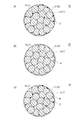
- Drawing 1 is a mimetic diagram showing an example of the cathode active material for nonaqueous system electrolyte rechargeable batteries of an embodiment.
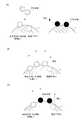
- FIG. 2A is an explanatory view showing a reaction for forming the first compound (LB compound)
- FIG. 2B is an explanatory view showing an example of the eluted lithium of the conventional positive electrode active material.
- FIG. 2C is an explanatory view showing an example of eluted lithium of the positive electrode active material according to the present embodiment.
- Drawing 3 is a figure showing an example of a manufacturing method of a cathode active material for nonaqueous system electrolyte rechargeable batteries of an embodiment.
- FIG. 4 is a schematic diagram showing a cross-sectional structure of a coin-type battery used for battery evaluation.
- FIG. 4 is a schematic diagram showing a cross-sectional structure of a coin-type battery used for battery evaluation.
- FIG. 5 is an explanatory diagram of a Nyquist plot and an equivalent circuit obtained by the AC impedance method.
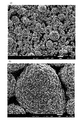
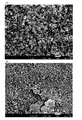
- FIG. 6A is an SEM image (magnification ⁇ 1000) showing the particle shape of the calcined powder (second lithium metal composite oxide) used in Examples and Comparative Examples, and FIG. It is the SEM image (magnification x10000) which changed the magnification which shows the above-mentioned particle shape.
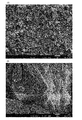
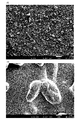
- FIG. 7A is an SEM image (magnification ⁇ 100) showing an example of the particle shape of the third compound (boric acid powder) used in Examples 1 to 3, and FIG. It is the SEM image (magnification x10000) which changed the magnification which shows an example of a shape.
- FIG. 6A is an SEM image (magnification ⁇ 1000) showing the particle shape of the calcined powder (second lithium metal composite oxide) used in Examples and Comparative Examples, and FIG. It is the SEM image (magnification x10000) which changed the magn
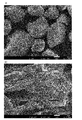
- FIG. 8A is an SEM image (magnification ⁇ 100) showing an example of the particle shape of the third compound (boron oxide powder) used in Example 4, and FIG. It is the SEM image (magnification x10000) which changed the magnification which shows an example.
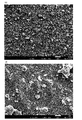
- FIG. 9A is an SEM image (magnification ⁇ 100) showing an example of the particle shape of the third compound (ammonium pentaborate octahydrate powder) used in Example 5, and FIG. These are the SEM images (magnification x10000) which changed the magnification which shows an example of the above-mentioned particle shape.
- FIG. 10A is an SEM image (magnification ⁇ 100) showing an example of the particle shape of the fourth compound (tungstic acid powder) used in Example 6, and FIG. It is the SEM image (magnification x10000) which changed the magnification which shows an example.
- FIG. 11A is an SEM image (magnification ⁇ 100) showing an example of the particle shape of the third compound (boric acid powder) used in Example 7, and FIG. It is the SEM image (magnification x10000) which changed the magnification which shows an example.
- FIG. 12A is an SEM image (magnification ⁇ 100) showing an example of the particle shape of the third compound (lithium metaborate dihydrate powder) used in Comparative Example 2, and FIG.
- FIG. 13A is an SEM image (magnification ⁇ 100) showing an example of the particle shape of the fourth compound (tungsten oxide powder) used in Comparative Example 3, and FIG. It is the SEM image (magnification x10000) which changed the magnification which shows an example.
- 14A is an SEM image (magnification ⁇ 100) showing an example of the particle shape of the fourth compound (lithium tungstate powder) used in Comparative Example 4, and FIG. 14B is the particle shape. It is the SEM image (magnification x10000) which changed the magnification which shows an example.
- FIG. 13A is an SEM image (magnification ⁇ 100) showing an example of the particle shape of the fourth compound (lithium tungstate powder) used in Comparative Example 4
- FIG. 14B is the particle shape. It is the SEM image (magnification x10000) which changed the magnification which shows an example.
- FIG. 13A is an SEM image (magnification ⁇ 100) showing an example of the particle shape
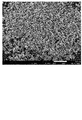
- FIG. 15 is an SEM image (magnification ⁇ 200) showing the particle shape of the positive electrode active material according to Example 1.
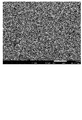
- FIG. 16 is an SEM image (magnification ⁇ 200) showing the particle shape of the positive electrode active material according to Example 2.
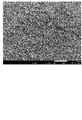
- FIG. 17 is an SEM image (magnification ⁇ 200) showing the particle shape of the positive electrode active material according to Example 3.
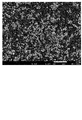
- 18 is an SEM image (magnification ⁇ 200) showing the particle shape of the positive electrode active material according to Example 4.
- FIG. FIG. 19 is an SEM image (magnification ⁇ 200) showing the particle shape of the positive electrode active material according to Example 5.
- 20 is an SEM image (magnification ⁇ 200) showing the particle shape of the positive electrode active material according to Example 6.
- FIG. 21 is an SEM image (magnification ⁇ 200) showing the particle shape of the positive electrode active material according to Example 7.
- 22 is an SEM image (magnification ⁇ 200) showing the particle shape of the positive electrode active material according to Comparative Example 1.
- FIG. 23 is an SEM image (magnification ⁇ 200) showing the particle shape of the positive electrode active material according to Comparative Example 2.
- FIG. 24 is an SEM image (magnification ⁇ 200) showing the particle shape of the positive electrode active material according to Comparative Example 3.
- FIG. 25 is an SEM image (magnification ⁇ 200) showing the particle shape of the positive electrode active material according to Comparative Example 4.
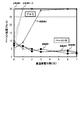
- FIG. 26 is a graph showing a change in viscosity of the positive electrode mixture paste according to each example and each comparative example.
- FIGS. 1A to 1C are schematic views showing an example of a cathode active material for a non-aqueous electrolyte secondary battery of the present embodiment (hereinafter also referred to as “cathode active material”).
- the positive electrode active material 20 has a general formula (1): Li s1 Ni 1-x1-y1-z1 Co x1 Mn y1 M z1 O 2 + ⁇ (where 0 ⁇ x1 ⁇ 0.35, 0 ⁇ y1 ⁇ 0.35, 0 ⁇ z1 ⁇ 0.10, 0.95 ⁇ s1 ⁇ 1.30, 0 ⁇ ⁇ ⁇ 0.2, M is V, Mg, Mo, Nb, At least one element selected from Ti, W, and Al), and a first lithium metal composite oxide 10 including secondary particles 2 formed by agglomerating a plurality of primary particles 1, lithium and boron And at least one of a first compound 3 containing (hereinafter also referred to as “LB compound”) and a second compound 4 containing lithium and tungsten (hereinafter also referred to as “LW compound”). Including.
- the positive electrode active material 20 satisfies at least one of the following characteristics (1) and (2).
- (1) The surface of the primary particle 1 is covered with the first compound 3 (LB compound), and the boron content is 0.01% by mass or more and 0.5% by mass or less with respect to the whole positive electrode active material. It is.
- (2) The surface of the primary particle 1 is covered with the second compound 4 (LW compound), and the tungsten content is 0.01% by mass or more and 1.0% by mass or less with respect to the whole positive electrode active material. It is.
- the first compound 3 may be present on the surface of the primary particle 1.
- the compound 4 may be present on the surface of the primary particle 1.
- both the first compound 3 and the second compound 3 may be present on the surfaces of the primary particles 1.
- the first compound 3 and the second compound 4 have high lithium ion conductivity, and have an effect of promoting the movement of lithium ions in the secondary battery. For this reason, when the surface of the primary particle 1 is covered with the first compound 3 or the second compound 4, a lithium ion conduction path can be formed at the interface with the electrolytic solution, and the positive electrode of the secondary battery.
- the output characteristic can be maintained or improved by maintaining or reducing the resistance.
- the charge / discharge capacity hereinafter also referred to as “battery capacity” of the secondary battery is maintained or improved. Can do.
- the surface of the primary particle 1 refers to a portion that can be brought into contact with the electrolytic solution when a secondary battery is manufactured. That is, the surface of the primary particle 1 is not only the surface of the primary particle 1a exposed to the outer surface (surface) of the secondary particle 2 (that is, the surface of the secondary particle 2) but also the vicinity of the surface of the secondary particle 2. And the surface of the primary particle 1b existing inside, and the surface of the primary particle 1 that can be brought into contact with the electrolytic solution when used in a secondary battery. Furthermore, the surface of the primary particle 1 includes a state in which the bonding between the primary particles 1 is incomplete and the electrolytic solution can penetrate even at the grain boundary between the primary particles 1.
- the elution of lithium from the positive electrode active material 20 occurs on the contact surface with the electrolytic solution, so that the first compound 3 and / or the surface of the primary particle 1 capable of contacting with the electrolytic solution is used.
- the second compound 4 elution of lithium can be suppressed.
- the first lithium metal composite oxide 10 serving as the base material of the positive electrode active material 20 is, for example, a nickel composite hydroxide and / or a nickel composite oxide obtained by oxidizing and baking nickel composite hydroxide. From the calcined powder obtained by calcining the lithium compound (second lithium metal composite oxide represented by the general formula (2) described later), a third compound containing boron and a fourth compound containing tungsten Excluding lithium immobilized by at least one of the above. On the surface of the primary particles 1 of the baked powder, for example, as shown in FIG. 2A (left side), an unreacted lithium compound mainly derived from the raw material (hereinafter also referred to as “excess lithium”), There is lithium constituting the crystal part. As shown in FIG.
- the unreacted lithium compound and the lithium constituting the crystal part are at least partially primary particles when producing a positive electrode mixture paste (hereinafter also referred to as “paste”).
- paste positive electrode mixture paste
- 1 may elute into the paste from the surface of 1 and react with the binder (binder) to cause the paste to gel.
- the crystal part refers to a lithium metal composite oxide obtained by removing excess lithium from the first or second lithium metal composite oxide.
- the positive electrode active material 20 of the present embodiment contains at least a part of excess lithium in the fired powder and lithium constituting the crystal part.
- the first lithium metal composite oxide 10 has a first particle 1 on the surface thereof.
- the third compound (B compound) is used to form the first compound (LB compound), but instead of the third compound, A fourth compound (hereinafter also referred to as “W compound”) that does not contain lithium and contains tungsten may be used.
- W compound a fourth compound that does not contain lithium and contains tungsten
- a second compound (LW compound) is formed on the surface of the primary particle 1.
- the first lithium metal composite oxide 10 has a general formula (1): Li s1 Ni 1-x1-y1-z1 Co x1 Mn y1 M z1 O 2 + ⁇ (where 0 ⁇ x1 ⁇ 0.35, 0 ⁇ y1 ⁇ 0.35, 0 ⁇ z1 ⁇ 0.10, 0.95 ⁇ s1 ⁇ 1.30, 0 ⁇ ⁇ ⁇ 0.2, M is at least selected from V, Mg, Mo, Nb, Ti, W and Al One kind of element).
- the 1st lithium metal complex oxide 10 has the said composition, when it is used for the positive electrode of a secondary battery, a high battery capacity and the outstanding output characteristic can be acquired.
- the content of each element can be measured by ICP emission spectroscopy.
- the range of s1 indicating the content of lithium (Li) is 0.95 ⁇ s1 ⁇ 1.3.
- the range of s may be 0.95 ⁇ s1 ⁇ 1.05.
- x1 indicating the content of cobalt (Co) is 0 ⁇ x1 ⁇ 0.35, from the viewpoint of further improving the battery capacity of the secondary battery using the positive electrode active material 20.
- y1 indicating the content of manganese (Mn) is 0 ⁇ y1 ⁇ 0.35, and from the viewpoint of further improving the battery capacity of the secondary battery using the positive electrode active material 20.
- M is an additive element, which can be selected from a plurality of elements as described above according to required characteristics, and can include, for example, Al.
- Z1 indicating the M content is 0 ⁇ z1 ⁇ 0.10, and from the viewpoint of further improving the battery capacity of the secondary battery using the positive electrode active material 20, preferably 0 ⁇ z1 ⁇ 0. 07, more preferably 0 ⁇ z1 ⁇ 0.05.
- (1-x1-y1-z1) indicating the content of nickel (Ni) is 0.2 ⁇ (1-x1-y1-z1) ⁇ 1.0
- the positive electrode active From the viewpoint of further improving the battery capacity of the secondary battery using the substance 20, preferably 0.35 ⁇ (1-x1-y1-z1) ⁇ 1.0, more preferably 0.45 ⁇ ( 1-x1-y1-z1) ⁇ 1.0, more preferably 0.6 ⁇ (1-x1-y1-z1) ⁇ 1.0, and even more preferably 0.65 ⁇ (1-x1- y1-z1) ⁇ 1.0.
- the positive electrode active material 20 of the present embodiment has a composition that easily causes gelation by forming the first compound 3 and / or the second compound 4 on the surface of the primary particle 1 as described above. Also, gelation can be suppressed.
- the first lithium metal composite oxide 10 includes secondary particles 2 formed by aggregating a plurality of primary particles 1 as shown in FIGS. 1 (A) and 1 (C).
- the first lithium metal composite oxide 10 is a small amount of single primary particles 1 such as primary particles 1 that are not aggregated as secondary particles 2 and primary particles 1 that are dropped from the secondary particles 2 after aggregation. May be included.
- the positive electrode active material 20 may include a lithium metal composite oxide other than the first lithium metal composite oxide 10 described above as long as the effects of the present invention are not impaired.
- the first compound 3 is a compound (LB compound) containing lithium and boron, and preferably contains lithium borate.
- lithium borate include LiBO 2 , a hydrate thereof, Li 3 BO 3 , or a mixture thereof.
- the first compound 3 may be, for example, lithium metaborate (LiBO 2 .2H 2 O).
- the first compound 3 (LB compound) present on the surface of the primary particle 1a exposed on the surface of the secondary particle 2 is confirmed by, for example, X-ray diffraction (XRD), X-ray photoelectron spectroscopy (XPS), etc. can do.
- XRD X-ray diffraction
- XPS X-ray photoelectron spectroscopy
- the positive electrode active material 20 obtained by mixing the fired powder and the third compound (B compound) is analyzed by XRD, the first particles present on the surface of the primary particles 1a (secondary particles 2).
- One compound 3 (LB compound) was detected.
- boron (B) present on the surface of the primary particle 1b inside the secondary particle 2 is, for example, a soft X-ray emission spectroscopy apparatus (Soft X-ray Emission Spectroscopy) attached to a field emission scanning electron microscope (FE-SEM). SXES). Although it is difficult to directly confirm the presence form of a small amount of boron (B) present on the surface of the primary particle 1b (inside the secondary particle 2), (i) an element that forms a compound with boron.
- the first compound 3 may cover only a part of the surface of the primary particle 1 or may cover the entire surface of the primary particle 1.
- the first compound 3 (LB compound) only needs to cover at least a part of the surface of the primary particle 1, and when the positive electrode active material 20 is observed with an SEM, the first compound 3 is clear. It does not have to be confirmed as a coating layer.
- the first compound 3 is partially formed on the surface of the primary particle 1. Even in the case of being formed, the effect of suppressing the gelation of the paste is obtained, and the output characteristics and the battery capacity are maintained in the obtained secondary battery.
- the positive electrode active material 20 contains the first compound 3
- the positive electrode active material 20 has a boron content of 0.01% by mass or more and 0.5% by mass or less, and 0.01% by mass or more and 0.4% by mass. % Or less is preferable.
- the boron content is in the above range, surplus lithium in the fired powder and lithium constituting the crystal part can be immobilized on the surface of the primary particle 1, and the amount of lithium eluted from the positive electrode active material 20 is within the range described below. Can be controlled. Thereby, the gelatinization of paste can be suppressed and a secondary battery excellent in output characteristics and battery capacity can be obtained.
- the boron content is less than 0.01% by mass, fixation of eluted lithium (including surplus lithium) may be insufficient and the paste may gel.
- the boron content exceeds 0.5 mass%, the positive electrode resistance increases and the battery characteristics deteriorate.
- the second compound 4 is a compound (LW compound) containing lithium and tungsten, and preferably contains lithium tungstate.
- the lithium tungstate for example, like Li 2 WO 4, Li 4 WO 5, Li 6 W 2 O 9.
- the presence of the second compound 4 (LW compound) present on the surface of the primary particle 1a exposed on the surface of the secondary particle 2 is determined by, for example, X-ray diffraction (XRD) or X-ray photoelectron spectroscopy (XPS). Can be confirmed.
- XRD X-ray diffraction
- XPS X-ray photoelectron spectroscopy
- the tungsten (W) present on the surface of the primary particle 1b inside the secondary particle 2 is, for example, a soft X-ray emission spectrometer (Soft X-ray Emission Spectroscopy) attached to a field emission scanning electron microscope (FE-SEM). SXES). Although it is difficult to directly confirm the presence form of a small amount of tungsten (W) present on the surface of the primary particle 1b (inside the secondary particle 2), (i) an element that forms a compound with tungsten.
- the second compound 4 may cover only a part of the surface of the primary particle 1 or may cover the entire surface of the primary particle 1.
- the second compound 4 (LW compound) only needs to cover at least a part of the surface of the primary particle 1, and when the positive electrode active material 20 is observed by SEM, the second compound 4 is clear. The coating layer may not be confirmed.
- the unreacted lithium compound present on the surface of the primary particle 1 of the calcined powder (that is, the contact surface with the electrolytic solution) or the lithium compound in the crystal part is extracted and reacted. As a result, the second compound 4 becomes the surface of the primary particle 1. Even if it is a case where it forms partially above, the effect of the gelation suppression of a paste is acquired and output characteristics and battery capacity are maintained in the obtained secondary battery.
- the positive electrode active material 20 contains the second compound 4
- the positive electrode active material 20 has a tungsten content of 0.01% by mass or more and 1.0% by mass or less, and 0.01% by mass or more and 0.5% by mass. % Or less is preferable.
- the eluted lithium including surplus lithium and lithium eluted from the crystal part
- the fired powder can be immobilized on the surface of the primary particles 1. Thereby, the gelatinization of paste can be suppressed and a secondary battery excellent in output characteristics and battery capacity can be obtained.
- the tungsten content is less than 0.01%, the excess lithium in the fired powder and the lithium eluted from the crystal part are insufficiently fixed, and the paste is gelled. On the other hand, when the tungsten content exceeds 1.0 mass%, the positive electrode resistance increases and the battery characteristics deteriorate.
- the amount of lithium eluted when the positive electrode active material 20 is dispersed in water as measured by a neutralization titration method is based on the total amount of the positive electrode active material. Preferably, it is 0.01 mass% or more and less than 0.4 mass%, More preferably, it is 0.01 mass% or more and 0.35 mass% or less.
- the secondary battery has excellent battery characteristics and can suppress gelation of the paste.
- the amount of lithium eluted from the positive electrode active material is 0.4% by mass or more, gelation of the paste may not be sufficiently suppressed.
- the third compound (B compound) and / or the fourth compound (W compound) is changed from the second lithium metal composite oxide to lithium. Since the first compound (LB compound) and / or the second compound (LW compound) are excessively generated while pulling out, the positive electrode resistance may increase and the battery characteristics may deteriorate.
- the amount of lithium eluted from the positive electrode active material is eluted into water in the first lithium metal composite oxide 10 when the positive electrode active material 20 is dispersed in water, as shown in FIG.
- the positive electrode active material 20 is dispersed in water, as shown in FIG.
- the total amount is the amount of lithium eluted from the positive electrode active material.
- the amount of lithium eluted from the positive electrode active material was used up to the first neutralization point by neutralization titration out of the amount of lithium (Li) eluted when the positive electrode active material 20 was dispersed in water.
- an acid used for neutralization titration for example, hydrochloric acid can be used.
- the pH of the aqueous solution decreases in two stages.
- first lithium metal composite oxide 10 lithium hydroxide remaining as unreacted surplus lithium and lithium eluted from the crystal part are neutralized at the first stage pH.
- the lithium carbonate remaining as unreacted surplus lithium is neutralized at the pH of the second stage.
- at least a part of the first compound 3 or the second compound 4 is neutralized at the first or second stage pH.
- the amount of lithium calculated from the amount of acid (eg, hydrochloric acid) used up to the first neutralization point and the amount of acid (eg, hydrochloric acid) used up to the second neutralization point is It can be said that the excess lithium in the lithium metal composite oxide 10 and the lithium eluted from the crystal part to the water, the lithium derived from the first compound (LB compound) and / or the second compound (LW compound) are included.
- the amount of lithium eluted was obtained by sufficiently dispersing 15 g of the positive electrode active material in 75 ml of pure water and allowing it to stand for 10 minutes, and then using the aqueous solution obtained by diluting the supernatant with 50 ml of pure water to determine the amount of lithium eluted in the aqueous solution. It can be calculated by measuring by a titration method.
- the pH of the aqueous solution of the supernatant liquid by neutralization titration with an acid decreases in two stages, and the pH that decreases in the first stage is such that lithium hydroxide remaining as excess lithium in the first lithium metal composite oxide 10 and It is considered that the pH decreases due to neutralization of lithium derived from a part of lithium, LB compound, or LW compound eluted from the crystal part into water.
- the pH lowered in the second stage is lowered by neutralization of lithium derived from a part of lithium carbonate, LB compound or LW compound remaining as excess lithium in the first lithium metal composite oxide 10. It is thought to show.
- the average particle diameter of a positive electrode active material is 5 micrometers or more and 30 micrometers or less, for example, Preferably they are 5 micrometers or more and 20 micrometers or less.
- the average particle diameter is a volume-based average particle diameter measured by a laser diffraction scattering method.
- [(d90 ⁇ d10) / average particle diameter] which is an index indicating the spread of the particle size distribution, is preferably 0.70 or more, and more preferably 0.70 or more and 1.2 or less.
- d10 is the number of particles in each particle size accumulated from the smaller particle size side
- the cumulative volume is 10% of the total volume of all particles
- d90 is similarly accumulated the number of particles
- It means a particle diameter whose cumulative volume is 90% of the total volume of all particles.
- d10 and d90 can be obtained from the volume integrated value measured with a laser light diffraction / scattering particle size analyzer.
- FIGS. 3A to 3C are diagrams illustrating a method for producing a positive electrode active material for a nonaqueous electrolyte secondary battery according to this embodiment (hereinafter referred to as “positive electrode active material”). It is a figure which shows an example.
- the positive electrode active material 20 described above can be easily manufactured on an industrial scale by the method for manufacturing a positive electrode active material.
- the method for producing a positive electrode active material includes a calcined powder, a third compound containing boron (B compound), and a fourth compound containing tungsten ( At least one of the W compounds) to obtain a positive electrode active material (step S1).
- the third compound and the fourth compound are solid state compounds that do not contain lithium and are capable of reacting with lithium, and the obtained positive electrode active material includes the first compound (LB compound) and the second compound. At least one of the compounds (LW compounds).
- the third compound and the fourth compound are mixed so as to satisfy at least one of the following conditions (3) and (4).
- the boron content is 0.01% by mass or more and 0.5% by mass or less with respect to the whole positive electrode active material.
- the tungsten content is 0.01% by mass or more and 1.0% by mass or less with respect to the whole positive electrode active material.
- the manufacturing method of a positive electrode active material may mix a baked powder and a 3rd compound, for example, as shown to FIG. 3 (A), and may obtain the positive electrode active material containing a 1st compound, As shown in FIG. 3B, the positive electrode active material containing the second compound may be obtained by mixing the fired powder and the fourth compound. In addition, as shown in FIG. 3C, for example, the positive electrode active material can be manufactured by mixing the fired powder with both the third compound and the fourth compound, You may obtain the positive electrode active material containing both of these compounds. In particular, as shown in FIG. 3A, when the positive electrode active material is obtained by mixing the calcined powder and the third compound, the paste manufactured using this positive electrode active material is more gelled. It is suppressed.
- Baking powder has a crystal structure of a layered structure, the general formula (2): Li s2 Ni 1 -x2-y2-z2 Co x2 Mn y2 M z2 O 2 + ⁇ '( although, 0 ⁇ x2 ⁇ 0.35,0 ⁇ y2 ⁇ 0.35, 0 ⁇ z2 ⁇ 0.10, 0.95 ⁇ s2 ⁇ 1.30, 0 ⁇ ⁇ ′ ⁇ 0.2, M is V, Mg, Mo, Nb, Ti, W and Al And at least one element selected from the group consisting of second lithium metal composite oxides.
- the fired powder includes secondary particles formed by aggregating a plurality of primary particles.
- the composition, particle structure, and powder characteristics of the fired powder do not include the first compound 3 and / or the second compound 4. Except this, it can be the same as the positive electrode active material 20 described above. That is, the fired powder can be appropriately selected according to the positive electrode active material to be obtained.
- the amount of lithium eluted when the calcined powder is dispersed in water as measured by the neutralization titration method is 0.05 It is not less than mass% and not more than 1.0 mass%, preferably not less than 0.05 mass% and not more than 0.5 mass%.
- the compound (LB compound) or the second compound (LW compound) can be formed on the surface of the primary particles. Therefore, gelation of the paste produced using the positive electrode active material can be suppressed, and the output characteristics and battery capacity of the secondary battery can be further improved.
- the amount of eluted lithium in the calcined powder is less than 0.05% by mass, the formed first compound 3 (LB compound) or second compound 4 (LW compound) is not sufficient, and battery characteristics deteriorate. There are things to do. Further, when the amount of lithium eluted from the fired powder exceeds 1.0% by mass, the amount of lithium eluted from the positive electrode active material obtained even when mixed with the third compound (B compound) or the fourth compound (W compound) And the gelation of the paste may not be sufficiently suppressed.
- the amount of lithium eluted in the calcined powder can be measured by neutralization titration of the supernatant using an acid, similarly to the amount of lithium eluted from the positive electrode active material 20 described above.
- the third compound (B compound) or the fourth compound (W compound) reacts with the excess lithium of the calcined powder and lithium eluted from the crystal part (LB).
- Compound) or second compound (LW compound) does not exist, the amount of eluted lithium in the fired powder is mainly the excess lithium (unreacted lithium compound) contained in the fired powder and the lithium eluted from the crystal part. The total amount.
- the manufacturing method of a baked powder is not specifically limited, The manufacturing method of a well-known lithium metal complex oxide can be used.
- the fired powder includes, for example, a nickel metal composite hydroxide obtained by a crystallization method, and / or a nickel metal composite oxide obtained by oxidizing and roasting the nickel metal composite hydroxide, and a lithium compound. Can be manufactured by firing the lithium mixture.
- Nickel metal composite hydroxide can be produced using a batch method and / or a continuous method. From the viewpoint of improving the filling property of the obtained positive electrode active material, it is preferable to use a continuous method in which nickel composite hydroxide overflowed from the reaction vessel is continuously recovered. When the continuous method is used, the value of [(d90 ⁇ d10) / average particle diameter] of the positive electrode active material 20 can be increased, and the filling property of the positive electrode active material is improved.
- the calcining temperature of the lithium mixture is not particularly limited, but it is preferable to adjust so that the amount of lithium eluted when the obtained calcined powder is dispersed in water falls within the range described below.
- the firing temperature is high, the amount of dissolved lithium in the fired powder tends to decrease. Therefore, the firing temperature should be adjusted so that the crystallinity of the fired powder is sufficiently high and the amount of eluted lithium falls within a specific range. Is preferred.
- the average particle size of the fired powder is, for example, 5 ⁇ m or more and 30 ⁇ m or less, and preferably 5 ⁇ m or more and 20 ⁇ m or less.
- the average particle size of the third compound and the fourth compound can be 0.1 times or more and 100 times or less, and 0.5 times or more and 50 times or less of the average particle size of the fired powder. There may be.
- the third compound is a compound that does not contain lithium and contains boron (compound B) and is a solid-state compound that can react with lithium. Moreover, it is preferable that a 3rd compound (B compound) is a powder, and it is preferable that it is dry-mixed with a baked powder in a powder state.
- the third compound has a boron content of 0.01% by mass or more and 0.5% by mass or less, preferably 0.01% by mass or more and 0.4% by mass or less, based on the whole positive electrode active material.
- a sufficient amount of the first compound (LB compound) can be formed by mixing the third compound in the above range.
- the third compound is not particularly limited as long as it is a solid-state compound capable of reacting with lithium.
- examples thereof include Japanese ((NH 4 ) 2 B 4 O 7 ⁇ 4H 2 O), ammonium pentaborate octahydrate ((NH 4 ) 2 O ⁇ 5B 2 O 3 ⁇ 8H 2 O), and the like.
- boron oxide and boric acid are preferable from the viewpoint of excellent reactivity with lithium.
- a 3rd compound may be used individually by 1 type, and 2 or more types may be mixed and used for it.
- the form of the third compound is preferably a compound having a layered structure with an average particle diameter of 5 ⁇ m or more and 400 ⁇ m or less, and more preferably a compound having a layered structure of 5 ⁇ m or more and 350 ⁇ m or less.
- secondary particles in which primary particles are aggregated may be used, and secondary particles formed by agglomerating primary particles having an average particle diameter of 0.01 ⁇ m or more and 0.2 ⁇ m or less are preferable.
- the average particle size of the third compound refers to a volume-based average particle size measured by a vacuum dispersion type image analysis particle size distribution analyzer.
- the fourth compound does not contain lithium, is a compound containing tungsten (W compound), and is a solid-state compound that can react with lithium.
- the tungsten compound is preferably a powder, and is preferably dry-mixed with the fired powder in a powder state.
- the fourth compound is fired so that the amount of tungsten is 0.01% by mass or more and 1.0% by mass or less, preferably 0.01% by mass or more and 0.5% by mass or less with respect to the whole positive electrode active material.
- a sufficient amount of the second compound (LW compound) can be formed by mixing the fourth compound within the above range.
- Examples of the fourth compound include tungsten dioxide (WO 2 ), tungsten trioxide (WO 3 ), and tungstic acid (H 2 WO 4 ).
- tungstic acid (H 2 WO 4 ) is preferable from the viewpoint of excellent reactivity with lithium.
- a 4th compound may be used individually by 1 type, and 2 or more types may be mixed and used for it.
- the form of the fourth compound is preferably secondary particles formed by aggregation of primary particles.
- tungstic acid H 2 WO 4
- the average particle size is 0.01 ⁇ m or more and 0.2 ⁇ m. Secondary particles formed by aggregation of the following primary particles are preferable.
- the average particle diameter of secondary particles is preferably 1 ⁇ m or more and 200 ⁇ m or less, and more preferably 1 ⁇ m or more and 100 ⁇ m or less.
- the amount of mixing at least one of the third compound and the fourth compound is the amount of lithium eluted when the positive electrode active material is dispersed in water as measured by a neutralization titration method (of the positive electrode active material). It is preferable to adjust so that the amount of eluted lithium is 0.01% by mass or more and less than 0.4% by mass with respect to the whole positive electrode active material.
- the amount of eluted lithium in the positive electrode active material is in the above range, a secondary battery that further suppresses gelation of the paste and has excellent battery characteristics can be obtained.
- the gelation of the paste can be sufficiently suppressed. Furthermore, by adjusting the amount of lithium eluted from the fired powder, the gelation of the paste can be suppressed even if the amount of lithium eluted from the positive electrode active material is 0.2% by mass or more and less than 0.4% by mass. .
- the amount of the third compound or the fourth compound to be mixed is preliminarily obtained by separating a small amount of calcined powder and conducting a positive test. It can be easily determined by confirming the amount of lithium eluted from the substance. Moreover, when the manufacturing conditions of Li / Me and a baked powder are stable, the amount of elution lithium of a positive electrode active material can be controlled to the said range by mixing the quantity decided by the preliminary test.
- step S1 the calcined powder and the third compound and / or the fourth compound are sufficiently mixed so that the shape of the calcined powder is not destroyed.
- the mixing is preferably performed to such an extent that the shape of the third compound and / or the fourth compound is not observed with a scanning electron microscope (SEM).
- SEM scanning electron microscope
- a general mixer can be used, for example, a shaker mixer, a Laedige mixer, a Julia mixer, a V blender, or the like can be used.
- a method for producing a positive electrode mixture paste for a nonaqueous electrolyte secondary battery (hereinafter also referred to as “paste”) according to an embodiment of the present invention will be described.
- the positive electrode mixture paste of this embodiment elution of lithium from the positive electrode active material is reduced, and gelation of the paste is suppressed. Therefore, even when stored for a long time, the viscosity of the paste is small and the paste has high stability.
- the positive electrode also has stable and excellent characteristics, and the characteristics of the finally obtained battery can be made stable and high.
- the positive electrode mixture paste contains a positive electrode active material.
- the constituent material of the positive electrode mixture paste is not particularly limited, and a material equivalent to a known positive electrode mixture paste can be used.
- the positive electrode mixture paste includes, for example, a positive electrode active material, a conductive material, and a binder.
- the positive electrode mixture paste may further contain an organic solvent.
- the positive electrode mixture paste when the total mass of the solid content of the positive electrode mixture excluding the organic solvent is 100 parts by mass, the content of the positive electrode active material is 60 to 95 parts by mass, and the content of the conductive material is 1 to The content is preferably 20 parts by mass, and the binder content is preferably 1 to 20 parts by mass.
- the conductive agent for example, graphite (natural graphite, artificial graphite, expanded graphite, etc.), carbon black materials such as acetylene black, ketjen black, and the like can be used.
- the binder plays a role of holding the active material particles.
- the binder plays a role of holding the active material particles.
- PVDF polyvinylidene fluoride
- PTFE polytetrafluoroethylene
- fluorine rubber ethylene propylene diene rubber
- styrene butadiene cellulose resin
- Polyacrylic acid or the like can be used.
- an organic solvent that disperses the positive electrode active material, the conductive material, and the activated carbon and dissolves the binder may be added to the positive electrode mixture.
- NMP N-methyl-2-pyrrolidone
- Activated carbon can be added to the positive electrode mixture in order to increase the electric double layer capacity.
- the positive electrode mixture paste is a mixture of a powdered positive electrode active material, a conductive material, and a binder, and if necessary, an active organic solvent such as activated carbon and viscosity adjustment is added and kneaded to mix the positive electrode mixture A paste can be produced.
- the non-aqueous electrolyte secondary battery (hereinafter also simply referred to as “secondary battery”) of the present embodiment is not particularly limited, and is configured by the same components as those of a known non-aqueous electrolyte secondary battery.
- the secondary battery includes, for example, a positive electrode, a negative electrode, a separator, and a nonaqueous electrolytic solution. Note that the embodiment described below is merely an example, and the nonaqueous electrolyte secondary battery of the present embodiment can be variously modified based on the knowledge of those skilled in the art based on the embodiment described in the present specification. Can be implemented in an improved form. Further, the use of the nonaqueous electrolyte secondary battery of the present embodiment is not particularly limited.
- a positive electrode of a non-aqueous electrolyte secondary battery is produced as follows.
- the positive electrode mixture paste is applied to, for example, the surface of a current collector made of aluminum foil and dried to volatilize the organic solvent. If necessary, pressurization may be performed by a roll press or the like to increase the electrode density. In this way, a sheet-like positive electrode can be produced.
- the sheet-like positive electrode can be cut into an appropriate size or the like according to the target battery and used for battery production.
- the method for manufacturing the positive electrode is not limited to the illustrated one, and other methods may be used.
- Negative electrode For the negative electrode, a metallic lithium, lithium alloy, or the like, or a negative electrode active material capable of occluding and desorbing lithium ions, mixed with a binder and added with an appropriate organic solvent to form a paste-like negative electrode mixture, copper It is applied to the surface of a metal foil current collector such as, dried, and compressed to increase the electrode density as necessary.
- a metal foil current collector such as, dried, and compressed to increase the electrode density as necessary.
- the negative electrode active material for example, natural graphite, artificial graphite, a fired organic compound such as phenol resin, or a powdery carbon material such as coke can be used.
- a fluorine-containing resin such as PVDF can be used as the negative electrode binder, as in the case of the positive electrode, and an organic solvent in which these active materials and the binder are dispersed includes N-methyl-2-pyrrolidone and the like. These organic solvents can be used.
- a separator is interposed between the positive electrode and the negative electrode.
- the separator separates the positive electrode and the negative electrode and retains the electrolyte, and a thin film such as polyethylene or polypropylene and a film having many minute holes can be used.
- Non-aqueous electrolyte The nonaqueous electrolytic solution is obtained by dissolving a lithium salt as a supporting salt in an organic solvent.
- organic solvent include cyclic carbonates such as ethylene carbonate, propylene carbonate, butylene carbonate, and trifluoropropylene carbonate, chain carbonates such as diethyl carbonate, dimethyl carbonate, ethylmethyl carbonate, and dipropyl carbonate, tetrahydrofuran, 2- One kind selected from ether compounds such as methyltetrahydrofuran and dimethoxyethane, sulfur compounds such as ethylmethylsulfone and butanesultone, phosphorus compounds such as triethyl phosphate and trioctyl phosphate, etc. are used alone or in admixture of two or more. be able to.
- the non-aqueous electrolyte solution may contain a radical scavenger, a surfactant, a flame retardant, and the like.
- the shape of the non-aqueous electrolyte secondary battery of the present embodiment constituted by the positive electrode, the negative electrode, the separator, and the non-aqueous electrolyte described above can be various, such as a cylindrical type and a stacked type.
- the positive electrode and the negative electrode are laminated via a separator to form an electrode body, and the obtained electrode body is impregnated with a non-aqueous electrolyte and communicated with the positive electrode current collector and the outside.
- the positive electrode terminal and the negative electrode current collector and the negative electrode terminal communicating with the outside are connected using a current collecting lead or the like and sealed in a battery case to complete a non-aqueous electrolyte secondary battery. .
- the secondary battery using the positive electrode active material of the present embodiment has a high capacity and excellent gelation suppression.
- the secondary battery using the positive electrode active material obtained in the preferred embodiment is used for the positive electrode of a 2032 type coin battery (FIG. 4)
- a high initial discharge capacity of 200 mAh / g or more is obtained.
- this secondary battery can make a discharge capacity maintenance factor 90% or more, for example.
- the initial discharge capacity is about 24 hours after the coin-type battery 1 used in the example is manufactured.
- OCV Open Circuit Voltage
- the current density with respect to the positive electrode is 0.1 mA / It is a value obtained by measuring the capacity when charging to a cutoff voltage of 4.3 V as cm2 and discharging to a cutoff voltage of 3.0 V after a pause of 1 hour.
- the positive electrode resistance measured using the coin-type battery 1 can be 4 ⁇ or less.
- An example of the method for measuring the positive electrode resistance in this embodiment is as follows.
- the battery reaction at the electrode consists of a resistance component accompanying the charge transfer and a capacity component due to the electric double layer. When these are expressed as an electric circuit, it becomes a parallel circuit of resistance and capacity.
- the positive electrode resistance is equal to the diameter of the semicircle on the low frequency side of the obtained Nyquist diagram. From the above, the positive electrode resistance can be estimated by performing AC impedance measurement on the manufactured positive electrode and performing fitting calculation on the obtained Nyquist diagram with an equivalent circuit.
- the positive electrode mixture paste is 20.0 g of a positive electrode active material for a non-aqueous electrolyte secondary battery, 2.35 g of carbon powder as a conductive additive, 14.7 g of KF polymer L # 7208 (solid content 8% by mass) as a binder, It was prepared by mixing 5.1 g of N-methyl-2-pyrrolidone (NMP) as a solvent with a rotating and rotating mixer.
- NMP N-methyl-2-pyrrolidone
- the produced positive electrode mixture paste was placed in a sealed container and stored at room temperature, and the change in paste viscosity with time was measured using a cone and plate viscometer (DVII + pro manufactured by Brookfield).
- the paste stability was evaluated according to the following criteria.
- the coin-type battery CBA is manufactured by producing a positive electrode PE containing a positive electrode active material by the method described later, and then in a glove box in an argon atmosphere with a dew point controlled at ⁇ 80 ° C., the negative electrode NE, the separator SE, the gasket GA, and the wave washer WW, positive electrode can PC, and negative electrode can NC were assembled and produced.
- the positive electrode PE was prepared by mixing 52.5 mg of the positive electrode active material obtained in Examples and Comparative Examples, 15 mg of acetylene black, and 7.5 mg of polytetrafluoroethylene resin (PTFE), and having a diameter of 13 mm and a thickness of 100 ⁇ m at a pressure of 100 MPa. After press-molding into a disk shape, it was produced by vacuum drying at a temperature of 120 ° C. for 12 hours.
- PTFE polytetrafluoroethylene resin
- Lithium metal having a diameter of 13 mm and a thickness of 1 mm was used for the negative electrode NE.
- an equivalent mixed solution of ethylene carbonate (EC) and diethyl carbonate (DEC) using 1M LiClO 4 as a supporting electrolyte was used as the electrolytic solution.
- the separator SE a polyethylene porous film having a film thickness of 25 ⁇ m was used.
- the initial charge / discharge capacity is determined by setting the current density for the positive electrode PE to 0.1 mA / cm 2 after the open circuit voltage OCV (Open Circuit Voltage) is stabilized after the coin-type battery CBA is left to stand for about 24 hours.
- OCV Open Circuit Voltage
- the capacity when charged to 4.3 V was the initial charge capacity, and the capacity when discharged to a cutoff voltage of 3.0 V after 1 hour of rest was taken as the initial discharge capacity.
- lithium metal composite oxide powder (Li 1.023 Ni 0.88 Co 0.09 Al 0.03 O 2 ) obtained by a known technique was used. Specifically, a hydroxide powder obtained by crystallization (continuous method) containing nickel (Ni) as a main component and lithium hydroxide powder (LiOH) are mixed and then fired to obtain a fired powder. It was. When the obtained fired powder is observed with a scanning electron microscope (SEM), as shown in FIG. 6 (A) and FIG. 6 (B), it contains secondary particles formed by aggregating a plurality of primary particles. Was confirmed.
- SEM scanning electron microscope
- the average particle size (volume average particle size) of the calcined powder was measured by a laser diffraction scattering method, it was 12.0 ⁇ m and [(d90 ⁇ d10) / average particle size] was 0.84. Moreover, the amount of lithium eluted from the fired powder was 0.40% by mass with respect to the entire fired powder.
- boric acid (H 3 BO 3 ) powder was used as the third compound (B compound).
- the boric acid (H 3 BO 3 ) powder used was a sieving powder obtained by pulverizing with a 53 ⁇ m mesh after pulverization using a special grade reagent manufactured by Hayashi Junyaku Co., Ltd.
- SEM scanning electron microscope
- the particle size was measured with a vacuum dispersion type image analysis particle size distribution analyzer, it was confirmed that the volume average particle size was 65 ⁇ m.
- the positive electrode active material was obtained by putting 30.03 g of the calcined powder and 0.12 g of the boric acid powder into a mixing container and mixing for 10 minutes using a rotation and revolution mixer.
- the obtained positive electrode active material was analyzed by ICP emission spectrometry, it was confirmed that 0.07% by mass of boron (B) as a boric acid component was contained.
- Table 1 and Table 2 show the evaluation results using the obtained positive electrode active material. Moreover, the time-dependent change of the positive electrode mixture paste viscosity produced using the obtained positive electrode active material is shown in FIG.
- Example 2 A positive electrode active material was obtained in the same manner as in Example 1 except that 30.59 g of the fired powder and 0.20 g of the boric acid powder were mixed. When the obtained positive electrode active material was analyzed by ICP emission analysis, it was confirmed that 0.11% by mass of boron (B) was contained.
- Example 3 A positive electrode active material was obtained in the same manner as in Example 1 except that 30.50 g of the fired powder and 0.59 g of the boric acid powder were mixed. When the obtained positive electrode active material was analyzed by ICP emission spectrometry, it was confirmed that 0.33 mass% of boron (B) was contained.
- Example 4 Boron oxide (B 2 O 3 ) powder was used as the third compound (B compound).
- the boron oxide (B 2 O 3 ) powder the one under the sieve obtained by sieving with a 53 ⁇ m mesh after pulverizing using a special grade reagent manufactured by Kanto Chemical Co., Inc. was used.
- SEM scanning electron microscope
- a positive electrode active material was obtained in the same manner as in Example 1 except that 30.01 g of the fired powder and 0.06 g of the boron oxide powder were mixed. When the obtained positive electrode active material was analyzed by ICP emission spectrometry, it was confirmed that 0.04% by mass of boron (B) as a boron oxide component was contained.
- Example 5 The third compound as (B compound) was used pentaborate ammonium octahydrate ((NH 4) 2 O ⁇ 5B 2 O 3 ⁇ 8H 2 O) powder.
- Ammonium pentaborate octahydrate ((NH 4 ) 2 O ⁇ 5B 2 O 3 ⁇ 8H 2 O) powder was pulverized using a special grade reagent manufactured by Wako Pure Chemical Industries, Ltd. and sieved with a 53 ⁇ m mesh. The one obtained under the sieve was used.
- SEM scanning electron microscope
- the positive electrode active material for a non-aqueous electrolyte secondary battery according to Example 5 except that 30.08 g of the fired powder and 0.09 g of the ammonium pentaborate octahydrate powder were mixed. Got. When the obtained positive electrode active material was analyzed by ICP emission spectrometry, it was confirmed that 0.06% by mass of boron (B), which is an ammonia pentaborate octahydrate component, was contained.
- B boron
- tungstic acid (H 2 WO 4 ) powder As the fourth compound (W compound), tungstic acid (H 2 WO 4 ) powder was used.
- As the tungstic acid (H 2 WO 4 ) powder a powder under a sieve obtained by scouring with a 53 ⁇ m mesh after pulverizing using a reagent manufactured by Wako Pure Chemical Industries, Ltd. was used.
- SEM scanning electron microscope
- a positive electrode active material was obtained in the same manner as in Example 1 except that 30.02 g of the fired powder and 0.12 g of the tungstic acid powder were mixed. When the obtained positive electrode active material was analyzed by ICP emission spectrometry, it was confirmed that 0.28% by mass of tungsten (W) as a tungstic acid component was contained.
- Example 7 As the third compound (B compound), boric acid (H 3 BO 3 ) powder (special grade reagent manufactured by Hayashi Junyaku Co., Ltd.) was used without pulverization. When the boric acid powder was observed with a scanning electron microscope (SEM), it was amorphous particles having a layered structure as shown in FIG. Further, when the particle size was measured with a vacuum dispersion type image analysis particle size distribution analyzer, the volume average particle size was 328 ⁇ m.
- SEM scanning electron microscope
- the positive electrode active material was obtained by putting 30.00 g of the fired powder and 0.38 g of the boric acid powder in a mixing container and mixing them for 10 minutes using a rotation and revolution mixer.
- the obtained positive electrode active material was analyzed by ICP emission analysis, it was confirmed that 0.22% by mass of boron (B) as a boric acid component was contained.
- Table 1 and Table 2 show the evaluation results using the obtained positive electrode active material.
- Comparative Example 1 A positive electrode active material according to Comparative Example 1 was obtained in the same manner as in Example 1 except that the third compound (B compound) and the fourth compound (W compound) were not added and the rotation and revolution mixer mixing was not performed. It was.
- the lithium metal composite metal oxide before being mixed as shown in FIG. 22 is a spherical particle of 20 ⁇ m or less. Was confirmed.
- the evaluation results using the obtained positive electrode active material are shown in Tables 1 and 2.
- the time-dependent change of the positive electrode mixture paste viscosity produced using the obtained positive electrode active material is shown in FIG.
- LiBO 2 .2H 2 O powder Lithium metaborate dihydrate (LiBO 2 ⁇ 2H 2 O) powder was obtained by sieving with a 53 ⁇ m mesh after pulverizing using a reagent manufactured by Mitsuwa Chemicals Co., Ltd. .
- SEM scanning electron microscope
- a positive electrode active material was obtained in the same manner as in Example 1 except that 30.00 g of the fired powder and 0.13 g of the lithium metaborate dihydrate powder were mixed.
- the obtained positive electrode active material was analyzed by ICP emission spectrometry, it was confirmed that 0.05% by mass of boron (B) which is a lithium metaborate dihydrate component was contained.
- Tungsten oxide (WO 3 ) powder was used as the fourth compound (W compound).
- Tungsten oxide (WO 3 ) powder was obtained by sieving with a 53 ⁇ m mesh after pulverization using a deer first grade reagent manufactured by Kanto Chemical Co., Inc. When the obtained tungsten oxide powder is observed with a scanning electron microscope (SEM), as shown in FIG. 13, it is an irregular secondary particle in which single particles of about 0.1 ⁇ m are aggregated, and the secondary particle diameter is It was confirmed that it was 10 ⁇ m or less.
- SEM scanning electron microscope
- a positive electrode active material was obtained in the same manner as in Example 1 except that 30.01 g of the fired powder and 0.12 g of the tungsten oxide powder were mixed. When the obtained positive electrode active material was analyzed by ICP emission spectrometry, it was confirmed that 0.22% by mass of tungsten (W) as a tungsten oxide component was contained.
- Lithium tungstate (Li 2 WO 4 ) powder was used as the fourth compound (W compound).
- Lithium tungstate (Li 2 WO 4 ) powder was obtained under a sieve obtained by pulverizing with a 53 ⁇ m mesh after pulverizing using a reagent manufactured by Kojundo Chemical Laboratory Co., Ltd. When the obtained lithium tungstate powder was observed with a scanning electron microscope (SEM), as shown in FIG. 14, it was confirmed that the particles were amorphous particles having a particle diameter of 50 ⁇ m or less.
- a positive electrode active material for a nonaqueous electrolyte secondary battery according to Example 3 was obtained and evaluated in the same manner as in Example 1 except that 30.01 g of the fired powder and 0.19 g of the lithium tungstate powder were mixed. .
- the positive electrode active material was analyzed by ICP emission analysis, it was confirmed that 0.42% by mass of tungsten (W), which is a lithium tungstate component, was contained.
- the secondary battery using the positive electrode active material of the example contains LB compound and LW compound.
- Initial charge capacity (223 mAh / g or more and 226 mAh / g or less), initial discharge capacity (200 mAh / g or more and 202 mAh / g or less), and positive electrode resistance (2.2 ⁇ or more and 2.7 ⁇ or less), which are almost the same as Comparative Example 1
- the positive electrode mixture paste of the example did not gel even when stored at room temperature for 2 days or more and maintained the paste state.
Landscapes
- Chemical & Material Sciences (AREA)
- Chemical Kinetics & Catalysis (AREA)
- Electrochemistry (AREA)
- General Chemical & Material Sciences (AREA)
- Inorganic Chemistry (AREA)
- Engineering & Computer Science (AREA)
- Composite Materials (AREA)
- Manufacturing & Machinery (AREA)
- Materials Engineering (AREA)
- Battery Electrode And Active Subsutance (AREA)
- Secondary Cells (AREA)
Abstract
優れた出力特性及び充放電容量を有するとともに、ゲル化が抑制された正極活物質、及びこれを用いた正極合材ペーストと非水系電解質二次電池を提供する。 一般式(1):Lis1Ni1-x1-y1-z1Cox1Mny1Mz1O2+αで表され、複数の一次粒子が凝集して形成された二次粒子を含む第一のリチウム金属複合酸化物と、リチウムとホウ素とを含む第一の化合物、及び、リチウムとタングステンとを含む第二の化合物の少なくとも一方と、を含有し、下記の特性(1)及び(2)の少なくとも一方を満たす、非水系電解質二次電池用正極活物質。 (1)前記一次粒子の表面を、前記第一の化合物が被覆しており、ホウ素含有量が、正極活物質全体に対して、0.01質量%以上0.5質量%以下である。 (2)前記一次粒子の表面を、前記第二の化合物が被覆しており、タングステン含有量が、正極活物質全体に対して、0.01質量%以上1.0質量%以下である。
Description
本発明は、非水系電解質二次電池用正極活物質とその製造方法、非水系電解質二次電池用正極合材ペーストおよび非水系電解質二次電池に関する。
近年、携帯電話やノート型パソコンなどの携帯電子機器の普及に伴い、高いエネルギー密度を有する小型で軽量な非水系電解質二次電池の開発が強く望まれている。また、ハイブリット自動車を始めとする電気自動車用の電池として出力特性と充放電サイクル特性が優れた二次電池の開発が強く望まれている。
このような要求を満たす二次電池として、非水系電解質二次電池用正極活物質があり、代表的な二次電池としてリチウムイオン二次電池がある。このリチウムイオン二次電池は、負極および正極と電解液を備え、負極および正極の活物質は、リチウムを脱離および挿入することの可能な材料が用いられている。
リチウムイオン二次電池は、現在研究、開発が盛んに行われているところであるが、中でも、層状またはスピネル型のリチウム金属複合酸化物を正極活物質として用いたリチウムイオン二次電池は、4V級の高い電圧が得られるため、高いエネルギー密度を有する電池として実用化が進んでいる。
これまで主に提案されている正極活物質としては、合成が比較的容易なリチウムコバルト複合酸化物(LiCoO2)や、コバルトよりも安価なニッケルを用いたリチウム金属複合酸化物(LiNiO2)、リチウムニッケルコバルトマンガン複合酸化物(LiNi1/3Co1/3Mn1/3O2)、マンガンを用いたリチウムマンガン複合酸化物(LiMn2O4)などを挙げることができる。
充放電サイクル特性のさらなる改善を図るためには、例えば、ニッケル、コバルト、マンガンなどの金属元素に対してリチウムを化学量論組成よりも過剰に含有させることが有効である。
ところで、非水電解質二次電池の正極は、例えば、正極活物質と、ポリフッ化ビニリデン(PVDF)などのバインダーや、N-メチル-2-ピロリドン(NMP)などの有機溶媒とを混合して正極合材ペーストにし、アルミ箔などの集電体に塗布することで形成される。
正極合材ペーストを作製した際、正極合材ペースト中の正極活物質からリチウムが遊離して、バインダーなどに含まれる水分と反応し、水酸化リチウムが生成されることがある。そして、この生成した水酸化リチウムとバインダーとが反応し、正極合材ペーストがゲル化を起こすことがある。正極合材ペーストのゲル化は、操作性の悪さ、歩留まりの悪化を招く。
そこで、正極合材ペーストのゲル化を抑制する試みがいくつかなされている。例えば、特許文献1には、リチウム遷移金属複合酸化物からなる正極活物質と、酸性酸化物粒子からなる添加粒子とを含む非水電解液二次電池用正極組成物が提案されている。この正極組成物は、バインダーに含まれる水分と反応して生成した水酸化リチウムが酸性酸化物と優先的に反応し、生成した水酸化リチウムとバインダーとの反応を抑制し、正極用スラリーのゲル化を抑制するとしている。また、酸性酸化物は、正極内で導電剤としての役割を果たし、正極全体の抵抗を下げ、電池の出力特性向上に寄与するとしている。
また、特許文献2には、リチウムイオン二次電池製造方法であって、正極活物質として、組成外にLiOHを含むリチウム遷移金属酸化物を用意すること;正極活物質1g当たりに含まれるLiOHのモル量Pを把握すること;LiOHのモル量Pに対して、LiOH1モル当たり、タングステン原子換算で0.05モル以上の酸化タングステンを用意すること;および、正極活物質と酸化タングステンとを、導電材および結着剤とともに有機溶媒で混練して正極ペーストを調製することを包含する、リチウムイオン二次電池製造方法が提案されている。
また、特許文献3には、ニッケル及びタングステンを必須とするリチウム遷移金属複合酸化物と、少なくともホウ素元素及び酸素元素を含むホウ素化合物とを含む非水電解液二次電池用正極組成物が提案されている。特許文献3によれば、リチウム遷移金属複合酸化物と、特定のホウ素化合物とを含む正極組成物を用いることにより、リチウム遷移金属複合酸化物を用いた正極組成物において出力特性及びサイクル特性を向上させ、かつ、正極スラリーの粘度上昇を抑制できるとしている。
上記特許文献1~3の提案では、いずれも正極合材ペーストのゲル化を抑制できるとしている。しかしながら、本発明者の検討によれば、正極合材ペーストのゲル化は、正極活物質におけるリチウムが化学量論比よりも過剰で、かつ、ニッケルの割合が高い場合に顕著となる傾向があり、このような組成を含む正極活物質において、ゲル化抑制のさらなる向上が要求されている。
また、上記特許文献1で提案される正極組成物では、酸性酸化物の粒子が残留することによってセパレータが破損する恐れがある。なお、酸性酸化物の添加量を増やした場合、ゲル化の抑制をより向上させることができると考えられるが、添加量の増加により原料費が増加したり、酸性酸化物の添加による重量増により単位質量当たりの電池容量が低下したりすることがある。
また、上記特許文献2で提案される正極ペーストにおいても、酸化タングステンの残留によるセパレータの破損の恐れがある。また、充放電に寄与しない重元素であるタングステンを添加することにより、重量当たりの電池容量低下が大きくなることがある。
さらに、上記特許文献3で提案される正極組成物では、出力特性及びサイクル特性を向上させ、正極スラリーの粘度上昇が抑制されるとしているが、さらなるゲル化抑制の向上が要求されている。また、上記特許文献3には、リチウム遷移金属複合酸化物と、ホウ素化合物とを混合し、次いで焼成することによって得られる、正極組成物の製造方法が記載されているが、この製造方法では、生産性が低下するという問題がある。
本発明は、上述の問題に鑑みて、高い出力特性及び充放電容量を有するとともに、ゲル化が抑制された正極活物質、及びこれを用いた正極合材ペーストと非水系電解質二次電池を提供することを目的とする。また、本発明は、上記正極活物質の簡便な製造方法を提供することを目的とする。
本発明の第1の態様では、一般式(1):Lis1Ni1-x1-y1-z1Cox1Mny1Mz1O2+α(ただし、0≦x1≦0.35、0≦y1≦0.35、0≦z1≦0.10、0.95<s1<1.30、0≦α≦0.2、Mは、V、Mg、Mo、Nb、Ti、WおよびAlから選ばれる少なくとも1種の元素)で表され、複数の一次粒子が凝集して形成された二次粒子を含む第一のリチウム金属複合酸化物と、リチウムとホウ素とを含む第一の化合物、及び、リチウムとタングステンとを含む第二の化合物の少なくとも一方と、を含有する非水系電解質二次電池用正極活物質であって、下記の特性(1)及び(2)の少なくとも一方を満し、かつ、中和滴定法によって測定される、正極活物質を水に分散させたときに溶出するリチウム量が、正極活物質全体に対して、0.01質量%以上0.4質量%未満である、非水系電解質二次電池用正極活物質が提供される。
(1)一次粒子の表面を、第一の化合物が被覆しており、ホウ素含有量が、正極活物質全体に対して、0.01質量%以上0.5質量%以下である。
(2)一次粒子の表面を、第二の化合物が被覆しており、タングステン含有量が、正極活物質全体に対して、0.01質量%以上1.0質量%以下である。
(1)一次粒子の表面を、第一の化合物が被覆しており、ホウ素含有量が、正極活物質全体に対して、0.01質量%以上0.5質量%以下である。
(2)一次粒子の表面を、第二の化合物が被覆しており、タングステン含有量が、正極活物質全体に対して、0.01質量%以上1.0質量%以下である。
また、上記非水系電解質二次電池用正極活物質は、平均粒子径が5μm以上30μm以下であり、かつ、粒度分布の広がりを示す指標である[(d90-d10)/平均粒子径]が0.70以上であることが好ましい。
本発明の第2の態様では、焼成粉末と、ホウ素を含む第三の化合物及びタングステンを含む第四の化合物の少なくとも一方と、を混合して、正極活物質を得ること、を備え、焼成粉末は、一般式(2):Lis2Ni1-x2-y2-z2Cox2Mny2Mz2O2+α’(ただし、0≦x2≦0.35、0≦y2≦0.35、0≦z2≦0.10、0.95<s2<1.30、0≦α’≦0.2、Mは、V、Mg、Mo、Nb、Ti、WおよびAlから選ばれる少なくとも1種の元素)で表され、複数の一次粒子が凝集して形成された二次粒子を含む第二のリチウム金属複合酸化物であり、中和滴定法によって測定される、焼成粉末を水に分散させたときに溶出するリチウム量が、焼成粉末全体に対して0.05質量%以上1.0質量%以下であり、前記第三の化合物、及び、前記第四の化合物は、リチウムを含まず、かつ、リチウムと反応可能な固体状態の化合物であり、下記の条件(3)及び(4)の少なくとも一方を満たすように混合される、非水系電解質二次電池用正極活物質の製造方法が提供される。
(3)ホウ素含有量が、正極活物質全体に対して、0.01質量%以上0.5質量%以下である。
(4)タングステン含有量が、正極活物質全体に対して、0.01質量%以上1.0質量%以下である。
(3)ホウ素含有量が、正極活物質全体に対して、0.01質量%以上0.5質量%以下である。
(4)タングステン含有量が、正極活物質全体に対して、0.01質量%以上1.0質量%以下である。
また、第三の化合物、及び、第四の化合物の少なくとも一方を混合する量は、中和滴定法により測定される、正極活物質を水に分散させたときに溶出するリチウムの量が、正極活物質全体に対して、0.01質量%以上0.4質量%未満となるように調整されることが好ましい。また、第三の化合物が、ホウ酸(H3BO3)、酸化ホウ素(B2O3)、四ホウ酸アンモニウム四水和物((NH4)2B4O7・4H2O)、及び、五ホウ酸アンモニウム八水和物((NH4)2O・5B2O3・8H2O)から選択されるいずれか一種以上を含むことが好ましい。また、第四の化合物がタングステン酸(H2WO4)を含むことが好ましい。
本発明の第3の態様では、上記非水系電解質二次電池用正極活物質を含む、非水系電解質二次電池用正極合材ペーストが提供される。
本発明の第4の態様では、上記非水系電解質二次電池用正極活物質を含む正極と、負極と、非水系電解液とを備える、非水系電解質二次電池が提供される。
本発明の正極活物質によれば、ゲル化が抑制され安定性が高い正極合材ペーストを提供することができる。また、本発明の正極活物質を用いた二次電池は、高い出力特性及び充放電容量を有する。さらに、本発明の正極活物質の製造方法は、容易で工業的規模での生産に適したものであり、その工業的価値は極めて大きい。
以下、図を参照して、本発明の一実施形態に係る非水系電解質二次電池用正極活物質とその製造方法、及び、該正極活物質を用いた非水系電解質二次電池用正極合材ペーストと非水系電解質二次電池について説明する。
なお、本発明は、以下の説明に限定されるものではない。また、図面においては、実施形態を説明するため、一部または全部を模式的に記載するとともに、一部分を大きくまたは強調して記載する等適宜縮尺を変更して表現した部分を含んでいる。
1.正極活物質
図1(A)~(C)は、本実施形態の非水系電解質二次電池用正極活物質(以下、「正極活物質」ともいう。)の一例を示す模式図である。
図1(A)~(C)は、本実施形態の非水系電解質二次電池用正極活物質(以下、「正極活物質」ともいう。)の一例を示す模式図である。
正極活物質20は、図1(A)~(C)に示すように、一般式(1):Lis1Ni1-x1-y1-z1Cox1Mny1Mz1O2+α(ただし、0≦x1≦0.35、0≦y1≦0.35、0≦z1≦0.10、0.95<s1<1.30、0≦α≦0.2、Mは、V、Mg、Mo、Nb、Ti、WおよびAlから選ばれる少なくとも1種の元素)で表され、複数の一次粒子1が凝集して形成された二次粒子2を含む第一のリチウム金属複合酸化物10と、リチウムとホウ素とを含む第一の化合物3(以下、「LB化合物」ともいう。)、及び、リチウムとタングステンとを含む第二の化合物4(以下、「LW化合物」ともいう。)の少なくとも一方と、を含む。
また、正極活物質20は、下記の特性(1)及び(2)の少なくとも一方を満たす。
(1)一次粒子1の表面を、第一の化合物3(LB化合物)が被覆しており、ホウ素含有量が、正極活物質全体に対して、0.01質量%以上0.5質量%以下である。
(2)一次粒子1の表面を、第二の化合物4(LW化合物)が被覆しており、タングステン含有量が、正極活物質全体に対して、0.01質量%以上1.0質量%以下である。
(1)一次粒子1の表面を、第一の化合物3(LB化合物)が被覆しており、ホウ素含有量が、正極活物質全体に対して、0.01質量%以上0.5質量%以下である。
(2)一次粒子1の表面を、第二の化合物4(LW化合物)が被覆しており、タングステン含有量が、正極活物質全体に対して、0.01質量%以上1.0質量%以下である。
正極活物質20は、例えば、図1(A)に示すように、第一の化合物3が一次粒子1の表面に存在してもよく、例えば、図1(B)に示すように、第二の化合物4が一次粒子1の表面に存在してもよい。また、正極活物質20は、例えば、図1(C)に示すように、第一の化合物3および第二の化合物3の両方が、一次粒子1の表面に存在してもよい。
第一の化合物3及び第二の化合物4は、リチウムイオン伝導性が高く、二次電池において、リチウムイオンの移動を促す効果がある。このため、一次粒子1の表面を第一の化合物3、又は、第二の化合物4で被覆した場合、電解液との界面でリチウムイオンの伝導パスを形成することができ、二次電池の正極抵抗を維持または低減させて、出力特性を維持または向上することができる。また、負荷側への印加電圧が低下せず、正極でのリチウムの挿抜が十分に行われるため、二次電池の充放電容量(以下、「電池容量」ともいう。)を維持または向上することができる。
ここで、一次粒子1の表面とは、二次電池を作製した際、電解液との接触が可能な部分をいう。すなわち、一次粒子1の表面とは、二次粒子2の外面(表面)に露出している一次粒子1aの表面(すなわち、二次粒子2の表面)だけでなく、二次粒子2の表面近傍及び内部に存在する一次粒子1bの表面であって、二次電池に用いられた際、電解液との接触が可能な一次粒子1の表面を含む。さらに、一次粒子1の表面には、一次粒子1間の粒界であっても、一次粒子1間の結合が不完全で電解液が浸透可能な状態を含む。正極合材ペーストにおいて、正極活物質20からのリチウムの溶出は、電解液との接触面で生じるため、電解液との接触が可能な一次粒子1の表面に第一の化合物3、及び/又は、第二の化合物4を形成させることにより、リチウムの溶出を抑制することができる。
正極活物質20の母材となる第一のリチウム金属複合酸化物10は、例えば、ニッケル複合水酸化物、及び/又は、ニッケル複合水酸化物を酸化焙焼して得られるニッケル複合酸化物と、リチウム化合物とを焼成して得られる焼成粉末(後述する一般式(2)で表される第二のリチウム金属複合酸化物)から、ホウ素を含む第三の化合物及びタングステンを含む第四の化合物の少なくとも一方により固定化されるリチウムを除いたものになる。
焼成粉末の一次粒子1の表面には、例えば、図2(A)(左側)に示されるように、主に原料に由来する未反応のリチウム化合物(以下、「余剰リチウム」ともいう)や、結晶部を構成するリチウムが存在する。未反応のリチウム化合物や、結晶部を構成するリチウムは、図2(B)に示すように、正極合材ペースト(以下、「ペースト」ともいう。)を製造する際、少なくとも一部が一次粒子1の表面からペースト中に溶出して、バインダー(結着剤)と反応し、ペーストをゲル化させることがある。なお、結晶部とは、第一または第二のリチウム金属複合酸化物から余剰リチウムを除いたリチウム金属複合酸化物を指す。
焼成粉末の一次粒子1の表面には、例えば、図2(A)(左側)に示されるように、主に原料に由来する未反応のリチウム化合物(以下、「余剰リチウム」ともいう)や、結晶部を構成するリチウムが存在する。未反応のリチウム化合物や、結晶部を構成するリチウムは、図2(B)に示すように、正極合材ペースト(以下、「ペースト」ともいう。)を製造する際、少なくとも一部が一次粒子1の表面からペースト中に溶出して、バインダー(結着剤)と反応し、ペーストをゲル化させることがある。なお、結晶部とは、第一または第二のリチウム金属複合酸化物から余剰リチウムを除いたリチウム金属複合酸化物を指す。
従来の正極活物質では、上述した焼成粉末のように、余剰リチウムや結晶部を構成するリチウムが溶出して、ペーストのゲル化を引き起こすことがある。一方、本実施形態の正極活物質20は、図2(A)(左側)及び図2(C)に示されるように、焼成粉末中の余剰リチウムや結晶部を構成するリチウムの少なくとも一部を、例えば、リチウムを含まず、ホウ素を含む第三の化合物(以下、「B化合物」ともいう。)と反応させて、第一のリチウム金属複合酸化物10の一次粒子1の表面に第一の化合物(LB化合物)として固定化することにより、正極活物質20から溶出するリチウムの量を特定の範囲に制御することができる。そして、その詳細なメカニズムは不明であるが、溶出リチウム量を特定の範囲に制御することにより、ペーストのゲル化を抑制することができる。
なお、図2(A)~図2(C)では、第三の化合物(B化合物)を用いて、第一の化合物(LB化合物)を形成しているが、第三の化合物の代わりに、リチウムを含まず、タングステンを含む第四の化合物(以下、「W化合物」ともいう。)を用いてもよく、この場合、一次粒子1の表面には第二の化合物(LW化合物)が形成される。中でも、一次粒子1の表面に第一の化合物3(LB化合物)を形成する場合、ペーストのゲル化がより抑制される。
また、本発明者らの検討によれば、例えば、ペーストを作製する際、正極活物質とともに酸性化合物を添加することにより、ペースト中に溶出するリチウムを中和して、ペーストのゲル化を抑制することもできるが、ペースト中にリチウムが溶出した後に、酸性化合物で、溶出したリチウムを中和してもゲル化抑制の効果は十分なものとはならず、電池特性を悪化させることが明らかとなった。
(第一のリチウム金属複合酸化物)
第一のリチウム金属複合酸化物10は、一般式(1):Lis1Ni1-x1-y1-z1Cox1Mny1Mz1O2+α(ただし、0≦x1≦0.35、0≦y1≦0.35、0≦z1≦0.10、0.95<s1<1.30、0≦α≦0.2、Mは、V、Mg、Mo、Nb、Ti、WおよびAlから選ばれる少なくとも1種の元素)で表される。第一のリチウム金属複合酸化物10が上記組成を有する場合、二次電池の正極に用いられた際に、高い電池容量と優れた出力特性とを得ることができる。なお、各元素の含有量は、ICP発光分光法により測定することができる。
第一のリチウム金属複合酸化物10は、一般式(1):Lis1Ni1-x1-y1-z1Cox1Mny1Mz1O2+α(ただし、0≦x1≦0.35、0≦y1≦0.35、0≦z1≦0.10、0.95<s1<1.30、0≦α≦0.2、Mは、V、Mg、Mo、Nb、Ti、WおよびAlから選ばれる少なくとも1種の元素)で表される。第一のリチウム金属複合酸化物10が上記組成を有する場合、二次電池の正極に用いられた際に、高い電池容量と優れた出力特性とを得ることができる。なお、各元素の含有量は、ICP発光分光法により測定することができる。
上記一般式(1)中、リチウム(Li)の含有量を示すs1の範囲は、0.95<s1<1.3である。また、第一のリチウム金属複合酸化物10中、Niの割合が高い場合、sの範囲は、0.95<s1<1.05であってもよい。s1が上記範囲である場合、正極活物質20を用いたペーストのゲル化を抑制することができるとともに、正極活物質20を用いた二次電池において、高い電池容量および低減された正極抵抗を有することができる。
上記一般式(1)中、コバルト(Co)の含有量を示すx1は、0≦x1≦0.35であり、正極活物質20を用いた二次電池の電池容量をより向上させるという観点から、好ましくは0≦x1≦0.20である。
上記一般式(1)中、マンガン(Mn)の含有量を示すy1は、0≦y1≦0.35であり、正極活物質20を用いた二次電池の電池容量をより向上させるという観点から、好ましくは0≦y1<0.10である。
上記一般式(1)中、Mは添加元素であり、要求される特性に応じて上述のように複数元素から選択でき、例えば、Alを含むことができる。また、Mの含有量を示すz1は、0≦z1≦0.10であり、正極活物質20を用いた二次電池の電池容量をより向上させるという観点から、好ましくは0≦z1≦0.07であり、より好ましくは0≦z1≦0.05である。
上記一般式(1)中、ニッケル(Ni)の含有量を示す(1-x1-y1-z1)は、0.2≦(1-x1-y1-z1)≦1.0であり、正極活物質20を用いた二次電池の電池容量をより向上させるという観点から、好ましくは、0.35<(1-x1-y1-z1)≦1.0であり、より好ましくは0.45<(1-x1-y1-z1)≦1.0であり、より好ましくは0.6<(1-x1-y1-z1)≦1.0であり、さらに好ましくは0.65<(1-x1-y1-z1)≦1.0である。
なお、上記一般式(1)中、リチウム(Li)の含有量を示すs1を1<s1とし、かつ、ニッケル(Ni)の含有量を高くした場合、ペーストのゲル化がより生じやすい傾向がある。しかしながら、本実施形態の正極活物質20は、上述したように一次粒子1の表面に第一の化合物3及び/又は第二の化合物4を形成させることにより、ゲル化の生じやすい組成であっても、ゲル化を抑制することができる。
第一のリチウム金属複合酸化物10は、図1(A)、図1(C)に示されるように、複数の一次粒子1が凝集して形成される二次粒子2を含む。また、第一のリチウム金属複合酸化物10は、例えば、二次粒子2として凝集しなかった一次粒子1や、凝集後に二次粒子2から脱落した一次粒子1など、単独の一次粒子1を少量含んでもよい。なお、正極活物質20は、本発明の効果を阻害しない範囲で上述した第一のリチウム金属複合酸化物10以外のリチウム金属複合酸化物を含んでもよい。
(第一の化合物)
第一の化合物3は、リチウムとホウ素とを含む化合物(LB化合物)であり、ホウ酸リチウムを含むことが好ましい。ホウ酸リチウムとしては、例えば、LiBO2、その水和物、Li3BO3、又は、これらの混合物が挙げられる。また、第一の化合物3は、例えば、メタホウ酸リチウム(LiBO2・2H2O)であってもよい。
第一の化合物3は、リチウムとホウ素とを含む化合物(LB化合物)であり、ホウ酸リチウムを含むことが好ましい。ホウ酸リチウムとしては、例えば、LiBO2、その水和物、Li3BO3、又は、これらの混合物が挙げられる。また、第一の化合物3は、例えば、メタホウ酸リチウム(LiBO2・2H2O)であってもよい。
二次粒子2の表面に露出している一次粒子1aの表面に存在する第一の化合物3(LB化合物)は、例えば、X線回折(XRD)、X線光電子分光分析(XPS)などにより確認することができる。後述するように、焼成粉末と第三の化合物(B化合物)とを混合して得られた正極活物質20をXRDにより分析したところ、一次粒子1a(二次粒子2)の表面に存在する第一の化合物3(LB化合物)が検出された。
また、二次粒子2内部の一次粒子1b表面に存在するホウ素(B)は、例えば、電界放出形走査電子顕微鏡(FE-SEM)に取り付けた軟X線発光分光装置(Soft X-ray Emission Spectroscopy;SXES)により、確認することができる。なお、一次粒子1bの表面(二次粒子2の内部)に存在する微量のホウ素(B)の存在形態を、直接、確認することは困難であるが、(i)ホウ素と化合物を形成する元素としては、リチウムが考えられること、および、(ii)一次粒子1a表面には、第一の化合物3(LB化合物)の存在が確認されることを考慮すると、一次粒子1bの表面(二次粒子2の内部)においても、第一の化合物3(LB化合物)を形成しているものと推定される。なお、正極活物質20中のホウ素(B)の一部は、第一のリチウム金属複合酸化物10に固溶してもよい。
また、第一の化合物3(LB化合物)は、一次粒子1の表面の一部のみを被覆してもよく、一次粒子1の表面の全体を被覆してもよい。なお、第一の化合物3(LB化合物)は、一次粒子1の表面の少なくとも一部を被覆していればよく、正極活物質20をSEMで観察した場合、第一の化合物3は、明確な被覆層として確認できなくてもよい。焼成粉末の一次粒子1の表面(すなわち、電解液との接触面)に存在する余剰リチウム又は、結晶部のリチウムを引き出して反応した結果、一次粒子1の表面上で第一の化合物3が部分的に形成される場合であっても、ペーストのゲル化抑制の効果が得られ、得られる二次電池において出力特性と電池容量が維持される。
(ホウ素含有量)
正極活物質20が第一の化合物3を含有する場合、正極活物質20は、ホウ素含有量が0.01質量%以上0.5質量%以下であり、0.01質量%以上0.4質量%以下であることが好ましい。ホウ素含有量が上記範囲である場合、焼成粉末中の余剰リチウムや結晶部を構成するリチウムを、一次粒子1の表面に固定化することができ、正極活物質20の溶出リチウム量を後述の範囲に制御することができる。これにより、ペーストのゲル化が抑制され、かつ、出力特性と電池容量にも優れた二次電池を得ることができる。ホウ素含有量が0.01質量%未満である場合、溶出リチウム(余剰リチウムを含む)の固定が不十分となってペーストがゲル化することがある。一方、ホウ素含有量が0.5質量%を超える場合、正極抵抗が増加して電池特性が低下する。
正極活物質20が第一の化合物3を含有する場合、正極活物質20は、ホウ素含有量が0.01質量%以上0.5質量%以下であり、0.01質量%以上0.4質量%以下であることが好ましい。ホウ素含有量が上記範囲である場合、焼成粉末中の余剰リチウムや結晶部を構成するリチウムを、一次粒子1の表面に固定化することができ、正極活物質20の溶出リチウム量を後述の範囲に制御することができる。これにより、ペーストのゲル化が抑制され、かつ、出力特性と電池容量にも優れた二次電池を得ることができる。ホウ素含有量が0.01質量%未満である場合、溶出リチウム(余剰リチウムを含む)の固定が不十分となってペーストがゲル化することがある。一方、ホウ素含有量が0.5質量%を超える場合、正極抵抗が増加して電池特性が低下する。
(第二の化合物)
第二の化合物4は、リチウムとタングステンとを含む化合物(LW化合物)であり、タングステン酸リチウムを含むことが好ましい。タングステン酸リチウムとしては、例えば、Li2WO4、Li4WO5、Li6W2O9などが挙げられる。
第二の化合物4は、リチウムとタングステンとを含む化合物(LW化合物)であり、タングステン酸リチウムを含むことが好ましい。タングステン酸リチウムとしては、例えば、Li2WO4、Li4WO5、Li6W2O9などが挙げられる。
二次粒子2の表面に露出している一次粒子1aの表面に存在する第二の化合物4(LW化合物)の存在は、例えば、X線回折(XRD)、X線光電子分光分析(XPS)により確認することができる。後述するように、焼成粉末と第四の化合物(W化合物)とを混合して得られた正極活物質20をXPSにより分析したところ、一次粒子1a(二次粒子2)の表面に存在する第二の化合物4(LW化合物)に含まれるタングステンが検出された。
また、二次粒子2内部の一次粒子1b表面に存在するタングステン(W)は、例えば、電界放出形走査電子顕微鏡(FE-SEM)に取り付けた軟X線発光分光装置(Soft X-ray Emission Spectroscopy;SXES)により、確認することができる。なお、一次粒子1bの表面(二次粒子2の内部)に存在する微量のタングステン(W)の存在形態を、直接、確認することは困難であるが、(i)タングステンと化合物を形成する元素としては、リチウムが考えられること、および、(ii)一次粒子1a表面には、第二の化合物4(LW化合物)の存在が確認されることを考慮すると、一次粒子1bの表面(二次粒子2の内部)においても、第二の化合物4(LW化合物)を形成しているものと推定される。なお、正極活物質20中のタングステン(W)の一部は、第一のリチウム金属複合酸化物10中に固溶してもよい。
また、第二の化合物4(LW化合物)は、一次粒子1の表面の一部のみを被覆してもよく、一次粒子1の表面の全体を被覆してもよい。なお、第二の化合物4(LW化合物)は、一次粒子1の表面の少なくとも一部を被覆していればよく、正極活物質20をSEMで観察した場合、第二の化合物4は、明確な被覆層として、確認できなくてもよい。焼成粉末の一次粒子1の表面(すなわち、電解液との接触面)に存在する未反応のリチウム化合物又は、結晶部のリチウムを引き出して反応した結果、第二の化合物4が一次粒子1の表面上で部分的に形成される場合であっても、ペーストのゲル化抑制の効果が得られ、得られる二次電池において出力特性と電池容量が維持される。
(タングステン含有量)
正極活物質20が第二の化合物4を含有する場合、正極活物質20は、タングステン含有量が0.01質量%以上1.0質量%以下であり、0.01質量%以上0.5質量%以下であることが好ましい。タングステン含有量を上記範囲とすることにより、焼成粉末中の溶出リチウム(余剰リチウムおよび結晶部から溶出するリチウムを含む)を、一次粒子1の表面に固定化することができる。これにより、ペーストのゲル化が抑制され、かつ、出力特性と電池容量にも優れた二次電池を得ることができる。タングステン含有量が0.01%未満になると、焼成粉末中の余剰リチウムおよび結晶部から溶出するリチウムの固定が不十分となってペーストがゲル化する。一方、タングステン含有量が1.0質量%を超えると、正極抵抗が増加して電池特性が低下する。
正極活物質20が第二の化合物4を含有する場合、正極活物質20は、タングステン含有量が0.01質量%以上1.0質量%以下であり、0.01質量%以上0.5質量%以下であることが好ましい。タングステン含有量を上記範囲とすることにより、焼成粉末中の溶出リチウム(余剰リチウムおよび結晶部から溶出するリチウムを含む)を、一次粒子1の表面に固定化することができる。これにより、ペーストのゲル化が抑制され、かつ、出力特性と電池容量にも優れた二次電池を得ることができる。タングステン含有量が0.01%未満になると、焼成粉末中の余剰リチウムおよび結晶部から溶出するリチウムの固定が不十分となってペーストがゲル化する。一方、タングステン含有量が1.0質量%を超えると、正極抵抗が増加して電池特性が低下する。
(正極活物質の溶出リチウム量)
本発明者らは、ペースト中へ溶出するリチウム(以下、これらのリチウムをまとめて「溶出リチウム」ともいう。)が、正極合材ペーストのゲル化の一因となること、及び、正極活物質20において、ペーストのゲル化を十分に抑制するためには、溶出リチウム量を特定の範囲に制御することが重要であることを見出した。
本発明者らは、ペースト中へ溶出するリチウム(以下、これらのリチウムをまとめて「溶出リチウム」ともいう。)が、正極合材ペーストのゲル化の一因となること、及び、正極活物質20において、ペーストのゲル化を十分に抑制するためには、溶出リチウム量を特定の範囲に制御することが重要であることを見出した。
中和滴定法により測定される、正極活物質20を水に分散させたときに溶出するリチウムの量(以下、「正極活物質の溶出リチウム量」ともいう。)は、正極活物質全体に対して、好ましくは0.01質量%以上0.4質量%未満であり、より好ましくは0.01質量%以上0.35質量%以下である。正極活物質の溶出リチウム量が上記範囲である場合、二次電池において優れた電池特性を有し、かつ、ペーストのゲル化を抑制することができる。
一方、正極活物質の溶出リチウム量が0.4質量%以上である場合、ペーストのゲル化を十分に抑制できないことがある。また、正極活物質の溶出リチウム量が0.01質量%未満である場合、第三の化合物(B化合物)及び/又は第四の化合物(W化合物)が第二のリチウム金属複合酸化物からリチウムを引き抜きながら第一の化合物(LB化合物)及び/又は第二の化合物(LW化合物)を過剰に生成するため、正極抵抗が増加して電池特性が低下することがある。
ここで、正極活物質の溶出リチウム量とは、図2(C)に示されるように、正極活物質20を水に分散させた際、第一のリチウム金属複合酸化物10中の水へ溶出する未反応のリチウム化合物に由来する余剰リチウムおよび結晶部から水へ溶出するリチウムと、水へ溶出する第一の化合物(LB化合物)及び/又は第二の化合物(LW化合物)に由来するリチウムとの合計量をいう。正極活物質の溶出リチウムの量により、ペースト中へのリチウムの溶出の度合いについて評価することができる。
正極活物質の溶出リチウム量は、具体的には、正極活物質20を水に分散させたときに溶出するリチウム(Li)量のうち、中和滴定により、第一中和点までに用いた酸の量から測定されるLi量と、第二中和点までに用いた酸の量から測定されるLi量との合計値をいう。中和滴定に用いる酸としては、例えば、塩酸を用いることができる。
なお、正極活物質20から溶出したリチウムを含む水溶液を、酸を用いて中和滴定する場合、水溶液のpHは2段階で低下する。まず、第一のリチウム金属複合酸化物10において、未反応の余剰リチウムとして残留する水酸化リチウムおよび結晶部から溶出するリチウムは、1段目のpHで中和される。また、未反応の余剰リチウムとして残留する炭酸リチウムは、2段目のpHで中和される。さらに、第一の化合物3又は第二の化合物4の少なくとも一部は、1段目又は2段目のpHで中和される。よって、上記の第一中和点までに用いた酸(例えば、塩酸)の量と、第二中和点までに用いた酸(例えば、塩酸)の量から算出されるリチウム量は、第一のリチウム金属複合酸化物10中の余剰リチウムおよび結晶部から水へ溶出するリチウム、第一の化合物(LB化合物)及び/又は第二の化合物(LW化合物)に由来するリチウムが含まれるといえる。
以下、溶出リチウム量の測定方法の具体例について説明する。溶出リチウム量は、正極活物質15gを75mlの純水に十分に分散させ、10分間静置した後、上澄み液を50mlの純水で希釈した水溶液を用いて、水溶液中に溶出したリチウム量を滴定法によって測定することにより、算出することができる。なお、酸による中和滴定で上澄み液の水溶液のpHは2段階で低下し、1段目で低下するpHが、第一のリチウム金属複合酸化物10中の余剰リチウムとして残留する水酸化リチウムおよび結晶部から水へ溶出するリチウム、LB化合物又はLW化合物の一部に由来するリチウムの中和により低下するpHを示すと考えられる。また、2段目で低下するpHが、第一のリチウム金属複合酸化物10中の余剰リチウムとして残留する炭酸リチウム、LB化合物又はLW化合物の一部に由来するリチウムの中和により低下するpHを示すと考えられる。
(平均粒子径)
また、正極活物質の平均粒子径は、例えば、5μm以上30μm以下であり、好ましくは5μm以上20μm以下である。平均粒子径は、レーザー回折散乱法により測定される体積基準平均粒子径である。さらに、粒度分布の広がりを示す指標である〔(d90-d10)/平均粒子径〕が0.70以上であることが好ましく、0.70以上1.2以下であることがより好ましい。このような平均粒子径と粒度分布を有することにより、高い充填性を有する正極活物質とすることができる。
また、正極活物質の平均粒子径は、例えば、5μm以上30μm以下であり、好ましくは5μm以上20μm以下である。平均粒子径は、レーザー回折散乱法により測定される体積基準平均粒子径である。さらに、粒度分布の広がりを示す指標である〔(d90-d10)/平均粒子径〕が0.70以上であることが好ましく、0.70以上1.2以下であることがより好ましい。このような平均粒子径と粒度分布を有することにより、高い充填性を有する正極活物質とすることができる。
なお、d10は、各粒子径における粒子数を粒子径の小さい側から累積し、その累積体積が全粒子の合計体積の10%となる粒子径を、d90は、同様に粒子数を累積し、その累積体積が全粒子の合計体積の90%となる粒子径を意味する。d10およびd90は、平均粒子径と同様に、レーザー光回折散乱式粒度分析計で測定した体積積算値から求めることができる。
2.非水系電解質二次電池用正極活物質の製造方法
図3(A)~図3(C)は、本実施形態の非水系電解質二次電池用正極活物質の製造方法(以下、「正極活物質の製造方法」ともいう。)の一例を示す図である。正極活物質の製造方法により、上述した正極活物質20を工業規模で容易に製造することができる。
図3(A)~図3(C)は、本実施形態の非水系電解質二次電池用正極活物質の製造方法(以下、「正極活物質の製造方法」ともいう。)の一例を示す図である。正極活物質の製造方法により、上述した正極活物質20を工業規模で容易に製造することができる。
正極活物質の製造方法は、図3(A)~図3(C)に示すように、焼成粉末と、ホウ素を含む第三の化合物(B化合物)、及び、タングステンを含む第四の化合物(W化合物)の少なくとも一方と、を混合し、正極活物質を得ること(ステップS1)を備える。第三の化合物及び第四の化合物は、リチウムを含まず、かつ、リチウムと反応可能な固体状態の化合物であり、得られる正極活物質は、第一の化合物(LB化合物)、及び、第二の化合物(LW化合物)の少なくとも一方を含む。
第三の化合物および第四の化合物は、下記の条件(3)及び(4)の少なくとも一方を満たすように混合される。
(3)ホウ素含有量が、正極活物質全体に対して、0.01質量%以上0.5質量%以下である。
(4)タングステン含有量が、正極活物質全体に対して、0.01質量%以上1.0質量%以下である。
(3)ホウ素含有量が、正極活物質全体に対して、0.01質量%以上0.5質量%以下である。
(4)タングステン含有量が、正極活物質全体に対して、0.01質量%以上1.0質量%以下である。
また、正極活物質の製造方法は、例えば、図3(A)に示すように、焼成粉末と、第三の化合物とを混合し、第一の化合物を含む正極活物質を得てもよく、図3(B)に示すように、焼成粉末と、第四の化合物とを混合し、第二の化合物を含む正極活物質を得てもよい。また、正極活物質の製造方法は、例えば、図3(C)に示すように、焼成粉末と、第三の化合物及び第四の化合物の両方とを混合して、第一の化合物及び第二の化合物の両方を含む正極活物質を得てもよい。中でも、図3(A)に示すように、焼成粉末と、第三の化合物とを混合して、正極活物質を得る場合、この正極活物質を用いて製造されたペーストは、ゲル化がより抑制される。
以下、正極活物質の製造方法に用いられる各材料について説明する。
(焼成粉末(第二のリチウム金属複合酸化物))
焼成粉末は、層状構造の結晶構造を有し、一般式(2):Lis2Ni1-x2-y2-z2Cox2Mny2Mz2O2+α’(ただし、0≦x2≦0.35、0≦y2≦0.35、0≦z2≦0.10、0.95<s2<1.30、0≦α’≦0.2、Mは、V、Mg、Mo、Nb、Ti、WおよびAlから選ばれる少なくとも1種の元素)で表される第二のリチウム金属複合酸化物からなる。また、焼成粉末は、複数の一次粒子が凝集して形成された二次粒子を含む。
(焼成粉末(第二のリチウム金属複合酸化物))
焼成粉末は、層状構造の結晶構造を有し、一般式(2):Lis2Ni1-x2-y2-z2Cox2Mny2Mz2O2+α’(ただし、0≦x2≦0.35、0≦y2≦0.35、0≦z2≦0.10、0.95<s2<1.30、0≦α’≦0.2、Mは、V、Mg、Mo、Nb、Ti、WおよびAlから選ばれる少なくとも1種の元素)で表される第二のリチウム金属複合酸化物からなる。また、焼成粉末は、複数の一次粒子が凝集して形成された二次粒子を含む。
焼成粉末の粒子構造や粉体特性は、正極活物質まで継承されるため、焼成粉末の組成、粒子構造及び粉体特性などは、第一の化合物3及び/又は第二の化合物4を含まないこと以外は、上述した正極活物質20と同様のものとすることができる。すなわち、焼成粉末は、得ようとする正極活物質に合わせて、適宜選択することができる。
(焼成粉末の溶出リチウム量)
中和滴定法によって測定される、焼成粉末を水に分散させたときに溶出するリチウム量(以下、「焼成粉末の溶出リチウム量」ともいう。)は、焼成粉末全体に対して、0.05質量%以上1.0質量%以下であり、好ましくは0.05質量%以上0.5質量%以下である。焼成粉末の溶出リチウム量が上記範囲である場合、混合した第三の化合物又は第四の化合物と、焼成粉末の余剰リチウム及び結晶部から溶出するリチウムと、を反応させ、十分な量の第一の化合物(LB化合物)又は第二の化合物(LW化合物)を一次粒子の表面に形成することができる。よって、正極活物質を用いて作製されたペーストのゲル化を抑制し、かつ、二次電池の出力特性と電池容量をより向上させることができる。
中和滴定法によって測定される、焼成粉末を水に分散させたときに溶出するリチウム量(以下、「焼成粉末の溶出リチウム量」ともいう。)は、焼成粉末全体に対して、0.05質量%以上1.0質量%以下であり、好ましくは0.05質量%以上0.5質量%以下である。焼成粉末の溶出リチウム量が上記範囲である場合、混合した第三の化合物又は第四の化合物と、焼成粉末の余剰リチウム及び結晶部から溶出するリチウムと、を反応させ、十分な量の第一の化合物(LB化合物)又は第二の化合物(LW化合物)を一次粒子の表面に形成することができる。よって、正極活物質を用いて作製されたペーストのゲル化を抑制し、かつ、二次電池の出力特性と電池容量をより向上させることができる。
一方、焼成粉末の溶出リチウム量が0.05質量%未満である場合、形成される第一の化合物3(LB化合物)又は第二の化合物4(LW化合物)が十分でなく、電池特性が低下することがある。また、焼成粉末の溶出リチウム量が1.0質量%を超える場合、第三の化合物(B化合物)又は第四の化合物(W化合物)と混合しても、得られる正極活物質の溶出リチウム量が多くなり、ペーストのゲル化を十分に抑制できないことがある。
なお、焼成粉末中の溶出リチウム量は、上述した正極活物質20の溶出リチウム量と同様に、酸を用いた上澄み液の中和滴定により測定できる。なお、焼成粉末では、第三の化合物(B化合物)又は第四の化合物(W化合物)と焼成粉末の余剰リチウム及び結晶部から溶出するリチウムとが反応して形成される第一の化合物(LB化合物)又は第二の化合物(LW化合物)は存在しないため、焼成粉末中の溶出リチウム量とは、主に、焼成粉末に含まれる余剰リチウム(未反応のリチウム化合物)と結晶部から溶出するリチウムの合計量となる。
(焼成粉末の製造方法)
焼成粉末の製造方法は、特に限定されず、公知のリチウム金属複合酸化物の製造方法を用いることができる。焼成粉末は、例えば、晶析法によって得られたニッケル金属複合水酸化物、及び/又は、該ニッケル金属複合水酸化物を酸化焙焼して得られたニッケル金属複合酸化物と、リチウム化合物と、を混合してリチウム混合物を得た後、リチウム混合物を焼成して製造することができる。
焼成粉末の製造方法は、特に限定されず、公知のリチウム金属複合酸化物の製造方法を用いることができる。焼成粉末は、例えば、晶析法によって得られたニッケル金属複合水酸化物、及び/又は、該ニッケル金属複合水酸化物を酸化焙焼して得られたニッケル金属複合酸化物と、リチウム化合物と、を混合してリチウム混合物を得た後、リチウム混合物を焼成して製造することができる。
ニッケル金属複合水酸化物は、バッチ法及び/又は連続法を用いて製造することができる。得られる正極活物質の充填性を向上させるという観点からは、反応容器からオーバーフローしたニッケル複合水酸化物を連続的に回収する連続法を用いることが好ましい。連続法を用いた場合、正極活物質20の〔(d90-d10)/平均粒子径〕の値を大きくすることができ、正極活物質の充填性が向上する。
リチウム混合物の焼成温度は、特に限定されないが、得られる焼成粉末を水に分散させたときに溶出するリチウムの量が後述の範囲となるように調整することが好ましい。焼成温度が高い場合、焼成粉末の溶出リチウム量が減少する傾向にあるため、焼成温度は、焼成粉末の結晶性が十分に高く、かつ、溶出リチウム量が特定の範囲となるように調整することが好ましい。
(焼成粉末の平均粒子径)
焼成粉末の平均粒子径は、例えば、5μm以上30μm以下であり、好ましくは5μm以上20μm以下である。また、焼成粉末の平均粒子径に対して、第三の化合物及び第四の化合物の平均粒子径は、0.1倍以上100倍以下とすることができ、0.5倍以上50倍以下であってもよい。また、第三の化合物及び第四の化合物の少なくとも一部は、焼成粉末の粒子径よりも、大きな粒子径を含む化合物を用いることが好ましい。
焼成粉末の平均粒子径は、例えば、5μm以上30μm以下であり、好ましくは5μm以上20μm以下である。また、焼成粉末の平均粒子径に対して、第三の化合物及び第四の化合物の平均粒子径は、0.1倍以上100倍以下とすることができ、0.5倍以上50倍以下であってもよい。また、第三の化合物及び第四の化合物の少なくとも一部は、焼成粉末の粒子径よりも、大きな粒子径を含む化合物を用いることが好ましい。
(第三の化合物)
第三の化合物は、リチウムを含まず、ホウ素を含む化合物(B化合物)であり、かつ、リチウムと反応可能な固体状態の化合物である。また、第三の化合物(B化合物)は、粉末であることが好ましく、粉末状態で、焼成粉末と乾式混合されることが好ましい。
第三の化合物は、リチウムを含まず、ホウ素を含む化合物(B化合物)であり、かつ、リチウムと反応可能な固体状態の化合物である。また、第三の化合物(B化合物)は、粉末であることが好ましく、粉末状態で、焼成粉末と乾式混合されることが好ましい。
第三の化合物は、正極活物質全体に対して、ホウ素含有量が0.01質量%以上0.5質量%以下、好ましくは0.01質量%以上0.4質量%以下となるように、焼成粉末と混合される。第三の化合物を上記範囲で混合することにより、十分な量の第一の化合物(LB化合物)を形成することができる。
第三の化合物としては、リチウムと反応可能な固体状態の化合物であれば特に限定されないが、例えば、酸化ホウ素(B2O3)、ホウ酸(H3BO3)、四ホウ酸アンモニウム四水和物((NH4)2B4O7・4H2O)、五ホウ酸アンモニウム八水和物((NH4)2O・5B2O3・8H2O)などが挙げられる。これらの中でも、リチウムとの反応性に優れるという観点から、酸化ホウ素、ホウ酸が好ましい。なお、第三の化合物は、1種を単独で用いてもよく、2種以上を混合して用いてもよい。
第三の化合物の形態としては、平均粒子径が5μm以上400μm以下の層状構造を有する化合物であることが好ましく、5μm以上350μm以下の層状構造を有する化合物であることがより好ましい。また、一次粒子が凝集した二次粒子を用いてもよく、平均粒子径が0.01μm以上0.2μm以下の一次粒子が凝集して形成された二次粒子であることが好ましい。第三の化合物の形態を上記範囲とすることにより、正極活物質内でのホウ素の分布を均一化し、さらに焼成粉末中の余剰リチウムおよび結晶部から溶出するリチウムと第三の化合物(B化合物)との反応を促進して、第一の化合物(LB化合物)をより多く形成させることができる。なお、第三の化合物の平均粒子径は、真空分散型画像解析粒度分布分析装置により測定される体積基準平均粒子径をいう。
(第四の化合物)
第四の化合物は、リチウムを含まず、タングステンを含む化合物(W化合物)であり、かつ、リチウムと反応可能な固体状態の化合物である。タングステン化合物は、粉末であることが好ましく、粉末状態で、焼成粉末と乾式混合されることが好ましい。
第四の化合物は、リチウムを含まず、タングステンを含む化合物(W化合物)であり、かつ、リチウムと反応可能な固体状態の化合物である。タングステン化合物は、粉末であることが好ましく、粉末状態で、焼成粉末と乾式混合されることが好ましい。
第四の化合物は、正極活物質全体に対して、タングステン量が0.01質量%以上1.0質量%以下、好ましくは0.01質量%以上0.5質量%以下となるように、焼成粉末と混合される。第四の化合物を上記範囲で混合することにより、十分な量の第二の化合物(LW化合物)を形成することができる。
第四の化合物としては、例えば、二酸化タングステン(WO2)、三酸化タングステン(WO3)、タングステン酸(H2WO4)などが挙げられる。これらの中でも、リチウムとの反応性に優れるという観点から、タングステン酸(H2WO4)が好ましい。なお、第四の化合物は、1種を単独で用いてもよく、2種以上を混合して用いてもよい。
第四の化合物の形態としては、一次粒子が凝集して形成された二次粒子であることが好ましく、タングステン酸(H2WO4)を用いる場合、平均粒子径が0.01μm以上0.2μm以下の一次粒子が凝集して形成された二次粒子であることが好ましい。
第四の化合物は、二次粒子の平均粒子径が1μm以上200μm以下であることが好ましく、1μm以上100μm以下がより好ましい。タングステン化合物を粉末とし、さらに平均粒子径を上記範囲とすることにより、正極活物質内でのタングステンの分布を均一化し、さらに焼成粉末の余剰リチウムおよび結晶部から溶出するリチウムと第四の化合物(W化合物)との反応を促進して、第二の化合物(LW化合物)をより多く形成させることができる。なお、第四の化合物の平均粒子径は、真空分散型画像解析粒度分布分析装置により測定される体積基準平均粒子径をいう。
(正極活物質の溶出リチウム量の調整)
第三の化合物、及び、第四の化合物の少なくとも一方を混合する量は、中和滴定法により測定される、正極活物質を水に分散させたときに溶出するリチウムの量(正極活物質の溶出リチウム量)が、正極活物質全体に対して、0.01質量%以上0.4質量%未満となるように調整することが好ましい。正極活物質の溶出リチウム量が上記範囲である場合、ペーストのゲル化をさらに抑制し、かつ、電池特性に優れた二次電池を得ることができる。
第三の化合物、及び、第四の化合物の少なくとも一方を混合する量は、中和滴定法により測定される、正極活物質を水に分散させたときに溶出するリチウムの量(正極活物質の溶出リチウム量)が、正極活物質全体に対して、0.01質量%以上0.4質量%未満となるように調整することが好ましい。正極活物質の溶出リチウム量が上記範囲である場合、ペーストのゲル化をさらに抑制し、かつ、電池特性に優れた二次電池を得ることができる。
また、正極活物質の溶出リチウム量は、0.1質量%以上0.4質量%未満の範囲であっても、ペーストのゲル化を十分に抑制することができる。さらに、焼成粉末の溶出リチウム量を調整することにより、正極活物質の溶出リチウム量は、0.2質量%以上0.4質量%未満であっても、ペーストのゲル化を抑制することができる。
なお、正極活物質の溶出リチウム量を上記範囲に調整する際、第三の化合物又は第四の化合物を混合する量については、予め少量の焼成粉末を分取して予備試験を行い、正極活物質の溶出リチウム量を確認することにより、容易に決めることができる。また、Li/Meや焼成粉末の製造条件が安定している場合、予備試験で決めた量を混合することにより、正極活物質の溶出リチウム量を上記範囲に制御することができる。
(混合)
混合工程(ステップS1)では、焼成粉末と第三の化合物及び/又は第四の化合物を、焼成粉末の形骸が破壊されない程度に十分に混合する。また、混合は、第三の化合物及び/又は第四の化合物の形状が、走査型電子顕微鏡(SEM)では、観察されなくなる程度に行うことが好ましい。混合中、焼成粉末の余剰リチウムおよび結晶部から溶出するリチウムと、第三の化合物及び/又は第四の化合物とが反応し、第一の化合物及び/又は第二の化合物が形成される。
混合工程(ステップS1)では、焼成粉末と第三の化合物及び/又は第四の化合物を、焼成粉末の形骸が破壊されない程度に十分に混合する。また、混合は、第三の化合物及び/又は第四の化合物の形状が、走査型電子顕微鏡(SEM)では、観察されなくなる程度に行うことが好ましい。混合中、焼成粉末の余剰リチウムおよび結晶部から溶出するリチウムと、第三の化合物及び/又は第四の化合物とが反応し、第一の化合物及び/又は第二の化合物が形成される。
混合には、一般的な混合機を使用することができ、例えば、シェイカーミキサー、レーディゲミキサー、ジュリアミキサー、Vブレンダーなどを用いることができる。
3.非水系電解質二次電池用正極合材ペースト
次に、本発明の実施形態に係る非水系電解質二次電池用正極合材ペースト(以下、「ペースト」ともいう。)の製造方法について説明する。本実施形態の正極合材ペースト中では、正極活物質からのリチウムの溶出が低減され、ペーストのゲル化が抑制される。したって、長期間の保存でもペーストの粘度変化が少なく、高い安定性を有するペーストとなっている。このようなペーストを用いて正極を製造することで、正極も安定して優れた特性を有するものとなり、最終的に得られる電池の特性を安定して高いものとすることができる。
次に、本発明の実施形態に係る非水系電解質二次電池用正極合材ペースト(以下、「ペースト」ともいう。)の製造方法について説明する。本実施形態の正極合材ペースト中では、正極活物質からのリチウムの溶出が低減され、ペーストのゲル化が抑制される。したって、長期間の保存でもペーストの粘度変化が少なく、高い安定性を有するペーストとなっている。このようなペーストを用いて正極を製造することで、正極も安定して優れた特性を有するものとなり、最終的に得られる電池の特性を安定して高いものとすることができる。
正極合材ペーストは、正極活物質を含む。正極合材ペーストの構成材料は特に限定されず、公知の正極合材ペーストと同等なものを用いることができる。正極合材ペーストは、例えば、正極活物質、導電材及びバインダーを含む。正極合材ペーストは、さらに有機溶媒を含んでもよい。正極合材ペーストは、有機溶媒を除いた正極合材の固形分の全質量を100質量部とした場合、正極活物質の含有量を60~95質量部とし、導電材の含有量を1~20質量部とし、結着剤の含有量を1~20質量部とすることが好ましい。
導電剤としては、例えば、黒鉛(天然黒鉛、人造黒鉛、膨張黒鉛など)や、アセチレンブラック、ケッチェンブラックなどのカーボンブラック系材料などを用いることができる。
バインダー(結着剤)は、活物質粒子をつなぎ止める役割を果たすもので、例えば、ポリフッ化ビニリデン(PVDF)、ポリテトラフルオロエチレン(PTFE)、フッ素ゴム、エチレンプロピレンジエンゴム、スチレンブタジエン、セルロース系樹脂、ポリアクリル酸などを用いることができる。
なお、必要に応じ、正極活物質、導電材、活性炭を分散させ、バインダー(結着剤)を溶解する有機溶媒を正極合材に添加してもよい。有機溶媒としては、具体的には、N-メチル-2-ピロリドン(NMP)等を用いることができる。また、正極合材には、電気二重層容量を増加させるために、活性炭を添加することができる。正極合材ペーストは、粉末状の正極活物質、導電材、結着剤を混合し、さらに必要に応じて活性炭、粘度調整等の目的の有機溶媒を添加し、これを混練して正極合材ペーストを作製できる。
4.非水系電解質二次電池
次に、実施形態に係る非水系電解質二次電池について説明する。本実施形態の非水系電解質二次電池(以下、単に「二次電池」ともいう。)は、特に限定されず、公知の非水系電解質二次電池と同様の構成要素により構成される。二次電池は、例えば、正極、負極、セパレータおよび非水系電解液を備える。なお、以下で説明する実施形態は例示に過ぎず、本実施形態の非水系電解質二次電池は、本明細書に記載されている実施形態を基に、当業者の知識に基づいて種々の変更、改良した形態で実施することができる。また、本実施形態の非水系電解質二次電池は、その用途を特に限定するものではない。
次に、実施形態に係る非水系電解質二次電池について説明する。本実施形態の非水系電解質二次電池(以下、単に「二次電池」ともいう。)は、特に限定されず、公知の非水系電解質二次電池と同様の構成要素により構成される。二次電池は、例えば、正極、負極、セパレータおよび非水系電解液を備える。なお、以下で説明する実施形態は例示に過ぎず、本実施形態の非水系電解質二次電池は、本明細書に記載されている実施形態を基に、当業者の知識に基づいて種々の変更、改良した形態で実施することができる。また、本実施形態の非水系電解質二次電池は、その用途を特に限定するものではない。
(正極)
上記正極活物質を含む正極合材ペーストを用いて、例えば、以下のようにして、非水系電解質二次電池の正極を作製する。
正極合材ペーストを、例えば、アルミニウム箔製の集電体の表面に塗布し、乾燥して、有機溶媒を揮発させる。必要に応じ、電極密度を高めるべく、ロールプレス等により加圧することもある。このようにして、シート状の正極を作製することができる。シート状の正極は、目的とする電池に応じて適当な大きさに裁断等をして、電池の作製に供することができる。ただし、正極の作製方法は、例示のものに限られることなく、他の方法によってもよい。
上記正極活物質を含む正極合材ペーストを用いて、例えば、以下のようにして、非水系電解質二次電池の正極を作製する。
正極合材ペーストを、例えば、アルミニウム箔製の集電体の表面に塗布し、乾燥して、有機溶媒を揮発させる。必要に応じ、電極密度を高めるべく、ロールプレス等により加圧することもある。このようにして、シート状の正極を作製することができる。シート状の正極は、目的とする電池に応じて適当な大きさに裁断等をして、電池の作製に供することができる。ただし、正極の作製方法は、例示のものに限られることなく、他の方法によってもよい。
(負極)
負極には、金属リチウムやリチウム合金等、あるいは、リチウムイオンを吸蔵および脱離できる負極活物質に、結着剤を混合し、適当な有機溶媒を加えてペースト状にした負極合材を、銅等の金属箔集電体の表面に塗布し、乾燥し、必要に応じて電極密度を高めるべく圧縮して形成したものを使用する。
負極活物質としては、例えば、天然黒鉛、人造黒鉛、フェノール樹脂等の有機化合物焼成体、コークス等の炭素物質の粉状体を用いることができる。この場合、負極結着剤としては、正極同様、PVDF等の含フッ素樹脂等を用いることができ、これらの活物質および結着剤を分散させる有機溶媒としては、N-メチル-2-ピロリドン等の有機溶媒を用いることができる。
(セパレータ)
正極と負極との間には、セパレータを挟み込んで配置する。セパレータは、正極と負極とを分離し、電解質を保持するものであり、ポリエチレン、ポリプロピレン等の薄い膜で、微少な孔を多数有する膜を用いることができる。
正極と負極との間には、セパレータを挟み込んで配置する。セパレータは、正極と負極とを分離し、電解質を保持するものであり、ポリエチレン、ポリプロピレン等の薄い膜で、微少な孔を多数有する膜を用いることができる。
(非水系電解液)
非水系電解液は、支持塩としてのリチウム塩を有機溶媒に溶解したものである。有機溶媒としては、エチレンカーボネート、プロピレンカーボネート、ブチレンカーボネート、トリフルオロプロピレンカーボネート等の環状カーボネート、また、ジエチルカーボネート、ジメチルカーボネート、エチルメチルカーボネート、ジプロピルカーボネート等の鎖状カーボネート、さらに、テトラヒドロフラン、2-メチルテトラヒドロフラン、ジメトキシエタン等のエーテル化合物、エチルメチルスルホン、ブタンスルトン等の硫黄化合物、リン酸トリエチル、リン酸トリオクチル等のリン化合物等から選ばれる1種を単独で、あるいは2種以上を混合して用いることができる。
非水系電解液は、支持塩としてのリチウム塩を有機溶媒に溶解したものである。有機溶媒としては、エチレンカーボネート、プロピレンカーボネート、ブチレンカーボネート、トリフルオロプロピレンカーボネート等の環状カーボネート、また、ジエチルカーボネート、ジメチルカーボネート、エチルメチルカーボネート、ジプロピルカーボネート等の鎖状カーボネート、さらに、テトラヒドロフラン、2-メチルテトラヒドロフラン、ジメトキシエタン等のエーテル化合物、エチルメチルスルホン、ブタンスルトン等の硫黄化合物、リン酸トリエチル、リン酸トリオクチル等のリン化合物等から選ばれる1種を単独で、あるいは2種以上を混合して用いることができる。
支持塩としては、LiPF6、LiBF4、LiClO4、LiAsF6、LiN(CF3SO2)2等、およびそれらの複合塩を用いることができる。さらに、非水系電解液は、ラジカル捕捉剤、界面活性剤および難燃剤等を含んでいてもよい。
(二次電池の形状、構成)
以上のように説明してきた正極、負極、セパレータおよび非水系電解液で構成される本実施形態の非水系電解質二次電池の形状は、円筒型、積層型等、種々のものとすることができる。いずれの形状を採る場合であっても、正極および負極を、セパレータを介して積層させて電極体とし、得られた電極体に、非水系電解液を含浸させ、正極集電体と外部に通ずる正極端子との間、および、負極集電体と外部に通ずる負極端子との間を、集電用リード等を用いて接続し、電池ケースに密閉して、非水系電解質二次電池を完成させる。
以上のように説明してきた正極、負極、セパレータおよび非水系電解液で構成される本実施形態の非水系電解質二次電池の形状は、円筒型、積層型等、種々のものとすることができる。いずれの形状を採る場合であっても、正極および負極を、セパレータを介して積層させて電極体とし、得られた電極体に、非水系電解液を含浸させ、正極集電体と外部に通ずる正極端子との間、および、負極集電体と外部に通ずる負極端子との間を、集電用リード等を用いて接続し、電池ケースに密閉して、非水系電解質二次電池を完成させる。
(特性)
本実施形態の正極活物質を用いた二次電池は、高容量かつゲル化抑制に優れる。好ましい実施形態で得られた正極活物質を用いた二次電池は、例えば、2032型コイン電池(図4)の正極に用いた場合、200mAh/g以上の高い初期放電容量が得られる。また、この二次電池は、例えば、放電容量維持率を90%以上とすることができる。
本実施形態の正極活物質を用いた二次電池は、高容量かつゲル化抑制に優れる。好ましい実施形態で得られた正極活物質を用いた二次電池は、例えば、2032型コイン電池(図4)の正極に用いた場合、200mAh/g以上の高い初期放電容量が得られる。また、この二次電池は、例えば、放電容量維持率を90%以上とすることができる。
なお、初期放電容量は、実施例で使用したコイン型電池1を製作してから24時間程度放置し、開回路電圧OCV(Open Circuit Voltage)が安定した後、正極に対する電流密度を0.1mA/cm2としてカットオフ電圧4.3Vまで充電し、1時間の休止後、カットオフ電圧3.0Vまで放電したときの容量を測定した値である。
好ましい実施形態で得られた正極活物質を用いた二次電池は、例えば、上記コイン型電池1を用いて測定した正極抵抗を4Ω以下とすることができる。なお、本実施形態における正極抵抗の測定方法を例示すれば、次のようになる。電気化学的評価手法として一般的な交流インピーダンス法にて電池反応の周波数依存性について測定を行うと、溶液抵抗、負極抵抗と負極容量、および正極抵抗と正極容量に基づくナイキスト線図が図5のように得られる。電極における電池反応は、電荷移動に伴う抵抗成分と電気二重層による容量成分とからなり、これらを電気回路で表すと抵抗と容量の並列回路となり、電池全体としては溶液抵抗と負極、正極の並列回路を直列に接続した等価回路で表される。この等価回路を用いて測定したナイキスト線図に対してフィッティング計算を行い、各抵抗成分、容量成分を見積もることができる。正極抵抗は、得られるナイキスト線図の低周波数側の半円の直径と等しい。以上から、作製される正極について、交流インピーダンス測定を行い、得られたナイキスト線図に対し等価回路でフィッティング計算することで、正極抵抗を見積もることができる。
以下、本発明の実施例を用いて具体的に説明するが、本発明は、これらの実施例によって何ら限定されるものではない。なお、本実施例では、複合水酸化物製造、正極活物質および二次電池の作製には、和光純薬工業株式会社製試薬特級の各試料を使用した。以下、本実施例で用いた測定方法、及び、評価方法について、説明する。
[溶出リチウム量の測定]
得られた正極活物質15gを75mlの純水に分散させた後、10分間静置させ、上澄み液10mlを50mlの純水で希釈し、1mol/リットルの塩酸を加えて、中和滴定法により測定した。中和滴定では上澄み液の水溶液のpHは2段階で低下し、1段目の低下(第1中和点)までに要した塩酸量と、2段目の低下(第2中和点)までに要した塩酸量とを測定し、溶出リチウム量を算出した。また、焼成粉末(第二のリチウム金属複合酸化物)の溶出リチウム量も、上記と同様の方法により算出した。
得られた正極活物質15gを75mlの純水に分散させた後、10分間静置させ、上澄み液10mlを50mlの純水で希釈し、1mol/リットルの塩酸を加えて、中和滴定法により測定した。中和滴定では上澄み液の水溶液のpHは2段階で低下し、1段目の低下(第1中和点)までに要した塩酸量と、2段目の低下(第2中和点)までに要した塩酸量とを測定し、溶出リチウム量を算出した。また、焼成粉末(第二のリチウム金属複合酸化物)の溶出リチウム量も、上記と同様の方法により算出した。
[正極合材ペースト安定性の評価]
正極合材ペーストは、非水系電解質二次電池用正極活物質20.0g、導電助材としてカーボン粉末2.35g、結着剤としてKFポリマーL#7208(固形分8質量%)14.7g、溶媒としてN-メチル-2-ピロリドン(NMP)5.1gを自転公転ミキサーにより混合して作製した。作製した正極合材ペーストは、密閉容器に入れて室温保管し、コーン・プレート粘度計(ブルックフィールド社製DVII+pro)を用いてペースト粘度の経時変化を測定した。また、ペースト安定性を以下の基準で評価した。
〇…7日以上室温保管してもゲル化せずペースト状態を保持していた。
△…3日室温保管した際、流動性を失ってゲル化した。
×…1日室温保管した際、流動性を失ってゲル化した。
[電池特性の評価方法]
正極活物質の電池特性は、図4に示す構成の2032型のコイン型電池CBAを作製した後、初期充放電容量及び正極抵抗を評価した。コイン型電池CBAは、正極活物質を含む正極PEを後述する方法により作製した後、露点が-80℃に管理されたアルゴン雰囲気のグローブボックス内で、負極NE、セパレータSE、ガスケットGA、ウェーブワッシャーWW、正極缶PC、負極缶NCを組み立てて作製した。
正極活物質の電池特性は、図4に示す構成の2032型のコイン型電池CBAを作製した後、初期充放電容量及び正極抵抗を評価した。コイン型電池CBAは、正極活物質を含む正極PEを後述する方法により作製した後、露点が-80℃に管理されたアルゴン雰囲気のグローブボックス内で、負極NE、セパレータSE、ガスケットGA、ウェーブワッシャーWW、正極缶PC、負極缶NCを組み立てて作製した。
正極PEは、実施例及び比較例で得られた正極活物質52.5mg、アセチレンブラック15mg、およびポリテトラフッ化エチレン樹脂(PTFE)7.5mgを混合し、100MPaの圧力で直径13mm、厚さ100μmのディスク状にプレス成形した後、温度120℃で12時間真空乾燥させて作製した。
負極NEには、直径13mm、厚さ1mmのリチウム金属を用いた。また、電解液には、1MのLiClO4を支持電解質とするエチレンカーボネート(EC)とジエチルカーボネート(DEC)の等量混合液(富山薬品工業株式会社製)を用いた。セパレータSEには、膜厚25μmのポリエチレン多孔膜を用いた。コイン型電池CBAを用いて、以下の手順で初期充放電容量と正極抵抗を評価した。
[初期充放電容量]
初期充放電容量は、コイン型電池CBAを24時間程度静置して、開回路電圧OCV(Open Circuit Voltage)が安定した後、正極PEに対する電流密度を0.1mA/cm2として、カットオフ電圧4.3Vまで充電した時の容量を初期充電容量とし、1時間の休止後、カットオフ電圧3.0Vまで放電したときの容量を初期放電容量とした。
初期充放電容量は、コイン型電池CBAを24時間程度静置して、開回路電圧OCV(Open Circuit Voltage)が安定した後、正極PEに対する電流密度を0.1mA/cm2として、カットオフ電圧4.3Vまで充電した時の容量を初期充電容量とし、1時間の休止後、カットオフ電圧3.0Vまで放電したときの容量を初期放電容量とした。
[正極抵抗]
コイン型電池CBAを充電電位4.1Vで充電して、周波数応答アナライザおよびポテンショガルバノスタット(ソーラトロン製、1255B)を使用して交流インピーダンス法により測定すると、図3に示すようなナイキストプロットが得られる。このナイキストプロットは、溶液抵抗、負極抵抗とその容量、および、正極抵抗とその容量を示す特性曲線の和として表しているため、このナイキストプロットに基づき等価回路を用いてフィッティング計算を行い、正極抵抗の値を算出した。
コイン型電池CBAを充電電位4.1Vで充電して、周波数応答アナライザおよびポテンショガルバノスタット(ソーラトロン製、1255B)を使用して交流インピーダンス法により測定すると、図3に示すようなナイキストプロットが得られる。このナイキストプロットは、溶液抵抗、負極抵抗とその容量、および、正極抵抗とその容量を示す特性曲線の和として表しているため、このナイキストプロットに基づき等価回路を用いてフィッティング計算を行い、正極抵抗の値を算出した。
(実施例1)
焼成粉末として、公知技術で得られたリチウム金属複合酸化物粉末(Li1.023Ni0.88Co0.09Al0.03O2)を用いた。具体的には、ニッケル(Ni)を主成分とする晶析(連続法)によって得られた水酸化物粉末と、水酸化リチウム粉末(LiOH)とを混合した後、焼成して焼成粉末を得た。得られた焼成粉末を走査型電子顕微鏡(SEM)で観察すると、図6(A)及び図6(B)に示すように、複数の一次粒子が凝集して構成された二次粒子を含むことが確認された。
焼成粉末として、公知技術で得られたリチウム金属複合酸化物粉末(Li1.023Ni0.88Co0.09Al0.03O2)を用いた。具体的には、ニッケル(Ni)を主成分とする晶析(連続法)によって得られた水酸化物粉末と、水酸化リチウム粉末(LiOH)とを混合した後、焼成して焼成粉末を得た。得られた焼成粉末を走査型電子顕微鏡(SEM)で観察すると、図6(A)及び図6(B)に示すように、複数の一次粒子が凝集して構成された二次粒子を含むことが確認された。
焼成粉末の平均粒子径(体積平均粒子径)を、レーザー回折散乱法により測定したところ、12.0μmであり、〔(d90-d10)/平均粒子径〕が0.84であった。また、焼成粉末の溶出リチウム量は、焼成粉末全体に対して、0.40質量%であった。
第三の化合物(B化合物)として、ホウ酸(H3BO3)粉末を用いた。ホウ酸(H3BO3)粉末は、林純薬株式会社製特級試薬を用い、乳鉢粉砕した後に53μmメッシュで篩分けして得られた篩下のものを用いた。得られたホウ酸粉末を走査型電子顕微鏡(SEM)で観察すると、図7に示すように、層状構造を有する不定形粒子であることが確認された。また、真空分散型画像解析粒度分布分析装置で粒子径を測定すると、体積平均粒子径が65μmであることが確認された。
上記焼成粉末30.03gと、上記ホウ酸粉末0.12gを混合容器に入れ、自転公転ミキサーを用いて10分間混合することによって正極活物質を得た。得られた正極活物質をICP発光分析法で分析したところ、ホウ酸成分であるホウ素(B)が0.07質量%含まれていることが確認された。
また、得られた正極活物質を走査型電子顕微鏡(SEM)で観察すると、図15に示すようにホウ酸粉末に相当する層状構造を有する不定形粒子は認められず、焼成粉末の余剰リチウムおよび結晶部から溶出するリチウムと反応してLB化合物を形成したと考えられた。また、得られた正極活物質をX線回折装置(XRD)により分析すると、ホウ酸(H3BO3)の回折ピークは検出されず、メタホウ酸リチウム(LiBO2・2H2O)の回折ピークが検出され、LB化合物を形成していることが確認された。
得られた正極活物質を用いた評価結果を表1及び表2に示した。また、得られた正極活物質を用いて作製された正極合材ペースト粘度の経時変化を図26に示す。
(実施例2)
上記焼成粉末30.59gと、上記ホウ酸粉末を0.20gとして混合した以外は実施例1と同様して、正極活物質を得た。得られた正極活物質をICP発光分析法で分析したところ、ホウ素(B)が0.11質量%含まれていることが確認された。
上記焼成粉末30.59gと、上記ホウ酸粉末を0.20gとして混合した以外は実施例1と同様して、正極活物質を得た。得られた正極活物質をICP発光分析法で分析したところ、ホウ素(B)が0.11質量%含まれていることが確認された。
また、上記非水系電解質二次電池用正極活物質を走査型電子顕微鏡(SEM)で観察すると、図16に示すようにホウ酸粉末に相当する層状構造を有する不定形粒子は認められず、焼成粉末の余剰リチウムおよび結晶部から溶出するリチウムと反応してLB化合物を形成したと考えられた。得られた正極活物質を用いた評価結果を表1及び表2に示した。
(実施例3)
上記焼成粉末30.50gと、上記ホウ酸粉末を0.59gとして混合した以外は実施例1と同様して、正極活物質を得た。得られた正極活物質をICP発光分析法で分析したところ、ホウ素(B)が0.33質量%含まれていることが確認された。
上記焼成粉末30.50gと、上記ホウ酸粉末を0.59gとして混合した以外は実施例1と同様して、正極活物質を得た。得られた正極活物質をICP発光分析法で分析したところ、ホウ素(B)が0.33質量%含まれていることが確認された。
また、上記正極活物質を走査型電子顕微鏡(SEM)で観察すると、図17に示すようにホウ酸粉末に相当する層状構造を有する不定形粒子は認められず、焼成粉末の余剰リチウムおよび結晶部から溶出するリチウムと反応してLB化合物を形成したと考えられた。得られた正極活物質を用いた評価結果を表1及び表2に示した。
(実施例4)
第三の化合物(B化合物)として、酸化ホウ素(B2O3)粉末を用いた。酸化ホウ素(B2O3)粉末は、関東化学株式会社製鹿特級試薬を用い、乳鉢粉砕した後に53μmメッシュで篩分けして得られた篩下のものを用いた。得られた酸化ホウ素粉末を走査型電子顕微鏡(SEM)で観察すると、図8に示すように、0.1μm程度の一次粒子が凝集した不定形の二次粒子であり、二次粒子径が100μm以下であることが確認された。
第三の化合物(B化合物)として、酸化ホウ素(B2O3)粉末を用いた。酸化ホウ素(B2O3)粉末は、関東化学株式会社製鹿特級試薬を用い、乳鉢粉砕した後に53μmメッシュで篩分けして得られた篩下のものを用いた。得られた酸化ホウ素粉末を走査型電子顕微鏡(SEM)で観察すると、図8に示すように、0.1μm程度の一次粒子が凝集した不定形の二次粒子であり、二次粒子径が100μm以下であることが確認された。
上記焼成粉末30.01gと、上記酸化ホウ素粉末を0.06gとして混合した以外は実施例1と同様して、正極活物質を得た。得られた正極活物質をICP発光分析法で分析したところ、酸化ホウ素成分であるホウ素(B)が0.04質量%含まれていることが確認された。
また、上記非水系電解質二次電池用正極活物質を走査型電子顕微鏡(SEM)で観察すると、図18に示すように酸化ホウ素粉末に相当する不定形の二次粒子は認められず、焼成粉末の余剰リチウムおよび結晶部から溶出するリチウムと反応してLB化合物を形成したと考えられた。得られた正極活物質を用いた評価結果を表1及び表2に示した。また、得られた正極活物質を用いて作製された正極合材ペースト粘度の経時変化を図26に示す。
(実施例5)
第三の化合物(B化合物)として、五ホウ酸アンモニウム八水和物((NH4)2O・5B2O3・8H2O)粉末を用いた。五ホウ酸アンモニウム八水和物((NH4)2O・5B2O3・8H2O)粉末は、和光純薬工業株式会社製特級試薬を用い、乳鉢粉砕した後に53μmメッシュで篩分けして得られた篩下のものを用いた。得られた五ホウ酸アンモニウム八水和物粉末を走査型電子顕微鏡(SEM)で観察すると、図9に示すように、一次粒子径が100μm以下の不定形粒子であることが確認された。
第三の化合物(B化合物)として、五ホウ酸アンモニウム八水和物((NH4)2O・5B2O3・8H2O)粉末を用いた。五ホウ酸アンモニウム八水和物((NH4)2O・5B2O3・8H2O)粉末は、和光純薬工業株式会社製特級試薬を用い、乳鉢粉砕した後に53μmメッシュで篩分けして得られた篩下のものを用いた。得られた五ホウ酸アンモニウム八水和物粉末を走査型電子顕微鏡(SEM)で観察すると、図9に示すように、一次粒子径が100μm以下の不定形粒子であることが確認された。
上記焼成粉末30.08gと、上記五ホウ酸アンモニウム八水和物粉末を0.09gとして混合した以外は実施例1と同様して、実施例5に係る非水系電解質二次電池用正極活物質を得た。得られた正極活物質をICP発光分析法で分析したところ、五ホウ酸アンモニア八水和物成分であるホウ素(B)が0.06質量%含まれていることが確認された。
また、上記非水系電解質二次電池用正極活物質を走査型電子顕微鏡(SEM)で観察すると、図19に示すように五ホウ酸アンモニウム八水和物粉末に相当する不定形粒子は認められず、焼成粉末の余剰リチウムおよび結晶部から溶出するリチウムと反応してLB化合物を形成したと考えられた。得られた正極活物質を用いた評価結果を表1及び表2に示した。また、得られた正極活物質を用いて作製された正極合材ペースト粘度の経時変化を図26に示す。
(実施例6)
第四の化合物(W化合物)として、タングステン酸(H2WO4)粉末を用いた。タングステン酸(H2WO4)粉末は、和光純薬工業株式会社製試薬を用い、乳鉢粉砕した後に53μmメッシュで篩分けして得られた篩下のものを用いた。得られたラングステン酸粉末を走査型電子顕微鏡(SEM)で観察すると、図10に示すように、0.1μm程度の一次粒子が凝集した二次粒子であり、二次粒子径が10μm以下であることが確認された。
第四の化合物(W化合物)として、タングステン酸(H2WO4)粉末を用いた。タングステン酸(H2WO4)粉末は、和光純薬工業株式会社製試薬を用い、乳鉢粉砕した後に53μmメッシュで篩分けして得られた篩下のものを用いた。得られたラングステン酸粉末を走査型電子顕微鏡(SEM)で観察すると、図10に示すように、0.1μm程度の一次粒子が凝集した二次粒子であり、二次粒子径が10μm以下であることが確認された。
上記焼成粉末30.02gと、上記タングステン酸粉末を0.12gとして混合した以外は実施例1と同様して、正極活物質を得た。得られた正極活物質をICP発光分析法で分析したところ、タングステン酸成分であるタングステン(W)が0.28質量%含まれていることが確認された。
また、上記非水系電解質二次電池用正極活物質を走査型電子顕微鏡(SEM)で観察すると、図20に示すようにタングステン酸粉末に相当する二次粒子は認められず、焼成粉末の余剰リチウムおよび結晶部から溶出するリチウムと反応してLW化合物を形成したと考えられた。得られた正極活物質を用いた評価結果を表1及び表2に示した。また、得られた正極活物質を用いて作製された正極合材ペースト粘度の経時変化を図26に示す。
(実施例7)
第三の化合物(B化合物)として、ホウ酸(H3BO3)粉末(林純薬株式会社製特級試薬)を乳鉢粉砕せずに用いた。ホウ酸粉末を走査型電子顕微鏡(SEM)で観察すると、図11に示すように、層状構造を有する不定形粒子であった。また、真空分散型画像解析粒度分布分析装置で粒子径を測定すると、体積平均粒子径が328μmであった。
第三の化合物(B化合物)として、ホウ酸(H3BO3)粉末(林純薬株式会社製特級試薬)を乳鉢粉砕せずに用いた。ホウ酸粉末を走査型電子顕微鏡(SEM)で観察すると、図11に示すように、層状構造を有する不定形粒子であった。また、真空分散型画像解析粒度分布分析装置で粒子径を測定すると、体積平均粒子径が328μmであった。
上記焼成粉末30.00gと、上記ホウ酸粉末0.38gを混合容器に入れ、自転公転ミキサーを用いて10分間混合することによって正極活物質を得た。得られた正極活物質をICP発光分析法で分析したところ、ホウ酸成分であるホウ素(B)が0.22質量%含まれていることが確認された。
また、得られた正極活物質を走査型電子顕微鏡(SEM)で観察すると、図21に示すようにホウ酸粉末に相当する層状構造を有する不定形粒子は認められず、焼成粉末の余剰リチウムおよび結晶部から溶出するリチウムと反応してLB化合物を形成したと考えられた。また、得られた正極活物質をX線回折装置(XRD)により分析すると、ホウ酸(H3BO3)の回折ピークは検出されず、メタホウ酸リチウム(LiBO2・2H2O)の回折ピークが検出され、LB化合物を形成していることが確認された。
得られた正極活物質を用いた評価結果を表1及び表2に示した。
(比較例1)
第三の化合物(B化合物)や第四の化合物(W化合物)を添加せず、自転公転ミキサー混合を行わなかった以外は実施例1と同様にして、比較例1に係る正極活物質を得た。
第三の化合物(B化合物)や第四の化合物(W化合物)を添加せず、自転公転ミキサー混合を行わなかった以外は実施例1と同様にして、比較例1に係る正極活物質を得た。
上記非水系電解質二次電池用正極活物質を走査型電子顕微鏡(SEM)で観察すると、図22に示すように混合処理を施す前のリチウム金属複合金属酸化物は20μm以下の球状粒子であることが確認された。得られた正極活物質を用いた評価結果を表1及び表2に示した。また、得られた正極活物質を用いて作製された正極合材ペースト粘度の経時変化を図26に示す。
(比較例2)
第三の化合物(B化合物)として、メタホウ酸リチウム二水和物(LiBO2・2H2O)粉末を用いた。メタホウ酸リチウム二水和物(LiBO2・2H2O)粉末は、三津和化学薬品株式会社製試薬を用い、乳鉢粉砕した後に53μmメッシュで篩分けして得られた篩下のものを用いた。得られたメタホウ酸リチウム二水和物粉末を走査型電子顕微鏡(SEM)で観察すると、図12に示すように、一次粒子径が100μm以下の不定形粒子であることが確認された。
第三の化合物(B化合物)として、メタホウ酸リチウム二水和物(LiBO2・2H2O)粉末を用いた。メタホウ酸リチウム二水和物(LiBO2・2H2O)粉末は、三津和化学薬品株式会社製試薬を用い、乳鉢粉砕した後に53μmメッシュで篩分けして得られた篩下のものを用いた。得られたメタホウ酸リチウム二水和物粉末を走査型電子顕微鏡(SEM)で観察すると、図12に示すように、一次粒子径が100μm以下の不定形粒子であることが確認された。
上記焼成粉末30.00gと、上記メタホウ酸リチウム二水和物粉末を0.13gとして混合した以外は実施例1と同様して、正極活物質を得た。得られた正極活物質をICP発光分析法で分析したところ、メタホウ酸リチウム二水和物成分であるホウ素(B)が0.05質量%含まれていることが確認された。
また、得られた正極活物質を走査型電子顕微鏡(SEM)で観察すると、図23に示すようにメタホウ酸リチウム二水和物粉末に相当する不定形粒子は認められなかった。得られた正極活物質を用いた評価結果を表1及び表2に示した。また、得られた正極活物質を用いて作製された正極合材ペースト粘度の経時変化を図26に示す。
(比較例3)
第四の化合物(W化合物)として、酸化タングステン(WO3)粉末を用いた。酸化タングステン(WO3)粉末は、関東化学株式会社製鹿1級試薬を用い、乳鉢粉砕した後に53μmメッシュで篩分けして得られた篩下のものを用いた。得られた酸化タングステン粉末を走査型電子顕微鏡(SEM)で観察すると、図13に示すように、0.1μm程度の一粒粒子が凝集した不定形の二次粒子であり、二次粒子径が10μm以下であることが確認された。
第四の化合物(W化合物)として、酸化タングステン(WO3)粉末を用いた。酸化タングステン(WO3)粉末は、関東化学株式会社製鹿1級試薬を用い、乳鉢粉砕した後に53μmメッシュで篩分けして得られた篩下のものを用いた。得られた酸化タングステン粉末を走査型電子顕微鏡(SEM)で観察すると、図13に示すように、0.1μm程度の一粒粒子が凝集した不定形の二次粒子であり、二次粒子径が10μm以下であることが確認された。
上記焼成粉末30.01gと、上記酸化タングステン粉末を0.12gとして混合した以外は実施例1と同様にして、正極活物質を得た。得られた正極活物質をICP発光分析法で分析したところ、酸化タングステン成分であるタングステン(W)が0.22質量%含まれていることが確認された。
また、得られた正極活物質を走査型電子顕微鏡(SEM)で観察すると、図24に示すようにタングステン酸粉末に相当する不定形の二次粒子は認められなかった。得られた正極活物質を用いた評価結果を表1及び表2に示した。また、得られた正極活物質を用いて作製された正極合材ペースト粘度の経時変化を図26に示す。
(比較例4)
第四の化合物(W化合物)として、タングステン酸リチウム(Li2WO4)粉末を用いた。タングステン酸リチウム(Li2WO4)粉末は、株式会社高純度化学研究所製試薬を用い、乳鉢粉砕した後に53μmメッシュで篩分けして得られた篩下のものを用いた。得られたタングステン酸リチウム粉末を走査型電子顕微鏡(SEM)で観察すると、図14に示すように、粒子径が50μm以下の不定形粒子であることが確認された。
第四の化合物(W化合物)として、タングステン酸リチウム(Li2WO4)粉末を用いた。タングステン酸リチウム(Li2WO4)粉末は、株式会社高純度化学研究所製試薬を用い、乳鉢粉砕した後に53μmメッシュで篩分けして得られた篩下のものを用いた。得られたタングステン酸リチウム粉末を走査型電子顕微鏡(SEM)で観察すると、図14に示すように、粒子径が50μm以下の不定形粒子であることが確認された。
上記焼成粉末30.01gと、上記タングステン酸リチウム粉末を0.19gとして混合した以外は実施例1と同様にして、実施例3に係る非水系電解質二次電池用正極活物質を得るとともに評価した。正極活物質をICP発光分析法で分析したところ、タングステン酸リチウム成分であるタングステン(W)が0.42質量%含まれていることが確認された。
また、得られた正極活物質を走査型電子顕微鏡(SEM)で観察すると、図25に示すようにタングステン酸粉末に相当する不定形の二次粒子は認められなかった。得られた正極活物質を用いた評価結果を表1及び表2に示した。また、得られた正極活物質を用いて作製された正極合材ペースト粘度の経時変化を図26に示す。
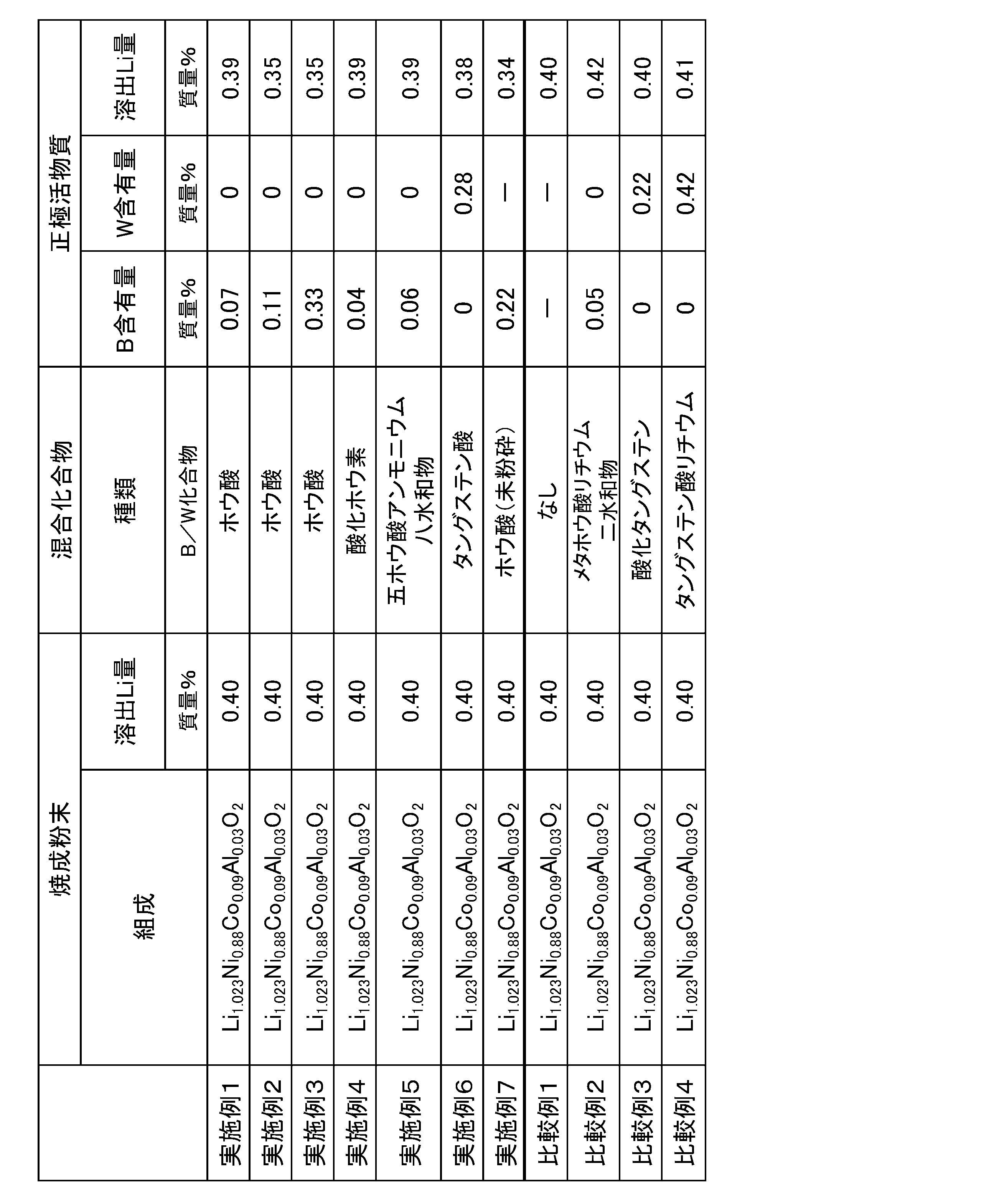
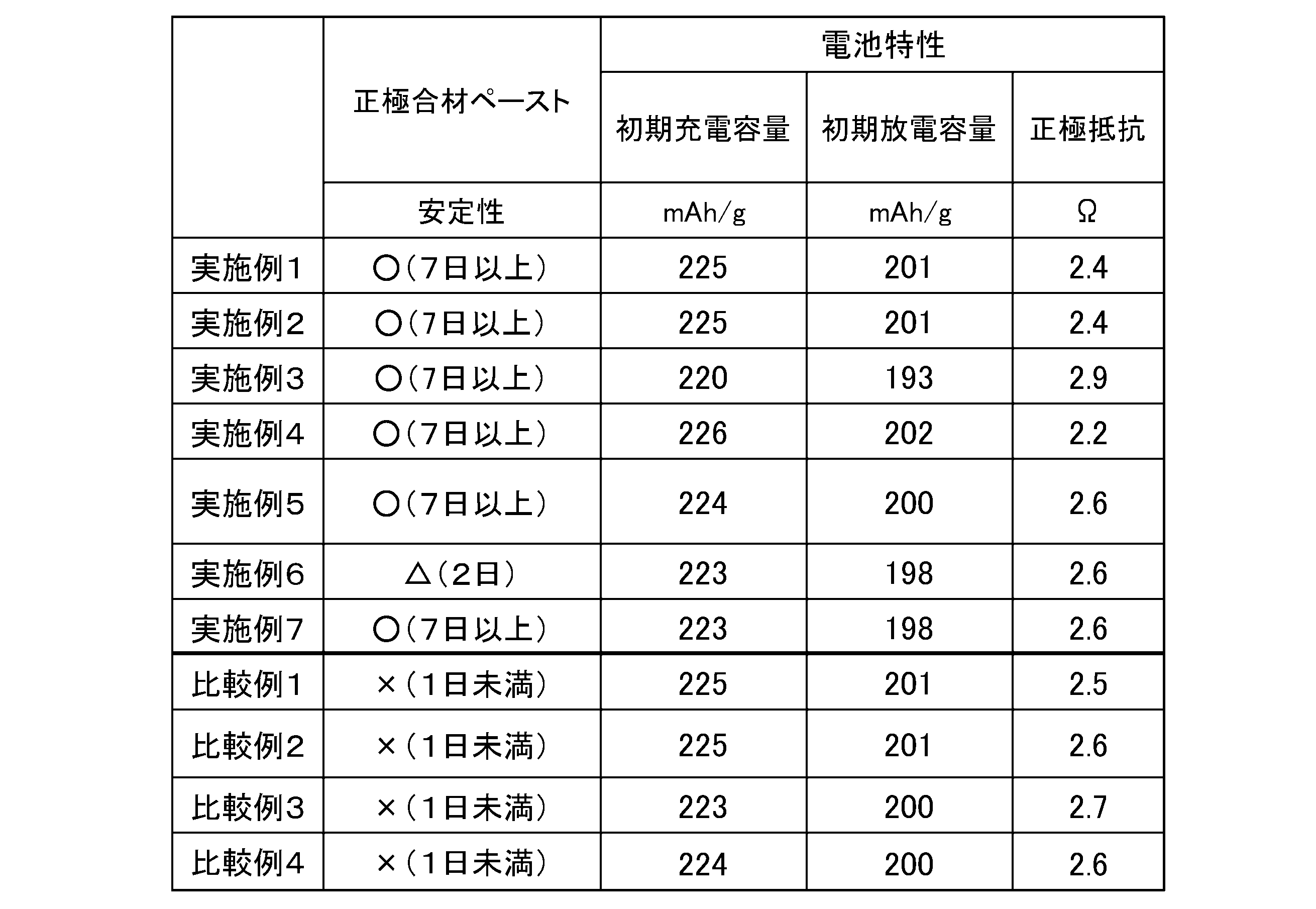
(評価結果)
実施例の正極活物質(リチウム金属複合酸化物の組成:Li1.023Ni0.88Co0.09Al0.03O2)を用いた二次電池では、LB化合物及びLW化合物を含くまない比較例1とほぼ同等の初期充電容量(223mAh/g以上226mAh/g以下)、初期放電容量(200mAh/g以上202mAh/g以下)、及び、正極抵抗(2.2Ω以上2.7Ω以下)が得られることが確認された。また、実施例の正極合材ペーストは、2日以上室温保管してもゲル化せずペースト状態を保持することが確認された。
実施例の正極活物質(リチウム金属複合酸化物の組成:Li1.023Ni0.88Co0.09Al0.03O2)を用いた二次電池では、LB化合物及びLW化合物を含くまない比較例1とほぼ同等の初期充電容量(223mAh/g以上226mAh/g以下)、初期放電容量(200mAh/g以上202mAh/g以下)、及び、正極抵抗(2.2Ω以上2.7Ω以下)が得られることが確認された。また、実施例の正極合材ペーストは、2日以上室温保管してもゲル化せずペースト状態を保持することが確認された。
一方、比較例1の正極合材ペーストでは、1日室温保管すると流動性を失ってゲル化することが確認された。また、比較例2~4の混合処理を行った正極合材ペーストでは、1日室温保管すると流動性を失ってゲル化することが確認された。
なお、本発明の技術範囲は、上述の実施形態などで説明した態様に限定されるものではない。上述の実施形態などで説明した要件の1つ以上は、省略されることがある。また、上述の実施形態などで説明した要件は、適宜組み合わせることができる。また、法令で許容される限りにおいて、日本特許出願である特願2016-166496、及び本明細書で引用した全ての文献の内容を援用して本文の記載の一部とする。
1、1a、1b…一次粒子
2…二次粒子
3…第一の化合物(LB化合物)
4…第二の化合物(LW化合物)
10…第一のリチウム金属複合酸化物
20…正極活物質
CBA…コイン型電池
PE…正極(評価用電極)
NE…負極
SE…セパレータ
GA…ガスケット
WW…ウェーブワッシャー
PE…正極缶
PC…負極缶
2…二次粒子
3…第一の化合物(LB化合物)
4…第二の化合物(LW化合物)
10…第一のリチウム金属複合酸化物
20…正極活物質
CBA…コイン型電池
PE…正極(評価用電極)
NE…負極
SE…セパレータ
GA…ガスケット
WW…ウェーブワッシャー
PE…正極缶
PC…負極缶
Claims (8)
- 一般式(1):Lis1Ni1-x1-y1-z1Cox1Mny1Mz1O2+α(ただし、0≦x1≦0.35、0≦y1≦0.35、0≦z1≦0.10、0.95<s1<1.30、0≦α≦0.2、Mは、V、Mg、Mo、Nb、Ti、WおよびAlから選ばれる少なくとも1種の元素)で表され、複数の一次粒子が凝集して形成された二次粒子を含む第一のリチウム金属複合酸化物と、
リチウムとホウ素とを含む第一の化合物、及び、リチウムとタングステンとを含む第二の化合物の少なくとも一方と、を含有する非水系電解質二次電池用正極活物質であって、
下記の特性(1)及び(2)の少なくとも一方を満し、かつ、
中和滴定法によって測定される、前記正極活物質を水に分散させたときに溶出するリチウム量が、正極活物質全体に対して、0.01質量%以上0.4質量%未満である、
非水系電解質二次電池用正極活物質。
(1)前記一次粒子の表面を、前記第一の化合物が被覆しており、ホウ素含有量が、正極活物質全体に対して、0.01質量%以上0.5質量%以下である。
(2)前記一次粒子の表面を、前記第二の化合物が被覆しており、タングステン含有量が、正極活物質全体に対して、0.01質量%以上1.0質量%以下である。 - 平均粒子径が5μm以上30μm以下であり、かつ、粒度分布の広がりを示す指標である[(d90-d10)/平均粒子径]が0.70以上である、請求項1に記載の非水系電解質二次電池用正極活物質。
- 焼成粉末と、ホウ素を含む第三の化合物及びタングステンを含む第四の化合物の少なくとも一方と、を混合して、正極活物質を得ること、を備え、
前記焼成粉末は、一般式(2):Lis2Ni1-x2-y2-z2Cox2Mny2Mz2O2+α’(ただし、0≦x2≦0.35、0≦y2≦0.35、0≦z2≦0.10、0.95<s2<1.30、0≦α’≦0.2、Mは、V、Mg、Mo、Nb、Ti、WおよびAlから選ばれる少なくとも1種の元素)で表され、複数の一次粒子が凝集して形成された二次粒子を含む第二のリチウム金属複合酸化物であり、
中和滴定法によって測定される、前記焼成粉末を水に分散させたときに溶出するリチウム量が、焼成粉末全体に対して0.05質量%以上1.0質量%以下であり、
前記第三の化合物、及び、前記第四の化合物は、リチウムを含まず、かつ、リチウムと反応可能な固体状態の化合物であり、下記の条件(3)及び(4)の少なくとも一方を満たすように混合される、非水系電解質二次電池用正極活物質の製造方法。
(3)ホウ素含有量が、正極活物質全体に対して、0.01質量%以上0.5質量%以下である。
(4)タングステン含有量が、正極活物質全体に対して、0.01質量%以上1.0質量%以下である。 - 前記第三の化合物、及び、前記第四の化合物の少なくとも一方を混合する量は、中和滴定法により測定される、前記正極活物質を水に分散させたときに溶出するリチウムの量が、正極活物質全体に対して、0.01質量%以上0.4質量%未満となるように調整される、請求項3に記載の非水系電解質二次電池用正極活物質の製造方法。
- 前記第三の化合物が、ホウ酸(H3BO3)、酸化ホウ素(B2O3)、四ホウ酸アンモニウム四水和物((NH4)2B4O7・4H2O)、及び、五ホウ酸アンモニウム八水和物((NH4)2O・5B2O3・8H2O)から選択される一種以上を含む、請求項3又は請求項4に記載の非水系電解質二次電池用正極活物質の製造方法。
- 前記第四の化合物がタングステン酸(H2WO4)を含む、請求項3~請求項5のいずれか一項に記載の非水系電解質二次電池用正極活物質の製造方法。
- 請求項1又は請求項2に記載の非水系電解質二次電池用正極活物質を含む、非水系電解質二次電池用正極合材ペースト。
- 請求項1又は請求項2に記載の非水系電解質二次電池用正極活物質を含む正極と、負極と、非水系電解液とを備える、非水系電解質二次電池。
Priority Applications (3)
| Application Number | Priority Date | Filing Date | Title |
|---|---|---|---|
| JP2018537314A JP7103222B2 (ja) | 2016-08-29 | 2017-08-29 | 非水系電解質二次電池用正極活物質とその製造方法、非水系電解質二次電池用正極合材ペーストおよび非水系電解質二次電池 |
| US16/328,015 US10978711B2 (en) | 2016-08-29 | 2017-08-29 | Positive electrode active material for nonaqueous electrolyte secondary battery, method for producing the same, positive electrode mixture paste for nonaqueous electrolyte secondary battery, and nonaqueous electrolyte secondary battery |
| CN201780066797.7A CN109891643B (zh) | 2016-08-29 | 2017-08-29 | 非水系电解质二次电池用正极活性物质和其制造方法、非水系电解质二次电池用正极复合材料糊剂和非水系电解质二次电池 |
Applications Claiming Priority (2)
| Application Number | Priority Date | Filing Date | Title |
|---|---|---|---|
| JP2016-166496 | 2016-08-29 | ||
| JP2016166496 | 2016-08-29 |
Publications (1)
| Publication Number | Publication Date |
|---|---|
| WO2018043515A1 true WO2018043515A1 (ja) | 2018-03-08 |
Family
ID=61300641
Family Applications (1)
| Application Number | Title | Priority Date | Filing Date |
|---|---|---|---|
| PCT/JP2017/031032 Ceased WO2018043515A1 (ja) | 2016-08-29 | 2017-08-29 | 非水系電解質二次電池用正極活物質とその製造方法、非水系電解質二次電池用正極合材ペーストおよび非水系電解質二次電池 |
Country Status (4)
| Country | Link |
|---|---|
| US (1) | US10978711B2 (ja) |
| JP (1) | JP7103222B2 (ja) |
| CN (1) | CN109891643B (ja) |
| WO (1) | WO2018043515A1 (ja) |
Cited By (16)
| Publication number | Priority date | Publication date | Assignee | Title |
|---|---|---|---|---|
| WO2019039567A1 (ja) * | 2017-08-25 | 2019-02-28 | 住友金属鉱山株式会社 | 非水系電解質二次電池用正極活物質とその製造方法、非水系電解質二次電池用正極合材ペーストおよび非水系電解質二次電池 |
| WO2019039566A1 (ja) * | 2017-08-25 | 2019-02-28 | 住友金属鉱山株式会社 | 非水系電解質二次電池用正極活物質とその製造方法、及び、非水系電解質二次電池とその製造方法 |
| JP2020053250A (ja) * | 2018-09-26 | 2020-04-02 | 住友金属鉱山株式会社 | リチウムイオン二次電池用正極活物質、リチウムイオン二次電池用正極活物質の製造方法 |
| JP2020087822A (ja) * | 2018-11-29 | 2020-06-04 | 住友金属鉱山株式会社 | リチウムニッケル含有複合酸化物とその製造方法、および、該リチウムニッケル含有複合酸化物を母材として用いたリチウムイオン二次電池用正極活物質とその製造方法 |
| WO2020175551A1 (ja) * | 2019-02-26 | 2020-09-03 | 住友金属鉱山株式会社 | リチウムイオン二次電池用正極活物質、リチウムイオン二次電池用正極活物質の製造方法、リチウムイオン二次電池 |
| JP2020166931A (ja) * | 2019-03-28 | 2020-10-08 | 住友金属鉱山株式会社 | リチウムイオン二次電池用正極活物質及びその製造方法 |
| JP2020173934A (ja) * | 2019-04-09 | 2020-10-22 | 株式会社田中化学研究所 | リチウム複合酸化物 |
| JPWO2020230424A1 (ja) * | 2019-05-16 | 2020-11-19 | ||
| WO2020262264A1 (ja) * | 2019-06-25 | 2020-12-30 | 住友金属鉱山株式会社 | リチウムイオン二次電池用正極活物質とその製造方法、及び、リチウムイオン二次電池 |
| JP2021070625A (ja) * | 2019-10-31 | 2021-05-06 | エコプロ ビーエム カンパニー リミテッドEcopro Bm Co., Ltd. | リチウム複合酸化物およびこれを含むリチウム二次電池 |
| JP2022510983A (ja) * | 2018-11-30 | 2022-01-28 | ポスコ | リチウム二次電池用正極添加剤、その製造方法、それを含むリチウム二次電池用正極およびそれを含むリチウム二次電池 |
| KR20220032592A (ko) * | 2019-09-06 | 2022-03-15 | 히타치 긴조쿠 가부시키가이샤 | 리튬 이온 2차 전지용 양극 활물질 및 그 제조 방법과 리튬 이온 2차 전지 |
| US20220271272A1 (en) * | 2019-06-25 | 2022-08-25 | Sumitomo Metal Mining Co., Ltd. | Positive electrode active material for lithium-ion secondary batteries, method for producing same, and lithium-ion secondary battery |
| JP2024532312A (ja) * | 2021-08-24 | 2024-09-05 | エルジー・ケム・リミテッド | 正極活物質および正極活物質の製造方法 |
| EP4091989A4 (en) * | 2020-01-17 | 2024-11-13 | Sumitomo Chemical Company, Limited | MIXED POWDER FOR ALL-SOLID-STATE LITHIUM-ION BATTERY, MIXED PASTE FOR ALL-SOLID-STATE LITHIUM-ION BATTERY, ELECTRODE, AND ALL-SOLID-STATE LITHIUM-ION BATTERY |
| JP2024546957A (ja) * | 2021-12-16 | 2024-12-26 | ユミコア | 充電式固体電池用正極活物質 |
Families Citing this family (8)
| Publication number | Priority date | Publication date | Assignee | Title |
|---|---|---|---|---|
| WO2019040533A1 (en) * | 2017-08-22 | 2019-02-28 | A123 Systems Llc | GLASS COATING OF LITHIUM TETRABORATE ON CATHODE MATERIALS TO IMPROVE CYCLING SAFETY AND STABILITY |
| JP7634548B2 (ja) * | 2020-02-17 | 2025-02-21 | ユミコア | 充電式リチウムイオン電池用の正極活物質の調製方法 |
| EP4191703A4 (en) | 2020-07-30 | 2024-09-18 | Sumitomo Metal Mining Co., Ltd. | POSITIVE ELECTRODE ACTIVE MATERIAL FOR ALL-SOLID-STATE LITHIUM-ION SECONDARY BATTERIES, AND PRODUCTION METHOD THEREFOR |
| CN114079043A (zh) * | 2020-08-11 | 2022-02-22 | 厦门厦钨新能源材料股份有限公司 | 一种高镍正极材料和锂离子电池及其制备方法 |
| KR102513972B1 (ko) | 2020-08-28 | 2023-03-24 | 주식회사 에코프로비엠 | 양극 활물질 및 이를 포함하는 리튬 이차전지 |
| WO2022139118A1 (ko) * | 2020-12-22 | 2022-06-30 | 주식회사 엘지화학 | 양극 활물질에 도입된 붕소의 함량 및 분포 분석방법 |
| CN113690399A (zh) * | 2021-08-04 | 2021-11-23 | 中国电子科技集团公司第十八研究所 | 一种阴阳离子共掺杂和表面双包覆的高镍单晶三元材料及其制备方法 |
| CN116639736A (zh) * | 2023-05-18 | 2023-08-25 | 新乡天力锂能股份有限公司 | 一种有效改善高镍正极材料水洗脱锂的方法 |
Citations (5)
| Publication number | Priority date | Publication date | Assignee | Title |
|---|---|---|---|---|
| WO2012105048A1 (ja) * | 2011-02-04 | 2012-08-09 | トヨタ自動車株式会社 | 被覆活物質、電池および被覆活物質の製造方法 |
| WO2012160698A1 (ja) * | 2011-05-26 | 2012-11-29 | トヨタ自動車株式会社 | 被覆活物質およびリチウム固体電池 |
| JP2013125732A (ja) * | 2011-12-16 | 2013-06-24 | Sumitomo Metal Mining Co Ltd | 非水系電解質二次電池用正極活物質とその製造方法、および該正極活物質を用いた非水系電解質二次電池 |
| JP2015201432A (ja) * | 2014-03-31 | 2015-11-12 | 戸田工業株式会社 | 非水電解液二次電池用正極活物質粒子粉末及びその製造方法、並びに非水電解液二次電池 |
| JP2015536558A (ja) * | 2013-10-29 | 2015-12-21 | エルジー・ケム・リミテッド | 正極活物質の製造方法、及びこれによって製造されたリチウム二次電池用正極活物質 |
Family Cites Families (8)
| Publication number | Priority date | Publication date | Assignee | Title |
|---|---|---|---|---|
| EP2330079B1 (en) * | 2008-09-18 | 2018-12-12 | Toda Kogyo Corp. | Method for producing lithium manganate particle powder and nonaqueous electrolyte secondary battery |
| JP5382061B2 (ja) | 2010-06-22 | 2014-01-08 | 日亜化学工業株式会社 | 非水電解液二次電池用正極組成物及び該正極組成物を用いた正極スラリー |
| JP5035712B2 (ja) * | 2010-09-30 | 2012-09-26 | 住友金属鉱山株式会社 | 非水系電解質二次電池用正極活物質とその製造方法、および該正極活物質を用いた非水系電解質二次電池 |
| JP2013084395A (ja) | 2011-10-06 | 2013-05-09 | Toyota Motor Corp | リチウムイオン二次電池の製造方法 |
| JP6286855B2 (ja) | 2012-04-18 | 2018-03-07 | 日亜化学工業株式会社 | 非水電解液二次電池用正極組成物 |
| JP6524651B2 (ja) | 2013-12-13 | 2019-06-05 | 日亜化学工業株式会社 | 非水電解液二次電池用正極活物質及びその製造方法 |
| JP6210439B2 (ja) * | 2014-12-26 | 2017-10-11 | 住友金属鉱山株式会社 | 非水系電解質二次電池用正極活物質とその製造方法、及び該正極活物質を用いた非水系電解質二次電池 |
| US10615414B2 (en) * | 2016-01-15 | 2020-04-07 | Toda Kogyo Corp. | Lithium nickelate-based positive electrode active substance particles and process for producing the same, and non-aqueous electrolyte secondary battery |
-
2017
- 2017-08-29 CN CN201780066797.7A patent/CN109891643B/zh active Active
- 2017-08-29 US US16/328,015 patent/US10978711B2/en active Active
- 2017-08-29 WO PCT/JP2017/031032 patent/WO2018043515A1/ja not_active Ceased
- 2017-08-29 JP JP2018537314A patent/JP7103222B2/ja active Active
Patent Citations (5)
| Publication number | Priority date | Publication date | Assignee | Title |
|---|---|---|---|---|
| WO2012105048A1 (ja) * | 2011-02-04 | 2012-08-09 | トヨタ自動車株式会社 | 被覆活物質、電池および被覆活物質の製造方法 |
| WO2012160698A1 (ja) * | 2011-05-26 | 2012-11-29 | トヨタ自動車株式会社 | 被覆活物質およびリチウム固体電池 |
| JP2013125732A (ja) * | 2011-12-16 | 2013-06-24 | Sumitomo Metal Mining Co Ltd | 非水系電解質二次電池用正極活物質とその製造方法、および該正極活物質を用いた非水系電解質二次電池 |
| JP2015536558A (ja) * | 2013-10-29 | 2015-12-21 | エルジー・ケム・リミテッド | 正極活物質の製造方法、及びこれによって製造されたリチウム二次電池用正極活物質 |
| JP2015201432A (ja) * | 2014-03-31 | 2015-11-12 | 戸田工業株式会社 | 非水電解液二次電池用正極活物質粒子粉末及びその製造方法、並びに非水電解液二次電池 |
Cited By (40)
| Publication number | Priority date | Publication date | Assignee | Title |
|---|---|---|---|---|
| WO2019039567A1 (ja) * | 2017-08-25 | 2019-02-28 | 住友金属鉱山株式会社 | 非水系電解質二次電池用正極活物質とその製造方法、非水系電解質二次電池用正極合材ペーストおよび非水系電解質二次電池 |
| WO2019039566A1 (ja) * | 2017-08-25 | 2019-02-28 | 住友金属鉱山株式会社 | 非水系電解質二次電池用正極活物質とその製造方法、及び、非水系電解質二次電池とその製造方法 |
| US11996556B2 (en) | 2017-08-25 | 2024-05-28 | Sumitomo Metal Mining Co., Ltd. | Positive electrode active material for non-aqueous electrolyte secondary battery and method for producing the same, positive electrode mixture paste for non-aqueous electrolyte secondary battery, and non-aqueous electrolyte secondary battery |
| JPWO2019039566A1 (ja) * | 2017-08-25 | 2020-10-01 | 住友金属鉱山株式会社 | 非水系電解質二次電池用正極活物質とその製造方法、及び、非水系電解質二次電池とその製造方法 |
| US11862793B2 (en) | 2017-08-25 | 2024-01-02 | Sumitomo Metal Mining Co., Ltd. | Positive electrode active material for non-aqueous electrolyte secondary battery and method for producing the same, and non-aqueous electrolyte secondary battery and method for producing the same |
| JP7215423B2 (ja) | 2017-08-25 | 2023-01-31 | 住友金属鉱山株式会社 | 非水系電解質二次電池用正極活物質とその製造方法、及び、非水系電解質二次電池とその製造方法 |
| JP2020053250A (ja) * | 2018-09-26 | 2020-04-02 | 住友金属鉱山株式会社 | リチウムイオン二次電池用正極活物質、リチウムイオン二次電池用正極活物質の製造方法 |
| JP7271891B2 (ja) | 2018-09-26 | 2023-05-12 | 住友金属鉱山株式会社 | リチウムイオン二次電池用正極活物質、リチウムイオン二次電池用正極活物質の製造方法 |
| JP2020087822A (ja) * | 2018-11-29 | 2020-06-04 | 住友金属鉱山株式会社 | リチウムニッケル含有複合酸化物とその製造方法、および、該リチウムニッケル含有複合酸化物を母材として用いたリチウムイオン二次電池用正極活物質とその製造方法 |
| JP7271920B2 (ja) | 2018-11-29 | 2023-05-12 | 住友金属鉱山株式会社 | リチウムニッケル含有複合酸化物とその製造方法、および、該リチウムニッケル含有複合酸化物を母材として用いたリチウムイオン二次電池用正極活物質とその製造方法 |
| JP7157252B2 (ja) | 2018-11-30 | 2022-10-19 | ポスコ | リチウム二次電池用正極添加剤、その製造方法、それを含むリチウム二次電池用正極およびそれを含むリチウム二次電池 |
| JP2022510983A (ja) * | 2018-11-30 | 2022-01-28 | ポスコ | リチウム二次電池用正極添加剤、その製造方法、それを含むリチウム二次電池用正極およびそれを含むリチウム二次電池 |
| JP7164006B2 (ja) | 2019-02-26 | 2022-11-01 | 住友金属鉱山株式会社 | リチウムイオン二次電池用正極活物質、リチウムイオン二次電池用正極活物質の製造方法、リチウムイオン二次電池 |
| WO2020175551A1 (ja) * | 2019-02-26 | 2020-09-03 | 住友金属鉱山株式会社 | リチウムイオン二次電池用正極活物質、リチウムイオン二次電池用正極活物質の製造方法、リチウムイオン二次電池 |
| JPWO2020175551A1 (ja) * | 2019-02-26 | 2021-12-23 | 住友金属鉱山株式会社 | リチウムイオン二次電池用正極活物質、リチウムイオン二次電池用正極活物質の製造方法、リチウムイオン二次電池 |
| JP2020166931A (ja) * | 2019-03-28 | 2020-10-08 | 住友金属鉱山株式会社 | リチウムイオン二次電池用正極活物質及びその製造方法 |
| JP7272052B2 (ja) | 2019-03-28 | 2023-05-12 | 住友金属鉱山株式会社 | リチウムイオン二次電池用正極活物質及びその製造方法 |
| JP7308649B2 (ja) | 2019-04-09 | 2023-07-14 | 株式会社田中化学研究所 | リチウム複合酸化物 |
| JP2020173934A (ja) * | 2019-04-09 | 2020-10-22 | 株式会社田中化学研究所 | リチウム複合酸化物 |
| EP3971141A4 (en) * | 2019-05-16 | 2022-07-27 | Panasonic Intellectual Property Management Co., Ltd. | POSITIVE ELECTRODE ACTIVE SUBSTANCE FOR SECONDARY BATTERY WITH ANHYDROUS ELECTROLYTE AND POSITIVE ELECTRODE FOR SECONDARY BATTERY WITH ANHYDROUS ELECTROLYTE |
| CN113825725B (zh) * | 2019-05-16 | 2024-04-09 | 松下知识产权经营株式会社 | 非水电解质二次电池用正极活性物质及非水电解质二次电池用正极 |
| JP2024138527A (ja) * | 2019-05-16 | 2024-10-08 | パナソニックIpマネジメント株式会社 | 非水電解質二次電池用正極活物質及び非水電解質二次電池用正極 |
| WO2020230424A1 (ja) * | 2019-05-16 | 2020-11-19 | パナソニックIpマネジメント株式会社 | 非水電解質二次電池用正極活物質及び非水電解質二次電池用正極 |
| JPWO2020230424A1 (ja) * | 2019-05-16 | 2020-11-19 | ||
| JP7531163B2 (ja) | 2019-05-16 | 2024-08-09 | パナソニックIpマネジメント株式会社 | 非水電解質二次電池用正極活物質及び非水電解質二次電池用正極 |
| JP7777769B2 (ja) | 2019-05-16 | 2025-12-01 | パナソニックIpマネジメント株式会社 | 非水電解質二次電池用正極活物質及び非水電解質二次電池用正極 |
| US12100832B2 (en) | 2019-05-16 | 2024-09-24 | Panasonic Intellectual Property Management Co., Ltd. | Positive electrode active substance for non-aqueous electrolyte secondary battery, and positive electrode for non-aqueous electrolyte secondary battery |
| CN113825725A (zh) * | 2019-05-16 | 2021-12-21 | 松下知识产权经营株式会社 | 非水电解质二次电池用正极活性物质及非水电解质二次电池用正极 |
| JP7354611B2 (ja) | 2019-06-25 | 2023-10-03 | 住友金属鉱山株式会社 | リチウムイオン二次電池用正極活物質とその製造方法、及び、リチウムイオン二次電池 |
| US12315909B2 (en) | 2019-06-25 | 2025-05-27 | Sumitomo Metal Mining Co., Ltd. | Positive electrode active material for lithium ion secondary battery, method for producing the same, and lithium ion secondary battery |
| WO2020262264A1 (ja) * | 2019-06-25 | 2020-12-30 | 住友金属鉱山株式会社 | リチウムイオン二次電池用正極活物質とその製造方法、及び、リチウムイオン二次電池 |
| JP2021005474A (ja) * | 2019-06-25 | 2021-01-14 | 住友金属鉱山株式会社 | リチウムイオン二次電池用正極活物質とその製造方法、及び、リチウムイオン二次電池 |
| US20220271272A1 (en) * | 2019-06-25 | 2022-08-25 | Sumitomo Metal Mining Co., Ltd. | Positive electrode active material for lithium-ion secondary batteries, method for producing same, and lithium-ion secondary battery |
| KR102718013B1 (ko) | 2019-09-06 | 2024-10-15 | 가부시키가이샤 프로테리아루 | 리튬 이온 2차 전지용 양극 활물질 및 그 제조 방법과 리튬 이온 2차 전지 |
| KR20220032592A (ko) * | 2019-09-06 | 2022-03-15 | 히타치 긴조쿠 가부시키가이샤 | 리튬 이온 2차 전지용 양극 활물질 및 그 제조 방법과 리튬 이온 2차 전지 |
| JP2021070625A (ja) * | 2019-10-31 | 2021-05-06 | エコプロ ビーエム カンパニー リミテッドEcopro Bm Co., Ltd. | リチウム複合酸化物およびこれを含むリチウム二次電池 |
| JP7018496B2 (ja) | 2019-10-31 | 2022-02-10 | エコプロ ビーエム カンパニー リミテッド | リチウム複合酸化物およびこれを含むリチウム二次電池 |
| EP4091989A4 (en) * | 2020-01-17 | 2024-11-13 | Sumitomo Chemical Company, Limited | MIXED POWDER FOR ALL-SOLID-STATE LITHIUM-ION BATTERY, MIXED PASTE FOR ALL-SOLID-STATE LITHIUM-ION BATTERY, ELECTRODE, AND ALL-SOLID-STATE LITHIUM-ION BATTERY |
| JP2024532312A (ja) * | 2021-08-24 | 2024-09-05 | エルジー・ケム・リミテッド | 正極活物質および正極活物質の製造方法 |
| JP2024546957A (ja) * | 2021-12-16 | 2024-12-26 | ユミコア | 充電式固体電池用正極活物質 |
Also Published As
| Publication number | Publication date |
|---|---|
| CN109891643A (zh) | 2019-06-14 |
| CN109891643B (zh) | 2022-09-06 |
| JP7103222B2 (ja) | 2022-07-20 |
| US10978711B2 (en) | 2021-04-13 |
| US20190312279A1 (en) | 2019-10-10 |
| JPWO2018043515A1 (ja) | 2019-06-24 |
Similar Documents
| Publication | Publication Date | Title |
|---|---|---|
| JP7103222B2 (ja) | 非水系電解質二次電池用正極活物質とその製造方法、非水系電解質二次電池用正極合材ペーストおよび非水系電解質二次電池 | |
| JP7077943B2 (ja) | 非水系電解質二次電池用正極活物質とその製造方法、非水系電解質二次電池用正極合材ペーストおよび非水系電解質二次電池 | |
| US11996556B2 (en) | Positive electrode active material for non-aqueous electrolyte secondary battery and method for producing the same, positive electrode mixture paste for non-aqueous electrolyte secondary battery, and non-aqueous electrolyte secondary battery | |
| CN108352526B (zh) | 非水系电解质二次电池用正极活性物质和其制造方法、非水系电解质二次电池用正极复合材料糊剂和非水系电解质二次电池 | |
| JP6210439B2 (ja) | 非水系電解質二次電池用正極活物質とその製造方法、及び該正極活物質を用いた非水系電解質二次電池 | |
| JP7024292B2 (ja) | 非水系電解質二次電池用正極活物質とその製造方法、及び非水系電解質二次電池 | |
| JP6818225B2 (ja) | 非水系電解質二次電池用正極活物質の製造方法 | |
| JP6773047B2 (ja) | 非水系電解質二次電池用正極材料とその製造方法、および正極合材ペースト、非水系電解質二次電池。 | |
| JP2020013747A (ja) | リチウムイオン二次電池用正極活物質とその製造方法、リチウムイオン二次電池用正極合剤ペースト、及び、リチウムイオン二次電池 | |
| WO2018052038A1 (ja) | 非水系電解質二次電池用正極活物質とその製造方法、および該正極活物質を用いた非水系電解質二次電池 | |
| JP2017228516A (ja) | 非水系電解質二次電池用正極活物質とその製造方法、非水系電解質二次電池用正極合材ペーストおよび非水系電解質二次電池 | |
| CN114424369B (zh) | 锂离子二次电池用正极活性物质以及锂离子二次电池 | |
| JP2020053383A (ja) | リチウムイオン二次電池用正極活物質とその製造方法、リチウムイオン二次電池用正極合剤ペーストおよびリチウムイオン二次電池 | |
| JP2017117766A (ja) | 非水系電解質二次電池用正極活物質とその製造方法、及び非水系電解質二次電池 | |
| JP2020004506A (ja) | リチウムイオン二次電池用の正極活物質とその製造方法、およびチウムイオン二次電池 | |
| JP2016072188A (ja) | 非水系電解質二次電池用正極活物質用の被覆複合酸化物粒子の製造方法及び当該製造方法によって製造される被覆複合酸化物粒子を用いた非水系電解質二次電池 | |
| JP2018032543A (ja) | 非水系電解質二次電池用正極活物質とその製造方法、及び非水系電解質二次電池 | |
| JP2020009756A (ja) | リチウムイオン二次電池用正極活物質とその製造方法、リチウムイオン二次電池用正極、及び、リチウムイオン二次電池 | |
| WO2016104305A1 (ja) | 非水系電解質二次電池用正極活物質とその製造方法、及び該正極活物質を用いた非水系電解質二次電池 | |
| CN111937193A (zh) | 非水系电解质二次电池用正极活性物质及其制造方法 | |
| KR20190000457A (ko) | 비수계 전해질 이차 전지용 정극 활물질과 그의 제조 방법, 및 비수계 전해질 이차 전지 | |
| JP7222188B2 (ja) | リチウムイオン二次電池用正極活物質とその製造方法、リチウムイオン二次電池用正極、及び、リチウムイオン二次電池 | |
| JP7143593B2 (ja) | 非水系電解質二次電池用正極活物質の製造方法 | |
| JP2019050099A (ja) | 非水系電解質二次電池用正極活物質およびその製造方法 | |
| WO2017164237A1 (ja) | 非水系電解質二次電池用正極活物質とその製造方法、非水系電解質二次電池用正極合材ペーストおよび非水系電解質二次電池 |
Legal Events
| Date | Code | Title | Description |
|---|---|---|---|
| 121 | Ep: the epo has been informed by wipo that ep was designated in this application |
Ref document number: 17846520 Country of ref document: EP Kind code of ref document: A1 |
|
| ENP | Entry into the national phase |
Ref document number: 2018537314 Country of ref document: JP Kind code of ref document: A |
|
| NENP | Non-entry into the national phase |
Ref country code: DE |
|
| 122 | Ep: pct application non-entry in european phase |
Ref document number: 17846520 Country of ref document: EP Kind code of ref document: A1 |