WO2017130883A1 - 着色組成物、カラーフィルタ、パターン形成方法、固体撮像素子および画像表示装置 - Google Patents
着色組成物、カラーフィルタ、パターン形成方法、固体撮像素子および画像表示装置 Download PDFInfo
- Publication number
- WO2017130883A1 WO2017130883A1 PCT/JP2017/002058 JP2017002058W WO2017130883A1 WO 2017130883 A1 WO2017130883 A1 WO 2017130883A1 JP 2017002058 W JP2017002058 W JP 2017002058W WO 2017130883 A1 WO2017130883 A1 WO 2017130883A1
- Authority
- WO
- WIPO (PCT)
- Prior art keywords
- compound
- group
- mass
- colored composition
- manufactured
- Prior art date
- Legal status (The legal status is an assumption and is not a legal conclusion. Google has not performed a legal analysis and makes no representation as to the accuracy of the status listed.)
- Ceased
Links
- 0 CC1(*)C(*)C(*)C(*)C(*)C1* Chemical compound CC1(*)C(*)C(*)C(*)C(*)C1* 0.000 description 2
- APTIRHMJBJAIJD-CFIUJQQCSA-N CCCCC(CC)C[n](c(ccc(/C(/c1ccccc1OCC(C(F)F)(F)F)=N\OC(C)=O)c1)c1c1c2)c1c(cccc1)c1c2C(c1c(C)cc(C)cc1C)=O Chemical compound CCCCC(CC)C[n](c(ccc(/C(/c1ccccc1OCC(C(F)F)(F)F)=N\OC(C)=O)c1)c1c1c2)c1c(cccc1)c1c2C(c1c(C)cc(C)cc1C)=O APTIRHMJBJAIJD-CFIUJQQCSA-N 0.000 description 1
- JFVCDVPOVCDDLJ-QJGAVIKSSA-N CCN(CC)CCCNC(c1cc(C(NCCCN(CC)CC)=O)cc(NC(c(cc2)ccc2/N=N/C(C(C)=O)C(Nc(cc2)cc(N3)c2NC3=O)=O)=O)c1)=O Chemical compound CCN(CC)CCCNC(c1cc(C(NCCCN(CC)CC)=O)cc(NC(c(cc2)ccc2/N=N/C(C(C)=O)C(Nc(cc2)cc(N3)c2NC3=O)=O)=O)c1)=O JFVCDVPOVCDDLJ-QJGAVIKSSA-N 0.000 description 1
Classifications
-
- G—PHYSICS
- G03—PHOTOGRAPHY; CINEMATOGRAPHY; ANALOGOUS TECHNIQUES USING WAVES OTHER THAN OPTICAL WAVES; ELECTROGRAPHY; HOLOGRAPHY
- G03F—PHOTOMECHANICAL PRODUCTION OF TEXTURED OR PATTERNED SURFACES, e.g. FOR PRINTING, FOR PROCESSING OF SEMICONDUCTOR DEVICES; MATERIALS THEREFOR; ORIGINALS THEREFOR; APPARATUS SPECIALLY ADAPTED THEREFOR
- G03F7/00—Photomechanical, e.g. photolithographic, production of textured or patterned surfaces, e.g. printing surfaces; Materials therefor, e.g. comprising photoresists; Apparatus specially adapted therefor
- G03F7/0005—Production of optical devices or components in so far as characterised by the lithographic processes or materials used therefor
- G03F7/0007—Filters, e.g. additive colour filters; Components for display devices
-
- C—CHEMISTRY; METALLURGY
- C09—DYES; PAINTS; POLISHES; NATURAL RESINS; ADHESIVES; COMPOSITIONS NOT OTHERWISE PROVIDED FOR; APPLICATIONS OF MATERIALS NOT OTHERWISE PROVIDED FOR
- C09B—ORGANIC DYES OR CLOSELY-RELATED COMPOUNDS FOR PRODUCING DYES, e.g. PIGMENTS; MORDANTS; LAKES
- C09B29/00—Monoazo dyes prepared by diazotising and coupling
- C09B29/32—Monoazo dyes prepared by diazotising and coupling from coupling components containing a reactive methylene group
- C09B29/33—Aceto- or benzoylacetylarylides
- C09B29/335—Aceto- or benzoylacetylarylides free of acid groups
-
- C—CHEMISTRY; METALLURGY
- C09—DYES; PAINTS; POLISHES; NATURAL RESINS; ADHESIVES; COMPOSITIONS NOT OTHERWISE PROVIDED FOR; APPLICATIONS OF MATERIALS NOT OTHERWISE PROVIDED FOR
- C09B—ORGANIC DYES OR CLOSELY-RELATED COMPOUNDS FOR PRODUCING DYES, e.g. PIGMENTS; MORDANTS; LAKES
- C09B47/00—Porphines; Azaporphines
- C09B47/04—Phthalocyanines abbreviation: Pc
-
- C—CHEMISTRY; METALLURGY
- C09—DYES; PAINTS; POLISHES; NATURAL RESINS; ADHESIVES; COMPOSITIONS NOT OTHERWISE PROVIDED FOR; APPLICATIONS OF MATERIALS NOT OTHERWISE PROVIDED FOR
- C09D—COATING COMPOSITIONS, e.g. PAINTS, VARNISHES OR LACQUERS; FILLING PASTES; CHEMICAL PAINT OR INK REMOVERS; INKS; CORRECTING FLUIDS; WOODSTAINS; PASTES OR SOLIDS FOR COLOURING OR PRINTING; USE OF MATERIALS THEREFOR
- C09D17/00—Pigment pastes, e.g. for mixing in paints
-
- C—CHEMISTRY; METALLURGY
- C09—DYES; PAINTS; POLISHES; NATURAL RESINS; ADHESIVES; COMPOSITIONS NOT OTHERWISE PROVIDED FOR; APPLICATIONS OF MATERIALS NOT OTHERWISE PROVIDED FOR
- C09D—COATING COMPOSITIONS, e.g. PAINTS, VARNISHES OR LACQUERS; FILLING PASTES; CHEMICAL PAINT OR INK REMOVERS; INKS; CORRECTING FLUIDS; WOODSTAINS; PASTES OR SOLIDS FOR COLOURING OR PRINTING; USE OF MATERIALS THEREFOR
- C09D17/00—Pigment pastes, e.g. for mixing in paints
- C09D17/003—Pigment pastes, e.g. for mixing in paints containing an organic pigment
-
- G—PHYSICS
- G02—OPTICS
- G02B—OPTICAL ELEMENTS, SYSTEMS OR APPARATUS
- G02B5/00—Optical elements other than lenses
- G02B5/20—Filters
- G02B5/22—Absorbing filters
- G02B5/223—Absorbing filters containing organic substances, e.g. dyes, inks or pigments
-
- G—PHYSICS
- G03—PHOTOGRAPHY; CINEMATOGRAPHY; ANALOGOUS TECHNIQUES USING WAVES OTHER THAN OPTICAL WAVES; ELECTROGRAPHY; HOLOGRAPHY
- G03F—PHOTOMECHANICAL PRODUCTION OF TEXTURED OR PATTERNED SURFACES, e.g. FOR PRINTING, FOR PROCESSING OF SEMICONDUCTOR DEVICES; MATERIALS THEREFOR; ORIGINALS THEREFOR; APPARATUS SPECIALLY ADAPTED THEREFOR
- G03F7/00—Photomechanical, e.g. photolithographic, production of textured or patterned surfaces, e.g. printing surfaces; Materials therefor, e.g. comprising photoresists; Apparatus specially adapted therefor
- G03F7/004—Photosensitive materials
- G03F7/027—Non-macromolecular photopolymerisable compounds having carbon-to-carbon double bonds, e.g. ethylenic compounds
-
- G—PHYSICS
- G03—PHOTOGRAPHY; CINEMATOGRAPHY; ANALOGOUS TECHNIQUES USING WAVES OTHER THAN OPTICAL WAVES; ELECTROGRAPHY; HOLOGRAPHY
- G03F—PHOTOMECHANICAL PRODUCTION OF TEXTURED OR PATTERNED SURFACES, e.g. FOR PRINTING, FOR PROCESSING OF SEMICONDUCTOR DEVICES; MATERIALS THEREFOR; ORIGINALS THEREFOR; APPARATUS SPECIALLY ADAPTED THEREFOR
- G03F7/00—Photomechanical, e.g. photolithographic, production of textured or patterned surfaces, e.g. printing surfaces; Materials therefor, e.g. comprising photoresists; Apparatus specially adapted therefor
- G03F7/004—Photosensitive materials
- G03F7/027—Non-macromolecular photopolymerisable compounds having carbon-to-carbon double bonds, e.g. ethylenic compounds
- G03F7/028—Non-macromolecular photopolymerisable compounds having carbon-to-carbon double bonds, e.g. ethylenic compounds with photosensitivity-increasing substances, e.g. photoinitiators
- G03F7/029—Inorganic compounds; Onium compounds; Organic compounds having hetero atoms other than oxygen, nitrogen or sulfur
-
- G—PHYSICS
- G03—PHOTOGRAPHY; CINEMATOGRAPHY; ANALOGOUS TECHNIQUES USING WAVES OTHER THAN OPTICAL WAVES; ELECTROGRAPHY; HOLOGRAPHY
- G03F—PHOTOMECHANICAL PRODUCTION OF TEXTURED OR PATTERNED SURFACES, e.g. FOR PRINTING, FOR PROCESSING OF SEMICONDUCTOR DEVICES; MATERIALS THEREFOR; ORIGINALS THEREFOR; APPARATUS SPECIALLY ADAPTED THEREFOR
- G03F7/00—Photomechanical, e.g. photolithographic, production of textured or patterned surfaces, e.g. printing surfaces; Materials therefor, e.g. comprising photoresists; Apparatus specially adapted therefor
- G03F7/004—Photosensitive materials
- G03F7/027—Non-macromolecular photopolymerisable compounds having carbon-to-carbon double bonds, e.g. ethylenic compounds
- G03F7/028—Non-macromolecular photopolymerisable compounds having carbon-to-carbon double bonds, e.g. ethylenic compounds with photosensitivity-increasing substances, e.g. photoinitiators
- G03F7/029—Inorganic compounds; Onium compounds; Organic compounds having hetero atoms other than oxygen, nitrogen or sulfur
- G03F7/0295—Photolytic halogen compounds
-
- G—PHYSICS
- G03—PHOTOGRAPHY; CINEMATOGRAPHY; ANALOGOUS TECHNIQUES USING WAVES OTHER THAN OPTICAL WAVES; ELECTROGRAPHY; HOLOGRAPHY
- G03F—PHOTOMECHANICAL PRODUCTION OF TEXTURED OR PATTERNED SURFACES, e.g. FOR PRINTING, FOR PROCESSING OF SEMICONDUCTOR DEVICES; MATERIALS THEREFOR; ORIGINALS THEREFOR; APPARATUS SPECIALLY ADAPTED THEREFOR
- G03F7/00—Photomechanical, e.g. photolithographic, production of textured or patterned surfaces, e.g. printing surfaces; Materials therefor, e.g. comprising photoresists; Apparatus specially adapted therefor
- G03F7/004—Photosensitive materials
- G03F7/027—Non-macromolecular photopolymerisable compounds having carbon-to-carbon double bonds, e.g. ethylenic compounds
- G03F7/032—Non-macromolecular photopolymerisable compounds having carbon-to-carbon double bonds, e.g. ethylenic compounds with binders
- G03F7/033—Non-macromolecular photopolymerisable compounds having carbon-to-carbon double bonds, e.g. ethylenic compounds with binders the binders being polymers obtained by reactions only involving carbon-to-carbon unsaturated bonds, e.g. vinyl polymers
-
- G—PHYSICS
- G03—PHOTOGRAPHY; CINEMATOGRAPHY; ANALOGOUS TECHNIQUES USING WAVES OTHER THAN OPTICAL WAVES; ELECTROGRAPHY; HOLOGRAPHY
- G03F—PHOTOMECHANICAL PRODUCTION OF TEXTURED OR PATTERNED SURFACES, e.g. FOR PRINTING, FOR PROCESSING OF SEMICONDUCTOR DEVICES; MATERIALS THEREFOR; ORIGINALS THEREFOR; APPARATUS SPECIALLY ADAPTED THEREFOR
- G03F7/00—Photomechanical, e.g. photolithographic, production of textured or patterned surfaces, e.g. printing surfaces; Materials therefor, e.g. comprising photoresists; Apparatus specially adapted therefor
- G03F7/004—Photosensitive materials
- G03F7/038—Macromolecular compounds which are rendered insoluble or differentially wettable
-
- G—PHYSICS
- G03—PHOTOGRAPHY; CINEMATOGRAPHY; ANALOGOUS TECHNIQUES USING WAVES OTHER THAN OPTICAL WAVES; ELECTROGRAPHY; HOLOGRAPHY
- G03F—PHOTOMECHANICAL PRODUCTION OF TEXTURED OR PATTERNED SURFACES, e.g. FOR PRINTING, FOR PROCESSING OF SEMICONDUCTOR DEVICES; MATERIALS THEREFOR; ORIGINALS THEREFOR; APPARATUS SPECIALLY ADAPTED THEREFOR
- G03F7/00—Photomechanical, e.g. photolithographic, production of textured or patterned surfaces, e.g. printing surfaces; Materials therefor, e.g. comprising photoresists; Apparatus specially adapted therefor
- G03F7/004—Photosensitive materials
- G03F7/09—Photosensitive materials characterised by structural details, e.g. supports, auxiliary layers
- G03F7/105—Photosensitive materials characterised by structural details, e.g. supports, auxiliary layers having substances, e.g. indicators, for forming visible images
Definitions
- the present invention relates to a coloring composition, a color filter, a pattern forming method, a solid-state imaging device, and an image display device.
- CCD charge coupled device
- the color filter is manufactured using a coloring composition containing a colorant and a curable compound. (See Patent Documents 1 to 5)
- the coloring composition may be used immediately after production, or may be used after long-term storage. According to the study by the present inventors, it has been found that when a colored composition containing a halogenated zinc phthalocyanine pigment is stored for a long period of time, pigments and the like aggregate during storage, and color unevenness may occur in the resulting cured film. It was.
- an object of the present invention is to provide a colored composition containing a halogenated zinc phthalocyanine pigment, which can produce a cured film with suppressed color unevenness even after being used for a long period of storage. is there.
- Another object of the present invention is to provide a color filter, a pattern forming method, a solid-state imaging device, and an image display device.
- the present invention is as follows. ⁇ 1> A zinc halide phthalocyanine pigment, a maleimide compound represented by the following formula (1), a curable compound other than the maleimide compound, and a solvent, wherein the maleimide compound has a molecular weight of 100 to 400, A colored composition having a content of 0.08 to 0.8 parts by mass with respect to 100 parts by mass of the zinc halide phthalocyanine pigment;
- R represents an alkyl group or an aryl group.
- ⁇ 2> The colored composition according to ⁇ 1>, wherein the maleimide compound is contained in an amount of 0.05 to 0.5% by mass based on the total solid content of the colored composition.
- ⁇ 3> The colored composition according to ⁇ 1> or ⁇ 2>, wherein the maleimide compound is contained in an amount of 0.2 to 2.0 parts by mass with respect to 100 parts by mass of the curable compound.
- ⁇ 4> The colored composition according to any one of ⁇ 1> to ⁇ 3>, wherein the curable compound includes a compound having an epoxy group.
- ⁇ 5> The colored composition according to ⁇ 4>, further comprising an aromatic amine compound.
- ⁇ 6> The colored composition according to any one of ⁇ 1> to ⁇ 5>, wherein the curable compound includes a compound having an ethylenically unsaturated bond.
- ⁇ 7> The colored composition according to any one of ⁇ 1> to ⁇ 5>, wherein the curable compound includes a compound having an epoxy group and a compound having an ethylenically unsaturated bond.
- ⁇ 8> The colored composition according to any one of ⁇ 1> to ⁇ 7>, further comprising a colorant having an azo group.
- ⁇ 9> The colored composition according to any one of ⁇ 1> to ⁇ 8>, which is used for a color filter.
- ⁇ 11> A step of forming a colored composition layer on a support using the colored composition according to any one of ⁇ 1> to ⁇ 9>, and a colored composition layer by a photolithography method or a dry etching method. Forming a pattern for the pattern.
- ⁇ 12> A solid-state imaging device having the color filter according to ⁇ 10>.
- ⁇ 13> An image display device having the color filter according to ⁇ 10>.
- the present invention it has become possible to provide a colored composition capable of producing a cured film with suppressed color unevenness even when used after storage for a long period of time.
- a color filter a pattern forming method, a solid-state imaging device, and an image display device.
- the notation which does not describe substitution and unsubstituted includes what has a substituent with what does not have a substituent.
- the “alkyl group” includes not only an alkyl group having no substituent (unsubstituted alkyl group) but also an alkyl group having a substituent (substituted alkyl group).
- “light” means actinic rays or radiation.
- Actinic light or “radiation” means, for example, an emission line spectrum of a mercury lamp, far ultraviolet rays represented by excimer laser, extreme ultraviolet rays (EUV light), X-rays, electron beams, and the like.
- exposure means not only exposure using far-ultraviolet rays such as mercury lamps and excimer lasers, X-rays and EUV light, but also particle beams such as electron beams and ion beams, unless otherwise specified. Including drawing used.
- a numerical range expressed using “to” means a range including numerical values described before and after “to” as a lower limit value and an upper limit value.
- the total solid content refers to the total mass of components obtained by removing the solvent from all components of the colored composition.
- “(meth) acrylate” represents both and / or acrylate and methacrylate
- “(meth) acryl” represents both and / or acrylic and “(meth) acrylic”.
- Allyl represents both and / or allyl and methallyl
- “(meth) acryloyl” represents both and / or acryloyl and methacryloyl.
- the term “process” not only indicates an independent process, but also if the intended action of the process is achieved even when it cannot be clearly distinguished from other processes, include.
- a weight average molecular weight (Mw) and a number average molecular weight (Mn) are defined as polystyrene conversion values measured by gel permeation chromatography (GPC).
- the pigment means an insoluble compound that is difficult to dissolve in a specific solvent. Typically, it means a compound that exists in a dispersed state as particles in the composition.
- the pigment used in the present invention preferably has a solubility at 25 ° C. of 0.1 g / 100 g Solvent or less for both propylene glycol monomethyl ether acetate and water.
- the coloring composition of the present invention comprises a halogenated zinc phthalocyanine pigment, a maleimide compound represented by the formula (1) described later, a curable compound other than the maleimide compound, and a solvent, and the molecular weight of the maleimide compound is 100 to 400, and the content of the maleimide compound is 0.08 to 0.8 parts by mass with respect to 100 parts by mass of the zinc halide phthalocyanine pigment.
- the colored composition of the present invention is used after being stored for a long period of time, a cured film with suppressed color unevenness can be produced.
- the reason why such an effect is obtained is assumed to be as follows. That is, the interaction between the halogenated zinc phthalocyanine pigment and the maleimide compound described above can suppress aggregation of the pigment during storage, so that even if the colored composition is used after long-term storage, color unevenness is suppressed. It is presumed that a cured film could be produced.
- the maleimide compound has a low molecular weight and good compatibility with other components (for example, a curable compound and a solvent) contained in the colored composition, and is more effective in generating aggregates during storage.
- the colored composition of the present invention can produce a cured film in which color unevenness is suppressed even if it is used after being stored for a long time.
- said maleimide compound is easy to interact with a halogenated zinc phthalocyanine pigment, and said effect can be acquired by using a small amount of maleimide compounds.
- the compounding quantity of said maleimide compound can be decreased, the compounding quantity of components, such as a sclerosing
- each component of the coloring composition of the present invention will be described.
- the coloring composition of this invention contains the maleimide compound represented by following formula (1).
- R represents an alkyl group or an aryl group.
- the alkyl group represented by R preferably has 1 to 20, preferably 1 to 15, more preferably 1 to 8, still more preferably 1 to 5, and most preferably 1 to 3.
- the alkyl group may be linear, branched or cyclic, and is preferably linear or branched, more preferably linear.
- the number of carbon atoms of the aryl group represented by R is preferably 6-20, and more preferably 6-12.
- the alkyl group and aryl group represented by R may have a substituent or may be unsubstituted. Examples of the substituent include a halogen atom, an alkyl group, an aryl group, a hydroxyl group, a carboxyl group, an alkoxy group, and an aryloxy group.
- R is preferably an alkyl group.
- the alkyl group is preferably an unsubstituted linear or branched alkyl group, and more preferably an unsubstituted linear alkyl group.
- the molecular weight of the maleimide compound represented by the above formula (1) is 100 to 400, preferably 100 to 350, more preferably 100 to 300.
- the molecular weight of the maleimide compound is a value calculated from the chemical formula.
- Specific examples of the maleimide compound represented by the above formula (1) include methylmaleimide, N-phenylmaleimide, N-benzylmaleimide, N-tert-butylmaleimide, N, N′-orthophenylenebismaleimide, N, N Examples include '-metaphenylene bismaleimide, N, N'-paraphenylene bismaleimide, and the like.
- the content of the maleimide compound is 0.08 to 0.8 parts by mass with respect to 100 parts by mass of the zinc halide phthalocyanine pigment.
- the lower limit is preferably 0.1 parts by mass or more, and more preferably 0.15 parts by mass or more.
- the upper limit is preferably 0.6 parts by mass or less, and more preferably 0.5 parts by mass or less.
- the content of the maleimide compound is preferably 0.05 to 0.5% by mass with respect to the total solid content of the colored composition.
- the lower limit is more preferably 0.08% by mass or more, and further preferably 0.1% by mass or more.
- the upper limit is more preferably 0.4% by mass or less, further preferably 0.3% by mass or less, and further preferably 0.2% by mass or less.
- the content of the maleimide compound is preferably 0.2 to 2.0 parts by mass with respect to 100 parts by mass of the curable compound.
- the lower limit is more preferably 0.3 parts by mass or more, and further preferably 0.4 parts by mass or more.
- the upper limit value is more preferably 1.5 parts by mass or less, and further preferably 1.0 part by mass or less.
- the coloring composition of the present invention contains a halogenated zinc phthalocyanine pigment.
- a zinc halide phthalocyanine pigment is a compound in which the central metal zinc is located in a region surrounded by four nitrogen atoms of the isoindole ring.
- the halogenated zinc phthalocyanine pigment is preferably a compound represented by the following formula (A1).
- any 8 to 16 of X 1 to X 16 represent a halogen atom, and the rest represent a hydrogen atom or a substituent.
- halogen atom examples include a chlorine atom, a bromine atom, a fluorine atom, and an iodine atom, and a bromine atom and a chlorine atom are particularly preferable.
- substituent the description in paragraph numbers 0025 to 0027 of JP2013-209623A can be referred to, and the contents thereof are incorporated in the present specification.
- halogenated zinc phthalocyanine pigment examples include, for example, the embodiments shown in the following ⁇ 1> and ⁇ 2> as preferable examples.
- ⁇ 1> A zinc halide phthalocyanine pigment having an average number of halogen atoms in one molecule of phthalocyanine of 8 to 12.
- X 1 to X 16 preferably each contain one or more chlorine atoms, bromine atoms, and hydrogen atoms.
- X 1 to X 16 are preferably 0 to 4 chlorine atoms, 8 to 12 bromine atoms, and 0 to 4 hydrogen atoms.
- Zinc halide phthalocyanine pigments include, for example, C.I. as a compound classified as a pigment in the color index (CI; issued by The Society of Dyer's and Colorists). I. Pigment green 58, 59, etc. can also be used.
- the content of the halogenated zinc phthalocyanine pigment is preferably 10% by mass or more, more preferably 20% by mass or more, and further preferably 30% by mass or more with respect to the total solid content in the colored composition.
- the upper limit is preferably 80% by mass or less, more preferably 75% by mass or less, and further preferably 70% by mass or less.
- the halogenated zinc phthalocyanine pigment may be one kind, or may contain two or more kinds of compounds in which X 1 to X 16 in the formula (A1) are different. When 2 or more types are included, the total amount is preferably within the above range.
- the coloring composition of the present invention may further contain a colorant (other colorant) other than the halogenated zinc phthalocyanine pigment.
- the other colorant may be either a dye or a pigment, or a combination of both.
- the pigment include conventionally known various inorganic pigments or organic pigments. Further, considering that it is preferable to have a high transmittance, whether it is an inorganic pigment or an organic pigment, it is preferable to use a pigment having an average particle size as small as possible. 0.01 to 0.1 ⁇ m is preferable, and 0.01 to 0.05 ⁇ m is more preferable.
- inorganic pigments include metal compounds such as metal oxides and metal complex salts.
- black pigments such as carbon black and titanium black, iron, cobalt, aluminum, cadmium, lead, copper, titanium, Mention may be made of metal oxides such as magnesium, chromium, zinc and antimony, and composite oxides of the above metals.
- organic pigment examples include the following. These organic pigments can be used alone or in various combinations.
- Examples of the dye include JP-A 64-90403, JP-A 64-91102, JP-A-1-94301, JP-A-6-11614, JP 2592207, and US Pat. No. 4,808,501. , U.S. Pat. No. 505950, U.S. Pat. No. 5,667,920, JP-A-5-333207, JP-A-6-35183, JP-A-6-51115, JP-A-6-194828, etc. Can be used.
- pyrazole azo compounds When classified as chemical structure, pyrazole azo compounds, pyromethene compounds, anilinoazo compounds, triphenylmethane compounds, anthraquinone compounds, benzylidene compounds, oxonol compounds, pyrazolotriazole azo compounds, pyridone azo compounds, cyanine compounds, phenothiazine compounds, pyrrolopyrazole azomethine compounds, etc. Can be used.
- a pigment multimer may be used as the dye.
- the dye multimer is preferably used by being dissolved in a solvent, but may form particles. When the dye multimer is a particle, the dye multimer is dispersed in a solvent or the like.
- the particulate dye multimer can be obtained, for example, by emulsion polymerization. Specific examples thereof include compounds and production methods described in JP-A-2015-214682. Further, as the dye multimer, compounds described in JP2011-213925A, JP2013-041097A, JP2015-028144A, JP2015-030742A, and the like may be used. it can.
- quinophthalone compounds described in paragraph numbers 0011 to 0034 of JP2013-54339A and paragraph numbers 0013 to 0058 of JP2014-26228A, which are yellow colorants are used. You can also.
- the aluminum phthalocyanine compound which has a phosphorus atom which is a blue pigment can also be used as another coloring agent. Specific examples include compounds described in paragraph numbers 0022 to 0030 of JP2012-247491A and paragraph number 0047 of JP2011-157478A.
- the other colorant is preferably a yellow colorant.
- the yellow colorant include azo compounds, quinophthalone compounds, pyrazolone compounds, benzimidazolone compounds, quinoxaline compounds, azomethine compounds, isoindolinone compounds, isoindoline compounds, and anthraquinone compounds. According to this aspect, it is easy to obtain good spectroscopy. In particular, it is easy to manufacture a color filter having a spectrum suitable as a color filter for forming a green pixel.
- the other colorant is also preferably a colorant having an azo group (azo compound). According to this aspect, it is easy to obtain good spectroscopy.
- the content of the other colorant is preferably 10 to 100 parts by mass with respect to 100 parts by mass of the zinc halide phthalocyanine pigment.
- the upper limit is more preferably 90 parts by mass or less, and still more preferably 80 parts by mass or less.
- the lower limit is more preferably 15 parts by mass or more, and still more preferably 20 parts by mass or more. If it is the said range, the spectral characteristic preferable on color reproducibility will be acquired.
- the colored composition of the present invention contains a curable compound other than the maleimide compound described above.
- a curable compound known compounds that can be cross-linked by radicals, acids, and heat can be used.
- a compound having an ethylenically unsaturated bond hereinafter also referred to as a polymerizable compound
- a compound having an epoxy group hereinafter also referred to as an epoxy compound
- a compound having a methylol group and the like
- the polymerizable compound include compounds having a group having an ethylenically unsaturated bond such as a vinyl group, a (meth) allyl group, and a (meth) acryloyl group.
- the polymerizable compound is preferably a radical polymerizable compound.
- the curable compound is preferably an epoxy compound and / or a polymerizable compound. It is more preferable to use an epoxy compound and a polymerizable compound in combination.
- the content of the curable compound is preferably 0.1 to 50% by mass with respect to the total solid content of the colored composition.
- the lower limit is more preferably 0.5% by mass or more, and further preferably 1% by mass or more.
- the upper limit is more preferably 45% by mass or less, and further preferably 40% by mass or less.
- One curable compound may be used alone, or two or more curable compounds may be used in combination. When using 2 or more types together, it is preferable that a total amount becomes the said range.
- the content of the polymerizable compound is preferably 100 to 600 parts by mass with respect to 100 parts by mass of the epoxy compound.
- the lower limit is more preferably 150 parts by mass or more.
- the upper limit is more preferably 550 parts by mass or less.
- the polymerizable compound may be in any of chemical forms such as a monomer, a prepolymer, that is, a dimer, a trimer and an oligomer, or a mixture thereof, and a multimer thereof.
- the molecular weight of the monomer type polymerizable compound (polymerizable monomer) is preferably from 100 to 3,000.
- the upper limit is more preferably 2000 or less, and even more preferably 1500 or less.
- the lower limit is more preferably 150 or more, and further preferably 250 or more.
- the polymerizable compound is preferably a 3 to 15 functional (meth) acrylate compound, and more preferably a 3 to 6 functional (meth) acrylate compound. Specific examples of these compounds are described in paragraph Nos. 0095 to 0108 of JP-A-2009-288705, paragraph number 0227 of JP-A-2013-29760, and paragraph numbers 0254 to 0257 of JP-A-2008-292970. And the contents of which are incorporated herein.
- the polymerizable compounds are dipentaerythritol triacrylate (commercially available product KAYARAD D-330; manufactured by Nippon Kayaku Co., Ltd.), dipentaerythritol tetraacrylate (commercially available product KAYARAD D-320; Nippon Kayaku Co., Ltd.).
- KAYARAD RP-1040 and DPCA-20 (manufactured by Nippon Kayaku Co., Ltd.) can also be used.
- Aronix M-305, M-306, M-309, M-450, M-402, TO-1382, TO-2349 (all trade names; above, manufactured by Toagosei Co., Ltd.) can also be used. .
- the polymerizable compound may have an acid group such as a carboxyl group, a sulfonic acid group, or a phosphoric acid group.
- an acid group such as a carboxyl group, a sulfonic acid group, or a phosphoric acid group.
- Commercially available products include, for example, Aronix M-305, M-306, M-309, M-450, M-402, TO-1382, TO-2349 as polybasic acid-modified acrylic oligomers manufactured by Toagosei Co., Ltd. Etc.
- the preferred acid value of the polymerizable compound having an acid group is 0.1 to 40 mgKOH / g, more preferably 5 to 30 mgKOH / g. If the acid value of the polymerizable compound is 0.1 mgKOH / g or more, the development and dissolution characteristics are good, and if it is 40 mgKOH / g or less, it is advantageous in production and handling. Furthermore, the photopolymerization performance is good and the curability is excellent.
- the polymerizable compound is also preferably a compound having a caprolactone structure.
- examples of the polymerizable compound having a caprolactone structure are commercially available from Nippon Kayaku Co., Ltd. as the KAYARAD DPCA series, and examples thereof include DPCA-20, DPCA-30, DPCA-60, DPCA-120 and the like.
- a polymerizable compound having an alkyleneoxy group can also be used as the polymerizable compound.
- the polymerizable compound having an alkyleneoxy group is preferably a polymerizable compound having an ethyleneoxy group and / or a propyleneoxy group, more preferably a polymerizable compound having an ethyleneoxy group, and 3 to 4 having 4 to 20 ethyleneoxy groups. More preferred are hexafunctional (meth) acrylate compounds.
- Examples of commercially available polymerizable compounds having an alkyleneoxy group include SR-494, a tetrafunctional acrylate having four ethyleneoxy groups manufactured by Sartomer, and six pentyleneoxy groups manufactured by Nippon Kayaku Co., Ltd. DPCA-60, which is a hexafunctional acrylate, and TPA-330, which is a trifunctional acrylate having three isobutyleneoxy groups.
- Examples of the polymerizable compound include urethane acrylates described in JP-B-48-41708, JP-A-51-37193, JP-B-2-32293, JP-B-2-16765, Urethane compounds having an ethylene oxide skeleton described in JP-B-58-49860, JP-B-56-17654, JP-B-62-39417, and JP-B-62-39418 are also suitable. Further, addition polymerizable compounds having an amino structure or a sulfide structure in the molecule described in JP-A-63-277653, JP-A-63-260909, and JP-A-1-105238 are used. Is also preferable.
- urethane oligomers UAS-10, UAB-140 (manufactured by Sanyo Kokusaku Pulp Co., Ltd.), UA-7200 (manufactured by Shin-Nakamura Chemical Co., Ltd.), DPHA-40H (manufactured by Nippon Kayaku Co., Ltd.), UA -306H, UA-306T, UA-306I, AH-600, T-600, AI-600 (manufactured by Kyoeisha Chemical Co., Ltd.) and the like.
- a polymer having a group having an ethylenically unsaturated bond in the side chain (hereinafter also referred to as a polymerizable polymer) can be used as the polymerizable compound.
- the polymerizable polymer is preferably a compound containing a repeating unit having a radical polymerizable group in the side chain, and more preferably a compound having a repeating unit represented by the following formula (1).
- R 1 represents a hydrogen atom or an alkyl group
- L 1 represents a single bond or a divalent linking group
- P 1 represents a group having an ethylenically unsaturated bond.
- the alkyl group represented by R 1 is preferably an alkyl group having 1 to 3 carbon atoms, and more preferably a methyl group.
- R 1 is preferably a hydrogen atom or a methyl group.
- L 1 represents a single bond or a divalent linking group.
- the divalent linking group include alkylene groups having 1 to 30 carbon atoms, arylene groups having 6 to 12 carbon atoms, —CO—, —OCO—, —O—, —NH—, —SO 2 — and combinations thereof.
- the alkylene group and the arylene group may have a substituent or may be unsubstituted. Examples of the substituent include a halogen atom, an alkyl group, an aryl group, a hydroxyl group, a carboxyl group, an alkoxy group, and an aryloxy group. A hydroxyl group is preferred.
- P 1 represents a group having an ethylenically unsaturated bond.
- the group having an ethylenically unsaturated bond include a vinyl group, a (meth) allyl group, and a (meth) acryloyl group.
- the content of the repeating unit having a radical polymerizable group in the side chain is preferably 5 to 100% by mass of the repeating unit.
- the lower limit is more preferably 10% by mass or more, and further preferably 15% by mass or more.
- the upper limit is more preferably 95% by mass or less, and still more preferably 90% by mass or less.
- the polymerizable polymer may contain other repeating units in addition to the repeating unit represented by the above formula (1).
- Other repeating units may contain a functional group such as an acid group. It does not have to contain a functional group.
- the acid group examples include a carboxyl group, a sulfonic acid group, and a phosphoric acid group. Only one type of acid group may be included, or two or more types of acid groups may be included.
- the ratio of the repeating unit having an acid group is preferably 0 to 50% by mass of the total repeating units constituting the polymerizable polymer.
- the lower limit is more preferably 1% by mass or more, and further preferably 3% by mass or more.
- the upper limit is more preferably 35% by mass or less, and further preferably 30% by mass or less.
- Other functional groups include development promoting groups such as lactones, acid anhydrides, amides, cyano groups, long chain and cyclic alkyl groups, aralkyl groups, aryl groups, polyalkylene oxide groups, hydroxyl groups, maleimide groups, amino groups, etc. Can be introduced as appropriate.
- the repeating unit derived from the ether dimer demonstrated by the below-mentioned resin the repeating unit derived from the compound shown by Formula (X) demonstrated by the below-mentioned resin may be included.
- Examples of commercially available polymerizable polymers include Dianar NR series (manufactured by Mitsubishi Rayon Co., Ltd.), Photomer 6173 (COOH-containing polyurethane acrylic oligomer. Diamond Shamrock Co., Ltd.), Biscote R-264, and KS resist 106 (any).
- the content of the polymerizable compound is preferably 0.1 to 50% by mass with respect to the total solid content of the colored composition.
- the lower limit is more preferably 0.5% by mass or more, and further preferably 1% by mass or more.
- the upper limit is more preferably 45% by mass or less, and further preferably 40% by mass or less.
- a polymerizable compound only a polymerizable monomer may be used, only a polymerizable polymer may be used, or a polymerizable monomer and a polymerizable polymer may be used in combination. It is more preferable to use a polymerizable monomer and a polymerizable polymer in combination.
- the polymerizable polymer is preferably 10 to 40 parts by mass with respect to 100 parts by mass of the polymerizable monomer.
- the lower limit is preferably 15 parts by mass or more.
- the upper limit is preferably, for example, 35 parts by mass or less.
- the content of the polymerizable compound is preferably 10 to 100% by mass, more preferably 30 to 100% by mass, based on the total mass of the curable compound.
- One type of polymerizable compound may be used alone, or two or more types may be used in combination. When using 2 or more types together, it is preferable that a total amount becomes the said range.
- an epoxy compound can also be used as the curable compound.
- an epoxy compound the compound which has 1 or more of epoxy groups in 1 molecule is mentioned, The compound which has 2 or more is preferable. It is preferable to have 1 to 100 epoxy groups in one molecule.
- the lower limit is preferably 2 or more.
- the upper limit may be 10 or less, and may be 5 or less.
- the epoxy compound preferably has a structure having an aromatic ring and / or an aliphatic ring, and more preferably has a structure having an aliphatic ring.
- the epoxy group is preferably bonded to the aromatic ring and / or the aliphatic ring via a single bond or a linking group.
- the linking group include an alkylene group, an arylene group, —O—, —NR ′ — (R ′ represents a hydrogen atom, an alkyl group which may have a substituent, or an aryl group which may have a substituent. And a hydrogen atom is preferred), —SO 2 —, —CO—, —O—, —S— and a group formed by combining these.
- an epoxy group is preferably a compound formed by directly bonding (bonding via a single bond) to the aliphatic ring.
- the epoxy group is preferably a compound formed by bonding to an aromatic ring via a linking group.
- the linking group is preferably an alkylene group or a group comprising a combination of an alkylene group and —O—.
- the epoxy compound a compound having a structure in which two or more aromatic rings are connected by a hydrocarbon group can also be used as the epoxy compound.
- the hydrocarbon group is preferably an alkylene group having 1 to 6 carbon atoms. It is preferable that the epoxy group is connected via the connecting group.
- the epoxy compound may be a low molecular compound (for example, a molecular weight of less than 2000, or even a molecular weight of less than 1000), or a high molecular compound (for example, a molecular weight of 1000 or more, in the case of a polymer, a weight average molecular weight of 1000 or more). Either of these may be used.
- the weight average molecular weight of the epoxy compound is preferably 200 to 100,000, and more preferably 500 to 50,000.
- the upper limit of the weight average molecular weight is more preferably 10,000 or less, still more preferably 5000 or less, and still more preferably 3000 or less.
- the epoxy compounds are compounds described in paragraph numbers 0034 to 0036 of JP2013-011869A, paragraphs 0147 to 0156 of JP2014043556A, and paragraphs 0085 to 0092 of JP2014089408A. Can also be used. These contents are incorporated herein.
- bisphenol A type epoxy resins jER825, jER827, jER828, jER834, jER1001, jER1002, jER1003, jER1055, jER1007, jER1009, jER1010 (above, manufactured by Mitsubishi Chemical Corporation), EPICLON860, EPICLON1050 , EPICLON1051, EPICLON1055 (manufactured by DIC Corporation), etc.
- bisphenol F type epoxy resins include jER806, jER807, jER4004, jER4005, jER4007, jER4010 (more, manufactured by Mitsubishi Chemical Corporation), EPICLON830, EPICLON 835 (above, manufactured by DIC Corporation), LCE-21, RE-602S (above, manufactured by Nippon Kayaku Co., Ltd.)
- phenol novolac type epoxy resins include jER152, jER154, jER157S70,
- the compound represented by a following formula (EP1) can also be used as an epoxy compound.
- R EP1 to R EP3 each represent a hydrogen atom, a halogen atom, or an alkyl group, and the alkyl group may have a cyclic structure, and may have a substituent. Also good. R EP1 and R EP2 , R EP2 and R EP3 may be bonded to each other to form a ring structure.
- QEP represents a single bond or an nEP- valent organic group.
- R EP1 ⁇ R EP3 combines with Q EP may form a ring structure.
- nEP represents an integer of 1 or more, preferably 2 to 10, and more preferably 2 to 6. However, nEP is 2 when QEP is a single bond.
- R EP1 to R EP3 and Q EP can be referred to the descriptions in paragraph numbers 0087 to 0088 of Japanese Patent Application Laid-Open No. 2014-089408, the contents of which are incorporated herein.
- Specific examples of the compound represented by the formula (EP1) include glycidyl trityl ether. Further, there are compounds described in paragraph No. 0090 of JP2014-089408A, the contents of which are incorporated herein.
- the content of the epoxy compound is preferably 0.1 to 40% by mass with respect to the total solid content of the colored composition.
- the lower limit is more preferably 0.5% by mass or more, and further preferably 1% by mass or more.
- the upper limit is more preferably 30% by mass or less, and further preferably 20% by mass or less.
- One epoxy compound may be used alone, or two or more epoxy compounds may be used in combination. When using 2 or more types together, it is preferable that a total amount becomes the said range.
- the content of the epoxy compound is preferably 1 to 80% by mass, and more preferably 1 to 50% by mass with respect to the total mass of the curable compound.
- the colored composition of the present invention preferably contains a resin.
- the resin is blended, for example, for the purpose of dispersing a pigment or the like in the composition and the purpose of a binder.
- a resin used mainly for dispersing a colorant such as a pigment is also referred to as a dispersant.
- the resin may have a curable group.
- the resin also corresponds to a curable compound.
- the curable compound include a compound having an ethylenically unsaturated bond and a compound having an epoxy group.
- the resin content is preferably 1 to 80% by mass relative to the total solid content of the colored composition.
- the lower limit is more preferably 5% by mass or more, and further preferably 10% by mass or more.
- the upper limit is more preferably 70% by mass or less, and still more preferably 60% by mass or less.
- the coloring composition of this invention contains a dispersing agent as resin.
- the dispersant include an acidic dispersant (acidic resin) and a basic dispersant (basic resin).
- the dispersant preferably includes at least an acidic dispersant, and more preferably includes only an acidic dispersant.
- the dispersant contains at least an acidic dispersant, the dispersibility of the colorant is improved and luminance unevenness is less likely to occur. Furthermore, since excellent developability is obtained, pattern formation can be suitably performed by photolithography.
- content of an acidic dispersing agent in the total mass of a dispersing agent is 99 mass% or more, for example, that a dispersing agent consists only of an acidic dispersing agent, and it may also be 99.9 mass% or more. it can.
- the acidic dispersant represents a resin in which the amount of acid groups is larger than the amount of basic groups.
- the acidic dispersant (acidic resin) is preferably a resin in which the amount of acid groups occupies 70 mol% or more when the total amount of acid groups and basic groups is 100 mol%. A resin consisting only of groups is more preferred.
- the acid group possessed by the acidic dispersant (acidic resin) is preferably a carboxyl group.
- the basic dispersant (basic resin) represents a resin in which the amount of basic groups is larger than the amount of acid groups.
- the basic dispersant (basic resin) is preferably a resin in which the amount of basic groups accounts for 50 mol% or more when the total amount of acid groups and basic groups is 100 mol%.
- the basic group possessed by the basic dispersant is preferably an amine.
- the acid value of the acidic dispersant (acidic resin) is preferably 5 to 105 mgKOH / g.
- the dispersant examples include a polymer dispersant [for example, polyamidoamine and its salt, polycarboxylic acid and its salt, high molecular weight unsaturated acid ester, modified polyurethane, modified polyester, modified poly (meth) acrylate, (meth). Acrylic copolymer, naphthalenesulfonic acid formalin condensate], polyoxyethylene alkyl phosphate ester, polyoxyethylene alkylamine, alkanolamine and the like.
- a polymer dispersant for example, polyamidoamine and its salt, polycarboxylic acid and its salt, high molecular weight unsaturated acid ester, modified polyurethane, modified polyester, modified poly (meth) acrylate, (meth).
- Acrylic copolymer, naphthalenesulfonic acid formalin condensate] polyoxyethylene alkyl phosphate ester, polyoxyethylene alkylamine, alkanolamine and the like.
- Polymer dispersants can be further classified into linear polymers, terminal-modified polymers, graft polymers, and block polymers based on their structures.
- the polymer dispersant acts to adsorb on the surface of the pigment and prevent reaggregation. Therefore, a terminal-modified polymer, a graft polymer, and a block polymer having an anchor site to the pigment surface are preferable structures.
- a dispersant described in paragraphs 0028 to 0124 of JP2011-070156A and a dispersant described in JP2007-277514A are also preferably used, and the contents thereof are incorporated herein.
- L 10 represents an (n + k) -valent linking group
- L 11 and L 12 each independently represent a single bond or a divalent linking group
- a 10 represents a dye structure, a heterocyclic ring From structure, acidic group, group having basic nitrogen atom, urea group, urethane group, group having coordinating oxygen atom, hydrocarbon group having 4 or more carbon atoms, alkoxysilyl group, epoxy group, isocyanate group, and hydroxyl group
- It represents a monovalent organic group containing at least one selected structure or group
- n A 10 and L 11 may be independently the same or different.
- k number of L 12 may be the same, may be different.
- k represents 1 to 8, n represents 2 to 9, and k + n satisfies 3 to 10.
- P 10 represents a monovalent polymer chain having a repeating unit.
- a 10 is a dye structure, a heterocyclic structure, an acidic group, a group having a basic nitrogen atom, a urea group, a urethane group, a group having a coordinating oxygen atom, a hydrocarbon group having 4 or more carbon atoms, an alkoxysilyl group, It represents a monovalent organic group containing at least one structure or group selected from an epoxy group, an isocyanate group, and a hydroxyl group.
- paragraph Nos. 0041 to 0070 of JP-A-2007-277514 can be referred to, the contents of which are incorporated herein.
- resin represented by the formula (D) include the following resins. Further, there are resins described in JP-A-2007-277514, paragraph numbers 0327 to 0347, the contents of which are incorporated herein.
- a graft copolymer containing a repeating unit represented by any one of the following formulas (1) to (4) can also be used.
- W 1 , W 2 , W 3 , and W 4 each independently represent an oxygen atom or NH
- X 1 , X 2 , X 3 , X 4 , and X 5 each independently represents a hydrogen atom, a monovalent organic group or a halogen atom
- Y 1 , Y 2 , Y 3 , and Y 4 each independently represent a divalent linking group
- Z 1 , Z 2 , Z 3 , and Z 4 each independently represent a monovalent organic group
- R 3 represents an alkylene group
- R 4 represents a hydrogen atom or a monovalent organic group
- n, m , P, and q each independently represents an integer of 1 to 500
- j and k each independently represents an integer of 2 to 8
- in formula (3) when p is 2 to 500, plural R 3 s may be different be the same as each other, in the formula (4), q When 2 ⁇ 500, X 5, and R 4 there are a plurality may be the same
- W 1 , W 2 , W 3 , and W 4 are preferably oxygen atoms.
- X 1 , X 2 , X 3 , X 4 , and X 5 are preferably a hydrogen atom or an alkyl group having 1 to 12 carbon atoms, more preferably each independently a hydrogen atom or a methyl group, A methyl group is particularly preferred.
- Y 1 , Y 2 , Y 3 , and Y 4 each independently represent a divalent linking group, and the linking group is not particularly limited in structure.
- the structure of the monovalent organic group represented by Z 1 , Z 2 , Z 3 , and Z 4 is not particularly limited.
- an alkyl group, a hydroxyl group, an alkoxy group, an aryloxy group, a heteroaryloxy group examples thereof include an alkyl thioether group, an aryl thioether group, a heteroaryl thioether group, and an amino group.
- the organic group represented by Z 1 , Z 2 , Z 3 , and Z 4 those having a steric repulsion effect are particularly preferable from the viewpoint of improving dispersibility, and each independently has 5 to 5 carbon atoms.
- alkyl groups or alkoxy groups are preferable, and among them, a branched alkyl group having 5 to 24 carbon atoms, a cyclic alkyl group having 5 to 24 carbon atoms, or an alkoxy group having 5 to 24 carbon atoms is particularly preferable.
- the alkyl group contained in the alkoxy group may be linear, branched or cyclic.
- n, m, p, and q are each independently an integer of 1 to 500.
- j and k each independently represent an integer of 2 to 8.
- J and k in the formulas (1) and (2) are preferably integers of 4 to 6 and most preferably 5 from the viewpoints of dispersion stability and developability.
- R 3 represents an alkylene group, preferably an alkylene group having 1 to 10 carbon atoms, more preferably an alkylene group having 2 or 3 carbon atoms.
- p is 2 to 500, a plurality of R 3 may be the same or different from each other.
- R 4 represents a hydrogen atom or a monovalent organic group.
- the monovalent organic group is not particularly limited in terms of structure.
- R 4 preferably includes a hydrogen atom, an alkyl group, an aryl group, and a heteroaryl group, and more preferably a hydrogen atom or an alkyl group.
- R 4 is an alkyl group, a linear alkyl group having 1 to 20 carbon atoms, a branched alkyl group having 3 to 20 carbon atoms, or a cyclic alkyl group having 5 to 20 carbon atoms is preferable, and 1 to 20 carbon atoms is preferable.
- linear alkyl groups having 1 to 6 carbon atoms are particularly preferable.
- q is 2 to 500
- a plurality of X 5 and R 4 present in the graft copolymer may be the same or different from each other.
- graft copolymer Details of the graft copolymer can be referred to the descriptions in paragraphs 0025 to 0094 of JP2012-255128A, the contents of which are incorporated herein.
- Specific examples of the graft copolymer include the resins shown below. This resin is a graft copolymer including the repeating unit represented by the above-described formula (3). Further, there are resins described in JP-A-2012-255128, paragraphs 0072 to 0094, the contents of which are incorporated herein.
- an oligoimine dispersant containing a nitrogen atom in at least one of the main chain and the side chain can be used.
- the oligoimine-based dispersant has a repeating unit having a partial structure X having a functional group of pKa14 or less and a side chain containing a side chain Y having 40 to 10,000 atoms, and has a main chain and a side chain.
- a resin having at least one basic nitrogen atom is preferred.
- the basic nitrogen atom is not particularly limited as long as it is a basic nitrogen atom.
- oligoimine-based dispersant the description in paragraph numbers 0102 to 0174 of JP 2012-255128 A can be referred to, and the contents thereof are incorporated herein.
- Specific examples of the oligoimine dispersant include resins described in paragraph numbers 0168 to 0174 of JP 2012-255128 A, for example.
- the dispersant is also available as a commercial product. Specific examples of such a dispersant include “DA-7301” manufactured by Enomoto Kasei Co., Ltd., “Disperbyk-101 (polyamidoamine phosphate)” manufactured by BYK Chemie, 107 (carvone).
- Acid ester 110 (copolymer containing acid group), 111 (phosphate dispersant), 130 (polyamide), 161, 162, 163, 164, 165, 166, 170 (polymer copolymer) ""BYK-P104, P105 (high molecular weight unsaturated polycarboxylic acid)” manufactured by BYKChemie, "EFKA4047, 4050-4165 (polyurethane)", EFKA4330-4340 (block copolymer), 4400-4402 (modified) manufactured by EFKA Polyacrylate), 5010 (polyesteramide), 5765 (high molecular weight poly) "Lubonic acid salt", 6220 (fatty acid polyester), 6745 (phthalocyanine derivative), 6750 (azo pigment derivative) "," Ajisper PB821, PB822, PB880, PB881 "manufactured by Ajinomoto Fine Techno Co., Ltd.,” Kyoeisha Chemical Co., Ltd.
- Disperse Aid 6, Disperse Aid 8, Disperse Aid 15, Disperse Aid 9100 manufactured by San Nopco Co., Ltd.
- Adeka Pluronic L31, F38, L42, L44, L61, L64, F68, L72 manufactured by ADEKA Corporation , P95, F77, P84, F87, P94, L101, P103, F108, L121, P-123 ”,“ Ionet S-20 ”manufactured by Sanyo Chemical Co., Ltd., and the like.
- the resin described in the description of the dispersant can be used for purposes other than the dispersant. For example, it can be used as a binder.
- the coloring composition of this invention can contain alkali-soluble resin as resin. By containing an alkali-soluble resin, developability and pattern formability are improved.
- the alkali-soluble resin can also be used as a dispersant or a binder.
- the molecular weight of the alkali-soluble resin is not particularly defined, but the weight average molecular weight (Mw) is preferably 5000 to 100,000.
- the number average molecular weight (Mn) is preferably 1000 to 20,000.
- the alkali-soluble resin may be a linear organic polymer, and has at least one alkali-soluble polymer in a molecule (preferably a molecule having an acrylic copolymer or a styrene copolymer as a main chain). It can be suitably selected from alkali-soluble resins having groups to promote.
- the alkali-soluble resin is preferably a polyhydroxystyrene resin, a polysiloxane resin, an acrylic resin, an acrylamide resin, or an acrylic / acrylamide copolymer resin from the viewpoint of heat resistance.
- Acrylic resins, acrylamide resins, and acrylic / acrylamide copolymer resins are preferred.
- Examples of the group that promotes alkali solubility include a carboxyl group, a phosphoric acid group, a sulfonic acid group, and a phenolic hydroxyl group. What can be developed is preferable, and a carboxyl group is particularly preferable. These acid groups may be used alone or in combination of two or more.
- the alkali-soluble resin is preferably a polymer having a carboxyl group in the side chain.
- alkali-soluble phenol resins such as methacrylic acid copolymer, acrylic acid copolymer, itaconic acid copolymer, crotonic acid copolymer, maleic acid copolymer, partially esterified maleic acid copolymer, and novolac resin
- acidic cellulose derivatives having a carboxyl group in the side chain and those obtained by adding an acid anhydride to a polymer having a hydroxyl group.
- a copolymer of (meth) acrylic acid and another monomer copolymerizable therewith is suitable as the alkali-soluble resin.
- Examples of other monomers copolymerizable with (meth) acrylic acid include alkyl (meth) acrylates, aryl (meth) acrylates, vinyl compounds, and N-substituted maleimide monomers.
- alkyl (meth) acrylate and aryl (meth) acrylate methyl (meth) acrylate, ethyl (meth) acrylate, propyl (meth) acrylate, butyl (meth) acrylate, isobutyl (meth) acrylate, pentyl (meth) acrylate, Hexyl (meth) acrylate, octyl (meth) acrylate, phenyl (meth) acrylate, benzyl (meth) acrylate, tolyl (meth) acrylate, naphthyl (meth) acrylate, cyclohexyl (meth) acrylate, glycidyl methacrylate, te
- vinyl compound examples include styrene, ⁇ -methylstyrene, vinyltoluene, acrylonitrile, vinyl acetate, N-vinylpyrrolidone, polystyrene macromonomer, polymethylmethacrylate macromonomer, and the like.
- examples thereof include N-phenylmaleimide and N-cyclohexylmaleimide described in Japanese Patent No. 300922.
- only 1 type may be sufficient as the other monomer copolymerizable with these (meth) acrylic acids, and 2 or more types may be sufficient as it.
- alkali-soluble resin examples include benzyl (meth) acrylate / (meth) acrylic acid copolymer, benzyl (meth) acrylate / (meth) acrylic acid / 2-hydroxyethyl (meth) acrylate copolymer, and benzyl (meth) acrylate.
- a multi-component copolymer composed of / (meth) acrylic acid / other monomers can be preferably used.
- FF-426 manufactured by Fujikura Kasei
- the alkali-soluble resin is a compound represented by the following formula (ED1) and / or a compound represented by the formula (1) of JP 2010-168539 A (hereinafter, these compounds may be referred to as “ether dimers”). It is also preferable to include a polymer obtained by polymerizing a monomer component containing.
- R 1 and R 2 each independently represents a hydrogen atom or a hydrocarbon group having 1 to 25 carbon atoms which may have a substituent.
- ether dimer for example, paragraph number 0317 of JP2013-29760A can be referred to, and the contents thereof are incorporated in the present specification. Only one type of ether dimer may be used, or two or more types may be used.
- the alkali-soluble resin may contain a repeating unit derived from the compound represented by the following formula (X).
- R 1 represents a hydrogen atom or a methyl group
- R 2 represents an alkylene group having 2 to 10 carbon atoms
- R 3 represents a hydrogen atom or a benzene ring that may contain a benzene ring.
- 20 alkyl groups are represented.
- n represents an integer of 1 to 15.
- the alkylene group of R 2 preferably has 2 to 3 carbon atoms.
- the alkyl group of R 3 has 1 to 20 carbon atoms, more preferably 1 to 10, and the alkyl group of R 3 may contain a benzene ring.
- Examples of the alkyl group containing a benzene ring represented by R 3 include a benzyl group and a 2-phenyl (iso) propyl group.
- the acid value of the alkali-soluble resin is preferably 30 to 500 mgKOH / g.
- the lower limit is more preferably 50 mgKOH / g or more, and further preferably 70 mgKOH / g or more.
- the upper limit is more preferably 400 mgKOH / g or less, further preferably 200 mgKOH / g or less, more preferably 150 mgKOH / g or less, and still more preferably 120 mgKOH / g or less.
- the content of the alkali-soluble resin is preferably 1 to 80% by mass with respect to the total solid content of the coloring composition.
- the lower limit is more preferably 2% by mass or more, and further preferably 3% by mass or more.
- the upper limit is preferably 70% by mass or less, and more preferably 60% by mass or less.
- the coloring composition of the present invention may contain only one type of alkali-soluble resin, or may contain two or more types. When two or more types are included, the total amount is preferably within the above range.
- the coloring composition of the present invention contains a solvent.
- the solvent is preferably an organic solvent.
- the organic solvent is not particularly limited as long as the solubility of each component and the coating property of the coloring composition are satisfied.
- Examples of the organic solvent include the following.
- Examples of esters include ethyl acetate, n-butyl acetate, isobutyl acetate, cyclohexyl acetate, amyl formate, isoamyl acetate, butyl propionate, isopropyl butyrate, ethyl butyrate, butyl butyrate, methyl lactate, ethyl lactate, alkyloxyalkyl acetate (Eg, methyl alkyloxyacetate, ethyl alkyloxyacetate, butyl alkyloxyacetate (eg, methyl methoxyacetate, ethyl methoxyacetate, butyl methoxyacetate, methyl ethoxyacetate, ethyl ethoxyacetate)), alkyl 3-alkyloxypropionate Esters (eg, methyl 3-alkyloxypropionate, ethyl 3-alkyloxypropionate
- aromatic hydrocarbons (benzene, toluene, xylene, ethylbenzene, etc.) as solvents may be better reduced for environmental reasons (for example, 50 ppm or less, 10 ppm or less, based on the total amount of organic solvent, Or it can be 1 ppm or less).
- Organic solvents may be used alone or in combination of two or more.
- two or more organic solvents particularly preferred are methyl 3-ethoxypropionate, ethyl 3-ethoxypropionate, ethyl cellosolve acetate, ethyl lactate, diethylene glycol dimethyl ether, butyl acetate, methyl 3-methoxypropionate, 2 selected from 2-heptanone, cyclohexanone, ethyl carbitol acetate, butyl carbitol acetate, propylene glycol methyl ether, propylene glycol monomethyl ether acetate (1-methoxy-2-propyl acetate) and 2-methoxy-1-propyl acetate It is a mixed solution composed of seeds or more.
- the organic solvent preferably contains 2-methoxy-1-propyl acetate.
- the content of 2-methoxy-1-propyl acetate is preferably 0.001 to 5% by mass with respect to the mass of the colored composition.
- the upper limit is more preferably 3% by mass or less, and further preferably 2% by mass or less.
- the content of 2-methoxy-1-propyl acetate is preferably 0.01 to 0.5% by mass with respect to the mass of the solvent.
- the lower limit is more preferably 0.05% by mass or more, and further preferably 0.1% by mass or more.
- the upper limit is more preferably 0.4% by mass or less, and further preferably 0.2% by mass or less.
- the organic solvent preferably has a peroxide content of 0.8 mmol / L or less, and more preferably contains substantially no peroxide. Moreover, it is preferable to use the organic solvent with few metal contents, for example, it is preferable that the metal content of an organic solvent is 10 ppb or less. If necessary, an organic solvent having a metal content of the ppt level may be used. Such a high-purity solvent is provided by Toyo Gosei Co., Ltd. (Chemical Industry Daily, November 13, 2015). Day).
- the content of the solvent is preferably such that the total solid content of the colored composition is 5 to 80% by mass.
- the lower limit is more preferably 10% by mass or more.
- the upper limit is more preferably 60% by mass or less, further preferably 50% by mass or less, and further preferably 40% by mass or less.
- a curing accelerator may be added for the purpose of accelerating the reaction of the curable compound or lowering the curing temperature.
- the curing accelerator include aromatic amine compounds and thiol compounds.
- the curable compound When the curable compound contains an epoxy compound, it preferably contains an aromatic amine compound. According to this aspect, good curability is easily obtained.
- the aromatic amine compound may be a monofunctional aromatic amine compound having one amino group or a polyfunctional aromatic amine compound having two or more amino groups.
- the aromatic amine compound is preferably a compound represented by the following formula (Am-1) or the following formula (Am-2), and more preferably a compound represented by the following formula (Am-2).
- R a1 to R a6 each independently represents a hydrogen atom or a substituent, and at least one of R a1 to R a6 represents —NR 100 R 101 or —NR 100 It represents a group having a R 101.
- R 100 and R 101 each independently represents a hydrogen atom or a substituent. Of R a1 to R a6 , two adjacent groups may combine to form a ring.
- R b1 to R b10 each independently represents a hydrogen atom or a substituent, and at least one of R b1 to R b10 represents —NR 100 R 101 or —NR 100 It represents a group having a R 101. Of R b1 to R b10 , two adjacent groups may combine to form a ring.
- a 1 represents a single bond or a divalent linking group.
- R 100 and R 101 each independently represents a hydrogen atom or a substituent.
- Examples of the substituent represented by R 100 and R 101 include an alkyl group, an aryl group, and a heterocyclic group, and an alkyl group is preferable.
- the alkyl group preferably has 1 to 10 carbon atoms, more preferably 1 to 5 carbon atoms, and still more preferably 1 to 3 carbon atoms.
- the alkyl group is preferably linear or branched, and more preferably linear.
- Examples of the substituent represented by R a1 to R a6 and R b1 to R b10 include an alkyl group and a nitro group.
- the divalent linking group represented by A 1 includes an alkylene group, —O—, —CO—, —OCO—, —COO—, —SO 2 —, —SO—, —S—, and combinations thereof.
- the alkylene group preferably has 1 to 10 carbon atoms, and more preferably 1 to 5 carbon atoms.
- the alkylene group is preferably linear or branched.
- the alkylene group may be unsubstituted or may have a substituent. Examples of the substituent include a halogen atom.
- aromatic amine compound examples include aniline, N, N-dimethylaniline, N-ethyl-N-methylaniline, N, N-diethylaniline, 4-nitroaniline, N, N-dimethyl-4-nitroaniline.
- 4,4'-diaminobiphenyl 3,5-bistrifluoromethyl-1,2-diaminobenzene, 2,2-bis (4-aminophenyl) hexafluoropropane, 2,3-bis (4-aminophenyl) Succinonitrile, 4,4'-diaminobenzophenone, 4,4'-diaminophenylbenzoate, 4,4'-diaminodiphenylsulfone, 1,4-diamino-2-chlorobenzene, 1,4-diamino-2-bromobenzene 1,4-diamino-2-iodobenzene, 1,4-diamino-2-nitrobenzene, 1,4-diamy -2-trifluoromethylbenzene, 2,5-diaminobenzonitrile, 2,5-diaminoacetophenone, 2,5-diaminobenzoic acid, 2,2'-dichlor
- thiol compound examples include polyfunctional thiol compounds having two or more mercapto groups in the molecule.
- the polyfunctional thiol compound may be added for the purpose of improving stability, odor, resolution, developability, adhesion and the like.
- the polyfunctional thiol compound is preferably a secondary alkanethiol, and particularly preferably a compound having a structure represented by the following formula (T1).
- T1 In the formula (T1), n represents an integer of 2 to 4, and L represents a divalent to tetravalent linking group.
- the linking group L is preferably an aliphatic group having 2 to 12 carbon atoms, particularly preferably n is 2 and L is an alkylene group having 2 to 12 carbon atoms.
- Specific examples of the polyfunctional thiol compound include compounds represented by the following structural formulas (T2) to (T4), and a compound represented by the formula (T2) is particularly preferable.
- the thiol compounds can be used singly or in combination.
- a methylol compound for example, a compound exemplified as a crosslinking agent in paragraph No. 0246 of JP-A-2015-34963
- an amine for example, a compound exemplified as a crosslinking agent in paragraph No. 0246 of JP-A-2015-34963
- an amine for example, a phosphonium salt, an amidine salt
- an amide compound for example, JP-A-2013-41165, curing agent described in paragraph No. 0186
- base generator for example, ionic compound described in JP-A-2014-55114
- cyanate compound for example, JP-A-2012-150180
- an alkoxysilane compound for example, an alkoxysilane compound having an epoxy group described in JP2011-255304A
- an onium salt compound for example, JP2015-34963A
- an acid generator Illustrated as an acid generator in paragraph 0216 Compounds, compounds described in JP-A-2009-180949) or the like can be used.
- the content of the curing accelerator is preferably 0.3 to 8.9% by mass, and preferably 0.8 to 6% based on the total solid content of the colored composition. More preferably, 4% by mass.
- the content of the aromatic amine compound is preferably 2 to 6 parts by mass and more preferably 1 to 10 parts by mass with respect to 100 parts by mass of the epoxy compound. According to this aspect, good curability is easily obtained.
- the colored composition of the present invention preferably further contains a photopolymerization initiator.
- the photopolymerization initiator is not particularly limited as long as it has the ability to initiate polymerization of a polymerizable compound, and can be appropriately selected from known photopolymerization initiators. For example, those having photosensitivity to light in the ultraviolet region to the visible region are preferable. Further, it may be an activator that generates some active radicals by generating some action with the photoexcited sensitizer.
- the photopolymerization initiator preferably contains at least one compound having a molecular extinction coefficient of at least about 50 within a range of about 300 nm to 800 nm (more preferably 330 nm to 500 nm).
- the photopolymerization initiator examples include halogenated hydrocarbon derivatives (for example, compounds having a triazine skeleton and compounds having an oxadiazole skeleton), acylphosphine compounds such as acylphosphine oxide, hexaarylbiimidazoles, oxime derivatives, and the like. Oxime compounds, organic peroxides, thio compounds, ketone compounds, aromatic onium salts, ketoxime ethers, aminoacetophenone compounds, hydroxyacetophenones, and the like.
- halogenated hydrocarbon derivatives for example, compounds having a triazine skeleton and compounds having an oxadiazole skeleton
- acylphosphine compounds such as acylphosphine oxide, hexaarylbiimidazoles, oxime derivatives, and the like.
- trihalomethyltriazine compounds trihalomethyltriazine compounds, benzyldimethylketal compounds, ⁇ -hydroxyketone compounds, ⁇ -aminoketone compounds, acylphosphine compounds, phosphine oxide compounds, metallocene compounds, oxime compounds, triarylimidazole dimers, onium compounds
- a compound selected from the group consisting of benzothiazole compounds, benzophenone compounds, acetophenone compounds and derivatives thereof, cyclopentadiene-benzene-iron complexes and salts thereof, halomethyloxadiazole compounds, and 3-aryl-substituted coumarin compounds is preferred.
- a hydroxyacetophenone compound, an aminoacetophenone compound, and an acylphosphine compound can also be suitably used. More specifically, for example, aminoacetophenone initiators described in JP-A-10-291969 and acylphosphine oxide initiators described in Japanese Patent No. 4225898 can also be used.
- a hydroxyacetophenone-based initiator commercially available IRGACURE-184, DAROCUR-1173, IRGACURE-500, IRGACURE-2959, IRGACURE-127 (trade names: all manufactured by BASF) can be used.
- aminoacetophenone-based initiator commercially available IRGACURE-907, IRGACURE-369, IRGACURE-379 (trade names: all manufactured by BASF) can be used.
- aminoacetophenone-based initiator compounds described in JP-A-2009-191179 whose absorption wavelength is matched with a light source of 365 nm or 405 nm can also be used.
- acylphosphine initiator commercially available products such as IRGACURE-819 and DAROCUR-TPO (trade names: both manufactured by BASF) can be used.
- the colored composition of the present invention when used for the production of a color filter of a solid-state imaging device, it is necessary to form a fine pattern with a sharp shape. It is important that it be developed. From such a viewpoint, it is particularly preferable to use an oxime compound as the photopolymerization initiator.
- an oxime compound as the photopolymerization initiator.
- a stepper exposure machine is used for curing exposure, but this exposure machine may be damaged by halogen, and the amount of photopolymerization initiator added must be kept low. Therefore, in view of these points, it is particularly preferable to use an oxime compound as a photopolymerization initiator when a fine pattern such as a solid-state imaging device is formed.
- paragraph numbers 0265 to 0268 of JP 2013-29760 A can be referred to, and the contents thereof are incorporated in the present specification.
- More preferable examples of the photopolymerization initiator include oxime compounds.
- Specific examples of the oxime compound include compounds described in JP-A No. 2001-233842, compounds described in JP-A No. 2000-80068, and compounds described in JP-A No. 2006-342166.
- oxime compound examples include, for example, 3-benzoyloxyiminobutan-2-one, 3-acetoxyiminobutan-2-one, 3-propionyloxyiminobutan-2-one, 2-acetoxyiminopentane-3- ON, 2-acetoxyimino-1-phenylpropan-1-one, 2-benzoyloxyimino-1-phenylpropan-1-one, 3- (4-toluenesulfonyloxy) iminobutan-2-one, and 2-ethoxy And carbonyloxyimino-1-phenylpropan-1-one.
- Oxime compounds are described in J. Org. C. S. Perkin II (1979) pp. 1653-1660, J.A. C. S. Perkin II (1979) pp. 156-162, Journal of Photopolymer Science and Technology (1995) pp. 202 to 232, compounds described in JP-A No. 2000-66385, compounds described in JP-A Nos. 2000-80068, JP-T 2004-534797, JP-A No. 2006-342166, etc. You can also. Among commercially available products, IRGACURE-OXE01 and IRGACURE-OXE02 (above, manufactured by BASF) are also preferably used.
- TRONLY TR-PBG-304 TRONLY TR-PBG-309, TRONLY TR-PBG-305 (manufactured by CHANGZHOU TRONLY NEW ELECTRONIC MATERIALS CO., LTD), Adeka Arcles NC 930 (manufactured by ADEKA Corporation) can also be used.
- oxime compounds other than those described above compounds described in JP-T 2009-519904 in which oxime is linked to the N-position of carbazole, and those described in US Pat. No. 7,626,957 in which a hetero substituent is introduced into the benzophenone moiety
- compounds described in Japanese Patent Application Laid-Open No. 2010-15025 and US Patent Publication No. 2009-292039 in which a nitro group is introduced at the dye moiety ketoxime compounds described in International Publication WO2009 / 131189, triazine skeleton and oxime A compound described in US Pat. No.
- the oxime compound is preferably a compound represented by the following formula (OX-1).
- the oxime compound may be an oxime compound in which the oxime N—O bond is in the (E) form, the oxime N—O bond may be in the (Z) form, or the (E) form. And a mixture of (Z) isomers.
- R and B each independently represent a monovalent substituent
- A represents a divalent organic group
- Ar represents an aryl group.
- the monovalent substituent represented by R is preferably a monovalent nonmetallic atomic group.
- the monovalent nonmetallic atomic group include an alkyl group, an aryl group, an acyl group, an alkoxycarbonyl group, an aryloxycarbonyl group, a heterocyclic group, an alkylthiocarbonyl group, and an arylthiocarbonyl group.
- these groups may have one or more substituents.
- the substituent mentioned above may be further substituted by another substituent.
- the substituent examples include a halogen atom, an aryloxy group, an alkoxycarbonyl group or an aryloxycarbonyl group, an acyloxy group, an acyl group, an alkyl group, and an aryl group.
- the monovalent substituent represented by B is preferably an aryl group, a heterocyclic group, an arylcarbonyl group, or a heterocyclic carbonyl group. These groups may have one or more substituents. Examples of the substituent include the above-described substituents.
- the divalent organic group represented by A is preferably an alkylene group having 1 to 12 carbon atoms or an alkynylene group. These groups may have one or more substituents. Examples of the substituent include the above-described substituents.
- an oxime compound having a fluorene ring can also be used as a photopolymerization initiator.
- Specific examples of the oxime compound having a fluorene ring include compounds described in JP-A-2014-137466. This content is incorporated herein.
- an oxime compound having a fluorine atom can also be used as a photopolymerization initiator.
- Specific examples of the oxime compound having a fluorine atom include compounds described in JP 2010-262028 A, compounds 24 and 36 to 40 described in JP-A-2014-500852, and JP-A 2013-164471. Compound (C-3). This content is incorporated herein.
- an oxime compound having a nitro group can be used as a photopolymerization initiator.
- the oxime compound having a nitro group is also preferably a dimer.
- Specific examples of the oxime compound having a nitro group include compounds described in paragraph numbers 0031 to 0047 of JP2013-114249A, paragraphs 0008 to 0012 and 0070 to 0079 of JP2014-137466A. And the compounds described in paragraph Nos. 0007 to 0025 of Japanese Patent No. 4223071 and Adeka Arcles NCI-831 (manufactured by ADEKA Corporation).
- oxime compounds that are preferably used in the present invention are shown below, but the present invention is not limited thereto.
- the oxime compound is preferably a compound having a maximum absorption wavelength in the wavelength region of 350 nm to 500 nm, more preferably a compound having an absorption wavelength in the wavelength region of 360 nm to 480 nm, and particularly preferably a compound having high absorbance at 365 nm and 405 nm.
- the molar extinction coefficient at 365 nm or 405 nm of the oxime compound is preferably 1,000 to 300,000, more preferably 2,000 to 300,000, and more preferably 5,000 to 200, from the viewpoint of sensitivity. Is particularly preferred.
- a known method can be used. Specifically, for example, an ultraviolet-visible spectrophotometer (Cary-5 spectrophotometer manufactured by Varian) is used and an ethyl acetate solvent is used. It is preferable to measure at a concentration of 0.01 g / L. You may use a photoinitiator in combination of 2 or more type as needed.
- the content of the photopolymerization initiator is preferably 0.1 to 50% by mass, more preferably 0.8%, based on the total solid content of the colored composition. It is 5 to 30% by mass, and more preferably 1 to 20% by mass. Within this range, better sensitivity and pattern formability can be obtained.
- the colored composition of the present invention may contain only one type of photopolymerization initiator, or may contain two or more types. When two or more types are included, the total amount is preferably within the above range.
- the colored composition of the present invention preferably contains a pigment derivative.
- the pigment derivative include compounds having a structure in which a part of an organic pigment is substituted with an acidic group, a basic group, or a phthalimidomethyl group.
- the pigment derivative is preferably a pigment derivative having an acidic group or a basic group from the viewpoint of dispersibility and dispersion stability. Particularly preferred are pigment derivatives having a basic group.
- the combination of the resin (dispersant) and the pigment derivative described above is preferably an acidic resin having an acid group and a combination of the pigment derivative having a basic group.
- organic pigment for constituting the pigment derivative examples include diketopyrrolopyrrole pigments, azo pigments, phthalocyanine pigments, anthraquinone pigments, quinacridone pigments, dioxazine pigments, perinone pigments, perylene pigments, thioindigo pigments , Isoindoline pigments, isoindolinone pigments, quinophthalone pigments, selenium pigments, metal complex pigments, and the like.
- a sulfonic acid group As an acidic group which a pigment derivative has, a sulfonic acid group, a carboxylic acid group, and its quaternary ammonium base are preferable, a carboxylic acid group and a sulfonic acid group are more preferable, and a sulfonic acid group is especially preferable.
- the basic group possessed by the pigment derivative is preferably an amino group, particularly preferably a tertiary amino group.
- Specific examples of the pigment derivative include the following compounds.
- paragraph numbers 0162 to 0183 in Japanese Patent Application Laid-Open No. 2011-252065 can be referred to, and the contents thereof are incorporated in this specification.
- the content of the pigment derivative in the colored composition of the present invention is preferably 1 to 30% by mass and more preferably 3 to 20% by mass with respect to the total mass of the pigment. Only one pigment derivative may be used, or two or more pigment derivatives may be used in combination.
- the colored composition of the present invention may contain various surfactants from the viewpoint of further improving coatability.
- various surfactants such as a fluorine-based surfactant, a nonionic surfactant, a cationic surfactant, an anionic surfactant, and a silicone-based surfactant can be used.
- the liquid properties (particularly fluidity) when prepared as a coating liquid are further improved, and the uniformity of coating thickness and liquid-saving properties are further improved. can do. That is, when a film is formed using a coating liquid to which a coloring composition containing a fluorosurfactant is applied, the interfacial tension between the surface to be coated and the coating liquid is reduced, and the wettability to the surface to be coated is reduced. Is improved, and the coating property to the coated surface is improved. For this reason, it is possible to more suitably form a film having a uniform thickness with small thickness unevenness.
- the fluorine content in the fluorosurfactant is preferably 3 to 40% by mass, more preferably 5 to 30% by mass, and particularly preferably 7 to 25% by mass.
- a fluorine-based surfactant having a fluorine content within this range is effective in terms of uniformity of coating film thickness and liquid-saving properties, and has good solubility in the composition.
- fluorosurfactant examples include Megafac F171, F172, F173, F176, F176, F177, F141, F142, F143, F144, R30, F437, F475, F479, F482, F554, F780, RS-72-K (above DIC Corporation), Florard FC430, FC431, FC171 (above, Sumitomo 3M Limited), Surflon S-382, SC -101, SC-103, SC-104, SC-105, SC-1068, SC-381, SC-383, S393, K393, KH-40 (above, manufactured by Asahi Glass Co., Ltd.), PF636, PF656, PF6320, PF6520, PF7002 (above, the product made by OMNOVA) etc.
- fluorine-based surfactant compounds described in paragraph numbers 0015 to 0158 of JP-A No. 2015-117327 and compounds described in paragraph numbers of 0117 to 0132 of JP-A No. 2011-132503 can also be used.
- a block polymer can also be used as the fluorosurfactant, and specific examples include compounds described in JP-A-2011-89090.
- a fluorine-containing polymer compound containing a repeating unit derived from an acrylate compound can also be preferably used, and the following compounds are also exemplified as the fluorine-based surfactant used in the present invention.
- the weight average molecular weight of the above compound is preferably 3,000 to 50,000, for example, 14,000.
- a fluoropolymer having an ethylenically unsaturated group in the side chain can be used as the fluorosurfactant.
- Specific examples include compounds described in paragraph numbers 0050 to 0090 and 0289 to 0295 of JP2010-164965A, for example, Megafac RS-101, RS-102, RS-718K and the like manufactured by DIC Corporation. Can be mentioned.
- Nonionic surfactants include glycerol, trimethylolpropane, trimethylolethane and their ethoxylates and propoxylates (for example, glycerol propoxylate, glycerol ethoxylate, etc.), polyoxyethylene lauryl ether, polyoxyethylene stearyl ether, Polyoxyethylene oleyl ether, polyoxyethylene octylphenyl ether, polyoxyethylene nonylphenyl ether, polyethylene glycol dilaurate, polyethylene glycol distearate, sorbitan fatty acid ester, Pluronic L10, L31, L61, L62, 10R5, 17R2, 25R2 (BASF ), Tetronic 304, 701, 704, 901, 904, 150R1 (BA F), Solsperse 20000 (Nippon Lubrizol Corporation), NCW-101, NCW-1001, NCW-1002 (Wako Pure Chemical Industries, Ltd.), Pionein D-6112, D-6112
- organosiloxane polymer KP341 manufactured by Shin-Etsu Chemical Co., Ltd.
- (meth) acrylic acid (co) polymer polyflow No. 75, no. 90, no. 95 manufactured by Kyoeisha Chemical Co., Ltd.
- W001 manufactured by Yusho Co., Ltd.
- anionic surfactant examples include W004, W005, W017 (manufactured by Yusho Co., Ltd.), Sandet BL (manufactured by Sanyo Kasei Co., Ltd.), and the like.
- silicone-based surfactants include Torre Silicone DC3PA, Torre Silicone SH7PA, Torre Silicone DC11PA, Torresilicone SH21PA, Torree Silicone SH28PA, Torree Silicone SH29PA, Torree Silicone SH30PA, Torree Silicone SH8400 (above, Toray Dow Corning Co., Ltd.) ), TSF-4440, TSF-4300, TSF-4445, TSF-4460, TSF-4442 (above, manufactured by Momentive Performance Materials), KP341, KF6001, KF6002 (above, manufactured by Shin-Etsu Silicone Co., Ltd.) ), BYK307, BYK323, BYK330 (above, manufactured by Big Chemie Japan Co., Ltd.) and the like.
- the content of the surfactant is preferably 0.001 to 2.0% by mass, more preferably 0.005 to 1.0% by mass, based on the total solid content of the coloring composition.
- the coloring composition of the present invention can contain a silane coupling agent as a component other than the curable compound.
- the silane coupling agent means a silane compound having a hydrolyzable group and other functional groups.
- the hydrolyzable group refers to a substituent that is directly bonded to a silicon atom and can form a siloxane bond by a hydrolysis reaction and / or a condensation reaction. Examples of the hydrolyzable group include a halogen atom, an alkoxy group, and an acyloxy group.
- the silane coupling agent is preferably a silane compound having an amino group and an alkoxy group as functional groups.
- silane coupling agents include N- ⁇ -aminoethyl- ⁇ -aminopropylmethyldimethoxysilane (manufactured by Shin-Etsu Chemical Co., Ltd., trade name: KBM-602), N- ⁇ -aminoethyl- ⁇ -amino.
- Propyltrimethoxysilane (trade name KBM-603, manufactured by Shin-Etsu Chemical Co., Ltd.), N- ⁇ -aminoethyl- ⁇ -aminopropyltriethoxysilane (trade name, KBE-602 manufactured by Shin-Etsu Chemical Co., Ltd.), ⁇ - Aminopropyltrimethoxysilane (manufactured by Shin-Etsu Chemical Co., Ltd., trade name: KBM-903), ⁇ -aminopropyltriethoxysilane (manufactured by Shin-Etsu Chemical Co., Ltd., trade name: KBE-903), 3-methacryloxypropyltri Methoxysilane (manufactured by Shin-Etsu Chemical Co., Ltd., trade name: KBM-503) is available.
- the silane coupling agent the description of paragraph numbers 0155 to 0158 in JP2013-254047A can be referred to, the contents of which
- the content of the silane coupling agent is preferably 0.001 to 20% by mass with respect to the total solid content of the coloring composition, 0.01 to 10% by mass is more preferable, and 0.1 to 5% by mass is particularly preferable.
- the coloring composition of the present invention may contain only one type of silane coupling agent or two or more types. When two or more types are included, the total amount is preferably within the above range.
- the coloring composition of the present invention preferably contains a polymerization inhibitor.
- Polymerization inhibitors include hydroquinone, paramethoxyphenol, di-t-butyl-paracresol, pyrogallol, t-butylcatechol, benzoquinone, 4,4′-thiobis (3-methyl-6-t-butylphenol), 2, 2'-methylenebis (4-methyl-6-t-butylphenol), N-nitrosophenylhydroxyamine salts (ammonium salt, primary cerium salt, etc.) and the like.
- the content of the polymerization inhibitor is preferably 0.01 to 5% by mass with respect to the total solid content of the colored composition.
- the coloring composition of the present invention may contain only one type of polymerization inhibitor, or may contain two or more types. When two or more types are included, the total amount is preferably within the above range.
- additives for example, fillers, adhesion promoters, antioxidants, ultraviolet absorbers, anti-aggregation agents, and the like can be blended with the colored composition of the present invention as necessary.
- additives include those described in JP-A No. 2004-295116, paragraphs 0155 to 0156, the contents of which are incorporated herein.
- antioxidant for example, phenol compounds, phosphorus compounds (for example, compounds described in paragraph No. 0042 of JP2011-90147A), thioether compounds, and the like can be used.
- the coloring composition of the present invention may contain a sensitizer and a light stabilizer described in paragraph No. 0078 of JP-A No. 2004-295116 and a thermal polymerization inhibitor described in paragraph No. 0081 of the publication. .
- the colored composition may contain a metal element, but from the viewpoint of suppressing the occurrence of defects, the content of Group 2 elements (calcium, magnesium, etc.) in the colored composition is 50 ppm or less. It is preferable to control to 0.01 to 10 ppm.
- the total amount of the inorganic metal salt in the coloring composition is preferably 100 ppm or less, and more preferably controlled to 0.5 to 50 ppm.
- the coloring composition of the present invention can be prepared by mixing the aforementioned components.
- the respective components may be blended together, or may be blended sequentially after each component is dissolved and / or dispersed in a solvent.
- the composition may be prepared by dissolving and / or dispersing all the components in a solvent at the same time. If necessary, each component may be appropriately used as two or more solutions or dispersions at the time of use (application). May be prepared by mixing them.
- any filter can be used without particular limitation as long as it has been conventionally used for filtration.
- fluororesin such as polytetrafluoroethylene (PTFE), polyamide resin such as nylon (eg nylon-6, nylon-6,6), polyolefin resin such as polyethylene and polypropylene (PP) (high density, ultra high molecular weight)
- PP polypropylene
- a filter using a material such as polyolefin resin.
- polypropylene including high density and ultra high molecular weight polypropylene
- nylon are preferable.
- the pore size of the filter is suitably about 0.01 to 7.0 ⁇ m, preferably about 0.01 to 3.0 ⁇ m, more preferably about 0.05 to 0.5 ⁇ m. By setting it as this range, it becomes possible to remove reliably the fine foreign material which inhibits uniform and smooth film formation in a post process.
- a fiber-shaped filter medium examples include polypropylene fiber, nylon fiber, glass fiber, and the like. Filter cartridges such as TPR005) and SHPX type series (such as SHPX003) can be used.
- filters When using filters, different filters may be combined. At that time, the filtering by the first filter may be performed only once or may be performed twice or more. Moreover, you may combine the 1st filter of a different hole diameter within the range mentioned above.
- the pore diameter here can refer to the nominal value of the filter manufacturer. Examples of commercially available filters include various types provided by Nippon Pole Co., Ltd. (DFA4201NXEY, etc.), Advantech Toyo Co., Ltd., Japan Entegris Co., Ltd. (former Nihon Microlith Co., Ltd.), or KITZ Micro Filter Co., Ltd. You can choose from filters.
- As the second filter a filter formed of the same material as the first filter described above can be used. For example, the filtering by the first filter may be performed only with the dispersion, and the second filtering may be performed after mixing other components.
- the colored composition of the present invention can be used by adjusting the viscosity for the purpose of adjusting the film surface (such as flatness) and the film thickness.
- the value of the viscosity can be appropriately selected as necessary. For example, at 25 ° C., 0.3 to 50 mPa ⁇ s is preferable, and 0.5 to 20 mPa ⁇ s is more preferable.
- a viscometer RE85L rotor: 1 ° 34 ′ ⁇ R24, measuring range 0.6 to 1200 mPa ⁇ s
- Toki Sangyo Co., Ltd. is used, and the temperature is adjusted to 25 ° C. It can be measured in the applied state.
- the water content in the colored composition of the present invention is usually 3% by mass or less, preferably 0.01 to 1.5% by mass, and more preferably 0.1 to 1.0% by mass.
- the water content can be measured by the Karl Fischer method.
- the color filter of the present invention is formed using the above-described colored composition of the present invention.
- the film thickness of the color filter of the present invention can be appropriately adjusted according to the purpose.
- the film thickness is preferably 20 ⁇ m or less, more preferably 10 ⁇ m or less, and even more preferably 5 ⁇ m or less.
- the lower limit of the film thickness is preferably 0.1 ⁇ m or more, more preferably 0.2 ⁇ m or more, and further preferably 0.3 ⁇ m or more.
- the color filter of the present invention can be used for solid-state imaging devices such as CCD (charge coupled device) and CMOS (complementary metal oxide semiconductor), image display devices, and the like.
- the voltage holding ratio of the liquid crystal display element provided with the color filter is preferably 70% or more, and more preferably 90% or more.
- Known means for obtaining a high voltage holding ratio can be appropriately incorporated. Typical examples include the use of a high-purity material (for example, reduction of ionic impurities) and the amount of acidic functional groups in the composition. Control.
- the voltage holding ratio can be measured, for example, by the method described in paragraph No. 0243 of JP2011-008004A and paragraph numbers 0123 to 0129 of JP2012-224847A.
- the pattern forming method of the present invention includes a step of forming a colored composition layer on a support using the colored composition of the present invention, and a pattern is formed on the colored composition layer by a photolithography method or a dry etching method. Including the step of.
- Pattern formation using the photolithography method includes a step of forming a colored composition layer on a support using a colored composition, a step of exposing the colored composition layer in a pattern, and developing and removing unexposed portions. And forming a pattern. If necessary, a step of baking the colored composition layer (pre-bake step) and a step of baking the developed pattern (post-bake step) may be provided. Also, pattern formation using a dry etching method includes a step of forming a colored composition layer on a support using a colored composition and curing to form a cured product layer, and a photoresist layer on the cured product layer.
- each step will be described.
- Step of Forming Colored Composition Layer In the step of forming the colored composition layer, the colored composition layer is formed on the support using the colored composition.
- a solid-state imaging device substrate in which a solid-state imaging device (light receiving device) such as a CCD or CMOS is provided on a substrate (for example, a silicon substrate) can be used.
- the colored composition layer may be formed on the solid-state image sensor formation surface side (front surface) of the solid-state image sensor substrate, or may be formed on the solid-state image sensor non-formation surface side (back surface).
- an undercoat layer may be provided on the support in order to improve adhesion to the upper layer, prevent diffusion of substances, or planarize the substrate surface.
- various methods such as slit coating, ink jet method, spin coating, cast coating, roll coating, and screen printing can be used.
- the colored composition layer formed on the support may be dried (prebaked).
- pre-baking may not be performed.
- the prebaking temperature is preferably 150 ° C. or lower, more preferably 120 ° C. or lower, and further preferably 110 ° C. or lower.
- the lower limit may be 50 ° C. or higher, and may be 80 ° C. or higher.
- the prebake time is preferably 10 seconds to 300 seconds, more preferably 40 to 250 seconds, and even more preferably 80 to 220 seconds. Drying can be performed with a hot plate, oven, or the like.
- Exposure process When forming a pattern by photolithography, ⁇ Exposure process >> Next, the colored composition layer is exposed in a pattern (exposure process).
- pattern exposure can be performed by exposing the coloring composition layer through a mask having a predetermined mask pattern using an exposure apparatus such as a stepper. Thereby, an exposed part can be hardened.
- radiation (light) that can be used for exposure ultraviolet rays such as g-line and i-line are preferable (particularly preferably i-line).
- Irradiation dose (exposure dose) for example, preferably 0.03 ⁇ 2.5J / cm 2, more preferably 0.05 ⁇ 1.0J / cm 2.
- the oxygen concentration at the time of exposure can be appropriately selected.
- the exposure illuminance can be appropriately set, and is usually in the range of 1000 W / m 2 to 100,000 W / m 2 (eg, 5000 W / m 2 , 15,000 W / m 2 , 35,000 W / m 2 ). You can choose from.
- Oxygen concentration and exposure illuminance may appropriately combined conditions, for example, illuminance 10,000 W / m 2 at an oxygen concentration of 10 vol%, oxygen concentration of 35 vol% can be such illuminance 20,000W / m 2.
- the unexposed portion is developed and removed to form a pattern.
- the development removal of the unexposed portion can be performed using a developer.
- the coloring composition layer of the unexposed part in an exposure process elutes in a developing solution, and only the photocured part remains.
- the developer an organic alkali developer that does not damage the underlying solid-state imaging device or circuit is desirable.
- the temperature of the developer is preferably 20 to 30 ° C., for example.
- the development time is preferably 20 to 180 seconds.
- the process of shaking off the developer every 60 seconds and supplying a new developer may be repeated several times.
- alkaline agent used in the developer examples include ammonia water, ethylamine, diethylamine, dimethylethanolamine, diglycolamine, diethanolamine, hydroxyamine, ethylenediamine, tetramethylammonium hydroxide, tetraethylammonium hydroxide, tetrapropylammonium hydroxide, Organics such as tetrabutylammonium hydroxide, benzyltrimethylammonium hydroxide, dimethylbis (2-hydroxyethyl) ammonium hydroxide, choline, pyrrole, piperidine, 1,8-diazabicyclo- [5.4.0] -7-undecene Examples include alkaline compounds.
- an alkaline aqueous solution obtained by diluting these alkaline agents with pure water is preferably used.
- the concentration of the alkaline agent in the alkaline aqueous solution is preferably 0.001 to 10% by mass, and more preferably 0.01 to 1% by mass.
- the inorganic alkali for example, sodium hydroxide, potassium hydroxide, sodium carbonate, sodium hydrogen carbonate, sodium silicate, sodium metasilicate and the like are preferable.
- a surfactant may be used for the developer. Examples of the surfactant include the surfactant described in the above-described curable composition, and a nonionic surfactant is preferable.
- clean (rinse) with a pure water after image development.
- Post-baking is a heat treatment after development for complete film curing.
- the post-baking temperature is preferably 100 to 240 ° C., for example. From the viewpoint of film curing, 200 to 230 ° C. is more preferable.
- the Young's modulus of the film after post-baking is preferably 0.5 to 20 GPa, more preferably 2.5 to 15 GPa.
- the post-bake temperature is preferably 150 ° C. or lower, more preferably 120 ° C. or lower.
- Post-baking can be carried out continuously or batchwise using a heating means such as a hot plate, a convection oven (hot air circulation dryer), a high-frequency heater, etc., so that the film after development is in the above-mentioned condition. . Further, when a pattern is formed by a low temperature process, post baking is not necessary.
- a heating means such as a hot plate, a convection oven (hot air circulation dryer), a high-frequency heater, etc.
- Pattern formation by the dry etching method is to form a cured product layer by curing the colored composition layer formed on the support, and then to form a patterned photoresist layer on the obtained cured product layer, Subsequently, it can carry out by carrying out dry etching using etching gas using the photoresist layer patterned with respect to the hardened
- pattern formation by the dry etching method the description of paragraph numbers 0010 to 0067 of JP2013-064993A can be referred to, and the contents thereof are incorporated in the present specification.
- the solid-state imaging device of the present invention has the above-described color filter of the present invention.
- the configuration of the solid-state imaging device of the present invention is not particularly limited as long as it is a configuration that includes the color filter of the present invention and functions as a solid-state imaging device, and examples thereof include the following configurations.
- CCD charge coupled device
- CMOS complementary metal oxide semiconductor
- Device protection made of silicon nitride or the like that has a light-shielding film that opens only on the photodiode and the transfer electrode on the photodiode and the transfer electrode, and is formed on the light-shielding film so as to cover the entire surface of the light-shielding film and the photodiode light-receiving part It has a film, and has a color filter on the device protective film.
- a configuration having a light condensing means for example, a micro lens, etc., the same applies hereinafter
- a structure having the light condensing means on the color filter, etc. may be.
- the color filter of the present invention can be used in an image display device such as a liquid crystal display device or an organic electroluminescence display device.
- an image display device such as a liquid crystal display device or an organic electroluminescence display device.
- the liquid crystal display device is described in, for example, “Next-generation liquid crystal display technology (edited by Tatsuo Uchida, Industrial Research Co., Ltd., published in 1994)”.
- the liquid crystal display device to which the present invention can be applied is not particularly limited, and can be applied to, for example, various types of liquid crystal display devices described in the “next generation liquid crystal display technology”.
- Pigment dispersion 1 The mixed solution containing the following materials was mixed and mixed for 3 hours with a bead mill (high-pressure disperser NANO-3000-10 (manufactured by Nippon BEE Co., Ltd.) with a decompression mechanism) using zirconia beads having a diameter of 0.3 mm. Dispersion was carried out to prepare Pigment Dispersion Liquid 1. C. I. Pigment green 58... 6.6 parts by mass C.I. I. Pigment Yellow 150 ⁇ 6.3 parts by mass Resin 1: Structure shown below (weight average molecular weight 10,000) ⁇ 8.8 parts by mass Solvent (propylene glycol monomethyl ether acetate) ... 72.7 parts by mass Solvent (cyclohexanone) ... 6.2 parts by mass
- Pigment dispersion 3 The mixed solution containing the following materials was mixed and mixed for 3 hours with a bead mill (high-pressure disperser NANO-3000-10 (manufactured by Nippon BEE Co., Ltd.) with a decompression mechanism) using zirconia beads having a diameter of 0.3 mm. Dispersion was performed to prepare Pigment Dispersion Liquid 3.
- PMEA Propylene glycol monomethyl ether acetate
- Pigment derivative 1 Compound having the following structure
- Resin 2 Resin having the following structure (acid value: 10 mgKOH / g, weight average molecular weight (Mw): 20,000.
- a and b represent the number of partial structures represented in parentheses, b represents 4.)
- B-2 Glycidyl trityl ether (manufactured by Tokyo Chemical Industry Co., Ltd.)
- C-2: DP-1305 manufactured by Fuji Fine Chemicals Co., Ltd., polymer having an ethylenically unsaturated bond
- the colored composition was slit applied to a glass substrate. Next, the applied colored composition was heated on a hot plate at 90 ° C. for 120 seconds to remove the solvent, thereby forming a coating film having a thickness of 20 ⁇ m. Subsequently, it exposed at 300 mJ / cm ⁇ 2 > (measured with i line
- the coloring composition was stored for 1 to 6 months in an environment of a temperature of 23 ° C. and a humidity of 50%. Using the colored composition after storage, pattern formation was performed by the method shown in the following Production Example 1 or Production Example 2 to produce a color filter.
- the photoresist layer was subjected to pattern exposure using an i-line stepper (manufactured by Canon Inc.) with an exposure amount of 350 mJ / cm 2 , and the temperature of the photoresist layer or the ambient temperature was 90 ° C. for 1 minute. The heat treatment was performed. Thereafter, development processing was performed for 1 minute with a developer “FHD-5” (manufactured by FUJIFILM Electronics Materials Co., Ltd.), and further post-baking processing was performed at 110 ° C. for 1 minute to form a resist pattern.
- a developer “FHD-5” manufactured by FUJIFILM Electronics Materials Co., Ltd.
- the resist pattern was formed with a side of 1.0 ⁇ m in consideration of an etching conversion difference (a reduction in pattern width by etching).
- the obtained glass substrate was attached to a 200 mm (8 inch) silicon wafer, and RF (high frequency) power: 800 W, antenna bias: 400 W, using a dry etching apparatus (U-621, manufactured by Hitachi High-Technologies Corporation) Wafer bias: 200 W, chamber internal pressure: 4.0 Pa, substrate temperature: 50 ° C., gas type and flow rate of mixed gas are CF 4 : 80 mL / min, O 2 : 40 mL / min, Ar: 800 mL / min, 80 A second stage etching process was performed.
- RF (radio frequency) power 600 W
- antenna bias 100 W
- wafer bias 250 W
- chamber internal pressure 2.0 Pa
- substrate temperature 50 ° C.
- mixed gas type and flow rate N 2 : 500 mL / min
- O 2 50 mL / min
- second-stage etching treatment and over-etching treatment for 28 seconds did.
- pre-baking heat treatment
- a hot plate at 100 ° C. so that the dry film thickness of the coating film became 1 ⁇ m.
- FPA-3000i5 + manufactured by Canon Inc.
- exposure was performed at various exposure doses of 50 to 1200 mJ / cm 2 through an Island pattern mask having a pattern of 1.0 ⁇ m square at a wavelength of 365 nm.
- the silicon wafer substrate on which the irradiated coating film is formed is placed on a horizontal rotary table of a spin shower developing machine (DW-30 type, manufactured by Chemitronics), and CD-2000 is used as a developer.
- DW-30 type manufactured by Chemitronics
- paddle development was performed at 23 ° C. for 60 seconds to form a colored pattern.
- the silicon wafer on which the colored pattern is formed is fixed to a horizontal rotary table by a vacuum chuck method, and pure water is sprayed from the jet nozzle from above the rotation center while rotating the silicon wafer at a rotation speed of 50 rpm by a rotating device. It was supplied and rinsed, followed by spin drying. Next, post baking was performed with a hot plate at 200 ° C. for 300 seconds to form a colored pattern with a thickness of 1 ⁇ m. As a result, a color filter was obtained.
- Example 3 The coloring composition of Example 13 was used as the coloring composition, and 0.3% by mass of tetramethylammonium hydroxide was used instead of CD-2000 (manufactured by FUJIFILM Electronics Materials) as the developer.
- a color filter was obtained in the same manner as in Production Example 2, except that a developer containing 0.3% by mass of D-6112 (manufactured by Takemoto Yushi Co., Ltd.) and the balance being water was used.
- Example 4 The coloring composition of Example 14 was used as the coloring composition, and 0.19% by mass of tetramethylammonium hydroxide was used instead of CD-2000 (manufactured by FUJIFILM Electronics Materials) as the developer.
- E1010 manufactured by Nissin Chemical Industry Co., Ltd.
- a developer containing 0.2% by mass and diglycolamine of 0.2% by mass and the balance being water is used. Thus, a color filter was obtained.
- Example 5 The coloring composition of Example 15 was used as the coloring composition, and 0.14% by mass of tetramethylammonium hydroxide was used instead of CD-2000 (manufactured by FUJIFILM Electronics Materials) as the developer.
- E1010 manufactured by Nissin Chemical Industry Co., Ltd.
- diethanolamine is 0.15% by mass
- a color filter was obtained.
- Example 6 The coloring composition of Example 16 was used as the coloring composition, and 0.29% by mass of tetramethylammonium hydroxide was used instead of CD-2000 (manufactured by FUJIFILM Electronics Materials) as the developing solution.
- E1010 manufactured by Nissin Chemical Industry Co., Ltd.
- a developer containing 0.30% by mass and diethanolamine at 0.30% by mass with the balance being water is used. A color filter was obtained.
- the obtained color filter (colored pattern) is placed between the observation lens and the light source of the optical microscope, irradiates the light toward the observation lens, and the transmitted light state is installed by a digital camera with a magnification of 1000 times Was observed with an optical microscope.
- the digital camera installed in the optical microscope is equipped with a charge coupled device (CCD) of 1.28 million pixels, and the film surface of the color filter in the transmitted light state was photographed.
- the photographed image was stored as digitally converted data (digital image) in an 8-bit bitmap format.
- the film surface of the color filter was photographed on 20 arbitrarily selected areas.
- the digitally converted data was obtained by digitizing and storing the photographed image as a density distribution of 256 gradations in which the brightness of the B color is 0 to 255.
- the stored digital image was divided into a lattice shape so that one lattice size corresponds to 2 ⁇ m square on the actual substrate, and the luminance in one partition was averaged.
- 2 ⁇ m on the actual substrate was 2 mm on the captured image
- the image size on the display was 452 mm ⁇ 352 mm.
- the total number of sections in one area was 39976.
- a partition having a difference of 5 or more from the average brightness of adjacent partitions is recognized as a significant difference partition, and the average total number of significant difference partitions in all regions and the average total number of significant difference partitions in all regions are the total number of partitions in each region (39976).
- the ratio (hereinafter also simply referred to as “ratio”) to the total was calculated. The smaller this value is, the smaller the color unevenness is.
- the number of significant difference sections is 800 or less, and the ratio is 3% or less. Evaluation criteria A: The number of significant difference sections is less than 500, and the ratio is less than 2%. B: The number of significant difference sections is 800 or less, and the ratio is 3% or less. (However, excluding cases corresponding to A above) C: Corresponds to at least one of the number of significant difference sections exceeding 800 and the ratio exceeding 3%.
- the examples were able to produce a cured film with suppressed color unevenness even after being used after long-term storage.
- color unevenness was likely to occur as the storage period became longer.
Landscapes
- Physics & Mathematics (AREA)
- General Physics & Mathematics (AREA)
- Chemical & Material Sciences (AREA)
- Spectroscopy & Molecular Physics (AREA)
- Organic Chemistry (AREA)
- Engineering & Computer Science (AREA)
- Inorganic Chemistry (AREA)
- Life Sciences & Earth Sciences (AREA)
- Materials Engineering (AREA)
- Wood Science & Technology (AREA)
- Architecture (AREA)
- Structural Engineering (AREA)
- Optics & Photonics (AREA)
- Chemical Kinetics & Catalysis (AREA)
- Materials For Photolithography (AREA)
- Optical Filters (AREA)
- Liquid Crystal (AREA)
Abstract
長期間保管した後に使用しても、色ムラが抑制された硬化膜を製造可能な着色組成物を提供する。また、カラーフィルタ、パターン形成方法、固体撮像素子および画像表示装置を提供する。ハロゲン化亜鉛フタロシアニン顔料と、マレイミド化合物と、マレイミド化合物以外の硬化性化合物と、溶剤とを含み、マレイミド化合物の分子量が100~400であり、マレイミド化合物の含有量が、ハロゲン化亜鉛フタロシアニン顔料の100質量部に対して、0.08~0.8質量部である。
Description
本発明は、着色組成物、カラーフィルタ、パターン形成方法、固体撮像素子および画像表示装置に関する。
近年、デジタルカメラ、カメラ付き携帯電話等の普及から、電荷結合素子(CCD)イメージセンサなどの固体撮像素子の需要が大きく伸びている。ディスプレイや光学素子のキーデバイスとしてカラーフィルタが使用されている。
カラーフィルタは、着色剤と硬化性化合物とを含む着色組成物を用いて製造されている。(特許文献1~5参照)
また、最近では、より広い色域を確保して色再現性を高めるために、中心金属に亜鉛を用いたハロゲン化フタロシアニン顔料である、ハロゲン化亜鉛フタロシアニン顔料の使用が検討されている。
着色組成物は、製造直後に使用する場合もあれば、長期間保管した後に使用する場合もある。本発明者らの検討によれば、ハロゲン化亜鉛フタロシアニン顔料を含む着色組成物を長期間保管すると、保管時に顔料などが凝集して、得られる硬化膜に色ムラが生じる場合があることが分かった。
よって、本発明の目的は、ハロゲン化亜鉛フタロシアニン顔料を含む着色組成物において、長期間保管した後に使用しても、色ムラが抑制された硬化膜を製造可能な着色組成物を提供することにある。また、カラーフィルタ、パターン形成方法、固体撮像素子および画像表示装置を提供することにある。
本発明者らは鋭意検討した結果、後述する着色組成物を用いることで、上記目的を達成できることを見出し、本発明を完成するに至った。すなわち、本発明は、以下の通りである。
<1> ハロゲン化亜鉛フタロシアニン顔料と、下記式(1)で表されるマレイミド化合物と、マレイミド化合物以外の硬化性化合物と、溶剤とを含み、マレイミド化合物の分子量が100~400であり、マレイミド化合物の含有量が、ハロゲン化亜鉛フタロシアニン顔料の100質量部に対して、0.08~0.8質量部である、着色組成物;

式(1)中、Rは、アルキル基またはアリール基を表す。
<2> マレイミド化合物を、着色組成物の全固形分に対して0.05~0.5質量%含有する、<1>に記載の着色組成物。
<3> マレイミド化合物を、硬化性化合物の100質量部に対して、0.2~2.0質量部含有する、<1>または<2>に記載の着色組成物。
<4> 硬化性化合物が、エポキシ基を有する化合物を含む、<1>~<3>のいずれかに記載の着色組成物。
<5> さらに、芳香族アミン化合物を含む、<4>に記載の着色組成物。
<6> 硬化性化合物が、エチレン性不飽和結合を有する化合物を含む、<1>~<5>のいずれかに記載の着色組成物。
<7> 硬化性化合物が、エポキシ基を有する化合物とエチレン性不飽和結合を有する化合物を含む、<1>~<5>のいずれかに記載の着色組成物。
<8> さらに、アゾ基を有する着色剤を含む、<1>~<7>のいずれかに記載の着色組成物。
<9> カラーフィルタ用である、<1>~<8>のいずれかに記載の着色組成物。
<10> <1>~<9>のいずれかに記載の着色組成物を用いた、カラーフィルタ。
<11> <1>~<9>のいずれかに記載の着色組成物を用いて支持体上に着色組成物層を形成する工程と、フォトリソグラフィ法またはドライエッチング法により、着色組成物層に対してパターンを形成する工程とを有する、パターン形成方法。
<12> <10>に記載のカラーフィルタを有する、固体撮像素子。
<13> <10>に記載のカラーフィルタを有する、画像表示装置。
<1> ハロゲン化亜鉛フタロシアニン顔料と、下記式(1)で表されるマレイミド化合物と、マレイミド化合物以外の硬化性化合物と、溶剤とを含み、マレイミド化合物の分子量が100~400であり、マレイミド化合物の含有量が、ハロゲン化亜鉛フタロシアニン顔料の100質量部に対して、0.08~0.8質量部である、着色組成物;
<2> マレイミド化合物を、着色組成物の全固形分に対して0.05~0.5質量%含有する、<1>に記載の着色組成物。
<3> マレイミド化合物を、硬化性化合物の100質量部に対して、0.2~2.0質量部含有する、<1>または<2>に記載の着色組成物。
<4> 硬化性化合物が、エポキシ基を有する化合物を含む、<1>~<3>のいずれかに記載の着色組成物。
<5> さらに、芳香族アミン化合物を含む、<4>に記載の着色組成物。
<6> 硬化性化合物が、エチレン性不飽和結合を有する化合物を含む、<1>~<5>のいずれかに記載の着色組成物。
<7> 硬化性化合物が、エポキシ基を有する化合物とエチレン性不飽和結合を有する化合物を含む、<1>~<5>のいずれかに記載の着色組成物。
<8> さらに、アゾ基を有する着色剤を含む、<1>~<7>のいずれかに記載の着色組成物。
<9> カラーフィルタ用である、<1>~<8>のいずれかに記載の着色組成物。
<10> <1>~<9>のいずれかに記載の着色組成物を用いた、カラーフィルタ。
<11> <1>~<9>のいずれかに記載の着色組成物を用いて支持体上に着色組成物層を形成する工程と、フォトリソグラフィ法またはドライエッチング法により、着色組成物層に対してパターンを形成する工程とを有する、パターン形成方法。
<12> <10>に記載のカラーフィルタを有する、固体撮像素子。
<13> <10>に記載のカラーフィルタを有する、画像表示装置。
本発明によれば、長期間保管した後に使用しても、色ムラが抑制された硬化膜を製造可能な着色組成物を提供することが可能となった。また、カラーフィルタ、パターン形成方法、固体撮像素子および画像表示装置を提供することが可能になった。
以下において、本発明の内容について詳細に説明する。
本明細書における基(原子団)の表記において、置換および無置換を記していない表記は、置換基を有さないものと共に置換基を有するものをも包含する。例えば、「アルキル基」とは、置換基を有さないアルキル基(無置換アルキル基)のみならず、置換基を有するアルキル基(置換アルキル基)をも包含する。
本明細書において「光」とは、活性光線または放射線を意味する。また、「活性光線」または「放射線」とは、例えば、水銀灯の輝線スペクトル、エキシマレーザーに代表される遠紫外線、極紫外線(EUV光)、X線、電子線等を意味する。
本明細書において「露光」とは、特に断らない限り、水銀灯、エキシマレーザーに代表される遠紫外線、X線、EUV光などを用いた露光のみならず、電子線、イオンビーム等の粒子線を用いた描画も含む。
本明細書において「~」を用いて表される数値範囲は、「~」の前後に記載される数値を下限値および上限値として含む範囲を意味する。
本明細書において、全固形分とは、着色組成物の全成分から溶剤を除いた成分の総質量をいう。
本明細書において、「(メタ)アクリレート」は、アクリレートおよびメタクリレートの双方、または、いずれかを表し、「(メタ)アクリル」は、アクリルおよびメタクリルの双方、または、いずれかを表し、「(メタ)アリル」は、アリルおよびメタリルの双方、または、いずれかを表し、「(メタ)アクリロイル」は、アクリロイルおよびメタクリロイルの双方、または、いずれかを表す。
本明細書において、「工程」との語は、独立した工程を表すだけではなく、他の工程と明確に区別できない場合であってもその工程の所期の作用が達成されれば、本用語に含まれる。
本明細書において、重量平均分子量(Mw)および数平均分子量(Mn)は、ゲルパーミエーションクロマトグラフィ(GPC)により測定したポリスチレン換算値として定義される。
本発明において、顔料は、特定の溶剤に対し溶解しにくい不溶性の化合物を意味する。典型的には、組成物中に粒子として分散された状態で存在する化合物を意味する。本発明に用いられる顔料は、例えば、プロピレングリコールモノメチルエーテルアセテートおよび水のいずれに対しても、25℃における溶解度が0.1g/100gSolvent以下が好ましい。
本明細書における基(原子団)の表記において、置換および無置換を記していない表記は、置換基を有さないものと共に置換基を有するものをも包含する。例えば、「アルキル基」とは、置換基を有さないアルキル基(無置換アルキル基)のみならず、置換基を有するアルキル基(置換アルキル基)をも包含する。
本明細書において「光」とは、活性光線または放射線を意味する。また、「活性光線」または「放射線」とは、例えば、水銀灯の輝線スペクトル、エキシマレーザーに代表される遠紫外線、極紫外線(EUV光)、X線、電子線等を意味する。
本明細書において「露光」とは、特に断らない限り、水銀灯、エキシマレーザーに代表される遠紫外線、X線、EUV光などを用いた露光のみならず、電子線、イオンビーム等の粒子線を用いた描画も含む。
本明細書において「~」を用いて表される数値範囲は、「~」の前後に記載される数値を下限値および上限値として含む範囲を意味する。
本明細書において、全固形分とは、着色組成物の全成分から溶剤を除いた成分の総質量をいう。
本明細書において、「(メタ)アクリレート」は、アクリレートおよびメタクリレートの双方、または、いずれかを表し、「(メタ)アクリル」は、アクリルおよびメタクリルの双方、または、いずれかを表し、「(メタ)アリル」は、アリルおよびメタリルの双方、または、いずれかを表し、「(メタ)アクリロイル」は、アクリロイルおよびメタクリロイルの双方、または、いずれかを表す。
本明細書において、「工程」との語は、独立した工程を表すだけではなく、他の工程と明確に区別できない場合であってもその工程の所期の作用が達成されれば、本用語に含まれる。
本明細書において、重量平均分子量(Mw)および数平均分子量(Mn)は、ゲルパーミエーションクロマトグラフィ(GPC)により測定したポリスチレン換算値として定義される。
本発明において、顔料は、特定の溶剤に対し溶解しにくい不溶性の化合物を意味する。典型的には、組成物中に粒子として分散された状態で存在する化合物を意味する。本発明に用いられる顔料は、例えば、プロピレングリコールモノメチルエーテルアセテートおよび水のいずれに対しても、25℃における溶解度が0.1g/100gSolvent以下が好ましい。
<着色組成物>
本発明の着色組成物は、ハロゲン化亜鉛フタロシアニン顔料と、後述する式(1)で表されるマレイミド化合物と、マレイミド化合物以外の硬化性化合物と、溶剤とを含み、マレイミド化合物の分子量が100~400であり、マレイミド化合物の含有量が、ハロゲン化亜鉛フタロシアニン顔料の100質量部に対して、0.08~0.8質量部である。
本発明の着色組成物は、ハロゲン化亜鉛フタロシアニン顔料と、後述する式(1)で表されるマレイミド化合物と、マレイミド化合物以外の硬化性化合物と、溶剤とを含み、マレイミド化合物の分子量が100~400であり、マレイミド化合物の含有量が、ハロゲン化亜鉛フタロシアニン顔料の100質量部に対して、0.08~0.8質量部である。
本発明の着色組成物は、長期間保管した後に使用しても、色ムラが抑制された硬化膜を製造することができる。このような効果が得られる理由は、以下であると推測する。すなわち、ハロゲン化亜鉛フタロシアニン顔料と、上記のマレイミド化合物との相互作用により、保管時における顔料などの凝集を抑制できたため、着色組成物を長期間保管した後に使用しても、色ムラが抑制された硬化膜を製造できたと推測する。また、上記のマレイミド化合物は、分子量が小さく、着色組成物に含まれる他の成分(例えば、硬化性化合物や溶剤など)との相溶性が良好であり、保管時における凝集物の発生をより効果的に抑制できると推測する。
このような理由により、本発明の着色組成物は、長期間保管した後に使用しても、色ムラが抑制された硬化膜を製造することができると推測する。
また、上記のマレイミド化合物は、ハロゲン化亜鉛フタロシアニン顔料と相互作用しやすいと考えられ、少量のマレイミド化合物の使用で、上記の効果を得ることができる。このため、上記のマレイミド化合物の配合量を少なくできるので、硬化性化合物などの成分の配合量を増やすことができ、良好な硬化性を得ることができる。
以下、本発明の着色組成物の各成分について説明する。
このような理由により、本発明の着色組成物は、長期間保管した後に使用しても、色ムラが抑制された硬化膜を製造することができると推測する。
また、上記のマレイミド化合物は、ハロゲン化亜鉛フタロシアニン顔料と相互作用しやすいと考えられ、少量のマレイミド化合物の使用で、上記の効果を得ることができる。このため、上記のマレイミド化合物の配合量を少なくできるので、硬化性化合物などの成分の配合量を増やすことができ、良好な硬化性を得ることができる。
以下、本発明の着色組成物の各成分について説明する。
<<マレイミド化合物>>
本発明の着色組成物は、下記式(1)で表されるマレイミド化合物を含む。

式(1)中、Rは、アルキル基またはアリール基を表す。
本発明の着色組成物は、下記式(1)で表されるマレイミド化合物を含む。
Rが表すアルキル基の炭素数は、1~20が好ましく、1~15がより好ましく、1~8がさらに好ましく、1~5が一層好ましく、1~3が最も好ましい。アルキル基は、直鎖、分岐、環状のいずれでもよく、直鎖または分岐が好ましく、直鎖がより好ましい。
Rが表すアリール基の炭素数は、6~20が好ましく、6~12がより好ましい。
Rが表すアルキル基およびアリール基は、置換基を有していてもよく、無置換であってもよい。置換基としては、ハロゲン原子、アルキル基、アリール基、ヒドロキシル基、カルボキシル基、アルコキシ基、アリールオキシ基などが挙げられる。
Rは、アルキル基が好ましい。アルキル基は、無置換の直鎖または分岐のアルキル基が好ましく、無置換の直鎖のアルキル基がより好ましい。
Rが表すアリール基の炭素数は、6~20が好ましく、6~12がより好ましい。
Rが表すアルキル基およびアリール基は、置換基を有していてもよく、無置換であってもよい。置換基としては、ハロゲン原子、アルキル基、アリール基、ヒドロキシル基、カルボキシル基、アルコキシ基、アリールオキシ基などが挙げられる。
Rは、アルキル基が好ましい。アルキル基は、無置換の直鎖または分岐のアルキル基が好ましく、無置換の直鎖のアルキル基がより好ましい。
上記式(1)で表されるマレイミド化合物の分子量は、100~400であり、100~350が好ましく、100~300がより好ましい。なお、マレイミド化合物の分子量は、化学式から算出した値である。
上記式(1)で表されるマレイミド化合物の具体例としては、メチルマレイミド、N-フェニルマレイミド、N-ベンジルマレイミド、N-tert-ブチルマレイミド、N,N’-オルトフェニレンビスマレイミド、N,N’-メタフェニレンビスマレイミド、N,N’-パラフェニレンビスマレイミドなどが挙げられる。
上記式(1)で表されるマレイミド化合物の具体例としては、メチルマレイミド、N-フェニルマレイミド、N-ベンジルマレイミド、N-tert-ブチルマレイミド、N,N’-オルトフェニレンビスマレイミド、N,N’-メタフェニレンビスマレイミド、N,N’-パラフェニレンビスマレイミドなどが挙げられる。
本発明の着色組成物は、マレイミド化合物の含有量が、ハロゲン化亜鉛フタロシアニン顔料の100質量部に対して、0.08~0.8質量部である。下限値は、0.1質量部以上が好ましく、0.15質量部以上がより好ましい。上限値は、0.6質量部以下が好ましく、0.5質量部以下がより好ましい。マレイミド化合物の含有量が上記範囲であれば、優れた硬化性を有しつつ、長期保管の後に使用しても、色ムラが抑制された硬化膜を製造することができる。
本発明の着色組成物は、マレイミド化合物の含有量が、着色組成物の全固形分に対して、0.05~0.5質量%であることが好ましい。下限値は、0.08質量%以上がより好ましく、0.1質量%以上がさらに好ましい。上限値は、0.4質量%以下がより好ましく、0.3質量%以下がさらに好ましく、0.2質量%以下が一層好ましい。マレイミド化合物の含有量が上記範囲であれば、優れた硬化性を有しつつ、長期保管の後に使用しても、色ムラが抑制された硬化膜を製造することができる。
本発明の着色組成物は、マレイミド化合物の含有量が、硬化性化合物の100質量部に対して、0.2~2.0質量部であることが好ましい。下限値は、0.3質量部以上がより好ましく、0.4質量部以上がさらに好ましい。上限値は、1.5質量部以下がより好ましく、1.0質量部以下がさらに好ましい。マレイミド化合物の含有量が上記範囲であれば、優れた硬化性を有しつつ、長期保管の後に使用しても、色ムラが抑制された硬化膜を製造することができる。
<<ハロゲン化亜鉛フタロシアニン顔料>>
本発明の着色組成物は、ハロゲン化亜鉛フタロシアニン顔料を含む。ハロゲン化亜鉛フタロシアニン顔料は、中心金属の亜鉛が、イソインドール環の4個の窒素で囲まれた領域内に位置する化合物である。ハロゲン化亜鉛フタロシアニン顔料は、下記式(A1)で表される化合物が好ましい。
本発明の着色組成物は、ハロゲン化亜鉛フタロシアニン顔料を含む。ハロゲン化亜鉛フタロシアニン顔料は、中心金属の亜鉛が、イソインドール環の4個の窒素で囲まれた領域内に位置する化合物である。ハロゲン化亜鉛フタロシアニン顔料は、下記式(A1)で表される化合物が好ましい。

式(A1)において、X1~X16のうちの任意の8~16個はハロゲン原子を表し、残りは水素原子または置換基を表すことが好ましい。
ハロゲン原子としては、塩素原子、臭素原子、フッ素原子、ヨウ素原子が挙げられ、特に、臭素原子、塩素原子が好ましい。置換基としては、特開2013-209623号公報の段落番号0025~0027の記載を参照でき、これらの内容は本明細書に組み込まれる。
ハロゲン化亜鉛フタロシアニン顔料の具体例としては、例えば、以下の<1>、<2>に示す態様が好ましい一例として挙げられる。
<1> フタロシアニン1分子中のハロゲン原子の平均個数が8~12個である、ハロゲン化亜鉛フタロシアニン顔料。この態様において、X1~X16は、塩素原子、臭素原子、水素原子をそれぞれ1個以上含むことが好ましい。また、X1~X16は、塩素原子が0~4個、臭素原子が8~12個、水素原子が0~4個であることが好ましい。具体例としては、特開2007-284592号公報の段落番号0013~0039、0084~0085の記載を参酌することができ、これらの内容は本明細書に組み込まれる。
<2> フタロシアニン1分子中のハロゲン原子の平均個数が10~14個であり、臭素原子の平均個数が8~12個であり、塩素原子の平均個数が2~5個である、ハロゲン化亜鉛フタロシアニン顔料。具体例としては、国際公開WO2015/118720公報に記載の化合物が挙げられる。
<1> フタロシアニン1分子中のハロゲン原子の平均個数が8~12個である、ハロゲン化亜鉛フタロシアニン顔料。この態様において、X1~X16は、塩素原子、臭素原子、水素原子をそれぞれ1個以上含むことが好ましい。また、X1~X16は、塩素原子が0~4個、臭素原子が8~12個、水素原子が0~4個であることが好ましい。具体例としては、特開2007-284592号公報の段落番号0013~0039、0084~0085の記載を参酌することができ、これらの内容は本明細書に組み込まれる。
<2> フタロシアニン1分子中のハロゲン原子の平均個数が10~14個であり、臭素原子の平均個数が8~12個であり、塩素原子の平均個数が2~5個である、ハロゲン化亜鉛フタロシアニン顔料。具体例としては、国際公開WO2015/118720公報に記載の化合物が挙げられる。
ハロゲン化亜鉛フタロシアニン顔料は、例えば、カラーインデックス(C.I.;The Society of Dyers and Colourists発行)においてピグメント(Pigment)に分類されている化合物として、C.I.ピグメントグリーン58、59などを用いることもできる。
ハロゲン化亜鉛フタロシアニン顔料の含有量は、着色組成物中の全固形分に対して、10質量%以上が好ましく、20質量%以上がより好ましく、30質量%以上がさらに好ましい。上限は、80質量%以下が好ましく、75質量%以下がより好ましく、70質量%以下がさらに好ましい。ハロゲン化亜鉛フタロシアニン顔料は、1種であってもよく、上記式(A1)のX1~X16が異なる組み合わせの化合物を2種以上含むものであってもよい。2種以上含む場合は、合計量が上記範囲となることが好ましい。
<<他の着色剤>>
本発明の着色組成物は、ハロゲン化亜鉛フタロシアニン顔料以外の着色剤(他の着色剤)をさらに含んでいてもよい。他の着色剤は、染料および顔料のいずれでもよく、両者を併用してもよい。顔料としては、従来公知の種々の無機顔料または有機顔料を挙げることができる。また、無機顔料であれ有機顔料であれ、高透過率であることが好ましいことを考慮すると、平均粒子径がなるべく小さい顔料の使用が好ましく、ハンドリング性をも考慮すると、顔料の平均粒子径は、0.01~0.1μmが好ましく、0.01~0.05μmがより好ましい。
本発明の着色組成物は、ハロゲン化亜鉛フタロシアニン顔料以外の着色剤(他の着色剤)をさらに含んでいてもよい。他の着色剤は、染料および顔料のいずれでもよく、両者を併用してもよい。顔料としては、従来公知の種々の無機顔料または有機顔料を挙げることができる。また、無機顔料であれ有機顔料であれ、高透過率であることが好ましいことを考慮すると、平均粒子径がなるべく小さい顔料の使用が好ましく、ハンドリング性をも考慮すると、顔料の平均粒子径は、0.01~0.1μmが好ましく、0.01~0.05μmがより好ましい。
無機顔料としては、金属酸化物、金属錯塩等の金属化合物を挙げることができ、具体的には、カーボンブラック、チタンブラック等の黒色顔料、鉄、コバルト、アルミニウム、カドミウム、鉛、銅、チタン、マグネシウム、クロム、亜鉛、アンチモン等の金属酸化物、および上記金属の複合酸化物を挙げることができる。
有機顔料として、以下を挙げることができる。これら有機顔料は、単独または種々組合せて用いることができる。
C.I.ピグメントイエロー1,2,3,4,5,6,10,11,12,13,14,15,16,17,18,20,24,31,32,34,35,35:1,36,36:1,37,37:1,40,42,43,53,55,60,61,62,63,65,73,74,77,81,83,86,93,94,95,97,98,100,101,104,106,108,109,110,113,114,115,116,117,118,119,120,123,125,126,127,128,129,137,138,139,147,148,150,151,152,153,154,155,156,161,162,164,166,167,168,169,170,171,172,173,174,175,176,177,179,180,181,182,185,187,188,193,194,199,213,214等、
C.I.ピグメントオレンジ 2,5,13,16,17:1,31,34,36,38,43,46,48,49,51,52,55,59,60,61,62,64,71,73等、
C.I.ピグメントレッド 1,2,3,4,5,6,7,9,10,14,17,22,23,31,38,41,48:1,48:2,48:3,48:4,49,49:1,49:2,52:1,52:2,53:1,57:1,60:1,63:1,66,67,81:1,81:2,81:3,83,88,90,105,112,119,122,123,144,146,149,150,155,166,168,169,170,171,172,175,176,177,178,179,184,185,187,188,190,200,202,206,207,208,209,210,216,220,224,226,242,246,254,255,264,270,272,279
C.I.ピグメントグリーン 7,10,36,37
C.I.ピグメントバイオレット 1,19,23,27,32,37,42
C.I.ピグメントブルー 1,2,15,15:1,15:2,15:3,15:4,15:6,16,22,60,64,66,79,80
C.I.ピグメントイエロー1,2,3,4,5,6,10,11,12,13,14,15,16,17,18,20,24,31,32,34,35,35:1,36,36:1,37,37:1,40,42,43,53,55,60,61,62,63,65,73,74,77,81,83,86,93,94,95,97,98,100,101,104,106,108,109,110,113,114,115,116,117,118,119,120,123,125,126,127,128,129,137,138,139,147,148,150,151,152,153,154,155,156,161,162,164,166,167,168,169,170,171,172,173,174,175,176,177,179,180,181,182,185,187,188,193,194,199,213,214等、
C.I.ピグメントオレンジ 2,5,13,16,17:1,31,34,36,38,43,46,48,49,51,52,55,59,60,61,62,64,71,73等、
C.I.ピグメントレッド 1,2,3,4,5,6,7,9,10,14,17,22,23,31,38,41,48:1,48:2,48:3,48:4,49,49:1,49:2,52:1,52:2,53:1,57:1,60:1,63:1,66,67,81:1,81:2,81:3,83,88,90,105,112,119,122,123,144,146,149,150,155,166,168,169,170,171,172,175,176,177,178,179,184,185,187,188,190,200,202,206,207,208,209,210,216,220,224,226,242,246,254,255,264,270,272,279
C.I.ピグメントグリーン 7,10,36,37
C.I.ピグメントバイオレット 1,19,23,27,32,37,42
C.I.ピグメントブルー 1,2,15,15:1,15:2,15:3,15:4,15:6,16,22,60,64,66,79,80
染料としては、例えば特開昭64-90403号公報、特開昭64-91102号公報、特開平1-94301号公報、特開平6-11614号公報、特許第2592207号公報、米国特許4808501号明細書、米国特許505950号明細書、米国特許5667920号明細書、特開平5-333207号公報、特開平6-35183号公報、特開平6-51115号公報、特開平6-194828号公報等に開示されている色素を使用できる。化学構造として区分すると、ピラゾールアゾ化合物、ピロメテン化合物、アニリノアゾ化合物、トリフェニルメタン化合物、アントラキノン化合物、ベンジリデン化合物、オキソノール化合物、ピラゾロトリアゾールアゾ化合物、ピリドンアゾ化合物、シアニン化合物、フェノチアジン化合物、ピロロピラゾールアゾメチン化合物等を使用できる。
また、染料として、色素多量体を用いてもよい。色素多量体は、溶剤に溶解して用いられることが好ましいが、粒子を形成していてもよい。色素多量体が粒子である場合は、色素多量体を溶剤などに分散して用いられる。粒子状態の色素多量体は、例えば乳化重合によって得ることができ、例えば、特開2015-214682号公報に記載されている化合物および製造方法が具体例として挙げられる。また、色素多量体としては、特開2011-213925号公報、特開2013-041097号公報、特開2015-028144号公報、特開2015-030742号公報等に記載されている化合物を用いることもできる。
また、他の着色剤として、黄色着色剤である、特開2013-54339号公報の段落番号0011~0034および特開2014-26228号公報の段落番号0013~0058に記載のキノフタロン化合物などを用いることもできる。
また、他の着色剤として、青色顔料である、リン原子を有するアルミニウムフタロシアニン化合物を用いることもできる。具体例としては、特開2012-247591号公報の段落番号0022~0030、特開2011-157478号公報の段落番号0047に記載の化合物などが挙げられる。
また、他の着色剤として、青色顔料である、リン原子を有するアルミニウムフタロシアニン化合物を用いることもできる。具体例としては、特開2012-247591号公報の段落番号0022~0030、特開2011-157478号公報の段落番号0047に記載の化合物などが挙げられる。
本発明において、他の着色剤は、黄色着色剤が好ましい。黄色着色剤としては、アゾ化合物、キノフタロン化合物、ピラゾロン化合物、ベンズイミダゾロン化合物、キノキサリン化合物、アゾメチン化合物、イソインドリノン化合物、イソインドリン化合物、アントラキノン化合物などが挙げられる。この態様によれば、良好な分光が得られやすい。特に、緑色の画素形成用のカラーフィルタとして好適な分光を有するカラーフィルタを製造しやすい。
本発明において、他の着色剤は、アゾ基を有する着色剤(アゾ化合物)であることも好ましい。この態様によれば、良好な分光が得られやすい。
本発明の着色組成物が、他の着色剤を含有する場合、他の着色剤の含有量は、ハロゲン化亜鉛フタロシアニン顔料100質量部に対し、10~100質量部が好ましい。上限は、90質量部以下がより好ましく、80質量部以下がさらに好ましい。下限は、15質量部以上がより好ましく、20質量部以上がさらに好ましい。上記範囲であれば、色再現性上好ましい分光特性が得られる。
<<硬化性化合物>>
本発明の着色組成物は、上述したマレイミド化合物以外の硬化性化合物を含有する。硬化性化合物としては、ラジカル、酸、熱により架橋可能な公知の化合物を用いることができる。例えば、エチレン性不飽和結合を有する化合物(以下、重合性化合物ともいう)、エポキシ基を有する化合物(以下、エポキシ化合物ともいう)、メチロール基を有する化合物などが挙げられる。重合性化合物としては、ビニル基、(メタ)アリル基、(メタ)アクリロイル基などのエチレン性不飽和結合を有する基を有する化合物が挙げられる。重合性化合物は、ラジカル重合性化合物が好ましい。
本発明の着色組成物は、上述したマレイミド化合物以外の硬化性化合物を含有する。硬化性化合物としては、ラジカル、酸、熱により架橋可能な公知の化合物を用いることができる。例えば、エチレン性不飽和結合を有する化合物(以下、重合性化合物ともいう)、エポキシ基を有する化合物(以下、エポキシ化合物ともいう)、メチロール基を有する化合物などが挙げられる。重合性化合物としては、ビニル基、(メタ)アリル基、(メタ)アクリロイル基などのエチレン性不飽和結合を有する基を有する化合物が挙げられる。重合性化合物は、ラジカル重合性化合物が好ましい。
本発明において、硬化性化合物は、エポキシ化合物および/または重合性化合物が好ましい。エポキシ化合物と重合性化合物とを併用することがより好ましい。
硬化性化合物の含有量は、着色組成物の全固形分に対し、0.1~50質量%が好ましい。下限は、例えば0.5質量%以上がより好ましく、1質量%以上がさらに好ましい。上限は、例えば、45質量%以下がより好ましく、40質量%以下がさらに好ましい。硬化性化合物は、1種単独であってもよいし、2種以上を併用してもよい。2種以上を併用する場合は、合計量が上記範囲となることが好ましい。
また、重合性化合物とエポキシ化合物とを併用する場合、重合性化合物の含有量は、エポキシ化合物100質量部に対して、100~600質量部が好ましい。下限は、150質量部以上がより好ましい。上限は、550質量部以下がより好ましい。
また、重合性化合物とエポキシ化合物とを併用する場合、重合性化合物の含有量は、エポキシ化合物100質量部に対して、100~600質量部が好ましい。下限は、150質量部以上がより好ましい。上限は、550質量部以下がより好ましい。
(重合性化合物(エチレン性不飽和結合を有する化合物))
本発明において、重合性化合物は、例えば、モノマー、プレポリマー、すなわち2量体、3量体およびオリゴマー、またはそれらの混合物、並びにそれらの多量体などの化学的形態のいずれであってもよい。モノマータイプの重合性化合物(重合性モノマー)の分子量は、100~3000が好ましい。上限は、2000以下がより好ましく、1500以下がさらに好ましい。下限は、150以上がより好ましく、250以上がさらに好ましい。
本発明において、重合性化合物は、例えば、モノマー、プレポリマー、すなわち2量体、3量体およびオリゴマー、またはそれらの混合物、並びにそれらの多量体などの化学的形態のいずれであってもよい。モノマータイプの重合性化合物(重合性モノマー)の分子量は、100~3000が好ましい。上限は、2000以下がより好ましく、1500以下がさらに好ましい。下限は、150以上がより好ましく、250以上がさらに好ましい。
重合性化合物は、3~15官能の(メタ)アクリレート化合物であることが好ましく、3~6官能の(メタ)アクリレート化合物であることがより好ましい。これらの具体的な化合物としては、特開2009-288705号公報の段落番号0095~0108、特開2013-29760号公報の段落番号0227、特開2008-292970号公報の段落番号0254~0257に記載の化合物を参酌でき、この内容は本明細書に組み込まれる。
重合性化合物は、ジペンタエリスリトールトリアクリレート(市販品としてはKAYARAD D-330;日本化薬(株)製)、ジペンタエリスリトールテトラアクリレート(市販品としてはKAYARAD D-320;日本化薬(株)製)、ジペンタエリスリトールペンタ(メタ)アクリレート(市販品としてはKAYARAD D-310;日本化薬(株)製)、ジペンタエリスリトールヘキサ(メタ)アクリレート(市販品としてはKAYARAD DPHA;日本化薬(株)製、A-DPH-12E;新中村化学工業(株)製)、およびこれらの(メタ)アクリロイル基がエチレングリコール、プロピレングリコール残基を介して結合している構造(例えば、サートマー社から市販されている、SR454、SR499)が好ましい。これらのオリゴマータイプも使用できる。また、KAYARAD RP-1040、DPCA-20(日本化薬(株)製)を使用することもできる。また、アロニックスM-305、M-306、M-309、M-450、M-402、TO-1382、TO-2349(全て商品名;以上、東亞合成(株)製)を使用することもできる。
重合性化合物は、カルボキシル基、スルホン酸基、リン酸基等の酸基を有していてもよい。市販品としては、例えば、東亞合成(株)製の多塩基酸変性アクリルオリゴマーとして、アロニックスM-305、M-306、M-309、M-450、M-402、TO-1382、TO-2349などが挙げられる。
酸基を有する重合性化合物の好ましい酸価は、0.1~40mgKOH/gであり、より好ましくは5~30mgKOH/gである。重合性化合物の酸価が0.1mgKOH/g以上であれば、現像溶解特性が良好であり、40mgKOH/g以下であれば、製造や取扱い上、有利である。さらには、光重合性能が良好で、硬化性に優れる。
重合性化合物は、カプロラクトン構造を有する化合物も好ましい態様である。
カプロラクトン構造を有する重合性化合物は、例えば、日本化薬(株)からKAYARAD DPCAシリーズとして市販されており、DPCA-20、DPCA-30、DPCA-60、DPCA-120等が挙げられる。
カプロラクトン構造を有する重合性化合物は、例えば、日本化薬(株)からKAYARAD DPCAシリーズとして市販されており、DPCA-20、DPCA-30、DPCA-60、DPCA-120等が挙げられる。
重合性化合物として、アルキレンオキシ基を有する重合性化合物を用いることもできる。アルキレンオキシ基を有する重合性化合物は、エチレンオキシ基および/またはプロピレンオキシ基を有する重合性化合物が好ましく、エチレンオキシ基を有する重合性化合物がより好ましく、エチレンオキシ基を4~20個有する3~6官能(メタ)アクリレート化合物がさらに好ましい。
アルキレンオキシ基を有する重合性化合物の市販品としては、例えばサートマー社製のエチレンオキシ基を4個有する4官能アクリレートであるSR-494、日本化薬(株)製のペンチレンオキシ基を6個有する6官能アクリレートであるDPCA-60、イソブチレンオキシ基を3個有する3官能アクリレートであるTPA-330などが挙げられる。
重合性化合物としては、特公昭48-41708号公報、特開昭51-37193号公報、特公平2-32293号公報、特公平2-16765号公報に記載されているようなウレタンアクリレート類や、特公昭58-49860号公報、特公昭56-17654号公報、特公昭62-39417号公報、特公昭62-39418号公報に記載のエチレンオキサイド系骨格を有するウレタン化合物類も好適である。また、特開昭63-277653号公報、特開昭63-260909号公報、特開平1-105238号公報に記載される、分子内にアミノ構造やスルフィド構造を有する付加重合性化合物類を用いることも好ましい。
市販品としては、ウレタンオリゴマーUAS-10、UAB-140(山陽国策パルプ社製)、UA-7200(新中村化学工業(株)製)、DPHA-40H(日本化薬(株)製)、UA-306H、UA-306T、UA-306I、AH-600、T-600、AI-600(共栄社化学(株)製)などが挙げられる。
市販品としては、ウレタンオリゴマーUAS-10、UAB-140(山陽国策パルプ社製)、UA-7200(新中村化学工業(株)製)、DPHA-40H(日本化薬(株)製)、UA-306H、UA-306T、UA-306I、AH-600、T-600、AI-600(共栄社化学(株)製)などが挙げられる。
本発明においては、重合性化合物として、側鎖にエチレン性不飽和結合を有する基を有するポリマー(以下、重合性ポリマーともいう)を用いることもできる。
重合性ポリマーは、側鎖にラジカル重合性基を有する繰り返し単位を含む化合物が好ましく、下記式(1)で表される繰り返し単位を有する化合物がより好ましい。

式中、R1は、水素原子またはアルキル基を表し、L1は、単結合または2価の連結基を表し、P1は、エチレン性不飽和結合を有する基を表す。
重合性ポリマーは、側鎖にラジカル重合性基を有する繰り返し単位を含む化合物が好ましく、下記式(1)で表される繰り返し単位を有する化合物がより好ましい。
R1が表すアルキル基は、炭素数1~3のアルキル基が好ましく、メチル基がより好ましい。R1は、水素原子またはメチル基であることが好ましい。
L1は、単結合または2価の連結基を表す。2価の連結基としては、炭素数1~30のアルキレン基、炭素数6~12のアリーレン基、-CO-、-OCO-、-O-、-NH-、-SO2-およびこれらを組み合わせてなる基が挙げられる。アルキレン基およびアリーレン基は、置換基を有していてもよく、無置換であってもよい。置換基としては、ハロゲン原子、アルキル基、アリール基、ヒドロキシル基、カルボキシル基、アルコキシ基、アリールオキシ基などが挙げられる。ヒドロキシル基が好ましい。
P1は、エチレン性不飽和結合を有する基を表す。エチレン性不飽和結合を有する基としては、ビニル基、(メタ)アリル基、(メタ)アクリロイル基などが挙げられる。
側鎖にラジカル重合性基を有する繰り返し単位の含有量は、繰り返し単位の5~100質量%であることが好ましい。下限は、10質量%以上がより好ましく、15質量%以上がさらに好ましい。上限は、95質量%以下がより好ましく、90質量%以下がさらに好ましい。
重合性ポリマーは、上記式(1)で表される繰り返し単位の他に、他の繰り返し単位を含んでいてもよい。他の繰り返し単位は、酸基等の官能基を含んでいてもよい。官能基を含んでいなくてもよい。
酸基としては、カルボキシル基、スルホン酸基、リン酸基が例示される。酸基は1種類のみ含まれていても良いし、2種類以上含まれていても良い。
酸基を有する繰り返し単位の割合は、重合性ポリマーを構成する全繰り返し単位の0~50質量%であることが好ましい。下限は、1質量%以上がより好ましく、3質量%以上がさらに好ましい。上限は、35質量%以下がより好ましく、30質量%以下がさらに好ましい。
酸基を有する繰り返し単位の割合は、重合性ポリマーを構成する全繰り返し単位の0~50質量%であることが好ましい。下限は、1質量%以上がより好ましく、3質量%以上がさらに好ましい。上限は、35質量%以下がより好ましく、30質量%以下がさらに好ましい。
その他の官能基として、ラクトン、酸無水物、アミド、シアノ基等の現像促進基、長鎖および環状アルキル基、アラルキル基、アリール基、ポリアルキレンオキシド基、ヒドロキシル基、マレイミド基、アミノ基等が挙げられ、適宜導入することができる。
また、後述の樹脂で説明するエーテルダイマーに由来する繰り返し単位や、後述の樹脂で説明する式(X)で示される化合物に由来する繰り返し単位などを含んでもよい。
また、後述の樹脂で説明するエーテルダイマーに由来する繰り返し単位や、後述の樹脂で説明する式(X)で示される化合物に由来する繰り返し単位などを含んでもよい。
重合性ポリマーの市販品としては、ダイヤナールNRシリーズ(三菱レイヨン(株)製)、Photomer6173(COOH含有polyurethane acrylic oligomer.Diamond Shamrock Co.,Ltd.製)、ビスコートR-264、KSレジスト106(いずれも大阪有機化学工業(株)製)、サイクロマーPシリーズ(例えば、ACA230AA)、プラクセルCF200シリーズ(いずれも(株)ダイセル製)、Ebecryl3800(ダイセルユーシービー(株)製)、アクリキュアーRD-F8((株)日本触媒製)、DP-1305(富士ファインケミカルズ(株)製)などが挙げられる。
硬化性化合物として、重合性化合物を用いる場合、重合性化合物の含有量は、着色組成物の全固形分に対し、0.1~50質量%が好ましい。下限は、例えば0.5質量%以上がより好ましく、1質量%以上がさらに好ましい。上限は、例えば、45質量%以下がより好ましく、40質量%以下がさらに好ましい。
重合性化合物として、重合性モノマーのみを用いてもよく、重合性ポリマーのみを用いてもよく、重合性モノマーと重合性ポリマーとを併用してもよい。重合性モノマーと重合性ポリマーとを併用することがより好ましい。両者を併用する場合、重合性モノマー100質量部に対して、重合性ポリマーは10~40質量部が好ましい。下限は、例えば、15質量部以上が好ましい。上限は、例えば、35質量部以下が好ましい。
また、重合性化合物の含有量は、硬化性化合物の全質量に対して、10~100質量%が好ましく、30~100質量%がより好ましい。
重合性化合物は、1種単独であってもよいし、2種以上を併用してもよい。2種以上を併用する場合は、合計量が上記範囲となることが好ましい。
重合性化合物として、重合性モノマーのみを用いてもよく、重合性ポリマーのみを用いてもよく、重合性モノマーと重合性ポリマーとを併用してもよい。重合性モノマーと重合性ポリマーとを併用することがより好ましい。両者を併用する場合、重合性モノマー100質量部に対して、重合性ポリマーは10~40質量部が好ましい。下限は、例えば、15質量部以上が好ましい。上限は、例えば、35質量部以下が好ましい。
また、重合性化合物の含有量は、硬化性化合物の全質量に対して、10~100質量%が好ましく、30~100質量%がより好ましい。
重合性化合物は、1種単独であってもよいし、2種以上を併用してもよい。2種以上を併用する場合は、合計量が上記範囲となることが好ましい。
(エポキシ化合物(エポキシ基を有する化合物))
本発明では、硬化性化合物として、エポキシ化合物を用いることもできる。エポキシ化合物としては、1分子内にエポキシ基を1つ以上有する化合物が挙げられ、2つ以上有する化合物が好ましい。エポキシ基は、1分子内に1~100個有することが好ましい。下限は、2個以上が好ましい。上限は、例えば、10個以下とすることもでき、5個以下とすることもできる。
本発明では、硬化性化合物として、エポキシ化合物を用いることもできる。エポキシ化合物としては、1分子内にエポキシ基を1つ以上有する化合物が挙げられ、2つ以上有する化合物が好ましい。エポキシ基は、1分子内に1~100個有することが好ましい。下限は、2個以上が好ましい。上限は、例えば、10個以下とすることもでき、5個以下とすることもできる。
本発明においてエポキシ化合物は、芳香族環および/または脂肪族環を有する構造が好ましく、脂肪族環を有する構造がより好ましい。エポキシ基は、単結合または、連結基を介して、芳香族環および/または脂肪族環に結合していることが好ましい。連結基としては、アルキレン基、アリーレン基、-O-、-NR’-(R’は、水素原子、置換基を有していてもよいアルキル基または置換基を有していてもよいアリール基を表し、水素原子が好ましい)、-SO2-、-CO-、-O-、-S-およびこれらを組み合わせてなる基が挙げられる。脂肪族環を有する化合物の場合、エポキシ基は、脂肪族環に直接結合(単結合を介して結合)してなる化合物が好ましい。芳香族環を有する化合物の場合、エポキシ基は、芳香族環に、連結基を介して結合してなる化合物が好ましい。連結基は、アルキレン基、または、アルキレン基と-O-との組み合わせからなる基が好ましい。また、エポキシ化合物として、2以上の芳香族環が炭化水素基で連結した構造を有する化合物を用いることもできる。炭化水素基は、炭素数1~6のアルキレン基が好ましい。エポキシ基は、上記連結基を介して連結していることが好ましい。
エポキシ化合物は、エポキシ当量(=エポキシ化合物の分子量/エポキシ基の数)が500g/eq以下であることが好ましく、100~400g/eqであることがより好ましく、100~300g/eqであることがさらに好ましい。
エポキシ化合物は、低分子化合物(例えば、分子量2000未満、さらには、分子量1000未満)でもよいし、高分子化合物(macromolecule)(例えば、分子量1000以上、ポリマーの場合は、重量平均分子量が1000以上)のいずれでもよい。エポキシ化合物の重量平均分子量は、200~100,000が好ましく、500~50,000がより好ましい。重量平均分子量の上限は、10,000以下がさらに好ましく、5000以下が一層好ましく、3000以下がより一層好ましい。
エポキシ化合物は、特開2013-011869号公報の段落番号0034~0036、特開2014-043556号公報の段落番号0147~0156、特開2014-089408号公報の段落番号0085~0092に記載された化合物を用いることもできる。これらの内容は、本明細書に組み込まれる。市販品としては、例えば、ビスフェノールA型エポキシ樹脂としては、jER825、jER827、jER828、jER834、jER1001、jER1002、jER1003、jER1055、jER1007、jER1009、jER1010(以上、三菱化学(株)製)、EPICLON860、EPICLON1050、EPICLON1051、EPICLON1055(以上、DIC(株)製)等が挙げられ、ビスフェノールF型エポキシ樹脂としては、jER806、jER807、jER4004、jER4005、jER4007、jER4010(以上、三菱化学(株)製)、EPICLON830、EPICLON835(以上、DIC(株)製)、LCE-21、RE-602S(以上、日本化薬(株)製)等が挙げられ、フェノールノボラック型エポキシ樹脂としては、jER152、jER154、jER157S70、jER157S65(以上、三菱化学(株)製)、EPICLON N-740、EPICLON N-770、EPICLON N-775(以上、DIC(株)製)等が挙げられ、クレゾールノボラック型エポキシ樹脂としては、EPICLON N-660、EPICLON N-665、EPICLON N-670、EPICLON N-673、EPICLON N-680、EPICLON N-690、EPICLON N-695(以上、DIC(株)製)、EOCN-1020(日本化薬(株)製)等が挙げられ、脂肪族エポキシ樹脂としては、ADEKA RESIN EP-4080S、同EP-4085S、同EP-4088S(以上、(株)ADEKA製)、セロキサイド2021P、セロキサイド2081、セロキサイド2083、セロキサイド2085、EHPE3150、EPOLEAD PB 3600、EPOLEAD PB 4700(以上、(株)ダイセル製)、デナコール EX-212L、デナコール EX-214L、デナコール EX-216L、デナコール EX-321L、デナコール EX-850L(以上、ナガセケムテックス(株)製)等が挙げられる。その他にも、ADEKA RESIN EP-4000S、EP-4003S、EP-4010S、EP-4011S、NC-2000、NC-3000、NC-7300、XD-1000、EPPN-501、EPPN-502(以上、(株)ADEKA製)、jER1031S(三菱化学(株)製)等が挙げられる。
また、エポキシ化合物として、下記式(EP1)で表される化合物を用いることもできる。

式(EP1)中、REP1~REP3は、それぞれ、水素原子、ハロゲン原子、アルキル基を表し、アルキル基は、環状構造を有するものであってもよく、また、置換基を有していてもよい。またREP1とREP2、REP2とREP3は、互いに結合して環構造を形成していてもよい。QEPは、単結合またはnEP価の有機基を表す。REP1~REP3は、QEPとも結合して環構造を形成していても良い。nEPは、1以上の整数を表し、好ましくは2~10であり、より好ましくは2~6である。但しQEPが単結合の場合、nEPは2である。
REP1~REP3、QEPの詳細について、特開2014-089408号公報の段落番号0087~0088の記載を参酌でき、この内容は本明細書に組み込まれる。式(EP1)で表される化合物の具体例としては、グリシジルトリチルエーテルが挙げられる。また、特開2014-089408号公報の段落番号0090に記載の化合物などが挙げられ、この内容は本明細書に組み込まれる。
REP1~REP3、QEPの詳細について、特開2014-089408号公報の段落番号0087~0088の記載を参酌でき、この内容は本明細書に組み込まれる。式(EP1)で表される化合物の具体例としては、グリシジルトリチルエーテルが挙げられる。また、特開2014-089408号公報の段落番号0090に記載の化合物などが挙げられ、この内容は本明細書に組み込まれる。
硬化性化合物として、エポキシ化合物を用いる場合、エポキシ化合物の含有量は、着色組成物の全固形分に対し、0.1~40質量%が好ましい。下限は、例えば0.5質量%以上がより好ましく、1質量%以上がさらに好ましい。上限は、例えば、30質量%以下がより好ましく、20質量%以下がさらに好ましい。エポキシ化合物は、1種単独であってもよいし、2種以上を併用してもよい。2種以上を併用する場合は、合計量が上記範囲となることが好ましい。
また、エポキシ化合物の含有量は、硬化性化合物の全質量に対して、1~80質量%が好ましく、1~50質量%がより好ましい。
また、エポキシ化合物の含有量は、硬化性化合物の全質量に対して、1~80質量%が好ましく、1~50質量%がより好ましい。
<<樹脂>>
本発明の着色組成物は、樹脂を含むことが好ましい。樹脂は、例えば、顔料などを組成物中で分散させる用途、バインダーの用途で配合される。なお、主に顔料などの着色剤を分散させるために用いられる樹脂を分散剤ともいう。ただし、樹脂のこのような用途は一例であって、このような用途以外の目的で使用することもできる。なお、本発明において、樹脂は、硬化性基を有していてもよい。樹脂が硬化性基を有している場合は、樹脂は硬化性化合物にも該当する。硬化性化合物としては、エチレン性不飽和結合を有する化合物、エポキシ基を有する化合物などが挙げられる。
本発明の着色組成物は、樹脂を含むことが好ましい。樹脂は、例えば、顔料などを組成物中で分散させる用途、バインダーの用途で配合される。なお、主に顔料などの着色剤を分散させるために用いられる樹脂を分散剤ともいう。ただし、樹脂のこのような用途は一例であって、このような用途以外の目的で使用することもできる。なお、本発明において、樹脂は、硬化性基を有していてもよい。樹脂が硬化性基を有している場合は、樹脂は硬化性化合物にも該当する。硬化性化合物としては、エチレン性不飽和結合を有する化合物、エポキシ基を有する化合物などが挙げられる。
本発明の着色組成物において、樹脂の含有量は、着色組成物の全固形分に対し、1~80質量%が好ましい。下限は、5質量%以上がより好ましく、10質量%以上がさらに好ましい。上限は、70質量%以下がより好ましく、60質量%以下がさらに好ましい。
<<<分散剤>>>
本発明の着色組成物は、樹脂として分散剤を含むことが好ましい。分散剤は、酸性分散剤(酸性樹脂)、塩基性分散剤(塩基性樹脂)が挙げられる。
分散剤は、少なくとも酸性分散剤を含むことが好ましく、酸性分散剤のみからなることがより好ましい。分散剤が、少なくとも酸性分散剤を含むことにより、着色剤の分散性が向上し、輝度ムラが生じにくくなる。さらには、優れた現像性が得られるので、フォトリソグラフィにて、好適にパターン形成を行うことができる。なお、分散剤が酸性分散剤のみからなるとは、例えば、分散剤の全質量中における酸性分散剤の含有量が、99質量%以上であることが好ましく、99.9質量%以上とすることもできる。
本発明の着色組成物は、樹脂として分散剤を含むことが好ましい。分散剤は、酸性分散剤(酸性樹脂)、塩基性分散剤(塩基性樹脂)が挙げられる。
分散剤は、少なくとも酸性分散剤を含むことが好ましく、酸性分散剤のみからなることがより好ましい。分散剤が、少なくとも酸性分散剤を含むことにより、着色剤の分散性が向上し、輝度ムラが生じにくくなる。さらには、優れた現像性が得られるので、フォトリソグラフィにて、好適にパターン形成を行うことができる。なお、分散剤が酸性分散剤のみからなるとは、例えば、分散剤の全質量中における酸性分散剤の含有量が、99質量%以上であることが好ましく、99.9質量%以上とすることもできる。
ここで、酸性分散剤(酸性樹脂)とは、酸基の量が塩基性基の量よりも多い樹脂を表す。酸性分散剤(酸性樹脂)は、酸基の量と塩基性基の量の合計量を100モル%としたときに、酸基の量が70モル%以上を占める樹脂が好ましく、実質的に酸基のみからなる樹脂がより好ましい。酸性分散剤(酸性樹脂)が有する酸基は、カルボキシル基が好ましい。
また、塩基性分散剤(塩基性樹脂)とは、塩基性基の量が酸基の量よりも多い樹脂を表す。塩基性分散剤(塩基性樹脂)は、酸基の量と塩基性基の量の合計量を100モル%としたときに、塩基性基の量が50モル%以上を占める樹脂が好ましい。塩基性分散剤が有する塩基性基は、アミンが好ましい。
酸性分散剤(酸性樹脂)の酸価は、5~105mgKOH/gが好ましい。
また、塩基性分散剤(塩基性樹脂)とは、塩基性基の量が酸基の量よりも多い樹脂を表す。塩基性分散剤(塩基性樹脂)は、酸基の量と塩基性基の量の合計量を100モル%としたときに、塩基性基の量が50モル%以上を占める樹脂が好ましい。塩基性分散剤が有する塩基性基は、アミンが好ましい。
酸性分散剤(酸性樹脂)の酸価は、5~105mgKOH/gが好ましい。
分散剤としては、例えば、高分子分散剤〔例えば、ポリアミドアミンとその塩、ポリカルボン酸とその塩、高分子量不飽和酸エステル、変性ポリウレタン、変性ポリエステル、変性ポリ(メタ)アクリレート、(メタ)アクリル系共重合体、ナフタレンスルホン酸ホルマリン縮合物〕、ポリオキシエチレンアルキルリン酸エステル、ポリオキシエチレンアルキルアミン、アルカノールアミン等が挙げられる。
高分子分散剤は、その構造からさらに直鎖状高分子、末端変性型高分子、グラフト型高分子、ブロック型高分子に分類することができる。高分子分散剤は、顔料の表面に吸着し、再凝集を防止するように作用する。そのため、顔料表面へのアンカー部位を有する末端変性型高分子、グラフト型高分子、ブロック型高分子が好ましい構造として挙げられる。また、特開2011-070156号公報の段落番号0028~0124に記載の分散剤や特開2007-277514号公報に記載の分散剤も好ましく用いられ、これらの内容は本明細書に組み込まれる。
分散剤は、下記式(D)で表される樹脂を用いることが好ましい。

式(D)中、L10は(n+k)価の連結基を表し、L11およびL12は、それぞれ独立に、単結合または2価の連結基を表し、A10は、色素構造、複素環構造、酸性基、塩基性窒素原子を有する基、ウレア基、ウレタン基、配位性酸素原子を有する基、炭素数4以上の炭化水素基、アルコキシシリル基、エポキシ基、イソシアネート基、および水酸基から選択される構造または基を少なくとも1種含む1価の有機基を表し、n個のA10、L11は、それぞれ独立に、同一であっても、異なっていてもよい。k個のL12は、同一であっても、異なっていてもよい。kは1~8、nは2~9を表し、k+nは3~10を満たす。P10は、繰り返し単位を有する1価のポリマー鎖を表す。
L10~L12およびP10の詳細については、特開2007-277514号公報の段落番号0071~0098を参酌でき、この内容は本明細書に組み込まれる。
A10は、色素構造、複素環構造、酸性基、塩基性窒素原子を有する基、ウレア基、ウレタン基、配位性酸素原子を有する基、炭素数4以上の炭化水素基、アルコキシシリル基、エポキシ基、イソシアネート基、および水酸基から選択される構造または基を少なくとも1種含む1価の有機基を表す。1価の有機基の詳細については、特開2007-277514号公報の段落番号0041~0070を参酌でき、この内容は本明細書に組み込まれる。
式(D)で表される樹脂の具体例としては、下記の樹脂が挙げられる。また、特開2007-277514号公報の段落番号0327~0347に記載された樹脂が挙げられ、この内容は本明細書に組み込まれる。
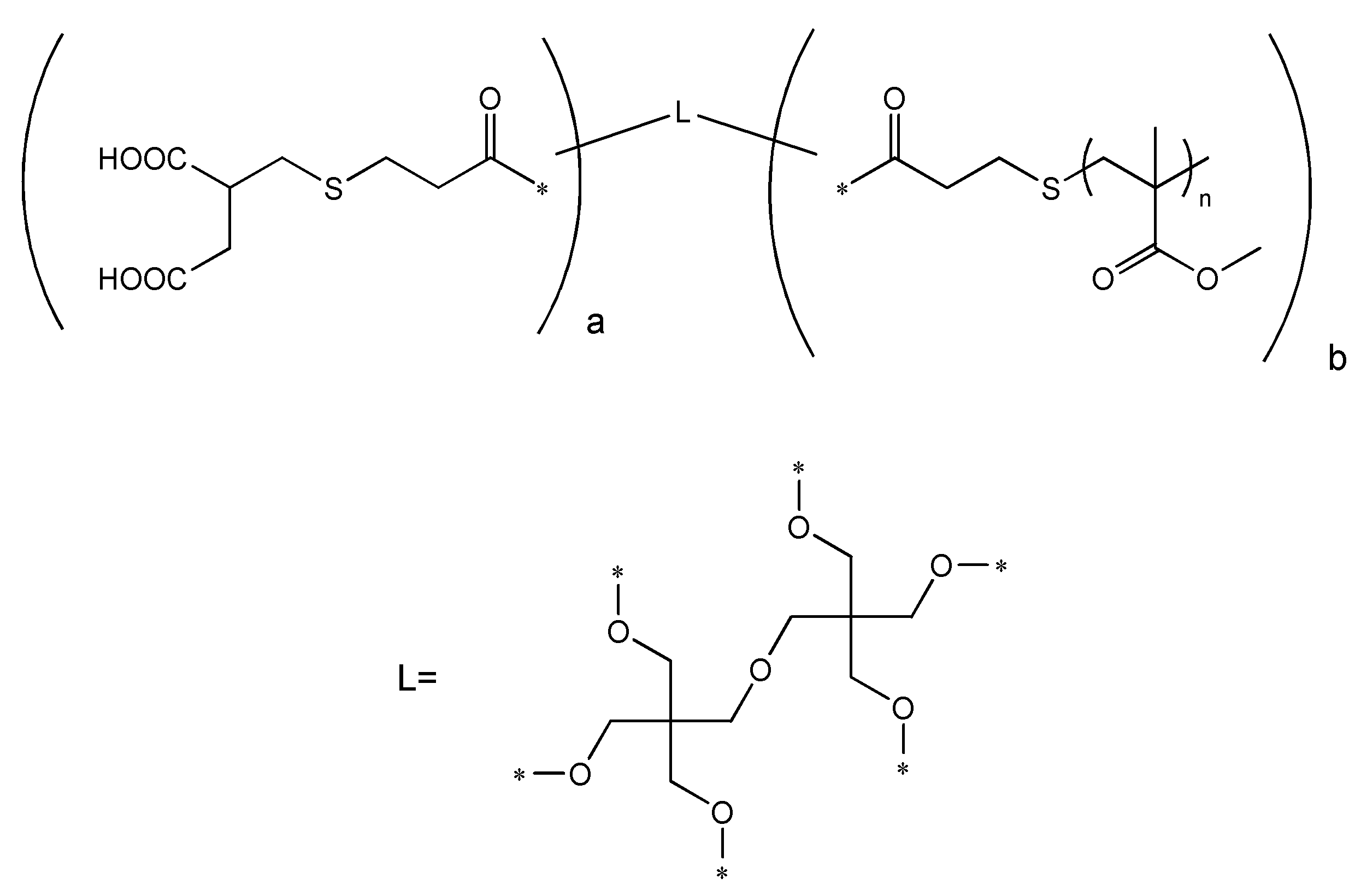
樹脂(分散剤)として、下記式(1)~式(4)のいずれかで表される繰り返し単位を含むグラフト共重合体を用いることもできる。
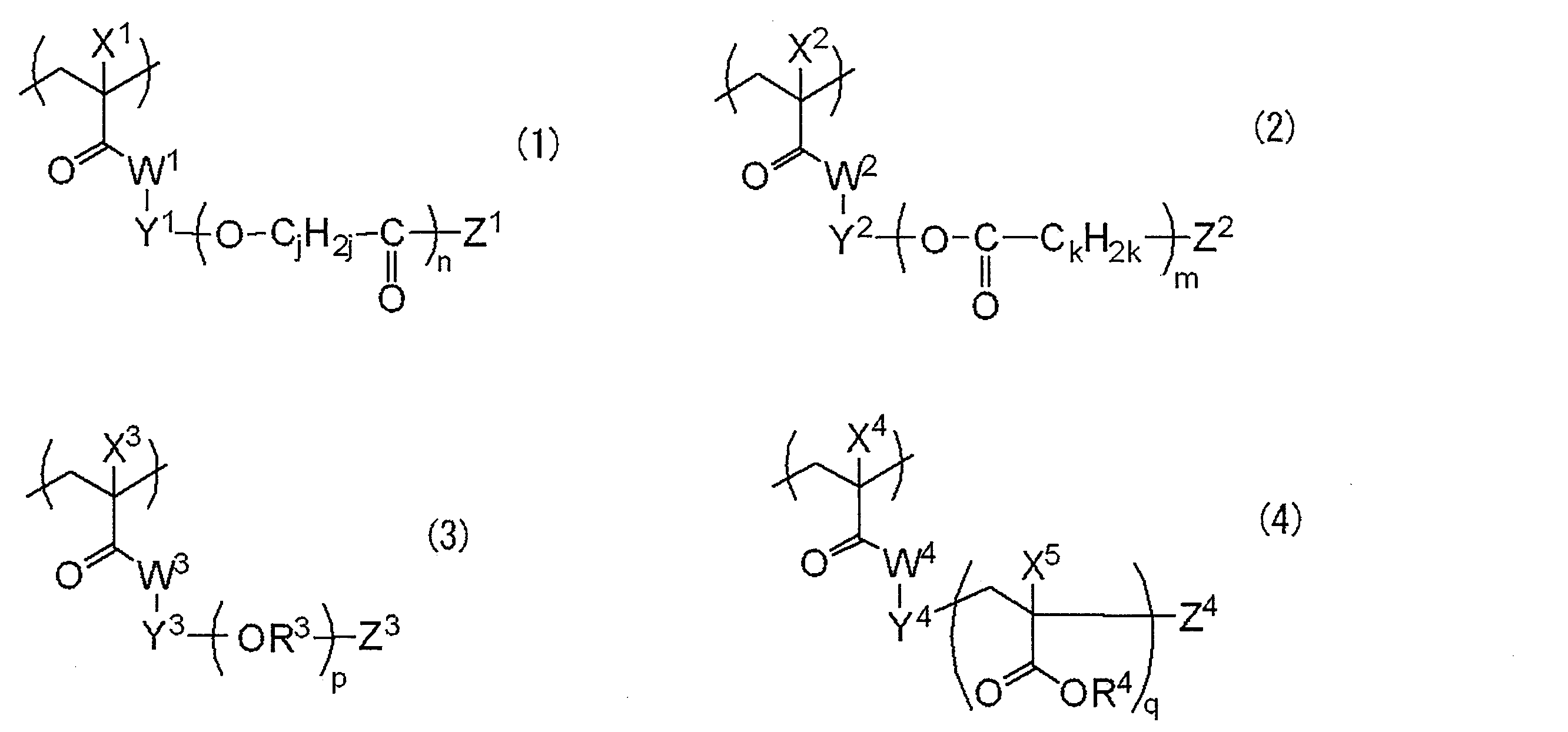
式(1)~式(4)において、W1、W2、W3、およびW4は、それぞれ独立に、酸素原子またはNHを表し、X1、X2、X3、X4、およびX5は、それぞれ独立に、水素原子、1価の有機基またはハロゲン原子を表し、Y1、Y2、Y3、およびY4は、それぞれ独立に、2価の連結基を表し、Z1、Z2、Z3、およびZ4は、それぞれ独立に、1価の有機基を表し、R3は、アルキレン基を表し、R4は、水素原子または1価の有機基を表し、n、m、p、およびqは、それぞれ独立に、1~500の整数を表し、jおよびkは、それぞれ独立に、2~8の整数を表し、式(3)において、pが2~500のとき、複数存在するR3は、互いに同じであっても異なっていてもよく、式(4)において、qが2~500のとき、複数存在するX5およびR4は、互いに同じであっても異なっていてもよい。
W1、W2、W3、およびW4は、酸素原子であることが好ましい。X1、X2、X3、X4、およびX5は、水素原子または炭素数1~12のアルキル基であることが好ましく、それぞれ独立に、水素原子またはメチル基であることがより好ましく、メチル基が特に好ましい。Y1、Y2、Y3、およびY4は、それぞれ独立に、2価の連結基を表し、連結基は特に構造上制約されない。Z1、Z2、Z3、およびZ4が表す1価の有機基の構造は、特に限定されないが、具体的には、アルキル基、水酸基、アルコキシ基、アリールオキシ基、ヘテロアリールオキシ基、アルキルチオエーテル基、アリールチオエーテル基、ヘテロアリールチオエーテル基、およびアミノ基などが挙げられる。これらの中でも、Z1、Z2、Z3、およびZ4で表される有機基としては、特に分散性向上の観点から、立体反発効果を有するものが好ましく、それぞれ独立に、炭素数5~24のアルキル基またはアルコキシ基が好ましく、その中でも特に、それぞれ独立に、炭素数5~24の分岐アルキル基、炭素数5~24の環状アルキル基、または、炭素数5~24のアルコキシ基が好ましい。なお、アルコキシ基中に含まれるアルキル基は、直鎖状、分岐鎖状、環状のいずれでもよい。
式(1)~式(4)において、n、m、p、およびqは、それぞれ独立に、1~500の整数である。また、式(1)および式(2)において、jおよびkは、それぞれ独立に、2~8の整数を表す。式(1)および式(2)におけるjおよびkは、分散安定性、現像性の観点から、4~6の整数が好ましく、5が最も好ましい。
式(3)中、R3は、アルキレン基を表し、炭素数1~10のアルキレン基が好ましく、炭素数2または3のアルキレン基がより好ましい。pが2~500のとき、複数存在するR3は、互いに同じであっても異なっていてもよい。
式(4)中、R4は、水素原子または1価の有機基を表す。1価の有機基としては特に構造上限定はされない。R4として好ましくは、水素原子、アルキル基、アリール基、およびヘテロアリール基が挙げられ、より好ましくは、水素原子、またはアルキル基である。R4がアルキル基である場合、炭素数1~20の直鎖状アルキル基、炭素数3~20の分岐状アルキル基、または炭素数5~20の環状アルキル基が好ましく、炭素数1~20の直鎖状アルキル基がより好ましく、炭素数1~6の直鎖状アルキル基が特に好ましい。式(4)において、qが2~500のとき、グラフト共重合体中に複数存在するX5およびR4は、互いに同じであっても異なっていてもよい。
グラフト共重合体の詳細は、特開2012-255128号公報の段落番号0025~0094の記載を参酌でき、この内容は本明細書に組み込まれる。グラフト共重合体の具体例としては、例えば、以下に示す樹脂などが挙げられる。この樹脂は、上述した式(3)で表される繰り返し単位を含むグラフト共重合体である。また、特開2012-255128号公報の段落番号0072~0094に記載の樹脂が挙げられ、この内容は本明細書に組み込まれる。

また、樹脂(分散剤)として、主鎖および側鎖の少なくとも一方に窒素原子を含むオリゴイミン系分散剤を用いることもできる。オリゴイミン系分散剤としては、pKa14以下の官能基を有する部分構造Xを有する繰り返し単位と、原子数40~10,000の側鎖Yを含む側鎖とを有し、かつ主鎖および側鎖の少なくとも一方に塩基性窒素原子を有する樹脂が好ましい。塩基性窒素原子とは、塩基性を呈する窒素原子であれば特に制限はない。
オリゴイミン系分散剤については、特開2012-255128号公報の段落番号0102~0174の記載を参酌でき、この内容は本明細書に組み込まれる。オリゴイミン系分散剤の具体例としては、例えば、特開2012-255128号公報の段落番号0168~0174に記載の樹脂が挙げられる。
分散剤は、市販品としても入手可能であり、そのような具体例としては、楠本化成(株)製「DA-7301」、BYKChemie社製「Disperbyk-101(ポリアミドアミン燐酸塩)、107(カルボン酸エステル)、110(酸基を含む共重合物)、111(リン酸系分散剤)、130(ポリアミド)、161、162、163、164、165、166、170(高分子共重合物)」、BYKChemie社製「BYK-P104、P105(高分子量不飽和ポリカルボン酸)」、EFKA社製「EFKA4047、4050~4165(ポリウレタン系)、EFKA4330~4340(ブロック共重合体)、4400~4402(変性ポリアクリレート)、5010(ポリエステルアミド)、5765(高分子量ポリカルボン酸塩)、6220(脂肪酸ポリエステル)、6745(フタロシアニン誘導体)、6750(アゾ顔料誘導体)」、味の素ファインテクノ(株)製「アジスパーPB821、PB822、PB880、PB881」、共栄社化学(株)製「フローレンTG-710(ウレタンオリゴマー)」、「ポリフローNo.50E、No.300(アクリル系共重合体)」、楠本化成(株)製「ディスパロンKS-860、873SN、874、#2150(脂肪族多価カルボン酸)、#7004(ポリエーテルエステル)、DA-703-50、DA-705、DA-725」、花王(株)製「デモールRN、N(ナフタレンスルホン酸ホルマリン重縮合物)、MS、C、SN-B(芳香族スルホン酸ホルマリン重縮合物)、ホモゲノールL-18(高分子ポリカルボン酸)、エマルゲン920、930、935、985(ポリオキシエチレンノニルフェニルエーテル)、アセタミン86(ステアリルアミンアセテート)」、日本ルーブリゾール(株)製「ソルスパース5000(フタロシアニン誘導体)、22000(アゾ顔料誘導体)、13240(ポリエステルアミン)、3000、12000、17000、20000、27000(末端部に機能部を有する高分子)、24000、28000、32000、38500(グラフト型高分子)」、日光ケミカルズ(株)製「ニッコールT106(ポリオキシエチレンソルビタンモノオレート)、MYS-IEX(ポリオキシエチレンモノステアレート)」、川研ファインケミカル(株)製「ヒノアクトT-8000E」、信越化学工業(株)製「オルガノシロキサンポリマーKP341」、森下産業(株)製「EFKA-46、EFKA-47、EFKA-47EA、EFKAポリマー100、EFKAポリマー400、EFKAポリマー401、EFKAポリマー450」、サンノプコ(株)製「ディスパースエイド6、ディスパースエイド8、ディスパースエイド15、ディスパースエイド9100」、(株)ADEKA製「アデカプルロニックL31、F38、L42、L44、L61、L64、F68、L72、P95、F77、P84、F87、P94、L101、P103、F108、L121、P-123」、および三洋化成(株)製「イオネットS-20」等が挙げられる。
なお、上記分散剤の説明において記載した樹脂は、分散剤以外の用途で使用することもできる。例えば、バインダーとして用いることもできる。
なお、上記分散剤の説明において記載した樹脂は、分散剤以外の用途で使用することもできる。例えば、バインダーとして用いることもできる。
<<<アルカリ可溶性樹脂>>>
本発明の着色組成物は、樹脂としてアルカリ可溶性樹脂を含有することができる。アルカリ可溶性樹脂を含有することにより、現像性やパターン形成性が向上する。なお、アルカリ可溶性樹脂は、分散剤やバインダーとして用いることもできる。
本発明の着色組成物は、樹脂としてアルカリ可溶性樹脂を含有することができる。アルカリ可溶性樹脂を含有することにより、現像性やパターン形成性が向上する。なお、アルカリ可溶性樹脂は、分散剤やバインダーとして用いることもできる。
アルカリ可溶性樹脂の分子量としては、特に定めるものではないが、重量平均分子量(Mw)が5000~100,000であることが好ましい。また、数平均分子量(Mn)は、1000~20,000であることが好ましい。
アルカリ可溶性樹脂としては、線状有機高分子重合体であってもよく、分子(好ましくは、アクリル系共重合体、スチレン系共重合体を主鎖とする分子)中に少なくとも1つのアルカリ可溶性を促進する基を有するアルカリ可溶性樹脂の中から適宜選択することができる。
アルカリ可溶性樹脂としては、線状有機高分子重合体であってもよく、分子(好ましくは、アクリル系共重合体、スチレン系共重合体を主鎖とする分子)中に少なくとも1つのアルカリ可溶性を促進する基を有するアルカリ可溶性樹脂の中から適宜選択することができる。
アルカリ可溶性樹脂としては、耐熱性の観点からは、ポリヒドロキシスチレン系樹脂、ポリシロキサン系樹脂、アクリル系樹脂、アクリルアミド系樹脂、アクリル/アクリルアミド共重合体樹脂が好ましく、現像性制御の観点からは、アクリル系樹脂、アクリルアミド系樹脂、アクリル/アクリルアミド共重合体樹脂が好ましい。
アルカリ可溶性を促進する基(以下、酸基ともいう)としては、例えば、カルボキシル基、リン酸基、スルホン酸基、フェノール性ヒドロキシル基などが挙げられるが、有機溶剤に可溶で弱アルカリ水溶液により現像可能なものが好ましく、カルボキシル基が特に好ましいものとして挙げられる。これら酸基は、1種のみであってもよいし、2種以上であってもよい。
アルカリ可溶性を促進する基(以下、酸基ともいう)としては、例えば、カルボキシル基、リン酸基、スルホン酸基、フェノール性ヒドロキシル基などが挙げられるが、有機溶剤に可溶で弱アルカリ水溶液により現像可能なものが好ましく、カルボキシル基が特に好ましいものとして挙げられる。これら酸基は、1種のみであってもよいし、2種以上であってもよい。
アルカリ可溶性樹脂は、側鎖にカルボキシル基を有するポリマーが好ましい。例えば、メタクリル酸共重合体、アクリル酸共重合体、イタコン酸共重合体、クロトン酸共重合体、マレイン酸共重合体、部分エステル化マレイン酸共重合体、ノボラック型樹脂などのアルカリ可溶性フェノール樹脂等、および側鎖にカルボキシル基を有する酸性セルロース誘導体、ヒドロキシル基を有するポリマーに酸無水物を付加させたものが挙げられる。特に、(メタ)アクリル酸と、これと共重合可能な他のモノマーとの共重合体が、アルカリ可溶性樹脂として好適である。(メタ)アクリル酸と共重合可能な他のモノマーとしては、アルキル(メタ)アクリレート、アリール(メタ)アクリレート、ビニル化合物、N位置換マレイミドモノマーなどが挙げられる。アルキル(メタ)アクリレートおよびアリール(メタ)アクリレートとしては、メチル(メタ)アクリレート、エチル(メタ)アクリレート、プロピル(メタ)アクリレート、ブチル(メタ)アクリレート、イソブチル(メタ)アクリレート、ペンチル(メタ)アクリレート、ヘキシル(メタ)アクリレート、オクチル(メタ)アクリレート、フェニル(メタ)アクリレート、ベンジル(メタ)アクリレート、トリル(メタ)アクリレート、ナフチル(メタ)アクリレート、シクロヘキシル(メタ)アクリレート、グリシジルメタクリレート、テトラヒドロフルフリルメタクリレーなどが挙げられる。ビニル化合物としては、スチレン、α-メチルスチレン、ビニルトルエン、アクリロニトリル、ビニルアセテート、N-ビニルピロリドン、ポリスチレンマクロモノマー、ポリメチルメタクリレートマクロモノマー等が挙げられ、N位置換マレイミドモノマーとして、特開平10-300922号公報に記載のN-フェニルマレイミド、N-シクロヘキシルマレイミド等を挙げることができる。なお、これらの(メタ)アクリル酸と共重合可能な他のモノマーは1種のみであってもよいし、2種以上であってもよい。
アルカリ可溶性樹脂としては、ベンジル(メタ)アクリレート/(メタ)アクリル酸共重合体、ベンジル(メタ)アクリレート/(メタ)アクリル酸/2-ヒドロキシエチル(メタ)アクリレート共重合体、ベンジル(メタ)アクリレート/(メタ)アクリル酸/他のモノマーからなる多元共重合体を好ましく用いることができる。また、2-ヒドロキシエチル(メタ)アクリレートを共重合したもの、特開平7-140654号公報に記載の、2-ヒドロキシプロピル(メタ)アクリレート/ポリスチレンマクロモノマー/ベンジルメタクリレート/メタクリル酸共重合体、2-ヒドロキシ-3-フェノキシプロピルアクリレート/ポリメチルメタクリレートマクロモノマー/ベンジルメタクリレート/メタクリル酸共重合体、2-ヒドロキシエチルメタクリレート/ポリスチレンマクロモノマー/メチルメタクリレート/メタクリル酸共重合体、2-ヒドロキシエチルメタクリレート/ポリスチレンマクロモノマー/ベンジルメタクリレート/メタクリル酸共重合体なども好ましく用いることができる。また、市販品として、例えばFF-426(藤倉化成(株)製)などを用いることもできる。
アルカリ可溶性樹脂は、下記式(ED1)で示される化合物および/または特開2010-168539号公報の式(1)で表される化合物(以下、これらの化合物を「エーテルダイマー」と称することもある。)を含むモノマー成分を重合してなるポリマーを含むことも好ましい。
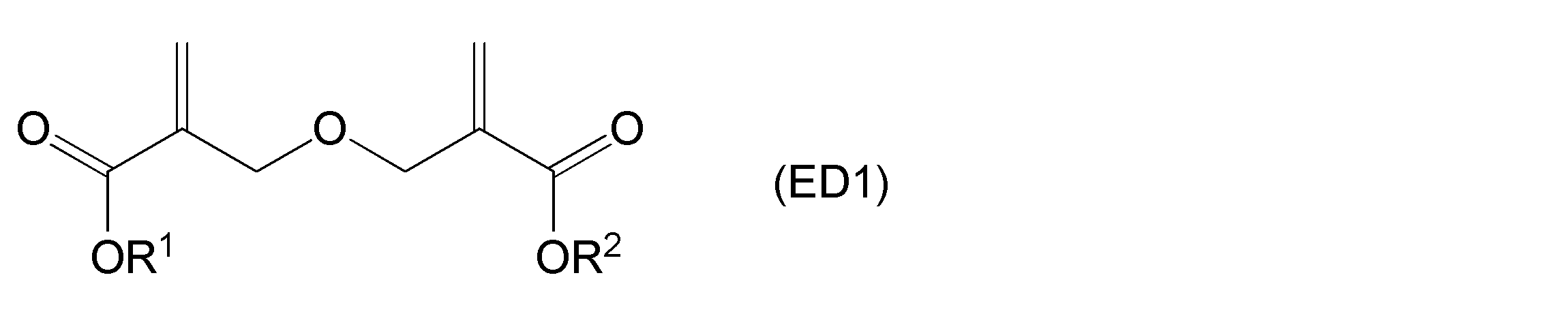
式(ED1)中、R1およびR2は、それぞれ独立して、水素原子または置換基を有していてもよい炭素数1~25の炭化水素基を表す。
エーテルダイマーの具体例としては、例えば、特開2013-29760号公報の段落番号0317を参酌することができ、この内容は本明細書に組み込まれる。エーテルダイマーは、1種のみであってもよいし、2種以上であってもよい。
アルカリ可溶性樹脂は、下記式(X)で示される化合物に由来する繰り返し単位を含んでいてもよい。

式(X)において、R1は、水素原子またはメチル基を表し、R2は、炭素数2~10のアルキレン基を表し、R3は、水素原子またはベンゼン環を含んでもよい炭素数1~20のアルキル基を表す。nは1~15の整数を表す。
上記式(X)において、R2のアルキレン基の炭素数は、2~3が好ましい。また、R3のアルキル基の炭素数は1~20であるが、より好ましくは1~10であり、R3のアルキル基はベンゼン環を含んでもよい。R3で表されるベンゼン環を含むアルキル基としては、ベンジル基、2-フェニル(イソ)プロピル基等を挙げることができる。
アルカリ可溶性樹脂は、特開2012-208494号公報の段落番号0558~0571(対応する米国特許出願公開第2012/0235099号明細書の[0685]~[0700])の記載を参酌でき、これらの内容は本明細書に組み込まれる。さらに、特開2012-32767号公報の段落番号0029~0063に記載の共重合体(B)および実施例で用いられているアルカリ可溶性樹脂、特開2012-208474号公報の段落番号0088~0098に記載のバインダー樹脂および実施例で用いられているバインダー樹脂、特開2012-137531号公報の段落番号0022~0032に記載のバインダー樹脂および実施例で用いられているバインダー樹脂、特開2013-024934号公報の段落番号0132~0143に記載のバインダー樹脂および実施例で用いられているバインダー樹脂、特開2011-242752号公報の段落番号0092~0098に記載のバインダー樹脂および実施例で用いられているバインダー樹脂、特開2012-032770号公報の段落番号0030~0072に記載のバインダー樹脂を用いることもできる。これらの内容は本明細書に組み込まれる。
アルカリ可溶性樹脂の酸価は、30~500mgKOH/gが好ましい。下限は、50mgKOH/g以上がより好ましく、70mgKOH/g以上がさらに好ましい。上限は、400mgKOH/g以下がより好ましく、200mgKOH/g以下がさらに好ましく、150mgKOH/g以下が一層好ましく、120mgKOH/g以下がより一層好ましい。
アルカリ可溶性樹脂の含有量は、着色組成物の全固形分に対して、1~80質量%が好ましい。下限は、2質量%以上がより好ましく、3質量%以上がさらに好ましい。上限は、70質量%以下よりが好ましく、60質量%以下がさらに好ましい。本発明の着色組成物は、アルカリ可溶性樹脂を、1種類のみを含んでいてもよいし、2種類以上含んでいてもよい。2種類以上含む場合は、その合計量が上記範囲となることが好ましい。
<<溶剤>>
本発明の着色組成物は、溶剤を含有する。溶剤は、有機溶剤が好ましい。有機溶剤は、各成分の溶解性や着色組成物の塗布性を満足すれば特に制限はない。
本発明の着色組成物は、溶剤を含有する。溶剤は、有機溶剤が好ましい。有機溶剤は、各成分の溶解性や着色組成物の塗布性を満足すれば特に制限はない。
有機溶剤の例としては、例えば、以下のものが挙げられる。エステル類として、例えば、酢酸エチル、酢酸-n-ブチル、酢酸イソブチル、酢酸シクロヘキシル、ギ酸アミル、酢酸イソアミル、プロピオン酸ブチル、酪酸イソプロピル、酪酸エチル、酪酸ブチル、乳酸メチル、乳酸エチル、アルキルオキシ酢酸アルキル(例えば、アルキルオキシ酢酸メチル、アルキルオキシ酢酸エチル、アルキルオキシ酢酸ブチル(例えば、メトキシ酢酸メチル、メトキシ酢酸エチル、メトキシ酢酸ブチル、エトキシ酢酸メチル、エトキシ酢酸エチル等))、3-アルキルオキシプロピオン酸アルキルエステル類(例えば、3-アルキルオキシプロピオン酸メチル、3-アルキルオキシプロピオン酸エチル等(例えば、3-メトキシプロピオン酸メチル、3-メトキシプロピオン酸エチル、3-エトキシプロピオン酸メチル、3-エトキシプロピオン酸エチル等))、2-アルキルオキシプロピオン酸アルキルエステル類(例:2-アルキルオキシプロピオン酸メチル、2-アルキルオキシプロピオン酸エチル、2-アルキルオキシプロピオン酸プロピル等(例えば、2-メトキシプロピオン酸メチル、2-メトキシプロピオン酸エチル、2-メトキシプロピオン酸プロピル、2-エトキシプロピオン酸メチル、2-エトキシプロピオン酸エチル))、2-アルキルオキシ-2-メチルプロピオン酸メチルおよび2-アルキルオキシ-2-メチルプロピオン酸エチル(例えば、2-メトキシ-2-メチルプロピオン酸メチル、2-エトキシ-2-メチルプロピオン酸エチル等)、ピルビン酸メチル、ピルビン酸エチル、ピルビン酸プロピル、アセト酢酸メチル、アセト酢酸エチル、2-オキソブタン酸メチル、2-オキソブタン酸エチル等、並びに、エーテル類として、例えば、ジエチレングリコールジメチルエーテル、テトラヒドロフラン、エチレングリコールモノメチルエーテル、エチレングリコールモノエチルエーテル、メチルセロソルブアセテート、エチルセロソルブアセテート、ジエチレングリコールモノメチルエーテル、ジエチレングリコールモノエチルエーテル、ジエチレングリコールモノブチルエーテル、プロピレングリコールモノメチルエーテル、プロピレングリコールモノメチルエーテルアセテート(1-メトキシ-2-プロピルアセテート)、プロピレングリコールモノエチルエーテルアセテート、プロピレングリコールモノプロピルエーテルアセテート、2-メトキシ-1-プロピルアセテート等、並びに、ケトン類として、例えば、メチルエチルケトン、シクロヘキサノン、シクロペンタノン、2-ヘプタノン、3-ヘプタノン等、並びに、芳香族炭化水素類として、例えば、トルエン、キシレン等が好適に挙げられる。
ただし溶剤としての芳香族炭化水素類(ベンゼン、トルエン、キシレン、エチルベンゼン等)は、環境面等の理由により低減したほうがよい場合がある(例えば、有機溶剤全量に対して、50ppm以下、10ppm以下、あるいは1ppm以下とすることができる)。
ただし溶剤としての芳香族炭化水素類(ベンゼン、トルエン、キシレン、エチルベンゼン等)は、環境面等の理由により低減したほうがよい場合がある(例えば、有機溶剤全量に対して、50ppm以下、10ppm以下、あるいは1ppm以下とすることができる)。
有機溶剤は、1種単独で用いてもよく、2種以上を組み合わせて用いてもよい。有機溶剤を2種以上組みあわせて用いる場合、特に好ましくは、3-エトキシプロピオン酸メチル、3-エトキシプロピオン酸エチル、エチルセロソルブアセテート、乳酸エチル、ジエチレングリコールジメチルエーテル、酢酸ブチル、3-メトキシプロピオン酸メチル、2-ヘプタノン、シクロヘキサノン、エチルカルビトールアセテート、ブチルカルビトールアセテート、プロピレングリコールメチルエーテル、プロピレングリコールモノメチルエーテルアセテート(1-メトキシ-2-プロピルアセテート)および2-メトキシ-1-プロピルアセテートから選択される2種以上で構成される混合溶液である。
本発明において、有機溶剤は、2-メトキシ-1-プロピルアセテートを含むことが好ましい。2-メトキシ-1-プロピルアセテートの含有量は、着色組成物の質量に対して、0.001~5質量%が好ましい。上限は、3質量%以下がより好ましく、2質量%以下がさらに好ましい。
また、2-メトキシ-1-プロピルアセテートの含有量は、溶剤の質量に対して、0.01~0.5質量%が好ましい。下限は、0.05質量%以上がより好ましく、0.1質量%以上がさらに好ましい。上限は、0.4質量%以下がより好ましく、0.2質量%以下がさらに好ましい。
また、2-メトキシ-1-プロピルアセテートの含有量は、溶剤の質量に対して、0.01~0.5質量%が好ましい。下限は、0.05質量%以上がより好ましく、0.1質量%以上がさらに好ましい。上限は、0.4質量%以下がより好ましく、0.2質量%以下がさらに好ましい。
本発明において、有機溶剤は、過酸化物の含有率が0.8mmol/L以下であることが好ましく、過酸化物を実質的に含まないことがより好ましい。また、金属含有量が少ない有機溶剤を用いることが好ましく、例えば有機溶剤の金属含有量は、10ppb以下であることが好ましい。必要に応じて有機溶剤の金属含有量がpptレベルのものを用いてもよく、そのような高純度溶剤は例えば東洋合成工業(株)が提供している(化学工業日報、2015年11月13日)。
溶剤の含有量は、着色組成物の全固形分が5~80質量%となる量が好ましい。下限は10質量%以上がより好ましい。上限は、60質量%以下がより好ましく、50質量%以下がさらに好ましく、40質量%以下が一層好ましい。
<<硬化促進剤>>
本発明の着色組成物は、硬化性化合物の反応を促進させたり、硬化温度を下げる目的で、硬化促進剤を添加してもよい。硬化促進剤としては、芳香族アミン化合物やチオール化合物などが挙げられる。
本発明の着色組成物は、硬化性化合物の反応を促進させたり、硬化温度を下げる目的で、硬化促進剤を添加してもよい。硬化促進剤としては、芳香族アミン化合物やチオール化合物などが挙げられる。
(芳香族アミン化合物)
硬化性化合物がエポキシ化合物を含む場合、芳香族アミン化合物を含むことが好ましい。この態様によれば、良好な硬化性が得られやすい。芳香族アミン化合物は、アミノ基を1個有する単官能の芳香族アミン化合物であってもよく、アミノ基を2個以上有する多官能芳香族アミン化合物であってもよい。芳香族アミン化合物は、下記式(Am-1)または下記式(Am-2)で表される化合物が好ましく、下記式(Am-2)で表される化合物がより好ましい。
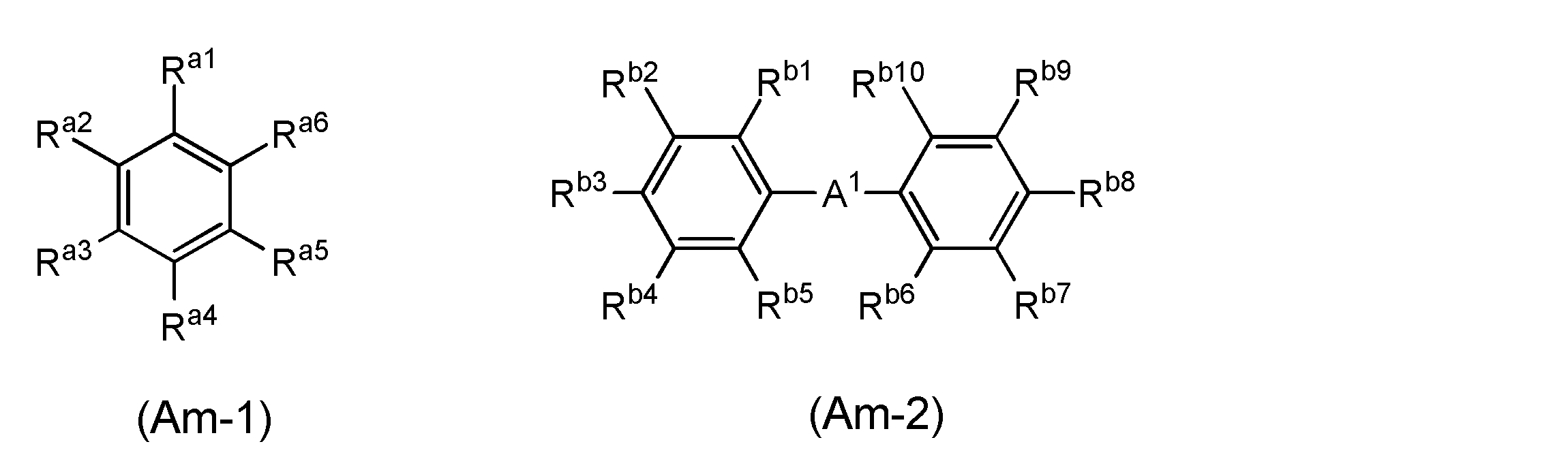
硬化性化合物がエポキシ化合物を含む場合、芳香族アミン化合物を含むことが好ましい。この態様によれば、良好な硬化性が得られやすい。芳香族アミン化合物は、アミノ基を1個有する単官能の芳香族アミン化合物であってもよく、アミノ基を2個以上有する多官能芳香族アミン化合物であってもよい。芳香族アミン化合物は、下記式(Am-1)または下記式(Am-2)で表される化合物が好ましく、下記式(Am-2)で表される化合物がより好ましい。
式(Am-1)において、Ra1~Ra6は、それぞれ独立して、水素原子または置換基を表し、Ra1~Ra6の少なくとも一つは、-NR100R101、または、-NR100R101を有する基を表す。R100およびR101は、それぞれ独立して、水素原子または置換基を表す。Ra1~Ra6のうち、隣接する二つの基は、結合して環を形成してもよい。
式(Am-2)において、Rb1~Rb10は、それぞれ独立して、水素原子または置換基を表し、Rb1~Rb10の少なくとも一つは、-NR100R101、または、-NR100R101を有する基を表す。Rb1~Rb10のうち、隣接する二つの基は、結合して環を形成してもよい。A1は、単結合または2価の連結基を表す。R100およびR101は、それぞれ独立して、水素原子または置換基を表す。
式(Am-2)において、Rb1~Rb10は、それぞれ独立して、水素原子または置換基を表し、Rb1~Rb10の少なくとも一つは、-NR100R101、または、-NR100R101を有する基を表す。Rb1~Rb10のうち、隣接する二つの基は、結合して環を形成してもよい。A1は、単結合または2価の連結基を表す。R100およびR101は、それぞれ独立して、水素原子または置換基を表す。
R100およびR101が表す置換基は、例えば、アルキル基、アリール基、ヘテロ環基などが挙げられ、アルキル基が好ましい。アルキル基の炭素数は、1~10が好ましく、1~5がより好ましく、1~3がさらに好ましい。アルキル基は、直鎖状または分岐状のものが好ましく、直鎖状のものがより好ましい。
Ra1~Ra6、および、Rb1~Rb10が表す置換基は、例えば、アルキル基、ニトロ基などが挙げられる。
A1が表す2価の連結基としては、アルキレン基、-O-、-CO-、-OCO-、-COO-、-SO2-、-SO-、-S-、およびこれらの組み合わせからなる基が挙げられる。アルキレン基の炭素数は、1~10が好ましく、1~5がより好ましい。アルキレン基は、直鎖状、分岐状のものが好ましい。アルキレン基は無置換であってもよく、置換基を有していてもよい。置換基としては、例えば、ハロゲン原子などが挙げられる。
Ra1~Ra6、および、Rb1~Rb10が表す置換基は、例えば、アルキル基、ニトロ基などが挙げられる。
A1が表す2価の連結基としては、アルキレン基、-O-、-CO-、-OCO-、-COO-、-SO2-、-SO-、-S-、およびこれらの組み合わせからなる基が挙げられる。アルキレン基の炭素数は、1~10が好ましく、1~5がより好ましい。アルキレン基は、直鎖状、分岐状のものが好ましい。アルキレン基は無置換であってもよく、置換基を有していてもよい。置換基としては、例えば、ハロゲン原子などが挙げられる。
芳香族アミン化合物の具体例としては、アニリン、N,N-ジメチルアニリン、N-エチル-N-メチルアニリン、N,N-ジエチルアニリン、4-ニトロアニリン、N,N-ジメチル-4-ニトロアニリン、4,4’-ジアミノビフェニル、3,5-ビストリフルオロメチル-1,2-ジアミノベンゼン、2,2-ビス(4-アミノフェニル)ヘキサフルオロプロパン、2,3-ビス(4-アミノフェニル)スクシノニトリル、4,4’-ジアミノベンゾフェノン、4,4’-ジアミノフェニルベンゾエート、4,4’-ジアミノジフェニルスルホン、1,4-ジアミノ-2-クロロベンゼン、1,4-ジアミノ-2-ブロモベンゼン、1,4-ジアミノ-2-ヨードベンゼン、1,4-ジアミノ-2-ニトロベンゼン、1,4-ジアミノ-2-トリフルオロメチルベンゼン、2,5-ジアミノベンゾニトリル、2,5-ジアミノアセトフェノン、2,5-ジアミノ安息香酸、2,2’-ジクロロベンジジン、2,2’-ジブロモベンジジン、2,2’-ジヨードベンジジン、2,2’-ジニトロベンジジン、2,2’-ビス(トリフルオロメチル)ベンジジン、3-アミノベンゼンスルホン酸エチル、N,N-ジメチルベンジルアミン、トリフェニルアミン、トリナフチルアミン、N-フェニル-N-メチルアニリン、N,N-ジメチル-パラトルイジン、N,N-ジメチル-4-ブロモアニリン、N,N-ジメチル-4-メトキシアニリンなどが挙げられる。
(チオール化合物)
チオール化合物としては、分子内に2個以上のメルカプト基を有する多官能チオール化合物などが挙げられる。多官能チオール化合物は、安定性、臭気、解像性、現像性、密着性等の改良を目的として添加してもよい。多官能チオール化合物は、2級のアルカンチオール類であることが好ましく、特に下記式(T1)で表される構造を有する化合物であることが好ましい。
式(T1)

(式(T1)中、nは2~4の整数を表し、Lは2~4価の連結基を表す。)
チオール化合物としては、分子内に2個以上のメルカプト基を有する多官能チオール化合物などが挙げられる。多官能チオール化合物は、安定性、臭気、解像性、現像性、密着性等の改良を目的として添加してもよい。多官能チオール化合物は、2級のアルカンチオール類であることが好ましく、特に下記式(T1)で表される構造を有する化合物であることが好ましい。
式(T1)
上記式(T1)において、連結基Lは炭素数2~12の脂肪族基であることが好ましく、nが2であり、Lが炭素数2~12のアルキレン基であることが特に好ましい。多官能チオール化合物の具体例としては、下記の構造式(T2)~(T4)で表される化合物が挙げられ、式(T2)で表される化合物が特に好ましい。チオール化合物は1種単独で、または複数組み合わせて使用することが可能である。
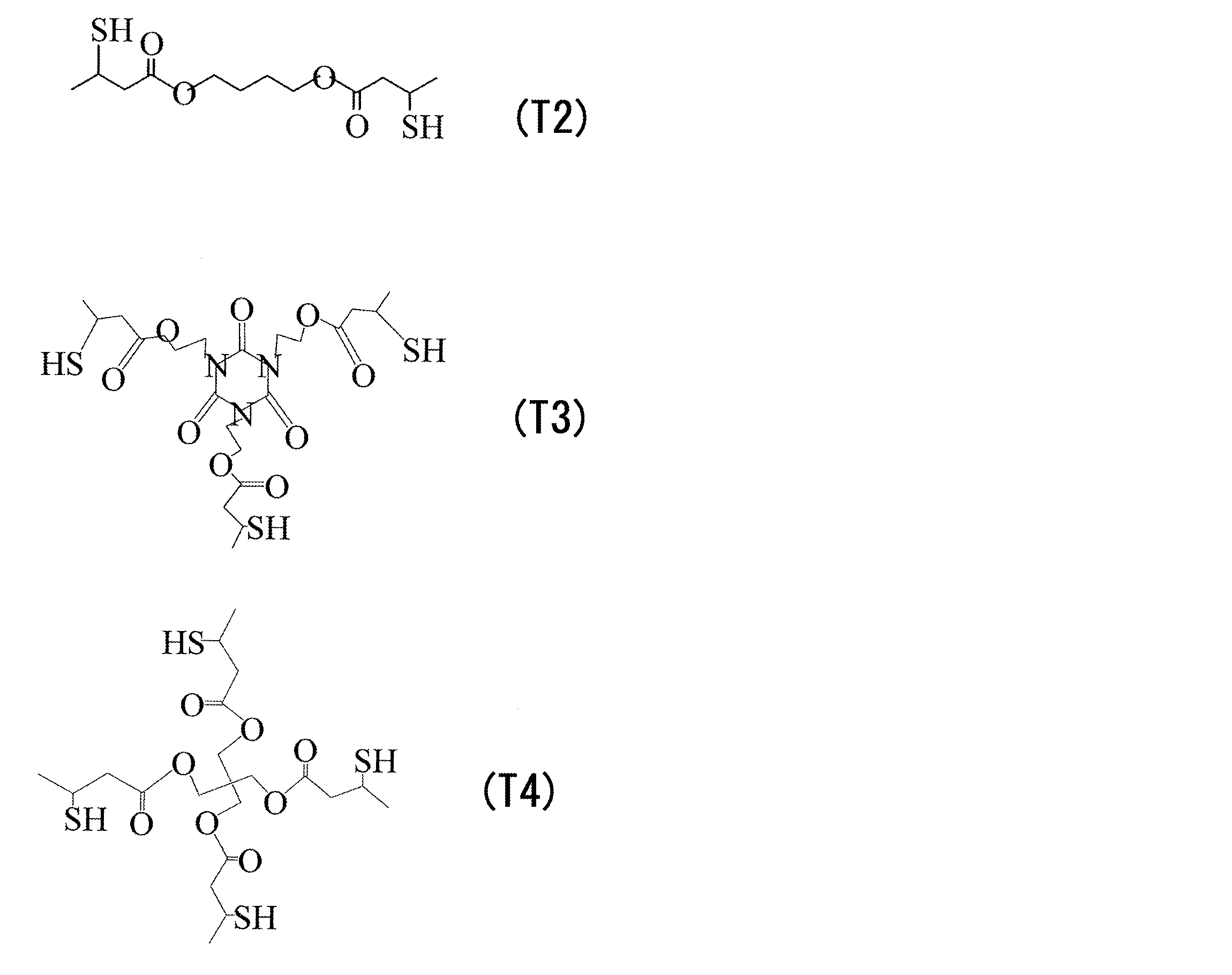
また、硬化促進剤として、メチロール系化合物(例えば特開2015-34963号公報の段落番号0246において、架橋剤として例示されている化合物)、アミン類、ホスホニウム塩、アミジン塩、アミド化合物(以上、例えば特開2013-41165号公報の段落番号0186に記載の硬化剤)、塩基発生剤(例えば、特開2014-55114号公報に記載のイオン性化合物)、シアネート化合物(例えば、特開2012-150180号公報の段落番号0071に記載の化合物)、アルコキシシラン化合物(例えば、特開2011-253054号公報に記載のエポキシ基を有するアルコキシシラン化合物)、オニウム塩化合物(例えば、特開2015-34963号公報の段落番号0216に酸発生剤として例示されている化合物、特開2009-180949号公報に記載の化合物)などを用いることもできる。
本発明の着色組成物が硬化促進剤を含有する場合、硬化促進剤の含有量は、着色組成物の全固形分に対して0.3~8.9質量%が好ましく、0.8~6.4質量%がより好ましい。
また、硬化性化合物がエポキシ化合物である場合、芳香族アミン化合物の含有量は、エポキシ化合物100質量部に対して、2~6質量部が好ましく、1~10質量部がより好ましい。この態様によれば、良好な硬化性が得られやすい。
また、硬化性化合物がエポキシ化合物である場合、芳香族アミン化合物の含有量は、エポキシ化合物100質量部に対して、2~6質量部が好ましく、1~10質量部がより好ましい。この態様によれば、良好な硬化性が得られやすい。
<<光重合開始剤>>
本発明の着色組成物は、さらに光重合開始剤を含有することが好ましい。光重合開始剤としては、重合性化合物の重合を開始する能力を有する限り、特に制限はなく、公知の光重合開始剤の中から適宜選択することができる。例えば、紫外線領域から可視領域の光線に対して感光性を有するものが好ましい。また、光励起された増感剤と何らかの作用を生じ、活性ラジカルを生成する活性剤であってもよい。また、光重合開始剤は、約300nm~800nm(330nm~500nmがより好ましい。)の範囲内に少なくとも約50の分子吸光係数を有する化合物を、少なくとも1種含有していることが好ましい。
本発明の着色組成物は、さらに光重合開始剤を含有することが好ましい。光重合開始剤としては、重合性化合物の重合を開始する能力を有する限り、特に制限はなく、公知の光重合開始剤の中から適宜選択することができる。例えば、紫外線領域から可視領域の光線に対して感光性を有するものが好ましい。また、光励起された増感剤と何らかの作用を生じ、活性ラジカルを生成する活性剤であってもよい。また、光重合開始剤は、約300nm~800nm(330nm~500nmがより好ましい。)の範囲内に少なくとも約50の分子吸光係数を有する化合物を、少なくとも1種含有していることが好ましい。
光重合開始剤としては、例えば、ハロゲン化炭化水素誘導体(例えば、トリアジン骨格を有する化合物、オキサジアゾール骨格を有する化合物など)、アシルホスフィンオキサイド等のアシルホスフィン化合物、ヘキサアリールビイミダゾール、オキシム誘導体等のオキシム化合物、有機過酸化物、チオ化合物、ケトン化合物、芳香族オニウム塩、ケトオキシムエーテル、アミノアセトフェノン化合物、ヒドロキシアセトフェノンなどが挙げられる。
また、露光感度の観点から、トリハロメチルトリアジン化合物、ベンジルジメチルケタール化合物、α-ヒドロキシケトン化合物、α-アミノケトン化合物、アシルホスフィン化合物、ホスフィンオキサイド化合物、メタロセン化合物、オキシム化合物、トリアリールイミダゾールダイマー、オニウム化合物、ベンゾチアゾール化合物、ベンゾフェノン化合物、アセトフェノン化合物およびその誘導体、シクロペンタジエン-ベンゼン-鉄錯体およびその塩、ハロメチルオキサジアゾール化合物、3-アリール置換クマリン化合物からなる群より選択される化合物が好ましい。
光重合開始剤は、ヒドロキシアセトフェノン化合物、アミノアセトフェノン化合物、および、アシルホスフィン化合物も好適に用いることができる。より具体的には、例えば、特開平10-291969号公報に記載のアミノアセトフェノン系開始剤、特許第4225898号公報に記載のアシルホスフィンオキシド系開始剤も用いることができる。
ヒドロキシアセトフェノン系開始剤としては、市販品であるIRGACURE-184、DAROCUR-1173、IRGACURE-500、IRGACURE-2959、IRGACURE-127(商品名:いずれもBASF社製)を用いることができる。アミノアセトフェノン系開始剤としては、市販品であるIRGACURE-907、IRGACURE-369、IRGACURE-379(商品名:いずれもBASF社製)を用いることができる。アミノアセトフェノン系開始剤として、365nmまたは405nm等の光源に吸収波長がマッチングされた特開2009-191179号公報に記載の化合物も用いることができる。また、アシルホスフィン系開始剤としては、市販品であるIRGACURE-819やDAROCUR-TPO(商品名:いずれもBASF社製)を用いることができる。
ヒドロキシアセトフェノン系開始剤としては、市販品であるIRGACURE-184、DAROCUR-1173、IRGACURE-500、IRGACURE-2959、IRGACURE-127(商品名:いずれもBASF社製)を用いることができる。アミノアセトフェノン系開始剤としては、市販品であるIRGACURE-907、IRGACURE-369、IRGACURE-379(商品名:いずれもBASF社製)を用いることができる。アミノアセトフェノン系開始剤として、365nmまたは405nm等の光源に吸収波長がマッチングされた特開2009-191179号公報に記載の化合物も用いることができる。また、アシルホスフィン系開始剤としては、市販品であるIRGACURE-819やDAROCUR-TPO(商品名:いずれもBASF社製)を用いることができる。
特に、本発明の着色組成物を固体撮像素子のカラーフィルタの作製に使用する場合には、微細なパターンをシャープな形状で形成する必要があるために、硬化性とともに未露光部に残渣がなく現像されることが重要である。このような観点からは、光重合開始剤としてはオキシム化合物を使用することが特に好ましい。特に、固体撮像素子において微細なパターンを形成する場合、硬化用露光にステッパー露光機を用いるが、この露光機はハロゲンにより損傷される場合があり、光重合開始剤の添加量も低く抑える必要があるため、これらの点を考慮すれば、固体撮像素子の如き微細パターンを形成する場合には、光重合開始剤としては、オキシム化合物を用いるのが特に好ましい。
光重合開始剤の具体例としては、例えば、特開2013-29760号公報の段落番号0265~0268を参酌することができ、この内容は本明細書に組み込まれる。
光重合開始剤の具体例としては、例えば、特開2013-29760号公報の段落番号0265~0268を参酌することができ、この内容は本明細書に組み込まれる。
光重合開始剤として、より好ましくはオキシム化合物が挙げられる。オキシム化合物の具体例としては、特開2001-233842号公報に記載の化合物、特開2000-80068号公報に記載の化合物、特開2006-342166号公報に記載の化合物を用いることができる。オキシム化合物の具体例としては、例えば、3-ベンゾイルオキシイミノブタン-2-オン、3-アセトキシイミノブタン-2-オン、3-プロピオニルオキシイミノブタン-2-オン、2-アセトキシイミノペンタン-3-オン、2-アセトキシイミノ-1-フェニルプロパン-1-オン、2-ベンゾイルオキシイミノ-1-フェニルプロパン-1-オン、3-(4-トルエンスルホニルオキシ)イミノブタン-2-オン、および2-エトキシカルボニルオキシイミノ-1-フェニルプロパン-1-オンなどが挙げられる。
オキシム化合物は、J.C.S.Perkin II(1979年)pp.1653~1660、J.C.S.Perkin II(1979年)pp.156~162、Journal of Photopolymer Science and Technology(1995年)pp.202~232、特開2000-66385号公報に記載の化合物、特開2000-80068号公報、特表2004-534797号公報、特開2006-342166号公報の各公報に記載の化合物等を用いることもできる。
市販品では、IRGACURE-OXE01、IRGACURE-OXE02(以上、BASF社製)も好適に用いられる。また、TRONLY TR-PBG-304、TRONLY TR-PBG-309、TRONLY TR-PBG-305(常州強力電子新材料有限公司社(CHANGZHOU TRONLY NEW ELECTRONIC MATERIALS CO.,LTD)製)、アデカアークルズNCI-930((株)ADEKA製)も用いることができる。
市販品では、IRGACURE-OXE01、IRGACURE-OXE02(以上、BASF社製)も好適に用いられる。また、TRONLY TR-PBG-304、TRONLY TR-PBG-309、TRONLY TR-PBG-305(常州強力電子新材料有限公司社(CHANGZHOU TRONLY NEW ELECTRONIC MATERIALS CO.,LTD)製)、アデカアークルズNCI-930((株)ADEKA製)も用いることができる。
また上記の記載以外のオキシム化合物として、カルバゾールのN位にオキシムが連結した特表2009-519904号公報に記載の化合物、ベンゾフェノン部位にヘテロ置換基が導入された米国特許7626957号明細書に記載の化合物、色素部位にニトロ基が導入された特開2010-15025号公報および米国特許公開2009-292039号明細書に記載の化合物、国際公開WO2009/131189号公報に記載のケトオキシム化合物、トリアジン骨格とオキシム骨格を同一分子内に含有する米国特許7556910号明細書に記載の化合物、405nmに吸収極大を有し、g線光源に対して良好な感度を有する特開2009-221114号公報に記載の化合物などを用いてもよい。好ましくは、例えば、特開2013-29760号公報の段落番号0274~0275を参酌することができ、この内容は本明細書に組み込まれる。具体的には、オキシム化合物としては、下記式(OX-1)で表される化合物が好ましい。なお、オキシム化合物は、オキシムのN-O結合が(E)体のオキシム化合物であってもよく、オキシムのN-O結合が(Z)体のオキシム化合物であってもよく、(E)体と(Z)体との混合物であってもよい。

式(OX-1)中、RおよびBは、それぞれ独立に、一価の置換基を表し、Aは二価の有機基を表し、Arはアリール基を表す。
式(OX-1)中、Rで表される一価の置換基としては、一価の非金属原子団であることが好ましい。
一価の非金属原子団としては、アルキル基、アリール基、アシル基、アルコキシカルボニル基、アリールオキシカルボニル基、複素環基、アルキルチオカルボニル基、アリールチオカルボニル基等が挙げられる。また、これらの基は、1以上の置換基を有していてもよい。また、前述した置換基は、さらに他の置換基で置換されていてもよい。
置換基としてはハロゲン原子、アリールオキシ基、アルコキシカルボニル基またはアリールオキシカルボニル基、アシルオキシ基、アシル基、アルキル基、アリール基等が挙げられる。
式(OX-1)中、Bで表される一価の置換基としては、アリール基、複素環基、アリールカルボニル基、または、複素環カルボニル基が好ましい。これらの基は1以上の置換基を有していてもよい。置換基としては、前述した置換基が例示できる。
式(OX-1)中、Aで表される二価の有機基としては、炭素数1~12のアルキレン基、アルキニレン基が好ましい。これらの基は1以上の置換基を有していてもよい。置換基としては、前述した置換基が例示できる。
式(OX-1)中、Rで表される一価の置換基としては、一価の非金属原子団であることが好ましい。
一価の非金属原子団としては、アルキル基、アリール基、アシル基、アルコキシカルボニル基、アリールオキシカルボニル基、複素環基、アルキルチオカルボニル基、アリールチオカルボニル基等が挙げられる。また、これらの基は、1以上の置換基を有していてもよい。また、前述した置換基は、さらに他の置換基で置換されていてもよい。
置換基としてはハロゲン原子、アリールオキシ基、アルコキシカルボニル基またはアリールオキシカルボニル基、アシルオキシ基、アシル基、アルキル基、アリール基等が挙げられる。
式(OX-1)中、Bで表される一価の置換基としては、アリール基、複素環基、アリールカルボニル基、または、複素環カルボニル基が好ましい。これらの基は1以上の置換基を有していてもよい。置換基としては、前述した置換基が例示できる。
式(OX-1)中、Aで表される二価の有機基としては、炭素数1~12のアルキレン基、アルキニレン基が好ましい。これらの基は1以上の置換基を有していてもよい。置換基としては、前述した置換基が例示できる。
本発明は、光重合開始剤として、フルオレン環を有するオキシム化合物を用いることもできる。フルオレン環を有するオキシム化合物の具体例としては、特開2014-137466号公報に記載の化合物が挙げられる。この内容は本明細書に組み込まれる。
本発明は、光重合開始剤として、フッ素原子を有するオキシム化合物を用いることもできる。フッ素原子を有するオキシム化合物の具体例としては、特開2010-262028号公報に記載の化合物、特表2014-500852号公報に記載の化合物24、36~40、特開2013-164471号公報に記載の化合物(C-3)などが挙げられる。この内容は本明細書に組み込まれる。
本発明は、光重合開始剤として、ニトロ基を有するオキシム化合物を用いることができる。ニトロ基を有するオキシム化合物は、二量体とすることも好ましい。ニトロ基を有するオキシム化合物の具体例としては、特開2013-114249号公報の段落番号0031~0047に記載されている化合物、特開2014-137466号公報の段落番号0008~0012、0070~0079に記載されている化合物、特許4223071号公報の段落番号0007~0025に記載されている化合物、アデカアークルズNCI-831((株)ADEKA製)が挙げられる。
本発明において好ましく使用されるオキシム化合物の具体例を以下に示すが、本発明はこれらに限定されるものではない。
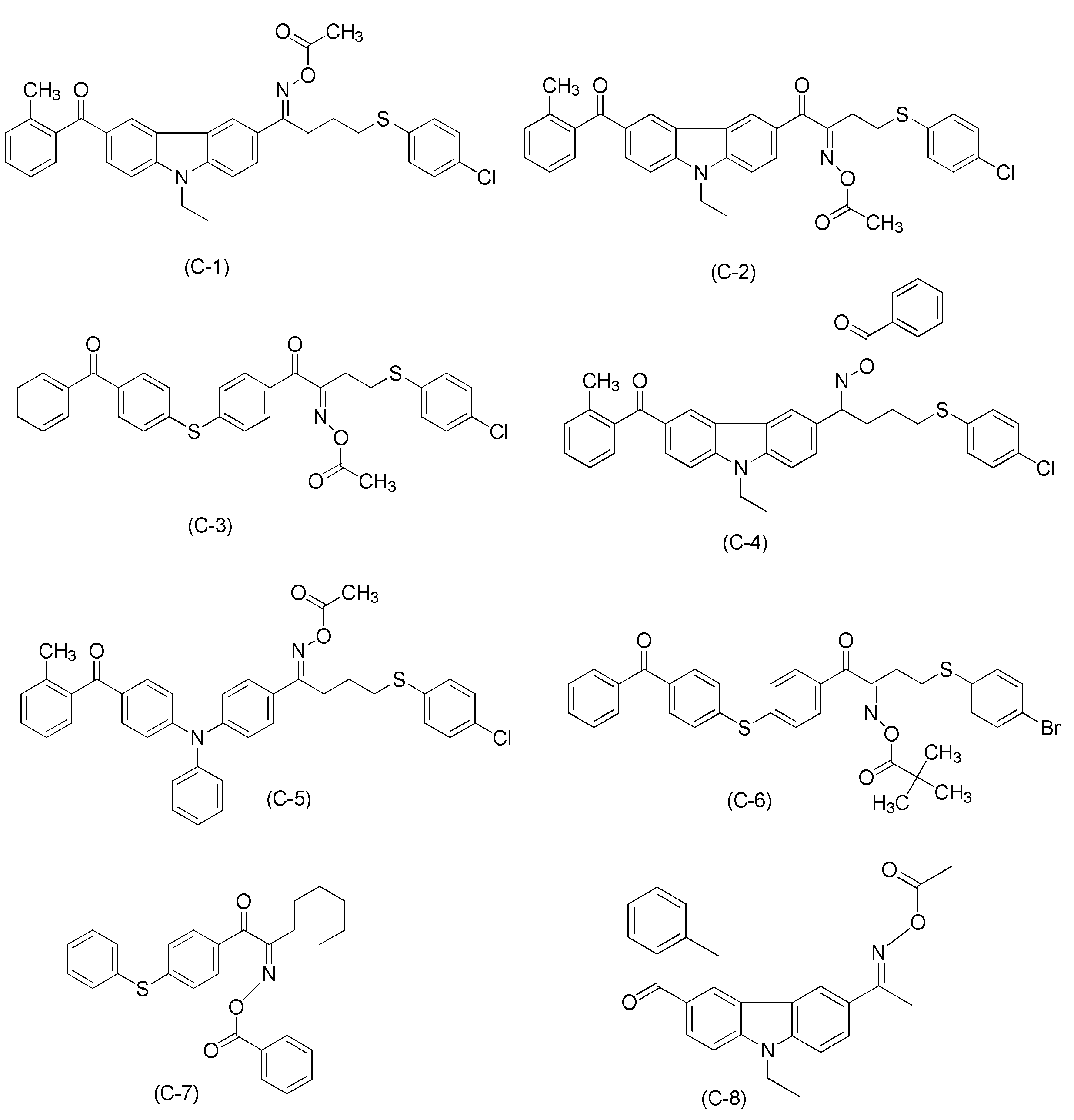

オキシム化合物は、350nm~500nmの波長領域に極大吸収波長を有する化合物が好ましく、360nm~480nmの波長領域に吸収波長を有する化合物がより好ましく、365nmおよび405nmの吸光度が高い化合物が特に好ましい。
オキシム化合物は、365nmまたは405nmにおけるモル吸光係数は、感度の観点から、1,000~300,000であることが好ましく、2,000~300,000であることがより好ましく、5,000~200,000であることが特に好ましい。化合物のモル吸光係数の測定は、公知の方法を用いることができるが、具体的には、例えば、紫外可視分光光度計(Varian社製Cary-5 spectrophotometer)にて、酢酸エチル溶媒を用い、0.01g/Lの濃度で測定することが好ましい。
光重合開始剤は、必要に応じて2種以上を組み合わせて使用しても良い。
光重合開始剤は、必要に応じて2種以上を組み合わせて使用しても良い。
本発明の着色組成物が光重合開始剤を含有する場合、光重合開始剤の含有量は、着色組成物の全固形分に対し、0.1~50質量%が好ましく、より好ましくは0.5~30質量%であり、さらに好ましくは1~20質量%である。この範囲で、より良好な感度とパターン形成性が得られる。本発明の着色組成物は、光重合開始剤を、1種類のみ含んでいてもよいし、2種類以上含んでいてもよい。2種類以上含む場合は、その合計量が上記範囲となることが好ましい。
<<顔料誘導体>>
本発明の着色組成物は、顔料誘導体を含有することが好ましい。顔料誘導体としては、有機顔料の一部分を、酸性基、塩基性基またはフタルイミドメチル基で置換した構造を有する化合物が挙げられる。顔料誘導体は、分散性および分散安定性の観点から、酸性基または塩基性基を有する顔料誘導体が好ましい。特に好ましくは、塩基性基を有する顔料誘導体である。また、上述した樹脂(分散剤)と、顔料誘導体の組み合わせは、樹脂が酸基を有する酸性型の樹脂で、顔料誘導体が塩基性基を有する組み合わせが好ましい。
本発明の着色組成物は、顔料誘導体を含有することが好ましい。顔料誘導体としては、有機顔料の一部分を、酸性基、塩基性基またはフタルイミドメチル基で置換した構造を有する化合物が挙げられる。顔料誘導体は、分散性および分散安定性の観点から、酸性基または塩基性基を有する顔料誘導体が好ましい。特に好ましくは、塩基性基を有する顔料誘導体である。また、上述した樹脂(分散剤)と、顔料誘導体の組み合わせは、樹脂が酸基を有する酸性型の樹脂で、顔料誘導体が塩基性基を有する組み合わせが好ましい。
顔料誘導体を構成するための有機顔料としては、ジケトピロロピロール系顔料、アゾ系顔料、フタロシアニン系顔料、アントラキノン系顔料、キナクリドン系顔料、ジオキサジン系顔料、ペリノン系顔料、ペリレン系顔料、チオインジゴ系顔料、イソインドリン系顔料、イソインドリノン系顔料、キノフタロン系顔料、スレン系顔料、金属錯体系顔料等が挙げられる。また、顔料誘導体が有する酸性基としては、スルホン酸基、カルボン酸基およびその4級アンモニウム塩基が好ましく、カルボン酸基およびスルホン酸基がさらに好ましく、スルホン酸基が特に好ましい。顔料誘導体が有する塩基性基としては、アミノ基が好ましく、特に三級アミノ基が好ましい。顔料誘導体の具体例としては、例えば、下記化合物が挙げられる。また、特開2011-252065号公報の段落番号0162~0183の記載を参酌でき、この内容は本明細書に組み込まれる。

本発明の着色組成物における顔料誘導体の含有量は、顔料の全質量に対し、1~30質量%が好ましく、3~20質量%がよりに好ましい。顔料誘導体は、1種のみを用いてもよいし、2種以上を併用してもよい。
<<界面活性剤>>
本発明の着色組成物は、塗布性をより向上させる観点から、各種の界面活性剤を含有させてもよい。界面活性剤としては、フッ素系界面活性剤、ノニオン系界面活性剤、カチオン系界面活性剤、アニオン系界面活性剤、シリコーン系界面活性剤などの各種界面活性剤を使用できる。
本発明の着色組成物は、塗布性をより向上させる観点から、各種の界面活性剤を含有させてもよい。界面活性剤としては、フッ素系界面活性剤、ノニオン系界面活性剤、カチオン系界面活性剤、アニオン系界面活性剤、シリコーン系界面活性剤などの各種界面活性剤を使用できる。
本発明の着色組成物にフッ素系界面活性剤を含有させることで、塗布液として調製したときの液特性(特に、流動性)がより向上し、塗布厚の均一性や省液性をより改善することができる。即ち、フッ素系界面活性剤を含有する着色組成物を適用した塗布液を用いて膜形成する場合においては、被塗布面と塗布液との界面張力が低下して、被塗布面への濡れ性が改善され、被塗布面への塗布性が向上する。このため、厚みムラの小さい均一厚の膜形成をより好適に行うことができる。
フッ素系界面活性剤中のフッ素含有率は、3~40質量%が好適であり、より好ましくは5~30質量%であり、特に好ましくは7~25質量%である。フッ素含有率がこの範囲内であるフッ素系界面活性剤は、塗布膜の厚さの均一性や省液性の点で効果的であり、組成物中における溶解性も良好である。
フッ素系界面活性剤としては、例えば、メガファックF171、同F172、同F173、同F176、同F177、同F141、同F142、同F143、同F144、同R30、同F437、同F475、同F479、同F482、同F554、同F780、RS-72-K(以上、DIC(株)製)、フロラードFC430、同FC431、同FC171(以上、住友スリーエム(株)製)、サーフロンS-382、同SC-101、同SC-103、同SC-104、同SC-105、同SC1068、同SC-381、同SC-383、同S393、同KH-40(以上、旭硝子(株)製)、PF636、PF656、PF6320、PF6520、PF7002(以上、OMNOVA社製)等が挙げられる。フッ素系界面活性剤として、特開2015-117327号公報の段落番号0015~0158に記載の化合物、特開2011-132503号公報の段落番号0117~0132に記載の化合物を用いることもできる。フッ素系界面活性剤としてブロックポリマーを用いることもでき、具体例としては、例えば、特開2011-89090号公報に記載された化合物が挙げられる。
フッ素系界面活性剤として、フッ素原子を有する(メタ)アクリレート化合物に由来する繰り返し単位と、アルキレンオキシ基(好ましくはエチレンオキシ基、プロピレンオキシ基)を2以上(好ましくは5以上)有する(メタ)アクリレート化合物に由来する繰り返し単位とを含む、含フッ素高分子化合物も好ましく用いることができ、下記化合物も本発明で用いられるフッ素系界面活性剤として例示される。

上記の化合物の重量平均分子量は、好ましくは3,000~50,000であり、例えば、14,000である。
フッ素系界面活性剤は、エチレン性不飽和基を側鎖に有する含フッ素重合体をフッ素系界面活性剤として用いることもできる。具体例としては、特開2010-164965号公報の段落番号0050~0090および0289~0295に記載された化合物、例えばDIC(株)製のメガファックRS-101、RS-102、RS-718K等が挙げられる。
フッ素系界面活性剤として、フッ素原子を有する(メタ)アクリレート化合物に由来する繰り返し単位と、アルキレンオキシ基(好ましくはエチレンオキシ基、プロピレンオキシ基)を2以上(好ましくは5以上)有する(メタ)アクリレート化合物に由来する繰り返し単位とを含む、含フッ素高分子化合物も好ましく用いることができ、下記化合物も本発明で用いられるフッ素系界面活性剤として例示される。
フッ素系界面活性剤は、エチレン性不飽和基を側鎖に有する含フッ素重合体をフッ素系界面活性剤として用いることもできる。具体例としては、特開2010-164965号公報の段落番号0050~0090および0289~0295に記載された化合物、例えばDIC(株)製のメガファックRS-101、RS-102、RS-718K等が挙げられる。
ノニオン系界面活性剤としては、グリセロール、トリメチロールプロパン、トリメチロールエタン並びにそれらのエトキシレートおよびプロポキシレート(例えば、グリセロールプロポキシレート、グリセロールエトキシレート等)、ポリオキシエチレンラウリルエーテル、ポリオキシエチレンステアリルエーテル、ポリオキシエチレンオレイルエーテル、ポリオキシエチレンオクチルフェニルエーテル、ポリオキシエチレンノニルフェニルエーテル、ポリエチレングリコールジラウレート、ポリエチレングリコールジステアレート、ソルビタン脂肪酸エステル、プルロニックL10、L31、L61、L62、10R5、17R2、25R2(BASF社製)、テトロニック304、701、704、901、904、150R1(BASF社製)、ソルスパース20000(日本ルーブリゾール(株)製)、NCW-101、NCW-1001、NCW-1002(和光純薬工業(株)製)、パイオニンD-6112、D-6112-W、D-6315(竹本油脂(株)製)、オルフィンE1010、サーフィノール104、400、440(日信化学工業(株)製)などが挙げられる。
カチオン系界面活性剤として具体的には、オルガノシロキサンポリマーKP341(信越化学工業(株)製)、(メタ)アクリル酸系(共)重合体ポリフローNo.75、No.90、No.95(共栄社化学(株)製)、W001(裕商(株)製)等が挙げられる。
アニオン系界面活性剤として具体的には、W004、W005、W017(裕商(株)製)、サンデットBL(三洋化成(株)製)等が挙げられる。
シリコーン系界面活性剤としては、例えば、トーレシリコーンDC3PA、トーレシリコーンSH7PA、トーレシリコーンDC11PA、トーレシリコーンSH21PA、トーレシリコーンSH28PA、トーレシリコーンSH29PA、トーレシリコーンSH30PA、トーレシリコーンSH8400(以上、東レ・ダウコーニング(株)製)、TSF-4440、TSF-4300、TSF-4445、TSF-4460、TSF-4452(以上、モメンティブ・パフォーマンス・マテリアルズ社製)、KP341、KF6001、KF6002(以上、信越シリコーン(株)製)、BYK307、BYK323、BYK330(以上、ビックケミー・ジャパン(株)製)等が挙げられる。
界面活性剤は、1種のみを用いてもよいし、2種類以上を組み合わせてもよい。
界面活性剤の含有量は、着色組成物の全固形分に対して、0.001~2.0質量%が好ましく、0.005~1.0質量%がより好ましい。
界面活性剤の含有量は、着色組成物の全固形分に対して、0.001~2.0質量%が好ましく、0.005~1.0質量%がより好ましい。
<<シランカップリング剤>>
本発明の着色組成物は、硬化性化合物以外の成分として、シランカップリング剤を含有することができる。なお、本発明において、シランカップリング剤は、加水分解性基とそれ以外の官能基とを有するシラン化合物を意味する。また、加水分解性基とは、珪素原子に直結し、加水分解反応および/またまたは縮合反応によってシロキサン結合を生じ得る置換基をいう。加水分解性基としては、例えば、ハロゲン原子、アルコキシ基、アシルオキシ基などが挙げられる。
本発明の着色組成物は、硬化性化合物以外の成分として、シランカップリング剤を含有することができる。なお、本発明において、シランカップリング剤は、加水分解性基とそれ以外の官能基とを有するシラン化合物を意味する。また、加水分解性基とは、珪素原子に直結し、加水分解反応および/またまたは縮合反応によってシロキサン結合を生じ得る置換基をいう。加水分解性基としては、例えば、ハロゲン原子、アルコキシ基、アシルオキシ基などが挙げられる。
シランカップリング剤は、官能基としてアミノ基とアルコキシ基とを有するシラン化合物が好ましい。このようなシランカップリング剤としては、例えば、N-β-アミノエチル-γ-アミノプロピルメチルジメトキシシラン(信越化学工業社製、商品名 KBM-602)、N-β-アミノエチル-γ-アミノプロピルトリメトキシシラン(信越化学工業社製、商品名 KBM-603)、N-β-アミノエチル-γ-アミノプロピルトリエトキシシラン(信越化学工業(株)製、商品名 KBE-602)、γ-アミノプロピルトリメトキシシラン(信越化学工業(株)製、商品名 KBM-903)、γ-アミノプロピルトリエトキシシラン(信越化学工業(株)製、商品名 KBE-903)、3-メタクリロキシプロピルトリメトキシシラン(信越化学工業(株)製、商品名 KBM-503)等がある。シランカップリング剤の詳細については、特開2013-254047号公報の段落番号0155~0158の記載を参酌でき、この内容は本明細書に組み込まれる。
本発明の着色組成物がシランカップリング剤を含有する場合、シランカップリング剤の含有量は、着色組成物の全固形分に対して、0.001~20質量%が好ましく、0.01~10質量%がより好ましく、0.1~5質量%が特に好ましい。本発明の着色組成物は、シランカップリング剤を、1種類のみ含んでいてもよいし、2種類以上含んでいてもよい。2種類以上含む場合は、その合計量が上記範囲となることが好ましい。
<<重合禁止剤>>
本発明の着色組成物は、重合禁止剤を含有することも好ましい。重合禁止剤としては、ハイドロキノン、パラメトキシフェノール、ジ-t-ブチル-パラクレゾール、ピロガロール、t-ブチルカテコール、ベンゾキノン、4,4’-チオビス(3-メチル-6-t-ブチルフェノール)、2,2’-メチレンビス(4-メチル-6-t-ブチルフェノール)、N-ニトロソフェニルヒドロキシアミン塩(アンモニウム塩、第一セリウム塩等)等が挙げられる。
本発明の着色組成物が重合禁止剤を含有する場合、重合禁止剤の含有量は、着色組成物の全固形分に対して、0.01~5質量%が好ましい。本発明の着色組成物は、重合禁止剤を、1種類のみ含んでいてもよいし、2種類以上含んでいてもよい。2種類以上含む場合は、その合計量が上記範囲となることが好ましい。
本発明の着色組成物は、重合禁止剤を含有することも好ましい。重合禁止剤としては、ハイドロキノン、パラメトキシフェノール、ジ-t-ブチル-パラクレゾール、ピロガロール、t-ブチルカテコール、ベンゾキノン、4,4’-チオビス(3-メチル-6-t-ブチルフェノール)、2,2’-メチレンビス(4-メチル-6-t-ブチルフェノール)、N-ニトロソフェニルヒドロキシアミン塩(アンモニウム塩、第一セリウム塩等)等が挙げられる。
本発明の着色組成物が重合禁止剤を含有する場合、重合禁止剤の含有量は、着色組成物の全固形分に対して、0.01~5質量%が好ましい。本発明の着色組成物は、重合禁止剤を、1種類のみ含んでいてもよいし、2種類以上含んでいてもよい。2種類以上含む場合は、その合計量が上記範囲となることが好ましい。
<<その他添加剤>>
本発明の着色組成物には、必要に応じて、各種添加物、例えば、充填剤、密着促進剤、酸化防止剤、紫外線吸収剤、凝集防止剤等を配合することができる。これらの添加物としては、特開2004-295116号公報の段落番号0155~0156に記載のものを挙げることができ、これらの内容は本明細書に組み込まれる。酸化防止剤としては、例えば、フェノール化合物、リン系化合物(例えば特開2011-90147号公報の段落番号0042に記載の化合物)、チオエーテル化合物などを用いることができる。市販品としては、例えば(株)ADEKA製のアデカスタブシリーズ(AO-20、AO-30、AO-40、AO-50、AO-50F、AO-60、AO-60G、AO-80、AO-330など)が挙げられる。酸化防止剤は2種以上を混合して使用してもよい。本発明の着色組成物においては、特開2004-295116号公報の段落番号0078に記載の増感剤や光安定剤、同公報の段落番号0081に記載の熱重合防止剤を含有することができる。
本発明の着色組成物には、必要に応じて、各種添加物、例えば、充填剤、密着促進剤、酸化防止剤、紫外線吸収剤、凝集防止剤等を配合することができる。これらの添加物としては、特開2004-295116号公報の段落番号0155~0156に記載のものを挙げることができ、これらの内容は本明細書に組み込まれる。酸化防止剤としては、例えば、フェノール化合物、リン系化合物(例えば特開2011-90147号公報の段落番号0042に記載の化合物)、チオエーテル化合物などを用いることができる。市販品としては、例えば(株)ADEKA製のアデカスタブシリーズ(AO-20、AO-30、AO-40、AO-50、AO-50F、AO-60、AO-60G、AO-80、AO-330など)が挙げられる。酸化防止剤は2種以上を混合して使用してもよい。本発明の着色組成物においては、特開2004-295116号公報の段落番号0078に記載の増感剤や光安定剤、同公報の段落番号0081に記載の熱重合防止剤を含有することができる。
用いる原料等により着色組成物中に金属元素が含まれることがあるが、欠陥発生抑制等の観点で、着色組成物中の第2族元素(カルシウム、マグネシウム等)の含有量は50ppm以下であることが好ましく、0.01~10ppmに制御することがより好ましい。また、着色組成物中の無機金属塩の総量は100ppm以下であることが好ましく、0.5~50ppmに制御することがより好ましい。
<着色組成物の調製方法>
本発明の着色組成物は、前述の成分を混合して調製できる。着色組成物の調製に際しては、各成分を一括配合してもよいし、各成分を溶剤に、溶解および/または分散した後に逐次配合してもよい。また、配合する際の投入順序や作業条件は特に制約を受けない。例えば、全成分を同時に溶剤に溶解および/または分散して組成物を調製してもよいし、必要に応じて、各成分を適宜2つ以上の溶液または分散液としておいて、使用時(塗布時)にこれらを混合して調製してもよい。
本発明の着色組成物は、前述の成分を混合して調製できる。着色組成物の調製に際しては、各成分を一括配合してもよいし、各成分を溶剤に、溶解および/または分散した後に逐次配合してもよい。また、配合する際の投入順序や作業条件は特に制約を受けない。例えば、全成分を同時に溶剤に溶解および/または分散して組成物を調製してもよいし、必要に応じて、各成分を適宜2つ以上の溶液または分散液としておいて、使用時(塗布時)にこれらを混合して調製してもよい。
着色組成物の調製にあたり、異物の除去や欠陥の低減などの目的で、フィルタでろ過することが好ましい。フィルタとしては、従来からろ過用途等に用いられているものであれば特に限定されることなく用いることができる。例えば、ポリテトラフルオロエチレン(PTFE)等のフッ素樹脂、ナイロン(例えばナイロン-6、ナイロン-6,6)等のポリアミド系樹脂、ポリエチレン、ポリプロピレン(PP)等のポリオレフィン樹脂(高密度、超高分子量のポリオレフィン樹脂を含む)などの素材を用いたフィルタが挙げられる。これら素材の中でもポリプロピレン(高密度、超高分子量のポリプロピレンを含む)およびナイロンが好ましい。
フィルタの孔径は、0.01~7.0μm程度が適しており、好ましくは0.01~3.0μm程度、さらに好ましくは0.05~0.5μm程度である。この範囲とすることにより、後工程において均一及び平滑な製膜を阻害する、微細な異物を確実に除去することが可能となる。また、ファイバ状のろ材を用いることも好ましく、ろ材としては例えばポリプロピレンファイバ、ナイロンファイバ、グラスファイバ等が挙げられ、具体的にはロキテクノ製のSBPタイプシリーズ(SBP008など)、TPRタイプシリーズ(TPR002、TPR005など)、SHPXタイプシリーズ(SHPX003など)のフィルタカートリッジを用いることができる。
フィルタの孔径は、0.01~7.0μm程度が適しており、好ましくは0.01~3.0μm程度、さらに好ましくは0.05~0.5μm程度である。この範囲とすることにより、後工程において均一及び平滑な製膜を阻害する、微細な異物を確実に除去することが可能となる。また、ファイバ状のろ材を用いることも好ましく、ろ材としては例えばポリプロピレンファイバ、ナイロンファイバ、グラスファイバ等が挙げられ、具体的にはロキテクノ製のSBPタイプシリーズ(SBP008など)、TPRタイプシリーズ(TPR002、TPR005など)、SHPXタイプシリーズ(SHPX003など)のフィルタカートリッジを用いることができる。
フィルタを使用する際、異なるフィルタを組み合わせてもよい。その際、第1のフィルタでのフィルタリングは、1回のみでもよいし、2回以上行ってもよい。
また、上述した範囲内で異なる孔径の第1のフィルタを組み合わせてもよい。ここでの孔径は、フィルタメーカーの公称値を参照することができる。市販のフィルタとしては、例えば、日本ポール(株)(DFA4201NXEYなど)、アドバンテック東洋(株)、日本インテグリス(株)(旧日本マイクロリス(株))または(株)キッツマイクロフィルタ等が提供する各種フィルタの中から選択することができる。
第2のフィルタは、上述した第1のフィルタと同様の材料等で形成されたものを使用することができる。
例えば、第1のフィルタでのフィルタリングは、分散液のみで行い、他の成分を混合した後で、第2のフィルタリングを行ってもよい。
また、上述した範囲内で異なる孔径の第1のフィルタを組み合わせてもよい。ここでの孔径は、フィルタメーカーの公称値を参照することができる。市販のフィルタとしては、例えば、日本ポール(株)(DFA4201NXEYなど)、アドバンテック東洋(株)、日本インテグリス(株)(旧日本マイクロリス(株))または(株)キッツマイクロフィルタ等が提供する各種フィルタの中から選択することができる。
第2のフィルタは、上述した第1のフィルタと同様の材料等で形成されたものを使用することができる。
例えば、第1のフィルタでのフィルタリングは、分散液のみで行い、他の成分を混合した後で、第2のフィルタリングを行ってもよい。
本発明の着色組成物は、膜面状(平坦性など)の調整、膜厚の調整などを目的として粘度を調整して用いることができる。粘度の値は必要に応じて適宜選択することができるが、例えば、25℃において0.3~50mPa・sが好ましく、0.5~20mPa・sがより好ましい。粘度の測定方法としては、例えば、東機産業(株)製の粘度計RE85L(ローター:1°34’×R24、測定範囲0.6~1200mPa・s)を使用し、25℃に温度調整を施した状態で測定することができる。
本発明の着色組成物における含水率は、通常3質量%以下であり、0.01~1.5質量%が好ましく、0.1~1.0質量%の範囲であることがより好ましい。含水率は、カールフィッシャー法にて測定することができる。
<カラーフィルタ>
次に、本発明のカラーフィルタについて説明する。
本発明のカラーフィルタは、上述した本発明の着色組成物を用いてなるものである。本発明のカラーフィルタの膜厚は、目的に応じて適宜調整できる。膜厚は、20μm以下が好ましく、10μm以下がより好ましく、5μm以下がさらに好ましい。膜厚の下限は、0.1μm以上が好ましく、0.2μm以上がより好ましく、0.3μm以上がさらに好ましい。本発明のカラーフィルタは、CCD(電荷結合素子)やCMOS(相補型金属酸化膜半導体)などの固体撮像素子や、画像表示装置などに用いることができる。
次に、本発明のカラーフィルタについて説明する。
本発明のカラーフィルタは、上述した本発明の着色組成物を用いてなるものである。本発明のカラーフィルタの膜厚は、目的に応じて適宜調整できる。膜厚は、20μm以下が好ましく、10μm以下がより好ましく、5μm以下がさらに好ましい。膜厚の下限は、0.1μm以上が好ましく、0.2μm以上がより好ましく、0.3μm以上がさらに好ましい。本発明のカラーフィルタは、CCD(電荷結合素子)やCMOS(相補型金属酸化膜半導体)などの固体撮像素子や、画像表示装置などに用いることができる。
本発明のカラーフィルタを液晶表示装置用途に用いる場合、カラーフィルタを備えた液晶表示素子の電圧保持率は、70%以上であることが好ましく、90%以上であることがより好ましい。高い電圧保持率を得るための公知の手段を適宜組み込むことができ、典型的な手段としては、純度の高い素材の使用(例えばイオン性不純物の低減)や、組成物中の酸性官能基量の制御が挙げられる。電圧保持率は、例えば特開2011-008004号公報の段落番号0243、特開2012-224847号公報の段落番号0123~0129に記載の方法等で測定することができる。
<パターン形成方法>
本発明のパターン形成方法は、本発明の着色組成物を用いて支持体上に着色組成物層を形成する工程と、フォトリソグラフィ法またはドライエッチング法により、着色組成物層に対してパターンを形成する工程とを含む。
本発明のパターン形成方法は、本発明の着色組成物を用いて支持体上に着色組成物層を形成する工程と、フォトリソグラフィ法またはドライエッチング法により、着色組成物層に対してパターンを形成する工程とを含む。
フォトリソグラフィ法を用いたパターン形成は、着色組成物を用いて支持体上に着色組成物層を形成する工程と、着色組成物層をパターン状に露光する工程と、未露光部を現像除去してパターンを形成する工程とを含むことが好ましい。必要に応じて、着色組成物層をベークする工程(プリベーク工程)、および、現像されたパターンをベークする工程(ポストベーク工程)を設けてもよい。
また、ドライエッチング法を用いたパターン形成は、着色組成物を用いて支持体上に着色組成物層を形成し、硬化して硬化物層を形成する工程と、硬化物層上にフォトレジスト層を形成する工程と、露光および現像することによりフォトレジスト層をパターニングしてレジストパターンを得る工程と、レジストパターンをエッチングマスクとして硬化物層をドライエッチングしてパターンを形成する工程とを含むことが好ましい。以下、各工程について説明する。
また、ドライエッチング法を用いたパターン形成は、着色組成物を用いて支持体上に着色組成物層を形成し、硬化して硬化物層を形成する工程と、硬化物層上にフォトレジスト層を形成する工程と、露光および現像することによりフォトレジスト層をパターニングしてレジストパターンを得る工程と、レジストパターンをエッチングマスクとして硬化物層をドライエッチングしてパターンを形成する工程とを含むことが好ましい。以下、各工程について説明する。
<<着色組成物層を形成する工程>>
着色組成物層を形成する工程では、着色組成物を用いて、支持体上に着色組成物層を形成する。
着色組成物層を形成する工程では、着色組成物を用いて、支持体上に着色組成物層を形成する。
支持体としては、例えば、基板(例えば、シリコン基板)上にCCDやCMOS等の固体撮像素子(受光素子)が設けられた固体撮像素子用基板などを用いることができる。
着色組成物層は、固体撮像素子用基板の固体撮像素子形成面側(おもて面)に形成してもよいし、固体撮像素子非形成面側(裏面)に形成してもよい。
支持体上には、必要により、上部の層との密着改良、物質の拡散防止、または基板表面の平坦化のために、下塗り層を設けてもよい。
着色組成物層は、固体撮像素子用基板の固体撮像素子形成面側(おもて面)に形成してもよいし、固体撮像素子非形成面側(裏面)に形成してもよい。
支持体上には、必要により、上部の層との密着改良、物質の拡散防止、または基板表面の平坦化のために、下塗り層を設けてもよい。
支持体上への着色組成物の適用方法としては、スリット塗布、インクジェット法、回転塗布、流延塗布、ロール塗布、スクリーン印刷法等の各種の方法を用いることができる。
支持体上に形成した着色組成物層は、乾燥(プリベーク)してもよい。低温プロセスによりパターンを形成する場合は、プリベークを行わなくてもよい。
プリベークを行う場合、プリベーク温度は、150℃以下が好ましく、120℃以下がより好ましく、110℃以下がさらに好ましい。下限は、例えば、50℃以上とすることができ、80℃以上とすることもできる。プリベーク温度を150℃以下で行うことにより、例えば、イメージセンサの光電変換膜を有機素材で構成した場合において、これらの特性をより効果的に維持することができる。
プリベーク時間は、10秒~300秒が好ましく、40~250秒がより好ましく、80~220秒がさらに好ましい。乾燥は、ホットプレート、オーブン等で行うことができる。
プリベークを行う場合、プリベーク温度は、150℃以下が好ましく、120℃以下がより好ましく、110℃以下がさらに好ましい。下限は、例えば、50℃以上とすることができ、80℃以上とすることもできる。プリベーク温度を150℃以下で行うことにより、例えば、イメージセンサの光電変換膜を有機素材で構成した場合において、これらの特性をより効果的に維持することができる。
プリベーク時間は、10秒~300秒が好ましく、40~250秒がより好ましく、80~220秒がさらに好ましい。乾燥は、ホットプレート、オーブン等で行うことができる。
(フォトリソグラフィ法でパターン形成する場合)
<<露光工程>>
次に、着色組成物層を、パターン状に露光する(露光工程)。例えば、着色組成物層に対し、ステッパー等の露光装置を用いて、所定のマスクパターンを有するマスクを介して露光することで、パターン露光することができる。これにより、露光部分を硬化することができる。
露光に際して用いることができる放射線(光)としては、g線、i線等の紫外線が好ましく(特に好ましくはi線)用いられる。照射量(露光量)は、例えば、0.03~2.5J/cm2が好ましく、0.05~1.0J/cm2がより好ましい。
露光時における酸素濃度については適宜選択することができ、大気下で行う他に、例えば酸素濃度が19体積%以下の低酸素雰囲気下(例えば、15体積%、5体積%、実質的に無酸素)で露光してもよく、酸素濃度が21体積%を超える高酸素雰囲気下(例えば、22体積%、30体積%、50体積%)で露光してもよい。また、露光照度は適宜設定することが可能であり、通常1000W/m2~100,000W/m2(例えば、5000W/m2、15,000W/m2、35,000W/m2)の範囲から選択することができる。酸素濃度と露光照度は適宜条件を組み合わせてよく、例えば、酸素濃度10体積%で照度10,000W/m2、酸素濃度35体積%で照度20,000W/m2などとすることができる。
<<露光工程>>
次に、着色組成物層を、パターン状に露光する(露光工程)。例えば、着色組成物層に対し、ステッパー等の露光装置を用いて、所定のマスクパターンを有するマスクを介して露光することで、パターン露光することができる。これにより、露光部分を硬化することができる。
露光に際して用いることができる放射線(光)としては、g線、i線等の紫外線が好ましく(特に好ましくはi線)用いられる。照射量(露光量)は、例えば、0.03~2.5J/cm2が好ましく、0.05~1.0J/cm2がより好ましい。
露光時における酸素濃度については適宜選択することができ、大気下で行う他に、例えば酸素濃度が19体積%以下の低酸素雰囲気下(例えば、15体積%、5体積%、実質的に無酸素)で露光してもよく、酸素濃度が21体積%を超える高酸素雰囲気下(例えば、22体積%、30体積%、50体積%)で露光してもよい。また、露光照度は適宜設定することが可能であり、通常1000W/m2~100,000W/m2(例えば、5000W/m2、15,000W/m2、35,000W/m2)の範囲から選択することができる。酸素濃度と露光照度は適宜条件を組み合わせてよく、例えば、酸素濃度10体積%で照度10,000W/m2、酸素濃度35体積%で照度20,000W/m2などとすることができる。
<<現像工程>>
次に、未露光部を現像除去してパターンを形成する。未露光部の現像除去は、現像液を用いて行うことができる。これにより、露光工程における未露光部の着色組成物層が現像液に溶出し、光硬化した部分だけが残る。
現像液としては、下地の固体撮像素子や回路などにダメージを起さない、有機アルカリ現像液が望ましい。
現像液の温度は、例えば、20~30℃が好ましい。現像時間は、20~180秒が好ましい。また、残渣除去性を向上するため、現像液を60秒ごとに振り切り、さらに新たに現像液を供給する工程を数回繰り返してもよい。
次に、未露光部を現像除去してパターンを形成する。未露光部の現像除去は、現像液を用いて行うことができる。これにより、露光工程における未露光部の着色組成物層が現像液に溶出し、光硬化した部分だけが残る。
現像液としては、下地の固体撮像素子や回路などにダメージを起さない、有機アルカリ現像液が望ましい。
現像液の温度は、例えば、20~30℃が好ましい。現像時間は、20~180秒が好ましい。また、残渣除去性を向上するため、現像液を60秒ごとに振り切り、さらに新たに現像液を供給する工程を数回繰り返してもよい。
現像液に用いるアルカリ剤としては、例えば、アンモニア水、エチルアミン、ジエチルアミン、ジメチルエタノールアミン、ジグリコールアミン、ジエタノールアミン、ヒドロキシアミン、エチレンジアミン、テトラメチルアンモニウムヒドロキシド、テトラエチルアンモニウムヒドロキシド、テトラプロピルアンモニウムヒドロキシド、テトラブチルアンモニウムヒドロキシド、ベンジルトリメチルアンモニウムヒドロキシド、ジメチルビス(2-ヒドロキシエチル)アンモニウムヒドロキシド、コリン、ピロール、ピペリジン、1,8-ジアザビシクロ-[5.4.0]-7-ウンデセンなどの有機アルカリ性化合物が挙げられる。現像液は、これらのアルカリ剤を純水で希釈したアルカリ性水溶液が好ましく使用される。アルカリ性水溶液のアルカリ剤の濃度は、0.001~10質量%が好ましく、0.01~1質量%がより好ましい。
また、現像液には無機アルカリを用いてもよい。無機アルカリとしては、例えば、水酸化ナトリウム、水酸化カリウム、炭酸ナトリウム、炭酸水素ナトリウム、ケイ酸ナトリウム、メタケイ酸ナトリウムなどが好ましい。
また、現像液には、界面活性剤を用いてもよい。界面活性剤の例としては、上述した硬化性組成物で説明した界面活性剤が挙げられ、ノニオン系界面活性剤が好ましい。
なお、このようなアルカリ性水溶液からなる現像液を使用した場合には、一般に現像後純水で洗浄(リンス)することが好ましい。
また、現像液には無機アルカリを用いてもよい。無機アルカリとしては、例えば、水酸化ナトリウム、水酸化カリウム、炭酸ナトリウム、炭酸水素ナトリウム、ケイ酸ナトリウム、メタケイ酸ナトリウムなどが好ましい。
また、現像液には、界面活性剤を用いてもよい。界面活性剤の例としては、上述した硬化性組成物で説明した界面活性剤が挙げられ、ノニオン系界面活性剤が好ましい。
なお、このようなアルカリ性水溶液からなる現像液を使用した場合には、一般に現像後純水で洗浄(リンス)することが好ましい。
現像後、乾燥を施した後に加熱処理(ポストベーク)を行うこともできる。ポストベークは、膜の硬化を完全なものとするための現像後の加熱処理である。ポストベークを行う場合、ポストベーク温度は、例えば100~240℃が好ましい。膜硬化の観点から、200~230℃がより好ましい。ポストベーク後の膜のヤング率は0.5~20GPaが好ましく、2.5~15GPaがより好ましい。また、発光光源として有機エレクトロルミネッセンス(有機EL)素子を用いた場合や、イメージセンサの光電変換膜を有機素材で構成した場合は、ポストベーク温度は、150℃以下が好ましく、120℃以下がより好ましく、100℃以下がさらに好ましく、90℃以下が特に好ましい。下限は、例えば、50℃以上とすることができる。
ポストベークは、現像後の膜を、上記条件になるようにホットプレートやコンベクションオーブン(熱風循環式乾燥機)、高周波加熱機等の加熱手段を用いて、連続式あるいはバッチ式で行うことができる。また、低温プロセスによりパターンを形成する場合は、ポストベークは行わなくてもよい。
ポストベークは、現像後の膜を、上記条件になるようにホットプレートやコンベクションオーブン(熱風循環式乾燥機)、高周波加熱機等の加熱手段を用いて、連続式あるいはバッチ式で行うことができる。また、低温プロセスによりパターンを形成する場合は、ポストベークは行わなくてもよい。
(ドライエッチング法でパターン形成する場合)
ドライエッチング法でのパターン形成は、支持体上に形成した着色組成物層を硬化して硬化物層を形成し、次いで、得られた硬化物層上にパターニングされたフォトレジスト層を形成し、次いで、硬化物層に対してパターニングされたフォトレジスト層をマスクとしてエッチングガスを用いてドライエッチングすることで行うことができる。ドライエッチング法でのパターン形成については、特開2013-064993号公報の段落番号0010~0067の記載を参酌でき、この内容は本明細書に組み込まれる。
ドライエッチング法でのパターン形成は、支持体上に形成した着色組成物層を硬化して硬化物層を形成し、次いで、得られた硬化物層上にパターニングされたフォトレジスト層を形成し、次いで、硬化物層に対してパターニングされたフォトレジスト層をマスクとしてエッチングガスを用いてドライエッチングすることで行うことができる。ドライエッチング法でのパターン形成については、特開2013-064993号公報の段落番号0010~0067の記載を参酌でき、この内容は本明細書に組み込まれる。
<固体撮像素子>
本発明の固体撮像素子は、上述した本発明のカラーフィルタを有する。本発明の固体撮像素子の構成としては、本発明のカラーフィルタを備え、固体撮像素子として機能する構成であれば特に限定はないが、例えば、以下のような構成が挙げられる。
本発明の固体撮像素子は、上述した本発明のカラーフィルタを有する。本発明の固体撮像素子の構成としては、本発明のカラーフィルタを備え、固体撮像素子として機能する構成であれば特に限定はないが、例えば、以下のような構成が挙げられる。
基材上に、固体撮像素子(CCD(電荷結合素子)イメージセンサ、CMOS(相補性金属酸化膜半導体)イメージセンサ等)の受光エリアを構成する複数のフォトダイオードおよびポリシリコン等からなる転送電極を有し、フォトダイオードおよび転送電極上にフォトダイオードの受光部のみ開口した遮光膜を有し、遮光膜上に遮光膜全面およびフォトダイオード受光部を覆うように形成された窒化シリコン等からなるデバイス保護膜を有し、デバイス保護膜上に、カラーフィルタを有する構成である。さらに、デバイス保護膜上であってカラーフィルタの下(基材に近い側)に集光手段(例えば、マイクロレンズ等。以下同じ)を有する構成や、カラーフィルタ上に集光手段を有する構成等であってもよい。
<画像表示装置>
本発明のカラーフィルタは、液晶表示装置や有機エレクトロルミネッセンス表示装置などの、画像表示装置に用いることができる。表示装置の定義や各表示装置の詳細については、例えば「電子ディスプレイデバイス(佐々木昭夫著、(株)工業調査会、1990年発行)」、「ディスプレイデバイス(伊吹順章著、産業図書(株)平成元年発行)」などに記載されている。また、液晶表示装置については、例えば「次世代液晶ディスプレイ技術(内田龍男編集、(株)工業調査会、1994年発行)」に記載されている。本発明が適用できる液晶表示装置に特に制限はなく、例えば、上記の「次世代液晶ディスプレイ技術」に記載されている色々な方式の液晶表示装置に適用できる。
本発明のカラーフィルタは、液晶表示装置や有機エレクトロルミネッセンス表示装置などの、画像表示装置に用いることができる。表示装置の定義や各表示装置の詳細については、例えば「電子ディスプレイデバイス(佐々木昭夫著、(株)工業調査会、1990年発行)」、「ディスプレイデバイス(伊吹順章著、産業図書(株)平成元年発行)」などに記載されている。また、液晶表示装置については、例えば「次世代液晶ディスプレイ技術(内田龍男編集、(株)工業調査会、1994年発行)」に記載されている。本発明が適用できる液晶表示装置に特に制限はなく、例えば、上記の「次世代液晶ディスプレイ技術」に記載されている色々な方式の液晶表示装置に適用できる。
以下に実施例を挙げて本発明をさらに具体的に説明する。以下の実施例に示す材料、使用量、割合、処理内容、処理手順等は、本発明の趣旨を逸脱しない限り、適宜、変更することができる。従って、本発明の範囲は以下に示す具体例に限定されるものではない。なお、特に断りのない限り、「部」、「%」は、質量基準である。
<重量平均分子量の測定>
樹脂の重量平均分子量は、以下の方法で測定した。
カラムの種類:TOSOH TSKgel Super HZM-Hと、TOSOH TSKgel Super HZ4000と、TOSOH TSKgel Super HZ2000とを連結したカラム
展開溶媒:テトラヒドロフラン
カラム温度:40℃
流量(サンプル注入量):1.0μL(サンプル濃度:0.1質量%)
装置名:東ソー製 HLC-8220GPC
検出器:RI(屈折率)検出器
検量線ベース樹脂:ポリスチレン
樹脂の重量平均分子量は、以下の方法で測定した。
カラムの種類:TOSOH TSKgel Super HZM-Hと、TOSOH TSKgel Super HZ4000と、TOSOH TSKgel Super HZ2000とを連結したカラム
展開溶媒:テトラヒドロフラン
カラム温度:40℃
流量(サンプル注入量):1.0μL(サンプル濃度:0.1質量%)
装置名:東ソー製 HLC-8220GPC
検出器:RI(屈折率)検出器
検量線ベース樹脂:ポリスチレン
<顔料分散液の調製>
(顔料分散液1)
下記材料を配合した混合液を、0.3mm径のジルコニアビーズを使用して、ビーズミル(減圧機構付き高圧分散機NANO-3000-10(日本ビーイーイー(株)製))で、3時間、混合および分散して、顔料分散液1を調製した。
C.I.ピグメントグリーン58・・・・6.6質量部
C.I.ピグメントイエロー150・・・・6.3質量部
樹脂1:下記構造(重量平均分子量10,000)・・・・8.8質量部

溶剤(プロピレングリコールモノメチルエーテルアセテート)・・・・72.7質量部
溶剤(シクロヘキサノン)・・・・6.2質量部
(顔料分散液1)
下記材料を配合した混合液を、0.3mm径のジルコニアビーズを使用して、ビーズミル(減圧機構付き高圧分散機NANO-3000-10(日本ビーイーイー(株)製))で、3時間、混合および分散して、顔料分散液1を調製した。
C.I.ピグメントグリーン58・・・・6.6質量部
C.I.ピグメントイエロー150・・・・6.3質量部
樹脂1:下記構造(重量平均分子量10,000)・・・・8.8質量部
溶剤(シクロヘキサノン)・・・・6.2質量部
(顔料分散液2)
下記材料を配合した混合液を、0.3mm径のジルコニアビーズを使用して、ビーズミル(減圧機構付き高圧分散機NANO-3000-10(日本ビーイーイー(株)製))で、3時間、混合および分散して、顔料分散液2を調製した。
ハロゲン化亜鉛フタロシアニン顔料(臭素原子:塩素原子:水素原子=10:3:3)・・・・8.6質量部
C.I.ピグメントイエロー150・・・・4.3質量部
樹脂1・・・・8.8質量部
溶剤(プロピレングリコールモノメチルエーテルアセテート)・・・・72.7質量部
溶剤(シクロヘキサノン)・・・・6.2質量部
下記材料を配合した混合液を、0.3mm径のジルコニアビーズを使用して、ビーズミル(減圧機構付き高圧分散機NANO-3000-10(日本ビーイーイー(株)製))で、3時間、混合および分散して、顔料分散液2を調製した。
ハロゲン化亜鉛フタロシアニン顔料(臭素原子:塩素原子:水素原子=10:3:3)・・・・8.6質量部
C.I.ピグメントイエロー150・・・・4.3質量部
樹脂1・・・・8.8質量部
溶剤(プロピレングリコールモノメチルエーテルアセテート)・・・・72.7質量部
溶剤(シクロヘキサノン)・・・・6.2質量部
(顔料分散液3)
下記材料を配合した混合液を、0.3mm径のジルコニアビーズを使用して、ビーズミル(減圧機構付き高圧分散機NANO-3000-10(日本ビーイーイー(株)製))で、3時間、混合および分散して、顔料分散液3を調製した。
C.I.ピグメントグリーン58・・・・15質量部
顔料誘導体1・・・・0.5質量部
樹脂2・・・・7.0質量部
プロピレングリコールモノメチルエーテルアセテート(PGMEA)・・・・90質量部
下記材料を配合した混合液を、0.3mm径のジルコニアビーズを使用して、ビーズミル(減圧機構付き高圧分散機NANO-3000-10(日本ビーイーイー(株)製))で、3時間、混合および分散して、顔料分散液3を調製した。
C.I.ピグメントグリーン58・・・・15質量部
顔料誘導体1・・・・0.5質量部
樹脂2・・・・7.0質量部
プロピレングリコールモノメチルエーテルアセテート(PGMEA)・・・・90質量部
顔料誘導体1:下記構造の化合物

樹脂2:下記構造の樹脂(酸価10mgKOH/g、重量平均分子量(Mw)20,000である。aおよびbは、それぞれ、括弧内で表される部分構造の数を表し、aは2、bは4を表す。)

<着色組成物の調製>
下記成分を混合して、着色組成物を製造した。


下記成分を混合して、着色組成物を製造した。
表中の原料は以下である。
(硬化性化合物)
・エポキシ化合物
B-1:EHPE3150((株)ダイセル製、分子量=2234)
B-2:グリシジルトリチルエーテル(東京化成(株)製)
・重合性ポリマー
C-1:アクリキュアーRD-F8((株)日本触媒製、エチレン性不飽和結合を有するポリマー)
C-2:DP-1305(富士ファインケミカルズ(株)製、エチレン性不飽和結合を有するポリマー)
・重合性モノマー
D-1:KAYARAD DPHA(日本化薬(株)製)
D-2:アロニックスTO-2349(東亞合成(株)製)
D-3:NKエステルA-DPH-12E(新中村化学工業(株)製)
(溶剤)
E-1:プロピレングリコールモノメチルエーテルアセテート(PGMEA)
E-2:シクロヘキサノン
(マレイミド化合物)
F-1:メチルマレイミド(分子量111)
F-2:N-フェニルマレイミド(分子量173)
F-3:N-ベンジルマレイミド(分子量187)
F-4:N-tert-ブチルマレイミド(分子量153)
F-5:ビオチン-ポリエチレングリコール-マレイミド(分子量3400)
(芳香族アミン)
G-1:3,5-ビストリフルオロメチル-1,2,-ジアミノベンゼン
G-2:N,N-ジメチル-4-ニトロアニリン
G-3:N,N-ジメチルアニリン
(光重合開始剤)
H-1:IRGACURE-OXE02(BASF社製)
H-2:下記化合物

(界面活性剤)
I-1:下記混合物(Mw=14,000)
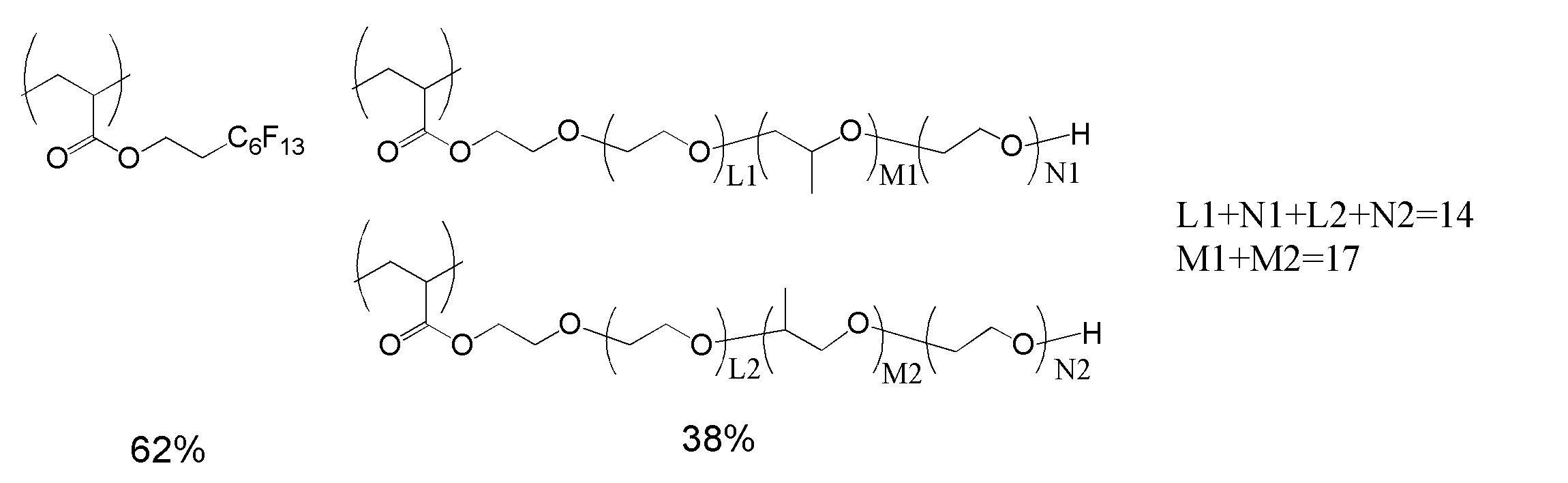
(硬化性化合物)
・エポキシ化合物
B-1:EHPE3150((株)ダイセル製、分子量=2234)
B-2:グリシジルトリチルエーテル(東京化成(株)製)
・重合性ポリマー
C-1:アクリキュアーRD-F8((株)日本触媒製、エチレン性不飽和結合を有するポリマー)
C-2:DP-1305(富士ファインケミカルズ(株)製、エチレン性不飽和結合を有するポリマー)
・重合性モノマー
D-1:KAYARAD DPHA(日本化薬(株)製)
D-2:アロニックスTO-2349(東亞合成(株)製)
D-3:NKエステルA-DPH-12E(新中村化学工業(株)製)
(溶剤)
E-1:プロピレングリコールモノメチルエーテルアセテート(PGMEA)
E-2:シクロヘキサノン
(マレイミド化合物)
F-1:メチルマレイミド(分子量111)
F-2:N-フェニルマレイミド(分子量173)
F-3:N-ベンジルマレイミド(分子量187)
F-4:N-tert-ブチルマレイミド(分子量153)
F-5:ビオチン-ポリエチレングリコール-マレイミド(分子量3400)
(芳香族アミン)
G-1:3,5-ビストリフルオロメチル-1,2,-ジアミノベンゼン
G-2:N,N-ジメチル-4-ニトロアニリン
G-3:N,N-ジメチルアニリン
(光重合開始剤)
H-1:IRGACURE-OXE02(BASF社製)
H-2:下記化合物
I-1:下記混合物(Mw=14,000)
<硬化性の評価>
ガラス基板に、着色組成物をスリット塗布した。次に、塗布した着色組成物を、ホットプレートで90℃、120秒間加熱して溶剤除去し、膜厚20μmの塗膜を形成した。次いで、超高圧水銀を用いて300mJ/cm2(i線で測定)で露光し、次にオーブンで230℃、60分加熱して硬化膜(平坦膜)を製造した。
得られた硬化膜について、JIS K5600-5-4:1999に従って鉛筆硬度を測定した。硬いほうが好ましい。
A:3H以上
B:2H以上3H未満
C:1H以上、2H未満
D:1H未満
ガラス基板に、着色組成物をスリット塗布した。次に、塗布した着色組成物を、ホットプレートで90℃、120秒間加熱して溶剤除去し、膜厚20μmの塗膜を形成した。次いで、超高圧水銀を用いて300mJ/cm2(i線で測定)で露光し、次にオーブンで230℃、60分加熱して硬化膜(平坦膜)を製造した。
得られた硬化膜について、JIS K5600-5-4:1999に従って鉛筆硬度を測定した。硬いほうが好ましい。
A:3H以上
B:2H以上3H未満
C:1H以上、2H未満
D:1H未満
<色ムラの評価>
着色組成物を、温度23℃、湿度50%の環境下で、1~6ヶ月保管した。
保管後の着色組成物を用い、以下の製造例1または製造例2に示す方法でパターン形成を行ってカラーフィルタを製造した。
着色組成物を、温度23℃、湿度50%の環境下で、1~6ヶ月保管した。
保管後の着色組成物を用い、以下の製造例1または製造例2に示す方法でパターン形成を行ってカラーフィルタを製造した。
(製造例1)ドライエッチング法を用いたパターン形成
保管後の着色組成物(実施例1~10、12、17、18、比較例1~3)を、7.5cm×7.5cmのガラス基板に膜厚が0.5μmになるようにスピンコーターを用いて塗布し、ホットプレートを使用して、200℃で5分間、加熱を行い、塗布膜の硬化を行って着色層を作製した。この着色層の膜厚は、0.5μmであった。
次いで、ポジ型フォトレジスト「FHi622BC」(富士フイルムエレクトロニクスマテリアルズ(株)製)を塗布し、90℃で1分間、プリベーク処理を実施し、膜厚0.8μmのフォトレジスト層を形成した。
続いて、フォトレジスト層を、i線ステッパー(キャノン(株)製)を用い、350mJ/cm2の露光量でパターン露光し、フォトレジスト層の温度または雰囲気温度が90℃となる温度で1分間、加熱処理を行なった。その後、現像液「FHD-5」(富士フイルムエレクトロニクスマテリアルズ(株)製)で1分間の現像処理を行ない、さらに110℃で1分間のポストベーク処理を実施して、レジストパターンを形成した。このレジストパターンのサイズは、エッチング変換差(エッチングでのパターン幅の縮小)を考慮して、一辺1.0μmで形成した。
次に、得られたガラス基板を200mm(8インチ)シリコンウエハに貼り付け、ドライエッチング装置(U-621、日立ハイテクノロジーズ社製)にて、RF(高周波)パワー:800W、アンテナバイアス:400W、ウエハバイアス:200W、チャンバーの内部圧力:4.0Pa、基板温度:50℃、混合ガスのガス種および流量をCF4:80mL/分、O2:40mL/分、Ar:800mL/分として、80秒の第1段階のエッチング処理を実施した。
次いで、同一のエッチングチャンバーにて、RF(高周波)パワー:600W、アンテナバイアス:100W、ウエハバイアス:250W、チャンバーの内部圧力:2.0Pa、基板温度:50℃、混合ガスのガス種および流量をN2:500mL/分、O2:50mL/分、Ar:500mL/分とし(N2/O2/Ar=10/1/10)、28秒の第2段階エッチング処理、オーバーエッチング処理を実施した。
上記条件でドライエッチングを行った後、フォトレジスト剥離液「MS230C」(富士フイルムエレクトロニクスマテリアルズ(株)製)を使用して、50℃で120秒間、剥離処理を実施してレジストを除去し、着色パターンを形成した。さらに純水で洗浄し、次いで、スピン乾燥し、その後、100℃で2分間の脱水ベーク処理を行った。以上により、カラーフィルタを得た。
保管後の着色組成物(実施例1~10、12、17、18、比較例1~3)を、7.5cm×7.5cmのガラス基板に膜厚が0.5μmになるようにスピンコーターを用いて塗布し、ホットプレートを使用して、200℃で5分間、加熱を行い、塗布膜の硬化を行って着色層を作製した。この着色層の膜厚は、0.5μmであった。
次いで、ポジ型フォトレジスト「FHi622BC」(富士フイルムエレクトロニクスマテリアルズ(株)製)を塗布し、90℃で1分間、プリベーク処理を実施し、膜厚0.8μmのフォトレジスト層を形成した。
続いて、フォトレジスト層を、i線ステッパー(キャノン(株)製)を用い、350mJ/cm2の露光量でパターン露光し、フォトレジスト層の温度または雰囲気温度が90℃となる温度で1分間、加熱処理を行なった。その後、現像液「FHD-5」(富士フイルムエレクトロニクスマテリアルズ(株)製)で1分間の現像処理を行ない、さらに110℃で1分間のポストベーク処理を実施して、レジストパターンを形成した。このレジストパターンのサイズは、エッチング変換差(エッチングでのパターン幅の縮小)を考慮して、一辺1.0μmで形成した。
次に、得られたガラス基板を200mm(8インチ)シリコンウエハに貼り付け、ドライエッチング装置(U-621、日立ハイテクノロジーズ社製)にて、RF(高周波)パワー:800W、アンテナバイアス:400W、ウエハバイアス:200W、チャンバーの内部圧力:4.0Pa、基板温度:50℃、混合ガスのガス種および流量をCF4:80mL/分、O2:40mL/分、Ar:800mL/分として、80秒の第1段階のエッチング処理を実施した。
次いで、同一のエッチングチャンバーにて、RF(高周波)パワー:600W、アンテナバイアス:100W、ウエハバイアス:250W、チャンバーの内部圧力:2.0Pa、基板温度:50℃、混合ガスのガス種および流量をN2:500mL/分、O2:50mL/分、Ar:500mL/分とし(N2/O2/Ar=10/1/10)、28秒の第2段階エッチング処理、オーバーエッチング処理を実施した。
上記条件でドライエッチングを行った後、フォトレジスト剥離液「MS230C」(富士フイルムエレクトロニクスマテリアルズ(株)製)を使用して、50℃で120秒間、剥離処理を実施してレジストを除去し、着色パターンを形成した。さらに純水で洗浄し、次いで、スピン乾燥し、その後、100℃で2分間の脱水ベーク処理を行った。以上により、カラーフィルタを得た。
(製造例2)フォトリソグラフィ法を用いたパターン形成
200mm(8インチ)シリコンウエハに、CT-4000L(富士フイルムエレクトロニクスマテリアルズ(株)製)をスピンコートで均一に塗布して塗布膜を形成し、形成された塗布膜を220℃のオーブンで1時間処理し、塗布膜を硬化させ、下塗り層を形成して、下塗り層付シリコンウエハを製造した。なお、スピンコートの塗布回転数は、加熱処理後の塗布膜の膜厚が約0.1μmとなるように調整した。
次に、保管後の着色組成物(実施例11)を、下塗り層付シリコンウエハの下塗り層上に塗布し、着色層(塗布膜)を形成した。そして、この塗布膜の乾燥膜厚が1μmになるように、100℃のホットプレートを用いて120秒間加熱処理(プリベーク)を行なった。
次いで、i線ステッパー露光装置FPA-3000i5+(Canon(株)製)を使用して365nmの波長でパターンが1.0μm四方のIslandパターンマスクを通して50~1200mJ/cm2の種々の露光量で露光した。
その後、照射された塗布膜が形成されているシリコンウエハ基板をスピン・シャワー現像機(DW-30型、(株)ケミトロニクス製)の水平回転テーブル上に載置し、現像液としてCD-2000(富士フイルムエレクトロニクスマテリアルズ(株)製)を用いて23℃で60秒間パドル現像を行ない、着色パターンを形成した。
着色パターンが形成されたシリコンウエハを、真空チャック方式で水平回転テーブルに固定し、回転装置によってシリコンウエハを回転数50rpmで回転させつつ、その回転中心の上方より純水を噴出ノズルからシャワー状に供給してリンス処理を行ない、その後スピン乾燥した。次いで、200℃で300秒間、ホットプレートでポストベークを行い、膜厚1μmの着色パターンを形成した。以上により、カラーフィルタを得た。
200mm(8インチ)シリコンウエハに、CT-4000L(富士フイルムエレクトロニクスマテリアルズ(株)製)をスピンコートで均一に塗布して塗布膜を形成し、形成された塗布膜を220℃のオーブンで1時間処理し、塗布膜を硬化させ、下塗り層を形成して、下塗り層付シリコンウエハを製造した。なお、スピンコートの塗布回転数は、加熱処理後の塗布膜の膜厚が約0.1μmとなるように調整した。
次に、保管後の着色組成物(実施例11)を、下塗り層付シリコンウエハの下塗り層上に塗布し、着色層(塗布膜)を形成した。そして、この塗布膜の乾燥膜厚が1μmになるように、100℃のホットプレートを用いて120秒間加熱処理(プリベーク)を行なった。
次いで、i線ステッパー露光装置FPA-3000i5+(Canon(株)製)を使用して365nmの波長でパターンが1.0μm四方のIslandパターンマスクを通して50~1200mJ/cm2の種々の露光量で露光した。
その後、照射された塗布膜が形成されているシリコンウエハ基板をスピン・シャワー現像機(DW-30型、(株)ケミトロニクス製)の水平回転テーブル上に載置し、現像液としてCD-2000(富士フイルムエレクトロニクスマテリアルズ(株)製)を用いて23℃で60秒間パドル現像を行ない、着色パターンを形成した。
着色パターンが形成されたシリコンウエハを、真空チャック方式で水平回転テーブルに固定し、回転装置によってシリコンウエハを回転数50rpmで回転させつつ、その回転中心の上方より純水を噴出ノズルからシャワー状に供給してリンス処理を行ない、その後スピン乾燥した。次いで、200℃で300秒間、ホットプレートでポストベークを行い、膜厚1μmの着色パターンを形成した。以上により、カラーフィルタを得た。
(製造例3)
着色組成物として実施例13の着色組成物を用い、現像液として、CD-2000(富士フイルムエレクトロニクスマテリアルズ(株)製)の代わりに、テトラメチルアンモニウムヒドロキシドを0.3質量%と、パイオニンD-6112(竹本油脂(株)製)を0.3質量%とを含み、残部が水である現像液を用いた以外は、製造例2と同様の方法で、カラーフィルタを得た。
着色組成物として実施例13の着色組成物を用い、現像液として、CD-2000(富士フイルムエレクトロニクスマテリアルズ(株)製)の代わりに、テトラメチルアンモニウムヒドロキシドを0.3質量%と、パイオニンD-6112(竹本油脂(株)製)を0.3質量%とを含み、残部が水である現像液を用いた以外は、製造例2と同様の方法で、カラーフィルタを得た。
(製造例4)
着色組成物として実施例14の着色組成物を用い、現像液として、CD-2000(富士フイルムエレクトロニクスマテリアルズ(株)製)の代わりに、テトラメチルアンモニウムヒドロキシドを0.19質量%と、オルフィンE1010(日信化学工業(株)製)を0.2質量%と、ジグリコールアミンを0.2質量%とを含み、残部が水である現像液を用いた以外は、製造例2と同様の方法で、カラーフィルタを得た。
着色組成物として実施例14の着色組成物を用い、現像液として、CD-2000(富士フイルムエレクトロニクスマテリアルズ(株)製)の代わりに、テトラメチルアンモニウムヒドロキシドを0.19質量%と、オルフィンE1010(日信化学工業(株)製)を0.2質量%と、ジグリコールアミンを0.2質量%とを含み、残部が水である現像液を用いた以外は、製造例2と同様の方法で、カラーフィルタを得た。
(製造例5)
着色組成物として実施例15の着色組成物を用い、現像液として、CD-2000(富士フイルムエレクトロニクスマテリアルズ(株)製)の代わりに、テトラメチルアンモニウムヒドロキシドを0.14質量%と、オルフィンE1010(日信化学工業(株)製)を0.15質量%と、ジエタノールアミンを0.15質量%とを含み、残部が水である現像液を用いた以外は、製造例2と同様の方法で、カラーフィルタを得た。
着色組成物として実施例15の着色組成物を用い、現像液として、CD-2000(富士フイルムエレクトロニクスマテリアルズ(株)製)の代わりに、テトラメチルアンモニウムヒドロキシドを0.14質量%と、オルフィンE1010(日信化学工業(株)製)を0.15質量%と、ジエタノールアミンを0.15質量%とを含み、残部が水である現像液を用いた以外は、製造例2と同様の方法で、カラーフィルタを得た。
(製造例6)
着色組成物として実施例16の着色組成物を用い、現像液として、CD-2000(富士フイルムエレクトロニクスマテリアルズ(株)製)の代わりに、テトラメチルアンモニウムヒドロキシドを0.29質量%と、オルフィンE1010(日信化学工業(株)製)を0.30質量%と、ジエタノールアミンを0.30質量%とを含み、残部が水である現像液を用いた以外は、製造例2と同様の方法で、カラーフィルタを得た。
着色組成物として実施例16の着色組成物を用い、現像液として、CD-2000(富士フイルムエレクトロニクスマテリアルズ(株)製)の代わりに、テトラメチルアンモニウムヒドロキシドを0.29質量%と、オルフィンE1010(日信化学工業(株)製)を0.30質量%と、ジエタノールアミンを0.30質量%とを含み、残部が水である現像液を用いた以外は、製造例2と同様の方法で、カラーフィルタを得た。
(色ムラの評価)
得られたカラーフィルタ(着色パターン)を光学顕微鏡の観測レンズと光源との間に設置して、光を観測レンズに向けて照射し、その透過光状態を、倍率が1000倍のデジタルカメラが設置された光学顕微鏡によって観察した。光学顕微鏡に設置されたデジタルカメラには128万画素の電荷結合素子(CCD)が搭載されており、透過光状態にあるカラーフィルタの膜表面を撮影した。撮影画像は8ビットのビットマップ形式でデジタル変換したデータ(デジタル画像)として保存した。
なお、カラーフィルタの膜表面の撮影は任意に選択した20の領域に対して行った。また、デジタル変換したデータは、撮影画像をBの色の輝度を0~255までの256階調の濃度分布として数値化して保存した。
次いで、保存されたデジタル画像について、1つの格子サイズが実基板上の2μm四方に相当するように、格子状に区分し、一つの区画内での輝度を平均化した。本実施例においては、128万画素のデジタルカメラで光学1000倍の画像を撮影したため、実基板上の2μmは撮影画像上の2mmとなり、ディスプレイ上における画像サイズが452mm×352mmであったことから、一つの領域における総区画数は39776個であった。
各領域の全区画について、任意の1区画とそれに隣接する全ての隣接区画の平均輝度とを計測した。隣接区画の平均輝度との差が5以上の区画を有意差区画と認定し、全領域の有意差区画の平均総数と、全領域の有意差区画の平均総数が各領域の全区画数(39776個)に対して占める割合(以下、単に「割合」ともいう)とを算出した。この数値は、小さいほど色ムラが少ないと判断する。有意差区画数が800以下、割合が3%以下で実用上問題のないレベルと判断する。
評価基準
A:有意差区画数が500未満、かつ割合が2%未満である。
B:有意差区画数が800以下、かつ割合が3%以下である。(但し、上記Aに該当する場合を除く)
C:有意差区画数800超および割合3%超の少なくとも一方に該当する。
得られたカラーフィルタ(着色パターン)を光学顕微鏡の観測レンズと光源との間に設置して、光を観測レンズに向けて照射し、その透過光状態を、倍率が1000倍のデジタルカメラが設置された光学顕微鏡によって観察した。光学顕微鏡に設置されたデジタルカメラには128万画素の電荷結合素子(CCD)が搭載されており、透過光状態にあるカラーフィルタの膜表面を撮影した。撮影画像は8ビットのビットマップ形式でデジタル変換したデータ(デジタル画像)として保存した。
なお、カラーフィルタの膜表面の撮影は任意に選択した20の領域に対して行った。また、デジタル変換したデータは、撮影画像をBの色の輝度を0~255までの256階調の濃度分布として数値化して保存した。
次いで、保存されたデジタル画像について、1つの格子サイズが実基板上の2μm四方に相当するように、格子状に区分し、一つの区画内での輝度を平均化した。本実施例においては、128万画素のデジタルカメラで光学1000倍の画像を撮影したため、実基板上の2μmは撮影画像上の2mmとなり、ディスプレイ上における画像サイズが452mm×352mmであったことから、一つの領域における総区画数は39776個であった。
各領域の全区画について、任意の1区画とそれに隣接する全ての隣接区画の平均輝度とを計測した。隣接区画の平均輝度との差が5以上の区画を有意差区画と認定し、全領域の有意差区画の平均総数と、全領域の有意差区画の平均総数が各領域の全区画数(39776個)に対して占める割合(以下、単に「割合」ともいう)とを算出した。この数値は、小さいほど色ムラが少ないと判断する。有意差区画数が800以下、割合が3%以下で実用上問題のないレベルと判断する。
評価基準
A:有意差区画数が500未満、かつ割合が2%未満である。
B:有意差区画数が800以下、かつ割合が3%以下である。(但し、上記Aに該当する場合を除く)
C:有意差区画数800超および割合3%超の少なくとも一方に該当する。
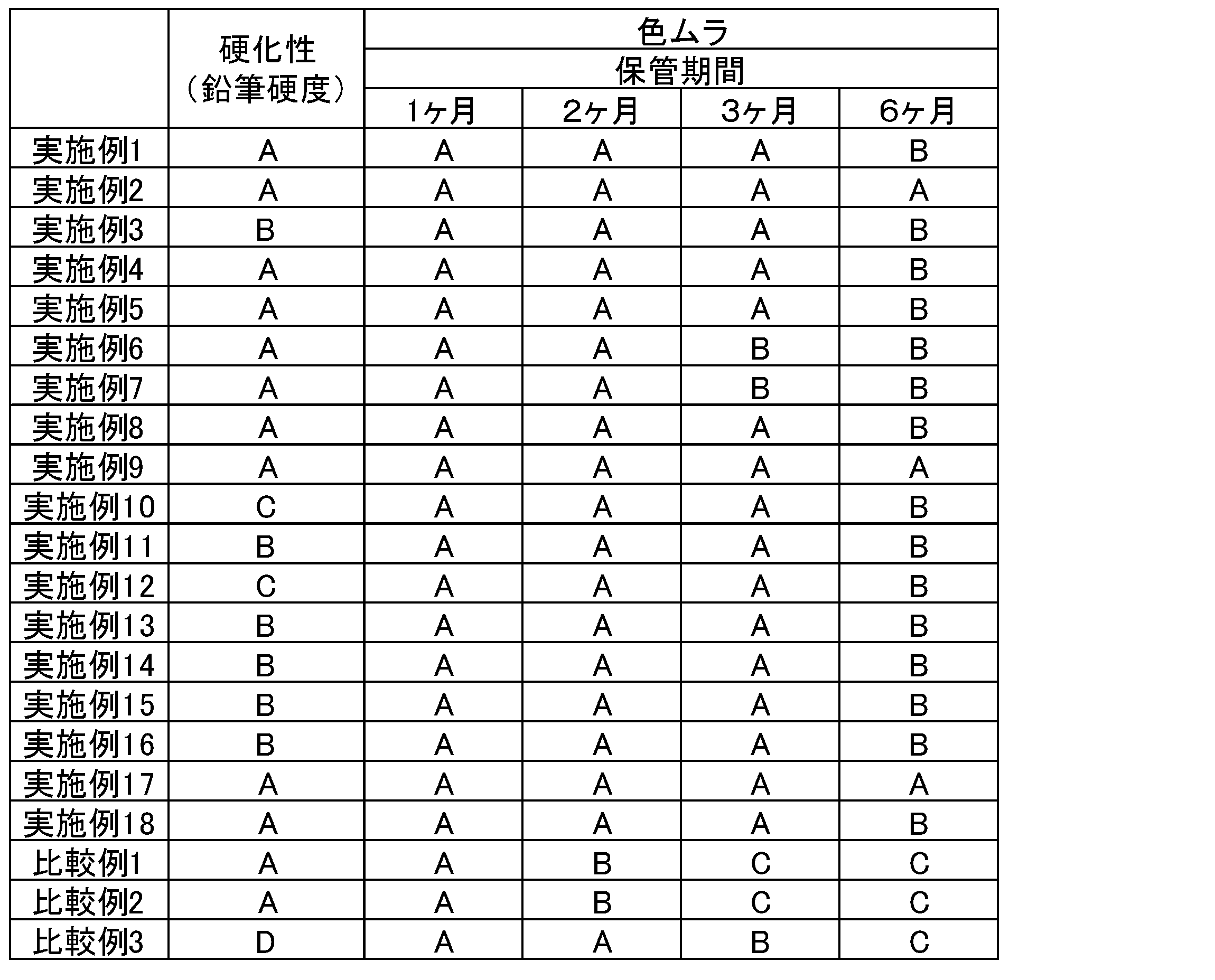
上記結果より、実施例は、長期間保管した後に使用しても、色ムラが抑制された硬化膜を製造することができた。一方、比較例は、保管期間が長くなるに伴い、色ムラが生じやすかった。
Claims (13)
- ハロゲン化亜鉛フタロシアニン顔料と、下記式(1)で表されるマレイミド化合物と、前記マレイミド化合物以外の硬化性化合物と、溶剤とを含み、
前記マレイミド化合物の分子量が100~400であり、
前記マレイミド化合物の含有量が、前記ハロゲン化亜鉛フタロシアニン顔料の100質量部に対して、0.08~0.8質量部である、着色組成物;

- 前記マレイミド化合物を、前記着色組成物の全固形分に対して0.05~0.5質量%含有する、請求項1に記載の着色組成物。
- 前記マレイミド化合物を、前記硬化性化合物の100質量部に対して、0.2~2.0質量部含有する、請求項1または2に記載の着色組成物。
- 前記硬化性化合物が、エポキシ基を有する化合物を含む、請求項1~3のいずれか1項に記載の着色組成物。
- さらに、芳香族アミン化合物を含む、請求項4に記載の着色組成物。
- 前記硬化性化合物が、エチレン性不飽和結合を有する化合物を含む、請求項1~5のいずれか1項に記載の着色組成物。
- 前記硬化性化合物が、エポキシ基を有する化合物とエチレン性不飽和結合を有する化合物とを含む、請求項1~5のいずれか1項に記載の着色組成物。
- さらに、アゾ基を有する着色剤を含む、請求項1~7のいずれか1項に記載の着色組成物。
- カラーフィルタ用である、請求項1~8のいずれか1項に記載の着色組成物。
- 請求項1~9のいずれか1項に記載の着色組成物を用いた、カラーフィルタ。
- 請求項1~9のいずれか1項に記載の着色組成物を用いて支持体上に着色組成物層を形成する工程と、フォトリソグラフィ法またはドライエッチング法により、前記着色組成物層に対してパターンを形成する工程とを有する、パターン形成方法。
- 請求項10に記載のカラーフィルタを有する、固体撮像素子。
- 請求項10に記載のカラーフィルタを有する、画像表示装置。
Priority Applications (2)
| Application Number | Priority Date | Filing Date | Title |
|---|---|---|---|
| JP2017564228A JP6587697B2 (ja) | 2016-01-29 | 2017-01-23 | 着色組成物、カラーフィルタ、パターン形成方法、固体撮像素子および画像表示装置 |
| US16/043,433 US10634997B2 (en) | 2016-01-29 | 2018-07-24 | Coloring composition, color filter, pattern forming method, solid-state imaging device, and image display device |
Applications Claiming Priority (2)
| Application Number | Priority Date | Filing Date | Title |
|---|---|---|---|
| JP2016015781 | 2016-01-29 | ||
| JP2016-015781 | 2016-01-29 |
Related Child Applications (1)
| Application Number | Title | Priority Date | Filing Date |
|---|---|---|---|
| US16/043,433 Continuation US10634997B2 (en) | 2016-01-29 | 2018-07-24 | Coloring composition, color filter, pattern forming method, solid-state imaging device, and image display device |
Publications (1)
| Publication Number | Publication Date |
|---|---|
| WO2017130883A1 true WO2017130883A1 (ja) | 2017-08-03 |
Family
ID=59398064
Family Applications (1)
| Application Number | Title | Priority Date | Filing Date |
|---|---|---|---|
| PCT/JP2017/002058 Ceased WO2017130883A1 (ja) | 2016-01-29 | 2017-01-23 | 着色組成物、カラーフィルタ、パターン形成方法、固体撮像素子および画像表示装置 |
Country Status (4)
| Country | Link |
|---|---|
| US (1) | US10634997B2 (ja) |
| JP (1) | JP6587697B2 (ja) |
| TW (1) | TWI708122B (ja) |
| WO (1) | WO2017130883A1 (ja) |
Cited By (1)
| Publication number | Priority date | Publication date | Assignee | Title |
|---|---|---|---|---|
| JP2020204712A (ja) * | 2019-06-18 | 2020-12-24 | 三菱ケミカル株式会社 | 感光性着色樹脂組成物、カラーフィルタ、及び画像表示装置 |
Citations (14)
| Publication number | Priority date | Publication date | Assignee | Title |
|---|---|---|---|---|
| JPH10333325A (ja) * | 1997-05-30 | 1998-12-18 | Hitachi Chem Co Ltd | 感光性組成物、感光性エレメント及びカラ−フィルタの製造法 |
| JP2003213171A (ja) * | 2002-01-24 | 2003-07-30 | Konica Corp | 活性エネルギー線硬化性インクジェットインク組成物及びそれを用いたインクジェット記録方法 |
| JP2004091555A (ja) * | 2002-08-30 | 2004-03-25 | Konica Minolta Holdings Inc | 画像形成方法、印刷物及び記録装置 |
| JP2009102499A (ja) * | 2007-10-23 | 2009-05-14 | Canon Inc | 活性エネルギー線硬化型液体組成物及び液体カートリッジ |
| JP2010180289A (ja) * | 2009-02-04 | 2010-08-19 | Toyo Ink Mfg Co Ltd | 微細化ジケトピロロピロール顔料、その製造方法、およびそれを用いた着色組成物およびカラーフィルタ |
| JP2011170307A (ja) * | 2009-03-31 | 2011-09-01 | Fujifilm Corp | 着色硬化性組成物、カラーフィルタの製造方法、カラーフィルタ、固体撮像素子、および液晶表示装置 |
| JP2011253174A (ja) * | 2010-05-07 | 2011-12-15 | Fujifilm Corp | 着色感光性組成物、カラーフィルタの製造方法、カラーフィルタ、及び液晶表示装置 |
| JP2012067151A (ja) * | 2010-09-21 | 2012-04-05 | Jnc Corp | インクジェット用光硬化性インク組成物 |
| WO2012102046A1 (ja) * | 2011-01-26 | 2012-08-02 | コニカミノルタホールディングス株式会社 | 活性エネルギー線硬化型インクジェットインク組成物、活性エネルギー線硬化型インクジェットインク及びインクジェット記録方法 |
| JP2012145604A (ja) * | 2011-01-06 | 2012-08-02 | Fujifilm Corp | 着色感光性組成物、カラーフィルタの製造方法、カラーフィルタ、液晶表示装置、及び有機el表示装置 |
| US20140091267A1 (en) * | 2012-09-28 | 2014-04-03 | Chi Mei Corporation | Photosensitive resin composition for color filters and uses thereof |
| JP2015034838A (ja) * | 2012-08-15 | 2015-02-19 | 花王株式会社 | カラーフィルター用顔料分散体 |
| JP2015151467A (ja) * | 2014-02-14 | 2015-08-24 | 富士フイルム株式会社 | 着色組成物、硬化膜、カラーフィルタ、パターン形成方法、カラーフィルタの製造方法、固体撮像素子、および、画像表示装置 |
| JP2015194521A (ja) * | 2014-03-31 | 2015-11-05 | 東洋インキScホールディングス株式会社 | カラーフィルタ用着色組成物、およびカラーフィルタ |
Family Cites Families (13)
| Publication number | Priority date | Publication date | Assignee | Title |
|---|---|---|---|---|
| JPH1060214A (ja) * | 1996-08-22 | 1998-03-03 | Nippon Oil Co Ltd | カラーフィルター用アクリル樹脂組成物 |
| TWI303640B (en) * | 2001-09-25 | 2008-12-01 | Dainippon Printing Co Ltd | Alkali-soluble maleimide copolymer and liquid crystal display comprising the same |
| JP2003167113A (ja) | 2001-11-30 | 2003-06-13 | Dainippon Ink & Chem Inc | カラーフィルター用光重合性着色組成物、カラーフィルター |
| JP2003192948A (ja) | 2001-12-26 | 2003-07-09 | Dainippon Ink & Chem Inc | カラーフィルター用インクジェットインキ組成物、カラーフィルターおよびその製造方法 |
| JP4195329B2 (ja) | 2003-03-24 | 2008-12-10 | 大日本印刷株式会社 | 着色レジスト用顔料分散液、感光性着色組成物、及び、カラーフィルター |
| JP2011057843A (ja) | 2009-09-09 | 2011-03-24 | Sanyo Shikiso Kk | 顔料分散体およびこれを用いた感光性組成物 |
| JP4905547B2 (ja) * | 2009-12-22 | 2012-03-28 | 凸版印刷株式会社 | カラーフィルタ基板および液晶表示装置 |
| TWI404767B (zh) * | 2010-03-22 | 2013-08-11 | Chi Mei Corp | A color filter for a color filter, a color filter having a pixel layer formed by the composition, and a liquid crystal display element including the color filter |
| JP5121912B2 (ja) | 2010-11-24 | 2013-01-16 | 富士フイルム株式会社 | 着色感光性樹脂組成物、パターン形成方法、カラーフィルタの製造方法、カラーフィルタ及びそれを備えた表示装置 |
| JP6061828B2 (ja) * | 2013-09-25 | 2017-01-18 | 富士フイルム株式会社 | 樹脂組成物、赤外線透過フィルタおよびその製造方法ならびに赤外線センサ |
| JP6159348B2 (ja) * | 2014-02-14 | 2017-07-05 | 富士フイルム株式会社 | 着色組成物、硬化膜、カラーフィルタ、パターン形成方法、カラーフィルタの製造方法、固体撮像素子、および、画像表示装置 |
| JP6162165B2 (ja) * | 2014-03-31 | 2017-07-12 | 富士フイルム株式会社 | 着色組成物、硬化膜、カラーフィルタ、カラーフィルタの製造方法、固体撮像素子、画像表示装置、有機エレクトロルミネッセンス素子、色素および色素の製造方法 |
| KR101828198B1 (ko) * | 2014-04-01 | 2018-02-09 | 다이요 잉키 세이조 가부시키가이샤 | 경화성 수지 조성물, 영구 피막 형성용 경화성 수지 조성물, 드라이 필름 및 프린트 배선판 |
-
2017
- 2017-01-23 TW TW106102299A patent/TWI708122B/zh active
- 2017-01-23 JP JP2017564228A patent/JP6587697B2/ja active Active
- 2017-01-23 WO PCT/JP2017/002058 patent/WO2017130883A1/ja not_active Ceased
-
2018
- 2018-07-24 US US16/043,433 patent/US10634997B2/en active Active
Patent Citations (14)
| Publication number | Priority date | Publication date | Assignee | Title |
|---|---|---|---|---|
| JPH10333325A (ja) * | 1997-05-30 | 1998-12-18 | Hitachi Chem Co Ltd | 感光性組成物、感光性エレメント及びカラ−フィルタの製造法 |
| JP2003213171A (ja) * | 2002-01-24 | 2003-07-30 | Konica Corp | 活性エネルギー線硬化性インクジェットインク組成物及びそれを用いたインクジェット記録方法 |
| JP2004091555A (ja) * | 2002-08-30 | 2004-03-25 | Konica Minolta Holdings Inc | 画像形成方法、印刷物及び記録装置 |
| JP2009102499A (ja) * | 2007-10-23 | 2009-05-14 | Canon Inc | 活性エネルギー線硬化型液体組成物及び液体カートリッジ |
| JP2010180289A (ja) * | 2009-02-04 | 2010-08-19 | Toyo Ink Mfg Co Ltd | 微細化ジケトピロロピロール顔料、その製造方法、およびそれを用いた着色組成物およびカラーフィルタ |
| JP2011170307A (ja) * | 2009-03-31 | 2011-09-01 | Fujifilm Corp | 着色硬化性組成物、カラーフィルタの製造方法、カラーフィルタ、固体撮像素子、および液晶表示装置 |
| JP2011253174A (ja) * | 2010-05-07 | 2011-12-15 | Fujifilm Corp | 着色感光性組成物、カラーフィルタの製造方法、カラーフィルタ、及び液晶表示装置 |
| JP2012067151A (ja) * | 2010-09-21 | 2012-04-05 | Jnc Corp | インクジェット用光硬化性インク組成物 |
| JP2012145604A (ja) * | 2011-01-06 | 2012-08-02 | Fujifilm Corp | 着色感光性組成物、カラーフィルタの製造方法、カラーフィルタ、液晶表示装置、及び有機el表示装置 |
| WO2012102046A1 (ja) * | 2011-01-26 | 2012-08-02 | コニカミノルタホールディングス株式会社 | 活性エネルギー線硬化型インクジェットインク組成物、活性エネルギー線硬化型インクジェットインク及びインクジェット記録方法 |
| JP2015034838A (ja) * | 2012-08-15 | 2015-02-19 | 花王株式会社 | カラーフィルター用顔料分散体 |
| US20140091267A1 (en) * | 2012-09-28 | 2014-04-03 | Chi Mei Corporation | Photosensitive resin composition for color filters and uses thereof |
| JP2015151467A (ja) * | 2014-02-14 | 2015-08-24 | 富士フイルム株式会社 | 着色組成物、硬化膜、カラーフィルタ、パターン形成方法、カラーフィルタの製造方法、固体撮像素子、および、画像表示装置 |
| JP2015194521A (ja) * | 2014-03-31 | 2015-11-05 | 東洋インキScホールディングス株式会社 | カラーフィルタ用着色組成物、およびカラーフィルタ |
Cited By (2)
| Publication number | Priority date | Publication date | Assignee | Title |
|---|---|---|---|---|
| JP2020204712A (ja) * | 2019-06-18 | 2020-12-24 | 三菱ケミカル株式会社 | 感光性着色樹脂組成物、カラーフィルタ、及び画像表示装置 |
| JP7447397B2 (ja) | 2019-06-18 | 2024-03-12 | 三菱ケミカル株式会社 | 感光性着色樹脂組成物、カラーフィルタ、及び画像表示装置 |
Also Published As
| Publication number | Publication date |
|---|---|
| TW201740191A (zh) | 2017-11-16 |
| TWI708122B (zh) | 2020-10-21 |
| JP6587697B2 (ja) | 2019-10-09 |
| US10634997B2 (en) | 2020-04-28 |
| US20180329295A1 (en) | 2018-11-15 |
| JPWO2017130883A1 (ja) | 2018-11-15 |
Similar Documents
| Publication | Publication Date | Title |
|---|---|---|
| JP6731475B2 (ja) | 感光性組成物、カラーフィルタ、パターン形成方法、固体撮像素子および画像表示装置 | |
| TWI761230B (zh) | 感放射線性樹脂組成物、硬化膜、圖案形成方法、固體攝影元件及影像顯示裝置 | |
| TWI773679B (zh) | 著色組成物、彩色濾光片、圖案形成方法、固體攝像元件以及圖像顯示裝置 | |
| JP6617201B2 (ja) | 着色組成物、カラーフィルタ、パターン形成方法、固体撮像素子、および、画像表示装置 | |
| JP7126537B2 (ja) | 着色組成物、着色組成物の製造方法、カラーフィルタ、パターン形成方法、固体撮像素子、および、画像表示装置 | |
| JP6591540B2 (ja) | 硬化性組成物、硬化性組成物の製造方法、膜、赤外線カットフィルタ、赤外線透過フィルタ、パターン形成方法および装置 | |
| JP2020073989A (ja) | 着色硬化性組成物、カラーフィルタ、固体撮像素子、画像表示装置および、硬化膜の製造方法 | |
| US11169439B2 (en) | Coloring composition and method for producing film | |
| WO2016072259A1 (ja) | 着色硬化性組成物、カラーフィルタ、パターン形成方法、カラーフィルタの製造方法、固体撮像素子、および、画像表示装置 | |
| JPWO2018173524A1 (ja) | 着色組成物、顔料分散液、顔料分散液の製造方法、硬化膜、カラーフィルタ、固体撮像素子および画像表示装置 | |
| JP2018054918A (ja) | 着色組成物、膜および膜の製造方法 | |
| JP6587697B2 (ja) | 着色組成物、カラーフィルタ、パターン形成方法、固体撮像素子および画像表示装置 |
Legal Events
| Date | Code | Title | Description |
|---|---|---|---|
| 121 | Ep: the epo has been informed by wipo that ep was designated in this application |
Ref document number: 17744113 Country of ref document: EP Kind code of ref document: A1 |
|
| WWE | Wipo information: entry into national phase |
Ref document number: 2017564228 Country of ref document: JP |
|
| NENP | Non-entry into the national phase |
Ref country code: DE |
|
| 122 | Ep: pct application non-entry in european phase |
Ref document number: 17744113 Country of ref document: EP Kind code of ref document: A1 |