WO2017130693A1 - 残存硫化水素の除去方法 - Google Patents
残存硫化水素の除去方法 Download PDFInfo
- Publication number
- WO2017130693A1 WO2017130693A1 PCT/JP2017/000602 JP2017000602W WO2017130693A1 WO 2017130693 A1 WO2017130693 A1 WO 2017130693A1 JP 2017000602 W JP2017000602 W JP 2017000602W WO 2017130693 A1 WO2017130693 A1 WO 2017130693A1
- Authority
- WO
- WIPO (PCT)
- Prior art keywords
- hydrogen sulfide
- reaction vessel
- solution
- water
- residual hydrogen
- Prior art date
- Legal status (The legal status is an assumption and is not a legal conclusion. Google has not performed a legal analysis and makes no representation as to the accuracy of the status listed.)
- Ceased
Links
Images

Classifications
-
- C—CHEMISTRY; METALLURGY
- C22—METALLURGY; FERROUS OR NON-FERROUS ALLOYS; TREATMENT OF ALLOYS OR NON-FERROUS METALS
- C22B—PRODUCTION AND REFINING OF METALS; PRETREATMENT OF RAW MATERIALS
- C22B3/00—Extraction of metal compounds from ores or concentrates by wet processes
- C22B3/20—Treatment or purification of solutions, e.g. obtained by leaching
- C22B3/44—Treatment or purification of solutions, e.g. obtained by leaching by chemical processes
-
- C—CHEMISTRY; METALLURGY
- C22—METALLURGY; FERROUS OR NON-FERROUS ALLOYS; TREATMENT OF ALLOYS OR NON-FERROUS METALS
- C22B—PRODUCTION AND REFINING OF METALS; PRETREATMENT OF RAW MATERIALS
- C22B23/00—Obtaining nickel or cobalt
-
- C—CHEMISTRY; METALLURGY
- C22—METALLURGY; FERROUS OR NON-FERROUS ALLOYS; TREATMENT OF ALLOYS OR NON-FERROUS METALS
- C22B—PRODUCTION AND REFINING OF METALS; PRETREATMENT OF RAW MATERIALS
- C22B3/00—Extraction of metal compounds from ores or concentrates by wet processes
- C22B3/04—Extraction of metal compounds from ores or concentrates by wet processes by leaching
- C22B3/06—Extraction of metal compounds from ores or concentrates by wet processes by leaching in inorganic acid solutions, e.g. with acids generated in situ; in inorganic salt solutions other than ammonium salt solutions
- C22B3/08—Sulfuric acid, other sulfurated acids or salts thereof
-
- Y—GENERAL TAGGING OF NEW TECHNOLOGICAL DEVELOPMENTS; GENERAL TAGGING OF CROSS-SECTIONAL TECHNOLOGIES SPANNING OVER SEVERAL SECTIONS OF THE IPC; TECHNICAL SUBJECTS COVERED BY FORMER USPC CROSS-REFERENCE ART COLLECTIONS [XRACs] AND DIGESTS
- Y02—TECHNOLOGIES OR APPLICATIONS FOR MITIGATION OR ADAPTATION AGAINST CLIMATE CHANGE
- Y02P—CLIMATE CHANGE MITIGATION TECHNOLOGIES IN THE PRODUCTION OR PROCESSING OF GOODS
- Y02P10/00—Technologies related to metal processing
- Y02P10/20—Recycling
Definitions
- the present invention relates to a method for removing hydrogen sulfide remaining in a sulfurization reaction vessel in which a treatment by a sulfurization reaction using a sulfurizing agent is performed.
- HPAL high pressure acid leaching
- Patent Document 1 by adjusting the pressure of the reaction vessel, the reaction temperature, and the addition of seed crystals, a method for suppressing the generation and growth of deposits on the inner wall of the reaction vessel It has been known. By using this method, the generation of deposits in the reaction vessel can be suppressed to some extent, but cannot be completely eliminated. Therefore, for example, it is necessary to stop the operation at a frequency of about once every six months, open the reaction vessel, and remove the deposits attached to the inner wall of the reaction vessel.
- residual hydrogen sulfide removal operation the work of reducing the residual hydrogen sulfide concentration in the reaction vessel to a value that does not affect the human body (hereinafter, This is called “residual hydrogen sulfide removal operation”.
- residual hydrogen sulfide removal operation the work of reducing the residual hydrogen sulfide concentration in the reaction vessel to a value that does not affect the human body
- an inert gas such as nitrogen or argon is used as the gas used for gas replacement.
- the present invention has been proposed in view of such circumstances, and an object thereof is to provide a method for efficiently removing hydrogen sulfide remaining in a reaction vessel in a short work time.
- the present inventors have made extensive studies to solve the above-described problems. As a result, before the hydrogen sulfide remaining in the reaction vessel is replaced by an inert gas and removed, a predetermined amount of water is charged into the reaction vessel and subjected to a stirring treatment, and then the water is drained and the substitution treatment is performed. As a result, it has been found that the processing time of the replacement process can be shortened effectively, and the present invention has been completed. Specifically, the present invention provides the following.
- a first aspect of the present invention is a method for removing hydrogen sulfide remaining in a reaction vessel in which a sulfurizing agent is added to a solution to cause a sulfurization reaction, the hydrogen sulfide remaining in the reaction vessel, After removing the solution from the solution, an amount of water corresponding to 30% by volume or more and 100% by volume or less of the total volume is put into the reaction vessel after the solution is withdrawn and stirred, and the reaction vessel after the water is removed is not discharged.
- a method for removing residual hydrogen sulfide filled with active gas is a method for removing hydrogen sulfide remaining in a reaction vessel in which a sulfurizing agent is added to a solution to cause a sulfurization reaction, the hydrogen sulfide remaining in the reaction vessel, After removing the solution from the solution, an amount of water corresponding to 30% by volume or more and 100% by volume or less of the total volume is put into the reaction vessel after the solution is withdrawn and stirred, and the reaction vessel after the water is removed is not discharged.
- the second invention of the present invention is the method for removing residual hydrogen sulfide according to the first invention, wherein the stirring time of the water placed in the reaction vessel is 10 minutes or more.
- the solution is obtained by acid leaching under high temperature and high pressure using sulfuric acid for nickel oxide ore to obtain a leachate containing nickel and cobalt.
- the method for removing residual hydrogen sulfide which is a solution obtained after neutralizing the leachate and then separating the nickel and cobalt sulfides produced by subjecting the neutralized leachate to sulfidation with a sulfiding agent. is there.
- hydrogen sulfide remaining in the reaction vessel can be efficiently removed in a short working time. As a result, it is possible to reduce the time for stopping the operation and perform an efficient process operation.
- the present embodiment a specific embodiment of the present invention (hereinafter referred to as “the present embodiment”) will be described in detail.
- this invention is not limited to the following embodiment, A various change is possible in the range which does not change the summary of this invention.
- the notation “X to Y” (X and Y are arbitrary numerical values) means “X or more and Y or less”.
- the method for removing residual hydrogen sulfide according to the present embodiment is a method for removing hydrogen sulfide remaining in a reaction vessel in which a sulfurizing agent is added to a solution to cause a sulfurization reaction.
- a sulfidation reaction vessel used in a sulfidation step in a nickel oxide ore hydrometallurgy process that is, a leaching solution containing nickel and cobalt by acid leaching using sulfuric acid to nickel oxide ore under high temperature and high pressure.
- a sulfidizing agent such as hydrogen sulfide gas
- the generated nickel and cobalt sulfides were separated, and the inside of the sulfurization reaction vessel This is a method for removing the hydrogen sulfide remaining in the water.
- the solution is drawn out from the reaction vessel, and the reaction vessel after the solution is drawn out has an amount corresponding to a ratio of 30% by volume to 100% by volume of the total volume of the reaction vessel.
- Add water and stir Next, water is drained from the reaction container, and the inert gas is filled into the reaction container after the water is drained. That is, this method is characterized in that water is poured into the reaction vessel at a predetermined ratio and stirred before the inside of the reaction vessel is replaced with an inert gas.
- the amount of hydrogen sulfide in the reaction vessel to be replaced with an inert gas can be reduced to a minimum, thereby shortening the work time and efficiently.
- an effective removal operation can be performed. In addition, this makes it possible to shorten the time for stopping the operation for opening the reaction vessel, and to improve the efficiency of the process operation.
- the method for removing residual hydrogen sulfide is a method for removing hydrogen sulfide remaining in a reaction vessel in which a sulfurizing agent is added to a solution to cause a sulfurization reaction.
- work in the reaction container after the sulfidation process in a smelting process can be mentioned.
- the removal of residual hydrogen sulfide bromide in the reaction vessel after the sulfidation treatment in the hydrometallurgical process will be described as an example.
- FIG. 1 is a process diagram showing the flow of a hydrometallurgical process for nickel oxide ore.
- This hydrometallurgical process includes a leaching step S11 in which nickel oxide ore is acid leached with sulfuric acid under high temperature and high pressure to obtain a leaching solution and a leaching residue, a neutralized starch containing impurities by adding a neutralizing agent to the leaching solution, A neutralization step S12 for obtaining a post-neutralization solution, and a sulfurization step S13 for obtaining a sulfide and a post-sulfurization solution by adding a sulfiding agent to the post-neutralization solution. Further, this hydrometallurgical process has a final neutralization step S14 for recovering and detoxifying the post-sulfurization liquid discharged in the sulfurization step S13.
- the method for removing residual hydrogen sulfide according to the present embodiment is, for example, for removing hydrogen sulfide remaining in the reaction vessel after the treatment in the sulfurization step S13 in this hydrometallurgical process.
- Leaching step S11 sulfuric acid is added to the nickel oxide ore slurry using, for example, a high-temperature pressure vessel (autoclave) and the like, for example, while pressing at a temperature of about 220 ° C. to 280 ° C.
- This is a step of performing a stirring treatment to generate a leaching slurry comprising a leaching solution containing nickel and cobalt and a leaching residue.
- nickel oxide ore examples include so-called laterite ores such as limonite ore and saprolite ore.
- Laterite ore usually has a nickel content of 0.8 to 2.5% by weight and is contained as a hydroxide or siliceous clay (magnesium silicate) mineral.
- the leaching slurry composed of the obtained leaching solution and leaching residue is washed, and solid-liquid separation is performed into a leaching solution containing nickel, cobalt, and the like, and a leaching residue that is hematite (mainly Fe2O3).
- the solid-liquid separation process for example, after the leaching slurry is mixed with a cleaning liquid, the solid-liquid separation process is performed by a solid-liquid separation facility such as a thickener using a flocculant supplied from a flocculant supply facility or the like. Specifically, the leaching slurry is first diluted with a cleaning liquid, and then the leaching residue in the slurry is concentrated as a thickener sediment.
- the leachate separated by the solid-liquid separation process for the leach slurry is transferred to the next neutralization step S12, while the leach residue is recovered from the bottom of the thickener.
- the recovered leaching residue is transferred to a leaching residue cleaning step and subjected to a cleaning process with cleaning water.
- Neutralization process S12 adjusts pH by adding a neutralizing agent to the leachate obtained by leaching process S11 mentioned above, and neutralized starch containing an impurity element and the liquid after neutralization It is a process to obtain.
- a neutralizing agent such as nickel and cobalt
- valuable metals such as nickel and cobalt are included in the post-neutralization solution, and most of impurities such as iron and aluminum become neutralized starch.
- neutralizing agent conventionally known neutralizing agents can be used, and examples thereof include calcium carbonate, slaked lime, and sodium hydroxide.
- the pH it is preferable to adjust the pH to the range of 1 to 4 while suppressing the oxidation of the separated leachate, and more preferably to the range of 1.5 to 2.5. preferable. If the pH is less than 1, neutralization may be insufficient and the neutralized starch and the neutralized solution may not be separated. On the other hand, when pH exceeds 4, not only impurities, such as aluminum, but valuable metals, such as nickel and cobalt, may be contained in neutralized starch.
- Sulfurization step Sulfurization step S13 is performed by adding a sulfidizing agent to the post-neutralization solution obtained in the above-described neutralization step S12 to obtain nickel and cobalt sulfide (nickel-cobalt mixed sulfide), post-sulfurization liquid, It is the process of obtaining.
- nickel, cobalt, zinc and the like become sulfides, and the others are contained in the post-sulfurization solution.
- a sulfidizing agent is added to the obtained post-neutralization solution to cause a sulfidation reaction in which nickel or cobalt contained in the post-neutralization solution is sulfidized into a sulfide form.
- a sulfide of nickel and cobalt with a small amount of impurity components and a post-sulfurization liquid (poor liquid) in which the nickel concentration is stabilized at a low level are generated.
- the sulfiding agent for example, hydrogen sulfide gas, sodium sulfide, sodium hydrogen sulfide (sodium hydrosulfide) and the like can be used.
- hydrogen sulfide gas is particularly easy in terms of handling and cost. preferable.
- a plurality of these sulfurizing agents may be added.
- the nickel / cobalt mixed sulfide slurry is subjected to sedimentation separation using a sedimentation separator such as thickener, and the nickel / cobalt mixed sulfide is separated and recovered from the bottom of the thickener.
- a sedimentation separator such as thickener
- the method for removing residual hydrogen sulfide according to the present embodiment is to remove hydrogen sulfide remaining in the reaction vessel after the sulfurization treatment in the sulfurization step S13.
- hydrogen sulfide gas is used as the sulfiding agent in the sulfiding treatment in the sulfiding step S13, unreacted hydrogen sulfide remains after the reaction, and a salt such as sodium sulfide or sodium hydrogen sulfide is used as the sulfiding agent. Even in this case, hydrogen sulfide is generated depending on the state of the solution. In this method of removing hydrogen sulfide, hydrogen sulfide remaining after these treatment reactions is removed.
- the method of detoxification treatment in the final neutralization step S14 is not particularly limited, but for example, by adding a neutralizing agent such as calcium carbonate (limestone) slurry or calcium hydroxide (slaked lime) slurry. Adjust to a predetermined range.
- a neutralizing agent such as calcium carbonate (limestone) slurry or calcium hydroxide (slaked lime) slurry. Adjust to a predetermined range.
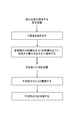
- FIG. 2 is a diagram for explaining the flow of the residual hydrogen sulfide removal method according to the present embodiment.
- this residual hydrogen sulfide removal method for example, hydrogen sulfide remaining in the reaction vessel after the sulfurization treatment in the above-described sulfurization step S13 is targeted for removal.
- the solution present in the reaction vessel after the sulfurization treatment is extracted.
- the solution withdrawn from the reaction vessel is, for example, a post-sulfurization solution obtained by a sulfidation reaction.
- hydrogen sulfide is dissolved in the post-sulfurization solution obtained by the sulfidation reaction.
- this solution is also referred to as “process liquid”.
- the nickel / cobalt mixed sulfide is separated and recovered from the bottom of the thickener by a sedimentation separation device such as thickener, while the sulfidized liquid is separately extracted from the device by overflow.
- a sedimentation separation device such as thickener
- withdrawing the solution includes the meaning of withdrawing due to overflow in a broad sense, and also with the meaning of withdrawing a trace amount of process liquid remaining in the reaction vessel after withdrawal due to overflow.
- the method for extracting the process liquid from the reaction vessel is not particularly limited, but it is preferable that the process liquid can be almost completely extracted from the reaction vessel.
- the amount of water charged into the reaction vessel is charged in an amount corresponding to a ratio of 30% by volume to 100% by volume of the total volume of the reaction vessel from which the solution has been removed. Further, it is preferably 40% by volume or more of the total volume of the reaction vessel, more preferably 50% by volume or more of the total volume. If the amount of water charged is too small, such as less than 30% by volume of the total volume of the reaction vessel, absorption of hydrogen sulfide gas by water and cleaning of the solution (process solution) adhering to the vessel will be insufficient. .
- the water in the reaction vessel is stirred.
- the process liquid adhering to the reaction vessel and dissolved in hydrogen sulfide can be washed away.
- the hydrogen sulfide gas remaining in the reaction vessel is easily dissolved in water, it is possible to effectively absorb and remove the hydrogen sulfide gas from the gas phase by introducing water and stirring. it can.
- the method of stirring water is not particularly limited, and can be performed by a known method such as using a stirrer or blowing an inert gas into water.
- the stirring time is preferably 10 minutes or more, preferably 30 minutes or more from the viewpoint of sufficiently absorbing the remaining hydrogen sulfide gas and washing the process liquid adhering to the reaction vessel. It is more preferable. Of course, a longer agitation treatment time is preferable from the viewpoint of dissolving hydrogen sulfide gas, washing process liquids, and the like.
- the water stirring process When the water stirring process is completed, the water is extracted from the reaction vessel. In addition, since hydrogen sulfide is dissolved in the extracted water, it is preferable to send the solution to an equipment for performing a detoxification treatment.
- the inert gas is not particularly limited, and nitrogen gas, argon, or the like can be used. Among them, it is preferable to use nitrogen gas because it is inexpensive and can be produced in large quantities. Note that air may be used as the gas for the replacement treatment, but the remaining hydrogen sulfide gas may be oxidized by the air blown to generate fine sulfur.
- an inert gas is blown so that the internal pressure of the reaction vessel becomes, for example, 50 kPag or more, and then the gas is extracted from the reaction vessel.
- the hydrogen sulfide gas remaining in the reaction vessel can be replaced with an inert gas.
- the replacement treatment with the inert gas can be performed in a short time of about 1 hour, for example. That is, the remaining hydrogen sulfide gas can be removed in a short time. This is because the hydrogen sulfide gas remaining can be absorbed into the water by performing a stirring process by charging a predetermined amount of water into the reaction vessel before the replacement with the inert gas, In addition, even if the process liquid is present in the reaction vessel, it can be easily washed and removed with the water, so that a large amount of residual hydrogen sulfide can be removed before the replacement treatment. is there.
- Example 1 As a sulfidation step in the nickel oxide ore hydrometallurgical process, a sulfidation reaction was performed using hydrogen sulfide gas and sodium hydrosulfide as a sulfiding agent in the solution after neutralization (the solution after neutralization). This sulfidation reaction was carried out in a reaction system in which four sulfidation reaction vessels having a stirrer were connected in series and continuously subjected to sulfidation.
- the water charged in the reaction vessel was stirred for 1 hour by a stirrer equipped with a paddle type stirring blade installed in the reaction vessel, and water was extracted after the stirring treatment.
- the extracted water was sent to an abatement facility.
- the hydrogen sulfide concentration in the reaction vessel was measured, and when the hydrogen sulfide concentration in the reaction vessel became 50 ppm or less, the replacement of hydrogen sulfide was completed.
- the mixed gas of nitrogen gas and hydrogen sulfide gas extracted from the reaction vessel was subjected to a treatment for removing hydrogen sulfide in a gas cleaning tower using a sodium hydroxide aqueous solution as a cleaning liquid, and then released into the atmosphere.
- the [1] step was 4 hours
- the [2] step was 6 hours
- the [3] step was 24 hours
- the total time required to remove the residual hydrogen sulfide in the reaction vessel was 34 hours. there were.
- Comparative Example 1 In Comparative Example 1, unlike in Example 1, the step [2] was not performed. The remaining hydrogen sulfide in the reaction vessel was removed by the same procedure as in Example 1 except that.
- the time required for each step was measured in the same manner as in Example 1.
- the [1] step was 4 hours
- the [2] step was 0 hours
- the [3] step was 73 hours.
- the total time taken to remove hydrogen was 77 hours.
- Example 1 in which water was charged into the reaction vessel and stirred prior to the nitrogen gas replacement process was compared with Comparative Example 1 based on the conventional method. It was found that the time required for the replacement treatment with nitrogen gas can be greatly shortened as compared with. And, as an operation to remove the residual hydrogen sulfide in the reaction vessel, even if taking into account the time for charging the water into the reaction vessel and the stirring process of the water, less than half of the time required by the conventional method It was found that efficient work can be performed.
Landscapes
- Chemical & Material Sciences (AREA)
- Engineering & Computer Science (AREA)
- Organic Chemistry (AREA)
- Manufacturing & Machinery (AREA)
- Metallurgy (AREA)
- Mechanical Engineering (AREA)
- Materials Engineering (AREA)
- Life Sciences & Earth Sciences (AREA)
- Environmental & Geological Engineering (AREA)
- Geology (AREA)
- Geochemistry & Mineralogy (AREA)
- General Life Sciences & Earth Sciences (AREA)
- Inorganic Chemistry (AREA)
- Chemical Kinetics & Catalysis (AREA)
- General Chemical & Material Sciences (AREA)
- Manufacture And Refinement Of Metals (AREA)
- Cleaning In General (AREA)
- Gas Separation By Absorption (AREA)
- Removal Of Specific Substances (AREA)
Priority Applications (4)
| Application Number | Priority Date | Filing Date | Title |
|---|---|---|---|
| CA3011953A CA3011953C (en) | 2016-01-28 | 2017-01-11 | Method for removing residual hydrogen sulfide |
| AU2017213213A AU2017213213B2 (en) | 2016-01-28 | 2017-01-11 | Method for removing residual hydrogen sulfide |
| EP17743924.7A EP3409798A4 (en) | 2016-01-28 | 2017-01-11 | METHOD FOR REMOVING RESIDUAL HYDROGEN SULFIDE |
| PH12018501556A PH12018501556A1 (en) | 2016-01-28 | 2018-07-20 | Method for removing residual hydrogen sulfide |
Applications Claiming Priority (2)
| Application Number | Priority Date | Filing Date | Title |
|---|---|---|---|
| JP2016-014137 | 2016-01-28 | ||
| JP2016014137A JP6696189B2 (ja) | 2016-01-28 | 2016-01-28 | 残存硫化水素の除去方法 |
Publications (1)
| Publication Number | Publication Date |
|---|---|
| WO2017130693A1 true WO2017130693A1 (ja) | 2017-08-03 |
Family
ID=59398229
Family Applications (1)
| Application Number | Title | Priority Date | Filing Date |
|---|---|---|---|
| PCT/JP2017/000602 Ceased WO2017130693A1 (ja) | 2016-01-28 | 2017-01-11 | 残存硫化水素の除去方法 |
Country Status (6)
| Country | Link |
|---|---|
| EP (1) | EP3409798A4 (enExample) |
| JP (1) | JP6696189B2 (enExample) |
| AU (1) | AU2017213213B2 (enExample) |
| CA (1) | CA3011953C (enExample) |
| PH (1) | PH12018501556A1 (enExample) |
| WO (1) | WO2017130693A1 (enExample) |
Families Citing this family (2)
| Publication number | Priority date | Publication date | Assignee | Title |
|---|---|---|---|---|
| JP7277074B2 (ja) * | 2018-01-19 | 2023-05-18 | 住友金属鉱山株式会社 | 残存硫化水素の除去方法及び硫化反応容器 |
| JP7521413B2 (ja) | 2020-12-21 | 2024-07-24 | 住友金属鉱山株式会社 | 硫化反応槽のイナーティング方法 |
Citations (3)
| Publication number | Priority date | Publication date | Assignee | Title |
|---|---|---|---|---|
| WO2009063496A2 (en) * | 2007-09-14 | 2009-05-22 | Dorf Ketal Chemicals (I) Private Limited | A novel additive for naphthenic acid corrosion inhibition and method of using the same |
| JP2011241446A (ja) | 2010-05-18 | 2011-12-01 | Sumitomo Metal Mining Co Ltd | 硫化反応工程の反応制御方法 |
| JP2014028724A (ja) * | 2012-07-31 | 2014-02-13 | Sumitomo Metal Mining Co Ltd | 硫化水素ガス製造プラントシステム及び硫化水素ガスの回収利用方法 |
Family Cites Families (5)
| Publication number | Priority date | Publication date | Assignee | Title |
|---|---|---|---|---|
| JPS5748380A (en) * | 1980-09-05 | 1982-03-19 | Daido Steel Co Ltd | Control of melting treatment of industrial waste |
| CA2507355C (en) * | 2002-11-28 | 2012-02-21 | Jolinde Machteld Van De Graaf | Process for removing sulphur compounds including hydrogen sulphide and mercaptans from gas streams |
| JP4888580B2 (ja) * | 2010-04-22 | 2012-02-29 | 住友金属鉱山株式会社 | 貯液装置及びその圧力制御方法 |
| JP5700029B2 (ja) * | 2012-12-11 | 2015-04-15 | 住友金属鉱山株式会社 | 硫化水素を含む貧液の処理方法及び処理装置 |
| JP2014234212A (ja) * | 2013-06-03 | 2014-12-15 | 出光興産株式会社 | 硫化物系化合物保存用容器の製造方法 |
-
2016
- 2016-01-28 JP JP2016014137A patent/JP6696189B2/ja active Active
-
2017
- 2017-01-11 EP EP17743924.7A patent/EP3409798A4/en not_active Withdrawn
- 2017-01-11 CA CA3011953A patent/CA3011953C/en active Active
- 2017-01-11 AU AU2017213213A patent/AU2017213213B2/en not_active Ceased
- 2017-01-11 WO PCT/JP2017/000602 patent/WO2017130693A1/ja not_active Ceased
-
2018
- 2018-07-20 PH PH12018501556A patent/PH12018501556A1/en unknown
Patent Citations (3)
| Publication number | Priority date | Publication date | Assignee | Title |
|---|---|---|---|---|
| WO2009063496A2 (en) * | 2007-09-14 | 2009-05-22 | Dorf Ketal Chemicals (I) Private Limited | A novel additive for naphthenic acid corrosion inhibition and method of using the same |
| JP2011241446A (ja) | 2010-05-18 | 2011-12-01 | Sumitomo Metal Mining Co Ltd | 硫化反応工程の反応制御方法 |
| JP2014028724A (ja) * | 2012-07-31 | 2014-02-13 | Sumitomo Metal Mining Co Ltd | 硫化水素ガス製造プラントシステム及び硫化水素ガスの回収利用方法 |
Non-Patent Citations (3)
| Title |
|---|
| ANONYMOUS: "Yuki Kinzoku Kagaku Jikken no Tokucho", YUKI KINZOKU KAGAKU JIKKEN NO TOKUCHO, 11 September 2015 (2015-09-11), pages 1 - 2, XP009513607, Retrieved from the Internet <URL:https://web.archive.org/web/20150911061047/http://home.hiroshima-u.ac.jp/sakutai/aspect.html> * |
| RODO SAIGAI JIREI: "Unemployment site at work: Labor accident case (translated)", SHOKUBA NO ANZEN SITE, 6 January 2013 (2013-01-06), pages 1 - 2, XP009513541, Retrieved from the Internet <URL:http://web.archive.org/web/20130106013601/http://anzeninfo.mhlw.go.jp/anzen_pg/SAI_DET.aspx?joho_no=100773> * |
| See also references of EP3409798A4 |
Also Published As
| Publication number | Publication date |
|---|---|
| JP2017133073A (ja) | 2017-08-03 |
| AU2017213213A1 (en) | 2018-08-09 |
| CA3011953C (en) | 2021-04-27 |
| AU2017213213B2 (en) | 2019-09-12 |
| PH12018501556A1 (en) | 2019-05-20 |
| CA3011953A1 (en) | 2017-08-03 |
| EP3409798A4 (en) | 2019-07-31 |
| EP3409798A1 (en) | 2018-12-05 |
| JP6696189B2 (ja) | 2020-05-20 |
Similar Documents
| Publication | Publication Date | Title |
|---|---|---|
| JP5572928B2 (ja) | ニッケル酸化鉱石の湿式製錬方法 | |
| JP4888580B2 (ja) | 貯液装置及びその圧力制御方法 | |
| JP5644878B2 (ja) | 固液分離処理方法、並びにニッケル酸化鉱石の湿式製錬方法 | |
| CN107429320A (zh) | 钪回收方法 | |
| JP6750698B2 (ja) | ニッケル高圧浸出残渣の固液分離方法 | |
| WO2019035319A1 (ja) | 浸出処理方法、ニッケル酸化鉱石の湿式製錬方法 | |
| JP5359989B2 (ja) | 生成硫化物の付着防止方法 | |
| JP5692458B1 (ja) | 固液分離処理方法、並びにニッケル酸化鉱石の湿式製錬方法 | |
| JP6953988B2 (ja) | 硫化剤の除去方法 | |
| WO2016194709A1 (ja) | 遊離酸除去設備、遊離酸除去方法、ニッケル及びコバルト混合硫化物の製造方法 | |
| JP2019000834A (ja) | ニッケル高圧浸出残渣の固液分離方法 | |
| JP2016113703A (ja) | ニッケル酸化鉱石の湿式製錬における中和方法 | |
| JP6202083B2 (ja) | 硫化剤の除去方法 | |
| JP7200698B2 (ja) | ニッケル酸化鉱石の湿式製錬方法 | |
| JP6696189B2 (ja) | 残存硫化水素の除去方法 | |
| JP7277074B2 (ja) | 残存硫化水素の除去方法及び硫化反応容器 | |
| JP6996328B2 (ja) | 脱亜鉛処理方法、ニッケル酸化鉱石の湿式製錬方法 | |
| JP2020180314A (ja) | 水硫化ナトリウム溶液の製造方法、硫化処理方法、ニッケル硫化物の製造方法、及びニッケル酸化鉱石の湿式製錬方法 | |
| JP2020175329A (ja) | ニッケル酸化鉱石の湿式製錬において発生する貧液の中和処理方法 | |
| JP7585804B2 (ja) | 固液分離処理方法、ニッケル酸化鉱石の湿式製錬方法 | |
| JP7293873B2 (ja) | ニッケル硫化物の製造方法、ニッケル酸化鉱石の湿式製錬方法 | |
| JP2019077928A (ja) | 中和処理方法およびニッケル酸化鉱石の湿式製錬方法 | |
| JP7285427B2 (ja) | ニッケル酸化鉱石の浸出処理方法 | |
| KR101536468B1 (ko) | 니켈 습식제련 방법 및 장치 | |
| JP2019026868A (ja) | 残留硫化水素の除去方法 |
Legal Events
| Date | Code | Title | Description |
|---|---|---|---|
| 121 | Ep: the epo has been informed by wipo that ep was designated in this application |
Ref document number: 17743924 Country of ref document: EP Kind code of ref document: A1 |
|
| WWE | Wipo information: entry into national phase |
Ref document number: 3011953 Country of ref document: CA |
|
| WWE | Wipo information: entry into national phase |
Ref document number: 12018501556 Country of ref document: PH |
|
| NENP | Non-entry into the national phase |
Ref country code: DE |
|
| ENP | Entry into the national phase |
Ref document number: 2017213213 Country of ref document: AU Date of ref document: 20170111 Kind code of ref document: A |
|
| WWE | Wipo information: entry into national phase |
Ref document number: 2017743924 Country of ref document: EP |
|
| ENP | Entry into the national phase |
Ref document number: 2017743924 Country of ref document: EP Effective date: 20180828 |