WO2017094852A1 - 外用組成物 - Google Patents
外用組成物 Download PDFInfo
- Publication number
- WO2017094852A1 WO2017094852A1 PCT/JP2016/085762 JP2016085762W WO2017094852A1 WO 2017094852 A1 WO2017094852 A1 WO 2017094852A1 JP 2016085762 W JP2016085762 W JP 2016085762W WO 2017094852 A1 WO2017094852 A1 WO 2017094852A1
- Authority
- WO
- WIPO (PCT)
- Prior art keywords
- composition
- acid
- component
- skin
- group
- Prior art date
- Legal status (The legal status is an assumption and is not a legal conclusion. Google has not performed a legal analysis and makes no representation as to the accuracy of the status listed.)
- Ceased
Links
Classifications
-
- A—HUMAN NECESSITIES
- A61—MEDICAL OR VETERINARY SCIENCE; HYGIENE
- A61K—PREPARATIONS FOR MEDICAL, DENTAL OR TOILETRY PURPOSES
- A61K8/00—Cosmetics or similar toiletry preparations
- A61K8/18—Cosmetics or similar toiletry preparations characterised by the composition
- A61K8/30—Cosmetics or similar toiletry preparations characterised by the composition containing organic compounds
- A61K8/40—Cosmetics or similar toiletry preparations characterised by the composition containing organic compounds containing nitrogen
- A61K8/44—Aminocarboxylic acids or derivatives thereof, e.g. aminocarboxylic acids containing sulfur; Salts; Esters or N-acylated derivatives thereof
-
- A—HUMAN NECESSITIES
- A61—MEDICAL OR VETERINARY SCIENCE; HYGIENE
- A61K—PREPARATIONS FOR MEDICAL, DENTAL OR TOILETRY PURPOSES
- A61K47/00—Medicinal preparations characterised by the non-active ingredients used, e.g. carriers or inert additives; Targeting or modifying agents chemically bound to the active ingredient
- A61K47/06—Organic compounds, e.g. natural or synthetic hydrocarbons, polyolefins, mineral oil, petrolatum or ozokerite
- A61K47/22—Heterocyclic compounds, e.g. ascorbic acid, tocopherol or pyrrolidones
-
- A—HUMAN NECESSITIES
- A61—MEDICAL OR VETERINARY SCIENCE; HYGIENE
- A61K—PREPARATIONS FOR MEDICAL, DENTAL OR TOILETRY PURPOSES
- A61K8/00—Cosmetics or similar toiletry preparations
- A61K8/18—Cosmetics or similar toiletry preparations characterised by the composition
- A61K8/30—Cosmetics or similar toiletry preparations characterised by the composition containing organic compounds
- A61K8/49—Cosmetics or similar toiletry preparations characterised by the composition containing organic compounds containing heterocyclic compounds
-
- A—HUMAN NECESSITIES
- A61—MEDICAL OR VETERINARY SCIENCE; HYGIENE
- A61K—PREPARATIONS FOR MEDICAL, DENTAL OR TOILETRY PURPOSES
- A61K8/00—Cosmetics or similar toiletry preparations
- A61K8/18—Cosmetics or similar toiletry preparations characterised by the composition
- A61K8/30—Cosmetics or similar toiletry preparations characterised by the composition containing organic compounds
- A61K8/67—Vitamins
-
- A—HUMAN NECESSITIES
- A61—MEDICAL OR VETERINARY SCIENCE; HYGIENE
- A61Q—SPECIFIC USE OF COSMETICS OR SIMILAR TOILETRY PREPARATIONS
- A61Q19/00—Preparations for care of the skin
Definitions
- the present invention is selected from the group consisting of (A) a specific acylproline or a salt thereof, and (B) an amino acid and a derivative thereof (excluding the above (A)), a vitamin and a derivative thereof, and a vitamin-like substance. It is related with the composition which contains at least 1 sort (s) and is excellent in skin permeability.
- Amino acids, vitamins, vitamin-like substances, etc. are widely used in skin drugs, quasi-drugs, cosmetics, etc., but these are difficult to penetrate the stratum corneum (ie, difficult to penetrate the skin), so the effect Therefore, various studies have been made on methods for promoting the penetration of amino acids into the skin.
- Patent Document 1 it has been reported that diisopropyl adipate can promote the penetration of taurine into the skin.
- the compound when the compound is incorporated in an actual formulation system, the skin permeation promoting effect may not be exhibited, and the effect is not satisfactory.
- many other materials that can promote skin permeation have been reported. For example, organic acids such as lactic acid have been reported (Patent Document 2).
- acylproline decanoyl proline can be used as a moisturizer (Patent Document 3), dodecanoyl proline can be used as a slimming agent and solubilizer (Patent Documents 4 and 5), cocoylproline can be used as a fragrance, It has been reported that it can be used as a solubilizer of essential oil (Patent Document 6). However, it has not been reported so far that acylproline has an effect of promoting skin penetration.
- the present invention has been made in view of the above circumstances, and the problem to be solved is an amino acid and a derivative thereof, a vitamin and a derivative thereof, and a composition excellent in the permeability of a vitamin-like substance to the skin,
- an object is to provide a composition capable of exerting or improving the effects and activities of amino acids and derivatives thereof, vitamins and derivatives thereof, and vitamin-like substances by being excellent in permeability to the skin.
- the present inventors have found that a specific acylproline can promote penetration of amino acids and derivatives thereof, vitamins and derivatives thereof, and vitamin-like substances into the skin. It was.
- the present inventors surprisingly made a specific acylproline coexist with at least one selected from the group consisting of amino acids and derivatives thereof, vitamins and derivatives thereof, and vitamin-like substances, It has been found that the low temperature stability of acylproline can be improved.
- the inventors of the present invention have completed the present invention by further research based on these findings. That is, the present invention is as follows.
- acyl group represented by R 1 —CO— represents an acyl group derived from a fatty acid having 2 to 23 carbon atoms
- B an amino acid and a derivative thereof
- (B) is an amino acid, taurine, N-acetyl-2-methylthiazolidine-2,4-dicarboxylic acid-2-ethyl ester, N-acetylcysteine, alanylglutamine, glycylglycine, glutamyllysine, pyriyl [1] or [2] which is at least one selected from the group consisting of doxylserine, niacinamide, panthenol, pantothenyl ethyl ether, ascorbic acid, L-ascorbic acid 2-glucoside, inositol, carnosine and ectoine The composition as described.
- any of [1] to [6] wherein the weight ratio (A: B) of the content of (A) to the content of (B) in the composition is 1: 0.002 to 2000 A composition according to any one of the above.
- acyl group represented by R 1 —CO— represents an acyl group derived from a fatty acid having 2 to 23 carbon atoms.
- (B) Promote at least one skin permeation selected from the group consisting of amino acids and derivatives thereof (excluding (A) above), vitamins and derivatives thereof, and vitamin-like substances, [12 ] The skin penetration enhancer of description.
- (B) is an amino acid, taurine, N-acetyl-2-methylthiazolidine-2,4-dicarboxylic acid-2-ethyl ester, N-acetylcysteine, alanylglutamine, glycylglycine, glutamyllysine, pyriyl [13] or [14], which is at least one selected from the group consisting of doxylserine, niacinamide, panthenol, pantothenyl ethyl ether, ascorbic acid, L-ascorbic acid 2-glucoside, inositol, carnosine and ectoine The skin penetration enhancer described.
- (B) is an amino acid, taurine, N-acetyl-2-methylthiazolidine-2,4-dicarboxylic acid-2-ethyl ester, N-acetylcysteine, alanylglutamine, glycylglycine, glutamyllysine, pyriyl [16] or [17], which is at least one selected from the group consisting of doxylserine, niacinamide, panthenol, pantothenyl ethyl ether, ascorbic acid, L-ascorbic acid 2-glucoside, inositol, carnosine and ectoine Use of description.
- the composition excellent in the permeability to the skin of an amino acid and its derivative (s), a vitamin and its derivative (s), and a vitamin-like substance is provided.
- the composition of the present invention can exert or improve the effects and activities thereof by being excellent in the penetration of amino acids and derivatives thereof, vitamins and derivatives thereof, and vitamin-like substances into the skin.
- a skin penetration enhancer preferably an amino acid and a derivative thereof, a vitamin and a derivative thereof, and a skin penetration enhancer of a vitamin-like substance
- composition of the present invention comprises (A) an acylproline represented by the general formula (I) or a salt thereof
- acyl group represented by R 1 —CO— represents an acyl group derived from a fatty acid having 2 to 23 carbon atoms
- B an amino acid and a derivative thereof (provided that (A) And at least one selected from the group consisting of vitamins and derivatives thereof, and vitamin-like substances.
- Component (A) of the present invention is an acylproline represented by the general formula (I) or a salt thereof.
- an acyl group represented by R 1 —CO— represents an acyl group derived from a fatty acid having 2 to 23 carbon atoms
- R 1 —CO— is an acyl group derived from a fatty acid having 2 to 23 carbon atoms, that is, an acyl residue of the fatty acid.
- Examples thereof include an acetyl group, an isopropanoyl group, Propanoyl, butanoyl, isobutanoyl, sec-butanoyl, tert-butanoyl, pentanoyl, sec-pentanoyl, tert-pentanoyl, isopentanoyl, hexanoyl, heptanoyl, octanoyl, 2-ethylhexa
- Examples include noyl group, tert-octanoyl group, nonanoyl group, isononanoyl group, decanoyl group, isodecanoyl group, undecanoyl group, lauroyl group, undecylenoyl group, myristoyl group, palmitoyl group, stearoyl group, behenoyl group and oleoyl group.
- the long-chain acyl group represented by R 1 —CO— is an acyl group derived from an acid having a single composition, as well as a natural mixture such as coconut oil fatty acid, castor oil fatty acid, olive oil fatty acid, and palm oil fatty acid. It may be an acyl group derived from a fatty acid or a fatty acid obtained by synthesis (including a branched fatty acid). One of these may be used, or two or more selected from the above group may be mixed and used.
- the acyl group represented by R 1 —CO— represents an acyl group derived from a fatty acid having 2 to 23 carbon atoms, and the number of carbon atoms of the fatty acid is preferably 4 or more, more preferably 6 or more. More preferably, it is 8 or more, particularly preferably 10 or more.
- the number of carbon atoms of the fatty acid is preferably 20 or less, more preferably 18 or less, and particularly preferably 14 or less.
- the acyl group represented by R 1 —CO— is preferably an acyl group derived from a fatty acid having 4 to 18 carbon atoms, and is an acyl group derived from a fatty acid having 6 to 16 carbon atoms. Is more preferably an acyl group derived from a fatty acid having 8 to 14 carbon atoms, particularly preferably an acyl group derived from a fatty acid having 10 to 14 carbon atoms, and a decanoyl group or myristoyl group. The group is most preferred.
- fatty acids may be saturated or unsaturated, that is, the acyl group represented by R 1 —CO— is either an acyl group derived from a saturated fatty acid or an acyl group derived from an unsaturated fatty acid. However, it is preferably an acyl group derived from a saturated fatty acid. Accordingly, R 1 represents a hydrocarbon group having 1 to 22 carbon atoms. As the “hydrocarbon group” for R 1 , a chain hydrocarbon group (for example, an alkyl group and an alkynyl group) is preferable, and any linear or branched one can be used.
- R 1 is methyl, ethyl, propyl, isopropyl, butyl, isobutyl, sec-butyl, tert-butyl, pentyl, isopentyl, neopentyl, 1,2-dimethylpropyl, -Ethylpropyl group, hexyl group, isohexyl group, 1,1-dimethylbutyl group, 2,2-dimethylbutyl group, 3,3-dimethylbutyl group, 2-ethylbutyl group, heptyl group, octyl group, nonyl group, decyl Group, undecyl group, tridecyl group, tetradecyl group, pentadecyl group, heptadecyl group, octadecyl group, nonadecyl group, icosyl group, eicosyl group, henicosyl group, heneicosyl
- the number of carbon atoms of R 1 is preferably 3 or more, more preferably 5 or more, further preferably 7 or more, particularly preferably 9 or more, and the number of carbon atoms is preferably 19 or less. More preferably, it is 17 or less, More preferably, it is 15 or less.
- the number of carbon atoms of R 1 is preferably 3 to 17, more preferably 5 to 15, further preferably 7 to 13, and particularly preferably 9 to 13.
- Examples of the salt of acylproline represented by the general formula (I) include pharmacologically acceptable salts, such as alkali metal salts such as lithium salts, sodium salts, potassium salts; calcium salts, magnesium salts, etc. Examples include alkaline earth metal salts; ammonium salts; and basic organic salts. Of these, from the viewpoint of solubility, sodium salts, potassium salts, and ammonium salts are preferable, sodium salts and potassium salts are more preferable, and sodium salts are still more preferable.
- acylproline represented by the general formula (I) may be any of hydrate, non-hydrate, solvate and solvate.
- the production method of component (A) is not particularly limited, and can be easily produced by combining known methods. Specifically, proline and acid chloride can be produced by the Schotten-Baumann method by simultaneously dropping acid chloride and a base such as sodium hydroxide.
- the proline used for the production of the component (A) may be any of L-form, D-form and a mixture thereof, preferably L-form.
- composition of the present invention may contain at least one acylproline represented by the general formula (I) or a salt thereof as the component (A), but is represented by two or more general formulas (I).
- An acylproline or a salt thereof may be contained.
- the content of the component (A) in the composition of the present invention is usually 0.001% by weight or more with respect to the total amount of the composition of the present invention, from the viewpoint of the touch at the time of application, particularly the permeation into the skin, Preferably it is 0.005 weight% or more, More preferably, it is 0.01 weight% or more, Most preferably, it is 0.02 weight% or more. Further, the content is usually 5% by weight or less with respect to the total amount of the composition of the present invention, and preferably 2% by weight or less, more preferably 1.5% or less, from the viewpoint of further suppressing generation of a specific odor. % By weight or less, particularly preferably 1% by weight or less.
- Component (B) of the present invention is at least one selected from the group consisting of amino acids and derivatives thereof (excluding component (A)), vitamins and derivatives thereof, and vitamin-like substances.
- amino acid refers to an organic compound having both an amino group and a carboxy group in the molecule, and is a concept including both amino acids constituting a protein and amino acids not constituting a protein.
- amino acids constituting proteins include aliphatic amino acids (glycine, alanine), branched chain amino acids (valine, leucine, isoleucine), hydroxy amino acids (serine, threonine), sulfur-containing amino acids (cysteine, methionine), amide type Neutral amino acids such as amino acids (asparagine, glutamine), imino acids (proline), aromatic amino acids (phenylalanine, tyrosine, tryptophan); acidic amino acids such as aspartic acid and glutamic acid; and basic amino acids such as lysine, arginine and histidine It is done.
- amino acids that do not constitute a protein include tranexamic acid, 3,4-dihydroxyphenylalanine, theanine, ⁇ -aminobutyric acid, ⁇ -alanine, sarcosine, citrulline, ornithine, and ⁇ -aminocaproic acid.
- amino acid any of L-form, D-form and DL-form can be used, preferably L-form and DL-form, and more preferably L-form.
- an “amino acid derivative” means a compound in which a part of an amino acid is modified (eg, acetylation, esterification, etc.) or a compound in which a part of an amino acid is bound to another compound. It is a concept that includes dipeptides, tripeptides, oligopeptides, and the like in which amino acids are linked by peptide bonds.
- amino acid derivatives include N-acetyl-2-methylthiazolidine-2,4-dicarboxylic acid-2-ethyl ester, N-acetylcysteine, alanylglutamine, glycylglycine, glutamyllysine, carnosine, ectoine, Anserine, alanyl ornithine, glycyltyrosine, valylglycine, lysylornithine, ornitylthreonine, threonylornithine, prolylhistamine, sodium pyrrolidonecarboxylate (PCA-Na), PCA (pyrrolidonecarboxylic acid) arginine, PCA lysine, PCA Histidine, PCA carnitine, taurine, thiotaurine, hypotaurine, pyridoxylserine, phosphoserine, glutathione, ⁇ -amino- ⁇
- vitamins examples include fat-soluble vitamins such as vitamin A, vitamin D, vitamin E, and vitamin K; and vitamin B 1 , vitamin B 2 , vitamin B 6 , vitamin B 12 , ascorbic acid (vitamin C), folic acid, Examples thereof include water-soluble vitamins such as nicotinic acid, niacinamide, pantothenic acid, and biotin.
- the “vitamin derivative” refers to a compound in which a part of the vitamin is modified or a compound in which a part of the vitamin is bound to another compound.
- Specific examples thereof include L-ascorbic acid 2-glucoside ( AA-2G), panthenol, pantothenyl ethyl ether, hydroquinone and the like.
- vitamin-like substance refers to a compound having a physiological action similar to that of a vitamin, which can be biosynthesized in the body unlike vitamins. Specific examples thereof include inositol, choline, ⁇ Examples include lipoic acid, ubiquinone, pangamic acid, carnitine and the like.
- Amino acids and derivatives thereof, vitamins and derivatives thereof, and vitamin-like substances may all be in the form of salts.
- “amino acids and derivatives thereof, vitamins and derivatives thereof, and vitamin-like substances” It is a concept including the salt.
- the salt is preferably a physiologically acceptable salt, and examples thereof include a salt with an inorganic base, a salt with an inorganic acid, and a salt with an organic acid.
- the salt with an inorganic base include a salt with an alkali metal such as sodium, potassium and lithium, a salt with an alkaline earth metal such as calcium and magnesium, and an ammonium salt.
- Examples of the salt with an inorganic acid include salts with hydrohalic acid (hydrochloric acid, hydrobromic acid, hydroiodic acid, etc.), sulfuric acid, nitric acid, phosphoric acid and the like.
- Examples of the salt with an organic acid include salts with formic acid, acetic acid, propionic acid, oxalic acid, succinic acid, maleic acid, fumaric acid, citric acid and the like.
- Component (B) may be any of those extracted and purified from naturally occurring animals and plants, or those obtained by chemical synthesis, fermentation, enzyme, or genetic recombination. Commercial products may also be used.
- the component (B) preferably has a skin permeability coefficient of 3 ⁇ 10 ⁇ 6 cm / s or less, more preferably 8 ⁇ 10 ⁇ 7 cm / s or less, in that the effect of the present invention is more remarkably exhibited. More preferred are those having a density of 8 ⁇ 10 ⁇ 8 cm / s or less, and most preferred are those having a density of 3 ⁇ 10 ⁇ 8 cm / s or less. The lower the skin permeability coefficient, the less likely it is to penetrate the skin, and it is measured by a permeability test using Franz cells.
- Component (B) has at least one action selected from the group consisting of a moisturizing action, whitening action, anti-aging action, cell activation action, anti-glycation action, antioxidant action, anti-inflammatory action, hair growth action, and blood circulation promoting action. It is preferable to have it.
- Component (B) is preferably an amino acid, taurine, N-acetyl-2-methylthiazolidine-2,4-dicarboxylic acid-2-ethyl ester, N-acetylcysteine, alanylglutamine, from the viewpoint of action or versatility.
- Glycylglycine glutamyllysine, pyridoxylserine, niacinamide, panthenol, pantothenyl ethyl ether, ascorbic acid, L-ascorbic acid 2-glucoside, inositol, carnosine, ectoine, more preferably tyrosine, arginine, histidine, Lysine, valine, tryptophan, threonine, serine, glutamine, aspartic acid, glutamic acid, glycine, alanine, leucine, isoleucine, cysteine, methionine, taurine, tranexamic acid, 3,4-dihydroxyfe Lualanine, N-acetyl-2-methylthiazolidine-2,4-dicarboxylic acid-2-ethyl ester, N-acetylcysteine, alanylglutamine, glycylglycine, glutamylly
- composition of the present invention may contain the above component (B) singly or in combination of two or more, but preferably contains two or more.
- the content of the component (B) in the composition of the present invention is usually 0.001% by weight or more with respect to the total amount of the composition of the present invention, and preferably 0.01% by weight or more from the viewpoint of effects. More preferably, it is 0.1% by weight or more, and particularly preferably 0.3% by weight or more.
- the content is usually 10% by weight or less with respect to the total amount of the composition of the present invention, preferably 7% by weight or less, more preferably 5.5% by weight or less from the viewpoint of stability. Particularly preferably, it is 5% by weight or less.
- the “content of component (B)” means the content of one component (B) when the component (B) contained in the composition of the present invention is only one. This means that when there are two or more components (B) contained in the composition of the present invention, it means the total content of all the components (B) contained.
- the weight ratio (A: B) of the content of the component (A) and the content of the component (B) in the composition of the present invention is preferably from the viewpoint that the effects of the present invention are efficiently exhibited. Is 1: 0.002 to 2000, more preferably 1: 0.02 to 1000, still more preferably 1: 0.1 to 500, and particularly preferably 1: 0.5 to 100.
- composition of the present invention may contain (C) a polyhydric alcohol in addition to the components (A) and (B) from the viewpoints of feel and stability after application and after application.
- polyhydric alcohol examples include glycerin, ethylene glycol, 1,3-butylene glycol, 1,3-propanediol, propylene glycol, isoprene glycol, dipropylene glycol, 1,2-hexanediol, 1,2-octanediol. And sorbitol. From the viewpoints of environmental consideration and moist feeling, glycerin, 1,3-butylene glycol, 1,3-propanediol, dipropylene glycol, 1,2-hexanediol, 1,2-octanediol, and sorbitol are preferable.
- the content of the component (C) in the composition of the present invention is usually 0.1% by weight or more with respect to the total amount of the composition of the present invention, and preferably 0.3% by weight from the viewpoint of feel during application. Or more, more preferably 0.5% by weight or more, and particularly preferably 1% by weight or more.
- the content is usually 20% by weight or less, and is preferably 15% by weight or less, more preferably 10% by weight or less, and particularly preferably 7% by weight or less from the viewpoint of feel during coating.
- composition of the present invention may contain (D) a water-soluble polymer in addition to the above components (A) and (B) from the viewpoint of feel during application and after application.
- the water-soluble polymer may be a synthetic polymer, but is preferably obtained from a natural product.
- Specific examples of water-soluble polymers include guar gum, locust bin gum, quince seed, carrageenan, galactan, gum arabic, tragacanth gum, pectin, mannan, starch, xanthan gum, dextran, succinoglucan, curdlan, hyaluronic acid, sodium hyaluronate , Gelatin, casein, albumin, collagen, methyl cellulose, ethyl cellulose, hydroxyethyl cellulose, carboxymethyl cellulose, methyl hydroxypropyl cellulose, soluble starch, carboxymethyl starch, methyl starch, propylene glycol alginate, alginate, polyvinyl alcohol, polyvinyl pyrrolidone, polyvinyl methyl Ether, carboxyvinyl polymer, sodium polyacrylate, Li oxide, ethylene oxide-propylene oxide copo
- the content of the component (D) in the composition of the present invention is usually 0.001% by weight or more with respect to the total amount of the composition of the present invention, and preferably 0.01% by weight from the viewpoint of feel during application. Or more, more preferably 0.05% by weight or more, particularly preferably 0.07% by weight or more, and most preferably 0.1% by weight or more.
- the content is usually 5% by weight or less, and preferably 2% by weight or less, more preferably 1.5% by weight or less, and particularly preferably 1% by weight or less, from the viewpoint of feel during application. Yes, and most preferably 0.7% by weight or less.
- composition of the present invention is not particularly limited, and examples thereof include liquid, emulsion, paste, gel, solid, and powder.
- the pH of the composition of the present invention is usually 3.5 to 8.5, and preferably 4 to 8 from the viewpoint of irritation and stability of the component (A) in the composition.
- the method for producing the composition of the present invention is not particularly limited, and can be produced by a method commonly used in the cosmetics field or the pharmaceutical field or a method analogous thereto.
- composition of the present invention can be blended in cosmetics or medicines (including quasi drugs), or the composition of the present invention itself can be used as a cosmetic or medicine (including quasi drugs). Also good.
- the cosmetics include face wash, lotion, emulsion, cream, gel, Skin cosmetics such as serums, packs, masks, etc .; makeup cosmetics such as white powder, foundation, lipstick, teak, eyeliner, mascara, eye shadow, eyebrows; shampoo, rinse, hair conditioner, hair styling agent, hair treatment, Examples include hair cosmetics such as hair mist.
- the cosmetics may have the effects of the present invention by adding ingredients that may be added to cosmetics. You may mix
- Specific examples of the components include oil agents, chelating agents, surfactants, powders, sugar alcohols and alkylene oxide adducts thereof, lower alcohols, animal and plant extracts, nucleic acids, enzymes, anti-inflammatory agents, fungicides, preservatives, Antioxidants, ultraviolet absorbers, antiperspirants, pigments, dyes, oxidation dyes, organic and inorganic powders, pH adjusters, pearling agents, wetting agents and the like can be mentioned.
- oil agent examples include higher alcohols such as cetyl alcohol, isostearyl alcohol, lauryl alcohol, hexadecyl alcohol and octyldodecanol; fatty acids such as isostearic acid, undecylenic acid and oleic acid; myristyl myristate, hexyl laurate and oleic acid Decyl, isopropyl myristate, hexyl decyl dimethyloctanoate, glyceryl monostearate, diethyl phthalate, ethylene glycol monostearate, octyl oxystearate, alkyl benzoate, dilauroyl glutamate (phytosteryl / octyldodecyl), cetyl octoate Esters such as liquid paraffin, polyisobutene, petrolatum, squalane and other hydrocarbons; lanolin, reduced lanolin, carn
- silicone oils include methylpolysiloxane, highly polymerized methylpolysiloxane, polyoxyethylene / methylpolysiloxane copolymer, polyoxypropylene / methylpolysiloxane copolymer, and poly (oxyethylene, oxypropylene) / methyl.
- Ether-modified silicone such as polysiloxane copolymer, stearoxymethylpolysiloxane, stearoxytrimethylsilane, methylhydrogenpolysiloxane, decamethylcyclopentasiloxane, octamethylcyclotetrasiloxane, tetrahydrotetramethylcyclotetrasiloxane, methylcyclopoly Cyclic silicones such as siloxane and dodecamethylcyclohexasiloxane; methylphenylpolysiloxane, trimethylsiloxysilicic acid, aminoethylaminopropyl Amino-modified silicone such as siloxane / dimethylsiloxane copolymer, silanol-modified polysiloxane, alkoxy-modified polysiloxane, fatty acid-modified polysiloxane, fluorine-modified polysiloxane, epoxy-modified polys
- the chelating agent is not particularly limited, but preferably triethylenetetramine, 2-thenoyltrifluoroacetone, thioglycolic acid, tartaric acid, succinic acid, 8-quinolinol, pyridine-2,6-dicarboxylic acid, pyridine, 1, 10-tenanthroline, lactic acid, 8-hydroxyquinoline-5-sulfonic acid, glycine, 2,2'-pyridylethylenediamine, aurintricarboxylic acid, xylenol orange, 5-sulfosalicylic acid, salicylic acid, pyrocatechol-3,5-disulfonate 4,5-dihydroxybenzene-1,3-disulfonic acid, 1,2-diaminocyclohexane-N, N, N ′, N′-tetraacetic acid, citric acid, oxalate, nitrilotriacetic acid, ethylenediamine-N, N
- the surfactant examples include N-long chain acyl amino acid salts such as N-long chain acyl acidic amino acid salts and N-long chain acyl neutral amino acid salts, N-long chain fatty acid acyl-N-methyl taurine salts, alkyls.
- Anionic surfactants such as sulfates and their alkylene oxide adducts, fatty acid amide ether sulfates, fatty acid metal salts and weak base salts, sulfosuccinic acid surfactants, alkyl phosphates and their alkylene oxide adducts, alkyl ether carboxylic acids; Ether type surfactants such as glycerin ether and its alkylene oxide adduct, polyoxyethylene polyoxypropylene alkyl ether, ester type surfactants such as glycerin ester and its alkylene oxide adduct, sorbitan ester and its alkylene oxy Ether ester type surfactants such as alkyl adducts, polyoxyalkylene fatty acid esters, glycerin esters, fatty acid polyglycerin esters, sorbitan esters, sucrose fatty acid esters, polyoxyalkylene hydrogenated castor oil and other ester type surfactants
- the powder examples include resin powders such as nylon beads and silicone beads, nylon powder, metal fatty acid soap, yellow iron oxide, red iron oxide, black iron oxide, chromium oxide, cobalt oxide, carbon black, ultramarine, bitumen, Zinc oxide, titanium oxide, zirconium oxide, silicon oxide, aluminum oxide, cerium oxide, titanium mica, boron nitride, barium sulfate, calcium carbonate, magnesium carbonate, aluminum silicate, magnesium silicate, silicon carbide, dye, lake, sericite, mica , Talc, kaolin, plate-like barium sulfate, butterfly-like barium sulfate, fine particle titanium oxide, fine particle zinc oxide, fine particle iron oxide, acyl lysine, acyl glutamic acid, acyl arginine, acyl glycine, and the like, and further silicone treatment, Fluorine compound Management, silane coupling agent treatment, silane treatment organic titanate process, acylated lysine treatment, fatty acid treatment, metal
- sugar alcohol and its alkylene oxide adduct examples include mannitol.
- lower alcohols examples include ethanol and propanol.
- composition of the present invention When the composition of the present invention is blended with a medicine (including quasi-drug) or when the composition itself of the present invention is a medicine (including quasi-drug),
- a medicine including quasi-drug
- coating agents such as ointments (aqueous ointments, oily ointments, etc.), creams, solutions, emulsions, gels, lotions, liniments, pasta, etc .; poultices, plasters, tapes, patches And the like; sprays such as aerosols and sprays; suppositories and the like.
- the medicine includes pharmacological In the range which does not inhibit the effect of this invention, you may mix
- composition of the present invention is preferably for the skin, and is preferably blended with skin cosmetics or dermatological drugs (including quasi-drugs for skin), or the composition of the present invention itself is used for skin cosmetics or It is preferable to use a skin drug (including quasi-drugs for skin).
- skin is a concept including not only the epidermis of the body (eg, face, head, neck, chest, abdomen, waist, back, buttocks, arms, legs, hands, etc.) but also the mucous membrane.
- Examples of the application target of the composition of the present invention include mammals (eg, humans, mice, rats, hamsters, rabbits, cats, dogs, cows, sheep, monkeys, etc.), but are not limited thereto. Not a thing.
- the dose of the composition of the present invention and the number of times of application to the subject can be appropriately adjusted according to the type of the component (B), the form of the composition, the subject to be applied, and the like.
- composition of the present invention may be stored at a low temperature (usually ⁇ 5 to 10 ° C.) because of its excellent low-temperature stability as shown in the examples described later.
- the present invention also provides a skin penetration enhancer containing component (A).
- the component (A) contained in the skin penetration enhancer of the present invention is the same as the component (A) contained in the composition of the present invention, and the preferred embodiment thereof is also the same.
- the form of the skin penetration enhancer of the present invention is not particularly limited, and examples thereof include liquid, emulsion, paste, gel, solid, and powder.
- the skin penetration enhancer of the present invention may be the component (A) itself, or the component (A) is formulated using, for example, an excipient, a formulation agent, a solubilizing agent, a suspending agent, etc. It may be obtained by converting.
- the content of the component (A) in the skin penetration enhancer of the present invention is usually 0.01 to 100% by weight, preferably 0.1 to 99.9% by weight based on the total amount of the skin penetration enhancer of the present invention. %, More preferably 1 to 99% by weight.
- the method for producing the skin penetration enhancer of the present invention is not particularly limited, and can be produced by a method commonly used in the field of pharmaceutical technology.
- the skin penetration enhancer of the present invention is preferably used to promote skin penetration of component (B).
- component (B) whose penetration into the skin is promoted by the skin penetration enhancer of the present invention is the same as the component (B) contained in the composition of the present invention, and its preferred embodiment is also the same.
- the skin penetration enhancer of the present invention has a weight ratio (A: B) between the amount of the component (A) used and the amount of the component (B) whose penetration into the skin is promoted by the skin penetration enhancer of the present invention.
- 1 is preferably used in a range of 1: 0.002 to 2000, and is preferably used in a range of 1: 0.02 to 1000 from the viewpoint of stability and the effect of the present invention can be efficiently exhibited. More preferably, it is used more preferably at 1: 0.1 to 500, and particularly preferably used at 1: 0.5 to 100.
- Triethylamine (159 ml, 1141 mmol) was added to the obtained ethyl acetate solution under argon, acetyl chloride (61 ml, 858 mmol) was slowly added dropwise, and the reaction mixture was heated to reflux for 4 hours to give N-acetyl-2-methylthiazolidine.
- -2,4-dicarboxylic acid-2-ethyl ester was obtained (the area ratio in the HPLC chart of the product in the reaction solution was confirmed, and the ratio of trans isomer: cis isomer was about 95: 5).
- water 300 ml was added and the pH was adjusted to 1.0 with HCl.
- compositions of Examples 1 to 24 and Comparative Examples 1 to 22 were prepared by adjusting the pH using an aqueous sodium hydroxide solution or an aqueous hydrochloric acid solution, and finally adjusting the amount of water.
- the unit of composition shown in Tables 1 to 7 is% by weight.
- the skin permeability of the component (B) of the compositions of Examples 1 to 24 and Comparative Examples 1 to 22 was measured using a lateral diffusion cell (average diffusion area: 0.64 cm 2 ) and a Strat-M membrane (25 mm, Merck) as a skin model. Evaluation was performed by an in vitro permeation test using Specifically, after mounting the Strat-M membrane on a horizontal diffusion cell and fixing it, the sample composition was added to the cell on the donor side, and water was added to the cell on the receiver side, each at 37 ° C. ( ⁇ 0.2 ° C.). The sample to be analyzed was obtained by sampling a certain amount from the cell on the receiver side over time. The obtained specimen was quantitatively measured for the component (B) by a liquid chromatograph according to a conventional method to determine the cumulative permeation amount ( ⁇ g / cm 2 ) of the component (B).
- the skin permeability of the component (B) was evaluated based on the following criterion 1.
- N-acetyl-2-methylthiazolidine-2,4-dicarboxylic acid-2-ethyl ester (N-Ac-CP2Et) used as component (B) in Examples 22 to 24 was not used in combination with component (A)
- the cumulative permeation amount after 8 hours from the start of the test was determined based on the corresponding composition containing no component (A) (Comparative Example 20).
- evaluation was performed based on the following criterion 2.
- the skin permeability of the component (B) of Example 22 was evaluated by comparing the cumulative permeation amount of the component (B) 8 hours after the start of the test with that of Comparative Example 20.
- compositions containing components (A) and (B) (Examples 22 to 24), compositions containing component (B) and not containing component (A) (comparison) Compared with Examples 20 to 22), the skin permeation promoting action was 10 times or more.
- compositions of Comparative Examples 23 to 27 were prepared in the same procedure as in Test Example 1.
- lactic acid or isopropyl adipate which is generally known to have permeation promoting ability, was used as the component (A ′).
- the unit of composition shown in Table 8 is% by weight.
- Example 2 (Evaluation of solubility and room temperature stability) The compositions of Example 2 and Comparative Examples 23 to 27 were filled in 50 ml vials immediately after preparation and stored at room temperature for 1 month, and the dissolution conditions immediately after preparation and after storage for 1 month were evaluated according to the following criteria. did.
- compositions of Example 25 and Comparative Example 28 Each component described in column I of Table 9 was dissolved by heating and stirring, and then the heated component (water) described in column II was added and cooled to around room temperature. Subsequently, after adding each component, the component (A) and the component (B) described in the column III, which was stirred and dissolved in advance, the pH was adjusted after finally stirring and dissolving, and finally the amount of water was adjusted. By adjusting, the compositions of Example 25 and Comparative Example 28 were prepared. The unit of composition shown in Table 9 is% by weight.
- compositions of Examples 26 to 28 and Comparative Example 29 Compositions of Examples 26 to 28 and Comparative Example 29 were prepared in the same procedure as in Test Example 1 using the components shown in Table 11. The unit of composition shown in Table 11 is% by weight.
- Test Example 5 (Preparation of compositions of Examples 29 and 30 and Comparative Examples 30 and 31) Among the components shown in Table 12, the components other than citric acid were stirred until they became uniform while heating at 70 ° C., cooled to near room temperature, and then adjusted to pH 5.5 with citric acid. Finally, the compositions of Examples 29 and 30 and Comparative Examples 30 and 31 were prepared by adjusting the amount of water. Each prepared composition was stored at room temperature. The unit of composition shown in Table 12 is% by weight.
- PRODEW (registered trademark) 500” (manufactured by Ajinomoto Co., Inc.) used as component (B) is PCA-Na, sodium lactate, arginine, aspartic acid, PCA, glycine, alanine, serine, valine, proline, threonine, isoleucine, Contains histidine and phenylalanine.
- Average point is 4.0 or more ⁇ : Average point is 3.0 or more and less than 4.0 ⁇ : Average point is 2.0 or more and less than 3.0 ⁇ : Average point is less than 2.0
- Example 29 the composition containing the component (A) and the component (B) (Example 29) contains the component (B) and does not contain the component (A) (Comparative Example 31). It was confirmed that the penetration of the component (B) into the skin was promoted and the effects required for the component (B) (moisturizing effect, etc.) were also improved. In addition, the contact angle of Example 29 was much smaller than that of Comparative Example 31, and actually the feeling of familiarity with the skin in sensory evaluation was also very good.
- compositions of Examples 31-42 and Comparative Examples 32-43 were prepared in the same procedure as in Test Example 1.
- the units of composition shown in Tables 13 to 15 are% by weight.
- Lactic acid Diisopropyl adipate manufactured by Tokyo Chemical Industry Co., Ltd .: Polyoxyethylene hydrogenated castor oil 60 manufactured by Tokyo Chemical Industry Co., Ltd. 60: NIKKOL HCO-60 (manufactured by Nikko Chemicals)
- DPG DPG-RF (dipropylene glycol) (made by ADEKA)
- BG 1,3-BG (1,3-butylene glycol) UK (manufactured by Daicel Chemical Industries)
- Glycerin Concentrated glycerin for cosmetics (manufactured by Sakamoto Kogyo or Kao) Lauroyl glutamate (phytosteryl / octyldodecyl): “ELDEW” PS-203 (Ajinomoto Co., Inc.) Cetyl octanoate: CHE (manufactured by Higher Alcohol Industry)
- a composition in which penetration of amino acids and derivatives thereof, vitamins and derivatives thereof, and vitamin-like substances into the skin is promoted is provided.
- the composition of the present invention can exert or improve the effects and activities thereof by being excellent in the penetration of amino acids and derivatives thereof, vitamins and derivatives thereof, and vitamin-like substances into the skin.
- a skin penetration enhancer preferably an amino acid and a derivative thereof, a vitamin and a derivative thereof, and a skin penetration enhancer of a vitamin-like substance
Landscapes
- Health & Medical Sciences (AREA)
- Life Sciences & Earth Sciences (AREA)
- Veterinary Medicine (AREA)
- Public Health (AREA)
- General Health & Medical Sciences (AREA)
- Animal Behavior & Ethology (AREA)
- Epidemiology (AREA)
- Birds (AREA)
- Chemical & Material Sciences (AREA)
- Pharmacology & Pharmacy (AREA)
- Medicinal Chemistry (AREA)
- Oil, Petroleum & Natural Gas (AREA)
- General Chemical & Material Sciences (AREA)
- Chemical Kinetics & Catalysis (AREA)
- Engineering & Computer Science (AREA)
- Dermatology (AREA)
- Cosmetics (AREA)
Abstract
本発明の目的は、アミノ酸及びその誘導体、ビタミン及びその誘導体、並びに、ビタミン様物質の皮膚への浸透性に優れる組成物を提供することにある。 本発明は、(A)特定のアシルプロリン、及び(B)アミノ酸及びその誘導体(但し、前記(A)を除く)、ビタミン及びその誘導体、並びに、ビタミン様物質からなる群より選択される少なくとも1種を含有することを特徴とする組成物に関する。
Description
本発明は、(A)特定のアシルプロリン又はその塩、並びに、(B)アミノ酸及びその誘導体(但し、前記(A)を除く)、ビタミン及びその誘導体、並びに、ビタミン様物質からなる群より選択される少なくとも1種を含有し、皮膚浸透性に優れる組成物に関する。
アミノ酸、ビタミン、ビタミン様物質等は皮膚用の医薬、医薬部外品、化粧料等に汎用されているが、これらは角層を透過しにくい(すなわち皮膚を透過しにくい)ことから、その効果を発揮しにくいため、従来、アミノ酸等の皮膚への浸透を促進する方法に関し、種々の検討がなされてきた。
例えば、アジピン酸ジイソプロピルは、タウリンの皮膚への浸透を促進させ得ることが報告されている(特許文献1)。しかし該化合物は、実際の処方系に配合すると皮膚浸透促進効果を示さない場合があり、その効果は満足できるものでなかった。また、この他にも皮膚透過を促進し得る素材は数多く報告されており、例えば、乳酸等の有機酸等が報告されている(特許文献2)。
しかしながら、上述の従来の素材には、皮膚に対して刺激性を有していたり、そもそも皮膚浸透促進効果が充分でなく、組成によっては効果を示さなくなったりする等の問題を有するものも多かった。また、従来の素材には脂溶性が高いもの(油系のもの)が多く、これらは水系への分散性が低いため、幅広い製剤に応用しにくいという問題もあった。例えば、これらの素材は化粧料等に用いられた場合、外観、安定性、使用感(例えば、感触等)等を低下させることが多く、また化粧水等には配合し得る油の量に上限があった。更に従来の素材は、可溶化剤の併用が必要になる場合があるが、可溶化剤は、化粧料等において重要な要素である感触等にネガティブな影響(ぬるつき等)を与えることがあった。
一方、アシルプロリンに関し、デカノイルプロリンが保湿剤として使用し得ること(特許文献3)、ドデカノイルプロリンがスリミング剤、可溶化剤として使用できること(特許文献4及び5)、ココイルプロリンが、香料やエッセンシャルオイルの可溶化剤として使用できること(特許文献6)が報告されている。しかしアシルプロリンが皮膚浸透促進効果を有することは、これまで全く報告されていない。
本発明は、上述の事情に鑑みてなされたものであり、その解決しようとする課題は、アミノ酸及びその誘導体、ビタミン及びその誘導体、並びに、ビタミン様物質の皮膚への浸透性に優れる組成物、特に、アミノ酸及びその誘導体、ビタミン及びその誘導体、並びに、ビタミン様物質の皮膚への浸透性に優れることによって、それらの効果及び活性を発揮又は向上させ得る組成物を提供することにある。
本発明者らは、上記課題を解決すべく鋭意検討した結果、特定のアシルプロリンによって、アミノ酸及びその誘導体、ビタミン及びその誘導体、並びに、ビタミン様物質の皮膚への浸透を促進し得ることを見出した。また本発明者らは、驚くべきことに、特定のアシルプロリンと、アミノ酸及びその誘導体、ビタミン及びその誘導体、並びに、ビタミン様物質からなる群より選択される少なくとも1種とを共存させることによって、アシルプロリンの低温安定性を向上させ得ることを見出した。本発明者らは、これらの知見に基づいてさらに研究を進めることによって本発明を完成するに至った。
すなわち、本発明は以下の通りである。
すなわち、本発明は以下の通りである。
[1](A)一般式(I)で表されるアシルプロリン又はその塩
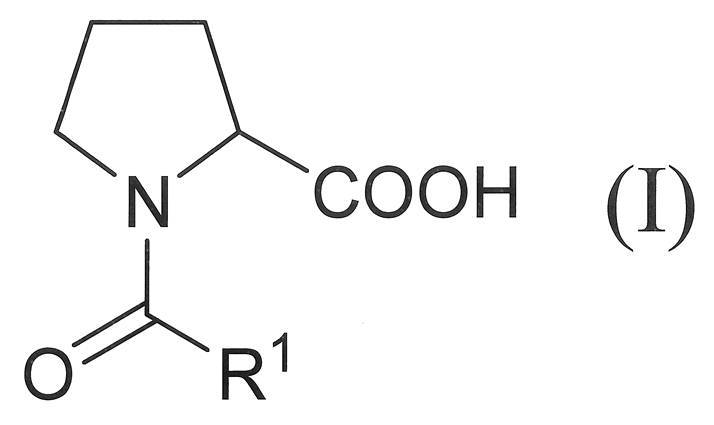
(式中、R1-CO-で表されるアシル基は、炭素原子数2~23の脂肪酸より誘導されるアシル基を示す)、及び
(B)アミノ酸及びその誘導体(但し、前記(A)を除く)、ビタミン及びその誘導体、並びに、ビタミン様物質からなる群より選択される少なくとも1種を含有することを特徴とする組成物。
[2]R1-CO-で表されるアシル基が、炭素原子数4~18の脂肪酸より誘導されるアシル基であることを特徴とする、[1]記載の組成物。
[2-1]R1-CO-で表されるアシル基が、デカノイル基であることを特徴とする、[1]又は[2]記載の組成物。
[2-2]R1-CO-で表されるアシル基が、ミリストイル基であることを特徴とする、[1]又は[2]記載の組成物。
[3](B)が、アミノ酸、タウリン、N-アセチル-2-メチルチアゾリジン-2,4-ジカルボン酸-2-エチルエステル、N-アセチルシステイン、アラニルグルタミン、グリシルグリシン、グルタミルリジン、ピリドキシルセリン、ナイアシンアミド、パンテノール、パントテニルエチルエーテル、アスコルビン酸、L-アスコルビン酸2-グルコシド、イノシトール、カルノシン及びエクトインからなる群より選択される少なくとも1種である、[1]又は[2]記載の組成物。
[4](B)を2種以上含有する、[1]~[3]のいずれか一つに記載の組成物。
[5]前記組成物における(A)の含有量が、前記組成物全量に対して0.001~5重量%である、[1]~[4]のいずれか一つに記載の組成物。
[6]前記組成物における(B)の含有量が、前記組成物全量に対して0.001~10重量%である、[1]~[5]のいずれか一つに記載の組成物。
[7]前記組成物における(A)の含有量と(B)の含有量との重量比(A:B)が、1:0.002~2000である、[1]~[6]のいずれか一つに記載の組成物。
[8]さらに(C)多価アルコールを含む、[1]~[7]のいずれか一つに記載の組成物。
[9]さらに(D)水溶性高分子を含む、[1]~[8]のいずれか一つに記載の組成物。
[10]前記組成物のpHが、3.5~8.5である、[1]~[9]のいずれか一つに記載の組成物。
[11]前記組成物が、皮膚用である、[1]~[10]のいずれか一つに記載の組成物。
(B)アミノ酸及びその誘導体(但し、前記(A)を除く)、ビタミン及びその誘導体、並びに、ビタミン様物質からなる群より選択される少なくとも1種を含有することを特徴とする組成物。
[2]R1-CO-で表されるアシル基が、炭素原子数4~18の脂肪酸より誘導されるアシル基であることを特徴とする、[1]記載の組成物。
[2-1]R1-CO-で表されるアシル基が、デカノイル基であることを特徴とする、[1]又は[2]記載の組成物。
[2-2]R1-CO-で表されるアシル基が、ミリストイル基であることを特徴とする、[1]又は[2]記載の組成物。
[3](B)が、アミノ酸、タウリン、N-アセチル-2-メチルチアゾリジン-2,4-ジカルボン酸-2-エチルエステル、N-アセチルシステイン、アラニルグルタミン、グリシルグリシン、グルタミルリジン、ピリドキシルセリン、ナイアシンアミド、パンテノール、パントテニルエチルエーテル、アスコルビン酸、L-アスコルビン酸2-グルコシド、イノシトール、カルノシン及びエクトインからなる群より選択される少なくとも1種である、[1]又は[2]記載の組成物。
[4](B)を2種以上含有する、[1]~[3]のいずれか一つに記載の組成物。
[5]前記組成物における(A)の含有量が、前記組成物全量に対して0.001~5重量%である、[1]~[4]のいずれか一つに記載の組成物。
[6]前記組成物における(B)の含有量が、前記組成物全量に対して0.001~10重量%である、[1]~[5]のいずれか一つに記載の組成物。
[7]前記組成物における(A)の含有量と(B)の含有量との重量比(A:B)が、1:0.002~2000である、[1]~[6]のいずれか一つに記載の組成物。
[8]さらに(C)多価アルコールを含む、[1]~[7]のいずれか一つに記載の組成物。
[9]さらに(D)水溶性高分子を含む、[1]~[8]のいずれか一つに記載の組成物。
[10]前記組成物のpHが、3.5~8.5である、[1]~[9]のいずれか一つに記載の組成物。
[11]前記組成物が、皮膚用である、[1]~[10]のいずれか一つに記載の組成物。
[12](A)一般式(I)で表されるアシルプロリン又はその塩
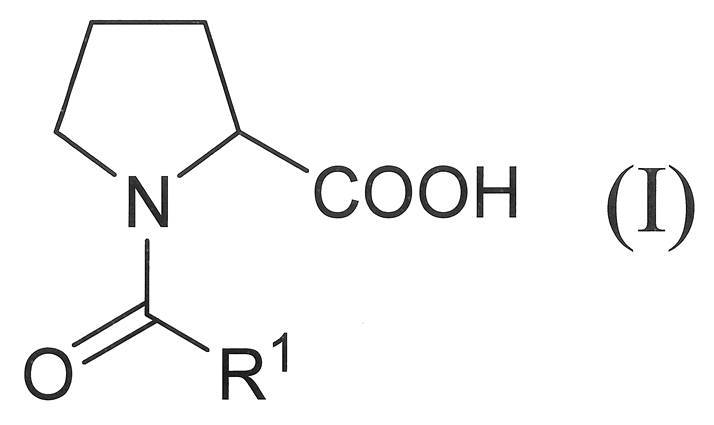
(式中、R1-CO-で表されるアシル基は、炭素原子数2~23の脂肪酸より誘導されるアシル基を示す)を含有する、皮膚浸透促進剤。
[13](B)アミノ酸及びその誘導体(但し、前記(A)を除く)、ビタミン及びその誘導体、並びに、ビタミン様物質からなる群より選択される少なくとも1種の皮膚浸透を促進する、[12]記載の皮膚浸透促進剤。
[14]R1-CO-で表されるアシル基が、炭素原子数4~18の脂肪酸より誘導されるアシル基であることを特徴とする、[12]又は[13]記載の皮膚浸透促進剤。
[14-1]R1-CO-で表されるアシル基が、デカノイル基であることを特徴とする、[12]又は[13]記載の組成物。
[14-2]R1-CO-で表されるアシル基が、ミリストイル基であることを特徴とする、[12]又は[13]記載の組成物。
[15](B)が、アミノ酸、タウリン、N-アセチル-2-メチルチアゾリジン-2,4-ジカルボン酸-2-エチルエステル、N-アセチルシステイン、アラニルグルタミン、グリシルグリシン、グルタミルリジン、ピリドキシルセリン、ナイアシンアミド、パンテノール、パントテニルエチルエーテル、アスコルビン酸、L-アスコルビン酸2-グルコシド、イノシトール、カルノシン及びエクトインからなる群より選択される少なくとも1種である、[13]又は[14]記載の皮膚浸透促進剤。
[13](B)アミノ酸及びその誘導体(但し、前記(A)を除く)、ビタミン及びその誘導体、並びに、ビタミン様物質からなる群より選択される少なくとも1種の皮膚浸透を促進する、[12]記載の皮膚浸透促進剤。
[14]R1-CO-で表されるアシル基が、炭素原子数4~18の脂肪酸より誘導されるアシル基であることを特徴とする、[12]又は[13]記載の皮膚浸透促進剤。
[14-1]R1-CO-で表されるアシル基が、デカノイル基であることを特徴とする、[12]又は[13]記載の組成物。
[14-2]R1-CO-で表されるアシル基が、ミリストイル基であることを特徴とする、[12]又は[13]記載の組成物。
[15](B)が、アミノ酸、タウリン、N-アセチル-2-メチルチアゾリジン-2,4-ジカルボン酸-2-エチルエステル、N-アセチルシステイン、アラニルグルタミン、グリシルグリシン、グルタミルリジン、ピリドキシルセリン、ナイアシンアミド、パンテノール、パントテニルエチルエーテル、アスコルビン酸、L-アスコルビン酸2-グルコシド、イノシトール、カルノシン及びエクトインからなる群より選択される少なくとも1種である、[13]又は[14]記載の皮膚浸透促進剤。
[16](B)アミノ酸及びその誘導体(但し、下記(A)を除く)、ビタミン及びその誘導体、並びに、ビタミン様物質からなる群より選択される少なくとも1種の皮膚への浸透を促進するための、
(A)一般式(I)で表されるアシルプロリン又はその塩
(A)一般式(I)で表されるアシルプロリン又はその塩
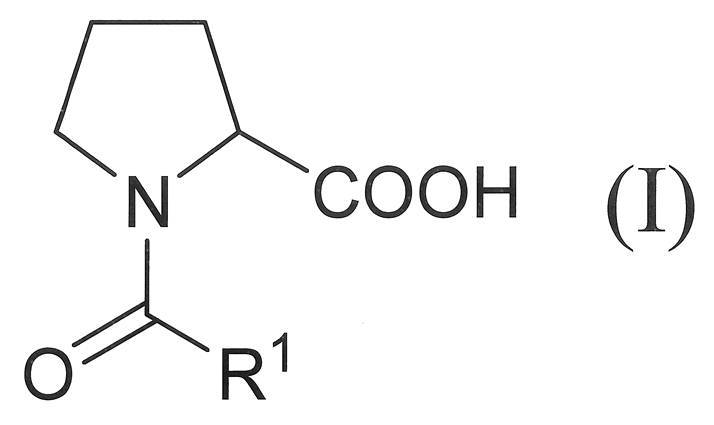
(式中、R1-CO-で表されるアシル基は、炭素原子数2~23の脂肪酸より誘導されるアシル基を示す)の使用。
[17]R1-CO-で表されるアシル基が、炭素原子数4~18の脂肪酸より誘導されるアシル基であることを特徴とする、[16]記載の使用。
[18](B)が、アミノ酸、タウリン、N-アセチル-2-メチルチアゾリジン-2,4-ジカルボン酸-2-エチルエステル、N-アセチルシステイン、アラニルグルタミン、グリシルグリシン、グルタミルリジン、ピリドキシルセリン、ナイアシンアミド、パンテノール、パントテニルエチルエーテル、アスコルビン酸、L-アスコルビン酸2-グルコシド、イノシトール、カルノシン及びエクトインからなる群より選択される少なくとも1種である、[16]又は[17]記載の使用。
[17]R1-CO-で表されるアシル基が、炭素原子数4~18の脂肪酸より誘導されるアシル基であることを特徴とする、[16]記載の使用。
[18](B)が、アミノ酸、タウリン、N-アセチル-2-メチルチアゾリジン-2,4-ジカルボン酸-2-エチルエステル、N-アセチルシステイン、アラニルグルタミン、グリシルグリシン、グルタミルリジン、ピリドキシルセリン、ナイアシンアミド、パンテノール、パントテニルエチルエーテル、アスコルビン酸、L-アスコルビン酸2-グルコシド、イノシトール、カルノシン及びエクトインからなる群より選択される少なくとも1種である、[16]又は[17]記載の使用。
本発明によれば、アミノ酸及びその誘導体、ビタミン及びその誘導体、並びに、ビタミン様物質の皮膚への浸透性に優れる組成物が提供される。当該本発明の組成物は、アミノ酸及びその誘導体、ビタミン及びその誘導体、並びに、ビタミン様物質の皮膚への浸透性に優れることによって、それらの効果、活性を発揮又は向上し得る。
また本発明によれば、皮膚浸透促進剤(好ましくは、アミノ酸及びその誘導体、ビタミン及びその誘導体、並びに、ビタミン様物質の皮膚浸透促進剤)が提供される。
また本発明によれば、皮膚浸透促進剤(好ましくは、アミノ酸及びその誘導体、ビタミン及びその誘導体、並びに、ビタミン様物質の皮膚浸透促進剤)が提供される。
本発明の組成物は、(A)一般式(I)で表されるアシルプロリン又はその塩
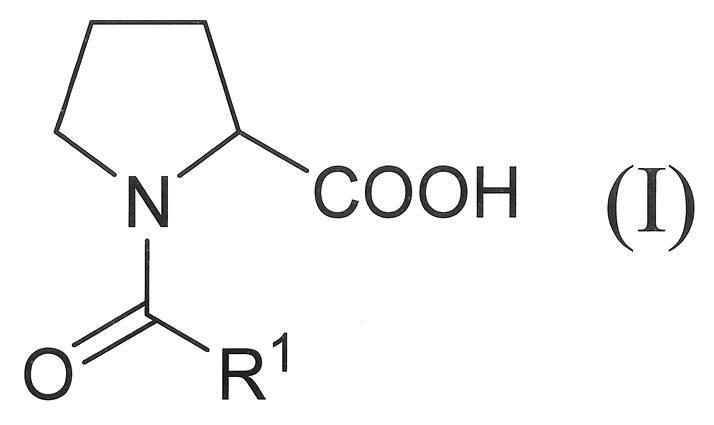
(式中、R1-CO-で表されるアシル基は、炭素原子数2~23の脂肪酸より誘導されるアシル基を示す)、及び(B)アミノ酸及びその誘導体(但し、前記(A)を除く)、ビタミン及びその誘導体、並びに、ビタミン様物質からなる群より選択される少なくとも1種を含有することを、主たる特徴とする。
[成分(A)]
本発明の成分(A)は、一般式(I)で表されるアシルプロリン又はその塩である。
本発明の成分(A)は、一般式(I)で表されるアシルプロリン又はその塩である。

(式中、R1-CO-で表されるアシル基は、炭素原子数2~23の脂肪酸より誘導されるアシル基を示す)
一般式(I)中の

は、本明細書において、R1-CO-とも表される。
R1-CO-で表されるアシル基は、炭素原子数2~23の脂肪酸より誘導されるアシル基、すなわち当該脂肪酸のアシル残基であり、例としては、アセチル基、イソプロパノイル基、プロパノイル基、ブタノイル基、イソブタノイル基、sec-ブタノイル基、tert-ブタノイル基、ペンタノイル基、sec-ペンタノイル基、tert-ペンタノイル基、イソペンタノイル基、ヘキサノイル基、ヘプタノイル基、オクタノイル基、2-エチルヘキサノイル基、tert-オクタノイル基、ノナノイル基、イソノナノイル基、デカノイル基、イソデカノイル基、ウンデカノイル基、ラウロイル基、ウンデシレノイル基、ミリストイル基、パルミトイル基、ステアロイル基、ベヘノイル基及びオレオイル基が挙げられる。
R1-CO-で表されるアシル基は、炭素原子数2~23の脂肪酸より誘導されるアシル基、すなわち当該脂肪酸のアシル残基であり、例としては、アセチル基、イソプロパノイル基、プロパノイル基、ブタノイル基、イソブタノイル基、sec-ブタノイル基、tert-ブタノイル基、ペンタノイル基、sec-ペンタノイル基、tert-ペンタノイル基、イソペンタノイル基、ヘキサノイル基、ヘプタノイル基、オクタノイル基、2-エチルヘキサノイル基、tert-オクタノイル基、ノナノイル基、イソノナノイル基、デカノイル基、イソデカノイル基、ウンデカノイル基、ラウロイル基、ウンデシレノイル基、ミリストイル基、パルミトイル基、ステアロイル基、ベヘノイル基及びオレオイル基が挙げられる。
R1-CO-で表される長鎖アシル基は、単一組成の酸より誘導されるアシル基のほか、ヤシ油脂肪酸、ヒマシ油脂肪酸、オリーブ油脂肪酸、パーム油脂肪酸等の天然より得られる混合脂肪酸あるいは合成により得られる脂肪酸(分岐脂肪酸を含む)より誘導されるアシル基であってもよい。これらのうち1種類を使用しても良いし、上記群から選ばれる2種以上を混合して使用しても構わない。
R1-CO-で表されるアシル基は、炭素原子数2~23の脂肪酸より誘導されるアシル基を示し、当該脂肪酸の炭素原子数は、好ましくは4以上であり、より好ましくは6以上であり、さらに好ましくは8以上であり、特に好ましくは10以上である。また当該脂肪酸の炭素原子数は、好ましくは20以下であり、より好ましくは18以下であり、特に好ましくは14以下である。
R1-CO-で表されるアシル基は、炭素原子数4~18の脂肪酸より誘導されるアシル基であることが好ましく、炭素原子数6~16の脂肪酸より誘導されるアシル基であることがより好ましく、炭素原子数8~14の脂肪酸より誘導されるアシル基であることがさらに好ましく、炭素原子数10~14の脂肪酸より誘導されるアシル基であることが特に好ましく、デカノイル基、ミリストイル基が最も好ましい。これらの脂肪酸は、飽和又は不飽和であってよく、すなわちR1-CO-で表されるアシル基は、飽和脂肪酸より誘導されるアシル基及び不飽和脂肪酸より誘導されるアシル基のいずれであってもよいが、好ましくは、飽和脂肪酸より誘導されるアシル基である。
従って、R1は、炭素原子数1~22の炭化水素基を示す。R1の「炭化水素基」としては、鎖状炭化水素基(例えば、アルキル基及びアルキニル基等)が好ましく、直鎖又は分岐鎖のものをいずれも使用することができる。R1は、メチル基、エチル基、プロピル基、イソプロピル基、ブチル基、イソブチル基、sec-ブチル基、tert-ブチル基、ペンチル基、イソペンチル基、ネオペンチル基、1,2-ジメチルプロピル基、1-エチルプロピル基、ヘキシル基、イソヘキシル基、1,1-ジメチルブチル基、2,2-ジメチルブチル基、3,3-ジメチルブチル基、2-エチルブチル基、ヘプチル基、オクチル基、ノニル基、デシル基、ウンデシル基、トリデシル基、テトラデシル基、ペンタデシル基、ヘプタデシル基、オクタデシル基、ノナデシル基、イコシル基、エイコシル基、ヘンイコシル基、ヘンエイコシル基、ドコシル基、イソヘプチル基、イソオクチル基、イソノニル基、イソデシル基、イソウンデシル基、イソトリデシル基、イソテトラデシル基、イソペンタデシル基、イソヘプタデシル基、イソオクタデシル基、イソノナデシル基、イソイコシル基、イソエイコシル基、イソヘンイコシル基、イソヘンエイコシル基、イソドコシル基等の炭素原子数1~22の直鎖又は分岐鎖のアルキル基がより好ましい。R1の炭素原子数は、好ましくは3以上であり、より好ましくは5以上であり、さらに好ましくは7以上であり、特に好ましくは9以上であり、また当該炭素原子数は、好ましくは19以下であり、より好ましくは17以下であり、さらに好ましくは15以下である。R1の炭素原子数は、3~17が好ましく、5~15がより好ましく、7~13がさらに好ましく、9~13が特に好ましい。
従って、R1は、炭素原子数1~22の炭化水素基を示す。R1の「炭化水素基」としては、鎖状炭化水素基(例えば、アルキル基及びアルキニル基等)が好ましく、直鎖又は分岐鎖のものをいずれも使用することができる。R1は、メチル基、エチル基、プロピル基、イソプロピル基、ブチル基、イソブチル基、sec-ブチル基、tert-ブチル基、ペンチル基、イソペンチル基、ネオペンチル基、1,2-ジメチルプロピル基、1-エチルプロピル基、ヘキシル基、イソヘキシル基、1,1-ジメチルブチル基、2,2-ジメチルブチル基、3,3-ジメチルブチル基、2-エチルブチル基、ヘプチル基、オクチル基、ノニル基、デシル基、ウンデシル基、トリデシル基、テトラデシル基、ペンタデシル基、ヘプタデシル基、オクタデシル基、ノナデシル基、イコシル基、エイコシル基、ヘンイコシル基、ヘンエイコシル基、ドコシル基、イソヘプチル基、イソオクチル基、イソノニル基、イソデシル基、イソウンデシル基、イソトリデシル基、イソテトラデシル基、イソペンタデシル基、イソヘプタデシル基、イソオクタデシル基、イソノナデシル基、イソイコシル基、イソエイコシル基、イソヘンイコシル基、イソヘンエイコシル基、イソドコシル基等の炭素原子数1~22の直鎖又は分岐鎖のアルキル基がより好ましい。R1の炭素原子数は、好ましくは3以上であり、より好ましくは5以上であり、さらに好ましくは7以上であり、特に好ましくは9以上であり、また当該炭素原子数は、好ましくは19以下であり、より好ましくは17以下であり、さらに好ましくは15以下である。R1の炭素原子数は、3~17が好ましく、5~15がより好ましく、7~13がさらに好ましく、9~13が特に好ましい。
一般式(I)で表されるアシルプロリンの塩としては、薬理学的に許容し得る塩等が挙げられ、リチウム塩、ナトリウム塩、カリウム塩等のアルカリ金属塩;カルシウム塩、マグネシウム塩等のアルカリ土類金属塩;アンモニウム塩;及び塩基性有機物塩等が挙げられる。これらのうち、溶解性の観点から、ナトリウム塩、カリウム塩、アンモニウム塩が好ましく、ナトリウム塩、カリウム塩がより好ましく、ナトリウム塩が更に好ましい。
さらに一般式(I)で表されるアシルプロリンは、水和物、非水和物、無溶媒和物及び溶媒和物のいずれであってもよい。
成分(A)の製造方法は、特に限定されるものではなく、公知の方法を組み合わせて容易に製造することができる。具体的には、プロリンと酸クロライドを、酸クロライドと水酸化ナトリウム等の塩基を同時滴下することによるショッテン・バウマン法により製造することができる。成分(A)の製造に用いられるプロリンは、L-体、D-体及びそれらの混合物のいずれでもよいが、好ましくはL-体である。
本発明の組成物は、成分(A)として少なくとも1種の一般式(I)で表されるアシルプロリン又はその塩を含有すればよいが、2種以上の一般式(I)で表されるアシルプロリン又はその塩を含有してもよい。
本発明の組成物における成分(A)の含有量は、本発明の組成物全量に対して、通常0.001重量%以上であり、塗布時の感触、特に肌への浸透感の観点から、好ましくは0.005重量%以上であり、より好ましくは0.01重量%以上であり、特に好ましくは0.02重量%以上である。また当該含有量は、本発明の組成物全量に対して、通常5重量%以下であり、特異な匂いの発生をより抑える観点から、好ましくは2重量%以下であり、より好ましくは1.5重量%以下であり、特に好ましくは1重量%以下である。
[成分(B)]
本発明の成分(B)は、アミノ酸及びその誘導体(但し、成分(A)を除く)、ビタミン及びその誘導体、並びに、ビタミン様物質からなる群より選択される少なくとも1種である。
本発明の成分(B)は、アミノ酸及びその誘導体(但し、成分(A)を除く)、ビタミン及びその誘導体、並びに、ビタミン様物質からなる群より選択される少なくとも1種である。
本発明において「アミノ酸」とは、アミノ基及びカルボキシ基の両方を分子内に有する有機化合物をいい、タンパク質を構成するアミノ酸及びタンパク質を構成しないアミノ酸のいずれをも含む概念である。タンパク質を構成するアミノ酸の具体例としては、脂肪族アミノ酸(グリシン、アラニン)、分岐鎖アミノ酸(バリン、ロイシン、イソロイシン)、ヒドロキシアミノ酸(セリン、トレオニン)、含硫アミノ酸(システイン、メチオニン)、アミド型アミノ酸(アスパラギン、グルタミン)、イミノ酸(プロリン)、芳香族アミノ酸(フェニルアラニン、チロシン、トリプトファン)等の中性アミノ酸;アスパラギン酸、グルタミン酸等の酸性アミノ酸;リジン、アルギニン、ヒスチジン等の塩基性アミノ酸が挙げられる。タンパク質を構成しないアミノ酸の具体例としては、トラネキサム酸、3,4-ジヒドロキシフェニルアラニン、テアニン、γ-アミノ酪酸、β-アラニン、サルコシン、シトルリン、オルニチン、ε-アミノカプロン酸等が挙げられる。アミノ酸は、L-体、D-体及びDL-体のいずれも使用し得るが、好ましくはL-体、DL-体であり、より好ましくはL-体である。
本発明において「アミノ酸の誘導体」とは、アミノ酸の一部が修飾(例、アセチル化、エステル化等)された化合物や、アミノ酸の一部が他の化合物と結合した化合物に加え、2以上のアミノ酸がペプチド結合により結合したジペプチド、トリペプチド、オリゴペプチド等も含む概念である。アミノ酸の誘導体の具体例としては、N-アセチル-2-メチルチアゾリジン-2,4-ジカルボン酸-2-エチルエステル、N-アセチルシステイン、アラニルグルタミン、グリシルグリシン、グルタミルリジン、カルノシン、エクトイン、アンセリン、アラニルオルニチン、グリシルチロシン、バリルグリシン、リジルオルニチン、オルニチルトレオニン、トレオニルオルニチン、プロリルヒスタミン、ピロリドンカルボン酸ナトリウム(PCA-Na)、PCA(ピロリドンカルボン酸)アルギニン、PCAリジン、PCAヒスチジン、PCAカルニチン、タウリン、チオタウリン、ヒポタウリン、ピリドキシルセリン、ホスホセリン、グルタチオン、γ-アミノ-β-ヒドロキシ酪酸、ジペプチド-2(INCI名:Dipeptide-2)、ジペプチド-4(INCI名:Dipeptide-4)、ジペプチド-9(INCI名:Dipeptide-9)、ジペプチド-14(INCI名:Dipeptide-14)、トリペプチド-1(INCI名:Tripeptide-1)、トリペプチド-2(INCI名:Tripeptide-2)、トリペプチド-3(INCI名:Tripeptide-3)、トリペプチド-9シトルリン(INCI名:Tripeptide-9 Citrulline)、トリペプチド-10シトルリン(INCI名:Tripeptide-10 Citrulline)、トリペプチド-29(INCI名:Tripeptide-29)、トリペプチド-31(INCI名:Tripeptide-31)、トリペプチド-32(INCI名:Tripeptide-32)等が挙げられる。
ビタミンとしては、例えば、ビタミンA、ビタミンD、ビタミンE、ビタミンK等の脂溶性ビタミン;及び、ビタミンB1、ビタミンB2、ビタミンB6、ビタミンB12、アスコルビン酸(ビタミンC)、葉酸、ニコチン酸、ナイアシンアミド、パントテン酸、ビオチン等の水溶性ビタミン等が挙げられる。
本発明において「ビタミンの誘導体」とは、ビタミンの一部が修飾された化合物やビタミンの一部が他の化合物と結合した化合物をいい、その具体例としては、L-アスコルビン酸2-グルコシド(AA-2G)、パンテノール、パントテニルエチルエーテル、ハイドロキノン等が挙げられる。
本発明において「ビタミン様物質」とは、ビタミンに似た生理作用を持つ化合物であって、ビタミンとは違って体内で生合成し得るものをいい、その具体例としては、イノシトール、コリン、αリポ酸、ユビキノン、パンガミン酸、カルニチン等が挙げられる。
アミノ酸及びその誘導体、ビタミン及びその誘導体、並びに、ビタミン様物質は、いずれも塩の形態であってよく、本発明において「アミノ酸及びその誘導体、ビタミン及びその誘導体、並びに、ビタミン様物質」は、それらの塩も含む概念である。当該塩は、生理学的に許容される塩であることが好ましく、例えば、無機塩基との塩、無機酸との塩および有機酸との塩等が挙げられる。無機塩基との塩としては、例えば、ナトリウム、カリウム、リチウム等のアルカリ金属との塩、カルシウム、マグネシウム等のアルカリ土類金属との塩、アンモニウム塩等が挙げられる。無機酸との塩としては、例えば、ハロゲン化水素酸(塩酸、臭化水素酸、ヨウ化水素酸等)、硫酸、硝酸、リン酸等との塩が挙げられる。有機酸との塩としては、例えば、ギ酸、酢酸、プロピオン酸、シュウ酸、コハク酸、マレイン酸、フマル酸、クエン酸等との塩が挙げられる。
成分(B)は、天然に存在する動植物等から抽出し精製したもの、或いは、化学合成法、発酵法、酵素法又は遺伝子組換え法によって得られるもののいずれを使用してもよい。また市販品を用いてもよい。
成分(B)は、本発明の効果がより顕著に発揮される点で、皮膚透過係数が3×10⁻⁶cm/s以下であるものが好ましく、8×10-7cm/s以下であるものがより好ましく、8×10-8cm/s以下であるものが特に好ましく、3×10-8cm/s以下であるものが最も好ましい。
皮膚透過係数は低値であるほど皮膚を透過しにくいことを示し、フランツセルを用いた透過試験によって測定される。
皮膚透過係数は低値であるほど皮膚を透過しにくいことを示し、フランツセルを用いた透過試験によって測定される。
成分(B)は、保湿作用、美白作用、抗老化作用、細胞賦活作用、抗糖化作用、抗酸化作用、抗炎症作用、育毛作用、血行促進作用からなる群より選択される少なくとも一つの作用を有するものであることが好ましい。
成分(B)は、作用又は汎用性の観点から、好ましくはアミノ酸、タウリン、N-アセチル-2-メチルチアゾリジン-2,4-ジカルボン酸-2-エチルエステル、N-アセチルシステイン、アラニルグルタミン、グリシルグリシン、グルタミルリジン、ピリドキシルセリン、ナイアシンアミド、パンテノール、パントテニルエチルエーテル、アスコルビン酸、L-アスコルビン酸2-グルコシド、イノシトール、カルノシン、エクトインであり、より好ましくはチロシン、アルギニン、ヒスチジン、リジン、バリン、トリプトファン、トレオニン、セリン、グルタミン、アスパラギン酸、グルタミン酸、グリシン、アラニン、ロイシン、イソロイシン、システイン、メチオニン、タウリン、トラネキサム酸、3,4-ジヒドロキシフェニルアラニン、N-アセチル-2-メチルチアゾリジン-2,4-ジカルボン酸-2-エチルエステル、N-アセチルシステイン、アラニルグルタミン、グリシルグリシン、グルタミルリジン、ピリドキシルセリン、ナイアシンアミド、パンテノール、パントテニルエチルエーテル、アスコルビン酸、L-アスコルビン酸2-グルコシド、イノシトール、カルノシン、エクトインであり、特に好ましくはチロシン、アルギニン、ヒスチジン、バリン、トリプトファン、トレオニン、セリン、グルタミン、グルタミン酸、グリシン、アラニン、ロイシン、イソロイシン、システイン、メチオニン、タウリン、トラネキサム酸、3,4-ジヒドロキシフェニルアラニン、N-アセチル-2-メチルチアゾリジン-2,4-ジカルボン酸-2-エチルエステル、N-アセチルシステイン、アラニルグルタミン、グリシルグリシン、グルタミルリジン、ピリドキシルセリン、ナイアシンアミド、パントテニルエチルエーテル、アスコルビン酸、L-アスコルビン酸2-グルコシド、エクトインである。
本発明の組成物は、上記の成分(B)を1種単独で含有してよく、又は2種以上含有してよいが、2種以上含有することが好ましい。
本発明の組成物における成分(B)の含有量は、本発明の組成物全量に対して、通常0.001重量%以上であり、効果の観点から、好ましくは0.01重量%以上であり、より好ましくは0.1重量%以上であり、特に好ましくは0.3重量%以上である。また当該含有量は、本発明の組成物全量に対して、通常10重量%以下であり、安定性の観点から、好ましくは7重量%以下であり、より好ましくは5.5重量%以下であり、特に好ましくは5重量%以下である。
本明細書において「成分(B)の含有量」とは、本発明の組成物に含有される成分(B)が1種のみである場合は、その1種の成分(B)の含有量を意味し、本発明の組成物に含有される成分(B)が2種以上である場合は、含有される全ての成分(B)の総含有量を意味する。
本明細書において「成分(B)の含有量」とは、本発明の組成物に含有される成分(B)が1種のみである場合は、その1種の成分(B)の含有量を意味し、本発明の組成物に含有される成分(B)が2種以上である場合は、含有される全ての成分(B)の総含有量を意味する。
本発明の組成物における成分(A)の含有量と成分(B)の含有量との重量比(A:B)は、安定性及び本発明の効果が効率的に発揮される点から、好ましくは1:0.002~2000であり、より好ましくは1:0.02~1000であり、さらに好ましくは1:0.1~500であり、特に好ましくは1:0.5~100である。
本発明の組成物は、塗布時及び塗付後の感触、安定性の観点から上記成分(A)及び(B)に加え、(C)多価アルコールを含有してよい。
[成分(C)]
多価アルコールとしては、例えば、グリセリン、エチレングリコール、1,3-ブチレングリコール、1,3-プロパンジオール、プロピレングリコール、イソプレングリコール、ジプロピレングリコール、1,2-ヘキサンジオール、1,2-オクタンジオール、ソルビトール等が挙げられる。環境への配慮、及びしっとり感の観点から、グリセリン、1,3-ブチレングリコール、1,3-プロパンジオール、ジプロピレングリコール、1,2-ヘキサンジオール、1,2-オクタンジオール、ソルビトールが好ましい。
多価アルコールとしては、例えば、グリセリン、エチレングリコール、1,3-ブチレングリコール、1,3-プロパンジオール、プロピレングリコール、イソプレングリコール、ジプロピレングリコール、1,2-ヘキサンジオール、1,2-オクタンジオール、ソルビトール等が挙げられる。環境への配慮、及びしっとり感の観点から、グリセリン、1,3-ブチレングリコール、1,3-プロパンジオール、ジプロピレングリコール、1,2-ヘキサンジオール、1,2-オクタンジオール、ソルビトールが好ましい。
本発明の組成物における成分(C)の含有量は、本発明の組成物全量に対して、通常0.1重量%以上であり、塗布時の感触の観点から、好ましくは0.3重量%以上であり、より好ましくは0.5重量%以上であり、特に好ましくは1重量%以上である。当該含有量は、通常20重量%以下であり、塗布時の感触の観点から、好ましくは15重量%以下であり、より好ましくは10重量%以下であり、特に好ましくは7重量%以下である。
本発明の組成物は、塗布時及び塗付後の感触の観点から上記成分(A)及び(B)に加え、(D)水溶性高分子を含有してよい。
[成分(D)]
水溶性高分子は、合成高分子でもよいが、天然物から得られたものが好ましい。水溶性高分子の具体例としては、グアーガム、ローカストビンガム、クインスシード、カラギーナン、ガラクタン、アラビアガム、トラガカントガム、ペクチン、マンナン、デンプン、キサンタンガム、デキストラン、サクシノグルカン、カードラン、ヒアルロン酸、ヒアルロン酸ナトリウム、ゼラチン、カゼイン、アルブミン、コラーゲン、メチルセルロース、エチルセルロース、ヒドロキシエチルセルロース、カルボキシメチルセルロース、メチルヒドロキシプロピルセルロース、可溶性デンプン、カルボキシメチルデンプン、メチルデンプン、アルギン酸プロピレングリコールエステル、アルギン酸塩、ポリビニルアルコール、ポリビニルピロリドン、ポリビニルメチルエーテル、カルボキシビニルポリマー、ポリアクリル酸ソーダ、ポリエチレンオキシド、エチレンオキシド・プロピレンオキシド共重合体等が挙げられる。サスティナビリティの観点で、キサンタンガム、グアーガム、ローカストビンガム、カラギーナン等の天然高分子が望ましい。また塗布時の感触の観点で、ヒアルロン酸ナトリウムが好ましい。
水溶性高分子は、合成高分子でもよいが、天然物から得られたものが好ましい。水溶性高分子の具体例としては、グアーガム、ローカストビンガム、クインスシード、カラギーナン、ガラクタン、アラビアガム、トラガカントガム、ペクチン、マンナン、デンプン、キサンタンガム、デキストラン、サクシノグルカン、カードラン、ヒアルロン酸、ヒアルロン酸ナトリウム、ゼラチン、カゼイン、アルブミン、コラーゲン、メチルセルロース、エチルセルロース、ヒドロキシエチルセルロース、カルボキシメチルセルロース、メチルヒドロキシプロピルセルロース、可溶性デンプン、カルボキシメチルデンプン、メチルデンプン、アルギン酸プロピレングリコールエステル、アルギン酸塩、ポリビニルアルコール、ポリビニルピロリドン、ポリビニルメチルエーテル、カルボキシビニルポリマー、ポリアクリル酸ソーダ、ポリエチレンオキシド、エチレンオキシド・プロピレンオキシド共重合体等が挙げられる。サスティナビリティの観点で、キサンタンガム、グアーガム、ローカストビンガム、カラギーナン等の天然高分子が望ましい。また塗布時の感触の観点で、ヒアルロン酸ナトリウムが好ましい。
本発明の組成物における成分(D)の含有量は、本発明の組成物全量に対して、通常0.001重量%以上であり、塗布時の感触の観点から、好ましくは0.01重量%以上であり、より好ましくは0.05重量%以上であり、特に好ましくは0.07重量%以上であり、最も好ましくは0.1重量%以上である。当該含有量は、通常5重量%以下であり、塗布時の感触の観点から、好ましくは2重量%以下であり、より好ましくは1.5重量%以下であり、特に好ましくは1重量%以下であり、最も好ましくは0.7重量%以下である。
本発明の組成物の形態は特に制限されないが、例えば、液状、乳化状、ペースト状、ゲル状、固体状、粉末状等が挙げられる。
本発明の組成物のpHは、通常3.5~8.5であり、刺激感及び成分(A)の組成物中における安定性の観点から、好ましくは4~8である。
本発明の組成物の製造方法は特に制限されず、化粧料分野又は医薬分野において慣用の方法又はこれに準ずる方法により製造することができる。
本発明の組成物は、化粧料又は医薬(医薬部外品を含む)に配合することができ、あるいは本発明の組成物は、それ自体を化粧料又は医薬(医薬部外品を含む)としてもよい。
本発明の組成物を、化粧料に配合する場合、又は本発明の組成物自体を化粧料とする場合、当該化粧料の種類としては、例えば、洗顔料、化粧水、乳液、クリーム、ジェル、美容液、パック、マスク等の皮膚化粧料;白粉、ファンデーション、口紅、チーク、アイライナー、マスカラ、アイシャドー、眉墨等のメイクアップ化粧料;シャンプー、リンス、ヘアコンディショナー、ヘアスタイリング剤、ヘアトリートメント、ヘアミスト等の毛髪用化粧料等が挙げられる。
本発明の組成物を、化粧料に配合する場合、又は本発明の組成物自体を化粧料とする場合、当該化粧料には、通常化粧料に添加してもよい成分を本発明の効果を阻害しない範囲で配合してよい。当該成分の具体例としては、油剤、キレート剤、界面活性剤、粉体、糖アルコール及びそのアルキレンオキシド付加物、低級アルコール、動植物抽出物、核酸、酵素、抗炎症剤、殺菌剤、防腐剤、抗酸化剤、紫外線吸収剤、制汗剤、顔料、色素、酸化染料、有機及び無機粉体、pH調整剤、パール化剤、湿潤剤等が挙げられる。
油剤としては、例えば、セチルアルコール、イソステアリルアルコール、ラウリルアルコール、ヘキサデシルアルコール、オクチルドデカノール等の高級アルコール;イソステアリン酸、ウンデシレン酸、オレイン酸等の脂肪酸;ミリスチン酸ミリスチル、ラウリン酸ヘキシル、オレイン酸デシル、ミリスチン酸イソプロピル、ジメチルオクタン酸ヘキシルデシル、モノステアリン酸グリセリン、フタル酸ジエチル、モノステアリン酸エチレングリコール、オキシステアリン酸オクチル、安息香酸アルキルエステル、ラウロイルグルタミン酸ジ(フィトステリル/オクチルドデシル)、オクタン酸セチル等のエステル類;流動パラフィン、ポリイソブテン、ワセリン、スクワラン等の炭化水素;ラノリン、還元ラノリン、カルナバロウ等のロウ;ミンク油、カカオ油、ヤシ油、パーム核油、ツバキ油、ゴマ油、ヒマシ油、オリーブ油等の油脂;エチレン・α―オレフィン・コオリゴマー等が挙げられる。
特にシリコーン油の例としては、メチルポリシロキサン、高重合メチルポリシロキサン、ポリオキシエチレン・メチルポリシロキサン共重合体、ポリオキシプロピレン・メチルポリシロキサン共重合体及びポリ(オキシエチレン、オキシプロピレン)・メチルポリシロキサン共重合体等のエーテル変性シリコーン、ステアロキシメチルポリシロキサン、ステアロキシトリメチルシラン、メチルハイドロジェンポリシロキサン、デカメチルシクロペンタシロキサン、オクタメチルシクロテトラシロキサン、テトラヒドロテトラメチルシクロテトラシロキサン、メチルシクロポリシロキサン及びドデカメチルシクロヘキサシロキサン等の環状シリコーン;メチルフェニルポリシロキサン、トリメチルシロキシケイ酸、アミノエチルアミノプロピルシロキサン・ジメチルシロキサン共重合体等のアミノ変性シリコーン、シラノール変性ポリシロキサン、アルコキシ変性ポリシロキサン、脂肪酸変性ポリシロキサン、フッ素変性ポリシロキサン、エポキシ変性ポリシロキサン、アルコキシ変性ポリシロキサンパーフルオロポリエーテル、ポリ酢酸ビニルジメチルポリシロキサン、及びそれらの混合物からなる群より選択されるシリコーン油が挙げられる。
キレート剤としては、特に制限はないが、好ましくはトリエチレンテトラミン、2-テノイルトリフルオロアセトン、チオグリコール酸、酒石酸、コハク酸、8-キノリノール、ピリジン-2,6-ジカルボン酸、ピリジン、1,10-テナントロリン、乳酸、8-ヒドロキシキノリンー5-スルホン酸、グリシン、2,2’-ピリジルエチレンジアミン、オーリントリカルボン酸、キシレノールオレンジ、5-スルホサリチル酸、サリチル酸、ピロカテコール-3,5-ジスルホネート、4,5-ジヒドロキシベンゼン-1,3-ジスルホン酸、1,2-ジアミノシクロヘキサン-N,N,N’,N’-四酢酸、クエン酸、オキサレート、ニトリロ三酢酸、エチレンジアミン-N,N,N’,N’-四酢酸、アセチルアセトンとそれらの塩からなる群より選択されるキレート化剤及びそれらの混合物などが挙げられる。
界面活性剤としては、例えば、N-長鎖アシル酸性アミノ酸塩やN-長鎖アシル中性アミノ酸塩などのN-長鎖アシルアミノ酸塩、N-長鎖脂肪酸アシル-N-メチルタウリン塩、アルキルサルフェート及びそのアルキレンオキシド付加物、脂肪酸アミドエーテルサルフェート、脂肪酸の金属塩及び弱塩基塩、スルホコハク酸系界面活性剤、アルキルフォスフェート及びそのアルキレンオキシド付加物、アルキルエーテルカルボン酸等のアニオン界面活性剤;グリセリンエーテル及びそのアルキレンオキシド付加物、ポリオキシエチレンポリオキシプロピレンアルキルエーテルなどのエーテル型界面活性剤、グリセリンエステル及びそのアルキレンオキシド付加物などのエステル型界面活性剤、ソルビタンエステル及びそのアルキレンオキシド付加物などのエーテルエステル型界面活性剤、ポリオキシアルキレン脂肪酸エステル、グリセリンエステル、脂肪酸ポリグリセリンエステル、ソルビタンエステル、ショ糖脂肪酸エステル、ポリオキシアルキレン水添ヒマシ油などのエステル型界面活性剤、アルキルグルコシド類、硬化ヒマシ油ピログルタミン酸ジエステル及びそのエチレンオキシド付加物、ならびに脂肪酸アルカノールアミドなどの含窒素型の非イオン性界面活性剤、アルキルアンモニウムクロライド、ジアルキルアンモニウムクロライドなどの脂肪族アミン塩、それらの4級アンモニウム塩、ベンザルコニウム塩などの芳香族4級アンモニウム塩、脂肪酸アシルアルギニンエステル等のカチオン界面活性剤;並びにカルボキシベタインなどのベタイン型界面活性剤、アミノカルボン酸型界面活性剤、イミダゾリン型界面活性剤等の両性界面活性剤等が挙げられる。
粉体としては、例えば、ナイロンビーズ、シリコーンビーズ等の樹脂粉体、ナイロンパウダー、金属脂肪酸石鹸、黄酸化鉄、赤色酸化鉄、黒酸化鉄、酸化クロム、酸化コバルト、カーボンブラック、群青、紺青、酸化亜鉛、酸化チタン、酸化ジルコニウム、酸化珪素、酸化アルミニウム、酸化セリウム、雲母チタン、窒化ホウ素、硫酸バリウム、炭酸カルシウム、炭酸マグネシウム、珪酸アルミニウム、珪酸マグネシウム、炭化珪素、色素、レーキ、セリサイト、マイカ、タルク、カオリン、板状硫酸バリウム、バタフライ状硫酸バリウム、微粒子酸化チタン、微粒子酸化亜鉛、微粒子酸化鉄、アシルリジン、アシルグルタミン酸、アシルアルギニン、アシルグリシン等のアシルアミノ酸等が挙げられ、更にシリコーン処理、フッ素化合物処理、シランカップリング剤処理、シラン処理有機チタネート処理、アシル化リジン処理、脂肪酸処理、金属石鹸処理、油剤処理、アミノ酸処理等の表面処理が施してあっても構わない。
糖アルコール及びそのアルキレンオキシド付加物としては、マンニトール等が挙げられる。
低級アルコールとしては、エタノール、プロパノール等が挙げられる。
本発明の組成物を、医薬(医薬部外品を含む)に配合する場合、又は本発明の組成物自体を医薬(医薬部外品を含む)とする場合、当該医薬の剤形としては、例えば、軟膏剤(水性軟膏剤、油脂性軟膏剤等)、クリーム剤、液剤、乳剤、ゲル剤、ローション剤、リニメント剤、パスタ剤等の塗布剤;パップ剤、プラスター剤、テープ剤、パッチ剤等の貼付剤;エアゾール剤、スプレー剤等の噴霧剤;坐剤等が挙げられる。
本発明の組成物を、医薬(医薬部外品を含む)に配合する場合、又は本発明の組成物自体を医薬(医薬部外品を含む)とする場合、当該医薬には、薬理学的に許容し得る担体、賦形剤、希釈剤、無痛化剤、防腐剤、抗酸化剤等を本発明の効果を阻害しない範囲で配合してよい。
本発明の組成物は、好ましくは皮膚用であり、皮膚化粧料又は皮膚用医薬(皮膚用医薬部外品を含む)に配合することが好ましく、あるいは本発明の組成物自体を皮膚化粧料又は皮膚用医薬(皮膚用医薬部外品を含む)とすることが好ましい。ここで「皮膚」とは、体(例えば、顔、頭、首、胸、腹、腰、背中、尻、腕、脚、手等)の表皮だけでなく、粘膜も包含する概念である。
本発明の組成物の適用対象としては、例えば、哺乳動物(例えば、ヒト、マウス、ラット、ハムスター、ウサギ、ネコ、イヌ、ウシ、ヒツジ、サル等)等が挙げられるが、これらに限定されるものでない。
本発明の組成物の投与量及び対象への適用回数は、成分(B)の種類、組成物の形態、適用する対象等に応じて適宜調節し得る。
本発明の組成物は、後述の実施例に示されるように、低温安定性に優れることから、低温(通常-5~10℃)で保管されるものであってよい。
本発明は、成分(A)を含有する皮膚浸透促進剤も提供する。
本発明の皮膚浸透促進剤に含有される成分(A)は、本発明の組成物に含有される成分(A)と同様であり、その好適な態様も同様である。
本発明の皮膚浸透促進剤の形態は特に制限されないが、例えば、液状、乳化状、ペースト状、ゲル状、固体状、粉末状等が挙げられる。
本発明の皮膚浸透促進剤は、成分(A)そのものであってよく、あるいは、成分(A)を、例えば、賦形剤、製剤化剤、溶解補助剤、懸濁化剤等を用いて製剤化すること等により得られるものであってもよい。
本発明の皮膚浸透促進剤における成分(A)の含有量は、本発明の皮膚浸透促進剤全量に対して、通常0.01~100重量%であり、好ましくは0.1~99.9重量%であり、より好ましくは1~99重量%である。
本発明の皮膚浸透促進剤の製造方法は特に制限されず、製剤技術分野において慣用の方法により製造することができる。
本発明の皮膚浸透促進剤は、成分(B)の皮膚浸透を促進するために用いられるものであることが好ましい。本発明の皮膚浸透促進剤によって、皮膚への浸透が促進される成分(B)は、本発明の組成物に含有される成分(B)と同様であり、その好適な態様も同様である。
本発明の皮膚浸透促進剤は、成分(A)の使用量と、本発明の皮膚浸透促進剤によって皮膚への浸透が促進される成分(B)の量との重量比(A:B)が、1:0.002~2000となるように用いることが好ましく、安定性の観点及び本発明の効果が効率的に発揮される点から、1:0.02~1000となるように用いることがより好ましく、1:0.1~500となるように用いることがさらに好ましく、1:0.5~100となるように用いることが特に好ましい。
以下に、合成例及び実施例に基づいて本発明をより詳細に説明するが、本発明はこれらの合成例及び実施例により限定されるものではなく、本発明の範囲を逸脱しない範囲で変化させてもよい。また、本発明において使用する試薬や装置、材料は特に言及されない限り、商業的に入手可能である。
<合成例1>デカノイルプロリンの合成
プロリン(味の素社製)34.54gを100gの水に溶解後、デカノイルクロライド(東京化成工業社製)52.01gと25%水酸化ナトリウム水溶液とを、pHを12に調整しながら加えた。75%硫酸を加えて中和し、水層を除去後、さらに水と酢酸エチルを加え、水層を除去した。酢酸エチルを減圧留去し、デカノイルプロリンを68.12g得た。
プロリン(味の素社製)34.54gを100gの水に溶解後、デカノイルクロライド(東京化成工業社製)52.01gと25%水酸化ナトリウム水溶液とを、pHを12に調整しながら加えた。75%硫酸を加えて中和し、水層を除去後、さらに水と酢酸エチルを加え、水層を除去した。酢酸エチルを減圧留去し、デカノイルプロリンを68.12g得た。
<合成例2>デカノイルプロリンナトリウム塩の調製
合成例1で得られたデカノイルプロリンを、適当な量の水に懸濁後、水酸化ナトリウムでpHを5まで中和することにより、デカノイルプロリンナトリウム塩を得た。
合成例1で得られたデカノイルプロリンを、適当な量の水に懸濁後、水酸化ナトリウムでpHを5まで中和することにより、デカノイルプロリンナトリウム塩を得た。
<合成例3>ミリストイルプロリンの合成
プロリン(味の素社製)とミリストイルクロライド(東京化成工業社製)とを用い、合成例1と同様の方法でミリストイルプロリンを合成した。
プロリン(味の素社製)とミリストイルクロライド(東京化成工業社製)とを用い、合成例1と同様の方法でミリストイルプロリンを合成した。
<合成例4>ミリストイルプロリンナトリウム塩の合成
ミリストイルプロリンを用いて、合成例2と同様の方法でミリストイルプロリンナトリウム塩を合成した。
ミリストイルプロリンを用いて、合成例2と同様の方法でミリストイルプロリンナトリウム塩を合成した。
<合成例5>ココイルプロリンの合成
プロリン(味の素社製)とココイルクロライド(日油社製)とを用い、合成例1と同様の方法でココイルプロリンを合成した。
プロリン(味の素社製)とココイルクロライド(日油社製)とを用い、合成例1と同様の方法でココイルプロリンを合成した。
<合成例6>ココイルプロリンナトリウム塩の合成
ココイルプロリンを用いて、合成例2と同様の方法でココイルプロリンナトリウム塩を合成した。
ココイルプロリンを用いて、合成例2と同様の方法でココイルプロリンナトリウム塩を合成した。
<合成例7>N-アセチル-2-メチルチアゾリジン-2,4-ジカルボン酸-2-エチルエステル(本明細書中、N-Ac-CP2Etと略記する場合がある)の合成
L-システイン塩酸塩一水和物(100g、569mmol)を水(200ml)に溶解後、6N水酸化ナトリウム水溶液を加え、pHを5.03に調整した。反応混合物を40℃に加熱し、ピルビン酸エチルエステル(76ml、684mmol)を徐々に添加し、40℃にて3.5時間撹拌し、2-メチルチアゾリジン-2,4-ジカルボン酸-2-エチルエステルを得た(反応液中の生成物のHPLCチャートにおける面積比を確認したところ、トランス体:シス体の比率が約55:45であった)。反応終了後、酢酸エチルで抽出し、飽和食塩水で洗浄後、無水硫酸マグネシウムで乾燥した。得られた酢酸エチル溶液にアルゴン下にてトリエチルアミン(159ml、1141mmol)を加え、塩化アセチル(61ml、858mmol)をゆっくりと滴下後、反応混合物を4時間加熱還流し、N-アセチル-2-メチルチアゾリジン-2,4-ジカルボン酸-2-エチルエステルを得た(反応液中の生成物のHPLCチャートにおける面積比を確認したところ、トランス体:シス体の比率が約95:5であった)。反応終了後、水(300ml)を加え、さらにHClでpHを1.0に調整した。水層を分離後、有機層を水(300ml)で洗浄し、飽和食塩水で洗浄後、無水硫酸マグネシウムで乾燥した。得られた酢酸エチル溶液を約500g濃縮し、ヘプタンを加えて再結晶し、ヘプタン/酢酸エチル=2/1で洗浄し、減圧下50℃にて乾燥し、N-アセチル-2-メチルチアゾリジン-2,4-ジカルボン酸-2-エチルエステルのトランス体((2R,4S)体、(2S,4R)体の混合物)の結晶を得た(81g、収率55%)。
L-システイン塩酸塩一水和物(100g、569mmol)を水(200ml)に溶解後、6N水酸化ナトリウム水溶液を加え、pHを5.03に調整した。反応混合物を40℃に加熱し、ピルビン酸エチルエステル(76ml、684mmol)を徐々に添加し、40℃にて3.5時間撹拌し、2-メチルチアゾリジン-2,4-ジカルボン酸-2-エチルエステルを得た(反応液中の生成物のHPLCチャートにおける面積比を確認したところ、トランス体:シス体の比率が約55:45であった)。反応終了後、酢酸エチルで抽出し、飽和食塩水で洗浄後、無水硫酸マグネシウムで乾燥した。得られた酢酸エチル溶液にアルゴン下にてトリエチルアミン(159ml、1141mmol)を加え、塩化アセチル(61ml、858mmol)をゆっくりと滴下後、反応混合物を4時間加熱還流し、N-アセチル-2-メチルチアゾリジン-2,4-ジカルボン酸-2-エチルエステルを得た(反応液中の生成物のHPLCチャートにおける面積比を確認したところ、トランス体:シス体の比率が約95:5であった)。反応終了後、水(300ml)を加え、さらにHClでpHを1.0に調整した。水層を分離後、有機層を水(300ml)で洗浄し、飽和食塩水で洗浄後、無水硫酸マグネシウムで乾燥した。得られた酢酸エチル溶液を約500g濃縮し、ヘプタンを加えて再結晶し、ヘプタン/酢酸エチル=2/1で洗浄し、減圧下50℃にて乾燥し、N-アセチル-2-メチルチアゾリジン-2,4-ジカルボン酸-2-エチルエステルのトランス体((2R,4S)体、(2S,4R)体の混合物)の結晶を得た(81g、収率55%)。
[試験例1]
(実施例1~24及び比較例1~22の組成物の調製)
表1~7に示される各成分のうち、水酸化ナトリウム(NaOH)水溶液又は塩酸(HCl)水溶液以外の成分を、70℃で加熱しながら均一になるまで撹拌した後、室温付近まで冷却し、次いで水酸化ナトリウム水溶液又は塩酸水溶液を用いてpHを調整し、最後に水の量を調整することにより、実施例1~24及び比較例1~22の組成物をそれぞれ調製した。尚、表1~7に示される組成の単位は、重量%である。
(実施例1~24及び比較例1~22の組成物の調製)
表1~7に示される各成分のうち、水酸化ナトリウム(NaOH)水溶液又は塩酸(HCl)水溶液以外の成分を、70℃で加熱しながら均一になるまで撹拌した後、室温付近まで冷却し、次いで水酸化ナトリウム水溶液又は塩酸水溶液を用いてpHを調整し、最後に水の量を調整することにより、実施例1~24及び比較例1~22の組成物をそれぞれ調製した。尚、表1~7に示される組成の単位は、重量%である。
(皮膚透過性の評価)
実施例1~24及び比較例1~22の組成物の成分(B)の皮膚透過性は、横型拡散セル(平均拡散面積:0.64cm2)及び皮膚モデルとしてStrat-Mメンブレン(25mm、メルク社製)を用いたin vitro透過試験により評価した。
具体的には、Strat-Mメンブレンを横型拡散セルに装着して固定した後に、ドナー側のセルに試料組成物を、レシーバー側のセルに水を加え、それぞれ37℃(±0.2℃)で撹拌し、経時でレシーバー側のセルから一定量サンプリングを行い、分析する検体を得た。得られた検体は、常法に従い液体クロマトグラフにより成分(B)について定量測定を行い、成分(B)の累積透過量(μg/cm2)を求めた。
実施例1~24及び比較例1~22の組成物の成分(B)の皮膚透過性は、横型拡散セル(平均拡散面積:0.64cm2)及び皮膚モデルとしてStrat-Mメンブレン(25mm、メルク社製)を用いたin vitro透過試験により評価した。
具体的には、Strat-Mメンブレンを横型拡散セルに装着して固定した後に、ドナー側のセルに試料組成物を、レシーバー側のセルに水を加え、それぞれ37℃(±0.2℃)で撹拌し、経時でレシーバー側のセルから一定量サンプリングを行い、分析する検体を得た。得られた検体は、常法に従い液体クロマトグラフにより成分(B)について定量測定を行い、成分(B)の累積透過量(μg/cm2)を求めた。
実施例1~21及び比較例1~19は、下記の基準1に基づいて成分(B)の皮膚透過性の評価を行った。
実施例22~24において成分(B)として用いたN-アセチル-2-メチルチアゾリジン-2,4-ジカルボン酸-2-エチルエステル(N-Ac-CP2Et)は、成分(A)を併用しない場合であっても試験開始から24時間以内に透過が確認されたため、その皮膚透過性については、試験開始8時間後の累積透過量を、成分(A)を含有しない対応する組成物(比較例20~22)と比較して、下記の基準2に基づいて評価を行った。例えば、実施例22の成分(B)の皮膚透過性は、その試験開始8時間後の成分(B)の累積透過量を、比較例20と比較して評価した。
実施例22~24において成分(B)として用いたN-アセチル-2-メチルチアゾリジン-2,4-ジカルボン酸-2-エチルエステル(N-Ac-CP2Et)は、成分(A)を併用しない場合であっても試験開始から24時間以内に透過が確認されたため、その皮膚透過性については、試験開始8時間後の累積透過量を、成分(A)を含有しない対応する組成物(比較例20~22)と比較して、下記の基準2に基づいて評価を行った。例えば、実施例22の成分(B)の皮膚透過性は、その試験開始8時間後の成分(B)の累積透過量を、比較例20と比較して評価した。
(皮膚透過性の評価基準1)
◎:8時間以内に成分(B)の透過が確認された
○:8時間以降24時間以内に成分(B)の透過が確認された
×:24時間後でも成分(B)の透過無し(検出できなかったか、又は定量限界以下)
◎:8時間以内に成分(B)の透過が確認された
○:8時間以降24時間以内に成分(B)の透過が確認された
×:24時間後でも成分(B)の透過無し(検出できなかったか、又は定量限界以下)
(皮膚透過性の評価基準2)
成分(A)を含有する組成物の、試験開始8時間後の成分(B)の累積透過量が、成分(A)を含有しない対応する組成物として比較して;
◎:10倍以上
○:2倍以上10倍未満
△:同等以上2倍未満
×:同等未満
成分(A)を含有する組成物の、試験開始8時間後の成分(B)の累積透過量が、成分(A)を含有しない対応する組成物として比較して;
◎:10倍以上
○:2倍以上10倍未満
△:同等以上2倍未満
×:同等未満
結果を表1~7に示す。
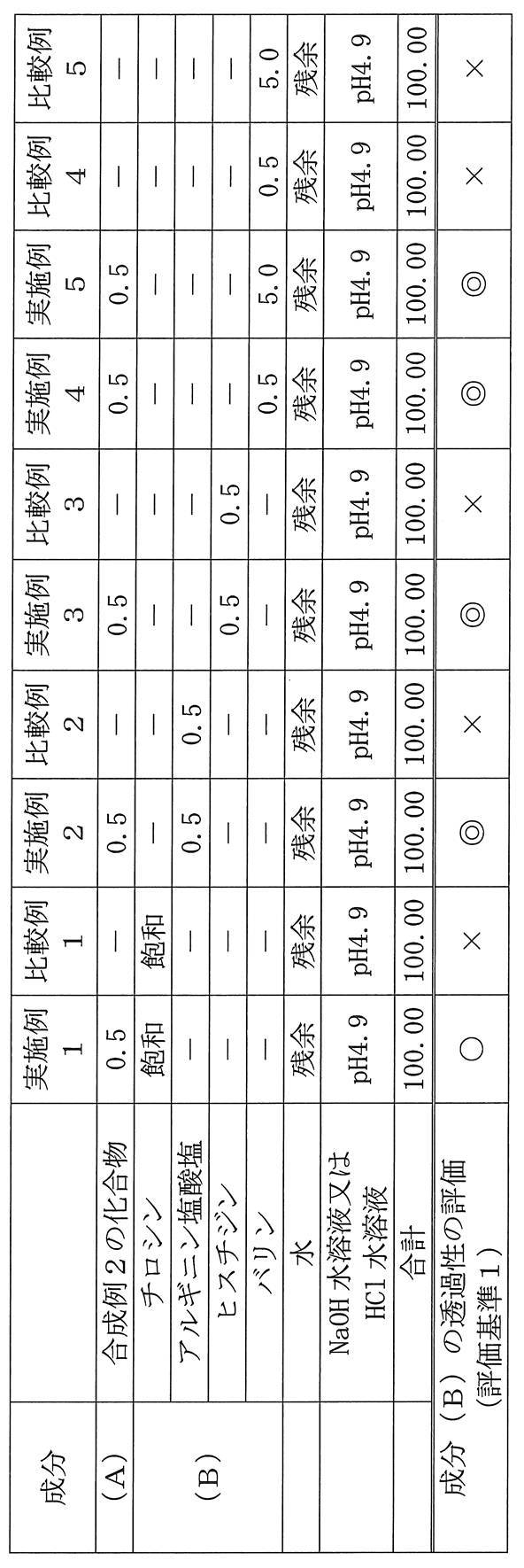

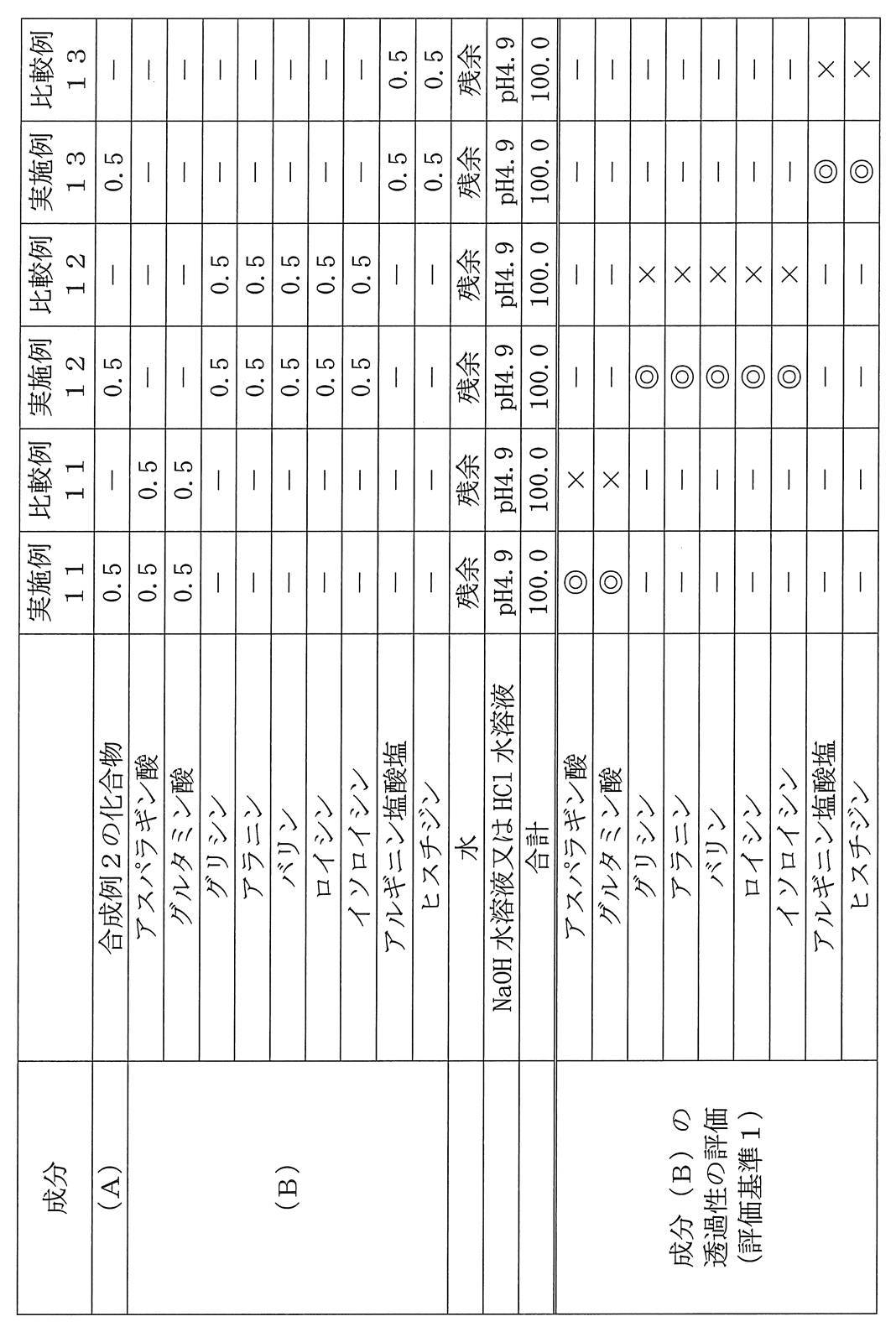


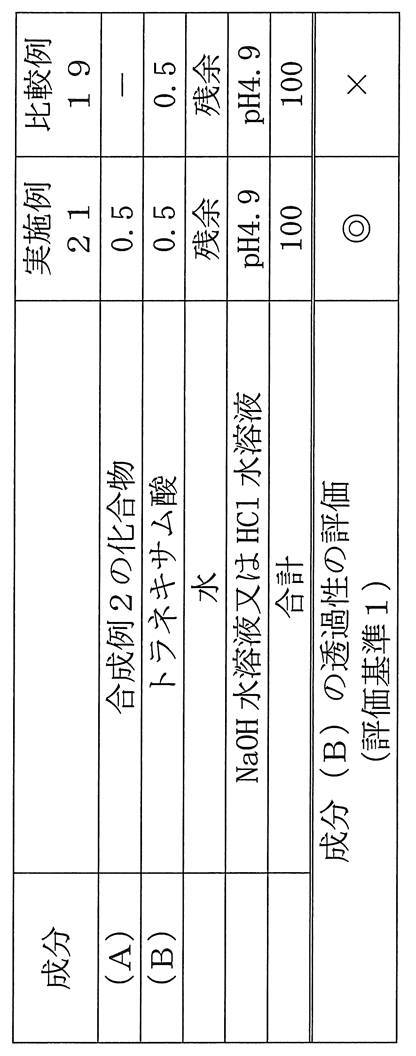

表1~6に示されるように、成分(B)を含有し成分(A)を含有しない組成物(比較例1~19)では、試験開始24時間後においても成分(B)の透過が確認されなかったが、成分(A)及び成分(B)を含有する組成物(実施例1~21)では、成分(B)の透過が確認され、成分(A)による顕著な皮膚透過促進作用が認められた。
また表7に示されるように、成分(A)及び成分(B)を含有する組成物(実施例22~24)では、成分(B)を含有し成分(A)を含有しない組成物(比較例20~22)と比較して、10倍以上の顕著な皮膚透過促進作用を示した。
また表7に示されるように、成分(A)及び成分(B)を含有する組成物(実施例22~24)では、成分(B)を含有し成分(A)を含有しない組成物(比較例20~22)と比較して、10倍以上の顕著な皮膚透過促進作用を示した。
[試験例2]
(比較例23~27の組成物の調製)
表8に示される成分を用い、試験例1と同様の手順で、比較例23~27の組成物を調製した。比較例23~27は、成分(A)との比較のために、一般に透過促進能を有することが知られている乳酸又はアジピン酸イソプロピルを成分(A’)として用いた。尚、表8に示される組成の単位は、重量%である。
(比較例23~27の組成物の調製)
表8に示される成分を用い、試験例1と同様の手順で、比較例23~27の組成物を調製した。比較例23~27は、成分(A)との比較のために、一般に透過促進能を有することが知られている乳酸又はアジピン酸イソプロピルを成分(A’)として用いた。尚、表8に示される組成の単位は、重量%である。
(皮膚透過性の評価)
比較例23~27の組成物及び試験例1で調製した実施例2の組成物の成分(B)の皮膚透過性を、試験例1と同様の手順で基準1に基づいて評価した。
比較例23~27の組成物及び試験例1で調製した実施例2の組成物の成分(B)の皮膚透過性を、試験例1と同様の手順で基準1に基づいて評価した。
(溶状及び室温安定性の評価)
実施例2及び比較例23~27の組成物を、それぞれ調製直後に50mlずつバイアル瓶に充填して室温で1か月保存し、調製直後及び1か月保存後の溶状を下記の基準で評価した。
実施例2及び比較例23~27の組成物を、それぞれ調製直後に50mlずつバイアル瓶に充填して室温で1か月保存し、調製直後及び1か月保存後の溶状を下記の基準で評価した。
(溶状の評価基準)
◎:均一な溶状であり透明又は半透明な組成物
〇:白濁した組成物
△:少量の沈殿物や分離が確認される組成物
×:明らかな沈殿物、または明らかな分離が確認される組成物
◎:均一な溶状であり透明又は半透明な組成物
〇:白濁した組成物
△:少量の沈殿物や分離が確認される組成物
×:明らかな沈殿物、または明らかな分離が確認される組成物
結果を表8に示す。
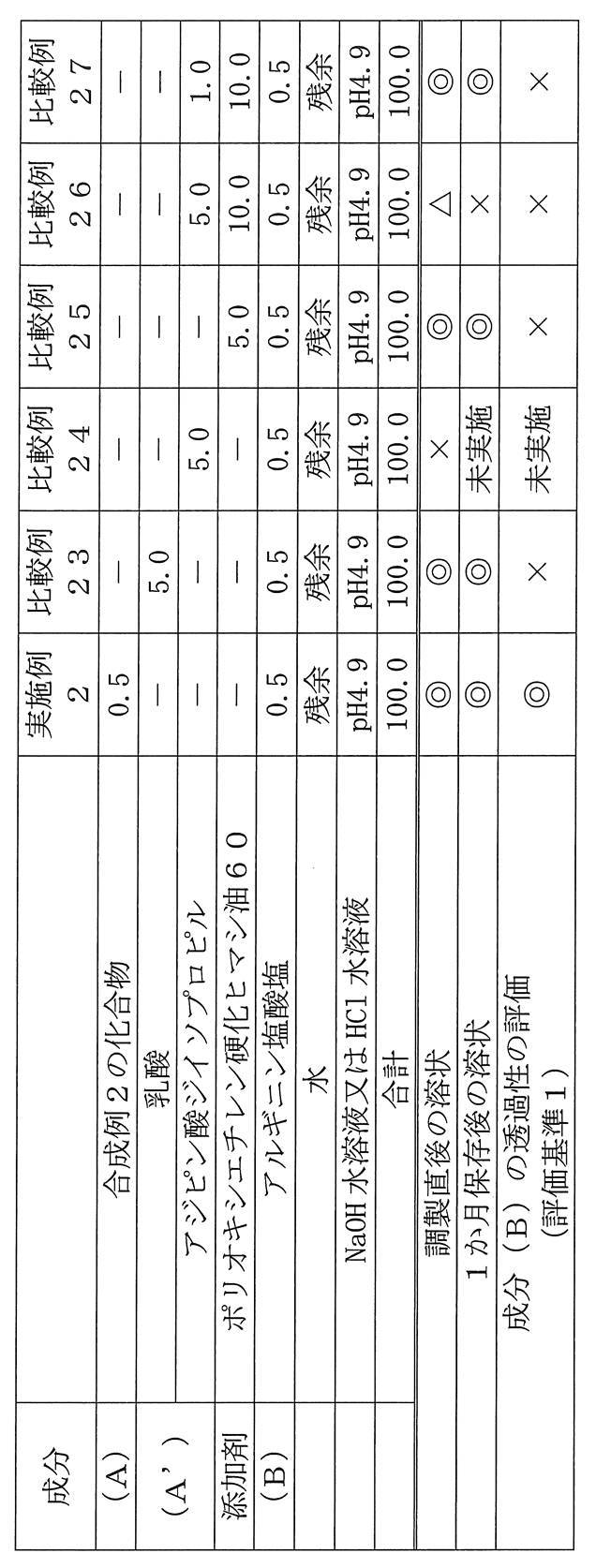
表8に示されるように、成分(A)に代えて成分(A’)を用いた組成物(比較例23~27)では、試験開始24時間後においても成分(B)の透過が確認されなかった。
一方、成分(A)を用いた組成物(実施例2)では、試験例1で確認したように、成分(A)の顕著な皮膚透過促進作用が認められ、また当該組成物は、室温で1か月保存した後においても、均一な溶状を保持し、透明又は半透明であったことから、室温安定性に優れるものであることが分かった。
一方、成分(A)を用いた組成物(実施例2)では、試験例1で確認したように、成分(A)の顕著な皮膚透過促進作用が認められ、また当該組成物は、室温で1か月保存した後においても、均一な溶状を保持し、透明又は半透明であったことから、室温安定性に優れるものであることが分かった。
[試験例3]
(実施例25及び比較例28の組成物の調製)
表9の第I欄記載の各成分を加熱・撹拌して溶解させた後、加熱した第II欄記載の成分(水)を加え、室温付近まで冷却した。続いて、あらかじめ撹拌して溶解させた第III欄記載の各成分、成分(A)及び成分(B)を添加して、撹拌し溶解させた後に、pHを調整し、最後に水の量を調整することにより、実施例25及び比較例28の組成物をそれぞれ調製した。尚、表9に示される組成の単位は、重量%である。
(実施例25及び比較例28の組成物の調製)
表9の第I欄記載の各成分を加熱・撹拌して溶解させた後、加熱した第II欄記載の成分(水)を加え、室温付近まで冷却した。続いて、あらかじめ撹拌して溶解させた第III欄記載の各成分、成分(A)及び成分(B)を添加して、撹拌し溶解させた後に、pHを調整し、最後に水の量を調整することにより、実施例25及び比較例28の組成物をそれぞれ調製した。尚、表9に示される組成の単位は、重量%である。
(皮膚透過性の評価)
実施例25及び比較例28の組成物の成分(B)の皮膚透過性を、試験例1と同様の手順で基準1に基づいて評価した。
実施例25及び比較例28の組成物の成分(B)の皮膚透過性を、試験例1と同様の手順で基準1に基づいて評価した。
(溶状及び室温安定性の評価)
実施例25及び比較例28の組成物の調製直後及び1か月保存後の溶状を、試験例2と同様の手順で同様の基準に基づいて評価した。
実施例25及び比較例28の組成物の調製直後及び1か月保存後の溶状を、試験例2と同様の手順で同様の基準に基づいて評価した。
結果を表10に示す。

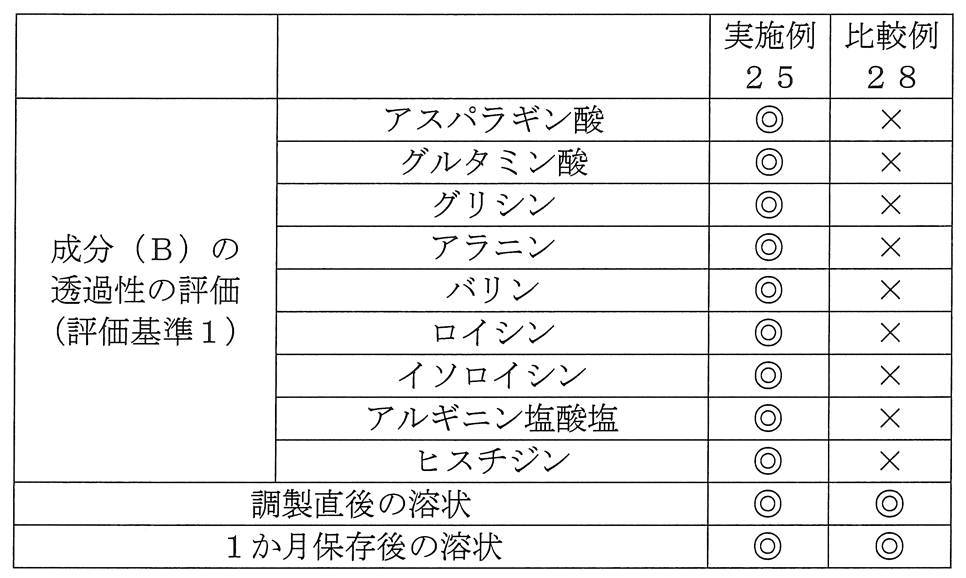
表10に示されるように、成分(B)を含有し成分(A)を含有しない組成物(比較例28)では、試験開始24時間後においても成分(B)の透過が確認されなかったが、成分(A)及び成分(B)を含有する組成物(実施例25)では、成分(B)の透過が確認され、成分(A)による顕著な皮膚透過促進作用が認められた。
[試験例4]
(実施例26~28及び比較例29の組成物の調製)
表11に示される成分を用い、試験例1と同様の手順で、実施例26~28及び比較例29の組成物を調製した。尚、表11に示される組成の単位は、重量%である。
(実施例26~28及び比較例29の組成物の調製)
表11に示される成分を用い、試験例1と同様の手順で、実施例26~28及び比較例29の組成物を調製した。尚、表11に示される組成の単位は、重量%である。
(溶状の評価)
実施例26~28及び比較例29の組成物の調製直後の溶状を、試験例2と同様の手順で同様の基準に基づいて評価した。
実施例26~28及び比較例29の組成物の調製直後の溶状を、試験例2と同様の手順で同様の基準に基づいて評価した。
(低温安定性の評価)
実施例26~28及び比較例29の組成物を、それぞれ50mlずつバイアル瓶に充填して-5℃にて1か月保存した後、溶状を確認し下記の基準で低温安定性を評価した。
実施例26~28及び比較例29の組成物を、それぞれ50mlずつバイアル瓶に充填して-5℃にて1か月保存した後、溶状を確認し下記の基準で低温安定性を評価した。
(低温安定性の評価基準)
◎:均一であり透明な組成物
×:明らかな沈殿物が確認される組成物
◎:均一であり透明な組成物
×:明らかな沈殿物が確認される組成物
結果を表11に示す。
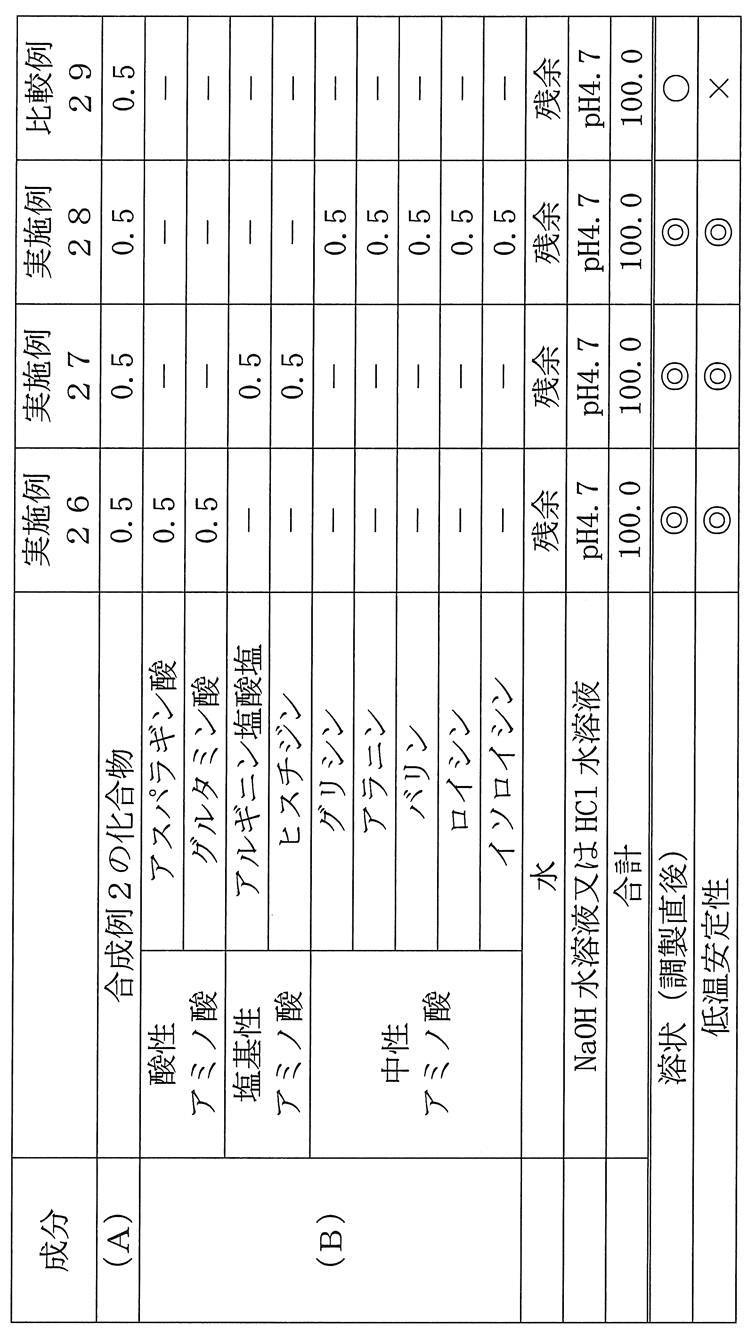
表11に示されるように、成分(A)を含有するが成分(B)を含有しない比較例29の組成物では-5℃で1か月保存した後に沈殿物が確認されたが、成分(A)と併せて、成分(B)として各種アミノ酸を含有する実施例26~28の組成物では低温安定性が改善された。
[試験例5]
(実施例29、30及び比較例30、31の組成物の調製)
表12に示される各成分のうち、クエン酸以外の成分を、70℃で加熱しながら均一になるまで撹拌した後、室温付近まで冷却し、次いでクエン酸を用いてpHを5.5に調整し、最後に水の量を調整することにより、実施例29、30及び比較例30、31の組成物をそれぞれ調製した。調製した各組成物は室温で保存した。尚、表12に示される組成の単位は、重量%である。
成分(B)として使用した「PRODEW(登録商標) 500」(味の素社製)は、PCA-Na、乳酸ナトリウム、アルギニン、アスパラギン酸、PCA、グリシン、アラニン、セリン、バリン、プロリン、トレオニン、イソロイシン、ヒスチジン及びフェニルアラニンを含有する。
(実施例29、30及び比較例30、31の組成物の調製)
表12に示される各成分のうち、クエン酸以外の成分を、70℃で加熱しながら均一になるまで撹拌した後、室温付近まで冷却し、次いでクエン酸を用いてpHを5.5に調整し、最後に水の量を調整することにより、実施例29、30及び比較例30、31の組成物をそれぞれ調製した。調製した各組成物は室温で保存した。尚、表12に示される組成の単位は、重量%である。
成分(B)として使用した「PRODEW(登録商標) 500」(味の素社製)は、PCA-Na、乳酸ナトリウム、アルギニン、アスパラギン酸、PCA、グリシン、アラニン、セリン、バリン、プロリン、トレオニン、イソロイシン、ヒスチジン及びフェニルアラニンを含有する。
<保湿効果、肌のハリの評価>
5名のパネラーが、実施例29、30及び比較例30、31の組成物50μLをそれぞれ、左右の下腕内側部の皮膚4cm×4cm以内の範囲に朝夕塗布する連用試験を1週間実施した。連用試験の最後の塗布から6時間後に、各組成物の保湿効果及び塗布部位の皮膚のハリを、室温23℃、湿度40%の条件下で下記のように評価した。
5名のパネラーが、実施例29、30及び比較例30、31の組成物50μLをそれぞれ、左右の下腕内側部の皮膚4cm×4cm以内の範囲に朝夕塗布する連用試験を1週間実施した。連用試験の最後の塗布から6時間後に、各組成物の保湿効果及び塗布部位の皮膚のハリを、室温23℃、湿度40%の条件下で下記のように評価した。
(保湿効果)
Courage+Khazaka社製「Corneometer(登録商標) CM825」を用いて、各組成物の塗布部位及び未塗布部位の皮膚キャパシタンス値(角層水分量)を測定し、塗布部位の測定値と未塗布部位の測定値の差(塗布部位-未塗布部位)を、変化量として求めた。
実施例29及び比較例31の変化量を比較例30と比較して、下記の基準で保湿効果について評価を行った。
Courage+Khazaka社製「Corneometer(登録商標) CM825」を用いて、各組成物の塗布部位及び未塗布部位の皮膚キャパシタンス値(角層水分量)を測定し、塗布部位の測定値と未塗布部位の測定値の差(塗布部位-未塗布部位)を、変化量として求めた。
実施例29及び比較例31の変化量を比較例30と比較して、下記の基準で保湿効果について評価を行った。
(保湿効果の評価基準)
◎:変化量が、比較例30(基準)の2倍以上
○:変化量が、比較例30(基準)の同等を超え2倍未満
×:変化量が、比較例30(基準)と同等かそれ以下
◎:変化量が、比較例30(基準)の2倍以上
○:変化量が、比較例30(基準)の同等を超え2倍未満
×:変化量が、比較例30(基準)と同等かそれ以下
(皮膚のハリ)
Courage+Khazaka社製「Corneometer(登録商標) CM825」を用いて、各組成物の塗布部位及び未塗布部位の初期戻り値(R7=Ur/Uf)を測定し、塗布部位の測定値と未塗布部位の測定値の差(塗布部位-未塗布部位)を、変化量として求めた。
実施例29及び比較例31の変化量を比較例30と比較して、下記の基準で皮膚のハリについて評価を行った。
Courage+Khazaka社製「Corneometer(登録商標) CM825」を用いて、各組成物の塗布部位及び未塗布部位の初期戻り値(R7=Ur/Uf)を測定し、塗布部位の測定値と未塗布部位の測定値の差(塗布部位-未塗布部位)を、変化量として求めた。
実施例29及び比較例31の変化量を比較例30と比較して、下記の基準で皮膚のハリについて評価を行った。
(皮膚のハリの評価基準)
◎:変化量が、比較例30(基準)の2倍以上
○:変化量が、比較例30(基準)の同等を超え2倍未満
×:変化量が、比較例30(基準)と同等かそれ以下
◎:変化量が、比較例30(基準)の2倍以上
○:変化量が、比較例30(基準)の同等を超え2倍未満
×:変化量が、比較例30(基準)と同等かそれ以下
<肌のしっとり感及び浸透感の評価>
5名のパネラーが、実施例29、30及び比較例30、31の組成物50μLをそれぞれ、前腕内側の皮膚8cm×2cm以内の範囲にそれぞれ塗布し、肌のしっとり感及び浸透感について下記のように評点付けした後、5名の平均点を求め、下記の基準に基づいて評価を行った。
5名のパネラーが、実施例29、30及び比較例30、31の組成物50μLをそれぞれ、前腕内側の皮膚8cm×2cm以内の範囲にそれぞれ塗布し、肌のしっとり感及び浸透感について下記のように評点付けした後、5名の平均点を求め、下記の基準に基づいて評価を行った。
(肌のしっとり感の評点)
5:非常にしっとり感が強い
4:しっとり感がある
3:ふつう
2:しっとり感があまりない
1:しっとり感が全くない
5:非常にしっとり感が強い
4:しっとり感がある
3:ふつう
2:しっとり感があまりない
1:しっとり感が全くない
(浸透感の評点)
5:肌への浸透が非常に良く、自然になじんで消えていく
4:肌への浸透が良い
3:ふつう
2:肌への浸透が悪い
1:肌への浸透が非常に悪い
5:肌への浸透が非常に良く、自然になじんで消えていく
4:肌への浸透が良い
3:ふつう
2:肌への浸透が悪い
1:肌への浸透が非常に悪い
(肌のしっとり感及び浸透感の評価基準)
◎:平均点が4.0以上
○:平均点が3.0以上4.0未満
△:平均点が2.0以上3.0未満
×:平均点が2.0未満
◎:平均点が4.0以上
○:平均点が3.0以上4.0未満
△:平均点が2.0以上3.0未満
×:平均点が2.0未満
<なじみ感の評価(接触角の測定)>
なじみ感の評価として、接触角の測定を次のように行った。バイオスキンプレート(ビューラックス社製)に試料組成物25μLをセットして、水滴とプレートの左右の角度の平均を1回の値として、10回測定し、さらにその平均値を接触角の値として求めた。接触角が大きいほどなじみ感が悪いことを示す。
なじみ感の評価として、接触角の測定を次のように行った。バイオスキンプレート(ビューラックス社製)に試料組成物25μLをセットして、水滴とプレートの左右の角度の平均を1回の値として、10回測定し、さらにその平均値を接触角の値として求めた。接触角が大きいほどなじみ感が悪いことを示す。
結果を表12に示す。
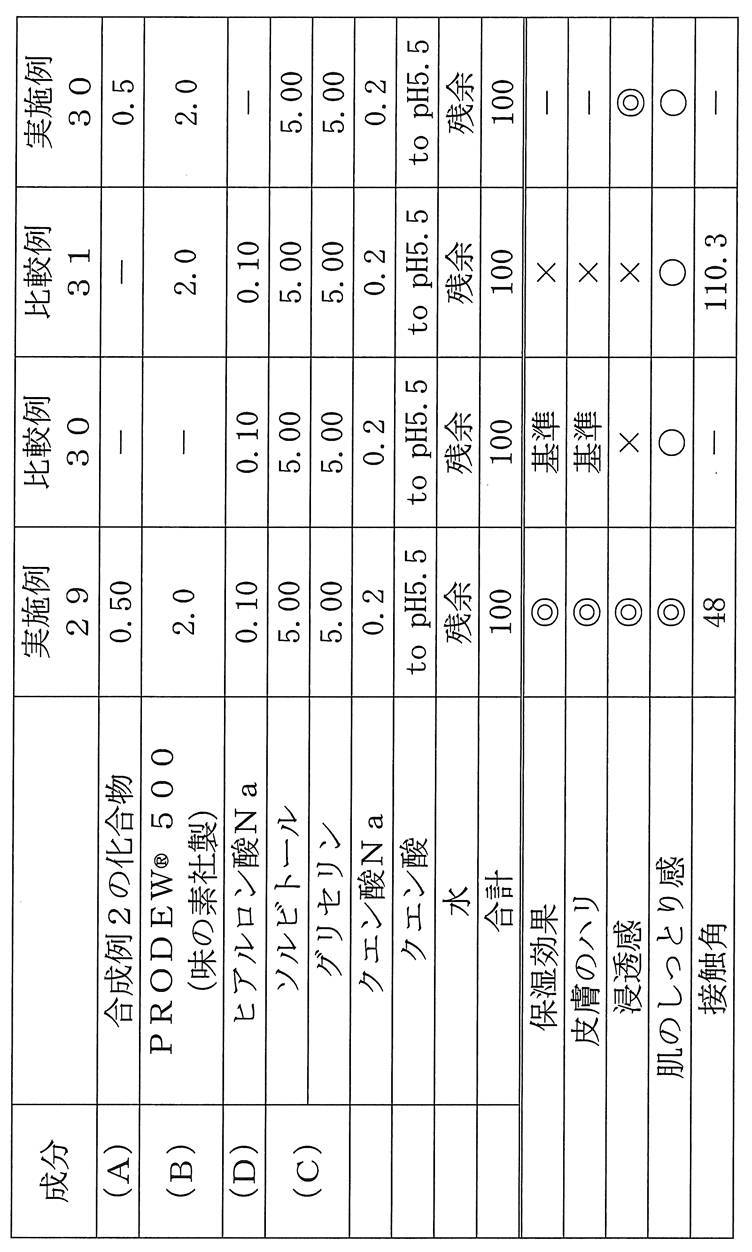
表12に示されるように、成分(A)及び成分(B)を含有する組成物(実施例29)は、成分(B)を含有し成分(A)を含有しない組成物(比較例31)に比べ、成分(B)の皮膚への透過が促進され、成分(B)に求められる効果(保湿効果等)も向上したことが確認された。また実施例29の接触角は、比較例31に比べ、非常に小さく、実際、官能評価での肌へのなじみ感も非常に良かった。
[試験例6]
(実施例31~42及び比較例32~43の組成物の調製)
表13~15に示される成分を用い、試験例1と同様の手順で、実施例31~42及び比較例32~43の組成物を調製した。尚、表13~15に示される組成の単位は、重量%である。
(実施例31~42及び比較例32~43の組成物の調製)
表13~15に示される成分を用い、試験例1と同様の手順で、実施例31~42及び比較例32~43の組成物を調製した。尚、表13~15に示される組成の単位は、重量%である。
(皮膚透過性の評価)
実施例31~39及び比較例32~40の組成物の成分(B)の皮膚透過性は、試験例1と同様の手順で基準1に基づいて評価した。
実施例40~42において成分(B)として用いたアラニルグルタミン、パントテニルエチルエーテル及びナイアシンアミドは、成分(A)を併用しない場合であっても試験開始から24時間以内に透過が確認されたため、それらの皮膚透過性については、試験例1と同様の手順で、試験開始8時間後の累積透過量を、成分(A)を含有しない対応する組成物(比較例41~43)と比較し、基準2に基づいて評価した。
実施例31~39及び比較例32~40の組成物の成分(B)の皮膚透過性は、試験例1と同様の手順で基準1に基づいて評価した。
実施例40~42において成分(B)として用いたアラニルグルタミン、パントテニルエチルエーテル及びナイアシンアミドは、成分(A)を併用しない場合であっても試験開始から24時間以内に透過が確認されたため、それらの皮膚透過性については、試験例1と同様の手順で、試験開始8時間後の累積透過量を、成分(A)を含有しない対応する組成物(比較例41~43)と比較し、基準2に基づいて評価した。
結果を表13~15に示す。
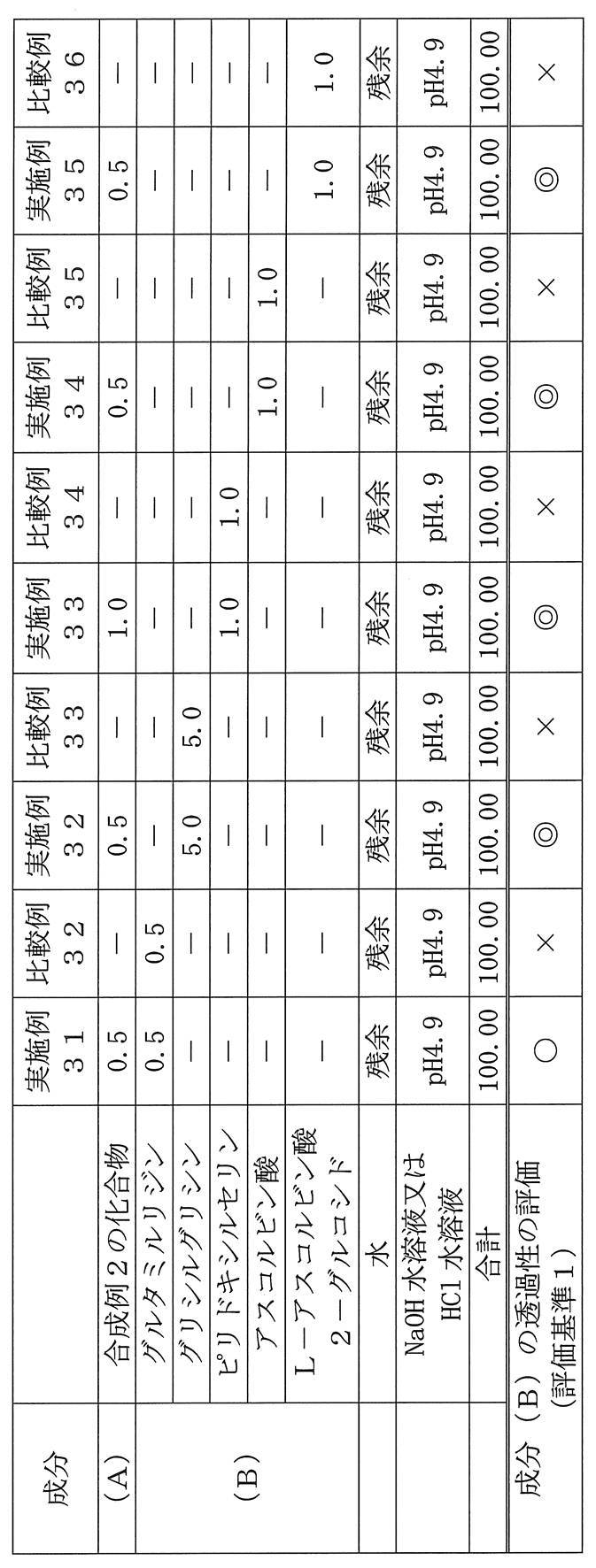

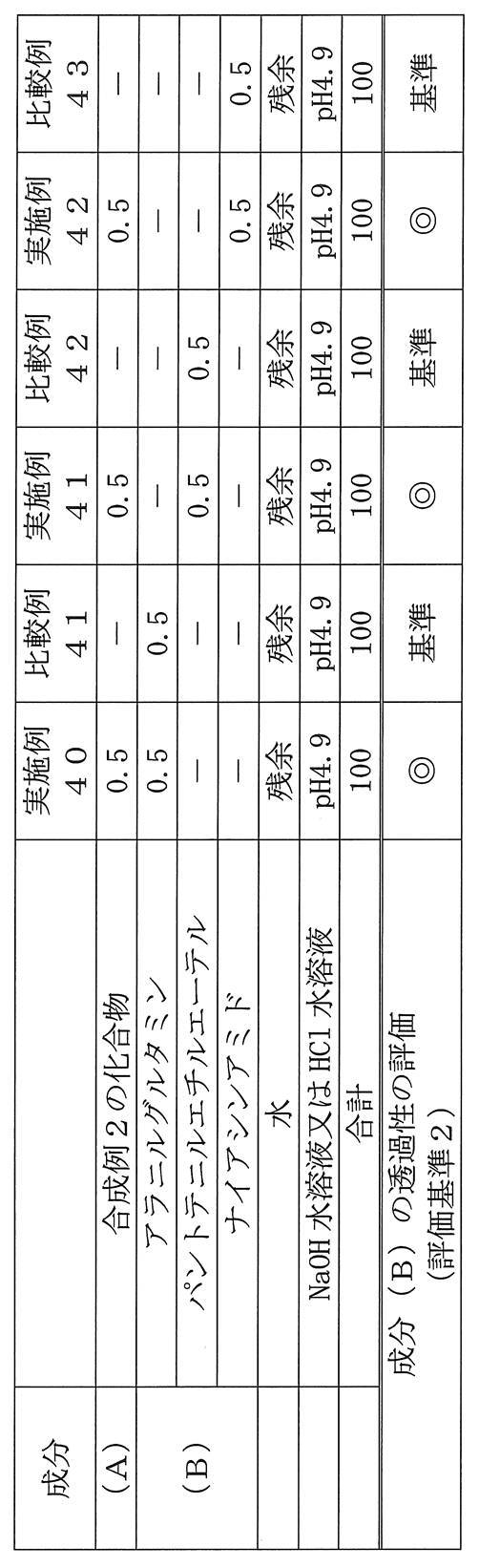
表13及び表14に示されるように、成分(B)を含有し成分(A)を含有しない組成物(比較例32~40)では、試験開始24時間後においても成分(B)の透過が確認されなかったが、成分(A)及び成分(B)を含有する組成物(実施例31~39)では、成分(B)の透過が確認され、成分(A)による顕著な皮膚透過促進作用が認められた。
また表15に示されるように、成分(A)及び成分(B)を含有する組成物(実施例40~42)では、成分(B)を含有し成分(A)を含有しない組成物(比較例41~43)と比較して、10倍以上の顕著な皮膚透過促進作用を示した。
また表15に示されるように、成分(A)及び成分(B)を含有する組成物(実施例40~42)では、成分(B)を含有し成分(A)を含有しない組成物(比較例41~43)と比較して、10倍以上の顕著な皮膚透過促進作用を示した。
試験例1~6において使用した材料、試薬は以下のとおりである。
乳酸:東京化成工業社製
アジピン酸ジイソプロピル:東京化成工業社製
ポリオキシエチレン硬化ヒマシ油60:NIKKOL HCO-60(日光ケミカルズ社製)
DPG:DPG-RF(ジプロピレングリコール)(ADEKA社製)
BG:1,3-BG(1,3-ブチレングリコール) UK(ダイセル化学社製)
グリセリン:化粧品用濃グリセリン(阪本工業社製又は花王社製)
ラウロイルグルタミン酸ジ(フィトステリル/オクチルドデシル):「ELDEW(エルデュウ)」PS-203(味の素社製)
オクタン酸セチル:CHE(高級アルコール工業社製)
PPG-8セテス-20:ニッコールPBC-44(日光ケミカルズ社製)
PPG-6デシルテトラデセス-30:ニッコールPEN-4630(日光ケミカルズ社製)
ヒアルロン酸Na:ヒアルロンサンHA-LQ(キューピー社製)
ソルビトール:ソルビトール花王(花王社製)
グルタミルリジン:味の素社製
グリシルグリシン:東京化成工業社製
ピリドキシルセリン:味の素社製
アスコルビン酸:純正化学社製
L-アスコルビン酸2-グルコシド:AA2G(林原社製)
N-アセチルシステイン:和光純薬工業社製
イノシトール:築野ライスファインケミカルズ社製
カルノシン:和光純薬工業社製
エクトイン:Sigma-Aldrich社製
アラニルグルタミン:ナカライテスク社製
パントテニルエチルエーテル:DSMニュートリションジャパン社製
ナイアシンアミド:和光純薬工業社製
乳酸:東京化成工業社製
アジピン酸ジイソプロピル:東京化成工業社製
ポリオキシエチレン硬化ヒマシ油60:NIKKOL HCO-60(日光ケミカルズ社製)
DPG:DPG-RF(ジプロピレングリコール)(ADEKA社製)
BG:1,3-BG(1,3-ブチレングリコール) UK(ダイセル化学社製)
グリセリン:化粧品用濃グリセリン(阪本工業社製又は花王社製)
ラウロイルグルタミン酸ジ(フィトステリル/オクチルドデシル):「ELDEW(エルデュウ)」PS-203(味の素社製)
オクタン酸セチル:CHE(高級アルコール工業社製)
PPG-8セテス-20:ニッコールPBC-44(日光ケミカルズ社製)
PPG-6デシルテトラデセス-30:ニッコールPEN-4630(日光ケミカルズ社製)
ヒアルロン酸Na:ヒアルロンサンHA-LQ(キューピー社製)
ソルビトール:ソルビトール花王(花王社製)
グルタミルリジン:味の素社製
グリシルグリシン:東京化成工業社製
ピリドキシルセリン:味の素社製
アスコルビン酸:純正化学社製
L-アスコルビン酸2-グルコシド:AA2G(林原社製)
N-アセチルシステイン:和光純薬工業社製
イノシトール:築野ライスファインケミカルズ社製
カルノシン:和光純薬工業社製
エクトイン:Sigma-Aldrich社製
アラニルグルタミン:ナカライテスク社製
パントテニルエチルエーテル:DSMニュートリションジャパン社製
ナイアシンアミド:和光純薬工業社製
本発明によれば、アミノ酸及びその誘導体、ビタミン及びその誘導体、並びに、ビタミン様物質の皮膚への浸透が促進された組成物が提供される。当該本発明の組成物は、アミノ酸及びその誘導体、ビタミン及びその誘導体、並びに、ビタミン様物質の皮膚への浸透性に優れることによって、それらの効果、活性を発揮又は向上し得る。
また本発明によれば、皮膚浸透促進剤(好ましくは、アミノ酸及びその誘導体、ビタミン及びその誘導体、並びに、ビタミン様物質の皮膚浸透促進剤)が提供される。
また本発明によれば、皮膚浸透促進剤(好ましくは、アミノ酸及びその誘導体、ビタミン及びその誘導体、並びに、ビタミン様物質の皮膚浸透促進剤)が提供される。
本出願は、日本で出願された特願2015-235849(出願日:2015年12月2日)を基礎としており、その内容は本明細書に全て包含されるものである。
Claims (13)
- (A)一般式(I)で表されるアシルプロリン又はその塩

(式中、R1-CO-で表されるアシル基は、炭素原子数2~23の脂肪酸より誘導されるアシル基を示す)、及び
(B)アミノ酸及びその誘導体(但し、前記(A)を除く)、ビタミン及びその誘導体、並びに、ビタミン様物質からなる群より選択される少なくとも1種
を含有することを特徴とする組成物。 - R1-CO-で表されるアシル基が、炭素原子数4~18の脂肪酸より誘導されるアシル基であることを特徴とする、請求項1記載の組成物。
- (B)が、アミノ酸、タウリン、N-アセチル-2-メチルチアゾリジン-2,4-ジカルボン酸-2-エチルエステル、N-アセチルシステイン、アラニルグルタミン、グリシルグリシン、グルタミルリジン、ピリドキシルセリン、ナイアシンアミド、パンテノール、パントテニルエチルエーテル、アスコルビン酸、L-アスコルビン酸2-グルコシド、イノシトール、カルノシン及びエクトインからなる群より選択される少なくとも1種である、請求項1又は2記載の組成物。
- (B)を2種以上含有する、請求項1~3のいずれか一項に記載の組成物。
- 前記組成物における(A)の含有量が、前記組成物全量に対して0.001~5重量%である、請求項1~4のいずれか一項に記載の組成物。
- 前記組成物における(B)の含有量が、前記組成物全量に対して0.001~10重量%である、請求項1~5のいずれか一項に記載の組成物。
- 前記組成物における(A)の含有量と(B)の含有量との重量比(A:B)が、1:0.002~2000である、請求項1~6のいずれか一項に記載の組成物。
- さらに(C)多価アルコールを含む、請求項1~7のいずれか一項に記載の組成物。
- さらに(D)水溶性高分子を含む、請求項1~8のいずれか一項に記載の組成物。
- 前記組成物のpHが、3.5~8.5である、請求項1~9のいずれか一項に記載の組成物。
- 前記組成物が、皮膚用である、請求項1~10のいずれか一項に記載の組成物。
- (A)一般式(I)で表されるアシルプロリン又はその塩
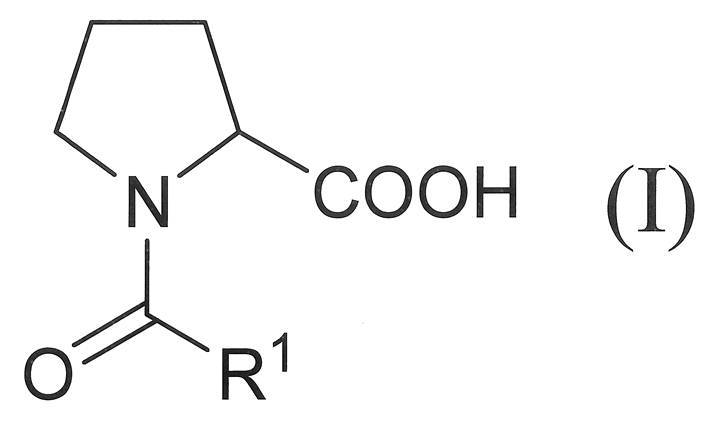
(式中、R1-CO-で表されるアシル基は、炭素原子数2~23の脂肪酸より誘導されるアシル基を示す)を含有する、皮膚浸透促進剤。 - (B)アミノ酸及びその誘導体(但し、前記(A)を除く)、ビタミン及びその誘導体、並びに、ビタミン様物質からなる群より選択される少なくとも1種の皮膚浸透を促進する、請求項12記載の皮膚浸透促進剤。
Applications Claiming Priority (2)
| Application Number | Priority Date | Filing Date | Title |
|---|---|---|---|
| JP2015235849 | 2015-12-02 | ||
| JP2015-235849 | 2015-12-02 |
Publications (1)
| Publication Number | Publication Date |
|---|---|
| WO2017094852A1 true WO2017094852A1 (ja) | 2017-06-08 |
Family
ID=58797512
Family Applications (1)
| Application Number | Title | Priority Date | Filing Date |
|---|---|---|---|
| PCT/JP2016/085762 Ceased WO2017094852A1 (ja) | 2015-12-02 | 2016-12-01 | 外用組成物 |
Country Status (1)
| Country | Link |
|---|---|
| WO (1) | WO2017094852A1 (ja) |
Citations (13)
| Publication number | Priority date | Publication date | Assignee | Title |
|---|---|---|---|---|
| WO1987001935A1 (en) * | 1985-10-03 | 1987-04-09 | Rajadhyaksha Vithal J | Transdermal and systemic preparation and method |
| JP2000191426A (ja) * | 1998-12-22 | 2000-07-11 | Exploit Des Prod Pour Les Ind Chim Sepc:Soc | テクスチャリング剤としてのn―アシルアミノ酸化合物の使用法 |
| JP2002506016A (ja) * | 1998-03-09 | 2002-02-26 | ソシエテ・デクスプロワタシオン・デ・プロデュイ・プール・レ・アンデュストリー・シミック・セピック | リポアミノ酸構造を有する化合物およびスイレン抽出物を含有する相乗作用的組成物 |
| JP2006528935A (ja) * | 2003-07-25 | 2006-12-28 | ザ プロクター アンド ギャンブル カンパニー | N−アシルアミノ酸組成物を用いた哺乳類のケラチン組織の調整 |
| JP2009512667A (ja) * | 2005-10-19 | 2009-03-26 | ソシエテ・デクスプロワタシオン・デ・プロデュイ・プール・レ・アンデュストリー・シミック・セピック | ラウロイルプロリン、およびアンヒドロヘキシトールと脂肪族カルボン酸とのエステルを含む美容用および薬学的組成物。 |
| JP2009114154A (ja) * | 2007-11-09 | 2009-05-28 | Kao Corp | 化粧方法 |
| JP2009536965A (ja) * | 2006-05-15 | 2009-10-22 | ザ プロクター アンド ギャンブル カンパニー | 水溶性活性物質の浸透の増強方法 |
| JP2011236179A (ja) * | 2010-05-13 | 2011-11-24 | Asahi Kasei Chemicals Corp | 浸透促進剤 |
| JP2012097027A (ja) * | 2010-11-01 | 2012-05-24 | Saiensurin:Kk | 経皮吸収促進性皮膚外用剤 |
| WO2013147328A1 (ja) * | 2012-03-30 | 2013-10-03 | 味の素株式会社 | 化粧料組成物 |
| WO2014007290A1 (ja) * | 2012-07-03 | 2014-01-09 | 味の素株式会社 | 保湿剤及びこれを含有する化粧料 |
| WO2014030746A1 (ja) * | 2012-08-24 | 2014-02-27 | 味の素株式会社 | アシルジペプチド誘導体 |
| WO2016039407A1 (ja) * | 2014-09-10 | 2016-03-17 | 味の素株式会社 | 保湿剤及びこれを含有する化粧料 |
-
2016
- 2016-12-01 WO PCT/JP2016/085762 patent/WO2017094852A1/ja not_active Ceased
Patent Citations (13)
| Publication number | Priority date | Publication date | Assignee | Title |
|---|---|---|---|---|
| WO1987001935A1 (en) * | 1985-10-03 | 1987-04-09 | Rajadhyaksha Vithal J | Transdermal and systemic preparation and method |
| JP2002506016A (ja) * | 1998-03-09 | 2002-02-26 | ソシエテ・デクスプロワタシオン・デ・プロデュイ・プール・レ・アンデュストリー・シミック・セピック | リポアミノ酸構造を有する化合物およびスイレン抽出物を含有する相乗作用的組成物 |
| JP2000191426A (ja) * | 1998-12-22 | 2000-07-11 | Exploit Des Prod Pour Les Ind Chim Sepc:Soc | テクスチャリング剤としてのn―アシルアミノ酸化合物の使用法 |
| JP2006528935A (ja) * | 2003-07-25 | 2006-12-28 | ザ プロクター アンド ギャンブル カンパニー | N−アシルアミノ酸組成物を用いた哺乳類のケラチン組織の調整 |
| JP2009512667A (ja) * | 2005-10-19 | 2009-03-26 | ソシエテ・デクスプロワタシオン・デ・プロデュイ・プール・レ・アンデュストリー・シミック・セピック | ラウロイルプロリン、およびアンヒドロヘキシトールと脂肪族カルボン酸とのエステルを含む美容用および薬学的組成物。 |
| JP2009536965A (ja) * | 2006-05-15 | 2009-10-22 | ザ プロクター アンド ギャンブル カンパニー | 水溶性活性物質の浸透の増強方法 |
| JP2009114154A (ja) * | 2007-11-09 | 2009-05-28 | Kao Corp | 化粧方法 |
| JP2011236179A (ja) * | 2010-05-13 | 2011-11-24 | Asahi Kasei Chemicals Corp | 浸透促進剤 |
| JP2012097027A (ja) * | 2010-11-01 | 2012-05-24 | Saiensurin:Kk | 経皮吸収促進性皮膚外用剤 |
| WO2013147328A1 (ja) * | 2012-03-30 | 2013-10-03 | 味の素株式会社 | 化粧料組成物 |
| WO2014007290A1 (ja) * | 2012-07-03 | 2014-01-09 | 味の素株式会社 | 保湿剤及びこれを含有する化粧料 |
| WO2014030746A1 (ja) * | 2012-08-24 | 2014-02-27 | 味の素株式会社 | アシルジペプチド誘導体 |
| WO2016039407A1 (ja) * | 2014-09-10 | 2016-03-17 | 味の素株式会社 | 保湿剤及びこれを含有する化粧料 |
Similar Documents
| Publication | Publication Date | Title |
|---|---|---|
| JP6148454B2 (ja) | トラネキサム酸を含む外用及び内服用組成物 | |
| JP6058532B2 (ja) | エンドセリン−1産生抑制用組成物、及び細胞増殖促進用組成物 | |
| KR20140105799A (ko) | 미백 화장료 | |
| JP5951277B2 (ja) | アゼライン酸を含有する外用組成物 | |
| JP6110365B2 (ja) | アルクチゲニン誘導体を含む抗老化剤 | |
| JPWO2020111067A1 (ja) | 脂肪族アルコールとグリセリンとのエーテルを含む組成物 | |
| JP6633847B2 (ja) | 外用剤 | |
| JP2022043328A (ja) | アシルプロリンを含むベシクルを有する組成物 | |
| JP2018111705A (ja) | 皮膚外用組成物 | |
| JP6416473B2 (ja) | 外用組成物 | |
| JP6943024B2 (ja) | 外用組成物 | |
| JP2019137695A (ja) | 皮膚有効成分の浸透方法 | |
| JP2021138683A (ja) | 外用組成物 | |
| JP6172149B2 (ja) | アシルジペプチド誘導体 | |
| JP7102687B2 (ja) | 外用組成物 | |
| WO2016039407A1 (ja) | 保湿剤及びこれを含有する化粧料 | |
| JP2012214418A (ja) | 外用組成物 | |
| WO2018220916A1 (ja) | 外用組成物 | |
| US20130204017A1 (en) | Glyceryl ascorbic acid acylated derivative or its salt, production method thereof, and cosmetics | |
| JP2018043946A (ja) | メラニン産生抑制剤 | |
| JP6741014B2 (ja) | 保湿剤及びこれを含む化粧料 | |
| JP2021172633A (ja) | 表皮バリア機能改善剤 | |
| JP2020105100A (ja) | ヒアルロン酸産生促進用組成物及びヒアルロン酸産生促進方法 | |
| JP2007045769A (ja) | 皮膚外用剤 | |
| HK1180226A (en) | Topical and internal composition including tranexamic acid |
Legal Events
| Date | Code | Title | Description |
|---|---|---|---|
| 121 | Ep: the epo has been informed by wipo that ep was designated in this application |
Ref document number: 16870789 Country of ref document: EP Kind code of ref document: A1 |
|
| NENP | Non-entry into the national phase |
Ref country code: DE |
|
| 122 | Ep: pct application non-entry in european phase |
Ref document number: 16870789 Country of ref document: EP Kind code of ref document: A1 |
|
| NENP | Non-entry into the national phase |
Ref country code: JP |