WO2017094552A1 - 眼科組成物 - Google Patents
眼科組成物 Download PDFInfo
- Publication number
- WO2017094552A1 WO2017094552A1 PCT/JP2016/084522 JP2016084522W WO2017094552A1 WO 2017094552 A1 WO2017094552 A1 WO 2017094552A1 JP 2016084522 W JP2016084522 W JP 2016084522W WO 2017094552 A1 WO2017094552 A1 WO 2017094552A1
- Authority
- WO
- WIPO (PCT)
- Prior art keywords
- ophthalmic composition
- component
- present
- examples
- oil
- Prior art date
- Legal status (The legal status is an assumption and is not a legal conclusion. Google has not performed a legal analysis and makes no representation as to the accuracy of the status listed.)
- Ceased
Links
Images
Classifications
-
- A—HUMAN NECESSITIES
- A61—MEDICAL OR VETERINARY SCIENCE; HYGIENE
- A61K—PREPARATIONS FOR MEDICAL, DENTAL OR TOILETRY PURPOSES
- A61K47/00—Medicinal preparations characterised by the non-active ingredients used, e.g. carriers or inert additives; Targeting or modifying agents chemically bound to the active ingredient
- A61K47/30—Macromolecular organic or inorganic compounds, e.g. inorganic polyphosphates
- A61K47/32—Macromolecular compounds obtained by reactions only involving carbon-to-carbon unsaturated bonds, e.g. carbomers, poly(meth)acrylates, or polyvinyl pyrrolidone
-
- A—HUMAN NECESSITIES
- A61—MEDICAL OR VETERINARY SCIENCE; HYGIENE
- A61K—PREPARATIONS FOR MEDICAL, DENTAL OR TOILETRY PURPOSES
- A61K47/00—Medicinal preparations characterised by the non-active ingredients used, e.g. carriers or inert additives; Targeting or modifying agents chemically bound to the active ingredient
- A61K47/02—Inorganic compounds
-
- A—HUMAN NECESSITIES
- A61—MEDICAL OR VETERINARY SCIENCE; HYGIENE
- A61K—PREPARATIONS FOR MEDICAL, DENTAL OR TOILETRY PURPOSES
- A61K47/00—Medicinal preparations characterised by the non-active ingredients used, e.g. carriers or inert additives; Targeting or modifying agents chemically bound to the active ingredient
- A61K47/06—Organic compounds, e.g. natural or synthetic hydrocarbons, polyolefins, mineral oil, petrolatum or ozokerite
- A61K47/08—Organic compounds, e.g. natural or synthetic hydrocarbons, polyolefins, mineral oil, petrolatum or ozokerite containing oxygen, e.g. ethers, acetals, ketones, quinones, aldehydes, peroxides
- A61K47/10—Alcohols; Phenols; Salts thereof, e.g. glycerol; Polyethylene glycols [PEG]; Poloxamers; PEG/POE alkyl ethers
-
- A—HUMAN NECESSITIES
- A61—MEDICAL OR VETERINARY SCIENCE; HYGIENE
- A61K—PREPARATIONS FOR MEDICAL, DENTAL OR TOILETRY PURPOSES
- A61K47/00—Medicinal preparations characterised by the non-active ingredients used, e.g. carriers or inert additives; Targeting or modifying agents chemically bound to the active ingredient
- A61K47/06—Organic compounds, e.g. natural or synthetic hydrocarbons, polyolefins, mineral oil, petrolatum or ozokerite
- A61K47/16—Organic compounds, e.g. natural or synthetic hydrocarbons, polyolefins, mineral oil, petrolatum or ozokerite containing nitrogen, e.g. nitro-, nitroso-, azo-compounds, nitriles, cyanates
- A61K47/18—Amines; Amides; Ureas; Quaternary ammonium compounds; Amino acids; Oligopeptides having up to five amino acids
- A61K47/186—Quaternary ammonium compounds, e.g. benzalkonium chloride or cetrimide
-
- A—HUMAN NECESSITIES
- A61—MEDICAL OR VETERINARY SCIENCE; HYGIENE
- A61K—PREPARATIONS FOR MEDICAL, DENTAL OR TOILETRY PURPOSES
- A61K47/00—Medicinal preparations characterised by the non-active ingredients used, e.g. carriers or inert additives; Targeting or modifying agents chemically bound to the active ingredient
- A61K47/06—Organic compounds, e.g. natural or synthetic hydrocarbons, polyolefins, mineral oil, petrolatum or ozokerite
- A61K47/26—Carbohydrates, e.g. sugar alcohols, amino sugars, nucleic acids, mono-, di- or oligo-saccharides; Derivatives thereof, e.g. polysorbates, sorbitan fatty acid esters or glycyrrhizin
-
- A—HUMAN NECESSITIES
- A61—MEDICAL OR VETERINARY SCIENCE; HYGIENE
- A61K—PREPARATIONS FOR MEDICAL, DENTAL OR TOILETRY PURPOSES
- A61K47/00—Medicinal preparations characterised by the non-active ingredients used, e.g. carriers or inert additives; Targeting or modifying agents chemically bound to the active ingredient
- A61K47/30—Macromolecular organic or inorganic compounds, e.g. inorganic polyphosphates
- A61K47/34—Macromolecular compounds obtained otherwise than by reactions only involving carbon-to-carbon unsaturated bonds, e.g. polyesters, polyamino acids, polysiloxanes, polyphosphazines, copolymers of polyalkylene glycol or poloxamers
-
- A—HUMAN NECESSITIES
- A61—MEDICAL OR VETERINARY SCIENCE; HYGIENE
- A61K—PREPARATIONS FOR MEDICAL, DENTAL OR TOILETRY PURPOSES
- A61K47/00—Medicinal preparations characterised by the non-active ingredients used, e.g. carriers or inert additives; Targeting or modifying agents chemically bound to the active ingredient
- A61K47/30—Macromolecular organic or inorganic compounds, e.g. inorganic polyphosphates
- A61K47/36—Polysaccharides; Derivatives thereof, e.g. gums, starch, alginate, dextrin, hyaluronic acid, chitosan, inulin, agar or pectin
-
- A—HUMAN NECESSITIES
- A61—MEDICAL OR VETERINARY SCIENCE; HYGIENE
- A61K—PREPARATIONS FOR MEDICAL, DENTAL OR TOILETRY PURPOSES
- A61K47/00—Medicinal preparations characterised by the non-active ingredients used, e.g. carriers or inert additives; Targeting or modifying agents chemically bound to the active ingredient
- A61K47/30—Macromolecular organic or inorganic compounds, e.g. inorganic polyphosphates
- A61K47/36—Polysaccharides; Derivatives thereof, e.g. gums, starch, alginate, dextrin, hyaluronic acid, chitosan, inulin, agar or pectin
- A61K47/38—Cellulose; Derivatives thereof
-
- A—HUMAN NECESSITIES
- A61—MEDICAL OR VETERINARY SCIENCE; HYGIENE
- A61K—PREPARATIONS FOR MEDICAL, DENTAL OR TOILETRY PURPOSES
- A61K47/00—Medicinal preparations characterised by the non-active ingredients used, e.g. carriers or inert additives; Targeting or modifying agents chemically bound to the active ingredient
- A61K47/44—Oils, fats or waxes according to two or more groups of A61K47/02-A61K47/42; Natural or modified natural oils, fats or waxes, e.g. castor oil, polyethoxylated castor oil, montan wax, lignite, shellac, rosin, beeswax or lanolin
-
- A—HUMAN NECESSITIES
- A61—MEDICAL OR VETERINARY SCIENCE; HYGIENE
- A61K—PREPARATIONS FOR MEDICAL, DENTAL OR TOILETRY PURPOSES
- A61K9/00—Medicinal preparations characterised by special physical form
- A61K9/0012—Galenical forms characterised by the site of application
- A61K9/0048—Eye, e.g. artificial tears
-
- A—HUMAN NECESSITIES
- A61—MEDICAL OR VETERINARY SCIENCE; HYGIENE
- A61P—SPECIFIC THERAPEUTIC ACTIVITY OF CHEMICAL COMPOUNDS OR MEDICINAL PREPARATIONS
- A61P27/00—Drugs for disorders of the senses
- A61P27/02—Ophthalmic agents
-
- G—PHYSICS
- G02—OPTICS
- G02C—SPECTACLES; SUNGLASSES OR GOGGLES INSOFAR AS THEY HAVE THE SAME FEATURES AS SPECTACLES; CONTACT LENSES
- G02C7/00—Optical parts
- G02C7/02—Lenses; Lens systems ; Methods of designing lenses
- G02C7/04—Contact lenses for the eyes
Definitions
- the present invention relates to an ophthalmic composition.
- Polyvinylpyrrolidone is used, for example, as a solubilizing agent in the field of ophthalmic compositions (Patent Document 1).
- polyethylene glycol is known as an isotonic agent and the like in the field of ophthalmic compositions.
- polyvinylpyrrolidone when it is applied to an ophthalmic composition containing polyvinylpyrrolidone, its influence on the feeling of use has been sufficiently studied. The current situation is not.
- the object of the present invention is to provide an ophthalmic composition having a good feeling of use.
- the present inventors have found that when polyvinylpyrrolidone K90 (A) is used as a component of an ophthalmic composition, stickiness on the eye surface or eyelid portion occurs. I found it. Furthermore, the present inventors have surprisingly found that an ophthalmic composition obtained using polyvinylpyrrolidone K90 (A) and at least one selected from the group consisting of an oil component and polyethylene glycol (B) has a reduced stickiness. As a result, the present invention was completed.
- the present invention provides the following [1] to [7].
- An ophthalmic composition comprising polyvinylpyrrolidone K90 (A) and at least one (B) selected from the group consisting of an oil component and polyethylene glycol.
- A polyvinylpyrrolidone K90
- B polyethylene glycol
- the polyethylene glycol as the component (B) has a weight average molecular weight of 100 to 100,000.
- the content of polyvinyl pyrrolidone K90 as the component (A) is 0.001 to 10 w / v% based on the total amount of the ophthalmic composition, according to any one of [1] to [3] Ophthalmic composition.
- the ophthalmic composition includes the step of containing polyvinyl pyrrolidone K90 (A) and at least one (B) selected from the group consisting of an oily component or polyethylene glycol, and the ophthalmic composition has a friction reducing action. How to grant.
- polyvinylpyrrolidone K90 (A) is combined with at least one (B) selected from the group consisting of an oily component and polyethylene glycol, the stickiness when applied to the eye Is reduced and the feeling of use is improved. Furthermore, since the frictional resistance of the target object (conjunctiva, cornea, contact lens, etc.) in contact with the ophthalmic composition is reduced and smoothened, uncomfortable feeling and foreign object feeling are reduced, and a good feeling of use can be obtained.
- w / v% which is a unit of content, indicates a ratio of weight to volume, and is synonymous with “g / 100 mL”.
- POE polyoxyethylene
- POP polyoxypropylene
- the ophthalmic composition of the present invention contains polyvinylpyrrolidone K90 (A) and at least one (B) selected from the group consisting of an oil component and polyethylene glycol.
- Polyvinylpyrrolidone K90 as the component (A) is a nonionic water-soluble polymer
- K90 is a relative viscosity value (25 ° C.) measured by a capillary viscometer in the following formula (1).
- a viscosity characteristic value (K value) calculated by application is in the range of 81.0 to 97.2.
- ⁇ rel relative viscosity of polyvinyl pyrrolidone aqueous solution with respect to water
- c polyvinyl pyrrolidone concentration (%) in polyvinyl pyrrolidone aqueous solution
- the polyvinyl pyrrolidone K90 may be synthesized by a known method. However, Eifact K-90 (Daiichi Kogyo Seiyaku Co., Ltd.), Kollidon K90 (BASF Japan K.K.), and Plasdon K90 (YSP Japan Co., Ltd.) ), Commercially available products such as Povidone K90 (DSP Gokyo Food & Chemical Co., Ltd.) may be used. And these may be used individually by 1 type, or may be used in combination of 2 or more types.
- the content of the component (A) is not particularly limited.
- the total content of the component (A) is 0.001 to It is preferably 10 w / v%, more preferably 0.005 to 5.0 w / v%, still more preferably 0.01 to 3.0 w / v%, and 0.03 to 1. Particularly preferred is 0 w / v%.
- Content of the said (A) component is suitable from a viewpoint which show
- the component (B) used together with the component (A) is at least one selected from the group consisting of an oil component and polyethylene glycol.
- the above-mentioned oily component refers to all hydrophobic components existing in liquid, semi-solid, or solid form at normal temperature (15 to 25 ° C.), and may be any component that can be used in ordinary pharmaceuticals and quasi drugs.
- examples include vegetable oils such as olive oil, sesame oil, corn oil, camellia oil, soybean oil, rapeseed oil, peanut oil and castor oil, animal oils such as lanolin and squalane, and mineral oils such as liquid paraffin, petrolatum, white petrolatum and ceresin. It is done.
- vegetable oil is preferable, sesame oil and castor oil are more preferable, and sesame oil is particularly preferable.
- the polyethylene glycol is not particularly limited, but usually, those having a weight average molecular weight of 100 to 100,000 are preferably used. Of these, those having 200 to 40,000 are more preferable, and those having 300 to 20000 are preferable. More preferably, those of 300 to 6000 are even more preferred, those of 400 to 4000 are particularly preferred, 400 to 1000 are more particularly preferred, and 400 is most preferred.
- the polyethylene glycol can also be synthesized by a known method.
- Macrogol 200, 300, 400, 600, 1000, 1500, 1540, 4000, 6000, 20000, 35000 manufactured by Adeka, Sanyo Chemical Industries, Commercial products such as those from Daiichi Kogyo Seiyaku Co., Ltd. and NOF Corporation may be used. And these may be used individually by 1 type, or may be used in combination of 2 or more types.
- the macro goals 400, 4000, and 6000 are preferable, and the macro goal 400 is more preferable.
- a component may be used individually by 1 type, or may be used in combination of 2 or more type.
- an oily component is preferable from the viewpoint of more prominently achieving the effects of the present application.
- the total content is preferably 0.00001 to 10 w / v%, more preferably 0.00005 to 5 w / v%, still more preferably 0.0001 to 3 w / v%, Even more preferably, it is .0005 to 1 w / v%.
- the total content of the oil component is preferably 0.00001 to 10 w / v%, more preferably 0.00005 to 1 w / v%, and It is more preferably from 0001 to 0.5 w / v%, even more preferably from 0.0005 to 0.25 w / v%, particularly preferably from 0.001 to 0.1 w / v%. Of these, 0.005 to 0.1 w / v% is particularly preferable, and 0.01 to 0.1 w / v% is most preferable.
- the total content of polyethylene glycol is preferably 0.001 to 10 w / v%, more preferably 0.005 to 5 w / v%, It is more preferably 0.01 to 3 w / v%, and particularly preferably 0.05 to 1 w / v%. Content of these (B) components is suitable from the point which shows the effect of the present invention remarkably.
- the content ratio of the component (A) and the component (B) is not particularly limited, and a suitable content ratio varies depending on the type thereof.
- the content ratio is included in the ophthalmic composition according to the present invention (A )
- the total content of component (B) is usually 0.0001 to 10000 parts by weight, preferably 0.0005 to 1000 parts by weight, more preferably 1 part by weight of the total content of components
- the amount is 0.001 to 500 parts by mass, and more preferably 0.005 to 100 parts by mass.
- the total content of the component (B) is usually 0.0001 with respect to 1 part by mass of the total content of the component (A) contained in the ophthalmic composition according to the present invention.
- the total content of the component (B) is usually 0.0001 with respect to 1 part by mass of the total content of the component (A) contained in the ophthalmic composition according to the present invention.
- To 1000 parts by mass preferably 0.0005 to 500 parts by mass, more preferably 0.001 to 100 parts by mass, still more preferably 0.005 to 50 parts by mass, and even more preferably.
- the total content of the component (B) is usually 0 with respect to 1 part by mass of the total content of the component (A) contained in the ophthalmic composition according to the present invention. 0.001 to 10000 parts by mass, preferably 0.005 to 1000 parts by mass, more preferably 0.01 to 500 parts by mass, and still more preferably 0.05 to 100 parts by mass.
- the ophthalmic composition of the present invention preferably contains amino acids.
- Amino acids mean a compound having an amino group and a carboxy group or a sulfo group in the molecule or a derivative thereof.
- amino acids and mucopolysaccharides and salts thereof are exemplified.
- examples of amino acids and salts thereof include monoamino monocarboxylic acids such as glycine, alanine, ⁇ -aminobutyric acid and ⁇ -aminovaleric acid; monoaminodicarboxylic acids such as aspartic acid and glutamic acid, and salts thereof.
- Diaminomonocarboxylic acids such as arginine and lysine and salts thereof; derivatives such as aminoethylsulfonic acid (taurine) and salts thereof;
- the amino acid and its salt may be any of L-form, D-form and DL-form, and examples include potassium L-aspartate, magnesium L-aspartate, and a mixture of L-magnesium and potassium equivalents.
- examples of mucopolysaccharides and derivatives thereof and salts thereof include, for example, acidic mucopolysaccharides, derivatives such as chondroitin sulfate, hyaluronic acid, and alginic acid, and salts thereof.
- Amino acid salts or mucopolysaccharide salts include pharmaceutically, pharmacologically or physiologically acceptable salts.
- examples of such salts include salts with organic acids [for example, monocarboxylates (acetate, trifluoroacetate, butyrate, palmitate, stearate, etc.), polyvalent carboxylate (fumarate , Maleate, etc.), oxycarboxylate (lactate, tartrate, citrate, succinate, malonate, etc.), organic sulfonate (methanesulfonate, toluenesulfonate, etc.)] , Salts with inorganic acids (eg, hydrochloride, sulfate, nitrate, hydrobromide, phosphate, etc.), salts with organic bases (eg, methylamine, triethylamine, triethanolamine, morpholine, piperazine, Salts with organic amines such as pyrrolidine, tripyridine, picoline
- amino acids potassium aspartate, aminoethylsulfonic acid and mucopolysaccharide are particularly preferred, mucopolysaccharide is more preferred, sodium chondroitin sulfate and sodium hyaluronate are more preferred, and sodium chondroitin sulfate is particularly preferred.
- the content of the amino acids is not particularly limited, and is appropriately set according to the type of amino acids, the component (A) to be used together, the type and content of the component (B), and the like.
- the content of amino acids for example, based on the total amount of the ophthalmic composition according to the present invention, the total content of amino acids is preferably 0.01 to 7.5 w / v%, and 0.02 It is more preferably ⁇ 5 w / v%, further preferably 0.05 to 3 w / v%, and particularly preferably 0.1 to 2 w / v%.
- the content of the amino acids is preferable from the viewpoint of more prominently achieving the effects of the present invention.
- the ophthalmic composition of the present invention preferably contains a cooling agent in order to further enhance the effects of the present invention.
- the refreshing agent is not particularly limited as long as it is a substance that imparts a refreshing feeling to the ophthalmic composition. Examples thereof include terpenoids, essential oils containing terpenoids (for example, eucalyptus oil, bergamot oil, peppermint oil, fennel oil, rose oil, cinnamon oil, spearmint oil, camphor oil, cool mint and mint oil).
- terpenoids examples include menthol, menthone, camphor (also referred to as “camille” or “camphor”), borneol (also referred to as “ryuuno” or “meal”), geraniol, nerol, cineol, citronellol, carvone, anethole, eugenol, Examples include limonene, linalool and linalyl acetate.
- the terpenoid may be any of d-form, l-form and dl-form, and examples thereof include l-menthol, d-menthol, dl-menthol, dl-camphor, d-camphor, dl-borneol and d-borneol.
- Menthol, camphor, borneol, geraniol or mint oil is preferred from the viewpoint of more prominently achieving the effects of the present invention, l-menthol, d-camphor, dl-camphor or d-borneol is more preferred, and l- Menthol is particularly preferred.
- the content of the refreshing agent is not particularly limited, and is appropriately set according to the type of the refreshing agent, the type (A) component to be used together, the type and content of the component (B), and the like.
- the content of the refreshing agent can be measured as a terpenoid.
- the total content of the refreshing agent (as a terpenoid) is 0.00002 to 0 based on the total amount of the ophthalmic composition according to the present invention.
- 0.3 w / v% is preferable, 0.0001 to 0.1 w / v% is more preferable, 0.0005 to 0.05 w / v% is further preferable, and 0.001 to 0 is preferable.
- Particularly preferred is 0.02 w / v%.
- the content of the refreshing agent is suitable from the viewpoint of more prominently achieving the effects of the present invention.
- the ophthalmic composition of the present invention preferably contains a nonionic surfactant in order to further enhance the effects of the present invention.
- the nonionic surfactant is not particularly limited as long as it is pharmaceutically, pharmacologically (pharmaceutically) or physiologically acceptable.
- POE sorbitan fatty acid esters such as acid POE (20) sorbitan (polysorbate 60), tristearic acid POE (20) sorbitan (polysorbate 65), monooleic acid POE (20) sorbitan (polysorbate 80); POE (40) hydrogenated castor oil (Polyoxyethylene hydrogenated castor oil 40), POE hydrogenated castor oil such as POE (60) hydrogenated castor oil (polyoxyethylene hydrogenated castor oil 60); POE (10) castor oil (polyoxyethylene castor oil 10), POE ( 35) Castor oil POE castor oil such as oxyethylene castor oil 35); POE alkyl ether such as POE (9) lauryl ether; POE-POP alkyl ether such as POE (20) POP (4) cetyl ether; POE (20) POP (20) Glycol (Pluronic L44), POE (42) POP (67) Glycol (Poloxamer 403, Pluronic P123), POE (5
- nonionic surfactants may be used alone or in combination of two or more.
- nonionic surfactants POE sorbitan fatty acid ester, POE hydrogenated castor oil, POE castor oil, polyethylene glycol monostearate or POE ⁇ POP glycol are preferable.
- Polysorbate 80, POE hydrogenated castor oil 40, POE hydrogenated castor oil 60 POE castor oil 10, POE castor oil 35, polyoxyl stearate 40, poloxamer 188 or poloxamer 407 are more preferable, and polysorbate 80, POE hydrogenated castor oil 40, POE hydrogenated castor oil 60, and poloxamer 407 are more preferable.
- the content depends on the type of nonionic surfactant to be used, the type and content of other compounding ingredients, the use of the ophthalmic composition, the formulation form, the method of use, etc.
- the total content of the nonionic surfactant is preferably 0.001 to 3 w / v%, and preferably 0.005 to It is more preferably 2 w / v%, further preferably 0.01 to 1 w / v%, particularly preferably 0.05 to 1 w / v%.
- the ophthalmic composition of the present invention preferably further contains a polyhydric alcohol other than the component (B).
- the polyhydric alcohol other than the component (B) include propylene glycol and glycerin.
- propylene glycol is preferable from the viewpoint of more prominently achieving the effects of the present invention.
- a polyhydric alcohol other than (B) component a commercially available thing can also be used.
- a polyhydric alcohol may be used individually by 1 type, or may be used in combination of 2 or more type.
- the content of the polyhydric alcohol other than the component (B) that can be used in the ophthalmic composition of the present invention is not particularly limited, and the type of polyhydric alcohol, the type and content of other compounding components, the ophthalmic composition. It is appropriately set according to the use and formulation form.
- the total content of polyhydric alcohols other than (B) component is preferably 0.01 to 5 w / v%, more preferably 0.05 to 2 w / v%, still more preferably 0.1 to 1 w / v%, It is particularly preferred that it is ⁇ 0.5 w / v%.
- the ophthalmic composition of the present invention preferably contains a preservative in order to further enhance the effects of the present invention.
- preservatives include alkyldiaminoethylglycine hydrochloride, sodium benzoate, ethanol, benzalkonium chloride, benzethonium chloride, chlorhexidine gluconate, chlorobutanol, sorbic acid, potassium sorbate, sodium dehydroacetate, methyl parahydroxybenzoate, Examples thereof include ethyl paraoxybenzoate, propyl paraoxybenzoate, butyl paraoxybenzoate, oxyquinoline sulfate, phenethyl alcohol, benzyl alcohol, alexidine, polyhexanide hydrochloride, polydronium chloride, glowkill (manufactured by Rhodia). A commercially available preservative can also be used.
- alkyldiaminoethylglycine hydrochloride benzalkonium chloride, benzethonium chloride, chlorhexidine gluconate, chlorobutanol, sorbic acid, potassium sorbate, sodium dehydroacetate, paraoxy Methyl benzoate, ethyl paraoxybenzoate, propyl paraoxybenzoate, butyl paraoxybenzoate, alexidine, polyhexanide hydrochloride are preferred, alkyldiaminoethylglycine hydrochloride, benzalkonium chloride, chlorhexidine gluconate, chlorobutanol, sorbic acid, potassium sorbate More preferred are methyl paraoxybenzoate, ethyl paraoxybenzoate, propyl paraoxybenzoate, butyl paraoxybenzoate, and polyhexanide hydrochloride.
- a preservative may be used individually by 1 type, or may be used in combination of 2 or more types.
- the content of the preservative that can be used in the ophthalmic composition of the present invention is appropriately set according to the type and molecular weight of the compound. From the viewpoint of further enhancing the effect of the present invention, the content of the preservative is, for example, based on the total amount of the ophthalmic composition, and the total content of the preservative is usually 0.0000001 to 0.5 w / v%. And preferably 0.0000001 to 0.2 w / v%, more preferably 0.000001 to 0.05 w / v%, and further preferably 0.00001 to 0.01 w / v%. preferable.
- the content of polyhexanide hydrochloride exhibits the effect of the present invention more remarkably.
- it is usually 0.0000001 to 0.000 based on the total amount of the ophthalmic composition.
- 001 w / v% preferably 0.000001 to 0.0005 w / v%, more preferably 0.00001 to 0.0001 w / v%.
- the ophthalmic composition of the present invention preferably further contains a buffering agent in order to further enhance the effects of the present invention. Thereby, the effect of this invention can be exhibited more notably.
- the buffer is not particularly limited as long as it is pharmaceutically, pharmacologically (pharmaceutically) or physiologically acceptable. Examples of such a buffer include borate buffer, phosphate buffer, carbonate buffer, citrate buffer, acetate buffer, Tris buffer, and the like. These buffering agents may be used alone or in combination of two or more.
- the boric acid buffer include boric acid or a salt thereof (alkali metal borate, alkaline earth metal borate, etc.).
- Examples of the phosphate buffer include phosphoric acid or a salt thereof (such as an alkali metal phosphate or an alkaline earth metal phosphate).
- Examples of the carbonate buffer include carbonic acid or a salt thereof (an alkali metal carbonate, an alkaline earth metal carbonate, etc.).
- Examples of the citrate buffer include citric acid or salts thereof (alkali metal citrate, alkaline earth metal citrate, etc.).
- Examples of the acetate buffer include acetic acid or a salt thereof (alkali metal acetate, alkaline earth metal acetate, etc.). Also, using borate, phosphate, carbonate, citrate or acetate hydrate as borate buffer, phosphate buffer, carbonate buffer, citrate buffer or acetate buffer Also good.
- boric acid or a salt thereof sodium borate, potassium tetraborate, potassium metaborate, ammonium borate, borax, etc.
- Salt sodium hydrogen phosphate, sodium dihydrogen phosphate, potassium dihydrogen phosphate, trisodium phosphate, tripotassium phosphate, calcium monohydrogen phosphate, calcium dihydrogen phosphate, etc.
- a salt thereof sodium bicarbonate, sodium carbonate, ammonium carbonate, potassium carbonate, calcium carbonate, potassium bicarbonate, magnesium carbonate, etc.
- citric acid or a salt thereof sodium citrate, potassium citrate, Acid calcium, sodium dihydrogen citrate, disodium citrate, etc.
- acetic acid buffer acetic acid or a salt thereof (ammonium acetate, potassium acetate, calcium acetate, sodium acetate, etc.) and the like.
- boric acid buffering agents for example, combinations of boric acid and borax, etc.
- phosphate buffering agents for example, combinations of disodium hydrogen phosphate and sodium dihydrogen phosphate, etc.
- a borate buffer is more preferred.
- the content thereof is appropriately set according to the type of buffer, the type and content of other components.
- the content of the buffer for example, the total content of the buffer is preferably 0.01 to 10 w / v%, based on the total amount of the ophthalmic composition according to the present invention, and 0.05 to 5 w. / V% is more preferable, 0.1 to 3 w / v% is further more preferable, and 0.5 to 2 w / v% is particularly preferable.
- the ophthalmic composition of the present invention can further contain a thickening agent other than the component (A) and the component (B) of the present invention as long as the effects of the present invention are not impaired.
- thickening agents include polyvinyl alcohol (completely or partially saponified product), polyvinylpyrrolidone (K25, K30), carboxyvinyl polymer, cellulose derivatives [methylcellulose, ethylcellulose, hydroxyethylcellulose, hydroxypropylcellulose, hydroxypropylmethylcellulose.
- Hypromellose, 2208, 2906, 2910, etc. carboxymethylcellulose, carboxyethylcellulose, nitrocellulose or their salts], gum arabic, tragacanth, dextran (40, 70, etc.), etc., preferably polyvinyl alcohol (complete or Partially saponified product), polyvinylpyrrolidone (K25, K30), carboxyvinyl polymer, cellulose derivative, dextran (7 More preferred are cellulose derivatives, still more preferred are hydroxyethylcellulose and hydroxypropylmethylcellulose, and even more preferred are hydroxypropylmethylcellulose 2208, hydroxypropylmethylcellulose 2906 and hydroxypropylmethylcellulose 2910, particularly preferred. Is hydroxypropylmethylcellulose 2906. These thickeners may be used alone or in any combination of two or more.
- the content of the thickening agent is preferably 0.0001 to 5 w / v%, 0.0001 More preferably, it is ⁇ 1 w / v%, further preferably 0.0005 to 0.5 w / v%, and particularly preferably 0.001 to 0.2 w / v%.
- the ophthalmic composition of the present invention can further contain an isotonic agent.
- the isotonic agent is not particularly limited as long as it is pharmaceutically, pharmacologically (pharmaceutically) or physiologically acceptable.
- Specific examples of such isotonic agents include potassium chloride, calcium chloride, sodium chloride, magnesium chloride, sodium thiosulfate, magnesium sulfate, glucose, xylitol, mannitol, sorbitol and the like.
- sodium chloride, potassium chloride, calcium chloride or magnesium chloride is preferable. These isotonic agents may be used alone or in any combination of two or more.
- the content thereof is appropriately set according to the type of tonicity agent, the type and content of other components.
- the content of the tonicity agent is preferably 0.01 to 10 w / v% based on the total amount of the ophthalmic composition according to the present invention. 0.05 to 5 w / v% is more preferable, 0.1 to 3 w / v% is further more preferable, and 0.1 to 1 w / v% is particularly preferable.
- the pH of the ophthalmic composition of the present invention is not particularly limited as long as it is within a range that is pharmaceutically, pharmacologically (pharmaceutically), or physiologically acceptable.
- the pH of the ophthalmic composition is, for example, preferably 4.0 to 9.5, more preferably 5.0 to 9.0, and even more preferably 5.5 to 8.5. .
- the osmotic pressure of the ophthalmic composition of the present invention is not particularly limited as long as it is within a range acceptable for a living body.
- the osmotic pressure ratio of the ophthalmic composition is, for example, preferably 0.5 to 5.0, more preferably 0.6 to 3.0, and further preferably 0.7 to 2.0. A ratio of 0.9 to 1.55 is particularly preferable.
- the adjustment of the osmotic pressure can be performed by a method known in the art using inorganic salt, polyhydric alcohol, sugar alcohol, sugar or the like.
- the osmotic pressure ratio is the ratio of the osmotic pressure of the sample to 286 mOsm (0.9 w / v% sodium chloride aqueous solution) based on the 16th revised Japanese Pharmacopoeia. Measure with reference to (freezing point depression method).
- sodium chloride Japanese Pharmacopoeia standard reagent
- the viscosity of the ophthalmic composition of the present invention is not particularly limited as long as it is within a range acceptable for a living body.
- the viscosity at 25 ° C. measured with a rotational viscometer (RE550 type viscometer, manufactured by Toki Sangyo Co., Ltd., rotor: 1 ° 34 ′ ⁇ R24) is, for example, preferably 0.1 to 1000 mPa ⁇ s. More preferably, it is 5 to 100 mPa ⁇ s, and 1 to 50 mPa ⁇ s. s is more preferable, and 1 to 10 mPa ⁇ s is particularly preferable.
- the ophthalmic composition of the present invention may contain an appropriate amount of various pharmacologically active components or physiologically active components in addition to the above components as long as the effects of the present invention are not hindered.
- Such components are not particularly limited, and examples thereof include active ingredients in various drugs described in the OTC Drug Manufacturing and Sales Approval Standards 2012 edition (supervised by the Japanese Society for Regulatory Science).
- Specific examples of components used in ophthalmic drugs include the following components.
- Antihistamines for example, iproheptin, diphenhydramine, chlorpheniramine maleate, ketotifen fumarate, olopatadine hydrochloride, levocabastine hydrochloride, etc.
- Antiallergic agents for example, sodium cromoglycate, tranilast, pemirolast potassium and the like.
- Steroid agents For example, fluticasone propionate, fluticasone furancarboxylate, mometasone furancarboxylate, beclomethasone propionate, flunisolide and the like.
- Decongestant for example, tetrahydrozoline hydrochloride, tetrahydrozoline nitrate, naphazoline hydrochloride, naphazoline nitrate, epinephrine, epinephrine hydrochloride, ephedrine hydrochloride, phenylephrine hydrochloride, dl-methylephedrine hydrochloride.
- Eye muscle modulating agent for example, cholinesterase inhibitor having an active center similar to acetylcholine, specifically, neostigmine methyl sulfate, tropicamide, helenien, atropine sulfate, etc.
- Anti-inflammatory agents for example, glycyrrhetinic acid, glycyrrhizic acid, pranoprofen, methyl salicylate, glycol salicylate, allantoin, tranexamic acid, ⁇ -aminocaproic acid, berberine, sodium azulenesulfonate, lysozyme, licorice, etc.
- Astringent For example, zinc white, zinc lactate, zinc sulfate and the like.
- Vitamins For example, flavin adenine dinucleotide sodium, cyanocobalamin, pyridoxine hydrochloride, panthenol, calcium pantothenate, sodium pantothenate, retinol acetate, retinol palmitate, tocopherol acetate, etc.
- Local anesthetic For example, lidocaine.
- Other For example, sulfamethoxazole, sulfamethoxazole sodium and the like.
- additives are appropriately selected according to a conventional method, and one or two or more kinds are added. And may be contained in an appropriate amount.
- these additives include various additives described in Pharmaceutical Additives Encyclopedia 2007 (edited by Japan Pharmaceutical Additives Association).
- Typical additives include the following additives.
- Carrier An aqueous carrier such as water or hydrous ethanol.
- Sugars For example, cyclodextrins and the like.
- Stabilizer For example, sodium formaldehyde sulfoxylate (Longalite), tocopherol, sodium pyrosulfite, monoethanolamine, aluminum monostearate, glyceryl monostearate, dibutylhydroxytoluene, sodium edetate, sodium bisulfite, sodium sulfite .
- Anionic surfactant For example, alkylbenzene sulfonate, alkyl sulfate, polyoxyethylene alkyl sulfate, ⁇ -sulfo fatty acid ester salt, ⁇ -olefin sulfonic acid and the like.
- the ophthalmic composition of the present invention is prepared by adding the above components (A) and (B) and other optional components as required to a carrier so as to have a desired content.
- a carrier water that is pharmaceutically, pharmacologically (pharmaceutically) or physiologically acceptable may be used, and as such water, specifically, distilled water, normal water, purified water, sterilization, and the like. Examples include purified water, water for injection, and distilled water for injection.
- these components are dissolved or suspended in purified water, adjusted to a predetermined pH and osmotic pressure, and sterilized by filtration sterilization or the like to prepare the ophthalmic composition of the present invention. .
- the ophthalmic composition of the present invention has a water content of 85 w / v% or more, preferably 90 w / v% or more, and preferably 92 w / v% or more, based on the total amount of the ophthalmic composition. More preferably, it is 94 w / v% or more, more preferably 96 w / v% or more.
- the ophthalmic composition according to the present embodiment can take various preparation forms depending on the purpose.
- the dosage form include liquids, gels, semi-solids (such as ointments) and the like.
- the ophthalmic composition according to this embodiment is preferably a liquid agent.
- the ophthalmic composition of the present invention is provided by being contained in an arbitrary container.
- the container for storing the ophthalmic composition of the present invention is not particularly limited, and may be made of glass or plastic, for example. Preferably it is made of plastic. Examples of the plastic include polyethylene terephthalate, polyarylate, polyethylene naphthalate, polycarbonate, polyethylene, polypropylene, polyimide, a copolymer of monomers constituting them, and a mixture of these two or more. Polyethylene terephthalate is preferable.
- the container which accommodates the ophthalmic composition of this invention may be a transparent container which can visually recognize the inside of the container, or may be an opaque container which is difficult to visually recognize the inside of the container.
- a transparent container is preferable.
- the “transparent container” includes both a colorless transparent container and a colored transparent container.
- the ophthalmic composition of the present invention can be used, for example, in a multi-dose form that can be used repeatedly in a colored transparent plastic container. Moreover, as another aspect, it can also be accommodated and used in the form of a unit dose.
- the ophthalmic composition of the present invention can be used as a pharmaceutical preparation or a quasi-drug formulation.
- eye drops include eye drops that can be applied while wearing contact lenses
- Tears eyewashes (including eyewashes that can be washed while wearing contact lenses)
- contact lens compositions [contact lens mounting liquids, contact lens care compositions (contact lens disinfectants, contacts) Lens preservatives, contact lens cleaning agents, contact lens cleaning preservatives, contact lens disinfecting / cleaning / preserving solutions ⁇ multipurpose solutions>) and the like.
- Preferable examples of the present invention include eye drops, artificial tears, eye wash, contact lens mounting liquid, and particularly preferable examples include eye drops and artificial tears.
- hard contact lenses and soft contact lenses including both ionic and non-ionic types, both silicone hydrogel contact lenses and non-silicone hydrogel contact lenses
- the ophthalmic composition is preferably for contact lenses, and particularly preferably for soft contact lenses.
- soft contact lenses silicone hydrogel contact lenses and color contact lenses with a color or pattern printed on the surface are printed on the surface of the contact lens compared to hydrogel contact lenses other than color contact lenses. Since the friction is large, an ophthalmic composition for a silicone hydrogel contact lens or an ophthalmic composition for a color contact lens is particularly preferable.
- the ophthalmic composition according to the present embodiment in addition to the effect of improving stickiness at the time of instillation and the effect of reducing friction, an effect of suppressing fatigue eyes can be expected.
- the ophthalmic composition according to the present embodiment includes a target part (including a conjunctiva [conjunctiva of lid lid]), a cornea, and a contact lens (surface) at the time of blinking or wearing a contact lens. Frictional resistance is reduced and smooth on the back surface [including the surface that contacts the outside during wearing], the back surface (including the surface that contacts the eyeball when wearing), and the edge portion, thereby reducing discomfort and obtaining a good feeling of use. There is an effect that is.
- a friction reducing agent preferably comprising an ophthalmic composition comprising polyvinylpyrrolidone K90 (A) and at least one (B) selected from the group consisting of an oil component and polyethylene glycol (preferably).
- A polyvinylpyrrolidone K90
- B polyethylene glycol
- polyvinylpyrrolidone K90 (A) for producing an ophthalmic composition for reducing friction (preferably for reducing friction during wearing of a contact lens), an oil component and A combined use with at least one (B) selected from the group consisting of polyethylene glycol is provided.
- the ophthalmic composition includes polyvinyl pyrrolidone K90 (A) and at least one (B) selected from the group consisting of an oil component and polyethylene glycol.
- a method for reducing friction during wearing of a contact lens comprising polyvinylpyrrolidone K90 (A) and at least one selected from the group consisting of an oil component and polyethylene glycol (B).
- A polyvinylpyrrolidone K90
- B polyethylene glycol
- a method comprising the step of applying an ophthalmic composition comprising a contact lens to a contact lens.
- the ophthalmic composition may be applied to the contact lens while wearing the contact lens or when the contact lens is mounted.
- At least one of the component (A) and the component (B) of the present invention may be contained as an active ingredient.
- Test Example 1 Stickiness evaluation [Example 1, Comparative Example 1] Each ophthalmic composition was prepared according to the formulation shown in Table 1 below (Examples 1-1, 1-2, Comparative Example 1-1), and 13 mL aseptically filled into a 14.2 mL polyethylene terephthalate ophthalmic container. did. After filling, a polyethylene nozzle was attached to the eye drop container, and each ophthalmic composition was instilled into the left and right eyes of 4 naked eye subjects. Immediately after the instillation, the stickiness after the instillation was evaluated by VAS (Visual analog scale) according to the following method, and the improvement rate (%) of the stickiness was obtained. The results are also shown in Table 1 below.
- the “stickiness” of the present invention refers to a sticky feel accompanied by a feeling that the film is stretched, unlike “stickiness” caused by viscosity derived from sugars such as cellulose.
- Test Example 2 Friction evaluation [Example 2, Comparative Example 2] One soft contact lens (product name: Pro Clear One Day (omafilcon A), soft contact lens classification according to the US Food and Drug Administration (FDA) standard: Group II, manufactured by Cooper Vision), phosphate buffered saline Rinse with water (sodium chloride: 0.83 w / v%, sodium hydrogenphosphate dodecahydrate: 0.5993 w / v%, sodium dihydrogenphosphate dihydrate: 0.0528 w / v%) After wiping off the excess liquid adhering, each ophthalmic composition having the formulation shown in Table 2 below (Examples 2-1 and 2-2, Comparative Examples 2-1 and 2-2, 2-3, 2-4) 2-5) was immersed for 10 seconds.
- Table 2 Examples 2-1 and 2-2, Comparative Examples 2-1 and 2-2, 2-3, 2-4
- a soft contact lens was bonded to a contact of a friction tester (Tribomaster TL201Ts, manufactured by Trinity Lab).
- a friction tester Teribomaster TL201Ts, manufactured by Trinity Lab.
- artificial leather soaked in physiological saline for 1 hour was attached to the moving table of the friction tester, and 4 mL of physiological saline was spread on the artificial leather so that it could spread over the entire surface where the contacts could move.
- a 20 g weight was attached to the measurement unit.
- a contact having a soft contact lens adhered thereto was attached to the measurement unit, and measurement was performed 100 times per second for 20 seconds. The average value of the dynamic friction coefficient obtained from the measurement results 5 to 20 seconds after the start of the measurement was calculated and used as the dynamic friction coefficient ( ⁇ k) of the preparation.
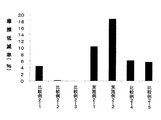
- Friction reduction rate (%) (Friction coefficient of control example ⁇ Dynamic friction coefficient of each preparation example) / Dynamic friction coefficient of control example ⁇ 100 (3)
- Comparative Example 2-2 and Comparative Example 2-3 each containing sesame oil and polyethylene glycol alone substantially reduced friction compared to the control example.
- Examples 2-1 and 2-2 containing polyvinyl pyrrolidone K90 in combination with at least one of polyethylene glycol and sesame oil surprisingly contained polyvinyl pyrrolidone K90 alone.
- Comparative Examples 2-4 and 2-5 using polyvinyl pyrrolidone K25 instead of polyvinyl pyrrolidone K90 did not show a significant friction reducing action.
- Test Example 3 Usability Evaluation I [Example 3, Comparative Example 3] Each ophthalmic composition was prepared according to the formulation shown in Table 3 below (Example 3 and Comparative Example 3), and 13 mL was aseptically filled into a polyethylene terephthalate ophthalmic container having an internal volume of 14.2 mL. After filling, a polyethylene nozzle was attached to the eye drop container, and each ophthalmic composition was instilled into each of the left and right eyes by 3 subjects with naked eyes. Then, according to the following method, the feeling after use was evaluated by VAS (Visual analog scale) for each item, and the rate of change of the score was obtained. The results are also shown in Table 3 below. The test was conducted after confirming that there was no difference between the left and right eyes of the subject.
- VAS Visual analog scale
- the average value of VAS was calculated
- the average score of example—comparison The average score of the example) is-(minus), and the rate of change (%) is-(minus).
- “residence” refers to a feeling that the ophthalmic composition stays in the eyes, and improvement of the retention is effective for maintaining a desired medicinal effect and refreshing feeling.
- Rate of change in score (%) (average score value of example-average score value of corresponding comparative example) / average score value of corresponding comparative example ⁇ 100 (4)
- Test Example 4 Usability Evaluation II [Example 4, Comparative Example 4] Each ophthalmic composition was prepared according to the formulation shown in Table 4 (Example 4 and Comparative Example 4) described later, and 13 mL was aseptically filled into an eye drop container made of polyethylene terephthalate having an internal volume of 14.2 mL. After filling, a polyethylene nozzle was attached to the eye drop container, and each ophthalmic composition was instilled into each of the left and right eyes by 3 subjects with naked eyes. Then, according to the following method, the feeling after use was evaluated by VAS (Visual analog scale) for each item, and the rate of change of the score was obtained. The results are also shown in Table 4 below. The test was conducted after confirming that there was no difference between the left and right eyes of the subject.
- VAS Visual analog scale
- Test Example 5 Usability evaluation III [Example 5, Comparative Example 5] Each ophthalmic composition was prepared according to the formulation (Example 5 and Comparative Example 5) shown in Table 5 below, and 13 mL was aseptically filled into an eye drop container made of polyethylene terephthalate having an internal volume of 14.2 mL. After filling, a polyethylene nozzle was attached to the eye drop container, and each ophthalmic composition was instilled into each of the left and right eyes by 3 subjects with naked eyes. Then, according to the following method, the feeling after use was evaluated by VAS (Visual analog scale) for each item, and the rate of change of the score was obtained. The results are also shown in Table 5 below. The test was conducted after confirming that there was no difference between the left and right eyes of the subject.
- VAS Visual analog scale
- Vs the lower the VAS value, the lower the subjective score of the foreign body feeling and the feeling of being crushed.
- the average value of VAS was calculated
- Tables 6 to 11 below show formulation examples 1 to 28.
- the unit of each component amount in Tables 6 to 11 is “w / v%”.
- Formulation examples 1 to 25 were prepared by filling the eye drops of Formulation Examples 1 to 25 into polyethylene terephthalate containers and equipped with polyethylene nozzles.
- Formulation Examples 26 to 50 were prepared by filling the eye drops of Formulation Examples 1 to 25 into polyethylene terephthalate containers and equipped with a polybutylene terephthalate nozzle.
- Formulation Example 53 a formulation obtained by filling a polyethylene terephthalate container with the eye wash of Formulation Example 26 into Formulation Example 51, and Formulation Example 52 with a contact lens disinfecting / cleaning / preserving solution of Formulation Example 27 filled in a container made of high-density polyethylene, Formulation Example 53 was obtained by filling a polyethylene terephthalate container with the contact lens mounting solution of Formulation Example 28. Then, the contact lens disinfecting / cleaning / preserving solution of Prescription Example 27 filled in a polypropylene container was designated as Formulation Example 54, and the contact lens disinfecting / cleaning / preserving liquid filled in a polyethylene terephthalate container was designated as Formulation Example 55.
- Prescription examples of prescription examples 29 to 32 are shown over the following Tables 12 and 13, and prescription examples of prescription examples 33 to 36 are shown over the following Tables 14 and 15.
- the unit of each component amount in Table 12 to Table 15 is “w / v%”.
- Formulation Examples 56 to 63 were prepared by filling the eye drops of Formulation Examples 29 to 36 into polyethylene terephthalate containers and equipped with polyethylene nozzles.
- Formulation Examples 64-71 were prepared by filling the eye drops of Formulation Examples 29-36 into a polyethylene terephthalate container and equipped with a polybutylene terephthalate nozzle.
- the present invention can be widely used as an ophthalmic composition having a good feeling of use with reduced stickiness after instillation. It can also be widely used as an ophthalmic composition for reducing friction during blinking or wearing a contact lens.
Landscapes
- Health & Medical Sciences (AREA)
- Chemical & Material Sciences (AREA)
- Life Sciences & Earth Sciences (AREA)
- General Health & Medical Sciences (AREA)
- Pharmacology & Pharmacy (AREA)
- Animal Behavior & Ethology (AREA)
- Medicinal Chemistry (AREA)
- Public Health (AREA)
- Veterinary Medicine (AREA)
- Epidemiology (AREA)
- Inorganic Chemistry (AREA)
- Oil, Petroleum & Natural Gas (AREA)
- Ophthalmology & Optometry (AREA)
- Engineering & Computer Science (AREA)
- Chemical Kinetics & Catalysis (AREA)
- General Chemical & Material Sciences (AREA)
- Physics & Mathematics (AREA)
- Proteomics, Peptides & Aminoacids (AREA)
- General Physics & Mathematics (AREA)
- Optics & Photonics (AREA)
- Molecular Biology (AREA)
- Biochemistry (AREA)
- Bioinformatics & Cheminformatics (AREA)
- Nuclear Medicine, Radiotherapy & Molecular Imaging (AREA)
- Organic Chemistry (AREA)
- Medicinal Preparation (AREA)
- Eyeglasses (AREA)
Priority Applications (2)
| Application Number | Priority Date | Filing Date | Title |
|---|---|---|---|
| JP2017553786A JP6921757B2 (ja) | 2015-11-30 | 2016-11-22 | 眼科組成物 |
| US15/766,514 US10842875B2 (en) | 2015-11-30 | 2016-11-22 | Ophthalmic composition |
Applications Claiming Priority (2)
| Application Number | Priority Date | Filing Date | Title |
|---|---|---|---|
| JP2015232910 | 2015-11-30 | ||
| JP2015-232910 | 2015-11-30 |
Publications (1)
| Publication Number | Publication Date |
|---|---|
| WO2017094552A1 true WO2017094552A1 (ja) | 2017-06-08 |
Family
ID=58797285
Family Applications (1)
| Application Number | Title | Priority Date | Filing Date |
|---|---|---|---|
| PCT/JP2016/084522 Ceased WO2017094552A1 (ja) | 2015-11-30 | 2016-11-22 | 眼科組成物 |
Country Status (4)
| Country | Link |
|---|---|
| US (1) | US10842875B2 (https=) |
| JP (3) | JP6921757B2 (https=) |
| TW (1) | TWI742016B (https=) |
| WO (1) | WO2017094552A1 (https=) |
Cited By (3)
| Publication number | Priority date | Publication date | Assignee | Title |
|---|---|---|---|---|
| WO2019216381A1 (ja) * | 2018-05-09 | 2019-11-14 | ロート製薬株式会社 | 眼科組成物 |
| JP2020040896A (ja) * | 2018-09-07 | 2020-03-19 | ロート製薬株式会社 | 摩擦によるストレス低減剤 |
| WO2024135344A1 (ja) * | 2022-12-21 | 2024-06-27 | ライオン株式会社 | 眼科用製品 |
Families Citing this family (1)
| Publication number | Priority date | Publication date | Assignee | Title |
|---|---|---|---|---|
| CN109464302B (zh) * | 2018-12-29 | 2021-11-23 | 上海家化联合股份有限公司 | 含甘草酸二钾的组合物 |
Citations (6)
| Publication number | Priority date | Publication date | Assignee | Title |
|---|---|---|---|---|
| JP2005206598A (ja) * | 2003-12-26 | 2005-08-04 | Rohto Pharmaceut Co Ltd | 粘度低下が防止された組成物 |
| WO2009035034A1 (ja) * | 2007-09-14 | 2009-03-19 | Rohto Pharmaceutical Co., Ltd. | 眼科用組成物 |
| JP2010538321A (ja) * | 2007-08-31 | 2010-12-09 | ノバルティス アーゲー | コンタクトレンズのパッケージング溶液 |
| JP2011008072A (ja) * | 2009-06-26 | 2011-01-13 | Lion Corp | コンタクトレンズの洗浄方法及びこれに用いる洗浄助剤 |
| JP2014015453A (ja) * | 2012-06-15 | 2014-01-30 | Rohto Pharmaceut Co Ltd | ソフトコンタクトレンズ用眼科組成物 |
| WO2016190306A1 (ja) * | 2015-05-28 | 2016-12-01 | ロート製薬株式会社 | 水性眼科組成物 |
Family Cites Families (4)
| Publication number | Priority date | Publication date | Assignee | Title |
|---|---|---|---|---|
| JPH01294620A (ja) | 1988-05-19 | 1989-11-28 | Kissei Pharmaceut Co Ltd | 水溶液製剤およびその製造方法 |
| JPH11349981A (ja) * | 1998-06-02 | 1999-12-21 | Tsutomu Kusakawa | 天然油脂系液状組成物 |
| WO2006022291A1 (ja) * | 2004-08-27 | 2006-03-02 | Senju Pharmaceutical Co, .Ltd. | ドライアイ治療用点眼液 |
| JP5650947B2 (ja) * | 2010-07-29 | 2015-01-07 | ロート製薬株式会社 | イオン性シリコーンハイドロゲルコンタクトレンズ用眼科組成物 |
-
2016
- 2016-11-22 WO PCT/JP2016/084522 patent/WO2017094552A1/ja not_active Ceased
- 2016-11-22 US US15/766,514 patent/US10842875B2/en active Active
- 2016-11-22 JP JP2017553786A patent/JP6921757B2/ja active Active
- 2016-11-22 TW TW105138197A patent/TWI742016B/zh active
-
2021
- 2021-07-28 JP JP2021123088A patent/JP7139500B2/ja active Active
-
2022
- 2022-09-07 JP JP2022141881A patent/JP2022172313A/ja not_active Withdrawn
Patent Citations (6)
| Publication number | Priority date | Publication date | Assignee | Title |
|---|---|---|---|---|
| JP2005206598A (ja) * | 2003-12-26 | 2005-08-04 | Rohto Pharmaceut Co Ltd | 粘度低下が防止された組成物 |
| JP2010538321A (ja) * | 2007-08-31 | 2010-12-09 | ノバルティス アーゲー | コンタクトレンズのパッケージング溶液 |
| WO2009035034A1 (ja) * | 2007-09-14 | 2009-03-19 | Rohto Pharmaceutical Co., Ltd. | 眼科用組成物 |
| JP2011008072A (ja) * | 2009-06-26 | 2011-01-13 | Lion Corp | コンタクトレンズの洗浄方法及びこれに用いる洗浄助剤 |
| JP2014015453A (ja) * | 2012-06-15 | 2014-01-30 | Rohto Pharmaceut Co Ltd | ソフトコンタクトレンズ用眼科組成物 |
| WO2016190306A1 (ja) * | 2015-05-28 | 2016-12-01 | ロート製薬株式会社 | 水性眼科組成物 |
Cited By (8)
| Publication number | Priority date | Publication date | Assignee | Title |
|---|---|---|---|---|
| WO2019216381A1 (ja) * | 2018-05-09 | 2019-11-14 | ロート製薬株式会社 | 眼科組成物 |
| JPWO2019216381A1 (ja) * | 2018-05-09 | 2021-05-27 | ロート製薬株式会社 | 眼科組成物 |
| JP7377795B2 (ja) | 2018-05-09 | 2023-11-10 | ロート製薬株式会社 | 眼科組成物 |
| JP2024010129A (ja) * | 2018-05-09 | 2024-01-23 | ロート製薬株式会社 | 眼科組成物 |
| JP7738041B2 (ja) | 2018-05-09 | 2025-09-11 | ロート製薬株式会社 | 眼科組成物 |
| JP2020040896A (ja) * | 2018-09-07 | 2020-03-19 | ロート製薬株式会社 | 摩擦によるストレス低減剤 |
| JP7206078B2 (ja) | 2018-09-07 | 2023-01-17 | ロート製薬株式会社 | 摩擦によるストレス低減剤 |
| WO2024135344A1 (ja) * | 2022-12-21 | 2024-06-27 | ライオン株式会社 | 眼科用製品 |
Also Published As
| Publication number | Publication date |
|---|---|
| US20180289812A1 (en) | 2018-10-11 |
| JP2022172313A (ja) | 2022-11-15 |
| JP6921757B2 (ja) | 2021-08-18 |
| US10842875B2 (en) | 2020-11-24 |
| JP7139500B2 (ja) | 2022-09-20 |
| JP2021178845A (ja) | 2021-11-18 |
| TWI742016B (zh) | 2021-10-11 |
| TW201720450A (zh) | 2017-06-16 |
| JPWO2017094552A1 (ja) | 2018-09-20 |
Similar Documents
| Publication | Publication Date | Title |
|---|---|---|
| JP7697068B2 (ja) | 水性眼科組成物 | |
| JP7324566B2 (ja) | 水性眼科組成物 | |
| JP7139500B2 (ja) | 眼科組成物 | |
| JP6452283B2 (ja) | 眼の異物感改善剤 | |
| JP6315755B2 (ja) | 異物感緩和点眼剤 | |
| WO2019216381A1 (ja) | 眼科組成物 | |
| JP2024059971A (ja) | 洗眼剤組成物 | |
| JP7624538B2 (ja) | 眼科組成物 | |
| JP2023033557A (ja) | 複合目症状改善用眼科組成物 | |
| JP2023112106A (ja) | 水性眼科組成物 | |
| JP2025011339A (ja) | 摩擦低減用であるコンタクトレンズ用点眼剤、その使用方法、および装用中のコンタクトレンズの摩擦低減方法 | |
| JP2023126377A (ja) | 眼科組成物 | |
| JP6607976B2 (ja) | 異物感緩和点眼剤 | |
| JP2021105065A (ja) | 異物感緩和点眼剤 | |
| JP7644075B2 (ja) | 眼科組成物 | |
| JP2017197527A (ja) | 眼科組成物 | |
| JP2024072698A (ja) | アレルギー用眼科組成物 | |
| JP2023008962A (ja) | 眼科組成物 | |
| JP2022176963A (ja) | 眼科組成物 | |
| JP2017197526A (ja) | 眼科組成物 |
Legal Events
| Date | Code | Title | Description |
|---|---|---|---|
| 121 | Ep: the epo has been informed by wipo that ep was designated in this application |
Ref document number: 16870489 Country of ref document: EP Kind code of ref document: A1 |
|
| ENP | Entry into the national phase |
Ref document number: 2017553786 Country of ref document: JP Kind code of ref document: A |
|
| WWE | Wipo information: entry into national phase |
Ref document number: 15766514 Country of ref document: US |
|
| NENP | Non-entry into the national phase |
Ref country code: DE |
|
| 122 | Ep: pct application non-entry in european phase |
Ref document number: 16870489 Country of ref document: EP Kind code of ref document: A1 |