WO2015137264A1 - チオエーテル含有(メタ)アクリレート誘導体、およびこれを含有する密着性向上剤 - Google Patents
チオエーテル含有(メタ)アクリレート誘導体、およびこれを含有する密着性向上剤 Download PDFInfo
- Publication number
- WO2015137264A1 WO2015137264A1 PCT/JP2015/056773 JP2015056773W WO2015137264A1 WO 2015137264 A1 WO2015137264 A1 WO 2015137264A1 JP 2015056773 W JP2015056773 W JP 2015056773W WO 2015137264 A1 WO2015137264 A1 WO 2015137264A1
- Authority
- WO
- WIPO (PCT)
- Prior art keywords
- formula
- meth
- thioether
- group
- adhesion
- Prior art date
- Legal status (The legal status is an assumption and is not a legal conclusion. Google has not performed a legal analysis and makes no representation as to the accuracy of the status listed.)
- Ceased
Links
Images




Classifications
-
- C—CHEMISTRY; METALLURGY
- C07—ORGANIC CHEMISTRY
- C07D—HETEROCYCLIC COMPOUNDS
- C07D251/00—Heterocyclic compounds containing 1,3,5-triazine rings
- C07D251/02—Heterocyclic compounds containing 1,3,5-triazine rings not condensed with other rings
- C07D251/12—Heterocyclic compounds containing 1,3,5-triazine rings not condensed with other rings having three double bonds between ring members or between ring members and non-ring members
- C07D251/26—Heterocyclic compounds containing 1,3,5-triazine rings not condensed with other rings having three double bonds between ring members or between ring members and non-ring members with only hetero atoms directly attached to ring carbon atoms
- C07D251/30—Only oxygen atoms
-
- C—CHEMISTRY; METALLURGY
- C09—DYES; PAINTS; POLISHES; NATURAL RESINS; ADHESIVES; COMPOSITIONS NOT OTHERWISE PROVIDED FOR; APPLICATIONS OF MATERIALS NOT OTHERWISE PROVIDED FOR
- C09J—ADHESIVES; NON-MECHANICAL ASPECTS OF ADHESIVE PROCESSES IN GENERAL; ADHESIVE PROCESSES NOT PROVIDED FOR ELSEWHERE; USE OF MATERIALS AS ADHESIVES
- C09J11/00—Features of adhesives not provided for in group C09J9/00, e.g. additives
- C09J11/08—Macromolecular additives
-
- C—CHEMISTRY; METALLURGY
- C09—DYES; PAINTS; POLISHES; NATURAL RESINS; ADHESIVES; COMPOSITIONS NOT OTHERWISE PROVIDED FOR; APPLICATIONS OF MATERIALS NOT OTHERWISE PROVIDED FOR
- C09D—COATING COMPOSITIONS, e.g. PAINTS, VARNISHES OR LACQUERS; FILLING PASTES; CHEMICAL PAINT OR INK REMOVERS; INKS; CORRECTING FLUIDS; WOODSTAINS; PASTES OR SOLIDS FOR COLOURING OR PRINTING; USE OF MATERIALS THEREFOR
- C09D7/00—Features of coating compositions, not provided for in group C09D5/00; Processes for incorporating ingredients in coating compositions
- C09D7/40—Additives
Definitions
- the present invention relates to a novel thioether-containing (meth) acrylate derivative suitably used for an adhesion improver or the like.
- an adhesion improver such as a silane coupling agent has been added to the paint for the purpose of improving adhesion (for example, JP-A-7-300491). Issue no.).
- the silane coupling agent decomposes when heated, when used in a mass production line, silicon oxide is deposited in a heating furnace such as an oven, causing contamination.
- the silane coupling agent cannot be said to have a sufficient effect of improving adhesion, for example, by simultaneously adding adhesion assistants such as salts such as titanium and zirconium, amines such as imidazole, phosphate esters and urethane resins.
- adhesion could be achieved for the first time.
- the addition of the adhesion aid not only leads to an increase in manufacturing man-hours and costs, but the addition of the adhesion aid reduces the storage stability of the paint at room temperature and decreases the heat resistance and hardness. There was a problem.
- Japanese Patent Application Laid-Open No. 2013-249282 discloses that a thioether-containing urea derivative having a specific structure is used as an adhesion improver, thereby improving adhesion without using an adhesion aid. Is disclosed.
- the present invention has been accomplished in view of the above circumstances, and the object thereof is to add to paints and the like, exhibit an effect of improving adhesion without an adhesion aid even in cold regions, and the obtained coating film It is to provide a material having flexibility.
- the present invention includes the following [1] to [3].
- a in the formula is an integer from 1 to 2
- b is an integer from 1 to 2
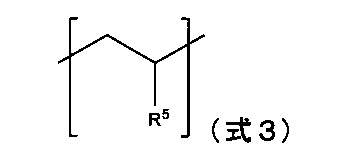
- R 2 is A divalent group represented by the following formula 3 or 4.
- the R 3 is a hydrocarbon group having 1 to 12 carbon atoms.
- R 5 is a hydrogen atom or a methyl group.
- R 5 is a hydrogen atom or a methyl group.
- An adhesion improver comprising the thioether-containing (meth) acrylate derivative according to [1] or [2] as an active ingredient.
- (meth) acrylate is a concept including both “methacrylate” and “acrylate”.
- the thioether-containing (meth) acrylate derivative of the present invention exhibits an effect of improving adhesion without an adhesion assistant even in a cold environment such as ⁇ 10 ° C., and the resulting coating film has flexibility. Have. Therefore, for example, by adding a small amount to the paint, it is possible to impart high adhesion to the paint without requiring the addition of an adhesion assistant.
- the above effect is that, in a cold environment, the ester group having a specific carbon chain imparts flexibility to the paint, and this ester group does not prevent the thioether group and the base material from approaching each other. It is considered that the effect of improving the performance is accurately demonstrated.
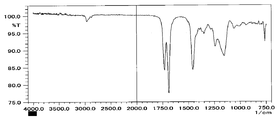
- Example 3 is an IR spectrum of the compound 1 obtained in Example 1-1.
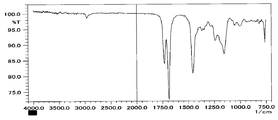
- 2 is an IR spectrum of the compound 2 obtained in Example 1-2.
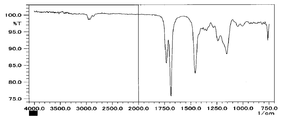
- 3 is an IR spectrum of the compound 3 obtained in Example 1-3.
- 4 is an IR spectrum of the compound 4 obtained in Example 1-4. It is an IR spectrum of the compound 5 obtained in Example 1-5.
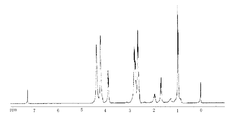
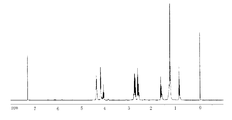
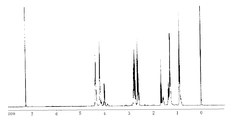
- 1 is a 1 H-NMR spectrum of Compound 1 obtained in Example 1-1.
- 1 is a 1 H-NMR spectrum of Compound 2 obtained in Example 1-2.
- 1 is a 1 H-NMR spectrum of Synthesis Compound 3 obtained in Example 1-3.
- 1 is a 1 H-NMR spectrum of Compound 4 obtained in Example 1-4.
- 1 is a 1 H-NMR spectrum of the compound 5 obtained in Example 1-5.
- the thioether-containing (meth) acrylate derivative of this embodiment is a compound represented by the following formula 1.
- a in the formula is an integer from 1 to 2
- b is an integer from 1 to 2
- R 2 is A divalent group represented by the following formula 3 or 4.
- the R 3 is a hydrocarbon group having 1 to 12 carbon atoms.
- Examples of the hydrocarbon group having 1 to 12 carbon atoms, which is R 3 in the above formula 1, include a linear alkyl group, an alkyl group having a side chain, and a cyclic alkyl group.
- R 4 in the above formula 2 is a methylene group, an ethylene group, or an isopropylene group, and an ethylene group or an isopropylene group is particularly preferable because the effect of improving adhesion is enhanced.
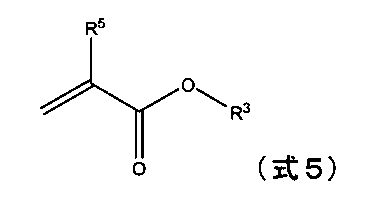
- the thioether-containing (meth) acrylate derivative represented by the above formula 1 is represented by, for example, an acrylic compound having a (meth) acrylate group (hereinafter referred to as A component) as represented by the following formula 5 and the following formula 6. It can be obtained by reacting with a polyvalent thiol compound having a thiol group (—SH) (hereinafter referred to as B component).
- a component an acrylic compound having a (meth) acrylate group
- B component a polyvalent thiol compound having a thiol group
- R 3 is a hydrocarbon group having 1 to 12 carbon atoms.
- R 5 is a hydrogen atom or a methyl group.
- Examples of the component A represented by the above formula 5 include methyl acrylate, ethyl acrylate, butyl acrylate, isobutyl acrylate, 2-ethylhexyl acrylate, dodecyl acrylate, and the like.
- component B represented by the above formula 6 tris-[(3-mercaptopropionyloxy) -ethyl] -isocyanurate, tris-[(3-mercaptobutyryloxy) -ethyl]]-isocyanurate, tris- [ (3-mercaptobutyryloxy) -ethyl]]-isocyanurate.
- the thioether-containing (meth) acrylate derivative of the present embodiment is produced by reacting the A component and the B component at a temperature of 5 ° C. or higher, and is preferably reacted at 60 to 100 ° C.
- the reaction can be performed at 60 ° C. or higher, the reaction can be performed in a short time such as within 5 hours.
- a base catalyst and a radical generator are added, it can be made to react in a high yield in a shorter time.
- the base catalyst is preferably an amine base catalyst, and primary, secondary or tertiary amines or imidazole compounds can be used.
- the primary amine include methylamine, ethylamine, propylamine, butylamine, and ethylenediamine.
- Secondary amines include dimethylamine, diethylamine, dipropylamine, methylethylamine, diphenylamine and the like.
- Tertiary amines include trimethylamine, triethylamine, tripropylamine, triphenylamine, 1,8-diazabicyclo (5.4.0) undec-aminomethyl) phenol, and the like.
- imidazole compounds include 1-methylimidazole, 1,2-dimethylimidazole, 1,4-dimethyl-2-ethylimidazole, imidazole analogues such as 1-phenylimidazole, 1-methyl-2-oxymethylimidazole, Alkyl derivatives such as 1-methyl-2-oxyethylimidazole, nitro and amino derivatives such as 1-methyl-4 (5) -nitroimidazole, 1,2-dimethyl-5 (4) -aminoimidazole, benzimidazole, 1 -Methylbenzimidazole, 1-methyl-benzylbenzimidazole and the like.
- a peroxide or an azo compound is preferable.
- the peroxide include dibenzoyl peroxide, tert-butylperoxy-2-ethylhexanoate, and dilauroyl peroxide.
- the azo compound include azobis (iso-butyronitrile) and 2,2'-azobis (2-methylbutanenitrile).
- the reaction can be allowed to proceed even without a solvent.
- the reaction can be performed by adding a solvent.
- a solvent that does not react with the carbon-carbon double bond of the (meth) acrylate group or the thiol group for example, alcohols, ketones, and esters is preferable.
- Alcohols used as solvents react with carbon-carbon double bonds and thiol groups, such as carbon-carbon double bonds, thiol groups, epoxy groups, isocyanate groups, carboxyl groups, sulfonyl groups, nitrile groups, halogen atoms, etc. Must not contain functional groups.
- Examples of alcohols that do not contain the above functional group include methanol, ethanol, isopropyl alcohol, tertiary butanol, hexanol, propylene glycol, glycerin, and alkyl ethers and esters of ethylene glycol.
- alcohols having a boiling point of 80 ° C. or higher are preferable because the reaction temperature can be kept high.
- Ketones used as solvents react with carbon-carbon double bonds and thiol groups, such as carbon-carbon double bonds, thiol groups, epoxy groups, isocyanate groups, carboxyl groups, sulfonyl groups, nitrile groups, halogen atoms, etc. Must not contain functional groups.
- Examples of the ketones that do not contain the functional group include acetone, methyl ethyl ketone, methyl isobutyl ketone, and methyl isopropyl ketone. Of these, ketones having a boiling point of 80 ° C. or higher are preferable because the reaction temperature can be kept high.
- Esters used as solvents include carbon-carbon double bonds, thiol groups, carbon-carbon double bonds, thiol groups, epoxy groups, isocyanate groups, carboxyl groups, sulfonyl groups, nitrile groups, halogen atoms, etc. Must not contain functional groups.
- Examples of ketones that do not contain the above functional group include ethyl acetate, butyl acetate, ethyl benzoate, and propylene glycol acetate. Of these, esters having a boiling point of 80 ° C. or higher are preferable because the reaction temperature can be kept high.
- the reaction formula represented by the following formula 7 X represents a hydrogen atom or a methyl group
- Y represents a residue other than X bonded to the double bond of the (meth) acryloyl group of the A component
- Z represents a residue bonded to the thiol group of the B component.
- both of the two carbons forming the double bond of the (meth) acrylate group of the A component are bonded to S of the thiol group.
- the production ratio of the two products varies depending on the reaction conditions. For example, when a base catalyst such as amine is added to the reaction system as a catalyst for this reaction, a large amount of product (1) is produced, and the radical generator is produced in the reaction system. When added to, a large amount of product (2) tends to be formed. In many cases, the thioether-containing acrylic derivative after production is a mixture of products (1) and (2).
- ⁇ Adhesion improver> By blending the thioether-containing (meth) acrylate derivative of this embodiment into a resin composition such as a paint or an adhesive, adhesion to both inorganic materials and organic materials can be improved. Therefore, it can be used as an adhesion improver as it is or after blending with a solvent or the like. In particular, by blending with a compound having a double bond such as an epoxy resin, a urethane resin, an acrylic resin, a polyimide resin, or polyacetylene, a high effect of improving adhesion can be exhibited.
- the adhesion improving effect of the adhesion improving agent is attributed to the thioether group of the thioether-containing (meth) acrylate derivative.
- a substrate that forms a chemical bond with a thioether group for example, an inorganic substrate such as a transition metal or an alloy thereof, a silicon compound, a phosphorus compound, a sulfur compound, or a boron compound, It is excellent in the effect of improving adhesion to an organic substance having a saturated bond (including an aromatic ring), an organic substance having a hydroxyl group or a carboxyl group, or an organic substance treated with plasma or UV ozone.
- examples of the inorganic base material include glass, silicon, and various metals.
- Preferred examples of the organic substrate include polyethylene terephthalate, polybutylene terephthalate, polyethylene, polypropylene, polycarbonate, polyimide, ABS resin, polyvinyl alcohol, vinyl chloride, and polyacetal.
- the adhesion improver comprising the thioether-containing (meth) acrylate derivative as an active ingredient is highly adhesive when added in an amount of 0.1 to 80% by mass as the active ingredient relative to the resin component in the resin composition such as paint or adhesive. Can demonstrate its sexuality.
- This adhesion improver also has the effect of increasing the flexibility of the resin by the ester group, and the resulting coating film has excellent flexibility.
- Examples 1-1 to 1-5) First, in Examples 1-1 to 1-5, thioether-containing (meth) acrylate derivatives (composites 1 to 5) were synthesized using the following components A and B.
- the A component and B component used are as follows.
- Example 1-1 (Compound 1): FIG. 2960 cm ⁇ 1 : 99% T, 1733 cm ⁇ 1 : 84% T, 1690 cm ⁇ 1 : 73% T, 1459 cm ⁇ 1 : 81% T, 1351 cm ⁇ 1 : 95% T, 1243 cm ⁇ 1 : 91% T, 1158 cm ⁇ 1 : 87% T, 1007 cm ⁇ 1 : 96% T, 764 cm ⁇ 1 : 91% T
- Example 1-2 (Compound 2): FIG. 2960 cm ⁇ 1 : 98% T, 1732 cm ⁇ 1 : 84% T, 1690 cm ⁇ 1 : 78% T, 1459 cm ⁇ 1 : 84% T, 1351 cm ⁇ 1 : 95% T, 1243 cm ⁇ 1 : 91% T, 1158 cm ⁇ 1 : 88% T, 764 cm ⁇ 1 : 93% T
- Example 1-3 (Compound 3): FIG. 2964 cm ⁇ 1 : 99% T, 1733 cm ⁇ 1 : 84% T, 1690 cm ⁇ 1 : 73% T, 1459 cm ⁇ 1 : 81% T, 1351 cm ⁇ 1 : 95% T, 1243 cm ⁇ 1 : 91% T, 1158 cm ⁇ 1 : 87% T, 1003 cm ⁇ 1 : 96% T, 818 cm ⁇ 1 : 97% T, 764 cm ⁇ 1 : 91% T
- Example 1-4 (Compound 4): FIG. 2925 cm ⁇ 1 : 97% T, 1737 cm ⁇ 1 : 87% T, 1690 cm ⁇ 1 : 78% T, 1459 cm ⁇ 1 : 84% T, 1351 cm ⁇ 1 : 96% T, 1243 cm ⁇ 1 : 93% T, 1158 cm ⁇ 1 : 90% T, 1003 cm ⁇ 1 : 97% T, 837 cm ⁇ 1 : 96% T, 764 cm ⁇ 1 : 92% T
- Example 1-5 (Compound 5): FIG. 2956 cm ⁇ 1 : 99% T, 1733 cm ⁇ 1 : 86% T, 1690 cm ⁇ 1 : 76% T, 1459 cm ⁇ 1 : 83% T, 1351 cm ⁇ 1 : 95% T, 1243 cm ⁇ 1 : 92% T, 1158 cm ⁇ 1 : 88% T, 1007 cm ⁇ 1 : 97% T, 764 cm ⁇ 1 : 92% T
- Example 1-1 (Compound 1): FIG. a: 0.9 to 1.0 ppm, b: 1.3 to 1.5 ppm, c, o: 1.5 to 1.7 ppm, e, f, g, h, m, n: 2.5 to 2. 9 ppm, d, i, j, k, l: 4.0 to 4.5 ppm
- Example 1-2 (Compound 2): FIG. a: 0.9 to 1.0 ppm, b: 1.3 to 1.6 ppm, c, o: 1.5 to 1.7 ppm, e, f, g, h, m, n: 2.5 to 2. 9 ppm, d, i, j, k, l: 4.0 to 4.5 ppm
- Example 1-3 (Compound 3): FIG. a, b: 0.8 to 1.1 ppm, c, o: 1.6 to 2.1 ppm, e, f, g, h, m, n: 2.5 to 3.0 ppm, d, i, j, k, l: 3.8 to 4.6 ppm
- Example 1-4 (Compound 4): FIG. a: 0.8 to 0.9 ppm, b, c, d, e, f, g, h, i, j: 1.1 to 1.4 ppm, k, w: 1.5 to 1.7 ppm, n, m, p, o, u, v: 2.5 to 2.9 ppm, l, q, r, s, t: 4.0 to 4.5 ppm
- Example 1-5 (Compound 5): FIG. a, e: 0.7 to 1.0 ppm, b, c, d, f: 1.1 to 1.4 ppm, q, s: 1.5 to 1.8 ppm, i, j, k, l, q, r: 2.5 to 2.9 ppm, h, m, n, o, p: 3.8 to 4.4 ppm
- Examples 2-1 to 2-5 Comparative Examples 2-1 to 2-5)
- the above composites 1 to 5 were added to the resin composition as an adhesion improver, and the performance was evaluated.
- the adhesion improver when only the A component before the reaction is used as the adhesion improver, only the B component before the reaction is used, the A component and the B component before the reaction are used, and the adhesion is improved. The performance was evaluated when the agent was not used.
- a phenol novolac type epoxy resin [manufactured by Toto Kasei Co., Ltd., YDPN638] was used.
- the composition was applied on a PET film having a width of 25 mm [manufactured by Toray Industries, Inc., Lumirror U46-100] with a bar coater to a thickness of 100 microns, and the PET film was laminated on the opposing substrate, and then the coating was applied at 150 ° C., 1
- the test piece for evaluation was obtained by curing under time conditions.
Landscapes
- Chemical & Material Sciences (AREA)
- Organic Chemistry (AREA)
- Paints Or Removers (AREA)
- Addition Polymer Or Copolymer, Post-Treatments, Or Chemical Modifications (AREA)
- Life Sciences & Earth Sciences (AREA)
- Engineering & Computer Science (AREA)
- Materials Engineering (AREA)
- Wood Science & Technology (AREA)
Abstract
Description

(式中のaは1~2の整数であり、bは1~2の整数であり、a+b=3である。R1は下記式2で表される3価の基であり、R2は下記式3または下記式4で表される2価の基である。R3は炭素数が1~12の炭化水素基である。)
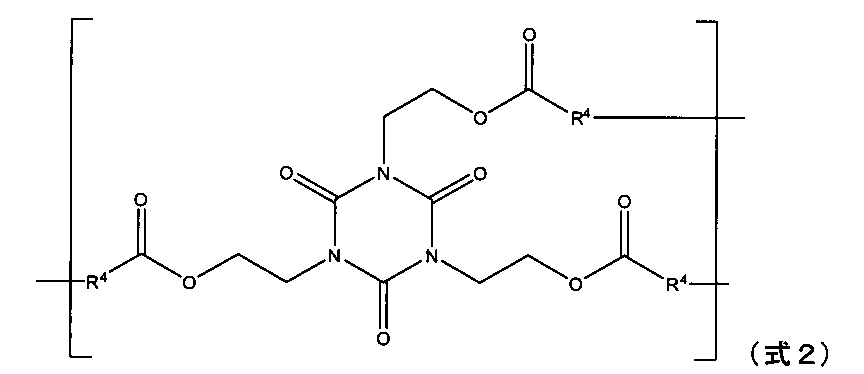
(式中のR4は-CH2-、-CH2CH2-、または-CH2CH(CH3)-である。)
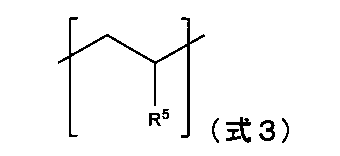
(R5は水素原子またはメチル基である。)

(R5は水素原子またはメチル基である。)

(式中のR3は炭素数が1~12の炭化水素基である。R5は、水素原子またはメチル基である。)

(式中のR4は-CH2-、-CH2CH2-、または-CH2CH(CH3)-である。)
<チオエーテル含有(メタ)アクリレート誘導体>
本実施形態のチオエーテル含有(メタ)アクリレート誘導体は、下記式1で表される化合物である。

(式中のaは1~2の整数であり、bは1~2の整数であり、a+b=3である。R1は下記式2で表される3価の基であり、R2は下記式3または下記式4で表される2価の基である。R3は炭素数が1~12の炭化水素基である。)

(式中のR4は-CH2-、-CH2CH2-、または-CH2CH(CH3)-である。)

(R5は水素原子またはメチル基である。)

(R5は水素原子またはメチル基である。)
上記式1で表されるチオエーテル含有(メタ)アクリレート誘導体は、例えば下記式5で表されるように(メタ)アクリレート基を有するアクリル化合物(以降、A成分という)と、下記式6で表されるチオール基(-SH)を有する多価チオール化合物(以降、B成分という)とを反応させることによって得ることができる。

(式中のR3は炭素数が1~12の炭化水素基である。R5は、水素原子またはメチル基である。)

(式中のR4は-CH2-、-CH2CH2-、または-CH2CH(CH3)-である。)

本実施形態のチオエーテル含有(メタ)アクリレート誘導体は、塗料や接着剤等の樹脂組成物に配合することで、無機材料と有機材料の両方に対する密着性を向上させることができる。そのため、そのままで、あるいは溶剤等と調合して、密着性向上剤として用いることができる。特に、エポキシ樹脂、ウレタン樹脂、アクリル樹脂、ポリイミド樹脂、ポリアセチレンなどの二重結合を有する化合物等に配合することによって、高い密着性向上効果を発揮することができる。この密着性向上剤の密着性向上効果は、チオエーテル含有(メタ)アクリレート誘導体のチオエーテル基に起因している。したがって、チオエーテル基と化学的な結合を形成する(化学的な親和力の高い)基材、例えば、遷移金属あるいはその合金や珪素化合物、リン化合物、硫黄化合物、又はホウ素化合物等の無機基材、不飽和結合(芳香環を含む)を有する有機物、水酸基やカルボキシル基を有する有機物、又はプラズマやUVオゾン処理された有機物等への密着性向上効果に優れる。具体的には、無機基材としては、ガラス、シリコン、各種金属などが挙げられる。有機基材として、ポリエチレンテレフタレート、ポリブチレンテレフタレート、ポリエチレン、ポリプロピレン、ポリカーボネート、ポリイミド、ABS樹脂、ポリビニルアルコール、塩化ビニル、ポリアセタールなどが好ましく挙げられる。
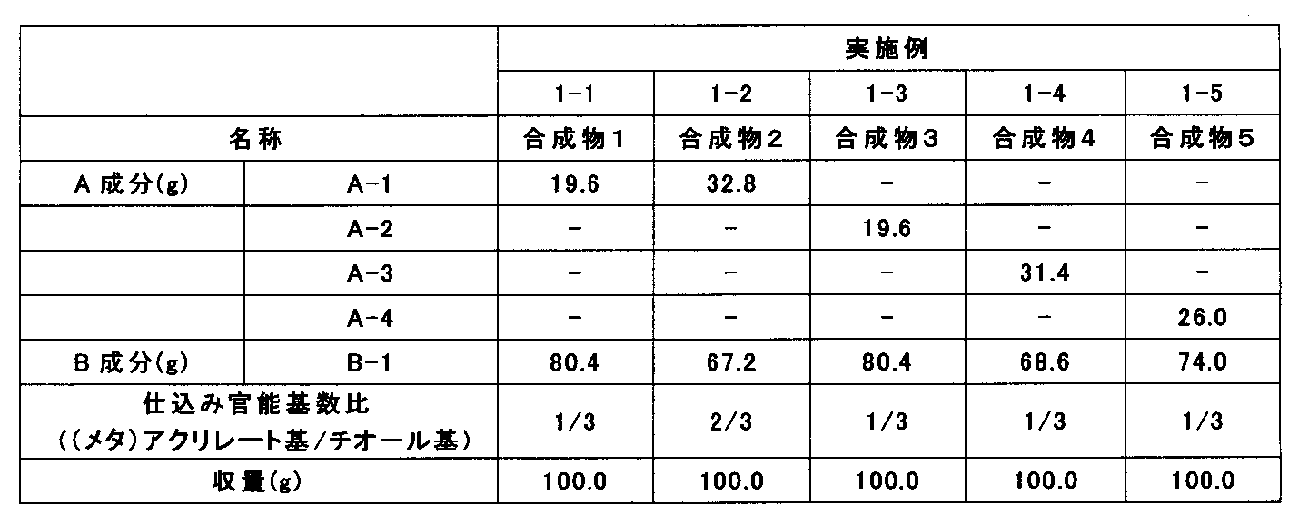
はじめに、実施例1-1~1-5にて、下記A成分とB成分とを用いてチオエーテル含有(メタ)アクリレート誘導体(合成物1~5)を合成した。用いたA成分及びB成分は次のとおりである。
<アクリル化合物:A成分>
A-1:アクリル酸ブチル
A-2:アクリル酸イソブチル
A-3:アクリル酸ドデシル
A-4:アクリル酸-2-エチルヘキシル
<多価チオール化合物:B成分>
B-1:トリス-[(3-メルカプトプロピオニルオキシ) -エチル]-イソシアヌレート(下記式8)。

温度計、攪拌機、滴下ポンプを備えた3つ口フラスコに、下記表1に従いB成分を仕込み、60℃に昇温後、A成分を1時間かけて滴下した。滴下終了後さらに60℃で2時間攪拌をして反応させた。
得られた合成物1~5について、下記条件にて赤外線吸収スペクトル分析(IR)を行った。そのIRスペクトルを図1~5に示すとともに、代表的なIRピークを以下に示す。
機種:(株)エス・テイ・ジャパン製 Travel IR
分解:8cm-1、積算回数:32回
2960cm-1:99%T、1733cm-1:84%T、1690cm-1:73%T、1459cm-1:81%T、1351cm-1:95%T、1243cm-1:91%T、1158cm-1:87%T、1007cm-1:96%T、764cm-1:91%T
2960cm-1:98%T、1732cm-1:84%T、1690cm-1:78%T、1459cm-1:84%T、1351cm-1:95%T、1243cm-1:91%T、1158cm-1:88%T、764cm-1:93%T
2964cm-1:99%T、1733cm-1:84%T、1690cm-1:73%T、1459cm-1:81%T、1351cm-1:95%T、1243cm-1:91%T、1158cm-1:87%T、1003cm-1:96%T、818cm-1:97%T、764cm-1:91%T
2925cm-1:97%T、1737cm-1:87%T、1690cm-1:78%T、1459cm-1:84%T、1351cm-1:96%T、1243cm-1:93%T、1158cm-1:90%T、1003cm-1:97%T、837cm-1:96%T、764cm-1:92%T
2956cm-1:99%T、1733cm-1:86%T、1690cm-1:76%T、1459cm-1:83%T、1351cm-1:95%T、1243cm-1:92%T、1158cm-1:88%T、1007cm-1:97%T、764cm-1:92%T
また、実施例1-1~1-5で得られた合成物1~5について、下記条件において核磁気共鳴スペクトル分析を行った。その結果を図6~10に示すと共に、各スペクトルにおけるピークの帰属とそれにより解析された各合成物の構造を下記に示す。
機種:日本ブルカー(株)製、400MHz-Advance400
積算回数:32回
溶媒:重クロロホルム
基準:TMS

a:0.9~1.0ppm、b:1.3~1.5ppm、c、o:1.5~1.7ppm、e、f、g、h、m、n:2.5~2.9ppm、d、i、j、k、l:4.0~4.5ppm

a:0.9~1.0ppm、b:1.3~1.6ppm、c、o:1.5~1.7ppm、e、f、g、h、m、n:2.5~2.9ppm、d、i、j、k、l:4.0~4.5ppm
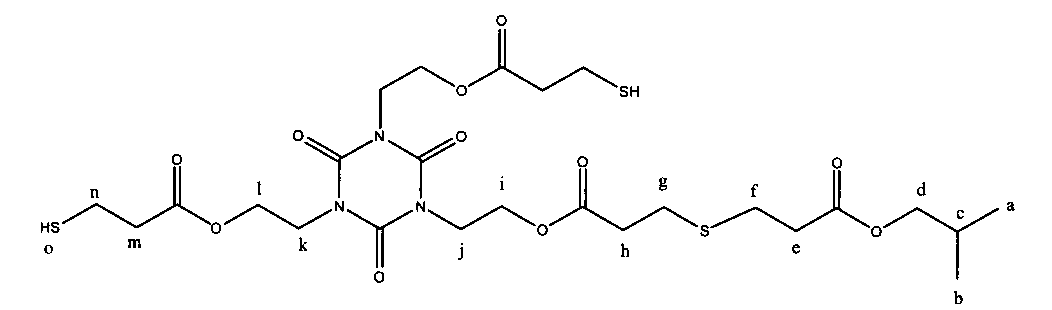
a、b:0.8~1.1ppm、c、o:1.6~2.1ppm、e、f、g、h、m、n:2.5~3.0ppm、d、i、j、k、l:3.8~4.6ppm
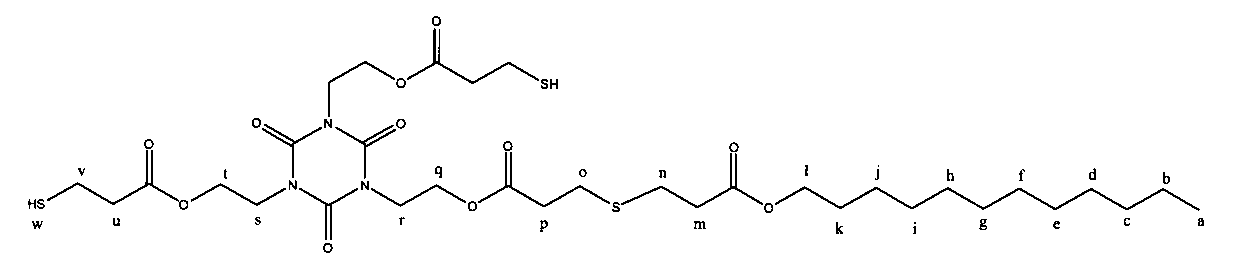
a:0.8~0.9ppm、b、c、d、e、f、g、h、i、j:1.1~1.4ppm、k、w:1.5~1.7ppm、n、m、p、o、u、v:2.5~2.9ppm、l、q、r、s、t:4.0~4.5ppm

a、e:0.7~1.0ppm、b、c、d、f:1.1~1.4ppm、q、s:1.5~1.8ppm、i、j、k、l、q、r:2.5~2.9ppm、h、m、n、o、p:3.8~4.4ppm
次に、実施例2-1~2-5にて、上記合成物1~5を密着性向上剤として樹脂組成物に添加し、その性能を評価した。さらに、比較例では、密着性向上剤として反応前のA成分のみを用いた場合、反応前のB成分のみを使用した場合、反応前のA成分とB成分を使用した場合、及び密着性向上剤未使用の場合について、その性能を評価した。
上記評価用試験片を、25℃24時間静置した後、5分以内にJIS K6854-3に規定されるT型はく離法で測定し、以下の通り評価した。
○:引っ張り強度が5N/mm以上(PET破断も含む)
×:引っ張り強度が5N/mm未満
[密着性2]
上記評価用試験片を、-10℃24時間静置した後、5分以内にJIS K6854-3に規定されるT型はく離法で測定し、以下の通り評価した。
○:引っ張り強度が5N/mm以上(PET破断も含む)
×:引っ張り強度が5N/mm未満
上記評価用試験片を、-10℃24時間静置した後、5分以内に直径8mmの棒に1分間巻きつけ、以下の通り評価した。
○:クラック0本
×:クラック1本以上
C-1と密着性向上剤を混合した直後に25℃における粘度(混合後の粘度)を測定するとともに、40℃で12時間加熱した後再度粘度(加熱後の粘度)を測定し加熱後の粘度を混合後の粘度で除して増粘率を算出し、以下の通り評価した。
なお、粘度は、東機産業株式会社製のR型粘度計を用い、下記条件にて測定した。
使用ロータ:1°34′×R24
測定範囲:0.5183~103.7 Pa・s
○:増粘率1.0~5.0
×:増粘率1.0~5.0以外

Claims (3)
- 下記式1で表されるチオエーテル含有(メタ)アクリレート誘導体。

(式中のaは1~2の整数であり、bは1~2の整数であり、a+b=3である。R1は下記式2で表される3価の基であり、R2は下記式3または下記式4で表される2価の基である。R3は炭素数が1~12の炭化水素基である。)
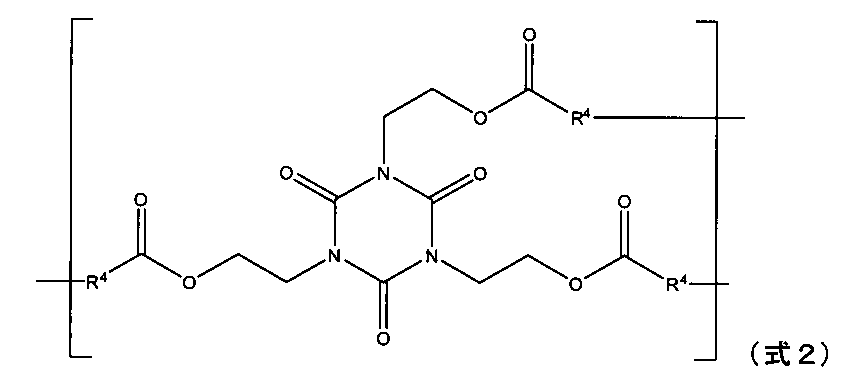
(式中のR4は-CH2-、-CH2CH2-、または-CH2CH(CH3)-である。)
(R5は水素原子またはメチル基である。)

(R5は水素原子またはメチル基である。) - 下記式5で表されるアクリル化合物と下記式6で表される多価チオール化合物とを反応させてなる、請求項1に記載のチオエーテル含有(メタ)アクリレート誘導体。
(式中のR3は炭素数が1~12の炭化水素基である。R5は、水素原子またはメチル基である。)

(式中のR4は-CH2-、-CH2CH2-、または-CH2CH(CH3)-である。) - 請求項1または請求項2に記載のチオエーテル含有(メタ)アクリレート誘導体を有効成分とする密着性向上剤。
Priority Applications (2)
| Application Number | Priority Date | Filing Date | Title |
|---|---|---|---|
| KR1020157034991A KR101748067B1 (ko) | 2014-03-11 | 2015-03-09 | 티오에테르 함유 (메트)아크릴레이트 유도체 및 이를 함유하는 밀착성 향상제 |
| CN201580000256.5A CN105473561B (zh) | 2014-03-11 | 2015-03-09 | 含硫醚的(甲基)丙烯酸酯衍生物及含有该衍生物的贴附性改善剂 |
Applications Claiming Priority (2)
| Application Number | Priority Date | Filing Date | Title |
|---|---|---|---|
| JP2014-047230 | 2014-03-11 | ||
| JP2014047230A JP6326875B2 (ja) | 2014-03-11 | 2014-03-11 | チオエーテル含有(メタ)アクリレート誘導体、およびこれを含有する密着性向上剤 |
Publications (1)
| Publication Number | Publication Date |
|---|---|
| WO2015137264A1 true WO2015137264A1 (ja) | 2015-09-17 |
Family
ID=54071709
Family Applications (1)
| Application Number | Title | Priority Date | Filing Date |
|---|---|---|---|
| PCT/JP2015/056773 Ceased WO2015137264A1 (ja) | 2014-03-11 | 2015-03-09 | チオエーテル含有(メタ)アクリレート誘導体、およびこれを含有する密着性向上剤 |
Country Status (5)
| Country | Link |
|---|---|
| JP (1) | JP6326875B2 (ja) |
| KR (1) | KR101748067B1 (ja) |
| CN (1) | CN105473561B (ja) |
| TW (1) | TWI527802B (ja) |
| WO (1) | WO2015137264A1 (ja) |
Cited By (2)
| Publication number | Priority date | Publication date | Assignee | Title |
|---|---|---|---|---|
| JP2017052948A (ja) * | 2015-09-11 | 2017-03-16 | 日油株式会社 | 粘着剤組成物、及びこれを用いた粘着シート |
| EP3424933A1 (en) * | 2013-06-12 | 2019-01-09 | Shin-Etsu Chemical Co., Ltd. | Thiocarbamatoalkyl-substituted 2,4,6-trioxo-1,3,5-triazines as adhesion improvers |
Families Citing this family (5)
| Publication number | Priority date | Publication date | Assignee | Title |
|---|---|---|---|---|
| JP6710892B2 (ja) * | 2014-09-01 | 2020-06-17 | 日油株式会社 | 硬化性樹脂組成物 |
| KR101886981B1 (ko) * | 2015-01-13 | 2018-08-08 | 니치유 가부시키가이샤 | 경화성 수지 조성물 |
| JPWO2016117385A1 (ja) * | 2015-01-20 | 2017-10-26 | 日油株式会社 | 硬化性樹脂組成物 |
| JP6962009B2 (ja) * | 2016-12-09 | 2021-11-05 | 日油株式会社 | 粘着剤組成物、及びこれを用いた積層体 |
| KR102707199B1 (ko) | 2019-10-07 | 2024-09-13 | 미쓰이 가가쿠 가부시키가이샤 | 에틸렌·α-올레핀 공중합체 조성물 및 그 용도 |
Citations (5)
| Publication number | Priority date | Publication date | Assignee | Title |
|---|---|---|---|---|
| JPS50106881A (ja) * | 1974-01-30 | 1975-08-22 | ||
| JPS6230753A (ja) * | 1985-07-16 | 1987-02-09 | ダブリユ−・ア−ル・グレイス・アンド・カンパニ− | メルカプトカルボン酸を含むチオエ−テル及びその製造法 |
| JP2008163094A (ja) * | 2006-12-27 | 2008-07-17 | Dic Corp | 含フッ素組成物及び含フッ素多官能チオール |
| WO2012070637A1 (ja) * | 2010-11-25 | 2012-05-31 | 日油株式会社 | チオエーテル含有アルコキシシラン誘導体およびその用途 |
| US20140323647A1 (en) * | 2013-04-24 | 2014-10-30 | The Board Of Regents Of The University Of Texas System | Softening materials based on thiol-ene copolymers |
Family Cites Families (1)
| Publication number | Priority date | Publication date | Assignee | Title |
|---|---|---|---|---|
| JP5895715B2 (ja) * | 2012-06-01 | 2016-03-30 | 日油株式会社 | チオエーテル含有ウレア誘導体、およびその用途 |
-
2014
- 2014-03-11 JP JP2014047230A patent/JP6326875B2/ja active Active
-
2015
- 2015-02-17 TW TW104105449A patent/TWI527802B/zh active
- 2015-03-09 CN CN201580000256.5A patent/CN105473561B/zh active Active
- 2015-03-09 KR KR1020157034991A patent/KR101748067B1/ko active Active
- 2015-03-09 WO PCT/JP2015/056773 patent/WO2015137264A1/ja not_active Ceased
Patent Citations (5)
| Publication number | Priority date | Publication date | Assignee | Title |
|---|---|---|---|---|
| JPS50106881A (ja) * | 1974-01-30 | 1975-08-22 | ||
| JPS6230753A (ja) * | 1985-07-16 | 1987-02-09 | ダブリユ−・ア−ル・グレイス・アンド・カンパニ− | メルカプトカルボン酸を含むチオエ−テル及びその製造法 |
| JP2008163094A (ja) * | 2006-12-27 | 2008-07-17 | Dic Corp | 含フッ素組成物及び含フッ素多官能チオール |
| WO2012070637A1 (ja) * | 2010-11-25 | 2012-05-31 | 日油株式会社 | チオエーテル含有アルコキシシラン誘導体およびその用途 |
| US20140323647A1 (en) * | 2013-04-24 | 2014-10-30 | The Board Of Regents Of The University Of Texas System | Softening materials based on thiol-ene copolymers |
Cited By (2)
| Publication number | Priority date | Publication date | Assignee | Title |
|---|---|---|---|---|
| EP3424933A1 (en) * | 2013-06-12 | 2019-01-09 | Shin-Etsu Chemical Co., Ltd. | Thiocarbamatoalkyl-substituted 2,4,6-trioxo-1,3,5-triazines as adhesion improvers |
| JP2017052948A (ja) * | 2015-09-11 | 2017-03-16 | 日油株式会社 | 粘着剤組成物、及びこれを用いた粘着シート |
Also Published As
| Publication number | Publication date |
|---|---|
| TWI527802B (zh) | 2016-04-01 |
| JP6326875B2 (ja) | 2018-05-23 |
| JP2015168679A (ja) | 2015-09-28 |
| CN105473561A (zh) | 2016-04-06 |
| KR101748067B1 (ko) | 2017-06-15 |
| KR20160006759A (ko) | 2016-01-19 |
| TW201534592A (zh) | 2015-09-16 |
| CN105473561B (zh) | 2017-09-19 |
Similar Documents
| Publication | Publication Date | Title |
|---|---|---|
| JP6326875B2 (ja) | チオエーテル含有(メタ)アクリレート誘導体、およびこれを含有する密着性向上剤 | |
| JP5838972B2 (ja) | チオエーテル含有アルコキシシラン誘導体およびその用途 | |
| CN105339348B (zh) | 含硫醚的(甲基)丙烯酸酯衍生物及含有该衍生物的贴附性改善剂 | |
| JP2011136985A (ja) | チオエーテル含有アルコキシシラン誘導体および用途 | |
| JP5671885B2 (ja) | 密着性向上剤 | |
| JP5668369B2 (ja) | チオエーテル含有アルコキシシラン誘導体、およびその用途 | |
| JP2012180324A (ja) | チオエーテル含有アルコキシシラン誘導体、およびその用途 | |
| JP2012197233A (ja) | チオエーテル含有アルコキシシラン誘導体、およびその用途 | |
| JP5895715B2 (ja) | チオエーテル含有ウレア誘導体、およびその用途 | |
| JP2015086191A (ja) | チオエーテル含有ウレア誘導体、およびこれを含有する密着性向上剤 | |
| JP6609993B2 (ja) | 硬化性樹脂組成物 | |
| JP6260222B2 (ja) | チオエーテル含有ウレア誘導体、及びこれを含有する密着性向上剤 | |
| JP5772230B2 (ja) | 硬化性樹脂組成物 | |
| JP2016053146A (ja) | 硬化性樹脂組成物 | |
| JP5772229B2 (ja) | 硬化性樹脂組成物 | |
| WO2016117385A1 (ja) | 硬化性樹脂組成物 | |
| WO2016114268A1 (ja) | 硬化性樹脂組成物 | |
| JP2018177678A (ja) | チオエーテル含有ウレア誘導体含有組成物 | |
| WO2016190157A1 (ja) | 硬化性樹脂組成物 |
Legal Events
| Date | Code | Title | Description |
|---|---|---|---|
| WWE | Wipo information: entry into national phase |
Ref document number: 201580000256.5 Country of ref document: CN |
|
| 121 | Ep: the epo has been informed by wipo that ep was designated in this application |
Ref document number: 15760949 Country of ref document: EP Kind code of ref document: A1 |
|
| ENP | Entry into the national phase |
Ref document number: 20157034991 Country of ref document: KR Kind code of ref document: A |
|
| NENP | Non-entry into the national phase |
Ref country code: DE |
|
| 122 | Ep: pct application non-entry in european phase |
Ref document number: 15760949 Country of ref document: EP Kind code of ref document: A1 |