WO2015133142A1 - 報知装置 - Google Patents
報知装置 Download PDFInfo
- Publication number
- WO2015133142A1 WO2015133142A1 PCT/JP2015/001160 JP2015001160W WO2015133142A1 WO 2015133142 A1 WO2015133142 A1 WO 2015133142A1 JP 2015001160 W JP2015001160 W JP 2015001160W WO 2015133142 A1 WO2015133142 A1 WO 2015133142A1
- Authority
- WO
- WIPO (PCT)
- Prior art keywords
- situation
- information
- voice data
- audio data
- stored
- Prior art date
- Legal status (The legal status is an assumption and is not a legal conclusion. Google has not performed a legal analysis and makes no representation as to the accuracy of the status listed.)
- Ceased
Links
Images




Classifications
-
- G—PHYSICS
- G01—MEASURING; TESTING
- G01C—MEASURING DISTANCES, LEVELS OR BEARINGS; SURVEYING; NAVIGATION; GYROSCOPIC INSTRUMENTS; PHOTOGRAMMETRY OR VIDEOGRAMMETRY
- G01C21/00—Navigation; Navigational instruments not provided for in groups G01C1/00 - G01C19/00
- G01C21/26—Navigation; Navigational instruments not provided for in groups G01C1/00 - G01C19/00 specially adapted for navigation in a road network
- G01C21/34—Route searching; Route guidance
- G01C21/36—Input/output arrangements for on-board computers
- G01C21/3626—Details of the output of route guidance instructions
- G01C21/3629—Guidance using speech or audio output, e.g. text-to-speech
-
- B—PERFORMING OPERATIONS; TRANSPORTING
- B60—VEHICLES IN GENERAL
- B60K—ARRANGEMENT OR MOUNTING OF PROPULSION UNITS OR OF TRANSMISSIONS IN VEHICLES; ARRANGEMENT OR MOUNTING OF PLURAL DIVERSE PRIME-MOVERS IN VEHICLES; AUXILIARY DRIVES FOR VEHICLES; INSTRUMENTATION OR DASHBOARDS FOR VEHICLES; ARRANGEMENTS IN CONNECTION WITH COOLING, AIR INTAKE, GAS EXHAUST OR FUEL SUPPLY OF PROPULSION UNITS IN VEHICLES
- B60K35/00—Instruments specially adapted for vehicles; Arrangement of instruments in or on vehicles
- B60K35/10—Input arrangements, i.e. from user to vehicle, associated with vehicle functions or specially adapted therefor
-
- B—PERFORMING OPERATIONS; TRANSPORTING
- B60—VEHICLES IN GENERAL
- B60K—ARRANGEMENT OR MOUNTING OF PROPULSION UNITS OR OF TRANSMISSIONS IN VEHICLES; ARRANGEMENT OR MOUNTING OF PLURAL DIVERSE PRIME-MOVERS IN VEHICLES; AUXILIARY DRIVES FOR VEHICLES; INSTRUMENTATION OR DASHBOARDS FOR VEHICLES; ARRANGEMENTS IN CONNECTION WITH COOLING, AIR INTAKE, GAS EXHAUST OR FUEL SUPPLY OF PROPULSION UNITS IN VEHICLES
- B60K35/00—Instruments specially adapted for vehicles; Arrangement of instruments in or on vehicles
- B60K35/20—Output arrangements, i.e. from vehicle to user, associated with vehicle functions or specially adapted therefor
-
- G—PHYSICS
- G01—MEASURING; TESTING
- G01C—MEASURING DISTANCES, LEVELS OR BEARINGS; SURVEYING; NAVIGATION; GYROSCOPIC INSTRUMENTS; PHOTOGRAMMETRY OR VIDEOGRAMMETRY
- G01C21/00—Navigation; Navigational instruments not provided for in groups G01C1/00 - G01C19/00
- G01C21/26—Navigation; Navigational instruments not provided for in groups G01C1/00 - G01C19/00 specially adapted for navigation in a road network
- G01C21/34—Route searching; Route guidance
- G01C21/36—Input/output arrangements for on-board computers
- G01C21/3605—Destination input or retrieval
- G01C21/3608—Destination input or retrieval using speech input, e.g. using speech recognition
-
- G—PHYSICS
- G06—COMPUTING OR CALCULATING; COUNTING
- G06F—ELECTRIC DIGITAL DATA PROCESSING
- G06F16/00—Information retrieval; Database structures therefor; File system structures therefor
- G06F16/20—Information retrieval; Database structures therefor; File system structures therefor of structured data, e.g. relational data
- G06F16/29—Geographical information databases
-
- G—PHYSICS
- G08—SIGNALLING
- G08G—TRAFFIC CONTROL SYSTEMS
- G08G1/00—Traffic control systems for road vehicles
- G08G1/09—Arrangements for giving variable traffic instructions
- G08G1/0962—Arrangements for giving variable traffic instructions having an indicator mounted inside the vehicle, e.g. giving voice messages
- G08G1/0967—Systems involving transmission of highway information, e.g. weather, speed limits
- G08G1/096708—Systems involving transmission of highway information, e.g. weather, speed limits where the received information might be used to generate an automatic action on the vehicle control
- G08G1/096716—Systems involving transmission of highway information, e.g. weather, speed limits where the received information might be used to generate an automatic action on the vehicle control where the received information does not generate an automatic action on the vehicle control
-
- G—PHYSICS
- G08—SIGNALLING
- G08G—TRAFFIC CONTROL SYSTEMS
- G08G1/00—Traffic control systems for road vehicles
- G08G1/09—Arrangements for giving variable traffic instructions
- G08G1/0962—Arrangements for giving variable traffic instructions having an indicator mounted inside the vehicle, e.g. giving voice messages
- G08G1/0967—Systems involving transmission of highway information, e.g. weather, speed limits
- G08G1/096733—Systems involving transmission of highway information, e.g. weather, speed limits where a selection of the information might take place
- G08G1/09675—Systems involving transmission of highway information, e.g. weather, speed limits where a selection of the information might take place where a selection from the received information takes place in the vehicle
-
- G—PHYSICS
- G08—SIGNALLING
- G08G—TRAFFIC CONTROL SYSTEMS
- G08G1/00—Traffic control systems for road vehicles
- G08G1/09—Arrangements for giving variable traffic instructions
- G08G1/0962—Arrangements for giving variable traffic instructions having an indicator mounted inside the vehicle, e.g. giving voice messages
- G08G1/0967—Systems involving transmission of highway information, e.g. weather, speed limits
- G08G1/096766—Systems involving transmission of highway information, e.g. weather, speed limits where the system is characterised by the origin of the information transmission
- G08G1/096775—Systems involving transmission of highway information, e.g. weather, speed limits where the system is characterised by the origin of the information transmission where the origin of the information is a central station
-
- G—PHYSICS
- G08—SIGNALLING
- G08G—TRAFFIC CONTROL SYSTEMS
- G08G1/00—Traffic control systems for road vehicles
- G08G1/09—Arrangements for giving variable traffic instructions
- G08G1/0962—Arrangements for giving variable traffic instructions having an indicator mounted inside the vehicle, e.g. giving voice messages
- G08G1/0967—Systems involving transmission of highway information, e.g. weather, speed limits
- G08G1/096766—Systems involving transmission of highway information, e.g. weather, speed limits where the system is characterised by the origin of the information transmission
- G08G1/096783—Systems involving transmission of highway information, e.g. weather, speed limits where the system is characterised by the origin of the information transmission where the origin of the information is a roadside individual element
Definitions
- This disclosure relates to a notification device (Reporting apparatus) used in a vehicle.
- a device that is, a notification device that notifies a driver of various information via a voice output device or a display device, such as a navigation device disclosed in Patent Document 1.
- the notification device disclosed in Patent Literature 1 includes a voice recognition device, and a driver inputs information to be registered by voice when information to be registered occurs at a certain point during traveling.
- Information to be registered includes the existence of facilities such as convenience stores and coffee shops, jumping out of children, and alerting to falling rocks.
- the notification device that has received the voice input stores the voice input information (referred to as voice input information) in association with the position information and the traveling direction at the time when the voice input is performed.
- the voice input information is sent to the driver via the voice output device or the like. To inform.
- the usefulness of the voice input information to the driver may change if the situation such as time zone, weather, number of passengers, etc. changes even at the same point and the same direction of travel.
- the content of the voice input information is a content that calls attention to children jumping out on the road near the elementary school, it is highly useful during the time when the child goes to school in the morning or evening, but it is daytime or nighttime. It is less useful during the time when no children go out. That is, in this example, the usefulness of the voice input information to the driver varies depending on the time zone. Since the usefulness of the voice input information changes depending on the situation as described above, when the point associated with the voice input information is reproduced every time the vehicle travels in the traveling direction associated with the voice input information. On the contrary, the driver may feel annoying.
- the purpose of the present disclosure is to provide a notification device that more appropriately determines whether or not to notify voice input information.
- a notification device is used in a vehicle, and acquires a positional information acquisition unit that acquires the positional information of the vehicle as one element for determining the situation.
- a situation acquisition unit that acquires at least one of external information indicating a situation outside the vehicle and traveling condition information that is information on elements that change every time in the vehicle as situation determination information, and the user utters
- a voice data acquisition unit that acquires voice as voice data, and position information and situation determination information when the voice data acquisition unit acquires voice data in association with the voice data, storage position information and storage status determination information
- a storage unit that stores the stored audio data in the memory, and storage location information stored in association with the stored audio data for each of the stored audio data stored in the memory, and The first situation at the time of acquisition of the stored voice data indicated by the information for existence situation determination, the current second situation indicated by the position information newly acquired by the position information acquisition section and the situation determination information acquired by the situation acquisition section
- the similarity determination unit that determines whether or not they are similar to the stored
- the similarity determination unit determines whether or not the situation at the time of acquiring the voice data is similar to the current situation for each of the voice data stored in the memory. Then, the notification processing unit notifies the driver of information based on the voice data that the similarity determination unit determines that the situation at the time of acquisition of the voice data is similar to the current situation.
- the situation determination information used to determine whether the situation at the time of the voice data acquisition is similar to the current situation includes external information indicating the situation outside the vehicle and each travel within the vehicle.
- At least one of the traveling condition information which is information of the element that changes to the above.
- traveling refers to traveling from ignition on to off. Therefore, the traveling direction is not included in any of the external information and the traveling condition information.
- the similarity determination unit has acquired the voice data associated with the point. It is not determined that the current situation is similar to the current situation. Accordingly, the notification processing unit does not notify the driver of information based on the audio data. Therefore, it is possible to more appropriately determine whether information based on audio data, that is, audio input information should be notified.
- the block diagram which shows an example of the schematic structure of the alerting
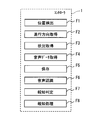
- the block diagram which shows an example of a schematic structure of the control part which concerns on 1st embodiment.
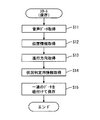
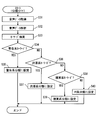
- the flowchart figure which shows an example of the flow of the information acquisition process for condition determination which a condition acquisition part implements.
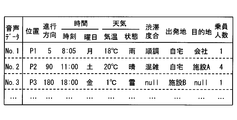
- the figure which shows an example of a data structure of the audio
- which shows an example of the flow of the preservation
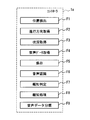
- the block diagram which shows an example of the schematic structure of the control part in 2nd embodiment.
- the flowchart figure which shows an example of the flow of the information classification classification related process which a control part implements
- the figure which shows an example of the data structure of the audio
- FIG. 1 is a diagram illustrating an example of a schematic configuration of a notification system 100 according to the present embodiment.
- the notification system 100 includes a controller 1, a talk switch (hereinafter referred to as “talk SW”) 2, a microphone (hereinafter referred to as “microphone”) 3, an in-vehicle sensor group 4, a communication device 5, a display device 6, an audio output device 7, A map DB 8, a memory 9, and a voice recognition DB 10 are provided.
- DB in the names of the map DB 8 and the voice recognition DB 10 is an abbreviation for a database.
- the controller 1, the talk SW 2, the microphone 3, the vehicle-mounted sensor group 4, the communication device 5, the display device 6, the voice output device 7, the map DB 8, the memory 9, and the voice recognition DB 10 are respectively connected via a well-known in-vehicle network. Conduct mutual communication.
- a vehicle equipped with the notification system 100 is referred to as a host vehicle.
- Talk SW2 is for instructing the user (driver) to start voice input, and is provided at a position where the user can easily operate, for example, near the side of the steering column cover or near the shift lever.
- the talk SW 2 is a so-called click-type switch, and outputs an ON signal to the controller 1 when the talk SW 2 is clicked by a user operation.
- the controller 1 starts processing for acquiring voice data (that is, voice data) spoken by the user.
- the microphone 3 is a small omnidirectional microphone, for example, which collects ambient sounds such as voices and noises spoken by the user, converts them into electrical voice signals, and outputs them to the controller 1.
- the microphone 3 is provided at a position where the user's voice can be easily picked up, such as an upper surface portion of the steering column cover or a sun visor on the driver's seat side.
- the in-vehicle sensor group 4 is a variety of sensors that detect the state of the host vehicle. For example, a vehicle speed sensor, an acceleration sensor, a gyro sensor, a GNSS receiver, a steering angle sensor, a brake stroke sensor, an accelerator pedal sensor, a direction indication A lever position sensor and the like are included.
- the vehicle speed sensor detects the traveling speed of the host vehicle
- the acceleration sensor detects the acceleration acting on the host vehicle.
- the GNSS receiver acquires data indicating the current position of the GNSS receiver by receiving radio waves from a satellite used in GNSS (Global Navigation Satellite System).
- GNSS Global Navigation Satellite System
- a GPS receiver can be used as the GNSS receiver.
- the gyro sensor detects the rotational angular velocity around the vertical axis of the host vehicle, and the steering angle sensor detects the steering angle based on the steering angle.
- the brake stroke sensor detects the depression amount of the brake pedal, and the accelerator pedal sensor detects the depression amount of the accelerator pedal.
- the direction indicating lever position sensor detects whether the direction indicating lever is in a left turn position or a right turn position.
- the in-vehicle sensor group 4 includes, in addition to the sensors described above, a sheet sensor that measures pressure applied to each seat of the vehicle. Data detected by various sensors included in the in-vehicle sensor group 4 is sequentially output to the controller 1.
- the communication device 5 includes a transmission / reception antenna, and communicates with a traffic information center (not shown) provided outside via a communication network such as a telephone line or the Internet.
- the traffic information center distributes traffic jam information indicating a traffic jam location and a traffic jam degree (congested traffic level), weather information of a region where the host vehicle is traveling, and the like. It is assumed that the degree of congestion is expressed in three stages, for example, smoothness, congestion, and congestion.
- the weather information includes weather conditions (hereinafter, weather conditions) such as sunny, rainy, cloudy, and snow, and the outside temperature.
- the communication device 5 is assumed to be realized by a communication module used in a known third generation mobile communication system.
- various other devices such as an in-vehicle communication module such as DCM (Data Communication Module) can be employed as the communication device 5.
- the communication apparatus 5 may acquire the various information mentioned above which a traffic information center distributes via the roadside machine installed in an intersection etc.
- “information” is used not only as a countable noun but also as a countable noun.
- the display device 6 displays texts and images based on instructions from the controller 1 and notifies the user of various information.
- the display device 6 is capable of full color display, for example, and can be configured using a liquid crystal display, an organic EL display, a plasma display, or the like.
- the display device 6 is a center display arranged near the center in the vehicle width direction of the instrument panel.
- the display device 6 may be a multi-information display disposed at the upper part of the driver panel side of the instrument panel.
- the audio output device 7 is composed of a speaker or the like, and converts audio data input from the controller 1 into audio (including simple sounds) and outputs the audio.
- the map DB 8 is a database storing map data, and is realized using a rewritable nonvolatile storage medium such as an HDD (Hard Disk Drive).
- a rewritable nonvolatile storage medium such as an HDD (Hard Disk Drive).
- the storage medium for storing map data in the map DB 8 is not limited to a magnetic storage medium such as an HDD, but may be an optical storage medium such as a DVD. Further, it may be a non-rewritable storage medium.
- the map data includes road data indicating road connection relationships (that is, a road network).
- the road data includes node data relating to points (nodes) where a plurality of roads intersect, merge and branch, and link data relating to roads (ie links) connecting the points.
- the node data includes a node ID with a unique number for each node, node coordinates (latitude / longitude), node name, connection link ID describing the link IDs of all links connected to the node, and traffic signal It is provided with each data, such as whether or not.
- Link data includes a link ID with a unique number for each road, link length, link start and end nodes, coordinate data of each point on the link, road type such as expressway and general road, road width, link direction
- Each data includes road name, number of lanes, speed limit, etc.
- the memory 9 includes a rewritable nonvolatile storage medium and a device that reads and writes data from and to the storage medium.
- a storage medium provided in the memory 9 a known storage medium such as a magnetic disk, an optical disk, and a flash memory can be used.
- a removable storage medium such as an SD card is used as an example of a storage medium included in the memory 9.
- a DVD, CD, HDD or the like may be employed as the storage medium.
- the voice recognition DB 10 is a database that stores data necessary for known voice recognition processing.
- the speech recognition DB 10 includes, as data necessary for speech recognition processing, for example, an acoustic model in which acoustic features of small units (phonemes) of human utterances are described, a recognition dictionary that associates acoustic features of phonemes and words, and It stores a language model that expresses the connection between words.
- the controller 1 is also referred to as a control circuit.
- the controller 1 is configured as an ordinary computer as an example.
- the controller 1 is a known CPU, a nonvolatile memory such as a ROM or EEPROM, a flash memory, a volatile memory such as a RAM, an I / O and a bus line (both not shown) for connecting these components.
- the nonvolatile memory stores program modules and data for executing various processes.
- the controller 1 includes a position detection unit F1, a traveling direction acquisition unit F2, a situation acquisition unit F3 (also referred to as a situation determination information acquisition unit), an audio data acquisition unit F4, and a storage unit.
- F5 also referred to as a storage processing unit
- speech recognition unit F6 also referred to as a speech recognition processing unit
- notification determination unit F7 and a notification processing unit F8. Note that some or all of these units may be provided as hardware components.
- the controller 1 is also referred to as a notification device.
- the position detection unit F1 detects the current position of the host vehicle based on signals input from sensors included in the in-vehicle sensor group 4 such as a GNSS receiver, a vehicle speed sensor, and a gyroscope.
- the position information indicating the current position may be configured to be expressed by latitude and longitude, for example.
- the position detection unit F1 acquires position information sequentially (for example, every 100 milliseconds).
- This position detection unit F1 is also referred to as a position information acquisition unit.
- the traveling direction acquisition unit F2 detects the traveling direction of the host vehicle based on a signal input from a sensor included in the in-vehicle sensor group 4 such as a gyroscope.
- the traveling direction may be represented by a value up to 359 degrees clockwise, for example, with 0 degree north.
- the status acquisition unit F3 acquires information other than the above-described position information and traveling direction (hereinafter, status determination information) among a plurality of types of information representing the current host vehicle and the situation around the host vehicle.
- the situation determination information here includes external information and travel condition information.
- the external information is information indicating a situation outside the vehicle, and includes, for example, time information, weather information, and traffic information on a road (more specifically, a link) that is currently running.
- the time information represents the current time and day of the week.
- the time information may include date.
- the weather information includes weather conditions such as sunny, rainy, cloudy, and snow, and the outside temperature.
- the external information does not include position information.
- Travel condition information is information on elements that may change from one travel to another in the vehicle.
- the travel used when defining the travel condition information refers to travel from ignition power on to off, that is, travel from when an occupant enters the vehicle to departure, until the vehicle is parked and the occupant gets off. . Therefore, the traveling condition information means information of elements that do not change during traveling, and the traveling direction that changes during traveling is not included in the traveling condition information.
- the traveling condition information includes information such as a point where the ignition power is turned on (departure point), a destination set by the user, and the number of passengers (also referred to as passenger count).
- route information such as a route traveling from the departure point, a planned traveling route to the destination, and a stop point set by the user may be included.
- each section is expressed as, for example, S1. Further, each section can be divided into a plurality of subsections, while a plurality of sections can be combined into one section. Further, each section can be referred to as a device, a module.
- each of the above sections or a combination thereof includes not only (i) a section of software combined with a hardware unit (eg, a computer), but also (ii) hardware (eg, an integrated circuit, As a section of (wiring logic circuit), it can be realized with or without the function of related devices.
- the hardware section can be included inside the microcomputer.
- a software section can be included in the software program. This software program can also be included in a non-transitional computer-readable storage medium as a program product.
- situation determination information acquisition process a process for acquiring situation determination information (hereinafter, situation determination information acquisition process) performed by the situation acquisition unit F3 will be described.
- the flowchart shown in FIG. 3 is configured to be executed sequentially (for example, every 100 milliseconds) in a state where the ignition power of the host vehicle is turned on and power is supplied to the controller 1 as an example.
- the flow of the situation determination information acquisition process shown in FIG. 3 is an example, and the order and contents of the processes may be appropriately designed.
- the current time and day of the week are acquired as time information, and the process proceeds to S2.
- the time information may be acquired from a clock mounted on the host vehicle, or may be acquired from the outside (such as a traffic information center) via the communication device 5. Moreover, you may use them complementarily.
- the time information may be managed in a time zone set by dividing a day into a plurality of times. For example, the first time zone from 0 to 6 o'clock, the second time zone from 6 o'clock to 10 o'clock, the third time zone from 10 o'clock to 13 o'clock, the fourth time zone from 13 o'clock to 16 o'clock, What is necessary is just to set the 5th time slot
- the current temperature and weather condition are acquired as weather information, and the process proceeds to S3.
- the current temperature and weather state may be acquired from the outside via the communication device 5.
- the vehicle-mounted sensor group 4 is provided with the outside temperature sensor which detects the temperature outside a vehicle, you may employ
- the current weather condition may be entered by the user.
- the traffic information on the link that is currently running is acquired and the process proceeds to S4.
- the traffic jam information is acquired from the traffic information center via the communication device 5 as described above.
- the degree of traffic congestion on the road that is currently running may be determined and acquired from the output value of the sensor included in the in-vehicle sensor group 4.
- the average travel speed for a fixed time (5 minutes) from the current time may be calculated from the time-series data of the output value of the vehicle speed sensor, and the degree of congestion may be determined based on the average travel speed.
- a predetermined first threshold value for example, 15 km / h
- it is determined that the traffic is congested is equal to or higher than the predetermined first threshold value
- 2 threshold values for example, 25 km / h
- it is more than a 2nd threshold value it determines with it being favorable.
- the threshold values used for these determinations are appropriately different depending on whether the type of road on which the host vehicle is traveling is an expressway (including a motorway) or a general road such as a national road or a prefectural road. It may be set.
- the degree of traffic congestion may be determined from the frequency at which the brake pedal is depressed within a certain time from the current time, the ratio of the depressed time, the amount of depression, and the like. What is necessary is just to determine that the degree of congestion is so large that these parameters
- the number of passengers of the host vehicle is acquired and the process proceeds to S5.
- the number of passengers is determined by measuring the number of passengers seated in each seat of the vehicle from the pressure applied to each seat of the vehicle measured by the seat sensor. In addition, you may detect with the IR sensor provided in the vehicle interior.
- the departure point information is represented by the name of the point indicated by the position information when the ignition power source is turned on.
- the point name of the departure place is acquired from registered point data and map data registered by the user based on the position information. For example, if the position information at the time when the ignition power is turned on is within a certain distance (for example, 100 m) from the point registered as the home, the departure place is determined to be the home.
- the information indicating the departure place may be expressed in coordinates.
- information indicating the destination set by the user is acquired, and this flow ends.
- the information indicating the destination is represented by the name of the point set as the destination by a user operation or the like. Of course, the information indicating the destination may be represented by the coordinates of the point set as the destination. If the destination is not set by the user, NULL indicating unset is set as the destination information.
- the audio data acquisition unit F4 acquires audio data from the audio signal input from the microphone 3 based on the ON signal from the talk SW2.
- the audio data acquisition unit F 4 shifts to a standby state in which the audio signal input from the microphone 3 can be converted into audio data. Then, the voice data acquisition unit F4 converts the voice signal input from the microphone 3 into voice data while in the standby state. Note that if the state in which no sound is input continues for a certain period of time (for example, 1.5 seconds) after entering the standby state, it is determined that the voice input has ended and the standby state is ended. The user can input the spoken voice to the controller 1 by starting to speak within a certain time after turning on the talk SW2.
- Whether or not sound is input may be determined by using a known technique, for example, by determining whether or not the signal level of the sound signal input from the microphone 3 is equal to or higher than a predetermined threshold. That is, when an audio signal having a signal level equal to or higher than a predetermined threshold is input, it is determined that audio is input.
- the storage unit F5 stores the voice data acquired by the voice data acquisition unit F4 in the memory 9 in association with the status information at the time when the voice data is acquired.
- the situation information is information representing the current host vehicle and the situation around the host vehicle, and is obtained by the position information acquired by the position detection unit F1, the traveling direction acquired by the traveling direction acquisition unit F2, and the situation acquisition unit F3. Indicates the information for status determination.
- the type of information employed as the situation information may be set as appropriate by the user or designer.
- the time point when the audio data is acquired may be, for example, the time point when the input of the audio signal is started.
- the storage unit F5 stores the audio data acquired by the audio data acquisition unit F4 in a list. Each voice data included in this list is associated with status information at the time when the voice data is acquired.
- a list of data in which the audio data and the status information at the time when the audio data is acquired is set as one set is referred to as an audio data list.
- FIG. 4 shows an example of the data structure of the audio data list stored in the memory 9.
- each voice data includes the time position, day of the week, temperature, weather condition, degree of congestion, departure place, It is stored in association with the destination and the number of passengers.
- the first voice data indicated by 1 is associated with the point P1.
- the traveling direction of the host vehicle at the time when the audio data is stored indicates a direction rotated 5 degrees clockwise from the north.
- the time information indicates that the data is acquired at 8:05 on Monday. In FIG. 4, the time is expressed in 24-hour notation.
- the weather condition at the time of acquiring the first audio data was rain and the outside temperature was 18 ° C.
- the degree of traffic congestion is good, the departure point is home, the destination is company, and the number of passengers is one. Since it is input on the way to the company in the morning on weekdays, the situation where the first voice data is input is considered to be in the middle of commuting.
- the second voice data indicated by 2 is voice data input on the way from the home to the facility A in the morning on Saturday.
- the number of passengers at this time is four.
- the third voice data As a situation where the second voice data is input, it is assumed that the family is going out.
- the third voice data those that could not be acquired, such as the degree of traffic congestion and the destination, have not been acquired. It is assumed that null or the like indicating that is inserted.
- the data configuration of the audio data list may be in other forms, and may be stored in association with the situation information by a data configuration other than the list. May be.
- the speech recognition unit F6 performs a known speech recognition process on the speech data stored in the memory 9 by using various data stored in the speech recognition DB 10, Text data corresponding to the voice data is generated. The generated text data is passed to the notification processing unit F8.
- the notification determination unit F7 accesses the memory 9, and from the voice data list based on the position information, traveling direction, and status determination information (that is, current status information) newly acquired by the units F1 to F3, Search for voice data to be performed.
- the location (address) where the audio data is stored in the memory 9 is passed to the notification processing unit F8, and the user is notified of information included in the audio data.
- Whether the stored voice data is voice data to be notified is determined by comparing the situation indicated by the current situation information with the situation information associated with the voice data.
- the voice data to be notified refers to voice data acquired in a situation determined to be similar to the current situation.
- This notification determination unit F7 is also referred to as a similarity determination unit.
- the notification determination unit F7 determines the degree of similarity between the situation indicated by the situation information associated with the audio data and the situation indicated by the current situation information (similarity). Each situation information is compared and calculated. When the similarity is equal to or greater than a certain threshold value, it is determined that the situation at the time when the voice data is acquired is similar to the current situation, and it is determined that the voice data should be notified.
- a condition for determining that the situation indicated by the situation information associated with the audio data is similar to the situation indicated by the current situation information is referred to as a similarity determination condition.
- the situation indicated by the situation information associated with the voice data is also referred to as a situation where the voice data is acquired.
- the similarity is calculated so as to increase as there are more elements that match the value or state of the element in the current situation information among the elements included in the situation information associated with the audio data.
- the element refers to the type of information in the finest unit among various information included in the situation information such as time, day of the week, and temperature.
- the determination condition for determining that each element matches may be designed as appropriate, and is set as follows as an example in the present embodiment.
- the elements of the position information coincide with each other when the distance between the point when the voice data is acquired and the current position is within a certain distance (for example, 200 m).
- the elements in the traveling direction are determined to match when the difference is within a certain angle (for example, 20 degrees).
- the time elements match when the difference is within a certain time (for example, 30 minutes).
- what is necessary is just to determine by whether a time slot
- the day of the week is classified into a weekday from Monday to Friday and a holiday consisting of Saturday and Sunday. If the classification is the same, it is determined that the element of the day of the week is the same. For example, if the current day is Thursday (that is, a weekday), it is determined that the day of the week element matches the voice data in which the day of the week when the voice data is acquired is from Monday to Friday. To do.
- the difference is within a certain temperature (for example, 4 ° C), and the current values are used for the elements of the weather condition, the degree of traffic congestion, the departure place, and the number of passengers.
- a certain temperature for example, 4 ° C
- the current values are used for the elements of the weather condition, the degree of traffic congestion, the departure place, and the number of passengers.
- the destination element matches the current destination when the distance is within a certain distance (for example, 500 m).
- the notification determination unit F7 calculates the degree of similarity according to the number or ratio of elements that match among the elements included in the situation information.
- the similarity is calculated according to the proportion of elements that match among the elements included in the situation information. For example, in the case where 5 out of 10 elements such as a spot and the number of passengers match, the similarity is set to 50%.
- the notification determination unit F7 determines that the situation when the voice data is acquired is similar to the current situation when the similarity is equal to or greater than a predetermined threshold (for example, 90%), It is determined that the audio data should be notified.
- a predetermined threshold for example, 90%
- the similarity is calculated assuming that the weight of each element contributing to the similarity is equal, but the present invention is not limited to this.
- Each element indicated by the situation information may be weighted so that the weight that the element contributes to the similarity is different.
- the weight of the elements of the position information may be weighted so as to be larger than the weights of other elements. Whether or not the elements of the position information match has a greater influence on the degree of similarity, and the possibility of determining that the voice data should be notified outside the point where the voice data was acquired may be reduced. it can.
- the weights of other elements may be set as appropriate. For example, the weight of the day of the week element may be smaller than that of the time element, or the temperature element may be smaller than that of the weather condition. May be.
- weights may be set by the user according to the contents of the voice data, or the voice recognition unit F6 analyzes the contents of the voice data and automatically sets them based on the words included in the text data. Also good.
- the frequency and frequency set so far may be evaluated, and weighting may be set according to the frequency. For example, the weight of an element is increased as the element has a value or state with a lower frequency in the history so far. More specifically, among the values stored as the number of passengers, when the most frequent value is one and the current number of passengers is four, when calculating the similarity The weight of the element of the number of passengers used for is made larger than the other elements. Evaluating the frequency and frequency set so far, and setting a large weight for elements that are not normally set values or states is an element that indicates a different situation, that is, the current situation This means increasing the weight of the element that characterizes. Therefore, with such a configuration, the situation can be more appropriately distinguished.
- the notification processing unit F8 acquires voice data determined to be notified by the notification determination unit F7 (hereinafter referred to as notification voice data), and uses information based on the notification voice data as the voice output device 7 and The user is notified via the display device 6. More specifically, the notification processing unit F8 outputs the notification sound data as sound from the sound output device 7.
- the notification processing unit F8 outputs the notification voice data to the voice recognition unit F6, and acquires text data corresponding to the notification voice data. Then, based on the text data, the text corresponding to the voice data is displayed on the display device 6 (for example, pop-up display).
- the notification processing unit F8 only needs to be able to notify the user of information included in the notification sound data, and may notify using only one of the sound output device 7 and the display device 6.
- FIG. 5 a series of processing (hereinafter referred to as storage-related processing) for storing audio data, which is performed by the controller 1, will be described using the flowchart shown in FIG.
- the flowchart shown in FIG. 5 is configured to start when the controller 1 receives an ON signal from the talk SW2.
- FIG. 5 the flow of the storage-related process illustrated in FIG. 5 is an example, and the order and contents of the process may be appropriately designed.
- the voice data acquisition unit F4 always acquires voice data uttered by the user via the microphone 3 in a state where the ignition power is on, and a specific voice command (for example, “recording”) is input. You may start when. Whether or not a specific voice command is included from the voice data may be determined by the voice recognition unit F6.
- the voice output device 7 asks “Is there anything?” . Then, it may be carried out when the user's utterance is detected within a predetermined time from the time when the output of the voice is completed.
- the case where the acceleration sensor or the steering angle sensor outputs a sensor value equal to or greater than a certain threshold means a case where the driver performs a sudden acceleration / deceleration operation or a sudden steering operation.
- the audio data acquisition unit F4 digitally converts the audio signal input from the microphone 3 to acquire audio data, and the process proceeds to S12. Note that when generating audio data from an audio signal, noise or the like is removed by a known method.
- the position detection unit F1 detects the position information and proceeds to S13.
- the traveling direction acquisition unit F2 acquires the traveling direction of the host vehicle and proceeds to S14.
- the situation acquisition unit F3 acquires situation determination information, and proceeds to S15.
- the storage unit F5 adds the audio data acquired in S11 to the audio data list stored in the memory 9 in association with the position information, the traveling direction, and the situation determination information.
- notification-related processes a series of processes for notifying information based on audio data (hereinafter referred to as notification-related processes) performed by the controller 1 will be described using the flowchart shown in FIG.
- the flow chart shown in FIG. 4 is configured to be executed sequentially (for example, every 100 milliseconds) in a state where the ignition power supply of the host vehicle is turned on and power is supplied to the controller 1 as an example.
- the flow of the notification-related processing illustrated in FIG. 6 is an example, and the order and contents of the processing may be appropriately designed.
- the position detection unit F1 detects position information, and proceeds to S22.
- the traveling direction acquisition unit F2 acquires the traveling direction of the host vehicle and proceeds to S23.
- the situation acquisition unit F3 acquires situation determination information and proceeds to S24.
- the notification determination unit F7 accesses the memory 9, and searches for audio data to be notified from the audio data list based on the current situation information. And when there exists audio
- the notification processing unit F ⁇ b> 8 acquires the notification sound data and causes the sound output device 7 to output the notification sound data.
- the text corresponding to the voice included in the notification voice data is displayed in a pop-up on the display device 6.
- the notification determination unit F7 calculates the similarity for each piece of audio data stored in the memory 9. Then, when the similarity is equal to or greater than a certain threshold, it is determined that the situation at the time when the voice data is acquired is similar to the current situation.
- the notification processing unit F8 uses the audio output device 7 and the display device 6 to obtain information based on the audio data determined to be similar to the situation at the time when the notification determination unit F7 acquired the audio data. To the driver.
- situation determination information is used in addition to the position information and the traveling direction.
- the situation determination information includes time information, weather information, a degree of traffic congestion, a departure place, a destination, and the number of passengers. For this reason, even if it runs on the same road in the same advancing direction, it is not necessarily notified every time. Therefore, it is possible to more appropriately determine whether information based on audio data, that is, audio input information should be notified.
- the similarity threshold for determining that the situation at the time of voice data acquisition and the current situation is similar may be designed as appropriate, and may be 80% or 70%.
- the degree of similarity may be represented by the total number of matching elements and the weight value set for each element.
- the similarity is calculated for each audio data stored in the memory 9, and whether or not the similarity is equal to or higher than a certain threshold is used as the similarity determination condition. Not limited to.
- the situation information at the time when the voice data is acquired matches the current situation information as similarity determination conditions for each voice data.
- the said essential element determines with each situation not matching.
- Requirement elements may be elements that characterize the content of the audio data among the elements included in the situation information at the time of acquiring the audio data. For example, if the content of the audio data is content that warns about popping out at an intersection with poor visibility, the content of the audio data is closely related to the position of the intersection, so among the elements included in the situation information, the audio The element that characterizes the content of data is position information. That is, the essential element set in the audio data in this case is position information.
- the similarity determination condition when the position information is set as an essential element is that the position information matches and the similarity is equal to or higher than a predetermined threshold (for example, 80%).
- position information is an essential element. It may be an essential element.
- the essential elements may be set by the user, or may be automatically set by the voice recognition unit F6 analyzing the contents of the voice data.
- the same effects as those of the first embodiment can be obtained, and whether or not the information should be notified more appropriately by setting the elements that characterize the situation at the time of obtaining the voice data as essential elements. Can be determined.
- the elements included in the situation information at the time when the voice data is acquired and the elements included in the current situation information are not limited to perfect matches as in the first embodiment, but match.
- the conditions for determining that each element matches may be set as appropriate by the user or the designer.
- the element for calculating the similarity when the essential element is provided may be an element other than the essential element among the elements included in the situation information.
- the similarity is used as the similarity determination condition.
- the configuration is not limited thereto. That is, the similarity may not be used as the similarity determination condition.
- the notification determination unit F7 has all the values or states indicated by the information set as essential elements set in the audio data and the values or states indicated by the information corresponding to those essential elements in the current situation information. If yes, it is determined that the situation at the time when the voice data is acquired is similar to the current situation, and it is determined that the voice data should be notified.
- the essential elements here may be set by the user according to the contents of the voice data as described in the first modification, or automatically set by the voice recognition unit F6 analyzing the contents of the voice data. May be. However, at least one element included in the situation determination information is used as an essential element.
- the same effects as those of the first embodiment can be obtained, and the following effects can be further obtained. That is, according to the configuration of the second modified example, whether or not the situation where the voice data is acquired is similar to the current situation can be performed by comparing the elements that are essential elements. The processing can be simplified compared with the case where all the elements are compared to calculate. In addition, by appropriately setting the essential elements, it can be determined whether or not the sound data should be notified more appropriately.
- the controller 1a in the second embodiment includes an audio data classification unit F9 as shown in FIG. 7 in addition to the functional units F1 to F8 included in the controller 1 of the first embodiment.
- the voice data classifying unit F9 classifies the voice data acquired by the voice data acquiring unit F4 according to the contents.
- the voice data classification unit F9 divides the voice data into four classifications, that is, a warning classification, a traffic jam classification, a proposal classification, and a memo classification according to the contents.
- the warning system classification is also referred to as an alerting classification
- the proposal system classification is also referred to as a destination proposal classification.
- the audio data classified into the warning system classification is audio data that informs the driver of cautions about pedestrians and bicycles jumping out, points of poor visibility, steps provided on the road surface, and the like.
- the voice data classified into the traffic jam classification is voice data that informs the driver of roads that are congested according to time zones, roads that can travel smoothly, and the like.
- the voice data classified into the proposal type classification is voice data of the content that the driver tried to go to during the previous driving or suggested the facility that he / she was interested in.
- the voice data classified into the memo classification is voice data that does not belong to any of the warning classification, the congestion classification, and the proposal classification described above.
- the memory 9 stores a list of keywords for classifying the voice data according to the contents as described above, and the voice data classification unit F9 classifies the voice data using this keyword list. carry out.
- classification-related processing a series of processing (hereinafter referred to as classification-related processing) for classifying the audio data according to the contents performed by the controller 1 will be described using the flowchart shown in FIG.
- the flowchart shown in FIG. 8 is configured to start when an ON signal is input from the talk SW 2 to the controller 1.
- the flow of the classification-related processing shown in FIG. 8 is an example, and the order and contents of the processing may be designed as appropriate.
- the voice data acquisition unit F4 digitally converts the voice signal input from the microphone 3 to acquire voice data, passes the voice data to the voice recognition unit F6, and proceeds to S32.
- the voice recognition unit F6 performs voice recognition processing on the voice data acquired by the voice data acquisition unit F4 to generate text data corresponding to the voice data. Then, the generated text data is transferred to the voice data classification unit F9, and the process proceeds to S33.
- the voice data classifying unit F9 searches whether the keyword included in the keyword list is included in the group of words included in the text data generated in S32. First, in S34, it is determined whether or not the text data generated in S32 includes a warning keyword. If this text data includes a warning keyword, S34 becomes YES and the process moves to S35. On the other hand, when the text data does not include the warning keyword, S34 is NO and the process proceeds to S36.
- the warning keyword is a word for setting the voice data to the warning classification. For example, “difficult to see”, “blind spot”, “popping out”, “dangerous”, “caution”, and “step” are set as the warning keywords. Note that a known technique may be applied as a method for searching for keywords from text data.
- the voice data acquired in S31 is set as the warning system classification, and this flow ends.
- S36 it is determined whether or not the text data generated in S32 includes a traffic jam keyword. If the text data includes a traffic jam keyword, S36 becomes YES and the process moves to S37. On the other hand, when the text data does not include a traffic jam keyword, S36 is NO and the process proceeds to S38.
- a traffic jam keyword is a word used to set the voice data as a traffic jam classification. For example, “congested”, “does not move”, “traffic jam”, and “vacant” are set as traffic jam keywords. Just keep it. In S37, the voice data is set in the traffic jam classification, and this flow ends.
- S38 it is determined whether or not the text data generated in S32 includes a proposal keyword. If the text data includes a proposal keyword, S38 becomes YES and the process moves to S39. On the other hand, when the text data does not include the proposal keyword, S38 is NO and the process proceeds to S40.
- the proposal keyword is a word for setting the voice data to the traffic jam classification. For example, “let's go to (facility name)”, “has (facility name)”, “next”, etc. may be set as the traffic jam keyword.
- the voice data is set to the proposal system classification, and this flow is finished.
- the voice data is set to the memo classification, and this flow ends.
- the audio data classification unit F9 sets the classification for the audio data.
- the classification set by the audio data classification unit F9 for the audio data is not limited to that described above.
- the number of classifications and how to divide them may be designed as appropriate.
- the storage unit F5 in the second embodiment stores the audio data and the classification set by the audio data classification unit F9 in association with each other.
- FIG. 9 shows an example of the data structure of the audio data list in the second embodiment.
- the first voice data in the voice data list shown in FIG. 9 is set to the traffic jam classification, and the second voice data is set to the warning classification.
- the third voice data indicates that it is classified into the proposal system classification.
- the difference between the second embodiment and the first embodiment is that the timing at which the notification processing unit F8 notifies information based on audio data is changed according to the classification set in the audio data.
- the configuration of the second embodiment is set as follows as an example.
- the notification determination unit F7 in the second embodiment changes the similarity determination condition according to the classification set in the audio data.
- the voice data is set to any one of the warning system classification, the traffic congestion system classification, and the proposal system classification, an element that is an essential element according to the set classification Set. If the state indicated by the information set as the essential element in the audio data matches the state indicated by the information corresponding to the required element in the current status information, the audio data It is determined that the situation at the time of acquiring the current situation is similar to the current situation.
- position information and time are set as essential elements for voice data set for warning classification, and time zone, day of the week, departure for voice data set for congestion classification Set the location and destination as required elements.
- voice data set in the proposal system classification the number of passengers, day of the week, departure place, destination, etc. are set as essential elements.
- the similarity is calculated, and if the similarity is greater than or equal to a predetermined threshold, the audio data It is determined that the current situation is similar to the situation at the time of acquisition.
- the timing that satisfies the similarity determination condition varies depending on the classification set in the audio data.
- the voice data set in the warning system classification satisfies the similarity determination condition when traveling near the point where the voice data is input in the same time zone.
- the vicinity of the point where the voice data is input is a range determined according to a distance determined to match the current position with the point where the voice data is input, and here, indicates a range within 200 m from the point. Therefore, the notification processing unit F8 notifies the information based on the voice data set in the warning system classification when traveling near the point where the voice data is input at the same time as that time. .
- the voice data set in the traffic jam classification satisfies the similarity determination condition when elements such as the current day of the week, time, departure place, and destination match those associated with the voice data. It will be.
- the timing at which the similarity determination condition is satisfied is not the timing at which the user actually travels at the point where the voice data is input, but the timing at which, for example, the ignition power is turned on and the information as each essential element is gathered.
- information such as time zone, day of the week, departure place, and destination can be acquired at the start of traveling.
- the notification processing unit F8 notifies the information based on the voice data set in the warning system classification at the timing when the traveling is started.
- the driver can consider measures such as selecting a route that avoids a congested road, when the vehicle starts to travel, and when the vehicle travels for a certain distance or for a certain time after the vehicle starts to travel.
- the audio data set in the proposal system classification has a similarity determination condition when elements such as the current number of passengers, day of the week, departure place, and destination match those associated with the audio data. Will meet.
- the timing at which the similarity determination condition is satisfied is not the timing at which the vehicle actually travels at the point where the audio data is input, but the timing at which, for example, the ignition power supply is turned on and information as each essential element is gathered. Further, it is assumed that information such as the number of passengers, day of the week, departure place, and destination is available at the start of traveling.
- the notification processing unit F8 notifies the information based on the voice data set in the proposal system classification at the timing when the traveling is started.
- the driver can remember information such as the facility that he / she wanted to go when traveling with the same number of passengers at the start of traveling, and can select whether or not to go to that facility during the current traveling. It becomes like this.
- the voice data classification unit F9 classifies the voice data according to the contents thereof, and the notification processing unit F8 performs information based on the voice data at a timing according to the classification set in the voice data. Is notified. For example, information based on audio data belonging to the warning system classification is notified a predetermined distance before the point where the audio data is acquired. Information based on voice data belonging to the proposal system classification and the traffic jam system classification is notified at the start of traveling.
- the audio data belonging to the warning system classification is relatively strongly related to the point where the audio data is input, and even if the driver is notified at a point away from the point, the usefulness for the driver is low. it is conceivable that. Therefore, it is preferable to notify the information based on the voice data belonging to the warning system classification when approaching the point where the voice data is input.
- the host vehicle is involved in the same traffic jam as when the voice data is input when the notification is performed. It is highly possible that
- the information based on the voice data belonging to the traffic jam classification should be reported before approaching the point where the voice data is acquired, more preferably at a timing at which the route can be changed. Usefulness is high.
- the information included in the audio data is converted to the audio data at a more appropriate timing. Can be notified.
- the voice data classification unit F9 is configured to automatically perform classification according to the result of the voice recognition process, but is not limited thereto. Classification may be performed based on a user operation.
- the notification processing unit F8 may change the information notification method based on the voice data according to the classification set in the voice data. More specifically, if the classification set in the audio data is a warning classification, the audio output device 7 outputs a predetermined pattern of audio corresponding to the content of the audio data. If the classification set in the audio data is a warning classification, information based on the audio data is displayed at a position relatively easy to enter the driver's field of view. It may be displayed at a relatively inconspicuous position. The position that is relatively easy to enter the driver's field of view may be, for example, a meter display or a head-up display.
- the notification processing unit F8 changes the timing for notifying information based on the voice data by changing the similarity determination condition according to the classification to which the voice data belongs.
- the present invention is not limited to this.
- a notification condition for each classification is set, and the notification processing unit F8 notifies information based on audio data that satisfies the similarity determination condition until the notification condition is satisfied even if the similarity determination condition is satisfied. It is good also as a structure which does not.
- warning system classification it is set as a notification condition that the host vehicle exists before a certain distance (for example, 100 m) passing through the point where the voice data is input. Moreover, what is necessary is just to set as alerting
- control is performed so that notification conditions are not provided, and when the similarity determination condition is satisfied, that is, when a situation similar to the situation at the time when the voice data is acquired is obtained do it.
- the notification processing unit F8 notifies information based on the voice data at different timings according to the classification to which the voice data belongs.
Landscapes
- Engineering & Computer Science (AREA)
- Remote Sensing (AREA)
- Physics & Mathematics (AREA)
- Radar, Positioning & Navigation (AREA)
- General Physics & Mathematics (AREA)
- Life Sciences & Earth Sciences (AREA)
- Atmospheric Sciences (AREA)
- Automation & Control Theory (AREA)
- General Health & Medical Sciences (AREA)
- Health & Medical Sciences (AREA)
- Audiology, Speech & Language Pathology (AREA)
- Mechanical Engineering (AREA)
- Chemical & Material Sciences (AREA)
- Transportation (AREA)
- Combustion & Propulsion (AREA)
- Databases & Information Systems (AREA)
- Theoretical Computer Science (AREA)
- Multimedia (AREA)
- Human Computer Interaction (AREA)
- Artificial Intelligence (AREA)
- Acoustics & Sound (AREA)
- Data Mining & Analysis (AREA)
- General Engineering & Computer Science (AREA)
- Navigation (AREA)
- Traffic Control Systems (AREA)
Abstract
報知装置(Reporting apparatus)において、保存部(F5)は、ドライバの音声データを、その音声データを取得した時点における、位置情報や進行方向の他、時刻や乗員人数などの状況を示す状況情報と対応付けてメモリ(9)に保存する。報知判定部(F7)は、メモリに保存されている音声データから、現在の状況情報と類似する状況において取得した音声データを検索する。報知処理部(F8)は、現在の状況が類似していると報知判定部が判定した状況において取得した音声データを再生してドライバに報知する。
Description
本開示は、2014年3月6日に出願された日本出願番号2014-44248に基づくもので、ここにその記載内容を援用する。
本開示は、車両で用いられる報知装置(Reporting apparatus)に関する。
特許文献1に開示されるナビゲーション装置のように、音声出力装置や表示装置を介してドライバに種々の情報を報知する装置(すなわち、報知装置)がある。
特許文献1に開示の報知装置は音声認識装置を備えてあって、ドライバは走行中のある地点において、登録しておきたい情報が生じた場合に、その登録しておきたい情報を音声入力する。登録しておきたい情報とは、コンビニや喫茶店といった施設の存在や、子供の飛び出し、落石に対する注意喚起などである。音声入力を受け付けた報知装置は、その音声入力された情報(音声入力情報とする)を、その音声入力が為された時点における位置情報及び進行方向と対応付けて保存しておく。
そして、その後、音声入力情報と対応付けて記憶されている位置情報と進行方向と、現在の位置情報及び進行方向とがそれぞれ一致した場合に、その音声入力情報を音声出力装置などを介してドライバに報知する。
特許文献1に開示の報知装置では、搭載するホスト車両の位置情報及び進行方向と、登録されている音声入力情報の位置情報及び進行方向とが一致する毎に、その音声入力情報を報知する。すなわち、ホスト車両が、その道路をその方向に走行する度に、その音声入力情報をドライバに報知する。
しかしながら、同じ地点、同じ進行方向であっても、時間帯や天候、乗員人数などの状況が変われば、その音声入力情報がドライバに与える有用性が変化する場合もある。例えば、音声入力情報の内容が、小学校付近の道路において子供の飛び出しに対する注意を促す内容である場合、朝や夕方などの子供が登下校する時間帯においては有用性が高いが、昼間や夜間などの子供が出歩かない時間帯においては有用性が低い。すなわち、この例においては時間帯によって、音声入力情報がドライバに与える有用性が変化する。このように状況に応じて音声入力情報の有用性は変化するため、その音声入力情報に対応付けられている地点を、その音声入力情報に対応付けられている進行方向で走行する度に再生すると、かえってドライバが煩わしく感じてしまう恐れがある。
本開示の目的とするところは、音声入力情報を報知すべきか否かをより適切に判定する報知装置を提供することにある。
その目的を達成するために、本開示の一つの例によれば、報知装置は、車両で用いられ、車両の位置情報を、状況を判定するための1つの要素として取得する位置情報取得部と、車両外部の状況を示す外部情報、及び車両内において走行毎に変化する要素の情報である走行条件情報の少なくとも何れか一方を、状況判定用情報として取得する状況取得部と、ユーザが発話した音声を音声データとして取得する音声データ取得部と、音声データ取得部が音声データを取得した時の位置情報及び状況判定用情報を、音声データと対応付けて、保存位置情報、保存状況判定用情報、保存音声データとしてメモリに保存する保存部と、メモリに保存されている保存音声データ毎に、保存音声データに対応付けられて保存されている保存位置情報及び保存状況判定用情報が示す当該保存音声データ取得時の第一の状況と、新たに位置情報取得部が取得した位置情報及び状況取得部が取得した状況判定用情報が示す現在の第二の状況とが、類似しているか否かを判定する類似判定部と、類似判定部が現在の第二の状況と保存音声データ取得時の第一の状況が類似していると判定した保存音声データに基づいた情報をドライバに報知する報知処理部と、を備えるように提供される。
以上の構成では、類似判定部が、メモリに保存されている音声データのそれぞれに対して、その音声データ取得時の状況と、現在の状況とが類似しているか否かを判定する。そして、報知処理部は、類似判定部がその音声データ取得時の状況が現在の状況と類似していると判定した音声データに基づいた情報をドライバに報知する。
ここで、その音声データ取得時の状況と、現在の状況とが類似しているか否かを判定するために用いられる状況判定用情報は、車両外部の状況を示す外部情報及び車両内において走行毎に変化する要素の情報である走行条件情報の少なくとも何れか一方を含んでいる。なお、ここでの走行とは、イグニションオンからオフまでの走行を指す。したがって、進行方向は、外部情報及び走行条件情報の何れにも含まれない。
このため、仮に同じ地点を同じ進行方向に走行していても、状況判定用情報が示す状況が異なっている場合には、類似判定部は、その地点に対応付けられている音声データを取得した時の状況と、現在の状況とが類似しているとは判定しない。また、これに伴って報知処理部は、その音声データに基づいた情報をドライバに報知しない。したがって、音声データに基づいた情報、すなわち音声入力情報を報知すべきか否かをより適切に判定することができる。
本開示についての上記目的およびその他の目的、特徴や利点は、添付の図面を参照しながら下記の詳細な記述により、より明確になる。
第一実施形態に係る報知システムの概略的な構成の一例を示すブロック図
第一実施形態に係る制御部の概略的な構成の一例を示すブロック図
状況取得部が実施する状況判定用情報取得処理の流れの一例を示すフローチャート図
メモリが記憶する音声データリストのデータ構成の一例を示す図
制御部が実施する保存関連処理の流れの一例を示すフローチャート図
制御部が実施する報知関連処理の流れの一例を示すフローチャート図
第二実施形態における制御部の概略的な構成の一例を示すブロック図
制御部が実施する情報種別分類関連処理の流れの一例を示すフローチャート図
第二実施形態におけるメモリが記憶する音声データリストのデータ構成の一例を示す図
(第一実施形態)
以下、本開示の実施形態の一例(第一実施形態とする)について図を用いて説明する。図1は、本実施形態に係る報知システム100の概略的な構成の一例を示す図である。図1に示すように報知システム100は、コントローラ1、トークスイッチ(以降、トークSW)2、マイクロフォン(以降、マイク)3、車載センサ群4、通信装置5、表示装置6、音声出力装置7、地図DB8、メモリ9、及び音声認識DB10を備える。なお、地図DB8、及び音声認識DB10の名称中のDBは、データベースの略である。
以下、本開示の実施形態の一例(第一実施形態とする)について図を用いて説明する。図1は、本実施形態に係る報知システム100の概略的な構成の一例を示す図である。図1に示すように報知システム100は、コントローラ1、トークスイッチ(以降、トークSW)2、マイクロフォン(以降、マイク)3、車載センサ群4、通信装置5、表示装置6、音声出力装置7、地図DB8、メモリ9、及び音声認識DB10を備える。なお、地図DB8、及び音声認識DB10の名称中のDBは、データベースの略である。
コントローラ1と、トークSW2、マイク3、車載センサ群4、通信装置5、表示装置6、音声出力装置7、地図DB8、メモリ9、及び音声認識DB10とは、それぞれ周知の車両内ネットワークを介して相互通信を実施する。以下では、この報知システム100が搭載されている車両をホスト車両と称する。
トークSW2は、ユーザ(運転者)が音声入力を開始する旨を指示するためのもので、例えばステアリングコラムカバーの側面部やシフトレバーの近傍などユーザが操作しやすい位置に設けられている。なお、トークSW2は一例として、いわゆるクリック方式のスイッチとし、トークSW2がユーザの操作によってクリックされると、オン信号をコントローラ1に出力する。コントローラ1は、トークSW2からオン信号が入力されると、ユーザが発話した音声のデータ(すなわち音声データ)を取得するための処理を開始する。
マイク3は、例えば無指向性の小型マイクであり、ユーザが発話した音声や雑音などの周囲の音を集音し、電気的な音声信号に変換して、コントローラ1に出力する。マイク3は、例えばステアリングコラムカバーの上面部や運転席側のサンバイザー等のユーザの音声を拾いやすい位置に設けられる。
車載センサ群4は、ホスト車両の状態を検出する種々のセンサであって、例えば、車速センサや、加速度センサ、ジャイロセンサ、GNSS受信機、操舵角センサ、ブレーキストロークセンサ、アクセルペダルセンサ、方向指示レバー位置センサなどが含まれる。
車速センサはホスト車両の走行速度を検出し、加速度センサはホスト車両に作用する加速度を検出する。GNSS受信機は、GNSS(Global Navigation Satellite System)で用いられる衛星からの電波を受信することで、GNSS受信機の現在位置を示すデータを取得する。GNSS受信機としては、例えばGPS受信機を用いることができる。
ジャイロセンサはホスト車両の鉛直軸周りの回転角速度を検出し、操舵角センサはステアリングの切れ角に基づいて操舵角を検出する。ブレーキストロークセンサはブレーキペダルの踏込量を検出し、アクセルペダルセンサはアクセルペダルの踏込量を検出する。方向指示レバー位置センサは、方向指示レバーが左折位置又は右折位置になっているかを検出する。
車載センサ群4としては、上述したセンサの他、車両の各シートに加わる圧力を計測するシートセンサなどを備えている。車載センサ群4が備える種々のセンサが検出したデータは、逐次コントローラ1に出力される。
通信装置5は、送受信アンテナを備え、例えば電話回線やインターネットなどの通信ネットワークを介して、外部に設けられた交通情報センタ(図示略)などと通信を行う。交通情報センタは、渋滞箇所や渋滞の度合い(渋滞度とする)を示す渋滞情報や、ホスト車両が走行している地域の天気情報などを配信する。渋滞度は、例えば順調、混雑、渋滞の三段階で表されているものとする。天気情報は、晴れや雨、曇り、雪といった天気の状態(以降、天気状態)と、外気温を含む。
ここでは一例として、通信装置5は、公知の第3世代移動体通信システムで用いられる通信モジュールによって実現されるものとする。もちろん、通信装置5として、この他、DCM(Data Communication Module)といった車載通信モジュールなどの様々なものを採用することができる。また、通信装置5は、交差点などに設置される路側機を介して、交通情報センタが配信する上述した種々の情報を取得してもよい。尚、本願では、「情報」は不可算名詞のみならず可算名詞としても使用される。
表示装置6は、コントローラ1からの指示に基づいてテキストや画像を表示し、種々の情報をユーザに報知する。表示装置6は、例えばフルカラー表示が可能なものであり、液晶ディスプレイ、有機ELディスプレイ、プラズマディスプレイ等を用いて構成することができる。本実施形態において表示装置6は、インストゥルメントパネルの車幅方向中央付近に配置されるセンターディスプレイとする。他の態様として、表示装置6はインストゥルメントパネルの運転席側の上部に配置されたマルチインフォメーションディスプレイであってもよい。
音声出力装置7は、スピーカ等から構成され、コントローラ1から入力される音声データを音声(単なる音も含む)に変換して出力する。
地図DB8は、地図データを格納しているデータベースであって、例えばHDD(Hard Disk Drive)などの、書き換え可能な不揮発性の記憶媒体を用いて実現される。もちろん、地図DB8において地図データを格納する記憶媒体は、HDDなどの磁気記憶媒体に限らず、DVDなどの光学記憶媒体等であってもよい。また、書き換え不可能な記憶媒体であってもよい。地図データは、道路の接続関係(すなわち道路網)を示す道路データなどを備えている。
道路データは、複数の道路が交差、合流、分岐する地点(ノードとする)に関するノードデータと、その地点間を結ぶ道路(すなわちリンク)に関するリンクデータを有する。ノードデータは、ノード毎に固有の番号を付したノードID、ノードの座標(緯度・経度)、ノード名称、ノードに接続する全てのリンクのリンクIDが記述される接続リンクID、及び信号機が設置されているか否か、などの各データを備える。
リンクデータは、道路毎に固有の番号を付したリンクID、リンク長、リンクの始端及び終端ノード、リンク上の各地点の座標データ、高速道路や一般道路などの道路種別、道路幅員、リンク方位、道路名称、車線数、制限速度などの各データを備える。
メモリ9は、書き換え可能な不揮発性の記憶媒体と、その記憶媒体に対してデータの読み出し及び書き出しを行う装置と、を備えている。メモリ9が備える記憶媒体としては、磁気ディスクや光学ディスク、及びフラッシュメモリなど周知の記憶媒体を用いることができる。本実施形態においてはメモリ9が備える記憶媒体として、一例としてSDカード等の取り外し可能な記憶媒体を用いる構成とする。もちろん、記憶媒体として、DVD、CD、HDDなどを採用してもよい。
音声認識DB10は、周知の音声認識処理に必要なデータを格納しているデータベースである。音声認識DB10は、音声認識処理に必要なデータとして、例えば、人間の発声の小さな単位(音素)の音響特徴が記述されている音響モデル、音素の音響特徴と単語とを対応付ける認識辞書、及び、単語間の連接関係を表現する言語モデルを格納している。
コントローラ1は、制御回路とも言及され、本実施形態では、一例として通常のコンピュータとして構成されており、周知のCPU、ROMやEEPROM、フラッシュメモリなどの不揮発性メモリ、RAMなどの揮発性メモリ、I/O、及びこれらの構成を接続するバスライン(何れも図示略)などを備えている。不揮発性メモリには、種々の処理を実行するためのプログラムモジュールやデータが格納されている。
ここで、図2を用いて、コントローラ1が不揮発性メモリに格納されている種々のプログラムモジュールを実行することによって実現される機能について説明する。コントローラ1は、図2に示すように機能ブロックとして、位置検出部F1、進行方向取得部F2、状況取得部F3(状況判定用情報取得部とも言及される)、音声データ取得部F4、保存部F5(保存処理部とも言及される)音声認識部F6(音声認識処理部とも言及される)、報知判定部F7、及び報知処理部F8を備える。尚、これらの各部は、一部あるいは全てがハードウエアの構成要素としても提供されても良い。コントローラ1は、報知装置とも言及される。
位置検出部F1は、GNSS受信機や、車速センサ、ジャイロスコープなどの車載センサ群4が備えるセンサから入力される信号に基づいて、ホスト車両の現在位置を検出する。現在位置を示す位置情報は、例えば緯度、経度で表される構成とすればよい。位置検出部F1は、逐次(例えば100ミリ秒毎)に位置情報を取得する。
なお、現在位置を検出するために用いられるセンサ群は、各々が性質の異なる誤差を持っているため、複数のセンサにより各々補完しながら使用するように構成されている。もちろん、各センサの精度によっては、上述したセンサの一部の出力値を用いても良い。この位置検出部F1は、位置情報取得部とも言及される。
進行方向取得部F2は、ジャイロスコープなどの車載センサ群4が備えるセンサから入力される信号に基づいて、ホスト車両の進行方向を検出する。進行方向は、例えば北を0度として時計回りに359度までの値で表されればよい。
状況取得部F3は、現在のホスト車両及びホスト車両周辺の状況を表す複数種類の情報のうちの、上述した位置情報や進行方向以外の情報(以降、状況判定用情報)を取得する。ここでの状況判定用情報とは、外部情報と、走行条件情報と、を含む。
外部情報とは、車両外部の状況を示す情報であって、例えば、時間情報や、天気情報、及び現在走行している道路(より具体的にはリンク)の渋滞情報などを含む。時間情報は、現在の時刻、曜日を表す。時間情報は、その他、年月日を含んでいても良い。天気情報は、晴れや雨、曇り、雪といった天気状態と、外気温を含む。なお、外部情報は、位置情報を含まない。
走行条件情報とは、車両内において走行毎に変化する可能性がある要素の情報である。ここで、走行条件情報を定義する際に用いる走行とは、イグニッション電源オンからオフまで、すなわち、車両に乗員がエントリして出発してから、車両を駐車して乗員が降りるまでの走行を示す。したがって、走行条件情報とは、走行中において変化しない要素の情報を意味し、走行中において変化する進行方向は走行条件情報には含まれない。
例えば、走行条件情報は、イグニッション電源がオンとなった地点(出発地)や、ユーザによって設定されている目的地、乗員人数(乗員カウントとも言及される)などの情報を含んでいる。その他、出発地点から走行している経路や、目的地までの走行予定経路といった経路情報、及びユーザによって設定されている立ち寄り地点などを含んでいても良い。
ここで、この出願に記載されるフローチャート、あるいは、フローチャートの処理は、複数のセクション(あるいはステップと言及される)を含み、各セクションは、たとえば、S1と表現される。さらに、各セクションは、複数のサブセクションに分割されることができる、一方、複数のセクションが合わさって一つのセクションにすることも可能である。さらに、各セクションは、デバイス、モジュールとして言及されることができる。また、上記の複数のセクションの各々あるいは組合わさったものは、(i)ハードウエアユニット(例えば、コンピュータ)と組み合わさったソフトウエアのセクションのみならず、(ii)ハードウエア(例えば、集積回路、配線論理回路)のセクションとして、関連する装置の機能を含みあるいは含まずに実現できる。さらに、ハードウエアのセクションは、マイクロコンピュータの内部に含まれることもできる。さらに、ソフトウエアのセクションは、ソフトウエアプログラムに含まれることができる。このソフトウエアプログラムは、プログラム製品としての非遷移のコンピュータで読み込み可能な記憶媒体に含まれることも可能である。
ここで、図3に示すフローチャートを用いて、状況取得部F3が実施する、状況判定用情報を取得する処理(以降、状況判定用情報取得処理)について説明する。図3に示すフローチャートは、一例としてホスト車両のイグニッション電源がオンとなって、コントローラ1に電力が供給されている状態において、逐次(例えば100ミリ秒毎に)実施する構成とする。なお、図3に示す状況判定用情報取得処理の流れは一例であって、処理の順番及び内容は適宜設計されればよい。
まず、S1では、現在の時刻及び曜日を時間情報として取得してS2に移る。なお、時間情報は、ホスト車両に搭載された時計から取得してもよいし、通信装置5を介して外部(交通情報センタなど)から取得してもよい。また、それらを相補的に用いてもよい。
なお、時刻情報については、一日を複数に分割して設定される時間帯で管理されていても良い。例えば、0時から6時までの第1時間帯、6時から10時までの第2時間帯、10時から13時までの第3時間帯、13時から16時までの第4時間帯、16時から20時までの第5時間帯、20時から24時までの第6時間帯、などと設定すればよい。そして、音声データを取得した時間帯がどの時間帯に属するかを判定し、該当する時間帯を、時刻情報として保存しておいても良い。
S2では、現在の気温及び天気状態を天気情報として取得してS3に移る。現在の気温や天気状態は、通信装置5を介して外部から取得すればよい。また、車載センサ群4が車両外部の気温を検出する外気温センサを備えている場合、当該外気温センサが検出した温度を、天気情報の外気温として採用してもよい。現在の天気状態は、ユーザによって入力されてもよい。
S3では、現在走行しているリンクの渋滞情報を取得してS4に移る。渋滞情報は、前述の通り、通信装置5を介して交通情報センタから取得する。なお、その他の態様として、車載センサ群4が備えるセンサの出力値から現在走行している道路の渋滞度を判定して取得してもよい。
例えば、車速センサの出力値の時系列データから現在時刻から一定時間(5分)の平均走行速度を算出し、その平均走行速度に基づいて渋滞度を判定してもよい。この場合、例えばその平均走行速度が、所定の第1閾値(例えば15km/h)以下である場合には渋滞していると判定し、所定の第1閾値以上であって、かつ、所定の第2閾値(例えば25km/h)以下である場合には混雑していると判定する。また、第2閾値以上である場合には順調であると判定する。もちろん、これらの判定に用いる閾値は、ホスト車両が走行している道路の種別が、高速道路(自動車専用道を含む)であるか、国道や県道などの一般道であるかによって適宜異なる値に設定してもよい。
渋滞度は、現在時刻から一定時間内においてブレーキペダルが踏まれた頻度や、踏まれている時間の割合、踏み込み量などから判定してもよい。これらの指標が大きいほど、渋滞度が大きいと判定すれば良い。
S4では、ホスト車両の乗員人数を取得してS5に移る。乗員人数は、シートセンサが計測した車両の各シートに加わる圧力から、車両の各シートに着席している乗員の人数を計測することで決定される。なお、その他、車室内に設けられたIRセンサにより検出してもよい。
S5では、出発地を示す情報を取得してS6に移る。出発地の情報は、ここでは一例として、イグニッション電源がオンになった時点での位置情報が示す地点の名称で表す。出発地の地点名称は、その位置情報に基づいて、ユーザによって登録されている登録地点データや地図データから取得する。例えば、イグニッション電源がオンになった時点での位置情報が、自宅として登録されている地点から一定距離(例えば100m)以内であれば、出発地は自宅と判定する。もちろん、出発地を示す情報は、座標で表されてもよい。
S6では、ユーザによって設定された目的地を示す情報を取得して本フローを終了する。目的地を示す情報は、ユーザ操作などによって目的地として設定されている地点の名称で表される。もちろん、目的地を示す情報は、目的地として設定されている地点の座標で表されてもよい。なお、ユーザによって目的地が設定されていない場合には、目的地情報として、未設定を表すNULLを設定する。
図2に戻り、コントローラ1が備える機能ブロックの説明を続ける。音声データ取得部F4は、トークSW2からのオン信号に基づいて、マイク3から入力される音声信号から音声データを取得する。
より具体的には、音声データ取得部F4は、トークSW2からオン信号が入力されると、マイク3から入力される音声信号を音声データに変換可能な待機状態に移行する。そして、音声データ取得部F4は、待機状態になっている間にマイク3から入力される音声信号を音声データに変換する。なお、待機状態になってから、音声が入力されない状態が一定時間(例えば、1.5秒)以上継続すると、音声入力が終了したと判定し、待機状態を終了する構成とする。ユーザは、このトークSW2をオン操作した後、一定時間内に発話し始めることで、その発話した音声をコントローラ1に入力することができる。
音声が入力されているか否かは、公知技術を用いればよく、例えばマイク3から入力される音声信号の信号レベルが所定の閾値以上となったか否かによって判定すればよい。すなわち、所定の閾値以上の信号レベルとなっている音声信号が入力された場合に、音声が入力されたと判定する。
保存部F5は、音声データ取得部F4が取得した音声データと、その音声データを取得した時点における状況情報を対応付けてメモリ9に保存する。状況情報とは、現在のホスト車両及びホスト車両周辺の状況を表す情報であって、位置検出部F1が取得した位置情報、進行方向取得部F2が取得した進行方向、及び状況取得部F3が取得した状況判定用情報を指す。状況情報として採用する情報の種類は、ユーザや設計者によって適宜設定されればよい。また、音声データを取得した時点とは、例えば、音声信号の入力が開始された時点とすればよい。
保存部F5は、音声データ取得部F4が取得した音声データを、リスト化して保存する。このリストが備える各音声データは、その音声データを取得した時点における状況情報を対応付けられている。以降では、この音声データ及びその音声データを取得した時点での状況情報を1つのセットとするデータのリストを音声データリストと称する。
図4に、メモリ9に保存されている音声データリストのデータ構成の一例を示す。図4に示すように、各音声データは、その音声データを取得した時点における地点の位置情報、進行方向、並びに状況判定用情報として、時刻、曜日、気温、天気状態、渋滞度合い、出発地、目的地、及び乗員人数と対応付けられて保存されている。
例えば、音声データの欄においてNo.1で示す1番目の音声データは、地点P1と対応付けられている。また、この音声データが保存された時点のホスト車両の進行方向は、北から時計回りに5度回転した方向であることを示している。時間情報からは、月曜日の8時5分に取得されたデータであることを示す。尚、図4では、時刻を24時間表記で表している。
さらに、1番目の音声データを取得した時点の天気状態は雨であり、外気温は18℃であったことを示す。渋滞度合いは順調であり、出発地は自宅、目的地は会社、乗員人数は1人である。平日の朝の会社に向かう途中において入力されていることから、1番目の音声データが入力された状況としては、通勤途中であると考えられる。
また、音声データの欄においてNo.2で示す2番目の音声データは、土曜日の午前中において、自宅から施設Aに向かう途中において入力された音声データである。なお、このときの乗員人数は4人である。2番目の音声データが入力された状況としては、家族で出かけていると想定される。なお、3番目の音声データのように、3番目の音声データが入力された時点の状況を示す要素のうち、渋滞度合いや目的地のように、取得できなかったものについては、未取得であることを示すnullなどを挿入しておくこととする。
以上、音声データリストのデータ構成の一例を示したが、もちろん音声データリストのデータ構成は、他の態様であってもよく、また、リスト以外のデータ構成によって、状況情報と対応付けて保存してもよい。
再び図2に戻り、音声認識部F6は、メモリ9に保存されている音声データに対して、音声認識DB10に保存されている種々のデータを用いて、周知の音声認識処理を実施し、当該音声データに対応するテキストデータを生成する。生成されたテキストデータは、報知処理部F8に渡される。
報知判定部F7は、メモリ9にアクセスし、新たに各部F1~3が取得した位置情報、進行方向、及び状況判定用情報(すなわち現在の状況情報)をもとに、音声データリストから、報知すべき音声データを検索する。そして、報知すべき音声データが存在する場合には、メモリ9においてその音声データが保存されている場所(アドレス)を報知処理部F8に渡し、その音声データに含まれる情報をユーザに報知させる。
保存されている音声データが報知すべき音声データであるか否かの判定は、現在の状況情報が示す状況と、音声データに対応付けられている状況情報とを比較することによって行う。報知すべき音声データとは、現在の状況と類似すると判定される状況において取得した音声データを指す。この報知判定部F7は、類似判定部とも言及される。
本実施形態では一例として、報知判定部F7は、音声データに対応付けられている状況情報が示す状況と、現在の状況情報が示す状況とが類似している度合い(類似度とする)を、それぞれの状況情報を比較して算出する。そして、類似度が一定の閾値以上である場合に、その音声データを取得した時点における状況と、現在の状況が類似していると判定し、その音声データを報知すべきであると判定する。なお、以降において、音声データに対応付けられている状況情報が示す状況と、現在の状況情報が示す状況とが類似していると判定するための条件を、類似判定条件と称する。また、音声データに対応付けられている状況情報が示す状況のことを、音声データを取得した状況とも称する。
類似度は、音声データに対応付けられている状況情報が含む要素のうち、現在の状況情報におけるその要素の値又は状態と、一致している要素が多いほど大きくなるように算出する。なお、ここでの要素とは、時刻や曜日、気温など、状況情報に含まれる種々の情報のうち、最も細かい単位の情報の種類を指す。各要素が一致していると判定するための判定条件は、適宜設計されればよく、本実施形態では一例として次のように設定する。
まず、位置情報の要素については、音声データを取得した時点の地点と、現在位置との距離が一定距離(例えば200m)以内となっている場合に一致していると判定する。また、進行方向の要素は、その差が一定角度(例えば20度)以内となっている場合に、一致していると判定する。時刻の要素は、その差が一定時間(例えば30分)以内となっている場合に一致していると判定する。なお、時刻が時間帯で表されている場合には、時間帯が一致しているか否かで判定すればよい。
曜日の要素については、月曜日から金曜日までの平日と、土曜日及び日曜日からなる休日とで、曜日を分類し、その分類が一致している場合に、曜日の要素が一致していると判定する。例えば、現在が木曜日(すなわち、平日)である場合には、音声データを取得した時の曜日が月曜日から金曜日までいずれかとなっている音声データに対して、曜日の要素が一致していると判定する。
気温の要素については、その差が一定温度(例えば4℃)以内となっている場合に一致していると判定し、天気状態や渋滞度合い、出発地、乗員人数の要素については、現在の値又は状態と一致しているか否かを判定する。また、目的地の要素は、現在の目的地と距離が一定距離(例えば500m)以内となっている場合に一致していると判定する。
そして、報知判定部F7は、状況情報が含む要素のうち、一致している要素の数又は割合などに応じて類似度を算出する。本実施形態では、状況情報が含む要素のうち一致している要素の割合に応じて類似度を算出する構成とする。例えば、地点や乗員人数などの10個の要素中、5個一致している場合、類似度は50%とする。
そして、報知判定部F7は、類似度が所定の閾値(例えば90%)以上となっている場合に、その音声データを取得した時の状況と現在の状況とが類似していると判定し、その音声データを報知すべきであると判定する。なお、nullとなっている要素については、一致しているとみなせばよい。もちろん、他の態様として、nullとなっている要素については、一致していないとみなしてもよい。
なお、本実施形態では、各要素が類似度に寄与する重みは均等であるとして類似度を算出する構成とするが、これに限らない。状況情報が示す要素毎に、その要素が類似度に寄与する重みが異なるように重み付けをしていてもよい。例えば、位置情報の要素の重みを他の要素の重みよりも大きくなるように重み付けしてもよい。位置情報の要素が一致しているか否かが類似度に与える影響が大きくなり、その音声データを取得した地点以外で、当該音声データを報知すべきであると判定する可能性を低減することができる。また、その他の要素についても同様に重みを適宜設定すればよく、例えば、曜日の要素は時刻要素よりもその重みを小さくしたり、気温の要素を、天気状態よりもその重みを小さくしたりしてもよい。
これらの重み付けは、音声データの内容に応じてユーザによって設定されても良いし、音声認識部F6が音声データの内容を解析し、そのテキストデータに含まれる単語に基づいて自動的に設定してもよい。
また、その要素が取りうる値や状態のうち、それまでに設定された回数や頻度を評価し、その頻度に応じて重み付けを設定してもよい。例えばある要素が、それまでの履歴において頻度が少ない値や状態となっている場合ほど、その要素の重みを大きくする。より具体的には、乗員人数として記憶されている値のうち、最も頻度が大きい値が1人であって、現在の乗員人数が4人となっている場合には、類似度を算出する際に用いる乗員人数の要素の重みを、他の要素よりも大きくする。それまでに設定された回数や頻度を評価し、普段設定されない値や状態となっている要素の重みを大きく設定することは、普段とは違う状況であることを示す要素、すなわち、現在の状況を特徴付ける要素の重みを大きくすることを意味する。したがってこのような構成とすれば、より適切に状況を区別することができる。
報知処理部F8は、報知判定部F7で報知すべきであると判定された音声データ(以降、報知音声データと称する)を取得し、その報知音声データに基づいた情報を、音声出力装置7及び表示装置6を介してユーザに報知する。より具体的には、報知処理部F8は、報知音声データを音声出力装置7から音声として出力させる。
また、報知処理部F8は、報知音声データを音声認識部F6に出力し、当該報知音声データに対応するテキストデータを取得する。そして、当該テキストデータに基づいて、音声データに対応するテキストを、表示装置6に表示(例えばポップアップ表示)する。なお、報知処理部F8は、報知音声データに含まれる情報をユーザに報知できればよく、音声出力装置7及び表示装置6のいずれか一方のみを用いて報知しても良い。
ここで、図5に示すフローチャートを用いて、コントローラ1が実施する、音声データを保存する一連の処理(以降、保存関連処理)について説明する。図5に示すフローチャートは、一例として、コントローラ1にトークSW2からオン信号がされた場合に開始する構成とする。なお、図5に示す保存関連処理の流れは一例であって、処理の順番及び内容は適宜設計されればよい。
また、この音声データ保存関連処理が開始されるタイミングはこれに限らない。音声データ取得部F4は、イグニション電源がオンになっている状態において常時マイク3を介してユーザが発話した音声データを取得しており、特定の音声コマンド(例えば、「録音」)が入力された場合に開始してもよい。音声データから特定の音声コマンドが含まれているか否かの判定は、音声認識部F6が実施すればよい。
また、他の態様として、車載センサ群4が備える加速度センサや操舵角センサが一定の閾値以上の値を出力した場合に、音声出力装置7から「何かありましたか?」という問いかけを実施する。そして、その音声の出力が完了した時点から一定時間以内にユーザの発話を検出した場合に実施してもよい。加速度センサや操舵角センサが一定の閾値以上のセンサ値を出力した場合とは、ドライバが急な加減速操作や急なハンドル操作を行った場合を意味する。
まず、S11では、音声データ取得部F4がマイク3から入力される音声信号をデジタル変換して音声データを取得し、S12に移る。なお、音声信号から音声データを生成する際には、周知の方法によってノイズ等を除去しておく。
S12では、位置検出部F1が位置情報を検出してS13に移る。S13では、進行方向取得部F2がホスト車両の進行方向を取得してS14に移る。S14では、状況取得部F3が状況判定用情報を取得してS15に移る。S15では、保存部F5が、S11で取得した音声データを、位置情報、進行方向、及び状況判定用情報と対応づけて、メモリ9に保存されている音声データリストに追加する。
次に、図6に示すフローチャートを用いて、コントローラ1が実施する、音声データに基づいた情報を報知するための一連の処理(以降、報知関連処理)について説明する。図4に示すフローチャートは、一例としてホスト車両のイグニッション電源がオンとなって、コントローラ1に電力が供給されている状態において、逐次(例えば100ミリ秒毎に)実施する構成とする。なお、図6に示す報知関連処理の流れは一例であって、処理の順番及び内容は適宜設計されればよい。
まず、S21では位置検出部F1が位置情報を検出してS22に移る。S22では、進行方向取得部F2がホスト車両の進行方向を取得してS23に移る。S23では、状況取得部F3が状況判定用情報を取得してS24に移る。これらS21~S23を実施することで、現在の状況を
示す状況情報を取得する。
示す状況情報を取得する。
S24では、報知判定部F7がメモリ9にアクセスし、現在の状況情報をもとに、音声データリストから、報知すべき音声データを検索する。そして、報知すべき音声データが存在する場合には、S25がYESとなってS26に移る。この場合、メモリ9においてその音声データ(すなわち、報知音声データ)が保存されている場所(アドレス)を報知処理部F8に渡す。一方、報知すべき音声データが存在しなかった場合には、S25がNOとなって本フローを終了する。
S26では、報知処理部F8が、報知音声データを取得し、その報知音声データを音声出力装置7から音声出力させる。また、当該報知音声データに含まれる音声に対応するテキストを表示装置6にポップアップ表示する。このS26が完了すると本フローを終了する。
(第一実施形態のまとめ)
以上の構成では、報知判定部F7が、メモリ9に保存されている音声データのそれぞれに対して、類似度を算出する。そして、その類似度が一定の閾値以上である場合に、その音声データを取得した時点における状況と、現在の状況が類似していると判定する。報知処理部F8は、報知判定部F7がその音声データを取得した時点における状況と、現在の状況が類似していると判定した音声データに基づいた情報を、音声出力装置7及び表示装置6を介してドライバに報知する。
以上の構成では、報知判定部F7が、メモリ9に保存されている音声データのそれぞれに対して、類似度を算出する。そして、その類似度が一定の閾値以上である場合に、その音声データを取得した時点における状況と、現在の状況が類似していると判定する。報知処理部F8は、報知判定部F7がその音声データを取得した時点における状況と、現在の状況が類似していると判定した音声データに基づいた情報を、音声出力装置7及び表示装置6を介してドライバに報知する。
ここで、その音声データ取得時の状況と、現在の状況とが類似しているか否かの判定には、位置情報や進行方向の他、状況判定用情報を用いる。ここでは、状況判定用情報として、時間情報や、天気情報、渋滞度、出発地、目的地、乗員人数を含んでいる。このため、仮に、同じ道路を同じ進行方向に走行しても毎回報知されるわけではない。したがって、音声データに基づいた情報、すなわち音声入力情報を報知すべきか否かをより適切に判定することができる。
なお、音声データ取得時の状況と、現在の状況とが類似していると判定するための類似度の閾値は、適宜設計されればよく、80%や、70%であってもよい。また、類似度は、百分率以外にも、一致している要素の個数や、各要素に設定されている重みの合算値であって表されていても良い。
以上、第一実施形態の構成及び作動について説明したが、本開示は上述の実施形態に限定されるものではなく、以降に述べる変形例や実施形態も本開示の技術的範囲に含まれ、さらに、下記以外にも要旨を逸脱しない範囲内で種々変更して実施することができる。
(第一変形例)
前述の第一実施形態では、メモリ9に保存されている音声データ毎に類似度を算出し、その類似度が一定の閾値以上であるか否かを、類似判定条件として用いる構成としたがこれに限らない。
前述の第一実施形態では、メモリ9に保存されている音声データ毎に類似度を算出し、その類似度が一定の閾値以上であるか否かを、類似判定条件として用いる構成としたがこれに限らない。
第一変形例では、音声データ毎に、類似判定条件として、状況情報に含まれる種々の要素のうち、その音声データを取得した時点における状況情報と、現在の状況情報とで一致していることを必須とする要素(必須要素とする)を設定しておく。そして、前述の類似度が高い場合であっても、当該必須要素が一致していない場合には、それぞれの状況が一致していないと判定する。
必須要素は、音声データを取得した時点の状況情報に含まれる要素のうち、音声データの内容を特徴付ける要素とすればよい。例えば、音声データの内容が、見通しが悪い交差点での飛び出しを注意する内容である場合、音声データの内容は、その交差点の位置と密接に関係するため、状況情報に含まれる要素のうち、音声データの内容を特徴付ける要素は位置情報である。すなわち、この場合の音声データに設定する必須要素は、位置情報とする。そして、位置情報を必須要素として設定しておく場合の類似判定条件は、位置情報が一致してあって、かつ、類似度が所定の閾値以上(例えば80%)以上であることとなる。
以上では、位置情報を必須要素とする例を示したが、音声データの内容が通学路付近における子供の飛び出しを注意する内容であれば、時刻情報や、曜日(平日か否か)の要素を必須要素としてもよい。必須要素は、ユーザによって設定されても良いし、音声認識部F6が音声データの内容を解析して自動的に設定してもよい。
このような構成によれば、第一実施形態と同様の効果を奏するとともに、音声データを取得した時点の状況を特徴付ける要素を必須要素として設定しておくことで、より適切に報知すべきか否かを判定することができる。
なお、音声データを取得した時点における状況情報に含まれる要素と、現在の状況情報に含まれる要素との一致とは、第一実施形態と同様に完全な一致に限らず、一致していると判定するための所定の条件を満たしている状態を指す。各要素が一致していると判定するための条件は、ユーザや設計者によって適宜設定されればよい。また、必須要素を設ける場合の類似度を算出するための要素は、状況情報に含まれる要素のうち、必須要素以外の要素としてもよい。
(第二変形例)
また、第一実施形態及び第一変形例では、類似判定条件として類似度を用いる構成としたがこれに限らない。すなわち、類似判定条件として類似度を用いなくてもよい。
また、第一実施形態及び第一変形例では、類似判定条件として類似度を用いる構成としたがこれに限らない。すなわち、類似判定条件として類似度を用いなくてもよい。
第二変形例の構成では、音声データ毎に、その音声データの内容に応じて必須要素を複数設定しておく。そして、報知判定部F7は、音声データに設定されている必須要素とする情報が示す値又は状態と、現在の状況情報においてそれらの必須要素に対応する情報が示す値又は状態とが、全て一致している場合に、その音声データを取得した時点における状況と、現在の状況が類似していると判定し、その音声データを報知すべきであると判定する。
ここでの必須要素は、第一変形例で述べたように、音声データの内容に応じてユーザによって設定されても良いし、音声認識部F6が音声データの内容を解析して自動的に設定してもよい。ただし、必須要素としては、状況判定用情報に含まれる要素を少なくとも1つ用いることとする。
このような構成とすれば、第一実施形態と同様の効果を奏するとともに、更に次に述べる効果を奏する。すなわち、第二変形例の構成によれば、音声データを取得した状況と、現在の状況とが類似しているか否かを、必須要素となっている要素の比較によって行うことができ、類似度を算出するために全ての要素を比較する場合に比べて処理を簡略化することができる。また、必須要素を適切に設定することで、より適切にその音声データを報知すべきか否かを判定することができる。
(第二実施形態)
次に、本開示の第2の実施形態(第二実施形態とする)について、図を用いて説明する。なお、便宜上、前述の第一実施形態の説明に用いた図に示した部材と同一の機能を有する部材については、同一の符号を付し、その説明を省略する。また、構成の一部のみを説明している場合、構成の他の部分については先に説明した第一実施形態を適用することができる。
次に、本開示の第2の実施形態(第二実施形態とする)について、図を用いて説明する。なお、便宜上、前述の第一実施形態の説明に用いた図に示した部材と同一の機能を有する部材については、同一の符号を付し、その説明を省略する。また、構成の一部のみを説明している場合、構成の他の部分については先に説明した第一実施形態を適用することができる。
第二実施形態におけるコントローラ1aは、第一実施形態のコントローラ1が備える機能部F1~8に加えて、図7に示すように音声データ分類部F9を備える。
音声データ分類部F9は、音声データ取得部F4が取得した音声データを、その内容に応じて分類分けを実施する。ここでは一例として音声データ分類部F9は、音声データをその内容に応じて、警告系分類、渋滞系分類、提案系分類、メモ系分類の4つの分類に分けることとする。警告系分類は、注意喚起分類とも言及され、提案系分類は行き先提案分類とも言及される。
警告系分類に分類される音声データとは、歩行者や自転車の飛び出しや、見通しが悪い地点、路面に設けられている段差などに対する注意をドライバに報知する内容となっている音声データである。また、渋滞系分類に分類される音声データとは、時間帯によって渋滞する道路や、スムーズに走行することができる道路などをドライバに報知する内容となっている音声データである。
提案系分類に分類される音声データとは、ドライバが以前の走行時に行こうとした、或いは、興味をもった施設をドライバに提案する内容の音声データである。また、メモ系分類に分類される音声データとは、上述した警告系分類、渋滞系分類、及び提案系分類の何れにも属さない音声データである。
また、メモリ9は、以上のように音声データをその内容に応じて分類するためのキーワードのリストを記憶しており、音声データ分類部F9は、このキーワードリストを用いて音声データの分類分けを実施する。
ここで、図8に示すフローチャートを用いて、コントローラ1が実施する、音声データをその内容に応じて分類分けするための一連の処理(以降、分類分け関連処理)について説明する。図8に示すフローチャートは、一例として、トークSW2からオン信号がコントローラ1に入力された場合に開始する構成とする。なお、図8に示す分類分け関連処理の流れは一例であって、処理の順番及び内容は適宜設計されればよい。
まずS31では、音声データ取得部F4がマイク3から入力される音声信号をデジタル変換して音声データを取得し、その音声データを音声認識部F6に渡してS32に移る。S32では、音声認識部F6が、音声データ取得部F4が取得した音声データに対して音声認識処理を実施して当該音声データに対応するテキストデータを生成する。そして、その生成したテキストデータを音声データ分類部F9に渡してS33に移る。
S33では音声データ分類部F9が、S32で生成したテキストデータに含まれる単語の群に、キーワードリストが備えるキーワードが含まれているか否かを検索する。まず、S34では、S32で生成したテキストデータが警告系キーワードを含んでいるか否かを判定する。そして、このテキストデータが警告系キーワードを含んでいる場合には、S34がYESとなってS35に移る。一方、テキストデータが警告系キーワードを含んでいない場合には、S34がNOとなってS36に移る。
警告系キーワードとは、当該音声データを警告系分類に設定するための単語である。警告系キーワードとしては、例えば、「見づらい」「死角」「飛び出し」「危ない」「注意」「段差」などが設定されている。なお、テキストデータからキーワードを検索する方法は、周知の技術を適用すればよい。S35では、S31で取得した音声データを警告系分類に設定して本フローを終了する。
S36では、S32で生成したテキストデータが、渋滞系キーワードを含んでいるか否かを判定する。当該テキストデータが、渋滞系キーワードを含んでいる場合には、S36がYESとなってS37に移る。一方、当該テキストデータが、渋滞系キーワードを含んでいない場合には、S36がNOとなってS38に移る。
渋滞系キーワードとは、当該音声データを渋滞系分類に設定するための単語であり、例えば、「混んでいる」「進まない」「渋滞」「空いている」などを、渋滞系キーワードとして設定しておけばよい。S37では、当該音声データを渋滞系分類に設定して本フローを終了する。
S38では、S32で生成したテキストデータが、提案系キーワードを含んでいるか否かを判定する。当該テキストデータが、提案系キーワードを含んでいる場合には、S38がYESとなってS39に移る。一方、当該テキストデータが、提案系キーワードを含んでいない場合には、S38がNOとなってS40に移る。
提案系キーワードとは、当該音声データを渋滞系分類に設定するための単語である。例えば、「(施設名称)に行こう」「(施設名称)がある」「今度」などを、渋滞系キーワードとして設定しておけばよい。
S39では、当該音声データを提案系分類に設定して本フローを終了する。また、S40では、当該音声データをメモ系分類に設定して本フローを終了する。
以上のようにして音声データ分類部F9は、音声データに対して分類を設定する。もちろん、音声データ分類部F9が音声データに対して設定する分類は、上述したものに限らない。分類の数や、分け方は適宜設計されればよい。
また、第二実施形態における保存部F5は、音声データと、音声データ分類部F9によって設定された分類とを対応付けて保存する。図9に、第二実施形態における音声データリストのデータ構成の一例を示す。図9に示す音声データリストにおける1番目の音声データは渋滞系分類に設定されており、2番目の音声データは警告系分類に設定されている。また、3番目の音声データは提案系分類に分類されていることを示す。
第二実施形態と第一実施形態との違いは、報知処理部F8が音声データに基づいた情報を報知するタイミングを、その音声データに設定されている分類に応じて変更する点にある。上述した違いを実現するため、第二実施形態の構成を、一例として、次のような構成とする。
まず、第二実施形態における報知判定部F7は、音声データに設定されている分類に応じて、類似判定条件を変更する。本実施形態では一例として、音声データが、警告系分類、渋滞系分類、及び提案系分類の何れかに設定されている場合には、その設定されている分類に応じて、必須要素とする要素を設定する。そして、当該音声データに設定されている必須要素とする情報が示す状態と、現在の状況情報においてそれらの必須要素に対応する情報が示す状態とが、全て一致している場合に、その音声データを取得した時点における状況と現在の状況が類似していると判定する。
例えば、警告系分類に設定されている音声データに対しては、位置情報や、時刻を必須要素に設定し、渋滞系分類に設定されている音声データに対しては、時間帯や曜日、出発地、目的地を必須要素に設定する。また、提案系分類に設定されている音声データに対しては、乗員人数や、曜日、出発地、目的地などを必須要素に設定する。
一方、音声データがメモ系分類の何れかに設定されている場合には、第一実施形態と同様に、類似度を算出し、当該類似度が所定の閾値以上である場合に、その音声データを取得した時点における状況と、現在の状況が類似していると判定する。
このような構成とすることで、音声データに設定されている分類に応じて、類似判定条件を満たすタイミングが異なってくる。
より具体的には、警告系分類に設定されている音声データは、その音声データが入力された地点付近を、そのときと同じ時間帯に走行する際に類似判定条件を満たすことになる。なお、音声データが入力された地点付近とは、音声データが入力された地点と現在位置が一致すると判定する距離に応じて定まる範囲であって、ここでは当該地点から200m以内の範囲を指す。したがって、報知処理部F8は、警告系分類に設定されている音声データに基づいた情報を、その音声データが入力された地点付近を、そのときと同じ時間に走行する際に報知することになる。
また、渋滞系分類に設定されている音声データは、現在の曜日や時刻、出発地、目的地といった要素が、その音声データに対応付けられているそれらと一致する場合に、類似判定条件を満たすことになる。
すなわち、類似判定条件が満たされるタイミングは、実際にその音声データが入力された地点を走行するタイミングではなく、例えばイグニッション電源がオンとなって、各必須要素とする情報が揃ったタイミングである。ここで、時間帯、曜日、出発地、目的地といった情報は、走行開始時において取得できている可能性が高い。
したがって、報知処理部F8は、警告系分類に設定されている音声データに基づいた情報を、走行を開始したタイミングで報知することになる。これによって、ドライバは、渋滞する道路を避ける経路を選択するなどの対策を、走行を開始した時点や、走行し始めてから一定距離又は一定時間走行するまでに検討することができるようになる。
さらに、提案系分類に設定されている音声データは、現在の乗員人数や曜日、出発地、目的地といった要素が、その音声データに対応付けられているそれらと一致する場合に、類似判定条件を満たすことになる。すなわち、類似判定条件が満たされるタイミングは、実際にその音声データが入力された地点を走行するタイミングではなく、例えばイグニッション電源がオンとなって、各必須要素とする情報が揃ったタイミングである。また、乗員人数や曜日、出発地、目的地といった情報は、走行開始時において揃っていると想定される。
したがって、報知処理部F8は、提案系分類に設定されている音声データに基づいた情報を、走行を開始したタイミングで報知することになる。これによって、ドライバは、同じ乗員人数で走行している時に行こうとした施設などの情報を走行開始時に思い出すことができ、今回の走行でその施設に行くか否かの選択をすることができるようになる。
(第二実施形態のまとめ)
以上の構成では、音声データ分類部F9が音声データをその内容に応じて分類分けし、報知処理部F8は、音声データに設定されている分類に応じたタイミングで、その音声データに基づいた情報を報知する。例えば、警告系分類に属する音声データに基づいた情報は、その音声データを取得した地点の一定距離前に報知する。また、提案系分類や渋滞系分類に属する音声データに基づいた情報は、走行開始時に報知する。
以上の構成では、音声データ分類部F9が音声データをその内容に応じて分類分けし、報知処理部F8は、音声データに設定されている分類に応じたタイミングで、その音声データに基づいた情報を報知する。例えば、警告系分類に属する音声データに基づいた情報は、その音声データを取得した地点の一定距離前に報知する。また、提案系分類や渋滞系分類に属する音声データに基づいた情報は、走行開始時に報知する。
ところで、警告系分類に属する音声データは、その音声データが入力された地点との関連性が相対的に強く、その地点から離れた地点においてドライバに報知しても、ドライバにとっての有用性は低いと考えられる。したがって、警告系分類に属する音声データに基づいた情報は、音声データが入力された地点に接近した時に報知することが好ましい。
一方、仮に、渋滞系分類に属する音声データを、その音声データを取得した地点付近においてドライバに報知する場合、その報知を実施した時にはその音声データを入力した時と同様の渋滞にホスト車両が巻き込まれている可能性が高い。
したがって、ドライバにとって、渋滞系分類に属する音声データに基づいた情報は、その音声データを取得した地点に接近する前、より好ましくは経路の変更などを実施できるタイミングで報知されたほうが、その情報の有用性は高い。
また、提案系分類に属する音声データに基づいた情報も、その音声データを取得した地点付近においてドライバに報知するよりも、走行開始時に報知するほうがドライバにとっての有用性は高いと言える。
したがって、以上の構成によれば、音声データに設定されている分類に応じたタイミングでその音声データに基づいた情報を報知することで、音声データが備える情報を、より適切なタイミングで音声データを報知することができる。
なお、以上では、音声データ分類部F9は、音声認識処理の結果に応じて自動的に分類分けを実施する構成としたが、これに限らない。ユーザ操作に基づいて、分類分けを実施してもよい。
また、報知処理部F8は、音声データに設定されている分類に応じて、その音声データに基づいた情報の報知方法を変えてもよい。より具体的には、音声データに設定されている分類が警告系分類であれば、その音声データの内容に対応する、予め定められたパターンの音声を音声出力装置7から出力する。また、音声データに設定されている分類が警告系分類であれば、その音声データに基づいた情報を相対的にドライバの視界に入りやすい位置に表示する一方、その他の分類であれば、センターディスプレイなど相対的に目立たない位置に表示するなどとしてもよい。相対的にドライバの視界に入りやすい位置とは、例えば、例えばメータディスプレイやヘッドアップディスプレイとすればよい。
(第三変形例)
なお、第二実施形態では、音声データが属する分類に応じて、類似判定条件を変えることで、報知処理部F8がその音声データに基づいた情報を報知するタイミングを変更したが、これに限らない。類似判定条件とは別に、分類毎の報知条件を設定し、類似判定条件を満たしていても報知条件が満たされるまで、報知処理部F8はその類似判定条件を満たす音声データに基づいた情報を報知しない構成としてもよい。
なお、第二実施形態では、音声データが属する分類に応じて、類似判定条件を変えることで、報知処理部F8がその音声データに基づいた情報を報知するタイミングを変更したが、これに限らない。類似判定条件とは別に、分類毎の報知条件を設定し、類似判定条件を満たしていても報知条件が満たされるまで、報知処理部F8はその類似判定条件を満たす音声データに基づいた情報を報知しない構成としてもよい。
例えば、警告系分類においては、その音声データが入力された地点を通過する一定距離(例えば100m)手前にホスト車両が存在することを報知条件として設定する。また、提案系分類や渋滞系分類であれば、走行開始時点において報知することを報知条件として設定
すればよい。なお、メモ系分類であれば、報知条件を設けずに、類似判定条件を満たした場合に、すなわち、その音声データを取得した時点における状況と類似する状況となったときに報知するように制御すればよい。
すればよい。なお、メモ系分類であれば、報知条件を設けずに、類似判定条件を満たした場合に、すなわち、その音声データを取得した時点における状況と類似する状況となったときに報知するように制御すればよい。
このような構成においても、第二実施形態と同様に、音声データが属する分類に応じて異なるタイミングで、報知処理部F8はその音声データに基づいた情報を報知することとなる。
本開示は、実施例に準拠して記述されたが、本開示は当該実施例や構造に限定されるものではないと理解される。本開示は、様々な変形例や均等範囲内の変形をも包含する。加えて、様々な組み合わせや形態、さらには、それらに一要素のみ、それ以上、あるいはそれ以下、を含む他の組み合わせや形態をも、本開示の範疇や思想範囲に入るものである。
Claims (9)
- 車両で用いられ、
前記車両の位置情報を、状況を判定するための1つの要素として取得する位置情報取得部(F1)と、
前記車両の外部の状況を示す外部情報、及び前記車両において走行毎に変化する可能性がある要素の情報である走行条件情報の少なくとも何れか一方を、状況判定用情報として取得する状況取得部(F3)と、
ユーザが発話した音声を音声データとして取得する音声データ取得部(F4)と、
前記音声データ取得部が前記音声データを取得した時の前記位置情報及び前記状況判定用情報を、前記音声データと対応付けて、保存位置情報、保存状況判定用情報、保存音声データとしてメモリ(9)に保存する保存部(F5)と、
前記メモリに保存されている前記保存音声データ毎に、前記保存音声データに対応付けられて保存されている前記保存位置情報及び前記保存状況判定用情報が示す当該保存音声データの取得時の第一の状況と、新たに前記位置情報取得部が取得した位置情報及び前記状況取得部が取得した前記状況判定用情報が示す現在の第二の状況とが、類似しているか否かを判定する類似判定部(F7)と、
前記類似判定部が現在の第二の状況と前記音声データ取得時の第一の状況が類似していると判定した前記保存音声データに基づいた情報をドライバに報知する報知処理部(F9)と、を備える
報知装置。 - 請求項1において、
前記状況判定用情報は、前記状況判定用情報として、前記外部情報に属する要素である天気情報、時間情報、及び渋滞情報、並びに前記走行条件情報に属する要素である出発地、目的地、経路情報、及び乗員人数のうちの、少なくとも1つを取得する
報知装置。 - 請求項1又は2において、
前記類似判定部は、
新たに前記状況取得部が取得した前記状況判定用情報に含まれる各要素及び前記位置情報取得部が取得した前記位置情報と、前記保存音声データに対応付けられて保存されている前記保存状況判定用情報に含まれる各要素及び前記保存位置情報と、を比較し、各時点における状況を表す複数の要素のうち、一致している要素の数又は割合に基づいて、現在の第二の状況と前記保存音声データ取得時の第一の状況とが類似している度合いを表す類似度を算出し、
前記類似度が所定の閾値以上である場合に、現在の第二の状況と前記保存音声データの取得時の第一の状況とが類似していると判定する
報知装置。 - 請求項1又は2において、
前記類似判定部は、
前記状況取得部が取得した前記状況判定用情報に含まれる各要素と、前記保存音声データに対応付けられて保存されている前記保存状況判定用情報に含まれる各要素において一致している要素の数又は割合が一定の閾値以上となっており、かつ、前記位置情報取得部が取得した現在の前記位置情報と、前記保存音声データに対応付けられて保存されている前記保存位置情報とが一定距離以内となっている場合に、現在の第二の状況と前記保存音声データ取得時の第一の状況とが類似していると判定する
報知装置。 - 請求項1又は2において、
前記類似判定部は、
前記保存音声データ毎に、前記保存音声データに対応付けられて保存されている前記保存状況判定用情報に含まれる各要素のうち、当該保存音声データを取得した時の第一の状況を特徴付ける要素を少なくとも1つ必須要素として設定しておき、
新たに前記状況取得部が取得した前記状況判定用情報に含まれる各要素のうち、その必須要素に相当する要素が、前記保存音声データを取得した時のものと一致している場合に、現在の第二の状況と前記保存音声データ取得時の第一の状況とが類似していると判定する
報知装置。 - 請求項5において、
前記音声データ取得部が取得した前記音声データを、当該音声データの内容に応じて分類分けする音声データ分類部(F9)を備え、
前記報知処理部は、前記音声データ分類部が前記音声データに対して設定した分類に応じて、前記類似判定部が現在の第二の状況と類似していると判定した保存音声データに基づいた情報をドライバに報知するタイミングを変更する
報知装置。 - 請求項6において、
前記音声データ分類部は、前記音声データに対して設定する分類として、ドライバに注意を促す注意喚起分類と、ドライバに行き先を提案する行き先提案分類と、を少なくとも備え、
前記報知処理部は、
前記注意喚起分類に分類分けされている前記保存音声データに対しては、当該保存音声データに対応付けられている前記保存位置情報が示す地点から一定距離以内となった時点において前記報知を実施し、
前記行き先提案分類に分類分けされている前記保存音声データに対しては、走行を開始してから一定距離又は一定時間走行するまでに前記報知を実施する
報知装置。 - 請求項6又は7において、
前記類似判定部は、前記音声データ分類部が前記音声データに対して設定した分類に応じて、現在の第二の状況と前記保存音声データが取得された時点の第一の状況とが類似していると判定する条件を変更する
報知装置。 - 請求項6から8の何れか1項において、
前記音声データ取得部が取得した前記音声データの内容を解析して、当該音声データに含まれる単語を特定する音声認識部(F6)を備え、
前記メモリは、前記音声データを分類分けするためのキーワードのリストを記憶してあって、
前記音声データ分類部は、前記音声認識部が特定した前記音声データに含まれる前記単語と前記リストに基づいて、前記音声データを分類分けする
報知装置。
Priority Applications (2)
| Application Number | Priority Date | Filing Date | Title |
|---|---|---|---|
| DE112015001118.8T DE112015001118T5 (de) | 2014-03-06 | 2015-03-05 | Meldevorrichtung |
| US15/121,304 US10030989B2 (en) | 2014-03-06 | 2015-03-05 | Reporting apparatus |
Applications Claiming Priority (2)
| Application Number | Priority Date | Filing Date | Title |
|---|---|---|---|
| JP2014044248A JP6413263B2 (ja) | 2014-03-06 | 2014-03-06 | 報知装置 |
| JP2014-044248 | 2014-03-06 |
Publications (1)
| Publication Number | Publication Date |
|---|---|
| WO2015133142A1 true WO2015133142A1 (ja) | 2015-09-11 |
Family
ID=54054956
Family Applications (1)
| Application Number | Title | Priority Date | Filing Date |
|---|---|---|---|
| PCT/JP2015/001160 Ceased WO2015133142A1 (ja) | 2014-03-06 | 2015-03-05 | 報知装置 |
Country Status (4)
| Country | Link |
|---|---|
| US (1) | US10030989B2 (ja) |
| JP (1) | JP6413263B2 (ja) |
| DE (1) | DE112015001118T5 (ja) |
| WO (1) | WO2015133142A1 (ja) |
Cited By (2)
| Publication number | Priority date | Publication date | Assignee | Title |
|---|---|---|---|---|
| CN106205613A (zh) * | 2016-07-22 | 2016-12-07 | 深圳智眸科技有限公司 | 一种导航语音识别方法及系统 |
| WO2018179425A1 (ja) * | 2017-03-31 | 2018-10-04 | 株式会社オプティム | 音声内容記録システム、方法及びプログラム |
Families Citing this family (6)
| Publication number | Priority date | Publication date | Assignee | Title |
|---|---|---|---|---|
| EP3232413B1 (en) * | 2016-04-15 | 2021-11-24 | Volvo Car Corporation | Method and system for enabling a vehicle occupant to report a hazard associated with the surroundings of the vehicle |
| JP2017227477A (ja) * | 2016-06-21 | 2017-12-28 | 三菱電機株式会社 | 表示制御装置及び表示制御方法 |
| US10296586B2 (en) * | 2016-12-23 | 2019-05-21 | Soundhound, Inc. | Predicting human behavior by machine learning of natural language interpretations |
| JP6920878B2 (ja) * | 2017-04-28 | 2021-08-18 | フォルシアクラリオン・エレクトロニクス株式会社 | 情報提供装置、及び情報提供方法 |
| JP2019096125A (ja) * | 2017-11-24 | 2019-06-20 | トヨタ自動車株式会社 | 注意喚起システム |
| JP7233299B2 (ja) * | 2019-05-24 | 2023-03-06 | 日産自動車株式会社 | 運転挙動制御方法及び運転挙動制御装置 |
Citations (6)
| Publication number | Priority date | Publication date | Assignee | Title |
|---|---|---|---|---|
| JP2002127780A (ja) * | 2000-08-15 | 2002-05-08 | Nissan Motor Co Ltd | 車両用警報装置 |
| JP2005300989A (ja) * | 2004-04-13 | 2005-10-27 | Mitsubishi Electric Corp | 音声認識システム |
| JP2008039573A (ja) * | 2006-08-04 | 2008-02-21 | Denso Corp | 思い出情報提示システム |
| JP2008059074A (ja) * | 2006-08-29 | 2008-03-13 | Aisin Aw Co Ltd | 運転支援方法及び運転支援装置 |
| JP2011179917A (ja) * | 2010-02-26 | 2011-09-15 | Pioneer Electronic Corp | 情報記録装置、情報記録方法、情報記録プログラムおよび記録媒体 |
| JP2013003887A (ja) * | 2011-06-17 | 2013-01-07 | Aisin Aw Co Ltd | 車両操作診断装置、車両操作診断方法及びコンピュータプログラム |
Family Cites Families (17)
| Publication number | Priority date | Publication date | Assignee | Title |
|---|---|---|---|---|
| JP2001141498A (ja) | 1999-11-11 | 2001-05-25 | Denso Corp | 車両用ナビゲーション装置 |
| JP2003204282A (ja) * | 2002-01-07 | 2003-07-18 | Toshiba Corp | 無線通信機能付きヘッドセット、これを用いたコミュニケーション記録システム、およびコミュニケーション制御方式を選択可能なヘッドセットシステム |
| JP2004054915A (ja) * | 2002-05-30 | 2004-02-19 | National Institute Of Advanced Industrial & Technology | 情報提供システム |
| KR100814143B1 (ko) * | 2003-10-03 | 2008-03-14 | 아사히 가세이 가부시키가이샤 | 데이터 처리 장치 및 데이터 처리 장치 제어 프로그램 |
| JP4040573B2 (ja) * | 2003-12-12 | 2008-01-30 | キヤノン株式会社 | 音声認識装置および方法 |
| US20080086311A1 (en) * | 2006-04-11 | 2008-04-10 | Conwell William Y | Speech Recognition, and Related Systems |
| JP4241762B2 (ja) * | 2006-05-18 | 2009-03-18 | 株式会社東芝 | 音声合成装置、その方法、及びプログラム |
| GB2471811B (en) * | 2008-05-09 | 2012-05-16 | Fujitsu Ltd | Speech recognition dictionary creating support device,computer readable medium storing processing program, and processing method |
| JP2010183289A (ja) * | 2009-02-04 | 2010-08-19 | Seiko Epson Corp | 携帯端末及びその管理システム |
| JP2010190955A (ja) * | 2009-02-16 | 2010-09-02 | Toshiba Corp | 音声合成装置、方法及びプログラム |
| JP2013003470A (ja) * | 2011-06-20 | 2013-01-07 | Toshiba Corp | 音声処理装置、音声処理方法および音声処理方法により作成されたフィルタ |
| JP2014026642A (ja) * | 2012-06-19 | 2014-02-06 | Seiko Epson Corp | 駐車場システム |
| CN104412323B (zh) * | 2012-06-25 | 2017-12-12 | 三菱电机株式会社 | 车载信息装置 |
| JP2014021136A (ja) * | 2012-07-12 | 2014-02-03 | Yahoo Japan Corp | 音声合成システム |
| JP2014126600A (ja) * | 2012-12-25 | 2014-07-07 | Panasonic Corp | 音声認識装置、音声認識方法、およびテレビ |
| JP2014142501A (ja) * | 2013-01-24 | 2014-08-07 | Toshiba Corp | テキスト再生装置、方法、及びプログラム |
| WO2015075789A1 (ja) * | 2013-11-20 | 2015-05-28 | 三菱電機株式会社 | 音声認識装置および音声認識方法 |
-
2014
- 2014-03-06 JP JP2014044248A patent/JP6413263B2/ja not_active Expired - Fee Related
-
2015
- 2015-03-05 WO PCT/JP2015/001160 patent/WO2015133142A1/ja not_active Ceased
- 2015-03-05 DE DE112015001118.8T patent/DE112015001118T5/de not_active Ceased
- 2015-03-05 US US15/121,304 patent/US10030989B2/en active Active
Patent Citations (6)
| Publication number | Priority date | Publication date | Assignee | Title |
|---|---|---|---|---|
| JP2002127780A (ja) * | 2000-08-15 | 2002-05-08 | Nissan Motor Co Ltd | 車両用警報装置 |
| JP2005300989A (ja) * | 2004-04-13 | 2005-10-27 | Mitsubishi Electric Corp | 音声認識システム |
| JP2008039573A (ja) * | 2006-08-04 | 2008-02-21 | Denso Corp | 思い出情報提示システム |
| JP2008059074A (ja) * | 2006-08-29 | 2008-03-13 | Aisin Aw Co Ltd | 運転支援方法及び運転支援装置 |
| JP2011179917A (ja) * | 2010-02-26 | 2011-09-15 | Pioneer Electronic Corp | 情報記録装置、情報記録方法、情報記録プログラムおよび記録媒体 |
| JP2013003887A (ja) * | 2011-06-17 | 2013-01-07 | Aisin Aw Co Ltd | 車両操作診断装置、車両操作診断方法及びコンピュータプログラム |
Cited By (5)
| Publication number | Priority date | Publication date | Assignee | Title |
|---|---|---|---|---|
| CN106205613A (zh) * | 2016-07-22 | 2016-12-07 | 深圳智眸科技有限公司 | 一种导航语音识别方法及系统 |
| CN106205613B (zh) * | 2016-07-22 | 2019-09-06 | 广州市迈图信息科技有限公司 | 一种导航语音识别方法及系统 |
| WO2018179425A1 (ja) * | 2017-03-31 | 2018-10-04 | 株式会社オプティム | 音声内容記録システム、方法及びプログラム |
| JPWO2018179425A1 (ja) * | 2017-03-31 | 2020-02-13 | 株式会社オプティム | 音声内容記録システム、方法及びプログラム |
| US11328727B2 (en) | 2017-03-31 | 2022-05-10 | Optim Corporation | Speech detail recording system and method |
Also Published As
| Publication number | Publication date |
|---|---|
| US10030989B2 (en) | 2018-07-24 |
| DE112015001118T5 (de) | 2016-11-24 |
| US20170016739A1 (en) | 2017-01-19 |
| JP6413263B2 (ja) | 2018-10-31 |
| JP2015169529A (ja) | 2015-09-28 |
Similar Documents
| Publication | Publication Date | Title |
|---|---|---|
| JP6413263B2 (ja) | 報知装置 | |
| US11015948B2 (en) | Information provision device, information provision server, and information provision method | |
| JP4551961B2 (ja) | 音声入力支援装置、その方法、そのプログラム、そのプログラムを記録した記録媒体、および、ナビゲーション装置 | |
| US9644985B2 (en) | Navigation device that evaluates points of interest based on user utterance | |
| US7031829B2 (en) | Car navigation system prioritizing automatic travel road | |
| CN102235879B (zh) | 路线搜索装置和路线引导系统 | |
| US9829336B2 (en) | Server for navigation, navigation system, and navigation method | |
| US20180299281A1 (en) | Navigation system | |
| CN101458093B (zh) | 导航设备 | |
| JP2006300780A (ja) | 経路探索装置 | |
| US8452534B2 (en) | Route search device and route search method | |
| US20220057218A1 (en) | Method and apparatus for automatic generation of context-based guidance information from behavior and context-based machine learning models | |
| JP6833206B2 (ja) | 車載端末および自動運転終了事前警告方法 | |
| JP2013171502A (ja) | 警告装置、警告方法 | |
| JP2009002884A (ja) | ナビゲーション装置 | |
| JP6720763B2 (ja) | 運転支援システム | |
| JP2006092258A (ja) | 飛び出し警告制御装置および飛び出し警告制御プログラム | |
| CN111308999B (zh) | 信息提供装置以及车载装置 | |
| JPH08328584A (ja) | 音声認識装置、音声認識方法及びナビゲーション装置 | |
| JP2013061763A (ja) | 判定装置 | |
| JP2017194317A (ja) | 情報表示装置および情報表示方法 | |
| JP7774706B2 (ja) | コンテンツ出力装置、コンテンツ出力方法、プログラム及び記憶媒体 | |
| JP4481055B2 (ja) | ナビゲーション装置 | |
| JP2021092484A (ja) | ナビゲーション装置 | |
| JP4082385B2 (ja) | ルート探索方法及びカーナビゲーション装置 |
Legal Events
| Date | Code | Title | Description |
|---|---|---|---|
| 121 | Ep: the epo has been informed by wipo that ep was designated in this application |
Ref document number: 15757830 Country of ref document: EP Kind code of ref document: A1 |
|
| WWE | Wipo information: entry into national phase |
Ref document number: 15121304 Country of ref document: US |
|
| WWE | Wipo information: entry into national phase |
Ref document number: 112015001118 Country of ref document: DE |
|
| 122 | Ep: pct application non-entry in european phase |
Ref document number: 15757830 Country of ref document: EP Kind code of ref document: A1 |