WO2012133095A1 - 顔料組成物、顔料分散体及び着色樹脂組成物 - Google Patents
顔料組成物、顔料分散体及び着色樹脂組成物 Download PDFInfo
- Publication number
- WO2012133095A1 WO2012133095A1 PCT/JP2012/057307 JP2012057307W WO2012133095A1 WO 2012133095 A1 WO2012133095 A1 WO 2012133095A1 JP 2012057307 W JP2012057307 W JP 2012057307W WO 2012133095 A1 WO2012133095 A1 WO 2012133095A1
- Authority
- WO
- WIPO (PCT)
- Prior art keywords
- group
- carbon atoms
- pigment
- atom
- substituent
- Prior art date
- Legal status (The legal status is an assumption and is not a legal conclusion. Google has not performed a legal analysis and makes no representation as to the accuracy of the status listed.)
- Ceased
Links
- 0 O=C(c1ccccc11)c2ccc(*CCS)cc2C1=O Chemical compound O=C(c1ccccc11)c2ccc(*CCS)cc2C1=O 0.000 description 5
Classifications
-
- C—CHEMISTRY; METALLURGY
- C09—DYES; PAINTS; POLISHES; NATURAL RESINS; ADHESIVES; COMPOSITIONS NOT OTHERWISE PROVIDED FOR; APPLICATIONS OF MATERIALS NOT OTHERWISE PROVIDED FOR
- C09B—ORGANIC DYES OR CLOSELY-RELATED COMPOUNDS FOR PRODUCING DYES, e.g. PIGMENTS; MORDANTS; LAKES
- C09B1/00—Dyes with anthracene nucleus not condensed with any other ring
- C09B1/16—Amino-anthraquinones
- C09B1/20—Preparation from starting materials already containing the anthracene nucleus
- C09B1/36—Dyes with acylated amino groups
- C09B1/42—Dyes with acylated amino groups the acyl groups being residues of an aromatic carboxylic acid
-
- C—CHEMISTRY; METALLURGY
- C09—DYES; PAINTS; POLISHES; NATURAL RESINS; ADHESIVES; COMPOSITIONS NOT OTHERWISE PROVIDED FOR; APPLICATIONS OF MATERIALS NOT OTHERWISE PROVIDED FOR
- C09B—ORGANIC DYES OR CLOSELY-RELATED COMPOUNDS FOR PRODUCING DYES, e.g. PIGMENTS; MORDANTS; LAKES
- C09B1/00—Dyes with anthracene nucleus not condensed with any other ring
- C09B1/16—Amino-anthraquinones
- C09B1/20—Preparation from starting materials already containing the anthracene nucleus
- C09B1/26—Dyes with amino groups substituted by hydrocarbon radicals
- C09B1/264—Dyes with amino groups substituted by hydrocarbon radicals sulfonated
- C09B1/268—Dyes with amino groups substituted by hydrocarbon radicals sulfonated only sulfonated in a substituent
-
- C—CHEMISTRY; METALLURGY
- C09—DYES; PAINTS; POLISHES; NATURAL RESINS; ADHESIVES; COMPOSITIONS NOT OTHERWISE PROVIDED FOR; APPLICATIONS OF MATERIALS NOT OTHERWISE PROVIDED FOR
- C09B—ORGANIC DYES OR CLOSELY-RELATED COMPOUNDS FOR PRODUCING DYES, e.g. PIGMENTS; MORDANTS; LAKES
- C09B29/00—Monoazo dyes prepared by diazotising and coupling
- C09B29/32—Monoazo dyes prepared by diazotising and coupling from coupling components containing a reactive methylene group
- C09B29/33—Aceto- or benzoylacetylarylides
- C09B29/335—Aceto- or benzoylacetylarylides free of acid groups
- C09B29/337—Carbocyclic arylides
-
- C—CHEMISTRY; METALLURGY
- C09—DYES; PAINTS; POLISHES; NATURAL RESINS; ADHESIVES; COMPOSITIONS NOT OTHERWISE PROVIDED FOR; APPLICATIONS OF MATERIALS NOT OTHERWISE PROVIDED FOR
- C09B—ORGANIC DYES OR CLOSELY-RELATED COMPOUNDS FOR PRODUCING DYES, e.g. PIGMENTS; MORDANTS; LAKES
- C09B29/00—Monoazo dyes prepared by diazotising and coupling
- C09B29/32—Monoazo dyes prepared by diazotising and coupling from coupling components containing a reactive methylene group
- C09B29/33—Aceto- or benzoylacetylarylides
- C09B29/335—Aceto- or benzoylacetylarylides free of acid groups
- C09B29/338—Heterocyclic arylides, e.g. acetoacetylaminobenzimidazolone
-
- C—CHEMISTRY; METALLURGY
- C09—DYES; PAINTS; POLISHES; NATURAL RESINS; ADHESIVES; COMPOSITIONS NOT OTHERWISE PROVIDED FOR; APPLICATIONS OF MATERIALS NOT OTHERWISE PROVIDED FOR
- C09D—COATING COMPOSITIONS, e.g. PAINTS, VARNISHES OR LACQUERS; FILLING PASTES; CHEMICAL PAINT OR INK REMOVERS; INKS; CORRECTING FLUIDS; WOODSTAINS; PASTES OR SOLIDS FOR COLOURING OR PRINTING; USE OF MATERIALS THEREFOR
- C09D11/00—Inks
- C09D11/30—Inkjet printing inks
- C09D11/32—Inkjet printing inks characterised by colouring agents
- C09D11/322—Pigment inks
-
- C—CHEMISTRY; METALLURGY
- C09—DYES; PAINTS; POLISHES; NATURAL RESINS; ADHESIVES; COMPOSITIONS NOT OTHERWISE PROVIDED FOR; APPLICATIONS OF MATERIALS NOT OTHERWISE PROVIDED FOR
- C09D—COATING COMPOSITIONS, e.g. PAINTS, VARNISHES OR LACQUERS; FILLING PASTES; CHEMICAL PAINT OR INK REMOVERS; INKS; CORRECTING FLUIDS; WOODSTAINS; PASTES OR SOLIDS FOR COLOURING OR PRINTING; USE OF MATERIALS THEREFOR
- C09D7/00—Features of coating compositions, not provided for in group C09D5/00; Processes for incorporating ingredients in coating compositions
- C09D7/40—Additives
- C09D7/41—Organic pigments; Organic dyes
-
- C—CHEMISTRY; METALLURGY
- C09—DYES; PAINTS; POLISHES; NATURAL RESINS; ADHESIVES; COMPOSITIONS NOT OTHERWISE PROVIDED FOR; APPLICATIONS OF MATERIALS NOT OTHERWISE PROVIDED FOR
- C09D—COATING COMPOSITIONS, e.g. PAINTS, VARNISHES OR LACQUERS; FILLING PASTES; CHEMICAL PAINT OR INK REMOVERS; INKS; CORRECTING FLUIDS; WOODSTAINS; PASTES OR SOLIDS FOR COLOURING OR PRINTING; USE OF MATERIALS THEREFOR
- C09D7/00—Features of coating compositions, not provided for in group C09D5/00; Processes for incorporating ingredients in coating compositions
- C09D7/40—Additives
- C09D7/66—Additives characterised by particle size
- C09D7/68—Particle size between 100-1000 nm
-
- G—PHYSICS
- G03—PHOTOGRAPHY; CINEMATOGRAPHY; ANALOGOUS TECHNIQUES USING WAVES OTHER THAN OPTICAL WAVES; ELECTROGRAPHY; HOLOGRAPHY
- G03G—ELECTROGRAPHY; ELECTROPHOTOGRAPHY; MAGNETOGRAPHY
- G03G9/00—Developers
- G03G9/08—Developers with toner particles
- G03G9/09—Colouring agents for toner particles
- G03G9/0906—Organic dyes
- G03G9/091—Azo dyes
Definitions
- the present invention relates to a monoazo pigment composition, and a pigment dispersion and a colored resin composition containing the same, such as an inkjet ink and an electrophotographic toner.
- yellow pigments for inkjet printing or electrophotography include, for example, C.I. I. Disazo pigments such as C.I. Pigment Yellow 12, 13, 13, 17 and 83; I. Monoazo pigments such as CI Pigment Yellow 1, 65 and 74, and C.I. I. Condensed azo pigments such as CI Pigment Yellow 93, 95 and 128 have been mainly used.
- disazo pigments are excellent in transparency and coloring power, but have a problem of low light resistance.
- condensed azo pigments are excellent in heat resistance and light resistance, but are expensive. Furthermore, condensed azo pigments are inferior to disazo pigments and monoazo pigments in terms of coloring power.
- Monoazo pigments are superior in terms of light resistance and safety compared to disazo pigments.
- Monoazo pigments are superior in terms of coloring power compared to condensed azo pigments, and can be produced at a lower cost than condensed azo pigments.
- C.I. I. Pigment Yellow 74 is excellent in terms of hue and vividness, and therefore has been widely used as a yellow pigment for inkjet printing or electrophotography in recent years.
- monoazo pigments have poor crystal stability. Specifically, the monoazo pigment may cause problems such as growth of primary particles due to the influence of heat or a solvent depending on use conditions. This tendency is particularly remarkable in fine monoazo pigments. Therefore, for example, if a dispersion obtained by dispersing a monoazo pigment in a liquid medium is stored for a long period of time, problems such as an increase in viscosity and generation of sediment may occur. These defects ultimately cause a reduction in coloring power and sharpness of the printed material.
- JP-A-10-158555 and JP-A-10-171165 describe a coloring composition for image recording containing a yellow monoazo pigment.
- this yellow monoazo pigment a plurality of diazo components obtained by diazotizing aromatic amino compounds having different structures and a coupler component, specifically, a hydrogen atom of a phenyl group is substituted with a specific functional group. Coupling with good acetoacetanilide.
- C.I. I. Pigment Yellow 74 and a pigment having a different structure are generated simultaneously. According to this method, a pigment having a small primary particle size and excellent heat resistance can be obtained.
- Japanese Patent Application Laid-Open No. 2004-08379 describes a composition for electrophotography or inkjet printing containing a yellow monoazo pigment.
- a surfactant having a specific structure is added to the reaction solution to reduce the primary particle size and the crystallinity. High monoazo pigments are produced.
- fatty acid ester is added to the liquid after a coupling reaction, and the pigment is surface-treated. According to this method, a pigment having a small primary particle size and excellent crystal stability can be obtained.
- an object of the present invention is to achieve excellent crystal stability and sufficient dispersion stability at the same time for a fine monoazo pigment.
- At least one monoazo pigment each represented by the following general formula (1), and at least one each represented by any of the following general formulas (2) to (5)
- a pigment composition comprising a seed compound is provided.
- X 1 to X 5 are each independently a hydrogen atom, a halogen atom, an alkyl group having 1 to 5 carbon atoms, an alkoxyl group having 1 to 5 carbon atoms, an alkoxycarbonyl group having 1 to 5 carbon atoms, or a carboxyl group
- a heterocyclic moiety may be formed together with two carbon atoms, and the hydrogen atom bonded to the ring atom of this heterocyclic moiety may be substituted.
- X 6 to X 10 each independently represents any of a hydrogen atom, a halogen atom, an alkyl group having 1 to 5 carbon atoms, an alkoxyl group having 1 to 5 carbon atoms, an acetylamino group, a carboxyl group, and a sulfo group. .
- Two adjacent X 6 to X 10 may be bonded to each other to form a heterocyclic moiety together with the two carbon atoms of the benzene ring to which they are bonded, and bonded to the ring atom of this heterocyclic moiety.
- the hydrogen atom which is doing may be substituted.
- R 1 may have a hydrogen atom, a substituent, an alkyl group having 20 or less carbon atoms, or a substituent. Or an alkenyl group having 20 or less carbon atoms and an aryl group having 20 or less carbon atoms which may have a substituent.
- Y 1 is —SO 2 NH—R 2 —NR 3 R 4 , —CONH—R 5 —NR 6 R 7 , —SO 2 NH—R 8 —SO 3 H, —CONH—R 9 —SO 3 H,
- R 2 , R 5 and R 8 to R 11 are each independently an optionally substituted alkylene group having 20 or less carbon atoms, an optionally substituted carbon number. Represents an alkenylene group having 20 or less and an arylene group having 20 or less carbon atoms, which may have a substituent.
- R 3 , R 4 , R 6 and R 7 are each independently a hydrogen atom, optionally having a substituent, an alkyl group having 20 or less carbon atoms, and optionally having a substituent. It represents either an alkenyl group having 20 or less and an aryl group having 20 or less carbon atoms, which may have a substituent.
- R 3 and R 4 or R 6 and R 7 may be bonded to each other to form a heterocyclic moiety together with the nitrogen atom to which they are bonded, and a carbon atom as a ring atom of this heterocyclic moiety A part of may be substituted with another nitrogen atom, oxygen atom or sulfur atom, and the hydrogen atom bonded to the ring atom of this heterocyclic portion may be substituted.
- Y 2 and Y 3 are each independently any one of —OH, —NH—R 12 —NR 13 R 14 , —NH—R 15 —SO 3 H, and —NH—R 16 —COOH.
- R 12 , R 15 and R 16 are each independently an optionally substituted alkylene group having 20 or less carbon atoms, an optionally substituted carbon number. Represents an alkenylene group having 20 or less and an arylene group having 20 or less carbon atoms, which may have a substituent, and R 13 and R 14 each independently have a hydrogen atom or a substituent.
- R 13 and R 14 are bonded to each other to form a bond.
- a heterocyclic moiety may be formed together with the combined nitrogen atom, and a part of the carbon atom as the ring atom of this heterocyclic moiety may be substituted with another nitrogen atom, oxygen atom or sulfur atom, (The hydrogen atom bonded to the ring atom of this heterocyclic moiety may be substituted.)
- Y 4 represents any of a single bond, —CONH—R 17 —, and —SO 2 NH—R 18 —.
- R 17 and R 18 each independently have a substituent.
- R 19 and R 20 each independently have a hydrogen atom, a substituent, an alkyl group having 20 or less carbon atoms, an optionally substituted substituent, and a carbon number. It represents any of an alkenyl group having 20 or less and an aryl group having 20 or less carbon atoms, which may have a substituent.
- Y 6 represents —SO 2 NH—R 21 —NR 22 R 23 , —CONH—R 24 —NR 25 R 26 , —SO 2 NH—R 27 —SO 3 H, —CONH—R 28 —SO 3 H, It represents either —SO 2 NHR 29 —COOH or —CONH—R 30 —COOH.
- R 21 , R 24 and R 27 to R 30 are each independently an optionally substituted alkylene group having 20 or less carbon atoms, an optionally substituted group, and 20 carbon atoms. It represents any of the following alkenylene groups and arylene groups having 20 or less carbon atoms, which may have a substituent.
- R 22 , R 23 , R 25 and R 26 each independently have a hydrogen atom, a substituent, an alkyl group having 20 or less carbon atoms, or an optionally substituted carbon. It represents either an alkenyl group having 20 or less and an aryl group having 20 or less carbon atoms, which may have a substituent.
- R 22 and R 23 or R 25 and R 26 may be bonded to each other to form a heterocyclic moiety together with the nitrogen atom to which they are bonded, and a carbon atom as a ring atom of this heterocyclic moiety A part of may be substituted with another nitrogen atom, oxygen atom or sulfur atom, and the hydrogen atom bonded to the ring atom of this heterocyclic portion may be substituted.
- a pigment dispersion containing the pigment composition according to the first aspect and a liquid medium.
- an ink-jet ink containing the pigment dispersion according to the second aspect there is provided an ink-jet ink containing the pigment dispersion according to the second aspect.
- a colored resin composition containing the pigment composition and the binder resin according to the first aspect.
- an electrophotographic toner containing the colored resin composition according to the fourth aspect there is provided an electrophotographic toner containing the colored resin composition according to the fourth aspect.
- the total content of the at least one compound, each represented by any one of the general formulas (2) to (5), is each represented by the general formula (1).
- the proportion of the content of the at least one monoazo pigment and the content of the at least one compound each represented by any one of the general formulas (2) to (5) is 0 It is preferably 1 to 40 mol%.
- the average primary particle diameter of a pigment composition is 200 nm or less.
- the above pigment composition contains a compound having a specific structure that has the effect of enhancing the crystal stability of the monoazo pigment and further enhancing the dispersion stability. Therefore, this pigment composition can achieve better crystal stability and dispersion stability than a monoazo pigment not using a compound having this specific structure in combination. Furthermore, since the compound having this specific structure can impart an excellent effect regardless of the preparation method of the pigment composition, a pigment composition having an excellent effect can be produced by various methods.
- the pigment composition according to one embodiment of the present invention includes at least one monoazo pigment (hereinafter sometimes referred to as a monoazo pigment of this embodiment) each represented by the above general formula (1), It comprises at least one compound represented by any one of formulas (2) to (5) (hereinafter sometimes referred to as a heterogeneous skeleton compound).
- Examples of the halogen atom in X 1 to X 10 in the general formula (1) include a fluorine atom, a chlorine atom, a bromine atom, and an iodine atom.
- Examples of the alkyl group having 1 to 5 carbon atoms in X 1 to X 10 in the general formula (1) include a methyl group, an ethyl group, a propyl group, an isopropyl group, a butyl group, an isobutyl group, a sec-butyl group, and a tert-butyl group.
- Pentyl group, isopentyl group, sec-pentyl group, neopentyl group and the like are not limited to these examples.
- Examples of the alkoxyl group having 1 to 5 carbon atoms in X 1 to X 10 in the general formula (1) include a methoxy group, an ethoxy group, a propoxy group, a butoxy group, a tert-butoxy group, a pentyloxy group, and a neopentyloxy group. Can be mentioned. However, it is not limited to these.
- Examples of the alkoxycarbonyl group having 1 to 5 carbon atoms in X 1 to X 10 in the general formula (1) include a methoxycarbonyl group, an ethoxycarbonyl group, a tert-butoxycarbonyl group, and a pentyloxycarbonyl group. However, it is not limited to these.
- Two adjacent X 1 to X 10 may be bonded to each other to form a heterocyclic moiety together with the two carbon atoms of the benzene ring to which they are bonded.
- the number of rings in each heterocyclic ring site is preferably 1 to 2, and more preferably 1.
- the number of ring atoms in each ring is preferably 5 to 7, and preferably 5 or 6.
- the heterocyclic moiety contains multiple rings, if one of the rings contains an atom other than a carbon atom as part of the ring atom, the remaining ring contains only a carbon atom as the ring atom.
- the ring atom may contain a carbon atom and an atom other than a carbon atom.
- the atoms other than carbon atoms are, for example, nitrogen atoms, oxygen atoms, or sulfur atoms.
- the number of ring atoms other than carbon atoms is, for example, 1 to 2.
- a ring containing two carbon atoms of the benzene ring as a ring atom is an atom other than a carbon atom as a part of the remaining ring atoms. Is included.
- two adjacent ring atoms other than the two carbon atoms of the benzene ring may be bonded to each other by a single bond or may be bonded to each other by a double bond. Good.
- the hydrogen atom bonded to the ring atom of the heterocyclic moiety may be substituted with an alkyl group such as a methyl group.
- these hydrogen atoms may be substituted with one oxygen atom. That is, the heterocyclic moiety may contain a carbonyl group.
- X 1 and X 2 may be bonded to each other, X 2 and X 3 may be bonded to each other, X 3 and X 4 may be bonded to each other, X 4 and X 5 may be bonded to each other.
- X 6 to X 10 X 6 and X 7 may be bonded to each other, X 7 and X 8 may be bonded to each other, and X 8 and X 9 may be bonded to each other, X 9 and X 10 may be bonded to each other.
- X 2 and X 3 or X 3 and X 4 are bonded to each other, or X 7 and X 8 or X 8 and X 9 are bonded to each other.
- heterocyclic moiety examples include, for example, indole, benzimidazolone, benzofuryl, benzothienyl, pyrrole, imidazolidine, imidazolidinone, benzimidazolidine, benzimidazolidinone, piperidine, piperazine, piperazinedione, quinoxaline, or quinoline.
- indole benzimidazolone
- benzofuryl benzothienyl
- pyrrole imidazolidine
- imidazolidinone benzimidazolidine
- benzimidazolidinone piperidine
- excluding two or four hydrogen atoms is mentioned. However, it is not limited to these.
- the monoazo pigment of this embodiment is not particularly limited, for example, C.I. I. Pigment Yellow 1, 2, 2, 3, 4, 6, 9, 49, 61, 62, 65, 73, 74, 75, 97, 98, 105, 111, 116, 120, 130, 133, 151, 154, 167, 168, 169, 175, 181, 194, 203, 213, C.I. I. Pigment Orange 1, 36, 60, 62, 64 and the like.
- C.I. I. Pigment Yellow 74 is particularly preferable in terms of hue, vividness and transparency.
- These monoazo pigments may be used alone or in combination.
- the form of the monoazo pigment of this embodiment is not particularly limited. Commercially available pigments may be used as they are, or synthesized and used. Further, if necessary, it may be used after being refined to a desired particle diameter by a method such as acid pasting, solvent salt milling and dry milling.
- the monoazo pigment of this embodiment can be synthesized by a known method. A typical synthesis method is illustrated below.
- the first example is a method of adding a diazotized aromatic amine into a slurry containing an acetoacetanilide compound.
- an acetoacetanilide compound is dissolved in an alkaline aqueous solution and poured into a previously prepared aqueous acetic acid solution to prepare a suspension.
- an aromatic amine is added to an acidic aqueous solution to prepare a suspension.
- sodium nitrite is added to perform diazotization.
- sulfamic acid is added to the reaction mixture to remove excess nitrous acid, and an aqueous solution of diazotized product is prepared.
- a coupling reaction is performed by adding the aqueous solution of the diazotized compound prepared above to the slurry of the acetoacetanilide compound. If necessary, the obtained slurry is heated and stirred, and then filtered, washed with water, dried and pulverized. To obtain a monoazo pigment.
- the second example is a method of adding an alkaline aqueous solution of an acetoacetanilide compound to an aqueous solution of an aromatic amine diazotate.
- an acetoacetanilide compound is dissolved in an alkaline aqueous solution.
- an aromatic amine is added to an acidic aqueous solution to prepare a suspension.
- sodium nitrite is added to perform diazotization.
- sulfamic acid is added to the reaction mixture to remove excess nitrous acid, and an aqueous solution containing acetic acid and sodium hydroxide is added to prepare a diazotized aqueous solution.
- a coupling reaction is carried out by adding the aqueous solution of the acetoacetanilide compound prepared above to the diazotized aqueous solution. If necessary, the obtained slurry is heated and stirred, and then filtered, washed with water, dried and pulverized to obtain a monoazo compound. Obtain a pigment.
- the third example is a method of simultaneously adding a diazotized aromatic amine and an alkaline aqueous solution of an acetoacetanilide compound into an aqueous solution prepared by previously adding an acid such as acetic acid and a base such as sodium hydroxide. .
- an acetoacetanilide compound is dissolved in an alkaline aqueous solution.
- an aromatic amine is added to an acidic aqueous solution to prepare a suspension. After cooling the suspension to 5 ° C. or lower, sodium nitrite is added to perform diazotization.
- sulfamic acid is added to the reaction mixture to remove excess nitrous acid, and an aqueous solution of diazotized product is prepared.
- an aqueous buffer solution is prepared by adding an acid such as acetic acid and a base such as sodium hydroxide to the reaction vessel.
- a coupling reaction is performed by adding the aqueous solution of the diazotized compound and the aqueous solution of the acetoacetanilide compound prepared above to a buffered aqueous solution, and if necessary, the obtained slurry is heated and stirred, followed by filtration, washing with water, Dry and pulverize to obtain a monoazo pigment.
- aromatic amine used in this embodiment examples include 2-aminobenzoic acid, 3-aminobenzoic acid, 4-aminobenzoic acid, 2- (trifluoromethyl) aniline, 3- (trifluoromethyl) aniline, 4 -(Trifluoromethyl) aniline, o-anisidine, m-anisidine, p-anisidine, 2-nitroaniline, 3-nitroaniline, 4-nitroaniline, 2-methoxy-4-nitroaniline, 2-methoxy-5- Nitroaniline, 4-methoxy-2-nitroaniline, 2-methyl-3-nitroaniline, 2-methyl-4-nitroaniline, 2-methyl-5-nitroaniline, 2-methyl-6-nitroaniline, 3- Methyl-4-nitroaniline, 4-methyl-2-nitroaniline, 4-methyl-3-nitroaniline, 5-methyl-2- Troaniline, 2-chloro-4-nitroaniline, 2-chloro-5-nitroaniline, 4-chloro-2-nitroaniline, 4-chloro-3-nitroaniline, 5-chloro-2-nitroaniline,
- acetoacetanilide compound used in this embodiment examples include acetoacetanilide, o-acetoacetanisidide, p-acetoacetanisidide, 2′-chloroacetoacetanilide, 4′-chloroacetoacetanilide, N-acetoacetyl-o -Toluidine, N-acetoacetyl-p-toluidine, o-acetoacetaniside, p-acetoacetaniside, p-acetoacetophenidide, 4'-acetylaminoacetoacetanilide, 2 ', 4'-dimethylacetate Acetanilide, 4′-chloro-2′-methylacetoacetanilide, 5′-chloro-2′-methoxyacetoacetanilide, 4′-chloro-2 ′, 5′-dimethoxyacetoacetanilide, 5-acetoacetamide-2-benzimida
- the monoazo pigment is dissolved in concentrated sulfuric acid and mixed with a large excess of water to precipitate fine pigment particles. Thereafter, filtration and washing with water are repeated and dried to obtain finer pigment particles.
- the method of acid pasting is not particularly limited, and examples thereof include a method of dissolving a monoazo pigment in 5 to 30 times by weight of sulfuric acid and mixing the obtained sulfuric acid solution with 5 to 30 times by weight of water.
- the temperature at which the monoazo pigment is dissolved in sulfuric acid is not particularly limited as long as it does not cause a reaction such as decomposition of the raw material or sulfonation, but it can be performed in the range of 3 to 40 ° C., for example.
- the method of mixing the sulfuric acid solution of the monoazo pigment and water and conditions such as temperature are not particularly limited, but in many cases, particles tend to become finer at low temperatures than when precipitated at high temperatures.
- the mixing method of the sulfuric acid solution and water is not particularly limited, and any method may be used as long as the monoazo pigment can be completely precipitated.
- it can be precipitated by a method of injecting a sulfuric acid solution into previously prepared ice water or a method of continuously injecting a sulfuric acid solution into running water using an apparatus such as an aspirator.
- the pigment composition of this embodiment can be obtained by filtering and washing the slurry obtained by the above method to remove acidic components, and then drying and grinding.
- the slurry obtained by mixing the sulfuric acid solution and water may be filtered as it is.
- the slurry may be heated and stirred before filtration.
- you may filter, after neutralizing a slurry with a base.
- a mixture of at least three components of a monoazo pigment, a water-soluble inorganic salt and a water-soluble solvent is made into a clay and kneaded strongly using a kneader or the like.
- the kneaded mixture is put into water and stirred with a stirrer to form a slurry.
- the water-soluble inorganic salt and the water-soluble solvent are removed.
- the above-described slurrying, filtration, and water washing are repeated to obtain a refined organic pigment.
- Sodium chloride, sodium sulfate, potassium chloride and the like can be used as the water-soluble inorganic salt.
- These inorganic salts are used in a mass ratio of 1 or more, preferably 20 or less, that of the organic pigment.
- the mass of the inorganic salt is less than 1 times the mass of the organic pigment, it is difficult to sufficiently miniaturize the pigment.
- the mass of the inorganic salt is larger than 20 times the mass of the organic pigment, a large amount of labor is required to remove the water-soluble inorganic salt and the water-soluble solvent after kneading, and at the same time, Since the amount is small, it is not preferable in terms of productivity.
- a water-soluble organic solvent having a boiling point of about 120 to 250 ° C.
- Examples include 2- (methoxymethoxy) ethanol, 2-butoxyethanol, 2- (isopentyloxy) ethanol, 2- (hexyloxy) ethanol, ethylene glycol, diethylene glycol, diethylene glycol monomethyl ether, diethylene glycol monoethyl ether, diethylene glycol.
- Monobutyl ether triethylene glycol, triethylene glycol monomethyl ether, liquid polyethylene glycol, 1-methoxy-2-propanol, 1-ethoxy-2-propanol, dipropylene glycol, dipropylene glycol monomethyl ether, dipropylene glycol monoethyl ether, Examples include low molecular weight polypropylene glycol.
- the monoazo pigment is refined by dry pulverization with a pulverizer.
- the pulverization proceeds through collision and friction between the pulverizing media.
- An apparatus used for performing dry milling is not particularly limited, and examples thereof include a ball mill, an attritor, and a vibration mill which are dry pulverization apparatuses incorporating a pulverization medium such as beads. Dry pulverization using these apparatuses may be carried out by reducing the pressure inside the pulverization container or filling an inert gas such as nitrogen gas as necessary. Further, after dry milling, the above-described solvent salt milling or stirring treatment in a solvent may be performed.
- the monoazo pigments may be used alone or in combination.
- the monoazo pigment may be used after being dried and pulverized to form a powder, or may be used in the form of a water-containing cake before drying.
- heterogeneous skeletal compound (at least one compound represented by any one of the above general formulas (2) to (5)) will be described.
- the heterogeneous skeletal compound functions to increase the crystal stability of the monoazo pigment and further increase the dispersion stability.
- R 1 , R 3 , R 4 , R 6 and R 7 in the general formula (2) may have a substituent, and examples of the alkyl group having 20 or less carbon atoms include a methyl group, an ethyl group, and a propyl group.
- R 1 , R 3 , R 4 , R 6 and R 7 in the general formula (2) may have a substituent.
- the alkenyl group having 20 or less carbon atoms include a vinyl group and a 1-propenyl group. Allyl group, 2-butenyl group, 3-butenyl group, isopropenyl group, isobutenyl group, 1-pentenyl group, 2-pentenyl group, 1-hexenyl group, 2-hexenyl group, 3-hexenyl group, 1-octenyl group 1-octadecenyl group, cyclopentenyl group, cyclohexenyl group, 1,3-butadienyl group, cyclohexadienyl group, cyclopentadienyl group, trifluoroethenyl group, 1-chloroethenyl group, 2,2-dibromoethenyl group 4-hydroxy-1-butenyl group and the like. However,
- R 1 , R 3 , R 4 , R 6 and R 7 in the general formula (2) may have a substituent, and examples of the aryl group having 20 or less carbon atoms include a phenyl group, a biphenyl group, and an indenyl group.
- R 3 and R 4 or R 6 and R 7 may be bonded to each other to form a heterocyclic moiety together with the nitrogen atom to which they are bonded.
- Some of the carbon atoms as ring atoms of the heterocyclic moiety may be substituted with other nitrogen atoms, oxygen atoms or sulfur atoms, and the hydrogen atom bonded to the ring atom of the heterocyclic moiety is substituted. May be.
- Examples of the heterocyclic moiety include those obtained by removing one hydrogen atom from indole, benzimidazolone, and pyrrole. However, it is not limited to these.
- R 2 , R 5 and R 8 to R 11 in the general formula (2) may have a substituent, and examples of the alkylene group having 20 or less carbon atoms include a methylene group, an ethylene group, a trimethylene group, a tetra Examples include a methylene group, a propylene group, an ethylmethylene group, a chloromethylene group, a dimethylmethylene group, and a bis (trifluoromethyl) methylene group. However, it is not limited to these.
- examples of the alkenylene group having 20 or less carbon atoms may include a vinylene group, a 1-methylvinylene group, and propenylene.
- the arylene group having 20 or less carbon atoms which may have a substituent includes an o-phenylene group, an m-phenylene group, p-phenylene group, 4-methyl-1,2-phenylene group, 4-chloro-1,2-phenylene group, 4-hydroxy-1,2-phenylene group, 2-methyl-1,4-phenylene group, p , P′-biphenylylene group and the like. However, it is not limited to these.
- an alkylene group having 20 or less carbon atoms which may have a substituent, includes a methylene group, an ethylene group, a trimethylene group, a tetramethylene group, Examples thereof include a propylene group, an ethylmethylene group, a chloromethylene group, a dimethylmethylene group, and a bis (trifluoromethyl) methylene group. However, it is not limited to these.
- examples of the alkenylene group having 20 or less carbon atoms which may have a substituent include vinylene group, 1-methylvinylene group, propenylene group, -Butenylene group, 2-butenylene group, 1-pentenylene group, 2-pentenylene group and the like. However, it is not limited to these.
- R 12 , R 15 and R 16 in the general formula (3) may have a substituent and examples of the arylene group having 20 or less carbon atoms include o-phenylene group, m-phenylene group, and p-phenylene.
- Group, 4-methyl-1,2-phenylene group, 4-chloro-1,2-phenylene group, 4-hydroxy-1,2-phenylene group, 2-methyl-1,4-phenylene group, p, p ' -Biphenylylene group etc. are mentioned. However, it is not limited to these.
- R 13 and R 14 in the general formula (3) may have a substituent, and examples of the alkyl group having 20 or less carbon atoms include a methyl group, an ethyl group, a propyl group, a butyl group, a pentyl group, and a hexyl group.
- examples of the alkenyl group having 20 or less carbon atoms which may have a substituent include a vinyl group, a 1-propenyl group, an allyl group, a 2-butenyl group, 3-butenyl group, isopropenyl group, isobutenyl group, 1-pentenyl group, 2-pentenyl group, 1-hexenyl group, 2-hexenyl group, 3-hexenyl group, 1-octenyl group, 1-octadecenyl group, cyclopentenyl group , Cyclohexenyl group, 1,3-butadienyl group, cyclohexadienyl group, cyclopentadienyl group, trifluoroethenyl group, 1-chloroethenyl group, 2,2-dibromoethenyl group, 4-hydroxy-1-butenyl group Etc.
- a vinyl group 1-propenyl group
- 2-butenyl group
- the aryl group having 20 or less carbon atoms which may have a substituent, includes a phenyl group, a biphenyl group, an indenyl group, a tolyl group, a xylyl group, p -Cyclohexyl phenyl group, p-cumenyl group, m-carboxyphenyl group and the like. However, it is not limited to these.
- R 13 and R 14 may be bonded to each other to form a heterocyclic moiety together with the nitrogen atom to which they are bonded.
- Some of the carbon atoms as ring atoms of the heterocyclic moiety may be substituted with other nitrogen atoms, oxygen atoms or sulfur atoms, and the hydrogen atom bonded to the ring atom of the heterocyclic moiety is substituted. May be.
- Examples of the heterocyclic moiety include those obtained by removing one hydrogen atom from indole, benzimidazolone, and pyrrole. However, it is not limited to these.
- an alkylene group having 20 or less carbon atoms which may have a substituent, includes a methylene group, an ethylene group, a trimethylene group, a tetramethylene group, a propylene group, Examples include an ethylmethylene group, a chloromethylene group, a dimethylmethylene group, and a bis (trifluoromethyl) methylene group. However, it is not limited to these.
- R 17 and R 18 in the general formula (4) may have a substituent, and the alkenylene group having 20 or less carbon atoms includes a vinylene group, a 1-methylvinylene group, a propenylene group, and a 1-butenylene group. 2-butenylene group, 1-pentenylene group, 2-pentenylene group and the like. However, it is not limited to these.
- the arylene group having 20 or less carbon atoms which may have a substituent includes an o-phenylene group, an m-phenylene group, a p-phenylene group, 4 -Methyl-1,2-phenylene group, 4-chloro-1,2-phenylene group, 4-hydroxy-1,2-phenylene group, 2-methyl-1,4-phenylene group, p, p'-biphenylylene group Etc.
- an o-phenylene group an o-phenylene group, an m-phenylene group, a p-phenylene group, 4 -Methyl-1,2-phenylene group, 4-chloro-1,2-phenylene group, 4-hydroxy-1,2-phenylene group, 2-methyl-1,4-phenylene group, p, p'-biphenylylene group Etc.
- R 19 and R 20 each independently have a hydrogen atom, a substituent, an alkyl group having 20 or less carbon atoms, or a substituent. It represents any of an alkenyl group having 20 or less carbon atoms and an aryl group having 20 or less carbon atoms which may have a substituent.
- Y 6 represents —SO 2 NH—R 21 —NR 22 R 23 , —CONH—R 24 —NR 25 R 26 , —SO 2 NH—R 27 —SO 3 H, —CONH— R 28 —SO 3 H, —SO 2 NHR 29 —COOH, or —CONH—R 30 —COOH is represented.
- R 21 , R 24 and R 27 to R 30 are each independently an optionally substituted alkylene group having 20 or less carbon atoms, an optionally substituted group, and 20 carbon atoms. It represents any of the following alkenylene groups and arylene groups having 20 or less carbon atoms, which may have a substituent.
- R 22 , R 23 , R 25 and R 26 each independently have a hydrogen atom, a substituent, an alkyl group having 20 or less carbon atoms, or an optionally substituted carbon. It represents either an alkenyl group having 20 or less and an aryl group having 20 or less carbon atoms, which may have a substituent.
- R 22 and R 23 or R 25 and R 26 may be bonded to each other to form a heterocyclic moiety together with the nitrogen atom to which they are bonded, and a carbon atom as a ring atom of this heterocyclic moiety A part of may be substituted with another nitrogen atom, oxygen atom or sulfur atom, and the hydrogen atom bonded to the ring atom of this heterocyclic portion may be substituted.
- heterogeneous skeleton compound used in this embodiment examples include the following compounds. However, the present invention is not limited to these examples. These heterogeneous skeletal compounds may be used alone or in combination.
- the monoazo pigment and the heterogeneous skeleton compound can be mixed by any method.
- a mixing method for example, a method of mixing a pre-synthesized monoazo pigment and a different skeleton compound in powder form, a method of mixing their water slurries, a powder or solution of a different skeleton compound in a water slurry of a pre-synthesized monoazo pigment And a method of synthesizing a monoazo pigment in the presence of a different skeleton compound, a method of kneading a pigment composition comprising a monoazo pigment and a different skeleton compound by a solvent salt milling method, and the like.
- a pigment composition having good dispersibility and crystal stability can be obtained.
- the ratio of the content of the different skeleton compound to the total amount of the monoazo pigment and the different skeleton compound is preferably in the range of 0.1 to 40 mol%. This ratio is more preferably 0.3 to 30 mol%, and further preferably 0.5 to 20 mol%. When this ratio is less than 0.1 mol%, the dispersion stability and crystal stability of the resulting pigment composition may be insufficient. On the other hand, when this ratio exceeds 40 mol%, a remarkable dispersion stabilizing effect and crystal stabilizing effect accompanying an increase in the amount added cannot be obtained, and in addition, the content of the monoazo pigment decreases, so that the coloring power is reduced. May be reduced.
- a method for producing the pigment composition of this embodiment among the methods exemplified above, a method of synthesizing a monoazo pigment in the presence of a different skeleton compound, a slurry obtained by synthesizing a monoazo pigment in a liquid phase
- a method of adding a different skeletal compound to the above or a method of kneading a pigment composition comprising a monoazo pigment and a different skeleton compound by a solvent salt milling method is preferred.
- a method of synthesizing a monoazo pigment in the presence of a different skeleton compound and a method of adding a different skeleton compound to a slurry obtained by synthesizing a monoazo pigment in a liquid phase are particularly preferable.
- a pigment composition is produced by these methods, a pigment composition in which different skeletal compounds are uniformly distributed can be obtained. Therefore, in any case, in addition to achieving excellent dispersibility and crystal stability, high coloring power and transparency can also be achieved.
- a monoazo pigment in the presence of a heterogeneous skeletal compound, for example, the monoazo pigment exemplified above, except that the heterogeneous skeletal compound is added to one or more of a base component, a coupler component, and a pH 3-6 buffered aqueous solution.
- the pigment composition can be produced in the same manner as the method for synthesizing the pigment.
- a slurry containing the monoazo pigment is prepared using the method of synthesizing the monoazo pigment exemplified above, and the heterogeneous skeletal compound is prepared before filtration.
- a pigment composition can be manufactured by adding.
- the pigment composition obtained in this embodiment may be produced by any one of the methods described above, or may be produced by combining a plurality of methods. Furthermore, the pigment composition prepared by any one of the above methods may be used after being further refined to a desired particle size by a method such as acid pasting, solvent salt milling, or dry milling, if necessary. The method in that case can be performed similarly to the case of the said monoazo pigment.
- the pigment composition of this embodiment can be produced by adding a resin, a surfactant or the like, if necessary, in any of the above methods.
- These additives may be used at any stage of preparing the pigment composition.
- these additives may be used together with an aromatic amine or an acetoacetamide compound in the step of synthesizing a pigment composition, and may be used when performing acid pasting, solvent salt milling, dry milling, or the like. .
- the type of resin used in this case is not particularly limited.
- rosin resin acrylic resin, styrene-acrylic resin, polyester resin, polyamide resin, polyurethane resin, fluorine resin, vinylnaphthalene-acrylic
- acid resins and styrene-maleic acid resins.
- These resins may be used alone or in combination. Further, they can be used in the range of, for example, 0.1 to 30% by weight, preferably 1 to 15% by weight, based on the pigment composition.
- the type of surfactant used when using the pigment composition is not particularly limited.
- fatty acid salts alkyl sulfate esters, alkyl aryl sulfonates, alkyl naphthalene sulfonates, dialkyl sulfonates, dialkyl sulfosuccinates.
- Acid salt alkyl diaryl ether disulfonate, alkyl phosphate, polyoxyethylene alkyl ether sulfate, polyoxyethylene alkyl aryl ether sulfate, naphthalene sulfonic acid formalin condensate, polyoxyethylene alkyl phosphate ester salt, glycerol Late fatty acid ester, polyoxyethylene glycerol fatty acid ester, polyoxyethylene alkyl ether, polyoxyethylene alkyl aryl ether, polyoxyethylene oxypropylene block Polymer, sorbitan fatty acid ester, polyoxyethylene sorbitan fatty acid ester, polyoxyethylene sorbitol fatty acid ester, glycerin fatty acid ester, polyoxyethylene alkylamine, fluorine-based nonionic surfactant, silicon-based nonionic surfactant, alkylamine Salts, quaternary amine salts, alkylpyridinium salts, alkylimida
- the pigment composition of this embodiment prepared by any of the methods described above preferably has an average primary particle size of 200 nm or less, more preferably 150 nm or less, and even more preferably 100 nm or less.
- average primary particle diameter exceeds 200 nm, coloring power may be inferior when used in any application, and a precipitate may be generated during storage of the dispersion or ink, which is not preferable.
- the average primary particle diameter of the pigment composition can be measured using a scanning electron microscope or a transmission electron microscope.
- the average primary particle diameter is obtained by taking a photograph of pigment particles with a scanning electron microscope or a transmission electron microscope and measuring the diameter of each primary particle constituting the aggregate. At that time, the maximum diameter of each particle is defined as the primary particle diameter of the particle. This measurement is performed on 100 particles included in the same field of view, and the average of the obtained values is defined as the average primary particle size.
- the specific conductivity of the aqueous solution obtained by boiling and extracting the pigment composition with ion-exchanged water is preferably less than 200 ⁇ S / cm, more preferably less than 150 ⁇ S / cm, still more preferably 100 ⁇ S / cm. Is less than.
- the specific conductivity is measured as an index of the content of ionic impurities contained in the pigment composition.
- ionic impurities contained in the pigment composition are known to affect the dispersion stability and are preferably as small as possible.
- the method for reducing the ionic impurities contained in the pigment composition is not particularly limited as long as the specific conductivity of the aqueous solution obtained by boiling and extracting the pigment composition with ion-exchanged water falls within the above range.
- cleaning after preparation of a pigment composition is mentioned.
- the kind of water used in that case is not specifically limited, It is preferable that it does not contain ionic impurities, such as distilled water and ion-exchange water.
- the total content of calcium, magnesium, and iron is preferably less than 300 ppm, more preferably less than 200 ppm, and even more preferably less than 150 ppm. Moreover, it is preferable that content of each said metal element is less than 150 ppm, respectively, More preferably, it is less than 100 ppm, More preferably, it is less than 80 ppm.
- the total content of calcium, magnesium, and iron is 300 ppm or more, or the content of each metal element is 150 ppm or more, when the pigment composition is used for inkjet ink, the ink flow path of the printer and the nozzle of the head This is not preferable because insoluble matters are generated in the portion, which may cause nozzle clogging.
- Various methods for measuring the content of calcium, magnesium, and iron are known. For example, a solution obtained by adding nitric acid to a pigment composition and decomposing it with a microwave is diluted to an appropriate concentration. And a method of measuring using inductively coupled plasma optical emission spectrometry (ICP).
- ICP inductively coupled plasma optical emission spectrometry
- the method for reducing the content of calcium, magnesium, and iron contained in the pigment composition is not particularly limited.
- the pigment composition is slurried in an acidic aqueous solution after preparation, and filtration and washing are repeated. It is done.
- the kind of acid used in that case is not specifically limited, For example, a sulfuric acid, hydrochloric acid, an acetic acid etc. can be mentioned.
- the type of water used for washing is not particularly limited, but is preferably one that does not contain ionic impurities such as distilled water or ion-exchanged water.
- the pigment dispersion of this embodiment contains the pigment composition of this embodiment and a liquid medium.
- the aqueous pigment dispersion can be prepared by subjecting a mixture of the pigment composition of this embodiment, an aqueous medium, a resin, a surfactant and the like to a dispersion treatment using a disperser. Further, if necessary, an additive may be added in addition to the above raw materials to perform a dispersion treatment. There are no particular restrictions on the order of addition or the method of addition of the raw materials when preparing the aqueous pigment dispersion.
- the content of the pigment composition is not particularly limited, but is preferably in the range of 5 to 50% by weight, particularly preferably 10 to 40% by weight.
- the type and content of the aqueous medium used for the production of the aqueous pigment dispersion are not particularly limited, but it is preferable to use ion-exchanged water or distilled water from which metal ions have been removed.
- the content of the aqueous medium is preferably 30 to 95% by weight of the aqueous pigment dispersion.
- the aqueous medium water and a water-soluble solvent can be mixed and used as necessary.
- the water-soluble solvent is not particularly limited, for example, ethylene glycol, diethylene glycol, propylene glycol, triethylene glycol, polyethylene glycol, glycerin, tetraethylene glycol, dipropylene glycol, ketone alcohol, diethylene glycol monobutyl ether, ethylene glycol monobutyl ether, ethylene glycol Examples thereof include monoethyl ether, 1,2-hexanediol, N-methyl-2-pyrrolidone, substituted pyrrolidone, 2,4,6-hexanetriol, tetrafuryl alcohol, 4-methoxy-4-methylpentanone and the like. These may be used alone or in combination.
- the content of the water-soluble solvent is preferably 1 to 50% by weight of the aqueous pigment dispersion.
- the resin used in the production of the aqueous pigment dispersion is not particularly limited as long as it can disperse the pigment composition in an aqueous medium.
- those exemplified as resins that can be used in producing the pigment composition Can be used.
- those resins may be used alone or in combination.
- the amount used thereof is not particularly limited, but is preferably 0.5 to 30% by weight, more preferably 1 to 20% by weight of the aqueous pigment dispersion.
- the surfactant for use in the production of the aqueous pigment dispersion is not particularly limited as long as it can disperse the pigment composition in an aqueous medium, but can be used, for example, in producing the pigment composition. What was illustrated as a surface active agent can be used. These surfactants may be used alone or in combination of two or more. Further, the amount used thereof is not particularly limited, but is preferably 0.5 to 30% by weight, more preferably 1 to 20% by weight of the aqueous pigment dispersion.
- additives such as antifungal agents, pH adjusters, antifoaming agents, etc. can be used as necessary.
- Antifungal agents are used to prevent the generation of wrinkles in the aqueous pigment dispersion.
- the type of antifungal agent is not particularly limited.
- sodium dehydroacetate, sodium benzoate, sodium pyridinethione-1-oxide, zinc pyridinethione-1-oxide, 1,2-benzisothiazolin-3-one, 1- And an amine salt of benzisothiazolin-3-one are preferably used in the range of 0.05 to 2% by weight of the aqueous pigment dispersion.
- the pH adjuster is used to adjust the pH of the aqueous pigment dispersion to a desired value.
- the kind of pH adjuster is not specifically limited, For example, an amine, an inorganic alkali, ammonia, a buffer solution etc. are mentioned.
- An antifoaming agent is used to prevent the generation of bubbles in the production of an aqueous pigment dispersion.
- the kind of antifoaming agent is not particularly limited, and any commercially available one can be used.
- the oil pigment dispersion can be prepared by subjecting a mixture of the pigment composition of this embodiment, an organic solvent, a dispersant and the like to a dispersion treatment using a disperser. Further, if necessary, an additive may be added in addition to the above raw materials to perform a dispersion treatment. There are no particular restrictions on the order of addition or the method of adding the raw materials when preparing the oil pigment dispersion.
- the content of the pigment composition is not particularly limited, but is preferably in the range of 5 to 50% by weight, particularly preferably 10 to 40% by weight.
- the type and content of the organic solvent used for the production of the oil pigment dispersion are not particularly limited.
- alcohols such as methyl alcohol, ethyl alcohol, n-propyl alcohol, isopropyl alcohol, and n-butyl alcohol, acetone, and methyl ethyl ketone , Methyl-n-propyl ketone, methyl isopropyl ketone, methyl-n-butyl ketone, methyl isobutyl ketone, methyl-n-amyl ketone, methyl isoamyl ketone, diethyl ketone, ethyl-n-propyl ketone, ethyl isopropyl ketone, ethyl-n- Ketones such as butyl ketone, ethyl isobutyl ketone, di-n-propyl ketone, diisobutyl ketone, cyclohexanone,
- the dispersant used for the production of the oil pigment dispersion is not particularly limited.
- the disperser used for producing the pigment dispersion of the present embodiment is not particularly limited.
- a horizontal sand mill, a vertical sand mill, an annular bead mill, an attritor, a microfluidizer, a high speed mixer, a homomixer, a homogenizer examples thereof include a ball mill, a paint shaker, a roll mill, a stone mill, and an ultrasonic disperser, and any disperser or mixer that is usually used for producing a dispersion can be used.
- pre-dispersion using a kneader mixer such as a kneader or a three-roll mill, or solid dispersion using a two-roll mill or the like may be performed.
- a kneader mixer such as a kneader or a three-roll mill, or solid dispersion using a two-roll mill or the like
- an ultrasonic disperser or a collision type beadless disperser is effective for imparting dispersion stability to the pigment dispersion.
- a treatment with a centrifuge may be performed. This treatment is effective for removing coarse particles contained in the pigment dispersion.
- the inkjet ink of this embodiment contains the pigment dispersion of this embodiment, and includes both the aqueous inkjet ink using the aqueous pigment dispersion and the oil inkjet ink using the oil pigment dispersion. It is.
- the aqueous inkjet ink of this embodiment can be produced by adding an aqueous medium, a resin, a surfactant, other additives, and the like to the aqueous pigment dispersion and mixing them uniformly.
- the content of the pigment composition is not particularly limited, but is preferably 1 to 10% by weight of the aqueous inkjet ink, and more preferably 2 to 7% by weight.
- the type and content of the aqueous medium used for the production of the water-based inkjet ink are not particularly limited, but it is preferable to use ion-exchanged water or distilled water from which metal ions have been removed.
- the content of the aqueous medium is preferably 60 to 99% by weight of the aqueous inkjet ink.
- a water-soluble solvent can be used as necessary in order to prevent the ink from drying and solidifying at the nozzle portion of the printer head and to perform stable ejection.
- the kind of water-soluble solvent is not specifically limited, For example, what was illustrated as a water-soluble solvent which can be used by manufacture of an aqueous pigment dispersion is mentioned. These may be used alone or in combination.
- the content of the water-soluble solvent is preferably in the range of 1 to 50% by weight of the water-based inkjet ink.
- a resin can be used for imparting fixability of the pigment composition to the printing material.
- the kind of resin is not specifically limited, For example, what was illustrated as resin which can be used when manufacturing an aqueous pigment dispersion, or those oil-in-water emulsions are mentioned. Of these, oil-in-water emulsions are preferred because they can provide a low-viscosity aqueous inkjet ink and a recorded product with excellent water resistance.
- These resins may be used alone or in combination.
- the content of these resins is preferably 0.5 to 10% by weight, more preferably 1 to 5% by weight of the aqueous inkjet ink.
- a surfactant can be used as necessary in order to impart dispersion stability of the pigment composition in the ink.
- the kind of surfactant is not specifically limited, For example, what was illustrated as surfactant which can be used when manufacturing an aqueous pigment dispersion is mentioned. These surfactants may be used alone or in combination of two or more. The content of these surfactants is preferably 0.5 to 10% by weight, more preferably 1 to 5% by weight of the aqueous inkjet ink.
- a drying accelerator a penetrating agent, an antifungal agent, a chelating agent, a pH adjusting agent and the like can be used.
- the drying accelerator can be used for speeding up drying when the water-based inkjet ink is printed.
- the kind of drying accelerator is not specifically limited, For example, alcohols, such as methanol, ethanol, isopropyl alcohol, are mentioned. These may be used alone or in combination. Further, the content thereof is preferably 1 to 50% by weight of the water-based inkjet ink.
- a penetrant can be used in order to promote ink penetration into the substrate and to speed up apparent drying.
- penetrants include water-soluble solvents such as diethylene glycol monobutyl ether, alkylene glycol and alkylene diol, polyethylene glycol lauryl ether, sodium lauryl sulfate, sodium dodecylbenzenesulfonate, sodium oleate and di- (2-ethylhexyl) -Surfactants such as sodium sulfosuccinate.
- the amount used is sufficient if it is 5% by weight or less of the water-based inkjet ink, and if it is more than this, the viscosity of the ink increases, or the ink may bleed or lose paper, which is not preferable.
- An antifungal agent can be used to prevent generation of wrinkles in an aqueous inkjet ink.
- the kind of antifungal agent is not specifically limited, What was illustrated as an antifungal agent which can be used when manufacturing an aqueous pigment dispersion can be used, for example. These are preferably used in the range of 0.05 to 1.0% by weight of the water-based inkjet ink.
- the chelating agent can be used to capture metal ions contained in the water-based inkjet ink and prevent precipitation of insoluble matter in the nozzle portion of the printer head or the ink.
- the type of chelating agent is not particularly limited, and examples include ethylenediamine tetraacetic acid, sodium salt of ethylenediaminetetraacetic acid, diammonium salt of ethylenediaminetetraacetic acid, and tetraammonium salt of ethylenediaminetetraacetic acid. These are preferably used in the range of 0.005 to 0.5% by weight of the water-based inkjet ink.
- a pH adjusting agent can be used to adjust the pH of the water-based inkjet ink to a desired value.
- the kind of pH adjuster is not specifically limited, For example, the pH adjuster which can be used by manufacture of an aqueous pigment dispersion is mentioned.
- the oil-based inkjet ink of this embodiment can be produced by adding an organic solvent, a resin, a dispersant, other additives and the like to the oil-based pigment dispersion and mixing them uniformly.
- the content of the pigment composition is not particularly limited, but is preferably 1 to 10% by weight of the oil-based inkjet ink, and more preferably 2 to 7% by weight.
- the type of the organic solvent used for the production of the oil-based inkjet ink is not particularly limited, and for example, those exemplified as the organic solvent that can be used when producing the oil-based pigment dispersion can be used.
- the content of the organic solvent is not particularly limited, but is preferably 80 to 97% by weight of the oil-based inkjet ink. These organic solvents may be used alone or in combination of two or more.
- a resin can be used in order to impart fixability of the pigment composition to the printing material.
- the type of resin is not particularly limited.
- a dispersant can be used as necessary in order to impart dispersion stability of the pigment composition in the ink.
- the kind of dispersing agent is not specifically limited, What was illustrated as a dispersing agent which can be used when manufacturing an oil-based pigment dispersion can be used, for example. These may be used alone or in combination.
- the amount of these used is not particularly limited, but is preferably 0.1 to 15% by weight, more preferably 0.5 to 10% by weight of the oil-based inkjet ink.
- additives may be included in the oil-based inkjet ink of this embodiment.
- the additive include a wetting agent, a degassing agent / defoaming agent, a preservative, and an antioxidant.
- the method of mixing the raw materials is not particularly limited, and it can be performed using a high-speed disperser, an emulsifier, etc., in addition to a stirrer using a normal feather. it can.
- the order of adding the raw materials and the mixing method are not particularly limited.
- coarse particles contained in the ink can be removed by mixing the raw materials and filtering the prepared ink-jet ink with a filter.
- the pore size of the filter used at that time is preferably 1 ⁇ m or less, and more preferably 0.65 ⁇ m or less.
- the colored resin composition of the present embodiment contains the pigment composition of the present embodiment, a binder resin, and, if necessary, a charge control agent and a release agent described later.
- a toner for electrophotography can be used as a toner for electrophotography Can be used.
- the colored resin composition of this embodiment can be prepared by sufficiently mixing the pigment composition of this embodiment and the binder resin using a mixer, then melt-kneading using a thermal kneader, and cooling and solidifying.
- the electrophotographic toner (hereinafter, the electrophotographic toner may be simply referred to as a toner) can be produced by a conventionally known production method such as a pulverization method or a polymerization method.
- a pulverization method the above colored resin composition can be roughly pulverized with a pulverizer, mixed with an external additive described later, if necessary, and then finely pulverized and classified.
- an oil phase is prepared by dissolving or dispersing the pigment composition of this embodiment, a polymerization initiator, and, if necessary, additives in a monomer. It is possible to produce a toner by mixing this oil phase and an aqueous phase containing a dispersant, etc., generating oil droplets, allowing a radical polymerization reaction to proceed, then washing, drying, and mixing with an external additive. it can.
- the toner of this embodiment is produced by a polymerization method, it can be produced by a conventionally known method such as a suspension polymerization method, an emulsion polymerization method, a dissolution suspension method, or an ester extension polymerization method. Further, when the toner is produced by these polymerization methods, the colored resin composition can be used as a raw material and processed.
- the colored resin composition of this embodiment and the binder resin used for producing the toner are not particularly limited.
- styrene-p-chlorostyrene copolymer styrene-vinyltoluene copolymer
- styrene-vinylnaphthalene copolymer are used.
- Polymer styrene-acrylic acid ester copolymer, styrene-methacrylic acid ester copolymer, styrene- ⁇ -chloromethyl methacrylate copolymer, styrene-acrylonitrile copolymer, styrene-vinyl methyl ether copolymer, styrene -Vinyl ethyl ether copolymer, styrene-vinyl methyl ketone copolymer, styrene-butadiene copolymer, styrene-isoprene copolymer, styrene-acrylonitrile-indene copolymer, polyvinyl chloride, phenol resin, naturally modified phenol Resin, natural resin modified malein Resin, acrylic resin, methacrylic resin, polyvinyl acetate, silicone resin, polyester resin, polyurethane, polyamide resin, furan resin,
- polyester resins and styrene copolymers are preferably used.
- the pigment composition of this embodiment is particularly excellent in suitability for polyester resins among the above binder resins, and the pigment composition is preferably dispersed uniformly and finely in the binder resin.
- Examples of the alcohol component constituting the polyester resin include ethylene glycol, 1,2-propylene glycol, 1,3-propylene glycol, 1,3-butanediol, 1,4-butanediol, 2,3-butanediol, 1, 4-butenediol, diethylene glycol, triethylene glycol, 1,5-pentanediol, 1,6-hexanediol, neopentyl glycol, 2-ethyl-1,3-hexanediol, bisphenol A, hydrogenated bisphenol A, 1, Diols such as 4-bis (hydroxymethyl) cyclohexane, bisphenol derivatives represented by the following general formula (9), glycerol, diglycerol, sorbit, sorbitan, butanetriol, trimethylolethane, trimethylolpropane, penta Risuritoru, dipentaerythritol, polyhydric alcohols such as tripentaerythritol
- the acid component constituting the polyester resin includes divalent carboxylic acids such as phthalic acid, terephthalic acid, isophthalic acid, and phthalic anhydride, or anhydrides thereof; succinic acid, adipic acid, sebacic acid, and azelain.
- Aliphatic dicarboxylic acids such as acids or anhydrides thereof; and succinic acid or anhydrides further substituted with an alkyl group having 16 to 18 carbon atoms; aliphatic unsaturation such as fumaric acid, maleic acid, citraconic acid, itaconic acid A dicarboxylic acid or its anhydride etc. are mentioned.
- the trivalent or higher carboxylic acid effective as a crosslinking component includes trimellitic acid, pyromellitic acid, naphthalenetricarboxylic acid, butanetricarboxylic acid, hexanetricarboxylic acid, benzophenonetetracarboxylic acid, tetra (methylenecarboxyl) methane, and octanetetracarboxylic acid.
- Benzophenone tetracarboxylic acid and its anhydride may be used alone or in combination.
- polyester resin a homopolyester or a copolyester synthesized from the above alcohol component and acid component may be used alone, or two or more kinds may be mixed and used.
- the polyester resin preferably has a weight average molecular weight (Mw) of 5,000 or more in terms of molecular weight measured by gel permeation chromatography (GPC) from the viewpoint of offset resistance and low-temperature fixability. More preferably, 1,000,000 to 1,000,000. More preferably, the weight average molecular weight (Mw) is in the range of 20,000 to 100,000.
- Mw weight average molecular weight
- the acid value of the polyester resin is preferably 10 to 60 mgKOH / g, more preferably 15 to 55 mgKOH / g.
- the release agent may be liberated, which is not preferable.
- the acid value exceeds 60 mgKOH / g, the hydrophilicity of the resin increases, so that the image density decreases in a high humidity environment, which is not preferable.
- the hydroxyl value of the polyester resin is preferably 20 mgKOH / g or less, more preferably 15 mgKOH / g or less.
- the hydroxyl value exceeds 20 mgKOH / g, the hydrophilicity increases and the image density decreases in a high humidity environment, which is not preferable.
- the glass transition temperature (Tg) measured by a differential scanning calorimeter of polyester resin is preferably 50 to 70 ° C. More preferably, it is 50 to 65 ° C.
- a charge control agent can be added to the toner of this embodiment as necessary. By using a charge control agent, a toner having a stable charge amount can be obtained.
- any of positive and negative charge control agents conventionally known as charge control agents can be used.
- Examples of positive charge control agents used when the toner of this embodiment is a positively chargeable toner are functionalized with nigrosine dyes, triphenylmethane dyes, organic tin oxides, quaternary ammonium salt compounds, and quaternary ammonium salts.
- Examples of the group include styrene / acrylic polymers copolymerized with styrene / acrylic resins, among which quaternary ammonium salt compounds are preferable.
- Examples of the quaternary ammonium salt compound that can be used in this embodiment include a salt-forming compound composed of a quaternary ammonium salt and an organic sulfonic acid or molybdic acid. Naphthalene sulfonic acid is preferably used as the organic sulfonic acid.
- examples of negative charge control agents used for negatively chargeable toners include metal complexes of monoazo dyes, styrene / acrylic polymers copolymerized with styrene / acrylic resins using sulfonic acid as a functional group, aromatic hydroxy Examples include carboxylic acid metal salt compounds, aromatic hydroxycarboxylic acid metal complexes, phenolic condensates, and phosphonium compounds.
- aromatic hydroxycarboxylic acid salicylic acid, 3,5-di-tert-butylsalicylic acid, 3-hydroxy-2-naphthoic acid, and 3-phenylsalicylic acid are preferable.
- zinc, calcium, magnesium, chromium, aluminum etc. are mentioned as a metal used for a metal salt compound.
- a release agent can be used.
- the release agent include hydrocarbon waxes such as polypropylene wax, polyethylene wax, and Fischer-Tropsch wax, and natural ester waxes such as synthetic ester wax, carnauba wax, and rice wax.
- external additives such as a lubricant, a fluidizing agent, an abrasive, a conductivity imparting agent, and an image peeling preventing agent can be used as necessary.
- any of known external additives conventionally used in the production of toners can be used. Examples of these external additives include the following.
- the lubricant polyvinylidene fluoride, zinc stearate, etc.
- the fluidizing agent silica, aluminum oxide, titanium oxide, silicon aluminum co-oxide, silicon titanium co-oxide produced by a dry method or wet method and silicon titanium co-oxide and these The thing etc. which hydrophobized were mentioned.
- Examples of the abrasive include silicon nitride, cerium oxide, silicon carbide, strontium titanate, tungsten carbide, calcium carbonate, and those obtained by hydrophobizing them, and examples of the conductivity imparting agent include tin oxide.
- hydrophobized silica silicon aluminum co-oxide, or silicon titanium co-oxide fine powder among those exemplified above.
- hydrophobizing method for these fine powders include treatment with a silane coupling agent such as silicon oil, tetramethyldisilazane, dimethyldichlorosilane, and dimethyldimethoxysilane.
- the toner of this embodiment may be used as a one-component developer, or may be mixed with a carrier and used as a two-component developer.
- Any conventionally known carrier may be used as the carrier used in the two-component developer. Examples thereof include magnetic powders such as iron powder, ferrite powder and nickel powder, or those whose surfaces are treated with a resin or the like.
- the resin covering the carrier surface examples include styrene-acrylic acid ester copolymer, styrene-methacrylic acid ester copolymer, acrylic acid ester copolymer, methacrylic acid ester copolymer, fluorine-containing resin, silicone-containing resin, polyamide Examples thereof include resins, ionomer resins, polyphenylene sulfide resins, and mixtures thereof. Among these, a silicone-containing resin is particularly preferable because the formation of spent toner is small.
- the weight average particle diameter of these carriers is preferably in the range of 30 to 100 ⁇ m.
- any conventionally known mixer such as a Henschel mixer or a super mixer may be used as a mixer for mixing raw materials.
- a kneader used for melt-kneading them a batch kneader such as a heating kneader or a Banbury mixer may be used, or a continuous kneader such as a uniaxial or biaxial extruder is used. May be.
- the temperature for melting and kneading the raw material when producing the colored resin composition is preferably 100 to 200 ° C, more preferably 120 to 180 ° C.
- the temperature is less than 100 ° C., the dispersion of the pigment and / or pigment composition is insufficient, and when the temperature exceeds 200 ° C., the binder resin is thermally deteriorated, which is not preferable.
- the charge control agent may be used by mixing with a raw material in the melt kneading step, or may be used after mixing or mixing and then melting and kneading again after preparing the colored resin composition. Among these, when used in the melt-kneading step, the charge control agent can be uniformly dispersed in the colored resin composition, which is more preferable.
- the release agent may be used by mixing with the raw material in the above-described melt-kneading step, or may be used after mixing or mixing and then melting and kneading again after preparing the colored resin composition. .
- use in the melt-kneading step is more preferable because a highly durable toner can be obtained.
- binder resins used in Examples 79 to 90 and Comparative Examples 15 to 18 are as follows.
- Polyester resin composed of terephthalic acid, isophthalic acid, trimellitic acid, propylene oxide-added bisphenol A, and ethylene glycol.
- diazotization was performed by adding an aqueous solution in which 28.0 g of sodium nitrite was dissolved in 72.0 g of water and stirring for 1 hour. 0.5 g of sulfamic acid was added to the reaction mixture to eliminate nitrous acid, and a diazonium aqueous solution was prepared.
- the coupler slurry prepared above was heated to 40 ° C., and a diazonium aqueous solution was dropped therein over 1 hour. After completion of the dropwise addition, the mixture was stirred at the same temperature for 1 hour to complete the reaction. After completion of the reaction, the slurry was heated to 90 ° C. and stirred for 1 hour. Thereafter, the mixture was filtered through a Buchner funnel having a diameter of 285 mm, washed with 25 liters of ion exchange water, dried and pulverized to obtain 147 g of monoazo pigment A-01 (C.I. Pigment.Yellow 74).
- Production Example 2 ⁇ Preparation of Monoazo Pigment A-02 (CIPigment Yellow 3)>
- 67.3 g of 2-methoxy-4-nitroaniline used as a diazo component was added to 69.0 g of 4-chloro-2-nitroaniline, and 84.5 g of o-acetoacetaniside used as a coupler component.
- 150 g of monoazo pigment A-02 (CIPigment Yellow) was obtained in the same manner as in Production Example 1 except that the amount was changed to 86.3 g of o-chloroacetoacetanilide.
- Production Example 3 ⁇ Preparation of Monoazo Pigment A-03 (CIPigment Yellow 49)>
- 67.3 g of 2-methoxy-4-nitroaniline used as a diazo component was added to 56.6 g of 4-chloro-2-methylaniline, and 84.5 g of o-acetoacetaniside used as a coupler component.
- 161 g of monoazo pigment A-03 (CIPigment Yellow 49) was obtained in the same manner as in Production Example 1 except that the amount was changed to 110.9 g of 4′-chloro-2 ′, 5′-dimethoxyacetoacetanilide.
- Production Example 4 ⁇ Preparation of Monoazo Pigment A-04 (CIPigment Yellow 111)>
- 84.5 g of o-acetoacetanisid used as a coupler component was changed to 98.6 g of 5′-chloro-2′-methoxyacetoacetanilide, and the same procedure as in Production Example 1 was carried out.
- 160 g of pigment A-04 (CIPigment Yellow 111) was obtained.
- Production Example 5 ⁇ Preparation of Monoazo Pigment A-05 (CIPigment Yellow 120)>
- 67.3 g of 2-methoxy-4-nitroaniline used as a diazo component was added to 83.7 g of dimethyl 5-aminoisophthalate, and 84.5 g of o-acetoacetaniside used as a coupler component was 5- 172 g of monoazo pigment A-05 (CIPigment Yellow 120) was obtained in the same manner as in Production Example 1 except for changing to 95.1 g of acetoacetamide-2-benzimidazolinone.
- Example 1 Preparation of Pigment Composition P-01>
- a diazo component 63.9 g of 2-methoxy-4-nitroaniline was added to 500 g of water and stirred to prepare a suspension, and ice was further added to adjust the temperature to 5 ° C. or lower. Thereto was added 105 g of 35% hydrochloric acid, and the mixture was stirred for 1 hour while maintaining at 5 ° C. or lower. Then, diazotization was performed by adding an aqueous solution prepared by adding 28.0 g of sodium nitrite to 72.0 g of water and stirring for 1 hour. Sulfamic acid was added to the reaction mixture to eliminate excess nitrous acid, and a diazonium aqueous solution was prepared.
- the coupler slurry containing Compound D-02 was heated to 40 ° C., and the diazonium aqueous solution prepared above was added dropwise thereto over 1 hour. After completion of the dropwise addition, the mixture was stirred at the same temperature for 1 hour to complete the reaction. After completion of the reaction, the slurry was heated to 90 ° C. and stirred for 1 hour.
- pigment composition P-01 The components contained in pigment composition P-01 were monoazo pigment A-01 (C.I. Pigment Yellow 74) and compound D-02, and the content of compound D-02 was 5.0 mol%.
- Example 2 ⁇ Preparation of Pigment Composition P-02>
- 63.9 g of 2-methoxy-4-nitroaniline was converted to 65.6 g of 2-nitro-4-chloroaniline
- 80.4 g of o-acetoacetanisid was converted to 68.8 g of acetoacetanilide
- compound D-02 12.4 g was changed to 6.4 g of compound D-03 represented by the following formula, and except that, in the same manner as in Example 1, 136 g of pigment composition P-02 was obtained.
- the components contained in Pigment Composition P-02 were CIPigment Yellow 6 and Compound D-03, and the content of Compound D-03 was 5.0 mol%.
- Example 3 Preparation of Pigment Composition P-03>
- 63.9 g of 2-methoxy-4-nitroaniline was added to 79.3 g of 6-amino-7-chloro-4-methylquinolin-2 (1H) -one, and 12.4 g of compound D-02 was added as follows.
- 166 g of pigment composition P-03 was obtained in the same manner as in Example 1 except that the amount was changed to 7.3 g of the compound D-04 represented by the formula.
- the components contained in Pigment Composition P-03 were CIPigment Yellow 105 and Compound D-04, and the content of Compound D-04 was 5.0 mol%.
- Example 4 ⁇ Preparation of Pigment Composition P-04>
- a diazo component 63.9 g of 2-methoxy-4-nitroaniline was added to 500 g of water and stirred to prepare a suspension, and ice was further added to adjust the temperature to 5 ° C. or lower. Thereto was added 105 g of 35% hydrochloric acid, and the mixture was stirred for 1 hour while maintaining at 5 ° C. or lower. Then, diazotization was performed by adding an aqueous solution prepared by adding 28.0 g of sodium nitrite to 72.0 g of water and stirring for 1 hour. Sulfamic acid was added to the reaction mixture to eliminate excess nitrous acid, and a diazonium aqueous solution was prepared. To this diazonium aqueous solution, 5.0 g of the compound D-05 represented by the following formula was added and stirred uniformly to obtain a suspension to obtain a diazonium aqueous solution containing the compound D-05.
- the coupler slurry prepared above was heated to 40 ° C., and a diazonium aqueous solution containing Compound D-05 was added dropwise over 1 hour. After completion of the dropwise addition, the mixture was stirred at the same temperature for 1 hour to complete the reaction. After completion of the reaction, the slurry was heated to 90 ° C. and stirred for 1 hour. Thereafter, the mixture was filtered through a Buchner funnel having a diameter of 285 mm, and washed with 25 liters of ion-exchanged water. Subsequently, it was dried and pulverized to obtain 144 g of a pigment composition P-04.
- the components contained in Pigment Composition P-04 were Monoazo Pigment A (C.I. Pigment Yellow 74) and Compound D-05, and the content of Compound D-05 was 5.0 mol%.
- Example 5 Preparation of Pigment Composition P-05>
- 63.9 g of 2-methoxy-4-nitroaniline used as a diazo component is converted to 65.6 g of 2-nitro-4-chloroaniline, and 5.0 g of compound D-05 is represented by the following formula.
- 147 g of pigment composition P-05 was obtained in the same manner as in Example 4 except for changing to 6.4 g of compound D-06.
- the components contained in Pigment Composition P-05 were CIPigment Yellow 73 and Compound D-06, and the content of Compound D-06 was 5.0 mol%.
- Example 6 Preparation of Pigment Composition P-06>
- a diazo component 67.2 g of 2-methoxy-4-nitroaniline was added to 500 g of water and stirred to prepare a suspension, and ice was added to adjust the temperature to 5 ° C. or lower. Thereto was added 105 g of 35% hydrochloric acid, and the mixture was stirred for 1 hour while maintaining at 5 ° C. or lower. Then, diazotization was performed by adding an aqueous solution prepared by adding 28.0 g of sodium nitrite to 72.0 g of water and stirring for 1 hour. An appropriate amount of sulfamic acid was added to the reaction mixture to eliminate excess nitrous acid, and a diazonium aqueous solution was prepared.
- the coupler slurry containing Compound D-07 was heated to 40 ° C., and the diazonium aqueous solution prepared above was dropped therein over 1 hour. After completion of the dropwise addition, the mixture was stirred at the same temperature for 1 hour to complete the reaction. After completion of the reaction, the slurry was heated to 90 ° C. and stirred for 1 hour.
- the mixture was filtered with a Buchner funnel having a diameter of 285 mm, and washed with 25 liters of ion-exchanged water. Next, it was dried and pulverized to obtain 152 g of a pigment composition P-06.
- the components contained in the pigment composition P-06 were monoazo pigment A-01 (C.I. Pigment Yellow 74) and compound D-07, and the content of compound D-07 was 0.05 mol%.
- Example 7 ⁇ Preparation of Pigment Composition P-07>
- 67.2 g of 2-methoxy-4-nitroaniline used as the diazo component was changed to 66.9 g, 84.5 g of o-acetoacetaniside used as the coupler component was changed to 84.1 g, and the compound D
- 0.07 g of ⁇ 07 was changed to 0.97 g, and 147 g of a pigment composition P-07 was obtained.
- the components contained in the pigment composition P-07 were monoazo pigment A-01 (CIPigment Yellow 74) and compound D-07, and the content of compound D-07 was 0.5 mol%.
- Example 8 ⁇ Preparation of Pigment Composition P-08>
- 67.2 g of 2-methoxy-4-nitroaniline used as the diazo component was changed to 65.3 g
- 84.5 g of o-acetoacetaniside used as the coupler component was changed to 82.1 g
- further compound D In the same manner as in Example 6 except that ⁇ 07 0.097 g was changed to 5.8 g, and 148 g of a pigment composition P-08 was obtained.
- the components contained in the pigment composition P-08 were monoazo pigment A-01 (CIPigment Yellow 74) and compound D-07, and the content of compound D-07 was 3.0 mol%.
- Example 9 Preparation of Pigment Composition P-09>
- 67.2 g of 2-methoxy-4-nitroaniline used as the diazo component was changed to 57.2 g
- 84.5 g of o-acetoacetaniside used as the coupler component was changed to 72.1 g
- further compound D A pigment composition P-09 (152 g) was obtained in the same manner as in Example 6 except that 0.097 g was changed to 29.0 g.
- the components contained in Pigment Composition P-09 were Monoazo Pigment A-01 (CIPigment Yellow 74) and Compound D-07, and the content of Compound D-07 was 15.0 mol%.
- Example 10 ⁇ Preparation of Pigment Composition P-10>
- 67.2 g of 2-methoxy-4-nitroaniline used as the diazo component was changed to 47.1 g
- 84.5 g of o-acetoacetaniside used as the coupler component was changed to 59.7 g
- further compound D -07 g of pigment composition P-10 was obtained in the same manner as in Example 6 except that 0.097 g of ⁇ 07 was changed to 58.0 g.
- the components contained in the pigment composition P-10 were monoazo pigment A-01 (CIPigment Yellow 74) and compound D-07, and the content of compound D-07 was 30.0 mol%.
- Example 11 ⁇ Preparation of Pigment Composition P-11>
- 67.2 g of 2-methoxy-4-nitroaniline used as the diazo component was changed to 33.6 g
- 84.5 g of o-acetoacetaniside used as the coupler component was changed to 43.1 g
- further compound D In the same manner as in Example 6 except that ⁇ 07 0.097 g was changed to 96.7 g, respectively, 157 g of a pigment composition P-11 was obtained.
- the components contained in the pigment composition P-11 were monoazo pigment A-01 (CIPigment Yellow 74) and compound D-07, and the content of compound D-07 was 50.0 mol%.
- Example 12 ⁇ Preparation of Pigment Composition P-12>
- a diazo component 67.2 g of 2-methoxy-4-nitroaniline was added to 500 g of water and stirred to prepare a suspension, and ice was added to adjust the temperature to 5 ° C. or lower. Thereto was added 105 g of 35% hydrochloric acid, and the mixture was stirred for 1 hour while maintaining at 5 ° C. or lower. Then, diazotization was performed by adding an aqueous solution prepared by adding 28.0 g of sodium nitrite to 72.0 g of water and stirring for 1 hour. An appropriate amount of sulfamic acid was added to the reaction mixture to eliminate excess nitrous acid, and a diazonium aqueous solution was prepared.
- the coupler slurry containing Compound D-08 was heated to 40 ° C., and the diazonium aqueous solution prepared above was dropped therein over 1 hour. After completion of the dropwise addition, the mixture was stirred at the same temperature for 1 hour to complete the reaction. After completion of the reaction, the slurry was heated to 90 ° C. and stirred for 1 hour.
- Pigment Composition P-12 The components contained in Pigment Composition P-12 were Monoazo Pigment A-01 (C.I. Pigment Yellow 74) and Compound D-08, and the content of Compound D-08 was 0.05 mol%.
- Example 13 ⁇ Preparation of Pigment Composition P-13>
- 67.2 g of 2-methoxy-4-nitroaniline used as the diazo component was changed to 66.9 g
- 84.5 g of o-acetoacetaniside used as the coupler component was changed to 84.1 g
- compound D In the same manner as in Example 12 except that ⁇ 08 0.05 g was changed to 0.50 g, respectively, 147 g of a pigment composition P-13 was obtained.
- Components contained in Pigment Composition P-13 were Monoazo Pigment A-01 (CIPigment Yellow 74) and Compound D-08, and the content of Compound D-08 was 0.5 mol%.
- Example 14 ⁇ Preparation of Pigment Composition P-14>
- 67.2 g of 2-methoxy-4-nitroaniline used as the diazo component was changed to 65.3 g
- 84.5 g of o-acetoacetaniside used as the coupler component was changed to 82.1 g
- the compound D In the same manner as in Example 12 except that 0.05 g was changed to 3.0 g, and 145 g of a pigment composition P-14 was obtained.
- Components contained in Pigment Composition P-14 were Monoazo Pigment A-01 (CIPigment Yellow 74) and Compound D-08, and the content of Compound D-08 was 3.0 mol%.
- Example 15 ⁇ Preparation of Pigment Composition P-15>
- 67.2 g of 2-methoxy-4-nitroaniline used as the diazo component was changed to 57.2 g
- 84.5 g of o-acetoacetaniside used as the coupler component was changed to 72.1 g
- the compound D In the same manner as in Example 12 except that ⁇ 08 0.05 g was changed to 15.0 g, respectively, 139 g of a pigment composition P-15 was obtained.
- the components contained in the pigment composition P-15 were monoazo pigment A-01 (CIPigment Yellow 74) and compound D-08, and the content of compound D-08 was 15.0 mol%.
- Example 16 ⁇ Preparation of Pigment Composition P-16>
- 67.2 g of 2-methoxy-4-nitroaniline used as the diazo component was changed to 47.1 g
- 84.5 g of o-acetoacetaniside used as the coupler component was changed to 59.7 g
- further compound D In the same manner as in Example 12 except that 0.05 g was changed to ⁇ 29.9 g, and 127 g of a pigment composition P-16 was obtained.
- the components contained in Pigment Composition P-16 were Monoazo Pigment A-01 (CIPigment Yellow 74) and Compound D-08, and the content of Compound D-08 was 30.0 mol%.
- Example 17 ⁇ Preparation of Pigment Composition P-17>
- 67.2 g of 2-methoxy-4-nitroaniline used as the diazo component was changed to 33.6 g
- 84.5 g of o-acetoacetaniside used as the coupler component was changed to 43.1 g
- further compound D In the same manner as in Example 12 except that ⁇ 08 0.05 g was changed to 49.9 g, 114 g of pigment composition P-17 was obtained.
- the components contained in the pigment composition P-17 were monoazo pigment A-01 (CIPigment Yellow 74) and compound D-08, and the content of compound D-08 was 50.0 mol%.
- Example 18 ⁇ Preparation of Pigment Composition P-18>
- a diazo component 63.2 g of 2- (trifluoromethyl) aniline was added to 500 g of water and stirred to prepare a suspension, and ice was added to adjust the temperature to 5 ° C. or lower. Thereto was added 105 g of 35% hydrochloric acid, and the mixture was stirred for 1 hour while maintaining at 5 ° C. or lower. Then, diazotization was performed by adding an aqueous solution prepared by adding 28.0 g of sodium nitrite to 72.0 g of water and stirring for 1 hour. An appropriate amount of sulfamic acid was added to the reaction mixture to eliminate excess nitrous acid.
- a reaction tank aqueous solution was prepared by uniformly mixing 365 g of water, 64.0 g of 80% acetic acid, and 71.2 g of a 25% aqueous sodium hydroxide solution. The mixture was heated to 40 ° C., and while maintaining the temperature, a diazonium aqueous solution containing Compound D-09 and a coupler aqueous solution were simultaneously added dropwise over 1 hour while maintaining the pH of the reaction vessel at 6.0 or lower. . After completion of dropping, the mixture was stirred at 40 ° C. for 1 hour to complete the reaction. After completion of the reaction, the slurry was heated to 90 ° C. and stirred for 1 hour.
- Pigment Composition P-18 The components contained in Pigment Composition P-18 were C.I. Pigment Yellow 154 and Compound D-09, and the content of Compound D-09 was 2.0 mol%.
- Example 19 Preparation of Pigment Composition P-19>
- a diazo component 66.6 g of 2-methoxy-4-nitroaniline was added to 500 g of water and stirred to prepare a suspension, and ice was added to adjust the temperature to 5 ° C. or lower. Thereto was added 105 g of 35% hydrochloric acid, and the mixture was stirred for 1 hour while maintaining at 5 ° C. or lower. Then, diazotization was performed by adding an aqueous solution prepared by adding 28.0 g of sodium nitrite to 72.0 g of water and stirring for 1 hour. An appropriate amount of sulfamic acid was added to the reaction mixture to eliminate excess nitrous acid. Further, water was added to adjust the liquid volume to 1000 g.
- a reaction tank aqueous solution was prepared by uniformly mixing 365 g of water, 64.0 g of 80% acetic acid, and 71.2 g of a 25% aqueous sodium hydroxide solution. The mixture was heated to 40 ° C., and the diazonium aqueous solution and the coupler solution containing Compound D-10 were simultaneously added dropwise over 1 hour while maintaining the temperature while maintaining the pH of the reaction vessel at 6.0 or lower. . After completion of dropping, the mixture was stirred at 40 ° C. for 1 hour to complete the reaction. After completion of the reaction, the slurry was heated to 90 ° C. and stirred for 1 hour.
- Pigment Composition P-19 The components contained in Pigment Composition P-19 were Monoazo Pigment A-01 (C.I. Pigment Yellow 74) and Compound D-10, and the content of Compound D-10 was 1.0 mol%.
- Example 20 ⁇ Preparation of Pigment Composition P-20>
- a diazo component 63.9 g of 2-methoxy-4-nitroaniline was added to 500 g of water and stirred to prepare a suspension, and ice was further added to adjust the temperature to 5 ° C. or lower. Thereto was added 105 g of 35% hydrochloric acid, and the mixture was stirred for 1 hour while maintaining at 5 ° C. or lower. Then, diazotization was performed by adding an aqueous solution prepared by adding 28.0 g of sodium nitrite to 72.0 g of water and stirring for 1 hour. An appropriate amount of sulfamic acid was added to the reaction mixture to eliminate nitrous acid, and water was further added to adjust the liquid volume to 1000 g to prepare a diazonium aqueous solution.
- a reaction tank aqueous solution was prepared by uniformly mixing 365 g of water, 64.0 g of 80% acetic acid, and 71.2 g of a 25% aqueous sodium hydroxide solution. 9.1 g of compound D-11 represented by the following formula was added thereto and stirred uniformly to obtain a suspension. This suspension was heated to 40 ° C., and while maintaining the temperature, a diazonium aqueous solution and a coupler aqueous solution were simultaneously added dropwise over 1 hour while maintaining the pH of the reaction vessel at 6.0 or lower. After completion of dropping, the mixture was stirred at 40 ° C. for 1 hour to complete the reaction. After completion of the reaction, the slurry was heated to 90 ° C. and stirred for 1 hour.
- Pigment Composition P-20 The components contained in Pigment Composition P-20 were Monoazo Pigment A-01 (C.I. Pigment.Yellow 74) and Compound D-11, and the content of Compound D-11 was 5.0 mol%.
- Example 21 Preparation of Pigment Composition P-21> 63.9 g of 2-methoxy-4-nitroaniline as a diazo component was added to 500 g of water and stirred to prepare a suspension, and ice was added to adjust the temperature to 5 ° C. or lower. Thereto was added 105 g of 35% hydrochloric acid, and the mixture was stirred for 1 hour while maintaining at 5 ° C. or lower. Then, diazotization was performed by adding an aqueous solution in which 28.0 g of sodium nitrite was dissolved in 72.0 g of water and stirring for 1 hour. An appropriate amount of sulfamic acid was added to the reaction mixture to eliminate excess nitrous acid, and a diazonium aqueous solution was prepared.
- the coupler slurry prepared above was heated to 40 ° C., and a diazonium aqueous solution was dropped therein over 1 hour. After completion of dropping, the mixture was stirred at 40 ° C. for 1 hour to complete the reaction. After completion of the reaction, 8.1 g of Compound D-12 represented by the following formula was added, and then the slurry was heated to 90 ° C. and stirred for 1 hour. Thereafter, the mixture was filtered through a Buchner funnel having a diameter of 285 mm, and washed with 25 liters of ion-exchanged water. Next, it was dried and pulverized to obtain 147 g of pigment composition P-21.
- the components contained in Pigment Composition P-21 were Monoazo Pigment A-01 (C.I. Pigment Yellow 74) and Compound D-12, and the content of Compound D-12 was 5.0 mol%.
- Example 22 ⁇ Preparation of Pigment Composition P-22>
- 63.9 g of 2-methoxy-4-nitroaniline used as the diazo component is represented by 57.8 g of 2-nitro-4-methylaniline
- 8.1 g of compound D-12 is represented by the following formula.
- Compound D-13 was changed to 7.9 g, respectively, and 141 g of pigment composition P-22 was obtained in the same manner as in Example 21 except that.
- the components contained in Pigment Composition P-22 were CIPigment Yellow 203 and Compound D-13, and the content of Compound D-13 was 5.0 mol%.
- Example 23 Preparation of Pigment Composition P-23> A mixture of 273.9 g of monoazo pigment A-04 (CIPigment Yellow 111) prepared in Production Example 4, 27.5 g of compound D-14 represented by the following formula, 1500 g of sodium chloride, and 250 g of diethylene glycol was added to a 1 gallon kneader made of stainless steel. (Made by Inoue Seisakusho) was used and kneaded at 60 ° C. for 6 hours to obtain a clay-like kneaded product. This kneaded product was put into 15 liters of warm water and stirred for 1 hour while heating to 70 ° C. to form a slurry.
- monoazo pigment A-04 CIPigment Yellow 111
- compound D-14 represented by the following formula
- the slurry was divided into three equal parts, each was filtered with a Buchner funnel having a diameter of 285 mm, washed with 15 liters of hot water at 50 ° C., dried and ground to obtain 274 g of pigment composition P-23.
- the content of compound D-14 in pigment composition P-23 was 7.0 mol%.
- Example 24 Preparation of Pigment Composition P-24>
- 273.9 g of monoazo pigment A-04 (CIPigment Yellow 111) was converted to 295.2 g of monoazo pigment A-05 (CIPigment Yellow 120), and 27.5 g of compound D-14 was compound D represented by the following formula:
- the pigment composition was changed to 20.6 g, and 262 g of a pigment composition P-24 was obtained in the same manner as in Example 23.
- the content of compound D-15 in pigment composition P-24 was 7.0 mol%.
- Example 25 Preparation of Pigment Composition P-25> 61.8 g of monoazo pigment A-01 (CIPigment Yellow 74) prepared in Production Example 1 and 27.7 g of compound D-16 powder represented by the following formula were uniformly mixed to obtain 81 g of pigment composition P-25. It was. The content of Compound D-16 in Pigment Composition P-25 was 20.0 mol%.
- Example 26 ⁇ Preparation of Pigment Composition P-26>
- 61.8 g of monoazo pigment A-01 was changed to 63.2 g of monoazo pigment A-02 (CIPigment Yellow 3), and 15.8 g of compound D-16 was compound D-17 represented by the following formula.
- the amount was changed to 5 g, and in the same manner as in Example 25, excepting that, 67 g of pigment composition P-26 was obtained.
- the content of Compound D-17 in Pigment Composition P-26 was 20.0 mol%.
- the average primary particle size was measured from a photograph of pigment particle size taken with a scanning electron microscope.
- a scanning electron microscope manufactured by JEOL Datum Co., Ltd.
- JSM-6700F scanning electron microscope JSM-6700F scanning electron microscope
- Pigment composition or monoazo pigment 1000 g Joncrill HPD-96J (manufactured by BASF, styrene-acrylic resin, active ingredient 34.0%) 735 g, Surfynol 104E (manufactured by Air Products and Chemicals, antifoaming agent, effective Ingredient 50%) 50 g, Revanax BX-150 (manufactured by Shoei Chemical Co., Ltd., preservative) 50 g, propylene glycol 250 g and ion-exchanged water 415 g were mixed and stirred with a high speed mixer until uniform.
- Comparative Example 4 (Preparation of aqueous pigment dispersion WD-18)
- the pigment composition or the monoazo pigment was changed to Hansa Brilliant Yellow 5GX (Clariant, CI Pigment Yellow 74), and the aqueous pigment dispersion was the same as in Examples 27 to 40 and Comparative Examples 1 to 3.
- WD-18 was obtained.
- Examples 41 to 52 and Comparative Examples 5 and 6 A pigment composition or 1000 g of a monoazo pigment, Disperbyk130 (manufactured by BYK Chemie, pigment dispersant) 325 g, Jonkrill 586 (BASF Japan Ltd., styrene-acrylic resin) 250 g, ethylene glycol monobutyl ether acetate 925 g are mixed uniformly. Stir until high.
- Comparative Example 7 Preparation of oil-based pigment dispersion SD-15
- the pigment composition or monoazo pigment was changed to Hansa Brilliant Yellow 5GX (manufactured by Clariant, CI Pigment Yellow 74), and the oil pigment dispersion SD was changed in the same manner as in Examples 41 to 52 in Comparative Examples 5 and 6. -15 was obtained.
- viscosity The viscosity was measured with a B-type viscometer VISCOMETER (manufactured by Toki Sangyo Co., Ltd.) and evaluated based on a value of 60 rpm.
- Crystal stability As an index of crystal stability, a photograph of the pigment or pigment composition particles in the pigment dispersion was taken with a transmission electron microscope.
- Particles were photographed with a transmission electron microscope (H-7650 transmission electron microscope, manufactured by Hitachi High-Technologies Corporation) using a pigment dispersion dropped and dried on a mesh with a support film as a sample. The maximum diameter was measured for each 100 primary particles of the pigment or pigment composition photographed in the field of view. A value obtained by averaging them was calculated, and the value was defined as an average primary particle size.
- H-7650 transmission electron microscope manufactured by Hitachi High-Technologies Corporation
- the pigment dispersion was sealed in a screw-mouth bottle and stored at 70 ° C. for 2 weeks, and the same measurement was performed. Crystal stability was evaluated by the change in average primary particle size before and after storage. Samples with a mean primary particle diameter change rate of 0 to 15% before and after storage were judged as “ ⁇ ”, those over 15% and under 30% as “ ⁇ ”, and those over 30% as “x”.
- the pigment dispersion was sealed in a screw cap bottle and stored at 70 ° C. for 2 weeks, and then the dispersed particle size and viscosity were measured. The dispersion stability was evaluated based on changes in the dispersed particle size and viscosity before and after storage, and the presence or absence of sediment after storage.
- the aqueous pigment dispersions prepared using the pigment compositions obtained in the examples of the present invention had a lower viscosity than the others and good dispersibility. These aqueous pigment dispersions were found to be excellent in both crystal stability and dispersion stability.
- the oil-based pigment dispersions prepared using the pigment compositions obtained in the examples of the present invention had a lower viscosity than the others and good dispersibility. These oil-based pigment dispersions were found to be excellent in both crystal stability and dispersion stability.
- Examples 67 to 78 and Comparative Examples 12 to 14 25.0 g of the oil-based pigment dispersion prepared in Examples 41 to 52 and Comparative Examples 5 to 7, 10.0 g of propylene glycol monomethyl ether acetate, 55.0 g of ethylene glycol monobutyl ether acetate, and 10.0 g of diethylene glycol monoethyl ether acetate were mixed. The mixture was stirred for 1 hour and then filtered through a PTFE membrane filter having a pore size of 1.0 ⁇ m to obtain oil-based inkjet inks SI-01 to SI-15.
- water-based inkjet ink was filled in a cartridge of an inkjet printer HG-5130 (Seiko Epson Corporation) and printed on photographic paper / glossy gold (Canon Corporation). The printed matter was visually observed for the presence or absence of missing dots (portions where printing was not performed), and used as an index of ejection properties. “ ⁇ ” indicates that the nozzle of the printer head that has lost dots is less than 1% of all nozzles, “ ⁇ ” indicates that it is 1% or more and less than 5%, and “ ⁇ ” indicates that it exceeds 5%. Judged.
- the reflection density of a portion where no dot omission occurred was measured with a reflection densitometer D19C (manufactured by Gretag Machbeth). Based on the water-based inkjet ink WI-18 prepared in Comparative Example 10, “ ⁇ ” indicates that the reflection density ratio is greater than 95% and less than 105%, and “R” indicates that the reflection density ratio is 105% or more. “Good”, a reflection density ratio of less than 95% was judged as “x”.
- oil-based inkjet ink was filled in a cartridge of an inkjet printer IP-6500 (manufactured by Seiko I Infotech Co., Ltd.) and printed on a glossy PVC sheet MD5 (manufactured by Metamark). The printed matter was visually observed for the presence or absence of missing dots (portions where printing was not performed), and used as an index of ejection properties. “ ⁇ ” indicates that the nozzle of the printer head that has lost dots is less than 1% of all nozzles, “ ⁇ ” indicates that it is 1% or more and less than 5%, and “ ⁇ ” indicates that it exceeds 5%. Judged.
- the reflection density of a portion where no dot omission occurred was measured with a reflection densitometer D19C (manufactured by Gretag Machbeth). Based on the oil-based ink-jet ink SI-15 prepared in Comparative Example 14, the reflection density ratio was greater than 90% and less than 105%, and the reflection density ratio was 105% or more. A sample having a reflection density ratio of less than 90% was judged as “x”.
- the water-based inkjet inks prepared using the pigment compositions obtained in the examples of the present invention had better ejection properties and coloring power than other inks. .
- the oil-based inkjet inks prepared using the pigment compositions obtained in the examples of the present invention had better ejection properties and coloring power than the other inks.
- Examples 79 to 90 and Comparative Examples 15 to 17 A pigment composition or 2500 g of a monoazo pigment and 2500 g of a thermoplastic polyester resin were mixed and kneaded in a pressure kneader at a set temperature of 120 ° C. for 15 minutes and taken out. Further, the mixture was kneaded with three rolls having a roll temperature of 95 ° C., and after cooling, coarsely pulverized to 10 mm or less to obtain colored resin compositions M-01 to M-15.
- charge control agent 3,5-di-tert-butylsalicylic acid
- the kneaded product was cooled and solidified, coarsely pulverized with a hammer mill, then finely pulverized with an I-type jet mill (IDS-2 type), and classified to obtain toner base particles.
- IDS-2 type I-type jet mill
- 2500 g of the toner base particles obtained above and 12.5 g of hydrophobic titanium oxide (STT-30A manufactured by Titanium Industry Co., Ltd.) were mixed with a 10 L Henschel mixer to obtain a negatively charged toner.
- Comparative Example 18 The pigment composition or the monoazo pigment was changed to Hansa Brilliant Yellow 5GX (Clariant, CI Pigment Yellow 74), and other than that, the colored resin composition was the same as in Examples 79 to 90 and Comparative Examples 15 to 17 M-16 and toner were obtained.
- a color carrier was prepared using a ferrite carrier (DFC-350C, manufactured by Dowa Iron Co., Ltd.) coated with a silicone resin having an average particle diameter of 60 ⁇ m as a toner and a carrier, and setting the toner concentration to 6%.
- DFC-350C ferrite carrier
- silicone resin having an average particle diameter of 60 ⁇ m as a toner and a carrier
- a full color copier CLC-730 manufactured by Canon Inc. was used, and a single color image using each toner was output on a color application paper Ncolor 127 (A4 size, 127.9 g / m 2 ) manufactured by Fuji Xerox Co., Ltd. as a copy paper.
- the image density at the initial stage and after outputting 10,000 sheets was measured, and the durability of the toner was evaluated.
- the image density was measured by a reflection densitometer D19C (manufactured by Gretag Machbeth).
- the colored resin compositions prepared using the pigment compositions obtained in the examples of the present invention showed better dispersibility compared to the others. Further, the toners obtained in the examples of the present invention showed good dispersibility compared with other toners, and the image density and transparency were also good. Further, since the toner of this embodiment was also excellent in durability as compared with other toners, a toner having both crystal stability and dispersion stability was obtained.
- the crystal stability which has been a problem of the conventional monoazo pigment is improved, and it is possible to provide a fine pigment composition having further dispersion stability. became.
Landscapes
- Chemical & Material Sciences (AREA)
- Organic Chemistry (AREA)
- Engineering & Computer Science (AREA)
- Life Sciences & Earth Sciences (AREA)
- Materials Engineering (AREA)
- Wood Science & Technology (AREA)
- Nanotechnology (AREA)
- Physics & Mathematics (AREA)
- General Physics & Mathematics (AREA)
- Inks, Pencil-Leads, Or Crayons (AREA)
- Pigments, Carbon Blacks, Or Wood Stains (AREA)
Abstract
微細なモノアゾ顔料について、優れた結晶安定性と十分な分散安定性とを同時に達成することが可能となる。顔料組成物は、各々が下記一般式(1)によって表される少なくとも1種のモノアゾ顔料と、各々が下記一般式(2)乃至(5)の何れかによって表される少なくとも1種の化合物とからなる。
Description
本発明は、モノアゾ顔料組成物、並びに、これを含んだ顔料分散体及び着色樹脂組成物、例えば、インクジェットインキ及び電子写真用トナーに関する。
従来から、インクジェット印刷用又は電子写真用の黄色顔料としては、例えば、C.I.ピグメントイエロー12、同13、同17及び同83などのジスアゾ顔料、C.I.ピグメントイエロー1、同65及び同74などのモノアゾ顔料、並びに、C.I.ピグメントイエロー93、同95及び同128などの縮合アゾ顔料が主に使用されてきた。
これらのうち、ジスアゾ顔料は、透明性及び着色力などに優れている反面で、耐光性が低いという問題を有している。
また、縮合アゾ顔料は、耐熱性及び耐光性に優れるものの、高価である。さらに、縮合アゾ顔料は、着色力の点でジスアゾ顔料やモノアゾ顔料よりも劣っている。
モノアゾ顔料は、ジスアゾ顔料に比べて、耐光性や安全性の点で優れている。また、モノアゾ顔料は、縮合アゾ顔料に比べて、着色力の点で優れており、縮合アゾ顔料よりも安価に製造することが可能である。特に、C.I.ピグメントイエロー74は、色相や鮮明性の点で優れており、それ故、近年、インクジェット印刷用又は電子写真用の黄色顔料として広く用いられている。
しかしながら、モノアゾ顔料には、結晶安定性に劣るものが多い。具体的には、モノアゾ顔料は、使用条件によっては、熱や溶媒の影響で、一次粒子が成長するなどの不具合を生じる場合がある。この傾向は、微細なモノアゾ顔料において特に顕著である。そのため、例えば、モノアゾ顔料を液状媒体に分散させてなる分散体を長期に保存すると、粘度の増加や沈降物の発生などの不具合を生じる場合がある。これらの不具合は、最終的には、印刷物の着色力や鮮明性を低下させる原因となる。
モノアゾ顔料の結晶安定性を改良するために、様々な検討が行われている。
例えば、特開平10-158555号及び特開平10-171165号には、黄色モノアゾ顔料を含んだ画像記録用着色組成物が記載されている。この黄色モノアゾ顔料の合成においては、構造が異なる芳香族アミノ化合物をジアゾ化してなる複数のジアゾ成分と、カプラー成分、具体的には、フェニル基の水素原子が特定の官能基で置換されていてもよいアセトアセトアニリドとをカップリングさせる。これにより、例えば、C.I.ピグメントイエロー74と、これとは構造が異なる顔料とを同時に生成させる。この方法によれば、一次粒子径が小さく、耐熱性に優れた顔料が得られる。
例えば、特開平10-158555号及び特開平10-171165号には、黄色モノアゾ顔料を含んだ画像記録用着色組成物が記載されている。この黄色モノアゾ顔料の合成においては、構造が異なる芳香族アミノ化合物をジアゾ化してなる複数のジアゾ成分と、カプラー成分、具体的には、フェニル基の水素原子が特定の官能基で置換されていてもよいアセトアセトアニリドとをカップリングさせる。これにより、例えば、C.I.ピグメントイエロー74と、これとは構造が異なる顔料とを同時に生成させる。この方法によれば、一次粒子径が小さく、耐熱性に優れた顔料が得られる。
特開2004-083779号には、黄色モノアゾ顔料を含んだ、電子写真又はインクジェット印刷用の組成物が記載されている。この組成物の製造方法では、ジアゾ成分とカプラー成分とをカップリングさせる際に、特定の構造を有している界面活性剤を反応液に添加して、一次粒子径が小さく、結晶化度が高いモノアゾ顔料を生成させる。そして、カップリング反応後の液に脂肪酸エステルを添加して、顔料を表面処理する。この方法によると、一次粒子径が小さく、結晶安定性に優れた顔料が得られる。
近年、インクジェット印刷及び電子写真などの用途においては、印刷物に要求される画質の水準が高まっている。それ故、そのような用途に使用するインキやトナーには、顔料が微細であることなどに加え、均一に分散していることが求められている。
しかしながら、一般に、顔料粒子が微細になる程、粒子同士の凝集が強くなる傾向にある。そのため、均一な分散状態を得ることが難しく、例え、均一な分散状態が得られたとしても、その状態を長期にわたって保持することは困難である。上記の文献に記載された方法でも、一次粒子径が小さく、結晶安定性に優れた顔料が得られるものの、そのような顔料を含んだインキやトナーは、顔料の分散安定性が不十分である。
このように、微細なモノアゾ顔料について、優れた結晶安定性と十分な分散安定性とを同時に達成することは困難であった。それ故、本発明の目的は、微細なモノアゾ顔料について、優れた結晶安定性と十分な分散安定性とを同時に達成とすることにある。
本発明の第1側面によると、各々が下記一般式(1)によって表される少なくとも1種のモノアゾ顔料と、各々が下記一般式(2)乃至(5)の何れかによって表される少なくとも1種の化合物とからなる顔料組成物が提供される。
一般式(1):

(式中、X1乃至X5は、それぞれ独立に、水素原子、ハロゲン原子、炭素数1乃至5のアルキル基、炭素数1乃至5のアルコキシル基、炭素数1乃至5のアルコキシカルボニル基、カルボキシル基、ニトロ基、スルホ基、カルバモイル基、スルファモイル基、及びトリフルオロメチル基のいずれかを表す。X1乃至X5の隣り合った2つは、互いに結合して、それらが結合したベンゼン環の2つの炭素原子とともに複素環部位を形成していてもよく、この複素環部位の環原子に結合している水素原子は置換されていてもよい。
X6乃至X10は、それぞれ独立に、水素原子、ハロゲン原子、炭素数1乃至5のアルキル基、炭素数1乃至5のアルコキシル基、アセチルアミノ基、カルボキシル基、及びスルホ基のいずれかを表す。X6乃至X10の隣り合った2つは、互いに結合して、それらが結合したベンゼン環の2つの炭素原子とともに複素環部位を形成していてもよく、この複素環部位の環原子に結合している水素原子は置換されていてもよい。)
一般式(2):
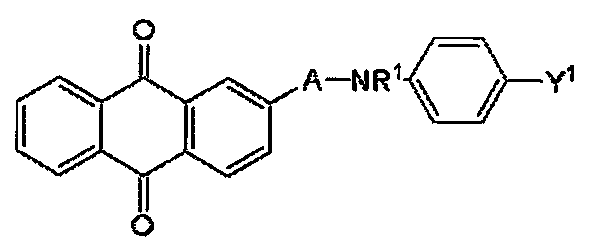
一般式(2):
(式中、Aは-CO-及び-SO2-のいずれかを表す。R1は、水素原子、置換基を有していてもよい、炭素数が20以下のアルキル基、置換基を有していてもよい、炭素数が20以下のアルケニル基、及び置換基を有していてもよい、炭素数が20以下のアリール基のいずれかを表す。
Y1は、-SO2NH-R2-NR3R4、-CONH-R5-NR6R7、-SO2NH-R8-SO3H、-CONH-R9-SO3H、-SO2NH-R10-COOH、-CONH-R11-COOH、及び下記一般式(3)で表される基のいずれかを表す。ただし、R2、R5及びR8乃至R11は、それぞれ独立に、置換基を有していてもよい、炭素数が20以下のアルキレン基、置換基を有していてもよい、炭素数が20以下のアルケニレン基、及び置換基を有していてもよい、炭素数が20以下のアリーレン基のいずれかを表す。R3、R4、R6及びR7は、それぞれ独立に、水素原子、置換基を有していてもよい、炭素数が20以下のアルキル基、置換基を有していてもよい、炭素数が20以下のアルケニル基、及び置換基を有していてもよい、炭素数が20以下のアリール基のいずれかを表す。R3とR4とは又はR6とR7とは、互いに結合して、それらが結合した窒素原子とともに複素環部位を形成していてもよく、この複素環部位の環原子としての炭素原子の一部は、他の窒素原子、酸素原子又は硫黄原子で置換されていてもよく、この複素環部位の環原子に結合している水素原子は置換されていてもよい。)
一般式(3):
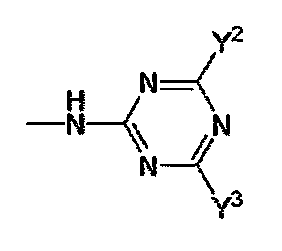
一般式(3):
(式中、Y2及びY3は、それぞれ独立に、-OH、-NH-R12-NR13R14、-NH-R15-SO3H、及び-NH-R16-COOHのいずれかを表す。ただし、R12、R15及びR16は、それぞれ独立に、置換基を有していてもよい、炭素数が20以下のアルキレン基、置換基を有していてもよい、炭素数が20以下のアルケニレン基、及び置換基を有していてもよい、炭素数が20以下のアリーレン基のいずれかを表す。R13及びR14は、それぞれ独立に、水素原子、置換基を有していてもよい、炭素数が20以下のアルキル基、置換基を有していてもよい、炭素数が20以下のアルケニル基、及び置換基を有していてもよい、炭素数が20以下のアリール基のいずれかを表す。また、R13とR14とは、互いに結合して、それらが結合した窒素原子とともに複素環部位を形成していてもよく、この複素環部位の環原子としての炭素原子の一部は、他の窒素原子、酸素原子又は硫黄原子で置換されていてもよく、この複素環部位の環原子に結合している水素原子は置換されていてもよい。)
一般式(4):

一般式(4):
(式中、Y4は、単結合、-CONH-R17-、及び-SO2NH-R18-のいずれかを表す。R17及びR18は、それぞれ独立に、置換基を有していてもよい、炭素数が20以下のアルキレン基、置換基を有していてもよい、炭素数が20以下のアルケニレン基、及び置換基を有していてもよい、炭素数が20以下のアリーレン基のいずれかを表す。
Y5は、-SO3H及び-COOHのいずれかを表す。)
一般式(5):
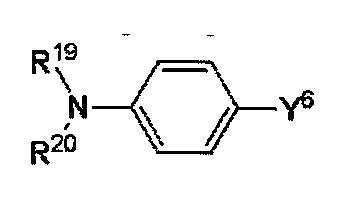
一般式(5):
(式中、R19及びR20は、それぞれ独立に、水素原子、置換基を有していてもよい、炭素数が20以下のアルキル基、置換基を有していてもよい、炭素数が20以下のアルケニル基、及び置換基を有していてもよい、炭素数が20以下のアリール基のいずれかを表す。
Y6は、-SO2NH-R21-NR22R23、-CONH-R24-NR25R26、-SO2NH-R27-SO3H、-CONH-R28-SO3H、-SO2NHR29-COOH、及び-CONH-R30-COOHのいずれかを表す。R21、R24及びR27乃至R30は、それぞれ独立に、置換基を有していてもよい、炭素数が20以下のアルキレン基、置換基を有していてもよい、炭素数が20以下のアルケニレン基、及び置換基を有していてもよい、炭素数が20以下のアリーレン基のいずれかを表す。R22、R23、R25及びR26は、それぞれ独立に、水素原子、置換基を有していてもよい、炭素数が20以下のアルキル基、置換基を有していてもよい、炭素数が20以下のアルケニル基、及び置換基を有していてもよい、炭素数が20以下のアリール基のいずれかを表す。R22とR23とは又はR25とR26とは、互いに結合して、それらが結合した窒素原子とともに複素環部位を形成していてもよく、この複素環部位の環原子としての炭素原子の一部は、他の窒素原子、酸素原子又は硫黄原子で置換されていてもよく、この複素環部位の環原子に結合している水素原子は置換されていてもよい。)
本発明の第2側面によると、第1側面に係る顔料組成物及び液状媒体を含有した顔料分散体が提供される。
本発明の第2側面によると、第1側面に係る顔料組成物及び液状媒体を含有した顔料分散体が提供される。
本発明の第3側面によると、第2側面に係る顔料分散体を含有したインクジェットインキが提供される。
本発明の第4側面によると第1側面に係る顔料組成物及び結着樹脂を含有した着色樹脂組成物が提供される。
本発明の第5側面によると、第4側面に係る着色樹脂組成物を含有した電子写真用トナーが提供される。
第1乃至第5側面において、各々が前記一般式(2)乃至(5)の何れかによって表される前記少なくとも1種の化合物の含有量の合計が、各々が前記一般式(1)によって表される前記少なくとも1種のモノアゾ顔料の含有量と、各々が前記一般式(2)乃至(5)の何れかによって表される前記少なくとも1種の化合物の含有量との合計に占める割合は0.1乃至40モル%であることが好ましい。また、顔料組成物の平均一次粒子径は200nm以下であることが好ましい。
上記の顔料組成物は、モノアゾ顔料の結晶安定性を高め、さらに分散安定性を高める効果がある特定の構造を有する化合物を含む。そのため、この顔料組成物は、この特定の構造を有する化合物を併用していないモノアゾ顔料と比較して、より優れた結晶安定性及び分散安定性を達成し得る。さらに、この特定の構造を有する化合物は、顔料組成物の調製方法によらず優れた効果を付与することができるため、優れた効果を有する顔料組成物を各種方法で製造することができる。
本発明の一態様に係る顔料組成物は、各々が上記一般式(1)で表される少なくとも1種のモノアゾ顔料(以下、本態様のモノアゾ顔料と称する場合がある)と、各々が上記一般式(2)乃至(5)の何れかによって表される少なくとも1種の化合物(以下、異種骨格化合物と称する場合がある)とからなる。
まず、上記一般式(1)で表されるモノアゾ顔料について説明する。
一般式(1)のX1乃至X10におけるハロゲン原子としては、例えば、フッ素原子、塩素原子、臭素原子、ヨウ素原子が挙げられる。
一般式(1)のX1乃至X10におけるハロゲン原子としては、例えば、フッ素原子、塩素原子、臭素原子、ヨウ素原子が挙げられる。
一般式(1)のX1乃至X10における炭素数1乃至5のアルキル基としては、メチル基、エチル基、プロピル基、イソプロピル基、ブチル基、イソブチル基、sec-ブチル基、tert-ブチル基、ペンチル基、イソペンチル基、sec-ペンチル基、ネオペンチル基等が挙げられる。ただし、これらの例に限定されるものではない。
一般式(1)のX1乃至X10における炭素数1乃至5のアルコキシル基としては、メトキシ基、エトキシ基、プロポキシ基、ブトキシ基、tert-ブトキシ基、ペンチルオキシ基、ネオペンチルオキシ基等が挙げられる。ただし、これらに限定されるものではない。
一般式(1)のX1乃至X10における炭素数1乃至5のアルコキシカルボニル基としては、メトキシカルボニル基、エトキシカルボニル基、tert-ブトキシカルボニル基、ペンチルオキシカルボニル基等が挙げられる。ただし、これらに限定されるものではない。
X1乃至X10の隣り合った2つは、互いに結合して、それらが結合したベンゼン環の2つの炭素原子とともに複素環部位を形成していてもよい。
各複素環部位の環の数は、1~2が好ましく、1がより好ましい。各環の環原子の数は、5~7が好ましく、5または6が好ましい。
複素環部位が複数の環を含んでいる場合、それら環の1つが環原子の一部として炭素原子以外の原子を含んでいれば、残りの環は、環原子として炭素原子のみを含んでいてもよく、環原子として炭素原子と炭素原子以外の原子とを含んでいてもよい。炭素原子以外の原子は、例えば、窒素原子、酸素原子又は硫黄原子である。環原子として炭素原子以外の原子を含んでいる環において、炭素原子以外の環原子の数は、例えば1乃至2である。複素環部位が複数の環を含んでいる場合、例えば、それら環のうち、上記ベンゼン環の2つの炭素原子を環原子として含んだ環は、残りの環原子の一部として炭素原子以外の原子を含んでいる。
複素環部位の環原子のうち、上記ベンゼン環の2つの炭素原子以外の、隣り合った2つの環原子は、単結合によって互いに結合していてもよく、二重結合によって互いに結合していてもよい。
複素環部位の環原子に結合している水素原子は、メチル基などのアルキル基で置換してもよい。1つの環原子に2つの水素原子が結合している場合、これら水素原子は、1つの酸素原子で置換してもよい。即ち、複素環部位は、カルボニル基を含んでいてもよい。
X1乃至X5のうち、X1及びX2が互いに結合していてもよく、X2及びX3が互いに結合していてもよく、X3及びX4が互いに結合していてもよく、X4及びX5が互いに結合していてもよい。X6乃至X10のうち、X6及びX7が互いに結合していてもよく、X7及びX8が互いに結合していてもよく、X8及びX9が互いに結合していてもよく、X9及びX10が互いに結合していてもよい。好ましくは、X2及びX3又はX3及びX4が互いに結合するか、X7及びX8又はX8及びX9が互いに結合する。
この複素環部位としては、例えば、インドール、ベンズイミダゾロン、ベンゾフリル、ベンゾチエニル、ピロール、イミダゾリジン、イミダゾリジノン、ベンズイミダゾリジン、ベンズイミダゾリジノン、ピペリジン、ピペラジン、ピペラジンジオン、キノキサリン、又はキノリンから2つ又は4つの水素原子を除いたものが挙げられる。ただし、これらに限定されるものではない。
以下に、一般式(1)で表される化合物のうち、複素環部位を有しているものの例を示す。

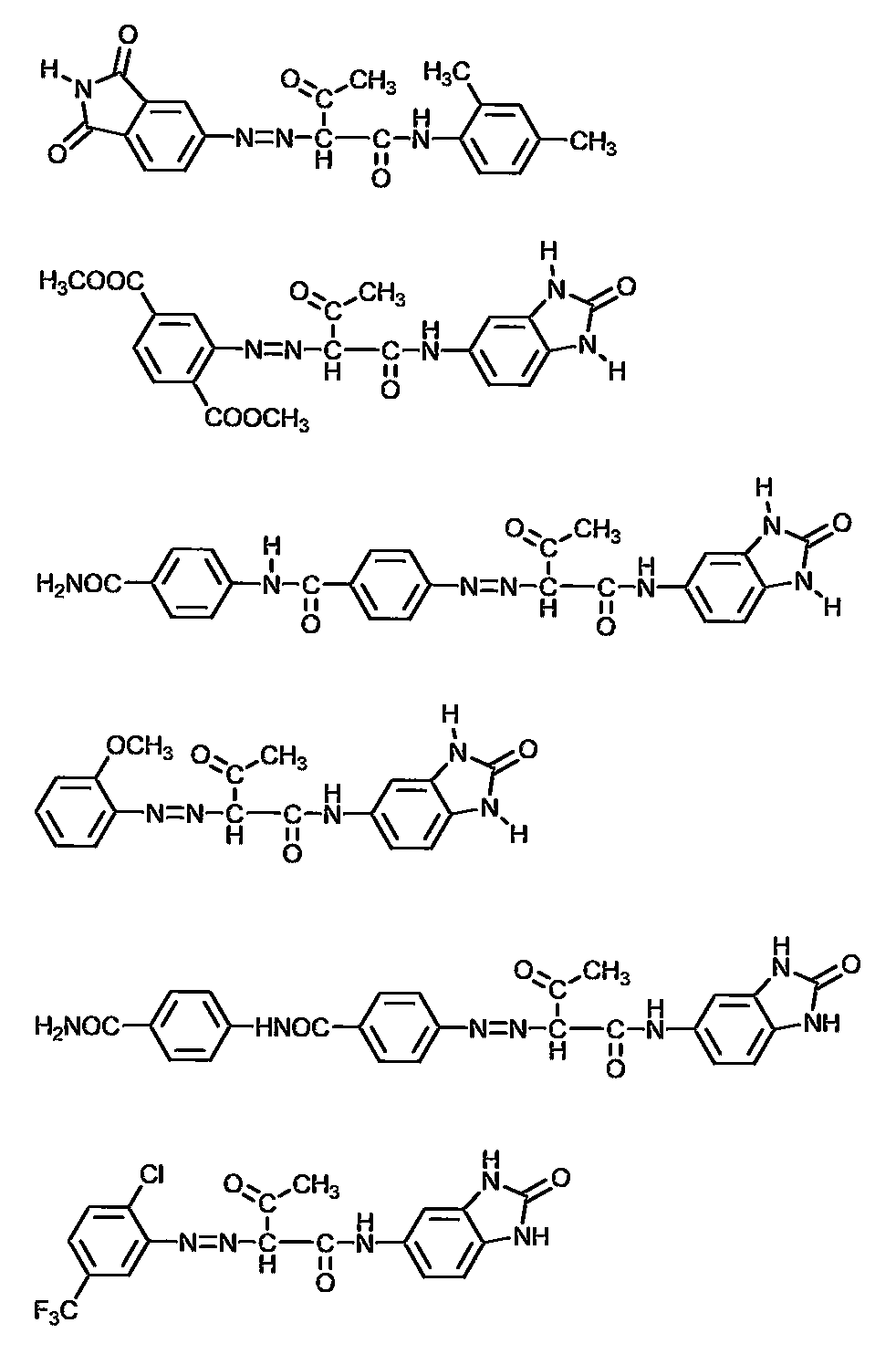
本態様のモノアゾ顔料は特に限定されないが、例えば、C.I.ピグメントイエロー1、同2、同3、同4、同5、同6、同9、同49、同61、同62、同65、同73、同74、同75、同97、同98、同105、同111、同116、同120、同130、同133、同151、同154、同167、同168、同169、同175、同181、同194、同203、同213、C.I.ピグメントオレンジ1、同36、同60、同62、同64などが挙げられる。これらのうち、C.I.ピグメントイエロー74が、色相、鮮明性及び透明性の点で特に好ましい。これらのモノアゾ顔料は、単独で使用してもよく、複数を組み合わせて使用してもよい。
本態様のモノアゾ顔料の形態は特に限定されない。市販の顔料をそのまま使用してもよく、合成して使用してもよい。また、必要に応じて、アシッドペースティング、ソルベントソルトミリング及びドライミリングなどの方法により所望の粒子径に微細化してから使用してもよい。
本態様のモノアゾ顔料は、公知の方法により合成することができる。代表的な合成法を以下に例示する。
第1の例は、芳香族アミンのジアゾ化物を、アセトアセトアニリド化合物を含んだスラリー中に添加する方法である。まず、アセトアセトアニリド化合物をアルカリ性水溶液に溶解させ、それを予め調製した酢酸水溶液に注入して懸濁液を調製する。その一方で、芳香族アミンを酸性水溶液中に添加して懸濁液を調製し、それを5℃以下に冷却した後、亜硝酸ナトリウムを加えてジアゾ化を行う。ジアゾ化終了後、反応混合物にスルファミン酸を加えて過剰な亜硝酸を除去し、ジアゾ化物の水溶液を調製する。以上で調製したジアゾ化物の水溶液を、アセトアセトアニリド化合物のスラリー中に添加することでカップリング反応を行い、必要に応じて、得られたスラリーを加熱攪拌した後に、濾過、水洗、乾燥、粉砕してモノアゾ顔料を得る。
第2の例は、アセトアセトアニリド化合物のアルカリ性水溶液を、芳香族アミンのジアゾ化物水溶液中に添加する方法である。まず、アセトアセトアニリド化合物をアルカリ性水溶液に溶解させる。その一方で、芳香族アミンを酸性水溶液中に添加して懸濁液を調製し、それを5℃以下に冷却した後、亜硝酸ナトリウムを加えてジアゾ化を行う。ジアゾ化終了後、反応混合物にスルファミン酸を加えて過剰な亜硝酸を除去し、さらに酢酸と水酸化ナトリウムとを含んだ水溶液を添加して、ジアゾ化物水溶液を調製する。以上で調製したアセトアセトアニリド化合物の水溶液を、ジアゾ化物水溶液に添加することでカップリング反応を行い、必要に応じて、得られたスラリーを加熱攪拌した後に、濾過、水洗、乾燥、粉砕してモノアゾ顔料を得る。
第3の例は、予め酢酸などの酸と水酸化ナトリウムなどの塩基とを添加して調製した水溶液中に、芳香族アミンのジアゾ化物とアセトアセトアニリド化合物のアルカリ性水溶液とを同時に添加する方法である。まず、アセトアセトアニリド化合物をアルカリ性水溶液に溶解させる。その一方で、芳香族アミンを酸性水溶液中に添加して懸濁液を調製し、それを5℃以下に冷却した後、亜硝酸ナトリウムを加えてジアゾ化を行う。ジアゾ化終了後、反応混合物にスルファミン酸を加えて過剰な亜硝酸を除去し、ジアゾ化物の水溶液を調製する。また、反応槽中に、酢酸などの酸と水酸化ナトリウムなどの塩基とを添加して、緩衝水溶液を調製する。上記で調製したジアゾ化物の水溶液とアセトアセトアニリド化合物の水溶液とを、緩衝水溶液中に添加することでカップリング反応を行い、必要に応じて、得られたスラリーを加熱攪拌した後に、濾過、水洗、乾燥、粉砕してモノアゾ顔料を得る。
本態様で使用する芳香族アミンとしては、例えば、2-アミノ安息香酸、3-アミノ安息香酸、4-アミノ安息香酸、2-(トリフルオロメチル)アニリン、3-(トリフルオロメチル)アニリン、4-(トリフルオロメチル)アニリン、o-アニシジン、m-アニシジン、p-アニシジン、2-ニトロアニリン、3-ニトロアニリン、4-ニトロアニリン、2-メトキシ-4-ニトロアニリン、2-メトキシ-5-ニトロアニリン、4-メトキシ-2-ニトロアニリン、2-メチル-3-ニトロアニリン、2-メチル-4-ニトロアニリン、2-メチル-5-ニトロアニリン、2-メチル-6-ニトロアニリン、3-メチル-4-ニトロアニリン、4-メチル-2-ニトロアニリン、4-メチル-3-ニトロアニリン、5-メチル-2-ニトロアニリン、2-クロロ-4-ニトロアニリン、2-クロロ-5-ニトロアニリン、4-クロロ-2-ニトロアニリン、4-クロロ-3-ニトロアニリン、5-クロロ-2-ニトロアニリン、2-アミノ-5-ニトロベンゼンスルホン酸、4-アミノ-2-ニトロベンゼンスルホン酸、4-アミノ-3-ニトロベンゼンスルホン酸、2-クロロ-4-メチルアニリン、2-クロロ-5-メチルアニリン、2-クロロ-6-メチルアニリン、3-クロロ-2-メチルアニリン、3-クロロ-4-メチルアニリン、4-クロロ-2-メチルアニリン、4-クロロ-3-メチルアニリン、5-クロロ-2-メチルアニリン、3-アミノ-4-クロロベンズアミド、4-アミノ-3-クロロベンズアミド、4-アミノ-3-メトキシ-N-フェニルベンゼンスルホンアミド、4-アミノ-N-(4-カルバモイルフェニル)ベンズアミド、アミノテレフタル酸ジメチル、5-アミノイソフタル酸ジメチル、6-アミノ-7-クロロ-4-メチルキノリン-2(1H)-オン、5-アミノイソインドリン-1,3-ジオン等が挙げられる。これらは、単独で使用してもよく、複数を組み合わせて使用してもよい。
本態様で使用するアセトアセトアニリド化合物としては、例えば、アセトアセトアニリド、o-アセトアセトアニシジド、p-アセトアセトアニシジド、2’-クロロアセトアセトアニリド、4’-クロロアセトアセトアニリド、N-アセトアセチル-o-トルイジン、N-アセトアセチル-p-トルイジン、o-アセトアセトアニシジド、p-アセトアセトアニシジド、p-アセトアセトフェネチジド、4’-アセチルアミノアセトアセトアニリド、2’,4’-ジメチルアセトアセトアニリド、4’-クロロ-2’-メチルアセトアセトアニリド、5’-クロロ-2’-メトキシアセトアセトアニリド、4’-クロロ-2’,5’-ジメトキシアセトアセトアニリド、5-アセトアセタミド-2-ベンズイミダゾリノン、N-(7-メトキシ-2,3-ジオキソ-1,2,3,4-テトラヒドロキノキサリン-6-イル)-3-オキソブタンアミド等が挙げられる。これらは、単独で使用してもよく、複数を組み合わせて使用してもよい。
顔料をアシッドペースティングにより微細化する場合、モノアゾ顔料を濃硫酸に溶解させ、それを大過剰の水と混合することにより微細な顔料粒子を析出させる。その後、濾過及び水洗を繰り返し、乾燥させることにより微細化された顔料粒子を得ることができる。
アシッドペースティングの方法は特に限定されないが、例えばモノアゾ顔料をその5乃至30重量倍の硫酸に溶解させ、得られた硫酸溶液をその5乃至30重量倍の水と混合する方法が挙げられる。その際、モノアゾ顔料を硫酸に溶解させる温度は、原料の分解やスルホン化などの反応を発生しない範囲であれば特に限定されないが、例えば3乃至40℃の範囲で行うことができる。また、モノアゾ顔料の硫酸溶液と水とを混合する方法や温度などの条件も特に限定されないが、多くの場合、高温で析出させた場合よりも低温の場合に粒子が微細となる傾向があるため、0℃乃至60℃の範囲で行うことが好ましい。その際に使用する水としては工業的に使用可能なものはいずれも使用することができるが、析出時の温度上昇を低減するためには、予め冷却した水を使用するのが好ましい。
硫酸溶液と水との混合方法は特に限定されず、モノアゾ顔料を完全に析出させることができればどのような方法で混合しても良い。例えば、硫酸溶液を予め調製した氷水に注入する方法や、アスピレーターなどの装置を使用して流水中に硫酸溶液を連続的に注入するなどの方法で析出させることができる。
以上の方法で得られたスラリーを濾過及び洗浄して酸性成分を除去し、その後、乾燥及び粉砕することで、本態様の顔料組成物を得ることができる。スラリーを濾過する際、硫酸溶液と水とを混合したスラリーをそのまま濾過してもよいが、スラリーの濾過性が悪い場合は濾過前に加熱攪拌してもよい。また、スラリーを塩基で中和した後に濾過してもよい。
顔料をソルベントソルトミリングにより微細化する場合、モノアゾ顔料、水溶性無機塩及び水溶性溶剤の少なくとも三成分からなる混合物を粘土状にし、ニーダー等を使用して強力に混練する。混練後の混合物を水中に投入し、攪拌機で攪拌してスラリー状とする。これを濾過することにより、水溶性無機塩及び水溶性溶剤を除去する。以上のスラリー化と濾過及び水洗とを繰り返し、微細化された有機顔料を得ることができる。
水溶性無機塩としては、塩化ナトリウム、硫酸ナトリウム、塩化カリウム等を使用することができる。これらの無機塩は、質量比で、有機顔料の1倍以上、好ましくは20倍以下の量で用いる。無機塩の質量が有機顔料の質量の1倍未満である場合、顔料を十分に微細化することが困難である。一方、無機塩の質量が有機顔料の質量の20倍よりも大きい場合、混練後に水溶性の無機塩及び水溶性溶剤を除去するために多大な労力を要すると同時に、一回に処理できる顔料の量が少なくなるため、生産性の点で好ましくない。
上記の顔料の微細化方法では混練に伴って発熱することが多いため、安全性の点から、沸点が120乃至250℃程度の水溶性有機溶剤を使用することが好ましい。その例としては、2-(メトキシメトキシ)エタノール、2-ブトキシエタノール、2-(イソペンチルオキシ)エタノール、2-(ヘキシルオキシ)エタノール、エチレングリコール、ジエチレングリコール、ジエチレングリコールモノメチルエーテル、ジエチレングリコールモノエチルエーテル、ジエチレングリコールモノブチルエーテル、トリエチレングリコール、トリエチレングリコールモノメチルエーテル、液体ポリエチレングリコール、1-メトキシ-2-プロパノール、1-エトキシ-2-プロパノール、ジプロピレングリコール、ジプロピレングリコールモノメチルエーテル、ジプロピレングリコールモノエチルエーテル、低分子量ポリプロピレングリコール等が挙げられる。
顔料をドライミリングにより微細化する場合、モノアゾ顔料を粉砕機で乾式粉砕することにより微細化する。この方法において、粉砕は粉砕メディア同士の衝突や摩擦を通じて進行する。ドライミリングを行うために使用する装置は特に限定されないが、その例としてはビーズ等の粉砕メディアを内蔵した乾式粉砕装置であるボールミル、アトライター、振動ミルなどが挙げられる。これらの装置を使用した乾式粉砕は、必要に応じて、粉砕容器の内部を減圧したり、窒素ガスなどの不活性ガスを充填したりして行ってもよい。また、ドライミリングした後に、上記のソルベントソルトミリングや溶剤中での攪拌処理などを行ってもよい。
上記の顔料の微細化方法において、モノアゾ顔料は、単独で使用してもよく、複数を組み合わせて使用してもよい。また、モノアゾ顔料は、乾燥及び粉砕して粉状とした後に使用してもよく、乾燥前の含水ケーキの形態で使用してもよい。
次に、異種骨格化合物(各々が上記一般式(2)乃至(5)の何れかによって表される少なくとも1種の化合物)について説明する。
異種骨格化合物は、モノアゾ顔料の結晶安定性を高め、さらに分散安定性を高める働きをする。
一般式(2)のR1、R3、R4、R6及びR7について、置換基を有していてもよい、炭素数が20以下のアルキル基としては、メチル基、エチル基、プロピル基、ブチル基、ペンチル基、ヘキシル基、ヘプチル基、オクチル基、ノニル基、デシル基、ドデシル基、オクタデシル基、イソプロピル基、イソブチル基、イソペンチル基、sec-ブチル基、tert-ブチル基、sec-ペンチル基、tert-ペンチル基、tert-オクチル基、ネオペンチル基、シクロプロピル基、シクロブチル基、シクロペンチル基等が挙げられる。ただし、これらに限定されるものではない。
一般式(2)のR1、R3、R4、R6及びR7について、置換基を有していてもよい、炭素数が20以下のアルケニル基としては、ビニル基、1-プロペニル基、アリル基、2-ブテニル基、3-ブテニル基、イソプロペニル基、イソブテニル基、1-ペンテニル基、2-ペンテニル基、1-ヘキセニル基、2-ヘキセニル基、3-ヘキセニル基、1-オクテニル基、1-オクタデセニル基、シクロペンテニル基、シクロヘキセニル基、1,3-ブタジエニル基、シクロヘキサジエニル基、シクロペンタジエニル基、トリフルオロエテニル基、1-クロロエテニル基、2,2-ジブロモエテニル基、4-ヒドロキシ-1-ブテニル基等が挙げられる。ただし、これらに限定されるものではない。
一般式(2)のR1、R3、R4、R6及びR7について、置換基を有していてもよい、炭素数が20以下のアリール基としては、フェニル基、ビフェニル基、インデニル基、トリル基、キシリル基、p-シクロヘキシルフェニル基、p-クメニル基、m-カルボキシフェニル基等が挙げられる。ただし、これらに限定されるものではない。
一般式(2)において、R3とR4とは又はR6とR7とは、互いに結合して、それらが結合した窒素原子とともに複素環部位を形成していてもよい。この複素環部位の環原子としての炭素原子の一部は、他の窒素原子、酸素原子又は硫黄原子で置換されていてもよく、この複素環部位の環原子に結合している水素原子は置換されていてもよい。この複素環部位としては、例えば、インドール、ベンズイミダゾロン、ピロールから1つの水素原子を除いたものが挙げられる。ただし、これらに限定されるものではない。
一般式(2)のR2、R5及びR8乃至R11について、置換基を有していてもよい、炭素数が20以下のアルキレン基としては、メチレン基、エチレン基、トリメチレン基、テトラメチレン基、プロピレン基、エチルメチレン基、クロロメチレン基、ジメチルメチレン基、ビス(トリフルオロメチル)メチレン基等が挙げられる。ただし、これらに限定されるものではない。
一般式(2)のR2、R5及びR8乃至R11について、置換基を有していてもよい、炭素数が20以下のアルケニレン基としては、ビニレン基、1-メチルビニレン基、プロペニレン基、1-ブテニレン基、2-ブテニレン基、1-ペンテニレン基、2-ペンテニレン基等が挙げられる。ただし、これらに限定されるものではない。
一般式(2)のR2、R5及びR8乃至R11について、置換基を有していてもよい、炭素数が20以下のアリーレン基としては、o-フェニレン基、m-フェニレン基、p-フェニレン基、4-メチル-1,2-フェニレン基、4-クロロ-1,2-フェニレン基、4-ヒドロキシ-1,2-フェニレン基、2-メチル-1,4-フェニレン基、p,p’-ビフェニリレン基等が挙げられる。ただし、これらに限定されるものではない。
一般式(3)のR12、R15及びR16について、置換基を有していてもよい、炭素数が20以下のアルキレン基としては、メチレン基、エチレン基、トリメチレン基、テトラメチレン基、プロピレン基、エチルメチレン基、クロロメチレン基、ジメチルメチレン基、ビス(トリフルオロメチル)メチレン基等が挙げられる。ただし、これらに限定されるものではない。
一般式(3)のR12、R15及びR16について、置換基を有していてもよい、炭素数が20以下のアルケニレン基としては、ビニレン基、1-メチルビニレン基、プロペニレン基、1-ブテニレン基、2-ブテニレン基、1-ペンテニレン基、2-ペンテニレン基等が挙げられる。ただし、これらに限定されるものではない。
一般式(3)のR12、R15及びR16について、置換基を有していてもよい、炭素数が20以下のアリーレン基としては、o-フェニレン基、m-フェニレン基、p-フェニレン基、4-メチル-1,2-フェニレン基、4-クロロ-1,2-フェニレン基、4-ヒドロキシ-1,2-フェニレン基、2-メチル-1,4-フェニレン基、p,p’-ビフェニリレン基等が挙げられる。ただし、これらに限定されるものではない。
一般式(3)のR13及びR14について、置換基を有していてもよい、炭素数が20以下のアルキル基としては、メチル基、エチル基、プロピル基、ブチル基、ペンチル基、ヘキシル基、ヘプチル基、オクチル基、ノニル基、デシル基、ドデシル基、オクタデシル基、イソプロピル基、イソブチル基、イソペンチル基、sec-ブチル基、tert-ブチル基、sec-ペンチル基、tert-ペンチル基、tert-オクチル基、ネオペンチル基、シクロプロピル基、シクロブチル基、シクロペンチル基等が挙げられる。ただし、これらに限定されるものではない。
一般式(3)のR13及びR14について、置換基を有していてもよい、炭素数が20以下のアルケニル基としては、ビニル基、1-プロペニル基、アリル基、2-ブテニル基、3-ブテニル基、イソプロペニル基、イソブテニル基、1-ペンテニル基、2-ペンテニル基、1-ヘキセニル基、2-ヘキセニル基、3-ヘキセニル基、1-オクテニル基、1-オクタデセニル基、シクロペンテニル基、シクロヘキセニル基、1,3-ブタジエニル基、シクロヘキサジエニル基、シクロペンタジエニル基、トリフルオロエテニル基、1-クロロエテニル基、2,2-ジブロモエテニル基、4-ヒドロキシ-1-ブテニル基等が挙げられる。ただし、これらに限定されるものではない。
一般式(3)のR13及びR14について、置換基を有していてもよい、炭素数が20以下のアリール基としては、フェニル基、ビフェニル基、インデニル基、トリル基、キシリル基、p-シクロヘキシルフェニル基、p-クメニル基、m-カルボキシフェニル基等が挙げられる。ただし、これらに限定されるものではない。
一般式(3)において、R13とR14とは、互いに結合して、それらが結合した窒素原子とともに複素環部位を形成していてもよい。この複素環部位の環原子としての炭素原子の一部は、他の窒素原子、酸素原子又は硫黄原子で置換されていてもよく、この複素環部位の環原子に結合している水素原子は置換されていてもよい。この複素環部位としては、例えば、インドール、ベンズイミダゾロン、ピロールから1つの水素原子を除いたものが挙げられる。ただし、これらに限定されるものではない。
一般式(4)のR17及びR18について、置換基を有していてもよい、炭素数が20以下のアルキレン基としては、メチレン基、エチレン基、トリメチレン基、テトラメチレン基、プロピレン基、エチルメチレン基、クロロメチレン基、ジメチルメチレン基、ビス(トリフルオロメチル)メチレン基等が挙げられる。ただし、これらに限定されるものではない。
一般式(4)のR17及びR18について、置換基を有していてもよい、炭素数が20以下のアルケニレン基としては、ビニレン基、1-メチルビニレン基、プロペニレン基、1-ブテニレン基、2-ブテニレン基、1-ペンテニレン基、2-ペンテニレン基等が挙げられる。ただし、これらに限定されるものではない。
一般式(4)のR17及びR18について、置換基を有していてもよい、炭素数が20以下のアリーレン基としては、o-フェニレン基、m-フェニレン基、p-フェニレン基、4-メチル-1,2-フェニレン基、4-クロロ-1,2-フェニレン基、4-ヒドロキシ-1,2-フェニレン基、2-メチル-1,4-フェニレン基、p,p’-ビフェニリレン基等が挙げられる。ただし、これらに限定されるものではない。
一般式(5)において、R19及びR20は、それぞれ独立に、水素原子、置換基を有していてもよい、炭素数が20以下のアルキル基、置換基を有していてもよい、炭素数が20以下のアルケニル基、及び置換基を有していてもよい、炭素数が20以下のアリール基のいずれかを表す。
一般式(5)において、Y6は、-SO2NH-R21-NR22R23、-CONH-R24-NR25R26、-SO2NH-R27-SO3H、-CONH-R28-SO3H、-SO2NHR29-COOH、及び-CONH-R30-COOHのいずれかを表す。R21、R24及びR27乃至R30は、それぞれ独立に、置換基を有していてもよい、炭素数が20以下のアルキレン基、置換基を有していてもよい、炭素数が20以下のアルケニレン基、及び置換基を有していてもよい、炭素数が20以下のアリーレン基のいずれかを表す。R22、R23、R25及びR26は、それぞれ独立に、水素原子、置換基を有していてもよい、炭素数が20以下のアルキル基、置換基を有していてもよい、炭素数が20以下のアルケニル基、及び置換基を有していてもよい、炭素数が20以下のアリール基のいずれかを表す。R22とR23とは又はR25とR26とは、互いに結合して、それらが結合した窒素原子とともに複素環部位を形成していてもよく、この複素環部位の環原子としての炭素原子の一部は、他の窒素原子、酸素原子又は硫黄原子で置換されていてもよく、この複素環部位の環原子に結合している水素原子は置換されていてもよい。
本態様で使用する異種骨格化合物としては、以下に示す化合物が挙げられる。ただし、本発明はこれらの例に限定されるものではない。これらの異種骨格化合物は、単独で使用してもよく、複数を組み合わせて使用してもよい。
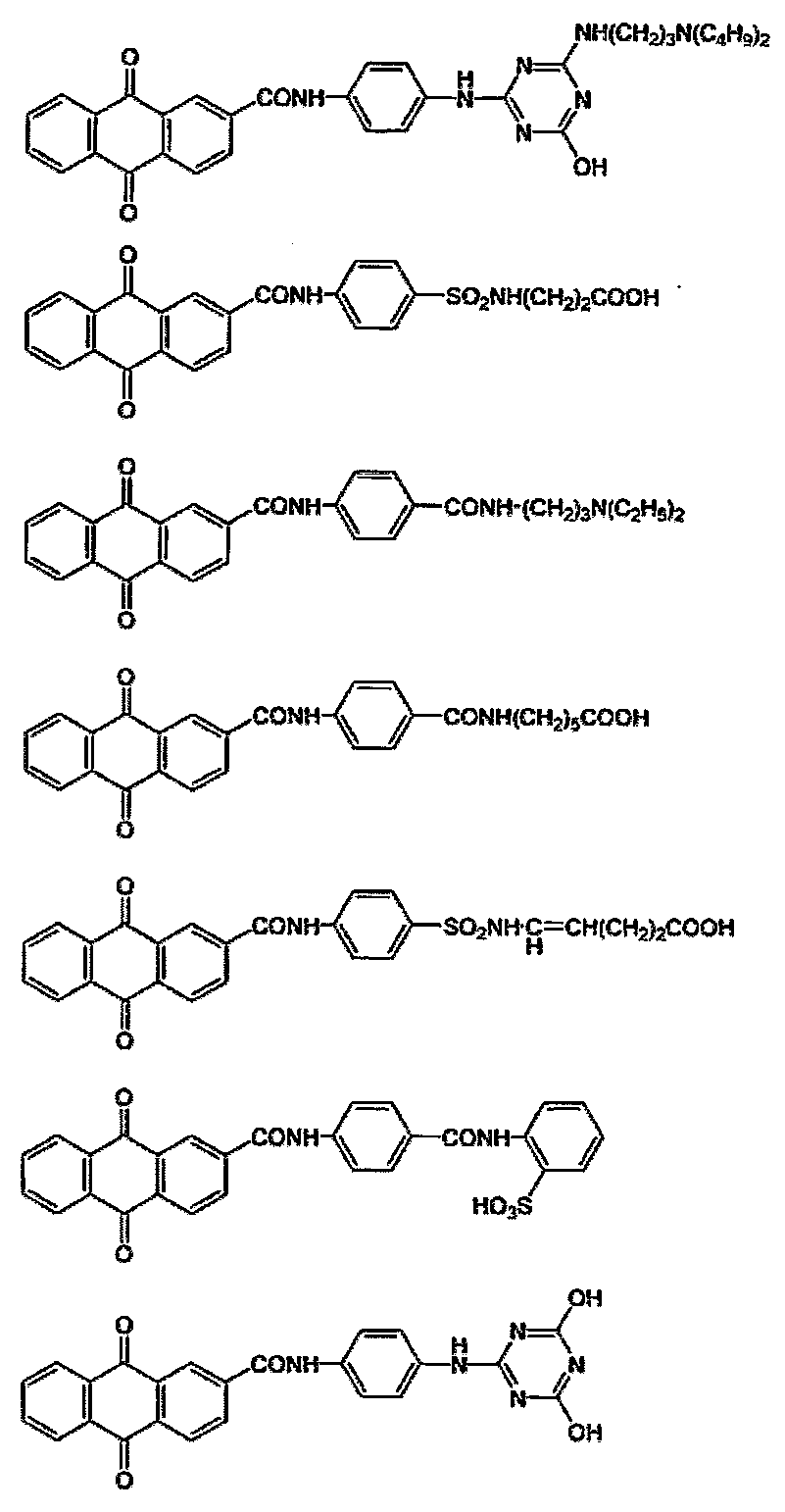
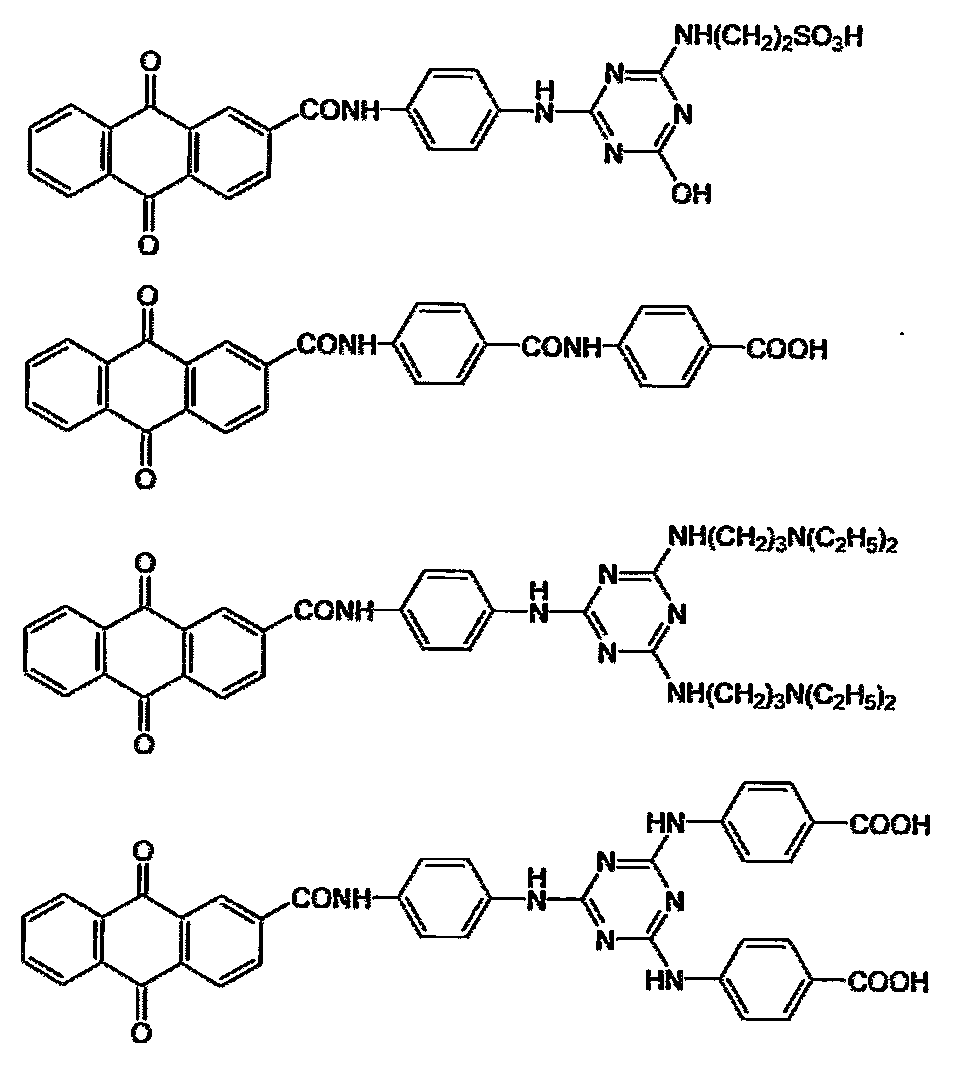
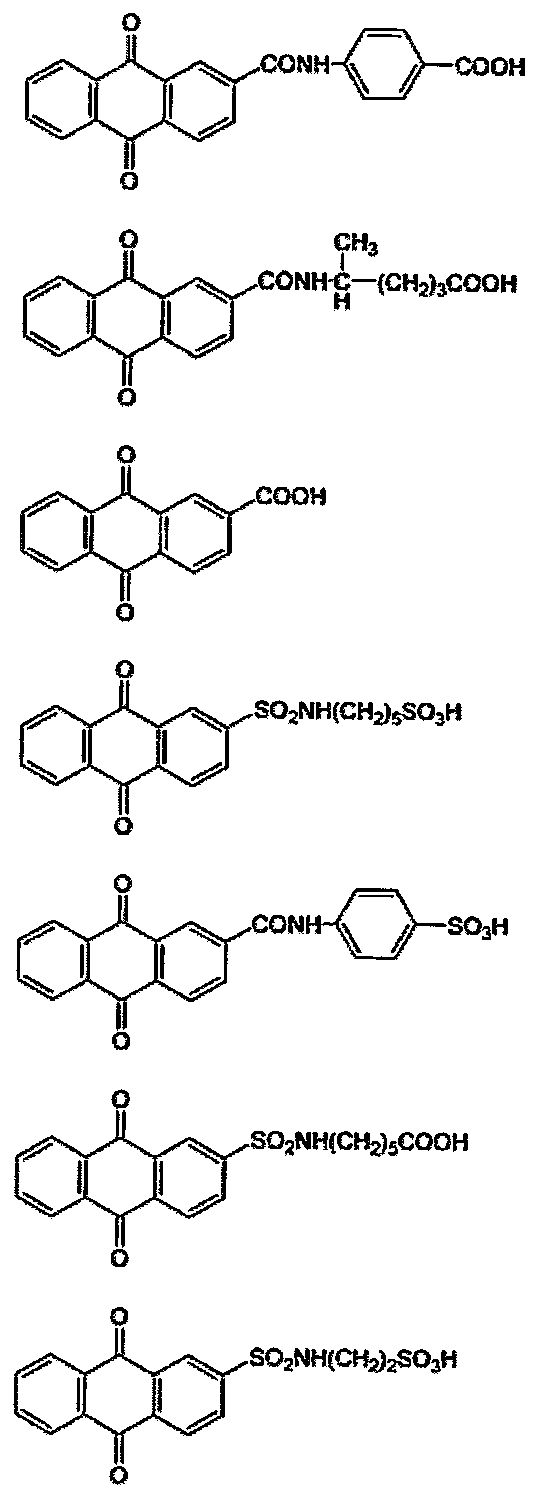

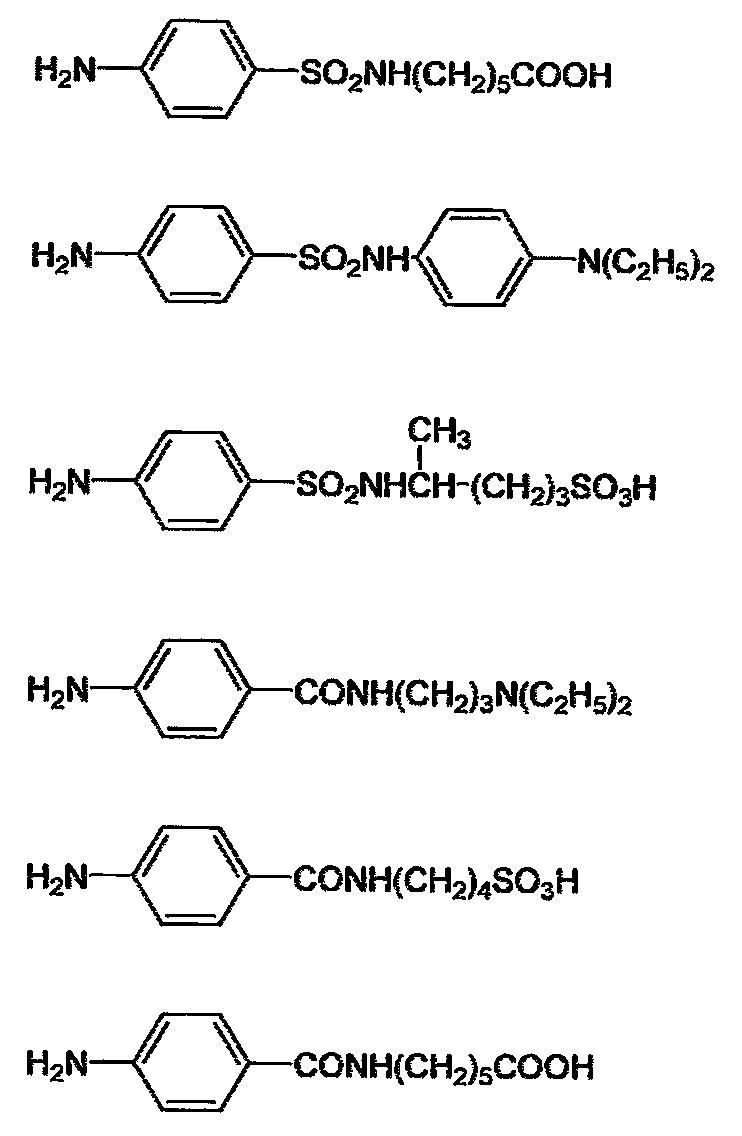
本態様の顔料組成物の製造において、モノアゾ顔料と異種骨格化合物とは任意の方法で混合することができる。混合方法としては、例えば予め合成したモノアゾ顔料と異種骨格化合物とを粉状のまま混合する方法、それらの水スラリーを混合する方法、予め合成したモノアゾ顔料の水スラリーに異種骨格化合物を粉末又は溶液の形態で添加する方法、異種骨格化合物の存在下でモノアゾ顔料を合成する方法、モノアゾ顔料と異種骨格化合物とからなる顔料組成物をソルベントソルトミリング法によって混練する方法などが挙げられる。これらいずれの方法によっても分散性及び結晶安定性の良好な顔料組成物を得ることができる。
本態様の顔料組成物において、異種骨格化合物の含有量が、モノアゾ顔料と異種骨格化合物との合計量に占める割合は0.1乃至40モル%の範囲内にあることが好ましい。この割合は、より好ましくは0.3乃至30モル%であり、さらに好ましくは0.5乃至20モル%である。この割合が0.1モル%未満である場合、得られる顔料組成物の分散安定性及び結晶安定性が不十分になる可能性がある。一方、この割合が40モル%を超える場合、添加量の増加に伴った顕著な分散安定化効果や結晶安定化効果が得られず、加えて、モノアゾ顔料の含有量が低下するために着色力が低下する可能性がある。
本態様の顔料組成物を製造する方法としては、上記で例示した方法のうち、異種骨格化合物の存在下でモノアゾ顔料を合成する方法、液相中でモノアゾ顔料を合成することによって得られたスラリーに異種骨格化合物を添加する方法、又はモノアゾ顔料と異種骨格化合物とからなる顔料組成物をソルベントソルトミリング法によって混練する方法が好ましい。これらの方法のうち、異種骨格化合物の存在下でモノアゾ顔料を合成する方法、及び、液相中でモノアゾ顔料を合成することによって得られたスラリーに異種骨格化合物を添加する方法が特に好ましい。これらの方法で顔料組成物を製造した場合、異種骨格化合物が均一に分布した顔料組成物を得ることができる。そのため、どのような用途に使用した場合であっても、優れた分散性及び結晶安定性を達成できるのに加え、高い着色力や透明性も達成できる。
異種骨格化合物の存在下でモノアゾ顔料を合成する場合、例えば、異種骨格化合物を、ベース成分、カプラー成分、及びpH3乃至6の緩衝水溶液の一つ以上に添加すること以外は、上記に例示したモノアゾ顔料を合成する方法と同様にして顔料組成物を製造することができる。
液相中でモノアゾ顔料を合成してなるスラリーに異種骨格化合物を添加する場合、上記に例示したモノアゾ顔料を合成する方法を用いてモノアゾ顔料を含むスラリーを調製し、濾過の前に異種骨格化合物を添加することで、顔料組成物を製造することができる。
本態様で得られる顔料組成物は、上記いずれか一つの方法で製造してもよく、複数の方法を組み合わせて製造してもよい。さらに、上記のいずれかの方法で調製した顔料組成物は、必要に応じてさらにアシッドペースティング、ソルベントソルトミリング、ドライミリングなどの方法により所望の粒子径に微細化してから使用してもよい。その際の方法は、上記モノアゾ顔料の場合と同様に行うことができる。
また、本態様の顔料組成物は、上記いずれの方法においても、必要に応じて、樹脂や界面活性剤等を添加して製造することができる。これらの添加剤は、顔料組成物を調製するいずれの段階で使用してもよい。例えば、これら添加剤は、顔料組成物を合成する段階で、芳香族アミン又はアセトアセトアミド化合物とともに使用してもよく、アシッドペースティング、ソルベントソルトミリング、ドライミリングなどを行う際に使用してもよい。
その際に使用する樹脂の種類は特に限定されないが、例えば、ロジン系樹脂、アクリル系樹脂、スチレン-アクリル系樹脂、ポリエステル系樹脂、ポリアミド系樹脂、ポリウレタン系樹脂、フッ素系樹脂、ビニルナフタレン-アクリル酸系樹脂、スチレン-マレイン酸系樹脂等が挙げられる。これらの樹脂は、単独で使用してもよく、複数を組み合わせて使用してもよい。また、これらは、顔料組成物に対して、例えば0.1乃至30重量%、好ましくは1乃至15重量%の範囲で使用することができる。
顔料組成物を使用する際に使用する界面活性剤の種類は特に限定されないが、例えば、脂肪酸塩、アルキル硫酸エステル塩、アルキルアリールスルホン酸塩、アルキルナフタレンスルホン酸塩、ジアルキルスルホン酸塩、ジアルキルスルホコハク酸塩、アルキルジアリールエーテルジスルホン酸塩、アルキルリン酸塩、ポリオキシエチレンアルキルエーテル硫酸塩、ポリオキシエチレンアルキルアリールエーテル硫酸塩、ナフタレンスルホン酸ホルマリン縮合物、ポリオキシエチレンアルキルリン酸エステル塩、グリセロールボレイト脂肪酸エステル、ポリオキシエチレングリセロール脂肪酸エステル、ポリオキシエチレンアルキルエーテル、ポリオキシエチレンアルキルアリールエーテル、ポリオキシエチレンオキシプロピレンブロックコポリマー、ソルビタン脂肪酸エステル、ポリオキシエチレンソルビタン脂肪酸エステル、ポリオキシエチレンソルビトール脂肪酸エステル、グリセリン脂肪酸エステル、ポリオキシエチレンアルキルアミン、フッ素系非イオン性界面活性剤、シリコン系非イオン性界面活性剤、アルキルアミン塩、四級アミン塩、アルキルピリジニウム塩、アルキルイミダゾリウム塩等が挙げられる。これらの界面活性剤は、単独で使用してもよく、複数を組み合わせて使用してもよい。また、これらは、顔料組成物に対して、例えば0.1乃至30重量%、好ましくは1乃至15%の範囲で使用することができる。
上述したいずれかの方法で調製した本態様の顔料組成物は、平均一次粒子径が200nm以下であることが好ましく、より好ましくは150nm以下、さらに好ましくは100nm以下である。平均一次粒子径が200nmを超える場合、何れかの用途に使用した際に着色力が劣る場合があり、さらに分散体やインキの保存中に沈降物を生じる場合があるため、好ましくない。
本態様において、顔料組成物の平均一次粒子径は、走査型電子顕微鏡又は透過型電子顕微鏡を使用して測定することができる。本明細書での平均一次粒子径は、走査型電子顕微鏡又は透過型電子顕微鏡で顔料粒子の写真を撮影し、凝集体を構成する各一次粒子について、それぞれの径を測定する。その際、各粒子について、最大径をその粒子の一次粒子径とする。この測定を同一の視野内に含まれる100個の粒子について行い、得られた値の平均値を平均一次粒子径とする。
本態様の顔料組成物において、顔料組成物をイオン交換水で煮沸抽出した水溶液の比電導度は、200μS/cm未満であることが好ましく、より好ましくは150μS/cm未満、さらに好ましくは100μS/cm未満である。比電導度は、顔料組成物に含まれるイオン性不純物含有量の指標として測定する。一般的に、顔料組成物に含まれるイオン性不純物は、分散安定性に影響することが知られており、できる限り少ないことが好ましい。
顔料組成物に含まれるイオン性不純物を低減するための方法は、顔料組成物をイオン交換水で煮沸抽出した水溶液の比電導度が上記の範囲となるものであれば特に限定されないが、例えば、顔料組成物の調製後に濾過と洗浄を繰り返す方法が挙げられる。その際に使用する水の種類は特に限定されないが、蒸留水やイオン交換水など、イオン性不純物を含有しないものであることが好ましい。
また、本態様の顔料組成物において、カルシウム、マグネシウム、及び鉄の含有量の合計は300ppm未満であることが好ましく、より好ましくは200ppm未満、さらに好ましくは150ppm未満である。また、上記の各金属元素の含有量はそれぞれ150ppm未満であることが好ましく、より好ましくは100ppm未満、さらに好ましくは80ppm未満である。カルシウム、マグネシウム、及び鉄の含有量の合計が300ppm以上、又はそれぞれの金属元素の含有量が150ppm以上である場合、顔料組成物をインクジェットインキに使用した際、プリンターのインキ流路やヘッドのノズル部において不溶物を発生し、ノズル詰まりの原因となる場合があるため、好ましくない。
カルシウム、マグネシウム、及び鉄の含有量を測定するための方法としては様々なものが知られているが、例えば、顔料組成物に硝酸を加えてマイクロウェーブで分解処理した溶液を適当な濃度に希釈し、誘導結合プラズマ発光分析(ICP)を用いて測定する方法が挙げられる。
顔料組成物に含まれるカルシウム、マグネシウム、及び鉄の含有量を低減するための方法は特に限定されないが、例えば顔料組成物を調製後に酸性の水溶液中でスラリー化し、濾過及び洗浄を繰り返す方法が挙げられる。その際に使用する酸の種類は特に限定されないが、例えば、硫酸、塩酸、酢酸等を挙げることができる。また、洗浄に使用する水の種類は特に限定されないが、蒸留水やイオン交換水など、イオン性不純物を含有しないものであることが好ましい。
本態様の顔料分散体は、本態様の顔料組成物及び液状媒体を含有するものであり、本態様の顔料組成物を水性媒体に分散した水性顔料分散体、及び、本態様の顔料組成物を有機溶媒に分散した油性顔料分散体のいずれをも包含するものである。
水性顔料分散体は、本態様の顔料組成物、水性媒体、樹脂、界面活性剤等の混合物を分散機で分散処理に供して調製することができる。また、必要に応じて、上記の原料のほかに添加剤を添加して分散処理を行ってもよい。水性顔料分散体を調製する際の、各原料の添加順序や添加方法については特に限定されない。
水性顔料分散体において、顔料組成物の含有量は特に限定されないが、5乃至50重量%の範囲であることが好ましく、特に好ましくは10乃至40重量%である。
水性顔料分散体の製造に使用する水性媒体の種類や含有量は特に限定されないが、金属イオン等を除去したイオン交換水又は蒸留水を使用することが好ましい。水性媒体の含有量は水性顔料分散体の30乃至95重量%であることが好ましい。
また、水性媒体としては、必要に応じて水と水溶性溶媒を混合して使用することができる。水溶性溶媒は特に限定されないが、例えば、エチレングリコール、ジエチレングリコール、プロピレングリコール、トリエチレングリコール、ポリエチレングリコール、グリセリン、テトラエチレングリコール、ジプロピレングリコール、ケトンアルコール、ジエチレングリコールモノブチルエーテル、エチレングリコールモノブチルエーテル、エチレングリコールモノエチルエーテル、1,2-ヘキサンジオール、N-メチル-2-ピロリドン、置換ピロリドン、2,4,6-ヘキサントリオール、テトラフリルアルコール、4-メトキシ-4-メチルペンタノン等が挙げられる。これらは、単独で使用してもよく、複数を組み合わせて使用してもよい。これらの水溶性溶媒を使用する場合、水溶性溶媒の含有量は、水性顔料分散体の1乃至50重量%であることが好ましい。
水性顔料分散体の製造に使用する樹脂としては、水性媒体中で顔料組成物を分散させうるものであれば特に限定されないが、例えば顔料組成物を製造する際に使用可能な樹脂として例示したものを使用することができる。それらの樹脂は、単独で使用してもよく、複数を組み合わせて使用してもよい。また、それらの使用量は特に限定されないが、水性顔料分散体の0.5乃至30重量%であることが好ましく、さらに好ましくは1乃至20重量%である。
また、水性顔料分散体の製造に使用するための界面活性剤としては、水性媒体中で顔料組成物を分散させうるものであれば特に限定されないが、例えば顔料組成物を製造する際に使用可能な界面活性剤として例示したものを使用することができる。それらの界面活性剤は、単独で使用してもよく、複数を組み合わせて使用してもよい。また、それらの使用量は特に限定されないが、水性顔料分散体の0.5乃至30重量%であることが好ましく、さらに好ましくは1乃至20重量%である。
さらに、水性顔料分散体を製造する際、必要に応じて、防黴剤、pH調整剤、消泡剤等の添加物を使用することができる。
防黴剤は、水性顔料分散体中での黴の発生を防止するために使用する。防黴剤の種類は特に限定されないが、例えばデヒドロ酢酸ナトリウム、安息香酸ナトリウム、ソジウムピリジンチオン-1-オキサイド、ジンクピリジンチオン-1-オキサイド、1,2-ベンズイソチアゾリン-3-オン、1-ベンズイソチアゾリン-3-オンのアミン塩等が挙げられる。これらは、水性顔料分散体の0.05乃至2重量%の範囲で使用するのが好ましい。
pH調整剤は、水性顔料分散体のpHを所望の値に調整するために使用する。pH調整剤の種類は特に限定されないが、例えばアミン、無機アルカリ、アンモニア、緩衝液等が挙げられる。
消泡剤は、水性顔料分散体の製造において泡の発生を防止するために使用する。消泡剤の種類は特に限定されず、市販のものをいずれも使用することができる。例えば、サーフィノール104A、サーフィノール104E、サーフィノール104H、サーフィノール104BC、サーフィノール104DPM、サーフィノール104PA、サーフィノール104PG-50、サーフィノール420、サーフィノール440、サーフィノール465、サーフィノール485、サーフィノールPSA-336(いずれもエアープロダクツ・アンド・ケミカルズ社製)等が挙げられる。
油性顔料分散体は、本態様の顔料組成物、有機溶媒、分散剤等の混合物を分散機で分散処理に供して調製することができる。また、必要に応じて、上記の原料のほかに添加剤を添加して分散処理を行ってもよい。油性顔料分散体を調製する際の、各原料の添加順序や添加方法については特に限定されない。
油性顔料分散体において、顔料組成物の含有量は特に限定されないが、5乃至50重量%の範囲であることが好ましく、特に好ましくは10乃至40重量%である。
油性顔料分散体の製造に使用する有機溶媒の種類や含有量は特に限定されないが、例えば、メチルアルコール、エチルアルコール、n-プロピルアルコール、イソプロピルアルコール、n-ブチルアルコール等のアルコール類、アセトン、メチルエチルケトン、メチル-n-プロピルケトン、メチルイソプロピルケトン、メチル-n-ブチルケトン、メチルイソブチルケトン、メチル-n-アミルケトン、メチルイソアミルケトン、ジエチルケトン、エチル-n-プロピルケトン、エチルイソプロピルケトン、エチル-n-ブチルケトン、エチルイソブチルケトン、ジ-n-プロピルケトン、ジイソブチルケトン、シクロヘキサノン、メチルシクロヘキサノン、イソホロン等のケトン類、酢酸メチル、酢酸エチル、酢酸-n-プロピル、酢酸イソプロピル、酢酸-n-ブチル、酢酸イソブチル、酢酸ヘキシル、酢酸オクチル、乳酸メチル、乳酸プロピル、乳酸ブチル等のエステル類、エチレングリコール、ジエチレングリコール、トリエチレングリコール、プロピレングリコール、ジプロピレングリコール等のグリコール類、エチレングリコールモノメチルエーテル、エチレングリコールモノエチルエーテル、エチレングリコールジエチルエーテル、エチレングリコールモノイソプロピルエーテル、エチレングリコールモノブチルエーテル、エチレングリコールモノヘキシルエーテル、ジエチレングリコールモノメチルエーテル、ジエチレングリコールモノエチルエーテル、ジエチレングリコールモノブチルエーテル、ジエチレングリコールジメチルエーテル、ジエチレングリコールジエチルエーテル、プロピレングリコールモノメチルエーテル、プロピレングリコールモノエチルエーテル、プロピレングリコールモノプロピルエーテル、プロピレングリコールモノブチルエーテル、ジプロピレングリコールモノメチルエーテル、ジプロピレングリコールモノエチルエーテル、ジプロピレングリコールジプロピルエーテル、トリプロピレングリコールモノメチルエーテル等のグリコールエーテル類、エチレングリコールモノメチルエーテルアセテート、エチレングリコールモノエチルエーテルアセテート、エチレングリコールモノプロピルエーテルアセテート、エチレングリコールモノブチルエーテルアセテート、ジエチレングリコールモノメチルエーテルアセテート、ジエチレングリコールモノエチルエーテルアセテート、ジエチレングリコールモノブチルエーテルアセテート、プロピレングリコールモノメチルエーテルアセテート、プロピレングリコールモノエチルエーテルアセテート、プロピレングリコールモノブチルエーテルアセテート、ジプロピレングリコールモノメチルエーテルアセテート等のグリコールアセテート類、n-ヘキサン、イソヘキサン、n-ノナン、イソノナン、ドデカン、イソドデカン等の飽和炭水素類、1-ヘキセン、1-ヘプテン、1-オクテン等の不飽和炭化水素類、シクロヘキサン、シクロヘプタン、シクロオクタン、シクロデカン、デカリン等の環状飽和炭化水素類、シクロヘキセン、シクロヘプテン、シクロオクテン、1,3,5,7-シクロオクタテトラエン、シクロドデセン等の環状不飽和炭化水素類、ベンゼン、トルエン、キシレン等の芳香族炭化水素類等が挙げられる。有機溶媒の含有量は、油性顔料分散体の30乃至95重量%であることが好ましい。これらは、単独で使用してもよく、複数を組み合わせて使用してもよい。
油性顔料分散体の製造に使用する分散剤は特に限定されないが、例えば、水酸基含有カルボン酸エステル、長鎖ポリアミノアマイドと高分子量酸エステルの塩、高分子量ポリカルボン酸の塩、長鎖ポリアミノアマイドと極性酸エステルの塩、高分子量不飽和酸エステル、変性ポリウレタン、変性ポリアクリレート、ポリアリルアミンと遊離のカルボン酸を有するポリエステルとの縮合物又は造塩物、ポリエーテルエステル型陰イオン性界面活性剤、ナフタレンスルホン酸ホルマリン縮合物の塩、芳香族スルホン酸ホルマリン縮合物の塩、ポリオキシエチレンアルキルリン酸エステル、ポリオキシエチレンアルキルフェニルエーテル、ステアリルアミンアセテート等が挙げられる。これらは単独で使用してもよく、複数を組み合わせて使用してもよい。これらの使用量は特に限定されないが、油性顔料分散体の0.5乃至30重量%であることが好ましく、さらに好ましくは1乃至20重量%である。
本態様の顔料分散体を製造するために使用する分散機は特に限定されないが、例えば、横型サンドミル、縦型サンドミル、アニュラー型ビーズミル、アトライター、マイクロフルイタイザー、ハイスピードミキサー、ホモミキサー、ホモジナイザー、ボールミル、ペイントシェーカー、ロールミル、石臼式ミル、超音波分散機等が挙げられ、分散体を製造するために通常に使用されるあらゆる分散機や混合機を使用することができる。
また、分散機で分散を行う前に、ニーダー及び3本ロールミル等の練肉混合機を使用した前分散、又は2本ロールミル等による固形分散等の処理を行ってもよい。また、分散機で分散を行った後、30乃至80℃の加温状態にて数時間乃至1週間程度保存して後処理する工程や、超音波分散機や衝突型ビーズレス分散機を用いて後処理する工程は、顔料分散体に分散安定性を付与するために効果的である。さらに、分散機で分散を行った後に、遠心分離機による処理を施しても良い。この処理は、顔料分散体中に含まれる粗大粒子を除去するために効果的である。
本態様のインクジェットインキは、本態様の顔料分散体を含有するものであり、上記水性顔料分散体を使用した水性インクジェットインキ及び上記油性顔料分散体を使用した油性インクジェットインキのいずれをも包含するものである。
本態様の水性インクジェットインキは、上記水性顔料分散体に、水性媒体、樹脂、界面活性剤、その他の添加剤等を加えて均一に混合することにより製造できる。
本態様の水性インクジェットインキにおいて、顔料組成物の含有量は特に限定されないが、水性インクジェットインキの1乃至10重量%であることが好ましく、さらに好ましくは2乃至7重量%である。
水性インクジェットインキの製造に使用する水性媒体の種類や含有量は特に限定されないが、金属イオン等を除去したイオン交換水ないし蒸留水を使用することが好ましい。水性媒体の含有量は水性インクジェットインキの60乃至99重量%であることが好ましい。
また、水性媒体としては、プリンターヘッドのノズル部分におけるインキの乾燥及び固化を防止し、安定な吐出を行うために、必要に応じて水溶性溶媒を使用することができる。水溶性溶媒の種類は特に限定されないが、例えば、水性顔料分散体の製造で使用することのできる水溶性溶媒として例示したものが挙げられる。これらは、単独で使用してもよく、複数を組み合わせて使用してもよい。これらの水溶性溶媒を使用する場合、水溶性溶媒の含有量は、水性インクジェットインキの1乃至50重量%の範囲であることが好ましい。
本態様の水性インクジェットインキを調製する際、顔料組成物の被印刷物への定着性を付与するために樹脂を使用することができる。樹脂の種類は特に限定されないが、例えば、水性顔料分散体を製造する際に使用可能な樹脂として例示したもの、又はそれらの水中油滴型エマルションが挙げられる。これらのうち、水中油滴型エマルションは、これらを使用した場合に、低粘度の水性インクジェットインキ及び耐水性に優れた記録物が得られるため、好ましい。これらの樹脂は、単独で使用してもよく、複数を組み合わせて使用してもよい。これらの樹脂の含有量は、水性インクジェットインキの0.5乃至10重量%であることが好ましく、さらに好ましくは、1乃至5重量%である。含有量が0.5%よりも少ない場合、顔料組成物を定着する効果が不十分となり、15%よりも多い場合、インキの粘度が上昇する、又は吐出安定性が低下する等の不具合を生じる場合があり好ましくない。これらの樹脂は、必要に応じて、アンモニア、アミン、無機アルカリ等のpH調整剤により酸性官能基を中和して使用することができる。
本態様の水性インクジェットインキを調製する際、インキ中における顔料組成物の分散安定性を付与するため、必要に応じて、界面活性剤を使用することができる。界面活性剤の種類は特に限定されないが、例えば、水性顔料分散体を製造する際に使用可能な界面活性剤として例示したものが挙げられる。これらの界面活性剤は、単独で使用してもよく、複数を組み合わせて使用してもよい。これらの界面活性剤の含有量は、水性インクジェットインキの0.5乃至10重量%であることが好ましく、さらに好ましくは1乃至5重量%である。
本態様の水性インクジェットインキを製造する際、その他の添加剤としては乾燥促進剤、浸透剤、防黴剤、キレート剤、pH調整剤等を使用することができる。
乾燥促進剤は、水性インクジェットインキを印字した際の乾燥を速めるために使用することができる。乾燥促進剤の種類は特に限定されないが、例えば、メタノール、エタノール、イソプロピルアルコール等のアルコール類が挙げられる。これらは、単独で使用してもよく、複数を混合して使用してもよい。また、これらの含有量は、水性インクジェットインキの1乃至50重量%であることが好ましい。
また、被印刷体が紙などの浸透性の基材である場合、基材へのインキの浸透を促進し、見掛けの乾燥を速くするために、浸透剤を使用することができる。浸透剤の例としては、ジエチレングリコールモノブチルエーテル、アルキレングリコール及びアルキレンジオール等の水溶性溶媒、また、ポリエチレングリコールラウリルエーテル、ラウリル硫酸ナトリウム、ドデシルベンゼンスルホン酸ナトリウム、オレイン酸ナトリウム及びジ-(2-エチルヘキシル)-スルホコハク酸ナトリウム等の界面活性剤等が挙げられる。これらの使用量は、水性インクジェットインキの5重量%以下で十分な効果があり、これよりも多いとインキの粘度が上昇する、あるいはインキが滲みや紙抜けを起こすことがあるため、好ましくない。
防黴剤は、水性インクジェットインキ中における黴の発生を防止するために使用することができる。防黴剤の種類は特に限定されないが、例えば、水性顔料分散体を製造する際に使用可能な防黴剤として例示したものを使用することができる。これらは、水性インクジェットインキの0.05乃至1.0重量%の範囲で使用するのが好ましい。
キレート剤は、水性インクジェットインキ中に含まれる金属イオンを捕捉し、プリンターヘッドのノズル部やインキ中における不溶性物の析出を防止するために使用することができる。キレート剤の種類は特に限定されないが、例えばエチレンジアミンテトラアセティックアシド、エチレンジアミンテトラアセティックアシドのナトリウム塩,エチレンジアミンテトラアセティックアシドのジアンモニウム塩、エチレンジアミンテトラアセティックアシドのテトラアンモニウム塩等が挙げられる。これらは、水性インクジェットインクの0.005乃至0.5重量%の範囲で使用するのが好ましい。
また、水性インクジェットインキのpHを所望の値に調整するため、pH調整剤を使用することができる。pH調整剤の種類は特に限定されないが、例えば、水性顔料分散体の製造で使用することのできるpH調整剤が挙げられる。
本態様の油性インクジェットインキは、上記油性顔料分散体に、有機溶媒、樹脂、分散剤、その他の添加剤等を加えて均一に混合することにより製造できる。
本態様の油性インクジェットインキにおいて、顔料組成物の含有量は特に限定されないが、油性インクジェットインキの1乃至10重量%であることが好ましく、さらに好ましくは2乃至7重量%である。
油性インクジェットインキの製造に使用する有機溶媒の種類は特に限定されないが、例えば、油性顔料分散体を製造する際に使用可能な有機溶媒として例示したものを使用することができる。有機溶媒の含有量は特に限定されないが、油性インクジェットインキの80乃至97重量%であることが好ましい。これらの有機溶媒は、一種類のものを単独で使用してもよく、複数のものを組み合わせて使用してもよい。
本態様の油性インキジェットインキを製造する際、顔料組成物の被印刷物への定着性を付与するために、樹脂を使用することができる。樹脂の種類は特に限定されないが、例えば、石油樹脂、カゼイン、セラック、ロジン系樹脂、ロジンエステル系樹脂、セルロース系樹脂、天然ゴム、合成ゴム、環化ゴム、塩化ゴム、酸化ゴム、塩酸ゴム、フェノール樹脂、テルペンフェノール系樹脂、アルキッド樹脂、ポリエステル樹脂、不飽和ポリエステル樹脂、アミノ樹脂、エポキシ樹脂、ビニル樹脂、ポリ塩化ビニル、ポリアリルアミン樹脂、塩化ビニル-酢酸ビニル系樹脂、エチレン-酢酸ビニル系樹脂、塩化ビニリデン樹脂、アクリル系樹脂、メタクリル樹脂、ウレタン樹脂、シリコーン樹脂、フッ素樹脂、乾性油、合成乾性油、マレイン酸樹脂、ポリアミド樹脂、ポリイミド樹脂、ベンゾグアナミン樹脂、メラミン樹脂、尿素樹脂、ブチラール樹脂、クマロンインデン系樹脂、キシレン樹脂、フマル酸樹脂、ポリオレフィン、塩化ポリプロピレン、ワックス-ラテックス系樹脂、スチレン-アクリル系樹脂、スチレン-マレイン酸系樹脂等が挙げられる。これらは、単独で使用してもよく、複数を組み合わせて使用してもよい。これらの使用量は特に限定されないが、油性インクジェットインキの1乃至15重量%であることが好ましく、さらに好ましくは3乃至8重量%である。
本態様の油性インクジェットインキを調製する際、インキ中における顔料組成物の分散安定性を付与するため、必要に応じて分散剤を使用することができる。分散剤の種類は特に限定されないが、例えば、油性顔料分散体を製造する際に使用可能な分散剤として例示したものを使用することができる。これらは、単独で使用してもよく、複数を組み合わせて使用してもよい。これらの使用量は特に限定されないが、油性インクジェットインキの0.1乃至15重量%であることが好ましく、さらに好ましくは0.5乃至10重量%である。
本態様の油性インクジェットインキには更なる添加物が含まれていてもよい。添加剤としては、例えば、湿潤剤、脱ガス剤/脱泡剤、保存剤及び酸化防止剤等が挙げられる。
上記の原料を混合してインクジェットインキを調製する際、原料を混合する方法は特に限定されず、通常の羽を用いた攪拌機のほか、高速の分散機、乳化機等を使用して行うことができる。その際、原料の添加順序や混合方法等は特に限定されない。
また、各原料を混合し、調製したインクジェットインキを濾過機で濾過することにより、インキ中に含まれる粗大粒子を除去することができる。その際に使用するフィルターの孔径は1μm以下であることが好ましく、さらに好ましくは、0.65μm以下である。
本態様の着色樹脂組成物は、本態様の顔料組成物、結着樹脂、並びに、必要に応じて、後述の荷電制御剤及び離型剤等を含有するものであり、例えば電子写真用トナーとして用いることができる。本態様の着色樹脂組成物は、本態様の顔料組成物及び結着樹脂を混合機により充分混合した後、熱混練機を用いて溶融混練し、冷却固化させて調製することができる。
電子写真用トナー(以下、電子写真用トナーを単にトナーと称する場合がある。)は、粉砕法及び重合法等、従来から公知の製造方法を用いて製造することができる。粉砕法による製造例としては、上記着色樹脂組成物を粉砕機で粗粉砕し、必要に応じて、後述の外添剤と混合した後、微粉砕、分級することで製造することができる。
一方、重合法による製造例としては、本態様の顔料組成物、重合開始剤、及び必要に応じて添加剤を、モノマー中に溶解又は分散させ油相を調製する。この油相と分散剤等を含有する水相とを混合し、油滴を生成させ、ラジカル重合反応を進行させる、次いで洗浄、乾燥し、外添剤と混合することでトナーを製造することができる。本態様のトナーを重合法で製造する場合、懸濁重合法、乳化重合法、溶解懸濁法、エステル伸長重合法等、従来から公知の方法を用いて製造することができる。また、これらの重合法でトナーを製造する際に、上記着色樹脂組成物を原料として使用し、加工することも可能である。
本態様の着色樹脂組成物及びトナーを製造するために使用する結着樹脂は特に限定されないが、例えば、スチレン-p-クロルスチレン共重合体、スチレン-ビニルトルエン共重合体、スチレン-ビニルナフタレン共重合体、スチレン-アクリル酸エステル共重合体、スチレン-メタクリル酸エステル共重合体、スチレン-α-クロルメタクリル酸メチル共重合体、スチレン-アクリロニトリル共重合体、スチレン-ビニルメチルエーテル共重合体、スチレン-ビニルエチルエーテル共重合体、スチレン-ビニルメチルケトン共重合体、スチレン-ブタジエン共重合体、スチレン-イソプレン共重合体、スチレン-アクリロニトリル-インデン共重合体、ポリ塩化ビニル、フェノール樹脂、天然変性フェノール樹脂、天然樹脂変性マレイン酸樹脂、アクリル樹脂、メタクリル樹脂、ポリ酢酸ビニル、シリコーン樹脂、ポリエステル樹脂、ポリウレタン、ポリアミド樹脂、フラン樹脂、エポキシ樹脂、キシレン樹脂、ポリビニルブチラール、テルペン樹脂、クマロンインデン樹脂、石油系樹脂などがあげられる。中でもポリエステル樹脂、スチレン系共重合体が好ましく用いられる。本態様の顔料組成物は、上記結着樹脂の中でもポリエステル樹脂に対する適性が特に優れ、顔料組成物が結着樹脂中に均一且つ微細に分散され、好適である。
ポリエステル樹脂を構成するアルコール成分としては、エチレングリコール、1,2-プロピレングリコール、1,3-プロピレングリコール、1,3-ブタンジオール、1,4-ブタンジオール、2,3-ブタンジオール、1,4-ブテンジオール、ジエチレングリコール、トリエチレングリコール、1,5-ペンタンジオール、1,6-ヘキサンジオール、ネオペンチルグリコール、2-エチル-1,3-ヘキサンジオール、ビスフェノールA、水素添加ビスフェノールA、1,4-ビス(ヒドロキシメチル)シクロヘキサン、下記一般式(9)で示されるビスフェノール誘導体等のジオール類、グリセロール、ジグリセロール、ソルビット、ソルビタン、ブタントリオール、トリメチロールエタン、トリメチロールプロパン、ペンタエリスリトール、ジペンタエリスリトール、トリペンタエリスリトール等の多価アルコール類が挙げられ、これらは単独で或いは2種以上の組み合わせで使用される。
一般式(6):

(式中、RAはエチレン又はプロピレン基であり、x、yはそれぞれ1以上の整数であり、x+yは2乃至10である。)
ポリエステル樹脂を構成する酸成分としては、二価のカルボン酸として、フタル酸、テレフタル酸、イソフタル酸、無水フタル酸等の芳香族ジカルボン酸類又はその無水物;コハク酸、アジピン酸、セバシン酸、アゼライン酸等の脂肪族ジカルボン酸類又はその無水物;また更に炭素数16乃至18のアルキル基で置換されたコハク酸もしくはその無水物;フマル酸、マレイン酸、シトラコン酸、イタコン酸等の脂肪族不飽和ジカルボン酸又はその無水物等が挙げられる。架橋成分として有効な三価以上のカルボン酸としては、トリメリット酸、ピロメリット酸、ナフタレントリカルボン酸、ブタントリカルボン酸、ヘキサントリカルボン酸、ベンゾフェノンテトラカルボン酸、テトラ(メチレンカルボキシル)メタン、オクタンテトラカルボン酸、ベンゾフェノンテトラカルボン酸やその無水物等が挙げられる。これらは、単独で使用してもよく、複数を組み合わせて使用してもよい。
ポリエステル樹脂を構成する酸成分としては、二価のカルボン酸として、フタル酸、テレフタル酸、イソフタル酸、無水フタル酸等の芳香族ジカルボン酸類又はその無水物;コハク酸、アジピン酸、セバシン酸、アゼライン酸等の脂肪族ジカルボン酸類又はその無水物;また更に炭素数16乃至18のアルキル基で置換されたコハク酸もしくはその無水物;フマル酸、マレイン酸、シトラコン酸、イタコン酸等の脂肪族不飽和ジカルボン酸又はその無水物等が挙げられる。架橋成分として有効な三価以上のカルボン酸としては、トリメリット酸、ピロメリット酸、ナフタレントリカルボン酸、ブタントリカルボン酸、ヘキサントリカルボン酸、ベンゾフェノンテトラカルボン酸、テトラ(メチレンカルボキシル)メタン、オクタンテトラカルボン酸、ベンゾフェノンテトラカルボン酸やその無水物等が挙げられる。これらは、単独で使用してもよく、複数を組み合わせて使用してもよい。
ポリエステル樹脂としては、上記アルコール成分及び酸成分から合成されたホモポリエステル或いはコポリエステルを単独で使用してもよく、2種以上を混合して使用してもよい。
また、ポリエステル樹脂は、耐オフセット性及び低温定着性の点から、ゲルパーミエイションクロマトグラフィー(GPC)で測定される分子量において、重量平均分子量(Mw)が5,000以上のものが好ましく、10,000乃至1,000,000のものがより好ましい。より好ましくは、重量平均分子量(Mw)が20,000乃至100,000の範囲である。ポリエステル樹脂の重量平均分子量が小さくなると、トナーの耐オフセット性が低下する傾向にあり、また、重量平均分子量が大きくなると定着性が低下する傾向を示すため、好ましくない。
また、ポリエステル樹脂の酸価は10乃至60mgKOH/gであることが好ましく、更に好ましくは15乃至55mgKOH/gである。酸価が10mgKOH/g未満の場合、離型剤が遊離する場合があり好ましくない。これに対し、酸価が60mgKOH/gを超える場合、樹脂の親水性が大きくなることにより高湿環境において画像濃度が低下するため、好ましくない。
ポリエステル樹脂の水酸基価は20mgKOH/g以下であることが好ましく、更に好ましくは15mgKOH/g以下である。水酸基価が20mgKOH/gを超える場合には、親水性が大きくなり高湿環境において画像濃度が低下するため、好ましくない。
また、トナーの凝集防止の点からは、ポリエステル樹脂の示差走査熱量計(装置:DSC-6、島津製作所製)によって測定されるガラス転移温度(Tg)は50乃至70℃であることが好ましく、更に好ましくは50乃至65℃である。
本態様のトナーには、必要に応じて荷電制御剤を添加することができる。荷電制御剤の使用により帯電量の安定したトナーを得ることができる。本態様のトナーにおいては、荷電制御剤として従来知られた正又は負の荷電制御剤のいずれも使用可能である。
本態様のトナーが正帯電性トナーである場合に使用する正の荷電制御剤の例としてはニグロシン系染料、トリフェニルメタン系染料、有機錫オキサイド、四級アンモニウム塩化合物、四級アンモニウム塩を官能基としてスチレン・アクリル樹脂に共重合したスチレン・アクリル系ポリマー等が挙げられるが、中でも四級アンモニウム塩化合物が好ましい。
本態様において使用できる四級アンモニウム塩化合物としては、四級アンモニウム塩と有機スルホン酸あるいはモリブデン酸とからなる造塩化合物が挙げられる。有機スルホン酸としてはナフタレンスルホン酸を用いることが好ましい。
一方、負帯電性トナーである場合に使用する負の荷電制御剤の例としてはモノアゾ染料の金属錯体、スルホン酸を官能基としてスチレン・アクリル樹脂に共重合したスチレン・アクリル系ポリマー、芳香族ヒドロキシカルボン酸の金属塩化合物、芳香族ヒドロキシカルボン酸の金属錯体、フェノール系縮合物、ホスホニウム系化合物等が挙げられる。芳香族ヒドロキシカルボン酸としては、サリチル酸、3,5-ジ-tert-ブチルサリチル酸、3-ヒドロキシ-2-ナフトエ酸、3-フェニルサリチル酸が好ましい。また、金属塩化合物に用いられる金属としては、亜鉛、カルシウム、マグネシウム、クロム、アルミニウム等が挙げられる。
また、本態様のトナーにおいては、離型剤を用いることができる。離型剤の例としては、ポリプロピレンワックス、ポリエチレンワックス、フィーシャートロプシュワックス等の炭化水素系ワックス類、合成エステルワックス類、カルナバワックス、ライスワックス等の天然エステル系ワックス類等が挙げられる。
本態様のトナーにおいては、必要に応じて滑剤、流動化剤、研磨剤、導電性付与剤、画像剥離防止剤等の外添剤を使用することができる。これら外添剤は、従来トナーの製造にあたり使用されている公知の外添剤のいずれのものでも使用することができる。これら外添剤の例として以下のものが挙げられる。滑剤としては、ポリフッ化ビニリデン、ステアリン酸亜鉛等が、流動化剤としては、乾式法あるいは湿式法で製造したシリカ、酸化アルミニウム、酸化チタン、珪素アルミニウム共酸化物、珪素チタン共酸化物及びこれらを疎水性化処理したもの等が挙げられる。また研磨剤としては窒化珪素、酸化セリウム、炭化ケイ素、チタン酸ストロンチウム、タングステンカーバイド、炭酸カルシウム及びこれらを疎水化処理したもの等が、導電性付与剤としては酸化錫等が挙げられる。
本態様のトナーにおいて使用する流動化剤としては、上記で例示したもののうち、疎水化処理されたシリカ、珪素アルミニウム共酸化物、珪素チタン共酸化物微粉体を使用することが好ましい。これら微粉体の疎水化処理方法としては、シリコンオイルやテトラメチルジシラザン、ジメチルジクロロシラン、ジメチルジメトキシシラン等のシランカップリング剤による処理等が挙げられる。
本態様のトナーは一成分系現像剤として使用してもよく、キャリアと混合して二成分系現像剤として使用してもよい。二成分系現像剤に用いるキャリアとしては、従来公知のいずれのものを使用してもよい。その例としては、鉄粉、フェライト粉、ニッケル粉のような磁性粉体等、あるいはこれらの表面を樹脂等で処理したもの等が挙げられる。キャリア表面を被覆する樹脂としては、スチレン-アクリル酸エステル共重合体、スチレン-メタクリル酸エステル共重合体、アクリル酸エステル共重合体、メタクリル酸エステル共重合体、フッ素含有樹脂、シリコーン含有樹脂、ポリアミド樹脂、アイオノマー樹脂、ポリフェニレンサルファイド樹脂等、あるいはこれらの混合物が挙げられる。これらのなかでは、スペントトナーの形成が少ないためシリコーン含有樹脂が特に好ましい。これらキャリアの重量平均粒径は30乃至100μmの範囲であることが好ましい。
本態様の着色樹脂組成物を製造する際に、原料を混合するために使用するための混合機としては、ヘンシェルミキサー、スーパーミキサー等従来公知のいずれの混合機を用いてもよい。また、これらを溶融混練するために使用する混練機としては、加熱ニーダー、バンバリーミキサー等のバッチ式混練機を使用してもよく、1軸あるいは2軸のエクストルーダー等の連続式混練機を使用してもよい。
着色樹脂組成物を製造する際に原料を溶融混練する温度は100乃至200℃が好ましく、より好ましくは120乃至180℃である。100℃未満の場合顔料及び/又は顔料組成物の分散が不十分であり、200℃を超える場合、結着樹脂が熱劣化するため好ましくない。
荷電制御剤は、上記溶融混練の工程で原料と混合して使用してもよく、着色樹脂組成物を調製した後に混合、又は混合後、再度溶融混練して使用してもよい。このうち溶融混練の工程で使用した場合、荷電制御剤を着色樹脂組成物中に均一に分散することができるため、より好ましい。
また、離型剤も同様に、上記溶融混練の工程で原料と混合して使用してもよく、着色樹脂組成物を調製した後に混合、又は混合後、再度溶融混練して使用してもよい。このうち溶融混練の工程で使用した場合、耐久性の高いトナーを得ることができるため、より好ましい。
以下、実施例によって本発明の詳細を説明するが、本発明はこれらに限定されるものではない。また、実施例79乃至90及び比較例15乃至18中で用いられる結着樹脂は次のものである。
<結着樹脂>
熱可塑性ポリエステル樹脂
テレフタル酸、イソフタル酸、トリメリット酸、プロピレンオキシド付加ビスフェノールA、エチレングリコールから構成されるポリエステル樹脂。
熱可塑性ポリエステル樹脂
テレフタル酸、イソフタル酸、トリメリット酸、プロピレンオキシド付加ビスフェノールA、エチレングリコールから構成されるポリエステル樹脂。
酸価:10mgKOH/g、水酸基価:43mgKOH/g、Tg:58℃
分子量 Mw:28200、Mn:2500
<モノアゾ顔料及び顔料組成物の調製>
製造例1<モノアゾ顔料A-01(C.I.Pigment Yellow 74)の調製>
ジアゾ成分として2-メトキシ-4-ニトロアニリン67.3gを水500gに添加、攪拌して懸濁液を調製し、さらに氷を加えて温度を5℃以下に調整した。その中に35%塩酸を105g添加し、5℃以下を維持したまま1時間攪拌した。その後、亜硝酸ナトリウム28.0gを水72.0gに溶解させた水溶液を添加し、1時間攪拌することによりジアゾ化を行った。反応混合物にスルファミン酸0.5gを加えて亜硝酸を消失させ、ジアゾニウム水溶液を調製した。
分子量 Mw:28200、Mn:2500
<モノアゾ顔料及び顔料組成物の調製>
製造例1<モノアゾ顔料A-01(C.I.Pigment Yellow 74)の調製>
ジアゾ成分として2-メトキシ-4-ニトロアニリン67.3gを水500gに添加、攪拌して懸濁液を調製し、さらに氷を加えて温度を5℃以下に調整した。その中に35%塩酸を105g添加し、5℃以下を維持したまま1時間攪拌した。その後、亜硝酸ナトリウム28.0gを水72.0gに溶解させた水溶液を添加し、1時間攪拌することによりジアゾ化を行った。反応混合物にスルファミン酸0.5gを加えて亜硝酸を消失させ、ジアゾニウム水溶液を調製した。
一方、カプラー成分としてo-アセトアセトアニシジド84.5g及び25%水酸化ナトリウム水溶液164gを水140g中に添加し、攪拌して完全に溶解させた。それを、80%酢酸82.0gと水420gを混合した水溶液に注入し、カプラースラリーを調製した。
上記で調製したカプラースラリーを40℃に加熱し、その中にジアゾニウム水溶液を1時間かけて滴下した。滴下終了後、そのままの温度で1時間攪拌し、反応を完結させた。反応終了後、スラリーを90℃に加熱し、1時間攪拌した。その後に直径285mmのブフナー漏斗で濾過し、イオン交換水25リットルを振りかけて洗浄し、乾燥、粉砕してモノアゾ顔料A-01(C.I.Pigment Yellow 74)147gを得た。
製造例2<モノアゾ顔料A-02(C.I.Pigment Yellow 3)の調製>
製造例1において、ジアゾ成分として使用した2-メトキシ-4-ニトロアニリン67.3gを4-クロロ-2-ニトロアニリン69.0gに、カプラー成分として使用したo-アセトアセトアニシジド84.5gをo-クロロアセトアセトアニリド86.3gにそれぞれ変更し、それ以外は製造例1と同様にして、モノアゾ顔料A-02(C.I.Pigment Yellow )150gを得た。
製造例1において、ジアゾ成分として使用した2-メトキシ-4-ニトロアニリン67.3gを4-クロロ-2-ニトロアニリン69.0gに、カプラー成分として使用したo-アセトアセトアニシジド84.5gをo-クロロアセトアセトアニリド86.3gにそれぞれ変更し、それ以外は製造例1と同様にして、モノアゾ顔料A-02(C.I.Pigment Yellow )150gを得た。
製造例3<モノアゾ顔料A-03(C.I.Pigment Yellow 49)の調製>
製造例1において、ジアゾ成分として使用した2-メトキシ-4-ニトロアニリン67.3gを4-クロロ-2-メチルアニリン56.6gに、カプラー成分として使用したo-アセトアセトアニシジド84.5gを4’-クロロ-2’,5’-ジメトキアセトアセトアニリド110.9gにそれぞれ変更し、それ以外は製造例1と同様にして、モノアゾ顔料A-03(C.I.Pigment Yellow 49)161gを得た。
製造例1において、ジアゾ成分として使用した2-メトキシ-4-ニトロアニリン67.3gを4-クロロ-2-メチルアニリン56.6gに、カプラー成分として使用したo-アセトアセトアニシジド84.5gを4’-クロロ-2’,5’-ジメトキアセトアセトアニリド110.9gにそれぞれ変更し、それ以外は製造例1と同様にして、モノアゾ顔料A-03(C.I.Pigment Yellow 49)161gを得た。
製造例4<モノアゾ顔料A-04(C.I.Pigment Yellow 111)の調製>
製造例1において、カプラー成分として使用したo-アセトアセトアニシジド84.5gを5’-クロロ-2’-メトキシアセトアセトアニリド98.6gに変更し、それ以外は製造例1と同様にして、モノアゾ顔料A-04(C.I.Pigment Yellow 111) 160gを得た。
製造例1において、カプラー成分として使用したo-アセトアセトアニシジド84.5gを5’-クロロ-2’-メトキシアセトアセトアニリド98.6gに変更し、それ以外は製造例1と同様にして、モノアゾ顔料A-04(C.I.Pigment Yellow 111) 160gを得た。
製造例5<モノアゾ顔料A-05(C.I.Pigment Yellow 120)の調製>
製造例1において、ジアゾ成分として使用した2-メトキシ-4-ニトロアニリン67.3gを5-アミノイソフタル酸ジメチル83.7gに、カプラー成分として使用したo-アセトアセトアニシジド84.5gを5-アセトアセタミド-2-ベンズイミダゾリノン95.1gにそれぞれ変更し、それ以外は製造例1と同様にして、モノアゾ顔料A-05(C.I.Pigment Yellow 120)172gを得た。
製造例1において、ジアゾ成分として使用した2-メトキシ-4-ニトロアニリン67.3gを5-アミノイソフタル酸ジメチル83.7gに、カプラー成分として使用したo-アセトアセトアニシジド84.5gを5-アセトアセタミド-2-ベンズイミダゾリノン95.1gにそれぞれ変更し、それ以外は製造例1と同様にして、モノアゾ顔料A-05(C.I.Pigment Yellow 120)172gを得た。
製造例6<異種骨格化合物D-02の調製>
p-アミノアセトアニライドと塩化シアヌルを等モルで反応させ、次いで、等モルのN,N-ジブチルアミノプロピルアミンを反応後、加水分解し、下記式で表わされる化合物D-01を得た。
p-アミノアセトアニライドと塩化シアヌルを等モルで反応させ、次いで、等モルのN,N-ジブチルアミノプロピルアミンを反応後、加水分解し、下記式で表わされる化合物D-01を得た。
化合物D-01:
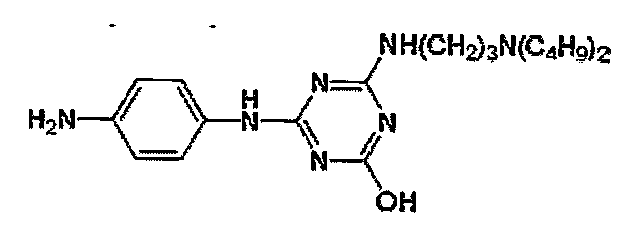
次に、アントラキノン-2-カルボン酸を常法に従って、塩化チオニルで塩素化して得たアントラキノン-2-カルボクロリド27.0g、製造例6で得られた化合物D-01 38.0g、メタノール300gを混合し、3時間加熱還流する。
反応終了後、水1500gと水酸化ナトリウム8gを加え、濾過、水洗、乾燥し、下記式で表わされる化合物D-02 58.0gを得た。
化合物D-02:

実施例1<顔料組成物P-01の調製>
ジアゾ成分として、2-メトキシ-4-ニトロアニリン63.9gを水500gに添加、攪拌して懸濁液を調製し、さらに氷を加えて温度を5℃以下に調整した。その中に35%塩酸を105g添加し、5℃以下を維持したまま1時間攪拌した。その後、亜硝酸ナトリウム28.0gを水72.0gに加えて調製した水溶液を添加し、1時間攪拌することによりジアゾ化を行った。反応混合物にスルファミン酸を加えて過剰の亜硝酸を消失させ、ジアゾニウム水溶液を調製した。
ジアゾ成分として、2-メトキシ-4-ニトロアニリン63.9gを水500gに添加、攪拌して懸濁液を調製し、さらに氷を加えて温度を5℃以下に調整した。その中に35%塩酸を105g添加し、5℃以下を維持したまま1時間攪拌した。その後、亜硝酸ナトリウム28.0gを水72.0gに加えて調製した水溶液を添加し、1時間攪拌することによりジアゾ化を行った。反応混合物にスルファミン酸を加えて過剰の亜硝酸を消失させ、ジアゾニウム水溶液を調製した。
一方、カプラー成分としてo-アセトアセトアニシジド80.4g及び25%水酸化ナトリウム水溶液164gを水140g中に添加し、攪拌して完全に溶解させた。また80%酢酸82.0gと水420gを混合した水溶液を調製し、この水溶液に上記式で表される化合物D-02 12.4gを添加し、化合物D-02を含有する懸濁液を得た。その中に、上記で調製したカプラー溶液を注入し、化合物D-02を含有するカプラースラリーを調製した。
化合物D-02を含有するカプラースラリーを40℃に加熱し、その中に上記で調整したジアゾニウム水溶液を1時間かけて滴下した。滴下終了後、そのままの温度で1時間攪拌し、反応を完結させた。反応終了後、スラリーを90℃に加熱し、1時間攪拌した。
その後に直径285mmのブフナー漏斗で濾過し、イオン交換水25リットルを振りかけて洗浄した。次いで乾燥、粉砕して顔料組成物P-01を147g得た。顔料組成物P-01に含まれる成分はモノアゾ顔料A-01(C.I.Pigment Yellow 74)及び化合物D-02であり、化合物D-02の含有量は、5.0mol%であった。
実施例2<顔料組成物P-02の調製>
実施例1において、2-メトキシ-4-ニトロアニリン63.9gを2-ニトロ4-クロロアニリン65.6gに、o-アセトアセトアニシジド80.4gをアセトアセトアニリド68.8gに、化合物D-02 12.4gを、下記式で表される化合物D-03 6.4gに変更し、それ以外は実施例1と同様にして、顔料組成物P-02 136gを得た。顔料組成物P-02に含まれる成分はC.I.Pigment Yellow 6及び化合物D-03であり、化合物D-03の含有量は、5.0mol%であった。
実施例1において、2-メトキシ-4-ニトロアニリン63.9gを2-ニトロ4-クロロアニリン65.6gに、o-アセトアセトアニシジド80.4gをアセトアセトアニリド68.8gに、化合物D-02 12.4gを、下記式で表される化合物D-03 6.4gに変更し、それ以外は実施例1と同様にして、顔料組成物P-02 136gを得た。顔料組成物P-02に含まれる成分はC.I.Pigment Yellow 6及び化合物D-03であり、化合物D-03の含有量は、5.0mol%であった。
化合物D-03:

実施例3<顔料組成物P-03の調製>
実施例1において2-メトキシ-4-ニトロアニリン63.9gを6-アミノ-7-クロロ-4-メチルキノリン-2(1H)-オン 79.3gに、化合物D-02 12.4gを、下記式で表される化合物D-04 7.3gにそれぞれ変更し、それ以外は実施例1と同様にして、顔料組成物P-03 166gを得た。顔料組成物P-03に含まれる成分はC.I.Pigment Yellow 105及び化合物D-04であり、化合物D-04の含有量は、5.0mol%であった。
実施例1において2-メトキシ-4-ニトロアニリン63.9gを6-アミノ-7-クロロ-4-メチルキノリン-2(1H)-オン 79.3gに、化合物D-02 12.4gを、下記式で表される化合物D-04 7.3gにそれぞれ変更し、それ以外は実施例1と同様にして、顔料組成物P-03 166gを得た。顔料組成物P-03に含まれる成分はC.I.Pigment Yellow 105及び化合物D-04であり、化合物D-04の含有量は、5.0mol%であった。
化合物D-04:
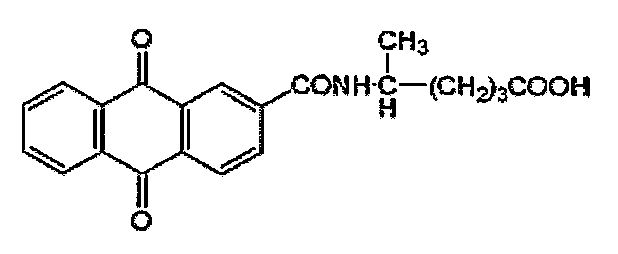
実施例4<顔料組成物P-04の調製>
ジアゾ成分として、2-メトキシ-4-ニトロアニリン63.9gを水500gに添加、攪拌して懸濁液を調製し、さらに氷を加えて温度を5℃以下に調整した。その中に35%塩酸を105g添加し、5℃以下を維持したまま1時間攪拌した。その後、亜硝酸ナトリウム28.0gを水72.0gに加えて調製した水溶液を添加し、1時間攪拌することによりジアゾ化を行った。反応混合物にスルファミン酸を加えて過剰な亜硝酸を消失させ、ジアゾニウム水溶液を調製した。このジアゾニウム水溶液に下記式で表される化合物D-05 5.0gを添加、均一に撹拌して懸濁液とし、化合物D-05を含むジアゾニウム水溶液を得た。
ジアゾ成分として、2-メトキシ-4-ニトロアニリン63.9gを水500gに添加、攪拌して懸濁液を調製し、さらに氷を加えて温度を5℃以下に調整した。その中に35%塩酸を105g添加し、5℃以下を維持したまま1時間攪拌した。その後、亜硝酸ナトリウム28.0gを水72.0gに加えて調製した水溶液を添加し、1時間攪拌することによりジアゾ化を行った。反応混合物にスルファミン酸を加えて過剰な亜硝酸を消失させ、ジアゾニウム水溶液を調製した。このジアゾニウム水溶液に下記式で表される化合物D-05 5.0gを添加、均一に撹拌して懸濁液とし、化合物D-05を含むジアゾニウム水溶液を得た。
化合物D-05:
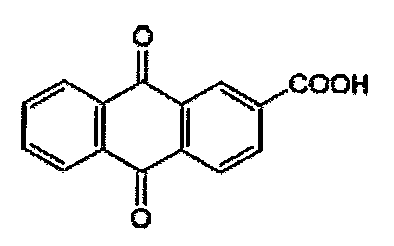
一方、カプラー成分としてo-アセトアセトアニシジド80.4g及び25%水酸化ナトリウム水溶液164gを水140g中に添加し、攪拌して完全に溶解させた。それを、80%酢酸82.0gと水420gを混合した水溶液に注入し、カプラースラリーを調製した。
上記で調製したカプラースラリーを40℃に加熱し、その中に、化合物D-05を含むジアゾニウム水溶液を1時間かけて滴下した。滴下終了後、そのままの温度で1時間攪拌し、反応を完結させた。反応終了後、スラリーを90℃に加熱し、1時間攪拌した。その後に直径285mmのブフナー漏斗で濾過し、イオン交換水25リットルを振りかけて洗浄した。次いで乾燥、粉砕して顔料組成物P-04 144gを得た。顔料組成物P-04に含まれる成分はモノアゾ顔料A(C.I.Pigment Yellow 74)及び化合物D-05であり、化合物D-05の含有量は、5.0mol%であった。
実施例5<顔料組成物P-05の調製>
実施例4において、ジアゾ成分として使用した2-メトキシ-4-ニトロアニリン63.9gを2-ニトロ-4-クロロアニリン65.6gに、化合物D-05 5.0gを、下記式で表される化合物D-06 6.4gにそれぞれ変更し、それ以外は実施例4と同様にして、顔料組成物P-05 147gを得た。顔料組成物P-05に含まれる成分はC.I.Pigment Yellow 73及び化合物D-06であり、化合物D-06の含有量は、5.0mol%であった。
実施例4において、ジアゾ成分として使用した2-メトキシ-4-ニトロアニリン63.9gを2-ニトロ-4-クロロアニリン65.6gに、化合物D-05 5.0gを、下記式で表される化合物D-06 6.4gにそれぞれ変更し、それ以外は実施例4と同様にして、顔料組成物P-05 147gを得た。顔料組成物P-05に含まれる成分はC.I.Pigment Yellow 73及び化合物D-06であり、化合物D-06の含有量は、5.0mol%であった。
化合物D-06:

実施例6<顔料組成物P-06の調製>
ジアゾ成分として、2-メトキシ-4-ニトロアニリン67.2gを水500gに添加、攪拌して懸濁液を調製し、さらに氷を加えて温度を5℃以下に調整した。その中に35%塩酸を105g添加し、5℃以下を維持したまま1時間攪拌した。その後、亜硝酸ナトリウム28.0gを水72.0gに加えて調製した水溶液を添加し、1時間攪拌することによりジアゾ化を行った。反応混合物にスルファミン酸を適量加えて過剰な亜硝酸を消失させ、ジアゾニウム水溶液を調製した。
ジアゾ成分として、2-メトキシ-4-ニトロアニリン67.2gを水500gに添加、攪拌して懸濁液を調製し、さらに氷を加えて温度を5℃以下に調整した。その中に35%塩酸を105g添加し、5℃以下を維持したまま1時間攪拌した。その後、亜硝酸ナトリウム28.0gを水72.0gに加えて調製した水溶液を添加し、1時間攪拌することによりジアゾ化を行った。反応混合物にスルファミン酸を適量加えて過剰な亜硝酸を消失させ、ジアゾニウム水溶液を調製した。
一方、カプラー成分としてo-アセトアセトアニシジド84.5g及び25%水酸化ナトリウム水溶液164gを水140g中に添加し、攪拌して完全に溶解させた。また80%酢酸82.0gと水420gを混合した水溶液を調製した。次いでこの水溶液に塩基性水溶液を注入し、カプラースラリーを調製した。このカプラースラリーに下記式で表される化合物D-07 0.097gを添加し、化合物D-07を含有するカプラースラリーを調製した。
化合物D-07:
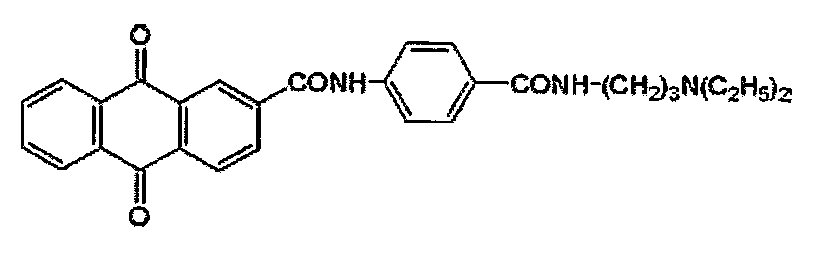
化合物D-07を含有するカプラースラリーを40℃に加熱し、その中に上記で調整したジアゾニウム水溶液を1時間かけて滴下した。滴下終了後、そのままの温度で1時間攪拌し、反応を完結させた。反応終了後、スラリーを90℃に加熱し、1時間攪拌した。
その後に直径285mmのブフナー漏斗で濾過し、イオン交換水25リットルを振りかけて洗浄した。次いで乾燥、粉砕して顔料組成物P-06 152gを得た。顔料組成物P-06に含まれる成分はモノアゾ顔料A-01(C.I.Pigment Yellow 74)及び化合物D-07であり、化合物D-07の含有量は、0.05mol%であった。
実施例7<顔料組成物P-07の調製>
実施例6において、ジアゾ成分として使用した2-メトキシ-4-ニトロアニリン67.2gを66.9gに、カプラー成分として使用したo-アセトアセトアニシジド84.5gを84.1gに、さらに化合物D-07 0.097gを0.97gにそれぞれ変更し、それ以外は実施例6と同様にして、顔料組成物P-07 147gを得た。顔料組成物P-07に含まれる成分はモノアゾ顔料A-01(C.I.Pigment Yellow 74)及び化合物D-07であり、化合物D-07の含有量は、0.5mol%であった。
実施例6において、ジアゾ成分として使用した2-メトキシ-4-ニトロアニリン67.2gを66.9gに、カプラー成分として使用したo-アセトアセトアニシジド84.5gを84.1gに、さらに化合物D-07 0.097gを0.97gにそれぞれ変更し、それ以外は実施例6と同様にして、顔料組成物P-07 147gを得た。顔料組成物P-07に含まれる成分はモノアゾ顔料A-01(C.I.Pigment Yellow 74)及び化合物D-07であり、化合物D-07の含有量は、0.5mol%であった。
実施例8<顔料組成物P-08の調製>
実施例6において、ジアゾ成分として使用した2-メトキシ-4-ニトロアニリン67.2gを65.3gに、カプラー成分として使用したo-アセトアセトアニシジド84.5gを82.1gに、さらに化合物D-07 0.097gを5.8gにそれぞれ変更し、それ以外は実施例6と同様にして、顔料組成物P-08 148gを得た。顔料組成物P-08に含まれる成分はモノアゾ顔料A-01(C.I.Pigment Yellow 74)及び化合物D-07であり、化合物D-07の含有量は、3.0mol%であった。
実施例6において、ジアゾ成分として使用した2-メトキシ-4-ニトロアニリン67.2gを65.3gに、カプラー成分として使用したo-アセトアセトアニシジド84.5gを82.1gに、さらに化合物D-07 0.097gを5.8gにそれぞれ変更し、それ以外は実施例6と同様にして、顔料組成物P-08 148gを得た。顔料組成物P-08に含まれる成分はモノアゾ顔料A-01(C.I.Pigment Yellow 74)及び化合物D-07であり、化合物D-07の含有量は、3.0mol%であった。
実施例9<顔料組成物P-09の調製>
実施例6において、ジアゾ成分として使用した2-メトキシ-4-ニトロアニリン67.2gを57.2gに、カプラー成分として使用したo-アセトアセトアニシジド84.5gを72.1gに、さらに化合物D-07 0.097gを29.0gにそれぞれ変更し、それ以外は実施例6と同様にして、顔料組成物P-09 152gを得た。顔料組成物P-09に含まれる成分はモノアゾ顔料A-01(C.I.Pigment Yellow 74)及び化合物D-07であり、化合物D-07の含有量は、15.0mol%であった。
実施例6において、ジアゾ成分として使用した2-メトキシ-4-ニトロアニリン67.2gを57.2gに、カプラー成分として使用したo-アセトアセトアニシジド84.5gを72.1gに、さらに化合物D-07 0.097gを29.0gにそれぞれ変更し、それ以外は実施例6と同様にして、顔料組成物P-09 152gを得た。顔料組成物P-09に含まれる成分はモノアゾ顔料A-01(C.I.Pigment Yellow 74)及び化合物D-07であり、化合物D-07の含有量は、15.0mol%であった。
実施例10<顔料組成物P-10の調製>
実施例6において、ジアゾ成分として使用した2-メトキシ-4-ニトロアニリン67.2gを47.1gに、カプラー成分として使用したo-アセトアセトアニシジド84.5gを59.7gに、さらに化合物D-07 0.097gを58.0gにそれぞれ変更し、それ以外は実施例6と同様にして、顔料組成物P-10 153gを得た。顔料組成物P-10に含まれる成分はモノアゾ顔料A-01(C.I.Pigment Yellow 74)及び化合物D-07であり、化合物D-07の含有量は、30.0mol%であった。
実施例6において、ジアゾ成分として使用した2-メトキシ-4-ニトロアニリン67.2gを47.1gに、カプラー成分として使用したo-アセトアセトアニシジド84.5gを59.7gに、さらに化合物D-07 0.097gを58.0gにそれぞれ変更し、それ以外は実施例6と同様にして、顔料組成物P-10 153gを得た。顔料組成物P-10に含まれる成分はモノアゾ顔料A-01(C.I.Pigment Yellow 74)及び化合物D-07であり、化合物D-07の含有量は、30.0mol%であった。
実施例11<顔料組成物P-11の調製>
実施例6において、ジアゾ成分として使用した2-メトキシ-4-ニトロアニリン67.2gを33.6gに、カプラー成分として使用したo-アセトアセトアニシジド84.5gを43.1gに、さらに化合物D-07 0.097gを96.7gにそれぞれ変更し、それ以外は実施例6と同様にして、顔料組成物P-11 157gを得た。顔料組成物P-11に含まれる成分はモノアゾ顔料A-01(C.I.Pigment Yellow 74)及び化合物D-07であり、化合物D-07の含有量は、50.0mol%であった。
実施例6において、ジアゾ成分として使用した2-メトキシ-4-ニトロアニリン67.2gを33.6gに、カプラー成分として使用したo-アセトアセトアニシジド84.5gを43.1gに、さらに化合物D-07 0.097gを96.7gにそれぞれ変更し、それ以外は実施例6と同様にして、顔料組成物P-11 157gを得た。顔料組成物P-11に含まれる成分はモノアゾ顔料A-01(C.I.Pigment Yellow 74)及び化合物D-07であり、化合物D-07の含有量は、50.0mol%であった。
実施例12<顔料組成物P-12の調製>
ジアゾ成分として、2-メトキシ-4-ニトロアニリン67.2gを水500gに添加、攪拌して懸濁液を調製し、さらに氷を加えて温度を5℃以下に調整した。その中に35%塩酸を105g添加し、5℃以下を維持したまま1時間攪拌した。その後、亜硝酸ナトリウム28.0gを水72.0gに加えて調製した水溶液を添加し、1時間攪拌することによりジアゾ化を行った。反応混合物にスルファミン酸を適量加えて過剰な亜硝酸を消失させ、ジアゾニウム水溶液を調製した。
ジアゾ成分として、2-メトキシ-4-ニトロアニリン67.2gを水500gに添加、攪拌して懸濁液を調製し、さらに氷を加えて温度を5℃以下に調整した。その中に35%塩酸を105g添加し、5℃以下を維持したまま1時間攪拌した。その後、亜硝酸ナトリウム28.0gを水72.0gに加えて調製した水溶液を添加し、1時間攪拌することによりジアゾ化を行った。反応混合物にスルファミン酸を適量加えて過剰な亜硝酸を消失させ、ジアゾニウム水溶液を調製した。
一方、カプラー成分としてo-アセトアセトアニシジド84.5g及び25%水酸化ナトリウム水溶液164gを水140g中に添加し、攪拌して完全に溶解させた。この塩基性水溶液に下記式で表される化合物D-08 0.05gを添加し、化合物D-08を含む懸濁液を調製した。また80%酢酸82.0gと水420gを混合した水溶液を調製した。この水溶液の中に、上記で調製した化合物D-08を含む懸濁液を注入し化合物D-08を含有するカプラースラリーを調製した。
化合物D-08:

化合物D-08を含有するカプラースラリーを40℃に加熱し、その中に上記で調整したジアゾニウム水溶液を1時間かけて滴下した。滴下終了後、そのままの温度で1時間攪拌し、反応を完結させた。反応終了後、スラリーを90℃に加熱し、1時間攪拌した。
その後に直径285mmのブフナー漏斗で濾過し、イオン交換水25リットルを振りかけて洗浄した。次いで乾燥、粉砕して顔料組成物P-12 151gを得た。顔料組成物P-12に含まれる成分はモノアゾ顔料A-01(C.I.Pigment Yellow 74)及び化合物D-08であり、化合物D-08の含有量は、0.05mol%であった。
実施例13<顔料組成物P-13の調製>
実施例12において、ジアゾ成分として使用した2-メトキシ-4-ニトロアニリン67.2gを66.9gに、カプラー成分として使用したo-アセトアセトアニシジド84.5gを84.1gに、さらに化合物D-08 0.05gを0.50gにそれぞれ変更し、それ以外は実施例12と同様にして、顔料組成物P-13 147gを得た。顔料組成物P-13に含まれる成分はモノアゾ顔料A-01(C.I.Pigment Yellow 74)及び化合物D-08であり、化合物D-08の含有量は、0.5mol%であった。
実施例12において、ジアゾ成分として使用した2-メトキシ-4-ニトロアニリン67.2gを66.9gに、カプラー成分として使用したo-アセトアセトアニシジド84.5gを84.1gに、さらに化合物D-08 0.05gを0.50gにそれぞれ変更し、それ以外は実施例12と同様にして、顔料組成物P-13 147gを得た。顔料組成物P-13に含まれる成分はモノアゾ顔料A-01(C.I.Pigment Yellow 74)及び化合物D-08であり、化合物D-08の含有量は、0.5mol%であった。
実施例14<顔料組成物P-14の調製>
実施例12において、ジアゾ成分として使用した2-メトキシ-4-ニトロアニリン67.2gを65.3gに、カプラー成分として使用したo-アセトアセトアニシジド84.5gを82.1gに、さらに化合物D-08 0.05gを3.0gにそれぞれ変更し、それ以外は実施例12と同様にして、顔料組成物P-14 145gを得た。顔料組成物P-14に含まれる成分はモノアゾ顔料A-01(C.I.Pigment Yellow 74)及び化合物D-08であり、化合物D-08の含有量は、3.0mol%であった。
実施例12において、ジアゾ成分として使用した2-メトキシ-4-ニトロアニリン67.2gを65.3gに、カプラー成分として使用したo-アセトアセトアニシジド84.5gを82.1gに、さらに化合物D-08 0.05gを3.0gにそれぞれ変更し、それ以外は実施例12と同様にして、顔料組成物P-14 145gを得た。顔料組成物P-14に含まれる成分はモノアゾ顔料A-01(C.I.Pigment Yellow 74)及び化合物D-08であり、化合物D-08の含有量は、3.0mol%であった。
実施例15<顔料組成物P-15の調製>
実施例12において、ジアゾ成分として使用した2-メトキシ-4-ニトロアニリン67.2gを57.2gに、カプラー成分として使用したo-アセトアセトアニシジド84.5gを72.1gに、さらに化合物D-08 0.05gを15.0gにそれぞれ変更し、それ以外は実施例12と同様にして、顔料組成物P-15 139gを得た。顔料組成物P-15に含まれる成分はモノアゾ顔料A-01(C.I.Pigment Yellow 74)及び化合物D-08であり、化合物D-08の含有量は、15.0mol%であった。
実施例12において、ジアゾ成分として使用した2-メトキシ-4-ニトロアニリン67.2gを57.2gに、カプラー成分として使用したo-アセトアセトアニシジド84.5gを72.1gに、さらに化合物D-08 0.05gを15.0gにそれぞれ変更し、それ以外は実施例12と同様にして、顔料組成物P-15 139gを得た。顔料組成物P-15に含まれる成分はモノアゾ顔料A-01(C.I.Pigment Yellow 74)及び化合物D-08であり、化合物D-08の含有量は、15.0mol%であった。
実施例16<顔料組成物P-16の調製>
実施例12において、ジアゾ成分として使用した2-メトキシ-4-ニトロアニリン67.2gを47.1gに、カプラー成分として使用したo-アセトアセトアニシジド84.5gを59.7gに、さらに化合物D-08 0.05gを29.9gにそれぞれ変更し、それ以外は実施例12と同様にして、顔料組成物P-16 127gを得た。顔料組成物P-16に含まれる成分はモノアゾ顔料A-01(C.I.Pigment Yellow 74)及び化合物D-08であり、化合物D-08の含有量は、30.0mol%であった。
実施例12において、ジアゾ成分として使用した2-メトキシ-4-ニトロアニリン67.2gを47.1gに、カプラー成分として使用したo-アセトアセトアニシジド84.5gを59.7gに、さらに化合物D-08 0.05gを29.9gにそれぞれ変更し、それ以外は実施例12と同様にして、顔料組成物P-16 127gを得た。顔料組成物P-16に含まれる成分はモノアゾ顔料A-01(C.I.Pigment Yellow 74)及び化合物D-08であり、化合物D-08の含有量は、30.0mol%であった。
実施例17<顔料組成物P-17の調製>
実施例12において、ジアゾ成分として使用した2-メトキシ-4-ニトロアニリン67.2gを33.6gに、カプラー成分として使用したo-アセトアセトアニシジド84.5gを43.1gに、さらに化合物D-08 0.05gを49.9gにそれぞれ変更し、それ以外は実施例12と同様にして、顔料組成物P-17 114gを得た。顔料組成物P-17に含まれる成分はモノアゾ顔料A-01(C.I.Pigment Yellow 74)及び化合物D-08であり、化合物D-08の含有量は、50.0mol%であった。
実施例12において、ジアゾ成分として使用した2-メトキシ-4-ニトロアニリン67.2gを33.6gに、カプラー成分として使用したo-アセトアセトアニシジド84.5gを43.1gに、さらに化合物D-08 0.05gを49.9gにそれぞれ変更し、それ以外は実施例12と同様にして、顔料組成物P-17 114gを得た。顔料組成物P-17に含まれる成分はモノアゾ顔料A-01(C.I.Pigment Yellow 74)及び化合物D-08であり、化合物D-08の含有量は、50.0mol%であった。
実施例18<顔料組成物P-18の調製>
ジアゾ成分として、2-(トリフルオロメチル)アニリン63.2gを水500gに添加、攪拌して懸濁液を調製し、さらに氷を加えて温度を5℃以下に調整した。その中に35%塩酸を105g添加し、5℃以下を維持したまま1時間攪拌した。その後、亜硝酸ナトリウム28.0gを水72.0gに加えて調製した水溶液を添加し、1時間攪拌することによりジアゾ化を行った。反応混合物にスルファミン酸を適量加えて過剰な亜硝酸を消失させた。次いでこの水溶液中に、下記式で表される化合物D-09 4.0gを添加して撹拌し、混合した。さらに水を添加して液量を1000gに調製し、化合物D-09を含有するジアゾニウム水溶液を調製した。
ジアゾ成分として、2-(トリフルオロメチル)アニリン63.2gを水500gに添加、攪拌して懸濁液を調製し、さらに氷を加えて温度を5℃以下に調整した。その中に35%塩酸を105g添加し、5℃以下を維持したまま1時間攪拌した。その後、亜硝酸ナトリウム28.0gを水72.0gに加えて調製した水溶液を添加し、1時間攪拌することによりジアゾ化を行った。反応混合物にスルファミン酸を適量加えて過剰な亜硝酸を消失させた。次いでこの水溶液中に、下記式で表される化合物D-09 4.0gを添加して撹拌し、混合した。さらに水を添加して液量を1000gに調製し、化合物D-09を含有するジアゾニウム水溶液を調製した。
化合物D-09:

一方、カプラー成分として5-アセトアセタミド-2-ベンズイミダゾリノン93.3g、及び25%水酸化ナトリウム水溶液164gを水140g中に添加、攪拌して完全に溶解し、さらに水を添加して液量を400gに調整し、カプラー水溶液を調製した。
水365gと80%酢酸64.0g、25%水酸化ナトリウム水溶液71.2gを均一に混合して反応槽水溶液を調製した。それを40℃に加熱し、その温度を維持したまま化合物D-09を含有するジアゾニウム水溶液、及びカプラー水溶液を同時に、それぞれ1時間かけて、反応槽のpHを6.0以下に保ちながら滴下した。滴下終了後、40℃で1時間攪拌し、反応を完結させた。反応終了後、スラリーを90℃に加熱し、1時間攪拌した。その後に直径285mmのブフナー漏斗で濾過し、イオン交換水25リットルを振りかけて洗浄した。次いで乾燥、粉砕して顔料組成物P-18 155gを得た。顔料組成物P-18に含まれる成分はC.I.Pigment Yellow 154及び化合物D-09であり、化合物D-09の含有量は、2.0mol%であった。
実施例19<顔料組成物P-19の調製>
ジアゾ成分として、2-メトキシ-4-ニトロアニリン66.6gを水500gに添加、攪拌して懸濁液を調製し、さらに氷を加えて温度を5℃以下に調整した。その中に35%塩酸を105g添加し、5℃以下を維持したまま1時間攪拌した。その後、亜硝酸ナトリウム28.0gを水72.0gに加えて調製した水溶液を添加し、1時間攪拌することによりジアゾ化を行った。反応混合物にスルファミン酸を適量加えて過剰な亜硝酸を消失させた。さらに水を添加して液量を1000gに調製した。
ジアゾ成分として、2-メトキシ-4-ニトロアニリン66.6gを水500gに添加、攪拌して懸濁液を調製し、さらに氷を加えて温度を5℃以下に調整した。その中に35%塩酸を105g添加し、5℃以下を維持したまま1時間攪拌した。その後、亜硝酸ナトリウム28.0gを水72.0gに加えて調製した水溶液を添加し、1時間攪拌することによりジアゾ化を行った。反応混合物にスルファミン酸を適量加えて過剰な亜硝酸を消失させた。さらに水を添加して液量を1000gに調製した。
一方、カプラー成分としてo-アセトアセトアニシジド83.7g、及び25%水酸化ナトリウム水溶液164gを水140g中に添加、攪拌して完全に溶解させた。次いでこのカプラー水溶液に、下記式で表される化合物D-10 2.1gを添加して撹拌した。さらに水を添加して液量を400gに調整し、化合物D-10を含有するカプラー液を調製した。
化合物D-10:

水365gと80%酢酸64.0g、25%水酸化ナトリウム水溶液71.2gを均一に混合して反応槽水溶液を調製した。それを40℃に加熱し、その温度を維持したままジアゾニウム水溶液、及び化合物D-10を含有するカプラー液を同時に、それぞれ1時間かけて、反応槽のpHを6.0以下に保ちながら滴下した。滴下終了後、40℃で1時間攪拌し、反応を完結させた。反応終了後、スラリーを90℃に加熱し、1時間攪拌した。その後に直径285mmのブフナー漏斗で濾過し、イオン交換水25リットルを振りかけて洗浄した。次いで乾燥、粉砕して顔料組成物P-19 147gを得た。顔料組成物P-19に含まれる成分はモノアゾ顔料A-01(C.I.Pigment Yellow 74)及び化合物D-10であり、化合物D-10の含有量は、1.0mol%であった。
実施例20<顔料組成物P-20の調製>
ジアゾ成分として、2-メトキシ-4-ニトロアニリン63.9gを水500gに添加、攪拌して懸濁液を調製し、さらに氷を加えて温度を5℃以下に調整した。その中に35%塩酸を105g添加し、5℃以下を維持したまま1時間攪拌した。その後、亜硝酸ナトリウム28.0gを水72.0gに加えて調製した水溶液を添加し、1時間攪拌することによりジアゾ化を行った。反応混合物にスルファミン酸を適量加えて亜硝酸を消失させ、さらに水を添加して液量を1000gに調製し、ジアゾニウム水溶液を調製した。
ジアゾ成分として、2-メトキシ-4-ニトロアニリン63.9gを水500gに添加、攪拌して懸濁液を調製し、さらに氷を加えて温度を5℃以下に調整した。その中に35%塩酸を105g添加し、5℃以下を維持したまま1時間攪拌した。その後、亜硝酸ナトリウム28.0gを水72.0gに加えて調製した水溶液を添加し、1時間攪拌することによりジアゾ化を行った。反応混合物にスルファミン酸を適量加えて亜硝酸を消失させ、さらに水を添加して液量を1000gに調製し、ジアゾニウム水溶液を調製した。
一方、カプラー成分としてo-アセトアセトアニシジド80.4g及び25%水酸化ナトリウム水溶液164gを水140g中に添加、攪拌して完全に溶解し、さらに水を添加して液量を400gに調整し、カプラー水溶液を調製した。
水365gと80%酢酸64.0g、25%水酸化ナトリウム水溶液71.2gを均一に混合して反応槽水溶液を調製した。その中に下記式で表される化合物D-11 9.1gを添加して均一に攪拌し、懸濁液とした。この懸濁液を40℃に加熱し、その温度を維持したままジアゾニウム水溶液及びカプラー水溶液を同時に、それぞれ1時間かけて、反応槽のpHを6.0以下に保ちながら滴下した。滴下終了後、40℃で1時間攪拌し、反応を完結させた。反応終了後、スラリーを90℃に加熱し、1時間攪拌した。その後に直径285mmのブフナー漏斗で濾過し、イオン交換水25リットルを振りかけて洗浄した。次いで乾燥、粉砕して顔料組成物P-20 148gを得た。顔料組成物P-20に含まれる成分はモノアゾ顔料A-01(C.I.Pigment Yellow 74)及び化合物D-11であり、化合物D-11の含有量は、5.0mol%であった。
化合物D-11:
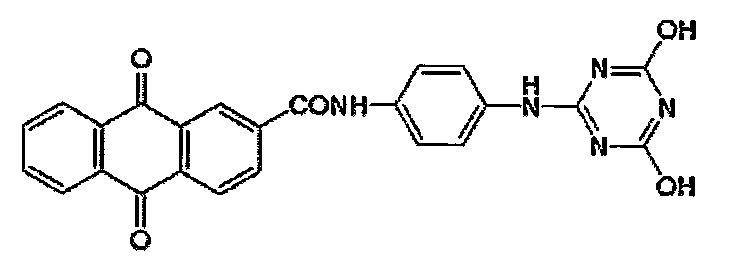
実施例21<顔料組成物P-21の調整>
ジアゾ成分として2-メトキシ-4-ニトロアニリン63.9gを水500gに添加、攪拌して懸濁液を調製し、さらに氷を加えて温度を5℃以下に調整した。その中に35%塩酸を105g添加し、5℃以下を維持したまま1時間攪拌した。その後、亜硝酸ナトリウム28.0gを水72.0gに溶解させた水溶液を添加し、1時間攪拌することによりジアゾ化を行った。反応混合物にスルファミン酸を適量加えて過剰な亜硝酸を消失させ、ジアゾニウム水溶液を調製した。
ジアゾ成分として2-メトキシ-4-ニトロアニリン63.9gを水500gに添加、攪拌して懸濁液を調製し、さらに氷を加えて温度を5℃以下に調整した。その中に35%塩酸を105g添加し、5℃以下を維持したまま1時間攪拌した。その後、亜硝酸ナトリウム28.0gを水72.0gに溶解させた水溶液を添加し、1時間攪拌することによりジアゾ化を行った。反応混合物にスルファミン酸を適量加えて過剰な亜硝酸を消失させ、ジアゾニウム水溶液を調製した。
一方、カプラー成分としてo-アセトアセトアニシジド80.4g及び25%水酸化ナトリウム水溶液164gを水140g中に添加し、攪拌して完全に溶解させた。それを、80%酢酸82.0gと水420gを混合した水溶液に注入し、カプラースラリーを調製した。
上記で調製したカプラースラリーを40℃に加熱し、その中にジアゾニウム水溶液を1時間かけて滴下した。滴下終了後、40℃で1時間攪拌し、反応を完結させた。反応終了後のスラリーに下記式で表される化合物D-12 8.1gを添加し、次いでスラリーを90℃に加熱し、1時間攪拌した。その後に直径285mmのブフナー漏斗で濾過し、イオン交換水25リットルを振りかけて洗浄した。次いで乾燥、粉砕して顔料組成物P-21 147gを得た。顔料組成物P-21に含まれる成分はモノアゾ顔料A-01(C.I.Pigment Yellow 74)及び化合物D-12であり、化合物D-12の含有量は5.0mol%であった。
化合物D-12:
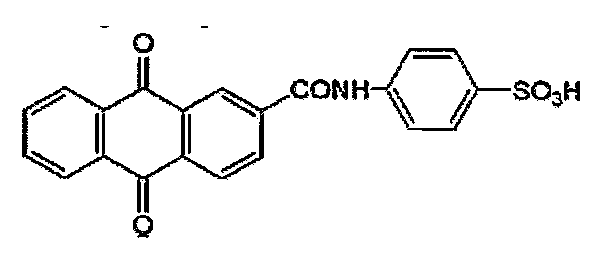
実施例22<顔料組成物P-22の調製>
実施例21において、ジアゾ成分として使用した2-メトキシ-4-ニトロアニリン63.9gを2-ニトロ-4-メチルアニリン57.8gに、また化合物D-12 8.1gを下記式で表される化合物D-13 7.9gにそれぞれ変更し、それ以外は実施例21と同様にして、顔料組成物P-22 141gを得た。顔料組成物P-22に含まれる成分はC.I.Pigment Yellow 203及び化合物D-13であり、化合物D-13の含有量は、5.0mol%であった。
実施例21において、ジアゾ成分として使用した2-メトキシ-4-ニトロアニリン63.9gを2-ニトロ-4-メチルアニリン57.8gに、また化合物D-12 8.1gを下記式で表される化合物D-13 7.9gにそれぞれ変更し、それ以外は実施例21と同様にして、顔料組成物P-22 141gを得た。顔料組成物P-22に含まれる成分はC.I.Pigment Yellow 203及び化合物D-13であり、化合物D-13の含有量は、5.0mol%であった。
化合物D-13:

実施例23<顔料組成物P-23の調製>
製造例4で調製したモノアゾ顔料A-04(C.I.Pigment Yellow 111)273.9g、下記式で表される化合物D-14 27.5g、塩化ナトリウム1500g、及びジエチレングリコール250gの混合物を、ステンレス製1ガロンニーダー(井上製作所製)を使用し、60℃で6時間混練して、粘土状の混練物を得た。この混練物を15リットルの温水に投入し、70℃に加熱しながら1時間攪拌してスラリー状とした。スラリーを3等分に分割し、それぞれを直径285mmのブフナー漏斗で濾過し、50℃の温水をそれぞれ15リットル振りかけて洗浄し、乾燥、粉砕して顔料組成物P-23 274gを得た。顔料組成物P-23の化合物D-14含有量は、7.0mol%であった。
製造例4で調製したモノアゾ顔料A-04(C.I.Pigment Yellow 111)273.9g、下記式で表される化合物D-14 27.5g、塩化ナトリウム1500g、及びジエチレングリコール250gの混合物を、ステンレス製1ガロンニーダー(井上製作所製)を使用し、60℃で6時間混練して、粘土状の混練物を得た。この混練物を15リットルの温水に投入し、70℃に加熱しながら1時間攪拌してスラリー状とした。スラリーを3等分に分割し、それぞれを直径285mmのブフナー漏斗で濾過し、50℃の温水をそれぞれ15リットル振りかけて洗浄し、乾燥、粉砕して顔料組成物P-23 274gを得た。顔料組成物P-23の化合物D-14含有量は、7.0mol%であった。
化合物D-14:

実施例24<顔料組成物P-24の調製>
実施例23において、モノアゾ顔料A-04(C.I.Pigment Yellow 111)273.9gをモノアゾ顔料A-05(C.I.Pigment Yellow 120)295.2gに、化合物D-14 27.5gを下記式で表される化合物D-15 20.6gに変更し、それ以外は実施例23と同様にして顔料組成物P-24 262gを得た。顔料組成物P-24の化合物D-15含有量は、7.0mol%であった。
実施例23において、モノアゾ顔料A-04(C.I.Pigment Yellow 111)273.9gをモノアゾ顔料A-05(C.I.Pigment Yellow 120)295.2gに、化合物D-14 27.5gを下記式で表される化合物D-15 20.6gに変更し、それ以外は実施例23と同様にして顔料組成物P-24 262gを得た。顔料組成物P-24の化合物D-15含有量は、7.0mol%であった。
化合物D-15:
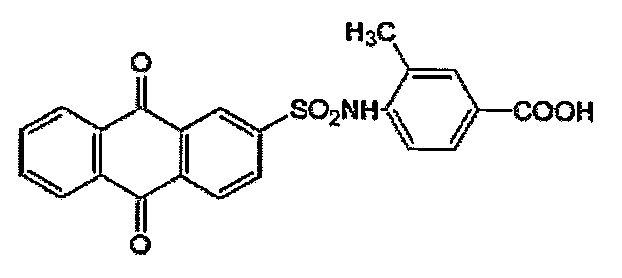
実施例25<顔料組成物P-25の調製>
製造例1で調製したモノアゾ顔料A-01(C.I.Pigment Yellow 74)61.8gと下記式で表される化合物D-16の粉末27.7gを均一に混合し、顔料組成物P-25 81gを得た。顔料組成物P-25の化合物D-16含有量は、20.0mol%であった。
製造例1で調製したモノアゾ顔料A-01(C.I.Pigment Yellow 74)61.8gと下記式で表される化合物D-16の粉末27.7gを均一に混合し、顔料組成物P-25 81gを得た。顔料組成物P-25の化合物D-16含有量は、20.0mol%であった。
化合物D-16:

実施例26<顔料組成物P-26の調製>
実施例25において、モノアゾ顔料A-01 61.8gをモノアゾ顔料A-02(C.I.Pigment Yellow 3)63.2gに変更し、化合物D-16 15.8gを下記式で表わされる化合物D-17 11.5gに変更し、それ以外は実施例25と同様にして、顔料組成物P-26 67gを得た。顔料組成物P-26の化合物D-17含有量は、20.0mol%であった。
実施例25において、モノアゾ顔料A-01 61.8gをモノアゾ顔料A-02(C.I.Pigment Yellow 3)63.2gに変更し、化合物D-16 15.8gを下記式で表わされる化合物D-17 11.5gに変更し、それ以外は実施例25と同様にして、顔料組成物P-26 67gを得た。顔料組成物P-26の化合物D-17含有量は、20.0mol%であった。
化合物D-17:
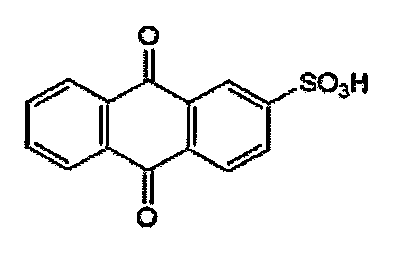
<モノアゾ顔料及び顔料組成物の評価>
製造例1乃至5で調製したモノアゾ顔料及び実施例1乃至26で調製した顔料組成物について、平均一次粒子径を測定し、結果を表1にまとめた。平均一次粒子径について以下の方法で測定を行った。
製造例1乃至5で調製したモノアゾ顔料及び実施例1乃至26で調製した顔料組成物について、平均一次粒子径を測定し、結果を表1にまとめた。平均一次粒子径について以下の方法で測定を行った。
(平均一次粒子径)
平均一次粒子径は、走査型電子顕微鏡によって撮影した顔料粒子径の写真から測定した。金属製の試料台に導電性両面テープを張り、顔料又は顔料組成物を付着させ、スパッタリングを用いて試料表面に白金を蒸着させたものを試料として、走査型電子顕微鏡(日本電子データム株式会社製、JSM-6700F型走査型電子顕微鏡)で粒子を撮影し、同一の視野中に撮影された顔料の一次粒子100個につき、最大となる径を各々測定した。それらを平均した値を算出し、その値を平均一次粒子径とした。

平均一次粒子径は、走査型電子顕微鏡によって撮影した顔料粒子径の写真から測定した。金属製の試料台に導電性両面テープを張り、顔料又は顔料組成物を付着させ、スパッタリングを用いて試料表面に白金を蒸着させたものを試料として、走査型電子顕微鏡(日本電子データム株式会社製、JSM-6700F型走査型電子顕微鏡)で粒子を撮影し、同一の視野中に撮影された顔料の一次粒子100個につき、最大となる径を各々測定した。それらを平均した値を算出し、その値を平均一次粒子径とした。
<顔料分散体の調製>
(水性顔料分散体の調製)
実施例27乃至40及び比較例1乃至3
顔料組成物又はモノアゾ顔料1000g、ジョンクリルHPD-96J(BASF社製、スチレン-アクリル樹脂、有効成分 34.0%)735g、サーフィノール104E(エアープロダクツ・アンド・ケミカルズ社製、消泡剤、有効成分 50%)50g、レバナックスBX-150(昌栄化学株式会社製、防腐剤)50g、プロピレングリコール250g、イオン交換水415gを混合し、均一になるまでハイスピードミキサーで攪拌した。それを横型湿式分散機(DYNO-MILL TYPE KDL-PILOT)で2時間分散し、その後イオン交換水2500gを添加してさらに1時間分散し、水性顔料分散体WD-01乃至WD-17をそれぞれ得た。各水性顔料分散体に使用した顔料組成物又はモノアゾ顔料を表2にまとめた。
(水性顔料分散体の調製)
実施例27乃至40及び比較例1乃至3
顔料組成物又はモノアゾ顔料1000g、ジョンクリルHPD-96J(BASF社製、スチレン-アクリル樹脂、有効成分 34.0%)735g、サーフィノール104E(エアープロダクツ・アンド・ケミカルズ社製、消泡剤、有効成分 50%)50g、レバナックスBX-150(昌栄化学株式会社製、防腐剤)50g、プロピレングリコール250g、イオン交換水415gを混合し、均一になるまでハイスピードミキサーで攪拌した。それを横型湿式分散機(DYNO-MILL TYPE KDL-PILOT)で2時間分散し、その後イオン交換水2500gを添加してさらに1時間分散し、水性顔料分散体WD-01乃至WD-17をそれぞれ得た。各水性顔料分散体に使用した顔料組成物又はモノアゾ顔料を表2にまとめた。
比較例4(水性顔料分散体WD-18の調製)
顔料組成物又はモノアゾ顔料をHansa Brilliant Yellow 5GX(Clariant社製、C.I.Pigment Yellow 74)に変更し、それ以外は実施例27乃至40及び比較例1乃至3と同様にして水性顔料分散体WD-18を得た。
顔料組成物又はモノアゾ顔料をHansa Brilliant Yellow 5GX(Clariant社製、C.I.Pigment Yellow 74)に変更し、それ以外は実施例27乃至40及び比較例1乃至3と同様にして水性顔料分散体WD-18を得た。
(油性顔料分散体の調製)
実施例41乃至52並びに比較例5及び6
顔料組成物又はモノアゾ顔料1000g、Disperbyk130(BYK Chemie社製、顔料分散剤)325g、ジョンクリル586(BASFジャパン株式会社製、スチレン-アクリル樹脂)250g、エチレングリコールモノブチルエーテルアセテート925gを混合し、均一になるまでハイスピードミキサーで攪拌した。それを横型湿式分散機(DYNO-MILL TYPE KDL-PILOT)で2時間分散し、その後エチレングリコールモノブチルエーテルアセテート2500gを添加してさらに1時間分散し、油性顔料分散体SD-01乃至SD-14を得た。各油性顔料分散体に使用した顔料組成物又はモノアゾ顔料を表3にまとめた。
実施例41乃至52並びに比較例5及び6
顔料組成物又はモノアゾ顔料1000g、Disperbyk130(BYK Chemie社製、顔料分散剤)325g、ジョンクリル586(BASFジャパン株式会社製、スチレン-アクリル樹脂)250g、エチレングリコールモノブチルエーテルアセテート925gを混合し、均一になるまでハイスピードミキサーで攪拌した。それを横型湿式分散機(DYNO-MILL TYPE KDL-PILOT)で2時間分散し、その後エチレングリコールモノブチルエーテルアセテート2500gを添加してさらに1時間分散し、油性顔料分散体SD-01乃至SD-14を得た。各油性顔料分散体に使用した顔料組成物又はモノアゾ顔料を表3にまとめた。
比較例7(油性顔料分散体SD-15の調製)
顔料組成物又はモノアゾ顔料をHansa Brilliant Yellow 5GX(Clariant社製、C.I.Pigment Yellow 74)に変更し、それ以外は実施例41乃至52比較例5及び6と同様にして油性顔料分散体SD-15を得た。
顔料組成物又はモノアゾ顔料をHansa Brilliant Yellow 5GX(Clariant社製、C.I.Pigment Yellow 74)に変更し、それ以外は実施例41乃至52比較例5及び6と同様にして油性顔料分散体SD-15を得た。
<顔料分散体の評価>
顔料分散体について、以下の方法で分散粒径、粘度、結晶安定性及び分散安定性を評価した。結果を表2及び表3にまとめた。各評価項目については、以下の方法で測定を行った。
顔料分散体について、以下の方法で分散粒径、粘度、結晶安定性及び分散安定性を評価した。結果を表2及び表3にまとめた。各評価項目については、以下の方法で測定を行った。
(分散粒径)
マイクロトラックUPA-150(日機装株式会社製)で測定したD50値を分散粒径とした。
マイクロトラックUPA-150(日機装株式会社製)で測定したD50値を分散粒径とした。
(粘度)
粘度はB型粘度計VISCOMETER(東機産業株式会社製)で測定し、60rpmの値により評価した。
粘度はB型粘度計VISCOMETER(東機産業株式会社製)で測定し、60rpmの値により評価した。
(結晶安定性)
結晶安定性の指標として、顔料分散体中における顔料又は顔料組成物粒子の写真を透過型電子顕微鏡により撮影した。
結晶安定性の指標として、顔料分散体中における顔料又は顔料組成物粒子の写真を透過型電子顕微鏡により撮影した。
支持膜を張ったメッシュ上に顔料分散体を滴下、乾燥したものを試料として、透過型電子顕微鏡(株式会社日立ハイテクノロジーズ製、H-7650型透過型電子顕微鏡)で粒子を撮影し、同一の視野中に撮影された顔料又は顔料組成物の一次粒子100個につき、最大となる径を各々測定した。それらを平均した値を算出し、その値を平均一次粒子径とした。
顔料分散体をねじ口瓶中に密閉し、70℃で2週間保存した後に同様の測定を行った。保存前後の平均一次粒子径の変化により、結晶安定性を評価した。保存の前後で平均一次粒子径の変化率が0乃至15%のものを「○」、15%を超え30%以下のものを「△」、30%を超えるものを「×」と判定した。
(分散安定性)
顔料分散体をねじ口瓶中に密閉し、70℃で2週間保存した後に分散粒径及び粘度を測定した。保存前後における分散粒径及び粘度の変化と、保存後の沈降物の有無により、分散安定性を評価した。

顔料分散体をねじ口瓶中に密閉し、70℃で2週間保存した後に分散粒径及び粘度を測定した。保存前後における分散粒径及び粘度の変化と、保存後の沈降物の有無により、分散安定性を評価した。
表2に示したように、本発明の実施例で得られた顔料組成物を用いて調製した水性顔料分散体は、その他のものよりも低粘度で、良好な分散性を示した。これらの水性顔料分散体は結晶安定性と分散安定性の両方において優れていることがわかった。

表3に示したように、本発明の実施例で得られた顔料組成物を用いて調製した油性顔料分散体は、その他のものよりも低粘度で、良好な分散性を示した。これらの油性顔料分散体は結晶安定性と分散安定性の両方において優れていることがわかった。
<インクジェットインキの調製>
(水性インクジェットインキの調製)
実施例53乃至66及び比較例8乃至11
実施例27乃至40及び比較例1乃至4で調製した水性顔料分散体15.0g、アクリル樹脂エマルションW-215(日本ポリマー工業株式会社製、固形分30%)1.5g、エチレングリコール15.0g、イオン交換水68.5gを混合し、1時間攪拌した後、孔径1.0μmのPTFE製メンブランフィルターで濾過して水性インクジェットインキWI-01乃至WI-18を得た。
(水性インクジェットインキの調製)
実施例53乃至66及び比較例8乃至11
実施例27乃至40及び比較例1乃至4で調製した水性顔料分散体15.0g、アクリル樹脂エマルションW-215(日本ポリマー工業株式会社製、固形分30%)1.5g、エチレングリコール15.0g、イオン交換水68.5gを混合し、1時間攪拌した後、孔径1.0μmのPTFE製メンブランフィルターで濾過して水性インクジェットインキWI-01乃至WI-18を得た。
(油性インクジェットインキの調製)
実施例67乃至78及び比較例12乃至14
実施例41乃至52及び比較例5乃至7で調製した油性顔料分散体25.0g、プロピレングリコールモノメチルエーテルアセテート10.0g、エチレングリコールモノブチルエーテルアセテート55.0g、ジエチレングリコールモノエチルエーテルアセテート10.0gを混合し、1時間攪拌した後、孔径1.0μmのPTFE製メンブランフィルターで濾過して油性インクジェットインキSI-01乃至SI-15を得た。
実施例67乃至78及び比較例12乃至14
実施例41乃至52及び比較例5乃至7で調製した油性顔料分散体25.0g、プロピレングリコールモノメチルエーテルアセテート10.0g、エチレングリコールモノブチルエーテルアセテート55.0g、ジエチレングリコールモノエチルエーテルアセテート10.0gを混合し、1時間攪拌した後、孔径1.0μmのPTFE製メンブランフィルターで濾過して油性インクジェットインキSI-01乃至SI-15を得た。
<インクジェットインキの評価>
(水性インクジェットインキの評価)
水性インクジェットインキの、プリンターによる吐出性と、得られた印字物の着色力を評価した。結果を表4にまとめた。吐出性及び着色力については、以下の方法で評価を行った。
(水性インクジェットインキの評価)
水性インクジェットインキの、プリンターによる吐出性と、得られた印字物の着色力を評価した。結果を表4にまとめた。吐出性及び着色力については、以下の方法で評価を行った。
吐出性の評価においては、水性インクジェットインキをインクジェットプリンターHG-5130(セイコーエプソン株式会社製)のカートリッジに充填し、写真用紙・光沢ゴールド(キヤノン株式会社製)に印字した。印字物におけるドット抜け(印字されなかった部分)の有無を目視で観察し、吐出性の指標とした。ドット抜けを発生したプリンターヘッドのノズルが、全ノズルの1%未満であった場合を「○」、1%以上5%未満の場合を「△」、5%を上回った場合を「×」と判定した。
着色力の評価においては、各印字物について、ドット抜けを発生していない部分の反射濃度を、反射濃度計D19C(Gretag Machbeth社製)で測定した。比較例10で調製した水性インクジェットインキWI-18を基準とし、反射濃度の比が95%より大きく、105%未満であったものを「△」、反射濃度の比が105%以上のものを「○」、反射濃度の比が95%未満のものを「×」と判定した。
(油性インクジェットインキの評価)
油性インクジェットインキのプリンターによる吐出性と、得られた印字物の着色力を評価した。結果を表5にまとめた。吐出性及び着色力については、以下の方法で評価を行った。
油性インクジェットインキのプリンターによる吐出性と、得られた印字物の着色力を評価した。結果を表5にまとめた。吐出性及び着色力については、以下の方法で評価を行った。
吐出性の評価においては、油性インクジェットインキをインクジェットプリンターIP-6500(株式会社セイコーアイ・インフォテック製)のカートリッジに充填し、光沢塩ビシートMD5(メタマーク社製)に印字した。印字物におけるドット抜け(印字されなかった部分)の有無を目視で観察し、吐出性の指標とした。ドット抜けを発生したプリンターヘッドのノズルが、全ノズルの1%未満であった場合を「○」、1%以上5%未満の場合を「△」、5%を上回った場合を「×」と判定した。
着色力の評価においては、各印字物について、ドット抜けを発生していない部分の反射濃度を反射濃度計D19C(Gretag Machbeth社製)で測定した。比較例14で調製した油性インクジェットインキSI-15を基準とし、反射濃度の比が90%より大きく、105%未満であったものを△、反射濃度の比が105%以上のものを「○」、反射濃度の比が90%未満のものを「×」と判定した。

表4の結果に示したように、本発明の実施例で得られた顔料組成物を用いて調製した水性性インクジェットインキは、その他のものと比較して吐出性、着色力が良好であった。
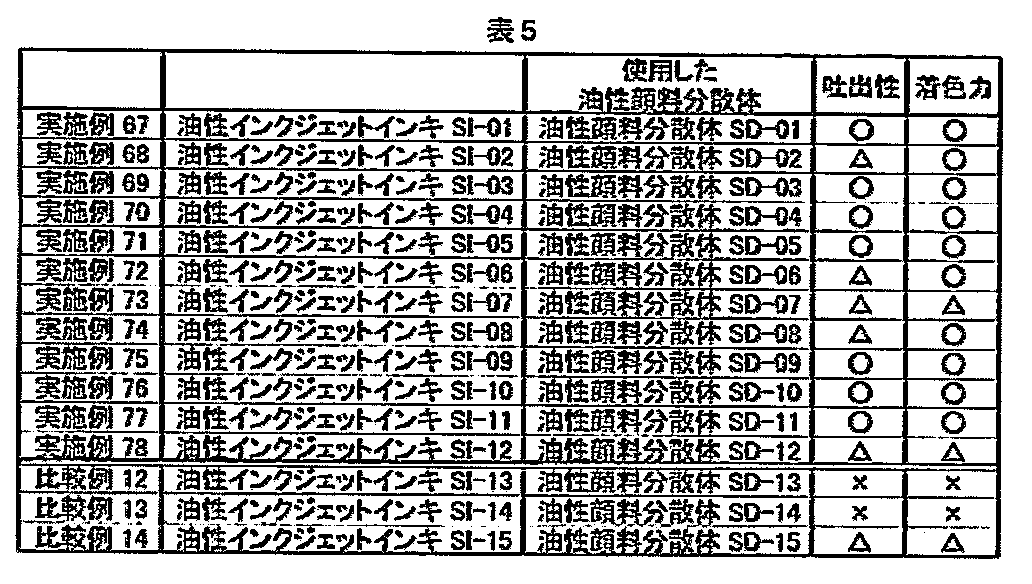
表5の結果に示したように、本発明の実施例で得られた顔料組成物を用いて調製した油性インクジェットインキは、その他のものと比較して吐出性、着色力が良好であった。
<着色樹脂組成物の調製>
実施例79乃至90及び比較例15乃至17
顔料組成物又はモノアゾ顔料2500g、熱可塑性ポリエステル樹脂2500gを加圧ニーダー中で設定温度120℃、15分の条件で混合、混練を行い取り出した。更にロール温度95℃の3本ロールにて混練を行い、冷却後10mm以下に粗粉砕し、着色樹脂組成物M-01乃至M-15を得た。
実施例79乃至90及び比較例15乃至17
顔料組成物又はモノアゾ顔料2500g、熱可塑性ポリエステル樹脂2500gを加圧ニーダー中で設定温度120℃、15分の条件で混合、混練を行い取り出した。更にロール温度95℃の3本ロールにて混練を行い、冷却後10mm以下に粗粉砕し、着色樹脂組成物M-01乃至M-15を得た。
<トナーの調製>
熱可塑性ポリエステル樹脂4375g、着色樹脂組成物500g、3,5-ジ-tert-ブチルサリチル酸のカルシウム塩化合物(荷電制御剤)50g、エチレンホモポリマー(離型剤、分子量850、Mw/Mn=1.08、融点107℃)75gを20Lの容積を有するヘンシェルミキサーで混合(3000rpm、3分)し、二軸混練押出機を用い吐出温度120℃にて溶融混練を行った。その後、混練物を冷却固化した後ハンマーミルで粗粉砕し、次いでI式ジェットミル(IDS-2型)で微粉砕後、分級してトナー母粒子を得た。次いで、上記で得られたトナー母粒子2500gと疎水性酸化チタン(チタン工業社製STT-30A)12.5gを10Lのヘンシェルミキサーで混合し、負帯電トナーを得た。
熱可塑性ポリエステル樹脂4375g、着色樹脂組成物500g、3,5-ジ-tert-ブチルサリチル酸のカルシウム塩化合物(荷電制御剤)50g、エチレンホモポリマー(離型剤、分子量850、Mw/Mn=1.08、融点107℃)75gを20Lの容積を有するヘンシェルミキサーで混合(3000rpm、3分)し、二軸混練押出機を用い吐出温度120℃にて溶融混練を行った。その後、混練物を冷却固化した後ハンマーミルで粗粉砕し、次いでI式ジェットミル(IDS-2型)で微粉砕後、分級してトナー母粒子を得た。次いで、上記で得られたトナー母粒子2500gと疎水性酸化チタン(チタン工業社製STT-30A)12.5gを10Lのヘンシェルミキサーで混合し、負帯電トナーを得た。
比較例18
顔料組成物又はモノアゾ顔料をHansa Brilliant Yellow 5GX(Clariant社製、C.I.Pigment Yellow 74)に変更し、それ以外は実施例79乃至90及び比較例15乃至17と同様にして着色樹脂組成物M-16及びトナーを得た。
顔料組成物又はモノアゾ顔料をHansa Brilliant Yellow 5GX(Clariant社製、C.I.Pigment Yellow 74)に変更し、それ以外は実施例79乃至90及び比較例15乃至17と同様にして着色樹脂組成物M-16及びトナーを得た。
<着色樹脂組成物及びトナーの評価>
着色樹脂組成物及びトナーの分散性ついて、以下の方法で評価した。さらにトナーについては画像濃度、耐久性及び透明性について、以下の方法で評価した。結果を表6にまとめた。
着色樹脂組成物及びトナーの分散性ついて、以下の方法で評価した。さらにトナーについては画像濃度、耐久性及び透明性について、以下の方法で評価した。結果を表6にまとめた。
(分散性)
得られた着色樹脂組成物及びトナーをミクロトームにて厚さ0.9μmにスライス形成し、透過型電子顕微鏡により顔料の分散状態を観察した。顔料が着色樹脂組成物中に均一に分配されているものを「○」、顔料凝集物が存在し、均一に分配されていないものを「△」、顔料凝集物が多数あり均一に分配されていないものを「×」とした。
得られた着色樹脂組成物及びトナーをミクロトームにて厚さ0.9μmにスライス形成し、透過型電子顕微鏡により顔料の分散状態を観察した。顔料が着色樹脂組成物中に均一に分配されているものを「○」、顔料凝集物が存在し、均一に分配されていないものを「△」、顔料凝集物が多数あり均一に分配されていないものを「×」とした。
(画像濃度及び耐久性)
トナー及びキャリアとして平均粒径が60μmのシリコーンレジンでコーティングされたフェライトキャリア(DFC-350C同和鉄粉社製)を用いて、トナー濃度6%に設定してカラー現像剤を調製した。
トナー及びキャリアとして平均粒径が60μmのシリコーンレジンでコーティングされたフェライトキャリア(DFC-350C同和鉄粉社製)を用いて、トナー濃度6%に設定してカラー現像剤を調製した。
キヤノン社製フルカラー複写機 CLC-730を使用し、コピー用紙として富士ゼロックス社製カラーアプリケーション用紙 Ncolor127(A4サイズ、127.9g/m2)に、各トナーを使用した単色画像を出力した。初期及び10,000枚出力後の画像濃度を測定し、トナーの耐久性を評価した。画像濃度は反射濃度計D19C(Gretag Machbeth社製)で印字物の反射濃度を測定した。
(透明性)
上記で得られた現像剤を用いてOHPフィルム上にベタ画像を形成した後、このベタ画像が形成されたOHPフィルムを、再度、複写機の定着部に通して、画像の表面をフラットにした試料を作製し、透過性を目視判断で確認した。目視判断結果を「1」、「2」及び「3」の3段階で評価し、数字が大きいものほど良好な透明性とした。

上記で得られた現像剤を用いてOHPフィルム上にベタ画像を形成した後、このベタ画像が形成されたOHPフィルムを、再度、複写機の定着部に通して、画像の表面をフラットにした試料を作製し、透過性を目視判断で確認した。目視判断結果を「1」、「2」及び「3」の3段階で評価し、数字が大きいものほど良好な透明性とした。
表6の結果に示したように、本発明の実施例で得られた顔料組成物を用いて調製した着色樹脂組成物は、その他のものと比較して良好な分散性を示した。また、本発明の実施例で得られたトナーはその他のものと比較して良好な分散性を示し、画像濃度及び透明性も良好であった。さらに、耐久性においても本態様のトナーはその他のものと比較して良好であったことから、結晶安定性と分散安定性を両立したトナーが得られた。
本発明の実施例によって得られたモノアゾ顔料を含む顔料組成物により、これまでのモノアゾ顔料の課題であった結晶安定性が改善され、さらに分散安定性有する微細な顔料組成物の提供が可能となった。
更なる利益及び変形は、当業者には容易である。それ故、本発明は、そのより広い側面において、ここに記載された特定の記載や代表的な態様に限定されるべきではない。従って、添付の請求の範囲及びその等価物によって規定される本発明の包括的概念の真意又は範囲から逸脱しない範囲内で、様々な変形が可能である。
Claims (7)
- 各々が下記一般式(1)によって表される少なくとも1種のモノアゾ顔料と、各々が下記一般式(2)乃至(5)の何れかによって表される少なくとも1種の化合物とからなる顔料組成物。
一般式(1):
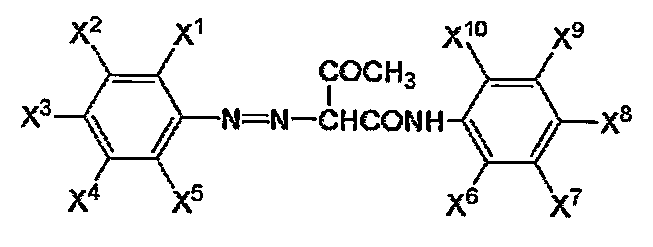
X6乃至X10は、それぞれ独立に、水素原子、ハロゲン原子、炭素数1乃至5のアルキル基、炭素数1乃至5のアルコキシル基、アセチルアミノ基、カルボキシル基、及びスルホ基のいずれかを表す。X6乃至X10の隣り合った2つは、互いに結合して、それらが結合したベンゼン環の2つの炭素原子とともに複素環部位を形成していてもよく、この複素環部位の環原子に結合している水素原子は置換されていてもよい。)
一般式(2):
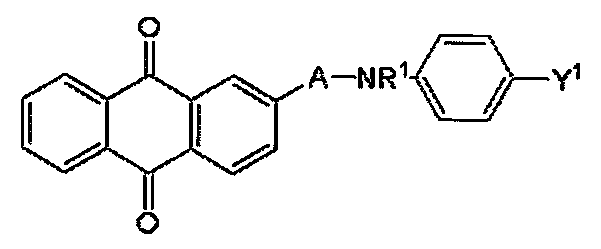
Y1は、-SO2NH-R2-NR3R4、-CONH-R5-NR6R7、-SO2NH-R8-SO3H、-CONH-R9-SO3H、-SO2NH-R10-COOH、-CONH-R11-COOH、及び下記一般式(3)で表される基のいずれかを表す。ただし、R2、R5及びR8乃至R11は、それぞれ独立に、置換基を有していてもよい、炭素数が20以下のアルキレン基、置換基を有していてもよい、炭素数が20以下のアルケニレン基、及び置換基を有していてもよい、炭素数が20以下のアリーレン基のいずれかを表す。R3、R4、R6及びR7は、それぞれ独立に、水素原子、置換基を有していてもよい、炭素数が20以下のアルキル基、置換基を有していてもよい、炭素数が20以下のアルケニル基、及び置換基を有していてもよい、炭素数が20以下のアリール基のいずれかを表す。R3とR4とは又はR6とR7とは、互いに結合して、それらが結合した窒素原子とともに複素環部位を形成していてもよく、この複素環部位の環原子としての炭素原子の一部は、他の窒素原子、酸素原子又は硫黄原子で置換されていてもよく、この複素環部位の環原子に結合している水素原子は置換されていてもよい。)
一般式(3):
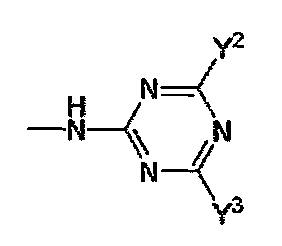
一般式(4):
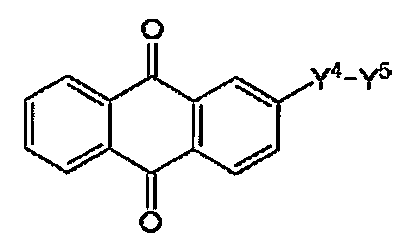
Y5は、-SO3H及び-COOHのいずれかを表す。)
一般式(5):

Y6は、-SO2NH-R21-NR22R23、-CONH-R24-NR25R26、-SO2NH-R27-SO3H、-CONH-R28-SO3H、-SO2NHR29-COOH、及び-CONH-R30-COOHのいずれかを表す。R21、R24及びR27乃至R30は、それぞれ独立に、置換基を有していてもよい、炭素数が20以下のアルキレン基、置換基を有していてもよい、炭素数が20以下のアルケニレン基、及び置換基を有していてもよい、炭素数が20以下のアリーレン基のいずれかを表す。R22、R23、R25及びR26は、それぞれ独立に、水素原子、置換基を有していてもよい、炭素数が20以下のアルキル基、置換基を有していてもよい、炭素数が20以下のアルケニル基、及び置換基を有していてもよい、炭素数が20以下のアリール基のいずれかを表す。R22とR23とは又はR25とR26とは、互いに結合して、それらが結合した窒素原子とともに複素環部位を形成していてもよく、この複素環部位の環原子としての炭素原子の一部は、他の窒素原子、酸素原子又は硫黄原子で置換されていてもよく、この複素環部位の環原子に結合している水素原子は置換されていてもよい。) - 各々が前記一般式(2)乃至(5)の何れかによって表される前記少なくとも1種の化合物の含有量の合計が、各々が前記一般式(1)によって表される前記少なくとも1種のモノアゾ顔料の含有量と、各々が前記一般式(2)乃至(5)の何れかによって表される前記少なくとも1種の化合物の含有量との合計に占める割合は0.1乃至40モル%である請求項1記載の顔料組成物。
- 平均一次粒子径が200nm以下である請求項1又は2記載の顔料組成物。
- 請求項1乃至3のいずれか記載の顔料組成物及び液状媒体を含有した顔料分散体。
- 請求項4に記載の顔料分散体を含有したインクジェットインキ。
- 請求項1乃至3のいずれか記載の顔料組成物及び結着樹脂を含有した着色樹脂組成物。
- 請求項6に記載の着色樹脂組成物を含有した電子写真用トナー。
Priority Applications (1)
| Application Number | Priority Date | Filing Date | Title |
|---|---|---|---|
| JP2013507451A JP5971237B2 (ja) | 2011-03-25 | 2012-03-22 | 顔料組成物、顔料分散体及び着色樹脂組成物 |
Applications Claiming Priority (2)
| Application Number | Priority Date | Filing Date | Title |
|---|---|---|---|
| JP2011068529 | 2011-03-25 | ||
| JP2011-068529 | 2011-03-25 |
Publications (1)
| Publication Number | Publication Date |
|---|---|
| WO2012133095A1 true WO2012133095A1 (ja) | 2012-10-04 |
Family
ID=46930823
Family Applications (1)
| Application Number | Title | Priority Date | Filing Date |
|---|---|---|---|
| PCT/JP2012/057307 Ceased WO2012133095A1 (ja) | 2011-03-25 | 2012-03-22 | 顔料組成物、顔料分散体及び着色樹脂組成物 |
Country Status (3)
| Country | Link |
|---|---|
| JP (1) | JP5971237B2 (ja) |
| TW (1) | TW201302924A (ja) |
| WO (1) | WO2012133095A1 (ja) |
Cited By (1)
| Publication number | Priority date | Publication date | Assignee | Title |
|---|---|---|---|---|
| CN111190332A (zh) * | 2018-11-14 | 2020-05-22 | 柯尼卡美能达株式会社 | 静电图像显影用调色剂及夹层玻璃 |
Citations (6)
| Publication number | Priority date | Publication date | Assignee | Title |
|---|---|---|---|---|
| JP2002022922A (ja) * | 2000-07-07 | 2002-01-23 | Sakata Corp | カラーフィルター用赤色系顔料分散物 |
| JP2006077201A (ja) * | 2004-09-13 | 2006-03-23 | Dainippon Ink & Chem Inc | インクジェットインク用水性顔料分散液およびインクジェットインク組成物 |
| JP2009084416A (ja) * | 2007-09-28 | 2009-04-23 | Fujifilm Corp | 塩基性分散助剤、これを用いた有機顔料ナノ粒子の水性分散物、凝集体、及び非水性分散物、それにより得られる着色感光性樹脂組成物、それを用いたカラーフィルタ及び液晶表示装置 |
| JP2009084417A (ja) * | 2007-09-28 | 2009-04-23 | Fujifilm Corp | 酸性分散助剤、これを用いた有機顔料ナノ粒子の水性分散物、凝集体、及び非水性分散物、それらにより得られる着色感光性樹脂組成物、カラーフィルタ、及び液晶表示装置 |
| JP2009227853A (ja) * | 2008-03-24 | 2009-10-08 | Fujifilm Corp | 顔料分散液の製造方法、顔料分散液、インクジェット記録用インク、及びインクセット |
| JP2010235742A (ja) * | 2009-03-31 | 2010-10-21 | Fujifilm Corp | 水不溶性色材の分散体、その製造方法、並びにそれを用いた記録液、インクセット、印画物、画像形成方法および画像形成装置 |
-
2012
- 2012-03-22 JP JP2013507451A patent/JP5971237B2/ja active Active
- 2012-03-22 WO PCT/JP2012/057307 patent/WO2012133095A1/ja not_active Ceased
- 2012-03-22 TW TW101109899A patent/TW201302924A/zh unknown
Patent Citations (6)
| Publication number | Priority date | Publication date | Assignee | Title |
|---|---|---|---|---|
| JP2002022922A (ja) * | 2000-07-07 | 2002-01-23 | Sakata Corp | カラーフィルター用赤色系顔料分散物 |
| JP2006077201A (ja) * | 2004-09-13 | 2006-03-23 | Dainippon Ink & Chem Inc | インクジェットインク用水性顔料分散液およびインクジェットインク組成物 |
| JP2009084416A (ja) * | 2007-09-28 | 2009-04-23 | Fujifilm Corp | 塩基性分散助剤、これを用いた有機顔料ナノ粒子の水性分散物、凝集体、及び非水性分散物、それにより得られる着色感光性樹脂組成物、それを用いたカラーフィルタ及び液晶表示装置 |
| JP2009084417A (ja) * | 2007-09-28 | 2009-04-23 | Fujifilm Corp | 酸性分散助剤、これを用いた有機顔料ナノ粒子の水性分散物、凝集体、及び非水性分散物、それらにより得られる着色感光性樹脂組成物、カラーフィルタ、及び液晶表示装置 |
| JP2009227853A (ja) * | 2008-03-24 | 2009-10-08 | Fujifilm Corp | 顔料分散液の製造方法、顔料分散液、インクジェット記録用インク、及びインクセット |
| JP2010235742A (ja) * | 2009-03-31 | 2010-10-21 | Fujifilm Corp | 水不溶性色材の分散体、その製造方法、並びにそれを用いた記録液、インクセット、印画物、画像形成方法および画像形成装置 |
Cited By (3)
| Publication number | Priority date | Publication date | Assignee | Title |
|---|---|---|---|---|
| CN111190332A (zh) * | 2018-11-14 | 2020-05-22 | 柯尼卡美能达株式会社 | 静电图像显影用调色剂及夹层玻璃 |
| JP2020079892A (ja) * | 2018-11-14 | 2020-05-28 | コニカミノルタ株式会社 | 静電荷像現像用トナー、及び、現像剤 |
| JP7458702B2 (ja) | 2018-11-14 | 2024-04-01 | コニカミノルタ株式会社 | 静電荷像現像用トナー、及び、現像剤 |
Also Published As
| Publication number | Publication date |
|---|---|
| JP5971237B2 (ja) | 2016-08-17 |
| JPWO2012133095A1 (ja) | 2014-07-28 |
| TW201302924A (zh) | 2013-01-16 |
Similar Documents
| Publication | Publication Date | Title |
|---|---|---|
| WO2011129430A1 (ja) | 顔料組成物、並びにこれを用いた顔料分散体、インクジェットインキ、及び電子写真用トナー | |
| CN1276030C (zh) | 水基着色剂制剂 | |
| TW201033294A (en) | Azo pigment, process for production of the azo pigment, dispersions containing the azo pigment and colored compositions | |
| JPH1025440A (ja) | インクジェットフルカラー記録画像 | |
| JP5312125B2 (ja) | インクジェット記録用油性インク | |
| JP2010260997A (ja) | 顔料組成物、顔料分散体およびそれを使用したインクジェットインキ | |
| JP5187326B2 (ja) | アゾ化合物、アゾ色素、および該アゾ化合物又は該アゾ色素を含む着色組成物及び着色物 | |
| JP2010195906A (ja) | 顔料組成物およびそれを使用した着色組成物 | |
| JP2009132911A (ja) | 着色組成物、製造方法および着色方法 | |
| CN1890327A (zh) | 基于c.i.颜料黄74的单偶氮颜料制剂 | |
| JP3055673B2 (ja) | 画像記録用着色組成物 | |
| US20200385592A1 (en) | Ink and printing method | |
| JP5971237B2 (ja) | 顔料組成物、顔料分散体及び着色樹脂組成物 | |
| JP5644616B2 (ja) | カラートナー用顔料組成物、それを含有してなるカラートナー用着色樹脂組成物及びカラートナー | |
| JP4190218B2 (ja) | 不溶性アゾ顔料及び着色組成物 | |
| JP4835896B2 (ja) | インクジェットインク用水性顔料分散液およびインクジェットインク組成物 | |
| JP4343521B2 (ja) | 黄色アゾ顔料組成物及びそれを使用する着色組成物 | |
| JPH09328644A (ja) | インクジェット記録用インク組成物 | |
| JP2014177575A (ja) | モノアゾ顔料組成物の製造方法、トナーおよびインクジェットインキ | |
| JP5545011B2 (ja) | カラートナー用顔料組成物、それを含有してなるカラートナー用着色樹脂組成物及びカラートナー | |
| JP2004091520A (ja) | 水性顔料分散体の製造方法 | |
| TW201130921A (en) | Azo pigment, process for producing azo pigment, dispersion containing azo pigment, and coloring composition | |
| US20150299485A1 (en) | Process For Preparing An Aqueous Ink Jet Printing Ink | |
| JP6928750B1 (ja) | 顔料組成物およびその利用 | |
| JP2003241431A (ja) | 画像記録用着色組成物および画像記録剤 |
Legal Events
| Date | Code | Title | Description |
|---|---|---|---|
| 121 | Ep: the epo has been informed by wipo that ep was designated in this application |
Ref document number: 12765156 Country of ref document: EP Kind code of ref document: A1 |
|
| ENP | Entry into the national phase |
Ref document number: 2013507451 Country of ref document: JP Kind code of ref document: A |
|
| NENP | Non-entry into the national phase |
Ref country code: DE |
|
| 122 | Ep: pct application non-entry in european phase |
Ref document number: 12765156 Country of ref document: EP Kind code of ref document: A1 |