WO2010001563A1 - 植物成長促進剤 - Google Patents
植物成長促進剤 Download PDFInfo
- Publication number
- WO2010001563A1 WO2010001563A1 PCT/JP2009/002948 JP2009002948W WO2010001563A1 WO 2010001563 A1 WO2010001563 A1 WO 2010001563A1 JP 2009002948 W JP2009002948 W JP 2009002948W WO 2010001563 A1 WO2010001563 A1 WO 2010001563A1
- Authority
- WO
- WIPO (PCT)
- Prior art keywords
- group
- formula
- represented
- plant growth
- alkyl group
- Prior art date
- Legal status (The legal status is an assumption and is not a legal conclusion. Google has not performed a legal analysis and makes no representation as to the accuracy of the status listed.)
- Ceased
Links
Classifications
-
- A—HUMAN NECESSITIES
- A01—AGRICULTURE; FORESTRY; ANIMAL HUSBANDRY; HUNTING; TRAPPING; FISHING
- A01N—PRESERVATION OF BODIES OF HUMANS OR ANIMALS OR PLANTS OR PARTS THEREOF; BIOCIDES, e.g. AS DISINFECTANTS, AS PESTICIDES OR AS HERBICIDES; PEST REPELLANTS OR ATTRACTANTS; PLANT GROWTH REGULATORS
- A01N43/00—Biocides, pest repellants or attractants, or plant growth regulators containing heterocyclic compounds
- A01N43/713—Biocides, pest repellants or attractants, or plant growth regulators containing heterocyclic compounds having rings with four or more nitrogen atoms as the only ring hetero atoms
-
- A—HUMAN NECESSITIES
- A01—AGRICULTURE; FORESTRY; ANIMAL HUSBANDRY; HUNTING; TRAPPING; FISHING
- A01N—PRESERVATION OF BODIES OF HUMANS OR ANIMALS OR PLANTS OR PARTS THEREOF; BIOCIDES, e.g. AS DISINFECTANTS, AS PESTICIDES OR AS HERBICIDES; PEST REPELLANTS OR ATTRACTANTS; PLANT GROWTH REGULATORS
- A01N43/00—Biocides, pest repellants or attractants, or plant growth regulators containing heterocyclic compounds
- A01N43/72—Biocides, pest repellants or attractants, or plant growth regulators containing heterocyclic compounds having rings with nitrogen atoms and oxygen or sulfur atoms as ring hetero atoms
- A01N43/74—Biocides, pest repellants or attractants, or plant growth regulators containing heterocyclic compounds having rings with nitrogen atoms and oxygen or sulfur atoms as ring hetero atoms five-membered rings with one nitrogen atom and either one oxygen atom or one sulfur atom in positions 1,3
- A01N43/78—1,3-Thiazoles; Hydrogenated 1,3-thiazoles
-
- A—HUMAN NECESSITIES
- A01—AGRICULTURE; FORESTRY; ANIMAL HUSBANDRY; HUNTING; TRAPPING; FISHING
- A01N—PRESERVATION OF BODIES OF HUMANS OR ANIMALS OR PLANTS OR PARTS THEREOF; BIOCIDES, e.g. AS DISINFECTANTS, AS PESTICIDES OR AS HERBICIDES; PEST REPELLANTS OR ATTRACTANTS; PLANT GROWTH REGULATORS
- A01N47/00—Biocides, pest repellants or attractants, or plant growth regulators containing organic compounds containing a carbon atom not being member of a ring and having no bond to a carbon or hydrogen atom, e.g. derivatives of carbonic acid
- A01N47/08—Biocides, pest repellants or attractants, or plant growth regulators containing organic compounds containing a carbon atom not being member of a ring and having no bond to a carbon or hydrogen atom, e.g. derivatives of carbonic acid the carbon atom having one or more single bonds to nitrogen atoms
- A01N47/10—Carbamic acid derivatives, i.e. containing the group —O—CO—N<; Thio analogues thereof
- A01N47/18—Carbamic acid derivatives, i.e. containing the group —O—CO—N<; Thio analogues thereof containing a —O—CO—N< group, or a thio analogue thereof, directly attached to a heterocyclic or cycloaliphatic ring
Definitions
- the present invention relates to a plant growth promoter. More specifically, the present invention relates to a healthy seedling breeding agent for gramineous cereals containing a tetrazoyloxime derivative as an active ingredient, which improves the seedling quality of box seedlings.
- This application claims priority based on Japanese Patent Application No. 2008-173222 filed in Japan on July 2, 2008, the contents of which are incorporated herein by reference.
- plants have effects such as promoting rooting of plants, preventing lodging, improving yield, improving cold resistance, improving green color, raising healthy seedlings, increasing the number of divisions, promoting organ growth, etc.
- a growth promoter was used.
- rice which is the main grain among them, rice seedling breeding agents were used due to the spread of the box seedling method.
- the rice box seedling method is super dense sowing for making seedlings suitable for rice transplanters, and the rice seedlings are prone to poor growth depending on conditions such as temperature and humidity, and the quality of the seedlings deteriorates. It was.
- Patent Document 1 describes a composition for rooting and healthy seedling raising of rice containing cholines and hydroxyisoxazole.
- Patent Document 2 proposes a rice seedling growing agent containing 3-hydroxypyrazine or a derivative thereof as an active ingredient.
- the substances in these patent documents are compounds having completely different structures from the tetrazoyloxime derivative of the present invention.
- Patent Document 3 discloses that a tetrazoyl oxime derivative and an agrochemical containing this derivative as an active ingredient have a strong activity against various phytopathogenic fungi and are highly effective in preventing and treating plant diseases caused by phytopathogenic fungi. It is described that it exhibits an effect. However, it is not described that the tetrazoyl oxime derivative of this document has a rice seedling raising effect and is effective as a rice seedling raising agent.
- JP-A-61-212504 Japanese Patent Laid-Open No. 62-167710 WO03 / 016303
- the present invention is to provide a plant growth promoter.
- it is an object to provide a healthy seedling-growing agent having excellent efficacy.
- X represents a halogen atom, an alkyl group, an alkoxy group, a cyano group, a methanesulfonyl group, a nitro group, a trifluoromethyl group or an aryl group (substituted with an alkyl group or a halogen atom, or unsubstituted).
- n represents an integer of 0 to 5, and when n is 2 or more, Xs may be the same or different.
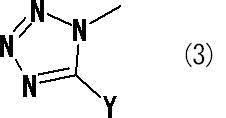
- A is the formula (2):
- R represents a halogen atom.
- m represents an integer of 0 to 3, and when m is 2 or more, Rs may be the same or different.
- Q is a hydrogen atom, a C1-8 alkyl group, a C1-8 haloalkyl group, a C3-6 cycloalkyl group, a C1-8 alkoxy group, a C3-6 cycloalkyloxy group, a benzyloxy group, 2-phenylethyl Oxy group, C1-4 alkylthio group, C1-4 alkylthio C1-4 alkyl group, C1-4 alkoxy C1-2 alkyl group, C1-5 acylamino C1-6 alkyl group, C1-5 acylamino C1-6 alkoxy group, C1 A -8 alkylamino group, a C2-6 alkenyl group, an aralkyl group
- R ′ represents a hydrogen atom or a halogen atom.
- Z represents the same meaning as in the above formula (4).
- n 0 to 2
- X is a halogen atom
- A is a tetrazoyl group represented by the formula (2)
- Het is the formula (4
- a plant growth promoting effect can be expected. Especially, it is a healthy seedling effect.By applying it to the seedlings before transplanting, rooting of the seedlings is increased even after transplanting to Honda, the survival is promoted, the number of divisions is good, especially at low temperatures It is possible to demonstrate. Furthermore, the effect of preventing the generation of mussel seedlings can be significantly increased.
- X is not particularly limited in the substitution position, and is a halogen atom, alkyl group, alkoxy group, cyano group, methanesulfonyl group, nitro group, trifluoromethyl group or (alkyl group or halogen An aryl group substituted or unsubstituted by an atom.
- n represents an integer of 0 to 5, and more preferably 0 to 2. When n is 2 or more, Xs may be the same or different.
- Examples of the halogen atom represented by X include a chlorine atom, a bromine atom, an iodine atom, and a fluorine atom. Among these, a compound in which X is a chlorine atom or a fluorine atom is particularly preferable.
- the alkyl group represented by X is preferably an alkyl group having 1 to 4 carbon atoms, specifically, methyl group, ethyl group, n-propyl group, isopropyl group, n-butyl group, isobutyl group, sec-butyl group. And tert-butyl group. Among these, compounds in which X is a methyl group or a tert-butyl group are particularly preferable.
- the alkoxy group represented by X is preferably an alkoxy group having 1 to 3 carbon atoms, and specific examples include a methoxy group, an ethoxy group, a propoxy group, and an isopropoxy group. Among these, compounds in which X is a methoxy group or an ethoxy group are particularly preferable.
- Examples of the alkyl group represented by X, or an aryl group substituted or unsubstituted with a halogen atom include a phenyl group, a 4-methylphenyl group, and a 4-chlorophenyl group. Among these, a compound in which X is a phenyl group is particularly preferable.
- n is 0 to 2 and X is a halogen atom.
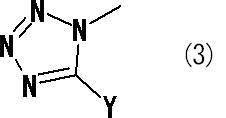
- A represents formula (2):
- Y represents an alkyl group.
- alkyl groups an alkyl group having 1 to 3 carbon atoms is preferable, and examples thereof include a methyl group, an ethyl group, an n-propyl group, and an isopropyl group.
- a compound in which Y is a methyl group or an ethyl group is particularly preferable.
- Het in the tetrazoyloxime derivative represented by the formula (1) is represented by the formula (4):
- Any one of thiazoyl groups represented by Z in the formulas (4) and (6) represents a hydrogen atom, an amino group, or the formula (5):
- R in the pyridine group represented by the formula (4) represents a halogen atom such as a chlorine atom, a bromine atom, an iodine atom, or a fluorine atom.
- m represents an integer of 0 to 3, and when m is 2 or more, Rs may be the same or different.
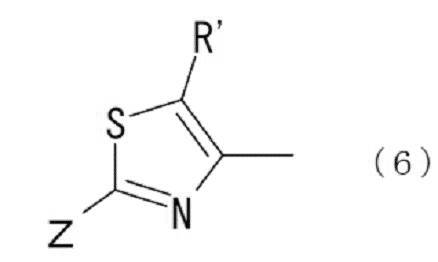
- R ′ in the thiazoyl group represented by the formula (6) represents a hydrogen atom or a halogen atom. Examples of the halogen atom include the same as the halogen atom for R.
- Q in the group represented by the formula (5) is a hydrogen atom, a C1-8 alkyl group, a C1-8 haloalkyl group, a C3-6 cycloalkyl group, a C1-8 alkoxy group, a C3-6 cycloalkyloxy group, benzyl Oxy group, 2-phenylethyloxy group, C1-4 alkylthio group, C1-4 alkylthio C1-4 alkyl group, C1-4 alkoxy C1-2 alkyl group, C1-5 acylamino C1-6 alkyl group, C1-5 acylamino A C1-6 alkoxy group, a C1-8 alkylamino group, a C2-6 alkenyl group, an aralkyl group or a phenyl group;
- Examples of the “C1-8 alkyl group” represented by Q include a methyl group, an ethyl group, an n-propyl group, an isopropyl group, a 1,1-dimethylpropyl group, an n-butyl group, an isobutyl group, a sec-butyl group, and a tert-butyl group.
- Examples include butyl group, isoamyl group, 1-methylbutyl group, 2-methylbutyl group, neopentyl group, 1-ethylpropyl group, n-pentyl group, hexyl group, heptyl group, octyl group and the like.
- the “C 1-8 haloalkyl group” represented by Q means an alkyl group having 1 to 8 carbon atoms substituted with a halogen atom, and specifically includes a chloromethyl group, a difluoromethyl group, a trifluoromethyl group, a difluoro group. Examples include chloromethyl group, pentafluoroethyl group, 3,3,3-trifluoro-n-propyl group, 1-chlorohexyl group and the like.
- C3-6 cycloalkyl group represented by Q means a C3-6 alkyl group having a cyclic moiety, and specifically includes a cyclopropyl group, a cyclobutyl group, a cyclopentyl group, a cyclohexyl group, a cyclopropylmethyl group, a cyclopentyl group.
- a methyl group etc. are mentioned.
- C1-8 alkoxy group represented by Q, a methoxy group, an ethoxy group, a propoxy group, an isopropoxy group, a 1,1-dimethylpropoxy group, a butoxy group, an isobutoxy group, a sec-butoxy group, a tert-butoxy group
- examples include isopentyloxy group, 1-methylbutoxy group, 2-methylbutoxy group, neopentyloxy group, 1-ethylpropoxy group, n-pentyloxy group, hexyloxy group, heptyloxy group, octyloxy group and the like.
- the “C3-6 cycloalkyloxy group” represented by Q means a group in which a C3-6 alkyl group having a cyclic portion and an oxygen atom are bonded, and specifically includes a cyclopropyloxy group, a cyclobutyloxy group, a cyclopentyl group. Examples thereof include an oxy group, a cyclohexyloxy group, and a cyclopropylmethyloxy group.
- Examples of the “C1-4 alkylthio group” represented by Q include a methylthio group, an ethylthio group, a butylthio group and the like.
- Examples of the “C1-4 alkylthio C1-4 alkyl group” represented by Q include a methylthiomethyl group, an ethylthioethyl group, a butylthiomethyl group, and the like.
- Examples of the “C1-4 alkoxy C1-2 alkyl group” represented by Q include a methoxymethyl group, an ethoxymethyl group, an ethoxyethyl group, and a butoxymethyl group.
- the “C1-5 acylamino C1-6 alkyl group” represented by Q is a group in which a C1-5 acyl group in which a hydrogen atom or a C1-4 alkyl group is bonded to a carbonyl group is bonded to an amino C1-6 alkyl group, Specifically, formylaminomethyl group, acetylaminomethyl group, 2- (propionylamino) ethyl group, 3- (acetylamino) propyl group, 3- (propionylamino) propyl group, 3- (isopropionylamino) propyl group , 3- (butyroylamino) propyl group, 3- (isobutyroylamino) propyl group, 3- (sec-butyroylamino) propyl group, 3- (tert-butyroylamino) propyl group, 4- (acetyl Examples include amino) butyl group, 5- (acetylamino) pentyl group and 6- (acety
- C1-5 acylamino C1-6 alkoxy group represented by Q, specifically, formylaminomethoxy group, acetylaminomethoxy group, 2- (propionylamino) ethoxy group, 3- (acetylamino) propoxy group, 3- (propionylamino) propoxy group, 3- (isopropionylamino) propoxy group, 3- (butyroylamino) propoxy group, 3- (isobutyroylamino) propoxy group, 3- (sec-butyroylamino) propoxy group Group, 3- (tert-butyroylamino) propoxy group, 4- (acetylamino) butoxy group, 5- (acetylamino) pentyloxy group and 6- (acetylamino) hexyloxy group.
- C1-8 alkylamino group represented by Q include methylamino group, ethylamino group, propylamino group, isopropylamino group, butylamino group, isobutylamino group, sec-butylamino group, tert. -Butylamino group, neopentylamino group, 1-ethylpropylamino group, n-pentylamino group, hexylamino group, heptylamino group, octylamino group and the like.
- C2-6 alkenyl group represented by Q
- examples of the “C2-6 alkenyl group” represented by Q include a vinyl group, allyl group, isopropenyl group, 1-butenyl group, 2-butenyl group, 2-pentenyl group, and 5-hexenyl group. It is done.
- the “aralkyl group” represented by Q is a group in which an aryl group, preferably a C6-10 aryl group, and an alkyl group, preferably a C1-4 alkyl group, are bonded. Specific examples include a benzyl group, phenethyl group, and the like. Groups and the like.
- Q is preferably a C1-8 alkyl group or a C1-8 alkoxy group.
- preferred compounds include: n is 0 to 2, X is a halogen atom, A is a tetrazoyl group represented by the formula (2), and , Het is a pyridine group represented by the formula (4), wherein Z is represented by the formula (5) (wherein Q represents a C1-8 alkyl group or a C1-8 alkoxy group). And tetrazoyl oxime derivatives which are the groups to be described.
- the oxime moiety present in the tetrazoylhydroxyimino derivative represented by the tetrazoyloxime derivative represented by the above formula (1) has three-dimensional structures (E) and (Z), and these two stereoisomers. And mixtures thereof are included in the present invention.
- the synthesized product is obtained only as the (Z) isomer or as a mixture of the (E) isomer and the (Z) isomer.
- Two isomers can be isolated from the mixture of (E) and (Z) isomers by separation and purification.
- the (Z) form is superior to the plant disease control activity than the (E) form.
- the (Z) body also tends to stabilize at a certain ratio as a mixture of the (E) body and the (Z) body due to the action of light or the like in the natural environment, and partly changes to the (E) body. Both compounds and mixtures thereof are also useful.
- the stabilization ratio of (E) body and (Z) body changes with each compound, it cannot be specified unconditionally.
- the tetrazoyl oxime derivative represented by the formula (1) can be produced by the method described in Patent Document 3 (WO 03/016303).
- the production method of the tetrazoyloxime derivative of the present invention is not limited to this production method.
- the plant growth promoter of the present invention only needs to contain the above-described tetrazoyl oxime derivative as an active ingredient, and other ingredients, carriers and the like can be appropriately blended.
- the tetrazoyl oxime derivative of the present invention can be used alone as a plant growth promoter, it is usually used as a conventional solid carrier, liquid carrier, dispersant, or the like used in a preparation containing the tetrazoyl oxime derivative as an active ingredient.
- solid carrier or liquid carrier examples include talc, clay, bentonite, kaolin, diatomaceous earth, montmorillonite, mica, vermiculite, gypsum, calcium carbonate, white carbon, wood powder, starch, alumina, silicate, sugar polymer, Waxes, water, alcohols (methyl alcohol, ethyl alcohol, n-propyl alcohol, isopropyl alcohol, n-butyl alcohol, ethylene glycol, benzyl alcohol, etc.), petroleum fractions (petroleum ether, kerosene, solvent naphtha, etc.), fat Aromatic or alicyclic hydrocarbons (n-hexane, cyclohexane, etc.), aromatic hydrocarbons (benzene, toluene, xylene, ethylbenzene, chlorobenzene, cumene, methylnaphthalene, etc.), halogenated hydrocarbons (chloroform, dichloromethane)
- auxiliary agents include nonionic surfactants (polyoxyethylene alkyl ethers, polyoxyethylene alkyl esters, polyoxyethylene alkyl phenyl ethers, polyoxyethylene sorbitan alkyl esters, sorbitan alkyl esters, etc.), anionic interfaces Activators (alkyl benzene sulfonate, alkyl sulfosuccinate, polyoxyethylene alkyl sulfate, aryl sulfonate, etc.), cationic surfactants (alkyl amines, polyoxyethylene alkyl amines, quaternary ammonium salts, etc.) , Amphoteric surfactants (alkylaminoethylglycine, alkyldimethylbetaine, etc.), polyvinyl alcohol, hydroxypropylcellulose, carboxymethylcellulose, gum arabic, Gantogamu, xanthan gum, polyvinyl acetate, gelatin, casein, sodium alginate
- the tetrazoyl oxime derivative of the present invention can be used by mixing with various known and commonly used agricultural and horticultural fungicides, plant growth regulators, insecticides, acaricides and the like, fertilizers and the like.
- the content of the tetrazoyloxime derivative of the present invention in the plant growth promoter varies depending on the preparation form, application method, and other conditions, but is preferably 0.5 to 95% by mass, and in the range of 2 to 70% by mass. Particularly preferred.
- the plant to be applied is not particularly limited, but for example, rice grains such as rice, barley, wheat, millet, corn, millet; pumpkin, turnip, cabbage, radish, Chinese cabbage, spinach, pepper, tomato, etc. Vegetables; Flowers such as chrysanthemum, gerbera, pansy, orchid, peony, tulip; beans such as azuki bean, green beans, soybean, peanut, broad bean, pea; potatoes such as potato, sweet potato, taro, yam, taro; Onions such as onion and rakkyo are listed.
- rice grains such as rice, barley, wheat, millet, corn, millet
- Vegetables Flowers such as chrysanthemum, gerbera, pansy, orchid, peony, tulip; beans such as azuki bean, green beans, soybean, peanut, broad bean, pea;
- Examples of the method for applying the plant growth promoter of the present invention include application to plants (spreading of leaves and leaves), application to growing soil (soil application), application to paddy water (application to water surface), application to seeds (seed Processing) is possible.
- the application rate of the plant growth promoter of the present invention varies depending on the applied plant and the like, but in the case of foliage spraying, an active ingredient concentration in the range of 1 to 10000 ppm, preferably 10 to 1000 ppm is 50 to 10 per 10 are. It is preferable to apply 300 L, and in the case of soil application and water surface application, it is preferable to apply 0.1 to 1000 g, particularly preferably 10 to 100 g, per 10 ares as the amount of active ingredient. In the case of seed treatment, it is preferable to apply 0.001 to 50 g of active ingredient to 1 kg of seed.
- the plant growth promoter of the present invention is applied, healthy growth of various plants becomes possible.
- it is effective in promoting rooting of plants, raising healthy seedlings, and increasing the number of divisions, and an increase in yield can be expected.
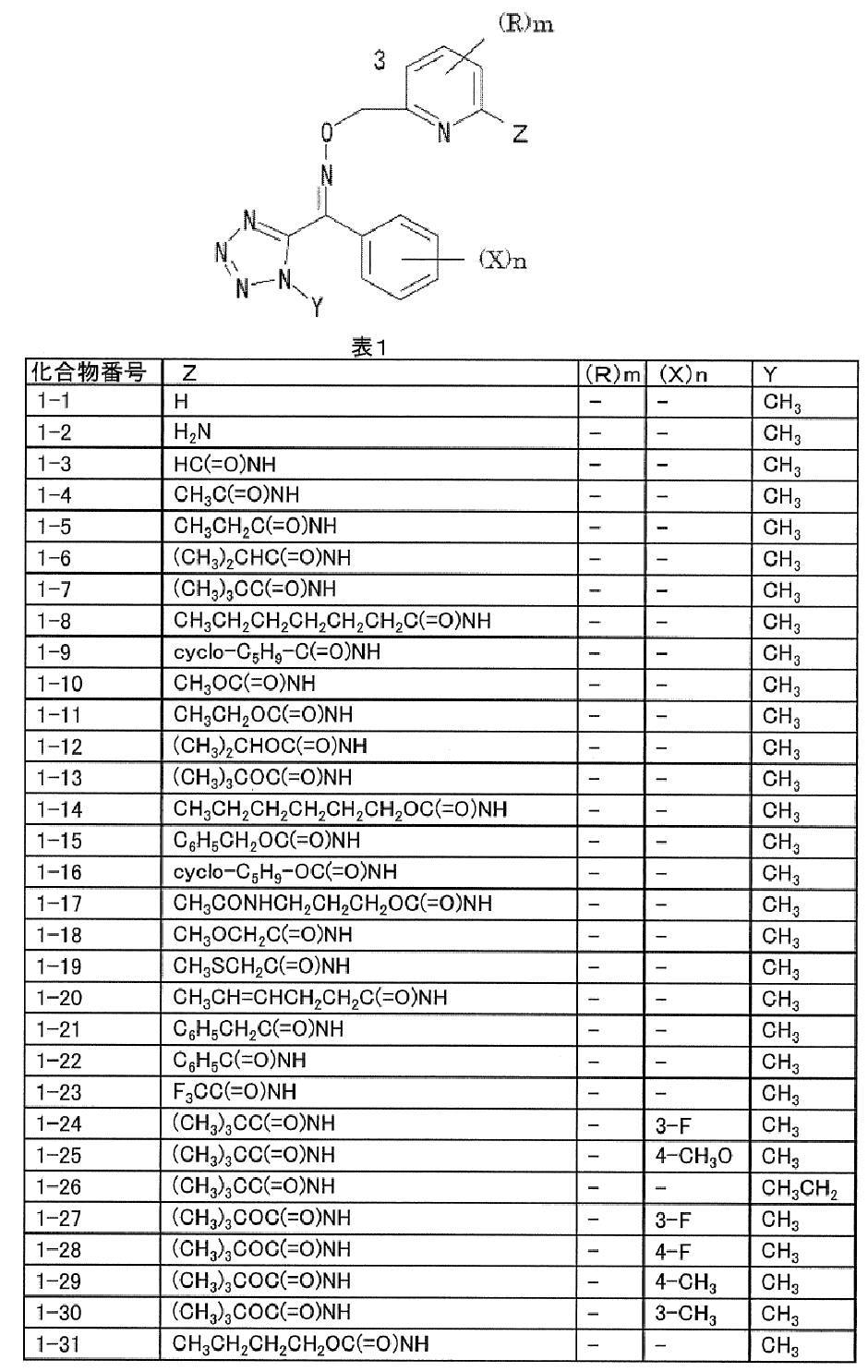
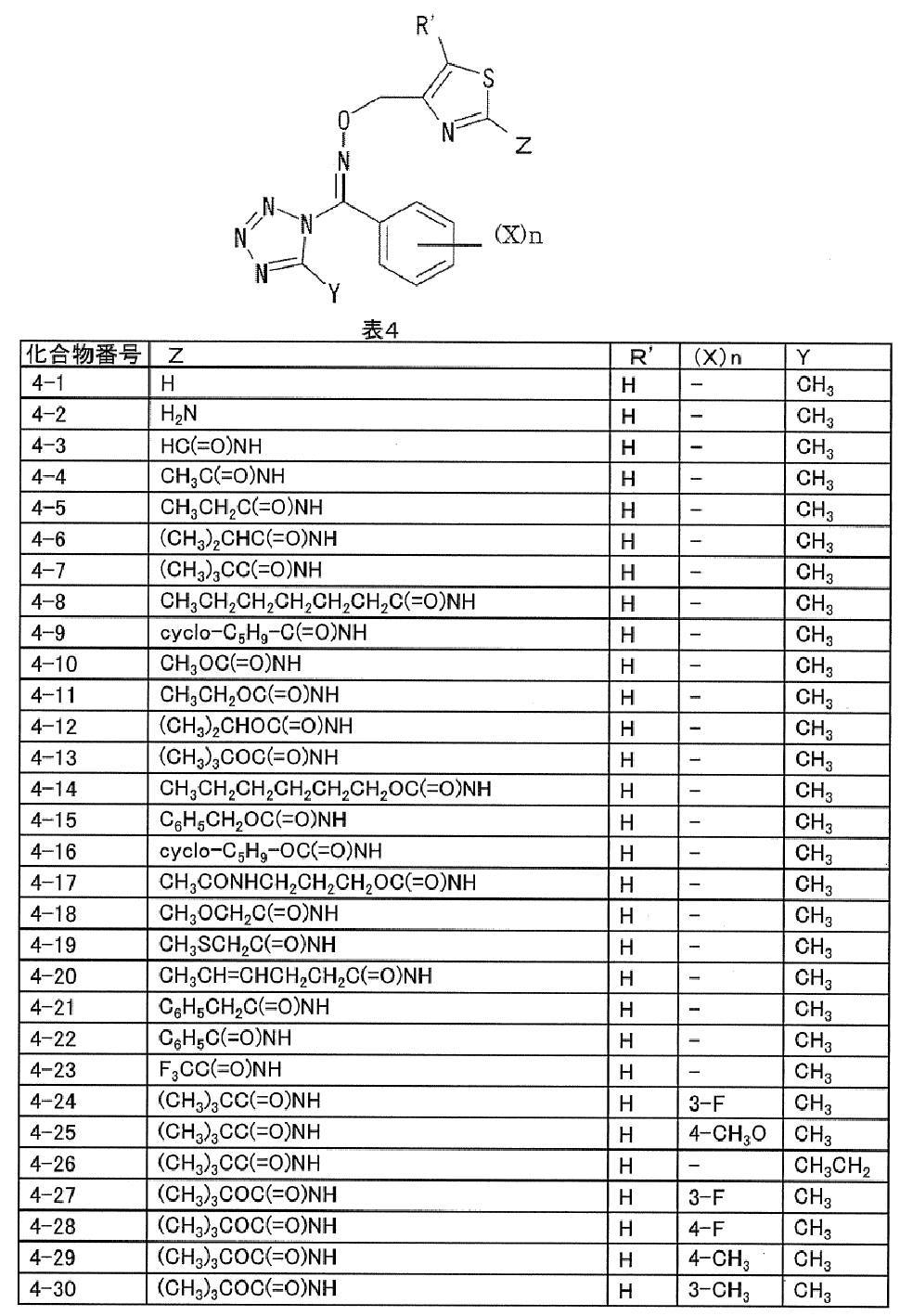
- Example 1 Flowable agent Compound (1-13) shown in Table 1 10 parts Polyoxyethylene aryl phenyl ether ether 2 parts Dialkyl sulfosuccinate sodium salt 0.5 parts Glycerin 5 parts Xanthan gum 0.3 parts Water 82. 2 parts or more were mixed and wet pulverized until the particle size became 3 microns or less to obtain a flowable agent having an active ingredient of 10%.
- Example 2 A flowable agent was obtained in the same manner as in Example 1 except that the compound (1-31) shown in Table 1 was used instead of the compound (1-13).
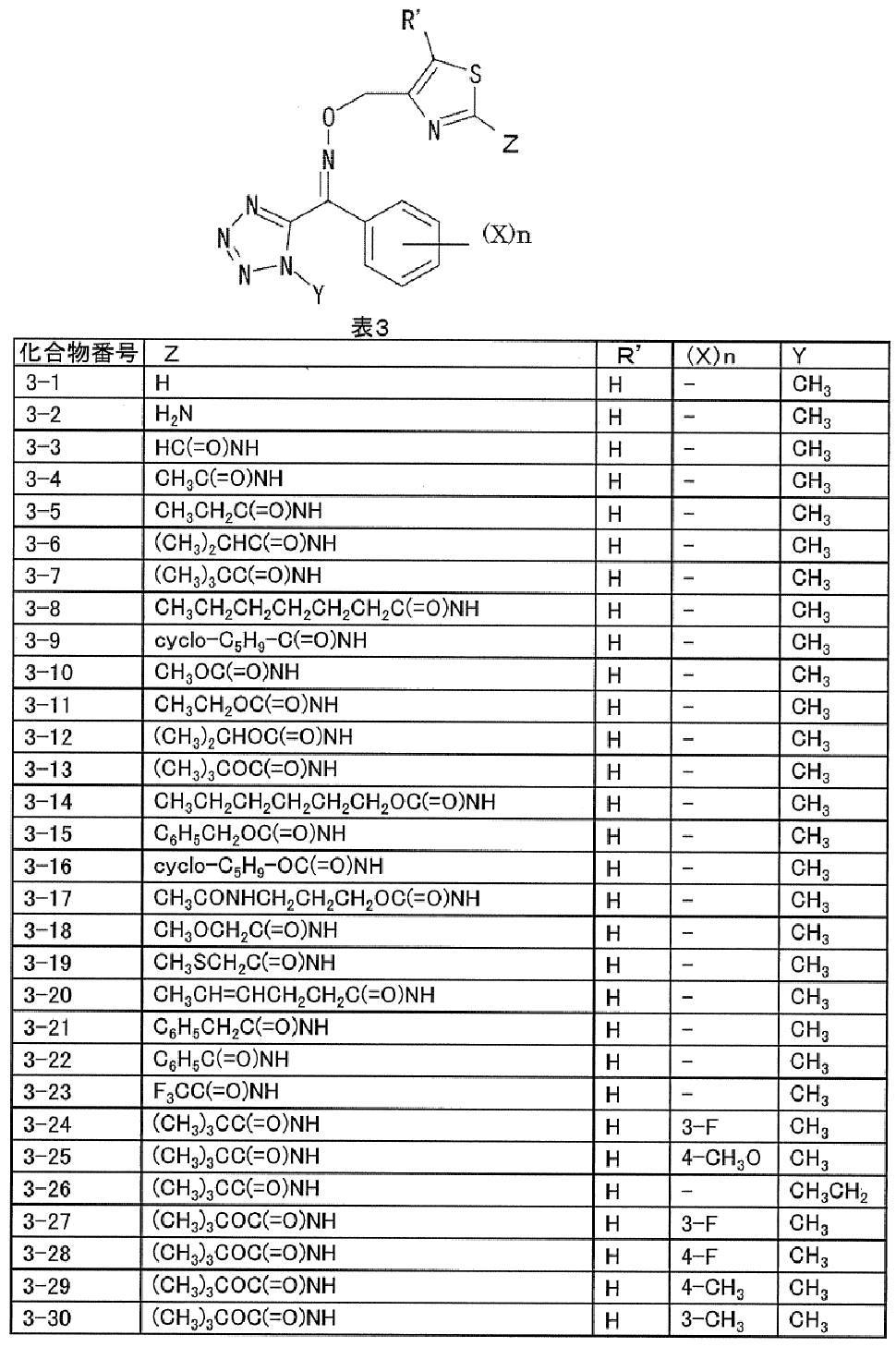
- Example 3 A flowable agent was obtained in the same manner as in Example 1 except that the compound (2-13) shown in Table 2 was used instead of the compound (1-13).
- Example 1 Rice healthy seedling effect test
- Each of the flowable agents obtained in Example 1 or 2 in a small nursery box (15 ⁇ 10 ⁇ 4 cm) filled with floor soil in advance was at a concentration of 100 ppm as an active ingredient.
- the solution was diluted with water and approximately 80 ml of these drug solutions were uniformly irrigated per small nursery box.
- About 12 g of rice seeds (variety Koshihikari) made into a pigeon breast state by soaking treatment were sown in this seedling box as dry straw per seedling box.
- the seedlings were germinated at 30 ° C. for 3 days, and then subjected to low temperature stress at 4 ° C. for 3 days. Thereafter, seedlings were managed in a glass greenhouse. The longest root length of 30 seedlings per each seedling box was measured 21 days after sowing. The results are shown in the following table.
- Test Example 2 "Wheat seedling effect" 10 g of each flowable agent obtained in Examples 1 to 3 and 1 kg of dried seed of wheat (variety: Norin 61) were placed in a plastic bag and mixed, and the seed surface was smeared. From this smearing treatment, the active ingredient treatment amount per kg of dried seed was 1 g. 20 seeds of the above-mentioned treated seeds were sown in a No. 4 pot. After sowing, seedlings were managed in a glass greenhouse. 21 days after sowing, the germination rate and the dry weight of the root of the seedling were examined. The test was conducted in triplicate. The results are shown in the following table.
- the plant growth promoter of the present invention can promote plant growth.
- the effect of healthy seedlings is achieved, and by applying to seedlings before transplanting, rooting of seedlings is increased and transplantation is promoted after transplanting to Honda, and the number of divisions is also good, especially at low temperatures It is possible to exert a growth promoting effect.
- the effect of preventing the generation of mussel seedlings can be significantly increased.
Landscapes
- Life Sciences & Earth Sciences (AREA)
- Agronomy & Crop Science (AREA)
- Pest Control & Pesticides (AREA)
- Plant Pathology (AREA)
- Health & Medical Sciences (AREA)
- Engineering & Computer Science (AREA)
- Dentistry (AREA)
- General Health & Medical Sciences (AREA)
- Wood Science & Technology (AREA)
- Zoology (AREA)
- Environmental Sciences (AREA)
- Agricultural Chemicals And Associated Chemicals (AREA)
Abstract
Description
本願は、2008年7月2日に、日本に出願された特願2008-173222号に基づいて優先権を主張し、その内容をここに援用する。
イネの箱苗方式では田植機に適応した苗作りのために超密播となっており、また、温度湿度等の条件によっても稲苗が生育不良となりやすく、苗質が低下するという問題が生じていた。そのうえ、この苗質の低下した苗を本田に移植した場合、病害虫や病原菌に侵されやすく、また活着性が悪いために気象条件の変化に対する抵抗力が弱く、多大の費用と労力をかけたにもかかわらず減収となる場合があった。この問題に鑑みて、イネの健苗育成剤が開発されてきた。
特許文献1には、コリン類とヒドロキシイソオキサゾールを含有するイネの発根および健苗育成用組成物が記載されている。また、特許文献2には、3-ヒドロキシピラジンあるいはその誘導体を有効成分として含有するイネの健苗育成剤が提案されている。
しかし、これらの特許文献の物質は、本発明のテトラゾイルオキシム誘導体とは全く構造が違う化合物である。
しかしながら、当該文献のテトラゾイルオキシム誘導体が、イネの健苗育成効果を有し、イネの健苗育成剤として有効であることは記載されていない。
(I)式(1)

Aは、式(2):
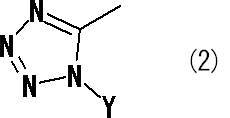
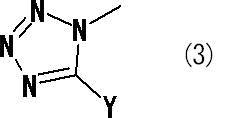
Hetは、式(4):

Q-C(=O)-NH- (5)
(式中、Qは水素原子、C1-8アルキル基、C1-8ハロアルキル基、C3-6シクロアルキル基、C1-8アルコキシ基、C3-6シクロアルキルオキシ基、ベンジルオキシ基、2-フェニルエチルオキシ基、C1-4アルキルチオ基、C1-4アルキルチオC1-4アルキル基、C1-4アルコキシC1-2アルキル基、C1-5アシルアミノC1-6アルキル基、C1-5アシルアミノC1-6アルコキシ基、C1-8アルキルアミノ基、C2-6アルケニル基、アラルキル基又はフェニル基を示す。)で表される基を示す。}で表されるピリジン基又は式(6):

(IV)植物がイネ科の穀物類である(I)~(III)のいずれかに記載の植物成長促進剤。
式(1):
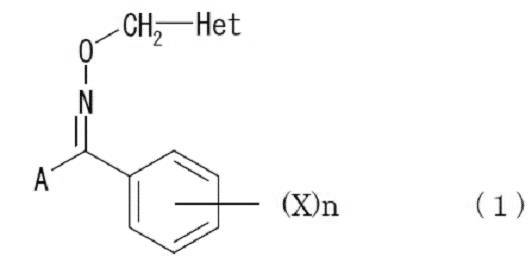
Xが表わすアルキル基としては、炭素原子数1~4のアルキル基が好ましく、具体的にはメチル基、エチル基、n-プロピル基、イソプロピル基、n-ブチル基、イソブチル基、sec-ブチル基、tert-ブチル基が挙げられる。これらの中でも、Xがメチル基又はtert-ブチル基である化合物が特に好ましい。
また、Xが表わすアルキル基又はハロゲン原子で置換された、または無置換のアリール基としては、フェニル基、4-メチルフェニル基、4-クロロフェニル基などが挙げられる。これらの中でも、Xがフェニル基である化合物が特に好ましい。

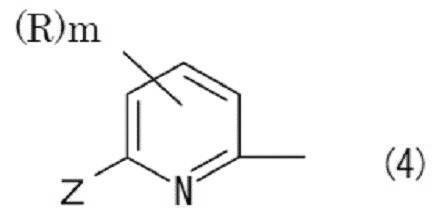
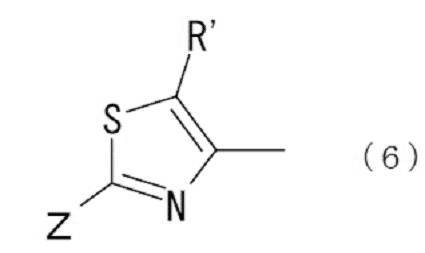
Q-C(=O)-NH- (5)
で表わされる基を表わす。
前記式(6)で表されるチアゾイル基におけるR’は、水素原子又はハロゲン原子を表す。ハロゲン原子としては前記Rのハロゲン原子と同じものが挙げられる。
Qが表わす「C1-8アルコキシ基」としては、メトキシ基、エトキシ基、プロポキシ基、イソプロポキシ基、1,1-ジメチルプロポキシ基、ブトキシ基、イソブトキシ基、sec-ブトキシ基、tert-ブトキシ基、イソペンチルオキシ基、1-メチルブトキシ基、2-メチルブトキシ基、ネオペンチルオキシ基、1-エチルプロポキシ基、n-ペンチルオキシ基、ヘキシルオキシ基、ヘプチルオキシ基、オクチルオキシ基等が挙げられる。
Qが表わす「C1-4アルキルチオ基」としては、メチルチオ基、エチルチオ基、ブチルチオ基等が挙げられる。
Qが表わす「C1-4アルキルチオC1-4アルキル基」としては、メチルチオメチル基、エチルチオエチル基、ブチルチオメチル基等が挙げられる。
Qが表わす「アラルキル基」は、アリール基、好ましくは、C6-10アリール基と、アルキル基、好ましくは、C1-4アルキル基とが結合した基であり、具体的には、ベンジル基、フェネチル基等が挙げられる。

前記式(1)のテトラゾイルオキシム誘導体は、(Z)体が(E)体よりも植物病害の防除活性に優れる。しかしながら、(Z)体も自然環境下で、光などの作用により、一部が(E)体に変化し、(E)体と(Z)体の混合物として、ある一定比率で安定化する傾向にあるので、両方の化合物およびそれらの混合物も有用である。なお、(E)体と(Z)体の安定化比率は各々の化合物により異なるため、一概に特定することはできない。
前記式(1)で表されるテトラゾイルオキシム誘導体は、特許文献3(WO03/016303)記載の方法で製造することができる。しかし、本発明のテトラゾイルオキシム誘導体の製造方法はこの製造方法に限定されるものではない。
本発明の植物成長促進剤は、前述したテトラゾイルオキシム誘導体を有効成分として含有していればよく、他の成分や担体等を適宜配合することができる。
本発明のテトラゾイルオキシム誘導体は、単独で植物成長促進剤として使用することも可能であるが、通常、テトラゾイルオキシム誘導体を有効成分する製剤に用いられる慣用の固体担体、液体担体、分散剤、希釈剤、乳化剤、展着剤および増粘剤などの補助剤と混合して、水和剤、液剤、油剤、粉剤、粒剤またはゾル剤(フロアブル)等の剤型に製剤して使用することができる。
表1に記載の化合物(1-13) 10部
ポリオキシエチレンアリールフェニルエーテルエーテル 2部
ジアルキルスルホサクシネートナトリウム塩 0.5部
グリセリン 5部
キサンタンガム 0.3部
水 82.2部
以上を混合し、粒度が3ミクロン以下になるまで湿式粉砕して、有効成分10%のフロアブル剤を得た。
化合物(1-13)の代わりに、表1に記載の化合物(1-31)を用いた以外は、実施例1と同様にして、フロアブル剤を得た。
化合物(1-13)の代わりに、表2に記載の化合物(2-13)を用いた以外は、実施例1と同様にして、フロアブル剤を得た。
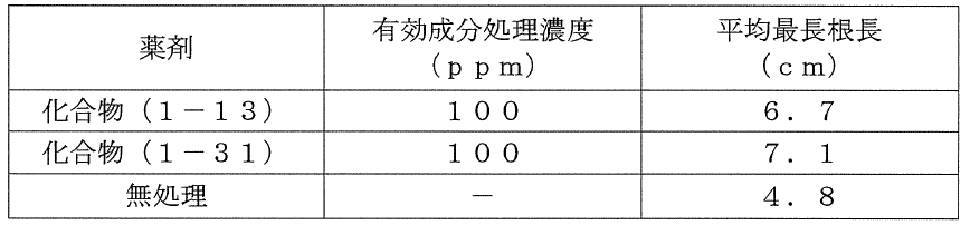
あらかじめ、床土を充填した小型育苗箱(15×10×4cm)に、実施例1または2で得たフロアブル剤を、各々、有効成分として100ppmの濃度に水で希釈し、小型育苗箱あたりこれら薬液を約80ml均一に潅注した。この育苗箱に浸種処理によって鳩胸状態としたイネ種子(品種コシヒカリ)を育苗箱あたり乾燥籾として約12g量播種した。30℃、3日間育苗器中で出芽させ、その後3日間、4℃で低温ストレスを与えた。その後、ガラス温室内で育苗管理した。播種21日後に各育苗箱あたり30苗の最長根長を測定した。
結果を次の表に示す。
「コムギ健苗効果」
実施例1~3で得た各フロアブル剤10gと、コムギ(品種:農林61号)の乾燥種子1kgとをビニール袋に入れ混合し、種子表面に塗沫処理を行った。この塗沫処理より、乾燥種子1kgあたりの有効成分処理量は1gとなった。処理した上記の種子を4号鉢に20粒ずつ播種した。播種後、ガラス温室内で育苗管理した。播種21日後に出芽率と苗の根部の乾燥重量を調査した。試験は3連制で実施した。
結果を次の表に示す。

Claims (4)
- 式(1):

Aは、式(2):

Hetは、式(4):

Q-C(=O)-NH- (5)
(式中、Qは水素原子、C1-8アルキル基、C1-8ハロアルキル基、C3-6シクロアルキル基、C1-8アルコキシ基、C3-6シクロアルキルオキシ基、ベンジルオキシ基、2-フェニルエチルオキシ基、C1-4アルキルチオ基、C1-4アルキルチオC1-4アルキル基、C1-4アルコキシC1-2アルキル基、C1-5アシルアミノC1-6アルキル基、C1-5アシルアミノC1-6アルコキシ基、C1-8アルキルアミノ基、C2-6アルケニル基、アラルキル基又はフェニル基を示す。)で表される基を示す。}で表されるピリジン基又は式(6):
- 式(1)で表されるテトラゾイルオキシム誘導体が、
nが0~2でXがハロゲン原子であり、
Aが式(2)で表されるテトラゾイル基であり、
Hetが式(4)で表されるピリジン基{ただし、式中、Zは式(5)で表される基(ただし、式中、QはC1-8アルキル基又はC1-8アルコキシ基を表す)}であることを特徴とする、請求項1記載の植物成長促進剤。 - 植物の健苗育成を目的とするものであることを特徴とする、請求項1又は2に記載の植物成長促進剤。
- 植物がイネ科の穀物類であることを特徴とする、請求項1~3のいずれかに記載の植物成長促進剤。
Priority Applications (3)
| Application Number | Priority Date | Filing Date | Title |
|---|---|---|---|
| JP2010518903A JP5285070B2 (ja) | 2008-07-02 | 2009-06-26 | 植物成長促進剤 |
| CN200980124633.0A CN102076218B (zh) | 2008-07-02 | 2009-06-26 | 植物生长促进剂 |
| KR1020107028806A KR101309978B1 (ko) | 2008-07-02 | 2009-06-26 | 식물 성장 촉진제 |
Applications Claiming Priority (2)
| Application Number | Priority Date | Filing Date | Title |
|---|---|---|---|
| JP2008173222 | 2008-07-02 | ||
| JP2008-173222 | 2008-07-02 |
Publications (1)
| Publication Number | Publication Date |
|---|---|
| WO2010001563A1 true WO2010001563A1 (ja) | 2010-01-07 |
Family
ID=41465670
Family Applications (1)
| Application Number | Title | Priority Date | Filing Date |
|---|---|---|---|
| PCT/JP2009/002948 Ceased WO2010001563A1 (ja) | 2008-07-02 | 2009-06-26 | 植物成長促進剤 |
Country Status (4)
| Country | Link |
|---|---|
| JP (1) | JP5285070B2 (ja) |
| KR (1) | KR101309978B1 (ja) |
| CN (1) | CN102076218B (ja) |
| WO (1) | WO2010001563A1 (ja) |
Cited By (6)
| Publication number | Priority date | Publication date | Assignee | Title |
|---|---|---|---|---|
| WO2009090237A3 (en) * | 2008-01-16 | 2010-10-07 | Bayer Cropscience Ag | Fungicide hydroximoyl-tetrazole derivatives |
| WO2014038185A1 (ja) | 2012-09-06 | 2014-03-13 | 日本曹達株式会社 | 植物成長促進剤 |
| US10435394B2 (en) | 2014-10-08 | 2019-10-08 | Riken | Plant growth-promotion agent and method for promoting plant growth |
| WO2019221089A1 (ja) | 2018-05-16 | 2019-11-21 | 日本曹達株式会社 | 薬害軽減剤 |
| WO2022158382A1 (ja) * | 2021-01-19 | 2022-07-28 | 日本曹達株式会社 | 混合剤 |
| JPWO2023171593A1 (ja) * | 2022-03-07 | 2023-09-14 |
Families Citing this family (3)
| Publication number | Priority date | Publication date | Assignee | Title |
|---|---|---|---|---|
| CN112624965B (zh) * | 2019-09-24 | 2024-01-16 | 东莞市东阳光农药研发有限公司 | 一种新型肟类衍生物及其在农业中应用 |
| CN112979621B (zh) * | 2021-03-11 | 2023-08-29 | 山东淏源生物科技有限公司 | 2,3,4,6-四取代吡啶类化合物及其在农药中的用途 |
| CN112939938B (zh) * | 2021-03-11 | 2023-12-12 | 陕西大美化工科技有限公司 | 2,4,6-三取代吡啶类化合物及其在农药中的用途 |
Citations (5)
| Publication number | Priority date | Publication date | Assignee | Title |
|---|---|---|---|---|
| WO2003016303A1 (en) * | 2001-08-20 | 2003-02-27 | Dainippon Ink And Chemicals, Inc. | Tetrazoyl oxime derivative and agricultural chemical containing the same as active ingredient |
| JP2004131392A (ja) * | 2002-10-08 | 2004-04-30 | Sumitomo Chem Co Ltd | テトラゾール化合物およびその用途 |
| JP2004131416A (ja) * | 2002-10-10 | 2004-04-30 | Sumitomo Chem Co Ltd | テトラゾール化合物およびその植物病害防除用途 |
| WO2008140099A1 (ja) * | 2007-05-14 | 2008-11-20 | Nippon Soda Co., Ltd. | テトラゾイルオキシム誘導体および植物病害防除剤 |
| WO2009020191A1 (ja) * | 2007-08-08 | 2009-02-12 | Nippon Soda Co., Ltd. | テトラゾイルオキシム誘導体及び植物病害防除剤 |
Family Cites Families (4)
| Publication number | Priority date | Publication date | Assignee | Title |
|---|---|---|---|---|
| JP4330313B2 (ja) * | 2001-08-20 | 2009-09-16 | 日本曹達株式会社 | テトラゾイルオキシム誘導体及びこれを有効成分とする農薬 |
| HUE035062T2 (en) * | 2008-01-15 | 2018-05-02 | Bayer Ip Gmbh | Pesticide formulation containing tetrazolyl oxime and fungicide or insecticide |
| KR20100137573A (ko) * | 2008-04-22 | 2010-12-30 | 바이엘 크롭사이언스 아게 | 살진균제 히드록시모일-헤테로시클 유도체 |
| WO2009130900A1 (ja) * | 2008-04-24 | 2009-10-29 | 日本曹達株式会社 | オキシム誘導体、中間体化合物および植物病害防除剤 |
-
2009
- 2009-06-26 WO PCT/JP2009/002948 patent/WO2010001563A1/ja not_active Ceased
- 2009-06-26 KR KR1020107028806A patent/KR101309978B1/ko active Active
- 2009-06-26 JP JP2010518903A patent/JP5285070B2/ja active Active
- 2009-06-26 CN CN200980124633.0A patent/CN102076218B/zh active Active
Patent Citations (5)
| Publication number | Priority date | Publication date | Assignee | Title |
|---|---|---|---|---|
| WO2003016303A1 (en) * | 2001-08-20 | 2003-02-27 | Dainippon Ink And Chemicals, Inc. | Tetrazoyl oxime derivative and agricultural chemical containing the same as active ingredient |
| JP2004131392A (ja) * | 2002-10-08 | 2004-04-30 | Sumitomo Chem Co Ltd | テトラゾール化合物およびその用途 |
| JP2004131416A (ja) * | 2002-10-10 | 2004-04-30 | Sumitomo Chem Co Ltd | テトラゾール化合物およびその植物病害防除用途 |
| WO2008140099A1 (ja) * | 2007-05-14 | 2008-11-20 | Nippon Soda Co., Ltd. | テトラゾイルオキシム誘導体および植物病害防除剤 |
| WO2009020191A1 (ja) * | 2007-08-08 | 2009-02-12 | Nippon Soda Co., Ltd. | テトラゾイルオキシム誘導体及び植物病害防除剤 |
Cited By (15)
| Publication number | Priority date | Publication date | Assignee | Title |
|---|---|---|---|---|
| WO2009090237A3 (en) * | 2008-01-16 | 2010-10-07 | Bayer Cropscience Ag | Fungicide hydroximoyl-tetrazole derivatives |
| WO2014038185A1 (ja) | 2012-09-06 | 2014-03-13 | 日本曹達株式会社 | 植物成長促進剤 |
| US10435394B2 (en) | 2014-10-08 | 2019-10-08 | Riken | Plant growth-promotion agent and method for promoting plant growth |
| KR102540089B1 (ko) | 2018-05-16 | 2023-06-05 | 닛뽕소다 가부시키가이샤 | 약해 경감제 |
| KR20210005103A (ko) | 2018-05-16 | 2021-01-13 | 닛뽕소다 가부시키가이샤 | 약해 경감제 |
| JPWO2019221089A1 (ja) * | 2018-05-16 | 2021-05-27 | 日本曹達株式会社 | 薬害軽減剤 |
| JP7261794B2 (ja) | 2018-05-16 | 2023-04-20 | 日本曹達株式会社 | 薬害軽減剤 |
| WO2019221089A1 (ja) | 2018-05-16 | 2019-11-21 | 日本曹達株式会社 | 薬害軽減剤 |
| WO2022158382A1 (ja) * | 2021-01-19 | 2022-07-28 | 日本曹達株式会社 | 混合剤 |
| JPWO2022158382A1 (ja) * | 2021-01-19 | 2022-07-28 | ||
| KR20230131834A (ko) | 2021-01-19 | 2023-09-14 | 닛뽕소다 가부시키가이샤 | 혼합제 |
| JP7516572B2 (ja) | 2021-01-19 | 2024-07-16 | 日本曹達株式会社 | 混合剤 |
| JPWO2023171593A1 (ja) * | 2022-03-07 | 2023-09-14 | ||
| WO2023171593A1 (ja) | 2022-03-07 | 2023-09-14 | 日本曹達株式会社 | 塩ストレスによる植物への影響を軽減または予防する方法 |
| JP7792503B2 (ja) | 2022-03-07 | 2025-12-25 | 日本曹達株式会社 | 塩ストレスによる植物への影響を軽減または予防する方法 |
Also Published As
| Publication number | Publication date |
|---|---|
| CN102076218B (zh) | 2013-11-06 |
| CN102076218A (zh) | 2011-05-25 |
| KR101309978B1 (ko) | 2013-09-17 |
| KR20110009725A (ko) | 2011-01-28 |
| JPWO2010001563A1 (ja) | 2011-12-15 |
| JP5285070B2 (ja) | 2013-09-11 |
Similar Documents
| Publication | Publication Date | Title |
|---|---|---|
| JP5285070B2 (ja) | 植物成長促進剤 | |
| CN101902916B (zh) | 新型内吸性杀虫剂 | |
| CN101686679B (zh) | 杀线虫剂组合物及其使用方法 | |
| TWI356676B (en) | Insecticidal composition | |
| JP2016190875A (ja) | 成長促進剤および抗真菌剤としてアントラキノン誘導体を含む組成物 | |
| WO2008062823A1 (fr) | Composition de lutte contre les maladies des plantes et procédé de prévention et de lutte correspondant | |
| CN110437144B (zh) | 喹啉类衍生物及其制备方法和用途 | |
| WO1997031536A1 (en) | Growth regulator for crop plants and method for regulating the growth of crop plants | |
| JP2010504740A (ja) | 植物固有の生産力の増強方法 | |
| JPS6328881B2 (ja) | ||
| BR112020015547A2 (pt) | composições de benzoxaborol que têm um efeito aprimorador de crescimento | |
| JP2009269913A (ja) | テトラゾイルオキシム誘導体を有効成分とする農薬 | |
| JP5973580B2 (ja) | 植物成長促進剤 | |
| WO2003011029A1 (en) | Composition for controlling plant pathogenic bacterium and method of controlling plant pathogenic bacterium | |
| CN110402926B (zh) | 一种促根增产的植物生长调剂及应用 | |
| JPH0347106A (ja) | 農業用殺虫殺菌組成物 | |
| JPH0791164B2 (ja) | 農園芸用殺虫剤組成物 | |
| JP2003321310A (ja) | 農薬組成物 | |
| JPS6254281B2 (ja) | ||
| JPS6372610A (ja) | 農業用殺虫殺菌組成物 | |
| JPH07145012A (ja) | 農園芸用殺菌剤組成物 | |
| WO2023171593A1 (ja) | 塩ストレスによる植物への影響を軽減または予防する方法 | |
| JPS63154602A (ja) | 農園芸用の殺虫殺菌組成物 | |
| SU727108A3 (ru) | Фунгицидное средство | |
| JPS629083B2 (ja) |
Legal Events
| Date | Code | Title | Description |
|---|---|---|---|
| WWE | Wipo information: entry into national phase |
Ref document number: 200980124633.0 Country of ref document: CN |
|
| 121 | Ep: the epo has been informed by wipo that ep was designated in this application |
Ref document number: 09773141 Country of ref document: EP Kind code of ref document: A1 |
|
| WWE | Wipo information: entry into national phase |
Ref document number: 2010518903 Country of ref document: JP |
|
| ENP | Entry into the national phase |
Ref document number: 20107028806 Country of ref document: KR Kind code of ref document: A |
|
| NENP | Non-entry into the national phase |
Ref country code: DE |
|
| 122 | Ep: pct application non-entry in european phase |
Ref document number: 09773141 Country of ref document: EP Kind code of ref document: A1 |