WO2008138946A1 - Bisamid-zinkbasen - Google Patents
Bisamid-zinkbasen Download PDFInfo
- Publication number
- WO2008138946A1 WO2008138946A1 PCT/EP2008/055895 EP2008055895W WO2008138946A1 WO 2008138946 A1 WO2008138946 A1 WO 2008138946A1 EP 2008055895 W EP2008055895 W EP 2008055895W WO 2008138946 A1 WO2008138946 A1 WO 2008138946A1
- Authority
- WO
- WIPO (PCT)
- Prior art keywords
- substituted
- range
- unsubstituted
- general formula
- compound according
- Prior art date
- Legal status (The legal status is an assumption and is not a legal conclusion. Google has not performed a legal analysis and makes no representation as to the accuracy of the status listed.)
- Ceased
Links
Classifications
-
- C—CHEMISTRY; METALLURGY
- C07—ORGANIC CHEMISTRY
- C07F—ACYCLIC, CARBOCYCLIC OR HETEROCYCLIC COMPOUNDS CONTAINING ELEMENTS OTHER THAN CARBON, HYDROGEN, HALOGEN, OXYGEN, NITROGEN, SULFUR, SELENIUM OR TELLURIUM
- C07F3/00—Compounds containing elements of Groups 2 or 12 of the Periodic Table
- C07F3/003—Compounds containing elements of Groups 2 or 12 of the Periodic Table without C-Metal linkages
-
- C—CHEMISTRY; METALLURGY
- C07—ORGANIC CHEMISTRY
- C07C—ACYCLIC OR CARBOCYCLIC COMPOUNDS
- C07C211/00—Compounds containing amino groups bound to a carbon skeleton
- C07C211/65—Metal complexes of amines
-
- C—CHEMISTRY; METALLURGY
- C07—ORGANIC CHEMISTRY
- C07D—HETEROCYCLIC COMPOUNDS
- C07D211/00—Heterocyclic compounds containing hydrogenated pyridine rings, not condensed with other rings
- C07D211/92—Heterocyclic compounds containing hydrogenated pyridine rings, not condensed with other rings with a hetero atom directly attached to the ring nitrogen atom
-
- C—CHEMISTRY; METALLURGY
- C07—ORGANIC CHEMISTRY
- C07D—HETEROCYCLIC COMPOUNDS
- C07D521/00—Heterocyclic compounds containing unspecified hetero rings
Definitions
- the present invention relates to bisamide zinc bases, their preparation and the use of the zinc bases.
- the present invention relates to bisamide zinc bases which can be used to prepare aryl and heteroaryl metal compounds.
- the preparation of aryl and heteroaryl metal compounds can be effected either by a halogen-metal-exchange reaction (eg, bromine-lithium exchange 1 ), insertion of elemental metal into a carbon-halogen bond (eg, zinc insertion into a carbon-iodine bond 2 ), or metalation (deprotonation with Help strong bases 3 ) take place.
- a halogen-metal-exchange reaction eg, bromine-lithium exchange 1
- elemental metal into a carbon-halogen bond eg, zinc insertion into a carbon-iodine bond 2
- metalation deprotonation with Help strong bases 3
- aryl or heteroaryl iodo compounds are generally expensive and usually not long lasting.
- Another disadvantage of exchange reactions and insertions, especially on a larger reaction scale, is the formation of metal salts, some of which must be disposed of separately. Therefore, it is desirable to have an alternative method of functionalizing aromatic and heteroaromatic compounds based on C-H activation.
- organolithium compounds are the most reactive reagents. 5
- Organomagnesium compounds such as TMPMgCl-LiCl have a higher stability, but here too the tolerance to sensitive functional groups such as aldehydes and nitro groups is limited. 7
- Another reagent for the metallation of aromatics is TMPZn ⁇ Bu 2 Li, whose high activity is based on a Zinkatspezies. 8
- Another zinc base is the neutral Zn (TMP) 2.
- TMP neutral Zn
- R 1 and R 2 are independently selected from substituted or unsubstituted, straight or branched alkyl, alkenyl, alkynyl or their silyl derivatives, and substituted or unsubstituted aryl or heteroaryl, and wherein R 1 and R 2 may together form a ring structure, or R 1 and / or R 2
- X 1 2 is a divalent anion or two independent monovalent anions; X 2 is a monovalent anion; a>0; and b> 0.
- R 1 and / or R 2 are independently selected from linear or branched, substituted or unsubstituted Ci-C20 alkyl, preferably Ci-I 0 - alkyl, more preferably C 1-6 alkyl, and most preferred C 2 - 5 alkyl.
- R 1 and / or R 2 are independently selected from methyl, ethyl, n-propyl, iso-propyl, butyl, sec-butyl and tert-butyl.
- R 1 and / or R 2 are independently selected from silyl radicals, preferably alkyl-substituted silyl radicals, and particularly preferably trimethylsilyl, triethylsilyl, triisopropylsilyl and t-butyldimethylsilyl.
- R 1 and R 2 together form a ring structure, preferably an alkanediyl ring structure, and more preferably l, l, 5,5-tetramethylpentane-l, 5-diyl.
- the nitrogen atom which is coordinated to the central zinc, is part of a ring structure.
- This ring structure may preferably be 2,2,6,6-tetramethylpiperidine.
- any secondary amines are possible, the nitrogen atom being part of a ring structure.
- at least one nitrogen atom is part of a polymeric structure.
- the zinc base is immobilized on a polymer.
- only one of the two nitrogen atoms is part of a polymer structure and the other nitrogen atom is part of a secondary amine.
- X 1 2 is a divalent anion, such as SO 4 .
- X * 2 can be composed of two different, monovalent anions, ie X 1 and X 1 are present side by side in the formula (R 1 R 2 N) 2 -Zn • aMgX 1 X 1 • bLiX 2 , where X 1 and X 1 are different, monovalent anions.
- X 1 and X 1 independently of one another have the same definition as X 1 .
- X 1 and / or X 2 are independently selected from Cl, Br and I, and X 1 and / or X 2 Cl are preferred.
- a and / or b independently of each other, are in the range of 0.01-5, preferably 0.5-3, more preferably 0.9 to 2.5, and most preferably about 2 ,
- a second aspect of the present invention relates to a process for producing a
- a compound as defined above comprising the steps of: providing a salt containing zinc;
- the reaction is carried out in a solvent.
- the magnesium amide base may be dissolved in a solvent, preferably in a solvent selected from the group consisting of cyclic, linear or branched mono- or polyethers, thioethers, amines, phosphines, and derivatives thereof containing one or more additional heteroatoms , selected from O, N, S and P, preferably tetrahydrofuran (THF), 2-methyltetrahydrofuran, dibutyl ether, diethyl ether, tert-butylr ⁇ ethylether, dimethoxyethane, dioxanes, preferably 1,4-dioxane, triethylamine, ethyldiisopropylamine, dimethyl sulfide, dibutyl sulfide; cyclic and linear amides, preferably N-methyl-2-pyrrolidone (NMP), N-ethyl
- the zinc-containing salt which is also referred to as zinc salt
- a solvent Possible solvents are the same as the solvents mentioned above for the magnesium amide.
- the zinc salt is dried and charged without solvent and then the magnesium amide is added in a solvent. As a result, the total amount of solvent can be kept low and the zinc salt can be easily dried. In addition, side reactions are reduced.
- precipitations occur during the addition, they can be redissolved by adding additional solvent.
- the addition of the magnesium amide which may optionally be dissolved in a solvent, in a temperature range from -80 0 C to 100 ° C, preferably from -25 ° C to 50 ° C, and most preferably from 0 ° C to 30 ° C.
- the addition is carried out by methods known to a person skilled in the art.
- the addition may take place in such a way that the reaction solution does not heat up too much.
- the transmetalation of the magnesium amide to the zinc amide is an exothermic reaction. Therefore, if the magnesium amide added too fast or in too high a concentration, an undesirable heating can take place.
- the addition may preferably be controlled over the addition period.
- the zinc salt is dried before addition of the magnesium amide base, preferably in vacuo and / or at a temperature of about 5O 0 C, more preferably above 100 0 C and more preferably above 150 ° C. Particularly preferred is a combination of vacuum and elevated temperature.
- the concentration of the magnesium amide base when added to the zinc salt is in the range of 0.01-3 M, preferably in the range of 0.1-1.5 M, and most preferably in the range of 0.5-1.2 M.
- a concentration of the zinc oxide in the resulting solution preferably 0.01-2 M, more preferably 0.05-1 M, and most preferably in the range of 0.1-0.6 Reached. If the concentration is too low, the dilution in the reaction mixture can be so great that z. If the concentration is too high, it is possible that the zinc amide base precipitates and must be redissolved with additional solvent. Precipitation of the zinc amide base is not detrimental to the base itself, but controlled aliquot measurement is difficult due to the unknown amount of precipitated amide.
- a third aspect of the present invention relates to the use of the zinc amide bases. These may preferably be used for the reaction with an electrophile.
- a reagent carrying an acidic proton is deprotonated with the zinc amide base and then reacted with an electrophile.
- the reagent which is also referred to as a substrate, form a stabilized or unstabilized carbanion.
- An advantage of using the zinc amide bases according to the invention is that they can be added in a low concentration.
- two protons can be abstracted with a zinc amide base. These may be present within a substrate, or preferably two protons may be abstracted from two substrates. Therefore, it is possible to add the zinc amide base of the present invention in an amount of about 0.5-0.6 equivalent to the substrate, if only one proton in a substrate is to be abstracted. Based on the number of protons abstracted to the zinc amide base may be added in an amount of about 0.5 to 0 ⁇ 6 equivalents. With lower acidity of the protons to be abstracted, an increased addition amount of zinc amide base may be necessary.
- the zinc amide base may preferably be added in an amount of 1.0-1.1 equivalents to the substrate.
- alkyl is meant here a saturated hydrocarbon radical which may be branched or unbranched, ie straight-chain.
- the alkyl comprises 1-20 carbon atoms and forms a C] -C 2 o-alkyl radical.
- radicals having 1-10 carbon atoms ie C 1 -C 10 -alkyl radicals, more preferably radicals having 1 to 6 carbon atoms, ie C 1 -C 6 -alkyl radicals.
- radicals examples include methyl, ethyl, n-propyl, isopropyl, n-butyl, sec-butyl, tert-butyl, n-pentyl and n-hexyl, without, however, being restricted to these examples.
- alkenyl should be understood as meaning an unsaturated hydrocarbon radical having at least one carbon-carbon double bond.
- Preferred radicals include C 2 -C 2 o-alkenyl radicals. More preferred are C 2 -C 10 -alkenyl radicals and most preferably C 3 -C 6 -alkenyl radicals.
- a particularly preferred radical is the allyl radical.
- alkynyl is understood to mean an unsaturated hydrocarbon radical having at least one carbon-carbon triple bond.
- Preferred alkynyl radicals include C 2 -C 20 alkmyl radicals. More preferred are C 2 -Cio-alkynyl radicals and most preferably C 3 -C 6 -alkenyl radicals.
- Silyl is understood in this application to mean a substituted by alkyl, alkenyl or alkynyl silicon atom.
- a silyl radical can consequently be replaced by the general one Formula -Si (R S! R S2 R S3 ) where R s ⁇ R S2 and R S3 are each independently selected from alkyl, alkenyl, alkynyl, aryl or heteroaryl, all radicals being as defined above.
- Preferred silyl radicals include trimethylsilyl, triethylsilyl, triisopropylsilyl, t-butyldimethylsilyl and triphenylsilyl.
- aryl is meant an aromatic hydrocarbon ring system.
- a heteroaryl or hetaryl at least one carbon atom of a hydrocarbon system is replaced by a heteroatom, such as, for example, B, N, O, S or P.
- aryl radicals include, but are not limited to, phenyl and naphthyl.
- heteroaryl include pyrryl, pyridyl, furanyl and thiofuryl.
- Halogens preferably fluorine, chlorine, bromine and iodine
- Aliphatic, alicyclic, aromatic and heteroaromatic hydrocarbons especially alkanes, alkenes, alkynes, aryls, arylidenes, heteroaryls and heteroarylidenes;
- Alcohols and alcoholates including hydroxyl groups
- the substituents may be bonded to the radicals via a carbon atom, an oxygen atom, a nitrogen atom, a sulfur atom or a phosphorus atom.
- heteroatoms e.g. in heteroaromatics, B, N, O, S and P are preferably used.
- the content of the Magesiumamidbasen and the Zinkbisamidbasen was determined using benzoic acid as a proton source and 4 (phenylazo) diphenylamine as an indicator.
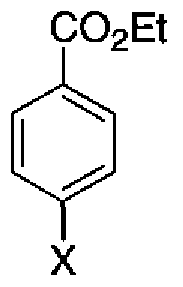
- An example of a zinc amide base according to the invention is the neutral base Zn (TMP) 2 -2LiCl-2MgCl 2 (1). It allows the metalation of arenes and heteroarenes under mild conditions. Here, a variety of functional groups, such as ester, cyano, nitro and aldehyde function as well as chlorine or bromine, can be tolerated. Zn (TMP) 2 4 2LiCl-2MgCl 2 can easily be prepared in a two-step synthesis according to Scheme 1.
- Scheme 1 Preparation of Zn (TMP) 2 -2LiCl-2MgCl 2 (1). Starting from the analogous magnesium amides DAMgCl-LiCl and HMDSMgCl-LiCl, it is also possible to visualize Zn (DA) 2 -2LiCl-2MgCl 2 (2) and Zn (HMDS) 2 -2LiCl-2MgCl 2 (3) (Scheme 2). Where DA is diisopropylamine and HMDS is hexamethyldisilazane. However, these bases have less activity than 1.
- the presence of a lithium salt in the zinc amide base increases the effectiveness of the zinc amide base.
- the Mg salt formed in the preparation of the neutral zinc base also leads to an increase in reactivity and to improved solubility of the metallated species.
- diaryl and DiheteroarylzinkENSen can be implemented in a variety of ways with electrophiles.
- the diaryl and DiheteroarylzinkENS can be transmetallated eg on copper to perform allylations or acetylations (see Scheme 3).
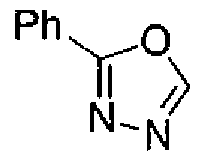
- the presence of the zinc amide base can be shown on another system (see Scheme 6).
- 2-phenyl [l, 3,4] oxadiazole can be deprotonated in a short time.
- the organomagnesium compound decomposes very rapidly to the indicated products at room temperature.
- the organozinc compound is stable at room temperature and can be further reacted with electrophiles.
- both the presence of Mg and Li in the zinc amide base is important. If one of these metals is missing, the reactivity is greatly reduced or no reaction takes place. However, it is also important to have a bisamide base. If only one monoamide base is present, as in entry 3, no reaction can be observed.
- a further increase in the reactivity of the zinc amide bases can be achieved by the use of microwave radiation.
- the reaction time can be significantly shortened by the use of microwave radiation.
- One embodiment of the use of the compounds of the formula I is a reaction with an electrophile, wherein first a CH-acidic substrate is deprotected with a compound of the formula I and then the deprotonated substrate is reacted with an electrophile.
- the deprotonation of the CH-acidic substrate is carried out under microwave irradiation.
- Microwave irradiation with an energy in the range of 1 to 500 W, preferably in the range of 20 to 300 W, more preferably in the range of 40 to 200 W, and most preferably in the range of 80 to 150 W is particularly advantageously used.
- microwave-accelerated metallation is an extremely useful tool for the functionalization, in particular of aromatics and heteroaromatics, since even inert substrates can be reacted efficiently and quickly.
- this approach has shown a major step in combining high reactivity with selectivity and tolerance to sensitive functional groups.
- ZnCl 2 (21.0 mmol, 2.86 g) is dried in a 100 mL Schlenk flask with stirring in an oil pump vacuum at 150 ° C. for 5 h. After cooling, TMPMgCl-LiCl (40.0 mmol, 1.11 M, 36.0 mL) dissolved in tetrahydrofuran (THF) is slowly added at room temperature and stirred at room temperature for 15 h. Any possible precipitation of Zn (TMP) 2 -2LiCl-2MgCl 2 can be redissolved by adding dry THF.
- THF tetrahydrofuran
- the aqueous phase was extracted with ethyl acetate (5 x 10 mL), dried over MgSO 4 and concentrated under reduced pressure.
- the crude product was purified by filter column chromatography (silica gel; CH 2 Cl 2 ); 5 h (133 mg, 81%) were obtained as a yellow, crystalline solid.
- Figure 2 Notes: a) Use of CuCN-2LiCl (5 mol%); b) CH 3 COOD (10 equiv.) in D 2 O was used as a scavenger; c) I 2 (1.0 equiv) was used as electrophile; d) use of chloranil (1.2 equiv) to effect homocoupling; e) use of CuCN-2LiCl (1.1 equiv.); f) PhSSO 2 Ph was used as electrophile, g) use of Pd (dba) 2 (5 mol%) and Tfp (10 mol%) as catalyst literature
Landscapes
- Chemical & Material Sciences (AREA)
- Organic Chemistry (AREA)
- Organic Low-Molecular-Weight Compounds And Preparation Thereof (AREA)
- Thiazole And Isothizaole Compounds (AREA)
- Hydrogenated Pyridines (AREA)
Abstract
Description






Claims
Priority Applications (6)
| Application Number | Priority Date | Filing Date | Title |
|---|---|---|---|
| DE502008001409T DE502008001409D1 (de) | 2007-05-14 | 2008-05-14 | Bisamid-zinkbasen |
| EP08759580A EP2147002B1 (de) | 2007-05-14 | 2008-05-14 | Bisamid-zinkbasen |
| CN2008800158785A CN101778852B (zh) | 2007-05-14 | 2008-05-14 | 双胺化锌碱 |
| JP2010507913A JP5489987B2 (ja) | 2007-05-14 | 2008-05-14 | ビスアミド亜鉛塩基 |
| AT08759580T ATE482221T1 (de) | 2007-05-14 | 2008-05-14 | Bisamid-zinkbasen |
| US12/599,852 US8513416B2 (en) | 2007-05-14 | 2008-05-14 | Bisamide-zinc bases |
Applications Claiming Priority (2)
| Application Number | Priority Date | Filing Date | Title |
|---|---|---|---|
| DE102007022490A DE102007022490A1 (de) | 2007-05-14 | 2007-05-14 | Bisamid-Zinkbasen |
| DE102007022490.9 | 2007-05-14 |
Publications (1)
| Publication Number | Publication Date |
|---|---|
| WO2008138946A1 true WO2008138946A1 (de) | 2008-11-20 |
Family
ID=39645583
Family Applications (1)
| Application Number | Title | Priority Date | Filing Date |
|---|---|---|---|
| PCT/EP2008/055895 Ceased WO2008138946A1 (de) | 2007-05-14 | 2008-05-14 | Bisamid-zinkbasen |
Country Status (9)
| Country | Link |
|---|---|
| US (1) | US8513416B2 (de) |
| EP (1) | EP2147002B1 (de) |
| JP (1) | JP5489987B2 (de) |
| CN (1) | CN101778852B (de) |
| AT (1) | ATE482221T1 (de) |
| DE (2) | DE102007022490A1 (de) |
| ES (1) | ES2352096T3 (de) |
| PT (1) | PT2147002E (de) |
| WO (1) | WO2008138946A1 (de) |
Cited By (10)
| Publication number | Priority date | Publication date | Assignee | Title |
|---|---|---|---|---|
| JP2012517972A (ja) * | 2009-02-13 | 2012-08-09 | ルートヴィヒ−マクシミリアンス−ウニヴェルズィテート ミュンヘン | 亜鉛アミド類の製造及び使用 |
| US8513416B2 (en) | 2007-05-14 | 2013-08-20 | Ludwig-Maximilians-Universitat Muenchen | Bisamide-zinc bases |
| WO2013120878A1 (en) | 2012-02-17 | 2013-08-22 | Bayer Intellectual Property Gmbh | Alkaline earth metal-complexed metal amides |
| WO2013120911A1 (en) * | 2012-02-17 | 2013-08-22 | Bayer Intellectual Property Gmbh | Alkaline earth metal-complexed metal bisamides |
| WO2014124915A1 (en) * | 2013-02-12 | 2014-08-21 | Bayer Cropscience Ag | Preparation of alkaline earth metal-complexed metal bisamides from metal monoamides |
| WO2015168010A1 (en) | 2014-04-29 | 2015-11-05 | E. I. Du Pont De Nemours And Company | Pyridazinone herbicides |
| WO2017074992A1 (en) | 2015-10-28 | 2017-05-04 | E. I. Du Pont De Nemours And Company | Novel pyrdazinone herbicides |
| WO2018183432A1 (en) | 2017-03-28 | 2018-10-04 | Fmc Corporation | Novel pyridazinone herbicides |
| WO2019143757A1 (en) | 2018-01-21 | 2019-07-25 | Fmc Corporation | Pyridazinone-substituted ketoximes as herbicides |
| US10633341B2 (en) | 2016-12-19 | 2020-04-28 | Novartis Ag | Picolinic acid derivatives and their use as intermediates |
Families Citing this family (3)
| Publication number | Priority date | Publication date | Assignee | Title |
|---|---|---|---|---|
| DE102010003015A1 (de) | 2010-03-18 | 2011-11-17 | Ludwig-Maximilians-Universität München | Carbonylierung von organischen Zinkverbindungen |
| WO2012085168A1 (en) | 2010-12-22 | 2012-06-28 | Ludwig-Maximilians-Universität München | Organozinc complexes and processes for making and using the same |
| EP3750876A1 (de) * | 2019-06-13 | 2020-12-16 | Evonik Operations GmbH | Verfahren zur herstellung von triacetonamin, 2,2,4,6-tetramethylpiperidin und/oder den salzen des 2,2,4,6-tetramethylpiperidins |
Family Cites Families (2)
| Publication number | Priority date | Publication date | Assignee | Title |
|---|---|---|---|---|
| EP1810974A1 (de) | 2006-01-18 | 2007-07-25 | Ludwig-Maximilians-Universität München | Herstellung und Verwendung von Magnesiumamiden |
| DE102007022490A1 (de) | 2007-05-14 | 2008-11-20 | Ludwig-Maximilians-Universität | Bisamid-Zinkbasen |
-
2007
- 2007-05-14 DE DE102007022490A patent/DE102007022490A1/de not_active Withdrawn
-
2008
- 2008-05-14 PT PT08759580T patent/PT2147002E/pt unknown
- 2008-05-14 AT AT08759580T patent/ATE482221T1/de active
- 2008-05-14 EP EP08759580A patent/EP2147002B1/de not_active Not-in-force
- 2008-05-14 ES ES08759580T patent/ES2352096T3/es active Active
- 2008-05-14 CN CN2008800158785A patent/CN101778852B/zh not_active Expired - Fee Related
- 2008-05-14 DE DE502008001409T patent/DE502008001409D1/de active Active
- 2008-05-14 JP JP2010507913A patent/JP5489987B2/ja not_active Expired - Fee Related
- 2008-05-14 WO PCT/EP2008/055895 patent/WO2008138946A1/de not_active Ceased
- 2008-05-14 US US12/599,852 patent/US8513416B2/en not_active Expired - Fee Related
Non-Patent Citations (4)
| Title |
|---|
| HLAVINKA ET AL: "One-step deprotonation route to zinc amide and ester enolates for use in aldol reactions and Negishi couplings", TETRAHEDRON LETTERS, ELSEVIER, AMSTERDAM, vol. 47, no. 29, 17 July 2006 (2006-07-17), pages 5049 - 5053, XP005506076, ISSN: 0040-4039 * |
| KNOCHEL, P. ; WUNDERLICH S. H.: "(tmp) 2Zns2 MgCl2s2 LiCl: eine chemoselektive Base fur die gezielte Zinkierung von empfindlichen Arenen und Heteroarenen", ANGEWANDTE CHEMIE, vol. 119, no. 40, 27 August 2007 (2007-08-27), pages 7829 - 7832, XP002490914 * |
| KRASOVSKIY A ET AL: "Mixed Mg/Li amides of the type R2NMgCl.cntdot.LiCl as highly efficient bases for the regioselective generation of functionalized aryl and heteroaryl magnesium compounds", ANGEWANDTE CHEMIE. INTERNATIONAL EDITION, WILEY VCH VERLAG, WEINHEIM, vol. 45, no. 18, 1 January 2006 (2006-01-01), pages 2958 - 2961, XP002432039, ISSN: 1433-7851 * |
| Y. KONDO, M. SHILAI, M. UCHIYAMA, T. SAKAMOTO: "TMP-Zincate as Highly Chemoselective Base for Directed Ortho Metalation", J. AM. CHEM. SOC., no. 121, 25 March 1999 (1999-03-25), pages 3539 - 3540, XP002490915 * |
Cited By (23)
| Publication number | Priority date | Publication date | Assignee | Title |
|---|---|---|---|---|
| US8513416B2 (en) | 2007-05-14 | 2013-08-20 | Ludwig-Maximilians-Universitat Muenchen | Bisamide-zinc bases |
| US9688701B2 (en) | 2009-02-13 | 2017-06-27 | Ludwig-Maximilians-Universitat Munchen | Production and use of zinc amides |
| JP2012517972A (ja) * | 2009-02-13 | 2012-08-09 | ルートヴィヒ−マクシミリアンス−ウニヴェルズィテート ミュンヘン | 亜鉛アミド類の製造及び使用 |
| KR20140127249A (ko) * | 2012-02-17 | 2014-11-03 | 바이엘 인텔렉쳐 프로퍼티 게엠베하 | 알칼리 토금속-착물화된 금속 아미드 |
| KR102069089B1 (ko) | 2012-02-17 | 2020-01-22 | 바이엘 인텔렉쳐 프로퍼티 게엠베하 | 알칼리 토금속이 착화된 금속 비스아미드 |
| KR20140124807A (ko) * | 2012-02-17 | 2014-10-27 | 바이엘 인텔렉쳐 프로퍼티 게엠베하 | 알칼리 토금속이 착화된 금속 비스아미드 |
| WO2013120911A1 (en) * | 2012-02-17 | 2013-08-22 | Bayer Intellectual Property Gmbh | Alkaline earth metal-complexed metal bisamides |
| CN104220423A (zh) * | 2012-02-17 | 2014-12-17 | 拜耳知识产权有限责任公司 | 碱土金属络合的金属双酰胺 |
| US9079925B2 (en) | 2012-02-17 | 2015-07-14 | Bayer Intellectual Property Gmbh | Alkaline earth metal-complexed metal amides |
| KR102014305B1 (ko) | 2012-02-17 | 2019-08-26 | 바이엘 인텔렉쳐 프로퍼티 게엠베하 | 알칼리 토금속-착물화된 금속 아미드 |
| WO2013120878A1 (en) | 2012-02-17 | 2013-08-22 | Bayer Intellectual Property Gmbh | Alkaline earth metal-complexed metal amides |
| US9334292B2 (en) | 2012-02-17 | 2016-05-10 | Bayer Cropscience Ag | Alkaline earth metal-complexed metal bisamides |
| CN104220423B (zh) * | 2012-02-17 | 2016-06-15 | 拜耳知识产权有限责任公司 | 碱土金属络合的金属双酰胺 |
| US9732100B2 (en) | 2013-02-12 | 2017-08-15 | Bayer Cropscience Ag | Preparation of alkaline earth metal-complexed metal bisamides from metal monoamides |
| KR20150119119A (ko) * | 2013-02-12 | 2015-10-23 | 바이엘 크롭사이언스 악티엔게젤샤프트 | 금속 모노아미드로부터의 알칼리 토금속-착물화된 금속 비스아미드의 제조 |
| WO2014124915A1 (en) * | 2013-02-12 | 2014-08-21 | Bayer Cropscience Ag | Preparation of alkaline earth metal-complexed metal bisamides from metal monoamides |
| KR102186110B1 (ko) | 2013-02-12 | 2020-12-03 | 바이엘 크롭사이언스 악티엔게젤샤프트 | 금속 모노아미드로부터의 알칼리 토금속-착물화된 금속 비스아미드의 제조 |
| WO2015168010A1 (en) | 2014-04-29 | 2015-11-05 | E. I. Du Pont De Nemours And Company | Pyridazinone herbicides |
| EP3865480A1 (de) | 2014-04-29 | 2021-08-18 | FMC Corporation | Hydrazinderivate |
| WO2017074992A1 (en) | 2015-10-28 | 2017-05-04 | E. I. Du Pont De Nemours And Company | Novel pyrdazinone herbicides |
| US10633341B2 (en) | 2016-12-19 | 2020-04-28 | Novartis Ag | Picolinic acid derivatives and their use as intermediates |
| WO2018183432A1 (en) | 2017-03-28 | 2018-10-04 | Fmc Corporation | Novel pyridazinone herbicides |
| WO2019143757A1 (en) | 2018-01-21 | 2019-07-25 | Fmc Corporation | Pyridazinone-substituted ketoximes as herbicides |
Also Published As
| Publication number | Publication date |
|---|---|
| DE102007022490A1 (de) | 2008-11-20 |
| ATE482221T1 (de) | 2010-10-15 |
| US20100160632A1 (en) | 2010-06-24 |
| CN101778852B (zh) | 2013-03-27 |
| JP2010526853A (ja) | 2010-08-05 |
| CN101778852A (zh) | 2010-07-14 |
| US8513416B2 (en) | 2013-08-20 |
| EP2147002A1 (de) | 2010-01-27 |
| EP2147002B1 (de) | 2010-09-22 |
| JP5489987B2 (ja) | 2014-05-14 |
| DE502008001409D1 (de) | 2010-11-04 |
| ES2352096T3 (es) | 2011-02-15 |
| PT2147002E (pt) | 2010-12-23 |
Similar Documents
| Publication | Publication Date | Title |
|---|---|---|
| EP2147002B1 (de) | Bisamid-zinkbasen | |
| EP2001895B1 (de) | Verfahren zur synthese von organoelementverbindungen | |
| EP2396337B1 (de) | Herstellung und verwendung von zinkamiden | |
| JP5638758B2 (ja) | マグネシウムアミドの調製および使用 | |
| WO2004024738A1 (de) | Verfahren zur metallorganischen herstellung organischer zwischenprodukte über aryllithium-basen | |
| EP1436300A2 (de) | Verfahren zur metallierung von aromaten durch lithiumorganische verbindungen | |
| WO2003033505A1 (de) | Verfahren zur metallorganischen herstellung organischer zwischenprodukte über lithiumamidbasen | |
| WO2013017281A1 (de) | Homoleptische seltenerd-trisaryl-komplexe | |
| EP2751077B1 (de) | Verfahren zur herstellung von amidozinkhalogenid/alkalimetallhalogenid verbindungen | |
| WO2009141300A1 (de) | Verfahren zur herstellung von magnesiumamiden | |
| DE112014006766T5 (de) | Herstellung und medizinische Verwendung von Triazenen | |
| DE19904310A1 (de) | Verfahren zur Herstellung heterocyclischer Verbindungen | |
| EP1479685A1 (de) | Verfahren zur Herstellung von Pyridin-2-boronsäureestern | |
| WO2000011042A1 (de) | Stickstoffhaltige metallfreie initiatoren für die anionische polymerisation von acrylaten | |
| DE102009028939A1 (de) | Verfahren zur Herstellung von Arylaluminiumhalogeniden und deren Verwendung | |
| DE69032224T2 (de) | Carbanionische Polymerisationsinitiatoren | |
| WO2015022048A1 (de) | Hexacyanodiborate | |
| DE69206422T2 (de) | Herstellung von mangan(ii)enolate und ihre anwendungen. | |
| DE2455217A1 (de) | Metallorganische verbindungen auf der basis von kupfer und verfahren zu ihrer herstellung | |
| DD278794A1 (de) | Verfahren zur herstellung metallacyclischer, homoleptischer zink-organoverbindungen | |
| DE102009012471A1 (de) | Verfahren zur Herstellung von 2-Aminopyridin-4-(halogenalkyl)pyridin-Derivaten durch Cyclisierung geeigneter Nitril-Vorstufen mit Stickstoff-Verbindungen | |
| DE102012213695A1 (de) | Homoleptische Seltenerd-trisaryl-Komplexe | |
| DD211118A1 (de) | Verfahren zur herstellung von per-organylthiopolyacetylenen | |
| DE102012018535A1 (de) | Darstellung von Zinkamiden, insbesondere von TMPZnCl*LiCl | |
| DE102007051516A1 (de) | Verfahren zur Herstellung von wasserstoffreichen Cyclosiloxanen |
Legal Events
| Date | Code | Title | Description |
|---|---|---|---|
| WWE | Wipo information: entry into national phase |
Ref document number: 200880015878.5 Country of ref document: CN |
|
| 121 | Ep: the epo has been informed by wipo that ep was designated in this application |
Ref document number: 08759580 Country of ref document: EP Kind code of ref document: A1 |
|
| WWE | Wipo information: entry into national phase |
Ref document number: 2010507913 Country of ref document: JP |
|
| WWE | Wipo information: entry into national phase |
Ref document number: 2008759580 Country of ref document: EP |
|
| WWE | Wipo information: entry into national phase |
Ref document number: 8040/DELNP/2009 Country of ref document: IN |
|
| WWE | Wipo information: entry into national phase |
Ref document number: 12599852 Country of ref document: US |