EP4582381A2 - Feuchtes kieselsäuregel und aerogel - Google Patents
Feuchtes kieselsäuregel und aerogel Download PDFInfo
- Publication number
- EP4582381A2 EP4582381A2 EP25177224.0A EP25177224A EP4582381A2 EP 4582381 A2 EP4582381 A2 EP 4582381A2 EP 25177224 A EP25177224 A EP 25177224A EP 4582381 A2 EP4582381 A2 EP 4582381A2
- Authority
- EP
- European Patent Office
- Prior art keywords
- equal
- weight percent
- less
- silica aerogel
- sheet
- Prior art date
- Legal status (The legal status is an assumption and is not a legal conclusion. Google has not performed a legal analysis and makes no representation as to the accuracy of the status listed.)
- Pending
Links
Images






Classifications
-
- B—PERFORMING OPERATIONS; TRANSPORTING
- B32—LAYERED PRODUCTS
- B32B—LAYERED PRODUCTS, i.e. PRODUCTS BUILT-UP OF STRATA OF FLAT OR NON-FLAT, e.g. CELLULAR OR HONEYCOMB, FORM
- B32B5/00—Layered products characterised by the non- homogeneity or physical structure, i.e. comprising a fibrous, filamentary, particulate or foam layer; Layered products characterised by having a layer differing constitutionally or physically in different parts
- B32B5/18—Layered products characterised by the non- homogeneity or physical structure, i.e. comprising a fibrous, filamentary, particulate or foam layer; Layered products characterised by having a layer differing constitutionally or physically in different parts characterised by features of a layer of foamed material
-
- B—PERFORMING OPERATIONS; TRANSPORTING
- B32—LAYERED PRODUCTS
- B32B—LAYERED PRODUCTS, i.e. PRODUCTS BUILT-UP OF STRATA OF FLAT OR NON-FLAT, e.g. CELLULAR OR HONEYCOMB, FORM
- B32B17/00—Layered products essentially comprising sheet glass, or glass, slag, or like fibres
- B32B17/06—Layered products essentially comprising sheet glass, or glass, slag, or like fibres comprising glass as the main or only constituent of a layer, next to another layer of a specific material
- B32B17/066—Layered products essentially comprising sheet glass, or glass, slag, or like fibres comprising glass as the main or only constituent of a layer, next to another layer of a specific material of foam
-
- B—PERFORMING OPERATIONS; TRANSPORTING
- B32—LAYERED PRODUCTS
- B32B—LAYERED PRODUCTS, i.e. PRODUCTS BUILT-UP OF STRATA OF FLAT OR NON-FLAT, e.g. CELLULAR OR HONEYCOMB, FORM
- B32B7/00—Layered products characterised by the relation between layers; Layered products characterised by the relative orientation of features between layers, or by the relative values of a measurable parameter between layers, i.e. products comprising layers having different physical, chemical or physicochemical properties; Layered products characterised by the interconnection of layers
- B32B7/04—Interconnection of layers
- B32B7/05—Interconnection of layers the layers not being connected over the whole surface, e.g. discontinuous connection or patterned connection
-
- C—CHEMISTRY; METALLURGY
- C01—INORGANIC CHEMISTRY
- C01B—NON-METALLIC ELEMENTS; COMPOUNDS THEREOF; METALLOIDS OR COMPOUNDS THEREOF NOT COVERED BY SUBCLASS C01C
- C01B33/00—Silicon; Compounds thereof
- C01B33/113—Silicon oxides; Hydrates thereof
- C01B33/12—Silica; Hydrates thereof, e.g. lepidoic silicic acid
- C01B33/14—Colloidal silica, e.g. dispersions, gels, sols
- C01B33/152—Preparation of hydrogels
- C01B33/154—Preparation of hydrogels by acidic treatment of aqueous silicate solutions
- C01B33/1546—Preparation of hydrogels by acidic treatment of aqueous silicate solutions the first formed hydrosol being converted to a hydrogel by introduction into an organic medium immiscible or only partly miscible with water
-
- C—CHEMISTRY; METALLURGY
- C01—INORGANIC CHEMISTRY
- C01B—NON-METALLIC ELEMENTS; COMPOUNDS THEREOF; METALLOIDS OR COMPOUNDS THEREOF NOT COVERED BY SUBCLASS C01C
- C01B33/00—Silicon; Compounds thereof
- C01B33/113—Silicon oxides; Hydrates thereof
- C01B33/12—Silica; Hydrates thereof, e.g. lepidoic silicic acid
- C01B33/14—Colloidal silica, e.g. dispersions, gels, sols
- C01B33/155—Preparation of hydroorganogels or organogels
-
- C—CHEMISTRY; METALLURGY
- C01—INORGANIC CHEMISTRY
- C01B—NON-METALLIC ELEMENTS; COMPOUNDS THEREOF; METALLOIDS OR COMPOUNDS THEREOF NOT COVERED BY SUBCLASS C01C
- C01B33/00—Silicon; Compounds thereof
- C01B33/113—Silicon oxides; Hydrates thereof
- C01B33/12—Silica; Hydrates thereof, e.g. lepidoic silicic acid
- C01B33/14—Colloidal silica, e.g. dispersions, gels, sols
- C01B33/157—After-treatment of gels
- C01B33/158—Purification; Drying; Dehydrating
- C01B33/1585—Dehydration into aerogels
-
- E—FIXED CONSTRUCTIONS
- E06—DOORS, WINDOWS, SHUTTERS, OR ROLLER BLINDS IN GENERAL; LADDERS
- E06B—FIXED OR MOVABLE CLOSURES FOR OPENINGS IN BUILDINGS, VEHICLES, FENCES OR LIKE ENCLOSURES IN GENERAL, e.g. DOORS, WINDOWS, BLINDS, GATES
- E06B3/00—Window sashes, door leaves, or like elements for closing wall or like openings; Layout of fixed or moving closures, e.g. windows in wall or like openings; Features of rigidly-mounted outer frames relating to the mounting of wing frames
- E06B3/66—Units comprising two or more parallel glass or like panes permanently secured together
- E06B3/663—Elements for spacing panes
- E06B3/66309—Section members positioned at the edges of the glazing unit
- E06B3/66314—Section members positioned at the edges of the glazing unit of tubular shape
-
- E—FIXED CONSTRUCTIONS
- E06—DOORS, WINDOWS, SHUTTERS, OR ROLLER BLINDS IN GENERAL; LADDERS
- E06B—FIXED OR MOVABLE CLOSURES FOR OPENINGS IN BUILDINGS, VEHICLES, FENCES OR LIKE ENCLOSURES IN GENERAL, e.g. DOORS, WINDOWS, BLINDS, GATES
- E06B3/00—Window sashes, door leaves, or like elements for closing wall or like openings; Layout of fixed or moving closures, e.g. windows in wall or like openings; Features of rigidly-mounted outer frames relating to the mounting of wing frames
- E06B3/66—Units comprising two or more parallel glass or like panes permanently secured together
- E06B3/67—Units comprising two or more parallel glass or like panes permanently secured together characterised by additional arrangements or devices for heat or sound insulation or for controlled passage of light
- E06B3/6715—Units comprising two or more parallel glass or like panes permanently secured together characterised by additional arrangements or devices for heat or sound insulation or for controlled passage of light specially adapted for increased thermal insulation or for controlled passage of light
-
- B—PERFORMING OPERATIONS; TRANSPORTING
- B32—LAYERED PRODUCTS
- B32B—LAYERED PRODUCTS, i.e. PRODUCTS BUILT-UP OF STRATA OF FLAT OR NON-FLAT, e.g. CELLULAR OR HONEYCOMB, FORM
- B32B2250/00—Layers arrangement
- B32B2250/40—Symmetrical or sandwich layers, e.g. ABA, ABCBA, ABCCBA
-
- B—PERFORMING OPERATIONS; TRANSPORTING
- B32—LAYERED PRODUCTS
- B32B—LAYERED PRODUCTS, i.e. PRODUCTS BUILT-UP OF STRATA OF FLAT OR NON-FLAT, e.g. CELLULAR OR HONEYCOMB, FORM
- B32B2266/00—Composition of foam
- B32B2266/04—Inorganic
- B32B2266/057—Silicon-containing material, e.g. glass
-
- B—PERFORMING OPERATIONS; TRANSPORTING
- B32—LAYERED PRODUCTS
- B32B—LAYERED PRODUCTS, i.e. PRODUCTS BUILT-UP OF STRATA OF FLAT OR NON-FLAT, e.g. CELLULAR OR HONEYCOMB, FORM
- B32B2266/00—Composition of foam
- B32B2266/12—Gel
- B32B2266/126—Aerogel, i.e. a supercritically dried gel
-
- B—PERFORMING OPERATIONS; TRANSPORTING
- B32—LAYERED PRODUCTS
- B32B—LAYERED PRODUCTS, i.e. PRODUCTS BUILT-UP OF STRATA OF FLAT OR NON-FLAT, e.g. CELLULAR OR HONEYCOMB, FORM
- B32B2307/00—Properties of the layers or laminate
- B32B2307/30—Properties of the layers or laminate having particular thermal properties
- B32B2307/304—Insulating
-
- B—PERFORMING OPERATIONS; TRANSPORTING
- B32—LAYERED PRODUCTS
- B32B—LAYERED PRODUCTS, i.e. PRODUCTS BUILT-UP OF STRATA OF FLAT OR NON-FLAT, e.g. CELLULAR OR HONEYCOMB, FORM
- B32B2307/00—Properties of the layers or laminate
- B32B2307/40—Properties of the layers or laminate having particular optical properties
- B32B2307/414—Translucent
-
- B—PERFORMING OPERATIONS; TRANSPORTING
- B32—LAYERED PRODUCTS
- B32B—LAYERED PRODUCTS, i.e. PRODUCTS BUILT-UP OF STRATA OF FLAT OR NON-FLAT, e.g. CELLULAR OR HONEYCOMB, FORM
- B32B2419/00—Buildings or parts thereof
-
- C—CHEMISTRY; METALLURGY
- C01—INORGANIC CHEMISTRY
- C01P—INDEXING SCHEME RELATING TO STRUCTURAL AND PHYSICAL ASPECTS OF SOLID INORGANIC COMPOUNDS
- C01P2006/00—Physical properties of inorganic compounds
- C01P2006/32—Thermal properties
-
- C—CHEMISTRY; METALLURGY
- C01—INORGANIC CHEMISTRY
- C01P—INDEXING SCHEME RELATING TO STRUCTURAL AND PHYSICAL ASPECTS OF SOLID INORGANIC COMPOUNDS
- C01P2006/00—Physical properties of inorganic compounds
- C01P2006/60—Optical properties, e.g. expressed in CIELAB-values
-
- Y—GENERAL TAGGING OF NEW TECHNOLOGICAL DEVELOPMENTS; GENERAL TAGGING OF CROSS-SECTIONAL TECHNOLOGIES SPANNING OVER SEVERAL SECTIONS OF THE IPC; TECHNICAL SUBJECTS COVERED BY FORMER USPC CROSS-REFERENCE ART COLLECTIONS [XRACs] AND DIGESTS
- Y02—TECHNOLOGIES OR APPLICATIONS FOR MITIGATION OR ADAPTATION AGAINST CLIMATE CHANGE
- Y02A—TECHNOLOGIES FOR ADAPTATION TO CLIMATE CHANGE
- Y02A30/00—Adapting or protecting infrastructure or their operation
- Y02A30/24—Structural elements or technologies for improving thermal insulation
- Y02A30/249—Glazing, e.g. vacuum glazing
-
- Y—GENERAL TAGGING OF NEW TECHNOLOGICAL DEVELOPMENTS; GENERAL TAGGING OF CROSS-SECTIONAL TECHNOLOGIES SPANNING OVER SEVERAL SECTIONS OF THE IPC; TECHNICAL SUBJECTS COVERED BY FORMER USPC CROSS-REFERENCE ART COLLECTIONS [XRACs] AND DIGESTS
- Y02—TECHNOLOGIES OR APPLICATIONS FOR MITIGATION OR ADAPTATION AGAINST CLIMATE CHANGE
- Y02B—CLIMATE CHANGE MITIGATION TECHNOLOGIES RELATED TO BUILDINGS, e.g. HOUSING, HOUSE APPLIANCES OR RELATED END-USER APPLICATIONS
- Y02B80/00—Architectural or constructional elements improving the thermal performance of buildings
- Y02B80/22—Glazing, e.g. vaccum glazing
Definitions
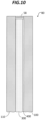
- Certain embodiments provide an article comprising a glass sheet and silica aerogel sheet adhered to the glass sheet.
- the silica aerogel sheet is formed from a precursor material comprising methyl silicate 51 and being in accordance with any of the embodiments discussed elsewhere herein.
- the silica aerogel sheet has a visible transmission of greater than 98%, a haze of less than 2.5% (e.g., less than 1.75%), a thermal conductivity of less than 20 mW/m*K (e.g., 13 mW/m*K in air or less than 10 mW/m*K in the presence of inert gas such as argon or krypton) and/or a global SSIM of greater than 0.80
- the silica aerogel sheet is preferably devoid of structural non-uniformities that create optical distortion lines visible to the naked eye.
- inventions provide a method of making an article comprising a glass substrate and a silica aerogel sheet.
- the method comprises (or consists essentially of or consists of) the steps of (a) preparing a first solution by mixing methyl silicate 51 and methanol, (b) preparing a second solution by mixing ammonium hydroxide and water, (c) mixing the first solution and the second solution together to form a precursor material, (d) allowing components in the precursor material to react to form silica wet gel; (e) depositing the silica wet gel onto a mold tray to form a silica wet gel sheet, (f) drying the silica wet gel sheet to form a silica aerogel sheet, (g) removing the silica aerogel sheet from the mold tray, and (h) adhering the silica aerogel sheet to a glass substrate.
- the method comprises (or consists essentially of or consists of) the steps of (a) preparing a first solution by mixing methyl silicate 51 and methanol, (b) preparing a second solution by mixing ammonium hydroxide and water, (c) mixing the first solution and the second solution together to form a precursor material, (d) allowing components in the precursor material to react to form silica wet gel; (e) depositing the silica wet gel onto a mold tray to form a silica wet gel sheet, (f) removing the silica wet gel sheet from the mold tray, (g) drying the silica wet gel sheet to form a silica aerogel sheet, and (h) adhering the silica aerogel sheet to a glass substrate.
- the precursor material can be in accordance with any of the embodiments discussed elsewhere herein.
- an insulating glazing unit comprising two glass sheets and a between-pane space, the between-pane space being located between the two glass sheets.
- the insulating glazing unit further comprises a silica aerogel sheet inside the between-pane space.
- the silica aerogel sheet is formed from a precursor material comprising methyl silicate 51 and is in accordance with any of the embodiments discussed elsewhere herein.
- the silica aerogel sheet has a visible transmission of greater than 98%, a haze of less than 1.75%, a thermal conductivity of less than 13 mW/m*K in air (or less than 10 mW/m*K in the presence of inert gas such as argon or krypton) and/or a global SSIM of greater than 0.80.
- the silica aerogel sheet is adhered to an interior surface of one of the two glass sheets.
- the silica aerogel sheet is devoid of structural non-uniformities that create optical distortion lines visible to the naked eye.
- the method comprises (or consists essentially of or consists of) the steps of (a) preparing a first solution by mixing methyl silicate 51 and methanol, (b) preparing a second solution by mixing ammonium hydroxide and water, (c) mixing the first solution and the second solution together to form a precursor material, (d) allowing components in the precursor material to react to form silica wet gel; (e) depositing the silica wet gel onto a mold tray to form a silica wet gel sheet, (f) drying the silica wet gel sheet to form a silica aerogel sheet, (g) removing the silica aerogel sheet from the mold tray, and (h) assembling the silica aerogel sheet together with two glass sheets in forming the insulating glazing unit.
- the method comprises (or consists essentially of or consists of) the steps of (a) preparing a first solution by mixing methyl silicate 51 and methanol, (b) preparing a second solution by mixing ammonium hydroxide and water, (c) mixing the first solution and the second solution together to form a precursor material, (d) allowing components in the precursor material to react to form silica wet gel; (e) depositing the silica wet gel onto a mold tray to form a silica wet gel sheet, (f) removing the silica wet gel sheet from the mold tray, (g) drying the silica wet gel sheet to form a silica aerogel sheet, and (h) assembling the silica aerogel sheet together with two glass sheets in forming the insulating glazing unit.
- the precursor material can be in accordance with any of the embodiments discussed elsewhere herein.
- the method comprises (or consists essentially of or consists of) the steps of (a) preparing a first solution by mixing methyl silicate 51 and methanol, (b) preparing a second solution by mixing ammonium hydroxide and water, (c) mixing the first solution and the second solution together to form a precursor material, (d) allowing components in the precursor material to react to form silica wet gel; (e) depositing the silica wet gel onto a mold tray to form a silica wet gel sheet, (f) removing the silica wet gel sheet from the mold tray, (g) drying the silica wet gel sheet to form a silica aerogel sheet, and (h) assembling the silica aerogel sheet together with two glass sheets in forming the laminated glass assembly.
- the precursor material can be in accordance with any of the embodiments discussed elsewhere herein.
- silica aerogels having lower haze still may suffer from other undesirable optical defects.
- One common optical defect is the appearance of optical distortion lines caused by structural non-uniformities within the silica aerogel.
- Applicant has noted that as haze is reduced in the silica aerogel, optical distortion lines may become more visible.
- Applicant developed silica wet gels that can be used to form enhanced silica aerogels, such as silica aerogel sheets, having few to no optical distortion lines while also maintaining other desirable properties.
- the silica aerogel sheets are devoid of structural non-uniformities that create optical distortion lines visible to the naked eye.
- the precursor material comprises (or consists essentially of or consists of) silicon alkoxide, solvent, water and base catalyst.
- the silicon alkoxide, solvent, water and base catalyst are provided within selected weight percent ranges. Applicant has identified weight percent ranges for the precursor material that can be used to form silica wet gel, which in turn can be used to form silica aerogel having desired and unexpected properties.
- the precursor material comprises (or consists essentially of or consists of) silicon alkoxide at a weight percent greater than or equal to 15% and less than or equal to 24%, solvent at a weight percent of greater than or equal to 60% and less than or equal to 68%, water at a weight percent of greater than or equal to 15% and less than or equal to 17%, and catalyst at a weight percent of greater than or equal to 0.08% and less than or equal to 0.2%.
- the silica wet gel material comprises (or consists essentially of or consists of) silicon alkoxide precursor at a weight percent greater than or equal to 15.28% and less than or equal to 19%, solvent at a weight percent of greater than or equal to 65.16% and less than or equal to 68.52%, water at a weight percent of greater than or equal to 15.68% and less than or equal to 16.04%, and catalyst at a weight percent of greater than or equal to 0.15% and less than or equal to 0.17%.
- the silica wet gel has a specified weight percent ratio of silicon alkoxide precursor: water. Applicant has also identified a ratio range for the silicon alkoxide precursor and water in the silica wet gel that can be used to form silica aerogel having desired and unexpected properties. In some cases, the silica wet gel has a weight percent ratio of the silicon alkoxide precursor: water of between 0.25:1 and 2:1, such as a weight percent ratio of the silicon alkoxide precursor:water of between 0.5:1 and 1:1.
- the precursor material comprises (or consists essentially of or consists of) methyl silicate 51 at a weight percent of greater than or equal to 15.28% and less than or equal to 19%, methanol at a weight percent of greater than or equal to 65.16% and less than or equal to 68.52%, water at a weight percent of greater than or equal to 15.68% and less than or equal to 16.04%, and ammonium hydroxide at a weight percent of greater than or equal to 0.15% and less than or equal to 0.17%.
- the silica wet gel is dried using a supercritical drying method (also known as critical point drying).
- supercritical drying involves a solvent exchange. Specifically, the water initially inside the silica wet gel is replaced with a suitable organic solvent (e.g., methanol, ethanol, or acetone). The silica wet gel is then placed in a pressure vessel along with liquid carbon dioxide. The pressure vessel may be filled with, and emptied of, liquid carbon dioxide multiple times, so as to remove the organic solvent and leave liquid carbon dioxide in its place. The liquid carbon dioxide is then heated past its critical temperature and pressure and removed, thereby leaving silica aerogel.
- a supercritical drying method also known as critical point drying.
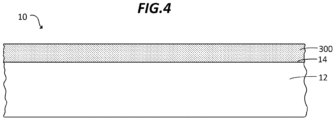
- the glass sheet 12 can have a major dimension (e.g., a length or width) of at least about 0.1 meter, preferably at least about 0.5 meter, more preferably at least about 1 meter, perhaps more preferably at least about 1.5 meters (e.g., between about 2 meters and about 4 meters), and in some cases at least about 3 meters.
- the glass sheet 12 is a jumbo glass sheet having a length and/or width that is between about 3 meters and about 10 meters, e.g., a glass sheet 12 having a width of about 3.5 meters and a length of about 6.5 meters.
- the glass sheet 12 can have a thickness of about 1-8 mm. In some cases, the glass sheet 12 has a thickness of between about 2.3 mm and about 4.8 mm, and perhaps more preferably between about 2.5 mm and about 4.8 mm. In one particular embodiment, the glass sheet 12 has a thickness of about 3 mm.
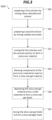
- FIGs. 5-6 illustrate a method 200D wherein the silica wet gel is first deposited onto and then dried in a mold tray.
- the method 200D comprises steps 205 through 235 of forming a silica aerogel sheet as described elsewhere herein, a step 240 of removing the silica aerogel sheet from the mold tray, and a step 245 of adhering the silica aerogel sheet to a glass sheet to form the article.
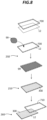
- FIG. 6 illustrates the method 200D of forming a silica aerogel sheet using a mold tray 600.
- the mold tray 600 has a base 605 and a plurality of sidewalls 610.
- silica wet gel 99 is poured into the mold tray 600.
- the silica wet gel 99 is dried using a conventional drying method described herein to form a silica aerogel sheet 300 having a size and dimension defined by the mold tray 600.
- the dried silica aerogel sheet 300 is removed from the mold tray 600.
- the silica wet gel 99 is removed from the mold tray 600 before using a conventional drying method.
- the step 245 comprises placing the silica aerogel sheet in contact with the glass sheet, and the silica aerogel sheet adheres to the glass sheet through van der Waals forces.
- the step 245 comprises adhering the silica aerogel sheet to a glass sheet by an optical adhesive, optionally such that portions of the silica aerogel sheet are devoid of the optical adhesive.
- the optical adhesive can optionally be located only at a perimeter of the silica aerogel sheet.
- FIG. 7 illustrates the method 200E of forming a silica aerogel sheet directly onto a substrate using a sidewall mold.
- the method 200E comprises steps 205 through 220 of forming silica wet gel as described elsewhere herein, a step 250 of depositing the silica wet gel directly onto a glass sheet that includes a sidewall mold, a step 255 of drying the silica wet gel to form a silica aerogel sheet, and a step 260 of removing the sidewall mold from the glass sheet, leaving the silica aerogel sheet adhered to the glass sheet.
- FIG. 8 illustrates the method 200E of forming a silica aerogel sheet using the sidewall mold 700.
- the sidewall mold 700 includes a plurality of sidewalls 710 but is devoid of a base.
- the sidewall mold 700 has dimensions that generally surround a perimeter of a glass sheet 12.
- the sidewall mold 700 is positioned around the perimeter or on top of the glass.
- silica wet gel 99 is poured onto the glass substrate 12 and is held in place by the sidewall mold 700.
- the silica wet gel 99 is dried using any conventional drying method described herein to form a silica aerogel sheet 300 having a size and dimension defined by the sidewall mold 700.
- the sidewall mold 700 is removed from the substrate 12, thereby leaving a dried silica aerogel sheet 300 adhered to the substrate 12.
- the aerogel fabrication method can include various techniques, such as method 200D shown in FIG. 5 and described with reference thereto, or method 200E as shown in FIG. 7 and described with reference thereto. Another option is to use a rapid supercritical extraction technique.
- U.S. Patent No. 8,080,591 the salient teachings of which are incorporated herein by reference.
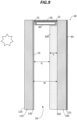
- FIG. 9 illustrates an insulating glazing unit 40 according to certain embodiments comprising a first glass sheet 100, a second glass sheet 110 and a between-pane space 50.
- the between-pane space 50 is located between the two glass sheets.
- the glass sheets 100, 110 can have any of the features described for a glass sheet elsewhere herein.
- one or both glass sheets 100, 110 are replaced with sheets formed of a polymer, such as polycarbonate, acrylic or PVC.
- Various other polymer materials may be used in such alternative embodiments.
- the insulating glazing unit further comprises a silica aerogel sheet 300 within the between-pane space 50.
- the silica aerogel sheet 300 can have any of the features and properties described elsewhere herein.
- the silica aerogel sheet 300 is a single aerogel sheet. In such cases, there is only one silica aerogel sheet 300 in the between-pane space 50.
- the single aerogel sheet 300 can, for example, have a major dimension (e.g., a length or width) of at least 0.375 meter, preferably at least about 0.75 meter, or in some cases at least about 1.125 meters (e.g., between about 1.5 meters and about 3 meters).
- the silica aerogel sheet 300 comprises a plurality of aerogel sheets
- those sheets can have any desired shape and tiling arrangement.
- the aerogel sheets can be square, rectangular, or hexagonal in shape.
- edges of each aerogel sheet are aligned both vertically and horizontally with edges of adjacent aerogel sheets.
- the size of the silica aerogel sheets is not particularly limited. In some cases, all of the silica aerogel sheets have the same dimensions. In other cases, some of the silica aerogel sheets have different dimensions (e.g., a greater length) compared to some of the other silica aerogel sheets.
- each of the silica aerogel sheets has a length and a width of at least 10 cm. For each of the silica aerogel sheets, the length, the width, or both are preferably less than 1 meter.
- silica aerogel sheets Such dimensions allow the silica aerogel sheets to be scaled-up so as to cover large areas between two glass sheets of an insulating glazing unit, while still allowing the silica aerogel sheets to be dried using a small high-pressure vessel. Larger or smaller silica aerogel sheets may alternatively be used.
- the between-pane space 50 contains a gaseous atmosphere, preferably comprising a thermally insulative gas, such as argon, krypton, or both.
- a gaseous atmosphere preferably comprising a thermally insulative gas, such as argon, krypton, or both.
- the gaseous atmosphere comprises a mix of argon and air (e.g., 90% argon and 10% air).
- the gaseous atmosphere comprises a mix of krypton and air.
- the gaseous atmosphere comprises a mix of argon, krypton, and air.
- the gaseous atmosphere is just air.
- a gas gap G is provided in the between-pane space 50 alongside the silica aerogel sheet 300.
- the gas gap G can have a width in a range of from 9 to 14 mm and it contains a gaseous atmosphere comprising argon, air, or both.
- between-pane space has a width W in a range of from 14 to 21 mm, the gaseous atmosphere comprises argon, and the width of the gas gap G is from 10.5 to 13.5 mm.
- the spacer 60 may be a conventional metal channel spacer, e.g., formed of stainless steel or aluminum. Or it can comprise polymer and metal, or just polymer (e.g., foam). The spacer can alternatively be an integral part of a sash, frame, etc. so as to maintain the IG unit in the desired configuration.
- the spacer 60 can be adhered to the two glass sheets 100, 110 by one or more beads of sealant as is conventional and well-known to skilled artisans.
- FIG. 9 the spacer 60 is shown with a primary sealant 55 on opposite sides of the spacer 60 and a secondary sealant 58 provided on an outside wall of the spacer 60.
- Another option is to omit the secondary sealant and provide a single deposit of sealant along both sides of the spacer and on the outside wall of the spacer.
- Various other known sealant arrangements/systems can alternatively be used.
- the spacer may be omitted while one or more beads of sealant (optionally together with a moisture vapor barrier) are provided about the perimeter of the unit so as to encompass the silica aerogel sheet 300.
- the silica aerogel sheet 300 does not contact the spacer 60.
- the aerogel sheet 300 may be separated (i.e., spaced-apart) from the spacer 60 by about 1 mm to about 5 mm (e.g., about 2-4 mm, such as about 3 mm).
- the sealant 55, 58 between the spacer 60 and the two adjacent glass sheets 100, 110 can also be spaced from the silica aerogel sheet 300.
- the first glass sheet 100 has opposed surfaces 120, 125, which preferably are opposed major surfaces (or “opposed faces”).
- the second glass sheet 110 has opposed surfaces 130, 135, which preferably are opposed major surfaces.
- surfaces 120 and 130 are interior surfaces facing a between-pane space 50
- surfaces 125 and 135 are exterior surfaces, e.g., such that surface 135 is an exterior surface exposed to an outdoor environment (and thus exposed to periodic contact with rain). This, however, is not required.
- the second glass sheet 110 is an outboard pane that defines both a #1 surface (i.e., surface 135) and a #2 surface (i.e., surface 130), while the first glass sheet 100 is an inboard pane that defines both a #3 surface (i.e., surface 120) and a #4 surface (i.e., surface 125).
- the IG unit 40 can optionally be mounted in a frame such that the #1 surface is exposed to an outdoor environment, while the #4 surface is exposed to an indoor environment (e.g., an environment inside a building).
- the silica aerogel sheet 300 can be adhered to or otherwise mounted alongside either the #2 surface or the #3 surface of the insulating glazing unit 40. Another option is to have aerogel sheets on both the #2 and the #3 surfaces.
- FIG. 9 illustrates just one embodiment where the silica aerogel sheet 300 is adhered to an interior surface 120 (e.g., the #3 surface) of the first glass sheet 100.
- FIG. 9 shows a double-pane insulating glazing unit
- other embodiments provide a triple-pane insulating glazing unit having a silica aerogel sheet 300 on the #2 surface, the #3 surface, the #4 surface, or the #5 surface.
- silica aerogel sheets can optionally be provided on both the #3 surface and either the #4 or #5 surface.
- Another option is to provide silica aerogel sheets on both the #2 surface (e.g., for applications where a low-emissivity or solar control coating is on the #3 surface) and the #4 or #5 surface.
- the insulating glazing unit 40 includes only two glass panes 100, 110 and only one between-pane space 50.
- the silica aerogel sheet 300 has a thickness T.
- the silica aerogel sheet 300 has a thickness in a range of from 1.5 mm to 15 mm, such as greater than 2 mm but less than 8 mm, or from 2 mm to 4 mm (e.g., 3 mm). It is to be appreciated, however, that other thicknesses can be used.
- the between-pane space 50 has a thickness W, which is measured from the interior surface 130 of the second glass pane 110 to the interior surface 120 of the first glass pane 100.
- the silica aerogel sheet 300 does not occupy the entire thickness W of the between-pane space 50. In other cases, the silica aerogel sheet occupies the entire thickness of the between-pane space.
- a ratio of the thickness T of the silica aerogel sheet 300 to the thickness W of the between-pane space 50 preferably is between 0.15 and 0.85.
- the thickness W of the between-pane space 50 is at least 10 mm, optionally together with the thickness of the silica aerogel sheets 300 being greater than 2 mm but less than 8 mm.
- the aerogel sheet 300 occupies less than 50% of the thickness W of the between-pane space 50 (e.g., less than 45%, less than 40%, or even less than 35% of the thickness W of the between-pane space 50).
- the silica aerogel sheet 300 occupies a majority of the thickness W of the between-pane space 50.
- the thickness T of the silica aerogel sheet 300 preferably is greater than 8 mm but less than 15 mm (e.g., about 10 mm), while the thickness of the gas gap G alongside the silica aerogel sheet 300 is optionally less than 5 mm (e.g., about 3 mm).
- an insulating glazing unit 40 that includes both a silica aerogel sheet 300 and a low-emissivity coating 70.
- the silica aerogel sheet 300 is provided on an interior surface of one glass sheet and the low-emissivity coating 70 is provided on an interior surface of the other glass sheet.
- FIG. 9 illustrates an embodiment that includes a silica aerogel sheet 300 on a #3 surface (i.e., surface 120) and an optional low-emissivity coating 70 on a #2 surface (i.e., surface 130).
- a silica aerogel sheet is provided on a #2 surface (i.e., surface 130) and an optional low-emissivity coating is provided on a #3 surface (i.e., surface 120).
- the optional low-emissivity coating 70 preferably includes at least one silver-inclusive film, which desirably contains more than 50% silver by weight (e.g., a metallic silver film).
- the low-emissivity coating 70 includes three or more infrared-reflective films (e.g., silver-containing films). Low-emissivity coatings having three or more infrared-reflective films are described in U.S. Patent and Application Nos. 11/546,152 and 7,572,511 and 7,572,510 and 7,572,509 and 11/545,211 and 7,342,716 and 7,339,728 , the teachings of each of which are incorporated herein by reference.
- the low-emissivity coating 70 includes four silver layers.
- the low-emissivity coating can be a "single silver” or “double silver” low-emissivity coating, which are well-known to skilled artisans.
- Advantageous coatings of this nature are commercially available from, for example, Cardinal CG Company (Eden Prairie, Minnesota, U.S.A.).
- an insulating glazing unit 40 that includes both a silica aerogel sheet 300 and an optional transparent conductive oxide coating 85.
- the silica aerogel sheet 300 is provided on an interior surface of a glass sheet and a transparent conductive oxide coating 85 is provided on an exterior surface of a glass sheet.
- FIG. 9 illustrates an embodiment where the silica aerogel sheet 300 is provided on a #3 surface (i.e., surface 120) and an optional transparent conductive oxide coating 85 is provided on a #4 surface (i.e., surface 125).
- the transparent conductive oxide coating 85 is provided at a thickness of 10,000 ⁇ or less, such as between about 1,000 ⁇ and about 7,000 ⁇ , e.g., from 1,000 ⁇ to 1,750 ⁇ , such as about 1,300-1,600 ⁇ .
- the transparent conductive oxide coating 85 it can optionally comprise a transparent conductive oxide film having a thickness of from 1,000 ⁇ to 1,750 ⁇ .
Landscapes
- Chemical & Material Sciences (AREA)
- Dispersion Chemistry (AREA)
- Organic Chemistry (AREA)
- Inorganic Chemistry (AREA)
- Engineering & Computer Science (AREA)
- Civil Engineering (AREA)
- Structural Engineering (AREA)
- Silicon Compounds (AREA)
Applications Claiming Priority (3)
| Application Number | Priority Date | Filing Date | Title |
|---|---|---|---|
| US202263318165P | 2022-03-09 | 2022-03-09 | |
| EP23714048.8A EP4490104A1 (de) | 2022-03-09 | 2023-03-09 | Feuchtes kieselsäuregel und aerogel |
| PCT/US2023/064059 WO2023173029A1 (en) | 2022-03-09 | 2023-03-09 | Silica wet gel and aerogel |
Related Parent Applications (1)
| Application Number | Title | Priority Date | Filing Date |
|---|---|---|---|
| EP23714048.8A Division EP4490104A1 (de) | 2022-03-09 | 2023-03-09 | Feuchtes kieselsäuregel und aerogel |
Publications (2)
| Publication Number | Publication Date |
|---|---|
| EP4582381A2 true EP4582381A2 (de) | 2025-07-09 |
| EP4582381A3 EP4582381A3 (de) | 2025-10-01 |
Family
ID=85778693
Family Applications (3)
| Application Number | Title | Priority Date | Filing Date |
|---|---|---|---|
| EP25177224.0A Pending EP4582381A3 (de) | 2022-03-09 | 2023-03-09 | Feuchtes kieselsäuregel und aerogel |
| EP23714048.8A Pending EP4490104A1 (de) | 2022-03-09 | 2023-03-09 | Feuchtes kieselsäuregel und aerogel |
| EP25177216.6A Pending EP4582380A3 (de) | 2022-03-09 | 2023-03-09 | Feuchtes kieselsäuregel und aerogel |
Family Applications After (2)
| Application Number | Title | Priority Date | Filing Date |
|---|---|---|---|
| EP23714048.8A Pending EP4490104A1 (de) | 2022-03-09 | 2023-03-09 | Feuchtes kieselsäuregel und aerogel |
| EP25177216.6A Pending EP4582380A3 (de) | 2022-03-09 | 2023-03-09 | Feuchtes kieselsäuregel und aerogel |
Country Status (3)
| Country | Link |
|---|---|
| US (3) | US20230286812A1 (de) |
| EP (3) | EP4582381A3 (de) |
| WO (1) | WO2023173029A1 (de) |
Families Citing this family (5)
| Publication number | Priority date | Publication date | Assignee | Title |
|---|---|---|---|---|
| US20230286812A1 (en) | 2022-03-09 | 2023-09-14 | Cardinal Cg Company | Silica wet gel and aerogel |
| CN120008746B (zh) * | 2023-11-14 | 2025-10-17 | 中国科学院半导体研究所 | 一种微测辐射热计结构及其制作方法 |
| WO2025165988A1 (en) | 2024-02-01 | 2025-08-07 | Cardinal Cg Company | Aerogel mounting and encapsulation technology, manufacturing methods, insulating glass units and related subassemblies |
| WO2025221260A1 (en) * | 2024-04-17 | 2025-10-23 | Cardinal Cg Company | Hydrophobic silica wet gel and aerogel |
| CN119930173B (zh) * | 2024-12-18 | 2025-11-25 | 中建材玻璃新材料研究院集团有限公司 | 一种oled玻璃热高压后处理方法 |
Citations (9)
| Publication number | Priority date | Publication date | Assignee | Title |
|---|---|---|---|---|
| US41107A (en) | 1864-01-05 | Improvement in churn-powers | ||
| US96507A (en) | 1869-11-02 | Improved window | ||
| US7117914B2 (en) | 2003-03-20 | 2006-10-10 | Cardinal Lg Company | Non-autoclave laminated glass |
| US7143800B2 (en) | 2003-03-20 | 2006-12-05 | Cardinal Lg Company | Non-autoclave laminated glass |
| US7339728B2 (en) | 2005-10-11 | 2008-03-04 | Cardinal Cg Company | Low-emissivity coatings having high visible transmission and low solar heat gain coefficient |
| US7342716B2 (en) | 2005-10-11 | 2008-03-11 | Cardinal Cg Company | Multiple cavity low-emissivity coatings |
| US7572511B2 (en) | 2005-10-11 | 2009-08-11 | Cardinal Cg Company | High infrared reflection coatings |
| US8080591B1 (en) | 2003-08-26 | 2011-12-20 | Gauthier Ben M | Method and device for fabricating aerogels and aerogel monoliths obtained thereby |
| US9862640B2 (en) | 2010-01-16 | 2018-01-09 | Cardinal Cg Company | Tin oxide overcoat indium tin oxide coatings, coated glazings, and production methods |
Family Cites Families (117)
| Publication number | Priority date | Publication date | Assignee | Title |
|---|---|---|---|---|
| SE422045C (sv) | 1979-04-30 | 1985-03-18 | Guy Von Dardel | Sett att framstella silikaaerogel i form av ett vesentligen sprickfritt, foretredesvis transparent block samt anvendning av detsamma i solpaneler |
| US4402927A (en) | 1980-04-22 | 1983-09-06 | Dardel Guy Von | Silica aerogel |
| DE3503957C1 (de) | 1985-02-06 | 1986-10-09 | GfO Gesellschaft für Oberflächentechnik mbH, 7070 Schwäbisch Gmünd | Beschichtungsmittel fuer Entspiegelungsschichten und Verfahren zu seiner Herstellung |
| US20020102674A1 (en) | 1987-05-20 | 2002-08-01 | David M Anderson | Stabilized microporous materials |
| DD283040A7 (de) | 1988-06-03 | 1990-10-03 | Leuna Werke Veb | Verfahren zur herstellung makroporiger silikagele |
| GB2241468B (en) | 1990-03-01 | 1993-12-01 | Glaverbel | Composite glazing panel |
| US5409683A (en) | 1990-08-23 | 1995-04-25 | Regents Of The University Of California | Method for producing metal oxide aerogels |
| DE4201306A1 (de) | 1992-01-20 | 1993-07-22 | Basf Ag | Formteile oder platten aus silica-aerogelen |
| WO1993016125A1 (en) | 1992-02-18 | 1993-08-19 | Matsushita Electric Works, Ltd. | Process for producing hydrophobic aerogel |
| US5395805A (en) | 1993-03-25 | 1995-03-07 | Regents Of The University Of California | Method for making monolithic metal oxide aerogels |
| JP2725573B2 (ja) | 1993-11-12 | 1998-03-11 | 松下電工株式会社 | 疎水性エアロゲルの製法 |
| DE19507732A1 (de) | 1995-03-07 | 1996-09-12 | Hoechst Ag | Transparentes Bauelement, enthaltend mindestens eine faserverstärkte Aerogelplatte und/oder -matte |
| US6197270B1 (en) | 1996-12-20 | 2001-03-06 | Matsushita Electric Works, Ltd. | Process for producing aerogel |
| US6627305B1 (en) | 1997-07-16 | 2003-09-30 | Koninklijke Philips Electronics N.V. | Substrates for large area electronic devices |
| JPH11172000A (ja) | 1997-12-16 | 1999-06-29 | Nippon Unicar Co Ltd | ポリシロキサンおよびそれを含有する組成物 |
| KR100646191B1 (ko) | 1998-01-20 | 2006-11-17 | 뉴 트랜스듀서스 리미티드 | 패널 부재를 포함하는 능동형 음향장치 |
| DE19834265A1 (de) | 1998-07-30 | 2000-02-17 | Thomas Gesner | Verfahren zur Herstellung von Aerogelen und Anlage zur Herstellung von Aerogelschichten auf Substraten oder aus Aerogelen bestehenden Produkten |
| US5958363A (en) | 1998-10-29 | 1999-09-28 | The Regents Of The University Of California | Method for making monolithic metal oxide aerogels |
| JP3674585B2 (ja) * | 1999-11-10 | 2005-07-20 | 松下電工株式会社 | エアロゲル基板及びその製造方法 |
| KR20050037557A (ko) | 2002-07-22 | 2005-04-22 | 아스펜 에어로겔, 인코퍼레이티드 | 폴리이미드 에어로겔, 탄소 에어로겔 및 금속 카바이드에어로겔, 및 이들의 제조방법 |
| US7771609B2 (en) | 2002-08-16 | 2010-08-10 | Aerogel Technologies, Llc | Methods and compositions for preparing silica aerogels |
| JP2004256628A (ja) | 2003-02-25 | 2004-09-16 | Hitachi Chem Co Ltd | シリカ系多孔質バルク体及びその製造方法 |
| JP2005132641A (ja) * | 2003-10-28 | 2005-05-26 | Matsushita Electric Works Ltd | シリカエアロゲルの製造方法 |
| US7118801B2 (en) | 2003-11-10 | 2006-10-10 | Gore Enterprise Holdings, Inc. | Aerogel/PTFE composite insulating material |
| JP5183066B2 (ja) * | 2003-11-21 | 2013-04-17 | ブリスマット インコーポレイテッド | シリカ膜およびその製造方法 |
| US7560062B2 (en) | 2004-07-12 | 2009-07-14 | Aspen Aerogels, Inc. | High strength, nanoporous bodies reinforced with fibrous materials |
| JP4938994B2 (ja) | 2005-04-22 | 2012-05-23 | ペンタックスリコーイメージング株式会社 | シリカエアロゲル膜及びその製造方法 |
| DE102005019872A1 (de) | 2005-04-28 | 2006-11-02 | Wacker Chemie Ag | Verfahren zur Herstellung von verstärkenden Füllstoff enthaltenden, fließfähigen, vernetzbaren Polyorganosiloxanmassen |
| US8029871B2 (en) | 2005-06-09 | 2011-10-04 | Hoya Corporation | Method for producing silica aerogel coating |
| US20060286360A1 (en) | 2005-06-20 | 2006-12-21 | Aspen Aerogels Inc. | Hybrid Organic-Inorganic Materials and Methods of Preparing the Same |
| CN101223117B (zh) | 2005-07-15 | 2013-03-27 | 陶氏康宁公司 | 疏水性矿物和填充材料 |
| WO2007011988A2 (en) | 2005-07-18 | 2007-01-25 | Aspen Aerogels, Inc. | Aerogel composites with complex geometries |
| US8202502B2 (en) | 2006-09-15 | 2012-06-19 | Cabot Corporation | Method of preparing hydrophobic silica |
| US20080081014A1 (en) | 2006-10-02 | 2008-04-03 | Korea Institute Of Energy Research | Rapid preparation process of aerogel |
| DE102006050117A1 (de) | 2006-10-25 | 2008-04-30 | Deutsches Zentrum für Luft- und Raumfahrt e.V. | Formkörper aus farbigen Xerogelen |
| WO2008057297A1 (en) | 2006-10-27 | 2008-05-15 | The University Of Akron | Shape memory polymer aerogel composites |
| US20080258065A1 (en) | 2007-04-23 | 2008-10-23 | Lockheed Martin Corporation | Electromagnetic Energy Propagation Direction Sensor and Method of Using Same |
| US8258251B2 (en) | 2007-11-30 | 2012-09-04 | The United States Of America, As Represented By The Administrator Of The National Aeronautics And Space Administration | Highly porous ceramic oxide aerogels having improved flexibility |
| SE0950004A1 (sv) | 2009-01-08 | 2010-06-15 | Airglass Ab | Silikaaerogelkropp som isolering i ett solfångarsystem |
| US10000411B2 (en) | 2010-01-16 | 2018-06-19 | Cardinal Cg Company | Insulating glass unit transparent conductivity and low emissivity coating technology |
| US10000965B2 (en) | 2010-01-16 | 2018-06-19 | Cardinal Cg Company | Insulating glass unit transparent conductive coating technology |
| EP2534509B1 (de) | 2010-02-10 | 2019-07-24 | 3M Innovative Properties Company | Beleuchtungsvorrichtung mit einer viskoelastischen schicht |
| US9073759B2 (en) | 2010-08-10 | 2015-07-07 | Massachusetts Institute Of Technology | Silica aerogels and their preparation |
| US9068346B1 (en) | 2010-08-20 | 2015-06-30 | The Board Of Regents Of The University Of Texas System | Acoustic attenuators based on porous nanostructured materials |
| US8906973B2 (en) | 2010-11-30 | 2014-12-09 | Aspen Aerogels, Inc. | Modified hybrid silica aerogels |
| CN102180603A (zh) | 2011-02-25 | 2011-09-14 | 东莞市创一新材料科技有限公司 | 一体化透明绝热SiO2气凝胶复合玻璃及其制备方法 |
| WO2012154602A1 (en) | 2011-05-06 | 2012-11-15 | Showers Robert James | Aerogel window film system |
| HUP1100603A2 (en) | 2011-10-28 | 2013-06-28 | Debreceni Egyetem | Method and installation for preparation of silicate - alcogels, xerogels, aerogels |
| US10401876B1 (en) | 2011-11-16 | 2019-09-03 | Zane Coleman | Fluid collection component comprising a film with fluid channels |
| US9358534B2 (en) | 2011-11-28 | 2016-06-07 | Union College | Catalyst, catalytic converter, and method for the production thereof |
| US9208919B2 (en) | 2012-02-03 | 2015-12-08 | Massachusetts Institute Of Technology | Aerogels and methods of making same |
| KR101409884B1 (ko) | 2012-05-04 | 2014-06-27 | 한국과학기술연구원 | 소수성 모노리스형 실리카 에어로젤의 제조방법 |
| CN202706291U (zh) | 2012-07-01 | 2013-01-30 | 中冶天工上海十三冶建设有限公司 | 隔热保温型双层玻璃幕墙 |
| WO2014019809A1 (en) | 2012-08-02 | 2014-02-06 | Unilever N.V. | Hydrophobic coating |
| PT106781A (pt) | 2013-02-15 | 2014-08-18 | Inst Superior Tecnico | Aerogéis híbridos flexíveis preparados em condições subcríticas e processo de preparação dos mesmos |
| US9206298B2 (en) | 2013-05-23 | 2015-12-08 | Nexolve Corporation | Method of aerogel synthesis |
| US9611146B2 (en) | 2013-07-01 | 2017-04-04 | Lawrence Livermore National Security, Llc | Crystalline boron nitride aerogels |
| WO2015061075A1 (en) | 2013-10-24 | 2015-04-30 | Dow Corning Corporation | Cured silicone with high light transmittance, curable silicone for preparing same, devices and methods |
| US9764301B2 (en) | 2013-11-14 | 2017-09-19 | Nanyang Technological University | Silica aerogel composite |
| KR101790390B1 (ko) | 2014-02-06 | 2017-10-25 | 주식회사 엘지화학 | 구형 실리카 에어로겔 과립의 제조방법 |
| KR101717833B1 (ko) | 2014-02-06 | 2017-03-17 | 주식회사 엘지화학 | 소수성 실리카 에어로겔의 제조방법 |
| WO2015119431A1 (ko) | 2014-02-06 | 2015-08-13 | 주식회사 엘지화학 | 소수성 실리카 에어로겔의 제조방법 |
| AP2016009463A0 (en) | 2014-02-28 | 2016-09-30 | Tata Steel Uk Ltd | Method for producing a siloxane coated metal substrate and a siloxane coated metal substrate produced thereby |
| CN105441036B (zh) | 2014-09-28 | 2019-02-12 | 苏州同玄新材料有限公司 | 具有热致变色功能的SiO2气凝胶及其制备方法 |
| JP6405540B2 (ja) | 2014-11-11 | 2018-10-17 | パナソニックIpマネジメント株式会社 | エアロゲルとその製造方法 |
| US20160266288A1 (en) | 2014-11-24 | 2016-09-15 | Ut-Battelle, Llc | Infrared-Blocking Nanocellulose Aerogel Windows |
| KR101526823B1 (ko) | 2014-12-03 | 2015-06-05 | 현대자동차주식회사 | 에어로겔을 이용한 스마트 윈도우 |
| US10563035B2 (en) | 2015-02-05 | 2020-02-18 | Aerogel Technologies, Llc | Systems and methods for producing aerogel materials |
| EP3286264A4 (de) | 2015-03-31 | 2019-02-13 | Aerogel Technologies, LLC | Aerogelmaterialien und verfahren zu deren herstellung |
| CN104898295B (zh) | 2015-06-18 | 2017-03-15 | 万新光学集团有限公司 | 一种具有气凝胶隔热保护膜层的工作眼镜的制作方法 |
| FR3037981B1 (fr) | 2015-06-23 | 2018-12-14 | Commissariat A L'energie Atomique Et Aux Energies Alternatives | Procede de pose d'un parement exterieur sur une facade d'un batiment et batiment correspondant |
| CN205117118U (zh) | 2015-09-06 | 2016-03-30 | 长沙星纳气凝胶有限公司 | 一种隔热保温玻璃 |
| CN205736249U (zh) | 2015-09-06 | 2016-11-30 | 长沙星纳气凝胶有限公司 | 一种隔热保温玻璃 |
| CN205117117U (zh) | 2015-09-06 | 2016-03-30 | 长沙星纳气凝胶有限公司 | 一种隔热保温玻璃 |
| CN204936377U (zh) | 2015-09-06 | 2016-01-06 | 长沙星纳气凝胶有限公司 | 一种隔热保温玻璃 |
| CN105201355B (zh) | 2015-09-06 | 2018-03-23 | 长沙星纳气凝胶有限公司 | 一种气凝胶隔热保温玻璃的制备方法 |
| JPWO2017090686A1 (ja) * | 2015-11-26 | 2018-09-13 | Agc株式会社 | 合わせガラス、自動車用窓ガラスおよび建物用窓ガラス |
| KR101800938B1 (ko) | 2015-11-27 | 2017-11-23 | 주식회사 엘지화학 | 소수성의 실리카 에어로겔의 제조방법 및 이로부터 제조된 소수성의 실리카 에어로겔 |
| KR101955307B1 (ko) | 2015-11-27 | 2019-05-30 | 주식회사 엘지화학 | 소수성의 실리카 에어로겔의 제조방법 및 이로부터 제조된 소수성의 실리카 에어로겔 |
| WO2017147463A1 (en) | 2016-02-24 | 2017-08-31 | Massachusetts Institute Of Technology | Solar thermal aerogel receiver and materials therefor |
| US20190143290A1 (en) | 2016-04-21 | 2019-05-16 | Virginia Commonwealth University | Methods for fabrication of silica aerogels with custom shapes using freeze drying |
| CN106082697B (zh) | 2016-06-22 | 2019-01-29 | 浙江大学 | 一种节能镀膜玻璃及其制备方法 |
| US10421253B2 (en) | 2016-10-05 | 2019-09-24 | Palo Alto Research Center Incorporated | Polymer aerogel for window glazings |
| US10800883B1 (en) | 2016-10-21 | 2020-10-13 | United States Of America As Represented By The Administrator Of National Aeronautics And Space Administration | Optically transparent polyimide aerogels |
| CN206589417U (zh) | 2017-01-16 | 2017-10-27 | 张家港康得新光电材料有限公司 | 隔热膜 |
| CN207190441U (zh) | 2017-03-17 | 2018-04-06 | 长沙星纳气凝胶有限公司 | 一种内置气凝胶复合板的节能玻璃 |
| CN206983435U (zh) | 2017-03-17 | 2018-02-09 | 长沙星纳气凝胶有限公司 | 一种隔热保温汽车玻璃 |
| KR102210029B1 (ko) | 2017-05-18 | 2021-02-01 | 주식회사 엘지화학 | 탄화규소 분말 및 그 제조방법 |
| CN107381581A (zh) | 2017-08-28 | 2017-11-24 | 优澎(嘉兴)新材料科技有限公司 | 疏水性二氧化硅气凝胶材料及其制备方法 |
| US11673810B2 (en) | 2017-10-04 | 2023-06-13 | Resonac Corporation | Aerogel and method for producing same |
| US10626224B2 (en) | 2017-10-09 | 2020-04-21 | Palo Alto Research Center Incorporated | Method to produce transparent polymer aerogels using chain transfer agents |
| KR102176632B1 (ko) | 2017-12-08 | 2020-11-09 | 주식회사 엘지화학 | 에어로겔 전구체 및 이를 이용하여 제조한 에어로겔 |
| US11053127B2 (en) | 2017-12-22 | 2021-07-06 | Fatemeh Pashaei Soorbaghi | Mechanically robust aerogels and preparation method thereof |
| CN108060874A (zh) * | 2018-01-16 | 2018-05-22 | 天津摩根坤德高新科技发展有限公司 | 复合气凝胶玻璃及其制备方法和应用 |
| US12030782B2 (en) | 2018-02-14 | 2024-07-09 | Lg Chem, Ltd. | Method for producing hydrophobic silica aerogel granules |
| KR102489744B1 (ko) | 2018-03-05 | 2023-01-19 | 에보니크 오퍼레이션즈 게엠베하 | 에어로겔 재료를 제조하는 방법 |
| WO2019210051A1 (en) | 2018-04-25 | 2019-10-31 | Massachusetts Institute Of Technology | Energy efficient soundproofing window retrofits |
| EP3807348A4 (de) | 2018-06-13 | 2021-08-25 | The Regents of the University of Colorado, a body corporate | Zellulosische gele, filme und verbundwerkstoffe mit den gelen und verfahren zu deren herstellung |
| WO2020005965A1 (en) | 2018-06-25 | 2020-01-02 | The Regents Of The University Of California | Optically-transparent, thermally-insulating nanoporous coatings and monoliths |
| US20200181347A1 (en) | 2018-12-05 | 2020-06-11 | Rutgers, The State University Of New Jersey | Multifunctional hybrid aerogels |
| US10995191B2 (en) | 2018-12-20 | 2021-05-04 | Palo Alto Research Center Incoporated | High optical transparency polymer aerogels using low refractive index monomers |
| WO2020220138A1 (en) | 2019-05-02 | 2020-11-05 | National Research Council Of Canada | Copolymer-silica hybrid aerogels and methods for the preparation thereof |
| CN111101819B (zh) | 2019-12-11 | 2021-07-20 | 石家庄铁道大学 | 一种疏水二氧化硅气凝胶隔热玻璃的制备方法 |
| CN110902690A (zh) | 2019-12-25 | 2020-03-24 | 巩义市泛锐熠辉复合材料有限公司 | 利用反复升降压快速制备疏水型二氧化硅气凝胶的方法 |
| TWI726638B (zh) | 2020-03-02 | 2021-05-01 | 趙國昇 | 二氧化矽氣凝膠之製備方法 |
| US12247438B2 (en) * | 2020-08-07 | 2025-03-11 | Cardinal Cg Company | Double-pane insulating glazing units |
| CN112174144B (zh) | 2020-09-28 | 2022-03-08 | 航天特种材料及工艺技术研究所 | 一种超高透明度大尺寸块体二氧化硅气凝胶及其制备方法和应用 |
| CN112299428B (zh) | 2020-11-03 | 2022-02-15 | 航天特种材料及工艺技术研究所 | 一种可后清洁的超低密度透明二氧化硅气凝胶及其制备方法和应用 |
| CN112499635A (zh) | 2020-11-17 | 2021-03-16 | 湖北硅金凝节能减排科技有限公司 | 一种气凝胶浆料制备方法 |
| US12077443B2 (en) | 2021-03-25 | 2024-09-03 | Fujifilm Business Innovation Corp. | Silica particles and method for producing the same |
| CN114477195B (zh) | 2022-01-18 | 2023-03-24 | 中国科学院工程热物理研究所 | 一种疏水性二氧化硅气凝胶粉的制备方法 |
| CN114538453B (zh) | 2022-02-25 | 2023-06-23 | 中国科学院苏州纳米技术与纳米仿生研究所 | 超细单分散氧化硅气凝胶微球及其制备方法与应用 |
| US20230286812A1 (en) | 2022-03-09 | 2023-09-14 | Cardinal Cg Company | Silica wet gel and aerogel |
| CN115057447B (zh) | 2022-07-19 | 2023-11-21 | 中国科学院苏州纳米技术与纳米仿生研究所 | 一种超透明氧化硅气凝胶材料、其制备方法及应用 |
| WO2024220701A1 (en) | 2023-04-20 | 2024-10-24 | Cardinal Cg Company | Hydrophobic silica wet gel and aerogel |
| WO2024220696A2 (en) | 2023-04-20 | 2024-10-24 | Cardinal Cg Company | Hydrophobic silica wet gel and aerogel |
| WO2024220699A1 (en) | 2023-04-20 | 2024-10-24 | Cardinal Cg Company | Hydrophobic silica wet gel and aerogel |
-
2023
- 2023-03-09 US US18/181,357 patent/US20230286812A1/en active Pending
- 2023-03-09 WO PCT/US2023/064059 patent/WO2023173029A1/en not_active Ceased
- 2023-03-09 US US18/181,342 patent/US20230286810A1/en active Pending
- 2023-03-09 EP EP25177224.0A patent/EP4582381A3/de active Pending
- 2023-03-09 EP EP23714048.8A patent/EP4490104A1/de active Pending
- 2023-03-09 EP EP25177216.6A patent/EP4582380A3/de active Pending
- 2023-03-09 US US18/181,368 patent/US12472721B2/en active Active
Patent Citations (11)
| Publication number | Priority date | Publication date | Assignee | Title |
|---|---|---|---|---|
| US41107A (en) | 1864-01-05 | Improvement in churn-powers | ||
| US96507A (en) | 1869-11-02 | Improved window | ||
| US7117914B2 (en) | 2003-03-20 | 2006-10-10 | Cardinal Lg Company | Non-autoclave laminated glass |
| US7143800B2 (en) | 2003-03-20 | 2006-12-05 | Cardinal Lg Company | Non-autoclave laminated glass |
| US8080591B1 (en) | 2003-08-26 | 2011-12-20 | Gauthier Ben M | Method and device for fabricating aerogels and aerogel monoliths obtained thereby |
| US7339728B2 (en) | 2005-10-11 | 2008-03-04 | Cardinal Cg Company | Low-emissivity coatings having high visible transmission and low solar heat gain coefficient |
| US7342716B2 (en) | 2005-10-11 | 2008-03-11 | Cardinal Cg Company | Multiple cavity low-emissivity coatings |
| US7572509B2 (en) | 2005-10-11 | 2009-08-11 | Cardinal Cg Company | High infrared reflection coatings and thin film coating deposition methods |
| US7572510B2 (en) | 2005-10-11 | 2009-08-11 | Cardinal Cg Company | High infrared reflection coatings and associated technologies |
| US7572511B2 (en) | 2005-10-11 | 2009-08-11 | Cardinal Cg Company | High infrared reflection coatings |
| US9862640B2 (en) | 2010-01-16 | 2018-01-09 | Cardinal Cg Company | Tin oxide overcoat indium tin oxide coatings, coated glazings, and production methods |
Non-Patent Citations (2)
| Title |
|---|
| "Insight on Color,'' ''Hunter L, a, b Color Scale", APPLICATIONS NOTE, vol. 8, no. 9, 2008 |
| Z. WANGA. C. BOVIKH. R. SHEIKHE. P. SIMONCELLI: "Image quality assessment: From error visibility to structural similarity", IEEE TRANSACTIONS ON IMAGE PROCESSING, vol. 13, no. 4, April 2004 (2004-04-01), pages 600 - 612 |
Also Published As
| Publication number | Publication date |
|---|---|
| EP4582380A3 (de) | 2025-10-01 |
| US20230286812A1 (en) | 2023-09-14 |
| WO2023173029A1 (en) | 2023-09-14 |
| EP4582380A2 (de) | 2025-07-09 |
| EP4490104A1 (de) | 2025-01-15 |
| US20230286813A1 (en) | 2023-09-14 |
| US12472721B2 (en) | 2025-11-18 |
| EP4582381A3 (de) | 2025-10-01 |
| US20230286810A1 (en) | 2023-09-14 |
Similar Documents
| Publication | Publication Date | Title |
|---|---|---|
| EP4582381A2 (de) | Feuchtes kieselsäuregel und aerogel | |
| US12247438B2 (en) | Double-pane insulating glazing units | |
| WO2024220699A1 (en) | Hydrophobic silica wet gel and aerogel | |
| WO2024220701A1 (en) | Hydrophobic silica wet gel and aerogel | |
| US12352102B2 (en) | Aerogel glazing adhesion and IG unit technology | |
| US12312271B2 (en) | Flexible aerogel, flexible glass technology | |
| WO2024220696A2 (en) | Hydrophobic silica wet gel and aerogel | |
| US20250369279A1 (en) | Aerogel molding and handling technology, multiple-pane insulating glazing units incorporating aerogel, and ig unit manufacturing methods | |
| US20250326219A1 (en) | Hydrophobic silica wet gel and aerogel | |
| US20240351313A1 (en) | Hydrophobic silica wet gel and aerogel | |
| US20250326221A1 (en) | Hydrophobic silica wet gel and aerogel | |
| US20250326650A1 (en) | Hydrophobic silica wet gel and aerogel | |
| US20230416099A1 (en) | Silica wet gel and aerogel | |
| WO2024186358A1 (en) | Silica wet gel and aerogel | |
| US20250326203A1 (en) | Hydrophobic silica wet gel and aerogel | |
| US20250326220A1 (en) | Hydrophobic silica wet gel and aerogel | |
| US20240351891A1 (en) | Hydrophobic silica wet gel and aerogel | |
| US20240367983A1 (en) | Hydrophobic silica wet gel and aerogel | |
| US20240351326A1 (en) | Hydrophobic silica wet gel and aerogel | |
| US20240351890A1 (en) | Hydrophobic silica wet gel and aerogel | |
| US20240367429A1 (en) | Hydrophobic silica wet gel and aerogel | |
| US20250326647A1 (en) | Hydrophobic silica wet gel and aerogel | |
| US20250326649A1 (en) | Hydrophobic silica wet gel and aerogel | |
| US20250326648A1 (en) | Hydrophobic silica wet gel and aerogel | |
| US20240359451A1 (en) | Hydrophobic silica wet gel and aerogel |
Legal Events
| Date | Code | Title | Description |
|---|---|---|---|
| PUAI | Public reference made under article 153(3) epc to a published international application that has entered the european phase |
Free format text: ORIGINAL CODE: 0009012 |
|
| STAA | Information on the status of an ep patent application or granted ep patent |
Free format text: STATUS: THE APPLICATION HAS BEEN PUBLISHED |
|
| AC | Divisional application: reference to earlier application |
Ref document number: 4490104 Country of ref document: EP Kind code of ref document: P |
|
| AK | Designated contracting states |
Kind code of ref document: A2 Designated state(s): AL AT BE BG CH CY CZ DE DK EE ES FI FR GB GR HR HU IE IS IT LI LT LU LV MC ME MK MT NL NO PL PT RO RS SE SI SK SM TR |
|
| REG | Reference to a national code |
Ref country code: DE Ref legal event code: R079 Free format text: PREVIOUS MAIN CLASS: C01B0033158000 Ipc: C01B0033145000 |
|
| PUAL | Search report despatched |
Free format text: ORIGINAL CODE: 0009013 |
|
| AK | Designated contracting states |
Kind code of ref document: A3 Designated state(s): AL AT BE BG CH CY CZ DE DK EE ES FI FR GB GR HR HU IE IS IT LI LT LU LV MC ME MK MT NL NO PL PT RO RS SE SI SK SM TR |
|
| RIC1 | Information provided on ipc code assigned before grant |
Ipc: C01B 33/145 20060101AFI20250828BHEP Ipc: C01B 33/155 20060101ALI20250828BHEP Ipc: C01B 33/158 20060101ALI20250828BHEP |
|
| P01 | Opt-out of the competence of the unified patent court (upc) registered |
Free format text: CASE NUMBER: UPC_APP_5434_4582381/2025 Effective date: 20250829 |