EP4579618A2 - Système, procédé et programme informatique pour un système de contrôle d'accès - Google Patents
Système, procédé et programme informatique pour un système de contrôle d'accès Download PDFInfo
- Publication number
- EP4579618A2 EP4579618A2 EP25176137.5A EP25176137A EP4579618A2 EP 4579618 A2 EP4579618 A2 EP 4579618A2 EP 25176137 A EP25176137 A EP 25176137A EP 4579618 A2 EP4579618 A2 EP 4579618A2
- Authority
- EP
- European Patent Office
- Prior art keywords
- entry
- exit
- communication device
- mobile communication
- request
- Prior art date
- Legal status (The legal status is an assumption and is not a legal conclusion. Google has not performed a legal analysis and makes no representation as to the accuracy of the status listed.)
- Pending
Links
Images





Classifications
-
- G—PHYSICS
- G07—CHECKING-DEVICES
- G07B—TICKET-ISSUING APPARATUS; FARE-REGISTERING APPARATUS; FRANKING APPARATUS
- G07B15/00—Arrangements or apparatus for collecting fares, tolls or entrance fees at one or more control points
- G07B15/02—Arrangements or apparatus for collecting fares, tolls or entrance fees at one or more control points taking into account a variable factor such as distance or time, e.g. for passenger transport, parking systems or car rental systems
- G07B15/04—Arrangements or apparatus for collecting fares, tolls or entrance fees at one or more control points taking into account a variable factor such as distance or time, e.g. for passenger transport, parking systems or car rental systems comprising devices to free a barrier, turnstile, or the like
-
- G—PHYSICS
- G07—CHECKING-DEVICES
- G07C—TIME OR ATTENDANCE REGISTERS; REGISTERING OR INDICATING THE WORKING OF MACHINES; GENERATING RANDOM NUMBERS; VOTING OR LOTTERY APPARATUS; ARRANGEMENTS, SYSTEMS OR APPARATUS FOR CHECKING NOT PROVIDED FOR ELSEWHERE
- G07C9/00—Individual registration on entry or exit
- G07C9/00174—Electronically operated locks; Circuits therefor; Nonmechanical keys therefor, e.g. passive or active electrical keys or other data carriers without mechanical keys
- G07C9/00309—Electronically operated locks; Circuits therefor; Nonmechanical keys therefor, e.g. passive or active electrical keys or other data carriers without mechanical keys operated with bidirectional data transmission between data carrier and locks
-
- G—PHYSICS
- G07—CHECKING-DEVICES
- G07C—TIME OR ATTENDANCE REGISTERS; REGISTERING OR INDICATING THE WORKING OF MACHINES; GENERATING RANDOM NUMBERS; VOTING OR LOTTERY APPARATUS; ARRANGEMENTS, SYSTEMS OR APPARATUS FOR CHECKING NOT PROVIDED FOR ELSEWHERE
- G07C9/00—Individual registration on entry or exit
- G07C9/00174—Electronically operated locks; Circuits therefor; Nonmechanical keys therefor, e.g. passive or active electrical keys or other data carriers without mechanical keys
- G07C9/00896—Electronically operated locks; Circuits therefor; Nonmechanical keys therefor, e.g. passive or active electrical keys or other data carriers without mechanical keys specially adapted for particular uses
-
- G—PHYSICS
- G07—CHECKING-DEVICES
- G07C—TIME OR ATTENDANCE REGISTERS; REGISTERING OR INDICATING THE WORKING OF MACHINES; GENERATING RANDOM NUMBERS; VOTING OR LOTTERY APPARATUS; ARRANGEMENTS, SYSTEMS OR APPARATUS FOR CHECKING NOT PROVIDED FOR ELSEWHERE
- G07C9/00—Individual registration on entry or exit
- G07C9/20—Individual registration on entry or exit involving the use of a pass
- G07C9/27—Individual registration on entry or exit involving the use of a pass with central registration
-
- G—PHYSICS
- G07—CHECKING-DEVICES
- G07C—TIME OR ATTENDANCE REGISTERS; REGISTERING OR INDICATING THE WORKING OF MACHINES; GENERATING RANDOM NUMBERS; VOTING OR LOTTERY APPARATUS; ARRANGEMENTS, SYSTEMS OR APPARATUS FOR CHECKING NOT PROVIDED FOR ELSEWHERE
- G07C9/00—Individual registration on entry or exit
- G07C9/00174—Electronically operated locks; Circuits therefor; Nonmechanical keys therefor, e.g. passive or active electrical keys or other data carriers without mechanical keys
- G07C9/00309—Electronically operated locks; Circuits therefor; Nonmechanical keys therefor, e.g. passive or active electrical keys or other data carriers without mechanical keys operated with bidirectional data transmission between data carrier and locks
- G07C2009/00341—Electronically operated locks; Circuits therefor; Nonmechanical keys therefor, e.g. passive or active electrical keys or other data carriers without mechanical keys operated with bidirectional data transmission between data carrier and locks keyless data carrier having more than one limited data transmission ranges
-
- G—PHYSICS
- G07—CHECKING-DEVICES
- G07C—TIME OR ATTENDANCE REGISTERS; REGISTERING OR INDICATING THE WORKING OF MACHINES; GENERATING RANDOM NUMBERS; VOTING OR LOTTERY APPARATUS; ARRANGEMENTS, SYSTEMS OR APPARATUS FOR CHECKING NOT PROVIDED FOR ELSEWHERE
- G07C9/00—Individual registration on entry or exit
- G07C9/00174—Electronically operated locks; Circuits therefor; Nonmechanical keys therefor, e.g. passive or active electrical keys or other data carriers without mechanical keys
- G07C9/00309—Electronically operated locks; Circuits therefor; Nonmechanical keys therefor, e.g. passive or active electrical keys or other data carriers without mechanical keys operated with bidirectional data transmission between data carrier and locks
- G07C2009/00388—Electronically operated locks; Circuits therefor; Nonmechanical keys therefor, e.g. passive or active electrical keys or other data carriers without mechanical keys operated with bidirectional data transmission between data carrier and locks code verification carried out according to the challenge/response method
- G07C2009/00404—Electronically operated locks; Circuits therefor; Nonmechanical keys therefor, e.g. passive or active electrical keys or other data carriers without mechanical keys operated with bidirectional data transmission between data carrier and locks code verification carried out according to the challenge/response method starting with prompting the lock
-
- G—PHYSICS
- G07—CHECKING-DEVICES
- G07C—TIME OR ATTENDANCE REGISTERS; REGISTERING OR INDICATING THE WORKING OF MACHINES; GENERATING RANDOM NUMBERS; VOTING OR LOTTERY APPARATUS; ARRANGEMENTS, SYSTEMS OR APPARATUS FOR CHECKING NOT PROVIDED FOR ELSEWHERE
- G07C9/00—Individual registration on entry or exit
-
- G—PHYSICS
- G07—CHECKING-DEVICES
- G07C—TIME OR ATTENDANCE REGISTERS; REGISTERING OR INDICATING THE WORKING OF MACHINES; GENERATING RANDOM NUMBERS; VOTING OR LOTTERY APPARATUS; ARRANGEMENTS, SYSTEMS OR APPARATUS FOR CHECKING NOT PROVIDED FOR ELSEWHERE
- G07C9/00—Individual registration on entry or exit
- G07C9/10—Movable barriers with registering means
-
- G—PHYSICS
- G07—CHECKING-DEVICES
- G07C—TIME OR ATTENDANCE REGISTERS; REGISTERING OR INDICATING THE WORKING OF MACHINES; GENERATING RANDOM NUMBERS; VOTING OR LOTTERY APPARATUS; ARRANGEMENTS, SYSTEMS OR APPARATUS FOR CHECKING NOT PROVIDED FOR ELSEWHERE
- G07C9/00—Individual registration on entry or exit
- G07C9/20—Individual registration on entry or exit involving the use of a pass
- G07C9/28—Individual registration on entry or exit involving the use of a pass the pass enabling tracking or indicating presence
Definitions
- the present invention relates to a system, method, mobile communication device and one or more computer programs for an access control system for controlling access to a restricted area.
- the access control system controls access to a vehicular parking area.
- a physical ticket is issued to the driver at the entry point when being granted access to the parking station.
- the driver can then present the ticket to a payment machine in order to pay for the time that the vehicle has been parked in the parking station.
- the ticket can then be presented to another ticket machine at an exit point to be allowed to leave the parking station.
- Such ticketing systems have numerous problems. For example, because of the design of particular vehicles and parking stations, some drivers find it difficult to collect the ticket from the ticket machine at the entry point or insert a ticket for reading with the ticket reader at the exit point without exiting the vehicle. Generally, the driver may also attempt to hold/find the ticket while driving within the parking station which can distract the driver and may result in accidents.
- the driver is generally required to pay full fare in order to exit the parking station.
- a residential/commercial building may have an access control system for residential parking which can be activated by using a hand operated radio transmitter or a proximity card in order to open a gate, roller door or the like.
- a hand operated radio transmitter or a proximity card in order to open a gate, roller door or the like.
- the access control system is a proprietary system.
- an identification device such as a proximity card or the like
- a reading device in order for an access controlled door or the like to be opened.
- a large number of users tend to store their identification device in a bag or wallet which in some instances must be removed in order to be read. This can be frustrating and time consuming for the user.
- a dedicated device with no other purpose, needs to be carried with the user when attempting to access the restricted area.
- a system including:
- the communication system includes at least one of:
- the directional antenna of at least one of the first entry communication device and the first exit communication device is a parabolic antenna.
- the system includes a server processing system and a data store accessible by the access control system, wherein:
- At least one of the entry request and the exit request are indicative of an entity identity and a hashed entity identity to enable the access control system to verify the validity of the entry request and the exit request based on the data store and device specific information for the mobile communication device.
- the communication system communicates with the mobile communication device using Bluetooth Low Energy protocol.
- the mobile communication device is configured to:
- the restricted area is one of:
- At least one of the entry request and the exit request generated by the mobile communication device is indicative of one or more wireless devices which the mobile communication device is currently connected thereto, wherein in the event that the communication system receives data indicative of a plurality of substantially simultaneous entry or exit requests received from multiple mobile communication devices, the one or more connected wireless devices indicated by at least one of the entry request or exit request is used to at least partially determine which entry or exit request from the plurality of substantially simultaneous entry or exit requests to process.
- the communication system includes at least one of:
- the communication system includes at least one of:
- the mobile communication device is configured to automatically transfer at least one of the entry request and the exit request without user interaction.
- a computer program executable by a mobile communication device, wherein the computer program configures the mobile communication device to:
- a system including:
- system includes at least one further communication device associated with an exit point of the restricted area, wherein the mobile communication device is configured by the computer program to:
- a system including:
- the mobile communication device is configured by the computer program to:
- the mobile communication device determines the scale value based on the order magnitude of one of the first power values having the greatest power value compared to a remainder of the first power values.
- the mobile communication device dynamically determines a baseline scaled power value in response to receiving each second signal based on at least some of the plurality of scale power values, wherein the one or more entry signal criteria are satisfied when a scaled power growth rate for one of the scaled power values relative to the baseline scaled power value is equal to or greater than a threshold scaled power growth rate.
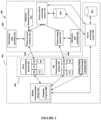
- Input device 106 receives input data 118 (such as electronic content data), for example via a network or from a local storage device.
- Output device 108 produces or generates output data 120 (such as viewable content) and can include, for example, a display device or monitor in which case output data 120 is visual, a printer in which case output data 120 is printed, a port for example a USB port, a peripheral component adaptor, a data transmitter or antenna such as a modem or wireless network adaptor, etc.
- Output data 120 could be distinct and derived from different output devices, for example a visual display on a monitor in conjunction with data transmitted to a network.
- a user could view data output, or an interpretation of the data output, on, for example, a monitor or using a printer.
- the storage device 114 can be any form of data or information storage means, for example, volatile or non-volatile memory, solid state storage devices, magnetic devices, etc..
- the mobile communication device 310 could be located near the user in the vehicle, in the user's pocket, mounted within the vehicle, or the like.
- the user does not need to interact with the mobile communication device 310 during use in order for communication to occur between the mobile communication device 310 and the communication system 206.
- the mobile communication device 310 is configured to automatically operate and communicate with the communication system without user input in order to enter and exit the restricted vehicular parking area.
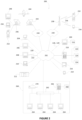
- the entry communication system 324 includes a first entry communication device 334 located a short distance (i.e. 0.5 to 10 metres) prior to the ticket issuance machine 314 and the entry boom gate assembly 318 at the entry point of the parking station.
- a first exit communication device 354 is located a small distance (i.e. 0.5 to 10 metres) prior to the ticket reading machine 316 and the exit boom gate assembly 320 at the exit point of the parking station.
- the first entry communication device 334 and the first exit communication device 354 are located inside respective bollards.
- the first entry and exit communication devices 334, 354 are preferably fixed devices.
- the first entry communication device 334 and the first exit communication device communicate 354 use Bluetooth protocol such as Bluetooth Low Energy.
- the wireless signal transmitted by the first entry and exit communication devices are indicative of a unique device identity/address for the respective communication device.
- the parabolic shaped wall of the communication device body 325 defines a focused transmission region, like a "hotspot", which the mobile communication device 310 is able to detect a strong increase in received signal strength compared to areas outside the focused transmission region.
- the directional antenna of the first entry and first exit communication devices 334, 354 is a parabolic antenna which advantageously focuses the transmission of the transmitted signal within a specific region whilst still capturing transmitted signals from the mobile communication device 310 over a broad region. It will be appreciated that a cover can extend between the side edges of the body 325 which is substantially flush with the external wall of the bollard, although for clarity purposes this has not been shown in Figures 5 to 9 .
- the entry communication system 324 of the communication system 306 can further include a second entry communication device 336 located within or near the ticket issuance machine 318.
- the exit communication system 326 of the communication system 306 can further include a second exit communication device 356 located within or near the ticket reading machine 316.
- the second entry and exit communication devices 336, 356 are preferably fixed devices.
- the second entry and second exit communication devices 336, 356 are Bluetooth communication devices using Bluetooth Low Energy.
- the wireless signal transmitted by the second entry and exit communication devices 336, 356 are indicative of a unique device identity/address for the respective communication device.
- the unique wireless signals which can be received by an approaching mobile communication device 310 can be used by the mobile communication device 310 to determine which side of the vehicle (i.e. left or right) the approaching mobile communication device 310 is located. As will be explained in further detail below, determining whether a particular mobile communication device 310 is located on the left or right side of the vehicle 1000 can be used to distinguish between multiple mobile communication devices 310 located in the vehicle 1000 which are substantially simultaneously attempting to communicate with the communication system 306. Additionally, the received wireless signals from the transmitters 330, 332, 350, 352 can be analysed by the approaching mobile communication device 310 to assist with determining when an entry or exit request should be transmitted by the mobile communication device 310.
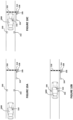
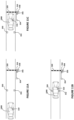
- the first and second entry transmitters 330, 332 are generally located adjacent opposing sides of the entry path (i.e. road or driveway) as shown in Figures 10A to 10C .
- the first and second entry transmitters 330, 332 are spatially offset relative to the centre of the vehicle entry path.
- the first entry transmitter 330 and second entry transmitter 332 may be mounted/embedded on/in a roof surface, ground surface, or wall surface of the parking station.
- the first and second entry transmitters 330, 332 are aligned substantially orthogonal relative to the travel direction of the vehicle 1000 along the entry vehicle path when passing the first and second entry transmitters 330, 332.
- the first and second entry transmitters 330, 332 share a common power source although it is possible for separate power sources.
- first and second exit transmitters 350, 352 are generally located adjacent opposing sides of the exit path (i.e. road or driveway) as shown in Figures 11A to 11C .
- the first and second exit transmitters 350, 352 are spatially offset relative to the centre of the vehicle exit path.
- the first exit transmitter 350 and second exit transmitter 352 may be mounted/embedded on/in a roof surface, ground surface, or wall surface of the parking station.
- the first and second exit transmitters 350, 352 are aligned substantially orthogonal relative to the travel direction of the vehicle 1000 along the exit vehicle path when passing the first and second exit transmitters 350, 352.
- the first and second exit transmitters 350, 352 share a common power source although it is possible for separate power sources.
- the mobile communication device 310 is configured to generate and transfer the entry request in response to receiving a first entry signal from the first entry communication device 334 that satisfies an entry criteria. Additionally, the mobile communication device 310 is configured to generate and transfer the exit request in response to receiving a first exit signal 354 from the first exit communication device that satisfies an exit criteria. In one form, the entry criteria and the exit criteria are based at least partially on the received signal strength of the received first entry signal and the first exit signal.
- the mobile communication device 310 is configured to generate and transfer the entry request in response to receiving a first entry signal from the first entry communication device 334 and a second entry signal from the second entry communication device 356 which substantially simultaneously satisfy one or more entry criteria.
- the mobile communication device 310 is configured to generate and transfer the exit request in response to receiving a first exit signal from the first exit communication device 354 and a second exit signal from the second exit communication device 356 which substantially simultaneously satisfy one or more exit criteria.
- the mobile communication device 310 is configured to dynamically determine an entry scale value based on the received signal strength of a plurality of third and/or fourth entry signals received from the first and second entry transmitters 330, 332 such that a predefined entry criteria can be utilised by the mobile communication device 310 to determine when to transfer the entry request using the entry scale value.
- the mobile communication device 310 is configured to dynamically determine an exit scale value based on the received signal strength of a plurality of third and/or fourth exit signals received from the first and second exit transmitters 350, 352 such that a predefined exit criteria can be utilised by the mobile communication device 310 to determine when to transfer the exit request using the exit scale value.
- the mobile communication device 310 is configured to continuously convert the received signal strength for the third and fourth entry signals to received power values.
- Each power value is determined by the mobile communication device 310 using the received signal strength and configuration data stored in the memory indicative of the transmission characteristics of the first and second entry transmitters 330, 332.
- the mobile communication device 310 then analyses at least some of the power values (such as a shifting historical window of power values) for the received third and fourth entry signals when approaching the entry point to determine an order of magnitude of the power values being calculated.
- the order of magnitude of the received power can vary significantly between various mobile communication devices and the location of the mobile communication device within the vehicle.
- the order of magnitude of the power values can be determined based on a peak power value detected for the first or second transmitter 330, 332.
- the peak power value may occur when the mobile communication device has just passed the closest point spatially to the first or second entry transmitters 330, 332 as illustrated in Figure 10B .
- the length of the shifting historical window can be ibn memory (such as via configuration data) to take into account variations due to interference and the like.
- the peak power value may be identified for either the first or second entry transmitter 330, 332.
- the mobile communication device 310 determines an entry scale value based on the value of the peak power of the received third or fourth entry signals from the first or second entry transmitters 330, 332.
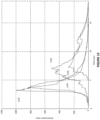
- the entry scale value can be determined by the mobile communication device 310 such that the peak power value is linearly scaled to have a predefined scaled power value (e.g. 1000 - as shown in Figure 12 ).
- the entry scale value is stored in memory of the mobile communication device 310 and later used for determining if/when to transmit an entry request in relation to the received first and second entry signals.
- the entry request can be received by the second entry communication device 336 of the communication system 306.
- the mobile communication device 310 can also determine and compare the peak power values of the first and second entry transmitters 330, 332 to determine which side of the vehicle 1000 (e.g. left or right) the mobile communication device 310 is located.
- the mobile communication device 310 has stored in memory configuration data, received from a server processing system 340, indicative of which side of the entry path each entry transmitter is located.
- the first entry transmitter 330 may be located on the left side of the vehicle entry path and the second entry transmitter 332 may be located on the right side of the vehicle entry path.
- the mobile communication device 310 determines that it is located on the left side of the vehicle 1000.
- the mobile communication device 310 determines that it is located on the right side of the vehicle 1000. Position data indicative of the particular side of the vehicle that the mobile communication device 310 is located is stored in memory of the mobile communication device 310 and transferred as part of the entry request which can be used by the access control processing system 312 to distinguish between multiple entry requests received substantially simultaneously from multiple mobile communication devices 310 within the same vehicle.
- the mobile communication device 310 is configured to scale the determined power values of first and second entry signals received from the first and second entry communication devices 334, 336.
- the mobile communication device 310 determines the received signal strength of the first entry signal and then converts the received signal strength to power. The mobile communication device 310 then scales the power according to the entry scale value and applies a smoothing function to the scaled power value taking into account previously determined scaled power values for at least a portion of any previously received first entry signals.
- a similar process occurs in relation to each received second entry signal. In particular, each second entry signal that the mobile communication device 310 receives as it approaches toward to the entry point, the mobile communication device 310 determines the received signal strength of the second entry signal and then converts the received signal strength to power.
- the mobile communication device 310 then scales the power value according to the entry scale value and applies a smoothing function to the scaled power value taking into account previously determined scaled power values for at least a portion of any previously received second signals.
- the mobile communication device 310 determines whether the scaled power values for the most recently received samples of the first and second entry signals satisfy one or more entry signal criteria. In response to the one or more entry signal criteria being met, the mobile communication device 310 generates and transmits an entry request. In this example, the entry request is received by the second communication device 356.
- the mobile communication device dynamically generates a first baseline entry scaled power value after receiving each first entry signal and a second baseline entry scaled power value after receiving each second entry signal.
- the first and second baseline entry scaled power values may be calculated as the average of the scaled power values received over a threshold period of time or over a threshold number of received signals (e.g. last 50 samples).
- the mobile communication device 310 has stored in memory a first and second predefined threshold entry growth rate.
- the first and second predefined threshold entry growth rate may be defined in the configuration data.
- the various growth rates can be expressed as a percentage of growth although other expressions of the growth rate are possible.
- the mobile communication device 310 determines a first entry growth rate of the current scaled power value of the first entry signal relative to the first baseline entry scaled power value. Furthermore, the mobile communication device 310 determines a second entry growth rate of the current scaled power value of the second entry signal relative to the second baseline entry scaled power value. The mobile communication device 310 then determines whether the first and second entry growth rates meet or exceed the predefined first and second threshold entry growth rates respectively. In one form, the mobile communication device 310 may also determine whether the first and second scaled power values of the most recently received signals meet or exceed a first and second scaled power threshold in order to avoid false positive detections. In the event of a positive determination, the mobile communication device 310 generates and transmits an entry request. In one variation, a plurality of consecutive growth rates may need to meet or exceed the threshold for consecutive scaled power values in order for an entry request to be generated and transferred in order to avoid sudden changes in interference and the like.
- the mobile communication device 310 determines that one or more entry criteria have been met and then proceeds to generate and transmit an entry request.
- a second scaled power threshold e.g. 400
- a threshold period of time e.g. 4 seconds
- the second entry communication device 336 transfers data to the ticket issuance machine 314 via the data cable 334 based upon the received entry request.
- the data transferred to the ticket issuance machine can be indicative of or include the entry request and additionally a flag or marker indicating that the user is a registered user of the system 302 such that no physical ticket needs to be issued by the ticket issuance machine 314.
- the ticket issuance machine 314 transfers the entry request to the access control processing system 312 via a local computer network.
- the access control system can then determine whether access should be granted based on data stored in a data store 340 or based on a determination carried out by server processing system 340 and data store 342.
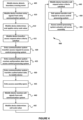
- the method 400 includes the mobile communication device detecting a boundary crossing event.
- the mobile communication device begins to monitor for a list of registered transmission regions of the communication system 306 in response to the detected boundary crossing event.
- the computer program 308 is launched in the background environment of the operating system of the mobile communication device 310 in the event it is not already.
- step 410 of the method 400 includes the mobile communication device 310 under control of the computer program 308 receiving entry signals from entry communication system 324 of the communication system 306 which are associated with the monitored region.
- the method includes the mobile communication device determining an entry scale value, based on a detected peak power value of one of the entry communication devices of the entry communication system 324, to scale the power values of received entry signals.
- the method 400 includes the access control processing system 312 instructing the ticket issuance machine 314 to actuate the entry boom gate assembly 318 to move to an open position.
- step 440 of the method 400 includes the mobile communication device 310 under control of the computer program 308 receiving exit signals from at least some of the exit communication devices of the communication system 306 which are associated with the monitored region.
- the method 400 includes the second exit communication device 356 transferring the exit request to the access control processing system 312 and the ticket reading machine 316.
- the second exit communication device 326 of the exit point microcontroller 358 transfers the exit request to the ticket reading machine 316 via the data cable 338.
- the ticket-reading machine 316 then transfers the exit request to the access control processing system 312 via the LAN.
- the computer program 308 executing upon the mobile communication device 310 can be opened by the user to display a user interface that can be present various information to the user or allow the user to request various functions to be performed.
- the user can be presented with information regarding the entry time into the parking station which is stored as part of the authorisation data.
- a temporal indication of the amount of time available to remain parked in the parking station can be presented.
- the user can transfer the authorisation data to a different registered user, wherein the authorisation data is transferred to the server processing system 340 and relayed to another mobile communication device 310 associated with the nominated registered user.
- the server processing system 340 communicates the transfer to the access control processing system 312 such that different key data is used when authenticating the exit request.
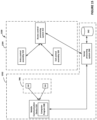
- FIG. 13 there is shown a further system 1302 for use with an access control system 1304 for a residential/commercial parking area.
- an access control system 1304 for a residential/commercial parking area.
- the systems 1302, 1304 operate together to form system 1300.
- the system 1302 includes the entry communication system 324 including a plurality of entry communication devices 330, 336 and an exit communication system 326 including a plurality of exit communication devices 350, 356.
- the communication system 306 can include a single access point microcontroller 1330 which is in communication with at least one of the entry communication devices 336 and at least one of the exit communication devices 356.
- the access point microcontroller 1330 is in communication with the access control processing system 312.
- the access control processing system 312 is electrically connected to a parking access assembly 1318 which can include assemblies such as access controlled gates, roller doors, and the like.
- the access control processing system 312 can also be in data communication with the server processing system 340 having access to the data store 342. It will be appreciated that for less sophisticated access control processing systems 312, the server processing system 340 may not be in data communication with the access control processing system 312.
- the configuration data can be altered at the cloud server 340, wherein each mobile communication device 310 obtains the altered configuration data in a timely manner (e.g. within 6 hours).
- the systems 302, 1302, 1402 are advantageous as the mobile communication device 310 transmits the entry/exit request using a short range wireless communication network to the local communication system 306.
- the user does not require Internet access to be able to enter or exit the restricted area.
- the entry request and exit request can be alternatively transferred via a WAN, such as the Internet, to the server processing system 340 for processing.
- a WAN such as the Internet
- An example of this system arrangement 1502 is shown in Figure 15 . It will be appreciated that some restricted areas (e.g. underground parking stations) may not be appropriate for such a configuration.
- the entry point microcontroller 338 and the exit point microcontroller 358 are not directly connected to the access control processing system 312 (rather indirectly via the ticket issuance machine 314 and the ticket reading machine 316), it is possible for the system 300 to be modified such that the entry point microcontroller and the exit point microcontroller can be configured to be connected directly to the access control processing system via a communication medium such as via a data cable (e.g. network cable) such that direct communication can take place between the respective processing systems.
- a communication medium such as via a data cable (e.g. network cable) such that direct communication can take place between the respective processing systems.
- the mobile communication device 310 may be configured by the computer program 308 to allow the user to interact with a user interface of the computer program which is presented via the display of the mobile communication device in order to generate and transfer the entry request or exit request.
- analysis of the received signal strength of the entry and exit signals are unnecessary as the user simply interacts with the interface when they are about to enter or exit the restricted area.
- the analysis of the received signal strength of the entry and exit signals can be used by the mobile communication device to enable a portion of the interface which is normally disabled.
Landscapes
- Physics & Mathematics (AREA)
- General Physics & Mathematics (AREA)
- Finance (AREA)
- Business, Economics & Management (AREA)
- Engineering & Computer Science (AREA)
- Computer Networks & Wireless Communication (AREA)
- Mobile Radio Communication Systems (AREA)
- Telephonic Communication Services (AREA)
- Traffic Control Systems (AREA)
- Telephone Function (AREA)
- Selective Calling Equipment (AREA)
- Devices For Checking Fares Or Tickets At Control Points (AREA)
- Time Recorders, Dirve Recorders, Access Control (AREA)
Applications Claiming Priority (4)
| Application Number | Priority Date | Filing Date | Title |
|---|---|---|---|
| AU2015100112A AU2015100112A4 (en) | 2015-02-02 | 2015-02-02 | System, method and computer program for an access control system |
| AU2015900302A AU2015900302A0 (en) | 2015-02-02 | System, method and computer program for an access control system | |
| EP16745997.3A EP3254263B1 (fr) | 2015-02-02 | 2016-01-12 | Système, procédé et programme informatique pour système de commande d'accès |
| PCT/AU2016/050008 WO2016123662A1 (fr) | 2015-02-02 | 2016-01-12 | Système, procédé et programme informatique pour système de commande d'accès |
Related Parent Applications (1)
| Application Number | Title | Priority Date | Filing Date |
|---|---|---|---|
| EP16745997.3A Division EP3254263B1 (fr) | 2015-02-02 | 2016-01-12 | Système, procédé et programme informatique pour système de commande d'accès |
Publications (2)
| Publication Number | Publication Date |
|---|---|
| EP4579618A2 true EP4579618A2 (fr) | 2025-07-02 |
| EP4579618A3 EP4579618A3 (fr) | 2025-10-01 |
Family
ID=56563231
Family Applications (2)
| Application Number | Title | Priority Date | Filing Date |
|---|---|---|---|
| EP25176137.5A Pending EP4579618A3 (fr) | 2015-02-02 | 2016-01-12 | Système, procédé et programme informatique pour un système de contrôle d'accès |
| EP16745997.3A Active EP3254263B1 (fr) | 2015-02-02 | 2016-01-12 | Système, procédé et programme informatique pour système de commande d'accès |
Family Applications After (1)
| Application Number | Title | Priority Date | Filing Date |
|---|---|---|---|
| EP16745997.3A Active EP3254263B1 (fr) | 2015-02-02 | 2016-01-12 | Système, procédé et programme informatique pour système de commande d'accès |
Country Status (20)
| Country | Link |
|---|---|
| US (2) | US11043052B2 (fr) |
| EP (2) | EP4579618A3 (fr) |
| JP (1) | JP6772187B2 (fr) |
| KR (1) | KR102507021B1 (fr) |
| CN (2) | CN113436377A (fr) |
| AU (6) | AU2016214965A1 (fr) |
| BR (1) | BR112017016648A2 (fr) |
| CA (1) | CA2980476C (fr) |
| EA (1) | EA038553B1 (fr) |
| ES (1) | ES3034395T3 (fr) |
| IL (1) | IL253634A0 (fr) |
| MX (1) | MX385786B (fr) |
| MY (1) | MY191704A (fr) |
| NZ (1) | NZ734666A (fr) |
| PH (1) | PH12017501390A1 (fr) |
| PL (1) | PL3254263T3 (fr) |
| SG (2) | SG11201706051PA (fr) |
| TW (2) | TWI747260B (fr) |
| WO (1) | WO2016123662A1 (fr) |
| ZA (1) | ZA201705535B (fr) |
Families Citing this family (12)
| Publication number | Priority date | Publication date | Assignee | Title |
|---|---|---|---|---|
| MX385786B (es) | 2015-02-02 | 2025-03-18 | Tma Capital Australia Pty Ltd | Sistema, método y progama de computadora para un sistema de control de acceso. |
| WO2016178220A1 (fr) * | 2015-05-04 | 2016-11-10 | Pink Park Ltd. | Système et procédé de gestion d'espace de stationnement |
| JP7067799B2 (ja) | 2016-07-29 | 2022-05-16 | ティーエムエー キャピタル オーストラリア ピーティーワイ リミテッド | 監視システムのためのシステム及び方法 |
| MX387292B (es) * | 2017-01-17 | 2025-03-18 | Sonia Belhareth | Sistema y metodo para la identificacion de dispositivos moviles por medio de wi-fi sin necesidad de una conexion. |
| EP3407307B1 (fr) * | 2017-05-23 | 2022-05-18 | Scheidt & Bachmann GmbH | Système de stationnement et son procédé de fonctionnement |
| WO2019069257A1 (fr) * | 2017-10-04 | 2019-04-11 | Acube Technology Sa | Procédé d'identification et/ou d'authentification de l'utilisateur d'un équipement mobile dans une zone particulière |
| US11734960B2 (en) * | 2018-02-22 | 2023-08-22 | Fangsong WANG | Mobile sensing and smart payment system |
| US10964125B2 (en) * | 2018-02-22 | 2021-03-30 | Fangsong WANG | Mobile sensing and smart payment system |
| CN110021089B (zh) * | 2018-10-29 | 2024-03-15 | 河南正梵教育科技有限公司 | 基于分布授权架构的门禁鉴权系统、存储介质系统及方法 |
| CN112825203B (zh) * | 2019-11-21 | 2023-10-03 | 国家电投集团重庆合川发电有限公司 | 用于特定区域的准入控制的方法和装置 |
| EP4021018B1 (fr) * | 2020-12-22 | 2022-12-21 | Axis AB | Procédé et système de contrôle d'accès utilisant des communications sans fil à courte portée |
| DE102023003342B3 (de) * | 2023-08-12 | 2024-10-24 | Mercedes-Benz Group AG | Verfahren zur Ein- oder Ausfahrtkontrolle in oder aus einem Areal und Zugangskontrollsystem |
Family Cites Families (75)
| Publication number | Priority date | Publication date | Assignee | Title |
|---|---|---|---|---|
| US6653946B1 (en) | 1990-05-17 | 2003-11-25 | Transcore, Inc. | Electronic vehicle toll collection system and method |
| JP3265911B2 (ja) * | 1995-05-02 | 2002-03-18 | 株式会社デンソー | 移動体通信装置 |
| US6437692B1 (en) | 1998-06-22 | 2002-08-20 | Statsignal Systems, Inc. | System and method for monitoring and controlling remote devices |
| DE29901677U1 (de) | 1999-02-01 | 2000-06-29 | Hörmann KG Antriebstechnik, 33790 Halle | Torantrieb mit automatischer Zutrittskontrolle |
| JP5246982B2 (ja) | 1999-06-23 | 2013-07-24 | ポストレル,リチャード | 高頻度使用報償プログラムに蓄積されたポイントの電子バータ、交換、および引換のためのシステム |
| JP3698004B2 (ja) * | 2000-03-15 | 2005-09-21 | 株式会社デンソー | 自動料金収受システムに使用される移動体無線通信装置 |
| FR2809433B1 (fr) * | 2000-05-26 | 2005-01-28 | Schlumberger Systems & Service | Parc ferme de stationnement de vehicules, equipements pour sa mise en oeuvre et procede de gestion d'un tel parc |
| US6856237B1 (en) | 2000-06-26 | 2005-02-15 | Doorking, Inc. | Method and apparatus for radio frequency security system with automatic learning |
| JP2002109591A (ja) * | 2000-09-28 | 2002-04-12 | Mitsubishi Electric Corp | 無線通信システム、移動体、および固定無線装置 |
| US20020107916A1 (en) * | 2001-02-05 | 2002-08-08 | Yukako Nii | Inside-vehicle information communication method, inside-vehicle information communication apparatus, inside-vehicle information communication system, inside-vehicle information communication program, recording medium storing the inside-vehicle information communication program, vehicle-provided communication network system, and information recording medium issuing apparatus |
| US20020131599A1 (en) | 2001-03-15 | 2002-09-19 | International Business Machines Corporation | System for encryption of wireless transmissions from personal palm computers to world wide Web terminals |
| JP2003022460A (ja) | 2001-07-09 | 2003-01-24 | Toshiba Corp | 駐車場管理システム、および駐車場管理方法 |
| JP2003085456A (ja) | 2001-09-10 | 2003-03-20 | Ntt Docomo Inc | 料金決定方法、通信方法、警告方法、料金システム、警告システムおよび携帯端末 |
| JP4273826B2 (ja) | 2002-04-26 | 2009-06-03 | Jfeスチール株式会社 | 耐hic特性に優れたラインパイプ用高強度鋼板およびその製造方法 |
| US20030228846A1 (en) * | 2002-06-05 | 2003-12-11 | Shlomo Berliner | Method and system for radio-frequency proximity detection using received signal strength variance |
| JP2004030114A (ja) | 2002-06-25 | 2004-01-29 | Nec Corp | 駐車場情報システム、駐車場情報サーバおよびプログラム |
| JP4112322B2 (ja) * | 2002-09-11 | 2008-07-02 | 株式会社東芝 | 駐車場の車両管理システム、駐車場の管理サーバ |
| US6829550B2 (en) | 2002-09-26 | 2004-12-07 | Broadcom Corp. | Calibration of received signal strength indication within a radio frequency integrated circuit |
| JP4144789B2 (ja) | 2002-12-06 | 2008-09-03 | 株式会社小糸製作所 | 車両用前照灯の照射方向制御装置 |
| WO2004070674A2 (fr) * | 2003-02-05 | 2004-08-19 | Futurewiz Co., Ltd. | Systeme et procede de gestion du stationnement par telephone mobile |
| CN1549209A (zh) * | 2003-05-09 | 2004-11-24 | 中华电信股份有限公司 | 车辆通行费自动支付方法 |
| CA2536517C (fr) | 2003-08-22 | 2009-04-28 | Strategic Technologies Inc. | Systeme de localisation electronique pour la surveillance de personne |
| JP4031743B2 (ja) | 2003-08-29 | 2008-01-09 | 三菱重工パーキング株式会社 | 駐車場制御装置、携帯型通信端末、駐車場制御方法およびプログラム |
| JP2006079557A (ja) | 2004-09-13 | 2006-03-23 | Toyota Tsusho Corp | 予約方法、予約制入庫方法、ワイヤレスコールナンバー取得方法、通信処理方法、駐車場予約システム |
| FR2881304B1 (fr) * | 2005-01-25 | 2007-06-29 | Dv Partners Sarl | Systeme et procede de controle d'acces, terminal portable et unite d'interfacage pour ce systeme |
| US8792826B2 (en) | 2006-04-03 | 2014-07-29 | Eckey Corporation | Methods for determining proximity between radio frequency devices and controlling switches |
| LT2082605T (lt) | 2006-10-05 | 2018-01-10 | Eureka S.A. | Sistemos ir būdai automatizuotam tapatybės nustatymui įeiti į geografinę vietovę |
| US7840237B2 (en) | 2007-02-08 | 2010-11-23 | Microsoft Corporation | Enabling user interface elements based on short range wireless devices |
| JP2010003271A (ja) | 2008-06-23 | 2010-01-07 | Fujitsu Ltd | 改札装置および改札方法 |
| US20090325539A1 (en) | 2008-06-25 | 2009-12-31 | Ajay Malik | Cell Phone Sensor Applications |
| KR100970937B1 (ko) | 2008-06-27 | 2010-07-20 | 에스디 솔루션스(주) | 핸드폰을 이용하여 주차요금을 결제하는 주차관리 방법 및이를 수행하는 시스템 |
| EP2312537A1 (fr) | 2009-10-15 | 2011-04-20 | Alcatel Lucent | Dispositif et procédé d'initiation à distance d'un service de stationnement |
| CN102163367B (zh) * | 2010-02-23 | 2014-01-22 | 国际商业机器公司 | 控制司机使用手持通信设备进行通信的系统和方法 |
| US9313311B2 (en) * | 2010-03-05 | 2016-04-12 | Johnson Controls Technology Company | Method for using a communication system connected to a plurality of mobile devices and prioritizing the mobile devices, communication system, and use thereof |
| US9286733B2 (en) | 2010-04-13 | 2016-03-15 | Locomobi Inc. | Location based systems for entry and exit |
| CN101872495B (zh) * | 2010-06-17 | 2012-12-05 | 北京万集科技股份有限公司 | 一种路测方法、装置及不停车收费系统 |
| CN202120331U (zh) * | 2010-06-17 | 2012-01-18 | 北京万集科技股份有限公司 | 一种路测装置及不停车收费系统 |
| CN201788533U (zh) * | 2010-07-29 | 2011-04-06 | 上海网频电子科技有限公司 | 一种小区车辆安全防盗系统 |
| US20120066034A1 (en) * | 2010-09-10 | 2012-03-15 | Appredeem, Inc. | Online account to mobile device link |
| US8799037B2 (en) * | 2010-10-14 | 2014-08-05 | Palto Alto Research Center Incorporated | Computer-implemented system and method for managing motor vehicle parking reservations |
| US20120130775A1 (en) | 2010-11-18 | 2012-05-24 | Albert Bogaard | Method of processing a transaction for a parking session |
| CN102045122B (zh) | 2010-12-10 | 2013-06-12 | 北京速通科技有限公司 | 多天线协同定位解决邻道干扰问题的方法 |
| CN102568043B (zh) | 2010-12-23 | 2014-01-08 | 博通集成电路(上海)有限公司 | 用于电子收费系统的方法和车载单元 |
| CN102682501B (zh) * | 2011-03-09 | 2015-02-04 | 感知技术无锡有限公司 | 一种实现停车场出入口控制的系统与方法 |
| CN201955831U (zh) * | 2011-03-09 | 2011-08-31 | 无锡国科微纳传感网科技有限公司 | 一种用于停车场出入口控制的出入口控制设备和集成管理设备 |
| US9892358B2 (en) | 2011-04-27 | 2018-02-13 | Wal-Mart Stores, Inc. | Method and apparatus pertaining to radio-frequency identification tags |
| US20130115969A1 (en) * | 2011-04-28 | 2013-05-09 | Fred H. Holmes | System and method for cell phone targeting and tracking |
| US20120284209A1 (en) | 2011-05-03 | 2012-11-08 | Douglas Duffy | Rfid controlled parking system |
| US8397984B1 (en) * | 2011-09-15 | 2013-03-19 | Eventbrite, Inc. | System for on-site management of an event |
| US20130107783A1 (en) * | 2011-10-26 | 2013-05-02 | At&T Intellectual Property I, L.P | Intelligent Hot Spot and Tethering |
| US9445438B2 (en) * | 2011-10-28 | 2016-09-13 | Qualcomm Incorporated | Systems and methods for fast initial network link setup |
| US20130132167A1 (en) | 2011-11-21 | 2013-05-23 | Wirelesscarpark.com, Inc. | Cloud Based Parking Management System and Method |
| CN102542649B (zh) | 2012-03-11 | 2014-09-10 | 李凯 | 移动设备控制锁闭系统的方法 |
| US10068386B2 (en) | 2012-04-23 | 2018-09-04 | Transparent Wireless Systems, Llc | Methods and systems for electronic payment for parking in gated garages |
| CN202650084U (zh) | 2012-05-15 | 2013-01-02 | 湖南文理学院 | 基于蓝牙及红外感应技术的智能停车场管理系统 |
| US9560099B2 (en) * | 2012-05-23 | 2017-01-31 | Qualcomm Incorporated | Systems and methods for group communication using a mobile device using motion and voice activate controls |
| DE202012103022U1 (de) | 2012-08-10 | 2012-08-30 | Ruhr-Park Parkhausbetriebsgesellschaft Mbh | Zutrittskontroll-/Validierungseinrichtung |
| CN102956040B (zh) * | 2012-12-06 | 2015-12-23 | 甘肃紫光智能交通与控制技术有限公司 | 一种基于nfc的高等级公路收费系统 |
| US9483934B2 (en) * | 2012-12-26 | 2016-11-01 | Oren Kotlicki | Presence based system and method for controlling devices |
| CN203102410U (zh) | 2013-01-30 | 2013-07-31 | 广东安居宝数码科技股份有限公司 | 停车场管理系统 |
| WO2014127057A1 (fr) | 2013-02-15 | 2014-08-21 | Cah Technology | Systèmes et procédés destinés à une installation de stationnement automatique |
| CN105144130B (zh) | 2013-03-15 | 2019-01-29 | 英特尔公司 | 移动计算设备技术以及使用它的系统和方法 |
| KR101502574B1 (ko) | 2013-04-03 | 2015-03-24 | 와이엠디(주) | 휴대단말기를 이용한 주차관리 시스템 |
| US10027723B2 (en) * | 2013-04-12 | 2018-07-17 | Provenance Asset Group Llc | Method and apparatus for initiating communication and sharing of content among a plurality of devices |
| AU2014253582A1 (en) | 2013-10-28 | 2015-05-14 | Cds Worldwide Pty Ltd | A car parking system |
| WO2015073888A2 (fr) * | 2013-11-14 | 2015-05-21 | Protean Payment, Inc. | Procédé de commande à distance d'une carte de paiement reprogrammable |
| SE538146C2 (sv) * | 2013-12-06 | 2016-03-15 | Sweden Connectivity Ab | Passivt låssystem innefattande medel för inne och ute detektion |
| CN103679906B (zh) | 2014-01-06 | 2016-10-05 | 杨海峰 | 基于无线网络的门禁管理系统及方法 |
| CN107155407B (zh) | 2014-06-18 | 2020-07-07 | 维里逊专利及许可公司 | 用于交互式光传感器网络的照明节点和系统 |
| CN104036574B (zh) | 2014-06-26 | 2017-02-01 | 广东安居宝智能控制系统有限公司 | 组群停车场管理系统 |
| US20160042575A1 (en) * | 2014-08-11 | 2016-02-11 | Locomobi, Inc. | Automated facility access and payment processing systems and methods |
| US9514589B2 (en) * | 2014-08-25 | 2016-12-06 | Accenture Global Services Limited | Secure short-distance-based communication and access control system |
| CN104637138A (zh) | 2014-12-26 | 2015-05-20 | 深圳市科漫达智能管理科技有限公司 | 车辆通行控制方法及系统 |
| CN104537886A (zh) | 2015-01-05 | 2015-04-22 | 无锡麦田圈科技发展有限公司 | 一种支持停车诱导与反向寻车的智能停车场系统 |
| MX385786B (es) | 2015-02-02 | 2025-03-18 | Tma Capital Australia Pty Ltd | Sistema, método y progama de computadora para un sistema de control de acceso. |
-
2016
- 2016-01-12 MX MX2017009939A patent/MX385786B/es unknown
- 2016-01-12 BR BR112017016648A patent/BR112017016648A2/pt not_active Application Discontinuation
- 2016-01-12 CN CN202110389960.1A patent/CN113436377A/zh active Pending
- 2016-01-12 WO PCT/AU2016/050008 patent/WO2016123662A1/fr not_active Ceased
- 2016-01-12 CA CA2980476A patent/CA2980476C/fr active Active
- 2016-01-12 SG SG11201706051PA patent/SG11201706051PA/en unknown
- 2016-01-12 NZ NZ734666A patent/NZ734666A/en unknown
- 2016-01-12 KR KR1020177024650A patent/KR102507021B1/ko active Active
- 2016-01-12 PL PL16745997.3T patent/PL3254263T3/pl unknown
- 2016-01-12 ES ES16745997T patent/ES3034395T3/es active Active
- 2016-01-12 AU AU2016214965A patent/AU2016214965A1/en not_active Abandoned
- 2016-01-12 EP EP25176137.5A patent/EP4579618A3/fr active Pending
- 2016-01-12 US US15/548,365 patent/US11043052B2/en active Active
- 2016-01-12 EP EP16745997.3A patent/EP3254263B1/fr active Active
- 2016-01-12 EA EA201791654A patent/EA038553B1/ru unknown
- 2016-01-12 MY MYPI2017702704A patent/MY191704A/en unknown
- 2016-01-12 SG SG10201809510XA patent/SG10201809510XA/en unknown
- 2016-01-12 CN CN201680020982.8A patent/CN107430793B/zh active Active
- 2016-01-12 JP JP2017558597A patent/JP6772187B2/ja active Active
- 2016-01-30 TW TW109114371A patent/TWI747260B/zh active
- 2016-01-30 TW TW105103022A patent/TWI748937B/zh active
-
2017
- 2017-07-24 IL IL253634A patent/IL253634A0/en unknown
- 2017-08-02 PH PH12017501390A patent/PH12017501390A1/en unknown
- 2017-08-15 ZA ZA2017/05535A patent/ZA201705535B/en unknown
-
2019
- 2019-08-06 AU AU2019213335A patent/AU2019213335B2/en active Active
-
2020
- 2020-10-01 US US17/061,101 patent/US11688217B2/en active Active
-
2021
- 2021-01-07 AU AU2021200084A patent/AU2021200084B2/en active Active
-
2023
- 2023-07-27 AU AU2023208192A patent/AU2023208192B2/en active Active
-
2024
- 2024-03-01 AU AU2024201381A patent/AU2024201381B2/en active Active
-
2025
- 2025-04-09 AU AU2025202522A patent/AU2025202522A1/en active Pending
Also Published As
Similar Documents
| Publication | Publication Date | Title |
|---|---|---|
| US11688217B2 (en) | System, method and computer program for an access control system | |
| AU2022201600B2 (en) | System, method and computer program for a monitoring system |
Legal Events
| Date | Code | Title | Description |
|---|---|---|---|
| PUAI | Public reference made under article 153(3) epc to a published international application that has entered the european phase |
Free format text: ORIGINAL CODE: 0009012 |
|
| STAA | Information on the status of an ep patent application or granted ep patent |
Free format text: STATUS: THE APPLICATION HAS BEEN PUBLISHED |
|
| AC | Divisional application: reference to earlier application |
Ref document number: 3254263 Country of ref document: EP Kind code of ref document: P |
|
| AK | Designated contracting states |
Kind code of ref document: A2 Designated state(s): AL AT BE BG CH CY CZ DE DK EE ES FI FR GB GR HR HU IE IS IT LI LT LU LV MC MK MT NL NO PL PT RO RS SE SI SK SM TR |
|
| PUAL | Search report despatched |
Free format text: ORIGINAL CODE: 0009013 |
|
| AK | Designated contracting states |
Kind code of ref document: A3 Designated state(s): AL AT BE BG CH CY CZ DE DK EE ES FI FR GB GR HR HU IE IS IT LI LT LU LV MC MK MT NL NO PL PT RO RS SE SI SK SM TR |
|
| RIC1 | Information provided on ipc code assigned before grant |
Ipc: G07B 15/04 20060101AFI20250826BHEP Ipc: G07C 9/00 20200101ALI20250826BHEP |