EP4537849A2 - Pharmazeutische zusammensetzungen mit clostridium-difficile-toxoiden a und b - Google Patents
Pharmazeutische zusammensetzungen mit clostridium-difficile-toxoiden a und b Download PDFInfo
- Publication number
- EP4537849A2 EP4537849A2 EP24220340.4A EP24220340A EP4537849A2 EP 4537849 A2 EP4537849 A2 EP 4537849A2 EP 24220340 A EP24220340 A EP 24220340A EP 4537849 A2 EP4537849 A2 EP 4537849A2
- Authority
- EP
- European Patent Office
- Prior art keywords
- composition
- toxoid
- toxoids
- excipients
- tween
- Prior art date
- Legal status (The legal status is an assumption and is not a legal conclusion. Google has not performed a legal analysis and makes no representation as to the accuracy of the status listed.)
- Pending
Links
Images



Classifications
-
- A—HUMAN NECESSITIES
- A61—MEDICAL OR VETERINARY SCIENCE; HYGIENE
- A61K—PREPARATIONS FOR MEDICAL, DENTAL OR TOILETRY PURPOSES
- A61K39/00—Medicinal preparations containing antigens or antibodies
- A61K39/02—Bacterial antigens
- A61K39/08—Clostridium, e.g. Clostridium tetani
-
- A—HUMAN NECESSITIES
- A61—MEDICAL OR VETERINARY SCIENCE; HYGIENE
- A61K—PREPARATIONS FOR MEDICAL, DENTAL OR TOILETRY PURPOSES
- A61K47/00—Medicinal preparations characterised by the non-active ingredients used, e.g. carriers or inert additives; Targeting or modifying agents chemically bound to the active ingredient
- A61K47/06—Organic compounds, e.g. natural or synthetic hydrocarbons, polyolefins, mineral oil, petrolatum or ozokerite
- A61K47/08—Organic compounds, e.g. natural or synthetic hydrocarbons, polyolefins, mineral oil, petrolatum or ozokerite containing oxygen, e.g. ethers, acetals, ketones, quinones, aldehydes, peroxides
-
- A—HUMAN NECESSITIES
- A61—MEDICAL OR VETERINARY SCIENCE; HYGIENE
- A61K—PREPARATIONS FOR MEDICAL, DENTAL OR TOILETRY PURPOSES
- A61K47/00—Medicinal preparations characterised by the non-active ingredients used, e.g. carriers or inert additives; Targeting or modifying agents chemically bound to the active ingredient
- A61K47/06—Organic compounds, e.g. natural or synthetic hydrocarbons, polyolefins, mineral oil, petrolatum or ozokerite
- A61K47/08—Organic compounds, e.g. natural or synthetic hydrocarbons, polyolefins, mineral oil, petrolatum or ozokerite containing oxygen, e.g. ethers, acetals, ketones, quinones, aldehydes, peroxides
- A61K47/12—Carboxylic acids; Salts or anhydrides thereof
-
- A—HUMAN NECESSITIES
- A61—MEDICAL OR VETERINARY SCIENCE; HYGIENE
- A61K—PREPARATIONS FOR MEDICAL, DENTAL OR TOILETRY PURPOSES
- A61K47/00—Medicinal preparations characterised by the non-active ingredients used, e.g. carriers or inert additives; Targeting or modifying agents chemically bound to the active ingredient
- A61K47/06—Organic compounds, e.g. natural or synthetic hydrocarbons, polyolefins, mineral oil, petrolatum or ozokerite
- A61K47/16—Organic compounds, e.g. natural or synthetic hydrocarbons, polyolefins, mineral oil, petrolatum or ozokerite containing nitrogen, e.g. nitro-, nitroso-, azo-compounds, nitriles, cyanates
- A61K47/18—Amines; Amides; Ureas; Quaternary ammonium compounds; Amino acids; Oligopeptides having up to five amino acids
- A61K47/183—Amino acids, e.g. glycine, EDTA or aspartame
-
- A—HUMAN NECESSITIES
- A61—MEDICAL OR VETERINARY SCIENCE; HYGIENE
- A61K—PREPARATIONS FOR MEDICAL, DENTAL OR TOILETRY PURPOSES
- A61K47/00—Medicinal preparations characterised by the non-active ingredients used, e.g. carriers or inert additives; Targeting or modifying agents chemically bound to the active ingredient
- A61K47/06—Organic compounds, e.g. natural or synthetic hydrocarbons, polyolefins, mineral oil, petrolatum or ozokerite
- A61K47/26—Carbohydrates, e.g. sugar alcohols, amino sugars, nucleic acids, mono-, di- or oligo-saccharides; Derivatives thereof, e.g. polysorbates, sorbitan fatty acid esters or glycyrrhizin
-
- A—HUMAN NECESSITIES
- A61—MEDICAL OR VETERINARY SCIENCE; HYGIENE
- A61K—PREPARATIONS FOR MEDICAL, DENTAL OR TOILETRY PURPOSES
- A61K9/00—Medicinal preparations characterised by special physical form
- A61K9/0012—Galenical forms characterised by the site of application
- A61K9/0019—Injectable compositions; Intramuscular, intravenous, arterial, subcutaneous administration; Compositions to be administered through the skin in an invasive manner
-
- A—HUMAN NECESSITIES
- A61—MEDICAL OR VETERINARY SCIENCE; HYGIENE
- A61K—PREPARATIONS FOR MEDICAL, DENTAL OR TOILETRY PURPOSES
- A61K9/00—Medicinal preparations characterised by special physical form
- A61K9/14—Particulate form, e.g. powders, Processes for size reducing of pure drugs or the resulting products, Pure drug nanoparticles
- A61K9/19—Particulate form, e.g. powders, Processes for size reducing of pure drugs or the resulting products, Pure drug nanoparticles lyophilised, i.e. freeze-dried, solutions or dispersions
-
- A—HUMAN NECESSITIES
- A61—MEDICAL OR VETERINARY SCIENCE; HYGIENE
- A61P—SPECIFIC THERAPEUTIC ACTIVITY OF CHEMICAL COMPOUNDS OR MEDICINAL PREPARATIONS
- A61P1/00—Drugs for disorders of the alimentary tract or the digestive system
-
- A—HUMAN NECESSITIES
- A61—MEDICAL OR VETERINARY SCIENCE; HYGIENE
- A61P—SPECIFIC THERAPEUTIC ACTIVITY OF CHEMICAL COMPOUNDS OR MEDICINAL PREPARATIONS
- A61P1/00—Drugs for disorders of the alimentary tract or the digestive system
- A61P1/04—Drugs for disorders of the alimentary tract or the digestive system for ulcers, gastritis or reflux esophagitis, e.g. antacids, inhibitors of acid secretion, mucosal protectants
-
- A—HUMAN NECESSITIES
- A61—MEDICAL OR VETERINARY SCIENCE; HYGIENE
- A61P—SPECIFIC THERAPEUTIC ACTIVITY OF CHEMICAL COMPOUNDS OR MEDICINAL PREPARATIONS
- A61P1/00—Drugs for disorders of the alimentary tract or the digestive system
- A61P1/12—Antidiarrhoeals
-
- A—HUMAN NECESSITIES
- A61—MEDICAL OR VETERINARY SCIENCE; HYGIENE
- A61P—SPECIFIC THERAPEUTIC ACTIVITY OF CHEMICAL COMPOUNDS OR MEDICINAL PREPARATIONS
- A61P31/00—Antiinfectives, i.e. antibiotics, antiseptics, chemotherapeutics
-
- A—HUMAN NECESSITIES
- A61—MEDICAL OR VETERINARY SCIENCE; HYGIENE
- A61P—SPECIFIC THERAPEUTIC ACTIVITY OF CHEMICAL COMPOUNDS OR MEDICINAL PREPARATIONS
- A61P31/00—Antiinfectives, i.e. antibiotics, antiseptics, chemotherapeutics
- A61P31/04—Antibacterial agents
-
- A—HUMAN NECESSITIES
- A61—MEDICAL OR VETERINARY SCIENCE; HYGIENE
- A61P—SPECIFIC THERAPEUTIC ACTIVITY OF CHEMICAL COMPOUNDS OR MEDICINAL PREPARATIONS
- A61P37/00—Drugs for immunological or allergic disorders
- A61P37/02—Immunomodulators
- A61P37/04—Immunostimulants
-
- A—HUMAN NECESSITIES
- A61—MEDICAL OR VETERINARY SCIENCE; HYGIENE
- A61K—PREPARATIONS FOR MEDICAL, DENTAL OR TOILETRY PURPOSES
- A61K39/00—Medicinal preparations containing antigens or antibodies
- A61K2039/555—Medicinal preparations containing antigens or antibodies characterised by a specific combination antigen/adjuvant
- A61K2039/55505—Inorganic adjuvants
-
- A—HUMAN NECESSITIES
- A61—MEDICAL OR VETERINARY SCIENCE; HYGIENE
- A61K—PREPARATIONS FOR MEDICAL, DENTAL OR TOILETRY PURPOSES
- A61K39/00—Medicinal preparations containing antigens or antibodies
Definitions
- This invention relates to compositions including Clostridium difficile toxoids and corresponding methods.
- Clostridium difficile ( C. difficile ) toxins A and B are responsible for C . difficile-associated disease (CDAD), which manifests itself as nosocomial diarrhea and pseudomembranous colitis ( Kuijper et al., Clinical Microbiology and Infection 12(Suppl. 6):2-18, 2006 ; Drudy et al., International Journal of Infectious Diseases 11(1):5-10, 2007 ; Wamy et al., Lancet 366(9491):1079-1084, 2005 ; Dove et al., Infection and Immunity 58(2):480-488, 1990 ; Barroso et al., Nucleic Acids Research 18(13):4004, 1990 ).
- CDAD C . difficile- associated disease
- both free and aluminum salt (adjuvant) bound toxoids leads to appropriate immune responses ( Torres et al., Vaccine Research 5(3):149-162, 1996 ; Giannasca et al., Infection and Immunity 67(2):527-538, 1999 ).
- the administration of both toxoids simultaneously is more effective than administration of the individual proteins alone ( Kim et al., Infection and Immunity 55(12):2984-2992, 1987 ). Both the A and B toxoids are thus candidates for vaccine development. Improvement of their conformational integrity and/or reduction in their tendency to aggregate is desirable to produce optimal storage stability.
- compositions such as pharmaceutical compositions (e.g., vaccine compositions), including a toxin or a toxoid of Clostridium difficile (e.g., a toxoid of C . difficile toxins A and/or B; with toxoids A and B being present in a ratio of, for example, 5:1 to 1:5, e.g., 3:2 (A:B)) and one or more pharmaceutically acceptable excipients, which reduce or delay aggregation of the toxin and/or toxoid, and/or increase thermal stability of the toxin or toxoid, relative to a composition lacking the one or more pharmaceutically acceptable excipients.
- pharmaceutical compositions e.g., vaccine compositions
- a toxin or a toxoid of Clostridium difficile e.g., a toxoid of C . difficile toxins A and/or B
- toxoids A and B being present in a ratio of, for example, 5:
- the one or more pharmaceutically acceptable excipients can be, for example, selected from the group consisting buffers, tonicity agents, simple carbohydrates, sugars, carbohydrate polymers, amino acids, oligopeptides, polyamino acids, polyhydric alcohols and ethers thereof, detergents, lipids, surfactants, antioxidants, salts, human serum albumin, gelatins, formaldehyde, or combinations thereof.
- the buffer is selected from the group consisting of citrate, phosphate, glycine, histidine, carbonate, and bicarbonate, and is at a concentration of 5-100 mM;
- the tonicity agent is mannitol, at a concentration of 1-50 mM;
- the sugar is selected from sorbitol, trehalose, and sucrose, at a concentration of 1-30%;
- the amino acid, oligopeptide, or polyamino acid is present at a concentration of up to 100 mM;
- the polyhydric alcohol is selected from the group consisting of glycerol, polyethylene glycol, and ethers thereof of molecular weight 200-10,000, at a concentration of up to 20%;
- the detergents and lipids are selected from the group consisting of sodium deoxycholate, Tween 20, Tween 80, and pluronics, at concentrations of up to 0.5%;
- the compositions include comprises sodium or potassium citrate, and/or sodium or potassium phosphate, optionally in combination with sucrose and/or formaldehyde.
- the compositions include Clostridium difficile toxoids A and B, 5-100 mM (e.g., 10-30 mM, or 20 mM) sodium or potassium citrate (or phosphate), 2-20% (e.g., 2-10% or 5%) sucrose, and ⁇ 0.020% (e.g., 0.016%) formaldehyde, pH 5.5-8.5 (e.g., 6.5-8.0, or 7.5).
- a combination of sorbitol, dextrose, and/or Tween 80 is used.
- the invention also provides methods of making compositions including a toxin or a toxoid of Clostridium difficile and one or more pharmaceutically acceptable excipients, which reduce or delay aggregation of the toxin and/or toxoid, and/or increase thermal stability of the toxin or toxoid, relative to a composition lacking the one or more pharmaceutically acceptable excipients.
- These methods include providing a toxin or a toxoid of Clostridium difficile and admixing the toxin or toxoid of Clostridium difficile with the one or more pharmaceutically acceptable excipients, such as those described herein.
- the compositions may be stored in liquid form or lyophilized, as described herein.
- the invention further provides methods of inducing an immune response to C . difficile in a subject, which involve administering to the subject a composition as described herein.
- the patient does not have, but is at risk of developing, C . difficile disease, and in another example, the patient has C . difficile disease.
- the invention includes use of the compositions of the invention in inducing an immune response to C . difficile in a subject, or in preparation of medicaments for use in this purpose.
- the invention provides several advantages. For example, use of the excipients described herein can result in increased physical stability of C . difficile toxoids A and B, and/or decreased or delayed aggregation, which are important for the production of pharmaceutical products (e.g., vaccines) including the toxoids. Further, use of the ratios of the invention (e.g., 3:2, A:B) and adding adjuvant just prior to administration (rather than in formulation of stored vaccine), can lead to increased immunogenicity.
- pharmaceutical products e.g., vaccines
- ratios of the invention e.g., 3:2, A:B
- adding adjuvant just prior to administration can lead to increased immunogenicity.
- compositions including Clostridium difficile toxins and/or toxoids and one or more pharmaceutically acceptable excipients that provide beneficial properties to the compositions.
- excipients included in compositions of the invention can result in increased stability of one or more of the toxoid components of the compositions and/or decreased or delayed aggregation of the toxoids.
- C. difficile toxoids that can be included in the compositions of the invention can be made using any of a number of methods known in the art. For example, methods involving inactivation with formaldehyde can be used (see, e.g., Kotloff et al., Infection and Immunity 69(2):988-995, 2001 ).
- the compositions include both toxoid A and toxoid B, but compositions including only one of these toxoids are also included in the invention.
- An exemplary C . difficile strain that can be used as a source of toxins is ATCC 43255 (VPI 10463).
- the toxoids can be present in the compositions in varying ratios, e.g., 5:1 (A:B) to 1:5 (A:B). In specific examples, the ratios may be 2:1, 3:1, or 3:2 (A:B).
- the total amount of toxoid in the compositions of the invention can be, e.g., 100 ng-1 mg, 100 ng-500 ⁇ g, 1-250 ⁇ g, 10-100 ⁇ g, 25-75 ⁇ g, or 50 ⁇ g.
- the compositions may optionally be stored in vials in single unit dosage.
- compositions of the invention include one or more compounds such as, for example, buffers (e.g., citrate, phosphate, glycine, histidine, carbonate, or bicarbonate; 5-100 mM; examples of citrates salts that can be used include sodium, potassium, magnesium and zinc); tonicity agents (e.g., mannitol; 1-50 mM); carbohydrates, such as sugars or sugar alcohols (e.g., sorbitol, trehalose, or sucrose; 1-30%) or carbohydrate polymers (e.g., dextran and cellulose); amino acids, oligopeptides, or polyamino acids (up to 100 mM); polyhydric alcohols (e.g., glycerol, polyethylene glycols, or ethers thereof, of molecular weight 200-10,000, and concentrations of up to 20%); detergents, lipids, or surfactants (e.g., Tween 20, Tween 80, or pluronics, with concentrations
- excipients examples include those that are listed in Tables 1, 2, 8, and 9, below.
- the excipients may be those that result in (i) increased thermal stability (e.g., of at least 0.5°C, e.g., 0.5-5°C, 1-4°C, or 2-3°C) as measured by, e.g., the assays described below (e.g., Differential Scanning Calorimetry (DSC)), and/or (ii) decreased or delayed aggregation of toxoid A, toxoid B, or both toxoids A and B of, for example, 50% or more (e.g., 60% or more, 70% or more, 80% or more, 90% or more, 95% or more, 98% or more, 99% or more, or 100%), as measured, for example, by assays described below.
- Compositions including toxoid aggregates are also included in the invention.
- Exemplary excipients and buffers thus include sodium citrate (e.g., 0.01-0.2 M, e.g., 0.02-0.1 M), sucrose (e.g., 1-20% or 5-10%), sorbitol (e.g., 4-20% or 5-10%), trehalose (e.g., 4-20% or 5-10%), tween 80 (e.g., 0.05-0.1%), diethanolamine (e.g., 0.3 M), histidine (e.g., 0.02-0.3 M), guanidine (e.g., 0.3 M), dextrose (e.g., 5-20%), glycerol (e.g., 20%), albumin (e.g., 1-2.5%), lactose (e.g., 10-20%), mannitol (e.g., 10%), sucrose (e.g., 5-20%), pluronic F-68 (e.g., 0.1%), 2-OH propyl ⁇ -
- compositions can include sodium citrate and sucrose, which has been shown to provide benefits with respect to toxoid stability.
- the amounts of these components can be, for example, 10-30 mM, 15-25 mM, or 20 mM sodium citrate; and 1-20% or 5-10% sucrose.
- such compositions may include a low amount of formaldehyde, such as 0.001-0.020, 0.01-0.018, or 0.16% formaldehyde.
- the pH of such a composition can be, e.g., 5.5-8.0 or 6.5-7.5, and the composition can be stored at, e.g., 2-8°C, in liquid or lyophilized form.
- the sodium citrate may be replaced with sodium phosphate (10-30 mM, 15-25 mM, or 20 mM) and/or the sucrose can be replaced with sorbitol (e.g., 4-20% or 5-10%), or trehalose (e.g., 4-20% or 5-10%).
- Other variations of the compositions are included in the invention, and involve use of other components listed herein. Based on the above, an exemplary composition of the invention includes 20 mM sodium citrate, 5% sucrose, and 0.016% formaldehyde, pH 7.5.
- compositions of the invention can be stored in liquid or dried form, with the latter including as examples lyophilized powder form, freeze dried form, "spray dried form, and foam dried form.
- the compositions of the invention can include a liquid medium (e.g., saline or water), which may be buffered with, e.g., sodium phosphate (e.g., 5 mM) containing NaCl (e.g., 150 mM).
- An exemplary pH range of the compositions of the invention is 5-10, e.g., 5-9, 5-8, 5.5-9, 6-7.5, or 6.5-7.
- the compositions can include one or more stabilizing agents.
- the compositions are in lyophilized form, and such compositions may be reconstituted by use of a liquid medium (e.g., saline or water) prior to administration.
- alum e.g., Rehydragel LV ® , Reheis, Inc., Berkeley Heights, New Jersey; up to, e.g., 2 mg AlOH/dose, e.g., about 1.5 mg AlOH/dose; Alhydrogel ® (e.g., Alhydrogel ® 2%; (aluminum hydroxide adjuvant)), Brenntag Biosectror, Frederickssund, Denmark (AlOH 3 )) can be used.
- the amount of aluminum used can be, for example, 100-850 ⁇ g/dose, 200-600 ⁇ g/dose, or 300-600 ⁇ g/dose.
- One approach to formulation included in the invention involves formulating the toxoids and excipients together, and then adding an adjuvant, such as an alum adjuvant, just prior to administration. This approach has been found to increase immunogenicity, as described further below.
- the adjuvant is included in the formulation prior to storage (either in liquid or lyophilized form). Additional adjuvants that can be used in the compositions and methods of the invention include RIBI (ImmunoChem, Hamilton, MT), QS21 (Aquila), Bay (Bayer), and Polyphosphazene (Virus Research Institute, Cambridge, MA; WO 95/2415 ).
- the invention also includes methods of making the compositions described herein, which involve production of toxoids as described, e.g., by Kotloff et al., Infection and Immunity 69(2):988-995, 2001 , and combining the toxoids with one or more excipient as described herein using standard methods of pharmaceutical formulation.
- the compositions can be stored in liquid or lyophilized form. Lyophilization can be carried out using standard methods (see, e.g., the examples below), and lyophilized material may be reconstituted in a sterile liquid (e.g., water, saline, or a solution including any desired excipient(s)), with or without an adjuvant, prior to administration.
- a sterile liquid e.g., water, saline, or a solution including any desired excipient(s)
- the invention includes use of the compositions in the prevention and treatment of C . difficile infection or disease.
- the invention includes administration of the compositions of the invention to prevent or treat C . difficile associated disease (CDAD), such as recurrent CDAD, as well as features of CDAD including diarrhea (e.g., nosocomial diarrhea) and pseudomembranous colitis.
- CDAD C . difficile associated disease
- the treatment methods of the invention can be used in treatment of such patients.
- treatment according to the invention can be combined with antibiotic (e.g., vancomycin and/or metronidazole) treatment and/or passive immunotherapy (see, e.g., U.S. Patent No. 6,214,341 ).
- the administration methods of the invention can also be used in the generation of C. difficile immunoglobulin for use in passive immunization of patients (see, e.g., U.S. Patent No. 6,214,341 ).
- the invention also includes methods of identifying excipients that can be used to generate compositions including C . difficile toxins or toxoids having improved properties. These methods involve screening assays, such as those described further below, which facilitate the identification of conditions resulting in decreased or delayed aggregation and/or increased stability of one or more of the toxin and/or toxoid components of the compositions. These methods include aggregation assays and stability assays as described further below. Further, the invention includes the use of other assays for identifying desirable formulations, including solubility, immunogenicity, and viscosity assays.
- compositions of the invention can be administered by, for example, the percutaneous (e.g., intramuscular, intravenous, or intraperitoneal) route in amounts and in regimens determined to be appropriate by those skilled in the art.
- the percutaneous route e.g., intramuscular, intravenous, or intraperitoneal
- 100 ng-1 mg, 100 ng-500 ⁇ g, 1-250 ⁇ g, 10-100 ⁇ g, 25-75 ⁇ g, or 50 ⁇ g toxoid can be administered.
- the vaccine can be administered, for example, 1, 2, 3, or 4 times.
- the doses can be separated from one another by, for example, one week to a month.
- four doses of 50 ⁇ g each can be administered intramuscularly over any eight-week period.
- Toxoids A and B were produced in highly purified form using methods described previously ( Kotloff et al., Infection and Immunity 69(2):988-995, 2001 ).
- the concentration of the proteins was determined by UV absorbance at 280 nm using absorbance units of 1.173 for toxoid A and 0.967 for toxoid B at concentrations of 1 mg/mL, respectively. All reagents used were of analytical grade and were purchased from Sigma (St. Louis, MO).
- Sodium phosphate buffer (5 mM, pH 5.0, 5.5, and 6.5) containing 150 mM NaCl was used for the excipient screening studies.
- Sodium phosphate buffer (5 mM, pH 6.5) containing 150 mM NaCl was used for the agitation and adjuvant studies.
- protein was dialyzed at refrigerator temperature using Slide-A-Lyzer ® Dialysis Cassettes, 10 kDa MWCO (Pierce, Rockford, IL).
- the protein was added to the wells of a 96-well plate containing excipient(s) at the corresponding pH and the samples were incubated at 55°C for 75 minutes in the case of toxoid A and 55 minutes for toxoid B.
- the optical density of the solutions was monitored at 350 nm every 5 minutes. Controls of protein solutions without added compounds and buffer alone with excipient(s) (blanks) were examined simultaneously. The measurements were corrected for intrinsic buffer-excipient behavior by subtracting the blanks prior to data analysis. Each sample was evaluated in triplicate.
- CD Spectroscopy Far-UV Circular Dichroism (CD) Spectroscopy.
- CD spectra were acquired using a Jasco J-810 spectropolarimeter equipped with a 6-position Peltier temperature controller. CD spectra were obtained from 260-190 nm with a scanning speed of 20 nm/minute, an accumulation of 2 and a 2 second response time.
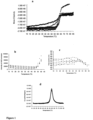
- the CD signal at 208 nm was monitored every 0.5°C over a 10 to 85°C temperature range employing a temperature ramp of 15°C/hour to study thermal transitions (melting curves) of the proteins (in sealed cuvettes with 0.1 cm pathlength).
- the CD signal was converted to molar elipticity by Jasco Spectral Manager software. The midpoint temperature of the thermal transition was obtained from a sigmoid fitting of the melting curves using Origin software.
- ANS Fluorescence Spectroscopy Accessibility of apolar sites on the proteins was monitored by fluorescence emission of the extrinsic probe 8-Anilino-1-naphthalene sulfonate (ANS). Each sample contained a 20-fold molar excess of ANS to protein.
- the emission spectra were collected from 400 to 600 nm with a step size of 2 nm and a 1 second integration time after ANS excitation at 372 nm. Emission spectra were collected every 2.5°C with 5 minutes of equilibration over a temperature range of 10 to 85°C.
- the ANS-buffer baseline at each corresponding pH was subtracted from the raw emission spectra. Peak positions of the emission spectra were obtained from polynomial fits using Origin software.
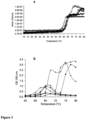
- High-Resolution UV Absorbance Spectroscopy High-Resolution UV absorbance spectra were acquired using an Agilent 8453 UV-visible spectrophotometer. Aggregation of the proteins was studied by monitoring the OD at 350 nm every 2.5°C over the temperature range of 10 to 85°C with a 5 minute incubation (sufficient for equilibrium to be reached) at each temperature.
- DSC Differential Scanning Calorimetry
- Alhydrogel ® Aluminum Hydroxide
- Alhydrogel ® aluminum hydroxide adjuvant
- the protein solutions in the presence of 0.4 mg/ml Alhydrogel ® (aluminum hydroxide adjuvant) were tumbled in an end-over-end tube rotator at refrigerator temperature for 20 minutes. The samples were centrifuged at 14,000xg for 30 seconds to pellet the adjuvant.
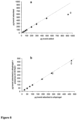
- the value of the concentration of the protein remaining in the supernatants was used for the construction of binding curves.
- the ability of protein to bind to the Alhydrogel ® (aluminum hydroxide adjuvant) in the presence of excipients was determined by the same procedure. In this case, the Alhydrogel ® (aluminum hydroxide adjuvant) was added to the protein-excipient solution.
- toxoids from Alhydrogel ® aluminum hydroxide adjuvant
- Desorption of the proteins from Alhydrogel ® (aluminum hydroxide adjuvant) was evaluated in presence of 2 M NaCl.
- the toxoid Alhydrogel ® (aluminum hydroxide adjuvant) pellets were prepared as described above. The pellets were washed with buffer (pH 6.5) to remove protein present in the supernatant prior to addition of the NaCl solution.
- the Alhydrogel ® (aluminum hydroxide adjuvant) solutions were tumbled in an end-over-end tube rotator at refrigerator temperature for 20 minutes. The samples were centrifuged at 14,000xg for 30 seconds to pellet the adjuvant. The concentration of the protein in the supernatants was used for the construction of desorption isotherms.
- toxoids were incubated alone and in presence of excipients under stress conditions (incubation at 55°C). Aggregation of the toxoids was monitored in a high-throughput fashion by monitoring changes in OD at 350 nm during the incubation time. The turbidity changes were further used to calculate % of aggregation inhibition and are summarized in Table 1 for toxoid A and Table 2 for toxoid B.
- High-throughput aggregation assays of toxoid A found that more than half of the excipients either delayed or prevented increases of OD 350 nm over time and led to inhibition of aggregation by 90% or more (Table 1).
- 2.5% albumin, 2.5% ⁇ -cyclodextrin, 0.1% tween 80, 0.3 M histidine, and 0.3 M lysine led to instantaneously high OD 350 nm values, which suggests that toxoid A is insoluble under these conditions.
- the aggregation of toxoid A was also significantly enhanced in presence of 16 other excipients, among which 25 and 50 mM arginine/glutamine mixture, 0.3 M arginine, and 0.3 M proline were especially potent.
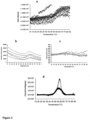
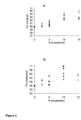
- toxoid B manifested an earlier onset of secondary structure change only in presence of 20% sucrose, while the rest of the excipients delayed the thermal transition by ⁇ 1°C ( Figure 2a ).
- the early onset of the secondary structure change of the toxoids in the presence of trehalose and/or sucrose could be explained by stabilization of partially unfolded state(s) by the solutes.
- the possibility that the toxoids are partially unfolded upon binding to their C-terminal carbohydrate recognition sequence repeats by polysaccharides Greco et al., Nature Structural & Molecular Biology 3(5):460-461, 2006 ) cannot be ruled out.
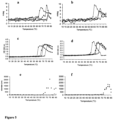
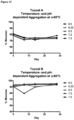
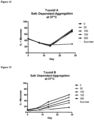
- Toxoid A manifested a significant delay of aggregation (monitored with OD 350 nm) in presence of stabilizing compounds ( Figure 4a ).
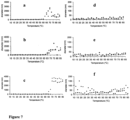
- the hydrodynamic diameter of the toxoids in the presence and absence of the excipients was also monitored by DLS ( Figure 7 ).
- Toxoid A manifested a delayed onset of the previously observed hydrodynamic diameter increase in the presence of the excipients ( Figure 7 a-c ), whereas a smaller effect was seen with toxoid B ( Figure 7 d-f ).
- toxoid A Upon binding to Alhydrogel ® (aluminum hydroxide adjuvant), toxoid A manifests no detectable change in its thermal stability, whereas adjuvant-bound toxoid B demonstrates a decrease of the Tm by ⁇ 1.4°C.
- thermal stability of the proteins bound to Alhydrogel ® (aluminum hydroxide adjuvant) in the presence and absence of the excipients is summarized in Table 6 for toxoid A and Table 7 for toxoid B.
- the presence of the excipients perturbed the thermal stability of adjuvant-bound toxoids either by decreasing or increasing the transition temperature.
- a decrease of thermal stability was seen in both toxoids in presence of 10% sorbitol, whereas the presence of 10% sorbitol and 10% dextrose decreases the thermal stability of toxoid B alone.
- Tween 80 had a stabilizing effect only in case of adjuvant-bound toxoid B.
- dextrose (10%) had a stabilizing effect on the thermal stability of both toxoids.
- the combination of the three excipients (10% sorbitol, 10% dextrose, with 0.05% or 0.1% Tween 80) tends to raise the thermal transition of both adjuvant-bound toxoids by 3-4°C.
- the toxoid A and B aggregation states across a pH range of 6-7.5 varied little in the range of ⁇ -60°C, when analyzed by SEC-HPLC for aggregate formation (% monomer) and % area recovery.
- differences in aggregation states became more apparent across the pH range when temperatures were elevated (particularly above 5°C), with the lower pH values trending toward greater shifts in aggregation levels. This is accompanied by an increase in optical density at 350 nm at lower pH values, as described in Salnikova et al., J. Pharm. Sci. 97(9):3735-3752, 2008 .
- Lyophilized formulations were prepared and their stability assessed under real-time and accelerated conditions. Toxoids A and B were stored separately in order to more closely study their individual stability profiles. Appearance data and hamster immunogenicity data from one formulation (lyophilized, 20 mM citrate, 5% sucrose, 0.016% formaldehyde, pH 7.5) after storage at -65, 5 or 42°C for three months are presented below. Slight to no difference in appearance is observed between formulations at the study start and after storage at -65, 5, or 42°C for 3 months (Table 10 and Table 11). In addition, the hamster immune response is not significantly different between the formulations stored at 5° and 42°C for 7 months, or between the same formulations with and without formaldehyde.
- the vaccine is presented as a solution of ⁇ 90% purity with no evidence of measurable aggregation.
- the toxoids A and B of the vaccine are immunologically reactive to their respective toxin A or B-specific antibodies in a western blot analysis.
- the vaccine is immunogenic in hamsters, eliciting consistent and dose-dependent serum antibody responses.
- the vaccine toxoids A and B are devoid of cytotoxic activity.
- the toxoid A component of the vaccine retains some receptor-binding activity, like that observed for native toxin A.
- the vaccine is presented as a lyophilized form in a buffer composed of 20 mM sodium citrate, pH 7.5, 5 % sucrose, 0.016 % formaldehyde.
- the product is stored at 2-8°C.
- toxoid B bound to Alhydrogel ® aluminum hydroxide adjuvant
- the thermal stability (Tm) was monitored by DSC. The Tm indicates the temperature corresponding to the peak position of the thermal transition. The percent of protein bound to adjuvant was measured under each condition with an uncertainty of 1%. Each condition was studied in duplicate.
Landscapes
- Health & Medical Sciences (AREA)
- Chemical & Material Sciences (AREA)
- Life Sciences & Earth Sciences (AREA)
- Medicinal Chemistry (AREA)
- General Health & Medical Sciences (AREA)
- Veterinary Medicine (AREA)
- Pharmacology & Pharmacy (AREA)
- Animal Behavior & Ethology (AREA)
- Public Health (AREA)
- Epidemiology (AREA)
- Engineering & Computer Science (AREA)
- Chemical Kinetics & Catalysis (AREA)
- General Chemical & Material Sciences (AREA)
- Oil, Petroleum & Natural Gas (AREA)
- Bioinformatics & Cheminformatics (AREA)
- Immunology (AREA)
- Organic Chemistry (AREA)
- Nuclear Medicine, Radiotherapy & Molecular Imaging (AREA)
- Microbiology (AREA)
- Mycology (AREA)
- Biochemistry (AREA)
- Dermatology (AREA)
- Molecular Biology (AREA)
- Oncology (AREA)
- Communicable Diseases (AREA)
- Proteomics, Peptides & Aminoacids (AREA)
- Medicines Containing Antibodies Or Antigens For Use As Internal Diagnostic Agents (AREA)
- Medicinal Preparation (AREA)
- Peptides Or Proteins (AREA)
- Biotechnology (AREA)
- Genetics & Genomics (AREA)
- Wood Science & Technology (AREA)
- Zoology (AREA)
- Medicines That Contain Protein Lipid Enzymes And Other Medicines (AREA)
- Tropical Medicine & Parasitology (AREA)
- Virology (AREA)
- Biomedical Technology (AREA)
- General Engineering & Computer Science (AREA)
- Inorganic Chemistry (AREA)
Applications Claiming Priority (4)
| Application Number | Priority Date | Filing Date | Title |
|---|---|---|---|
| US97249607P | 2007-09-14 | 2007-09-14 | |
| EP16174817.3A EP3124044B8 (de) | 2007-09-14 | 2008-09-15 | Pharmazeutische zusammensetzungen mit clostridium difficile toxoiden a und b |
| PCT/US2008/010767 WO2009035707A1 (en) | 2007-09-14 | 2008-09-15 | Pharmaceutical compositions containing clostridium difficile toxoids a and b |
| EP08830210.4A EP2198007B1 (de) | 2007-09-14 | 2008-09-15 | Pharmazeutische zusammensetzungen mit clostridium difficile toxoiden a und b |
Related Parent Applications (3)
| Application Number | Title | Priority Date | Filing Date |
|---|---|---|---|
| EP16174817.3A Division EP3124044B8 (de) | 2007-09-14 | 2008-09-15 | Pharmazeutische zusammensetzungen mit clostridium difficile toxoiden a und b |
| EP16174817.3A Division-Into EP3124044B8 (de) | 2007-09-14 | 2008-09-15 | Pharmazeutische zusammensetzungen mit clostridium difficile toxoiden a und b |
| EP08830210.4A Division EP2198007B1 (de) | 2007-09-14 | 2008-09-15 | Pharmazeutische zusammensetzungen mit clostridium difficile toxoiden a und b |
Publications (2)
| Publication Number | Publication Date |
|---|---|
| EP4537849A2 true EP4537849A2 (de) | 2025-04-16 |
| EP4537849A3 EP4537849A3 (de) | 2025-07-09 |
Family
ID=40452372
Family Applications (3)
| Application Number | Title | Priority Date | Filing Date |
|---|---|---|---|
| EP08830210.4A Not-in-force EP2198007B1 (de) | 2007-09-14 | 2008-09-15 | Pharmazeutische zusammensetzungen mit clostridium difficile toxoiden a und b |
| EP24220340.4A Pending EP4537849A3 (de) | 2007-09-14 | 2008-09-15 | Pharmazeutische zusammensetzungen mit clostridium-difficile-toxoiden a und b |
| EP16174817.3A Active EP3124044B8 (de) | 2007-09-14 | 2008-09-15 | Pharmazeutische zusammensetzungen mit clostridium difficile toxoiden a und b |
Family Applications Before (1)
| Application Number | Title | Priority Date | Filing Date |
|---|---|---|---|
| EP08830210.4A Not-in-force EP2198007B1 (de) | 2007-09-14 | 2008-09-15 | Pharmazeutische zusammensetzungen mit clostridium difficile toxoiden a und b |
Family Applications After (1)
| Application Number | Title | Priority Date | Filing Date |
|---|---|---|---|
| EP16174817.3A Active EP3124044B8 (de) | 2007-09-14 | 2008-09-15 | Pharmazeutische zusammensetzungen mit clostridium difficile toxoiden a und b |
Country Status (21)
| Country | Link |
|---|---|
| US (3) | US9320790B2 (de) |
| EP (3) | EP2198007B1 (de) |
| JP (3) | JP5503543B2 (de) |
| KR (2) | KR20160005378A (de) |
| CN (2) | CN101855336B (de) |
| AU (1) | AU2008299885C1 (de) |
| BR (1) | BRPI0816790A8 (de) |
| CA (1) | CA2699435A1 (de) |
| CY (1) | CY1119979T1 (de) |
| DK (1) | DK2198007T3 (de) |
| ES (2) | ES3001561T3 (de) |
| HR (1) | HRP20180054T1 (de) |
| HU (1) | HUE037932T2 (de) |
| IL (1) | IL204366A (de) |
| MX (1) | MX2010002815A (de) |
| NO (1) | NO2198007T3 (de) |
| PL (1) | PL2198007T3 (de) |
| PT (1) | PT2198007T (de) |
| RU (1) | RU2550271C2 (de) |
| SI (1) | SI2198007T1 (de) |
| WO (1) | WO2009035707A1 (de) |
Families Citing this family (21)
| Publication number | Priority date | Publication date | Assignee | Title |
|---|---|---|---|---|
| JP5503543B2 (ja) | 2007-09-14 | 2014-05-28 | サノフィ パスツール バイオロジクス リミテッド ライアビリティ カンパニー | クロストリジウム・ディフィシレトキソイドaおよびbを含有する薬学的組成物 |
| HUE033342T2 (en) | 2010-09-03 | 2017-11-28 | Valneva Austria Gmbh | Isolated polypeptide of the toxin a and toxin b proteins of c. difficile and uses thereof |
| GB201105981D0 (en) * | 2011-04-08 | 2011-05-18 | Glaxosmithkline Biolog Sa | Novel process |
| HUE047085T2 (hu) | 2011-04-22 | 2020-04-28 | Wyeth Llc | Clostridium difficile mutáns toxinjához kapcsolódó készítmények és eljárásai |
| KR101135486B1 (ko) * | 2011-05-25 | 2012-04-13 | 함종욱 | 보툴리눔 에이형 독소의 액상제품 |
| BR122016023101B1 (pt) | 2012-10-21 | 2022-03-22 | Pfizer Inc | Polipeptídeo, composição imunogênica que o compreende, bem como célula recombinante derivada de clostridium difficile |
| KR102149206B1 (ko) | 2012-11-08 | 2020-08-31 | 세센 바이오, 아이엔씨. | 인터루킨-6의 길항제 및 이의 용도 |
| DK2928489T3 (en) | 2012-12-05 | 2019-04-23 | Glaxosmithkline Biologicals Sa | IMMUNOGENE COMPOSITION |
| BR112015023205A2 (pt) | 2013-03-14 | 2017-07-18 | Takeda Vaccines Inc | composições e métodos para formulações de alfavírus vivo atenuado |
| CA2907156A1 (en) * | 2013-03-15 | 2014-09-18 | Sanofi Pasteur, Inc. | Toxins, compositions and related methods |
| CN105338997A (zh) * | 2013-03-15 | 2016-02-17 | 圣诺菲·帕斯图尔公司 | 类毒素、组合物和相关的方法 |
| SG11201510166YA (en) | 2013-06-14 | 2016-01-28 | Sanofi Pasteur Inc | Compositions and methods of immunizing against c. difficile |
| US10080793B2 (en) | 2013-06-17 | 2018-09-25 | De Staat der Nederlanden, vert, door de minister van VWS, Ministerie van Volksgezonheid, Welzijn en Sport | Methods for the prevention of aggregation of viral components |
| US9930893B2 (en) * | 2014-02-10 | 2018-04-03 | The Johns Hopkins University | Inhibitors of DXP synthase and methods of use thereof |
| EP4268843B1 (de) | 2014-11-07 | 2025-09-03 | F. Hoffmann-La Roche Ltd | Verbesserte il-6-antikörper |
| MX2017014666A (es) | 2015-05-15 | 2018-02-09 | Sanofi Pasteur Inc | Metodos de inmunización contra clostridium difficile. |
| BE1023343B1 (nl) * | 2015-05-20 | 2017-02-09 | Mycartis Nv | Opslagbuffer |
| AR107708A1 (es) | 2016-02-23 | 2018-05-23 | Eleven Biotherapeutics Inc | Formulaciones de antagonista de il-6 y sus usos |
| RU2762607C2 (ru) | 2016-09-13 | 2021-12-21 | Аллерган, Инк. | Стабилизированные небелковые композиции клостридиального токсина |
| EP3797752B1 (de) * | 2018-05-21 | 2024-07-17 | Chugai Seiyaku Kabushiki Kaisha | In einem glasbehältnis verschlossene lyophilisierte formulierung |
| EP4168032A2 (de) * | 2020-06-19 | 2023-04-26 | Pfizer Inc. | Immunogene zusammensetzungen gegen clostridioides (clostridium) difficile und verfahren dafür |
Citations (2)
| Publication number | Priority date | Publication date | Assignee | Title |
|---|---|---|---|---|
| WO1995002415A1 (en) | 1993-07-12 | 1995-01-26 | Virus Research Institute | Phosphazene polyelectrolytes as immunoadjuvants |
| US6214341B1 (en) | 1997-10-20 | 2001-04-10 | Oravax | Passive immunization against Clostridium difficile disease |
Family Cites Families (33)
| Publication number | Priority date | Publication date | Assignee | Title |
|---|---|---|---|---|
| US4879218A (en) * | 1982-09-13 | 1989-11-07 | Virginia Tech Intellectual Properties, Inc. | Antibody for C.difficile |
| US5736139A (en) * | 1989-10-31 | 1998-04-07 | Ochidian Pharmaceuticals, Inc. | Treatment of Clostridium difficile induced disease |
| JPH03193735A (ja) | 1989-12-22 | 1991-08-23 | Shionogi & Co Ltd | グリコペプチド系抗生物質の安定化組成物 |
| NZ244735A (en) | 1991-10-16 | 1995-12-21 | Schering Corp | Pharmaceutical compositions containing a lipophilic oligosaccharide antibiotic salt |
| JP3510886B2 (ja) | 1992-06-23 | 2004-03-29 | ボツリヌム トキシン リサーチ アソシエイト インコーポレイテッド | ボツリヌスb複合体を含有する医薬組成物 |
| US5902565A (en) * | 1993-12-24 | 1999-05-11 | Csl Limited | Spray dried vaccine preparation comprising aluminium adsorbed immunogens |
| US5512547A (en) * | 1994-10-13 | 1996-04-30 | Wisconsin Alumni Research Foundation | Pharmaceutical composition of botulinum neurotoxin and method of preparation |
| JPH08333277A (ja) | 1995-06-05 | 1996-12-17 | Hoechst Japan Ltd | ヒト血液凝固第xiii因子の安定化された水性液製剤 |
| CN1195993A (zh) * | 1995-07-07 | 1998-10-14 | 奥拉瓦克斯有限公司 | 抗胃肠疾病的鼻内接种 |
| US5932223A (en) | 1996-09-26 | 1999-08-03 | Merck & Co., Inc. | Rotavirus vaccine formulations |
| EP0892054B1 (de) * | 1997-06-20 | 2006-11-29 | Intervet International BV | Clostridium perfringens Impfstoff |
| US6969520B2 (en) * | 1997-10-20 | 2005-11-29 | Acambis Inc. | Active immunization against clostridium difficile disease |
| EP1568378B1 (de) | 1997-10-20 | 2016-03-16 | Sanofi Pasteur Biologics, LLC | Immunisierung gegen Clostridium difficile Krankheit |
| US6013635A (en) * | 1998-05-28 | 2000-01-11 | Synsorb Biotech, Inc. | Treatment of C. difficile toxin B associated conditions |
| JP2000117967A (ja) * | 1998-10-16 | 2000-04-25 | Fuji Photo Film Co Ltd | インクジェット記録方法 |
| FR2791895B1 (fr) | 1999-03-23 | 2001-06-15 | Pasteur Merieux Serums Vacc | Utilisation de trehalose pour stabiliser un vaccin liquide |
| PL203951B1 (pl) | 1999-04-19 | 2009-11-30 | Smithkline Beecham Biolog | Kompozycja adiuwantowa, kompozycja szczepionki oraz sposób jej wytwarzania, szczepionka oraz zastosowanie |
| US6599715B1 (en) | 1999-05-12 | 2003-07-29 | The Regents Of The University Of California | Real time viability detection of bacterial spores |
| US7780967B2 (en) * | 2000-02-08 | 2010-08-24 | Allergan, Inc. | Reduced toxicity Clostridial toxin pharmaceutical compositions |
| MXPA04007924A (es) | 2002-02-14 | 2005-05-17 | Chugai Pharmaceutical Co Ltd | Formulaciones en solucion que contienen anticuerpo. |
| WO2003088946A1 (en) * | 2002-04-19 | 2003-10-30 | The Regents Of The University Of Michigan | Polymer compositions that stabilize and control the release of formaldehyde-treated vaccine antigens |
| US20040235139A1 (en) * | 2002-12-23 | 2004-11-25 | Demain Arnold L. | Clostridium difficile culture and toxin production methods |
| DE10333317A1 (de) * | 2003-07-22 | 2005-02-17 | Biotecon Therapeutics Gmbh | Formulierung für Proteinarzneimittel ohne Zusatz von humanem Serumalbumin (HSA) |
| US7803914B2 (en) | 2003-10-09 | 2010-09-28 | Chugai Seiyaku Kabushiki Kaisha | Methods for stabilizing protein solutions |
| CA2578250C (en) * | 2004-07-26 | 2013-03-05 | Merz Pharma Gmbh & Co. Kgaa | Therapeutic composition with a botulinum neurotoxin |
| EP1802349A1 (de) | 2004-10-13 | 2007-07-04 | Ilypsa, Inc. | Pharmazeutische zusammensetzungen mit einem toxin-bindenden oligosaccharid und einem polymerteilchen |
| FR2881139A1 (fr) * | 2005-01-26 | 2006-07-28 | Agronomique Inst Nat Rech | Composition pour la lyophilisation de proteines |
| BRPI0613001B8 (pt) | 2005-10-06 | 2021-05-25 | Allergan Inc | composições farmacêuticas de toxina clostrídica estabilizada por uma não-proteína |
| US8137677B2 (en) | 2005-10-06 | 2012-03-20 | Allergan, Inc. | Non-protein stabilized clostridial toxin pharmaceutical compositions |
| US20090324647A1 (en) * | 2005-10-11 | 2009-12-31 | Borodic Gary E | Albumin-Free Botulinum Toxin Based Pharmaceutical Compositions Containing a Hyaluronidase and Methods of Use |
| TWI417113B (zh) | 2006-11-07 | 2013-12-01 | Acambis Inc | 以凍乾法穩定疫苗 |
| JP5503543B2 (ja) | 2007-09-14 | 2014-05-28 | サノフィ パスツール バイオロジクス リミテッド ライアビリティ カンパニー | クロストリジウム・ディフィシレトキソイドaおよびbを含有する薬学的組成物 |
| MX2011005758A (es) | 2008-12-03 | 2011-06-28 | Boehringer Ingelheim Vetmed | Procedimiento para la produccion de vacunas. |
-
2008
- 2008-09-15 JP JP2010524889A patent/JP5503543B2/ja active Active
- 2008-09-15 HR HRP20180054TT patent/HRP20180054T1/hr unknown
- 2008-09-15 ES ES16174817T patent/ES3001561T3/es active Active
- 2008-09-15 KR KR1020157036693A patent/KR20160005378A/ko not_active Abandoned
- 2008-09-15 EP EP08830210.4A patent/EP2198007B1/de not_active Not-in-force
- 2008-09-15 KR KR1020107007994A patent/KR101679812B1/ko not_active Expired - Fee Related
- 2008-09-15 ES ES08830210.4T patent/ES2657485T3/es active Active
- 2008-09-15 RU RU2010114730/10A patent/RU2550271C2/ru not_active IP Right Cessation
- 2008-09-15 EP EP24220340.4A patent/EP4537849A3/de active Pending
- 2008-09-15 EP EP16174817.3A patent/EP3124044B8/de active Active
- 2008-09-15 PT PT88302104T patent/PT2198007T/pt unknown
- 2008-09-15 DK DK08830210.4T patent/DK2198007T3/en active
- 2008-09-15 NO NO08830210A patent/NO2198007T3/no unknown
- 2008-09-15 BR BRPI0816790A patent/BRPI0816790A8/pt not_active IP Right Cessation
- 2008-09-15 HU HUE08830210A patent/HUE037932T2/hu unknown
- 2008-09-15 CN CN200880116603.0A patent/CN101855336B/zh active Active
- 2008-09-15 SI SI200831906T patent/SI2198007T1/en unknown
- 2008-09-15 MX MX2010002815A patent/MX2010002815A/es unknown
- 2008-09-15 WO PCT/US2008/010767 patent/WO2009035707A1/en not_active Ceased
- 2008-09-15 AU AU2008299885A patent/AU2008299885C1/en not_active Ceased
- 2008-09-15 CN CN201610227574.1A patent/CN106039299A/zh active Pending
- 2008-09-15 CA CA2699435A patent/CA2699435A1/en not_active Abandoned
- 2008-09-15 US US12/677,864 patent/US9320790B2/en active Active
- 2008-09-15 PL PL08830210T patent/PL2198007T3/pl unknown
-
2010
- 2010-03-09 IL IL204366A patent/IL204366A/en active IP Right Grant
-
2013
- 2013-11-22 JP JP2013241821A patent/JP6258674B2/ja active Active
-
2016
- 2016-03-29 US US15/083,428 patent/US9687541B2/en active Active
- 2016-10-31 JP JP2016212540A patent/JP2017052773A/ja active Pending
-
2017
- 2017-06-26 US US15/632,480 patent/US10639362B2/en active Active
-
2018
- 2018-01-23 CY CY20181100084T patent/CY1119979T1/el unknown
Patent Citations (2)
| Publication number | Priority date | Publication date | Assignee | Title |
|---|---|---|---|---|
| WO1995002415A1 (en) | 1993-07-12 | 1995-01-26 | Virus Research Institute | Phosphazene polyelectrolytes as immunoadjuvants |
| US6214341B1 (en) | 1997-10-20 | 2001-04-10 | Oravax | Passive immunization against Clostridium difficile disease |
Non-Patent Citations (22)
| Title |
|---|
| BARROSO ET AL., NUCLEIC ACIDS RESEARCH, vol. 18, no. 13, 1990, pages 4004 |
| DEMAREST ET AL., JOURNAL OF MOLECULAR BIOLOGY, vol. 346, no. 5, 2005, pages 1197 - 1206 |
| DOVE ET AL., INFECTION AND IMMUNITY, vol. 58, no. 2, 1990, pages 480 - 488 |
| DRUDY ET AL., INTERNATIONAL JOURNAL OF INFECTIOUS DISEASES, vol. 11, no. 1, 2007, pages 5 - 10 |
| GIANNASCA ET AL., INFECTION AND IMMUNITY, vol. 67, no. 2, 1999, pages 527 - 538 |
| GRECO ET AL., NATURE STRUCTURAL & MOLECULAR BIOLOGY, vol. 3, no. 5, 2006, pages 460 - 461 |
| GUPTA ET AL., PHARMACEUTICAL BIOTECHNOLOGY, vol. 6, 1995, pages 229 - 248 |
| JUST ET AL., REVIEWS OF PHYSIOLOGY, BIOCHEMISTRY AND PHARMACOLOGY, vol. 152, 2005, pages 23 - 47 |
| KIM ET AL., INFECTION AND IMMUNITY, vol. 55, no. 12, 1987, pages 2984 - 2992 |
| KOTLOFF ET AL., INFECTION AND IMMUNITY, vol. 69, no. 2, 2001, pages 988 - 995 |
| KUIJPER ET AL., CLINICAL MICROBIOLOGY AND INFECTION, vol. 12, no. 6, 2006, pages 2 - 18 |
| PEEK ET AL., JOURNAL OF PHARMACEUTICAL SCIENCES, vol. 96, no. 1, 2006, pages 44 - 60 |
| REINEKE ET AL., NATURE (LONDON, UNITED KINGDOM, vol. 446, no. 7134, 2007, pages 415 - 419 |
| SALNIKOVA ET AL., J. PHARM. SCI., vol. 97, no. 9, 2008, pages 3735 - 3752 |
| SEEBER ET AL., VACCINE, vol. 9, no. 3, 1991, pages 201 - 203 |
| SOUGIOULTZIS ET AL., GASTROENTEROLOGY, vol. 128, no. 3, 2005, pages 764 - 770 |
| TIMASHEFF, PROC. NATL. ACAD. SCI. U.S.A., vol. 99, no. 15, 2002, pages 9721 - 9726 |
| TIMASHEFF: "Advances in Protein Chemistry", LINKAGE THERMODYNAMICS OF MACROMOLECULAR INTERACTIONS, vol. 51, 1998, pages 355 - 432 |
| TORRES ET AL., INFECTION AND IMMUNITY, vol. 63, no. 12, 1995, pages 4619 - 4627 |
| TORRES ET AL., VACCINE RESEARCH, vol. 5, no. 3, 1996, pages 149 - 162 |
| WAMY ET AL., LANCET, vol. 366, no. 9491, 2005, pages 1079 - 1084 |
| WHITE ET AL.: "Developments in Biologicals (Basel, Switzerland", PHYSICO-CHEMICAL PROCEDURES FOR THE CHARACTERIZATION OF VACCINES, vol. 103, 2000, pages 217 - 228 |
Also Published As
Similar Documents
| Publication | Publication Date | Title |
|---|---|---|
| US10639362B2 (en) | Pharmaceutical compositions containing Clostridium difficile toxoids A and B | |
| RU2731418C2 (ru) | Стабильный фармацевтический препарат на основе антитела к pd-1 и его применение в медицине | |
| CA3097058A1 (en) | Additives for protein formulations to improve thermal stability | |
| CN112041435A (zh) | 提供冻干的突变白喉毒素在二甲基亚砜中的均质溶液的方法 | |
| JP2019535736A (ja) | カルグルミン酸を含有する非経口的薬剤配合物 | |
| AU2015201233B2 (en) | Pharmaceutical compositions containing clostridium difficile toxoids a and b | |
| HK1230484A1 (en) | Pharmaceutical compositions containing clostridium difficile toxoids a and b | |
| HK1147285A (en) | Pharmaceutical compositions containing clostridium difficile toxoids a and b | |
| AU2021269585A1 (en) | IL-2 fusion polypeptide compositions and methods of making and using the same | |
| Panton | Surfactant selection in biopharmaceutical product development | |
| HK40087140A (zh) | 组织纤溶酶原激活剂制剂 | |
| CA3172871A1 (en) | Il-2 fusion polypeptide compositions and methods of making and using the same | |
| CN116033931A (zh) | 组织纤溶酶原激活剂制剂 |
Legal Events
| Date | Code | Title | Description |
|---|---|---|---|
| PUAI | Public reference made under article 153(3) epc to a published international application that has entered the european phase |
Free format text: ORIGINAL CODE: 0009012 |
|
| STAA | Information on the status of an ep patent application or granted ep patent |
Free format text: STATUS: THE APPLICATION HAS BEEN PUBLISHED |
|
| AC | Divisional application: reference to earlier application |
Ref document number: 2198007 Country of ref document: EP Kind code of ref document: P Ref document number: 3124044 Country of ref document: EP Kind code of ref document: P |
|
| AK | Designated contracting states |
Kind code of ref document: A2 Designated state(s): AT BE BG CH CY CZ DE DK EE ES FI FR GB GR HR HU IE IS IT LI LT LU LV MC MT NL NO PL PT RO SE SI SK TR |
|
| REG | Reference to a national code |
Ref country code: DE Ref legal event code: R079 Free format text: PREVIOUS MAIN CLASS: A61K0047260000 Ipc: A61K0009000000 |
|
| PUAL | Search report despatched |
Free format text: ORIGINAL CODE: 0009013 |
|
| AK | Designated contracting states |
Kind code of ref document: A3 Designated state(s): AT BE BG CH CY CZ DE DK EE ES FI FR GB GR HR HU IE IS IT LI LT LU LV MC MT NL NO PL PT RO SE SI SK TR |
|
| RIC1 | Information provided on ipc code assigned before grant |
Ipc: A61K 39/08 20060101ALI20250605BHEP Ipc: A61K 9/19 20060101ALI20250605BHEP Ipc: A61P 37/04 20060101ALI20250605BHEP Ipc: A61P 31/04 20060101ALI20250605BHEP Ipc: A61P 31/00 20060101ALI20250605BHEP Ipc: A61P 1/12 20060101ALI20250605BHEP Ipc: A61P 1/04 20060101ALI20250605BHEP Ipc: A61P 1/00 20060101ALI20250605BHEP Ipc: A61K 47/26 20060101ALI20250605BHEP Ipc: A61K 47/12 20060101ALI20250605BHEP Ipc: A61K 47/08 20060101ALI20250605BHEP Ipc: A61K 39/00 20060101ALI20250605BHEP Ipc: A61K 9/00 20060101AFI20250605BHEP |