EP4516341A1 - Spritze mit filter zur aufnahme eines pharmazeutischen präparats - Google Patents
Spritze mit filter zur aufnahme eines pharmazeutischen präparats Download PDFInfo
- Publication number
- EP4516341A1 EP4516341A1 EP23796410.1A EP23796410A EP4516341A1 EP 4516341 A1 EP4516341 A1 EP 4516341A1 EP 23796410 A EP23796410 A EP 23796410A EP 4516341 A1 EP4516341 A1 EP 4516341A1
- Authority
- EP
- European Patent Office
- Prior art keywords
- end side
- filter
- leading end
- base end
- formulation
- Prior art date
- Legal status (The legal status is an assumption and is not a legal conclusion. Google has not performed a legal analysis and makes no representation as to the accuracy of the status listed.)
- Pending
Links
Images









Classifications
-
- A—HUMAN NECESSITIES
- A61—MEDICAL OR VETERINARY SCIENCE; HYGIENE
- A61P—SPECIFIC THERAPEUTIC ACTIVITY OF CHEMICAL COMPOUNDS OR MEDICINAL PREPARATIONS
- A61P25/00—Drugs for disorders of the nervous system
-
- A—HUMAN NECESSITIES
- A61—MEDICAL OR VETERINARY SCIENCE; HYGIENE
- A61M—DEVICES FOR INTRODUCING MEDIA INTO, OR ONTO, THE BODY; DEVICES FOR TRANSDUCING BODY MEDIA OR FOR TAKING MEDIA FROM THE BODY; DEVICES FOR PRODUCING OR ENDING SLEEP OR STUPOR
- A61M5/00—Devices for bringing media into the body in a subcutaneous, intra-vascular or intramuscular way; Accessories therefor, e.g. filling or cleaning devices, arm rests
- A61M5/178—Syringes
- A61M5/31—Details
- A61M5/3145—Filters incorporated in syringes
-
- A—HUMAN NECESSITIES
- A61—MEDICAL OR VETERINARY SCIENCE; HYGIENE
- A61K—PREPARATIONS FOR MEDICAL, DENTAL OR TOILETRY PURPOSES
- A61K39/00—Medicinal preparations containing antigens or antibodies
- A61K39/395—Antibodies; Immunoglobulins; Immune serum, e.g. antilymphocytic serum
-
- A—HUMAN NECESSITIES
- A61—MEDICAL OR VETERINARY SCIENCE; HYGIENE
- A61K—PREPARATIONS FOR MEDICAL, DENTAL OR TOILETRY PURPOSES
- A61K39/00—Medicinal preparations containing antigens or antibodies
- A61K39/395—Antibodies; Immunoglobulins; Immune serum, e.g. antilymphocytic serum
- A61K39/39591—Stabilisation, fragmentation
-
- A—HUMAN NECESSITIES
- A61—MEDICAL OR VETERINARY SCIENCE; HYGIENE
- A61M—DEVICES FOR INTRODUCING MEDIA INTO, OR ONTO, THE BODY; DEVICES FOR TRANSDUCING BODY MEDIA OR FOR TAKING MEDIA FROM THE BODY; DEVICES FOR PRODUCING OR ENDING SLEEP OR STUPOR
- A61M5/00—Devices for bringing media into the body in a subcutaneous, intra-vascular or intramuscular way; Accessories therefor, e.g. filling or cleaning devices, arm rests
- A61M5/178—Syringes
- A61M5/28—Syringe ampoules or carpules, i.e. ampoules or carpules provided with a needle
-
- A—HUMAN NECESSITIES
- A61—MEDICAL OR VETERINARY SCIENCE; HYGIENE
- A61M—DEVICES FOR INTRODUCING MEDIA INTO, OR ONTO, THE BODY; DEVICES FOR TRANSDUCING BODY MEDIA OR FOR TAKING MEDIA FROM THE BODY; DEVICES FOR PRODUCING OR ENDING SLEEP OR STUPOR
- A61M5/00—Devices for bringing media into the body in a subcutaneous, intra-vascular or intramuscular way; Accessories therefor, e.g. filling or cleaning devices, arm rests
- A61M5/178—Syringes
- A61M5/31—Details
- A61M5/315—Pistons; Piston-rods; Guiding, blocking or restricting the movement of the rod or piston; Appliances on the rod for facilitating dosing ; Dosing mechanisms
-
- A—HUMAN NECESSITIES
- A61—MEDICAL OR VETERINARY SCIENCE; HYGIENE
- A61P—SPECIFIC THERAPEUTIC ACTIVITY OF CHEMICAL COMPOUNDS OR MEDICINAL PREPARATIONS
- A61P27/00—Drugs for disorders of the senses
- A61P27/02—Ophthalmic agents
-
- A—HUMAN NECESSITIES
- A61—MEDICAL OR VETERINARY SCIENCE; HYGIENE
- A61P—SPECIFIC THERAPEUTIC ACTIVITY OF CHEMICAL COMPOUNDS OR MEDICINAL PREPARATIONS
- A61P29/00—Non-central analgesic, antipyretic or antiinflammatory agents, e.g. antirheumatic agents; Non-steroidal antiinflammatory drugs [NSAID]
-
- A—HUMAN NECESSITIES
- A61—MEDICAL OR VETERINARY SCIENCE; HYGIENE
- A61P—SPECIFIC THERAPEUTIC ACTIVITY OF CHEMICAL COMPOUNDS OR MEDICINAL PREPARATIONS
- A61P37/00—Drugs for immunological or allergic disorders
- A61P37/02—Immunomodulators
-
- A—HUMAN NECESSITIES
- A61—MEDICAL OR VETERINARY SCIENCE; HYGIENE
- A61P—SPECIFIC THERAPEUTIC ACTIVITY OF CHEMICAL COMPOUNDS OR MEDICINAL PREPARATIONS
- A61P7/00—Drugs for disorders of the blood or the extracellular fluid
- A61P7/04—Antihaemorrhagics; Procoagulants; Haemostatic agents; Antifibrinolytic agents
-
- C—CHEMISTRY; METALLURGY
- C07—ORGANIC CHEMISTRY
- C07K—PEPTIDES
- C07K16/00—Immunoglobulins [IG], e.g. monoclonal or polyclonal antibodies
- C07K16/18—Immunoglobulins [IG], e.g. monoclonal or polyclonal antibodies against material from animals or humans
- C07K16/28—Immunoglobulins [IG], e.g. monoclonal or polyclonal antibodies against material from animals or humans against receptors, cell surface antigens or cell surface determinants
- C07K16/2866—Immunoglobulins [IG], e.g. monoclonal or polyclonal antibodies against material from animals or humans against receptors, cell surface antigens or cell surface determinants against receptors for cytokines, lymphokines, interferons
-
- C—CHEMISTRY; METALLURGY
- C07—ORGANIC CHEMISTRY
- C07K—PEPTIDES
- C07K16/00—Immunoglobulins [IG], e.g. monoclonal or polyclonal antibodies
- C07K16/18—Immunoglobulins [IG], e.g. monoclonal or polyclonal antibodies against material from animals or humans
- C07K16/36—Immunoglobulins [IG], e.g. monoclonal or polyclonal antibodies against material from animals or humans against blood coagulation factors
-
- A—HUMAN NECESSITIES
- A61—MEDICAL OR VETERINARY SCIENCE; HYGIENE
- A61K—PREPARATIONS FOR MEDICAL, DENTAL OR TOILETRY PURPOSES
- A61K47/00—Medicinal preparations characterised by the non-active ingredients used, e.g. carriers or inert additives; Targeting or modifying agents chemically bound to the active ingredient
- A61K47/06—Organic compounds, e.g. natural or synthetic hydrocarbons, polyolefins, mineral oil, petrolatum or ozokerite
- A61K47/08—Organic compounds, e.g. natural or synthetic hydrocarbons, polyolefins, mineral oil, petrolatum or ozokerite containing oxygen, e.g. ethers, acetals, ketones, quinones, aldehydes, peroxides
- A61K47/10—Alcohols; Phenols; Salts thereof, e.g. glycerol; Polyethylene glycols [PEG]; Poloxamers; PEG/POE alkyl ethers
-
- A—HUMAN NECESSITIES
- A61—MEDICAL OR VETERINARY SCIENCE; HYGIENE
- A61K—PREPARATIONS FOR MEDICAL, DENTAL OR TOILETRY PURPOSES
- A61K47/00—Medicinal preparations characterised by the non-active ingredients used, e.g. carriers or inert additives; Targeting or modifying agents chemically bound to the active ingredient
- A61K47/06—Organic compounds, e.g. natural or synthetic hydrocarbons, polyolefins, mineral oil, petrolatum or ozokerite
- A61K47/16—Organic compounds, e.g. natural or synthetic hydrocarbons, polyolefins, mineral oil, petrolatum or ozokerite containing nitrogen, e.g. nitro-, nitroso-, azo-compounds, nitriles, cyanates
- A61K47/18—Amines; Amides; Ureas; Quaternary ammonium compounds; Amino acids; Oligopeptides having up to five amino acids
- A61K47/183—Amino acids, e.g. glycine, EDTA or aspartame
-
- A—HUMAN NECESSITIES
- A61—MEDICAL OR VETERINARY SCIENCE; HYGIENE
- A61K—PREPARATIONS FOR MEDICAL, DENTAL OR TOILETRY PURPOSES
- A61K9/00—Medicinal preparations characterised by special physical form
- A61K9/0012—Galenical forms characterised by the site of application
- A61K9/0019—Injectable compositions; Intramuscular, intravenous, arterial, subcutaneous administration; Compositions to be administered through the skin in an invasive manner
-
- A—HUMAN NECESSITIES
- A61—MEDICAL OR VETERINARY SCIENCE; HYGIENE
- A61K—PREPARATIONS FOR MEDICAL, DENTAL OR TOILETRY PURPOSES
- A61K9/00—Medicinal preparations characterised by special physical form
- A61K9/08—Solutions
-
- A—HUMAN NECESSITIES
- A61—MEDICAL OR VETERINARY SCIENCE; HYGIENE
- A61M—DEVICES FOR INTRODUCING MEDIA INTO, OR ONTO, THE BODY; DEVICES FOR TRANSDUCING BODY MEDIA OR FOR TAKING MEDIA FROM THE BODY; DEVICES FOR PRODUCING OR ENDING SLEEP OR STUPOR
- A61M39/00—Tubes, tube connectors, tube couplings, valves, access sites or the like, specially adapted for medical use
- A61M39/22—Valves or arrangement of valves
- A61M39/24—Check- or non-return valves
- A61M2039/2433—Valve comprising a resilient or deformable element, e.g. flap valve, deformable disc
-
- A—HUMAN NECESSITIES
- A61—MEDICAL OR VETERINARY SCIENCE; HYGIENE
- A61M—DEVICES FOR INTRODUCING MEDIA INTO, OR ONTO, THE BODY; DEVICES FOR TRANSDUCING BODY MEDIA OR FOR TAKING MEDIA FROM THE BODY; DEVICES FOR PRODUCING OR ENDING SLEEP OR STUPOR
- A61M2205/00—General characteristics of the apparatus
- A61M2205/75—General characteristics of the apparatus with filters
- A61M2205/7545—General characteristics of the apparatus with filters for solid matter, e.g. microaggregates
-
- C—CHEMISTRY; METALLURGY
- C07—ORGANIC CHEMISTRY
- C07K—PEPTIDES
- C07K2317/00—Immunoglobulins specific features
- C07K2317/70—Immunoglobulins specific features characterized by effect upon binding to a cell or to an antigen
- C07K2317/76—Antagonist effect on antigen, e.g. neutralization or inhibition of binding
Definitions
- the present invention relates to a pharmaceutical formulation in which a solution containing an active ingredient is filled in a container.
- an antibody-containing formulation for subcutaneous injection it is essential that the concentration of an antibody in a liquid to be administered is high because while the amount of the antibody to be administered per dose is large (about 80 to 200 mg), the amount of an injection liquid is generally restricted in subcutaneous injection.
- a syringe comprising a cylindrical injection syringe body filled with a drug, a needle attached to the leading end of the injection syringe body, a detachably-attached syringe cap covering the needle, and a plunger that is inserted into the injection syringe body and is slidable in the axial direction of the injection syringe body is used.
- the syringe cap is removed, the needle is inserted into an administration site, and then the plunger is moved forward with a plunger rod to excrete and administer a drug solution.
- a lubricant of silicone oil or the like is applied to the inside wall of the pre-filled syringe and the plunger.
- the particles to be formed are aggregates that are larger than multimers such as dimers and trimers, and known particles include sub-visible particles (SVPs), that is, microparticles with a particle size of 1.5 ⁇ m to less than 50 ⁇ m that are generally difficult to see with eyes, and visible particles (VPs, larger than 100 ⁇ m) that are visually detectable under standard illuminance (about 2,000 to 3,000 lx).
- SVPs sub-visible particles
- VPs visible particles
- a visual detection rate of visible particles in a pharmaceutical formulation varies greatly depending on an examiner, and under standard illuminance prescribed in the Japanese pharmacopoeia (about 2,000 to 3,000 lx), it is reported that detection sensitivity of particles with a particle size of 100 ⁇ m is about 40%, detection sensitivity of particles with a particle size of 150 ⁇ m is about 70%, and detection sensitivity of particles with a particle size of 200 ⁇ m is almost 100% (Non Patent Literature 1). Actually, particles with a smaller particle size of a minimum of about 40 ⁇ m can be visually detected by increasing illuminance for observing a pharmaceutical formulation or by increasing an observation time period.
- such particles of 40 ⁇ m or more to 100 ⁇ m are particularly referred to as particles visually detectable only under high illuminance.
- particles with a particle size of 40 ⁇ m or more are particles visually detectable under high illuminance, and are referred to as visually detectable particles.
- antibodies have a property of aggregating on interfaces such as air-liquid interfaces and solid-liquid interfaces.
- interfaces such as air-liquid interfaces and solid-liquid interfaces.
- the presence of such interfaces may be involved in the formation of the visually detectable particles described above. It is reported that application of mechanical stress to a syringe filled with an antibody solution results in marked increase of microparticles ascribable to the presence of an interface (NPL 2).
- An air-liquid interface is formed in an antibody solution filled in a syringe due to presence of air bubbles, and a solid-liquid interface is formed when the solution contacts a plunger and a syringe barrel.
- a filter needle in which a filter of a pore size of 5 ⁇ m is provided in a transfusion needle, or an in-line filter included in an infusion set may be used.
- the filter needle is commercially available under a trade name of BD Blunt Filter Needle (Becton, Dickinson and Company Japan), or Sterifix(R) (B. Braun).
- syringes such as a syringe having a sealing mechanism and a filter for partitioning the chamber space into a wet part and a dry part when a mixture of a plurality of contents is administered (PTLs 1 to 3), and a syringe including a filter for filtering foreign matters within the syringe when a drug solution of an ampoule is sucked through a needle for injecting it through the needle (PTL 4).
- PTLs 1 to 3 a syringe including a filter for filtering foreign matters within the syringe when a drug solution of an ampoule is sucked through a needle for injecting it through the needle
- the whole amount of the solution filled in the syringe is filtered through a filter at the time of discharge, and therefore, a high quality formulation free from the particles can be supplied.
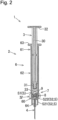
- a pre-filled syringe including a syringe according to an embodiment of the present invention will now be described with reference to Figs. 1 to 6 .
- a pre-filled syringe 1 includes a syringe 2 for administering a drug as illustrated in Figs. 1 and 2 .
- the pre-filled syringe 1 also includes a piston 3 to be inserted into the syringe 2.
- the pre-filled syringe 1 further includes a needle 4 to be connected to the syringe 2.
- the pre-filled syringe 1 includes a cap 5 for capping the needle 4.
- the drug is a liquid drug, such as a protein formulation.
- the syringe 2 is formed in a cylindrical shape including a leading end portion 60 and a base end portion 61, and includes a barrel 6, and partitioning means 7 for partitioning a space S within the barrel 6 into a base end side space S1 and a leading end side space S2. Besides, the syringe 2 is in a substantially cylindrical shape.
- a side in which the leading end portion 60 is disposed (lower sides in Figs. 1 to 4 ) is simply referred to as the "leading end side”
- a side in which the base end portion 61 is disposed (upper sides in Figs. 1 to 4 ) is referred to as the "base end side”.
- an axial direction of the syringe 2 is also simply referred to as the "axial direction”.
- the barrel 6 is a member for holding a drug therein. Besides, in the barrel 6, the leading end portion 60 is provided with a nozzle hole for externally ejecting the drug held therein.
- the barrel 6 includes, in addition to the leading end portion 60 and the base end portion 61, a cylindrical portion 62 for connecting the leading end portion 60 and the base end portion 61 to each other.
- the barrel 6 includes a flange portion 63 extending outward (radially outward direction of the cylindrical portion 62) from the entire outer circumference of the other end in the axial direction of the cylindrical portion 62.
- the barrel 6 is formed, for example, from a material that is transparent and can withstand an internal pressure applied in administering the drug.
- the material of the barrel 6 is a resin containing cyclic olefin such as norbornene in a repeating unit.
- examples of the material of the barrel 6 include transparent resins such as COP (cycloolefin polymer) that is a homopolymer of cyclic olefin, and COC (cycloolefin copolymer) that is a copolymer of cyclic olefin and ethylene or the like.
- the material of the barrel 6 may be PP (polypropylene) or glass.
- silicone oil may be applied for reducing sliding resistance of the piston 3 against the inner surface of the barrel 6.
- the leading end portion 60 of the barrel 6 is provided at one end (specifically, the end on the leading end side) in the axial direction of the cylindrical portion 62.
- the leading end portion 60 is provided, as illustrated in Figs. 3 and 4 , with a nozzle hole 64 for externally ejecting the drug held therein.
- the nozzle hole 64 corresponds to a needle hole into which the needle 4 is to be inserted.
- a base side end surface 600 of the leading end portion 60 is formed in such a manner as to block a region, excluding the nozzle hole 64, of an end portion positioned on the leading end side of the cylindrical portion 62.
- the base side end surface 600 extends, for example, to be inclined to have a portion closer to the radially inward side positioned closer to the leading end side.
- the area of the cylindrical portion 62 seen from the axial direction is, for example, substantially constant, and is specifically 12.56 mm 2 or more and 314 mm 2 or less.
- the inner diameter of the cylindrical portion 62 is, for example, substantially constant, and is specifically 4 mm or more and 20 mm or less.
- the leading end side space S2 includes a first leading end side space S21 that is a space on the leading end side of a filter 80, and does not hold a drug therein, and a second leading end side space S22 that is a space on the base end side of the filter 80, and does not hold a drug therein.
- first leading end side space S21 and the second leading end side space S22 may hold a solid drug therein.
- base end side space S1 and the leading end side space S2 may respectively hold liquid drugs therein.
- the partitioning means 7 includes a cylindrical housing 8, and an inner plug portion 9 openable/closable to the inside of the housing 8.
- the partitioning means 7 includes one housing 8 and one inner plug portion 9.
- the partitioning means 7 is disposed in the leading end portion 60 of the barrel 6 (see Figs. 3 and 4 ).
- the partitioning means 7 further includes, within the barrel 6, the filter 80 attached to the housing 8.
- This partitioning means 7 includes one filter 80, but may include a plurality of stacked filters 80.
- the partitioning means 7 may not include the filter 80.
- the partitioning means 7 includes, for example, the cylindrical housing 8, and the inner plug portion 9 openable/closable to the inside of the housing 8.
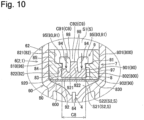
- the housing 8 is a member disposed to liquid-tightly contact with the inner surface of the barrel 6 (for example, the inner surface of the cylindrical portion 62). Besides, the housing 8 is housed in the barrel 6 in pressure contact with the barrel 6. Specifically, at least a part of an outer circumference 800 of the housing 8 is in close contact with the inner surface of the barrel 6.
- the outer circumference 800 of the housing 8 includes a base end outer circumferential portion 801 disposed on the base end side, and a leading end outer circumferential portion 802 disposed on the leading end side, and the leading end outer circumferential portion 802 is formed to have a smaller diameter than the base end outer circumferential portion 801.
- the base end outer circumferential portion 801 liquid-tightly contacts with the inner circumference of the barrel 6.
- the leading end outer circumferential portion 802 opposes the inner circumference of the barrel 6 with a gap therebetween.
- the housing 8 is formed from a flexible material.
- the housing 8 of the present embodiment is more flexible than the barrel 6.
- the material of the housing 8 is, for example, a resin, a rubber, an elastomer, or the like softer than the material of the barrel 6.
- the flexibility of the barrel 6 and the housing 8 can be confirmed, for example, by measuring durometer hardness. Since the housing 8 is formed from such a material, the barrel 6 can be prevented from being cracked with the flexibility of the housing 8 against the barrel 6 ensured.
- the housing 8 has a cylindrical shape.
- the housing 8 is disposed on the base end side of the filter 80.
- the housing 8 is constituted only by a base end side portion disposed on the base end side of the filter 80.
- the housing 8 of the present embodiment is constituted only by the base end side portion, but may be integrally or separately constituted by a leading end side portion disposed on the leading end side of the filter 80.
- the housing 8 has a close-time engaging portion 81. Specifically, the housing 8 has one close-time engaging portion 81.
- the close-time engaging portion 81 is a portion that engages with the inner plug portion 9 when the inner plug portion 9 is in a close state (see Fig. 3 ).
- the close-time engaging portion 81 is provided to project radially inward from an inner circumference 82 of the housing 8, and is formed in a plural number adjacently and consecutively over the entire circumferential direction, or at intervals over the entire circumferential direction.
- the close-time engaging portion 81 is a rib projecting toward the cylindrical axis (radially inward) from the inner circumference 82 of the housing 8.
- the close-time engaging portion 81 is a rib consecutive in the circumferential direction.
- the close-time engaging portion 81 is provided at the center in the axial direction of the inner circumference 82. It is noted that a base side end surface of the close-time engaging portion 81 is a flat surface extending in the radial direction.
- the inner circumference 82 of the housing 8 includes a base end inner circumferential portion 821 disposed on the base end side, and a leading end inner circumferential portion 822 disposed on the leading end side, and the base end inner circumferential portion 821 is formed to have a larger diameter than the leading end inner circumferential portion 822.
- the housing 8 described so far has a small-diameter inner circumference (specifically, the leading end inner circumferential portion 822) on the leading end side, a large-diameter inner circumference (specifically, the base end inner circumferential portion 821) on the base end side, and the close-time engaging portion 81 between the small diameter inner circumference and the large diameter inner circumference.
- the housing 8 has a stepped surface 810 extending radially inward from the inner circumference 82, and facing the base end side.
- the base side end surface of the close-time engaging portion 81 is the stepped surface 810 in this housing 8, a surface of another portion except for the close-time engaging portion 81 may be the stepped surface 810.
- the stepped surface 810 may be positioned either on the leading end side or on the base end side of the close-time engaging portion 81.
- the housing 8 includes an attachment portion 83 on which the filter 80 is attached, a body portion 84 in which the close-time engaging portion 81 is disposed, and an extension portion 85 extending from the body portion 84.
- the attachment portion 83, the body portion 84, and the extension portion 85 are arranged in the stated order in a direction from the leading end side to the base end side.
- the attachment portion 83, the body portion 84, and the extension portion 85 are all in a cylindrical shape.
- the thickness of the housing 8 (a distance between the inner circumference and the outer circumference of the housing 8 in the radial direction that is a direction vertical to the axial direction) is uneven. Specifically, the thickness of the attachment portion 83 is larger than the thickness of the extension portion 85.
- the outer circumference of the attachment portion 83 is slightly spaced from the inner circumference of the barrel 6 (specifically, the inner circumference of the cylindrical portion 62 of the barrel 6). Besides, the attachment portion 83 is in a tapered shape having a smaller outer diameter toward the leading end side. The inner circumference of the attachment portion 83 is in a tapered shape having a larger inner diameter toward the leading end side.
- the body portion 84 is a portion connecting the attachment portion 83 and the extension portion 85 to each other.
- the outer circumference of the body portion 84 is slightly spaced from the inner circumference of the barrel 6 (specifically, the inner circumference of the cylindrical portion 62 of the barrel 6).
- the body portion 84 is in a tapered shape having a smaller outer diameter toward the leading end side.
- the inner circumference of the body portion 84 is constituted by a projecting end surface of the close-time engaging portion 81.
- the inner circumference of the body portion 84 is positioned in the radially innermost position among the other inner circumferences of the housing 8.
- the outer circumference of the extension portion 85 is in surface contact with the inner circumference of the barrel 6 (specifically, the inner circumference of the cylindrical portion 62 of the barrel 6). Since the outer circumference of the extension portion 85 is thus in close contact with the inner circumference of the barrel 6, a drug can be prevented from leaking to the leading end side through a gap between the outer circumference of the housing 8 and the inner circumference of the barrel 6.
- the inner circumference of the extension portion 85 is positioned radially outside the inner circumference of the attachment portion 83. In other words, the inner diameter of the extension portion 85 is larger than the inner diameter of the attachment portion 83.
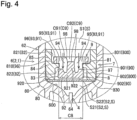
- a liquid flow path C8 corresponding to a flow path of the drug solution from the base end side space S1 to the leading end side space S2 is formed radially inside the close-time engaging portion 81 (see Fig. 4 ).
- the liquid flow path C8 is formed inside the inner circumference of the body portion 84.
- the inner plug portion 9 is a member disposed in such a manner as to be openable/closable to the inside of the housing 8 for communicating or non-communicating the base end side space S1 and the leading end side space S2 with each other through the inside of the housing 8.
- the inner plug portion 9 is a plug provided within the housing 8 in the present embodiment, but may be a cover covering the housing 8 from the leading end side.
- the inner plug portion 9 further has a close-time engaged portion 90 to be engaged with the close-time engaging portion 81 when the inner plug portion 9 is in a close state (see Fig. 3 ).
- the close-time engaged portion 90 is disposed on the leading end side and the base end side of the close-time engaging portion 81.
- the close-time engaged portion 90 includes a base end side close-time engaged portion 901 positioned on the base end side, and a leading end side close-time engaged portion 902 positioned on the leading end side.
- the inner plug portion 9 has a plurality of (for example, two) close-time engaged portions 90.
- the inner plug portion 9 has regulating means 91 for regulating movement of the inner plug portion 9 toward the leading end side when the engagement between the close-time engaging portion 81 and the close-time engaged portion 90 is released for communicating the base end side space S1 and the leading end side space S2 with each other. Since the inner plug portion 9 has the regulating means 91, the inner plug portion 9 is prevented from blocking paths such as the nozzle hole 64 when the base end side space S1 and the leading end side space S2 are communicated with each other.
- the regulating means 91 regulates the movement of the inner plug portion 9 toward the leading end side in a position where the inner plug portion 9 is spaced from the filter 80 toward the base end side.
- the inner plug portion 9 can be prevented from blocking pores of the filter 80.
- the inner plug portion 9 has a cover portion 92 that has the close-time engaged portion 90 on the outer circumference, and is constituted to be capable of opening/closing the liquid flow path C8 of the housing 8.
- the inner plug portion 9 further has a step engaging portion 93 that is disposed on the base end side of the cover portion 92, and is provided to project radially outward beyond the cover portion 92, and a plug flow path C9 that is disposed radially inside the step engaging portion 93, and is formed in the axial direction between the cover portion 92 and the step engaging portion 93 (see Fig. 4 ).
- a drug solution held in the base end side space S1 flows through the plug flow path C9 disposed radially inside the step engaging portion 93 from the base end side to the leading end side through the liquid flow path C8 disposed radially inside the close-time engaging portion 81 (in a direction shown with an arrow in Fig. 4 ), and smoothly flows into the leading end side space S2 through a portion between the cover portion 92 and the close-time engaging portion 81.
- an outer circumference 920 of the cover portion 92 and the leading end inner circumferential portion 822 of the housing 8 are constituted not to contact each other over the entire circumference, and hence, the drug solution can uniformly flow over the entire circumference.
- the inner plug portion 9 has, as the regulating means 91, the stepped surface 810, and the step engaging portion 93 projecting radially outward, and capable of engaging with the stepped surface 810 from the base end side. Since the regulating means 91 includes the stepped surface 810 and the step engaging portion 93, the step engaging portion 93 engages with the stepped surface 810 from the base end side, and hence the movement of the inner plug portion 9 can be definitely regulated.
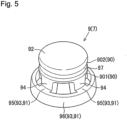
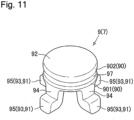
- the inner plug portion 9 includes, in addition to the cover portion 92, a leg portion 94 extending from the cover portion 92.
- the inner plug portion 9 includes a plurality of leg portions 94 (specifically, four leg portions 94) as illustrated in Figs. 5 and 6 .
- the inner plug portion 9 further includes a plurality of projecting portions 95 (specifically, four projecting portions 95) respectively projecting from the leg portions 94 toward the housing 8 (radially outward).
- the inner plug portion 9 further includes a circular portion 96 connecting the plurality of projecting portions 95 to one another.
- the inner plug portion 9 has the projecting portions 95 as the step engaging portion 93, and more specifically, also includes, as the step engaging portion 93, the circular portion 96 in addition to the projecting portions 95.
- the cover portion 92 is a portion to be fit in the housing 8 (see Figs. 3 and 4 ). Besides, the cover portion 92 is a portion that has the close-time engaged portion 90 on the outer circumference, and is openable/closable to the inside of the housing 8. Further, the cover portion 92 is a portion partitioning the base end side space S1 and the leading end side space S2 from each other. The cover portion 92 is, for example, in substantially a disk shape. On the outer circumference 920 of the cover portion 92, the close-time engaged portion 90 is provided.
- An inner circumference 921 of the cover portion 92 (a portion positioned radially inside the outer circumference 920 in the cover portion 92) has a cover leg portion 922 extending toward the base end side of a portion on the disk.
- a base side end surface of the cover leg portion 922 is positioned on the leading end side of a base side end surface of the leg portion 94.
- the base side end surface of the cover leg portion 922 is positioned on the leading end side of a base side end surface of the projecting portion 95.
- the base side end surface of the cover leg portion 922 is positioned on the leading end side of a base side end surface of the circular portion 96.
- the cover leg portion 922 is provided to project from the center in the radial direction of the cover portion 92 toward the base end side.
- the outer diameter of the cover leg portion 922 is smaller than the outer diameter of the cover portion 92.
- the cover leg portion 922 is provided at the center in the radial direction of a region surrounded by the plurality of leg portions 94 (a plurality of projecting portions) arranged in the circumferential direction. Besides, the cover leg portion 922 is disposed at the center in the radial direction of a region surrounded by the circular portion 96.
- the close-time engaged portion 90 is, for example, a projection projecting toward the housing 8. Specifically, the close-time engaged portion 90 is a rib projecting toward the housing 8.
- the close-time engaged portion 90 is a rib provided consecutively in the circumferential direction in the present embodiment, but may be a plurality of ribs provided at intervals in the entire circumferential direction.
- the base end side close-time engaged portion 901 is provided in an end portion on the base end side of the cover portion 92.
- the leading side close-time engaged portion 902 is provided in an end portion on the leading end side of the cover portion 92.
- the base end side close-time engaged portion 901 and the leading end side close-time engaged portion 902 are provided to be spaced from each other in the axial direction.
- a cover recess portion 97 is formed between the base end side close-time engaged portion 901 and the leading end side close-time engaged portion 902. With this cover recess portion 97, the close-time engaging portion 81 of the housing 8 engages from the radially outside direction.
- the base end side close-time engaged portion 901 is engaged with the close-time engaging portion 81 from the base end side, and thus, the movement of the inner plug portion 9 toward the leading end side in the housing 8 is regulated.
- the leading end side close-time engaged portion 902 is engaged with the close-time engaging portion 81 from the leading end side, and thus, the movement of the inner plug portion 9 toward the base end side in the housing 8 is regulated.
- the leg portion 94 is a portion extending toward the base end side of the end portion on the base end side of the outer circumference 920 of the cover portion 92.
- the plurality of leg portions 94 (specifically, four leg portions 94) are disposed at equal intervals in the circumferential direction.
- the plug flow path C9 Radially inside the leg portions 94, the plug flow path C9 is formed.
- the plug flow path C9 includes an axial flow path C91 formed in the axial direction radially inside the leg portions 94, and a communication flow path C92 for communicating the axial flow path C91 with a space radially outside the leg portions 94 (see Fig. 4 ).
- the axial flow path C91 is disposed radially inside the projecting portions 95, and is formed along the axial direction between the projection portions 95 and the cover portion 92.
- the communication flow path C92 is formed between the plural leg portions 94 to be opened radially outside, and communicates with the axial flow path C91 radially outside the axial flow path C91.
- the projecting portion 95 is a portion extending toward the housing 8 from the end portion on the base end side of the leg portion 94.
- the plural projecting portions 95 (specifically, four projecting portions 95) are disposed at equal intervals in the circumferential direction.
- the circular portion 96 is a portion connecting the ends on the side of the housing 8 (radially outside ends) of the projection portions 95. Besides, the circular portion 96 is, for example, in a ring shape. It is noted that the circular portion 96 may be a circular shape other than the ring shape, such as a rectangular ring shape.
- the step engaging portion 93 (specifically, the projecting portions 95, and in the present embodiment, the projecting portions 95 and the circular portion 96) of the inner plug portion 9 engages with the stepped surface 810 (the base side end surface of the close-time engaging portion 81) of the housing 8, and therefore, the movement of the inner plug portion 9 further toward the leading end side (a fall of the inner plug portion 9 off from the close-time engaging portion 81) is regulated.
- the piston 3 to be inserted into the barrel 6 from the base end side can come into contact with the inner plug portion 9.
- the inner plug portion 9 includes a contact surface 98 which the inserted piston 3 can come into contact with.
- the contact surface 98 is an end surface on the base end side of the inner plug portion 9. Specifically, the contact surface 98 is constituted by an end surface on the base end side of the cover portion 92. More specifically, the contact surface 98 is constituted by the base side end surface of the cover leg portion 922, and the base side end surfaces of the leg portions 94.
- the inner plug portion 9 is formed from a flexible material.
- the inner plug portion 9 of the present embodiment is more flexible than the barrel 6.
- the material of the inner plug portion 9 is, for example, a resin, a rubber, an elastomer, or the like softer than the material of the barrel 6.
- the flexibility of the inner plug portion 9 can be confirmed by, for example, measuring the durometer hardness.
- the material of the inner plug portion 9 is, for example, the same as the material of the housing 8, or may be different therefrom.
- the filter 80 is a filter for filtering a drug. Besides, the filter 80 is disposed in a leading end side portion of the housing 8 (on a leading end surface 830 of the attachment portion 83 of the housing 8 in the present embodiment), and is disposed, within the barrel 6, on the base end side of the nozzle hole 64.
- the filter 80 is attached to the leading end side portion of the housing 8, and specifically is adhered to the leading end surface 830.
- This adhesion is ultrasonic welding, and alternatively, an adhesion method including another welding method such as heat welding may be employed. It is noted that the filter 80 may be adhered to the leading end surface 830.
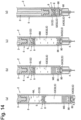
- the partitioning means 7 is constituted as follows: When a pressing force is applied from the base end side by the piston 3 inserted into the barrel 6 from the base end side, one of the close-time engaging portion 81 and the close-time engaged portion 90 moves beyond the other to release the engagement between the close-time engaging portion 81 and the close-time engaged portion 90. Thus, the inner plug portion 9 is opened to the inside of the housing 8 to communicate the base end side space S1 and the leading end side space S2 with each other.
- the partitioning means 7 is constituted so that the state of the inner plug portion 9 is changed from a close state (see Fig. 3 ) to an open state (see Fig. 4 ) by this pressing force.
- the partitioning means 7 is constituted as follows: When the pressing force is applied by the piston 3 from the base end side, at least one of the close-time engaging portion 81 and the close-time engaged portion 90 is elastically deformed, and the close-time engaged portion 90 moves beyond the close-time engaging portion 81, and hence the inner plug portion 9 moves toward the leading end side. As a result, the engagement between the close-time engaging portion 81 and the close-time engaged portion 90 is released, the inner plug portion 9 is opened to the inside of the housing 8, and thus, the base end side space S1 and the leading end side space S2 communicate with each other.
- the barrel 6 and the attachment portion 83 of the housing 8 together clamp the filter 80.
- the base side end surface 600 of the leading end portion 60 of the barrel 6 and the leading end surface 830 of the attachment portion 83 together clamp the filter 80 in the axial direction. Therefore, even when a pressure is applied to the filter 80 in administering a drug solution, the filter 80 is difficult to come off from the attachment portion 83.
- the base end side space S1, the leading end side space S2, and the nozzle hole 64 are arranged in the stated order in a direction from the base end side to the leading end side.
- the central axis of the base end side space S1 and the central axis of the leading end side space S2 both accord with the central axis of the nozzle hole 64. Therefore, in administering a drug, the flow of the drug from the base end side space S1 to the nozzle hole 64 is favorable.
- the syringe 2 of the present embodiment may be sterilized with radiation of y rays or the like. This sterilization may be performed with gas such as ethylene oxide gas, or with an autoclave.
- the piston 3 is a member operated in ejecting the drug held in the barrel 6.
- the piston 3 of the present embodiment has a shaft rod portion 30, a gasket 31 attached to one end in the longitudinal direction of the rod portion 30, and in close contact with the entire inner circumference of the cylindrical portion 62 of the barrel 6, and an operation portion 32 attached to the other end in the longitudinal direction of the rod portion 30.
- a leading end surface 33 is constituted by a leading end surface of the gasket 31. Specifically, when the administration of the drug is completed, the leading end surface 33 comes into contact with the end surface on the base end side of the inner plug portion 9.
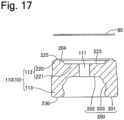
- an outer circumferential end surface 222 corresponding to the leading end surface of the attachment outer circumferential portion 220 is positioned on the leading end side of an inner circumferential end surface 223 corresponding to the leading end surface of the attachment inner circumferential portion 221.
- the leading end surface of the attachment portion 112 is recessed in a center portion thereof in the circumferential direction.
- the attachment outer circumferential portion 220 has a shoulder portion 224 as the outer circumferential portion on the leading end side.
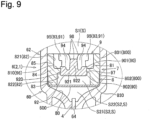
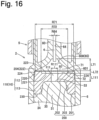
- the area of the nozzle hole 64 is smaller than the area of the base end side subspace 72, smaller than the area of the leading end side subspace 71, and smaller than the area of the flow path 111. This means that the area of the nozzle hole 64 is smaller than those of any portions in the axial direction of the base end side subspace 72, smaller than those of any portions in the axial direction of the leading end side subspace 71, and smaller than those of any portions in the axial direction of the flow path 111.
- an inner diameter R64 of the nozzle hole 64 is smaller than an inner diameter R72 of the base end side subspace 72, smaller than the maximum inner diameter R71 of the leading end side subspace 71 (inner diameter at the base end side edge of the leading end side subspace 71), and smaller than an inner diameter R111 of the flow path 111.
- the inner diameter R81 of the flow path 111 is smaller than the inner diameter R72 of the base end side subspace 72.
- the inner diameter R111 of the flow path 111 is preferably more than 1-fold and 5-fold or less of the inner diameter R64 of the nozzle hole 64, and is desirably 1.1-fold or more and 4.3-fold or less of the inner diameter R64 of the nozzle hole 64.
- the inner diameter R111 of the flow path 111 can be selected from any one of 0.3 mm, 0.6 mm, and 0.9 mm.
- the inner diameter R72 (the filtration area of the filter 80) of the base end side subspace 72 is preferably 5-fold or more and 20-fold or less of the inner diameter R64 of the nozzle hole 64, and is desirably 7-fold or more and 18-fold or less of the inner diameter R64 of the nozzle hole 64.
- the inner diameter R72 of the base end side subspace 72 can be selected from 2.1 mm and 3.6 mm.
- the syringe 2 of the present embodiment may be sterilized with radiation of y rays or the like. This sterilization may be performed with gas such as ethylene oxide gas, or with an autoclave.
- the piston 3 is a member operated in ejecting the drug held in the barrel 6.
- the piston 3 of the present embodiment has the shaft rod portion 30, the gasket 31 attached to one end in the longitudinal direction of the rod portion 30, and in close contact with the entire inner circumference of the cylindrical portion 62 of the barrel 6, and the operation portion 32 attached to the other end in the longitudinal direction of the rod portion 30.
- a leading end surface 33 is constituted by a leading end surface of the gasket 31. Specifically, in the administration of the drug, the leading end surface 33 comes into contact with at least the base end side contact surface 201 of the base end side portion 110 of the holding member 10, and more specifically, comes into contact also with the connection contact surface 203 in addition to the base end side contact surface 201.
- the piston 3 has a close contact portion 34 to be brought into close contact with the inner circumference of the barrel 6, and a projection 35 provided to project from a leading end surface of the close contact portion 34.
- the close end surface of the close contact portion 34 comes into contact with the base end side contact surface 201, and the leading end surface of the projection 35 comes into contact with the leading end side contact surface 802.
- the outer circumference of the projection 35 comes into close contact with the connection contact surface 203.
- the needle 4 is a member for administering the drug held in the barrel 6 to a patient.
- the leading end of the needle 4 is covered with the cap 5.
- the particles can be captured by the filter 80 at the time of the administration of the drug. Since the drug passes through the flow path 111, the base end side subspace 72, and the leading end side subspace 71 having a larger area (for example, inner diameter) than the nozzle hole 64 to be ejected from the nozzle hole 64, the resistance in passing through the flow path 111, the base end side subspace 72, and the leading end side subspace 71 can be suppressed, resulting in suppressing the ejection resistance of the drug.
- the area (for example, the inner diameter) of the flow path 111 is small and the area (for example, the inner diameter) of the base end side subspace 72 is large, and therefore, with the area of the filter 80 contacting the drug (the filtration area of the filter 80) ensured, the amount of the drug remaining in the flow path 111 can be reduced, and thus, a residual liquid amount can be suppressed with the ejection resistance suppressed.
- the leading end surface 33 of the piston 3 moves until it comes into surface contact with the contact surface 200 of the holding member 10 in the entire circumferential direction.
- a residual liquid between the piston 3 and the holding member 10 can be suppressed, and hence the residual liquid amount of the drug in the barrel 6 can be suppressed.
- the syringe of the present invention is not limited to those of the above-described embodiments, and can be, needless to say, variously changed or modified without departing from the scope of the present invention.
- a structure of a given embodiment can be added to a structure of another embodiment, or a part of a structure of a given embodiment can be replaced with a structure of another embodiment.
- a part of a structure of a given embodiment can be eliminated.
- the structure of the holding member 10 may be different from the structure described above.
- the contact surface 200 of the base end side portion 80 may be in a different shape as long as it accords with the contact surface 33 of the piston 3.
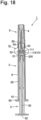
- connection contact surface 203 of the above-described embodiment extends along the axial direction, it may include a portion extending in a direction inclined against the axial direction. More specifically, as illustrated in Figs. 18 and 19 , the connection contact surface 203 may include a first connection contact surface 203a that is a surface substantially vertical to the axial direction, and second connection contact surfaces 203b and 203c that are a pair of surfaces extending from the both edges of the first connection contact surface 203a along the axial direction.
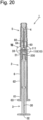
- the base end side contact surface 201 of the above-described embodiment is a surface substantially vertical to the axial direction, it may include a portion inclined at an angle other than vertical against the axial direction. More specifically, as illustrated in Figs. 20 and 21 , the base end side contact surface 201 may include a first base end side contact surface 201a that is a surface substantially vertical to the axial direction, and a second base end side contact surface 201b that is a surface extending further to the radially inward direction from the edge in the radially inside direction of the first base end side contact surface 201a, and inclined to have a radially inner portion positioned closer to the leading end side.
- the holding member 10 of the above-described embodiment includes the base end side portion 110, it may be constituted in such a manner as to include the leading end side portion disposed on the leading end side of the filter 80 integrally with or separately from the base end side portion 110.
- the inner diameter of the flow path 111 is smaller than the inner diameter of the base end side subspace 72 in the holding member 10 of the above-described embodiment, it may substantially the same as the inner diameter of the base end side subspace 72.
- the holding member 10 of the above-described embodiment is constituted in such a manner that the leading end surface 33 of the piston 3 comes into surface contact with the contact surface 200 of the base end side portion 110 over the entire circumferential direction of the barrel 6, it may be constituted in such a manner that the leading end surface 33 of the piston 3 comes into surface contact therewith partially in the circumferential direction.
- recesses or projections may be provided intermittently along the circumferential direction on the base end side contact surface 201 of the contact surface 200 of the base end side portion 110.
- leading end side subspace 71 is in a tapered shape having a smaller inner diameter toward the leading end side in the syringe 2 of the above-described embodiment, it may be in another shape, such as a shape having an even inner diameter. In this case, it can be deemed that the base side end surface 600 extends, for example, in a direction vertical to the axial direction.
- the base end side subspace 72 is in a tapered shape having a smaller inner diameter toward the leading end side, it may be in another shape, such as a shape having an even inner diameter.
- the dimension in the axial direction of the flow path 111 may be equal to or smaller than the dimension in the axial direction of the base end side subspace 72.
- the dimension in the axial direction of the leading end side subspace 71 may be equal to or smaller than the dimension in the axial direction of the base end side subspace 72.
- the base end side portion 110 of the holding member 10 is disposed in a position contacting the base side end surface 600 with the inclination angle of the base side end surface 600 of the leading end portion 60 of the barrel 6 against the axis reduced, or that the dimension in the axial direction of the base end side portion 110 of the holding member 10 is increased.
- the partitioning means 7 or the holding member 10 is disposed in such a manner that the volume of the leading end side space of the barrel 6 is 150 mm 3 or less, 110 mm 3 or less, 40 mm 3 or less, or 20 mm 3 or less in some cases, and preferably 18 mm 3 or less.
- the volume of the leading end side space (S2) of the barrel 6 is 15% by volume or less, 7% by volume or less, 5% by volume or less, or 2% by volume or less, and preferably 1.8% by volume or less of the entire barrel 6.
- the sliding resistance of the syringe refers to resistance caused in sliding the piston within the barrel, and is expressed as sliding load.
- the term “ejection resistance” is also used in the same meaning as the sliding resistance.
- the filter 80 may be, for example, a membrane, a mesh, a sintered body, or a foam body.
- the material of the filter 80 is a resin, a ceramic, a metal, paper, or the like.
- the filter 80 is, for example, a membrane filter. It is noted that the filter 80 may be a pre-filter.
- the filtration area of the filter 80 is the area of the leading end side edge of the base end side subspace (72, or S22), and the area of the base end side edge of the leading end side subspace (71, or S21).
- the area of the leading end side edge of the base end side subspace (72, or S22) is, for example, equal to the area of the base end side edge of the leading end side subspace (71, or S21).
- the filter has a thickness of 100 ⁇ m to 400 ⁇ m, 125 ⁇ m to 350 ⁇ m, or 150 ⁇ m to 310 ⁇ m.
- the filter has, when dried or wet, tensile strength of 1000 Psi or more, 2000 Psi or more, or 3000 Psi or more, and preferably 3500 Psi or more. More preferably, the filter has tensile strength of 3700 Psi or more when dried, and tensile strength of 3900 Psi or more when wet.
- the filter has, when dried or wet, elongation at break of 10% or more, 20% or more, 30% or more, or 40% or more, and has elongation at break of preferably 45% or more. More preferably, the filter has elongation at break of 50% or more when dried, and 60% or more when wet.
- the material of the filter contains one or more selected from polyether sulfone (PES), polyvinylidene fluoride (PVDF), polysulfone (PS), and an acrylic copolymer.
- PES polyether sulfone
- PVDF polyvinylidene fluoride
- PS polysulfone
- acrylic copolymer an acrylic copolymer
- polyether sulfone is preferably Supor(R) (Nihon Pall Ltd.), Millipore Express (Merck), or Sartopore(R) (Sartorius), and particularly preferably Supor.
- PVDF Polyvinylidene fluoride
- polyvinylidene fluoride is preferably Durapore(R) (Merck), or Fluorodyne(R) II (Nihon Pall Ltd.), and particularly preferably Durapore.
- Polysulfone has a structure including a repeating unit of the following formula:
- polysulfone is preferably Asymmetric Super Micron Polysulfone (Nihon Pall Ltd.).
- an acrylic copolymer may be formed on a non-woven nylon support.
- an acrylic copolymer may be coated with a hydrophilic or hydrophobic coating.
- an acrylic copolymer filter is preferably a hydrophobic acrylic copolymer filter, and particularly preferably VERSAPOR(R) (Nihon Pall Ltd.).
- the filter has a pore size of 5 ⁇ m or less, and preferably of 5 ⁇ m.
- the term "pore size of a filter” refers to a property of the filter rated in accordance with the diameter of a particle definitely expected to be highly efficiently captured.
- filter rating “nominal filter rating” and “absolute filter rating” are used.
- the nominal filter rating refers to a range of sizes of microparticles for which the filter maker can guarantee against a prescribed foreign matter removal rate.
- the absolute filter rating refers to a value corresponding to the size of the minimum microparticle that is completely removable by the filter.
- a method for measuring the nominal filter rating can be ACFTD (AC Fine Test Dust), and in this method, a particle size satisfying a set particle removal rate is determined as the filter rating.
- a method for measuring the absolute filter rating can be a method in which ACFTD or glass beads are caused to pass through the filter once, and the maximum diameter of ACFTD or beads flowed out downstream is measured.
- the pore size is expressed by the absolute filter rating.
- filter integrity refers to a standard for the quality of a filter, and indicates whether or not the filter exhibits expected filtration performance in a significant step requiring sterility assurance.
- a filter integrity test include a forward flow test and a bubble point test.
- the forward flow test is a quantitative test in which a given test pressure is applied to a completely wet membrane on the primary side of the filter when the secondary side of the membrane is in an atmospheric pressure state, and the amount of diffusional flow passing through the liquid membrane is measured based on a difference in pressure between the primary side and the secondary side of the filter.
- the bubble point test is a quantitative test in which a given test pressure is applied to a completely wet membrane on the primary side of the filter when the secondary side of the membrane is in an atmospheric pressure state, and the amount of diffusional flow passing through the liquid membrane is measured based on a difference in pressure between the primary side and the secondary side of the filter.
- the phrase “the solution is kept in a state not in contact with the filter before use” refers to that the solution is filled in the barrel in such a manner as not to contact the filter provided in the barrel, and is kept in a state not in contact therewith before use even if stress at usually expected level is applied thereto.
- the term “before use of the formulation for injection” includes during and after the production of the formulation for injection.
- stress at usually expected level refers to, but is not limited to, mechanical stress including drop stress, vibration stress, and rotation stress applied during the production and operations such as transportation after the production.
- the non-contact state between the solution and the filter is realized by partitioning the barrel with the partitioning means, holding the pharmaceutical formulation in the base end side space, and disposing the filter on the leading end side of the partitioning means.
- the phrase "the solution is kept in a state in contact with the filter before use” refers to that the solution is kept in a state in contact with the filter during a prescribed period or whole period during the production of the formulation for injection, or storage, transportation and the like thereof after the production.
- the phrase “the solution flows through the filter from the base end side to the leading end side of the filter” refers to that the solution filled on the base end side of the filter in the barrel of the syringe moves to the leading end side of the filter in the barrel owing to the piston, or pressure application including the weight.
- the solution having moved to the leading end side of the filter in the barrel is ejected externally through the nozzle hole.
- the pharmaceutical formulation is a solution containing, as an active ingredient, a low molecular weight compound, a middle molecular weight compound including a natural product, a polynucleotide, and a peptide, or a protein.
- the low molecular weight compound refers to a compound having a molecular weight lower than 500
- the middle molecular weight compound refers to a compound having a molecular weight of 500 to 1500.
- the middle molecular weight compound encompasses a natural product having a molecular weight of 500 to 2000, a polynucleotide having a molecular weight of 3000 to 15000, and a peptide having a molecular weight of 600 to 6000.
- the peptide encompasses a cyclic peptide.
- the polynucleotide encompasses a ribozyme, an antisense molecule, an inhibitor oligonucleotide, an aptamer, a micro-RNA, and a small interfering RNA (siRNA).
- the pharmaceutical formulation may be a formulation for injection.
- the formulation for injection is a pharmaceutical formulation that is filled in a container for injection to be administered by injection, and contains a protein as an active ingredient in a solution.
- the formulation for injection includes a container for injection such as a syringe as a constituent element.
- the solution of the pharmaceutical formulation has a viscosity of 95 cP or less, 90 cP or less, 85 cP or less, 80 cP or less, 75 cP or less, 70 cP or less, 65 cP or less, 60 cP or less, 55 cP or less, 50 cP or less, 45 cP or less, 40 cP or less, 35 cP or less, 30 cP or less, 25 cP or less, 20 cP or less, 15 cP or less, 10 cP or less, or 1 cP to 95 cP.
- the viscosity can be measured by employing, for example, electromagnetically spinning (EMS) method. In this measurement method, a torque is applied by remote control to a probe that is a conductor, and the resultant rotation is optically read to measure the viscosity.
- EMS electromagnetically spinning
- the pharmaceutical formulation is stored without freezing the solution in the container at -30°C to 40°C, or -30°C to 25°C, preferably from the freezing point of the solution to 25°C, more preferably at 1°C to 10°C, more preferably at 2°C to 8°C, and even more preferably at 5°C.
- the storage is carried out for 1 hour, 2 hours, 3 hours, 4 hours, 5 hours, 6 hours, 7 hours, 8 hours, 9 hours, 10 hours, 11 hours, 12 hours, 13 hours, 14 hours, 15 hours, 16 hours, 17 hours, 18 hours, 19 hours, 20 hours, 21 hours, 22 hours, 23 hours, 24 hours, 25 hours, 26 hours, 27 hours, 28 hours, 29 hours, 30 hours, 31 hours, 32 hours, 33 hours, 34 hours, 35 hours, 36 hours, 48 hours, 60 hours, 72 hours, 84 hours, or 96 hours.
- the storage is carried out for at least 24 hours, at least 2 days, at least 3 days, at least 4 days, at least 10 days, at least 20 days, at least 30 days, at least 40 days, at least 50 days, at least 60 days, at least 1 month, at least 2 months, at least 3 months, at least 4 months, at least 5 months, at least 6 months, at least 7 months, at least 8 months, at least 9 months, at least 10 months, at least 11 months, or at least 12 months.
- the protein used in a liquid formulation encompasses, but is not limited to, an antibody, a fusion protein, an enzyme, a hormone, a cytokine, and a vaccine. More specifically, the protein encompasses a monoclonal antibody, granulocyte colony-stimulating factor (G-CSF), granulocyte macrophage colony-stimulating factor (GM-CSF), erythropoietin (EPO), interferon, interleukins such as IL-1 or IL-6, tissue plasminogen activator (TPA), thrombopoietin, urokinase, serum albumin, blood coagulation factor VIII, leptin, stem cell factor (SCF), and the like.
- G-CSF granulocyte colony-stimulating factor
- GM-CSF granulocyte macrophage colony-stimulating factor
- EPO erythropoietin
- interleukins such as IL-1 or IL-6
- the protein used in the pharmaceutical formulation has substantially the same biological activity as a bioactive protein of a mammal, in particular of a human, and encompasses proteins derived from nature and those obtained by genetic engineering.
- Proteins obtained by genetic engineering include those having the same amino acid sequence as a native protein, or those obtained by deleting, substituting, or adding one or more amino acid sequences and having the above-described biological activity.
- a concentration of the protein in the solution may be 0.1 mg/mL or more, within a range of 0.1 to 300 mg/mL, within a range of 1 to 200 mg/mL, 50 to 200 mg/mL, or 80 to 200 mg/mL.
- an antibody to be used is not particularly limited as long as it binds to a desired antigen, may be a polyclonal antibody or a monoclonal antibody, and is preferably a monoclonal antibody because a homogeneous antibody can be thus stably produced.
- the antibody to be used may be a monospecific antibody or a bispecific antibody, or may be a multispecific antibody having three or more antigen-recognizing sites in a molecule.
- the monoclonal antibody to be used encompasses not only a monoclonal antibody derived from an animal, such as a human, a mouse, a rat, a hamster, a rabbit, a sheep, a camel, or a monkey, but also a recombinant antibody obtained by artificial modification, such as a chimeric antibody, a humanized antibody, or a bispecific antibody.
- a recombinant antibody obtained by artificial modification of a constant region or the like of an antibody for modifying physical properties of an antibody molecule specifically, modification of an isoelectric point (p1), modification of affinity of Fc receptor, and the like) for purposes of improving retention in blood and pharmacokinetics is also encompassed.
- the immunoglobulin class of the antibody to be used is not particularly limited, but may be any of classes including IgG such as IgG1, IgG2, IgG3, and IgG4, and IgA, IgD, IgE, and IgM, among which IgG is preferred, and IgG1, IgG2 and IgG4 are particularly preferred.
- IgG such as IgG1, IgG2, IgG3, and IgG4, and IgA, IgD, IgE, and IgM, among which IgG is preferred, and IgG1, IgG2 and IgG4 are particularly preferred.
- the antibody to be used encompasses not only an antibody including a constant region and a variable region (full-length antibody) but also a bound fragment of an antibody, such as Fv, Fab, and F(ab) 2 , and a low-molecular-weight antibody like a bispecific antibody such as one- or two-associated single chain Fv (scF, sc(Fv) 2 ) having a variable region of the antibody bound with a linker such as a peptide linker, or a scFV dimer, and a full-length antibody is preferred.
- a bispecific antibody such as one- or two-associated single chain Fv (scF, sc(Fv) 2 ) having a variable region of the antibody bound with a linker such as a peptide linker, or a scFV dimer, and a full-length antibody is preferred.
- the antibody to be used can be produced by a known method.
- a hybridoma used for producing a monoclonal antibody can be produced as follows basically by known techniques. Specifically, a desired antigen or a cell expressing a desired antigen used as a sensitizing antigen is immunized by a usual immunization method, and the resultant immune cell is fused with a known parent cell by a usual cell fusion method, the resultant is subjected to a usual screening method for screening a monoclonal antibody producing cell (hybridoma), and thus, the hybridoma can be produced.
- the production of a hybridoma can be carried out in accordance with, for example, the method of Milstein et al., ( Kohler, G. and Milstein, C., Methods Enzymol.
- the antigen may be bound to a macromolecule having immunogenicity, such as albumin, before the immunization.
- a recombinant antibody obtained by cloning an antibody gene from a hybridoma, and incorporating the gene into an appropriate vector to be introduced into a host by genetic engineering techniques can be used (see, for example, Carl, A. K. Borrebaeck, James, W. Larrick, THERAPEUTIC MONOCLONAL ANTIBODIES, Published in the United Kingdom by MACMILLAN PUBLISHERS LTD., 1990 ).
- cDNA of a variable region (V region) of an antibody is synthesized from mRNA of the hybridoma with reverse transcriptase.
- DNA encoding the V region of the target antibody thus obtained is linked to DNA encoding a desired antibody constant region (C region), and the resultant is incorporated into an expression vector.
- DNA encoding the V region of the antibody may be incorporated into an expression vector containing DNA of an antibody C region.
- the resultant is incorporated into the expression vector so as to express under control of an expression control region, such as an enhancer or a promoter.
- a host cell is transformed with the resultant expression vector, and thus, the antibody can be expressed.
- a recombinant antibody obtained by artificial modification for purpose of reducing heteroantigenicity against human such as a chimeric antibody or a humanized antibody
- a modified antibody can be produced by a known method.
- a chimeric antibody is an antibody containing heavy-chain and light-chain variable regions of an antibody of a mammal other than a human, for example, a mouse antibody, and heavy-chain and light-chain constant regions of a human antibody, and can be obtained by linking DNA encoding a variable region of a mouse antibody to DNA encoding a constant region of a human antibody, incorporating the resultant into an expression vector, and introducing the vector into a host to produce the antibody.
- a humanized antibody is designated also as a reshaped human antibody, and is obtained by transplanting a complementary determining region (CDR) of an antibody of a mammal other than a human, for example, a mouse antibody, into a complementary determining region of a human antibody, and a general genetic engineering method for such an antibody is also known.
- CDR complementary determining region
- a DNA sequence designed to link CDR of a mouse antibody to a framework region (FR) of a human antibody is synthesized by PCR method from several oligonucleotides produced to have overlapping portions at the ends.
- the thus obtained DNA is linked to DNA encoding a human antibody constant region, the resultant is subsequently incorporated into an expression vector, and the resultant vector is introduced into a host to produce the antibody (see European Patent Application No. 239400 , and WO 96/02576 ).
- the FR of a human antibody to be linked via CDR one having a complementary determining region forming a good antigen-binding site is selected. If necessary, an amino acid in a framework region of a variable region of an antibody may be substituted so as to cause the complementary determining region of the reshaped human antibody to form a suitable antigen-binding site ( Sato, K. et al., Cancer Res. (1993) 53, 851-856 ).
- the antibody to be used encompasses such an antibody having substitution (including deletion and addition) of an amino acid.
- ADCC antibody dependent cellular cytotoxicity
- CDC complement dependent cellular cytotoxicity
- human lymphocyte is sensitized with a desired antigen or a cell expressing a desired antigen in vitro, and the thus sensitized lymphocyte is fused to a human myeloma cell, for example, U266, and thus, a desired human antibody having a binding activity to an antigen can be obtained (see Japanese Patent Publication No. 1-59878 ).
- a desired human antibody when a transgenic animal having all repertoires of human antibody genes is immunized with an antigen, a desired human antibody can be obtained (see WO 93/12227 , WO 92/03918 , WO 94/02602 , WO 94/25585 , WO 96/34096 , and WO 96/33735 ).
- a technique for obtaining a human antibody by panning using a human antibody library is also known. For example, a variable region of a human antibody is expressed as a single chain antibody (scFv) on the surface of a phage by a phage display method, and thus, a phage binding to an antigen can be selected.
- scFv single chain antibody
- a DNA sequence encoding the variable region of a human antibody binding to the antigen can be determined.
- an appropriate expression vector containing the sequence can be produced to obtain a human antibody.
- an appropriate combination of a host and an expression vector can be used.
- a eukaryotic cell an animal cell, a plant cell, or a fungal cell can be used.
- animal cell (1) mammal cells such as CHO, COS, myeloma, BHK (baby hamster kidney), HeLa, and Vero, (2) amphibian cells such as Xenopus oocyte, and (3) insect cells such as sf9, sf21, and Tn5 are known.
- a cell derived from the genus Nicotiana such as a cell derived from Nicotiana tabacum
- this cell may be callus cultured.
- yeast for example, the genus Saccharomyces, such as Saccharomyces serevisiae
- filamentous fungus for example, the genus Aspergillus such as Aspergillus niger
- a prokaryotic cell there is a production system using a bacterial cell.
- Escherichia coli E. coli
- Bacillus subtilis Bacillus subtilis
- the antibody to be used in the pharmaceutical formulation encompasses a modified antibody.
- a modified antibody For example, antibodies binding to various molecules of polyethylene glycol (PEG), cytotoxic drugs and the like can be used ( Farmaco. 1999 Aug 30; 54(8): 497-516 , Cancer J. 2008 May-June; 14(3): 154-69 ).
- PEG polyethylene glycol
- Such a modified antibody can be obtained by chemically modifying an antibody. Such a method has been already established in this field.
- the antibody of the present disclosure may be a chimeric antibody.
- a chimeric antibody is described in, for example, US Patent No. 4,816,567 , and Morrison et al., Proc. Natl. Acad. Sci. USA, 81: 6851-6855 (1984 ).
- a chimeric antibody may contain a non-human variable region (variable region derived from, for example, a non-human primate such as a monkey, or a mouse, a rat, a hamster, a rabbit or the like) and a human constant region.
- the antibody of the present disclosure may be a humanized antibody.
- a humanized antibody is humanized for reducing immunogenicity in a human with specificity and affinity of a parent non-human antibody retained.
- a humanized antibody representatively contains one or more variable regions, and an HVR, for example, CDR derived from a non-human antibody (or a part thereof) and FR derived from a human antibody sequence (or a part thereof) are present therein.
- a humanized antibody can optionally contain at least a part of a human constant region.
- amino acid residues of FR in a humanized antibody may be substituted with corresponding amino acid residues of a non-human antibody (for example, an antibody from which HVR residues are derived) for, for example, retaining or improving specificity and affinity of the antibody.
- a non-human antibody for example, an antibody from which HVR residues are derived
- a humanized antibody and a method for producing the same are reviewed in, for example, the following ( Almagro and Fransson, Front. Biosci. 13: 1619-1633 (2008 )), and are described in, for example, the following: Riechmann et al., Nature 332: 323-329 (1988 ); Queen et al., Proc. Nat'l Acad. Sci. USA 86: 10029-10033 (1989 ); US Patent Nos. 5,821,337 , 7,527,791 , 6,982,321 , and 7,087,409 ; Kashmiri et al., Methods 36: 25-34 (2005 ) (describing specificity determining region (SDR) grafting); Padlan, Mol. Immunol.
- the antibody of the present disclosure may be a human antibody.
- a human antibody can be produced by various techniques.
- a human antibody is outlined in, for example, van Dijk and van de Winkel, Curr. Opin. Pharmacol. 5: 368-374 (2001 ) and Lonberg, Curr. Opin. Immunol. 20: 450-459 (2008 ).
- a human antibody may be prepared by administering an immunogen to a transgenic animal having been modified to produce a complete human antibody or a complete antibody containing a human variable region in response to an antigen.
- Such an animal representatively contains the entire or a part of human immunoglobulin locus, and the entire or a part of the human immunoglobulin locus is present in a state where it is substituted with an endogenous immunoglobulin locus, or it is randomly incorporated outside the chromosome or inside the chromosome of the animal.
- endogenous immunoglobulin locus is usually inactivated.
- a method for obtaining a human antibody from a transgenic animal is reviewed in Lonberg, Nat. Biotech. 23: 1117-1125 (2005 ).
- a human variable region from a complete antibody generated from such an animal may be further modified by, for example, combining with a different human constant region.
- a human antibody can be produced by a method based on a hybridoma.
- a human myeloma cell and a mouse-human heteromyeloma cell line for producing a human monoclonal antibody is described in the following (for example, Kozbor J. Immunol., 133: 3001 (1984 ); Brodeur et al., Monoclonal Antibody Production Techniques and Applications, pp. 51-63 (Marcel Dekker, Inc., New York, 1987 ); and Boerner et al., J. Immunol., 147: 86 (1991 )).
- a human antibody generated through human B cell hybridoma technology is described in Li et al., Proc. Natl.
- a human antibody may also be generated by isolating an Fv clone variable domain sequence selected from human-derived phage display libraries. Such a variable region sequence can then be combined with a desired human constant region. Techniques for selecting a human antibody from antibody libraries will be described below.
- the antibody of the present disclosure may be isolated by screening a combinatorial library for an antibody having one or more desired activities.
- a method for creating a phage display library, a method for screening such a library for an antibody having a desired binding characteristic, and the like are known in this technical field. Such methods are reviewed in Hoogenboom et al.
- a naive repertoire can be cloned (for example, from a human) to provide a single source of antibodies to a wide range of non-self or self-antigens without any immunization as described by Griffiths et al., EMBO J, 12: 725-734 (1993 ).
- naive libraries can also be created synthetically by cloning unrearranged V-gene segments from stem cells, and using PCR primers containing a random sequence encoding the highly variable region CDR3 and to accomplish rearrangement in vitro, as described in Hoogenboom and Winter, J. Mol. Biol., 227: 381-388 (1992 ).
- Examples of patent publications describing human antibody phage libraries include US Patent No. 5,750,373 , and US Patent Publication Nos. 2005/0079574 , 2005/0119455 , 2005/0266000 , 2007/0117126 , 2007/0160598 , 2007/0237764 , 2007/0292936 , and 2009/0002360 .
- the antibody or the bound fragment thereof of the present disclosure may be a "dual acting Fab" or "DAF” containing one antigen-binding site binding to the antigen and another different antigen (for example, US2008/0069820 ).
- a variant (mutant) of an amino acid sequence of the antibody of the present disclosure can be prepared by introducing an appropriate modification to a nucleic acid encoding a molecule of the antibody, or by synthesizing a peptide.
- Such a modification may be performed through one of or an appropriate combination of a plurality of deletion, insertion, and substitution of an arbitrary amino acid (residue) in the amino acid sequence.
- An arbitrary combination of deletion, insertion, and substitution can be employed as long as a final construct possesses a desired characteristic (for example, antigen-binding property).
- a target site for introducing substitution mutation can contain HVR and FR.
- the antibody used in the pharmaceutical formulation include, but are not limited to, an anti-tissue factor antibody, anti-IL-6 receptor antibody, an anti-IL-6 antibody, an anti-glypican-3 antibody, an anti-CD3 antibody, an anti-CD20 antibody, an anti-GPIIb/IIIa antibody, an anti-TNF antibody, an anti-CD25 antibody, an anti-EGFR antibody, an anti-Her2/neu antibody, an anti-RSV antibody, an anti-CD33 antibody, an anti-CD52 antibody, an anti-IgE antibody, an anti-CD11a antibody, an anti-VEGF antibody, an anti-VLA4 antibody, an anti-HM1.24 antibody, an anti-parathyroid gland hormone-related peptide antibody (anti-PTHrP antibody), an anti-ganglioside GM3 antibody, an anti-TPO receptor agonist antibody, a coagulation factor VIII substitution antibody, an anti-IL31 receptor antibody, an anti-HLA antibody, an anti-AXL antibody, an anti-CXCR4 antibody, an anti-NR
- Examples of a preferable reshaped humanized antibody to be used in the pharmaceutical formulation include a humanized anti-interleukin 6 (IL-6) receptor antibody (tocilizumab, hPM-1, or MRA, see WO92/19759 ), a humanized anti-HM1.24 antigen monoclonal antibody (see WO98/14580 ), a humanized anti-parathyroid gland hormone-related peptide antibody (anti-PTHrP antibody) (see WO98/13388 ), a humanized anti-tissue factor antibody (see WO99/51743 ), a humanized anti-glypican-3 IgG1 ⁇ antibody (codrituzumab, GC33, see WO2006/006693 ), a humanized anti-NR10 antibody (see WO2009/072604 ), and a bispecific humanized antibody of factor IX and factor X (ACE910, see WO2012/067176 ).
- IL-6 interleukin 6
- hPM-1 humanized
- the active ingredient contained in the solution filled in the syringe is an antibody selected from emicizumab, tocilizumab, and satralizumab.
- Emicizumab, tocilizumab, and satralizumab are antibodies respectively contained, as an active ingredient, for example, in HEMLIBRA(R), ACTEMRA(R), and ENSPRYNG(R), and their amino acid sequences are known.
- antibodies specified by the terms emicizumab, tocilizumab, and satralizumab encompass antibodies that are substantially the same in amino acid sequences as these antibodies, and have equivalent medical effects.
- the pharmaceutical formulation can be prepared, if necessary, by mixing with an appropriate pharmaceutically acceptable carrier, medium, or the like into a liquid formulation.
- the solvent of a liquid formulation is water or a pharmaceutically acceptable organic solvent. Examples of such an organic solvent include propylene glycol (1,2-propanediol), polyethylene glycol 300, polyethylene glycol 400, ethanol, glycerol, and acetic acid.
- appropriate pharmaceutically acceptable carrier and medium examples include sterilized water and physiological saline, a stabilizing agent, an antioxidant (such as ascorbic acid), a buffer (such as phosphoric acid, citric acid, histidine, or another organic acid), an antiseptic agent, a surfactant (such as PEG, or Tween), a chelating agent (such as EDTA), and a binding agent.
- a stabilizing agent such as ascorbic acid
- a buffer such as phosphoric acid, citric acid, histidine, or another organic acid
- an antiseptic agent such as PEG, or Tween
- a surfactant such as PEG, or Tween
- a chelating agent such as EDTA
- proteins such as serum albumin, gelatin, and immunoglobulin, amino acids such as glycine, glutamine, asparagine, glutamic acid, aspartic acid, methionine, arginine, and lysine, sugars and carbohydrates such as polysaccharides and monosaccharides, and sugar alcohols such as mannitol and sorbitol may be contained.
- amino acids such as glycine, glutamine, asparagine, glutamic acid, aspartic acid, methionine, arginine, and lysine
- sugars and carbohydrates such as polysaccharides and monosaccharides
- sugar alcohols such as mannitol and sorbitol
- examples include physiological saline, an isotonic solution containing glucose or another auxiliary drug, such as D-sorbitol, D-mannose, D-mannitol, or sodium chloride, and it may be used together with an appropriate solubilizing agent such as alcohol (such as ethanol), polyalcohol (such as propylene glycol, or PEG), and a nonionic surfactant (such as polysorbate 80, polysorbate 20, poloxamer 188, or HCO-50).
- an appropriate solubilizing agent such as alcohol (such as ethanol), polyalcohol (such as propylene glycol, or PEG), and a nonionic surfactant (such as polysorbate 80, polysorbate 20, poloxamer 188, or HCO-50).
- the buffer to be used in a liquid formulation is prepared using a substance for retaining the pH of the solution.
- a liquid formulation containing high concentration of an antibody has a pH of the solution of preferably 4.5 to 7.5, more preferably 5.0 to 7.0, and even more preferably 5.5 to 6.5.
- a usable buffer can adjust the pH within this range, and is pharmaceutically acceptable.
- Such a buffer is known to those skilled in the art in the field of liquid formulation, and inorganic salts such as phosphates (sodium or potassium) and sodium bicarbonate; organic salts such as citrates (sodium or potassium), sodium acetate, and sodium succinate; and acids such as phosphoric acid, carbonic acid, citric acid, succinic acid, malic acid, and gluconic acid can be used.
- inorganic salts such as phosphates (sodium or potassium) and sodium bicarbonate
- organic salts such as citrates (sodium or potassium), sodium acetate, and sodium succinate
- acids such as phosphoric acid, carbonic acid, citric acid, succinic acid, malic acid, and gluconic acid
- Tris buffers, and Good's buffers such as MES, MOPS, and HEPES, histidine (such as histidine hydrochloride), glycine, and such can be used.
- the concentration of the buffer is 1 to 500 mmol/L, preferably 5 to 100 mmol/L and more preferably 10 to 20 mmol/L.
- the buffer preferably contains 5 to 25 mmol/L histidine, and more preferably contains 10 to 20 mmol/L histidine.
- a liquid formulation containing a high concentration of an antibody is preferably stabilized by addition of a stabilizing agent suitable for the antibody corresponding to the active ingredient.
- a stabilizing agent suitable for the antibody corresponding to the active ingredient is preferably included in a "stable" liquid formulation containing a high concentration of an antibody for at least 12 months, preferably for 2 years, and more preferably for 3 years at refrigeration temperature (2 to 8°C); or for at least 3 months, preferably for 6 months, and more preferably for 1 year at room temperature (22 to 28°C).
- a total amount of dimers and decomposed matters after storage at 5°C for 2 years is 5.0% or less, preferably 2% or less, and more preferably 1.5% or less
- the total amount of dimers and decomposed matters after storage at 25°C for 6 months is 5.0% or less, preferably 2% or less, and more preferably 1.5% or less.
- representative examples of the surfactant include nonionic surfactants, for example, sorbitan fatty acid esters such as sorbitan monocaprylate, sorbitan monolaurate, and sorbitan monopalmitate; glycerin fatty acid esters such as glycerin monocaprylate, glycerin monomyristate, and glycerin monostearate; polyglycerin fatty acid esters such as decaglyceryl monostearate, decaglyceryl distearate, and decaglyceryl monolinoleate; polyoxyethylene sorbitan fatty acid esters such as polyoxyethylene sorbitan monolaurate, polyoxyethylene sorbitan monooleate, polyoxyethylene sorbitan monostearate, polyoxyethylene sorbitan monopalmitate, polyoxyethylene sorbitan trioleate, and polyoxyethylene sorbitan tristearate; polyoxyethylene sorbit fatty acid esters such as poly
- Preferred surfactants include polyoxyethylene sorbitan fatty acid esters and polyoxyethylene polyoxypropylene alkyl ethers, polysorbates 20, 21, 40, 60, 65, 80, 81, 85, and Pluronic(R) surfactants are particularly preferred, and polysorbates 20 and 80 and Pluronic F-68 (poloxamer 188) are most preferred.
- an amount of the surfactant to be added to the antibody formulation is generally 0.0001 to 10% (mg/mL), preferably 0.001 to 5%, and more preferably 0.005 to 3%.
- a cryoprotectant a suspending agent, a dissolution assisting agent, a tonicity agent, a preservative, an adsorption inhibitor, a diluent, an excipient, a pH adjustor, a soothing agent, a sulfur-containing reducing agent, an antioxidant and the like can be appropriately added.
- cryoprotectant examples include sugars such as trehalose, sucrose, and sorbitol.
- dissolution assisting agent examples include polyoxyethylene hydrogenated castor oil, polysorbate 80, nicotinamide, polyoxyethylene sorbitan monolaurate, macrogol, and castor oil fatty acid ethyl ester.
- Examples of the tonicity agent include sodium chloride, potassium chloride, and calcium chloride.
- preservative examples include methyl parahydroxybenzoate, ethyl parahydroxybenzoate, sorbic acid, phenol, cresol, and chlorocresol.
- adsorption inhibitor examples include human serum albumin, lecithin, dextran, an ethylene oxide/propylene oxide copolymer, hydroxypropyl cellulose, methyl cellulose, polyoxyethylene hydrogenated castor oil, and polyethylene glycol.
- the pharmaceutical is used for treating psoriasis vulgaris, pancreatitis, ulcerative colitis, non-Hodgkin's lymphoma, breast cancer, colorectal cancer, mesothelioma, soft tissue sarcoma, juvenile idiopathic arthritis, macular degeneration, respiratory syncytial virus, Crohn's disease, rheumatoid arthritis, psoriatic arthritis, Castleman's disease, ankylosing spondylitis, osteoporosis, treatment-induced bone loss, bone metastasis, multiple myeloma, Alzheimer's disease, glaucoma, Sjogren's disease, Still's disease, multiple sclerosis, hyperimmunoglobulinemia, anemia, mesangial proliferative nephritis, and asthma.
- an antigen to which the antibody has a specific binding property can be a transmembrane molecule (such as a receptor) or a ligand such as a growth factor.
- the antigen include a molecule such as renin; growth hormones including human growth hormone and bovine growth hormone; a growth hormone-releasing factor; parathyroid gland hormone; thyroid stimulating hormone; lipoprotein; ⁇ -1 anti-trypsin; insulin A chain; insulin B chain; proinsulin; follicle-stimulating hormone; calcitonin; luteinizing hormone; glucagon; coagulation factors such as factor VIIIC, factor IX, tissue factor (TF), and von Willebrand factor; anticoagulation factors such as protein C; atrial natriuretic factor; a pulmonary surfactant; plasminogen activators such as urokinase, and human urinary or tissue plasminogen activator (t-PA); bombesin; thrombin; hematopoi
- examples of a molecular target of the antibody comprised therein include CD proteins such as CD3, CD4, CD8, CD19, CD20, CD22, CD34, and CD40; members of the ErbB receptor family such as EGF receptor, and HER2, HER3, or HER4 receptor; B-cell surface antigens such as CD20 and BR3; members of the tumor necrosis receptor superfamily including DR5; prostate stem cell antigen (PSCA); cell adhesion molecules such as LFA-1, Mac1, p150.95, VLA-4, ICAM-1, VCAM, and ⁇ v/ ⁇ 3 integrins including any one of ⁇ 4/ ⁇ 7 integrin, and ⁇ or ⁇ subunit thereof (such as an anti-CD11a, anti-CD18, or anti-CD1 1b antibody); growth factors such as VEGF and receptors thereof; tissue factors (TF); tumor necrosis factors (TNF), such as TNF- ⁇ or TNF- ⁇ , and ⁇ -interferon ( ⁇ -IFN
- the phrase "to remove visually detectable particles” refers to that in a solution of a pharmaceutical formulation in which visually detectable particles are formed under prescribed conditions, when the solution is ejected from the syringe, the solution is ejected through the filter provided in the barrel, thereby removing the visually detectable particles from the ejected solution.
- the number of the visually detectable particles in the ejected solution becomes zero.
- a visually detectable particle refers to a particle that is visually detectable under high illuminance and has a particle size of 40 ⁇ m or more.
- particles that are visually detectable under standard illuminance as prescribed in the Japanese pharmacopoeia are designated as "visible particles” or "insoluble visible particles”.
- visible particles have a particle size greater than 100 ⁇ m (Non Patent Literature 1).
- Particles that are smaller in size than visible particles, and cannot be seen with eyes with standard illuminance as prescribed in the Japanese pharmacopoeia (about 2,000 to 3,000 lx) but can be visually detected by increasing illuminance or by increasing an observation time period are "particles visually detectable only under high illuminance", and have a particle size of 40 ⁇ m to 100 ⁇ m. Visible particles can be confirmed by visual inspection with naked eyes for 5 seconds or more under illumination at standard illuminance (about 2,000 to 3,000 lx), by slowly rotating or inverting the container in front of a black background or a white background.
- Particles visually detectable only under high illuminance can be confirmed by visual inspection with naked eyes for 30 seconds or more under illumination at high illuminance (6,000 lx or more) by slowly rotating or inverting the container in front of a black background. Visible particles can also be confirmed with inspection under high illuminance.
- the number of visually detectable particles can be determined by a light obscuration particle count method, a microscopic particle count method, a flow cytometric particle image analysis method, visual inspection, and infrared microspectroscopy (infrared spectroscopy; IR) or Raman microspectroscopic measurement performed after isolation of particles, and is measured preferably by a combination of visual inspection and infrared microspectroscopy or Raman microspectroscopic measurement.
- IR infrared spectroscopy
- Raman microspectroscopic measurement performed after isolation of particles, and is measured preferably by a combination of visual inspection and infrared microspectroscopy or Raman microspectroscopic measurement.
- the term "external particle” or “particle derived from a substance except for the component of the solution” refers to a visually detectable particle excluding those described above.
- aggregate is a protein species having a comparatively high molecular weight generated by aggregation of a large number of modified proteins, and is used interchangeably with the term “high molecular weight species” and "HMWS".
- Protein aggregates can be generally different in the following points: The sizes (aggregates of a small size (dimer) to a large size (microscopically visible particles, or more visible particles), having a diameter in the range of nanometer to micrometer), the forms (substantially spherical to fibrous forms), the protein structure (native or non-native/modified), the type of intermolecular bond (covalent or non-covalent), the reversibility, and the solubility.
- Soluble aggregates cover the size range of about 1 to 100 nm, and protein particles cover a microscopically visible range (about 0.1 to 100 ⁇ m), and a visible range (> 100 ⁇ m). Protein aggregates of all of the above-described types are generally encompassed in this term. Accordingly, the term “(protein) aggregate” refers to all types of non-native species in which two or more protein monomers are physically associated with or chemically bound to each other.
- the term "pre-filled syringe” means a syringe used as a container and filled with a liquid composition.
- a pre-filled syringe contains a pharmaceutical composition for administration to a patient filled in the syringe.
- the syringe may be covered with a syringe closure, such as, but not limited to, a stopper.
- the composition is put into the syringe in a filling facility for production.
- the syringe is sterilized before putting the composition therein.
- the pre-filled syringe may be stored, before administering the composition to a patient, for a period of one day, or at least 7 days, or at least 14 days, or at least 1 month, or at least 6 months, or at least 1 year, or at least 2 years.
- the solution held in the syringe is kept in a state not in contact with the filter even if stress at usually expected level is applied during the production or transportation.
- the antibody solution was supplied to this test after storage at 25°C or 40°C for intentionally increasing the amount of microparticles in the formulation.
- the antibody solution was in contact with the filter.
- the antibody solution held in the syringe was discharged with an autograph (Model No. AG-1, manufactured by Shimadzu Corporation) at a rate of 210 mm/min or 100 m/min into a clean glass vial having been washed and sterilized.
- Phosphate buffered saline was added in an appropriate ratio to the thus discharged solution or the original solution, and thereafter, the resultant was mixed by inverting twenty times, and then was allowed to stand still for 2 hours. Immediately before measurement, the resultant was mixed by slowly inverting three times.
- Table 1 Number of microparticles in solution after discharge from general syringe and syringe including filter Solution Experiment Filger Discharge rate (mm/min) Number of microparticles (/ 1.0 mL) ⁇ 10 ⁇ m ⁇ 25 ⁇ m mAb1 120 mg/mL
- An antibody solution (satralizumab (mAb1): 120 mg/mL, buffer: 20 mmol/L histidine, stabilizer: 150 mmol/L arginine and 162 mmol/L aspartic acid, surfactant: 0.50 mg/mL poloxamer 188, pH 6.0) was filtered through a filter unit of stainless steel in which a filter of PES of a pore size of 1.2 ⁇ m or 5 ⁇ m punched out into a shape of a circle having a diameter of 47 mm to be collected in a clean plastic container.
- a filter unit of stainless steel in which a filter of PES of a pore size of 1.2 ⁇ m or 5 ⁇ m punched out into a shape of a circle having a diameter of 47 mm to be collected in a clean plastic container.
- Phosphate buffered saline was added in an appropriate ratio to the thus collected solution or the original solution, and thereafter, the resultant was mixed by inverting twenty times, and then was allowed to stand still for 2 hours. Immediately before measurement, the resultant was mixed by slowly inverting three times, and the number of microparticles contained in the solution was measured with a micro-flow imaging device (Model No. MFI5200, manufactured by Protein Simple). In the same manner as in Example 1, the antibody solution was supplied to this test after storage at 25°C or 40°C for intentionally increasing the amount of microparticles in the formulation.
- a COP syringe with a 27G needle (1 mL standard) including a hydrophobic acrylic copolymer filter (pore size: 5 ⁇ m) was filled with 1.0 mL of a sucrose solution (viscosity: 7 cP), and the resultant was plugged with a stopper.
- the sucrose solution was kept in a state not in contact with the filter.
- the sucrose solution held in the syringe was discharged with an autograph (Model No.: AG-1, manufactured by Shimadzu Corporation) at a rate of 100 mm/min or 210 m/min into an appropriate container.
- Average sliding resistance values for 10 mm to 25 mm are shown in Table 3. The average sliding resistance value was obtained by calculation performed based on data obtained by the autograph.
- sucrose solutions viscosity: 10 cP, 15 cP, and 20 cP
- a drug solution was discharged from Cimzia(R): 200mg AutoClicks for S.C.
- the maximum load in discharging the sucrose solutions with a viscosity of 10 to 20 cP at a rate of 1000 mm/min, and whether or not the filter was damaged after the discharge are shown in Table 4.
- the discharge rate in manually discharging the Cimzia solution with a viscosity of 96.4 cP, and whether or not the filter was damaged after the discharge are shown in Table 5.
- examples of a normal filter and a damaged filter are illustrated in Fig. 22 . As a result of the evaluation, it was understood that the filter was damaged in none of the samples, and thus had sufficient durability, and can be used for a variety of drugs.
- Table 4 Maximum load and filter damage after discharge of sucrose solution at 1000 mm/min Solution Maximum load Filter damage rate (%) Sucrose solution 10cP about 30 N 0/16 (0%) Sucrose solution 15cP about 45 N 0/16 (0%) Sucrose solution 20cP about 60 N 0/16 (0%) [Table 5] Table 5: Calculated discharge rate and filter damage after manual discharge of Cimzia solution Solution Discharge rate (mm/min) Filter damage rate (%) Cimzia solution 96.4cP 152 to 316 0/10 (0%)
- Each formulation was discharged into a plastic container, and then was filled in an amount of 1.0 mL in a COP syringe with a 27G needle (1 mL standard) including a hydrophobic acrylic copolymer filter (pore size: 5 ⁇ m), and the resultant was plugged with a stopper. It is noted that a sample obtained by replacement with buffer components the same as those for the formulations 2 and 3 (buffer: 20 mmol/L histidine, stabilizer: 150 mmol/L arginine and 162 mmol/L aspartic acid, surfactant: 0.50 mg/mL poloxamer 188, pH 6.0) was used as the formulation 1.
- Samples were kept at 40°C for intentionally generating proteinaceous foreign matters in the syringes.
- the syringe was slowly rotated or inverted also at a brightness of about 3,000 lx, and in front of black and white backgrounds, and visual inspection was performed for about 30 seconds with naked eyes to confirm whether or not foreign matters were present in the solution filled in the syringe, and if present, the number was confirmed.
- the number of proteinaceous foreign matters was found, at a brightness of about 10,000 lx, to be 1 in a sample including a few foreign matters, and 10 or more in a sample including many foreign matters.
- the number was found to be 0 to 4 at a brightness of about 3,000 lx.
- Each of the filled and plugged samples was manually discharged into a clean glass vial having been washed and sterilized. After the discharge, it was confirmed whether or not foreign matters were present in the vial at a brightness of about 10,000 lx, and a brightness of about 3,000 lx, and if present, the number was confirmed.
- Table 6 Presence rate of proteinaceous foreign matters before and after discharge from syringe including filter Type of foreign matters Presence rate of proteinaceous foreign matters (%) (observation brightness: 10,000 Ix) Presence rate of proteinaceous foreign matters (%) (observation brightness: 3,000 Ix) before discharge after discharge before discharge after discharge Formulation 1 5/5 (100%) 0/5 (0%) 4/5 (80%) 0/5 (0%) Formulation 2 5/5 (100%) 0/5 (0%) 5/5 (100%) 0/5 (0%) Formulation 3 5/5 (100%) 0/5 (0%) 5/5 (100%) 0/5 (0%) [Table 7] Table 7: Number of proteinaceous foreign matters before and after discharge from syringe including filter Type of foreign matters Number of proteinaceous foreign matters Number of proteinaceous foreign matters (observation brightness: 10,000 Ix) (observation brightness: 3,000 Ix) before discharge after discharge before discharge after discharge Formulation 1 10 0 5 0 Formulation 2 50 0 20 0 Formulation 3 50 0 24 0 *1 A sample found to have
- a sucrose solution having a viscosity of 7 cP was filled in an amount of 1.0 mL in a COP syringe with a 27G needle (1 mL standard) including a hydrophobic acrylic copolymer filter (pore size: 5 ⁇ m).
- Five each of five types of external foreign matters size: about 700 ⁇ m to 6000 ⁇ m, material: glass, SUS, a rubber plug, a plastic, and fiber) were added respectively to different syringes, and the resultants were plugged with stoppers.
- N 3 samples containing each of the external foreign matters were created, and before discharging the solution from the syringe, it was confirmed at a brightness of about 3,000 lx that there were foreign matters in the syringe.
- a Rigid Needle Shield (RNS) was removed by assembling a plunger rod thereon, and then, the solution held in the syringe was manually discharged into a clean glass vial having been washed and sterilized. It was confirmed at a brightness of about 3,000 lx whether or not the foreign matters were present in the solution discharged to the vial.
- Table 8 shows whether or not the external foreign matters were present in the solution discharged from the COP syringe with a 27G needle including the hydrophobic acrylic copolymer filter (pore size: 5 ⁇ m). As a result of this test, it was confirmed that all of these five types of external foreign matters can be appropriately removed by discharging the solutions containing the external foreign matters from the syringes including the hydrophobic acrylic copolymer filters with a pore size of 5 ⁇ m.
- Table 8 Presence rate (%) of external foreign matters before and after discharge from syringe including filter Type of foreign matters Presence rate (%) of external foreign matters (observation brightness: 3,000 Ix) before discharge after discharge Glass 3/3 (100%) 0/3 (0%) SUS 3/3 (100%) 0/3 (0%) Rubber plug 3/3 (100%) 0/3 (0%) Plastic 3/3 (100%) 0/3 (0%) Fiber 3/3 (100%) 0/3 (0%)
- the formulation 2 was filled in an amount of 1.0 mL in a general COP syringe with a 27G needle (1 mL standard) and in a COP syringe with a 27G needle (1 mL standard) including a hydrophobic acrylic copolymer filter (pore size: 5 ⁇ m), and the resultants were plugged with stoppers.
- the thus filled and plugged samples were stored at 5°C for 12 months, or at 25°C for 6 months, and the resultants were subjected to size exclusion chromatography (SE-HPLC) measurement, UV measurement (Model No. UV-2700i, manufactured by Shimadzu Corporation), and PX188 concentration measurement under the following conditions.
- Table 9 Physical pro syringe including filter perty data after long-term storage in general syringe and Test item General syringe Syringe including filter Initial after 12 months at 5°C after 6 months at 25°C Initial after 12 months at 5°C after 6 months at 25°C SE-HPLC (area%) Main 99.9 99.7 99.2 99.9 99.8 99.5 HMW 0.1 0.3 0.7 0.1 0.2 0.5 LMW N.D.* N.D.* 0.1 N.D.* N.D.* N.D.* N.D.* Protein concentration (mg/mL) 154 153 152 154 154 152 PX188 concentration (mg/mL) 0.51 0.52 0.49 0.51 0.53 0.50 *N.D. Not detected
- regulating means 92 ... cover portion, 93 ... step engaging portion, 94 ... leg portion, 95 ... projecting portion, 96 ... circular portion, 97 ... cover recess portion, 98 ... contact surface, 600 ... base side end surface, 800 ... outer circumference, 801 ... base end outer circumferential portion, 802 ... leading end outer circumferential portion, 810 ... stepped surface, 821 ... base end inner circumferential portion, 822 ... leading end inner circumferential portion, 830 ... leading end surface, 901 ... base end side close-time engaged portion, 902 ... leading end side close-time engaged portion, 920 ... outer circumference, 921 ... inner circumference, 922 ... cover leg portion, S ...
- leg portion 600 ... base side end surface, 601 ... base end side edge, 200 ... contact surface (base side end surface), 201 ... base end side contact surface, 201a ... first base end side contact surface, 201b ... second base end side contact surface, 202 ... leading end side contact surface, 203 ... connection contact surface, 203a ... first connection contact surface, 203b ... second connection contact surface, 203c ... second connection contact surface, 204 ... leading end surface, 220 ... attachment outer circumferential portion, 221 ... attachment inner circumferential portion, 222 ... outer circumferential end surface, 223 ... inner circumferential end surface, 224 ... shoulder portion, 225 ... projection, 226 ... attachment inner circumference, 230 ... base end surface
Landscapes
- Health & Medical Sciences (AREA)
- Life Sciences & Earth Sciences (AREA)
- General Health & Medical Sciences (AREA)
- Veterinary Medicine (AREA)
- Public Health (AREA)
- Animal Behavior & Ethology (AREA)
- Chemical & Material Sciences (AREA)
- Engineering & Computer Science (AREA)
- Medicinal Chemistry (AREA)
- Hematology (AREA)
- Biomedical Technology (AREA)
- Organic Chemistry (AREA)
- Anesthesiology (AREA)
- Vascular Medicine (AREA)
- Heart & Thoracic Surgery (AREA)
- Pharmacology & Pharmacy (AREA)
- Immunology (AREA)
- Chemical Kinetics & Catalysis (AREA)
- General Chemical & Material Sciences (AREA)
- Nuclear Medicine, Radiotherapy & Molecular Imaging (AREA)
- Bioinformatics & Cheminformatics (AREA)
- Epidemiology (AREA)
- Molecular Biology (AREA)
- Genetics & Genomics (AREA)
- Biochemistry (AREA)
- Proteomics, Peptides & Aminoacids (AREA)
- Biophysics (AREA)
- Pain & Pain Management (AREA)
- Microbiology (AREA)
- Mycology (AREA)
- Rheumatology (AREA)
- Neurology (AREA)
- Neurosurgery (AREA)
- Diabetes (AREA)
- Ophthalmology & Optometry (AREA)
- Infusion, Injection, And Reservoir Apparatuses (AREA)
- Medicinal Preparation (AREA)
- Medicines Containing Antibodies Or Antigens For Use As Internal Diagnostic Agents (AREA)
- Materials For Medical Uses (AREA)
- Medicines That Contain Protein Lipid Enzymes And Other Medicines (AREA)
Applications Claiming Priority (2)
| Application Number | Priority Date | Filing Date | Title |
|---|---|---|---|
| JP2022072513 | 2022-04-26 | ||
| PCT/JP2023/016386 WO2023210670A1 (ja) | 2022-04-26 | 2023-04-26 | 医薬製剤含有フィルター内蔵シリンジ |
Publications (2)
| Publication Number | Publication Date |
|---|---|
| EP4516341A1 true EP4516341A1 (de) | 2025-03-05 |
| EP4516341A4 EP4516341A4 (de) | 2026-04-01 |
Family
ID=88519072
Family Applications (1)
| Application Number | Title | Priority Date | Filing Date |
|---|---|---|---|
| EP23796410.1A Pending EP4516341A4 (de) | 2022-04-26 | 2023-04-26 | Spritze mit filter zur aufnahme eines pharmazeutischen präparats |
Country Status (11)
| Country | Link |
|---|---|
| US (1) | US20250276129A1 (de) |
| EP (1) | EP4516341A4 (de) |
| JP (2) | JP7544986B2 (de) |
| KR (1) | KR20250005335A (de) |
| CN (1) | CN119486774A (de) |
| AU (1) | AU2023262861A1 (de) |
| CA (1) | CA3249779A1 (de) |
| IL (1) | IL316445A (de) |
| MX (1) | MX2024012748A (de) |
| TW (1) | TW202400262A (de) |
| WO (1) | WO2023210670A1 (de) |
Family Cites Families (59)
| Publication number | Priority date | Publication date | Assignee | Title |
|---|---|---|---|---|
| US4331146A (en) * | 1976-12-23 | 1982-05-25 | The West Company | Syringe assembly |
| US4816567A (en) | 1983-04-08 | 1989-03-28 | Genentech, Inc. | Recombinant immunoglobin preparations |
| US4676980A (en) | 1985-09-23 | 1987-06-30 | The United States Of America As Represented By The Secretary Of The Department Of Health And Human Services | Target specific cross-linked heteroantibodies |
| US6548640B1 (en) | 1986-03-27 | 2003-04-15 | Btg International Limited | Altered antibodies |
| GB8607679D0 (en) | 1986-03-27 | 1986-04-30 | Winter G P | Recombinant dna product |
| JPS6459878A (en) | 1987-08-31 | 1989-03-07 | Matsushita Electric Industrial Co Ltd | Semiconductor laser protective circuit |
| US6075181A (en) | 1990-01-12 | 2000-06-13 | Abgenix, Inc. | Human antibodies derived from immunized xenomice |
| US6150584A (en) | 1990-01-12 | 2000-11-21 | Abgenix, Inc. | Human antibodies derived from immunized xenomice |
| ES2139598T3 (es) | 1990-07-10 | 2000-02-16 | Medical Res Council | Procedimientos para la produccion de miembros de parejas de union especifica. |
| GB9015198D0 (en) | 1990-07-10 | 1990-08-29 | Brien Caroline J O | Binding substance |
| ES2246502T3 (es) | 1990-08-29 | 2006-02-16 | Genpharm International, Inc. | Animales no humanos transgenicos capaces de producir anticuerpos heterologos. |
| US5770429A (en) | 1990-08-29 | 1998-06-23 | Genpharm International, Inc. | Transgenic non-human animals capable of producing heterologous antibodies |
| DE69129154T2 (de) | 1990-12-03 | 1998-08-20 | Genentech, Inc., South San Francisco, Calif. | Verfahren zur anreicherung von proteinvarianten mit geänderten bindungseigenschaften |
| AU668349B2 (en) | 1991-04-25 | 1996-05-02 | Chugai Seiyaku Kabushiki Kaisha | Reconstituted human antibody against human interleukin 6 receptor |
| EP0590058B1 (de) | 1991-06-14 | 2003-11-26 | Genentech, Inc. | Humanisierter Heregulin Antikörper |
| JP3540315B2 (ja) | 1991-09-23 | 2004-07-07 | メディカル リサーチ カウンシル | キメラ抗体の製造−組合せアプローチ |
| WO1993008829A1 (en) | 1991-11-04 | 1993-05-13 | The Regents Of The University Of California | Compositions that mediate killing of hiv-infected cells |
| PT1024191E (pt) | 1991-12-02 | 2008-12-22 | Medical Res Council | Produção de auto-anticorpos a partir de reportórios de segmentos de anticorpo e exibidos em fagos |
| JPH07503132A (ja) | 1991-12-17 | 1995-04-06 | ジェンファーム インターナショナル,インコーポレイティド | 異種抗体を産生することができるトランスジェニック非ヒト動物 |
| EP0656941B1 (de) | 1992-03-24 | 2005-06-01 | Cambridge Antibody Technology Limited | Verfahren zur herstellung von gliedern von spezifischen bindungspaaren |
| ES2301158T3 (es) | 1992-07-24 | 2008-06-16 | Amgen Fremont Inc. | Produccion de anticuerpos xenogenicos. |
| AU6819494A (en) | 1993-04-26 | 1994-11-21 | Genpharm International, Inc. | Transgenic non-human animals capable of producing heterologous antibodies |
| GB9313509D0 (en) | 1993-06-30 | 1993-08-11 | Medical Res Council | Chemisynthetic libraries |
| CA2177367A1 (en) | 1993-12-03 | 1995-06-08 | Andrew David Griffiths | Recombinant binding proteins and peptides |
| ATE340590T1 (de) | 1994-07-13 | 2006-10-15 | Chugai Pharmaceutical Co Ltd | Gegen menschliches interleukin-8 gerichteter, rekonstituierter menschlicher antikörper |
| US5731168A (en) | 1995-03-01 | 1998-03-24 | Genentech, Inc. | Method for making heteromultimeric polypeptides |
| CA2219361C (en) | 1995-04-27 | 2012-02-28 | Abgenix, Inc. | Human antibodies derived from immunized xenomice |
| WO1996034096A1 (en) | 1995-04-28 | 1996-10-31 | Abgenix, Inc. | Human antibodies derived from immunized xenomice |
| CZ106299A3 (cs) | 1996-09-26 | 1999-08-11 | Chugai Seiyaku Kabushiki Kaisha | Protilátky proti proteinu příbuznému s lidským parathyroidálním hormonem |
| UA76934C2 (en) | 1996-10-04 | 2006-10-16 | Chugai Pharmaceutical Co Ltd | Reconstructed human anti-hm 1.24 antibody, coding dna, vector, host cell, method for production of reconstructed human antibody, pharmaceutical composition and drug for treating myeloma containing reconstructed human anti-hm 1.24 antibody |
| US6610833B1 (en) | 1997-11-24 | 2003-08-26 | The Institute For Human Genetics And Biochemistry | Monoclonal human natural antibodies |
| WO1999029888A1 (en) | 1997-12-05 | 1999-06-17 | The Scripps Research Institute | Humanization of murine antibody |
| SK14812000A3 (sk) | 1998-04-03 | 2001-08-06 | Chugai Seiyaku Kabushiki Kaisha | Chimérny reťazec protilátky, chimérna protilátka, v oblasť, humanizovaný reťazec protilátky, humanizovaná protilátka, dna, expresný vektor, hostiteľ, spôsob prípravy a liečivo |
| JP2003516755A (ja) | 1999-12-15 | 2003-05-20 | ジェネンテック・インコーポレーテッド | ショットガン走査、すなわち機能性タンパク質エピトープをマッピングするための組み合わせ方法 |
| PT2857516T (pt) | 2000-04-11 | 2017-08-28 | Genentech Inc | Anticorpos multivalentes e utilizações dos mesmos |
| US7621887B2 (en) * | 2000-10-10 | 2009-11-24 | Meridian Medical Technologies, Inc. | Wet/dry automatic injector assembly |
| US6770052B2 (en) * | 2000-10-10 | 2004-08-03 | Meridian Medical Technologies, Inc. | Wet/dry automatic injector assembly |
| US6596541B2 (en) | 2000-10-31 | 2003-07-22 | Regeneron Pharmaceuticals, Inc. | Methods of modifying eukaryotic cells |
| EP1513879B1 (de) | 2002-06-03 | 2018-08-22 | Genentech, Inc. | Bibliotheken synthetischer antikörperphagen |
| MXPA05002354A (es) | 2002-09-03 | 2005-06-06 | Meridian Medical Technologies | Dispositivo distribuidor de medicamento. |
| AU2004205631A1 (en) | 2003-01-16 | 2004-08-05 | Genentech, Inc. | Synthetic antibody phage libraries |
| CN1961003B (zh) | 2004-03-31 | 2013-03-27 | 健泰科生物技术公司 | 人源化抗TGF-β抗体 |
| US7785903B2 (en) | 2004-04-09 | 2010-08-31 | Genentech, Inc. | Variable domain library and uses |
| AU2005256113B2 (en) | 2004-07-09 | 2011-02-10 | Chugai Seiyaku Kabushiki Kaisha | Anti-glypican 3 antibody |
| EP1957531B1 (de) | 2005-11-07 | 2016-04-13 | Genentech, Inc. | Bindungspolypeptide mit diversifizierten und konsensus-vh/vl-hypervariablen sequenzen |
| WO2007064919A2 (en) | 2005-12-02 | 2007-06-07 | Genentech, Inc. | Binding polypeptides with restricted diversity sequences |
| EP2016101A2 (de) | 2006-05-09 | 2009-01-21 | Genentech, Inc. | Bindung von polypeptiden mit optimierten gerüsten |
| EP2471816A1 (de) | 2006-08-30 | 2012-07-04 | Genentech, Inc. | Multispezifische Antikörper |
| US8057427B2 (en) * | 2007-05-09 | 2011-11-15 | Meridian Medical Technologies, Inc. | Drug delivery system with a small amount of a therapeutic agent |
| CN100592373C (zh) | 2007-05-25 | 2010-02-24 | 群康科技(深圳)有限公司 | 液晶显示面板驱动装置及其驱动方法 |
| ES2687808T3 (es) | 2007-09-26 | 2018-10-29 | Chugai Seiyaku Kabushiki Kaisha | Región constante de anticuerpo modificado |
| TWI548418B (zh) | 2007-12-05 | 2016-09-11 | 中外製藥股份有限公司 | Anti-NR10 / IL-31RA antibody and its use |
| EP3663318A1 (de) | 2008-01-07 | 2020-06-10 | Amgen Inc. | Verfahren zur herstellung von fc-heterodimeren antikörpermolekülen unter verwendung von elektrostatischen steuereffekten |
| CN105859889B (zh) | 2010-11-17 | 2020-01-07 | 中外制药株式会社 | 具有代替凝血因子viii的功能的功能的多特异性抗原结合分子 |
| KR101354451B1 (ko) | 2012-12-03 | 2014-01-28 | 김근배 | 필터 주사기 |
| EP3515536A1 (de) * | 2016-09-19 | 2019-07-31 | Lupin Limited | Inline-filter zur verabreichung von protein/peptid-arzneimittelverabreichung |
| CA3066399A1 (en) * | 2017-06-08 | 2018-12-13 | Amgen Inc. | Torque driven drug delivery device |
| JP7041870B2 (ja) | 2017-10-30 | 2022-03-25 | 学校法人上智学院 | 周波数選択板付きrfidタグ及び電子レンジ加熱用容器 |
| WO2020027220A1 (ja) * | 2018-07-31 | 2020-02-06 | テルモ株式会社 | タンパク質製剤を投与する際にシリコーンオイルを除去する方法 |
-
2023
- 2023-04-26 KR KR1020247038475A patent/KR20250005335A/ko active Pending
- 2023-04-26 JP JP2023547198A patent/JP7544986B2/ja active Active
- 2023-04-26 WO PCT/JP2023/016386 patent/WO2023210670A1/ja not_active Ceased
- 2023-04-26 CA CA3249779A patent/CA3249779A1/en active Pending
- 2023-04-26 US US18/859,663 patent/US20250276129A1/en active Pending
- 2023-04-26 AU AU2023262861A patent/AU2023262861A1/en active Pending
- 2023-04-26 TW TW112115502A patent/TW202400262A/zh unknown
- 2023-04-26 EP EP23796410.1A patent/EP4516341A4/de active Pending
- 2023-04-26 CN CN202380048891.5A patent/CN119486774A/zh active Pending
- 2023-04-26 IL IL316445A patent/IL316445A/en unknown
-
2024
- 2024-08-22 JP JP2024141107A patent/JP2024164151A/ja active Pending
- 2024-10-15 MX MX2024012748A patent/MX2024012748A/es unknown
Also Published As
| Publication number | Publication date |
|---|---|
| IL316445A (en) | 2024-12-01 |
| CA3249779A1 (en) | 2025-06-17 |
| CN119486774A (zh) | 2025-02-18 |
| WO2023210670A1 (ja) | 2023-11-02 |
| KR20250005335A (ko) | 2025-01-09 |
| TW202400262A (zh) | 2024-01-01 |
| EP4516341A4 (de) | 2026-04-01 |
| JPWO2023210670A1 (de) | 2023-11-02 |
| JP2024164151A (ja) | 2024-11-26 |
| JP7544986B2 (ja) | 2024-09-03 |
| AU2023262861A1 (en) | 2024-11-07 |
| MX2024012748A (es) | 2024-11-08 |
| US20250276129A1 (en) | 2025-09-04 |
Similar Documents
| Publication | Publication Date | Title |
|---|---|---|
| JP7062037B2 (ja) | シリンジキャップを具備した、針付プレフィルドシリンジ製剤 | |
| EP2914288B1 (de) | Verfahren zur herstellung einer hochkonzentrierten flüssigkeitsformulierung eines antikörpers | |
| EP3823594B1 (de) | Flüssige antikörperformulierung | |
| EP2970465B1 (de) | Formulierung eines antikörpers und verwendung davon | |
| KR102672409B1 (ko) | 충전 노즐 | |
| JP2025072514A (ja) | プレフィルドシリンジ製剤の調製方法 | |
| US20250276129A1 (en) | Title of invention: pharmaceutical-preparation-containing syringe equipped with filter | |
| HK40117811A (en) | Pharmaceutical-preparation-containing syringe equipped with filter | |
| EP4696321A1 (de) | Verfahren zur stabilisierung einer proteinhaltigen pharmazeutischen zubereitung | |
| HK40129420A (en) | Method for stabilizing protein-containing pharmaceutical preparation | |
| HK40105826A (en) | Method for preparing prefilled syringe formulation | |
| EA052356B1 (ru) | Описание способа приготовления состава для предварительного наполнения шприцов | |
| CN118019549A (zh) | 预灌封注射器制剂的制备方法 | |
| TW202220694A (zh) | 含有新穎之改變型抗體、具有針套的帶針頭預填充注射器製劑 |
Legal Events
| Date | Code | Title | Description |
|---|---|---|---|
| STAA | Information on the status of an ep patent application or granted ep patent |
Free format text: STATUS: THE INTERNATIONAL PUBLICATION HAS BEEN MADE |
|
| PUAI | Public reference made under article 153(3) epc to a published international application that has entered the european phase |
Free format text: ORIGINAL CODE: 0009012 |
|
| STAA | Information on the status of an ep patent application or granted ep patent |
Free format text: STATUS: REQUEST FOR EXAMINATION WAS MADE |
|
| 17P | Request for examination filed |
Effective date: 20241126 |
|
| AK | Designated contracting states |
Kind code of ref document: A1 Designated state(s): AL AT BE BG CH CY CZ DE DK EE ES FI FR GB GR HR HU IE IS IT LI LT LU LV MC ME MK MT NL NO PL PT RO RS SE SI SK SM TR |
|
| DAV | Request for validation of the european patent (deleted) | ||
| DAX | Request for extension of the european patent (deleted) | ||
| A4 | Supplementary search report drawn up and despatched |
Effective date: 20260303 |
|
| RIC1 | Information provided on ipc code assigned before grant |
Ipc: A61M 5/31 20060101AFI20260225BHEP Ipc: A61K 9/08 20060101ALI20260225BHEP Ipc: A61K 39/395 20060101ALI20260225BHEP Ipc: A61M 5/28 20060101ALI20260225BHEP Ipc: A61P 7/04 20060101ALI20260225BHEP Ipc: A61P 25/00 20060101ALI20260225BHEP Ipc: A61P 27/02 20060101ALI20260225BHEP Ipc: A61P 29/00 20060101ALI20260225BHEP Ipc: A61P 37/02 20060101ALI20260225BHEP Ipc: A61M 5/00 20060101ALN20260225BHEP |