EP4477215A2 - Verbesserungen an vorrichtungen und verfahren zur abgabe von substanzen an tiere - Google Patents
Verbesserungen an vorrichtungen und verfahren zur abgabe von substanzen an tiere Download PDFInfo
- Publication number
- EP4477215A2 EP4477215A2 EP24171104.3A EP24171104A EP4477215A2 EP 4477215 A2 EP4477215 A2 EP 4477215A2 EP 24171104 A EP24171104 A EP 24171104A EP 4477215 A2 EP4477215 A2 EP 4477215A2
- Authority
- EP
- European Patent Office
- Prior art keywords
- bolus
- core
- housing
- bromoform
- dosage form
- Prior art date
- Legal status (The legal status is an assumption and is not a legal conclusion. Google has not performed a legal analysis and makes no representation as to the accuracy of the status listed.)
- Pending
Links
Images





Classifications
-
- A—HUMAN NECESSITIES
- A61—MEDICAL OR VETERINARY SCIENCE; HYGIENE
- A61K—PREPARATIONS FOR MEDICAL, DENTAL OR TOILETRY PURPOSES
- A61K9/00—Medicinal preparations characterised by special physical form
- A61K9/0012—Galenical forms characterised by the site of application
- A61K9/0053—Mouth and digestive tract, i.e. intraoral and peroral administration
- A61K9/0068—Rumen, e.g. rumen bolus
-
- A—HUMAN NECESSITIES
- A61—MEDICAL OR VETERINARY SCIENCE; HYGIENE
- A61K—PREPARATIONS FOR MEDICAL, DENTAL OR TOILETRY PURPOSES
- A61K31/00—Medicinal preparations containing organic active ingredients
- A61K31/02—Halogenated hydrocarbons
-
- A—HUMAN NECESSITIES
- A61—MEDICAL OR VETERINARY SCIENCE; HYGIENE
- A61K—PREPARATIONS FOR MEDICAL, DENTAL OR TOILETRY PURPOSES
- A61K33/00—Medicinal preparations containing inorganic active ingredients
-
- A—HUMAN NECESSITIES
- A61—MEDICAL OR VETERINARY SCIENCE; HYGIENE
- A61K—PREPARATIONS FOR MEDICAL, DENTAL OR TOILETRY PURPOSES
- A61K47/00—Medicinal preparations characterised by the non-active ingredients used, e.g. carriers or inert additives; Targeting or modifying agents chemically bound to the active ingredient
- A61K47/30—Macromolecular organic or inorganic compounds, e.g. inorganic polyphosphates
- A61K47/34—Macromolecular compounds obtained otherwise than by reactions only involving carbon-to-carbon unsaturated bonds, e.g. polyesters, polyamino acids, polysiloxanes, polyphosphazines, copolymers of polyalkylene glycol or poloxamers
-
- A—HUMAN NECESSITIES
- A61—MEDICAL OR VETERINARY SCIENCE; HYGIENE
- A61K—PREPARATIONS FOR MEDICAL, DENTAL OR TOILETRY PURPOSES
- A61K47/00—Medicinal preparations characterised by the non-active ingredients used, e.g. carriers or inert additives; Targeting or modifying agents chemically bound to the active ingredient
- A61K47/44—Oils, fats or waxes according to two or more groups of A61K47/02-A61K47/42; Natural or modified natural oils, fats or waxes, e.g. castor oil, polyethoxylated castor oil, montan wax, lignite, shellac, rosin, beeswax or lanolin
-
- A—HUMAN NECESSITIES
- A61—MEDICAL OR VETERINARY SCIENCE; HYGIENE
- A61K—PREPARATIONS FOR MEDICAL, DENTAL OR TOILETRY PURPOSES
- A61K9/00—Medicinal preparations characterised by special physical form
- A61K9/48—Preparations in capsules, e.g. of gelatin, of chocolate
- A61K9/4808—Preparations in capsules, e.g. of gelatin, of chocolate characterised by the form of the capsule or the structure of the filling; Capsules containing small tablets; Capsules with outer layer for immediate drug release
-
- A—HUMAN NECESSITIES
- A61—MEDICAL OR VETERINARY SCIENCE; HYGIENE
- A61K—PREPARATIONS FOR MEDICAL, DENTAL OR TOILETRY PURPOSES
- A61K9/00—Medicinal preparations characterised by special physical form
- A61K9/48—Preparations in capsules, e.g. of gelatin, of chocolate
- A61K9/4841—Filling excipients; Inactive ingredients
- A61K9/4875—Compounds of unknown constitution, e.g. material from plants or animals
-
- Y—GENERAL TAGGING OF NEW TECHNOLOGICAL DEVELOPMENTS; GENERAL TAGGING OF CROSS-SECTIONAL TECHNOLOGIES SPANNING OVER SEVERAL SECTIONS OF THE IPC; TECHNICAL SUBJECTS COVERED BY FORMER USPC CROSS-REFERENCE ART COLLECTIONS [XRACs] AND DIGESTS
- Y02—TECHNOLOGIES OR APPLICATIONS FOR MITIGATION OR ADAPTATION AGAINST CLIMATE CHANGE
- Y02P—CLIMATE CHANGE MITIGATION TECHNOLOGIES IN THE PRODUCTION OR PROCESSING OF GOODS
- Y02P60/00—Technologies relating to agriculture, livestock or agroalimentary industries
- Y02P60/20—Reduction of greenhouse gas [GHG] emissions in agriculture, e.g. CO2
- Y02P60/22—Methane [CH4], e.g. from rice paddies
Definitions
- the present invention relates to improvements in devices and methods for animal production and delivery of substances to animals, and in particular to devices and methods for administering at least one advantageous substance to an animal, and methods of manufacturing the devices.
- One specific purpose to administer substances to animals is to reduce the adverse effects of agriculture.
- various methane and nitrification inhibitors are known to be administered to animals to reduce or mitigate the adverse effects of the methane and nitrate containing compounds produced by the animals.
- the agricultural sector is considered to be a major source of GHG emissions.
- Total emissions of methane from global livestock accounts for an estimated 7.1 gigatons of CO 2 -equivalent per year, representing 14.5% of all anthropogenic GHG emissions. Therefore, this sector will play a key role in reducing overall GHG emissions.
- the main GHGs released by agriculture are methane (CH 4 ) and nitrous oxide (N 2 O), with the main source of methane emission attributed to livestock. Most methane is emitted when cattle burp. The amount of methane produced for each farm is directly related to the total animal feed intake.
- New Zealand countries which have a strong agricultural sector such as New Zealand, face challenging goals of reducing agricultural emissions. For instance, the New Zealand government has introduced policies aimed to reduce methane emission by 24-50% before 2050. In New Zealand livestock methane production is estimated to comprise as much as half of the country's total GHG emissions. The reduction of methane is a critical component of meeting targets for emissions of GHGs and reducing the effects of global warming.
- a bolus configured for administration to an animal, wherein said bolus is configured to release a hydrophobic substance to the animal over a period of time.
- a bolus for administration to a ruminant animal wherein said bolus is configured to release an effective amount of the substance, wherein the substance is preferably at least one inhibiting agent.
- a methane inhibitor and a carrier in a bolus for reducing methane production in a ruminant animal.
- a methane inhibitor and a carrier in a bolus for reducing methane emission from a ruminant animal.
- a haloform in the manufacture of a bolus for reducing the emission of one or more greenhouse gases (“GHGs”) from a ruminant animal.
- the bolus may be adapted to reduce the release of one or more greenhouse gases (“GHGs”) from the ruminant.
- GFGs greenhouse gases
- a bolus for administration to a ruminant animal wherein the bolus comprises:
- “substance” or “substance to be administered to an animal” This should be understood as meaning any substance which provides benefits to the animal e.g. a drug for treatment or prevention of disease, which improves animal productivity, or mitigates at least one adverse effect of agriculture.
- the substance may be hydrophobic substance.
- the hydrophobic substance may be an inhibiting agent.
- the at least one inhibiting agent may be a methane inhibitor.
- a methane inhibitor may provide a number of advantages. For instance, a methane inhibitor will reduce, or eliminate, production of methane by the ruminant e.g. in the rumen. As a result, there is less methane in the rumen which could be emitted by the ruminant and therefore emission of GHGs are effectively reduced.
- reducing production of methane may provide animal production benefits. For instance, reduction of methane ensures that relatively more of the feed ingested is available for digestion and conversion into protein (either milk or meat). As a result, farmers may be able to improve efficiency by either securing greater productivity for a given feed volume or reduce feed accordingly.
- the methane inhibitor may be a haloform.
- the methane inhibitor may be selected from the list of chloroform, bromoform, iodoform, or combinations thereof.
- the haloform may be bromoform (CHBr 3 ).
- CHBr 3 bromoform
- the use of bromoform may provide a number of advantages. For instance, it has a high efficacy for a relatively small dose, which enables one device to deliver sufficient amounts of the inhibiting agent over an extended period of time.
- bromoform also has a relatively high density which adds to the overall weight of the bolus and allows for the bolus to be retained in the rumen i.e. it sinks to the ventral part of the rumen rather than floats reducing regurgitation.
- the bolus may comprise a core.
- the core may be formed by the inhibiting agent mixed with a carrier.
- the inhibiting agent may be provided in a substantially pure form e.g. is not mixed with a carrier.
- the carrier may have a structure which promotes or facilitates affinity for the carrier by the inhibiting agent.
- the carrier may have polar functional groups.
- the carrier may be a relatively polar substance e.g. it has a relatively high % w/w of polar functional groups.
- the inventors have surprisingly found that the carrier and the inhibiting agent can interact with each other, and the interaction can affect the release rate of the inhibiting agent from the bolus. This aspect of the invention should become clearer from the following description.
- suitable functional groups for the carrier include are ester, fatty acids, fatty alcohols, carbonyls and fatty amines.
- suitable functional groups for the carrier include are ester, fatty acids, fatty alcohols, carbonyls and fatty amines.
- the inhibiting agents may interact with polar functional groups in waxes, potentially via creation of hydrogen bonds.
- the amount of polar functional groups present in the carrier will affect the affinity of the carrier and the inhibiting agent for each other.
- the carrier may be selected from the list of waxes, myristic acid, stearic acid, steryl alcohol, cetyl alcohol, cetosteryl alcohol or a combination thereof.
- the carrier may be a waxy substance.
- the carrier may be selected from the list of bee's wax, paraffin wax, PEG4000, Carnauba, castor wax, Candellila, Jojoba, or Lanolin or a combination thereof.
- the carrier may comprise paraffin wax and castor wax.
- the carrier may comprise paraffin wax and castor wax in a ratio of about 50:50 (parts by weight).
- the carrier may comprise a mixture of two or more components.
- the carrier may comprise a mixture of at least one relatively polar substance with a relatively non-polar substance.
- the carrier may include a mixture of paraffin wax (a mixture of alkanes with no polar functional groups) and castor wax and / or carnauba wax (which have a relatively high amount of polar functional groups).
- the overall polarity of the carrier may be adjusted to achieve the desired affinity for the inhibiting agent. This can be used to achieve a desired release rate for the inhibiting agent.
- solid carriers such as powdered activated carbon, zeolite or bentonite may also be used as a carrier. Accordingly, the discussion herein should not be seen as limiting on the scope of the present invention.
- the carrier may also include one or more additional components.
- additional components such as elemental zinc or zinc oxide may be incorporated.
- a high density material such as a piece of metal (preferably steel) may be comprised in the carrier.
- the additional components may be used to achieve a desired density for the core and / or bolus.
- additional components may be added to a cavity of the bolus separate to, and not mixed with, the carrier. This may be particularly beneficial to form a core having a desired release profile, where the density of the bolus can be adjusted to a desired amount by including the additional components.
- suitable additives for incorporation into the carrier may also include colloidal silicon dioxide, charcoal, bentonite and zeolite(s).
- the carrier has a melting point which is less than the boiling point of the inhibiting agent. This may be useful as the carrier can be melted and mixed with the inhibiting agent without substantial loss of the inhibiting agent due to evaporation.
- the core may have a melting point greater than 37°C.
- the core may have a melting point greater than 40°C.
- the melting point of the core may be beneficial to the function of the present technology in several ways. For instance, having a melting point above 37°C, and more preferably 40°C. can assist the carrier in stabilising the inhibiting agent when the bolus is in the rumen. This could be beneficial to control release of the inhibiting agent e.g. movement of the inhibiting agent through the material forming the housing.
- the bolus may be adapted to reach a maximum release rate of approximately 0.05g to 2g of bromoform per day into the rumen.
- the bolus may be adapted to release bromoform in an amount of between 0.02g and 0.5g per day into the rumen.
- the bolus may be adapted to reach a maximum release rate of approximately 0.1 to 0.5g of bromoform per day into the rumen.
- the bolus is configured to release bromoform in the amount of between 0.02g and 0.3 g per day into the rumen.
- the core of the bolus may comprise the haloform, preferably bromoform, in an amount of 30% (by weight) to 80% (by weight), preferably in an amount of 55% (by weight) to 75% (by weight), more preferably in an amount of 50% (by weight).
- the core comprises the haloform, preferably bromoform, in a concentration of no more than 55% (by weight).
- the rate of release of the inhibiting agent into the rumen increases overtime. This may be the result of several factors. Therefore, the rate of release starts from zero on administration of the animal and increases to a maximum.
- the foregoing should not be seen as limiting, and other release rates are envisaged as within the scope of the present invention.
- the bolus may include a housing.
- housing should be understood as meaning a structure which can receive and hold a core containing the at least one inhibiting agent.
- the housing comprises a body which has a cavity in which a core is located.
- the housing may take other forms.
- the housing may include two or more cavities which can each receive and hold a separate core.
- the housing may include an open end.
- the bolus may be used with an open end e.g. administered to an animal with the end open.
- the open end provides an opening to in use expose the contents of the core to fluids in the rumen.
- the housing may completely cover and surround the core e.g. it has a sealed cavity in which the core is located.
- the bolus may include a housing with a cavity in which at least a portion of the core can be located, and an open end to facilitate insertion of the core into the cavity.
- a cap can be used to cover the open end.
- the cap may be formed separately of the housing and releasably or permanently secured thereto. Alternatively, the cap may be formed integrally to the housing.
- the housing may be provided in at least two-parts, each of which has a cavity to receive a respective portion of the core. Together the at least two parts completely surround the core and define a closed and sealed cavity in which the core is located.
- the housing may be formed around the core e.g. by moulding.
- the housing and cap may together define a substantially closed and sealed cavity in which the core is located.
- the inventors believe that the provision of a substantially or completely closed and sealed cavity is preferred because it can assist in achieving a desired controlled release of the inhibiting agent from the bolus of the present invention.
- the inhibiting agent can pass through the material forming the housing e.g. by mass diffusion.
- the housing may be configured to have sufficient structural integrity to remain intact for a predetermined period of time.
- the housing may be configured to degrade over a predetermined period of time.
- predetermined period of time should be understood as meaning the period of time over which the inhibiting agent is to be released to the animal.
- the predetermined period of time may be at least two months, preferably six months, and more preferably 12 months.
- housings of the present invention may assist with the controlled release of the inhibiting agent.
- the housing is able to withstand the conditions in the rumen for the predetermined period of time. During this time, the housing protects the core from fluid in the rumen, yet can facilitate or contribute to the controlled release of the inhibiting agent.
- the design of the housing may allow the housing to disintegrate or degrade over the predetermined period of time. This can contribute to mitigating adverse effects of device administration to an animal, and could also ensure that an animal can be treated with multiple bolus e.g. a second bolus is administered at or towards, or after, the end of the predetermined period of time.
- the thickness of the housing may be selected to contribute to the rate of release of the inhibiting agent.
- the inventors have identified that thickness of the housing can affect the rate of release of the inhibiting agent from the bolus.
- a relatively thicker housing will have a relatively slower release rate than a relatively thinner housing.
- the housing may have a thickness of at least 1mm.
- the housing may have a thickness of less than 3 mm.
- the housing may have a thickness of between 1.5 to 2 mm, or between 0.5 to 2 mm.
- the housing has a thickness of 1 mm.
- the thickness of the housing may be particularly important for achieving a desired controlled release for the inhibiting agent in embodiments such as those where the core is entirely encapsulated by the housing. This should become clearer from the following discussion.
- the dimensions of the cavity may vary along the length of the housing.
- the cavity includes at least two regions which have a different cross-sectional area to each other e.g. a first region having a first cross-sectional area and a second area having a second cross-sectional area.
- the first region has a relatively smaller cross-sectional area and the second region has a relatively larger cross-sectional area.
- the first region may be located closer to the open end than the second region.
- Having a cavity with regions having different cross-sectional areas to each other may facilitate more controlled release of the inhibiting agent(s) to better meet an animal's requirements. For instance, a relatively smaller across-sectional area can be provided closer to the open end to deliver a relatively smaller dose of the inhibiting agent(s), whereas the relatively larger cross-sectional area may be provided closer to the distal end; this may be useful where the dose of the inhibiting agent needs to increase over time e.g. due to animal growth.
- the reverse arrangement may be provided e.g. the relatively larger cross-sectional area is provided closer to the open end and the relatively smaller cross -sectional area may be provided closer to the distal end.
- This arrangement may be useful where an initially higher dose of the inhibiting agent(s) is desired, to be followed by a subsequently smaller dose at a subsequent time.
- this arrangement may be used where an animal has a high demand for the inhibiting agent e.g. at periods of relatively high feed intake and energy requirements such as during milking but to be followed by a period of relatively low feed intake e.g. during the dry-period.
- the cross-sectional area of the cavity may increase gradually and continuously from the first region to the second region e.g. there is no defined “step" between the first region and the second region.
- the housing may include a third region having a third-cross sectional area. This may be further used to control the dose of the inhibiting agent(s) to the animal. Accordingly, the foregoing should not be seen as limiting on the scope of the present technology.
- the thickness of a wall of the housing may vary along the length of the housing.
- the wall thickness at or towards one end of the housing may be thicker than at the distal end.
- the thickness of the wall at or towards the open end may be thinner in size than that of the distal end.
- This arrangement may be particularly beneficial in assisting to control release of the inhibiting agent(s) over time.
- the relatively thinner wall(s) will degrade relatively quicker than the relatively thicker wall(s).
- This structure can be used to control the rate of degradation of the housing along its length. For instance, it may be used to ensure that the open end is the only site at which fluids in the rumen are able to come into contact with, and erode, the core.
- the housing made be made from a material through which the inhibiting agent can migrate in use e.g. by a mass diffusion process.
- the housing may be made from at least one plastic material.
- the housing may be made from a degradable plastic or material that degrades over time in the rumen.
- the housing may be made from a material selected from the list of one or more of poly lactic acid (PLA), poly glycolic acid (PGA), poly lactic glycolic acid (PLGA), polypropylene, Polycaprolactone (PCL), poly(d-lactic acid) (PDLA), Polybutylene succinate (PBS), Polybutylene adipate terephthalate (PBAT), SLA polymer, ABS, or a combination thereof.
- the housing comprises PLA and PBS.
- the material for the housing may comprise PLA, PBAT and/or PBS in different ratios as shown in examples 1 through 7 in the table below (% by weight); PLA (w%) PBS (w%) PBAT (w%) 1 100 2 70 30 3 40 60 4 20 80 5 70 30 6 40 60 7 20 80
- the material for the housing comprises PLA and PBS in a weight ratio ranging from 100:0 to 40:60 PLA:PBS.
- the housing comprises PLA and PBS in a weight ratio ranging from 100:0 to 40:60 PLA:PBS, wherein the housing has a thickness of between 0,4 and 1,5 mm.
- the core of the bolus of the invention is covered by multiple housings which are arranged concentrically (e.g. akin to an onion).
- multiple housings e.g. 2 or 3 or even more housings
- the bolus will be degraded (e.g. by abrasion) in the rumen less quickly.
- the haloform in the core will last longer in the rumen and methane production is reduced for a longer time.
- a bolus of the invention comprises at least two housing layers, one outer housing and one inner housing, the material of each housing comprising a biodegradable polymer and preferably a biodegradable polymer selected from the group consisting of polylactic acid (PLA), polybutylene succinate (PBS), polybutylene adipate terephthalate (PBAT) and combinations thereof.
- PLA polylactic acid
- PBS polybutylene succinate
- PBAT polybutylene adipate terephthalate
- the housing may also be made from a non-biodegradable material, such as EVA, silicons, acrylates etc.
- a non-biodegradable material such as EVA, silicons, acrylates etc.
- the material from which the housing is made may include one or more other compounds e.g. plasticisers, hardeners, colourants etc.
- the housing may be made from one or more non-adsorbent materials i.e. a material into which, or through which, the inhibiting agent does not migrate.
- a non-absorbent material for the housing can assist with controlling the rate of release of the inhibiting agent(s) in certain embodiments such as an open-ended bolus.
- the concentration of the inhibiting agent(s) in the core is not decreased by their absorption into the housing material.
- the bolus may include a barrier layer.
- the barrier layer may be positioned between at least a portion of the core and the housing.
- the barrier layer can minimise, or completely prevent, contact between the portion of the core and the housing. This can be useful to prevent dissolution of the inhibiting agent (or other compounds) to better control the release of the inhibiting agent(s) and improve the stability of the device. This could be particularly useful where the inhibiting agent(s) has a high solubility in the material(s) from which the housing is made.
- the barrier layer may reduce but not completely prevent, migration of the inhibiting agent into the housing.
- the barrier layer reduces the contact area between the core and the housing and so therefore may reduce the release rate of inhibiting agent than were the barrier layer not provided.
- the bolus may not include a barrier layer.
- This configuration may be useful where the inhibiting agent(s) has a relatively low solubility in the material from which the housing is constructed. It may also be useful where the composition of the housing and / or carrier are selected to control the release rate e.g. the rate of diffusion of the inhibiting agent through the housing.
- the bolus may be adapted to have rates of dissolution of the core and the housing which provide substantially uniform dissolution of both components in the rumen over time.
- the cavity in the housing may provide a reservoir configured to receive an amount of the inhibiting agent(s).
- the reservoir may be a closed cavity in the housing which can receive and hold the amount of the inhibiting agent.
- the bolus may include a dispensing mechanism.
- the carrier may have a relatively higher affinity for the inhibiting agent compared to the affinity of the housing for the inhibiting agent. As discussed elsewhere in this document, this may be achieved by the relative polarity of the substances forming the carrier and the housing, and matching these materials appropriately to the inhibiting agent.
- the housing may be formed from a substance having a Shore D hardness of at least 40.
- Shore D hardness it is believed that having a housing with a lower Shore D hardness of 40 to result in a bolus that is too soft, which could hinder administration of the bolus to an animal or lead to it being otherwise damaged or prematurely degraded before the full amount of inhibiting agent is administered.
- the housing may be formed from a substance having a Shore D hardness of less than 80.
- the housing may be configured to facilitate the controlled release the inhibiting agent from the core.
- the inventors postulate that the inhibiting agent may be released through the housing by the mechanism of mass diffusion.
- the invention provides a bolus for administration to a ruminant animal, wherein said bolus comprises:
- the invention provides a bolus for administration to a ruminant animal, wherein said bolus comprises:
- the invention provides a bolus for administration to a ruminant animal, wherein said bolus comprises:
- the invention provides a bolus for administration to a ruminant animal, wherein said bolus comprises:
- the invention provides a bolus for administration to a ruminant animal, wherein said bolus comprises:
- the invention provides a bolus for administration to a ruminant animal, wherein said bolus comprises:
- the invention provides a bolus for administration to a ruminant animal, wherein said bolus comprises:
- the invention provides a bolus for administration to a ruminant animal, wherein said bolus comprises:
- the invention provides a delayed release dosage form for administration to a ruminant animal, wherein said delayed release dosage form comprises: a core, wherein the core comprises a haloform (preferably bromoform); and a coating which covers art least a portion of the core or preferably the entire core; wherein the delayed release dosage form is configured to release the haloform; and wherein the core further comprises wax, preferably castor wax, paraffin wax or a mixture thereof.
- a haloform preferably bromoform
- the core further comprises wax, preferably castor wax, paraffin wax or a mixture thereof.
- the invention provides a delayed release dosage form for administration to a ruminant animal, wherein said delayed release dosage form comprises: a core, wherein the core comprises a haloform (preferably bromoform) mixed with a carrier; and a coating which covers at least a portion of the core or preferably the entire core; wherein the delayed release dosage form is configured to release the haloform; and wherein the carrier comprises wax, preferably castor wax, paraffin wax or a mixture thereof; and wherein the coating comprises a biodegradable polymer and preferably a biodegradable polymer selected from the group consisting of polylactic acid (PLA), polybutylene succinate (PBS), polybutylene adipate terephthalate (PBAT) and combinations thereof.
- PVA polylactic acid
- PBS polybutylene succinate
- PBAT polybutylene adipate terephthalate
- the invention provides a delayed release dosage form for administration to a ruminant animal, wherein said delayed release dosage form comprises: a core, wherein the core comprises a haloform (preferably bromoform) mixed with a carrier; and a coating which covers at least a portion of the core or preferably the entire core; wherein the delayed release dosage form is configured to release the haloform; and wherein the carrier comprises wax, preferably castor wax, paraffin wax or a mixture thereof; and wherein the coating has a layer thickness of between 0,4 and 1.5 mm.
- a haloform preferably bromoform
- the carrier comprises wax, preferably castor wax, paraffin wax or a mixture thereof
- the coating has a layer thickness of between 0,4 and 1.5 mm.
- the invention provides a delayed release dosage form for administration to a ruminant animal, wherein said delayed release dosage form comprises: a core, wherein the core comprises a haloform (preferably bromoform) mixed with a carrier; and a coating which covers at least a portion of the core or preferably the entire core; wherein the delayed release dosage form is configured to release the haloform; and wherein the carrier comprises wax, preferably castor wax, paraffin wax or a mixture thereof; and wherein the coating comprises a biodegradable polymer and preferably a biodegradable polymer selected from the group consisting of polylactic acid (PLA), polybutylene succinate (PBS), polybutylene adipate terephthalate (PBAT) and combinations thereof; and wherein the coating has a layer thickness of between 0,4 and 1.5 mm.
- PVA polylactic acid
- PBS polybutylene succinate
- PBAT polybutylene adipate terephthalate
- the invention provides a delayed release dosage form for administration to a ruminant animal, wherein said delayed release dosage form comprises: a core, wherein the core comprises a haloform (preferably bromoform) mixed with a carrier; and a coating which covers at least a portion of the core or preferably the entire core; wherein the delayed release dosage form is configured to release the haloform; and wherein the carrier comprises wax, preferably castor wax, paraffin wax or a mixture thereof; and wherein the coating comprises a biodegradable polymer and preferably a biodegradable polymer selected from the group consisting of polylactic acid (PLA), polybutylene succinate (PBS), polybutylene adipate terephthalate (PBAT) and combinations thereof; and wherein the coating has a layer thickness of less than 2 mm.
- PVA polylactic acid
- PBS polybutylene succinate
- PBAT polybutylene adipate terephthalate
- the invention provides a delayed release dosage form for administration to a ruminant animal, wherein said delayed release dosage form comprises: a core, wherein the core comprises a haloform (preferably bromoform) mixed with a carrier; and a coating which covers the core; wherein the delayed release dosage form is configured to release the haloform; and wherein the core further comprises at least one metal piece (such as metal pellets and/or a metal rod), preferably the metal being steel or zinc.
- a haloform preferably bromoform
- the core further comprises at least one metal piece (such as metal pellets and/or a metal rod), preferably the metal being steel or zinc.
- the invention provides a delayed release dosage form for administration to a ruminant animal, wherein said delayed release dosage form comprises: a core, wherein the core comprises a haloform (preferably bromoform) mixed with a carrier; and a coating which covers a portion of the core or the entire core; wherein the delayed release dosage form is configured to release the haloform; and wherein the carrier comprises wax, preferably castor wax, paraffin wax or a mixture thereof; and wherein the coating comprises polylactic acid (PLA); and wherein the coating preferably has a layer thickness of less than 2 mm.
- PVA polylactic acid
- a delayed release dosage form or a bolus of the invention preferably less than 50% of the haloform comprised in the core is released over a time of three months.
- the core comprises at least 100 grams of haloform.
- the core of the bolus or of the delayed release dosage form of the invention preferably comprises between 30 wt% and 70 wt% of haloform (preferably bromoform).
- controlled release of the inhibiting agent through the housing may be influenced by a number of factors.
- the affinity of the inhibiting agent for the carrier may play a role in the diffusion of the inhibiting agent through the housing. It is understood that more polar carriers or carriers containing a high degree of polar functional groups will have a higher affinity with the inhibiting agent than less polar carriers or carriers with a lower degree of functional groups.
- the relative affinity of the materials forming the housing and the core for the inhibiting agent may also affect controlled release of the inhibiting agent from the core. For example, having a housing with a relatively lower affinity for the inhibiting agent compared to the affinity of the carrier for the inhibiting agent, could be a factor in controlling the rate of release of the inhibiting agent from the core.
- release mechanism should be understood as meaning an arrangement to release a predetermined amount of the inhibiting agent (s) over time.
- the release mechanism may comprise a valve arrangement which can release an amount of the inhibiting agent(s) via an outlet.
- the release mechanism may be a syringe-type mechanism having a plunger and actuator; over time, the actuator moves the plunger in the reservoir to drive the inhibiting agent(s) out of the reservoir.
- bromet refers to a bromoform containing bolus.
- the present invention relates to devices and methods to deliver substances to animals, particularly hydrophobic substances to animals.
- the substance is an inhibiting agent such as a methane inhibitor.
- the present invention is exemplified with reference to a preferred embodiment. However, this should not be seen as limiting on the scope of the invention. One skilled in the art would understand how to apply the teachings herein to devices for delivery of other substances to animals.
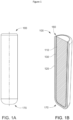
- a bolus (100) is configured to reduce or eliminate release of one or more greenhouse gases ("GHGs") from a ruminant animal.
- GHGs greenhouse gases
- the bolus (100) may reduce or eliminate production of GHGs by the ruminant animal, and therefore reduce the gases which are released by the animal.
- the bolus (100) may improve animal production by preventing the conversion of feed into one or more GHGs from a ruminant animal.
- the bolus (100) includes a core (110) and a housing (120).
- the bolus (100) also includes a barrier layer (130).
- the barrier layer (130) is configured to separate the core (110) from the housing (120).
- the housing (120) is generally cylindrical and has an open end indicated generally as (60), and a rounded, closed end (170).
- the open end (160) can allow fluids in the ruminant animal's rumen to contact the core (110).
- the core (110) includes at least one inhibiting agent, which can be optionally mixed with a suitable carrier(s).
- suitable carrier(s) include PEG4000, PEG400, natural and synthetic waxes, fatty acids, fatty alcohols, fatty amines, phospholipids-lecithin, and adsorbents, and combinations thereof.
- Suitable waxes include beeswax, paraffin, castor wax, Carnauba wax, Candellila wax, Jojoba wax, and Lanolin.
- minerals such as zeolite, bentonite, kaolin, activated carbon or a combination thereof may also be suitably mixed with the inhibiting agent. It is also possible to include other compounds such a zinc (i.e. in powdered form) or zinc oxide.
- the core (110) may include a concentrated (substantially pure) form of the inhibiting agent.
- the inhibiting agent is a methane inhibiting agent.
- methane inhibiting agent particularly preferred forms include haloforms e.g. halomethanes such as bromoform (CHBr 3 ) - as is discussed in more detail below.
- the carrier used in the present invention is a natural waxy substance, with a preferred melting point between 50-90°C, or more preferably 60-80°C,
- a particularly preferred carrier is a mixture containing castor wax with one or more of paraffin wax, beeswax, and carnauba wax. Further preferred, the carrier is a mixture containing castor wax and paraffin wax.
- the ratio of carrier to inhibiting agent may be chosen to optimise the function of the bolus (100) e.g. to suit the desired release profile for the inhibiting agent(s).
- the core (comprising both the carrier and inhibiting agent(s)) preferably has a melting point of at least 45°C. Having this minimum melting point will assist with ensuring that the core (110) does not melt when the bolus (100) has been administered to the ruminant animal. In addition, it will assist to ensure that the bolus (100) is unlikely to melt on inadvertent exposure to elevated temperatures e.g. those temperatures that could reasonably be experienced during transport and/or storage.
- the range of melting points for the core (110) may be adapted by varying the ratio of inhibiting agent(s) to carrier forming the core (110).
- a preferred ratio of inhibiting agent to carrier may include substantially 80:20 w/w% to substantially 50:50 w/w%, or preferably substantially 70:30 w/w% to substantially 60:40 w/w %, or more preferably substantially 66:33 w/w%.
- the inhibiting agent is one or more methane inhibiting compounds.
- Suitable methane inhibitors include haloforms such as bromoform, chloroform, iodoform and combinations thereof. It is envisioned that any methane inhibitor that is suitable for internal administration to a ruminant animal may be used with the present invention.
- bromoform is a particularly well suited for use in a bolus (100) according to the present invention. Accordingly, reference herein will be made to the inhibiting agent(s) as bromoform. However, this should not be seen as limiting on the scope of the present invention as alternatives are also envisaged as being within the scope of the present invention.
- Bromoform is reactive and has a short half-life in animals (0.8 hrs in rats, 1.2 hours in mice, US Dept of Health, 2003). It is a liquid at room temperature and is denser than water. Previous trials demonstrated no residues in meat and tissue from slaughtered steers, after 48 hour with holding period ( Kinley et al. Mitigating the carbon footprint and improving productivity of ruminant livestock agriculture using a red seaweed, Journal of Cleaner Production 259 (2020) 120836 ), and no significant increase in the level in milk ( Roque et al. Inclusion of Asparagopsis armata in lactating dairy cows' diet reduces enteric methane emission by over 50 percent; Journal of Cleaner Production 234 (2019) 132-138 ).
- Bromoform has a relatively high efficacy e.g. effect per administered dose. This enables sufficient quantities to be provided in a core (110) to manufacture a bolus (100) which can deliver controlled release of the inhibiting agent over an extended term.
- bromoform also has a relatively high density. This can assist with achieving a higher retention of the bolus (100) in the rumen, as the density of the bolus can be optimised to promote the bolus (100) sinking to the ventral part of the rumen, rather than floating.
- bromoform is administered to animals. These include the volatility of the substance, and its ability to dissolve substances which could be used for its delivery. Furthermore, achieving a precise (and relatively low) dose rate over a period of time is a challenge.
- the housing (120) includes a cavity (not numbered in the Figures) which is sized and dimensioned to receive the core (110).
- the housing (120) forms the external structure of the bolus (100).
- the housing (120) is configured to provide structural integrity for the bolus (100) but yet is also adapted to degrade over time. Degradation of the housing (120) can facilitate release of the inhibiting agent over the predetermined period of time.
- the housing (120) is preferably non-toxic and resists erosion in the rumen of the ruminant for a sufficient period of time to facilitate release of inhibiting agent from the core (110) at the desired rate. It should be appreciated by the person skilled in the art that the dissolution rate of the housing (120) and the core (110) can be configured to allow the controlled release of the inhibiting agent in the ruminant animal's rumen.
- the housing (120) is composed of a biodegradable, non-absorbent material, or a material which is otherwise compatible with waste disposal in slaughter facilities. It should be appreciated that any material that is suitable for internal administration to a ruminant animal with the desired dissolution rates can be used with the present invention.
- the housing (120) is preferably selected from a biodegradable material, particularly preferred biodegradable materials include polymers such as polylactic acid (PLA), polyglycolic acid (PGA), polylactic glycolic acid (PLGA), polypropylene, SLA polymer. PBS and combinations thereof.
- the housing (120) is made of a material comprising PLA and PBAT.
- the housing (120) is composed of PLA.
- PLA is available in three forms, D-, L- and a racemic mixture of both D and L. All three types of PLA may be used in the housing (120) of the present invention.
- PLA is preferred as it degrades into lactic acid and is commonly used as medical implants. Depending on the type of PLA used, PLA breaks down inside the body within six months to two years.
- further fillers, binders, surfactants, active agents and/or absorbents may be included in the bolus of the present invention.
- the bolus (100) has a substantially cylindrical form.
- the housing (120) includes a smooth external surface to assist with ingestion of the bolus (100) by the ruminant, animal.
- the size, thickness and/or dimensions of the bolus (100), including the core (110), barrier layer (130) if provided, and the housing (120) can be adjusted depending on the dose of inhibiting agent to be delivered to the ruminant, without departing from the spirit and scope of the invention.
- a smaller size bolus (100) can be adapted for use in smaller ruminant animals such as sheep or goats, while a larger sized bolus (100) can be used in larger ruminant animals such as cattle.
- a bolus for a large animal, such as cattle may have the dimensions of 13cm length, 3.4cm diameter and 257gm in weight (Throughout the application "gm" refers to gram).
- a bolus for a relatively small animal such as a sheep, may have the dimensions of 8.5cm length, 2cm diameter and 60gms in weight.
- a smaller bolus may be administered to a relatively larger ruminant animal, such as cattle; such a relatively smaller bolus may have the dimensions of 3.4-3.8cm length and 2.6-3.0cm diameter.
- the bolus and the delayed dosage form of the invention has a length of at least 5 cm and most preferably a length of at least 10 cm, preferably 10.3 cm. In preferred embodiments, the bolus and the delayed dosage form of the invention has a diameter of at least 2 cm, preferably 3.4 cm and a length of at least 10 cm, preferably 10.3 cm. Preferably, the bolus and the delayed dosage form of the invention has a weight of at between 100 and 300 grams.
- the housing (120) may also be configured to control the release rates of the core (110) and/or degradation of the bolus (100).
- the internal cross-sectional area of the cavity may be adapted to control the amount of the core (110) present in the bolus (100).
- the internal volume of the cavity may be adapted to increase in size from the open end (160) to the closed end (170). This may be useful for increasing the amount of inhibiting agent(s) over time. This may account for animal growth where feed intake of the animal increases.
- the cross-sectional thickness of the wall(s) forming the housing (120) may increase along the length of the housing (120).
- the wall(s) may be a thicker at one end of the housing (120) than the other.
- the thickness of the wall at the open end (160) may be thinner in size than towards closed end (170). This can assist with providing controlled dissolution of the core formulation from the bolus.
- the barrier layer (130) is an optional component of the bolus (100) of the present invention and may be included to provide additional stability to the bolus (100).
- the barrier layer (130) can be configured to partially or completely prevent contact between the core (110) and the housing (120).
- the barrier layer (130) is preferably selected from a waxy material, epoxy or a silicon material.
- the barrier (130) layer may be selected dependent on the desired application and/or release profile. For example, where further control of the release rate of the inhibiting agent is desired, choosing a barrier layer (130) material, shape and configuration can facilitate obtaining the desired release profile.
- the bolus may comprise a core enclosed by a housing.
- the bolus may be about 13 cm in length and about 3,4cm in diameter with an approximate weight of 257gm.
- the housing may be made of PLA (3052D, 3001D, 3251D, L130, etc), e.g. by injection moulding, and have a thickness of 1mm.
- the matrix of the core may be made of a blend of castor wax and paraffin wax in a ratio of 50:50 (by weight). This matrix may contain bromoform as an inhibiting agent in a concentration of about 50% (by weight).
- the bolus (100) is delivered orally into the rumen of the ruminant animal to be treated, entering the rumen via the oesophagus.
- stomach fluids and other matter such as plant fibre mat
- the housing is substantially intact.
- the open end (160) allows stomach fluids and fibrous matter to come into contact with the core (110). In addition, it assists to control release of the core (110) therefrom to the rumen.
- the core (110) and the housing (120) are designed to facilitate release of the inhibiting agent over a period of time for which an animal is to be treated according to a method disclosed herein.
- the bolus (100) is adapted to release the inhibiting agent over a period of at least six months, preferably 12 months, and potentially up to two years.
- the release rates of the inhibiting agent may be calculated based on the weight of the ruminant animal to be treated and the type of inhibiting agent used.
- the desired release rates may vary from animal to animal.
- the desired release rates may be calculated on an amount of inhibiting agent/weight of animal.
- the desired release rates may also be calculated based on the amount of feed consumed by the animal.
- Particularly preferred release rates for bromoform include from approximately 0.1 - approximately 0.5 g/day, and more preferably approximately 0.2 g/day.
- a ruminant animal can be treated by multiple boluses (100) according to the present invention in order to achieve a preferred dosage of the inhibiting agent.
- This can allow a bolus (100) to be manufactured which has a concentration and total load of the inhibiting agent. Multiple of those bolus (100) can be administered to an animal concurrently or sequentially. This will allow the desired dosage to be provided to the animal. This can be particularly beneficial to allow the bolus (100) to be used with animals requiring different doses of inhibiting agent e.g. larger or smaller animals, or to compensate for natural growth over time.
- the bolus (100) is adapted to deliver a dose of inhibiting agent directly into the rumen of the animal.
- bromoform may be released at a rate at which it can effectively reduce or eliminate methane production during digestion. That will reduce the emission of greenhouse gases by the animal and therefore reduce the environmental impacts of agriculture.
- the bolus (100) may improve the ruminant's conversion of feed for animal production. For example, by reducing methane production during digestion, it is believed that this may lead to more efficient utilization of ingested feed, and result in improved growth and weight gain, or other production such as milk production.
- the compositions for the core and synergistic effects arising from the combination of carrier and inhibiting agent(s) may enable the provision of a slow-release, long term delivery device to improve animal productivity and / or reduce emission of greenhouse gases.
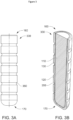
- FIG. 2A-2B shows an alternative embodiment of a bolus (200) according to an embodiment of the invention.
- a series of ribs (240) are provided along an external surface of the housing (120).
- the ribs (240) may provide additional structural strength to the bolus (200), and can assist to prevent it rupturing if the core (110) were to swell. Additionally, or alternatively, the (240) ribs may also assist the administration of the bolus (200) to the ruminant animal.
- the ribs (240) are provided as a series of concentric “hoops". However, the ribs (240) could be a series of parallel or non-parallel ribs (not illustrated) which extend along the length of the bolus (200)
- FIGS. 3A-3B show an alternative embodiment of a bolus (300) according to an embodiment of the invention.
- the bolus (300) includes additional features on the external surface of the housing (120), including depressions or grooves (350).
- the grooves (350) may promote portions of the housing (120) breaking away as it degrades. This can be used to further control the release profile for the inhibiting agent.
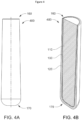
- FIGS. 4A-4B show an alternative embodiment of a bolus (400) according to an embodiment of the invention.
- the bolus (400) includes a housing (120) which has a cavity (not illustrated in the Figures) that is configured to receive and hold the core (110).
- the housing (120) tapers along its length. For instance, the distance between the external surfaces of distal sides of the housing (120) increases along the length of the bolus (400). For instance, as is indicated in Figure 4A , the width (X) is less than the width (Y).
- the bolus (400) may have side walls of substantially constant thickness, but which are structured and orientated to define a taper for the bolus (400).
- This configuration may allow for better controlled degradation of the core (110) and thereby provide additional control for release of the inhibiting agent.
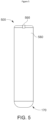
- FIG. 5A shows an alternative embodiment of a bolus (500) according to an embodiment of the invention.
- the bolus (500) includes a reservoir (580) adapted to hold a relatively concentrated form of the inhibiting agent e.g. bromoform in a substantially pure, liquid form.
- a reservoir (580) adapted to hold a relatively concentrated form of the inhibiting agent e.g. bromoform in a substantially pure, liquid form.
- the bolus (500) includes a dispensing mechanism which is configured to dispense predetermined dose(s) of the inhibiting agent from the reservoir (580).
- the dispensing mechanism is a pump (590) in communication with a valve. At predetermined times, the pump (590) dispenses a dose of the inhibiting agent via the valve (590), to release the inhibiting agent to the rumen to which the bolus (500) has been administered.
- the dispensing mechanism may be configured to release a consistent e.g. the same, amount of the inhibiting agent at defined intervals.
- the dispensing mechanism may be configured to vary the amount of inhibiting agent released at different times. This may be useful to enable the bolus (500) to provide an effective amount of inhibiting agent which accounts for growth of the animal. In addition, or alternatively, it may compensate for other factors changes e.g. seasonal variations in methane production which would necessitate a higher dose of inhibiting agent.
- the bolus (500) may include sensors (not shown).
- sensors may be included within the bolus (500).
- other sensors may also be included in the bolus, such as locomotion and pH. The addition of such sensors can provide valuable information on the feed intake of the animal and assess whether the amount of inhibiting agent is sufficient for the animal.
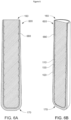
- FIGS. 6A and 6B show an alternative embodiment of a bolus (600) according to an embodiment of the invention.
- the bolus (600) can be adapted to include additional features within the cavity of the housing, such as grooves or ribs (680) formed on an inner wall of the housing (120) that defines the cavity.
- a series of ribs (680) are provided along an internal surface of the housing (120).
- the ribs (680) may provide additional structural strength to the bolus (600), and/or provide additional means to retain the contents of the core formulation within the cavity of the housing. Additionally, or alternatively, the (680) ribs may also assist with the retention of the core within the housing. Further, the ribs may also provide controlled dissolution of the core formation from the bolus (600) to the ruminant animal.
- the external surface of the housing will remain smooth or uniform.
- Figures 15A to 15D show a further embodiment of a bolus (700) according to an aspect of the present invention.
- Dimensions of the bolus in the Figure are provided in mm.
- the bolus has a length of 13 cm, a diameter of 3.4 cm and preferably a weight of about 250 gm.
- the bolus (700) can be adapted to include additional features with the internal reinforcing structure on the housing.
- the bolus (700) includes at least one reinforcing rib (710) located inside a cavity (unnumbered) defined by the housing structure.
- a cap (720) may also be provided e.g. releasably attached to the bolus (700) to close the open end of the bolus (700). Attachment may be provided by a friction fit arrangement, or a screw thread arrangement in which corresponding screw threads on the housing and cap engage each other. Alternatively, the cap may be attached to the housing by an adhesive or other mechanical fastener.
- the reinforcing rib(s) (720) may improve the structural integrity of the bolus (700) and assist it to hold its shape.
- FIG. 7 is a flow chart showing representative steps in a method of manufacturing (800) a bolus e.g. (100), (200), (300), (400), according to the present invention.
- the method includes the step (810) of forming the housing (120) and the step (820) forming a core (110).
- Forming the housing (120) may occur using any technique as should be known to one skilled in the art. For instance, a suitable material may be extruded into a desired shape defining a cavity. Alternatively, an additive layering manufacturing process could also be used to build the housing shape defining a cavity. It is also envisaged that a moulding process could be used e.g. a sacrificial moulding or injection moulding process, 3D printing or hot melt extrusion processes may be used.
- step 820 the core (110) is manufactured.
- Step 820 may include one or more of the following steps:
- Step 822 which involves melting a carrier material to provide a melted carrier material
- Step 824 which involves adding the inhibiting agent(s) to the melted carrier material
- Step 826- which involves mixing the inhibiting agent and the melted carrier material to create a substantially homogenous mixture.
- Step 828 which involves forming the substantially homogeneous mixture into a desired shape.
- the substantially homogenous mixture contains the inhibiting agent(s) at a concentration sufficient to achieve the desired release profile for the inhibiting agent on administration of the device to a ruminant animal.
- concentration can be varied according to the type of ruminant animal to be treated, the shape and dimensions of the device, or the desired release profile to be achieved.
- the step of forming the substantially homogeneous mixture into a desired shape may involve providing the mixture to a mould.
- the substantially homogenous mixture is added (poured) into a cavity in a housing (120) manufactured at step 810.
- the mould may be a separate component which receives the substantially homogenous mixture.
- the core can subsequently be provided to a cavity in a housing (120).
- the method also includes the step of allowing the substantially homogenous mixture to cool. As it cools, the carrier material hardens and assumes a shape according to the shape of the mould or housing into which it has been provided.
- a reinforced bolus as shown in Figure 15 was used for this study. It includes an internal reinforcing structure as well as ribs spread apart to support the wall, an upper part was adapted for the attaching a cap.
- the bolus with reinforcing was found to be more robust and held its shape better than without reinforcing when the molten bromoform/beeswax mixture was poured in and cooled, as well as a more physically robust bolus for the trial.
- Bromoform (reagent grade, Sigma Aldrich, 96% bromoform, 4% ethanol), beeswax (food grade, NZ Beeswax, MP 65 0 C) and zinc oxide from Native Ingredients NZ.
- the boluses were drawn in Solidworks, converted to .stl files, opened in FlashPrint to create the print jobs.
- the boluses were printed in three parts (case, internal structure and cap) on FlashForge Creator Pro 3D printers using E-Sun PLA+ at 100% fill, standard resolution, first layer height 0.27 mm, layer height 0.18 mm, 2 perimeter shells, 3 top solid layers, 3 bottom solid layers, fill pattern hexagon, print speed 60 mm/s, extruder temperature 200°C and plate temperature 50°C.
- the boluses were placed in 500 ml polypropylene bottles with approximately 380 ml 0.02M phosphate buffer (Merck) in distilled water, prepared in 2L or greater batches, adjusted to pH 6.5 using 1M HCl (Merck) and a pre-calibrated pH meter (using pH 4, 7, and 10 pH buffers).
- the bottles were sealed and placed in the incubator at 40°C. 10 ml samples were collected and the entire solution changed every 24 hours.
- GC-FID analysis 0.5 ml of ethyl acetate was recovered.
- 200 ul of sample was injected using an autosampler, and analysed using a ZB5HT 30 m capillary column using a temperature ramp of 30-300°C over 20 minutes, at 5 ml/min nitrogen gas flow, in splitless mode.
- Bromoform had a retention time of 7.5 minutes. Peak areas were compared to calibration standards made up in ethylene acetate to determine the mass of bromoform (mg). This was divided by the volume injected to obtain the concentration of bromoform in the ethyl acetate (mg/L).
- the concentration in ethyl acetate was multiplied by the total volume of ethyl acetate added to the sample and divided by the recovery to obtain mass of bromoform in the sample. This was then divided by the volume of sample collected to obtain a concentration in the solution, which was then multiplied by the volume of solution in the Shott bottle to obtain mass transferred from the bolus to the solution.
- Bromoform recovery from solution was checked using standard solutions made up to different concentrations of bromoform and was typically 43%.
- GC-FID performance was checked for each run of ten samples using a calibration sample as a reference.
- the rate of diffusion was higher for the 75% bolus at 1010 mg/day when compared to 66.7% which was 730 mg/day. This was a surprising, but also good result (as it means that a single bolus could be used to dose 700 kg bulls and achieve methane reduction), as the predicted diffusion rates for an LCB 1 bolus for 67% bromoform was 300 mg/day and 462 mg/day for an LCB 1 bolus with 75% bromoform.
- the expectation for the LRB boluses was a lower diffusion rate because it had a reduced surface area at 1 mm thick (about 71% that of a LCB 1 bolus) (Table 2).
- the LRB bolus should only be delivering 220 mg/day for 67% bromoform and 344 mg/day for 75%.
- Table 2. Expected diffusion rate for an LRB bolus from the different parts of the bolus. Expected rates Exposed wax Total Contribution (%) (mg/cm2/day) (mg/cm2/day) (mg/day) Bits of the bolus Quantity Length Width Diameter Area Thickness 0.67 0.75 0.67 0.75 0.67 0.75 0.67 0.75 (cm) (cm) (cm2) (mm) Cap 1 1.7 3.4 27.2 2 0.357 0.49 85 116.2 9.7 13.3 4.4 3.9 Ribs 4 0.3 3.4 12.8 3 0.082 0.086 85 116.2 1.1 1.1 0.5 0.3 Active diffusion area 3 3 3.4 96.1 1 1.939 3.042 85 116.2 186.4 292.4 84.3 84.9 Eye 1 3 1.2 3.6 3 0.082 0.086 85 116.2 0.3 0.3 0.1
- the rate of diffusion for LRB boluses was 1010 mg/day for the 75% bolus, and 730 mg/day for the 66.7% bolus which was higher than predicted from the previous diffusion studies.
- the concentration of bromoform in the media for the 75% bolus is close to the solubility limit of bromoform in water (3.2 g/L), therefore diffusion rates may be higher than measured in this study.
- Bromoform (reagent grade, Sigma Aldrich, 96% bromoform, 4% ethanol), ruminal fluid (Dairy NZ Trial), paraffin waxes (MPs 46-48, 55 and 65°C, Sigma Aldrich), castor wax (Lotus Oils), carnauba wax (PureNature NZ), zinc oxide (PureNature NZ).
- the rumen fluid collected from Dairy NZ was thawed and centrifuged before analysing for pH and buffer capacity. A volume of 10 ml of Rumen fluid received from each cow was taken and titrated against 0.05 N NaOH with continuous pH monitoring. Volume of NaOH to change the pH by a unit was recorded.
- Paraffin waxes, beeswax, carnauba wax and castor wax were mixed with bromoform to 33%, 50%, 67% and 75% by weight bromoform.
- the mixes were placed in the following:
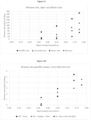
- Paraffin wax had the highest release rate at 190 mg/cm2/day, followed by beeswax, carnauba and castor wax ( Figure 12 ). Carnauba and castor wax seem better options for the carrier as the release rate is 50 to 40% less compared to beeswax.
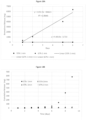
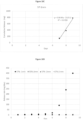
- Bromoform had the greatest release rate in boluses made with paraffin waxes at 3.5 to 5.4 mg/cm2/day in the 2 mm thick small capped boluses ( Figures 13A-C ).
- Boluses made with carnauba wax had release rates up to 5.5 mg/cm2/day in the 1 mm thick bolus and 1.66 mg/cm2/day in the 3 mm thick bolus.
- the bromoform had dissolved the castor wax and it had diffused through the bolus and pooled on the bottom of the container, dissolving the container, and no release rates were able to be determined as bromoform was not detected in the water for the samples that had been collected.
- the trials with castor wax can be repeated in glass bottles.
- the heifers were transported from research farm to a testing centre for diet adaptation and gas measurements using respiration chambers.
- the heifers were adapted to the environment of the cattle yards and the fresh cut pasture for 7 days before receiving their allocated treatment bolus. Gas measurements started 13 days after the boluses were administrated.
- Each heifer was in the respiration chambers for 48 hours during the period of gas measurements, which took two weeks for four measurement groups. At the end of the measurements in respiration chambers, the animals were transported back to research farm.
- the three versions of boluses were made within the first 10 days of the experiment.
- the first version was a short bolus which was regurgitated by all animals within the 5 days after the boluses were administered. Because the control boluses were longer than the treatment boluses and these had not been regurgitated during the first 3 days, it was assumed that the bolus size was the major factor for regurgitation. All first-version treatment boluses were replaced with second-version boluses on day 5 after administration. However, the longer boluses of the second version were also regurgitated. Therefore, these boluses were then replaced with a third version treatment bolus, which was a significantly heavier bolus of the same size as the second version bolus.
- the heifers were fed cut ryegrass-based pasture offered ad libitum.
- the forage was harvested daily at approximately 10:00 at research farm and transported to the testing centre.
- the harvested forage was divided into two allocations, the first allocation was fed in the afternoon at 15:30 and the second allocation was stored at 4°C until the next morning feeding at 08:30.
- Samples were collected from each pasture delivery for dry matter determination and feed analysis. Dry matter (DM) was determined from triplicate subsamples by oven drying at 105°C for 24 h. A separate subsample was oven dried at 65°C for 48 h for chemical nutrient analyses. Both drying ovens used were forced-air ovens (Avantgarde FED 720, Binder GmbH, Germany).
- Fermentation gases methane (CH 4 ), carbon dioxide (CO 2 ) and hydrogen (H 2 ) were quantified in four open-circuit respiration chambers at the New Zealand Ruminant Methane Measurement Centre (AgResearch, Palmerston North, New Zealand). Each chamber is 15.4 m 3 (3.5 m long ⁇ 2 m wide ⁇ 2.2 m high) with an air flow rate of around 1.0 m 3 /min, which was continuously monitored by measuring differential pressure using a Venturi flowmeter. Temperature inside respiration chambers was approximately 20°C and the relative humidity was on average approximately 79%.
- Liveweight analyses included treatment as a fixed effect and time as a repeated measurement, with heifer as a subject for the repeated measurements. Only initial and final liveweight were included in this analysis.
- Table 7 Dry matter intake (DMI) methane (CH4) and hydrogen (H2) emissions measured in respiration chambers over two days in heifers dosed boluses releasing no bromoform (CONTROL) , 300 mg / d (LO W) or 450 mg / d (HIGH) of bromoform CONTROL LOW HIGH SED p-value DMI [kg/d] 5.20 4.9B 4.50 0.79 0.420 GH 4 [g/d] 120.25 a 0.34 b 0.77 b 2.74 ⁇ 0.01 CH 4 [g/kg DMI] 23.32 a 0.14 b 0.11 b 0.33 ⁇ 0.01 H 2 [g/d] 0.15 b 20.60 a 20.08 a 3.46 ⁇ 0.01
- the invention may also be said broadly to consist in the parts, elements and features referred to or indicated in the specification of the application, individually or collectively, in any or all combinations of two or more of said parts, elements or features.
- PLA (3052D), PBS (supplier Convex) and PBAT (supplier Convex) were freeze dried in aluminium foil trays using a Labcono freeze drier before use to reduce water content in the blends.
- Blends of PLA (3052D), PBS, PBAT were made by mixing the pellets in the following ratios: Table 8 : Formulations of blends made (% by weight) PLA PBS PBAT 1 100 2 70 30 3 40 60 4 20 80 5 70 30 6 40 60 7 20 80
- Blends were prepared by melt blending in a LabTech corotating twin screw extruder (LID 44:1) with a screw speed of 200 rpm. Temperature profile increased over 11 barrel heating sections, from 70°C at the feed throat to 220°C along the main barrel, and increasing to 230°C at the die. Blends were granulated using a triblade granulator with a 4 mm plate (Castin Machinery. NZ). The blends were stored in aluminium foil trays and bagged in zip lock bags before use. All blends oven dried overnight at 40°C before injection moulding.
- Tensile bars (ASTM D368) and impact bars (ISO 179) were produced in a BOY 35A injection moulding machine, with a temperature profile of 70 to 220°C from feed to nozzle. Mould temperature was kept constant at 50 °C. Lanolin was used as a mould release agent and was sprayed into the mould prior to each tensile bar being produced.
- Shrinkage from injection moulding was determined by measuring the width and thickness of the tensile specimens, subtracting this from the mould width and depth, and dividing by the mould width and depth and multiplying by 100 to obtain a percentage.
- Tensile bars were cut into ⁇ 2 cm lengths using a bandsaw and the edges sanded using 500 grit sandpaper until smooth.
- 120 cm diameter flat bottom glass petri dishes were filled with beeswax/bromoform mixtures at the following bromoform concentrations: 33, 50, 67, 75% by weight.
- Three samples of each PLA blend were labelled, weighed in a 4dp electronic balance, and thickness, length and width measured using digital calipers.
- Samples were also tested for hardness using the Shore D hardness tester at a 7kg weight, and structural properties using the XRD.
- Bromoform absorption was determined by measuring the total change in mass of the sample and dividing by the starting mass of the sample. Rate of absorption was determined by dividing the change in mass of the sample between measurements by the area of sample in contact with the bromoform/beeswax mixture and dividing by the change in time between measurements.
- Swelling was determined by measuring the change in volume of the sample and dividing by the original volume of the sample.
- Shrinkage for PLA was around 0.2% and increase to around 1-1.2% for increasing PBS and PBAT blends ( Figure 16 ).
- the average skilled person knows how to adjust for shrinkage to produce a bolus of a desired size and dimension. It should be appreciated that various sizes of the bolus are possible, and they are not critical for achieving a delayed release of the haloform in view of the teachings of the present patent application.
- Samples were also tested for hardness using the Shore D hardness tester at a 7kg weight, and structural properties using the XRD before and after exposure to the bromoform/beeswax mixtures.
- XRD data was exported to Excel, smoothed with a 10 point smooth, and baseline corrected between 5 and 60 2theta.
- Figure 17 shows hardness analysis of PLA blends before and after exposure to bromoform.
- PBS in the carrier, the mixture becomes less sensitive to bromoform exposure, which may facilitate shelf life.
- the boluses were drawn in Solidworks, converted to .stl files, opened in FlashPrint to create the print jobs.
- the boluses were printed in three parts (case, internal structure, and cap) on FlashForge Creator Pro 3D printers using E-Sun PLA+ at 100% fill, standard resolution, first layer height 0.27 mm, layer height 0.18 mm, 2 perimeter shells, 3 top solid layers, 3 bottom solid layers, fill pattern hexagon, print speed 60 mm/s, extruder temperature 200°C and plate temperature 50°C.
- the Bromoform released at a higher rate from the bolus with 67% (by weight) bromoform (1150 mg/day). Meanwhile, the release rate was slower from the bolus with 55% (by weight) bromoform loading with 9.5 mg/day ( Figure 18A ).
- the bolus comprises a housing and a core composed as defined below: Bolus dimensions 13cm length; 3.4cm diameter; 257gm weight Housing design Including a cap; wall thickness: 1 mm; Core matrix Blend of two or more waxes, e.g. Castor wax / Paraffin wax blend Bromoform concentration in the core 33% - 75% (by weight)
Landscapes
- Health & Medical Sciences (AREA)
- Chemical & Material Sciences (AREA)
- Life Sciences & Earth Sciences (AREA)
- Veterinary Medicine (AREA)
- Pharmacology & Pharmacy (AREA)
- Epidemiology (AREA)
- Medicinal Chemistry (AREA)
- Animal Behavior & Ethology (AREA)
- General Health & Medical Sciences (AREA)
- Public Health (AREA)
- Inorganic Chemistry (AREA)
- Nutrition Science (AREA)
- Physiology (AREA)
- Proteomics, Peptides & Aminoacids (AREA)
- Oil, Petroleum & Natural Gas (AREA)
- Botany (AREA)
- Zoology (AREA)
- Engineering & Computer Science (AREA)
- Bioinformatics & Cheminformatics (AREA)
- Medicinal Preparation (AREA)
- Acyclic And Carbocyclic Compounds In Medicinal Compositions (AREA)
Applications Claiming Priority (6)
| Application Number | Priority Date | Filing Date | Title |
|---|---|---|---|
| NZ20770786 | 2020-12-08 | ||
| NZ77078620 | 2020-12-08 | ||
| AU2021900932A AU2021900932A0 (en) | 2021-03-30 | Improvement to Methods and Devices for Animal Production | |
| AU2021221810A AU2021221810B2 (en) | 2020-12-08 | 2021-08-25 | Improvements to devices and methods for delivery of substances to animals |
| EP21835439.7A EP4037666B1 (de) | 2020-12-08 | 2021-12-07 | Verbesserungen an vorrichtungen und verfahren zur abgabe von substanzen an tiere |
| PCT/NZ2021/050216 WO2022124914A1 (en) | 2020-12-08 | 2021-12-07 | Improvements to devices and methods for delivery of substances to animals |
Related Parent Applications (1)
| Application Number | Title | Priority Date | Filing Date |
|---|---|---|---|
| EP21835439.7A Division EP4037666B1 (de) | 2020-12-08 | 2021-12-07 | Verbesserungen an vorrichtungen und verfahren zur abgabe von substanzen an tiere |
Publications (2)
| Publication Number | Publication Date |
|---|---|
| EP4477215A2 true EP4477215A2 (de) | 2024-12-18 |
| EP4477215A3 EP4477215A3 (de) | 2025-02-19 |
Family
ID=79170714
Family Applications (2)
| Application Number | Title | Priority Date | Filing Date |
|---|---|---|---|
| EP21835439.7A Active EP4037666B1 (de) | 2020-12-08 | 2021-12-07 | Verbesserungen an vorrichtungen und verfahren zur abgabe von substanzen an tiere |
| EP24171104.3A Pending EP4477215A3 (de) | 2020-12-08 | 2021-12-07 | Verbesserungen an vorrichtungen und verfahren zur abgabe von substanzen an tiere |
Family Applications Before (1)
| Application Number | Title | Priority Date | Filing Date |
|---|---|---|---|
| EP21835439.7A Active EP4037666B1 (de) | 2020-12-08 | 2021-12-07 | Verbesserungen an vorrichtungen und verfahren zur abgabe von substanzen an tiere |
Country Status (18)
| Country | Link |
|---|---|
| US (5) | US11529310B2 (de) |
| EP (2) | EP4037666B1 (de) |
| JP (1) | JP2023553202A (de) |
| AU (1) | AU2021396978A1 (de) |
| CA (1) | CA3201057A1 (de) |
| CL (2) | CL2023001621A1 (de) |
| DK (1) | DK4037666T3 (de) |
| FI (1) | FI4037666T3 (de) |
| HU (1) | HUE067496T2 (de) |
| LT (1) | LT4037666T (de) |
| MA (1) | MA59413B1 (de) |
| MD (1) | MD4037666T2 (de) |
| MX (1) | MX2023006678A (de) |
| PL (1) | PL4037666T3 (de) |
| PT (1) | PT4037666T (de) |
| SI (1) | SI4037666T1 (de) |
| WO (1) | WO2022124914A1 (de) |
| ZA (1) | ZA202403671B (de) |
Families Citing this family (15)
| Publication number | Priority date | Publication date | Assignee | Title |
|---|---|---|---|---|
| CA3201057A1 (en) | 2020-12-08 | 2022-06-16 | Mark Christopher LAY | Improvements to devices and methods for delivery of substances to animals |
| WO2022261086A1 (en) * | 2021-06-08 | 2022-12-15 | Alltech, Inc. | Iodoform compositions and methods thereof |
| EP4380553A4 (de) * | 2021-08-03 | 2025-06-25 | Rumin8 Pty Ltd | Stabilisierte zusammensetzungen |
| WO2024006531A1 (en) | 2022-07-01 | 2024-01-04 | Arkea Bio Corp. | Compositions and methods for reducing deleterious atmospheric gas emissions from flooded ecosystems |
| GB202210434D0 (en) * | 2022-07-15 | 2022-08-31 | Carus Animal Health Ltd | Agricultural compositions and methods |
| AU2023372349B2 (en) * | 2022-11-02 | 2025-07-03 | Ruminant Biotech Corp Limited | Devices and methods for delivering methane inhibiting compounds to animals |
| US20240261233A1 (en) | 2023-02-08 | 2024-08-08 | Rumin8 Pty Ltd | Compositions and methods for reducing greenhouse gas |
| AU2024217417A1 (en) * | 2023-02-08 | 2025-08-14 | Rumin8 Pty Ltd | Compositions and methods for reducing greenhouse gas |
| WO2025029158A1 (en) * | 2023-08-01 | 2025-02-06 | Ruminant Biotech Corp Limited | Improved bolus designs for administration to a ruminant animal and uses thereof |
| US12448600B2 (en) | 2023-08-24 | 2025-10-21 | Synergraze Inc. | Extraction of antimethanogenic compounds |
| US12281342B2 (en) | 2023-08-24 | 2025-04-22 | Synergraze Inc. | Extraction of antimethanogenic compounds |
| WO2025149987A1 (en) * | 2024-01-12 | 2025-07-17 | Loam Bio Pty Ltd | Long term delivery device for volatile haloforms to reduce enteric methane in ruminants |
| AT528167A1 (de) | 2024-03-15 | 2025-10-15 | Smaxtec Animal Care Gmbh | Sondenvorrichtung mit zumindest einer Reservoir-Einheit |
| WO2025220006A1 (en) | 2024-04-15 | 2025-10-23 | Bromine Compounds Ltd. | Stable solid compositions with high content of bromoform |
| WO2025230429A1 (en) * | 2024-05-01 | 2025-11-06 | Ruminant Biotech Corp Limited | Bolus dosage form |
Family Cites Families (348)
| Publication number | Priority date | Publication date | Assignee | Title |
|---|---|---|---|---|
| US3660562A (en) * | 1970-06-24 | 1972-05-02 | Smith Kline French Lab | Method and compositions for improving feed efficiency of ruminants |
| ZA722664B (en) | 1971-05-18 | 1973-01-31 | Smith Kline French Lab | Lyered bolus for animal husbandry providing for immediate and sustained release of medicament |
| GB1445560A (en) | 1972-09-14 | 1976-08-11 | Ici Ltd | Animal feeds and additives therefor |
| DE2540509C2 (de) | 1975-09-11 | 1985-02-14 | Hoechst Ag, 6230 Frankfurt | Verwendung von Salinomycin zur Verbesserung der Nährstoffverwertung und des Wachstums bei Wiederkäuern und Tierarten mit ähnlicher Verdauungsphysiologie |
| AU498884B2 (en) | 1976-08-11 | 1979-03-29 | Lussen, H | Magnet device for animals stomach |
| GB1596621A (en) | 1976-08-13 | 1981-08-26 | Wellcome Found | Anthelmintic ether combinations |
| AU7778281A (en) | 1977-05-25 | 1982-03-04 | Commonwealth Scientific And Industrial Research Organisation | Apparatus for administration of controlled-release- compositions to ruminants |
| AU520409B2 (en) | 1977-05-25 | 1982-01-28 | Commonwealth Scientific And Industrial Research Organisation | Controlled release composition |
| GB1601923A (en) | 1977-06-09 | 1981-11-04 | Beecham Group Ltd | Sustained release compositions |
| US4181709A (en) | 1977-09-02 | 1980-01-01 | Eastman Kodak Company | Rumen-stable pellets |
| US4177255A (en) | 1977-09-02 | 1979-12-04 | Eastman Kodak Company | Rumen-stable pellets |
| FR2401620A1 (fr) | 1977-09-02 | 1979-03-30 | Eastman Kodak Co | Granules indegradables dans la panse des ruminants |
| IN152178B (de) | 1978-05-08 | 1983-11-05 | Pfizer | |
| US4191741A (en) | 1978-09-22 | 1980-03-04 | Eli Lilly And Company | Removable drug implant |
| DK156375C (da) | 1978-11-07 | 1990-03-05 | Pfizer | Praeparater til oral administration til droevtyggere med langvarig medikamentafgivelse |
| EP0021758B1 (de) | 1979-06-27 | 1984-04-04 | Beecham Group Plc | Veterinärmedizinische Präparate für Wiederkäuer |
| AT367294B (de) | 1979-08-16 | 1982-06-25 | Ciba Geigy Ag | Verfahren zur herstellung eines veterinaermedizinischen depotpraeparats |
| NZ191509A (en) | 1979-09-07 | 1982-12-07 | T Quinlivan | Trace element composition for ruminant animals |
| AU534665B2 (en) | 1979-09-12 | 1984-02-09 | Eli Lilly And Company | Method |
| RO86519B (ro) | 1979-09-12 | 1985-03-31 | Eli Lilly And Company | Dispozitiv pentru rumegatoare |
| US4326522A (en) | 1980-06-09 | 1982-04-27 | Pitman-Moore, Inc. | Mesh-covered bolus |
| GB2077586A (en) | 1980-06-12 | 1981-12-23 | Standard Telephones Cables Ltd | Sustained-release device |
| AU555998B2 (en) | 1980-07-02 | 1986-10-16 | Commonwealth Scientific And Industrial Research Organisation | Controlled release compositions for administration of therapeutic agents to ruminants |
| NZ197543A (en) | 1980-07-02 | 1984-12-14 | Commw Scient Ind Res Org | Controlled release compositions for inclusion in intraruminal devices |
| US4381780A (en) | 1981-01-19 | 1983-05-03 | Research Corporation | Sustained release delivery system |
| NZ200714A (en) | 1981-06-24 | 1984-12-14 | May & Baker Ltd | Bolus comprising active material on bobbin for delivery to rumen |
| US4403989A (en) | 1981-09-14 | 1983-09-13 | Syntex (U.S.A.) Inc. | Injection device |
| US4416659A (en) | 1981-11-09 | 1983-11-22 | Eli Lilly And Company | Sustained release capsule for ruminants |
| AU558009B2 (en) | 1982-02-16 | 1987-01-15 | Commonwealth Scientific And Industrial Research Organisation | Gas diffusion controlled release device |
| NZ203102A (en) | 1982-02-23 | 1985-05-31 | Univ Leeds Ind Service Ltd | Water-soluble glass articles;use in treatment of ruminants |
| DE3311649C2 (de) | 1982-04-02 | 1994-08-11 | Nippon Soda Co | Futtermittelzusatz für Wiederkäuer |
| KR840000624A (ko) | 1982-06-02 | 1984-02-25 | 원본미기재 | 부식억제 페인트 조성물 |
| IE54171B1 (en) | 1982-06-22 | 1989-07-05 | Univ Glasgow | Device for introducing nutrients and/or therapeutic materials into ruminant animals |
| GB2124899A (en) | 1982-07-15 | 1984-02-29 | Standard Telephones Cables Ltd | Improved rumen bolus |
| AU559938B2 (en) | 1983-04-22 | 1987-03-26 | Commonwealth Scientific And Industrial Research Organisation | Magnesium or alloy hinged capsule for administration to ruminants |
| NZ207783A (en) | 1983-04-22 | 1986-06-11 | Commw Scient Ind Res Org | A hinged magnesium capsule for administration to ruminants |
| GB8311345D0 (en) | 1983-04-26 | 1983-06-02 | Dobson Park Ind | Oral administration of capsules to animals |
| DE3474095D1 (de) | 1983-05-26 | 1988-10-27 | Eastman Kodak Co | Rumen-stable pellets |
| US4564363A (en) | 1983-07-13 | 1986-01-14 | Smithkline Beckman Corporation | Delayed action assembly |
| GB2146531B (en) | 1983-09-15 | 1987-04-29 | Stc Plc | Controlled release system |
| GB8328916D0 (en) | 1983-10-28 | 1983-11-30 | Castex Prod | Pharmaceutical pellet |
| GB2150830B (en) | 1983-12-05 | 1987-08-19 | Alza Corp | Drug dispenser |
| AU3728185A (en) | 1984-01-06 | 1985-07-18 | Eli Lilly And Company | Drug dispensing device for ruminants |
| AU571922B2 (en) | 1984-01-26 | 1988-04-28 | Schering Agrochemicals Limited | Veterinary implants comprising melatonin and derivatives thereof |
| FR2560768A1 (fr) | 1984-03-07 | 1985-09-13 | Crb Virbac Sa | Dispositif a liberation programmee |
| US4624945A (en) | 1984-03-19 | 1986-11-25 | Alza Corporation | Dispensing system with means for increasing delivery of beneficial agent from the system |
| US4595583A (en) | 1984-03-19 | 1986-06-17 | Alza Corporation | Delivery system controlled administration of beneficial agent to ruminants |
| US4649042A (en) | 1984-05-31 | 1987-03-10 | Eli Lilly And Company | Rumen delivery device |
| ZA853927B (en) * | 1984-05-31 | 1986-12-30 | Lilly Co Eli | A rumen delivery device |
| NZ212100A (en) | 1984-06-02 | 1988-07-28 | Castex Prod | Rumen bolus; outer casing sheds in segments |
| AU588828B2 (en) | 1984-09-14 | 1989-09-28 | Commonwealth Scientific And Industrial Research Organisation | Controlled release capsule |
| NZ213400A (en) | 1984-09-14 | 1988-07-28 | Commw Scient Ind Res Org | Winged capsule for insertion into rumen; positive limit for wing opening |
| GB8423386D0 (en) | 1984-09-15 | 1984-10-17 | Standard Telephones Cables Ltd | Rumen bolus |
| GB8514666D0 (en) | 1985-06-11 | 1985-07-10 | Coopers Animal Health | Agent delivery systems |
| US4643731A (en) | 1985-08-16 | 1987-02-17 | Alza Corporation | Means for providing instant agent from agent dispensing system |
| ES8800043A1 (es) | 1985-08-16 | 1987-10-16 | Alza Corp | Un dispositivo distribuidor para descargar una formulacion de agente beneficioso a un entorno de uso |
| US4675174A (en) | 1985-08-16 | 1987-06-23 | Alza Corporation | Veterinary dispenser delivering beneficial agent by gas power generated in situ |
| US4704118A (en) | 1985-08-16 | 1987-11-03 | Alza Corporation | Ruminant dispensing device with thermo-activated memory |
| US4955881A (en) * | 1985-08-16 | 1990-09-11 | Alza Corporation | Ruminant dispensing device |
| US4753800A (en) | 1985-10-04 | 1988-06-28 | Warner-Lambert Company | Medicament adsorbates and their preparation |
| GB2182034A (en) | 1985-10-23 | 1987-05-07 | Stc Plc | Sintered glass |
| GB8602679D0 (en) | 1986-02-04 | 1986-03-12 | Castex Prod | Alloy |
| GB8603964D0 (en) | 1986-02-18 | 1986-03-26 | Cooper Animal Health Ltd | Compositions |
| DE3772415D1 (de) | 1986-03-10 | 1991-10-02 | American Cyanamid Co | Verfahren zur herstellung einer bolus-formulierung mit verzoegerter freisetzung. |
| EP0239039A3 (en) | 1986-03-24 | 1989-06-07 | Syntex (U.S.A.) Inc. | Intraruminal controlled release device |
| GB2189390B (en) | 1986-04-16 | 1989-12-28 | Stc Plc | Material dispenser, e.g. for use as rumen boluses |
| EP0243111A3 (de) | 1986-04-17 | 1989-06-07 | Castex Products Limited | Pressling für die Verabreichung an Wiederkäuer |
| US4723958A (en) | 1986-05-23 | 1988-02-09 | Merck & Co., Inc. | Pulsatile drug delivery system |
| AU591297B2 (en) | 1986-07-15 | 1989-11-30 | Pitman-Moore Australia Limited | Intra-ruminal depot |
| EP0253554A3 (de) | 1986-07-15 | 1988-07-20 | Pfizer Inc. | Arzneihaltige Fasern mit verzögerter Freisetzung |
| US4867980A (en) | 1986-10-10 | 1989-09-19 | Coopers Animal Health Australia Limited | Heavy density depot |
| FR2606597B1 (fr) | 1986-11-17 | 1989-01-27 | Rhone Poulenc Sante | Nouvelle composition pour l'alimentation des ruminants contenant une substance biologiquement active et sa preparation |
| GB8630876D0 (en) | 1986-12-24 | 1987-02-04 | Graham N B | Hydrogel-containing envelopes |
| US4892778A (en) | 1987-05-27 | 1990-01-09 | Alza Corporation | Juxtaposed laminated arrangement |
| US4792448A (en) | 1987-06-11 | 1988-12-20 | Pfizer Inc. | Generic zero order controlled drug delivery system |
| US4876093A (en) | 1987-07-02 | 1989-10-24 | Alza Corporation | Dispenser with dispersing member for delivering beneficial agent |
| AU2377288A (en) | 1987-11-27 | 1989-07-13 | Ici Australia Operations Proprietary Limited | Livestock treatment |
| US4872873A (en) | 1987-12-14 | 1989-10-10 | Merck & Co., Inc. | Controlled release bolus device |
| NZ222899A (en) | 1987-12-14 | 1990-04-26 | Coopers Animal Health | Rumen-retentive bolus carrier with wings which extend to a locked position |
| FR2624351B1 (fr) | 1987-12-15 | 1991-11-22 | Rhone Poulenc Sante | Compositions degradables par voie enzymatique utilisables pour l'enrobage d'additifs alimentaires destines aux ruminants |
| AU627444B2 (en) | 1988-01-29 | 1992-08-27 | Rhone-Poulenc Nutrition Animale | Rumen-stable pellets |
| GB8802099D0 (en) | 1988-01-30 | 1988-02-24 | Coopers Animal Health | Boluses |
| DE3803482A1 (de) | 1988-02-05 | 1989-08-17 | Lohmann Therapie Syst Lts | Schwimmfaehiges orales therapeutisches system |
| DE3807523A1 (de) | 1988-03-08 | 1989-09-28 | Boehringer Ingelheim Vetmed | Oral verabreichbares system zur kontrollierten freigabe von wirkstoffen |
| NZ228557A (en) | 1988-04-05 | 1990-11-27 | Kyowa Hakko Kogyo Kk | Coating agent for delaying the release of active agents to be administered per os to ruminants, and veterinary compositions |
| US5002772A (en) | 1988-05-31 | 1991-03-26 | Pfizer Inc. | Gastric retention system for controlled drug release |
| GB8815968D0 (en) | 1988-07-05 | 1988-08-10 | Pfizer Ltd | Veterinary devices |
| US5141810A (en) | 1988-10-04 | 1992-08-25 | Pfizer Inc. | Means for constraining a rumen drug delivery device in a rolled configuration |
| US5728088A (en) | 1988-12-13 | 1998-03-17 | Alza Corporation | Osmotic system for delivery of fluid-sensitive somatotropins to bovine animals |
| GB8829089D0 (en) | 1988-12-13 | 1989-01-25 | Coopers Animal Health | Intra ruminal device |
| NZ231758A (en) | 1988-12-22 | 1992-01-29 | Lilly Co Eli | Treating bloat and/or increasing milk yield using crystalline monensin |
| AU615599B2 (en) | 1988-12-22 | 1991-10-03 | Eli Lilly And Company | Methods |
| US4927639A (en) | 1989-02-02 | 1990-05-22 | Warner-Lambert Company | Modified release gemfibrozil composition |
| EP0385106B1 (de) | 1989-02-28 | 1994-03-23 | American Cyanamid Company | Bolus mit lang andauernder Wirkstoffabgabe, wirksam bei der Prophylaxe, Behandlung oder Bekämpfung des Befalls bei Wiederkäuern durch Fadenwürmer, Milben und Endo- und Ektoparasiten |
| NZ228322A (en) | 1989-03-14 | 1991-02-26 | Ancare Distributors | Treating bloat in ruminants by administering anionic surfactants |
| NZ228382A (en) | 1989-03-17 | 1992-08-26 | Carter Holt Harvey Plastic Pro | Drug administering coil-like device for insertion in body cavity of animal |
| US5026559A (en) | 1989-04-03 | 1991-06-25 | Kinaform Technology, Inc. | Sustained-release pharmaceutical preparation |
| JP2930408B2 (ja) | 1989-04-07 | 1999-08-03 | アルザ・コーポレーション | 密度要素及びその製造方法 |
| US5007790A (en) | 1989-04-11 | 1991-04-16 | Depomed Systems, Inc. | Sustained-release oral drug dosage form |
| GB8909046D0 (en) | 1989-04-21 | 1989-06-07 | Pilkington Controlled Release | Controlled delivery devices |
| GB8915002D0 (en) | 1989-05-16 | 1989-08-23 | Coopers Animal Health | Dispensing devices |
| FR2648020B1 (fr) | 1989-06-12 | 1992-03-13 | Rhone Poulenc Sante | Utilisation de compositions degradables par voie enzymatique pour l'enrobage d'additifs alimentaires destines aux ruminants |
| NZ234227A (en) | 1989-06-30 | 1991-08-27 | Smithkline Beecham Corp | Delayed release dosage form |
| GB8915716D0 (en) | 1989-07-08 | 1989-08-31 | Coopers Animal Health | Pharmaceutical compositions |
| US5021053A (en) | 1989-07-14 | 1991-06-04 | Alza Corporation | Oral osmotic device with hydrogel driving member |
| ATE129405T1 (de) | 1989-07-18 | 1995-11-15 | Alza Corp | Ionophore enthaltende abgabevorrichtung. |
| GB8917063D0 (en) | 1989-07-26 | 1989-09-13 | Pilkington Controlled Release | Composite bolus manufacture and use |
| JPH03163011A (ja) | 1989-08-31 | 1991-07-15 | Yamanouchi Pharmaceut Co Ltd | 胃内滞留デバイス |
| FR2653337B1 (fr) | 1989-10-23 | 1992-02-07 | Dow Corning Sa | Element a liberation prolongee et procede pour le fabriquer. |
| US5045082A (en) | 1990-01-10 | 1991-09-03 | Alza Corporation | Long-term delivery device including loading dose |
| CA2563972C (en) | 1990-01-24 | 2009-03-17 | Alza Corporation | Delivery system comprising means for controlling internal pressure |
| US5122128A (en) | 1990-03-15 | 1992-06-16 | Alza Corporation | Orifice insert for a ruminal bolus |
| US5178866A (en) | 1990-03-23 | 1993-01-12 | Alza Corporation | Dosage form for delivering drug to the intestine |
| AU650000B2 (en) | 1990-04-06 | 1994-06-09 | Instrument Supplies Limited | An applicator |
| NZ233368A (en) | 1990-04-19 | 1991-11-26 | William Leslie Porter | Capsule holder for drenching gun |
| US5091185A (en) | 1990-06-20 | 1992-02-25 | Monsanto Company | Coated veterinary implants |
| AU644462B2 (en) | 1990-06-29 | 1993-12-09 | Rhone-Poulenc Nutrition Animale | Process for polishing granulates of lysine |
| US5198222A (en) | 1990-08-31 | 1993-03-30 | Agribiotech, Inc. | Time release bolus |
| AU653961B2 (en) | 1990-10-15 | 1994-10-20 | Meiwa Sangyo Co., Ltd. | Method and apparatus for raising ruminants |
| GB9023270D0 (en) | 1990-10-25 | 1990-12-05 | Castex Prod | Magnesium manganese alloy |
| MX9200339A (es) | 1991-01-28 | 1992-08-01 | Hoechst Ag | Preparado para la liberacion controlada de sustancias activas, que son apropiadas como terapeuticos o para mejorar el crecimiento y el aprovechamiento de los piensos en rumiantes |
| AU708219B2 (en) | 1991-04-05 | 1999-07-29 | Eli Lilly And Company | Sustained release capsule and formulations |
| AU650113B2 (en) | 1991-04-05 | 1994-06-09 | Eli Lilly And Company | Sustained release capsule and formulations |
| AU734462B2 (en) | 1991-04-05 | 2001-06-14 | Eli Lilly And Company | Sustained release capsule and formulations |
| US5190775A (en) | 1991-05-29 | 1993-03-02 | Balchem Corporation | Encapsulated bioactive substances |
| US5227167A (en) | 1991-06-11 | 1993-07-13 | Alza Corporation | Long-term delivery device including hydrophobic loading dose |
| CA2115168C (en) | 1991-08-08 | 1998-08-18 | Frederick John Hart | Defaunation method |
| US5178867A (en) | 1991-08-19 | 1993-01-12 | Alza Corporation | Dosage form for delivering drug in short-time period |
| DK203491D0 (da) | 1991-09-09 | 1991-12-19 | Jens Wolstrup | Fremgangsmaade til selektion og isolation af mikro svampe til biologisk kontrol af parasitiske nematoder samt svampe isoleret ved fremgangsmaaden |
| US5240713A (en) | 1991-09-27 | 1993-08-31 | Alza Corporation | Dual rate agent delivery device |
| AU3739993A (en) | 1992-04-03 | 1993-11-08 | Daratech Pty Ltd | Intra-ruminal devices |
| US5518730A (en) | 1992-06-03 | 1996-05-21 | Fuisz Technologies Ltd. | Biodegradable controlled release flash flow melt-spun delivery system |
| US5352448A (en) | 1992-07-20 | 1994-10-04 | Purdue Research Foundatioin | Oral administration of antigens |
| NZ253999A (en) | 1992-08-05 | 1996-07-26 | Faulding F H & Co Ltd | Pelletised substained release medicament |
| AU682827B2 (en) | 1992-09-18 | 1997-10-23 | Astellas Pharma Inc. | Sustained-release hydrogel preparation |
| FR2695804B1 (fr) | 1992-09-18 | 1994-11-25 | Rhone Poulenc Nutrition Animal | Compositions nutritives ou médicamenteuses pour l'administration aux ruminants à base de chitosane. |
| NZ245076A (en) | 1992-10-07 | 1994-09-27 | William Leslie Porter | Animal feed supplement comprising an at least partly oxidised alloy of copper in combination with at least one other trace element |
| GB9306106D0 (en) | 1993-03-24 | 1993-05-12 | Norbrook Lab Ltd | Sustained release veterinary composition |
| NZ260514A (en) | 1993-05-12 | 1996-05-28 | John Douglas Frank Finlayson | Ingestable capsule for ruminant animal; capsule contains transponder and removable plug |
| AU687062B2 (en) | 1993-05-26 | 1998-02-19 | Commonwealth Scientific And Industrial Research Organisation | Controlled release antiparasitic compositions |
| AU666394B2 (en) | 1993-08-31 | 1996-02-08 | Barend Willem Hak | A method for the preparation of a veterinary remedy and processing of same |
| DK106293D0 (da) | 1993-09-22 | 1993-09-22 | Joergen Rasmussen | Kapsel til indbringning af laegemidler i kreaturmaver |
| DE69531773T2 (de) * | 1994-01-20 | 2004-07-15 | Agresearch Ltd. | Vorrichtung zur verabreichung von nützlichen stoffen an wiederkäuer |
| NZ278977A (en) | 1994-01-20 | 1997-03-24 | Pastoral Agric Res Inst Nz Ltd | Sustained release bolus for ruminants |
| ZA949350B (en) | 1994-01-25 | 1996-05-24 | Upjohn Co | Aqueous prolonged release formulation |
| AUPM430894A0 (en) | 1994-03-08 | 1994-03-31 | Eli Lilly And Company | A formulation and methods of treatment (1) |
| CA2186785A1 (en) | 1994-04-01 | 1995-10-12 | Yoichiro Nakai | Process for producing sustained-release tablets and enteric tablets |
| US5980508A (en) | 1994-06-22 | 1999-11-09 | Controlled Release Technologies Pty Ltd | Controlled release device and method |
| GB9413957D0 (en) | 1994-07-11 | 1994-08-31 | Castex Prod | Release devices |
| AU706697B2 (en) | 1994-11-04 | 1999-06-24 | Commonwealth Scientific And Industrial Research Organisation | A delivery system for antimethanogenic agents |
| AUPM922594A0 (en) | 1994-11-04 | 1994-11-24 | Commonwealth Scientific And Industrial Research Organisation | Reduction of methane production in animals |
| GB9423786D0 (en) | 1994-11-25 | 1995-01-11 | Porter William L | Bolus for supplying biologically beneficial substances to ruminant animals |
| NZ299436A (en) | 1994-11-25 | 1997-03-24 | William Leslie Porter | Bolus for supplying beneficial substances to animals including a pocket of eroding material carrying beneficial substances |
| US5985314A (en) | 1994-11-25 | 1999-11-16 | Porter; William Leslie | Bolus for supplying biologically beneficial substances to ruminant animals |
| IE80860B1 (en) | 1995-02-01 | 1999-04-21 | William Leslie Porter | Bolus for supplying biologically beneficial substances to ruminant animals |
| AUPN353695A0 (en) | 1995-06-14 | 1995-07-06 | Commonwealth Scientific And Industrial Research Organisation | Immunogenic preparation and method for improving the productivity of ruminant animals |
| US5922736A (en) | 1995-12-04 | 1999-07-13 | Celegene Corporation | Chronic, bolus administration of D-threo methylphenidate |
| CN1130222C (zh) | 1996-01-11 | 2003-12-10 | 法玛西雅厄普约翰美国公司 | 水性延长释放配剂 |
| AU713629C (en) | 1996-07-09 | 2007-03-01 | European Community, The | Ruminal bolus for electronic identification of a ruminant |
| US5972389A (en) | 1996-09-19 | 1999-10-26 | Depomed, Inc. | Gastric-retentive, oral drug dosage forms for the controlled-release of sparingly soluble drugs and insoluble matter |
| FR2754711B1 (fr) | 1996-10-21 | 1999-01-29 | Vandamme Thierry | Dispositif de liberation avec effet retard d'une substance active, notamment veterinaire |
| FR2756493B1 (fr) | 1996-12-02 | 2001-04-13 | Delab | Dispositif d'administration locale de formulations solides ou semi-solides |
| IL130270A0 (en) | 1996-12-06 | 2000-06-01 | American Cyanamid Co | Oral veterinary fluoroquinolone antibacterial composition for extended duration of therapy and method of treating |
| DE19800523C2 (de) | 1997-01-14 | 1999-01-21 | Lohmann Therapie Syst Lts | Expandierbares gastroretentives Therapie-System mit kontrollierter Wirkstofffreisetzung im Gastrointestinaltrakt |
| US5807594A (en) * | 1997-02-26 | 1998-09-15 | Ducoa, L.P. | Method for enhancing feed efficiency in ruminants with an encapsulating choline composition |
| GB9707264D0 (en) | 1997-04-10 | 1997-05-28 | Porter William L | Bolus for supplying biologically beneficial substances to ruminant animals |
| US6012415A (en) | 1997-04-18 | 2000-01-11 | Magtronic Id, Inc. | Bolus with animal ID and temperature transponder |
| WO1998047351A1 (en) | 1997-04-18 | 1998-10-29 | Avid Identification Syst Inc | Animal husbandry system |
| GB9711946D0 (en) | 1997-06-09 | 1997-08-06 | Castex Prod | Release devices |
| US5951538A (en) | 1997-08-07 | 1999-09-14 | Ceramatec, Inc. | Gas generating device for delivering beneficial agents to a body cavity |
| NZ332852A (en) | 1997-11-19 | 2000-10-27 | Eidson Associates Inc | Veterinary medicament delivery system in the form of a gun |
| WO1999029259A1 (en) | 1997-12-05 | 1999-06-17 | Dec Research | Improvements in and/or relating to delivery devices and their use |
| AU755686B2 (en) | 1997-12-05 | 2002-12-19 | Interag | Active delivery device with reduced passive delivery |
| AU760814B2 (en) | 1998-02-10 | 2003-05-22 | Australian Wool Innovation Limited | Fungal sulphur source and method of using the same |
| US6391331B1 (en) | 1998-02-27 | 2002-05-21 | Texas Tech University | Direct feeding of seaweed supplement to cattle and swine to enhance carcass quality |
| US6338856B1 (en) | 1998-02-27 | 2002-01-15 | Texas Tech University | Seaweed supplement diet for enhancing immune response in mammals and poultry |
| GB9911255D0 (en) * | 1999-05-15 | 1999-07-14 | Porter William L | Bolus for ruminant animals |
| ATE312601T1 (de) | 1999-05-27 | 2005-12-15 | Acusphere Inc | Poröse arzneistoffmatrizen und deren herstellungsverfahren |
| US6632451B2 (en) | 1999-06-04 | 2003-10-14 | Dexcel Pharma Technologies Ltd. | Delayed total release two pulse gastrointestinal drug delivery system |
| NZ337318A (en) | 1999-08-18 | 2002-07-26 | Interag | Dispensing apparatus for dispensing same or different materials for at least two reservoirs |
| AU781718B2 (en) | 1999-11-02 | 2005-06-09 | Depomed, Inc. | Pharmacological inducement of the fed mode for enhanced drug administration to the stomach |
| IL133196A0 (en) | 1999-11-29 | 2001-03-19 | Yissum Res Dev Co | Gastroretentive controlled release pharmaceutical dosage forms |
| US20020131988A1 (en) | 1999-12-16 | 2002-09-19 | Foster Todd P. | Pharmaceutical implant containing immediate-release and sustained-release components and method of administration |
| US6764472B1 (en) | 2000-01-11 | 2004-07-20 | Bard Access Systems, Inc. | Implantable refillable infusion device |
| US6290980B1 (en) | 2000-04-28 | 2001-09-18 | Solidose, Llc | Packaging and method for solid dose administration of medicaments |
| NZ504631A (en) | 2000-05-18 | 2002-02-01 | Agres Ltd | Gastro-intestinal sustained release bolus delivery system containing Duddingtonia flagrans |
| US6488962B1 (en) | 2000-06-20 | 2002-12-03 | Depomed, Inc. | Tablet shapes to enhance gastric retention of swellable controlled-release oral dosage forms |
| NZ538016A (en) | 2000-08-08 | 2006-08-31 | Interag | Multiple material dispensing with primary piston expressing bolus and secondary piston actuated by primary piston t express material from secondary reservoir |
| GB0023743D0 (en) | 2000-09-28 | 2000-11-08 | Porter William L | Wax bolus |
| GB0100297D0 (en) | 2001-01-05 | 2001-02-14 | Castex Prod | Zinc based alloy bolus for veterinary use |
| US20030008007A1 (en) | 2001-04-23 | 2003-01-09 | Jose Gutierrez-Rocca | Release pharmaceutical construct for gastric retention |
| AUPR602501A0 (en) | 2001-06-29 | 2001-07-26 | Smart Drug Systems Inc | Sustained release pharmaceutical composition |
| NZ514780A (en) | 2001-08-08 | 2003-08-29 | Eidson Associates Inc | Automatic veterinary medicament delivery system |
| AU2002315568B2 (en) | 2001-09-11 | 2008-04-24 | Virbac Corporation | Preparation of sustained release pharmaceutical composition |
| NZ530317A (en) | 2001-09-20 | 2005-10-28 | Ashmont Holdings Ltd | Intraruminal device |
| NZ514279A (en) | 2001-09-20 | 2004-02-27 | Ashmont Holdings Ltd | Intraruminal device for dispensing medication where device has arms that open to keep the device in the animal's rumen after a constraint device dissolves |
| AUPR839001A0 (en) | 2001-10-19 | 2001-11-15 | Eli Lilly And Company | Dosage form, device and methods of treatment |
| AU2004210544C1 (en) | 2001-10-19 | 2009-01-08 | Elanco Us Inc. | Dosage form, device and methods of treatment |
| US7612112B2 (en) | 2001-10-25 | 2009-11-03 | Depomed, Inc. | Methods of treatment using a gastric retained gabapentin dosage |
| US6723340B2 (en) | 2001-10-25 | 2004-04-20 | Depomed, Inc. | Optimal polymer mixtures for gastric retentive tablets |
| AU2002332990B2 (en) | 2001-10-26 | 2007-05-10 | John Kohnke | Dosage system & dosage vehicle therefor |
| CA2467102C (fr) | 2001-11-14 | 2012-07-10 | Larena | Un produit contenant un extrait d'algue rouge du genre porphyra et ses utilisations pour proteger les cellules |
| CO5400144A1 (es) | 2002-03-11 | 2004-05-31 | Novartis Ag | Compuestos organicos |
| DE60336128D1 (de) | 2002-05-20 | 2011-04-07 | Cedars Sinai Medical Ct Los Angeles | Its durch modulation der methankonzentration im darm |
| GB0216213D0 (en) | 2002-07-12 | 2002-08-21 | Castex Prod | Release devices for veterinary use |
| US7700127B2 (en) | 2002-08-01 | 2010-04-20 | The Regents Of The University Of California | Method and compositions for preparing and delivering rumen protected lipids, other nutrients and medicaments |
| DK1542543T3 (da) | 2002-09-23 | 2014-02-03 | Haas Inc John I | Humlesyrer som erstatning for antibiotika i dyrefoder |
| RU2334506C2 (ru) | 2003-01-29 | 2008-09-27 | И-Пилл Фарма Лтд. | Активная доставка лекарственного средства в желудочно-кишечном тракте |
| ES2253949B1 (es) | 2003-07-03 | 2007-07-16 | Rumitag, S.L. | Capsula para la identificacion electronica de rumiantes de cualquier edad y peso. |
| NZ529177A (en) | 2003-10-24 | 2005-12-23 | Agres Ltd | Administration process for a delivery device that releases the active agent over several days |
| GB2408453B (en) | 2003-11-25 | 2006-06-28 | Rumbol Products Ltd | A ruminant bolus |
| AU2003101051A4 (en) | 2003-12-24 | 2004-02-12 | Aleis Trakit Pty Ltd | A moveable EID reading apparatus |
| WO2005082270A1 (en) | 2004-02-26 | 2005-09-09 | Parnell Laboratories (Aust) Pty Limited | Bolus for ruminant animals |
| US8007827B2 (en) | 2004-04-02 | 2011-08-30 | Impax Laboratories, Inc. | Pharmaceutical dosage forms having immediate release and/or controlled release properties |
| CA2562081C (en) | 2004-04-06 | 2013-01-08 | Kansas State University Research Foundation | Method for encapsulation of orally ingested materials to alter the site of digestion, site of action, or stability |
| NZ554633A (en) | 2004-09-09 | 2008-11-28 | Argenta Mfg Ltd | Delivery devices and their uses |
| NZ535258A (en) | 2004-09-09 | 2007-08-31 | Argenta Mfg Ltd | Delivery devices and their uses |
| AU2013242835A1 (en) | 2004-09-09 | 2013-10-31 | Argenta Innovation Limited | Delivery Devices and their Uses |
| AU2011213734A1 (en) | 2004-09-09 | 2011-09-08 | Argenta Manufacturing Limited | Delivery Devices And Their Uses |
| NZ538813A (en) | 2005-03-14 | 2007-09-28 | Agres Ltd | Intra-ruminal bolus for the controlled release of a beneficial agent |
| GB2425259B (en) | 2005-04-12 | 2008-09-24 | Castex Prod | Controlled release devices and structural elements for use in their manufacture |
| NZ596143A (en) | 2005-09-09 | 2012-08-31 | Argenta Mfg Ltd | Delivery devices and their uses with first dose capsules in body accessible to rumen fluid via first outlet and second dose capsule(s) retained over firt outlet |
| NZ543314A (en) | 2005-10-28 | 2007-08-31 | Interag | A delivery system where the driving substance contains the active component |
| US7354870B2 (en) | 2005-11-14 | 2008-04-08 | National Research Council Of Canada | Process for chemical etching of parts fabricated by stereolithography |
| ES2333259T3 (es) | 2005-11-21 | 2010-02-18 | Bioatlantis Limited | Composiciones destinadas a mejorar la salud intestinal y el rendimiento en animales que comprenden beta-glucanos y alfa-fucanos. |
| US20080081071A1 (en) | 2006-09-29 | 2008-04-03 | Pradeep Sanghvi | Film Embedded Packaging and Method of Making Same |
| AU2014201152C1 (en) | 2006-12-21 | 2017-01-12 | Bayer New Zealand Limited | Tablet Formulation |
| DE102007026037A1 (de) | 2007-06-04 | 2008-12-11 | Lts Lohmann Therapie-Systeme Ag | Gastroretentives System mit Alginat-Körper |
| ES2625144T3 (es) | 2007-09-25 | 2017-07-18 | Pastoral Greenhouse Gas Research Ltd | Polinucleótidos y polipéptidos del fargo MRU y usos de éstos |
| ES2748136T3 (es) | 2007-10-15 | 2020-03-13 | United Animal Health Inc | Método para aumentar el rendimiento de las crías |
| US7966971B2 (en) | 2008-05-23 | 2011-06-28 | C-Lock Inc. | Method and system for monitoring and reducing ruminant methane production |
| FR2933191B1 (fr) | 2008-06-25 | 2010-06-25 | Valorisation Par Extrusion | Procede d'evaluation de la quantite de methane produite par un ruminant laitier et procede pour diminuer et controler cette quantite. |
| FR2933848B1 (fr) | 2008-07-18 | 2019-08-09 | Roquette Freres | Composition de fibres indigestibles solubles et d'organismes eucaryotes dotes d'une paroi polysaccharidique utilisees dans le domaine du bien etre |
| KR100937781B1 (ko) | 2008-09-18 | 2010-01-20 | 화성용 | 에나활성미네랄 a 활성수를 유효성분으로 함유하는 간손상 방지 또는 간기능 개선용 약학조성물 |
| US8308678B2 (en) | 2008-09-23 | 2012-11-13 | Mcneil-Ppc, Inc. | Pre-filled applicator device |
| NZ572035A (en) | 2008-10-15 | 2010-02-26 | Bomac Research Ltd | Wax bolus containing zinc particles of a defined particle size |
| NZ572736A (en) | 2008-11-11 | 2010-03-26 | Bomac Research Ltd | Improvements in delivery devices |
| NZ573143A (en) | 2008-11-25 | 2010-03-26 | Bomac Research Ltd | Improvements in delivery devices |
| NZ573142A (en) | 2008-11-25 | 2010-03-26 | Bomac Research Ltd | Improved bolus |
| GB0822295D0 (en) | 2008-12-08 | 2009-01-14 | Agrimin Ltd | Bolus and manufacturing process |
| NZ576414A (en) | 2009-04-21 | 2010-08-27 | Bomac Research Ltd | Bolus in form of plural dosage media connected by flexible material |
| ES2899499T3 (es) | 2009-05-21 | 2022-03-11 | Bioatlantis Ltd | Mejora de la salud, la inmunidad y el rendimiento gastrointestinal mediante intervención alimentaria |
| WO2011006269A1 (fr) | 2009-07-13 | 2011-01-20 | Pancosma Societe Anonyme Pour L'industrie Des Produits Biochimiques | Additif alimentaire contenant de l 'eugénol, du cinnamaldéhyde et un extrait d'alliacée |
| UY32802A (es) | 2009-07-23 | 2011-01-31 | Provimi Holding B V | Composiciones para reducir la metanogénesis gastrointestinal en rumiantes |
| AU2016200312A1 (en) | 2009-07-31 | 2016-02-11 | Merial, Inc. | Sustained release capsules |
| US8734430B2 (en) | 2009-07-31 | 2014-05-27 | Merial Limited | Sustained release capsules |
| US8828970B2 (en) | 2009-08-27 | 2014-09-09 | Georgia-Pacific Wood Products Llc | Methods of making and using a ruminant gas reduction composition |
| WO2011033509A1 (en) | 2009-09-18 | 2011-03-24 | Medingo Ltd. | Devices, systems and methods for quantifying bolus doses according to user parameters |
| EP2314154A1 (de) | 2009-10-26 | 2011-04-27 | Nederlandse Organisatie voor toegepast -natuurwetenschappelijk onderzoek TNO | Bolussystem |
| NZ600516A (en) | 2009-12-11 | 2014-01-31 | Dsm Ip Assets Bv | Nitrooxy alkanoic acids and derivatives thereof in feed for reducing methane emission in ruminants, and/or to improve ruminant performance |
| CN102753034A (zh) | 2010-02-15 | 2012-10-24 | 全技术公司 | 反刍动物饮食补充组合物及其制造和使用方法 |
| BR112012026452B1 (pt) | 2010-04-16 | 2020-08-25 | C-Lock Inc. | método para gerenciar e aparelho para monitorar emissões de metano de um ruminante |
| NL1037947C2 (nl) | 2010-05-07 | 2011-11-08 | Lely Patent Nv | Werkwijze en inrichting voor het bepalen van door een herkauwer, in het bijzonder een melkdier uitgestoten broeikasgas, in het bijzonder methaan. |
| US8586025B2 (en) | 2010-05-18 | 2013-11-19 | Able Corporation | Method of inhibiting methanogenesis |
| NZ594862A (en) | 2010-06-10 | 2011-11-25 | Merial Ltd | Sustained release capsule with piston having hollow sleeve on back of piston for guiding spring |
| NZ578771A (en) | 2010-06-10 | 2011-10-28 | Merial Ltd | Sustained release capsules with overcap rupturable first to allow dose dump before further dose delivered by spring biased piston |
| FR2961907B1 (fr) | 2010-06-29 | 2012-07-27 | Valorex Sa | Procede d'evaluation de la quantite de methane produite par un ruminant dit "a viande" |
| NZ708284A (en) | 2010-10-19 | 2015-10-30 | Bella Technologies Llc | Animal monitoring system |
| FR2966603B1 (fr) | 2010-10-21 | 2012-11-16 | Valorex Sa | Procede d'evaluation de la quantite de methane produite par un ruminant laitier |
| JP5984189B2 (ja) | 2010-12-20 | 2016-09-06 | ディーエスエム アイピー アセッツ ビー.ブイ. | 反芻動物のメタン排出低減および/または反芻動物の生産性向上のための飼料中でのニトロオキシ有機分子の使用 |
| NZ573656A (en) | 2011-02-07 | 2012-06-29 | Bayer New Zealand Ltd | Stomach held bolus string for animal dosing |
| US8453601B2 (en) | 2011-05-19 | 2013-06-04 | C-Lock Inc. | Vaccine and health-related applications for ruminant breath monitoring system |
| CA2835743C (en) | 2011-05-26 | 2019-07-09 | Dsm Ip Assets B.V. | Use of a feed composition for reducing methane emission in ruminants, and/or to improve ruminant performance |
| NZ593497A (en) | 2011-06-16 | 2013-01-25 | Kahne Ltd | Animal digestion monitoring system with bolus having a transmitter and designed to be retained in the dorsal sac of the rumen |
| WO2013003892A1 (en) | 2011-07-01 | 2013-01-10 | Commonwealth Scientific And Industrial Research Organisation | System, method and device for measuring a gas in the stomach of a mammal |
| JP2014529630A (ja) | 2011-09-07 | 2014-11-13 | ザウラー−ブロシュ、ローラント | 哺乳類の消化管における一つあるいは複数の物質の放出制御製剤 |
| US20130136827A1 (en) | 2011-11-28 | 2013-05-30 | James S. Drouillard | Method and Composition for Increasing The Proportion of Dietary Ingredients That Are Resistant To Degradation by Ruminal Microorganisms |
| EP2644038A1 (de) | 2012-03-26 | 2013-10-02 | DSM IP Assets B.V. | Verwendung von Paranitro-Amino-Derivaten bei der Zufuhr zur Reduktion der Methanemission bei Wiederkäuern |
| EP2653039A1 (de) | 2012-04-19 | 2013-10-23 | Interquim, S.A. | Futterzusammensetzung zur Verringerung von Methanogenese bei Wiederkäuern |
| FI124101B (en) | 2012-05-14 | 2014-03-14 | Hankkija Maatalous Oy | Modified tall oil fatty acid |
| EP2724670B1 (de) | 2012-10-26 | 2015-06-17 | Pekka Kankfelt | Erkennung veränderter pH-Werte von Pansen |
| US8747916B1 (en) | 2012-10-30 | 2014-06-10 | Donald M. Smith | Selecting, producing, and feeding whole algae as a feed supplement for cattle and bison to produce meat high in omega 3's for human health |
| GB2510826B (en) | 2013-02-13 | 2015-09-02 | Animax Ltd | Improvements in or relating to release of a beneficial substance from a bolus |
| CA2911882C (en) | 2013-05-09 | 2017-08-22 | Allflex Usa, Inc. | Animal health monitoring system |
| WO2014200365A1 (en) | 2013-06-11 | 2014-12-18 | Kahne Limited | Rumen bolus |
| WO2015042139A1 (en) | 2013-09-17 | 2015-03-26 | Merial Limited | Multi-chamber, multi-formulation fluid delivery system |
| CN111686135B (zh) | 2014-01-21 | 2022-12-06 | 联邦科学和工业研究机构 | 用于减少反刍动物中的总气体产量和/或甲烷产量的方法 |
| US10881697B2 (en) | 2014-01-21 | 2021-01-05 | Commonwealth Scientific And Industrial Research Organisation | Method for reducing total gas production and/or methane production in a ruminant animal |
| CN106455633B (zh) | 2014-01-31 | 2020-07-17 | 森下仁丹株式会社 | 用于反刍动物的经口给予药剂和含有该药剂的反刍动物用饲料 |
| EP2905013B1 (de) | 2014-02-06 | 2016-08-03 | Bimeda AMEA Limited | Behandlung von Ostküstenfieber |
| EP3104885A4 (de) | 2014-02-12 | 2017-08-30 | Transalgae (Israel) Ltd | Algenbasierte essbare impfstoffe |
| EA038483B1 (ru) | 2014-02-14 | 2021-09-03 | Геа Фарм Технолоджиз Гмбх | Способ и устройство для контроля кормления, прежде всего ферментации в рубце желудка жвачного животного |
| RU2660264C2 (ru) | 2014-05-08 | 2018-07-05 | Дональд М. СМИТ | Выбор и получение цельных водорослей в качестве пищевой добавки для кормления крупного рогатого скота и бизонов для получения мяса с высоким содержанием омега-3, полезного для здоровья человека |
| CN106535878B (zh) | 2014-06-02 | 2022-11-01 | 科莱西奥生物科技有限公司 | 可张开的胃内滞留剂型 |
| KR101656929B1 (ko) | 2014-06-02 | 2016-09-13 | 씨제이제일제당 (주) | 반추동물의 메탄 생성 저감용 사료 첨가제 조성물 |
| CA2955666A1 (en) | 2014-08-13 | 2016-02-18 | Cedars-Sinai Medical Center | Anti-methanogenic compositions and uses thereof |
| MA40953A (fr) | 2014-10-21 | 2017-08-30 | Donald M Smith | Alimentation du bétail avec des algues à faibles doses pour produire des taux élevés en oméga 3 dans le b uf |
| NZ731029A (en) | 2014-12-23 | 2024-11-29 | Mootral Innovations Ltd | An antimicrobial composition |
| JP2018510618A (ja) | 2015-02-02 | 2018-04-19 | ベネミルク オーワイBenemilk Oy | 動物飼料組成物及びその作製方法 |
| BR112017017599B1 (pt) | 2015-02-16 | 2021-11-16 | Zivo Bioscience, Inc. | Usos de uma biomassa algal ou de um sobrenadante derivado de ao menos uma espécie de algas klebsormidium |
| CN107708430A (zh) | 2015-03-25 | 2018-02-16 | 拜内梅尔克公司 | 氨基酸动物饲料组合物 |
| US10231644B2 (en) | 2015-06-12 | 2019-03-19 | St Reproductive Technologies Llc | Calf bolus |
| CA3042497A1 (en) | 2015-11-02 | 2017-05-11 | Pgg Wrightson Seeds Limited | Methods and animal feed for increasing urine volume and reducing urine ph in non-human animals |
| WO2017095821A1 (en) | 2015-11-30 | 2017-06-08 | Jvd, Inc. | Medicine delivery and animal management systems |
| WO2017103239A1 (de) | 2015-12-18 | 2017-06-22 | Dropnostix Gmbh | Vorrichtung zum messen des magendrucks und der magenmotilität eines nutztieres |
| US20190290474A1 (en) | 2016-01-04 | 2019-09-26 | Jurox Pty Ltd | Drug release device and use |
| NZ743958A (en) | 2016-01-07 | 2023-07-28 | Native Microbials Inc | Methods for improving milk production by administration of microbial consortia |
| MX2018008140A (es) | 2016-01-08 | 2018-08-28 | Can Tech Inc | Bolo de alimento para animales y metodos para elaborarlo. |
| WO2017142906A1 (en) | 2016-02-16 | 2017-08-24 | Zivo Bioscience, Inc. | Nutritional support for animals via administration of an algal derived supplement |
| BR122022006025B1 (pt) | 2016-04-26 | 2023-05-16 | The State Of Israel, Ministry Of Agriculture & Rural Development, Agricultural Research Organization (Aro) (Volcani Center) | Método para determinar eficiência alimentar ou produção de metano de animal ruminante |
| WO2017191354A1 (en) | 2016-05-04 | 2017-11-09 | Raisioagro Oy | A ruminant feed, a method of making a ruminant feed, and a feeding method |
| CN119925721A (zh) | 2016-05-27 | 2025-05-06 | 林德拉治疗公司 | 用于胃驻留系统的材料结构 |
| CA3032310C (en) | 2016-07-29 | 2023-08-29 | Commonwealth Scientific And Industrial Research Organisation | Growth performance improvements in pasture and feedlot systems |
| KR102095270B1 (ko) | 2016-11-10 | 2020-03-31 | 주식회사 유라이크코리아 | 질병 관리 방법 및 이를 수행하기 위한 장치들 |
| FR3060945B1 (fr) | 2016-12-23 | 2021-01-29 | Agro Innovation Int | Produit ameliorant la valorisation des fibres de la ration |
| US12102721B2 (en) | 2017-01-26 | 2024-10-01 | Triastek, Inc. | Dosage forms of controlled release at specific gastrointestinal sites |
| WO2018153702A1 (en) | 2017-02-21 | 2018-08-30 | Dsm Ip Assets B.V. | Use of a feed composition for reducing methane emission in rumi-nants, and/or to improve ruminant performance |
| DK3585182T3 (da) | 2017-02-21 | 2021-08-16 | Dsm Ip Assets Bv | Anvendelse af en fodersammensætning til reducering af methanudslip fra drøvtyggere og/eller til forbedring af drøvtyggeres ydeevne |
| US20210100264A1 (en) | 2017-04-26 | 2021-04-08 | Nutreco Ip Assets B.V. | A solid feed combination composition for ruminant calves |
| WO2018201049A1 (en) | 2017-04-28 | 2018-11-01 | Ascus Biosciences, Inc. | Methods for supporting grain intensive and/or energy intensive diets in ruminants with a synthetic bioensemble of microbes |
| US10390515B2 (en) | 2017-04-28 | 2019-08-27 | Herdstrong Llc | Bolus antenna system |
| KR20200003406A (ko) | 2017-04-30 | 2020-01-09 | 트리톤 엘지 이노베이션스 | 소화관 상태의 치료 방법 |
| CA3065004A1 (en) | 2017-06-01 | 2018-12-06 | Mootral Sa | Animal feed supplement |
| BR112019027515A2 (pt) | 2017-06-20 | 2020-07-07 | Camas Incorporated | métodos para reduzir a produção de gás metano de um animal e aprimorar a conversão de ração em um animal, e, composição. |
| DE102017212520A1 (de) | 2017-07-20 | 2019-01-24 | Ulf-Michael Stumpe | Bolus zur Eingabe in die Vormägen von Wiederkäuern und Verfahren zur Herstellung des Bolus |
| US11523625B2 (en) | 2017-08-07 | 2022-12-13 | Techmix, Llc | Feed supplement bolus with active yeast |
| EP3450974B1 (de) | 2017-09-01 | 2020-11-04 | Leibniz-Institut für Nutztierbiologie | Verfahren zur vorhersage des methan (ch4)-ausstosses einer milchkuh |
| WO2019056051A1 (en) | 2017-09-22 | 2019-03-28 | 4 Season Company Pty Ltd | FOOD SUPPLEMENT REDUCING EMISSIONS |
| AU2018338745A1 (en) | 2017-09-28 | 2020-04-23 | Nutreco Ip Assets B.V. | Compositions and methods for improving nitrogen utilization in a ruminant |
| MX2020007101A (es) | 2017-11-03 | 2020-09-03 | Archer Daniels Midland Co | Proceso para producir aminoacidos encapsulados para rumiantes. |
| WO2019117733A1 (en) | 2017-12-14 | 2019-06-20 | Pastoral Greenhouse Gas Research Ltd | The use of acetylene derivatives in ruminants |
| WO2019145345A1 (en) | 2018-01-24 | 2019-08-01 | Dsm Ip Assets B.V. | Novel use |
| NZ769171A (en) | 2018-02-26 | 2025-05-30 | Argenta Innovation Ltd | Intra-ruminal device |
| EP3758647B1 (de) | 2018-02-26 | 2024-07-31 | Argenta Innovation Limited | Intraruminale vorrichtung |
| EP3766359A4 (de) | 2018-03-16 | 2021-12-15 | Ajinomoto Co., Inc. | Futterzusatz und futtermittel |
| EP3784647B1 (de) | 2018-04-25 | 2022-05-11 | DSM IP Assets B.V. | Neuartige dicarbonsäurediester |
| KR20210013202A (ko) | 2018-05-23 | 2021-02-03 | 베링거잉겔하임베트메디카게엠베하 | 젖소의 건유에서의 경구 볼루스의 용도 |
| WO2020038897A1 (en) | 2018-08-20 | 2020-02-27 | Fermentationexperts A/S | Improved animal feed product |
| AU2019338076B2 (en) | 2018-09-10 | 2025-07-31 | Argenta Innovation Limited | Controlled release formulations in delivery devices |
| BR112021004523A2 (pt) | 2018-09-10 | 2021-06-08 | Argenta Innovation Limited | formulações para liberação sustentada em dispositivos de administração |
| EP3628169A1 (de) | 2018-09-25 | 2020-04-01 | DSM IP Assets B.V. | 3h-1,2-dithiolderivate zur reduzierung der methanemission bei wiederkäuern |
| AU2021105299B4 (en) | 2021-04-23 | 2023-05-18 | DIT AgTech Limited | A method of reducing methane production in a ruminant animal |
| FR3088195B1 (fr) | 2018-11-12 | 2021-05-28 | Amadeite | Extrait d'algues rouges pour son utilisation pour la prevention ou le traitement d'un trouble intestinal |
| WO2020113279A1 (en) * | 2018-12-06 | 2020-06-11 | James Cook University | Novel composition |
| AU2018344097B1 (en) | 2018-12-14 | 2020-04-30 | ProAgni Pty Ltd | Animal feed composition |
| GB201907960D0 (en) * | 2019-06-04 | 2019-07-17 | Nutripharm Ltd | Intraruminal bolus and method of making |
| US20220256890A1 (en) | 2019-07-10 | 2022-08-18 | Mootral Innovations Limited | Animal feed supplement and animal feed composition |
| WO2021116395A1 (en) | 2019-12-11 | 2021-06-17 | Dsm Ip Assets B.V. | New slow-release delivery composition |
| US20240099332A1 (en) | 2020-02-11 | 2024-03-28 | Locus Solutions Ipco, Llc | Methods and Compositions for Reducing Deleterious Enteric Atmospheric Gases in Livestock |
| WO2021205420A1 (en) | 2020-04-10 | 2021-10-14 | Blue Ocean Barns | Compositions comprising algae and methods of using same for increasing animal product production |
| AU2022100024C4 (en) | 2020-12-08 | 2024-12-12 | Ruminant Biotech Corp Limited | Improvements to devices and methods for delivery of substances to animals |
| CA3201057A1 (en) | 2020-12-08 | 2022-06-16 | Mark Christopher LAY | Improvements to devices and methods for delivery of substances to animals |
| AU2021406040A1 (en) | 2020-12-21 | 2023-07-06 | Bionexus Llc | Compositions for reducing methane emission, methods for improving the metabolic efficiency of ruminant animals and methanogenesis inhibitor administration |
| US20240196933A1 (en) | 2021-04-15 | 2024-06-20 | Dsm Ip Assets B.V. | Use of gossypol and a methane inhibitor for reducing the formation of methane emanating from the digestive activities of ruminants |
| WO2023163600A1 (en) | 2022-02-22 | 2023-08-31 | Methane Mitigation Ventures Limited | Intraruminal device and method |
| GB202209089D0 (en) | 2022-06-21 | 2022-08-10 | Mootral Innovations Ltd | Compositions for reducing methane emission |
| WO2024011215A1 (en) | 2022-07-08 | 2024-01-11 | Locus Solutions Ipco, Llc | Materials and methods for remediating and mitigating iron pollution |
| AU2023372349B2 (en) * | 2022-11-02 | 2025-07-03 | Ruminant Biotech Corp Limited | Devices and methods for delivering methane inhibiting compounds to animals |
-
2021
- 2021-12-07 CA CA3201057A patent/CA3201057A1/en active Pending
- 2021-12-07 LT LTEPPCT/NZ2021/050216T patent/LT4037666T/lt unknown
- 2021-12-07 EP EP21835439.7A patent/EP4037666B1/de active Active
- 2021-12-07 EP EP24171104.3A patent/EP4477215A3/de active Pending
- 2021-12-07 MA MA59413A patent/MA59413B1/fr unknown
- 2021-12-07 MD MDE20230240T patent/MD4037666T2/ro unknown
- 2021-12-07 PT PT218354397T patent/PT4037666T/pt unknown
- 2021-12-07 AU AU2021396978A patent/AU2021396978A1/en active Pending
- 2021-12-07 US US17/544,445 patent/US11529310B2/en active Active
- 2021-12-07 JP JP2023558116A patent/JP2023553202A/ja active Pending
- 2021-12-07 DK DK21835439.7T patent/DK4037666T3/da active
- 2021-12-07 FI FIEP21835439.7T patent/FI4037666T3/fi active
- 2021-12-07 HU HUE21835439A patent/HUE067496T2/hu unknown
- 2021-12-07 PL PL21835439.7T patent/PL4037666T3/pl unknown
- 2021-12-07 WO PCT/NZ2021/050216 patent/WO2022124914A1/en not_active Ceased
- 2021-12-07 MX MX2023006678A patent/MX2023006678A/es unknown
- 2021-12-07 SI SI202130158T patent/SI4037666T1/sl unknown
-
2022
- 2022-11-16 US US17/987,983 patent/US12171873B2/en active Active
- 2022-11-16 US US17/987,989 patent/US12128134B2/en active Active
-
2023
- 2023-06-06 CL CL2023001621A patent/CL2023001621A1/es unknown
-
2024
- 2024-05-13 ZA ZA2024/03671A patent/ZA202403671B/en unknown
- 2024-12-20 US US18/989,388 patent/US20250195421A1/en active Pending
-
2025
- 2025-05-22 US US19/216,063 patent/US20250281401A1/en active Pending
- 2025-06-13 CL CL2025001755A patent/CL2025001755A1/es unknown
Non-Patent Citations (2)
| Title |
|---|
| KINLEY ET AL.: "Mitigating the carbon footprint and improving productivity of ruminant livestock agriculture using a red seaweed", JOURNAL OF CLEANER PRODUCTION, vol. 259, 2020, pages 120836, XP086139720, DOI: 10.1016/j.jclepro.2020.120836 |
| ROQUE ET AL.: "Inclusion of Asparagopsis armata in lactating dairy cows' diet reduces enteric methane emission by over 50 percent", JOURNAL OF CLEANER PRODUCTION, vol. 234, 2019, pages 132 - 138, XP085747443, DOI: 10.1016/j.jclepro.2019.06.193 |
Also Published As
| Publication number | Publication date |
|---|---|
| US12128134B2 (en) | 2024-10-29 |
| ZA202403671B (en) | 2025-06-25 |
| DK4037666T3 (da) | 2024-06-24 |
| EP4037666A1 (de) | 2022-08-10 |
| SI4037666T1 (sl) | 2024-09-30 |
| CL2025001755A1 (es) | 2025-08-22 |
| FI4037666T3 (fi) | 2024-06-24 |
| JP2023553202A (ja) | 2023-12-20 |
| NZ796269A (en) | 2024-08-30 |
| US20220175670A1 (en) | 2022-06-09 |
| HUE067496T2 (hu) | 2024-10-28 |
| MD4037666T2 (ro) | 2024-09-30 |
| CA3201057A1 (en) | 2022-06-16 |
| US12171873B2 (en) | 2024-12-24 |
| US20250195421A1 (en) | 2025-06-19 |
| PL4037666T3 (pl) | 2024-08-19 |
| PT4037666T (pt) | 2024-06-25 |
| MA59413B1 (fr) | 2024-07-31 |
| US20230083835A1 (en) | 2023-03-16 |
| US20230085030A1 (en) | 2023-03-16 |
| EP4037666B1 (de) | 2024-05-01 |
| EP4477215A3 (de) | 2025-02-19 |
| MX2023006678A (es) | 2023-08-22 |
| US20250281401A1 (en) | 2025-09-11 |
| WO2022124914A1 (en) | 2022-06-16 |
| CL2023001621A1 (es) | 2023-12-29 |
| LT4037666T (lt) | 2024-06-10 |
| AU2021396978A1 (en) | 2023-02-23 |
| US11529310B2 (en) | 2022-12-20 |
Similar Documents
| Publication | Publication Date | Title |
|---|---|---|
| EP4037666B1 (de) | Verbesserungen an vorrichtungen und verfahren zur abgabe von substanzen an tiere | |
| AU2023200195B2 (en) | Improvements to devices and methods for delivery of substances to animals | |
| US12115248B2 (en) | Devices and methods for delivering methane inhibiting compounds to animals | |
| AU2021221810B2 (en) | Improvements to devices and methods for delivery of substances to animals | |
| RU2832313C2 (ru) | Совершенствования устройств и способов для доставки веществ животным | |
| ES2981123T3 (es) | Mejoras en los dispositivos y métodos para suministrar sustancias a los animales | |
| BR122024025614A2 (pt) | Forma de dosagem de liberação retardada ou bolus, usos e método de fabricação | |
| BR112023011272B1 (pt) | Bolus, seu método de fabricação, e uso de um inibidor de metano e um veículo | |
| NZ785890A (en) | Improvements to devices and methods for delivery of substances to animals | |
| AU753759B2 (en) | Improvements in and relating to implants for delivering B12 compounds | |
| Sun et al. | Dose-dependent inhibitory effects of an investigational feed additive containing bromoform on methane emissions from cattle fed fresh pasture | |
| WO2025230428A1 (en) | Sustained release bolus dosage form | |
| WO2008030108A1 (en) | Animal production |
Legal Events
| Date | Code | Title | Description |
|---|---|---|---|
| PUAI | Public reference made under article 153(3) epc to a published international application that has entered the european phase |
Free format text: ORIGINAL CODE: 0009012 |
|
| STAA | Information on the status of an ep patent application or granted ep patent |
Free format text: STATUS: REQUEST FOR EXAMINATION WAS MADE |
|
| 17P | Request for examination filed |
Effective date: 20240418 |
|
| AC | Divisional application: reference to earlier application |
Ref document number: 4037666 Country of ref document: EP Kind code of ref document: P |
|
| AK | Designated contracting states |
Kind code of ref document: A2 Designated state(s): AL AT BE BG CH CY CZ DE DK EE ES FI FR GB GR HR HU IE IS IT LI LT LU LV MC MK MT NL NO PL PT RO RS SE SI SK SM TR |
|
| REG | Reference to a national code |
Ref country code: DE Ref legal event code: R079 Free format text: PREVIOUS MAIN CLASS: A61K0031000000 Ipc: A61K0009000000 |
|
| PUAL | Search report despatched |
Free format text: ORIGINAL CODE: 0009013 |
|
| AK | Designated contracting states |
Kind code of ref document: A3 Designated state(s): AL AT BE BG CH CY CZ DE DK EE ES FI FR GB GR HR HU IE IS IT LI LT LU LV MC MK MT NL NO PL PT RO RS SE SI SK SM TR |
|
| RIC1 | Information provided on ipc code assigned before grant |
Ipc: A61K 31/00 20060101ALI20250115BHEP Ipc: A61K 9/48 20060101ALI20250115BHEP Ipc: A61K 9/00 20060101AFI20250115BHEP |
|
| RAV | Requested validation state of the european patent: fee paid |
Extension state: KH Effective date: 20250812 Extension state: MA Effective date: 20250812 Extension state: MD Effective date: 20250812 Extension state: TN Effective date: 20250812 |
|
| RAX | Requested extension states of the european patent have changed |
Extension state: BA Payment date: 20250812 Extension state: ME Payment date: 20250812 |