EP4339024A1 - Beleuchtungssystemsteuerungsverfahren, beleuchtungssystem und fahrzeug - Google Patents
Beleuchtungssystemsteuerungsverfahren, beleuchtungssystem und fahrzeug Download PDFInfo
- Publication number
- EP4339024A1 EP4339024A1 EP21943372.9A EP21943372A EP4339024A1 EP 4339024 A1 EP4339024 A1 EP 4339024A1 EP 21943372 A EP21943372 A EP 21943372A EP 4339024 A1 EP4339024 A1 EP 4339024A1
- Authority
- EP
- European Patent Office
- Prior art keywords
- light
- vehicle
- work
- controlling
- light emitting
- Prior art date
- Legal status (The legal status is an assumption and is not a legal conclusion. Google has not performed a legal analysis and makes no representation as to the accuracy of the status listed.)
- Pending
Links
Images






Classifications
-
- B—PERFORMING OPERATIONS; TRANSPORTING
- B60—VEHICLES IN GENERAL
- B60Q—ARRANGEMENT OF SIGNALLING OR LIGHTING DEVICES, THE MOUNTING OR SUPPORTING THEREOF OR CIRCUITS THEREFOR, FOR VEHICLES IN GENERAL
- B60Q3/00—Arrangement of lighting devices for vehicle interiors; Lighting devices specially adapted for vehicle interiors
- B60Q3/80—Circuits; Control arrangements
-
- B—PERFORMING OPERATIONS; TRANSPORTING
- B60—VEHICLES IN GENERAL
- B60G—VEHICLE SUSPENSION ARRANGEMENTS
- B60G3/00—Resilient suspensions for a single wheel
- B60G3/18—Resilient suspensions for a single wheel with two or more pivoted arms, e.g. parallelogram
-
- B—PERFORMING OPERATIONS; TRANSPORTING
- B60—VEHICLES IN GENERAL
- B60Q—ARRANGEMENT OF SIGNALLING OR LIGHTING DEVICES, THE MOUNTING OR SUPPORTING THEREOF OR CIRCUITS THEREFOR, FOR VEHICLES IN GENERAL
- B60Q3/00—Arrangement of lighting devices for vehicle interiors; Lighting devices specially adapted for vehicle interiors
- B60Q3/10—Arrangement of lighting devices for vehicle interiors; Lighting devices specially adapted for vehicle interiors for dashboards
- B60Q3/16—Circuits; Control arrangements
- B60Q3/18—Circuits; Control arrangements for varying the light intensity
-
- B—PERFORMING OPERATIONS; TRANSPORTING
- B60—VEHICLES IN GENERAL
- B60Q—ARRANGEMENT OF SIGNALLING OR LIGHTING DEVICES, THE MOUNTING OR SUPPORTING THEREOF OR CIRCUITS THEREFOR, FOR VEHICLES IN GENERAL
- B60Q3/00—Arrangement of lighting devices for vehicle interiors; Lighting devices specially adapted for vehicle interiors
- B60Q3/20—Arrangement of lighting devices for vehicle interiors; Lighting devices specially adapted for vehicle interiors for lighting specific fittings of passenger or driving compartments; mounted on specific fittings of passenger or driving compartments
- B60Q3/225—Small compartments, e.g. glove compartments
- B60Q3/229—Cup holders
-
- B—PERFORMING OPERATIONS; TRANSPORTING
- B60—VEHICLES IN GENERAL
- B60Q—ARRANGEMENT OF SIGNALLING OR LIGHTING DEVICES, THE MOUNTING OR SUPPORTING THEREOF OR CIRCUITS THEREFOR, FOR VEHICLES IN GENERAL
- B60Q9/00—Arrangement or adaptation of signal devices not provided for in one of main groups B60Q1/00 - B60Q7/00, e.g. haptic signalling
-
- G—PHYSICS
- G06—COMPUTING OR CALCULATING; COUNTING
- G06F—ELECTRIC DIGITAL DATA PROCESSING
- G06F3/00—Input arrangements for transferring data to be processed into a form capable of being handled by the computer; Output arrangements for transferring data from processing unit to output unit, e.g. interface arrangements
- G06F3/16—Sound input; Sound output
- G06F3/167—Audio in a user interface, e.g. using voice commands for navigating, audio feedback
-
- G—PHYSICS
- G08—SIGNALLING
- G08C—TRANSMISSION SYSTEMS FOR MEASURED VALUES, CONTROL OR SIMILAR SIGNALS
- G08C23/00—Non-electrical signal transmission systems, e.g. optical systems
- G08C23/02—Non-electrical signal transmission systems, e.g. optical systems using infrasonic, sonic or ultrasonic waves
-
- H—ELECTRICITY
- H04—ELECTRIC COMMUNICATION TECHNIQUE
- H04Q—SELECTING
- H04Q9/00—Arrangements in telecontrol or telemetry systems for selectively calling a substation from a main station, in which substation desired apparatus is selected for applying a control signal thereto or for obtaining measured values therefrom
-
- H—ELECTRICITY
- H05—ELECTRIC TECHNIQUES NOT OTHERWISE PROVIDED FOR
- H05B—ELECTRIC HEATING; ELECTRIC LIGHT SOURCES NOT OTHERWISE PROVIDED FOR; CIRCUIT ARRANGEMENTS FOR ELECTRIC LIGHT SOURCES, IN GENERAL
- H05B47/00—Circuit arrangements for operating light sources in general, i.e. where the type of light source is not relevant
- H05B47/10—Controlling the light source
- H05B47/105—Controlling the light source in response to determined parameters
-
- B—PERFORMING OPERATIONS; TRANSPORTING
- B60—VEHICLES IN GENERAL
- B60K—ARRANGEMENT OR MOUNTING OF PROPULSION UNITS OR OF TRANSMISSIONS IN VEHICLES; ARRANGEMENT OR MOUNTING OF PLURAL DIVERSE PRIME-MOVERS IN VEHICLES; AUXILIARY DRIVES FOR VEHICLES; INSTRUMENTATION OR DASHBOARDS FOR VEHICLES; ARRANGEMENTS IN CONNECTION WITH COOLING, AIR INTAKE, GAS EXHAUST OR FUEL SUPPLY OF PROPULSION UNITS IN VEHICLES
- B60K2360/00—Indexing scheme associated with groups B60K35/00 or B60K37/00 relating to details of instruments or dashboards
- B60K2360/20—Optical features of instruments
- B60K2360/33—Illumination features
- B60K2360/332—Light emitting diodes
-
- B—PERFORMING OPERATIONS; TRANSPORTING
- B60—VEHICLES IN GENERAL
- B60K—ARRANGEMENT OR MOUNTING OF PROPULSION UNITS OR OF TRANSMISSIONS IN VEHICLES; ARRANGEMENT OR MOUNTING OF PLURAL DIVERSE PRIME-MOVERS IN VEHICLES; AUXILIARY DRIVES FOR VEHICLES; INSTRUMENTATION OR DASHBOARDS FOR VEHICLES; ARRANGEMENTS IN CONNECTION WITH COOLING, AIR INTAKE, GAS EXHAUST OR FUEL SUPPLY OF PROPULSION UNITS IN VEHICLES
- B60K2360/00—Indexing scheme associated with groups B60K35/00 or B60K37/00 relating to details of instruments or dashboards
- B60K2360/20—Optical features of instruments
- B60K2360/33—Illumination features
- B60K2360/349—Adjustment of brightness
-
- B—PERFORMING OPERATIONS; TRANSPORTING
- B60—VEHICLES IN GENERAL
- B60K—ARRANGEMENT OR MOUNTING OF PROPULSION UNITS OR OF TRANSMISSIONS IN VEHICLES; ARRANGEMENT OR MOUNTING OF PLURAL DIVERSE PRIME-MOVERS IN VEHICLES; AUXILIARY DRIVES FOR VEHICLES; INSTRUMENTATION OR DASHBOARDS FOR VEHICLES; ARRANGEMENTS IN CONNECTION WITH COOLING, AIR INTAKE, GAS EXHAUST OR FUEL SUPPLY OF PROPULSION UNITS IN VEHICLES
- B60K2360/00—Indexing scheme associated with groups B60K35/00 or B60K37/00 relating to details of instruments or dashboards
- B60K2360/40—Hardware adaptations for dashboards or instruments
- B60K2360/48—Sensors
-
- B—PERFORMING OPERATIONS; TRANSPORTING
- B60—VEHICLES IN GENERAL
- B60Q—ARRANGEMENT OF SIGNALLING OR LIGHTING DEVICES, THE MOUNTING OR SUPPORTING THEREOF OR CIRCUITS THEREFOR, FOR VEHICLES IN GENERAL
- B60Q1/00—Arrangement of optical signalling or lighting devices, the mounting or supporting thereof or circuits therefor
- B60Q1/26—Arrangement of optical signalling or lighting devices, the mounting or supporting thereof or circuits therefor the devices being primarily intended to indicate the vehicle, or parts thereof, or to give signals, to other traffic
- B60Q1/32—Arrangement of optical signalling or lighting devices, the mounting or supporting thereof or circuits therefor the devices being primarily intended to indicate the vehicle, or parts thereof, or to give signals, to other traffic for indicating vehicle sides, e.g. clearance lights
- B60Q1/323—Arrangement of optical signalling or lighting devices, the mounting or supporting thereof or circuits therefor the devices being primarily intended to indicate the vehicle, or parts thereof, or to give signals, to other traffic for indicating vehicle sides, e.g. clearance lights on or for doors
- B60Q1/324—Arrangement of optical signalling or lighting devices, the mounting or supporting thereof or circuits therefor the devices being primarily intended to indicate the vehicle, or parts thereof, or to give signals, to other traffic for indicating vehicle sides, e.g. clearance lights on or for doors for signalling that a door is open or intended to be opened
-
- B—PERFORMING OPERATIONS; TRANSPORTING
- B60—VEHICLES IN GENERAL
- B60Q—ARRANGEMENT OF SIGNALLING OR LIGHTING DEVICES, THE MOUNTING OR SUPPORTING THEREOF OR CIRCUITS THEREFOR, FOR VEHICLES IN GENERAL
- B60Q1/00—Arrangement of optical signalling or lighting devices, the mounting or supporting thereof or circuits therefor
- B60Q1/26—Arrangement of optical signalling or lighting devices, the mounting or supporting thereof or circuits therefor the devices being primarily intended to indicate the vehicle, or parts thereof, or to give signals, to other traffic
- B60Q1/44—Arrangement of optical signalling or lighting devices, the mounting or supporting thereof or circuits therefor the devices being primarily intended to indicate the vehicle, or parts thereof, or to give signals, to other traffic for indicating braking action or preparation for braking, e.g. by detection of the foot approaching the brake pedal
-
- B—PERFORMING OPERATIONS; TRANSPORTING
- B60—VEHICLES IN GENERAL
- B60Q—ARRANGEMENT OF SIGNALLING OR LIGHTING DEVICES, THE MOUNTING OR SUPPORTING THEREOF OR CIRCUITS THEREFOR, FOR VEHICLES IN GENERAL
- B60Q1/00—Arrangement of optical signalling or lighting devices, the mounting or supporting thereof or circuits therefor
- B60Q1/26—Arrangement of optical signalling or lighting devices, the mounting or supporting thereof or circuits therefor the devices being primarily intended to indicate the vehicle, or parts thereof, or to give signals, to other traffic
- B60Q1/50—Arrangement of optical signalling or lighting devices, the mounting or supporting thereof or circuits therefor the devices being primarily intended to indicate the vehicle, or parts thereof, or to give signals, to other traffic for indicating other intentions or conditions, e.g. request for waiting or overtaking
- B60Q1/507—Arrangement of optical signalling or lighting devices, the mounting or supporting thereof or circuits therefor the devices being primarily intended to indicate the vehicle, or parts thereof, or to give signals, to other traffic for indicating other intentions or conditions, e.g. request for waiting or overtaking specific to autonomous vehicles
-
- B—PERFORMING OPERATIONS; TRANSPORTING
- B60—VEHICLES IN GENERAL
- B60Q—ARRANGEMENT OF SIGNALLING OR LIGHTING DEVICES, THE MOUNTING OR SUPPORTING THEREOF OR CIRCUITS THEREFOR, FOR VEHICLES IN GENERAL
- B60Q2500/00—Special features or arrangements of vehicle interior lamps
- B60Q2500/20—Special features or arrangements of vehicle interior lamps associated with air conditioning arrangements
-
- B—PERFORMING OPERATIONS; TRANSPORTING
- B60—VEHICLES IN GENERAL
- B60Q—ARRANGEMENT OF SIGNALLING OR LIGHTING DEVICES, THE MOUNTING OR SUPPORTING THEREOF OR CIRCUITS THEREFOR, FOR VEHICLES IN GENERAL
- B60Q2500/00—Special features or arrangements of vehicle interior lamps
- B60Q2500/30—Arrangements for illuminating different zones in the vehicle, e.g. front/rear, different seats
-
- B—PERFORMING OPERATIONS; TRANSPORTING
- B60—VEHICLES IN GENERAL
- B60Q—ARRANGEMENT OF SIGNALLING OR LIGHTING DEVICES, THE MOUNTING OR SUPPORTING THEREOF OR CIRCUITS THEREFOR, FOR VEHICLES IN GENERAL
- B60Q2900/00—Features of lamps not covered by other groups in B60Q
- B60Q2900/40—Several lamps activated in sequence, e.g. sweep effect, progressive activation
-
- G—PHYSICS
- G08—SIGNALLING
- G08C—TRANSMISSION SYSTEMS FOR MEASURED VALUES, CONTROL OR SIMILAR SIGNALS
- G08C2201/00—Transmission systems of control signals via wireless link
- G08C2201/30—User interface
- G08C2201/31—Voice input
-
- Y—GENERAL TAGGING OF NEW TECHNOLOGICAL DEVELOPMENTS; GENERAL TAGGING OF CROSS-SECTIONAL TECHNOLOGIES SPANNING OVER SEVERAL SECTIONS OF THE IPC; TECHNICAL SUBJECTS COVERED BY FORMER USPC CROSS-REFERENCE ART COLLECTIONS [XRACs] AND DIGESTS
- Y02—TECHNOLOGIES OR APPLICATIONS FOR MITIGATION OR ADAPTATION AGAINST CLIMATE CHANGE
- Y02B—CLIMATE CHANGE MITIGATION TECHNOLOGIES RELATED TO BUILDINGS, e.g. HOUSING, HOUSE APPLIANCES OR RELATED END-USER APPLICATIONS
- Y02B20/00—Energy efficient lighting technologies, e.g. halogen lamps or gas discharge lamps
- Y02B20/40—Control techniques providing energy savings, e.g. smart controller or presence detection
Definitions
- This application relates to the automotive field, and more specifically, to a light system control method, a light system, and a vehicle.
- An ambient light usually occurs at a steering wheel, a center console, a puddle light, a cup holder, a roof, a courtesy light, a courtesy pedal, a vehicle door, a rear trunk, and a vehicle light of a vehicle.
- the ambient light is mainly represented in a single color, multiple colors, a breathing rhythm, a music rhythm, and the like.
- a satisfied ambient light gives people domestic warmness and comfort and a sense of technological beauty and luxury.
- the ambient light as a product for vehicle decoration and atmosphere creation, is gradually popularized from premium vehicle to middle-class vehicle.
- an exterior decorative light is also popular among vehicles, and the exterior decorative light may usually include an indicator light, a brake light, a fog light, an illuminating light, a side marker light, a vehicle dome light, a plate illuminating device, a chassis light, a wheel light, and the like.
- a decorative light on a vehicle as a product for vehicle decoration and atmosphere creation, can only function in creating a vehicle environment atmosphere, which leads to poor user experience.
- This application provides a light system control method, a light system, and a vehicle, to help improve intelligence of an in-vehicle light system, thereby helping improve user experience.
- an interior light control method is provided.
- the method is applied to a vehicle, the vehicle includes a plurality of areas, each of the plurality of areas includes at least one light emitting apparatus and at least one sensor of a first type, the plurality of areas include a first area, the first area includes a first light emitting apparatus and a first sensor, a type of the first sensor is the first type, and the method includes: obtaining a first signal collected by the first sensor; and controlling, based on the first signal, the first light emitting apparatus to work.
- the vehicle can control, based on the first signal collected by the sensor located in the first area, the interior light in the first area to work. This fully considers feelings of members in different areas of the vehicle, and helps improve intelligence of an in-vehicle light system, thereby helping improve user experience.
- a plurality of interior lights may include an exterior decorative light, an interior ambient light, a spot light, or an LED light.
- the plurality of areas include at least two areas, and each of the at least two areas includes the at least one light emitting apparatus and the at least one sensor of the first type.
- the vehicle may be divided into a driver area, a front passenger area, a second-row left-side area, and a second-row right-side area.
- the light emitting apparatus and the sensor of the first type may be disposed in all the four areas, or the light emitting apparatus and the sensor of the first type may be disposed in two of the four areas.
- the plurality of areas may be divided into a front-row area and a back-row area, and each of the front-row area and the back-row area may include the at least one light emitting apparatus and the at least one sensor of the first type.
- the plurality of areas of a seven-seat SUV may be divided into a front-row area, a middle-row area, and a back-row area, and each of the front-row area, the middle-row area, and the back-row area may include the at least one light emitting apparatus and the at least one sensor of the first type.
- the controlling, based on the first signal, the first light emitting apparatus to work includes: adjusting an ambient light based on a sound, where the sound includes one or more of a user voice instruction, music played in the vehicle, and a sound made when a video is played in the vehicle.
- the ambient light in the first area is adjusted based on the collected sound made in the first area.
- the ambient light can provide a sense of ritual of face-to-face communication for a user, and a user can quickly understand and determine, based on a change of the light in the vehicle, an area in which a voice assistant selects to communicate with the user. This can fully consider feelings of members in the vehicle, and improve voice communication human-machine experience.
- the senor of the first type is a sound source positioning apparatus
- the first signal includes a sound signal and information about a sound source position
- the controlling, based on the first signal, the first light emitting apparatus to work includes: when the sound source position is located in the first area, controlling the first light emitting apparatus to work.
- the vehicle can determine, in a timely manner by using the first sensor located in the first area, the area in which the voice assistant communicates with the user.
- the light emitting apparatus can provide the sense of ritual of face-to-face communication for the user, and the user can quickly understand and determine, based on the change of the light emitting apparatus, the area in which the voice assistant selects to communicate with the user. This can fully consider the feelings of the members in the vehicle, and improve the voice communication human-machine experience.
- the first sensor may be a microphone array.
- the senor of the first type is a sound collection apparatus
- the plurality of areas further include a second area
- the second area includes a second sensor
- a type of the second sensor is the first type
- the method further includes: obtaining a second signal collected by the second sensor; and the controlling, based on the first signal, the first light emitting apparatus to work includes: when determining, based on the first signal and the second signal, that a sound source is located in the first area, controlling the first light emitting apparatus to work.
- the vehicle can determine, in a timely manner by using a plurality of sensors located in different areas, the area in which the voice assistant communicates with the user.
- the light emitting apparatus can provide the sense of ritual of face-to-face communication for the user, and the user can quickly understand and determine, based on the change of the light emitting apparatus, the area in which the voice assistant selects to communicate with the user. This can fully consider the feelings of the members in the vehicle, and improve the voice communication human-machine experience.
- the first sensor and the second sensor may be microphones.
- the determining, based on the first signal and the second signal, that a user is located in the first area includes: determining, based on signal strength of the first signal and signal strength of the second signal, that the user is located in the first area.
- the method before the controlling the first light emitting apparatus to work, the method further includes: determining a speech recognition state based on the first signal; and the controlling the first light emitting apparatus to work includes: controlling, based on the speech recognition state, the first light emitting apparatus to work, where the speech recognition state includes one or more of a speech wakeup state, a speech listening state, a speech thinking state, and a speech execution state.
- the vehicle can determine the speech recognition state based on the collected first signal, and different speech recognition states can correspond to different working modes of the light emitting apparatus. In this way, in different speech recognition states, the user can determine, based on the change of the light emitting apparatus, the current speech recognition state of the voice assistant, thereby helping improve man-machine communication experience.
- the speech recognition state includes one or more of a speech wakeup state, a speech listening state, a speech thinking state, and a speech execution state.
- the senor of the first type is a sound collection apparatus
- the obtaining a first signal collected by the first sensor in the first area includes: obtaining an audio signal collected by the first sensor; and the controlling, based on the first signal, the first light emitting apparatus to work includes: controlling, based on a first parameter of the audio signal, the first light emitting apparatus to work.
- the vehicle can control, based on the parameter of the audio signal, the first light emitting apparatus to work.
- the first light emitting apparatus can change with the parameter, and create a different atmosphere for the user, thereby helping improve user experience.
- the audio signal is music
- the first parameter includes one or more of a beat, a tune, lyric information, and album cover color information of the music.
- the audio signal is music
- the controlling, based on the first signal, the first light emitting apparatus to work includes: determining first information of the music based on the first parameter of the audio signal, where the first information includes one or more of a song name, a singer name, or a name of an album to which the music belongs; and controlling, based on a mapping relationship between the first information and a working mode of the light emitting apparatus, the first light emitting apparatus to work in a second mode.
- the vehicle can determine the working mode of the first light emitting apparatus based on the correspondence between the first information of the music and the working mode of the light emitting apparatus. In this way, music preferred by the user and the working mode of the light emitting apparatus can be combined, thereby helping improve user experience.
- the senor includes a temperature sensor
- the first signal indicates a first temperature value
- the controlling, based on the first signal, the first light emitting apparatus to work includes: when the first temperature value is greater than a preset temperature value or when the first temperature value is less than a preset temperature value, controlling the first light emitting apparatus to work.
- the vehicle when the temperature of the first area is greater than the preset temperature value or the temperature of the first area is less than the preset temperature value, the vehicle can control the light emitting apparatus to notify the user of a temperature change of the first area, thereby implementing a visual feedback of cool and warm requirements of the user, and helping improve user experience.
- the senor includes a temperature sensor
- the first signal indicates a first temperature value
- the controlling, based on the first signal, the first light emitting apparatus to work includes: when the first temperature value is greater than a preset temperature value, controlling the first light emitting apparatus to work in a third working mode; or when the first temperature value is less than a preset temperature value, controlling the first light emitting apparatus to work in a fourth working mode, where the third working mode and the fourth working mode are different working modes.
- the controlling the first light emitting apparatus to work includes: when the first temperature value is greater than the preset temperature value, controlling the first light emitting apparatus to display a warm hue; or when the first temperature value is less than the preset temperature value, controlling the first light emitting apparatus to display a cool hue.
- the light emitting apparatus when the temperature value of the first area is greater than the preset temperature value, the light emitting apparatus is controlled to display the warm hue, so that the user can intuitively feel that the temperature of the current area heats up.
- the light emitting apparatus is controlled to display the cool hue, so that the user can intuitively feel that the temperature of the current area cools down. This is convenient for the user to adjust the temperature of the current area, so that the temperature of the current area is always kept close to a temperature expected by the user.
- the senor includes a temperature sensor
- the first signal indicates a second temperature value
- the method further includes: detecting an operation that a user located in the first area adjusts a temperature in the vehicle to a third temperature value
- the controlling, based on the first signal, the first light emitting apparatus to work includes: when the third temperature value is greater than the second temperature value or when the third temperature value is less than the second temperature value, controlling the first light emitting apparatus to work.
- the vehicle when the vehicle detects that the user adjusts the temperature of the first area to the third temperature value, if the third temperature value is higher than the current temperature detected by the temperature sensor of the first area or the third temperature value is lower than the current temperature detected by the temperature sensor of the first area, the vehicle can control the change of the light emitting apparatus, so that the user intuitively feels a temperature adjustment intent of the user, thereby implementing the visual feedback of the corresponding user on the cool and warm requirements, and helping improve user experience.
- the senor includes a temperature sensor
- the first signal indicates a second temperature value
- the method further includes: detecting an operation that a user located in the first area adjusts a temperature in the vehicle to a third temperature value
- the controlling, based on the first signal, the first light emitting apparatus to work includes: when the third temperature value is greater than the second temperature value, controlling the first light emitting apparatus to work in a fifth working mode; or when the third temperature value is less than the second temperature value, controlling the first light emitting apparatus to work in a sixth working mode, where the fifth working mode and the sixth working mode are different working modes.
- the controlling the first interior light to work includes: when the third temperature value is greater than the second temperature value, controlling the first light emitting apparatus to display a warm hue; or when the third temperature value is less than the second temperature value, controlling the first light emitting apparatus to display a cool hue.
- the light emitting apparatus when the third temperature value is greater than the second temperature value, the light emitting apparatus is controlled to display the warm hue, so that the user can intuitively feel that the current intent of the user is to heat up the temperature of the first area.
- the light emitting apparatus is controlled to display the cool hue, so that the user can intuitively feel that the current intent of the user is to cool down the temperature of the first area.
- the method further includes: when detecting an operation that a user located in the first area adjusts a temperature in the vehicle to a third temperature value, detecting that an air exhaust direction of an air outlet of an air conditioner located in the first area is a first direction; and the controlling the first light emitting apparatus to work includes: controlling the first light emitting apparatus to be displayed in a water flowing light form, where the water flowing light form matches the first direction.
- the vehicle can further control the light emitting apparatus in the first area to be displayed in the water flowing light form, and the water flowing light form matches the air exhaust direction of the air conditioner. In this way, the user can intuitively feel the air exhaust direction after seeing the water flowing light form, thereby helping improve user experience.
- the senor includes a cup holder temperature sensor
- the obtaining a first signal collected by the sensor in the first area includes: after detecting that a user places a cup in a cup holder located in the first area, obtaining the first signal collected by the cup holder temperature sensor, where the first signal indicates a fourth temperature value of liquid in the cup; and when the fourth temperature value is greater than a fifth temperature value or when the fourth temperature value is less than a fifth temperature value, controlling the first light emitting apparatus to work, where the fifth temperature is a temperature value of the liquid in the cup that is detected by the cup holder temperature sensor before the user places the cup in the cup holder.
- the temperature change can be displayed by using the change of the light emitting apparatus. This helps the user intuitively feels a change process of the liquid temperature in the cup, thereby helping improve user experience.
- the controlling the first light emitting apparatus to work includes: when the fourth temperature value is greater than the fifth temperature value, controlling the first light emitting apparatus to display a warm hue; or when the fourth temperature value is less than the fifth temperature value, controlling the first light emitting apparatus to display a cool hue.
- the first light emitting apparatus when the fourth temperature value is greater than the fifth temperature value, the first light emitting apparatus is controlled to display the warm hue, so that the user can intuitively feel that the temperature in the cup is higher than the temperature before the cup is placed, thereby avoiding a scald caused because the user in the vehicle touches the cup by mistake.
- the method further includes: if the fourth temperature value is greater than the fifth temperature value, in a process in which a temperature detected by the cup holder temperature sensor cools down from the fourth temperature to the fifth temperature, controlling a color of the first light emitting apparatus to change from deep to light; or if the fourth temperature value is less than the fifth temperature value, in a process in which a temperature detected by the cup holder temperature sensor heats up from the fourth temperature to the fifth temperature, controlling a color of the first light emitting apparatus to change from deep to light.
- the color of the light emitting apparatus may change from deep to light, and gradually restore, along with a temperature change, to a color corresponding to a room temperature. This helps the user intuitively feel a change process of the temperature of the liquid in the cup, thereby helping improve user experience.
- the first light emitting apparatus is a cup holder ambient light.
- the first signal indicates position information of an object around a first vehicle door, and there is a correspondence between the first vehicle door and the first area; and the controlling, based on the first signal, the first light emitting apparatus to work includes: when the vehicle is in a stationary state and the position information of the object meets a preset condition, controlling the first light emitting apparatus to work in a seventh mode.
- the light emitting apparatus when the vehicle is stationary and there is the object passing outside the vehicle, the light emitting apparatus can notify the user that there is the object passing through the vehicle door, thereby preventing the user from colliding with the object after the vehicle door is opened.
- the method before the controlling the first light emitting apparatus to work in a seventh mode, the method further includes: detecting an operation that the user located in the first area is about to open a vehicle door.
- the method before the controlling the first light emitting apparatus to work in a seventh mode, the method further includes: detecting that the first area includes the user.
- the vehicle before controlling the first light emitting apparatus to work, the vehicle can first determine that the user exists in the first area. If no user exists, even if there is the object passing outside the vehicle, the vehicle can control the first light emitting apparatus not to turn on, thereby helping save power.
- the method further includes: when the controlling the first light emitting apparatus to work in a seventh mode, controlling the first vehicle door to be locked.
- the vehicle when there is the object passing through the vehicle door, the vehicle can further control the vehicle door to be locked, thereby avoiding a collision when the user cannot make a response by using the light emitting apparatus.
- the first light emitting apparatus includes a first interior light and a first exterior light
- the seventh working mode includes a first sub-mode and a second sub-mode
- the controlling the first light emitting apparatus to work in a seventh mode includes: controlling the first interior light to work in the first sub-mode, and controlling the first exterior light to work in the second sub-mode.
- the first sub-mode may notify the user inside the vehicle that there is the object passing outside the vehicle, so that the user inside the vehicle can be warned.
- the second sub-mode may notify the user outside the vehicle that the vehicle door is about to open, so that the user outside the vehicle can avoid in a timely manner. In this way, both passengers inside and outside the vehicle are warned, thereby preventing the user from colliding with the object after the vehicle door is opened.
- the method before the controlling the first light emitting apparatus to work, the method further includes: obtaining user information of the user located in the first area; and obtaining, based on the user information, light configuration information corresponding to the user information; and the controlling the first light emitting apparatus to work includes: controlling, based on the light configuration information, the first light emitting apparatus to work.
- the vehicle before controlling the first light emitting apparatus to work, can further first determine the user information, and determine the light configuration information based on the user information.
- the vehicle can store a correspondence between different users and light configuration information preferred by the users. In this way, the vehicle can select the light configuration information preferred by the user to control the light emitting apparatus to work. This is more compliant with a use habit of the user, thereby helping improve use experience of the user.
- the first sensor may be a camera
- the first signal may be environment information outside the vehicle collected by the camera
- the controlling, based on the first signal, the first light emitting apparatus to work includes: controlling, based on the collected environment information outside the vehicle, the first light emitting apparatus to work.
- a vehicle light control method is provided.
- the method is applied to a vehicle, the vehicle includes a plurality of areas, each of the plurality of areas includes at least one light emitting apparatus and at least one sensor of a first type, the plurality of areas include a first area, the first area includes a first light emitting apparatus and a first sensor, a type of the first sensor is the first type, the first light emitting apparatus includes a first interior light and a first exterior light, and the method includes: obtaining a first signal detected by the first sensor; and controlling, based on the first signal, the first interior light and the first exterior light to work.
- the vehicle can control, based on the first signal collected by the sensor located in the first area, the interior light and the exterior light located in the first area to work. This fully considers feelings of members in different areas of the vehicle, helps a user outside the vehicle learn a current state of the vehicle in a timely manner, and helps improve intelligence of the in-vehicle light system, thereby helping improve user experience.
- the first signal indicates that the vehicle is currently in an autonomous driving mode
- the controlling, based on the first signal, the first interior light and the first exterior light to work includes: controlling, based on the first signal, the first interior light to work in a first mode and controlling the first exterior light to work in a second working mode, where the first working mode notifies a user inside the vehicle that the vehicle is currently in the autonomous driving mode, and the second working mode notifies a user outside the vehicle that the vehicle is currently in the autonomous driving mode.
- the user inside the vehicle and the user outside the vehicle can be separately notified by using the interior light and the exterior light. This can warn some users who want to stay away from the autonomous driving vehicle.
- the method further includes: when detecting that the vehicle needs to be taken over by a driver, controlling the first interior light to switch from the first mode to a third mode to work.
- the vehicle when the vehicle needs to be taken over by the user, the vehicle can control the light emitting apparatus to switch from the first mode to the third mode. In this way, the user inside the vehicle can be warned, so that the user can take over the vehicle in a timely manner, thereby improving driving security of the vehicle.
- the method further includes: when an autonomous driving level of the vehicle is degraded, controlling the first interior light to switch from the first mode to a third mode to work.
- the method further includes: controlling the first exterior light to stop working in the second mode.
- the first signal indicates position information of an object around a first vehicle door; and the controlling, based on the first signal, the first interior light and the first exterior light to work includes: when the vehicle is in a stationary state and the position information of the object meets a preset condition, controlling the first interior light to work in a third mode and controlling the first exterior light to work in a fourth working mode.
- the method before the controlling the first interior light to work in a third mode and controlling the first exterior light to work in a fourth working mode, the method further includes: detecting an operation that a user located in a first area is about to open a vehicle door, where there is a correspondence between the first area and the first vehicle door.
- the method before the controlling the first interior light to work in a third mode and controlling the first exterior light to work in a fourth working mode, the method further includes: detecting that the first area includes the user, where there is a correspondence between the first area and the first vehicle door.
- the method further includes: when controlling the first interior light to work in a third mode and controlling the first exterior light to work in a fourth working mode, controlling the first vehicle door to be locked.
- the method before the controlling the first interior light to work in a third mode and controlling the first exterior light to work in a fourth working mode, the method further includes: obtaining user information of the user located in the first area, where there is a correspondence between the first area and the first vehicle door; and obtaining, based on the user information, light configuration information corresponding to the user information; and the controlling the first interior light to work in a third mode and controlling the first exterior light to work in a fourth working mode includes: based on the light configuration information, controlling the first interior light to work in the third mode and controlling the first exterior light to work in the fourth working mode.
- a light system is provided.
- the system is applied to a vehicle, the vehicle includes a plurality of areas, each of the plurality of areas includes at least one light emitting apparatus and at least one sensor of a first type, the plurality of areas include a first area, the light system includes a first light emitting apparatus and a first sensor located in the first area, a type of the first sensor is the first type, and the light system further includes a controller.
- the first sensor is configured to collect a first signal; and the controller is configured to control, based on the first signal, the first light emitting apparatus to work.
- the controller is specifically configured to adjust an ambient light based on a sound, where the sound includes one or more of a user voice instruction, music played in the vehicle, and a sound made when a video is played in the vehicle.
- the senor of the first type is a sound source positioning apparatus, and the first signal includes a sound signal and information about a sound source position; and the controller is specifically configured to: when the sound source position is located in the first area, control the first light emitting apparatus to work.
- the senor of the first type is a sound collection apparatus
- the plurality of areas further include a second area
- the light system further includes a second sensor located in the second area, a type of the second sensor is the first type, and the second sensor is configured to collect a second signal
- the controller is specifically configured to: when determining, based on the first signal and the second signal, that a sound source is located in the first area, control the first light emitting apparatus to work.
- the controller is further configured to: before controlling the first light emitting apparatus to work, determine a speech recognition state based on the first signal; and the controller is specifically configured to control, based on the speech recognition state, the first light emitting apparatus to work, where the speech recognition state includes one or more of a speech wakeup state, a speech listening state, a speech thinking state, and a speech execution state.
- the senor of the first type is a sound collection apparatus, and the first sensor is specifically configured to collect an audio signal; and the controller is specifically configured to control, based on a first parameter of the audio signal, the first light emitting apparatus to work.
- the audio signal is music
- the first parameter includes one or more of a beat, a tune, lyric information, and album cover color information of the music.
- the audio signal is music
- the controller is specifically configured to: determine first information of the music based on the first parameter of the audio signal, where the first information includes one or more of a song name, a singer name, or a name of an album to which the music belongs; and control, based on a mapping relationship between the first information and a working mode of the light emitting apparatus, the first light emitting apparatus to work in a second mode.
- the senor includes a temperature sensor, the first signal indicates a first temperature value, and the controller is specifically configured to: when the first temperature value is greater than a preset temperature value, control the first light emitting apparatus to work in a third working mode; or when the first temperature value is less than a preset temperature value, control the first light emitting apparatus to work in a fourth working mode, where the third working mode and the fourth working mode are different working modes.
- that the first light emitting apparatus is controlled to work in the third working mode includes that the first light emitting apparatus is controlled to display a first color; and that the first light emitting apparatus is controlled to work in the fourth working mode includes that the first light emitting apparatus is controlled to display a second color, where the first color is different from the second color.
- the first color is a warm hue
- the second color is a cool hue
- the senor includes a temperature sensor, the first signal indicates a second temperature value, and the controller is further configured to: before controlling, based on the first signal, the first light emitting apparatus to work, obtain an instruction, where the instruction instructs the vehicle to detect an operation that a user located in the first area adjusts a temperature in the vehicle to a third temperature value; and the controller is specifically configured to: when the third temperature value is greater than the second temperature value, control the first light emitting apparatus to work in a fifth working mode; or when the third temperature value is less than the second temperature value, control the first light emitting apparatus to work in a sixth working mode, where the fifth working mode and the sixth working mode are different working modes.
- that the first light emitting apparatus is controlled to work in the fifth working mode includes that the first light emitting apparatus is controlled to display a third color; and that the first light emitting apparatus is controlled to work in the sixth working mode includes that the first light emitting apparatus is controlled to display a fourth color, where the third color is different from the fourth color.
- the third color is a warm hue
- the fourth color is a cool hue
- the controller is further configured to obtain an instruction, where the instruction instructs the vehicle to detect that an air exhaust direction of an air outlet of an air conditioner located in the first area is a first direction; and the controller is specifically configured to control the first light emitting apparatus to be displayed in a water flowing light form, where the water flowing light form matches the first direction.
- the senor includes a cup holder temperature sensor, and the first sensor is specifically configured to: collect the first signal after a user places a cup in a cup holder located in the first area, where the first signal indicates a fourth temperature value of liquid in the cup; and the controller is specifically configured to: when the fourth temperature value is greater than a fifth temperature value, control the first light emitting apparatus to display a warm hue; or when the fourth temperature value is less than a fifth temperature value, control the first light emitting apparatus to display a cool hue, where the fifth temperature is a temperature value of the liquid in the cup that is detected by the cup holder temperature sensor before the user places the cup in the cup holder.
- the controller is further configured to: if the fourth temperature value is greater than the fifth temperature value, in a process in which a temperature detected by the cup holder temperature sensor cools down from the fourth temperature to the fifth temperature, control a color of the first light emitting apparatus to change from deep to light; or if the fourth temperature value is less than the fifth temperature value, in a process in which a temperature detected by the cup holder temperature sensor heats up from the fourth temperature to the fifth temperature, control a color of the first light emitting apparatus to change from deep to light.
- the first light emitting apparatus is a cup holder ambient light.
- the first signal indicates position information of an object around a first vehicle door, and there is a correspondence between the first vehicle door and the first area; and the controller is specifically configured to: when the vehicle is in a stationary state and the position information of the object meets a preset condition, control the first light emitting apparatus to work in a seventh mode.
- the controller is further configured to: before controlling the first light emitting apparatus to work in the seventh mode, obtain an instruction, where the instruction instructs the vehicle to detect an operation that the user located in the first area is about to open a vehicle door.
- the controller is further configured to: before controlling the first light emitting apparatus to work in the seventh mode, obtain an instruction, where the instruction instructs the vehicle to detect that the first area includes the user.
- the controller is further configured to: when controlling the first light emitting apparatus to work in the seventh mode, control the first vehicle door to be locked.
- the first light emitting apparatus includes a first interior light and a first exterior light
- the seventh working mode includes a first sub-mode and a second sub-mode
- the controller is specifically configured to: control the first interior light to work in the first sub-mode, and control the first exterior light to work in the second sub-mode.
- the controller is further configured to: before controlling the first light emitting apparatus to work, obtain user information of the user located in the first area; and obtain, based on the user information, light configuration information corresponding to the user information; and the controller is specifically configured to: control, based on the light configuration information, the first light emitting apparatus to work.
- a light system is provided.
- the light system is applied to a vehicle, the vehicle includes a plurality of areas, each of the plurality of areas includes at least one light emitting apparatus and at least one sensor of a first type, the plurality of areas include a first area, the light system includes a first light emitting apparatus and a first sensor that are located in the first area, a type of the first sensor is the first type, the first light emitting apparatus includes a first interior light and a first exterior light, and the light system further includes a controller.
- the first sensor is configured to collect a first signal.
- the controller is configured to control, based on the first signal, the first interior light and the first exterior light to work.
- the first signal indicates that the vehicle is currently in an autonomous driving mode
- the controller is specifically configured to: control, based on the first signal, the first interior light to work in a first mode and control the first exterior light to work in a second working mode, where the first working mode notifies a user inside the vehicle that the vehicle is currently in the autonomous driving mode, and the second working mode notifies a user outside the vehicle that the vehicle is currently in the autonomous driving mode.
- the controller is further configured to: obtain an instruction, where the instruction indicates that the vehicle needs to be taken over by a driver; and control, in response to the obtained instruction, the first interior light to switch from the first mode to a third mode to work.
- the controller is further configured to control the first exterior light to stop working in the second mode.
- the first signal indicates position information of an object around a first vehicle door; and the controller is specifically configured to: when the vehicle is in a stationary state and the position information of the object meets a preset condition, control the first interior light to work in a third mode and control the first exterior light to work in a fourth working mode.
- the controller is further configured to obtain an instruction before controlling the first interior light to work in the third mode and controlling the first exterior light to work in the fourth working mode, where the instruction instructs the vehicle to detect an operation that a user located in a first area is about to open a vehicle door, and there is a correspondence between the first area and the first vehicle door.
- the controller is further configured to obtain an instruction before controlling the first interior light to work in the third mode and controlling the first exterior light to work in the fourth working mode, where the instruction instructs the vehicle to detect that the first area includes the user, and there is a correspondence between the first area and the first vehicle door.
- the controller is further configured to: when controlling the first interior light to work in the third mode and controlling the first exterior light to work in the fourth working mode, control the first vehicle door to be locked.
- the controller is further configured to: before controlling the first interior light to work in the third mode and controlling the first exterior light to work in the fourth working mode, obtain user information of the user located in the first area, where there is a correspondence between the first area and the first vehicle door; and obtain, based on the user information, light configuration information corresponding to the user information; and the controller is specifically configured to: based on the light configuration information, control the first interior light to work in the third mode and control the first exterior light to work in the fourth working mode.
- an apparatus configured to perform the interior light control method in any one of the first aspect or the implementations of the first aspect or any one of the second aspect or the implementations of the second aspect.
- a vehicle includes the light system in any one of the third aspect or the possible implementations of the third aspect or any one of the fourth aspect or the possible implementations of the fourth aspect.
- an apparatus includes a processing unit and a storage unit, the storage unit is configured to store instructions, and the processing unit executes the instructions stored in the storage unit, so that the apparatus performs the method in any one of the first aspect or the possible implementations of the first aspect or any one of the second aspect or the possible implementations of the second aspect.
- the processing unit may be a processor, and the storage unit may be a memory.
- the memory may be a storage unit (for example, a register or a cache) in a chip, or may be a storage unit (for example, a read-only memory, or a random access memory) located outside the chip in a vehicle.
- a computer program product includes computer program code.
- the computer program code When the computer program code is run on a computer, the computer is enabled to perform the method in the foregoing first aspect or second aspect.
- the computer program code can be totally or partially stored in a first storage medium.
- the first storage medium can be encapsulated with a processor, or encapsulated separately from a processor. This is not specifically limited in embodiments of this application.
- a computer-readable medium stores program code.
- the computer program code When the computer program code is run on a computer, the computer is enabled to perform the method in the foregoing first aspect or second aspect.
- FIG. 1 is a functional block diagram of a vehicle 100 according to an embodiment of this application.
- the vehicle 100 is configured to be in a fully or partially autonomous driving mode.
- the vehicle 100 in the autonomous driving mode may control the vehicle 100.
- a manual operation may be performed to determine current states of the vehicle and an ambient environment of the vehicle, determine possible behavior of at least one another vehicle in the ambient environment, determine a confidence level corresponding to a possibility that the another vehicle performs the possible behavior, and control the vehicle 100 based on determined information.
- the vehicle 100 may be set to operate without interacting with a person.
- the vehicle 100 may include various subsystems, for example, a travel system 102, a sensor system 104, a control system 106, one or more interface devices 108, a power supply 110, a computer system 112, and a user interface 116.
- the vehicle 100 may include more or fewer subsystems, and each subsystem may include a plurality of elements.
- each subsystem and element of the vehicle 100 may be interconnected in a wired or wireless manner.
- the travel system 102 may include a component that provides power for the vehicle 100 to move.
- the propulsion system 102 may include an engine 118, an energy source 119, a transmission apparatus 120, and wheels/tires 121.
- the engine 118 may be an internal combustion engine, an electric motor, an air compression engine, or a combination of other types of engines, for example, a hybrid engine including a gasoline engine and an electric motor, or a hybrid engine including an internal combustion engine and an air compression engine.
- the engine 118 converts the energy source 119 into mechanical energy.
- the sensor system 104 may include several sensors that sense information about an ambient environment of the vehicle 100.
- the sensor system 104 may include a positioning system 122 (the positioning system may be a GPS system, a BeiDou system, or another positioning system), an inertial measurement unit (inertial measurement unit, IMU) 124, a radar 126, a laser rangefinder 128, and a camera 130.
- the sensor system 104 may further include a sensor (for example, an in-vehicle air quality monitor, a fuel gauge, or an engine oil thermometer) of an internal system of the monitored vehicle 100. Sensor data from one or more of these sensors may be used for detecting an object and corresponding characteristics (a position, a shape, a direction, a speed, and the like) of the object. Such detection and identification are key functions of a security operation of the autonomous vehicle 100.
- the control system 106 controls operations of the vehicle 100 and the components of the vehicle 100.
- the control system 106 may include various elements, including a steering system 132, a throttle 134, a brake unit 136, a sensor fusion algorithm 138, a computer vision system 140, a route control system 142, and an obstacle avoidance system 144.
- the vehicle 100 interacts with an external sensor, another vehicle, another computer system, or a user by using the interface device 108.
- the interface device 108 may include a wireless communications system 146, a vehicle-mounted computer 148, a microphone 150, and/or a speaker 152.
- the interface device 108 provides a means for a user of the vehicle 100 to interact with the user interface 116.
- the vehicle-mounted computer 148 may provide information for the user of the vehicle 100.
- the user interface 116 may further operate the vehicle-mounted computer 148 to receive user's input.
- the vehicle-mounted computer 148 may be operated by using a touchscreen.
- the interface device 108 may provide a means for the vehicle 100 to communicate with another device located in the vehicle.
- the microphone 150 may receive audio (for example, a speech command or another audio input) from the user of the vehicle 100.
- the speaker 152 may output audio to the user of the vehicle 100.
- the wireless communications system 146 may communicate with one or more devices directly or through a communications network.
- the wireless communications system 146 implements wireless communication by using a vehicle-mounted antenna, for example, 3G cellular communication, a global system for mobile communications (global system for mobile communications, GSM) communications technology, a wideband code division multiple access (wideband code division multiple access, WCDMA) communications technology, 4G cellular communication (for example, a long term evolution (long term evolution, LTE) communications technology), or 5G cellular communication.
- the wireless communications system 146 may communicate with a wireless local area network (wireless local area network, WLAN) by using a vehicle-mounted antenna through Wi-Fi.
- WLAN wireless local area network
- the wireless communications system 146 may communicate directly with a device through an infrared link or by using Bluetooth or ZigBee (ZigBee).
- ZigBee ZigBee
- Other wireless protocols for example, various vehicle communications systems such as the wireless communications system 146, may include one or more dedicated short range communications (dedicated short range communications, DSRC) devices, and these devices may include public and/or private data communications between vehicles and/or roadside stations.
- DSRC dedicated short range communications
- the computer system 112 may include at least one processor 113.
- the processor 113 executes instructions 115 stored in a non-transient computer-readable medium like a data storage apparatus 114.
- the computer system 112 may alternatively be a plurality of computing devices that control an individual component or a subsystem of the vehicle 100 in a distributed manner.
- the user interface 116 is configured to provide information for or receive information from the user of the vehicle 100.
- the user interface 116 may include one or more input/output devices in a set of interface devices 108, for example, the wireless communications system 146, the vehicle-mounted computer 148, the microphone 150, and the speaker 152.
- one or more of the foregoing components may be installed separately from or associated with the vehicle 100.
- the data storage apparatus 114 may be partially or totally separated from the vehicle 1100.
- the foregoing components may be communicatively coupled together in a wired and/or wireless manner.
- the foregoing components are merely examples. In actual application, components in the foregoing modules may be added or deleted according to an actual requirement. FIG. 1 should not be understood as a limitation on embodiments of this application.
- the vehicle 100 may be a car, a truck, a motorcycle, a bus, a boat, an airplane, a helicopter, a lawn mower, a recreational vehicle, a playground vehicle, a construction device, a trolley, a golf cart, a train, a handcart, or the like. This is not specifically limited in embodiments of this application.
- An ambient light also referred to as ambient lighting, usually occurs at a steering wheel, a center console, a puddle light, a cup holder, a roof, a courtesy light, a courtesy pedal, a vehicle door, a rear trunk, and a vehicle light of a vehicle.
- the ambient light is mainly represented in a single color, multiple colors, a breathing rhythm, a music rhythm, and the like.
- a satisfied ambient light gives people domestic warmness and comfort and a sense of technological beauty and luxury.
- the ambient light as a product for vehicle decoration and atmosphere creation, is gradually popularized from a high-end vehicle model to a middle-class vehicle model.
- an exterior decorative light is also popular among vehicles, and the exterior decorative light may usually include an indicator light, a brake light, a fog light, an illuminating light, a side marker light, a vehicle dome light, a plate illuminating device, a chassis light, a wheel light, and the like.
- an ambient light as a product for vehicle decoration and atmosphere creation, can only function in creating a vehicular atmosphere, which leads to poor user experience.
- Embodiments of this application provide an interior light control method, an in-vehicle light system, and a vehicle.
- the in-vehicle light system can control an interior light by using real-time perception and computing capabilities of vehicle-mounted artificial intelligence (artificial intelligence, AI). This helps to improve intelligence of the in-vehicle light system, thereby helping improve user experience.
- AI artificial intelligence
- the in-vehicle light system may indicate a plurality of functions or scenarios such as a voice assistant, a vehicle state, autonomous driving, and a vehicle infotainment system by using the interior light, so that a user can more easily understand the function and their attention can be raised.
- the in-vehicle light system indicates autonomous driving in advance in an autonomous driving scenario. This enhances human-machine mutual trust, and helps improve driving experience.
- the in-vehicle light system may further adaptively adjust a light based on a scenario, and implement communication with the user by using a personalized lighting signal.
- Position 1 indicates a reading spot light
- Position 2 indicates an instrument panel ambient strip light
- Position 3 indicates indirect light of an instrument panel ambient light
- Position 4 indicates a cup holder ambient light
- Position 5 indicates a door panel ambient strip light
- Position 6 indicates indirect light of a door panel ambient light
- Position 7 indicates a backrest ambient strip light
- Position 8 indicates indirect light of an auxiliary instrument panel ambient light
- Position 9 indicates indirect light of a foot bottom ambient light.
- FIG. 3 is a schematic diagram of a structure of an in-vehicle light system according to an embodiment of this application.
- the in-vehicle light system may be a controller area network (controller area network, CAN) control system.
- the CAN control system may include a plurality of sensors (for example, a sensor 301 and a sensor 302), a plurality of electronic control units (electronic control units, ECUs), and an in-vehicle infotainment host, an interior light controller, and an interior light.
- the sensor includes but is not limited to a camera, a microphone, an ultrasonic radar, a millimeter-wave radar, a lidar, a vehicle speed sensor, a motor power sensor, an engine rotation speed sensor, and the like.
- the ECU is configured to receive data collected by the sensor, execute a corresponding command, and obtain a periodic signal or an event signal after executing the corresponding command, so that the ECU can send the signal to a public CAN network.
- the ECU includes but is not limited to a vehicle controller, a hybrid power controller, an automatic velocity box controller, an autonomous driving controller, and the like.
- the in-vehicle infotainment host is configured to capture a periodic signal or an event signal sent by each ECU on the public CAN network, and execute a corresponding lighting signal algorithm or forward the signal to the interior light controller when a corresponding signal state is identified.
- the interior light controller (for example, an ambient light controller) is configured to receive a command signal from the in-vehicle infotainment host on a private CAN network, execute a lighting signal in a corresponding mode, so as to perform power supply in striping, segmentation, partition, and driving control for the interior light (for example, an ambient light).
- the interior light (for example, the ambient light) can turn on or off or blink.
- the in-vehicle infotainment host may capture a vehicle speed signal from a CAN bus.
- the in-vehicle infotainment host can calculate acceleration of a vehicle based on the vehicle speed signal and send the acceleration to the interior light controller.
- the interior light controller determines a color change process of the ambient light based on a mapping relationship between acceleration and an ambient light color, so as to control a change of the ambient light.
- the in-vehicle infotainment host may determine the ambient light color based on the mapping relationship between the acceleration and the ambient light color, and send the ambient light color to the interior light controller, so that the interior light controller determines the ambient light based on the ambient light color.
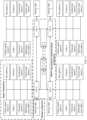
- FIG. 4 is a schematic diagram of another structure of an in-vehicle light system according to an embodiment of this application.
- the in-vehicle light system may be a ring network communications architecture. All sensors and executors (for example, components such as an interior light, an air conditioner, and a motor that obtain and execute a command) may be connected to a nearby vehicle integration unit (vehicle integration unit, VIU).
- VIU vehicle integration unit
- the VIU may be deployed at a position in which vehicle sensors and executors are dense, so that the sensors and the executors of the vehicle can perform nearby connection.
- the VIU may have specific computing and driving capabilities (for example, the VIU may absorb driving computing functions of some executors).
- the sensor includes but is not limited to a camera, a microphone, an ultrasonic radar, a millimeter-wave radar, a lidar, a vehicle speed sensor, a motor power sensor, an engine rotation speed sensor, and the like.
- the VIU may absorb driving computing functions of some sensors and executors. In this way, when some executors (for example, a CDC or a VDC) are faulty, the VIU may directly process data collected by the sensor, to drive the interior light to turn on or off or blink.
- some executors for example, a CDC or a VDC
- VIUs communicate with each other through networking.
- An intelligent driving computing platform/A mobile data center mobile data center (mobile data center, MDC), a vehicle domain controller (vehicle domain controller, VDC), and an intelligent cockpit domain controller (cockpit domain controller, CDC) are separately and redundantly connected to the ring network communications network formed by the VIUs.
- MDC mobile data center
- VDC vehicle domain controller
- CDC cockpit domain controller
- the MDC, the VDC, and the CDC collect related data on the ring network, calculate the data, convert the data into a lighting signal of the corresponding interior light, and release the signal on the ring network. Based on the corresponding computing and driving capabilities of the VIU, the interior light is driven to perform a corresponding lighting signal or turn on or off.
- a VIU 1 is configured to drive an interior light 1
- a VIU 2 is configured to drive an interior light 2
- a VIU 3 is configured to drive an interior light 3
- a VIU 4 is configured to drive an interior light 4.
- An arrangement form of a VIU may be unrelated to an interior light.
- the VIU 1 may be disposed at the left rear of a vehicle, and the interior light 1 may be a door panel ambient light on a driver side.
- the sensor or executer can be connected to the nearby VIU, thereby reducing cable bundles. Due to a limited quantity of interfaces of the MDC, VDC, and CDC, the VIU can be connected a plurality of sensors and a plurality of executers to implement interface and communication functions.
- a VIU to which the sensor or a controller is connected and a controller by which the connection is controlled may be set before delivery of the in-vehicle light system, or may be defined by a user, and hardware of the in-vehicle light system may be replaced and upgraded.
- the in-vehicle light systems in FIG. 3 and FIG. 4 may also control, in addition to the interior light, an exterior decorative light to work.
- FIG. 5 is a schematic diagram of effects of ambient lights in distributed speech scenarios according to an embodiment of this application.
- an in-vehicle light system may drive an ambient light in a driver area when determining that a user in the driver area is in a conversation with an in-vehicle voice assistant.
- the in-vehicle light system may control an instrument panel ambient strip light, indirect light of an instrument panel ambient light, a door panel ambient strip light, indirect light of a door panel ambient light, and indirect light of an auxiliary instrument panel ambient light in the driver area to turn on.
- the in-vehicle light system may drive an ambient light in a front passenger area when determining that a user in the front passenger area is in a conversation with the in-vehicle voice assistant.
- the in-vehicle light system may control an instrument panel ambient strip light, indirect light of an instrument panel ambient light, a door panel ambient strip light, indirect light of a door panel ambient light, and indirect light of an auxiliary instrument panel ambient light in the front passenger area to turn on.
- the in-vehicle light system may drive an ambient light in a second-row left-side area when determining that a user in the second-row left-side area is in a conversation with the in-vehicle voice assistant.
- the in-vehicle light system may control a door panel ambient strip light, indirect light of a door panel ambient light, a backrest ambient strip light, and indirect light of a foot bottom ambient light in the second-row left-side area to turn on.
- the in-vehicle light system may drive an ambient light in a second-row right-side area when determining that a user in the second-row right-side area is in a conversation with the in-vehicle voice assistant.
- the in-vehicle light system may control a door panel ambient strip light, indirect light of a door panel ambient light, a backrest ambient strip light, and indirect light of a foot bottom ambient light in the second-row right-side area to turn on.
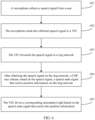
- FIG. 6 is a schematic flowchart of a method for controlling a distributed speech ambient light according to an embodiment of this application. As shown in FIG. 6 , the method for controlling the distributed speech ambient light may include the following steps.
- a microphone collects a speech signal from a user.
- areas in a vehicle may be divided into a driver area, a front passenger area, a second-row left-side area, and a second-row right-side area.
- Each area may include a microphone corresponding to the area.
- the microphone in each area of the vehicle may be in a sound pickup state.
- the areas in the vehicle may be divided into the driver area, the front passenger area, the second-row left-side area, and the second-row right-side area, or may be divided in another manner. This is not limited in embodiments of this application.
- the areas in the vehicle may be divided into a driver area, a front passenger area, a second-row left-side area, a second-row middle area, and a second-row right-side area; or the areas in the vehicle may be divided into a driver area, a front passenger area, a second-row left-side area, a second-row right-side area, and a rear trunk area.
- the areas in the vehicle may be divided into a driver area, a front passenger area, a second-row left-side area, a second-row right-side area, a third-row left-side area, and a third-row right-side area.
- a five-seat sedan may be divided into a front-row area and a back-row area.
- a seven-seat SUV may be divided into a front-row area, a middle-row area, and a back-row area.
- a coach may be divided into a cockpit area, a cabin front area, a cabin middle area, and a cabin back area.
- the vehicle may be divided into an internal area and an external area.
- an area division manner may be a combination of the foregoing different area division manners. It should be understood that quantities of sensors may also be different when the areas are divided in different manners.
- the vehicle may control the microphone in an in-vehicle light system to collect the speech signal from the user.
- the voice button may be located on a steering wheel in the driver area, may be located on a large central console screen, or may be located in the second-row left-side area or the second-row right-side area. This is not limited in embodiments of this application.
- S602 The microphone sends the collected speech signal to a VIU.
- a microphone 1 is a microphone in a driver area
- a microphone 2 is a microphone in a front passenger area
- a microphone 3 may be a microphone in a second-row left-side area
- a microphone 4 may be a microphone in a second-row right-side area.
- the microphone 1 may send a captured speech signal 1 to the VIU 1
- the microphone 2 may send a captured speech signal 2 to the VIU 2
- the microphone 3 may send a captured speech signal 3 to the VIU 3
- the microphone 4 may send a captured speech signal 4 to the VIU 4.
- S603 The VIU forwards the speech signal to a ring network.
- a CDC may release, based on the speech signal, a speech state signal that carries position information on the ring network.
- the VIU 1, the VIU 2, the VIU 3, and the VIU 4 may release speech signals on the ring network after receiving the corresponding speech signals; and after receiving the speech signal 1, the speech signal 2, the speech signal 3, and the speech signal 4, the CDC may determine the area in which the user sends the speech signal. For example, the CDC may determine, based on signal strength of the speech signal 1, the speech signal 2, the speech signal 3, and the speech signal 4, that a speech signal with the highest signal strength is the speech signal 1. Because the speech signal 1 is a speech signal collected by the microphone 1 and released on the ring network by the VIU 1, the CDC may determine that the speech signal is the speech signal collected by the microphone in the driver area. Therefore, the CDC can release the signal (for example, the signal may include a speech state signal in a lighting signal mode 1, and the lighting signal mode 1 is turning on the ambient light) that carries driver area position information on the ring network.
- the signal may include a speech state signal in a lighting signal mode 1, and the lighting signal mode 1 is turning on the ambient light
- the VIU drives a corresponding ambient light based on the speech state signal that carries the position information.
- each area may correspond to a VIU.
- the VIU 1 may correspond to the driver area
- the VIU 2 may correspond to the front passenger area
- the VIU 3 may correspond to the second-row left-side area
- the VIU 4 may correspond to the second-row right-side area.
- the VIU 4 may first receive the signal that carries the driver area position information. Because VIU 4 corresponds to the second-row right-side area, after receiving the signal that carries the driver area position information, the VIU 4 may forward the signal to the VIU 1 without performing any operation. Because the VIU 1 corresponds to the driver area, after receiving the signal that carries the driver area position information, the VIU 1 may execute a corresponding voice instruction (for example, execute an instruction corresponding to the lighting signal mode 1), to turn on the interior light 1.
- a corresponding voice instruction for example, execute an instruction corresponding to the lighting signal mode 1
- the VIU also corresponds to ambient light identifier information.
- Table 1 shows a correspondence between a VIU and ambient light identifier information.
- Table 1 Vehicle integration unit Ambient light identifier information Name of a corresponding ambient light VIU 1 1 Instrument panel ambient light in a driver area 2 Indirect light of an instrument panel ambient light in the driver area ... ... VIU 2 3 Instrument panel ambient light in a front passenger area 4 Indirect light of an instrument panel ambient light in the front passenger area ... ... VIU 3 5 Backrest ambient strip light in a second-row left-side area 6 Foot bottom ambient light in the second-row left-side area ... ... VIU 4 7 Backrest ambient strip light in a second-row right-side area 8 Foot bottom ambient light in the second-row right-side area ... ...
- the CDC may release a signal that carries ambient light identifier information 1 and ambient light identifier information 2 (for example, a speech state signal including a lighting signal mode 2, and the lighting signal mode 2 is a left-to-right water flowing light) on the ring network.
- the VIU 4 may first receive the signal that carries the ambient light identifier information 1 and the ambient light identifier information 2.
- the VIU 4 may forward the speech state signal to the VIU 1 without performing any operation. Because the VIU 1 corresponds to the ambient light identifier 1 and the ambient light identifier 2, after receiving the signal that carries the ambient light identifier 1 and the ambient light identifier 2, the VIU 1 may execute a corresponding voice instruction (for example, execute an instruction corresponding to the lighting signal mode 2), to drive the instrument panel ambient light in the driver area to be displayed in a water flowing light form.
- a corresponding voice instruction for example, execute an instruction corresponding to the lighting signal mode 2
- the in-vehicle light system may drive an ambient light in a corresponding area when determining that a user in the area is in a conversation with an in-vehicle voice assistant.
- the in-vehicle voice assistant when the in-vehicle voice assistant is in a wakeup state, a listening state, a speech thinking state, and an execution state, the user turns on the respective ambient lights in the corresponding areas.
- the in-vehicle light system may turn on the ambient light in the corresponding area, and in different states, the in-vehicle light system can execute a lighting signal corresponding to a speech state. For example, a lighting signal mode 1 is executed in the speech wakeup state; a lighting signal mode 2 is executed in the speech listening state; a lighting signal mode 3 is executed in the speech thinking state; and a lighting signal mode 4 is executed in the speech execution state.
- FIG. 7 is a schematic flowchart of a method for controlling a distributed speech ambient light according to an embodiment of this application.
- a CDC may determine that the voice assistant is currently in a speech wakeup state.
- the CDC may release a speech state signal 1 that carries driver area position information on a ring network, and a VIU 1 may execute a lighting signal mode 1 to turn on an ambient light 1.
- the CDC may release a speech state signal 2 that carries the driver area position information on the ring network, and the VIU 1 may execute a lighting signal mode 2 to turn on an ambient light 2.
- the CDC may release a speech state signal 3 that carries the driver area position information on the ring network, and the VIU 1 may execute a lighting signal mode 3 to turn on an ambient light 3.
- the CDC may release a speech state signal 4 that carries the driver area position information on the ring network, and the VIU 1 may execute a lighting signal mode 4 to turn on an ambient light 4.
- the interior ambient light may be in an off state.
- a microphone collects a speech signal "Celia, Celia” that carries a wakeup word from the user
- the microphone may send the collected speech signal to the VIU and the VIU releases the collected speech signal on the ring network.
- the CDC may determine that the speech signal includes the wakeup word.
- the CDC may perform speech wakeup (for example, the CDC may notify the user by using a speech "Master, I am here! ") and send the speech state signal 1 that carries the driver area position information on the ring network.
- the speech state signal 1 indicates to turn on the red ambient light in the driver area.
- the VIU 1 may control the ambient light in the driver area to turn on and control a color of the ambient light to be red.
- the CDC may release the speech state signal 2 that carries the driver position information on the ring network.
- the speech signal state 2 indicates to switch the color of the ambient light from red to blue.
- the VIU 1 may control the color of the ambient light in the driver area to switch from red to blue.
- the microphone When the microphone detects the speech signal "Help me play Song 1 of singer xx" that carries the speech command sent by the user, the microphone may send the speech signal to the VIU and the VIU releases the speech signal on the ring network.
- the CDC receives the speech signal that carries the speech command, the speech thinking state is enabled. In this case, the CDC may release the speech state signal 3 that carries the driver position information on the ring network.
- the speech state signal 3 indicates to switch the color of the ambient light from blue to purple.
- the VIU 1 may control the color of the ambient light in the driver area to switch from blue to purple.
- the CDC analyzes a user intent (intent) and a slot (slot) by using an automatic speech recognition (automatic speech recognition, ASR) module and natural language understanding (natural language understanding, NLU) module in a speech engine.
- ASR automatic speech recognition
- NLU natural language understanding
- information obtained by converting the speech into a text by the ASR module is "Play Song 1 of singer xx for me”.
- the NLU module can obtain content shown in Table 2 through parsing.
- the CDC may perform a corresponding operation (for example, playing Song 1) and release the speech state signal 4 that carries the driver position information on the ring network.
- the speech state signal 4 indicates to switch the color of the ambient light from purple to green.
- the VIU 1 may control the color of the ambient light in the driver area to switch from purple to green.
- the CDC may further notify the user by using a speech "OK, master, be ready to play Song 1 for you".
- the in-vehicle light system may switch between different colors of the ambient light in different speech states.
- the in-vehicle light system may further turn on the red ambient light in the driver area by using a breathing light
- the in-vehicle light system may further turn on the red ambient light in the driver area by using a water flowing light
- the in-vehicle light system may further turn on the blue ambient light in the driver area by using a water flowing light
- the in-vehicle light system may further turn on the blue ambient light in the driver area by using a breathing light.
- a change mode of the ambient light in different speech states may be preset, or may be set by the user. This is not limited in embodiments of this application.
- the in-vehicle light system may further obtain user information of the area, and obtain, based on the user information, a matching relationship between the user information and a vehicle light working mode.
- the in-vehicle light system may control, based on the matching relationship, the vehicle light in the area to work in a mode.
- a passenger in a front passenger area sends a voice instruction
- the in-vehicle light system may determine, based on image information collected by a camera, that the user in the front passenger area is a user A.
- the in-vehicle light system may obtain a vehicle light working mode preferred by the user A.
- Table 3 shows a correspondence between preferred vehicle light display modes and different users. Table 3 User Preferred vehicle light working mode User A Shine red during a voice conversation User B Displayed in a water flowing light form during a voice conversation ... ...
- the in-vehicle light system may control the vehicle light in the front passenger area to shine red.
- the in-vehicle light system may further control, based on a parameter of the audio signal, an interior light in the area to work. For example, a user B on the left side of the second row is playing Song 1 on a mobile phone.
- the in-vehicle light system may control, based on a beat (or a rhythm) and a mood (for example, happiness or sadness) of Song 1, a type of the song (for example, rock, country, heavy metal, pop, or folk) or a cover color of an album of Song 1, the vehicle light on the left side of the second row to work.
- a beat or a rhythm
- a mood for example, happiness or sadness
- a type of the song for example, rock, country, heavy metal, pop, or folk
- a cover color of an album of Song 1 the vehicle light on the left side of the second row to work.
- the beat of Song 1 may be "1234567" in a digital profile in a music score of Song 1 (the corresponding letter profile represents "DO RAI MI FA SO LA XI") and may correspond to different vehicle light colors.
- the in-vehicle light system may determine a corresponding ambient light color based on a digital profile corresponding to lyrics, so as to control a change of the ambient light color.
- the in-vehicle light system may determine the mood of the current song based on lyrics of Song 1. For example, Song 1 is a happy song or a sad song. If Song 1 is the happy song, the in-vehicle light system may control the ambient light on the left side of the second row to display a warm hue. If Song 1 is the sad song, the in-vehicle light system may control the ambient light on the left side of the second row to display a cool hue.
- the in-vehicle light system may further control, based on the type of Song 1, the vehicle light on the left side of the second row to work.
- the in-vehicle light system may obtain a correspondence between different types of music and a vehicle light working mode. For example, when Song 1 is rock music, the in-vehicle light system may control the ambient light on the left side of the second row to be displayed in a water flowing light form. For another example, when Song 1 is folk music, the in-vehicle light system may control the ambient light on the left side of the second row to display a warm hue; or when Song 1 is a heavy metal music, the in-vehicle light system may control the ambient light on the left side of the second row to display a cool hue.
- the correspondence between the parameter of the audio signal and the vehicle light working mode may be set before delivery of the vehicle, or may be set by the user. This is not limited in embodiments of this application.
- the audio signal may be music
- the in-vehicle light system may determine first information of the music based on a first parameter of the audio signal, where the first information may be one or more of a song name, a singer name, or a name of an album in which the music is located.
- the in-vehicle light system may determine, based on lyric information in the audio signal, the song name corresponding to the music, and control, based on a mapping relationship between the song name and a vehicle light working mode, a vehicle light in a corresponding area to work.
- the in-vehicle light system can determine, in a timely manner, an area in which a user is in conversation with the voice assistant, so as to drive the ambient light in the corresponding area.
- the user can quickly understand and determine, based on the change of the ambient light in different areas, the area in which the voice assistant selects to be in conversation with the user. This can provide a sense of ritual of face-to-face communication for the user in different areas, fully considers feelings of members in the vehicle, and improves man-machine interaction experience.
- FIG. 8 is a schematic flowchart of changing an ambient light with a temperature according to an embodiment of this application.
- An in-vehicle light system may obtain a reference temperature T 0 .
- T 0 When a temperature T of an area is lower than the reference temperature T 0 , an ambient light around the area may turn blue, and the color gradually becomes darker as the temperature cools down; or when a temperature T of an area is higher than the reference temperature T 0 , an ambient light around the area may turn red, and the color gradually becomes darker as the temperature heats up.
- the color of the ambient light may change with the temperature in the area, so that a user can intuitively feel a temperature change of the area in which the user is located, thereby helping the user accurately control the temperature of the area.
- the reference temperature may be preset, or may be set by the user. This is not limited in embodiments of this application.
- the in-vehicle light system may further obtain reference temperatures of different areas, for example, a reference temperature T 0 of a driver area, a reference temperature T 1 of a front passenger area, a reference temperature T 2 of a second-row-left-side area, and a reference temperature T 3 of a second-row-right-row area.
- the second-row-left-side area is used as an example.
- an ambient light around the second-row-left-side area may turn blue, and the color gradually becomes darker as the temperature cools down; or when a temperature T of the second-row-left-side area is higher than the reference temperature T 2 , an ambient light around the area may turn red, and the color gradually becomes darker as the temperature heats up.
- users in different areas may have different reference temperatures. This can meet requirements of the users in the different areas. For example, an elderly person expects that a temperature of an area is not excessively low, and the user may set a reference temperature of the area in which the elderly person is located to 28°C. In this way, when the temperature of the area in which the user is located is lower than the reference temperature, an interior ambient light may turn blue to notify the user that the temperature is excessively low, so that the user adjusts the temperature of the area in which the user is located.
- a young person expects that a temperature of an area is not excessively high, the user may set a reference temperature of the area in which the young person is located to 23°C. In this way, when the temperature of the area in which the user is located is higher than the reference temperature, an interior ambient light may turn red to notify the user that the temperature is higher than the reference temperature, so that the user adjusts the temperature of the area in which the user is located.
- the vehicle may be divided into the driver area, the front passenger area, the second-row left-side area, and the second-row right-side area.
- a temperature sensor 1 is disposed in the driver area
- a temperature sensor 2 is disposed in the front passenger area
- a temperature sensor 3 is disposed in the second-row left-side area
- a temperature sensor 4 is disposed in the second-row right-side area.
- the temperature sensor 1, the temperature sensor 2, the temperature sensor 3, and the temperature sensor 4 may respectively send a detected temperature value 1, temperature value 2, temperature value 3, and temperature value 4 corresponding to the VIUs.
- the VIUs may release a signal corresponding to the temperature value 1, a signal corresponding to the temperature value 2, a signal corresponding to the temperature value 3, and a signal corresponding to the temperature value 4 on the ring network.
- the CDC may separately determine whether the temperature values are higher than the reference temperature. For example, when the CDC determines that the temperature value 1 is higher than the reference temperature T 0 , the CDC may release the signal that carries the driver area position information on the ring network. After receiving the signal that carries the driver area position information, the VIU 1 may drive the ambient light around the driver area to turn red.
- the CDC may separately compare a temperature detected by a temperature sensor of an area with a reference temperature of the area. For a specific process, refer to the descriptions in the foregoing embodiment. Details are not described herein again.
- the user may further set the color (or the change mode) of the ambient light when the temperature of the area is higher than the reference temperature and the color (or the change mode) of the ambient light when the temperature of the area is lower than the reference temperature.
- the in-vehicle light system may further first obtain user information of the area.
- the user information may be identity information of the user.
- the in-vehicle light system may determine, based on image information collected by a camera, that a user in the driver area is a user A.
- the in-vehicle light system may determine a vehicle light change mode preferred by the user A. For example, the in-vehicle light system may obtain a correspondence between each of a plurality of users and an ambient light change mode preferred by the user. For example, a user A prefers to a red ambient light when a temperature value of an area in which the user A is located is higher than a preset temperature value, or the user A prefers to a blue ambient light when a temperature value of an area in which the user A is located is lower than a preset temperature value.
- a user B prefers to an orange ambient light when a temperature value of an area in which the user B is located is higher than a preset temperature value, or a user B prefers to a purple ambient light when a temperature value of an area in which the user B is located is lower than a preset temperature value.
- the in-vehicle light system controls the ambient light in the driver area to be red.
- the correspondence between the user information and the ambient light change mode preferred by the user may be bound to information about a logged-in account on the vehicle.
- the vehicle may also correspondingly obtain the correspondence. In this way, the user does not need to set the correspondence on each vehicle, which helps reduce user operations and improve user experience.
- FIG. 9 is a schematic flowchart of changing an ambient light with a temperature adjusted by a user according to an embodiment of this application.
- a user in an area may adjust a temperature by using an in-vehicle voice assistant, a large central console screen, or a temperature adjustment knob.
- an in-vehicle light system may determine that the user currently intends to heat up the temperature, and drive an ambient light in the area to change to a warm hue; or when an adjusted temperature T is lower than a current in-vehicle temperature T 4 , the in-vehicle light system may determine that the user currently intends to cool down the temperature, and drive an ambient light in the area to change to a cool hue.
- the higher the adjusted temperature value is when the adjusted temperature is higher than the current in-vehicle temperature, the higher the adjusted temperature value is, the deeper the color may be.
- the adjusted temperature is lower than the current in-vehicle temperature, the lower the adjusted temperature value is, the deeper the color may be.
- the in-vehicle light system may further store a correspondence between a temperature value and a corresponding ambient light color.
- Table 4 shows a correspondence between a temperature value and an ambient light color.
- Table 4 Temperature value Ambient light color 20°C Blue 21°C Green 22°C Purple 23°C Orange 24°C Red ... ...
- Table 4 is merely an example, and a correspondence between the temperature value and the ambient light color is not specifically limited in embodiments of this application.
- a correspondence between a temperature range and an ambient light color for example, [20°C, 22°C) corresponds to blue, [22°C, 24°C) corresponds to green, [24°C, 26°C) corresponds to purple, [26°C, 28°C) corresponds to orange, and [28°C, 30°C) corresponds to red.
- the in-vehicle light system may drive the ambient light to display a color corresponding to the adjusted temperature.
- the in-vehicle light system may further control, based on preference of the user, the vehicle light to work.
- the vehicle light may further control, based on preference of the user, the vehicle light to work.
- control process refer to the descriptions in the foregoing embodiments. Details are not described herein again.
- the vehicle when the vehicle detects that the user adjusts a temperature of an air conditioner in the driver area to T and the temperature is lower than the current in-vehicle temperature T 4 , the vehicle may further continue detecting that an air exhaust direction of an air outlet of the air conditioner is a first direction.
- the in-vehicle light system may control the ambient light in the driver area to be displayed in a water flowing light form, and the water flowing light form matches the first direction. For example, if the vehicle detects that the air exhaust direction in the air outlet of the air conditioner in the driver area is a direction of blowing from the front passenger area to the driver area, the in-vehicle light system may control the water flowing light at a steering wheel to present the right-to-left water flowing light form.
- FIG. 10 is a schematic flowchart of changing an ambient light with a temperature of liquid in a cup according to an embodiment of this application.
- An in-vehicle light system may further include a cup holder ambient light, and the cup holder ambient light may notify a user of a change of the temperature of the liquid in the cup by using a color change. For example, a cold drink may also be displayed in blue, and a hot drink may be displayed in red, so that the user knows the temperature of the liquid in the cup at any time.
- a temperature sensor at a bottom of a cup holder detects a difference between the temperature T of the liquid in the cup and a temperature T 5 before the cup is placed. If T is greater than T 5 , the temperature of the liquid in the cup after placement heats up compared with the temperature before placement, and the cup holder ambient light can be changed to a warm hue (for example, red). Further, a higher temperature indicates a darker color.
- the temperature sensor at the bottom of the cup holder may continue detecting the temperature T of the liquid in the cup after placement. When the temperature of the liquid in the cup gradually cools down, the color of the cup holder ambient light changes from deep to light (for example, the ambient light color changes from dark red to light red as the temperature gradually cools down).
- T is less than T 5
- the temperature of the liquid in the cup after placement cools down compared with the temperature before placement, and the cup holder ambient light may change to a cool hue. Further, a lower temperature indicates a darker color.
- the temperature sensor at the bottom of the cup holder may continue detecting the temperature T of the liquid in the cup after placement.
- the color of the cup holder ambient light changes from deep to light (for example, the ambient light color changes from dark blue to light blue as the temperature gradually heats up).
- the user can be notified of the temperature of the liquid in the cup by using the color change of the cup holder ambient light. For example, when the user sees that the cup holder ambient light is dark red, the user can avoid touching the cup, thereby avoiding a scald of the user.
- the color of the cup holder ambient light may gradually change from deep to light, so that the user can learn a change state of the temperature of the liquid in the cup in a timely manner.
- FIG. 11 is a schematic diagram of an effect of the ambient light changing with the temperature of the liquid in the cup.
- FIG. 12 is a schematic flowchart of changing an ambient light with a turn of a vehicle according to an embodiment of this application.
- a turn for example, a left turn, a right turn, or a U-turn
- strip lights on the left and right sides of an instrument panel blink in advance or indicate by using a left-to-right water flowing light to notify a user that the vehicle is about to turn.
- an in-vehicle light system may drive the ambient strip light on the left side of the instrument panel to blink or be displayed in the water flowing light form.
- an in-vehicle light system may drive the ambient strip light on the right side of the instrument panel to blink or be displayed in the water flowing light form.
- the CDC or the MDC may release a signal that carries left-turn information on the ring network.
- the VIU may drive the ambient strip light on the left side of the instrument panel to blink or be displayed in the water flowing light form.
- the in-vehicle light system drives, by using turn information in the navigation, the ambient light to blink in advance, or notify the user by using a water flowing light.
- the in-vehicle light system may drive the ambient light with reference to the turn information and distance information in the navigation. For example, when a distance to an intersection to be turned reaches a preset distance (for example, 20 meters), the ambient light is driven to blink in advance, or the user is notified by using the water flowing light.
- a preset distance for example, 20 meters
- FIG. 13 is a flowchart of an effect of the ambient light changing with the turn of the vehicle. As shown in (a) of FIG. 13 , the ambient strip light on the left side of the instrument panel blinks when the vehicle is about to turn left. As shown in (b) of FIG. 13 , the ambient strip light on the right side of the instrument panel blinks when the vehicle is about to turn right.
- FIG. 14 is a schematic flowchart of changing an ambient light with a vehicle acceleration/deceleration state according to an embodiment of this application.
- Autonomous driving is used as an example.
- the interior ambient light may gradually become warmer; or when the autonomous driving vehicle decelerates, the interior ambient light may gradually become cooler.
- the ambient light changes a color in real time, or is displayed in a water flowing light form. For example, a higher vehicle speed indicates a higher water flow speed.
- FIG. 15 is a schematic diagram of an effect of the ambient light changing with the vehicle acceleration/deceleration state according to an embodiment of this application.
- the in-vehicle light system may drive the interior ambient light to blink, so as to notify the user.
- AEB autonomous emergency braking
- the ambient light actively detects an autonomous driving operation intent in the autonomous driving scenario, and notifies the driver in advance in a lighting signal. This enhances man-machine mutual trust, and relieves psychological burden of a passenger.
- FIG. 16 is a schematic flowchart of performing a blind spot prompt in a driving process by using an ambient light according to an embodiment of this application.
- the ambient light at an instrument panel may be emitted from the instrument panel in a form of a water flowing light, and flows to a left door panel from the instrument panel to the left, or flow to the right side of the instrument panel to the right, to guide driver's eyes to a rear-view mirror. This improves driver's attention.
- a radar behind the left can send collected data to a corresponding VIU.
- the VIU releases a signal corresponding to the data on a ring network.
- a VDC may determine distance information of the vehicle approaching from behind. When the distance information meets a preset condition (for example, a distance between the vehicle approaching from behind and the current vehicle is less than or equal to 10 meters), the VDC may release, on the ring network, a signal presenting a left flow from the instrument panel to the left door panel. In this way, when the VIU receives the signal, the ambient light on the left side of the instrument panel can be driven to flow to the left door panel.
- a preset condition for example, a distance between the vehicle approaching from behind and the current vehicle is less than or equal to 10 meters
- FIG. 17 is a flowchart of an effect of performing the blind spot prompt by using the ambient light in the driving process.
- the ambient strip light on the left side of the instrument panel emits from the instrument panel in the form of the water flowing light and flows left to the left door panel.
- the ambient strip light on the right side of the instrument panel emits from the instrument panel in the form of the water flowing light and flows right to a right door panel.
- FIG. 18 is a diagram of an effect of performing a door opening anti-collision prompt by using an ambient light according to an embodiment of this application.
- the ambient light on a vehicle door indicates a state of a pedestrian or a vehicle approaching from behind. For example, when the ambient light on the vehicle door turns on, it indicates that the pedestrian or the vehicle passes by, and the vehicle door is automatically locked and cannot be opened in this case. After the pedestrian or the vehicle passes by, the ambient light on the vehicle door turns off, and the vehicle door is automatically unlocked.
- the anti-collision prompt may be performed by using a color change of the ambient light on the vehicle door. For example, when the ambient light on the vehicle door turns on and shines red, it indicates that the pedestrian or the vehicle passes by, and the vehicle door is automatically locked and cannot be opened in this case. After the pedestrian or the vehicle passes by, the ambient light on the vehicle door changes from red to green, and the vehicle door is automatically unlocked.
- the interior ambient light may blink as a warning light (for example, a red/blue warning light blinks).
- an in-vehicle light system may control a first vehicle light to work.
- the first vehicle light is a vehicle light in a first area in which the first vehicle door is located.
- the preset condition may be that a distance between the object around the first vehicle door and the first vehicle door is less than or equal to a preset distance (for example, 1 m).
- the in-vehicle light system may control the first vehicle light to work.
- the vehicle may collect image information by using a camera, and may determine, based on the collected image information, that the user is about to open the first vehicle door.
- there may be a touch sensor on a door handle of the first vehicle door. When detecting a touch operation of the user, the touch sensor may determine that the user is about to open the first vehicle door.
- the in-vehicle light system may further first determine that the first area includes the user. For example, the in-vehicle light system may learn, based on the image information collected by the camera, whether the user exists in the current first area. For another example, the in-vehicle light system may further learn, by using a pressure sensor under a seat in the first area, whether the user exists in the current first area. If the user exists in the first area, when the vehicle is in the stationary state and the position information of the object around the first vehicle door meets the preset condition, the in-vehicle light system may control the first vehicle light to work. If no user exists in the first area, the in-vehicle light system may control the first vehicle light not to be turned on (or not to work). This can effectively avoid a waste of power.
- the vehicle when the in-vehicle light system controls the first vehicle light to work, the vehicle may further lock the first vehicle door.
- the first vehicle light includes a first interior light and a first exterior light. That the in-vehicle light system controls the first vehicle light to work includes: The in-vehicle light system controls the first interior light to work in a first mode and controls the first exterior light to work in a second mode. The first mode notifies a user inside the vehicle that the object outside the first vehicle door passes by, and the second mode notifies a user outside the vehicle that the user is about to open the vehicle door. For example, when the vehicle is in the stationary state and the position information of the object outside the first vehicle door meets the preset condition, the in-vehicle light system may control the first interior light in the first area to shine red.
- the in-vehicle light system may control the first exterior light to display yellow. In this way, the pedestrian or the vehicle outside the vehicle can be notified that the first door of the vehicle is about to open, so that the pedestrian or the vehicle outside the vehicle gets far away from the first door.
- the in-vehicle light system may further first obtain user information (for example, identity information of the user) in the first area; can read a preset matching relationship between the user information and the vehicle light working mode based on the user information; and further control the first vehicle light to work in the obtained working mode through matching.
- user information for example, identity information of the user
- the vehicle light working mode based on the user information
- further control the first vehicle light to work in the obtained working mode through matching for example, a pre-warning color preferred by a user A is red, and a pre-warning color preferred by a user B is purple.
- the in-vehicle light system may determine, based on the image information obtained by the camera, that the user in the first area is the user B, and further determine, based on the matching relationship, that the pre-warning color preferred by the user B is purple.
- the in-vehicle light system may control the first interior light in the first area to display purple, thereby pre-warning the user B.
- the in-vehicle light system in embodiments of this application may include a follow spotlight.
- the follow spotlight may be one or more spot lights that can be freely turned, or a matrix vector light emitting diode (light emitting diode, LED) illuminating light.
- FIG. 19 is a schematic flowchart of controlling illumination of an interior follow spotlight according to an embodiment of this application.
- a state of a member in a vehicle may be determined based on data collected by a camera monitor system (camera monitor system, CMS), so as to drive the follow spotlight to automatically follow illuminating.
- CMS camera monitor system
- the CMS may determine a position of the hand of the user based on image information collected by the camera, so that the follow spotlight can actively illuminate following action of the hand.
- the CMS may determine a position of the book or a position of the mobile phone based on image information collected by the camera, so that the follow spotlight can actively illuminate following a direction of the book or the mobile phone.
- an in-vehicle light system may determine to turn on a foot bottom ambient light in the area.
- the CMS may determine, based on the image information collected by the camera, the position of the hand of the user, the position of the book or the mobile phone at the hand of the user, and a process in which the user looks down to pick up the object may be implemented in a manner in the conventional technology.
- FIG. 20 is a diagram of an effect of controlling illumination of the interior follow spotlight.
- the in-vehicle light system can be associated with an application (application, app), like a mobile phone game or singing a song on a mobile phone, and change a lighting effect with a game or a song melody, thereby creating an immersive game and singing atmosphere.
- the follow spotlight included the in-vehicle light system can further follow an excellent member during a game or singing, bolstering a "protagonist" identity.
- a lighting signal at a corresponding seat blinks if a player wins a game, indicating that the game succeeds.
- FIG. 21 is a diagram of another effect of controlling illumination of the interior follow spotlight.
- a user A in a second-row-left-side area and a user B in a front passenger area play a same game on mobile phones.
- the in-vehicle light system may separately establish a connection to a mobile phone 1 of the user A and a connection to a mobile phone 2 of the user B, and determine, based on a distance and orientation information measured through short-range wireless communication (for example, Bluetooth or Wi-Fi), that the mobile phone 1 is located in the second-row-left-side area and the mobile phone 2 is located in the second-row-right-side area.
- short-range wireless communication for example, Bluetooth or Wi-Fi
- the follow spotlight may illuminate the user A.
- a camera outside the vehicle may collect a scenery picture outside the vehicle.
- An environment state of a current driving road is recognized by using an image recognition algorithm.
- a main color in a scenery picture is extracted by using the algorithm, so that an in-vehicle light system can control an ambient light to display a corresponding color.
- the interior ambient light displays a forest color (for example, green); when an ocean is recognized, the interior ambient light displays an ocean color (for example, blue); and when a desert is recognized, the interior ambient light displays a desert color (for example, yellow).
- the interior ambient light may be in an echo state with the exterior decorative light, so as to implement synchronous rhythm inside and outside the vehicle.
- the interior ambient light may be green, and the exterior decorative light may also be green.
- a user of another vehicle around the vehicle can determine that the vehicle is accelerating or decelerating, thereby pre-warning the surrounding vehicle.
- the interior ambient light and the exterior ambient light may be synchronized to indicate an assisted driving state or an autonomous driving state.
- the interior ambient light may be blue.
- the exterior decorative light may also be blue, so that another vehicle around the vehicle determines that the vehicle is in the autonomous driving state.
- the vehicle may control the color of the interior ambient light to switch from blue to red, so as to remind the user inside the vehicle that the vehicle is currently switched from the autonomous driving mode to a manual driving mode.
- the in-vehicle light system may write an intent of the current vehicle as a lighting signal, and execute the corresponding lighting signal by using a rear light.
- a vehicle approaching from behind can capture, by using a front-view camera, and analyze the lighting signal corresponding to a rear light of a front vehicle, so that an intent of the front vehicle can be displayed by using an interior light or a large screen of the vehicle approaching from behind, thereby achieving an objective of vehicle communication; or a front vehicle can capture light from the vehicle approaching from behind by using a rear-view camera, so that an intent of the vehicle approaching from behind is displayed by using an interior light or a large screen of the front vehicle, thereby achieving an objective of vehicle communication.
- the in-vehicle light system may further control the vehicle light to work in different modes (for example, a theater mode, a rest mode, a game mode, and a creation mode).
- the in-vehicle light system may control a change of the interior ambient light based on a color change of a movie played on a large central console screen, to give the user immersive experience.
- the vehicle may control brightness of the interior ambient light to decrease.
- the vehicle can adjust a seat, an aroma, and music in the vehicle, to relax.
- the in-vehicle light system may control, based on a beat (or a rhythm) of the music, the ambient light to work.
- a beat or a rhythm
- the in-vehicle light system may further project exterior light based on setting of the user or a scenario selected by the user. For example, some pictures are projected by using a headlight on a wall or on a road surface. For another example, parking to play a game, AR-HUD projection, and projection of a vehicle light into an environment may interact with each other, thereby creating a game atmosphere.
- the light system in the vehicle may further include a decorative light.
- the light system may be set based on a color on the user, an environment color, or a mood of the user and a preference of the user. For example, the light system can control the ambient light to better match user's wear.
- the vehicle may further create a courtesy effect by using the light system.
- the light system can control light color, direction, and position to change with user's identity/position.
- the vehicle detects that the user walks around the vehicle, the ambient light at a place that the user passes by is turned on, and the ambient light changes with a position of the user.
- FIG. 22 is a schematic flowchart of a light system control method 2200 according to an embodiment of this application.
- the method 2200 is applied to a vehicle, the vehicle includes a plurality of areas, each of the plurality of areas includes at least one light emitting apparatus and at least one sensor of a first type, the plurality of areas include a first area, and the first area includes a first light emitting apparatus and a first sensor, a type of the first sensor is the first type, and the method 2200 includes the following steps.
- S2201 The vehicle obtains a first signal collected by the sensor in the first area.
- S2202 The vehicle controls, based on the first signal, the first light emitting apparatus to work.
- the vehicle can control, based on the first signal collected by the sensor located in the first area, the light emitting apparatus in the first area to work. This can give a user in the first area a sense of ritual of face-to-face interaction, fully consider feelings of members in different areas of the vehicle, and help improve intelligence of a light system, thereby helping improve user experience.
- a plurality of interior lights may include an exterior decorative light, an interior ambient light, a spot light, or an LED light.
- the vehicle controls, based on the first signal, the first light emitting apparatus to work includes: The vehicle adjusts an ambient light based on a sound, where the sound includes one or more of a user voice instruction, music played in the vehicle, and a sound made when a video is played in the vehicle.
- the senor of the first type is a sound source positioning apparatus, and the first signal includes a sound signal and information about a sound source position; and that the vehicle controls, based on the first signal, the first light emitting apparatus to work includes: When the sound source position is located in the first area, the vehicle controls the first light emitting apparatus to work.
- the sound source positioning apparatus may be a microphone array.
- the sensor of the first type is a sound collection apparatus
- the plurality of areas further include a second area
- the second area includes a second sensor
- a type of the second sensor is the first type
- the method further includes: The vehicle obtains a second signal collected by the second sensor; and that the vehicle controls, based on the first signal, the first light emitting apparatus to work includes: When determining, based on the first signal and the second signal, that a sound source is located in the first area, the vehicle controls the first light emitting apparatus to work.
- the plurality of areas may be the driver area, the front passenger area, the second-row left-side area, and the second-row right-side area.
- a user in the driver area sends a voice signal
- microphones in all the four areas may collect the voice signal and send the voice signal to a controller. If the controller determines that the voice signal is sent by the user located in the driver area, the controller can control an ambient light in the driver area to work. In this way, the vehicle can determine, in a timely manner by using sensors located in different areas, the area in which a voice assistant communicates with a user.
- the interior light can provide the sense of ritual of face-to-face communication for the user, and the user can quickly understand and determine, based on the change of the interior light, the area in which the voice assistant selects to communicate with the user. This fully considers the feelings of the members in the vehicle, and improves voice communication human-machine experience.
- the first sensor and the second sensor each may be a microphone.
- that the vehicle determines, based on the first signal and the second signal, that the user is located in the first area includes: The vehicle determines, based on signal strength of the first signal and signal strength of the second signal, that the user is located in the first area.
- the method further includes: The vehicle determines a speech recognition state based on the first signal; and the vehicle controls the first light emitting apparatus to work includes: The vehicle controls, based on the speech recognition state, the first light emitting apparatus to work.
- the vehicle can determine the speech recognition state based on the collected first signal, and different speech recognition states can correspond to different working modes of the light emitting apparatus. In this way, in different speech recognition states, the user can determine, based on the change of the light emitting apparatus, the current speech recognition state of the voice assistant, thereby helping improve man-machine communication experience.
- the speech recognition state includes one or more of a speech wakeup state, a speech listening state, a speech thinking state, and a speech execution state.
- the sensor of the first type is a sound collection apparatus
- that the vehicle obtains the first signal collected by the first sensor in the first area includes: The vehicle obtains an audio signal collected by the first sensor; and that the vehicle controls, based on the first signal, the first light emitting apparatus to work includes: The vehicle controls, based on a first parameter of the audio signal, the first light emitting apparatus to work.
- the vehicle can control, based on the parameter of the audio signal, the first light emitting apparatus to work.
- the first light emitting apparatus can change with the parameter, and create a different atmosphere for the user, thereby helping improve user experience.
- the audio signal is music
- the first parameter includes one or more of a beat, a tune, lyric information, and album cover color information of the music.
- the audio signal is music
- the vehicle controls, based on the first signal, the first light emitting apparatus to work includes: The vehicle determines first information of the music based on the first parameter of the audio signal, where the first information includes one or more of a song name, a singer name, or a name of an album to which the music belongs; and controls, based on a mapping relationship between the first information and a working mode of the light emitting apparatus, the first light emitting apparatus to work in a second mode.
- the vehicle can determine the working mode of the first light emitting apparatus based on the correspondence between the first information of the music and the working mode of the light emitting apparatus. In this way, music preferred by the user and the working mode of the light emitting apparatus can be combined, thereby helping improve user experience.
- the method further includes: The vehicle obtains user information of the user located in the first area; and obtains, based on the user information, light configuration information corresponding to the user information; and that the vehicle controls the first light emitting apparatus to work includes: The vehicle controls, based on the light configuration information, the first light emitting apparatus to work.
- the light configuration information may be preset in the vehicle before delivery of the vehicle, or may be customized by the user.
- the vehicle receives a setting instruction from the user, where the setting instruction includes a correspondence between different users and colors preferred by the users when the users communicate with the voice assistant.
- a user A prefers a blue ambient light when interacting with the voice assistant.
- a user B prefers a purple ambient light when interacting with the voice assistant.
- the senor includes a temperature sensor
- the first signal indicates a first temperature value
- the vehicle controls, based on the first signal, the first light emitting apparatus to work includes: When the first temperature value is greater than a preset temperature value or when the first temperature value is less than a preset temperature value, the vehicle controls the first light emitting apparatus to work.
- the plurality of areas may be the driver area, the front passenger area, the second-row left-side area, and the second-row right-side area.
- a temperature sensor located in the driver area may collect a current temperature value (for example, 25°C) of the driver area. If a preset temperature value is 22°C, the vehicle may control an ambient light in the driver area to work in a first mode, so that the user intuitively feels that the temperature of the driver area is higher than the preset value. In this way, after feeling that the temperature of the driver area is higher than the preset temperature value, the user can cool down the temperature of the driver area.
- the sensor includes a temperature sensor
- the first signal indicates a first temperature value
- the vehicle controls, based on the first signal, the first light emitting apparatus to work includes: When the first temperature value is greater than a preset temperature value, the vehicle controls the first light emitting apparatus to work in a third working mode; or when the first temperature value is less than a preset temperature value, the vehicle controls the first light emitting apparatus to work in a fourth working mode, where the third working mode and the fourth working mode are different working modes.
- the vehicle controls the first light emitting apparatus to work includes: When the first temperature value is greater than the preset temperature value, the vehicle controls the first light emitting apparatus to display a warm hue; or when the first temperature value is less than the preset temperature value, the vehicle controls the first light emitting apparatus to display a cool hue.
- the vehicle may control the ambient light in the driver area to display the warm hue, so that the user can intuitively feel that the temperature in the driver area heats up.
- the method further includes: The vehicle obtains user information of the user located in the first area; and obtains, based on the user information, light configuration information corresponding to the user information; and that the vehicle controls the first light emitting apparatus to work includes: The vehicle controls, based on the light configuration information, the first light emitting apparatus to work.
- the method further includes: The vehicle obtains user information of the user located in the first area; and obtains, based on the user information, light configuration information corresponding to the user information; and that the vehicle controls the first light emitting apparatus to work includes: The vehicle controls, based on the light configuration information, the first light emitting apparatus to work.
- the light configuration information may be preset in the vehicle before delivery of the vehicle, or may be customized by the user.
- the vehicle receives a setting instruction from the user, where the setting instruction includes a correspondence between different users and colors preferred by the users when the first temperature is lower than the preset temperature value.
- the setting instruction includes a correspondence between different users and colors preferred by the users when the first temperature is lower than the preset temperature value.
- a user A prefers a blue ambient light when the first temperature is lower than the preset temperature value.
- a user B prefers a purple ambient light when the first temperature is lower than the preset temperature value.
- the senor includes a temperature sensor
- the first signal indicates a second temperature value
- the method further includes: The vehicle detects an operation that a user located in the first area adjusts a temperature in the vehicle to a third temperature value; and that the vehicle controls, based on the first signal, the first light emitting apparatus to work includes: When the third temperature value is greater than the second temperature value or when the third temperature value is less than the second temperature value, the vehicle controls the first light emitting apparatus to work.
- the temperature sensor at the front passenger detects that a current temperature in the front passenger area is 25°C, and the vehicle detects an operation that the user adjusts the temperature in the front passenger area to 28°C.
- the vehicle may control the ambient light in the front passenger area to work in a second mode, so that the user intuitively feels a temperature adjustment intent of the user, thereby implementing a visual feedback of the corresponding user on cool and warm requirements, and helping improve user experience.
- the senor includes a temperature sensor
- the first signal indicates a second temperature value
- the method further includes: The vehicle detects an operation that a user located in the first area adjusts a temperature in the vehicle to a third temperature value; and that the vehicle controls, based on the first signal, the first light emitting apparatus to work includes: When the third temperature value is greater than the second temperature value, the vehicle controls the first light emitting apparatus to work in a fifth working mode; or when the third temperature value is less than the second temperature value, the vehicle controls the first light emitting apparatus to work in a sixth working mode, where the fifth working mode and the sixth working mode are different working modes.
- the vehicle controls the first interior light to work includes: When the third temperature value is greater than the second temperature value, the vehicle controls the first light emitting apparatus to display a warm hue; or when the third temperature value is less than the second temperature value, the vehicle controls the first light emitting apparatus to display a cool hue.
- the light emitting apparatus when the third temperature value is greater than the second temperature value, the light emitting apparatus is controlled to display the warm hue, so that the user can intuitively feel that the current intent of the user is to heat up the temperature of the first area.
- the light emitting apparatus is controlled to display the cool hue, so that the user can intuitively feel that the current intent of the user is to cool down the temperature of the first area.
- the sensor includes a cup holder temperature sensor
- that the vehicle obtains the first signal collected by the sensor in the first area includes: After detecting that a user places a cup in a cup holder located in the first area, the vehicle obtains the first signal collected by the cup holder temperature sensor, where the first signal indicates a fourth temperature value of liquid in the cup; and when the fourth temperature value is greater than a fifth temperature value or when the fourth temperature value is less than a fifth temperature value, the vehicle controls the first light emitting apparatus to work, where the fifth temperature is a temperature value of the liquid in the cup that is detected by the cup holder temperature sensor before the user places the cup in the cup holder.
- the cup holder on the left side includes the cup holder temperature sensor, and before the user places the cup into the cup holder, a temperature detected by the cup holder temperature sensor is 25°C. After the user places the cup in the cup holder, a temperature detected by the cup holder temperature sensor is 50°C.
- the vehicle can control the cup holder ambient light on the left side to work in a third mode, so that the user intuitively feels that the temperature of the liquid in the cup heats up, thereby helping improve user experience.
- the vehicle controls the first interior light to work includes: When the fourth temperature value is greater than the fifth temperature value, the vehicle controls the first light emitting apparatus to display a warm hue; or when the fourth temperature value is less than the fifth temperature value, the vehicle controls the first light emitting apparatus to display a cool hue.
- the first light emitting apparatus when the fourth temperature value is greater than the fifth temperature value, the first light emitting apparatus is controlled to display the warm hue, so that the user can intuitively feel that the temperature in the cup is higher than the temperature before the cup is placed, thereby avoiding a scald caused because the user in the vehicle touches the cup by mistake.
- the method further includes: If the fourth temperature value is greater than the fifth temperature value, in a process in which a temperature detected by the cup holder temperature sensor cools down from the fourth temperature to the fifth temperature, the vehicle controls a color of the first light emitting apparatus to change from deep to light; or if the fourth temperature value is less than the fifth temperature value, in a process in which a temperature detected by the cup holder temperature sensor heats up from the fourth temperature to the fifth temperature, the vehicle controls a color of the first light emitting apparatus to change from deep to light.
- the color of the light emitting apparatus may change from deep to light, and gradually restore, along with a temperature change, to a color corresponding to a room temperature. This helps the user intuitively feel a change process of the temperature of the liquid in the cup, thereby helping improve user experience.
- the first interior light is a cup holder ambient light.
- the first signal indicates position information of an object around a first vehicle door, and there is a correspondence between the first vehicle door and the first area; and that the vehicle controls, based on the first signal, the first light emitting apparatus to work includes: When the vehicle is in a stationary state and the position information of the object meets a preset condition, the vehicle controls the first light emitting apparatus to work in a seventh mode.
- the light emitting apparatus when the vehicle is stationary and there is the object passing outside the vehicle, the light emitting apparatus can notify the user that there is the object passing through the vehicle door, thereby preventing the user from colliding with the object after the vehicle door is opened.
- the method further includes: The vehicle detects an operation that the user located in the first area is about to open a vehicle door.
- the method further includes: The vehicle detects that the first area includes the user.
- the vehicle before controlling the first light emitting apparatus to work, the vehicle can first determine that the user exists in the first area. If no user exists, even if there is the object passing outside the vehicle, the vehicle can control the first light emitting apparatus not to turn on, thereby helping save power.
- the method further includes: When controlling the first light emitting apparatus to work in the seventh mode, the vehicle controls the first vehicle door to be locked.
- the vehicle when there is the object passing through the vehicle door, the vehicle can further control the vehicle door to be locked, thereby avoiding a collision when the user cannot make a response by using the light emitting apparatus.
- the first light emitting apparatus includes a first interior light and a first exterior light
- the seventh working mode includes a first sub-mode and a second sub-mode
- that the vehicle controls the first light emitting apparatus to work in a seventh mode includes: The vehicle controls the first interior light to work in the first sub-mode, and controls the first exterior light to work in the second sub-mode.
- the first sub-mode may notify the user inside the vehicle that there is the object passing outside the vehicle, so that the user inside the vehicle can be warned.
- the second sub-mode may notify the user outside the vehicle that the vehicle door is about to open, so that the user outside the vehicle can avoid in a timely manner. In this way, both passengers inside and outside the vehicle are warned, thereby preventing the user from colliding with the object after the vehicle door is opened.
- the method further includes: The vehicle obtains user information of the user located in the first area; and obtains, based on the user information, light configuration information corresponding to the user information; and that the vehicle controls the first light emitting apparatus to work includes: The vehicle controls, based on the light configuration information, the first light emitting apparatus to work.
- the light configuration information may be preset in the vehicle before delivery of the vehicle, or may be customized by the user.
- the vehicle receives a setting instruction from the user.
- the setting instruction includes a correspondence between different users and pre-warning colors preferred by the users.
- a pre-warning color preferred a user A is red
- a pre-warning color preferred a user B is purple.
- the light system may control the first light emitting apparatus in the first area to shine red, thereby achieving a pre-warning effect for the user A.
- the vehicle before controlling the first light emitting apparatus to work, can further first determine the user information, and determine the light configuration information based on the user information.
- the vehicle can store a correspondence between different users and light configuration information preferred by the users. In this way, the vehicle can select the light configuration information preferred by the user to control the light emitting apparatus to work. This is more compliant with a use habit of the user, thereby helping improve use experience of the user.
- An embodiment of this application further provides a vehicle light control method.
- the method is applied to a vehicle, the vehicle includes a plurality of areas, each of the plurality of areas includes at least one light emitting apparatus and at least one sensor of a first type, the plurality of areas include a first area, the first area includes a first light emitting apparatus and a first sensor, a type of the first sensor is the first type, the first light emitting apparatus includes a first interior light and a first exterior light, and the method includes: obtaining a first signal detected by the first sensor; and controlling, based on the first signal, the first interior light and the first exterior light to work.
- the vehicle can control, based on the first signal collected by the sensor located in the first area, the interior light and the exterior light located in the first area to work. This fully considers feelings of members in different areas of the vehicle, helps a user outside the vehicle learn a current state of the vehicle in a timely manner, and helps improve intelligence of the in-vehicle light system, thereby helping improve user experience.
- the first signal indicates that the vehicle is currently in an autonomous driving mode
- the controlling, based on the first signal, the first interior light and the first exterior light to work includes: controlling, based on the first signal, the first interior light to work in a first mode and controlling the first exterior light to work in a second working mode, where the first working mode notifies a user inside the vehicle that the vehicle is currently in the autonomous driving mode, and the second working mode notifies a user outside the vehicle that the vehicle is currently in the autonomous driving mode.
- the user inside the vehicle and the user outside the vehicle can be separately notified by using the interior light and the exterior light. This can warn some users who want to stay away from the autonomous driving vehicle.
- the method further includes: when detecting that the vehicle needs to be taken over by a driver, controlling the first interior light to switch from the first mode to a third mode to work.
- the vehicle when the vehicle needs to be taken over by the user, the vehicle can control the light emitting apparatus to switch from the first mode to the third mode. In this way, the user inside the vehicle can be warned, so that the user can take over the vehicle in a timely manner, thereby improving driving security of the vehicle.
- the method further includes: when an autonomous driving level of the vehicle is degraded, controlling the first interior light to switch from the first mode to a third mode to work.
- the method further includes: controlling the first exterior light to stop working in the second mode.
- the first signal indicates position information of an object around a first vehicle door; and the controlling, based on the first signal, the first interior light and the first exterior light to work includes: when the vehicle is in a stationary state and the position information of the object meets a preset condition, controlling the first interior light to work in a third mode and controlling the first exterior light to work in a fourth working mode.
- the method further includes: detecting an operation that a user located in a first area is about to open a vehicle door, where there is a correspondence between the first area and the first vehicle door.
- the method further includes: detecting that the first area includes the user, where there is a correspondence between the first area and the first vehicle door.
- the method further includes: when the controlling the first interior light to work in a third mode and controlling the first exterior light to work in a fourth working mode, controlling the first vehicle door to be locked.
- the method further includes: obtaining user information of the user located in the first area, where there is a correspondence between the first area and the first vehicle door; and obtaining, based on the user information, light configuration information corresponding to the user information; and the controlling the first interior light to work in a third mode and controlling the first exterior light to work in a fourth working mode includes: based on the light configuration information, controlling the first interior light to work in the third mode and controlling the first exterior light to work in the fourth working mode.
- FIG. 23 is a schematic diagram of a structure of a light system 2300 according to an embodiment of this application.
- the system 2300 is applied to a vehicle, the vehicle includes a plurality of areas, each of the plurality of areas includes at least one light emitting apparatus and at least one sensor of a first type, the plurality of areas include a first area, the light system includes a first sensor 2301 and a first light emitting apparatus 2303 that are located at the first area, a type of the first sensor is the first type, and the light system further includes a controller 2302.
- the first sensor 2301 is configured to collect a first signal.
- the first sensor 2301 is further configured to send the first signal to the controller.
- the controller 2302 is configured to control, based on the first signal, the first interior light to work.
- the controller 2302 may be an interior light controller (for example, an ambient light controller).
- the controller 2302 may be a VIU.
- the controller 2302 may include a VIU and a domain controller (for example, an MDC, a CDC, and a VDC).
- the controller 2302 is specifically configured to adjust an ambient light based on a sound, where the sound includes one or more of a user voice instruction, music played in the vehicle, and a sound made when a video is played in the vehicle.
- the senor of the first type is a sound source positioning apparatus, and the first signal includes a sound signal and information about a sound source position; and the controller 2302 is specifically configured to: when the sound source position is located in the first area, control the first light emitting apparatus to work.
- the senor of the first type is a sound collection apparatus
- the plurality of areas further include a second area
- the light system 2300 further includes a second sensor 2304 located in the second area
- a type of the second sensor 2304 is the first type.
- the second sensor 2304 is configured to collect a second signal
- the controller 2302 is specifically configured to: when determining, based on the first signal and the second signal, that a sound source is located in the first area, control the first light emitting apparatus to work.
- the controller 2302 is further configured to: determine a speech recognition state based on the first signal; and the controller is specifically configured to: control, based on the speech recognition state, the first light emitting apparatus to work, where the speech recognition state includes one or more of a speech wakeup state, a speech listening state, a speech thinking state, and a speech execution state.
- the senor of the first type is a sound collection apparatus, and the first sensor 2301 is specifically configured to: collect an audio signal; and the controller 2302 is specifically configured to: control, based on a first parameter of the audio signal, the first light emitting apparatus to work.
- the audio signal is music
- the first parameter includes one or more of a beat, a tune, lyric information, and album cover color information of the music.
- the audio signal is music
- the controller 2302 is specifically configured to: determine first information of the music based on the first parameter of the audio signal, where the first information includes one or more of a song name, a singer name, or a name of an album to which the music belongs; and control, based on a mapping relationship between the first information and a working mode of the light emitting apparatus, the first light emitting apparatus to work in a second mode.
- the senor includes a temperature sensor
- the first signal indicates a first temperature value
- the controller 2302 is specifically configured to: when the first temperature value is greater than a preset temperature value, control the first light emitting apparatus to work in a third working mode; or when the first temperature value is less than a preset temperature value, control the first light emitting apparatus to work in a fourth working mode, where the third working mode and the fourth working mode are different working modes.
- the first light emitting apparatus is controlled to work in the third working mode includes that the first light emitting apparatus is controlled to display a first color; and that the first light emitting apparatus is controlled to work in a fourth working mode includes that the first light emitting apparatus is controlled to display a second color, where the first color is different from the second color.
- the first color is a warm hue
- the second color is a cool hue
- the senor includes a temperature sensor
- the first signal indicates a second temperature value
- the controller 2302 is further configured to: before controlling, based on the first signal, the first light emitting apparatus to work, obtain an instruction, where the instruction instructs the vehicle to detect an operation that a user located in the first area adjusts a temperature in the vehicle to a third temperature value; and the controller is specifically configured to: when the third temperature value is greater than the second temperature value, control the first light emitting apparatus to work in a fifth working mode; or when the third temperature value is less than the second temperature value, control the first light emitting apparatus to work in a sixth working mode, where the fifth working mode and the sixth working mode are different working modes.
- the first light emitting apparatus is controlled to work in the fifth working mode includes that the first light emitting apparatus is controlled to display a third color; and that the first light emitting apparatus is controlled to work in the sixth working mode includes that the first light emitting apparatus is controlled to display a fourth color, where the third color is different from the fourth color.
- the third color is a warm hue and the fourth color is a cool hue.
- the controller 2302 is further configured to obtain an instruction, where the instruction instructs the vehicle to detect that an air exhaust direction of an air outlet of an air conditioner located in the first area is a first direction; and the controller 2302 is specifically configured to control the first light emitting apparatus to be displayed in a water flowing light form, where the water flowing light form matches the first direction.
- the sensor includes a cup holder temperature sensor
- the first sensor 2301 is specifically configured to: collect the first signal after a user places a cup in a cup holder located in the first area, where the first signal indicates a fourth temperature value of liquid in the cup
- the controller 2302 is specifically configured to: when the fourth temperature value is greater than a fifth temperature value, control the first light emitting apparatus to display a warm hue; or when the fourth temperature value is less than a fifth temperature value, control the first light emitting apparatus to display a cool hue, where the fifth temperature is a temperature value of the liquid in the cup that is detected by the cup holder temperature sensor before the user places the cup in the cup holder.
- the controller 2302 is further configured to: if the fourth temperature value is greater than the fifth temperature value, in a process in which a temperature detected by the cup holder temperature sensor cools down from the fourth temperature to the fifth temperature, control a color of the first light emitting apparatus to change from deep to light; or if the fourth temperature value is less than the fifth temperature value, in a process in which a temperature detected by the cup holder temperature sensor heats up from the fourth temperature to the fifth temperature, control a color of the first light emitting apparatus to change from deep to light.
- the first light emitting apparatus 2303 is a cup holder ambient light.
- the first signal indicates position information of an object around a first vehicle door, and there is a correspondence between the first vehicle door and the first area; and the controller 2302 is specifically configured to: when the vehicle is in a stationary state and the position information of the object meets a preset condition, control the first light emitting apparatus to work in a seventh mode.
- the controller 2302 is further configured to obtain an instruction before controlling the first light emitting apparatus to work in the seventh mode, where the instruction instructs the vehicle to detect an operation that the user located in the first area is about to open a vehicle door.
- the controller is further configured to: before controlling the first light emitting apparatus to work in the seventh mode, obtain an instruction, where the instruction instructs a vehicle to detect that the first area includes the user.
- controller 2302 is further configured to: When controlling the first light emitting apparatus to work in the seventh mode, control the first vehicle door to be locked.
- the first light emitting apparatus 2303 includes a first interior light and a first exterior light
- the seventh working mode includes a first sub-mode and a second sub-mode
- the controller 2302 is specifically configured to: control the first interior light to work in the first sub-mode, and control the first exterior light to work in the second sub-mode.
- the controller 2302 is further configured to: obtain user information of the user located in the first area; and obtain, based on the user information, light configuration information corresponding to the user information; and the controller 2302 is specifically configured to: control, based on the light configuration information, the first light emitting apparatus to work.
- a light system is provided.
- the light system is applied to a vehicle, the vehicle includes a plurality of areas, each of the plurality of areas includes at least one light emitting apparatus and at least one sensor of a first type, the plurality of areas include a first area, the light system includes a first light emitting apparatus and a first sensor that are located in the first area, a type of the first sensor is the first type, the first light emitting apparatus includes a first interior light and a first exterior light, and the light system further includes a controller.
- the first sensor is configured to collect a first signal
- the controller is configured to control, based on the first signal, the first interior light and the first exterior light to work.
- the first signal indicates that the vehicle is currently in an autonomous driving mode
- the controller is specifically configured to: control, based on the first signal, the first interior light to work in a first mode and control the first exterior light to work in a second working mode, where the first working mode notifies a user inside the vehicle that the vehicle is currently in the autonomous driving mode, and the second working mode notifies a user outside the vehicle that the vehicle is currently in the autonomous driving mode.
- the controller is further configured to: obtain an instruction, where the instruction indicates that the vehicle needs to be taken over by a driver; and control, in response to the obtained instruction, the first interior light to switch from the first mode to a third mode to work.
- controller is further configured to: control the first exterior light to stop working in the second mode.
- the first signal indicates position information of an object around a first vehicle door; and the controller is specifically configured to: when the vehicle is in a stationary state and the position information of the object meets a preset condition, control the first interior light to work in a third mode and control the first exterior light to work in a fourth working mode.
- the controller is further configured to obtain an instruction before controlling the first interior light to work in the third mode and controlling the first exterior light to work in the fourth working mode, where the instruction instructs the vehicle to detect an operation that a user located in a first area is about to open a vehicle door, and there is a correspondence between the first area and the first vehicle door.
- the controller is further configured to obtain an instruction before controlling the first interior light to work in the third mode and controlling the first exterior light to work in the fourth working mode, where the instruction instructs the vehicle to detect that the first area includes the user, and there is a correspondence between the first area and the first vehicle door.
- the controller is further configured to: when controlling the first interior light to work in the third mode and controlling the first exterior light to work in the fourth working mode, controlling the first vehicle door to be locked.
- the controller is further configured to: before controlling the first interior light to work in the third mode and controlling the first exterior light to work in the fourth working mode, obtain user information of the user located in the first area, where there is a correspondence between the first area and the first vehicle door; and obtain, based on the user information, light configuration information corresponding to the user information; and the controller is specifically configured to: based on the light configuration information, control the first interior light to work in the third mode and control the first exterior light to work in the fourth working mode.
- FIG. 24 is a schematic block diagram of an apparatus 2400 according to an embodiment of this application.
- the apparatus 2400 is applied to a vehicle, the vehicle includes a plurality of areas, each of the plurality of areas includes at least one light emitting unit and at least one collection apparatus of a first type, the plurality of areas include a first area, a light system includes a collection unit 2401 and a first light emitting unit 2403 that are located in the first area, a type of the first sensor is the first type, and the apparatus 2400 further includes a control unit 2402.
- the collection unit 2401 is configured to collect a first signal in the first area; and the control unit 2402 is configured to control, based on the first signal, the first light emitting unit 2403 to work.
- An embodiment of this application further provides a vehicle including the in-vehicle light system 2300 or the apparatus 2400.
- An embodiment of this application further provides an interior light control apparatus.
- the apparatus includes a processing unit and a storage unit.
- the storage unit is configured to store instructions.
- the processing unit executes the instructions stored in the storage unit, so that the apparatus performs the foregoing interior light control method.
- the processing unit may be the processor 113 shown in FIG. 1
- the storage unit may be the memory 114 shown in FIG. 1
- the memory 114 may be a storage unit (for example, a register or a cache) in a chip, or may be a storage unit located outside the chip in a vehicle (for example, a read-only memory, or a random access memory).
- An embodiment of this application further provides a computer program product.
- the computer program product includes computer program code.
- the computer program code When the computer program code is run on a computer, the computer is enabled to perform the foregoing interior light control method.
- An embodiment of this application further provides a computer-readable medium.
- the computer-readable medium stores program code.
- the computer program code is run on a computer, the computer is enabled to perform the foregoing interior light control method.
- steps of the foregoing methods may be implemented by using a hardware integrated logic circuit in the processor 113 or by using instructions in a form of software.
- Methods disclosed with reference to embodiments of this application may be directly executed and accomplished by using a hardware processor, or may be executed and accomplished by using a combination of hardware and software modules in the processor 113.
- a software module may be located in a mature storage medium in the art, like a random access memory, a flash memory, a read-only memory, a programmable read-only memory, an electrically erasable programmable memory, or a register.
- the storage medium is located in the memory, and the processor 113 reads information in the memory 114 and completes the steps in the foregoing methods in combination with hardware of the processor. To avoid repetition, details are not described herein again.
- the processor 113 in embodiments of this application may be a central processing unit (a central processing unit, CPU).
- the processor 113 may be another general purpose processor, a digital signal processor (digital signal processor, DSP), an application-specific integrated circuit (application-specific integrated circuit, ASIC), a field programmable gate array (field programmable gate array, FPGA), or another programmable logic device, discrete gate or transistor logic device, discrete hardware component, or the like.
- the general-purpose processor may be a microprocessor, or the processor may be any conventional processor or the like.
- the memory 114 may include a read-only memory and a random access memory, and provide instructions and data to the processor.
- first”, “second”, and various numeric numbers are merely used for distinguishing for ease of description and are not intended to limit the scope of embodiments of this application.
- first”, “second”, and various numeric numbers are used for distinguishing between different pipes, through holes, and the like.
- sequence numbers of the foregoing processes do not mean execution sequences.
- the execution sequences of the processes should be determined based on functions and internal logic of the processes, and should not constitute any limitation to implementation processes of embodiments of this application.
- the disclosed system, apparatus, and method may be implemented in another manner.
- the described apparatus embodiment is merely an example.
- division into the units is merely logical function division and may be other division in actual implementation.
- a plurality of units or components may be combined or integrated into another system, or some features may be ignored or not performed.
- the displayed or discussed mutual couplings or direct couplings or communication connections may be implemented through some interfaces.
- the indirect couplings or communication connections between the apparatuses or the units may be implemented in electronic, mechanical, or other forms.
- the units described as separate parts may or may not be physically separate, and parts displayed as units may or may not be physical units, that is, they may be located in one position, or may be distributed on a plurality of network units. Some or all of the units may be selected according to actual requirements to achieve the objective of the solutions of embodiments.
- each functional unit in embodiments of this application may be integrated into one processing unit, or each of the units may exist alone physically, or two or more units are integrated into one unit.
- the functions When the functions are implemented in the form of a software functional unit and sold or used as an independent product, the functions may be stored in a computer-readable storage medium.
- the computer software product is stored in a storage medium, and includes several instructions for instructing a computer device (which may be, for example, a personal computer, a server, or a network device) to perform all or some of the steps of the methods described in embodiments of this application.
- the foregoing storage medium includes any medium that can store program code, like a USB flash drive, a removable hard disk drive, a read-only memory (read-only memory, ROM), a random access memory (random access memory, RAM), a magnetic disk, or an optical disc.
- program code like a USB flash drive, a removable hard disk drive, a read-only memory (read-only memory, ROM), a random access memory (random access memory, RAM), a magnetic disk, or an optical disc.
Landscapes
- Engineering & Computer Science (AREA)
- Mechanical Engineering (AREA)
- Theoretical Computer Science (AREA)
- Physics & Mathematics (AREA)
- Human Computer Interaction (AREA)
- General Physics & Mathematics (AREA)
- General Health & Medical Sciences (AREA)
- Audiology, Speech & Language Pathology (AREA)
- General Engineering & Computer Science (AREA)
- Health & Medical Sciences (AREA)
- Multimedia (AREA)
- Computer Networks & Wireless Communication (AREA)
- Circuit Arrangement For Electric Light Sources In General (AREA)
Applications Claiming Priority (1)
| Application Number | Priority Date | Filing Date | Title |
|---|---|---|---|
| PCT/CN2021/097067 WO2022251990A1 (zh) | 2021-05-30 | 2021-05-30 | 一种灯光系统控制方法、灯光系统以及车辆 |
Publications (2)
| Publication Number | Publication Date |
|---|---|
| EP4339024A1 true EP4339024A1 (de) | 2024-03-20 |
| EP4339024A4 EP4339024A4 (de) | 2024-09-04 |
Family
ID=84323759
Family Applications (1)
| Application Number | Title | Priority Date | Filing Date |
|---|---|---|---|
| EP21943372.9A Pending EP4339024A4 (de) | 2021-05-30 | 2021-05-30 | Beleuchtungssystemsteuerungsverfahren, beleuchtungssystem und fahrzeug |
Country Status (5)
| Country | Link |
|---|---|
| US (1) | US12576781B2 (de) |
| EP (1) | EP4339024A4 (de) |
| JP (1) | JP7753400B2 (de) |
| CN (1) | CN117377593A (de) |
| WO (1) | WO2022251990A1 (de) |
Families Citing this family (13)
| Publication number | Priority date | Publication date | Assignee | Title |
|---|---|---|---|---|
| FR3107222B1 (fr) * | 2020-02-19 | 2023-10-27 | Valeo Vision | Méthode de projection de lumière à l'intérieur d'un véhicule, projecteur de lumière automobile et assemblage de lumière automobile |
| CN116238333A (zh) * | 2023-01-31 | 2023-06-09 | 智己汽车科技有限公司 | 一种沉浸式导航引导显示方法及计算机可读存储介质 |
| DE102023117659A1 (de) * | 2023-07-04 | 2025-01-09 | Ford Global Technologies, Llc | Beleuchtungssystem für ein Fahrzeug, Verfahren zum Betreiben eines Beleuchtungssystems und Fahrzeug |
| CN117048490A (zh) * | 2023-08-28 | 2023-11-14 | 重庆长安汽车股份有限公司 | 氛围灯控制系统及车辆 |
| EP4716374A1 (de) * | 2023-09-26 | 2026-03-25 | Shenzhen Yinwang Intelligent Technologies Co., Ltd. | Steuerungsverfahren und -vorrichtung |
| JP2025079996A (ja) * | 2023-11-13 | 2025-05-23 | トヨタ自動車株式会社 | 車両制御方法、車両制御装置及び電気自動車 |
| US12623544B2 (en) * | 2023-12-05 | 2026-05-12 | Toyota Motor North America, Inc | Generative artificial intelligence and cohesive experience for automotive applications |
| CN117799533A (zh) * | 2024-02-08 | 2024-04-02 | 重庆长安汽车股份有限公司 | 灯语交互方法、系统、装置及存储介质 |
| US12128820B1 (en) * | 2024-03-19 | 2024-10-29 | Ford Global Technologies, Llc | Vehicle interior lighting system |
| DE102024122078B3 (de) * | 2024-08-02 | 2025-12-18 | Audi Aktiengesellschaft | Verfahren zum Betreiben einer Leuchteinrichtung in einem Kraftfahrzeug während einer Audioausgabe einer Atemübung im Kraftfahrzeug |
| CN119031542B (zh) * | 2024-09-06 | 2025-10-03 | 广州市以蓝电子实业有限公司 | 基于用户行为分析的个性化pc机箱照明控制系统及方法 |
| CN119360837A (zh) * | 2024-10-29 | 2025-01-24 | 深圳市金地楼宇科技有限公司 | 基于ai动态调节照明系统的联动告警预防犯罪方法 |
| CN119568038B (zh) * | 2024-12-24 | 2025-11-28 | 长城汽车股份有限公司 | 车辆乘员化妆提示方法及车辆 |
Family Cites Families (36)
| Publication number | Priority date | Publication date | Assignee | Title |
|---|---|---|---|---|
| US7344277B2 (en) * | 2005-08-29 | 2008-03-18 | Federal-Mogul Worldwide, Inc. | Ambiance lighting system with temperature responsive variable color output |
| US20090093206A1 (en) * | 2007-10-09 | 2009-04-09 | Honda Motor Co., Ltd. | Onboard air conditioning system |
| JP5308020B2 (ja) * | 2007-12-27 | 2013-10-09 | テイ・エス テック株式会社 | シート |
| US9434300B2 (en) * | 2012-05-29 | 2016-09-06 | Mohammad A. Pasdar | Multi-color in-dash lighting system for changing vehicle backlighting |
| DE102012012268A1 (de) * | 2012-06-20 | 2013-12-24 | Audi Ag | Farbeinstellung einer RGB-Ambientebeleuchtung für eine Cupholderanordnung |
| WO2014058544A1 (en) * | 2012-08-31 | 2014-04-17 | Johnson Controls Technology Company | Illuminated cup holder assembly |
| KR101421929B1 (ko) * | 2013-04-04 | 2014-07-28 | (주)씨티엘 | 차량용 컵 홀더 |
| ES2423829B2 (es) * | 2013-05-16 | 2014-07-25 | Seat, S.A. | Dispositivo de indicación visual en las salidas de aire hacia el interior del habitáculo de un vehículo |
| KR20140140278A (ko) * | 2013-05-29 | 2014-12-09 | 현대모비스 주식회사 | 차량용 공조 상태 표시 장치 및 방법 |
| FR3010016B1 (fr) * | 2013-09-05 | 2017-01-13 | Valeo Vision | Ensemble de climatisation de vehicule automobile |
| US10112528B1 (en) * | 2015-07-28 | 2018-10-30 | Apple Inc. | Exterior lighting and warning system |
| DE102016000545A1 (de) * | 2016-01-20 | 2017-01-26 | Diehl Aerospace Gmbh | Steuereinheit für ein Lichtsystem und dessen Verwendung |
| JP6427125B2 (ja) * | 2016-01-29 | 2018-11-21 | 矢崎総業株式会社 | 車内照明装置 |
| FR3047942B1 (fr) * | 2016-02-24 | 2019-04-05 | Valeo Vision | Dispositif d'eclairage interieur d'un habitacle de vehicule automobile |
| FR3049078B1 (fr) * | 2016-03-21 | 2019-11-29 | Valeo Vision | Dispositif et procede de commande a reconnaissance vocale et/ou gestuelle pour l'eclairage interieur d'un vehicule |
| US10324683B2 (en) * | 2016-12-27 | 2019-06-18 | Harman International Industries, Incorporated | Control for vehicle sound output |
| ES2941362T3 (es) * | 2017-01-30 | 2023-05-22 | Signify Holding Bv | Controlador para controlar una pluralidad de fuentes de luz |
| CN207790472U (zh) * | 2017-11-09 | 2018-08-31 | 北京兴科迪电子技术研究院 | 一种健康驾驶系统 |
| CN107985194A (zh) * | 2017-12-04 | 2018-05-04 | 重庆长安汽车股份有限公司 | 预防汽车开门碰撞事故的预警系统及方法 |
| CN109955777A (zh) * | 2017-12-14 | 2019-07-02 | 蔚来汽车有限公司 | 用于提示车辆侧方区域状态的方法和装置 |
| CN108528329A (zh) * | 2017-12-15 | 2018-09-14 | 蔚来汽车有限公司 | 用于车辆氛围灯的控制方法和系统 |
| CN110562126A (zh) * | 2018-05-16 | 2019-12-13 | 上海博泰悦臻电子设备制造有限公司 | 一种车辆外部氛围灯系统 |
| CN109121254A (zh) * | 2018-09-29 | 2019-01-01 | 东风汽车集团有限公司 | 可变多色led氛围灯控制系统及方法 |
| CN111132421A (zh) * | 2018-10-11 | 2020-05-08 | 上海博泰悦臻电子设备制造有限公司 | 语音灯光控制方法、终端及车辆 |
| DE102018130301A1 (de) * | 2018-11-29 | 2020-06-04 | Bayerische Motoren Werke Aktiengesellschaft | Kraftfahrzeug umfassend einen Fahrzeuginsassen zuweisbare Sitzplätze aufweisenden, bodenseitig durch eine Bodenfläche begrenzten Fahrzeuginnenraum |
| WO2020157991A1 (ja) * | 2019-02-01 | 2020-08-06 | 本田技研工業株式会社 | 空間管理システム、移動体、プログラム及び空間管理方法 |
| CN209756929U (zh) * | 2019-02-26 | 2019-12-10 | 奇瑞汽车股份有限公司 | 一种汽车辅助驾驶状态指示系统 |
| CN109849755A (zh) * | 2019-04-18 | 2019-06-07 | 奥泰斯电子(东莞)有限公司 | 一种车载智能杯托 |
| JP7109866B2 (ja) * | 2019-04-19 | 2022-08-01 | 矢崎総業株式会社 | 照明制御システム及び照明制御方法 |
| CN110053551A (zh) * | 2019-04-28 | 2019-07-26 | 广州小鹏汽车科技有限公司 | 车辆氛围灯的控制方法、装置及车辆 |
| JP2020196294A (ja) * | 2019-05-31 | 2020-12-10 | トヨタ紡織株式会社 | 乗物用照明装置 |
| CN110211585A (zh) * | 2019-06-05 | 2019-09-06 | 广州小鹏汽车科技有限公司 | 车内娱乐互动方法、装置、车辆和机器可读介质 |
| JP7394310B2 (ja) * | 2019-06-25 | 2023-12-08 | パナソニックIpマネジメント株式会社 | 照明装置及び照明器具 |
| CN110949248A (zh) * | 2019-10-24 | 2020-04-03 | 浙江合众新能源汽车有限公司 | 一种车辆多模式氛围灯控制系统及方法 |
| CN212677409U (zh) | 2020-05-28 | 2021-03-09 | 宁波华楷电子科技有限公司 | 一种智能氛围灯系统 |
| CN111782052B (zh) * | 2020-07-13 | 2021-11-26 | 湖北亿咖通科技有限公司 | 一种车辆内的人机交互方法 |
-
2021
- 2021-05-30 JP JP2023574267A patent/JP7753400B2/ja active Active
- 2021-05-30 EP EP21943372.9A patent/EP4339024A4/de active Pending
- 2021-05-30 WO PCT/CN2021/097067 patent/WO2022251990A1/zh not_active Ceased
- 2021-05-30 CN CN202180098659.3A patent/CN117377593A/zh active Pending
-
2023
- 2023-11-30 US US18/524,886 patent/US12576781B2/en active Active
Also Published As
| Publication number | Publication date |
|---|---|
| JP7753400B2 (ja) | 2025-10-14 |
| US20240166127A1 (en) | 2024-05-23 |
| WO2022251990A1 (zh) | 2022-12-08 |
| CN117377593A (zh) | 2024-01-09 |
| JP2024520624A (ja) | 2024-05-24 |
| EP4339024A4 (de) | 2024-09-04 |
| US12576781B2 (en) | 2026-03-17 |
Similar Documents
| Publication | Publication Date | Title |
|---|---|---|
| US12576781B2 (en) | Light system control method, light system, and vehicle | |
| US20260084619A1 (en) | Display system, display device, display method, and mobile apparatus | |
| CN109204325B (zh) | 安装在车辆上的车辆控制装置和控制车辆的方法 | |
| EP3128462B1 (de) | Fahrerassistenzvorrichtung und steuerungsverfahren dafür | |
| US20240253687A1 (en) | Display method, display device, steering wheel, and vehicle | |
| KR102368812B1 (ko) | 차량 운전 보조 방법 및 차량 | |
| CN108806033A (zh) | 车辆的智能钥匙、控制系统及方法 | |
| CN110876047A (zh) | 车外投影方法、装置、设备和存储介质 | |
| JP7647573B2 (ja) | 車両 | |
| KR101750875B1 (ko) | 차량용 진단 장치 | |
| CN109484343A (zh) | 车辆上安装的车辆控制设备和用于控制车辆的方法 | |
| KR20210143344A (ko) | 차량 제어 장치 및 그 장치의 제어 방법 | |
| CN113596705A (zh) | 一种发声装置的控制方法、发声系统以及车辆 | |
| KR20200009986A (ko) | 차량용 로봇 및 상기 로봇의 제어 방법 | |
| CN118435273A (zh) | 信息处理设备、信息处理方法、程序和移动物体 | |
| CN117690433A (zh) | 语音交互方法及其装置、模型训练方法、车辆和存储介质 | |
| WO2023127511A1 (ja) | 照明制御装置、照明制御方法、及び、車両 | |
| KR20170041418A (ko) | 차량용 디스플레이 장치 및 그 제어방법 | |
| KR20170003134A (ko) | 차량용 진단 장치 및 그 동작 방법 | |
| WO2018070475A1 (ja) | 走行制御装置、走行制御方法、及びプログラム | |
| JP2022039116A (ja) | 自動運転車用情報提示装置 | |
| KR101807788B1 (ko) | 차량용 디스플레이 장치 및 그 제어방법 | |
| US11383702B2 (en) | Vehicle and control method thereof | |
| KR102894901B1 (ko) | 차량 디스플레이 장치 및 그것의 동작방법 | |
| CN121316736A (zh) | 用于车舱控制的方法、装置、设备、车辆和产品 |
Legal Events
| Date | Code | Title | Description |
|---|---|---|---|
| STAA | Information on the status of an ep patent application or granted ep patent |
Free format text: STATUS: THE INTERNATIONAL PUBLICATION HAS BEEN MADE |
|
| PUAI | Public reference made under article 153(3) epc to a published international application that has entered the european phase |
Free format text: ORIGINAL CODE: 0009012 |
|
| STAA | Information on the status of an ep patent application or granted ep patent |
Free format text: STATUS: REQUEST FOR EXAMINATION WAS MADE |
|
| 17P | Request for examination filed |
Effective date: 20231214 |
|
| AK | Designated contracting states |
Kind code of ref document: A1 Designated state(s): AL AT BE BG CH CY CZ DE DK EE ES FI FR GB GR HR HU IE IS IT LI LT LU LV MC MK MT NL NO PL PT RO RS SE SI SK SM TR |
|
| RIC1 | Information provided on ipc code assigned before grant |
Ipc: B60K 35/00 20060101ALN20240507BHEP Ipc: H04Q 9/00 20060101ALN20240507BHEP Ipc: G06F 3/16 20060101ALN20240507BHEP Ipc: B60Q 9/00 20060101ALN20240507BHEP Ipc: B60Q 1/44 20060101ALN20240507BHEP Ipc: B60Q 3/225 20170101ALI20240507BHEP Ipc: B60Q 3/80 20170101AFI20240507BHEP Ipc: G08C 23/02 20060101ALN20240507BHEP |
|
| A4 | Supplementary search report drawn up and despatched |
Effective date: 20240801 |
|
| DAV | Request for validation of the european patent (deleted) | ||
| DAX | Request for extension of the european patent (deleted) | ||
| RIC1 | Information provided on ipc code assigned before grant |
Ipc: B60K 35/00 20240101ALN20240726BHEP Ipc: H04Q 9/00 20060101ALN20240726BHEP Ipc: G08C 23/02 20060101ALN20240726BHEP Ipc: G06F 3/16 20060101ALN20240726BHEP Ipc: B60Q 9/00 20060101ALN20240726BHEP Ipc: B60Q 1/44 20060101ALN20240726BHEP Ipc: B60Q 3/225 20170101ALI20240726BHEP Ipc: B60Q 3/80 20170101AFI20240726BHEP |
|
| RAP1 | Party data changed (applicant data changed or rights of an application transferred) |
Owner name: SHENZHEN YINWANG INTELLIGENTTECHNOLOGIES CO., LTD. |
|
| STAA | Information on the status of an ep patent application or granted ep patent |
Free format text: STATUS: EXAMINATION IS IN PROGRESS |
|
| 17Q | First examination report despatched |
Effective date: 20250429 |