EP4234524B1 - Verbindung für ein organisches elektronisches element, elektronisches element damit und elektronische vorrichtung damit - Google Patents
Verbindung für ein organisches elektronisches element, elektronisches element damit und elektronische vorrichtung damit Download PDFInfo
- Publication number
- EP4234524B1 EP4234524B1 EP23157255.3A EP23157255A EP4234524B1 EP 4234524 B1 EP4234524 B1 EP 4234524B1 EP 23157255 A EP23157255 A EP 23157255A EP 4234524 B1 EP4234524 B1 EP 4234524B1
- Authority
- EP
- European Patent Office
- Prior art keywords
- mmol
- group
- sub1
- formula
- compound
- Prior art date
- Legal status (The legal status is an assumption and is not a legal conclusion. Google has not performed a legal analysis and makes no representation as to the accuracy of the status listed.)
- Active
Links
Images




Classifications
-
- C—CHEMISTRY; METALLURGY
- C07—ORGANIC CHEMISTRY
- C07C—ACYCLIC OR CARBOCYCLIC COMPOUNDS
- C07C22/00—Cyclic compounds containing halogen atoms bound to an acyclic carbon atom
-
- C—CHEMISTRY; METALLURGY
- C07—ORGANIC CHEMISTRY
- C07C—ACYCLIC OR CARBOCYCLIC COMPOUNDS
- C07C22/00—Cyclic compounds containing halogen atoms bound to an acyclic carbon atom
- C07C22/02—Cyclic compounds containing halogen atoms bound to an acyclic carbon atom having unsaturation in the rings
- C07C22/04—Cyclic compounds containing halogen atoms bound to an acyclic carbon atom having unsaturation in the rings containing six-membered aromatic rings
- C07C22/08—Cyclic compounds containing halogen atoms bound to an acyclic carbon atom having unsaturation in the rings containing six-membered aromatic rings containing fluorine
-
- C—CHEMISTRY; METALLURGY
- C07—ORGANIC CHEMISTRY
- C07B—GENERAL METHODS OF ORGANIC CHEMISTRY; APPARATUS THEREFOR
- C07B59/00—Introduction of isotopes of elements into organic compounds ; Labelled organic compounds per se
- C07B59/004—Acyclic, carbocyclic or heterocyclic compounds containing elements other than carbon, hydrogen, halogen, oxygen, nitrogen, sulfur, selenium or tellurium
-
- C—CHEMISTRY; METALLURGY
- C07—ORGANIC CHEMISTRY
- C07C—ACYCLIC OR CARBOCYCLIC COMPOUNDS
- C07C25/00—Compounds containing at least one halogen atom bound to a six-membered aromatic ring
- C07C25/02—Monocyclic aromatic halogenated hydrocarbons
- C07C25/13—Monocyclic aromatic halogenated hydrocarbons containing fluorine
-
- C—CHEMISTRY; METALLURGY
- C07—ORGANIC CHEMISTRY
- C07C—ACYCLIC OR CARBOCYCLIC COMPOUNDS
- C07C25/00—Compounds containing at least one halogen atom bound to a six-membered aromatic ring
- C07C25/18—Polycyclic aromatic halogenated hydrocarbons
-
- C—CHEMISTRY; METALLURGY
- C07—ORGANIC CHEMISTRY
- C07C—ACYCLIC OR CARBOCYCLIC COMPOUNDS
- C07C43/00—Ethers; Compounds having groups, groups or groups
- C07C43/02—Ethers
- C07C43/03—Ethers having all ether-oxygen atoms bound to acyclic carbon atoms
- C07C43/14—Unsaturated ethers
- C07C43/17—Unsaturated ethers containing halogen
- C07C43/174—Unsaturated ethers containing halogen containing six-membered aromatic rings
- C07C43/1745—Unsaturated ethers containing halogen containing six-membered aromatic rings having more than one ether bound
-
- C—CHEMISTRY; METALLURGY
- C07—ORGANIC CHEMISTRY
- C07C—ACYCLIC OR CARBOCYCLIC COMPOUNDS
- C07C43/00—Ethers; Compounds having groups, groups or groups
- C07C43/02—Ethers
- C07C43/03—Ethers having all ether-oxygen atoms bound to acyclic carbon atoms
- C07C43/14—Unsaturated ethers
- C07C43/17—Unsaturated ethers containing halogen
- C07C43/174—Unsaturated ethers containing halogen containing six-membered aromatic rings
- C07C43/1747—Unsaturated ethers containing halogen containing six-membered aromatic rings containing six membered aromatic rings and other rings
-
- C—CHEMISTRY; METALLURGY
- C07—ORGANIC CHEMISTRY
- C07C—ACYCLIC OR CARBOCYCLIC COMPOUNDS
- C07C43/00—Ethers; Compounds having groups, groups or groups
- C07C43/02—Ethers
- C07C43/20—Ethers having an ether-oxygen atom bound to a carbon atom of a six-membered aromatic ring
- C07C43/225—Ethers having an ether-oxygen atom bound to a carbon atom of a six-membered aromatic ring containing halogen
-
- C—CHEMISTRY; METALLURGY
- C07—ORGANIC CHEMISTRY
- C07D—HETEROCYCLIC COMPOUNDS
- C07D209/00—Heterocyclic compounds containing five-membered rings, condensed with other rings, with one nitrogen atom as the only ring hetero atom
- C07D209/56—Ring systems containing three or more rings
- C07D209/80—[b, c]- or [b, d]-condensed
- C07D209/82—Carbazoles; Hydrogenated carbazoles
- C07D209/86—Carbazoles; Hydrogenated carbazoles with only hydrogen atoms, hydrocarbon or substituted hydrocarbon radicals, directly attached to carbon atoms of the ring system
-
- C—CHEMISTRY; METALLURGY
- C07—ORGANIC CHEMISTRY
- C07D—HETEROCYCLIC COMPOUNDS
- C07D209/00—Heterocyclic compounds containing five-membered rings, condensed with other rings, with one nitrogen atom as the only ring hetero atom
- C07D209/56—Ring systems containing three or more rings
- C07D209/80—[b, c]- or [b, d]-condensed
- C07D209/94—[b, c]- or [b, d]-condensed containing carbocyclic rings other than six-membered
-
- C—CHEMISTRY; METALLURGY
- C07—ORGANIC CHEMISTRY
- C07D—HETEROCYCLIC COMPOUNDS
- C07D213/00—Heterocyclic compounds containing six-membered rings, not condensed with other rings, with one nitrogen atom as the only ring hetero atom and three or more double bonds between ring members or between ring members and non-ring members
- C07D213/02—Heterocyclic compounds containing six-membered rings, not condensed with other rings, with one nitrogen atom as the only ring hetero atom and three or more double bonds between ring members or between ring members and non-ring members having three double bonds between ring members or between ring members and non-ring members
- C07D213/04—Heterocyclic compounds containing six-membered rings, not condensed with other rings, with one nitrogen atom as the only ring hetero atom and three or more double bonds between ring members or between ring members and non-ring members having three double bonds between ring members or between ring members and non-ring members having no bond between the ring nitrogen atom and a non-ring member or having only hydrogen or carbon atoms directly attached to the ring nitrogen atom
- C07D213/24—Heterocyclic compounds containing six-membered rings, not condensed with other rings, with one nitrogen atom as the only ring hetero atom and three or more double bonds between ring members or between ring members and non-ring members having three double bonds between ring members or between ring members and non-ring members having no bond between the ring nitrogen atom and a non-ring member or having only hydrogen or carbon atoms directly attached to the ring nitrogen atom with substituted hydrocarbon radicals attached to ring carbon atoms
- C07D213/26—Radicals substituted by halogen atoms or nitro radicals
-
- C—CHEMISTRY; METALLURGY
- C07—ORGANIC CHEMISTRY
- C07D—HETEROCYCLIC COMPOUNDS
- C07D215/00—Heterocyclic compounds containing quinoline or hydrogenated quinoline ring systems
- C07D215/02—Heterocyclic compounds containing quinoline or hydrogenated quinoline ring systems having no bond between the ring nitrogen atom and a non-ring member or having only hydrogen atoms or carbon atoms directly attached to the ring nitrogen atom
- C07D215/12—Heterocyclic compounds containing quinoline or hydrogenated quinoline ring systems having no bond between the ring nitrogen atom and a non-ring member or having only hydrogen atoms or carbon atoms directly attached to the ring nitrogen atom with substituted hydrocarbon radicals attached to ring carbon atoms
-
- C—CHEMISTRY; METALLURGY
- C07—ORGANIC CHEMISTRY
- C07D—HETEROCYCLIC COMPOUNDS
- C07D217/00—Heterocyclic compounds containing isoquinoline or hydrogenated isoquinoline ring systems
- C07D217/12—Heterocyclic compounds containing isoquinoline or hydrogenated isoquinoline ring systems with radicals, substituted by hetero atoms, attached to carbon atoms of the nitrogen-containing ring
- C07D217/14—Heterocyclic compounds containing isoquinoline or hydrogenated isoquinoline ring systems with radicals, substituted by hetero atoms, attached to carbon atoms of the nitrogen-containing ring other than aralkyl radicals
-
- C—CHEMISTRY; METALLURGY
- C07—ORGANIC CHEMISTRY
- C07D—HETEROCYCLIC COMPOUNDS
- C07D221/00—Heterocyclic compounds containing six-membered rings having one nitrogen atom as the only ring hetero atom, not provided for by groups C07D211/00 - C07D219/00
- C07D221/02—Heterocyclic compounds containing six-membered rings having one nitrogen atom as the only ring hetero atom, not provided for by groups C07D211/00 - C07D219/00 condensed with carbocyclic rings or ring systems
- C07D221/20—Spiro-condensed ring systems
-
- C—CHEMISTRY; METALLURGY
- C07—ORGANIC CHEMISTRY
- C07D—HETEROCYCLIC COMPOUNDS
- C07D239/00—Heterocyclic compounds containing 1,3-diazine or hydrogenated 1,3-diazine rings
- C07D239/02—Heterocyclic compounds containing 1,3-diazine or hydrogenated 1,3-diazine rings not condensed with other rings
- C07D239/24—Heterocyclic compounds containing 1,3-diazine or hydrogenated 1,3-diazine rings not condensed with other rings having three or more double bonds between ring members or between ring members and non-ring members
- C07D239/26—Heterocyclic compounds containing 1,3-diazine or hydrogenated 1,3-diazine rings not condensed with other rings having three or more double bonds between ring members or between ring members and non-ring members with only hydrogen atoms, hydrocarbon or substituted hydrocarbon radicals, directly attached to ring carbon atoms
-
- C—CHEMISTRY; METALLURGY
- C07—ORGANIC CHEMISTRY
- C07D—HETEROCYCLIC COMPOUNDS
- C07D251/00—Heterocyclic compounds containing 1,3,5-triazine rings
- C07D251/02—Heterocyclic compounds containing 1,3,5-triazine rings not condensed with other rings
- C07D251/12—Heterocyclic compounds containing 1,3,5-triazine rings not condensed with other rings having three double bonds between ring members or between ring members and non-ring members
- C07D251/14—Heterocyclic compounds containing 1,3,5-triazine rings not condensed with other rings having three double bonds between ring members or between ring members and non-ring members with hydrogen or carbon atoms directly attached to at least one ring carbon atom
- C07D251/24—Heterocyclic compounds containing 1,3,5-triazine rings not condensed with other rings having three double bonds between ring members or between ring members and non-ring members with hydrogen or carbon atoms directly attached to at least one ring carbon atom to three ring carbon atoms
-
- C—CHEMISTRY; METALLURGY
- C07—ORGANIC CHEMISTRY
- C07D—HETEROCYCLIC COMPOUNDS
- C07D263/00—Heterocyclic compounds containing 1,3-oxazole or hydrogenated 1,3-oxazole rings
- C07D263/52—Heterocyclic compounds containing 1,3-oxazole or hydrogenated 1,3-oxazole rings condensed with carbocyclic rings or ring systems
- C07D263/54—Benzoxazoles; Hydrogenated benzoxazoles
- C07D263/56—Benzoxazoles; Hydrogenated benzoxazoles with only hydrogen atoms, hydrocarbon or substituted hydrocarbon radicals, directly attached in position 2
- C07D263/57—Aryl or substituted aryl radicals
-
- C—CHEMISTRY; METALLURGY
- C07—ORGANIC CHEMISTRY
- C07D—HETEROCYCLIC COMPOUNDS
- C07D307/00—Heterocyclic compounds containing five-membered rings having one oxygen atom as the only ring hetero atom
- C07D307/77—Heterocyclic compounds containing five-membered rings having one oxygen atom as the only ring hetero atom ortho- or peri-condensed with carbocyclic rings or ring systems
-
- C—CHEMISTRY; METALLURGY
- C07—ORGANIC CHEMISTRY
- C07D—HETEROCYCLIC COMPOUNDS
- C07D307/00—Heterocyclic compounds containing five-membered rings having one oxygen atom as the only ring hetero atom
- C07D307/77—Heterocyclic compounds containing five-membered rings having one oxygen atom as the only ring hetero atom ortho- or peri-condensed with carbocyclic rings or ring systems
- C07D307/91—Dibenzofurans; Hydrogenated dibenzofurans
-
- C—CHEMISTRY; METALLURGY
- C07—ORGANIC CHEMISTRY
- C07D—HETEROCYCLIC COMPOUNDS
- C07D307/00—Heterocyclic compounds containing five-membered rings having one oxygen atom as the only ring hetero atom
- C07D307/77—Heterocyclic compounds containing five-membered rings having one oxygen atom as the only ring hetero atom ortho- or peri-condensed with carbocyclic rings or ring systems
- C07D307/93—Heterocyclic compounds containing five-membered rings having one oxygen atom as the only ring hetero atom ortho- or peri-condensed with carbocyclic rings or ring systems condensed with a ring other than six-membered
-
- C—CHEMISTRY; METALLURGY
- C07—ORGANIC CHEMISTRY
- C07D—HETEROCYCLIC COMPOUNDS
- C07D311/00—Heterocyclic compounds containing six-membered rings having one oxygen atom as the only hetero atom, condensed with other rings
- C07D311/96—Heterocyclic compounds containing six-membered rings having one oxygen atom as the only hetero atom, condensed with other rings spiro-condensed with carbocyclic rings or ring systems
-
- C—CHEMISTRY; METALLURGY
- C07—ORGANIC CHEMISTRY
- C07D—HETEROCYCLIC COMPOUNDS
- C07D333/00—Heterocyclic compounds containing five-membered rings having one sulfur atom as the only ring hetero atom
- C07D333/50—Heterocyclic compounds containing five-membered rings having one sulfur atom as the only ring hetero atom condensed with carbocyclic rings or ring systems
-
- C—CHEMISTRY; METALLURGY
- C07—ORGANIC CHEMISTRY
- C07D—HETEROCYCLIC COMPOUNDS
- C07D333/00—Heterocyclic compounds containing five-membered rings having one sulfur atom as the only ring hetero atom
- C07D333/50—Heterocyclic compounds containing five-membered rings having one sulfur atom as the only ring hetero atom condensed with carbocyclic rings or ring systems
- C07D333/76—Dibenzothiophenes
-
- C—CHEMISTRY; METALLURGY
- C07—ORGANIC CHEMISTRY
- C07D—HETEROCYCLIC COMPOUNDS
- C07D333/00—Heterocyclic compounds containing five-membered rings having one sulfur atom as the only ring hetero atom
- C07D333/50—Heterocyclic compounds containing five-membered rings having one sulfur atom as the only ring hetero atom condensed with carbocyclic rings or ring systems
- C07D333/78—Heterocyclic compounds containing five-membered rings having one sulfur atom as the only ring hetero atom condensed with carbocyclic rings or ring systems condensed with rings other than six-membered or with ring systems containing such rings
-
- C—CHEMISTRY; METALLURGY
- C07—ORGANIC CHEMISTRY
- C07D—HETEROCYCLIC COMPOUNDS
- C07D335/00—Heterocyclic compounds containing six-membered rings having one sulfur atom as the only ring hetero atom
- C07D335/04—Heterocyclic compounds containing six-membered rings having one sulfur atom as the only ring hetero atom condensed with carbocyclic rings or ring systems
-
- C—CHEMISTRY; METALLURGY
- C07—ORGANIC CHEMISTRY
- C07D—HETEROCYCLIC COMPOUNDS
- C07D487/00—Heterocyclic compounds containing nitrogen atoms as the only ring hetero atoms in the condensed system, not provided for by groups C07D451/00 - C07D477/00
- C07D487/02—Heterocyclic compounds containing nitrogen atoms as the only ring hetero atoms in the condensed system, not provided for by groups C07D451/00 - C07D477/00 in which the condensed system contains two hetero rings
- C07D487/04—Ortho-condensed systems
-
- C—CHEMISTRY; METALLURGY
- C07—ORGANIC CHEMISTRY
- C07D—HETEROCYCLIC COMPOUNDS
- C07D491/00—Heterocyclic compounds containing in the condensed ring system both one or more rings having oxygen atoms as the only ring hetero atoms and one or more rings having nitrogen atoms as the only ring hetero atoms, not provided for by groups C07D451/00 - C07D459/00, C07D463/00, C07D477/00 or C07D489/00
- C07D491/02—Heterocyclic compounds containing in the condensed ring system both one or more rings having oxygen atoms as the only ring hetero atoms and one or more rings having nitrogen atoms as the only ring hetero atoms, not provided for by groups C07D451/00 - C07D459/00, C07D463/00, C07D477/00 or C07D489/00 in which the condensed system contains two hetero rings
- C07D491/04—Ortho-condensed systems
- C07D491/044—Ortho-condensed systems with only one oxygen atom as ring hetero atom in the oxygen-containing ring
- C07D491/048—Ortho-condensed systems with only one oxygen atom as ring hetero atom in the oxygen-containing ring the oxygen-containing ring being five-membered
-
- C—CHEMISTRY; METALLURGY
- C07—ORGANIC CHEMISTRY
- C07D—HETEROCYCLIC COMPOUNDS
- C07D493/00—Heterocyclic compounds containing oxygen atoms as the only ring hetero atoms in the condensed system
- C07D493/02—Heterocyclic compounds containing oxygen atoms as the only ring hetero atoms in the condensed system in which the condensed system contains two hetero rings
- C07D493/04—Ortho-condensed systems
-
- C—CHEMISTRY; METALLURGY
- C07—ORGANIC CHEMISTRY
- C07D—HETEROCYCLIC COMPOUNDS
- C07D495/00—Heterocyclic compounds containing in the condensed system at least one hetero ring having sulfur atoms as the only ring hetero atoms
- C07D495/02—Heterocyclic compounds containing in the condensed system at least one hetero ring having sulfur atoms as the only ring hetero atoms in which the condensed system contains two hetero rings
- C07D495/04—Ortho-condensed systems
-
- C—CHEMISTRY; METALLURGY
- C07—ORGANIC CHEMISTRY
- C07F—ACYCLIC, CARBOCYCLIC OR HETEROCYCLIC COMPOUNDS CONTAINING ELEMENTS OTHER THAN CARBON, HYDROGEN, HALOGEN, OXYGEN, NITROGEN, SULFUR, SELENIUM OR TELLURIUM
- C07F7/00—Compounds containing elements of Groups 4 or 14 of the Periodic Table
- C07F7/02—Silicon compounds
- C07F7/08—Compounds having one or more C—Si linkages
- C07F7/0803—Compounds with Si-C or Si-Si linkages
- C07F7/081—Compounds with Si-C or Si-Si linkages comprising at least one atom selected from the elements N, O, halogen, S, Se or Te
-
- C—CHEMISTRY; METALLURGY
- C07—ORGANIC CHEMISTRY
- C07F—ACYCLIC, CARBOCYCLIC OR HETEROCYCLIC COMPOUNDS CONTAINING ELEMENTS OTHER THAN CARBON, HYDROGEN, HALOGEN, OXYGEN, NITROGEN, SULFUR, SELENIUM OR TELLURIUM
- C07F7/00—Compounds containing elements of Groups 4 or 14 of the Periodic Table
- C07F7/02—Silicon compounds
- C07F7/08—Compounds having one or more C—Si linkages
- C07F7/0803—Compounds with Si-C or Si-Si linkages
- C07F7/081—Compounds with Si-C or Si-Si linkages comprising at least one atom selected from the elements N, O, halogen, S, Se or Te
- C07F7/0812—Compounds with Si-C or Si-Si linkages comprising at least one atom selected from the elements N, O, halogen, S, Se or Te comprising a heterocyclic ring
- C07F7/0814—Compounds with Si-C or Si-Si linkages comprising at least one atom selected from the elements N, O, halogen, S, Se or Te comprising a heterocyclic ring said ring is substituted at a C ring atom by Si
-
- C—CHEMISTRY; METALLURGY
- C07—ORGANIC CHEMISTRY
- C07F—ACYCLIC, CARBOCYCLIC OR HETEROCYCLIC COMPOUNDS CONTAINING ELEMENTS OTHER THAN CARBON, HYDROGEN, HALOGEN, OXYGEN, NITROGEN, SULFUR, SELENIUM OR TELLURIUM
- C07F7/00—Compounds containing elements of Groups 4 or 14 of the Periodic Table
- C07F7/02—Silicon compounds
- C07F7/08—Compounds having one or more C—Si linkages
- C07F7/0803—Compounds with Si-C or Si-Si linkages
- C07F7/081—Compounds with Si-C or Si-Si linkages comprising at least one atom selected from the elements N, O, halogen, S, Se or Te
- C07F7/0812—Compounds with Si-C or Si-Si linkages comprising at least one atom selected from the elements N, O, halogen, S, Se or Te comprising a heterocyclic ring
- C07F7/0816—Compounds with Si-C or Si-Si linkages comprising at least one atom selected from the elements N, O, halogen, S, Se or Te comprising a heterocyclic ring said ring comprising Si as a ring atom
-
- C—CHEMISTRY; METALLURGY
- C07—ORGANIC CHEMISTRY
- C07F—ACYCLIC, CARBOCYCLIC OR HETEROCYCLIC COMPOUNDS CONTAINING ELEMENTS OTHER THAN CARBON, HYDROGEN, HALOGEN, OXYGEN, NITROGEN, SULFUR, SELENIUM OR TELLURIUM
- C07F7/00—Compounds containing elements of Groups 4 or 14 of the Periodic Table
- C07F7/02—Silicon compounds
- C07F7/08—Compounds having one or more C—Si linkages
- C07F7/12—Organo silicon halides
-
- H—ELECTRICITY
- H10—SEMICONDUCTOR DEVICES; ELECTRIC SOLID-STATE DEVICES NOT OTHERWISE PROVIDED FOR
- H10K—ORGANIC ELECTRIC SOLID-STATE DEVICES
- H10K71/00—Manufacture or treatment specially adapted for the organic devices covered by this subclass
- H10K71/60—Forming conductive regions or layers, e.g. electrodes
-
- H—ELECTRICITY
- H10—SEMICONDUCTOR DEVICES; ELECTRIC SOLID-STATE DEVICES NOT OTHERWISE PROVIDED FOR
- H10K—ORGANIC ELECTRIC SOLID-STATE DEVICES
- H10K71/00—Manufacture or treatment specially adapted for the organic devices covered by this subclass
- H10K71/621—Providing a shape to conductive layers, e.g. patterning or selective deposition
-
- H—ELECTRICITY
- H10—SEMICONDUCTOR DEVICES; ELECTRIC SOLID-STATE DEVICES NOT OTHERWISE PROVIDED FOR
- H10K—ORGANIC ELECTRIC SOLID-STATE DEVICES
- H10K85/00—Organic materials used in the body or electrodes of devices covered by this subclass
- H10K85/10—Organic polymers or oligomers
- H10K85/111—Organic polymers or oligomers comprising aromatic, heteroaromatic, or aryl chains, e.g. polyaniline, polyphenylene or polyphenylene vinylene
-
- H—ELECTRICITY
- H10—SEMICONDUCTOR DEVICES; ELECTRIC SOLID-STATE DEVICES NOT OTHERWISE PROVIDED FOR
- H10K—ORGANIC ELECTRIC SOLID-STATE DEVICES
- H10K85/00—Organic materials used in the body or electrodes of devices covered by this subclass
- H10K85/40—Organosilicon compounds, e.g. TIPS pentacene
-
- H—ELECTRICITY
- H10—SEMICONDUCTOR DEVICES; ELECTRIC SOLID-STATE DEVICES NOT OTHERWISE PROVIDED FOR
- H10K—ORGANIC ELECTRIC SOLID-STATE DEVICES
- H10K85/00—Organic materials used in the body or electrodes of devices covered by this subclass
- H10K85/60—Organic compounds having low molecular weight
- H10K85/615—Polycyclic condensed aromatic hydrocarbons, e.g. anthracene
-
- H—ELECTRICITY
- H10—SEMICONDUCTOR DEVICES; ELECTRIC SOLID-STATE DEVICES NOT OTHERWISE PROVIDED FOR
- H10K—ORGANIC ELECTRIC SOLID-STATE DEVICES
- H10K85/00—Organic materials used in the body or electrodes of devices covered by this subclass
- H10K85/60—Organic compounds having low molecular weight
- H10K85/615—Polycyclic condensed aromatic hydrocarbons, e.g. anthracene
- H10K85/622—Polycyclic condensed aromatic hydrocarbons, e.g. anthracene containing four rings, e.g. pyrene
-
- H—ELECTRICITY
- H10—SEMICONDUCTOR DEVICES; ELECTRIC SOLID-STATE DEVICES NOT OTHERWISE PROVIDED FOR
- H10K—ORGANIC ELECTRIC SOLID-STATE DEVICES
- H10K85/00—Organic materials used in the body or electrodes of devices covered by this subclass
- H10K85/60—Organic compounds having low molecular weight
- H10K85/615—Polycyclic condensed aromatic hydrocarbons, e.g. anthracene
- H10K85/624—Polycyclic condensed aromatic hydrocarbons, e.g. anthracene containing six or more rings
-
- H—ELECTRICITY
- H10—SEMICONDUCTOR DEVICES; ELECTRIC SOLID-STATE DEVICES NOT OTHERWISE PROVIDED FOR
- H10K—ORGANIC ELECTRIC SOLID-STATE DEVICES
- H10K85/00—Organic materials used in the body or electrodes of devices covered by this subclass
- H10K85/60—Organic compounds having low molecular weight
- H10K85/631—Amine compounds having at least two aryl rest on at least one amine-nitrogen atom, e.g. triphenylamine
- H10K85/633—Amine compounds having at least two aryl rest on at least one amine-nitrogen atom, e.g. triphenylamine comprising polycyclic condensed aromatic hydrocarbons as substituents on the nitrogen atom
-
- H—ELECTRICITY
- H10—SEMICONDUCTOR DEVICES; ELECTRIC SOLID-STATE DEVICES NOT OTHERWISE PROVIDED FOR
- H10K—ORGANIC ELECTRIC SOLID-STATE DEVICES
- H10K85/00—Organic materials used in the body or electrodes of devices covered by this subclass
- H10K85/60—Organic compounds having low molecular weight
- H10K85/649—Aromatic compounds comprising a hetero atom
- H10K85/654—Aromatic compounds comprising a hetero atom comprising only nitrogen as heteroatom
-
- H—ELECTRICITY
- H10—SEMICONDUCTOR DEVICES; ELECTRIC SOLID-STATE DEVICES NOT OTHERWISE PROVIDED FOR
- H10K—ORGANIC ELECTRIC SOLID-STATE DEVICES
- H10K85/00—Organic materials used in the body or electrodes of devices covered by this subclass
- H10K85/60—Organic compounds having low molecular weight
- H10K85/649—Aromatic compounds comprising a hetero atom
- H10K85/657—Polycyclic condensed heteroaromatic hydrocarbons
- H10K85/6572—Polycyclic condensed heteroaromatic hydrocarbons comprising only nitrogen in the heteroaromatic polycondensed ring system, e.g. phenanthroline or carbazole
-
- H—ELECTRICITY
- H10—SEMICONDUCTOR DEVICES; ELECTRIC SOLID-STATE DEVICES NOT OTHERWISE PROVIDED FOR
- H10K—ORGANIC ELECTRIC SOLID-STATE DEVICES
- H10K85/00—Organic materials used in the body or electrodes of devices covered by this subclass
- H10K85/60—Organic compounds having low molecular weight
- H10K85/649—Aromatic compounds comprising a hetero atom
- H10K85/657—Polycyclic condensed heteroaromatic hydrocarbons
- H10K85/6574—Polycyclic condensed heteroaromatic hydrocarbons comprising only oxygen in the heteroaromatic polycondensed ring system, e.g. cumarine dyes
-
- H—ELECTRICITY
- H10—SEMICONDUCTOR DEVICES; ELECTRIC SOLID-STATE DEVICES NOT OTHERWISE PROVIDED FOR
- H10K—ORGANIC ELECTRIC SOLID-STATE DEVICES
- H10K85/00—Organic materials used in the body or electrodes of devices covered by this subclass
- H10K85/60—Organic compounds having low molecular weight
- H10K85/649—Aromatic compounds comprising a hetero atom
- H10K85/657—Polycyclic condensed heteroaromatic hydrocarbons
- H10K85/6576—Polycyclic condensed heteroaromatic hydrocarbons comprising only sulfur in the heteroaromatic polycondensed ring system, e.g. benzothiophene
-
- C—CHEMISTRY; METALLURGY
- C07—ORGANIC CHEMISTRY
- C07B—GENERAL METHODS OF ORGANIC CHEMISTRY; APPARATUS THEREFOR
- C07B2200/00—Indexing scheme relating to specific properties of organic compounds
- C07B2200/05—Isotopically modified compounds, e.g. labelled
-
- C—CHEMISTRY; METALLURGY
- C07—ORGANIC CHEMISTRY
- C07C—ACYCLIC OR CARBOCYCLIC COMPOUNDS
- C07C2603/00—Systems containing at least three condensed rings
- C07C2603/02—Ortho- or ortho- and peri-condensed systems
- C07C2603/04—Ortho- or ortho- and peri-condensed systems containing three rings
- C07C2603/06—Ortho- or ortho- and peri-condensed systems containing three rings containing at least one ring with less than six ring members
- C07C2603/10—Ortho- or ortho- and peri-condensed systems containing three rings containing at least one ring with less than six ring members containing five-membered rings
- C07C2603/12—Ortho- or ortho- and peri-condensed systems containing three rings containing at least one ring with less than six ring members containing five-membered rings only one five-membered ring
- C07C2603/18—Fluorenes; Hydrogenated fluorenes
-
- C—CHEMISTRY; METALLURGY
- C07—ORGANIC CHEMISTRY
- C07C—ACYCLIC OR CARBOCYCLIC COMPOUNDS
- C07C2603/00—Systems containing at least three condensed rings
- C07C2603/02—Ortho- or ortho- and peri-condensed systems
- C07C2603/04—Ortho- or ortho- and peri-condensed systems containing three rings
- C07C2603/22—Ortho- or ortho- and peri-condensed systems containing three rings containing only six-membered rings
- C07C2603/26—Phenanthrenes; Hydrogenated phenanthrenes
-
- C—CHEMISTRY; METALLURGY
- C07—ORGANIC CHEMISTRY
- C07C—ACYCLIC OR CARBOCYCLIC COMPOUNDS
- C07C2603/00—Systems containing at least three condensed rings
- C07C2603/93—Spiro compounds
- C07C2603/94—Spiro compounds containing "free" spiro atoms
-
- Y—GENERAL TAGGING OF NEW TECHNOLOGICAL DEVELOPMENTS; GENERAL TAGGING OF CROSS-SECTIONAL TECHNOLOGIES SPANNING OVER SEVERAL SECTIONS OF THE IPC; TECHNICAL SUBJECTS COVERED BY FORMER USPC CROSS-REFERENCE ART COLLECTIONS [XRACs] AND DIGESTS
- Y02—TECHNOLOGIES OR APPLICATIONS FOR MITIGATION OR ADAPTATION AGAINST CLIMATE CHANGE
- Y02E—REDUCTION OF GREENHOUSE GAS [GHG] EMISSIONS, RELATED TO ENERGY GENERATION, TRANSMISSION OR DISTRIBUTION
- Y02E10/00—Energy generation through renewable energy sources
- Y02E10/50—Photovoltaic [PV] energy
- Y02E10/549—Organic PV cells
Definitions
- the present invention relates to a fluorinated compound for patterning a metal or an electrode (cathode), and a transparent display device using the same.
- terminal display devices especially, smart phones
- 2 methods are mainly used as electrode patterning methods.
- the method for patterning an electrode using the laser causes the inconvenience of determining the type and intensity of the laser so that the substrate is not damaged in the manner in which the electrode is patterned due to the inherent properties of the laser.
- organic fluorinated compound materials are being used for various purposes in organic electronic elements.
- Japanese Patent Laid-Open No. 1992-206386 in the organic EL device having a laminated structure in which an emitting layer composed of a fluorescent organic solid is interposed between 2 electrodes facing each other, discloses compounds that serve as a sealant by depositing at least one polymer from the group consisting of a chlorotrifluoroethylene homopolymer, a dichlorofluoroethylene homopolymer, and a copolymer of chlorotrifluoroethylene and dichlorodifluoreneethylene to more fully prevent the penetration of moisture or oxygen into the emitting layer.
- Japanese Patent Laid-Open No. 2001-247498 and J. Am. Chem. Soc., 2000, Vol.122, 1832 . disclose that a fluorinated material has high chemical and thermal stability and can improve the transport of electrons, so it can be used as an electron transport layer of an organic EL device and exhibits a hole blocking function and it can be used as a hole blocking layer as well as a protective film, thereby improving the lifespan of the device.
- Korean Patent Publication No. KR2000-0000628 also discloses that a florinated material can be used as a material for the emitting layer in addition to the electron transport layer
- Korean Patent Application Laid-Open No. 2000-0000628 discloses a green light-emitting polymer with improved electroluminescence efficiency by introducing a fluorinated aryl with strong electron affinity, that is, a pentafluoro aryl or an octafluorobiphenyl group into poly(p-phenylenevinylene) to induce balanced electron and hole meetings.
- 2005-0115069 discloses a light-emitting compound including a fluorinated branch having an AIEE (Aggregation Induced Enhanced Emission) characteristic, which is particularly excellent in luminous efficiency in a solid state.
- Korean Patent No. 10-0846597 discloses an organic light emitting device comprising a first electrode; hole transport layer; emitting layer; a second electrode; wherein an aromatic fluorocarbon compound of C 6y F 6y - 2n substituted with fluorine is between the first electrode and the hole transport layer, and further comprising the same between the emitting layer and the second electrode.
- An object of the present invention is to provide a fluorinated material for patterning a metal or an electrode (cathodes) that can reduce time and cost required for a patterning method while forming a precise electrode pattern in a display device.
- the compound represented by Formula (2-11) as a material for patterning a metal or an electrode (cathode), it is possible to form a fine pattern of the electrode without the use of a shadow mask, and easy to manufacture a transparent display having a high light transmittance, thereby making it easier to apply UDC.
- halo or halogen refers to fluorine (F), bromine (Br), chlorine (Cl) or iodine (I), unless otherwise specified.
- alkyl or “alkyl group” has a single bond of 1 to 60 carbon atoms, unless otherwise specified, and means saturated aliphatic functional radicals including a linear alkyl group, a branched chain alkyl group, a cycloalkyl group (alicyclic), an cycloalkyl group substituted with an alkyl or an alkyl group substituted with a cycloalkyl.
- alkenyl group or “alkynyl group” have a double or triple bond of 2 to 60 carbon atoms, respectively, unless otherwise specified, and include a straight or branched chain group, but not limited thereto.
- cycloalkyl refers to an alkyl forming a ring having 3 to 60 carbon atoms unless otherwise specified, but is not limited thereto.
- alkoxyl group refers to an alkyl group to which an oxygen radical is attached, and has 1 to 60 carbon atoms, unless otherwise specified, but is not limited thereto.
- aryloxyl group refers to an aryl group to which an oxygen radical is attached, and has 6 to 60 carbon atoms unless otherwise specified, but is not limited thereto.
- alkylthio group refers to an alkyl group to which a sulfur radical is attached, and has 1 to 60 carbon atoms unless otherwise specified, but is not limited thereto.
- arylthio group refers to an aryl group to which a sulfur radical is attached, and has 1 to 60 carbon atoms unless otherwise specified, but is not limited thereto.
- aryl group and “arylene group” each have 6 to 60 carbon atoms, and are not limited thereto, unless otherwise specified.
- an aryl group or an arylene group means a single ring or multiple ring aromatic, and includes an aromatic ring formed by a neighboring substituent joining or participating in a reaction.
- the aryl group may be a phenyl group, a biphenyl group, a fluorene group, or a spirofluorene group.
- aryl or "ar” means a radical substituted with an aryl group.
- an arylalkyl may be an alkyl substituted with an aryl
- an arylalkenyl may be an alkenyl substituted with aryl
- a radical substituted with an aryl has a number of carbon atoms as defined herein.
- an arylalkoxy means an alkoxy substituted with an aryl
- an alkoxylcarbonyl means a carbonyl substituted with an alkoxyl
- an arylcarbonylalkenyl also means an alkenyl substituted with an arylcarbonyl, wherein the arylcarbonyl may be a carbonyl substituted with an aryl.
- heterocyclic group includes one or more heteroatoms unless otherwise specified, has 2 to 60 carbon atoms, includes any one of a single ring or multiple ring, and may include heteroaliphadic ring and heteroaromatic ring.
- the heterocyclic group may also be formed in conjunction with an adjacent functional groups.
- heteroatom refers to N, O, S, P or Si unless otherwise specified.
- 'heterocyclic group' refers to a monocyclic type containing a hetero atom, a ring aggregate, a fused multiple ring system, a spiro compound, and the like.
- aliphatic ring group used in the present invention refers to a cyclic hydrocarbon other than an aromatic hydrocarbon, and includes a single ring type, a ring aggregate, a fused multiple ring system, a spiro compound, etc., and unless otherwise specified, means the number of carbon atoms 3 to 60 rings, but is not limited thereto. For example, even when benzene, which is an aromatic ring, and cyclohexane, which is a non-aromatic ring, are fused, it corresponds to an aliphatic ring.
- fluorenyl group means a monovalent, divalent or trivalent functional group in which R, R' and R" in each of the following structures are all hydrogen, unless otherwise specified
- substituted fluorenyl group means that at least one of the substituents R, R' and R" is a substituent other than hydrogen, and includes cases in which R and R' are bonded to each other to form a spiro compound together with the carbon to which they are attached.
- the fluorenyl group, fluorenylene group, and fluorentriyl group may all be referred to as fluorene groups regardless of the valence.
- the 'group name' corresponding to the aryl group, arylene group, heterocyclic group, etc. exemplified as examples of each symbol and its substituents may be described as 'the name of the group reflecting the valence', but is described as the 'name of the parent compound'.
- the monovalent 'group' is 'phenanthryl'
- the divalent group can be described by distinguishing the valency such as 'phenanthrylene', but regardless of the valence, can also be described as 'phenanthrene', which is the name of the parent compound.
- pyrimidine regardless of the valence, it can be described as 'pyrimidine', or in the case of monovalent, as a pyrimidinyl group, in the case of divalent, as the 'name of the group' of the corresponding valence, such as pyrimidinylene.
- the substituent R 1 when a is an integer of 0, the substituent R 1 is absent, when a is an integer of 1, the sole substituent R 1 is linked to any one of the carbon constituting the benzene ring, when a is an integer of 2 or 3, each is bonded as follows, where R 1 may be the same or different from each other, when a is an integer of 4 to 6, it is bonded to the carbon of the benzene ring in a similar manner, while the indication of the hydrogen bonded to the carbon forming the benzene ring is omitted.
- the number in 'number-condensed ring' indicates the number of rings to be condensed.
- a form in which 3 rings are condensed with each other, such as anthracene, phenanthrene, benzoquinazoline, etc. may be expressed as a 3-condensed ring.
- a ring when expressed in the form of a 'numeric-atom', such as a 5-membered ring, a 6-membered ring, etc., the number in 'number-atom' indicates the number of elements forming the ring.
- thiophene or furan may correspond to a 5-membered ring
- benzene or pyridine may correspond to a 6-membered ring.
- a ring formed by bonding adjacent groups to each other may be selected from the group consisting of a C 6 -C 60 aromatic ring group; fluorenyl group; C 2 ⁇ C 60 heterocyclic group containing at least one heteroatom of O, N, S, Si or P; and C 3 ⁇ C 60 aliphatic ring group;
- the term 'adjacent groups' refers to the following formula as an example, includes not only R 1 and R 2 , R 2 and R 3 , R 3 and R 4 , R 5 and R 6 , but also R 7 and R 8 that share one carbon, and may include substituents bonded to non-adjacent ring constituent elements (such as carbon or nitrogen), such as R 1 and R 7 , R 1 and R 8 , or R 4 and R 5 .
- substituents on a ring constituent element such as carbon or nitrogen immediately adjacent to it
- they may be adjacent groups, but if no substituent is bonded to a ring component at the immediately adjacent position, it may be a group adjacent to the substituent bonded to the next ring component, and also, substituents bonded to the same ring constituent carbons can be said to be adjacent groups.
- 'adjacent groups may be bonded to each other to form a ring' is used in the same meaning as 'adjacent groups are bonded to each other to selectively form a ring', and means to a case in which at least one pair of adjacent groups are bonded to each other to form a ring.
- a fluorinated compound represented by Formula (1) is disclosed.
- Ar 1 and Ar 2 are aryl groups, preferably a C 6 -C 30 aryl group, more preferably a C 6 -C 20 aryl group, even more preferably a C 6 -C 18 aryl group, such as phenyl, biphenyl, naphthyl, terphenyl, etc.
- Ar 1 and Ar 2 are a heterocyclic group, preferably a C 2 -C 30 heterocyclic group, and more preferably a C 2 -C 20 heterocyclic group, even more preferably a C 2 -C 16 heterocyclic group, for example, pyridine, pyrimidine, quinoline, quinazoline, quinoxaline, dibenzofuran, dibenzothiophene, naphthobenzothiophene, naphthobenzofuran, benzofuran, benzothiophene, etc.
- A, B, C and D are each independently selected from the group consisting of -CR a R b -; -NR c -; -O-; -S-; -SiR d R e -; a C 6 -C 60 arylene group; a fluorenylene group; a C 2 -C 60 heterocyclic group including at least one heteroatom of 0, N, S, Si or P;
- A, B, C and D are an arylene group, preferably a C 6 -C 30 arylene group, more preferably a C 6 -C 20 arylene group, even more preferably a C 6 -C 18 arylene group, for example, phenylene, biphenylene, naphthylene, terphenylene, etc.
- A, B, C and D are a fluorenylene group, 9,9-dimethyl-9H-fluorenylene, 9,9-diphenyl-9H-fluorenylene, 9,9'-spirobifluorenylene, etc.
- A, B, C and D are a heterocyclic group, preferably a C 2 -C 30 heterocyclic group, more preferably a C 2 -C 20 heterocyclic group, and even more preferably a C 2 -C 16 heterocyclic group, for example, pyridine, pyrimidine, quinoline, quinazoline, quinoxaline, dibenzofuran, dibenzothiophene, naphthobenzothiophene, naphthobenzofuran, benzofuran, benzothiophene etc.
- A is a C 6 -C 60 aryl group; or a C 2 -C 60 heterocyclic group including at least one heteroatom of 0, N, S, Si or P;
- A is an aryl group, preferably a C 6 -C 30 aryl group, more preferably a C 6 -C 20 aryl group, and even more preferably a C 6 -C 18 aryl group, for example, phenyl, biphenyl, naphthyl, terphenyl, etc.
- A is a heterocyclic group, preferably a C 2 -C 30 heterocyclic group, more preferably a C 2 -C 20 heterocyclic group, and even more preferably a C 2 -C 16 heterocyclic group for example, pyridine, pyrimidine, quinoline, quinazoline, quinoxaline, dibenzofuran, dibenzothiophene, naphthobenzothiophene, naphthobenzofuran, benzofuran, benzothiophene etc.
- R 1 , R 2 and R 3 are the same or different from each other independently, and each independently selected from a group consisting of a C 6 -C 60 aryl group; a fluorenyl group; a C 2 -C 60 heterocyclic group including at least one heteroatom of O, N, S, Si or P; a fused ring group of a C 3 -C 60 aliphatic ring and a C 6 -C 60 aromatic ring; a C 1 -C 50 alkyl group; a C 1 -C 50 alkoxyl group; a C 6 -C 60 aryloxy group; -L-NR'R"; a substituent represented by Formula (1-1); and a substituent represented by Formula (1-2); or R 1 , R 2 and R 3 may be bonded to each other to form a ring.
- R 1 , R 2 and R 3 are an aryl group, preferably a C 6 -C 30 aryl group, more preferably a C 6 -C 20 aryl group, and even more preferably a C 6 -C 18 aryl group, for example, phenyl, biphenyl, naphthyl, terphenyl, etc.
- R 1 , R 2 and R 3 are a fluorenyl group, 9,9-dimethyl-9H-fluorenyl, 9,9-diphenyl-9H-fluorenyl group, 9,9'-spirobifluorenyl, etc.
- R 1 , R 2 and R 3 are a heterocyclic group, preferably a C 2 -C 30 heterocyclic group, more preferably a C 2 -C 20 heterocyclic group, and even more preferably a C 2 -C 16 heterocyclic group, for example, pyridine, pyrimidine, quinoline, quinazoline, quinoxaline, dibenzofuran, dibenzothiophene, naphthobenzothiophene, naphthobenzofuran, benzofuran, benzothiophene etc.
- R 1 , R 2 and R 3 are an alkyl group, preferably a C 1 -C 20 alkyl group, and more preferably a C 1 -C 10 alkyl group, for example, methyl, t-butyl, etc.
- R 1 , R 2 and R 3 are an alkoxy group, preferably a C 1 -C 20 alkoxyl group, more preferably a C 1 -C 10 alkoxyl group, such as methoxy, t-butoxy, etc.
- R 1 , R 2 and R 3 are an aryloxy group, preferably a C 6 -C 30 aryloxy group, more preferably an C 6 -C 20 aryloxy group.
- R 1 , R 2 and R 3 are a substituent represented by Formula (1-1) or a substituent represented by Formula (1-2).
- R' and R" are aryl groups, preferably a C 6 -C 30 aryl group, more preferably a C 6 -C 20 aryl group, and even more preferably a C 6 -C 18 aryl group, such as phenyl, biphenyl, naphthyl, terphenyl, etc.
- R' and R" are a heterocyclic group, preferably a C 2 -C 30 heterocyclic group, more preferably a C 2 -C 20 heterocyclic group, and even more preferably a C 2 -C 16 heterocyclic group, for example, pyridine, pyrimidine, quinoline, quinazoline, quinoxaline, dibenzofuran, dibenzothiophene, naphthobenzothiophene, naphthobenzofuran, benzofuran, benzothiophene, etc.
- R a , R b , R c , R d , R e , R f , R g , R h , R i and R j are each independently selected from a group consisting of hydrogen; deuterium; halogen; a C 6 -C 60 aryl group; a C 2 -C 60 heterocyclic group including at least one heteroatom of O, N, S, Si or P; a fused ring group of a C 3 -C 60 aliphatic ring and a C 6 -C 60 aromatic ring; a C 1 -C 50 alkyl group; a substituent represented by Formula (1-1); or a substituent represented by Formula (1-2); or R a , R b , R c , R d , R e , R f , R g , R h , R i and R j may be bonded to each other to form a ring.
- R a , R b , R c , R d , R e , R f , R g , R h , R i and R j are an aryl group, preferably a C 6 -C 30 aryl group, more preferably a C 6 -C 20 aryl group, and even more preferably a C 6 -C 18 aryl group, for example, phenyl, biphenyl, naphthyl, terphenyl, etc.
- R a , R b , R c , R d , R e , R f , R g , R h , R i and R j are a heterocyclic group, preferably a C 2 -C 30 heterocyclic group, more preferably a C 2 -C 20 heterocyclic group, and even more preferably a C 2 -C 16 heterocyclic group, for example, pyridine, pyrimidine, quinoline, quinazoline, quinoxaline, dibenzofuran, dibenzothiophene, naphthobenzothiophene, naphthobenzofuran, benzofuran, benzothiophene etc.
- R a , R b , R c , R d , R e , R f , R g , R h , R i and R j are an alkyl group, preferably a C 1 -C 20 alkyl group, and more preferably a C 1 -C 10 alkyl group, for example, methyl, t-butyl, etc.
- o, p, q and r are each independently an integer of 0 or 1.
- X 1 is absent
- p is 0,
- X 2 is absent
- q is 0,
- X 3 does is absent
- r is 0,
- X 4 is absent.
- x is an integer from 3 to 50.
- y+z is an integer of 2x+1, 2x, or 2x-2.
- y may be 0 and z may be 2x+1, 2x or 2x-2.
- x is preferably an integer of 3 to 20, more preferably an integer of 5 to 15, and still more preferably an integer of 5 to 12.
- Td may be increased during vacuum deposition, and if it is less than the above range, the compound is highly likely to become a liquid.
- L is an arylene group, preferably a C 6 -C 30 arylene group, more preferably a C 6 -C 20 arylene group, and still more preferably a C 6 -C 18 arylene group, for example, phenylene, biphenylene, naphthylene, terphenylene, etc.
- L is a fluorenylene group, 9,9-dimethyl-9H-fluorenylene, 9,9-diphenyl-9H-fluorenylene, 9,9'-spirobifluorenylene, etc.
- L is a heterocyclic group, preferably a C 2 -C 30 heterocyclic group, more preferably a C 2 -C 20 heterocyclic group, and even more preferably a C 2 -C 16 heterocyclic group, for example, pyridine, pyrimidine, quinoline, quinazoline, quinoxaline, dibenzofuran, dibenzothiophene, naphthobenzothiophene, naphthobenzofuran, benzofuran, benzothiophene etc.
- L is an alkylene group, preferably a C 1 -C 20 alkylene group, more preferably a C 3 -C 10 alkylene group, for example, methylene, butylene, etc.
- aryl group, arylene group, heterocyclic group, fluorenyl group, fluorenylene group, fused ring group, alkyl group, alkoxyl group, aryloxy group and a ring formed by bonding adjacent groups to each other may be substituted with one or more substituents selected from the group consisting of deuterium; halogen; silane group; siloxane group; boron group; germanium group; cyano group; nitro group; C 1 -C 20 alkylthio group; C 1 -C 20 alkoxyl group; C 6 -C 20 aryloxy group; C 1 -C 20 alkyl group; C 2 -C 20 alkenyl group; C 2 -C 20 alkynyl group; C 6 -C 20 aryl group; C 6 -C 20 aryl group substituted with deuterium; C 6 -C 20 aryl group substituted with halogen; fluorenyl group; a C 2 -
- Formula (1) is represented by Formula (2)
- Ar 1 , Ar 2 , R 1 , R 2 , R 3 , A, a, b, c, m and n are the same as defined in Formula (1).
- Formula (1) may be represented by any one of Formulas (2-1) to (2-5).
- Ar 1 , Ar 2 , R 1 , R 3 , R a , R b , R c , R d , R e , a and c are the same as defined in Formula (1).
- Formula (1) is represented by Formula (2-6).
- A' is an arylene group, preferably a C 6 -C 30 arylene group, more preferably a C 6 -C 20 arylene group, and still more preferably a C 6 -C 18 arylene group, for example, phenylene, biphenylene, naphthylene, terphenylene, triphenylenylene, etc.
- A' is a heterocyclic group, preferably a C 2 -C 30 heterocyclic group, more preferably a C 2 -C 20 heterocyclic group, and even more preferably a C 2 -C 16 heterocyclic group, for example, pyridine, pyrimidine, quinoline, quinazoline, quinoxaline, benzofuran, benzothiophene, etc.
- Formula (1) is represented by Formula (2-12).
- R 4 is an aryl group, preferably a C 6 -C 30 aryl group, more preferably a C 6 -C 20 aryl group, and even more preferably a C 6 -C 18 aryl group, for example, phenyl, biphenyl, naphthyl, terphenyl, etc.
- R 4 is a fluorenyl group, 9,9-dimethyl-9H-fluorenyl, 9,9-diphenyl-9H-fluorenyl, 9,9'-spirobifluorenyl, etc.
- R 4 is a heterocyclic group, preferably a C 2 -C 30 heterocyclic group, more preferably a C 2 -C 20 heterocyclic group, and even more preferably a C 2 -C 16 heterocyclic group, for example, pyridine, pyrimidine, quinoline, quinazoline, quinoxaline, dibenzofuran, dibenzothiophene, naphthobenzothiophene, naphthobenzofuran, benzofuran, benzothiophene etc.
- R 4 is an alkyl group, preferably a C 1 -C 20 alkyl group, and more preferably a C 1 -C 10 alkyl group, for example, methyl, t-butyl, etc.
- R 4 is an alkoxy group, preferably a C 1 -C 20 alkoxyl group, more preferably a C 1 -C 10 alkoxyl group, such as methoxy, t-butoxy, etc.
- R 4 is an aryloxy group, preferably a C 6 -C 30 aryloxy group, more preferably a C 6 -C 20 aryloxy group.
- R 3 ' is each independently selected from a group consisting of hydrogen; deuterium; a C 6 -C 60 aryl group; fluorenyl group; a C 2 -C 60 heterocyclic group including at least one heteroatom of O, N, S, Si or P; a fused ring group of a C 3 -C 60 aliphatic ring and a C 6 -C 60 aromatic ring; a C 1 -C 50 alkyl group; a C 1 -C 50 alkoxyl group; a C 6 -C 60 aryloxy group; and -L-NR'R"; or R 3 ' may be bonded to each other to form a ring,
- R 3 ' is an aryl group, preferably a C 6 -C 30 aryl group, more preferably a C 6 -C 20 aryl group, and even more preferably a C 6 -C 18 aryl group, for example, phenyl, biphenyl, naphthyl, terphenyl, etc.
- R 3 ' is a heterocyclic group, preferably a C 2 -C 30 heterocyclic group, more preferably a C 2 -C 20 heterocyclic group, and even more preferably a C 2 -C 16 heterocyclic group, for example, pyridine, pyrimidine, quinoline, quinazoline, quinoxaline, dibenzofuran, dibenzothiophene, naphthobenzothiophene, naphthobenzofuran, benzofuran, benzothiophene etc.
- R 3 ' is an alkyl group, preferably a C 1 -C 20 alkyl group, and more preferably a C 1 -C 10 alkyl group, for example, methyl, t-butyl, etc.
- R 3 ' is an alkoxy group, preferably a C 1 -C 20 alkoxyl group, more preferably a C 1 -C 10 alkoxyl group, such as methoxy, t-butoxy, etc.
- R 3 ' is an aryloxy group, preferably a C 6 -C 30 aryloxy group, more preferably a C 6 -C 20 aryloxy group.
- Formula (1) may be represented by Formula (2-7).
- Formula (1) may be represented by Formula (2-8) or (2-9).
- Formula (1) is represented by Formula (2-10) or Formula (2-11)
- a fluorinated compound represented by Formula (2-11) is provided.
- Formula (1) is represented by Formula (3).
- Ar 1 , Ar 2 , R 1 , R 3 , a, c and m are the same as defined in Formula (1).
- Formula (1) is represented by Formula (3-1). Wherein
- Formula (1) is represented by Formula (4).
- A" is an aryl group, preferably a C 6 -C 30 aryl group, more preferably a C 6 -C 20 aryl group, and even more preferably a C 6 -C 18 aryl group, for example, phenyl, biphenyl, naphthyl, terphenyl, etc.
- A" is a heterocyclic group, preferably a C 2 -C 30 heterocyclic group, more preferably a C 2 -C 20 heterocyclic group, and even more preferably a C 2 -C 16 heterocyclic group, for example, pyridine, pyrimidine, quinoline, quinazoline, quinoxaline, dibenzofuran, dibenzothiophene, etc.
- Formula (1) may be represented by Formula (4-1). Wherein
- Formula (1) is represented by any one of Formulas (4-2) to (4-6) Wherein
- Formula (1) may be represented by Formula (4-7).
- Formula (1) is represented by Formula (5) or Formula (6).
- Formula (1) is represented by any one of Formulas (5-1) to (5-3). Wherein
- Formula (1) is represented by Formula (6-1) or Formula (6-2).
- Formula (1-1) is represented by Formula (1-1-a) or Formula (1-1-b).
- Formula (1-1-b) is represented by Formula (1-1-c).
- Formula (1-2) is represented by Formula (1-2-a) or Formula (1-2-b). Wherein
- Formulas (1-1) and (1-2) may be one of the following compounds, but are not limited thereto.
- the compound represented by Formula (1) may be any one of the following compounds, but is not limited thereto.
- the fluorine content of the compound represented by Formula (2-11) may be 20% or more. Preferably 20% to 80%, and more preferably 30% to 60%.
- Fluorine content number of fluorine atoms in compound / total number of atoms in compound ⁇ 100
- the number of fluorine atoms in the compound means the number of fluorine atoms contained in the compound, and the total number of atoms in the compound means the total number of atoms in the compound including fluorine.
- the present invention provides an organic electronic element comprising an anode, an organic material layer formed on the anode, and a metal patterning layer formed on the organic material layer, wherein the metal patterning layer includes one single compound or 2 or more compounds represented by Formula (2-11).
- the organic material layer may comprise at least one of a hole injection layer, a hole transport layer, an emitting auxiliary layer, an electron transport auxiliary layer, an electron transport layer, and an electron injection layer.
- the present invention provides an electronic device comprising a display device including the organic electronic element represented by Formula (2-11), and a control unit for driving the display device.
- first, second, A, B, (a), (b), etc. may be used. These terms are only for distinguishing the components from other components, and the essence, order, or order of the components are not limited by the terms.
- a component is described as being “connected” , “bonded” or “connected” to another component, the component may be directly connected or connected to the other component, but it should be understood that another component may be “connected” , “bonded” or “contacted” between each component.
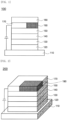
- FIG. 1, 2 and 3 are exemplary views of an organic electronic element according to an embodiment of the present invention.
- an organic electronic element (100) includes a first electrode (110) formed on a substrate (not shown) and organic material layers (120, 130, 140, 150) formed on the first electrode (110), and a metal patterning layer (190) formed on the organic material layer.
- the organic material layer may sequentially comprise a hole injection layer (120), a hole transport layer (130), an emitting layer (140), and an electron transport layer (150) on the first electrode (110).
- a hole blocking layer, an electron blocking layer, an emitting auxiliary layer (220), a buffer layer (210), an electron injection layer, etc. may be further included, and the electron transport layer (150) and the like may serve as a hole blocking layer.
- An electron injection layer may be formed on the electron transport layer (150) and may be excluded as necessary, but is not limited thereto.
- the metal patterning layer (190) including the compound represented by Formula (2-11) is formed on the organic material layer, and the second electrode (170) is not formed on the portion where the metal patterning layer is formed. That is, by using the compound represented by Formula (2-11) according to the present invention as a material for the metal patterning layer (190), only a portion or a selective portion to be formed of the second electrode material can be formed. Alternatively, the formation of the second electrode may be suppressed by forming the metal patterning layer on the organic material layer as shown in FIG. 3
- the cathode When the metal patterning layer is coated, the cathode is suppressed from being spread on the metal patterning layer depending on the structure of the compound and the content of fluorine comprising the metal patterning layer, and finally the cathode is spread in a very small amount or not.
- the light transmittance is used to determine the amount of the electrode material present on a certain surface in relation to the coating of the electrode (electrically conductive material). This is because the electrode material contains a metal, and an electrically conductive material such as a metal attenuates and/or absorbs light. Therefore, when the light transmittance exceeds 90% in the visible light region of the electromagnetic spectrum, the surface can be considered to be substantially free of an electrically conductive material.
- the pixel of the organic electronic element including metal patterning has high transmittance and does not emit light, so it acts as a blank, and due to its high transmittance, it is possible to transmit light to various optical sensors (optical sensors) under the substrate (TFT substrate) without optical noise.
- the emitting layer (140) may or may not be present in forming the organic layer on the substrate ITO, and since there is no second electrode (cathode) on the metal patterning layer, electricity does not pass through and light is not emitted.
- composition for metal patterning comprising 2 or more compounds of the same type or structure different from each other of the compound represented by Formula (2-11).
- the present invention provides an organic electronic element comprising a metal patterning layer including the compound represented by Formula (2-11).
- the organic material layer may be manufactured with a smaller number of layers by using various polymer materials, not by a deposition method, but by a solution process or a solvent process, such as a spin coating process or a nozzle printing process, inkjet printing process, slot coating process, dip coating process, roll-to-roll process, doctor blading process, screen printing process, or thermal transfer method, etc.
- the organic material layer according to the present invention can be formed by various methods.
- the organic electronic element may be selected from the group consisting of an organic electroluminescent device, an organic solar cell, an organic photoreceptor, an organic transistor, a device for monochromatic lighting, and a device for a quantum dot display.
- Another embodiment of the present invention may include a display device including the organic electronic element of the present invention described above, and an electronic device including a control unit for controlling the display device.
- the electronic device may be a current or future wired/wireless communication terminal, and includes all electronic devices such as a mobile communication terminal such as a mobile phone, a PDA, an electronic dictionary, a PMP, a remote control, a navigation system, a game machine, various TVs, and various computers.
- the compound belonging to Sub1 may be a compound as follows, but is not limited thereto, Table 1 shows FD-MS (Field Desorption-Mass Spectrometry) values or CAS numbers (hereinafter, denoted as CAS#) of the following compounds. In the case of known compounds in Table 1, it is indicated by CAS#, and in the case of unknown compounds, it is indicated by FD-MS.
- Table 1 shows FD-MS (Field Desorption-Mass Spectrometry) values or CAS numbers (hereinafter, denoted as CAS#) of the following compounds.
- CAS# Field Desorption-Mass Spectrometry
- CAS# Field Desorption-Mass Spectrometry
- the compound belonging to Sub2 may be a compound as follows, but is not limited thereto, and Table 2 shows FD-MS values or CAS# of the following compounds. In the case of known compounds in Table 2, it is indicated by CAS#, and in the case of unknown compounds, it is indicated by FD-MS.
- the organic layer is cooled to room temperature, extracted with diethyl ether and brine, and the remaining moisture is removed from the obtained organic layer with MgSO 4 . Then, the obtained organic layer was filtered under reduced pressure to obtain 17.7 g of a product (yield: 76%) through a silica gel column.
- 1,3-dibromo-5-chlorobenzene (30.0 g, 111 mmol), Cu (56.4 g, 888 mmol), DMSO (222 mL) and Sub2-4 (158 g, 244 mmol) were used for the synthesis of Sub3-2-a to obtain 99.8 g (yield: 78%) of the product.
- the compound belonging to Sub3 may be a compound as follows, but is not limited thereto, and Table 3 shows FD-MS values of the following compounds.
- C-1 N-([1,1'-biphenyl]-4-yl)-9,9-dimethyl-N-(4-(9-phenyl-9H-carbazol-3-yl)phenyl)-9H-fluoren-2-amine (hereinafter abbreviated as C-1) film was vacuum-deposited as an organic layer to form a thickness of 100 nm.
- the compound P1-22 of the present invention was vacuum-deposited to a thickness of 10 nm to form an electrode patterning layer.
- Yb as an electron injection layer on the electrode patterning layer
- a cathode was deposited with Mg and Ag in a weight of 1:9.
- N4,N4'-diphenyl-N4,N4'-bis(9-phenyl-9H-carbazol-3-yl)-[1,1'-biphenyl]-4,4'-diamine (hereinafter abbreviated as D-1) was deposited to a thickness of 70 nm to prepare a sample required for measurement of light transmittance.
- a light transmittance sample was prepared in the same manner as in Example 1, except that the compound of the present invention described in Table 5 was used instead of the compound P1-22 of the present invention as a material for the metal (electrode) patterning layer.
- a light transmittance sample was prepared in the same manner as in Example 1, except that the metal (electrode) patterning layer was not used.
- a light transmittance sample was prepared in the same manner as in Example 1, except that Comparative compound A was used instead of the compound P1-22 of the present invention as a material for the metal (electrode) patterning layer.
- Comparative Example 1 As a result of comparative evaluation with Comparative Example 2 and Examples 1 to 10, it was confirmed that the light transmittance was 69.13% to 72.38% for each lot. Also, it was confirmed that Comparative Compound A having an intramolecular fluorine content of 13.16% had lower light transmittance than Comparative Example 1 without a material containing intramolecular fluorine.
- Light transmittance is used to determine the amount of electrode material present on a surface in relation to the coating of an electrode (electrically conductive material). This is because the electrode material contains a metal, and an electrically conductive material such as a metal attenuates and/or absorbs light. Therefore, when the light transmittance exceeds 90% in the visible region of the electromagnetic spectrum, the surface can be considered to be substantially free of an electrically conductive material.
- a C-1 film as an organic layer was vacuum-deposited on a glass substrate to form a thickness of 100 nm.
- the compound P1-46 of the present invention was vacuum-deposited to a thickness of 10 nm to form a metal patterning layer.
- a cathode was deposited with Mg and Ag in a weight of 1:9.
- D-1 was deposited to a thickness of 70 nm to prepare a sample.
- An organic electronic element was manufactured in the same manner as in Example 11, except that the metal patterning layer was not used.
- a C-1 film as an organic layer was vacuum-deposited on a glass substrate to form a thickness of 100 nm.
- the compound P1-46 of the present invention was vacuum-deposited to a thickness of 10 nm to form a metal patterning layer.
- Mg and Ag were deposited in a weight of 1:9 on the metal patterning layer as a cathode.
- D-1 was deposited to a thickness of 70 nm to manufacture an organic electronic element.
- An organic electronic element was manufactured in the same manner as in Example 12, except that the metal patterning layer was not used.
- a C-1 film as an organic layer was vacuum-deposited on a glass substrate to form a thickness of 100 nm.
- the compound P1-46 of the present invention was vacuum-deposited to a thickness of 10 nm to form a metal patterning layer.
- Ag was deposited as a cathode.
- D-1 was deposited to a thickness of 70 nm to manufacture an organic electronic element.
- An organic electronic element was manufactured in the same manner as in Example 13, except that the metal patterning layer was not used.
- Table 6 The results of Table 6 were prepared based on the light transmittance measurement result graph of FIG. 6 .
- Table 6 compares the light transmittance of Comparative Example 3, Comparative Example 4, and Comparative Example 5 without using a metal patterning layer and Examples 11, 12, and 13 using the inventive compound P1-46 having an intramolecular fluorine content of 30% or more, to find out whether electrode patterning is possible according to the presence or absence of the electron injection layer metal and the electrode patterning change according to the type of metal of the cathode.
- Comparative Examples 3 and Example 11 were evaluated as a reference for the case where the electron injection layer metal Yb and the cathode electrode metal Mg were not used.
- the compound P1-46 of the present invention having an intramolecular fluorine content of 30% or more was used for the metal patterning layer, it was confirmed that the light transmittance was 95.63%.
- Example 12 As a result of performing Comparative Examples 4 and Example 12 to confirm the patterning performance of the metal of the cathode except for Yb, which is the metal used as the electron injection layer, in the absence of Yb, the electron injection layer metal, the light transmittance of Example 12 using the compound of the present invention was 96.68% (T%: 146%), and it was confirmed that the light transmittance (16% increase in T%) was higher than in Example 11, which is the case with the electron injection layer.
- Comparative Examples 5 and Example 13 using only Ag for the anode were compared with Comparative Examples 3 and 11, which are comparative groups.
- the light transmittance of the device using the compound of the present invention for the metal patterning layer was 135% (T%), confirming that the light transmittance was increased by 5% compared to Example 11.
- a C-1 film as an organic layer was vacuum-deposited on a glass substrate to form a thickness of 100 nm.
- the compound P1-22 of the present invention was vacuum-deposited to a thickness of 3 nm to form a metal patterning layer.
- a cathode was deposited with Mg and Ag in a weight of 1:9.
- D-1 was deposited to a thickness of 70 nm to prepare a sample.
- a sample was prepared in the same manner as in Example 14, except that the compound of the present invention described in Table 7 and the thickness described in Table 7 were used instead of the compound P1-22 of the present invention as a material for the metal patterning layer.
- a sample was prepared in the same manner as in Example 14, except that the metal patterning layer was not used.
- Table 7 The results of Table 7 were prepared based on the light transmittance measurement result graph of FIG. 7 . Table 7 was performed to confirm the change in light transmittance according to the thickness of the metal patterning layer using the compound of the present invention.
- the light transmittance results for each lot of Comparative Examples used in the evaluation of each material described in Examples 14 to 25 were described in the range (69.13% to 72.38%), and the light transmittance measured for each lot was calculated as 100% (T%), and the light transmittance of the example thereof was described as T%.
- Examples 14 to 25 when the compound of the present invention was used as a metal patterning layer having a thickness of 3 nm, 5 nm, and 10 nm, respectively, it was confirmed that there was no significant difference in the light transmittance of 95.01% to 96.47% (T% 132% to 140%). This will prevent problems such as performance degradation due to variations in deposition thickness that may occur in the deposition process when the compound of the present invention is used as a material for metal patterning.
- a sample was prepared by vacuum-depositing the compound P1-34 of the present invention to a thickness of 50 nm on a glass substrate.
- a sample was prepared in the same manner as in Example 26, except that the compound of the present invention described in Table 8 was used instead of the compound P1-34 of the present invention on a glass substrate.
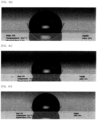
- the contact angle of the C-1 material which does not contain fluorine and has low light transmittance, is 83.2 ° , on the contrary, it was confirmed that all of the contact angles of the compounds of the present invention having a light transmittance of 90% or more were 100° or more (103.6 to 118.2).
- the results of Table 8 are judged to show the reason why the compound of the present invention having high light transmittance (90% or more) is suitable for metal patterning.
- adhesion is explained by the solid surface energy through wetting angle or the contact angle and wettability.
- Equation (1) is expressed as follows in the equation for the work of adhesion, Wa presented by Dupre.
- Wa gLV 1 + cos ⁇
- the compound of the present invention When the compound of the present invention is used as a material for metal patterning, it is determined that the adhesion of the metal (electrode) is reduced due to the low surface energy of the compound of the present invention, and the light transmittance is high.
- the present invention it is possible to manufacture an organic device having excellent device characteristics of high luminance, high light emission and long lifespan, and thus has industrial applicability.
Landscapes
- Chemical & Material Sciences (AREA)
- Organic Chemistry (AREA)
- Engineering & Computer Science (AREA)
- Materials Engineering (AREA)
- Physics & Mathematics (AREA)
- Spectroscopy & Molecular Physics (AREA)
- Manufacturing & Machinery (AREA)
- Electroluminescent Light Sources (AREA)
- Nitrogen Condensed Heterocyclic Rings (AREA)
- Pyridine Compounds (AREA)
- Plural Heterocyclic Compounds (AREA)
- Heterocyclic Carbon Compounds Containing A Hetero Ring Having Oxygen Or Sulfur (AREA)
- Organic Low-Molecular-Weight Compounds And Preparation Thereof (AREA)
Claims (12)
- Eine fluorierte Verbindung als Material für ein Metall(kathoden)-Strukturierungsmaterial, dargestellt durch Formel (2-11), und mit einem intramolekularen Fluorgehalt von 30 % oder mehr:
 1) b eine ganze Zahl von 0 bis 10 ist,2) x eine ganze Zahl von 5 bis 15 ist, y+z eine ganze Zahl von 2x+1 ist,3) A' eine C6-C30-Arylengruppe ist;4) R4 ausgewählt ist aus einer Gruppe bestehend aus einer C6-C30-Arylgruppe; einer Fluorenylgruppe; einer C2-C30-heterocyclischen Gruppe, die mindestens ein Heteroatom aus O, N, S, Si oder P beinhaltet; einer C1-C20-Alkylgruppe; und einer C1-C20-Alkoxylgruppe; oder R4 miteinander verbunden sein kann, um einen Ring zu bilden,5) wobei die Arylgruppe, die Arylengruppe, die heterocyclische Gruppe, die Fluorenylgruppe, die Alkylgruppe und die Alkoxylgruppe ferner mit einem oder mehreren Substituenten, ausgewählt aus der Gruppe bestehend aus jedem aus Deuterium; Halogen; einer C1-C20-Alkylgruppe; einer C2-C20-Alkenylgruppe; einer C6-C20-Arylgruppe; einer C6-C20-Arylgruppe, die mit Deuterium substituiert ist; und einer C2-C20-heterocyclischen Gruppe, substituiert sein können.
 - Die fluorierte Verbindung nach Anspruch 1, wobei die durch Formel (2-11) dargestellte Verbindung eine der folgenden Verbindungen ist.


- Die fluorierte Verbindung nach Anspruch 1, wobei der Fluorgehalt der durch Formel (2-11) dargestellten Verbindung 30% bis 80% beträgt.
- Die fluorierte Verbindung nach Anspruch 1, wobei der Kontaktwinkel der durch Formel (2-11) dargestellten Verbindung 90° bis 180° beträgt.
- Die fluorierte Verbindung nach Anspruch 1, wobei der Kontaktwinkel der durch Formel (2-11) dargestellten Verbindung 90° bis 150° beträgt.
- Ein organisches elektronisches Element, umfassend eine Anode; einen nicht lichtemittierenden Bereich; und einen lichtemittierenden Bereich; wobei der nicht lichtemittierende Bereich mindestens eine organische Materialschicht auf der Anode und eine Metallstrukturierungsschicht auf der organischen Materialschicht umfasst, und wobei auf der organischen Materialschicht der lichtemittierende Bereich ein Metall; eine Metallelektrode; oder Metall und Metallelektroden umfasst; und wobei die Metallstrukturierungsschicht durch Formel (2-11) nach Anspruch 1 dargestellt ist und einen intramolekularen Fluorgehalt von 30% oder mehr aufweist.
- Das organische elektronische Element nach Anspruch 6, wobei bei der Metallstrukturierung unter Verwendung der durch Formel (2-11) dargestellten Verbindung das Metall Ag umfasst.
- Das organische elektronische Element nach Anspruch 6, wobei bei der Metallstrukturierung unter Verwendung der durch Formel (2-11) dargestellten Verbindung das Metall Ag oder Mg umfasst.
- Das organische elektronische Element nach Anspruch 6, wobei ein Gemisch von zwei oder mehreren verschiedenen durch Formel (2-11) dargestellten Verbindungen verwendet wird.
- Eine elektronische Vorrichtung, umfassend: eine Anzeigevorrichtung, umfassend das organische elektronische Element nach Anspruch 6, und eine Steuereinheit zum Antrieb der Anzeigevorrichtung.
- Eine elektronische Vorrichtung nach Anspruch 10, wobei das organische elektronische Element aus der Gruppe bestehend aus einer organischen Elektrolumineszenzvorrichtung, einem organischen Transistor, einer monochromatischen Beleuchtungsvorrichtung und einer Quantenpunkt-Anzeigevorrichtung ausgewählt ist.
- Eine Zusammensetzung zur Metallstrukturierung, umfassend eine der fluorierten Verbindungen gemäß Formel (2-11) nach Anspruch 1 oder zwei oder mehrere Verbindungen mit voneinander verschiedenen Strukturen.
Applications Claiming Priority (6)
| Application Number | Priority Date | Filing Date | Title |
|---|---|---|---|
| KR1020210088124 | 2021-07-05 | ||
| KR1020210095913A KR102324529B1 (ko) | 2021-07-05 | 2021-07-21 | 유기전기 소자용 화합물, 이를 이용한 유기전기소자 및 그 전자 장치 |
| KR1020220022719A KR20230008590A (ko) | 2021-07-05 | 2022-02-22 | 유기전기 소자용 화합물, 이를 이용한 유기전기소자 및 그 전자 장치 |
| KR1020220022998A KR102412986B1 (ko) | 2021-07-05 | 2022-02-22 | 유기전기 소자용 화합물, 이를 이용한 유기전기소자 및 그 전자 장치 |
| PCT/KR2022/009054 WO2023282511A1 (ko) | 2021-07-05 | 2022-06-24 | 유기전기 소자용 화합물, 이를 이용한 유기전기소자 및 그 전자 장치 |
| EP22773092.6A EP4137474A4 (de) | 2021-07-05 | 2022-06-24 | Verbindung für organisches elektrisches element, organisches elektrisches element damit und elektronische vorrichtung dafür |
Related Parent Applications (2)
| Application Number | Title | Priority Date | Filing Date |
|---|---|---|---|
| EP22773092.6A Division EP4137474A4 (de) | 2021-07-05 | 2022-06-24 | Verbindung für organisches elektrisches element, organisches elektrisches element damit und elektronische vorrichtung dafür |
| EP22773092.6A Division-Into EP4137474A4 (de) | 2021-07-05 | 2022-06-24 | Verbindung für organisches elektrisches element, organisches elektrisches element damit und elektronische vorrichtung dafür |
Publications (3)
| Publication Number | Publication Date |
|---|---|
| EP4234524A2 EP4234524A2 (de) | 2023-08-30 |
| EP4234524A3 EP4234524A3 (de) | 2023-10-18 |
| EP4234524B1 true EP4234524B1 (de) | 2025-06-18 |
Family
ID=82247215
Family Applications (3)
| Application Number | Title | Priority Date | Filing Date |
|---|---|---|---|
| EP22773092.6A Pending EP4137474A4 (de) | 2021-07-05 | 2022-06-24 | Verbindung für organisches elektrisches element, organisches elektrisches element damit und elektronische vorrichtung dafür |
| EP23157255.3A Active EP4234524B1 (de) | 2021-07-05 | 2022-06-24 | Verbindung für ein organisches elektronisches element, elektronisches element damit und elektronische vorrichtung damit |
| EP23157287.6A Active EP4219436B1 (de) | 2021-07-05 | 2022-06-24 | Verbindung für ein organisches elektronisches element, organisches elektronisches element damit und elektronische vorrichtung damit |
Family Applications Before (1)
| Application Number | Title | Priority Date | Filing Date |
|---|---|---|---|
| EP22773092.6A Pending EP4137474A4 (de) | 2021-07-05 | 2022-06-24 | Verbindung für organisches elektrisches element, organisches elektrisches element damit und elektronische vorrichtung dafür |
Family Applications After (1)
| Application Number | Title | Priority Date | Filing Date |
|---|---|---|---|
| EP23157287.6A Active EP4219436B1 (de) | 2021-07-05 | 2022-06-24 | Verbindung für ein organisches elektronisches element, organisches elektronisches element damit und elektronische vorrichtung damit |
Country Status (6)
| Country | Link |
|---|---|
| US (1) | US20240217902A1 (de) |
| EP (3) | EP4137474A4 (de) |
| JP (1) | JP2023537800A (de) |
| KR (1) | KR102412986B1 (de) |
| CN (4) | CN116162015B (de) |
| WO (1) | WO2023282511A1 (de) |
Families Citing this family (5)
| Publication number | Priority date | Publication date | Assignee | Title |
|---|---|---|---|---|
| JP7524377B2 (ja) * | 2021-07-05 | 2024-07-29 | ドク サン ネオルクス カンパニー リミテッド | 有機電子素子用化合物、それを用いた有機電子素子及びその電子装置 |
| KR102608034B1 (ko) * | 2022-07-06 | 2023-12-01 | 덕산네오룩스 주식회사 | 금속패터닝층을 포함하는 유기전기소자 및 그 전자장치 |
| KR102577530B1 (ko) * | 2022-11-17 | 2023-09-12 | 덕산네오룩스 주식회사 | 금속패터닝층을 포함하는 유기전기소자 및 그 전자장치 |
| WO2024248132A1 (ja) * | 2023-05-31 | 2024-12-05 | 東ソー株式会社 | 金属パターニング用材料、複素環化合物、金属パターニング用薄膜、有機エレクトロルミネッセンス素子、電子機器、及び金属パターンの形成方法 |
| WO2025028487A1 (ja) * | 2023-08-01 | 2025-02-06 | 東ソー株式会社 | 金属パターニング用材料、複素環化合物、金属パターニング用薄膜、有機エレクトロルミネッセンス素子、電子機器、及び金属パターンの形成方法 |
Family Cites Families (24)
| Publication number | Priority date | Publication date | Assignee | Title |
|---|---|---|---|---|
| JP2531857B2 (ja) | 1990-11-30 | 1996-09-04 | 出光興産株式会社 | 有機エレクトロルミネッセンスデバイス |
| KR100260075B1 (ko) | 1998-06-02 | 2000-07-01 | 손욱 | 플루오로화 아릴기를 함유한 완전 공액된 유기 전기 발광 고분자 조성물 및 그 제조방법 |
| JP3716732B2 (ja) | 1999-12-27 | 2005-11-16 | 株式会社豊田中央研究所 | 有機化合物及びそれを用いた素子 |
| JP4940658B2 (ja) * | 2003-07-08 | 2012-05-30 | コニカミノルタホールディングス株式会社 | 有機エレクトロルミネッセンス素子 |
| US7781425B2 (en) * | 2004-02-18 | 2010-08-24 | Takasago International Coporation | Guanidine compound and asymmetric reaction using the same |
| KR100574450B1 (ko) | 2004-06-03 | 2006-04-26 | 동우 화인켐 주식회사 | 불소계 가지체를 포함하는 유기 전기발광 소자용 발광화합물 |
| KR101189137B1 (ko) * | 2005-12-26 | 2012-10-10 | 엘지디스플레이 주식회사 | 유기전계 발광소자와 그 제조방법 |
| KR100846597B1 (ko) | 2007-01-24 | 2008-07-16 | 삼성에스디아이 주식회사 | 함불소 화합물 및 탄소계 화합물을 포함하는 유기 발광소자 |
| WO2011050048A2 (en) * | 2009-10-20 | 2011-04-28 | Cornell Research Foundation, Inc. | Methods of making patterned structures of fluorine-containing polymeric materials and fluorine-containing polymers |
| JP5590897B2 (ja) * | 2010-01-28 | 2014-09-17 | ユー・ディー・シー アイルランド リミテッド | 有機電界発光素子 |
| DE102011015813A1 (de) * | 2010-04-17 | 2011-10-20 | Merck Patent Gmbh | Flüssigkristalline Verbindungen und flüssigkristalline Medien |
| JP5896935B2 (ja) * | 2012-08-27 | 2016-03-30 | 富士フイルム株式会社 | 有機薄膜トランジスタ、有機半導体薄膜および有機半導体材料 |
| JP5975834B2 (ja) * | 2012-10-15 | 2016-08-23 | 富士フイルム株式会社 | 有機薄膜トランジスタ、有機半導体薄膜および有機半導体材料 |
| JP6091151B2 (ja) * | 2012-10-15 | 2017-03-08 | 富士フイルム株式会社 | 有機薄膜トランジスタ、有機半導体薄膜および有機半導体材料 |
| US9249071B2 (en) * | 2013-02-06 | 2016-02-02 | Colorado State University Research Foundation | Modified polyaromatic hydrocarbons and polyheterocyclics for optoelectronics |
| CN105985364B (zh) * | 2015-02-15 | 2019-11-29 | 中国科学院上海药物研究所 | 一种手性双烯配体及其制备方法 |
| US11466026B2 (en) * | 2017-12-13 | 2022-10-11 | Beijing Summer Sprout Technology Co., Ltd. | Organic electroluminescent materials and devices |
| CN119504783A (zh) * | 2017-12-13 | 2025-02-25 | 北京夏禾科技有限公司 | 有机电致发光材料和器件 |
| US11751415B2 (en) * | 2018-02-02 | 2023-09-05 | Oti Lumionics Inc. | Materials for forming a nucleation-inhibiting coating and devices incorporating same |
| US20200399246A1 (en) * | 2018-03-13 | 2020-12-24 | Kyushu University, National University Corporation | Charge transport material, compound, and organic light-emitting element |
| CN109942361B (zh) * | 2018-04-10 | 2022-03-15 | 南京大学 | 一种芳基取代的三亚苯类化合物的制备方法及其应用 |
| TW202110787A (zh) * | 2019-08-27 | 2021-03-16 | 大陸商東麗先端材料研究開發(中國)有限公司 | 芳香胺化合物、覆蓋層材料及發光元件 |
| CN111377977B (zh) * | 2020-04-23 | 2023-01-31 | 安徽工业大学 | 一种4,7-二芳基噻吩并[2,3-d]哒嗪类环金属铱配合物及其制备方法 |
| TW202222748A (zh) * | 2020-09-30 | 2022-06-16 | 德商麥克專利有限公司 | 用於結構化有機電致發光裝置的功能層之化合物 |
-
2022
- 2022-02-22 KR KR1020220022998A patent/KR102412986B1/ko active Active
- 2022-06-24 EP EP22773092.6A patent/EP4137474A4/de active Pending
- 2022-06-24 EP EP23157255.3A patent/EP4234524B1/de active Active
- 2022-06-24 CN CN202310139903.7A patent/CN116162015B/zh active Active
- 2022-06-24 WO PCT/KR2022/009054 patent/WO2023282511A1/ko not_active Ceased
- 2022-06-24 JP JP2022559772A patent/JP2023537800A/ja not_active Withdrawn
- 2022-06-24 CN CN202310097924.7A patent/CN116082119B/zh active Active
- 2022-06-24 EP EP23157287.6A patent/EP4219436B1/de active Active
- 2022-06-24 US US17/995,065 patent/US20240217902A1/en active Pending
- 2022-06-24 CN CN202280003311.6A patent/CN115776979A/zh active Pending
- 2022-06-24 CN CN202510670195.9A patent/CN120590236A/zh active Pending
Also Published As
| Publication number | Publication date |
|---|---|
| EP4219436A3 (de) | 2023-10-18 |
| CN116162015A (zh) | 2023-05-26 |
| EP4234524A3 (de) | 2023-10-18 |
| CN116082119A (zh) | 2023-05-09 |
| EP4234524A2 (de) | 2023-08-30 |
| EP4219436A2 (de) | 2023-08-02 |
| KR102412986B1 (ko) | 2022-06-27 |
| JP2023537800A (ja) | 2023-09-06 |
| WO2023282511A1 (ko) | 2023-01-12 |
| CN116082119B (zh) | 2024-10-01 |
| CN116162015B (zh) | 2024-03-26 |
| EP4137474A1 (de) | 2023-02-22 |
| EP4219436B1 (de) | 2025-02-12 |
| CN115776979A (zh) | 2023-03-10 |
| EP4137474A4 (de) | 2024-08-21 |
| US20240217902A1 (en) | 2024-07-04 |
| CN120590236A (zh) | 2025-09-05 |
Similar Documents
| Publication | Publication Date | Title |
|---|---|---|
| EP4234524B1 (de) | Verbindung für ein organisches elektronisches element, elektronisches element damit und elektronische vorrichtung damit | |
| KR102324529B1 (ko) | 유기전기 소자용 화합물, 이를 이용한 유기전기소자 및 그 전자 장치 | |
| CN105993082B (zh) | 包含磷杂庚环基质化合物的半导体材料 | |
| CN113773209B (zh) | 一种三芳胺衍生物及其有机电致发光器件 | |
| CN105837498B (zh) | 一种含有二甲基蒽结构的有机化合物及其应用 | |
| CN109694378B (zh) | 多杂芳族化合物及使用其的有机电激发光元件 | |
| CN111777516A (zh) | 一种有机发光化合物及其制备方法和应用 | |
| KR101950893B1 (ko) | 유기전기 소자용 화합물, 이를 이용한 유기전기소자 및 그 전자 장치 | |
| CN111662312A (zh) | 一种化合物、热激活延迟荧光材料及其应用 | |
| CN108948028B (zh) | 一种含氧硫杂环三芳胺化合物的有机光电器件及其应用 | |
| CN115806546B (zh) | 一种有机化合物及包含其的有机电致发光器件 | |
| TWI403534B (zh) | 包含共軛基團之單體及聚合物及其製造方法 | |
| JP2025129160A (ja) | 有機電子素子用化合物、それを用いた有機電子素子及びその電子装置 | |
| CN110272410A (zh) | 一种化合物、发光材料、有机光电装置以及电子设备 | |
| CN106800557B (zh) | 一种二氧吩恶噻类衍生物及其制备方法和应用 | |
| Yang et al. | New insight into intramolecular conjugation in the design of efficient blue materials: from the control of emission to absorption | |
| US20230189636A1 (en) | Compound for organic electronic element, organic electronic element using the same, and an electronic device thereof | |
| CN114628600B (zh) | 一种有机电致发光元件 | |
| CN115703759B (zh) | 一种含三嗪和嘧啶基团的化合物及包含其的有机电致发光器件 | |
| US20250176355A1 (en) | Organic electronic element comprising an emitting area and a transmission area | |
| CN114276379A (zh) | 一种有机发光化合物及有机电致发光器件 | |
| CN119684306A (zh) | 一种有机电致发光化合物及其应用 | |
| CN118459433A (zh) | 一种芴芳胺类有机发光材料和有机电致发光器件 |
Legal Events
| Date | Code | Title | Description |
|---|---|---|---|
| PUAI | Public reference made under article 153(3) epc to a published international application that has entered the european phase |
Free format text: ORIGINAL CODE: 0009012 |
|
| STAA | Information on the status of an ep patent application or granted ep patent |
Free format text: STATUS: REQUEST FOR EXAMINATION WAS MADE |
|
| 17P | Request for examination filed |
Effective date: 20230317 |
|
| AC | Divisional application: reference to earlier application |
Ref document number: 4137474 Country of ref document: EP Kind code of ref document: P |
|
| AK | Designated contracting states |
Kind code of ref document: A2 Designated state(s): AL AT BE BG CH CY CZ DE DK EE ES FI FR GB GR HR HU IE IS IT LI LT LU LV MC MK MT NL NO PL PT RO RS SE SI SK SM TR |
|
| PUAL | Search report despatched |
Free format text: ORIGINAL CODE: 0009013 |
|
| AK | Designated contracting states |
Kind code of ref document: A3 Designated state(s): AL AT BE BG CH CY CZ DE DK EE ES FI FR GB GR HR HU IE IS IT LI LT LU LV MC MK MT NL NO PL PT RO RS SE SI SK SM TR |
|
| P01 | Opt-out of the competence of the unified patent court (upc) registered |
Effective date: 20230907 |
|
| RIC1 | Information provided on ipc code assigned before grant |
Ipc: C07F 7/08 20060101ALI20230913BHEP Ipc: H10K 71/00 20230101ALI20230913BHEP Ipc: C07C 43/225 20060101ALI20230913BHEP Ipc: C07C 25/18 20060101ALI20230913BHEP Ipc: C07C 25/22 20060101ALI20230913BHEP Ipc: C07C 22/08 20060101AFI20230913BHEP |
|
| STAA | Information on the status of an ep patent application or granted ep patent |
Free format text: STATUS: EXAMINATION IS IN PROGRESS |
|
| 17Q | First examination report despatched |
Effective date: 20240705 |
|
| REG | Reference to a national code |
Ref country code: DE Ref legal event code: R079 Free format text: PREVIOUS MAIN CLASS: C07C0022080000 Ipc: C09K0011060000 Ref document number: 602022016252 Country of ref document: DE |
|
| GRAP | Despatch of communication of intention to grant a patent |
Free format text: ORIGINAL CODE: EPIDOSNIGR1 |
|
| STAA | Information on the status of an ep patent application or granted ep patent |
Free format text: STATUS: GRANT OF PATENT IS INTENDED |
|
| RIC1 | Information provided on ipc code assigned before grant |
Ipc: C07D 493/04 20060101ALI20250114BHEP Ipc: C07D 487/04 20060101ALI20250114BHEP Ipc: C07D 333/78 20060101ALI20250114BHEP Ipc: C07D 333/50 20060101ALI20250114BHEP Ipc: C07D 311/96 20060101ALI20250114BHEP Ipc: C07D 239/26 20060101ALI20250114BHEP Ipc: C07D 221/20 20060101ALI20250114BHEP Ipc: C07D 217/14 20060101ALI20250114BHEP Ipc: C07D 215/12 20060101ALI20250114BHEP Ipc: C07D 213/26 20060101ALI20250114BHEP Ipc: C07D 209/94 20060101ALI20250114BHEP Ipc: C07D 209/86 20060101ALI20250114BHEP Ipc: C07C 43/174 20060101ALI20250114BHEP Ipc: C07F 7/08 20060101ALI20250114BHEP Ipc: H10K 71/00 20230101ALI20250114BHEP Ipc: C07C 43/225 20060101ALI20250114BHEP Ipc: C07C 25/18 20060101ALI20250114BHEP Ipc: C07C 25/22 20060101ALI20250114BHEP Ipc: C07C 22/08 20060101ALI20250114BHEP Ipc: C09K 11/06 20060101AFI20250114BHEP |
|
| INTG | Intention to grant announced |
Effective date: 20250204 |
|
| GRAS | Grant fee paid |
Free format text: ORIGINAL CODE: EPIDOSNIGR3 |
|
| GRAA | (expected) grant |
Free format text: ORIGINAL CODE: 0009210 |
|
| STAA | Information on the status of an ep patent application or granted ep patent |
Free format text: STATUS: THE PATENT HAS BEEN GRANTED |
|
| AC | Divisional application: reference to earlier application |
Ref document number: 4137474 Country of ref document: EP Kind code of ref document: P |
|
| AK | Designated contracting states |
Kind code of ref document: B1 Designated state(s): AL AT BE BG CH CY CZ DE DK EE ES FI FR GB GR HR HU IE IS IT LI LT LU LV MC MK MT NL NO PL PT RO RS SE SI SK SM TR |
|
| REG | Reference to a national code |
Ref country code: GB Ref legal event code: FG4D |
|
| REG | Reference to a national code |
Ref country code: CH Ref legal event code: EP |
|
| REG | Reference to a national code |
Ref country code: DE Ref legal event code: R096 Ref document number: 602022016252 Country of ref document: DE |
|
| REG | Reference to a national code |
Ref country code: CH Ref legal event code: EP |
|
| REG | Reference to a national code |
Ref country code: IE Ref legal event code: FG4D |
|
| PGFP | Annual fee paid to national office [announced via postgrant information from national office to epo] |
Ref country code: FR Payment date: 20250623 Year of fee payment: 4 |
|
| PGFP | Annual fee paid to national office [announced via postgrant information from national office to epo] |
Ref country code: AT Payment date: 20250721 Year of fee payment: 4 |
|
| PG25 | Lapsed in a contracting state [announced via postgrant information from national office to epo] |
Ref country code: FI Free format text: LAPSE BECAUSE OF FAILURE TO SUBMIT A TRANSLATION OF THE DESCRIPTION OR TO PAY THE FEE WITHIN THE PRESCRIBED TIME-LIMIT Effective date: 20250618 |
|
| PGFP | Annual fee paid to national office [announced via postgrant information from national office to epo] |
Ref country code: DE Payment date: 20250630 Year of fee payment: 4 |
|
| REG | Reference to a national code |
Ref country code: LT Ref legal event code: MG9D |
|
| PG25 | Lapsed in a contracting state [announced via postgrant information from national office to epo] |
Ref country code: GR Free format text: LAPSE BECAUSE OF FAILURE TO SUBMIT A TRANSLATION OF THE DESCRIPTION OR TO PAY THE FEE WITHIN THE PRESCRIBED TIME-LIMIT Effective date: 20250919 Ref country code: NO Free format text: LAPSE BECAUSE OF FAILURE TO SUBMIT A TRANSLATION OF THE DESCRIPTION OR TO PAY THE FEE WITHIN THE PRESCRIBED TIME-LIMIT Effective date: 20250918 |
|
| PG25 | Lapsed in a contracting state [announced via postgrant information from national office to epo] |
Ref country code: BG Free format text: LAPSE BECAUSE OF FAILURE TO SUBMIT A TRANSLATION OF THE DESCRIPTION OR TO PAY THE FEE WITHIN THE PRESCRIBED TIME-LIMIT Effective date: 20250618 |
|
| PG25 | Lapsed in a contracting state [announced via postgrant information from national office to epo] |
Ref country code: HR Free format text: LAPSE BECAUSE OF FAILURE TO SUBMIT A TRANSLATION OF THE DESCRIPTION OR TO PAY THE FEE WITHIN THE PRESCRIBED TIME-LIMIT Effective date: 20250618 |
|
| PG25 | Lapsed in a contracting state [announced via postgrant information from national office to epo] |
Ref country code: RS Free format text: LAPSE BECAUSE OF FAILURE TO SUBMIT A TRANSLATION OF THE DESCRIPTION OR TO PAY THE FEE WITHIN THE PRESCRIBED TIME-LIMIT Effective date: 20250918 |
|
| REG | Reference to a national code |
Ref country code: NL Ref legal event code: MP Effective date: 20250618 |
|
| PG25 | Lapsed in a contracting state [announced via postgrant information from national office to epo] |
Ref country code: LV Free format text: LAPSE BECAUSE OF FAILURE TO SUBMIT A TRANSLATION OF THE DESCRIPTION OR TO PAY THE FEE WITHIN THE PRESCRIBED TIME-LIMIT Effective date: 20250618 |
|
| PG25 | Lapsed in a contracting state [announced via postgrant information from national office to epo] |
Ref country code: NL Free format text: LAPSE BECAUSE OF FAILURE TO SUBMIT A TRANSLATION OF THE DESCRIPTION OR TO PAY THE FEE WITHIN THE PRESCRIBED TIME-LIMIT Effective date: 20250618 |
|
| PG25 | Lapsed in a contracting state [announced via postgrant information from national office to epo] |
Ref country code: PT Free format text: LAPSE BECAUSE OF FAILURE TO SUBMIT A TRANSLATION OF THE DESCRIPTION OR TO PAY THE FEE WITHIN THE PRESCRIBED TIME-LIMIT Effective date: 20251020 |
|
| REG | Reference to a national code |
Ref country code: AT Ref legal event code: MK05 Ref document number: 1804186 Country of ref document: AT Kind code of ref document: T Effective date: 20250618 |
|
| PG25 | Lapsed in a contracting state [announced via postgrant information from national office to epo] |
Ref country code: IS Free format text: LAPSE BECAUSE OF FAILURE TO SUBMIT A TRANSLATION OF THE DESCRIPTION OR TO PAY THE FEE WITHIN THE PRESCRIBED TIME-LIMIT Effective date: 20251018 |
|
| PG25 | Lapsed in a contracting state [announced via postgrant information from national office to epo] |
Ref country code: AT Free format text: LAPSE BECAUSE OF FAILURE TO SUBMIT A TRANSLATION OF THE DESCRIPTION OR TO PAY THE FEE WITHIN THE PRESCRIBED TIME-LIMIT Effective date: 20250618 Ref country code: SM Free format text: LAPSE BECAUSE OF FAILURE TO SUBMIT A TRANSLATION OF THE DESCRIPTION OR TO PAY THE FEE WITHIN THE PRESCRIBED TIME-LIMIT Effective date: 20250618 |
|
| PG25 | Lapsed in a contracting state [announced via postgrant information from national office to epo] |
Ref country code: CZ Free format text: LAPSE BECAUSE OF FAILURE TO SUBMIT A TRANSLATION OF THE DESCRIPTION OR TO PAY THE FEE WITHIN THE PRESCRIBED TIME-LIMIT Effective date: 20250618 |
|
| PG25 | Lapsed in a contracting state [announced via postgrant information from national office to epo] |
Ref country code: PL Free format text: LAPSE BECAUSE OF FAILURE TO SUBMIT A TRANSLATION OF THE DESCRIPTION OR TO PAY THE FEE WITHIN THE PRESCRIBED TIME-LIMIT Effective date: 20250618 |
|
| PG25 | Lapsed in a contracting state [announced via postgrant information from national office to epo] |
Ref country code: EE Free format text: LAPSE BECAUSE OF FAILURE TO SUBMIT A TRANSLATION OF THE DESCRIPTION OR TO PAY THE FEE WITHIN THE PRESCRIBED TIME-LIMIT Effective date: 20250618 |
|
| PG25 | Lapsed in a contracting state [announced via postgrant information from national office to epo] |
Ref country code: SK Free format text: LAPSE BECAUSE OF FAILURE TO SUBMIT A TRANSLATION OF THE DESCRIPTION OR TO PAY THE FEE WITHIN THE PRESCRIBED TIME-LIMIT Effective date: 20250618 |
|
| REG | Reference to a national code |
Ref country code: CH Ref legal event code: H13 Free format text: ST27 STATUS EVENT CODE: U-0-0-H10-H13 (AS PROVIDED BY THE NATIONAL OFFICE) Effective date: 20260127 |
|
| PG25 | Lapsed in a contracting state [announced via postgrant information from national office to epo] |
Ref country code: ES Free format text: LAPSE BECAUSE OF FAILURE TO SUBMIT A TRANSLATION OF THE DESCRIPTION OR TO PAY THE FEE WITHIN THE PRESCRIBED TIME-LIMIT Effective date: 20250618 |