EP4138055A1 - Fahrzeugsteuerungsverfahren, fahrzeugsteuerungsvorrichtung und fahrzeugsteuerungssystem - Google Patents
Fahrzeugsteuerungsverfahren, fahrzeugsteuerungsvorrichtung und fahrzeugsteuerungssystem Download PDFInfo
- Publication number
- EP4138055A1 EP4138055A1 EP20930842.8A EP20930842A EP4138055A1 EP 4138055 A1 EP4138055 A1 EP 4138055A1 EP 20930842 A EP20930842 A EP 20930842A EP 4138055 A1 EP4138055 A1 EP 4138055A1
- Authority
- EP
- European Patent Office
- Prior art keywords
- order
- vehicle
- stopping
- vehicles
- arrival
- Prior art date
- Legal status (The legal status is an assumption and is not a legal conclusion. Google has not performed a legal analysis and makes no representation as to the accuracy of the status listed.)
- Granted
Links
Images




Classifications
-
- G—PHYSICS
- G08—SIGNALLING
- G08G—TRAFFIC CONTROL SYSTEMS
- G08G1/00—Traffic control systems for road vehicles
- G08G1/22—Platooning, i.e. convoy of communicating vehicles
-
- G—PHYSICS
- G06—COMPUTING OR CALCULATING; COUNTING
- G06Q—INFORMATION AND COMMUNICATION TECHNOLOGY [ICT] SPECIALLY ADAPTED FOR ADMINISTRATIVE, COMMERCIAL, FINANCIAL, MANAGERIAL OR SUPERVISORY PURPOSES; SYSTEMS OR METHODS SPECIALLY ADAPTED FOR ADMINISTRATIVE, COMMERCIAL, FINANCIAL, MANAGERIAL OR SUPERVISORY PURPOSES, NOT OTHERWISE PROVIDED FOR
- G06Q10/00—Administration; Management
- G06Q10/04—Forecasting or optimisation specially adapted for administrative or management purposes, e.g. linear programming or "cutting stock problem"
- G06Q10/047—Optimisation of routes or paths, e.g. travelling salesman problem
-
- G—PHYSICS
- G06—COMPUTING OR CALCULATING; COUNTING
- G06Q—INFORMATION AND COMMUNICATION TECHNOLOGY [ICT] SPECIALLY ADAPTED FOR ADMINISTRATIVE, COMMERCIAL, FINANCIAL, MANAGERIAL OR SUPERVISORY PURPOSES; SYSTEMS OR METHODS SPECIALLY ADAPTED FOR ADMINISTRATIVE, COMMERCIAL, FINANCIAL, MANAGERIAL OR SUPERVISORY PURPOSES, NOT OTHERWISE PROVIDED FOR
- G06Q50/00—Information and communication technology [ICT] specially adapted for implementation of business processes of specific business sectors, e.g. utilities or tourism
- G06Q50/40—Business processes related to the transportation industry
-
- G—PHYSICS
- G08—SIGNALLING
- G08G—TRAFFIC CONTROL SYSTEMS
- G08G1/00—Traffic control systems for road vehicles
- G08G1/09—Arrangements for giving variable traffic instructions
- G08G1/0962—Arrangements for giving variable traffic instructions having an indicator mounted inside the vehicle, e.g. giving voice messages
- G08G1/0968—Systems involving transmission of navigation instructions to the vehicle
- G08G1/096805—Systems involving transmission of navigation instructions to the vehicle where the transmitted instructions are used to compute a route
- G08G1/096811—Systems involving transmission of navigation instructions to the vehicle where the transmitted instructions are used to compute a route where the route is computed offboard
-
- G—PHYSICS
- G08—SIGNALLING
- G08G—TRAFFIC CONTROL SYSTEMS
- G08G1/00—Traffic control systems for road vehicles
- G08G1/09—Arrangements for giving variable traffic instructions
- G08G1/0962—Arrangements for giving variable traffic instructions having an indicator mounted inside the vehicle, e.g. giving voice messages
- G08G1/0968—Systems involving transmission of navigation instructions to the vehicle
- G08G1/096833—Systems involving transmission of navigation instructions to the vehicle where different aspects are considered when computing the route
- G08G1/096844—Systems involving transmission of navigation instructions to the vehicle where different aspects are considered when computing the route where the complete route is dynamically recomputed based on new data
-
- G—PHYSICS
- G08—SIGNALLING
- G08G—TRAFFIC CONTROL SYSTEMS
- G08G1/00—Traffic control systems for road vehicles
- G08G1/20—Monitoring the location of vehicles belonging to a group, e.g. fleet of vehicles, countable or determined number of vehicles
-
- G—PHYSICS
- G08—SIGNALLING
- G08G—TRAFFIC CONTROL SYSTEMS
- G08G1/00—Traffic control systems for road vehicles
- G08G1/20—Monitoring the location of vehicles belonging to a group, e.g. fleet of vehicles, countable or determined number of vehicles
- G08G1/202—Dispatching vehicles on the basis of a location, e.g. taxi dispatching
-
- G—PHYSICS
- G16—INFORMATION AND COMMUNICATION TECHNOLOGY [ICT] SPECIALLY ADAPTED FOR SPECIFIC APPLICATION FIELDS
- G16Y—INFORMATION AND COMMUNICATION TECHNOLOGY SPECIALLY ADAPTED FOR THE INTERNET OF THINGS [IoT]
- G16Y10/00—Economic sectors
- G16Y10/40—Transportation
Definitions
- the present invention relates to a vehicle control method, a vehicle control device, and a vehicle control system.
- Patent Document 1 A method for reserving a parking space by a user is known from the prior art (Patent Document 1).
- the method disclosed in Patent Document 1 improves the serviceability of parking space reservations by assisting a user's arrival at a parking space reserved by the user.
- Patent Document 1 Japanese Laid-Open Patent Application No. 9-16898
- Patent Document 1 does not take into consideration the relationship between the order of arrival and the stopping order at the stop location when a plurality of users have made reservations. There is the risk that spatial utilization efficiency will be worse than when the stopping order and the arrival order are the same.
- an object of the present invention is to provide a vehicle control method, a vehicle control device, and a vehicle control system that can use a stopping area efficiently.
- a vehicle control method sets a stopping order of a plurality of vehicles, which indicates a stopping order at a stop location in a stopping area; estimates, based on position information of the plurality of vehicles, an arrival order, which indicates the order in which the plurality of vehicles arrive at a prescribed location; determines whether the estimated arrival order differs from the stopping order; and if it is determined that the arrival order differs from the stopping order, controls the travel of at least one vehicle from among the plurality of vehicles, so that the arrival order becomes the same as the stopping order by the time the plurality of vehicles arrive at the prescribed location.
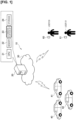
- a configuration example of a vehicle control system 10 according to the present embodiment will be described with reference to Figures 1 to 2 .
- the vehicle control system 10 includes a controller 20, a communication network 30, vehicles 40 to 42, a user 50, a terminal device 60 in the possession of the user 50, a user 51, and a terminal device 61 in the possession of the user 51.
- a controller 20 the vehicle control system 10 includes a controller 20, a communication network 30, vehicles 40 to 42, a user 50, a terminal device 60 in the possession of the user 50, a user 51, and a terminal device 61 in the possession of the user 51.
- there are three vehicles but no limitation is implied thereby.
- the vehicle control system 10 may include four or more vehicles.
- there are two users but there are numerous users who are not shown. The numerous users who are not shown, like the users 50 and 51, also possess terminal devices.
- the controller 20 communicates with the vehicles 40 to 42 and the terminal devices 60 to 61 via the communication network 30.
- the controller 20 comprises a CPU (Central Processing Unit) 21, a memory 22, a communication I/F 23, and a storage 24, and these components are electrically connected via a bus, etc., not shown in the figure.
- the installation location of the controller 20 is not particularly limited, the controller 20 is installed, for example, in a business that operates the vehicles 40 to 42.
- the CPU 21 loads various programs stored in the storage 24, etc., into the memory 22, and executes various instructions contained in the programs.
- the memory 22 is a storage medium such as a ROM (Read Only Memory), RAM (Random Access Memory), etc.
- the storage 24 is a storage medium such as an HDD (Hard Disk Drive).
- Some (or all) of the vehicle control system 10, including the functions of the controller 20, described below, may be provided by means of an application (Software as a Service (SaaS), etc.) located on the communication network 30.
- the controller 20 may be a server.
- the communication I/F 23 is implemented as hardware, such as a network adapter, various types of communication software, or a combination thereof, and is configured to realize wired or wireless communication via the communication network 30, etc.
- the communication network 30 may be configured by a wireless and/or wired method, and the communication network 30 may include the Internet.
- the controller 20, the vehicles 40 to 42, and the terminal devices 60 to 61 are connected to the communication network 30 by means of a wireless communication method.
- the vehicles 40 to 42 are described as autonomous driving vehicles without a driver.
- the vehicles 40 to 42 are, for example, taxis, although the vehicles are not limited to taxis. Therefore, the vehicles 40 to 42 may be described as robot taxis or unmanned taxis.
- the vehicles 40 to 42 are also not limited to autonomous driving vehicles and may be ordinary vehicles without an autonomous driving function. Alternatively, the vehicles 40 to 42 may be vehicles that can switch between autonomous driving and manual driving.
- the vehicles 40 to 42 may be private cars.
- the user 50 requests (reserves) a vehicle using the terminal device 60.
- a vehicle dispatch application (hereinafter referred to simply as a vehicle dispatch app) used for reserving vehicles is installed in the terminal device 60, and the user 50 requests a vehicle using the vehicle dispatch app.
- the user 51 also requests a vehicle using the terminal device 61. This type of vehicle request may be referred to as a vehicle dispatch request.
- the terminal device 60 comprises a communication I/F 601 and a vehicle dispatch app 602.
- the communication I/F 601 has the same configuration as the communication I/F 23 and communicates with the controller 20 via the communication network 30.
- the terminal device 60 is, for example, a smartphone, a tablet, or the like. Further, the terminal device 60 may also be a wearable device.
- the terminal device 61 (not shown) includes a vehicle dispatch app 603 (not shown).
- the vehicle dispatch app 602 is used for requesting a vehicle, as described above.
- the vehicle dispatch app 602 functions as a user interface when the user 50 requests a vehicle.
- the vehicle dispatch app 602 is realized by the CPU provided in the terminal device 60 reading and executing a dedicated application program from a storage provided in the terminal device 60.
- the user 50 inputs a desired boarding location, boarding time, deboarding location, etc., into the vehicle dispatch app 602 to request the vehicle.
- the vehicle dispatch app 602 transmits a dispatch request to the controller 20 in accordance with the input from the user 50.
- the terminal device 60 displays on a display provided in the terminal device 60 various types of information (dispatch request receipt, scheduled arrival time, scheduled travel route, etc.) included in the signal returned from the controller 20 in response to the dispatch request.
- the method of realizing the vehicle dispatch app 602 is not limited in this way.
- the terminal device 60 may access a server that provides the functions of the vehicle dispatch app 602, receive the functions provided, and display the results of executing the functions transmitted from the server in a browser.
- the CPU 21 of the controller 20 is provided with, as examples of a plurality of functions, a vehicle dispatch acceptance unit 211, an assignment unit 212, a route calculation unit 213, a stopping order setting unit 214, an arrival order estimation unit 215, and a travel control unit 216.
- a user database 242 is stored in the storage 24 of the controller 20.
- the vehicle dispatch acceptance unit 211 accepts a request from the user 50 via the terminal device 60. Further, the vehicle dispatch acceptance unit 211 has the function of notifying the terminal device 60 of the acceptance of the request from the user 50, as well as of the scheduled arrival time to the boarding location, the scheduled travel route to the boarding location, etc. Further, the vehicle dispatch acceptance unit 211 accepts a request from the user 51 via the terminal device 61.
- the assignment unit 212 assigns a suitable vehicle from among the plurality of vehicles 40 to 42 based on the accepted dispatch request. For example, for reasons of efficiency, the assignment unit 212 can assign the unoccupied vehicle 40 that, of the plurality of vehicles 40 to 42, is closest to the boarding location desired by the user 50. Further, if the user 50 has specified a vehicle type, the assignment unit 212 assigns the specified vehicle type. GPS receivers are installed in the vehicles 40 to 42, and the location information of the vehicles 40 to 42 is transmitted to the controller 20 at any given time.
- the route calculation unit 213 calculates a route from the current location of the vehicle 40 to the boarding location desired by the user 50 and sends an instruction to the vehicle 40 to travel to the boarding location desired by the user 50 via the calculated route.
- the route calculated by the route calculation unit 213 is, for example, the route via which the boarding location desired by the user 50 can be reached from the current location of the vehicle 40 in the shortest amount of time.
- the stopping order setting unit 214 sets a stopping order, which indicates the order in which a plurality of vehicles are to stop at the boarding location.
- the boarding locations of the vehicles 40, 41 reserved by the users 50, 51, respectively may be the same.
- the stopping order setting unit 214 sets the stopping order, which indicates the order in which the plurality of vehicles 40, 41 are to stop at the boarding location.
- the arrival order estimation unit 215 acquires the position information of the vehicles 40, 41 and estimates, based on the acquired position information, the arrival order, which indicates the order in which the vehicles 40, 41 will arrive at the prescribed location.
- the arrival order estimation unit 215 transmits a signal indicating the estimated arrival order to the travel control unit 216.
- the travel control unit 216 receives the signal indicating the arrival order and determines whether the arrival order differs from the stopping order. If it is determined that the arrival order differs from the stopping order, the travel control unit 216 controls the travel of the vehicles 40, 41 such that by the time the vehicles 40, 41 arrive at the prescribed location, the arrival order will be the same as the stopping order. Specifically, the travel control unit 216 outputs a command to the vehicles 40, 41 to make the arrival order and the stopping order the same.
- the vehicle 40 is equipped with a communication I/F 401 and a vehicle ECU (Electronic Control Unit) 402.
- the communication I/F 401 has the same configuration as the communication I/F 23 and the communication I/F 601, and communicates with the controller 20 via the communication network 30.
- the vehicle ECU 402 is a computer for controlling the vehicle 40.
- the vehicle ECU 402 controls various actuators (brake actuator, accelerator pedal actuator, steering actuator, etc.) based on the commands from the controller 20.
- a stop means a temporary stop to allow the user to board and deboard a vehicle.
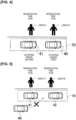
- the scenario shown in Figure 3 is one in which the users 50, 51 have reserved vehicles using the vehicle dispatch app and are waiting for the vehicles.
- the reservation time specified by the user 50 is 10:00
- the boarding location specified by the user 50 is stopping area 70.
- the reservation time specified by the user 51 is 10:05
- the boarding location specified by the user 51 is the stopping area 70.
- the stopping area 70 is a boarding/deboarding location where a plurality of vehicles can stop, such as a roundabout in front of a train station, a taxi zone at an airport, etc.
- the vehicle assigned to the user 50 is the vehicle 40. Further, the vehicle assigned to the user 51 is the vehicle 41.
- the vehicles 40, 41 receive a command from the controller 20 and travel toward the stopping area 70 based on the received command.
- the stopping order setting unit 214 refers to the reservation information of the users 50, 51 and sets the stopping order, which indicates the order in which the vehicles 40, 41 will stop at the stopping area 70.
- the reservation information includes the reservation times.
- the reservation information of the users 50, 51 is stored in the user database 242, for example, so that the stopping order setting unit 214 can refer to the user database 242 in order to acquire the reservation information of the users 50, 51. As described above, the reservation time of the user 50 is 10:00 and the reservation time of the user 51 is 10:05.
- the stopping order setting unit 214 refers to the reservation information of the users 50, 51 and sets the stopping order of the vehicle 40 to 1st and the stopping order of the vehicle 41 to 2nd.
- the scenario shown in Figure 4 is one in which, starting with the scenario shown in Figure 3 , the vehicle 40 arrives at the stopping area 70 before the vehicle 41, and the vehicles 40, 41 stop in accordance with the set stopping order.
- the stopping order is the vehicle 40, and then the vehicle 41, but the arrival order is the vehicle 41, and then the vehicle 40.
- Figure 5 also shows a vehicle 42 which is different from the vehicles 40, 41.
- the vehicle 42 is described as already having stopped in the stopping area 70 before the arrival of the vehicle 41 at the stopping area 70.
- the vehicle 42 is not a vehicle that affects the order in which the vehicles 40, 41 arrive and stop. Further, the vehicle 42 is not a vehicle reserved by the users 50, 51.
- the vehicle 41 will stop in a position behind the vehicle 42.
- the vehicle 40 arrives at the stopping area 70 after the vehicle 41, if there is a short distance between the vehicle 42 and the vehicle 41, there is the risk that it will take longer for the vehicle 40 to stop between the vehicle 42 and the vehicle 41. Alternatively, it may be difficult for the vehicle 40 to stop between the vehicle 42 and the vehicle 41. If the arrival order differs from the stopping order in this manner, there is the risk that the stopping area 70 cannot be used efficiently.
- the purpose of the vehicle 40 stopping between the vehicle 42 and the vehicle 41 is to support a smooth departure of the vehicles by making the departure order the same as the users' reserved boarding order.
- the arrival order estimation unit 215 acquires the position information of the vehicles 40, 41, and estimates, based on the acquired position information, the arrival order, which indicates the order in which the vehicles 40, 41 will arrive at the prescribed location.
- the arrival order estimation unit 215 transmits a signal indicating the estimated arrival order to the travel control unit 216.
- the travel control unit 216 which has received the signal indicating the arrival order, determines whether the arrival order differs from the stopping order. Then, if it is determined that the arrival order differs from the stopping order, the travel control unit 216 controls the travel of the vehicles 40, 41 such that the arrival order becomes the same as the stopping order by the time the vehicles 40, 41 arrive at the prescribed location. The problem described above is thereby solved, and realizes the efficient use of the stopping area 70. A specific example will be described with reference to Figure 6 .
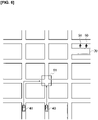
- the arrival order estimation unit 215 first acquires the position information of the vehicles 40, 41 shown in Figure 6 . As described above, the position information of the vehicles 40, 41 is transmitted from the vehicles 40, 41 to the arrival order estimation unit 215. The arrival order estimation unit 215 estimates, based on the acquired position information, the arrival order, which indicates the order in which the vehicles 40, 41 will arrive at the prescribed location.
- the prescribed location is, for example, the intersection 81 shown in Figure 6 .
- the intersection 81 is an intersection through which both the vehicles 40, 41 will pass as the vehicles 40, 41 travel toward the stopping area 70.
- the route to the intersection 81 is calculated by the route calculation unit 213.
- the arrival order estimation unit 215 can use the position information of the vehicles 40, 41 in order to estimate the arrival times at which the vehicles 40, 41 will arrive at the intersection 81.
- the arrival order estimation unit 215 can arrange the estimated times of arrival in chronological order to estimate the order of arrival at the intersection 81.
- the arrival order estimation unit 215 outputs a signal indicating the arrival order to the travel control unit 216.
- the estimation unit 215 may acquire the speeds of the vehicles 40, 41, combine the speeds with the position information, and then estimate the order of arrival.
- the prescribed location is not limited to the intersection 81.
- the prescribed location may be the stopping area 70.
- the travel control unit 216 determines whether the arrival order differs from the stopping order.
- the stopping order in Figure 6 is the vehicle 40, followed by the vehicle 41.
- the order of arrival at the intersection 81 is the vehicle 41, followed by the vehicle 40.
- the travel control unit 216 determines that the arrival order differs from the stopping order. If the vehicles 40, 41 continue to travel in this way, the vehicle 41 will likely arrive at the stopping area 70 first.
- the travel control unit 216 controls the travel of the vehicles 40, 41 such that their order of arrival at the intersection 81 will be the same as their stopping order by the time the vehicles 40, 41 arrive at the intersection 81.
- the travel control unit 216 may output a command to the vehicle 40 to change to a lane with a faster flow of traffic. This can be realized by acquiring the speed of the flow of traffic for each lane of the road on which the vehicle 40 is traveling. By causing the vehicle 40 to change to a lane with a faster flow of traffic, the vehicle 40 can arrive at the intersection 81 earlier.
- the travel control unit 216 may output a command to the vehicle 40 to change from the current route to a route with an earlier time of arrival at the intersection 81. This can be realized by the route calculation unit 213 calculating a plurality of routes via which the vehicle 40 may arrive at the intersection 81. By causing the vehicle 40 to change from the current route to a route with an earlier time of arrival at the intersection 81, the vehicle 40 can arrive at the intersection 81 earlier.
- the travel control unit 216 may execute a plurality of controls to cause the vehicle 40 to arrive at the intersection 81 earlier.
- the plurality of controls includes, for example, combining the lane change to a lane with a faster flow of traffic, as described above, with the route change to a route with an earlier time of arrival at the intersection 81.
- the travel control unit 216 may output a command to the vehicle 41 to change to a lane with a slower flow of traffic. This can be realized by acquiring the speed of the flow of traffic for each lane of the road on which the vehicle 41 is traveling. By causing the vehicle 41 to change to a lane with a slower flow of traffic, the vehicle 41 can arrive at the intersection 81 later.
- the travel control unit 216 may output a command to the vehicle 41 to change from the current route to a route with a later time of arrival at the intersection 81.
- This can be realized by the route calculation unit 81 calculating a plurality of routes via which the vehicle 213 may arrive at the intersection 41.
- the vehicle 41 can arrive at the intersection 81 later.
- the travel control unit 216 may execute a plurality of controls to cause the vehicle 40 to arrive at the intersection 81 later.
- the plurality of controls includes, for example, combining the lane change to a lane with a slower flow of traffic, as described above, with the route change to a route with a later time of arrival at the intersection 81.
- the travel control unit 216 may execute either the travel control for causing the vehicle 40 to arrive at the intersection 81 earlier or the travel control for causing the vehicle 41 to arrive at the intersection 81 later, or execute both at the same time.
- the travel control unit 216 controls the travel of the vehicles 40, 41 such that the order of arrival at the intersection 81 will be the same as the stopping order by the time the vehicles 40, 41 arrive at the intersection 81.
- Making the order of arrival at the intersection 81 the same as the stopping order increases the likelihood that the order of arrival at the stopping area 70 will be the same as the stopping order.
- the efficient use of the stopping area 70 can be realized.
- the arrival order estimation unit 215 may estimate, based on the position information of the vehicles 40, 41, the arrival order, which indicates the order in which the vehicles 40, 41 arrive at the intersection 82 shown in Figure 7 , which is the next intersection.
- the intersection 82 is the next intersection after the intersection 81, but is not limited to this intersection.
- the intersection 82 may be any intersection between the intersection 81 and the stopping area 70 through which both the vehicles 40, 41 pass.
- the travel control unit 216 controls the travel of the vehicles 40, 41 such that the order of arrival at the intersection 81 will be the same as the stopping order by the time the vehicles 40, 41 arrive at the intersection 81. This travel control is the same as that described above. Repeatedly controlling the travel of the vehicles 40, 41 in this manner until the arrival order at the prescribed location (intersections 81, 82) is the same as the stopping order increases the likelihood that the arrival order will be the same as the stopping order.
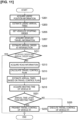
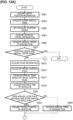
- Step S101 the stopping order setting unit 214 refers to the user database 242 and acquires the reservation information of the users 50, 51.
- the process then proceeds to Step S103, in which the stopping order setting unit 214 sets the stopping order, which indicates the order in which the vehicles 40, 41 are to stop at the stopping area 70 based on the acquired reservation information (refer to Figure 4 ).
- Step S105 the arrival order estimation unit 215 acquires travel information of the vehicles 40, 41.
- the travel information of the vehicles 40, 41 includes position information, speed information, etc., of the vehicles 40, 41.
- Step S107 the arrival order estimation unit 215 estimates, based on the acquired travel information, the arrival order, which indicates the order in which the vehicles 40, 41 will arrive at the intersection 81 (refer to Figure 6 ).
- the arrival order estimation unit 215 transmits a signal indicating the estimated arrival order to the travel control unit 216.
- Step S109 Upon receiving the signal indicating the arrival order, the travel control unit 216 determines whether the arrival order differs from the stopping order. If the arrival order is the same as the stopping order (YES in Step S109), the series of processes is terminated. On the other hand, if the arrival order differs from the stopping order (NO in Step S109), the process proceeds to Step S111, in which the travel control unit 216 acquires road information in order to match the arrival order to the stopping order. Route information includes the speed of the flow of traffic for each lane of the road on which the vehicles 40, 41 travel, the plurality of routes to the intersection 81, and the like.
- Step S113 in which, based on the acquired road information, the travel control unit 216 controls the travel of the vehicles 40, 41 such that, by the time the vehicles 40, 41 arrive at the intersection 81, the order of arrival at the intersection 81 is the same as the stopping order. Making the order of arrival at the intersection 81 the same as the stopping order increases the likelihood that the order of arrival at the stopping area 70 will be the same as the stopping order. Thus, the efficient use of the stopping area 70 can be realized.
- the stopping order setting unit 214 refers to the reservation information of the users 50, 51 and sets the stopping order in which the vehicles 40, 41 are to stop at the stopping area 70, but no limitation is implied thereby.
- the reservation times may be the same, and, depending on the user, the user may arrive at the stopping area 70 later than the reservation time, or arrive at the stopping area 70 earlier than the reservation time.
- the stopping order setting unit 214 may also use, in addition to the reservation times, the position information of the users 50, 51 in order to set the stopping order.
- the reservation time specified by the user 50 is 10:00
- the reservation time specified by the user 51 is also 10:00.
- the stopping order setting unit 214 may also use, instead of the reservation times, the position information of the users 50, 51 to set the stopping order.
- the position information of the users 50, 51 is transmitted from the terminal devices 60, 61 in possession of the users 50, 51 to the stopping order setting unit 214.
- the position information of the terminal devices 60, 61 in possession of the users 50, 51 can be regarded as the position information of the users 50, 51.
- the stopping order setting unit 214 refers to the user database 242 in order to acquire the movement speeds (walking speeds) of the users 50, 51.
- the obtained position information of the users 50, 51 and walking speeds of the users 50, 51 can be combined to obtain the times at which the users 50, 51 will arrive at the stopping area 70.
- the stopping order setting unit 214 may set the order of the times at which the users 50, 51 will arrive at the stopping area 70 as the stopping order.
- the stopping order setting unit 214 can also use, in addition to the reservation times, the position information of the users 50, 51 to set the stopping order in order to set a stopping order that is more convenient for the users 50, 51.
- the stopping order would be set to the vehicle 41, and then the vehicle 40 if one were to take only the reservation times into account.
- the user may arrive at the stopping area 70 later than the reservation time, or arrive at the stopping area 70 earlier than the reservation time.
- the user 51 whose reservation time is earlier, will arrive at the stopping area 70 after the user 50.
- the user 50 may be calculated to arrive at the stopping area 70 before the user 51.
- the stopping order is set in the order of the vehicle 40, and then the vehicle 41.
- the stopping order setting unit 214 can also use the position information of the users 50, 51 to set the stopping order in order to set a stopping order that is more convenient for the users 50, 51.
- the travel control unit 216 may use the time that the vehicle 41 is to be met to control the travel of the vehicle 41.
- a meeting time of the vehicle 41 is the reservation time specified by the user 51. If the reservation time is 10:00, the meeting time is also 10:00. Further, if the reservation time is a range of times, such as between 10:00 to 10:10, the meeting time also becomes 10:00 to 10:10.
- the travel control unit 216 calculates a travel control plan for causing the vehicle 41 to arrive at the intersection 81 later.
- This travel control plan includes causing the vehicle 41 to change to a lane with a slower flow of traffic, to travel on a route with a later arrival time to the intersection 81, etc.
- the travel control plan in this embodiment includes a plurality of controls.
- the travel control unit 216 estimates the time at which the vehicle 41 will arrive at the stopping area 70 for the case in which the vehicle 41, which is later in the order of arrival, is controlled to arrive at the intersection 81 later in accordance with the travel control plan. That is, the travel control unit 216 estimates the time at which the vehicle 41, which is later in the order of arrival, will arrive at the stopping area 70 due to executing travel control of the vehicle 41. If the estimated arrival time is later than the meeting time, the travel control unit 216 prohibits the control of the vehicle 41 that is later in the stopping order.
- the order of arrival at the intersection 81 can be made the same as the stopping order by means of travel control of the vehicle 40, which is earlier in the stopping order, and the vehicle 41 can be prevented from not arriving by the meeting time.
- the travel control unit 216 may use a waitable time of the vehicle 40 in order to control the travel of the vehicle 40.
- the waitable time of the vehicle 40 is the amount of time that the vehicle 40 can wait for the user 50 after arriving at the stopping area 70.
- the waitable time is five minutes. That is to say, if the user 50 has not boarded the vehicle 40 within five minutes of its arrival at the stopping area 70, the vehicle 40 may depart the stopping area 70.
- the waitable time of the vehicle 40 is stored in the storage 24, for example. Therefore, the travel control unit 216 can refer to the storage 24 in order to acquire the waitable time of the vehicle 40.
- the waitable time of the vehicle 40 may be stored in a storage device installed in the vehicle 40. If the waitable time of the vehicle 40 is stored in a storage device installed in the vehicle 40, the travel control unit 216 can acquire the waitable time of the vehicle 40 from the vehicle 40.
- the travel control unit 216 calculates a travel control plan for causing the vehicle 40 to arrive at the intersection 81 earlier.
- This travel control plan includes causing the vehicle 40 to change to a lane with a faster flow of traffic, to travel on a route with an earlier arrival time at the intersection 81, etc. That is, the travel control plan for causing the vehicle 40 to arrive at the intersection 81 earlier also includes a plurality of controls.
- the travel control unit 216 estimates the time at which the vehicle 40 will arrive at the stopping area 70, for the case in which the vehicle 40, which is earlier in the stopping order, is controlled to arrive at the intersection 81 earlier in accordance with the travel control plan. That is, the travel control unit 216 estimates the time at which the vehicle 40, which is earlier in the stopping order, will arrive at the stopping area 70, due to executing travel control of the vehicle 40. The travel control unit 216 determines whether the user 50 will arrive at the stopping area 70 after the waitable time since the vehicle arrival time has elapsed. The time at which the user 50 arrives at the stopping area 70 can be obtained by the method described above.
- the travel control unit 216 prohibits control of the vehicle 40 which is earlier in the stopping order.
- the order of arrival at the intersection 81 can be made the same as the stopping order by travel control of the vehicle 41, which is later in the order of arrival, and the vehicle 40 can be prevented from departing without boarding the user 50.
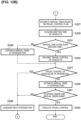
- Step S201 the stopping order setting unit 214 acquires position information from the terminal devices 60, 61 in the possession of the users 50, 51.
- the position information of the terminal devices 60, 61 can be regarded as the position information of the users 50, 51.
- the process proceeds to Step S203, in which the stopping order setting unit 214 refers to the user database 242 and acquires the walking speeds of the users 50, 51.
- the stopping order setting unit 214 uses the position information of the users 50, 51 and the walking speeds of the users 50, 51 to estimate the times at which the users 50, 51 will arrive at the stopping area 70.
- Step S205 the stopping order setting unit 214 sets the order of the times at which the users 50, 51 will arrive at the stopping area 70 as the stopping order.
- the processes of Steps S209, 211, and 213 are the same as the processes of Steps S107, 109, and 111 of Figure 8 , and their descriptions will be omitted.
- Step S215 the travel control unit 216 calculates a travel control plan for causing the vehicle 41 to arrive at the intersection 81 later.
- the travel control plan includes a plurality of controls, as described above.
- Step S217 the travel control unit 216 estimates the time at which the vehicle 41 will arrive at the stopping area 70 when the travel of the vehicle 41 is controlled in accordance with the travel control plan.
- Step S219 in which the travel control unit 216 refers to the user database 242 in order to acquire the meeting time of the vehicle 41. If the arrival time is later than the meeting time (YES in Step S221), that is, if the vehicle 41 will arrive after the meeting time due to executing a plurality of controls, the travel control unit 216 prohibits control of the vehicle 41 (Step S223). Thus, the order of arrival at the intersection 81 can be made the same as the stopping order, and the vehicle 41 can be prevented from arriving after the meeting time.
- Step S225 the order of arrival at the intersection 81 can be made the same as the stopping order, which increases the likelihood that the order of arrival at the stopping area 70 will be the same as the stopping order.
- the efficient use of the stopping area 70 can be realized.
- Steps S301-303 are the same as the processes of Steps S201-213 of Figure 11 , and their descriptions have been omitted.
- Step S315 the travel control unit 216 calculates a travel control plan for causing the vehicle 40 to arrive at the intersection 81 earlier.
- the travel control plan includes a plurality of controls, as described above.
- the process proceeds to Step S317, in which the travel control unit 216 estimates the time at which the vehicle 40 will arrive at the stopping area 70 when the travel of the vehicle 40 is controlled in accordance with the travel control plan.
- Step S219 in which the travel control unit 216 refers to the storage 24 in order to acquire the waitable time of the vehicle 40. If the user 50 will arrive at the stopping area 70 after the waitable time has elapsed since the arrival time (YES in Step S321), the travel control unit 216 prohibits control (Step S323). In the process of Step S323, it is assumed that the entire plurality of controls is prohibited, but the present invention is not limited in this way. In the process of Step S323, of the plurality of controls, the controls that cause the user 50 to arrive at the stopping area 70 after the waitable time has elapsed since the arrival time of the vehicle 40 may be prohibited.
- the travel control unit 216 estimates the time at which the vehicle 40 will arrive at the intersection 81 when the travel of the vehicle 40 is controlled in accordance with the travel control plan.
- Steps S327-331 are the same as the processes of Steps S217-221 of Figure 11 , and their descriptions have been omitted.
- Step S333 it is assumed that the entire plurality of controls is prohibited, but the present invention is not limited in this way.
- the controls that cause the arrival time of the vehicle 41 to be later than the meeting time may be prohibited.
- Step S335 the travel control unit 216 estimates the time at which the vehicle 41 will arrive at the stopping area 70 when the travel of the vehicle 41 is controlled in accordance with the travel control plan. If the travel control of the vehicles 40, 41 is prohibited (YES in Step S337), the process proceeds to Step S345, in which the travel control unit 216 takes the next intersection 82 into consideration (refer to Figure 7 ).
- Step S339 the travel control unit 216 uses the times estimated in Step S325 and S335 to estimate the arrival order at the intersection 81. If the arrival order estimated in Step S339 is the same as the stopping order (YES in Step S341), the travel control unit 216 executes the travel control calculated in Step S315 (Step S343). On the other hand, if the arrival order estimated in Step S339 is not the same as the stopping order (NO in Step S341), the process proceeds to Step S345.
- the stopping order setting unit 214 sets the stopping order, which indicates the order in which a plurality of vehicles (vehicles 40, 41) stop at the stopping area 70.
- the stopping order setting unit 214 sets the stopping order of the plurality of vehicles, which indicates the order at the stop locations in the stopping area 70.
- the arrival order estimation unit 215 acquires the position information of the vehicles 40, 41 and estimates, based on this acquired position information, the arrival order, which indicates the order in which the vehicles 40, 41 will arrive at the prescribed location.
- the travel control unit 216 determines whether the arrival order estimated by the arrival order estimation unit 215 differs from the stopping order.
- the travel control unit 216 controls the travel of at least one of the vehicles 40, 41 such that the arrival order will be the same as the stopping order by the time the vehicles 40, 41 arrive at the prescribed location. Making the order of arrival at the prescribed location the same as the stopping order increases the likelihood that the order of arrival at the stopping area 70 will be the same as the stopping order. Thus, the efficient use of the stopping area 70 can be realized.
- the arrival order estimation unit 215 uses the position information of the vehicles 40, 41 to estimate the arrival order. Using the position information of the vehicles 40, 41, the arrival order estimation unit 215 calculates the arrival times at which the vehicles 40, 41 will arrive at the prescribed location. The arrival order estimation unit 215 then estimates the arrival order based on the calculated arrival times. The arrival order estimation unit 215 can thus accurately estimate the arrival order. In addition to the position information of the vehicles 40, 41, the arrival order estimation unit 215 may use the speed information of the vehicles 40, 41 to estimate the arrival order.
- the prescribed location that is used when the arrival order is estimated includes an intersection through which both vehicles 40, 41 pass, or the stopping area 70.
- the travel control unit 216 is able to control the travel of the vehicles 40, 41 in order to make the order of arrival at the stopping area 70 the same as the stopping order by the time the vehicles 40, 41 arrive at the stopping area 70.
- the travel control unit 216 acquires the speed of the flow of traffic for each lane of the road on which the vehicles 40, 41 travel. Of the vehicles 40, 41, the travel control unit 216 causes the vehicle 41, which is later in the stopping order, to change to a lane with a slower flow of traffic than the current travel lane. Alternatively, the travel control unit 216 causes the vehicle 40, which is earlier in the stopping order, to change to a lane with a faster flow of traffic than the current travel lane. The travel control unit 216 can thereby make the vehicle 41 arrive at the intersection 81 later. The travel control unit 216 can also make the vehicle 40 arrive at the intersection 81 earlier.
- the travel control unit 216 calculates a plurality of routes via which the vehicles 40, 41 arrive at the intersection 81.
- the travel control unit 216 changes the route of the vehicle 41, which is later in the stopping order, to a route with a later time of arrival at the intersection 81 than the current route.
- the travel control unit 216 changes the route of the vehicle 40, which is earlier in the stopping order, to a route with an earlier time of arrival at the intersection 81 than the current route.
- the travel control unit 216 can thus make the vehicle 41 arrive at the intersection 81 later.
- the travel control unit 216 can also make the vehicle 40 arrive at the intersection 81 earlier.
- the travel control includes a plurality of controls.
- the plurality of controls include lane changes to lanes with slower (faster) flows of traffic and route changes to routes with later (an earlier) times of arrival at the intersection 81 (stopping area 70).
- the travel control unit 216 estimates the time at which the vehicle 40, which is earlier in the stopping order, will arrive at the stopping area 70, as a result of controlling the travel.
- the travel control unit 216 refers to the storage 24 to acquire the waitable time which the vehicle 40, which is earlier in the stopping order, can take to wait for the user 50 (first user) who reserved the vehicle 40.
- the travel control unit 216 determines whether the user 50 will arrive at the stopping area 70 after the waitable time has elapsed since the arrival time.
- the travel control unit 216 prohibits control of the vehicle 40 for which it has been determined that the user 50 will arrive at the stopping area 70 after the waitable time has elapsed since the arrival time of the vehicle 40. It is thus possible to make the order of arrival at the intersection 81 the same as the stopping order and to prevent the vehicle 40 from departing without boarding the user 50.
- the travel control may include a control to cause at least the vehicle 40, which is earlier in the stopping order, to arrive at the prescribed location earlier. If it is determined that the user 50 will arrive at the stopping area 70 after the waitable time has elapsed, the controller 20 may prohibit control of the vehicle 40 which is earlier in the stopping order.
- the travel control unit 216 estimates the time at which the vehicle 41, which is later in the order of arrival, will arrive at the stopping area 70 as a result of controlling the travel of the vehicle 41.
- the travel control unit 216 refers to the user database 242 to acquire the meeting time of the vehicle 41, which is later in the stopping order, and the user 51 (second user) who reserved the vehicle 41.
- the travel control unit 216 determines whether the arrival time is later than the meeting time.
- the travel control unit 216 prohibits travel control of the vehicle 41, which is later in the stopping order, for which it has been determined that the arrival time is later than the meeting time. It is thus possible to make the order of arrival at the intersection 81 the same as the stopping order, and to prevent the vehicle 41 from arriving after the meeting time.
- the travel control may include control to cause at least the vehicle 41, which is later in the stopping order, to arrive at the prescribed location later.
- the controller 20 may prohibit control of at least the vehicle 41, which is later in the stopping order, when it is determined that the arrival time is later than the meeting time.
- the stopping order setting unit 214 refers to the reservation information of the users 50, 51 and sets the stopping order, which indicates the order in which the vehicles 40, 41 will stop at the stopping area 70.
- the stopping order setting unit 214 can thus set a stopping order that is compatible with the reservation information of the users 50, 51.
- the stopping order setting unit 214 acquires the position information of the users 50, 51.
- the position information of the users 50, 51 is the position information of the terminal devices 60, 61 in the possession of the users 50, 51.
- the stopping order setting unit 214 estimates, based on the position information of the users 50, 51, the arrival time of the user 50, which is the time that the user 50 arrives at the stopping area 70, and the arrival time of the user 51, which is the time that the user 51 arrives at the stopping area 70.
- the stopping order setting unit 214 sets the stopping order based on the arrival time of the user 50 and the arrival time of the user 51. Some users may arrive at the stopping area 70 later than the reservation time or arrive at the stopping area 70 earlier than the reservation time. By setting the stopping order using the position information of the users 50, 51, a stopping order can be set that is more convenient for the users 50, 51.
- the stopping order setting unit 214 may acquire the position information of the terminal devices 60, 61 in the possession of the users 50, 51, respectively, when the users 50, 51 reserve vehicles.
- the processing circuits include programmed processing devices, such as processing devices that include electronic circuits.
- the processing circuits also include such devices as application-specific integrated circuits (ASIC) and electronic components arranged to perform the described functions.
- ASIC application-specific integrated circuits
- the travel control unit 216 may control the travel of the vehicles 40, 41 when the vehicle 40, which is earlier in the stopping order, or the vehicle 41, which is later in the stopping order, is located within a prescribed range of the stopping area 70. Alternatively, the travel control unit 216 may control the travel of the vehicles 40, 41 a prescribed time before the vehicle 40 or the vehicle 41 arrives at the stopping area 70. As a result, the travel control unit 216 is able to control the travel of the vehicles 40, 41 in order to make the order of arrival at the stopping area 70 the same as the stopping order by the time the vehicles 40, 41 arrive at the stopping area 70.
- the travel control unit 216 prohibits control of the travel of the vehicle 41, which is later in the stopping order, for which the estimated time of arrival is later than the meeting time, but no limitation is implied thereby.
- the travel control unit 216 may negotiate a permissible delay of the meeting time with the user 51. This negotiation is carried out by displaying an image on the terminal device 61 in the possession of the user 51 for negotiating such a permissible delay. The user 51 operates the terminal device 61 and selects whether to permit the delay.
- the travel control unit 216 executes the plurality of controls.
- the travel control unit 216 can thereby make the order of arrival at the intersection 81 the same as the stopping order.
- the travel control unit 216 may transmits information indicating a delay of the meeting time to the user 51. If the user 51 approves the delay of the meeting time, the travel control unit 216 may execute the control.
Landscapes
- Physics & Mathematics (AREA)
- General Physics & Mathematics (AREA)
- Business, Economics & Management (AREA)
- Engineering & Computer Science (AREA)
- Human Resources & Organizations (AREA)
- Strategic Management (AREA)
- Economics (AREA)
- General Business, Economics & Management (AREA)
- Remote Sensing (AREA)
- Marketing (AREA)
- Radar, Positioning & Navigation (AREA)
- Theoretical Computer Science (AREA)
- Tourism & Hospitality (AREA)
- Development Economics (AREA)
- Game Theory and Decision Science (AREA)
- Quality & Reliability (AREA)
- Operations Research (AREA)
- Entrepreneurship & Innovation (AREA)
- Mathematical Physics (AREA)
- Health & Medical Sciences (AREA)
- General Health & Medical Sciences (AREA)
- Primary Health Care (AREA)
- Traffic Control Systems (AREA)
- Management, Administration, Business Operations System, And Electronic Commerce (AREA)
- Electric Propulsion And Braking For Vehicles (AREA)
Applications Claiming Priority (1)
| Application Number | Priority Date | Filing Date | Title |
|---|---|---|---|
| PCT/IB2020/000372 WO2021209780A1 (ja) | 2020-04-17 | 2020-04-17 | 車両制御方法、車両制御装置、及び車両制御システム |
Publications (3)
| Publication Number | Publication Date |
|---|---|
| EP4138055A1 true EP4138055A1 (de) | 2023-02-22 |
| EP4138055A4 EP4138055A4 (de) | 2023-05-24 |
| EP4138055B1 EP4138055B1 (de) | 2024-07-31 |
Family
ID=78083889
Family Applications (1)
| Application Number | Title | Priority Date | Filing Date |
|---|---|---|---|
| EP20930842.8A Active EP4138055B1 (de) | 2020-04-17 | 2020-04-17 | Fahrzeugsteuerungsverfahren, fahrzeugsteuerungsvorrichtung und fahrzeugsteuerungssystem |
Country Status (6)
| Country | Link |
|---|---|
| US (1) | US11869362B2 (de) |
| EP (1) | EP4138055B1 (de) |
| JP (1) | JP7300556B2 (de) |
| CN (1) | CN115443492B (de) |
| BR (1) | BR112022020667A2 (de) |
| WO (1) | WO2021209780A1 (de) |
Families Citing this family (1)
| Publication number | Priority date | Publication date | Assignee | Title |
|---|---|---|---|---|
| JP7659522B2 (ja) * | 2022-05-17 | 2025-04-09 | ウーブン・バイ・トヨタ株式会社 | オンデマンド車両の運行方法及び運行システム |
Family Cites Families (15)
| Publication number | Priority date | Publication date | Assignee | Title |
|---|---|---|---|---|
| JPH0916898A (ja) | 1995-06-30 | 1997-01-17 | Toyota Motor Corp | 駐車場の予約管理装置及び予約管理方法 |
| JP4507945B2 (ja) * | 2005-03-29 | 2010-07-21 | 沖電気工業株式会社 | 運行管理システム |
| WO2013003504A2 (en) * | 2011-06-27 | 2013-01-03 | Stc, Inc. | Signal light priority system utilizing estimated time of arrival |
| EP2667366B1 (de) | 2012-05-25 | 2017-10-04 | The Boeing Company | Konflikterkennung und -lösung unter Verwendung prognostizierter Flugzeugrouten |
| WO2015038147A1 (en) * | 2013-09-13 | 2015-03-19 | Intel Corporation | Context-aware distributive taxi cab dispatching |
| SE540841C2 (en) | 2015-04-28 | 2018-11-27 | Scania Cv Ab | Method and control unit for determining charging order |
| CN107170282B (zh) * | 2017-06-23 | 2019-01-15 | 深圳市盛路物联通讯技术有限公司 | 一种预约泊车的调度方法及系统 |
| US20190012625A1 (en) * | 2017-07-05 | 2019-01-10 | Panasonic Intellectual Property Management Co., Lt d. | Autonomous vehicle/drive-through synchronization system and synchronization method |
| WO2019113426A1 (en) * | 2017-12-08 | 2019-06-13 | Uber Technologies, Inc. | Coordinating transport through a common rendezvous location |
| JP6948935B2 (ja) * | 2017-12-20 | 2021-10-13 | 日産自動車株式会社 | 情報管理方法及び情報管理装置 |
| JP2019139345A (ja) * | 2018-02-07 | 2019-08-22 | 株式会社Subaru | 管制装置 |
| JP6617987B2 (ja) | 2018-04-12 | 2019-12-11 | パナソニックIpマネジメント株式会社 | 配車システム、配車制御装置 |
| JP7238229B2 (ja) * | 2018-09-28 | 2023-03-14 | 株式会社日本総合研究所 | 情報出力装置 |
| CN109785658A (zh) * | 2018-12-22 | 2019-05-21 | 青岛华通石川岛停车装备有限责任公司 | 一种立体停车场车辆预约管理的控制方法 |
| JP7176974B2 (ja) * | 2019-02-15 | 2022-11-22 | 本田技研工業株式会社 | 迎車管理装置、迎車制御方法、およびプログラム |
-
2020
- 2020-04-17 EP EP20930842.8A patent/EP4138055B1/de active Active
- 2020-04-17 JP JP2022514865A patent/JP7300556B2/ja active Active
- 2020-04-17 BR BR112022020667A patent/BR112022020667A2/pt not_active Application Discontinuation
- 2020-04-17 WO PCT/IB2020/000372 patent/WO2021209780A1/ja not_active Ceased
- 2020-04-17 CN CN202080099825.7A patent/CN115443492B/zh active Active
- 2020-04-17 US US17/996,225 patent/US11869362B2/en active Active
Also Published As
| Publication number | Publication date |
|---|---|
| JP7300556B2 (ja) | 2023-06-29 |
| CN115443492B (zh) | 2023-04-18 |
| JPWO2021209780A1 (de) | 2021-10-21 |
| CN115443492A (zh) | 2022-12-06 |
| WO2021209780A1 (ja) | 2021-10-21 |
| US11869362B2 (en) | 2024-01-09 |
| EP4138055B1 (de) | 2024-07-31 |
| BR112022020667A2 (pt) | 2022-11-29 |
| EP4138055A4 (de) | 2023-05-24 |
| US20230196922A1 (en) | 2023-06-22 |
Similar Documents
| Publication | Publication Date | Title |
|---|---|---|
| US11307041B2 (en) | Vehicle information providing device, vehicle information providing method, and program | |
| JP7246331B2 (ja) | サービス管理装置、サービス提供システム、サービス管理方法、およびプログラム | |
| CN104464274B (zh) | 合乘打车方法及服务器 | |
| JP2018205829A (ja) | ライドシェア管理装置、ライドシェア管理方法、およびプログラム | |
| JP2020074181A (ja) | 送迎管理装置、送迎管理方法、およびプログラム | |
| US20200175432A1 (en) | Travel schedule determination device, autonomous vehicle, travel schedule determination method, and program | |
| US20210114626A1 (en) | Vehicle control system, vehicle control device, and vehicle control method | |
| US12100302B2 (en) | Automated valet parking management system and automated valet parking management method | |
| JP7299149B2 (ja) | 情報処理装置、運行管理システム及びプログラム | |
| KR20220153490A (ko) | 차량 관리 시스템 및 차량 관리 방법 | |
| US12020569B2 (en) | Stop location control method, stop location control device, and stop location control system | |
| JP7246195B2 (ja) | 運転支援方法及び運転支援装置 | |
| EP4138055B1 (de) | Fahrzeugsteuerungsverfahren, fahrzeugsteuerungsvorrichtung und fahrzeugsteuerungssystem | |
| CN116434590A (zh) | 一种基于云端的车辆车位预约方法及系统 | |
| JP7677359B2 (ja) | 駐車管理システム、駐車管理方法 | |
| EP4131215A1 (de) | Bewegungsunterstützungsvorrichtung und bewegungsunterstützungsverfahren | |
| JP2022138773A (ja) | 自動運転車両の管理装置 | |
| KR102470049B1 (ko) | 자율주행 택시 서비스 제공 시스템 및 그 제공 방법 | |
| JP7427548B2 (ja) | 配車制御装置、配車制御システム及び配車制御方法 | |
| JP2025097612A (ja) | 配車管理装置及び配車管理方法 | |
| JP2025023524A (ja) | 配車管理装置及び配車管理方法 | |
| JP2025162244A (ja) | 相乗り可否判定方法及び装置 | |
| JP2025116666A (ja) | 配車管理装置及び配車管理方法 | |
| CN116434588A (zh) | 一种网联公交的引导方法、装置及系统 | |
| JP2024106778A (ja) | 車両制御システム |
Legal Events
| Date | Code | Title | Description |
|---|---|---|---|
| STAA | Information on the status of an ep patent application or granted ep patent |
Free format text: STATUS: THE INTERNATIONAL PUBLICATION HAS BEEN MADE |
|
| PUAI | Public reference made under article 153(3) epc to a published international application that has entered the european phase |
Free format text: ORIGINAL CODE: 0009012 |
|
| STAA | Information on the status of an ep patent application or granted ep patent |
Free format text: STATUS: REQUEST FOR EXAMINATION WAS MADE |
|
| 17P | Request for examination filed |
Effective date: 20221115 |
|
| AK | Designated contracting states |
Kind code of ref document: A1 Designated state(s): AL AT BE BG CH CY CZ DE DK EE ES FI FR GB GR HR HU IE IS IT LI LT LU LV MC MK MT NL NO PL PT RO RS SE SI SK SM TR |
|
| REG | Reference to a national code |
Ref country code: DE Free format text: PREVIOUS MAIN CLASS: G08G0001000000 Ipc: G06Q0010047000 Ref country code: DE Ref legal event code: R079 Ref document number: 602020035105 Country of ref document: DE Free format text: PREVIOUS MAIN CLASS: G08G0001000000 Ipc: G06Q0010047000 |
|
| A4 | Supplementary search report drawn up and despatched |
Effective date: 20230426 |
|
| RIC1 | Information provided on ipc code assigned before grant |
Ipc: G16Y 10/40 20200101ALI20230420BHEP Ipc: G08G 1/123 20060101ALI20230420BHEP Ipc: G08G 1/00 20060101ALI20230420BHEP Ipc: G06Q 50/30 20120101ALI20230420BHEP Ipc: G06Q 10/047 20230101AFI20230420BHEP |
|
| DAV | Request for validation of the european patent (deleted) | ||
| DAX | Request for extension of the european patent (deleted) | ||
| STAA | Information on the status of an ep patent application or granted ep patent |
Free format text: STATUS: EXAMINATION IS IN PROGRESS |
|
| 17Q | First examination report despatched |
Effective date: 20230925 |
|
| GRAP | Despatch of communication of intention to grant a patent |
Free format text: ORIGINAL CODE: EPIDOSNIGR1 |
|
| STAA | Information on the status of an ep patent application or granted ep patent |
Free format text: STATUS: GRANT OF PATENT IS INTENDED |
|
| RIC1 | Information provided on ipc code assigned before grant |
Ipc: G16Y 10/40 20200101ALI20240411BHEP Ipc: G08G 1/123 20060101ALI20240411BHEP Ipc: G08G 1/00 20060101ALI20240411BHEP Ipc: G06Q 50/40 20240101ALI20240411BHEP Ipc: G06Q 10/047 20230101AFI20240411BHEP |
|
| INTG | Intention to grant announced |
Effective date: 20240503 |
|
| RAP3 | Party data changed (applicant data changed or rights of an application transferred) |
Owner name: RENAULT S.A.S. Owner name: NISSAN MOTOR CO., LTD. |
|
| GRAS | Grant fee paid |
Free format text: ORIGINAL CODE: EPIDOSNIGR3 |
|
| GRAA | (expected) grant |
Free format text: ORIGINAL CODE: 0009210 |
|
| STAA | Information on the status of an ep patent application or granted ep patent |
Free format text: STATUS: THE PATENT HAS BEEN GRANTED |
|
| AK | Designated contracting states |
Kind code of ref document: B1 Designated state(s): AL AT BE BG CH CY CZ DE DK EE ES FI FR GB GR HR HU IE IS IT LI LT LU LV MC MK MT NL NO PL PT RO RS SE SI SK SM TR |
|
| REG | Reference to a national code |
Ref country code: CH Ref legal event code: EP Ref country code: GB Ref legal event code: FG4D |
|
| REG | Reference to a national code |
Ref country code: DE Ref legal event code: R096 Ref document number: 602020035105 Country of ref document: DE |
|
| REG | Reference to a national code |
Ref country code: IE Ref legal event code: FG4D |
|
| REG | Reference to a national code |
Ref country code: LT Ref legal event code: MG9D |
|
| REG | Reference to a national code |
Ref country code: NL Ref legal event code: MP Effective date: 20240731 |
|
| PG25 | Lapsed in a contracting state [announced via postgrant information from national office to epo] |
Ref country code: PT Free format text: LAPSE BECAUSE OF FAILURE TO SUBMIT A TRANSLATION OF THE DESCRIPTION OR TO PAY THE FEE WITHIN THE PRESCRIBED TIME-LIMIT Effective date: 20241202 |
|
| REG | Reference to a national code |
Ref country code: AT Ref legal event code: MK05 Ref document number: 1709159 Country of ref document: AT Kind code of ref document: T Effective date: 20240731 |
|
| PG25 | Lapsed in a contracting state [announced via postgrant information from national office to epo] |
Ref country code: PT Free format text: LAPSE BECAUSE OF FAILURE TO SUBMIT A TRANSLATION OF THE DESCRIPTION OR TO PAY THE FEE WITHIN THE PRESCRIBED TIME-LIMIT Effective date: 20241202 |
|
| PG25 | Lapsed in a contracting state [announced via postgrant information from national office to epo] |
Ref country code: NO Free format text: LAPSE BECAUSE OF FAILURE TO SUBMIT A TRANSLATION OF THE DESCRIPTION OR TO PAY THE FEE WITHIN THE PRESCRIBED TIME-LIMIT Effective date: 20241031 |
|
| PG25 | Lapsed in a contracting state [announced via postgrant information from national office to epo] |
Ref country code: NL Free format text: LAPSE BECAUSE OF FAILURE TO SUBMIT A TRANSLATION OF THE DESCRIPTION OR TO PAY THE FEE WITHIN THE PRESCRIBED TIME-LIMIT Effective date: 20240731 Ref country code: FI Free format text: LAPSE BECAUSE OF FAILURE TO SUBMIT A TRANSLATION OF THE DESCRIPTION OR TO PAY THE FEE WITHIN THE PRESCRIBED TIME-LIMIT Effective date: 20240731 Ref country code: PL Free format text: LAPSE BECAUSE OF FAILURE TO SUBMIT A TRANSLATION OF THE DESCRIPTION OR TO PAY THE FEE WITHIN THE PRESCRIBED TIME-LIMIT Effective date: 20240731 Ref country code: GR Free format text: LAPSE BECAUSE OF FAILURE TO SUBMIT A TRANSLATION OF THE DESCRIPTION OR TO PAY THE FEE WITHIN THE PRESCRIBED TIME-LIMIT Effective date: 20241101 |
|
| PG25 | Lapsed in a contracting state [announced via postgrant information from national office to epo] |
Ref country code: BG Free format text: LAPSE BECAUSE OF FAILURE TO SUBMIT A TRANSLATION OF THE DESCRIPTION OR TO PAY THE FEE WITHIN THE PRESCRIBED TIME-LIMIT Effective date: 20240731 |
|
| PG25 | Lapsed in a contracting state [announced via postgrant information from national office to epo] |
Ref country code: LV Free format text: LAPSE BECAUSE OF FAILURE TO SUBMIT A TRANSLATION OF THE DESCRIPTION OR TO PAY THE FEE WITHIN THE PRESCRIBED TIME-LIMIT Effective date: 20240731 |
|
| PG25 | Lapsed in a contracting state [announced via postgrant information from national office to epo] |
Ref country code: IS Free format text: LAPSE BECAUSE OF FAILURE TO SUBMIT A TRANSLATION OF THE DESCRIPTION OR TO PAY THE FEE WITHIN THE PRESCRIBED TIME-LIMIT Effective date: 20241130 Ref country code: AT Free format text: LAPSE BECAUSE OF FAILURE TO SUBMIT A TRANSLATION OF THE DESCRIPTION OR TO PAY THE FEE WITHIN THE PRESCRIBED TIME-LIMIT Effective date: 20240731 |
|
| PG25 | Lapsed in a contracting state [announced via postgrant information from national office to epo] |
Ref country code: HR Free format text: LAPSE BECAUSE OF FAILURE TO SUBMIT A TRANSLATION OF THE DESCRIPTION OR TO PAY THE FEE WITHIN THE PRESCRIBED TIME-LIMIT Effective date: 20240731 |
|
| PG25 | Lapsed in a contracting state [announced via postgrant information from national office to epo] |
Ref country code: ES Free format text: LAPSE BECAUSE OF FAILURE TO SUBMIT A TRANSLATION OF THE DESCRIPTION OR TO PAY THE FEE WITHIN THE PRESCRIBED TIME-LIMIT Effective date: 20240731 Ref country code: RS Free format text: LAPSE BECAUSE OF FAILURE TO SUBMIT A TRANSLATION OF THE DESCRIPTION OR TO PAY THE FEE WITHIN THE PRESCRIBED TIME-LIMIT Effective date: 20241031 |
|
| PG25 | Lapsed in a contracting state [announced via postgrant information from national office to epo] |
Ref country code: RS Free format text: LAPSE BECAUSE OF FAILURE TO SUBMIT A TRANSLATION OF THE DESCRIPTION OR TO PAY THE FEE WITHIN THE PRESCRIBED TIME-LIMIT Effective date: 20241031 Ref country code: PL Free format text: LAPSE BECAUSE OF FAILURE TO SUBMIT A TRANSLATION OF THE DESCRIPTION OR TO PAY THE FEE WITHIN THE PRESCRIBED TIME-LIMIT Effective date: 20240731 Ref country code: NO Free format text: LAPSE BECAUSE OF FAILURE TO SUBMIT A TRANSLATION OF THE DESCRIPTION OR TO PAY THE FEE WITHIN THE PRESCRIBED TIME-LIMIT Effective date: 20241031 Ref country code: NL Free format text: LAPSE BECAUSE OF FAILURE TO SUBMIT A TRANSLATION OF THE DESCRIPTION OR TO PAY THE FEE WITHIN THE PRESCRIBED TIME-LIMIT Effective date: 20240731 Ref country code: LV Free format text: LAPSE BECAUSE OF FAILURE TO SUBMIT A TRANSLATION OF THE DESCRIPTION OR TO PAY THE FEE WITHIN THE PRESCRIBED TIME-LIMIT Effective date: 20240731 Ref country code: IS Free format text: LAPSE BECAUSE OF FAILURE TO SUBMIT A TRANSLATION OF THE DESCRIPTION OR TO PAY THE FEE WITHIN THE PRESCRIBED TIME-LIMIT Effective date: 20241130 Ref country code: HR Free format text: LAPSE BECAUSE OF FAILURE TO SUBMIT A TRANSLATION OF THE DESCRIPTION OR TO PAY THE FEE WITHIN THE PRESCRIBED TIME-LIMIT Effective date: 20240731 Ref country code: GR Free format text: LAPSE BECAUSE OF FAILURE TO SUBMIT A TRANSLATION OF THE DESCRIPTION OR TO PAY THE FEE WITHIN THE PRESCRIBED TIME-LIMIT Effective date: 20241101 Ref country code: FI Free format text: LAPSE BECAUSE OF FAILURE TO SUBMIT A TRANSLATION OF THE DESCRIPTION OR TO PAY THE FEE WITHIN THE PRESCRIBED TIME-LIMIT Effective date: 20240731 Ref country code: ES Free format text: LAPSE BECAUSE OF FAILURE TO SUBMIT A TRANSLATION OF THE DESCRIPTION OR TO PAY THE FEE WITHIN THE PRESCRIBED TIME-LIMIT Effective date: 20240731 Ref country code: BG Free format text: LAPSE BECAUSE OF FAILURE TO SUBMIT A TRANSLATION OF THE DESCRIPTION OR TO PAY THE FEE WITHIN THE PRESCRIBED TIME-LIMIT Effective date: 20240731 Ref country code: AT Free format text: LAPSE BECAUSE OF FAILURE TO SUBMIT A TRANSLATION OF THE DESCRIPTION OR TO PAY THE FEE WITHIN THE PRESCRIBED TIME-LIMIT Effective date: 20240731 |
|
| PG25 | Lapsed in a contracting state [announced via postgrant information from national office to epo] |
Ref country code: DK Free format text: LAPSE BECAUSE OF FAILURE TO SUBMIT A TRANSLATION OF THE DESCRIPTION OR TO PAY THE FEE WITHIN THE PRESCRIBED TIME-LIMIT Effective date: 20240731 Ref country code: SM Free format text: LAPSE BECAUSE OF FAILURE TO SUBMIT A TRANSLATION OF THE DESCRIPTION OR TO PAY THE FEE WITHIN THE PRESCRIBED TIME-LIMIT Effective date: 20240731 Ref country code: RO Free format text: LAPSE BECAUSE OF FAILURE TO SUBMIT A TRANSLATION OF THE DESCRIPTION OR TO PAY THE FEE WITHIN THE PRESCRIBED TIME-LIMIT Effective date: 20240731 |
|
| PG25 | Lapsed in a contracting state [announced via postgrant information from national office to epo] |
Ref country code: EE Free format text: LAPSE BECAUSE OF FAILURE TO SUBMIT A TRANSLATION OF THE DESCRIPTION OR TO PAY THE FEE WITHIN THE PRESCRIBED TIME-LIMIT Effective date: 20240731 |
|
| PG25 | Lapsed in a contracting state [announced via postgrant information from national office to epo] |
Ref country code: CZ Free format text: LAPSE BECAUSE OF FAILURE TO SUBMIT A TRANSLATION OF THE DESCRIPTION OR TO PAY THE FEE WITHIN THE PRESCRIBED TIME-LIMIT Effective date: 20240731 |
|
| PGFP | Annual fee paid to national office [announced via postgrant information from national office to epo] |
Ref country code: FR Payment date: 20250319 Year of fee payment: 6 |
|
| PG25 | Lapsed in a contracting state [announced via postgrant information from national office to epo] |
Ref country code: SK Free format text: LAPSE BECAUSE OF FAILURE TO SUBMIT A TRANSLATION OF THE DESCRIPTION OR TO PAY THE FEE WITHIN THE PRESCRIBED TIME-LIMIT Effective date: 20240731 Ref country code: IT Free format text: LAPSE BECAUSE OF FAILURE TO SUBMIT A TRANSLATION OF THE DESCRIPTION OR TO PAY THE FEE WITHIN THE PRESCRIBED TIME-LIMIT Effective date: 20240731 |
|
| PGFP | Annual fee paid to national office [announced via postgrant information from national office to epo] |
Ref country code: GB Payment date: 20250319 Year of fee payment: 6 |
|
| REG | Reference to a national code |
Ref country code: DE Ref legal event code: R097 Ref document number: 602020035105 Country of ref document: DE |
|
| PLBE | No opposition filed within time limit |
Free format text: ORIGINAL CODE: 0009261 |
|
| STAA | Information on the status of an ep patent application or granted ep patent |
Free format text: STATUS: NO OPPOSITION FILED WITHIN TIME LIMIT |
|
| 26N | No opposition filed |
Effective date: 20250501 |
|
| PGFP | Annual fee paid to national office [announced via postgrant information from national office to epo] |
Ref country code: DE Payment date: 20250319 Year of fee payment: 6 |
|
| PG25 | Lapsed in a contracting state [announced via postgrant information from national office to epo] |
Ref country code: SE Free format text: LAPSE BECAUSE OF FAILURE TO SUBMIT A TRANSLATION OF THE DESCRIPTION OR TO PAY THE FEE WITHIN THE PRESCRIBED TIME-LIMIT Effective date: 20240731 |
|
| REG | Reference to a national code |
Ref country code: CH Ref legal event code: H13 Free format text: ST27 STATUS EVENT CODE: U-0-0-H10-H13 (AS PROVIDED BY THE NATIONAL OFFICE) Effective date: 20251125 |
|
| PG25 | Lapsed in a contracting state [announced via postgrant information from national office to epo] |
Ref country code: LU Free format text: LAPSE BECAUSE OF NON-PAYMENT OF DUE FEES Effective date: 20250417 |
|
| PG25 | Lapsed in a contracting state [announced via postgrant information from national office to epo] |
Ref country code: MC Free format text: LAPSE BECAUSE OF FAILURE TO SUBMIT A TRANSLATION OF THE DESCRIPTION OR TO PAY THE FEE WITHIN THE PRESCRIBED TIME-LIMIT Effective date: 20240731 |
|
| REG | Reference to a national code |
Ref country code: BE Ref legal event code: MM Effective date: 20250430 |
|
| PG25 | Lapsed in a contracting state [announced via postgrant information from national office to epo] |
Ref country code: BE Free format text: LAPSE BECAUSE OF NON-PAYMENT OF DUE FEES Effective date: 20250430 |
|
| PG25 | Lapsed in a contracting state [announced via postgrant information from national office to epo] |
Ref country code: CH Free format text: LAPSE BECAUSE OF NON-PAYMENT OF DUE FEES Effective date: 20250430 |