EP4130094B1 - Härtungskatalysator, harzzusammensetzung, dichtungsmaterial, klebstoff und gehärtetes produkt - Google Patents
Härtungskatalysator, harzzusammensetzung, dichtungsmaterial, klebstoff und gehärtetes produkt Download PDFInfo
- Publication number
- EP4130094B1 EP4130094B1 EP20929256.4A EP20929256A EP4130094B1 EP 4130094 B1 EP4130094 B1 EP 4130094B1 EP 20929256 A EP20929256 A EP 20929256A EP 4130094 B1 EP4130094 B1 EP 4130094B1
- Authority
- EP
- European Patent Office
- Prior art keywords
- epoxy resin
- group
- resin composition
- imidazole
- curing catalyst
- Prior art date
- Legal status (The legal status is an assumption and is not a legal conclusion. Google has not performed a legal analysis and makes no representation as to the accuracy of the status listed.)
- Active
Links
Images
Classifications
-
- C—CHEMISTRY; METALLURGY
- C08—ORGANIC MACROMOLECULAR COMPOUNDS; THEIR PREPARATION OR CHEMICAL WORKING-UP; COMPOSITIONS BASED THEREON
- C08G—MACROMOLECULAR COMPOUNDS OBTAINED OTHERWISE THAN BY REACTIONS ONLY INVOLVING UNSATURATED CARBON-TO-CARBON BONDS
- C08G59/00—Polycondensates containing more than one epoxy group per molecule; Macromolecules obtained by polymerising compounds containing more than one epoxy group per molecule using curing agents or catalysts which react with the epoxy groups
- C08G59/18—Macromolecules obtained by polymerising compounds containing more than one epoxy group per molecule using curing agents or catalysts which react with the epoxy groups ; e.g. general methods of curing
- C08G59/68—Macromolecules obtained by polymerising compounds containing more than one epoxy group per molecule using curing agents or catalysts which react with the epoxy groups ; e.g. general methods of curing characterised by the catalysts used
- C08G59/686—Macromolecules obtained by polymerising compounds containing more than one epoxy group per molecule using curing agents or catalysts which react with the epoxy groups ; e.g. general methods of curing characterised by the catalysts used containing nitrogen
-
- C—CHEMISTRY; METALLURGY
- C08—ORGANIC MACROMOLECULAR COMPOUNDS; THEIR PREPARATION OR CHEMICAL WORKING-UP; COMPOSITIONS BASED THEREON
- C08G—MACROMOLECULAR COMPOUNDS OBTAINED OTHERWISE THAN BY REACTIONS ONLY INVOLVING UNSATURATED CARBON-TO-CARBON BONDS
- C08G59/00—Polycondensates containing more than one epoxy group per molecule; Macromolecules obtained by polymerising compounds containing more than one epoxy group per molecule using curing agents or catalysts which react with the epoxy groups
- C08G59/18—Macromolecules obtained by polymerising compounds containing more than one epoxy group per molecule using curing agents or catalysts which react with the epoxy groups ; e.g. general methods of curing
- C08G59/40—Macromolecules obtained by polymerising compounds containing more than one epoxy group per molecule using curing agents or catalysts which react with the epoxy groups ; e.g. general methods of curing characterised by the curing agents used
- C08G59/4007—Curing agents not provided for by the groups C08G59/42 - C08G59/66
- C08G59/4014—Nitrogen containing compounds
-
- C—CHEMISTRY; METALLURGY
- C08—ORGANIC MACROMOLECULAR COMPOUNDS; THEIR PREPARATION OR CHEMICAL WORKING-UP; COMPOSITIONS BASED THEREON
- C08G—MACROMOLECULAR COMPOUNDS OBTAINED OTHERWISE THAN BY REACTIONS ONLY INVOLVING UNSATURATED CARBON-TO-CARBON BONDS
- C08G59/00—Polycondensates containing more than one epoxy group per molecule; Macromolecules obtained by polymerising compounds containing more than one epoxy group per molecule using curing agents or catalysts which react with the epoxy groups
- C08G59/18—Macromolecules obtained by polymerising compounds containing more than one epoxy group per molecule using curing agents or catalysts which react with the epoxy groups ; e.g. general methods of curing
- C08G59/182—Macromolecules obtained by polymerising compounds containing more than one epoxy group per molecule using curing agents or catalysts which react with the epoxy groups ; e.g. general methods of curing using pre-adducts of epoxy compounds with curing agents
- C08G59/184—Macromolecules obtained by polymerising compounds containing more than one epoxy group per molecule using curing agents or catalysts which react with the epoxy groups ; e.g. general methods of curing using pre-adducts of epoxy compounds with curing agents with amines
-
- C—CHEMISTRY; METALLURGY
- C08—ORGANIC MACROMOLECULAR COMPOUNDS; THEIR PREPARATION OR CHEMICAL WORKING-UP; COMPOSITIONS BASED THEREON
- C08G—MACROMOLECULAR COMPOUNDS OBTAINED OTHERWISE THAN BY REACTIONS ONLY INVOLVING UNSATURATED CARBON-TO-CARBON BONDS
- C08G59/00—Polycondensates containing more than one epoxy group per molecule; Macromolecules obtained by polymerising compounds containing more than one epoxy group per molecule using curing agents or catalysts which react with the epoxy groups
- C08G59/18—Macromolecules obtained by polymerising compounds containing more than one epoxy group per molecule using curing agents or catalysts which react with the epoxy groups ; e.g. general methods of curing
- C08G59/40—Macromolecules obtained by polymerising compounds containing more than one epoxy group per molecule using curing agents or catalysts which react with the epoxy groups ; e.g. general methods of curing characterised by the curing agents used
- C08G59/42—Polycarboxylic acids; Anhydrides, halides or low molecular weight esters thereof
-
- C—CHEMISTRY; METALLURGY
- C08—ORGANIC MACROMOLECULAR COMPOUNDS; THEIR PREPARATION OR CHEMICAL WORKING-UP; COMPOSITIONS BASED THEREON
- C08G—MACROMOLECULAR COMPOUNDS OBTAINED OTHERWISE THAN BY REACTIONS ONLY INVOLVING UNSATURATED CARBON-TO-CARBON BONDS
- C08G59/00—Polycondensates containing more than one epoxy group per molecule; Macromolecules obtained by polymerising compounds containing more than one epoxy group per molecule using curing agents or catalysts which react with the epoxy groups
- C08G59/18—Macromolecules obtained by polymerising compounds containing more than one epoxy group per molecule using curing agents or catalysts which react with the epoxy groups ; e.g. general methods of curing
- C08G59/40—Macromolecules obtained by polymerising compounds containing more than one epoxy group per molecule using curing agents or catalysts which react with the epoxy groups ; e.g. general methods of curing characterised by the curing agents used
- C08G59/42—Polycarboxylic acids; Anhydrides, halides or low molecular weight esters thereof
- C08G59/4215—Polycarboxylic acids; Anhydrides, halides or low molecular weight esters thereof cycloaliphatic
-
- C—CHEMISTRY; METALLURGY
- C08—ORGANIC MACROMOLECULAR COMPOUNDS; THEIR PREPARATION OR CHEMICAL WORKING-UP; COMPOSITIONS BASED THEREON
- C08G—MACROMOLECULAR COMPOUNDS OBTAINED OTHERWISE THAN BY REACTIONS ONLY INVOLVING UNSATURATED CARBON-TO-CARBON BONDS
- C08G59/00—Polycondensates containing more than one epoxy group per molecule; Macromolecules obtained by polymerising compounds containing more than one epoxy group per molecule using curing agents or catalysts which react with the epoxy groups
- C08G59/18—Macromolecules obtained by polymerising compounds containing more than one epoxy group per molecule using curing agents or catalysts which react with the epoxy groups ; e.g. general methods of curing
- C08G59/40—Macromolecules obtained by polymerising compounds containing more than one epoxy group per molecule using curing agents or catalysts which react with the epoxy groups ; e.g. general methods of curing characterised by the curing agents used
- C08G59/44—Amides
-
- C—CHEMISTRY; METALLURGY
- C08—ORGANIC MACROMOLECULAR COMPOUNDS; THEIR PREPARATION OR CHEMICAL WORKING-UP; COMPOSITIONS BASED THEREON
- C08G—MACROMOLECULAR COMPOUNDS OBTAINED OTHERWISE THAN BY REACTIONS ONLY INVOLVING UNSATURATED CARBON-TO-CARBON BONDS
- C08G59/00—Polycondensates containing more than one epoxy group per molecule; Macromolecules obtained by polymerising compounds containing more than one epoxy group per molecule using curing agents or catalysts which react with the epoxy groups
- C08G59/18—Macromolecules obtained by polymerising compounds containing more than one epoxy group per molecule using curing agents or catalysts which react with the epoxy groups ; e.g. general methods of curing
- C08G59/40—Macromolecules obtained by polymerising compounds containing more than one epoxy group per molecule using curing agents or catalysts which react with the epoxy groups ; e.g. general methods of curing characterised by the curing agents used
- C08G59/62—Alcohols or phenols
- C08G59/621—Phenols
-
- C—CHEMISTRY; METALLURGY
- C08—ORGANIC MACROMOLECULAR COMPOUNDS; THEIR PREPARATION OR CHEMICAL WORKING-UP; COMPOSITIONS BASED THEREON
- C08L—COMPOSITIONS OF MACROMOLECULAR COMPOUNDS
- C08L63/00—Compositions of epoxy resins; Compositions of derivatives of epoxy resins
-
- C—CHEMISTRY; METALLURGY
- C09—DYES; PAINTS; POLISHES; NATURAL RESINS; ADHESIVES; COMPOSITIONS NOT OTHERWISE PROVIDED FOR; APPLICATIONS OF MATERIALS NOT OTHERWISE PROVIDED FOR
- C09J—ADHESIVES; NON-MECHANICAL ASPECTS OF ADHESIVE PROCESSES IN GENERAL; ADHESIVE PROCESSES NOT PROVIDED FOR ELSEWHERE; USE OF MATERIALS AS ADHESIVES
- C09J163/00—Adhesives based on epoxy resins; Adhesives based on derivatives of epoxy resins
-
- H—ELECTRICITY
- H10—SEMICONDUCTOR DEVICES; ELECTRIC SOLID-STATE DEVICES NOT OTHERWISE PROVIDED FOR
- H10W—GENERIC PACKAGES, INTERCONNECTIONS, CONNECTORS OR OTHER CONSTRUCTIONAL DETAILS OF DEVICES COVERED BY CLASS H10
- H10W74/00—Encapsulations, e.g. protective coatings
- H10W74/40—Encapsulations, e.g. protective coatings characterised by their materials
- H10W74/47—Encapsulations, e.g. protective coatings characterised by their materials comprising organic materials, e.g. plastics or resins
-
- H—ELECTRICITY
- H10—SEMICONDUCTOR DEVICES; ELECTRIC SOLID-STATE DEVICES NOT OTHERWISE PROVIDED FOR
- H10W—GENERIC PACKAGES, INTERCONNECTIONS, CONNECTORS OR OTHER CONSTRUCTIONAL DETAILS OF DEVICES COVERED BY CLASS H10
- H10W74/00—Encapsulations, e.g. protective coatings
- H10W74/40—Encapsulations, e.g. protective coatings characterised by their materials
- H10W74/47—Encapsulations, e.g. protective coatings characterised by their materials comprising organic materials, e.g. plastics or resins
- H10W74/473—Encapsulations, e.g. protective coatings characterised by their materials comprising organic materials, e.g. plastics or resins containing a filler
Definitions
- the present invention relates to a curing catalyst, a resin composition, a sealing material, an adhesive agent, and a cured product.
- a one-component epoxy resin-based adhesive agent contains a base resin and a curing catalyst.
- a curing catalyst is considered a material that most influences the pot life and curing condition of an adhesive agent.
- various curing catalysts used in a one-component epoxy resin-based adhesive agent are commercially available.
- the mainstream is of the type that thermosetting resin or thermoplastic resin is modified with a functional group such as amine ( JP-A-59-053526 ; JP-A-3-177418 ) and of the type that an amine-based curing catalyst is covered with a polymer body shell ( JP-A-2000-080146 ).
- US10266641 B2 relates to an epoxy resin composition adapted for use as a matrix resin of a fiber-reinforced composite material suitable for sport applications and general industry applications.
- an adduct prepared by the reaction of an imidazole compound with an epoxy compound is used as a catalyst / curing agent.
- An object of the present invention is to provide a curing catalyst, a resin composition, a sealing material, an adhesive agent, and a cured product, which have good characteristics.
- An aspect of the present invention is a curing catalyst for epoxy resin, which contains an epoxy imidazole adduct having structural formula (I) below.
- R 1 is a group selected from hydrogen, phenyl, and C1-C17 alkyls
- R 2 and R 3 are each independently a group selected from hydrogen and C1-C6 alkyls.
- An epoxy imidazole adduct having structural formula (Io) or (Im) below may be contained.
- R 1 is a group selected from hydrogen, phenyl, and C1-C17 alkyls, and R 2 and R 3 are each independently a group selected from hydrogen and C1-C6 alkyls.
- R 1 is a group selected from hydrogen, phenyl, and C1-C17 alkyls, and R 2 and R 3 are each independently a group selected from hydrogen and C1-C6 alkyls.
- R 1 may be a group selected from the group consisting of hydrogen and C1-C6 alkyls, or R 1 may be a group selected from the group consisting of C8-C17 alkyls.
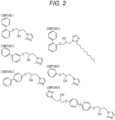
- the epoxy imidazole adduct may be selected from the group consisting of compounds 1 to 4 below.
- Another aspect of the present invention is a resin composition that contains the above-described curing catalyst and an epoxy resin.
- a curing agent for the epoxy resin may be further contained.
- the curing agent may be an acid anhydride-based or phenol-based curing agent.
- Still another aspect of the present invention is a sealing material or an adhesive agent each containing the above-described resin composition.
- Another aspect of the present invention is a cured product of one of the above-described resin compositions.
- a curing catalyst according to the present embodiment contains an epoxy imidazole adduct having structural formula (I) below.
- the curing catalyst refers to a catalyst that has the function of promoting initiation and/or progress of self-polymerization of a base resin or polymerization of a base resin and a curing agent.
- R 1 is a group selected from hydrogen, phenyl, and C1-C17 alkyls, and R 2 and R 3 are each independently a group selected from hydrogen and C1-C6 alkyls.
- R 1 may be a group selected from phenyl and C1-C12 alkyls.
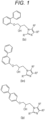
- the structure of an alkyl group of R 2 and R 3 may be linear, branched, or cyclic. It is noted that compound (I) includes compound (Io), compound (Im), and compound (Ip) illustrated in Fig. 1 .
- R 1 is preferably a group selected from C8-C17 alkyls, particularly from C8-C12 alkyls, because the reaction peak top temperature in curing of an epoxy resin composition can be shifted to the lower temperature side.
- the reaction peak top temperature is preferably 180°C or lower, more preferably 150°C or lower, and further preferably 130°C or lower.
- R 1 is preferably a group selected from hydrogen and C1-C6 alkyls, particularly from hydrogen and C1-C3 alkyls, from the viewpoint of pot life.
- the pot life is preferably 0.7 to 5.0, more preferably 0.7 to 3.0, and further preferably 0.7 to 2.0.
- the above-described epoxy amine adduct is a compound obtained by reaction between amine and a biphenyl compound having one epoxy group.
- the biphenyl compound having one epoxy group may have another substituent group.
- substituent group examples thereof include a chained alkyl group (for example, a methyl group, an ethyl group, an n-propyl group, an isopropyl group, an n-butyl group, a sec-butyl group, a tert-butyl group, an isobutyl group, an n-pentyl group, an isopentyl group, a neopentyl group, a tert-pentyl group, an n-hexyl group, an isohexyl group, an n-heptyl group, and an n-octyl group), a cycloalkyl group (for example, a cyclopropyl group, a cyclobutyl group, a cyclopentyl group, a cyclohexyl group, a cycloheptyl group, and
- the imidazole compound to be adducted is not particularly limited, but preferably imidazole, 2-methyl imidazole, 2-undecyl imidazole, 2-heptadecyl imidazole, 2-phenyl imidazole, or 2-ethyl-4-methyl imidazole. From the viewpoint of striking a balance between curing properties and pot life, 2-methyl imidazole or 2-undecyl imidazole is more preferable. Examples of a commercially available imidazole compound to be adducted include 2MZ-H, C11Z, C17Z, 2PZ, and 2E4MZ manufactured by Shikoku Chemicals Corporation.
- the one epoxy group substituting on the biphenyl is preferably at the ortho or meta position, and more preferably at the ortho position, from the viewpoint of a melting point.
- the ortho position a balance between dispersion of a curing catalyst and curing reaction at 100°C or higher is best.
- This epoxy imidazole adduct can be produced by, for example, reaction of a methyl imidazole derivative having an imidazole ring that has the same modification as the above-described compound, with 2- ⁇ [([1,1'-biphenyl]-2-yl)oxy]methyl ⁇ oxirane, 2- ⁇ [([1,1'-biphenyl]-3-yl)oxy]methyl ⁇ oxirane or 2- ⁇ [([1,1'-biphenyl]-4-yl)oxy]methyl ⁇ oxirane.
- the production method is not limited thereto. The production can be performed by a method known to those skilled in the art.
- a solvent used for synthesis reaction of the epoxy imidazole adduct are not particularly limited. Examples thereof include hydrocarbons such as benzene, toluene, xylene, cyclohexane, hexane, heptane, octane, mineral spirit, and naphtha; chained ethers such as dimethyl ether, diethyl ether, and ethyl methyl ether; cyclic ethers such as tetrahydrofuran and tetrahydropyran; nitriles such as acetonitrile, propionitrile, and butyronitrile; amides such as acetamide, formamide, N,N-dimethylacetamide, and N,N-dimethylformamide; sulfoxides such as dimethyl sulfoxide and diethyl sulfoxide; ketones such as acetone, methyl ethyl ketone (MEK), methyl isobuty
- This epoxy imidazole adduct does not have a BPA (bisphenol A) backbone. Therefore, the cured product does not generate BPA which is said to pose a risk to the health of living organisms. Accordingly, this epoxy imidazole adduct has high safety.
- the epoxy imidazole adduct disclosed herein is used as a curing catalyst for bisphenol A type epoxy resin, generation of BPA from the cured product can be significantly suppressed compared to when a known bisphenol A type epoxy amine adduct is used. It is considered that this is because the structure of the polymer allows BPA to be generated only from the terminal of the polymerized bisphenol A type epoxy resin.
- the pot life is long, and a uniform coating film can be formed. Furthermore, the cured product is unlikely to deteriorate in moisture resistance and has a low water absorption rate. It is considered that the principle of these effects is that low compatibility between a biphenyl backbone contained in the curing catalyst and an epoxy resin at normal temperature lengthens pot life. However, we do not stick to this theory. Also, compatibility between a biphenyl backbone and epoxy resin is high at 100°C or higher. Therefore, dispersion of the curing catalyst and curing reaction proceed in a balanced manner. Accordingly, the residue of an unreacted curing catalyst decreases, and a uniform coating film can be formed through curing.
- an unreacted curing catalyst exists as an aggregate after curing, this aggregate is likely to absorb water and therefore causes the cured product to deteriorate in moisture resistance.
- the curing catalyst of the present invention it is considered that an unreacted curing catalyst is unlikely to remain as an aggregate, which can reduce deterioration in moisture resistance.
- the melting point of this epoxy imidazole adduct can be calculated, for example, by the following procedure, using a differential scanning calorimeter (DSC 204 F1 Phoenix (registered trademark)) (manufactured by NETZSCH).
- DSC 204 F1 Phoenix (registered trademark) manufactured by NETZSCH.
- NETZSCH differential scanning calorimeter
- 5 mg of each resin composition is weighed into an aluminum pan, and the aluminum pan is sealed with an aluminum lid. Thereafter, the center of this lid is punched with a needle to prepare a measurement sample.
- this measurement sample is measured for a heat flow (mW/mg) while increasing in temperature under the conditions of nitrogen atmosphere (100 mL/min), a temperature ranging from 25°C to 250°C, and a temperature increasing rate of 10°C/min.
- a temperature at which a peak top is obtained on the graph is calculated by an analysis software (NETZSCH Proteus-Thermal Analysis Version 6.1.0 B). This temperature is called a
- the curing catalyst disclosed herein may contain one or a plurality of the above-described epoxy imidazole adducts. Also, at least one curing catalyst other than the above-described epoxy imidazole adducts may be contained.
- curing catalysts are not particularly limited. Examples thereof include a curing catalyst of the type that thermoplastic resin is modified with a functional group such as amine and a curing catalyst of the type that an amine-based curing agent is covered with a polymer body shell, both being a commercially available curing catalyst used in a one-component epoxy resin-based adhesive agent. However, other curing catalysts are not limited thereto.
- the ratio of the above-described epoxy imidazole adduct is, but not particularly limited to, preferably 1 to 100 wt% to the total amount of the curing catalyst, more preferably 10 to 100 wt%, further preferably 30 to 100 wt%, particularly preferably 50 to 100 wt%, and most preferably 70 to 100 wt%.
- the resin composition disclosed herein contains: a curing catalyst containing an epoxy imidazole adduct having structural formula (I); and an epoxy resin.
- the epoxy resin is not particularly limited and may be either a monofunctional epoxy resin or a multifunctional epoxy resin.
- the monofunctional epoxy resin is an epoxy resin having one epoxy group and has been used as a reactive diluent for adjusting the viscosity of an epoxy resin composition.
- a monofunctional epoxy resin is roughly classified into an aliphatic monofunctional epoxy resin and an aromatic monofunctional epoxy resin. From the viewpoint of volatility, the epoxy equivalent weight in a monofunctional epoxy resin is preferably 180 to 400 g/eq.
- aromatic monofunctional epoxy resin examples include, but not limited to, phenyl glycidyl ether, cresyl glycidyl ether, p-s-butylphenyl glycidyl ether, styrene oxide, p-tert-butylphenyl glycidyl ether, o-phenylphenol glycidyl ether, m-phenylphenol glycidyl ether, p-phenylphenol glycidyl ether, and N-glycidyl phthalimide.
- p-tert-butylphenyl glycidyl ether and phenyl glycidyl ether are preferable, and p-tert-butylphenyl glycidyl ether is particularly preferable.
- Examples of the aliphatic monofunctional epoxy resin include, but not limited to, n-butyl glycidyl ether, 2-ethylhexyl glycidyl ether, ⁇ -pinene oxide, allyl glycidyl ether, 1-vinyl-3,4-epoxycyclohexane, 1,2-epoxy-4-(2-methyloxiranyl)-1-methylcyclohexane, 1,3-bis(3-glycidoxypropyl)-1, 1,3,3-tetramethyldisiloxane, and neodecanoic acid glycidyl ester.
- the multifunctional epoxy resin refers to an epoxy resin having two or more epoxy groups. Therefore, the resin composition of the present disclosure may contain a bifunctional epoxy resin, a trifunctional epoxy resin, a tetrafunctional epoxy resin, or the like.
- the multifunctional epoxy resin is roughly classified into an aliphatic multifunctional epoxy resin and an aromatic multifunctional epoxy resin.
- aliphatic multifunctional epoxy resin examples include, but not limited to, diepoxy resin such as (poly)ethylene glycol diglycidyl ether, (poly)propylene glycol diglycidyl ether, butanediol diglycidyl ether, neopentyl glycol diglycidyl ether, 1,6-hexanediol diglycidyl ether, trimethylolpropane diglycidyl ether, polytetramethylene ether glycol diglycidyl ether, glycerin diglycidyl ether, neopentyl glycol diglycidyl ether, cyclohexane type diglycidyl ether, and dicyclopentadiene type diglycidyl ether; triepoxy resin such as -trimethylolpropane triglycidyl ether and glycerin triglycidyl ether; alicyclic epoxy resin such as vinyl(3,
- cyclohexane type diglycidyl ether refers to a compound having a structure in which two glycidyl groups are each linked through an ether bond to a divalent saturated hydrocarbon group having one cyclohexane ring as a parent structure.
- Dicyclopentadiene type diglycidyl ether refers to a compound having a structure in which two glycidyl groups are each linked through an ether bond to a divalent saturated hydrocarbon group having a dicyclopentadine backbone as a parent structure.
- cyclohexane type diglycidyl ether cyclohexanedimethanol diglicidyl ether is particularly preferable.
- the aromatic multifunctional epoxy resin is a multifunctional epoxy resin having a structure in which an aromatic ring such as a benzene ring is contained. Many of epoxy resins which have been often used, such as bisphenol A type epoxy resin, are of this type. Examples of the aromatic multifunctional epoxy resin include, but not limited to, bisphenol A type epoxy resin; branched multifunctional bisphenol A type epoxy resin such as p-glycidyloxyphenyl dimethyltrisbisphenol A diglycidyl ether; bisphenol F type epoxy resin; novolac type epoxy resin; tetrabromo bisphenol A type epoxy resin; fluorene type epoxy resin; biphenyl aralkyl epoxy resin; diepoxy resin such as 1,4-phenyldimethanol diglycidyl ether; biphenyl type epoxy resin such as 3,3',5,5'-tetramethyl-4,4'-diglycidyloxybiphenyl; glycidylamine type epoxy resin such as diglycidyl aniline, digly
- aromatic multifunctional epoxy resin bisphenol F type epoxy resin, bisphenol A type epoxy resin, and glycidylamine type epoxy resin are preferable. Especially, those having an epoxy equivalent weight of 90 to 200 g/eq are preferable.
- the resin composition of the present disclosure may contain at least one curing agent.
- the curing agent refers to a compound that cures an epoxy resin as a base resin by reacting with an epoxy group to form a cross-linked structure.
- the curing agent which may be contained in the resin composition of the present disclosure is not particularly limited, it contains a compound having an active group that is reactive with an epoxy group of an epoxy resin.
- the curing agent include nitrogen-containing compounds such as amine and a derivative thereof; oxygen-containing compounds such as carboxylic acid-terminated polyester, acid anhydride-based and phenol-based curing agents, bisphenol A and cresol novolac, and phenol-terminated epoxy resin; and thiol compounds.
- nitrogen-containing compounds such as amine and a derivative thereof are not particularly limited, examples thereof include aliphatic polyamine such as triethylenetetramine, tetraethylenepentamine, m-xylenediamine, trimethylhexamethylenediamine, and 2-methylpentamethylenediamine; cycloaliphatic polyamine such as isophoronediamine, 1,3-bisaminomethylcyclohexane, bis(4-aminocyclohexyl)methane, norbomenediamine, and 1,2-diaminocyclohexane; piperazine type polyamine such as N-aminoethyl piperazine and 1,4-bis(2-amino-2-methylpropyl)piperazine; and aromatic polyamines such as diethyltoluenediamine, dimethylthiotoluenediamine, 4,4'-diamino-3,3'-diethyldiphenylmethane, bis(methylthio)tolu
- the acid anhydride-based curing agent is not particularly limited, examples thereof include methyltetrahydrophthalic acid anhydrides, methylhexahydrophthalic acid anhydrides, alkylated tetrahydrophthalic acid anhydrides, methylhimic acid anhydrides, succinic acid anhydrides substituted with an alkenyl group, and glutaric acid anhydrides.
- preferable are 3,4-dimethyl-6-(2-methyl-1-propenyl)-1,2,3,6-tetrahydrophthalic acid anhydrides, 1-isopropyl-4-methyl-bicyclo[2.2.2]octo-5-ene-2,3-dicarboxylic acid anhydrides, norbornane-2,3-dicarboxylic acid anhydrides, methylnorbornane-2,3-dicarboxylic acid anhydrides, hydrogenated methylnadic acid anhydrides, succinic acid anhydrides substituted with an alkenyl group, and diethylglutaric acid anhydrides.
- the phenol-based curing agent refers to monomers, oligomers, and polymers in general which have a phenolic hydroxyl group.
- examples thereof include phenol novolac resin and an alkylated or allylated product thereof, cresol novolac resin, phenol aralkyl (containing a phenylene or biphenylene backbone) resin, naphthol aralkyl resin, triphenol methane resin, and dicyclopentadiene type phenolic resin.
- cresol novolac resin phenol aralkyl (containing a phenylene or biphenylene backbone) resin
- naphthol aralkyl resin triphenol methane resin
- dicyclopentadiene type phenolic resin Especially, allyl phenol novolac resin is preferable.
- the thiol compound includes a hydrolyzable multifunctional thiol compound and a nonhydrolyzable multifunctional thiol compound.
- hydrolyzable multifunctional thiol compound examples include trimethylolpropane tris(3-mercaptopropionate) (manufactured by SC Organic Chemical Co., Ltd.: TMMP), tris-[(3-mercaptopropionyloxy)-ethyl]-isocyanurate (manufactured by SC Organic Chemical Co., Ltd.: TEMPIC), pentaerythritol tetrakis(3-mercaptopropionate) (manufactured by SC Organic Chemical Co., Ltd.: PEMP), tetraethyleneglycol bis(3-mercaptopropionate) (manufactured by SC Organic Chemical Co., Ltd.: EGMP-4), dipentaerythritol hexakis(3-mercaptopropionate) (manufactured by SC Organic Chemical Co., Ltd.: DPMP), pentaerythritol tetrakis(3-mercaptobutyrate
- nonhydrolyzable multifunctional thiol compound examples include 1,3,4,6-tetrakis(2-mercaptoethyl)glycoluril (trade name: TS-G, manufactured by Shikoku Chemicals Corporation), (1,3,4,6-tetrakis(3-mercaptopropyl)glycoluril (trade name: C3 TS-G, manufactured by Shikoku Chemicals Corporation), 1,3,4,6-tetrakis(mercaptomethyl)glycoluril, 1,3,4,6-tetrakis(mercaptomethyl)-3a-methyl glycoluril, 1,3,4,6-tetrakis(2-mercaptoethyl)-3a-methyl glycoluril, 1,3,4,6-tetrakis(3-mercaptopropyl)-3a-methyl glycoluril, 1,3,4,6-tetrakis(mercaptomethyl)-3a,6a-dimethyl glycoluril, 1,3,4,6-tetrakis(2-mercapto
- the nonhydrolyzable multifunctional thiol compound to be used may be a polythiol compound which is trifunctional or more than trifunctional and has two or more sulfide bonds in the molecule.
- a thiol compound include aliphatic polythiol compounds such as 1,2,3-tris(mercaptomethylthio)propane, 1,2,3-tris(2-mercaptoethylthio)propane, 1,2,3-tris(3-mercaptopropylthio)propane, 4-mercaptomethyl-1,8-dimercapto-3,6-dithiaoctane, 5,7-dimercaptomethyl-1,11-dimercapto-3,6,9-trithiaundecane, 4,7-dimercaptomethyl-1,11-dimercapto-3,6,9-trithiaundecane, 4,8-dimercaptomethyl-1,11-dimercapto-3,6,9-trithiaundecane
- the ratio of the curing catalyst in the resin composition is not particularly limited. However, when the resin composition is an epoxy homopolymerization system containing no curing agent, the ratio of the curing catalyst to the epoxy resin in the resin composition is preferably 0.1 to 50 wt%, more preferably 0.1 to 30 wt%, and further preferably 0.1 to 20 wt%. When the resin composition contains the curing agent, this ratio to the epoxy resin in the resin composition is preferably 0.01 to 10 wt%, more preferably 0.01 to 5 wt%, and further preferably 0.01 to 1 wt%.
- the curable composition of the present disclosure may contain, other than the base resin, curing catalyst, and curing agent, for example, the below-described ingredients as necessary.
- the resin composition of the present disclosure may be added with a stabilizer for improving storage stability and lengthening pot life.
- a stabilizer for a one-component type adhesive agent that contains epoxy resin as the base resin.
- This stabilizer is preferably at least one selected from the group consisting of a liquid boric acid ester compound, aluminum chelate, and organic acid.
- liquid boric acid ester compound examples include 2,2'-oxybis(5,5'-dimethyl-1,3,2-oxaborinane), trimethyl borate, triethyl borate, tri-n propyl borate, triisopropyl borate, tri-n-butyl borate, tripentyl borate, triallyl borate, trihexyl borate, tricyclohexyl borate, trioctyl borate, trinonyl borate, tridecyl borate, tridodecyl borate, trihexadecyl borate, trioctadecyl borate, tris(2-ethylhexyloxy)borane, bis(1,4,7,10-tetraoxaundecyl)(1,4,7,10,13-pentaoxatetradecyl)(1,4,7-trioxaundecyl)borane, tribenzyl borate, triphenyl borate,
- An example of the aluminum chelate to be used is aluminum chelate A (manufactured by Kawaken Fine Chemicals Co., Ltd.).
- An example of the organic acid to be used is barbituric acid.
- the resin composition of the present disclosure can be added with a filler.
- the filler examples include a silica filler, a glass filler, an alumina filler, a titanium oxide filler, a boron nitride filler, an aluminum nitride filler, a talc filler, a calcium carbonate filler, a resin filler (for example, a polytetrafluoroethylene (PTFE) filler and a silicone rubber filler), and an electrically conductive filler such as silver, copper, and nickel.
- the shape is not particularly limited and may be hollow, spherical, or indefinite. Also, the filler may be surface treated.
- the resin composition of the present disclosure can be added with a coupling agent.
- the coupling agent is preferably a silane coupling agent, and various silane coupling agents based on epoxy, amino, vinyl, methacryl, acryl, mercapto, and others can be used.
- silane coupling agent examples include 3-glycidoxypropyltrimethoxysilane, 3-aminopropyltrimethoxysilane, vinyltrimethoxysilane, 3-triethoxysilyl-N-(1,3-dimethyl-butylidene)propylamine, 2-(3,4-epoxycyclohexyl)ethyltrimethoxysilane, p-styryltrimethoxysilane, 3-methacryloxypropylmethyltrimethoxysilane, 3-acryloxypropyltrimethoxysilane, 8-glycidoxyoctyltrimethoxysilane, 3-ureidepropyltriethoxysilane, 3-mercaptopropyltrimethoxysilane, bis(triethoxysilylpropyl)tetrasulfide, and 3-isocyanatepropyltriethoxysilane.
- silane coupling agents may be used individually or in combination of two or
- the resin composition of the present disclosure may be added with other additive agents within the range that does not impair the object of the present invention.
- additive agents include carbon black, titanium black, an ion trapping agent, a levelling agent, an antioxidant, a defoamer, a thixotropic agent, a viscosity modifier, a flame retardant, a colorant, and a solvent.
- the type and added amount of each additive agent are those known in the art.
- Examples of the resin composition disclosed herein as a one-component epoxy resin include a sealing material and a filling material for electronic components, a dam material, an electrically conductive or insulating adhesive agent, a die attach material, a film, a coating agent, and a shielding material.
- This resin composition can also be used in a paint, composite materials such as a pipe material and a tank material, civil engineering and construction materials such as a floor material and a membrane, and an adhesive agent.
- the utilization method is not limited thereto.
- the resin composition containing the curing catalyst of the present disclosure is suitable for uses of electronic components which are required to have high moisture resistance reliability.
- the obtained crude product (380 g) was added to methanol (1514 mL), heated to 50°C, and dissolved while stirring. Thereafter, concentration was performed until the total amount of methanol reached 1226 mL, and suction filtration was further performed. The obtained solution was heated to 50°C again and then left to stand for 16 hours while stirring at room temperature. After the obtained suspension liquid was suction filtered, the residue was washed with pure water (600 mL ⁇ 4 times).
- the solid was suspended in methanol (50 mL) and dissolved by increasing in temperature to 60°C. Then, the resultant product was added with pure water (100 mL) and thereafter cooled to room temperature. As a result, this was separated into two layers. Furthermore, the product was stirred under ice bath. The precipitated solid was filtered off, washed with pure water, and dried under reduced pressure. The obtained solid was suspended in methanol (150 mL) and dissolved by heating to 60°C. Thereafter, the product was cooled to room temperature.
- the obtained solid was suspended in methanol (15 mL), and the solid was filtered out. A liquid obtained by washing this solid with methanol was mixed to the filtrate. The obtained solution was concentrated under reduced pressure.
- acetonitrile 200 mL
- this measurement sample was measured for a heat flow (mW/mg) while increasing in temperature under the conditions of nitrogen atmosphere (100 mL/min), a temperature ranging from 25°C to 250°C, and a temperature increasing rate of 10°C/min.
- a temperature at which a peak top is obtained on the graph was calculated by an analysis software (NETZSCH Proteus-Thermal Analysis Version 6.1.0 B). This temperature was defined as a melting peak temperature. In compounds 1 to 4 (solid matter), a clear melting peak was obtained. However, in compound 5 (oily) and compound 6 (solid matter), a clear melting peak was not obtained.
- the resin composition When prepared and after stored for 24 hours under the environment of 25°C ⁇ 2°C and 50% RH ⁇ 10% RH, the resin composition was measured using an E type viscometer (TVE 25H: manufactured by Toki Sangyo Co., Ltd, rotor name: 3° ⁇ R9.7) at 5 rpm and 25°C in a previously set appropriate range (H, R, or U). The pot life was calculated according to (viscosity after 24 hours/viscosity when prepared). The peak temperature during reaction was measured using a differential scanning calorimeter (DSC 204 F1 Phoenix (registered trademark)) (manufactured by NETZSCH). First, 5 mg of each resin composition was weighed into an aluminum pan, and the aluminum pan was sealed with an aluminum lid.
- E type viscometer TVE 25H: manufactured by Toki Sangyo Co., Ltd, rotor name: 3° ⁇ R9.7
- the pot life was calculated according to (viscosity after 24 hours/viscosity when prepared
- this measurement sample was measured for a heat flow (mW/mg) while increasing in temperature under the conditions of nitrogen atmosphere (100 mL/min), a temperature ranging from 25 to 250°C, and a rate of 10°C/min.
- a temperature (referred to as a reaction peak top temperature as described herein) at which an exothermic peak is obtained was calculated by an analysis software (NETZSCH Proteus-Thermal Analysis Version 6.1.0 B).
- the gel time was measured using a gelation tester (GT-D-15A: manufactured by Yukari Giken Co.).
- a hot plate was set at 120°C, and the resin composition was transferred on the hot plate by a test bar.
- the gel time was defined as a time until the hardness of the resin composition becomes such that the resin composition does not change in shape even when touched by the test bar.
- a Teflon (registered trademark) sheet was stuck on a surface of a 3 mm thick glass plate, and a spacer (obtained by stacking heat-resistant tapes) was disposed at two locations on the Teflon sheet such that the film thickness becomes 300 ⁇ 200 ⁇ m when cured.
- the resin composition was applied between the spacers.
- the resin composition was sandwiched by another glass plate on which a Teflon (registered trademark) sheet had been stuck, in such a manner as not to catch air bubbles. Then, the resin composition was cured at 150°C for 30 minutes to obtain a cured product.
- this cured product was peeled from the glass plate on which the Teflon (registered trademark) sheet had been stuck, and cut out by a cutter into a prescribed size (30 mm ⁇ 30 mm) to obtain a test piece. It is noted that the cut end was smoothed with sandpaper, and the weight of this cured product was measured.
- the test piece was subjected to a PCT (pressure cooker test) (conditions: 121°C, 2 atm, 100% RH, 20 hours) by a highly accelerated life test apparatus (EHS-221M: manufactured by ESPEC Corp.).
- Example 1 to 4 when compounds 1 to 4 were used, the viscosity hardly changed even after 24 hours of the preparation of the resin composition. However, in Comparative Examples 1 to 3 (when compounds 5 and 6 and 2MZ were used), the viscosity reached too high to be measured after 24 hours (indicated as UM in the table). In this manner, the resin compositions of Examples had longer pot life. It is noted that for Examples 1 and 4 in which imidazole substitutes at the ortho position of biphenyl, the viscosity after 72 hours was measured. The pot life was 1.2 times in the resin composition of Example 1. However, it was 1.4 times in the resin composition of Example 4.
- the resin composition containing compound 1 and an epoxy resin exhibits good characteristics even in combination with another epoxy resin and another curing agent.
- epoxy resin there were used EXA835LV (manufactured by DIC Corporation, mixture of bisphenol A type epoxy resin and bisphenol F type epoxy resin), YDF8170 (manufactured by Nippon Steel Chemical & Material Co., Ltd., bisphenol F type epoxy resin), and CDMDG (manufactured by Showa Denko K.K., aliphatic epoxy resin). These epoxy resins are cured through homopolymerization of epoxy, curing reaction by an acid anhydride, and curing reaction by a phenol-based substance.
- the epoxy imidazole adduct disclosed herein can have good pot life and achieve sufficient curing. Also, a resin composition having better characteristics in terms of pot life and moisture resistance can be obtained, compared to when 2MZ was used as the curing catalyst.
- a curing catalyst, a resin composition, a sealing material, an adhesive agent, and a cured product which have good characteristics, can be obtained.
Landscapes
- Chemical & Material Sciences (AREA)
- Organic Chemistry (AREA)
- Health & Medical Sciences (AREA)
- Chemical Kinetics & Catalysis (AREA)
- Medicinal Chemistry (AREA)
- Polymers & Plastics (AREA)
- Epoxy Resins (AREA)
- Adhesives Or Adhesive Processes (AREA)
- Structures Or Materials For Encapsulating Or Coating Semiconductor Devices Or Solid State Devices (AREA)
- Sealing Material Composition (AREA)
Claims (11)
- Härtungskatalysator für Epoxidharz, umfassend ein Epoxyimidazoladdukt mit der nachstehenden Strukturformel (I):

- Härtungskatalysator für Epoxidharz nach Anspruch 1, umfassend ein Epoxyimidazoladdukt mit der folgenden Strukturformel (Io) oder (Im):
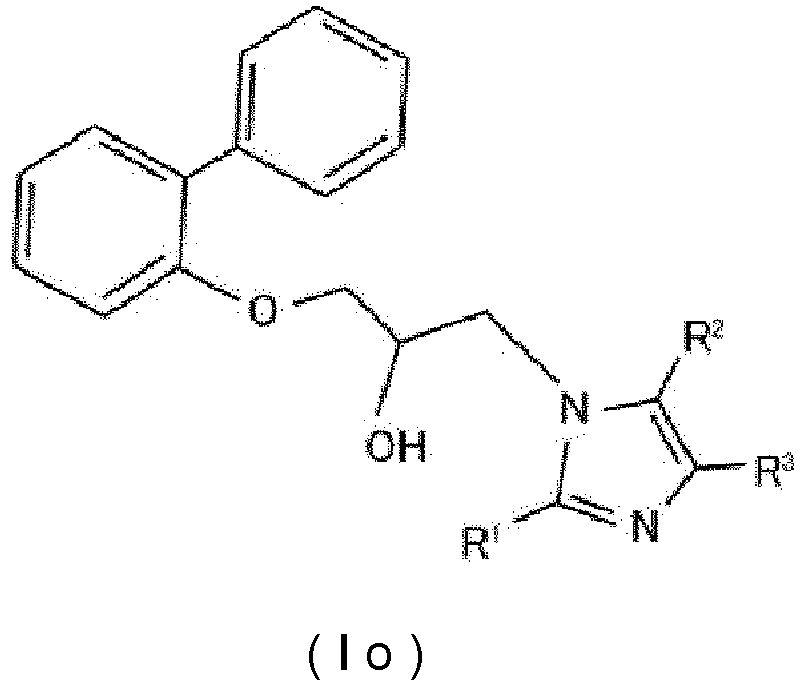 (wobei R1 eine Gruppe ist, die aus Wasserstoff, Phenyl und C1-C17-Alkylen ausgewählt ist, und R2 und R3 jeweils unabhängig voneinander eine Gruppe sind, die aus Wasserstoff und C1-C6-Alkylen ausgewählt ist), und
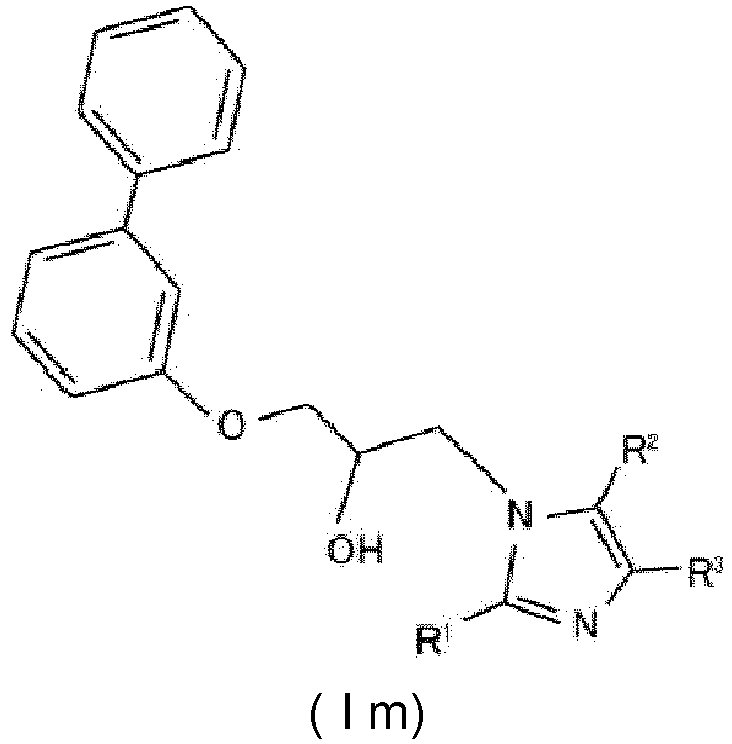 (wobei R1 eine Gruppe ist, die aus Wasserstoff, Phenyl und C1-C17-Alkylen ausgewählt ist, und R2 und R3 jeweils unabhängig voneinander eine Gruppe sind, die aus Wasserstoff und C1-C6-Alkylen ausgewählt ist).
 - Härtungskatalysator für Epoxidharz nach Anspruch 1 oder 2,
worin R1 eine Gruppe ist, die aus der Gruppe bestehend aus Wasserstoff und C1-C6-Alkylen ausgewählt ist. - Härtungskatalysator für Epoxidharz nach Anspruch 1 oder 2,
wobei R1 eine Gruppe ist, die aus der Gruppe bestehend aus C8-C17-Alkylen ausgewählt ist. - Härtungskatalysator für Epoxidharz nach Anspruch 1,
wobei das Epoxyimidazol-Addukt aus der Gruppe ausgewählt ist, die aus den nachstehenden Verbindungen 1 bis 4 besteht:


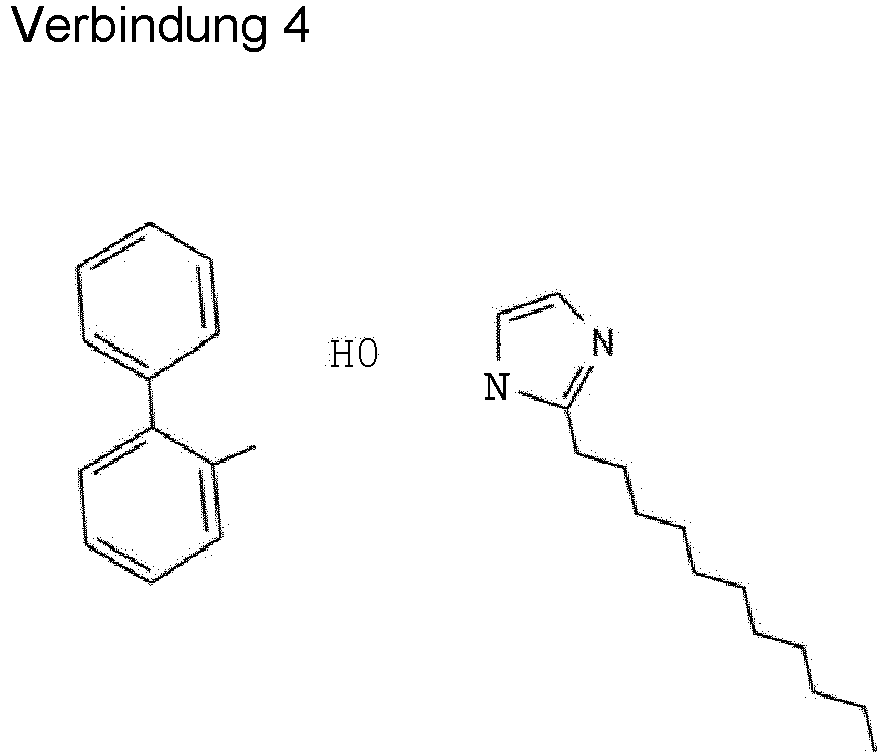
- Harzzusammensetzung, umfassend den Härtungskatalysator nach einem der Ansprüche 1 bis 5 und ein Epoxidharz.
- Harzzusammensetzung nach Anspruch 6, ferner umfassend ein Härtungsmittel für das Epoxidharz.
- Harzzusammensetzung nach Anspruch 7,
wobei das Härtungsmittel auf Säureanhydrid-basiertes oder ein Phenolbasiertes Härtungsmittel ist. - Dichtungsmaterial, das die Harzzusammensetzung nach einem der Ansprüche 6 bis 8 enthält.
- Klebemittel, das die Harzzusammensetzung nach einem der Ansprüche 6 bis 8 enthält.
- Ausgehärtetes Produkt aus der Harzzusammensetzung nach einem der Ansprüche 6 bis 8.
Applications Claiming Priority (2)
| Application Number | Priority Date | Filing Date | Title |
|---|---|---|---|
| JP2020064472 | 2020-03-31 | ||
| PCT/JP2020/017853 WO2021199450A1 (ja) | 2020-03-31 | 2020-04-24 | 硬化触媒、樹脂組成物、封止材、接着剤、及び硬化物 |
Publications (3)
| Publication Number | Publication Date |
|---|---|
| EP4130094A1 EP4130094A1 (de) | 2023-02-08 |
| EP4130094A4 EP4130094A4 (de) | 2024-04-17 |
| EP4130094B1 true EP4130094B1 (de) | 2024-11-27 |
Family
ID=77928745
Family Applications (1)
| Application Number | Title | Priority Date | Filing Date |
|---|---|---|---|
| EP20929256.4A Active EP4130094B1 (de) | 2020-03-31 | 2020-04-24 | Härtungskatalysator, harzzusammensetzung, dichtungsmaterial, klebstoff und gehärtetes produkt |
Country Status (7)
| Country | Link |
|---|---|
| US (1) | US12384874B2 (de) |
| EP (1) | EP4130094B1 (de) |
| JP (1) | JP7316009B2 (de) |
| KR (1) | KR102734311B1 (de) |
| CN (1) | CN115003727B (de) |
| TW (1) | TWI873316B (de) |
| WO (1) | WO2021199450A1 (de) |
Families Citing this family (2)
| Publication number | Priority date | Publication date | Assignee | Title |
|---|---|---|---|---|
| TWI865757B (zh) * | 2020-03-31 | 2024-12-11 | 日商納美仕有限公司 | 環氧胺加合物、硬化觸媒、樹脂組成物、密封材料、接著劑、硬化物及環氧胺加合物的製造方法 |
| CN120309894B (zh) * | 2025-05-08 | 2025-12-09 | 广东固研电子材料有限公司 | 一种咪唑类环氧树脂固化剂及其制备方法和应用 |
Citations (1)
| Publication number | Priority date | Publication date | Assignee | Title |
|---|---|---|---|---|
| WO2021201060A1 (ja) * | 2020-03-31 | 2021-10-07 | ナミックス株式会社 | エポキシアミンアダクト、硬化触媒、樹脂組成物、封止材、接着剤、及び硬化物 |
Family Cites Families (18)
| Publication number | Priority date | Publication date | Assignee | Title |
|---|---|---|---|---|
| DE3382736T2 (de) | 1982-09-21 | 1994-05-26 | Ajinomoto Kk | Latente Härter für Epoxyharze. |
| JPS5953526A (ja) | 1982-09-21 | 1984-03-28 | Ajinomoto Co Inc | エポキシ樹脂用潜在性硬化剤 |
| DE3242252A1 (de) * | 1982-11-15 | 1984-05-17 | Bayer Ag, 5090 Leverkusen | Heterocyclisch substituierte hydroxyalkyl-azolyl-derivate |
| JPH066620B2 (ja) | 1989-12-05 | 1994-01-26 | 富士化成工業株式会社 | 一成分系加熱硬化性エポキシ樹脂組成物 |
| JPH11100546A (ja) * | 1997-09-29 | 1999-04-13 | Nippon Paint Co Ltd | 速硬化型エポキシ系粉体塗料用イミダゾールアダクト錯体触媒および粉体塗料 |
| JP4128281B2 (ja) * | 1998-09-03 | 2008-07-30 | 旭化成エレクトロニクス株式会社 | エポキシ系樹脂組成物 |
| TWI488841B (zh) * | 2009-03-27 | 2015-06-21 | Hitachi Chemical Co Ltd | A thermosetting resin composition, and an insulating film, a laminate, and a printed wiring board |
| JP5596385B2 (ja) * | 2010-03-23 | 2014-09-24 | 旭化成イーマテリアルズ株式会社 | マスターバッチ型エポキシ樹脂用硬化剤 |
| JP5717434B2 (ja) * | 2010-12-17 | 2015-05-13 | 株式会社Adeka | マスターバッチ型エポキシ樹脂用潜在性硬化剤及びそれを用いたエポキシ樹脂組成物 |
| JP6028349B2 (ja) * | 2012-03-14 | 2016-11-16 | 日立化成株式会社 | 熱硬化性樹脂組成物、プリプレグ及び積層板 |
| ES2848302T3 (es) | 2014-09-02 | 2021-08-06 | Toray Industries | Composición de resina epoxi para materiales compuestos reforzados con fibra, material preimpregnado y material compuesto reforzado con fibra |
| KR102375986B1 (ko) * | 2015-03-13 | 2022-03-17 | 닛테츠 케미컬 앤드 머티리얼 가부시키가이샤 | 옥사졸리돈 고리 함유 에폭시 수지, 그 제조 방법, 에폭시 수지 조성물, 및 경화물 |
| JP6471620B2 (ja) * | 2015-06-15 | 2019-02-20 | 協立化学産業株式会社 | エポキシ化合物、部分エステル化エポキシ化合物及びそれらを含む硬化性組成物 |
| JP6633425B2 (ja) * | 2016-02-26 | 2020-01-22 | 東京応化工業株式会社 | 硬化性樹脂組成物 |
| JP2017155127A (ja) * | 2016-03-01 | 2017-09-07 | 三菱ケミカル株式会社 | 硬化性エポキシ樹脂組成物、その硬化物及び電気・電子部品 |
| JP6878076B2 (ja) * | 2017-03-24 | 2021-05-26 | 日鉄ケミカル&マテリアル株式会社 | オキサゾリドン環含有エポキシ樹脂組成物、その製造方法、硬化性樹脂組成物、及び硬化物 |
| WO2018181045A1 (ja) * | 2017-03-28 | 2018-10-04 | 日本曹達株式会社 | 潜在性エポキシ硬化触媒又は硬化剤 |
| JP7250471B2 (ja) | 2018-10-17 | 2023-04-03 | キヤノン株式会社 | 情報処理システム、画像形成装置、端末、情報処理方法、プログラム |
-
2020
- 2020-04-24 US US17/802,784 patent/US12384874B2/en active Active
- 2020-04-24 EP EP20929256.4A patent/EP4130094B1/de active Active
- 2020-04-24 WO PCT/JP2020/017853 patent/WO2021199450A1/ja not_active Ceased
- 2020-04-24 CN CN202080094013.3A patent/CN115003727B/zh active Active
- 2020-04-24 JP JP2022511497A patent/JP7316009B2/ja active Active
- 2020-04-24 KR KR1020227025663A patent/KR102734311B1/ko active Active
-
2021
- 2021-03-23 TW TW110110408A patent/TWI873316B/zh active
Patent Citations (1)
| Publication number | Priority date | Publication date | Assignee | Title |
|---|---|---|---|---|
| WO2021201060A1 (ja) * | 2020-03-31 | 2021-10-07 | ナミックス株式会社 | エポキシアミンアダクト、硬化触媒、樹脂組成物、封止材、接着剤、及び硬化物 |
Also Published As
| Publication number | Publication date |
|---|---|
| TWI873316B (zh) | 2025-02-21 |
| US12384874B2 (en) | 2025-08-12 |
| JP7316009B2 (ja) | 2023-07-27 |
| CN115003727B (zh) | 2024-04-02 |
| US20230097646A1 (en) | 2023-03-30 |
| KR20220155260A (ko) | 2022-11-22 |
| CN115003727A (zh) | 2022-09-02 |
| JPWO2021199450A1 (de) | 2021-10-07 |
| WO2021199450A1 (ja) | 2021-10-07 |
| EP4130094A4 (de) | 2024-04-17 |
| KR102734311B1 (ko) | 2024-11-25 |
| TW202138355A (zh) | 2021-10-16 |
| EP4130094A1 (de) | 2023-02-08 |
Similar Documents
| Publication | Publication Date | Title |
|---|---|---|
| KR101571184B1 (ko) | 복합재 제품을 위한 높은 Tg의 에폭시 시스템 | |
| WO2021033325A1 (ja) | エポキシ樹脂組成物 | |
| EP4130094B1 (de) | Härtungskatalysator, harzzusammensetzung, dichtungsmaterial, klebstoff und gehärtetes produkt | |
| TWI520980B (zh) | The epoxy resin composition and cured | |
| JPH10218973A (ja) | カルドール構造を有する新規エポキシ樹脂 | |
| US9382373B2 (en) | Curable compositions and thermosets prepared therefrom | |
| JP7704440B2 (ja) | エポキシアミンアダクト、硬化触媒、樹脂組成物、封止材、接着剤、及び硬化物 | |
| EP4361193A1 (de) | Epoxidharzzusammensetzung | |
| WO2025023048A1 (ja) | エポキシ樹脂組成物、接着剤、封止材、硬化物、半導体装置及び電子部品 | |
| WO2025028598A1 (ja) | エポキシ樹脂用硬化剤、エポキシ樹脂組成物、硬化物、封止材及び接着剤 | |
| JP7751894B2 (ja) | 硬化触媒、樹脂組成物、封止材、接着剤、及び硬化物 | |
| KR102705627B1 (ko) | 비스페놀-z를 이용한 폴리올과 폴리우레탄합성 및 물성연구 | |
| WO2022210190A1 (ja) | アミン誘導体 | |
| KR101203150B1 (ko) | 신규 에폭시 수지, 그 제조방법 및 상기 에폭시 수지를 포함하는 에폭시 수지 조성물 | |
| JPH10212335A (ja) | アルケニルサリチル酸構造を有する新規エポキシ樹脂 | |
| CN121443667A (zh) | 环氧树脂用固化剂、环氧树脂组合物、固化物、封装材料和粘接剂 | |
| WO2024048612A1 (ja) | 硬化性組成物、硬化物、及び硬化物の製造方法 | |
| JP2023101257A (ja) | エポキシ樹脂組成物及び硬化物 | |
| JP2025006978A (ja) | エポキシ樹脂およびその製造方法、並びにエポキシ樹脂組成物 |
Legal Events
| Date | Code | Title | Description |
|---|---|---|---|
| STAA | Information on the status of an ep patent application or granted ep patent |
Free format text: STATUS: THE INTERNATIONAL PUBLICATION HAS BEEN MADE |
|
| PUAI | Public reference made under article 153(3) epc to a published international application that has entered the european phase |
Free format text: ORIGINAL CODE: 0009012 |
|
| STAA | Information on the status of an ep patent application or granted ep patent |
Free format text: STATUS: REQUEST FOR EXAMINATION WAS MADE |
|
| 17P | Request for examination filed |
Effective date: 20220921 |
|
| AK | Designated contracting states |
Kind code of ref document: A1 Designated state(s): AL AT BE BG CH CY CZ DE DK EE ES FI FR GB GR HR HU IE IS IT LI LT LU LV MC MK MT NL NO PL PT RO RS SE SI SK SM TR |
|
| DAV | Request for validation of the european patent (deleted) | ||
| DAX | Request for extension of the european patent (deleted) | ||
| A4 | Supplementary search report drawn up and despatched |
Effective date: 20240318 |
|
| RIC1 | Information provided on ipc code assigned before grant |
Ipc: C08G 59/18 20060101ALI20240312BHEP Ipc: H01L 23/31 20060101ALI20240312BHEP Ipc: H01L 23/29 20060101ALI20240312BHEP Ipc: C09J 163/00 20060101ALI20240312BHEP Ipc: C08G 59/40 20060101ALI20240312BHEP Ipc: C08G 59/68 20060101AFI20240312BHEP |
|
| GRAP | Despatch of communication of intention to grant a patent |
Free format text: ORIGINAL CODE: EPIDOSNIGR1 |
|
| STAA | Information on the status of an ep patent application or granted ep patent |
Free format text: STATUS: GRANT OF PATENT IS INTENDED |
|
| INTG | Intention to grant announced |
Effective date: 20240619 |
|
| P01 | Opt-out of the competence of the unified patent court (upc) registered |
Free format text: CASE NUMBER: APP_42492/2024 Effective date: 20240718 |
|
| GRAS | Grant fee paid |
Free format text: ORIGINAL CODE: EPIDOSNIGR3 |
|
| GRAA | (expected) grant |
Free format text: ORIGINAL CODE: 0009210 |
|
| STAA | Information on the status of an ep patent application or granted ep patent |
Free format text: STATUS: THE PATENT HAS BEEN GRANTED |
|
| AK | Designated contracting states |
Kind code of ref document: B1 Designated state(s): AL AT BE BG CH CY CZ DE DK EE ES FI FR GB GR HR HU IE IS IT LI LT LU LV MC MK MT NL NO PL PT RO RS SE SI SK SM TR |
|
| REG | Reference to a national code |
Ref country code: GB Ref legal event code: FG4D |
|
| REG | Reference to a national code |
Ref country code: CH Ref legal event code: EP |
|
| REG | Reference to a national code |
Ref country code: IE Ref legal event code: FG4D |
|
| REG | Reference to a national code |
Ref country code: DE Ref legal event code: R096 Ref document number: 602020042311 Country of ref document: DE |
|
| REG | Reference to a national code |
Ref country code: LT Ref legal event code: MG9D |
|
| REG | Reference to a national code |
Ref country code: NL Ref legal event code: MP Effective date: 20241127 |
|
| PG25 | Lapsed in a contracting state [announced via postgrant information from national office to epo] |
Ref country code: IS Free format text: LAPSE BECAUSE OF FAILURE TO SUBMIT A TRANSLATION OF THE DESCRIPTION OR TO PAY THE FEE WITHIN THE PRESCRIBED TIME-LIMIT Effective date: 20250327 Ref country code: PT Free format text: LAPSE BECAUSE OF FAILURE TO SUBMIT A TRANSLATION OF THE DESCRIPTION OR TO PAY THE FEE WITHIN THE PRESCRIBED TIME-LIMIT Effective date: 20250327 Ref country code: HR Free format text: LAPSE BECAUSE OF FAILURE TO SUBMIT A TRANSLATION OF THE DESCRIPTION OR TO PAY THE FEE WITHIN THE PRESCRIBED TIME-LIMIT Effective date: 20241127 |
|
| PG25 | Lapsed in a contracting state [announced via postgrant information from national office to epo] |
Ref country code: FI Free format text: LAPSE BECAUSE OF FAILURE TO SUBMIT A TRANSLATION OF THE DESCRIPTION OR TO PAY THE FEE WITHIN THE PRESCRIBED TIME-LIMIT Effective date: 20241127 Ref country code: NL Free format text: LAPSE BECAUSE OF FAILURE TO SUBMIT A TRANSLATION OF THE DESCRIPTION OR TO PAY THE FEE WITHIN THE PRESCRIBED TIME-LIMIT Effective date: 20241127 |
|
| REG | Reference to a national code |
Ref country code: AT Ref legal event code: MK05 Ref document number: 1745666 Country of ref document: AT Kind code of ref document: T Effective date: 20241127 |
|
| PG25 | Lapsed in a contracting state [announced via postgrant information from national office to epo] |
Ref country code: BG Free format text: LAPSE BECAUSE OF FAILURE TO SUBMIT A TRANSLATION OF THE DESCRIPTION OR TO PAY THE FEE WITHIN THE PRESCRIBED TIME-LIMIT Effective date: 20241127 |
|
| PG25 | Lapsed in a contracting state [announced via postgrant information from national office to epo] |
Ref country code: ES Free format text: LAPSE BECAUSE OF FAILURE TO SUBMIT A TRANSLATION OF THE DESCRIPTION OR TO PAY THE FEE WITHIN THE PRESCRIBED TIME-LIMIT Effective date: 20241127 |
|
| PG25 | Lapsed in a contracting state [announced via postgrant information from national office to epo] |
Ref country code: NO Free format text: LAPSE BECAUSE OF FAILURE TO SUBMIT A TRANSLATION OF THE DESCRIPTION OR TO PAY THE FEE WITHIN THE PRESCRIBED TIME-LIMIT Effective date: 20250227 |
|
| PG25 | Lapsed in a contracting state [announced via postgrant information from national office to epo] |
Ref country code: LV Free format text: LAPSE BECAUSE OF FAILURE TO SUBMIT A TRANSLATION OF THE DESCRIPTION OR TO PAY THE FEE WITHIN THE PRESCRIBED TIME-LIMIT Effective date: 20241127 Ref country code: GR Free format text: LAPSE BECAUSE OF FAILURE TO SUBMIT A TRANSLATION OF THE DESCRIPTION OR TO PAY THE FEE WITHIN THE PRESCRIBED TIME-LIMIT Effective date: 20250228 Ref country code: AT Free format text: LAPSE BECAUSE OF FAILURE TO SUBMIT A TRANSLATION OF THE DESCRIPTION OR TO PAY THE FEE WITHIN THE PRESCRIBED TIME-LIMIT Effective date: 20241127 |
|
| PG25 | Lapsed in a contracting state [announced via postgrant information from national office to epo] |
Ref country code: PL Free format text: LAPSE BECAUSE OF FAILURE TO SUBMIT A TRANSLATION OF THE DESCRIPTION OR TO PAY THE FEE WITHIN THE PRESCRIBED TIME-LIMIT Effective date: 20241127 |
|
| PG25 | Lapsed in a contracting state [announced via postgrant information from national office to epo] |
Ref country code: RS Free format text: LAPSE BECAUSE OF FAILURE TO SUBMIT A TRANSLATION OF THE DESCRIPTION OR TO PAY THE FEE WITHIN THE PRESCRIBED TIME-LIMIT Effective date: 20250227 |
|
| PG25 | Lapsed in a contracting state [announced via postgrant information from national office to epo] |
Ref country code: SM Free format text: LAPSE BECAUSE OF FAILURE TO SUBMIT A TRANSLATION OF THE DESCRIPTION OR TO PAY THE FEE WITHIN THE PRESCRIBED TIME-LIMIT Effective date: 20241127 |
|
| PGFP | Annual fee paid to national office [announced via postgrant information from national office to epo] |
Ref country code: DE Payment date: 20250305 Year of fee payment: 6 |
|
| PG25 | Lapsed in a contracting state [announced via postgrant information from national office to epo] |
Ref country code: DK Free format text: LAPSE BECAUSE OF FAILURE TO SUBMIT A TRANSLATION OF THE DESCRIPTION OR TO PAY THE FEE WITHIN THE PRESCRIBED TIME-LIMIT Effective date: 20241127 |
|
| PG25 | Lapsed in a contracting state [announced via postgrant information from national office to epo] |
Ref country code: EE Free format text: LAPSE BECAUSE OF FAILURE TO SUBMIT A TRANSLATION OF THE DESCRIPTION OR TO PAY THE FEE WITHIN THE PRESCRIBED TIME-LIMIT Effective date: 20241127 |
|
| PG25 | Lapsed in a contracting state [announced via postgrant information from national office to epo] |
Ref country code: RO Free format text: LAPSE BECAUSE OF FAILURE TO SUBMIT A TRANSLATION OF THE DESCRIPTION OR TO PAY THE FEE WITHIN THE PRESCRIBED TIME-LIMIT Effective date: 20241127 |
|
| PG25 | Lapsed in a contracting state [announced via postgrant information from national office to epo] |
Ref country code: SK Free format text: LAPSE BECAUSE OF FAILURE TO SUBMIT A TRANSLATION OF THE DESCRIPTION OR TO PAY THE FEE WITHIN THE PRESCRIBED TIME-LIMIT Effective date: 20241127 |
|
| PG25 | Lapsed in a contracting state [announced via postgrant information from national office to epo] |
Ref country code: CZ Free format text: LAPSE BECAUSE OF FAILURE TO SUBMIT A TRANSLATION OF THE DESCRIPTION OR TO PAY THE FEE WITHIN THE PRESCRIBED TIME-LIMIT Effective date: 20241127 |
|
| PG25 | Lapsed in a contracting state [announced via postgrant information from national office to epo] |
Ref country code: IT Free format text: LAPSE BECAUSE OF FAILURE TO SUBMIT A TRANSLATION OF THE DESCRIPTION OR TO PAY THE FEE WITHIN THE PRESCRIBED TIME-LIMIT Effective date: 20241127 |
|
| REG | Reference to a national code |
Ref country code: DE Ref legal event code: R097 Ref document number: 602020042311 Country of ref document: DE |
|
| PG25 | Lapsed in a contracting state [announced via postgrant information from national office to epo] |
Ref country code: SE Free format text: LAPSE BECAUSE OF FAILURE TO SUBMIT A TRANSLATION OF THE DESCRIPTION OR TO PAY THE FEE WITHIN THE PRESCRIBED TIME-LIMIT Effective date: 20241127 |
|
| PLBE | No opposition filed within time limit |
Free format text: ORIGINAL CODE: 0009261 |
|
| STAA | Information on the status of an ep patent application or granted ep patent |
Free format text: STATUS: NO OPPOSITION FILED WITHIN TIME LIMIT |
|
| REG | Reference to a national code |
Ref country code: CH Ref legal event code: L10 Free format text: ST27 STATUS EVENT CODE: U-0-0-L10-L00 (AS PROVIDED BY THE NATIONAL OFFICE) Effective date: 20251008 |
|
| 26N | No opposition filed |
Effective date: 20250828 |
|
| REG | Reference to a national code |
Ref country code: CH Ref legal event code: H13 Free format text: ST27 STATUS EVENT CODE: U-0-0-H10-H13 (AS PROVIDED BY THE NATIONAL OFFICE) Effective date: 20251125 |
|
| PG25 | Lapsed in a contracting state [announced via postgrant information from national office to epo] |
Ref country code: LU Free format text: LAPSE BECAUSE OF NON-PAYMENT OF DUE FEES Effective date: 20250424 |
|
| PG25 | Lapsed in a contracting state [announced via postgrant information from national office to epo] |
Ref country code: MC Free format text: LAPSE BECAUSE OF FAILURE TO SUBMIT A TRANSLATION OF THE DESCRIPTION OR TO PAY THE FEE WITHIN THE PRESCRIBED TIME-LIMIT Effective date: 20241127 |
|
| GBPC | Gb: european patent ceased through non-payment of renewal fee |
Effective date: 20250424 |
|
| REG | Reference to a national code |
Ref country code: BE Ref legal event code: MM Effective date: 20250430 |
|
| PG25 | Lapsed in a contracting state [announced via postgrant information from national office to epo] |
Ref country code: GB Free format text: LAPSE BECAUSE OF NON-PAYMENT OF DUE FEES Effective date: 20250424 |
|
| PG25 | Lapsed in a contracting state [announced via postgrant information from national office to epo] |
Ref country code: FR Free format text: LAPSE BECAUSE OF NON-PAYMENT OF DUE FEES Effective date: 20250430 |
|
| PG25 | Lapsed in a contracting state [announced via postgrant information from national office to epo] |
Ref country code: BE Free format text: LAPSE BECAUSE OF NON-PAYMENT OF DUE FEES Effective date: 20250430 |
|
| PG25 | Lapsed in a contracting state [announced via postgrant information from national office to epo] |
Ref country code: CH Free format text: LAPSE BECAUSE OF NON-PAYMENT OF DUE FEES Effective date: 20250430 |
|
| PG25 | Lapsed in a contracting state [announced via postgrant information from national office to epo] |
Ref country code: IE Free format text: LAPSE BECAUSE OF NON-PAYMENT OF DUE FEES Effective date: 20250424 |