EP4026543B1 - Polymer coated protein microparticles for extended release formulations for use in the vitreous of the eye for treating vascular eye disorders - Google Patents
Polymer coated protein microparticles for extended release formulations for use in the vitreous of the eye for treating vascular eye disorders Download PDFInfo
- Publication number
- EP4026543B1 EP4026543B1 EP22150172.9A EP22150172A EP4026543B1 EP 4026543 B1 EP4026543 B1 EP 4026543B1 EP 22150172 A EP22150172 A EP 22150172A EP 4026543 B1 EP4026543 B1 EP 4026543B1
- Authority
- EP
- European Patent Office
- Prior art keywords
- protein
- polymer
- poly
- microparticles
- therapeutic protein
- Prior art date
- Legal status (The legal status is an assumption and is not a legal conclusion. Google has not performed a legal analysis and makes no representation as to the accuracy of the status listed.)
- Active
Links
Images


Classifications
-
- A—HUMAN NECESSITIES
- A61—MEDICAL OR VETERINARY SCIENCE; HYGIENE
- A61K—PREPARATIONS FOR MEDICAL, DENTAL OR TOILETRY PURPOSES
- A61K9/00—Medicinal preparations characterised by special physical form
- A61K9/48—Preparations in capsules, e.g. of gelatin, of chocolate
- A61K9/50—Microcapsules having a gas, liquid or semi-solid filling; Solid microparticles or pellets surrounded by a distinct coating layer, e.g. coated microspheres, coated drug crystals
- A61K9/5089—Processes
-
- A—HUMAN NECESSITIES
- A61—MEDICAL OR VETERINARY SCIENCE; HYGIENE
- A61K—PREPARATIONS FOR MEDICAL, DENTAL OR TOILETRY PURPOSES
- A61K38/00—Medicinal preparations containing peptides
-
- A—HUMAN NECESSITIES
- A61—MEDICAL OR VETERINARY SCIENCE; HYGIENE
- A61K—PREPARATIONS FOR MEDICAL, DENTAL OR TOILETRY PURPOSES
- A61K38/00—Medicinal preparations containing peptides
- A61K38/16—Peptides having more than 20 amino acids; Gastrins; Somatostatins; Melanotropins; Derivatives thereof
- A61K38/17—Peptides having more than 20 amino acids; Gastrins; Somatostatins; Melanotropins; Derivatives thereof from animals; from humans
- A61K38/177—Receptors; Cell surface antigens; Cell surface determinants
- A61K38/179—Receptors; Cell surface antigens; Cell surface determinants for growth factors; for growth regulators
-
- A—HUMAN NECESSITIES
- A61—MEDICAL OR VETERINARY SCIENCE; HYGIENE
- A61K—PREPARATIONS FOR MEDICAL, DENTAL OR TOILETRY PURPOSES
- A61K47/00—Medicinal preparations characterised by the non-active ingredients used, e.g. carriers or inert additives; Targeting or modifying agents chemically bound to the active ingredient
- A61K47/30—Macromolecular organic or inorganic compounds, e.g. inorganic polyphosphates
- A61K47/34—Macromolecular compounds obtained otherwise than by reactions only involving carbon-to-carbon unsaturated bonds, e.g. polyesters, polyamino acids, polysiloxanes, polyphosphazines, copolymers of polyalkylene glycol or poloxamers
-
- A—HUMAN NECESSITIES
- A61—MEDICAL OR VETERINARY SCIENCE; HYGIENE
- A61K—PREPARATIONS FOR MEDICAL, DENTAL OR TOILETRY PURPOSES
- A61K47/00—Medicinal preparations characterised by the non-active ingredients used, e.g. carriers or inert additives; Targeting or modifying agents chemically bound to the active ingredient
- A61K47/30—Macromolecular organic or inorganic compounds, e.g. inorganic polyphosphates
- A61K47/36—Polysaccharides; Derivatives thereof, e.g. gums, starch, alginate, dextrin, hyaluronic acid, chitosan, inulin, agar or pectin
-
- A—HUMAN NECESSITIES
- A61—MEDICAL OR VETERINARY SCIENCE; HYGIENE
- A61K—PREPARATIONS FOR MEDICAL, DENTAL OR TOILETRY PURPOSES
- A61K9/00—Medicinal preparations characterised by special physical form
- A61K9/14—Particulate form, e.g. powders, Processes for size reducing of pure drugs or the resulting products, Pure drug nanoparticles
-
- A—HUMAN NECESSITIES
- A61—MEDICAL OR VETERINARY SCIENCE; HYGIENE
- A61K—PREPARATIONS FOR MEDICAL, DENTAL OR TOILETRY PURPOSES
- A61K9/00—Medicinal preparations characterised by special physical form
- A61K9/14—Particulate form, e.g. powders, Processes for size reducing of pure drugs or the resulting products, Pure drug nanoparticles
- A61K9/16—Agglomerates; Granulates; Microbeadlets ; Microspheres; Pellets; Solid products obtained by spray drying, spray freeze drying, spray congealing,(multiple) emulsion solvent evaporation or extraction
- A61K9/1605—Excipients; Inactive ingredients
- A61K9/1611—Inorganic compounds
-
- A—HUMAN NECESSITIES
- A61—MEDICAL OR VETERINARY SCIENCE; HYGIENE
- A61K—PREPARATIONS FOR MEDICAL, DENTAL OR TOILETRY PURPOSES
- A61K9/00—Medicinal preparations characterised by special physical form
- A61K9/14—Particulate form, e.g. powders, Processes for size reducing of pure drugs or the resulting products, Pure drug nanoparticles
- A61K9/16—Agglomerates; Granulates; Microbeadlets ; Microspheres; Pellets; Solid products obtained by spray drying, spray freeze drying, spray congealing,(multiple) emulsion solvent evaporation or extraction
- A61K9/1605—Excipients; Inactive ingredients
- A61K9/1617—Organic compounds, e.g. phospholipids, fats
-
- A—HUMAN NECESSITIES
- A61—MEDICAL OR VETERINARY SCIENCE; HYGIENE
- A61K—PREPARATIONS FOR MEDICAL, DENTAL OR TOILETRY PURPOSES
- A61K9/00—Medicinal preparations characterised by special physical form
- A61K9/14—Particulate form, e.g. powders, Processes for size reducing of pure drugs or the resulting products, Pure drug nanoparticles
- A61K9/16—Agglomerates; Granulates; Microbeadlets ; Microspheres; Pellets; Solid products obtained by spray drying, spray freeze drying, spray congealing,(multiple) emulsion solvent evaporation or extraction
- A61K9/1605—Excipients; Inactive ingredients
- A61K9/1617—Organic compounds, e.g. phospholipids, fats
- A61K9/1623—Sugars or sugar alcohols, e.g. lactose; Derivatives thereof; Homeopathic globules
-
- A—HUMAN NECESSITIES
- A61—MEDICAL OR VETERINARY SCIENCE; HYGIENE
- A61K—PREPARATIONS FOR MEDICAL, DENTAL OR TOILETRY PURPOSES
- A61K9/00—Medicinal preparations characterised by special physical form
- A61K9/48—Preparations in capsules, e.g. of gelatin, of chocolate
- A61K9/50—Microcapsules having a gas, liquid or semi-solid filling; Solid microparticles or pellets surrounded by a distinct coating layer, e.g. coated microspheres, coated drug crystals
- A61K9/5005—Wall or coating material
- A61K9/5021—Organic macromolecular compounds
- A61K9/5031—Organic macromolecular compounds obtained otherwise than by reactions only involving carbon-to-carbon unsaturated bonds, e.g. polyethylene glycol, poly(lactide-co-glycolide)
-
- A—HUMAN NECESSITIES
- A61—MEDICAL OR VETERINARY SCIENCE; HYGIENE
- A61K—PREPARATIONS FOR MEDICAL, DENTAL OR TOILETRY PURPOSES
- A61K9/00—Medicinal preparations characterised by special physical form
- A61K9/48—Preparations in capsules, e.g. of gelatin, of chocolate
- A61K9/50—Microcapsules having a gas, liquid or semi-solid filling; Solid microparticles or pellets surrounded by a distinct coating layer, e.g. coated microspheres, coated drug crystals
- A61K9/5005—Wall or coating material
- A61K9/5021—Organic macromolecular compounds
- A61K9/5036—Polysaccharides, e.g. gums, alginate; Cyclodextrin
- A61K9/5042—Cellulose; Cellulose derivatives, e.g. phthalate or acetate succinate esters of hydroxypropyl methylcellulose
- A61K9/5047—Cellulose ethers containing no ester groups, e.g. hydroxypropyl methylcellulose
-
- A—HUMAN NECESSITIES
- A61—MEDICAL OR VETERINARY SCIENCE; HYGIENE
- A61P—SPECIFIC THERAPEUTIC ACTIVITY OF CHEMICAL COMPOUNDS OR MEDICINAL PREPARATIONS
- A61P27/00—Drugs for disorders of the senses
- A61P27/02—Ophthalmic agents
-
- A—HUMAN NECESSITIES
- A61—MEDICAL OR VETERINARY SCIENCE; HYGIENE
- A61K—PREPARATIONS FOR MEDICAL, DENTAL OR TOILETRY PURPOSES
- A61K39/00—Medicinal preparations containing antigens or antibodies
- A61K2039/505—Medicinal preparations containing antigens or antibodies comprising antibodies
-
- A—HUMAN NECESSITIES
- A61—MEDICAL OR VETERINARY SCIENCE; HYGIENE
- A61K—PREPARATIONS FOR MEDICAL, DENTAL OR TOILETRY PURPOSES
- A61K9/00—Medicinal preparations characterised by special physical form
- A61K9/14—Particulate form, e.g. powders, Processes for size reducing of pure drugs or the resulting products, Pure drug nanoparticles
- A61K9/16—Agglomerates; Granulates; Microbeadlets ; Microspheres; Pellets; Solid products obtained by spray drying, spray freeze drying, spray congealing,(multiple) emulsion solvent evaporation or extraction
- A61K9/1605—Excipients; Inactive ingredients
- A61K9/1629—Organic macromolecular compounds
- A61K9/1641—Organic macromolecular compounds obtained otherwise than by reactions only involving carbon-to-carbon unsaturated bonds, e.g. polyethylene glycol, poloxamers
-
- A—HUMAN NECESSITIES
- A61—MEDICAL OR VETERINARY SCIENCE; HYGIENE
- A61K—PREPARATIONS FOR MEDICAL, DENTAL OR TOILETRY PURPOSES
- A61K9/00—Medicinal preparations characterised by special physical form
- A61K9/14—Particulate form, e.g. powders, Processes for size reducing of pure drugs or the resulting products, Pure drug nanoparticles
- A61K9/16—Agglomerates; Granulates; Microbeadlets ; Microspheres; Pellets; Solid products obtained by spray drying, spray freeze drying, spray congealing,(multiple) emulsion solvent evaporation or extraction
- A61K9/1605—Excipients; Inactive ingredients
- A61K9/1629—Organic macromolecular compounds
- A61K9/1641—Organic macromolecular compounds obtained otherwise than by reactions only involving carbon-to-carbon unsaturated bonds, e.g. polyethylene glycol, poloxamers
- A61K9/1647—Polyesters, e.g. poly(lactide-co-glycolide)
-
- A—HUMAN NECESSITIES
- A61—MEDICAL OR VETERINARY SCIENCE; HYGIENE
- A61K—PREPARATIONS FOR MEDICAL, DENTAL OR TOILETRY PURPOSES
- A61K9/00—Medicinal preparations characterised by special physical form
- A61K9/14—Particulate form, e.g. powders, Processes for size reducing of pure drugs or the resulting products, Pure drug nanoparticles
- A61K9/16—Agglomerates; Granulates; Microbeadlets ; Microspheres; Pellets; Solid products obtained by spray drying, spray freeze drying, spray congealing,(multiple) emulsion solvent evaporation or extraction
- A61K9/1605—Excipients; Inactive ingredients
- A61K9/1629—Organic macromolecular compounds
- A61K9/1652—Polysaccharides, e.g. alginate, cellulose derivatives; Cyclodextrin
Definitions
- the invention relates to the manufacture and composition of an extended release protein therapeutic. Specifically, the invention relates to the manufacture and composition of a plurality of polymer coated protein microspheres for the extended and uniform release of protein in an aqueous-based or physiological environment over time.
- a therapeutic protein administered toward a biological target such as e.g., the retina or a tumor, or administered parenterally is desirable for the treatment of many different conditions, including cancers, cardiovascular diseases, vascular conditions, orthopedic disorders, dental disorders, wounds, autoimmune diseases, gastrointestinal disorders, and ocular diseases.
- Biocompatible and biodegradable polymers for the controlled and extended delivery of drugs have been in use for decades. As the polymer degrades over time, the therapeutic drug is slowly released.
- US 2011/0104151 A1 concerns pharmaceutical compositions comprising microparticles useful for treating or preventing age-related macular degeneration.
- US 2008/0305115 A1 relates to methods and compositions whereby a non-encapsulated antibody or nucleic acid is co-administered with encapsulated antibody or nucleic acid to achieve a long duration of bioactive release.
- WO 03/092665 A2 concerns a microsphere formulation for the sustained delivery of an aptamer to a preselected locus in a mammal.
- the invention provides a microparticle comprising a protein coated with a polymer.
- the microparticle has a diameter of from about 2 microns to about 70 microns. In one embodiment, the microparticle has a diameter of about 15 microns.
- the protein is an antigen-binding protein. In one embodiment, the protein comprises an Fc domain. In one embodiment, the protein comprises a receptor domain. In one embodiment, the protein is an antibody. In another embodiment, the protein is a receptor-Fc-fusion protein. In another embodiment, the protein is a trap-type protein, which comprises a cognate-receptor fragment and an Fc domain. In one particular embodiment, the protein is a VEGF-Trap protein. In one embodiment, the VEGF-Trap protein comprises an amino acid sequence set forth in SEQ ID NO:1.
- the polymer is a biodegradable polymer.
- the polymer is selected from the group consisting of polylactic acid (PLA), polyglycolic acid (PGA), polylactic-polyglycolic copolymer (PLGA), poly-D,L-lactide-co-glycolide (PLGA), PLGA-ethylene oxide fumarate, PLGA-alpha-tocopheryl succinate esterified to polyethylene glycol 1000 (PLGA-TGPS), polyanhydride poly[1,6-bis(p-carboxyphenoxy)hexane] (pCPH), poly(hydroxbutyric acid-cohydroxyvaleric acid) (PHB-PVA), polyethylene glycol-poly (lactic acid) copolymer (PEG-PLA), poly- ⁇ -caprolactone (PCL), poly-alkyl-cyano-acrylate (PAC), poly(ethyl)cyanoacrylate (PEC), polyisobutyl cyanoacrylate, poly-
- PLA polylactic acid
- the polymer is poly- ⁇ -caprolactone (PCL) or a derivative or copolymer thereof. In one embodiment, the polymer is PLGA or a derivative or copolymer thereof. In one embodiment, the polymer is ethyl cellulose or a derivative or copolymer thereof. In one embodiment, the polymer is polyorthoester or a derivative or copolymer thereof.
- PCL poly- ⁇ -caprolactone
- PLGA a derivative or copolymer thereof.
- the polymer is ethyl cellulose or a derivative or copolymer thereof.
- the polymer is polyorthoester or a derivative or copolymer thereof.
- the microparticle comprises a micronized protein core of less that ten microns and a polymer cortex.
- the micronized protein core is at least 50% coated with polymer, which means that no more than 50% of the surface of the micronized protein core is exposed.
- at least 60%, at least 70%, at least 80%, at least 90%, at least 95%, at least 99%, or 100% of the surface of the micronized protein core is coated with polymer.
- the microparticle of greater than 10 microns in size comprises (a) a micronized protein core of less that 10 microns, wherein the protein is any one or more of an antibody or antibody fragment, a receptor or soluble fragment thereof, a soluble T-cell receptor fragment, a soluble MHC fragment, a receptor-Fc-fusion protein, a trap-type protein, and a VEGF-Trap protein; and (b) a polymer coat, wherein the polymer is any one or more of a biocompatible polymer, a biodegradable polymer, a bio-erodible polymer, polylactic acid (PLA), polyglycolic acid (PGA), polylactic-polyglycolic copolymer (PLGA), poly-D,L-lactide-co-glycolide (PLGA), PLGA-ethylene oxide fumarate, PLGA-alpha-tocopheryl succinate esterified to polyethylene glycol 1000 (PLGA-TGPS), polyanhydride poly[1,6-
- the microparticle of an average diameter of about 15 microns to about 30 microns comprises (a) a micronized protein core of about 10 to about 12 microns, wherein the protein is a VEGF-Trap protein; and (b) a polymer coat, wherein the polymer is any one or more of PCL, PLGA, ethyl cellulose and polyorthoester, and copolymers or derivatives thereof.
- the invention provides a plurality of microparticles, which range in size from about two microns to about 70 microns, and which comprise a micronized protein core of about two microns to about 30 microns, and a polymer cortex.
- the protein is an antigen-binding protein.
- the antigen-binding protein is any one or more of an antibody or antibody fragment, a receptor or soluble fragment thereof, a soluble T-cell receptor fragment, a soluble MHC fragment, a receptor-Fc-fusion protein, a trap-type protein, and a VEGF-Trap protein.
- the protein comprises an Fc domain.
- the protein is an antibody.
- the protein is a receptor-Fc-fusion protein.
- the protein is a trap-type protein, which comprises a cognate-receptor fragment and an Fc domain.
- the protein is a VEGF-Trap protein.
- the VEGF-Trap protein comprises the amino acid sequence set forth in SEQ ID NO:1.
- the polymer is a biocompatible polymer. In one embodiment, the polymer is a bioerodible polymer. In one embodiment, the polymer is a biodegradable polymer. In some embodiments, the polymer is selected from the group consisting of polylactic acid (PLA), polyglycolic acid (PGA), polylactic-polyglycolic copolymer (PLGA), poly-D,L-lactide-co-glycolide (PLGA), PLGA-ethylene oxide fumarate, PLGA-alpha-tocopheryl succinate esterified to polyethylene glycol 1000 (PLGA-TGPS), polyanhydride poly[1,6-bis(p-carboxyphenoxy)hexane] (pCPH), poly(hydroxbutyric acid-cohydroxyvaleric acid) (PHB-PVA), polyethylene glycol-poly (lactic acid) copolymer (PEG-PLA), poly- ⁇ -caprolactone (PCL), poly-alkyl-cyano-acrylate
- PLA
- the polymer is poly- ⁇ -caprolactone (PCL) or a derivative or copolymer thereof. In one embodiment, the polymer is PLGA or a derivative or copolymer thereof. In one embodiment, the polymer is ethyl cellulose or a derivative or copolymer thereof. In one embodiment, the polymer is a polyorthoester incorporating a latent acid.
- PCL poly- ⁇ -caprolactone
- PLGA a derivative or copolymer thereof.
- the polymer is ethyl cellulose or a derivative or copolymer thereof.
- the polymer is a polyorthoester incorporating a latent acid.
- the micronized protein core of most microparticles of the plurality of microparticles is at least 50% coated with polymer, which means that no more than 50% of the surface of the micronized protein core is exposed. In one embodiment, at least 60%, at least 70%, at least 80%, at least 90%, at least 95%, at least 99%, or 100% of the surface of the micronized protein core is coated with polymer.
- the plurality of microparticles which range in size from about two microns to about 70 microns, comprise (a) a micronized protein core of from about two microns to about 30 microns, wherein the protein is any one or more of an antibody or antibody fragment, a receptor or soluble fragment thereof, a soluble T-cell receptor fragment, a soluble MHC fragment, a receptor-Fc-fusion protein, a trap-type protein, and a VEGF-Trap protein; and (b) a polymer cortex, wherein the polymer is any one or more of a biocompatible polymer, a biodegradable polymer, a bio-erodible polymer, polylactic acid (PLA), polyglycolic acid (PGA), polylactic-polyglycolic copolymer (PLGA), poly-D,L-lactide-co-glycolide (PLGA), PLGA-ethylene oxide fumarate, PLGA-alpha-tocopheryl succinate esterified to polyethylene
- the plurality of microparticles which range in size from about two microns to about 70 microns, with a median size of from about 15 microns to about 30 microns, comprise (a) a micronized protein core of from about two microns to about 30 microns, with a median size of about 10 microns to about 12 microns, wherein the protein is a VEGF-Trap protein; and (b) a polymer cortex, wherein the polymer is any one or more of PLA, PCL, PLGA, ethyl cellulose and polyorthoester, and copolymers or derivatives thereof.
- the invention provides a method of manufacturing a microparticle, which comprises a protein core and a polymer cortex.
- the manufactured microparticle has a diameter of about two microns to about 70 microns, or a median diameter of about 15 microns to about 30 microns.
- the method of manufacturing the microparticle comprises (1) obtaining a protein particle; (2) suspending the protein particle in a solution comprising the polymer and a solvent; and (3) removing the solvent, wherein a microparticle is formed comprising the protein core coated with the polymer cortex.
- the protein particle of step (1) is a micronized protein particle, which is obtained by spray drying a solution comprising the protein.
- the protein solution is spray dried via dual-nozzle sonication, single-nozzle sonication, or electrospray.
- the resultant micronized protein particle, which forms the core of the manufactured microparticle has a diameter of from about two microns to about 30 microns, with a median diameter of about 10 microns to about 12 microns.
- the protein which forms the core is an antigen-binding protein.
- the antigen-binding protein is any one or more of an antibody (e.g., IgG) or antibody fragment, a receptor or soluble fragment thereof, a soluble T-cell receptor fragment, a soluble MHC fragment, a receptor-Fc-fusion protein, a trap-type protein, and a VEGF-Trap protein.
- the protein is a VEGF-Trap comprising the amino acid sequence set forth in SEQ ID NO:1.
- the solvent is removed at step (3) by creating a dispersion of the protein-polymer-solvent mixture of step (2) and allowing the solvent to evaporate from the droplets created by the dispersion.
- the dispersion is created by spray-drying, which may be performed by dual-nozzle sonication, single-nozzle sonication, or electrospray.
- the solvent is removed from the droplets by applying heat or air, or by chemical extraction.
- the polymer is biodegradable, bioerodible, and/or biocompatible.
- the polymer is any one or more of polylactic acid (PLA), polyglycolic acid (PGA), polylactic-polyglycolic copolymer (PLGA), poly-D,L-lactide-co-glycolide (PLGA), PLGA-ethylene oxide fumarate, PLGA-alpha-tocopheryl succinate esterified to polyethylene glycol 1000 (PLGA-TGPS), polyanhydride poly[1,6-bis(p-carboxyphenoxy)hexane] (pCPH), poly(hydroxbutyric acid-cohydroxyvaleric acid) (PHB-PVA), polyethylene glycol-poly (lactic acid) copolymer (PEG-PLA), poly- ⁇ -caprolactone (PCL), poly-alkyl-cyano-acrylate (PAC), poly(ethyl)cyanoacrylate (PEC), polyisobutyl cyano
- PLA polylactic acid
- the polymer is poly- ⁇ -caprolactone (PCL) or a derivative or copolymer thereof.
- PCL poly- ⁇ -caprolactone
- the polymer is PLGA or a derivative or copolymer thereof.
- the polymer is ethyl cellulose or a derivative or copolymer thereof.
- the polymer is polyorthoester, or a derivative thereof, which contains acid labile elements.
- the polymer is PLA.
- the invention provides a method of manufacturing a microparticle comprising the steps of (1) forming a micronized protein particle having a diameter of from about two microns to about 30 microns, with a median diameter of from about 10 microns to 12 microns, by spray-drying a solution containing a protein, wherein the protein is an antigen-binding protein.
- the antigen-binding protein is any one or more of an antibody or antibody fragment, a receptor or soluble fragment thereof, a soluble T-cell receptor fragment, a soluble MHC fragment, a receptor-Fc-fusion protein, a trap-type protein, and a VEGF-Trap protein (e.g., one having the sequence of SEQ ID NO:1); (2) suspending the micronized protein particle in a solution comprising the polymer and a solvent, wherein the polymer is any one or more of a biodegradable polymer, a bioerodible polymer, a biocompatible polymer, polylactic acid (PLA), polyglycolic acid (PGA), polylactic-polyglycolic copolymer (PLGA), poly-D,L-lactide-co-glycolide (PLGA), PLGA-ethylene oxide fumarate, PLGA-alpha-tocopheryl succinate esterified to polyethylene glycol 1000 (PLGA-TGPS), polyanhydride poly[1,
- step (1) or step (3) is performed via dual-nozzle sonication, single-nozzle sonication, or electrospray.
- the method of manufacturing the microparticle comprises the steps of (1) forming a micronized VEGF-Trap particle having a diameter of from about 10 microns to 12 microns by spray-drying a solution containing a VEGF Trap protein; (2) suspending the micronized VEGF Trap particle in a solution comprising polyorthoester incorporating a latent acid and a compatible solvent, or ethylcellulose and a compatible solvent; and (3) removing the solvent by (a) spray-drying the micronized VEGF Trap particle-polyorthoester-latent acidsolvent suspension or the micronized VEGF Trap particle-ethyl cellulose-solvent suspension and (b) driving off the solvent by applying heat or air, or by extracting the solvent, wherein a microparticle is formed having a diameter of about 15 microns to about 30 microns, and comprising a VEGF-Trap core and a polymer cortex of polyorthoester, and copoly
- the therapeutic protein is an antigen-binding protein.
- the antigen-binding protein is any one or more of an antibody (e.g., IgG) or antibody fragment, a receptor or soluble fragment thereof, a soluble T-cell receptor fragment, a soluble MHC fragment, a receptor-Fc-fusion protein, a trap-type protein, and a VEGF-Trap protein (e.g., one of which has a primary structure of SEQ ID NO:1).
- the therapeutic protein comprises an Fc domain.
- the protein is an antibody.
- the protein is an IgG.
- the therapeutic protein is a receptor-Fc-fusion protein.
- the therapeutic protein is a trap-type protein, which comprises a cognate-receptor fragment and an Fc domain.
- the therapeutic protein is a VEGF-Trap protein.
- the VEGF-Trap comprises the amino acid sequence set forth in SEQ ID NO:1.
- the polymer is poly- ⁇ -caprolactone (PCL) or a derivative or copolymer thereof.
- the polymer cortex comprises a PLGA.
- the polymer cortex comprises an ethyl cellulose.
- the polymer cortex comprises any one or more of PLA, PLGA, ethyl cellulose, and polyorthoester, and copolymers or derivatives thereof.
- plurality of microparticles comprises a collection of microparticles having a range of thicknesses of the polymer cortex, such that individual mcroparticles of the collection of microparticles degrades at a different rate, which allows for a uniform rate of release of the therapeutic protein.
- the plurality of microparticles comprises a mixture of uncoated micronized protein particles and microparticles having a range of thicknesses of the polymer cortex, which allows for the release of therapeutic protein at periodic intervals based on cortex thickness.
- the micro particle and protein core particle of the subject invention are roughly spherical in shape. Some microparticles and protein cores will approach sphericity, while others will be more irregular in shape.
- the term "diameter” means each and any of the following: (a) the diameter of a sphere which circumscribes the microparticle or protein core, (b) the diameter of the largest sphere that fits within the confines of the microparticle or the protein core, (c) any measure between the circumscribed sphere of (a) and the confined sphere of (b), including the mean between the two, (d) the length of the longest axis of the microparticle or protein core, (e) the length of the shortest axis of the microparticle or protein core, (f) any measure between the length of the long axis (d) and the length of the short axis (e), including the mean between the two, and/or (g) equivalent circular diameter ("ECD”), as determined by micro-flow imaging (MFI), nanop
- Micronized protein particle or “protein particle” means a particle containing multiple molecules of protein with low, very low, or close to zero amounts of water (e.g., ⁇ 3% water by weight).
- the micronized protein particle is generally spherical in shape and has an ECD ranging from 2 microns to about 35 microns.
- the micronized protein particle is not limited to any particular protein entity, and is suited to the preparation and delivery of a therapeutic protein.
- Common therapeutic proteins include inter alia antigen-binding proteins, such as e.g., soluble receptor fragments, antibodies (including IgGs) and derivatives or fragments of antibodies, other Fc containing proteins, including Fc fusion proteins, and receptor-Fc fusion proteins, including the trap-type proteins ( Huang, C., Curr. Opin. Biotechnol. 20: 692-99 (2009 )) such as e.g. VEGF-Trap.
- antigen-binding proteins such as e.g., soluble receptor fragments, antibodies (including IgGs) and derivatives or fragments of antibodies
- other Fc containing proteins including Fc fusion proteins
- receptor-Fc fusion proteins including the trap-type proteins ( Huang, C., Curr. Opin. Biotechnol. 20: 692-99 (2009 )) such as e.g. VEGF-Trap.
- protein refers to a molecule comprising two or more amino acid residues joined to each other by peptide bonds.
- Peptides, polypeptides and proteins are also inclusive of modifications including, but not limited to, glycosylation, lipid attachment, sulfation, gamma-carboxylation of glutamic acid residues, hydroxylation and ADP-ribosylation.
- Polypeptides can be of scientific or commercial interest, including protein-based drugs. Polypeptides include, among other things, antibodies and chimeric or fusion proteins. Polypeptides are produced by recombinant animal cell lines using cell culture methods.
- an “antibody” is intended to refer to immunoglobulin molecules consisting of four polypeptide chains, two heavy (H) chains and two light (L) chains inter-connected by disulfide bonds.
- Each heavy chain has a heavy chain variable region (HCVR or VH) and a heavy chain constant region.
- the heavy chain constant region contains three domains, CH1, CH2 and CH3.
- Each light chain has of a light chain variable region and a light chain constant region.
- the light chain constant region consists of one domain (CL).
- the VH and VL regions can be further subdivided into regions of hypervariability, termed complementarity determining regions (CDR), interspersed with regions that are more conserved, termed framework regions (FR).
- CDR complementarity determining regions
- Receptor Fc fusion proteins comprise one or more of one or more extracellular domain(s) of a receptor coupled to an Fc moiety, which in some embodiments comprises a hinge region followed by a CH2 and CH3 domain of an immunoglobulin. In some embodiments, the Fc-fusion protein contains two or more distinct receptor chains that bind to a single or more than one ligand(s).
- polymer refers to a macromolecule comprising repeating monomers connected by covalent chemical bonds.
- Polymers used in the practice of this invention are biocompatible and biodegradable.
- a biocompatible and biodegradable polymer can be natural or synthetic.
- Synthetic biocompatible or biodegradable polymers include polylactic acid (PLA), polyglycolic acid (PGA), polylactic-polyglycolic copolymer (PLGA), poly-D,L-lactide-co-glycolide (PLGA), PLGA-ethylene oxide fumarate, PLGA-alpha-tocopheryl succinate esterified to polyethylene glycol 1000 (PLGA-TGPS), polyanhydride poly[1,6-bis(p-carboxyphenoxy)hexane] (pCPH), poly(hydroxbutyric acid-cohydroxyvaleric acid) (PHB-PVA), polyethylene glycol-poly (lactic acid) copolymer (PEG-PLA), poly- ⁇ -caprolactone (PCL), poly-alkyl-cyano-acrylate (PAC), poly(ethyl)cyanoacrylate (PEC), polyisobutyl cyanoacrylate, poly- N -(2-hydroxypropyl)methacrylamide (poly(HPMA
- PCL Poly- ⁇ -caprolactone
- PCL is another biocompatible and biodegradable polymer approved by the FDA for use in humans as a drug delivery device.
- PCL is a polyester of ⁇ -caprolactone, which hydrolyses rapidly in the body to form a non-toxic or low toxicity hydroxycarboxylic acid.
- Polyorthoesters can be modified to control their drug release profile and degradation rates by swapping in or out various hydrophobic diols and polyols, such as e.g., replacing a hexanetriol with a decanetriol.; as well as adding latent acids, such as e.g., octanedioic acid or the like, to the backbone to increase pH sensitivity.
- latent acids such as e.g., octanedioic acid or the like
- Other modifications to the polyorthoester include the integration of an amine to increase functionality.
- the formation, description, and use of polyorthoesters are described in US 5,968,543 ; US 4,764,364 ; Heller and Barr, Biomacromolecules, 5(5): 1625-32 (2004 ); and Heller, Adv. Drug. Deliv. Rev., 57: 2053-62 (2005 ).
- spray-dry means a method of producing a dry powder comprising micron-sized particles from a slurry or suspension by using a spray-dryer.
- Spray dryers employ an atomizer or spray nozzle to disperse the suspension or slurry into a controlled drop size spray. Drop sizes from 10 to 500 ⁇ m can be generated by spray-drying.
- the solvent water or organic solvent
- the protein substance dries into a micron-sized particle, forming a powder-like substance; or in the case of a protein-polymer suspension, during drying, the polymer hardened shell around the protein load.
- microparticles of the invention comprise a protein core surrounded by a polymer cortex or coat. Briefly, a micronized protein particle is formed, which is then dispersed in a polymer solution (polymer dissolved in solvent) to form a protein-polymer suspension. The protein-polymer suspension is then dispersed into micronized (atomized) droplets, and the solvent is driven-off to form the microparticle.
- the micronized protein particle is formed by making a solution of the protein and then subjecting that protein solution to dispersion and heat to form a dry powder comprising the protein.
- One method to form the micronized protein particles is by spray-drying.
- the protein is a therapeutic protein that is formulated to include buffers, stabilizers and other pharmaceutically acceptable excipients to make a pharmaceutical formulation of the therapeutic protein. Exemplary pharmaceutical formulations are described in US 7,365,165 , US 7,572,893 , US 7,608,261 , US 7,655,758 , US 7,807,164 , US 2010-0279933 , US 2011-0171241 , and PCT/US11/54856 .
- the amount of therapeutic protein contained within the pharmaceutical formulations of the present invention may vary depending on the specific properties desired of the formulations, as well as the particular circumstances and purposes for which the formulations are intended to be used.
- the pharmaceutical formulations may contain about 1 mg/mL to about 500 mg/mL of protein; about 5 mg/mL to about 400 mg/mL of protein; about 5 mg/mL to about 200 mg/mL of protein; about 25 mg/mL to about 180 mg/mL of protein; about 25 mg/mL to about 150 mg/mL of protein; or about 50 mg/mL to about 180 mg/mL of protein.
- the formulations of the present invention may comprise about 1 mg/mL; about 2 mg/mL; about 5 mg/mL; about 10 mg/mL; about 15 mg/mL; about 20 mg/mL; about 25 mg/mL; about 30 mg/mL; about 35 mg/mL; about 40 mg/mL; about 45 mg/mL; about 50 mg/mL; about 55 mg/mL; about 60 mg/mL; about 65 mg/mL; about 70 mg/mL; about 75 mg/mL; about 80 mg/mL; about 85 mg/mL; about 86 mg/mL; about 87 mg/mL; about 88 mg/mL; about 89 mg/mL; about 90 mg/mL; about 95 mg/mL; about 100 mg/mL; about 105 mg/mL; about 110 mg/mL; about 115 mg/mL; about 120 mg/mL; about 125 mg/mL; about 130 mg/mL; about 131 mg/mL; about 132 mg
- the pharmaceutical formulations of the present invention comprise one or more excipients.
- excipient means any non-therapeutic agent added to the formulation to provide a desired consistency, viscosity or stabilizing effect.
- the pharmaceutical formulations of the present invention may also comprise one or more carbohydrate, e.g., one or more sugar.
- the sugar can be a reducing sugar or a non-reducing sugar.
- "Reducing sugars” include, e.g., sugars with a ketone or aldehyde group and contain a reactive hemiacetal group, which allows the sugar to act as a reducing agent.
- Specific examples of reducing sugars include fructose, glucose, glyceraldehyde, lactose, arabinose, mannose, xylose, ribose, rhamnose, galactose and maltose.
- Non-reducing sugars can comprise an anomeric carbon that is an acetal and is not substantially reactive with amino acids or polypeptides to initiate a Maillard reaction.
- Specific examples of non-reducing sugars include sucrose, trehalose, sorbose, sucralose, melezitose and raffinose.
- Sugar acids include, for example, saccharic acids, gluconate and other polyhydroxy sugars and salts thereof.
- the amount of sugar contained within the pharmaceutical formulations of the present invention will vary depending on the specific circumstances and intended purposes for which the formulations are used.
- the formulations may contain about 0.1% to about 20% sugar; about 0.5% to about 20% sugar; about 1% to about 20% sugar; about 2% to about 15% sugar; about 3% to about 10% sugar; about 4% to about 10% sugar; or about 5% to about 10% sugar.
- the pharmaceutical formulations of the present invention may comprise about 0.5%; about 1.0%; about 1.5%; about 2.0%; about 2.5%; about 3.0%; about 3.5%; about 4.0%; about 4.5%; about 5.0%; about 5.5%; about 6.0%; 6.5%; about 7.0%; about 7.5%; about 8.0%; about 8.5%; about 9.0%; about 9.5%; about 10.0%; about 10.5%; about 11.0%; about 11.5%; about 12.0%; about 12.5%; about 13.0%; about 13.5%; about 14.0%; about 14.5%; about 15.0%; about 15.5%; about 16.0%; 16.5%; about 17.0%; about 17.5%; about 18.0%; about 18.5%; about 19.0%; about 19.5%; or about 20.0% sugar (e.g., sucrose).
- sugar e.g., sucrose
- the pharmaceutical formulations of the present invention may also comprise one or more surfactant.
- surfactant means a substance which reduces the surface tension of a fluid in which it is dissolved and/or reduces the interfacial tension between oil and water.
- Surfactants can be ionic or non-ionic.
- Exemplary non-ionic surfactants that can be included in the formulations of the present invention include, e.g., alkyl poly(ethylene oxide), alkyl polyglucosides (e.g., octyl glucoside and decyl maltoside), fatty alcohols such as cetyl alcohol and oleyl alcohol, cocamide MEA, cocamide DEA, and cocamide TEA.
- non-ionic surfactants that can be included in the formulations of the present invention include, e.g., polysorbates such as polysorbate 20, polysorbate 28, polysorbate 40, polysorbate 60, polysorbate 65, polysorbate 80, polysorbate 81, and polysorbate 85; poloxamers such as poloxamer 188, poloxamer 407; polyethylenepolypropylene glycol; or polyethylene glycol (PEG).
- Polysorbate 20 is also known as TWEEN 20, sorbitan monolaurate and polyoxyethylenesorbitan monolaurate.
- the amount of surfactant contained within the pharmaceutical formulations of the present invention may vary depending on the specific properties desired of the formulations, as well as the particular circumstances and purposes for which the formulations are intended to be used. In certain embodiments, the formulations may contain about 0.05% to about 5% surfactant; or about 0.1% to about 0.2% surfactant.
- the formulations of the present invention may comprise about 0.05%; about 0.06%; about 0.07%; about 0.08%; about 0.09%; about 0.10%; about 0.11 %; about 0.12%; about 0.13%; about 0.14%; about 0.15%; about 0.16%; about 0.17%; about 0.18%; about 0.19%; about 0.20%; about 0.21%; about 0.22%; about 0.23%; about 0.24%; about 0.25%; about 0.26%; about 0.27%; about 0.28%; about 0.29%; or about 0.30% surfactant (e.g., polysorbate 20).
- surfactant e.g., polysorbate 20
- the pharmaceutical formulations of the present invention may also comprise one or more buffers.
- the buffer has a buffering range that overlaps fully or in part the range of pH 5.5 - 7.4.
- the buffer has a pKa of about 6.0 ⁇ 0.5.
- the buffer comprises a phosphate buffer.
- the phosphate is present at a concentration of 5 mM ⁇ 0.75 mM to 15 mM ⁇ 2.25 mM; 6 mM ⁇ 0.9 mM to 14 mM ⁇ 2.1 mM; 7 mM ⁇ 1.05 mM to 13 mM ⁇ 1.95 mM; 8 mM ⁇ 1.2 mM to 12 mM ⁇ 1.8 mM; 9 mM ⁇ 1.35 mM to 11 mM ⁇ 1.65 mM; 10 mM ⁇ 1.5 mM; or about 10 mM.
- the buffer system comprises histidine at 10 mM ⁇ 1.5 mM, at a pH of 6.0 ⁇ 0.5.
- the pharmaceutical formulations of the present invention may have a pH of from about 5.0 to about 8.0.
- the formulations of the present invention may have a pH of about 5.0; about 5.2; about 5.4; about 5.6; about 5.8; about 6.0; about 6.2; about 6.4; about 6.6; about 6.8; about 7.0; about 7.2; about 7.4; about 7.6; about 7.8; or about 8.0.
- the therapeutic protein is a VEGF Trap protein.
- Pharmaceutical formulations for the formation of micronized VEGF Trap protein particles may contain from about 10 mg/mL to about 100 mg/mL VEGF Trap protein, about 10 mg/mL, about 15 mg/mL, about 20 mg/mL, about 25 mg/mL, about 30 mg/mL, about 35 mg/mL, about 40 mg/mL, about 45 mg/mL, about 50 mg/mL, about 55 mg/mL, about 60 mg/mL, about 65 mg/mL, about 70 mg/mL, about 75 mg/mL, about 80 mg/mL, about 85 mg/mL, about 90 mg/mL, about 95 mg/mL, or about 100 mg/mL VEGF Trap protein.
- Solutions may contain one or more buffers of from about 5 mM to about 50 mM. In one embodiment, the buffer is about 10 mM phosphate at a pH of about 6 ⁇ 0.5. Solutions may also contain sucrose at a concentration of from about 1% to about 10%. In one embodiment, the solution contains sucrose at about 2% w/w.
- the therapeutic protein solution contains VEGF Trap protein at about 25 mg/mL or about 50 mg/mL in 10 mM phosphate, pH 6.2, 2% sucrose, and optionally 0.1% polysorbate.
- the therapeutic protein formulation is then subjected to dispersion and drying to form micronized protein particles.
- One method of making the micronized protein particles is to subject the protein solution to spray-drying.
- Spray-drying is generally known in the art and may be performed on equipment such as e.g., a BÜCHI Mini Spray Dryer B-290 (Büchi Labortechnik AG, Flawil, CH).
- the protein solution e.g., but not limited to any one of the VEGF Trap formulations described above
- the inlet temperature of the spray dryer is set at a temperature above the boiling point of water, such as e.g., at about 130°C.
- the outlet temperature at a temperature below the boiling point of water and above ambient temperature, such as e.g., 55°C.
- a protein solution e.g., VEGF Trap solution or IgG solution
- a BÜCHI Mini Spray Dryer B-290 at about 7 mL/min, with an inlet temperature of about 130°C and an outlet temperature of about 55°C, with the aspirator set at 33 m 3 /h and the spray gas at 530 L/h.
- the resulting micronized protein particles range in size from about 1 ⁇ m to about 100 ⁇ m in diameter, depending upon the particular formulation and concentration of protein and excipients.
- the micronized protein particles have a diameter of from about 1 ⁇ m to about 100 ⁇ m, from about 1 ⁇ m to about 40 ⁇ m, from about 2 ⁇ m to about 15 ⁇ m, from about 2.5 ⁇ m to about 13 ⁇ m, from about 3 ⁇ m to about 10 ⁇ m, about 5 ⁇ m, about 6 ⁇ m, about 7 ⁇ m, about 8 ⁇ m, about 9 ⁇ m, about 10 ⁇ m, about 11 ⁇ m, or about 12 ⁇ m.
- the micronized protein particles are then coated with a biocompatible and biodegradable polymer. This is can be accomplished by suspending the micronized protein particles in a polymer solution.
- a polymer solution is essentially a polymer dissolved in a solvent.
- the biocompatible and biodegradable polymer may be dissolved in inter alia methylene chloride, tetrahydrofuran, ethyl acetate, or some other useful solvent.
- Ethyl acetate is widely known as a safe solvent and is often used in the preparation of drugs, implants and foodstuffs.
- the polymer can be ethyl cellulose (“EC”), poly(lactic acid) (“PLA”), polyorthoester (“POE”), poly-D,L-lactide-co-glycolide (“PLGA”), or poly- ⁇ -caprolactone (“PCL”).
- EC ethyl cellulose
- PLA poly(lactic acid)
- POE polyorthoester
- PLA poly-D,L-lactide-co-glycolide
- PCL poly- ⁇ -caprolactone
- the polymer can be dissolved in the solvent (e.g., ethyl acetate) at a concentration of from about 10 mg/mL to about 300 mg/mL, from about 15 mg/mL to about 295 mg/mL, from about 20 mg/mL to about 290 mg/mL, from about 25 mg/mL to about 280 mg/mL, from about 30 mg/mL to about 270 mg/mL, from about 35 mg/mL to about 265 mg/mL, from about 40 mg/mL to about 260 mg/mL, from about 45 mg/mL to about 260 mg/mL, from about 50 mg/mL to about 255 mg/mL, from about 55 mg/mL to about 250 mg/mL, about 20 mg/mL, about 25 mg/mL, about 30 mg/mL, about 35 mg/mL, about 40 mg/mL, about 45 mg/mL, about 50 mg/mL, about 75 mg/mL, about 100 mg/mL, about 125
- the micronized protein particles are added to the polymer solution at about 10 mg/mL to about 100 mg/mL, about 15 mg/mL to about 95 mg/mL, about 20 mg/mL to about 90 mg/mL, about 25 mg/mL to about 85 mg/mL, about 30 mg/mL to about 80 mg/mL, about 35 mg/mL to about 75 mg/mL, about 40 mg/mL to about 70 mg/mL, about 45 mg/mL to about 65 mg/mL, about 50 mg/mL to about 60 mg/mL, at about 25 mg/mL, at about 30 mg/mL, at about 35 mg/mL, at about 40 mg/mL, at about 45 mg/mL, or at about 50 mg/mL.
- the particles are mixed to form a slurry or suspension, which is then subjected to dispersion and drying to form the polymer coated protein particle ( i.e., microparticle).
- the protein particle-polymer solution suspension is subjected the spray-drying, which is performed in a manner similar to the method for manufacturing the micronized protein particles, but with a reduced intake temperature to protect against igniting the organic solvent or polymer.
- the protein particle-polymer solution suspension is pumped into the spray dryer at a rate of about 5 mL/min to about 20 mL/min, or about 12.5 mL/min.
- the suspension was pumped at 12.5 mL/min into the spray dryer with an aspirator air and spray gas flow rate of about 530 L/h and 35 m 3 /h (mm), respectively.
- the inlet temperature was set at 90° and the outlet temperature was set at about 54°C.
- the inlet temperature of the spray dryer is set at a temperature above the flash point of the solvent, such as e.g., at about 90°C.
- the outlet temperature at a temperature below the intake temperature and above ambient temperature, such as e.g., about 54°C.
- a suspension containing about 50 mg/mL of protein particle e.g., VEGF Trap
- VEGF Trap protein particle
- polymer/ethyl acetate solution is pumped into a BÜCHI Mini Spray Dryer B-290 at about 12.5 mL/min, with an inlet temperature of about 90°C and an outlet temperature of about 54°C, with the aspirator set at about 35 m 3 /h and the spray gas at about 530 L/h.
- the resulting microparticles which contain a protein particle core within a polymer cortex, have a range of diameters of from about 2 ⁇ m to about 70 ⁇ m, about 5 ⁇ m to about 65 ⁇ m, about 10 ⁇ m to about 60 ⁇ m, about 15 ⁇ m to about 55 ⁇ m, about 20 ⁇ m to about 50 ⁇ m, about 15 ⁇ m, about 20 ⁇ m, about 25 ⁇ m, or about 30 ⁇ m.
- the size variation in large part reflects the thickness of the polymer cortex, although the diameter of the protein core could contribute to size variation to some extent. Manipulating the starting concentration of the polymer solution, and/or the polymer itself can control the diameter of the microparticle.
- those microparticles which were manufactured using 50 mg/mL polymer have a median size of about 15 ⁇ m to 20 ⁇ m, whereas those microparticles which were manufactured using 250 mg/mL polymer had a median size of about 30 ⁇ m.
- microparticles of the instant invention are useful in the time-release or extended release of protein therapeutics.
- VEGF Trap microparticles are useful in the extended release of VEGF Trap therapeutic protein in, for example, the vitreous for the treatment of vascular eye disorders, or subcutaneous implantation for the extended release of VEGF Trap to treat cancer or other disorders.
- microparticles of the instant invention release protein in a physiological aqueous environment at about 37°C at a relatively constant rate over an extended period of time, to at least 60 days.
- those microparticles manufactured with a higher concentration of polymer e.g., 250 mg/mL
- those microparticles manufactured with a lower concentration of polymer e.g., 50 mg/mL
- microparticles formed from a higher concentration of polymer showed a slower rate of release of protein than those formed from a lower concentration of particles.
- the quality of protein released from the microparticles over time was consistent with the quality of the stating protein material. Little to no protein degradation occurred.
- the size of the resultant VGT particles was measured by micro-flow imaging (MFI) and dynamic light imaging (DLS).
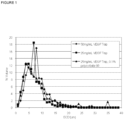
- Figure 1 depicts the particle size distribution as determined by MFI for the VGT particles derived from each of the 25 mg/mL VGT, 25 mg/mL VGT plus 0.1% polysorbate 80, and 50 mg/mL VGT concentrations.
- ECD equivalent circular diameter
- the equivalent circular diameter (ECD) of VGT particles ranged from about 1 ⁇ m to about 39 ⁇ m, with the majority of particles ranging in size of from about 2 ⁇ m to about 14 ⁇ m.
- ECD equivalent circular diameter
- the particles clustered in the range of about 2.5 ⁇ m to about 8.8 ⁇ m, with a mode of about 6 ⁇ m.
- the particles clustered in the range of about 2.5 ⁇ m to about 9.7 ⁇ m, with a mode of about 6 ⁇ m.
- Median diameters for each formulation, as determined by both MFI and DLS methods, are described in Table 1.
- VGT particles were reconstituted in water for injection and examined via size exclusion, i.e., size exclusion - ultra performance liquid chromatography (SE-UPLC) to determine protein purity. No change in purity was noted after micronization relative to starting material (see Table 3).
- Table 1 Median protein particle sizes ( ⁇ m) as determined by MFI and DLS Formulation Median size by MFI ( ⁇ m) Median size by DLS ( ⁇ m) 50mg/mL VEGF Trap 7 7.6 25mg/mL VEGF Trap 6 5.9 25mg/mL VEGF Trap, 0.1% polysorbate 80 6 7.1
- EXAMPLE 2 MICRONIZED PROTEIN SUSPENSIONS IN ORGANIC POLYMER SOLUTIONS
- Micronized VEGF Trap particles were suspended in a solution of 100 mg/mL ethyl cellulose in ethyl acetate at a concentration of about 50 mg/mL VGT; herein designated "VGT-100-EC suspension".
- Micronized VEGF Trap particles are suspended in a solution of 250 mg/mL ethyl cellulose in ethyl acetate at a concentration of about 50 mg/mL VGT; herein designated "VGT-250-EC suspension”.
- Micronized VEGF Trap particles were suspended in a solution of 50 mg/mL polyorthoester containing about 5% latent acid in ethyl acetate at a concentration of about 50 mg/mL VGT; herein designated "VGT-50-POE suspension”.
- Micronized VEGF Trap particles were suspended in a solution of 250 mg/mL polyorthoester containing about 5% latent acid in ethyl acetate at a concentration of about 50 mg/mL VGT; herein designated "VGT-250-POE suspension”.
- Micronized VEGF Trap particles were suspended in a solution of 50 mg/mL PLGA in ethyl acetate at a concentration of about 50 mg/mL VGT; herein designated "VGT-50-PLGA suspension”.
- Micronized VEGF Trap particles were suspended in a solution of 200 mg/mL PLGA in ethyl acetate at a concentration of about 50 mg/mL VGT; herein designated "VGT-200-PLGA suspension”.
- Micronized VEGF Trap particles were suspended in a solution of 250 mg/mL PLGA in ethyl acetate at a concentration of about 50 mg/mL VGT; herein designated "VGT-250-PLGA suspension”.
- Micronized VEGF Trap particles are suspended in a solution of 50 mg/mL PCL in ethyl acetate at a concentration of about 50 mg/mL VGT; herein designated "VGT-50-PCL suspension”.
- PCL has a low Tg and may not be suitable for heat-drying as described below, but can be used for solvent extraction in an aqueous bath with polyvinyl alcohol (PVA), for example.
- PVA polyvinyl alcohol
- each VGT polymer suspension which was made according to Example 2 ( supra ), was subjected to spray drying using a BÜCHI Mini Spray Dryer B-290 (Büchi Labortechnik AG, Flawil, CH). Briefly, each suspension was atomized to form microdroplets, which were subsequently heat dried to remove the solvent and form the polymer-coated protein microparticles. The suspension was pumped at 12.5 mL/min into the spray dryer with an aspirator air and spray gas flow rate of about 530 L/h and 35 m 3 /h, respectively. The inlet temperature was set at 90° and the outlet temperature was set at about 54°C.
- Spray dried polymer coated protein particles manufactured according to the exemplified process generate a plurality of microparticles having a range of equivalent circular diameters of from about 2.5 ⁇ m to about 65 ⁇ m ( Figure 2 ).
- the size variation in large part reflects the thickness of the polymer cortex, although the diameter of the protein core could contribute to size variation to some extent.
- the diameter of the microparticle correlates with the starting concentration of the polymer solution (Table 2, Figure 2 ). Those microparticles which were manufactured using 50 mg/mL polymer had a median size of about 17 ⁇ m ⁇ 2.8 ⁇ m. Those microparticles which were manufactured using 250 mg/mL polymer had a median size of about 29 ⁇ m.
- VEGF-Trap protein The stability of the VEGF-Trap protein was assessed using quantitative size exclusion chromatography (SE-UPLC), which allows for the quantification of smaller degradation products and larger aggregation products relative to the intact monomer. The results are described in Table 3. Essentially, the protein remained stable throughout the spray drying and spray coating processes.
- the average ratio of protein to polymer by weight was also determined for the manufactured microparticles.
- a collection of microparticles manufactured with varying polymers and polymer concentration was extracted and subjected to quantitative reverse phase chromatography (RP-HPLC).
- RP-HPLC quantitative reverse phase chromatography
- VGT VEGF-Trap
- Table 2 Equivalent circular diameter values Material Range ( ⁇ m) Median ( ⁇ m) Mode ( ⁇ m) VEGF-Trap (“VGT") (50 mg/mL) 2.5 - 29.4 10- 12 8.3 VGT (50 mg/mL) + POE (50 mg/mL) 2.5 - 64.5 15 9.4 VGT (50 mg/mL) + POE (250 mg/mL) 2.5 - 49.4 29 28.5 VGT (50 mg/mL) + EC (50 mg/mL) 2.5 - 49.6 19 16.5
- Table 3 Protein stability and loading Material VGT starting material VGT Extracted from Coated Polymers 1 % Native % Native 2 % w/w VGT/polymer 3 VGT starting material 97.7 - - Reconstituted VGT 97.6 - - VGT (50 mg/mL) + POE (50 mg/mL) - 96.3 14.6 VGT (50 mg/mL) + POE (250 mg/mL
- the release of protein from microparticles was determined by suspending various batches of microparticles in buffer (10 mM phosphate, 0.03% polysorbate 20, pH 7.0) and measuring the amount and quality of protein released into solution over time while incubated at 37°C. At 1-2 week intervals, the microparticles were pelleted by mild centrifugation and 80% of the supernatant containing released protein was collected for subsequent analysis. An equivalent amount of fresh buffer was replaced and the microparticles were resuspended by mild vortexing and returned to the 37°C incubation chamber. Protein amount and quality in the supernatant was assessed by size exclusion chromatography.
- microparticles manufactured with a higher concentration of polymer e.g., 250 mg/mL
- those microparticles manufactured with a lower concentration of polymer e.g., 50 mg/mL
- Figure 3 release data
- Table 4 summarizes the linear rate-of-release data.
- VGT Protein release dynamics Material VEGF Trap protein release (mg VGT/week) VGT (50 mg/mL) + POE (50 mg/mL) 0.14 ⁇ 0.16 VGT (50 mg/mL) + POE (250 mg/mL) 0.06 ⁇ 0.02 VGT (50 mg/mL) + EC (50 mg/mL) 0.031 ⁇ 0.02
- EXAMPLE 7 PARTICLE SIZE CAN BE MANIPULATED BY POLYMER CONCENTRATION AND SPRAY GAS FLOW
- Particle size distributions were controlled by polymer concentration and atomization spray gas flow. Increased polymer concentration shifted the distribution towards larger particles (200 mg/mL PLGA at 45 mm spray gas flow v. 100 mg/mL PLGA at 45 mm spray gas flow; see Table 5). Similarly, a lower atomization spray gas flow resulted in larger droplets and thus, larger particles (100 mg/mL PLGA at 25 mm spray gas flow v. 100 mg/mL PLGA at 45 mm spray gas flow; see Table 5).
- Particle Size (all metrics are approximate) [PLGA] (mg/mL) Gas Flow Rate (m 3 /h) Particle size range (microns) Mode of particle size (microns) Percent total volume of particles with 15 micron particle size Protein alone NA 2.5-25 3.5 1.5% 100 25 2.5-40 9.4 3.7% 100 45 2.5-30 9.4 3.7% 200 45 2.5-30 10.2-15.4 5.4%
- VEGF Trap or IgG was spray coated with low molecular weight (202S) poly(lactic acid) (PLA-LMW), high molecular weight (203S) poly(lactic acid) (PLA-HMW), polyanhydride poly[1,6-bis(p-carboxyphenoxy)hexane] (pCPH), poly(hydroxbutyric acid-cohydroxyvaleric acid) (PHB-PVA), PEG-poly(lactic acid) block copolymer (PEG-PLA), and poly-D,L-lactide-co-glycolide (PLGA). 25 mg/mL of spray-dried protein was combined with 50-100 mg/mL polymer.
- VEGF Trap and IgG were extracted from their respective polymer coats and measured for purity by SE-UPLC. The results are summarized in Table 7.
- the proteins generally were compatible with the spray coating process for the polymers tested. Protein remained stable for at least 14 days for those polymers that continued to release protein.
Landscapes
- Health & Medical Sciences (AREA)
- Life Sciences & Earth Sciences (AREA)
- Bioinformatics & Cheminformatics (AREA)
- Engineering & Computer Science (AREA)
- Chemical & Material Sciences (AREA)
- Medicinal Chemistry (AREA)
- General Health & Medical Sciences (AREA)
- Animal Behavior & Ethology (AREA)
- Pharmacology & Pharmacy (AREA)
- Public Health (AREA)
- Veterinary Medicine (AREA)
- Epidemiology (AREA)
- Proteomics, Peptides & Aminoacids (AREA)
- Immunology (AREA)
- Inorganic Chemistry (AREA)
- Molecular Biology (AREA)
- Biophysics (AREA)
- Zoology (AREA)
- Gastroenterology & Hepatology (AREA)
- Cell Biology (AREA)
- General Chemical & Material Sciences (AREA)
- Nuclear Medicine, Radiotherapy & Molecular Imaging (AREA)
- Organic Chemistry (AREA)
- Chemical Kinetics & Catalysis (AREA)
- Ophthalmology & Optometry (AREA)
- Medicinal Preparation (AREA)
- Medicines That Contain Protein Lipid Enzymes And Other Medicines (AREA)
- Peptides Or Proteins (AREA)
- Medicines Containing Antibodies Or Antigens For Use As Internal Diagnostic Agents (AREA)
- Preparation Of Compounds By Using Micro-Organisms (AREA)
- Mycology (AREA)
- Microbiology (AREA)
- Compositions Of Macromolecular Compounds (AREA)
- Materials For Medical Uses (AREA)
Applications Claiming Priority (4)
| Application Number | Priority Date | Filing Date | Title |
|---|---|---|---|
| US201161561525P | 2011-11-18 | 2011-11-18 | |
| EP19180351.9A EP3574897B1 (en) | 2011-11-18 | 2012-11-18 | Extended release formulation comprising polymer protein microparticles for use in the vitreous of the eye for treating vascular eye disorders |
| PCT/US2012/065735 WO2013075068A1 (en) | 2011-11-18 | 2012-11-18 | Polymer protein microparticles |
| EP12795967.4A EP2790681B9 (en) | 2011-11-18 | 2012-11-18 | Method of manufacturing an extended release pharmaceutical formulation comprising polymer coated protein microparticles using spray-drying |
Related Parent Applications (3)
| Application Number | Title | Priority Date | Filing Date |
|---|---|---|---|
| EP19180351.9A Division EP3574897B1 (en) | 2011-11-18 | 2012-11-18 | Extended release formulation comprising polymer protein microparticles for use in the vitreous of the eye for treating vascular eye disorders |
| EP12795967.4A Division EP2790681B9 (en) | 2011-11-18 | 2012-11-18 | Method of manufacturing an extended release pharmaceutical formulation comprising polymer coated protein microparticles using spray-drying |
| EP12795967.4A Division-Into EP2790681B9 (en) | 2011-11-18 | 2012-11-18 | Method of manufacturing an extended release pharmaceutical formulation comprising polymer coated protein microparticles using spray-drying |
Publications (2)
| Publication Number | Publication Date |
|---|---|
| EP4026543A1 EP4026543A1 (en) | 2022-07-13 |
| EP4026543B1 true EP4026543B1 (en) | 2024-08-07 |
Family
ID=47295198
Family Applications (4)
| Application Number | Title | Priority Date | Filing Date |
|---|---|---|---|
| EP22150172.9A Active EP4026543B1 (en) | 2011-11-18 | 2012-11-18 | Polymer coated protein microparticles for extended release formulations for use in the vitreous of the eye for treating vascular eye disorders |
| EP19180351.9A Active EP3574897B1 (en) | 2011-11-18 | 2012-11-18 | Extended release formulation comprising polymer protein microparticles for use in the vitreous of the eye for treating vascular eye disorders |
| EP18173299.1A Active EP3384903B1 (en) | 2011-11-18 | 2012-11-18 | Micro-particle containing therapeutic protein coated with biodegradable polymer for medical use |
| EP12795967.4A Active EP2790681B9 (en) | 2011-11-18 | 2012-11-18 | Method of manufacturing an extended release pharmaceutical formulation comprising polymer coated protein microparticles using spray-drying |
Family Applications After (3)
| Application Number | Title | Priority Date | Filing Date |
|---|---|---|---|
| EP19180351.9A Active EP3574897B1 (en) | 2011-11-18 | 2012-11-18 | Extended release formulation comprising polymer protein microparticles for use in the vitreous of the eye for treating vascular eye disorders |
| EP18173299.1A Active EP3384903B1 (en) | 2011-11-18 | 2012-11-18 | Micro-particle containing therapeutic protein coated with biodegradable polymer for medical use |
| EP12795967.4A Active EP2790681B9 (en) | 2011-11-18 | 2012-11-18 | Method of manufacturing an extended release pharmaceutical formulation comprising polymer coated protein microparticles using spray-drying |
Country Status (20)
| Country | Link |
|---|---|
| US (4) | US20130129830A1 (enExample) |
| EP (4) | EP4026543B1 (enExample) |
| JP (5) | JP6267649B2 (enExample) |
| KR (4) | KR102218223B1 (enExample) |
| CN (2) | CN103957898B (enExample) |
| AU (1) | AU2012340107B2 (enExample) |
| BR (1) | BR112014011915B1 (enExample) |
| CA (2) | CA2855749C (enExample) |
| DK (3) | DK3574897T3 (enExample) |
| ES (4) | ES2775104T5 (enExample) |
| FI (1) | FI2790681T4 (enExample) |
| HU (2) | HUE051644T2 (enExample) |
| IL (4) | IL277958B2 (enExample) |
| MX (2) | MX362286B (enExample) |
| PL (3) | PL3574897T3 (enExample) |
| PT (2) | PT3384903T (enExample) |
| RU (2) | RU2642664C2 (enExample) |
| SG (2) | SG11201402152YA (enExample) |
| WO (1) | WO2013075068A1 (enExample) |
| ZA (4) | ZA201403379B (enExample) |
Families Citing this family (32)
| Publication number | Priority date | Publication date | Assignee | Title |
|---|---|---|---|---|
| CA2807552A1 (en) | 2010-08-06 | 2012-02-09 | Moderna Therapeutics, Inc. | Engineered nucleic acids and methods of use thereof |
| PL3590949T3 (pl) | 2010-10-01 | 2022-08-29 | Modernatx, Inc. | Kwasy rybonukleinowe zawierające n1-metylo-pseudouracyle i ich zastosowania |
| DE12722942T1 (de) | 2011-03-31 | 2021-09-30 | Modernatx, Inc. | Freisetzung und formulierung von manipulierten nukleinsäuren |
| US9464124B2 (en) | 2011-09-12 | 2016-10-11 | Moderna Therapeutics, Inc. | Engineered nucleic acids and methods of use thereof |
| RS62993B1 (sr) | 2011-10-03 | 2022-03-31 | Modernatx Inc | Modifikovani nukleozidi, nukleotidi, i nukleinske kiseline, i njihove upotrebe |
| CN103957898B (zh) | 2011-11-18 | 2016-02-24 | 瑞泽恩制药公司 | 聚合物蛋白微粒 |
| PT2791160T (pt) | 2011-12-16 | 2022-07-04 | Modernatx Inc | Composições arnm modificado |
| US9283287B2 (en) | 2012-04-02 | 2016-03-15 | Moderna Therapeutics, Inc. | Modified polynucleotides for the production of nuclear proteins |
| US9572897B2 (en) | 2012-04-02 | 2017-02-21 | Modernatx, Inc. | Modified polynucleotides for the production of cytoplasmic and cytoskeletal proteins |
| US10501512B2 (en) | 2012-04-02 | 2019-12-10 | Modernatx, Inc. | Modified polynucleotides |
| AU2013243955B2 (en) | 2012-04-02 | 2018-02-22 | Modernatx, Inc. | Modified polynucleotides for the production of oncology-related proteins and peptides |
| CA2892529C (en) | 2012-11-26 | 2023-04-25 | Moderna Therapeutics, Inc. | Terminally modified rna |
| EP2971010B1 (en) | 2013-03-14 | 2020-06-10 | ModernaTX, Inc. | Formulation and delivery of modified nucleoside, nucleotide, and nucleic acid compositions |
| US8980864B2 (en) | 2013-03-15 | 2015-03-17 | Moderna Therapeutics, Inc. | Compositions and methods of altering cholesterol levels |
| EP3041938A1 (en) | 2013-09-03 | 2016-07-13 | Moderna Therapeutics, Inc. | Circular polynucleotides |
| US20160194625A1 (en) | 2013-09-03 | 2016-07-07 | Moderna Therapeutics, Inc. | Chimeric polynucleotides |
| EP3052106A4 (en) | 2013-09-30 | 2017-07-19 | ModernaTX, Inc. | Polynucleotides encoding immune modulating polypeptides |
| EP3052521A1 (en) | 2013-10-03 | 2016-08-10 | Moderna Therapeutics, Inc. | Polynucleotides encoding low density lipoprotein receptor |
| US9840553B2 (en) | 2014-06-28 | 2017-12-12 | Kodiak Sciences Inc. | Dual PDGF/VEGF antagonists |
| EP3169693B1 (en) | 2014-07-16 | 2022-03-09 | ModernaTX, Inc. | Chimeric polynucleotides |
| IL286601B2 (en) | 2015-12-16 | 2023-09-01 | Regeneron Pharma | Preparations and methods for making protein microparticles |
| SMT202200310T1 (it) | 2015-12-23 | 2022-09-14 | Modernatx Inc | Metodi di utilizzo dei polinucleotidi codificanti il ligando di ox40 |
| EP3397276A4 (en) | 2015-12-30 | 2019-12-18 | Kodiak Sciences Inc. | ANTIBODIES AND CONJUGATES THEREOF |
| WO2017120612A1 (en) | 2016-01-10 | 2017-07-13 | Modernatx, Inc. | Therapeutic mrnas encoding anti ctla-4 antibodies |
| US11421011B2 (en) | 2017-05-18 | 2022-08-23 | Modernatx, Inc. | Polynucleotides encoding tethered interleukin-12 (IL12) polypeptides and uses thereof |
| EP3459529A1 (en) | 2017-09-20 | 2019-03-27 | Tillotts Pharma Ag | Preparation of sustained release solid dosage forms comprising antibodies by spray drying |
| EP3709971A2 (en) | 2017-11-17 | 2020-09-23 | Amgen Inc. | Vegfr-fc fusion protein formulations |
| US12071476B2 (en) | 2018-03-02 | 2024-08-27 | Kodiak Sciences Inc. | IL-6 antibodies and fusion constructs and conjugates thereof |
| US20220098279A1 (en) * | 2019-01-30 | 2022-03-31 | Amgen Inc. | Aflibercept attributes and methods of characterizing and modifying thereof |
| AU2020364071A1 (en) | 2019-10-10 | 2022-05-26 | Kodiak Sciences Inc. | Methods of treating an eye disorder |
| CN119318636A (zh) * | 2019-11-25 | 2025-01-17 | 里珍纳龙药品有限公司 | 使用非水性乳液的持续释放调配物 |
| CN115887760A (zh) * | 2022-11-21 | 2023-04-04 | 娜罗曼苏(杭州)医疗生物科技有限公司 | 一种注射用左旋聚乳酸制备工艺 |
Family Cites Families (85)
| Publication number | Priority date | Publication date | Assignee | Title |
|---|---|---|---|---|
| US4210529A (en) | 1974-12-26 | 1980-07-01 | Midwest Research Institute | Blood compatible polymers and applications thereof |
| US4304767A (en) | 1980-05-15 | 1981-12-08 | Sri International | Polymers of di- (and higher functionality) ketene acetals and polyols |
| US4764364A (en) | 1986-02-25 | 1988-08-16 | S R I International | Method of preparing bioerodible polymers having pH sensitivity in the acid range and resulting product |
| US5104221A (en) | 1989-03-03 | 1992-04-14 | Coulter Electronics Of New England, Inc. | Particle size analysis utilizing polarization intensity differential scattering |
| EP0939121B2 (de) | 1989-09-12 | 2007-12-26 | AHP Manufacturing B.V. | TFN-bindende Proteine |
| GB9107628D0 (en) * | 1991-04-10 | 1991-05-29 | Moonbrook Limited | Preparation of diagnostic agents |
| US6063910A (en) | 1991-11-14 | 2000-05-16 | The Trustees Of Princeton University | Preparation of protein microparticles by supercritical fluid precipitation |
| EP0661989B1 (en) | 1992-09-21 | 1997-08-06 | PHARMACIA & UPJOHN COMPANY | Sustained-release protein formulations |
| GB9415810D0 (en) * | 1994-08-04 | 1994-09-28 | Jerrow Mohammad A Z | Composition |
| ES2252746T3 (es) | 1994-09-23 | 2006-05-16 | Alexion Pharmaceuticals, Inc. | Procedimientos para el tratamiento de la enfermedad inflamatoria articular. |
| US6004549A (en) | 1994-12-14 | 1999-12-21 | Schering Corporation | Crystalline protein controlled release compositions |
| US6019968A (en) | 1995-04-14 | 2000-02-01 | Inhale Therapeutic Systems, Inc. | Dispersible antibody compositions and methods for their preparation and use |
| US5968543A (en) | 1996-01-05 | 1999-10-19 | Advanced Polymer Systems, Inc. | Polymers with controlled physical state and bioerodibility |
| US5985309A (en) | 1996-05-24 | 1999-11-16 | Massachusetts Institute Of Technology | Preparation of particles for inhalation |
| EP0913177A1 (de) | 1997-11-03 | 1999-05-06 | Roche Diagnostics GmbH | Verfahren zur Herstellung trockener, amorpher Produkte enthaltend biologisch aktive Materialien mittels Konvektionstrocknung, insbesondere Sprühtrocknung |
| DE69916031T2 (de) | 1998-01-29 | 2005-02-17 | Poly-Med Inc. | Asorbierbare mikropartikel |
| US6284282B1 (en) | 1998-04-29 | 2001-09-04 | Genentech, Inc. | Method of spray freeze drying proteins for pharmaceutical administration |
| US6956021B1 (en) | 1998-08-25 | 2005-10-18 | Advanced Inhalation Research, Inc. | Stable spray-dried protein formulations |
| US6927044B2 (en) | 1998-09-25 | 2005-08-09 | Regeneron Pharmaceuticals, Inc. | IL-1 receptor based cytokine traps |
| US6223455B1 (en) * | 1999-05-03 | 2001-05-01 | Acusphere, Inc. | Spray drying apparatus and methods of use |
| US7087411B2 (en) | 1999-06-08 | 2006-08-08 | Regeneron Pharmaceuticals, Inc. | Fusion protein capable of binding VEGF |
| US7070959B1 (en) | 1999-06-08 | 2006-07-04 | Regeneron Pharmaceuticals, Inc. | Modified chimeric polypeptides with improved pharmacokinetic properties |
| US7303746B2 (en) | 1999-06-08 | 2007-12-04 | Regeneron Pharmaceuticals, Inc. | Methods of treating eye disorders with modified chimeric polypeptides |
| US7306799B2 (en) | 1999-06-08 | 2007-12-11 | Regeneron Pharmaceuticals, Inc. | Use of VEGF inhibitors for treatment of eye disorders |
| WO2001030320A1 (en) | 1999-10-22 | 2001-05-03 | Amgen Inc. | Biodegradable microparticles with novel erythropoietin stimulating protein |
| FR2809309B1 (fr) | 2000-05-23 | 2004-06-11 | Mainelab | Microspheres a liberation prolongee pour administration injectable |
| CA2418960A1 (en) | 2000-08-07 | 2002-02-14 | Inhale Therapeutic Systems, Inc. | Inhaleable spray dried 4-helix bundle protein powders having minimized aggregation |
| CA2451185A1 (en) | 2001-06-21 | 2003-01-03 | Altus Biologics, Inc. | Spherical protein particles and methods of making and using them |
| EP1413310A1 (en) * | 2001-07-09 | 2004-04-28 | Yamanouchi Pharmaceutical Co. Ltd. | Sustained-release compositions for injection and process for producing the same |
| SG106672A1 (en) | 2002-03-08 | 2004-10-29 | Asml Netherlands Bv | Mask for use in lithography, method of making a mask, lithographic apparatus, and device manufacturing method |
| AU2003217531A1 (en) * | 2002-05-02 | 2003-11-17 | Massachusetts Eye And Ear Infirmary | Ocular drug delivery systems and use thereof |
| JP4686361B2 (ja) | 2002-12-31 | 2011-05-25 | アルタス ファーマシューティカルズ インコーポレイテッド | ヒト成長ホルモンの結晶およびその調製方法 |
| US20040208928A1 (en) * | 2003-04-15 | 2004-10-21 | Animal Technology Institute Taiwan | Method for preparing an orally administrable formulation for controlled release |
| JP5628467B2 (ja) | 2003-06-26 | 2014-11-19 | シヴィダ・ユーエス・インコーポレイテッドPsivida Us, Inc. | 生体分解性徐放性ドラッグデリバリーシステム |
| DE10339197A1 (de) | 2003-08-22 | 2005-03-24 | Boehringer Ingelheim Pharma Gmbh & Co. Kg | Sprühgetrocknete amorphe Pulver mit geringer Restfeuchte und guter Lagerstabilität |
| WO2005032703A1 (fr) * | 2003-10-01 | 2005-04-14 | Debio Recherche Pharmaceutique S.A. | Dispositif et procede pour la fabrication de particules |
| US20050244472A1 (en) * | 2004-04-30 | 2005-11-03 | Allergan, Inc. | Intraocular drug delivery systems containing excipients with reduced toxicity and related methods |
| US20070059336A1 (en) | 2004-04-30 | 2007-03-15 | Allergan, Inc. | Anti-angiogenic sustained release intraocular implants and related methods |
| US7727962B2 (en) | 2004-05-10 | 2010-06-01 | Boehringer Ingelheim Pharma Gmbh & Co. Kg | Powder comprising new compositions of oligosaccharides and methods for their preparation |
| PT1778723E (pt) | 2004-08-17 | 2013-01-25 | Regeneron Pharma | Formulações de antagonista de il-1 |
| US7572893B2 (en) | 2004-08-17 | 2009-08-11 | Regeneron Pharmaceuticals, Inc. | IL-1 antagonist formulations |
| US7655758B2 (en) | 2004-08-17 | 2010-02-02 | Regeneron Pharmaceuticals, Inc. | Stable liquid IL-1 antagonist formulations |
| KR20080016780A (ko) | 2004-11-24 | 2008-02-22 | 테라킨 리미티드 | 안내 약물 전달용 임플란트 |
| CN101094651B (zh) | 2004-12-30 | 2011-03-09 | 多贝尔有限公司 | 含有胶原凝集素家族蛋白质或者其变体的喷雾干燥的组合物和其制备方法 |
| CA2995971A1 (en) | 2005-03-25 | 2006-10-05 | Regeneron Pharmaceuticals, Inc. | Vegf antagonist formulations |
| US8168584B2 (en) | 2005-10-08 | 2012-05-01 | Potentia Pharmaceuticals, Inc. | Methods of treating age-related macular degeneration by compstatin and analogs thereof |
| PL1959925T3 (pl) | 2005-12-02 | 2017-05-31 | (Osi) Eyetech, Inc. | Mikrocząstki o kontrolowanym uwalnianiu |
| KR100722607B1 (ko) | 2006-05-11 | 2007-05-28 | 주식회사 펩트론 | 분산성 및 주사 투여능이 향상된 서방성 미립구의 제조방법 |
| AU2007261536C1 (en) | 2006-06-16 | 2025-08-14 | Regeneron Pharmaceuticals, Inc. | VEGF antagonist formulations suitable for intravitreal administration |
| DE102006030164A1 (de) | 2006-06-29 | 2008-01-03 | Boehringer Ingelheim Pharma Gmbh & Co. Kg | Inhalative Pulver |
| DE102006030166A1 (de) * | 2006-06-29 | 2008-01-10 | Boehringer Ingelheim Pharma Gmbh & Co. Kg | Tempern |
| EP1958622A1 (en) | 2006-11-07 | 2008-08-20 | Royal College of Surgeons in Ireland | Method of producing microcapsules |
| US20100318193A1 (en) | 2007-03-08 | 2010-12-16 | Desai Tejal A | Topographically engineered structures and methods for using the same in regenerative medicine applications |
| WO2008115883A1 (en) | 2007-03-16 | 2008-09-25 | The Regents Of The University Of California | Nanostructure surface coated medical implants and methods of using the same |
| KR100805208B1 (ko) | 2007-03-27 | 2008-02-21 | 주식회사 펩트론 | 엑센딘 함유 서방성 제제 조성물, 엑센딘 함유 서방성미립구 및 이의 제조 방법 |
| CA2690858A1 (en) * | 2007-06-07 | 2008-12-18 | Surmodics Pharmaceuticals, Inc. | Reduced-mass, long-acting dosage forms |
| EA201001002A1 (ru) | 2007-12-21 | 2011-06-30 | Мерк Патент Гмбх | Твердые липидные микрокапсулы, содержащие гормон роста во внутреннем твердом ядре |
| EP2249809A1 (en) | 2008-01-15 | 2010-11-17 | Abbott GmbH & Co. KG | Powdered protein compositions and methods of making same |
| AU2010208046B2 (en) | 2009-01-29 | 2014-10-02 | Forsight Vision4, Inc. | Posterior segment drug delivery |
| US8623395B2 (en) | 2010-01-29 | 2014-01-07 | Forsight Vision4, Inc. | Implantable therapeutic device |
| EP2411137B1 (en) * | 2009-03-27 | 2016-09-07 | Bend Research, Inc. | Spray-drying process |
| CN101559041B (zh) | 2009-05-19 | 2014-01-15 | 中国科学院过程工程研究所 | 粒径均一的多肽药物缓释微球或微囊制剂及制备方法 |
| MY199658A (en) | 2009-06-26 | 2023-11-14 | Regeneron Pharma | Readily isolated bispecific antibodies with native immunoglobulin format |
| US8417452B2 (en) | 2009-08-19 | 2013-04-09 | General Motors Llc | System for providing information to an operator of a vehicle |
| CA2776472A1 (en) * | 2009-10-01 | 2011-04-07 | Evonik Degussa Corporation | Microparticle compositions and methods for treating age-related macular degeneration |
| JO3417B1 (ar) | 2010-01-08 | 2019-10-20 | Regeneron Pharma | الصيغ المستقرة التي تحتوي على الأجسام المضادة لمضاد مستقبل( interleukin-6 (il-6r |
| JOP20190250A1 (ar) | 2010-07-14 | 2017-06-16 | Regeneron Pharma | صيغ مستقرة تحتوي على الأجسام المضادة لمضاد عامل نمو الأعصاب |
| JP5907966B2 (ja) | 2010-08-05 | 2016-04-26 | フォーサイト・ビジョン フォー・インコーポレーテッド | 埋め込み型治療デバイス |
| WO2012019136A2 (en) | 2010-08-05 | 2012-02-09 | Forsight Vision 4, Inc. | Injector apparatus and method for drug delivery |
| EP3354280B1 (en) | 2010-10-06 | 2020-07-29 | Regeneron Pharmaceuticals, Inc. | Stabilized formulations containing anti-interleukin-4 receptor (il-4r) antibodies |
| US10864158B2 (en) | 2011-04-14 | 2020-12-15 | The Regents Of The University Of California | Multilayer thin film drug delivery device and methods of making and using the same |
| AR087305A1 (es) | 2011-07-28 | 2014-03-12 | Regeneron Pharma | Formulaciones estabilizadas que contienen anticuerpos anti-pcsk9, metodo de preparacion y kit |
| CN103957898B (zh) | 2011-11-18 | 2016-02-24 | 瑞泽恩制药公司 | 聚合物蛋白微粒 |
| KR102326359B1 (ko) | 2012-05-18 | 2021-11-12 | 제넨테크, 인크. | 고농도 모노클로날 항체 제제 |
| CN104412160B (zh) | 2012-05-30 | 2019-09-20 | 加利福尼亚大学董事会 | 生物活性剂递送装置以及其制备和使用方法 |
| WO2014039964A2 (en) | 2012-09-10 | 2014-03-13 | The Regents Of The University Of California | Compounds and methods for modulating vascular injury |
| US20160030553A1 (en) | 2013-03-19 | 2016-02-04 | Biotech Tools S.A. | Allergen preparation |
| CA2954773C (en) | 2014-07-14 | 2023-10-03 | Amgen Inc. | Crystalline antibody formulations |
| EP3362041A1 (en) | 2015-10-16 | 2018-08-22 | Regeneron Pharmaceuticals, Inc. | Stable protein compositions |
| MX2018005388A (es) | 2015-11-05 | 2018-08-16 | Basf Se | Oxadiazoles sustituidos para combatir hongos fitopatogenos. |
| BR112018009511A2 (pt) | 2015-11-13 | 2018-11-06 | Novartis Ag | derivados de pirazolo pirimidina |
| TW201731867A (zh) | 2015-12-02 | 2017-09-16 | 賽諾菲公司 | Fgf21變異體 |
| MX2018005383A (es) | 2015-12-07 | 2018-08-16 | Acetate Int Llc | Composiciones formadoras de pelicula de acetato de celulosa. |
| KR20180093925A (ko) | 2015-12-15 | 2018-08-22 | 머크 샤프 앤드 돔 코포레이션 | 박테리아 감염을 치료하기 위한 비아릴 모노박탐 화합물 및 그의 사용 방법 |
| IL286601B2 (en) | 2015-12-16 | 2023-09-01 | Regeneron Pharma | Preparations and methods for making protein microparticles |
-
2012
- 2012-11-18 CN CN201280056324.6A patent/CN103957898B/zh active Active
- 2012-11-18 DK DK19180351.9T patent/DK3574897T3/da active
- 2012-11-18 KR KR1020207003704A patent/KR102218223B1/ko active Active
- 2012-11-18 PL PL19180351T patent/PL3574897T3/pl unknown
- 2012-11-18 EP EP22150172.9A patent/EP4026543B1/en active Active
- 2012-11-18 RU RU2014124682A patent/RU2642664C2/ru active
- 2012-11-18 HU HUE18173299A patent/HUE051644T2/hu unknown
- 2012-11-18 DK DK18173299.1T patent/DK3384903T3/da active
- 2012-11-18 ES ES12795967T patent/ES2775104T5/es active Active
- 2012-11-18 WO PCT/US2012/065735 patent/WO2013075068A1/en not_active Ceased
- 2012-11-18 KR KR1020147014549A patent/KR102133352B1/ko active Active
- 2012-11-18 KR KR1020217004470A patent/KR20210021112A/ko not_active Ceased
- 2012-11-18 SG SG11201402152YA patent/SG11201402152YA/en unknown
- 2012-11-18 SG SG10202103003RA patent/SG10202103003RA/en unknown
- 2012-11-18 RU RU2018101248A patent/RU2768492C2/ru active
- 2012-11-18 BR BR112014011915-5A patent/BR112014011915B1/pt active IP Right Grant
- 2012-11-18 ES ES18173299T patent/ES2810003T3/es active Active
- 2012-11-18 HU HUE12795967A patent/HUE048597T2/hu unknown
- 2012-11-18 ES ES19180351T patent/ES2909777T3/es active Active
- 2012-11-18 PT PT181732991T patent/PT3384903T/pt unknown
- 2012-11-18 US US13/680,069 patent/US20130129830A1/en not_active Abandoned
- 2012-11-18 CA CA2855749A patent/CA2855749C/en active Active
- 2012-11-18 EP EP19180351.9A patent/EP3574897B1/en active Active
- 2012-11-18 PL PL18173299T patent/PL3384903T3/pl unknown
- 2012-11-18 EP EP18173299.1A patent/EP3384903B1/en active Active
- 2012-11-18 AU AU2012340107A patent/AU2012340107B2/en active Active
- 2012-11-18 JP JP2014542536A patent/JP6267649B2/ja active Active
- 2012-11-18 IL IL277958A patent/IL277958B2/en unknown
- 2012-11-18 KR KR1020227014819A patent/KR20220063293A/ko active Pending
- 2012-11-18 MX MX2014005997A patent/MX362286B/es active IP Right Grant
- 2012-11-18 EP EP12795967.4A patent/EP2790681B9/en active Active
- 2012-11-18 ES ES22150172T patent/ES2985784T3/es active Active
- 2012-11-18 IL IL303832A patent/IL303832A/en unknown
- 2012-11-18 PL PL12795967.4T patent/PL2790681T5/pl unknown
- 2012-11-18 CA CA3076725A patent/CA3076725A1/en active Pending
- 2012-11-18 DK DK12795967.4T patent/DK2790681T4/da active
- 2012-11-18 PT PT191803519T patent/PT3574897T/pt unknown
- 2012-11-18 FI FIEP12795967.4T patent/FI2790681T4/fi active
- 2012-11-18 CN CN201610035281.3A patent/CN105688188A/zh active Pending
-
2014
- 2014-04-29 IL IL232328A patent/IL232328B/en active IP Right Grant
- 2014-05-12 ZA ZA2014/03379A patent/ZA201403379B/en unknown
- 2014-05-16 MX MX2019000382A patent/MX2019000382A/es unknown
-
2017
- 2017-03-06 US US15/450,335 patent/US11291636B2/en active Active
- 2017-08-02 JP JP2017149732A patent/JP6549653B2/ja active Active
-
2018
- 2018-01-05 ZA ZA2018/00078A patent/ZA201800078B/en unknown
- 2018-10-28 IL IL262651A patent/IL262651B/en active IP Right Grant
-
2019
- 2019-04-19 JP JP2019079952A patent/JP6727372B2/ja active Active
-
2020
- 2020-02-05 ZA ZA2020/00742A patent/ZA202000742B/en unknown
- 2020-06-30 JP JP2020112359A patent/JP7217247B2/ja active Active
-
2022
- 2022-02-22 US US17/677,282 patent/US11951216B2/en active Active
-
2023
- 2023-01-23 JP JP2023007775A patent/JP7542090B2/ja active Active
-
2024
- 2024-01-30 ZA ZA2024/00983A patent/ZA202400983B/en unknown
- 2024-03-07 US US18/598,435 patent/US20240207194A1/en active Pending
Also Published As
Similar Documents
| Publication | Publication Date | Title |
|---|---|---|
| US11951216B2 (en) | Polymer protein microparticles | |
| HK40068076A (en) | Polymer coated protein microparticles for extended release formulations for use in the vitreous of the eye for treating vascular eye disorders | |
| HK40009968A (en) | Polymer protein microparticles | |
| HK40011471B (en) | Extended release formulation comprising polymer protein microparticles for use in the vitreous of the eye for treating vascular eye disorders | |
| HK40011471A (en) | Extended release formulation comprising polymer protein microparticles for use in the vitreous of the eye for treating vascular eye disorders | |
| HK1197374B (en) | Method of manufacturing an extended release pharmaceutical formulation comprising polymer coated protein microparticles using spray-drying | |
| HK1197374A (en) | Method of manufacturing an extended release pharmaceutical formulation comprising polymer coated protein microparticles using spray-drying |
Legal Events
| Date | Code | Title | Description |
|---|---|---|---|
| PUAI | Public reference made under article 153(3) epc to a published international application that has entered the european phase |
Free format text: ORIGINAL CODE: 0009012 |
|
| STAA | Information on the status of an ep patent application or granted ep patent |
Free format text: STATUS: REQUEST FOR EXAMINATION WAS MADE |
|
| 17P | Request for examination filed |
Effective date: 20220104 |
|
| AC | Divisional application: reference to earlier application |
Ref document number: 2790681 Country of ref document: EP Kind code of ref document: P Ref document number: 3574897 Country of ref document: EP Kind code of ref document: P |
|
| AK | Designated contracting states |
Kind code of ref document: A1 Designated state(s): AL AT BE BG CH CY CZ DE DK EE ES FI FR GB GR HR HU IE IS IT LI LT LU LV MC MK MT NL NO PL PT RO RS SE SI SK SM TR |
|
| REG | Reference to a national code |
Ref country code: HK Ref legal event code: DE Ref document number: 40068076 Country of ref document: HK |
|
| STAA | Information on the status of an ep patent application or granted ep patent |
Free format text: STATUS: EXAMINATION IS IN PROGRESS |
|
| P01 | Opt-out of the competence of the unified patent court (upc) registered |
Effective date: 20230503 |
|
| 17Q | First examination report despatched |
Effective date: 20230605 |
|
| GRAP | Despatch of communication of intention to grant a patent |
Free format text: ORIGINAL CODE: EPIDOSNIGR1 |
|
| STAA | Information on the status of an ep patent application or granted ep patent |
Free format text: STATUS: GRANT OF PATENT IS INTENDED |
|
| INTG | Intention to grant announced |
Effective date: 20240311 |
|
| GRAS | Grant fee paid |
Free format text: ORIGINAL CODE: EPIDOSNIGR3 |
|
| GRAA | (expected) grant |
Free format text: ORIGINAL CODE: 0009210 |
|
| STAA | Information on the status of an ep patent application or granted ep patent |
Free format text: STATUS: THE PATENT HAS BEEN GRANTED |
|
| AC | Divisional application: reference to earlier application |
Ref document number: 2790681 Country of ref document: EP Kind code of ref document: P Ref document number: 3574897 Country of ref document: EP Kind code of ref document: P |
|
| AK | Designated contracting states |
Kind code of ref document: B1 Designated state(s): AL AT BE BG CH CY CZ DE DK EE ES FI FR GB GR HR HU IE IS IT LI LT LU LV MC MK MT NL NO PL PT RO RS SE SI SK SM TR |
|
| REG | Reference to a national code |
Ref country code: GB Ref legal event code: FG4D |
|
| REG | Reference to a national code |
Ref country code: CH Ref legal event code: EP |
|
| REG | Reference to a national code |
Ref country code: IE Ref legal event code: FG4D |
|
| REG | Reference to a national code |
Ref country code: DE Ref legal event code: R096 Ref document number: 602012080996 Country of ref document: DE |
|
| REG | Reference to a national code |
Ref country code: ES Ref legal event code: FG2A Ref document number: 2985784 Country of ref document: ES Kind code of ref document: T3 Effective date: 20241107 |
|
| REG | Reference to a national code |
Ref country code: LT Ref legal event code: MG9D |
|
| REG | Reference to a national code |
Ref country code: NL Ref legal event code: MP Effective date: 20240807 |
|
| PG25 | Lapsed in a contracting state [announced via postgrant information from national office to epo] |
Ref country code: NO Free format text: LAPSE BECAUSE OF FAILURE TO SUBMIT A TRANSLATION OF THE DESCRIPTION OR TO PAY THE FEE WITHIN THE PRESCRIBED TIME-LIMIT Effective date: 20241107 |
|
| REG | Reference to a national code |
Ref country code: AT Ref legal event code: MK05 Ref document number: 1710152 Country of ref document: AT Kind code of ref document: T Effective date: 20240807 |
|
| PG25 | Lapsed in a contracting state [announced via postgrant information from national office to epo] |
Ref country code: NL Free format text: LAPSE BECAUSE OF FAILURE TO SUBMIT A TRANSLATION OF THE DESCRIPTION OR TO PAY THE FEE WITHIN THE PRESCRIBED TIME-LIMIT Effective date: 20240807 Ref country code: FI Free format text: LAPSE BECAUSE OF FAILURE TO SUBMIT A TRANSLATION OF THE DESCRIPTION OR TO PAY THE FEE WITHIN THE PRESCRIBED TIME-LIMIT Effective date: 20240807 Ref country code: PT Free format text: LAPSE BECAUSE OF FAILURE TO SUBMIT A TRANSLATION OF THE DESCRIPTION OR TO PAY THE FEE WITHIN THE PRESCRIBED TIME-LIMIT Effective date: 20241209 Ref country code: PL Free format text: LAPSE BECAUSE OF FAILURE TO SUBMIT A TRANSLATION OF THE DESCRIPTION OR TO PAY THE FEE WITHIN THE PRESCRIBED TIME-LIMIT Effective date: 20240807 Ref country code: GR Free format text: LAPSE BECAUSE OF FAILURE TO SUBMIT A TRANSLATION OF THE DESCRIPTION OR TO PAY THE FEE WITHIN THE PRESCRIBED TIME-LIMIT Effective date: 20241108 |
|
| PGFP | Annual fee paid to national office [announced via postgrant information from national office to epo] |
Ref country code: GB Payment date: 20241022 Year of fee payment: 13 |
|
| PG25 | Lapsed in a contracting state [announced via postgrant information from national office to epo] |
Ref country code: BG Free format text: LAPSE BECAUSE OF FAILURE TO SUBMIT A TRANSLATION OF THE DESCRIPTION OR TO PAY THE FEE WITHIN THE PRESCRIBED TIME-LIMIT Effective date: 20240807 |
|
| PG25 | Lapsed in a contracting state [announced via postgrant information from national office to epo] |
Ref country code: LV Free format text: LAPSE BECAUSE OF FAILURE TO SUBMIT A TRANSLATION OF THE DESCRIPTION OR TO PAY THE FEE WITHIN THE PRESCRIBED TIME-LIMIT Effective date: 20240807 |
|
| PG25 | Lapsed in a contracting state [announced via postgrant information from national office to epo] |
Ref country code: AT Free format text: LAPSE BECAUSE OF FAILURE TO SUBMIT A TRANSLATION OF THE DESCRIPTION OR TO PAY THE FEE WITHIN THE PRESCRIBED TIME-LIMIT Effective date: 20240807 |
|
| PGFP | Annual fee paid to national office [announced via postgrant information from national office to epo] |
Ref country code: FR Payment date: 20241022 Year of fee payment: 13 |
|
| PG25 | Lapsed in a contracting state [announced via postgrant information from national office to epo] |
Ref country code: HR Free format text: LAPSE BECAUSE OF FAILURE TO SUBMIT A TRANSLATION OF THE DESCRIPTION OR TO PAY THE FEE WITHIN THE PRESCRIBED TIME-LIMIT Effective date: 20240807 |
|
| PGFP | Annual fee paid to national office [announced via postgrant information from national office to epo] |
Ref country code: IE Payment date: 20241023 Year of fee payment: 13 |
|
| PG25 | Lapsed in a contracting state [announced via postgrant information from national office to epo] |
Ref country code: RS Free format text: LAPSE BECAUSE OF FAILURE TO SUBMIT A TRANSLATION OF THE DESCRIPTION OR TO PAY THE FEE WITHIN THE PRESCRIBED TIME-LIMIT Effective date: 20241107 |
|
| PGFP | Annual fee paid to national office [announced via postgrant information from national office to epo] |
Ref country code: ES Payment date: 20241202 Year of fee payment: 13 |
|
| PG25 | Lapsed in a contracting state [announced via postgrant information from national office to epo] |
Ref country code: RS Free format text: LAPSE BECAUSE OF FAILURE TO SUBMIT A TRANSLATION OF THE DESCRIPTION OR TO PAY THE FEE WITHIN THE PRESCRIBED TIME-LIMIT Effective date: 20241107 Ref country code: PT Free format text: LAPSE BECAUSE OF FAILURE TO SUBMIT A TRANSLATION OF THE DESCRIPTION OR TO PAY THE FEE WITHIN THE PRESCRIBED TIME-LIMIT Effective date: 20241209 Ref country code: PL Free format text: LAPSE BECAUSE OF FAILURE TO SUBMIT A TRANSLATION OF THE DESCRIPTION OR TO PAY THE FEE WITHIN THE PRESCRIBED TIME-LIMIT Effective date: 20240807 Ref country code: NO Free format text: LAPSE BECAUSE OF FAILURE TO SUBMIT A TRANSLATION OF THE DESCRIPTION OR TO PAY THE FEE WITHIN THE PRESCRIBED TIME-LIMIT Effective date: 20241107 Ref country code: NL Free format text: LAPSE BECAUSE OF FAILURE TO SUBMIT A TRANSLATION OF THE DESCRIPTION OR TO PAY THE FEE WITHIN THE PRESCRIBED TIME-LIMIT Effective date: 20240807 Ref country code: LV Free format text: LAPSE BECAUSE OF FAILURE TO SUBMIT A TRANSLATION OF THE DESCRIPTION OR TO PAY THE FEE WITHIN THE PRESCRIBED TIME-LIMIT Effective date: 20240807 Ref country code: HR Free format text: LAPSE BECAUSE OF FAILURE TO SUBMIT A TRANSLATION OF THE DESCRIPTION OR TO PAY THE FEE WITHIN THE PRESCRIBED TIME-LIMIT Effective date: 20240807 Ref country code: GR Free format text: LAPSE BECAUSE OF FAILURE TO SUBMIT A TRANSLATION OF THE DESCRIPTION OR TO PAY THE FEE WITHIN THE PRESCRIBED TIME-LIMIT Effective date: 20241108 Ref country code: FI Free format text: LAPSE BECAUSE OF FAILURE TO SUBMIT A TRANSLATION OF THE DESCRIPTION OR TO PAY THE FEE WITHIN THE PRESCRIBED TIME-LIMIT Effective date: 20240807 Ref country code: BG Free format text: LAPSE BECAUSE OF FAILURE TO SUBMIT A TRANSLATION OF THE DESCRIPTION OR TO PAY THE FEE WITHIN THE PRESCRIBED TIME-LIMIT Effective date: 20240807 Ref country code: AT Free format text: LAPSE BECAUSE OF FAILURE TO SUBMIT A TRANSLATION OF THE DESCRIPTION OR TO PAY THE FEE WITHIN THE PRESCRIBED TIME-LIMIT Effective date: 20240807 |
|
| PGFP | Annual fee paid to national office [announced via postgrant information from national office to epo] |
Ref country code: CH Payment date: 20241201 Year of fee payment: 13 |
|
| PG25 | Lapsed in a contracting state [announced via postgrant information from national office to epo] |
Ref country code: SM Free format text: LAPSE BECAUSE OF FAILURE TO SUBMIT A TRANSLATION OF THE DESCRIPTION OR TO PAY THE FEE WITHIN THE PRESCRIBED TIME-LIMIT Effective date: 20240807 Ref country code: DK Free format text: LAPSE BECAUSE OF FAILURE TO SUBMIT A TRANSLATION OF THE DESCRIPTION OR TO PAY THE FEE WITHIN THE PRESCRIBED TIME-LIMIT Effective date: 20240807 |
|
| PG25 | Lapsed in a contracting state [announced via postgrant information from national office to epo] |
Ref country code: EE Free format text: LAPSE BECAUSE OF FAILURE TO SUBMIT A TRANSLATION OF THE DESCRIPTION OR TO PAY THE FEE WITHIN THE PRESCRIBED TIME-LIMIT Effective date: 20240807 |
|
| PG25 | Lapsed in a contracting state [announced via postgrant information from national office to epo] |
Ref country code: CZ Free format text: LAPSE BECAUSE OF FAILURE TO SUBMIT A TRANSLATION OF THE DESCRIPTION OR TO PAY THE FEE WITHIN THE PRESCRIBED TIME-LIMIT Effective date: 20240807 |
|
| PG25 | Lapsed in a contracting state [announced via postgrant information from national office to epo] |
Ref country code: SK Free format text: LAPSE BECAUSE OF FAILURE TO SUBMIT A TRANSLATION OF THE DESCRIPTION OR TO PAY THE FEE WITHIN THE PRESCRIBED TIME-LIMIT Effective date: 20240807 |
|
| REG | Reference to a national code |
Ref country code: DE Ref legal event code: R097 Ref document number: 602012080996 Country of ref document: DE |
|
| PLBE | No opposition filed within time limit |
Free format text: ORIGINAL CODE: 0009261 |
|
| STAA | Information on the status of an ep patent application or granted ep patent |
Free format text: STATUS: NO OPPOSITION FILED WITHIN TIME LIMIT |
|
| PG25 | Lapsed in a contracting state [announced via postgrant information from national office to epo] |
Ref country code: MC Free format text: LAPSE BECAUSE OF FAILURE TO SUBMIT A TRANSLATION OF THE DESCRIPTION OR TO PAY THE FEE WITHIN THE PRESCRIBED TIME-LIMIT Effective date: 20240807 |
|
| PG25 | Lapsed in a contracting state [announced via postgrant information from national office to epo] |
Ref country code: LU Free format text: LAPSE BECAUSE OF NON-PAYMENT OF DUE FEES Effective date: 20241118 |
|
| 26N | No opposition filed |
Effective date: 20250508 |
|
| REG | Reference to a national code |
Ref country code: BE Ref legal event code: MM Effective date: 20241130 |
|
| PG25 | Lapsed in a contracting state [announced via postgrant information from national office to epo] |
Ref country code: SE Free format text: LAPSE BECAUSE OF FAILURE TO SUBMIT A TRANSLATION OF THE DESCRIPTION OR TO PAY THE FEE WITHIN THE PRESCRIBED TIME-LIMIT Effective date: 20240807 |
|
| PG25 | Lapsed in a contracting state [announced via postgrant information from national office to epo] |
Ref country code: BE Free format text: LAPSE BECAUSE OF NON-PAYMENT OF DUE FEES Effective date: 20241130 |
|
| PG25 | Lapsed in a contracting state [announced via postgrant information from national office to epo] |
Ref country code: RO Free format text: LAPSE BECAUSE OF FAILURE TO SUBMIT A TRANSLATION OF THE DESCRIPTION OR TO PAY THE FEE WITHIN THE PRESCRIBED TIME-LIMIT Effective date: 20240807 |
|
| REG | Reference to a national code |
Ref country code: CH Ref legal event code: U11 Free format text: ST27 STATUS EVENT CODE: U-0-0-U10-U11 (AS PROVIDED BY THE NATIONAL OFFICE) Effective date: 20251201 |
|
| PGFP | Annual fee paid to national office [announced via postgrant information from national office to epo] |
Ref country code: IS Payment date: 20251111 Year of fee payment: 14 Ref country code: DE Payment date: 20251022 Year of fee payment: 14 |