EP4022698B1 - Mixed lithium transition metal oxide containing pyrogenically produced zirconium-containing oxides - Google Patents
Mixed lithium transition metal oxide containing pyrogenically produced zirconium-containing oxides Download PDFInfo
- Publication number
- EP4022698B1 EP4022698B1 EP20758252.9A EP20758252A EP4022698B1 EP 4022698 B1 EP4022698 B1 EP 4022698B1 EP 20758252 A EP20758252 A EP 20758252A EP 4022698 B1 EP4022698 B1 EP 4022698B1
- Authority
- EP
- European Patent Office
- Prior art keywords
- lithium
- transition metal
- zirconium
- mixed
- oxide
- Prior art date
- Legal status (The legal status is an assumption and is not a legal conclusion. Google has not performed a legal analysis and makes no representation as to the accuracy of the status listed.)
- Active
Links
Images



Classifications
-
- C—CHEMISTRY; METALLURGY
- C01—INORGANIC CHEMISTRY
- C01G—COMPOUNDS CONTAINING METALS NOT COVERED BY SUBCLASSES C01D OR C01F
- C01G53/00—Compounds of nickel
- C01G53/40—Complex oxides containing nickel and at least one other metal element
-
- H—ELECTRICITY
- H01—ELECTRIC ELEMENTS
- H01M—PROCESSES OR MEANS, e.g. BATTERIES, FOR THE DIRECT CONVERSION OF CHEMICAL ENERGY INTO ELECTRICAL ENERGY
- H01M10/00—Secondary cells; Manufacture thereof
- H01M10/05—Accumulators with non-aqueous electrolyte
- H01M10/052—Li-accumulators
-
- H—ELECTRICITY
- H01—ELECTRIC ELEMENTS
- H01M—PROCESSES OR MEANS, e.g. BATTERIES, FOR THE DIRECT CONVERSION OF CHEMICAL ENERGY INTO ELECTRICAL ENERGY
- H01M10/00—Secondary cells; Manufacture thereof
- H01M10/05—Accumulators with non-aqueous electrolyte
- H01M10/052—Li-accumulators
- H01M10/0525—Rocking-chair batteries, i.e. batteries with lithium insertion or intercalation in both electrodes; Lithium-ion batteries
-
- H—ELECTRICITY
- H01—ELECTRIC ELEMENTS
- H01M—PROCESSES OR MEANS, e.g. BATTERIES, FOR THE DIRECT CONVERSION OF CHEMICAL ENERGY INTO ELECTRICAL ENERGY
- H01M4/00—Electrodes
- H01M4/02—Electrodes composed of, or comprising, active material
- H01M4/13—Electrodes for accumulators with non-aqueous electrolyte, e.g. for lithium-accumulators; Processes of manufacture thereof
- H01M4/131—Electrodes based on mixed oxides or hydroxides, or on mixtures of oxides or hydroxides, e.g. LiCoOx
-
- H—ELECTRICITY
- H01—ELECTRIC ELEMENTS
- H01M—PROCESSES OR MEANS, e.g. BATTERIES, FOR THE DIRECT CONVERSION OF CHEMICAL ENERGY INTO ELECTRICAL ENERGY
- H01M4/00—Electrodes
- H01M4/02—Electrodes composed of, or comprising, active material
- H01M4/13—Electrodes for accumulators with non-aqueous electrolyte, e.g. for lithium-accumulators; Processes of manufacture thereof
- H01M4/139—Processes of manufacture
- H01M4/1391—Processes of manufacture of electrodes based on mixed oxides or hydroxides, or on mixtures of oxides or hydroxides, e.g. LiCoOx
-
- H—ELECTRICITY
- H01—ELECTRIC ELEMENTS
- H01M—PROCESSES OR MEANS, e.g. BATTERIES, FOR THE DIRECT CONVERSION OF CHEMICAL ENERGY INTO ELECTRICAL ENERGY
- H01M4/00—Electrodes
- H01M4/02—Electrodes composed of, or comprising, active material
- H01M4/36—Selection of substances as active materials, active masses, active liquids
- H01M4/362—Composites
- H01M4/366—Composites as layered products
-
- H—ELECTRICITY
- H01—ELECTRIC ELEMENTS
- H01M—PROCESSES OR MEANS, e.g. BATTERIES, FOR THE DIRECT CONVERSION OF CHEMICAL ENERGY INTO ELECTRICAL ENERGY
- H01M4/00—Electrodes
- H01M4/02—Electrodes composed of, or comprising, active material
- H01M4/36—Selection of substances as active materials, active masses, active liquids
- H01M4/48—Selection of substances as active materials, active masses, active liquids of inorganic oxides or hydroxides
- H01M4/50—Selection of substances as active materials, active masses, active liquids of inorganic oxides or hydroxides of manganese
- H01M4/505—Selection of substances as active materials, active masses, active liquids of inorganic oxides or hydroxides of manganese of mixed oxides or hydroxides containing manganese for inserting or intercalating light metals, e.g. LiMn2O4 or LiMn2OxFy
-
- H—ELECTRICITY
- H01—ELECTRIC ELEMENTS
- H01M—PROCESSES OR MEANS, e.g. BATTERIES, FOR THE DIRECT CONVERSION OF CHEMICAL ENERGY INTO ELECTRICAL ENERGY
- H01M4/00—Electrodes
- H01M4/02—Electrodes composed of, or comprising, active material
- H01M4/36—Selection of substances as active materials, active masses, active liquids
- H01M4/48—Selection of substances as active materials, active masses, active liquids of inorganic oxides or hydroxides
- H01M4/52—Selection of substances as active materials, active masses, active liquids of inorganic oxides or hydroxides of nickel, cobalt or iron
- H01M4/525—Selection of substances as active materials, active masses, active liquids of inorganic oxides or hydroxides of nickel, cobalt or iron of mixed oxides or hydroxides containing iron, cobalt or nickel for inserting or intercalating light metals, e.g. LiNiO2, LiCoO2 or LiCoOxFy
-
- C—CHEMISTRY; METALLURGY
- C01—INORGANIC CHEMISTRY
- C01P—INDEXING SCHEME RELATING TO STRUCTURAL AND PHYSICAL ASPECTS OF SOLID INORGANIC COMPOUNDS
- C01P2002/00—Crystal-structural characteristics
- C01P2002/01—Crystal-structural characteristics depicted by a TEM-image
-
- C—CHEMISTRY; METALLURGY
- C01—INORGANIC CHEMISTRY
- C01P—INDEXING SCHEME RELATING TO STRUCTURAL AND PHYSICAL ASPECTS OF SOLID INORGANIC COMPOUNDS
- C01P2004/00—Particle morphology
- C01P2004/60—Particles characterised by their size
- C01P2004/64—Nanometer sized, i.e. from 1-100 nanometer
-
- C—CHEMISTRY; METALLURGY
- C01—INORGANIC CHEMISTRY
- C01P—INDEXING SCHEME RELATING TO STRUCTURAL AND PHYSICAL ASPECTS OF SOLID INORGANIC COMPOUNDS
- C01P2006/00—Physical properties of inorganic compounds
- C01P2006/12—Surface area
-
- C—CHEMISTRY; METALLURGY
- C01—INORGANIC CHEMISTRY
- C01P—INDEXING SCHEME RELATING TO STRUCTURAL AND PHYSICAL ASPECTS OF SOLID INORGANIC COMPOUNDS
- C01P2006/00—Physical properties of inorganic compounds
- C01P2006/40—Electric properties
-
- H—ELECTRICITY
- H01—ELECTRIC ELEMENTS
- H01M—PROCESSES OR MEANS, e.g. BATTERIES, FOR THE DIRECT CONVERSION OF CHEMICAL ENERGY INTO ELECTRICAL ENERGY
- H01M4/00—Electrodes
- H01M4/02—Electrodes composed of, or comprising, active material
- H01M2004/026—Electrodes composed of, or comprising, active material characterised by the polarity
- H01M2004/028—Positive electrodes
-
- Y—GENERAL TAGGING OF NEW TECHNOLOGICAL DEVELOPMENTS; GENERAL TAGGING OF CROSS-SECTIONAL TECHNOLOGIES SPANNING OVER SEVERAL SECTIONS OF THE IPC; TECHNICAL SUBJECTS COVERED BY FORMER USPC CROSS-REFERENCE ART COLLECTIONS [XRACs] AND DIGESTS
- Y02—TECHNOLOGIES OR APPLICATIONS FOR MITIGATION OR ADAPTATION AGAINST CLIMATE CHANGE
- Y02E—REDUCTION OF GREENHOUSE GAS [GHG] EMISSIONS, RELATED TO ENERGY GENERATION, TRANSMISSION OR DISTRIBUTION
- Y02E60/00—Enabling technologies; Technologies with a potential or indirect contribution to GHG emissions mitigation
- Y02E60/10—Energy storage using batteries
Definitions
- the disclosure relates to a process for producing a mixed lithium transition metal oxide containing pyrogenically produced zirconium-containing oxides usable as an active positive electrode material in lithium batteries, the mixed lithium transition metal oxide obtainable by this process, and the use of such mixed lithium transition metal oxide.
- the secondary lithium batteries are usually composed of an anode made of a carbon material or a lithium-metal alloy, a cathode made of a lithium-metal oxide, and an electrolyte in which a lithium salt is dissolved in an organic solvent.
- the separator of the lithium battery provides the passage of lithium ions between the positive and the negative electrode during the charging and the discharging processes.
- the electrolyte decomposes at the reactive surface of NMC and the electrolyte decomposition products deposit at the interface of cathode material, which leads to an increased resistance.
- the conducting salt LiPF 6 which is commonly used in liquid electrolytes reacts with the trace amounts of H 2 O present in all commercial formulations to form HF. This highly reactive compound causes lattice distortion in the cathode material by dissolution of transition metal ions out of the surface of the cathode material into the electrolyte. All these degradation mechanisms result in a decrease of capacity, performance and cycle life.
- WO00/70694 discloses mixed transition metal oxide coated with oxides or mixed oxides of Zr, Al, Zn, Y, Ce, Sn, Ca, Si, Sr, Mg and Ti. They are obtained by suspending the uncoated particles in an organic solvent, admixing the suspension with a solution of a hydrolysable metal compound and a hydrolysis solution, and then filtering off, drying and calcining the coated particles.
- CAM cathode active materials
- a lithium battery comprising a core of transition metal oxide and a coating layer including zirconium dioxide.
- Such coated CAMs are typically prepared by mixing a lithium transition metal oxide, e.g. LiNi 0.84 Co 0.15 Al 0.01 O 2 with zirconium (IV) oxynitrate having an average particle size of less than 1 ⁇ m and calcining the thus obtained mixture at 700 °C to form a CAM coated with ZrO 2 .
- An alternative embodiment shows mixing of the transition metal precursor with zirconium (IV) dioxide having an average particle diameter of less than 1 ⁇ m supplied by Aldrich Co and calcining the resulting coated CAM at 700 °C.
- the analysis of these materials by SEM microscopy shows that the average particle size of ZrO 2 particles present in the coating is about 400 nm ( Figure 2 , analysis example 1).
- US 2016/0204414 A1 describes CAMs for batteries including non-aqueous electrolytes, comprising a transition metal oxide core, wherein a zirconium compound is present on the surface of this core.
- the examples show the use of zirconium dioxide with an average particle size of 1 ⁇ m for coating of CAMs.
- CN 105161710 A discloses CAMs comprising a transition metal mixed oxide core and a coating layer containing alumina or zirconia with a particle size of 5-100 nm.
- a precursor of formula LiNi 0.5 Co 0.2 Mn 0.3 Mg 0.02 O 2 with a particle size of 3 ⁇ m was mixed by ball milling with ZrO 2 having a particle size of 20 nm.
- the resulting coated CAM was calcined at 580 °C.
- JP 2013235666 A describes CAMs comprising a transition-metal oxide core and a layer containing ZrO 2 -particles, having a predominantly monoclinic crystal structure.
- nanostructured ZrO 2 particles with mean particle size of 20-30 nm
- no further details, such as to the preparation method or source of such particles are provided.
- the given mean particle sizes relate to the primary particles of ZrO 2 .
- Such small primary particles are normally aggregated and agglomerated to form much larger particles in ⁇ m range.
- LiCoO 2 powder can be coated with ZrO 2 having average particle size of 500-600 nm, prepared by spray pyrolysis using a sol-gel or mechano-thermal processes. In the latter process, LiCoO 2 powder is sonicated for 30 minutes with a dispersion of ZrO 2 in ethanol, followed by a slow evaporation of the solvent at 50 °C and calcination at 450 °C for 10 h.
- Li 7 La 3 Zr 2 Al 0.07 O 12.0105 was prepared by mixing the metal salts and sintering the mixture at 1200 °C for 10 hours, followed by dry mixing with a mixed lithium transition metal oxide Li(Li 10/75 Ni 18/75 Co 9/75 Mn 38/75 )O 2 and subsequent heating at 900 °C for 20 hours to form a lithium positive electrode material. It is evident from this preparation procedure, that only large sized sintered particles of Li 7 La 3 Zr 2 Al 0.07 O 12.0105 could be used in this example.
- WO 2012022618 discloses the preparation of a particulate precursor compound for manufacturing aluminium doped transition metal oxide powder usable as an active positive electrode material in lithium batteries, wherein each particle of the precursor compound comprises: (a) a transition metal hydroxide or -oxyhydroxide core and (b) a non-amorphous aluminium oxide coating layer covering the core.
- US 20130136985 A1 describes preparation of lithium composite oxides for use in lithium batteries, wherein these composite oxides are doped with lithium zirconate (Li 2 ZrO 3 ).
- lithium zirconate Li 2 ZrO 3
- lithium carbonate, cobalt oxide (Co 3 O 4 ), lithium zirconate and lithium phosphate are mixed together, and the resulting mixture is fired in the air at 900 °C to yield a Zr-doped lithium composite oxide.
- SEM/EDX analysis of such doped composite oxides show that Zr particles not only exist on the surface of the composite particles, but also inside of the particles.
- This type of doping/coating may have additional benefits in terms of improved cycling performance when compared with surface coating of the corresponding electrodes.
- cathode materials of lithium batteries with metal oxides such as Al 2 O 3 , TiO 2 and ZrO 2 for improving their cycling performance
- metal oxides such as Al 2 O 3 , TiO 2 and ZrO 2
- the practical ways to improve the batteries long life are often limited.
- zirconium dioxide the use of commercially available nano-sized ZrO 2 particles often leads to inhomogeneous distribution and large agglomerated ZrO 2 particles on the surface of core cathode material and as a result, minimal or no improvements in cycling performance are observed when compared with non-coated cathode materials.
- modified mixed lithium transition metal oxide as an active cathode material, especially of high nickel NMC type, for use in the lithium batteries.
- modified cathode materials should provide a higher cycling stability than that of the unmodified materials.
- pyrogenically produced zirconium dioxide or pyrogenically produced mixed oxides comprising zirconium may successfully be used for coating of synthetic precursors of mixed lithium transition metal oxides, such as transition metal oxides, transition metal hydroxides or transition metal oxyhydroxides.
- the mixed lithium transition metal oxides prepared from such precursors are characterized by a very homogeneous zirconium oxide particles distribution and very small particle size of zirconium oxide particles, which makes them well usable as active positive electrode materials in lithium batteries.
- the disclosure provides a process for producing a mixed lithium transition metal oxide usable as an active positive electrode material in lithium batteries, comprising the following steps:
- the term "electric mixing unit” relates in the context of the present disclosure to any mixing device operated by supply of electric energy.
- Electrical power is the rate, per unit time, at which electrical energy is transferred by an electric circuit.
- specific electrical power relates in the context of the present disclosure to the electrical power, supplied by the electrical mixing unit during the mixing process, per kg of the mixed lithium transition metal oxide.
- Dry mixing is understood to mean that no liquid is added or used during the mixing process, that is e.g., substantially dry powders are mixed together. However, it is possible that there are trace amounts of moisture or some other than water liquids present in the mixed feedstocks or that these include crystallization water.
- the mixture of the transition metal oxide, and/or the transition metal hydroxide and/or the transition metal oxyhydroxide and the pyrogenically produced zirconium dioxide and/or a pyrogenically produced mixed oxide comprising zirconium contains less than 5 % by weight, more preferably less than 3% by weight, more preferably less than 1% by weight water and/or other liquids.
- Dry mixing process of the present disclosure disclosure disclosure has some benefits over a mixing process involving wet coating, e.g. coating with a dispersion containing metal oxides.
- a wet coating process inevitably involves the use of solvents, which must be evaporated after the coating process is completed.
- the dry coating process of the invention is simpler and more economical than the wet coating processes known from the prior art.
- the dry coating process of the invention also provides a better distribution of the metal oxide particles containing zirconium on the surface of the mixed lithium transition metal oxide.
- the used specific electrical power is less than 0.05 kW per kg of the coated precursor compound, this gives an inhomogeneous distribution of the zirconium dioxide or the mixed oxide comprising zirconium, which may be not firmly bonded to the core material of the coated precursor compound.
- a specific electrical power of more than 1.5 kW per kg of the coated precursor compound leads to poorer electrochemical properties. In addition, there is the risk that the coating will become brittle and prone to fracture.
- the nominal electrical power of the mixing unit can vary in a wide range, e.g. from 0.1 kW to 1000 kW. Thus, it is possible to use mixing units on the laboratory scale with a nominal power of 0.1-5 kW or mixing units for the production scale with a nominal electrical power of 10-1000 kW.
- the nominal electrical power is the nameplate, maximal absolute electrical power of the mixing unit.
- the volume of the mixing unit in a wide range, e.g. from 0.1 L to 2.5 m 3 .
- forced mixers are used in the form of intensive mixers with high-speed mixing tools. It has been found that a speed of the mixing tool of 5-30 m/s, more preferably of 10-25 m/s, gives the best results.
- Commercially available mixing units well suitable for the process of the disclosure are, for example, Henschel mixers or Eirich mixers.
- the mixing time is preferably 0.1 to 120 minutes, more preferably 0.2 to 60 minutes, very preferably 0.5 to 10 minutes.
- the mixing may be followed by a thermal treatment of the mixture.
- a thermal treatment may improve the binding of the coating to the mixed lithium transition metal oxide particles.
- this treatment is not necessary in the process according to the invention since in this process, the pyrogenically produced zirconium dioxide or the mixed oxide comprising zirconium adhere with sufficient firmness to the mixed lithium transition metal oxide.
- a preferred embodiment of the process according to the disclosure therefore does not comprise any thermal treatment after the mixing.
- the zirconium dioxide and the mixed oxide comprising zirconium have a BET surface area of 5 m 2 /g - 200 m 2 /g, more preferably of 10 m 2 /g - 150 m 2 /g and most preferably of 15-100 m 2 /g.
- the BET surface area can be determined according to DIN 9277:2014 by nitrogen adsorption according to Brunauer-Emmett-Teller procedure.
- the zirconium dioxide and the mixed oxide comprising zirconium used in the process according to the disclosure are produced pyrogenically, that means by pyrogenic methods, also known as "fumed" methods.
- Such “pyrogenic” or “fumed” processes involve the reaction of the corresponding metal precursors in a flame hydrolysis or a flame oxidation in an oxyhydrogen flame to form metal oxides.
- This reaction initially forms highly disperse approximately spherical primary metal oxide particles, which in the further course of the reaction coalesce to form aggregates.
- the aggregates can then accumulate into agglomerates.
- the aggregates are broken down further, if at all, only by intensive introduction of energy.
- Said metal oxide powder may be partially destructed and converted into the nanometre (nm) range particles advantageous for the present disclosure by suitable grinding.
- the pyrogenically, especially flame-hydrolytically produced zirconium dioxide powder and other mixed metal oxides comprising zirconium can be produced starting from zirconium halides, preferably the zirconium chloride as Zr precursor.
- ZrCl 4 and if applicable, other metal precursors can be evaporated, the resulting vapor is mixed alone or together with a carrier gas, e.g. nitrogen, in a mixing unit in a burner with other gases; i.e. air, oxygen, nitrogen and hydrogen.
- the gases are caused to react with each other in a flame in a closed combustion chamber to produce the zirconium dioxide (or mixed zirconium oxides) and waste gases.
- the hot waste gases and the metal oxide are cooled off in a heat-exchanger unit, the waste gases are separated from the metal oxide and any halide remnants adhering to the metal oxide obtained are removed by a heat treatment with moistened air.
- the flame spray pyrolysis (FSP) process suitable for preparing the zirconium dioxide or the mixed metal oxide comprising zirconium may comprise the following steps:
- the preferred Zr metal precursors used for producing the zirconium dioxide and the mixed oxides comprising zirconium by flame spray pyrolysis process are zirconium carboxylates, particularly zirconium carboxylates of aliphatic carboxylic acids having 6 to 9 carbon atoms, for example zirconium 2-ethylhexanoate.
- the other metal precursors needed for producing the zirconium mixed metal oxides may be either inorganic, such as nitrates, chlorides or organic compounds, such as carboxylates.
- the used metal oxide precursors may be atomized dissolved in water or an organic solvent.
- Suitable organic solvents include methanol, ethanol, n-propanol, isopropanol, n-butanol, tert-butanol, 2-propanone, 2-butanone, diethyl ether, tert-butyl methyl ether, tetrahydrofuran, C1-C8-carboxylic acids, ethyl acetate, toluene, petroleum and mixtures thereof.
- the pyrogenically produced zirconium dioxide and the pyrogenically produced mixed oxide comprising zirconium used in the process according to the invention are in the form of aggregated primary particles, preferably with a numerical mean diameter of primary particles of 5 - 100 nm, more preferably 10 - 90 nm, even more preferably 20 - 80 nm, as determined by transition electron microscopy (TEM).
- This numerical mean diameter can be determined by calculating the average size of at least 500 particles analysed by TEM.
- the mean diameter of the aggregates of the pyrogenically produced zirconium dioxide and the pyrogenically produced mixed oxide comprising zirconium is usually about 10 - 1000 nm, the mean diameter of the agglomerates is usually 1 - 2 ⁇ m.
- SLS static light scattering
- the mean particle diameter d 50 of the zirconium dioxide and/or the mixed oxide comprising zirconium is 10 - 150 nm, more preferably 20 - 130 nm, even more preferably 30 - 120 nm, as determined by static light scattering (SLS) after 60 s of ultrasonic treatment at 25 °C of a mixture consisting of 5 % by weight of the particles and 95 % by weight of a 0.5 g/L solution of sodium pyrophosphate in water.
- SLS static light scattering
- the pyrogenically produced zirconium dioxide and the pyrogenically produced mixed oxide comprising zirconium used in the process of the present invention are preferably characterized by high dispersibility, that is, the ability to form relatively small particles under mild ultrasonic treatment. It is believed, that dispersion under such mild conditions correlates with the conditions during the dry coating process. That means, the agglomerates of the zirconium oxides are destroyed in the mixing process of the present disclosure in a similar way as under the ultrasonic treatment and are able to form homogeneous coating of the transition metal oxide.
- the span (d 90 -d 10 )/d 50 of particles of the zirconium dioxide and/or of the mixed oxide comprising zirconium is preferably 0.4 - 1.2, more preferably 0.5 - 1.1, even more preferably 0.6 - 1.0, as determined by static light scattering (SLS) after 60 s of ultrasonic treatment at 25 °C of a mixture consisting of 5 % by weight of the particles and 95 % by weight of a 0.5 g/L solution of sodium pyrophosphate in water.
- SLS static light scattering
- the pyrogenically produced zirconium dioxide and the pyrogenically produced mixed oxide comprising zirconium used in the process of the present disclosure are preferably characterized by a relatively narrow particle size distribution. This helps to achieve high-quality zirconium oxide coating on the surface of the transition metal oxide.
- the d values d 10 , d 50 and d 90 are commonly used for characterizing the cumulative particle diameter distribution of a given sample.
- the d 10 diameter is the diameter at which 10% of a sample's volume is comprised of smaller than d 10 particles
- the d 50 is the diameter at which 50% of a sample's volume is comprised of smaller than d 50 particles.
- the d 50 is also known as the "volume median diameter" as it divides the sample equally by volume
- the d 90 is the diameter at which 90% of a sample's volume is comprised of smaller than d 90 particles.
- the zirconium dioxide and the mixed oxide comprising zirconium are preferably hydrophilic in nature, that is these are not further treated by any hydrophobic reagents, such as silanes, after their synthesis by a pyrogenic process.
- the particles thus produced usually have a purity of at least 96 % by weight, preferably at least 98 % by weight, more preferably at least 99 % by weight.
- the metal oxides comprising zirconium may comprise hafnium compounds in the form of hafnium dioxide. The proportion of hafnium dioxide can be 1 to 4% by weight, based on ZrO 2 .
- the zirconium dioxide and the mixed oxides comprising zirconium used in the inventive process preferably contain the elements Cd, Ce, Fe, Na, Nb, P, Ti, Zn in proportions of ⁇ 10 ppm and the elements Ba, Bi, Cr, K, Mn, Sb in proportions of ⁇ 5 ppm, where the sum of the proportions of all of these elements is ⁇ 100 ppm.
- the content of chloride is preferably less than 0.5% by weight, more preferably 0.01 to 0.3% by weight, based on the mass of the metal oxide powder.
- the proportion of carbon is preferably less than 0.2% by weight, more preferably 0.005% - 0.2% by weight, even more preferably 0.01 % - 0.1% by weight, based on the mass of the metal oxide powder.
- the mixed oxide comprising zirconium may further comprise lithium and optionally at least one of lanthanum and/or aluminium.
- the following mixed metal oxides comprising zirconium are particularly preferable: LiZrO 3 , and the mixed oxides of general formula Li x La 3 Zr 2 M y O 8.5+0.5x+z , wherein 6.5 ⁇ x ⁇ 8, preferably 7.0 ⁇ x ⁇ 7.5;
- transition metal in the context of the present invention comprises the following elements: Ti, V, Cr, Mn, Fe, Co, Ni, Cu, Zn, Nb, Mo, Ru, Rh, Pd, Ag, Cd, Ta, W, Re, Os, Ir, Pt, Au.
- the transition metal is chosen from the group consisting of nickel, manganese, cobalt, and a mixture thereof.
- the transition metal oxide used in the inventive process is preferably a compound of a general formula MO, M 2 O 3 , M 3 O 4 or MO 2 wherein M is at least one transition metal, preferably the one chosen from the group consisting of nickel, manganese, cobalt, and said transition metal oxide is optionally doped with at least one compound selected from aluminium oxide, aluminium hydroxide, aluminium oxyhydroxide, zirconium oxide, zirconium hydroxide, zirconium oxyhydroxide and the mixtures thereof.
- the transition metal hydroxide used in the inventive process is preferably a compound of a general formula M(OH) 2 , wherein M is at least one transition metal, preferably the one chosen from the group consisting of nickel, manganese, cobalt, and said transition metal hydroxide is optionally doped with at least one compound selected from aluminium oxide, aluminium hydroxide, aluminium oxyhydroxide, zirconium oxide, zirconium hydroxide, zirconium oxyhydroxide and the mixtures thereof.
- the transition metal oxyhydroxide is a compound of a general formula MOOH, wherein M is at least one transition metal, preferably the one chosen from the group consisting of nickel, manganese, cobalt, and said transition metal oxyhydroxide is optionally doped with at least one compound selected from aluminium oxide, aluminium hydroxide, aluminium oxyhydroxide, zirconium oxide, zirconium hydroxide, zirconium oxyhydroxide and the mixtures thereof.
- the mixed lithium transition metal oxide produced with preference in the process according to the invention is selected from the group consisting of lithium-cobalt oxide, lithium-manganese oxide, lithium-nickel-cobalt oxides, lithium-nickel-manganese-cobalt oxides, lithium-nickel-cobalt-aluminium oxides, lithium-nickel-manganese oxides, or a mixture thereof.
- the mixed lithium transition metal oxide of the general formula LiMO 2 can further be doped with other metal oxides, particularly with aluminium oxide and/or zirconium oxide.
- the mixed lithium transition metal oxide preferably has a numerical mean particle diameter of 2 - 20 ⁇ m.
- a numerical mean particle diameter can be determined according to ISO 13320:2009 by laser diffraction particle size analysis.
- the proportion of the zirconium dioxide and/or the mixed oxide comprising zirconium to the total weight of the used mixture of the a transition metal oxide, and/or a transition metal hydroxide and/or a transition metal oxyhydroxide and the zirconium dioxide and/or the mixed oxide comprising zirconium is 0.05% - 5% by weight.
- the proportion of the zirconium dioxide and/or the mixed oxide comprising zirconium is less than 0.05% by weight, no beneficial effect of the coating can usually be observed yet. In the case of more than 5% by weight thereof, no beneficial effect of the additional quantity of the zirconium coating of more than 5% by weight is usually observed.
- the coated precursor compound preferably has a coating layer thickness of 10 - 200 nm, as determined by TEM analysis.
- the lithium containing compound used in step ii) of the process according to the disclosure is preferably selected from the group consisting of lithium oxide, lithium hydroxide, lithium alkoxide, lithium carbonate, or a mixture thereof.
- the mixture of the coated precursor compound and the lithium containing compound is preferably heated at a temperature between 500 °C and 1350 °C, more preferably at 550 °C-1300 °C, even more preferably at 600 °C -1250 °C, still more preferably at 650 °C -1200 °C to obtain the mixed lithium transition metal oxide.
- the disclosure further provides a mixed lithium transition metal oxide usable as an active positive electrode material in lithium batteries, containing a pyrogenically produced zirconium dioxide and/or a pyrogenically produced mixed oxide comprising zirconium with the number average particle size d 50 of 10 nm - 150 nm, preferably 20 nm - 130 nm, more preferably 30 nm - 120 nm.
- the number average particle size d 50 of the pyrogenically produced zirconium dioxide and/or the pyrogenically produced mixed oxide comprising zirconium in the coated mixed lithium transition metal oxide can be measured by transition electronic microscopy (TEM) analysis and corresponds to the mean particle size d 50 value for the pyrogenically produced zirconium dioxide and/or the pyrogenically produced mixed oxide comprising zirconium used in the inventive process, which can be determined by static light scattering (SLS) after 60 s of ultrasonic treatment at 25 °C of a mixture consisting of 5 % by weight of the particles and 95 % by weight of a 0.5 g/L solution of sodium pyrophosphate in water.
- SLS static light scattering
- the mixed lithium transition metal oxide is preferably obtainable by the process according to the disclosure.
- the disclosure further provides a coated precursor compound for the mixed lithium transition metal oxide, containing a pyrogenically produced zirconium dioxide and/or a pyrogenically produced mixed oxide comprising zirconium with a number average particle size d 50 of 10 nm - 150 nm on the surface of the coated precursor.
- the further preferred features of the mixed lithium transition metal oxide, of the coated precursor compound, of the pyrogenically produced zirconium dioxide and/or the pyrogenically produced mixed oxide comprising zirconium, and of the transition metal oxides, hydroxides and oxyhydroxides described above in the preferred embodiments of the process according to the present invention are also the preferred features of the corresponding materials as such in respect to the mixed lithium transition metal oxide, the coated precursor compound, the active positive electrode material and the lithium battery according to the present invention, independent on the process for preparation thereof.
- the disclosure further provides an active positive electrode material for a lithium battery comprising the mixed lithium transition metal oxide according to the invention.
- the active positive electrode, cathode, of the lithium battery usually includes a current collector and an active cathode material layer formed on the current collector.
- the current collector may be an aluminium foil, copper foil, a nickel foil, a stainless-steel foil, a titanium foil, a polymer substrate coated with a conductive metal, or a combination thereof.
- the active positive electrode materials may include materials capable of reversible intercalating/deintercalating lithium ions and are well known in the art.
- Such active cathode material may include transition metal oxides, such as mixed oxides comprising Ni, Co, Mn, V or other transition metals and optionally lithium.
- transition metal oxides such as mixed oxides comprising Ni, Co, Mn, V or other transition metals and optionally lithium.
- the mixed lithium transition metal oxides comprising nickel, manganese and cobalt (NMC).
- the is disclosure further provides a lithium battery comprising the inventive mixed lithium transition metal oxide.
- the lithium battery of the disclosure apart from the cathode, may contain an anode, optionally a separator and an electrolyte comprising a lithium salt or a lithium compound.
- the anode of the lithium battery may comprise any suitable material, commonly used in the secondary lithium batteries, capable of reversible intercalating/deintercalating lithium ions.
- Typical examples thereof are carbonaceous materials including crystalline carbon such as natural or artificial graphite in the form of plate-like, flake, spherical or fibrous type graphite; amorphous carbon, such as soft carbon, hard carbon, mesophase pitch carbide, fired coke and the like, or mixtures thereof.
- lithium metal or conversion materials e.g. Si or Sn
- Si or Sn can be used as anode active materials.
- the electrolyte of the lithium battery can be in the liquid, gel or solid form.
- the liquid electrolyte of the lithium battery may comprise any suitable organic solvent commonly used in the lithium batteries, such as anhydrous ethylene carbonate (EC), dimethyl carbonate (DMC), propylene carbonate, methylethyl carbonate, diethyl carbonate, gamma butyrolactone, dimethoxyethane, fluoroethylene carbonate, vinylethylene carbonate, or a mixture thereof.
- EC ethylene carbonate
- DMC dimethyl carbonate
- propylene carbonate methylethyl carbonate
- diethyl carbonate diethyl carbonate
- gamma butyrolactone dimethoxyethane
- fluoroethylene carbonate vinylethylene carbonate
- vinylethylene carbonate or a mixture thereof.
- the gel electrolytes include gelled polymers.
- the solid electrolyte of the lithium battery may comprise oxides, e.g. lithium metal oxides, sulfides, phosphates, or solid polymers.
- the electrolyte of the lithium battery usually contains a lithium salt.
- lithium salts include lithium hexafluorophosphate (LiPF 6 ), lithium bis 2-(trifluoromethylsulfonyl)imide (LiTFSI), lithium perchlorate (LiClO 4 ), lithium tetrafluoroborate (LiBF 4 ), Li 2 SiF 6 , lithium triflate, LiN(SO 2 CF 2 CF 3 ) 2 and mixtures thereof.
- the disclosure further provides use of the mixed lithium transition metal oxide according to the disclosure as an active positive electrode material of a lithium battery.
- Fumed ZrO 2 with a specific surface area (BET) of 40-60 m 2 /g was produced by flame spray pyrolysis according to Example 1 of WO 2009053232 A1 .
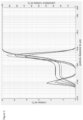
- Figure 1 shows the particle size distribution of the fumed ZrO 2 and Figure 2 shows the particle size distribution of the "nano ZrO 2 ", analyzed by static laser diffraction method (SLS) using laser diffraction particle size analyzer (HORIBA LA-950).
- SLS static laser diffraction method
- HORIBA LA-950 laser diffraction particle size analyzer
- Ni 0.8 Mn 0.1 Co 0.1 (OH) 2 -powder (217,8 g) was mixed with 2,2 g (1.0 wt%) of the fumed ZrO 2 -powder in a high intensity laboratory mixer (Somakon mixer MP-GL with a 0.5 L mixing unit) at first for 1 min at 500 rpm (specific electrical power: 350W/kg Ni 0.8 Mn 0.1 Co 0.1 (OH) 2 ) to homogeneously mix the two powders.
- the mixing intensity was increased to 2000 rpm (specific electrical power: 800W/kg Ni 0.8 Mn 0.1 Co 0.1 (OH) 2 , tip-speed of the mixing tool in the mixing unit: 10 m/s) and the mixing was continued for 5 min to achieve the dry coating of the Ni 0.8 Mn 0.1 Co 0.1 (OH) 2 particles by ZrO 2 .
- Example 1 The procedure of Example 1 was repeated exactly with the only difference, that "nano ZrO 2 " powder was used instead of fumed ZrO 2 .
- Figure 3 shows the SEM-EDX mapping of Zr (white) on ZrO 2 -coated Ni 0.8 Mn 0.1 Co 0.1 (OH) 2 prepared by using fumed ZrO 2 (Example 1)
- Figure 4 shows the results of the analysis of Ni 0.8 Mn 0.1 Co 0.1 (OH) 2 coated with "nano ZrO 2 " (Comparative Example 1).
- Ni 0.8 Mn 0.1 Co 0.1 (OH) 2 dry coated with fumed ZrO 2 shows a full and homogeneous coverage of all Ni 0.8 Mn 0.1 Co 0.1 (OH) 2 particles with ZrO 2 .
- No larger ZrO 2 agglomerates were detected, showing a good dispersibility of nanostructured fumed ZrO 2 .
- no free unattached ZrO 2 -particles next to the Ni 0.8 Mn 0.1 Co 0.1 (OH) 2 particles were found, indicating the strong adhesion between coating and the substrate (Ni 0.8 Mn 0.1 Co 0.1 (OH) 2 ).
- Figure 5 shows that only the fine ZrO 2 -particles of "nano ZrO 2 " are attached to the surface of Ni 0.8 Mn 0.1 Co 0.1 (OH) 2 particles.
- the larger ZrO 2 -particles are non-dispersed and are therefore unattached, located next to the Ni 0.8 Mn 0.1 Co 0.1 (OH) 2 particles.
- the Ni 0.8 Mn 0.1 Co 0.1 (OH) 2 particles are not fully covered by zirconium oxide.
- the undoped LiNi 0.8 Mn 0.1 Co 0.1 (OH) 2 was mixed with Li 2 CO 3 with a molar ratio of 1:0.54.
- the mixture was preheated at 600 °C for 7 h and further annealed at 870 °C for 15 h to obtain the mixed lithium transition metal oxide.
- Electrodes for electrochemical measurements were prepared by blending 90 wt% NMC with 5 wt% of a polyvinylidene fluoride binder (PVDF 5130, manufacturer: Solef) and 5 wt% of a conductive carbon black (SUPER PLi, manufacturer: TIMCAL) under inert gas atmosphere.
- PVDF 5130 polyvinylidene fluoride binder
- SUPER PLi conductive carbon black
- NMP N-Methyl-2-pyrrolidone
- the slurry was casted on aluminum foil and dried at 120 °C for 20 min on a heating plate under air. Afterwards, the electrode sheet was dried in a vacuum furnace at 120 °C for 2 h.
- Circular electrodes with a diameter of 12 mm were punched out of a larger piece and then flattened between 2 rollers with a pressure of 90 psi, and dried again in a vacuum furnace at 120 °C for 12 h to remove any residual water and NMP.
- the lithium battery cells for the cycling tests were assembled as CR2032 type coin cells (MTI Corporation) in an argon-filled glovebox (GLOVEBOX SYSTEMTECHNIK GmbH). Lithium metal (ROCKWOOD LITHIUM GmbH) was used as the anode material. Celgard 2500 was used as the separator. 25 ⁇ L of a 1 M solution of LiPF 6 in ethylene carbonate and ethyl methyl carbonate (50:50 wt/wt; SIGMA-ALDRICH) was used as an electrolyte. The cells were locked with a crimper (MTI).
- MMI crimper
- Galvanostatic cycle performance of the assembled lithium-ion batteries was measured at 25 °C using a MACCOR battery cycler at cut-off voltage of 3.0-4.3 V. The cell was cycled at 0.5 C/0.5 C for long term stability test. (0.5 C rate corresponds to current density of 0.7 mAh/cm 2 ). For the calculation of the capacities and the specific currents, only the mass of the active material was considered.
Landscapes
- Chemical & Material Sciences (AREA)
- Chemical Kinetics & Catalysis (AREA)
- Electrochemistry (AREA)
- General Chemical & Material Sciences (AREA)
- Engineering & Computer Science (AREA)
- Materials Engineering (AREA)
- Inorganic Chemistry (AREA)
- Manufacturing & Machinery (AREA)
- Composite Materials (AREA)
- Organic Chemistry (AREA)
- Inorganic Compounds Of Heavy Metals (AREA)
- Battery Electrode And Active Subsutance (AREA)
Applications Claiming Priority (2)
| Application Number | Priority Date | Filing Date | Title |
|---|---|---|---|
| EP19193773 | 2019-08-27 | ||
| PCT/EP2020/073841 WO2021037904A1 (en) | 2019-08-27 | 2020-08-26 | Mixed lithium transition metal oxide containing pyrogenically produced zirconium-containing oxides |
Publications (2)
| Publication Number | Publication Date |
|---|---|
| EP4022698A1 EP4022698A1 (en) | 2022-07-06 |
| EP4022698B1 true EP4022698B1 (en) | 2025-04-30 |
Family
ID=67777047
Family Applications (1)
| Application Number | Title | Priority Date | Filing Date |
|---|---|---|---|
| EP20758252.9A Active EP4022698B1 (en) | 2019-08-27 | 2020-08-26 | Mixed lithium transition metal oxide containing pyrogenically produced zirconium-containing oxides |
Country Status (14)
| Country | Link |
|---|---|
| US (1) | US20220306486A1 (pl) |
| EP (1) | EP4022698B1 (pl) |
| JP (1) | JP7744331B2 (pl) |
| KR (1) | KR102919654B1 (pl) |
| CN (1) | CN114341060B (pl) |
| BR (1) | BR112022003653A2 (pl) |
| ES (1) | ES3033664T3 (pl) |
| HU (1) | HUE071563T2 (pl) |
| IL (1) | IL290800B2 (pl) |
| MX (1) | MX2022002392A (pl) |
| PL (1) | PL4022698T3 (pl) |
| TW (1) | TWI761920B (pl) |
| UA (1) | UA128995C2 (pl) |
| WO (1) | WO2021037904A1 (pl) |
Families Citing this family (3)
| Publication number | Priority date | Publication date | Assignee | Title |
|---|---|---|---|---|
| EP4002519A1 (en) | 2020-11-11 | 2022-05-25 | Evonik Operations GmbH | Transition metal oxide particles encapsulated in nanostructured lithium titanate or lithium aluminate, and the use thereof in lithium ion batteries |
| CN114551881B (zh) * | 2022-01-06 | 2025-05-27 | 广东邦普循环科技有限公司 | 一种功能化改性包覆剂及其制备方法与应用 |
| CN116154124A (zh) * | 2022-11-17 | 2023-05-23 | 中国人民解放军军事科学院防化研究院 | 一种具有表面凝胶功能的锂硫电池正极材料的制备 |
Family Cites Families (32)
| Publication number | Priority date | Publication date | Assignee | Title |
|---|---|---|---|---|
| DE4445205A1 (de) | 1994-12-17 | 1996-06-20 | Degussa | Zirkondioxidpulver, Verfahren zu seiner Herstellung und Verwendung |
| DE19922522A1 (de) | 1999-05-15 | 2000-11-16 | Merck Patent Gmbh | Beschichtete Lithium-Mischoxid-Partikel und deren Verwendung |
| JP5000041B2 (ja) | 2001-01-25 | 2012-08-15 | 日本化学工業株式会社 | リチウムマンガン複合酸化物粉末、その製造方法、リチウム二次電池用正極活物質及びリチウム二次電池 |
| US20040191633A1 (en) * | 2003-02-26 | 2004-09-30 | The University Of Chicago | Electrodes for lithium batteries |
| EP2053023A1 (de) | 2007-10-23 | 2009-04-29 | Evonik Degussa GmbH | Zirkondioxid-Pulver und Zirkondioxid-Dispersion |
| KR101264364B1 (ko) * | 2009-12-03 | 2013-05-14 | 주식회사 엘앤에프신소재 | 리튬 이차 전지용 양극 활물질 및 이를 이용한 리튬 이차 전지 |
| CN103068770B (zh) | 2010-08-17 | 2015-03-25 | 尤米科尔公司 | 经铝干式涂覆的阴极材料前体 |
| JP5807747B2 (ja) | 2011-11-25 | 2015-11-10 | ソニー株式会社 | 電極、二次電池、電池パック、電動車両、電力貯蔵システム、電動工具および電子機器 |
| JP5903956B2 (ja) | 2012-03-15 | 2016-04-13 | 戸田工業株式会社 | 非水電解質二次電池用リチウム複合酸化物粒子粉末及びその製造方法、並びに非水電解質二次電池 |
| JP2013235666A (ja) | 2012-05-07 | 2013-11-21 | Honda Motor Co Ltd | 電池用正極活物質およびその製造方法 |
| CN105493321A (zh) * | 2013-09-30 | 2016-04-13 | 三洋电机株式会社 | 非水电解质二次电池用正极活性物质以及使用其的非水电解质二次电池 |
| WO2015115699A1 (ko) | 2014-01-29 | 2015-08-06 | 주식회사 엘앤에프신소재 | 리튬 이차 전지용 양극 활물질, 이의 제조방법 및 이를 포함하는 리튬 이차 전지 |
| WO2015173114A1 (de) | 2014-05-16 | 2015-11-19 | Evonik Degussa Gmbh | Verfahren zur herstellung von lithium, lanthan und zirkon enthaltender mischoxidpulver |
| KR102273772B1 (ko) | 2014-05-21 | 2021-07-06 | 삼성에스디아이 주식회사 | 복합 양극 활물질, 이를 포함하는 리튬 전지, 및 이의 제조방법 |
| TWI633062B (zh) | 2014-06-12 | 2018-08-21 | 烏明克公司 | 用於可充電電池的鋰過渡金屬氧化物陰極材料之先質 |
| CN104577093A (zh) * | 2015-01-13 | 2015-04-29 | 海宁美达瑞新材料科技有限公司 | 一种表面包覆改性的锂离子电池正极材料及其制备方法 |
| JP6538859B2 (ja) * | 2015-01-23 | 2019-07-03 | ユミコア | 高電圧リチウムイオンバッテリのためのリチウムニッケルマンガンコバルト酸化物のカソード用粉末 |
| CN105161710A (zh) | 2015-08-31 | 2015-12-16 | 宁波金和锂电材料有限公司 | 一种电池正极材料及其制备方法和锂离子电池 |
| TWI575802B (zh) | 2015-12-22 | 2017-03-21 | 財團法人工業技術研究院 | 鋰正極材料與鋰電池 |
| CN105789565A (zh) * | 2016-04-11 | 2016-07-20 | 中国科学院大学 | 锆酸锂包覆锂离子电池富锂锰基层状氧化物正极材料的制备方法 |
| KR102026918B1 (ko) | 2016-07-04 | 2019-09-30 | 주식회사 엘지화학 | 이차전지용 양극활물질의 제조방법 및 이에 따라 제조된 이차전지용 양극활물질 |
| JP6337360B2 (ja) | 2016-08-31 | 2018-06-06 | 住友化学株式会社 | リチウム二次電池用正極活物質、リチウム二次電池用正極及びリチウム二次電池 |
| CN106784675B (zh) * | 2016-12-16 | 2019-05-31 | 无锡晶石新型能源有限公司 | 一种锂电池正极材料的干法包覆方法 |
| CN108269994A (zh) * | 2016-12-30 | 2018-07-10 | 比亚迪股份有限公司 | 正极活性材料前驱体及其制备方法、正极活性材料及其制备方法、正极和电池 |
| JP6431236B1 (ja) * | 2017-05-29 | 2018-11-28 | 太平洋セメント株式会社 | リチウムイオン二次電池用正極活物質複合体又はナトリウムイオン二次電池用正極活物質複合体、これらを用いた二次電池、並びにこれらの製造方法 |
| CN107445202B (zh) * | 2017-08-30 | 2019-08-06 | 华能国际电力股份有限公司 | 一种小尺寸、超分散纳米氧化锆基涂层粉体的制备方法 |
| CN108048895B (zh) * | 2017-12-20 | 2019-12-17 | 福州大学 | 一种嵌入钌锆复合氧化物的镍基活性电极材料及其制备方法 |
| CN108110216A (zh) * | 2017-12-30 | 2018-06-01 | 山东精工电子科技有限公司 | 锂离子电池正极极片及其制备方法和锂电池 |
| JP6608013B1 (ja) * | 2018-08-01 | 2019-11-20 | 住友化学株式会社 | リチウム二次電池用正極活物質、リチウム二次電池用正極、リチウム二次電池 |
| CN109647293B (zh) * | 2018-11-07 | 2021-10-22 | 中国科学院过程工程研究所 | 一种锂离子电池正极材料金属氧化物包覆改性的系统及方法 |
| CN109473652B (zh) * | 2018-11-15 | 2021-07-09 | 合肥国轩高科动力能源有限公司 | 一种锂离子电池高镍三元材料的制备方法 |
| ES3010566A2 (es) * | 2022-06-28 | 2025-04-03 | Guangdong Brunp Recycling Technology Co Ltd | Método para preparar óxido de cobalto fuertemente recubierto y su uso |
-
2020
- 2020-08-24 TW TW109128774A patent/TWI761920B/zh active
- 2020-08-26 IL IL290800A patent/IL290800B2/en unknown
- 2020-08-26 PL PL20758252.9T patent/PL4022698T3/pl unknown
- 2020-08-26 KR KR1020227009607A patent/KR102919654B1/ko active Active
- 2020-08-26 BR BR112022003653A patent/BR112022003653A2/pt unknown
- 2020-08-26 JP JP2022513407A patent/JP7744331B2/ja active Active
- 2020-08-26 ES ES20758252T patent/ES3033664T3/es active Active
- 2020-08-26 MX MX2022002392A patent/MX2022002392A/es unknown
- 2020-08-26 UA UAA202201021A patent/UA128995C2/uk unknown
- 2020-08-26 US US17/638,549 patent/US20220306486A1/en active Pending
- 2020-08-26 WO PCT/EP2020/073841 patent/WO2021037904A1/en not_active Ceased
- 2020-08-26 CN CN202080060248.0A patent/CN114341060B/zh active Active
- 2020-08-26 EP EP20758252.9A patent/EP4022698B1/en active Active
- 2020-08-26 HU HUE20758252A patent/HUE071563T2/hu unknown
Also Published As
| Publication number | Publication date |
|---|---|
| US20220306486A1 (en) | 2022-09-29 |
| KR20220054824A (ko) | 2022-05-03 |
| ES3033664T3 (en) | 2025-08-06 |
| IL290800A (en) | 2022-04-01 |
| KR102919654B1 (ko) | 2026-01-29 |
| IL290800B1 (en) | 2025-08-01 |
| CN114341060A (zh) | 2022-04-12 |
| IL290800B2 (en) | 2025-12-01 |
| JP7744331B2 (ja) | 2025-09-25 |
| PL4022698T3 (pl) | 2025-09-15 |
| HUE071563T2 (hu) | 2025-09-28 |
| TWI761920B (zh) | 2022-04-21 |
| WO2021037904A1 (en) | 2021-03-04 |
| JP2022545946A (ja) | 2022-11-01 |
| BR112022003653A2 (pt) | 2022-05-24 |
| EP4022698A1 (en) | 2022-07-06 |
| CN114341060B (zh) | 2024-07-09 |
| MX2022002392A (es) | 2022-03-17 |
| UA128995C2 (uk) | 2024-12-18 |
| TW202125879A (zh) | 2021-07-01 |
Similar Documents
| Publication | Publication Date | Title |
|---|---|---|
| CN104704659B (zh) | Li‑Ni复合氧化物颗粒粉末及其制造方法、以及非水电解质二次电池 | |
| CN103080010B (zh) | 钛酸锂颗粒粉末及其制造方法、含Mg钛酸锂颗粒粉末及其制造方法、非水电解质二次电池用负极活性物质颗粒粉末以及非水电解质二次电池 | |
| EP4022697B1 (en) | Mixed lithium transition metal oxide coated with pyrogenically produced zirconium-containing oxides | |
| US20250029997A1 (en) | Transition metal oxide particles encapsulated in nanostructured lithium titanate or lithium aluminate, and the use thereof in lithium ion batteries | |
| WO2019168160A1 (ja) | Li-Ni複合酸化物粒子粉末及び非水電解質二次電池 | |
| EP4022698B1 (en) | Mixed lithium transition metal oxide containing pyrogenically produced zirconium-containing oxides | |
| JP2009263176A (ja) | マグネシウムアルミニウム複合酸化物表面被覆スピネル型マンガン酸リチウム及びその製造方法、並びにそれを使用する正極活物質及び非水電解質電池 | |
| RU2819175C2 (ru) | Смешанный оксид лития и переходного металла, содержащий полученные пирогенным способом оксиды, содержащие цирконий | |
| RU2818523C2 (ru) | Смешанный оксид лития и переходного металла, покрытый полученными пирогенным способом оксидами, содержащими цирконий | |
| RU2846651C2 (ru) | Частицы оксида переходного металла, инкапсулированные в наноструктурированном титанате лития или алюминате лития, и их применение в литий-ионных аккумуляторных батареях | |
| JP2020123507A (ja) | リチウム複合酸化物及びその製造方法 |
Legal Events
| Date | Code | Title | Description |
|---|---|---|---|
| STAA | Information on the status of an ep patent application or granted ep patent |
Free format text: STATUS: UNKNOWN |
|
| STAA | Information on the status of an ep patent application or granted ep patent |
Free format text: STATUS: THE INTERNATIONAL PUBLICATION HAS BEEN MADE |
|
| PUAI | Public reference made under article 153(3) epc to a published international application that has entered the european phase |
Free format text: ORIGINAL CODE: 0009012 |
|
| STAA | Information on the status of an ep patent application or granted ep patent |
Free format text: STATUS: REQUEST FOR EXAMINATION WAS MADE |
|
| 17P | Request for examination filed |
Effective date: 20220217 |
|
| AK | Designated contracting states |
Kind code of ref document: A1 Designated state(s): AL AT BE BG CH CY CZ DE DK EE ES FI FR GB GR HR HU IE IS IT LI LT LU LV MC MK MT NL NO PL PT RO RS SE SI SK SM TR |
|
| DAV | Request for validation of the european patent (deleted) | ||
| DAX | Request for extension of the european patent (deleted) | ||
| REG | Reference to a national code |
Ref country code: DE Ref legal event code: R079 Free format text: PREVIOUS MAIN CLASS: H01M0004131000 Ipc: H01M0004139100 Ref country code: DE Ref legal event code: R079 Ref document number: 602020050435 Country of ref document: DE Free format text: PREVIOUS MAIN CLASS: H01M0004131000 Ipc: H01M0004139100 |
|
| GRAP | Despatch of communication of intention to grant a patent |
Free format text: ORIGINAL CODE: EPIDOSNIGR1 |
|
| STAA | Information on the status of an ep patent application or granted ep patent |
Free format text: STATUS: GRANT OF PATENT IS INTENDED |
|
| RIC1 | Information provided on ipc code assigned before grant |
Ipc: H01M 4/505 20100101ALI20241221BHEP Ipc: H01M 10/0525 20100101ALI20241221BHEP Ipc: H01M 4/525 20100101ALI20241221BHEP Ipc: H01M 4/131 20100101ALI20241221BHEP Ipc: H01M 4/1391 20100101AFI20241221BHEP |
|
| INTG | Intention to grant announced |
Effective date: 20250124 |
|
| GRAS | Grant fee paid |
Free format text: ORIGINAL CODE: EPIDOSNIGR3 |
|
| GRAA | (expected) grant |
Free format text: ORIGINAL CODE: 0009210 |
|
| STAA | Information on the status of an ep patent application or granted ep patent |
Free format text: STATUS: THE PATENT HAS BEEN GRANTED |
|
| AK | Designated contracting states |
Kind code of ref document: B1 Designated state(s): AL AT BE BG CH CY CZ DE DK EE ES FI FR GB GR HR HU IE IS IT LI LT LU LV MC MK MT NL NO PL PT RO RS SE SI SK SM TR |
|
| REG | Reference to a national code |
Ref country code: CH Ref legal event code: EP Ref country code: GB Ref legal event code: FG4D |
|
| P01 | Opt-out of the competence of the unified patent court (upc) registered |
Free format text: CASE NUMBER: APP_15995/2025 Effective date: 20250402 |
|
| REG | Reference to a national code |
Ref country code: IE Ref legal event code: FG4D |
|
| REG | Reference to a national code |
Ref country code: DE Ref legal event code: R096 Ref document number: 602020050435 Country of ref document: DE |
|
| REG | Reference to a national code |
Ref country code: NL Ref legal event code: FP |
|
| REG | Reference to a national code |
Ref country code: SE Ref legal event code: TRGR |
|
| REG | Reference to a national code |
Ref country code: ES Ref legal event code: FG2A Ref document number: 3033664 Country of ref document: ES Kind code of ref document: T3 Effective date: 20250806 |
|
| REG | Reference to a national code |
Ref country code: SK Ref legal event code: T3 Ref document number: E 46566 Country of ref document: SK |
|
| PGFP | Annual fee paid to national office [announced via postgrant information from national office to epo] |
Ref country code: NL Payment date: 20250821 Year of fee payment: 6 |
|
| REG | Reference to a national code |
Ref country code: AT Ref legal event code: MK05 Ref document number: 1790917 Country of ref document: AT Kind code of ref document: T Effective date: 20250430 |
|
| PGFP | Annual fee paid to national office [announced via postgrant information from national office to epo] |
Ref country code: HU Payment date: 20250827 Year of fee payment: 6 |
|
| REG | Reference to a national code |
Ref country code: HU Ref legal event code: AG4A Ref document number: E071563 Country of ref document: HU |
|
| PG25 | Lapsed in a contracting state [announced via postgrant information from national office to epo] |
Ref country code: FI Free format text: LAPSE BECAUSE OF FAILURE TO SUBMIT A TRANSLATION OF THE DESCRIPTION OR TO PAY THE FEE WITHIN THE PRESCRIBED TIME-LIMIT Effective date: 20250430 Ref country code: PT Free format text: LAPSE BECAUSE OF FAILURE TO SUBMIT A TRANSLATION OF THE DESCRIPTION OR TO PAY THE FEE WITHIN THE PRESCRIBED TIME-LIMIT Effective date: 20250901 |
|
| PGFP | Annual fee paid to national office [announced via postgrant information from national office to epo] |
Ref country code: ES Payment date: 20250926 Year of fee payment: 6 |
|
| PGFP | Annual fee paid to national office [announced via postgrant information from national office to epo] |
Ref country code: DE Payment date: 20250820 Year of fee payment: 6 |
|
| REG | Reference to a national code |
Ref country code: LT Ref legal event code: MG9D |
|
| PG25 | Lapsed in a contracting state [announced via postgrant information from national office to epo] |
Ref country code: GR Free format text: LAPSE BECAUSE OF FAILURE TO SUBMIT A TRANSLATION OF THE DESCRIPTION OR TO PAY THE FEE WITHIN THE PRESCRIBED TIME-LIMIT Effective date: 20250731 |
|
| PGFP | Annual fee paid to national office [announced via postgrant information from national office to epo] |
Ref country code: NO Payment date: 20250826 Year of fee payment: 6 |
|
| PGFP | Annual fee paid to national office [announced via postgrant information from national office to epo] |
Ref country code: PL Payment date: 20250819 Year of fee payment: 6 Ref country code: IT Payment date: 20250825 Year of fee payment: 6 |
|
| PG25 | Lapsed in a contracting state [announced via postgrant information from national office to epo] |
Ref country code: BG Free format text: LAPSE BECAUSE OF FAILURE TO SUBMIT A TRANSLATION OF THE DESCRIPTION OR TO PAY THE FEE WITHIN THE PRESCRIBED TIME-LIMIT Effective date: 20250430 |
|
| PGFP | Annual fee paid to national office [announced via postgrant information from national office to epo] |
Ref country code: BE Payment date: 20250820 Year of fee payment: 6 Ref country code: GB Payment date: 20250820 Year of fee payment: 6 |
|
| PG25 | Lapsed in a contracting state [announced via postgrant information from national office to epo] |
Ref country code: HR Free format text: LAPSE BECAUSE OF FAILURE TO SUBMIT A TRANSLATION OF THE DESCRIPTION OR TO PAY THE FEE WITHIN THE PRESCRIBED TIME-LIMIT Effective date: 20250430 |
|
| PG25 | Lapsed in a contracting state [announced via postgrant information from national office to epo] |
Ref country code: AT Free format text: LAPSE BECAUSE OF FAILURE TO SUBMIT A TRANSLATION OF THE DESCRIPTION OR TO PAY THE FEE WITHIN THE PRESCRIBED TIME-LIMIT Effective date: 20250430 |
|
| PGFP | Annual fee paid to national office [announced via postgrant information from national office to epo] |
Ref country code: FR Payment date: 20250828 Year of fee payment: 6 |
|
| PGFP | Annual fee paid to national office [announced via postgrant information from national office to epo] |
Ref country code: SE Payment date: 20250820 Year of fee payment: 6 |
|
| PG25 | Lapsed in a contracting state [announced via postgrant information from national office to epo] |
Ref country code: RS Free format text: LAPSE BECAUSE OF FAILURE TO SUBMIT A TRANSLATION OF THE DESCRIPTION OR TO PAY THE FEE WITHIN THE PRESCRIBED TIME-LIMIT Effective date: 20250731 |
|
| PGFP | Annual fee paid to national office [announced via postgrant information from national office to epo] |
Ref country code: IE Payment date: 20250820 Year of fee payment: 6 Ref country code: CZ Payment date: 20250818 Year of fee payment: 6 |
|
| PGFP | Annual fee paid to national office [announced via postgrant information from national office to epo] |
Ref country code: SK Payment date: 20250818 Year of fee payment: 6 |
|
| PG25 | Lapsed in a contracting state [announced via postgrant information from national office to epo] |
Ref country code: IS Free format text: LAPSE BECAUSE OF FAILURE TO SUBMIT A TRANSLATION OF THE DESCRIPTION OR TO PAY THE FEE WITHIN THE PRESCRIBED TIME-LIMIT Effective date: 20250830 |
|
| PG25 | Lapsed in a contracting state [announced via postgrant information from national office to epo] |
Ref country code: LV Free format text: LAPSE BECAUSE OF FAILURE TO SUBMIT A TRANSLATION OF THE DESCRIPTION OR TO PAY THE FEE WITHIN THE PRESCRIBED TIME-LIMIT Effective date: 20250430 |
|
| PG25 | Lapsed in a contracting state [announced via postgrant information from national office to epo] |
Ref country code: DK Free format text: LAPSE BECAUSE OF FAILURE TO SUBMIT A TRANSLATION OF THE DESCRIPTION OR TO PAY THE FEE WITHIN THE PRESCRIBED TIME-LIMIT Effective date: 20250430 Ref country code: SM Free format text: LAPSE BECAUSE OF FAILURE TO SUBMIT A TRANSLATION OF THE DESCRIPTION OR TO PAY THE FEE WITHIN THE PRESCRIBED TIME-LIMIT Effective date: 20250430 |
|
| PG25 | Lapsed in a contracting state [announced via postgrant information from national office to epo] |
Ref country code: EE Free format text: LAPSE BECAUSE OF FAILURE TO SUBMIT A TRANSLATION OF THE DESCRIPTION OR TO PAY THE FEE WITHIN THE PRESCRIBED TIME-LIMIT Effective date: 20250430 |
|
| PG25 | Lapsed in a contracting state [announced via postgrant information from national office to epo] |
Ref country code: RO Free format text: LAPSE BECAUSE OF FAILURE TO SUBMIT A TRANSLATION OF THE DESCRIPTION OR TO PAY THE FEE WITHIN THE PRESCRIBED TIME-LIMIT Effective date: 20250430 |