EP3977998A1 - Zusammensetzung zur behandlung des auges - Google Patents
Zusammensetzung zur behandlung des auges Download PDFInfo
- Publication number
- EP3977998A1 EP3977998A1 EP21209678.8A EP21209678A EP3977998A1 EP 3977998 A1 EP3977998 A1 EP 3977998A1 EP 21209678 A EP21209678 A EP 21209678A EP 3977998 A1 EP3977998 A1 EP 3977998A1
- Authority
- EP
- European Patent Office
- Prior art keywords
- composition
- use according
- cellulose
- ectoine
- eye
- Prior art date
- Legal status (The legal status is an assumption and is not a legal conclusion. Google has not performed a legal analysis and makes no representation as to the accuracy of the status listed.)
- Pending
Links
Images

Classifications
-
- A—HUMAN NECESSITIES
- A61—MEDICAL OR VETERINARY SCIENCE; HYGIENE
- A61K—PREPARATIONS FOR MEDICAL, DENTAL OR TOILETRY PURPOSES
- A61K31/00—Medicinal preparations containing organic active ingredients
- A61K31/33—Heterocyclic compounds
- A61K31/395—Heterocyclic compounds having nitrogen as a ring hetero atom, e.g. guanethidine or rifamycins
- A61K31/495—Heterocyclic compounds having nitrogen as a ring hetero atom, e.g. guanethidine or rifamycins having six-membered rings with two or more nitrogen atoms as the only ring heteroatoms, e.g. piperazine or tetrazines
- A61K31/505—Pyrimidines; Hydrogenated pyrimidines, e.g. trimethoprim
-
- A—HUMAN NECESSITIES
- A61—MEDICAL OR VETERINARY SCIENCE; HYGIENE
- A61K—PREPARATIONS FOR MEDICAL, DENTAL OR TOILETRY PURPOSES
- A61K9/00—Medicinal preparations characterised by special physical form
- A61K9/0012—Galenical forms characterised by the site of application
- A61K9/0048—Eye, e.g. artificial tears
-
- A—HUMAN NECESSITIES
- A61—MEDICAL OR VETERINARY SCIENCE; HYGIENE
- A61K—PREPARATIONS FOR MEDICAL, DENTAL OR TOILETRY PURPOSES
- A61K47/00—Medicinal preparations characterised by the non-active ingredients used, e.g. carriers or inert additives; Targeting or modifying agents chemically bound to the active ingredient
- A61K47/30—Macromolecular organic or inorganic compounds, e.g. inorganic polyphosphates
- A61K47/32—Macromolecular compounds obtained by reactions only involving carbon-to-carbon unsaturated bonds, e.g. carbomers, poly(meth)acrylates, or polyvinyl pyrrolidone
-
- A—HUMAN NECESSITIES
- A61—MEDICAL OR VETERINARY SCIENCE; HYGIENE
- A61K—PREPARATIONS FOR MEDICAL, DENTAL OR TOILETRY PURPOSES
- A61K9/00—Medicinal preparations characterised by special physical form
- A61K9/08—Solutions
-
- A—HUMAN NECESSITIES
- A61—MEDICAL OR VETERINARY SCIENCE; HYGIENE
- A61K—PREPARATIONS FOR MEDICAL, DENTAL OR TOILETRY PURPOSES
- A61K9/00—Medicinal preparations characterised by special physical form
- A61K9/10—Dispersions; Emulsions
- A61K9/12—Aerosols; Foams
-
- A—HUMAN NECESSITIES
- A61—MEDICAL OR VETERINARY SCIENCE; HYGIENE
- A61K—PREPARATIONS FOR MEDICAL, DENTAL OR TOILETRY PURPOSES
- A61K9/00—Medicinal preparations characterised by special physical form
- A61K9/10—Dispersions; Emulsions
- A61K9/127—Synthetic bilayered vehicles, e.g. liposomes or liposomes with cholesterol as the only non-phosphatidyl surfactant
-
- A—HUMAN NECESSITIES
- A61—MEDICAL OR VETERINARY SCIENCE; HYGIENE
- A61P—SPECIFIC THERAPEUTIC ACTIVITY OF CHEMICAL COMPOUNDS OR MEDICINAL PREPARATIONS
- A61P27/00—Drugs for disorders of the senses
- A61P27/02—Ophthalmic agents
-
- A—HUMAN NECESSITIES
- A61—MEDICAL OR VETERINARY SCIENCE; HYGIENE
- A61P—SPECIFIC THERAPEUTIC ACTIVITY OF CHEMICAL COMPOUNDS OR MEDICINAL PREPARATIONS
- A61P27/00—Drugs for disorders of the senses
- A61P27/02—Ophthalmic agents
- A61P27/04—Artificial tears; Irrigation solutions
-
- A—HUMAN NECESSITIES
- A61—MEDICAL OR VETERINARY SCIENCE; HYGIENE
- A61P—SPECIFIC THERAPEUTIC ACTIVITY OF CHEMICAL COMPOUNDS OR MEDICINAL PREPARATIONS
- A61P29/00—Non-central analgesic, antipyretic or antiinflammatory agents, e.g. antirheumatic agents; Non-steroidal antiinflammatory drugs [NSAID]
-
- A—HUMAN NECESSITIES
- A61—MEDICAL OR VETERINARY SCIENCE; HYGIENE
- A61K—PREPARATIONS FOR MEDICAL, DENTAL OR TOILETRY PURPOSES
- A61K2121/00—Preparations for use in therapy
Definitions
- the invention relates to a composition which serves to treat diseases of the eye which are associated with a disorder of the tear film, in particular dry eye syndrome (keratoconjunctivitis sicca).
- the human lacrimal glands are responsible for the production of tear fluid. It is a clear, slightly alkaline liquid that is used to moisten the conjunctiva and cornea. Disturbances in tear production or in the composition of the tear film can lead to dry eye syndrome (keratoconjunctivitis sicca, keratitis sicca; Drye Eye Syndrome, DES). Symptoms associated with this include a foreign body sensation, burning and redness of the eyes. In severe cases, damage to the cornea and even blindness can occur. Keratoconjunctivitis sicca is a common disease affecting approximately 10 to 20% of the adult population. The treatment is often carried out with hyaluronic acid, artificial tears or cellulose derivatives. However, it is often unsatisfactory due to insufficient treatment success or side effects.
- the Meibomian glands are important. These are sebaceous glands on the edge of the eyelid. The meibomian glands secrete an oily fluid that mixes with the tear fluid. Overall, there is an outer lipid layer on the tear film, which ensures that the aqueous tear fluid does not evaporate too quickly. Disorders in the secretion of the Meibomian glands, for example in the lipid composition of the secretion, or a rupture of the lipid layer, thus leading to premature evaporation of the tear fluid and thus promoting the development of keratoconjunctivitis sicca.
- the object is therefore to provide a composition which prevents tearing of the lipid layer, associated with increased evaporation of lacrimal fluid and thus the occurrence of eye diseases associated therewith.
- the composition is intended to prevent or treat the development of keratoconjunctivitis sicca.
- composition containing ectoine, hydroxyectoine and/or salts, esters or amides of these compounds as the active ingredient.
- Ectoin and hydroxyectoin are tetrahydropyrimidine derivatives that are synthesized under stress conditions by extremophilic, especially halophilic, microorganisms.
- Various uses have been described for ectoine and hydroxyectoine, for example as a moisturizer, for the treatment of vascular leak syndrome (VLS) ( DE 10 2006 056 766 A1 ) or for the treatment of neurodermatitis ( DE 103 30 243 A1 ). From the DE 100 06 578 A1 the use of ectoine and its derivatives to protect biopolymers from degradation by degrading enzymes such as proteases, nucleases or lipases is known.
- ectoine 2-methyl-1,4,5,6-tetrahydropyrimidine-4-carboxylic acid
- hydroxyectoine it is 5-hydroxy-2-methyl-1,4,5,6-tetrahydropyrimidine-4-carboxylic acid.
- the tear film which moisturizes and protects the conjunctiva and cornea, consists mainly of an inner mucin-rich layer, an aqueous phase containing proteins, metabolites and salts, and the outer lipid layer at the liquid-air interface.
- the lipid layer is composed of various lipids, in particular polar phospholipids and fatty acids, cholesterol esters and triacylglycerides.
- the polar lipids form the lowest part of the lipid layer, i. H. they form the boundary to the underlying aqueous phase.
- Cholesterol and other sterol esters are stored between the non-polar head groups of the polar lipids, so that a kind of platform is formed for the non-polar parts of the lipid layer that are further outside, in particular the triacylglycerides.
- the invention is based on the finding that one of the reasons for premature rupture of the lipid layer is its increased rigidity keratoconjunctivitis sicca patients.
- the ratio of neutral to polar lipids is increased in affected individuals. Accordingly, an increased lipid-lipid interaction was found compared to healthy people.
- the associated increased rigidity of the lipid layer can lead to the formation of gaps in this layer, through which the tear fluid comes into contact with the air and evaporates to a large extent.
- the composition according to the invention is particularly suitable for the treatment of keratoconjunctivitis sicca, but can also be used for other eye diseases which are associated with a disruption in the tear film, for example for the treatment of blepharitis or meibomitis.
- the composition is suitable for treating xerophthalmia, in which a distinction is made between the hyperevaporative form, which is characterized by a malfunction of the meibomian glands, and the hypovolemic form, which is characterized by a lack of tear secretion.
- the composition is particularly suitable for treating dry eye syndrome in its hyperevaporative form.
- composition according to the invention is thus able to remedy disorders related to the lipid layer produced by the meibomian glands, for example in terms of composition. Specifically, the area occupied by the individual phospholipids increases. This causes reduced order and larger gaps in the phospholipid layer and thus less platform for the hydrophobic components of the lipid layer, especially the triacylglycerides. Since these have less space available, small droplet-like structures of triacylglycerides can form on the outer lipid layer.
- the lipid layer becomes more mobile and less rigid; the likelihood of rupture of the lipid layer is reduced.
- the spreading of the lipid layer is facilitated, the elasticity of the lipid layer is increased: Some lipids, especially the non-polar ones, can become deformed, especially when pressure is applied Triacylglycerides, come together to form droplet-like structures, and when they expand, they can spread out again to ensure a stable lipid layer.
- FIG. 1 A macroscopic model for the effect that a sufficiently high concentration of ectoine has on the tear film is given in figure 1 shown schematically. Under a) the tear film is shown without the addition of ectoine, with 1 showing the aqueous phase.
- the boundary layer 2 is formed in particular by polar phospholipids, with the cholesterol ester molecules from the overlying layer 3 partially intercalating. Overall, a hydrophobic platform is formed for the non-polar triacylglycerides 4, which form the outer boundary layer to the environment.
- Diagram b) shows the situation in the presence of 100 mM ectoine in the tear fluid.
- the molecules in layers 2 and 3 of the lipid layer adjacent to the aqueous phase are arranged in a significantly less compact manner than according to representation a); they therefore no longer form a continuous platform for the triacylglycerides 4. These therefore form small droplet-like local accumulations at the boundary layer to the air.
- the lipid layer is significantly more flexible and less rigid in the presence of ectoine, which reduces the risk of tearing.
- the lipid layer at the sites of the droplet-like accumulations has a thickness of about 200 nm, while the lipid layer has a thickness of only about 20 nm in the absence of ectoine.
- composition according to the invention is intended in particular for local or topical application.
- the composition may be in liquid form, for example in the form of eye drops. It is usually an aqueous solution.
- the composition may be isotonic, hypotonic, or hypertonic.
- other administration forms are also conceivable, for example creams or gels.
- alkali metal or alkaline earth metal salts in particular the salts of potassium, sodium, Magnesium and calcium, but also salts with organic bases such. B. with non-toxic aliphatic or aromatic amines in question.
- Corresponding esters or amides which can also be used according to the invention, can be obtained by reacting the carboxyl group of the ectoine/hydroxyectoine with alcohols or amines.
- the amide function can in turn have saturated or unsaturated, straight-chain or branched alkyl groups.
- the hydroxy group can also be reacted with a carboxylic acid of different chain lengths to form a corresponding ester.
- the composition may contain customary excipients, e.g. B. carriers, preservatives, bactericides, solubilizers, vitamins, stabilizers, substances to prevent foaming, osmotically active substances, dyes, surface-active substances, emulsifiers, moisturizing substances and the like .
- customary excipients e.g. B. carriers, preservatives, bactericides, solubilizers, vitamins, stabilizers, substances to prevent foaming, osmotically active substances, dyes, surface-active substances, emulsifiers, moisturizing substances and the like .
- preservatives are thiomersal, organic mercury compounds such as phenylmercury, benzalkonium chloride, chlorhexidine, benzyl alcohol, glucose, ethanol and quaternary ammonium salts.
- viscosity-increasing agents are of particular advantage. It has surprisingly turned out that an increased viscosity additionally supports the stabilization of the tear film and delivers better results than the use of ectoine/hydroxyectoine without a viscosity-increasing additive.
- the background is probably that the ectoine/hydroxyectoine is kept on the eye for a longer period of time and can therefore contribute to the stabilization of the tear film over a longer period of time. In addition, the exposure becomes more comfortable for the patient.
- viscosity-increasing agents examples include cellulose ethers such as hydroxyethyl cellulose, carboxymethyl cellulose, hydroxypropylmethyl cellulose, methylpropyl cellulose, methyl cellulose, methylethyl cellulose, ethyl cellulose, hydroxyethyl methyl cellulose, hydroxypropyl cellulose, ethylhydroxyethyl cellulose.
- Other examples are polyethylene glycol, polyvinyl alcohols, Polyvinylpyrrolidone, glycosaminoglycans, proteoglycans, cetyl alcohol and stearyl alcohol or combinations thereof (cetylstearyl alcohol), polyacrylic acid, polymethacrylic acid.
- the concentration of the viscosity-increasing agents in the composition is preferably from 0.05 to 10% by weight, preferably from 0.1 to 3% by weight.
- concentrations for cellulose ethers in the range from 0.2 to 2.5% by weight, for polyethylene glycol in the range from 0.2 to 1% by weight and for polyvinyl alcohol from 0.1 to 4% by weight have proven to be expedient. and for polyacrylic acid from 0.1 to 0.3% by weight.
- moisturizing or moisturizing substances examples include glycerol, sorbitol, trehalose, betaine, dexpanthenol, 1,2-propylene glycol, xylitol or other polyalcohols.
- the formulations of the invention may also include appropriate buffering systems or other pH-adjusting excipients to establish and maintain a desired pH.
- Suitable buffer systems are citrate, phosphate, TRIS, glycine, borate, acetate. These buffer systems can be prepared from substances such as citric acid, monosodium phosphate, disodium phosphate, glycine, boric acid, sodium tetraborate, acetic acid or sodium acetate.
- compositions can contain other active ingredients, but it is also possible and sufficient for the treatment or prevention of an eye disease to use compositions that only contain ectoine and/or hydroxyectoine or corresponding salts, esters or amides as active ingredients.
- active substances can be, for example, other compatible solutes.
- DIP di-myo-inositol phosphate
- cDPG cyclic 2,3-diphosphoglycerate
- DGP 1,1-diglycerol phosphate
- ⁇ -mannosylglycerate Firoin
- ⁇ -mannosylglyceramide Firoin A
- DMIP di- Mannosyl-di-inositol phosphate
- glucosylglycerol taurine
- betaine citrulline, 4,5-dihydro-2-methylimidazole-4-carboxylic acid (DHMICA) and 4,5,6,7-tetrahydro-2-methyl-1H-[1,3]-diazepine-4-S-carboxylic acid (homoectoine) and corresponding derivatives, in particular salts, esters or amides.
- suitable active ingredients are local anti-inflammatory drugs, eg steroids, cyclosporine
- the composition can also include antibiotics. These include gentamycin, kanamycin, neomycon, tobramycin, ciprofloxacin, ofloxacin, chlortetracycline, ciprofloxacin, erythromycin, fusidic acid, lomefloxacin, levofloxacin, and oxytetracycline.
- antibiotics include gentamycin, kanamycin, neomycon, tobramycin, ciprofloxacin, ofloxacin, chlortetracycline, ciprofloxacin, erythromycin, fusidic acid, lomefloxacin, levofloxacin, and oxytetracycline.
- active ingredients of natural origin can be: omega-3 fatty acids, eyebright, digitalis, euphrasia, blueberry, chamomile, mallow and aloe vera.
- the concentration of ectoine/hydroxyectoine and/or corresponding salts, esters or amides can in particular be in a range from 10 to 500 mM, preferably 50 to 500 mM, particularly preferably 100 to 500 mM or 100 to 200 mM. These concentrations have proven to be suitable for bringing about the effect according to the invention.
- the proportion of ectoine/hydroxyectoine and/or corresponding salts, esters or amides in the composition can be in a range from 0.1 to 10% by weight. A good effect could be observed, for example, in a range between 0.5 and 2% by weight.
- the composition containing the active ingredient can also be encapsulated in nanostructures or administered in the form of liposomes.
- This is particularly advantageous when the composition does not contain a preservative, which is preferred in view of the intended use in the eye.
- Corresponding methods for encapsulation are known in principle from the prior art.
- the use of liposomes is also particularly advantageous because the lipids forming the membrane of the liposome, including phospholipids and fatty acids, also contribute to the formation of the meibomian film.
- the invention also relates to a spray device with which the composition according to the invention can be applied to the open or closed eye.
- the spray device has means for atomizing the composition and expediently has an outlet opening the size of which is adapted to the size of the eye. The user holds the spray device in such a way that the outlet opening is in front of the eye, so that the eye is wetted with the composition when the spray device is actuated.
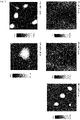
- the topography of the surface of the lipid layers was examined using an atomic force microscope (AFM).
- AFM atomic force microscope
- the lipid layer was transferred to a solid surface using the Langmuir-Blodgett technique, after which the AFM measurements were carried out at pressures of 5 mN/m, 20 mN/m and 23.5 mN/m and 20°C.
- the AFM measurements were carried out at pressures of 5 mN/m, 20 mN/m and 23.5 mN/m and 20°C.
- 5 mN/m small fibrous structures of up to approx. 5 nm in height could be observed distributed over the entire surface.
- These could be layers of hydrophobic lipids such as cholesterol esters and triacylglycerides.
- the number of fibrous structures increased.
- droplet-like structures In the presence of 100 mM ectoine, droplet-like structures with a height of up to approx. 300 nm were observed. At higher ectoine concentrations, the diameter of the droplet-like structures increased. The formation of such structures can also be observed in the presence of 50 mM ectoine, but still comparatively scattered and significantly smaller. It could be shown that the droplet-like structures are more fluid than the other areas of the lipid layer, which speaks for a concentration of triacylglycerides that are less molecularly organized than phospholipids and cholesterol esters. The result will be in figure 3 played back.
- the tear break-up time ie the time until dry patches reappear on the cornea after blinking, was less than 10 seconds.
- the TBUT was used as the main parameter for evaluating the treatment.
- patients with severe keratoconjunctivitis sicca and a TBUT ⁇ 5 sec showed a greater improvement with treatment with Ectoin than with treatment with hyaluronic acid.
- the quality of life of the patients was determined using the OSDI (ocular surface disease index).
- OSDI optical surface disease index
- Lacrimation was examined according to the Schirmer II test. This was both at the beginning (8.8 mm/5 min versus 16.0 mm/5 min) and at the end (10.6 mm/5 min versus 16.8 mm/5 min) of treatment for the ectoine patients lower than for the hyaluronic acid patients, whereas a more significant improvement could be observed for the ectoine-treated patients than for the hyaluronic acid-treated patients (1.8 mm/5 min vs. 0.8 mm/5 min).
Landscapes
- Health & Medical Sciences (AREA)
- Chemical & Material Sciences (AREA)
- Life Sciences & Earth Sciences (AREA)
- Veterinary Medicine (AREA)
- Public Health (AREA)
- Medicinal Chemistry (AREA)
- General Health & Medical Sciences (AREA)
- Animal Behavior & Ethology (AREA)
- Pharmacology & Pharmacy (AREA)
- Epidemiology (AREA)
- Ophthalmology & Optometry (AREA)
- Dispersion Chemistry (AREA)
- Organic Chemistry (AREA)
- Nuclear Medicine, Radiotherapy & Molecular Imaging (AREA)
- General Chemical & Material Sciences (AREA)
- Chemical Kinetics & Catalysis (AREA)
- Engineering & Computer Science (AREA)
- Bioinformatics & Cheminformatics (AREA)
- Rheumatology (AREA)
- Pain & Pain Management (AREA)
- Inorganic Chemistry (AREA)
- Pharmaceuticals Containing Other Organic And Inorganic Compounds (AREA)
- Medicinal Preparation (AREA)
Applications Claiming Priority (3)
| Application Number | Priority Date | Filing Date | Title |
|---|---|---|---|
| DE102014007423.4A DE102014007423A1 (de) | 2014-05-22 | 2014-05-22 | Zusammensetzung zur Behandlung des Auges |
| PCT/EP2015/061434 WO2015177353A1 (de) | 2014-05-22 | 2015-05-22 | Zusammensetzung zur behandlung des auges |
| EP15729760.7A EP3145511B1 (de) | 2014-05-22 | 2015-05-22 | Zusammensetzung zur behandlung des auges |
Related Parent Applications (2)
| Application Number | Title | Priority Date | Filing Date |
|---|---|---|---|
| EP15729760.7A Division EP3145511B1 (de) | 2014-05-22 | 2015-05-22 | Zusammensetzung zur behandlung des auges |
| EP15729760.7A Division-Into EP3145511B1 (de) | 2014-05-22 | 2015-05-22 | Zusammensetzung zur behandlung des auges |
Publications (1)
| Publication Number | Publication Date |
|---|---|
| EP3977998A1 true EP3977998A1 (de) | 2022-04-06 |
Family
ID=53433159
Family Applications (2)
| Application Number | Title | Priority Date | Filing Date |
|---|---|---|---|
| EP21209678.8A Pending EP3977998A1 (de) | 2014-05-22 | 2015-05-22 | Zusammensetzung zur behandlung des auges |
| EP15729760.7A Active EP3145511B1 (de) | 2014-05-22 | 2015-05-22 | Zusammensetzung zur behandlung des auges |
Family Applications After (1)
| Application Number | Title | Priority Date | Filing Date |
|---|---|---|---|
| EP15729760.7A Active EP3145511B1 (de) | 2014-05-22 | 2015-05-22 | Zusammensetzung zur behandlung des auges |
Country Status (10)
| Country | Link |
|---|---|
| US (3) | US20170173012A1 (enExample) |
| EP (2) | EP3977998A1 (enExample) |
| JP (1) | JP2017516770A (enExample) |
| CN (1) | CN106456537A (enExample) |
| CA (1) | CA2949203C (enExample) |
| DE (1) | DE102014007423A1 (enExample) |
| ES (1) | ES2906431T3 (enExample) |
| PL (1) | PL3145511T3 (enExample) |
| RU (1) | RU2016150412A (enExample) |
| WO (1) | WO2015177353A1 (enExample) |
Families Citing this family (10)
| Publication number | Priority date | Publication date | Assignee | Title |
|---|---|---|---|---|
| DE102014007423A1 (de) | 2014-05-22 | 2015-11-26 | Bitop Ag | Zusammensetzung zur Behandlung des Auges |
| DE102016203696A1 (de) * | 2016-03-07 | 2017-09-07 | Ursapharm Arzneimittel Gmbh | Ophthalmologische Zusammensetzung |
| DE102016204472A1 (de) * | 2016-03-17 | 2017-09-21 | Ursapharm Arzneimittel Gmbh | Kit zur kosmetischen Behandlung des Auges und der Haut und Kosmetikum zur Anwendung am Auge und auf der Haut |
| EP3827818A1 (en) * | 2019-11-26 | 2021-06-02 | Warszawskie Zaklady Farmaceutyczne Polfa S.A. | Ophthalmic composition |
| CN111467349B (zh) * | 2020-05-14 | 2021-06-01 | 华熙生物科技股份有限公司 | 人工泪液及其制备方法 |
| CN111991415B (zh) * | 2020-09-11 | 2022-03-01 | 华熙生物科技股份有限公司 | 一种眼部护理组合物及其制备方法和用途 |
| US12012238B2 (en) | 2021-05-26 | 2024-06-18 | Bausch + Lomb Ireland Limited | Packaging solutions |
| CN116139067B (zh) * | 2021-11-22 | 2024-03-22 | 华熙生物科技股份有限公司 | 透明质酸锌形成凝胶的方法及含有透明质酸锌的滴眼凝胶及其制备 |
| CN117625317A (zh) * | 2023-11-30 | 2024-03-01 | 深圳市眼学科技有限公司 | 一种长效保湿的隐形眼镜护理液及其制备方法 |
| DE102024139929A1 (de) * | 2024-12-30 | 2026-07-02 | bitop Aktiengesellschaft (bitop AG) | Viskose Formulierung enthaltend Tetrahydropyrimidine |
Citations (5)
| Publication number | Priority date | Publication date | Assignee | Title |
|---|---|---|---|---|
| DE10006578A1 (de) | 2000-02-14 | 2001-08-23 | Bitop Gmbh | Verwendung von kompatiblen Soluten als Inhibitoren des enzymatischen Abbaus von makromolekularen Biopolymeren |
| DE10330243A1 (de) | 2003-07-03 | 2005-01-20 | bitop Aktiengesellschaft für biotechnische Optimierung | Verwendung von aus extremophilen Bakterien gewonnenen Osmolyten zur Herstellung von Arzneimitteln zur äusserlichen Behandlung der Neurodermitis |
| DE102006056766A1 (de) | 2006-12-01 | 2008-06-05 | Bitop Ag | Verwendung von kompatiblen Soluten |
| CN101491525A (zh) * | 2009-03-03 | 2009-07-29 | 山东大学 | 四氢嘧啶在制备治疗干眼症药物中的应用 |
| EP3145511A1 (de) | 2014-05-22 | 2017-03-29 | Bitop AG | Zusammensetzung zur behandlung des auges |
Family Cites Families (8)
| Publication number | Priority date | Publication date | Assignee | Title |
|---|---|---|---|---|
| JP3383704B2 (ja) * | 1993-04-02 | 2003-03-04 | わかもと製薬株式会社 | 安定なリポソーム水分散液 |
| US5698533A (en) * | 1994-07-26 | 1997-12-16 | Kang; Meng-Che | Ophthalmic pharmaceutical composition |
| CA2205863A1 (en) * | 1994-12-19 | 1996-06-27 | Taisho Pharmaceutical Co., Ltd. | Liposome eye drops |
| JPH0977656A (ja) * | 1995-09-14 | 1997-03-25 | Toshihiro Handa | 点眼用エアゾル組成物 |
| KR101555291B1 (ko) * | 2007-02-09 | 2015-09-30 | 알콘, 인코퍼레이티드 | 세가지 폴리머의 상승성 배합물을 함유하는 안과 조성물 |
| DE102007052380A1 (de) * | 2007-10-31 | 2009-05-07 | Bitop Ag | Osmolythaltige Zubereitungen zur Anwendung bei trockenen Schleimhäuten |
| ES2356883B1 (es) * | 2008-07-24 | 2012-02-22 | Bcn Peptides, S.A. | Composición para el tratamiento del dolor y/o la inflamación. |
| DE102011113059A1 (de) * | 2011-09-09 | 2013-03-14 | Bitop Ag | Therapeutische Anwendungen von Ectoin |
-
2014
- 2014-05-22 DE DE102014007423.4A patent/DE102014007423A1/de active Pending
-
2015
- 2015-05-22 ES ES15729760T patent/ES2906431T3/es active Active
- 2015-05-22 JP JP2016568504A patent/JP2017516770A/ja active Pending
- 2015-05-22 RU RU2016150412A patent/RU2016150412A/ru not_active Application Discontinuation
- 2015-05-22 US US15/312,970 patent/US20170173012A1/en not_active Abandoned
- 2015-05-22 EP EP21209678.8A patent/EP3977998A1/de active Pending
- 2015-05-22 EP EP15729760.7A patent/EP3145511B1/de active Active
- 2015-05-22 WO PCT/EP2015/061434 patent/WO2015177353A1/de not_active Ceased
- 2015-05-22 PL PL15729760T patent/PL3145511T3/pl unknown
- 2015-05-22 CN CN201580026099.5A patent/CN106456537A/zh active Pending
- 2015-05-22 CA CA2949203A patent/CA2949203C/en active Active
-
2021
- 2021-08-05 US US17/395,320 patent/US20220133719A1/en not_active Abandoned
-
2024
- 2024-12-31 US US19/006,532 patent/US20250195515A1/en active Pending
Patent Citations (5)
| Publication number | Priority date | Publication date | Assignee | Title |
|---|---|---|---|---|
| DE10006578A1 (de) | 2000-02-14 | 2001-08-23 | Bitop Gmbh | Verwendung von kompatiblen Soluten als Inhibitoren des enzymatischen Abbaus von makromolekularen Biopolymeren |
| DE10330243A1 (de) | 2003-07-03 | 2005-01-20 | bitop Aktiengesellschaft für biotechnische Optimierung | Verwendung von aus extremophilen Bakterien gewonnenen Osmolyten zur Herstellung von Arzneimitteln zur äusserlichen Behandlung der Neurodermitis |
| DE102006056766A1 (de) | 2006-12-01 | 2008-06-05 | Bitop Ag | Verwendung von kompatiblen Soluten |
| CN101491525A (zh) * | 2009-03-03 | 2009-07-29 | 山东大学 | 四氢嘧啶在制备治疗干眼症药物中的应用 |
| EP3145511A1 (de) | 2014-05-22 | 2017-03-29 | Bitop AG | Zusammensetzung zur behandlung des auges |
Non-Patent Citations (5)
| Title |
|---|
| ANONYMOUS: "Für die Arzneimittelinformation - Rote Liste 2014", DEUTSCHE-APOTHEKER-ZEITUNG, 17 October 2014 (2014-10-17), pages 1 - 2, XP093349979, Retrieved from the Internet <URL:https://www.deutsche-apotheker-zeitung.de/daz-az/2014/daz-16-2014/fuer-die-arzneimittelinformation > |
| ANONYMOUS: "Hylo-Protect", 1 July 2013 (2013-07-01), XP002742588, Retrieved from the Internet <URL:https://www.mediherz-shop.de/images/products/mediherz/beipackzettel/09715226_d.pdf> * |
| MRIDULA DWIVEDI ET AL: "Biophysical investigations of the structure and function of the tear fluid lipid layer and the effect of ectoine. Part A: Natural meibomian lipid films", BIOCHIMICA ET BIOPHYSICA ACTA (BBA) - BIOMEMBRANES, vol. 1838, no. 10, 17 May 2014 (2014-05-17), pages 2708 - 2715, XP055203902, ISSN: 0005-2736, DOI: 10.1016/j.bbamem.2014.05.011 * |
| MRIDULA DWIVEDI ET AL: "Biophysical investigations of the structure and function of the tear fluid lipid layers and the effect of ectoine. Part B: Artificial lipid films", BIOCHIMICA ET BIOPHYSICA ACTA (BBA) - BIOMEMBRANES, vol. 1838, no. 10, 20 May 2014 (2014-05-20), pages 2716 - 2727, XP055203901, ISSN: 0005-2736, DOI: 10.1016/j.bbamem.2014.05.007 * |
| VOIGT RUDOLF: "Pharmazeutische Technologie - Fur Studium und beruf", 1 January 2010, DEUTSCHER APOTHEKER VERLAG, ISBN: 978-3-7692-5003-9, article ANONYMOUS: "Augenarzneien", pages: 515 - 523, XP093349982 |
Also Published As
| Publication number | Publication date |
|---|---|
| JP2017516770A (ja) | 2017-06-22 |
| RU2016150412A (ru) | 2018-06-25 |
| US20170173012A1 (en) | 2017-06-22 |
| CA2949203C (en) | 2023-10-31 |
| CN106456537A (zh) | 2017-02-22 |
| WO2015177353A1 (de) | 2015-11-26 |
| RU2016150412A3 (enExample) | 2019-01-17 |
| US20250195515A1 (en) | 2025-06-19 |
| CA2949203A1 (en) | 2015-11-26 |
| EP3145511A1 (de) | 2017-03-29 |
| US20220133719A1 (en) | 2022-05-05 |
| EP3145511B1 (de) | 2022-01-05 |
| PL3145511T3 (pl) | 2022-05-02 |
| DE102014007423A1 (de) | 2015-11-26 |
| ES2906431T3 (es) | 2022-04-18 |
Similar Documents
| Publication | Publication Date | Title |
|---|---|---|
| EP3145511B1 (de) | Zusammensetzung zur behandlung des auges | |
| EP1455803B2 (de) | Verwendung von panthenol und/oder panthothensäure und hyaluronsäure/und oder hyaluronat zur herstellung einer pharmazeutischen zusammensetzung zur ophtalmologischen anwendung | |
| DK3266446T3 (en) | Eye preparation comprising castor oil and medium chain triglyceride | |
| DE69531179T2 (de) | Nanoemulsion von dem Öl-in-Wasser Typ, gebrauchbar als ein ophthalmischen Vehikel und Verfahren zur seiner Herstellung | |
| DE69115990T2 (de) | Zusammensetzung zur Behandlung von Dry Eye Erkrankungen | |
| DE10161149B4 (de) | Verwendung von Heparin-haltigem Ophthalmikum | |
| EP3412276B1 (de) | Zusammensetzung zur behandlung des trockenen auges | |
| DE60109530T2 (de) | Amorphe Mupirocin enthaltende Arzneimittel | |
| DE60205913T2 (de) | Ophthalmische zubereitung mit n-acetylcystein zur behandlung trockener augen | |
| EP2638894B1 (de) | Pharmazeutische Zusammensetzung mit Phospholipid | |
| DE202014011522U1 (de) | Zusammensetzung zur Behandlung des Auges | |
| DE10360425A1 (de) | Verwendung von Hyaluronsäure, Hyaluronat und/oder deren Derivate zur Herstellung einer pharmazeutischen Zusammensetzung | |
| EP0834312B1 (de) | Topisches Arzneimittel auf Basis von Diclofenac | |
| DE69926633T2 (de) | Injizierbare arzneiformulierungen von partricin derivaten | |
| EP1913934A1 (de) | Emulgatorfreies opthalmisches Präparat enthaltend Plflanzenöl | |
| EP0914159A1 (de) | Topische phospholipidhaltige aciclovirzubereitung | |
| WO1997004745A2 (de) | Ophthalmologische zusammensetzung zum schutz vor augenirritationen, die durch ozon- oder/und uv-strahlung hervorgerufen werden | |
| WO2025040605A1 (de) | Ophthalmologische zusammensetzung enthaltend mindestens einen nikotinischen acetylcholinrezeptor-modulator zur topischen applikation am auge bei der prävention oder behandlung von entzündungen am auge | |
| HK1242629A (en) | Ophthalmic composition comprising castor oil and medium chain triglyceride | |
| HK1242629A1 (en) | Ophthalmic composition comprising castor oil and medium chain triglyceride |
Legal Events
| Date | Code | Title | Description |
|---|---|---|---|
| PUAI | Public reference made under article 153(3) epc to a published international application that has entered the european phase |
Free format text: ORIGINAL CODE: 0009012 |
|
| STAA | Information on the status of an ep patent application or granted ep patent |
Free format text: STATUS: REQUEST FOR EXAMINATION WAS MADE |
|
| 17P | Request for examination filed |
Effective date: 20211122 |
|
| AC | Divisional application: reference to earlier application |
Ref document number: 3145511 Country of ref document: EP Kind code of ref document: P |
|
| AK | Designated contracting states |
Kind code of ref document: A1 Designated state(s): AL AT BE BG CH CY CZ DE DK EE ES FI FR GB GR HR HU IE IS IT LI LT LU LV MC MK MT NL NO PL PT RO RS SE SI SK SM TR |
|
| STAA | Information on the status of an ep patent application or granted ep patent |
Free format text: STATUS: EXAMINATION IS IN PROGRESS |
|
| 17Q | First examination report despatched |
Effective date: 20230127 |
|
| P01 | Opt-out of the competence of the unified patent court (upc) registered |
Effective date: 20230519 |
|
| TPAC | Observations filed by third parties |
Free format text: ORIGINAL CODE: EPIDOSNTIPA |
|
| TPAC | Observations filed by third parties |
Free format text: ORIGINAL CODE: EPIDOSNTIPA |