EP3856164B1 - Morphic forms of complement factor d inhibitors - Google Patents
Morphic forms of complement factor d inhibitors Download PDFInfo
- Publication number
- EP3856164B1 EP3856164B1 EP19864090.6A EP19864090A EP3856164B1 EP 3856164 B1 EP3856164 B1 EP 3856164B1 EP 19864090 A EP19864090 A EP 19864090A EP 3856164 B1 EP3856164 B1 EP 3856164B1
- Authority
- EP
- European Patent Office
- Prior art keywords
- compound
- xrpd
- morphic
- heptane
- 2theta
- Prior art date
- Legal status (The legal status is an assumption and is not a legal conclusion. Google has not performed a legal analysis and makes no representation as to the accuracy of the status listed.)
- Active
Links
Images















Classifications
-
- A—HUMAN NECESSITIES
- A61—MEDICAL OR VETERINARY SCIENCE; HYGIENE
- A61K—PREPARATIONS FOR MEDICAL, DENTAL OR TOILETRY PURPOSES
- A61K31/00—Medicinal preparations containing organic active ingredients
- A61K31/33—Heterocyclic compounds
- A61K31/395—Heterocyclic compounds having nitrogen as a ring hetero atom, e.g. guanethidine or rifamycins
- A61K31/495—Heterocyclic compounds having nitrogen as a ring hetero atom, e.g. guanethidine or rifamycins having six-membered rings with two or more nitrogen atoms as the only ring heteroatoms, e.g. piperazine or tetrazines
- A61K31/505—Pyrimidines; Hydrogenated pyrimidines, e.g. trimethoprim
- A61K31/506—Pyrimidines; Hydrogenated pyrimidines, e.g. trimethoprim not condensed and containing further heterocyclic rings
-
- A—HUMAN NECESSITIES
- A61—MEDICAL OR VETERINARY SCIENCE; HYGIENE
- A61P—SPECIFIC THERAPEUTIC ACTIVITY OF CHEMICAL COMPOUNDS OR MEDICINAL PREPARATIONS
- A61P25/00—Drugs for disorders of the nervous system
-
- A—HUMAN NECESSITIES
- A61—MEDICAL OR VETERINARY SCIENCE; HYGIENE
- A61P—SPECIFIC THERAPEUTIC ACTIVITY OF CHEMICAL COMPOUNDS OR MEDICINAL PREPARATIONS
- A61P29/00—Non-central analgesic, antipyretic or antiinflammatory agents, e.g. antirheumatic agents; Non-steroidal antiinflammatory drugs [NSAID]
-
- A—HUMAN NECESSITIES
- A61—MEDICAL OR VETERINARY SCIENCE; HYGIENE
- A61P—SPECIFIC THERAPEUTIC ACTIVITY OF CHEMICAL COMPOUNDS OR MEDICINAL PREPARATIONS
- A61P35/00—Antineoplastic agents
-
- A—HUMAN NECESSITIES
- A61—MEDICAL OR VETERINARY SCIENCE; HYGIENE
- A61P—SPECIFIC THERAPEUTIC ACTIVITY OF CHEMICAL COMPOUNDS OR MEDICINAL PREPARATIONS
- A61P37/00—Drugs for immunological or allergic disorders
-
- C—CHEMISTRY; METALLURGY
- C07—ORGANIC CHEMISTRY
- C07D—HETEROCYCLIC COMPOUNDS
- C07D401/00—Heterocyclic compounds containing two or more hetero rings, having nitrogen atoms as the only ring hetero atoms, at least one ring being a six-membered ring with only one nitrogen atom
- C07D401/14—Heterocyclic compounds containing two or more hetero rings, having nitrogen atoms as the only ring hetero atoms, at least one ring being a six-membered ring with only one nitrogen atom containing three or more hetero rings
-
- C—CHEMISTRY; METALLURGY
- C07—ORGANIC CHEMISTRY
- C07B—GENERAL METHODS OF ORGANIC CHEMISTRY; APPARATUS THEREFOR
- C07B2200/00—Indexing scheme relating to specific properties of organic compounds
- C07B2200/13—Crystalline forms, e.g. polymorphs
Definitions
- This invention provides advantageous isolated morphic forms of the complement factor D inhibitor (1R,3S,SR)-2-(2-(3-acetyl-5-(2-methylpyrimidin-5-yl)-1H-indazol-1-yl)acetyl)-N-(6-bromo-3-methylpyridin-2-yl)-5-methyl-2-azabicyclo[3.1.0]hexane-3-carboxamide.
- the complement system is a part of the innate immune system which does not adapt to changes over the course of the host's life, but is recruited and used by the adaptive immune system. For example, it assists, or complements, the ability of antibodies and phagocytic cells to clear pathogens.
- This sophisticated regulatory pathway allows rapid reaction to pathogenic organisms while protecting host cells from destruction.
- Over thirty proteins and protein fragments make up the complement system. These proteins act through opsonization (enhancing phagocytosis of antigens), chemotaxis (attracting macrophages and neutrophils), cell lysis (rupturing membranes of foreign cells), and agglutination (clustering and binding of pathogens together).
- Complement Factor D plays an early and central role in activation of the alternative pathway of the complement cascade. Activation of the alternative complement pathway is initiated by spontaneous hydrolysis of a thioester bond within the C3 protein to produce C3(H 2 O), which associates with Factor B to form the C3(H 2 O)B complex.
- Complement Factor D acts to cleave Factor B within the C3(H 2 O)B complex to form Ba and Bb. The Bb fragment remains associated with C3(H 2 O) to form the alternative pathway C3 convertase C3(H 2 O)Bb.
- C3b generated by any of the C3 convertases also associates with Factor B to form C3bB, which Factor D cleaves to generate the later stage alternative pathway C3 convertase C3bBb.
- This latter form of the alternative pathway C3 convertase may provide important downstream amplification within all three of the defined complement pathways, leading ultimately to the recruitment and assembly of additional factors in the complement cascade pathway, including the cleavage of C5 to C5a and C5b.
- C5b acts in the assembly of factors C6, C7, C8, and C9 into the membrane attack complex, which can destroy pathogenic cells by lysing the cell.
- complement The dysfunction of or excessive activation of complement has been linked to certain autoimmune, inflammatory, and neurodegenerative diseases, as well as ischemia-reperfusion injury and cancer.
- activation of the alternative pathway of the complement cascade contributes to the production of C3a and C5a, both potent anaphylatoxins, which also have roles in a number of inflammatory disorders. Therefore, in some instances, it is desirable to decrease the response of the complement pathway, including the alternative complement pathway.
- disorders mediated by the complement pathway include age-related macular degeneration (AMD), paroxysmal nocturnal hemoglobinuria (PNH), multiple sclerosis, and rheumatoid arthritis.
- AMD age-related macular degeneration
- PNH paroxysmal nocturnal hemoglobinuria
- multiple sclerosis multiple sclerosis
- rheumatoid arthritis Some examples include age-related macular degeneration (AMD), paroxysmal nocturnal hemoglobinuria (PNH), multiple sclerosis, and
- ASD Age-related macular degeneration
- Paroxysmal nocturnal hemoglobinuria is a non-malignant, hematological disorder characterized by the expansion of hematopoietic stem cells and progeny mature blood cells that are deficient in some surface proteins. PNH erythrocytes are not capable of modulating their surface complement activation, which leads to the typical hallmark of PNH - the chronic activation of complement mediated intravascular anemia.
- the anti-C5 monoclonal antibody eculizumab has been approved in the U.S. for treatment of PNH.
- many of the patients treated with eculizumab remain anemic, and many patients continue to require blood transfusions.
- treatment with eculizumab requires life-long intravenous injections.
- C3G is a recently defined entity comprised of dense deposit disease (DDD) and C3 glomerulonephritis (C3GN) which encompasses a population of chronic kidney diseases wherein elevated activity of the alternative complement pathway and terminal complement pathway results in glomerular deposits made solely of complement C3 and no immunoglobulin (Ig).
- DDD dense deposit disease
- C3GN C3 glomerulonephritis
- Immune-complex membranoproliferative glomerulonephritis is a renal disease which shares many clinical, pathologic, genetic and laboratory features with C3G, and therefore can be considered a sister disease of C3G.
- Patients with idiopathic IC-MPGN can have low C3 and normal C4 levels, similar to those observed in C3G, as well as many of the same genetic or acquired factors that are associated with abnormal alternative pathway activity.
- aHUS hemolytic uremic syndrome
- HUS hemolytic uremic syndrome
- NMO neuromyelitis optica
- MG myasthenia gravis
- MG myasthenia gravis
- fatty liver nonalcoholic steatohepatitis
- NASH nonalcoholic steatohepatitis
- liver inflammation cirrhosis
- liver failure dermatomyositis
- amyotrophic lateral sclerosis amyotrophic lateral sclerosis
- Factor D is an attractive target for inhibition or regulation of the complement cascade due to its early and essential role in the alternative complement pathway, and for its potential role in signal amplification within the classical and lectin complement pathways. Inhibition of Factor D effectively interrupts the pathway and attenuates the formation of the membrane attack complex.
- Novartis PCT patent publication WO 2012/093101 titled "Indole compounds or analogues thereof useful for the treatment of age-related macular degeneration" describes certain Factor D inhibitors. Additional Factor D inhibitors are described in Novartis PCT patent publications WO2012093101 , WO2013/164802 , WO2013/192345 , WO2014/002051 , WO2014/002052 , WO2014/002053 , WO2014/002054 , WO2014/002057 , WO2014/002058 , WO2014/002059 , WO2014/005150 , WO2014/009833 , WO2014/143638 , WO2015/009616 , WO2015/009977 , WO2015/066241 , and WO2016088082 .
- WO2019/028284 WO2018/160889 ; WO2018/160891 ; WO2018/160892 ; WO2017/035348 ; WO2017/035349 ; WO 2017/035351 ; WO 2017/035352 ; WO 2017/035353 ; WO 2017/035355 ; WO2017/035357 ; WO2017/035360 ; WO2017/035361 ; WO2017//035362 ; WO2017/035415 ; WO2017/035401 ; WO2017/035405 ; WO2017/035413 ; WO2017/035409 ; WO2017/035411 ; WO2017/035417 ; WO2017/035408 WO2015/130784 ; WO2015/130795 ; WO2015/130806 ; WO2015/130830 ; WO2015/130838 ; WO2015/130842 ; WO2015/130845
- Compound 3 ((1R,3S,SR)-2-(2-(3-acetyl-5-(2-methylpyrimidin-5-yl)-1H-indazol-1-yl)acetyl)-N-(6-bromo-3-methylpyridin-2-yl)-5-methyl-2-azabicyclo[3.1.0]hexane-3-carboxamide) can be prepared in only a few highly purified morphic forms that exhibit advantageous properties.
- Several morphic forms of Compound 3, including Form A, Form B, and Form M, are now found to exist. These morphic forms are beneficial for therapeutic efficacy and for the manufacture of pharmaceutical formulations.
- Compound 3 is disclosed in PCT Application WO2017035353 assigned to Achillion Pharmaceuticals .
- Form A As discussed in Example 2, 27 unique solvents and multiple crystallization techniques, resulted in the discovery of four stable forms: Form A, Form B, Form J, and Form M.
- Form A was found to be highly stable at 80 °C with no reduction in purity and was fully characterized (Example 6 and Example 7).
- Additional studies on Compound 3 Form A involving recrystallization techniques resulted in the formation of Form B, Form M, and Form J. These forms were characterized (see for example, Example 9 and Example 10).
- Form B is highly stable and no changes by XRPD or HPLC were observed when the material was stored at 40 °C/ 75% RH, 80 °C or at ambient conditions (Example 10).
- the present invention generally provides an isolated morphic form of Compound 3, pharmaceutical compositions containing such morphic form, uses of said isolated morphic form in inhibiting or reducing the activity of the enzyme factor D in a host, as well as in treating a host having a paroxysmal nocturnal hemoglobinuria (PNH) or C3 glomerulopathy (C3G), and methods of preparing such morphic form.
- the morphic Form is Form A.
- the morphic form is Form B.
- the morphic form is Form M.
- the morphic form Compound 3 is characterized by the 2theta values in the following figures +/- 0.4°, or 0.3° 2theta. In one aspect of the present invention the morphic form of Compound 3 is characterized by the 2theta values in the following figures +/- 0.2° 2theta. In one aspect of the present invention the morphic form of Compound 3 is characterized by the 2theta values in the following figures +/- 0.1° 2theta.
- the morphic form of Compound 3 is characterized by at least three 2theta values from its representative XRPD pattern in the Figures. In one aspect of the present invention the morphic form of Compound 3 is characterized by at least four 2theta values from its representative XRPD pattern in the Figures. In one aspect of the present invention the morphic form of Compound 3 is characterized by at least five, six, seven, or eight 2theta values from its representative XRPD pattern in the Figures.
- the XRPD pattern is not used to identify the chemical structure of the compound, but instead to distinguish between solid forms of the compound. Therefore, in some cases only a few, or perhaps even one, characterstic peak can distinguish one form from another form of the compound of known chemical structure.
- the provided morphic form of Compound 3 is used to produce highly pure material for pharmaceutical grade drug dosage forms.
- the provided morphic form may be used in a spray dry dispersion technique to produce highly pure amorphic Compound 3.
- Compound 1 is generally disclosed in PCT Application WO2015130795 assigned to Achillion Pharmaceuticals.
- Compound 2 and Compound 3 are generally disclosed in PCT Application WO2017035353 assigned to Achillion Pharmaceuticals .
- said crystalline form is Form A and is characterized by a powder X-ray diffraction (PXRD) pattern comprising at least one 2theta values selected from 2.6 ⁇ 0.4°, 3.6 ⁇ 0.4°,and 3.8 ⁇ 0.4°.
- PXRD powder X-ray diffraction
- the PXRD pattern comprises at least two 2theta values selected from 2.6 ⁇ 0.4°, 3.6 ⁇ 0.4°,and 3.8 ⁇ 0.4°; more preferably the PXRD pattern comprises 2theta values of 2.6 ⁇ 0.4°, 3.6 ⁇ 0.4°, and 3.8 ⁇ 0.4°.
- the PXRD pattern comprises at least six or at least seven 2theta values selected from 9.3 ⁇ 0.4°, 11.7 ⁇ 0.4°, 9.5 ⁇ 0.4°, 7.6 ⁇ 0.4°, 6.7 ⁇ 0.4°, 6.0 ⁇ 0.4°, 5.7 ⁇ 0.4°, 5.6 ⁇ 0.4°, 5.4 ⁇ 0.4°, and 4.2 ⁇ 0.4°.
- the PXRD pattern comprises at least the 2theta value of 2.6 ⁇ 0.4° and/or the 2theta value of 3.6 ⁇ 0.4°.
- said crystalline form is Form B and is characterized by a powder X-ray diffraction (PXRD) pattern comprising at least three 2theta values selected from 16.2 ⁇ 0.4°, 15.7 ⁇ 0.4°, 4.5 ⁇ 0.4°, 22.6 ⁇ 0.4°, 17.4 ⁇ 0.4°, 22.0 ⁇ 0.4°, 8.3 ⁇ 0.4°, 16.1 ⁇ 0.4°, 21.1 ⁇ 0.4°, 18.7 ⁇ 0.4°, 18.3 ⁇ 0.4°, 23.9 ⁇ 0.4°, and 27.5 ⁇ 0.4°.
- PXRD powder X-ray diffraction
- the PXRD pattern comprises at least four, at least five, at least six or at least seven 2theta values selected from 16.2 ⁇ 0.4°, 15.7 ⁇ 0.4°, 4.5 ⁇ 0.4°, 22.6 ⁇ 0.4°, 17.4+0.4°, 22.0 ⁇ 0.4°, 8.3 ⁇ 0.4°, 16.1 ⁇ 0.4°, 21.1 ⁇ 0.4°, 18.7 ⁇ 0.4°, 18.3 ⁇ 0.4°, 23.9 ⁇ 0.4°, and 27.5 ⁇ 0.4°.
- the PXRD pattern comprises at least the 2theta value of 16.2 ⁇ 0.4° and/or the 2theta value of 15.7 ⁇ 0.4°.
- said crystalline form is Form M and is characterized by a powder X-ray diffraction (PXRD) pattern comprising at least three 2theta values selected from 15.0 ⁇ 0.4°, 7.5 ⁇ 0.4°, 23.8 ⁇ 0.4°, 7.2 ⁇ 0.4°, 19.1 ⁇ 0.4°, 5.2 ⁇ 0.4°, 8.3 ⁇ 0.4°, 26.2 ⁇ 0.4°, 22.8 ⁇ 0.4°, 21.7 ⁇ 0.4°, and 24.9 ⁇ 0.4°.
- PXRD powder X-ray diffraction
- the PXRD pattern comprises at least four, at least five, at least six, or at least seven 2theta values selected from 15.0 ⁇ 0.4°, 7.5 ⁇ 0.4°, 23.8 ⁇ 0.4°, 7.2 ⁇ 0.4°, 19.1 ⁇ 0.4°, 5.2 ⁇ 0.4°, 8.3 ⁇ 0.4°, 26.2 ⁇ 0.4°, 22.8 ⁇ 0.4°, 21.7 ⁇ 0.4°, and 24.9 ⁇ 0.4°.
- the PXRD pattern comprises at least the 2theta value of 15.0 ⁇ 0.4° and/or the 2theta value of 7.5+0.4°.
- the peaks are preferably within ⁇ 0.3° 2theta; more preferably within ⁇ 0.2° 2theta.
- composition comprising the isolated crystalline form A, B or M as defined herein in a pharmaceutically acceptable excipient for solid dosage delivery.
- isolated crystalline form A, B or M as defined herein optionally in a pharmaceutically acceptable excipient for solid dosage delivery, for use in treating a Complement Factor D mediated disorder in a subject in need thereof; wherein preferably the subject is a human.
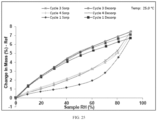
- Solid forms of compounds can be characterized by analytical methods such as X-ray powder diffraction pattern (XRDP or PXRD), thermogravimetric analysis (TGA), TGA with IR off-gas analysis, differential Scanning Calorimetry (DSC), melting point, FT-Raman spectroscopy, dynamic Vapor Sorption (DVS), polarized light microscopy (PLM) or other techniques known in the art.
- analytical methods such as X-ray powder diffraction pattern (XRDP or PXRD), thermogravimetric analysis (TGA), TGA with IR off-gas analysis, differential Scanning Calorimetry (DSC), melting point, FT-Raman spectroscopy, dynamic Vapor Sorption (DVS), polarized light microscopy (PLM) or other techniques known in the art.
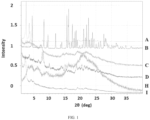
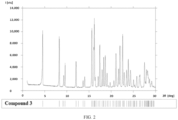
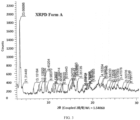
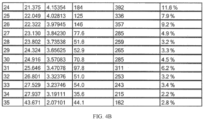
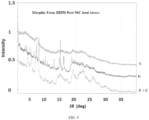
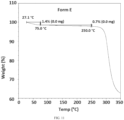
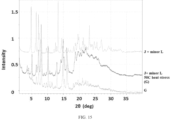
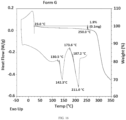
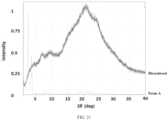
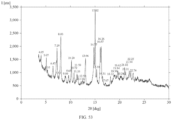
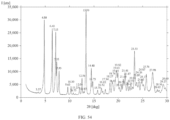
- Compound 3 Forms A, B, and M are characterized by the XRPD patterns shown in Figures 1 to 24 and 51 to 55 .
- the invention provides Form A of Compound 3 as defined in the claims.
- Form A may be characterized by a XRPD pattern in or substantially similar to that set forth in Figure 3 or Figure 51 .
- isolated Compound 3 Form A is characterized by the DSC in Figure 37 .
- Compound 3 Form A is characterized by a XRPD pattern comprising
- isolated Compound 3 Form A is characterized as having a T g between 110 °C and 120 °C.
- Form A can be prepared using selective crystallization. The method can be carried out by treating a solution comprising a suitable solvent(s) and Compound 3 optionally in the presence of one or more seeds comprising Form A to conditions that provide for the crystallization of Form A as described in more detail below.
- Form A is highly stabile with a long shelf life and minimal degradation.
- the present invention includes at least the following embodiments of Compound 3 Form A:
- the invention provides Form B of Compound 3 as defined in the claims.
- Form B may be characterized by a XRPD pattern in or substantially similar to that set forth in Figure 2 or Figure 52 .
- isolated Compound 3 Form B is characterized by the DSC in Figure 21 .
- isolated Compound 3 Form B is characterized as having a broad endothermic feature at approximately 176 °C in a differential scanning calorimetry analysis.
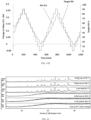
- isolated Compound 3 Form B is characterized as melting between 150 °C and 250 °C in a VT-XRPD analysis.
- Form B is highly stabile with a long shelf life and minimal degradation.
- the present invention includes at least the following embodiments of Compound 3 Form B:
- Form B can be prepared using selective crystallization. The method can be carried out by treating a solution comprising a suitable solvent(s) and Compound 3 optionally in the presence of one or more seeds comprising Form B to conditions that provide for the crystallization of Form B as described in more detail below.
- Form B is prepared by temperature cycling amorphous Compound 3 in acetone and 2-propanol/heptane.
- the invention provides Form M of Compound 3 as defined in the claims.
- Form M may be characterized by a XRPD pattern in or substantially similar to that set forth in Figure 18 or Figure 55 .
- isolated Compound 3 Form M is characterized by the DSC in Figure 19 .
- isolated Compound 3 Form M is characterized as having a broad endothermic feature at approximately 205 °C in a differential scanning calorimetry analysis.
- Form M is highly stabile with a long shelf life and minimal degradation.
- the present invention includes at least the following embodiments of Compound 3 Form M:
- Form M can be prepared using selective crystallization. The method can be carried out by treating a solution comprising a suitable solvent(s) and Compound 3 optionally in the presence of one or more seeds comprising Form M to conditions that provide for the crystallization of Form M as described in more detail below. In one embodiment, Form M is prepared by temperature cycling amorphous Compound 3 in acetone for approximately 2.5 days.
- Form G is characterized by a XRPD pattern in or substantially similar to that set forth in Figure 10 or Figure 53 .
- Isolated Compound 3 Form G may be characterized by the DSC in Figure 16 .
- Isolated crystalline Form G of Compound 3 may be characterized by an XRPD pattern comprising at least three, four, five, six or all of the 2theta values selected from 15.0 ⁇ 0.4°, 8.0 ⁇ 0.4°, 16.3 ⁇ 0.4°, 14.8 ⁇ 0.4°, 7.3 ⁇ 0.4°, 16.1 ⁇ 0.4°, 4.1 ⁇ 0.4°, 13.1 ⁇ 0.4°, 10.2 ⁇ 0.4°, and 5.1 ⁇ 0.4°.
- Form J may be characterized by a XRPD pattern in or substantially similar to that set forth in Figure 13 or Figure 54 .
- Isolated Compound 3 Form J may be characterized by the DSC in Figure 14 .
- Isolated crystalline Form J of Compound 3 may be characterized by an XRPD pattern comprising at least three, four, five, six or all of the 2theta values selected from 13.4 ⁇ 0.4°, 4.8 ⁇ 0.4°, 6.4 ⁇ 0.4°, 7.2 ⁇ 0.4°, 23.3 ⁇ 0.4°, and 7.4 ⁇ 0.4°.
- a pharmaceutical composition comprising isolated Compound 3 morphic Form A, Form B, or Form M and a pharmaceutically acceptable excipient.
- a therapeutically effective amount of an isolated Form of Compound 3 which is selected from Form A, Form B, or Form M, for use in treating a disorder mediated by Complement factor D, for example, paroxysmal nocturnal hemoglobinuria (PNH) or C3 glomerulopathy (C3G).
- Complement factor D for example, paroxysmal nocturnal hemoglobinuria (PNH) or C3 glomerulopathy (C3G).
- an isolated Form of Compound 3 which is selected from Form A, Form B, or Form M, for use in treating a disorder selected from membranoproliferative glomerulonephritis type II (MPGNII), nonalcoholic steatohepatitis (NASH), fatty liver, liver inflammation, cirrhosis, liver failure, dermatomyositis, and amyotrophic lateral sclerosis.
- MPGNII membranoproliferative glomerulonephritis type II
- NASH nonalcoholic steatohepatitis
- fatty liver liver inflammation, cirrhosis, liver failure, dermatomyositis, and amyotrophic lateral sclerosis.
- an isolated Form of Compound 3 which is selected from Form A, Form B, or Form M, for use in treating a disorder selected from multiple sclerosis, arthritis, respiratory disease, cardiovascular disease, COPD, rheumatoid arthritis, atypical hemolytic uremic syndrome, and typical hemolytic uremic syndrome.
- an isolated Form of Compound 3 which is selected from Form A, Form B, or Form M, for use in treating a disorder selected from membrane glomerulonephritis, age-related macular degeneration (AMD), retinal degeneration, and type I diabetes or complications thereof.
- AMD age-related macular degeneration
- AMD retinal degeneration
- an effective amount of Compound 3 Form A and a C5 inhibitor for use in treating a patient with a complement factor D mediated disorder wherein said use comprises administering an effective amount of Compound 3 Form A and a C5 inhibitor to the patient in need thereof.
- Compound 3 Form A and the C5 inhibitor have an overlapping therapeutic effect.
- an effective amount of Compound 3 Form A and eculizumab for use in treating a patient with a complement factor D mediated disorder wherein said use comprises administering an effective amount of Compound 3 Form A and eculizumab to the patient in need thereof.
- Compound 3 Form A and eculizumab have an overlapping therapeutic effect.
- an effective amount of Compound 3 Form A and ravulizumab for use in treating a patient with a complement factor D mediated disorder wherein said use comprises administering Compound 3 Form A and ravulizumab to the patient in need thereof.
- Compound 3 Form A and ravulizumab have an overlapping therapeutic effect.
- the therapeutic effect can be combinatorial or synergistic inhibition.
- the AUC for Compound 3 Form A and the C5 inhibitor overlap.
- the C5 inhibitor is eculizumab. In one embodiment, the C5 inhibitor is ravulizumab. In one embodiment the C5 inhibitor is a small molecule. In another embodiment the C5 inhibitor is a polyclonal antibody targeting C5. In yet another embodiment the C5 inhibitor is an aptamer.
- an effective amount of Compound 3 Form B and a C5 inhibitor for use in treating a patient with a complement factor D mediated disorder wherein said use comprises administering an effective amount of Compound 3 Form B and a C5 inhibitor to the patient in need thereof.
- Compound 3 Form B and the C5 inhibitor have an overlapping therapeutic effect.
- an effective amount of Compound 3 Form B and eculizumab for use in treating a patient with a complement factor D mediated disorder wherein said use comprises administering an effective amount of Compound 3 Form B and eculizumab to the patient in need thereof.
- Compound 3 Form B and eculizumab have an overlapping therapeutic effect.
- an effective amount of Compound 3 Form B and ravulizumab for use in treating a patient with a complement factor D mediated disorder wherein said use comprises administering Compound 3 Form B and ravulizumab to the patient in need thereof.
- Compound 3 Form B and ravulizumab have an overlapping therapeutic effect.
- the therapeutic effect can be combinatorial or synergistic inhibition.
- the AUC for Compound 3 Form B and the C5 inhibitor overlap.
- the C5 inhibitor is eculizumab. In one embodiment, the C5 inhibitor is ravulizumab. In one embodiment the C5 inhibitor is a small molecule. In another embodiment the C5 inhibitor is a polyclonal antibody targeting C5. In yet another embodiment the C5 inhibitor is an aptamer.
- an effective amount of Compound 3 Form M and a C5 inhibitor for use in treating a patient with a complement factor D mediated disorder wherein said use comprises administering an effective amount of Compound 3 Form M and a C5 inhibitor to the patient in need thereof.
- Compound 3 Form M and the C5 inhibitor have an overlapping therapeutic effect.
- an effective amount of Compound 3 Form M and eculizumab for use in treating a patient with a complement factor D mediated disorder wherein said use comprises administering an effective amount of Compound 3 Form M and eculizumab to the patient in need thereof.
- Compound 3 Form M and eculizumab have an overlapping therapeutic effect.
- an effective amount of Compound 3 Form M and ravulizumab for use in treating a patient with a complement factor D mediated disorder wherein said use comprises administering Compound 3 Form M and ravulizumab to the patient in need thereof.
- Compound 3 Form M and ravulizumab have an overlapping therapeutic effect.
- the therapeutic effect can be combinatorial or synergistic inhibition.
- the AUC for Compound 3 Form M and the C5 inhibitor overlap.
- the C5 inhibitor is eculizumab. In one embodiment, the C5 inhibitor is ravulizumab. In one embodiment the C5 inhibitor is a small molecule. In another embodiment the C5 inhibitor is a polyclonal antibody targeting C5. In yet another embodiment the C5 inhibitor is an aptamer.
- Deuteration and “deuterated” means that a hydrogen is replaced by a deuterium such that the deuterium exists over natural abundance and is thus “enriched”.
- An enrichment of 50% means that rather than hydrogen at the specified position the deuterium content is 50%.
- the term “enriched” as used herein does not mean percentage enriched over natural abundance.
- the enrichment of deuterium in the specified position of the compound described herein is at least 90%.
- a "dosage form” means a unit of administration of an active agent.
- dosage forms include tablets, capsules, gel caps, injections, suspensions, liquids, intravenous fluids, emulsions, creams, ointments, suppositories, inhalable forms, transdermal forms, and the like.
- “Pharmaceutical compositions” are compositions comprising at least one active agent, such as a compound or salt of one of the active compounds disclosed herein, and at least one other substance, such as a carrier. Pharmaceutical compositions optionally contain more than one active agent. “Pharmaceutical combinations” or “combination therapy” refers to the administration of at least two active agents, and in one embodiment, three or four or more active agents which may be combined in a single dosage form or provided together in separate dosage forms optionally with instructions that the active agents are to be used together to treat a disorder.
- carrier means a diluent, excipient, or vehicle with which a morphic form is provided.
- a “pharmaceutically acceptable excipient” means an excipient that is useful in preparing a pharmaceutical composition/combination that is generally safe, is sufficiently non-toxic, and neither biologically nor otherwise undesirable.
- a “pharmaceutically acceptable excipient” as used in the present application includes both one and more than one such excipient.
- a “patient” or “host” is a human or non-human animal, including, but not limited to, simian, avian, feline, canine, bovine, equine or porcine in need of medical treatment.
- Medical treatment can include treatment of an existing condition, such as a disease or disorder, or a prophylactic or diagnostic treatment.
- the patient or host is a human patient.
- the patient such as a host is treated to prevent a disorder or disease described herein.
- isolated refers to the material in substantially pure form. An isolated compound does not have another component that materially affects the properties of the compound. In particular embodiments, an isolated form is at least 60, 70, 80, 90, 95, 98 or 99% pure.
- the isolated morphic forms described herein can be administered in an effective amount to a host to treat any of the disorders described herein using any suitable approach which achieves the desired therapeutic result.
- the amount and timing of the isolated morphic forms administered will, of course, be dependent on the host being treated, the instructions of the supervising medical specialist, on the time course of the exposure, on the manner of administration, on the pharmacokinetic properties of the particular active compound, and on the judgment of the prescribing physician.
- the dosages given below are a guideline and the physician can titrate doses of the compound to achieve the treatment that the physician considers appropriate for the host.
- the physician can balance a variety of factors such as age and weight of the host, presence of preexisting disease, as well as presence of other diseases.
- an effective amount of a morphic form as described herein, or the morphic form described herein in combination or alternation with, or preceded by, concomitant with or followed by another active agent can be used in an amount sufficient to (a) inhibit the progression of a disorder mediated by the complement pathway, including an inflammatory, immune, including an autoimmune, disorder or complement Factor D related disorder; (b) cause a regression of an inflammatory, immune, including an autoimmune, disorder or complement Factor D related disorder; (c) cause a cure of an inflammatory, immune, including an autoimmune, disorder or complement Factor D related disorder; or inhibit or prevent the development of an inflammatory, immune, including an autoimmune, disorder or complement Factor D related disorder. Accordingly, an effective amount of the morphic form or composition described herein will provide a sufficient amount of the active agent when administered to a patient to provide a clinical benefit.
- the pharmaceutical composition may be formulated as any pharmaceutically useful form, e.g., a pill, a capsule, a tablet, a transdermal patch, a subcutaneous patch, a dry powder, an inhalation formulation, in a medical device, suppository, buccal, or sublingual formulation.
- Some dosage forms, such as tablets and capsules, are subdivided into suitably sized unit doses containing appropriate quantities of the active components, e.g., an effective amount to achieve the desired purpose.
- the therapeutically effective dosage of the morphic forms described herein will be determined by the health care practitioner depending on the condition, size and age of the patient as well as the route of delivery.
- the pharmaceutical composition is in a dosage form that contains from about 0.1 mg to about 2000 mg, from about 10 mg to about 1000 mg, from about 100 mg to about 800 mg, or from about 200 mg to about 600 mg of the active compound and optionally from about 0.1 mg to about 2000 mg, from about 10 mg to about 1000 mg, from about 100 mg to about 800 mg, or from about 200 mg to about 600 mg of an additional active agent in a unit dosage form.
- Examples are dosage forms with at least about 0.5, 1, 1.5, 2, 2.5, 3, 3.5, 4, 4.5, 5, 10, 15, 20, 25, 50, 75, 100, 150, 200, 250, 300, 350, 400, 450, 500, 550, 600, 650, 700, 750, 800, 900, 1000, 1100, 1200, 1250, 1300, 1400, 1500, or 1600 mg of active compound.
- the dosage form has at least about 1 mg, 5 mg, 10 mg, 25 mg, 50 mg, 75 mg, 100 mg, 200 mg, 400 mg, 500 mg, 600 mg, 1000mg, 1200 mg, or 1600 mg of active compound.
- the dosage form can be administered, for example, once a day (q.d.), twice a day (b.i.d.), three times a day (t.i.d.), four times a day (q.i.d.), once every other day (Q2d), once every third day (Q3d), as needed, or any dosage schedule that provides treatment of a disorder described herein.
- the isolated morphic forms disclosed herein or used as described herein may be administered orally, topically, parenterally, by inhalation or spray, sublingually, via implant, including ocular implant, transdermally, via buccal administration, rectally, intramuscular, inhalation, intra-aortal, intracranial, subdermal, intraperitioneal, subcutaneous, transnasal, sublingual, or rectal or by other means, in dosage unit formulations containing conventional pharmaceutically acceptable carriers.
- an oral dosage form for administration can be in any desired form in which the morphic form is stable as a solid.
- the isolated morphic form is delivered in a solid microparticle or nanoparticle.
- the isolated morphic form may be in the form of a plurality of solid particles or droplets having any desired particle size, and for example, from about 0.01, 0.1 or 0.5 to about 5, 10, 20 or more microns, and optionally from about 1 to about 2 microns.
- the isolated morphic forms as disclosed in the present invention have good pharmacokinetic and pharmacodynamics properties, for instance when administered by the oral routes.
- the pharmaceutical formulations can comprise the isolated morphic forms described herein in any pharmaceutically acceptable carrier.
- Particles can be formed from the morphic form as described herein using a phase inversion method.
- the morphic form is dissolved in a suitable solvent, and the solution is poured into a strong non-solvent for the compound to spontaneously produce, under favorable conditions, microparticles or nanoparticles.
- the method can be used to produce nanoparticles in a wide range of sizes, including, for example, from nanoparticles to microparticles, typically possessing a narrow particle size distribution.
- the morphic form is subjected to a milling process, included but not limited to, hand-milling, rotor-milling, ball-milling, and jet-milling to obtain microparticles and nanoparticles.
- a milling process included but not limited to, hand-milling, rotor-milling, ball-milling, and jet-milling to obtain microparticles and nanoparticles.
- the particle is between about 0.1 nm to about 10000 nm, between about 1 nm to about 1000 nm, between about 10 nm and 1000 nm, between about 1 and 100 nm, between about 1 and 10 nm, between about 1 and 50 nm, between about 100 nm and 800 nm, between about 400 nm and 600 nm, or about 500 nm.
- the micro-particles are no more than about 0.1 nm, 0.5 nm, 1.0 nm, 5.0 nm, 10 nm, 25 nm, 50 nm, 75 nm, 100 nm, 150 nm, 200 nm, 250 nm, 300 nm, 400 nm, 450 nm, 500 nm, 550 nm, 600 nm, 650 nm, 700 nm, 750 nm, 800 nm, 850 nm, 900 nm, 950 nm, 1000 nm, 1250 nm, 1500 nm, 1750 nm, or 2000 nm.
- Carriers include excipients and diluents and must be of sufficiently high purity and sufficiently low toxicity to render them suitable for administration to the patient being treated.
- the carrier can be inert or it can possess pharmaceutical benefits of its own.
- the amount of carrier employed in conjunction with the compound is sufficient to provide a practical quantity of material for administration per unit dose of the compound.
- Classes of carriers include, but are not limited to binders, buffering agents, coloring agents, diluents, disintegrants, emulsifiers, flavorants, glidents, lubricants, preservatives, stabilizers, surfactants, tableting agents, and wetting agents.
- Some carriers may be listed in more than one class, for example vegetable oil may be used as a lubricant in some formulations and a diluent in others.
- Exemplary pharmaceutically acceptable carriers include sugars, starches, celluloses, powdered tragacanth, malt, gelatin; talc, and vegetable oils.
- Optional active agents may be included in a pharmaceutical composition, which do not substantially interfere with the activity of the compound of the present invention.
- the pharmaceutical compositions can be in the form of solid form or a semi-solid dosage form that the isolated morphic form is stable in, such as, for example, tablets, suppositories, pills, capsules, powders, or the like, preferably in unit dosage form suitable for single administration of a precise dosage.
- the compositions will include an effective amount of the selected drug in combination with a pharmaceutically acceptable carrier and, in addition, can include other pharmaceutical agents, adjuvants, diluents, buffers, and the like.
- compositions of the disclosure can be administered as pharmaceutical formulations including those suitable for oral (including buccal and sub-lingual), rectal, nasal, topical, pulmonary, vaginal administration or in a form suitable for administration by inhalation or insufflation.
- the preferred manner of administration is oral using a convenient daily dosage regimen which can be adjusted according to the degree of affliction.
- conventional nontoxic solid carriers include, for example, pharmaceutical grades of mannitol, lactose, starch, magnesium stearate, sodium saccharin, talc, cellulose, glucose, sucrose, magnesium carbonate, and the like.
- the composition will generally form of a tablet, pill, capsule, powder, or the like. Tablets and capsules are preferred oral administration forms. Tablets and capsules for oral use can include one or more commonly used carriers such as lactose and corn starch. Lubricating agents, such as magnesium stearate, are also typically added.
- the compositions of the disclosure can be combined with an oral, non-toxic, pharmaceutically acceptable, inert carrier such as lactose, starch, sucrose, glucose, methyl cellulose, magnesium stearate, dicalcium phosphate, calcium sulfate, mannitol, sorbitol and the like.
- suitable binders include starch, gelatin, natural sugars such as glucose or beta-lactose, corn sweeteners, natural and synthetic gums such as acacia, tragacanth, or sodium alginate, carboxymethylcellulose, polyethylene glycol, waxes, and the like.
- Lubricants used in these dosage forms include sodium oleate, sodium stearate, magnesium stearate, sodium benzoate, sodium acetate, sodium chloride, and the like.
- Disintegrators include, without limitation, starch, methyl cellulose, agar, bentonite, xanthan gum, and the like.
- the pharmaceutical formulations can contain other additives, such as pH-adjusting additives.
- useful pH-adjusting agents include acids, such as hydrochloric acid, bases or buffers, such as sodium lactate, sodium acetate, sodium phosphate, sodium citrate, sodium borate, or sodium gluconate.
- the formulations can contain antimicrobial preservatives.
- Useful antimicrobial preservatives include methylparaben, propylparaben, and benzyl alcohol. An antimicrobial preservative is typically employed when the formulations is placed in a vial designed for multi-dose use.
- the pharmaceutical formulations described herein can be lyophilized using techniques well known in the art.
- compositions also are provided which provide a controlled release of a compound described herein, including through the use of a degradable polymer, as known in the art.
- the additional therapeutic agent described in the Combination Section below is administered as a pharmaceutically acceptable salt, for example, a salt described below.
- Formulations suitable for rectal administration are typically presented as unit dose suppositories. These may be prepared by admixing the active disclosed compound with one or more conventional solid carriers, for example, cocoa butter, and then shaping the resulting mixture.
- Formulations suitable for topical application to the skin preferably take the form of an ointment, cream, lotion, paste, gel, spray, aerosol, or oil, which maintain the stability of the isolated morphic form.
- Carriers which may be used include petroleum jelly, lanoline, polyethylene glycols, alcohols, transdermal enhancers, and combinations of two or more thereof.
- Formulations suitable for transdermal administration may be presented as discrete patches adapted to remain in intimate contact with the epidermis of the recipient for a prolonged period of time.
- microneedle patches or devices are provided for delivery of drugs across or into biological tissue, particularly the skin.
- the microneedle patches or devices permit drug delivery at clinically relevant rates across or into skin or other tissue barriers, with minimal or no damage, pain, or irritation to the tissue.
- Formulations suitable for administration to the lungs can be delivered by a wide range of passive breath driven and active power driven single/-multiple dose dry powder inhalers (DPI).
- DPI dry powder inhalers
- the devices most commonly used for respiratory delivery include nebulizers, metered-dose inhalers, and dry powder inhalers.
- nebulizers include jet nebulizers, ultrasonic nebulizers, and vibrating mesh nebulizers. Selection of a suitable lung delivery device depends on parameters, such as nature of the drug and its formulation, the site of action, and pathophysiology of the lung.
- a morphic form as described herein is used to create a spray dried dispersion (SDD) that is administered to a patient in need thereof.
- SDD spray dried dispersion
- a morphic form is dissolved in an organic solvent such as acetone, methylene chloride, methanol, ethanol, or a mixture thereof (as examples 90:10, 80:20, or 50:50 DCM to methanol) or another suitable organic solvent or mixture thereof.
- the solution is pumped through a micronizing nozzle driven by a flow of compressed gas, and the resulting aerosol is suspended in a heated cyclone of air, allowing the solvent to evaporate from the micro droplets, forming particles.
- Microparticles and nanoparticles can be obtained using this method.
- a morphic form as described herein is administered to a patient in need thereof as a spray dried dispersion (SDD).
- the present invention provides a spray dried dispersion (SDD) comprising a morphic form of the present invention and one or more pharmaceutically acceptable excipients as defined herein.
- the SDD comprises a morphic form of the present invention and an additional therapeutic agent.
- the SDD comprises a morphic form of the present invention, an additional therapeutic agent, and one or more pharmaceutically acceptable excipients.
- any of the described spray dried dispersions can be coated to form a coated tablet.
- the spray dried dispersion is formulated into a tablet but is uncoated.
- an effective amount of morphic form or composition as described herein is used to treat a medical disorder which is an inflammatory or immune condition, a disorder mediated by the complement cascade (including a dysfunctional cascade) including a complement factor D-related disorder or alternative complement pathway-related disorder, a disorder or abnormality of a cell that adversely affects the ability of the cell to engage in or respond to normal complement activity, or an undesired complement-mediated response to a medical treatment, such as surgery or other medical procedure or a pharmaceutical or biopharmaceutical drug administration, a blood transfusion, or other allogenic tissue or fluid administration.
- a medical disorder which is an inflammatory or immune condition
- a disorder mediated by the complement cascade including a dysfunctional cascade
- a complement factor D-related disorder or alternative complement pathway-related disorder a disorder or abnormality of a cell that adversely affects the ability of the cell to engage in or respond to normal complement activity, or an undesired complement-mediated response to a medical treatment, such as surgery or other medical procedure or a
- a treatment of C3 glomerulonephritis includes the administration of an effective amount of a morphic form described herein, optionally in a pharmaceutically acceptable composition.
- a treatment of paroxysmal nocturnal hemoglobinuria includes the administration of an effective amount of a morphic form described herein, optionally in a pharmaceutically acceptable composition.
- a treatment of wet or dry age-related macular degeneration (AMD) in a host includes the administration of an effective amount of a morphic form described herein, optionally in a pharmaceutically acceptable composition.
- a treatment of rheumatoid arthritis in a host includes the administration of an effective amount of a morphic form described herein, optionally in a pharmaceutically acceptable composition.
- a treatment of multiple sclerosis or amyotrophic lateral sclerosis in a host includes the administration of an effective amount of a morphic form described herein, optionally in a pharmaceutically acceptable composition.
- a treatment of membranoproliferative glomerulonephritis type II (MPGN II) in a host includes the administration of an effective amount of a morphic form described herein, optionally in a pharmaceutically acceptable composition.
- MPGN II membranoproliferative glomerulonephritis type II
- a treatment of nonalcoholic steatophepatitis (NASH) in a host includes the administration of an effective amount of a morphic form described herein, optionally in a pharmaceutically acceptable composition.
- NASH nonalcoholic steatophepatitis
- a treatment of fatty liver, liver inflammation, cirrhosis, or liver faliure in a host includes the administration of an effective amount of a morphic form described herein, optionally in a pharmaceutically acceptable composition.
- a treatment of dermatomyositis in a host includes the administration of an effective amount of a morphic form described herein, optionally in a pharmaceutically acceptable composition.
- a treatment of arthritis or COPD in a host includes the administration of an effective amount of a morphic form described herein, optionally in a pharmaceutically acceptable composition.
- a treatment of a respiratory disease or a cardiovascular disease in a host includes the administration of an effective amount of a morphic form described herein, optionally in a pharmaceutically acceptable composition.
- a treatment of atypical or typical hemolytic uremic syndrome in a host includes the administration of an effective amount of a morphic form described herein, optionally in a pharmaceutically acceptable composition.
- a treatment of membrane proliferative glomerulonephritis or age-related macular degeneration (AMD) in a host includes the administration of an effective amount of a morphic form described herein, optionally in a pharmaceutically acceptable composition.
- a treatment of type I diabetes or complications thereof in a host includes the administration of an effective amount of a morphic form described herein, optionally in a pharmaceutically acceptable composition.
- the morphic form, optionally in a pharmaceutically acceptable composition, as disclosed herein is also useful for administration in combination (in the same or a different dosage form) or alternation with a second pharmaceutical agent for use in ameliorating or reducing a side effect of the second pharmaceutical agent.
- Another embodiment includes the administration of an effective amount of a morphic form, optionally in a pharmaceutically acceptable composition to a host to treat an ocular, pulmonary, gastrointestinal, or other disorder that can benefit from topical or local delivery.
- a morphic form provided herein can be used to treat or prevent a disorder in a host mediated by complement factor D, or by an excessive or detrimental amount of the complement-C3 amplification loop of the complement pathway.
- the invention includes the treatment or prevention of complement associated disorders that are induced by antibody-antigen interactions, a component of an immune or autoimmune disorder or by ischemic injury.
- the invention also provides therapies to decrease inflammation or an immune response, including an autoimmune response, where mediated or affected by factor D.
- the disorder is selected from fatty liver and conditions stemming from fatty liver, such as nonalcoholic steatohepatitis (NASH), liver inflammation, cirrhosis and liver failure.
- NASH nonalcoholic steatohepatitis
- a morphic form or composition as described herein is provided for use in treating fatty liver disease in a host by administering an effective amount of a morphic form or composition as described herein.
- a morphic form or composition as described herein is used to modulate an immune response prior to or during surgery or other medical procedure.
- One non-limiting example is use in connection with acute or chronic graft versus host disease, which is a common complication as a result of allogeneic tissue transplant, and can also occur as a result of a blood transfusion.
- the present invention provides a morphic form or composition as described herein for use in treating or preventing dermatomyositis by administering to a subject in need thereof an effective amount of a morphic form or composition as described herein.
- the present invention provides a morphic form or composition as described herein for use in treating or preventing amyotrophic lateral sclerosis by administering to a subject in need thereof an effective amount of a morphic form or composition as described herein.
- the present invention provides a morphic form or composition as described herein for use in treating or preventing abdominal aortic aneurysm, hemodialysis complications, hemolytic anemia, or hemodialysis by administering to a subject in need thereof an effective amount of a morphic form or composition as described herein.
- the present invention provides a morphic form or composition as described herein for use in treating or preventing a C3 glomurenopathy by administering to a subject in need thereof an effective amount of a morphic form or composition as described herein.
- the disorder is selected from dense deposit disease (DDD) and C3 glomerulonephritis (C3GN).
- the present invention provides a morphic form or composition as described herein for use in treating or preventing a IC-MPGN by administering to a subject in need thereof an effective amount of a morphic form or composition as described herein.
- the present invention provides a morphic form or composition as described herein for use in treating or preventing a paroxysmal nocturnal hemoglobinuria (PNH) by administering to a subject in need thereof an effective amount of a morphic form or composition as described herein.
- PNH paroxysmal nocturnal hemoglobinuria
- the present invention provides a morphic form or composition as described herein for use in treating or preventing age-related macular degeneration (AMD) by administering to a subject in need thereof an effective amount of a morphic form or composition as described herein.
- AMD age-related macular degeneration
- the present invention provides a morphic form or composition as described herein for use in treating or preventing rheumatoid arthritis by administering to a subject in need thereof an effective amount of a morphic form or composition as described herein.
- the present invention provides a morphic form or composition as described herein for use in treating or preventing multiple sclerosis by administering to a subject in need thereof an effective amount of a morphic form or composition as described herein.
- the present invention provides a morphic form or composition as described herein for use in treating or preventing myasthenia gravis by administering to a subject in need thereof an effective amount of a morphic form or composition as described herein.
- the present invention provides a morphic form or composition as described herein for use in treating or preventing atypical hemolytic uremic syndrome (aHUS) by administering to a subject in need thereof an effective amount of a morphic form or composition as described herein.
- aHUS atypical hemolytic uremic syndrome
- the present invention provides a morphic form or composition as described herein for use in treating or preventing neuromyelitis optica (NMO) by administering to a subject in need thereof an effective amount of a morphic form or composition as described herein.
- NMO neuromyelitis optica
- the present invention provides a morphic form or composition as described herein for use in treating or preventing a disorder as described below by administering to a subject in need thereof an effective amount of a morphic form or composition as described herein, including: vitritis, sarcoidosis, syphilis, tuberculosis, or Lyme disease; retinal vasculitis, Eales disease, tuberculosis, syphilis, or toxoplasmosis; neuroretinitis, viral retinitis, or acute retinal necrosis; varicella zoster virus, herpes simplex virus, cytomegalovirus, Epstein-Barr virus, lichen planus, or Dengue-associated disease (e.g., hemorraghic Dengue Fever); Masquerade syndrome, contact dermatitis, trauma induced inflammation, UVB induced inflammation, eczema, granuloma annulare, or acne.
- vitritis sarcoidosis, sy
- the disorder is selected from:wet (exudative) AMD, dry (non-exudative) AMD, chorioretinal degeneration, choroidal neovascularization (CNV), choroiditis, loss of RPE function, loss of vision (including loss of visual acuity or visual field), loss of vision from AMD, retinal damage in response to light exposure, retinal degeneration, retinal detachment, retinal dysfunction, retinal neovascularization (RNV), retinopathy of prematurity, pathological myopia, or RPE degeneration; pseudophakic bullous keratopathy, symptomatic macular degeneration related disorder, optic nerve degeneration, photoreceptor degeneration, cone degeneration, loss of photoreceptor cells, pars planitis, scleritis, proliferative vitreoretinopathy, or formation of ocular drusen; chronic urticaria, Churg-Strauss syndrome, cold agglutinin disease (CAD), cortico
- the disorder is selected from glaucoma, diabetic retinopathy, blistering cutaneous diseases (including bullous pemphigoid, pemphigus, and epidermolysis bullosa), ocular cicatrical pemphigoid, uveitis, adult macular degeneration, diabetic retinopa retinitis pigmentosa, macular edema, diabetic macular edema, Behcet's uveitis, multifocal choroiditis, Vogt-Koyangi-Harada syndrome, intermediate uveitis, birdshot retino-chorioditis, sympathetic ophthalmia, ocular dicatricial pemphigoid, ocular pemphigus, nonartertic ischemic optic neuropathy, postoperative inflammation, and retinal vein occlusion, or central retinal vein occulusion (CVRO).
- glaucoma including bullous pemphigoid,
- complement mediated diseases include ophthalmic diseases (including early or neovascular age-related macular degeneration and geographic atrophy), autoimmune diseases (including arthritis, rheumatoid arthritis), respiratory diseases, cardiovascular diseases.
- ophthalmic diseases including early or neovascular age-related macular degeneration and geographic atrophy
- autoimmune diseases including arthritis, rheumatoid arthritis
- respiratory diseases including cardiovascular diseases.
- the morphic forms of the invention are suitable for use in the treatment of diseases and disorders associated with fatty acid metabolism, including obesity and other metabolic disorders.
- Disorders that may be treated or prevented by a morphic form or composition as described herein also include, but are not limited to: hereditary angioedema, capillary leak syndrome, hemolytic uremic syndrome (HUS), neurological disorders, Guillain Barre Syndrome, diseases of the central nervous system and other neurodegenerative conditions, glomerulonephritis (including membrane proliferative glomerulonephritis), SLE nephritis, proliferative nephritis, liver fibrosis, tissue regeneration and neural regeneration, or Barraquer-Simons Syndrome; inflammatory effects of sepsis, systemic inflammatory response syndrome (SIRS), disorders of inappropriate or undesirable complement activation, interleukin-2 induced toxicity during IL-2 therapy, inflammatory disorders, inflammation of autoimmune diseases, system lupus erythematosus (SLE), lupus nephritides, arthritis, immune complex disorders and autoimmune diseases, systemic lupus, or lupus
- a morphic form or composition as described herein is used in the treatment of an autoimmune disorder.
- the complement pathway enhances the ability of antibodies and phagocytic cells to clear microbes and damaged cells from the body. It is part of the innate immune system and in healthy individuals is an essential process. Inhibiting the complement pathway will decrease the body's immune system response. Therefore, it is an object of the present invention to treat autoimmune disorders by administering an effective does of a morphic form or composition as described herein to a subject in need thereof.
- the autoimmune disorder is caused by activity of the complement system. In one embodiment the autoimmune disorder is caused by activity of the alternative complement pathway. In one embodiment the autoimmune disorder is caused by activity of the classical complement pathway. In another embodiment the autoimmune disorder is caused by a mechanism of action that is not directly related to the complement system, such as the over-proliferation of T-lymphocytes or the over-production of cytokines.
- a morphic form or composition as described herein is used in the treatment of lupus.
- lupus include lupus erythematosus, cutaneous lupus, discoid lupus erythematosus, chilblain lupus erythematosus, or lupus erythematosus-lichen planus overlap syndrome.
- Lupus erythematosus is a general category of disease that includes both systemic and cutaneous disorders.
- the systemic form of the disease can have cutaneous as well as systemic manifestations.
- SLE is an inflammatory disorder of unknown etiology that occurs predominantly in women, and is characterized by articular symptoms, butterfly erythema, recurrent pleurisy, pericarditis, generalized adenopathy, splenomegaly, as well as CNS involvement and progressive renal failure.
- the sera of most patients (over 98%) contain antinuclear antibodies, including anti-DNA antibodies. High titers of anti-DNA antibodies are essentially specific for SLE. Conventional treatment for this disease has been the administration of corticosteroids or immunosuppressants.
- DLE chronic cutaneous lupus
- subacute cutaneous lupus subacute cutaneous lupus
- acute cutaneous lupus DLE is a disfiguring chronic disorder primarily affecting the skin with sharply circumscribed macules and plaques that display erythema, follicular plugging, scales, telangiectasia and atrophy. The condition is often precipitated by sun exposure, and the early lesions are erythematous, round scaling papules that are 5 to 10 mm in diameter and display follicular plugging.
- DLE lesions appear most commonly on the cheeks, nose, scalp, and ears, but they may also be generalized over the upper portion of the trunk, extensor surfaces of the extremities, and on the mucous membranes of the mouth. If left untreated, the central lesion atrophies and leaves a scar. Unlike SLE, antibodies against double-stranded DNA (e.g., DNA-binding test) are almost invariably absent in DLE.
- MS multiple Sclerosis is an autoimmune demyelinating disorder that is believed to be T lymphocyte dependent.
- MS generally exhibits a relapsing-remitting course or a chronic progressive course.
- the etiology of MS is unknown, however, viral infections, genetic predisposition, environment, and autoimmunity all appear to contribute to the disorder.
- Lesions in MS patients contain infiltrates of predominantly T lymphocyte mediated microglial cells and infiltrating macrophages.
- CD4+ T lymphocytes are the predominant cell type present at these lesions.
- the hallmark of the MS lesion is plaque, an area of demyelination sharply demarcated from the usual white matter seen in MRI scans. Histological appearance of MS plaques varies with different stages of the disease.
- Diabetes can refer to either type 1 or type 2 diabetes.
- a morphic form or composition as described herein is provided at an effective dose to treat a patient with type 1 diabetes. In one embodiment a morphic form or composition as described herein is provided at an effective dose to treat a patient with type 2 diabetes.
- Type 1 diabetes is an autoimmune disease.
- An autoimmune disease results when the body's system for fighting infection (the immune system) attacks a part of the body. In the case of diabetes type 1, the pancreas then produces little or no insulin.
- the present invention provides an effective amount of a morphic form or composition as described herein for use in treating or preventing a IC-MPGN by administering to a subject in need thereof an effective amount of a morphic form or composition as described herein.
- the present invention provides an effective amount of a morphic form or composition as described herein for use in treating or preventing a paroxysmal nocturnal hemoglobinuria (PNH) by administering to a subject in need thereof an effective amount a morphic form or composition as described herein.
- PNH paroxysmal nocturnal hemoglobinuria
- the present invention provides an effective amount of a morphic form or composition as described herein for use in treating or preventing age-related macular degeneration (AMD) by administering to a subject in need thereof an effective amount of a morphic form or composition as described herein.
- AMD age-related macular degeneration
- the present invention provides an effective amount of a morphic form or composition as described herein for use in treating or preventing macular dystrophy by administering to a subject in need thereof an effective amount of a morphic form or composition as described herein.
- the present invention provides an effective amount of a morphic form or composition as described herein for use in treating or preventing a Crohn's disease by administering to a subject in need thereof an effective amount of a morphic form or composition as described herein.
- the present invention provides an effective amount of a morphic form or composition as described herein for use in treating or preventing asthma (TH2) or asthma (non-TH2) by administering to a subject in need thereof an effective amount of a morphic form or composition as described herein.
- the present invention provides an effective amount of a morphic form or composition as described herein for use in treating or preventing a diabetic retinopathy by administering to a subject in need thereof an effective amount of a morphic form or composition as described herein.
- the present invention provides an effective amount of a morphic form or composition as described herein for use in treating or preventing a nephrology disorder selected from acute kidney injury (AKI), idiopathic membranous nephropathy, IgA nephropathy (IgAN) lupus nephritis (LN), and primary focal segmental glomerulosclerosis by administering to a subject in need thereof an effective amount of a morphic form or composition as described herein.
- a nephrology disorder selected from acute kidney injury (AKI), idiopathic membranous nephropathy, IgA nephropathy (IgAN) lupus nephritis (LN), and primary focal segmental glomerulosclerosis
- the present invention provides an effective amount of a morphic form or composition as described herein for use in treating or preventing preeclampsia by administering to a subject in need thereof an effective amount of a morphic form or composition as described herein.
- a morphic form or composition as described herein may be provided in combination or alternation with or preceded by, concomitant with or followed by, an effective amount of at least one additional therapeutic agent, for example, for treatment of a disorder listed herein.
- additional therapeutic agent for example, for treatment of a disorder listed herein.
- second active agents for such combination therapy are provided below.
- a morphic form or composition as described herein may be provided in combination or alternation with at least one additional inhibitor of the complement system or a second active compound with a different biological mechanism of action.
- a morphic form or composition as described herein may be provided together with a protease inhibitor, a soluble complement regulator, a therapeutic antibody (monoclonal or polyclonal), complement component inhibitor, receptor agonist, or siRNA.
- a morphic form described herein is administered in combination or alternation with an antibody against tumor necrosis factor (TNF), including but not limited to infliximab (Remicade), adalimumab, certolizumab, golimumab, or a receptor fusion protein such as etanercept (Embrel).
- TNF tumor necrosis factor
- a morphic form as described herein can be administered in combination or alternation with an anti-CD20 antibody, including but not limited to rituximab (Rituxan), adalimumab (Humira), ofatumumab (Arzerra), tositumomab (Bexxar), obinutuzumab (Gazyva), or ibritumomab (Zevalin).
- an anti-CD20 antibody including but not limited to rituximab (Rituxan), adalimumab (Humira), ofatumumab (Arzerra), tositumomab (Bexxar), obinutuzumab (Gazyva), or ibritumomab (Zevalin).
- a morphic form as described herein can be administered in combination or alternation with an anti-IL6 antibody, including but not limited to tocilizumab (Actemra) and siltuximab (Sylvant).
- an anti-IL6 antibody including but not limited to tocilizumab (Actemra) and siltuximab (Sylvant).
- a morphic form as described herein can be administered in combination or alternation with an IL17 inhibitor, including but not limited to secukibumab (Cosentyx).
- an IL17 inhibitor including but not limited to secukibumab (Cosentyx).
- a morphic form as described herein can be administered in combination or alternation with a p40 (IL12/IL23) inhibitor, including but not limited to ustekinumab (Stelara).
- a p40 (IL12/IL23) inhibitor including but not limited to ustekinumab (Stelara).
- a morphic form as described herein can be administered in combination or alteration with an IL23 inhibitor, including but not limited to risankizumab.
- a morphic form as described herein can be administered in combination or alteration with an anti-interferon ⁇ antibody, for example but not limited to sifalimumab.
- a morphic form as described herein can be administered in combination or alteration with a kinase inhibitor, for example but not limited to a JAK1/JAK3 inhibitor, for example but not limited to tofacitinib (Xelianz).
- a morphic form as described herein can be administered in combination or alteration with a JAK1/JAK2 inhibitor, for example but not limited to baracitibib.
- a morphic form as described herein can be administered in combination or alteration with an anti-VEGF agent, for example but not limited to: aflibercept (Eylea ® ; Regeneron Pharmaceuticals); ranibizumab (Lucentis ® : Genentech and Novartis); pegaptanib (Macugen ® ; OSI Pharmaceuticals and Pfizer); bevacizumab (Avastin; Genentech/Roche); lapatinib (Tykerb); sunitinib (Sutent); axitinib (Inlyta); pazopanib; sorafenib (Nexavar); ponatinib (Inclusig); regorafenib (Stivarga); cabozantinib (Abometyx; Cometriq); vendetanib (Caprelsa); ramucirumab (Cyramza); lenvatinib (Lenvima); ziv
- a morphic form as described herein can be administered in combination or alternation with an immune checkpoint inhibitor.
- checkpoint inhibitors include anti-PD-1 or anti-PDL1 antibodies, for example, nivolumab (Opdivo), pembrolizumab (Keytruda), pidilizumab, AMP-224 (AstraZeneca and MedImmune), PF-06801591 (Pfizer), MEDI0680 (AstraZeneca), PDR001 (Novartis), REGN2810 (Regeneron), SHR-12-1 (Jiangsu Hengrui Medicine Company and Incyte Corporation), TSR-042 (Tesaro), and the PD-L1/VISTA inhibitor CA-170 (Curis Inc.), atezolizumab, durvalumab, and KN035, or anti-CTLA4 antibodies , for example Ipilimumab, Tremelimumab, AGEN1884 and AGEN2041
- Non-limiting examples of active agents that can be used in combination with active compounds described herein are: Protease inhibitors: plasma-derived C1 -INH concentrates, for example Cetor ® (Sanquin), Berinert -P ® (CSL Behring, Lev Pharma), and Cinryze ® ; recombinant human C1-inhibitors, for example Rhucin ® ; ritonavir (Norvir ® , Abbvie, Inc.); Soluble complement regulators: Soluble complement receptor 1 (TP10) (Avant Immunotherapeutics); sCR1-sLe X /TP-20 (Avant Immunotherapeutics); MLN-2222 / CAB-2 (Millenium Pharmaceuticals); Mirococept (Inflazyme Pharmaceuticals); Therapeutic antibodies: Eculizumab/Soliris (Alexion Pharmaceuticals); Pexelizumab (Alexion Pharmaceuticals); Ofatumumab (Genmab A/S); TNX-234 (T
- Non-limiting examples of potential therapeutics for combination therapy Name Target Company Class of Molecule LFG316 C5 Novartis/Morphosys Monoclonal antibody 4(1MEW)APL-1,APL-2 C3/C3b Apellis Compstatin Family 4(1MeW)POT-4 C3/C3b Potentia Compstatin Family Anti-C5 siRNA C5 Alnylam Si-RNA Anti-FB siRNA CFB Alnylam SiRNA ARC 1005 C5 Novo Nordisk Aptamers ATA C5 N.A.
- a morphic form or composition as described herein may be provided together with a compound that inhibits an enzyme that metabolizes an administered protease inhibitor. In one embodiment, a morphic form or composition may be provided together with ritonavir.
- a morphic form or composition as described herein may be provided in combination with a complement C5 inhibitor or C5 convertase inhibitor.
- a morphic form or composition as described herein may be provided in combination with eculizumab, a monoclonal antibody directed to the complement factor C5 and manufactured and marketed by Alexion Pharmaceuticals under the tradename Soliris. Eculizumab has been approved by the U.S. FDA for the treatment of PNH and aHUS.
- a morphic form or composition as described herein may be provided together with a compound that inhibits Complement Factor D.
- a morphic form or composition as described herein as described herein can be used in combination or alternation with a compound described in Biocryst Pharmaceuticals US Pat. No.
- the present invention provides an effective amount of a morphic form or composition as described herein for use in treating or preventing age-related macular degeneration (AMD) by administering to a subject in need thereof an effective amount of a morphic form or composition as described herein in combination with an anti-VEGF agent.
- AMD age-related macular degeneration
- Non-limiting examples of anti-VEGF agents include, but are not limited to, aflibercept (Eylea ® ; Regeneron Pharmaceuticals); ranibizumab (Lucentis ® : Genentech and Novartis); pegaptanib (Macugen ® ; OSI Pharmaceuticals and Pfizer); bevacizumab (Avastin; Genentech/Roche); lapatinib (Tykerb); sunitinib (Sutent); axitinib (Inlyta); pazopanib; sorafenib (Nexavar); ponatinib (Inclusig); regorafenib (Stivarga); Cabozantinib (Abometyx; Cometriq); vendetanib (Caprelsa); ramucirumab (Cyramza); lenvatinib (Lenvima); ziv-aflibercept (Zaltrap); cediranib (Recentin); an
- the present invention provides an effective amount of a morphic form or composition as described herein for use in treating or preventing age-related macular degeneration (AMD) by administering to a subject in need thereof an effective amount of a morphic form or composition as described herein in combination with an anti-factor H or anti-factor B agent selected from Anti-FB siRNA (Alnylam); FCFD4514S (Genentech/Roche) SOMAmers for CFB and CFD (SomaLogic); TA106 (Alexion Pharmaceuticals); 5C6, and AMY-301 (Amyndas).
- an anti-factor H or anti-factor B agent selected from Anti-FB siRNA (Alnylam); FCFD4514S (Genentech/Roche) SOMAmers for CFB and CFD (SomaLogic); TA106 (Alexion Pharmaceuticals); 5C6, and AMY-301 (Amyndas).
- the present invention provides an effective amount of a morphic form or composition as described herein for use in treating or preventing paroxysmal nocturnal hemoglobinuria (PNH) by administering to a subject in need thereof an effective amount of a morphic form or composition as described herein with an additional inhibitor of the complement system or another active compound with a different biological mechanism of action.
- PNH paroxysmal nocturnal hemoglobinuria
- the present invention provides an effective amount of a morphic form or composition as described herein for use in treating or preventing multiple sclerosis by administering to a subject in need thereof an effective amount of a morphic form or composition as described herein in combination or alternation with an additional inhibitor of the complement system, or an active agent that functions through a different mechanism of action.
- the present invention provides an effective amount of a morphic form or composition as described herein for use in treating or preventing multiple sclerosis by administering to a subject in need thereof an effective amount of a morphic form or composition as described herein in combination or alternation with a corticosteroid.
- corticosteroids include, but are not limited to, prednisone, dexamethasone, solumedrol, and methylprednisolone.
- a morphic form or composition as described herein is combined with at least one anti-multiple sclerosis drug, for example, selected from: Aubagio (teriflunomide), Avonex (interferon beta-1a), Betaseron (interferon beta-1b), Copaxone (glatiramer acetate), Extavia (interferon beta-1b), Gilenya (fingolimod), Lemtrada (alemtuzumab), Novantrone (mitoxantrone), Plegridy (peginterferon beta-1a), Rebif (interferon beta-1a), Tecfidera (dimethyl fumarate), Tysabri (natalizumab), Solu-Medrol (methylprednisolone), High-dose oral Deltasone (prednisone), H.P.
- a morphic form or composition as described herein may be provided in combination with eculizumab for the treatment of PNH, aHUSs, STEC-HUS, ANCA-vasculitis, AMD, CAD, C3 glomerulopathy, for example DDD or C3GN, chronic hemolysis, neuromyelitis optica, or transplantation rejection.
- a morphic form or composition as described herein may be provided in combination with compstatin or a compstatin derivative for the treatment of PNH, aHUSs, STEC-HUS, ANCA-vasculitis, AMD, CAD, C3 glomerulopathy, for example DDD or C3GN, chronic hemolysis, neuromyelitis optica, or transplantation rejection.
- the additional agent is a complement component inhibitor, for example but not limited to Compstatin/POT-4 (Potentia Pharmaceuticals); ARC1905 (Archemix); 4(1MEW)APL-1,APL-2 (Appelis); CP40/AMY-101,PEG-Cp40 (Amyndas); a PDGF inhibitor, for example, but not limited to Sorafenib Tosylate; Imatinib Mesylate (STI571); Sunitinib Malate; Ponatinib (AP24534); Axitinib; Imatinib (STI571); Nintedanib (BIBF 1120); Pazopanib HCl (GW786034 HCl); Dovitinib (TKI-258, CHIR-258); Linifanib (ABT-869); Crenolanib (CP-868596); Masitinib (AB1010); Tivozanib (AV-951); Motesanib Diphosphate (AMG-706
- a morphic form or composition as described herein may be provided in combination with a non-steroidal anti-inflammatory drug for the treatment of Lupus.
- a morphic form or composition as described herein may be provided in combination with a corticosteroid for the treatment of Lupus.
- a morphic form or composition as described herein may be provided in combination with a belimumab (Benlysta) for the treatment of Lupus.
- a morphic form or composition as described herein may be provided in combination with hydroxychloroquine (Plaquenil) for the treatment of Lupus.
- hydroxychloroquine Plaquenil
- a morphic form or composition as described herein may be provided in combination with sifalimumab for the treatment of Lupus.
- a morphic form or composition as described herein may be provided in combination with OMS721 (Omeros) for the treatment of a complement mediated disorder.
- a morphic form or composition as described herein may be provided in combination with OMS906 (Omeros) for the treatment of a complement mediated disorder.
- the complement mediated disorder is, for example, thrombotic thrombocytopenic purpura (TTP) or aHUS.
- a morphic form or composition as described herein may be provided in combination with an anti-inflammatory agent, immunosuppressive agent, or anti-cytokine agent for the treatment or prevention of cytokine or inflammatory reactions in response to the administration of pharmaceuticals or biotherapeutics (e.g. adoptive T-cell therapy (ACT) such as CAR T-cell therapy, or monoclonal antibody therapy).
- an anti-inflammatory agent e.g., immunosuppressive agent, or anti-cytokine agent for the treatment or prevention of cytokine or inflammatory reactions in response to the administration of pharmaceuticals or biotherapeutics (e.g. adoptive T-cell therapy (ACT) such as CAR T-cell therapy, or monoclonal antibody therapy).
- ACT adoptive T-cell therapy
- a morphic form or composition as described herein may be provided in combination with a corticosteroid, for example prednisone, dexamethasone, solumedrol, and methylprednisolone, and/or anti-cytokine compounds targeting, e.g., IL-4, IL-10, IL-11, IL-13 and TGF ⁇ .
- a corticosteroid for example prednisone, dexamethasone, solumedrol, and methylprednisolone
- anti-cytokine compounds targeting e.g., IL-4, IL-10, IL-11, IL-13 and TGF ⁇ .
- a morphic form or composition as described herein may be provided in combination with an anti-cytokine inhibitor including, but are not limited to, adalimumab, infliximab, etanercept, protopic, efalizumab, alefacept, anakinra, siltuximab, secukibumab, ustekinumab, golimumab, and tocilizumab, or a combination thereof.
- an anti-cytokine inhibitor including, but are not limited to, adalimumab, infliximab, etanercept, protopic, efalizumab, alefacept, anakinra, siltuximab, secukibumab, ustekinumab, golimumab, and tocilizumab, or a combination thereof.
- Additional anti-inflammatory agents that can be used in combination with a morphic form or composition as described herein include, but are not limited to, non-steroidal anti-inflammatory drug(s) (NSAIDs); cytokine suppressive anti-inflammatory drug(s) (CSAIDs); CDP-571/BAY-10-3356 (humanized anti-TNF ⁇ antibody; Celltech/Bayer); cA2/infliximab (chimeric anti-TNF ⁇ antibody; Centocor); 75 kdTNFR-IgG/etanercept (75 kD TNF receptor-IgG fusion protein; Immunex); 55 kdTNF-IgG (55 kD TNF receptor-IgG fusion protein; Hoffmann-LaRoche); IDEC-CE9.1/SB 210396 (non-depleting primatized anti-CD4 antibody; IDEC/SmithKline); DAB 486-IL-2 and/or DAB 389-IL-2 (IL-2 fusion proteins; Seragen); Anti-Tac (
- a morphic form or composition as described herein may be provided in combination with a corticosteroid for the treatment or prevention of cytokine or inflammatory reactions in response to the administration of pharmaceuticals or biotherapeutics.
- a morphic form or composition as described herein may be provided in combination with etarnercept for the treatment or prevention of cytokine or inflammatory reactions in response to the administration of pharmaceuticals or biotherapeutics.
- a morphic form or composition as described herein may be provided in combination with tocilizumab for the treatment or prevention of cytokine or inflammatory reactions in response to the administration of pharmaceuticals or biotherapeutics.
- a morphic form or composition as described herein may be provided in combination with etarnercept and tocilizumab for the treatment or prevention of cytokine or inflammatory reactions in response to the administration of pharmaceuticals or biotherapeutics.
- a morphic form or composition as described herein may be provided in combination with infliximab for the treatment or prevention of cytokine or inflammatory reactions in response to the administration of pharmaceuticals or biotherapeutics.
- a morphic form or composition as described herein may be provided in combination with golimumab for the treatment or prevention of cytokine or inflammatory reactions in response to the administration of pharmaceuticals or biotherapeutics.
- an effective amount of a morphic form of Compound 3 as described herein, for use in treating factor D mediated disorders in a subject wherein said use comprises administering to the subject an effective amount of a C5 inhibitor in combination or alternation with an effective amount of a morphic form of Compound 3.
- the factor D mediated disorder is PNH.
- the C5 inhibitor is a monoclonal antibody targeting C5.
- the C5 inhibitor is eculizumab (Soliris TM Alexion Pharmaceuticals, New Haven, CT, see, e.g., U.S. Patent No. 9,352,035 ).
- the C5 inhibitor is ravulizumab.
- the C5 inhibitor is a small molecule pharmaceutical.
- the C5 inhibitor is an antibody.
- the C5 inhibitor is a polyclonal antibody targeting C5.
- the C5 inhibitor is an aptamer.
- the C5 inhibitor may be, but is not limited to: a recombinant human minibody, for example Mubodina ® (monoclonal antibody, Adienne Pharma and Biotech, Bergamo, Italy; see U.S. Patent No. 7,999,081 ); coversin (small animal protein, Volution Immuno-pharmaceuticals, Geneva, Switzerland; see e.g. Penabad et al. Lupus, 2012, 23(12): 1324-6 ); LFG316 (monoclonal antibody, Novartis, Basel, Switzerland, and Morphosys, Planegg, Germany; see U.S. Patent Nos.
- Mubodina ® monoclonal antibody, Adienne Pharma and Biotech, Bergamo, Italy
- coversin small animal protein, Volution Immuno-pharmaceuticals, Geneva, Switzerland; see e.g. Penabad et al. Lupus, 2012, 23(12): 1324-6
- LFG316 monoclonal antibody, Novartis, Basel, Switzerland
- ARC-1905 pegylated RNA aptamer, Ophthotech, Princeton, NJ and New York, NY; see Keefe et al., Nature Reviews Drug Discovery, 9, 537-550 ); RA101348 and RA101495 (macrocyclic peptides, Ra Pharmaceuticals, Cambridge, MA); SOBI002 (affibody, Swedish Orphan Biovitrum, Sweden); ALN-CC5 (Si-RNA, Alnylam Pharmaceuticals, Cambridge, MA); ARC1005 (aptamers, Novo Nordisk, Bagsvaerd, Denmark); SOMAmers (aptamers, SomaLogic, Boulder, Co); SSL7 (bacterial protein toxin, see, e.g.
- RG6107 anti-C5 recycling antibody, Roche Pharmaceuticals, Basel, Switzerland
- Ravulizumab ALXN1210
- ALXN5500 monoclonal antibodies, Alexion Pharmaceuticals, New Haven, CT
- TT30 fusion protein, Alexion Pharmaceuticals, New Haven, CT
- REGN3918 monoclonal antibody, Regeneron, Tarrytown, NY
- ABP959 eculizumab biosimilar, Amgen, Thousand Oaks, CA
- the C5 inhibitor is a recombinant human minibody, for example Mubodina ® .
- Mubodina ® is a fully human recombinant antibody C5 developed by Adienne Pharma and Biotech. Mubodina ® is described in U.S. Patent No. 7,999,081 .
- the C5 inhibitor is coversin.
- Coversin is a recombinant protein derived from a protein discovered in the saliva of the Ornithodoros moubata tick currently developed as a recombinant protein by Akari Therapeutics. Coversin is described in Penabad et al. Lupus 2012, 23(12): 1324-6 .
- the C5 inhibitor is Tesidolumab/LFG316.
- Tesidolumab is a monoclonal antibody developed by Novartis and Morphosys. Tesidolumab is described in U.S. Patent Nos. 8,241,628 and 8,883,158 .
- the C5 inhibitor is ARC-1905.
- ARC-1905 is a pegylated RNA aptamer developed by Ophthotech. ARC-1905 is described in Keefe et al. Nature Reviews Drug Discovery, 9:537-550 .
- the C5 inhibitor is RA101348.
- RA101348 is a macrocyclic peptide developed by Ra Pharmaceuticals.
- the C5 inhibitor is RA101495.
- RA101495 is a macrocyclic peptide developed by Ra Pharmaceuticals.
- the C5 inhibitor is SOBI002.
- SOBI002 is an affibody developed by the Swedish Orphan Biovitrum.
- the C5 inhibitor is ARC1005.
- ARC1005 is an aptamer developed by Novo Nordisk.
- the C5 inhibitor is SOMAmers for C5.
- SOMAmers are aptamers developed by SomaLogic.
- the C5 inhibitor is SSL7.
- SSL7 is a bacterial protein toxin described in Laursen et al. Proc. Natl. Acad. Sci. U.S.A., 107(8):3681-6 .
- the C5 inhibitor is MEDI7814.
- MEDI7814 is a monoclonal antibody developed by MedImmune.
- the C5 inhibitor is aurin tricarboxylic acid. In another embodiment, the C5 inhibitor is an aurin tricarboxylic acid derivative. These aurin derivatives were developed by Aurin Biotech and are further described in U.S. Patent Appl. Pub. No. 2013/003592 ).
- the C5 inhibitor is RG6107/SKY59.
- RG6107/SKY59 is an anti-C5 recycling antibody developed by Roche Pharmaceuticals.
- the C5 inhibtior is Ravulizumab (ALXN1210).
- the C5 inhibitor is ALXN5500.
- ALXN1210 and ALXN5500 are monoclonal antibodies developed by Alexion Pharmaceuticals.
- the C5 inhibitor is TT30.
- TT30 is a fusion protein developed by Alexion Pharmaceuticals.
- the C5 inhibitor is ABP959.
- ABP959 is an eculizamab biosimilar monoclonal antibody developed by Amgen.
- the C5 inhibtor is Anti-C5 siRNA.
- Anti-C5 siRNA was developed by Alnylam Pharmaceuticals.
- the C5 inhibitor is Erdigna ® .
- Erdigna ® is an antibody developed by Adienne Pharma.
- the C5 inhibitor is avacincaptad pegol/Zimura ® .
- Avacincaptad pegol is in aptamer developed by Opthotech.
- the C5 inhibitor is SOBI005.
- SOBI005 is a protein in developed by the Swedish Orphan Biovitrum.
- the C5 inhibitor is ISU305.
- ISU305 is a monoclonal antibody developed by ISU ABXIS.
- the C5 inhibitor is REGN3918.
- REGN3918 is a monoclonal antibody developed by Regeneron.
- a morphic form or composition as described herein may be provided in combination with ABP959, a monoclonal antibody directed to the complement factor C5 and manufactured and marketed by Amgen.
- a morphic form or composition or composition as described herein may be provided in combination with BOWo8o, a monoclonal antibody directed to the complement factor C5 and manufactured and marketed by Epirus Biopharmaceuticals.
- a morphic form or composition or composition as described herein may be provided in combination with SB12, a monoclonal antibody directed to the complement factor C5 and manufactured and marketed by Samsung Bioepis.
- an effective amount of a morphic form of Compound 3 as described herein, for use in treating factor D mediated disorders in a subject wherein said use comprises administering to the subject an effective amount of a C3 inhibitor in combination or alternation with an effective amount of a a morphic form of Compound 3.
- the factor D mediated disorder is PNH.
- the C3 inhibitor is a small molecule. In another embodiment the C3 inhibitor is a polyclonal antibody targeting C3. In another embodiment the C3 inhibitor is a monoclonal antibody targeting C3. In yet another embodiment the C3 inhibitor is an aptamer.
- C3 inhibitors are known in the art.
- a morphic form or composition of the present invention is administered in combination or alternation with compstatin and/or a compstatin analog.
- Compstatin and compastin analogs are known and are found to be useful inhibitors of C3, see U.S. Patent Nos. 9,056,076 ; 8,168,584 ; 9,421,240 ; 9,291,622 ; 8,580,735 ; 9371365 ; 9,169,307 ; 8,946,145 ; 7,989,589 ; 7,888,323 ; 6,319,897 ; and US Patent Appl. Pub. Nos.
- the compstatin analog having the amino acid sequence ICVVQDWGHHCRT (SEQ. ID. NO. 1).
- the C3 inhibitor is a compstatin analog.
- the compstatin analog is 4(1MeW)/APL-1 of the sequence Ac-ICV(1-mW)QDWGAHRCT(SEQ. ID. NO.
- the compstatin analog is Cp40/AMY-101, which has an amino acid sequence yICV(1mW)QDW-Sar-AHRC-mI (SEQ. ID. NO. 3), wherein y is D-tyrosine, 1mW is 1-methyltryptophan, Sar is sarcosine, and mI is N-methylisoleucine.
- the compstatin analog is PEG-Cp40, having the amino acid sequence PEG-yICV(1mW)QDW-Sar-AHRC-mI (SEQ. ID. NO.
- the compstatin analog is 4(1MeW)POT-4. 4(1MeW)POT-4 was developed by Potentia. In yet another embodiment, the compstatin analog is AMY-201. AMY-201 was developed by Amyndas Pharmaceuticals.
- the C3 inhibitor is H17.
- H17 is a humanized monoclonal antibody in development by EluSys Therapeutics. H17 is described in Paixao-Cavalcante et al. J. Immunol. 2014, 192(10):4844-4851 .
- the C3 inhibitor is mirococept.
- Mirococept is a CR1-based protein developed by Inflazyme Pharmaceuticals.
- the C3 inhibitor is sCR1.
- sCR1 is a soluble form of the CR1 protein developed by Celldex.
- the C3 inhibitor is TT32.
- TT32 is a CR-1 based protein developed by Alexion Pharmaceuticals.
- the C3 inhibitor is HC-1496.
- HC-1496 is a recombinant peptide developed by InCode.
- the C3 inhibitor is CB 2782.
- CB 2782 is novel protease derived from human membrane type serine protease 1 (MTSP-1) that was developed by Catalyst Biosciences.
- the C3 inhibitor is APL-2.
- APL-2 is a pegylated version of APL-1 developed by Apellis Pharmaceuticals.
- a morphic form of Compound 3 as described herein, for use in treating PNH wherein said use comprises administering a pan-inhibitor of complement components in combination or alternation with a morphic form of the present invention.
- Pan-inhibitors of complement components are known in the art.
- the inhibitor is FUT-175.
- treating a host in need thereof comprises administering an effective amount of a prophylactic anti-bacterial vaccine prior to administration of a morphic form or composition for any of the disorders described herein.
- treating a host in need thereof comprises administering an effective amount of a prophylactic anti-bacterial drug, such as a pharmaceutical drug, prior to administration of a morphic form or composition for any of the disorders described herein.
- treating a host in need thereof comprises administering an effective amount of an anti-bacterial vaccine after administration of a morphic form or composition for any of the disorders described herein.
- treating a host in need thereof comprises administering an effective amount of an anti-bacterial drug, such as a pharmaceutical drug, after administration of a morphic form or composition for any of the disorders described herein.
- the disorder is PNH, C3G, or aHUS.
- the host has received an organ or other tissue or biological fluid transplant.
- the host is also administered eculizumab.
- a morphic form or composition as described herein is administered to a host concomitantly to a subject following the prophylactic administration of a vaccine against a bacterial infection.
- the complement mediated disorder is PNH, C3G, or aHUS.
- the subject has received an organ or other tissue or biological fluid transplant.
- the subject is also administered eculizumab.
- a morphic form or composition as described herein is administered to a subject concomitantly with the prophylactic administration of a vaccine against a bacterial infection.
- the complement mediated disorder is PNH, C3G, or aHUS.
- the subject has received an organ or other tissue or biological fluid transplant.
- the subject is also administered eculizumab.
- a morphic form or composition as described herein is administered to a subject and, during the administration period of the morphic form, a vaccine against a bacterial infection is administered to the subject.
- the complement mediated disorder is PNH, C3G, or aHUS.
- the subject has received an organ or other tissue or biological fluid transplant.
- the subject is also administered eculizumab.
- the subject is administered a morphic form or composition as described herein in combination with an antibiotic compound for the duration of Factor D inhibitor administration.
- the complement mediated disorder is PNH, C3G, or aHUS.
- the subject has received an organ or other tissue or biological fluid transplant.
- the subject is also administered eculizumab.
- a morphic form or composition as described herein is administered to a subject following the prophylactic administration of a vaccine against a bacterial infection, and in combination with an antibiotic compound for the duration of Factor D inhibitor administration.
- the complement mediated disorder is PNH or aHUS.
- the subject has received an organ or other tissue or biological fluid transplant.
- the subject is also administered eculizumab.
- the subject, prior to receiving a morphic form or composition as described herein is vaccinated against a bacterial infection caused by the bacterium Neisseria meningitidis.
- the subject is vaccinated against a bacterial infection caused by the bacterium Haemophilus influenzae.
- the Haemophilus influenzae is Haemophilus influenzae serotype B (Hib).
- the subject is vaccinated against a bacterial infection caused by Streptococcus pneumoniae.
- the subject is vaccinated against a bacterial infection caused by the bacterium Nisseria meningitidis, Haemophilus influenzae, or Streptococcus pneumoniae, or a combination of one or more of Nisseria meningitidis, Haemophilus influenzae, or Streptococcus pneumoniae.
- the subject is vaccinated against a bacterial infection caused by the bacterium Nisseria meningitidis, Haemophilus influenzae, and Streptococcus pneumoniae.
- the subject is vaccinated against a bacterial infection caused by a bacterium selected from a Gram-negative bacterium. In one embodiment, the subject is vaccinated against a bacterial infection caused by a bacterium selected from a Gram-positive bacterium.
- the subject is vaccinated against a bacterial infection caused by the bacterium Nisseria meningitidis, Haemophilus influenzae, or Streptococcus pneunemoniae, or a combination of one or more of Nisseria meningitidis, Haemophilus influenzae, or Streptococcus pneumoniae, and one or more of, but not limited to, Bacillus anthracis, Bordetella pertussis, Clostridium tetani, Corynebacterium diphtheria, Coxiella burnetii, Mycobacterium tuberculosis, Salmonella typhi, Vibrio cholerae, Anaplasma phagocytophilum, Ehrlichia ewingii, Ehrlichia chaffeensis, Ehrlichia canis, Neorickettsia sennetsu, Mycobacterium leprae, Borrelia burgdorferi, Borrelia mayonii, Borrelia
- the subject is vaccinated with one or more vaccines selected from, but not limited to, typhoid vaccine, live (Vivotif Berna Vaccine, PaxVax), typhoid Vi polysaccharide vaccine (Typhim Vi, Sanofi), pneumococcal 23-polyvalent vaccine, PCV13 (Pneumovax 23, Merck), pneumococcal 7-valent vaccine, PCV7 (Prevnar, Pfizer), pneumococcal 13-valent vaccine, PCV13 (Prevnar 13, Pfizer), haemophilus b conjugate (prp-t) vaccine (ActHIB, Sanofi; Hibrix, GSK), haemophilus b conjugate (hboc) vaccine (HibTITER, Neuron Biotech), haemophilus b conjugate (prp-omp) vaccine (PedvaxHIB, Merck), haemophilus b conjugate (prp-t) vaccine/mening
- a subject receiving a compound of the present invention to treat a disorder is prophylactically administered an antibiotic compound in addition to a Factor D inhibitor described herein.
- the subject is administered an antibiotic compound for the duration of administration of the active compound to reduce the development of a bacterial infection.
- Antibiotic compounds for concomitant administration with a Factor D inhibitor described herein can be any antibiotic useful in preventing or reducing the effect of a bacterial infection.
- Antibiotics are well known in the art and include, but are not limited to, amikacin (Amikin), gentamicin (Garamycin), kanamycin (Kantrex), neomycin (Neo-Fradin), netilmicin (Netromycin), tobramycin (Nebcin), paromomycin (Humatin), streptomycin, spectinomycin (Trobicin), geldanamycin, herbimycin, rifaximin (Xifaxan), loracarbef (Lorabid), ertapenem (Invanz), doripenem (Doribax), imipenem/cilastatin (Primaxin), meropenem (Merrem), cefadroxil (Duricef), cefazolin (Ancef), cefalotin/cefalothin (Keflin), cephalexin (Keflex), cefaclor (Distaclor), cefamandole (Mandol
- the subject is administered a prophylactic antibiotic selected from cephalosporin, for example, ceftriaxone or cefotaxime, ampicillin-sulbactam, Penicillin G, ampicillin, chloramphenicol, fluoroquinolone, aztreonam, levofloxacin, moxifloxacin, gemifloxacin, vancomycin, clindamycin, cefazolin, azithromycin, meropenem, ceftaroline, tigecycline, clarithromycin, moxifloxacin, trimethoprim/sulfamethoxazole, cefuroxime, axetil, ciprofloxacin, rifampin, minocycline, spiramycin, and cefixime, or a combination of two or more thereof. Examples falling outside the scope of the claims are provided for reference.
- cephalosporin for example, ceftriaxone or cefotaxime, ampicillin-sulbactam, Penicillin G
- a solution of Compound 3 and solvent/ solvent system of interest was prepared. The sample was filtered and left under ambient conditions until dry.
- a solution of Compound 3 and solvent! solvent system of interest was prepared.
- the sample was filtered.
- the sample was covered with aluminum foil perforated with 5 holes.
- the sample was left under ambient conditions until dry.
- a solution of Compound 3 and solvent! solvent system of interest was prepared.
- the sample was filtered and left under ambient conditions, but not allowed to completely dry.
- the sample was monitored for the generation of solids within the solution.
- a solution of Compound 3 and solvent! solvent system of interest was prepared at elevated temperature.
- the sample was filtered, at temperature. Evaporation occurred, but the sample was not allowed to completely dry.
- the sample was monitored for the generation of solids within the solution.
- a solution of Compound 3 and solvent! solvent system of interest was prepared. Solids persisted in solution. The samples were placed onto a stir plate at ambient (RT) or elevated (ET) temperatures. The samples were monitored to ensure that solids persisted during the slurry process. The solids were collected via vacuum filtration and dried under ambient conditions.
- a solution of Compound 3 and solvent! solvent system of interest was prepared.
- the samples were stirred at elevated temperature.
- the solutions were monitored to ensure that solids persisted throughout the stirring process.
- the samples were filtered at temperature in vials equilibrated at the specified temperature. The heat source was shut off and the samples were allowed to slowly cool to ambient temperature.
- Saturated solutions of Compound 3 in a solvent of interest were prepared at ambient temperature.
- the solution was either filtered into an ambient temperature anti-solvent or anti-solvent was added to the Compound 3 solution.
- the samples were monitored for any sign of solids generation.
- Compound 3 was placed into vials which were sealed into chambers containing saturated salt solutions. The samples were kept under these relative humidities for a period of days and then checked for signs of morphology differences.
- Compound 3 was placed into vials which were sealed into chambers containing organic solvents. The samples were kept under these conditions for a period of days and then checked for signs of morphology changes.
- Probe sonication was carried out utilizing a Cole-Parmer Ultrasonic Processor (model CP130) with a 3-mm probe. The settings were: amplitude 40, pulse 2 sec. The solutions were sonicated five times and then sealed and left under ambient conditions.
- XRPD patterns were collected with a PANalytical X'Pert PRO MPD diffractometer using an incident beam of Cu K ⁇ radiation produced using a long, fine-focus source and a nickel filter.
- the diffractometer was configured using the symmetric Bragg-Brentano geometry.
- a silicon specimen NIST SRM 640e was analyzed to verify the observed position of the Si 111 peak is consistent with the NIST-certified position.
- a specimen of the sample was prepared as a thin, circular layer centered on a silicon zero-background substrate.
- Antiscatter slits (SS) were used to minimize the background generated by air.
- Soller slits for the incident and diffracted beams were used to minimize broadening from axial divergence.
- Diffraction patterns were collected using a scanning position-sensitive detector (X'Celerator) located 240 mm from the sample and Data Collector software v. 2.2b.
- a few XRPD patterns were collected with a PANalytical X'Pert PRO MPD diffractometer using an incident beam of Cu radiation produced using an Optix long, fine-focus source.
- An elliptically graded multilayer mirror was used to focus Cu K ⁇ X-rays through the specimen and onto the detector.
- a silicon specimen NIST SRM 640e was analyzed to verify the observed position of the Si 111 peak is consistent with the NIST-certified position.
- a specimen of the sample was sandwiched between 3- ⁇ m-thick films and analyzed in transmission geometry.
- a beam-stop, short antiscatter extension, and antiscatter knife edge were used to minimize the background generated by air.
- Soller slits for the incident and diffracted beams were used to minimize broadening from axial divergence. Diffraction patterns were collected using a scanning position-sensitive detector (X'Celerator) located 240 mm from the specimen and Data Collector software v. 2.2b.
- X'Celerator scanning position-sensitive detector
- thermogram was performed using a TA Instruments 2920 or Q2000 differential scanning calorimeter. Temperature calibration was performed using NIST-traceable indium metal. The sample was placed into an aluminum DSC pan, covered with a lid, and the weight was accurately recorded. A weighed aluminum pan configured as the sample pan was placed on the reference side of the cell.
- the method code on the thermogram is an abbreviation for the start and end temperature as well as the heating rate; e.g., -30-250-10 means "from -30 °C to 250 °C, at 10 °C/min".
- TG analyses were performed using a TA Instruments Q5000 IR thermogravimetric analyzer. Temperature calibration was performed using nickel and Alumel TM . Each sample was placed in an aluminum pan. The sample was hermetically sealed, the lid pierced, then inserted into the TG furnace. The furnace was heated under nitrogen. The method code on the thermogram is an abbreviation for the start and end temperature as well as the heating rate; e.g., 00-350-10 means "from 25 °C to 350 °C, at 10 °C/min".
- Hot stage microscopy was performed using a Linkam hot stage (FTIR 600) mounted on a Leica DM LP microscope equipped with a SPOT Insight TM color digital camera. Temperature calibrations were performed using USP melting point standards. Samples were placed on a cover glass, and a second cover glass was placed on top of the sample. As the stage was heated, each sample was visually observed using a 20 ⁇ objective with crossed polarizers and a first order red compensator. Images were captured using SPOT software (v. 4.5.9).
- the solution NMR spectra were acquired with an Agilent DD2-400 spectrometer.
- the samples were prepared by dissolving each sample in DMSO- d 6 containing TMS.
- XRPD patterns of Compound 3 were generated along with disordered material. XRPD patterns of three forms were indexed (Forms B, J, and M) indicating a single phase had been isolated. In addition, four forms (Forms C, F, H, and I) were poorly crystalline. The XRPD patterns for Forms A and E indicate a 2-dimensional structure.
- Forms A and G and Form B were both stable forms at both ambient and elevated (approximately 50 °C) temperature from ethyl acetate.
- Forms B and M were both present after almost a week of slurrying. This indicates that an enantiotropic system likely exists between these two forms with a transition temperature near ambient.
- Compound 3 appears to form solvates and hydrates.
- the highly solvated / hydrated forms generated during the analyses all dried to a single solid form, Form G.
- Forms B and M were slurried for extended periods of time at ambient temperature and did not convert indicating that an enantiotropic system is likely present with a transition temperature near ambient. Both Forms B and M were successfully scaled up (approximately 250 mgs).
- Compound 3 forms highly stable form A.
- Morphic forms of Compound 3 are characterized by XRPD and DSC patterns provided in Figures 1 to 24 .
- Compound 3 has the following characteristics related to its stability: Appearance Off White Flowability Poor flow (Carr Index: >20-25%) Tmelt Onset 141°C and peak at 152°C Tg 114°C Thermal Stability by TGA: -0.8% wt.
- Compound 2 has the following characteristics related to its stability: Appearance Off White Flowability Poor flow (Carr Index: >20-25%) Tmelt Onset 248°C and peak at 255°C Tg 122°C Thermal Stability by TGA: ⁇ 0.2% wt.
- Samples of Compound 3 Form A were fully characterized by XRPD, variable-humidity XRPD (VH-XRPD), variable temperature XRPD (VH-XRPD), polarized light microscopy, thermal gravimetric/differential thermal analysis (TG/DTA), differential scanning calorimetry (DSC), and dynamic vapor sorption (DVS).
- the XRPD, the TG, and the DSC analysis were comparable to the results for Form A discussed in Table 3 and Table 4 of Example 5. The additional methods are discussed below.
- the material was also characterized by 1 HNMR, HSQC NMR, HPLC, and HPLC-MS.
- VH-XRPD Variable Humidity X-ray Powder Diffraction
- VT-XRPD Variable Temperature X-ray Powder Diffraction
- Table 11 VT-XRPD Humidity Program for Compound 3 Form A Temperature Heating Rate Scan times 30 0 Initial Scan 40 10 Initial and after 5 min 50 10 Initial and after 5 min 125 10 Initial and after 5 min 170 10 Initial and after 5 min 30 -10 Initial and after 5 min 100 10 Initial and after 5 min 145 10 Initial and after 5 min 30 -10 Initial and after 5 min
- the DTA trace showed multiple weak endothermic events with onsets of approximately 139 and 154 °C that were likely related to the melting of the material. A further broad endothermic event from 209 to 296 °C likely associated with sample decomposition was noted. TG trace showed a mass loss of 0.8 % at approx. 200 °C relating to the loss of water (0.3 equiv. water) before degradation above 250 °C ( FIG. 29 ).
- sample Approximately, 10-20 mg were placed into a mesh vapour sorption balance pan and loaded into a DVS Intrinsic dynamic vapour sorption balance by Surface Measurement Systems. The sample was subjected to a ramping profile from 40 - 90 % relative humidity (RH) at 10 % increments, maintaining the sample at each step until a stable weight had been achieved (dm/dt 0.004 %, minimum step length 30 minutes, maximum step length 500 minutes) at 25 °C. After completion of the sorption cycle, the sample was dried using the same procedure to 0% RH and then a second sorption cycle back to 40 %RH. Two cycles were performed. The weight change during the sorption/desorption cycles were plotted, allowing for the hygroscopic nature of the sample to be determined. XRPD analysis was then carried out on any solid retained.
- RH relative humidity
- KF analysis returned an average (over 3 injections) of 0.5 % water. This value agrees with the data generated from DVS analysis at ambient RH.
- FIG. 33 and FIG. 34A - FIG. 34B are XRPD and PLM results from the initial milling process).
- Table 13 details the results from milling experiments conducted on Compound 3 Form A. Milling of Form A returned predominantly amorphous material by XRPD analysis, but birefringence was observed within PLM analysis indicating that the material likely consisted of small crystalline particles ( FIG. 33 and FIG. 34A - FIG. 34B are XRPD and PLM results from the initial milling process). Table 13 below details the results from milling experiments conducted on Compound 3 Form A. Milling of Form A returned predominantly amorphous material by XRPD analysis, but birefringence was observed within PLM analysis indicating that the material likely consisted of small crystalline particles ( FIG. 33 and FIG. 34A - FIG. 34B are XRPD and PLM results from the initial milling process). Table 13.
- Compound 3 Form A material was compressed using a specac press. Approximately 125 mg of Compound 3 Form A was weighed into a 20 mL glass vial. The material was then transferred into an IR die and pressed to 2.5 KN for approx. 5 seconds. The resulting material was (ground lightly to break the disk that was returned and) analyzed by XRPD and PLM. The material was then placed back into the die and pressed to 5.0 KN (for approx. 5 seconds). The resulting material was ground lightly to break the disk that was returned and analyzed by XRPD and PLM. The procedure detail was repeated, using separate batches of solid for 2.5 KN and 5.0 KN experiments. XRPD analysis and PLM analysis was completed on the material returned after pressing.
- Table 14 lists the results of the compression studies of Compound 3 Form. All samples returned Form A material by XRPD and consisted of small birefringent particles with no clear morphology by PLM ( FIG. 35A - FIG. 35C ). Table 14: Compound 3 Form A Compression results Compression Characterization XRPD PLM Initial 2.5 KN Form A Small birefringent particles with no clear morphology 5.0 KN Form A Small birefringent particles with no clear morphology Repeat 2.5 KN Form A Small birefringent particles with no clear morphology 5.0 KN Form A Small birefringent particles with no clear morphology
- the pH 4 citrate buffer was prepared by dissolving sodium citrate (987 mg) and citric acid (1.28 g) in 100 mL H 2 O. The pH was adjusted to 4.
- the pH 6.8 phosphate buffer was prepared by dissolving dibasic sodium phosphate dihydrate (873 mg) and monobasic sodium phosphate monohydrate (708 mg) in 100 mL H 2 O. The pH was adjusted to 6.8.
- the FaSSIF media was prepared with sodium hydroxide (108 mg), sodium chloride (1.55 g) and monobasic sodium phosphate dihydrate (1.12 g) in H 2 O (0.25 L) and the pH adjusted to 6.5. FaSSIF/FeSSIF/FaSSGF (0.56g) was dissolved in the buffer and mixed until opalescent.
- the FeSSIF media was prepared by dissolving sodium hydroxide (1.01 g), sodium chloride (2.96 g) and glacial acetic acid (2.97 g) in H 2 O (0.25 L) and the pH adjusted to pH 5. FaSSIF/FeSSIF/FaSSGF (2.81 g) was dissolved in the buffer and thoroughly mixed.
- the FaSSGF media was prepared by dissolving FaSSIF/FeSSIF/FaSSGF (0.06 g) in a solution of sodium chloride (2.00 g) dissolved in H 2 O (1 L) and mixing thoroughly.
- a solvent solubility screen was conducted using 32 solvent systems. Approximately 360 mg of Compound 3 Form A was weighed into a 20 mL glass vial and dissolved using 18 mL of 1,4-dioxane. 0.5 mL of the solution was then dispensed into thirty-four 2 mL glass vials (approx. 10 mg per vial). The Compound 3 Form A solutions were then frozen (at -50 °C) and dried by lyophilization using a Lablyo mini freeze drier. Post-lyophilization, a sub-sample was taken and analyzed by XRPD. Material was successfully rendered amorphous by lyophilization.
- Solubility was estimated by a solvent addition technique. The solubility study was completed as follows:
- a w 0.4
- Solvent system mixtures containing heptane (50 % 2-propanol / 50 % heptane (%v/v) and 50 % ethanol / 50 % heptane (%v/v)) showed a slightly lower solubility of > 100 mg/mL.
- a w 0.7 Gum N/A 50 % Ethanol / 50 % Heptane (%v/v) White solid Form
- White slurry Amorphous Isopropyl Acetate Gum Weakly crystalline form
- a Methanol Oil Amorphous after drying Methylethyl Ketone Needle-like crystals present within a gum N/A Methylisobutyl Ketone White solid
- Predominantly amorphous with possible peaks of Form M N,N'-Dimethylformamide Evaporation stopped after 7 days N/A N,N'-Dimethylacetamide Evaporation stopped after 7 days N/A Tetrahydrofuran Glassy solid N/A Toluene Gum N/A Water White slurry Amorphous 95 % Methanol / 5 % Water (% v/v) calc. a w 0.2 Oil N/A
- Compound 3 Form A was weighed into a 20 mL glass vial and dissolved using 12 mL 1,4-dioxane. 0.5 mL of the solution was then dispensed into twenty-four 1.5 mL HPLC glass vials (approx. 40 mg per vial). The Compound 3 Form A solutions were then frozen (at -50 °C) and dried by lyophilization using a Lablyo mini freeze drier. Post-lyophilization, a sub-sample was taken and analyzed by XRPD. Material was successfully rendered amorphous by lyophilization.
- solvent systems are detailed in Table 17
- solvent systems are detailed in Table 17
- the samples were temperature cycled between ambient and 40 °C (4 hour cycles) for around 72 hours. Observations were made after 72 hours temperature cycling. Further solvent was added to the samples to produce a mobile slurry and slurries were agitated at 40 °C for approximately 18 additonal hours.
- a sub-sample of solid (where applicable) was analyzed by XRPD. Samples were heated using a heat gun to aid dissolution to ensure saturated solutions were produced.
- a w 0.2 100 400 100 100 100 100 Methanol 100 400 100 100 100 Methylethyl Ketone 100 400 100 100 100 Methylisobutyl Ketone 100 400 100 100 100 100 n-Heptane 1000 0 100 100 100 Toluene 200 400 100 100 100 100 Tetrahydrofuran 100 300 100 100 100 100 100
- Form A was returned from the majority of solvent systems post-temperature cycling. Two new patterns were discovered, pattern N isolated from 40 % ethanol / 60% water (%v/v) and pattern O isolated from methanol. Two previously seen forms were also isolated, Form B from acetone and Form J from acetonitrile.
- the TG trace showed the material to degrade above approx. 270 °C.
- the TG trace showed a mass loss of 3.5 wt% (0.5 equiv. acetonitrile) when heated to approx. 120 °C and the material degraded above 250 °C.
- Pattern N was characterized with TG/DTA.
- the DT trace ( FIG. 38 ) showed complex weak thermal events with an onset of approximately 135 °C possibly related to the melting of the material. From the TG trace, no mass loss was observed prior to degradation (approximately 270 °C), implying the material was anhydrous.
- Pattern O was characterized by an endothermic event with an onset of approximately 180 °C (peak 190 °C) related to the melting of the material was seen within the DT trace ( FIG. 39 ). From the TG trace, no mass loss was observed prior to degradation (approximately 270 °C), implying the material was anhydrous.
- Table 18 details the observations and XRPD results after 72 hours temperature cycling. Table 18. Observations and XRPD results produced from 72 hours temperature cycling Solvent System Observations after solvent addition Observations after approx. 72 hours temperature cycling XRPD analysis results after temperature cycling 1,4-Dioxane Clear solution Clear solution N/A 1-Butanol Clear solution White solid, no mother liquor Form A 2-Methyl Tetrahydrofuran Clear solution White solid, no mother liquor Form A 2-Propanol Gum White solid, no mother liquor Form A 95 % 2-Propanol/ 5% heptane (%v/v) Gum White solid, no mother liquor Form A 70 % 2-Propanol/30 % Heptane (%v/v) Gum White solid, no mother liquor Predominantly amorphous, traces of Form B 70 % 2-Propanol / 30 % Heptane (%v/v) re-prepared sample Gum White slurry Form A 50 % 2-Propanol/50
- Anti-solvent additions were completed on saturated solutions of Compound 3 produced from temperature cycling experiments. Precipitation of solids was observed (before anti- solvent additions were completed) from selected solvent systems when storage under ambient conditions. Precipitated solids were analyzed by XRPD and re-dissolved using gentle heating and addition of minimal solvent. An appropriate anti-solvent was added to each saturated solution in 50 ⁇ L aliquots until precipitation was observed or a total of 1 mL anti-solvent had been added. Samples where solids were precipitated were isolated using centrifuge filtration and analyzed by XRPD. Samples where a clear solution remained were placed into a fridge (4 °C) to induce precipitation for approximately 48 hours. Samples where solids had precipitated were isolated using centrifuge filtration and analyzed by XRPD (Table 20A and Table 20B).
- Table 20A and Table 20B lists observations and XRPD results returned from anti-solvent addition to saturated solutions of Compound 3.
- Form A material was returned from the majority of samples where crystalline material was returned.
- a mixture of Patterns L and M was returned from 70% 2-propanol / 30% heptane (%v/v) and 40 % ethanol / 60 % water (%v/v). No new forms were observed from the anti-solvent addition experiments.
- Table 20A Table 20A.
- the XRPD pattern of pattern P is shown in FIG. 40 .
- Form A was the predominant form produced.
- Form B and J were observed after temperature cycling experiments from acetone and acetonitrile solvent systems, respectively.
- Three new patterns were observed (pattern N, O and P) from 40 % ethanol : 60 % water (%v/v) and methanol solvent systems. Patterns N, O and P's solid-state properties were poor and were not observed from any other crystallization experiments.
- a mixture of pattern L and M was observed via precipitation from a saturated solution under ambient conditions of 70 % 2-propanol / 30 % heptane (%v/v) and 40 % ethanol : 60 % water (%v/v).
- Table 22A is a summary of the results from the four techniques used in the polymorph study and Table 22B is a comparison of the properities of the observed Forms. Table 22A.
- Form B A polymorph study was completed for Form B.
- the production of Form B was completed by temperature cycling amorphous Compound 3 in 125 ⁇ L of acetone (Form B) with drying the material under ambient conditions for about 24 hours.
- Form B was characterized by XRPD, TG/DTA, DSC, DVS, VT-XRPD, and PLM.
- the XRPD, the TG, and the DSC analysis were comparable to the results for Form B discussed in Table 23 and Table 24 of Example 8.
- the material was also characterized by 1 HNMR, HPLC, and FT-IR.
- Form B material was found to be slightly hygroscopic by DVS analysis, with an uptake of 0.26 wt% (0.1 equiv. water) up to 90 %RH. From the isothermal plot ( FIG. 41A ), the isotherms were type 1, indicating reversible adsorption onto the particle surface. From the kinetic plot ( FIG. 41B ), no significant mass increase or decrease was observed, suggesting that no re-crystallization events had occurred. VT-XRPD showed the material to melt between 150 °C and 250 °C. No recrystallisation was observed upon cooling the sample ( FIG. 42 ) and PLM analysis showed that Form B was consistent of a birefringent rod-like morphology ( FIG. 43 ).
- Form B was poorly soluble in the selected pH 4, pH 6.8, FaSSIF, FeSSIF and FaSSGF media.
- Form J A polymorph study was completed for Form J.
- the production of Form J was completed by temperature cycling amorphous Compound 3 in acetronitrile (Form B) with drying the material under ambient conditions for about 24 hours.
- the exact procedure with observations and XRPD results for each step is given in Table 22.
- Form J was characterized via XRPD, TG, DCS, DVS, 1HNMR, HPLC, PLM, and FT-IR.
- the XRPD, TG, and DSC results were comparable with the results in Table 3 and Table 4 of Example 8.
- the 1HNMR, FT-IR, and HPLC were characteristic of Form J.
- DVS analysis showed the material to be hygroscopic form with an uptake of 6.9 wt% (2.5 equiv. water) in the first sorption cycle and an uptake of 5.2 wt% (1.8 equiv. water) in the second sorption cycle. There was a difference of 2.2 wt% (loss of 0.3 wt% acetonitrile) between the start and end of analysis which is likely due to the acetonitrile within the sample. A Type 1 isotherm was observed which indicated reversible adsorption onto the particle surface. From the kinetic plot, the initial mass loss of 5 wt% (0.8 equiv. acetonitrile) indicated the drying / removal of excess acetonitrile from the sample. Post-DVS XRPD analysis returned pattern D ( FIG. 44A - FIG. 44C ).
- Form J is an acetonitirile hemi-solvate that desolvated via Form G to Form M upon heating to 170 °C ( FIG. 44D ).
- FIG. 45 is a diagram of the polymorph studies described in Example 9 and Example 10.
- Form A About 10 mg of Form A, Form B and Form J were weighed separately and the solids were combined into one vial. An appropriate volume of selected solvent was then added to form a slurry. Slurries were then agitated under ambient or elevated temperatures for about 48 hours. Post agitation, solids were isolated using centrifuge filtration and XRPD analysis was collected. Table 23 below details selected solvent systems and volumes used.
- Solvent was re-introduced (volumes as per Table 24) to the samples and the samples were agitated for a further 72 hours as no single polymorphic form was returned from the experiments after 48 hours agitation. Solids were isolated using centrifuge filtration and XRPD analysis was collected.
- FIG. 46 is a diagram of the competitive slurry experiment. Table 25.
- Table 27A Properties of Form A, Form B, and Form J from Polymorph Studies of Example 9 and Example 10 Characterization Technique Material Form A Form B Form J XRPD Form A Form B Form J with an additional peak VT-XRPD Melt between 125-170 °C Melt between 150-250°C Form J de-solvated to Pattern G (120 °C). Pattern G converted to Form M and then melted (190 °C - 230 °C).
- a mixture of Form A + Form B and Form B were compressed using a specac IR die press.
- a total of approximately 100 mg (50 mg A + 50 mg B and 100 mg B) were weighed into separate 2 mL glass vials. The solids were then placed into the IR dies and pressed under 25 kN and 50 kN for about 10-15 seconds. After pressing to 25 kN, material was removed from the dies and ground slightly. A sub-sample was taken and XRPD analysis was collected. Material was then placed back into the dies and pressed to 50 kN. After pressing to 50 kN, material was removed from the dies and ground slightly before collecting XRPD analysis. The results from the compression study are shown in Table 29 and the XRPD results are shown in FIG.
- the process description is as follows: The reactor was charged with DCM (dry) (20.0 vol.) and boc-trans-4-fluoroproline (1.0 w/w) at 25 ⁇ 5 °C under N 2 atmosphere. The reaction mass was cooled to 0 ⁇ 5 °C and stirred for 15 minutes. The reactor was slowly charged with 1-methyl imidazole (0.88 w/w) at 0 ⁇ 5 °C and stirred for 15 minutes (a change in temperature was observed from 0.8°C to 3.8°C). Methane sulfonyl chloride (0.59 w/w) was slowly added into the reactor at 0 ⁇ 5 °C and stirred for 60 minutes.
- 2-Amino-6-bromo pyridine was added (0.74 w/w) at 0 ⁇ 5 °C and the mass temperature was maintained between 0°C to 25 ⁇ 5 °C and stirred until reaction was complete. After completion of reaction, the reactor was charged with purified water (10.0 vol.), stirred for 20 minutes, and the layers were separated. The aqueous layer was extracted with DCM (20 vol.) and then with an additional (10 vol.) of DCM.
- the organic layers were combined and washed with 10% HCl solution (purified water 9.0 w/w, HCl 1.0 w/w), sodium bicarbonate solution (purified water 9.5 w/w, NaHCO3 0.5 w/w) and brine (purified water 9.0 w/w, NaCl 1.0 w/w).
- the organic layer was concentrated under vacuum below 40 °C until no distillate was observed.
- the reactor was charged with DCM (2 vol.) and n-heptane (6 vol.) and stirred for 30 minutes. The reaction mass was cooled to 25 ⁇ 5 °C and stirred for 1 hour. The mass was filtered through A Nutsche filter and the cake was washed with n-heptane (2 vol.).
- the cake was vacuumed-dried on the filter for 40-50 minutes while keeping the Nutsche filter under suction.
- the material was dried in a vacuum tray drier at 25 ⁇ 5 °C for 2 hours and then at 30 ⁇ 5 °C for 6 hours or until water content was achieved (acceptance criteria: water content: NMT 1.0%).
- the product was stored at the controlled temperature.
- Table 29 contains examples of quantities of reagents and yield of product for the most recent two batches.
- Table 29. Scale and Yields of Two Batches of Intermediate 3 Batch No. of Intermediate 3 Intermediate 1 1-methyl imidazole MsCl Intermediate 2 HPLC Yield % Yield Batch 1 66.24 Kg 58.29 Kg 39.08 Kg 49.01 Kg 99.57% 98.28 Kg 89.13 Batch 2 49.5 Kg 43.56 Kg 29.2 Kg 36.63 Kg 99.83% 72.3 Kg 87.75
- intermediate 3 was hydrolyzed with hydrochloric acid in dioxane.
- the reaction was monitored by HPLC for the consumption of intermediate 3.
- the reaction mixture was treated with NaHCO 3 and the product was extracted with dichloromethane.
- Dichloromethane was removed by distillation and replaced with dichloromethane and heptane to precipitate the product. After isolation by filtration, the wet cake was washed with heptane and then vacuum dried in a vacuum tray drier.
- the organic layer was concentrated below 40 °C and co-evaporated with n-heptane (5 vol.) below 50 °C.
- the reactor was charged with DCM (2 vol.) and n-heptane (6 vol.) and stirred for 40-60 minutes. The resulting mass was filtered and the cake was washed with n-heptane (2 vol.). The cake was vacuumed and dried for 2 hours. The material was dried at 25 ⁇ 5 °C for 2 hours in a vacuum tray-drier and then at 45 ⁇ 5 °C for 12 hours or until water content was achieved.
- Table 30 contains examples of quantities of reagents and yield of product for the most recent two batches. Table 30. Scale and Yields of Two Batches of Intermediate 4 Batch No. of Intermediate 4 Intermediate 3 4M HCl in dioxane HPLC Yield % Yield Batch 1 70.0 Kg 294.0 Kg 99.58% 46.23 Kg 88.66% Batch 2 99.5 Kg 471.0 Kg 99.48% 63.54 Kg 86.05%
- intermediate 10 was manufactured in three steps starting from 3-acetyl-5-bromoindazole (intermediate 5).
- Intermediate 5 was alkylated with tert -butylbromoacetate and then coupled with in situ generated 2-methylpyrimidine-5-boronate ester (intermediate 8) to produce intermediate 9.
- the tert -butyl ester was then hydrolyzed to give 2-(3-acetyl-5-bromo-1 H- indazol-1-yl)acetic acid (10) which was then vacuum dried.
- This route is composed of Steps 3-5 in the scheme shown below.
- Step 1 3-acetyl-5-bromoindazole (intermediate 5) was alkylated with tert- butylbromoacetate in DMF in the presence of potassium carbonate. The reaction was monitored for the conversion of starting materials by HPLC. The product was precipitated with purified water and isolated by filtration. After washing with purified water, ethyl acetate and heptane, the product was vacuum dried in a vacuum tray dryer.
- the process description is as follows: The vessel was charged with 1-(5-bromo-1H-indazol-3-yl) ethan-1-one (1.0 w/w) and DMF (7.0 vol.) at 25 ⁇ 5 °C under nitrogen atmosphere and stirred for 15 minutes. The vessel was then charged with potassium carbonate (1.15 w/w) and stirred for 15 minutes. tert -Butylbromoacetate was added (0.97 w/w) slowly to the reaction mass at 30 ⁇ 10 °C. The reaction mass temperature was raised to 50 ⁇ 5 °C and stirred for 1 hour at 50 ⁇ 5 °C. The reaction mass was cooled to 25 ⁇ 5 °C and purified water (21 vol.) was added slowly. The obtained solid was stirred for 1 hour.
- the reaction mass was filtered, and the bed was washed with purified water (3 vol.).
- the wet cake was stirred with purified water (10 vol.) for 15 minutes.
- the cake was filtered and washed with water (3 vol.). If the sample failed, the wet cake was charged to a mixture of ethyl acetate (10 vol.) and n -heptane (10 vol.).
- the mass was stirred at 25 ⁇ 5 °C for 1 hour.
- the mass was filtered, and the cake was washed with a mixture of ethyl acetate (0.1 vol.) and n -heptane (0.9 vol.).
- the cake was dried at 25 ⁇ 5 °C for 2 hours and then at 50 ⁇ 5 °C for 12 hours in a vacuum tray drier.
- Table 31 contains the quantities of reagents and the yield of product for the most recent two batch campaign.
- Step 2 5-bromo-2-methylpyrimidine is reacted with bis -pinacolatodiborane in 1,4-dioxane in the presence of a palladium catalyst (Pd(dppf)Cl 2 ).
- the reaction is monitored for the conversion of starting materials by HPLC.
- Intermedaite 6 is added and the coupling reaction is monitored by HPLC for the consumption of intermediate 6.
- L -cysteine is added to scavenge palladium.
- a thiol resin may also be used for scavenging palladium.
- the process description is as follows: The reactor was charged with 1,4-dioxane (20 Vol) and 5-bromo-2-methyl pyrimidine (1.0 w/w) at 25 ⁇ 5 °C under nitrogen atmosphere. The reactor was charged with bis-pinacolatodiborane (1.47 w/w) and potassium acetate (1.7 w/w), and the mass was stirred at 25 ⁇ 5 °C for 15 minutes. The reaction mass was degassed using nitrogen for 30 minutes. The reactor was charged with Pd(dppf)Cl 2 .DCM (0.093 w/w). The mass temperature was raised to 85 °C-90 ⁇ 5 °C, and the mass was stirred until the starting pyrimidine content was achieved.
- the mass was cooled to 25 ⁇ 5 °C.
- the vessel was charged with intermediate 6 (1.63 w/w) and K 2 CO 3 (2.39 w/w).
- the vessel was charged with purified water (1.0 w/w).
- the reaction mass was stirred at 25 ⁇ 5 °C for 15 minutes.
- the reaction mass was degassed using nitrogen for 30 minutes.
- the mass temperature was raised to 85 °C-90 ⁇ 5 °C, and the mass was stirred until the Starting Material content is achieved.
- the mass was cooled to 25 ⁇ 5 °C.
- the vessel was charged with ethyl acetate (30.0 vol.) and cooled to 15 ⁇ 5 °C.
- Purified water was slowly added (20.0 w/w) at 15 ⁇ 5 °C.
- the vessel was charged with activated charcoal (0.15 w/w).
- the mass temperature was raised to 25 ⁇ 5 °C and stirred for 30 minutes.
- the mass was filtered through celite bed, and the bed was washed with ethyl acetate (4.5 vol.).
- the layers were separated, and the aqueous layer was extracted with ethyl acetate (10.0 vol.).
- the organic layers were charged back to the reactor.
- the reactor was charged with a sodium chloride solution (purified water 20.0 w/w & NaCl 1.0 w/w), and the layers were separated.
- the organic layer was charged with a 5% L-cysteine solution (purified water 20.0 w/w & L-cysteine 1.0 w/w) and stirred for 15 minutes. The layers were separated. A sample of organic layer after concentration was submitted to QC for Pd content. The organic layer was charged with 5% L-cysteine solution (purified water 20.0 w/w & L-cysteine 0.6 w/w) and stirred for 15 minutes. The layers were separated. The organic layer was charged with purified water (20.0 w/w) and stirred for 30 minutes. The layers were separated. The organic layer was charged with purified water (20.0 w/w) and stirred for 30 minutes. The layers were separated. The layers were separated.
- the organic layer was charged with activated charcoal (0.1 w/w) and stir for 60 minutes.
- the mass was filtered through celite bed, and the bed was washed with ethyl acetate (3.0 vol.).
- the filtrate was concentrated under vacuum below 55 °C until no distillate was observed.
- the filtrate was co-evaporated with n-heptane (2.0 vol.) under vacuum below 55 °C until no distillate was observed.
- the vessel was charged with MTBE (7.0 vol.), the temperature was raised to 45 ⁇ 5 °C, and stirred for 60 minutes.
- n -Heptane was slowly added (3.0 vol.) and stirred at 45 ⁇ 5 °C for 60 minutes.
- the mass was cooled to 10 ⁇ 5 °C and stirred for 60 minutes.
- the mass was filtered through a Nutsche filter, and the cake was washed with a mixture of MTBE (1.0 vol.) and n -heptane (3.0 vol.). If the sample did not pass acceptance criteria the purification steps were repeated.
- the wet cake was charged to an n -heptane (5.0 vol.) and MTBE (5.0 vol.) mixture and stirred for 40 minutes at 25 ⁇ 5 °C.
- the mass was filtered, and the cake was washed with a n -heptane (3.0 vol.) and MTBE (1.0 vol.) mixture.
- the material was dried in a vacuum tray drier at 25 ⁇ 5 °C for 2 hours and 50 ⁇ 5 °C for 8 hours or until the desired water content is achieved (Acceptance criteria: water content: NMT 5.0%).
- Table 32 contains the quantities of reagents and the yield of product for the most recent five batch campaign.
- Intermediate 9 can be used in the synthesis of Compound 1 or Compound 3.
- intermediate 9 was synthesized from intermediate 6 via a one-pot palladium-catalyzed Miyaura borylation/Suzuki cross-coupling reaction.
- 4-Bromo-2-methylpyrimidine (7) was reacted with bis(pinacolato)diboron to afford boronate ester 8.
- catalyst Pd(ddpf)Cl 2 intermediate 6 underwent a Suzuki reaction with boronate ester 8 to generate the coupled product, intermediate 9.
- This one-pot Miyaura borylation/Suzuki coupling can be conducted between bromine-containing reagents, chloride-containing reagents, iodide-containing reagents, organotriflate-containing reagents, or any combination thereof.
- the reaction can also be conducted with alternative Suzuki catalysts including, but not limited to, XPhos-Pd-G1, XPhos-Pd-G2, XPhos, or CataCXium A as defined in Molander et al.
- the reaction is conducted with Suzuki catalysts XPhos- Pd-G 1 and XPhos or XPhos-Pd-G2 and XPhos.
- the borylation reagent can also be selected from, but not limited to, pinacolborane or bis-boronic acid.
- Step 3 intermediate 9 was hydrolyzed with trifluoroacetic acid in dichloromethane.
- the reaction was monitored by HPLC for the consumption of intermediate 9.
- the reaction mixture was treated with NaHCO 3 to reduce impurity at RRT 0.86 which was monitored by HPLC.
- the product was isolated by filtration, the wet cake was washed with water and MTBE and then vacuum dried in a vacuum tray dryer.
- the process description is as follows: The vessel was charged with intermediate 9 (1.0 w/w) and DCM (7.0 vol.) at 25 ⁇ 5 °C under nitrogen atmosphere, and the mass was stirred for 15 minutes. The reaction mass was cooled to 15 ⁇ 5 °C. Trifluroacetic acid (7.49 w/w) was slowly added at 15 ⁇ 5 °C to the reaction mass and stirred for 10-15 minutes at 15 ⁇ 5 °C. The mass temperature was raised to 35 ⁇ 5 °C and stirred for 2 hours at 35 ⁇ 5 °C. The reaction mass was concentrated to remove DCM and trifluroacetic acid below 55 °C. The vessel was charged with DCM (10.0 vol.) and stirred to obtain a clear solution.
- intermediate 9 1.0 w/w
- DCM 7.0 vol.
- the above mass was charged to a NaHCO 3 solution (purified water 15.0 w/w, NaHCO 3 1.5 w/w) at 20 ⁇ 5 °C. The mass was stirred for 15 minutes at 25 ⁇ 5 °C. The pH of the mass was checked, and more NaHCO 3 solution was added if needed (Acceptance criteria: pH 7-8). To the NaHCO 3 solution was slowly added (purified water 10.0 w/w, NaHCO 3 1.0 w/w), and stirred for 40 min or until the impurity at RRT 0.86 content was achieved. To the above mass was added HCl (0.8-2.0 w/w) at 25 ⁇ 5 °C to adjust the pH to 2-3. The pH of the mass was checked. The reaction mass was stirred for 15 minutes.
- HCl 0.8-2.0 w/w
- the mass was centrifuged, and the cake was washed with purified water (5.0 vol.). The mass was spin dried for 3-4 hours. If the sample did not meet the acceptance criteria, the wet cake was charged to MTBE (15.0 vol.) and stirred at 25 ⁇ 5 °C for 20-30 minutes. The mass was centrifuged, and the cake was washed with MTBE (3.0 vol.). The material was dried at 25 ⁇ 5 °C for 2 hours and then at 55 ⁇ 5 °C for 8 hours in a vacuum tray drier.
- Table 33 contains the quantities of reagents and the yield of product for the most recent four batch campaign. Table 33. Scale and Yields of Four Batches of Intermediate 10 Batch No. of Intermediate 10 Intermediate 9 TEA HPLC Yield % Yield Batch 1 48.7 Kg 364.76 Kg 98.41% 41.05 Kg 99.54% Batch 2 46.0 Kg 344.54 Kg 98.5% 40.56 Kg 104.11% Batch 3 25.8 Kg 193.24 Kg 97.89% 21.8 Kg 99.77% Batch 4 50.0 Kg 374.5 Kg 98.2% 42.4 Kg 100.14%
- intermediate 4 was coupled with intermediate 10 in the presence of TBTU/DIPEA in DMF to generate Compound 1 drug substance.
- the coupling reaction was monitored by HPLC for the consumption of intermediate 10.
- the solution was treated with silica gel, charcoal and if needed, aqueous potassium carbonate and Silia MetS ® Thiol resin until acceptable levels of fluorine and Pd were achieved.
- Ethyl acetate was removed by distillation and replaced with IPA to produce crystalline Compound 1.
- Heptane was added to aid the isolation of the product. After isolation by filtration, the wet cake was washed with a mixture of IPA and heptane and then vacuum dried in a VTD.
- Purified water 25 vol. was slowly added and stirred for 15 minutes. The layers were separated and the aqueous layer was extracted with ethyl acetate (15 w/w). The organic layers were combined and washed with purified water (20.0 vol. x 2 times).
- reaction mass was passed through a glass chromatography column with silica gel (40kg relative to 20kg intermediate 10 used) and the column was washed with EtOAc.
- the fractions containing API were charged with activated charcoal (0.05 w/w) and the mass temperature was raised to 35 ⁇ 5 °C for 60 -70 minutes.
- the mass was then cooled to 25 ⁇ 5 °C and filtered through celite.
- the cake was washed with ethyl acetate (2.0 w/w).
- the filtrate was charged with Silia MetS ® Thiol (0.25 w/w) and silica gel (60-120)(0.25 w/w) and stirred for 8 hours or until the Pd content was achieved.
- the mass was then filtered and washed with ethyl acetate (2.0 w/w).
- the filtrate/solution was passed through a 5.0 ⁇ cartridge filter followed by 0.2 ⁇ cartridge.
- the line was rinsed with ethyl acetate (1.0 w/w) and the filtrate was concentrated below 45 °C until no distillate was observed.
- the filtrated was co-evaporated with IPA (2.5 w/w) below 55 °C until no distillate was observed.
- IPA (7 vol.) was charged to the vessel through a 5.0 ⁇ cartridge filter followed by 0.2 ⁇ cartridge and the mass temperature was raised to 60 ⁇ 5 °C and stirred for 6 hours (API crystallizes at this step).
- n-Heptane (3 vol.) was slowly added to the vessel through a 5.0 ⁇ cartridge filter followed by 0.2 ⁇ cartridge at 60 ⁇ 5 °C and stirred for 2 hours. The mass temperature was cooled to 25 ⁇ 5 °C and stirred for 2-3 hours. The mass was centrifuged and the cake was washed with cartridge-filtered (5.0 ⁇ cartridge filter followed by 0.2 ⁇ cartridge) IPA (2.35 vol.) and n-heptane (2.5 vol.) mixture.
- the material did not pass acceptance criteria, the material was dissolved in DCM, evaporated, and the vessel was again charged with IPA through a 5.0 ⁇ cartridge filter followed by 0.2 ⁇ cartridge, the mass temperature was raised to 60 ⁇ 5 °C and stirred for 6 hours.
- n-Heptane (3 vol.) was slowly added to the vessel through a 5.0 ⁇ cartridge filter followed by 0.2 ⁇ cartridge at 60 ⁇ 5 °C and stirred for 2 hours.
- the mass temperature was cooled to 25 ⁇ 5 °C and stirred for 2-3 hours.
- the mass was centrifuged and the cake was washed with cartridge-filtered (5.0 ⁇ cartridge filter followed by 0.2 ⁇ cartridge) IPA (2.35 vol.) and n-heptane (2.5 vol.) mixture.
- the material was dried at 25 ⁇ 5 °C for 2 hours and then at 55 ⁇ 5 °C for 16 hours in a vacuum tray drier.
- the tray-drier was cooled to 25 ⁇ 5 °C, the material was milled, and sieved using a No. 10 mesh.
- Table 34 contains examples of quantities of reagents and yield of product for the most recent three batches.
- Compound 3 can be prepared as morphic form A, B, or M using the methods described above. This morphic form can then be dissolved in acetone, DCM, or ethanol or a mixture thereof for use in a spray dry dispersions. The resultant material from the spray dry dispersion will be amorphic but of higher purity than the originally synthesized Compound 3. This advantageous procedure can be conducted with any volatile solvent or mixture of volatile solvents that achieves the desired effect. For example, Compound 3 can be dissolved in a 90:10, 80:20, or 50:50 mixture of acetone and DCM. In another embodiment, Compound 3 is dissolved in a 90:10, 80:20, or 50:50 mixture of acetone and ethanol.
- Compound 3 is dissolved in a 90:10, 80:20, or 50:50 mixture of DCM and ethanol.
- the amide coupling reagent used to connect the pyrrolidine with the indazole fragment is a diimide, for example: dicyclohexylcarbodiimide (DCC), diisopropylcarbodiimide (DIC), N-cyclohexyl, N'-isopropylcarbodiimide (CIC), N-tert-butyl, N'-methylcarbodiimide (BMC), N-tertbutyl, N'-ethylcarbodiimide (BEC), N,N'-dicyclopentylcarbodiimide (CPC), bis[[4-(2,2-dimethyl-1,3-dioxolyl)]methyl]carbodiimide (BDDC), N-ethyl, N-phenylcarbodiimide (PEC), N-phenyl, N-isopropylcarbodiimide (PIC), N-(3-dimethylimide, BDDC), N-ethy
- the diimide is used in conjunction with an additive, for example: 1-Hydroxybenzotriazole (HOBt), 1-Hydroxybenzotriazole-6-sulfonamidomethyl resin HCl (HOBt-6-sulfonamidomethyl resin HCl), 1-hydroxy-6-nitrobenzotriazole (6-nitro-HOBt), 6-trifluoromethyl-1-hydroxy benzotriazole (6-CF 3 -HOBt), 6-chloro-1-hydroxy benzotriazole (6-Cl-HOBt), Hydroxy-3,4-dihydro-4-oxo-1,2,3-benzotriazine (HOOBt), N-Hydroxysuccinimide (HOSu), 1-Hydroxy-7-aza-1H-benzotriazole (HOAt), 4-aza-1-hydroxybenzotriazole (4-HOAt), 5-aza-1-hydroxybenzotriazole (5-HOAt), 6-aza-1-hydroxybenzotriazole (6-)-
- the amide coupling reagent used to connect the pyrrolidine with the indazole fragment is an active ester, for example: p-nitrophenyl active ester, 2,4,5-trichlorophenyl active ester, pentafluoro active ester, o-phthalimido active ester, N-succinimide active ester, N-hydroxy-5-norborene-endo-2,3-dicarboximide active ester, or 4-oxo-3,4-dihydrobenzotriazinyl active ester.
- active ester for example: p-nitrophenyl active ester, 2,4,5-trichlorophenyl active ester, pentafluoro active ester, o-phthalimido active ester, N-succinimide active ester, N-hydroxy-5-norborene-endo-2,3-dicarboximide active ester, or 4-oxo-3,4-dihydrobenzotriazinyl active ester.
- the amide coupling reagent used to connect the pyrrolidine with the indazole fragment is a chlorinating agent, for example: pivaloyl chloride, phthaloyl chloride, thionyl chloride, oxalyl chloride, phosgene, CC, DMCT, TPP, tetramethyl-a-chloroenamine, or BTC.
- a chlorinating agent for example: pivaloyl chloride, phthaloyl chloride, thionyl chloride, oxalyl chloride, phosgene, CC, DMCT, TPP, tetramethyl-a-chloroenamine, or BTC.
- the amide coupling reagent used to connect the pyrrolidine with the indazole fragment is a flourinating agent, for example: cyanuric fluoride (CF), 2-fluoro-1-ethyl pyridinium tetrafluoroborate (FEP), 2-fluoro-1-ethyl pyridinium hexachloroantimonate (FEPH), TFFH, BTFFH, 2-fluoro-1,3-dimethylimidazolidinium hexafluoro-phosphate (FIP), HEFFH, DMFH, 1,2-diethyl-3,3-tetramethylene fluoroformami-dinium hexafluorophosphate (DEFFH), 1,2-dimethyl-3,3-tetramethylene fluoroforma-midinium hexafluorophosphate (DMFFH), or PTF.
- CF cyanuric fluoride
- FEP 2-fluoro-1-ethyl pyri
- the amide coupling reagent used to connect the pyrrolidine with the indazole fragment is a phosphonium reagent, for example: Benzotriazol-1-yloxy-tris(dimethylamino)- phosphonium hexafluorophosphate (BOP), Benzotriazol-1-yloxy-tripyrrolidino-phosphonium hexafluorophosphate (PyBOP), Bromo-tripyrrolidino-phosphonium hexafluorophosphate (PyBrOP), 7-Aza-benzotriazol-1-yloxy-tripyrrolidinophosphonium hexafluorophosphate (PyAOP), Ethyl cyano(hydroxyimino)acetato-O2)- tri-(1-pyrrolidinyl)-phosphonium hexafluorophosphate (PyOxim), 3-(Diethoxy
- the amide coupling reagent used to connect the pyrrolidine with the indazole fragment is a aminium or uranium-imonium reagent, for example: 2-(1H-Benzotriazol-1-yl)-N,N,N',N'- tetramethylaminium tetrafluoroborate/ hexafluorophosphate (TBTU/HBTU), (2-(6-Chloro-1H-benzotriazol-1-yl)-N,N,N',N'-tetramethylaminium hexafluorophosphate (HCTU), N-[(5-Chloro-1H-benzotriazol-1-yl)- dimethylamino-morpholino]-uronium hexafluorophosphate N-oxide (HDMC), 2-(7-Aza-1H-benzotriazol-1-yl)-N,N,N',N'- t
- the amide coupling reagent used to connect the pyrrolidine with the indazole fragment is an organophosphorous reagent, for example: DECP, DEPB, DEPC, DPPA, MPTA, MPTO, 2-5-dioxopyrrolidin-1-yl diphenyl phosphate, NDPP, FNDPP, Cpt-Cl, BMP-Cl, DEBP, BDP, bis(2-nitrophenyl)phenylphosphonate, (5-nitro-pyridyl)diphenyl phosphinate, DPOOP, BIODPP, ADP, BDOP, ADOP, BDTP, ADTP, DPPCl, FDPP, DEBPO, DOBPO, DOPBT, DEPBT, BOP-Cl, T3P, DEPAT, DPPAT, diphenyl 4-oxobenzo[d][1,2,3]triazin-3(4H)-ylphosphonate,
- organophosphorous reagent for example:
- the amide coupling reagent used to connect the pyrrolidine with the indazole fragment is an organophosphorous reagent, for example: 1-((naphthalen-2-ylsulfonyl)methyl)-1H-benzo-[d][1,2,3]triazole (NBs), 3-((naphthalen-2-ylsulfonyl)methyl)-3H-[1,2,3]-triazolo[4,5-b]pyridine (NAs), 1H-benzo[d][1,2,3]triazol-1-yl 4-nitrobenzene-sulfonate (4-NBs), 3H-[1,2,3]triazolo[4,5-b]pyridin-3-yl 4-nitro-benzenesulfonate (4-NAs), 1H-benzo[d][1,2,3]triazol-1-yl 4-methylbenzene-sulfonate (TBs), 3H-[1,2,3]tria
- the amide coupling reagent used to connect the pyrrolidine with the indazole fragment is a triazine reagent, for example: DMCT, DMTMM, 4-(4,6-dimethoxy-1,3,5-triazin-2-yl)-4-methyl-morpholinium tetrafluoroborate (TBCR 1 ), 1-(4,6-dimethoxy-1,3,5-triazin-2-yl)-1-methyl-piperydinium tetrafluoroborate (TBCR 2 ), 1-(4,6-dimethoxy-1,3,5-triazin-2-yl)quinu-clidinium tetrafluoroborate (TBCR 3 ), or TBCR 4 .
- DMCT diazine reagent
- DMTMM 4-(4,6-dimethoxy-1,3,5-triazin-2-yl)-4-methyl-morpholinium tetrafluoroborate
- TBCR 1 1-(4,6-dimethoxy-1,3,
- the amide coupling reagent used to connect the pyrrolidine with the indazole fragment is a pyrindinium reagent, for example: PS-EDC, PS-DCC, PS-TBTU, PS-DCT, PS-HOBt, PS-SO 2 HOBt, PS-HOSu, PS-IIDQ, or PS-EEDQ.
- the amide coupling reagent used to connect the pyrrolidine with the indazole fragment is a polymer-supported reagent, for example: mukaiyama's reagent, 2-bromo-3-ethyl-4-methyl thiazolium tetrafluoroborate (BEMT), 2-bromo-1-ethyl pyridinium tetrafluoroborate (BEP), FEP, 2-bromo-1-ethyl pyridinium hexachloroanti-monate (BEPH), or 2-fluoro-1-ethyl pyridinium hexachloroantimonate (FEPH).
- a polymer-supported reagent for example: mukaiyama's reagent, 2-bromo-3-ethyl-4-methyl thiazolium tetrafluoroborate (BEMT), 2-bromo-1-ethyl pyridinium tetrafluoroborate (BEP), FEP, 2-bromo-1
- the amide coupling reagent is selected from: N-Ethoxycarbonyl-2-ethoxy-1,2-dihydroquinoline (EEDQ), 2-Propanephosphonic acid anhydride (T3P), 4-(4,6-Dimethoxy-1,3,5-triazin-2-yl)- 4-methylmorpholinium salts (DMTMM), bis-Trichloromethylcarbonate or "Triphosgene (BTC), or 1,1'-Carbonyldiimidazole (CDI).
- EEDQ N-Ethoxycarbonyl-2-ethoxy-1,2-dihydroquinoline
- T3P 2-Propanephosphonic acid anhydride
- DTMM 4-(4,6-Dimethoxy-1,3,5-triazin-2-yl)- 4-methylmorpholinium salts
- BTC Triphosgene
- CDI 1,1'-Carbonyldiimidazole
- Non-limiting examples of these coupling reagent substitutions are shown below for the final step in the synthesis of Compound 1.
- Example 19 Representative Example of Use of Morphic Form A in Spray Dry Dispersion
- Compound 3 morphic Form A is dissolved in acetone with stirring. The mixture is stirred until dissolved. The mixture is then spray dried with this spray solution using a suitable spray dryer and collecting the resulting spray dry product in a suitable container. The spray dried product is then dried in a suitable dryer.
- a similar method can be employed for Form B or Form M and the solvent can be substituted for other volatile solvents such as DCM or ethanol, or a mixture thereof.
Landscapes
- Health & Medical Sciences (AREA)
- Chemical & Material Sciences (AREA)
- Organic Chemistry (AREA)
- Pharmacology & Pharmacy (AREA)
- Veterinary Medicine (AREA)
- Public Health (AREA)
- General Health & Medical Sciences (AREA)
- Animal Behavior & Ethology (AREA)
- Medicinal Chemistry (AREA)
- Life Sciences & Earth Sciences (AREA)
- General Chemical & Material Sciences (AREA)
- Nuclear Medicine, Radiotherapy & Molecular Imaging (AREA)
- Chemical Kinetics & Catalysis (AREA)
- Bioinformatics & Cheminformatics (AREA)
- Engineering & Computer Science (AREA)
- Immunology (AREA)
- Epidemiology (AREA)
- Neurology (AREA)
- Neurosurgery (AREA)
- Pain & Pain Management (AREA)
- Rheumatology (AREA)
- Biomedical Technology (AREA)
- Pharmaceuticals Containing Other Organic And Inorganic Compounds (AREA)
- Medicines That Contain Protein Lipid Enzymes And Other Medicines (AREA)
- Medicinal Preparation (AREA)
- Plural Heterocyclic Compounds (AREA)
Applications Claiming Priority (5)
| Application Number | Priority Date | Filing Date | Title |
|---|---|---|---|
| US201862736294P | 2018-09-25 | 2018-09-25 | |
| US201862757565P | 2018-11-08 | 2018-11-08 | |
| US201862760520P | 2018-11-13 | 2018-11-13 | |
| US201962796776P | 2019-01-25 | 2019-01-25 | |
| PCT/US2019/053012 WO2020069024A1 (en) | 2018-09-25 | 2019-09-25 | Morphic forms of complement factor d inhibitors |
Publications (3)
| Publication Number | Publication Date |
|---|---|
| EP3856164A1 EP3856164A1 (en) | 2021-08-04 |
| EP3856164A4 EP3856164A4 (en) | 2022-07-13 |
| EP3856164B1 true EP3856164B1 (en) | 2024-08-07 |
Family
ID=69949508
Family Applications (1)
| Application Number | Title | Priority Date | Filing Date |
|---|---|---|---|
| EP19864090.6A Active EP3856164B1 (en) | 2018-09-25 | 2019-09-25 | Morphic forms of complement factor d inhibitors |
Country Status (11)
| Country | Link |
|---|---|
| US (1) | US11807627B2 (https=) |
| EP (1) | EP3856164B1 (https=) |
| JP (1) | JP2022502500A (https=) |
| KR (1) | KR20210093855A (https=) |
| CN (1) | CN112996497A (https=) |
| AU (1) | AU2019346464A1 (https=) |
| BR (1) | BR112021005506A2 (https=) |
| CA (1) | CA3114039A1 (https=) |
| CO (1) | CO2021005140A2 (https=) |
| MX (1) | MX2021003425A (https=) |
| WO (1) | WO2020069024A1 (https=) |
Families Citing this family (12)
| Publication number | Priority date | Publication date | Assignee | Title |
|---|---|---|---|---|
| WO2017035405A1 (en) | 2015-08-26 | 2017-03-02 | Achillion Pharmaceuticals, Inc. | Amino compounds for treatment of immune and inflammatory disorders |
| AR106018A1 (es) | 2015-08-26 | 2017-12-06 | Achillion Pharmaceuticals Inc | Compuestos de arilo, heteroarilo y heterocíclicos para el tratamiento de trastornos médicos |
| WO2017035401A1 (en) | 2015-08-26 | 2017-03-02 | Achillion Pharmaceuticals, Inc. | Amide compounds for treatment of immune and inflammatory disorders |
| WO2017035409A1 (en) | 2015-08-26 | 2017-03-02 | Achillion Pharmaceuticals, Inc. | Aryl, heteroaryl, and heterocyclic compounds for treatment of immune and inflammatory disorders |
| EP3589287B1 (en) | 2017-03-01 | 2022-09-14 | Achillion Pharmaceuticals, Inc. | Macrocyclic compounds for treatment of medical disorders |
| WO2018160891A1 (en) | 2017-03-01 | 2018-09-07 | Achillion Pharmaceutical, Inc. | Pharmaceutical compounds for treatment of medical disorders |
| CN110603252A (zh) | 2017-03-01 | 2019-12-20 | 艾其林医药公司 | 用于治疗医学障碍的芳基、杂芳基和杂环药物化合物 |
| EP3661493A4 (en) | 2017-08-02 | 2021-04-14 | Achillion Pharmaceuticals, Inc. | THERAPY PLANS FOR TREATMENT OF PAROXYSMALER NIGHTLY HEMOGLOBINURIA |
| WO2020051538A1 (en) | 2018-09-06 | 2020-03-12 | Achillion Pharmaceuticals, Inc. | Morphic forms of complement factor d inhibitors |
| JP7443375B2 (ja) | 2018-09-06 | 2024-03-05 | アキリオン ファーマシューティカルズ, インコーポレーテッド | 医学的障害の治療のための大環状化合物 |
| KR20210093855A (ko) | 2018-09-25 | 2021-07-28 | 아칠리온 파르마세우티칼스 인코포레이티드 | 보체 인자 d 억제제의 형태체 형태 |
| WO2020131974A1 (en) | 2018-12-17 | 2020-06-25 | Achillion Pharmaceuticals, Inc. | Targeted dosing for the treatment of complement mediated disorders |
Family Cites Families (114)
| Publication number | Priority date | Publication date | Assignee | Title |
|---|---|---|---|---|
| GB9206757D0 (en) | 1992-03-27 | 1992-05-13 | Ferring Bv | Novel peptide receptor ligands |
| US6074642A (en) | 1994-05-02 | 2000-06-13 | Alexion Pharmaceuticals, Inc. | Use of antibodies specific to human complement component C5 for the treatment of glomerulonephritis |
| US5628984A (en) | 1995-07-31 | 1997-05-13 | University Of North Carolina At Chapel Hill | Method of detecting lung disease |
| US6319897B1 (en) | 1996-03-13 | 2001-11-20 | John D. Lambris | Peptides which inhibit complement activation |
| AU7808198A (en) | 1997-06-03 | 1998-12-21 | Biocryst Pharmaceuticals, Inc. | Novel compounds useful in the complement, coagulat and kallikrein pathways and method for their preparation |
| NZ507760A (en) | 1998-03-26 | 2002-10-25 | Japan Tobacco Inc | Amide derivatives and nociceptin antagonists |
| KR100818845B1 (ko) | 1998-09-09 | 2008-04-01 | 메타베이시스 테라퓨틱스, 인크. | 신규한 프럭토스 1,6-비스포스파타제의 헤테로방향족 억제제 |
| KR20000047461A (ko) | 1998-12-29 | 2000-07-25 | 성재갑 | 트롬빈 억제제 |
| AU6868900A (en) | 1999-09-03 | 2001-04-10 | Ajinomoto Co., Inc. | Novel processes for preparing oxazepine derivatives |
| US7528165B2 (en) | 2001-12-13 | 2009-05-05 | National Health Research Institutes | Indole compounds |
| ITMI20021527A1 (it) | 2002-07-11 | 2004-01-12 | Consiglio Nazionale Ricerche | Anticorpi anti componente c5 del complemento e loro uso |
| WO2004007501A1 (en) | 2002-07-16 | 2004-01-22 | Amura Therapeutics Limited | Biologically active compounds |
| US9415102B2 (en) | 2002-09-06 | 2016-08-16 | Alexion Pharmaceuticals, Inc. | High concentration formulations of anti-C5 antibodies |
| PT1549333E (pt) | 2002-09-20 | 2012-01-03 | Univ Pennsylvania | Análogos de compstatina com actividade melhorada |
| FR2845382A1 (fr) | 2002-10-02 | 2004-04-09 | Sanofi Synthelabo | Derives d'indazolecarboxamides, leur preparation et leur utilisation en therapeutique |
| WO2004045518A2 (en) | 2002-11-15 | 2004-06-03 | Bristol-Myers Squibb Company | Open chain prolyl urea-related modulators of androgen receptor function |
| AU2003902946A0 (en) | 2003-06-12 | 2003-06-26 | Fujisawa Pharmaceutical Co., Ltd. | Dpp-iv inhibitor |
| US7482376B2 (en) | 2003-07-03 | 2009-01-27 | 3-Dimensional Pharmaceuticals, Inc. | Conjugated complement cascade inhibitors |
| BRPI0506629A (pt) | 2004-02-10 | 2007-05-02 | Univ Colorado | inibição do fator b, a via alternativa do sistema complemento e métodos relacionados |
| RU2393154C2 (ru) | 2004-03-24 | 2010-06-27 | Йерини Аг | Новые соединения для ингибирования ангиогенеза и их применение |
| US7417063B2 (en) | 2004-04-13 | 2008-08-26 | Bristol-Myers Squibb Company | Bicyclic heterocycles useful as serine protease inhibitors |
| WO2006012373A2 (en) | 2004-07-20 | 2006-02-02 | Critical Therapeutics, Inc. | Combination therapies of hmgb and complement inhibitors against inflammation |
| US8168584B2 (en) | 2005-10-08 | 2012-05-01 | Potentia Pharmaceuticals, Inc. | Methods of treating age-related macular degeneration by compstatin and analogs thereof |
| CN102977191B (zh) | 2005-11-28 | 2016-08-10 | 宾夕法尼亚州大学理事会 | 有效的c3补体抑制素类似物 |
| CA2633541A1 (en) | 2005-12-12 | 2007-06-21 | Genelabs Technologies, Inc. | N-(6-membered aromatic ring)-amido anti-viral compounds |
| US20090220508A1 (en) | 2006-03-15 | 2009-09-03 | Alexion Pharmaceuticals, Inc. | Treatment Of Paroxysmal Nocturnal Hemoglobinuria Patients By An Inhibitor Of Complement |
| JPWO2008047831A1 (ja) | 2006-10-17 | 2010-02-25 | 協和発酵キリン株式会社 | Jak阻害剤 |
| JP5070067B2 (ja) | 2007-01-15 | 2012-11-07 | 参天製薬株式会社 | IκBキナーゼβ阻害活性を有する新規インドール誘導体 |
| HUE026001T2 (en) | 2007-02-05 | 2016-04-28 | Apellis Pharmaceuticals Inc | Compstatin analogues for use in the treatment of the inflammatory condition of the respiratory system |
| AU2008339917B2 (en) | 2007-12-24 | 2013-02-07 | Tibotec Pharmaceuticals | Macrocyclic indoles as hepatitis C virus inhibitors |
| WO2009091826A2 (en) | 2008-01-14 | 2009-07-23 | The Board Of Regents Of The University Of Texas System | Compositions and methods related to a human cd19-specific chimeric antigen receptor (h-car) |
| PY09026846A (es) | 2008-08-05 | 2015-09-01 | Novartis Ag | Composiciones y métodos para anticuerpos que se dirigen a la proteína de complemento c5 |
| GB2469471B (en) | 2009-04-14 | 2015-01-14 | Skype | Optimising communications |
| CA2760839C (en) | 2009-05-01 | 2019-02-12 | The Trustees Of The University Of Pennsylvania | Modified compstatin with peptide backbone and c-terminal modifications |
| WO2010135717A2 (en) | 2009-05-21 | 2010-11-25 | Potentia Pharmaceuticals, Inc. | Complement assays and uses thereof |
| EP2490026A4 (en) | 2009-10-16 | 2013-08-21 | Mochida Pharm Co Ltd | MARKER ASSOCIATED WITH NON ALCOHOLIC STÉATOHÉPATITE |
| CA2795311A1 (en) | 2009-11-05 | 2011-05-12 | Taligen Therapeutics, Inc. | Treatment of paroxysmal nocturnal hemoglobinuria, hemolytic anemias and disease states involving intravascular and extravascular hemolysis |
| EA030141B1 (ru) | 2009-12-31 | 2018-06-29 | Хатчисон Медифарма Лимитед | Определенные триазолопиридины и триазолопиразины, их композиции и способы их применения |
| AU2011239966B2 (en) | 2010-04-16 | 2014-05-08 | Ac Immune S.A. | Novel compounds for the treatment of diseases associated with amyloid or amyloid-like proteins |
| WO2011163394A2 (en) | 2010-06-22 | 2011-12-29 | Apellis Pharmaceuticals, Inc. | Compstatin analogs for treatment of neuropathic pain |
| US20130324482A1 (en) | 2010-07-09 | 2013-12-05 | Apellis Pharmaceuticals, Inc. | Compstatin analogs for treatment of rhinosinusitis and nasal polyposis |
| PT2661433T (pt) | 2011-01-04 | 2017-10-24 | Novartis Ag | Compostos de indole ou seus análogos úteis para o tratamento da degeneração macular relacionada com a idade (amd) |
| MX356528B (es) | 2011-05-11 | 2018-06-01 | Apellis Pharmaceuticals Inc | Analogos de compstatina de celula reactiva, de acción prolongada u objetivos y usos de los mismos. |
| JP6198721B2 (ja) | 2011-05-27 | 2017-09-20 | アキリオン ファーマシューティカルズ,インコーポレーテッド | Hcv感染症を治療するのに有用な置換されたアリファン、シクロファン、ヘテラファン、ヘテロファン、ヘテロ−ヘテラファンおよびメタロセン |
| EP2739144A4 (en) | 2011-06-20 | 2015-04-01 | Alzheimer S Inst Of America Inc | COMPOUNDS AND ITS THERAPEUTIC USE |
| EP3524258B1 (en) | 2011-06-22 | 2025-10-01 | Apellis Pharmaceuticals, Inc. | Methods of treating chronic disorders with complement inhibitors |
| US20130035392A1 (en) | 2011-08-01 | 2013-02-07 | Mcgeer Patrick L | Selective inhibition of the membrane attack complex of complement and C3 convertase by low molecular weight components of the aurin tricarboxylic acid synthetic complex |
| CA2847862C (en) | 2011-09-07 | 2021-01-12 | The Trustees Of The University Of Pennsylvania | Compstatin analogs with improved pharmacokinetic properties |
| CN111700879A (zh) | 2012-05-03 | 2020-09-25 | 卡拉制药公司 | 显示提高的粘膜转移的药物纳米粒子 |
| US9056874B2 (en) | 2012-05-04 | 2015-06-16 | Novartis Ag | Complement pathway modulators and uses thereof |
| EA027113B1 (ru) | 2012-05-04 | 2017-06-30 | Новартис Аг | Регуляторы пути комплемента и их применение |
| BR112014031522A2 (pt) | 2012-06-18 | 2017-08-01 | Omeros Corp | métodos para inibir a ativação de complemento dependente de masp-3, para inibir a ativação de complemento dependente de masp-2 e para fabricar um medicamento |
| US9579360B2 (en) | 2012-06-20 | 2017-02-28 | The Trustees Of The University Of Pennsylvania | Methods of treating or preventing periodontitis and diseases associated with periodontitis |
| EA201590053A1 (ru) | 2012-06-20 | 2015-08-31 | Новартис Аг | Модуляторы пути системы комплемента и их применение |
| WO2014002058A2 (en) | 2012-06-28 | 2014-01-03 | Novartis Ag | Complement pathway modulators and uses thereof |
| EP2867225B1 (en) | 2012-06-28 | 2017-08-09 | Novartis AG | Pyrrolidine derivatives and their use as complement pathway modulators |
| US9815819B2 (en) | 2012-06-28 | 2017-11-14 | Novartis Ag | Complement pathway modulators and uses thereof |
| CN104379579B (zh) | 2012-06-28 | 2017-03-08 | 诺华股份有限公司 | 吡咯烷衍生物及其作为补体途径调节剂的用途 |
| MX2014015738A (es) | 2012-06-28 | 2015-08-06 | Novartis Ag | Derivados de pirrolidina y su uso como moduladores de la senda del complemento. |
| ES2644700T3 (es) | 2012-06-28 | 2017-11-30 | Novartis Ag | Derivados de pirrolidina y su uso como moduladores de la ruta del complemento |
| WO2014002059A1 (en) | 2012-06-29 | 2014-01-03 | Novartis Ag | CRYSTALLINE FORMS OF 1-(2-((1R,3S,5R)-3-(((R)-1-(3-chloro-2-fluorophenyl)ethyl)carbamoyl)-2-azabicyclo[3.1.0]hexan-2-yl)-2-oxoethyl)-1Hpyrazolo[3,4-c]pyridine-3-carboxamide |
| WO2014005150A1 (en) | 2012-06-29 | 2014-01-03 | Novartis Ag | Crystalline forms of l-(2-((lr,3s,5r)-3-( (2 -fluoro-3 - (trifluoromethoxy) phenyl) carbamoyl) - 2 -azabicycl o [3.1.0] hexan- 2 -yl) - 2 -oxoethyl) - 5 -methyl - 1h - pyrazolo [3, 4 -c] pyridine - 3 - carboxami de and salts thereof |
| ITMI20121156A1 (it) | 2012-06-29 | 2013-12-30 | Consiglio Nazionale Ricerche | Metodo di elaborazione di immagini di tomografia a coerenza ottica |
| CA2882724A1 (en) | 2012-07-12 | 2014-01-16 | Novartis Ag | Complement pathway modulators and uses thereof |
| CA2881322A1 (en) | 2012-09-10 | 2014-03-13 | F. Hoffmann-La Roche Ag | 6-amino acid heteroaryldihydropyrimidines for the treatment and prophylaxis of hepatitis b virus infection |
| WO2014078734A2 (en) | 2012-11-15 | 2014-05-22 | Apellis Pharmaceuticals, Inc. | Cell-reactive, long-acting, or targeted compstatin analogs and related compositions and methods |
| MX366404B (es) | 2012-11-15 | 2019-07-08 | Apellis Pharmaceuticals Inc | Analogos de compstatina de celula reactiva, de acción prolongada u objetivos y composiciones y metodos relacionados. |
| US9773428B2 (en) | 2012-12-11 | 2017-09-26 | Fluidity Software, Inc. | Computerized system and method for teaching, learning, and assessing step by step solutions to stem problems |
| HK1218300A1 (zh) | 2013-01-23 | 2017-02-10 | Musc Foundation For Research Development | 基於天然抗體的靶向結構體及其應用 |
| US9475806B2 (en) | 2013-03-14 | 2016-10-25 | Novartis Ag | Complement factor B inhibitors and uses there of |
| WO2014152391A1 (en) | 2013-03-15 | 2014-09-25 | Apellis Pharmaceuticals, Inc. | Cell-penetrating compstatin analogs and uses thereof |
| JO3425B1 (ar) | 2013-07-15 | 2019-10-20 | Novartis Ag | مشتقات البابيريدينيل-اندول واستخدامها كعامل متمم لمثبطات b |
| KR20160036568A (ko) | 2013-07-18 | 2016-04-04 | 노파르티스 아게 | 보체 인자 d 억제제로서의 아미노메틸-비아릴 유도체 및 그의 용도 |
| JP2016169161A (ja) | 2013-07-19 | 2016-09-23 | 大日本住友製薬株式会社 | 新規イミダゾピリジン化合物 |
| SI3011345T1 (sl) | 2013-08-07 | 2017-12-29 | Alexion Pharmaceuticals, Inc. | Biomarkerski proteini za atipični hemolitični uremični sindrom (ahus) |
| US20150104445A1 (en) | 2013-10-10 | 2015-04-16 | Viropharma Holdings Limited | Methods of inhibiting the alternative pathway of complement immune system activation and compositions used therein |
| CN105849090A (zh) | 2013-10-30 | 2016-08-10 | 诺华股份有限公司 | 2-苄基-苯并咪唑补体因子b抑制剂及其用途 |
| US9732103B2 (en) | 2014-02-25 | 2017-08-15 | Achillion Pharmaceuticals, Inc. | Carbamate, ester, and ketone compounds for treatment of complement mediated disorders |
| WO2016088082A1 (en) | 2014-12-05 | 2016-06-09 | Novartis Ag | Amidomethyl-biaryl derivatives complement factor d inhibitors and uses thereof |
| WO2017024318A1 (en) | 2015-08-06 | 2017-02-09 | Dana-Farber Cancer Institute, Inc. | Targeted protein degradation to attenuate adoptive t-cell therapy associated adverse inflammatory responses |
| WO2017035405A1 (en) | 2015-08-26 | 2017-03-02 | Achillion Pharmaceuticals, Inc. | Amino compounds for treatment of immune and inflammatory disorders |
| WO2017035362A1 (en) | 2015-08-26 | 2017-03-02 | Achillion Pharmaceuticals, Inc. | Use of complement pathway inhibitor compounds to mitigate adoptive t-cell therapy associated adverse immune responses |
| WO2017035409A1 (en) | 2015-08-26 | 2017-03-02 | Achillion Pharmaceuticals, Inc. | Aryl, heteroaryl, and heterocyclic compounds for treatment of immune and inflammatory disorders |
| AR105808A1 (es) | 2015-08-26 | 2017-11-08 | Achillion Pharmaceuticals Inc | Compuestos de amida para el tratamiento de trastornos médicos |
| WO2017035415A1 (en) | 2015-08-26 | 2017-03-02 | Achillion Pharmaceuticals, Inc. | Alkyne compounds for treatment of immune and inflammatory disorders |
| WO2017035357A1 (en) | 2015-08-26 | 2017-03-02 | Achillion Pharmaceuticals, Inc. | Phosphonate compounds for treatment of medical disorders |
| AR105809A1 (es) | 2015-08-26 | 2017-11-08 | Achillion Pharmaceuticals Inc | Compuestos para el tratamiento de trastornos médicos |
| WO2017035411A1 (en) | 2015-08-26 | 2017-03-02 | Achillion Pharmaceuticals, Inc. | Ether compounds for treatment of immune and inflammatory disorders |
| WO2017035401A1 (en) | 2015-08-26 | 2017-03-02 | Achillion Pharmaceuticals, Inc. | Amide compounds for treatment of immune and inflammatory disorders |
| US10385097B2 (en) | 2015-08-26 | 2019-08-20 | Achillion Pharmaceuticals, Inc. | Ether compounds for treatment of medical disorders |
| WO2017035417A1 (en) | 2015-08-26 | 2017-03-02 | Achillion Pharmaceuticals, Inc. | Phosphonate compounds for treatment of immune and inflammatory disorders |
| AR106018A1 (es) * | 2015-08-26 | 2017-12-06 | Achillion Pharmaceuticals Inc | Compuestos de arilo, heteroarilo y heterocíclicos para el tratamiento de trastornos médicos |
| WO2017035348A1 (en) | 2015-08-26 | 2017-03-02 | Achillion Pharmaceuticals, Inc. | Alkyne compounds for treatment of medical disorders |
| WO2017035351A1 (en) | 2015-08-26 | 2017-03-02 | Achillion Pharmaceuticals, Inc. | Amino compounds for treatment of medical disorders |
| WO2017035418A1 (en) | 2015-08-26 | 2017-03-02 | Achillion Pharmaceuticals, Inc. | Disubstituted compounds for treatment of immune and inflammatory disorders |
| WO2017035413A2 (en) | 2015-08-26 | 2017-03-02 | Achillion Pharmaceuticals, Inc. | Carbamate, ester, and ketone compounds for treatment of immune and inflammatory disorders |
| WO2017035352A1 (en) | 2015-08-26 | 2017-03-02 | Achillion Pharmaceuticals, Inc. | Carbamate, ester, and ketone compounds for treatment of medical disorders |
| WO2017035361A1 (en) | 2015-08-26 | 2017-03-02 | Achillion Pharmaceuticals, Inc. | Disubstituted compounds for the treatment of medical disorders |
| WO2017035408A1 (en) | 2015-08-26 | 2017-03-02 | Achillion Pharmaceuticals, Inc. | Compounds for treatment of immune and inflammatory disorders |
| AU2016367261A1 (en) | 2015-12-11 | 2018-07-26 | Lifesci Pharmaceuticals, Inc. | Therapeutic inhibitory compounds |
| JP7339733B2 (ja) | 2016-01-14 | 2023-09-06 | ケモセントリックス,インコーポレイティド | C3腎症を処置する方法 |
| WO2017127761A1 (en) | 2016-01-20 | 2017-07-27 | Vitrisa Therapeutics, Inc. | Compositions and methods for inhibiting factor d |
| TWI747873B (zh) | 2016-02-01 | 2021-12-01 | 美商百歐克斯製藥公司 | 苯并吡唑化合物及其類似物 |
| SG11201811491YA (en) | 2016-06-27 | 2019-01-30 | Achillion Pharmaceuticals Inc | Quinazoline and indole compounds to treat medical disorders |
| JOP20170154B1 (ar) | 2016-08-01 | 2023-03-28 | Omeros Corp | تركيبات وطرق لتثبيط masp-3 لعلاج أمراض واضطرابات مختلفة |
| WO2018160891A1 (en) | 2017-03-01 | 2018-09-07 | Achillion Pharmaceutical, Inc. | Pharmaceutical compounds for treatment of medical disorders |
| EP3589287B1 (en) | 2017-03-01 | 2022-09-14 | Achillion Pharmaceuticals, Inc. | Macrocyclic compounds for treatment of medical disorders |
| CN110603252A (zh) | 2017-03-01 | 2019-12-20 | 艾其林医药公司 | 用于治疗医学障碍的芳基、杂芳基和杂环药物化合物 |
| EP3661493A4 (en) | 2017-08-02 | 2021-04-14 | Achillion Pharmaceuticals, Inc. | THERAPY PLANS FOR TREATMENT OF PAROXYSMALER NIGHTLY HEMOGLOBINURIA |
| BR112020006692A2 (pt) | 2017-10-04 | 2020-10-06 | Alexion Pharmaceuticals, Inc. | dosagem e administração de anticorpos anti-c5 para o tratamento de pacientes com glomerulonefrite membranoproliferativa |
| US20190359645A1 (en) | 2018-05-03 | 2019-11-28 | Institute Of Organic Chemistry And Biochemistry Ascr, V.V.I. | 2'3'-cyclic dinucleotides comprising carbocyclic nucleotide |
| KR20210093855A (ko) | 2018-09-25 | 2021-07-28 | 아칠리온 파르마세우티칼스 인코포레이티드 | 보체 인자 d 억제제의 형태체 형태 |
| WO2020109343A1 (en) | 2018-11-29 | 2020-06-04 | F. Hoffmann-La Roche Ag | Combination therapy for treatment of macular degeneration |
| WO2020131974A1 (en) | 2018-12-17 | 2020-06-25 | Achillion Pharmaceuticals, Inc. | Targeted dosing for the treatment of complement mediated disorders |
-
2019
- 2019-09-25 KR KR1020217010839A patent/KR20210093855A/ko not_active Withdrawn
- 2019-09-25 BR BR112021005506-1A patent/BR112021005506A2/pt not_active Application Discontinuation
- 2019-09-25 AU AU2019346464A patent/AU2019346464A1/en not_active Abandoned
- 2019-09-25 JP JP2021540397A patent/JP2022502500A/ja active Pending
- 2019-09-25 EP EP19864090.6A patent/EP3856164B1/en active Active
- 2019-09-25 WO PCT/US2019/053012 patent/WO2020069024A1/en not_active Ceased
- 2019-09-25 US US17/279,767 patent/US11807627B2/en active Active
- 2019-09-25 MX MX2021003425A patent/MX2021003425A/es unknown
- 2019-09-25 CN CN201980074140.4A patent/CN112996497A/zh active Pending
- 2019-09-25 CA CA3114039A patent/CA3114039A1/en not_active Abandoned
-
2021
- 2021-04-22 CO CONC2021/0005140A patent/CO2021005140A2/es unknown
Also Published As
| Publication number | Publication date |
|---|---|
| AU2019346464A1 (en) | 2021-04-08 |
| EP3856164A1 (en) | 2021-08-04 |
| CO2021005140A2 (es) | 2021-04-30 |
| CN112996497A (zh) | 2021-06-18 |
| JP2022502500A (ja) | 2022-01-11 |
| WO2020069024A1 (en) | 2020-04-02 |
| US11807627B2 (en) | 2023-11-07 |
| MX2021003425A (es) | 2021-07-16 |
| BR112021005506A2 (pt) | 2021-06-15 |
| EP3856164A4 (en) | 2022-07-13 |
| US20210332026A1 (en) | 2021-10-28 |
| KR20210093855A (ko) | 2021-07-28 |
| CA3114039A1 (en) | 2020-04-02 |
Similar Documents
| Publication | Publication Date | Title |
|---|---|---|
| EP3856164B1 (en) | Morphic forms of complement factor d inhibitors | |
| US11814363B2 (en) | Morphic forms of danicopan | |
| US11649229B2 (en) | Amide compounds for treatment of immune and inflammatory disorders | |
| US11718626B2 (en) | Macrocyclic compounds for treatment of medical disorders | |
| US11001600B2 (en) | Disubstituted compounds for treatment of medical disorders | |
| EP3985002B1 (en) | Aryl, heteroaryl, and heterocyclic pharmaceutical compounds for treatment of medical disorders | |
| US10660876B2 (en) | Amino compounds for treatment of medical disorders | |
| EP3448389B1 (en) | Quinazoline and indole compounds to treat medical disorders | |
| US10138225B2 (en) | Amide compounds for treatment of medical disorders | |
| US10385097B2 (en) | Ether compounds for treatment of medical disorders | |
| JP7538113B2 (ja) | 補体d因子の医学的障害の治療のための医薬化合物 | |
| CA2996415A1 (en) | Aryl, heteroaryl, and heterocyclic compounds for treatment of medical disorders | |
| CA3193488A1 (en) | Pharmaceutical compounds for the treatment of complement mediated disorders | |
| JP2021536510A (ja) | 医学的障害の治療のための大環状化合物 | |
| EP4107166A1 (en) | Heteroaryl compounds for treatment of complement factor d mediated disorders |
Legal Events
| Date | Code | Title | Description |
|---|---|---|---|
| STAA | Information on the status of an ep patent application or granted ep patent |
Free format text: STATUS: THE INTERNATIONAL PUBLICATION HAS BEEN MADE |
|
| PUAI | Public reference made under article 153(3) epc to a published international application that has entered the european phase |
Free format text: ORIGINAL CODE: 0009012 |
|
| STAA | Information on the status of an ep patent application or granted ep patent |
Free format text: STATUS: REQUEST FOR EXAMINATION WAS MADE |
|
| 17P | Request for examination filed |
Effective date: 20210408 |
|
| AK | Designated contracting states |
Kind code of ref document: A1 Designated state(s): AL AT BE BG CH CY CZ DE DK EE ES FI FR GB GR HR HU IE IS IT LI LT LU LV MC MK MT NL NO PL PT RO RS SE SI SK SM TR |
|
| DAV | Request for validation of the european patent (deleted) | ||
| DAX | Request for extension of the european patent (deleted) | ||
| REG | Reference to a national code |
Ref country code: HK Ref legal event code: DE Ref document number: 40057681 Country of ref document: HK |
|
| REG | Reference to a national code |
Free format text: PREVIOUS MAIN CLASS: A61K0031167000 Ref country code: DE Ref legal event code: R079 Ref document number: 602019056751 Country of ref document: DE Free format text: PREVIOUS MAIN CLASS: A61K0031167000 Ipc: C07D0401140000 |
|
| A4 | Supplementary search report drawn up and despatched |
Effective date: 20220615 |
|
| RIC1 | Information provided on ipc code assigned before grant |
Ipc: A61P 37/00 20060101ALI20220610BHEP Ipc: A61K 31/40 20060101ALI20220610BHEP Ipc: A61K 31/395 20060101ALI20220610BHEP Ipc: A61K 31/167 20060101ALI20220610BHEP Ipc: C07D 401/14 20060101AFI20220610BHEP |
|
| GRAP | Despatch of communication of intention to grant a patent |
Free format text: ORIGINAL CODE: EPIDOSNIGR1 |
|
| STAA | Information on the status of an ep patent application or granted ep patent |
Free format text: STATUS: GRANT OF PATENT IS INTENDED |
|
| INTG | Intention to grant announced |
Effective date: 20231218 |
|
| GRAS | Grant fee paid |
Free format text: ORIGINAL CODE: EPIDOSNIGR3 |
|
| GRAA | (expected) grant |
Free format text: ORIGINAL CODE: 0009210 |
|
| STAA | Information on the status of an ep patent application or granted ep patent |
Free format text: STATUS: THE PATENT HAS BEEN GRANTED |
|
| RAP3 | Party data changed (applicant data changed or rights of an application transferred) |
Owner name: ACHILLION PHARMACEUTICALS, INC. |
|
| P01 | Opt-out of the competence of the unified patent court (upc) registered |
Free format text: CASE NUMBER: APP_34756/2024 Effective date: 20240610 |
|
| AK | Designated contracting states |
Kind code of ref document: B1 Designated state(s): AL AT BE BG CH CY CZ DE DK EE ES FI FR GB GR HR HU IE IS IT LI LT LU LV MC MK MT NL NO PL PT RO RS SE SI SK SM TR |
|
| REG | Reference to a national code |
Ref country code: GB Ref legal event code: FG4D |
|
| REG | Reference to a national code |
Ref country code: CH Ref legal event code: EP |
|
| REG | Reference to a national code |
Ref country code: IE Ref legal event code: FG4D |
|
| REG | Reference to a national code |
Ref country code: DE Ref legal event code: R096 Ref document number: 602019056751 Country of ref document: DE |
|
| REG | Reference to a national code |
Ref country code: LT Ref legal event code: MG9D |
|
| REG | Reference to a national code |
Ref country code: NL Ref legal event code: MP Effective date: 20240807 |
|
| PGFP | Annual fee paid to national office [announced via postgrant information from national office to epo] |
Ref country code: DE Payment date: 20241127 Year of fee payment: 6 |
|
| PG25 | Lapsed in a contracting state [announced via postgrant information from national office to epo] |
Ref country code: NO Free format text: LAPSE BECAUSE OF FAILURE TO SUBMIT A TRANSLATION OF THE DESCRIPTION OR TO PAY THE FEE WITHIN THE PRESCRIBED TIME-LIMIT Effective date: 20241107 |
|
| REG | Reference to a national code |
Ref country code: AT Ref legal event code: MK05 Ref document number: 1710823 Country of ref document: AT Kind code of ref document: T Effective date: 20240807 |
|
| PG25 | Lapsed in a contracting state [announced via postgrant information from national office to epo] |
Ref country code: FI Free format text: LAPSE BECAUSE OF FAILURE TO SUBMIT A TRANSLATION OF THE DESCRIPTION OR TO PAY THE FEE WITHIN THE PRESCRIBED TIME-LIMIT Effective date: 20240807 Ref country code: GR Free format text: LAPSE BECAUSE OF FAILURE TO SUBMIT A TRANSLATION OF THE DESCRIPTION OR TO PAY THE FEE WITHIN THE PRESCRIBED TIME-LIMIT Effective date: 20241108 Ref country code: NL Free format text: LAPSE BECAUSE OF FAILURE TO SUBMIT A TRANSLATION OF THE DESCRIPTION OR TO PAY THE FEE WITHIN THE PRESCRIBED TIME-LIMIT Effective date: 20240807 Ref country code: PL Free format text: LAPSE BECAUSE OF FAILURE TO SUBMIT A TRANSLATION OF THE DESCRIPTION OR TO PAY THE FEE WITHIN THE PRESCRIBED TIME-LIMIT Effective date: 20240807 Ref country code: PT Free format text: LAPSE BECAUSE OF FAILURE TO SUBMIT A TRANSLATION OF THE DESCRIPTION OR TO PAY THE FEE WITHIN THE PRESCRIBED TIME-LIMIT Effective date: 20241209 |
|
| PGFP | Annual fee paid to national office [announced via postgrant information from national office to epo] |
Ref country code: GB Payment date: 20241028 Year of fee payment: 6 |
|
| PG25 | Lapsed in a contracting state [announced via postgrant information from national office to epo] |
Ref country code: BG Free format text: LAPSE BECAUSE OF FAILURE TO SUBMIT A TRANSLATION OF THE DESCRIPTION OR TO PAY THE FEE WITHIN THE PRESCRIBED TIME-LIMIT Effective date: 20240807 |
|
| PGFP | Annual fee paid to national office [announced via postgrant information from national office to epo] |
Ref country code: FR Payment date: 20241126 Year of fee payment: 6 |
|
| PG25 | Lapsed in a contracting state [announced via postgrant information from national office to epo] |
Ref country code: LV Free format text: LAPSE BECAUSE OF FAILURE TO SUBMIT A TRANSLATION OF THE DESCRIPTION OR TO PAY THE FEE WITHIN THE PRESCRIBED TIME-LIMIT Effective date: 20240807 |
|
| PG25 | Lapsed in a contracting state [announced via postgrant information from national office to epo] |
Ref country code: AT Free format text: LAPSE BECAUSE OF FAILURE TO SUBMIT A TRANSLATION OF THE DESCRIPTION OR TO PAY THE FEE WITHIN THE PRESCRIBED TIME-LIMIT Effective date: 20240807 Ref country code: IS Free format text: LAPSE BECAUSE OF FAILURE TO SUBMIT A TRANSLATION OF THE DESCRIPTION OR TO PAY THE FEE WITHIN THE PRESCRIBED TIME-LIMIT Effective date: 20241207 |
|
| PG25 | Lapsed in a contracting state [announced via postgrant information from national office to epo] |
Ref country code: HR Free format text: LAPSE BECAUSE OF FAILURE TO SUBMIT A TRANSLATION OF THE DESCRIPTION OR TO PAY THE FEE WITHIN THE PRESCRIBED TIME-LIMIT Effective date: 20240807 |
|
| PG25 | Lapsed in a contracting state [announced via postgrant information from national office to epo] |
Ref country code: ES Free format text: LAPSE BECAUSE OF FAILURE TO SUBMIT A TRANSLATION OF THE DESCRIPTION OR TO PAY THE FEE WITHIN THE PRESCRIBED TIME-LIMIT Effective date: 20240807 Ref country code: RS Free format text: LAPSE BECAUSE OF FAILURE TO SUBMIT A TRANSLATION OF THE DESCRIPTION OR TO PAY THE FEE WITHIN THE PRESCRIBED TIME-LIMIT Effective date: 20241107 |
|
| PG25 | Lapsed in a contracting state [announced via postgrant information from national office to epo] |
Ref country code: RS Free format text: LAPSE BECAUSE OF FAILURE TO SUBMIT A TRANSLATION OF THE DESCRIPTION OR TO PAY THE FEE WITHIN THE PRESCRIBED TIME-LIMIT Effective date: 20241107 Ref country code: PT Free format text: LAPSE BECAUSE OF FAILURE TO SUBMIT A TRANSLATION OF THE DESCRIPTION OR TO PAY THE FEE WITHIN THE PRESCRIBED TIME-LIMIT Effective date: 20241209 Ref country code: PL Free format text: LAPSE BECAUSE OF FAILURE TO SUBMIT A TRANSLATION OF THE DESCRIPTION OR TO PAY THE FEE WITHIN THE PRESCRIBED TIME-LIMIT Effective date: 20240807 Ref country code: NO Free format text: LAPSE BECAUSE OF FAILURE TO SUBMIT A TRANSLATION OF THE DESCRIPTION OR TO PAY THE FEE WITHIN THE PRESCRIBED TIME-LIMIT Effective date: 20241107 Ref country code: NL Free format text: LAPSE BECAUSE OF FAILURE TO SUBMIT A TRANSLATION OF THE DESCRIPTION OR TO PAY THE FEE WITHIN THE PRESCRIBED TIME-LIMIT Effective date: 20240807 Ref country code: LV Free format text: LAPSE BECAUSE OF FAILURE TO SUBMIT A TRANSLATION OF THE DESCRIPTION OR TO PAY THE FEE WITHIN THE PRESCRIBED TIME-LIMIT Effective date: 20240807 Ref country code: IS Free format text: LAPSE BECAUSE OF FAILURE TO SUBMIT A TRANSLATION OF THE DESCRIPTION OR TO PAY THE FEE WITHIN THE PRESCRIBED TIME-LIMIT Effective date: 20241207 Ref country code: HR Free format text: LAPSE BECAUSE OF FAILURE TO SUBMIT A TRANSLATION OF THE DESCRIPTION OR TO PAY THE FEE WITHIN THE PRESCRIBED TIME-LIMIT Effective date: 20240807 Ref country code: GR Free format text: LAPSE BECAUSE OF FAILURE TO SUBMIT A TRANSLATION OF THE DESCRIPTION OR TO PAY THE FEE WITHIN THE PRESCRIBED TIME-LIMIT Effective date: 20241108 Ref country code: FI Free format text: LAPSE BECAUSE OF FAILURE TO SUBMIT A TRANSLATION OF THE DESCRIPTION OR TO PAY THE FEE WITHIN THE PRESCRIBED TIME-LIMIT Effective date: 20240807 Ref country code: ES Free format text: LAPSE BECAUSE OF FAILURE TO SUBMIT A TRANSLATION OF THE DESCRIPTION OR TO PAY THE FEE WITHIN THE PRESCRIBED TIME-LIMIT Effective date: 20240807 Ref country code: BG Free format text: LAPSE BECAUSE OF FAILURE TO SUBMIT A TRANSLATION OF THE DESCRIPTION OR TO PAY THE FEE WITHIN THE PRESCRIBED TIME-LIMIT Effective date: 20240807 Ref country code: AT Free format text: LAPSE BECAUSE OF FAILURE TO SUBMIT A TRANSLATION OF THE DESCRIPTION OR TO PAY THE FEE WITHIN THE PRESCRIBED TIME-LIMIT Effective date: 20240807 |
|
| PG25 | Lapsed in a contracting state [announced via postgrant information from national office to epo] |
Ref country code: SM Free format text: LAPSE BECAUSE OF FAILURE TO SUBMIT A TRANSLATION OF THE DESCRIPTION OR TO PAY THE FEE WITHIN THE PRESCRIBED TIME-LIMIT Effective date: 20240807 Ref country code: RO Free format text: LAPSE BECAUSE OF FAILURE TO SUBMIT A TRANSLATION OF THE DESCRIPTION OR TO PAY THE FEE WITHIN THE PRESCRIBED TIME-LIMIT Effective date: 20240807 Ref country code: DK Free format text: LAPSE BECAUSE OF FAILURE TO SUBMIT A TRANSLATION OF THE DESCRIPTION OR TO PAY THE FEE WITHIN THE PRESCRIBED TIME-LIMIT Effective date: 20240807 |
|
| PG25 | Lapsed in a contracting state [announced via postgrant information from national office to epo] |
Ref country code: EE Free format text: LAPSE BECAUSE OF FAILURE TO SUBMIT A TRANSLATION OF THE DESCRIPTION OR TO PAY THE FEE WITHIN THE PRESCRIBED TIME-LIMIT Effective date: 20240807 |
|
| PG25 | Lapsed in a contracting state [announced via postgrant information from national office to epo] |
Ref country code: CZ Free format text: LAPSE BECAUSE OF FAILURE TO SUBMIT A TRANSLATION OF THE DESCRIPTION OR TO PAY THE FEE WITHIN THE PRESCRIBED TIME-LIMIT Effective date: 20240807 |
|
| PG25 | Lapsed in a contracting state [announced via postgrant information from national office to epo] |
Ref country code: SK Free format text: LAPSE BECAUSE OF FAILURE TO SUBMIT A TRANSLATION OF THE DESCRIPTION OR TO PAY THE FEE WITHIN THE PRESCRIBED TIME-LIMIT Effective date: 20240807 |
|
| REG | Reference to a national code |
Ref country code: CH Ref legal event code: PL |
|
| REG | Reference to a national code |
Ref country code: DE Ref legal event code: R097 Ref document number: 602019056751 Country of ref document: DE |
|
| PG25 | Lapsed in a contracting state [announced via postgrant information from national office to epo] |
Ref country code: LU Free format text: LAPSE BECAUSE OF NON-PAYMENT OF DUE FEES Effective date: 20240925 |
|
| PLBE | No opposition filed within time limit |
Free format text: ORIGINAL CODE: 0009261 |
|
| STAA | Information on the status of an ep patent application or granted ep patent |
Free format text: STATUS: NO OPPOSITION FILED WITHIN TIME LIMIT |
|
| PG25 | Lapsed in a contracting state [announced via postgrant information from national office to epo] |
Ref country code: MC Free format text: LAPSE BECAUSE OF FAILURE TO SUBMIT A TRANSLATION OF THE DESCRIPTION OR TO PAY THE FEE WITHIN THE PRESCRIBED TIME-LIMIT Effective date: 20240807 |
|
| REG | Reference to a national code |
Ref country code: BE Ref legal event code: MM Effective date: 20240930 |
|
| PG25 | Lapsed in a contracting state [announced via postgrant information from national office to epo] |
Ref country code: BE Free format text: LAPSE BECAUSE OF NON-PAYMENT OF DUE FEES Effective date: 20240930 |
|
| 26N | No opposition filed |
Effective date: 20250508 |
|
| PG25 | Lapsed in a contracting state [announced via postgrant information from national office to epo] |
Ref country code: CH Free format text: LAPSE BECAUSE OF NON-PAYMENT OF DUE FEES Effective date: 20240930 |
|
| PG25 | Lapsed in a contracting state [announced via postgrant information from national office to epo] |
Ref country code: IE Free format text: LAPSE BECAUSE OF NON-PAYMENT OF DUE FEES Effective date: 20240925 |
|
| PG25 | Lapsed in a contracting state [announced via postgrant information from national office to epo] |
Ref country code: SE Free format text: LAPSE BECAUSE OF FAILURE TO SUBMIT A TRANSLATION OF THE DESCRIPTION OR TO PAY THE FEE WITHIN THE PRESCRIBED TIME-LIMIT Effective date: 20240807 |
|
| PG25 | Lapsed in a contracting state [announced via postgrant information from national office to epo] |
Ref country code: IT Free format text: LAPSE BECAUSE OF FAILURE TO SUBMIT A TRANSLATION OF THE DESCRIPTION OR TO PAY THE FEE WITHIN THE PRESCRIBED TIME-LIMIT Effective date: 20240807 Ref country code: CY Free format text: LAPSE BECAUSE OF FAILURE TO SUBMIT A TRANSLATION OF THE DESCRIPTION OR TO PAY THE FEE WITHIN THE PRESCRIBED TIME-LIMIT; INVALID AB INITIO Effective date: 20190925 |
|
| PG25 | Lapsed in a contracting state [announced via postgrant information from national office to epo] |
Ref country code: HU Free format text: LAPSE BECAUSE OF FAILURE TO SUBMIT A TRANSLATION OF THE DESCRIPTION OR TO PAY THE FEE WITHIN THE PRESCRIBED TIME-LIMIT; INVALID AB INITIO Effective date: 20190925 |