EP3733286B1 - Auf kohlenstoffbeschichtetem siliciumdioxid-aluminiumoxid-träger geträgerter edelmetall-übergangsmetall-komplex-katalysator und herstellungsverfahren dafür - Google Patents
Auf kohlenstoffbeschichtetem siliciumdioxid-aluminiumoxid-träger geträgerter edelmetall-übergangsmetall-komplex-katalysator und herstellungsverfahren dafür Download PDFInfo
- Publication number
- EP3733286B1 EP3733286B1 EP18897026.3A EP18897026A EP3733286B1 EP 3733286 B1 EP3733286 B1 EP 3733286B1 EP 18897026 A EP18897026 A EP 18897026A EP 3733286 B1 EP3733286 B1 EP 3733286B1
- Authority
- EP
- European Patent Office
- Prior art keywords
- weight
- acid
- parts
- transition metal
- noble metal
- Prior art date
- Legal status (The legal status is an assumption and is not a legal conclusion. Google has not performed a legal analysis and makes no representation as to the accuracy of the status listed.)
- Active
Links
Images

Classifications
-
- B—PERFORMING OPERATIONS; TRANSPORTING
- B01—PHYSICAL OR CHEMICAL PROCESSES OR APPARATUS IN GENERAL
- B01J—CHEMICAL OR PHYSICAL PROCESSES, e.g. CATALYSIS OR COLLOID CHEMISTRY; THEIR RELEVANT APPARATUS
- B01J23/00—Catalysts comprising metals or metal oxides or hydroxides, not provided for in group B01J21/00
- B01J23/38—Catalysts comprising metals or metal oxides or hydroxides, not provided for in group B01J21/00 of noble metals
-
- B—PERFORMING OPERATIONS; TRANSPORTING
- B01—PHYSICAL OR CHEMICAL PROCESSES OR APPARATUS IN GENERAL
- B01J—CHEMICAL OR PHYSICAL PROCESSES, e.g. CATALYSIS OR COLLOID CHEMISTRY; THEIR RELEVANT APPARATUS
- B01J21/00—Catalysts comprising the elements, oxides, or hydroxides of magnesium, boron, aluminium, carbon, silicon, titanium, zirconium, or hafnium
- B01J21/06—Silicon, titanium, zirconium or hafnium; Oxides or hydroxides thereof
- B01J21/08—Silica
-
- B—PERFORMING OPERATIONS; TRANSPORTING
- B01—PHYSICAL OR CHEMICAL PROCESSES OR APPARATUS IN GENERAL
- B01J—CHEMICAL OR PHYSICAL PROCESSES, e.g. CATALYSIS OR COLLOID CHEMISTRY; THEIR RELEVANT APPARATUS
- B01J21/00—Catalysts comprising the elements, oxides, or hydroxides of magnesium, boron, aluminium, carbon, silicon, titanium, zirconium, or hafnium
- B01J21/12—Silica and alumina
-
- B—PERFORMING OPERATIONS; TRANSPORTING
- B01—PHYSICAL OR CHEMICAL PROCESSES OR APPARATUS IN GENERAL
- B01J—CHEMICAL OR PHYSICAL PROCESSES, e.g. CATALYSIS OR COLLOID CHEMISTRY; THEIR RELEVANT APPARATUS
- B01J21/00—Catalysts comprising the elements, oxides, or hydroxides of magnesium, boron, aluminium, carbon, silicon, titanium, zirconium, or hafnium
- B01J21/18—Carbon
-
- B—PERFORMING OPERATIONS; TRANSPORTING
- B01—PHYSICAL OR CHEMICAL PROCESSES OR APPARATUS IN GENERAL
- B01J—CHEMICAL OR PHYSICAL PROCESSES, e.g. CATALYSIS OR COLLOID CHEMISTRY; THEIR RELEVANT APPARATUS
- B01J23/00—Catalysts comprising metals or metal oxides or hydroxides, not provided for in group B01J21/00
- B01J23/38—Catalysts comprising metals or metal oxides or hydroxides, not provided for in group B01J21/00 of noble metals
- B01J23/54—Catalysts comprising metals or metal oxides or hydroxides, not provided for in group B01J21/00 of noble metals combined with metals, oxides or hydroxides provided for in groups B01J23/02 - B01J23/36
- B01J23/56—Platinum group metals
- B01J23/62—Platinum group metals with gallium, indium, thallium, germanium, tin or lead
- B01J23/622—Platinum group metals with gallium, indium, thallium, germanium, tin or lead with germanium, tin or lead
- B01J23/626—Platinum group metals with gallium, indium, thallium, germanium, tin or lead with germanium, tin or lead with tin
-
- B—PERFORMING OPERATIONS; TRANSPORTING
- B01—PHYSICAL OR CHEMICAL PROCESSES OR APPARATUS IN GENERAL
- B01J—CHEMICAL OR PHYSICAL PROCESSES, e.g. CATALYSIS OR COLLOID CHEMISTRY; THEIR RELEVANT APPARATUS
- B01J23/00—Catalysts comprising metals or metal oxides or hydroxides, not provided for in group B01J21/00
- B01J23/70—Catalysts comprising metals or metal oxides or hydroxides, not provided for in group B01J21/00 of the iron group metals or copper
- B01J23/89—Catalysts comprising metals or metal oxides or hydroxides, not provided for in group B01J21/00 of the iron group metals or copper combined with noble metals
- B01J23/8906—Iron and noble metals
-
- B—PERFORMING OPERATIONS; TRANSPORTING
- B01—PHYSICAL OR CHEMICAL PROCESSES OR APPARATUS IN GENERAL
- B01J—CHEMICAL OR PHYSICAL PROCESSES, e.g. CATALYSIS OR COLLOID CHEMISTRY; THEIR RELEVANT APPARATUS
- B01J27/00—Catalysts comprising the elements or compounds of halogens, sulfur, selenium, tellurium, phosphorus or nitrogen; Catalysts comprising carbon compounds
- B01J27/20—Carbon compounds
-
- B—PERFORMING OPERATIONS; TRANSPORTING
- B01—PHYSICAL OR CHEMICAL PROCESSES OR APPARATUS IN GENERAL
- B01J—CHEMICAL OR PHYSICAL PROCESSES, e.g. CATALYSIS OR COLLOID CHEMISTRY; THEIR RELEVANT APPARATUS
- B01J35/00—Catalysts, in general, characterised by their form or physical properties
- B01J35/19—Catalysts containing parts with different compositions
-
- B—PERFORMING OPERATIONS; TRANSPORTING
- B01—PHYSICAL OR CHEMICAL PROCESSES OR APPARATUS IN GENERAL
- B01J—CHEMICAL OR PHYSICAL PROCESSES, e.g. CATALYSIS OR COLLOID CHEMISTRY; THEIR RELEVANT APPARATUS
- B01J37/00—Processes, in general, for preparing catalysts; Processes, in general, for activation of catalysts
- B01J37/02—Impregnation, coating or precipitation
- B01J37/0201—Impregnation
-
- B—PERFORMING OPERATIONS; TRANSPORTING
- B01—PHYSICAL OR CHEMICAL PROCESSES OR APPARATUS IN GENERAL
- B01J—CHEMICAL OR PHYSICAL PROCESSES, e.g. CATALYSIS OR COLLOID CHEMISTRY; THEIR RELEVANT APPARATUS
- B01J37/00—Processes, in general, for preparing catalysts; Processes, in general, for activation of catalysts
- B01J37/02—Impregnation, coating or precipitation
- B01J37/0201—Impregnation
- B01J37/0205—Impregnation in several steps
-
- B—PERFORMING OPERATIONS; TRANSPORTING
- B01—PHYSICAL OR CHEMICAL PROCESSES OR APPARATUS IN GENERAL
- B01J—CHEMICAL OR PHYSICAL PROCESSES, e.g. CATALYSIS OR COLLOID CHEMISTRY; THEIR RELEVANT APPARATUS
- B01J37/00—Processes, in general, for preparing catalysts; Processes, in general, for activation of catalysts
- B01J37/02—Impregnation, coating or precipitation
- B01J37/0201—Impregnation
- B01J37/0207—Pretreatment of the support
-
- B—PERFORMING OPERATIONS; TRANSPORTING
- B01—PHYSICAL OR CHEMICAL PROCESSES OR APPARATUS IN GENERAL
- B01J—CHEMICAL OR PHYSICAL PROCESSES, e.g. CATALYSIS OR COLLOID CHEMISTRY; THEIR RELEVANT APPARATUS
- B01J37/00—Processes, in general, for preparing catalysts; Processes, in general, for activation of catalysts
- B01J37/02—Impregnation, coating or precipitation
- B01J37/0201—Impregnation
- B01J37/0209—Impregnation involving a reaction between the support and a fluid
-
- B—PERFORMING OPERATIONS; TRANSPORTING
- B01—PHYSICAL OR CHEMICAL PROCESSES OR APPARATUS IN GENERAL
- B01J—CHEMICAL OR PHYSICAL PROCESSES, e.g. CATALYSIS OR COLLOID CHEMISTRY; THEIR RELEVANT APPARATUS
- B01J37/00—Processes, in general, for preparing catalysts; Processes, in general, for activation of catalysts
- B01J37/02—Impregnation, coating or precipitation
- B01J37/0201—Impregnation
- B01J37/0213—Preparation of the impregnating solution
-
- B—PERFORMING OPERATIONS; TRANSPORTING
- B01—PHYSICAL OR CHEMICAL PROCESSES OR APPARATUS IN GENERAL
- B01J—CHEMICAL OR PHYSICAL PROCESSES, e.g. CATALYSIS OR COLLOID CHEMISTRY; THEIR RELEVANT APPARATUS
- B01J37/00—Processes, in general, for preparing catalysts; Processes, in general, for activation of catalysts
- B01J37/02—Impregnation, coating or precipitation
- B01J37/0215—Coating
- B01J37/0217—Pretreatment of the substrate before coating
-
- B—PERFORMING OPERATIONS; TRANSPORTING
- B01—PHYSICAL OR CHEMICAL PROCESSES OR APPARATUS IN GENERAL
- B01J—CHEMICAL OR PHYSICAL PROCESSES, e.g. CATALYSIS OR COLLOID CHEMISTRY; THEIR RELEVANT APPARATUS
- B01J37/00—Processes, in general, for preparing catalysts; Processes, in general, for activation of catalysts
- B01J37/02—Impregnation, coating or precipitation
- B01J37/0215—Coating
- B01J37/0219—Coating the coating containing organic compounds
-
- B—PERFORMING OPERATIONS; TRANSPORTING
- B01—PHYSICAL OR CHEMICAL PROCESSES OR APPARATUS IN GENERAL
- B01J—CHEMICAL OR PHYSICAL PROCESSES, e.g. CATALYSIS OR COLLOID CHEMISTRY; THEIR RELEVANT APPARATUS
- B01J37/00—Processes, in general, for preparing catalysts; Processes, in general, for activation of catalysts
- B01J37/02—Impregnation, coating or precipitation
- B01J37/0215—Coating
- B01J37/0228—Coating in several steps
-
- B—PERFORMING OPERATIONS; TRANSPORTING
- B01—PHYSICAL OR CHEMICAL PROCESSES OR APPARATUS IN GENERAL
- B01J—CHEMICAL OR PHYSICAL PROCESSES, e.g. CATALYSIS OR COLLOID CHEMISTRY; THEIR RELEVANT APPARATUS
- B01J37/00—Processes, in general, for preparing catalysts; Processes, in general, for activation of catalysts
- B01J37/02—Impregnation, coating or precipitation
- B01J37/024—Multiple impregnation or coating
- B01J37/0242—Coating followed by impregnation
-
- B—PERFORMING OPERATIONS; TRANSPORTING
- B01—PHYSICAL OR CHEMICAL PROCESSES OR APPARATUS IN GENERAL
- B01J—CHEMICAL OR PHYSICAL PROCESSES, e.g. CATALYSIS OR COLLOID CHEMISTRY; THEIR RELEVANT APPARATUS
- B01J37/00—Processes, in general, for preparing catalysts; Processes, in general, for activation of catalysts
- B01J37/08—Heat treatment
-
- B—PERFORMING OPERATIONS; TRANSPORTING
- B01—PHYSICAL OR CHEMICAL PROCESSES OR APPARATUS IN GENERAL
- B01J—CHEMICAL OR PHYSICAL PROCESSES, e.g. CATALYSIS OR COLLOID CHEMISTRY; THEIR RELEVANT APPARATUS
- B01J37/00—Processes, in general, for preparing catalysts; Processes, in general, for activation of catalysts
- B01J37/08—Heat treatment
- B01J37/082—Decomposition and pyrolysis
- B01J37/084—Decomposition of carbon-containing compounds into carbon
-
- B—PERFORMING OPERATIONS; TRANSPORTING
- B01—PHYSICAL OR CHEMICAL PROCESSES OR APPARATUS IN GENERAL
- B01J—CHEMICAL OR PHYSICAL PROCESSES, e.g. CATALYSIS OR COLLOID CHEMISTRY; THEIR RELEVANT APPARATUS
- B01J37/00—Processes, in general, for preparing catalysts; Processes, in general, for activation of catalysts
- B01J37/08—Heat treatment
- B01J37/082—Decomposition and pyrolysis
- B01J37/086—Decomposition of an organometallic compound, a metal complex or a metal salt of a carboxylic acid
-
- B—PERFORMING OPERATIONS; TRANSPORTING
- B01—PHYSICAL OR CHEMICAL PROCESSES OR APPARATUS IN GENERAL
- B01J—CHEMICAL OR PHYSICAL PROCESSES, e.g. CATALYSIS OR COLLOID CHEMISTRY; THEIR RELEVANT APPARATUS
- B01J37/00—Processes, in general, for preparing catalysts; Processes, in general, for activation of catalysts
- B01J37/08—Heat treatment
- B01J37/082—Decomposition and pyrolysis
- B01J37/088—Decomposition of a metal salt
-
- B—PERFORMING OPERATIONS; TRANSPORTING
- B01—PHYSICAL OR CHEMICAL PROCESSES OR APPARATUS IN GENERAL
- B01J—CHEMICAL OR PHYSICAL PROCESSES, e.g. CATALYSIS OR COLLOID CHEMISTRY; THEIR RELEVANT APPARATUS
- B01J37/00—Processes, in general, for preparing catalysts; Processes, in general, for activation of catalysts
- B01J37/16—Reducing
-
- B—PERFORMING OPERATIONS; TRANSPORTING
- B01—PHYSICAL OR CHEMICAL PROCESSES OR APPARATUS IN GENERAL
- B01J—CHEMICAL OR PHYSICAL PROCESSES, e.g. CATALYSIS OR COLLOID CHEMISTRY; THEIR RELEVANT APPARATUS
- B01J37/00—Processes, in general, for preparing catalysts; Processes, in general, for activation of catalysts
- B01J37/16—Reducing
- B01J37/18—Reducing with gases containing free hydrogen
-
- C—CHEMISTRY; METALLURGY
- C07—ORGANIC CHEMISTRY
- C07C—ACYCLIC OR CARBOCYCLIC COMPOUNDS
- C07C29/00—Preparation of compounds having hydroxy or O-metal groups bound to a carbon atom not belonging to a six-membered aromatic ring
- C07C29/132—Preparation of compounds having hydroxy or O-metal groups bound to a carbon atom not belonging to a six-membered aromatic ring by reduction of an oxygen containing functional group
- C07C29/136—Preparation of compounds having hydroxy or O-metal groups bound to a carbon atom not belonging to a six-membered aromatic ring by reduction of an oxygen containing functional group of >C=O containing groups, e.g. —COOH
- C07C29/147—Preparation of compounds having hydroxy or O-metal groups bound to a carbon atom not belonging to a six-membered aromatic ring by reduction of an oxygen containing functional group of >C=O containing groups, e.g. —COOH of carboxylic acids or derivatives thereof
- C07C29/149—Preparation of compounds having hydroxy or O-metal groups bound to a carbon atom not belonging to a six-membered aromatic ring by reduction of an oxygen containing functional group of >C=O containing groups, e.g. —COOH of carboxylic acids or derivatives thereof with hydrogen or hydrogen-containing gases
-
- C—CHEMISTRY; METALLURGY
- C07—ORGANIC CHEMISTRY
- C07C—ACYCLIC OR CARBOCYCLIC COMPOUNDS
- C07C29/00—Preparation of compounds having hydroxy or O-metal groups bound to a carbon atom not belonging to a six-membered aromatic ring
- C07C29/15—Preparation of compounds having hydroxy or O-metal groups bound to a carbon atom not belonging to a six-membered aromatic ring by reduction of oxides of carbon exclusively
- C07C29/151—Preparation of compounds having hydroxy or O-metal groups bound to a carbon atom not belonging to a six-membered aromatic ring by reduction of oxides of carbon exclusively with hydrogen or hydrogen-containing gases
- C07C29/153—Preparation of compounds having hydroxy or O-metal groups bound to a carbon atom not belonging to a six-membered aromatic ring by reduction of oxides of carbon exclusively with hydrogen or hydrogen-containing gases characterised by the catalyst used
- C07C29/156—Preparation of compounds having hydroxy or O-metal groups bound to a carbon atom not belonging to a six-membered aromatic ring by reduction of oxides of carbon exclusively with hydrogen or hydrogen-containing gases characterised by the catalyst used containing iron group metals, platinum group metals or compounds thereof
- C07C29/157—Preparation of compounds having hydroxy or O-metal groups bound to a carbon atom not belonging to a six-membered aromatic ring by reduction of oxides of carbon exclusively with hydrogen or hydrogen-containing gases characterised by the catalyst used containing iron group metals, platinum group metals or compounds thereof containing platinum group metals or compounds thereof
- C07C29/158—Preparation of compounds having hydroxy or O-metal groups bound to a carbon atom not belonging to a six-membered aromatic ring by reduction of oxides of carbon exclusively with hydrogen or hydrogen-containing gases characterised by the catalyst used containing iron group metals, platinum group metals or compounds thereof containing platinum group metals or compounds thereof containing rhodium or compounds thereof
-
- C—CHEMISTRY; METALLURGY
- C07—ORGANIC CHEMISTRY
- C07C—ACYCLIC OR CARBOCYCLIC COMPOUNDS
- C07C31/00—Saturated compounds having hydroxy or O-metal groups bound to acyclic carbon atoms
- C07C31/27—Polyhydroxylic alcohols containing saturated rings
- C07C31/272—Monocyclic
- C07C31/276—Monocyclic with a six-membered ring
-
- C—CHEMISTRY; METALLURGY
- C07—ORGANIC CHEMISTRY
- C07C—ACYCLIC OR CARBOCYCLIC COMPOUNDS
- C07C2601/00—Systems containing only non-condensed rings
- C07C2601/12—Systems containing only non-condensed rings with a six-membered ring
- C07C2601/14—The ring being saturated
Definitions
- the present invention relates to a noble metal-transition metal complex catalyst supported on a carbon-coated silica-alumina carrier (support) and a preparation method therefor, and more particularly, to a noble metal-transition metal complex catalyst supported on a carbon-coated silica-alumina carrier and a preparation method therefor, the catalyst being capable of obtaining a fast reaction rate and catalyst stability, as compared to a conventional catalyst, when cyclohexane dimethanol (CHDM) production is carried out by a cyclohexane dicarboxylic acid (CHDA) hydrogenation reaction in an aqueous solution by using a carbon-coated supported catalyst.
- CHDM cyclohexane dimethanol
- CHDA cyclohexane dicarboxylic acid
- Cyclohexane dimethanol (CHDM, 1,4-cyclohexanedimethanol) is the basic raw material for the preparation of polyester or polyamide resins.
- CHDM is commercially prepared in Asia by SK NJC, which is a joint-venture firm established by SK Chemicals, Mitsubishi Corporation, and Shin Nippon Rika.
- Indorama [old name: Eastman] is dominating the entire markets all over the world. In the CHDM market, a demand for high value-added polyester resins is increasing and is expected to increase in the future. Thus, stable supply and demand is required.
- Indorama produces 100 KTA of CHDM and SK NJC produces 20 KTA of CHDM. It is known that SK NJC plans to increase the production to 60 KTA by 2018.
- US 2017/107164 A1 teaches a composite metal catalyst composition capable of increasing efficiency and economic feasibility of a reaction through simplification of a reaction process, and providing 1,4-cyclohexanedimethanol with high purity for a shorter time while minimizing byproducts. Further described are a method and apparatus for preparing 1,4-cyclohexanedimethanol with high purity using the same.
- a composite metal catalyst composition for converting an aromatic dicarboxylic acid into an alicyclic diol compound the composition containing: a first metal catalyst including a palladium (Pd) compound; and a second metal catalyst including a ruthenium (Ru) compound, a tin (Sn) compound, and a platinum (Pt) compound, and a method and apparatus for preparing 1,4-cyclohexanedimethanol using the same.
- salt is produced by ionizing PTA of Sumitomo Seika Chemicals Co., Ltd. with NaOH in an aqueous solution to increase PTA solubility and a hydrogenation reaction is performed.
- This synthesis method has an advantage that lowers a hydrogenation reaction temperature as PTA solubility increases at a low temperature (40°C to 130°C).
- a process of neutralizing with HCl to recover Na + ions is required. After the residual Na + salt reacts, it affects PETG polymerization. Also, a brine solution containing NaCl incurs excessive wastewater treatment costs.
- a second method is a preparation method used by Indorama and SK NJC.
- Dimethyl terephthalate (DMT) is prepared by esterifying PTA and CHDM is prepared through dimethyl cyclohexane dicarboxylate (DMCD). Since this process uses a Cu-based or Cr-based catalyst when preparing CHDM from DMCD, it is relatively inexpensive in terms of catalyst price. However, since this process is a three-step preparation process (PTA DMT ⁇ DMCD CHDM), it is disadvantageous in terms of process. In addition, since different solvents are used in two processes, a large amount of wastewater is generated and DMT, which is more expensive than PTA, is used as the raw material.
- a third method is a process of preparing CHDM from PTA through CHDA. Since ruthenium, which is a noble metal, is used as an active metal in a CHDA hydrogenation reaction, it is disadvantageous in terms of catalyst price. However, since the final product CHDM can be obtained through the two-step process (PTA CHDA ⁇ CHDM), it is determined that this process is advantageous in terms of cost reduction if the product cost is reduced through a reduction in process steps and the competitiveness of process technology is secured.
- the two-step process of preparing a CHDA and a CHDM through a PTA has a higher difficulty in a two-step reaction, which is a conversion reaction for converting a di-carboxylic acid into alcohol by hydrodeoxygenation, than a one-step reaction for saturating an aromatic ring of a TPA.
- the two-step process acts as a huddle in a commercialization stage. Therefore, it is urgent to develop a high efficiency/long life catalyst suitable for a CHDA hydrogenation process, which is a two-step reaction.
- the present invention aims to solve the above-described problems of the related art and the technical problems requested from the past.
- An object of the present invention is to provide a noble metal-transition metal complex catalyst supported on a carbon-coated silica-alumina carrier, capable of maintaining high activity and catalytic reaction stability when diol is prepared from a dicarboxylic acid using the noble metal-transition metal complex catalyst supported on carbon-coated silica-alumina (SiO 2 -Al 2 O 3 ), and a preparation method therefor.
- the present invention which is defined in the appended claims, provides a noble metal-transition metal complex catalyst supported on a carbon-coated carrier.
- the catalyst is a complex catalyst in which noble metal-transition metal is supported on a carbon-coated silica-alumina carrier.
- alumina Al 2 O 3
- silica SiO 2
- 40 parts by weight to 95 parts by weight of alumina (Al 2 O 3 ) and 5 parts by weight to 60 parts by weight of silica (SiO 2 ) may be included based on 100 parts by weight of the carrier; and 1 part by weight to 20 parts by weight of the noble metal and the transition metal may be included based on 100 parts by weight of the carbon-coated silica-alumina carrier.
- the noble metal may include one or more selected from the group consisting of palladium (Pd), rhodium (Rh), ruthenium (Ru), and platinum (Pt).
- an amount of the noble metal may be in a range of 1 part by weight to 10 parts by weight based on 100 parts by weight of the carrier.
- the transition metal may include one or more selected from the group consisting of tin (Sn), iron (Fe), rhenium (Re), and gallium (Ga).
- an amount of the transition metal may be in a range of 1 part by weight to 10 parts by weight based on 100 parts by weight of the carrier.
- a noble metal precursor and a transition metal precursor may be supported on the carrier at the same molar ratio.
- the carbon may be coated on the surface of the silica-alumina through a carbonization process.
- the present invention provides a hydrogenation method for hydrogenating a dicarboxylic acid group using the catalyst and a cyclohexane dimethanol (CHDM) prepared by performing a hydrogenation reaction of a cyclohexane dicarboxylic acid (CHDA) on the catalyst.
- CHDM cyclohexane dimethanol
- the dicarboxylic acid may be one selected from the group consisting of an oxalic acid, a malonic acid, a succinic acid, a glutaric acid, an adipic acid, a pimelic acid, a suberic acid, an azelaic acid, a sebacic acid, a malic acid, an aspartic acid, a glutamic acid, a phthalic acid, an isopthalic acid, a terephthalic acid, and a cyclohexane dicarboxylic acid.
- the present invention provides a method for preparing a noble metal-transition metal complex catalyst supported on a carbon-coated silica-alumina carrier, the method including:
- the carbon precursor and the boric acid are added at a weight ratio of 1:0.005 to 1:0.1.
- the complex in the step (a), may be prepared by being supported on the carrier by incipient-wetness impregnation.
- the carbonization process may be performed in a temperature range of 300°C to 700°C in a nitrogen atmosphere.
- the noble metal and the transition metal may be supported in 1 part by weight to 20 parts by weight based on 100 parts by weight of the carrier.
- the reduction process in the step (d), may be performed in a temperature range of 400°C to 600°C.
- a noble metal-transition metal catalyst supported on a carbon-coated silica-alumina carrier and a preparation method therefor have an effect that can maintain high activity and catalytic reaction stability when diol is prepared from a dicarboxylic acid using a noble metal-transition metal catalyst supported on carbon-coated silica-alumina (SiO 2 -Al 2 O 3 ).
- substitution means that one or more hydrogen atoms in the functional groups of the present invention are substituted with one or more substituents selected from the group consisting of a halogen atom (-F, -Cl, -Br, or -I), a hydroxy group, a nitro group, a cyano group, an amino group, an amidino group, a hydrazine group, a hydrazone group, a carboxyl group, an ester group, a ketone group, a substituted or unsubstituted alkyl group, a substituted or unsubstituted alicyclic organic group, a substituted or unsubstituted aryl group, a substituted or unsubstituted alkenyl group, a substituted or unsubstituted alkynyl group, a substituted or unsubstituted heteroaryl group, and a
- substituted means that a hydrogen atom is substituted with a substituent such as a halogen atom, a C 1 -C 20 hydrocarbon group, a C 1 -C 20 alkoxy group, and a C 6 -C 20 aryloxy group.
- hydrocarbon group refers to a linear, branched, or cyclic saturated or unsaturated hydrocarbon group.
- the alkyl group, the alkenyl group, the alkynyl group, and the like may be linear, branched, or cyclic.
- alkyl group refers to a C 1 -C 30 alkyl group and the term “aryl group” refers to a C 6 -C 30 aryl group.
- heterocyclic group refers to a group in which one to three heteroatoms selected from the group consisting of O, S, N, P, Si, and any combination thereof are contained in one ring. Examples of the heterocyclic group may include pyridine, thiophene, and pyrazine, but the present invention is not limited thereto.
- the term "dicarboxylic acid” refers to an organic acid having two carboxylic acid functional groups in one molecule.
- the molecular formula of the dicarboxylic acid is HOOC-R-COOH.
- R is preferably an alkyl group or an aryl group.
- the conventional cyclohexane dicarboxylic acid (CHDA) hydrogenation reaction technology has a limitation in the preparation of the cyclohexane dimethanol (CHDM) using a catalyst having a high reaction activity and hydrothermal stability, as compared to a conventional catalyst, while using an inexpensive carrier.
- the present invention solves the above problems by providing a noble metal-transition metal catalyst in which a noble metal-transition metal is supported on a carbon-coated silica-alumina carrier, wherein 40 parts by weight to 95 parts by weight of alumina (Al 2 O 3 ) and 5 parts by weight to 60 parts by weight of silica (SiO 2 ) are included based on 100 parts by weight of the carrier, and 1 part by weight to 20 parts by weight of the noble metal and the transition metal are included based on 100 parts by weight of the carbon-coated silica-alumina carrier.
- the carrier can act as a catalyst poison under the influence of acid
- metal oxides such as silica, alumina, zirconium oxide, and titanium dioxide
- complex oxides such as silica-alumina, acidic activated carbon, zeolite, and the like may be used.
- a structure of gamma alumina may be changed to a boehmite structure under hydrothermal reaction conditions. Therefore, as a method for increasing the hydrothermal stability of alumina, various methods of performing pretreatment with second other components have been introduced. Also, when silica is used as a carrier, since a bond between cobalt and the carrier is strong as compared to an alumina carrier, a decrease in the reducibility of the cobalt metal in a reduction process and thus a decrease in its activity are observed. As a method for overcoming this problem, a method of pre-treating a silica surface using a metal such as zirconium has been introduced as a conventional technique.
- the carrier of the present invention since two components of Al 2 O 3 and SiO 2 are present at the same time, the disadvantages when the alumina component and the silica component are used alone is improved.
- a solution including a carbon precursor is supported on the alumina-silica carrier through incipient-wetness impregnation to form a complex, and the complex is used as a catalyst for a dicarboxylic acid hydrogenation reaction through carbonization.
- an amount of the alumina component may be preferably in a range of 40 parts by weight to 95 parts by weight based on 100 parts by weight of the entire carrier.
- the amount of the alumina component may be in a range of preferably 55 parts by weight to 85 parts by weight, and more preferably 80 parts by weight to 85 parts by weight.
- a high acid point of the silica-alumina carrier may cause by-products to be excessively generated by hydrocracking during the reaction.
- the amount of the alumina component exceeds 95 parts by weight, a problem may occur in hydrothermal stability of alumina. Therefore, the above range is preferable.
- An amount of the silica component may be preferably in a range of 5 parts by weight to 60 parts by weight based on 100 parts by weight of the entire carrier.
- the amount of the silica component may be in a range of preferably 5 parts by weight to 35 parts by weight, and more preferably 5 parts by weight to 10 parts by weight.
- a problem may occur in hydrothermal stability of alumina.
- the amount of the silica component exceeds 50 parts by weight, a high acid point of the silica-alumina carrier may cause hydrocracking. Therefore, the above range is preferable.
- the noble metal may include one or more selected from the group consisting of palladium (Pd), rhodium (Rh), ruthenium (Ru), and platinum (Pt).
- an amount of the noble metal may be in a range of 1 part by weight to 20 parts by weight based on 100 parts by weight of the carbon-coated silica-alumina carrier.
- the amount of the noble metal may be in a range of preferably 1 part by weight to 10 parts by weight, and more preferably 3 parts by weight to 8 parts by weight. In this case, when the amount of the noble metal is less than 1 part by weight, the conversion efficiency is low and thus the production efficiency is reduced. When the amount of the noble metal exceeds 10 parts by weight, additional cost may be incurred in a process due to a high catalyst price and low selectivity of the target product. Therefore, the above range is preferable.
- the transition metal may include one or more selected from the group consisting of tin (Sn), iron (Fe), rhenium (Re), and gallium (Ga).
- an amount of the transition metal may be in a range of 1 part by weight to 20 parts by weight based on 100 parts by weight of the carbon-coated silica-alumina carrier.
- the amount of the transition metal may be in a range of preferably 1 part by weight to 10 parts by weight, and more preferably 3 parts by weight to 8 parts by weight. In this case, when the amount of the transition metal is less than 1 part by weight, the conversion efficiency of the reaction is lowered or the selectivity of the target product is lowered. Thus, excessive separation and recovery costs in the process may be used.
- the amount of the transition metal exceeds 10 parts by weight, additional processes may be required due to the occurrence of many by-products.
- the present invention provides a hydrogenation method using the above-described catalyst, and in a specific example, a cyclohexane dimethanol (CHDM) may be prepared through a cyclohexane dicarboxylic acid (CHDA) hydrogenation reaction on a catalyst.
- CHDM cyclohexane dimethanol
- CHDA cyclohexane dicarboxylic acid
- the present invention provides a method for preparing a noble metal-transition metal complex catalyst supported on a carbon-coated carrier.
- the method includes: preparing a complex by dissolving a boric acid in an aqueous carbon precursor solution and supporting the resultant mixture on silica-alumina (SiO 2 -Al 2 O 3 ); carbonizing the complex; supporting a noble metal-transition metal on a carbon-coated silica-alumina (SiO 2 -Al 2 O 3 ) carrier; and reducing a noble metal-transition metal oxide supported on the silica-alumina (SiO 2 -Al 2 O 3 ) carrier with hydrogen.
- a boric acid is dissolved in an aqueous carbon precursor solution and supported on a silica-alumina (SiO 2 -Al 2 O 3 ) to prepare a complex.
- a carbonization process is performed by introducing the complex at a temperature of 500°C in a nitrogen atmosphere.
- the noble metal precursor and the transition metal precursor having the above-described content ratio are supported on the carbon-coated silica-alumina (SiO 2 -Al 2 O 3 ) carrier by co-impregnation, such that the noble metal-transition metal oxide is reduced with hydrogen.
- a catalyst including the noble metal-transition metal in the carbon-coated carrier is prepared.
- the carbon precursor and the boric acid added to the aqueous carbon precursor solution are added at a weight ratio of 1:0.005 to 1:0.1.
- the carbon precursor and the boric acid may be added at a weight ratio of preferably 1:0.007 to 1:0.07, and more preferably 1:0.01 to 1:0.05.
- the weight ratio of the boric acid is less than 0.005
- the electronic charge density of the active metal decreases and the amount of hydrogen adsorption decreases, resulting in a decrease in the catalytic reaction activity.
- the weight ratio of the boric acid exceeds 0.1, an excessive amount of the boric acid is dissolved in the target product and a problem may occur in product quality. Therefore, the above range is preferable.
- sucrose sucrose
- boric acid Aldrich
- the prepared complex carbonized the coated sucrose through a carbonization process.
- the carbonization was performed at 300°C for 3 hours.
- the sucrose was attached to the surface of SiO 2 -Al 2 O 3 through dehydration between the hydroxyl group and the sucrose on the surface of SiO 2 -Al 2 O 3 .
- the sucrose attached to the surface was changed to a polycyclic aromatic carbon sheet after the carbonization process was performed at 500°C for 3 hours.
- the carbonization process was performed under a condition that nitrogen flowed at 100 cc/min and a ramping rate was 5°C/min.
- ruthenium precursor RuCl 3 , Kojima
- a tin precursor SnCl 2 , Aldrich
- 5 parts by weight of ruthenium based on 100 parts by weight of the C-SiO 2 -Al 2 O 3 carrier was supported.
- the amount of the tin was supported in the same number of moles as ruthenium and reduced at 500°C for 3 hours (100 cc/min H 2 :30/N 2 :70), and this was used as a catalyst for a dicarboxylic acid hydrogenation reaction.
- a ruthenium-tin catalyst (Ru-Sn/C-SiO 2 -Al 2 O 3 ) supported on C-SiO 2 -Al 2 O 3 was applied to a hydroconversion reaction of dicarboxylic acid into diol.
- a cyclohexanedicarboxylic acid (CHDA) represented by a dicarboxylic acid was selected and converted into cyclohexanedimethanol (CHDM) through selective hydrogenation.
- CHDA cyclohexanedicarboxylic acid
- CHDM cyclohexanedimethanol
- a high-temperature and high-pressure autoclave reactor was filled with a CHDA as a reactant and a catalyst at a weight ratio of 3.75:1 and was filled with distilled water as a reaction solvent.
- the amount of the reactant relative to the reaction solvent was fixed to 7 wt%.
- the reactor was pressurized to a reaction pressure by using hydrogen, such that whether the reactor leaked was checked through a hydrogen detector. Oxygen inside the reactor was completely removed by depressurization and purging. Finally, the pressure inside the reactor was set to 10 bar, the reactor was heated to the reaction temperature, and the reactor was pressurized to the reaction pressure of the hydrogen atmosphere. Then, the reaction was performed for 6 hours.
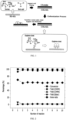
- the long-term stability test was performed while the reaction for evaluating the performance of the Ru-Sn/C-SiO 2 -Al 2 O 3 catalyst in producing the CHDM through the CHDA hydrogenation reaction was performed a total of 10 times, and the results thereof are shown in FIG. 2 .
- the reaction was performed for 6 hours in the hydrogen atmosphere at 230°C and 90 bar.
- a Ru-Sn/SiO 2 -Al 2 O 3 catalyst was prepared in the same manner as in Example 1, except for the process of coating carbon.
- the Ru-Sn/SiO 2 -Al 2 O 3 catalyst exhibited excellent initial activity like the Ru-Sn/C-SiO 2 -Al 2 O 3 catalyst, but the reaction activity was greatly reduced after exposure to the hydrothermal conditions for 60 hours.
- a Ru-Sn/C-Al 2 O 3 catalyst was prepared by using an Al 2 O 3 carrier, instead of a SiO 2 -Al 2 O 3 carrier, so as to verify the performance and durability of the Ru-Sn/C-SiO 2 -Al 2 O 3 catalyst.
- a catalyst preparation method was performed in the same manner as in the method for preparing the C-SiO 2 -Al 2 O 3 carrier in Example 1, except that SiO 2 -Al 2 O 3 was changed to Al 2 O 3 .
- sucrose (Aldrich) was added to 10 ml of distilled water and stirred using a magnetic stirrer. After the sucrose was completely dissolved in the distilled water, 0.2 g of boric acid (Aldrich) was added and dissolved in an aqueous sucrose solution for 2 hours. Subsequently, the solution was supported on an Al 2 O 3 carrier through incipient-wetness impregnation.
- ruthenium precursor RuCl 3 , Kojima
- a tin precursor SnCl 2 , Aldrich
- the amount of the tin was supported in the same number of moles as ruthenium and reduced at 500°C for 3 hours (100 cc/min H 2 :30/N 2 :70), and this was used as a catalyst for a dicarboxylic acid hydrogenation reaction.
Landscapes
- Chemical & Material Sciences (AREA)
- Organic Chemistry (AREA)
- Chemical Kinetics & Catalysis (AREA)
- Engineering & Computer Science (AREA)
- Materials Engineering (AREA)
- Physics & Mathematics (AREA)
- Thermal Sciences (AREA)
- Inorganic Chemistry (AREA)
- Organic Low-Molecular-Weight Compounds And Preparation Thereof (AREA)
- Catalysts (AREA)
- Low-Molecular Organic Synthesis Reactions Using Catalysts (AREA)
Claims (14)
- Edelmetall-Übergangsmetall-Komplex-Katalysator auf einem kohlenstoffbeschichteten Siliciumdioxid-Aluminiumoxid-Träger, wobei40 Gewichtsteile bis 95 Gewichtsteile Aluminiumoxid (Al2O3) und 5 Gewichtsteile bis 60 Gewichtsteile Siliciumdioxid (SiO2), bezogen auf 100 Gewichtsteile des gesamten Trägers, enthalten sind; und1 Gewichtsteil bis 20 Gewichtsteile des Edelmetalls und des Übergangsmetalls, bezogen auf 100 Gewichtsteile des kohlenstoffbeschichteten Siliciumdioxid-AluminiumoxidTrägers, enthalten sind.
- Edelmetall-Übergangsmetall-Komplex-Katalysator nach Anspruch 1, wobei das Edelmetall eines oder mehrere aus der Gruppe bestehend aus Palladium (Pd), Rhodium (Rh), Ruthenium (Ru) und Platin (Pt) umfasst.
- Edelmetall-Übergangsmetall-Komplex-Katalysator nach Anspruch 1, wobei eine Menge des Edelmetalls in einem Bereich von 1 Gewichtsteil bis 10 Gewichtsteilen, bezogen auf 100 Gewichtsteile des Trägers, liegt.
- Edelmetall-Übergangsmetall-Komplex-Katalysator nach Anspruch 1, wobei das Übergangsmetall eines oder mehrere aus der Gruppe bestehend aus Zinn (Sn), Eisen (Fe), Rhenium (Re) und Gallium (Ga) umfasst.
- Edelmetall-Übergangsmetall-Komplex-Katalysator nach Anspruch 1, wobei eine Menge des Übergangsmetalls in einem Bereich von 1 Gewichtsteil bis 10 Gewichtsteilen, bezogen auf 100 Gewichtsteile des Trägers, liegt.
- Edelmetall-Übergangsmetall-Komplex-Katalysator nach Anspruch 1, wobei ein Edelmetallvorläufer und ein Übergangsmetallvorläufer in demselben molaren Verhältnis auf dem Träger getragen sind.
- Edelmetall-Übergangsmetall-Komplex-Katalysator nach Anspruch 1, wobei der Kohlenstoff durch ein Karbonisierungsverfahren auf die Oberfläche des Siliciumdioxid-Aluminiumoxids beschichtet ist.
- Hydrierverfahren zur Hydrierung einer Dicarbonsäuregruppe unter Verwendung des Katalysators nach einem der Ansprüche 1 bis 7.
- Hydrierungsverfahren nach Anspruch 8, wobei die Dicarbonsäure ausgewählt ist aus der Gruppe bestehend aus einer Oxalsäure, einer Malonsäure, einer Bernsteinsäure, einer Glutarsäure, einer Adipinsäure, einer Pimelinsäure, einer Korksäure, einer Azelainsäure, einer Sebacinsäure, einer Äpfelsäure, einer Asparaginsäure, einer Glutaminsäure, einer Phthalsäure, einer Isophthalsäure, einer Terephthalsäure und einer Cyclohexandicarbonsäure.
- Verfahren zur Herstellung eines Edelmetall-Übergangsmetall-KomplexKatalysators, getragen auf einem kohlenstoffbeschichteten Träger, wobei das Verfahren umfasst:(a) Herstellen eines Komplexes durch Lösen einer Borsäure in einer wässrigen Kohlenstoffvorläuferlösung und Auftragen der resultierenden Mischung auf Siliziumdioxid-Aluminiumoxid (SiO2-Al2O3);(b) Karbonisieren des Komplexes;(c) Trägern eines Edelmetall-Übergangsmetalls auf einem kohlenstoffbeschichteten Siliciumdioxid-Aluminiumoxid (SiO2-Al2O3)-Träger; und(d) Reduzieren eines Edelmetall-Übergangsmetall-Oxids, das auf dem Siliciumdioxid-Aluminiumoxid (SiO2-Al2O3)-Träger getragen ist, mit Wasserstoff,wobei in Schritt (a) der Kohlenstoffvorläufer und die Borsäure in einem Gewichtsverhältnis von 1:0,005 bis 1:0,1 zugegeben werden.
- Verfahren nach Anspruch 10, wobei in Schritt (a) der Komplex hergestellt wird, indem er auf dem Träger durch einsetzende Nass-Imprägnierung getragen wird.
- Verfahren nach Anspruch 10, wobei in Schritt (b) der Carbonisierungsprozess in einem Temperaturbereich von 300°C bis 700°C in einer Stickstoffatmosphäre durchgeführt wird.
- Verfahren nach Anspruch 10, wobei in dem Schritt (c) das Edelmetall und das Übergangsmetall in 1 Gewichtsteil bis 20 Gewichtsteilen, bezogen auf 100 Gewichtsteile des Trägers, getragen werden.
- Verfahren nach Anspruch 10, wobei in Schritt (d) der Reduktionsprozess in einem Temperaturbereich von 400°C bis 600°C durchgeführt wird.
Applications Claiming Priority (2)
| Application Number | Priority Date | Filing Date | Title |
|---|---|---|---|
| KR1020170183355A KR102238548B1 (ko) | 2017-12-29 | 2017-12-29 | 카본이 코팅된 실리카-알루미나 담체에 담지된 귀금속-전이금속 복합 촉매 및 이의 제조방법 |
| PCT/KR2018/016688 WO2019132524A1 (ko) | 2017-12-29 | 2018-12-26 | 카본이 코팅된 실리카-알루미나 담체에 담지된 귀금속-전이금속 복합 촉매 및 이의 제조방법 |
Publications (3)
| Publication Number | Publication Date |
|---|---|
| EP3733286A1 EP3733286A1 (de) | 2020-11-04 |
| EP3733286A4 EP3733286A4 (de) | 2021-09-22 |
| EP3733286B1 true EP3733286B1 (de) | 2025-06-18 |
Family
ID=67064003
Family Applications (1)
| Application Number | Title | Priority Date | Filing Date |
|---|---|---|---|
| EP18897026.3A Active EP3733286B1 (de) | 2017-12-29 | 2018-12-26 | Auf kohlenstoffbeschichtetem siliciumdioxid-aluminiumoxid-träger geträgerter edelmetall-übergangsmetall-komplex-katalysator und herstellungsverfahren dafür |
Country Status (6)
| Country | Link |
|---|---|
| US (1) | US11912653B2 (de) |
| EP (1) | EP3733286B1 (de) |
| JP (1) | JP6953636B2 (de) |
| KR (1) | KR102238548B1 (de) |
| CN (1) | CN111683747B (de) |
| WO (1) | WO2019132524A1 (de) |
Families Citing this family (9)
| Publication number | Priority date | Publication date | Assignee | Title |
|---|---|---|---|---|
| CN114425455B (zh) * | 2020-10-29 | 2023-09-01 | 中国石油化工股份有限公司 | 一种催化载体材料、催化材料及制法和应用 |
| CN114505067B (zh) * | 2020-10-29 | 2023-09-01 | 中国石油化工股份有限公司 | 一种碳包裹铝复合材料及制备方法和应用 |
| KR102758777B1 (ko) * | 2021-02-01 | 2025-01-23 | 한화솔루션 주식회사 | 이종금속 수소화 촉매의 제조 방법 |
| KR102664209B1 (ko) * | 2021-11-09 | 2024-05-10 | 한국에너지기술연구원 | 저압, 저온 조건에서 높은 활성을 보이는 암모니아 합성용 촉매 및 이를 이용한 암모니아의 합성 방법 |
| CN114011405B (zh) * | 2021-11-22 | 2023-03-28 | 中国科学院大连化学物理研究所 | 一种复合氧化物担载的催化剂的制备方法及其在乙二醇制备乙醇酸甲酯中的应用 |
| CN116474785B (zh) * | 2022-01-13 | 2024-12-06 | 中国石油化工股份有限公司 | 一种渣油加氢催化剂及其合成方法和应用 |
| CN118056613A (zh) * | 2022-11-18 | 2024-05-21 | 中国石油化工股份有限公司 | 封装型催化剂及其制备方法、应用和丁腈橡胶选择性加氢方法 |
| WO2024228414A1 (ko) * | 2023-05-04 | 2024-11-07 | 한국에너지기술연구원 | 저압, 저온 조건에서 높은 활성을 보이는 암모니아 합성용 촉매 및 이를 이용한 암모니아의 합성 방법 |
| KR102928895B1 (ko) * | 2023-05-09 | 2026-02-23 | 한양대학교 산학협력단 | 수소화 활성이 개선된 전이금속 담지 촉매 및 이의 용도 |
Family Cites Families (23)
| Publication number | Priority date | Publication date | Assignee | Title |
|---|---|---|---|---|
| US5037791A (en) * | 1988-07-28 | 1991-08-06 | Hri, Inc. | Porous metal oxide supported carbon-coated catalysts and method for producing same |
| JPH06116182A (ja) * | 1992-10-09 | 1994-04-26 | Mitsubishi Kasei Corp | 有機カルボン酸及び/又は有機カルボン酸エステルの水素化方法 |
| GB9324786D0 (en) | 1993-12-02 | 1994-01-19 | Davy Mckee London | Process |
| ATE246042T1 (de) * | 1994-05-13 | 2003-08-15 | Kataleuna Gmbh Catalysts | Kohlenstoffhaltige katalysatorträger und verfahren zu deren herstellung |
| JP3802939B2 (ja) * | 1994-09-21 | 2006-08-02 | 東燃ゼネラル石油株式会社 | 水素化処理用触媒 |
| JPH0925253A (ja) * | 1995-07-13 | 1997-01-28 | Mitsubishi Chem Corp | カルボン酸類の水素化方法 |
| JP2001046874A (ja) * | 1999-08-17 | 2001-02-20 | Mitsubishi Chemicals Corp | 水素化用触媒、及びこれを用いるカルボン酸類からのアルコール類の製造方法 |
| WO2002083283A2 (en) | 2001-04-16 | 2002-10-24 | Abb Lummus Global Inc. | Catalyst and process for selective hydrogenation of sulfur-containing compounds |
| CN1911884A (zh) * | 2005-08-09 | 2007-02-14 | 中国石化上海石油化工股份有限公司 | 1,4-环己烷二甲酸加氢制1,4-环己烷二甲醇的方法 |
| US7632962B2 (en) | 2006-04-26 | 2009-12-15 | Eastman Chemical Company | Hydrogenation process and catalysts |
| CN100465145C (zh) | 2007-06-01 | 2009-03-04 | 华东理工大学 | 1,4-环己烷二甲醇的制备方法 |
| US8309772B2 (en) * | 2008-07-31 | 2012-11-13 | Celanese International Corporation | Tunable catalyst gas phase hydrogenation of carboxylic acids |
| US8946472B2 (en) | 2008-12-31 | 2015-02-03 | Sabic Innovative Plastics Ip B.V. | Bio-based terephthalate polyesters |
| CN101690884A (zh) * | 2009-10-21 | 2010-04-07 | 中国海洋石油总公司 | 一种焦化苯液相深度脱除噻吩吸附剂的制备方法 |
| CA2862562A1 (en) * | 2012-01-06 | 2013-07-11 | Celanese International Corporation | Cobalt-containing hydrogenation catalysts and processes for making same |
| US8846984B2 (en) * | 2012-04-27 | 2014-09-30 | E I Du Pont De Nemours And Company | Production of α,ω-diols |
| CN103664524B (zh) | 2012-09-05 | 2016-01-13 | 中国石油化工股份有限公司 | 1,4-环己烷二甲酸加氢制1,4-环己烷二甲醇的方法 |
| US9108895B2 (en) | 2012-10-26 | 2015-08-18 | Eastman Chemical Company | Promoted ruthenium catalyst for the improved hydrogenation of carboxylic acids to the corresponding alcohols |
| JP2015054828A (ja) * | 2013-09-10 | 2015-03-23 | 三菱化学株式会社 | アルコールの製造方法 |
| JP6314411B2 (ja) | 2013-10-10 | 2018-04-25 | 三菱瓦斯化学株式会社 | 芳香族カルボン酸類の水素化触媒およびその製造方法 |
| CN104549251A (zh) * | 2013-10-28 | 2015-04-29 | 中国石油化工股份有限公司 | 用于1,4-环己烷二甲醇合成的催化剂及其制备方法 |
| CN106164028B (zh) * | 2014-04-07 | 2019-07-26 | 乐天化学株式会社 | 复合金属催化剂组合物及使用其用于制备1,4-环己烷二甲醇的方法和装置 |
| CN106669786B (zh) * | 2015-11-11 | 2019-04-12 | 中国石油化工股份有限公司 | 一种催化柴油加氢裂化催化剂及其制备方法 |
-
2017
- 2017-12-29 KR KR1020170183355A patent/KR102238548B1/ko active Active
-
2018
- 2018-12-26 US US16/958,430 patent/US11912653B2/en active Active
- 2018-12-26 EP EP18897026.3A patent/EP3733286B1/de active Active
- 2018-12-26 CN CN201880083887.1A patent/CN111683747B/zh active Active
- 2018-12-26 JP JP2020536513A patent/JP6953636B2/ja active Active
- 2018-12-26 WO PCT/KR2018/016688 patent/WO2019132524A1/ko not_active Ceased
Also Published As
| Publication number | Publication date |
|---|---|
| EP3733286A1 (de) | 2020-11-04 |
| CN111683747B (zh) | 2023-12-29 |
| JP6953636B2 (ja) | 2021-10-27 |
| US11912653B2 (en) | 2024-02-27 |
| KR20190081064A (ko) | 2019-07-09 |
| US20210061742A1 (en) | 2021-03-04 |
| CN111683747A (zh) | 2020-09-18 |
| EP3733286A4 (de) | 2021-09-22 |
| WO2019132524A1 (ko) | 2019-07-04 |
| KR102238548B1 (ko) | 2021-04-08 |
| JP2021509355A (ja) | 2021-03-25 |
Similar Documents
| Publication | Publication Date | Title |
|---|---|---|
| US11912653B2 (en) | Noble metal-transition metal complex catalyst supported on carbon-coated silica-alumina support, and preparation method therefor | |
| US11214532B2 (en) | Preparation method for cyclohexane dimethanol having high trans content and cyclohexane dimethanol prepared thereby | |
| US11969711B2 (en) | Carbon-based, precious metal-transition metal composite catalyst and preparation method therefor | |
| JP6624490B2 (ja) | メチルアミノ基を有する芳香族化合物又はフラン誘導体の製造法 | |
| CN107282045B (zh) | 用于制备1,4-环己烷二甲醇的催化剂 | |
| US20220072518A1 (en) | Method for regenerating hydrogenation catalyst | |
| CN103764638A (zh) | γ-丁内酯的制造方法 | |
| CN102580754A (zh) | 一种合成醋酸甲酯的催化剂及制法和应用 | |
| CN111217660B (zh) | 一种由异戊二烯和1,4-苯醌制备2,6-二甲基蒽的方法 | |
| US11623904B2 (en) | Method for producing cyclobutanediol compound | |
| JP2000080053A (ja) | シクロアルキルジメタノ―ルの製造方法 | |
| CN105582927B (zh) | 1,4‑环己烷二甲醇催化剂和其制备方法 | |
| JP2001172211A (ja) | シクロドデカノン及びシクロドデカノールの製造法 | |
| CN107952439B (zh) | 用于催化甲醇羰基化的催化剂及其制备方法、甲醇羰基化制备乙酸和乙酸甲酯的方法 | |
| TW201920084A (zh) | 二氰基環己烷之製造方法 | |
| JP7149424B2 (ja) | 選択的均一系水素化触媒の回収方法および再使用方法 | |
| JP5879123B2 (ja) | 3級アミンの製造方法 | |
| HK40050907A (en) | Carbon-based, precious metal-transition metal composite catalyst and preparation method therefor | |
| JP5645494B2 (ja) | アミン体の製造方法 | |
| CN120329161A (zh) | 一种对苯二甲酸加氢制备1,4-环己烷二甲醇的方法 | |
| TW201217310A (en) | Process for production of intermediate for cyclic carbodiimide compound | |
| JP2009137905A (ja) | 第三級アミンの製造方法 | |
| JP6206659B2 (ja) | 2,6−テトラリンジカルボン酸ジアルキルエステルの製造方法 | |
| JP2026052024A (ja) | 2-アミノメチルテトラヒドロフラン-5-カルボン酸エステルの製造方法 | |
| HK40049532A (en) | Method of regenerating hydrogenation catalyst |
Legal Events
| Date | Code | Title | Description |
|---|---|---|---|
| STAA | Information on the status of an ep patent application or granted ep patent |
Free format text: STATUS: THE INTERNATIONAL PUBLICATION HAS BEEN MADE |
|
| PUAI | Public reference made under article 153(3) epc to a published international application that has entered the european phase |
Free format text: ORIGINAL CODE: 0009012 |
|
| STAA | Information on the status of an ep patent application or granted ep patent |
Free format text: STATUS: REQUEST FOR EXAMINATION WAS MADE |
|
| 17P | Request for examination filed |
Effective date: 20200707 |
|
| AK | Designated contracting states |
Kind code of ref document: A1 Designated state(s): AL AT BE BG CH CY CZ DE DK EE ES FI FR GB GR HR HU IE IS IT LI LT LU LV MC MK MT NL NO PL PT RO RS SE SI SK SM TR |
|
| AX | Request for extension of the european patent |
Extension state: BA ME |
|
| DAV | Request for validation of the european patent (deleted) | ||
| DAX | Request for extension of the european patent (deleted) | ||
| A4 | Supplementary search report drawn up and despatched |
Effective date: 20210820 |
|
| RIC1 | Information provided on ipc code assigned before grant |
Ipc: C07C 31/27 20060101ALI20210816BHEP Ipc: C07C 29/149 20060101ALI20210816BHEP Ipc: B01J 37/08 20060101ALI20210816BHEP Ipc: B01J 37/16 20060101ALI20210816BHEP Ipc: B01J 23/89 20060101ALI20210816BHEP Ipc: B01J 23/62 20060101ALI20210816BHEP Ipc: B01J 35/00 20060101ALI20210816BHEP Ipc: B01J 37/02 20060101ALI20210816BHEP Ipc: B01J 21/18 20060101ALI20210816BHEP Ipc: B01J 23/38 20060101AFI20210816BHEP |
|
| STAA | Information on the status of an ep patent application or granted ep patent |
Free format text: STATUS: EXAMINATION IS IN PROGRESS |
|
| 17Q | First examination report despatched |
Effective date: 20241002 |
|
| GRAP | Despatch of communication of intention to grant a patent |
Free format text: ORIGINAL CODE: EPIDOSNIGR1 |
|
| STAA | Information on the status of an ep patent application or granted ep patent |
Free format text: STATUS: GRANT OF PATENT IS INTENDED |
|
| INTG | Intention to grant announced |
Effective date: 20250115 |
|
| GRAS | Grant fee paid |
Free format text: ORIGINAL CODE: EPIDOSNIGR3 |
|
| GRAA | (expected) grant |
Free format text: ORIGINAL CODE: 0009210 |
|
| STAA | Information on the status of an ep patent application or granted ep patent |
Free format text: STATUS: THE PATENT HAS BEEN GRANTED |
|
| AK | Designated contracting states |
Kind code of ref document: B1 Designated state(s): AL AT BE BG CH CY CZ DE DK EE ES FI FR GB GR HR HU IE IS IT LI LT LU LV MC MK MT NL NO PL PT RO RS SE SI SK SM TR |
|
| P01 | Opt-out of the competence of the unified patent court (upc) registered |
Free format text: CASE NUMBER: APP_22570/2025 Effective date: 20250513 |
|
| REG | Reference to a national code |
Ref country code: GB Ref legal event code: FG4D |
|
| REG | Reference to a national code |
Ref country code: CH Ref legal event code: EP |
|
| REG | Reference to a national code |
Ref country code: DE Ref legal event code: R096 Ref document number: 602018082791 Country of ref document: DE |
|
| REG | Reference to a national code |
Ref country code: CH Ref legal event code: EP |
|
| REG | Reference to a national code |
Ref country code: IE Ref legal event code: FG4D |
|
| PG25 | Lapsed in a contracting state [announced via postgrant information from national office to epo] |
Ref country code: FI Free format text: LAPSE BECAUSE OF FAILURE TO SUBMIT A TRANSLATION OF THE DESCRIPTION OR TO PAY THE FEE WITHIN THE PRESCRIBED TIME-LIMIT Effective date: 20250618 |
|
| REG | Reference to a national code |
Ref country code: LT Ref legal event code: MG9D |
|
| PG25 | Lapsed in a contracting state [announced via postgrant information from national office to epo] |
Ref country code: GR Free format text: LAPSE BECAUSE OF FAILURE TO SUBMIT A TRANSLATION OF THE DESCRIPTION OR TO PAY THE FEE WITHIN THE PRESCRIBED TIME-LIMIT Effective date: 20250919 Ref country code: NO Free format text: LAPSE BECAUSE OF FAILURE TO SUBMIT A TRANSLATION OF THE DESCRIPTION OR TO PAY THE FEE WITHIN THE PRESCRIBED TIME-LIMIT Effective date: 20250918 |
|
| PG25 | Lapsed in a contracting state [announced via postgrant information from national office to epo] |
Ref country code: BG Free format text: LAPSE BECAUSE OF FAILURE TO SUBMIT A TRANSLATION OF THE DESCRIPTION OR TO PAY THE FEE WITHIN THE PRESCRIBED TIME-LIMIT Effective date: 20250618 |
|
| PG25 | Lapsed in a contracting state [announced via postgrant information from national office to epo] |
Ref country code: HR Free format text: LAPSE BECAUSE OF FAILURE TO SUBMIT A TRANSLATION OF THE DESCRIPTION OR TO PAY THE FEE WITHIN THE PRESCRIBED TIME-LIMIT Effective date: 20250618 |
|
| PG25 | Lapsed in a contracting state [announced via postgrant information from national office to epo] |
Ref country code: RS Free format text: LAPSE BECAUSE OF FAILURE TO SUBMIT A TRANSLATION OF THE DESCRIPTION OR TO PAY THE FEE WITHIN THE PRESCRIBED TIME-LIMIT Effective date: 20250918 |
|
| REG | Reference to a national code |
Ref country code: NL Ref legal event code: MP Effective date: 20250618 |
|
| PG25 | Lapsed in a contracting state [announced via postgrant information from national office to epo] |
Ref country code: LV Free format text: LAPSE BECAUSE OF FAILURE TO SUBMIT A TRANSLATION OF THE DESCRIPTION OR TO PAY THE FEE WITHIN THE PRESCRIBED TIME-LIMIT Effective date: 20250618 |
|
| PG25 | Lapsed in a contracting state [announced via postgrant information from national office to epo] |
Ref country code: NL Free format text: LAPSE BECAUSE OF FAILURE TO SUBMIT A TRANSLATION OF THE DESCRIPTION OR TO PAY THE FEE WITHIN THE PRESCRIBED TIME-LIMIT Effective date: 20250618 |
|
| PG25 | Lapsed in a contracting state [announced via postgrant information from national office to epo] |
Ref country code: PT Free format text: LAPSE BECAUSE OF FAILURE TO SUBMIT A TRANSLATION OF THE DESCRIPTION OR TO PAY THE FEE WITHIN THE PRESCRIBED TIME-LIMIT Effective date: 20251020 |
|
| REG | Reference to a national code |
Ref country code: AT Ref legal event code: MK05 Ref document number: 1803729 Country of ref document: AT Kind code of ref document: T Effective date: 20250618 |
|
| PG25 | Lapsed in a contracting state [announced via postgrant information from national office to epo] |
Ref country code: IS Free format text: LAPSE BECAUSE OF FAILURE TO SUBMIT A TRANSLATION OF THE DESCRIPTION OR TO PAY THE FEE WITHIN THE PRESCRIBED TIME-LIMIT Effective date: 20251018 |
|
| PGFP | Annual fee paid to national office [announced via postgrant information from national office to epo] |
Ref country code: GB Payment date: 20251218 Year of fee payment: 8 |
|
| PG25 | Lapsed in a contracting state [announced via postgrant information from national office to epo] |
Ref country code: AT Free format text: LAPSE BECAUSE OF FAILURE TO SUBMIT A TRANSLATION OF THE DESCRIPTION OR TO PAY THE FEE WITHIN THE PRESCRIBED TIME-LIMIT Effective date: 20250618 Ref country code: SM Free format text: LAPSE BECAUSE OF FAILURE TO SUBMIT A TRANSLATION OF THE DESCRIPTION OR TO PAY THE FEE WITHIN THE PRESCRIBED TIME-LIMIT Effective date: 20250618 |
|
| PGFP | Annual fee paid to national office [announced via postgrant information from national office to epo] |
Ref country code: FR Payment date: 20251217 Year of fee payment: 8 |
|
| PG25 | Lapsed in a contracting state [announced via postgrant information from national office to epo] |
Ref country code: CZ Free format text: LAPSE BECAUSE OF FAILURE TO SUBMIT A TRANSLATION OF THE DESCRIPTION OR TO PAY THE FEE WITHIN THE PRESCRIBED TIME-LIMIT Effective date: 20250618 |
|
| PG25 | Lapsed in a contracting state [announced via postgrant information from national office to epo] |
Ref country code: PL Free format text: LAPSE BECAUSE OF FAILURE TO SUBMIT A TRANSLATION OF THE DESCRIPTION OR TO PAY THE FEE WITHIN THE PRESCRIBED TIME-LIMIT Effective date: 20250618 |
|
| PG25 | Lapsed in a contracting state [announced via postgrant information from national office to epo] |
Ref country code: EE Free format text: LAPSE BECAUSE OF FAILURE TO SUBMIT A TRANSLATION OF THE DESCRIPTION OR TO PAY THE FEE WITHIN THE PRESCRIBED TIME-LIMIT Effective date: 20250618 |
|
| PG25 | Lapsed in a contracting state [announced via postgrant information from national office to epo] |
Ref country code: RO Free format text: LAPSE BECAUSE OF FAILURE TO SUBMIT A TRANSLATION OF THE DESCRIPTION OR TO PAY THE FEE WITHIN THE PRESCRIBED TIME-LIMIT Effective date: 20250618 Ref country code: SK Free format text: LAPSE BECAUSE OF FAILURE TO SUBMIT A TRANSLATION OF THE DESCRIPTION OR TO PAY THE FEE WITHIN THE PRESCRIBED TIME-LIMIT Effective date: 20250618 |
|
| PG25 | Lapsed in a contracting state [announced via postgrant information from national office to epo] |
Ref country code: ES Free format text: LAPSE BECAUSE OF FAILURE TO SUBMIT A TRANSLATION OF THE DESCRIPTION OR TO PAY THE FEE WITHIN THE PRESCRIBED TIME-LIMIT Effective date: 20250618 |
|
| REG | Reference to a national code |
Ref country code: DE Ref legal event code: R097 Ref document number: 602018082791 Country of ref document: DE |
|
| PG25 | Lapsed in a contracting state [announced via postgrant information from national office to epo] |
Ref country code: DK Free format text: LAPSE BECAUSE OF FAILURE TO SUBMIT A TRANSLATION OF THE DESCRIPTION OR TO PAY THE FEE WITHIN THE PRESCRIBED TIME-LIMIT Effective date: 20250618 |
|
| PGFP | Annual fee paid to national office [announced via postgrant information from national office to epo] |
Ref country code: DE Payment date: 20260223 Year of fee payment: 8 |
|
| PG25 | Lapsed in a contracting state [announced via postgrant information from national office to epo] |
Ref country code: IT Free format text: LAPSE BECAUSE OF FAILURE TO SUBMIT A TRANSLATION OF THE DESCRIPTION OR TO PAY THE FEE WITHIN THE PRESCRIBED TIME-LIMIT Effective date: 20250618 |
|
| PLBE | No opposition filed within time limit |
Free format text: ORIGINAL CODE: 0009261 |
|
| STAA | Information on the status of an ep patent application or granted ep patent |
Free format text: STATUS: NO OPPOSITION FILED WITHIN TIME LIMIT |
|
| REG | Reference to a national code |
Ref country code: CH Ref legal event code: L10 Free format text: ST27 STATUS EVENT CODE: U-0-0-L10-L00 (AS PROVIDED BY THE NATIONAL OFFICE) Effective date: 20260430 |