EP3700902B1 - Pyridincarbonylderivate und ihre therapeutische verwendung als trpc6-inhibitoren - Google Patents
Pyridincarbonylderivate und ihre therapeutische verwendung als trpc6-inhibitoren Download PDFInfo
- Publication number
- EP3700902B1 EP3700902B1 EP18800513.6A EP18800513A EP3700902B1 EP 3700902 B1 EP3700902 B1 EP 3700902B1 EP 18800513 A EP18800513 A EP 18800513A EP 3700902 B1 EP3700902 B1 EP 3700902B1
- Authority
- EP
- European Patent Office
- Prior art keywords
- methoxy
- pyridin
- amino
- methanone
- phenoxy
- Prior art date
- Legal status (The legal status is an assumption and is not a legal conclusion. Google has not performed a legal analysis and makes no representation as to the accuracy of the status listed.)
- Active
Links
Classifications
-
- C—CHEMISTRY; METALLURGY
- C07—ORGANIC CHEMISTRY
- C07D—HETEROCYCLIC COMPOUNDS
- C07D401/00—Heterocyclic compounds containing two or more hetero rings, having nitrogen atoms as the only ring hetero atoms, at least one ring being a six-membered ring with only one nitrogen atom
- C07D401/02—Heterocyclic compounds containing two or more hetero rings, having nitrogen atoms as the only ring hetero atoms, at least one ring being a six-membered ring with only one nitrogen atom containing two hetero rings
- C07D401/12—Heterocyclic compounds containing two or more hetero rings, having nitrogen atoms as the only ring hetero atoms, at least one ring being a six-membered ring with only one nitrogen atom containing two hetero rings linked by a chain containing hetero atoms as chain links
-
- C—CHEMISTRY; METALLURGY
- C07—ORGANIC CHEMISTRY
- C07D—HETEROCYCLIC COMPOUNDS
- C07D401/00—Heterocyclic compounds containing two or more hetero rings, having nitrogen atoms as the only ring hetero atoms, at least one ring being a six-membered ring with only one nitrogen atom
- C07D401/14—Heterocyclic compounds containing two or more hetero rings, having nitrogen atoms as the only ring hetero atoms, at least one ring being a six-membered ring with only one nitrogen atom containing three or more hetero rings
-
- A—HUMAN NECESSITIES
- A61—MEDICAL OR VETERINARY SCIENCE; HYGIENE
- A61K—PREPARATIONS FOR MEDICAL, DENTAL OR TOILETRY PURPOSES
- A61K31/00—Medicinal preparations containing organic active ingredients
- A61K31/33—Heterocyclic compounds
- A61K31/395—Heterocyclic compounds having nitrogen as a ring hetero atom, e.g. guanethidine or rifamycins
- A61K31/435—Heterocyclic compounds having nitrogen as a ring hetero atom, e.g. guanethidine or rifamycins having six-membered rings with one nitrogen as the only ring hetero atom
- A61K31/44—Non condensed pyridines; Hydrogenated derivatives thereof
- A61K31/445—Non condensed piperidines, e.g. piperocaine
- A61K31/45—Non condensed piperidines, e.g. piperocaine having oxo groups directly attached to the heterocyclic ring, e.g. cycloheximide
-
- A—HUMAN NECESSITIES
- A61—MEDICAL OR VETERINARY SCIENCE; HYGIENE
- A61K—PREPARATIONS FOR MEDICAL, DENTAL OR TOILETRY PURPOSES
- A61K31/00—Medicinal preparations containing organic active ingredients
- A61K31/33—Heterocyclic compounds
- A61K31/395—Heterocyclic compounds having nitrogen as a ring hetero atom, e.g. guanethidine or rifamycins
- A61K31/495—Heterocyclic compounds having nitrogen as a ring hetero atom, e.g. guanethidine or rifamycins having six-membered rings with two or more nitrogen atoms as the only ring heteroatoms, e.g. piperazine or tetrazines
- A61K31/496—Non-condensed piperazines containing further heterocyclic rings, e.g. rifampin, thiothixene or sparfloxacin
-
- A—HUMAN NECESSITIES
- A61—MEDICAL OR VETERINARY SCIENCE; HYGIENE
- A61K—PREPARATIONS FOR MEDICAL, DENTAL OR TOILETRY PURPOSES
- A61K31/00—Medicinal preparations containing organic active ingredients
- A61K31/33—Heterocyclic compounds
- A61K31/395—Heterocyclic compounds having nitrogen as a ring hetero atom, e.g. guanethidine or rifamycins
- A61K31/495—Heterocyclic compounds having nitrogen as a ring hetero atom, e.g. guanethidine or rifamycins having six-membered rings with two or more nitrogen atoms as the only ring heteroatoms, e.g. piperazine or tetrazines
- A61K31/50—Pyridazines; Hydrogenated pyridazines
- A61K31/501—Pyridazines; Hydrogenated pyridazines not condensed and containing further heterocyclic rings
-
- A—HUMAN NECESSITIES
- A61—MEDICAL OR VETERINARY SCIENCE; HYGIENE
- A61P—SPECIFIC THERAPEUTIC ACTIVITY OF CHEMICAL COMPOUNDS OR MEDICINAL PREPARATIONS
- A61P11/00—Drugs for disorders of the respiratory system
-
- A—HUMAN NECESSITIES
- A61—MEDICAL OR VETERINARY SCIENCE; HYGIENE
- A61P—SPECIFIC THERAPEUTIC ACTIVITY OF CHEMICAL COMPOUNDS OR MEDICINAL PREPARATIONS
- A61P13/00—Drugs for disorders of the urinary system
- A61P13/12—Drugs for disorders of the urinary system of the kidneys
-
- A—HUMAN NECESSITIES
- A61—MEDICAL OR VETERINARY SCIENCE; HYGIENE
- A61P—SPECIFIC THERAPEUTIC ACTIVITY OF CHEMICAL COMPOUNDS OR MEDICINAL PREPARATIONS
- A61P25/00—Drugs for disorders of the nervous system
- A61P25/28—Drugs for disorders of the nervous system for treating neurodegenerative disorders of the central nervous system, e.g. nootropic agents, cognition enhancers, drugs for treating Alzheimer's disease or other forms of dementia
-
- A—HUMAN NECESSITIES
- A61—MEDICAL OR VETERINARY SCIENCE; HYGIENE
- A61P—SPECIFIC THERAPEUTIC ACTIVITY OF CHEMICAL COMPOUNDS OR MEDICINAL PREPARATIONS
- A61P3/00—Drugs for disorders of the metabolism
- A61P3/08—Drugs for disorders of the metabolism for glucose homeostasis
- A61P3/10—Drugs for disorders of the metabolism for glucose homeostasis for hyperglycaemia, e.g. antidiabetics
-
- A—HUMAN NECESSITIES
- A61—MEDICAL OR VETERINARY SCIENCE; HYGIENE
- A61P—SPECIFIC THERAPEUTIC ACTIVITY OF CHEMICAL COMPOUNDS OR MEDICINAL PREPARATIONS
- A61P9/00—Drugs for disorders of the cardiovascular system
-
- C—CHEMISTRY; METALLURGY
- C07—ORGANIC CHEMISTRY
- C07D—HETEROCYCLIC COMPOUNDS
- C07D213/00—Heterocyclic compounds containing six-membered rings, not condensed with other rings, with one nitrogen atom as the only ring hetero atom and three or more double bonds between ring members or between ring members and non-ring members
- C07D213/02—Heterocyclic compounds containing six-membered rings, not condensed with other rings, with one nitrogen atom as the only ring hetero atom and three or more double bonds between ring members or between ring members and non-ring members having three double bonds between ring members or between ring members and non-ring members
- C07D213/04—Heterocyclic compounds containing six-membered rings, not condensed with other rings, with one nitrogen atom as the only ring hetero atom and three or more double bonds between ring members or between ring members and non-ring members having three double bonds between ring members or between ring members and non-ring members having no bond between the ring nitrogen atom and a non-ring member or having only hydrogen or carbon atoms directly attached to the ring nitrogen atom
-
- C—CHEMISTRY; METALLURGY
- C07—ORGANIC CHEMISTRY
- C07D—HETEROCYCLIC COMPOUNDS
- C07D451/00—Heterocyclic compounds containing 8-azabicyclo [3.2.1] octane, 9-azabicyclo [3.3.1] nonane, or 3-oxa-9-azatricyclo [3.3.1.0<2,4>] nonane ring systems, e.g. tropane or granatane alkaloids, scopolamine; Cyclic acetals thereof
- C07D451/02—Heterocyclic compounds containing 8-azabicyclo [3.2.1] octane, 9-azabicyclo [3.3.1] nonane, or 3-oxa-9-azatricyclo [3.3.1.0<2,4>] nonane ring systems, e.g. tropane or granatane alkaloids, scopolamine; Cyclic acetals thereof containing not further condensed 8-azabicyclo [3.2.1] octane or 3-oxa-9-azatricyclo [3.3.1.0<2,4>] nonane ring systems, e.g. tropane; Cyclic acetals thereof
-
- C—CHEMISTRY; METALLURGY
- C07—ORGANIC CHEMISTRY
- C07D—HETEROCYCLIC COMPOUNDS
- C07D487/00—Heterocyclic compounds containing nitrogen atoms as the only ring hetero atoms in the condensed system, not provided for by groups C07D451/00 - C07D477/00
- C07D487/02—Heterocyclic compounds containing nitrogen atoms as the only ring hetero atoms in the condensed system, not provided for by groups C07D451/00 - C07D477/00 in which the condensed system contains two hetero rings
- C07D487/08—Bridged systems
-
- C—CHEMISTRY; METALLURGY
- C07—ORGANIC CHEMISTRY
- C07D—HETEROCYCLIC COMPOUNDS
- C07D498/00—Heterocyclic compounds containing in the condensed system at least one hetero ring having nitrogen and oxygen atoms as the only ring hetero atoms
- C07D498/02—Heterocyclic compounds containing in the condensed system at least one hetero ring having nitrogen and oxygen atoms as the only ring hetero atoms in which the condensed system contains two hetero rings
- C07D498/08—Bridged systems
Definitions
- the present invention relates to pharmaceutical compounds, compositions, and their use in methods for the treatment of cardiac and respiratory conditions, renal disease, liver disease, muscular dystrophy, fibrotic disorders, pain, ischemia or ischemic reperfusion injury, and cancer, as well as inhibiting the Transient Receptor Potential C6 ion channel (TRPC6).
- TRPC6 Transient Receptor Potential C6 ion channel
- ion channel proteins exist to mediate ion flux across cellular membranes.
- the proper expression and function of ion channel proteins is essential for the maintenance of cellular function, intracellular communication, and the like.
- An important aspect of achieving cellular homeostasis is the maintenance of appropriate ion concentrations in various cell types during development and in response to numerous stimuli.
- Large numbers of diverse types of ion channels act to maintain cellular homeostasis by moving ions into and out of cells across the plasma membrane, and within cells by moving ions across membranes of intracellular organelles including, for example, the endoplasmic reticulum, sarcoplasmic reticulum, mitochondria and endocytic organelles including endosomes and lysosomes.
- TRPC6 Transient Receptor Potential C6
- TRPC6 belongs to the larger family of TRP ion channels (see, Desai et al., 2005 Eur J Physiol 451:11-18 ; Clapham et al., 2001 Nat Neurosci 2:387-396 ; Clapham, 2003 Nature 426: 517-524 ; Clapham et al., 2002 IUPHAR Compendium ).
- TRPC6 is a calcium permeable channel, specifically a non-selective calcium permeable cation channel. In addition to calcium ions, TRPC6 channels are permeable to other cations, for example sodium.
- TRPC6 channels modulate not only intracellular calcium concentration, but also membrane potential by modulating the flux of cations including calcium and sodium ions.
- non-selective cation channels such as TRPC6 modulate, among other things, calcium ion flux, they are mechanistically distinct from voltage-gated calcium channels.
- voltage-gated calcium channels respond to depolarization of the potential difference across the membrane and can open to permit an influx of calcium from the extracellular medium and a rapid increase in intracellular calcium levels or concentrations.
- non-selective cation channels such as TRPC6 are generally signal transduction gated, long-lasting, and produce less rapid changes in ion concentration.
- TRPC6 can respond to changes in pressure.
- These mechanistic differences are accompanied by structural differences among voltage-gated and cation permeable channels.
- many diverse channels act to regulate ion flux and membrane potential in various cell types and in response to numerous stimuli, it is important to recognize the significant structural, functional, and mechanistic differences among different classes of ion channels.
- TRPC6 function has been implicated in, among other things, the modulation of myogenic tone. TRPC6 is highly expressed in smooth muscle cells, vascular smooth muscle cells, cardiomyocytes, pulmonary arteries, the aorta, heart, liver, brain, and kidney. The expression of TRPC6, along with experiments conducted in knock-out mice and cells in culture, suggest that TRPC6 may provide a useful target for the treatment of hypertension and other cardiac and vascular conditions, preeclampsia.
- TRPC6 focal segmental glomerulsclerosis
- FGS focal segmental glomerulsclerosis
- These mutations that are reported to be gain-of-function are sufficient to induce disease.
- elevated TRPC6 expression has been associated with nephrotic syndrome, minimal change disease, and diabetic nephropathy (Moller et al., 2006, Ilatovskaya et al., 2013, Thilo et al., 2011)., or other kidney conditions.
- TRPC6 is also thought to be important in respiratory conditions, restenosis, liver disease, muscular dystrophy, fibrotic disorders, pain, ischemia and ischemic reperfusion injury, and certain forms of cancer.
- TRPC6 may be important in mediating proper PASMC proliferation, and that dysregulation of TRPC6 may lead to increased PASMC proliferation and pulmonary vascular medial hypertrophy observed in IPAH patients ( Yu et al., 2004 Proc Natl Acad Sci 101(38):13861-6 ). Further support is provided by the observation that in IPAH patients the frequency of a single-nucleotide polymorphism in the promoter of TRPC6 which increases expression was significantly higher when compared to normal subjects ( Yue, et al., 2009 Circulation 119: 2313-22 ).
- TRPC6 dysregulation in IPAH comes from studies of bosentan, a dual endothelin receptor blocker, that has been used clinically to treat IPAH. This inhibitor decreases proliferation of PASMCs, but the mechanism by which this occurs is unclear. Interestingly, bosentan both decreases proliferation of PASMC and also decreases expression of TRPC6 in lung tissue of IPAH patients ( Kunichika et al., 2004 Am J Respir Crit Care Med 170(10):1101-7 ).
- TRPC6 chronic obstructive pulmonary disease
- COPD chronic obstructive pulmonary disease
- TRPC6 expression was found to be elevated when compared with controls ( Finney-Hayward et al., 2010 Am J Respir Cell Mol Biol 43:296-304 ).
- human cystic fibrosis epithelial cells the TRPC6-mediated calcium influx is abnormally increased and may contribute to the hypersecretion of mucus.
- siRNA-TRPC6 was able to reduce this abnormal calcium influx ( Antigny et al. 2011 Am J Resp Cell Mol Biol, 44:83 - 90 ).
- TRPC6 in other cardiac conditions, including cardiac hypertrophy.
- the hearts of patients with dilated cardiomyopathy have elevated TRPC6 mRNA expression when compared with normal hearts ( Kuwahara et al., 2006 J Clin Invest 116:3114-26 ).
- TRPC6 cardiac mRNA levels are elevated by pressure overload ( Kuwahara et al., 2006 J Clin Invest 116:3114-26 ), chronic isoproterenol treatment ( Xie et al., 2012 Nat Commun 3:1238 ), and uremic cardiomyopathy induced by partial nephrectomy ( Xie et al., 2015 J Am Soc Nephrol 26:1150-60 ). Furthermore, cardiac-specific overexpression of TRPC6 in the cardiomyoctes of transgenic mice induced cardiac hypertrophy and premature death ( Kuwahara et al., 2006 J Clin Invest 116:3114-26 ).
- TRPC6 and TRPC3 antagonists GSK2332255B and GSK833503A
- mice deficient for TRPC6 were protected from isoproterenol-induced cardiac hypertrophy ( Xie et al., 2012 Nat Commun 3:1238 ).
- TRPC6 activity may be beneficial for the treatment of cardiovascular disease.
- atheroprone shear stress-induces increased TRPC6 mRNA levels in human vascular endothelial cells (EC) when compared to atheroprotective flow conditions ( Thilo, et al., 2012 Hypertension 59:1232-40 ).
- EC migration is important for healing after arterial injury, and lysophosphatidylcholine-mediated inhibition of EC migration was prevented in vitro in cells from TRPC6 deficient mice.
- TRPC6 oxidized low-density lipoprotein-induced apoptosis of human aortic ECs was demonstrated to be dependent on TRPC6 ( Zhang et al., 2015 Sci Rep 5:9401-10 ).
- TRPC6 mRNA levels were increased in vascular SMCs and correlated with reduced cerebral blood flow ( Johannson et al., 2015 Acta Physiol 214:376-89 ).
- TRPC6 is important in normal podocyte function by controlling calcium influx and nuclear factor of activated T cell activation in which elevated current through the channel is associated with renal injury and the induction of proteinuria ( Moller et al., 2007 J Am Soc Nephrol 18:29-36 and Schlöndorff et al., 2009 Am J Physiol Cell Physiol 296:C558-69 ).
- TRPC6 is elevated in human chronic kidney diseases including FSGS, minimal change disease, membraneous glomerulonephritis, and diabetic nephropathy ( Moller et al., 2007 J Am Soc Nephrol 18:29-36 and Thilo et al., 2011 Nephrol. Dial. Transplant 27:921-9 ) as well as in mouse models of podocyte injury ( Moller et al., 2007 J Am Soc Nephrol 18:29-36 ).
- TRPC6 deficient mice have been demonstrated to have reduced angiotensin II (Ang II)-induced albuminuria ( Eckel et al., 2011 J Am Soc Nephrol 22:526-35 ) whereas transgenic podocyte-specific expression of human GoF mutations in mice induces albuminuria and glomerular lesions ( Krall et al., 2010 PLoS ONE e12859 and Canales et al., 2015 Brit J Medicine Med Res 5:1198-1212 ). Consequently, inhibition of TRPC6 may be useful in the treatment of chronic kidney diseases.
- TRPC6 inhibitor compounds can be used in treating or ameliorating chronic kidney diseases or conditions caused (in whole or in part) by TRPC6 dysfunction. Additionally, TRPC6 inhibitor compounds can be used in treating or ameliorating symptoms of kidney diseases (e.g. , hypertension, proteinuria, etc.), regardless of the cause of the disease.
- kidney diseases e.g. , hypertension, proteinuria, etc.
- TRPC6 is expressed in the myometrium and placenta during pregnancy ( Ku et al., 2006 J Soc Gynecol Investig 13:217-225 ; Clarson et al., 2003 J Physiol 550:515-528 ). As such TRPC6 may contribute to maintaining proper myogenic tone in the placenta and/or in maintaining proper fetal and maternal blood pressure during pregnancy.
- TRPC6 in certain forms of cancer.
- TRPC6 expression is elevated in cells taken from patients with gliobastoma multiforme, the most frequent and incurable type of brain cancer ( Chigurupati, et al., 2010 Cancer Res, 70:418-427 ; Ding et al., 2010 J Natl Cancer Inst. 102:1052-1068 ).
- Ding et al. found elevated levels of TRPC6 in human glioma cells, and inhibition of TRPC6 pharmacologically or with a dominant-negative mutant suppressed cell growth in vitro.
- lentiviral-mediated expression of dominant-negative TRPC6 in the tumor cells prior subcutaneous or intracranial implantation reduced tumor volume when compared to controls ( Ding et al., J. Natl. Cancer Inst. 2010, 102, 1052-1068 ).
- TRPC6 Increased levels of TRPC6 was also found to be associated with cervical cancer ( Wan et al, 2012 Onco Targets Ther 5:171-176 ), breast cancer ( Dhennin-Duthille et al., 2011 Cell Physiol Biochem 28:813-822 ), renal cell carcinoma ( Song et al, 2013 Mol Biol Rep 40:5115-5122 ), head and neck squamous cell carcinoma ( de Quiros, et al. 2013 BMC Cancer 13:116-127 ), and esophageal squamous cell carcinoma ( Zhang et al., 2013 Med Oncol 30:607 ), among others.
- TRPC6 may be a promising therapeutic target for cancer treatment.
- Liver diseases including non-alcoholic steatohepatitis may be treated by reducing TRPC6 activity.
- Hypoxia increased TRPC6 expression in a human hepatic stellate cell line when compared to normoxic conditions.
- TRPC6 may provide benefit to patients with Duchenne muscular dystrophy (DMD).
- DMD Duchenne muscular dystrophy
- TRPC6 deficiency restored the stress-stimulated contractility force and calcium transient response to normal when compared with mice possessing the wild-type TRPC6 gene, suggesting that TRPC6 inhibition will preserve cardiac function in DMD patients ( Seo et al., 2014 Circ Res 114:823-32 ).
- Fibrotic disorders may be treated with TRPC6 inhibitors.
- TRPC6 deficient mice demonstrated reduced dermal and cardiac wound healing ( Davis et al., 2012 Dev Cell 23:705-15 ).
- TRPC6 inhibitors may be useful for the treatment of pain.
- Spinal delivery of TRPC6 antisense oligonucleotides reduced hyperalgesia induced by mechanical, hypotonic, and thermal stimuli in preclinical pain models ( Alessandri-Haber et al., 2009 J Neurosci 29:6217-28 ).
- Modulating a function of TRPC6 provides a means for modulating calcium homeostasis, sodium homeostasis, intracellular calcium levels, membrane polarization (resting membrane potential), and/or cation levels in a cell.
- Compounds that can modulate one or more TRPC6 functions are useful in many aspects including, but not limited to, maintaining calcium homeostasis; maintaining sodium homeostasis; modulating intracellular calcium levels; modulating membrane polarization (membrane potential); modulating cation levels; and/or treating or preventing diseases, disorders, or conditions associated with calcium homeostasis, sodium homeostasis, calcium or sodium dyshomeostasis, or membrane polarization/hyperpolarization (including hypo and hyperexcitability), and/or treating or preventing diseases, disorders, or conditions associated with regulation or dysregulation of TRPC6 expression or function.
- Pyridine carbonyl piperidine/piperazine derivatives for medical use are for example known from EP 1 396 487 , WO 2016/138114 and WO 2014/191336 as PDE4 inhibitors, inhibitors of BRG1, BRM and/orPBl, as well as aldosterone synthase inhibitors, respectively.
- TRPC6 It provides novel compounds that modulate TRPC6 and thus are useful for treating a variety of diseases and disorders that can be alleviated by modulating TRPC6 including hypertension, preeclampsia, restenosis, a cardiac or respiratory condition, renal disease, liver disease, muscular dystrophy, fibrotic disorders, pain, ischemia or ischemic reperfusion injury, and cancer.
- This invention also relates to pharmaceutical compositions comprising these compounds, the use of these compounds in the treatment of various diseases and disorders, processes for preparing these compounds and intermediates useful in these processes.
- Table 1 shows the compounds of the invention which can be made by the synthetic schemes and the examples shown in the Synthetic Examples section below, and known methods in the art.
- Table 1 shows the compounds of the invention which can be made by the synthetic schemes and the examples shown in the Synthetic Examples section below, and known methods in the art.
- Table 1 shows the compounds of the invention which can be made by the synthetic schemes and the examples shown in the Synthetic Examples section below, and known methods in the art.
- Table 1 shows the compounds of the invention which can be made by the synthetic schemes and the examples shown in the Synthetic Examples section below, and known methods in the art. Table 1. Cpd No. Structure Compound Name 1 [4-(6-Amino-4-methoxy-pyridin-3-yl)-piperazin-1-yl]-[5-(4-fluoro-phenoxy)-4-methoxy-pyridin-2-yl]-methanone 2 (6-Amino-4-methyl-3',4',5',6'-tetrahydro-2'H-[3,
- the invention relates to any of the compounds 1 to 87 depicted in Table 1 above, and the pharmaceutically acceptable salts thereof.
- the invention relates to any one of compounds 6, 16, 17, 31, 32, 38, 39, 42, 51, 53, 75, 78 and 81 depicted in Table 1; and the pharmaceutically acceptable salts thereof.
- C 1-6 -alkyl means an alkyl group or radical having 1 to 6 carbon atoms.
- groups like HO, H 2 N, (O)S, (O) 2 S, NC (cyano), HOOC, F 3 C or the like the skilled artisan can see the radical attachment point(s) to the molecule from the free valences of the group itself.
- aryl-C 1-3 -alkyl means an aryl group which is bound to a C 1-3 -alkyl-group, the latter of which is bound to the core or to the group to which the substituent is attached.
- An asterisk is may be used in sub-formulas to indicate the bond which is connected to the core molecule as defined.
- substituted means that any one or more hydrogens on the designated atom is replaced with a selection from the indicated group, provided that the designated atom's normal valence is not exceeded, and that the substitution results in a stable compound.
- a given chemical formula or name shall encompass tautomers and all stereo, optical and geometrical isomers (e.g. enantiomers, diastereomers, E/Z isomers etc.) and racemates thereof as well as mixtures in different proportions of the separate enantiomers, mixtures of diastereomers, or mixtures of any of the foregoing forms where such isomers and enantiomers exist, as well as salts, including pharmaceutically acceptable salts thereof and solvates thereof such as for instance hydrates including solvates of the free compounds or solvates of a salt of the compound.
- Enantiomerically pure compounds of this invention or intermediates may be prepared via asymmetric synthesis, for example by preparation and subsequent separation of appropriate diastereomeric compounds or intermediates which can be separated by known methods (e.g. by chromatographic separation or crystallization) and/or by using chiral reagents, such as chiral starting materials, chiral catalysts or chiral auxiliaries.
- pharmaceutically acceptable refers to those compounds, materials, compositions, and/or dosage forms which are, within the scope of sound medical judgment, suitable for use in contact with the tissues of human beings and animals without excessive toxicity, irritation, allergic response, or other problem or complication, and commensurate with a reasonable benefit/risk ratio.
- pharmaceutically acceptable salt refers to derivatives of the disclosed compounds wherein the parent compound is modified by making acid or base salts thereof. Examples of pharmaceutically acceptable salts include, but are not limited to, mineral or organic acid salts of basic residues such as amines; alkali or organic salts of acidic residues such as carboxylic acids; and the like.
- such salts include salts from benzenesulfonic acid, benzoic acid, citric acid, ethanesulfonic acid, formic acid, fumaric acid, gentisic acid, hydrobromic acid, hydrochloric acid, maleic acid, malic acid, malonic acid, mandelic acid, methanesulfonic acid, 4-methylbenzenesulfonic acid, phosphoric acid, salicylic acid, succinic acid, sulfuric acid tartaric acid, and trifluoroacetic acid.
- salts can be formed with cations from ammonia, L-arginine, calcium, 2,2'-iminobisethanol, L-lysine, magnesium, N -methyl-D-glucamine , potassium, sodium and tris(hydroxymethyl)-aminomethane.
- the pharmaceutically acceptable salts of the present invention can be synthesized from the parent compound which contains a basic or acidic moiety by conventional chemical methods. Generally, such salts can be prepared by reacting the free acid or base forms of these compounds with a sufficient amount of the appropriate base or acid in water or in an organic diluent like ether, ethyl acetate, ethanol, isopropanol, or acetonitrile, or a mixture thereof.
- Salts of other acids than those mentioned above which for example are useful for purifying or isolating the compounds of the present invention e.g. trifluoro acetate salts, formates
- Salts of other acids than those mentioned above which for example are useful for purifying or isolating the compounds of the present invention also comprise a part of the invention.
- halogen generally denotes fluorine, chlorine, bromine and iodine
- C 1-n -alkyl wherein n is an integer selected from the group consisting of 2, 3, 4, 5 or 6, preferably 4 or 6, either alone or in combination with another radical denotes an acyclic, saturated, branched or linear hydrocarbon radical with 1 to n C atoms.
- C 1-5 -alkyl embraces the radicals H 3 C-, H 3 C-CH 2 -, H 3 C-CH 2 -CH 2 -, H 3 C-CH(CH 3 )-, H 3 C-CH 2 -CH 2 -CH 2 -, H 3 C-CH 2 -CH(CH 3 )-, H 3 C-CH(CH 3 )-CH 2 -, H 3 C-C(CH 3 ) 2 -, H 3 C-CH 2 -CH 2 -CH 2 -CH 2 -, H 3 C-CH 2 -CH 2 -CH(CH 3 )-, H 3 C-CH 2 -CH(CH 3 )-CH 2 -, H 3 C-CH(CH 3 )-CH 2 -, H 3 C-CH(CH 3 )-CH 2 -, H 3 C-CH 2 -C(CH 3 ) 2 -, H 3 C-C(CH 3 ) 2 -CH 2 -, H 3 C-CH(CH 3 )
- C 3-n -cycloalkyl wherein n is an integer from 4 to n, either alone or in combination with another radical denotes a cyclic, saturated, unbranched hydrocarbon radical with 3 to n C atoms.
- C 3-7 -cycloalkyl includes cyclopropyl, cyclobutyl, cyclopentyl, cyclohexyl and cycloheptyl.
- halo added to an "alkyl”, “alkylene” or “cycloalkyl” group (saturated or unsaturated) is such an alkyl or cycloalkyl group wherein one or more hydrogen atoms are replaced by a halogen atom selected from among fluorine, chlorine or bromine, preferably fluorine and chlorine, particularly preferred is fluorine.
- a halogen atom selected from among fluorine, chlorine or bromine, preferably fluorine and chlorine, particularly preferred is fluorine.
- aryl group e.g., phenyl
- Carbocyclyl as used either alone or in combination with another radical, means a mono- bi- or tricyclic ring structure consisting of 3 to 9 carbon atoms and optionally a heteroatom selected from the group consisting of N, O, and S.
- the term “carbocyclyl” refers to fully saturated ring systems and encompasses fused, bridged and spirocyclic systems. Many of the terms given above may be used repeatedly in the definition of a formula or group and in each case have one of the meanings given above, independently of one another.
- the present application provides compounds that can modulate TRPC6 function. Methods employing these compounds are also provided. Certain embodiments provide a use in a method of modulating a TRPC6 function in a cell or animal comprising administering an effective amount of a compound that inhibits a TRPC6 function, wherein the compound inhibits a TRPC6-mediated ion flux. Certain embodiments provide a use in a method of modulating a TRPC6 function in a cell or animal comprising administering an effective amount of a compound that inhibits a TRPC6 function, wherein the compound inhibits a TRPC6-mediated calcium influx.
- Certain embodiments provide a use in a method of modulating a TRPC6 function in a cell or animal comprising administering an effective amount of a compound that inhibits a TRPC6 function, wherein the compound inhibits a TRPC6-mediated cytoskeletal reorganization or alteration in cell morphology. Certain embodiments provide a use in a method of modulating a TRPC6 function in a cell comprising administering to the cell an effective amount of a compound that inhibits TRPC6 function, wherein the compound inhibits outward current mediated by TRPC6.
- Certain embodiments provide a use in a method of modulating a TRPC6 function in a cell comprising administering to the cell an effective amount of a compound that inhibits TRPC6 function, wherein the compound inhibits inward current mediated by TRPC6. Certain embodiments provide a use in a method of modulating a TRPC6 function in a cell comprising administering to the cell an effective amount of a compound that inhibits TRPC6 function, wherein the compound inhibits both the inward and outward currents mediated by TRPC6.
- Certain embodiments provide a use in a method of modulating a TRPC6 function in a cell comprising administering to the cell an effective amount of a compound that inhibits TRPC6 function, wherein the compound inhibits TRPC6 mediated increases in intracellular calcium concentration. Certain embodiments provide a use in a method of modulating a TRPC6 function in a cell comprising administering to the cell an effective amount of a compound that inhibits TRPC6 function, wherein the compound inhibits alterations in cell morphology.
- Certain embodiments also provide a use in a method of preventing or treating a disease or condition related to TRPC6 function in a subject comprising administering to the subject a therapeutically effective amount of a compound that inhibits TRPC6 function, wherein the compound inhibits the inward current mediated by TRPC6. Certain embodiments provide a use in a method of preventing or treating a disease or condition related to TRPC6 function in a subject comprising administering to the subject a therapeutically effective amount of a compound that inhibits TRPC6 function, wherein the compound inhibits the outward current mediated by TRPC6.
- Certain embodiments also provide a use in a method of preventing or treating a disease or condition related to TRPC6 function in a subject comprising administering to the subject a therapeutically effective amount of a compound that inhibits TRPC6 function, wherein the compound inhibits both the inward and outward current mediated by TRPC6. Certain embodiments provide a use in a method of preventing or treating a disease or condition related to TRPC6 function in a subject comprising administering to the subject a therapeutically effective amount of a compound that inhibits TRPC6 function, wherein the compound inhibits the ion flux mediated by TRPC6.
- inhibition of a particular current refers to the ability of a compound to inhibit that current (e.g., inward and/or outward) in either an in vitro or an in vivo assay. Inhibition of a particular current in either an in vivo or an in vitro assay serves as a proxy for the particular functional activity of the particular compound.
- the present invention provides the use in methods of treating a TRPC6 mediated disorder in a subject, the method comprising administering an effective amount of a compound of the invention wherein each of the variables above are described herein, for example, in the detailed description below.
- the present invention further provides a use in a method for treating a TRPC6 mediated disorder in a subject, wherein the method comprises administering a composition comprising a compound of the invention and a pharmaceutically acceptable excipient, diluent or carrier.
- the present invention further provides a use in a method for treating a TRPC6 mediated disorder in a subject, wherein the method comprises administering a composition comprising a compound of the invention and a pharmaceutically acceptable excipient, diluent or carrier, and the TRPC6 mediated disorder is selected from the group consisting of cardiac hypertrophy, ischemia, ischemic reperfusion injury, hypertension, pulmonary arterial hypertension, idiopathic pulmonary arterial hypertension , restenosis, chronic obstructive pulmonary disease, cystic fibrosis, Alzheimer's disease, Parkinson's disease, Huntington's disease, amyotrophic lateral sclerosis (ALS), trauma induced brain disorders, asthma, chronic obstructive pulmonary disease, rheumatoid arthritis, osteoarthritis, inflammatory bowel disease, multiple sclerosis, muscular dystrophy, preeclampsia and pregnancy-induced hypertension, non-alcoholic steatohepatitis, focal segmental glomerulosclerosis, n
- a given chemical formula or name shall encompass tautomers and all stereo, optical and geometrical isomers (e.g. enantiomers, diastereomers, E/Z isomers ,etc.) and racemates thereof as well as mixtures in different proportions of the separate enantiomers, mixtures of diastereomers, or mixtures of any of the foregoing forms where such isomers and enantiomers exist, as well as salts, including pharmaceutically acceptable salts thereof and solvates thereof such as for instance hydrates including solvates of the free compounds or solvates of a salt of the compound.
- Some of the compounds in Table 1 can exist in more than one tautomeric form.
- the invention includes methods for using all such tautomers.
- the invention includes pharmaceutically acceptable derivatives of compounds of the invention.
- a "pharmaceutically acceptable derivative” refers to any pharmaceutically acceptable salt or ester, or any other compound which, upon administration to a patient, is capable of providing (directly or indirectly) a compound useful for the invention, or a pharmacologically active metabolite or pharmacologically active residue thereof.
- a pharmacologically active metabolite shall be understood to mean any compound of the invention capable of being metabolized enzymatically or chemically. This includes, for example, hydroxylated or oxidized derivative compounds of the invention.
- pharmaceutically acceptable salts refer to derivatives of the disclosed compounds wherein the parent compound is modified by making acid or base salts thereof.
- examples of pharmaceutically acceptable salts include, but are not limited to, mineral or organic acid salts of basic residues such as amines; alkali or organic salts of acidic residues such as carboxylic acids; and the like.
- such salts include acetates, ascorbates, benzenesulfonates, benzoates, besylates, bicarbonates, bitartrates, bromides/hydrobromides, edetates, camsylates, carbonates, chlorides/hydrochlorides, citrates, edisylates, ethane disulfonates, estolates esylates, formates, fumarates, gluceptates, gluconates, glutamates, glycolates, glycollylarsnilates, hexylresorcinates, hydrabamines, hydroxymaleates, hydroxynaphthoates, iodides, isothionates, lactates, lactobionates, malates, maleates, mandelates, methanesulfonates, methylbromides, methylnitrates, methylsulfates, mucates, napsylates, n
- the pharmaceutically acceptable salts of the present invention can be synthesized from the parent compound which contains a basic or acidic moiety by conventional chemical methods.
- such salts can be prepared by reacting the free acid or base forms of these compounds with a sufficient amount of the appropriate base or acid in water or in an organic diluent like ether, ethyl acetate, ethanol, isopropanol, or acetonitrile, or a mixture thereof.
- Salts of other acids than those mentioned above which for example are useful for purifying or isolating the compounds of the present invention e.g. trifluoro acetate salts
- Salts of other acids than those mentioned above which for example are useful for purifying or isolating the compounds of the present invention also comprise a part of the invention.
- Compounds of the invention also include their isotopically-labelled forms.
- An isotopically-labelled form of an active agent of a combination of the present invention is identical to said active agent but for the fact that one or more atoms of said active agent have been replaced by an atom or atoms having an atomic mass or mass number different from the atomic mass or mass number of said atom which is usually found in nature.
- isotopes which are readily available commercially and which can be incorporated into an active agent of a combination of the present invention in accordance with well established procedures, include isotopes of hydrogen, carbon, nitrogen, oxygen, phosphorous, fluorine and chlorine, e.g., 2 H, 3 H, 13 C, 14 C, 15 N, 18 O, 17 O, 31 P, 32 P, 35 S, 18 F, and 36 CI, respectively.
- the compounds of the invention are only those which are contemplated to be “chemically stable” as will be appreciated by those skilled in the art.
- a compound which would have a "dangling valency", or a “carbanion” are not compounds contemplated by the inventive methods disclosed herein.
- reaction progress is monitored by thin layer chromatography (TLC) or HPLC-MS.
- Intermediates and products are purified using at least one of the following methods: Flash chromatography on silica gel, Recrystallization, Super Critical Fluid (SCF) Chiral HPLC using a 3.0 x 25.0 cm RegisPack column, eluting with an isocratic mixture of MeOH, isopropylamine (IPA), and super critical carbon dioxide at 125 bar; 80 mL/min, and/or Reversed phase HPLC using a C18 semi-preparative column eluting with a gradient of:
- the reported mass spectrometry (MS) data is for observed mass (e.g., [M+H] + ).
- the HPLC method used to characterize the compounds of the invention is described in Table 2. Table 2. HPLC Methods Method Mobile Phase A Mobile Phase B Gradient Flow (mL/min.) Column A 0.1% Formic Acid in Water 0.1% Formic Acid in MeCN Time (min) %A %B 0.8 BEH 2.5x50mm C18, 1.7 ⁇ m particle diameter 0 95.0 5.0 1.0 5.0 95.0 1.3 5.0 95.0 1.4 95.0 5.0 1.7 95.0 5.0
- the compounds of the invention may be prepared by the general methods and examples presented below and methods known to those of ordinary skill in the art. Optimum reaction conditions and reaction times may vary depending on the particular reactants used. Unless otherwise specified, solvents, temperatures, pressures, and other reaction conditions may be readily selected by one of ordinary skill in the art. Specific procedures are provided in the Synthetic Examples section. Intermediates used in the syntheses below are either commercially available or easily prepared by methods known to those skilled in the art. Reaction progress may be monitored by conventional methods such as thin layer chromatography (TLC) or high pressure liquid chromatography-mass spec (HPLC-MS). Intermediates and products may be purified by methods known in the art, including column chromatography, HPLC, preparative TLC or recrystallization.
- TLC thin layer chromatography
- HPLC-MS high pressure liquid chromatography-mass spec
- the compounds of the invention are generally prepared by reacting a carboxylic acid intermediate of formula INT-1 with an amine intermediate of formula INT-2 under appropriate conditions as depicted below in Scheme 1.
- the title compound is synthesized from 6-Amino-4-methyl-3',4',5',6'-tetrahydro-2'H-[3,4']bipyridinyl-1'-carboxylic acid tert- butyl ester (511 mg, 1.75 mmol) according to the procedure described for the synthesis of the intermediate 4-methoxy-5-piperazin-1-yl-pyridin-2-ylamine dihydrochloride.
- the title compound is synthesized from 6-amino- 3',4',5',6'-tetrahydro-2'H-[3,4']bipyridinyl-1'-carboxylic acid tert -butyl ester (800 mg, 2.88 mmol) according to the procedure described for the synthesis of the intermediate 4-methoxy-5-piperazin-1-yl-pyridin-2-ylamine dihydrochloride.
- the title compound is synthesized from 6-amino-4-methoxy-3',6'-dihydro-2'H-[3,4']bipyridinyl-1'-carboxylic acid tert -butyl ester (750 mg, 2.46 mmol) according to the procedure described for the synthesis of the intermediate 6-amino-4-methyl-3',4',5',6'-tetrahydro-2'H-[3,4']bipyridinyl-1'-carboxylic acid tert -butyl ester
- the title compound is synthesized from 6-amino-4-methoxy-3',4',5',6'-tetrahydro-2'H-[3,4']bipyridinyl-1'-carboxylic acid tert -butyl ester (715 mg, 2.33 mmol) according to the procedure described for the synthesis of the intermediate 4-methoxy-5-piperazin-1-yl-pyridin-2-ylamine dihydrochloride.
- the title compound is synthesized from 4-(4,4,5,5-tetramethyl-[1,3,2]dioxaborolan-2-yl)-3,6-dihydro-2H-pyridine-1-carboxylic acid tert -butyl ester (977 mg, 3.16 mmol) and 6-chloro-pyridazin-3-ylamine (500 mg, 2.87 mmol) according to the procedure described for the synthesis of the intermediate 6-amino-4-methoxy-3',6'-dihydro-2'H-[3,4']bipyridinyl-1'-carboxylic acid tert-butyl ester.
- the title compound is synthesized from 4-(6-amino-pyridazin-3-yl)-3,6-dihydro-2H-pyridine-1-carboxylic acid tert -butyl ester (5.40 g, 19.5 mmol) according to the procedure described for the synthesis of the intermediate 6-amino-4-methyl-3',4',5',6'-tetrahydro-2'H-[3,4']bipyridinyl-1'-carboxylic acid tert -butyl ester.
- the title compound is synthesized from ( R )-4-(6-amino-4-methyl-pyridin-3-yl)-2-hydroxymethyl-piperazine-1-carboxylic acid tert -butyl ester (450 mg, 1.40 mmol) according to the procedure described for the synthesis of the intermediate 4-methoxy-5-piperazin-1-yl-pyridin-2-ylamine dihydrochloride.
- the title compound is synthesized from 5-bromo-4-methoxy-pyridin-2-ylamine (2.00 g, 9.85 mmol) according to the procedure described for the synthesis of the intermediate 5-bromo-2-(2,5-dimethyl-pyrrol-1-yl)-4-methyl-pyridine.
- the title compound is synthesized from 7-(6-amino-4-methoxy-pyridin-3-yl)-4,7-diaza-spiro[2.5]octane-4-carboxylic acid tert- butyl ester (1.07 g, 3.19 mmol) according to the procedure described for the synthesis of the intermediate 4-methoxy-5-piperazin-1-yl-pyridin-2-ylamine dihydrochloride.
- the title compound is synthesized from 4-(4,4,5,5-tetramethyl-[1,3,2]dioxaborolan-2-yl)-3,6-dihydro-2H-pyridine-1-carboxylic acid tert- butyl ester (1.74 g, 5.64 mmol) and 6-chloro-4-methoxy-pyridazin-3-ylamine (900 mg, 5.64 mmol) according to the procedure described for the synthesis of the intermediate 6-amino-4-methoxy-3',6'-dihydro-2'H-[3,4']bipyridinyl-1'-carboxylic acid tert-butyl ester
- the title compound is synthesized from 4-(6-amino-5-methoxy-pyridazin-3-yl)-piperidine-1-carboxylic acid tert- butyl ester (510 mg, 1.65 mmol) according to the procedure described for the synthesis of the intermediate 4-methoxy-5-piperazin-1-yl-pyridin-2-ylamine dihydrochloride.
- the title compound is synthesized from tert -butyl 4-(4,4,5,5-tetramethyl-1,3,2-dioxaborolan-2-yl)-1,2,3,6-tetrahydropyridine-1-carboxylate (4.76 g, 20 mmol) and tert -butyl N-(6-chloro-5-methoxypyridazin-3-yl)carbamate (4.00 g, 20 mmol) according to the procedure described for the synthesis of the intermediate 6-amino-4-methoxy-3',6'-dihydro-2'H-[3,4']bipyridinyl-1'-carboxylic acid tert -butyl ester.
- the title compound is synthesized from tert-butyl 4-(6- ⁇ [(tert-butoxy)carbonyl]amino ⁇ -4-methoxypyridazin-3-yl)piperidine-1-carboxylate (1.42 g, 3.48 mmol) according to the procedure described for the synthesis of 4-methoxy-5-piperazin-1-yl-pyridin-2-ylamine dihydrochloride.
- the title compound is synthesized from (R)-4-(6-amino-4-methyl-pyridin-3-yl)-2-methoxymethyl-piperazine-1-carboxylic acid tert-butyl ester (440 mg, 1.25 mmol) according to the procedure described for the synthesis of the intermediate 4-methoxy-5-piperazin-1-yl-pyridin-2-ylamine dihydrochloride.
- the title compound is synthesized from 4-(4,4,5,5-tetramethyl-[1,3,2]dioxaborolan-2-yl)-3,6-dihydro-2H-pyridine-1-carboxylic acid tert -butyl ester (538 mg, 1.74 mmol) and 6-chloro-5-methyl-pyridazin-3-ylamine (250 mg, 1.74 mmol) according to the procedure described for the synthesis of the intermediate 6-Amino-4-methyl-3',6'-dihydro-2'H-[3,4']bipyridinyl-1'-carboxylic acid tert-butyl ester.
- the title compound is synthesized from 4-(6-amino-4-methyl-pyridazin-3-yl)-3,6-dihydro-2H-pyridine-1-carboxylic acid tert-butyl ester (326 mg, 1.12 mmol) according to the procedure described for the synthesis of the intermediate 6-amino-4-methyl-3',4',5',6'-tetrahydro-2'H-[3,4']bipyridinyl-1'-carboxylic acid tert-butyl ester.
- the title compound is synthesized from 4-(6-amino-4-methyl-pyridazin-3-yl)-piperidine-1-carboxylic acid tert-butyl ester (175 mg, 0.60 mmol) according to the procedure described for the synthesis of the intermediate 5-piperazin-1-yl-pyridin-2-ylamine dihydrochloride.
- the title compound is synthesized from 5-bromo-4-methoxy-pyridin-2-ylamine (10.6 g, 52.1 mmol) according to the procedure described for the synthesis of the intermediate 5-bromo-2-(2,5-dimethyl-pyrrol-1 -yl)-4-methyl-pyridine.
- the mixture is degassed with nitrogen for 5 min, and stirred for 4 h at 100°C.
- the reaction mixture is filtered through a pad of silica gel and eluted with EtOAc. The filtrate is concentrated under reduced pressure and the residue is purified by reverse phase column chromatography to give the title compound.
- the title compound is synthesized from (R)-4-(6-amino-4-methoxy-pyridin-3-yl)-2-hydroxymethyl-piperazine-1-carboxylic acid tert-butyl ester (620 mg, 1.83 mmol) according to the procedure described for the synthesis of the intermediate 4-methoxy-5-piperazin-1-yl-pyridin-2-ylamine dihydrochloride.
- the title compound is synthesized from 3-[6-(2,5-dimethyl-pyrrol-1-yl)-4-methoxy-pyridin-3-yl]-3,8-diaza-bicyclo[3.2.1]octane-8-carboxylic acid tert-butyl ester (760 mg, 1.84 mmol) according to the procedure described for the synthesis of the intermediate 4-(6-amino-4-methoxy-pyridin-3-yl)-piperazine-1-carboxylic acid tert-butyl ester.
- the title compound is synthesized from 3-(6-amino-4-methoxy-pyridin-3-yl)-3,8-diaza-bicyclo[3.2.1]octane-8-carboxylic acid tert -butyl ester (330 mg, 0.99 mmol) according to the procedure described for the synthesis of the intermediate 4-methoxy-5-piperazin-1-yl-pyridin-2-ylamine dihydrochloride.
- tert-Butyl(chloro)dimethylsilane (1.30 g, 8.64 mmol) is added to 4-benzyl 1- tert -butyl (2R)-2-(1-hydroxyethyl)piperazine-1,4-dicarboxylate (2.10 g, 5.76 mmol) and imidazole (1.18 g, 17.29 mmol) in dichloromethane (15 mL). The reaction mixture is stirred overnight. After adding water (10 mL), the aqueous layer is extracted with dichloromethane (2 x 25 mL). The combined organic layers are washed with brine. The organic layer is dried, filtered and concentrated under reduced pressure. The residue is purified by silica chromatography.
- the title compound is synthesized from 5-bromo-4-methoxy-pyridin-2-ylamine (202 mg, 1.00 mmol) and 7-(4,4,5,5-tetramethyl-[1,3,2]dioxaborolan-2-yl)-3-oxa-9-aza-bicyclo[3.3.1]non-6-ene-9-carboxylic acid tert-butyl ester (350 mg, 1.00 mmol) according to the procedure described for the synthesis of the intermediate 6-amino-4-methyl-3',6'-dihydro-2'H-[3,4']bipyridinyl-1'-carboxylic acid tert -butyl ester.
- the title compound is synthesized from 7-(6-amino-4-methoxy-pyridin-3-yl)-3-oxa-9-aza-bicyclo[3.3.1]nonane-9-carboxylic acid tert -butyl ester (145 mg, 0.41 mmol) according to the procedure described for the synthesis of the intermediate 4-methoxy-5-piperazin-1-yl-pyridin-2-ylamine dihydrochloride.
- the title compound is synthesized from 5-bromo-2-(2,5-dimethyl-pyrrol-1-yl)-4-methoxy-pyridine (3.25 g, 11.6 mmol) and ( S )-2-( tert -butyl-dimethyl-silanyloxymethyl)-piperazine-1-carboxylic acid tert -butyl (3.82 g, 11.6 mmol) ester according to the procedure described for the synthesis of the intermediate 3-[6-(2,5-dimethyl-pyrrol-1-yl)-4-methoxy-pyridin-3-yl]-3,8-diaza-bicyclo[3.2.1]octane-8-carboxylic acid tert-butyl ester.
- the title compound is synthesized from (S)-4-(6-amino-4-methoxy-pyridin-3-yl)-2-hydroxymethyl-piperazine-1-carboxylic acid tert -butyl ester (264 mg, 0.58 mmol) according to the procedure described for the synthesis of the intermediate 4-methoxy-5-piperazin-1-yl-pyridin-2-ylamine dihydrochloride.
- the title compound is synthesized from (R)-4-(6-amino-4-methoxy-pyridin-3-yl)-2-methoxymethyl-piperazine-1-carboxylic acid tert -butyl ester (440 mg, 1.25 mmol) according to the procedure described for the synthesis of the intermediate [(R)-4-(6-amino-4-methoxy-pyridin-3-yl)-piperazin-2-yl]-methanol hydrochloride.
- the title compound is synthesized from 4-methoxy-5-phenoxy-pyridine-2-carbonitrile (11.5 g, 50.8 mmol) according to the procedure described for the synthesis of the intermediate 5-(4-fluoro-phenoxy)-4-methoxy-pyridine-2-carboxylic acid.
- the title compound is synthesized from 5-(4-isopropoxy-phenoxy)-4-methoxy-pyridine-2-carbonitrile (200 mg, 0.70 mmol) according to the procedure described for the synthesis of the intermediate 5-(4-fluoro-phenoxy)-4-methoxy-pyridine-2-carboxylic acid.
- the title compound is synthesized from 5-fluoro-4-methoxy-pyridine-2-carbonitrile (500 mg, 3.29 mmol) and 4-methoxyphenol (490 mg, 3.94 mmol) according to the procedure described for the synthesis of the intermediate 4-methoxy-5-phenoxy-pyridine-2-carbonitrile.
- the title compound is synthesized from 4-methoxy-5-(4-methoxy-phenoxy)-pyridine-2-carbonitrile (740 mg, 2.89 mmol) according to the procedure described for the synthesis of the intermediate 5-(4-fluoro-phenoxy)-4-methoxy-pyridine-2-carboxylic acid.
- the title compound is synthesized from 4-methoxy-5-(4-trifluoromethyl-phenoxy)-pyridine-2-carbonitrile (151 mg, 0.51 mmol) according to the procedure described for the synthesis of the intermediate 5-(4-fluoro-phenoxy)-4-methoxy-pyridine-2-carboxylic acid.
- the title compound is synthesized from 5-fluoro-4-methoxy-pyridine-2-carbonitrile (500 mg, 3.29 mmol) and 4-chlorophenol (507 mg, 3.94 mmol) according to the procedure described for the synthesis of the intermediate 4-methoxy-5-phenoxy-pyridine-2-carbonitrile.
- the title compound is synthesized from 5-(4-chloro-phenoxy)-4-methoxy-pyridine-2-carbonitrile (645 mg, 2.47 mmol) according to the procedure described for the synthesis of the intermediate 5-(4-fluoro-phenoxy)-4-methoxy-pyridine-2-carboxylic acid.
- the title compound is synthesized from 5-(4-difluoromethoxy-phenoxy)-4-methoxy-pyridine-2-carbonitrile (98.0 mg, 0.34 mmol) according to the procedure described for the synthesis of the intermediate 5-(4-fluoro-phenoxy)-4-methoxy-pyridine-2-carboxylic acid.
- the title compound is synthesized from 5-(4-cyclopropoxy-phenoxy)-4-methoxy-pyridine-2-carbonitrile (100 mg, 0.35 mmol) according to the procedure described for the synthesis of the intermediate 5-(4-fluoro-phenoxy)-4-methoxy-pyridine-2-carboxylic acid.
- the title compound is synthesized from 4-methoxy-5-(4-trifluoromethoxy-phenoxy)-pyridine-2-carbonitrile (150 mg, 0.48 mmol) according to the procedure described for the synthesis of the intermediate 5-(4-Fluoro-phenoxy)-4-methoxy-pyridine-2-carboxylic acid.
- the title compound is synthesized from 5-hydroxy-4-methoxy-pyridine-2-carb-oxylic acid methyl ester (130 mg, 0.71 mmol) and cyclobutyl-methanol (91.7 mg, 1.07 mmol) according to the procedure described for the synthesis of the intermediate 5-(2-fluoro-benzyloxy)-4-methoxy-pyridine-2-carboxylic acid methyl ester.
- the title compound is synthesized from 5-hydroxy-4-methoxy-pyridine-2-carboxylic acid methyl ester (130 mg, 0.71 mmol) and (1-methyl-cyclopropyl)-methanol (103 mg, 1.07 mmol) according to the procedure described for the synthesis of the intermediate 5-(2-fluoro-benzyloxy)-4-methoxy-pyridine-2-carboxylic acid methyl ester.
- the title compound is synthesized from 5-hydroxy-4-methoxy-pyridine-2-carboxylic acid methyl ester (130 mg, 0.71 mmol) and cyclohexanol (111 ⁇ L, 1.07 mmol) according to the procedure described for the synthesis of the intermediate 5-(2-fluoro-benzyloxy)-4-methoxy-pyridine-2-carboxylic acid methyl ester.
- the title compound is synthesized from 5-hydroxy-4-methoxy-pyridine-2-carboxylic acid methyl ester (130 mg, 0.71 mmol) and (4-fluoro-phenyl)-methanol (115 ⁇ L, 1.07 mmol) according to the procedure described for the synthesis of the intermediate 5-(2-fluoro-benzyloxy)-4-methoxy-pyridine-2-carboxylic acid methyl ester.
- the title compound is synthesized from 5-(4-fluoro-benzyloxy)-4-methoxy-pyridine-2-carboxylic acid methyl ester (150 mg, 0.44 mmol) according to the procedure described for the synthesis of the intermediate 5-(2-fluoro-benzyloxy)-4-methoxy-pyridine-2-carboxylic acid.
- the title compound is synthesized from 5-hydroxy-4-methoxy-pyridine-2-carboxylic acid methyl ester (130 mg, 0.71 mmol) and cyclopentanol (96.7 ⁇ L, 1.07 mmol) according to the procedure described for the synthesis of the intermediate 5-(2-fluoro-benzyloxy)-4-methoxy-pyridine-2-carboxylic acid methyl ester.
- the title compound is synthesized from 5-hydroxy-4-methoxy-pyridine-2-carboxylic acid methyl ester (118 mg, 0.64 mmol) and isobutylalcohol (71.6 mg, 0.97 mmol) according to the procedure described for the synthesis of the intermediate 5-(2-fluoro-benzyloxy)-4-methoxy-pyridine-2-carboxylic acid methyl ester.
- the title compound is synthesized from 5-isobutoxy-4-methoxy-pyridine-2-carboxylic acid methyl ester (141 mg, 0.59 mmol) according to the procedure described for the synthesis of the intermediate 5-(2-fluoro-benzyloxy)-4-methoxy-pyridine-2-carboxylic acid.
- the title compound is synthesized from 5-hydroxy-4-methoxy-pyridine-2-carboxylic acid methyl ester (130 mg, 0.71 mmol) and cyclopropylmethanol (84.2 ⁇ L, 1.07 mmol) according to the procedure described for the synthesis of the intermediate 5-(2-fluoro-benzyloxy)-4-methoxy-pyridine-2-carboxylic acid methyl ester.
- the title compound is synthesized from 5-cyclopropylmethoxy-4-methoxy-pyridine-2-carboxylic acid methyl ester (325 mg, 1.37 mmol) according to the procedure described for the synthesis of the intermediate 5-(2-fluoro-benzyloxy)-4-methoxy-pyridine-2-carboxylic acid.
- the title compound is synthesized from 5-hydroxy-4-methoxy-pyridine-2-carboxylic acid methyl ester (118 mg, 0.64 mmol) and benzylalcohol (100 ⁇ L, 0.97 mmol) according to the procedure described for the synthesis of the intermediate 5-(2-fluoro-benzyloxy)-4-methoxy-pyridine-2-carboxylic acid methyl ester.
- the title compound is synthesized from 5-benzyloxy-4-methoxy-pyridine-2-carboxylic acid methyl ester (140 mg, 0.51 mmol) according to the procedure described for the synthesis of the intermediate 5-(2-fluoro-benzyloxy)-4-methoxy-pyridine-2-carboxylic acid.
- the title compound is synthesized from 5-hydroxy-4-methoxy-pyridine-2-carboxylic acid methyl ester (118 mg, 0.64 mmol) and (3,3-difluoro-cyclobutyl)-methanol (150 mg, 0.82 mmol) according to the procedure described for the synthesis of the intermediate 5-(2-fluoro-benzyloxy)-4-methoxy-pyridine-2-carboxylic acid methyl ester.
- the title compound is synthesized from 5-(3,3-difluoro-cyclobutylmethoxy)-4-methoxy-pyridine-2-carboxylic acid methyl ester (110 mg, 0.38 mmol) according to the procedure described for the synthesis of the intermediate 5-(2-fluoro-benzyloxy)-4-methoxy-pyridine-2-carboxylic acid.
- the title compound is synthesized from 5-hydroxy-4-methoxy-pyridine-2-carboxylic acid methyl ester (130 mg, 0.71 mmol) and 1-propanol (80.0 ⁇ L, 1.07 mmol) according to the procedure described for the synthesis of the intermediate 5-(2-fluoro-benzyloxy)-4-methoxy-pyridine-2-carboxylic acid methyl ester.
- the title compound is synthesized from 4-methoxy-5-propoxy-pyridine-2-carboxylic acid methyl ester (114 mg, 0.51 mmol) according to the procedure described for the synthesis of the intermediate 5-(2-fluoro-benzyloxy)-4-methoxy-pyridine-2-carboxylic acid.
- the title compound is synthesized from 5-hydroxy-4-methoxy-pyridine-2-carboxylic acid methyl ester (130 mg, 0.71 mmol) and 2-cyclopropylethanol (91.7 mg, 1.07 mmol) according to the procedure described for the synthesis of the intermediate 5-(2-fluoro-benzyloxy)-4-methoxy-pyridine-2-carboxylic acid methyl ester.
- the title compound is synthesized from 5-(2-cyclopropyl-ethoxy)-4-methoxy-pyridine-2-carboxylic acid methyl ester (130 mg, 0.52 mmol) according to the procedure described for the synthesis of the intermediate 5-(2-fluoro-benzyloxy)-4-methoxy-pyridine-2-carboxylic acid.
- the title compound is synthesized from 5-hydroxy-4-methoxy-pyridine-2-carboxylic acid methyl ester (130 mg, 0.71 mmol) and 2-phenylethanol (128 ⁇ L, 1.07 mmol) according to the procedure described for the synthesis of the intermediate 5-(2-fluoro-benzyloxy)-4-methoxy-pyridine-2-carboxylic acid methyl ester.
- the title compound is synthesized from 4-methoxy-5-phenethyloxy-pyridine-2-carboxylic acid methyl ester (177 mg, 0.62 mmol) according to the procedure described for the synthesis of the intermediate 5-(2-fluoro-benzyloxy)-4-methoxy-pyridine-2-carboxylic acid.
- the title compound is synthesized from 5-hydroxy-4-methoxy-pyridine-2-carboxylic acid methyl ester (130 mg, 0.71 mmol) and 2,2-dimethyl-propan-1-ol (93.8 mg, 1.07 mmol) according to the procedure described for the synthesis of the intermediate 5-(2-fluoro-benzyloxy)-4-methoxy-pyridine-2-carboxylic acid methyl ester.
- the title compound is synthesized from 5-(2,2-dimethyl-propoxy)-4-methoxy-pyridine-2-carboxylic acid methyl ester (160 mg, 0.63 mmol) according to the procedure described for the synthesis of the intermediate 5-(2-fluoro-benzyloxy)-4-methoxy-pyridine-2-carboxylic acid.
- the title compound is synthesized from 5-hydroxy-4-methoxy-pyridine-2-carboxylic acid methyl ester (118 mg, 0.64 mmol) and (1-fluoromethyl-cyclopropyl)-methanol (101 mg, 0.97 mmol) according to the procedure described for the synthesis of the intermediate 5-(2-fluoro-benzyloxy)-4-methoxy-pyridine-2-carboxylic acid methyl ester.
- the title compound is synthesized from 5-(1-fluoromethyl-cyclopropylmethoxy)-4-methoxy-pyridine-2-carboxylic acid methyl ester (159 mg, 0.59 mmol) according to the procedure described for the synthesis of the intermediate 5-(2-fluoro-benzyloxy)-4-methoxy-pyridine-2-carboxylic acid.
- the title compound is synthesized from 5-hydroxy-4-methoxy-pyridine-2-carboxylic acid methyl ester (130 mg, 0.71 mmol) and ethanol (62.1 ⁇ L, 1.07 mmol) according to the procedure described for the synthesis of the intermediate 5-(2-fluoro-benzyloxy)-4-methoxy-pyridine-2-carboxylic acid methyl ester.
- the title compound is synthesized from 5-ethoxy-4-methoxy-pyridine-2-carboxylic acid methyl ester (151 mg, 0.71 mmol) according to the procedure described for the synthesis of the intermediate 5-(2-fluoro-benzyloxy)-4-methoxy-pyridine-2-carboxylic acid.
- the title compound is synthesized from 5-hydroxy-4-methoxy-pyridine-2-carboxylic acid methyl ester (118 mg, 0.64 mmol) and (R)-1-cyclopropyl-ethanol (83.2 mg, 0.97 mmol) according to the procedure described for the synthesis of the intermediate 5-(2-fluoro-benzyloxy)-4-methoxy-pyridine-2-carboxylic acid methyl ester.
- the title compound is synthesized from 5-((S)-1-cyclopropyl-ethoxy)-4-methoxy-pyridine-2-carboxylic acid methyl ester (102 mg, 0.41 mmol) according to the procedure described for the synthesis of the intermediate 5-(2-fluoro-benzyloxy)-4-methoxy-pyridine-2-carboxylic acid.
- the title compound is synthesized from 5-hydroxy-4-methoxy-pyridine-2-carboxylic acid methyl ester (130 mg, 0.71 mmol) and propan-2-ol (81.5 ⁇ L, 0.97 mmol) according to the procedure described for the synthesis of the intermediate 5-(2-fluoro-benzyloxy)-4-methoxy-pyridine-2-carboxylic acid methyl ester.
- the title compound is synthesized from 5-isopropoxy-4-methoxy-pyridine-2-carboxylic acid methyl ester (154 mg, 0.68 mmol) according to the procedure described for the synthesis of the intermediate 5-(2-fluoro-benzyloxy)-4-methoxy-pyridine-2-carboxylic acid.
- the title compound is synthesized from 5-hydroxy-4-methoxy-pyridine-2-carboxylic acid methyl ester (118 mg, 0.64 mmol) and (S)-1-cyclopropyl-ethanol (83.2 mg, 0.97 mmol) according to the procedure described for the synthesis of the intermediate 5-(2-fluoro-benzyloxy)-4-methoxy-pyridine-2-carboxylic acid methyl ester.
- the title compound is synthesized from 5-((R)-1-cyclopropyl-ethoxy)-4-methoxy-pyridine-2-carboxylic acid methyl ester (101 mg, 0.40 mmol) according to the procedure described for the synthesis of the intermediate 5-(2-fluoro-benzyloxy)-4-methoxy-pyridine-2-carboxylic acid.
- the title compound is synthesized from methyl 5-hydroxy-4-methoxypyridine-2-carboxylate (53 mg, 0.29 mmol) and [3-(trifluoromethyl)cyclobutyl]methanol (45 mg, 0.29 mmol) according to the procedure described for the synthesis of the intermediate 5-(2-fluoro-benzyloxy)-4-methoxy-pyridine-2-carboxylic acid methyl ester.
- Aqueous 4M NaOH solution (0.52 mL, 2.08 mmol) is added to methyl 4-methoxy-5-(3,3,3-trifluoro-2-methylpropoxy)pyridine-2-carboxylate (160 mg, 0.55 mmol) in methanol.
- the reaction mixture is stirred 2h at RT.
- the reaction mixture is neutralized with aqueous 4M HCl solution and evaporated under reduced pressure. The residue is used without further purification.
- Carboxylic acid (1 eq.) and CDI (1.5 eq.) are stirred in DMA for 30 min. at rt.
- Amine (1 eq.) and DIPEA (2.0 eq.) are added and stirred for 3 h at rt.
- the title compound is synthesized from [( R )-4-(6-nitro-pyridin-3-yl)-piperazin-2-yl]-methanol hydrochloride (60.0 mg, 0.22 mmol) and 4-methoxy-5-(4-methoxy-phenoxy)-pyridine-2-carboxylic acid (48.1 mg, 0.18 mmol) according to the procedure described for the synthesis of the intermediate [( R )-2-hydroxymethyl-4-(6-nitro-pyridin-3-yl)-piperazin-1-yl]-(4-methoxy-5-phenoxy-pyridin-2-yl)-methanone.
- Compounds of the invention 78-82 are generally prepared by reacting a carboxylic acid intermediate with an amine intermediate under conditions similar to those described for General Procedure (I) in Table 3A. Analysis of the compounds of the invention 78-82 are summarized in Table 5B.
- reaction mixture is then poured into ice water and extracted with DCM (50 mL x 3). The combined organic phases are washed with brine, dried over anhydrous Na 2 SO 4 , filtered and concentrated. The residue is purified by column chromatography on silica gel to give the desired product.
- reaction mixture is stirred at 100°C for 24h.
- the reaction mixture is diluted with EtOAc (10 mL) and filtered through a pad of SuperCell filtration agent. The filtrate is concentrated and purified by column chromatography on silica gel to afford the desired product.
- 4-Ethoxy-5-(piperidin-4-yl)pyridin-2-amine dihydrochloride can be synthesized analogous to the protocol for the synthesis of 5-(piperidin-4-yl)-4-propoxypyridin-2-amine dihydrochloride.
- Alkylation of 2-aminopyridin-4-ol with ethylbromide and subsequent Boc protection leads to the formation of tert -butyl N-(4-ethoxypyridin-2-yl)carbamate.
- tert -butyl 4-(6-(( tert -butoxycarbonyl)amino)-4-ethoxypyridin-3-yl)piperidine-1-carboxylate is obtained via hydrogenation.
- Cleavage of the Boc protecting group leads to the synthesis of 4-ethoxy-5-(piperidin-4-yl)pyridin-2-amine dihydrochloride.
- reaction mixture is cooled to 0°C and acetic acid (6.5 mL) is added.
- the reaction mixture is stirred at 0°C for 30 min.
- Hydrogen peroxide (11.5 mL, 30% solution) is added drop-wise at 0°C.
- the reaction mixture is stirred at RT overnight.
- the reaction mixture is quenched with saturated aqueous NaS 2 O 4 .
- 5N HCl is added to the reaction mixture.
- EtOAc 50 mL x 3
- the combined organic phases are washed with water and brine, dried over anhydrous Na 2 SO 4 , filtered and concentrated under reduced pressure.
- the residue is purified by silica gel chromatography to give the desired product.
- Methyl-5-hydroxy-4-methoxypyridine-2-carboxylate (0.40 g, 2.18 mmol), 2-methylpropan-1-ol (0.40 mL, 4.37 mmol) and TPP (1.72 g, 6.55 mmol) in THF are stirred for 10 minutes at RT.
- the reaction mixture is cooled in an ice bath and DTAD (1.51 g; 6.55 mmol) is added. After 30 minutes the reaction mixture is purified by RP-HPLC (ACN/water + TFA).
- Methyl-4-methoxy-5-(2-methylpropoxy)pyridine-2-carboxylate (0.30 g; 1.25 mmol) and NaOH (4 mol/L, aq. solution; 0.47 mL; 1.88 mmol) in MeOH (8 mL) are stirred at RT for 3 days.
- the pH of the reaction mixture is neutralized using HCl (4 mol/L; aq. solution) and the solvents are removed under reduced pressure.
- DCM and a little amount of MeOH are added to the residue.
- the insoluble material is filtered off and the mother liquid is removed under reduced pressure. The residue is used without further purification.
- the reaction is performed using a nitrogen atmosphere.
- tert .-Butyl 4-(6-aminopyridazin-3-yl)-piperidine-1-carboxylate (1.00 g; 3.59 mmol) and HCl (4 mol/L, solution in 1,4-dioxane; 2.96 mL; 11.84 mmol) in ACN (6 mL) are stirred at 35°-40°C for 2 hours.
- the reaction mixture is cooled to RT and diluted with isopropylacetate. After 10 minutes of stirring the resulting precipitate is filtered off and dried in a drying oven at 45°C.
- Methyl 5-hydroxy-4-methoxypyridine-2-carboxylate (0.20 g; 1.09 mmol) and cyclopropylmethanol (88 ⁇ L; 1.09 mmol) in THF (3 mL) are cooled in an ice bath.
- TPP (0.32 g; 1.20 mmol) and DTAD (0.28 g; 1.20 mmol) are added.
- the reaction mixture is allowed to warm up to RT over night.
- the reaction mixture is concentrated under reduced pressure and purified by RP-HPLC (ACN/water + TFA).
- Methyl 5-(cyclopropylmethoxy)-4-methoxypyridine-2-carboxylate (0.18 g; 0.76 mmol) and NaOH (4 mol/L, aq. solution; 0.50 mL; 2.00 mmol) in MeOH (3 mL) are stirred at RT for 1 hour.
- the reaction mixture is concentrated under reduced pressure.
- the residue is taken up in water and washed with EtOAc.
- To the aqueous layer HCl (4 mol/L, aq. solution; 0.5 mL) is added and concentrated under reduced pressure. The product is used without further purification.
- TRPC6 transient receptor potential cation channel, subfamily C, member 6
- ion channel activation via addition either of the commercially available DAG ligand analogue OAG (1-oleoyl-2-acetyl-sn-glycerol) or of the TRPC6 agonist 1-[1-(4,5,6,7,8-pentahydrocyclohepta[2,1-d]thiophen-2-ylcarbonyl)-4-piperidyl]-3-hydrobenzimidazol-2-one (GSK1702934A).
- the assay utilizes a FLIPR fluorescent calcium sensor 4-(6-Acetoxymethoxy-2,7-difluoro-3-oxo-9-xanthenyl)-4'-methyl-2,2'-(ethylenedioxy)dianiline-N,N,N',N'-tetraacetic acid tetrakis(acetoxymethyl) ester (Fluo4/AM) membrane potential (FMP) dye from Molecular Devices, which is a voltage sensitive indicator with a fluorescent quencher. Changes (increases) in intracellular membrane calcium concentration potential as measured by the fluorescent signal increase during membrane depolarization provide a measurement of channel activity.
- FLIPR fluorescent calcium sensor 4-(6-Acetoxymethoxy-2,7-difluoro-3-oxo-9-xanthenyl)-4'-methyl-2,2'-(ethylenedioxy)dianiline-N,N,N',N'-tetraacetic acid tetrakis(acetoxymethyl) ester
- the commercially available HEK293/TREx line (Invitrogen) was stably transfected with a TRPC6 construct and screened by conventional calcium imaging to find clones with TRPC6 expression following stimulation with 1 ⁇ g/ml tetracycline. These cells were maintained in the growth medium recommended by the manufacturer supplemented with 100 ⁇ g/ml hygromycin to promote retention of the TRPC6 construct. After growing to near confluency, cells were plated at a density of ⁇ 35,000 cells/well in 384 well Cell Bind plates (Corning) in the presence of 1 ⁇ g/ml tetracycline, and allowed to grow for 20-30 hrs. A nearly confluent monolayer resulted.
- the plates were continuously vortexed, with pipette mixing of wells following addition of each reagent.
- 26 ⁇ l of a diluted compound stock (at 50 ⁇ M) was added to each well for 2 minutes following the collection of a short (4 frame) baseline.
- 13 ⁇ l of agonist solution consisting of 125 nM GSK1702934A diluted in high-Ca2+Ringer solution (containing 90 mm Ca2+) was then added to each well, achieving a final concentration of 20 mm Ca2+ and 10 ⁇ M test compound.
- Data was collected for ⁇ 3 minutes following addition of high Ca2+Ringer.
- Negative and Positive controls were included on each plate. Negative controls wells consisted of HEK293/TREx TRPC6 cells exposed to assay buffer and agonist solution, but no test compound. Positive control consisted of wells consisted of HEK293/TREx TRPC6 cells exposed to 25 ⁇ M 3-[(2-chlorophenoxy)methyl]phenyl piperidyl ketone (Chembridge) diluted in Ringer's solution and agonist solution. These controls defined zero percent and 100 percent block respectively, and intensity of each well was normalized to these values.
- IC50s were determined using the above fluorescence method with the exception that instead of testing the compounds at 10 ⁇ M, compounds were tested at final concentrations of 20 ⁇ M, 6.667 ⁇ M, 2.222 ⁇ M, 0.741 ⁇ M, 0.247 ⁇ M, 0.082 ⁇ M, and 0.027 ⁇ M. Compounds were tested in triplicate at all concentrations. Standard software was used to fit IC50 curves.
- the biological activity of the claimed compounds can also be shown using a TRPC6 patch clamp assay.
- TRPC6 The inhibition of TRPC6 is an attractive means for preventing and treating a variety of diseases or conditions that are exacerbated by TRPC6 activity.
- the compounds disclosed herein effectively inhibit TRPC6 activity.
- the compounds of the invention are selective ion channel inhibitors and have good metabolic stability in human microsomes. More particularly, the compounds of the invention have very good potency and selectivity on the TRPC6 channel as compared to other TRP channels including TRPC3, TRPC5 and TRPC7.
- cardiac conditions e.g., cardiac hypertrophy
- hypertension e.g., primary or secondary
- pulmonary arterial hypertension e.g., IPAH
- a neurodegenerative disease or disorder e.g., Alzheimer's disease (AD), Parkinson's disease, Huntington's disease, amyotrophic lateral sclerosis (ALS), and other brain disorders caused by trauma or other insults including aging
- inflammatory diseases e.g., asthma, chronic obstructive pulmonary disease, rheumatoid arthritis, osteoarthritis, inflammatory bowel disease, multiple sclerosis, and disorders of the immune system
- preeclampsia and pregnancy-induced hypertension kidney diseases (focal segmental glomerulosclerosis, nephrotic syndrome, diabetic nephropathy, renal insufficiency, end stage renal disease, minimal change disease),
- kidney disease contemplate treating symptoms including, but not limited to, secondary hypertension, proteinuria, lipiduria, hypercholesterolemia, hyperlipidemia, and coagulation abnormalities.
- diseases and disorders include neurological and neurodegenerative diseases and disorders; inflammatory diseases and disorders such as inflammatory bowel disease and Crohn's disease; kidney disease such as hypercalcemia, kidney stones, and polycystic kidney disease; metabolic diseases and disorders including obesity and diabetes; liver and kidney diseases and disorders; chronic kidney disease, cardiovascular diseases and disorders including hypertension; respiratory diseases including COPD, IPAH, asthma, and emphysema; and cancers, including cancers of the brain, breast, kidney, cervix, prostate, gastrointestinal tract, (e.g., gastric cancer or stomach cancer), skin, and epithelia.
- diseases and disorders include neurological and neurodegenerative diseases and disorders; inflammatory diseases and disorders such as inflammatory bowel disease and Crohn's disease; kidney disease such as hypercalcemia, kidney stones, and polycystic kidney disease; metabolic diseases and disorders including obesity and diabetes; liver and kidney diseases and disorders; chronic kidney disease, cardiovascular diseases and disorders including hypertension; respiratory diseases including COPD, IPAH, asthma, and emphysema; and cancers,
- a compound of the invention as described herein, or a pharmaceutically acceptable salt thereof may be used for treating a disease or disorder mediated by TRPC6, including those mentioned above and in the Background and Detailed Description sections.
- the compounds of the invention may be administered via a pharmaceutical composition in any conventional pharmaceutical dosage form in any conventional manner.
- Conventional dosage forms typically include a pharmaceutically acceptable carrier suitable to the particular dosage form selected.
- Routes of administration include, but are not limited to, intravenously, intramuscularly, subcutaneously, intrasynovially, by infusion, sublingually, transdermally, orally, topically or by inhalation.
- the preferred modes of administration are oral and intravenous.
- the compounds of this invention may be administered alone or in combination with adjuvants that enhance stability of the inhibitors, facilitate administration of pharmaceutical compositions containing them in certain embodiments, provide increased dissolution or dispersion, increase inhibitory activity, provide adjunct therapy, and the like, including other active ingredients.
- multiple compounds of the present invention can be administered.
- combination therapies utilize lower dosages of the conventional therapeutics, thus avoiding possible toxicity and adverse side effects incurred when those agents are used as monotherapies.
- Compounds of the invention may be physically combined with the conventional therapeutics or other adjuvants into a single pharmaceutical composition.
- the compounds may then be administered together in a single dosage form.
- the pharmaceutical compositions comprising such combinations of compounds contain at least about 5%, but more preferably at least about 20%, of a compound of the invention (w/w) or a combination thereof.
- the optimum percentage (w/w) of a compound of the invention may vary and is within the purview of those skilled in the art.
- the compounds of the present invention and the conventional therapeutics or other adjuvants may be administered separately (either serially or in parallel). Separate dosing allows for greater flexibility in the dosing regimen.
- dosage forms of the compounds of this invention may include pharmaceutically acceptable carriers and adjuvants known to those of ordinary skill in the art and suitable to the dosage form.
- carriers and adjuvants include, for example, ion exchangers, alumina, aluminum stearate, lecithin, serum proteins, buffer substances, water, salts or electrolytes and cellulose-based substances.
- Preferred dosage forms include tablet, capsule, caplet, liquid, solution, suspension, emulsion, lozenges, syrup, reconstitutable powder, granule, suppository and transdermal patch. Methods for preparing such dosage forms are known (see, for example, H.C. Ansel and N.G.
- Dosage levels and requirements for the compounds of the present invention may be selected by those of ordinary skill in the art from available methods and techniques suitable for a particular patient. In some embodiments, dosage levels range from about 1-1000 mg/dose for a 70 kg patient. Although one dose per day may be sufficient, up to 5 doses per day may be given. For oral doses, up to 2000 mg/day may be required. As the skilled artisan will appreciate, lower or higher doses may be required depending on particular factors. For instance, specific dosage and treatment regimens will depend on factors such as the patient's general health profile, the severity and course of the patient's disorder or disposition thereto, and the judgment of the treating physician.
- the compounds of the invention may be used alone or in combination of one or more additional therapeutic agents.
- additional therapeutic agents may include:
- the compounds of the invention and the one or more additional agents can be administered in the same dosage form or different dosage forms.
- the compounds of the invention and the one or more additional agents can be administered simultaneously or separately, as part of a regimen.
Landscapes
- Chemical & Material Sciences (AREA)
- Organic Chemistry (AREA)
- Health & Medical Sciences (AREA)
- Veterinary Medicine (AREA)
- Public Health (AREA)
- General Health & Medical Sciences (AREA)
- Animal Behavior & Ethology (AREA)
- Life Sciences & Earth Sciences (AREA)
- Pharmacology & Pharmacy (AREA)
- Medicinal Chemistry (AREA)
- Engineering & Computer Science (AREA)
- Bioinformatics & Cheminformatics (AREA)
- Chemical Kinetics & Catalysis (AREA)
- General Chemical & Material Sciences (AREA)
- Nuclear Medicine, Radiotherapy & Molecular Imaging (AREA)
- Epidemiology (AREA)
- Neurosurgery (AREA)
- Neurology (AREA)
- Biomedical Technology (AREA)
- Diabetes (AREA)
- Heart & Thoracic Surgery (AREA)
- Pulmonology (AREA)
- Psychiatry (AREA)
- Hospice & Palliative Care (AREA)
- Cardiology (AREA)
- Hematology (AREA)
- Obesity (AREA)
- Urology & Nephrology (AREA)
- Endocrinology (AREA)
- Emergency Medicine (AREA)
- Pharmaceuticals Containing Other Organic And Inorganic Compounds (AREA)
- Plural Heterocyclic Compounds (AREA)
- Nitrogen Condensed Heterocyclic Rings (AREA)
- Hydrogenated Pyridines (AREA)
- Pyridine Compounds (AREA)
- Nitrogen And Oxygen Or Sulfur-Condensed Heterocyclic Ring Systems (AREA)
Claims (13)
- Verbindung der Formel (I)
 L abwesend ist oder Methylen oder Ethylen ist;A CH ist und Y N ist; oderA CH ist und Y CH ist; oderA N ist und Y CH ist;R1 aus der Gruppe ausgewählt ist, bestehend aus:C1-6-Alkyl, optional substituiert mit 1 bis 3 Gruppen, unabhängig ausgewählt aus der Gruppe, bestehend aus Halogen, C3-6-Cycloalkyl und OC3-6-Cycloalkyl;Phenyl, optional substituiert mit 1 bis 3 Gruppen, unabhängig ausgewählt aus der Gruppe, bestehend aus CF3, Halogen, C3-6-Cycloalkyl, OC3-6-Cycloalkyl, OC1-6-Alkyl, optional substituiert mit ein bis drei Halogenen; undC3-6-Cycloalkyl, optional substituiert mit 1 bis 3 Gruppen, unabhängig ausgewählt aus der Gruppe, bestehend aus Halogen und C1-6-Alkyl, optional substituiert mit 1 bis 3 Halogenen;R2 aus der Gruppe ausgewählt ist, die aus H, C1-6-Alkyl, OCF3, C3-6-Cycloalkyl, OC1-6-Alkyl, OC3-6-Cycloalkyl besteht;R3 aus der Gruppe ausgewählt ist, die aus H, C1-6-Alkyl, C3-6-Cycloalkyl, OC3-6-Cycloalkyl besteht; wobei jedes von C1-6-Alkyl, C3-6-Cycloalkyl, OC3-6-Cycloalkyl der R3-Gruppe optional mit einer bis drei Gruppen substituiert sein kann, die jeweils unabhängig voneinander aus der Gruppe ausgewählt sind, die aus Halogen, OH, OC1-6-Alkyl, SC1-6-Alkyl, N(C1-6-Alkyl)2 besteht; und wobei ein bis drei Kohlenstoffatome von C1-6-Alkyl der R3-Gruppe optional durch eine oder zwei Gruppen ersetzt sein können, die aus der Gruppe ausgewählt sind, die aus NH, N(C1-6-Alkyl), O und S besteht;R4 und R5 jeweils unabhängig voneinander aus der Gruppe ausgewählt sind, die aus H oder C1-6-Alkyl besteht;R3 und R4 sich zusammen mit dem Atom, an das sie gebunden sind, verbinden können, um einen 3- bis 9-gliedrigen Carbocyclylring zu bilden, der optional ein bis drei Heteroatome, ausgewählt aus der Gruppe, bestehend aus N, O und S, enthalten kann; oderR3 und R5 zusammen einen 3- bis 9-gliedrigen bicyclischen Ring bilden können, der optional ein bis drei Heteroatome, ausgewählt aus der Gruppe, bestehend aus N, O und S, enthalten kann;R6 aus der Gruppe ausgewählt ist, die aus H, C1-6-Alkyl, CN, CF3, OCF3, C3-6-Cycloalkyl, OC1-6-Alkyl und OC3-6-Cycloalkyl besteht; undR7 aus der Gruppe ausgewählt ist, die aus H und OC1-6-Alkyl besteht;oder ein pharmazeutisch akzeptables Salz davon.
 - Verbindung gemäß Anspruch 1, wobeiR1 aus der Gruppe ausgewählt ist, bestehend aus:C1-6-Alkyl, optional substituiert mit 1 bis 3 Gruppen, unabhängig ausgewählt aus der Gruppe, bestehend aus Halogen, C3-6-Cycloalkyl;Phenyl, optional substituiert mit 1 bis 3 Gruppen, unabhängig ausgewählt aus der Gruppe, bestehend aus CF3, Halogen, OC3-6-Cycloalkyl, und OC1-6-Alkyl, optional substituiert mit ein bis drei Halogenen, undC3-6-Cycloalkyl, optional substituiert mit 1 bis 3 Halogengruppen;R2 OC1-6-Alkyl ist;R3 aus der Gruppe ausgewählt ist, die aus H, C1-6-Alkyl, optional substituiert mit OH oder OC1-6-Alkyl, besteht,R4 H ist;R5 H ist;R3 und R4 sich zusammen mit dem Atom, an das sie gebunden sind, verbinden können, um einen 3- bis 9-gliedrigen Carbocyclylring zu bilden, der optional ein bis drei Heteroatome, ausgewählt aus der Gruppe, bestehend aus N und O, enthalten kann; oderR3 und R5 zusammen einen 3- bis 9-gliedrigen Bicyclus bilden können, der optional ein bis drei Heteroatome, ausgewählt aus der Gruppe, bestehend aus N und O, enthalten kann;R6 aus der Gruppe ausgewählt ist, die aus H, C1-6-Alkyl, OC1-6-Alkyl und OC3-6-Cycloalkyl besteht; undR7 aus der Gruppe ausgewählt ist, die aus H und OC1-6-Alkyl besteht;oder ein pharmazeutisch akzeptables Salz davon.
- Verbindung gemäß einem der Ansprüche 1 bis 2, wobeiR1 aus der Gruppe ausgewählt ist, die aus Phenyl, optional substituiert mit einer Gruppe, ausgewählt aus der Gruppe, bestehend aus CF3, OCF3, Halogen, OC3-6-Cycloalkyl und OC1-6-Alkyl, optional substituiert mit ein bis drei Halogenen, besteht;R2 OC1-6-Alkyl ist;R3 aus der Gruppe ausgewählt ist, die aus H, C1-6-Alkyl, optional substituiert mit OH oder OC1-6-Alkyl, besteht;R4 H ist;R5 H ist;R3 und R4 sich zusammen mit dem Atom, an das sie gebunden sind, verbinden können, um einen 3- bis 9-gliedrigen Carbocyclylring zu bilden, der optional ein bis drei Heteroatome, ausgewählt aus der Gruppe, bestehend aus N, O, enthalten kann; oderR3 und R5 zusammen einen 3- bis 9-gliedrigen Bicyclus bilden können, der optional ein bis drei Heteroatome, ausgewählt aus der Gruppe, bestehend aus N und O, enthalten kann;R6 aus der Gruppe ausgewählt ist, die aus H, C1-6-Alkyl, OC1-6-Alkyl und OC3-6-Cycloalkyl besteht; undR7 aus der Gruppe ausgewählt ist, die aus H und OC1-6-Alkyl besteht; undoder ein pharmazeutisch akzeptables Salz davon.
- Verbindung gemäß einem der Ansprüche 1 bis 3, wobeiR1 aus der Gruppe ausgewählt ist, die aus Phenyl, optional substituiert mit einer Gruppe, ausgewählt aus der Gruppe, bestehend aus CF3, OCF3, F und Methoxy, besteht;R2 aus der Gruppe ausgewählt ist, die aus Methoxy oder Ethoxy besteht;R3 aus der Gruppe ausgewählt ist, die aus H, 2-Hydroxymethyl, Methoxymethyl, 1-Hydroxyethyl besteht;R4 H ist;R5 H ist;oderR3 Ethyl ist, und R3 und R4 sich unter Bildung eines spirocyclischen Rings verbinden;oderR3 Ethyl oder Methoxymethyl ist, und R3 und R5 sich unter Bildung eines bicyclischen Rings verbinden;R6 aus der Gruppe ausgewählt ist, die aus H, Methyl, Methoxy, Ethoxy, Propoxy und Cyclylpropyloxy besteht; undR7 aus der Gruppe ausgewählt ist, die aus H und Methoxy besteht;oder ein pharmazeutisch akzeptables Salz davon.
- Verbindung gemäß einem der Ansprüche 1 bis 4, wobeiY CH ist und A N ist;R1 zusammen mit L eine Gruppe darstellt, die aus der Gruppe ausgewählt ist, die aus Phenyl, 4-Chlorphenyl, 4-Fluorphenyl, 4-Methoxyphenyl, 4-Isopropoxyphenyl, 4-Trifluormethylphenyl, 4-Difluormethoxyphenyl, 4-Cyclopropoxyphenyl, Benzyl, 2-Fluorbenzyl, Phenylethyl besteht;R2 Methoxy oder Ethoxy ist;R3, R4 und R5 jeweils H sind;R6 H, Methyl, Methoxy oder Ethoxy ist; undR7 H ist;oder ein pharmazeutisch akzeptables Salz davon.
- Verbindung gemäß einem der Ansprüche 1 bis 4, wobeiY CH ist und A CH ist;R1 zusammen mit L eine Gruppe darstellt, die aus der Gruppe ausgewählt ist, die aus Phenyl, 4-Chlorphenyl, 4-Fluorphenyl, 4-Methoxyphenyl, 4-Trifluormethylphenyl, Cyclopentyl, Cyclohexyl, Benzyl, 2-Fluorbenzyl, Phenylethyl besteht;R2 Methoxy oder Ethoxy ist;R3, R4 und R5 jeweils H sind;R6 H, Methyl, Methoxy oder Ethoxy ist; undR7 H ist;oder ein pharmazeutisch akzeptables Salz davon.
- Verbindung gemäß einem der Ansprüche 1 bis 4, wobeiY N ist und A CH ist;R1 zusammen mit L eine Gruppe darstellt, die aus der Gruppe ausgewählt ist, die aus Phenyl und 4-Fluorphenyl, besteht;R2 Methoxy ist;R3 aus der Gruppe ausgewählt ist, die aus H, 2-Hydroxymethyl und Hydroxyethyl besteht,R4 H ist;R5 H ist;R3 und R4 sich unter Bildung eines spirocyclischen Rings verbinden können;oderR3 und R5 sich unter Bildung eines bicyclischen Rings verbinden können;R6 aus der Gruppe ausgewählt ist, die aus H und Methoxy besteht; undR7 H ist;oder ein pharmazeutisch akzeptables Salz davon.
- Verbindung gemäß einem der Ansprüche 1 bis 3, wobeiY CH ist und A N ist;R1 zusammen mit L eine Gruppe darstellt, die aus der Gruppe ausgewählt ist, die aus Propyl, Isopropyl, Isobutyl, Cyclopropylmethyl, Cyclobutylmethyl, 2,2-Dimethylpropyl, 1-Cyclopropylethyl und 2-Cyclopropylethyl besteht;R2 Methoxy ist;R3, R4 und R5 jeweils H sind;R6 aus der Gruppe ausgewählt ist, die aus H, Methyl und Methoxy besteht; undR7 H ist;oder ein pharmazeutisch akzeptables Salz davon.
- Verbindung gemäß einem der Ansprüche 1 bis 3, wobeiY CH ist und A CH ist;R1 zusammen mit L eine Gruppe darstellt, die aus der Gruppe ausgewählt ist, die aus Ethyl, Propyl, Isopropyl, Isobutyl, Cyclopropylmethyl, Cyclobutylmethyl, 2,2-Dimethylpropyl, 1-Methylcyclopropylmethyl, 1-Fluormethylcyclopropylmethyl, 1-Cyclopropylethyl, 2-Cyclopropylethyl, Cyclopentyl, Cyclohexyl, 2,2-Difluorcyclobutylmethyl, 3,3-Difluorcyclobutylmethyl, 3-(Trifluormethyl)cyclobutylmethyl und 3,3,3-Trifluor-2-methyl-propyl besteht;R2 Methoxy ist;R3, R4 und R5 jeweils H sind;R6 aus der Gruppe ausgewählt ist, die aus H, Methyl und Methoxy besteht; undR7 H ist;oder ein pharmazeutisch akzeptables Salz davon.
- Verbindung gemäß Anspruch 1, ausgewählt aus der Gruppe, bestehend aus beliebigen der Verbindungen 1 bis 87 in der nachstehenden Tabelle:
Verb Nr. Struktur Verbindungsname 1 
[4-(6-Amino-4-methoxy-pyridin-3-yl)-piperazin-1-yl]-[5-(4-fluor-phenoxy)-4-methoxy-pyridin-2-yl]-methanon 2 
(6-Amino-4-methyl-3',4',5',6'-tetrahydro-2'H-[3,4'-bipyridinyl-1'-yl)-[5-(4-fluor-phenoxy)-4-methoxy-pyridin-2-yl]-methanon 3 
(6-Amino-3',4',5',6'-tetrahydro-2'H-[3,4']bipyridinyl-1''-yl)-(4-methoxy-5-phenoxy-pyridin-2-yl)-methanon 4 
(6-Amino-4-methoxy-3',4',5',6'-tetrahydro-2'H-[3,4'']bipyridinyl-1'-yl)-[5-(4-fluor-phenoxy)-4-methoxy-pyridin-2-yl]-methanon 5 
[4-(6-Amino-4-methoxy-pyridin-3-yl)-piperazin-1-yl]-(4-methoxy-5-phenoxy-pyridin-2-yl)-methanon 6 
[4-(6-Amino-pyridazin-3-yl)-piperidin-1-yl]-[5-(4-isopropoxy-phenoxy)-4-methoxy-pyridin-2-yl]-methanon 7 
[(R)-4-(6-Amino-4-methyl-pyridin-3-yl)-2-hydroxymethyl-piperazin-1-yl]-[5-(4-fluor-phenoxy)-4-methoxy-pyridin-2-yl]-methanon 8 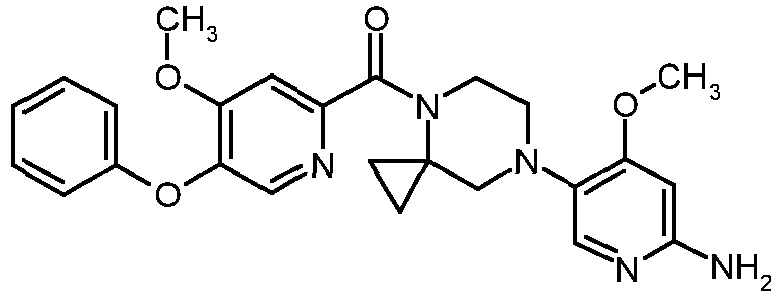
[7-(6-Amino-4-methoxy-pyridin-3-yl)-4,7-diaza-spiro[2.5]oct-4-yl]-(4-methoxy-5-phenoxy-pyridin-2-yl)-methanon 9 
[7-(6-Amino-4-methoxy-pyridin-3-yl)-4,7-diaza-spiro[2.5]oct-4-yl]-[5-(4-fluor-phenoxy)-4-methoxy-pyridin-2-yl]-methanon 10 
(6-Amino-4-methyl-3',4',5',6'-tetrahydro-2'H-[3,4'']bipyridinyl-1'-yl)-(4-methoxy-5-phenoxy-pyridin-2-yl)-methanon 11 
[4-(6-Amino-5-methoxy-pyridazin-3-yl)-piperidin-1-yl]-[5-(4-fluor-phenoxy)-4-methoxy-pyridin-2-yl]-methanon 12 
[4-(6-Amino-pyridin-3-yl)-piperazin-1-yl]-[4-methoxy-5-(4-methoxy-phenoxy)-pyridin-2-yl]-methanon 13 
[4-(6-Amino-pyridin-3-yl)-piperazin-1-yl]-[5-(4-fluor-phenoxy)-4-methoxy-pyridin-2-yl]-methanon 14 
(6-Amino-3',4',5',6'-tetrahydro-2'H-[3,4']bipyridinyl-1'-yl)-[5-(4-fluor-phenoxy)-4-methoxy-pyridin-2-yl]-methanon 15 
[4-(6-Amino-pyridin-3-yl)-piperazin-1-yl]-(4-methoxy-5-phenoxy-pyridin-2-yl)-methanon 16 
[4-(6-Amino-pyridazin-3-yl)-piperidin-1-yl]-(4-methoxy-5-phenoxy-pyridin-2-yl)-methanon 17 
[4-(6-Amino-pyridazin-3-yl)-piperidin-1-yl]-[5-(4-fluor-phenoxy)-4-methoxy-pyridin-2-yl]-methanon 18 
[(R)-4-(6-Amino-4-methyl-pyridin-3-yl)-2-hydroxymethyl-piperazin-1-yl]-(4-methoxy-5-phenoxy-pyridin-2-yl)-methanon 19 
(6-Amino-4-methoxy-3',4',5',6'-tetrahydro-2'H-[3,4']bipyridinyl-1'-yl)-[5-(2-fluor-benzyloxy)-4-methoxy-pyridin-2-yl]-methanon 20 
[(R)-4-(6-Amino-pyridin-3-yl)-2-hydroxymethyl-piperazin-1-yl]-[5-(4-fluor-phenoxy)-4-methoxy-pyridin-2-yl]-methanon 21 
[4-(6-Amino-5-methoxy-pyridazin-3-yl)-piperidin-1-yl]-(4-methoxy-5-phenoxy-pyridin-2-yl)-methanon 22 
(6-Amino-3',4',5',6'-tetrahydro-2'H-[3,4']bipyridinyl-1'-yl)-[4-methoxy-5-(4-methoxy-phenoxy)-pyridin-2-yl]-methanon 23 
(6-Amino-4-methoxy-3',4',5',6'-tetrahydro-2'H-[3,4']bipyridinyl-1'-yl)-(4-methoxy-5-phenoxy-pyridin-2-yl)-methanon 24 
(6-Amino-4-methoxy-3',4',5',6'-tetrahydro-2'H-[3,4']bipyridinyl-1'-yl)-[4-methoxy-5-(4-trifluormethyl-phenoxy)-pyridin-2-yl]-methanon 25 
[4-(6-Amino-pyridazin-3-yl)-piperidin-1-yl]-(5-cyclobutylmethoxy-4-methoxy-pyridin-2-yl)-methanon 26 
(6-Amino-4-methoxy-3',4',5',6'-tetrahydro-2'H-[3,4']bipyridinyl-1'-yl)-[4-methoxy-5-(1-methyl-cyclopropylmethoxy)-pyridin-2-yl]-methanon 27 
[(R)-4-(6-Amino-4-methoxy-pyridin-3-yl)-2-methoxymethyl-piperazin-1-yl]-(4-methoxy-5-phenoxy-pyridin-2-yl)-methanon 28 
(6-Amino-4-methoxy-3',4',5',6'-tetrahydro-2'H-[3,4']bipyridinyl-1'-yl)-[4-methoxy-5-(4-methoxy-phenoxy)-pyridin-2-yl]-methanon 29 
(6-Amino-4-methoxy-3',4',5',6'-tetrahydro-2'H-[3,4']bipyridinyl-1'-yl)-(5-cyclohexyloxy-4-methoxy-pyridin-2-yl)-methanon 30 
(6-Amino-4-methoxy-3',4',5',6'-tetrahydro-2'H-[3,4']bipyridinyl-1'-yl)-[5-(4-fluor-benzyloxy)-4-methoxy-pyridin-2-yl]-methanon 31 
[4-(6-Amino-pyridazin-3-yl)-piperidin-1-yl]-[4-methoxy-5-(4-trifluormethyl-phenoxy)-pyridin-2-yl]-methanon 32 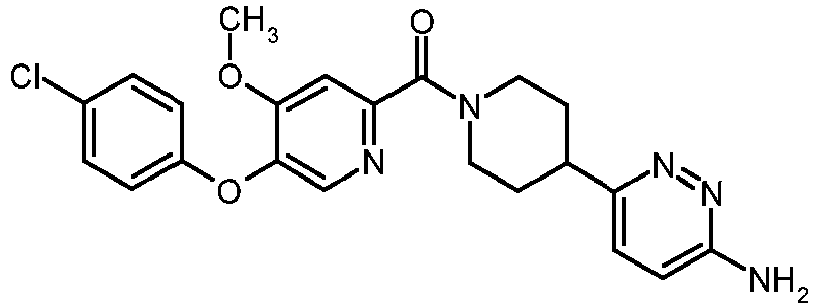
[4-(6-Amino-pyridazin-3-yl)-piperidin-1-yl]-[5-(4-chlor-phenoxy)-4-methoxy-pyridin-2-yl]-methanon 33 
(6-Amino-4-methoxy-3',4',5',6'-tetrahydro-2'H-[3,4']bipyridinyl-1'-yl)-(5-cyclopentyloxy-4-methoxy-pyridin-2-yl)-methanon 34 
[4-(6-Amino-pyridazin-3-yl)-piperidin-1-yl]-(5-isobutoxy-4-methoxy-pyridin-2-yl)-methanon 35 
(6-Amino-4-methoxy-3',4',5',6'-tetrahydro-2'H-[3,4']bipyridinyl-1'-yl)-(5-cyclopropylmethoxy-4-methoxy-pyridin-2-yl)-methanon 36 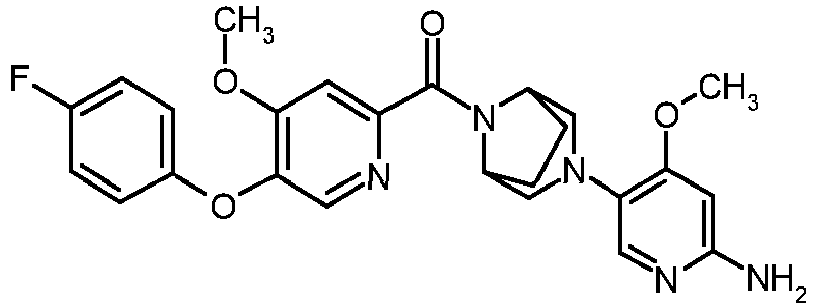
[3-(6-Amino-4-methoxy-pyridin-3-yl)-3,8-diaza-bicyclo[3.2.1]oct-8-yl]-[5-(4-fluor-phenoxy)-4-methoxy-pyridin-2-yl]-methanon 37 
(6-Amino-4-methoxy-3',4',5',6'-tetrahydro-2'H-[3,4']bipyridinyl-1'-yl)-(5-isobutoxy-4-methoxy-pyridin-2-yl)-methanon 38 
[4-(6-Amino-pyridazin-3-yl)-piperidin-1-yl]-[5-(4-cyclopropoxy-phenoxy)-4-methoxy-pyridin-2-yl]-methanon 39 
[4-(6-Amino-pyridazin-3-yl)-piperidin-1-yl]-[5-(4-fluor-benzyloxy)-4-methoxy-pyridin-2-yl]-methanon 40 
[(R)-4-(6-Amino-4-methoxy-pyridin-3-yl)-2-hydroxymethyl-piperazin-1-yl]-[5-(4-fluor-phenoxy)-4-methoxy-pyridin-2-yl]-methanon 41 
(6-Amino-4-methoxy-3',4',5',6'-tetrahydro-2'H-[3,4']bipyridinyl-1'-yl)-(5-benzyloxy-4-methoxy-pyridin-2-yl)-methanon 42 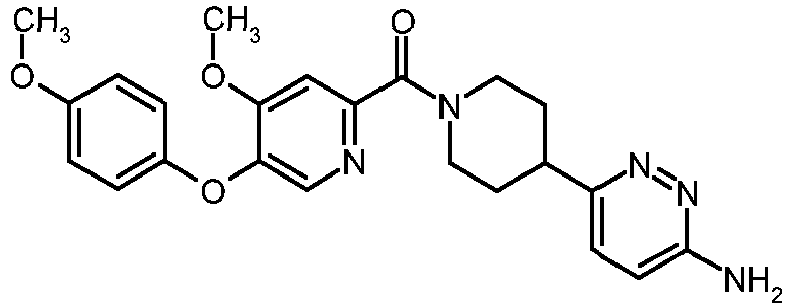
[4-(6-Amino-pyridazin-3-yl)-piperidin-1-yl]-[4-methoxy-5-(4-methoxy-phenoxy)-pyridin-2-yl]-methanon 43 
(6-Amino-4-methoxy-3',4',5',6'-tetrahydro-2'H-[3,4']bipyridinyl-1'-yl)-[5-(3,3-difluor-cyclobutylmethoxy)-4-methoxy-pyridin-2-yl]-methanon 44 
(6-Amino-4-methoxy-3',4',5',6'-tetrahydro-2'H-[3,4']bipyridinyl-1'-yl)-(4-methoxy-5-propoxy-pyridin-2-yl)-methanon 45 
[4-(6-Amino-4-methoxy-pyridazin-3-yl)-piperidin-1-yl]-(4-methoxy-5-phenoxy-pyridin-2-yl)-methanon 46 
(6-Amino-4-methoxy-3',4',5',6'-tetrahydro-2'H-[3,4']bipyridinyl-1'-yl)-[5-(2-cyclopropyl-ethoxy)-4-methoxy-pyridin-2-yl]-methanon 47 
(1R)-1-[(2R)-4-(6-amino-4-methoxypyridin-3-yl)-1-(5-phenoxypyridin-2-carbonyl)piperazin-2-yl]ethan-1-ol 48 
[3-(6-Amino-4-methoxy-pyridin-3-yl)-3,8-diaza-bicyclo[3.2.1]oct-8-yl]-(4-methoxy-5-phenoxy-pyridin-2-yl)-methanon 49 
(6-Amino-4-methoxy-3',4',5',6'-tetrahydro-2'H-[3,4']bipyridinyl-1'-yl)-(4-methoxy-5-phenethyloxy-pyridin-2-yl)-methanon 50 
(6-Amino-4-methoxy-3',4',5',6'-tetrahydro-2'H-[3,4']bipyridinyl-1'-yl)-(5-cyclobutylmethoxy-4-methoxy-pyridin-2-yl)-methanon 51 
[4-(6-Amino-pyridazin-3-yl)-piperidin-1-yl]-[5-(4-difluormethoxy-phenoxy)-4-methoxy-pyridin-2-yl]-methanon 52 
[(R)-4-(6-Amino-4-methoxy-pyridin-3-yl)-2-methoxymethyl-piperazin-1-yl]-[5-(4-fluor-phenoxy)-4-methoxy-pyridin-2-yl]-methanon 53 
[4-(6-Amino-pyridazin-3-yl)-piperidin-1-yl]-[5-(2-fluor-benzyloxy)-4-methoxy-pyridin-2-yl]-methanon 54 
(1S)-1-[(2R)-4-(6-amino-4-methoxypyridin-3-yl)-1-(5-phenoxypyridin-2-carbonyl)piperazin-2-yl] ethan-1-ol 55 
(6-Amino-4-methoxy-3',4',5',6'-tetrahydro-2'H-[3,4']bipyridinyl-1'-yl)-[5-(2,2-dimethyl-propoxy)-4-methoxy-pyridin-2-yl]-methanon 56 
[4-(6-Amino-5-methoxy-pyridazin-3-yl)-piperidin-1-yl]-[4-methoxy-5-(4-methoxy-phenoxy)-pyridin-2-yl]-methanon 57 
[4-(6-Amino-4-methoxy-pyridin-3-yl)-piperazin-1-yl]-(5-cyclopropylmethoxy-4-methoxy-pyridin-2-yl)-methanon 58 
[4-(6-Amino-pyridazin-3-yl)-piperidin-1-yl]-(5-cyclohexyloxy-4-methoxy-pyridin-2-yl)-methanon 59 
[(S)-4-(6-Amino-4-methoxy-pyridin-3-yl)-2-hydroxymethyl-piperazin-1-yl]-[5-(4-fluor-phenoxy)-4-methoxy-pyridin-2-yl]-methanon 60 
(6-Amino-4-methoxy-3',4',5',6'-tetrahydro-2'H-[3,4']bipyridinyl-1'-yl)-[5-(1-fluormethyl-cyclopropylmethoxy)-4-methoxy-pyridin-2-yl]-methanon 61 
(6-Amino-4-methoxy-3',4',5',6'-tetrahydro-2'H-[3,4']bipyridinyl-1'-yl)-(5-ethoxy-4-methoxy-pyridin-2-yl)-methanon 62 
[4-(6-Amino-pyridazin-3-yl)-piperidin-1-yl]-[5-(2-cyclopropyl-ethoxy)-4-methoxy-pyridin-2-yl]-methanon 63 
[7-(6-Amino-4-methoxy-pyridin-3-yl)-3-oxa-9-aza-bicyclo[3.3.1]non-9-yl]-(4-methoxy-5-phenoxy-pyridin-2-yl)-methanon 64 
[(R)-4-(6-Amino-4-methoxy-pyridin-3-yl)-2-hydroxymethyl-piperazin-1-yl]-(4-methoxy-5-phenoxy-pyridin-2-yl)-methanon 65 
(6-Amino-4-methoxy-3',4',5',6'-tetrahydro-2'H-[3,4']bipyridinyl-1'-yl)-[5-((S)-1-cyclopropyl-ethoxy)-4-methoxy-pyridin-2-yl]-methanon 66 
[(S)-4-(6-Amino-4-methoxy-pyridin-3-yl)-2-hydroxymethyl-piperazin-1-yl]-(4-methoxy-5-phenoxy-pyridin-2-yl)-methanon 67 
(6-Amino-4-methoxy-3',4',5',6'-tetrahydro-2'H-[3,4']bipyridinyl-1'-yl)-(5-isopropoxy-4-methoxy-pyridin-2-yl)-methanon 68 
[4-(6-Amino-pyridazin-3-yl)-piperidin-1-yl]-(4-methoxy-5-phenethyloxy-pyridin-2-yl)-methanon 69 
[4-(6-Amino-pyridazin-3-yl)-piperidin-1-yl]-[5-(2,2-dimethyl-propoxy)-4-methoxy-pyridin-2-yl]-methanon 70 
[4-(6-Amino-pyridazin-3-yl)-piperidin-1-yl]-[4-methoxy-5-(1-methyl-cyclopropylmethoxy)-pyridin-2-yl]-methanon 71 
[4-(6-Amino-pyridazin-3-yl)-piperidin-1-yl]-(4-methoxy-5-propoxy-pyridin-2-yl)-methanon 72 
(6-Amino-4-methoxy-3',4',5',6'-tetrahydro-2'H-[3,4']bipyridinyl-1'-yl)-[5-((R)-1-cyclopropyl-ethoxy)-4-methoxy-pyridin-2-yl]-methanon 73 
[4-(6-Amino-4-methyl-pyridazin-3-yl)-piperidin-1-yl]-(5-cyclopropylmethoxy-4-methoxy-pyridin-2-yl)-methanon 74 
[4-(6-Amino-pyridazin-3-yl)-piperidin-1-yl]-[5-((S)-1-cyclopropyl-ethoxy)-4-methoxy-pyridin-2-yl]-methanon 75 
[4-(6-Amino-pyridazin-3-yl)-piperidin-1-yl]-[4-methoxy-5-(4-trifluormethoxy-phenoxy)-pyridin-2-yl]-methanon 76 
[(R)-4-(6-Amino-pyridin-3-yl)-2-hydroxymethyl-piperazin-1-yl]-(4-methoxy-5-phenoxy-pyridin-2-yl)-methanon 77 
[(R)-4-(6-Amino-pyridin-3-yl)-2-hydroxymethyl-piperazin-1-yl]-[4-methoxy-5-(4-methoxy-phenoxy)-pyridin-2-yl]-methanon 78 
[4-(6-Amino-pyridazin-3-yl)-piperidin-1-yl]-[5-(phenoxy)-4-ethoxy-pyridin-2-yl]-methanon 79 
(6-Amino-4-cyclopropoxy-3',4',5',6'-tetrahydro-2'H-[3,4']bipyridinyl-1'-yl)-[5-(phenoxy)-4-methoxy-pyridin-2-yl]-methanon 80 
(6-Amino-4-propoxy-3',4',5',6'-tetrahydro-2'H-[3,4']bipyridinyl-1'-yl)-[5-(phenoxy)-4-methoxy-pyridin-2-yl]-methanon 81 
[4-(6-Amino-pyridazin-3-yl)-piperidin-1-yl]-[5-(4-fluor-phenoxy)-4-ethoxy-pyridin-2-yl]-methanon 82 
[3-(6-Amino-pyridazin-3-yl)-8-aza-bicyclo[3.2.1]oct-8-yl]-[4-ethoxy-5-(4-fluor-phenoxy)-pyridin-2-yl]-methanon 83 
5-Methoxy-6-(1-{5-[4-(trifluormethyl)-phenoxy]-pyridin-2-carbonyl}piperidin-4-yl)-pyridazin-3-amin 84 
4-Methoxy-5-[1-(4-methoxy-5-{ [trans-3-(trifluormethyl)cyclobutyl]-methoxy}pyridin-2-carbonyl)-piperidin-4-yl]pyridin-2-amin 85 
4-Methoxy-5-[1-(4-methoxy-5-{[(cis-3-(trifluormethyl) - cyclobutyl]methoxy}-pyridin-2-carbonyl)piperidin-4-yl]pyridin-2-amin 86 
4-Methoxy-5-(1-{4-methoxy-5-[(2)-3,3,3-trifluor-2-methylpropoxy]-pyridin-2-carbonyl}piperidin-4-yl)pyridin-2-amin 87 
5-(1-{5-[(2,2-Difluorcyclobutyl)-methoxy]-4-methoxy-pyridin-2-carbonyl}-piperidin-4-yl)-4-methoxypyridin-2-amin - Pharmazeutisch akzeptables Salz einer Verbindung gemäß Anspruch 10.
- Pharmazeutische Zusammensetzung, umfassend eine der Verbindungen der Ansprüche 1 bis 10 oder ein pharmazeutisch akzeptables Salz davon und optional einen pharmazeutisch akzeptablen Hilfsstoff.
- Verbindung gemäß einem der Ansprüche 1 bis 10 oder ein pharmazeutisch annehmbares Salz davon zur Verwendung bei der Behandlung einer Krankheit oder Störung, die durch TRPC6-Inhibition gelindert werden kann, wobei die Krankheit oder Störung aus der Gruppe ausgewählt ist, die aus Herzhypertrophie, Ischämie, ischämischer Reperfusionsschädigung, Bluthochdruck, pulmonaler arterieller Hypertonie, idiopathischer pulmonaler arterieller Hypertonie, Restenose, chronischer obstruktiver Lungenerkrankung, zystischer Fibrose, Alzheimer-Krankheit, Parkinson-Krankheit, Huntington-Krankheit, amyotropher Lateralsklerose (ALS), Traumainduzierten Hirnerkrankungen, Asthma, chronischer obstruktiver Lungenerkrankung, rheumatoider Arthritis, Osteoarthritis, entzündlicher Darmerkrankung, Multipler Sklerose, Muskeldystrophie, Duchenne-Muskeldystrophie, Präeklampsie und schwangerschaftsinduziertem Bluthochdruck, nichtalkoholischer Steatohepatitis, Minimal-Change-Glomerulopathie (Minimal Change Disease), fokaler segmentaler Glomerulosklerose (FSGS), nephrotischem Syndrom, diabetischer Nephropathie oder diabetischer Nierenerkrankung (DKD), chronischer Nierenerkrankung, Niereninsuffizienz, Nierenerkrankung im Endstadium, Ischämie oder einer ischämischen Reperfusionsschädigung, Krebs, IPF (idiopathische Lungenfibrose), ARDS (akutes Atemwegssyndrom), Emphysem und Diabetes besteht.
Priority Applications (5)
| Application Number | Priority Date | Filing Date | Title |
|---|---|---|---|
| DK20197194.2T DK3786160T3 (da) | 2017-10-27 | 2018-10-25 | Pyridinderivater og terapeutiske anvendelser deraf som trpc6-inhibitorer |
| SI201830924T SI3700902T1 (sl) | 2017-10-27 | 2018-10-25 | Inhibitorji trpc6 |
| HRP20230502TT HRP20230502T1 (hr) | 2017-10-27 | 2018-10-25 | Inhibitori trpc6 |
| EP20197194.2A EP3786160B1 (de) | 2017-10-27 | 2018-10-25 | Pyridin-derivate und deren therapeutische verwendung als trpc6-inhibitoren |
| RS20230382A RS64271B1 (sr) | 2017-10-27 | 2018-10-25 | Inhibitori trpc6 |
Applications Claiming Priority (3)
| Application Number | Priority Date | Filing Date | Title |
|---|---|---|---|
| US201762577883P | 2017-10-27 | 2017-10-27 | |
| US201862628313P | 2018-02-09 | 2018-02-09 | |
| PCT/EP2018/079276 WO2019081637A1 (en) | 2017-10-27 | 2018-10-25 | CARBONYL PYRIDINE DERIVATIVES AND THEIR THERAPEUTIC USES AS TRPC6 INHIBITORS |
Related Child Applications (2)
| Application Number | Title | Priority Date | Filing Date |
|---|---|---|---|
| EP20197194.2A Division EP3786160B1 (de) | 2017-10-27 | 2018-10-25 | Pyridin-derivate und deren therapeutische verwendung als trpc6-inhibitoren |
| EP20197194.2A Division-Into EP3786160B1 (de) | 2017-10-27 | 2018-10-25 | Pyridin-derivate und deren therapeutische verwendung als trpc6-inhibitoren |
Publications (3)
| Publication Number | Publication Date |
|---|---|
| EP3700902A1 EP3700902A1 (de) | 2020-09-02 |
| EP3700902B1 true EP3700902B1 (de) | 2023-03-08 |
| EP3700902B8 EP3700902B8 (de) | 2023-08-02 |
Family
ID=64270818
Family Applications (2)
| Application Number | Title | Priority Date | Filing Date |
|---|---|---|---|
| EP18800513.6A Active EP3700902B8 (de) | 2017-10-27 | 2018-10-25 | Pyridincarbonylderivate und ihre therapeutische verwendung als trpc6-inhibitoren |
| EP20197194.2A Active EP3786160B1 (de) | 2017-10-27 | 2018-10-25 | Pyridin-derivate und deren therapeutische verwendung als trpc6-inhibitoren |
Family Applications After (1)
| Application Number | Title | Priority Date | Filing Date |
|---|---|---|---|
| EP20197194.2A Active EP3786160B1 (de) | 2017-10-27 | 2018-10-25 | Pyridin-derivate und deren therapeutische verwendung als trpc6-inhibitoren |
Country Status (30)
| Country | Link |
|---|---|
| US (4) | US10800757B2 (de) |
| EP (2) | EP3700902B8 (de) |
| JP (2) | JP7217273B6 (de) |
| KR (2) | KR20200125758A (de) |
| CN (1) | CN111527078B (de) |
| AU (2) | AU2018355743B2 (de) |
| CA (1) | CA3078769A1 (de) |
| CL (2) | CL2020001097A1 (de) |
| CY (2) | CY1125488T1 (de) |
| DK (2) | DK3786160T3 (de) |
| ES (2) | ES2924933T3 (de) |
| FI (1) | FI3700902T3 (de) |
| HR (2) | HRP20230502T1 (de) |
| HU (2) | HUE059450T2 (de) |
| IL (2) | IL274039B (de) |
| LT (2) | LT3700902T (de) |
| MX (1) | MX387232B (de) |
| MY (1) | MY202126A (de) |
| PE (1) | PE20210154A1 (de) |
| PH (1) | PH12020550503A1 (de) |
| PL (2) | PL3700902T3 (de) |
| PT (2) | PT3700902T (de) |
| RS (2) | RS64271B1 (de) |
| SA (1) | SA520411843B1 (de) |
| SG (2) | SG10202011632RA (de) |
| SI (2) | SI3700902T1 (de) |
| TW (2) | TWI780246B (de) |
| UA (1) | UA128474C2 (de) |
| WO (1) | WO2019081637A1 (de) |
| ZA (1) | ZA202002372B (de) |
Families Citing this family (13)
| Publication number | Priority date | Publication date | Assignee | Title |
|---|---|---|---|---|
| DK3786160T3 (da) * | 2017-10-27 | 2022-08-22 | Boehringer Ingelheim Int | Pyridinderivater og terapeutiske anvendelser deraf som trpc6-inhibitorer |
| US11485740B2 (en) * | 2018-02-15 | 2022-11-01 | Boehringer Ingelheim International Gmbh | Inhibitors of TRPC6 |
| US11370771B2 (en) * | 2018-02-16 | 2022-06-28 | Boehringer Ingelheim International Gmbh | Inhibitors of TRPC6 |
| IL315313A (en) * | 2018-08-24 | 2024-10-01 | Xeniopro GmbH | Aromatic molecules for use in the treatment of pathological conditions |
| WO2020208002A1 (en) * | 2019-04-12 | 2020-10-15 | Boehringer Ingelheim International Gmbh | Inhibitors of trpc6 |
| JP7594274B2 (ja) | 2019-10-24 | 2024-12-04 | 国立大学法人大阪大学 | 難聴の予防および/または治療用医薬組成物 |
| WO2021160625A1 (en) | 2020-02-11 | 2021-08-19 | Klinikum Rechts Der Isar | Administration of calcium channel trpc6 inhibitors using balloons, stents or other medical devices |
| EP4135696A1 (de) * | 2020-04-16 | 2023-02-22 | Boehringer Ingelheim International GmbH | Inhibitoren von trpc6 zur behandlung von atemwegserkrankungen |
| AR121846A1 (es) | 2020-04-16 | 2022-07-13 | Teijin Pharma Ltd | Derivado de arilo o heteroarilo |
| CN113105318B (zh) * | 2021-02-23 | 2022-05-20 | 中山大学 | 一种2,2-二氟环丁烷-1-羧酸的制备方法及应用 |
| AU2022366192A1 (en) * | 2021-10-15 | 2024-02-29 | Boehringer Ingelheim International Gmbh | Trpc6 inhibitory compounds for treating sepsis |
| JP2025023360A (ja) * | 2021-12-06 | 2025-02-17 | 国立大学法人 熊本大学 | Trpc6の発現を抑制する方法 |
| AU2024328580A1 (en) | 2023-08-18 | 2026-02-05 | Boehringer Ingelheim International Gmbh | Inhibitors of trpc6 for treating focal segmental glomerulosclerosis |
Family Cites Families (50)
| Publication number | Priority date | Publication date | Assignee | Title |
|---|---|---|---|---|
| CA2071897A1 (en) | 1989-12-28 | 1991-06-29 | Richard A. Glennon | Sigma receptor ligands and the use thereof |
| AU676993B2 (en) | 1991-06-27 | 1997-04-10 | Virginia Commonwealth University | Sigma receptor ligands and the use thereof |
| NZ257955A (en) | 1992-12-02 | 1996-05-28 | Pfizer | Catechol diethers pharmaceutical compositions |
| CN1129581C (zh) | 1998-09-22 | 2003-12-03 | 山之内制药株式会社 | 氰基苯基衍生物 |
| WO2001064642A2 (en) | 2000-02-29 | 2001-09-07 | Cor Therapeutics, Inc. | Benzamides and related inhibitors of factor xa |
| EP1301484A2 (de) | 2000-07-20 | 2003-04-16 | Neurogen Corporation | Capsaicin-rezeptor-liganden |
| DE60230266D1 (de) | 2001-06-15 | 2009-01-22 | Astellas Pharma Inc | Phenylpyridincarbonyl piperazinderivate |
| JP4186518B2 (ja) * | 2001-06-15 | 2008-11-26 | アステラス製薬株式会社 | フェニルピリジン誘導体 |
| NI200300045A (es) | 2002-04-26 | 2005-07-08 | Pfizer Prod Inc | Inhibidores de triariloxiariloxipirimidin-2,4,6-triona de metaloproteinasa. |
| DE10222291A1 (de) | 2002-05-18 | 2003-11-27 | Schlafhorst & Co W | Faserbandzuführeinrichtung |
| CN1150176C (zh) | 2002-05-22 | 2004-05-19 | 上海医药工业研究院 | 芳烷酮哌嗪衍生物及其应用 |
| CA2581745A1 (en) | 2004-10-13 | 2006-04-27 | Neurogen Corporation | Aryl substituted 8-azabicyclo[3.2.1]octane compounds as ligands of the melanin concentrating hormone receptor |
| DE102005044814A1 (de) | 2005-05-19 | 2006-11-23 | Grünenthal GmbH | Substituierte Sprio-Verbindungen und deren Verwendung zur Herstellung von Arzneimitteln |
| PE20070795A1 (es) | 2005-10-28 | 2007-08-24 | Lilly Co Eli | Compuestos pirazol-urea-heterociclicos como inhibidores de cinasa |
| US7638531B2 (en) | 2005-12-21 | 2009-12-29 | Schering Corporation | Phenoxypiperidines and analogs thereof useful as histamine H3 antagonists |
| JP5019768B2 (ja) | 2006-03-23 | 2012-09-05 | 独立行政法人科学技術振興機構 | 新規低分子化合物およびその製造方法 |
| CA2681162C (en) | 2007-03-15 | 2015-11-24 | Novartis Ag | Benzyl and pyridine derivatives as modulators of hedgehog pathway |
| JP5082538B2 (ja) | 2007-03-28 | 2012-11-28 | Dic株式会社 | ピペラジン化合物 |
| JP2012512877A (ja) | 2008-12-18 | 2012-06-07 | ベーリンガー インゲルハイム インターナショナル ゲゼルシャフト ミット ベシュレンクテル ハフツング | セロトニン5−ht2b受容体阻害剤 |
| US20100234603A1 (en) | 2009-03-13 | 2010-09-16 | Xin Linghu | Process for Making Substituted Aryl Sulfone Intermediates |
| US20110039850A1 (en) | 2009-08-12 | 2011-02-17 | Mhairi Copland | Leukemia Treatment |
| WO2011044001A1 (en) | 2009-10-09 | 2011-04-14 | Irm Llc | Compounds and compositions as modulators of gpr119 activity |
| KR20120107962A (ko) | 2009-11-18 | 2012-10-04 | 노파르티스 아게 | 고형 종양 및 다른 악성종양의 치료를 위한 방법 및 조성물 |
| JP5879273B2 (ja) | 2010-03-01 | 2016-03-08 | ジーティーエックス・インコーポレイテッド | 癌を処置するための化合物 |
| ES2653966T3 (es) | 2010-04-27 | 2018-02-09 | Mitsubishi Tanabe Pharma Corporation | Nuevo derivado de amida y su uso como medicina |
| WO2011143365A1 (en) | 2010-05-13 | 2011-11-17 | Amgen Inc. | Nitrogen heterocyclic compounds useful as pde10 inhibitors |
| PE20130774A1 (es) | 2010-07-29 | 2013-06-26 | Rigel Pharmaceuticals Inc | Compuestos heterociclicos activadores de ampk y metodos para emplearlos |
| WO2012158784A2 (en) | 2011-05-16 | 2012-11-22 | Theodore Mark Kamenecka | Modulators of the nuclear hormone receptor ror |
| JP5800786B2 (ja) | 2011-10-26 | 2015-10-28 | 田辺三菱製薬株式会社 | 新規アミド誘導体を有効成分として含有する医薬組成物 |
| WO2013066714A1 (en) | 2011-10-31 | 2013-05-10 | Merck Sharp & Dohme Corp. | Inhibitors of the renal outer medullary potassium channel |
| CN103360343B (zh) | 2012-03-30 | 2017-04-19 | 凯惠药业(上海)有限公司 | 一种哌嗪酰胺类化合物的制备方法 |
| WO2014139144A1 (en) | 2013-03-15 | 2014-09-18 | Agios Pharmaceuticals, Inc. | Therapeutic compounds and compositions |
| ES2804271T3 (es) * | 2013-05-27 | 2021-02-05 | Hoffmann La Roche | Nuevos compuestos de 3,4-dihidro-2H-isoquinolin-1-ona y 2,3-dihidro-isoindol-1-ona |
| US20150087673A1 (en) | 2013-09-26 | 2015-03-26 | Rigel Pharmaceuticals, Inc. | Methods for using and biomarkers for ampk-activating compounds |
| KR20160100408A (ko) | 2014-01-06 | 2016-08-23 | 리젠 파마슈티컬스 소시에떼 아노님 | 신규한 글루타미나제 저해제 |
| WO2015199206A1 (ja) | 2014-06-27 | 2015-12-30 | 塩野義製薬株式会社 | Trpv4阻害活性を有する6員環誘導体 |
| UY36391A (es) | 2014-11-05 | 2016-06-01 | Flexus Biosciences Inc | Compuestos moduladores de la enzima indolamina 2,3-dioxigenasa (ido1), sus métodos de síntesis y composiciones farmacèuticas que las contienen |
| MA41598A (fr) | 2015-02-25 | 2018-01-02 | Constellation Pharmaceuticals Inc | Composés thérapeutiques de pyridazine et leurs utilisations |
| WO2017066705A1 (en) | 2015-10-14 | 2017-04-20 | Aquinnah Pharmaceuticals, Inc. | Compounds, compositions and methods of use against stress granules |
| CN107176927B (zh) | 2016-03-12 | 2020-02-18 | 福建金乐医药科技有限公司 | 组蛋白去甲基化酶lsd1抑制剂 |
| PL3429591T3 (pl) | 2016-03-16 | 2023-07-17 | Kura Oncology, Inc. | Podstawione pochodne tieno[2,3-d]pirymidyny jako inhibitory meniny-mll i metody ich zastosowania |
| RU2019101420A (ru) | 2016-06-20 | 2020-07-21 | Ратгерс, Де Стейт Юниверсити Оф Нью Джерси | Терапевтические соединения |
| CN107540636A (zh) | 2016-06-29 | 2018-01-05 | 成都贝斯凯瑞生物科技有限公司 | 一种含氮杂环衍生物及其应用 |
| CN106317050B (zh) * | 2016-08-24 | 2018-11-23 | 烟台大学 | 一种苯基噻唑衍生物及其制备方法与应用 |
| JPWO2018159827A1 (ja) | 2017-03-03 | 2020-01-09 | 国立大学法人京都大学 | 植物ステロイドホルモン(ブラシノライド)様活性をもつ非ステロイド化合物の創製 |
| TW201902875A (zh) | 2017-03-15 | 2019-01-16 | 美商亞瑟尼克斯公司 | 聯芳基哌啶醯胺化合物及其使用方法 |
| DK3786160T3 (da) | 2017-10-27 | 2022-08-22 | Boehringer Ingelheim Int | Pyridinderivater og terapeutiske anvendelser deraf som trpc6-inhibitorer |
| EP3710458B1 (de) * | 2017-11-16 | 2026-03-25 | Principia Biopharma Inc. | Immunproteasominhibitoren |
| US11485740B2 (en) * | 2018-02-15 | 2022-11-01 | Boehringer Ingelheim International Gmbh | Inhibitors of TRPC6 |
| US11370771B2 (en) * | 2018-02-16 | 2022-06-28 | Boehringer Ingelheim International Gmbh | Inhibitors of TRPC6 |
-
2018
- 2018-10-25 DK DK20197194.2T patent/DK3786160T3/da active
- 2018-10-25 KR KR1020207031025A patent/KR20200125758A/ko not_active Withdrawn
- 2018-10-25 HU HUE20197194A patent/HUE059450T2/hu unknown
- 2018-10-25 LT LTEPPCT/EP2018/079276T patent/LT3700902T/lt unknown
- 2018-10-25 US US16/170,154 patent/US10800757B2/en not_active Ceased
- 2018-10-25 SI SI201830924T patent/SI3700902T1/sl unknown
- 2018-10-25 CN CN201880070122.4A patent/CN111527078B/zh active Active
- 2018-10-25 WO PCT/EP2018/079276 patent/WO2019081637A1/en not_active Ceased
- 2018-10-25 CA CA3078769A patent/CA3078769A1/en active Pending
- 2018-10-25 MY MYPI2020001894A patent/MY202126A/en unknown
- 2018-10-25 HU HUE18800513A patent/HUE062460T2/hu unknown
- 2018-10-25 PT PT188005136T patent/PT3700902T/pt unknown
- 2018-10-25 PL PL18800513.6T patent/PL3700902T3/pl unknown
- 2018-10-25 UA UAA202003145A patent/UA128474C2/uk unknown
- 2018-10-25 EP EP18800513.6A patent/EP3700902B8/de active Active
- 2018-10-25 SG SG10202011632RA patent/SG10202011632RA/en unknown
- 2018-10-25 DK DK18800513.6T patent/DK3700902T3/da active
- 2018-10-25 MX MX2020004283A patent/MX387232B/es unknown
- 2018-10-25 LT LTEP20197194.2T patent/LT3786160T/lt unknown
- 2018-10-25 FI FIEP18800513.6T patent/FI3700902T3/fi active
- 2018-10-25 AU AU2018355743A patent/AU2018355743B2/en active Active
- 2018-10-25 PL PL20197194.2T patent/PL3786160T3/pl unknown
- 2018-10-25 PE PE2020000424A patent/PE20210154A1/es unknown
- 2018-10-25 ES ES20197194T patent/ES2924933T3/es active Active
- 2018-10-25 HR HRP20230502TT patent/HRP20230502T1/hr unknown
- 2018-10-25 JP JP2020523445A patent/JP7217273B6/ja active Active
- 2018-10-25 HR HRP20220991TT patent/HRP20220991T1/hr unknown
- 2018-10-25 KR KR1020207014013A patent/KR102724066B1/ko active Active
- 2018-10-25 US US16/170,178 patent/US10889568B2/en active Active
- 2018-10-25 ES ES18800513T patent/ES2946274T3/es active Active
- 2018-10-25 PT PT201971942T patent/PT3786160T/pt unknown
- 2018-10-25 SG SG11202003367TA patent/SG11202003367TA/en unknown
- 2018-10-25 RS RS20230382A patent/RS64271B1/sr unknown
- 2018-10-25 TW TW107137733A patent/TWI780246B/zh active
- 2018-10-25 EP EP20197194.2A patent/EP3786160B1/de active Active
- 2018-10-25 SI SI201830732T patent/SI3786160T1/sl unknown
- 2018-10-25 TW TW109138850A patent/TWI780511B/zh active
- 2018-10-25 RS RS20220752A patent/RS63535B1/sr unknown
-
2020
- 2020-04-19 IL IL274039A patent/IL274039B/en unknown
- 2020-04-23 CL CL2020001097A patent/CL2020001097A1/es unknown
- 2020-04-26 SA SA520411843A patent/SA520411843B1/ar unknown
- 2020-04-27 PH PH12020550503A patent/PH12020550503A1/en unknown
- 2020-05-04 ZA ZA2020/02372A patent/ZA202002372B/en unknown
- 2020-09-22 IL IL277493A patent/IL277493B/en unknown
- 2020-10-02 CL CL2020002562A patent/CL2020002562A1/es unknown
- 2020-10-06 AU AU2020250185A patent/AU2020250185B2/en active Active
- 2020-10-08 JP JP2020170563A patent/JP6979502B2/ja active Active
- 2020-12-08 US US17/115,667 patent/US20210163449A1/en not_active Abandoned
-
2021
- 2021-05-28 US US17/334,097 patent/USRE49699E1/en active Active
-
2022
- 2022-08-18 CY CY20221100560T patent/CY1125488T1/el unknown
-
2023
- 2023-06-07 CY CY20231100270T patent/CY1126109T1/el unknown
Also Published As
Similar Documents
| Publication | Publication Date | Title |
|---|---|---|
| EP3700902B1 (de) | Pyridincarbonylderivate und ihre therapeutische verwendung als trpc6-inhibitoren | |
| EP3752499B1 (de) | Inhibitoren von trpc6 | |
| US12156874B2 (en) | Inhibitors of TRPC6 | |
| HK40045092A (en) | Pyridine derivatives and therapeutic uses thereof as trpc6 inhibitors | |
| HK40045092B (en) | Pyridine derivatives and therapeutic uses thereof as trpc6 inhibitors | |
| HK40035138A (en) | Inhibitors of trpc6 | |
| HK40035138B (en) | Inhibitors of trpc6 | |
| EA042674B1 (ru) | Пиридинкарбонильные производные и их терапевтические применения в качестве ингибиторов trpc6 | |
| EA040737B1 (ru) | Пиридинкарбонильные производные и их терапевтические применения в качестве ингибиторов trpc6 | |
| BR112020007818B1 (pt) | Compostos derivados de piridina carbonila, sal farmaceuticamente aceitável dos mesmos, composição farmacêutica que os compreende e seu uso como inibidores de trpc6 |
Legal Events
| Date | Code | Title | Description |
|---|---|---|---|
| STAA | Information on the status of an ep patent application or granted ep patent |
Free format text: STATUS: UNKNOWN |
|
| STAA | Information on the status of an ep patent application or granted ep patent |
Free format text: STATUS: THE INTERNATIONAL PUBLICATION HAS BEEN MADE |
|
| PUAI | Public reference made under article 153(3) epc to a published international application that has entered the european phase |
Free format text: ORIGINAL CODE: 0009012 |
|
| STAA | Information on the status of an ep patent application or granted ep patent |
Free format text: STATUS: REQUEST FOR EXAMINATION WAS MADE |
|
| 17P | Request for examination filed |
Effective date: 20200527 |
|
| AK | Designated contracting states |
Kind code of ref document: A1 Designated state(s): AL AT BE BG CH CY CZ DE DK EE ES FI FR GB GR HR HU IE IS IT LI LT LU LV MC MK MT NL NO PL PT RO RS SE SI SK SM TR |
|
| AX | Request for extension of the european patent |
Extension state: BA ME |
|
| RAV | Requested validation state of the european patent: fee paid |
Extension state: MA Effective date: 20200527 Extension state: TN Effective date: 20200527 |
|
| REG | Reference to a national code |
Ref country code: HK Ref legal event code: DE Ref document number: 40035138 Country of ref document: HK |
|
| STAA | Information on the status of an ep patent application or granted ep patent |
Free format text: STATUS: EXAMINATION IS IN PROGRESS |
|
| 17Q | First examination report despatched |
Effective date: 20210824 |
|
| REG | Reference to a national code |
Ref country code: DE Ref legal event code: R079 Ref document number: 602018047027 Country of ref document: DE Free format text: PREVIOUS MAIN CLASS: C07D0401140000 Ipc: C07D0487080000 |
|
| RIC1 | Information provided on ipc code assigned before grant |
Ipc: C07D 401/14 20060101ALI20220630BHEP Ipc: C07D 213/04 20060101ALI20220630BHEP Ipc: C07D 498/08 20060101ALI20220630BHEP Ipc: C07D 451/02 20060101ALI20220630BHEP Ipc: C07D 487/08 20060101AFI20220630BHEP |
|
| GRAP | Despatch of communication of intention to grant a patent |
Free format text: ORIGINAL CODE: EPIDOSNIGR1 |
|
| STAA | Information on the status of an ep patent application or granted ep patent |
Free format text: STATUS: GRANT OF PATENT IS INTENDED |
|
| INTG | Intention to grant announced |
Effective date: 20220817 |
|
| GRAS | Grant fee paid |
Free format text: ORIGINAL CODE: EPIDOSNIGR3 |
|
| RIN1 | Information on inventor provided before grant (corrected) |
Inventor name: WU, XINYUAN Inventor name: TURNER, MICHAEL ROBERT Inventor name: TAKAHASHI, HIDENORI Inventor name: SURPRENANT, SIMON Inventor name: SARKO, CHRISTOPHER RONALD Inventor name: RAZAVI, HOSSEIN Inventor name: LOWE, MICHAEL D. Inventor name: SMITH KEENAN, LANA LOUISE Inventor name: HEINE, NIKLAS Inventor name: GOTTSCHLING, DIRK Inventor name: BOUYSSOU, THIERRY |
|
| GRAA | (expected) grant |
Free format text: ORIGINAL CODE: 0009210 |
|
| STAA | Information on the status of an ep patent application or granted ep patent |
Free format text: STATUS: THE PATENT HAS BEEN GRANTED |
|
| AK | Designated contracting states |
Kind code of ref document: B1 Designated state(s): AL AT BE BG CH CY CZ DE DK EE ES FI FR GB GR HR HU IE IS IT LI LT LU LV MC MK MT NL NO PL PT RO RS SE SI SK SM TR |
|
| REG | Reference to a national code |
Ref country code: TN Ref legal event code: VAGR Ref document number: TN/P/2023/000121 Country of ref document: TN |
|
| REG | Reference to a national code |
Ref country code: CH Ref legal event code: EP Ref country code: AT Ref legal event code: REF Ref document number: 1552526 Country of ref document: AT Kind code of ref document: T Effective date: 20230315 |
|
| REG | Reference to a national code |
Ref country code: IE Ref legal event code: FG4D |
|
| REG | Reference to a national code |
Ref country code: DE Ref legal event code: R096 Ref document number: 602018047027 Country of ref document: DE |
|
| REG | Reference to a national code |
Ref country code: DK Ref legal event code: T3 Effective date: 20230516 |
|
| REG | Reference to a national code |
Ref country code: PT Ref legal event code: SC4A Ref document number: 3700902 Country of ref document: PT Date of ref document: 20230530 Kind code of ref document: T Free format text: AVAILABILITY OF NATIONAL TRANSLATION Effective date: 20230524 |
|
| REG | Reference to a national code |
Ref country code: NL Ref legal event code: FP |
|
| P01 | Opt-out of the competence of the unified patent court (upc) registered |
Effective date: 20230509 |
|
| REG | Reference to a national code |
Ref country code: SE Ref legal event code: TRGR |
|
| REG | Reference to a national code |
Ref country code: MA Ref legal event code: VAGR Ref document number: 50457 Country of ref document: MA Kind code of ref document: B1 |
|
| REG | Reference to a national code |
Ref country code: CH Ref legal event code: PK Free format text: BERICHTIGUNG B8 Ref country code: ES Ref legal event code: FG2A Ref document number: 2946274 Country of ref document: ES Kind code of ref document: T3 Effective date: 20230714 |
|
| REG | Reference to a national code |
Ref country code: EE Ref legal event code: FG4A Ref document number: E023339 Country of ref document: EE Effective date: 20230601 |
|
| REG | Reference to a national code |
Ref country code: GR Ref legal event code: EP Ref document number: 20230400825 Country of ref document: GR Effective date: 20230710 |
|
| REG | Reference to a national code |
Ref country code: NO Ref legal event code: T2 Effective date: 20230308 |
|
| REG | Reference to a national code |
Ref country code: SK Ref legal event code: T3 Ref document number: E 41854 Country of ref document: SK |
|
| REG | Reference to a national code |
Ref country code: HR Ref legal event code: T1PR Ref document number: P20230502 Country of ref document: HR |
|
| REG | Reference to a national code |
Ref country code: HR Ref legal event code: ODRP Ref document number: P20230502 Country of ref document: HR Payment date: 20230911 Year of fee payment: 6 |
|
| PG25 | Lapsed in a contracting state [announced via postgrant information from national office to epo] |
Ref country code: SM Free format text: LAPSE BECAUSE OF FAILURE TO SUBMIT A TRANSLATION OF THE DESCRIPTION OR TO PAY THE FEE WITHIN THE PRESCRIBED TIME-LIMIT Effective date: 20230308 |
|
| REG | Reference to a national code |
Ref country code: HU Ref legal event code: AG4A Ref document number: E062460 Country of ref document: HU |
|
| REG | Reference to a national code |
Ref country code: DE Ref legal event code: R097 Ref document number: 602018047027 Country of ref document: DE |
|
| PLBE | No opposition filed within time limit |
Free format text: ORIGINAL CODE: 0009261 |
|
| STAA | Information on the status of an ep patent application or granted ep patent |
Free format text: STATUS: NO OPPOSITION FILED WITHIN TIME LIMIT |
|
| REG | Reference to a national code |
Ref country code: AT Ref legal event code: UEP Ref document number: 1552526 Country of ref document: AT Kind code of ref document: T Effective date: 20230308 |
|
| 26N | No opposition filed |
Effective date: 20231211 |
|
| REG | Reference to a national code |
Ref country code: HR Ref legal event code: ODRP Ref document number: P20230502 Country of ref document: HR Payment date: 20240916 Year of fee payment: 7 |
|
| REG | Reference to a national code |
Ref country code: SK Ref legal event code: PC4A Ref document number: E 41854 Country of ref document: SK Owner name: BOEHRINGER INGELHEIM INTERNATIONAL GMBH, INGEL, DE Free format text: FORMER OWNER: BOEHRINGER INGELHEIM INTERNATIONAL GMBH, INGELHEIM AM RHEIN, DE; HYDRA BIOSCIENCES, LLC, BELMONT, MA, US Effective date: 20250228 |
|
| REG | Reference to a national code |
Ref country code: HU Ref legal event code: GB9C Owner name: BOEHRINGER INGELHEIM INTERNATIONAL GMBH, DE Free format text: FORMER OWNER(S): BOEHRINGER INGELHEIM INTERNATIONAL GMBH, DE; HYDRA BIOSCIENCES, LLC, US Ref country code: HU Ref legal event code: FH1C Free format text: FORMER REPRESENTATIVE(S): SBGK SZABADALMI UEGYVIVOEI IRODA, HU Representative=s name: SBGK SZABADALMI UEGYVIVOEI IRODA, HU |
|
| REG | Reference to a national code |
Ref country code: LU Ref legal event code: PD Owner name: BOEHRINGER INGELHEIM INTERNATIONAL GMBH; DE Free format text: FORMER OWNER: HYDRA BIOSCIENCES, LLC Effective date: 20250228 |
|
| REG | Reference to a national code |
Ref country code: GB Ref legal event code: 732E Free format text: REGISTERED BETWEEN 20250313 AND 20250319 |
|
| REG | Reference to a national code |
Ref country code: AT Ref legal event code: PC Ref document number: 1552526 Country of ref document: AT Kind code of ref document: T Owner name: BOEHRINGER INGELHEIM INTERNATIONAL GMBH, DE Effective date: 20250224 |
|
| REG | Reference to a national code |
Ref country code: EE Ref legal event code: GB1A Ref document number: E023339 Country of ref document: EE |
|
| REG | Reference to a national code |
Ref country code: FI Ref legal event code: PCE Owner name: BOEHRINGER INGELHEIM INTERNATIONAL GMBH |
|
| REG | Reference to a national code |
Ref country code: SI Ref legal event code: SP73 Owner name: BOEHRINGER INGELHEIM INTERNATIONAL GMBH; DE Effective date: 20250630 |
|
| REG | Reference to a national code |
Ref country code: DE Ref legal event code: R081 Ref document number: 602018047027 Country of ref document: DE Owner name: BOEHRINGER INGELHEIM INTERNATIONAL GMBH, DE Free format text: FORMER OWNERS: BOEHRINGER INGELHEIM INTERNATIONAL GMBH, 55218 INGELHEIM, DE; HYDRA BIOSCIENCES, LLC, BELMONT, MA, US |
|
| REG | Reference to a national code |
Ref country code: BE Ref legal event code: PD Owner name: BOEHRINGER INGELHEIM INTERNATIONAL GMBH; DE Free format text: DETAILS ASSIGNMENT: CHANGE OF OWNER(S), ASSIGNMENT; FORMER OWNER NAME: HYDRA BIOSCIENCES, LLC Effective date: 20250730 |
|
| VSFP | Annual fee paid to validation state [announced via postgrant information from national office to epo] |
Ref country code: MA Payment date: 20231020 Year of fee payment: 6 |
|
| PGFP | Annual fee paid to national office [announced via postgrant information from national office to epo] |
Ref country code: SI Payment date: 20251002 Year of fee payment: 8 |
|
| REG | Reference to a national code |
Ref country code: CH Ref legal event code: U11 Free format text: ST27 STATUS EVENT CODE: U-0-0-U10-U11 (AS PROVIDED BY THE NATIONAL OFFICE) Effective date: 20251101 |
|
| REG | Reference to a national code |
Ref country code: HR Ref legal event code: ODRP Ref document number: P20230502 Country of ref document: HR Payment date: 20251002 Year of fee payment: 8 |
|
| PGFP | Annual fee paid to national office [announced via postgrant information from national office to epo] |
Ref country code: HU Payment date: 20251008 Year of fee payment: 8 |
|
| PGFP | Annual fee paid to national office [announced via postgrant information from national office to epo] |
Ref country code: NL Payment date: 20251029 Year of fee payment: 8 Ref country code: LU Payment date: 20251029 Year of fee payment: 8 |
|
| VSFP | Annual fee paid to validation state [announced via postgrant information from national office to epo] |
Ref country code: MA Payment date: 20251023 Year of fee payment: 8 Ref country code: MA Payment date: 20240925 Year of fee payment: 7 |
|
| PGFP | Annual fee paid to national office [announced via postgrant information from national office to epo] |
Ref country code: PT Payment date: 20251003 Year of fee payment: 8 |
|
| PGFP | Annual fee paid to national office [announced via postgrant information from national office to epo] |
Ref country code: IS Payment date: 20251001 Year of fee payment: 8 Ref country code: DE Payment date: 20251028 Year of fee payment: 8 |
|
| PGFP | Annual fee paid to national office [announced via postgrant information from national office to epo] |
Ref country code: LT Payment date: 20251003 Year of fee payment: 8 Ref country code: GB Payment date: 20251029 Year of fee payment: 8 |
|
| PGFP | Annual fee paid to national office [announced via postgrant information from national office to epo] |
Ref country code: NO Payment date: 20251103 Year of fee payment: 8 Ref country code: MC Payment date: 20251020 Year of fee payment: 8 |
|
| PGFP | Annual fee paid to national office [announced via postgrant information from national office to epo] |
Ref country code: MK Payment date: 20251002 Year of fee payment: 8 Ref country code: AT Payment date: 20251029 Year of fee payment: 8 |
|
| PGFP | Annual fee paid to national office [announced via postgrant information from national office to epo] |
Ref country code: FI Payment date: 20251006 Year of fee payment: 8 Ref country code: DK Payment date: 20251029 Year of fee payment: 8 Ref country code: IT Payment date: 20251030 Year of fee payment: 8 |
|
| PGFP | Annual fee paid to national office [announced via postgrant information from national office to epo] |
Ref country code: FR Payment date: 20251029 Year of fee payment: 8 Ref country code: HR Payment date: 20251002 Year of fee payment: 8 |
|
| PGFP | Annual fee paid to national office [announced via postgrant information from national office to epo] |
Ref country code: TR Payment date: 20251001 Year of fee payment: 8 Ref country code: GR Payment date: 20251002 Year of fee payment: 8 Ref country code: AL Payment date: 20251002 Year of fee payment: 8 Ref country code: BE Payment date: 20251029 Year of fee payment: 8 |
|
| PGFP | Annual fee paid to national office [announced via postgrant information from national office to epo] |
Ref country code: CH Payment date: 20251101 Year of fee payment: 8 Ref country code: SE Payment date: 20251015 Year of fee payment: 8 |
|
| PGFP | Annual fee paid to national office [announced via postgrant information from national office to epo] |
Ref country code: IE Payment date: 20251009 Year of fee payment: 8 Ref country code: CY Payment date: 20251002 Year of fee payment: 8 Ref country code: CZ Payment date: 20251020 Year of fee payment: 8 |
|
| PGFP | Annual fee paid to national office [announced via postgrant information from national office to epo] |
Ref country code: MT Payment date: 20251002 Year of fee payment: 8 Ref country code: LV Payment date: 20251002 Year of fee payment: 8 |
|
| PGFP | Annual fee paid to national office [announced via postgrant information from national office to epo] |
Ref country code: BG Payment date: 20251002 Year of fee payment: 8 Ref country code: PL Payment date: 20251013 Year of fee payment: 8 |
|
| PGFP | Annual fee paid to national office [announced via postgrant information from national office to epo] |
Ref country code: EE Payment date: 20251024 Year of fee payment: 8 |
|
| PGFP | Annual fee paid to national office [announced via postgrant information from national office to epo] |
Ref country code: SK Payment date: 20251003 Year of fee payment: 8 Ref country code: RO Payment date: 20251021 Year of fee payment: 8 |
|
| PGFP | Annual fee paid to national office [announced via postgrant information from national office to epo] |
Ref country code: RS Payment date: 20251002 Year of fee payment: 8 |
|
| PGFP | Annual fee paid to national office [announced via postgrant information from national office to epo] |
Ref country code: ES Payment date: 20251103 Year of fee payment: 8 |
|
| REG | Reference to a national code |
Ref country code: ES Ref legal event code: PC2A Owner name: HYDRA BIOSCIENCES, LLC Effective date: 20260220 |