EP3620197A1 - Rohrförmiger körper - Google Patents
Rohrförmiger körper Download PDFInfo
- Publication number
- EP3620197A1 EP3620197A1 EP19188785.0A EP19188785A EP3620197A1 EP 3620197 A1 EP3620197 A1 EP 3620197A1 EP 19188785 A EP19188785 A EP 19188785A EP 3620197 A1 EP3620197 A1 EP 3620197A1
- Authority
- EP
- European Patent Office
- Prior art keywords
- wires
- wire
- tubular body
- cross
- recess
- Prior art date
- Legal status (The legal status is an assumption and is not a legal conclusion. Google has not performed a legal analysis and makes no representation as to the accuracy of the status listed.)
- Withdrawn
Links
Images






Classifications
-
- A—HUMAN NECESSITIES
- A61—MEDICAL OR VETERINARY SCIENCE; HYGIENE
- A61M—DEVICES FOR INTRODUCING MEDIA INTO, OR ONTO, THE BODY; DEVICES FOR TRANSDUCING BODY MEDIA OR FOR TAKING MEDIA FROM THE BODY; DEVICES FOR PRODUCING OR ENDING SLEEP OR STUPOR
- A61M25/00—Catheters; Hollow probes
- A61M25/0009—Making of catheters or other medical or surgical tubes
- A61M25/0012—Making of catheters or other medical or surgical tubes with embedded structures, e.g. coils, braids, meshes, strands or radiopaque coils
-
- A—HUMAN NECESSITIES
- A61—MEDICAL OR VETERINARY SCIENCE; HYGIENE
- A61M—DEVICES FOR INTRODUCING MEDIA INTO, OR ONTO, THE BODY; DEVICES FOR TRANSDUCING BODY MEDIA OR FOR TAKING MEDIA FROM THE BODY; DEVICES FOR PRODUCING OR ENDING SLEEP OR STUPOR
- A61M25/00—Catheters; Hollow probes
- A61M25/01—Introducing, guiding, advancing, emplacing or holding catheters
- A61M25/09—Guide wires
-
- A—HUMAN NECESSITIES
- A61—MEDICAL OR VETERINARY SCIENCE; HYGIENE
- A61M—DEVICES FOR INTRODUCING MEDIA INTO, OR ONTO, THE BODY; DEVICES FOR TRANSDUCING BODY MEDIA OR FOR TAKING MEDIA FROM THE BODY; DEVICES FOR PRODUCING OR ENDING SLEEP OR STUPOR
- A61M25/00—Catheters; Hollow probes
- A61M25/0021—Catheters; Hollow probes characterised by the form of the tubing
- A61M25/0023—Catheters; Hollow probes characterised by the form of the tubing by the form of the lumen, e.g. cross-section, variable diameter
-
- A—HUMAN NECESSITIES
- A61—MEDICAL OR VETERINARY SCIENCE; HYGIENE
- A61L—METHODS OR APPARATUS FOR STERILISING MATERIALS OR OBJECTS IN GENERAL; DISINFECTION, STERILISATION OR DEODORISATION OF AIR; CHEMICAL ASPECTS OF BANDAGES, DRESSINGS, ABSORBENT PADS OR SURGICAL ARTICLES; MATERIALS FOR BANDAGES, DRESSINGS, ABSORBENT PADS OR SURGICAL ARTICLES
- A61L29/00—Materials for catheters, medical tubing, cannulae, or endoscopes or for coating catheters
- A61L29/02—Inorganic materials
-
- A—HUMAN NECESSITIES
- A61—MEDICAL OR VETERINARY SCIENCE; HYGIENE
- A61M—DEVICES FOR INTRODUCING MEDIA INTO, OR ONTO, THE BODY; DEVICES FOR TRANSDUCING BODY MEDIA OR FOR TAKING MEDIA FROM THE BODY; DEVICES FOR PRODUCING OR ENDING SLEEP OR STUPOR
- A61M25/00—Catheters; Hollow probes
- A61M25/0043—Catheters; Hollow probes characterised by structural features
- A61M25/0045—Catheters; Hollow probes characterised by structural features multi-layered, e.g. coated
-
- A—HUMAN NECESSITIES
- A61—MEDICAL OR VETERINARY SCIENCE; HYGIENE
- A61M—DEVICES FOR INTRODUCING MEDIA INTO, OR ONTO, THE BODY; DEVICES FOR TRANSDUCING BODY MEDIA OR FOR TAKING MEDIA FROM THE BODY; DEVICES FOR PRODUCING OR ENDING SLEEP OR STUPOR
- A61M25/00—Catheters; Hollow probes
- A61M25/0043—Catheters; Hollow probes characterised by structural features
- A61M25/005—Catheters; Hollow probes characterised by structural features with embedded materials for reinforcement, e.g. wires, coils, braids
-
- A—HUMAN NECESSITIES
- A61—MEDICAL OR VETERINARY SCIENCE; HYGIENE
- A61M—DEVICES FOR INTRODUCING MEDIA INTO, OR ONTO, THE BODY; DEVICES FOR TRANSDUCING BODY MEDIA OR FOR TAKING MEDIA FROM THE BODY; DEVICES FOR PRODUCING OR ENDING SLEEP OR STUPOR
- A61M25/00—Catheters; Hollow probes
- A61M25/0043—Catheters; Hollow probes characterised by structural features
- A61M25/0054—Catheters; Hollow probes characterised by structural features with regions for increasing flexibility
-
- D—TEXTILES; PAPER
- D07—ROPES; CABLES OTHER THAN ELECTRIC
- D07B—ROPES OR CABLES IN GENERAL
- D07B1/00—Constructional features of ropes or cables
- D07B1/12—Ropes or cables with a hollow core
-
- A—HUMAN NECESSITIES
- A61—MEDICAL OR VETERINARY SCIENCE; HYGIENE
- A61M—DEVICES FOR INTRODUCING MEDIA INTO, OR ONTO, THE BODY; DEVICES FOR TRANSDUCING BODY MEDIA OR FOR TAKING MEDIA FROM THE BODY; DEVICES FOR PRODUCING OR ENDING SLEEP OR STUPOR
- A61M25/00—Catheters; Hollow probes
- A61M25/0043—Catheters; Hollow probes characterised by structural features
- A61M2025/0059—Catheters; Hollow probes characterised by structural features having means for preventing the catheter, sheath or lumens from collapsing due to outer forces, e.g. compressing forces, or caused by twisting or kinking
-
- A—HUMAN NECESSITIES
- A61—MEDICAL OR VETERINARY SCIENCE; HYGIENE
- A61M—DEVICES FOR INTRODUCING MEDIA INTO, OR ONTO, THE BODY; DEVICES FOR TRANSDUCING BODY MEDIA OR FOR TAKING MEDIA FROM THE BODY; DEVICES FOR PRODUCING OR ENDING SLEEP OR STUPOR
- A61M25/00—Catheters; Hollow probes
- A61M25/01—Introducing, guiding, advancing, emplacing or holding catheters
- A61M25/09—Guide wires
- A61M2025/09058—Basic structures of guide wires
- A61M2025/09066—Basic structures of guide wires having a coil without a core possibly combined with a sheath
-
- A—HUMAN NECESSITIES
- A61—MEDICAL OR VETERINARY SCIENCE; HYGIENE
- A61M—DEVICES FOR INTRODUCING MEDIA INTO, OR ONTO, THE BODY; DEVICES FOR TRANSDUCING BODY MEDIA OR FOR TAKING MEDIA FROM THE BODY; DEVICES FOR PRODUCING OR ENDING SLEEP OR STUPOR
- A61M25/00—Catheters; Hollow probes
- A61M25/01—Introducing, guiding, advancing, emplacing or holding catheters
- A61M25/09—Guide wires
- A61M2025/09133—Guide wires having specific material compositions or coatings; Materials with specific mechanical behaviours, e.g. stiffness, strength to transmit torque
-
- A—HUMAN NECESSITIES
- A61—MEDICAL OR VETERINARY SCIENCE; HYGIENE
- A61M—DEVICES FOR INTRODUCING MEDIA INTO, OR ONTO, THE BODY; DEVICES FOR TRANSDUCING BODY MEDIA OR FOR TAKING MEDIA FROM THE BODY; DEVICES FOR PRODUCING OR ENDING SLEEP OR STUPOR
- A61M25/00—Catheters; Hollow probes
- A61M25/01—Introducing, guiding, advancing, emplacing or holding catheters
- A61M25/09—Guide wires
- A61M2025/09191—Guide wires made of twisted wires
-
- D—TEXTILES; PAPER
- D07—ROPES; CABLES OTHER THAN ELECTRIC
- D07B—ROPES OR CABLES IN GENERAL
- D07B2201/00—Ropes or cables
- D07B2201/20—Rope or cable components
- D07B2201/2001—Wires or filaments
- D07B2201/2002—Wires or filaments characterised by their cross-sectional shape
-
- D—TEXTILES; PAPER
- D07—ROPES; CABLES OTHER THAN ELECTRIC
- D07B—ROPES OR CABLES IN GENERAL
- D07B2201/00—Ropes or cables
- D07B2201/20—Rope or cable components
- D07B2201/2001—Wires or filaments
- D07B2201/2009—Wires or filaments characterised by the materials used
-
- D—TEXTILES; PAPER
- D07—ROPES; CABLES OTHER THAN ELECTRIC
- D07B—ROPES OR CABLES IN GENERAL
- D07B2205/00—Rope or cable materials
- D07B2205/30—Inorganic materials
- D07B2205/3021—Metals
-
- F—MECHANICAL ENGINEERING; LIGHTING; HEATING; WEAPONS; BLASTING
- F16—ENGINEERING ELEMENTS AND UNITS; GENERAL MEASURES FOR PRODUCING AND MAINTAINING EFFECTIVE FUNCTIONING OF MACHINES OR INSTALLATIONS; THERMAL INSULATION IN GENERAL
- F16L—PIPES; JOINTS OR FITTINGS FOR PIPES; SUPPORTS FOR PIPES, CABLES OR PROTECTIVE TUBING; MEANS FOR THERMAL INSULATION IN GENERAL
- F16L11/00—Hoses, i.e. flexible pipes
- F16L11/14—Hoses, i.e. flexible pipes made of rigid material, e.g. metal or hard plastics
- F16L11/16—Hoses, i.e. flexible pipes made of rigid material, e.g. metal or hard plastics wound from profiled strips or bands
Definitions
- Patent Document 1 discloses a medical tube including a coil layer in which a flat wire (its cross section is rectangular) is densely wound is arranged on an inner layer of the medical tube, and an outer layer of polyamide elastomer is arranged on an outside of the coil layer (see FIG. 1 etc.). Patent Document 1 also discloses that it is possible to achieve all of flexibility, good kink resistance, and good tensile strength according to this medical tube (see paragraph [0006] etc.).
- a method for manufacturing a tubular body in accordance with the present invention may comprise the following steps:
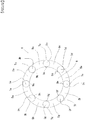
- FIG. 4 is a perspective view of the tubular body of the second embodiment
- FIG. 5 is a cross-sectional view of the tubular body of the second embodiment
- FIG. 6 is a partially enlarged view of FIG.5 .
- the second wire 15b has an Ogidai shape (arch shape) having a convex outer arc 15bp and a convex inner arc 15bq in the cross-sectional view. Further, the other second wires (15c, 15d, 15e, 15f, 15g, 15h) also have an Ogidai shape (arch shape) having a convex outer arc and a convex inner arc in the cross-sectional view as will be easily understood.
- the tubular body 10 of the present embodiment differs from the tubular body 1 of the first embodiment in that the radially outer ends and radially inner ends of two second wires adjacent to both sides of a first wire are separated from each other.
- an outer end 17a1 of the second wire 15a adjacent to one side of the first wire 13a, and an outer end 17a2 of the second wire 15b adjacent to the other side of the first wire 13a are spaced apart from each other, further, an inner end 19a1 of the second wire 15a adjacent to one side of the first wire 13a, and an inner end 19a2 of the second wire 15b adjacent to the other side of the first wire 13a are also spaced apart from each other as shown in FIGS. 4 to 6 .
- a cross-sectional shape of each of eight first wires remains circular, while a cross-sectional shape of each of the eight second wires (15a ⁇ 15h) having a larger diameter than each of the first wires(13a ⁇ 13h) is deformed into a convex Ogidai shape (arch shape) in a cross-sectional view, having recesses in the contact portions adjacent to a first wire adjacent to both sides as shown in FIG. 9 .
- a stranded wire 12 is completed where the radially outer ends and radially inner ends of two second wires adjacent to both sides of a first wire (13a ⁇ 13h) contact each other at a point on the outside and inside of the stranded wire in a cross-sectional view. Then, the tubular body 1 as shown in FIGS. 1 to 3 is completed by pulling out the core wire 2 from the stranded wire 12, after removing the stranded wire 12 from the swaging machine 4.
- each first wire (13a ⁇ 13h) has a substantially circular cross section
- each second wire (15a ⁇ 15h) has a recess (15ar, 15as, 15br, 15bs, 15cr ⁇ 15hs) in a contact portion (side surface) opposite to a corresponding one of the first wires adjacent to it, and has an Ogidai shape (arch shape) having convex outer arcs (15ap, 15bp, ⁇ , 15hp (not shown)) and inner arcs (15aq, 15bq, ⁇ 15hq (not shown)) in a cross-sectional view, it is possible to prevent a deviation between the first wires and the second wires and improve a torque transmissibility and pushing force to the other end portion of the tubular body 10 when the
- tubular body 10 since the inner surface of the tubular body 10 is flat in a cross-sectional view, insertability of other medical devices into an inside of the tubular body 10 may be improved.
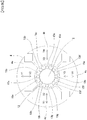
- FIG. 10 is a cross-sectional view of the tubular body of the third embodiment
- FIG. 11 is a partially enlarged view of FIG. 10 .
- the second wire 25b has a recess 25br in the contact portion (side surface) opposite to the first wire 23a, and a recess 25bs in the contact portion (side surface) opposite to the first wire 23b. Further, each of the other second wires (25c, 25d, 25e, 25f, 25g, 25h) also has recesses 25cr, 25cs (not shown), ⁇ , 25hr (not shown), 25hs as will be easily understood.
- Each second wire (25a ⁇ 25h) of the present embodiment has a convex Ogidai shape, i.e. annular segment shape or annular sector shape, (arch shape) in a cross-sectional view.
- the second wire 25a has an Ogidai shape (arch shape) having a convex outer arc 25ap and a convex inner arc 25aq in the cross-sectional view shown in FIG. 11 .
- the tubular body 20 of the present embodiment is similar to the tubular body 10 of the second embodiment in that the radially outer ends and radially inner ends of two second wires adjacent to both sides of a first wire are separated from each other.
- an outer end 27a1 of the second wire 25a adjacent to one side of the first wire 23a, and an outer end 27a2 of the second wire 25b adjacent to the other side of the first wire 23a are spaced apart from each other, further, an inner end 29a1 of the second wire 25a adjacent to one side of the first wire 23a, and an inner end 29a2 of the second wire 25b adjacent to the other side of the first wire 23a are also spaced apart from each other as shown in FIGS. 10 and 11 .
- the materials of the first wires (23a ⁇ 23h) and second wires (25a ⁇ 25h) may be stainless steel, platinum alloys, Ni-Ti-based alloys, cobalt based alloys, and the like, but are not particularly limited to those materials. Any material having a biocompatibility may be used, although stainless steel is used in the present embodiment.
- the first wires (23a ⁇ 23h) and second wires (25a ⁇ 25h) may be formed of a same material as in the present embodiment, however they may also be formed of different materials. However, when the tubular body 20 is produced by the method using a swaging machine as described above, it is preferred that a material of the second wires (25a ⁇ 25h) is softer than a material of the first wires (23a ⁇ 23h).
- the manufacturing method of the tubular body 20 is identical to the manufacturing method of the tubular body 10 of the second embodiment.
- a stranded wire configured by twisting nine third wires each having a circular cross-section is used.
- each of first wires (23a ⁇ 23h) and eight second wires (25a ⁇ 25h) in a hollow shape wherein each of first wires (23a ⁇ 23h) has a substantially circular cross section, each of second wires (25a ⁇ 25h) has a recess (25ar, 25as, 25br, 25bs, 25cr ⁇ 25hs) in a contact portion (side surface) opposite to a corresponding one of the first wires adjacent to it, and has an Ogidai shape (arch shape) having convex outer arcs (25ap, 25bp, ⁇ , 25hp (not shown)) and inner arcs (25aq, 25bq, ⁇ 25hq (not shown)) in a cross-sectional view, and further each of second wires (25a ⁇ 25h) is configured by twisting nine third wires (such as 25a1 ⁇ 25a
- tubular body 20 since the inner surface of the tubular body 20 is flat in a cross-sectional view, insertability of other medical devices into an inside of the tubular body 20 may be improved. And when the user bends the tubular body 20, a subtle movement of the third wires may improve flexibility and durability of the tubular body.
- the number of the first wires and second wires is eight, but is not limited to eight.
- Two or more first wires and two or more second wires may be used in the tubular body. That is, the tubular body may comprise a plurality of first wires and a plurality of second wires.
- the second wire is configured by twisting nine third wires, it is not limited to nine. Three or more third wires may be used in the tubular body.
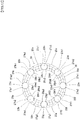
- Figure 12 is a cross-sectional view of the tubular body of the fourth embodiment
- FIG. 13 is a partially enlarged view of FIG. 12 .
- the other first wires 33c ⁇ 33h are each configured from seven fourth wires (33c1 ⁇ 33c7, 33d1 ⁇ 33d7, 33e1 ⁇ 33e7, 33f1 ⁇ 33f7, 33g1 ⁇ 33g7, 33h1 ⁇ 33h7 (not one part shown)).
- a second wire (35a ⁇ 35h) of the present embodiment has a convex Ogidai shape, i.e. annular segment shape or annular sector shape, (arch shape) in a cross-sectional view.
- the second wire 35a has an Ogidai shape (arch shape) having a convex outer arc 35ap and a convex inner arc 35aq in the cross-sectional view shown in FIG. 13 .
- the second wire 35b has an Ogidai shape (arch shape) having a convex outer arc 35bp and a convex inner arc 35bq in the cross-sectional view. Further, the other second wires (35c, 35d, 35e, 35f, 35g, 35h) also have an Ogidai shape (arch shape) having a convex outer arc and a convex inner arc in a cross-sectional view as will be easily understood.
- the tubular body 30 of the present embodiment is similar to the tubular body 10 of the second embodiment in that the radially inner ends and radially outer ends of two second wires adjacent to both sides of a first wire are separated from each other.
- an outer end 37a1 of the second wire 35a adjacent to one side of the first wire 33a, and an outer end 37a2 of the second wire 35b adjacent to the other side of the first wire 33a are spaced apart from each other, further, an inner end 39a1 of the second wire 35a adjacent to one side of the first wire 33a, and an inner end 39a2 of the second wire 35b adjacent to the other side of the first wire 33a are also spaced apart from each as shown in FIGS. 12 and 13 .
- an outer end 37b1 and an outer end 37b2, an outer end 37cl and an outer end 37c2, ⁇ , an outer end 37g1 and an outer end 37g2, an outer end 37h1 and an outer end 37h2 are also spaced apart from each other, and an inner end 39bl and an inner end 39b2, an inner end 39c1 and an inner end 39c2, ⁇ , an inner end 39g1 and an inner end 39g2, an inner end 39h1 and the inner end 39h2 are also spaced apart from each other.
- two helical patterns per one first wire are formed on the outer surface and inner surface of the tubular body 30 as shown in FIG. 4 .
- a total of 16 helical patterns are formed on the outer surface of the tubular body 30, and a total of 16 helical patterns are formed on the inner surface of the tubular body 30.
- the materials of the first wires (33a ⁇ 33h) and second wires (35a ⁇ 35h) may be stainless steel, platinum alloys, Ni-Ti-based alloys, cobalt based alloys, or the like, but are not particularly limited to those materials. Any material having a biocompatibility may be used, although stainless steel is used in the present embodiment.
- the first wires (33a ⁇ 33h) and second wires (35a ⁇ 35h) may be formed of a same material as in the present embodiment, but they may also be formed of different materials. However, when the tubular body 30 is produced by a method using the swaging machine described before, it is preferred that a material of the second wires (35a ⁇ 35h) is softer than a material of the first wires (33a ⁇ 33h).
- the tubular body 30 of this embodiment is produced by preparing a stranded wire configured by winding eight first stranded wires (33a ⁇ 33h) which are each configured from seven fourth wires of circular cross-section, and eight second wires (35a ⁇ 35h) of circular cross-section, wherein a diameter of a second wire is larger than a diameter of a first wire (33a ⁇ 33h), in a spiral manner around the circumference of a core wire 2.
- each of first wires (33a ⁇ 33h) and eight second wires (35a ⁇ 35h) is configured by twisting eight first wires (33a ⁇ 33h) and eight second wires (35a ⁇ 35h) into a hollow shape, wherein each of first wires (33a ⁇ 33h) has a substantially circular cross section, each of second wires (35a ⁇ 35h) has a recess (35ar, 35as, 35br, 35bs, 35cr ⁇ 35hs) in a contact portion (side surface) opposite to a corresponding one of the first wires adjacent to it, and has an Ogidai shape (arch shape) having convex outer arcs (35ap, 35bp, ⁇ , 35hp (not shown)) and inner arcs (35aq, 35bq, ⁇ 35hq (not shown)) in a cross-sectional view, and further each of the first wires (33a ⁇ 33h) is configured by twisting seven fourth wires
- tubular body 30 since the inner surface of the tubular body 30 is flat in a cross-sectional view, insertability of other medical devices into an inside of the tubular body 30 may be improved. And when the user bends the tubular body 30, a subtle movement of the fourth wires may improve flexibility and durability of the tubular body.
- the number of the first wires and second wires is eight, but is not limited to eight.
- Two or more first wires and two or more second wires may be used in the tubular body. That is, the tubular body may comprise a plurality of first wires and a plurality of second wires.
- a first wire is configured by twisting seven fourth wires, it is not limited to seven. Three or more fourth wires may be used in the tubular body.
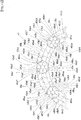
- FIG. 14 is a cross-sectional view of the tubular body of the fifth embodiment
- FIG. 15 is a partially enlarged view of FIG. 14 .
- a tubular body 40 is an elongated tubular body configured from eight first wires (43a, 43b, 43c, 43d, 43e, 43f, 43g, 43h) and eight second wires (45a, 45b, 45c, 45d, 45e, 45f, 45g, 45h) which are spirally twisted into a hollow tubular configuration so that the first wires and second wires are alternately arranged with each other and each of the second wires is placed between two adjacent first wires.
- first wires 43a, 43b, 43c, 43d, 43e, 43f, 43g, 43h
- second wires 45a, 45b, 45c, 45d, 45e, 45f, 45g, 45h
- the first wire 43a is configured from seven fourth wires (43a1, 43a2, 43a3, 43a4, 43a5, 43a6, 43a7)
- the second wire 45a is configured from nine third wires (45a1, 45a2, 45a3, 45a4, 45a5, 45a6, 45a7,45a8,45a9) as shown in FIG. 15 .
- tubular body 40 includes a substantially circular outer peripheral surface and a substantially circular inner peripheral surface in a cross-sectional view, and the tubular body 40 forms a hollow portion 46 in an inside of the inner peripheral surface thereof.
- each of the second wires (45a ⁇ 45h) of the present embodiment has a recess in a contact portion (side surface) opposite to a corresponding one of the first wires adjacent to both sides of the second wire.
- the second wire 45a has a recess 45ar in a contact portion (side surface) opposite to the first wire 43h, and a recess 45as in a contact portion (side surface) opposite to the first wire 43a as shown in FIG. 15 .
- the second wire 45b has a recess 45br in a contact portion (side surface) opposite to the first wire 43a, and a recess 45bs in a contact portion (side surface) opposite to the first wire 43b. Further, the other second wires (45c, 45d, 45e, 45f, 45g, 45h) also have recesses 45cr, ⁇ , 45hs as will be easily understood.
- Each second wire (45a ⁇ 45h) of the present embodiment has a convex Ogidai shape, i.e. annular segment shape or annular sector shape, (arch shape) in a cross-sectional view.
- the second wire 45a has an Ogidai shape (arch shape) having a convex outer arc 45ap and a convex inner arc 45aq in the cross-sectional view shown in FIG. 15 .
- the second wire 45b has an Ogidai shape (arch shape) having a convex outer arc 45bp and a convex inner arc 45bq in the cross-sectional view. Further, the other second wires (45c, 45d, 45e, 45f, 45g, 45h) also have an Ogidai shape (arch shape) having a convex outer arc and a convex inner arc in the cross-sectional view as will be easily understood.
- the tubular body 40 of the present embodiment is similar to the tubular body 10 of the second embodiment in that the radially outer ends and radially inner ends of two second wires adjacent to both sides of a first wire are separated from each other.
- an outer end 47a1 of the second wire 45a adjacent to one side of the first wire 43a, and an outer end 47a2 of the second wire 45b adjacent to the other side of the first wire 43a are spaced apart from each other, further, an inner end 49a1 of the second wire 45a adjacent to one side of the first wire 43a, and an inner end 49a2 of the second wire 45b adjacent to the other side of the first wire 43a are also spaced apart from each other as shown in FIGS. 14 and 15 .
- an outer end 47b1 and an outer end 47b2, an outer end 47c1 and an outer end 47c2, ⁇ , an outer end 47g1 and an outer end 47g2, an outer end 47h1 and an outer end 47h2 are also spaced apart from each other, an inner end 49b1 and an inner end 49b2, an inner end 49c1 and an inner end 49c2, ⁇ , an inner end 49g1 and an inner end 49g2, an inner end 49h1 and the inner end 49h2 are also spaced apart from each other.
- two helical patterns per one first wire are formed on the outer surface and the inner surface of the tubular body 40 as shown in FIG. 4 .
- a total of 16 helical patterns are formed on the outer surface of the tubular body 40, and a total of 16 helical patterns are formed on the inner surface of the tubular body 40.
- the materials of the first wires (43a ⁇ 43h) and second wire (45a ⁇ 45h) may be stainless steel, platinum alloys, Ni-Ti-based alloys, cobalt based alloys, or the like, but are not particularly limited to those materials. Any material having a biocompatibility may be used, although stainless steel is used in the present embodiment.
- the first wires (43a ⁇ 43h) and second wires (45a ⁇ 45h) may be formed of a same material as in the present embodiment, however they may also be formed of different materials. However, when the tubular body 40 is produced by a method using the swaging machine described before, it is preferred that a material of the second wires (45a ⁇ 45h) is softer than a material of the first wires (43a ⁇ 43h).
- the tubular body 40 of this embodiment is produced by preparing a stranded wire configured by winding eight first stranded wires (43a ⁇ 43h) which are each configured from seven fourth wires of circular cross-section, and eight second wires (45a ⁇ 45h) of circular cross-section, wherein the diameter of a second wire is larger than a diameter of the first wire (43a ⁇ 43h), in a spiral manner around the circumference of a core wire 2.
- first wires (43a ⁇ 43h) and eight second wires (45a ⁇ 45h) in a hollow shape wherein each of first wires (43a ⁇ 43h) has a substantially circular cross section, each of second wires (45a ⁇ 45h) has a recess (45ar, 45as, 45br, 45bs, 45cr ⁇ 45hs) in a contact portion (side surface) opposite to a corresponding one of the first wires adjacent to it, and has an Ogidai shape (arch shape) having convex outer arcs (45ap, 45bp, ⁇ , 45hp (not shown)) and inner arcs (45aq, 45bq, ⁇ 45hq (not shown)) in the transverse plane radiation direction, and further each of first wires (43a ⁇ 43h) is configured by twisting seven fourth wires (such as 43a1 ⁇ 43a7)
- the inner surface of the tubular body 40 is flat in a cross-sectional view, insertability of other medical devices into an inside of the tubular body 40 may be improved. And when the user bends the tubular body 40, a subtle movement of the third wires and a subtle movement of the fourth wires may improve flexibility and durability of the tubular body.
- a first wire is configured by twisting seven fourth wires, it is not limited to seven. Three or more fourth wires may be used in the tubular body.
- a second wire is configured by twisting nine third wires, it is not limited to nine. Three or more third wires may be used in the tubular body.
Landscapes
- Health & Medical Sciences (AREA)
- Life Sciences & Earth Sciences (AREA)
- Animal Behavior & Ethology (AREA)
- Veterinary Medicine (AREA)
- Public Health (AREA)
- General Health & Medical Sciences (AREA)
- Engineering & Computer Science (AREA)
- Heart & Thoracic Surgery (AREA)
- Hematology (AREA)
- Biomedical Technology (AREA)
- Anesthesiology (AREA)
- Pulmonology (AREA)
- Biophysics (AREA)
- Chemical & Material Sciences (AREA)
- Inorganic Chemistry (AREA)
- Epidemiology (AREA)
- Media Introduction/Drainage Providing Device (AREA)
Applications Claiming Priority (1)
| Application Number | Priority Date | Filing Date | Title |
|---|---|---|---|
| JP2018165635A JP7089994B2 (ja) | 2018-09-05 | 2018-09-05 | 管状体 |
Publications (1)
| Publication Number | Publication Date |
|---|---|
| EP3620197A1 true EP3620197A1 (de) | 2020-03-11 |
Family
ID=67514304
Family Applications (1)
| Application Number | Title | Priority Date | Filing Date |
|---|---|---|---|
| EP19188785.0A Withdrawn EP3620197A1 (de) | 2018-09-05 | 2019-07-29 | Rohrförmiger körper |
Country Status (5)
| Country | Link |
|---|---|
| US (1) | US10912929B2 (de) |
| EP (1) | EP3620197A1 (de) |
| JP (1) | JP7089994B2 (de) |
| KR (1) | KR20200027873A (de) |
| CN (1) | CN110876830B (de) |
Citations (8)
| Publication number | Priority date | Publication date | Assignee | Title |
|---|---|---|---|---|
| JPS5759519A (en) * | 1980-09-30 | 1982-04-09 | Olympus Optical Co | Quide tube for operating and drafting treating tool |
| US6258195B1 (en) * | 1999-03-19 | 2001-07-10 | Scimed Life Systems, Inc. | Multi-cord fusing manufacturing process for catheter members |
| JP2010136895A (ja) | 2008-12-11 | 2010-06-24 | Kaneka Corp | 医療用チューブ |
| EP2586483A1 (de) * | 2011-10-31 | 2013-05-01 | Asahi Intecc Co., Ltd. | Führungsdraht |
| EP2982405A1 (de) * | 2013-04-01 | 2016-02-10 | Terumo Kabushiki Kaisha | Spule, führungsdraht und spulenherstellungsverfahren |
| US20170156745A1 (en) * | 2015-07-01 | 2017-06-08 | Olympus Corporation | Endoscope treatment tool |
| US20180071495A1 (en) * | 2016-09-14 | 2018-03-15 | Asahi Intecc Co., Ltd. | Connection structure and guide wire having the connection structure |
| JP2018108119A (ja) * | 2016-12-28 | 2018-07-12 | テルモ株式会社 | ガイドワイヤおよび医療用コイル |
Family Cites Families (23)
| Publication number | Priority date | Publication date | Assignee | Title |
|---|---|---|---|---|
| US424044A (en) * | 1890-03-25 | Thomas e | ||
| US338913A (en) * | 1886-03-30 | batchelor | ||
| US969660A (en) * | 1909-06-10 | 1910-09-06 | Franz Schmidt | Flexible shaft. |
| US1164521A (en) * | 1914-05-18 | 1915-12-14 | Otto P Houben | Protective covering or armor. |
| US2087876A (en) * | 1933-10-19 | 1937-07-20 | American Steel & Wire Co | Annular strand |
| DE671776C (de) * | 1935-11-28 | 1939-02-15 | Heinrich Oechslin | Drahtseil oder Litze mit einer Aussenlage von Profildraehten |
| US3445586A (en) * | 1966-12-30 | 1969-05-20 | Aluminium Lab Ltd | Loose-core conductor having improved self-damping combined with improved internal wear resistance |
| US3858616A (en) * | 1972-12-08 | 1975-01-07 | Inst Francais Du Petrole | Tight flexible pipe |
| US5169729A (en) * | 1987-04-28 | 1992-12-08 | Pirelli Coordinamento Pneumatici S.P.A. | Beads of pneumatic tires for vehicle wheels |
| US6137060A (en) * | 1997-05-02 | 2000-10-24 | General Science And Technology Corp | Multifilament drawn radiopaque highly elastic cables and methods of making the same |
| ATE287747T1 (de) * | 2000-10-03 | 2005-02-15 | Cook William Europ | Führungsdraht |
| US6881194B2 (en) * | 2001-03-21 | 2005-04-19 | Asahi Intec Co., Ltd. | Wire-stranded medical hollow tube, and a medical guide wire |
| US20050154400A1 (en) | 2003-12-18 | 2005-07-14 | Asahi Intecc Co., Ltd | Medical treating tool |
| JP2005230132A (ja) | 2004-02-18 | 2005-09-02 | Asahi Intecc Co Ltd | 医療用処置具 |
| JP4810388B2 (ja) | 2006-10-03 | 2011-11-09 | 三洲電線株式会社 | 撚線導体及びその製造方法 |
| US20100147435A1 (en) * | 2007-05-21 | 2010-06-17 | Bridgestone Corporation | Pneumatic tire |
| CN101796246B (zh) * | 2007-09-06 | 2012-03-28 | 贝卡尔特股份有限公司 | 具有经过压紧的钢丝绳的钢丝绳安全系统 |
| JP5110716B2 (ja) * | 2011-02-25 | 2012-12-26 | 朝日インテック株式会社 | カテーテル |
| ITPD20130081A1 (it) * | 2013-03-29 | 2014-09-30 | Gioachino Coppi | Catetere a deformazione controllata |
| JP2015159865A (ja) * | 2014-02-26 | 2015-09-07 | 朝日インテック株式会社 | ガイドワイヤ |
| JP6344762B2 (ja) * | 2014-05-21 | 2018-06-20 | 朝日インテック株式会社 | カテーテル |
| JP6624600B2 (ja) | 2015-03-23 | 2019-12-25 | 朝日インテック株式会社 | カテーテル |
| CN206688006U (zh) * | 2016-12-26 | 2017-12-01 | 上海英诺伟医疗器械有限公司 | 一种非血管腔道导丝 |
-
2018
- 2018-09-05 JP JP2018165635A patent/JP7089994B2/ja active Active
-
2019
- 2019-02-14 KR KR1020190017258A patent/KR20200027873A/ko not_active Withdrawn
- 2019-04-03 US US16/374,747 patent/US10912929B2/en not_active Expired - Fee Related
- 2019-05-15 CN CN201910402738.3A patent/CN110876830B/zh active Active
- 2019-07-29 EP EP19188785.0A patent/EP3620197A1/de not_active Withdrawn
Patent Citations (8)
| Publication number | Priority date | Publication date | Assignee | Title |
|---|---|---|---|---|
| JPS5759519A (en) * | 1980-09-30 | 1982-04-09 | Olympus Optical Co | Quide tube for operating and drafting treating tool |
| US6258195B1 (en) * | 1999-03-19 | 2001-07-10 | Scimed Life Systems, Inc. | Multi-cord fusing manufacturing process for catheter members |
| JP2010136895A (ja) | 2008-12-11 | 2010-06-24 | Kaneka Corp | 医療用チューブ |
| EP2586483A1 (de) * | 2011-10-31 | 2013-05-01 | Asahi Intecc Co., Ltd. | Führungsdraht |
| EP2982405A1 (de) * | 2013-04-01 | 2016-02-10 | Terumo Kabushiki Kaisha | Spule, führungsdraht und spulenherstellungsverfahren |
| US20170156745A1 (en) * | 2015-07-01 | 2017-06-08 | Olympus Corporation | Endoscope treatment tool |
| US20180071495A1 (en) * | 2016-09-14 | 2018-03-15 | Asahi Intecc Co., Ltd. | Connection structure and guide wire having the connection structure |
| JP2018108119A (ja) * | 2016-12-28 | 2018-07-12 | テルモ株式会社 | ガイドワイヤおよび医療用コイル |
Also Published As
| Publication number | Publication date |
|---|---|
| CN110876830B (zh) | 2023-05-30 |
| KR20200027873A (ko) | 2020-03-13 |
| JP2020036772A (ja) | 2020-03-12 |
| US10912929B2 (en) | 2021-02-09 |
| US20200069918A1 (en) | 2020-03-05 |
| JP7089994B2 (ja) | 2022-06-23 |
| CN110876830A (zh) | 2020-03-13 |
Similar Documents
| Publication | Publication Date | Title |
|---|---|---|
| JP7304424B2 (ja) | カテーテル | |
| CN109843224B (zh) | 具有可致动的工作端部的旋转地可扭转的血管内装置 | |
| EP2803339B1 (de) | Medizinischer Stent | |
| US6299612B1 (en) | Wire loop type instrument for endoscope and method of producing the same | |
| JP5954747B2 (ja) | カテーテル | |
| EP2564756A1 (de) | Endoskop | |
| CN111228637B (zh) | 导管 | |
| EP3245984B1 (de) | Stent und stentprothese | |
| US10603471B2 (en) | Medical guide wire | |
| EP2921195A1 (de) | Führungsdraht | |
| JP2022545570A (ja) | ループ状のコア・ワイヤを有する管腔内機器 | |
| US6818076B1 (en) | Multi-strand coil spring | |
| CN111672010A (zh) | 微导管 | |
| US20090204118A1 (en) | Surgical cable with malleable leader segment | |
| EP3620197A1 (de) | Rohrförmiger körper | |
| US5947979A (en) | Wire loop type instrument for endoscope and method of producing the same | |
| CN107735526B (zh) | 操作用绳 | |
| JP7050175B2 (ja) | 医療機器 | |
| JP3215809B2 (ja) | 内視鏡用ワイヤループ型処置具 | |
| CN113057774B (zh) | 显影结构、植入器械和血管支架 | |
| CN113116610B (zh) | 显影结构和血管支架 | |
| CN121512630A (zh) | 血栓捕获支架及其制造方法 | |
| JPH0975299A (ja) | 内視鏡の可撓管用網状管 | |
| CN119867831A (zh) | 一种可调弯鞘管 | |
| JP2020054696A (ja) | 塞栓コイル |
Legal Events
| Date | Code | Title | Description |
|---|---|---|---|
| PUAI | Public reference made under article 153(3) epc to a published international application that has entered the european phase |
Free format text: ORIGINAL CODE: 0009012 |
|
| STAA | Information on the status of an ep patent application or granted ep patent |
Free format text: STATUS: THE APPLICATION HAS BEEN PUBLISHED |
|
| AK | Designated contracting states |
Kind code of ref document: A1 Designated state(s): AL AT BE BG CH CY CZ DE DK EE ES FI FR GB GR HR HU IE IS IT LI LT LU LV MC MK MT NL NO PL PT RO RS SE SI SK SM TR |
|
| AX | Request for extension of the european patent |
Extension state: BA ME |
|
| STAA | Information on the status of an ep patent application or granted ep patent |
Free format text: STATUS: REQUEST FOR EXAMINATION WAS MADE |
|
| 17P | Request for examination filed |
Effective date: 20200805 |
|
| RBV | Designated contracting states (corrected) |
Designated state(s): AL AT BE BG CH CY CZ DE DK EE ES FI FR GB GR HR HU IE IS IT LI LT LU LV MC MK MT NL NO PL PT RO RS SE SI SK SM TR |
|
| STAA | Information on the status of an ep patent application or granted ep patent |
Free format text: STATUS: EXAMINATION IS IN PROGRESS |
|
| 17Q | First examination report despatched |
Effective date: 20231025 |
|
| STAA | Information on the status of an ep patent application or granted ep patent |
Free format text: STATUS: THE APPLICATION HAS BEEN WITHDRAWN |
|
| 18W | Application withdrawn |
Effective date: 20240208 |