EP3605100B1 - Method for catalyzing an enzyme-catalyzed reaction. - Google Patents
Method for catalyzing an enzyme-catalyzed reaction. Download PDFInfo
- Publication number
- EP3605100B1 EP3605100B1 EP19192953.8A EP19192953A EP3605100B1 EP 3605100 B1 EP3605100 B1 EP 3605100B1 EP 19192953 A EP19192953 A EP 19192953A EP 3605100 B1 EP3605100 B1 EP 3605100B1
- Authority
- EP
- European Patent Office
- Prior art keywords
- enzyme
- immobilized
- carrier
- cpg
- reaction
- Prior art date
- Legal status (The legal status is an assumption and is not a legal conclusion. Google has not performed a legal analysis and makes no representation as to the accuracy of the status listed.)
- Active
Links
Images
Classifications
-
- C—CHEMISTRY; METALLURGY
- C07—ORGANIC CHEMISTRY
- C07K—PEPTIDES
- C07K17/00—Carrier-bound or immobilised peptides; Preparation thereof
- C07K17/02—Peptides being immobilised on, or in, an organic carrier
- C07K17/06—Peptides being immobilised on, or in, an organic carrier attached to the carrier via a bridging agent
-
- G—PHYSICS
- G01—MEASURING; TESTING
- G01N—INVESTIGATING OR ANALYSING MATERIALS BY DETERMINING THEIR CHEMICAL OR PHYSICAL PROPERTIES
- G01N33/00—Investigating or analysing materials by specific methods not covered by groups G01N1/00 - G01N31/00
- G01N33/48—Biological material, e.g. blood, urine; Haemocytometers
- G01N33/50—Chemical analysis of biological material, e.g. blood, urine; Testing involving biospecific ligand binding methods; Immunological testing
- G01N33/53—Immunoassay; Biospecific binding assay; Materials therefor
-
- B—PERFORMING OPERATIONS; TRANSPORTING
- B01—PHYSICAL OR CHEMICAL PROCESSES OR APPARATUS IN GENERAL
- B01J—CHEMICAL OR PHYSICAL PROCESSES, e.g. CATALYSIS OR COLLOID CHEMISTRY; THEIR RELEVANT APPARATUS
- B01J31/00—Catalysts comprising hydrides, coordination complexes or organic compounds
- B01J31/003—Catalysts comprising hydrides, coordination complexes or organic compounds containing enzymes
-
- C—CHEMISTRY; METALLURGY
- C07—ORGANIC CHEMISTRY
- C07K—PEPTIDES
- C07K1/00—General methods for the preparation of peptides, i.e. processes for the organic chemical preparation of peptides or proteins of any length
- C07K1/14—Extraction; Separation; Purification
- C07K1/16—Extraction; Separation; Purification by chromatography
- C07K1/22—Affinity chromatography or related techniques based upon selective absorption processes
-
- C—CHEMISTRY; METALLURGY
- C12—BIOCHEMISTRY; BEER; SPIRITS; WINE; VINEGAR; MICROBIOLOGY; ENZYMOLOGY; MUTATION OR GENETIC ENGINEERING
- C12N—MICROORGANISMS OR ENZYMES; COMPOSITIONS THEREOF; PROPAGATING, PRESERVING, OR MAINTAINING MICROORGANISMS; MUTATION OR GENETIC ENGINEERING; CULTURE MEDIA
- C12N11/00—Carrier-bound or immobilised enzymes; Carrier-bound or immobilised microbial cells; Preparation thereof
- C12N11/02—Enzymes or microbial cells immobilised on or in an organic carrier
- C12N11/08—Enzymes or microbial cells immobilised on or in an organic carrier the carrier being a synthetic polymer
- C12N11/082—Enzymes or microbial cells immobilised on or in an organic carrier the carrier being a synthetic polymer obtained by reactions only involving carbon-to-carbon unsaturated bonds
-
- C—CHEMISTRY; METALLURGY
- C12—BIOCHEMISTRY; BEER; SPIRITS; WINE; VINEGAR; MICROBIOLOGY; ENZYMOLOGY; MUTATION OR GENETIC ENGINEERING
- C12N—MICROORGANISMS OR ENZYMES; COMPOSITIONS THEREOF; PROPAGATING, PRESERVING, OR MAINTAINING MICROORGANISMS; MUTATION OR GENETIC ENGINEERING; CULTURE MEDIA
- C12N11/00—Carrier-bound or immobilised enzymes; Carrier-bound or immobilised microbial cells; Preparation thereof
- C12N11/02—Enzymes or microbial cells immobilised on or in an organic carrier
- C12N11/08—Enzymes or microbial cells immobilised on or in an organic carrier the carrier being a synthetic polymer
- C12N11/082—Enzymes or microbial cells immobilised on or in an organic carrier the carrier being a synthetic polymer obtained by reactions only involving carbon-to-carbon unsaturated bonds
- C12N11/087—Acrylic polymers
-
- C—CHEMISTRY; METALLURGY
- C12—BIOCHEMISTRY; BEER; SPIRITS; WINE; VINEGAR; MICROBIOLOGY; ENZYMOLOGY; MUTATION OR GENETIC ENGINEERING
- C12N—MICROORGANISMS OR ENZYMES; COMPOSITIONS THEREOF; PROPAGATING, PRESERVING, OR MAINTAINING MICROORGANISMS; MUTATION OR GENETIC ENGINEERING; CULTURE MEDIA
- C12N11/00—Carrier-bound or immobilised enzymes; Carrier-bound or immobilised microbial cells; Preparation thereof
- C12N11/14—Enzymes or microbial cells immobilised on or in an inorganic carrier
-
- C—CHEMISTRY; METALLURGY
- C12—BIOCHEMISTRY; BEER; SPIRITS; WINE; VINEGAR; MICROBIOLOGY; ENZYMOLOGY; MUTATION OR GENETIC ENGINEERING
- C12P—FERMENTATION OR ENZYME-USING PROCESSES TO SYNTHESISE A DESIRED CHEMICAL COMPOUND OR COMPOSITION OR TO SEPARATE OPTICAL ISOMERS FROM A RACEMIC MIXTURE
- C12P13/00—Preparation of nitrogen-containing organic compounds
- C12P13/001—Amines; Imines
-
- C—CHEMISTRY; METALLURGY
- C12—BIOCHEMISTRY; BEER; SPIRITS; WINE; VINEGAR; MICROBIOLOGY; ENZYMOLOGY; MUTATION OR GENETIC ENGINEERING
- C12P—FERMENTATION OR ENZYME-USING PROCESSES TO SYNTHESISE A DESIRED CHEMICAL COMPOUND OR COMPOSITION OR TO SEPARATE OPTICAL ISOMERS FROM A RACEMIC MIXTURE
- C12P13/00—Preparation of nitrogen-containing organic compounds
- C12P13/02—Amides, e.g. chloramphenicol or polyamides; Imides or polyimides; Urethanes, i.e. compounds comprising N-C=O structural element or polyurethanes
-
- C—CHEMISTRY; METALLURGY
- C12—BIOCHEMISTRY; BEER; SPIRITS; WINE; VINEGAR; MICROBIOLOGY; ENZYMOLOGY; MUTATION OR GENETIC ENGINEERING
- C12P—FERMENTATION OR ENZYME-USING PROCESSES TO SYNTHESISE A DESIRED CHEMICAL COMPOUND OR COMPOSITION OR TO SEPARATE OPTICAL ISOMERS FROM A RACEMIC MIXTURE
- C12P17/00—Preparation of heterocyclic carbon compounds with only O, N, S, Se or Te as ring hetero atoms
- C12P17/02—Oxygen as only ring hetero atoms
- C12P17/06—Oxygen as only ring hetero atoms containing a six-membered hetero ring, e.g. fluorescein
-
- C—CHEMISTRY; METALLURGY
- C12—BIOCHEMISTRY; BEER; SPIRITS; WINE; VINEGAR; MICROBIOLOGY; ENZYMOLOGY; MUTATION OR GENETIC ENGINEERING
- C12P—FERMENTATION OR ENZYME-USING PROCESSES TO SYNTHESISE A DESIRED CHEMICAL COMPOUND OR COMPOSITION OR TO SEPARATE OPTICAL ISOMERS FROM A RACEMIC MIXTURE
- C12P7/00—Preparation of oxygen-containing organic compounds
- C12P7/62—Carboxylic acid esters
-
- C—CHEMISTRY; METALLURGY
- C12—BIOCHEMISTRY; BEER; SPIRITS; WINE; VINEGAR; MICROBIOLOGY; ENZYMOLOGY; MUTATION OR GENETIC ENGINEERING
- C12Q—MEASURING OR TESTING PROCESSES INVOLVING ENZYMES, NUCLEIC ACIDS OR MICROORGANISMS; COMPOSITIONS OR TEST PAPERS THEREFOR; PROCESSES OF PREPARING SUCH COMPOSITIONS; CONDITION-RESPONSIVE CONTROL IN MICROBIOLOGICAL OR ENZYMOLOGICAL PROCESSES
- C12Q1/00—Measuring or testing processes involving enzymes, nucleic acids or microorganisms; Compositions therefor; Processes of preparing such compositions
-
- G—PHYSICS
- G01—MEASURING; TESTING
- G01N—INVESTIGATING OR ANALYSING MATERIALS BY DETERMINING THEIR CHEMICAL OR PHYSICAL PROPERTIES
- G01N33/00—Investigating or analysing materials by specific methods not covered by groups G01N1/00 - G01N31/00
- G01N33/48—Biological material, e.g. blood, urine; Haemocytometers
- G01N33/50—Chemical analysis of biological material, e.g. blood, urine; Testing involving biospecific ligand binding methods; Immunological testing
- G01N33/53—Immunoassay; Biospecific binding assay; Materials therefor
- G01N33/543—Immunoassay; Biospecific binding assay; Materials therefor with an insoluble carrier for immobilising immunochemicals
- G01N33/54353—Immunoassay; Biospecific binding assay; Materials therefor with an insoluble carrier for immobilising immunochemicals with ligand attached to the carrier via a chemical coupling agent
-
- G—PHYSICS
- G01—MEASURING; TESTING
- G01N—INVESTIGATING OR ANALYSING MATERIALS BY DETERMINING THEIR CHEMICAL OR PHYSICAL PROPERTIES
- G01N33/00—Investigating or analysing materials by specific methods not covered by groups G01N1/00 - G01N31/00
- G01N33/48—Biological material, e.g. blood, urine; Haemocytometers
- G01N33/50—Chemical analysis of biological material, e.g. blood, urine; Testing involving biospecific ligand binding methods; Immunological testing
- G01N33/53—Immunoassay; Biospecific binding assay; Materials therefor
- G01N33/543—Immunoassay; Biospecific binding assay; Materials therefor with an insoluble carrier for immobilising immunochemicals
- G01N33/544—Immunoassay; Biospecific binding assay; Materials therefor with an insoluble carrier for immobilising immunochemicals the carrier being organic
- G01N33/545—Synthetic resin
-
- G—PHYSICS
- G01—MEASURING; TESTING
- G01N—INVESTIGATING OR ANALYSING MATERIALS BY DETERMINING THEIR CHEMICAL OR PHYSICAL PROPERTIES
- G01N33/00—Investigating or analysing materials by specific methods not covered by groups G01N1/00 - G01N31/00
- G01N33/48—Biological material, e.g. blood, urine; Haemocytometers
- G01N33/50—Chemical analysis of biological material, e.g. blood, urine; Testing involving biospecific ligand binding methods; Immunological testing
- G01N33/53—Immunoassay; Biospecific binding assay; Materials therefor
- G01N33/543—Immunoassay; Biospecific binding assay; Materials therefor with an insoluble carrier for immobilising immunochemicals
- G01N33/551—Immunoassay; Biospecific binding assay; Materials therefor with an insoluble carrier for immobilising immunochemicals the carrier being inorganic
- G01N33/552—Glass or silica
-
- G—PHYSICS
- G01—MEASURING; TESTING
- G01N—INVESTIGATING OR ANALYSING MATERIALS BY DETERMINING THEIR CHEMICAL OR PHYSICAL PROPERTIES
- G01N33/00—Investigating or analysing materials by specific methods not covered by groups G01N1/00 - G01N31/00
- G01N33/48—Biological material, e.g. blood, urine; Haemocytometers
- G01N33/50—Chemical analysis of biological material, e.g. blood, urine; Testing involving biospecific ligand binding methods; Immunological testing
- G01N33/53—Immunoassay; Biospecific binding assay; Materials therefor
- G01N33/543—Immunoassay; Biospecific binding assay; Materials therefor with an insoluble carrier for immobilising immunochemicals
- G01N33/551—Immunoassay; Biospecific binding assay; Materials therefor with an insoluble carrier for immobilising immunochemicals the carrier being inorganic
- G01N33/553—Metal or metal coated
-
- G—PHYSICS
- G01—MEASURING; TESTING
- G01N—INVESTIGATING OR ANALYSING MATERIALS BY DETERMINING THEIR CHEMICAL OR PHYSICAL PROPERTIES
- G01N33/00—Investigating or analysing materials by specific methods not covered by groups G01N1/00 - G01N31/00
- G01N33/48—Biological material, e.g. blood, urine; Haemocytometers
- G01N33/50—Chemical analysis of biological material, e.g. blood, urine; Testing involving biospecific ligand binding methods; Immunological testing
- G01N33/53—Immunoassay; Biospecific binding assay; Materials therefor
- G01N33/573—Immunoassay; Biospecific binding assay; Materials therefor for enzymes or isoenzymes
-
- Y—GENERAL TAGGING OF NEW TECHNOLOGICAL DEVELOPMENTS; GENERAL TAGGING OF CROSS-SECTIONAL TECHNOLOGIES SPANNING OVER SEVERAL SECTIONS OF THE IPC; TECHNICAL SUBJECTS COVERED BY FORMER USPC CROSS-REFERENCE ART COLLECTIONS [XRACs] AND DIGESTS
- Y02—TECHNOLOGIES OR APPLICATIONS FOR MITIGATION OR ADAPTATION AGAINST CLIMATE CHANGE
- Y02P—CLIMATE CHANGE MITIGATION TECHNOLOGIES IN THE PRODUCTION OR PROCESSING OF GOODS
- Y02P20/00—Technologies relating to chemical industry
- Y02P20/50—Improvements relating to the production of bulk chemicals
Definitions
- Controlled porosity glass is another material that has been used for the immobilization of enzymes.
- the CPG is usually treated with 3-aminopropyltriethoxysilane, and the enzymes are thereafter allowed to bind to the aminopropyl-CPG through lysine residues present on the enzymes' surface, using glutaraldehyde as a cross-linking agent. This results in a nonspecific binding of the enzyme to the CPG, often with concomitant loss of the enzymatic activity.
- a further drawback of this method is that the enzyme to be immobilized must be purified from other enzymes prior to the immobilization step, in order to avoid the immobilization of a mixture of different enzymes on the CPG.
- the immobilization of proteins on the carrier via an affinity tag offers the advantage of a specific binding of the proteins on a predefined site.
- the immobilization method is generally applicable to many different proteins.
- the affinity tag that is used in the invention is a polyhistidine tag.
- the affinity binding may be the result of, e.g., van der Waals' interaction, hydrogen bonding, ionic bonding or hydrophobic interaction.
- the affinity binding should be strong enough to allow the affinity tag and the matrix to remain tightly bonded to each other at least until certain specific conditions are applied in order to dissociate the affinity tag from the matrix.
- the affinity tag on the protein is a polyhistidine tag and the affinity matrix attached to the carrier contains a chelated metal ion.
- the chelated metal ion is preferably a metal ion selected from the group consisting of Fe 2+ , Fe 3+ , Co 2+ , Ni 2+ , Cu 2+ and Zn 2+ , and is more preferably selected from the group consisting of Fe 3+ , Ni 2+ and Co 2+ .
- the chelated metal ion is Co 2+ .
- the chelated metal ion is Fe 3+ .
- the choice of the chelated metal ion may be dependent on the intended use.
- the carrier is to be used for the purification and isolation of an affinity tagged protein
- the binding of the enzyme to the carrier should be reversible.
- the chelated metal ion is Ni 2+ or Co 2+ , and most preferably Co 2+ .
- These metal ions bind strong enough for immobilizing a polyhistidine-tagged enzyme, but are also capable of releasing the immobilized enzyme when specific conditions are applied, such as treatment with a buffered solution containing imidazole or ethylenediaminetetraacetate (EDTA).
- the chelated metal ion is Co 2+ or Fe 3+ , and most preferably Fe 3+ , since this results in particularly strong binding of the polyhistidine tag to the carrier.
- leaching of either enzyme or metal ion from immobilized protein material comprising Fe 3+ as the chelated metal ion is almost negligible.
- the absence of leaching allows the immobilized protein material (the biocatalyst) to be used in catalytic amounts.
- the use of catalytic amounts is particularly important in continuous flow reactions.
- a further advantage of Fe 3+ as the chelated metal ion is that this metal is non-toxic.
- the resulting immobilized protein material may therefore be safely applied e.g. in the food industry.
- Conventional CPG exhibits a ligand loading capacity that is inversely related to its pore size.
- a CPG support of a large pore size cannot be loaded with as much protein as a CPG support of a smaller pore size.
- This is partially due to the inverse relationship between pore size and surface area, and partially due to surface accessible silanol groups serving as functionalization moieties having a defined density per unit of surface area, approximately 4.5 ⁇ mol/m 2 .
- Conventional CPG displays a non-uniform silanol distribution where sterically hindered silanol sites may not serve as functional attachment points.
- Hybrid controlled porosity glass is a variant of CPG wherein the interior and exterior surfaces of the CPG are coated with an approximately 10 nm film of a crosslinked organic polymer, as is described in WO 2009/005631 .
- the polymeric coating on the Hybrid CPG may contain functional groups, such as aldehydes, amino groups, epoxy groups, halides, carboxylic acids and esters, or mixtures thereof, to which a matrix can be attached. Methods for attaching a matrix to an appropriate functional group are known to those skilled in the art.
- Hybrid CPG offers certain advantages over conventional CPG. As a result of the polymer coating, the dependence between loading and pore size can be minimized and the spacing between functionalization sites can be more accurately and uniformly controlled. Hybrid CPG as carrier material for protein immobilization may offer additional benefits, because the design of the polymer coating can be tailored in order to provide surface characteristics that are desired or required for a given application. For instance, a homogeneous polymer such as polystyrene will produce a more hydrophobic carrier surface, while a homogeneous polymer such as polyacrylonitrile will produce a more hydrophilic carrier surface.
- a co-polymeric coating may be obtained wherein the characteristics of the carrier surface are specifically adapted for a given application.
- the thin layer coatings allow some degree of microscopic swelling in organic solvents, but without bulk expansion of the Hybrid CPG bed or an increase in back pressure.
- the coatings also allow the use of Hybrid CPG in aqueous environments above pH 10.
- carrier materials than CPG and HybCPG may be desired due to reasons such as higher cost efficiency or specific process requirements.
- Such materials include porous organic polymer (plastic) materials. These polymers are functionalized with functional groups such as aldehydes, amino groups, epoxy groups, halides, carboxylic acids or esters, or mixtures thereof, to which a matrix can be attached. Methods for attaching a matrix to an appropriate functional group are known to those skilled in the art.
- the functionalized plastics can be produced as porous particles with limited swelling.
- Suitable organic polymers may be based on monomers such as styrene, ethylene, propylene, acrylic acid, methacrylic acid, methyl acrylate and methyl methacrylate.
- organic polymers examples include functionalized polyethylene, ultra-high molecular weight polyethylene (UHMWPE), high-density polyethylene (HDPE), polypropylene (PP), polytetrafluoroethylene (PTFE), and polyvinylidene fluoride (PVDF), polystyrene, polymethacrylate and poly(methyl methacrylate).
- UHMWPE ultra-high molecular weight polyethylene
- HDPE high-density polyethylene
- PP polypropylene
- PTFE polytetrafluoroethylene
- PVDF polyvinylidene fluoride
- polystyrene polymethacrylate
- poly(methyl methacrylate) examples include functionalized polystyrene, polymethacrylate and poly(methyl methacrylate).
- the porous organic polymer is functionalized polystyrene or functionalized polymethacrylate.
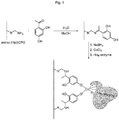
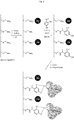
- CPG-immobilized protein material can easily be produced in only a few steps, starting from either amino-CPG or amino-HybCPG, as outlined in Figure 1 .
- the CPG materials can be treated with 2,4-dihydroxyacetophenone, thereby linking the phenyl group to the CPG via an imine.
- the imine functionality can thereafter be reduced to the corresponding amine using an appropriate reducing agent, such as e.g. sodium borohydride, sodium cyanoborohydride or lithium aluminum hydride.
- a chelated metal ion, such as Co 2+ or Fe 3+ can subsequently be introduced by suspension of the material in an aqueous solution of CoCl 2 or FeCl 3 , respectively. After drying, the obtained material can directly be used as a binding matrix for one or more polyhistidine-tagged proteins.
- the high affinity of the polyhistidine tag for metal ions such as Co 2+ or Fe 3+ allows the immobilization of polyhistidine-tagged proteins to be performed from crude solutions containing the proteins without the need for extensive purification of the solution prior to the immobilization step.
- Organic material that does not contain a polyhistidine tag will bind to the chelated metal ions only weakly, or not at all, and will be easily removed from the final immobilized proteins material by washing with e.g. water or buffered aqueous solutions.
- the protein immobilization may be performed directly from the cell lysate.
- the protein immobilization may be performed directly from the cell culture supernatant.
- the disclosure relates to a method for the immobilization of an affinity tagged protein, comprising the steps of
- the immobilization step may be performed in an appropriate buffer. If necessary, the immobilized protein material may thereafter be washed with water or an appropriate buffer in order to remove any unbound proteins and other, undesired compounds from the immobilized protein material.
- Dissociation of the purified protein from the affinity matrix may be achieved by applying conditions that are appropriate for the particular affinity tag. Appropriate conditions for the dissociation of the different affinity tags are known in the art.
- the method may optionally comprise the additional step of iv) removing the affinity tag from the purified protein.
- the immobilization of enzymes on the carrier through affinity tag binding improves the stability of the enzymes used. It has been found that the immobilized enzymes tolerate both aqueous conditions as well as a range of different organic solvents. This enables the immobilized enzymes materials to be used in reaction conditions under which the free, non-immobilized enzymes not would have been stable. It is possible that the immobilized enzyme material also may be used in a wider pH range than the free, non-immobilized enzymes would have tolerated.
- the resulting immobilized protein material consists of enriched enzyme. Since the native activity of the enzyme method is retained, the immobilized preparation displays a higher catalytic activity per protein mass than the initial, non-immobilized protein material.
- two or more different enzymes may be immobilized onto the carrier, wherein each of the different enzymes is able to catalyze a different reaction. It may then be possible to use the material containing two or more different immobilized enzymes as a heterogeneous biocatalyst in a multi-step or cascade reaction.
- a cascade reaction may for instance be a reaction wherein two or more enzyme-catalyzed reactions are performed on a substrate in two or more subsequent steps (i.e., a reaction wherein a substrate for a first enzyme is transformed into a substrate for a second enzyme, and so on), such as a transamination reaction by an ⁇ -transaminase followed by an acylation reaction by a lipase.
- the invention provides a method for catalyzing an enzyme-catalyzed multi-step or cascade reaction.
- the method comprises providing an immobilized protein material comprising two or more immobilized enzymes, according to the invention, and bringing the said immobilized protein material into contact with at least one substrate upon which the enzymes, which are immobilized on the carrier, are capable of acting.
- the invention provides a method for catalyzing a combined enzyme-catalyzed and transition metal-catalyzed reaction.
- the method comprises providing an immobilized protein material that additionally comprises transition metal nanoparticles, according to the invention, and bringing the said immobilized protein material into contact with at least one substrate upon which an enzyme and a transition metal, which are immobilized on the carrier, are capable of acting.
- amino-CPG refers to a CPG material which is functionalized with an amino group through an appropriate linker.
- amino-HybCPG refers to a Hybrid CPG material wherein the polymer coating contains amino groups.
- Amino-CPG (5 g) of desired type was treated with 2,4-dihydroxy acetophenone (1.5 equiv. to the amino functionalities of the CPG) in methanol (200 mL) with continuous stirring for 60 min.
- the formed imine was reduced by sequential addition of sodium borohydride (4 equiv.) with continuous stirring for 60 min.
- the solid material was filtrated, rinsed with saturated aqueous sodium carbonate solution, water and then ethanol, and then dried at 80°C for 2 h.
- the particles were then immersed in a saturated aqueous solution of CoCl 2 (100 mL). After filtration and rinsing with water and ethanol, the particles were dried at 80°C for 2 h.
- Extraction of immobilized enzyme from the CPG carrier was performed by immersing the particles in elution buffer (50 mM sodiumphosphate, 500 mM imidazole, pH 7.5) and incubation on an orbital shaker for 20 min. The presence and purity of the extracted enzymes were visualized by SDS-PAGE; only bands corresponding to the His 6 -tagged enzymes were visible.
- elution buffer 50 mM sodiumphosphate, 500 mM imidazole, pH 7.5
- the cell lysates of 2,5-DKCMO, FRE and AlaDH were prepared by cell resuspension in sodium phosphate buffer (50 mM, 500 mM NaCl, pH 7.5) and addition of BugBusterTM 10X. After centrifugation and removal of cell debris, the chelating Co 2+ CPG carrier was immersed in a mixture of equal volumes of the three cell lysates, followed by stirring on an orbital shaker (150 rpm).
- Bradford analyzed samples of the solutions during immobilization confirmed the completion of the binding and saturation of the CPG carrier as the protein concentration seized to decrease.
- Activity assays were also performed with the solutions after removal of the CPG by filtration. The immobilized preparations were then rinsed with sodium phosphate buffer (see above) and then dried under vacuum for 16 h.
- Multi-phase reactions were performed by adding 1.0 g BV-cascade-CPG to a reaction mixture of phosphate buffer (100 mM, pH 7.5) with 160 mM L-alanine, 0.3 mM FMN and 0.5 mM NADH with a total liquid volume of 5.0 mL. 5 mL cyclohexane with (+)-camphor (100 mM) was then added as a second liquid phase. The sealed vessel was stirred on an orbital shaker (100 rpm) at 22°C with continuous oxygen addition to the aqueous phase.
- Amino-CPG (5 g) was immersed in a solution of Pd(TFA) 2 (0.5 equiv. to the amino functionalities of the CPG) in water (200 mL) and the mixture was continuously stirred for 10 min. NaBH 4 (7 equiv.) was then added and the mixture was stirred for an additional 30 min.
- 2,4-Dihydroxyacetophenone (0.5 equiv.) was then added, after which the mixture was stirred for 30 min.
- the solid material was filtrated and thoroughly rinsed with water, and then immersed in a saturated aqueous solution of CoCl 2 (100 mL). After filtration and washing with water, the solid material was immersed in a solution of polyhistidine-tagged CalB (purified or from supernatant) and stirred for 30 min.
- the immobilized preparation was then filtrated, rinsed with buffer (20 mM MOPS, pH 7.4) and thereafter dried under vacuum for 16 h.
- Example 8 The material prepared in Example 8 was applied as a catalyst in the enantioselective acylation of 1-phenylethylamine (a dynamic kinetic resolution):
- 100 mg of the Pd-CalB-CPG was immersed in a solution of 1.0 mL toluene containing 20 mM racemic 1-phenylethylamine and 100 mM isopropyl butyrate. 1 mg NaBH 4 was added and the reaction vesicle was sealed. The system was incubated at 65°C with continuous stirring on an orbital shaker (100-800 rpm) for 24 to 48 h. The conversion and enantiomeric excess of the substrate and product (e.g. (R)-N-(1-phenylethyl)butyramide) were measured by chiral GC by taking samples at recorded time points.
- the substrate and product e.g. (R)-N-(1-phenylethyl)butyramide
- the product is obtained by separation of the phases, shaking the organic phase with 1 N HCI (three times) in order to remove residual acyl donor and amine, and then back extraction of the washing phases with EtOAc.
- the combined organic phases are evaporated in vacuo to yield the product, which is further purified by flash chromatography.
- the amount of Fe 3+ was measured by mixing one part of the incubated solution with one part NH 4 SCN-solution (1.0 M) and one part HCI-solution (6.0 M). This procedure reveals a red colour proportional to the concentration of Fe 3+ , which was quantified by spectrophotometry at 480 nm. A blank sample with the buffer alone was also tested.
- the activity assay was performed by taking 1 mL of the solution, adding 1 mL assay mixture (1-phenylethylamine (10 mM), sodiumpyruvate (5 mM) and PLP (1 ⁇ M), dissolved in the same buffer), and measuring the absorbance change over time at 245 nm for 5 min. A blank reaction with pure buffer was also tested. At this wavelength the formation of acetophenone, a product from the transamination reaction, can be monitored as an increase of absorbance with an extinction coefficient of 12 mM -1 cm -1 ( Schersonle et al., Anal. Chem. 2009, vol. 81, pp. 8244-8248 ).
- the column was then washed with 7.0 mL of Buffer 1.
- the flow-through was collected of which the absorbance was measured to 0.11, with Buffer 1 as blank. This corresponds to 5 mg of enzyme that was washed away from the column, assumingly due to unspecifically bound or unbound enzyme, leaving 24 mg bound enzyme in the column.
Landscapes
- Chemical & Material Sciences (AREA)
- Health & Medical Sciences (AREA)
- Life Sciences & Earth Sciences (AREA)
- Engineering & Computer Science (AREA)
- Organic Chemistry (AREA)
- Genetics & Genomics (AREA)
- Zoology (AREA)
- Wood Science & Technology (AREA)
- Immunology (AREA)
- Biochemistry (AREA)
- General Health & Medical Sciences (AREA)
- Biomedical Technology (AREA)
- Bioinformatics & Cheminformatics (AREA)
- Microbiology (AREA)
- Biotechnology (AREA)
- Molecular Biology (AREA)
- Urology & Nephrology (AREA)
- Hematology (AREA)
- General Engineering & Computer Science (AREA)
- Medicinal Chemistry (AREA)
- Analytical Chemistry (AREA)
- Physics & Mathematics (AREA)
- Proteomics, Peptides & Aminoacids (AREA)
- General Physics & Mathematics (AREA)
- Pathology (AREA)
- Food Science & Technology (AREA)
- Cell Biology (AREA)
- Biophysics (AREA)
- Inorganic Chemistry (AREA)
- Chemical Kinetics & Catalysis (AREA)
- General Chemical & Material Sciences (AREA)
- Materials Engineering (AREA)
- Immobilizing And Processing Of Enzymes And Microorganisms (AREA)
- Peptides Or Proteins (AREA)
- Preparation Of Compounds By Using Micro-Organisms (AREA)
- Apparatus Associated With Microorganisms And Enzymes (AREA)
Priority Applications (3)
| Application Number | Priority Date | Filing Date | Title |
|---|---|---|---|
| PL19192953T PL3605100T3 (pl) | 2014-01-31 | 2015-01-30 | Sposób katalizowania reakcji katalizowanej enzymem |
| EP21184595.3A EP3910337B1 (en) | 2014-01-31 | 2015-01-30 | Method for catalyzing an enzyme-catalyzed reaction |
| DK21184595.3T DK3910337T3 (da) | 2014-01-31 | 2015-01-30 | Fremgangsmåde til at katalysere en enzym-katalyseret reaktion |
Applications Claiming Priority (4)
| Application Number | Priority Date | Filing Date | Title |
|---|---|---|---|
| SE1450105 | 2014-01-31 | ||
| SE1450822 | 2014-07-02 | ||
| PCT/SE2015/050108 WO2015115993A1 (en) | 2014-01-31 | 2015-01-30 | Immobilized proteins and use thereof |
| EP15709372.5A EP3100050B1 (en) | 2014-01-31 | 2015-01-30 | Immobilized proteins and use thereof |
Related Parent Applications (1)
| Application Number | Title | Priority Date | Filing Date |
|---|---|---|---|
| EP15709372.5A Division EP3100050B1 (en) | 2014-01-31 | 2015-01-30 | Immobilized proteins and use thereof |
Related Child Applications (1)
| Application Number | Title | Priority Date | Filing Date |
|---|---|---|---|
| EP21184595.3A Division EP3910337B1 (en) | 2014-01-31 | 2015-01-30 | Method for catalyzing an enzyme-catalyzed reaction |
Publications (2)
| Publication Number | Publication Date |
|---|---|
| EP3605100A1 EP3605100A1 (en) | 2020-02-05 |
| EP3605100B1 true EP3605100B1 (en) | 2021-07-21 |
Family
ID=52649088
Family Applications (3)
| Application Number | Title | Priority Date | Filing Date |
|---|---|---|---|
| EP19192953.8A Active EP3605100B1 (en) | 2014-01-31 | 2015-01-30 | Method for catalyzing an enzyme-catalyzed reaction. |
| EP21184595.3A Active EP3910337B1 (en) | 2014-01-31 | 2015-01-30 | Method for catalyzing an enzyme-catalyzed reaction |
| EP15709372.5A Active EP3100050B1 (en) | 2014-01-31 | 2015-01-30 | Immobilized proteins and use thereof |
Family Applications After (2)
| Application Number | Title | Priority Date | Filing Date |
|---|---|---|---|
| EP21184595.3A Active EP3910337B1 (en) | 2014-01-31 | 2015-01-30 | Method for catalyzing an enzyme-catalyzed reaction |
| EP15709372.5A Active EP3100050B1 (en) | 2014-01-31 | 2015-01-30 | Immobilized proteins and use thereof |
Country Status (17)
| Country | Link |
|---|---|
| US (3) | US10793848B2 (pl) |
| EP (3) | EP3605100B1 (pl) |
| JP (2) | JP6534161B2 (pl) |
| KR (2) | KR102465626B1 (pl) |
| CN (2) | CN105940104B (pl) |
| AU (1) | AU2015211437B2 (pl) |
| BR (1) | BR112016017398B1 (pl) |
| CA (2) | CA3205514A1 (pl) |
| CL (1) | CL2016001921A1 (pl) |
| DK (3) | DK3910337T3 (pl) |
| ES (3) | ES2756601T3 (pl) |
| FI (1) | FI3910337T3 (pl) |
| MX (2) | MX389841B (pl) |
| PL (3) | PL3605100T3 (pl) |
| RU (1) | RU2684619C2 (pl) |
| WO (1) | WO2015115993A1 (pl) |
| ZA (1) | ZA201605760B (pl) |
Families Citing this family (12)
| Publication number | Priority date | Publication date | Assignee | Title |
|---|---|---|---|---|
| EP3353525B1 (en) * | 2016-02-29 | 2020-04-01 | Hewlett-Packard Development Company, L.P. | Enzymatic sample purification |
| CN109022413A (zh) * | 2018-08-10 | 2018-12-18 | 暨南大学 | 一种单胺氧化酶a微反应器及其制备方法和应用 |
| ES2795844B2 (es) * | 2019-05-24 | 2021-07-01 | Consejo Superior Investigacion | Material híbrido que comprende una matriz proteínica y nanopartículas de cobre en la misma, proceso de preparación de la misma y uso de la misma |
| CN114599786A (zh) * | 2019-07-17 | 2022-06-07 | 博努莫斯股份有限公司 | 用于生产己糖的固定化酶组合物 |
| CN111647561B (zh) * | 2020-05-28 | 2022-12-20 | 大连理工大学 | 纳米抗体在细胞特异性捕获和细胞释放中的应用 |
| GB202009513D0 (en) * | 2020-06-22 | 2020-08-05 | Univ Of Stellenbosch | An enzyme-polymer matrix |
| CN113061158B (zh) * | 2021-03-30 | 2024-11-15 | 南京工业大学 | 一种利用二价金属离子与组氨酸标签纯化并固定化蛋白的方法及其应用 |
| CN113122445A (zh) * | 2021-05-06 | 2021-07-16 | 南京普瑞特生物科技有限公司 | 固定化酶法拆分制备光学纯1-(1-萘基)乙胺的设备及使用方法 |
| GB2614570A (en) | 2022-01-10 | 2023-07-12 | Uab Biomatter Designs | C-nucleoside monophosphate synthesis |
| AU2023274453A1 (en) | 2022-05-27 | 2025-01-23 | Enginzyme Ab | Biocatalysts for organic synthesis |
| CN119630804A (zh) | 2022-05-27 | 2025-03-14 | 邦吉Sa公司 | 用于脂质的酶促改性的分批工艺 |
| WO2026057620A1 (en) | 2024-09-10 | 2026-03-19 | Enginzyme Ab | Enzymatic process for the production of n1-methylpseudouridine 5'-triphosphate |
Family Cites Families (12)
| Publication number | Priority date | Publication date | Assignee | Title |
|---|---|---|---|---|
| JPS56115727A (en) * | 1980-02-19 | 1981-09-11 | Kuraray Co Ltd | Carrier for immobilizing physiologically active substance |
| US4632904A (en) * | 1983-12-27 | 1986-12-30 | Ciba Corning Diagnostics Corp. | Immobilized enzyme composites having carriers derivatized with an organotitanate |
| US5610274A (en) | 1991-11-20 | 1997-03-11 | Cpg, Inc. | Production and use of magnetic porous inorganic materials |
| US6087452A (en) * | 1998-06-02 | 2000-07-11 | University Of Utah | Metal-chelating surfacant |
| KR100506646B1 (ko) | 2002-07-22 | 2005-08-03 | 현대모비스 주식회사 | 차량 라디에이터 상부 마운팅 구조 |
| US20040115777A1 (en) * | 2002-10-15 | 2004-06-17 | Syngenta Participations Ag | Identification of protein interactions using in vivo post-translationally modified fusion proteins |
| DK2170776T3 (en) | 2007-06-28 | 2019-02-25 | Prime Synthesis Inc | Process for preparing a polymer coated glass particle with controlled porosity |
| EP2023140A1 (en) | 2007-08-08 | 2009-02-11 | FUJIFILM Corporation | Biosensor chip |
| JP2010190891A (ja) | 2009-01-22 | 2010-09-02 | Fujifilm Corp | 担体およびその製造方法並びに抽出操作器具 |
| CN102260662B (zh) | 2010-05-24 | 2017-04-05 | 中国科学院过程工程研究所 | 用于固定化酶的载体及其用途和固定有酶的载体 |
| SG10201701224UA (en) * | 2012-03-12 | 2017-04-27 | Merck Patent Gmbh | Removal of protein aggregates from biopharmaceutical preparations in a flowthrough mode |
| CN102998444B (zh) | 2012-07-15 | 2014-08-06 | 潍坊医学院 | IgG抗体在聚苯乙烯载体表面的立体定向固定方法 |
-
2015
- 2015-01-30 RU RU2016134892A patent/RU2684619C2/ru active
- 2015-01-30 CN CN201580005764.2A patent/CN105940104B/zh active Active
- 2015-01-30 CN CN201911330175.8A patent/CN110951720B/zh active Active
- 2015-01-30 CA CA3205514A patent/CA3205514A1/en active Pending
- 2015-01-30 DK DK21184595.3T patent/DK3910337T3/da active
- 2015-01-30 JP JP2016549481A patent/JP6534161B2/ja active Active
- 2015-01-30 MX MX2016009805A patent/MX389841B/es unknown
- 2015-01-30 ES ES15709372T patent/ES2756601T3/es active Active
- 2015-01-30 ES ES21184595T patent/ES2958266T3/es active Active
- 2015-01-30 WO PCT/SE2015/050108 patent/WO2015115993A1/en not_active Ceased
- 2015-01-30 EP EP19192953.8A patent/EP3605100B1/en active Active
- 2015-01-30 PL PL19192953T patent/PL3605100T3/pl unknown
- 2015-01-30 PL PL21184595.3T patent/PL3910337T3/pl unknown
- 2015-01-30 KR KR1020227021766A patent/KR102465626B1/ko active Active
- 2015-01-30 US US15/112,206 patent/US10793848B2/en active Active
- 2015-01-30 ES ES19192953T patent/ES2892319T3/es active Active
- 2015-01-30 CA CA2936690A patent/CA2936690C/en active Active
- 2015-01-30 PL PL15709372T patent/PL3100050T3/pl unknown
- 2015-01-30 AU AU2015211437A patent/AU2015211437B2/en active Active
- 2015-01-30 EP EP21184595.3A patent/EP3910337B1/en active Active
- 2015-01-30 FI FIEP21184595.3T patent/FI3910337T3/fi active
- 2015-01-30 KR KR1020167023700A patent/KR102414887B1/ko active Active
- 2015-01-30 DK DK19192953.8T patent/DK3605100T3/da active
- 2015-01-30 DK DK15709372T patent/DK3100050T3/da active
- 2015-01-30 EP EP15709372.5A patent/EP3100050B1/en active Active
- 2015-01-30 BR BR112016017398-8A patent/BR112016017398B1/pt active IP Right Grant
-
2016
- 2016-07-27 MX MX2022001420A patent/MX2022001420A/es unknown
- 2016-07-28 CL CL2016001921A patent/CL2016001921A1/es unknown
- 2016-08-18 ZA ZA201605760A patent/ZA201605760B/en unknown
-
2019
- 2019-04-15 US US16/383,935 patent/US20190241884A1/en not_active Abandoned
- 2019-05-21 JP JP2019095107A patent/JP6908653B2/ja active Active
-
2021
- 2021-01-19 US US17/152,074 patent/US20210139881A1/en not_active Abandoned
Also Published As
Similar Documents
| Publication | Publication Date | Title |
|---|---|---|
| EP3910337B1 (en) | Method for catalyzing an enzyme-catalyzed reaction | |
| Brena et al. | Immobilization of enzymes: a literature survey | |
| Brena et al. | Immobilization of enzymes: a literature survey | |
| Pinto et al. | Advances on whole-cell biocatalysis in flow | |
| Quaglia et al. | His-tagged horse liver alcohol dehydrogenase: immobilization and application in the bio-based enantioselective synthesis of (S)-arylpropanols | |
| Basso et al. | Optimization of metal affinity ketoreductase immobilization for application in batch and flow processes | |
| Mao et al. | Flow‐through enzymatic reactors using polymer monoliths: from motivation to application | |
| Wu et al. | An improved biocatalyst from Candida antarctica lipase B immobilized on metal organic frameworks for kinetic resolution of chiral secondary alcohols | |
| Kurjatschij et al. | Production and properties of threonine aldolase immobilisates | |
| HK40026961A (en) | Immobilized proteins and use thereof | |
| HK1231959B (en) | Immobilized proteins and use thereof | |
| HK1231959A1 (en) | Immobilized proteins and use thereof | |
| HK40026961B (zh) | 固定化蛋白质及其用途 | |
| BR122023016794B1 (pt) | Método para catalisação de uma reação catalisada por enzima em síntese química | |
| Bolat et al. | Process intensification using immobilized enzymes | |
| Peper et al. | Immobilization and characterization of benzoylformate decarboxylase from Pseudomonas putida on spherical silica carrier | |
| Žuža et al. | Immobilization of penicillin acylase from Escherichia coli on commercial sepabeads EC-EP carrier | |
| Päiviö | Lipase and omega-transaminase catalysis in preparation of alcohol and amine enantiomers | |
| Giacomini et al. | His-Tagged Horse Liver Alcohol Dehydrogenase: Immobilization and Application in the Bio-based Enantioselective Synthesis of (S)-Arylpropanols. |
Legal Events
| Date | Code | Title | Description |
|---|---|---|---|
| PUAI | Public reference made under article 153(3) epc to a published international application that has entered the european phase |
Free format text: ORIGINAL CODE: 0009012 |
|
| STAA | Information on the status of an ep patent application or granted ep patent |
Free format text: STATUS: REQUEST FOR EXAMINATION WAS MADE |
|
| 17P | Request for examination filed |
Effective date: 20190821 |
|
| AC | Divisional application: reference to earlier application |
Ref document number: 3100050 Country of ref document: EP Kind code of ref document: P |
|
| AK | Designated contracting states |
Kind code of ref document: A1 Designated state(s): AL AT BE BG CH CY CZ DE DK EE ES FI FR GB GR HR HU IE IS IT LI LT LU LV MC MK MT NL NO PL PT RO RS SE SI SK SM TR |
|
| STAA | Information on the status of an ep patent application or granted ep patent |
Free format text: STATUS: EXAMINATION IS IN PROGRESS |
|
| 17Q | First examination report despatched |
Effective date: 20201209 |
|
| GRAP | Despatch of communication of intention to grant a patent |
Free format text: ORIGINAL CODE: EPIDOSNIGR1 |
|
| STAA | Information on the status of an ep patent application or granted ep patent |
Free format text: STATUS: GRANT OF PATENT IS INTENDED |
|
| GRAS | Grant fee paid |
Free format text: ORIGINAL CODE: EPIDOSNIGR3 |
|
| GRAA | (expected) grant |
Free format text: ORIGINAL CODE: 0009210 |
|
| STAA | Information on the status of an ep patent application or granted ep patent |
Free format text: STATUS: THE PATENT HAS BEEN GRANTED |
|
| INTG | Intention to grant announced |
Effective date: 20210527 |
|
| AC | Divisional application: reference to earlier application |
Ref document number: 3100050 Country of ref document: EP Kind code of ref document: P |
|
| AK | Designated contracting states |
Kind code of ref document: B1 Designated state(s): AL AT BE BG CH CY CZ DE DK EE ES FI FR GB GR HR HU IE IS IT LI LT LU LV MC MK MT NL NO PL PT RO RS SE SI SK SM TR |
|
| REG | Reference to a national code |
Ref country code: GB Ref legal event code: FG4D |
|
| REG | Reference to a national code |
Ref country code: CH Ref legal event code: EP |
|
| REG | Reference to a national code |
Ref country code: DE Ref legal event code: R096 Ref document number: 602015071618 Country of ref document: DE |
|
| REG | Reference to a national code |
Ref country code: AT Ref legal event code: REF Ref document number: 1413038 Country of ref document: AT Kind code of ref document: T Effective date: 20210815 |
|
| REG | Reference to a national code |
Ref country code: IE Ref legal event code: FG4D |
|
| REG | Reference to a national code |
Ref country code: SE Ref legal event code: TRGR |
|
| REG | Reference to a national code |
Ref country code: FI Ref legal event code: FGE |
|
| REG | Reference to a national code |
Ref country code: DK Ref legal event code: T3 Effective date: 20210929 |
|
| REG | Reference to a national code |
Ref country code: LT Ref legal event code: MG9D |
|
| REG | Reference to a national code |
Ref country code: NL Ref legal event code: FP |
|
| REG | Reference to a national code |
Ref country code: NO Ref legal event code: T2 Effective date: 20210721 |
|
| PG25 | Lapsed in a contracting state [announced via postgrant information from national office to epo] |
Ref country code: RS Free format text: LAPSE BECAUSE OF FAILURE TO SUBMIT A TRANSLATION OF THE DESCRIPTION OR TO PAY THE FEE WITHIN THE PRESCRIBED TIME-LIMIT Effective date: 20210721 Ref country code: LT Free format text: LAPSE BECAUSE OF FAILURE TO SUBMIT A TRANSLATION OF THE DESCRIPTION OR TO PAY THE FEE WITHIN THE PRESCRIBED TIME-LIMIT Effective date: 20210721 Ref country code: BG Free format text: LAPSE BECAUSE OF FAILURE TO SUBMIT A TRANSLATION OF THE DESCRIPTION OR TO PAY THE FEE WITHIN THE PRESCRIBED TIME-LIMIT Effective date: 20211021 Ref country code: HR Free format text: LAPSE BECAUSE OF FAILURE TO SUBMIT A TRANSLATION OF THE DESCRIPTION OR TO PAY THE FEE WITHIN THE PRESCRIBED TIME-LIMIT Effective date: 20210721 Ref country code: PT Free format text: LAPSE BECAUSE OF FAILURE TO SUBMIT A TRANSLATION OF THE DESCRIPTION OR TO PAY THE FEE WITHIN THE PRESCRIBED TIME-LIMIT Effective date: 20211122 |
|
| REG | Reference to a national code |
Ref country code: ES Ref legal event code: FG2A Ref document number: 2892319 Country of ref document: ES Kind code of ref document: T3 Effective date: 20220203 |
|
| PG25 | Lapsed in a contracting state [announced via postgrant information from national office to epo] |
Ref country code: LV Free format text: LAPSE BECAUSE OF FAILURE TO SUBMIT A TRANSLATION OF THE DESCRIPTION OR TO PAY THE FEE WITHIN THE PRESCRIBED TIME-LIMIT Effective date: 20210721 Ref country code: GR Free format text: LAPSE BECAUSE OF FAILURE TO SUBMIT A TRANSLATION OF THE DESCRIPTION OR TO PAY THE FEE WITHIN THE PRESCRIBED TIME-LIMIT Effective date: 20211022 |
|
| REG | Reference to a national code |
Ref country code: DE Ref legal event code: R097 Ref document number: 602015071618 Country of ref document: DE |
|
| PLBE | No opposition filed within time limit |
Free format text: ORIGINAL CODE: 0009261 |
|
| STAA | Information on the status of an ep patent application or granted ep patent |
Free format text: STATUS: NO OPPOSITION FILED WITHIN TIME LIMIT |
|
| PG25 | Lapsed in a contracting state [announced via postgrant information from national office to epo] |
Ref country code: SM Free format text: LAPSE BECAUSE OF FAILURE TO SUBMIT A TRANSLATION OF THE DESCRIPTION OR TO PAY THE FEE WITHIN THE PRESCRIBED TIME-LIMIT Effective date: 20210721 Ref country code: SK Free format text: LAPSE BECAUSE OF FAILURE TO SUBMIT A TRANSLATION OF THE DESCRIPTION OR TO PAY THE FEE WITHIN THE PRESCRIBED TIME-LIMIT Effective date: 20210721 Ref country code: RO Free format text: LAPSE BECAUSE OF FAILURE TO SUBMIT A TRANSLATION OF THE DESCRIPTION OR TO PAY THE FEE WITHIN THE PRESCRIBED TIME-LIMIT Effective date: 20210721 Ref country code: EE Free format text: LAPSE BECAUSE OF FAILURE TO SUBMIT A TRANSLATION OF THE DESCRIPTION OR TO PAY THE FEE WITHIN THE PRESCRIBED TIME-LIMIT Effective date: 20210721 Ref country code: CZ Free format text: LAPSE BECAUSE OF FAILURE TO SUBMIT A TRANSLATION OF THE DESCRIPTION OR TO PAY THE FEE WITHIN THE PRESCRIBED TIME-LIMIT Effective date: 20210721 Ref country code: AL Free format text: LAPSE BECAUSE OF FAILURE TO SUBMIT A TRANSLATION OF THE DESCRIPTION OR TO PAY THE FEE WITHIN THE PRESCRIBED TIME-LIMIT Effective date: 20210721 |
|
| 26N | No opposition filed |
Effective date: 20220422 |
|
| PG25 | Lapsed in a contracting state [announced via postgrant information from national office to epo] |
Ref country code: MC Free format text: LAPSE BECAUSE OF FAILURE TO SUBMIT A TRANSLATION OF THE DESCRIPTION OR TO PAY THE FEE WITHIN THE PRESCRIBED TIME-LIMIT Effective date: 20210721 |
|
| PG25 | Lapsed in a contracting state [announced via postgrant information from national office to epo] |
Ref country code: LU Free format text: LAPSE BECAUSE OF NON-PAYMENT OF DUE FEES Effective date: 20220130 |
|
| P01 | Opt-out of the competence of the unified patent court (upc) registered |
Effective date: 20230515 |
|
| PG25 | Lapsed in a contracting state [announced via postgrant information from national office to epo] |
Ref country code: MK Free format text: LAPSE BECAUSE OF FAILURE TO SUBMIT A TRANSLATION OF THE DESCRIPTION OR TO PAY THE FEE WITHIN THE PRESCRIBED TIME-LIMIT Effective date: 20210721 Ref country code: CY Free format text: LAPSE BECAUSE OF FAILURE TO SUBMIT A TRANSLATION OF THE DESCRIPTION OR TO PAY THE FEE WITHIN THE PRESCRIBED TIME-LIMIT Effective date: 20210721 |
|
| PG25 | Lapsed in a contracting state [announced via postgrant information from national office to epo] |
Ref country code: HU Free format text: LAPSE BECAUSE OF FAILURE TO SUBMIT A TRANSLATION OF THE DESCRIPTION OR TO PAY THE FEE WITHIN THE PRESCRIBED TIME-LIMIT; INVALID AB INITIO Effective date: 20150130 |
|
| PG25 | Lapsed in a contracting state [announced via postgrant information from national office to epo] |
Ref country code: MT Free format text: LAPSE BECAUSE OF FAILURE TO SUBMIT A TRANSLATION OF THE DESCRIPTION OR TO PAY THE FEE WITHIN THE PRESCRIBED TIME-LIMIT Effective date: 20210721 |
|
| PGFP | Annual fee paid to national office [announced via postgrant information from national office to epo] |
Ref country code: NO Payment date: 20241227 Year of fee payment: 11 |
|
| PGFP | Annual fee paid to national office [announced via postgrant information from national office to epo] |
Ref country code: DK Payment date: 20241227 Year of fee payment: 11 |
|
| PGFP | Annual fee paid to national office [announced via postgrant information from national office to epo] |
Ref country code: NL Payment date: 20241224 Year of fee payment: 11 Ref country code: FI Payment date: 20241219 Year of fee payment: 11 |
|
| PGFP | Annual fee paid to national office [announced via postgrant information from national office to epo] |
Ref country code: IE Payment date: 20241219 Year of fee payment: 11 |
|
| PGFP | Annual fee paid to national office [announced via postgrant information from national office to epo] |
Ref country code: DE Payment date: 20250116 Year of fee payment: 11 |
|
| PGFP | Annual fee paid to national office [announced via postgrant information from national office to epo] |
Ref country code: ES Payment date: 20250213 Year of fee payment: 11 |
|
| PGFP | Annual fee paid to national office [announced via postgrant information from national office to epo] |
Ref country code: SE Payment date: 20250128 Year of fee payment: 11 |
|
| PGFP | Annual fee paid to national office [announced via postgrant information from national office to epo] |
Ref country code: BE Payment date: 20250128 Year of fee payment: 11 Ref country code: AT Payment date: 20241219 Year of fee payment: 11 Ref country code: CH Payment date: 20250201 Year of fee payment: 11 |
|
| PGFP | Annual fee paid to national office [announced via postgrant information from national office to epo] |
Ref country code: PL Payment date: 20250102 Year of fee payment: 11 Ref country code: FR Payment date: 20250130 Year of fee payment: 11 |
|
| PGFP | Annual fee paid to national office [announced via postgrant information from national office to epo] |
Ref country code: GB Payment date: 20250123 Year of fee payment: 11 Ref country code: IT Payment date: 20250108 Year of fee payment: 11 |
|
| REG | Reference to a national code |
Ref country code: AT Ref legal event code: UEP Ref document number: 1413038 Country of ref document: AT Kind code of ref document: T Effective date: 20210721 |
|
| PG25 | Lapsed in a contracting state [announced via postgrant information from national office to epo] |
Ref country code: TR Free format text: LAPSE BECAUSE OF FAILURE TO SUBMIT A TRANSLATION OF THE DESCRIPTION OR TO PAY THE FEE WITHIN THE PRESCRIBED TIME-LIMIT Effective date: 20210721 |