EP3604378B1 - Cyclopenten-ring-öffnungscopolymer und verfahren zur herstellung davon - Google Patents
Cyclopenten-ring-öffnungscopolymer und verfahren zur herstellung davon Download PDFInfo
- Publication number
- EP3604378B1 EP3604378B1 EP18771445.6A EP18771445A EP3604378B1 EP 3604378 B1 EP3604378 B1 EP 3604378B1 EP 18771445 A EP18771445 A EP 18771445A EP 3604378 B1 EP3604378 B1 EP 3604378B1
- Authority
- EP
- European Patent Office
- Prior art keywords
- cyclopentene
- ring
- group
- opening
- cyclopentene ring
- Prior art date
- Legal status (The legal status is an assumption and is not a legal conclusion. Google has not performed a legal analysis and makes no representation as to the accuracy of the status listed.)
- Active
Links
Images

Classifications
-
- C—CHEMISTRY; METALLURGY
- C08—ORGANIC MACROMOLECULAR COMPOUNDS; THEIR PREPARATION OR CHEMICAL WORKING-UP; COMPOSITIONS BASED THEREON
- C08L—COMPOSITIONS OF MACROMOLECULAR COMPOUNDS
- C08L65/00—Compositions of macromolecular compounds obtained by reactions forming a carbon-to-carbon link in the main chain; Compositions of derivatives of such polymers
-
- B—PERFORMING OPERATIONS; TRANSPORTING
- B60—VEHICLES IN GENERAL
- B60C—VEHICLE TYRES; TYRE INFLATION; TYRE CHANGING; CONNECTING VALVES TO INFLATABLE ELASTIC BODIES IN GENERAL; DEVICES OR ARRANGEMENTS RELATED TO TYRES
- B60C1/00—Tyres characterised by the chemical composition or the physical arrangement or mixture of the composition
-
- B—PERFORMING OPERATIONS; TRANSPORTING
- B60—VEHICLES IN GENERAL
- B60C—VEHICLE TYRES; TYRE INFLATION; TYRE CHANGING; CONNECTING VALVES TO INFLATABLE ELASTIC BODIES IN GENERAL; DEVICES OR ARRANGEMENTS RELATED TO TYRES
- B60C1/00—Tyres characterised by the chemical composition or the physical arrangement or mixture of the composition
- B60C1/0016—Compositions of the tread
-
- B—PERFORMING OPERATIONS; TRANSPORTING
- B60—VEHICLES IN GENERAL
- B60C—VEHICLE TYRES; TYRE INFLATION; TYRE CHANGING; CONNECTING VALVES TO INFLATABLE ELASTIC BODIES IN GENERAL; DEVICES OR ARRANGEMENTS RELATED TO TYRES
- B60C1/00—Tyres characterised by the chemical composition or the physical arrangement or mixture of the composition
- B60C1/0025—Compositions of the sidewalls
-
- C—CHEMISTRY; METALLURGY
- C08—ORGANIC MACROMOLECULAR COMPOUNDS; THEIR PREPARATION OR CHEMICAL WORKING-UP; COMPOSITIONS BASED THEREON
- C08G—MACROMOLECULAR COMPOUNDS OBTAINED OTHERWISE THAN BY REACTIONS ONLY INVOLVING UNSATURATED CARBON-TO-CARBON BONDS
- C08G61/00—Macromolecular compounds obtained by reactions forming a carbon-to-carbon link in the main chain of the macromolecule
- C08G61/02—Macromolecular compounds containing only carbon atoms in the main chain of the macromolecule, e.g. polyxylylenes
- C08G61/04—Macromolecular compounds containing only carbon atoms in the main chain of the macromolecule, e.g. polyxylylenes only aliphatic carbon atoms
- C08G61/06—Macromolecular compounds containing only carbon atoms in the main chain of the macromolecule, e.g. polyxylylenes only aliphatic carbon atoms prepared by ring-opening of carbocyclic compounds
- C08G61/08—Macromolecular compounds containing only carbon atoms in the main chain of the macromolecule, e.g. polyxylylenes only aliphatic carbon atoms prepared by ring-opening of carbocyclic compounds of carbocyclic compounds containing one or more carbon-to-carbon double bonds in the ring
-
- C—CHEMISTRY; METALLURGY
- C08—ORGANIC MACROMOLECULAR COMPOUNDS; THEIR PREPARATION OR CHEMICAL WORKING-UP; COMPOSITIONS BASED THEREON
- C08L—COMPOSITIONS OF MACROMOLECULAR COMPOUNDS
- C08L9/00—Compositions of homopolymers or copolymers of conjugated diene hydrocarbons
- C08L9/06—Copolymers with styrene
-
- C—CHEMISTRY; METALLURGY
- C08—ORGANIC MACROMOLECULAR COMPOUNDS; THEIR PREPARATION OR CHEMICAL WORKING-UP; COMPOSITIONS BASED THEREON
- C08G—MACROMOLECULAR COMPOUNDS OBTAINED OTHERWISE THAN BY REACTIONS ONLY INVOLVING UNSATURATED CARBON-TO-CARBON BONDS
- C08G2261/00—Macromolecular compounds obtained by reactions forming a carbon-to-carbon link in the main chain of the macromolecule
- C08G2261/10—Definition of the polymer structure
- C08G2261/12—Copolymers
- C08G2261/122—Copolymers statistical
-
- C—CHEMISTRY; METALLURGY
- C08—ORGANIC MACROMOLECULAR COMPOUNDS; THEIR PREPARATION OR CHEMICAL WORKING-UP; COMPOSITIONS BASED THEREON
- C08G—MACROMOLECULAR COMPOUNDS OBTAINED OTHERWISE THAN BY REACTIONS ONLY INVOLVING UNSATURATED CARBON-TO-CARBON BONDS
- C08G2261/00—Macromolecular compounds obtained by reactions forming a carbon-to-carbon link in the main chain of the macromolecule
- C08G2261/10—Definition of the polymer structure
- C08G2261/13—Morphological aspects
- C08G2261/132—Morphological aspects branched or hyperbranched
-
- C—CHEMISTRY; METALLURGY
- C08—ORGANIC MACROMOLECULAR COMPOUNDS; THEIR PREPARATION OR CHEMICAL WORKING-UP; COMPOSITIONS BASED THEREON
- C08G—MACROMOLECULAR COMPOUNDS OBTAINED OTHERWISE THAN BY REACTIONS ONLY INVOLVING UNSATURATED CARBON-TO-CARBON BONDS
- C08G2261/00—Macromolecular compounds obtained by reactions forming a carbon-to-carbon link in the main chain of the macromolecule
- C08G2261/10—Definition of the polymer structure
- C08G2261/13—Morphological aspects
- C08G2261/135—Cross-linked structures
-
- C—CHEMISTRY; METALLURGY
- C08—ORGANIC MACROMOLECULAR COMPOUNDS; THEIR PREPARATION OR CHEMICAL WORKING-UP; COMPOSITIONS BASED THEREON
- C08G—MACROMOLECULAR COMPOUNDS OBTAINED OTHERWISE THAN BY REACTIONS ONLY INVOLVING UNSATURATED CARBON-TO-CARBON BONDS
- C08G2261/00—Macromolecular compounds obtained by reactions forming a carbon-to-carbon link in the main chain of the macromolecule
- C08G2261/10—Definition of the polymer structure
- C08G2261/14—Side-groups
- C08G2261/141—Side-chains having aliphatic units
- C08G2261/1414—Unsaturated aliphatic units
-
- C—CHEMISTRY; METALLURGY
- C08—ORGANIC MACROMOLECULAR COMPOUNDS; THEIR PREPARATION OR CHEMICAL WORKING-UP; COMPOSITIONS BASED THEREON
- C08G—MACROMOLECULAR COMPOUNDS OBTAINED OTHERWISE THAN BY REACTIONS ONLY INVOLVING UNSATURATED CARBON-TO-CARBON BONDS
- C08G2261/00—Macromolecular compounds obtained by reactions forming a carbon-to-carbon link in the main chain of the macromolecule
- C08G2261/10—Definition of the polymer structure
- C08G2261/16—End groups
- C08G2261/164—End groups comprising organic end groups
- C08G2261/1644—End groups comprising organic end groups comprising other functional groups, e.g. OH groups, NH groups, COOH groups or boronic acid
-
- C—CHEMISTRY; METALLURGY
- C08—ORGANIC MACROMOLECULAR COMPOUNDS; THEIR PREPARATION OR CHEMICAL WORKING-UP; COMPOSITIONS BASED THEREON
- C08G—MACROMOLECULAR COMPOUNDS OBTAINED OTHERWISE THAN BY REACTIONS ONLY INVOLVING UNSATURATED CARBON-TO-CARBON BONDS
- C08G2261/00—Macromolecular compounds obtained by reactions forming a carbon-to-carbon link in the main chain of the macromolecule
- C08G2261/30—Monomer units or repeat units incorporating structural elements in the main chain
- C08G2261/33—Monomer units or repeat units incorporating structural elements in the main chain incorporating non-aromatic structural elements in the main chain
- C08G2261/332—Monomer units or repeat units incorporating structural elements in the main chain incorporating non-aromatic structural elements in the main chain containing only carbon atoms
- C08G2261/3321—Monomer units or repeat units incorporating structural elements in the main chain incorporating non-aromatic structural elements in the main chain containing only carbon atoms derived from cyclopentene
-
- C—CHEMISTRY; METALLURGY
- C08—ORGANIC MACROMOLECULAR COMPOUNDS; THEIR PREPARATION OR CHEMICAL WORKING-UP; COMPOSITIONS BASED THEREON
- C08G—MACROMOLECULAR COMPOUNDS OBTAINED OTHERWISE THAN BY REACTIONS ONLY INVOLVING UNSATURATED CARBON-TO-CARBON BONDS
- C08G2261/00—Macromolecular compounds obtained by reactions forming a carbon-to-carbon link in the main chain of the macromolecule
- C08G2261/30—Monomer units or repeat units incorporating structural elements in the main chain
- C08G2261/33—Monomer units or repeat units incorporating structural elements in the main chain incorporating non-aromatic structural elements in the main chain
- C08G2261/332—Monomer units or repeat units incorporating structural elements in the main chain incorporating non-aromatic structural elements in the main chain containing only carbon atoms
- C08G2261/3323—Monomer units or repeat units incorporating structural elements in the main chain incorporating non-aromatic structural elements in the main chain containing only carbon atoms derived from other monocyclic systems
-
- C—CHEMISTRY; METALLURGY
- C08—ORGANIC MACROMOLECULAR COMPOUNDS; THEIR PREPARATION OR CHEMICAL WORKING-UP; COMPOSITIONS BASED THEREON
- C08G—MACROMOLECULAR COMPOUNDS OBTAINED OTHERWISE THAN BY REACTIONS ONLY INVOLVING UNSATURATED CARBON-TO-CARBON BONDS
- C08G2261/00—Macromolecular compounds obtained by reactions forming a carbon-to-carbon link in the main chain of the macromolecule
- C08G2261/30—Monomer units or repeat units incorporating structural elements in the main chain
- C08G2261/33—Monomer units or repeat units incorporating structural elements in the main chain incorporating non-aromatic structural elements in the main chain
- C08G2261/332—Monomer units or repeat units incorporating structural elements in the main chain incorporating non-aromatic structural elements in the main chain containing only carbon atoms
- C08G2261/3324—Monomer units or repeat units incorporating structural elements in the main chain incorporating non-aromatic structural elements in the main chain containing only carbon atoms derived from norbornene
-
- C—CHEMISTRY; METALLURGY
- C08—ORGANIC MACROMOLECULAR COMPOUNDS; THEIR PREPARATION OR CHEMICAL WORKING-UP; COMPOSITIONS BASED THEREON
- C08G—MACROMOLECULAR COMPOUNDS OBTAINED OTHERWISE THAN BY REACTIONS ONLY INVOLVING UNSATURATED CARBON-TO-CARBON BONDS
- C08G2261/00—Macromolecular compounds obtained by reactions forming a carbon-to-carbon link in the main chain of the macromolecule
- C08G2261/40—Polymerisation processes
- C08G2261/41—Organometallic coupling reactions
- C08G2261/418—Ring opening metathesis polymerisation [ROMP]
-
- C—CHEMISTRY; METALLURGY
- C08—ORGANIC MACROMOLECULAR COMPOUNDS; THEIR PREPARATION OR CHEMICAL WORKING-UP; COMPOSITIONS BASED THEREON
- C08G—MACROMOLECULAR COMPOUNDS OBTAINED OTHERWISE THAN BY REACTIONS ONLY INVOLVING UNSATURATED CARBON-TO-CARBON BONDS
- C08G2261/00—Macromolecular compounds obtained by reactions forming a carbon-to-carbon link in the main chain of the macromolecule
- C08G2261/70—Post-treatment
- C08G2261/76—Post-treatment crosslinking
Definitions
- the present invention relates to a cyclopentene ring-opening copolymer and a method of producing the same.
- Cyclopentene ring-opening polymers have been known as one of the synthetic rubbers being investigated as a substitute material for butadiene rubber.
- a cyclopentene ring-opening polymer is obtained by applying ring-opening metathesis polymerization to cyclopentene, as a straight-chain rubber polymer having no branch in the main chain. Also, it is possible to modify the terminals of the main chain by adding a terminal modifier as a chain transfer agent during polymerization. Therefore, a cyclopentene ring-opening polymer can provide a crosslinked rubber excellent in low heat buildup (low fuel consumption) and in wet grip performance.
- Patent Document 1 discloses a technique for obtaining a cyclopentene ring-opening copolymer having improved hot flowability by copolymerizing cyclopentene and a compound having a vinyl group.
- US 2016/002382 A1 discloses cyclopentene ring-opening copolymer comprising an oxysilyl group at the terminal end of the copolymer chain to improve processability.
- US 2012/296035 A1 suggests to use a cyclic olefin having a vinyl group and/or a compound having three or more vinyl groups and introducing a branch structure to the ring-opening polymer of cyclopentene to improve the hot flow property; of the ring-opening polymer of cyclopentene.
- Patent Document 1 Japanese Laid-Open Patent Application No. 2011-126966
- An object of the present invention is to provide a cyclopentene ring-opening copolymer excellent in hot flowability while maintaining the low heat buildup of a crosslinked rubber.
- a cyclopentene ring-opening copolymer having a branch structure contains a structure in which at least four cyclopentene ring-opening polymer chains are linked via a branch-structural unit, wherein the branch-structural unit is a structural unit derived from a polycyclic olefin compound having at least two ring structures each having one double bond, wherein the structural unit derived from the polycyclic olefin compound is contained by an amount of 0.01 to 4.0 mol% with respect to all repeating units in the cyclopentene ring-opening copolymer, and at least part of the cyclopentene ring-opening polymer chains is terminally modified.
- a cyclopentene ring-opening copolymer according to the present embodiment is a cyclopentene ring-opening copolymer having a branch structure, and includes a structure in which at least four cyclopentene ring-opening polymer chains are linked via a branch-structural unit, and at least part of the cyclopentene ring-opening polymer chains is terminally modified.
- a cyclopentene ring-opening copolymer is a copolymer that contains a repeating unit (referred to as a cyclopentene-derived structural unit, below), formed by applying ring-opening polymerization to cyclopentene, that constitutes the main chain of the cyclopentene ring-opening copolymer.
- the ratio of cyclopentene-derived structural units with respect to all repeating units is favorably greater than or equal to 86 mol%, more favorably greater than or equal to 92 mol%, even more favorably greater than or equal to 96.4 mol%. Further, with respect to all the repeating units, it is favorably less than or equal to 99.99 mol%, more favorably less than or equal to 99.95 mol%, and even more favorably less than or equal to 99.90 mol%.
- a cyclopentene ring-opening polymer chains being terminally modified means that a terminal of a cyclopentene ring-opening polymer chain is modified by a modifying group.
- a modifying group although not limited in particular, a modifying group that contains an atom selected from among a group consisting of a nitrogen atom, an oxygen atom, a silicon atom, a phosphorus atom, and a sulfur atom, is favorable.
- a modifying group containing an atom selected from among a group consisting of a nitrogen atom, an oxygen atom, and a silicon atom is more favorable, and a modifying group containing a silicon atom is even more favorable.
- a modifying group containing a nitrogen atom an amino group, pyridyl group, imino group, amido group, nitro group, urethane bonding group, or hydrocarbon group containing these groups may be exemplified.
- a hydroxyl group, carboxyl group, ether group, ester group, carbonyl group, aldehyde group, epoxy group, or hydrocarbon group containing these groups may be exemplified.
- a modifying group containing a silicon atom an alkylsilyl group, oxysilyl group, or hydrocarbon group containing these groups may be exemplified.
- a modifying group containing a phosphorus atom a phosphate group, phosphino group, or hydrocarbon group containing these groups may be exemplified.
- a modifying group containing a sulfur atom a sulfonyl group, thiol group, thioether group, or hydrocarbon group containing these groups may be exemplified.
- the modifying group may be a modifying group that contains multiple groups described above.
- an amino group, pyridyl group, imino group, amido group, hydroxyl group, carboxyl group, aldehyde group, epoxy group, oxysilyl group, or hydrocarbon group containing these groups is favorable; and an oxysilyl group is particularly favorable.
- an oxysilyl group is a group having a silicon-oxygen bond.
- an alkoxysilyl group an alkoxysilyl group, aryloxysilyl group, acyloxysilyl group, alkylsiloxysilyl group, arylsiloxysilyl group, or hydroxysilyl group may be listed.
- an alkoxysilyl group is favorable.
- An alkoxysilyl group is a group formed by bonding one or more alkoxy groups to a silicon atom.
- an alkoxysilyl group a trimethoxysilyl group, (dimethoxy)(methyl)silyl group, (methoxy)(dimethyl)silyl group, triethoxysilyl group, (diethoxy)(methyl)silyl group, (ethoxy)(dimethyl)silyl group, (dimethoxy)(ethoxy)silyl group, (methoxy)(diethoxy)silyl group, tripropoxy silyl group, tributoxy silyl group, or the like may be listed.
- the introduction rate of modifying groups that modify at least part of cyclopentene ring-opening polymer chains is, although not limited in particular, in terms of the percentage value of (the number of terminals of cyclopentene ring-opening polymer chains into which modifying groups are introduced) / (the total number of terminals of the cyclopentene ring-opening polymer chains), favorably greater than or equal to 80%, more favorably greater than or equal to 85%, and even more favorably greater than or equal to 90%.
- the introduction rate of modifying groups falling in the above range enables to further improve the low heat buildup of a crosslinked rubber to be obtained.
- a method of measuring the introduction rate of modifying groups into terminals of polymer chains is not limited in particular; for example, it can be obtained from the peak surface ratio corresponding to the modifying groups obtained from 1 H-NMR spectrometry and the number average molecular weight obtained from gel-permeation chromatography.
- a cyclopentene ring-opening copolymer of the present embodiment contains a structure in which at least four cyclopentene ring-opening polymer chains are linked via a branch-structural unit, and thereby, is excellent in hot flowability. Also, a cyclopentene ring-opening copolymer of the present embodiment has at least part of the cyclopentene ring-opening polymer chains terminally modified; therefore, the affinity with a filler or the like is good, and the low heat buildup of a crosslinked rubber to be obtained can be improved.
- a branch-structural unit is constituted with a structural unit derived from a polycyclic olefin compound having at least two ring structures each having one double bond (may be abbreviated as a "polycyclic olefin compound", below).
- This structural unit derived from a polycyclic olefin compound is a structural unit formed by applying ring-opening copolymerization to cyclopentene with a polycyclic olefin compound having at least two ring structures each having one double bond.
- a polycyclic olefin compound as such is not limited in particular as long as it is a compound containing a structure having at least two ring structures each having one double bond in one molecule; for example, compounds expressed by the following general formula (1) and compounds expressed by the upper row of (D) to (H) in the following formula (2) may be listed.
- compounds expressed by the following general formula (1) are favorable as being easier to control the copolymerization ratio when carrying out polymerization.
- compounds expressed by the upper row of (A) to (C) in the following formula (2) are more favorable, and norbornadiene shown in the upper row of (A) in the following formula (2) is particularly favorable.
- each of the compounds in the following general formula (1) and in the upper row of (A) to (H) in the following formula (2) may have any substituent.
- One of these polycyclic olefin compounds may be used singly or two or more may be used in combination with any ratios.
- a structural unit expressed by the following general formula (3) By carrying out ring-opening copolymerization for a compound expressed by the above general formula (1) as a polycyclic olefin compound described above with cyclopentene, a structural unit expressed by the following general formula (3) can be obtained.
- the compounds expressed in the upper row of (A) to (C) in the above formula (2) as specific examples of the compound expressed by the above general formula (1) can provide structural units expressed in the lower rows of (A) to (C) in the above formula (2).
- the compounds expressed in the upper row of (D) to (H) in the above formula (2) can provide structural units expressed in the lower rows of (D) to (H) in the above formula (2) when ring-opening copolymerization is carried out with cyclopentene.
- n ranges from 0 to 2.
- the number of carbon atoms of the polycyclic olefin compound is favorably 7 to 20, and more favorably 7 to 17, from the viewpoint of cost and handleability.
- the content of structural units derived from a polycyclic olefin compound in a cyclopentene ring-opening copolymer of the present invention with respect to all repeating units is greater than or equal to 0.01 mol%, favorably greater than or equal to 0.05 mol%, and more favorably greater than or equal to 0.1 mol%. Further, with respect to all repeating units, the content is less than or equal to 4.0 mol%, favorably less than or equal to 3.0 mol%, and more favorably less than or equal to 2.6 mol%. If the content of structural units derived from a polycyclic olefin compound is too low, sufficient hot flowability may not be obtained. Meanwhile, if the content is too high, a cyclopentene ring-opening copolymer to be obtained may gelatinize, which may lead to inferior processability.
- a cyclopentene ring-opening copolymer has a structure in which four cyclopentene ring-opening polymer chains are linked via a branch-structural unit, and at least part of cyclopentene ring-opening polymer chains is terminally modified; therefore, a cyclopentene ring-opening copolymer excellent in hot flowability can be obtained while maintaining the low heat buildup of a crosslinked rubber.
- a cyclopentene ring-opening copolymer of the present embodiment may contain repeating units derived from another monomer that is polymerizable with cyclopentene and a polycyclic olefin compound described above as long as the characteristics as a cyclopentene ring-opening copolymer are maintained.
- the proportion of repeating units derived from the other copolymerizable monomer with respect to all repeating units is favorably less than or equal to 10 mol%, more favorably less than or equal to 5 mol%, and even more favorably less than or equal to 1 mol%.
- a monocyclic olefin other than cyclopentene and a polycyclic olefin compound described above monocyclic diene, monocyclic triene, polycyclic olefin, polycyclic diene, polycyclic triene, or the like may be listed.
- cyclopentene having a substituent and cyclooctene that may have a substituent may be exemplified.
- a monocyclic diene 1,5-cyclooctadiene that may have a substituent may be exemplified.
- a monocyclic triene 1,5,9-cyclododecatriene that may have a substituent may be exemplified.
- a norbornene compound that may have a substituent such as 2-norbornene, 1,4-methano-1,4,4a,9a-tetrahydro-9H-fluorene, tetracyclo[6.2.1.1 3,6 .0 2,7 ]dodec-4-ene, or the like may be exemplified.
- the molecular weight of the cyclopentene ring-opening copolymer is, although not limited in particular, in terms of the polystyrene-converted weight average molecular weight (Mw) measured by gel permeation chromatography, favorably 100,000 to 1,000,000, more favorably 150,000 to 900,000, and even more favorably 200,000 to 800,000.
- Mw polystyrene-converted weight average molecular weight measured by gel permeation chromatography
- the polystyrene-converted ratio (Mw/Mn) of the weight average molecular weight (Mw) to the number average molecular weight (Mn) of a cyclopentene ring-opening copolymer measured by gel permeation chromatography is, although not limited in particular, favorably less than or equal to 4.0, more favorably less than or equal to 3.5, and even more favorably less than or equal to 3.0; and favorably greater than or equal to 1.2, and more favorably greater than or equal to 1.5. Having such Mw/Mn enables to make the mechanical properties of a crosslinked rubber further excellent.
- the cis/trans ratio is not limited in particular, it is favorably set in a range between 10/90 to 90/10.
- the cis/trans ratio is favorably set in a range between 10/90 to 90/10.
- it is favorably in a range between 90/10 and 51/49, and more favorably in a range between 90/10 and 55/45.
- it is favorably in a range between 10/90 and 49/51, and more favorably in a range between 10/90 and 45/55.
- a method of adjusting the cis/trans ratio of a cyclopentene ring-opening copolymer is not limited in particular; for example, a method may be considered that controls the polymerization conditions when polymerizing cyclopentene to obtain a cyclopentene ring-opening copolymer. For example, a higher polymerization temperature when polymerizing cyclopentene results in a higher trans ratio, and a lower monomer concentration in the polymerization solution results in a higher trans ratio.
- the glass transition temperature (Tg) of a cyclopentene ring-opening copolymer is, although not limited in particular, from the viewpoint of achieving excellent characteristics at a low temperature, favorably lower than or equal to - 90 °C, more favorably lower than or equal to -95 °C, and even more favorably lower than or equal to - 98 °C; and normally higher than or equal to -130 °C.
- the glass transition temperature of a cyclopentene ring-opening copolymer can be adjusted, for example, by adjusting the cis/trans ratio or the like in the double bonds present in the repeating units.
- a method of producing a cyclopentene ring-opening copolymer in the present embodiment is to carry out ring-opening copolymerization with cyclopentene and a polycyclic olefin compound having at least two ring structures each having one double bond, by using an olefin-based hydrocarbon containing a modifying group that modifies a terminal of a cyclopentene ring-opening polymer chain.
- cyclopentene that can become a cyclopentene ring-opening copolymer by ring-opening polymerization as described above can be used.
- a polycyclic olefin compound copolymerized with cyclopentene a polycyclic olefin compound having at least two ring structures each having one double bond as described above is used.
- the amount of a polycyclic olefin compound is favorably set to 0.01 to 0.9 mol%, and more favorably set to 0.04 to 0.8 mol% with respect to cyclopentene. If the amount of a polycyclic olefin compound used is too low, the content of structural units derived from the polycyclic olefin compound may become too low to obtain a sufficient hot flowability. On the other hand, if the amount is too high, the content of structural units derived from a polycyclic olefin compound may become too large to an extent that an obtained cyclopentene ring-opening copolymer gelatinizes, resulting in poor processability.
- an olefin-based hydrocarbon containing a modifying group that modifies terminals of cyclopentene ring-opening polymer chains which is present in a reaction system for copolymerizing cyclopentene and a polycyclic olefin compound
- a modifying-group-containing olefin-based hydrocarbon an unsaturated modifying-group-containing olefinic hydrocarbon having a modifying group described above and having one olefinic carbon-carbon double bond having metathesis reactivity (may be abbreviated as a "unsaturated modifying-group-containing olefinic hydrocarbon", below) may be used.
- an oxysilyl group at a terminal of a cyclopentene ring-opening polymer chain it may be realized by having an unsaturated oxysilyl-group-containing olefinic hydrocarbon present in the polymerization reaction system.
- an alkoxysilane compound such as vinyl(trimethoxy)silane, vinyl(triethoxy)silane, allyl(trimethoxy)silane, allyl (methoxy) (dimethyl) silane, allyl(triethoxy)silane, allyl (ethoxy) (dimethyl) silane, styryl(trimethoxy)silane, styryl(triethoxy)silane, 2-styrylethyl(triethoxy)silane, allyl(triethoxysilylmethyl) ether, allyl(triethoxysilylmethyl)(ethyl)amine, 1,2-bis(triethoxysilyl)ethylene, 1,4-bis(trimethoxysilyl)-2-butene, 1,4-bis(triethoxysilyl)-2-butene, or 1,
- an unsaturated modifying-group-containing olefinic hydrocarbon such as an unsaturated oxysilyl-group-containing olefinic hydrocarbon may be selected appropriately depending on the molecular weight of a cyclopentene ring-opening copolymer to be produced; in terms of the molar ratio to cyclopentene used for copolymerization, the amount is in a range of favorably 1/100 to 1/100,000, more favorably 1/200 to 1/50,000, and even more favorably 1/500 to 1/10,000.
- an unsaturated modifying-group-containing olefinic hydrocarbon acts as a molecular weight modifier, in addition to the effect of introducing a modifying group to a terminal of a cyclopentene ring-opening polymer chain.
- a metathesis polymerization catalyst can be used according to an ordinary method.
- a metathesis polymerization catalyst used in the present embodiment is, although not limited in particular, favorably a substance that contains a transition metal compound in Group 6 in the periodic table as the main catalyst, and an organometallic compound as a co-catalyst.
- a transition metal compound in Group 6 in the periodic table as the main catalyst, although not limited in particular, a halide, alcoholate, arylate, oxy compound, or the like of a transition metal atom in Group 6 in the periodic table may be listed; among these, from the viewpoint of high polymerization activity, a halide is favorable. Also, Mo or W is favorable as a transition metal atom in Group 6 in the periodic table (the long-period periodic table, the same applies below).
- a molybdenum compound such as molybdenum pentachloride, molybdenum oxotetrachloride, molybdenum(phenylimide)tetrachloride, or the like; a tungsten compound such as tungsten hexachloride, tungsten oxotetrachloride, tungsten(phenylimide) tetrachloride, monocatecholato tungsten tetrachloride, bis(3,5-ditertiarybutyl)catecholato tungsten dichloride, bis(2-chloroethelate)tungsten tetrachloride, tungsten oxotetraphenolate, or the like may be listed.
- the amount of a transition metal compound in Group 6 in the periodic table is, in terms of the molar ratio of transition metal atoms in Group 6 to cyclopentene in a metathesis polymerization catalyst, in a range of normally 1:100 to 1:200,000, favorably 1:200 to 1:150,000, and more favorably 1:500 to 1:100,000. If the amount of a transition metal compound in Group 6 in the periodic table is too low, the polymerization reaction may not proceed sufficiently. On the other hand, if the amount is too high, removal of catalyst residues from an obtained cyclopentene ring-opening copolymer may become difficult, and various characteristics of the obtained cyclopentene ring-opening copolymer may be reduced.
- organometallic compounds As organometallic compounds as the co-catalyst, organometallic compounds of metal atoms in Groups 1, 2, 12, 13, and 14 in the periodic table having a hydrocarbon group of 1 to 20 carbon atoms may be listed. Among these, organolithium, organomagnesium, organozinc, organoaluminum, and organotin are favorable; organolithium, organotin, and organoaluminum are more favorable; and organoaluminum is particularly favorable.
- organolithium n-butyllithium, methyllithium, phenyllithium, neopentyllithium, neophyllithium, and the like may be listed.
- organomagnesium butylethyl magnesium, butyloctyl magnesium, dihexyl magnesium, ethyl magnesium chloride, n-butyl magnesium chloride, allyl magnesium bromide, neopentyl magnesium chloride, neophyl magnesium chloride, and the like may be listed.
- organozinc dimethyl zinc, diethyl zinc, diphenyl zinc, and the like may be listed.
- organotin tetramethyltin, tetra (n-butyl) tin, tetraphenyltin, and the like may be listed.
- trialkylaluminum such as trimethylaluminum, triethylaluminum, and triisobutylaluminum
- alkylaluminum halides such as diethylaluminum chloride, ethylaluminum sesquichloride, and ethylaluminum dichloride
- compounds expressed by the following general formula (4) may be listed.
- each of R 1 and R 2 represents a hydrocarbon group having 1 to 20 carbon atoms where x ranges 0 ⁇ x ⁇ 3.
- an alkyl group such as a methyl group, ethyl group, isopropyl group, n-propyl group, isobutyl group, n-butyl group, t-butyl group, n-hexyl group, or cyclohexyl group
- an aryl group such as a phenyl group, 4-methylphenyl group, 2,6-dimethylphenyl group, 2,6-diisopropylphenyl group, or naphthyl group; or the like may be listed.
- R 1 and R 2 may be the same or may be different, in the present embodiment, regarding that a higher cis ratio can be brought in a cyclopentene ring-opening copolymer to be obtained, among R 1 and R 2 , at least R 2 is favorably an alkyl group formed with continuously bonded four or more carbon atoms, and is particularly favorably an n-butyl group, 2-methyl-pentyl group, n-hexyl group, cyclohexyl group, n-octyl group, or n-decyl group.
- x ranges 0 ⁇ x ⁇ 3.
- R 1 and OR 2 can take any values in ranges of 0 ⁇ 3-x ⁇ 3 and 0 ⁇ x ⁇ 3, respectively; with respect to enabling a higher polymerization activity, and enabling a higher cis ratio in a cyclopentene ring-opening copolymer to be obtained, x ranges favorably 0.5 ⁇ x ⁇ 1.5.
- Such an organoaluminum compound expressed by the above general formula (4) can be synthesized, for example, by a reaction of trialkylaluminum with alcohol as expressed in the following general formula (5).
- x can be controlled discretionarily by specifying the reaction ratio of the corresponding trialkylaluminum and alcohol as expressed in the general formula (5).
- the amount of an organometallic compound to be used varies depending on the type of organometallic compound to be used, the amount is, in terms of the molar concentration, favorably 0.1 to 100 times, more favorably 0.2 to 50 times, and even more favorably 0.5 to 20 times the amount of transition metal atoms in Group 6 in the periodic table constituting a transition metal compound in Group 6 in the periodic table. If the amount of the organometallic compound is too low, the polymerization activity may become insufficient; or if the amount is too high, side reactions tend to occur easily during the ring-opening polymerization.
- a method of producing a cyclopentene ring-opening copolymer according to the present embodiment is to carry out ring-opening copolymerization with cyclopentene and a polycyclic olefin compound, by using a modifying-group-containing olefin hydrocarbon described above, a main catalyst (transition metal compound in Group 6 in the periodic table) and a co-catalyst (organometallic compound) of a ring-opening metathesis catalyst described above.
- a method of starting ring-opening copolymerization is not limited in particular.
- ring-opening copolymerization of cyclopentene and a polycyclic olefin compound may be started, in the presence of cyclopentene, a polycyclic olefin compound described above, a modifying-group-containing olefin hydrocarbon described above, and an organometallic compound, by adding a transition metal compound in Group 6 in the periodic table.
- ring-opening copolymerization of cyclopentene and a polycyclic olefin compound described above may be carried out, by mixing in advance a transition metal compound in Group 6 in the periodic table with an organometallic compound, into which cyclopentene, a polycyclic olefin compound described above, and a modifying-group-containing olefin hydrocarbon described above are added.
- a ring-opening copolymerization reaction may be carried out without a solvent or in a solvent.
- a solvent to be used when carrying out a ring-opening copolymerization reaction in a solvent simply needs to be a solvent that is inactive in the polymerization reaction, and can dissolve cyclopentene, a monomer containing a polycyclic olefin compound described above, a modifying-group-containing olefin-based hydrocarbon described above, and a metathesis polymerization catalyst described above, to be used in the ring-opening copolymerization.
- Such a solvent is not limited in particular; for example, a hydrocarbon solvent is favorably used.
- a hydrocarbon solvent for example, an aromatic hydrocarbon such as benzene, toluene, xylene, or ethylbenzene; an aliphatic hydrocarbon such as n-hexane, n-heptane, or n-octane; an alicyclic hydrocarbon such as cyclohexane, cyclopentane, or methylcyclohexane; or the like may be listed.
- the polymerization reaction temperature is favorably higher than or equal to -100 °C, more favorably higher than or equal to -50 °C, even more favorably higher than or equal to -20 °C, and particularly favorably higher than or equal to 0 °C.
- the upper limit of the polymerization reaction temperature is, although not limited in particular, favorably lower than 100 °C, more favorably lower than 90 °C, even more favorably lower than 80 °C, and particularly favorably lower than 70 °C.
- the polymerization reaction time is favorably 1 minute to 72 hours, and more favorably 10 minutes to 20 hours.
- a cyclopentene ring-opening copolymer in a method of producing a cyclopentene ring-opening copolymer in the present embodiment, can be produced by carrying out ring-opening copolymerization with cyclopentene and a polycyclic olefin compound described above, by using a transition metal compound in Group 6 in the periodic table, an organometallic compound, and a modifying-group-containing olefin-based hydrocarbon described above, and after the polymerization conversion reaches a predetermined value, adding a publicly-known polymerization terminator into the polymerization system to stop the polymerization.
- a cyclopentene ring-opening copolymer may also be produced by a method of carrying out ring-opening polymerization with cyclopentene and a monomer containing a polycyclic olefin compound described above, in the presence of the ruthenium carbene complex.
- Such a ruthenium carbene complex is not limited in particular as long as being capable of serving as a catalyst for ring opening polymerization of cyclopentene.
- a ruthenium carbene complex favorably used, bis(tricyclohexylphosphine)benzylidene ruthenium dichloride, bis(triphenylphosphine)-3,3-diphenylpropenylidene ruthenium dichloride, (3-phenyl-1H-indene-1-ylidene)bis(tricyclohexylphosphine)ruthenium dichloride, bis(tricyclohexylphosphine)t-butylvinylidene ruthenium dichloride, bis(1,3-diisopropylimidazolin-2-ylidene)benzylidene ruthenium dichloride, bis(1,3-dicyclohexylimidazoline)-2-ylidene)benzylidene rut
- the amount of a ruthenium carbene complex to be used is, in terms of the molar ratio of metallic ruthenium in a catalyst to cyclopentene, in a range of favorably 1:2,000 to 1:2,000,000, more favorably 1:5,000 to 1:1,500,000, or even more favorably 1:10,000 to 1:1,000,000. If the amount of the ruthenium carbene complex is too low, the polymerization reaction may not proceed sufficiently. On the other hand, if the amount is too high, removal of catalyst residues from an obtained cyclopentene ring-opening copolymer may become difficult, and various characteristics of an obtained cyclopentene ring-opening copolymer may be reduced.
- the ring-opening polymerization reaction may be carried out without a solvent or may be carried out in a solution.
- a solvent to be used when carrying out a ring-opening polymerization reaction in a solution substantially the same solvent can be used as in the case of using a polymerization catalyst containing a transition metal compound in Group 6 in the periodic table and an organometallic compound.
- the polymerization reaction temperature and the polymerization reaction time in the case of using a ruthenium carbene complex as the polymerization catalyst are substantially the same as the polymerization reaction temperature and the polymerization reaction time in the case of using a polymerization catalyst containing a transition metal compound in Group 6 in the periodic table and an organometallic compound.
- a cyclopentene ring-opening copolymer in the case of using a ruthenium carbene complex as the polymerization catalyst instead of a polymerization catalyst containing a transition metal compound in Group 6 in the periodic table and an organometallic compound, a cyclopentene ring-opening copolymer can be produced by starting the ring opening copolymerization of cyclopentene and a polycyclic olefin compound described above by using the ruthenium carbene complex and a modifying-group-containing olefin-based hydrocarbon described above, and after the polymerization conversion reaches a predetermined value, by adding a publicly-known polymerization terminator to the polymerization system to stop the polymerization.
- an anti-aging agent such as a phenol-based stabilizer, phosphorus-base stabilizer, sulfur-base stabilizer, or the like may be added to an obtained cyclopentene ring-opening copolymer.
- the amount of an anti-aging agent to be added may be appropriately determined depending on the type and the like.
- an extender oil may be compounded if desired.
- a method of obtaining the polymer from the polymer solution is not limited in particular, and a publicly-known method may be adopted. For example, a method may be adopted in which after separating the solvent by steam stripping or the like, the solid is separated by filtration, and then, dried to obtain a solid rubber.
- a ring-opening polymerization reaction occurs as expressed in the following reaction formula (6), and a cyclopentene ring-opening copolymer is obtained as expressed on the right-hand side of the following reaction formula (6).
- the content ratio of structural units in which the olefinic moieties of two rings are all ring-opening is favorably 45 to 70%
- the content ratio of structural units in which only the olefinic moiety of a single ring is ring-opening is favorably 55 to 30%.
- a cyclopentene ring-opening copolymer obtained by a polymerization reaction of the above reaction formula (6) includes a structure in which four cyclopentene ring-opening polymer chains are linked via a branch-structural unit as described above, and all the four cyclopentene ring-opening polymer chains linked via the branch structural unit can be terminally modified, and hence, a good affinity is obtained with a filler or the like. Therefore, a cyclopentene ring-opening copolymer obtained by the above reaction formula (6) is excellent in the hot flowability, and enables to improve the low heat buildup of a crosslinked rubber to be obtained.
- a polymerization reaction expressed in the following reaction formula (7) is a polymerization reaction according to a conventional technology (Patent Document 1).
- a cyclopentene ring-opening copolymer expressed on the right-hand side of the above reaction formula (7) includes a structure in which three cyclopentene ring-opening polymer chains are linked via a branch-structural unit, and among the three cyclopentene ring-opening polymer chains, only two cyclopentene ring-opening polymer chains are terminally modified, and terminals of the remaining cyclopentene ring-opening polymer chain are not modified.
- a portion corresponding to a vinyl group introduced as a long chain branch is not terminally modified. Therefore, in such a cyclopentene ring-opening copolymer obtained by the conventional technology (Patent Document 1), although the hot flowability may be improved, a sufficient low heat buildup may not be obtained as a crosslinked rubber.
- a rubber composition according to the present embodiment favorably contains a rubber component containing a cyclopentene ring-opening copolymer and a filler.
- a rubber composition of the present embodiment contains a cyclopentene ring-opening copolymer as a rubber component, and as this cyclopentene ring-opening copolymer, a cyclopentene ring-opening copolymer described above can be used.
- a rubber component of a rubber composition of the present embodiment in addition to a cyclopentene ring-opening copolymer, other rubber other than the cyclopentene ring-opening copolymer may be contained.
- the other rubber for example, natural rubber, polyisoprene rubber, emulsion-polymerized styrene-butadiene copolymer rubber, solution-polymerized styrene-butadiene copolymer rubber, or polybutadiene rubber (may be a high-cis BR or low-cis BR, or may be a polybutadiene rubber containing crystal fibers formed of 1,2-polybutadiene polymer), styrene-isoprene copolymer rubber, butadiene-isoprene copolymer rubber, styrene-isoprene-butadiene copolymer rubber, ethylene-propylene diene rubber, acrylonit
- natural rubber polyisoprene rubber, polybutadiene rubber, solution-polymerized styrene-butadiene copolymer rubber, ethylene-propylene diene rubber, and ethylene-propylene rubber are favorable.
- One of the other rubbers described above may be used singly or two or more may be used in combination.
- the content of a cyclopentene ring-opening copolymer is favorably greater than or equal to 10 wt%, more favorably greater than or equal to 20 wt%, and even more favorably greater than or equal to 30 wt%, with respect to all rubber components.
- the content of rubbers other than the cyclopentene ring-opening copolymer is favorably less than or equal to 90 wt%, more favorably less than or equal to 80 wt%, and even more favorably less than or equal to 70 wt%, with respect to all rubber components.
- a filler is contained in a rubber component containing a cyclopentene ring-opening copolymer described above.
- organic particles or inorganic particles can be used, for example, metal powders such as aluminum powders; inorganic powders of carbon black, hard clay, talc, calcium carbonate, titanium oxide, calcium sulfate, calcium carbonate, aluminum hydroxide, or the like; powders of organic powders such as starch or polystyrene powders; short fibers such as glass fibers (milled fibers), carbon fibers, aramid fibers, potassium titanate whiskers; silica; mica; or the like may be listed.
- metal powders such as aluminum powders
- powders of organic powders such as starch or polystyrene powders
- short fibers such as glass fibers (milled fibers), carbon fibers, aramid fibers, potassium titanate whiskers
- silica mica
- one of these fillers may be used singly
- the silica to be used is not limited in particular; for example, dry-method white carbon, wet-method white carbon, colloidal silica, precipitated silica, or the like may be listed.
- a carbon-silica dual phase filler in which silica is supported on the surface of carbon black, may be used.
- a wet-method white carbon containing hydrated silicate as the main component is favorable. One of these may be used singly or two or more may be used in combination.
- the nitrogen adsorption specific surface area of silica is favorably 50 to 300 m 2 /g, more favorably 80 to 220 m 2 /g, and even more favorably 100 to 170 m 2 /g.
- a nitrogen adsorption specific surface area of silica falling in this range enables to obtain a rubber composition from which a crosslinked rubber excellent in the low heat buildup is formed.
- pH of silica is favorably less than 7, and more favorably 5 to 6.9.
- the nitrogen adsorption specific surface area can be measured by the BET method in accordance with ASTM D3037-81.
- the compounding amount of silica is, with respect to 100 parts by weight of rubber components in a rubber composition, favorably 1 to 150 parts by weight, more favorably 10 to 120 parts by weight, even more favorably 15 to 100 parts by weight, and particularly favorably 20 to 80 parts by weight.
- a compounding amount of silica falling in the above range enables to obtain a rubber composition from which a crosslinked rubber excellent in the low heat buildup is formed. In either case of the compounding amount of silica being too low or too high, the low heat buildup of a crosslinked rubber obtained by crosslinking the rubber composition may be reduced.
- silane coupling agent for example, vinyltriethoxysilane, ⁇ -(3,4-epoxycyclohexyl)ethyltrimethoxysilane, N-( ⁇ -aminoethyl)- ⁇ -aminopropyltrimethoxysilane, bis(3-(triethoxysilyl)propyl)tetrasulfide, or bis(3-(triethoxysilyl)propyl)disulfide; or a tetrasulfide such as ⁇ -trimethoxysilylpropyldimethylthiocarbamyl tetrasulfide or ⁇ -trimethoxysilylpropylbenzothiazyl tetrasulfide described in
- H6-248116 may be listed. Among these, a tetrasulfide is favorable.
- One of these silane coupling agents may be used singly or two or more may be used in combination.
- the compounding amount of a silane coupling agent is, with respect to 100 parts by weight of the silica, favorably 0.1 to 30 parts by weight, and more favorably 1 to 15 parts by weight.
- a rubber composition of the present embodiment may contain compounding agents including a crosslinking agent, a crosslinking accelerator, a crosslinking activator, an anti-aging agent, a surfactant, a process oil, a plasticizer, a wax, and the like according to an ordinary method, each of which may be compounded by a necessary amount.
- compounding agents including a crosslinking agent, a crosslinking accelerator, a crosslinking activator, an anti-aging agent, a surfactant, a process oil, a plasticizer, a wax, and the like according to an ordinary method, each of which may be compounded by a necessary amount. Part of these compounding agents is exemplified below.
- crosslinking agent for example, sulfur; a sulfur halide, organic peroxide, quinone dioxime, organic polyhydric amine compound, zinc acrylate, alkylphenol resin having a methylol group, or the like may be listed.
- sulfur is favorably used.
- the compounding amount of a crosslinking agent is, with respect to 100 parts by weight of rubber components in a rubber composition, favorably 0.5 to 5 parts by weight, more favorably 0.7 to 4 parts by weight, and even more favorably 1 to 3 parts by weight.
- a crosslinking accelerator for example, a sulfenamide-based crosslinking accelerator such as N-cyclohexyl-2-benzothiazolylsulfenamide, N-t-butyl-2-benzothiazolylsulfenamide, N-oxyethylene-2-benzothiazolylsulfenamide, or N,N'-diisopropyl-2-benzothiazolylsulfenamide; a guanidine-based crosslinking accelerator such as 1,3-diphenylguanidine, 1,3-diorthotolylguanidine, or 1-orthotolylbiguanidine; a thiourea-based crosslinking accelerator; a thiazole-based crosslinking accelerator; a thiuram-based crosslinking accelerator; a dithiocarbamic acid-based crosslinking accelerator; a xanthogenic acid crosslinking accelerator; or the like may be listed.
- an agent containing a sulfenamide crosslinking accelerator is particularly favorable.
- One of these crosslinking accelerators may be used singly or two or more may be used in combination.
- the compounding amount of a crosslinking accelerator is, with respect to 100 parts by weight of rubber components in a rubber composition, favorably 0.1 to 15 parts by weight, and more favorably 0.5 to 5 parts by weight.
- a crosslinking activator for example, a higher fatty acid such as stearic acid, zinc oxide, or the like may be listed.
- the compounding amount of a crosslinking activator is not limited in particular; in the case of using a higher fatty acid as the crosslinking activator, the compounding amount is, with respect to 100 parts by weight of rubber components in a rubber composition, favorably 0.05 to 15 parts by weight, and more favorably 0.5 to 5 parts by weight; in the case of using zinc oxide as the crosslinking activator, the compounding amount is, with respect to 100 parts by weight of rubber components in a rubber composition, favorably 0.05 to 15 parts by weight, and more favorably 0.5 to 5 parts by weight.
- One of these crosslinking activators may be used alone or two or more may be used in combination.
- mineral oil or synthetic oil may be used.
- mineral oil aroma oil, naphthenic oil, paraffin oil, or the like may be used.
- a method of obtaining a rubber composition of the embodiment is not limited in particular; components simply need to be mixed and kneaded according to an ordinary method.
- compounding agents such as a filler and the like excluding a crosslinking agent and a crosslinking accelerator are mixed and kneaded with a rubber component such as a cyclopentene ring-opening copolymer, and then, the mixed material is mixed with a crosslinking agent and a crosslinking accelerator to obtain a target composition.
- the mixing temperature of compounding agents and a rubber component excluding a crosslinking agent and a crosslinking accelerator is favorably 70 to 200 °C, and more favorably 100 to 180 °C.
- the mixing time is favorably 30 seconds to 30 minutes.
- the mixed material can be mixed with a crosslinking agent and a crosslinking accelerator at 100 °C or lower, or may favorably be mixed after being cooled down to 80 °C or lower.
- a crosslinked rubber according to an embodiment of the present invention is obtained by crosslinking a rubber composition of the present embodiment described above.
- a crosslinking method of crosslinking a rubber composition of the present embodiment is not limited in particular, and may be selected in accordance with the shape, size, and the like of a crosslinked rubber.
- a rubber composition is crosslinked by heating the rubber composition.
- a method of heating a rubber composition a general method used for crosslinking a rubber may be selected appropriately from among press heating, steam heating, oven heating, hot-air heating, and the like.
- a metal mold may be filled with a rubber composition and heated to carry out crosslinking simultaneously with molding, or a rubber composition molded in advance may be heated for crosslinking.
- the crosslinking temperature is 120 to 200 °C, and favorably 140 to 180 °C; and the crosslinking time is around 1 to 120 minutes. Further, depending on the shape, size, and the like of a crosslinked rubber, there may be a case where even when the surface is crosslinked, the inside is not sufficiently crosslinked; therefore, the material may be further heated to carry out secondary crosslinking.
- a crosslinked rubber of the present embodiment obtained in this way is excellent in the low heat buildup.
- a crosslinked rubber of the present invention can be used in various applications that include, for example, materials of tire parts such as treads, carcasses, sidewalls, beads and the like in tires; materials for various industrial products such as hoses, belts, mats, anti-vibration rubber, and others; impact modifiers for resins; resin film buffers; shoe soles; rubber shoes; golf balls; toys; and the like.
- a tire according to the present embodiment is obtained as a tire excellent in the low heat buildup, because it contains a crosslinked rubber described above. Therefore, tires according to the present embodiment can be used in applications of low-fuel-consumption tires.
- a weight average molecular weight (Mw) and a molecular weight distribution (Mw/Mn) were obtained, by first obtaining a chart based on a polystyrene-converted molecular weight by gel permeation chromatography (GPC), and then, determining based on the chart. Note that specific measurement conditions for gel permeation chromatography were as follows.
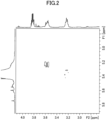
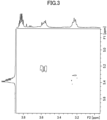
- the monomer composition ratio in a cyclopentene ring-opening copolymer was obtained from 1 H-NMR spectrometry (see FIGs. 1 to 3 ).
- the cis/trans ratio of a cyclopentene ring-opening copolymer was obtained from 13 C-NMR spectrometry.
- a ratio of a peak integral value around 3.8 ppm derived from the oxysilyl group to a peak integral value in 5.0 to 6.0 ppm derived from the carbon-carbon double bond in a cyclopentene ring-opening copolymer main chain was obtained; then, based on the ratio of the peak integral values and a measured value of the number average molecular weight (Mn) by GPC, an introduction rate of the oxysilyl group was calculated as [a percentage of (the number of terminals of cyclopentene ring-opening polymer chains introduced with the oxysilyl group/the total number of the terminals of the cyclopentene ring-opening polymer chains)].
- a glass transition temperature (Tg) was measured by using a differential scanning calorimeter (DSC called X-DSC 7000 manufactured by Hitachi High-Tech Science Co., Ltd.) in a temperature range of -150 °C to 40 °C with a temperature rising rate of 10 °C/minute.
- DSC differential scanning calorimeter
- a storage modulus G' was measured at 108 °C under a condition of the frequency being 0.1 Hz. This value was obtained as an index relative to a measured value of a sample in Comparative Example 1 as 100. A greater value of this index indicates a better hot flowability.
- a rubber composition to be used as a sample was press-crosslinked at 160 °C for 20 minutes to prepare a crosslinked test piece, and with respect to this test piece, by using a viscoelasticity measuring device (product name "EPLEXOR", manufactured by GABO STAHL GmbH), tan ⁇ at 60 °C was measured under conditions of initial strain of 0.5%, dynamic strain of 1%, and at 10 Hz. This value was obtained as an index relative to a measured value of a sample in Comparative Example 1 as 100. A smaller value of the index indicates a better low heat buildup.
- This cyclopentene/norbornadiene ring-opening copolymer was observed by 1 H-NMR spectrometry and various two-dimensional NMR spectrometries, and turned out to have a peak around 3.50 to 3.62 ppm derived from allylic protons in the norbornadiene structural units in each of which only the olefin moiety of one ring is ring-opening. Also, a peak around 3.19 to 3.30 ppm was observed, which was derived from allylic protons in the norbornadiene structural units in each of which all the olefin moieties of the two rings are opened to form a branch structure.
- the obtained polymer was a branched polymer having a branch structure derived from norbornadiene in a cyclopentene ring-opening polymer main chain. It was also confirmed that in all structures derived from norbornadiene, the content ratio of the structural unit in which all the olefin moieties of the two rings are open (a four-branch structural unit) is 53%, and the content ratio of the structural unit in which only the olefin moiety of one ring is open (no-branch structural unit) was 47% (see FIGs. 1 to 3 ).
- a polymerization reaction was carried out in substantially the same way as in Synthesis Example 1 except that the amount of norbornadiene was changed to 1.6 parts, to obtain 202 parts of a cyclopentene/norbornadiene ring-opening copolymer.
- measurements were carried out in substantially the same way as in Synthesis Example 1. The results are shown in Table 1.
- a polymerization reaction was carried out in substantially the same way as in Synthesis Example 1 except that the amount of norbornadiene was changed to 2.2 parts, to obtain 224 parts of a cyclopentene/norbornadiene ring-opening copolymer.
- measurements were carried out in substantially the same way as in Synthesis Example 1. The results are shown in Table 1.
- a polymerization reaction was carried out in substantially the same way as in Synthesis Example 1 except that the amount of norbornadiene was changed to 1.6 parts, the 2.5 wt% diisobutylaluminum monomethoxide/toluene solution was changed to 2.5 parts, and the 1.0 wt% WCl 6 /toluene solution was changed to 7.3 parts, to obtain 31 parts of a cyclopentene/norbornadiene ring-opening copolymer. With respect to the obtained cyclopentene/norbornadiene ring-opening copolymer, measurements were carried out in substantially the same way as in Synthesis Example 1. The results are shown in Table 1.
- a polymerization reaction was carried out in substantially the same way as in Synthesis Example 1 except that the amount of norbornadiene was changed to 2.2 parts, the 2.5 wt% diisobutylaluminum monomethoxide/toluene solution was changed to 2.5 parts, and the 1.0 wt% WCl 6 /toluene solution was changed to 7.3 parts, to obtain 20 parts of cyclopentene/norbornadiene ring-opening copolymer. With respect to the obtained cyclopentene/norbornadiene ring-opening copolymer, measurements were carried out in substantially the same way as in Synthesis Example 1. The results are shown in Table 1.
- a polymerization reaction was carried out in substantially the same way as in Synthesis Example 1 except that the amount of norbornadiene was changed to 3.2 parts, the 2.5 wt% diisobutylaluminum monomethoxide/toluene solution was changed to 2.5 parts, and the 1.0 wt% WCl 6 /toluene solution was changed to 7.3 parts, to obtain 32 parts of cyclopentene/norbornadiene ring-opening copolymer. With respect to the obtained cyclopentene/norbornadiene ring-opening copolymer, measurements were carried out in substantially the same way as in Synthesis Example 1. The results are shown in Table 1.
- a polymerization reaction was carried out in substantially the same way as in Synthesis Example 1 except that the amount of norbornadiene was changed to 3.8 parts, the 2.5 wt% diisobutylaluminum monomethoxide/toluene solution was changed to 2.5 parts, and the 1.0 wt% WCl 6 /toluene solution was changed to 7.3 parts, to obtain 77 parts of a cyclopentene/norbornadiene ring-opening copolymer. With respect to the obtained cyclopentene/norbornadiene ring-opening copolymer, measurements were carried out in substantially the same way as in Synthesis Example 1. The results are shown in Table 1.
- a polymerization reaction was carried out in substantially the same way as in Synthesis Example 1 except that the amount of norbornadiene was changed to 5.4 parts, the 2.5 wt% diisobutylaluminum monomethoxide/toluene solution was changed to 2.5 parts, and the 1.0 wt% WCl 6 /toluene solution was changed to 7.3 parts, to obtain 86 parts of a cyclopentene/norbornadiene ring-opening copolymer. With respect to the obtained cyclopentene/norbornadiene ring-opening copolymer, measurements were carried out in substantially the same way as in Synthesis Example 1. The results are shown in Table 1.
- a polymerization reaction was carried out in substantially the same way as in Synthesis Example 1 except that 0.088 parts of 5-vinyl-2-norbornene (VN) was used instead of norbornadiene, to obtain 138 parts of a cyclopentene/5-vinyl-2-norbornene ring-opening ring copolymer. Measurements were carried out on the obtained cyclopentene/5-vinyl-2-norbornene ring-opening copolymer in substantially the same way as in Synthesis Example 1. The results are shown in Table 1.
- VN 5-vinyl-2-norbornene
- a polymerization reaction was carried out in substantially the same way as in Synthesis Example 1 except that 0.49 parts of 5-vinyl-2-norbornene was used instead of norbornadiene, to obtain 132 parts of a cyclopentene/5-vinyl-2-norbornene ring-opening copolymer. Measurements were carried out on the obtained cyclopentene/5-vinyl-2-norbornene ring-opening copolymer in substantially the same way as in Synthesis Example 1. The results are shown in Table 1.
- a polymerization reaction was carried out in substantially the same way as in Synthesis Example 1 except that 1.66 parts of 2-norbornene was used in place of norbornadiene, to obtain 151 parts of a cyclopentene/2-norbornene ring-opening copolymer. Measurements were carried out on the obtained cyclopentene/2-norbornene ring-opening copolymer in substantially the same way as in Synthesis Example 1. The results are shown in Table 1.
- a polymerization reaction was carried out in substantially the same way as in Synthesis Example 1 except that 1.91 parts of 1,5-cyclooctadiene was used instead of norbornadiene, to obtain 139 parts of a cyclopentene/1,5-cyclooctadiene ring-opening copolymer. Measurements were carried out on the obtained cyclopentene/1,5-cyclooctadiene ring-opening copolymer in substantially the same way as in Synthesis Example 1. The results are shown in Table 1.
- methanol was added by an amount corresponding to twice the molar equivalent of n-butyllithium used in the polymerization reaction, to obtain a solution containing modified styrene butadiene rubber.
- n-butyllithium used in the polymerization reaction
- 0.2 parts of 2,4-bis(n-octylthiomethyl)-6-methylphenol was added per 100 parts of the rubber component of the solution containing this modified styrene butadiene rubber.
- the solvent was removed by steam stripping to recover the solid rubber, which was then dehydrated on a roll, and dried with a hot-air drier to obtain a modified solution-polymerized styrene-butadiene rubber.
- the modified solution-polymerized styrene-butadiene rubber obtained as such contained 21 wt% of bonded styrene and 63 wt% of a content of vinyl bonds with respect to butadiene unit portions, had a Mooney viscosity (ML 1+4 ,100 °C) of 62 and a glass transition temperature (Tg) of -25 °C.
- Hot flowability was evaluated for the cyclopentene ring-opening copolymer obtained in Synthesis Example 1 according to the method described above. Further, 30 parts of the cyclopentene ring-opening copolymer obtained in Synthesis Example 1 and 70 parts of the modified solution-polymerized styrene butadiene rubber obtained in Synthesis Example 14 were masticated with a Banbury mixer having a volume of 250 ml.
- silica product name "Zeosil 1165MP", manufactured by Solvay, “ZEOSIL” is a registered trademark, nitrogen adsorption specific surface area (BET method): 163m 2 /g
- 25 parts of process oil product name "Aromax T-DAE", manufactured by Shin Nippon Oil Co., Ltd., "Aromax” is a registered trademark
- a silane coupling agent bis(3-(triethoxysilyl) propyl)tetrasulfide, product name "Si69”, manufactured by Degussa, “Si69” is a registered trademark
- silica product name "Zeosil 1165MP", manufactured by Solvay
- 3 parts of zinc oxide zinc flower No. 1
- 2 parts of stearic acid product name "SA-300", manufactured by Adeka corporation
- 2 parts of an anti-aging agent N-phenyl-N'-(1,3-dimethylbutyl)-p-phenylenediamine, product name "NOCLAK 6C", manufactured by Ouchi Shinko Chemical Industrial Co., LTD., "NOCLAC” is a registered trademark
- the temperature of the rubber composition was at 150 °C. Then, the obtained kneaded material was cooled down to room temperature, then, mixed and kneaded again in the Banbury mixer for 3 minutes, and then, the kneaded material was discharged from the Banbury mixer.
- Hot flowability was evaluated for the cyclopentene ring-opening copolymer obtained in Synthesis Example 2 according to the method described above. Also, a sheet-like rubber composition was obtained in substantially the same way as in Example 1, except that 30 parts of the cyclopentene ring-opening copolymer obtained in Synthesis Example 2 was used instead of the cyclopentene ring-opening copolymer obtained in Synthesis Example 1. Low heat buildup was evaluated for the obtained rubber composition according to the method described above. The results are shown in Table 1.
- Hot flowability was evaluated for the cyclopentene ring-opening copolymer obtained in Synthesis Example 3 according to the method described above. Also, a sheet-like rubber composition was obtained in substantially the same way as in Example 1, except that 30 parts of the cyclopentene ring-opening copolymer obtained in Synthesis Example 3 was used instead of the cyclopentene ring-opening copolymer obtained in Synthesis Example 1. Low heat buildup was evaluated for the obtained rubber composition according to the method described above. The results are shown in Table 1.
- Hot flowability was evaluated for the cyclopentene ring-opening copolymer obtained in Synthesis Example 4 according to the method described above. Also, a sheet-like rubber composition was obtained in substantially the same way as in Example 1, except that 30 parts of the cyclopentene ring-opening copolymer obtained in Synthesis Example 4 was used instead of the cyclopentene ring-opening copolymer obtained in Synthesis Example 1. Low heat buildup was evaluated for the obtained rubber composition according to the method described above. The results are shown in Table 1.
- Hot flowability was evaluated for the cyclopentene ring-opening copolymer obtained in Synthesis Example 5 according to the method described above. Also, a sheet-like rubber composition was obtained in substantially the same way as in Example 1, except that 30 parts of the cyclopentene ring-opening copolymer obtained in Synthesis Example 5 was used instead of the cyclopentene ring-opening copolymer obtained in Synthesis Example 1. Low heat buildup was evaluated for the obtained rubber composition according to the method described above. The results are shown in Table 1.
- Hot flowability was evaluated for the cyclopentene ring-opening copolymer obtained in Synthesis Example 6 according to the method described above. Also, a sheet-like rubber composition was obtained in substantially the same way as in Example 1, except that 30 parts of the cyclopentene ring-opening copolymer obtained in Synthesis Example 6 was used instead of the cyclopentene ring-opening copolymer obtained in Synthesis Example 1. Low heat buildup was evaluated for the obtained rubber composition according to the method described above. The results are shown in Table 1.
- Hot flowability was evaluated for the cyclopentene ring-opening copolymer obtained in Synthesis Example 7 according to the method described above. Also, a sheet-like rubber composition was obtained in substantially the same way as in Example 1, except that 30 parts of the cyclopentene ring-opening copolymer obtained in Synthesis Example 7 was used instead of the cyclopentene ring-opening copolymer obtained in Synthesis Example 1. Low heat buildup was evaluated for the obtained rubber composition according to the method described above. The results are shown in Table 1.
- Hot flowability was evaluated for the cyclopentene ring-opening copolymer obtained in Synthesis Example 8 according to the method described above. Also, a sheet-like rubber composition was obtained in substantially the same way as in Example 1, except that 30 parts of the cyclopentene ring-opening copolymer obtained in Synthesis Example 8 was used instead of the cyclopentene ring-opening copolymer obtained in Synthesis Example 1. Low heat buildup was evaluated for the obtained rubber composition according to the method described above. The results are shown in Table 1.
- Hot flowability was evaluated for the cyclopentene ring-opening copolymer obtained in Synthesis Example 9 according to the method described above. Also, a sheet-like rubber composition was obtained in substantially the same way as in Example 1, except that 30 parts of the cyclopentene ring-opening copolymer obtained in Synthesis Example 9 was used instead of the cyclopentene ring-opening copolymer obtained in Synthesis Example 1. Low heat buildup was evaluated for the obtained rubber composition according to the method described above. The results are shown in Table 1.
- Hot flowability was evaluated for the cyclopentene ring-opening copolymer obtained in Synthesis Example 10 according to the method described above. Also, a sheet-like rubber composition was obtained in substantially the same way as in Example 1, except that 30 parts of the cyclopentene ring-opening copolymer obtained in Synthesis Example 10 was used instead of the cyclopentene ring-opening copolymer obtained in Synthesis Example 1. Low heat buildup was evaluated for the obtained rubber composition according to the method described above. The results are shown in Table 1.
- Hot flowability was evaluated for the cyclopentene ring-opening copolymer obtained in Synthesis Example 11 according to the method described above. Also, a sheet-like rubber composition was obtained in substantially the same way as in Example 1, except that 30 parts of the cyclopentene ring-opening copolymer obtained in Synthesis Example 11 was used instead of the cyclopentene ring-opening copolymer obtained in Synthesis Example 1. Low heat buildup was evaluated for the obtained rubber composition according to the method described above. The results are shown in Table 1.
- Hot flowability was evaluated for the cyclopentene ring-opening copolymer obtained in Synthesis Example 12 according to the method described above. Also, a sheet-like rubber composition was obtained in substantially the same way as in Example 1, except that 30 parts of the cyclopentene ring-opening copolymer obtained in Synthesis Example 12 was used instead of the cyclopentene ring-opening copolymer obtained in Synthesis Example 1. Low heat buildup was evaluated for the obtained rubber composition according to the method described above. The results are shown in Table 1.
Landscapes
- Chemical & Material Sciences (AREA)
- Health & Medical Sciences (AREA)
- Chemical Kinetics & Catalysis (AREA)
- Medicinal Chemistry (AREA)
- Polymers & Plastics (AREA)
- Organic Chemistry (AREA)
- Engineering & Computer Science (AREA)
- Mechanical Engineering (AREA)
- Polyoxymethylene Polymers And Polymers With Carbon-To-Carbon Bonds (AREA)
- Compositions Of Macromolecular Compounds (AREA)
- Respiratory Apparatuses And Protective Means (AREA)
- Fire-Extinguishing By Fire Departments, And Fire-Extinguishing Equipment And Control Thereof (AREA)
Claims (5)
- Ein durch Ringöffnung von Cyclopenten erzeugtes Copolymer mit verzweigter Struktur, umfassend:eine Struktur, in der wenigstens vier durch Ringöffnung von Cyclopenten erzeugte Polymerketten durch ein verzweigtes Strukturelement miteinander verkettet sind, wobei das verzweigte Strukturelement ein Strukturelement ist, welches sich aus einem polyzyklischen Olefin mit mindestens zwei Ringstrukturen mit jeweils einer Doppelbindung herleitet, wobei das aus dem polyzyklischen Olefin hergeleitete Strukturelement in einem Anteil von 0,01 bis 4,0 Mol% bezogen auf alle Wiederholungseinheiten im durch Ringöffnung von Cyclopenten erzeugten Copolymer enthalten ist,wobei mindestens ein Teil der durch Ringöffnung von Cyclopenten erzeugte Polymerketten terminal modifiziert ist.
- Eine Gummizusammensetzung umfassend:eine Gummikomponente enthaltend das durch Ringöffnung von Cyclopenten erzeugte Copolymer wie in Anspruch 1 beansprucht; undeinen Füllstoff.
- Ein quervernetzter Gummi, erzeugt durch Quervernetzung der Gummizusammensetzung wie in Anspruch 2 beansprucht.
- Ein Reifen umfassend:
den quervernetzten Gummi wie in Anspruch 3 beansprucht. - Ein Verfahren zur Herstellung eines durch Ringöffnung von Cyclopenten erzeugten Copolymers, das Verfahren umfassend:
Durchführen einer ringöffnenden Copolymerisation von Cyclopenten mit einem polyzyklischen Olefin mit mindestens zwei Ringstrukturen mit jeweils einer Doppelbindung herleitet, durch Verwendung eines Olefinbasierten Kohlenwasserstoffs enthaltend eine modifizierende Gruppe zur Modifikation von Kettenenden von durch Ringöffnung von Cyclopenten erzeugte Polymerketten, wobei die Menge an polyzyklischen Olefin 0,005 bis 0,95 Mol% beträgt, bezogen auf das Cyclopenten.
Applications Claiming Priority (2)
| Application Number | Priority Date | Filing Date | Title |
|---|---|---|---|
| JP2017059937 | 2017-03-24 | ||
| PCT/JP2018/010569 WO2018173968A1 (ja) | 2017-03-24 | 2018-03-16 | シクロペンテン開環共重合体及びその製造方法 |
Publications (3)
| Publication Number | Publication Date |
|---|---|
| EP3604378A1 EP3604378A1 (de) | 2020-02-05 |
| EP3604378A4 EP3604378A4 (de) | 2020-12-23 |
| EP3604378B1 true EP3604378B1 (de) | 2024-08-28 |
Family
ID=63585349
Family Applications (1)
| Application Number | Title | Priority Date | Filing Date |
|---|---|---|---|
| EP18771445.6A Active EP3604378B1 (de) | 2017-03-24 | 2018-03-16 | Cyclopenten-ring-öffnungscopolymer und verfahren zur herstellung davon |
Country Status (5)
| Country | Link |
|---|---|
| US (1) | US11286339B2 (de) |
| EP (1) | EP3604378B1 (de) |
| JP (1) | JP7010284B2 (de) |
| CN (1) | CN110312749B (de) |
| WO (1) | WO2018173968A1 (de) |
Families Citing this family (12)
| Publication number | Priority date | Publication date | Assignee | Title |
|---|---|---|---|---|
| JP7006136B2 (ja) * | 2017-10-30 | 2022-01-24 | 日本ゼオン株式会社 | ゴム架橋物 |
| JP7009920B2 (ja) * | 2017-10-30 | 2022-01-26 | 日本ゼオン株式会社 | 高反発材料 |
| JP7359148B2 (ja) * | 2018-07-13 | 2023-10-11 | 日本ゼオン株式会社 | 開環共重合体組成物 |
| WO2021113503A1 (en) | 2019-12-04 | 2021-06-10 | Exxonmobil Chemical Patents Inc. | Polymers prepared by ring opening metathesis polymerization |
| WO2021126691A1 (en) * | 2019-12-16 | 2021-06-24 | Exxonmobil Chemical Patents. Inc. | Tire tread compounds |
| WO2021125222A1 (ja) * | 2019-12-17 | 2021-06-24 | 日本ゼオン株式会社 | 開環共重合体 |
| EP4114896A1 (de) * | 2020-03-03 | 2023-01-11 | ExxonMobil Chemical Patents Inc. | Kautschukzusammensetzungen für passagierreifenlaufflächen und zugehörige verfahren |
| JP2023516712A (ja) * | 2020-03-03 | 2023-04-20 | エクソンモービル ケミカル パテンツ インコーポレイテッド | 大型トラックおよびバスタイヤトレッドのためのゴム配合物ならびにそれに関する方法 |
| EP4121206B1 (de) | 2020-03-19 | 2025-01-29 | ExxonMobil Chemical Patents Inc. | Metathesekatalysatorsysteme mit verbesserter ringöffnung zur cyclischen olefinpolymerisation |
| WO2021188337A1 (en) | 2020-03-19 | 2021-09-23 | Exxonmobil Chemical Patents Inc. | Pentavalent dimeric group 6 transition metal complexes and methods for use thereof |
| US11912861B2 (en) | 2020-10-29 | 2024-02-27 | ExxonMobil Engineering & Technology Co. | Rubber composition for lighter weight tires and improved wet traction |
| CN113292707B (zh) * | 2021-06-01 | 2022-07-15 | 上海交通大学 | 一种端基功能化超支化聚烯烃的制备方法 |
Citations (1)
| Publication number | Priority date | Publication date | Assignee | Title |
|---|---|---|---|---|
| WO2014133028A1 (ja) * | 2013-02-26 | 2014-09-04 | 日本ゼオン株式会社 | シクロペンテン開環共重合体、その製造方法およびゴム組成物 |
Family Cites Families (19)
| Publication number | Priority date | Publication date | Assignee | Title |
|---|---|---|---|---|
| DE1915684A1 (de) * | 1969-03-27 | 1970-10-08 | Bayer Ag | Polymerisate von Cyclopenten |
| DE1961865C3 (de) | 1969-12-10 | 1980-06-12 | Bayer Ag, 5090 Leverkusen | Copolymerisation von cyclischen Monoolefinen mit cyclischen Polyolefinen |
| NL148070B (nl) * | 1970-07-27 | 1975-12-15 | Phillips Petroleum Co | Werkwijze ter bereiding van een rubberachtig koolwaterstofcopolymeer, en gevormd voortbrengsel, vervaardigd uit een aldus bereid copolymeer. |
| US3681300A (en) | 1970-07-27 | 1972-08-01 | Phillips Petroleum Co | Copolymers of cyclic monoolefins and omega-alkenyl-polycycloalkene compounds |
| JPS524158B2 (de) | 1971-08-09 | 1977-02-01 | ||
| JPS5647124B2 (de) | 1973-06-26 | 1981-11-07 | ||
| JPS5324400A (en) | 1976-08-19 | 1978-03-07 | Kanegafuchi Chem Ind Co Ltd | Preparation of dicyclopentadiene ring opening polymers and copolymers |
| JPS5776015A (en) | 1980-10-30 | 1982-05-12 | Kanegafuchi Chem Ind Co Ltd | Vinyl polymeric emulsion |
| JP3403747B2 (ja) | 1993-02-23 | 2003-05-06 | 株式会社ブリヂストン | タイヤ用ゴム組成物 |
| JP5353677B2 (ja) * | 2009-12-16 | 2013-11-27 | 日本ゼオン株式会社 | シクロペンテン開環重合体の製造方法 |
| WO2011087071A1 (ja) * | 2010-01-14 | 2011-07-21 | 日本ゼオン株式会社 | シクロペンテン開環重合体およびその製造方法 |
| US8889806B2 (en) * | 2010-01-14 | 2014-11-18 | Zeon Corporation | Ring-opening polymer of cyclopentene and method of production of same |
| CN103224578B (zh) | 2013-01-29 | 2015-03-11 | 富阳经略化工技术有限公司 | 一种三元乙丙橡胶及其制备方法 |
| JP6586953B2 (ja) | 2014-06-19 | 2019-10-09 | 日本ゼオン株式会社 | シクロペンテン開環重合体およびその製造方法、重合体組成物、ならびに重合体架橋物 |
| US10072101B2 (en) | 2014-08-27 | 2018-09-11 | Zeon Corporation | Cycloolefin rubber and method of production of same and rubber composition, cross-linked rubber, and tire |
| WO2016158676A1 (ja) * | 2015-03-31 | 2016-10-06 | 日本ゼオン株式会社 | ゴム組成物、ゴム架橋物およびタイヤ |
| JPWO2016158677A1 (ja) * | 2015-03-31 | 2018-01-25 | 日本ゼオン株式会社 | シクロオレフィン開環共重合体およびその製造方法 |
| JP6655922B2 (ja) | 2015-09-15 | 2020-03-04 | サムスン エレクトロニクス カンパニー リミテッド | 固体撮像装置 |
| CN111094384B (zh) | 2017-09-29 | 2023-02-17 | 日本瑞翁株式会社 | 液体状环戊烯开环共聚物、交联性组合物及橡胶交联体 |
-
2018
- 2018-03-16 EP EP18771445.6A patent/EP3604378B1/de active Active
- 2018-03-16 JP JP2019507640A patent/JP7010284B2/ja active Active
- 2018-03-16 US US16/487,011 patent/US11286339B2/en active Active
- 2018-03-16 CN CN201880012937.7A patent/CN110312749B/zh active Active
- 2018-03-16 WO PCT/JP2018/010569 patent/WO2018173968A1/ja not_active Ceased
Patent Citations (1)
| Publication number | Priority date | Publication date | Assignee | Title |
|---|---|---|---|---|
| WO2014133028A1 (ja) * | 2013-02-26 | 2014-09-04 | 日本ゼオン株式会社 | シクロペンテン開環共重合体、その製造方法およびゴム組成物 |
Also Published As
| Publication number | Publication date |
|---|---|
| US20200231744A1 (en) | 2020-07-23 |
| EP3604378A1 (de) | 2020-02-05 |
| EP3604378A4 (de) | 2020-12-23 |
| WO2018173968A1 (ja) | 2018-09-27 |
| CN110312749A (zh) | 2019-10-08 |
| CN110312749B (zh) | 2022-05-06 |
| JPWO2018173968A1 (ja) | 2020-01-30 |
| US11286339B2 (en) | 2022-03-29 |
| JP7010284B2 (ja) | 2022-01-26 |
Similar Documents
| Publication | Publication Date | Title |
|---|---|---|
| EP3604378B1 (de) | Cyclopenten-ring-öffnungscopolymer und verfahren zur herstellung davon | |
| EP2524936B1 (de) | Ringöffnungspolymer aus cyclopenten und verfahren zu seiner herstellung | |
| JP5640994B2 (ja) | シクロペンテン開環重合体およびその製造方法 | |
| EP2623536B1 (de) | Polymer mit cyclopentenring-öffnung und herstellungsverfahren dafür | |
| EP3354675B1 (de) | Ringoffenes cyclopenten-copolymer | |
| US10400060B2 (en) | Cyclopentene ring-opening polymer and method of production of same, polymer composition, and cross-linked polymer | |
| JP6624059B2 (ja) | 環状オレフィン系ゴムおよびその製造方法、ならびに、ゴム組成物、ゴム架橋物およびタイヤ | |
| WO2016158676A1 (ja) | ゴム組成物、ゴム架橋物およびタイヤ | |
| KR102805219B1 (ko) | 개환 공중합체 | |
| JP6701892B2 (ja) | 重荷重タイヤ用ゴム組成物 | |
| US10774174B2 (en) | Use of crosslinked rubber | |
| CN109312144B (zh) | 橡胶交联物 | |
| EP3604439B1 (de) | Kautschukzusammensetzung und vernetzter kautschuk | |
| EP4079781A1 (de) | Ringgeöffnetes copolymer |
Legal Events
| Date | Code | Title | Description |
|---|---|---|---|
| STAA | Information on the status of an ep patent application or granted ep patent |
Free format text: STATUS: THE INTERNATIONAL PUBLICATION HAS BEEN MADE |
|
| PUAI | Public reference made under article 153(3) epc to a published international application that has entered the european phase |
Free format text: ORIGINAL CODE: 0009012 |
|
| STAA | Information on the status of an ep patent application or granted ep patent |
Free format text: STATUS: REQUEST FOR EXAMINATION WAS MADE |
|
| 17P | Request for examination filed |
Effective date: 20190904 |
|
| AK | Designated contracting states |
Kind code of ref document: A1 Designated state(s): AL AT BE BG CH CY CZ DE DK EE ES FI FR GB GR HR HU IE IS IT LI LT LU LV MC MK MT NL NO PL PT RO RS SE SI SK SM TR |
|
| AX | Request for extension of the european patent |
Extension state: BA ME |
|
| DAV | Request for validation of the european patent (deleted) | ||
| DAX | Request for extension of the european patent (deleted) | ||
| A4 | Supplementary search report drawn up and despatched |
Effective date: 20201125 |
|
| RIC1 | Information provided on ipc code assigned before grant |
Ipc: C08L 65/00 20060101ALI20201119BHEP Ipc: C08K 3/36 20060101ALI20201119BHEP Ipc: C08G 61/08 20060101AFI20201119BHEP Ipc: C08L 21/00 20060101ALI20201119BHEP Ipc: B60C 1/00 20060101ALI20201119BHEP |
|
| GRAP | Despatch of communication of intention to grant a patent |
Free format text: ORIGINAL CODE: EPIDOSNIGR1 |
|
| STAA | Information on the status of an ep patent application or granted ep patent |
Free format text: STATUS: GRANT OF PATENT IS INTENDED |
|
| INTG | Intention to grant announced |
Effective date: 20240430 |
|
| GRAS | Grant fee paid |
Free format text: ORIGINAL CODE: EPIDOSNIGR3 |
|
| GRAA | (expected) grant |
Free format text: ORIGINAL CODE: 0009210 |
|
| STAA | Information on the status of an ep patent application or granted ep patent |
Free format text: STATUS: THE PATENT HAS BEEN GRANTED |
|
| P01 | Opt-out of the competence of the unified patent court (upc) registered |
Free format text: CASE NUMBER: APP_38874/2024 Effective date: 20240628 |
|
| AK | Designated contracting states |
Kind code of ref document: B1 Designated state(s): AL AT BE BG CH CY CZ DE DK EE ES FI FR GB GR HR HU IE IS IT LI LT LU LV MC MK MT NL NO PL PT RO RS SE SI SK SM TR |
|
| REG | Reference to a national code |
Ref country code: GB Ref legal event code: FG4D |
|
| REG | Reference to a national code |
Ref country code: CH Ref legal event code: EP |
|
| REG | Reference to a national code |
Ref country code: DE Ref legal event code: R096 Ref document number: 602018073652 Country of ref document: DE |
|
| REG | Reference to a national code |
Ref country code: IE Ref legal event code: FG4D |
|
| REG | Reference to a national code |
Ref country code: LT Ref legal event code: MG9D |
|
| PG25 | Lapsed in a contracting state [announced via postgrant information from national office to epo] |
Ref country code: NO Free format text: LAPSE BECAUSE OF FAILURE TO SUBMIT A TRANSLATION OF THE DESCRIPTION OR TO PAY THE FEE WITHIN THE PRESCRIBED TIME-LIMIT Effective date: 20241128 |
|
| REG | Reference to a national code |
Ref country code: AT Ref legal event code: MK05 Ref document number: 1717903 Country of ref document: AT Kind code of ref document: T Effective date: 20240828 |
|
| PG25 | Lapsed in a contracting state [announced via postgrant information from national office to epo] |
Ref country code: NL Free format text: LAPSE BECAUSE OF FAILURE TO SUBMIT A TRANSLATION OF THE DESCRIPTION OR TO PAY THE FEE WITHIN THE PRESCRIBED TIME-LIMIT Effective date: 20240828 Ref country code: GR Free format text: LAPSE BECAUSE OF FAILURE TO SUBMIT A TRANSLATION OF THE DESCRIPTION OR TO PAY THE FEE WITHIN THE PRESCRIBED TIME-LIMIT Effective date: 20241129 Ref country code: PT Free format text: LAPSE BECAUSE OF FAILURE TO SUBMIT A TRANSLATION OF THE DESCRIPTION OR TO PAY THE FEE WITHIN THE PRESCRIBED TIME-LIMIT Effective date: 20241230 Ref country code: PL Free format text: LAPSE BECAUSE OF FAILURE TO SUBMIT A TRANSLATION OF THE DESCRIPTION OR TO PAY THE FEE WITHIN THE PRESCRIBED TIME-LIMIT Effective date: 20240828 Ref country code: FI Free format text: LAPSE BECAUSE OF FAILURE TO SUBMIT A TRANSLATION OF THE DESCRIPTION OR TO PAY THE FEE WITHIN THE PRESCRIBED TIME-LIMIT Effective date: 20240828 |
|
| PG25 | Lapsed in a contracting state [announced via postgrant information from national office to epo] |
Ref country code: BG Free format text: LAPSE BECAUSE OF FAILURE TO SUBMIT A TRANSLATION OF THE DESCRIPTION OR TO PAY THE FEE WITHIN THE PRESCRIBED TIME-LIMIT Effective date: 20240828 |
|
| PG25 | Lapsed in a contracting state [announced via postgrant information from national office to epo] |
Ref country code: LV Free format text: LAPSE BECAUSE OF FAILURE TO SUBMIT A TRANSLATION OF THE DESCRIPTION OR TO PAY THE FEE WITHIN THE PRESCRIBED TIME-LIMIT Effective date: 20240828 |
|
| REG | Reference to a national code |
Ref country code: NL Ref legal event code: MP Effective date: 20240828 |
|
| PG25 | Lapsed in a contracting state [announced via postgrant information from national office to epo] |
Ref country code: IS Free format text: LAPSE BECAUSE OF FAILURE TO SUBMIT A TRANSLATION OF THE DESCRIPTION OR TO PAY THE FEE WITHIN THE PRESCRIBED TIME-LIMIT Effective date: 20241228 Ref country code: AT Free format text: LAPSE BECAUSE OF FAILURE TO SUBMIT A TRANSLATION OF THE DESCRIPTION OR TO PAY THE FEE WITHIN THE PRESCRIBED TIME-LIMIT Effective date: 20240828 |
|
| PG25 | Lapsed in a contracting state [announced via postgrant information from national office to epo] |
Ref country code: HR Free format text: LAPSE BECAUSE OF FAILURE TO SUBMIT A TRANSLATION OF THE DESCRIPTION OR TO PAY THE FEE WITHIN THE PRESCRIBED TIME-LIMIT Effective date: 20240828 |
|
| PG25 | Lapsed in a contracting state [announced via postgrant information from national office to epo] |
Ref country code: ES Free format text: LAPSE BECAUSE OF FAILURE TO SUBMIT A TRANSLATION OF THE DESCRIPTION OR TO PAY THE FEE WITHIN THE PRESCRIBED TIME-LIMIT Effective date: 20240828 Ref country code: RS Free format text: LAPSE BECAUSE OF FAILURE TO SUBMIT A TRANSLATION OF THE DESCRIPTION OR TO PAY THE FEE WITHIN THE PRESCRIBED TIME-LIMIT Effective date: 20241128 |
|
| PG25 | Lapsed in a contracting state [announced via postgrant information from national office to epo] |
Ref country code: RS Free format text: LAPSE BECAUSE OF FAILURE TO SUBMIT A TRANSLATION OF THE DESCRIPTION OR TO PAY THE FEE WITHIN THE PRESCRIBED TIME-LIMIT Effective date: 20241128 Ref country code: PT Free format text: LAPSE BECAUSE OF FAILURE TO SUBMIT A TRANSLATION OF THE DESCRIPTION OR TO PAY THE FEE WITHIN THE PRESCRIBED TIME-LIMIT Effective date: 20241230 Ref country code: PL Free format text: LAPSE BECAUSE OF FAILURE TO SUBMIT A TRANSLATION OF THE DESCRIPTION OR TO PAY THE FEE WITHIN THE PRESCRIBED TIME-LIMIT Effective date: 20240828 Ref country code: NO Free format text: LAPSE BECAUSE OF FAILURE TO SUBMIT A TRANSLATION OF THE DESCRIPTION OR TO PAY THE FEE WITHIN THE PRESCRIBED TIME-LIMIT Effective date: 20241128 Ref country code: NL Free format text: LAPSE BECAUSE OF FAILURE TO SUBMIT A TRANSLATION OF THE DESCRIPTION OR TO PAY THE FEE WITHIN THE PRESCRIBED TIME-LIMIT Effective date: 20240828 Ref country code: LV Free format text: LAPSE BECAUSE OF FAILURE TO SUBMIT A TRANSLATION OF THE DESCRIPTION OR TO PAY THE FEE WITHIN THE PRESCRIBED TIME-LIMIT Effective date: 20240828 Ref country code: IS Free format text: LAPSE BECAUSE OF FAILURE TO SUBMIT A TRANSLATION OF THE DESCRIPTION OR TO PAY THE FEE WITHIN THE PRESCRIBED TIME-LIMIT Effective date: 20241228 Ref country code: HR Free format text: LAPSE BECAUSE OF FAILURE TO SUBMIT A TRANSLATION OF THE DESCRIPTION OR TO PAY THE FEE WITHIN THE PRESCRIBED TIME-LIMIT Effective date: 20240828 Ref country code: GR Free format text: LAPSE BECAUSE OF FAILURE TO SUBMIT A TRANSLATION OF THE DESCRIPTION OR TO PAY THE FEE WITHIN THE PRESCRIBED TIME-LIMIT Effective date: 20241129 Ref country code: FI Free format text: LAPSE BECAUSE OF FAILURE TO SUBMIT A TRANSLATION OF THE DESCRIPTION OR TO PAY THE FEE WITHIN THE PRESCRIBED TIME-LIMIT Effective date: 20240828 Ref country code: ES Free format text: LAPSE BECAUSE OF FAILURE TO SUBMIT A TRANSLATION OF THE DESCRIPTION OR TO PAY THE FEE WITHIN THE PRESCRIBED TIME-LIMIT Effective date: 20240828 Ref country code: BG Free format text: LAPSE BECAUSE OF FAILURE TO SUBMIT A TRANSLATION OF THE DESCRIPTION OR TO PAY THE FEE WITHIN THE PRESCRIBED TIME-LIMIT Effective date: 20240828 Ref country code: AT Free format text: LAPSE BECAUSE OF FAILURE TO SUBMIT A TRANSLATION OF THE DESCRIPTION OR TO PAY THE FEE WITHIN THE PRESCRIBED TIME-LIMIT Effective date: 20240828 |
|
| PGFP | Annual fee paid to national office [announced via postgrant information from national office to epo] |
Ref country code: DE Payment date: 20250128 Year of fee payment: 8 |
|
| PG25 | Lapsed in a contracting state [announced via postgrant information from national office to epo] |
Ref country code: SM Free format text: LAPSE BECAUSE OF FAILURE TO SUBMIT A TRANSLATION OF THE DESCRIPTION OR TO PAY THE FEE WITHIN THE PRESCRIBED TIME-LIMIT Effective date: 20240828 Ref country code: DK Free format text: LAPSE BECAUSE OF FAILURE TO SUBMIT A TRANSLATION OF THE DESCRIPTION OR TO PAY THE FEE WITHIN THE PRESCRIBED TIME-LIMIT Effective date: 20240828 Ref country code: RO Free format text: LAPSE BECAUSE OF FAILURE TO SUBMIT A TRANSLATION OF THE DESCRIPTION OR TO PAY THE FEE WITHIN THE PRESCRIBED TIME-LIMIT Effective date: 20240828 |
|
| PG25 | Lapsed in a contracting state [announced via postgrant information from national office to epo] |
Ref country code: EE Free format text: LAPSE BECAUSE OF FAILURE TO SUBMIT A TRANSLATION OF THE DESCRIPTION OR TO PAY THE FEE WITHIN THE PRESCRIBED TIME-LIMIT Effective date: 20240828 |
|
| PG25 | Lapsed in a contracting state [announced via postgrant information from national office to epo] |
Ref country code: CZ Free format text: LAPSE BECAUSE OF FAILURE TO SUBMIT A TRANSLATION OF THE DESCRIPTION OR TO PAY THE FEE WITHIN THE PRESCRIBED TIME-LIMIT Effective date: 20240828 |
|
| PGFP | Annual fee paid to national office [announced via postgrant information from national office to epo] |
Ref country code: FR Payment date: 20250210 Year of fee payment: 8 |
|
| PG25 | Lapsed in a contracting state [announced via postgrant information from national office to epo] |
Ref country code: SK Free format text: LAPSE BECAUSE OF FAILURE TO SUBMIT A TRANSLATION OF THE DESCRIPTION OR TO PAY THE FEE WITHIN THE PRESCRIBED TIME-LIMIT Effective date: 20240828 |
|
| PGFP | Annual fee paid to national office [announced via postgrant information from national office to epo] |
Ref country code: IT Payment date: 20250211 Year of fee payment: 8 |
|
| REG | Reference to a national code |
Ref country code: DE Ref legal event code: R097 Ref document number: 602018073652 Country of ref document: DE |
|
| PLBE | No opposition filed within time limit |
Free format text: ORIGINAL CODE: 0009261 |
|
| STAA | Information on the status of an ep patent application or granted ep patent |
Free format text: STATUS: NO OPPOSITION FILED WITHIN TIME LIMIT |
|
| 26N | No opposition filed |
Effective date: 20250530 |
|
| PG25 | Lapsed in a contracting state [announced via postgrant information from national office to epo] |
Ref country code: SE Free format text: LAPSE BECAUSE OF FAILURE TO SUBMIT A TRANSLATION OF THE DESCRIPTION OR TO PAY THE FEE WITHIN THE PRESCRIBED TIME-LIMIT Effective date: 20240828 |
|
| PG25 | Lapsed in a contracting state [announced via postgrant information from national office to epo] |
Ref country code: MC Free format text: LAPSE BECAUSE OF FAILURE TO SUBMIT A TRANSLATION OF THE DESCRIPTION OR TO PAY THE FEE WITHIN THE PRESCRIBED TIME-LIMIT Effective date: 20240828 |
|
| REG | Reference to a national code |
Ref country code: CH Ref legal event code: H13 Free format text: ST27 STATUS EVENT CODE: U-0-0-H10-H13 (AS PROVIDED BY THE NATIONAL OFFICE) Effective date: 20251023 |
|
| PG25 | Lapsed in a contracting state [announced via postgrant information from national office to epo] |
Ref country code: LU Free format text: LAPSE BECAUSE OF NON-PAYMENT OF DUE FEES Effective date: 20250316 |
|
| GBPC | Gb: european patent ceased through non-payment of renewal fee |
Effective date: 20250316 |
|
| REG | Reference to a national code |
Ref country code: BE Ref legal event code: MM Effective date: 20250331 |
|
| PG25 | Lapsed in a contracting state [announced via postgrant information from national office to epo] |
Ref country code: GB Free format text: LAPSE BECAUSE OF NON-PAYMENT OF DUE FEES Effective date: 20250316 |
|
| PG25 | Lapsed in a contracting state [announced via postgrant information from national office to epo] |
Ref country code: BE Free format text: LAPSE BECAUSE OF NON-PAYMENT OF DUE FEES Effective date: 20250331 |
|
| PG25 | Lapsed in a contracting state [announced via postgrant information from national office to epo] |
Ref country code: CH Free format text: LAPSE BECAUSE OF NON-PAYMENT OF DUE FEES Effective date: 20250331 |
|
| PG25 | Lapsed in a contracting state [announced via postgrant information from national office to epo] |
Ref country code: IE Free format text: LAPSE BECAUSE OF NON-PAYMENT OF DUE FEES Effective date: 20250316 |