EP3604064B1 - Verfahren und endgerät zur ausführung einer fahrsteuerung bei einem fahrzeug - Google Patents
Verfahren und endgerät zur ausführung einer fahrsteuerung bei einem fahrzeug Download PDFInfo
- Publication number
- EP3604064B1 EP3604064B1 EP18855592.4A EP18855592A EP3604064B1 EP 3604064 B1 EP3604064 B1 EP 3604064B1 EP 18855592 A EP18855592 A EP 18855592A EP 3604064 B1 EP3604064 B1 EP 3604064B1
- Authority
- EP
- European Patent Office
- Prior art keywords
- speed limit
- lane
- vehicle
- present vehicle
- speed
- Prior art date
- Legal status (The legal status is an assumption and is not a legal conclusion. Google has not performed a legal analysis and makes no representation as to the accuracy of the status listed.)
- Active
Links
Images

Classifications
-
- B—PERFORMING OPERATIONS; TRANSPORTING
- B60—VEHICLES IN GENERAL
- B60W—CONJOINT CONTROL OF VEHICLE SUB-UNITS OF DIFFERENT TYPE OR DIFFERENT FUNCTION; CONTROL SYSTEMS SPECIALLY ADAPTED FOR HYBRID VEHICLES; ROAD VEHICLE DRIVE CONTROL SYSTEMS FOR PURPOSES NOT RELATED TO THE CONTROL OF A PARTICULAR SUB-UNIT
- B60W30/00—Purposes of road vehicle drive control systems not related to the control of a particular sub-unit, e.g. of systems using conjoint control of vehicle sub-units
- B60W30/14—Adaptive cruise control
-
- B—PERFORMING OPERATIONS; TRANSPORTING
- B60—VEHICLES IN GENERAL
- B60W—CONJOINT CONTROL OF VEHICLE SUB-UNITS OF DIFFERENT TYPE OR DIFFERENT FUNCTION; CONTROL SYSTEMS SPECIALLY ADAPTED FOR HYBRID VEHICLES; ROAD VEHICLE DRIVE CONTROL SYSTEMS FOR PURPOSES NOT RELATED TO THE CONTROL OF A PARTICULAR SUB-UNIT
- B60W30/00—Purposes of road vehicle drive control systems not related to the control of a particular sub-unit, e.g. of systems using conjoint control of vehicle sub-units
- B60W30/08—Active safety systems predicting or avoiding probable or impending collision or attempting to minimise its consequences
- B60W30/09—Taking automatic action to avoid collision, e.g. braking and steering
-
- B—PERFORMING OPERATIONS; TRANSPORTING
- B60—VEHICLES IN GENERAL
- B60W—CONJOINT CONTROL OF VEHICLE SUB-UNITS OF DIFFERENT TYPE OR DIFFERENT FUNCTION; CONTROL SYSTEMS SPECIALLY ADAPTED FOR HYBRID VEHICLES; ROAD VEHICLE DRIVE CONTROL SYSTEMS FOR PURPOSES NOT RELATED TO THE CONTROL OF A PARTICULAR SUB-UNIT
- B60W30/00—Purposes of road vehicle drive control systems not related to the control of a particular sub-unit, e.g. of systems using conjoint control of vehicle sub-units
- B60W30/14—Adaptive cruise control
- B60W30/143—Speed control
- B60W30/146—Speed limiting
-
- B—PERFORMING OPERATIONS; TRANSPORTING
- B60—VEHICLES IN GENERAL
- B60W—CONJOINT CONTROL OF VEHICLE SUB-UNITS OF DIFFERENT TYPE OR DIFFERENT FUNCTION; CONTROL SYSTEMS SPECIALLY ADAPTED FOR HYBRID VEHICLES; ROAD VEHICLE DRIVE CONTROL SYSTEMS FOR PURPOSES NOT RELATED TO THE CONTROL OF A PARTICULAR SUB-UNIT
- B60W30/00—Purposes of road vehicle drive control systems not related to the control of a particular sub-unit, e.g. of systems using conjoint control of vehicle sub-units
- B60W30/08—Active safety systems predicting or avoiding probable or impending collision or attempting to minimise its consequences
- B60W30/095—Predicting travel path or likelihood of collision
-
- B—PERFORMING OPERATIONS; TRANSPORTING
- B60—VEHICLES IN GENERAL
- B60W—CONJOINT CONTROL OF VEHICLE SUB-UNITS OF DIFFERENT TYPE OR DIFFERENT FUNCTION; CONTROL SYSTEMS SPECIALLY ADAPTED FOR HYBRID VEHICLES; ROAD VEHICLE DRIVE CONTROL SYSTEMS FOR PURPOSES NOT RELATED TO THE CONTROL OF A PARTICULAR SUB-UNIT
- B60W30/00—Purposes of road vehicle drive control systems not related to the control of a particular sub-unit, e.g. of systems using conjoint control of vehicle sub-units
- B60W30/14—Adaptive cruise control
- B60W30/16—Control of distance between vehicles, e.g. keeping a distance to preceding vehicle
-
- B—PERFORMING OPERATIONS; TRANSPORTING
- B60—VEHICLES IN GENERAL
- B60W—CONJOINT CONTROL OF VEHICLE SUB-UNITS OF DIFFERENT TYPE OR DIFFERENT FUNCTION; CONTROL SYSTEMS SPECIALLY ADAPTED FOR HYBRID VEHICLES; ROAD VEHICLE DRIVE CONTROL SYSTEMS FOR PURPOSES NOT RELATED TO THE CONTROL OF A PARTICULAR SUB-UNIT
- B60W30/00—Purposes of road vehicle drive control systems not related to the control of a particular sub-unit, e.g. of systems using conjoint control of vehicle sub-units
- B60W30/14—Adaptive cruise control
- B60W30/16—Control of distance between vehicles, e.g. keeping a distance to preceding vehicle
- B60W30/162—Speed limiting therefor
-
- B—PERFORMING OPERATIONS; TRANSPORTING
- B60—VEHICLES IN GENERAL
- B60W—CONJOINT CONTROL OF VEHICLE SUB-UNITS OF DIFFERENT TYPE OR DIFFERENT FUNCTION; CONTROL SYSTEMS SPECIALLY ADAPTED FOR HYBRID VEHICLES; ROAD VEHICLE DRIVE CONTROL SYSTEMS FOR PURPOSES NOT RELATED TO THE CONTROL OF A PARTICULAR SUB-UNIT
- B60W30/00—Purposes of road vehicle drive control systems not related to the control of a particular sub-unit, e.g. of systems using conjoint control of vehicle sub-units
- B60W30/18—Propelling the vehicle
- B60W30/18009—Propelling the vehicle related to particular drive situations
- B60W30/18163—Lane change; Overtaking manoeuvres
-
- B—PERFORMING OPERATIONS; TRANSPORTING
- B60—VEHICLES IN GENERAL
- B60W—CONJOINT CONTROL OF VEHICLE SUB-UNITS OF DIFFERENT TYPE OR DIFFERENT FUNCTION; CONTROL SYSTEMS SPECIALLY ADAPTED FOR HYBRID VEHICLES; ROAD VEHICLE DRIVE CONTROL SYSTEMS FOR PURPOSES NOT RELATED TO THE CONTROL OF A PARTICULAR SUB-UNIT
- B60W40/00—Estimation or calculation of non-directly measurable driving parameters for road vehicle drive control systems not related to the control of a particular sub unit, e.g. by using mathematical models
- B60W40/02—Estimation or calculation of non-directly measurable driving parameters for road vehicle drive control systems not related to the control of a particular sub unit, e.g. by using mathematical models related to ambient conditions
- B60W40/06—Road conditions
-
- B—PERFORMING OPERATIONS; TRANSPORTING
- B60—VEHICLES IN GENERAL
- B60W—CONJOINT CONTROL OF VEHICLE SUB-UNITS OF DIFFERENT TYPE OR DIFFERENT FUNCTION; CONTROL SYSTEMS SPECIALLY ADAPTED FOR HYBRID VEHICLES; ROAD VEHICLE DRIVE CONTROL SYSTEMS FOR PURPOSES NOT RELATED TO THE CONTROL OF A PARTICULAR SUB-UNIT
- B60W60/00—Drive control systems specially adapted for autonomous road vehicles
- B60W60/001—Planning or execution of driving tasks
- B60W60/0015—Planning or execution of driving tasks specially adapted for safety
-
- B—PERFORMING OPERATIONS; TRANSPORTING
- B60—VEHICLES IN GENERAL
- B60W—CONJOINT CONTROL OF VEHICLE SUB-UNITS OF DIFFERENT TYPE OR DIFFERENT FUNCTION; CONTROL SYSTEMS SPECIALLY ADAPTED FOR HYBRID VEHICLES; ROAD VEHICLE DRIVE CONTROL SYSTEMS FOR PURPOSES NOT RELATED TO THE CONTROL OF A PARTICULAR SUB-UNIT
- B60W50/00—Details of control systems for road vehicle drive control not related to the control of a particular sub-unit, e.g. process diagnostic or vehicle driver interfaces
- B60W2050/0001—Details of the control system
- B60W2050/0002—Automatic control, details of type of controller or control system architecture
- B60W2050/0004—In digital systems, e.g. discrete-time systems involving sampling
- B60W2050/0005—Processor details or data handling, e.g. memory registers or chip architecture
-
- B—PERFORMING OPERATIONS; TRANSPORTING
- B60—VEHICLES IN GENERAL
- B60W—CONJOINT CONTROL OF VEHICLE SUB-UNITS OF DIFFERENT TYPE OR DIFFERENT FUNCTION; CONTROL SYSTEMS SPECIALLY ADAPTED FOR HYBRID VEHICLES; ROAD VEHICLE DRIVE CONTROL SYSTEMS FOR PURPOSES NOT RELATED TO THE CONTROL OF A PARTICULAR SUB-UNIT
- B60W2520/00—Input parameters relating to overall vehicle dynamics
- B60W2520/10—Longitudinal speed
-
- B—PERFORMING OPERATIONS; TRANSPORTING
- B60—VEHICLES IN GENERAL
- B60W—CONJOINT CONTROL OF VEHICLE SUB-UNITS OF DIFFERENT TYPE OR DIFFERENT FUNCTION; CONTROL SYSTEMS SPECIALLY ADAPTED FOR HYBRID VEHICLES; ROAD VEHICLE DRIVE CONTROL SYSTEMS FOR PURPOSES NOT RELATED TO THE CONTROL OF A PARTICULAR SUB-UNIT
- B60W2552/00—Input parameters relating to infrastructure
-
- B—PERFORMING OPERATIONS; TRANSPORTING
- B60—VEHICLES IN GENERAL
- B60W—CONJOINT CONTROL OF VEHICLE SUB-UNITS OF DIFFERENT TYPE OR DIFFERENT FUNCTION; CONTROL SYSTEMS SPECIALLY ADAPTED FOR HYBRID VEHICLES; ROAD VEHICLE DRIVE CONTROL SYSTEMS FOR PURPOSES NOT RELATED TO THE CONTROL OF A PARTICULAR SUB-UNIT
- B60W2552/00—Input parameters relating to infrastructure
- B60W2552/05—Type of road, e.g. motorways, local streets, paved or unpaved roads
-
- B—PERFORMING OPERATIONS; TRANSPORTING
- B60—VEHICLES IN GENERAL
- B60W—CONJOINT CONTROL OF VEHICLE SUB-UNITS OF DIFFERENT TYPE OR DIFFERENT FUNCTION; CONTROL SYSTEMS SPECIALLY ADAPTED FOR HYBRID VEHICLES; ROAD VEHICLE DRIVE CONTROL SYSTEMS FOR PURPOSES NOT RELATED TO THE CONTROL OF A PARTICULAR SUB-UNIT
- B60W2552/00—Input parameters relating to infrastructure
- B60W2552/30—Road curve radius
-
- B—PERFORMING OPERATIONS; TRANSPORTING
- B60—VEHICLES IN GENERAL
- B60W—CONJOINT CONTROL OF VEHICLE SUB-UNITS OF DIFFERENT TYPE OR DIFFERENT FUNCTION; CONTROL SYSTEMS SPECIALLY ADAPTED FOR HYBRID VEHICLES; ROAD VEHICLE DRIVE CONTROL SYSTEMS FOR PURPOSES NOT RELATED TO THE CONTROL OF A PARTICULAR SUB-UNIT
- B60W2554/00—Input parameters relating to objects
- B60W2554/40—Dynamic objects, e.g. animals, windblown objects
- B60W2554/404—Characteristics
- B60W2554/4041—Position
-
- B—PERFORMING OPERATIONS; TRANSPORTING
- B60—VEHICLES IN GENERAL
- B60W—CONJOINT CONTROL OF VEHICLE SUB-UNITS OF DIFFERENT TYPE OR DIFFERENT FUNCTION; CONTROL SYSTEMS SPECIALLY ADAPTED FOR HYBRID VEHICLES; ROAD VEHICLE DRIVE CONTROL SYSTEMS FOR PURPOSES NOT RELATED TO THE CONTROL OF A PARTICULAR SUB-UNIT
- B60W2554/00—Input parameters relating to objects
- B60W2554/40—Dynamic objects, e.g. animals, windblown objects
- B60W2554/404—Characteristics
- B60W2554/4042—Longitudinal speed
-
- B—PERFORMING OPERATIONS; TRANSPORTING
- B60—VEHICLES IN GENERAL
- B60W—CONJOINT CONTROL OF VEHICLE SUB-UNITS OF DIFFERENT TYPE OR DIFFERENT FUNCTION; CONTROL SYSTEMS SPECIALLY ADAPTED FOR HYBRID VEHICLES; ROAD VEHICLE DRIVE CONTROL SYSTEMS FOR PURPOSES NOT RELATED TO THE CONTROL OF A PARTICULAR SUB-UNIT
- B60W2554/00—Input parameters relating to objects
- B60W2554/80—Spatial relation or speed relative to objects
- B60W2554/801—Lateral distance
-
- B—PERFORMING OPERATIONS; TRANSPORTING
- B60—VEHICLES IN GENERAL
- B60W—CONJOINT CONTROL OF VEHICLE SUB-UNITS OF DIFFERENT TYPE OR DIFFERENT FUNCTION; CONTROL SYSTEMS SPECIALLY ADAPTED FOR HYBRID VEHICLES; ROAD VEHICLE DRIVE CONTROL SYSTEMS FOR PURPOSES NOT RELATED TO THE CONTROL OF A PARTICULAR SUB-UNIT
- B60W2554/00—Input parameters relating to objects
- B60W2554/80—Spatial relation or speed relative to objects
- B60W2554/802—Longitudinal distance
-
- B—PERFORMING OPERATIONS; TRANSPORTING
- B60—VEHICLES IN GENERAL
- B60W—CONJOINT CONTROL OF VEHICLE SUB-UNITS OF DIFFERENT TYPE OR DIFFERENT FUNCTION; CONTROL SYSTEMS SPECIALLY ADAPTED FOR HYBRID VEHICLES; ROAD VEHICLE DRIVE CONTROL SYSTEMS FOR PURPOSES NOT RELATED TO THE CONTROL OF A PARTICULAR SUB-UNIT
- B60W2554/00—Input parameters relating to objects
- B60W2554/80—Spatial relation or speed relative to objects
- B60W2554/804—Relative longitudinal speed
-
- B—PERFORMING OPERATIONS; TRANSPORTING
- B60—VEHICLES IN GENERAL
- B60W—CONJOINT CONTROL OF VEHICLE SUB-UNITS OF DIFFERENT TYPE OR DIFFERENT FUNCTION; CONTROL SYSTEMS SPECIALLY ADAPTED FOR HYBRID VEHICLES; ROAD VEHICLE DRIVE CONTROL SYSTEMS FOR PURPOSES NOT RELATED TO THE CONTROL OF A PARTICULAR SUB-UNIT
- B60W2555/00—Input parameters relating to exterior conditions, not covered by groups B60W2552/00, B60W2554/00
- B60W2555/60—Traffic rules, e.g. speed limits or right of way
-
- B—PERFORMING OPERATIONS; TRANSPORTING
- B60—VEHICLES IN GENERAL
- B60W—CONJOINT CONTROL OF VEHICLE SUB-UNITS OF DIFFERENT TYPE OR DIFFERENT FUNCTION; CONTROL SYSTEMS SPECIALLY ADAPTED FOR HYBRID VEHICLES; ROAD VEHICLE DRIVE CONTROL SYSTEMS FOR PURPOSES NOT RELATED TO THE CONTROL OF A PARTICULAR SUB-UNIT
- B60W2720/00—Output or target parameters relating to overall vehicle dynamics
- B60W2720/10—Longitudinal speed
Definitions
- This invention relates to the field of intelligent transportation, and in particular, to a method and a terminal for controlling vehicle driving.
- the inventor finds that the related technology at least has the following problem:
- a vehicle calculates a comprehensive speed limit, factors taken into consideration are excessively simple.
- the calculated comprehensive speed limit is not applicable to complex situations during driving, thus lowering driving safety.
- US 2009/093938A1 discloses that in a vehicle speed control system, a preset offset distance is taken as a zero value of an inter-vehicle distance in a brake discriminant.
- a value on the brake discriminant is set as a target value of the corrected distance condition evaluation index. Deceleration control is started to decelerate the subject vehicle so that the deceleration of the subject vehicle becomes equal to the target deceleration of the subject vehicle computed based on the target relative speed corresponding to the set target value and the actual relative speed.
- embodiments of this invention provide a method and a terminal for controlling vehicle driving.
- the technical solutions are as follows:
- a method for controlling vehicle driving is provided as defined by claim 1.
- a terminal including a processor and a memory, the memory storing at least one instruction, and the instruction being loaded and executed by the processor to implement the method for controlling vehicle driving according to the first aspect.
- a computer readable storage medium storing at least one instruction, and the instruction being loaded and executed by a processor to implement the method for controlling vehicle driving according to the first aspect.
- An embodiment of this invention provides a method for controlling vehicle driving.
- the method may be implemented by a terminal.
- the terminal may have a built-in distance detection apparatus, navigation and positioning apparatus, or the like.
- the terminal may be a device having an autonomous driving capability, or may be a terminal mounted on a device having an autonomous driving capability.
- the terminal being a vehicle-mounted terminal is used as an example to describe the solution in detail; other situations are similar thereto, and are not described in detail again in this embodiment.
- the terminal may include components such as a processor and a memory.
- the processor may be a central processing unit (CPU), and may be configured to perform processing such as determining whether a signal meets a preset trigger condition or receiving an instruction.
- the processor may detect current lane information of a present vehicle (current vehicle)present vehicle, calculate speed limits on the present vehicle in different cases, and the like.
- the memory may be a random access memory (RAM), a flash memory, or the like, and may be configured to store received data, process data required in a procedure, and process data generated in the procedure.
- the memory may store a speed of a preceding vehicle, a distance between the present vehicle and the preceding vehicle, a preset expected collision time, different speed limits calculated by the processor, a finally determined comprehensive speed limit on the present vehicle, and the like.
- the terminal may further include a screen, a transceiver, an image detection component, an audio output component, an audio input component, and the like.
- the screen may be a touchscreen, and may be configured to display state information and a control page, and may be further configured to detect a touch signal.
- the screen may display vehicle state information such as a speed of the present vehicle, a road condition of a current lane, and control buttons such as a lane changing button and a steering button.
- the transceiver may be configured to perform data transmission with other devices. For example, the transceiver receives a device list and a control page sent by a server, and may include an antenna, a matching circuit, and a modem.
- the image detection component may be a camera.
- the audio output component may be a loudspeaker, a headset, or the like.
- the audio input component may be a microphone, or the like.
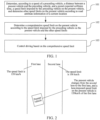
- a processing procedure of the method may include the following steps: In step 101, a speed limit imposed by a preceding vehicle on a present vehicle is determined according to a speed of the preceding vehicle, a distance between the present vehicle and the preceding vehicle, and a preset expected collision time, and other speed limits on the present vehicle are determined according to road attribute information of a current location.
- the speed limit imposed by the preceding vehicle on the present vehicle and other speed limits are upper speed limits that are calculated based on different conditions respectively.
- the preceding vehicle is a vehicle that is in a preset distance range in front of the present vehicle and that is closest to the present vehicle.
- the preset distance range may be a range of being less than a distance a, and the value of a may be between 100 and 200 meters, for example, 150 meters.
- a vehicle-mounted terminal on the vehicle when a vehicle runs, performs positioning detection according to a preset cycle, calculates speed limits on the present vehicle according to various pieces of information obtained through positioning detection, and uses a finally obtained speed limit as a basis for formulating an actual speed plan.
- Duration of the preset cycle may range from 0.05 to 0.2s, for example 0.1s.
- the vehicle-mounted terminal detects, by using the distance detection apparatus, that there is another vehicle running in front of the present vehicle, and the vehicle is in the preset distance range in front of the present vehicle and is closest to the present vehicle, the vehicle is determined as a preceding vehicle.
- the vehicle-mounted terminal obtains information such as a speed of the preceding vehicle, a distance between the present vehicle and the preceding vehicle, and a preset expected collision time, and calculates, according to a preset algorithm, a speed limit imposed by the preceding vehicle on the present vehicle.
- the preset algorithm is specifically illustrated in the following.
- the vehicle-mounted terminal may further obtain road attribute information of a current location of the present vehicle, and determine other speed limits on the present vehicle according to the road attribute information.
- Solution 1 The speed limit imposed by the preceding vehicle on the present vehicle is determined according to the speed of the preceding vehicle, the distance between the present vehicle and the preceding vehicle, and the preset expected collision time.
- the preset expected collision time is a minimum value of a expected collision time required to avoid an accident, and the value is preset by technical personnel.
- the expected collision time is duration it takes for the present vehicle to collide with the preceding vehicle while the preceding vehicle and the present vehicle do not change the speeds.
- the expected collision time may be obtained by technical personnel through multiple tests, and is generally determined by a reaction speed of a driver.
- vLimit 5 represents a speed limit imposed by a preceding vehicle on a present vehicle
- v q represents a speed of the preceding vehicle
- d represents a distance between the present vehicle and the preceding vehicle
- t lc represents a expected collision time
- Calculated vLimit 5 is determined as the speed limit imposed by the preceding vehicle on the present vehicle.
- a first speed limit on the present vehicle is determined according to the speed of the preceding vehicle, the distance between the present vehicle and the preceding vehicle, and the preset expected collision time;
- a second speed limit on the present vehicle is determined according to the speed of the preceding vehicle, the distance between the present vehicle and the preceding vehicle, a preset safe distance between the present vehicle and the preceding vehicle, preset driving duration required for adjusting the distance between the present vehicle and the preceding vehicle to be the safe distance, and a preset acceleration time; if the speed of the preceding vehicle is not less than a speed of the present vehicle, a minimum value between the first speed limit and the second speed limit is determined as the speed limit imposed by the preceding vehicle on the present vehicle; if the speed of the preceding vehicle is less than the speed of the present vehicle, a maximum value between the first speed limit and the second speed limit is determined as the speed limit imposed by the preceding vehicle on the present vehicle.
- two speed limits are used as intermediate quantities in this solution, and the final speed limit imposed by the preceding vehicle on the present vehicle is determined based on the two intermediate quantities.
- a calculation method of the first speed limit in this solution is the same as that of the speed limit imposed by the preceding vehicle on the present vehicle in the foregoing solution 1. Processing may be performed with reference to the step in solution 1, to obtain the first speed limit.
- a lim it represents an acceleration upper limit
- a add represents a manually set adjustment value.
- a represents an acceleration for adjusting a distance between a present vehicle and a preceding vehicle to be a safe distance within duration t d .
- a value range of ⁇ is [-4,1.5]. If it is calculated through the foregoing formula (3) that ⁇ is greater than a maximum value in the value range, the value of a is modified to be the maximum value in the value range.
- d represents the distance between the present vehicle and the preceding vehicle
- d s is the preset safe distance between the present vehicle and the preceding vehicle.
- t m 3s in consideration of an onset time of vehicle braking.
- t d represents preset driving duration required for adjusting the distance between the present vehicle and the preceding vehicle to be the safe distance.
- t d 3.0 s according to an acceleration requirement of a vehicle type.
- v q represents a speed of the preceding vehicle.
- vLimit 6 represents a second speed limit on a present vehicle
- v s represents a speed of the present vehicle
- a lim it represents an acceleration upper limit calculated through the foregoing step
- the speed of the preceding vehicle is compared with the speed of the present vehicle. If the speed of the preceding vehicle is not less than the speed of the present vehicle, a minimum value between the two speeds is determined as the speed limit imposed by the preceding vehicle on the present vehicle. If the speed of the preceding vehicle is less than the speed of the present vehicle, a maximum value between the two speeds is determined as the speed limit imposed by the preceding vehicle on the present vehicle.
- the vehicle-mounted terminal When obtaining the road attribute information of the current location, the vehicle-mounted terminal calculates multiple different speed limits according to different road attribute information, and the multiple different speed limits are collectively referred to as other speed limits.
- speed limits there is a wide variety of road attribute information, and there are also various other speed limits, which may include a lane-imposed speed limit on the present vehicle, a corner-imposed speed limit on the present vehicle, and a road-type-imposed speed limit on the present vehicle. Processing for determining other speed limits are described below by using these cases as examples:
- the determining other speed limits on the present vehicle according to road attribute information of a current location includes: determining a speed limit of a current lane as the lane-imposed speed limit on the present vehicle.
- One road may include one or more lanes, and a lane to which the current location belongs is a current lane on which the present vehicle is running among several lanes of a current road.
- the vehicle-mounted terminal may obtain an electronic map through the navigation and positioning apparatus, determines a location of the present vehicle on the electronic map, determines a specific lane of a road that the present vehicle is running on, and obtains a speed limit of the lane where the present vehicle is located.
- the speed limit is set by a traffic management department according to a condition of the current lane. For example, on a three-lane expressway, a speed limit of the left lane is 120 km/h, a speed limit of the middle lane is 100 km/h, and a speed limit of the right lane is 80 km/h.
- the vehicle-mounted terminal determines, by using the navigation and positioning apparatus, that the present vehicle is running on the middle lane among the three lanes, and therefore can determine that the speed limit on the present vehicle on the lane is 100 km/h, thereby determining the speed limit as the lane-imposed speed limit on the present vehicle.
- Corresponding processing may be as follows: determining the speed limit of the current lane as the lane-imposed speed limit on the present vehicle when the present vehicle has not changed lane within a preset duration before the current moment; determining the speed limit of the current lane as the lane-imposed speed limit on the present vehicle when the present vehicle has changed from a previous lane to the current lane within the preset duration before the current moment and the speed limit of the current lane is not less than a speed limit of previous lanethe previous lane; and when the present vehicle has changed from a previous lane to the current lane within the preset duration before the current moment and the speed limit of the current lane is less than the speed limit of the previous lane to the current lane, determining the speed limit of the previous lane as the lane-imposed speed limit on the present vehicle.
- the preset duration may be preset by technical personnel in the vehicle-mounted terminal.
- a specific value may be set according to a general reaction speed of a driver of a car behind, and generally may be set to 5 seconds.
- the vehicle-mounted terminal may obtain lane changing information of the vehicle through a behavior of a driver, such as pressing a lane changing button manually.
- the lane changing information may be detected by using the navigation and positioning apparatus during cyclic detection.
- the vehicle-mounted terminal performs detection cyclically, a lane where the present vehicle is located is determined in each cycle, and the lane in the current cycle is compared with a lane in each cycle within previous preset duration, so as to determine whether a lane change occurs within the previous preset duration.
- the present vehicle has changed from a previous lane to the current lane.
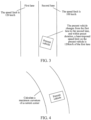
- a speed limit of a lane after the lane change is not less than a speed limit of a previous lane, as shown in FIG. 2
- the speed limit of the lane after the lane change is determined as the lane-imposed speed limit on the present vehicle. No matter whether the present vehicle has one lane change or multiple lane changes, processing is performed according to the foregoing processing method.
- the present vehicle has changed from a previous lane to the current lane. If it is detected that the present vehicle has one lane change and a speed limit after the lane change is less than a speed limit of a previous lane, as shown in FIG. 3 , the speed limit of the previous lane is determined as the lane-imposed speed limit on the present vehicle. If it is detected that the present vehicle has multiple lane changes, and a speed limit after each lane change is less than a speed limit of a previous lane, a speed limit of a lane before the last lane change is determined as the lane-imposed speed limit on the present vehicle.
- the foregoing case of detecting that the present vehicle has not changed lane within the preset duration before the current moment implies a condition that the vehicle-mounted terminal does not receive a lane changing instruction in the current cycle. That is, the foregoing processing may be as follows: determining the speed limit of the current lane as the lane-imposed speed limit on the present vehicle when the present vehicle has not changed lane within the preset duration before the current moment and no lane changing instruction is received at the current moment.
- the vehicle-mounted terminal receives a lane changing instruction in the current cycle
- the following special processing is performed: If a lane changing instruction is received in the current cycle and the speed limit of the current lane is less than a speed limit of a lane that the present vehicle is going to enter, the speed limit of the lane that the present vehicle is going to enter is determined as the lane-imposed speed limit on the present vehicle.
- the speed limit of the current lane is determined as the lane-imposed speed limit on the present vehicle.
- the lane-imposed speed limit on the present vehicle can be improved in advance after a lane changing instruction is received and before an actual lane change occurs based on the lane changing instruction, so that the vehicle can switch to the high-speed lane in an accelerated manner. If the vehicle switches from a high-speed lane to a low-speed lane, the speed limit imposed by the current lane on the present vehicle can be maintained after a lane changing instruction is received and before an actual lane change occurs based on the lane changing instruction, so that the vehicle changes the lane in an accelerated manner.
- the determining other speed limits on the present vehicle according to road attribute information of a current location includes: determining the corner-imposed speed limit on the present vehicle according to a road curvature of the current location.
- the vehicle-mounted terminal determines, according to the location of the present vehicle on the electronic map, that the present vehicle is in a corner currently, as shown in FIG. 4 .
- vLimit_k represents a corner-imposed speed limit on a present vehicle
- k represents a maximum curvature of a current corner, and a specific value is determined by means of sampling through the navigation and positioning apparatus of the vehicle-mounted terminal
- u is a cornering ratio, which may be preset by technical personnel, and a specific value may be set with reference to average bending of general corners.
- the speed is determined as the corner-imposed speed limit on the present vehicle.
- Case 3 when the other speed limits include a road-type-imposed speed limit on the present vehicle, the determining other speed limits on the present vehicle according to road attribute information of a current location includes: determining the road-type-imposed speed limit on the present vehicle according to a road type of the current location and a pre-stored correspondence between road types and speed limits.
- speed limits for the present vehicle are also different.
- Speed limits corresponding to various types of roads are stipulated in traffic laws.
- a correspondence between various road types and speed limits may be stored in the vehicle-mounted terminal in a form of a correspondence table, as shown in Table 1.
- the vehicle-mounted terminal determines, by using the navigation and positioning apparatus, a type of a current road on which the present vehicle runs, searches the foregoing correspondence table for a speed limit imposed by the current road type on the present vehicle, and determines the speed limit as the road-type-imposed speed limit on the present vehicle.
- the other speed limits may include one of or any combination of the foregoing speed limits.
- step 102 a comprehensive speed limit on the present vehicle is determined according to the speed limit imposed by the preceding vehicle on the present vehicle and the other speed limits.
- the comprehensive speed limit is a final speed limit determined according to all the speed limits calculated based on all the cases.
- a minimum value among the speed limit imposed by the preceding vehicle on the present vehicle and the other speed limits is determined as the comprehensive speed limit on the present vehicle.
- the speed limit imposed by the preceding vehicle on the present vehicle is compared with all the other speed limits, to determine a minimum value, and the minimum value is determined as the comprehensive speed limit on the present vehicle.
- the other speed limits may include one of or any combination of a lane-imposed speed limit on the present vehicle, a corner-imposed speed limit on the present vehicle, and a road-type-imposed speed limit on the present vehicle.
- the comprehensive speed limit on the present vehicle may be determined according to the speed limit imposed by the preceding vehicle on the present vehicle and the other speed limits that are obtained above, as well as a preset third speed limit.
- Corresponding processing may be as follows: determining a minimum value among the speed limit imposed by the preceding vehicle on the present vehicle, the other speed limits, and the preset third speed limit as a maximum speed of the present vehicle.
- the preset third speed limit may be a speed limit that is set by a driver according to requirements thereof. For example, when there is a baby or a pregnant woman on the vehicle, the driver may set the third speed limit to be 60 km/h, to further ensure the safety of the passenger.
- the speed limit imposed by the preceding vehicle on the present vehicle, the other speed limits, and the preset third speed limit are determined, the speed limit imposed by the preceding vehicle on the present vehicle, the other speed limits, and the third speed limit are compared to determine a minimum value, and the minimum value is determined as the comprehensive speed limit on the present vehicle.
- the other speed limits may include one of or any combination of a lane-imposed speed limit on the present vehicle, a corner-imposed speed limit on the present vehicle, and a road-type-imposed speed limit on the present vehicle.
- step 103 driving is controlled based on the comprehensive speed limit.
- the comprehensive speed limit is used as a basis for formulating an actual speed plan, so that during vehicle driving, the actual speed does not exceed the comprehensive speed limit.
- an embodiment further provides an apparatus for controlling vehicle driving.
- the apparatus may be the vehicle-mounted terminal in the foregoing embodiment.
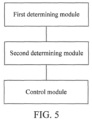
- the apparatus includes: a first determining module 510, a second determining module 520, and a control module 530.
- the first determining module 510 is configured to determine, according to a speed of a preceding vehicle, a distance between a present vehicle and the preceding vehicle, and a preset expected collision time, a speed limit imposed by the preceding vehicle on the present vehicle, and determine other speed limits on the present vehicle according to road attribute information of a current location.
- the second determining module 520 is configured to determine a comprehensive speed limit on the present vehicle according to the speed limit imposed by the preceding vehicle on the present vehicle and the other speed limits.
- the control module 530 is configured to control driving based on the comprehensive speed limit.
- the other speed limits include one of or any combination of a lane-imposed speed limit on the present vehicle, a corner-imposed speed limit on the present vehicle, and a road-type-imposed speed limit on the present vehicle.
- the first determining module 510 is configured to:
- the first determining module 510 is configured to:
- the first determining module 510 is configured to: determine the speed limit of the current lane as the lane-imposed speed limit on the present vehicle when the present vehicle has not changed lane within the preset duration before the current moment and no lane changing instruction is received at the current moment.
- the first determining module 510 is configured to:
- the first determining module 510 is configured to: determine, when the present vehicle has changed from a previous lane to the current lane within preset duration before a current moment and a speed limit of a current lane is less than a speed limit of previous lanethe previous lane, the speed limit of the previous lane as the lane-imposed speed limit on the present vehicle.
- the first determining module 510 is configured to:
- the second determining module 520 is configured to determine a minimum value among the speed limit imposed by the preceding vehicle on the present vehicle and the other speed limits as the comprehensive speed limit on the present vehicle.
- the second determining module 520 is configured to: determine a minimum value among the speed limit imposed by the preceding vehicle on the present vehicle, the other speed limits, and a preset third speed limit as the comprehensive speed limit on the present vehicle.
- factors taken into consideration during calculation of a comprehensive speed limit include factors in multiple complex situations. Therefore, the calculated comprehensive speed limit is more applicable to complex situations during driving, so that driving safety is improved.
- the division of the foregoing functional modules is merely used as an example for description.
- the foregoing functions may be allocated to and completed by different functional modules as required. That is, an internal structure of the device is divided into different functional modules, to complete all or some of the functions described above.
- the apparatus for controlling vehicle driving provided in the foregoing embodiment belongs to the same conception as the embodiment of the method for controlling vehicle driving. For a specific implementation process thereof, refer to the method embodiment, and details are not described herein again.
- a terminal 600 may include components such as a sensor system 102, a processor 104, a peripheral device 106, and a memory 150.
- a person skilled in the art may understand that the terminal structure shown in FIG. 6 does not limit the terminal.
- the terminal 600 may include more or fewer components than those shown in FIG. 6 , or some components may be combined, or a different component deployment may be used.
- the sensor system 102 may be configured to measure required data.
- the sensor system 102 may include a global positioning system module 108, an inertia measurement unit 110, radio detection and ranging (RADAR) 112, a laser range finder 114, a camera 116, and (multiple) actuators 118.
- the global positioning system module 108 may be configured to position and navigate a vehicle in real time globally.
- the inertia measurement unit 110 may be configured to measure a tri-axial attitude angle (or angular velocity) and an acceleration of the vehicle.
- the RADAR 112 may be configured to measure state parameters of the vehicle, such as a distance, an orientation, and a speed.
- the RADAR 112 may include an antenna, a transmitter, a receiver (including a signal processor), a display, and other parts.
- the laser range finder 114 may implement distance measurement for the vehicle by modulating a specific parameter of laser.
- the camera 116 may be configured to obtain an image of a current road condition.
- the (multiple) actuators 118 may convert a rotation movement of a vehicle motor to a linear movement of a push rod.
- Other sensors that can be configured on the terminal 600, such as a gyroscope, a barometer, a hygrometer, a thermometer, and an infrared sensor, are not described in detail herein.
- the processor 104 is a control center of the terminal 600, and connects to various parts of the vehicle by using various interfaces and lines. By running or executing software programs and/or modules stored in the memory 150, and invoking data stored in the memory 150, the processor 104 performs various functions and data processing of the terminal 600, thereby performing overall monitoring on the vehicle.
- the processor 104 may include a steering control module 120, a throttle control module 122, a braking unit 124, a computer visual system 126, a navigation/route control system 128, an obstacle avoidance system 130, and map data 132.
- the steering control module 120 may be configured to instruct the vehicle to steer.
- the throttle control module 122 may be configured to instruct the vehicle to accelerate.
- the braking unit 124 may be configured to instruct the vehicle to lower the speed or stop.
- the computer visual system 126 may be configured to display various parameters of the vehicle.
- the navigation/route control system 128 may be configured to indicate a condition of a current road on which the vehicle is running.
- the obstacle avoidance system 130 may be configured to instruct the vehicle to avoid obstacles on a current running route, and change and adjust the running route appropriately.
- the processor 104 may include one or more cores.
- the processor 104 may integrate an application processor and a modem processor.
- the application processor mainly processes an operating system and the like.
- the modem processor mainly processes wireless communication. It can be appreciated that, the modem processor may not be integrated into the processor 104.
- the peripheral device 106 may include wireless communication 132, a touchscreen 134, a microphone 136, and a loudspeaker 138.
- the wireless communication 132 mainly includes microwave communication and satellite communication, and may exchange information by using such a characteristic that an electromagnetic signal can propagate in a free space.
- the touchscreen 134 may be configured to display related parameters of the vehicle, a road condition, and other information, and receive a touch signal of a user, so as to implement a corresponding function.
- the microphone 136 and the loudspeaker 138 may provide an audio interface between the user and the terminal 600.
- An audio circuit may transmit an electric signal, which is converted from received audio data, to the loudspeaker 138.
- the loudspeaker 138 converts the electric signal into a sound signal, and outputs the sound signal.
- the microphone 136 converts a collected sound signal into an electric signal.
- the audio circuit receives the electric signal and converts the electric signal into audio data.
- the audio data is then output to the processor 104 for processing and then sent to, for example, another terminal through an RF circuit, or the audio data is output to the memory 150 for further processing.
- the memory 150 may be configured to store instructions and data related to vehicle control. Particularly, the memory 150 may include the map data 140.
- the map data 140 may be configured to indicate map routes near the vehicle and related data.
- the terminal 600 may further include a camera, a Bluetooth module, and the like, which are not further described herein.
- the terminal 600 further includes a memory and one or more programs.
- the one or more programs are stored in the memory and configured to be executed by one or more processors, so as to implement the method for controlling vehicle driving according to the foregoing embodiments.
- An embodiment further provides a computer readable storage medium.
- the storage medium stores at least one instruction, at least one program segment, a code set, or an instruction set; the at least one instruction, the at least one program segment, the code set, or the instruction set is loaded by the processor to implement the foregoing method for controlling vehicle driving.
- the program may be stored in a computer readable storage medium.
- the storage medium may be a read-only memory, a magnetic disk, an optical disc, or the like.
Landscapes
- Engineering & Computer Science (AREA)
- Automation & Control Theory (AREA)
- Transportation (AREA)
- Mechanical Engineering (AREA)
- Physics & Mathematics (AREA)
- Mathematical Physics (AREA)
- Human Computer Interaction (AREA)
- Control Of Driving Devices And Active Controlling Of Vehicle (AREA)
- Traffic Control Systems (AREA)
Claims (13)
- Verfahren zum Steuern eines Fahrens eines Fahrzeugs, das umfasst:Bestimmen, entsprechend einer Geschwindigkeit eines vorausfahrenden Fahrzeugs, eines Abstands zwischen einem gegenwärtigen Fahrzeug und dem vorausfahrenden Fahrzeug und einer voreingestellten erwarteten Kollisionszeit, einer Geschwindigkeitsbegrenzung, die dem gegenwärtigen Fahrzeug durch das vorausfahrende Fahrzeug auferlegt wird, und Bestimmen anderer Geschwindigkeitsbegrenzungen für das gegenwärtige Fahrzeug entsprechend Straßenattributinformation eines gegenwärtigen Standorts des gegenwärtigen Fahrzeugs (101);Bestimmen einer umfassenden Geschwindigkeitsbegrenzung für das gegenwärtige Fahrzeug entsprechend der Geschwindigkeitsbegrenzung, die von dem vorausfahrenden Fahrzeug für das gegenwärtige Fahrzeug auferlegt wurde, und den anderen Geschwindigkeitsbegrenzungen (102); undSteuern des Fahrens auf der Grundlage der umfassenden Geschwindigkeitsbegrenzung (103),wobei das Bestimmen einer umfassenden Geschwindigkeitsbegrenzung für das gegenwärtige Fahrzeug gemäß der Geschwindigkeitsbegrenzung, die durch das vorausfahrende Fahrzeug für das gegenwärtige Fahrzeug auferlegt wurde, und der anderen Geschwindigkeitsbegrenzungen umfasst:
Bestimmen eines Mindestwerts zwischen der Geschwindigkeitsbegrenzung, die das vorausfahrende Fahrzeug dem gegenwärtigen Fahrzeug auferlegt hat, und den anderen Geschwindigkeitsbegrenzungen als umfassende Geschwindigkeitsbegrenzung für das gegenwärtige Fahrzeug. - Verfahren nach Anspruch 1, wobei die anderen Geschwindigkeitsbegrenzungen eine oder eine beliebige Kombination aus einer spurabhängigen Geschwindigkeitsbegrenzung für das gegenwärtige Fahrzeug, einer kurvenabhängigen Geschwindigkeitsbegrenzung für das gegenwärtige Fahrzeug und einer straßentypabhängigen Geschwindigkeitsbegrenzung für das gegenwärtige Fahrzeug umfassen.
- Verfahren nach Anspruch 2, wobei, wenn die anderen Geschwindigkeitsbegrenzungen eine spurabhängige Geschwindigkeitsbegrenzung für das gegenwärtige Fahrzeug umfassen, das Bestimmen anderer Geschwindigkeitsbegrenzungen für das gegenwärtige Fahrzeug gemäß Straßenattributinformationen eines gegenwärtigen Standorts umfasst: Bestimmen einer Geschwindigkeitsbegrenzung einer gegenwärtigen Spur als die spurabhängige Geschwindigkeitsbegrenzung für das gegenwärtige Fahrzeug.
- Verfahren nach Anspruch 2, wobei, wenn die anderen Geschwindigkeitsbegrenzungen eine kurvenabhängige Geschwindigkeitsbegrenzung für das gegenwärtige Fahrzeug umfassen, das Bestimmen anderer Geschwindigkeitsbegrenzungen für das gegenwärtige Fahrzeug gemäß Straßenattributinformationen eines gegenwärtigen Standorts umfasst: Bestimmen der kurvenabhängigen Geschwindigkeitsbegrenzung für das gegenwärtige Fahrzeug gemäß einer Straßenkrümmung des gegenwärtigen Standorts.
- Verfahren nach Anspruch 2, wobei, wenn die anderen Geschwindigkeitsbegrenzungen eine straßentypabhängige Geschwindigkeitsbegrenzung für das gegenwärtige Fahrzeug umfassen, das Bestimmen anderer Geschwindigkeitsbegrenzungen für das gegenwärtige Fahrzeug gemäß Straßenattributinformationen eines gegenwärtigen Standorts umfasst:
Bestimmen der straßentypabhängigen Geschwindigkeitsbegrenzung für das gegenwärtige Fahrzeug gemäß einem Straßentyp des gegenwärtigen Standorts und einer vorab gespeicherten Entsprechung zwischen Straßentypen und Geschwindigkeitsbegrenzungen. - Verfahren nach Anspruch 3, wobei das Bestimmen einer Geschwindigkeitsbegrenzung einer gegenwärtigen Fahrspur als die spurabhängige Geschwindigkeitsbegrenzung für das gegenwärtige Fahrzeug umfasst:Bestimmen der Geschwindigkeitsbegrenzung der gegenwärtigen Fahrspur als die spurabhängige Geschwindigkeitsbegrenzung für das gegenwärtige Fahrzeug, wenn das gegenwärtige Fahrzeug nicht innerhalb einer voreingestellten Dauer vor einem gegenwärtigen Zeitpunkt die Fahrspur gewechselt hat; undBestimmen der Geschwindigkeitsbegrenzung der gegenwärtigen Fahrspur als die spurabhängige Geschwindigkeitsbegrenzung für das gegenwärtige Fahrzeug, wenn das gegenwärtige Fahrzeug innerhalb der voreingestellten Dauer vor dem gegenwärtigen Zeitpunkt von einer vorherigen Fahrspur auf die gegenwärtige Fahrspur gewechselt hat und die Geschwindigkeitsbegrenzung der gegenwärtigen Fahrspur nicht geringer ist als eine Geschwindigkeitsbegrenzung der vorherigen Fahrspur.
- Verfahren nach Anspruch 6, wobei das Bestimmen der Geschwindigkeitsbegrenzung der gegenwärtigen Fahrspur als die spurabhängige Geschwindigkeitsbegrenzung für das gegenwärtige Fahrzeug, wenn das gegenwärtige Fahrzeug nicht innerhalb einer voreingestellten Dauer vor dem gegenwärtigen Zeitpunkt die Fahrspur gewechselt hat, umfasst:
Bestimmen der Geschwindigkeitsbegrenzung der gegenwärtigen Fahrspur als die spurabhängige Geschwindigkeitsbegrenzung für das gegenwärtige Fahrzeug, wenn das gegenwärtige Fahrzeug innerhalb der voreingestellten Dauer vor dem gegenwärtigen Zeitpunkt nicht die Fahrspur gewechselt hat und zum gegenwärtigen Zeitpunkt keine Anweisung zum Fahrspurwechsel empfangen wird. - Verfahren nach Anspruch 7, ferner umfassend:Bestimmen der Geschwindigkeitsbegrenzung der gegenwärtigen Fahrspur als die spurabhängige Geschwindigkeitsbegrenzung für das gegenwärtige Fahrzeug, wenn das gegenwärtige Fahrzeug nicht innerhalb der voreingestellten Dauer vor dem gegenwärtigen Zeitpunkt die Fahrspur gewechselt hat, eine Fahrspurwechselanweisung zum gegenwärtigen Zeitpunkt empfangen wird und die Geschwindigkeitsbegrenzung der gegenwärtigen Fahrspur nicht geringer ist als eine Geschwindigkeitsbegrenzung einer Fahrspur, in die das gegenwärtige Fahrzeug einfahren wird; undBestimmen der Geschwindigkeitsbegrenzung der Fahrspur, in die das gegenwärtige Fahrzeug einfahren wird, als die spurabhängige Geschwindigkeitsbegrenzung für das gegenwärtige Fahrzeug, wenn das gegenwärtige Fahrzeug nicht innerhalb der voreingestellten Dauer vor dem gegenwärtigen Zeitpunkt die Fahrspur gewechselt hat, eine Fahrspurwechselanweisung zum gegenwärtigen Zeitpunkt empfangen wird und die Geschwindigkeitsbegrenzung der gegenwärtigen Fahrspur geringer ist als die Geschwindigkeitsbegrenzung der Fahrspur, in die das gegenwärtige Fahrzeug einfahren wird.
- Verfahren nach Anspruch 2, ferner umfassend:
wenn das gegenwärtige Fahrzeug innerhalb einer voreingestellten Zeitspanne vor einem gegenwärtigen Zeitpunkt von einer vorherigen Spur zu einer gegenwärtigen Spur gewechselt hat und eine Geschwindigkeitsbegrenzung der gegenwärtigen Spur geringer ist als eine Geschwindigkeitsbegrenzung der vorherigen Spur, Bestimmen der Geschwindigkeitsbegrenzung der vorherigen Spur als die spurabhängige Geschwindigkeitsbegrenzung für das gegenwärtige Fahrzeug. - Verfahren nach Anspruch 1, wobei das Bestimmen einer Geschwindigkeitsbegrenzung, die dem gegenwärtigen Fahrzeug durch das vorausfahrende Fahrzeug auferlegt wird, gemäß einer Geschwindigkeit eines vorausfahrenden Fahrzeugs, einem Abstand zwischen einem gegenwärtigen Fahrzeug und dem vorausfahrenden Fahrzeug und einer voreingestellten erwarteten Kollisionszeit umfasst:Bestimmen einer ersten Geschwindigkeitsbegrenzung für das gegenwärtige Fahrzeug in Abhängigkeit von der Geschwindigkeit des vorausfahrenden Fahrzeugs, dem Abstand zwischen dem gegenwärtigen Fahrzeug und dem vorausfahrenden Fahrzeug und der voreingestellten erwarteten Kollisionszeit;Bestimmen einer zweiten Geschwindigkeit des gegenwärtigen Fahrzeugs in Abhängigkeit von der Geschwindigkeit des vorausfahrenden Fahrzeugs, dem Abstand zwischen dem gegenwärtigen Fahrzeug und dem vorausfahrenden Fahrzeug, einem voreingestellten Sicherheitsabstand zwischen dem gegenwärtigen Fahrzeug und dem vorausfahrenden Fahrzeug, einer voreingestellten Fahrdauer, die erforderlich ist, um den Abstand zwischen dem gegenwärtigen Fahrzeug und dem vorausfahrenden Fahrzeug auf den Sicherheitsabstand einzustellen, und einer voreingestellten Beschleunigungszeit;Bestimmen eines Minimalwerts zwischen der ersten und der zweiten Geschwindigkeitsbegrenzung als die Geschwindigkeitsbegrenzung, die das vorausfahrende Fahrzeug dem gegenwärtigen Fahrzeug auferlegt, wenn die Geschwindigkeit des vorausfahrenden Fahrzeugs nicht geringer ist als die Geschwindigkeit des gegenwärtigen Fahrzeugs; undBestimmen eines Maximalwertes zwischen der ersten und der zweiten Geschwindigkeitsbegrenzung als die Geschwindigkeitsbegrenzung, die das vorausfahrende Fahrzeug dem gegenwärtigen Fahrzeug auferlegt hat, wenn die Geschwindigkeit des vorausfahrenden Fahrzeugs geringer ist als die Geschwindigkeit des gegenwärtigen Fahrzeugs.
- Verfahren nach einem der Ansprüche 1 bis 10, ferner umfassend:
Bestimmen eines Mindestwertes zwischen der umfassenden Geschwindigkeitsbegrenzung und einer voreingestellten dritten Geschwindigkeitsbegrenzung als aktualisierte umfassende Geschwindigkeitsbegrenzung für das gegenwärtige Fahrzeug und Steuern des Fahrens auf der Grundlage der aktualisierten umfassenden Geschwindigkeitsbegrenzung. - Endgerät (600) mit einem Prozessor (104) und einem Speicher (105), wobei der Speicher (105) mindestens einen Befehl, mindestens ein Programmsegment, einen Codesatz oder einen Befehlssatz speichert und der mindestens eine Befehl, das mindestens eine Programmsegment, der Codesatz oder der Befehlssatz durch den Prozessor (104) geladen und ausgeführt wird, um das Verfahren zur Steuerung des Fahrens eines Fahrzeugs nach einem der Ansprüche 1 bis 11 zu implementieren.
- Computerlesbares Speichermedium, das mindestens einen Befehl, mindestens ein Programmsegment, einen Codesatz oder einen Befehlssatz speichert, wobei der mindestens eine Befehl, das mindestens eine Programmsegment, der Codesatz oder der Befehlssatz von einem Prozessor (104) geladen und ausgeführt wird, um das Verfahren zur Steuerung des Fahrens eines Fahrzeugs nach einem der Ansprüche 1 bis 11 zu implementieren.
Applications Claiming Priority (2)
| Application Number | Priority Date | Filing Date | Title |
|---|---|---|---|
| CN201710818341.3A CN108284833B (zh) | 2017-09-12 | 2017-09-12 | 对车辆进行驾驶控制的方法和装置 |
| PCT/CN2018/105321 WO2019052487A1 (zh) | 2017-09-12 | 2018-09-12 | 对车辆进行驾驶控制的方法和装置 |
Publications (4)
| Publication Number | Publication Date |
|---|---|
| EP3604064A1 EP3604064A1 (de) | 2020-02-05 |
| EP3604064A4 EP3604064A4 (de) | 2021-01-20 |
| EP3604064C0 EP3604064C0 (de) | 2024-02-07 |
| EP3604064B1 true EP3604064B1 (de) | 2024-02-07 |
Family
ID=62831556
Family Applications (1)
| Application Number | Title | Priority Date | Filing Date |
|---|---|---|---|
| EP18855592.4A Active EP3604064B1 (de) | 2017-09-12 | 2018-09-12 | Verfahren und endgerät zur ausführung einer fahrsteuerung bei einem fahrzeug |
Country Status (6)
| Country | Link |
|---|---|
| US (1) | US11173903B2 (de) |
| EP (1) | EP3604064B1 (de) |
| JP (1) | JP6971326B2 (de) |
| KR (1) | KR102277338B1 (de) |
| CN (1) | CN108284833B (de) |
| WO (1) | WO2019052487A1 (de) |
Families Citing this family (25)
| Publication number | Priority date | Publication date | Assignee | Title |
|---|---|---|---|---|
| CN108284833B (zh) | 2017-09-12 | 2019-10-25 | 腾讯科技(深圳)有限公司 | 对车辆进行驾驶控制的方法和装置 |
| CN108944924A (zh) * | 2018-07-31 | 2018-12-07 | 长沙拓扑陆川新材料科技有限公司 | 一种控制车辆处理紧急事件的方法及车辆 |
| CN108983599B (zh) * | 2018-08-07 | 2021-07-16 | 重庆邮电大学 | 一种车联网下多参数融合的自适应监控方法 |
| CN109116843A (zh) * | 2018-08-09 | 2019-01-01 | 北京智行者科技有限公司 | 车辆循线行驶方法 |
| CN112638749B (zh) * | 2018-09-07 | 2023-03-24 | 日产自动车株式会社 | 车辆的行驶控制方法及行驶控制装置 |
| CN109774708B (zh) * | 2018-12-29 | 2021-02-23 | 百度在线网络技术(北京)有限公司 | 用于自动驾驶车辆的控制方法及装置 |
| CN109878517B (zh) * | 2019-01-04 | 2020-09-25 | 江苏大学 | 一种车辆自动强制减速和限速的系统及方法 |
| CN111060123A (zh) * | 2019-06-13 | 2020-04-24 | 广东星舆科技有限公司 | 一种基于普通地图实现车道级导航的方法与系统 |
| CN110347164A (zh) * | 2019-08-08 | 2019-10-18 | 北京云迹科技有限公司 | 一种速度调节方法、装置及存储介质 |
| DE102019127410B4 (de) * | 2019-10-11 | 2022-10-13 | Audi Ag | Verfahren zur automatischen Unterstützung eines Kraftfahrzeugs für ein Befahren einer Ausfahrt einer übergeordneten Straße |
| CN110667576B (zh) * | 2019-10-18 | 2021-04-20 | 北京百度网讯科技有限公司 | 自动驾驶车辆的弯道通行控制方法、装置、设备和介质 |
| CN111572561B (zh) * | 2020-05-21 | 2021-07-30 | 安徽江淮汽车集团股份有限公司 | 自动驾驶汽车的车速控制方法、装置、设备及存储介质 |
| CN112078579B (zh) * | 2020-09-10 | 2021-10-08 | 安吉亚太制动系统有限公司 | 一种多信息融合的自适应巡航控制系统及方法 |
| JP2022048583A (ja) * | 2020-09-15 | 2022-03-28 | 本田技研工業株式会社 | 車両制御装置、車両制御方法、およびプログラム |
| DE102020215545A1 (de) * | 2020-12-09 | 2022-06-09 | Robert Bosch Gesellschaft mit beschränkter Haftung | Verfahren zur Ansteuerung eines Fahrzeugs |
| CN112606838B (zh) * | 2020-12-15 | 2022-07-01 | 东风汽车集团有限公司 | 一种车辆变道防碰撞控制方法及装置 |
| US11772666B2 (en) | 2020-12-17 | 2023-10-03 | Mobileye Vision Technologies Ltd. | Vehicle operation safety model test system |
| DE112022001186T5 (de) * | 2021-02-25 | 2023-12-21 | Denso Corporation | Verarbeitungsverfahren, verarbeitungssystem und verarbeitungsprogramm |
| CN112927117B (zh) * | 2021-03-22 | 2022-08-23 | 上海京知信息科技有限公司 | 基于区块链的车辆管理通信方法、管理系统、设备及介质 |
| CN113879336A (zh) * | 2021-10-18 | 2022-01-04 | 三一专用汽车有限责任公司 | 车辆行驶控制方法、装置及车辆 |
| CN113997929B (zh) * | 2021-11-22 | 2023-12-05 | 东风悦享科技有限公司 | 一种prt车辆的转向控制方法、系统及装置 |
| KR102744590B1 (ko) | 2022-05-31 | 2024-12-19 | (주)상건 | 플렉시블 전선관용 고정구 |
| DE102022121424A1 (de) * | 2022-08-24 | 2024-02-29 | Bayerische Motoren Werke Aktiengesellschaft | Verfahren und Vorrichtung zum Betreiben eines Geschwindigkeitsreglers bei einem Spurwechsel |
| CN116729406B (zh) * | 2023-07-28 | 2025-09-23 | 重庆赛力斯凤凰智创科技有限公司 | 车速的确定方法、装置、电子设备及存储介质 |
| CN117962886B (zh) * | 2024-03-28 | 2024-07-02 | 深圳安智杰科技有限公司 | 一种基于他车轨迹预测的车辆自适应巡航控制方法 |
Family Cites Families (36)
| Publication number | Priority date | Publication date | Assignee | Title |
|---|---|---|---|---|
| JP2005173909A (ja) * | 2003-12-10 | 2005-06-30 | Toyota Motor Corp | 車両用速度制御装置 |
| JP2007145095A (ja) * | 2005-11-24 | 2007-06-14 | Pioneer Electronic Corp | 走行制御装置、走行制御方法、走行制御プログラムおよび記録媒体 |
| JP4807107B2 (ja) * | 2006-03-02 | 2011-11-02 | 日産自動車株式会社 | 車両用走行制御装置 |
| DE102006043091A1 (de) * | 2006-09-14 | 2008-03-27 | Robert Bosch Gmbh | Abstandsregelvorrichtung mit Zielobjektanzeige |
| JP2008162564A (ja) * | 2007-01-05 | 2008-07-17 | Nissan Motor Co Ltd | 車両用走行制御装置および車両用走行制御方法 |
| JP2009029343A (ja) * | 2007-07-30 | 2009-02-12 | Hitachi Ltd | 安全運転支援方法、車載端末装置、及び運転支援プログラム |
| DE102007038059A1 (de) * | 2007-08-10 | 2009-02-12 | Daimler Ag | Verfahren zum Betreiben eines Abstandsregelsystems für Fahrzeuge und Fahrzeug mit einem Abstandsregelsystem zur Durchführung des Verfahrens |
| JP4497231B2 (ja) * | 2007-10-09 | 2010-07-07 | 株式会社デンソー | 車両用速度制御装置 |
| JP5257252B2 (ja) * | 2009-06-05 | 2013-08-07 | 株式会社デンソー | 運転支援装置および運転支援システム |
| US8504275B2 (en) * | 2010-09-30 | 2013-08-06 | Robert Bosch Gmbh | Adaptive cruise control acceleration rate control |
| JP5731845B2 (ja) * | 2011-02-09 | 2015-06-10 | 本田技研工業株式会社 | 自動制動装置 |
| JP5760835B2 (ja) * | 2011-08-10 | 2015-08-12 | 株式会社デンソー | 走行支援装置及び走行支援システム |
| US9324235B2 (en) | 2011-12-27 | 2016-04-26 | Honda Motor Co., Ltd. | Driving assistance system |
| JP2014041556A (ja) * | 2012-08-23 | 2014-03-06 | Toyota Motor Corp | 運転支援装置 |
| DE102013009400A1 (de) * | 2013-06-04 | 2014-12-04 | Volkswagen Aktiengesellschaft | Notfallassistenz zur Fahrzeugführung |
| JP2015018447A (ja) * | 2013-07-11 | 2015-01-29 | カヤバ工業株式会社 | 車線境界線推定装置 |
| JP2015063245A (ja) * | 2013-09-25 | 2015-04-09 | 日産自動車株式会社 | 追従走行制御装置、追従走行制御方法 |
| CN203543948U (zh) * | 2013-10-29 | 2014-04-16 | 盈佳科技(长春)有限公司 | 一种前车防撞雷达控制装置 |
| CN104627176A (zh) * | 2013-11-14 | 2015-05-20 | 北汽福田汽车股份有限公司 | 电动汽车的控制方法及系统 |
| JP6299289B2 (ja) * | 2014-03-06 | 2018-03-28 | 株式会社豊田中央研究所 | パラメータ学習装置、運転支援装置、及びプログラム |
| CN104299449B (zh) * | 2014-09-29 | 2017-02-01 | 奇瑞汽车股份有限公司 | 一种安全行车方法及装置 |
| US9898011B2 (en) | 2014-09-30 | 2018-02-20 | Hitachi Construction Machinery Co., Ltd. | Driving assistance system and program for driving according to operations management |
| CN104670191B (zh) * | 2015-02-09 | 2017-09-22 | 浙江吉利汽车研究院有限公司 | 自动紧急制动方法与装置 |
| CN104742903B (zh) * | 2015-03-13 | 2019-03-08 | 小米科技有限责任公司 | 实现定速巡航的方法及装置 |
| KR101693991B1 (ko) * | 2015-05-18 | 2017-01-17 | 현대자동차주식회사 | 친환경 차량의 제어 시스템 및 방법 |
| JP6252548B2 (ja) | 2015-05-22 | 2017-12-27 | トヨタ自動車株式会社 | 車速制限装置及び車速制御装置 |
| JP2017043171A (ja) * | 2015-08-25 | 2017-03-02 | トヨタ自動車株式会社 | 車速制御装置 |
| EP3144197B1 (de) | 2015-09-15 | 2021-07-14 | Ford Global Technologies, LLC | Verfahren zur automatischen beschleunigungsanpassung bei einem kraftfahrzeug |
| CN105346541B (zh) * | 2015-11-23 | 2018-01-16 | 山东科技大学 | 一种基于gis 的汽车主动限速系统及其运行方法 |
| KR101798519B1 (ko) * | 2015-12-15 | 2017-11-16 | 현대자동차주식회사 | 긴급 제동 시스템 및 그 제어방법 |
| CN105513427A (zh) * | 2016-02-18 | 2016-04-20 | 北京小米移动软件有限公司 | 车辆和车辆的行车预警方法及装置 |
| CN105774807A (zh) * | 2016-03-04 | 2016-07-20 | 苏黎 | 一种汽车速度的控制方法及汽车 |
| US10308248B2 (en) * | 2016-07-01 | 2019-06-04 | Hyundai Motor Company | Control apparatus and method for improving fuel efficiency in CACC system |
| CN106476805A (zh) * | 2016-10-14 | 2017-03-08 | 深圳市元征科技股份有限公司 | 一种车辆安全驾驶的控制方法及终端 |
| CN106541941B (zh) | 2016-10-19 | 2019-02-05 | 东风汽车公司 | 基于高精导航定位系统的自动驾驶速度控制系统及方法 |
| CN108284833B (zh) * | 2017-09-12 | 2019-10-25 | 腾讯科技(深圳)有限公司 | 对车辆进行驾驶控制的方法和装置 |
-
2017
- 2017-09-12 CN CN201710818341.3A patent/CN108284833B/zh active Active
-
2018
- 2018-09-12 KR KR1020197034363A patent/KR102277338B1/ko active Active
- 2018-09-12 JP JP2019556906A patent/JP6971326B2/ja active Active
- 2018-09-12 WO PCT/CN2018/105321 patent/WO2019052487A1/zh not_active Ceased
- 2018-09-12 EP EP18855592.4A patent/EP3604064B1/de active Active
-
2019
- 2019-09-19 US US16/576,379 patent/US11173903B2/en active Active
Also Published As
| Publication number | Publication date |
|---|---|
| EP3604064C0 (de) | 2024-02-07 |
| CN108284833B (zh) | 2019-10-25 |
| US11173903B2 (en) | 2021-11-16 |
| EP3604064A4 (de) | 2021-01-20 |
| CN108284833A (zh) | 2018-07-17 |
| KR20200002954A (ko) | 2020-01-08 |
| JP2020518503A (ja) | 2020-06-25 |
| WO2019052487A1 (zh) | 2019-03-21 |
| US20200023845A1 (en) | 2020-01-23 |
| JP6971326B2 (ja) | 2021-11-24 |
| EP3604064A1 (de) | 2020-02-05 |
| KR102277338B1 (ko) | 2021-07-13 |
Similar Documents
| Publication | Publication Date | Title |
|---|---|---|
| US11173903B2 (en) | Method and apparatus for controlling vehicle driving | |
| JP7288326B2 (ja) | 自動運転システム | |
| EP3703030B1 (de) | Server und fahrzeugassistenzsystem | |
| EP2862768B1 (de) | Fahrunterstützungsvorrichtung | |
| US11915452B2 (en) | Information processing device and information processing method | |
| EP3378707B1 (de) | Kollisionsvorhersage und vorwärtsairbagauslösungssystem für autonom fahrende fahrzeuge | |
| EP1906376B1 (de) | Fahrzeugsteuerungssystem, Fahrzeugsteuerungsverfahren und Fahrzeugsteuerungsprogramm | |
| US8311719B2 (en) | Vehicle operation diagnosis device, vehicle operation diagnosis method, and computer program | |
| US11358599B2 (en) | Traveling control apparatus, traveling control method, and non-transitory computer-readable storage medium storing program | |
| US8234057B2 (en) | Inter-vehicle communication apparatus and inter-vehicle communication method | |
| JP5902076B2 (ja) | 情報処理装置、情報処理方法およびプログラム | |
| US8130092B2 (en) | Inter-vehicle communication device for communicating other vehicles and method for communicating between vehicles | |
| JP4134803B2 (ja) | 車載用電子装置 | |
| CN114604241A (zh) | 车辆驾驶风险评估方法、装置、电子设备及边缘计算设备 | |
| CN115092130A (zh) | 车辆碰撞预测方法、装置、电子设备、介质和车辆 | |
| US20220009494A1 (en) | Control device, control method, and vehicle | |
| CN115158306B (zh) | 车辆避让方法、装置、终端设备以及存储介质 | |
| WO2022070250A1 (ja) | 情報処理装置、情報処理方法、および、プログラム | |
| JP2017191502A (ja) | 運転支援システム | |
| CN114132343B (zh) | 车辆循迹方法、装置、系统及计算机可读存储介质 | |
| JP2017004339A (ja) | 車両用運転者支援装置 | |
| US12391248B2 (en) | Driving support device | |
| US12499762B2 (en) | Support target intersection extraction system and vehicle support device | |
| JP2019196941A (ja) | 自車位置推定装置 | |
| WO2025088981A1 (ja) | 制御装置、制御方法及び制御プログラム |
Legal Events
| Date | Code | Title | Description |
|---|---|---|---|
| STAA | Information on the status of an ep patent application or granted ep patent |
Free format text: STATUS: THE INTERNATIONAL PUBLICATION HAS BEEN MADE |
|
| PUAI | Public reference made under article 153(3) epc to a published international application that has entered the european phase |
Free format text: ORIGINAL CODE: 0009012 |
|
| STAA | Information on the status of an ep patent application or granted ep patent |
Free format text: STATUS: REQUEST FOR EXAMINATION WAS MADE |
|
| 17P | Request for examination filed |
Effective date: 20191022 |
|
| AK | Designated contracting states |
Kind code of ref document: A1 Designated state(s): AL AT BE BG CH CY CZ DE DK EE ES FI FR GB GR HR HU IE IS IT LI LT LU LV MC MK MT NL NO PL PT RO RS SE SI SK SM TR |
|
| AX | Request for extension of the european patent |
Extension state: BA ME |
|
| DAV | Request for validation of the european patent (deleted) | ||
| DAX | Request for extension of the european patent (deleted) | ||
| A4 | Supplementary search report drawn up and despatched |
Effective date: 20201223 |
|
| RIC1 | Information provided on ipc code assigned before grant |
Ipc: B60W 30/16 20200101ALI20201217BHEP Ipc: B60W 30/09 20120101AFI20201217BHEP Ipc: B60W 30/14 20060101ALI20201217BHEP |
|
| RAP3 | Party data changed (applicant data changed or rights of an application transferred) |
Owner name: TENCENT TECHNOLOGY (SHENZHEN) COMPANY LIMITED |
|
| STAA | Information on the status of an ep patent application or granted ep patent |
Free format text: STATUS: EXAMINATION IS IN PROGRESS |
|
| 17Q | First examination report despatched |
Effective date: 20230828 |
|
| GRAP | Despatch of communication of intention to grant a patent |
Free format text: ORIGINAL CODE: EPIDOSNIGR1 |
|
| STAA | Information on the status of an ep patent application or granted ep patent |
Free format text: STATUS: GRANT OF PATENT IS INTENDED |
|
| INTG | Intention to grant announced |
Effective date: 20231013 |
|
| GRAS | Grant fee paid |
Free format text: ORIGINAL CODE: EPIDOSNIGR3 |
|
| GRAJ | Information related to disapproval of communication of intention to grant by the applicant or resumption of examination proceedings by the epo deleted |
Free format text: ORIGINAL CODE: EPIDOSDIGR1 |
|
| GRAL | Information related to payment of fee for publishing/printing deleted |
Free format text: ORIGINAL CODE: EPIDOSDIGR3 |
|
| STAA | Information on the status of an ep patent application or granted ep patent |
Free format text: STATUS: EXAMINATION IS IN PROGRESS |
|
| GRAP | Despatch of communication of intention to grant a patent |
Free format text: ORIGINAL CODE: EPIDOSNIGR1 |
|
| STAA | Information on the status of an ep patent application or granted ep patent |
Free format text: STATUS: GRANT OF PATENT IS INTENDED |
|
| GRAA | (expected) grant |
Free format text: ORIGINAL CODE: 0009210 |
|
| STAA | Information on the status of an ep patent application or granted ep patent |
Free format text: STATUS: THE PATENT HAS BEEN GRANTED |
|
| INTC | Intention to grant announced (deleted) | ||
| INTG | Intention to grant announced |
Effective date: 20231221 |
|
| AK | Designated contracting states |
Kind code of ref document: B1 Designated state(s): AL AT BE BG CH CY CZ DE DK EE ES FI FR GB GR HR HU IE IS IT LI LT LU LV MC MK MT NL NO PL PT RO RS SE SI SK SM TR |
|
| REG | Reference to a national code |
Ref country code: GB Ref legal event code: FG4D |
|
| REG | Reference to a national code |
Ref country code: CH Ref legal event code: EP |
|
| REG | Reference to a national code |
Ref country code: IE Ref legal event code: FG4D |
|
| REG | Reference to a national code |
Ref country code: DE Ref legal event code: R096 Ref document number: 602018065018 Country of ref document: DE |
|
| U01 | Request for unitary effect filed |
Effective date: 20240228 |
|
| U07 | Unitary effect registered |
Designated state(s): AT BE BG DE DK EE FI FR IT LT LU LV MT NL PT SE SI Effective date: 20240307 |
|
| PG25 | Lapsed in a contracting state [announced via postgrant information from national office to epo] |
Ref country code: IS Free format text: LAPSE BECAUSE OF FAILURE TO SUBMIT A TRANSLATION OF THE DESCRIPTION OR TO PAY THE FEE WITHIN THE PRESCRIBED TIME-LIMIT Effective date: 20240607 |
|
| PG25 | Lapsed in a contracting state [announced via postgrant information from national office to epo] |
Ref country code: GR Free format text: LAPSE BECAUSE OF FAILURE TO SUBMIT A TRANSLATION OF THE DESCRIPTION OR TO PAY THE FEE WITHIN THE PRESCRIBED TIME-LIMIT Effective date: 20240508 |
|
| PG25 | Lapsed in a contracting state [announced via postgrant information from national office to epo] |
Ref country code: HR Free format text: LAPSE BECAUSE OF FAILURE TO SUBMIT A TRANSLATION OF THE DESCRIPTION OR TO PAY THE FEE WITHIN THE PRESCRIBED TIME-LIMIT Effective date: 20240207 Ref country code: RS Free format text: LAPSE BECAUSE OF FAILURE TO SUBMIT A TRANSLATION OF THE DESCRIPTION OR TO PAY THE FEE WITHIN THE PRESCRIBED TIME-LIMIT Effective date: 20240507 |
|
| PG25 | Lapsed in a contracting state [announced via postgrant information from national office to epo] |
Ref country code: ES Free format text: LAPSE BECAUSE OF FAILURE TO SUBMIT A TRANSLATION OF THE DESCRIPTION OR TO PAY THE FEE WITHIN THE PRESCRIBED TIME-LIMIT Effective date: 20240207 |
|
| PG25 | Lapsed in a contracting state [announced via postgrant information from national office to epo] |
Ref country code: RS Free format text: LAPSE BECAUSE OF FAILURE TO SUBMIT A TRANSLATION OF THE DESCRIPTION OR TO PAY THE FEE WITHIN THE PRESCRIBED TIME-LIMIT Effective date: 20240507 Ref country code: NO Free format text: LAPSE BECAUSE OF FAILURE TO SUBMIT A TRANSLATION OF THE DESCRIPTION OR TO PAY THE FEE WITHIN THE PRESCRIBED TIME-LIMIT Effective date: 20240507 Ref country code: IS Free format text: LAPSE BECAUSE OF FAILURE TO SUBMIT A TRANSLATION OF THE DESCRIPTION OR TO PAY THE FEE WITHIN THE PRESCRIBED TIME-LIMIT Effective date: 20240607 Ref country code: HR Free format text: LAPSE BECAUSE OF FAILURE TO SUBMIT A TRANSLATION OF THE DESCRIPTION OR TO PAY THE FEE WITHIN THE PRESCRIBED TIME-LIMIT Effective date: 20240207 Ref country code: GR Free format text: LAPSE BECAUSE OF FAILURE TO SUBMIT A TRANSLATION OF THE DESCRIPTION OR TO PAY THE FEE WITHIN THE PRESCRIBED TIME-LIMIT Effective date: 20240508 Ref country code: ES Free format text: LAPSE BECAUSE OF FAILURE TO SUBMIT A TRANSLATION OF THE DESCRIPTION OR TO PAY THE FEE WITHIN THE PRESCRIBED TIME-LIMIT Effective date: 20240207 |
|
| PG25 | Lapsed in a contracting state [announced via postgrant information from national office to epo] |
Ref country code: PL Free format text: LAPSE BECAUSE OF FAILURE TO SUBMIT A TRANSLATION OF THE DESCRIPTION OR TO PAY THE FEE WITHIN THE PRESCRIBED TIME-LIMIT Effective date: 20240207 |
|
| PG25 | Lapsed in a contracting state [announced via postgrant information from national office to epo] |
Ref country code: PL Free format text: LAPSE BECAUSE OF FAILURE TO SUBMIT A TRANSLATION OF THE DESCRIPTION OR TO PAY THE FEE WITHIN THE PRESCRIBED TIME-LIMIT Effective date: 20240207 |
|
| PG25 | Lapsed in a contracting state [announced via postgrant information from national office to epo] |
Ref country code: SM Free format text: LAPSE BECAUSE OF FAILURE TO SUBMIT A TRANSLATION OF THE DESCRIPTION OR TO PAY THE FEE WITHIN THE PRESCRIBED TIME-LIMIT Effective date: 20240207 |
|
| PG25 | Lapsed in a contracting state [announced via postgrant information from national office to epo] |
Ref country code: CZ Free format text: LAPSE BECAUSE OF FAILURE TO SUBMIT A TRANSLATION OF THE DESCRIPTION OR TO PAY THE FEE WITHIN THE PRESCRIBED TIME-LIMIT Effective date: 20240207 |
|
| PG25 | Lapsed in a contracting state [announced via postgrant information from national office to epo] |
Ref country code: SK Free format text: LAPSE BECAUSE OF FAILURE TO SUBMIT A TRANSLATION OF THE DESCRIPTION OR TO PAY THE FEE WITHIN THE PRESCRIBED TIME-LIMIT Effective date: 20240207 |
|
| U20 | Renewal fee for the european patent with unitary effect paid |
Year of fee payment: 7 Effective date: 20240925 |
|
| PG25 | Lapsed in a contracting state [announced via postgrant information from national office to epo] |
Ref country code: SM Free format text: LAPSE BECAUSE OF FAILURE TO SUBMIT A TRANSLATION OF THE DESCRIPTION OR TO PAY THE FEE WITHIN THE PRESCRIBED TIME-LIMIT Effective date: 20240207 Ref country code: SK Free format text: LAPSE BECAUSE OF FAILURE TO SUBMIT A TRANSLATION OF THE DESCRIPTION OR TO PAY THE FEE WITHIN THE PRESCRIBED TIME-LIMIT Effective date: 20240207 Ref country code: RO Free format text: LAPSE BECAUSE OF FAILURE TO SUBMIT A TRANSLATION OF THE DESCRIPTION OR TO PAY THE FEE WITHIN THE PRESCRIBED TIME-LIMIT Effective date: 20240207 Ref country code: CZ Free format text: LAPSE BECAUSE OF FAILURE TO SUBMIT A TRANSLATION OF THE DESCRIPTION OR TO PAY THE FEE WITHIN THE PRESCRIBED TIME-LIMIT Effective date: 20240207 |
|
| REG | Reference to a national code |
Ref country code: DE Ref legal event code: R097 Ref document number: 602018065018 Country of ref document: DE |
|
| PLBE | No opposition filed within time limit |
Free format text: ORIGINAL CODE: 0009261 |
|
| STAA | Information on the status of an ep patent application or granted ep patent |
Free format text: STATUS: NO OPPOSITION FILED WITHIN TIME LIMIT |
|
| 26N | No opposition filed |
Effective date: 20241108 |
|
| PG25 | Lapsed in a contracting state [announced via postgrant information from national office to epo] |
Ref country code: MC Free format text: LAPSE BECAUSE OF FAILURE TO SUBMIT A TRANSLATION OF THE DESCRIPTION OR TO PAY THE FEE WITHIN THE PRESCRIBED TIME-LIMIT Effective date: 20240207 |
|
| REG | Reference to a national code |
Ref country code: CH Ref legal event code: PL |
|
| PG25 | Lapsed in a contracting state [announced via postgrant information from national office to epo] |
Ref country code: CH Free format text: LAPSE BECAUSE OF NON-PAYMENT OF DUE FEES Effective date: 20240930 |
|
| PG25 | Lapsed in a contracting state [announced via postgrant information from national office to epo] |
Ref country code: IE Free format text: LAPSE BECAUSE OF NON-PAYMENT OF DUE FEES Effective date: 20240912 |
|
| PGFP | Annual fee paid to national office [announced via postgrant information from national office to epo] |
Ref country code: GB Payment date: 20250923 Year of fee payment: 8 |
|
| U20 | Renewal fee for the european patent with unitary effect paid |
Year of fee payment: 8 Effective date: 20250923 |
|
| PG25 | Lapsed in a contracting state [announced via postgrant information from national office to epo] |
Ref country code: CY Free format text: LAPSE BECAUSE OF FAILURE TO SUBMIT A TRANSLATION OF THE DESCRIPTION OR TO PAY THE FEE WITHIN THE PRESCRIBED TIME-LIMIT; INVALID AB INITIO Effective date: 20180912 |
|
| PG25 | Lapsed in a contracting state [announced via postgrant information from national office to epo] |
Ref country code: HU Free format text: LAPSE BECAUSE OF FAILURE TO SUBMIT A TRANSLATION OF THE DESCRIPTION OR TO PAY THE FEE WITHIN THE PRESCRIBED TIME-LIMIT; INVALID AB INITIO Effective date: 20180912 |