EP3580779B1 - Methods of interconnect for high density 2.5d and 3d integration - Google Patents
Methods of interconnect for high density 2.5d and 3d integration Download PDFInfo
- Publication number
- EP3580779B1 EP3580779B1 EP18718550.9A EP18718550A EP3580779B1 EP 3580779 B1 EP3580779 B1 EP 3580779B1 EP 18718550 A EP18718550 A EP 18718550A EP 3580779 B1 EP3580779 B1 EP 3580779B1
- Authority
- EP
- European Patent Office
- Prior art keywords
- metal layer
- layer
- anodic
- cathodic
- die
- Prior art date
- Legal status (The legal status is an assumption and is not a legal conclusion. Google has not performed a legal analysis and makes no representation as to the accuracy of the status listed.)
- Active
Links
Images


Classifications
-
- H—ELECTRICITY
- H10—SEMICONDUCTOR DEVICES; ELECTRIC SOLID-STATE DEVICES NOT OTHERWISE PROVIDED FOR
- H10W—GENERIC PACKAGES, INTERCONNECTIONS, CONNECTORS OR OTHER CONSTRUCTIONAL DETAILS OF DEVICES COVERED BY CLASS H10
- H10W90/00—Package configurations
-
- H—ELECTRICITY
- H10—SEMICONDUCTOR DEVICES; ELECTRIC SOLID-STATE DEVICES NOT OTHERWISE PROVIDED FOR
- H10W—GENERIC PACKAGES, INTERCONNECTIONS, CONNECTORS OR OTHER CONSTRUCTIONAL DETAILS OF DEVICES COVERED BY CLASS H10
- H10W90/00—Package configurations
- H10W90/701—Package configurations characterised by the relative positions of pads or connectors relative to package parts
-
- H—ELECTRICITY
- H10—SEMICONDUCTOR DEVICES; ELECTRIC SOLID-STATE DEVICES NOT OTHERWISE PROVIDED FOR
- H10W—GENERIC PACKAGES, INTERCONNECTIONS, CONNECTORS OR OTHER CONSTRUCTIONAL DETAILS OF DEVICES COVERED BY CLASS H10
- H10W72/00—Interconnections or connectors in packages
- H10W72/90—Bond pads, in general
-
- H—ELECTRICITY
- H10—SEMICONDUCTOR DEVICES; ELECTRIC SOLID-STATE DEVICES NOT OTHERWISE PROVIDED FOR
- H10W—GENERIC PACKAGES, INTERCONNECTIONS, CONNECTORS OR OTHER CONSTRUCTIONAL DETAILS OF DEVICES COVERED BY CLASS H10
- H10W70/00—Package substrates; Interposers; Redistribution layers [RDL]
- H10W70/60—Insulating or insulated package substrates; Interposers; Redistribution layers
- H10W70/62—Insulating or insulated package substrates; Interposers; Redistribution layers characterised by their interconnections
- H10W70/63—Vias, e.g. via plugs
- H10W70/635—Through-vias
-
- H—ELECTRICITY
- H10—SEMICONDUCTOR DEVICES; ELECTRIC SOLID-STATE DEVICES NOT OTHERWISE PROVIDED FOR
- H10W—GENERIC PACKAGES, INTERCONNECTIONS, CONNECTORS OR OTHER CONSTRUCTIONAL DETAILS OF DEVICES COVERED BY CLASS H10
- H10W70/00—Package substrates; Interposers; Redistribution layers [RDL]
- H10W70/60—Insulating or insulated package substrates; Interposers; Redistribution layers
- H10W70/62—Insulating or insulated package substrates; Interposers; Redistribution layers characterised by their interconnections
- H10W70/65—Shapes or dispositions of interconnections
-
- H—ELECTRICITY
- H10—SEMICONDUCTOR DEVICES; ELECTRIC SOLID-STATE DEVICES NOT OTHERWISE PROVIDED FOR
- H10W—GENERIC PACKAGES, INTERCONNECTIONS, CONNECTORS OR OTHER CONSTRUCTIONAL DETAILS OF DEVICES COVERED BY CLASS H10
- H10W70/00—Package substrates; Interposers; Redistribution layers [RDL]
- H10W70/60—Insulating or insulated package substrates; Interposers; Redistribution layers
- H10W70/62—Insulating or insulated package substrates; Interposers; Redistribution layers characterised by their interconnections
- H10W70/66—Conductive materials thereof
-
- H—ELECTRICITY
- H10—SEMICONDUCTOR DEVICES; ELECTRIC SOLID-STATE DEVICES NOT OTHERWISE PROVIDED FOR
- H10W—GENERIC PACKAGES, INTERCONNECTIONS, CONNECTORS OR OTHER CONSTRUCTIONAL DETAILS OF DEVICES COVERED BY CLASS H10
- H10W72/00—Interconnections or connectors in packages
- H10W72/01—Manufacture or treatment
- H10W72/012—Manufacture or treatment of bump connectors, dummy bumps or thermal bumps
-
- H—ELECTRICITY
- H10—SEMICONDUCTOR DEVICES; ELECTRIC SOLID-STATE DEVICES NOT OTHERWISE PROVIDED FOR
- H10W—GENERIC PACKAGES, INTERCONNECTIONS, CONNECTORS OR OTHER CONSTRUCTIONAL DETAILS OF DEVICES COVERED BY CLASS H10
- H10W72/00—Interconnections or connectors in packages
- H10W72/01—Manufacture or treatment
- H10W72/019—Manufacture or treatment of bond pads
-
- H—ELECTRICITY
- H10—SEMICONDUCTOR DEVICES; ELECTRIC SOLID-STATE DEVICES NOT OTHERWISE PROVIDED FOR
- H10W—GENERIC PACKAGES, INTERCONNECTIONS, CONNECTORS OR OTHER CONSTRUCTIONAL DETAILS OF DEVICES COVERED BY CLASS H10
- H10W72/00—Interconnections or connectors in packages
- H10W72/071—Connecting or disconnecting
- H10W72/072—Connecting or disconnecting of bump connectors
-
- H—ELECTRICITY
- H10—SEMICONDUCTOR DEVICES; ELECTRIC SOLID-STATE DEVICES NOT OTHERWISE PROVIDED FOR
- H10W—GENERIC PACKAGES, INTERCONNECTIONS, CONNECTORS OR OTHER CONSTRUCTIONAL DETAILS OF DEVICES COVERED BY CLASS H10
- H10W72/00—Interconnections or connectors in packages
- H10W72/20—Bump connectors, e.g. solder bumps or copper pillars; Dummy bumps; Thermal bumps
-
- H—ELECTRICITY
- H10—SEMICONDUCTOR DEVICES; ELECTRIC SOLID-STATE DEVICES NOT OTHERWISE PROVIDED FOR
- H10W—GENERIC PACKAGES, INTERCONNECTIONS, CONNECTORS OR OTHER CONSTRUCTIONAL DETAILS OF DEVICES COVERED BY CLASS H10
- H10W72/00—Interconnections or connectors in packages
- H10W72/01—Manufacture or treatment
- H10W72/012—Manufacture or treatment of bump connectors, dummy bumps or thermal bumps
- H10W72/01231—Manufacture or treatment of bump connectors, dummy bumps or thermal bumps using blanket deposition
- H10W72/01233—Manufacture or treatment of bump connectors, dummy bumps or thermal bumps using blanket deposition in liquid form, e.g. spin coating, spray coating or immersion coating
- H10W72/01235—Manufacture or treatment of bump connectors, dummy bumps or thermal bumps using blanket deposition in liquid form, e.g. spin coating, spray coating or immersion coating by plating, e.g. electroless plating or electroplating
-
- H—ELECTRICITY
- H10—SEMICONDUCTOR DEVICES; ELECTRIC SOLID-STATE DEVICES NOT OTHERWISE PROVIDED FOR
- H10W—GENERIC PACKAGES, INTERCONNECTIONS, CONNECTORS OR OTHER CONSTRUCTIONAL DETAILS OF DEVICES COVERED BY CLASS H10
- H10W72/00—Interconnections or connectors in packages
- H10W72/01—Manufacture or treatment
- H10W72/012—Manufacture or treatment of bump connectors, dummy bumps or thermal bumps
- H10W72/01251—Changing the shapes of bumps
- H10W72/01253—Changing the shapes of bumps by etching
-
- H—ELECTRICITY
- H10—SEMICONDUCTOR DEVICES; ELECTRIC SOLID-STATE DEVICES NOT OTHERWISE PROVIDED FOR
- H10W—GENERIC PACKAGES, INTERCONNECTIONS, CONNECTORS OR OTHER CONSTRUCTIONAL DETAILS OF DEVICES COVERED BY CLASS H10
- H10W72/00—Interconnections or connectors in packages
- H10W72/01—Manufacture or treatment
- H10W72/012—Manufacture or treatment of bump connectors, dummy bumps or thermal bumps
- H10W72/01251—Changing the shapes of bumps
- H10W72/01255—Changing the shapes of bumps by using masks
-
- H—ELECTRICITY
- H10—SEMICONDUCTOR DEVICES; ELECTRIC SOLID-STATE DEVICES NOT OTHERWISE PROVIDED FOR
- H10W—GENERIC PACKAGES, INTERCONNECTIONS, CONNECTORS OR OTHER CONSTRUCTIONAL DETAILS OF DEVICES COVERED BY CLASS H10
- H10W72/00—Interconnections or connectors in packages
- H10W72/01—Manufacture or treatment
- H10W72/019—Manufacture or treatment of bond pads
- H10W72/01931—Manufacture or treatment of bond pads using blanket deposition
- H10W72/01938—Manufacture or treatment of bond pads using blanket deposition in gaseous form, e.g. by CVD or PVD
-
- H—ELECTRICITY
- H10—SEMICONDUCTOR DEVICES; ELECTRIC SOLID-STATE DEVICES NOT OTHERWISE PROVIDED FOR
- H10W—GENERIC PACKAGES, INTERCONNECTIONS, CONNECTORS OR OTHER CONSTRUCTIONAL DETAILS OF DEVICES COVERED BY CLASS H10
- H10W72/00—Interconnections or connectors in packages
- H10W72/01—Manufacture or treatment
- H10W72/019—Manufacture or treatment of bond pads
- H10W72/01951—Changing the shapes of bond pads
-
- H—ELECTRICITY
- H10—SEMICONDUCTOR DEVICES; ELECTRIC SOLID-STATE DEVICES NOT OTHERWISE PROVIDED FOR
- H10W—GENERIC PACKAGES, INTERCONNECTIONS, CONNECTORS OR OTHER CONSTRUCTIONAL DETAILS OF DEVICES COVERED BY CLASS H10
- H10W72/00—Interconnections or connectors in packages
- H10W72/01—Manufacture or treatment
- H10W72/019—Manufacture or treatment of bond pads
- H10W72/01951—Changing the shapes of bond pads
- H10W72/01953—Changing the shapes of bond pads by etching
-
- H—ELECTRICITY
- H10—SEMICONDUCTOR DEVICES; ELECTRIC SOLID-STATE DEVICES NOT OTHERWISE PROVIDED FOR
- H10W—GENERIC PACKAGES, INTERCONNECTIONS, CONNECTORS OR OTHER CONSTRUCTIONAL DETAILS OF DEVICES COVERED BY CLASS H10
- H10W72/00—Interconnections or connectors in packages
- H10W72/20—Bump connectors, e.g. solder bumps or copper pillars; Dummy bumps; Thermal bumps
- H10W72/251—Materials
- H10W72/252—Materials comprising solid metals or solid metalloids, e.g. PbSn, Ag or Cu
-
- H—ELECTRICITY
- H10—SEMICONDUCTOR DEVICES; ELECTRIC SOLID-STATE DEVICES NOT OTHERWISE PROVIDED FOR
- H10W—GENERIC PACKAGES, INTERCONNECTIONS, CONNECTORS OR OTHER CONSTRUCTIONAL DETAILS OF DEVICES COVERED BY CLASS H10
- H10W72/00—Interconnections or connectors in packages
- H10W72/20—Bump connectors, e.g. solder bumps or copper pillars; Dummy bumps; Thermal bumps
- H10W72/29—Bond pads specially adapted therefor
-
- H—ELECTRICITY
- H10—SEMICONDUCTOR DEVICES; ELECTRIC SOLID-STATE DEVICES NOT OTHERWISE PROVIDED FOR
- H10W—GENERIC PACKAGES, INTERCONNECTIONS, CONNECTORS OR OTHER CONSTRUCTIONAL DETAILS OF DEVICES COVERED BY CLASS H10
- H10W72/00—Interconnections or connectors in packages
- H10W72/90—Bond pads, in general
- H10W72/921—Structures or relative sizes of bond pads
- H10W72/923—Bond pads having multiple stacked layers
-
- H—ELECTRICITY
- H10—SEMICONDUCTOR DEVICES; ELECTRIC SOLID-STATE DEVICES NOT OTHERWISE PROVIDED FOR
- H10W—GENERIC PACKAGES, INTERCONNECTIONS, CONNECTORS OR OTHER CONSTRUCTIONAL DETAILS OF DEVICES COVERED BY CLASS H10
- H10W72/00—Interconnections or connectors in packages
- H10W72/90—Bond pads, in general
- H10W72/951—Materials of bond pads
- H10W72/952—Materials of bond pads comprising metals or metalloids, e.g. PbSn, Ag or Cu
-
- H—ELECTRICITY
- H10—SEMICONDUCTOR DEVICES; ELECTRIC SOLID-STATE DEVICES NOT OTHERWISE PROVIDED FOR
- H10W—GENERIC PACKAGES, INTERCONNECTIONS, CONNECTORS OR OTHER CONSTRUCTIONAL DETAILS OF DEVICES COVERED BY CLASS H10
- H10W80/00—Direct bonding of chips, wafers or substrates
- H10W80/301—Bonding techniques, e.g. hybrid bonding
- H10W80/314—Bonding techniques, e.g. hybrid bonding characterized by direct bonding of pads or other interconnections
-
- H—ELECTRICITY
- H10—SEMICONDUCTOR DEVICES; ELECTRIC SOLID-STATE DEVICES NOT OTHERWISE PROVIDED FOR
- H10W—GENERIC PACKAGES, INTERCONNECTIONS, CONNECTORS OR OTHER CONSTRUCTIONAL DETAILS OF DEVICES COVERED BY CLASS H10
- H10W90/00—Package configurations
- H10W90/20—Configurations of stacked chips
- H10W90/297—Configurations of stacked chips characterised by the through-semiconductor vias [TSVs] in the stacked chips
-
- H—ELECTRICITY
- H10—SEMICONDUCTOR DEVICES; ELECTRIC SOLID-STATE DEVICES NOT OTHERWISE PROVIDED FOR
- H10W—GENERIC PACKAGES, INTERCONNECTIONS, CONNECTORS OR OTHER CONSTRUCTIONAL DETAILS OF DEVICES COVERED BY CLASS H10
- H10W90/00—Package configurations
- H10W90/701—Package configurations characterised by the relative positions of pads or connectors relative to package parts
- H10W90/721—Package configurations characterised by the relative positions of pads or connectors relative to package parts of bump connectors
- H10W90/722—Package configurations characterised by the relative positions of pads or connectors relative to package parts of bump connectors between stacked chips
-
- H—ELECTRICITY
- H10—SEMICONDUCTOR DEVICES; ELECTRIC SOLID-STATE DEVICES NOT OTHERWISE PROVIDED FOR
- H10W—GENERIC PACKAGES, INTERCONNECTIONS, CONNECTORS OR OTHER CONSTRUCTIONAL DETAILS OF DEVICES COVERED BY CLASS H10
- H10W90/00—Package configurations
- H10W90/701—Package configurations characterised by the relative positions of pads or connectors relative to package parts
- H10W90/721—Package configurations characterised by the relative positions of pads or connectors relative to package parts of bump connectors
- H10W90/724—Package configurations characterised by the relative positions of pads or connectors relative to package parts of bump connectors between a chip and a stacked insulating package substrate, interposer or RDL
Definitions
- Examples of the present disclosure generally relate to integrated circuits and, more particularly, to integrated circuit packaging using copper-to-copper (Cu-Cu) bonding.
- Cu-Cu copper-to-copper
- ICs integrated circuits
- These integrated circuits are typically implemented as semiconductor dies packaged in integrated circuit packages.
- the semiconductor dies may include memory, logic, and/or any of various other suitable circuit types.
- bumps such as a ball grid array (BGA), for surface mounting packages to a circuit board (e.g., printed circuit board (PCB).
- PCB printed circuit board
- Any of various suitable package pin structures such as controlled collapse chip connection (C4) bumps or microbumps (as used in stacked silicon interconnect (SSI) applications), may be used to conduct electrical signals between a channel on an integrated circuit (IC) die (or other package device) and the circuit board on which the package is mounted.
- C4 controlled collapse chip connection
- SSI stacked silicon interconnect
- the present invention provides a semiconductor structure according to claim 1.
- the anodic metal layer may include magnesium (Mg).
- the anodic metal layer may include an element selected from the group consisting of aluminum (Al), zinc (Zn), and Nickel (Ni).
- the cathodic metal layer may include copper (Cu).
- an oxidation potential of the anodic metal layer may be greater than an oxidation potential of the cathodic metal layer.
- the anodic metal layer may include a first metal
- the cathodic metal layer may include a second metal
- the first metal may have a greater oxidation potential than the second metal
- the first metal may have a more negative Gibbs free energy of oxide formation than the second metal.
- the anodic metal layer may include a metal associated with a porous oxide and an oxidation rate of the porous oxide may be linear as a function of time.
- the anodic metal layer may include a metal having an oxide-to-metal volume ratio less than 1.0.
- the anodic metal layer may be configured to inhibit growth of an oxide associated with the cathodic metal layer by providing cathodic protection to the cathodic metal layer.
- the adhesion layer may include titanium (Ti) and the semiconductor layer may include silicon (Si).
- the cathodic metal layer may be disposed directly above the anodic metal layer.
- the cathodic metal layer comprises one or more pillars.
- Another example not forming part of the present invention is a method of fabricating a semiconductor structure.
- the method generally includes disposing an adhesion layer above a semiconductor layer; disposing an anodic metal layer above the adhesion layer; and disposing a cathodic metal layer above the anodic metal layer.
- the method generally includes providing a semiconductor structure having an adhesion layer disposed above a semiconductor layer, an anodic metal layer disposed above the adhesion layer, and a cathodic metal layer disposed above the anodic metal layer; and bonding the cathodic layer of the semiconductor structure to a metallic layer of another structure at a temperature less than 200°C.
- the method further includes using lithography and electroplating to form a plurality of pillars above the cathodic metal layer.
- the plurality of pillars may have the same composition as the cathodic metal layer.
- the method may further include etching the cathodic metal layer to remove at least a portion of the cathodic metal layer between the plurality of pillars, coating an upper surface of the semiconductor structure including the plurality of pillars with a resist, using lithography to remove at least a portion of the resist between the plurality of pillars such that the anodic metal layer is exposed and etching at least a portion of the anodic metal layer and the adhesion layer between the plurality of pillars such that the semiconductor layer is exposed and the resist is removed.
- the anodic metal layer may include magnesium (Mg) and the cathodic metal layer may include copper (Cu).
- an oxidation potential of the anodic metal layer may be greater than an oxidation potential of the cathodic metal layer.
- the method may further include bonding the cathodic metal layer of the semiconductor structure to a metallic layer of another structure at a temperature less than 200°C.
- the present invention further provides an integrated circuit package according to claim 10.
- Examples of the present disclosure provide techniques and apparatus for Cu-Cu bonding with reduced concerns for oxide formation, thereby providing sufficient bonding at reduced temperatures (e.g., at most 200°C) and faster cycle times, without any special requirements for this bonding. Examples of the present disclosure may also enable longer queue (Q) or staging times.
- Chip-to-chip (C2C), chip-to-wafer (C2W), and wafer-to-wafer (W2W) bonding technology relies on the interconnect technology being substantially robust to avoid connection failures when the chips and/or wafers are exposed to various stresses (e.g., temperature, strain, torsion, etc.).
- Copper (Cu) pillars with solder interconnects have been this industry's workhorse for low and high density designs for several decades. As densities continue to increase and pitch is reduced, however, this Cu pillar technology encounters various problems, such as reduced solder volume, brittle intermetallic compound (IMC), voiding, low thermal conductivity, and the like.
- IMC brittle intermetallic compound
- Copper-to-copper (Cu-Cu) bonding is an alternative interconnect pursued by industry for several years, but to date, offers no real practical or high volume manufacturing (HVM) solution.
- HVM high volume manufacturing
- Examples of the present invention provide techniques for Cu-Cu metallic bonding at reduced temperatures (e.g., at most 200°C) by significantly reducing Cu oxide formation. These techniques enable faster cycle time and entail no extraordinary measures (e.g., forming gas). Such techniques may also enable longer queue (Q) or staging times.
- the Pilling-Bedworth ratio represents an oxide-to-metal volume ratio.
- Metals with a non-porous oxide e.g., Cu
- W K2t + K3 where K2 and K3 are time-independent constants at a given temperature.
- a galvanic couple can be formed between Cu and certain other metals to inhibit Cu oxidation.
- An ideal case is a Cu/Mg couple as depicted in the example semiconductor structure 100 of FIG. 1 .
- Mg forms a porous oxide and its oxide growth rate is linear.
- the Mg oxidation potential (2.37 V) is higher than that of Cu (-0.34 V), as illustrated in the table below: Table 1 Oxidation Reaction Oxidation Potential K ⁇ K + + e - 2.93 Ca ⁇ Ca 2+ + 2e - 2.87 Na ⁇ Na + + e - 2.71 Mg ⁇ Mg 2+ + 2e - 2.37 Al ⁇ Al 3+ + 3e - 1.66 Zn ⁇ Zn 2+ + 2e - 0.76 Pb ⁇ Pb 2+ + 2e - 0.13 Cu ⁇ Cu 2+ + 2e - -0.34 2 I - ⁇ I 2 + 2e - -0.54 2 Br ⁇ Br 2 + 2e - -1.07 2 Cl - ⁇ Cl 2 + 2e - -1.36 2 F- ⁇ F 2 + 2e - -2.87
- Mg is very anodic in a galvanic series with Cu. Furthermore, the Gibbs free energy of oxide formation for Mg (-569.43 kJ/mol) is more negative than that of Cu (-127 kJ/mol).
- the integration of Cu and Mg in an interconnect will inhibit or at least reduce Cu oxide growth since Mg will sacrifice itself, thereby providing cathodic protection to Cu. Since Mg oxide is porous with a linear growth rate, Mg will continue losing electrons and form oxide with no Cu oxidation.
- FIG. 1 is a cross-sectional view of an example semiconductor structure 100, in accordance with the present invention.
- the semiconductor structure 100 may represent a wafer or an individual die (e.g., after singulation from a wafer).
- the semiconductor structure 100 comprises a wafer layer 102 (or substrate layer), an adhesion layer 104 disposed above the wafer layer 102, an anodic metal layer 106 disposed above the adhesion layer 104, and a cathodic metal layer 108 disposed above and in galvanic series with the anodic metal layer 106.
- the wafer layer 102 may comprise any suitable semiconductor material, such as silicon (Si).
- the adhesion layer 104 may comprise any of various suitable metallic materials (e.g., titanium (Ti), tantalum (Ta), or chromium (Cr)) that adhere well to the wafer layer 102.
- the cathodic metal layer 108 may comprise Cu, such that Cu-Cu bonding can form the interconnect between chips and/or wafers.
- the anodic metal layer 106 may be composed of Mg as illustrated in FIG. 1 .
- the anodic metal layer 106 may comprise any of various other suitable metals as an alternative to Mg.
- a suitable metal for the anodic metal layer 106 will have a higher oxidation potential than that of the cathodic metal layer 108, such that this metal is more anodic than Cu and thus provides cathodic protection when in galvanic series with Cu.
- the anodic metal layer 106 may comprise Al, zinc (Zn), or nickel (Ni).
- Zn zinc
- Ni nickel
- some of these metals do not follow a linear oxide growth rate, so oxidation may become diffusion controlled over time, thereby limiting the electrons supplied to oxygen (O).
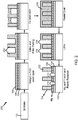
- FIG. 2 illustrates example operations 200 for forming copper pillars for Cu-Cu bonding based on the semiconductor structure 100 of FIG. 1 , in accordance with examples not forming part of the present invention.
- the resulting structure from the operations 200 may be used for C2C, C2W, or W2W bonding at temperatures less than or equal to 200°C.
- an adhesion layer 104, an anodic metal layer 106, and a cathodic metal layer 108 may be sequentially disposed above the wafer layer 102.
- Any of various suitable techniques e.g., physical vapor deposition (PVD)
- PVD physical vapor deposition
- Lithography and electroplating may be used to form multiple pillars 202 (e.g., copper (Cu) pillars) above the semiconductor structure 100 in designated areas, according to the lithography mask.
- the cathodic metal layer 108 may be considered as comprising the pillars 202.
- portions of the cathodic metal layer 108 may be removed (e.g., by etching) in areas 204 between the pillars 202.
- the cathodic metal layer 108 may be considered as a seed layer for plating the pillars in this process, where portions of the seed layer are subsequently removed and remaining portions of the seed layer form part of each pillar.
- an upper surface of the structure may be coated with a resist 206. Lithography may be used to remove portions of the resist in desired areas 208 between the pillars 202.
- portions of the anodic metal layer 106 may be removed using any of various suitable techniques (e.g., etching) in areas 210 between the pillars 202.
- the resist 206 may also be removed.
- the resulting structure in FIG. 2 is incapable of rapid copper oxide formation and is therefore suitable for Cu-Cu bonding with another structure (e.g., a chip or a wafer) to form a satisfactory interconnect at temperatures no more than 200°C.
- sidewalls of an anodic metal may be formed on lateral surfaces of the pillars and may surround the pillars. These anodic sidewalls may have the same height or a lower height than the pillars 202. These sidewalls may remain throughout the rest of the operations illustrated in FIG. 2 .
- An integrated circuit (IC) die (also referred to as a "chip”) is typically disposed in a package for electrical connection with a circuit board (e.g., a printed circuit board (PCB)).
- the package protects the integrated circuit die from potential physical damage and moisture, which may lead to corrosion.
- Examples of the present invention may be utilized for chip-to-chip (C2C), chip-to-wafer (C2W), or wafer-to-wafer (W2W) bonding to form such IC packages.
- Cu-to-Cu bonding may be performed at temperatures lower than 200°C to implement the C2C, C2W, or W2W integration, according to examples of the present invention.
- IC dies may benefit from examples of the present invention and be included in an IC package.
- a programmable IC die such as a field programmable gate array (FPGA) die.
- An FPGA typically includes an array of programmable tiles. These programmable tiles may include, for example, input/output blocks (IOBs), configurable logic blocks (CLBs), dedicated random access memory blocks (BRAM), multipliers, digital signal processing blocks (DSPs), processors, clock managers, delay lock loops (DLLs), and so forth.
- IOBs input/output blocks
- CLBs configurable logic blocks
- BRAM dedicated random access memory blocks
- DSPs digital signal processing blocks
- processors processors
- clock managers delay lock loops
- DLLs delay lock loops
- CPLD complex programmable logic device
- a CPLD includes two or more "function blocks" connected together and to input/output (I/O) resources by an interconnect switch matrix.
- Each function block of the CPLD includes a two-level AND/OR structure similar to those used in programmable logic arrays (PLAs) and programmable array logic (PAL) devices.
- Other programmable ICs are programmed by applying a processing layer, such as a metal layer, that programmably interconnects the various elements on the device. These programmable ICs are known as mask programmable devices.
- the phrase "programmable IC” can also encompass devices that are only partially programmable, such as application-specific integrated circuits (ASICs).
- IC package technology has been expanding into more than just the traditional two-dimensional (2D) construction, leading to increased integration.
- the traditional 2D construction involves multiple IC dies disposed directly above a substrate (e.g., a system-in- package (SiP) substrate) and on the same plane.
- SiP system-in- package
- IC packages with 2.5D and 3D integration have been and are being further developed. Examples of 2.5D and 3D integration are provided below.
- FIG. 3 is a cross-sectional view of an example 2.5D IC package 300 utilizing stacked silicon interconnect (SSI) technology.
- the main difference between 2.5D and traditional 2D IC packages is the inclusion of an interposer with through-silicon vias (TSVs) on which the IC dies are disposed.
- the IC package 300 includes a first die 302i (labeled "Die #1 ") and a second die 3022 (labeled "Die #2”) (collectively referred to as "dies 302").
- the dies 302 may include any of various suitable dies, including highly manufacturable FPGA die slices, referred to as super logic regions (SLRs). Although only two dies 303 are shown in FIG.
- a 2.5D IC package may include more than two dies.
- Each die 302 may include a chip substrate 304, a device layer 306, and metal layers 308.
- the dies 302 may be flip-chip dies as illustrated, which are connected to an interposer 31 1 by microbumps 310.
- the microbumps 310 may be implemented as copper pillar microbumps (also referred to as copper pillar bumps, copper pillar ⁇ bumps, or copper pillars), which may be formed similarly to the pillars 202 of FIG. 2 .
- the microbumps 310 permit finer pitch than conventional solder bumps.
- the interconnect formed between the dies 302 and the interposer 311 using the copper pillar microbumps is one example of Cu-Cu bonding with reduced oxide formation that may benefit from examples of the present invention.
- the interposer 311 acts as an interconnect vehicle on which the IC dies 302 are set side by side and interconnected.
- the interposer 311 may be a passive silicon interposer, for example. Although only one interposer 311 is illustrated in FIG. 3 , an IC package may be implemented with multiple interposers for some examples.
- the interposer 311 may include an interposer substrate 316, a topside metal layers 312 disposed above the substrate 316, and bottom-side metal layers 318 disposed below the substrate 316.
- the interposer 311 may also include a plurality of interconnect lines (not shown), which may provide high-bandwidth, low-latency connections through the interposer.
- the interposer 311 may also include TSVs 314 for routing connections between the dies 302 and a plurality of eutectic bumps 320 (e.g., controlled-collapse chip connection (C4) bumps) disposed between the interposer 311 and a package substrate 322.
- the TSVs 314 may provide the connections between the dies 302 and the package substrate 322 for the parallel and serial I/O, power/ground, clocking, configuration signals, and the like.
- the plurality of eutectic bumps 320 electrically connect the interposer 311 to the package substrate 322, and more particularly to conductive elements on the surface of and vias in the package substrate 322.
- the IC package 300 also has a plurality of solder balls 324 disposed below the package substrate 322.
- the solder balls 324 may be arranged, for example, in an array of rows and columns for making electrical contact with a matching arrangement of conductive pads disposed on a surface of a circuit board 326 (e.g., a PCB).
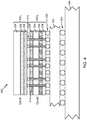
- FIG. 4 is a cross-sectional view of an example 3D IC package 400, in accordance with an example of the present invention.
- a 3D IC package involves at least one IC die being stacked on top of another IC die (e.g., without an intervening component, such as an interposer or other passive die), where these active dies may be directly bonded to one another.
- the lower die(s) may employ TSVs to allow the upper die(s) to communicate with the lower die(s) and the package substrate.
- the 3D IC package 400 involves a first die 402i (labeled "Die #1 ”) mounted above a second die 4022 (labeled "Die #2”) (collectively referred to as "dies 402").
- dies 402 Although only two dies 402 are illustrated in FIG. 4 , the reader will understand that more than two dies may be stacked. Furthermore, although the two dies 402 illustrated are the same size, it is to be understood that the dies may have different dimensions. For example, Die #2 may be wider than Die #1, and in this case, another die (not shown) may be disposed above Die #2, on the same plane as Die #1.
- Die #2 may include backside metal layers 309 disposed on the backside of the chip substrate 304 for connecting with the microbumps 310 such that Die #2 may be electrically connected to Die #1 .
- Die #2 may also include TSVs 414 such that Die #1 may be electrically connected directly to the package substrate 322.
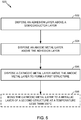
- FIG. 5 is a flow diagram of example operations 500 for fabricating a semiconductor structure and/or a package (e.g., an IC package as described below) including the semiconductor structure provided to help understanding. At least a portion of the operations 500 may be performed, for example, by a system for fabricating the semiconductor structure, which may include a semiconductor processing chamber.
- a system for fabricating the semiconductor structure which may include a semiconductor processing chamber.
- the operations 500 may begin, at block 502, by disposing an adhesion layer above a semiconductor layer.
- an anodic metal layer may be disposed above the adhesion layer.
- a cathodic metal layer may be disposed above the anodic metal layer.
- At least one of disposing the adhesion layer at block 502, disposing the anodic metal layer at block 504, or disposing the cathodic metal layer involves using physical vapor deposition (PVD).
- PVD physical vapor deposition
- the operations 500 further entail using lithography and electroplating to form a plurality of pillars above the cathodic metal layer.
- the plurality of pillars may have the same composition as the cathodic metal layer.
- the operations 500 further involve etching the cathodic metal layer to remove at least a portion of the cathodic layer between the plurality of pillars.
- the operations 500 further include coating an upper surface of the semiconductor structure including the plurality of pillars with a resist.
- the operations 500 further entail using lithography to remove at least a portion of the resist between the plurality of pillars, such that the anodic metal layer is exposed.
- the operations 500 further involve etching at least a portion of the anodic layer and the adhesion layer between the plurality of pillars, such that the semiconductor layer is exposed and the resist is removed.
- the anodic metal layer includes magnesium (Mg).
- the anodic metal layer includes an element selected from the group consisting of aluminum (Al), zinc (Zn), and Nickel (Ni).
- the cathodic metal layer includes copper (Cu).
- an oxidation potential of the anodic metal layer is greater than an oxidation potential of the cathodic metal layer.
- the anodic metal layer includes a metal associated with a porous oxide.
- an oxidation rate of the porous oxide may be linear as a function of time.
- the anodic metal layer includes a metal having an oxide-to-metal volume ratio less than 1.0.
- the anodic layer is configured to inhibit growth of an oxide associated with the cathodic metal layer by providing cathodic protection to the cathodic metal layer.
- the operations 500 further include, at optional block 508, bonding the cathodic metal layer of the semiconductor structure to a metallic layer of another structure at a temperature less than 200°C.
- Examples of the present disclosure provide an integration method for Cu-Cu bonding with reduced concerns for oxide formation, thereby providing sufficient bonding at reduced temperatures and faster cycle times, without any special requirements for this bonding. Examples of the present disclosure may also enable longer queue (Q) or staging times.
- a phrase referring to "at least one of" a list of items refers to any combination of those items, including single members.
- "at least one of: x, y, and z” is intended to cover: x, y, z, x-y, x-z, y-z, x-y-z, and any combination thereof (e.g., x-y-y and x-x-y-z ).
Landscapes
- Internal Circuitry In Semiconductor Integrated Circuit Devices (AREA)
- Physics & Mathematics (AREA)
- Geometry (AREA)
- Electrodes Of Semiconductors (AREA)
- Engineering & Computer Science (AREA)
- Manufacturing & Machinery (AREA)
Applications Claiming Priority (2)
| Application Number | Priority Date | Filing Date | Title |
|---|---|---|---|
| US15/473,294 US10593638B2 (en) | 2017-03-29 | 2017-03-29 | Methods of interconnect for high density 2.5D and 3D integration |
| PCT/US2018/024778 WO2018183453A1 (en) | 2017-03-29 | 2018-03-28 | Methods of interconnect for high density 2.5d and 3d integration |
Publications (2)
| Publication Number | Publication Date |
|---|---|
| EP3580779A1 EP3580779A1 (en) | 2019-12-18 |
| EP3580779B1 true EP3580779B1 (en) | 2021-09-01 |
Family
ID=62002720
Family Applications (1)
| Application Number | Title | Priority Date | Filing Date |
|---|---|---|---|
| EP18718550.9A Active EP3580779B1 (en) | 2017-03-29 | 2018-03-28 | Methods of interconnect for high density 2.5d and 3d integration |
Country Status (6)
| Country | Link |
|---|---|
| US (1) | US10593638B2 (https=) |
| EP (1) | EP3580779B1 (https=) |
| JP (1) | JP7145169B2 (https=) |
| KR (1) | KR102496142B1 (https=) |
| CN (1) | CN110476240B (https=) |
| WO (1) | WO2018183453A1 (https=) |
Families Citing this family (6)
| Publication number | Priority date | Publication date | Assignee | Title |
|---|---|---|---|---|
| US10943791B2 (en) * | 2018-10-31 | 2021-03-09 | Taiwan Semiconductor Manufacturing Co., Ltd. | Pattern formation method and method for manufacturing a semiconductor device |
| US11658122B2 (en) | 2019-03-18 | 2023-05-23 | Intel Corporation | EMIB patch on glass laminate substrate |
| US11211378B2 (en) * | 2019-07-18 | 2021-12-28 | International Business Machines Corporation | Heterogeneous integration structure for artificial intelligence computing |
| KR20240165937A (ko) | 2022-03-24 | 2024-11-25 | 미쯔비시 가스 케미칼 컴파니, 인코포레이티드 | 구리 표면 보호용 조성물, 그리고 이것을 이용한 반도체 중간체 및 반도체의 제조방법 |
| CN117525061A (zh) * | 2022-07-25 | 2024-02-06 | 矽磐微电子(重庆)有限公司 | 扇出型系统级封装结构及其制作方法 |
| CN115732407B (zh) * | 2022-12-06 | 2026-04-24 | 通富微电子股份有限公司 | 分散硅中介芯片封装方法 |
Family Cites Families (31)
| Publication number | Priority date | Publication date | Assignee | Title |
|---|---|---|---|---|
| JP3452795B2 (ja) * | 1997-05-07 | 2003-09-29 | 東京エレクトロン株式会社 | 塗布膜形成方法および塗布装置 |
| JP3654485B2 (ja) * | 1997-12-26 | 2005-06-02 | 富士通株式会社 | 半導体装置の製造方法 |
| US6190940B1 (en) * | 1999-01-21 | 2001-02-20 | Lucent Technologies Inc. | Flip chip assembly of semiconductor IC chips |
| US6703069B1 (en) * | 2002-09-30 | 2004-03-09 | Intel Corporation | Under bump metallurgy for lead-tin bump over copper pad |
| US7008867B2 (en) * | 2003-02-21 | 2006-03-07 | Aptos Corporation | Method for forming copper bump antioxidation surface |
| US20050003650A1 (en) * | 2003-07-02 | 2005-01-06 | Shriram Ramanathan | Three-dimensional stacked substrate arrangements |
| US6979647B2 (en) * | 2003-09-02 | 2005-12-27 | Texas Instruments Incorporated | Method for chemical etch control of noble metals in the presence of less noble metals |
| JP3794403B2 (ja) * | 2003-10-09 | 2006-07-05 | セイコーエプソン株式会社 | 半導体装置 |
| JP2006179570A (ja) * | 2004-12-21 | 2006-07-06 | Renesas Technology Corp | 半導体装置の製造方法 |
| US7402509B2 (en) * | 2005-03-16 | 2008-07-22 | Intel Corporation | Method of forming self-passivating interconnects and resulting devices |
| KR101534682B1 (ko) * | 2009-03-13 | 2015-07-08 | 삼성전자주식회사 | 범프에 스틱을 구비하는 반도체 장치 |
| US8841766B2 (en) * | 2009-07-30 | 2014-09-23 | Taiwan Semiconductor Manufacturing Company, Ltd. | Cu pillar bump with non-metal sidewall protection structure |
| CN102005397B (zh) * | 2009-08-31 | 2012-09-26 | 中芯国际集成电路制造(上海)有限公司 | 提高芯片键合块抗腐蚀性的方法 |
| US8993431B2 (en) * | 2010-05-12 | 2015-03-31 | Taiwan Semiconductor Manufacturing Company, Ltd. | Method of fabricating bump structure |
| US9048135B2 (en) * | 2010-07-26 | 2015-06-02 | Taiwan Semiconductor Manufacturing Company, Ltd. | Copper pillar bump with cobalt-containing sidewall protection |
| US8598030B2 (en) * | 2010-08-12 | 2013-12-03 | Taiwan Semiconductor Manufacturing Company, Ltd. | Process for making conductive post with footing profile |
| US10128206B2 (en) * | 2010-10-14 | 2018-11-13 | Taiwan Semiconductor Manufacturing Company, Ltd. | Conductive pillar structure |
| CN102569171B (zh) * | 2010-11-18 | 2015-02-04 | 精材科技股份有限公司 | 改善冠状缺陷的线路结构及其制作方法 |
| US8242011B2 (en) * | 2011-01-11 | 2012-08-14 | Taiwan Semiconductor Manufacturing Company, Ltd. | Method of forming metal pillar |
| JP6118816B2 (ja) * | 2012-11-16 | 2017-04-19 | 日立オートモティブシステムズ株式会社 | 接合部材、単電池および組電池 |
| CN103035604B (zh) * | 2012-12-17 | 2014-07-16 | 矽力杰半导体技术(杭州)有限公司 | 一种倒装芯片封装结构及其制作工艺 |
| KR20140130915A (ko) | 2013-05-02 | 2014-11-12 | 삼성전자주식회사 | 범프를 갖는 반도체 소자를 제조하는 방법 |
| US9412709B2 (en) | 2013-05-21 | 2016-08-09 | Freescale Semiconductor, Inc. | Semiconductor structure with sacrificial anode and passivation layer and method for forming |
| KR102192195B1 (ko) * | 2014-07-28 | 2020-12-17 | 삼성전자주식회사 | 솔더 조인트를 갖는 반도체 소자 및 그 형성 방법 |
| KR102245825B1 (ko) * | 2014-09-04 | 2021-04-30 | 삼성전자주식회사 | 반도체 패키지 |
| US9496238B2 (en) * | 2015-02-13 | 2016-11-15 | Advanced Semiconductor Engineering, Inc. | Sloped bonding structure for semiconductor package |
| US20170051426A1 (en) * | 2015-08-19 | 2017-02-23 | Apple Inc. | Processes to avoid anodic oxide delamination of anodized high strength aluminum alloys |
| US10181448B2 (en) * | 2016-03-22 | 2019-01-15 | Advanced Semiconductor Engineering, Inc. | Semiconductor devices and semiconductor packages |
| US9859258B2 (en) * | 2016-05-17 | 2018-01-02 | Taiwan Semiconductor Manufacturing Company, Ltd. | Semiconductor device and method of manufacture |
| US10020281B2 (en) * | 2016-08-30 | 2018-07-10 | International Business Machines Corporation | Metal bonding pads for packaging applications |
| DE102016119485A1 (de) * | 2016-10-12 | 2018-04-12 | Infineon Technologies Ag | Chipträger mit elektrisch leitfähiger Schicht, die sich über eine wärmeleitfähige dielektrische Sheet-Struktur hinaus erstreckt |
-
2017
- 2017-03-29 US US15/473,294 patent/US10593638B2/en active Active
-
2018
- 2018-03-28 CN CN201880022465.3A patent/CN110476240B/zh active Active
- 2018-03-28 KR KR1020197032079A patent/KR102496142B1/ko active Active
- 2018-03-28 JP JP2019553500A patent/JP7145169B2/ja active Active
- 2018-03-28 WO PCT/US2018/024778 patent/WO2018183453A1/en not_active Ceased
- 2018-03-28 EP EP18718550.9A patent/EP3580779B1/en active Active
Also Published As
| Publication number | Publication date |
|---|---|
| WO2018183453A1 (en) | 2018-10-04 |
| US20180286826A1 (en) | 2018-10-04 |
| JP2020512703A (ja) | 2020-04-23 |
| KR102496142B1 (ko) | 2023-02-03 |
| CN110476240A (zh) | 2019-11-19 |
| CN110476240B (zh) | 2023-10-20 |
| US10593638B2 (en) | 2020-03-17 |
| JP7145169B2 (ja) | 2022-09-30 |
| KR20190132478A (ko) | 2019-11-27 |
| EP3580779A1 (en) | 2019-12-18 |
Similar Documents
| Publication | Publication Date | Title |
|---|---|---|
| EP3580779B1 (en) | Methods of interconnect for high density 2.5d and 3d integration | |
| CN110692127B (zh) | 使用扇出内插器小芯片的高密度互连 | |
| US9852969B2 (en) | Die stacks with one or more bond via arrays of wire bond wires and with one or more arrays of bump interconnects | |
| US9728527B2 (en) | Multiple bond via arrays of different wire heights on a same substrate | |
| US9583456B2 (en) | Multiple bond via arrays of different wire heights on a same substrate | |
| US8884431B2 (en) | Packaging methods and structures for semiconductor devices | |
| US9953907B2 (en) | PoP device | |
| US20130040423A1 (en) | Method of Multi-Chip Wafer Level Packaging | |
| US11791326B2 (en) | Memory and logic chip stack with a translator chip | |
| US10763242B2 (en) | Semiconductor package and method of manufacturing the same | |
| US20260090478A1 (en) | Package structure, semiconductor device and manufacturing method thereof | |
| US11616028B2 (en) | Semiconductor devices having crack-inhibiting structures | |
| US10276403B2 (en) | High density redistribution layer (RDL) interconnect bridge using a reconstituted wafer | |
| JP2008016720A (ja) | 半導体装置の製造方法 | |
| US11721658B2 (en) | Semiconductor device packages with angled pillars for decreasing stress | |
| Lau et al. | Solder Joints in PCB Assembly and Semiconductor Packaging | |
| EP4668330A1 (en) | Semiconductor device including hybrid diamond thermal interposer and method of manufacturing the same | |
| Wu et al. | Thermal stress and creep strain analyses of a 3D IC integration SiP with passive interposer for network system application | |
| CN117276236A (zh) | 半导体装置与其形成方法 |
Legal Events
| Date | Code | Title | Description |
|---|---|---|---|
| STAA | Information on the status of an ep patent application or granted ep patent |
Free format text: STATUS: UNKNOWN |
|
| STAA | Information on the status of an ep patent application or granted ep patent |
Free format text: STATUS: THE INTERNATIONAL PUBLICATION HAS BEEN MADE |
|
| PUAI | Public reference made under article 153(3) epc to a published international application that has entered the european phase |
Free format text: ORIGINAL CODE: 0009012 |
|
| STAA | Information on the status of an ep patent application or granted ep patent |
Free format text: STATUS: REQUEST FOR EXAMINATION WAS MADE |
|
| 17P | Request for examination filed |
Effective date: 20190913 |
|
| AK | Designated contracting states |
Kind code of ref document: A1 Designated state(s): AL AT BE BG CH CY CZ DE DK EE ES FI FR GB GR HR HU IE IS IT LI LT LU LV MC MK MT NL NO PL PT RO RS SE SI SK SM TR |
|
| AX | Request for extension of the european patent |
Extension state: BA ME |
|
| DAV | Request for validation of the european patent (deleted) | ||
| DAX | Request for extension of the european patent (deleted) | ||
| REG | Reference to a national code |
Ref country code: DE Ref legal event code: R079 Ref document number: 602018022816 Country of ref document: DE Free format text: PREVIOUS MAIN CLASS: H01L0023000000 Ipc: H01L0023482000 |
|
| RIC1 | Information provided on ipc code assigned before grant |
Ipc: H01L 23/482 20060101AFI20200904BHEP Ipc: H01L 23/485 20060101ALI20200904BHEP Ipc: H01L 25/065 20060101ALI20200904BHEP |
|
| GRAP | Despatch of communication of intention to grant a patent |
Free format text: ORIGINAL CODE: EPIDOSNIGR1 |
|
| STAA | Information on the status of an ep patent application or granted ep patent |
Free format text: STATUS: GRANT OF PATENT IS INTENDED |
|
| INTG | Intention to grant announced |
Effective date: 20201124 |
|
| GRAS | Grant fee paid |
Free format text: ORIGINAL CODE: EPIDOSNIGR3 |
|
| GRAJ | Information related to disapproval of communication of intention to grant by the applicant or resumption of examination proceedings by the epo deleted |
Free format text: ORIGINAL CODE: EPIDOSDIGR1 |
|
| GRAL | Information related to payment of fee for publishing/printing deleted |
Free format text: ORIGINAL CODE: EPIDOSDIGR3 |
|
| STAA | Information on the status of an ep patent application or granted ep patent |
Free format text: STATUS: REQUEST FOR EXAMINATION WAS MADE |
|
| INTC | Intention to grant announced (deleted) | ||
| GRAP | Despatch of communication of intention to grant a patent |
Free format text: ORIGINAL CODE: EPIDOSNIGR1 |
|
| STAA | Information on the status of an ep patent application or granted ep patent |
Free format text: STATUS: GRANT OF PATENT IS INTENDED |
|
| INTG | Intention to grant announced |
Effective date: 20210514 |
|
| GRAA | (expected) grant |
Free format text: ORIGINAL CODE: 0009210 |
|
| STAA | Information on the status of an ep patent application or granted ep patent |
Free format text: STATUS: THE PATENT HAS BEEN GRANTED |
|
| AK | Designated contracting states |
Kind code of ref document: B1 Designated state(s): AL AT BE BG CH CY CZ DE DK EE ES FI FR GB GR HR HU IE IS IT LI LT LU LV MC MK MT NL NO PL PT RO RS SE SI SK SM TR |
|
| REG | Reference to a national code |
Ref country code: GB Ref legal event code: FG4D |
|
| REG | Reference to a national code |
Ref country code: CH Ref legal event code: EP Ref country code: AT Ref legal event code: REF Ref document number: 1427114 Country of ref document: AT Kind code of ref document: T Effective date: 20210915 |
|
| REG | Reference to a national code |
Ref country code: DE Ref legal event code: R096 Ref document number: 602018022816 Country of ref document: DE |
|
| REG | Reference to a national code |
Ref country code: IE Ref legal event code: FG4D |
|
| REG | Reference to a national code |
Ref country code: LT Ref legal event code: MG9D |
|
| REG | Reference to a national code |
Ref country code: NL Ref legal event code: MP Effective date: 20210901 |
|
| PG25 | Lapsed in a contracting state [announced via postgrant information from national office to epo] |
Ref country code: RS Free format text: LAPSE BECAUSE OF FAILURE TO SUBMIT A TRANSLATION OF THE DESCRIPTION OR TO PAY THE FEE WITHIN THE PRESCRIBED TIME-LIMIT Effective date: 20210901 Ref country code: SE Free format text: LAPSE BECAUSE OF FAILURE TO SUBMIT A TRANSLATION OF THE DESCRIPTION OR TO PAY THE FEE WITHIN THE PRESCRIBED TIME-LIMIT Effective date: 20210901 Ref country code: HR Free format text: LAPSE BECAUSE OF FAILURE TO SUBMIT A TRANSLATION OF THE DESCRIPTION OR TO PAY THE FEE WITHIN THE PRESCRIBED TIME-LIMIT Effective date: 20210901 Ref country code: FI Free format text: LAPSE BECAUSE OF FAILURE TO SUBMIT A TRANSLATION OF THE DESCRIPTION OR TO PAY THE FEE WITHIN THE PRESCRIBED TIME-LIMIT Effective date: 20210901 Ref country code: ES Free format text: LAPSE BECAUSE OF FAILURE TO SUBMIT A TRANSLATION OF THE DESCRIPTION OR TO PAY THE FEE WITHIN THE PRESCRIBED TIME-LIMIT Effective date: 20210901 Ref country code: NO Free format text: LAPSE BECAUSE OF FAILURE TO SUBMIT A TRANSLATION OF THE DESCRIPTION OR TO PAY THE FEE WITHIN THE PRESCRIBED TIME-LIMIT Effective date: 20211201 Ref country code: LT Free format text: LAPSE BECAUSE OF FAILURE TO SUBMIT A TRANSLATION OF THE DESCRIPTION OR TO PAY THE FEE WITHIN THE PRESCRIBED TIME-LIMIT Effective date: 20210901 Ref country code: BG Free format text: LAPSE BECAUSE OF FAILURE TO SUBMIT A TRANSLATION OF THE DESCRIPTION OR TO PAY THE FEE WITHIN THE PRESCRIBED TIME-LIMIT Effective date: 20211201 |
|
| REG | Reference to a national code |
Ref country code: AT Ref legal event code: MK05 Ref document number: 1427114 Country of ref document: AT Kind code of ref document: T Effective date: 20210901 |
|
| PG25 | Lapsed in a contracting state [announced via postgrant information from national office to epo] |
Ref country code: PL Free format text: LAPSE BECAUSE OF FAILURE TO SUBMIT A TRANSLATION OF THE DESCRIPTION OR TO PAY THE FEE WITHIN THE PRESCRIBED TIME-LIMIT Effective date: 20210901 Ref country code: LV Free format text: LAPSE BECAUSE OF FAILURE TO SUBMIT A TRANSLATION OF THE DESCRIPTION OR TO PAY THE FEE WITHIN THE PRESCRIBED TIME-LIMIT Effective date: 20210901 Ref country code: GR Free format text: LAPSE BECAUSE OF FAILURE TO SUBMIT A TRANSLATION OF THE DESCRIPTION OR TO PAY THE FEE WITHIN THE PRESCRIBED TIME-LIMIT Effective date: 20211202 |
|
| PG25 | Lapsed in a contracting state [announced via postgrant information from national office to epo] |
Ref country code: AT Free format text: LAPSE BECAUSE OF FAILURE TO SUBMIT A TRANSLATION OF THE DESCRIPTION OR TO PAY THE FEE WITHIN THE PRESCRIBED TIME-LIMIT Effective date: 20210901 |
|
| PG25 | Lapsed in a contracting state [announced via postgrant information from national office to epo] |
Ref country code: IS Free format text: LAPSE BECAUSE OF FAILURE TO SUBMIT A TRANSLATION OF THE DESCRIPTION OR TO PAY THE FEE WITHIN THE PRESCRIBED TIME-LIMIT Effective date: 20220101 Ref country code: SM Free format text: LAPSE BECAUSE OF FAILURE TO SUBMIT A TRANSLATION OF THE DESCRIPTION OR TO PAY THE FEE WITHIN THE PRESCRIBED TIME-LIMIT Effective date: 20210901 Ref country code: SK Free format text: LAPSE BECAUSE OF FAILURE TO SUBMIT A TRANSLATION OF THE DESCRIPTION OR TO PAY THE FEE WITHIN THE PRESCRIBED TIME-LIMIT Effective date: 20210901 Ref country code: RO Free format text: LAPSE BECAUSE OF FAILURE TO SUBMIT A TRANSLATION OF THE DESCRIPTION OR TO PAY THE FEE WITHIN THE PRESCRIBED TIME-LIMIT Effective date: 20210901 Ref country code: PT Free format text: LAPSE BECAUSE OF FAILURE TO SUBMIT A TRANSLATION OF THE DESCRIPTION OR TO PAY THE FEE WITHIN THE PRESCRIBED TIME-LIMIT Effective date: 20220103 Ref country code: NL Free format text: LAPSE BECAUSE OF FAILURE TO SUBMIT A TRANSLATION OF THE DESCRIPTION OR TO PAY THE FEE WITHIN THE PRESCRIBED TIME-LIMIT Effective date: 20210901 Ref country code: EE Free format text: LAPSE BECAUSE OF FAILURE TO SUBMIT A TRANSLATION OF THE DESCRIPTION OR TO PAY THE FEE WITHIN THE PRESCRIBED TIME-LIMIT Effective date: 20210901 Ref country code: CZ Free format text: LAPSE BECAUSE OF FAILURE TO SUBMIT A TRANSLATION OF THE DESCRIPTION OR TO PAY THE FEE WITHIN THE PRESCRIBED TIME-LIMIT Effective date: 20210901 Ref country code: AL Free format text: LAPSE BECAUSE OF FAILURE TO SUBMIT A TRANSLATION OF THE DESCRIPTION OR TO PAY THE FEE WITHIN THE PRESCRIBED TIME-LIMIT Effective date: 20210901 |
|
| REG | Reference to a national code |
Ref country code: DE Ref legal event code: R097 Ref document number: 602018022816 Country of ref document: DE |
|
| PLBE | No opposition filed within time limit |
Free format text: ORIGINAL CODE: 0009261 |
|
| STAA | Information on the status of an ep patent application or granted ep patent |
Free format text: STATUS: NO OPPOSITION FILED WITHIN TIME LIMIT |
|
| PG25 | Lapsed in a contracting state [announced via postgrant information from national office to epo] |
Ref country code: IT Free format text: LAPSE BECAUSE OF FAILURE TO SUBMIT A TRANSLATION OF THE DESCRIPTION OR TO PAY THE FEE WITHIN THE PRESCRIBED TIME-LIMIT Effective date: 20210901 Ref country code: DK Free format text: LAPSE BECAUSE OF FAILURE TO SUBMIT A TRANSLATION OF THE DESCRIPTION OR TO PAY THE FEE WITHIN THE PRESCRIBED TIME-LIMIT Effective date: 20210901 |
|
| 26N | No opposition filed |
Effective date: 20220602 |
|
| PG25 | Lapsed in a contracting state [announced via postgrant information from national office to epo] |
Ref country code: SI Free format text: LAPSE BECAUSE OF FAILURE TO SUBMIT A TRANSLATION OF THE DESCRIPTION OR TO PAY THE FEE WITHIN THE PRESCRIBED TIME-LIMIT Effective date: 20210901 |
|
| PG25 | Lapsed in a contracting state [announced via postgrant information from national office to epo] |
Ref country code: MC Free format text: LAPSE BECAUSE OF FAILURE TO SUBMIT A TRANSLATION OF THE DESCRIPTION OR TO PAY THE FEE WITHIN THE PRESCRIBED TIME-LIMIT Effective date: 20210901 |
|
| REG | Reference to a national code |
Ref country code: CH Ref legal event code: PL |
|
| REG | Reference to a national code |
Ref country code: BE Ref legal event code: MM Effective date: 20220331 |
|
| PG25 | Lapsed in a contracting state [announced via postgrant information from national office to epo] |
Ref country code: LU Free format text: LAPSE BECAUSE OF NON-PAYMENT OF DUE FEES Effective date: 20220328 Ref country code: LI Free format text: LAPSE BECAUSE OF NON-PAYMENT OF DUE FEES Effective date: 20220331 Ref country code: CH Free format text: LAPSE BECAUSE OF NON-PAYMENT OF DUE FEES Effective date: 20220331 |
|
| PG25 | Lapsed in a contracting state [announced via postgrant information from national office to epo] |
Ref country code: BE Free format text: LAPSE BECAUSE OF NON-PAYMENT OF DUE FEES Effective date: 20220331 |
|
| P01 | Opt-out of the competence of the unified patent court (upc) registered |
Effective date: 20230530 |
|
| PG25 | Lapsed in a contracting state [announced via postgrant information from national office to epo] |
Ref country code: MK Free format text: LAPSE BECAUSE OF FAILURE TO SUBMIT A TRANSLATION OF THE DESCRIPTION OR TO PAY THE FEE WITHIN THE PRESCRIBED TIME-LIMIT Effective date: 20210901 Ref country code: CY Free format text: LAPSE BECAUSE OF FAILURE TO SUBMIT A TRANSLATION OF THE DESCRIPTION OR TO PAY THE FEE WITHIN THE PRESCRIBED TIME-LIMIT Effective date: 20210901 |
|
| PG25 | Lapsed in a contracting state [announced via postgrant information from national office to epo] |
Ref country code: HU Free format text: LAPSE BECAUSE OF FAILURE TO SUBMIT A TRANSLATION OF THE DESCRIPTION OR TO PAY THE FEE WITHIN THE PRESCRIBED TIME-LIMIT; INVALID AB INITIO Effective date: 20180328 |
|
| PG25 | Lapsed in a contracting state [announced via postgrant information from national office to epo] |
Ref country code: TR Free format text: LAPSE BECAUSE OF FAILURE TO SUBMIT A TRANSLATION OF THE DESCRIPTION OR TO PAY THE FEE WITHIN THE PRESCRIBED TIME-LIMIT Effective date: 20210901 |
|
| PG25 | Lapsed in a contracting state [announced via postgrant information from national office to epo] |
Ref country code: MT Free format text: LAPSE BECAUSE OF FAILURE TO SUBMIT A TRANSLATION OF THE DESCRIPTION OR TO PAY THE FEE WITHIN THE PRESCRIBED TIME-LIMIT Effective date: 20210901 |
|
| REG | Reference to a national code |
Ref country code: DE Ref legal event code: R079 Ref document number: 602018022816 Country of ref document: DE Free format text: PREVIOUS MAIN CLASS: H01L0023482000 Ipc: H10W0072000000 |
|
| PGFP | Annual fee paid to national office [announced via postgrant information from national office to epo] |
Ref country code: GB Payment date: 20260303 Year of fee payment: 9 |
|
| PGFP | Annual fee paid to national office [announced via postgrant information from national office to epo] |
Ref country code: DE Payment date: 20260217 Year of fee payment: 9 Ref country code: IE Payment date: 20260309 Year of fee payment: 9 |
|
| PGFP | Annual fee paid to national office [announced via postgrant information from national office to epo] |
Ref country code: FR Payment date: 20260302 Year of fee payment: 9 |