EP3555148B1 - Catalyst system for producing polyethylene copolymers in a high temperature solution polymerization process - Google Patents
Catalyst system for producing polyethylene copolymers in a high temperature solution polymerization process Download PDFInfo
- Publication number
- EP3555148B1 EP3555148B1 EP17811610.9A EP17811610A EP3555148B1 EP 3555148 B1 EP3555148 B1 EP 3555148B1 EP 17811610 A EP17811610 A EP 17811610A EP 3555148 B1 EP3555148 B1 EP 3555148B1
- Authority
- EP
- European Patent Office
- Prior art keywords
- cyclopentadienyl
- tert
- butylfluoren
- methylene
- phenyl
- Prior art date
- Legal status (The legal status is an assumption and is not a legal conclusion. Google has not performed a legal analysis and makes no representation as to the accuracy of the status listed.)
- Active
Links
Images
Classifications
-
- C—CHEMISTRY; METALLURGY
- C08—ORGANIC MACROMOLECULAR COMPOUNDS; THEIR PREPARATION OR CHEMICAL WORKING-UP; COMPOSITIONS BASED THEREON
- C08F—MACROMOLECULAR COMPOUNDS OBTAINED BY REACTIONS ONLY INVOLVING CARBON-TO-CARBON UNSATURATED BONDS
- C08F210/00—Copolymers of unsaturated aliphatic hydrocarbons having only one carbon-to-carbon double bond
- C08F210/16—Copolymers of ethene with alpha-alkenes, e.g. EP rubbers
-
- C—CHEMISTRY; METALLURGY
- C07—ORGANIC CHEMISTRY
- C07F—ACYCLIC, CARBOCYCLIC OR HETEROCYCLIC COMPOUNDS CONTAINING ELEMENTS OTHER THAN CARBON, HYDROGEN, HALOGEN, OXYGEN, NITROGEN, SULFUR, SELENIUM OR TELLURIUM
- C07F17/00—Metallocenes
-
- C—CHEMISTRY; METALLURGY
- C08—ORGANIC MACROMOLECULAR COMPOUNDS; THEIR PREPARATION OR CHEMICAL WORKING-UP; COMPOSITIONS BASED THEREON
- C08F—MACROMOLECULAR COMPOUNDS OBTAINED BY REACTIONS ONLY INVOLVING CARBON-TO-CARBON UNSATURATED BONDS
- C08F2/00—Processes of polymerisation
- C08F2/04—Polymerisation in solution
-
- C—CHEMISTRY; METALLURGY
- C08—ORGANIC MACROMOLECULAR COMPOUNDS; THEIR PREPARATION OR CHEMICAL WORKING-UP; COMPOSITIONS BASED THEREON
- C08F—MACROMOLECULAR COMPOUNDS OBTAINED BY REACTIONS ONLY INVOLVING CARBON-TO-CARBON UNSATURATED BONDS
- C08F210/00—Copolymers of unsaturated aliphatic hydrocarbons having only one carbon-to-carbon double bond
- C08F210/02—Ethene
-
- C—CHEMISTRY; METALLURGY
- C08—ORGANIC MACROMOLECULAR COMPOUNDS; THEIR PREPARATION OR CHEMICAL WORKING-UP; COMPOSITIONS BASED THEREON
- C08F—MACROMOLECULAR COMPOUNDS OBTAINED BY REACTIONS ONLY INVOLVING CARBON-TO-CARBON UNSATURATED BONDS
- C08F210/00—Copolymers of unsaturated aliphatic hydrocarbons having only one carbon-to-carbon double bond
- C08F210/14—Monomers containing five or more carbon atoms
-
- C—CHEMISTRY; METALLURGY
- C08—ORGANIC MACROMOLECULAR COMPOUNDS; THEIR PREPARATION OR CHEMICAL WORKING-UP; COMPOSITIONS BASED THEREON
- C08F—MACROMOLECULAR COMPOUNDS OBTAINED BY REACTIONS ONLY INVOLVING CARBON-TO-CARBON UNSATURATED BONDS
- C08F4/00—Polymerisation catalysts
- C08F4/42—Metals; Metal hydrides; Metallo-organic compounds; Use thereof as catalyst precursors
- C08F4/44—Metals; Metal hydrides; Metallo-organic compounds; Use thereof as catalyst precursors selected from light metals, zinc, cadmium, mercury, copper, silver, gold, boron, gallium, indium, thallium, rare earths or actinides
- C08F4/60—Metals; Metal hydrides; Metallo-organic compounds; Use thereof as catalyst precursors selected from light metals, zinc, cadmium, mercury, copper, silver, gold, boron, gallium, indium, thallium, rare earths or actinides together with refractory metals, iron group metals, platinum group metals, manganese, rhenium technetium or compounds thereof
- C08F4/62—Refractory metals or compounds thereof
- C08F4/64—Titanium, zirconium, hafnium or compounds thereof
- C08F4/659—Component covered by group C08F4/64 containing a transition metal-carbon bond
- C08F4/6592—Component covered by group C08F4/64 containing a transition metal-carbon bond containing at least one cyclopentadienyl ring, condensed or not, e.g. an indenyl or a fluorenyl ring
- C08F4/65922—Component covered by group C08F4/64 containing a transition metal-carbon bond containing at least one cyclopentadienyl ring, condensed or not, e.g. an indenyl or a fluorenyl ring containing at least two cyclopentadienyl rings, fused or not
- C08F4/65927—Component covered by group C08F4/64 containing a transition metal-carbon bond containing at least one cyclopentadienyl ring, condensed or not, e.g. an indenyl or a fluorenyl ring containing at least two cyclopentadienyl rings, fused or not two cyclopentadienyl rings being mutually bridged
-
- C—CHEMISTRY; METALLURGY
- C08—ORGANIC MACROMOLECULAR COMPOUNDS; THEIR PREPARATION OR CHEMICAL WORKING-UP; COMPOSITIONS BASED THEREON
- C08F—MACROMOLECULAR COMPOUNDS OBTAINED BY REACTIONS ONLY INVOLVING CARBON-TO-CARBON UNSATURATED BONDS
- C08F2420/00—Metallocene catalysts
- C08F2420/01—Cp or analog bridged to a non-Cp X neutral donor
-
- C—CHEMISTRY; METALLURGY
- C08—ORGANIC MACROMOLECULAR COMPOUNDS; THEIR PREPARATION OR CHEMICAL WORKING-UP; COMPOSITIONS BASED THEREON
- C08F—MACROMOLECULAR COMPOUNDS OBTAINED BY REACTIONS ONLY INVOLVING CARBON-TO-CARBON UNSATURATED BONDS
- C08F2420/00—Metallocene catalysts
- C08F2420/11—Non-aromatic cycle-substituted bridge, i.e. Cp or analog where the bridge linking the two Cps or analogs is substituted by a non-aromatic cycle
-
- C—CHEMISTRY; METALLURGY
- C08—ORGANIC MACROMOLECULAR COMPOUNDS; THEIR PREPARATION OR CHEMICAL WORKING-UP; COMPOSITIONS BASED THEREON
- C08F—MACROMOLECULAR COMPOUNDS OBTAINED BY REACTIONS ONLY INVOLVING CARBON-TO-CARBON UNSATURATED BONDS
- C08F2500/00—Characteristics or properties of obtained polyolefins; Use thereof
- C08F2500/02—Low molecular weight, e.g. <100,000 Da.
-
- C—CHEMISTRY; METALLURGY
- C08—ORGANIC MACROMOLECULAR COMPOUNDS; THEIR PREPARATION OR CHEMICAL WORKING-UP; COMPOSITIONS BASED THEREON
- C08F—MACROMOLECULAR COMPOUNDS OBTAINED BY REACTIONS ONLY INVOLVING CARBON-TO-CARBON UNSATURATED BONDS
- C08F2500/00—Characteristics or properties of obtained polyolefins; Use thereof
- C08F2500/03—Narrow molecular weight distribution, i.e. Mw/Mn < 3
-
- C—CHEMISTRY; METALLURGY
- C08—ORGANIC MACROMOLECULAR COMPOUNDS; THEIR PREPARATION OR CHEMICAL WORKING-UP; COMPOSITIONS BASED THEREON
- C08F—MACROMOLECULAR COMPOUNDS OBTAINED BY REACTIONS ONLY INVOLVING CARBON-TO-CARBON UNSATURATED BONDS
- C08F4/00—Polymerisation catalysts
- C08F4/42—Metals; Metal hydrides; Metallo-organic compounds; Use thereof as catalyst precursors
- C08F4/44—Metals; Metal hydrides; Metallo-organic compounds; Use thereof as catalyst precursors selected from light metals, zinc, cadmium, mercury, copper, silver, gold, boron, gallium, indium, thallium, rare earths or actinides
- C08F4/60—Metals; Metal hydrides; Metallo-organic compounds; Use thereof as catalyst precursors selected from light metals, zinc, cadmium, mercury, copper, silver, gold, boron, gallium, indium, thallium, rare earths or actinides together with refractory metals, iron group metals, platinum group metals, manganese, rhenium technetium or compounds thereof
- C08F4/62—Refractory metals or compounds thereof
- C08F4/64—Titanium, zirconium, hafnium or compounds thereof
- C08F4/659—Component covered by group C08F4/64 containing a transition metal-carbon bond
- C08F4/65908—Component covered by group C08F4/64 containing a transition metal-carbon bond in combination with an ionising compound other than alumoxane, e.g. (C6F5)4B-X+
-
- Y—GENERAL TAGGING OF NEW TECHNOLOGICAL DEVELOPMENTS; GENERAL TAGGING OF CROSS-SECTIONAL TECHNOLOGIES SPANNING OVER SEVERAL SECTIONS OF THE IPC; TECHNICAL SUBJECTS COVERED BY FORMER USPC CROSS-REFERENCE ART COLLECTIONS [XRACs] AND DIGESTS
- Y02—TECHNOLOGIES OR APPLICATIONS FOR MITIGATION OR ADAPTATION AGAINST CLIMATE CHANGE
- Y02P—CLIMATE CHANGE MITIGATION TECHNOLOGIES IN THE PRODUCTION OR PROCESSING OF GOODS
- Y02P20/00—Technologies relating to chemical industry
- Y02P20/50—Improvements relating to the production of bulk chemicals
- Y02P20/52—Improvements relating to the production of bulk chemicals using catalysts, e.g. selective catalysts
Definitions
- the present invention is related to a new catalysts system, which is able to produce polyethylene copolymers in a high temperature solution polymerization process.
- the new catalyst system comprises a specifically substituted, bridged hafnocene catalyst complex, comprising a cyclopentadienyl (Cp) ligand, a fluorenyl (Flu) ligand and a specifically covalent bridge connecting the two ligands, along with a boron based cocatalyst.
- This combination remarkably gives rise to catalyst systems with high productivity combined with high solubility, molecular weight capability and comonomer incorporation ability.
- Metallocene catalysts have been used to manufacture polyolefins for many years. Countless academic and patent publications describe the use of these catalysts in olefin polymerization. Metallocenes are now used industrially and polypropylenes as well as polyethylenes are often produced using cyclopentadienyl based catalyst systems with different substitution patterns.
- WO 2000024792 describes a catalyst system comprising hafnocene catalyst complex derived from A) a biscyclopentadienyl hafnium organometallic compound having i) at least one unsubstituted cyclopentadienyl ligand or aromatic fused-ring substituted cyclopentadienyl ligand not having additional substitutents on said ligand, ii) one substituted or unsubstituted, aromatic fused-ring substituted cyclopentadienyl ligand, and iii) a covalent bridge connecting the two cyclopentadienyl ligands.
- This bridge can be a single carbon substituted with two aryl groups, each of these aryl groups being substituted with a C 1 - C 20 hydrocarbyl or hydrocarbylsilyl group, whereby at least one of these substituents is a linear C 3 or greater substitutent.
- the catalyst system comprises an activating cocatalyst, which is preferably a precursor ionic compound comprising a halogenated tetraaryl-substituted Group 13 anion.
- EP 2511305 is related to bridged Cp-Flu metallocene complexes.
- the C-based bridges shown in the Examples are substituted methylene bridges, whereby the substituents are the same (e.g. dimethyl, diphenyl, dibenzyl,-etc) or are linked together to form a ring (e.g. cyclohexylidene).
- Solubility of the transition metal complex in aliphatic hydrocarbons is also important to ensure optimal use of the complex in a solution process.
- the inventors set out to develop a new catalyst system having superior polymerization behaviour than the above mentioned polymerization catalyst systems regarding to productivity, solubility, molecular weight capability and comonomer incorporation ability.
- the present inventors have now found a new class of olefin polymerization catalyst systems, which are able to solve the problems disclosed above.
- the invention combines the use of special metallocene complexes with a boron cocatalyst.
- the invention relates to a catalyst system for producing ethylene copolymers in a high temperature solution process, the catalyst system comprising
- the invention provides a process for the preparation of an ethylene copolymer comprising polymerizing ethylene and a C 4-10 alpha-olefin comonomer in a high temperature solution process at a temperature greater than 100°C in the presence of a catalyst comprising:
- the single site metallocene complex especially the complexes defined by the formula (I) specified in the present invention, used for manufacture of the ethylene copolymer are asymmetrical, meaning that the two ligands forming the metallocene complex are different.
- the invention can be effected with a metallocene complex of formula (I) wherein
- each X which may be the same or different, is a sigma ligand, preferably a hydrogen atom, a halogen atom, a R 3 , OR 3 , OSO 2 CF 3 , OCOR 3 , SR 3 , NR 3 2 or PR 3 2 group wherein R 3 is a linear or branched, cyclic or acyclic, C 1 -C 20 -alkyl, C 2 -C 20 -alkenyl, C 2 -C 20 -alkynyl, C 6 -C 20 -aryl, C 7 -C 20 -alkylaryl or C 7 -C 20 -arylalkyl radical; optionally containing heteroatoms belonging to groups 14-16 or is SiR 3 3 , SiHR 3 2 or SiH 2 R 3 .
- R 3 is preferably C 1-6 -alkyl, phenyl or benzyl group.
- halogen includes fluoro, chloro, bromo and iodo groups, preferably chloro groups.
- each X is independently a halogen atom or a R 3 or OR 3 group, whereby R 3 is a C 1-6 -alkyl, phenyl or benzyl group.
- X is methyl, benzyl or chlorine group.
- X groups are the same.
- M is preferably Hf.
- R are the same or different from each other and can be saturated linear or branched C 1 -C 10 alkyl, C 5 -C 10 aryl, C 6 -C 20 alkylaryl or C 6 -C 20 arylalkyl groups, which can optionally contain up to 2 heteroatoms or silicon atoms.
- R are the same or different from each other and can be saturated linear or branched C 1 -C 6 alkyl, C 6 -C 10 aryl, C 6 -C 20 alkylaryl or C 6 -C 20 arylalkyl groups, which do not contain heteroatoms or silicon atoms.
- R are the same and are saturated linear or branched C 1 -C 6 alkyl or C 6 -C 10 aryl, and even more preferred all R are the same and are a saturated linear or branched C 1 -C 6 alkyl.
- R are the same and are all C, alkyl groups.
- R 1 is a C 6 -C 10 aryl or C 6 -C 20 alkylaryl group optionally containing up to 2 heteroatoms or silicon atoms or a C 4 -C 10 heteroaryl group.
- C 6 -C 20 alkylaryl group is meant to be an C 6 -C 10 aryl group which is substituted by one or more alkyl groups which may be the same or different, whereby the number of C-atoms in the alkyl group substituents is in a range which leads to C 6 -C 20 alkylaryl groups.
- R 1 examples are phenyl, para-tolyl, para-iso-propylphenyl, 3,5-dimethylphenyl, beta-naphthyl, 4-(N,N-dimethylamino)phenyl, 4-pyridyl, beta-thiophenyl, 4-methyl-thiophenyl
- R 1 is a C 6 -C 10 aryl or C 6 -C 12 alkylaryl group, which do not contain heteroatoms or silicon atoms or a C 4 -C 8 heteroaryl group.
- R 1 is unsubstituted phenyl (i.e. C 6 aryl), or phenyl substituted by one to two C 1 -C 6 alkyl groups(i.e. C 7 -C 18 alkylaryl group).
- R 1 is phenyl, para-tolyl or para-iso-propylphenyl. Most preferably R 1 is phenyl or para-iso-propylphenyl
- R 2 is a C 4 -C 20 cycloalkyl group, optionally carrying alkyl substituents in beta-positions, of formula (II) in which R' can be the same or can be different from each other and can be hydrogen or is defined as Rand n is 1 to 17.
- R 2 is a C 4 -C 10 cycloalkyl group of formula (II), wherein n is 1 to 7 and R' can be the same or can be different from each other and can be hydrogen or saturated linear or branched C 1 -C 6 alkyl or C 6 -C 10 aryl.
- R 2 is a C 4 -C 10 cycloalkyl group of formula (II), wherein n is 1 to 7 and R' can be the same or can be different from each other and can be hydrogen or saturated linear or branched C 1 -C 4 alkyl group.
- R 2 examples are cyclobutyl, 3,3-dimethylcyclobutyl, cyclopentyl, cyclohexyl and 3,3,5,5-tetramethylcyclohexyl. Most preferably R 2 is a C 4 -C 8 cycloalkyl group of formula (II), wherein n is 1 to 5 and all R' are hydrogen.
- boron containing cocatalyst include boron compounds containing a borate 3 + ion, i.e. borate compounds. These compounds generally contain an anion of formula: (Z) 4 B - (III) where Z is an optionally substituted phenyl derivative, said substituent being a haloC 1-6 -alkyl or halo group. Preferred options are fluoro or trifluoromethyl. Most preferably, the phenyl group is perfluorinated.
- Such ionic cocatalysts preferably contain a non-coordinating anion such as tetrakis(pentafluorophenyl)borate.
- Suitable counterions are protonated amine or aniline derivatives or phosphonium ions. These may have the general formula (IV) or (V): NQ 4 + (IV) or PQ 4 + (V) where Q is independently H, C 1-6 -alkyl, C 3-8 cycloalkyl, phenylC 1-6 -alkylene- or optionally substituted Ph. Optional substituents may be C1-6-alkyl, halo or nitro. There may be one or more than one such substituent. Preferred substituted Ph groups include therefore parasubstituted phenyl, preferably tolyl or dimethylphenyl. It is preferred if at least one Q group is H, thus preferred compounds are those of formula: NHQ 3 + (VI) or PHQ 3 + (VII)
- Preferred phenylC 1-6 -alkyl- groups include benzyl.
- Suitable counterions therefore include: methylammonium, anilinium, dimethylammonium, diethylammonium, N-methylanilinium, diphenylammonium, N,N-dimethylanilinium, trimethylammonium, triethylammonium, tri-n-butylammonium, methyldiphenylammonium, p-bromo-N,N- dimethylanilinium or p-nitro-N,N-dimethylanilinium, especially dimethylammonium or N,N-dimethylanilinium.
- pyridinium is a further option.
- Phosphonium ions of interest include triphenylphosphonium, triethylphosphonium, diphenylphosphonium, tri(methylphenyl)phosphonium and tri(dimethylphenyl)phosphonium.
- a more preferred counterion is trityl (CPh 3 + ) or analogues thereof in which the Ph group is functionalised to carry one or more alkyl groups.
- Highly preferred borates of use in the invention therefore comprise the tetrakis(pentafluorophenyl)borate ion.
- Preferred ionic compounds which can be used according to the present invention include:
- More preferred borates are triphenylcarbeniumtetrakis(pentafluorophenyl) borate and N,N-dimethylaniliniumtetrakis(pentafluorophenyl)borate.
- N,N-dimethylaniliniumtetrakis(pentafluorophenyl)borate is most preferred.
- aluminium alkyl compound is compounds of the formula (VIII) AlR 3 with R being a linear or branched C 2 -C 8 -alkyl group.
- Preferred aluminium alkyl compounds are triethylaluminium, tri-isobutylaluminium, tri-isohexylaluminium, tri-n-octylaluminium and tri-isooctylaluminium.
- the molar ratio of boron to the metal ion of the metallocene may be in the range 0.5:1 to 10:1 mol/mol, preferably 1:1 to 10:1, especially 1:1 to 5:1 mol/mol.
- a molar ratio of boron to the metal ion of the metallocene from 1:1 to less than 2:1 mol/mol, e.g from 1:1 to 1.8:1 or 1:1 to 1.5:1.
- the metallocene complex of the present invention is used in combination with the cocatalyst(s) as a catalyst system for the polymerization of ethylene and C 4-10 alpha-olefin comonomer in a high temperature solution polymerization process.
- the catalyst system of the invention may be used as a homogeneous catalyst or heterogeneous catalyst, preferably as homogeneous catalyst system.
- Homogeneous or non-supported catalyst systems suitable for the present invention can be prepared in solution, for example in an hydrocarbon solvent like hexane, cyclohexane, heptane, light naphta or toluene, by contacting the metallocene (as a solid or as a solution) with the cocatalyst(s), for example a borane or a borate salt as slurry in a hydrocarbon diluent or previously dissolved in an aromatic solvent, or preferably can be formed by sequentially adding the catalyst components directly into the polymerization reactor.
- an hydrocarbon solvent like hexane, cyclohexane, heptane, light naphta or toluene
- the polymer to be produced using the catalyst system of the invention is copolymer of ethylene and a C4-10 alpha-olefin comonomer, like 1-butene, 1-hexene, 4-methyl-1-pentene, 1-octene etc.
- a C4-10 alpha-olefin comonomer like 1-butene, 1-hexene, 4-methyl-1-pentene, 1-octene etc.
- butene, hexene or octene and more preferably octene is used as comonomer.
- the comonomer content in such a polymer may be up to 45 mol%, preferably between 1 to 40 mol%, more preferably 1.5 to 35 mol% and even more preferably 2 to 25 mol%.
- the density (measured according to ISO 1183-187) of the polymers is in the range of 0.850 g/cm 3 to 0.930 g/cm 3 , preferably in the range of 0.850 g/cm 3 to 0.920 g/cm 3 and more preferably in the range of 0.850 g/cm 3 to 0.910 g/cm 3 .
- Mw/Mn value of the polymers of the invention is less than 5, e.g. in the range of 2.0 to 4.5.
- the melting points (measured with DSC according to ISO 11357-3:1999) of the polymers to be produced are below 130°C, preferably below 120°C, more preferably below 110°C and most preferably below 100°C
- the catalyst system of the present invention is used to produce the above defined ethylene copolymers in a high temperature solution polymerization process at temperatures higher than 100°C.
- such process is essentially based on polymerizing the monomer and a suitable comonomer in a liquid hydrocarbon solvent in which the resulting polymer is soluble.
- the polymerization is carried out at a temperature above the melting point of the polymer, as a result of which a polymer solution is obtained.
- This solution is flashed in order to separate the polymer from the unreacted monomer and the solvent.
- the solvent is then recovered and recycled in the process.
- a solution polymerization process is known for its short reactor residence times (compared to Gas-phase or slurry processes) allowing, thus, very fast grade transitions and significant flexibility in producing a wide product range in a short production cycle.
- the used solution polymerization process is a high temperature solution polymerization process, using a polymerization temperature of higher than 100°C.
- the polymerization temperature is at least 110°C, more preferably at least 150°C.
- the polymerization temperature can be up to 250°C.
- the pressure in the used solution polymerization process according to the invention is preferably in a range of 10 to 100 bar, preferably 15 to 100 bar and more preferably 20 to 100 bar.
- the liquid hydrocarbon solvent used is preferably a C 5-12 -hydrocarbon which may be unsubstituted or substituted by C 1-4 alkyl group such as pentane, methyl pentane, hexane, heptane, octane, cyclohexane, methylcyclohexane and hydrogenated naphtha. More preferably unsubstituted C 6-10 -hydrocarbon solvents are used.
- the new catalyst systems comprising component (i) and (ii) can be advantageously used for ethylene copolymerization in high temperature solution polymerization process.
- the catalyst systems according to the present invention show high productivity combined with high solubility, molecular weight capability and comonomer incorporation ability, if used for ethylene copolymerization in high temperature solution polymerization process.
- the polymers made by the catalyst system of the invention are useful in all kinds of end articles such as pipes, films (cast or blown films), fibers, moulded articles (e.g. injection moulded, blow moulded, rotomoulded articles), extrusion coatings and so on.
- end articles such as pipes, films (cast or blown films), fibers, moulded articles (e.g. injection moulded, blow moulded, rotomoulded articles), extrusion coatings and so on.
- Temperature modulated DSC experiments were performed in a TA Instruments Q2000 DSC operated in modulated mode and calibrated with indium, tin and zinc according to ISO 11357-1. Circa 5 mg of the sample were placed in an aluminium pan. The temperature was initially raised to 180°C and afterwards lowered to -88°C at 10°C/min as in standard DSC. Afterwards the temperature was raised by a temperature modulated scan with heating rate of 2°C/min modulated of 0.32°C every 60 seconds. The glass transition temperature was measured from the reversible heat flow thermogram as the inversion point at transition.
- the elementary analysis of a catalyst was performed by taking a solid sample of mass, M, cooling over dry ice. Samples were diluted up to a known volume, V, by dissolving in nitric acid (HNOs, 65 %, 5 % of V) and freshly deionised (DI) water (5 % of V). The solution was then added to hydrofluoric acid (HF, 40 %, 3 % of V), diluted with DI water up to the final volume, V, and left to stabilise for two hours.
- HNOs nitric acid
- DI deionised
- Thermo Elemental iCAP 6300 Inductively Coupled Plasma - Optical Emission Spectrometer (ICP-OES) which was calibrated using a blank (a solution of 5 % HNO 3 , 3 % HF in DI water), and 6 standards of 0.5 ppm, 1 ppm, 10 ppm, 50 ppm, 100 ppm and 300 ppm of Al, with 0.5 ppm, 1 ppm, 5 ppm, 20 ppm, 50 ppm and 100 ppm of Hf and Zr in solutions of 5 % HNO3, 3 % HF in DI water.
- ICP-OES Inductively Coupled Plasma - Optical Emission Spectrometer
- a quality control sample (20 ppm Al, 5 ppm Hf, Zr in a solution of 5 % HNO3, 3 % HF in DI water) is run to confirm the reslope.
- the QC sample is also run after every 5th sample and at the end of a scheduled analysis set.
- hafnium was monitored using the 282.022 nm and 339.980 nm lines and the content for zirconium using 339.198 nm line.
- the content of aluminium was monitored via the 167.079 nm line, when Al concentration in ICP sample was between 0-10 ppm (calibrated only to 100 ppm) and via the 396.152 nm line for Al concentrations above 10 ppm.
- the reported values are an average of three successive aliquots taken from the same sample and are related back to the original catalyst by inputting the original mass of sample and the dilution volume into the software.
- NMR nuclear-magnetic resonance
- Characteristic signals resulting from saturated end-groups were observed. Such saturated end-groups were quantified using the average integral of the two resolved signals at 22.84 and 32.23 ppm.
- the 22.84 ppm integral is assigned to the unresolved signals corresponding to both 2B6 and 2S sites of 1-octene and the saturated chain end respectively.
- the 32.23 ppm integral is assigned to the unresolved signals corresponding to both 3B6 and 3S sites of 1-octene and the saturated chain end respectively.
- GPC Molecular weight averages, molecular weight distribution, and polydispersity index (M n , M w , M w /M n )
- Mw Molecular weight averages
- Mw Molecular weight distribution
- Mw Molecular weight distribution
- PDI polydispersity index
- 1,2,4-Trichlorobenzene containing butylated hydroxytoluene (0.5 g/L) and Irganox 1010 (20 mg/L) was used as eluent at a flow rate of 1.0 mL/min.
- a Polymer Laboratories PL XT-220 robotic sample handling system was used as autosampler. The concentration of the samples was between 2 and 4 mg polymer / mL of TCB.
- Ethylene concentration in liquid phase can be considered constant since total pressure is kept constant by feeding ethylene during polymerization.
- the C 8 /C 2 ratio in solution at the end of the polymerization is calculated by subtracting the amount of octene incorporated in the polymer from the measured composition of the latter (%wt 1-octene)
- R C 8 / C 2 pol / C 8 / C 2 average in liquid phase
- (C 8 /C 2 ) average in liquid phase is calculated as ((C 8 /C 2 ) final +(C 8 /C 2 ) feed )/2
- N,N-Dimethylanilinium Tetrakis(pentafluorophenyl)borate (AB) ( CAS 118612-00-3 ) was purchased from Boulder.
- 1-octene as co-monomer (99%, Sigma Aldrich) was dried over molecular sieves and degassed with nitrogen before use.
- Heptane and decane (99.9 %, Sigma Aldrich) were dried over molecular sieves and degassed with nitrogen before use.
- Step 2 Phenyl-cyclohexyl-cyclopentadienyl-(2,7-di-tert-butylfluoren-9-yl)methane 1. n BuLi, THF
- Step 3 (Phenyl)(cyclohexyl)methylene(cyclopentadienyl)(2,7-di- tert -butylfluoren-9-yl)hafnium dichloride
- Step 4 (Phenyl)(cyclohexyl)methylene(cyclopentadienyl)(2,7-di- tert -butylfluoren-9-yl)hafnium dimethyl
- the filter cake was additionally washed with 5 ⁇ 20 ml of warm n-hexane.
- the combined filtrate was evaporated almost to dryness, and then 20 ml of n-hexane was added to the residue.
- the resulting mixture was filtered once again through a glass frit (G4).
- the mother liquor was evaporated to dryness, and the residue was dissolved in 7 ml of n-hexane. Yellow powder precipitated from this solution overnight at -30°C was collected and dried in vacuum.
- Step 2 (Phenyl)(1-hexyl)methylene(cyclopentadienyl)(2,7-di- tert -butylfluoren-9-yl)hafnium dichloride
- Step 3 (Phenyl)(1-hexyl)methylene(cyclopentadienyl)(2,7-di- tert -butylfluoren-9-yl)hafnium dimethyl
- the filter cake was additionally washed with 2x20 ml of toluene.
- the combined filtrate was evaporated to dryness, and 20 ml of hexane was added to the residue.
- the resulting suspension was filtered once again through a glass frit (G4).
- the filtrate was evaporated to dryness, and the residue was dissolved in 7 ml of hexane. Yellow powder precipitated from this solution overnight at -40°C was collected and dried in vacuum. This procedure gave 2.55 g (71%) of pure (phenyl)(1-hexyl)methylene(cyclopentadienyl)(2,7-di-tert-butylfluoren-9-yl)hafnium dimethyl.
- Step 2 (Phenyl)(isopropyl)methylene(cyclopentadienyl)(2,7-di- tert -butylfluoren-9-yl)hafnium dichloride
- Step 3 (Phenyl)(isopropyl)methylene(cyclopentadienyl)(2,7-di- tert -butylfluoren-9-yl)hafnium dimethyl
- Diphenylmethylene(cyclopentadienyl)(2,7-di- tert -butylfluoren-9-yl)hafnium dicloride was synthesized according to the literature: Hopf, A, Kaminsky, W., Catalysis Communications 2002;3:459 .
- N,N-dimethylanilinium tetrakis(pentafluorophenyl) borate has been used for all experiments.
- TEA (7 ⁇ 10 -2 mol/kg in Isopar E) has been used as the scavenger for all the experiments and its amount has been optimised together with the B/Hf ratio based on a specific design of experiments (DoE).
- Activation is carried out by dissolving separately the complex and the activator in 4 mL of toluene.
- the borate solution is then injected in the reactor feeding line followed by the complex solution and the two are let in contact for few seconds before the injection into the reactor by nitrogen overpressure.
- the reactor is filled with the desired amount of solvent (isopar E), scavenger (optimised amount 0.035 mmol TEA) and 1-octene.
- Solvent and monomers amounts are chosen to have an initial liquid volume at the polymerization conditions of 80mL.
- the reactor is then heated up and carefully pressurised with ethylene (25-28 bar-g).
- ethylene 25-28 bar-g
- the ethylene pressure is adjusted to 30 bar-g and the mixture is allowed to stir at 750 rpm during 10 minutes in order to determine the residual ethylene uptake.
- the catalyst dissolved with 4mL of toluene
- the cocatalyst also dissolved with 4 mL toluene
- Pressure is then kept constant by feeding ethylene and after 10 minutes polymerization is quenched by adding a killing agent (either EtOH or CO2).
- a killing agent either EtOH or CO2
- the reactor is vented, the temperature is decreased and the vessel is opened.
- the solution is discharged in an aluminium pan containing few milligrams (-500 ppm related to the copolymer produced) of Irganox 1076. The pan is then placed under a well-ventilated fume hood until the volatiles are evaporated.
- Table 1 shows based on the productivity results, that the cyclohexyl as substituent in the bridge (IC) results in higher productivity compared to hexyl (CC1) or isopropyl (CC2) as substituent in the bridge when activated using borate AB as co-catalyst.
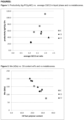
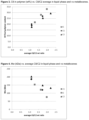
- the catalyst system IC/AB displayed highest productivity with 111 kg-PO/g-cat for a catalyst loading of 0.07 mg and residence time 10 min. For same C8 content (or same average C8/C2), no significant clear differences on molecular weight capability and reactivity can be observed between the three complexes ( Figures 2-4 )
- the performance of the IC/AB catalyst system was further investigated by carrying out a set of experiments following the design of experiments (DoE) methodology. The two factors TEA amount and B/Hf ratio was used (see Table 2). In those set of experiments the effect on productivity and polymer properties (Mw and C8 incorporation) has been evaluated. Polymerisation temperature was 160°C and total pressure 30 barg.
- Solubility of the complex in aliphatic hydrocarbons is also an important property, since the complex is preferably fed into the reactor as a solution in such a solvent. This feeding mode ensures higher accuracy in the catalyst concentration in the reactor and better activation efficiency.
- complex IC has a higher solubility compared to complex C0.
Landscapes
- Chemical & Material Sciences (AREA)
- Organic Chemistry (AREA)
- Health & Medical Sciences (AREA)
- Chemical Kinetics & Catalysis (AREA)
- Medicinal Chemistry (AREA)
- Polymers & Plastics (AREA)
- Crystallography & Structural Chemistry (AREA)
- Engineering & Computer Science (AREA)
- Materials Engineering (AREA)
- Transition And Organic Metals Composition Catalysts For Addition Polymerization (AREA)
- Addition Polymer Or Copolymer, Post-Treatments, Or Chemical Modifications (AREA)
Applications Claiming Priority (2)
| Application Number | Priority Date | Filing Date | Title |
|---|---|---|---|
| EP16204328 | 2016-12-15 | ||
| PCT/EP2017/082434 WO2018108918A1 (en) | 2016-12-15 | 2017-12-12 | Catalyst system for producing polyethylene copolymers in a high temperature solution polymerization process |
Publications (2)
| Publication Number | Publication Date |
|---|---|
| EP3555148A1 EP3555148A1 (en) | 2019-10-23 |
| EP3555148B1 true EP3555148B1 (en) | 2023-04-05 |
Family
ID=57614134
Family Applications (1)
| Application Number | Title | Priority Date | Filing Date |
|---|---|---|---|
| EP17811610.9A Active EP3555148B1 (en) | 2016-12-15 | 2017-12-12 | Catalyst system for producing polyethylene copolymers in a high temperature solution polymerization process |
Country Status (7)
| Country | Link |
|---|---|
| US (1) | US11279781B2 (enExample) |
| EP (1) | EP3555148B1 (enExample) |
| JP (1) | JP7130644B2 (enExample) |
| KR (1) | KR102534541B1 (enExample) |
| CN (1) | CN110234665B (enExample) |
| ES (1) | ES2943392T3 (enExample) |
| WO (1) | WO2018108918A1 (enExample) |
Families Citing this family (30)
| Publication number | Priority date | Publication date | Assignee | Title |
|---|---|---|---|---|
| KR102505086B1 (ko) | 2016-11-18 | 2023-02-28 | 보레알리스 아게 | 촉매 |
| EP3562831B1 (en) | 2016-12-29 | 2021-10-20 | Borealis AG | Catalysts |
| CN112292406B (zh) | 2018-03-19 | 2023-04-04 | 博里利斯股份公司 | 烯烃聚合催化剂 |
| KR20210027401A (ko) | 2018-06-28 | 2021-03-10 | 보레알리스 아게 | 촉매 |
| CN113330087B (zh) | 2019-01-28 | 2022-10-28 | 博里利斯股份公司 | 聚合物组合物 |
| KR102715402B1 (ko) | 2019-01-28 | 2024-10-11 | 보레알리스 아게 | 중합체 조성물의 제조 방법 |
| WO2020178010A1 (en) | 2019-03-04 | 2020-09-10 | Borealis Ag | Polymerization process |
| EP3763745A1 (en) | 2019-07-10 | 2021-01-13 | Borealis AG | High temperature solution process for the copolymerization of alpha-olefins |
| WO2021052797A1 (en) * | 2019-09-20 | 2021-03-25 | Sabic Global Technologies B.V. | Compounds for use in catalyst compositions for the production of polyolefins |
| EP3838933A1 (en) | 2019-12-20 | 2021-06-23 | Borealis AG | Polymerization process and reactor for controlling molecular weight distribution and comonomer composition distribution |
| EP3845572A1 (en) | 2020-01-02 | 2021-07-07 | Borealis AG | Process for the polymerization of olefins in solution with controlled activity of catalyst in reactor outlet stream |
| EP3845569A1 (en) | 2020-01-02 | 2021-07-07 | Borealis AG | Process for the polymerization of olefins in solution comprising deactivating the polymerization catalyst by heat |
| US20230250319A1 (en) | 2020-07-13 | 2023-08-10 | Borealis Ag | Adhesive polyethylene composition |
| WO2022013054A1 (en) | 2020-07-13 | 2022-01-20 | Borealis Ag | Adhesive polyethylene composition |
| KR20230043173A (ko) * | 2020-07-23 | 2023-03-30 | 보레알리스 아게 | 다봉-분포 폴리에틸렌의 제조 방법 |
| KR20230078787A (ko) | 2020-09-30 | 2023-06-02 | 보레알리스 아게 | 개선된 특성 프로파일을 갖는 에틸렌-옥텐 코폴리머 |
| US20230287158A1 (en) | 2020-09-30 | 2023-09-14 | Borealis Ag | Ethylene Copolymers with Improved Melting and Glass Transition Temperature |
| BR112023006045A2 (pt) | 2020-09-30 | 2023-05-09 | Borealis Ag | Copolímero de etileno e uma alfa-olefina |
| CN116234871A (zh) | 2020-09-30 | 2023-06-06 | 博里利斯股份公司 | 用于生产在线混合的聚合物的设备和方法 |
| WO2022073805A1 (en) | 2020-10-05 | 2022-04-14 | Borealis Ag | High temperature solution process for the copolymerization of ethylene with one ore more α-Olefin comonomer(s) |
| CN114437261B (zh) * | 2020-11-02 | 2024-03-26 | 中国石油化工股份有限公司 | 一种烯烃聚合茂金属催化剂及其制备方法和应用 |
| CA3204833A1 (en) | 2020-12-08 | 2022-06-16 | Borealis Ag | Polymerization process and arrangement |
| US20230416429A1 (en) * | 2020-12-11 | 2023-12-28 | Nova Chemicals (International) S.A. | High crystallinity ethylene-vinylcyclohexane copolymers |
| CA3199328A1 (en) * | 2020-12-11 | 2022-06-16 | Nova Chemicals Corporation | Low crystallinity ethylene-vinylcyclohexane copolymers |
| CA3216377A1 (en) | 2021-04-16 | 2022-10-20 | Borealis Ag | Ethylene copolymers with improved homogenous molecular structures |
| EP4137521A1 (en) | 2021-08-16 | 2023-02-22 | Borealis AG | Process for producing a polyolefin with low volatile content |
| EP4219599A1 (en) | 2022-01-28 | 2023-08-02 | Borealis AG | Polyethylene blend for a film layer |
| EP4424414A1 (en) | 2023-02-28 | 2024-09-04 | Borealis AG | Rapid mixing polymerization reactor and process |
| EP4424413A1 (en) | 2023-02-28 | 2024-09-04 | Borealis AG | Rapid mixing polymerization process |
| KR102869729B1 (ko) * | 2023-12-26 | 2025-10-14 | 디엘케미칼 주식회사 | 에틸렌/알파올레핀 공중합체 및 이의 제조방법 |
Family Cites Families (58)
| Publication number | Priority date | Publication date | Assignee | Title |
|---|---|---|---|---|
| US5571880A (en) * | 1991-05-09 | 1996-11-05 | Phillips Petroleum Company | Organometallic fluorenyl compounds and use thereof in an alpha-olefin polymerization process |
| US5332706A (en) | 1992-12-28 | 1994-07-26 | Mobil Oil Corporation | Process and a catalyst for preventing reactor fouling |
| FI96866C (fi) | 1993-11-05 | 1996-09-10 | Borealis As | Tuettu olefiinipolymerointikatalyytti, sen valmistus ja käyttö |
| US5756609A (en) | 1995-10-19 | 1998-05-26 | Amoco Corporation | Homogeneous metallocene-based olefin polymerization system with increased activity |
| DE19544828A1 (de) | 1995-12-01 | 1997-06-05 | Hoechst Ag | Hochmolekulare Copolymere |
| KR100624632B1 (ko) | 1997-03-07 | 2006-09-15 | 타고르 게엠베하 | 메탈로센 및 그의 제조 방법 |
| US6252019B1 (en) | 1997-05-13 | 2001-06-26 | Montell Technology Company Bv | Process for polymerizing tactioselective polyolefins in condensed phase using hafnocenes |
| ATE222257T1 (de) | 1998-08-11 | 2002-08-15 | Dow Chemical Co | Katalysatoraktivatorverbindung |
| DE69922536T2 (de) | 1998-10-23 | 2005-12-15 | Exxonmobil Chemical Patents Inc., Baytown | Verbrückte hafnocenen für die copolymerisation von olefinen |
| MXPA01003978A (es) | 1998-10-23 | 2003-06-06 | Exxonmobil Chem Patents Inc | Metalocenos puenteados para copolimerizacion de olefinas-. |
| US6939928B1 (en) | 1999-10-08 | 2005-09-06 | Mitsui Chemicals, Inc. | Metallocene compound, process for producing metallocene compound, olefin polymerization catalyst, process for producing polyolefin, and polyolefin |
| CN1274701C (zh) | 2000-06-30 | 2006-09-13 | 埃克森美孚化学专利公司 | 用于烯烃聚合的含有桥接4-苯基-茚基配体的金属茂 |
| WO2003049856A1 (en) | 2001-12-05 | 2003-06-19 | Exxonmobil Chemical Patents Inc. | Bulky borate activators |
| EP1323747A1 (en) | 2001-12-19 | 2003-07-02 | Borealis Technology Oy | Production of olefin polymerisation catalysts |
| US6756455B2 (en) | 2002-05-31 | 2004-06-29 | Equistar Chemicals, Lp | High-temperature solution process for polyolefin manufacture |
| KR100702413B1 (ko) * | 2002-09-27 | 2007-04-02 | 미쓰이 가가쿠 가부시키가이샤 | 가교 메탈로센 화합물, 올레핀 중합 촉매 및 올레핀의 중합 방법 |
| JP4367686B2 (ja) * | 2002-11-22 | 2009-11-18 | 三井化学株式会社 | オレフィン重合用の架橋メタロセン化合物およびそれを用いたオレフィンの重合方法 |
| CN100354322C (zh) * | 2003-05-20 | 2007-12-12 | 三井化学株式会社 | 乙烯类聚合物 |
| JP2005008711A (ja) | 2003-06-17 | 2005-01-13 | Mitsui Chemicals Inc | 超高分子量オレフィン系重合体の製造方法 |
| US20050288461A1 (en) | 2004-06-25 | 2005-12-29 | Jensen Michael D | Polymerization catalysts for producing polymers with low levels of long chain branching |
| CN100390256C (zh) | 2004-11-26 | 2008-05-28 | 三井化学株式会社 | 合成润滑油和润滑油组合物 |
| ATE514485T1 (de) | 2004-12-31 | 2011-07-15 | Borealis Tech Oy | Verfahren zur herstellung eines festen olefinpolymerisationskatalysators |
| US7842764B2 (en) | 2005-03-18 | 2010-11-30 | Basell Poliolefine Italia S.R.L. | Metallocene compounds |
| US7312283B2 (en) | 2005-08-22 | 2007-12-25 | Chevron Phillips Chemical Company Lp | Polymerization catalysts and process for producing bimodal polymers in a single reactor |
| US7619047B2 (en) | 2006-02-22 | 2009-11-17 | Chevron Phillips Chemical Company, Lp | Dual metallocene catalysts for polymerization of bimodal polymers |
| EP2004664B1 (en) | 2006-04-12 | 2016-12-14 | Basell Polyolefine GmbH | Metallocene compounds |
| JP5295098B2 (ja) | 2006-04-21 | 2013-09-18 | バーゼル・ポリオレフィン・ゲーエムベーハー | エチレンコポリマーの製造方法 |
| JPWO2009081794A1 (ja) | 2007-12-21 | 2011-05-06 | 三井化学株式会社 | エチレン/α−オレフィン/非共役ポリエン共重合体の製造方法 |
| WO2010052263A1 (en) | 2008-11-07 | 2010-05-14 | Borealis Ag | Solid catalyst composition |
| EP2355927B1 (en) | 2008-11-07 | 2015-03-04 | Borealis AG | Solid catalyst composition |
| EP2361267B1 (en) | 2008-11-07 | 2015-03-04 | Borealis AG | Process to prepare a solid catalyst composition |
| EP2516486B1 (en) | 2009-12-22 | 2018-02-07 | Borealis AG | Catalysts |
| CN102666603B (zh) | 2009-12-22 | 2014-10-15 | 北欧化工公司 | 在单活性中心催化剂存在的情况下的聚丙烯制备 |
| WO2011135004A2 (en) | 2010-04-28 | 2011-11-03 | Borealis Ag | Catalysts |
| CN103025767B (zh) | 2010-04-28 | 2015-01-14 | 博瑞立斯有限公司 | 包含桥连的茂金属的固体颗粒催化剂 |
| EP2402353B1 (en) | 2010-07-01 | 2018-04-25 | Borealis AG | Group 4 metallocenes useful as catalysts for the polymerization of olefins |
| ES2565438T3 (es) | 2010-07-01 | 2016-04-04 | Borealis Ag | Proceso para la polimerización de olefinas usando metalocenos del grupo 4 como catalizadores |
| US9284442B2 (en) | 2010-12-01 | 2016-03-15 | Total Research & Technology Feluy | Caps and closures comprising a propylene random copolymer, and a method for producing them |
| CA2724943A1 (en) | 2010-12-10 | 2012-06-10 | Nova Chemicals Corporation | Catalyst activation in a dual reactor process |
| KR20140007360A (ko) | 2010-12-22 | 2014-01-17 | 보레알리스 아게 | 가교된 메탈로센 촉매 |
| EP2532687A3 (en) | 2011-06-10 | 2013-04-10 | Borealis AG | Bridged Metallocene Catalysts |
| ES2643158T3 (es) | 2011-07-08 | 2017-11-21 | Borealis Ag | Catalizadores |
| KR101584027B1 (ko) * | 2012-04-26 | 2016-01-08 | 미쓰이 가가쿠 가부시키가이샤 | 올레핀 중합체의 제조 방법 |
| EP2722346A1 (en) * | 2012-10-18 | 2014-04-23 | Borealis AG | Polymerisation process and catalyst |
| WO2014074622A1 (en) | 2012-11-07 | 2014-05-15 | Mcdaniel Max P | Low density polyolefin resins ad films made therefrom |
| WO2014096282A1 (en) | 2012-12-21 | 2014-06-26 | Borealis Ag | Catalyst |
| ES2589053T3 (es) | 2013-06-10 | 2016-11-08 | Borealis Ag | Procedimiento para la preparación de un polímero de propileno |
| JP2015137352A (ja) * | 2014-01-24 | 2015-07-30 | 三井化学株式会社 | オレフィン重合体の製造方法 |
| JP2015147862A (ja) | 2014-02-06 | 2015-08-20 | 東ソー株式会社 | ポリエチレン系重合体製造用触媒及びそれを用いてなるポリエチレン系重合体の製造方法 |
| ES2746286T3 (es) * | 2014-02-13 | 2020-03-05 | Mitsui Chemicals Inc | Método para la producción de un copolímero de etileno/alfa-olefina |
| EP2933277A1 (en) | 2014-04-17 | 2015-10-21 | Borealis AG | New catalyst system for producing polyethylene copolymers in a high temperature solution polymerization process |
| WO2015158790A2 (en) | 2014-04-17 | 2015-10-22 | Borealis Ag | Improved catalyst system for producing polyethylene copolymers in a high temperature solution polymerization process |
| EP2995629B1 (en) | 2014-09-12 | 2018-03-07 | Borealis AG | Process for producing propylene copolymers in gas phase |
| US10081686B2 (en) | 2014-09-12 | 2018-09-25 | Borealis Ag | Process for the preparation of copolymers of propylene |
| US10385198B2 (en) * | 2015-01-14 | 2019-08-20 | Exxonmobil Chemical Patents Inc. | Polymer compositions with improved rheological properties |
| WO2017082182A1 (ja) * | 2015-11-09 | 2017-05-18 | 三井化学株式会社 | 潤滑油用粘度調整剤、潤滑油用添加剤組成物および潤滑油組成物 |
| JP6923284B2 (ja) * | 2016-09-30 | 2021-08-18 | コーニング インコーポレイテッド | 非軸対称ビームスポットを用いて透明被加工物をレーザ加工するための装置及び方法 |
| KR102505086B1 (ko) | 2016-11-18 | 2023-02-28 | 보레알리스 아게 | 촉매 |
-
2017
- 2017-12-12 JP JP2019531971A patent/JP7130644B2/ja active Active
- 2017-12-12 KR KR1020197020143A patent/KR102534541B1/ko active Active
- 2017-12-12 EP EP17811610.9A patent/EP3555148B1/en active Active
- 2017-12-12 US US16/469,617 patent/US11279781B2/en active Active
- 2017-12-12 ES ES17811610T patent/ES2943392T3/es active Active
- 2017-12-12 CN CN201780085191.8A patent/CN110234665B/zh active Active
- 2017-12-12 WO PCT/EP2017/082434 patent/WO2018108918A1/en not_active Ceased
Also Published As
| Publication number | Publication date |
|---|---|
| US20200079887A1 (en) | 2020-03-12 |
| CN110234665A (zh) | 2019-09-13 |
| KR20190087636A (ko) | 2019-07-24 |
| ES2943392T3 (es) | 2023-06-13 |
| KR102534541B1 (ko) | 2023-05-18 |
| EP3555148A1 (en) | 2019-10-23 |
| JP7130644B2 (ja) | 2022-09-05 |
| US11279781B2 (en) | 2022-03-22 |
| WO2018108918A1 (en) | 2018-06-21 |
| JP2020502327A (ja) | 2020-01-23 |
| CN110234665B (zh) | 2022-05-24 |
Similar Documents
| Publication | Publication Date | Title |
|---|---|---|
| EP3555148B1 (en) | Catalyst system for producing polyethylene copolymers in a high temperature solution polymerization process | |
| US11639399B2 (en) | Catalyst system for producing polyethylene copolymers in a high temperature solution polymerization process | |
| EP3601385B1 (en) | Borate-activated metallocene catalysts | |
| US12473320B2 (en) | Catalyst system | |
| EP3601384B1 (en) | Aluminoxane-activated metallocene catalysts | |
| EP3131935B1 (en) | New catalyst system for producing polyethylene copolymers in a high temperature solution polymerization process | |
| EP3790907A1 (en) | Process for preparing propylene copolymers comprising c4-c12-alpha olefin comonomer units | |
| US11702487B2 (en) | Process for preparing propylene polymers | |
| EP2933275A1 (en) | New catalyst system for producing polyethylene copolymers in a high temperature solution polymerization process | |
| EP2933276A1 (en) | Improved catalyst system for producing polyethylene copolymers in a high temperature solution polymerization process |
Legal Events
| Date | Code | Title | Description |
|---|---|---|---|
| STAA | Information on the status of an ep patent application or granted ep patent |
Free format text: STATUS: UNKNOWN |
|
| STAA | Information on the status of an ep patent application or granted ep patent |
Free format text: STATUS: THE INTERNATIONAL PUBLICATION HAS BEEN MADE |
|
| PUAI | Public reference made under article 153(3) epc to a published international application that has entered the european phase |
Free format text: ORIGINAL CODE: 0009012 |
|
| STAA | Information on the status of an ep patent application or granted ep patent |
Free format text: STATUS: REQUEST FOR EXAMINATION WAS MADE |
|
| 17P | Request for examination filed |
Effective date: 20190715 |
|
| AK | Designated contracting states |
Kind code of ref document: A1 Designated state(s): AL AT BE BG CH CY CZ DE DK EE ES FI FR GB GR HR HU IE IS IT LI LT LU LV MC MK MT NL NO PL PT RO RS SE SI SK SM TR |
|
| AX | Request for extension of the european patent |
Extension state: BA ME |
|
| DAV | Request for validation of the european patent (deleted) | ||
| DAX | Request for extension of the european patent (deleted) | ||
| RAP3 | Party data changed (applicant data changed or rights of an application transferred) |
Owner name: BOREALIS AG |
|
| GRAP | Despatch of communication of intention to grant a patent |
Free format text: ORIGINAL CODE: EPIDOSNIGR1 |
|
| STAA | Information on the status of an ep patent application or granted ep patent |
Free format text: STATUS: GRANT OF PATENT IS INTENDED |
|
| INTG | Intention to grant announced |
Effective date: 20221021 |
|
| GRAS | Grant fee paid |
Free format text: ORIGINAL CODE: EPIDOSNIGR3 |
|
| GRAA | (expected) grant |
Free format text: ORIGINAL CODE: 0009210 |
|
| STAA | Information on the status of an ep patent application or granted ep patent |
Free format text: STATUS: THE PATENT HAS BEEN GRANTED |
|
| AK | Designated contracting states |
Kind code of ref document: B1 Designated state(s): AL AT BE BG CH CY CZ DE DK EE ES FI FR GB GR HR HU IE IS IT LI LT LU LV MC MK MT NL NO PL PT RO RS SE SI SK SM TR |
|
| REG | Reference to a national code |
Ref country code: GB Ref legal event code: FG4D |
|
| REG | Reference to a national code |
Ref country code: DE Ref legal event code: R096 Ref document number: 602017067499 Country of ref document: DE |
|
| REG | Reference to a national code |
Ref country code: CH Ref legal event code: EP |
|
| REG | Reference to a national code |
Ref country code: AT Ref legal event code: REF Ref document number: 1558208 Country of ref document: AT Kind code of ref document: T Effective date: 20230415 |
|
| REG | Reference to a national code |
Ref country code: IE Ref legal event code: FG4D |
|
| REG | Reference to a national code |
Ref country code: SE Ref legal event code: TRGR |
|
| REG | Reference to a national code |
Ref country code: ES Ref legal event code: FG2A Ref document number: 2943392 Country of ref document: ES Kind code of ref document: T3 Effective date: 20230613 |
|
| P01 | Opt-out of the competence of the unified patent court (upc) registered |
Effective date: 20230602 |
|
| REG | Reference to a national code |
Ref country code: LT Ref legal event code: MG9D |
|
| REG | Reference to a national code |
Ref country code: NL Ref legal event code: MP Effective date: 20230405 |
|
| REG | Reference to a national code |
Ref country code: AT Ref legal event code: MK05 Ref document number: 1558208 Country of ref document: AT Kind code of ref document: T Effective date: 20230405 |
|
| PG25 | Lapsed in a contracting state [announced via postgrant information from national office to epo] |
Ref country code: NL Free format text: LAPSE BECAUSE OF FAILURE TO SUBMIT A TRANSLATION OF THE DESCRIPTION OR TO PAY THE FEE WITHIN THE PRESCRIBED TIME-LIMIT Effective date: 20230405 |
|
| PG25 | Lapsed in a contracting state [announced via postgrant information from national office to epo] |
Ref country code: PT Free format text: LAPSE BECAUSE OF FAILURE TO SUBMIT A TRANSLATION OF THE DESCRIPTION OR TO PAY THE FEE WITHIN THE PRESCRIBED TIME-LIMIT Effective date: 20230807 Ref country code: NO Free format text: LAPSE BECAUSE OF FAILURE TO SUBMIT A TRANSLATION OF THE DESCRIPTION OR TO PAY THE FEE WITHIN THE PRESCRIBED TIME-LIMIT Effective date: 20230705 Ref country code: AT Free format text: LAPSE BECAUSE OF FAILURE TO SUBMIT A TRANSLATION OF THE DESCRIPTION OR TO PAY THE FEE WITHIN THE PRESCRIBED TIME-LIMIT Effective date: 20230405 |
|
| PG25 | Lapsed in a contracting state [announced via postgrant information from national office to epo] |
Ref country code: RS Free format text: LAPSE BECAUSE OF FAILURE TO SUBMIT A TRANSLATION OF THE DESCRIPTION OR TO PAY THE FEE WITHIN THE PRESCRIBED TIME-LIMIT Effective date: 20230405 Ref country code: PL Free format text: LAPSE BECAUSE OF FAILURE TO SUBMIT A TRANSLATION OF THE DESCRIPTION OR TO PAY THE FEE WITHIN THE PRESCRIBED TIME-LIMIT Effective date: 20230405 Ref country code: LV Free format text: LAPSE BECAUSE OF FAILURE TO SUBMIT A TRANSLATION OF THE DESCRIPTION OR TO PAY THE FEE WITHIN THE PRESCRIBED TIME-LIMIT Effective date: 20230405 Ref country code: LT Free format text: LAPSE BECAUSE OF FAILURE TO SUBMIT A TRANSLATION OF THE DESCRIPTION OR TO PAY THE FEE WITHIN THE PRESCRIBED TIME-LIMIT Effective date: 20230405 Ref country code: IS Free format text: LAPSE BECAUSE OF FAILURE TO SUBMIT A TRANSLATION OF THE DESCRIPTION OR TO PAY THE FEE WITHIN THE PRESCRIBED TIME-LIMIT Effective date: 20230805 Ref country code: HR Free format text: LAPSE BECAUSE OF FAILURE TO SUBMIT A TRANSLATION OF THE DESCRIPTION OR TO PAY THE FEE WITHIN THE PRESCRIBED TIME-LIMIT Effective date: 20230405 Ref country code: GR Free format text: LAPSE BECAUSE OF FAILURE TO SUBMIT A TRANSLATION OF THE DESCRIPTION OR TO PAY THE FEE WITHIN THE PRESCRIBED TIME-LIMIT Effective date: 20230706 Ref country code: AL Free format text: LAPSE BECAUSE OF FAILURE TO SUBMIT A TRANSLATION OF THE DESCRIPTION OR TO PAY THE FEE WITHIN THE PRESCRIBED TIME-LIMIT Effective date: 20230405 |
|
| PG25 | Lapsed in a contracting state [announced via postgrant information from national office to epo] |
Ref country code: FI Free format text: LAPSE BECAUSE OF FAILURE TO SUBMIT A TRANSLATION OF THE DESCRIPTION OR TO PAY THE FEE WITHIN THE PRESCRIBED TIME-LIMIT Effective date: 20230405 |
|
| REG | Reference to a national code |
Ref country code: DE Ref legal event code: R097 Ref document number: 602017067499 Country of ref document: DE |
|
| PG25 | Lapsed in a contracting state [announced via postgrant information from national office to epo] |
Ref country code: SK Free format text: LAPSE BECAUSE OF FAILURE TO SUBMIT A TRANSLATION OF THE DESCRIPTION OR TO PAY THE FEE WITHIN THE PRESCRIBED TIME-LIMIT Effective date: 20230405 |
|
| PG25 | Lapsed in a contracting state [announced via postgrant information from national office to epo] |
Ref country code: SM Free format text: LAPSE BECAUSE OF FAILURE TO SUBMIT A TRANSLATION OF THE DESCRIPTION OR TO PAY THE FEE WITHIN THE PRESCRIBED TIME-LIMIT Effective date: 20230405 Ref country code: SK Free format text: LAPSE BECAUSE OF FAILURE TO SUBMIT A TRANSLATION OF THE DESCRIPTION OR TO PAY THE FEE WITHIN THE PRESCRIBED TIME-LIMIT Effective date: 20230405 Ref country code: RO Free format text: LAPSE BECAUSE OF FAILURE TO SUBMIT A TRANSLATION OF THE DESCRIPTION OR TO PAY THE FEE WITHIN THE PRESCRIBED TIME-LIMIT Effective date: 20230405 Ref country code: EE Free format text: LAPSE BECAUSE OF FAILURE TO SUBMIT A TRANSLATION OF THE DESCRIPTION OR TO PAY THE FEE WITHIN THE PRESCRIBED TIME-LIMIT Effective date: 20230405 Ref country code: DK Free format text: LAPSE BECAUSE OF FAILURE TO SUBMIT A TRANSLATION OF THE DESCRIPTION OR TO PAY THE FEE WITHIN THE PRESCRIBED TIME-LIMIT Effective date: 20230405 Ref country code: CZ Free format text: LAPSE BECAUSE OF FAILURE TO SUBMIT A TRANSLATION OF THE DESCRIPTION OR TO PAY THE FEE WITHIN THE PRESCRIBED TIME-LIMIT Effective date: 20230405 |
|
| PLBE | No opposition filed within time limit |
Free format text: ORIGINAL CODE: 0009261 |
|
| STAA | Information on the status of an ep patent application or granted ep patent |
Free format text: STATUS: NO OPPOSITION FILED WITHIN TIME LIMIT |
|
| 26N | No opposition filed |
Effective date: 20240108 |
|
| PG25 | Lapsed in a contracting state [announced via postgrant information from national office to epo] |
Ref country code: SI Free format text: LAPSE BECAUSE OF FAILURE TO SUBMIT A TRANSLATION OF THE DESCRIPTION OR TO PAY THE FEE WITHIN THE PRESCRIBED TIME-LIMIT Effective date: 20230405 |
|
| PG25 | Lapsed in a contracting state [announced via postgrant information from national office to epo] |
Ref country code: SI Free format text: LAPSE BECAUSE OF FAILURE TO SUBMIT A TRANSLATION OF THE DESCRIPTION OR TO PAY THE FEE WITHIN THE PRESCRIBED TIME-LIMIT Effective date: 20230405 |
|
| REG | Reference to a national code |
Ref country code: CH Ref legal event code: PL |
|
| PG25 | Lapsed in a contracting state [announced via postgrant information from national office to epo] |
Ref country code: LU Free format text: LAPSE BECAUSE OF NON-PAYMENT OF DUE FEES Effective date: 20231212 |
|
| PG25 | Lapsed in a contracting state [announced via postgrant information from national office to epo] |
Ref country code: MC Free format text: LAPSE BECAUSE OF FAILURE TO SUBMIT A TRANSLATION OF THE DESCRIPTION OR TO PAY THE FEE WITHIN THE PRESCRIBED TIME-LIMIT Effective date: 20230405 |
|
| PG25 | Lapsed in a contracting state [announced via postgrant information from national office to epo] |
Ref country code: MC Free format text: LAPSE BECAUSE OF FAILURE TO SUBMIT A TRANSLATION OF THE DESCRIPTION OR TO PAY THE FEE WITHIN THE PRESCRIBED TIME-LIMIT Effective date: 20230405 Ref country code: LU Free format text: LAPSE BECAUSE OF NON-PAYMENT OF DUE FEES Effective date: 20231212 |
|
| REG | Reference to a national code |
Ref country code: IE Ref legal event code: MM4A |
|
| PG25 | Lapsed in a contracting state [announced via postgrant information from national office to epo] |
Ref country code: IE Free format text: LAPSE BECAUSE OF NON-PAYMENT OF DUE FEES Effective date: 20231212 |
|
| PG25 | Lapsed in a contracting state [announced via postgrant information from national office to epo] |
Ref country code: CH Free format text: LAPSE BECAUSE OF NON-PAYMENT OF DUE FEES Effective date: 20231231 |
|
| PG25 | Lapsed in a contracting state [announced via postgrant information from national office to epo] |
Ref country code: IE Free format text: LAPSE BECAUSE OF NON-PAYMENT OF DUE FEES Effective date: 20231212 Ref country code: CH Free format text: LAPSE BECAUSE OF NON-PAYMENT OF DUE FEES Effective date: 20231231 |
|
| PG25 | Lapsed in a contracting state [announced via postgrant information from national office to epo] |
Ref country code: BG Free format text: LAPSE BECAUSE OF FAILURE TO SUBMIT A TRANSLATION OF THE DESCRIPTION OR TO PAY THE FEE WITHIN THE PRESCRIBED TIME-LIMIT Effective date: 20230405 |
|
| PG25 | Lapsed in a contracting state [announced via postgrant information from national office to epo] |
Ref country code: BG Free format text: LAPSE BECAUSE OF FAILURE TO SUBMIT A TRANSLATION OF THE DESCRIPTION OR TO PAY THE FEE WITHIN THE PRESCRIBED TIME-LIMIT Effective date: 20230405 |
|
| PGFP | Annual fee paid to national office [announced via postgrant information from national office to epo] |
Ref country code: DE Payment date: 20241210 Year of fee payment: 8 |
|
| PGFP | Annual fee paid to national office [announced via postgrant information from national office to epo] |
Ref country code: BE Payment date: 20241219 Year of fee payment: 8 |
|
| PGFP | Annual fee paid to national office [announced via postgrant information from national office to epo] |
Ref country code: GB Payment date: 20241226 Year of fee payment: 8 |
|
| PGFP | Annual fee paid to national office [announced via postgrant information from national office to epo] |
Ref country code: FR Payment date: 20241224 Year of fee payment: 8 |
|
| PGFP | Annual fee paid to national office [announced via postgrant information from national office to epo] |
Ref country code: SE Payment date: 20241219 Year of fee payment: 8 |
|
| PGFP | Annual fee paid to national office [announced via postgrant information from national office to epo] |
Ref country code: ES Payment date: 20250131 Year of fee payment: 8 |
|
| PGFP | Annual fee paid to national office [announced via postgrant information from national office to epo] |
Ref country code: IT Payment date: 20241227 Year of fee payment: 8 |
|
| PG25 | Lapsed in a contracting state [announced via postgrant information from national office to epo] |
Ref country code: CY Free format text: LAPSE BECAUSE OF FAILURE TO SUBMIT A TRANSLATION OF THE DESCRIPTION OR TO PAY THE FEE WITHIN THE PRESCRIBED TIME-LIMIT; INVALID AB INITIO Effective date: 20171212 |
|
| PG25 | Lapsed in a contracting state [announced via postgrant information from national office to epo] |
Ref country code: HU Free format text: LAPSE BECAUSE OF FAILURE TO SUBMIT A TRANSLATION OF THE DESCRIPTION OR TO PAY THE FEE WITHIN THE PRESCRIBED TIME-LIMIT; INVALID AB INITIO Effective date: 20171212 |
|
| PG25 | Lapsed in a contracting state [announced via postgrant information from national office to epo] |
Ref country code: TR Free format text: LAPSE BECAUSE OF FAILURE TO SUBMIT A TRANSLATION OF THE DESCRIPTION OR TO PAY THE FEE WITHIN THE PRESCRIBED TIME-LIMIT Effective date: 20230405 |