EP3509594B1 - A lysyl oxidase-like 2 inhibitor for use in treating myelofibrosis - Google Patents
A lysyl oxidase-like 2 inhibitor for use in treating myelofibrosis Download PDFInfo
- Publication number
- EP3509594B1 EP3509594B1 EP17849478.7A EP17849478A EP3509594B1 EP 3509594 B1 EP3509594 B1 EP 3509594B1 EP 17849478 A EP17849478 A EP 17849478A EP 3509594 B1 EP3509594 B1 EP 3509594B1
- Authority
- EP
- European Patent Office
- Prior art keywords
- compound
- acid
- day
- loxl2
- fibrosis
- Prior art date
- Legal status (The legal status is an assumption and is not a legal conclusion. Google has not performed a legal analysis and makes no representation as to the accuracy of the status listed.)
- Active
Links
Images




Classifications
-
- A—HUMAN NECESSITIES
- A61—MEDICAL OR VETERINARY SCIENCE; HYGIENE
- A61K—PREPARATIONS FOR MEDICAL, DENTAL OR TOILETRY PURPOSES
- A61K31/00—Medicinal preparations containing organic active ingredients
- A61K31/33—Heterocyclic compounds
- A61K31/395—Heterocyclic compounds having nitrogen as a ring hetero atom, e.g. guanethidine or rifamycins
- A61K31/435—Heterocyclic compounds having nitrogen as a ring hetero atom, e.g. guanethidine or rifamycins having six-membered rings with one nitrogen as the only ring hetero atom
- A61K31/44—Non condensed pyridines; Hydrogenated derivatives thereof
- A61K31/4427—Non condensed pyridines; Hydrogenated derivatives thereof containing further heterocyclic ring systems
- A61K31/4439—Non condensed pyridines; Hydrogenated derivatives thereof containing further heterocyclic ring systems containing a five-membered ring with nitrogen as a ring hetero atom, e.g. omeprazole
-
- A—HUMAN NECESSITIES
- A61—MEDICAL OR VETERINARY SCIENCE; HYGIENE
- A61K—PREPARATIONS FOR MEDICAL, DENTAL OR TOILETRY PURPOSES
- A61K31/00—Medicinal preparations containing organic active ingredients
- A61K31/33—Heterocyclic compounds
- A61K31/395—Heterocyclic compounds having nitrogen as a ring hetero atom, e.g. guanethidine or rifamycins
- A61K31/495—Heterocyclic compounds having nitrogen as a ring hetero atom, e.g. guanethidine or rifamycins having six-membered rings with two or more nitrogen atoms as the only ring heteroatoms, e.g. piperazine or tetrazines
- A61K31/505—Pyrimidines; Hydrogenated pyrimidines, e.g. trimethoprim
- A61K31/519—Pyrimidines; Hydrogenated pyrimidines, e.g. trimethoprim ortho- or peri-condensed with heterocyclic rings
-
- A—HUMAN NECESSITIES
- A61—MEDICAL OR VETERINARY SCIENCE; HYGIENE
- A61K—PREPARATIONS FOR MEDICAL, DENTAL OR TOILETRY PURPOSES
- A61K45/00—Medicinal preparations containing active ingredients not provided for in groups A61K31/00 - A61K41/00
- A61K45/06—Mixtures of active ingredients without chemical characterisation, e.g. antiphlogistics and cardiaca
-
- A—HUMAN NECESSITIES
- A61—MEDICAL OR VETERINARY SCIENCE; HYGIENE
- A61P—SPECIFIC THERAPEUTIC ACTIVITY OF CHEMICAL COMPOUNDS OR MEDICINAL PREPARATIONS
- A61P1/00—Drugs for disorders of the alimentary tract or the digestive system
- A61P1/16—Drugs for disorders of the alimentary tract or the digestive system for liver or gallbladder disorders, e.g. hepatoprotective agents, cholagogues, litholytics
-
- A—HUMAN NECESSITIES
- A61—MEDICAL OR VETERINARY SCIENCE; HYGIENE
- A61P—SPECIFIC THERAPEUTIC ACTIVITY OF CHEMICAL COMPOUNDS OR MEDICINAL PREPARATIONS
- A61P11/00—Drugs for disorders of the respiratory system
-
- A—HUMAN NECESSITIES
- A61—MEDICAL OR VETERINARY SCIENCE; HYGIENE
- A61P—SPECIFIC THERAPEUTIC ACTIVITY OF CHEMICAL COMPOUNDS OR MEDICINAL PREPARATIONS
- A61P13/00—Drugs for disorders of the urinary system
- A61P13/12—Drugs for disorders of the urinary system of the kidneys
-
- A—HUMAN NECESSITIES
- A61—MEDICAL OR VETERINARY SCIENCE; HYGIENE
- A61P—SPECIFIC THERAPEUTIC ACTIVITY OF CHEMICAL COMPOUNDS OR MEDICINAL PREPARATIONS
- A61P17/00—Drugs for dermatological disorders
-
- A—HUMAN NECESSITIES
- A61—MEDICAL OR VETERINARY SCIENCE; HYGIENE
- A61P—SPECIFIC THERAPEUTIC ACTIVITY OF CHEMICAL COMPOUNDS OR MEDICINAL PREPARATIONS
- A61P19/00—Drugs for skeletal disorders
-
- A—HUMAN NECESSITIES
- A61—MEDICAL OR VETERINARY SCIENCE; HYGIENE
- A61P—SPECIFIC THERAPEUTIC ACTIVITY OF CHEMICAL COMPOUNDS OR MEDICINAL PREPARATIONS
- A61P19/00—Drugs for skeletal disorders
- A61P19/02—Drugs for skeletal disorders for joint disorders, e.g. arthritis, arthrosis
-
- A—HUMAN NECESSITIES
- A61—MEDICAL OR VETERINARY SCIENCE; HYGIENE
- A61P—SPECIFIC THERAPEUTIC ACTIVITY OF CHEMICAL COMPOUNDS OR MEDICINAL PREPARATIONS
- A61P27/00—Drugs for disorders of the senses
- A61P27/02—Ophthalmic agents
-
- A—HUMAN NECESSITIES
- A61—MEDICAL OR VETERINARY SCIENCE; HYGIENE
- A61P—SPECIFIC THERAPEUTIC ACTIVITY OF CHEMICAL COMPOUNDS OR MEDICINAL PREPARATIONS
- A61P27/00—Drugs for disorders of the senses
- A61P27/16—Otologicals
-
- A—HUMAN NECESSITIES
- A61—MEDICAL OR VETERINARY SCIENCE; HYGIENE
- A61P—SPECIFIC THERAPEUTIC ACTIVITY OF CHEMICAL COMPOUNDS OR MEDICINAL PREPARATIONS
- A61P29/00—Non-central analgesic, antipyretic or antiinflammatory agents, e.g. antirheumatic agents; Non-steroidal antiinflammatory drugs [NSAID]
-
- A—HUMAN NECESSITIES
- A61—MEDICAL OR VETERINARY SCIENCE; HYGIENE
- A61P—SPECIFIC THERAPEUTIC ACTIVITY OF CHEMICAL COMPOUNDS OR MEDICINAL PREPARATIONS
- A61P35/00—Antineoplastic agents
-
- A—HUMAN NECESSITIES
- A61—MEDICAL OR VETERINARY SCIENCE; HYGIENE
- A61P—SPECIFIC THERAPEUTIC ACTIVITY OF CHEMICAL COMPOUNDS OR MEDICINAL PREPARATIONS
- A61P37/00—Drugs for immunological or allergic disorders
-
- A—HUMAN NECESSITIES
- A61—MEDICAL OR VETERINARY SCIENCE; HYGIENE
- A61P—SPECIFIC THERAPEUTIC ACTIVITY OF CHEMICAL COMPOUNDS OR MEDICINAL PREPARATIONS
- A61P37/00—Drugs for immunological or allergic disorders
- A61P37/02—Immunomodulators
-
- A—HUMAN NECESSITIES
- A61—MEDICAL OR VETERINARY SCIENCE; HYGIENE
- A61P—SPECIFIC THERAPEUTIC ACTIVITY OF CHEMICAL COMPOUNDS OR MEDICINAL PREPARATIONS
- A61P9/00—Drugs for disorders of the cardiovascular system
-
- C—CHEMISTRY; METALLURGY
- C07—ORGANIC CHEMISTRY
- C07D—HETEROCYCLIC COMPOUNDS
- C07D401/00—Heterocyclic compounds containing two or more hetero rings, having nitrogen atoms as the only ring hetero atoms, at least one ring being a six-membered ring with only one nitrogen atom
- C07D401/02—Heterocyclic compounds containing two or more hetero rings, having nitrogen atoms as the only ring hetero atoms, at least one ring being a six-membered ring with only one nitrogen atom containing two hetero rings
- C07D401/12—Heterocyclic compounds containing two or more hetero rings, having nitrogen atoms as the only ring hetero atoms, at least one ring being a six-membered ring with only one nitrogen atom containing two hetero rings linked by a chain containing hetero atoms as chain links
-
- A—HUMAN NECESSITIES
- A61—MEDICAL OR VETERINARY SCIENCE; HYGIENE
- A61K—PREPARATIONS FOR MEDICAL, DENTAL OR TOILETRY PURPOSES
- A61K2300/00—Mixtures or combinations of active ingredients, wherein at least one active ingredient is fully defined in groups A61K31/00 - A61K41/00
Definitions
- LOXL2 lysyl oxidase-like 2
- Lysyl oxidase like-2 (LOXL2) is an amine oxidase enzyme that catalyzes crosslinking of extracellular matrix proteins. LOXL2 is also involved in intracellular processes such as mediating epithelial-to-mesenchymal transition of cells. LOXL2 signaling is implicated in, for example, in fibrotic diseases and cancer. There is an unmet medical need for therapies that could provide benefit to patients with fibrotic diseases and cancer.
- LOXL2 inhibitor in the treatment of disease or condition in a mammal that would benefit from inhibition or reduction of LOXL2 activity, wherein the small molecule LOXL2 inhibitor is more selective for inhibiting or binding to LOXL2 than for LOX.
- the present invention relates to a compound for use in a method for treating a disease or condition in a mammal that would benefit from inhibition or reduction of LOXL2 activity,
- the myelofibrosis is post polycythemia vera or post essential thrombocythemia myelofibrosis.
- the mammal is a human.
- the pharmaceutically acceptable salt of ( R,R ) -trans- (3-((4-(aminomethyl)-6-(trifluoromethyl)pyridin-2-yl)oxy)phenyl)(3-fluoro-4-hydroxypyrrolidin-1-yl)methanone is formed from ( R,R ) -trans -(3-((4-(aminomethyl)-6-(trifluoromethyl)pyridin-2-yl)oxy)phenyl)(3-fluoro-4-hydroxypyrrolidin-1-yl)methanone and an acid selected from the group consisting of hydrochloride acid, hydrobromic acid, sulfuric acid, phosphoric acid, nitric acid, metaphosphoric acid, 1-hydroxy-2-naphthoic acid; 2,2-dichloroacetic acid; 2-hydroxyethanesulfonic acid; 2-oxoglutaric acid; 4-acetamidobenzoic acid; 4-aminosalicylic acid; acetic acid
- the ( R , R )- trans -(3-((4-(aminomethyl)-6-(trifluoromethyl)pyridin-2-yl)oxy)phenyl)(3-fluoro-4-hydroxypyrrolidin-1-yl)methanone is used as the mesylate salt, hydrochloride salt, sulfate salt, maleate salt, phosphate salt, L-tartrate salt, fumarate salt, succinate salt, citrate salt or acetate salt.
- the ( R,R )- trans -(3-((4-(aminomethyl)-6-(trifluoromethyl)pyridin-2-yl)oxy)phenyl)(3-fluoro-4-hydroxypyrrolidin-1-yl)methanone is used as the mesylate salt.
- hydrochloride salt of ( R,R )- trans -(3-((4-(aminomethyl)-6-(trifluoromethyl)pyridin-2-yl)oxy)phenyl)(3-fluoro-4-hydroxypyrrolidin-1-yl)methanone is used.
- mesylate salt of ( R , R )- trans -(3-((4-(aminomethyl)-6-(trifluoromethyl)pyridin-2-yl)oxy)phenyl)(3-fluoro-4-hydroxypyrrolidin-1-yl)methanone is used.
- Described herein is the compound ( R,R )- trans -(3-((4-(aminomethyl)-6-(trifluoromethyl)pyridin-2-yl)oxy)phenyl)(3-fluoro-4-hydroxypyrrolidin-1-yl)methanone (Compound I), or a pharmaceutically acceptable salt or solvate thereof.
- the hydrochloride salt of Compound I is used (i.e. Compound 1).
- the mesylate salt of Compound I is used (i.e. Compound 2).
- Lysyl oxidase like-2 is a member of the lysyl oxidase (LOX) family, which comprises Cu 2+ and lysine tyrosylquinone (LTQ)-dependent amine oxidases.
- the family comprises five genes: lox (LOX), loxl1 (lysyl oxidase like-1, LOXL1), loxl2 (LOXL2), loxl3 (lysyl oxidase like-3, LOXL3), and loxl4 (lysyl oxidase like-4, LOXL4).
- the LOX family is known for catalyzing the oxidative deamination of the ⁇ -amino group of lysines and hydroxylysines in collagen and elastin to promote crosslinking of these molecules.
- Crosslinking of collagen and elastin is essential for maintaining tensile strength of the extracellular matrix.
- Pathologic stroma is composed of activated stromal cells, collagenous matrix, growth factors, and angiogenic structures. During pathologic conditions such as fibrogenesis, fibroblasts are recruited and activated resulting in the generation of a microenvironment that fosters increased synthesis and deposition of extracellular matrix proteins leading to the development of fibrosis.
- fibroblast activation in fibrotic disease and cancer results in remodeling of the extracellular matrix that ultimately leads to excessive deposition of extracellular matrix proteins, including collagen I and III, increased cross-linking of the newly deposited collagen and enhanced tissue stiffness.
- activated fibroblasts express numerous pro-angiogenic, pro-vasculogenic, and pro-proliferative growth factors and cytokines such as transforming growth factor beta (TGF- ⁇ ), connective tissue growth factor (CTGF), stromal cell-derived factor 1 (SDF-1), and vascular endothelial growth factor (VEGF), thereby playing important roles in paracrine signaling in disease progression.
- TGF- ⁇ transforming growth factor beta
- CTGF connective tissue growth factor
- SDF-1 stromal cell-derived factor 1
- VEGF vascular endothelial growth factor
- LOXL2 plays a central role in the development of pathologic stroma in fibrotic diseases by activating and recruiting fibroblasts to the pathologic site.
- LOXL2 has been demonstrated to have intracellular functions aside from its role in remodeling of the extracellular matrix.
- LOXL2 positively regulates the epithelial-to-mesenchymal transition (EMT) transducer, Snail1, by promoting Snail1 stability and functional activity.
- EMT epithelial-to-mesenchymal transition
- Snail1 epithelial-to-mesenchymal transition
- FAK focal adhesion kinase
- Silencing of LOXL2 gene leads to reacquisition of epithelial cell polarity and decreases the migratory and invasive ability of mammary cell lines.
- the modulation of cell adhesion and cell polarity has been reported to be mediated by intracellular LOXL2.
- LOXL2 has been more recently described to be associated with chromatin and reported to be involved in histone H3 trimethyl deamination, a function that is dependent on the LOXL2 catalytic domain.
- the disease or condition is or is associated with myelofibrosis.
- Pathogenic processes in primary myelofibrosis involve a primary megakaryocyte-weighted clonal myeloproliferation and a paraneoplastic stromal reaction that includes bone marrow fibrosis, osteosclerosis, angiogenesis, and extramedullary hematopoiesis.
- the bone marrow reaction includes excess deposition of extracellular matrix proteins such as fibrillar collagen, hypocellularity, activation and recruitment of bone marrow fibroblasts, excessive cytokine and growth factor production, and other changes that result in a reduction of hematopoietic capacity.
- Secondary myelofibrosis can result from polycythemia rubra vera or essential thrombocytosis.
- compositions in some embodiments, disclosed herein is the use of Compound I, or a pharmaceutically acceptable salt or solvate thereof, in the treatment of myelofibrosis.
- compositions in some embodiments, disclosed herein is the use of Compound I, or a pharmaceutically acceptable salt or solvate thereof, in the treatment of primary, post polycythemia vera or post essential thrombocythemia myelofibrosis.
- treatment includes reduction in bone marrow fibrosis score, clinical improvement, partial remission, or complete remission.
- Compound I or a pharmaceutically acceptable salt or solvate thereof, is used either alone or in combination with ruxolitinib.
- Compound I is substantially free of the ( S,S )-isomer (i.e. Compound I is substantially free of "( S,S )- trans- (3-((4-(aminomethyl)-6-(trifluoromethyl)pyridin-2-yl)oxy)phenyl)(3-fluoro-4-hydroxypyrrolidin-1-yl)methanone" or "(3-((4-(aminomethyl)-6-(trifluoromethyl)-pyridin-2-yl)oxy)phenyl)(3 S ,4 S )-3-fluoro-4-hydroxypyrrolidin-1-yl)methanone", or any other similar name).
- substantially free with respect to an enantiomer, means that the referenced enantiomer is not present or there is less than 5%, less than 4%, less than 3%, less than 2% or less than 1% of the referenced enantiomer.
- Racemic Compound I (Compound Rac-I) is depicted as follows:
- Compound I is a potent, mechanism-based LOXL2 inhibitor.
- Compound I is a high affinity, selective, irreversible, small-molecule inhibitor of LOXL2.
- Compound I specifically inhibits and/or binds to LOXL2. Typically, Compound I does not substantially inhibit and/or bind to any other lysyl oxidase. Other lysyl oxidases include LOX, LOXL1, LOXL3, and LOXL4. Typically, Compound I is specific for LOXL2. Typically, Compound I inhibits the activity of LOXL2 and does not substantially inhibit the activity of LOX. Typically, Compound I inhibits the activity of LOXL2 and does not substantially inhibit the activity of another lysyl oxidase-like protein.
- selective LOXL2 inhibitor refers to a small molecule inhibitor of LOXL2 that does not substantially inhibit and/or bind to any other lysyl oxidase.
- Other lysyl oxidases include LOX, LOXL1, LOXL3, and LOXL4.
- a selective LOXL2 inhibitor does not substantially inhibit and/or bind to LOX or LOXL3.
- pharmaceutically acceptable salt in reference to Compound I refers to a salt of Compound I, which does not cause significant irritation to a mammal to which it is administered and does not substantially abrogate the biological activity and properties of the compound.
- Handbook of Pharmaceutical Salts Properties, Selection and Use. International Union of Pure and Applied Chemistry, Wiley-VCH 2002 . S.M. Berge, L.D. Bighley, D.C. Monkhouse, J. Pharm. Sci. 1977, 66, 1-19 . P. H. Stahl and C. G. Wermuth, editors, Handbook of Pharmaceutical Salts: Properties, Selection and Use, Weinheim/Zürich:Wiley-VCH/VHCA, 2002 .
- Pharmaceutical salts typically are more soluble and more rapidly soluble in stomach and intestinal juices than non-ionic species and so are useful in solid dosage forms. Furthermore, because their solubility often is a function of pH, selective dissolution in one or another part of the digestive tract is possible and this capability can be manipulated as one aspect of delayed and sustained release behaviours. Also, because the salt-forming molecule can be in equilibrium with a neutral form, passage through biological membranes can be adjusted.
- a reference to a pharmaceutically acceptable salt includes the solvent addition forms (solvates).
- Solvates contain either stoichiometric or non-stoichiometric amounts of a solvent, and are formed during the process of product formation or isolation with pharmaceutically acceptable solvents such as water, ethanol, methyl tert-butyl ether, isopropanol, acetonitrile, heptane, and the like. Solvates may be formed using, but not limited to, Class 3 solvent(s). Categories of solvents are defined in, for example, the International Conference on Harmonization of Technical Requirements for Registration of Pharmaceuticals for Human Use (ICH), "Impurities: Guidelines for Residual Solvents, Q3C(R3), (November 2005 ).
- Hydrates are formed when the solvent is water, or alcoholates are formed when the solvent is alcohol.
- solvates of Compound I, or pharmaceutically acceptable salts thereof are conveniently prepared or formed during the processes of preparing Compound I, or pharmaceutically acceptable salts thereof.
- Compound I, or pharmaceutically acceptable salts thereof exist in unsolvated form.
- Compound I, or a pharmaceutically acceptable salt thereof is hydrated.
- a wide variety of pharmaceutically acceptable salts are formed from Compound I and include:
- hydrochloride salt of Compound I is used.
- Compound I hydrochloride salt (i.e. Compound 1), has the following structure:
- Racemic Compound 1 (Compound Rac-1) is depicted as follows:
- the methanesulfonic acid salt of Compound I is used.
- Compound I methanesulfonate (Compound 2), or Compound I mesylate salt, or any other similar name, has the following structure:
- the (S,S)-enantiomer of Compound 2 (Compound Ent-2) has the following structure:
- Racemic Compound 2 (Compound Rac-2) is depicted as follows:
- Compound I described herein may be prepared as a chloride salt, sulfate salt, bromide salt, mesylate salt, maleate salt, citrate salt or phosphate salt.
- Compound I described herein may be prepared as a hydrochloride salt.
- a Compound I described herein is prepared as a mesylate salt.
- solvates contain either stoichiometric or non-stoichiometric amounts of a solvent, and are formed during the process of crystallization with pharmaceutically acceptable solvents such as water, ethanol, and the like. Hydrates are formed when the solvent is water, or alcoholates are formed when the solvent is alcohol. Solvates of compounds described herein are conveniently prepared or formed during the processes described herein. In addition, the compounds provided herein optionally exist in unsolvated as well as solvated forms.
- amorphous Compound I is used. In any of the embodiments disclosed herein, crystalline Compound I is used. In any of the embodiments disclosed herein, partially crystalline Compound I is used.
- Compound I in any of the embodiments disclosed herein, is replaced with a deuterated analog of Compound I, or a pharmaceutically acceptable salt thereof.
- Compound I is isotopically-labeled, where one or more atoms are replaced by an atom having an atomic mass or mass number different from the atomic mass or mass number usually found in nature.
- isotopes that can be incorporated into the present compounds include isotopes of hydrogen, carbon, nitrogen, oxygen, fluorine and chlorine, such as, for example, 2 H, 3 H, 13 C, 14 C, 15 N, 18 O, 17 O, 35 S, 18 F, 36 Cl.
- a “metabolite” of a compound disclosed herein is a derivative of that compound that is formed when the compound is metabolized.
- active metabolite refers to a biologically active derivative of a compound that is formed when the compound is metabolized.
- metabolized refers to the sum of the processes (including, but not limited to, hydrolysis reactions and reactions catalyzed by enzymes) by which a particular substance is changed by an organism. Thus, enzymes may produce specific structural alterations to a compound.
- cytochrome P450 catalyzes a variety of oxidative and reductive reactions while uridine diphosphate glucuronyltransferases catalyze the transfer of an activated glucuronic-acid molecule to aromatic alcohols, aliphatic alcohols, carboxylic acids, amines and free sulphydryl groups.
- Metabolites of the compounds disclosed herein are optionally identified either by administration of compounds to a host and analysis of tissue samples from the host, or by incubation of compounds with hepatic cells in vitro and analysis of the resulting compounds.
- module means to interact with a target either directly or indirectly so as to alter the activity of the target, including, by way of example only, to enhance the activity of the target, to inhibit the activity of the target, to limit the activity of the target, or to extend the activity of the target.
- modulator refers to a molecule that interacts with a target either directly or indirectly.
- the interactions include, but are not limited to, the interactions of an agonist, partial agonist, an inverse agonist, antagonist, degrader, or combinations thereof.
- a modulator may be an antagonist.
- a modulator may be a degrader.
- administer refers to the methods that may be used to enable delivery of compounds or compositions to the desired site of biological action. These methods include, but are not limited to oral routes, intraduodenal routes, parenteral injection (including intravenous, subcutaneous, intraperitoneal, intramuscular, intravascular or infusion), topical and rectal administration. Those of skill in the art are familiar with administration techniques that can be employed with the compounds and methods described herein.
- co-administration are meant to encompass administration of the selected therapeutic agents to a single patient, and are intended to include treatment regimens in which the agents are administered by the same or different route of administration or at the same or different time.
- an “effective amount” or “therapeutically effective amount,” as used herein, refer to a sufficient amount of an agent or a compound being administered, which will relieve to some extent one or more of the symptoms of the disease or condition being treated. The result includes reduction and/or alleviation of the signs, symptoms, or causes of a disease, or any other desired alteration of a biological system.
- an “effective amount” for therapeutic uses is the amount of the composition comprising a compound as disclosed herein required to provide a clinically significant decrease in disease symptoms.
- An appropriate "effective" amount in any individual case is optionally determined using techniques, such as a dose escalation study.
- an “enhance” or “enhancing,” as used herein, means to increase or prolong either in potency or duration a desired effect.
- the term “enhancing” refers to the ability to increase or prolong, either in potency or duration, the effect of other therapeutic agents on a system.
- An “enhancing-effective amount,” as used herein, refers to an amount adequate to enhance the effect of another therapeutic agent in a desired system.
- pharmaceutical combination means a product that results from the mixing or combining of more than one active ingredient and includes both fixed and non-fixed combinations of the active ingredients.
- fixed combination means that the active ingredients, e.g. a compound described herein, or a pharmaceutically acceptable salt thereof, and a co-agent, are both administered to a patient simultaneously in the form of a single entity or dosage.
- non-fixed combination means that the active ingredients, e.g.
- a compound described herein, or a pharmaceutically acceptable salt thereof, and a co-agent are administered to a patient as separate entities either simultaneously, concurrently or sequentially with no specific intervening time limits, wherein such administration provides effective levels of the two compounds in the body of the patient.
- cocktail therapy e.g. the administration of three or more active ingredients.
- subject or “patient” encompasses mammals.
- mammals include, but are not limited to, any member of the Mammalian class: humans, non-human primates such as chimpanzees, and other apes and monkey species; farm animals such as cattle, horses, sheep, goats, swine; domestic animals such as rabbits, dogs, and cats; laboratory animals including rodents, such as rats, mice and guinea pigs, and the like.
- the mammal is a human.
- treat include alleviating, abating or ameliorating at least one symptom of a disease or condition, preventing additional symptoms, inhibiting the disease or condition, e.g., arresting the development of the disease or condition, relieving the disease or condition, causing regression of the disease or condition, relieving a condition caused by the disease or condition, or stopping the symptoms of the disease or condition either prophylactically and/or therapeutically.
- compositions are formulated in a conventional manner using one or more pharmaceutically acceptable inactive ingredients that facilitate processing of the active compounds into preparations that are used pharmaceutically. Proper formulation is dependent upon the route of administration chosen.
- a summary of pharmaceutical compositions described herein is found, for example, in Remington: The Science and Practice of Pharmacy, Nineteenth Ed (Easton, Pa.: Mack Publishing Company, 1995 ); Hoover, John E., Remington's Pharmaceutical Sciences, Mack Publishing Co., Easton, Pennsylvania 1975 ; Liberman, H.A. and Lachman, L., Eds., Pharmaceutical Dosage Forms, Marcel Decker, New York, N.Y., 1980 ; and Pharmaceutical Dosage Forms and Drug Delivery Systems, Seventh Ed. (Lippincott Williams & Wilkins1999 ), herein incorporated by reference for such disclosure.
- the compounds described herein are administered either alone or in combination with pharmaceutically acceptable carriers, excipients or diluents, in a pharmaceutical composition.
- Administration of the compounds and compositions described herein can be effected by any method that enables delivery of the compounds to the site of action.
- enteral routes including oral, gastric or duodenal feeding tube, rectal suppository and rectal enema
- parenteral routes injection or infusion, including intraarterial, intracardiac, intradermal, intraduodenal, intramedullary, intramuscular, intraosseous, intraperitoneal, intrathecal, intravascular, intravenous, intravitreal, epidural and subcutaneous), inhalational, transdermal, transmucosal, sublingual, buccal and topical (including epicutaneous, dermal, enema, eye drops, ear drops, intranasal, vaginal) administration, although the most suitable route may depend upon for example the condition and disorder of the recipient.
- compounds described herein can be administered locally to the area in need of treatment, by for example, local infusion during surgery, topical application such as creams or ointments, injection, catheter, or implant.
- topical application such as creams or ointments, injection, catheter, or implant.
- the administration can also be by direct injection at the site of a diseased tissue or organ.
- compositions suitable for oral administration may be presented as discrete units such as capsules, cachets or tablets each containing a predetermined amount of the active ingredient; as a powder or granules; as a solution or a suspension in an aqueous liquid or a non-aqueous liquid; or as an oil-in-water liquid emulsion or a water-in-oil liquid emulsion.
- the active ingredient is presented as a bolus, electuary or paste.
- compositions which can be used orally include tablets, push-fit capsules made of gelatin, as well as soft, sealed capsules made of gelatin and a plasticizer, such as glycerol or sorbitol. Tablets may be made by compression or molding, optionally with one or more accessory ingredients. Compressed tablets may be prepared by compressing in a suitable machine the active ingredient in a free-flowing form such as a powder or granules, optionally mixed with binders, inert diluents, or lubricating, surface active or dispersing agents. Molded tablets may be made by molding in a suitable machine a mixture of the powdered compound moistened with an inert liquid diluent.
- the tablets are coated or scored and are formulated so as to provide slow or controlled release of the active ingredient therein. All formulations for oral administration should be in dosages suitable for such administration.
- the push-fit capsules can contain the active ingredients in admixture with filler such as lactose, binders such as starches, and/or lubricants such as talc or magnesium stearate and, optionally, stabilizers.
- the active compounds may be dissolved or suspended in suitable liquids, such as fatty oils, liquid paraffin, or liquid polyethylene glycols. Sometimes, stabilizers are added. Dragee cores are provided with suitable coatings.
- concentrated sugar solutions may be used, which may optionally contain gum arabic, talc, polyvinyl pyrrolidone, carbopol gel, polyethylene glycol, and/or titanium dioxide, lacquer solutions, and suitable organic solvents or solvent mixtures.
- Dyestuffs or pigments may be added to the tablets or Dragee coatings for identification or to characterize different combinations of active compound doses.
- compositions for parenteral administration include aqueous and non-aqueous (oily) sterile injection solutions of the active compounds which may contain antioxidants, buffers, bacteriostats and solutes which render the formulation isotonic with the blood of the intended recipient; and aqueous and non-aqueous sterile suspensions which may include suspending agents and thickening agents.
- Suitable lipophilic solvents or vehicles include fatty oils such as sesame oil, or synthetic fatty acid esters, such as ethyl oleate or triglycerides, or liposomes.
- Aqueous injection suspensions may contain substances which increase the viscosity of the suspension, such as sodium carboxymethyl cellulose, sorbitol, or dextran.
- the suspension may also contain suitable stabilizers or agents which increase the solubility of the compounds to allow for the preparation of highly concentrated solutions.
- compositions may also be formulated as a depot preparation. Such long acting formulations may be administered by implantation (for example subcutaneously or intramuscularly) or by intramuscular injection.
- the compounds may be formulated with suitable polymeric or hydrophobic materials (for example, as an emulsion in an acceptable oil) or ion exchange resins, or as sparingly soluble derivatives, for example, as a sparingly soluble salt.
- compositions may take the form of tablets, lozenges, pastilles, or gels formulated in conventional manner.
- Such compositions may comprise the active ingredient in a flavored basis such as sucrose and acacia or tragacanth.
- compositions may also be formulated in rectal compositions such as suppositories or retention enemas, e.g., containing conventional suppository bases such as cocoa butter, polyethylene glycol, or other glycerides.
- compositions may be administered topically, that is by non-systemic administration.
- non-systemic administration includes the application of a compound of the present invention externally to the epidermis or the buccal cavity and the instillation of such a compound into the ear, eye and nose, such that the compound does not significantly enter the blood stream.
- systemic administration refers to oral, intravenous, intraperitoneal and intramuscular administration.
- compositions suitable for topical administration include liquid or semiliquid preparations suitable for penetration through the skin to the site of inflammation such as gels, liniments, lotions, creams, ointments or pastes, and drops suitable for administration to the eye, ear or nose.
- the active ingredient may comprise, for topical administration, from 0.001% to 10% w/w, for instance from 1% to 2% by weight of the formulation.
- compositions for administration by inhalation are conveniently delivered from an insufflator, nebulizer pressurized packs or other convenient means of delivering an aerosol spray.
- Pressurized packs may comprise a suitable propellant such as dichlorodifluoromethane, trichlorofluoromethane, dichlorotetrafluoroethane, carbon dioxide or other suitable gas.
- the dosage unit may be determined by providing a valve to deliver a metered amount.
- pharmaceutical preparations may take the form of a dry powder composition, for example a powder mix of the compound and a suitable powder base such as lactose or starch.
- the powder composition may be presented in unit dosage form, in for example, capsules, cartridges, gelatin or blister packs from which the powder may be administered with the aid of an inhalator or insufflator.
- compositions described herein may include other agents conventional in the art having regard to the type of formulation in question, for example those suitable for oral administration may include flavoring agents.
- Compound I is used in the preparation of medicaments for the treatment of diseases or conditions in a mammal that would benefit from inhibition or reduction of LOXL2 activity wherein the disease or condition is secondary myelofibrosis.
- Methods for treating secondary myelofibrosis described herein in a mammal in need of such treatment involves administration of pharmaceutical compositions that include Compound I, or a pharmaceutically acceptable salt or solvate thereof, in therapeutically effective amounts to said mammal.
- compositions are administered to a patient already suffering from a disease or condition, in an amount sufficient to cure or at least partially arrest at least one of the symptoms of the disease or condition.
- Amounts effective for this use depend on the severity and course of the disease or condition, previous therapy, the patient's health status, weight, and response to the drugs, and the judgment of the treating physician.
- Therapeutically effective amounts are optionally determined by methods including, but not limited to, a dose escalation and/or dose ranging clinical trial.
- compositions containing Compound I, or a pharmaceutically acceptable salt or solvate thereof are administered to a patient susceptible to or otherwise at risk of a particular disease, disorder or condition.
- a patient susceptible to or otherwise at risk of a particular disease, disorder or condition is defined to be a "prophylactically effective amount or dose.”
- prophylactically effective amount or dose the precise amounts also depend on the patient's state of health, weight, and the like.
- prophylactic treatments may include administering to a mammal, who previously experienced at least one symptom of the disease being treated and is currently in remission, a pharmaceutical composition comprising Compound I, or a pharmaceutically acceptable salt or solvate thereof, in order to prevent a return of the symptoms of the disease or condition.
- the administration of Compound I, or a pharmaceutically acceptable salt or solvate thereof is administered chronically, that is, for an extended period of time, including throughout the duration of the patient's life in order to ameliorate or otherwise control or limit the symptoms of the patient's disease or condition.
- the dose of drug being administered is temporarily reduced or temporarily suspended for a certain length of time (i.e., a "drug holiday").
- the length of the drug holiday is between 2 days and 1 year, including by way of example only, 2 days, 3 days, 4 days, 5 days, 6 days, 7 days, 10 days, 12 days, 15 days, 20 days, 28 days, or more than 28 days.
- the dose reduction during a drug holiday is, by way of example only, by 10%-100%, including by way of example only 10%, 15%, 20%, 25%, 30%, 35%, 40%, 45%, 50%, 55%, 60%, 65%, 70%, 75%, 80%, 85%, 90%, 95%, and 100%.
- a maintenance dose is administered if necessary. Subsequently, the dosage or the frequency of administration, or both, is reduced, as a function of the symptoms, to a level at which the improved disease, disorder or condition is retained.
- the patient requires intermittent treatment on a long-term basis upon any recurrence of symptoms.
- Compound I, or a pharmaceutically acceptable salt or solvate thereof is administered daily to humans in need of therapy with Compound I, or a pharmaceutically acceptable salt or solvate thereof.
- Compound I, or a pharmaceutically acceptable salt or solvate thereof is administered once-a-day.
- Compound I, or a pharmaceutically acceptable salt or solvate thereof is administered twice-a-day.
- Compound I, or a pharmaceutically acceptable salt or solvate thereof is administered three times-a-day.
- Compound I, or a pharmaceutically acceptable salt or solvate thereof is administered every other day.
- Compound I, or a pharmaceutically acceptable salt or solvate thereof is administered twice a week.
- doses of Compound I, or a pharmaceutically acceptable salt or solvate thereof, employed for treatment of the diseases or conditions described herein in humans are typically in the range of from about 0.1 mg to about 10 mg/kg of body weight per dose.
- the desired dose is conveniently presented in a single dose or in divided doses administered simultaneously (or over a short period of time) or at appropriate intervals, for example as two, three, four or more sub-doses per day.
- Compound I, or a pharmaceutically acceptable salt or solvate thereof is conveniently presented in divided doses that are administered simultaneously (or over a short period of time) once a day.
- Compound I, or a pharmaceutically acceptable salt or solvate thereof is conveniently presented in divided doses that are administered in equal portions twice-a-day.
- Compound I, or a pharmaceutically acceptable salt or solvate thereof is administered orally to the human at a dose from about 0.1 mg to about 10 mg/kg of body weigh per dose.
- Compound I, or a pharmaceutically acceptable salt or solvate thereof is administered to the human on a continuous daily dosing schedule.
- continuous dosing schedule refers to the administration of a particular therapeutic agent at regular intervals. Sometimes, continuous dosing schedule refers to the administration of a particular therapeutic agent at regular intervals without any drug holidays from the particular therapeutic agent. Sometimes, continuous dosing schedule refers to the administration of a particular therapeutic agent in cycles. Sometimes, continuous dosing schedule refers to the administration of a particular therapeutic agent in cycles of drug administration followed by a drug holiday (for example, a wash out period or other such period of time when the drug is not administered) from the particular therapeutic agent.
- a drug holiday for example, a wash out period or other such period of time when the drug is not administered
- the therapeutic agent is administered once a day, twice a day, three times a day, once a week, twice a week, three times a week, four times a week, five times a week, six times a week, seven times a week, every other day, every third day, every fourth day, daily for a week followed by a week of no administration of the therapeutic agent, daily for a two weeks followed by one or two weeks of no administration of the therapeutic agent, daily for three weeks followed by one, two or three weeks of no administration of the therapeutic agent, daily for four weeks followed by one, two, three or four weeks of no administration of the therapeutic agent, weekly administration of the therapeutic agent followed by a week of no administration of the therapeutic agent, or biweekly administration of the therapeutic agent followed by two weeks of no administration of the therapeutic agent.
- daily administration is once a day.
- daily administration is twice a day.
- daily administration is three times a day.
- daily administration is more than three times a day.
- continuous daily dosing schedule refers to the administration of a particular therapeutic agent everyday at roughly the same time each day. Sometimes, daily administration is once a day. Sometimes, daily administration is twice a day. Sometimes, daily administration is three times a day. Sometimes, daily administration is more than three times a day.
- the amount of Compound I, or a pharmaceutically acceptable salt or solvate thereof is administered once-a-day. Sometimes, the amount of Compound I, or a pharmaceutically acceptable salt or solvate thereof, is administered twice-a-day. Sometimes, the amount of Compound I, or a pharmaceutically acceptable salt or solvate thereof, is administered three times a day.
- the daily dose of Compound I, or a pharmaceutically acceptable salt or solvate thereof is increased.
- a once-a-day dosing schedule is changed to a twice-a-day dosing schedule.
- a three times a day dosing schedule is employed to increase the amount of Compound I, or a pharmaceutically acceptable salt or solvate thereof, that is administered.
- the frequency of administration by inhalation is increased in order to provide repeat high Cmax levels on a more regular basis.
- the frequency of administration is increased in order to provide maintained or more regular exposure to Compound I, or a pharmaceutically acceptable salt or solvate thereof.
- the frequency of administration is increased in order to provide repeat high Cmax levels on a more regular basis and provide maintained or more regular exposure to Compound I, or a pharmaceutically acceptable salt or solvate thereof.
- doses employed for adult human treatment are typically in the range of 1 mg-5000 mg per day.
- doses employed for adult human treatment are from about 1 mg to about 4000 mg per day, about 150mg to about 4000mg per day, about 50mg to about 2000mg per day, about 100mg to about 2000mg per day, or about 150mg to about 2000mg per day.
- the desired dose is conveniently presented in a single dose or in divided doses administered simultaneously or at appropriate intervals, for example as two, three, four or more sub-doses per day.
- Toxicity and therapeutic efficacy of such therapeutic regimens are determined by standard pharmaceutical procedures in cell cultures or experimental animals, including, but not limited to, the determination of the LD 50 and the ED 50 .
- the dose ratio between the toxic and therapeutic effects is the therapeutic index and it is expressed as the ratio between LD 50 and ED 50 .
- the data obtained from cell culture assays and animal studies are used in formulating the therapeutically effective daily dosage range and/or the therapeutically effective unit dosage amount for use in mammals, including humans.
- the daily dosage amount of Compound I, or a pharmaceutically acceptable salt or solvate thereof lies within a range of circulating concentrations that include the ED 50 with minimal toxicity.
- the daily dosage range and/or the unit dosage amount varies within this range depending upon the dosage form employed and the route of administration utilized.
- the no observed adverse effect level is at least 1, 10, 20, 50, 100, 500 or 1000 milligrams of Compound I, or a pharmaceutically acceptable salt or solvate thereof, per kilogram of body weight (mpk).
- the 7-day NOAEL for a rat administered Compound I, or a pharmaceutically acceptable salt or solvate thereof is at least about 200, 300, 400, 500, 600, 700, 800, 900, 1000, 1500 or 2000 mpk.
- the 7-day NOAEL for a dog administered Compound I, or a pharmaceutically acceptable salt or solvate thereof is at least about 10, 20, 30, 40, 50, 60, 70, 80, 90, 100, 200, 500 mpk.
- the mesylate salt was prepared by treating Compound I with methanesulfonic acid in acetonitrile.
- Example A-1 Capsule Formulation of Compound 1
- Compound 1 was directly added to a size 9 capsule (Torpac, Inc., New Jersey).
- Example A-2 Tablet Formulations
- Tablets Two different tablet strength formulations were manufactured at 50 mg and 250 mg strengths (based on amount of Compound I). Tablets are manufactured according to standard tableting techniques and stored at 20°C to 25°C. The tablets are formulated as a direct blend and compressed into 900 mg capsule shaped tablets. Table 3.
- Composition of Compound 2 Tablets 50 mg (Compound I) Component Amount per Tablet - (%wt) Compound 2 62.46 mg (6.94%) Silicified microcrystalline cellulose 756.5 mg (84.1%) Croscarmellose sodium 45.00 mg (5.0%) Hydroxypropylcellulose 27.00 mg (3.0%) Collodial silicon dioxide 4.50 mg (0.5%) Magnesium Stearate 4.50 mg (0.5%) Total 900 mg
- Table 4 Composition of Compound 2 Tablets, 250 mg (Compound I) Component Amount per Tablet - (%wt) Compound 2 312.3 mg (34.7%) Prosolv HD90 506.7 mg (56.3%) Ac-Di-Sol ® 45.00 mg (5.0%) HPC Klucel EXF 27.00 mg (3.0%) Aerosil 200 4.50 mg (0.5%) Magnesium Stearate 4.50 mg (0.5%) Total 900 mg
- Oral solutions of Compound 2 were prepared that had a concentration from 5 mg/mL to 50 mg/mL of Compound 2 in an aqueous diluent containing sodium citrate dehydrate, citric acid anhydrous, FONA Bitterness Masking Flavors, and sucralose in an aqueous solution.
- Solutions were prepared as follows. Add the required amount of water to the container (see Table 3 for quantities). Weigh the required amount of sodium citrate and citric acid, add to the container and mix until dissolved. Weigh the required amount of the flavoring agent (FONA Bitterness Masking Flavors) and add this to the solution and mix until homogenous. Weigh the required amount of sucralose and add this to the solution and mix until dissolved. Measure the appearance (colorless to slightly yellow) and pH (pH within range of 3 to 5) to assure the diluent meets specification. Weigh the required amount of compound 2 and slowly add to the diluent. Mix until all compound 2 is dissolved (sonicate, warm, or stir if necessary). The pH is within range of 3 to 5 and appearance colorless to slightly yellow. Dispense up to 80 mL of the bulk dosing solution in a glass container.
- Composition of Compound 2 Oral Solution Component Amount per unit Concentration (mg/mL) Compound 2 6.3 mg/mL to 63 mg/mL Sodium Citrate Dihydrate 9.50 Citric Acid Anhydrous 10.50 Sucralose 2.00 Fona Bitterness Masking Flavor - Liquid (936.0504U) 0.50 Fona Bitterness Masking Flavor - Solid (936.0592U) 0.50 Water, purified q.s to 1 mL
- Example A-4 Pharmacokinetic Study of Compound 1 or 2 in Rat
- Compound 1 or 2 was administered PO in solution at 30 mg/kg or 15 mg/kg compound 1 in a capsule [Compound 1 was directly added to a size 9 capsule (Torpac, Inc., New Jersey)].
- Plasma samples were taken from each rat (approximately 0.3 mL total blood per time point) at pre-dose, 5 or 15 min and then at various time points up to 24 hours post-dose. Samples were collected on wet ice in tubes containing potassium EDTA (w/v in normal saline; BD Biosciences, Franklin Lakes, New Jersey. Plasma samples, prepared by centrifugation of whole blood, were stored frozen (-80°C) prior to analysis. All other reagents were of analytical grade.
- Example A-5 Pharmacokinetic Study of Compound 1 or 2 in Dog
- Compound 1 or 2 was administered PO in solution at 100 or 300 mg/kg.
- Compound 2 was administered PO in a capsule as well as in two different tablet formulations (Formulation A or B). The data are described in Table 5. Emesis was prevalent in all dose groups, but clinical observations concluded that the oral capsule and potentially the tablet were better tolerated than and of the oral solutions.
- Plasma samples were taken from each dog (approximately 1 mL total blood per time point) at pre-dose, 5 or 15 min and then at various time points up to 24 hours post-dose. Samples were collected on wet ice in tubes containing potassium EDTA (w/v in normal saline; BD Biosciences, Franklin Lakes, New Jersey. Plasma samples, prepared by centrifugation of whole blood, were stored frozen (-80°C) prior to analysis. All other reagents were of analytical grade.
- Example A-6 Parenteral Pharmaceutical Composition
- a parenteral pharmaceutical composition suitable for administration by injection (subcutaneous, intravenous)
- 1-1000 mg of Compound (I), or a pharmaceutically acceptable salt or solvate thereof is dissolved in sterile water and then mixed with 10 mL of 0.9% sterile saline.
- a suitable buffer is optionally added as well as optional acid or base to adjust the pH.
- the mixture is incorporated into a dosage unit form suitable for administration by injection.
- Example A-7 Topical Gel Composition
- Compound (I) or a pharmaceutically acceptable salt thereof, is mixed with hydroxypropyl celluose, propylene glycol, isopropyl myristate and purified alcohol USP.
- the resulting gel mixture is then incorporated into containers, such as tubes, which are suitable for topical administration.
- Example B-1 Preparation of Concentrated Conditioned Media (CCM)
- Human LOXL2/CHO and human LOX/HEK stable cell lines were cultured under normal growth conditions in 15 cm tissue culture plates until cells were ⁇ 80% confluent. Cells were then washed with PBS before the addition of 25-30 mL serum-free media (Phenol red-free DMEM/F12 mix w/glutamax containing pen/strep, 10-100 ⁇ M CuCl 2 ⁇ 0.1% BSA). Cells were incubated at 37°C, 5% CO 2 in serum-free media for 40-48 hours before the conditioned media was removed and centrifuged at 2000 rpm for 5 min at 4°C to pellet cells/debris. The media was concentrated 10-20X using 10-30 MWCO centriprep columns according to the manufacturer's instructions (EMD Millipore, Billerica, MA) before aliquoting and storing at -80°C.
- EMD Millipore Billerica, MA
- Example B-2 Human LOXL2 CCM Assay
- LOXL2 amine oxidase activity was evaluated by measuring Amplex Red fluorescence using 10-20X concentrated conditioned media (non BSA-containing) from CHO cells stably expressing human LOXL2.
- 10 ⁇ L of the concentrated conditioned media was incubated with 2 ⁇ L of test compound in DMSO and 73 ⁇ L Assay Buffer (50 mM Borate Buffer, pH8) for 2h at 37 °C.
- Human LOX amine oxidase activity was evaluated by measuring Amplex Red fluorescence using 10-20X concentrated conditioned media (BSA-containing) from HEK cells stably expressing human LOX.
- BSA-containing concentrated conditioned media
- To assay for amine oxidase activity 10 ⁇ L of the concentrated conditioned media was incubated with 2 ⁇ L of test compound in DMSO and 73 ⁇ L Assay Buffer (50 mM Borate Buffer, pH8) for 2h at 37 °C.
- Example B-4 Human LOXL2 Purified Recombinant Protein Assay
- the amine oxidase activity was evaluated by measuring Amplex Red fluorescence using commercially available purified, recombinant human LOXL2 (Sino Biologicals, Beijing, China).
- Assay buffer Buffer 50 mM Borate Buffer, pH8
- Example B-5 Human LOXL3 Purified Recombinant Protein Assay
- the amine oxidase activity was evaluated by measuring Amplex Red fluorescence using commercially available purified, recombinant human LOXL3 (R&D Systems, Minneapolis, MN). To assay for amine oxidase activity, 10 ⁇ L of 0.075 ⁇ g/ ⁇ L purified, recombinant LOXL3 diluted in Assay buffer Buffer (50 mM Borate Buffer, pH8) was incubated with 2 ⁇ L of test compound in DMSO and 73 ⁇ L Assay Buffer for 2h at 37 °C.
- Assay buffer Buffer 50 mM Borate Buffer, pH8
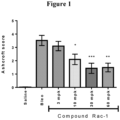
- FIG. 1 shows the Ashcroft score from histopathology analyses reflecting lung fibrosis comparing efficacy of Compounds 1, Rac-1, and Ent-1 in both prophylactic (Pro) and therapeutic (Ther) modes in the mouse bleomycin-induced model of lung fibrosis (*p ⁇ 0.05, **p ⁇ 0.01, ****p ⁇ 0.0001)
- Example B-10 Reversal of Established Lung Fibrosis (not part of the present invention):
- the mouse bleomycin-induced lung model is known to develop fibrosis gradually over the first 14 to 21 days but then will spontaneously resolve in younger mice over the next several weeks (Hecker et al., 2014).
- Compound 1 was orally administered starting on Day 14 after bleomycin with lungs harvested for histological analysis on Day 28. The extent of fibrosis remained constant from Day 14 to Day 28 in the vehicle-treated mice.
- Compound 1 decreased fibrosis with a 73% normalization of Ashcroft score ( Figure 3).
- Figure 3 shows the Ashcroft score from histopathology analyses reflecting lung fibrosis in a recovery 28-day study where Compound 1 was administered at 60 mg/kg starting on Day 14.
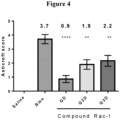
- Compound Rac-1 was orally administered at a dose of 60 mg/kg to bleomycin-induced mice prophylactically using different dosing paradigms. Efficacy of daily (QD) dosing was compared with that from every other day (Q2D) and every third day (Q3D) dosing with lungs harvested for histological assessment on Day 14. Regardless of dosing frequency, Compound Rac-1 reduced lung fibrosis with QD slightly more effective than Q2D or Q3D ( Figure 4 ).
- Figure 4 shows the Ashcroft score from histopathology analyses reflecting lung fibrosis in a prophylactic 14-day study comparing QD, Q2D and Q3D dosing of Compound Rac-1 in the mouse bleomycin-induced model of lung fibrosis (**p ⁇ 0.01; **** p ⁇ 0.0001).
- Example B-12 Comparison of Efficacy with anti-LOXL2 antibody in Lung Fibrosis (not part of the present invention):
- rAB0023 is a recombinant mouse hybrid antibody that has the heavy chain variable region of the anti-LOXL2 antibody, AB0023, cloned into a murine IgG2a backbone and the light chain variable region of AB0023 cloned into a murine IgG2 backbone.
- rAB0023 binds to LOXL2 with equal affinity to AB0023, an antibody that has demonstrated efficacy in various in vivo models including the mouse bleomycin-induced model of lung fibrosis ( Barry-Hamilton et al., Nat Med. 2010 Sep;16(9):1009-17 ).
- Compound 1 was orally administered prophylactically at a dose of 60 mg/kg/day starting on Day -1; rAB0023 was administered at 30 mg/kg intraperitoneally (IP) on Day -4, -1, 1, 4, 8 and 11 (bi-weekly) with lungs harvested for histological analysis on Day 14.
- IP intraperitoneally
- Compound 1 significantly reduced lung fibrosis in the mouse bleomycin model as evidenced by a reduction in Ashcroft score from a mean value of 3.1 to 0.8 ( Figure 5 ).
- the rAB0023 antibody showed trends towards reducing Ashcroft score (3.1 to 1.7), but the trends were not statistically significant.
- the results demonstrate that Compound 1 has efficacy better than rAB0023 in the mouse bleomycin-induced model of lung fibrosis.
- Figure 5 shows the Ashcroft score from histopathology analyses reflecting lung fibrosis in a prophylactic 14-day study comparing 60 mg/kg Compound 1 with 30 mg/kg rAB0023, an antibody to LOXL2.
- Example B-13 Combination with other Anti-Fibrotic Agents for Lung Fibrosis (not part of the present invention)
- LOXL2 inhibitors can be used in combination with other anti-fibrotic drugs for lung fibrosis. Pirfenidone and nintedanib are currently approved for treatment of lung fibrosis in patients with IPF. LOXL2 inhibitors are tested alone and in combination with pirfenidone in either prophylactic or therapeutic dosing modalities for 14-28 days. LOXL2 inhibitors are tested also alone and in combination with nintedanib in either prophylactic or therapeutic dosing modalities for 14-28 days. Fibrosis is measured using Ashcroft scoring or hydroxyproline concentration as described above. Combination therapy is advantageous when efficacy is greater than either agent alone or when the dose required for either drug is reduced thereby improving the side effect profile.
- Example B-14 Mouse Alport Model of Kidney Fibrosis (not part of the present invention)
- Compound 1 was administered orally to Col4A3 deficient mice on a 129/Sv background either prophylactically (ca. weeks 2-3 of age) or therapeutically (ca. weeks 4-6 wks of age). Mice were either sacrificed at a predefined time (7-9 wks of age) or continually dosed until they lost >15% of their body weight which precedes death by 1-3 days.
- mice were perfused transcardially with PBS, and one kidney clamped at the renal artery and the other perfused with Dynabeads for magnetic isolation of glomeruli.
- the other kidney was halved and a small sample of renal cortex fixed for transmission electron microscopic (TEM) analysis and a second sample of renal cortex used for RNA isolation.
- TEM transmission electron microscopic
- the other half of the bisected kidney was embedded in OCT for immunohistochemical analysis.
- RNA from glomeruli and renal cortex was analyzed by real time RT-PCR for genes of interest including MMP-10, MMP-12, IL6, MCP-1, TGF-b1, CTGF, MMP-2, and MMP-9.
- Immunohistochemical analysis included staining for collagen 1, CD45, fibronectin, smooth muscle actin, WT-1, and integrin alpha 8/laminin ⁇ 5. Collagen 1 staining was blindly analyzed for fibrosis scoring, and fibronectin staining was blindly analyzed for glomerulosclerosis scoring. For all studies albuminuria was assessed weekly and BUN at the time of tissue harvest.
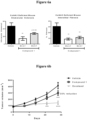
- Compound 1 improved both glomerular and interstitial fibrosis in the Col4A3 deficient mouse when administered orally at a dose of 30 mg/kg/day starting at 2 weeks of age ( Figure 6a ), a time when the kidneys are fairly normal in this model. Fibrosis was assessed at 7 weeks of age using blinded assessment of collagen and fibronectin immunohistochemistry. Compound 1 also improved fibrosis when dosing was initiated at 5 weeks of age, which can be considered a therapeutic intervention.
- Figure 6a shows Glomerular sclerosis (left) and interstitial fibrosis (right) scores reflecting kidney fibrosis in the Col4A3 deficient mouse model of Alport syndrome and chronic kidney disease. Samples were harvested at 7 weeks of age after oral administration of Compound 1 at 30 mg/kg starting at 2 weeks or 5 weeks of age (** p ⁇ 0.01).
- Example B-15 Combination with other Anti-Fibrotic Agents for Renal Fibrosis (not part of the present invention)
- LOXL2 inhibitors can be used in combination with other drugs for chronic kidney diseases including Alport syndrome.
- Angiotensin II converting enzyme (ACE) inhibitors and angiotensin receptor blockers (ARBs) are frequently used in renal disease patients.
- LOXL2 inhibitors are tested alone and in combination with ramipril (ACE inhibitor) or candesartan (ARB) in prophylactic starting at 2-3 weeks of age. If efficacious after prophylactic dosing, combination studies in therapeutic dosing modality (starting 4-6 weeks of age) will be run. Fibrosis is measured using histologically as described above and renal function is measured using proteinuria and/or serum BUN. Effects of combination therapy on survival are also measured as described above. Combination therapy is advantageous when efficacy is greater than either agent alone or when the dose required for either drug is reduced thereby improving the side effect profile.
- Example B-16 Mouse Orthotopic Breast Cancer Model (not part of the present invention)
- Compound 1 was evaluated in an orthotopic mouse model of human breast cancer. Tumor stocks were made by subcutaneously (s.c.) injecting MDA-MB-435-GFP cells at a concentration of 5 ⁇ 10 6 cells /100 ⁇ L into the flank of nude mice. When the s.c. tumors reach 50-100 mm 3 , tumors were harvested and cut into 1 mm 3 fragments. Two tumor fragments were transplanted into the mammary fat pad of each mouse. Compound 1 was administered orally at a dose of 60 mg/kg/day once the average primary tumor volume reached 100 mm 3 . Docetaxel was administered at 10 mg/kg intravenously once a week for 4 weeks as a positive control.
- Tumor size was calculated from a measurement of perpendicular minor dimension (W) and major dimension (L) using the formula (W2 x L)X 1 ⁇ 2 with W and L measured using a digital caliper. Mice were sacrificed after 4 weeks. Compound 1 attenuated tumor growth with a statistically significant 35% reduction in volume at 4 weeks.
- Figure 6b shows tumor volume in orthotopic human breast cancer model with MDA-MB-435-GFP cells implanted into mammary fat pads of nude mice. Tumor volumes were measured weekly for the 4 week study (*** p ⁇ 0.001, **** p ⁇ 0.0001).
- Example B-17 Mouse Subcutaneous Bleomycin Model of Skin and Lung Fibrosis (not part of the present invention)
- Skin and lung fibrosis is induced in female C57Bl/6 mice by administering bleomycin via subsutaneous injection to one (50-100 ⁇ g bleo/site) or two sites (50 ⁇ g bleo/site) on the backs of mice.
- bleomycin 100 ⁇ l, or PBS control
- mice are restrained and injected at the same location identified using an indelible marker.
- mice are either pretreated with vehicle or test compound (1 day to 1 hour) orally, intraperitoneally, intravenously or subcutaneously before bleomycin injection (prophylactic dosing) or 7-14 days post bleomycin injection (therapeutic dosing). Animals are euthanized at study termination and weighed and blood (for isolation of plasma) and bronchoalveolar lavage are collected and frozen for subsequent analyses. Lungs are either removed, weighed, then homogenized in PBS for determination of collagen content using a hydroxyproline assay or inflated and fixed by instillation of 10% formalin and prepared for histological examination by trichrome or picrosirius red staining.
- Skin biopsies are taken from each injection site using a 6 mm dermal punch biopsy (Acuderm).
- One punch biopsy is sandwiched in a cassette with a sponge, placed in formalin and prepared for histological examination by H&E, trichrome and/or picrosirius red histologic staining.
- the other punch biopsy is placed in 0.5 ml PBS and minced using fine scissors. 500 ⁇ L 12 N HCl is then added and the samples heated at 120°C overnight.
- Example B-18 Rat/Mouse CCl 4 Model of Liver Fibrosis (not part of the present invention)
- Liver fibrosis is induced in mice (Balb/c or C57Bl/6) by intraperitoneal administration of CCl 4 (0.5-2 ml/kg body weight) diluted in corn oil twice weekly for 4-8 weeks or by oral administration two-three times weekly using an escalating dose protocol ( Popov et al. 2011 Gastroenetrology; 140(5): 1642-1652 .). Liver fibrosis is induced in rats by either intraperitoneal administration (1-2.5 ml/kg) or by oral administration in oil (mineral, olive or corn) twice weekly for 6-12 weeks.
- LOXL2 inhibitors are delivered orally, intraperitoneally, intravenously or subcutaneously 1 day to 1 hour prior to the initial CCl 4 dosing (prophylactic dosing) or 1-4 weeks after the initial CCl 4 dosing (therapeutic dosing).
- mice are sacrificed by opening the chest cavity under isoflurane, blood is drawn via cardiac puncture into EDTA vacutainer tubes and the liver is harvested. Part of the liver is fixed in 10% neutral buffered formalin for subsequent histopathological analysis of inflammation and fibrosis by H&E staining and Picrosirius red staining. The remaining tissue is snap frozen at -80 °C for subseuquent hydroxyproline analysis of total collagen content.
- Example B-19 Mouse Mdr2 Knockout Model of Biliary Fibrosis (not part of the present invention)
- Liver disease develops in the BALB/c.
- Mdr2- / - mouse model with bridging fibrosis/early cirrhosis between 8 and 12 weeks of age ( Ikenaga et al. 2015 Am J Pathology, 185: 325-334 ).
- Compound 1 was delivered orally at a dose of 30 and 60 mg/kg/day, into BALB/c.
- Mdr2- / - mice once daily for 6 weeks beginning at week 6 after birth.
- mice were anesthetized with isoflurane (1.5% v/v) via precise vaporizer.
- portal pressure was measured directly by inserting a high-fidelity pressure catheter into the portal vein and measuring pressure signals for 5 minutes.
- Serum was collected for analysis of liver (ALT, AST, ALP, and bilirubin) and kidney (creatinine) biochemistries.
- liver ALT, AST, ALP, and bilirubin
- kidney creatinine
- Collagen area fraction was measured from picrosirius red stained images using an algorithm that separates the red stained collagen from non-specific staining through color subtraction and thresholding of the processed image. Sections were analyzed in random order using the same threshold value for each set. Data were deconvolved after analysis to identify group assignment.
- Collagen content was determined from a portion of the liver tissue using hydroxyproline analysis.
- Compound 1 reduced liver fibrosis, as measured by changes in picrosirius red staining, when dosed at either 30 or 60 mg/kg QD starting at 6 weeks of age and continuing through 12 weeks of age. Both dose levels demonstrated similar reduction in fibrotic area of the liver. Treatment with rAB0023, while showing trends towards reducing fibrosis did not result in a statistically significant improvement.
- Figure 7 shows the quantitation of the fibrosis area as stained by picrosirius red staining (** p ⁇ 0.01 using a 1-way ANOVA followed by Dunnett's test vs. Vehicle-treated mice).
- Example B-20 Thioacetamide (TAA) model of Liver Fibrosis in mouse (not part of the present invention)
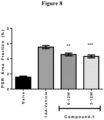
- Liver fibrosis was induced in male C57Bl/6 mice by intraperitoneal injection of thioacetamide (TAA) at a dose of 200 mg/kg 3x/week. Compound 1 was administered orally at a dose of 30 mg/kg QD with treatment starting 3 or 6 weeks after initiation of TAA administration. Liver fibrosis was studied 12 weeks after initiation of TAA. At the end of the study, mice were sacrificed by performing a laparotomy under isoflurane, blood was drawn via cardiac puncture into EDTA vacutainer tubes and the liver was harvested. Part of the liver was fixed in 10% neutral buffered formalin for subsequent histopathological analysis of inflammation and fibrosis by H&E staining and picrosirius red staining.
- TAA thioacetamide
- liver biochemistries ALT, AST, ALP, and bilirubin
- Compound 1 reduced liver fibrosis, as measured by changes in picrosirius red staining, when dosed at 30 mg/kg/day starting at either 3 or 6 weeks after initiation of TAA.
- the reduction in fibrosis at 12 weeks of TAA treatment was greater when dosing was initiated at 3 weeks suggesting it may be better to treat fibrosis at an earlier stage.
- Figure 8 shows the quantitation of the fibrosis area as stained by picrosirius red staining. (**, *** p ⁇ 0.01, p ⁇ 0.001, respectively, using a 1-way ANOVA followed by Dunnett's test vs. TAA-Vehicle-treated mice).
- Example B-21 Diet-induced Model of Nonalcoholic Steatohepatitis (NASH) (not part of the present invention)
- NASH Nonalcoholic Steatohepatitis
- a nonalcoholic steatohepatitis (NASH) phenotype is induced by feeding male C57Bl/6J mice the AMI,N diet (D09100301, Research Diet, US) (40% fat (18% trans-fat), 40 % carbohydrates (20% fructose) and 2% cholesterol) for 26-35 weeks prior to study start and during study period.
- Mice are subjected to a liver biopsy under anesthesia and mice with notable steatosis and fibrosis are recruited into an efficacy study.
- LOXL2 inhibitors are administered orally, intraperitoneally, intravenously or subcutaneously at 30-100 mg/kg/day for 12 weeks.
- mice are sacrificed by opening the chest cavity under isoflurane, blood is drawn via cardiac puncture into EDTA vacutainer tubes and the liver is harvested. Part of the liver is fixed in 10% neutral buffered formalin for subsequent histopathological analysis of inflammation and fibrosis by H&E, trichrome or picrosirius red staining. The remaining tissue is snap frozen at -80°C for subsequent hydroxyproline analysis of total collagen content, total cholesterol, liver triglyceride and mRNA analyses.
- Example B-22 Mouse model of NASH induced through a choline deficient, amino-acid defined (CDAA) diet supplemented with high fat content (not part of the present invention)
- Liver fibrosis is induced by feeding C57Bl/6 mice a choline-deficient L-amino acid-defined high-fat diet (CDAAHFD) containing 60% kcal% fat and 0.1% methionine (Research Diets C/N A06071302) starting at 6 weeks of age. Once on diet for 4-6 weeks of age, mice are screened for those with deteriorating liver function and those with elevated bilirubin levels excluded. Remaining mice are assigned to groups and dosing initiated. LOXL2 inhibitors are administered orally, intraperitoneally, intravenously or subcutaneously at 30-100 mg/kg/day for an additional 8-12 weeks.
- CDAAHFD choline-deficient L-amino acid-defined high-fat diet
- methionine Research Diets C/N A06071302
- mice are sacrificed by opening the chest cavity under isoflurane, blood is drawn via cardiac puncture into EDTA vacutainer tubes and the liver is harvested. Part of the liver is fixed in 10% neutral buffered formalin for subsequent histopathological analysis of inflammation and fibrosis by H&E, trichrome and/or Picrosirius red staining. The remaining tissue is snap frozen at -80°C for subsequent hydroxyproline analysis of total collagen content, total cholesterol, liver triglyceride and/or mRNA analyses.
- Example B-23 Combination Studies in Liver Fibrosis and NASH (not part of the present invention)
- LOXL2 inhibitors can be used in combination with other drugs for liver fibrosis and NASH.
- ASK1 inhibitors are currently under investigation in the clinic in multiple fibrotic indications and demonstrate efficacy in rodent models of liver fibrosis.
- LOXL2 inhibitors are tested alone and in combination with ASK1 inhibitors in models of liver fibrosis described above including the TAA and CDAA-HFD models.
- JNK1 is a pro-fibrotic kinase downstream of ASK1 with inhibitors that demonstrate anti-fibrotic efficacy in rodent models. Inhibitors of JNK1 are under investigation clinically for IPF.
- LOXL2 inhibitors are tested alone and in combination with JNK1 inhibitors in models of liver fibrosis described above including the TAA and CDAA-HFD models. Additional combinations include LOXL2 inhibitors with FXR agonists (OCA), PPAR ⁇ / ⁇ / ⁇ agonists and antagonists (GFT505); CCR2/5 dual antagonist (Cenicriviroc); drugs that target Galectin-3 (GR-MD-02), ACC-inhibitors (NDI-010976). Efficacy is assessed using either prophylactic dosing or therapeutic dosing modality (starting 4-6 weeks of age). Fibrosis is measured using histologically as described above and liver function is measured using liver enzymes. Combination therapy is advantageous when efficacy is greater than either agent alone or when the dose required for either drug is reduced thereby improving the side effect profile.
- Example B-24 Laser-induced choroidal neovascularization in the eyes of mice (not part of the present invention)
- CNV Laser-induced choroidal neovascularization
- C57Bl/6 mice are anesthetized using ketamine/xylazine cocktail and their pupils dilated with tropicamide.
- Laser burns are induced in multiple locations around the optical disk using a green laser in a slit lamp delivery system.
- Lubricating eye drops are applied between each spot and animals monitored for signs of pain and distress.
- One eye of each animal is subjected to laser treatment and the contralateral eye serves as a non-injured control.
- mice are subjected to CO 2 asphyxiation and cervical dislocation.
- Eyes are enucleated and fixed overnight in 1% paraformaldehyde or 10% formalin and embedded in paraffin. Histologic sections are stained for multiple parameters including standard H&E stains, trichrome or picrosirus red stain and various immunohistochemistry stains: i.e. anti-CD31 for blood vessels, anti-fibrillary acidic protein for glial cells, anti-CD45 for inflammatory cell infiltrate.
- angiogenesis and vascular integrity are assessed using retrobulbar perfusion with FITC-labeled dextran for 2 min; the RPE-choiroid/sclera complexes are dissected and flatmounted on a slide to analyze fluorescences and vascular area.
- LOXL2 inhibitors are administered orally, intraperitoneally, intravenously, subcutaneously at 30-100 mg/kg/day or injected intravitreally or topically to the eye in solution.
- the effects of LOXL2 inhibitor compound will be examined in an FLS invasion study.
- the FLS invasion study is a two-chamber model where cells invade through Matrigel. This in vitro assay correlates with joint damage in vivo (Tolboom TC, et al. Invasiveness of fibroblast-like synoviocytes is an individual patient characteristic associated with the rate of joint destruction in patients with rheumatoid arthritis. Arthritis Rheum 52: 1999-2002 (2005 )).
- FLS cell lines (RA and rodent FLS cell lines) are placed on the upper chamber. Over a 24 hour period cells invade through the Matrigel layer then go through pores at the base of the upper chamber. The bottom of the upper chamber is stained and cells counted.
- the FLS cell lines are pre-treated with increasing concentrations of LOXL2 inhibitor compound.
- the cell lines are pretreated with LOXL2 inhibitor compound for about 1-2 hours to allow for efficient binding by the compound and then placed in the upper chamber over the Matrigel layer.
- Example B-26 Collagen-induced arthritis (CIA) model system (not part of the present invention)
- the effect of LOXL2 inhibitors on development of collagen-induced arthritis in a mouse model system is assessed.
- the DBA/1 mouse strain is used, as it is highly susceptible to CIA.
- all animals are subjected to an intradermal injection into the tail of 200 ⁇ g of collagen in 0.1 ml of a Type II collagen/Complete Freund's Adjuvant (CFA) emulsion.
- CFA Type II collagen/Complete Freund's Adjuvant
- Group 1 is a vehicle control group.
- the animals in this group receive 10 ml/kg of vehicle (0.5% methylcellulose), orally (PO), once daily, from Day 16.
- Animals in Group 2 a positive control group, receive 0.05 mg/kg dexamethasone at 10 ml/kg, PO, once daily from Day 16.
- Animals in Group 3 receive 0.5-60 mg/kg LOXL2 inhibitor compound, once or twice per day from Day 16. The study is terminated on Day 35 and all remaining animals are bled to exansanguination under isofluorane followed by cervical dislocation.
- mice are examined for signs of arthritogenic responses in peripheral joints on Days 0 and 16, and thereafter daily until conclusion of the study. Arthritic reactions are graded, for each paw, on an ascending scale of severity, as follows:
- Clinical examinations are carried out on Day 0, Day 16 and daily thereafter. Observations include changes in skin, fur, eyes, mucous membranes, occurrence of secretions and excretions (e.g., diarrhea) and autonomic activity (e.g., lachrymation, salivation, piloerection, pupil size, and unusual respiratory pattern). Changes in gait, posture, and response to handling, as well as playful behaviors, tremors, convulsions, sleep and coma are also noted.
- secretions and excretions e.g., diarrhea
- autonomic activity e.g., lachrymation, salivation, piloerection, pupil size, and unusual respiratory pattern. Changes in gait, posture, and response to handling, as well as playful behaviors, tremors, convulsions, sleep and coma are also noted.
- the thicknesses of both hind paws are measured on Day 0, Day 16, and daily thereafter.
- Left and right paws are measured dorso-ventrally just above the toes and below the calcaneum, using a dial caliper (Kroeplin, Kunststoff, Germany).
- Evaluation of data is based primarily on comparison of the mean group values for arthritis scores, body weight, and paw thickness measurements (all as described above) by ANOVA followed by Tukey post-hoc analysis (Winsat 2005.1 for Excel).
- Example B-27 Clinical Trial for Pulmonary Fibrosis (not part of the present invention)
- Intervention Patients are administered 100-2000 mg of Compound I, or a pharmaceutically acceptable salt or solvate thereof, per day as single agent or in combination.
- Progression-free survival defined as free of death or a decrease from baseline in the FVC of at least 10%.
- Eligibility Male and female subjects that are 40 years to 80 years.
- Inclusion Criteria Clinical symptoms of IPF for at least 3 months; forced vital capacity (FVC) between 50 to 90% of the predicted value; DLco at least 35% of the predicted value; PaO2 > 55 mm Hg while breathing ambient air at rest; High-resolution computed tomography (HRCT) showing definite or probable criteria of IPF.
- FVC forced vital capacity
- HRCT High-resolution computed tomography
- Exclusion Criteria Clinically significant exposure to known fibrogenic agents (birds, molds, asbestos, radiation and drugs known to cause pulmonary fibrosis (amiodarone, nitrofurantoin, bleomicin, etc)); history of neurofibromatosis, Hermansky-Pudlak syndrome, metabolic storage disorders, etc.; history of fever, weight loss, myalgias, arthralgias, skin rash, arthritis; active infection within one week before enrollment; alternative cause of interstitial lung disease; ratio of the forced expiratory volume in one second (VEF1) to FVC of less than 0.6 after the use of a bronchodilator; residual volume more than 120% of the predicted value (when available); more than 20% of lymphocytes or eosinophils in bronchoalveolar lavage (BAL) (when available); granulomas, infection or malignancy in the transbronchial or surgical biopsy (when available); previous therapy with azathioprine, prednisolone (>0.5 mg
- Example B-28 Clinical Trial for Liver Fibrosis (not part of the present invention)
- liver fibrosis clinical trial in humans is described below.
- Intervention Patients are administered 100-2000 mg of Compound I, or a pharmaceutically acceptable salt or solvate thereof, per day as single agent or in combination.
- liver biopsy Liver enzymes (ALT, AST, ALP), liver biopsy
- Pharmacodynamic markers may include: Tissue PD markers through mRNA expression, autotaxin, LOXL2, LOX, Other LOXI, proteins, ⁇ SMA, Collagen 1A1, NF- ⁇ B1, Caspase 1, SMAD, and NOD; Serum and plasma PD markers include: AST-to-platelet ratio index (APRI), autotaxin activity, concentrations of LOXL2, Osteopontin, Hyaluronic Acid, CXCL 9, 10 and 11, MMP1, MMP3, MMP9, TIMP1, CD40L, TGF- ⁇ 1, ET-1, VEGF, GAL3, IL-6 / IL-8 / TNF ⁇ / IFN ⁇ , ⁇ 2-macroglobulin, Apolipoprotein A1, PINP, PIIINP, PVCP-1230, PDGF; Assessing the effects of chronic dosing on liver structure and fibrotic markers; incidence of adverse events resulting from the administration of multiple doses of compound.
- APRI AST-to-platelet ratio
- Eligibility Male and female subjects that are 18 to 60 years old.
- Inclusion Criteria Stage 1-3 fibrosis by Metavir score on a liver biopsy; Body mass index ⁇ 36 kg/m2.
- Exclusion Criteria Any evidence of hepatic decompensation past or present; subjects currently abusing amphetamines, cocaine, opiates, or alcohol; clinically significant cardiac disease; history of cancer, other than non-melanomatous skin cancer, within 5 years prior to screening; systemic fungal, bacterial, viral, or other infection that is not controlled; use of systemic immunosuppressants within 28 days of the Pre-treatment Phase; use of approved therapy for hepatitis C or hepatitis B virus within 28 days of the Pre-treatment Phase; pregnant or lactating; history of bleeding diathesis within the last 6 months of study Day 1.
- Example B-29 Clinical Trial for Fatty Liver Disease /Steatosis (NAFLD, NASH) (not part of the present invention)
- Intervention Patients are administered 10-2000 mg of Compound I, or a pharmaceutically acceptable salt or solvate thereof, per day as single agent or in combination.
- Eligibility Male and female subjects that are 21 to 80 years old.
- Inclusion Criteria Patients with clinically confirmed diagnosis of non-alcohol fatty liver disease or non-alcohol steatohepatitis; histologic evidence of definite or probable nonalcoholic steatohepatitis (NASH) based upon a liver biopsy obtained no more than 90 days prior to randomization and a nonalcoholic fatty liver disease activity score (NAS) of 4 or greater.
- NASH nonalcoholic steatohepatitis
- NAFLD nonalcoholic fatty liver disease
- drugs historically associated with nonalcoholic fatty liver disease amiodarone, methotrexate, systemic glucocorticoids, tetracyclines, tamoxifen, estrogens at doses greater than those used for hormone replacement, anabolic steroids, valproic acid, and other known hepatotoxins
- bariatric surgery e.g., gastroplasty, roux-en-Y gastric bypass
- uncontrolled diabetes defined as Hemoglobin A1c 9.5% or higher within 60 days prior to enrollment, presence of cirrhosis on liver biopsy, platelet count below 100,000/mm3
- Clinical evidence of hepatic decompensation as defined by the presence of any of the following abnormalities: serum albumin less than 3.2 grams/deciliter (g/dL), INR(international normalized ratio) greater than 1.3, direct bilirubin greater than 1.3
- liver function tests liver biopsy, NAS score
- fibrotic biomarkers liver imaging (ultrasound, MRI), insulin resistance as measure by HOMA-IR, lipid panel.
- Example B-30 Clinical Trial for Pancreatic Cancer (not part of the present invention)
- pancreatic cancer clinical trial in humans A non-limiting example of a pancreatic cancer clinical trial in humans is described below.
- Purpose The purposes of this study are to assess the efficacy of Compound I, or a pharmaceutically acceptable salt or solvate thereof, as single agent or in combination, in the treatment of patients with pancreatic cancer, collect information on any side effects the compound may cause as single agent or in combination, and evaluate the pharmacokinetic properties of the compound as single agent or in combination.
- Intervention Patients are administered 100-2000 mg of Compound I, or a pharmaceutically acceptable salt or solvate thereof, per day as single agent or in combination.
- Eligibility Male and female subjects that are 21 to 80 years old with advanced pancreatic cancer.
- Inclusion Criteria Radiographic or clinical evidence of measurable advanced pancreatic carcinoma (Stage II, II, IV). Subjects must have measurable disease at least 2 cm in diameter. ECOG performance status of 0 or 1
- Example B-31 Clinical Trial for Hepatocellular Carcinoma (HCC) (not part of the present invention)
- Intervention Patients are administered 100-2000 mg of Compound I, or a pharmaceutically acceptable salt or solvate thereof, per day as single agent or in combination.
- Eligibility Male and female subjects that are 21 to 80 years old.
- Inclusion Criteria Patients with histopathologically or clinically confirmed diagnosis of hepatocellular carcinoma; unresponsive to standard therapy or for whom standard therapy is intolerable, or for whom there is no appropriate therapy; ECOG performance status score of 0-2.
- Exclusion Criteria Patients with a primary malignant tumor; history of liver transplant; brain metastases; psychiatric disorder that might cause difficulty in obtaining informed consent or in conducting the trial; Not pregnant or nursing; Fertile patients must use effective contraception during and for ⁇ 3 months after completion of study treatment; No other malignancy within the past 5 years except for in situ cancers or basal cell or squamous cell carcinoma of the skin; No hypersensitivity or intolerance to statins; no other non-malignant systemic disease that would preclude rosuvastatin administration or prolonged follow-up.
Landscapes
- Health & Medical Sciences (AREA)
- Chemical & Material Sciences (AREA)
- Veterinary Medicine (AREA)
- Public Health (AREA)
- General Health & Medical Sciences (AREA)
- Animal Behavior & Ethology (AREA)
- Life Sciences & Earth Sciences (AREA)
- Medicinal Chemistry (AREA)
- Pharmacology & Pharmacy (AREA)
- Organic Chemistry (AREA)
- Nuclear Medicine, Radiotherapy & Molecular Imaging (AREA)
- General Chemical & Material Sciences (AREA)
- Chemical Kinetics & Catalysis (AREA)
- Bioinformatics & Cheminformatics (AREA)
- Engineering & Computer Science (AREA)
- Epidemiology (AREA)
- Immunology (AREA)
- Rheumatology (AREA)
- Physical Education & Sports Medicine (AREA)
- Urology & Nephrology (AREA)
- Gastroenterology & Hepatology (AREA)
- Pain & Pain Management (AREA)
- Ophthalmology & Optometry (AREA)
- Orthopedic Medicine & Surgery (AREA)
- Pulmonology (AREA)
- Dermatology (AREA)
- Cardiology (AREA)
- Heart & Thoracic Surgery (AREA)
- Pharmaceuticals Containing Other Organic And Inorganic Compounds (AREA)
- Medicines That Contain Protein Lipid Enzymes And Other Medicines (AREA)
- Medicines Containing Antibodies Or Antigens For Use As Internal Diagnostic Agents (AREA)
- Acyclic And Carbocyclic Compounds In Medicinal Compositions (AREA)
- Pyrrole Compounds (AREA)
Priority Applications (2)
| Application Number | Priority Date | Filing Date | Title |
|---|---|---|---|
| EP24171603.4A EP4385571B1 (en) | 2016-09-07 | 2017-09-06 | A lysyl oxidase-like 2 inhibitor for use in treating primary myelofibrosis |
| EP22168167.9A EP4052707A1 (en) | 2016-09-07 | 2017-09-06 | Uses of a lysyl oxidase-like 2 inhibitor |
Applications Claiming Priority (3)
| Application Number | Priority Date | Filing Date | Title |
|---|---|---|---|
| US201662384542P | 2016-09-07 | 2016-09-07 | |
| US201762509460P | 2017-05-22 | 2017-05-22 | |
| PCT/US2017/050331 WO2018048942A1 (en) | 2016-09-07 | 2017-09-06 | Uses of a lysyl oxidase-like 2 inhibitor |
Related Child Applications (4)
| Application Number | Title | Priority Date | Filing Date |
|---|---|---|---|
| EP24171603.4A Division EP4385571B1 (en) | 2016-09-07 | 2017-09-06 | A lysyl oxidase-like 2 inhibitor for use in treating primary myelofibrosis |
| EP24171603.4A Division-Into EP4385571B1 (en) | 2016-09-07 | 2017-09-06 | A lysyl oxidase-like 2 inhibitor for use in treating primary myelofibrosis |
| EP22168167.9A Division EP4052707A1 (en) | 2016-09-07 | 2017-09-06 | Uses of a lysyl oxidase-like 2 inhibitor |
| EP22168167.9A Division-Into EP4052707A1 (en) | 2016-09-07 | 2017-09-06 | Uses of a lysyl oxidase-like 2 inhibitor |
Publications (4)
| Publication Number | Publication Date |
|---|---|
| EP3509594A1 EP3509594A1 (en) | 2019-07-17 |
| EP3509594A4 EP3509594A4 (en) | 2020-05-06 |
| EP3509594C0 EP3509594C0 (en) | 2025-02-26 |
| EP3509594B1 true EP3509594B1 (en) | 2025-02-26 |
Family
ID=61561650
Family Applications (3)
| Application Number | Title | Priority Date | Filing Date |
|---|---|---|---|
| EP17849478.7A Active EP3509594B1 (en) | 2016-09-07 | 2017-09-06 | A lysyl oxidase-like 2 inhibitor for use in treating myelofibrosis |
| EP24171603.4A Active EP4385571B1 (en) | 2016-09-07 | 2017-09-06 | A lysyl oxidase-like 2 inhibitor for use in treating primary myelofibrosis |
| EP22168167.9A Pending EP4052707A1 (en) | 2016-09-07 | 2017-09-06 | Uses of a lysyl oxidase-like 2 inhibitor |
Family Applications After (2)
| Application Number | Title | Priority Date | Filing Date |
|---|---|---|---|
| EP24171603.4A Active EP4385571B1 (en) | 2016-09-07 | 2017-09-06 | A lysyl oxidase-like 2 inhibitor for use in treating primary myelofibrosis |
| EP22168167.9A Pending EP4052707A1 (en) | 2016-09-07 | 2017-09-06 | Uses of a lysyl oxidase-like 2 inhibitor |
Country Status (13)
| Country | Link |
|---|---|
| US (3) | US11793797B2 (enExample) |
| EP (3) | EP3509594B1 (enExample) |
| JP (1) | JP7097874B2 (enExample) |
| KR (2) | KR20230162996A (enExample) |
| CN (2) | CN109922803B (enExample) |
| AU (1) | AU2017324444A1 (enExample) |
| BR (1) | BR112019004513A2 (enExample) |
| CA (1) | CA3036062A1 (enExample) |
| ES (1) | ES3015717T3 (enExample) |
| IL (1) | IL265232A (enExample) |
| MA (1) | MA46203A (enExample) |
| MX (1) | MX2019002612A (enExample) |
| WO (1) | WO2018048942A1 (enExample) |
Families Citing this family (14)
| Publication number | Priority date | Publication date | Assignee | Title |
|---|---|---|---|---|
| US10766860B2 (en) * | 2015-03-06 | 2020-09-08 | Pharmakea, Inc. | Lysyl oxidase-like 2 inhibitors and uses thereof |
| MX376835B (es) | 2015-03-06 | 2025-03-07 | Pharmakea Inc | Inhibidores de lisil oxidasa tipo 2 fluorinados y usos de los mismos. |
| AU2017218889A1 (en) | 2016-02-09 | 2018-08-30 | Pharmakea, Inc. | Quinolinone lysyl oxidase-like 2 inhibitors and uses thereof |
| SG11201901999XA (en) | 2016-09-07 | 2019-04-29 | Pharmakea Inc | Crystalline forms of a lysyl oxidase-like 2 inhibitor and methods of making |
| KR20230162996A (ko) | 2016-09-07 | 2023-11-29 | 파마케아, 인크. | 리실 옥시다제 유사 2 억제제의 용도 |
| WO2019178329A1 (en) * | 2018-03-16 | 2019-09-19 | The Regents Of The University Of Michigan | Compositions and methods for treating graves disease |
| CN112441916A (zh) * | 2019-08-29 | 2021-03-05 | 广东药科大学 | 新型苯乙酸衍生物、其制备方法及其作为药物的用途 |
| JP2022548725A (ja) * | 2019-09-20 | 2022-11-21 | レネオ ファーマシューティカルズ,インク. | 腎臓病の治療におけるpparデルタアゴニストの使用 |
| US20230001017A1 (en) * | 2019-10-28 | 2023-01-05 | University Of Lowa Research Foundation | Formulation for delivery of lubricin gene |
| CN110714016B (zh) * | 2019-11-29 | 2021-08-20 | 长沙学院 | Jnk基因及其作为鱼类细菌性肠炎诊断分子标记物和治疗靶点的应用 |
| CN112662763A (zh) * | 2020-03-10 | 2021-04-16 | 博尔诚(北京)科技有限公司 | 一种检测常见两性癌症的探针组合物 |
| JP7765474B2 (ja) * | 2020-12-03 | 2025-11-06 | デルタ 4 ゲーエムベーハー | 巣状分節性糸球体硬化症(fsgs)の治療における使用のためのサログリタザールおよびミリスチン酸 |
| CN115590851B (zh) * | 2021-07-12 | 2023-12-29 | 兰州大学 | 4-(4-二乙氨基-1-甲基丁氨基)-7-氯喹啉衍生物在制备治疗肥胖药物中的应用 |
| WO2023196963A1 (en) * | 2022-04-08 | 2023-10-12 | The Regents Of The University Of California | Combination metabolic-epigenetic treatment for early lung cancer |
Family Cites Families (66)
| Publication number | Priority date | Publication date | Assignee | Title |
|---|---|---|---|---|
| US4229447A (en) | 1979-06-04 | 1980-10-21 | American Home Products Corporation | Intraoral methods of using benzodiazepines |
| IE56702B1 (en) | 1982-12-01 | 1991-11-06 | Usv Pharma Corp | Antiinflammatory antiallergic compounds |
| US4596795A (en) | 1984-04-25 | 1986-06-24 | The United States Of America As Represented By The Secretary, Dept. Of Health & Human Services | Administration of sex hormones in the form of hydrophilic cyclodextrin derivatives |
| US4755386A (en) | 1986-01-22 | 1988-07-05 | Schering Corporation | Buccal formulation |
| US5021456A (en) | 1988-02-25 | 1991-06-04 | Merrell Dow Pharmaceuticals Inc. | Inhibitors of lysyl oxidase |
| US5739136A (en) | 1989-10-17 | 1998-04-14 | Ellinwood, Jr.; Everett H. | Intraoral dosing method of administering medicaments |
| US5250532A (en) | 1991-04-11 | 1993-10-05 | Dowelanco | 3,4,N-trisubstituted-4,5-dihydro-1H-pyrazole-1-carboxamides and their use as insecticides |
| US5563143A (en) | 1994-09-21 | 1996-10-08 | Pfizer Inc. | Catechol diether compounds as inhibitors of TNF release |
| US5691364A (en) | 1995-03-10 | 1997-11-25 | Berlex Laboratories, Inc. | Benzamidine derivatives and their use as anti-coagulants |
| US6956047B1 (en) | 1995-06-06 | 2005-10-18 | Pfizer Inc. | Corticotropin releasing factor antagonists |
| US7125880B1 (en) | 1995-06-06 | 2006-10-24 | Pfizer Inc. | Corticotropin releasing factor antagonists |
| US6632823B1 (en) | 1997-12-22 | 2003-10-14 | Merck & Co., Inc. | Substituted pyridine compounds useful as modulators of acetylcholine receptors |
| CA2397633A1 (en) | 2000-01-18 | 2001-07-26 | Pfizer Products Inc. | Corticotropin releasing factor antagonists |
| US6878714B2 (en) | 2001-01-12 | 2005-04-12 | Amgen Inc. | Substituted alkylamine derivatives and methods of use |
| US7105682B2 (en) | 2001-01-12 | 2006-09-12 | Amgen Inc. | Substituted amine derivatives and methods of use |
| US20030134836A1 (en) | 2001-01-12 | 2003-07-17 | Amgen Inc. | Substituted arylamine derivatives and methods of use |
| US20020147198A1 (en) | 2001-01-12 | 2002-10-10 | Guoqing Chen | Substituted arylamine derivatives and methods of use |
| US7102009B2 (en) | 2001-01-12 | 2006-09-05 | Amgen Inc. | Substituted amine derivatives and methods of use |
| US6995162B2 (en) | 2001-01-12 | 2006-02-07 | Amgen Inc. | Substituted alkylamine derivatives and methods of use |
| TWI319387B (en) | 2002-04-05 | 2010-01-11 | Astrazeneca Ab | Benzamide derivatives |
| US7307088B2 (en) | 2002-07-09 | 2007-12-11 | Amgen Inc. | Substituted anthranilic amide derivatives and methods of use |
| FI20030030A0 (fi) | 2003-01-09 | 2003-01-09 | Orion Corp | Uusia yhdisteitä |
| AU2004240649A1 (en) | 2003-05-19 | 2004-12-02 | Irm, Llc | Immunosuppressant compounds and compositions |
| BRPI0507250A (pt) | 2004-01-29 | 2007-06-26 | Pfizer Prod Inc | combinações para tratar desordens do snc |
| US7381750B2 (en) | 2004-03-12 | 2008-06-03 | Eli Lilly And Company | Amino-phenoxymethyl-benzamide opioid receptor antagonists |
| US7378448B2 (en) | 2004-03-15 | 2008-05-27 | Eli Lilly And Company | Diphenylether amide derivatives as opioid receptor antagonists |
| MXPA06012333A (es) | 2004-04-30 | 2007-01-17 | Takeda Pharmaceutical | Compuesto de amida heterociclico y uso del mismo como un inhibidor mmp-13. |
| US7507748B2 (en) | 2004-07-22 | 2009-03-24 | Amgen Inc. | Substituted aryl-amine derivatives and methods of use |
| CA2580042A1 (en) | 2004-09-10 | 2006-03-16 | Pfizer Products Inc. | Methods of treating cognitive disorders using pyridyloxymethyl and benzisoxazole azabicyclic derivatives |
| JP2008512440A (ja) | 2004-09-10 | 2008-04-24 | ファイザー・プロダクツ・インク | ジアザビシクロ化合物含有ベンゾイソオキサゾールを用いる気分障害の治療方法 |
| EP1807417A2 (en) | 2004-11-04 | 2007-07-18 | Neurogen Corporation | Pyrazolylmethyl heteroaryl derivatives |
| DE102004056226A1 (de) | 2004-11-22 | 2006-05-24 | Burchardt, Elmar Reinhold, Dr.Dr. | Neuartige Inhibitoren der Lysyloxidase |
| JP2008528628A (ja) | 2005-01-31 | 2008-07-31 | メルク エンド カムパニー インコーポレーテッド | 抗糖尿病性二環式化合物 |
| AR055041A1 (es) | 2005-03-23 | 2007-08-01 | Merck Frosst Canada Ltd | Tiadiazoles y oxadiazoles como inhibidores de la sintesis de leucotrienos. composiciones farmaceuticas. |
| CA2618586A1 (en) | 2005-08-11 | 2007-02-15 | Merck Frosst Canada Ltd. | Novel substituted 1,2,3-triazolylmethyl-benzothiophene or -indole and their use as leukotriene biosynthesis inhibitors |
| US7405302B2 (en) | 2005-10-11 | 2008-07-29 | Amira Pharmaceuticals, Inc. | 5-lipoxygenase-activating protein (FLAP) inhibitors |
| ITMI20051943A1 (it) | 2005-10-14 | 2007-04-15 | Procos Spa | Processo di risoluzione anantiomerica di 2-aminometil-pirrolidine 1-sostitute per ammidazione in presenza di lipasi |
| US20070225285A1 (en) | 2005-11-04 | 2007-09-27 | Amira Pharmaceuticals, Inc. | 5-lipoxygenase-activating protein (flap) inhibitors |
| US20070219206A1 (en) | 2005-11-04 | 2007-09-20 | Amira Pharmaceuticals, Inc. | 5-lipoxygenase-activating protein (flap) inhibitors |
| US7977359B2 (en) | 2005-11-04 | 2011-07-12 | Amira Pharmaceuticals, Inc. | 5-lipdxygenase-activating protein (FLAP) inhibitors |
| CA2636043A1 (en) | 2006-01-23 | 2007-08-02 | Amira Pharmaceuticals, Inc. | Tricyclic inhibitors of 5-lipoxygenase |
| GB0614579D0 (en) | 2006-07-21 | 2006-08-30 | Black James Foundation | Pyrimidine derivatives |
| JP2010501553A (ja) | 2006-08-18 | 2010-01-21 | アストラゼネカ アクチボラグ | Mchr1アンタゴニストとしてのチエノピリミジン−4−オン誘導体およびチエノピリダジン−7−オン誘導体 |
| US20100074897A1 (en) * | 2006-12-01 | 2010-03-25 | University Of Utah Research Foundation | Methods and Compositions related to HIF-1 alpha |
| IL184627A0 (en) | 2007-07-15 | 2008-12-29 | Technion Res & Dev Foundation | Agents for diagnosing and modulating metastasis and fibrosis as well as inflammation in a mammalian tissue |
| CA2693310C (en) | 2007-08-02 | 2018-11-27 | Arresto Biosciences, Inc. | Lox and loxl2 inhibitors, antibodies and uses thereof |
| EP2458995A1 (en) | 2009-07-28 | 2012-06-06 | Anacor Pharmaceuticals, Inc. | Trisubstituted boron-containing molecules |
| MX2012002271A (es) * | 2009-08-21 | 2012-07-20 | Gilead Biologics Inc | Metodos y composiciones terapeuticas. |
| BR112012019693A2 (pt) | 2010-02-04 | 2017-06-20 | Gilead Biologics Inc | anticorpos que se ligam à lisil oxidase-like 2 (loxl2) e métodos de uso para eles. |
| WO2011097594A2 (en) | 2010-02-08 | 2011-08-11 | Kinagen, Inc. | Therapeutic methods and compositions involving allosteric kinase inhibition |
| WO2011109799A1 (en) | 2010-03-05 | 2011-09-09 | Karyopharm Therapeutics, Inc. | Nuclear transport modulatiors and uses thereof |
| WO2011150201A2 (en) | 2010-05-27 | 2011-12-01 | Ambit Biosciences Corporation | Azolyl amide compounds and methods of use thereof |
| EP2441755A1 (en) | 2010-09-30 | 2012-04-18 | Almirall, S.A. | Pyridine- and isoquinoline-derivatives as Syk and JAK kinase inhibitors |
| CA2818542A1 (en) | 2010-11-19 | 2012-05-24 | Incyte Corporation | Cyclobutyl substituted pyrrolopyridine and pyrrolopyrimidine derivatives as jak inhibitors |
| TW201313721A (zh) | 2011-08-18 | 2013-04-01 | Incyte Corp | 作為jak抑制劑之環己基氮雜環丁烷衍生物 |
| KR20140077963A (ko) | 2011-10-20 | 2014-06-24 | 글락소스미스클라인 엘엘씨 | 시르투인 조절제로서의 치환된 비시클릭 아자-헤테로사이클 및 유사체 |
| IN2014MN01982A (enExample) | 2012-04-25 | 2015-07-10 | Raqualia Pharma Inc | |
| WO2014070939A1 (en) * | 2012-10-30 | 2014-05-08 | Gilead Sciences, Inc. | Therapeutic and diagnostic methods related to lysyl oxidase-like 2 (loxl2) |
| EP2937335A4 (en) | 2012-12-18 | 2016-09-14 | Ea Pharma Co Ltd | HETEROCYCLIC AMID DERIVATIVE AND MEDICAMENT THEREWITH |
| AU2015298491A1 (en) | 2014-02-14 | 2016-09-01 | The University Of British Columbia | Modulators of caspase-6 |
| US9051320B1 (en) | 2014-08-18 | 2015-06-09 | Pharmakea, Inc. | Methods for the treatment of metabolic disorders by a selective small molecule autotaxin inhibitor |
| CA2975196A1 (en) | 2015-02-15 | 2016-08-18 | F. Hoffmann-La Roche Ag | 1-(het)arylsulfonyl-(pyrrolidine or piperidine)-2-carboxamide derivatives and their use as trpa1 antagonists |
| US10766860B2 (en) | 2015-03-06 | 2020-09-08 | Pharmakea, Inc. | Lysyl oxidase-like 2 inhibitors and uses thereof |
| MX376835B (es) * | 2015-03-06 | 2025-03-07 | Pharmakea Inc | Inhibidores de lisil oxidasa tipo 2 fluorinados y usos de los mismos. |
| SG11201901999XA (en) | 2016-09-07 | 2019-04-29 | Pharmakea Inc | Crystalline forms of a lysyl oxidase-like 2 inhibitor and methods of making |
| KR20230162996A (ko) | 2016-09-07 | 2023-11-29 | 파마케아, 인크. | 리실 옥시다제 유사 2 억제제의 용도 |
-
2017
- 2017-09-06 KR KR1020237039437A patent/KR20230162996A/ko not_active Ceased
- 2017-09-06 EP EP17849478.7A patent/EP3509594B1/en active Active
- 2017-09-06 CA CA3036062A patent/CA3036062A1/en active Pending
- 2017-09-06 MA MA046203A patent/MA46203A/fr unknown
- 2017-09-06 JP JP2019512639A patent/JP7097874B2/ja not_active Expired - Fee Related
- 2017-09-06 WO PCT/US2017/050331 patent/WO2018048942A1/en not_active Ceased
- 2017-09-06 MX MX2019002612A patent/MX2019002612A/es unknown
- 2017-09-06 US US16/331,082 patent/US11793797B2/en active Active
- 2017-09-06 ES ES17849478T patent/ES3015717T3/es active Active
- 2017-09-06 CN CN201780068871.9A patent/CN109922803B/zh active Active
- 2017-09-06 EP EP24171603.4A patent/EP4385571B1/en active Active
- 2017-09-06 EP EP22168167.9A patent/EP4052707A1/en active Pending
- 2017-09-06 CN CN202311201078.5A patent/CN117180280A/zh active Pending
- 2017-09-06 KR KR1020197009467A patent/KR102615565B1/ko active Active
- 2017-09-06 AU AU2017324444A patent/AU2017324444A1/en not_active Abandoned
- 2017-09-06 BR BR112019004513A patent/BR112019004513A2/pt not_active Application Discontinuation
-
2019
- 2019-03-06 IL IL265232A patent/IL265232A/en unknown
-
2021
- 2021-02-03 US US17/166,689 patent/US20210177820A1/en not_active Abandoned
-
2024
- 2024-08-27 US US18/816,195 patent/US20240415824A1/en active Pending
Also Published As
| Publication number | Publication date |
|---|---|
| KR20190065265A (ko) | 2019-06-11 |
| US20190192495A1 (en) | 2019-06-27 |
| JP2019526589A (ja) | 2019-09-19 |
| EP4385571A2 (en) | 2024-06-19 |
| CN109922803A (zh) | 2019-06-21 |
| EP4385571B1 (en) | 2026-05-06 |
| EP3509594A1 (en) | 2019-07-17 |
| EP3509594C0 (en) | 2025-02-26 |
| US20240415824A1 (en) | 2024-12-19 |
| MX2019002612A (es) | 2019-08-21 |
| EP4052707A1 (en) | 2022-09-07 |
| EP3509594A4 (en) | 2020-05-06 |
| BR112019004513A2 (pt) | 2019-06-18 |
| JP7097874B2 (ja) | 2022-07-08 |
| WO2018048942A1 (en) | 2018-03-15 |
| MA46203A (fr) | 2019-07-17 |
| ES3015717T3 (en) | 2025-05-07 |
| US11793797B2 (en) | 2023-10-24 |
| EP4385571A3 (en) | 2024-08-28 |
| US20210177820A1 (en) | 2021-06-17 |
| CN109922803B (zh) | 2023-09-22 |
| EP4385571C0 (en) | 2026-05-06 |
| CA3036062A1 (en) | 2018-03-15 |
| KR102615565B1 (ko) | 2023-12-18 |
| CN117180280A (zh) | 2023-12-08 |
| AU2017324444A1 (en) | 2019-04-11 |
| KR20230162996A (ko) | 2023-11-29 |
| IL265232A (en) | 2019-05-30 |
Similar Documents
| Publication | Publication Date | Title |
|---|---|---|
| EP4385571B1 (en) | A lysyl oxidase-like 2 inhibitor for use in treating primary myelofibrosis | |
| JP2017526713A (ja) | 線維症を処置するためのセニクリビロック併用療法 | |
| JP6557684B2 (ja) | 線維性疾患の治療に用いられるppar化合物 | |
| JP2018532720A (ja) | 線維症の治療のためのセニクリビロック併用療法 | |
| US20240197739A1 (en) | Combination Comprising Ribociclib and Amcenestrant | |
| US20170189443A1 (en) | Compositions and methods for treatment of diseases and conditions employing oral administration of sodium pentosan polysulfate and other pentosan polysulfate salts | |
| KR20220154617A (ko) | 섬유화증의 예방 또는 치료용 약학적 조성물 | |
| JP7640033B2 (ja) | ピリド[1,2-a]ピリミジノン類似体の使用 | |
| KR102174191B1 (ko) | 조직 재생 및 저하된 조직 기능의 회복을 자극하기 위한 제제로서의 디카르복시산의 비스아미드 유도체 | |
| US20260014194A1 (en) | Combinations comprising metap2 inhibitors for the treatment of cancer | |
| KR102684334B1 (ko) | 지방간염, 지방증 또는 섬유증의 예방 또는 치료용 복합 제제 | |
| US20240075041A1 (en) | Treatment of eosinophilic disorders with avapritinib | |
| CN114401745A (zh) | 包含fxr激动剂的治疗 | |
| KR20150003786A (ko) | Pi3k 저해제 및 mek 저해제를 이용한 암 치료 방법 | |
| JP7762224B2 (ja) | 線維化症の予防または治療用薬学的組成物 | |
| RU2847580C1 (ru) | Терапевтическое средство против рака молочной железы | |
| TW202519221A (zh) | Wee1抑制劑及pkmyt1抑制劑之組合 | |
| CN120035437A (zh) | 用于治疗EGFR突变癌症的N-(1-((R)-1-丙烯酰基氮杂环庚烷-3-基)-7-氯-6-(((R)-四氢呋喃-3-基)氧基)-1H-苯并[d]咪唑-2-基)-2-甲基异烟酰胺(NX-019) | |
| JP2020524181A (ja) | Nafldおよびnashの治療のための化合物および方法 |
Legal Events
| Date | Code | Title | Description |
|---|---|---|---|
| STAA | Information on the status of an ep patent application or granted ep patent |
Free format text: STATUS: THE INTERNATIONAL PUBLICATION HAS BEEN MADE |
|
| PUAI | Public reference made under article 153(3) epc to a published international application that has entered the european phase |
Free format text: ORIGINAL CODE: 0009012 |
|
| STAA | Information on the status of an ep patent application or granted ep patent |
Free format text: STATUS: REQUEST FOR EXAMINATION WAS MADE |
|
| 17P | Request for examination filed |
Effective date: 20190312 |
|
| AK | Designated contracting states |
Kind code of ref document: A1 Designated state(s): AL AT BE BG CH CY CZ DE DK EE ES FI FR GB GR HR HU IE IS IT LI LT LU LV MC MK MT NL NO PL PT RO RS SE SI SK SM TR |
|
| AX | Request for extension of the european patent |
Extension state: BA ME |
|
| RIN1 | Information on inventor provided before grant (corrected) |
Inventor name: HUTCHINSON, JOHN HOWARD Inventor name: BAIN, GRETCHEN Inventor name: EVANS, JILLIAN FRANCES Inventor name: MACKENNA, DEIDRE A. |
|
| A4 | Supplementary search report drawn up and despatched |
Effective date: 20200407 |
|
| RIC1 | Information provided on ipc code assigned before grant |
Ipc: A61P 35/00 20060101ALI20200401BHEP Ipc: A61P 19/00 20060101ALI20200401BHEP Ipc: C07D 401/12 20060101ALI20200401BHEP Ipc: A61K 31/4439 20060101AFI20200401BHEP |
|
| REG | Reference to a national code |
Ref country code: HK Ref legal event code: DE Ref document number: 40009578 Country of ref document: HK |
|
| STAA | Information on the status of an ep patent application or granted ep patent |
Free format text: STATUS: EXAMINATION IS IN PROGRESS |
|
| 17Q | First examination report despatched |
Effective date: 20210510 |
|
| GRAP | Despatch of communication of intention to grant a patent |
Free format text: ORIGINAL CODE: EPIDOSNIGR1 |
|
| STAA | Information on the status of an ep patent application or granted ep patent |
Free format text: STATUS: GRANT OF PATENT IS INTENDED |
|
| RIC1 | Information provided on ipc code assigned before grant |
Ipc: A61P 1/16 20060101ALI20240711BHEP Ipc: A61P 13/12 20060101ALI20240711BHEP Ipc: A61K 31/519 20060101ALI20240711BHEP Ipc: C07D 401/12 20060101ALI20240711BHEP Ipc: A61P 29/00 20060101ALI20240711BHEP Ipc: A61P 37/02 20060101ALI20240711BHEP Ipc: A61P 27/02 20060101ALI20240711BHEP Ipc: A61P 19/00 20060101ALI20240711BHEP Ipc: A61P 35/00 20060101ALI20240711BHEP Ipc: A61K 31/4439 20060101AFI20240711BHEP |
|
| INTG | Intention to grant announced |
Effective date: 20240730 |
|
| GRAS | Grant fee paid |
Free format text: ORIGINAL CODE: EPIDOSNIGR3 |
|
| GRAA | (expected) grant |
Free format text: ORIGINAL CODE: 0009210 |
|
| STAA | Information on the status of an ep patent application or granted ep patent |
Free format text: STATUS: THE PATENT HAS BEEN GRANTED |
|
| AK | Designated contracting states |
Kind code of ref document: B1 Designated state(s): AL AT BE BG CH CY CZ DE DK EE ES FI FR GB GR HR HU IE IS IT LI LT LU LV MC MK MT NL NO PL PT RO RS SE SI SK SM TR |
|
| REG | Reference to a national code |
Ref country code: GB Ref legal event code: FG4D |
|
| REG | Reference to a national code |
Ref country code: CH Ref legal event code: EP |
|
| REG | Reference to a national code |
Ref country code: DE Ref legal event code: R096 Ref document number: 602017088046 Country of ref document: DE |
|
| REG | Reference to a national code |
Ref country code: IE Ref legal event code: FG4D |
|
| U01 | Request for unitary effect filed |
Effective date: 20250325 |
|
| U07 | Unitary effect registered |
Designated state(s): AT BE BG DE DK EE FI FR IT LT LU LV MT NL PT RO SE SI Effective date: 20250331 |
|
| PG25 | Lapsed in a contracting state [announced via postgrant information from national office to epo] |
Ref country code: RS Free format text: LAPSE BECAUSE OF FAILURE TO SUBMIT A TRANSLATION OF THE DESCRIPTION OR TO PAY THE FEE WITHIN THE PRESCRIBED TIME-LIMIT Effective date: 20250526 |
|
| PG25 | Lapsed in a contracting state [announced via postgrant information from national office to epo] |
Ref country code: PL Free format text: LAPSE BECAUSE OF FAILURE TO SUBMIT A TRANSLATION OF THE DESCRIPTION OR TO PAY THE FEE WITHIN THE PRESCRIBED TIME-LIMIT Effective date: 20250226 |
|
| PG25 | Lapsed in a contracting state [announced via postgrant information from national office to epo] |
Ref country code: NO Free format text: LAPSE BECAUSE OF FAILURE TO SUBMIT A TRANSLATION OF THE DESCRIPTION OR TO PAY THE FEE WITHIN THE PRESCRIBED TIME-LIMIT Effective date: 20250526 Ref country code: IS Free format text: LAPSE BECAUSE OF FAILURE TO SUBMIT A TRANSLATION OF THE DESCRIPTION OR TO PAY THE FEE WITHIN THE PRESCRIBED TIME-LIMIT Effective date: 20250626 |
|
| PG25 | Lapsed in a contracting state [announced via postgrant information from national office to epo] |
Ref country code: HR Free format text: LAPSE BECAUSE OF FAILURE TO SUBMIT A TRANSLATION OF THE DESCRIPTION OR TO PAY THE FEE WITHIN THE PRESCRIBED TIME-LIMIT Effective date: 20250226 |
|
| PG25 | Lapsed in a contracting state [announced via postgrant information from national office to epo] |
Ref country code: GR Free format text: LAPSE BECAUSE OF FAILURE TO SUBMIT A TRANSLATION OF THE DESCRIPTION OR TO PAY THE FEE WITHIN THE PRESCRIBED TIME-LIMIT Effective date: 20250527 |
|
| PG25 | Lapsed in a contracting state [announced via postgrant information from national office to epo] |
Ref country code: SM Free format text: LAPSE BECAUSE OF FAILURE TO SUBMIT A TRANSLATION OF THE DESCRIPTION OR TO PAY THE FEE WITHIN THE PRESCRIBED TIME-LIMIT Effective date: 20250226 |
|
| VS25 | Lapsed in a validation state [announced via postgrant information from nat. office to epo] |
Ref country code: MD Free format text: LAPSE BECAUSE OF FAILURE TO SUBMIT A TRANSLATION OF THE DESCRIPTION OR TO PAY THE FEE WITHIN THE PRESCRIBED TIME-LIMIT Effective date: 20250226 |
|
| PG25 | Lapsed in a contracting state [announced via postgrant information from national office to epo] |
Ref country code: CZ Free format text: LAPSE BECAUSE OF FAILURE TO SUBMIT A TRANSLATION OF THE DESCRIPTION OR TO PAY THE FEE WITHIN THE PRESCRIBED TIME-LIMIT Effective date: 20250226 |
|
| PG25 | Lapsed in a contracting state [announced via postgrant information from national office to epo] |
Ref country code: SK Free format text: LAPSE BECAUSE OF FAILURE TO SUBMIT A TRANSLATION OF THE DESCRIPTION OR TO PAY THE FEE WITHIN THE PRESCRIBED TIME-LIMIT Effective date: 20250226 |
|
| PLBE | No opposition filed within time limit |
Free format text: ORIGINAL CODE: 0009261 |
|
| STAA | Information on the status of an ep patent application or granted ep patent |
Free format text: STATUS: NO OPPOSITION FILED WITHIN TIME LIMIT |
|
| REG | Reference to a national code |
Ref country code: CH Ref legal event code: L10 Free format text: ST27 STATUS EVENT CODE: U-0-0-L10-L00 (AS PROVIDED BY THE NATIONAL OFFICE) Effective date: 20260107 |
|
| 26N | No opposition filed |
Effective date: 20251127 |
|
| REG | Reference to a national code |
Ref country code: CH Ref legal event code: U11 Free format text: ST27 STATUS EVENT CODE: U-0-0-U10-U11 (AS PROVIDED BY THE NATIONAL OFFICE) Effective date: 20260303 |
|
| REG | Reference to a national code |
Ref country code: HK Ref legal event code: WD Ref document number: 40009578 Country of ref document: HK |
|
| PGFP | Annual fee paid to national office [announced via postgrant information from national office to epo] |
Ref country code: GB Payment date: 20260227 Year of fee payment: 9 |
|
| PGFP | Annual fee paid to national office [announced via postgrant information from national office to epo] |
Ref country code: ES Payment date: 20260227 Year of fee payment: 9 |
|
| VS25 | Lapsed in a validation state [announced via postgrant information from nat. office to epo] |
Ref country code: MA Free format text: LAPSE BECAUSE OF FAILURE TO SUBMIT A TRANSLATION OF THE DESCRIPTION OR TO PAY THE FEE WITHIN THE PRESCRIBED TIME-LIMIT; INVALID AB INITIO Effective date: 20170906 |
|
| PGFP | Annual fee paid to national office [announced via postgrant information from national office to epo] |
Ref country code: CH Payment date: 20260303 Year of fee payment: 9 |
|
| U21 | Renewal fee for the european patent with unitary effect paid with additional fee |
Year of fee payment: 9 Effective date: 20260326 |
|
| VS25 | Lapsed in a validation state [announced via postgrant information from nat. office to epo] |
Ref country code: MA Free format text: LAPSE BECAUSE OF FAILURE TO SUBMIT A TRANSLATION OF THE DESCRIPTION OR TO PAY THE FEE WITHIN THE PRESCRIBED TIME-LIMIT Effective date: 20250226 |
|
| PG25 | Lapsed in a contracting state [announced via postgrant information from national office to epo] |
Ref country code: MC Free format text: LAPSE BECAUSE OF FAILURE TO SUBMIT A TRANSLATION OF THE DESCRIPTION OR TO PAY THE FEE WITHIN THE PRESCRIBED TIME-LIMIT Effective date: 20250226 |
|
| PG25 | Lapsed in a contracting state [announced via postgrant information from national office to epo] |
Ref country code: IE Free format text: LAPSE BECAUSE OF NON-PAYMENT OF DUE FEES Effective date: 20250906 |