EP3478779B1 - Fluorocarbon release coating - Google Patents
Fluorocarbon release coating Download PDFInfo
- Publication number
- EP3478779B1 EP3478779B1 EP17739761.9A EP17739761A EP3478779B1 EP 3478779 B1 EP3478779 B1 EP 3478779B1 EP 17739761 A EP17739761 A EP 17739761A EP 3478779 B1 EP3478779 B1 EP 3478779B1
- Authority
- EP
- European Patent Office
- Prior art keywords
- coating
- release
- substrate
- release coating
- oxygen
- Prior art date
- Legal status (The legal status is an assumption and is not a legal conclusion. Google has not performed a legal analysis and makes no representation as to the accuracy of the status listed.)
- Not-in-force
Links
Images


Classifications
-
- B—PERFORMING OPERATIONS; TRANSPORTING
- B05—SPRAYING OR ATOMISING IN GENERAL; APPLYING FLUENT MATERIALS TO SURFACES, IN GENERAL
- B05D—PROCESSES FOR APPLYING FLUENT MATERIALS TO SURFACES, IN GENERAL
- B05D1/00—Processes for applying liquids or other fluent materials
- B05D1/62—Plasma-deposition of organic layers
-
- B—PERFORMING OPERATIONS; TRANSPORTING
- B05—SPRAYING OR ATOMISING IN GENERAL; APPLYING FLUENT MATERIALS TO SURFACES, IN GENERAL
- B05D—PROCESSES FOR APPLYING FLUENT MATERIALS TO SURFACES, IN GENERAL
- B05D5/00—Processes for applying liquids or other fluent materials to surfaces to obtain special surface effects, finishes or structures
- B05D5/08—Processes for applying liquids or other fluent materials to surfaces to obtain special surface effects, finishes or structures to obtain an anti-friction or anti-adhesive surface
- B05D5/083—Processes for applying liquids or other fluent materials to surfaces to obtain special surface effects, finishes or structures to obtain an anti-friction or anti-adhesive surface involving the use of fluoropolymers
-
- B—PERFORMING OPERATIONS; TRANSPORTING
- B05—SPRAYING OR ATOMISING IN GENERAL; APPLYING FLUENT MATERIALS TO SURFACES, IN GENERAL
- B05D—PROCESSES FOR APPLYING FLUENT MATERIALS TO SURFACES, IN GENERAL
- B05D7/00—Processes, other than flocking, specially adapted for applying liquids or other fluent materials to particular surfaces or for applying particular liquids or other fluent materials
- B05D7/02—Processes, other than flocking, specially adapted for applying liquids or other fluent materials to particular surfaces or for applying particular liquids or other fluent materials to macromolecular substances, e.g. rubber
- B05D7/04—Processes, other than flocking, specially adapted for applying liquids or other fluent materials to particular surfaces or for applying particular liquids or other fluent materials to macromolecular substances, e.g. rubber to surfaces of films or sheets
-
- B—PERFORMING OPERATIONS; TRANSPORTING
- B05—SPRAYING OR ATOMISING IN GENERAL; APPLYING FLUENT MATERIALS TO SURFACES, IN GENERAL
- B05D—PROCESSES FOR APPLYING FLUENT MATERIALS TO SURFACES, IN GENERAL
- B05D7/00—Processes, other than flocking, specially adapted for applying liquids or other fluent materials to particular surfaces or for applying particular liquids or other fluent materials
- B05D7/50—Multilayers
-
- B—PERFORMING OPERATIONS; TRANSPORTING
- B32—LAYERED PRODUCTS
- B32B—LAYERED PRODUCTS, i.e. PRODUCTS BUILT-UP OF STRATA OF FLAT OR NON-FLAT, e.g. CELLULAR OR HONEYCOMB, FORM
- B32B1/00—Layered products having a non-planar shape
-
- B—PERFORMING OPERATIONS; TRANSPORTING
- B32—LAYERED PRODUCTS
- B32B—LAYERED PRODUCTS, i.e. PRODUCTS BUILT-UP OF STRATA OF FLAT OR NON-FLAT, e.g. CELLULAR OR HONEYCOMB, FORM
- B32B15/00—Layered products comprising a layer of metal
- B32B15/04—Layered products comprising a layer of metal comprising metal as the main or only constituent of a layer, which is next to another layer of the same or of a different material
- B32B15/08—Layered products comprising a layer of metal comprising metal as the main or only constituent of a layer, which is next to another layer of the same or of a different material of synthetic resin
-
- B—PERFORMING OPERATIONS; TRANSPORTING
- B32—LAYERED PRODUCTS
- B32B—LAYERED PRODUCTS, i.e. PRODUCTS BUILT-UP OF STRATA OF FLAT OR NON-FLAT, e.g. CELLULAR OR HONEYCOMB, FORM
- B32B27/00—Layered products comprising a layer of synthetic resin
- B32B27/30—Layered products comprising a layer of synthetic resin comprising vinyl (co)polymers; comprising acrylic (co)polymers
- B32B27/304—Layered products comprising a layer of synthetic resin comprising vinyl (co)polymers; comprising acrylic (co)polymers comprising vinyl halide (co)polymers, e.g. PVC, PVDC, PVF, PVDF
-
- B—PERFORMING OPERATIONS; TRANSPORTING
- B32—LAYERED PRODUCTS
- B32B—LAYERED PRODUCTS, i.e. PRODUCTS BUILT-UP OF STRATA OF FLAT OR NON-FLAT, e.g. CELLULAR OR HONEYCOMB, FORM
- B32B27/00—Layered products comprising a layer of synthetic resin
- B32B27/30—Layered products comprising a layer of synthetic resin comprising vinyl (co)polymers; comprising acrylic (co)polymers
- B32B27/308—Layered products comprising a layer of synthetic resin comprising vinyl (co)polymers; comprising acrylic (co)polymers comprising acrylic (co)polymers
-
- B—PERFORMING OPERATIONS; TRANSPORTING
- B32—LAYERED PRODUCTS
- B32B—LAYERED PRODUCTS, i.e. PRODUCTS BUILT-UP OF STRATA OF FLAT OR NON-FLAT, e.g. CELLULAR OR HONEYCOMB, FORM
- B32B3/00—Layered products comprising a layer with external or internal discontinuities or unevennesses, or a layer of non-planar shape; Layered products comprising a layer having particular features of form
- B32B3/26—Layered products comprising a layer with external or internal discontinuities or unevennesses, or a layer of non-planar shape; Layered products comprising a layer having particular features of form characterised by a particular shape of the outline of the cross-section of a continuous layer; characterised by a layer with cavities or internal voids ; characterised by an apertured layer
- B32B3/30—Layered products comprising a layer with external or internal discontinuities or unevennesses, or a layer of non-planar shape; Layered products comprising a layer having particular features of form characterised by a particular shape of the outline of the cross-section of a continuous layer; characterised by a layer with cavities or internal voids ; characterised by an apertured layer characterised by a layer formed with recesses or projections, e.g. hollows, grooves, protuberances, ribs
-
- C—CHEMISTRY; METALLURGY
- C08—ORGANIC MACROMOLECULAR COMPOUNDS; THEIR PREPARATION OR CHEMICAL WORKING-UP; COMPOSITIONS BASED THEREON
- C08J—WORKING-UP; GENERAL PROCESSES OF COMPOUNDING; AFTER-TREATMENT NOT COVERED BY SUBCLASSES C08B, C08C, C08F, C08G or C08H
- C08J7/00—Chemical treatment or coating of shaped articles made of macromolecular substances
- C08J7/04—Coating
- C08J7/0427—Coating with only one layer of a composition containing a polymer binder
-
- C—CHEMISTRY; METALLURGY
- C08—ORGANIC MACROMOLECULAR COMPOUNDS; THEIR PREPARATION OR CHEMICAL WORKING-UP; COMPOSITIONS BASED THEREON
- C08J—WORKING-UP; GENERAL PROCESSES OF COMPOUNDING; AFTER-TREATMENT NOT COVERED BY SUBCLASSES C08B, C08C, C08F, C08G or C08H
- C08J7/00—Chemical treatment or coating of shaped articles made of macromolecular substances
- C08J7/04—Coating
- C08J7/043—Improving the adhesiveness of the coatings per se, e.g. forming primers
-
- C—CHEMISTRY; METALLURGY
- C08—ORGANIC MACROMOLECULAR COMPOUNDS; THEIR PREPARATION OR CHEMICAL WORKING-UP; COMPOSITIONS BASED THEREON
- C08J—WORKING-UP; GENERAL PROCESSES OF COMPOUNDING; AFTER-TREATMENT NOT COVERED BY SUBCLASSES C08B, C08C, C08F, C08G or C08H
- C08J7/00—Chemical treatment or coating of shaped articles made of macromolecular substances
- C08J7/04—Coating
- C08J7/048—Forming gas barrier coatings
-
- C—CHEMISTRY; METALLURGY
- C09—DYES; PAINTS; POLISHES; NATURAL RESINS; ADHESIVES; COMPOSITIONS NOT OTHERWISE PROVIDED FOR; APPLICATIONS OF MATERIALS NOT OTHERWISE PROVIDED FOR
- C09D—COATING COMPOSITIONS, e.g. PAINTS, VARNISHES OR LACQUERS; FILLING PASTES; CHEMICAL PAINT OR INK REMOVERS; INKS; CORRECTING FLUIDS; WOODSTAINS; PASTES OR SOLIDS FOR COLOURING OR PRINTING; USE OF MATERIALS THEREFOR
- C09D127/00—Coating compositions based on homopolymers or copolymers of compounds having one or more unsaturated aliphatic radicals, each having only one carbon-to-carbon double bond, and at least one being terminated by a halogen; Coating compositions based on derivatives of such polymers
- C09D127/02—Coating compositions based on homopolymers or copolymers of compounds having one or more unsaturated aliphatic radicals, each having only one carbon-to-carbon double bond, and at least one being terminated by a halogen; Coating compositions based on derivatives of such polymers not modified by chemical after-treatment
- C09D127/12—Coating compositions based on homopolymers or copolymers of compounds having one or more unsaturated aliphatic radicals, each having only one carbon-to-carbon double bond, and at least one being terminated by a halogen; Coating compositions based on derivatives of such polymers not modified by chemical after-treatment containing fluorine atoms
-
- B—PERFORMING OPERATIONS; TRANSPORTING
- B05—SPRAYING OR ATOMISING IN GENERAL; APPLYING FLUENT MATERIALS TO SURFACES, IN GENERAL
- B05D—PROCESSES FOR APPLYING FLUENT MATERIALS TO SURFACES, IN GENERAL
- B05D2252/00—Sheets
- B05D2252/02—Sheets of indefinite length
-
- B—PERFORMING OPERATIONS; TRANSPORTING
- B05—SPRAYING OR ATOMISING IN GENERAL; APPLYING FLUENT MATERIALS TO SURFACES, IN GENERAL
- B05D—PROCESSES FOR APPLYING FLUENT MATERIALS TO SURFACES, IN GENERAL
- B05D2506/00—Halogenated polymers
- B05D2506/10—Fluorinated polymers
-
- B—PERFORMING OPERATIONS; TRANSPORTING
- B05—SPRAYING OR ATOMISING IN GENERAL; APPLYING FLUENT MATERIALS TO SURFACES, IN GENERAL
- B05D—PROCESSES FOR APPLYING FLUENT MATERIALS TO SURFACES, IN GENERAL
- B05D3/00—Pretreatment of surfaces to which liquids or other fluent materials are to be applied; After-treatment of applied coatings, e.g. intermediate treating of an applied coating preparatory to subsequent applications of liquids or other fluent materials
- B05D3/04—Pretreatment of surfaces to which liquids or other fluent materials are to be applied; After-treatment of applied coatings, e.g. intermediate treating of an applied coating preparatory to subsequent applications of liquids or other fluent materials by exposure to gases
- B05D3/0486—Operating the coating or treatment in a controlled atmosphere
-
- B—PERFORMING OPERATIONS; TRANSPORTING
- B32—LAYERED PRODUCTS
- B32B—LAYERED PRODUCTS, i.e. PRODUCTS BUILT-UP OF STRATA OF FLAT OR NON-FLAT, e.g. CELLULAR OR HONEYCOMB, FORM
- B32B2307/00—Properties of the layers or laminate
- B32B2307/70—Other properties
- B32B2307/748—Releasability
-
- B—PERFORMING OPERATIONS; TRANSPORTING
- B32—LAYERED PRODUCTS
- B32B—LAYERED PRODUCTS, i.e. PRODUCTS BUILT-UP OF STRATA OF FLAT OR NON-FLAT, e.g. CELLULAR OR HONEYCOMB, FORM
- B32B2327/00—Polyvinylhalogenides
- B32B2327/12—Polyvinylhalogenides containing fluorine
-
- C—CHEMISTRY; METALLURGY
- C08—ORGANIC MACROMOLECULAR COMPOUNDS; THEIR PREPARATION OR CHEMICAL WORKING-UP; COMPOSITIONS BASED THEREON
- C08J—WORKING-UP; GENERAL PROCESSES OF COMPOUNDING; AFTER-TREATMENT NOT COVERED BY SUBCLASSES C08B, C08C, C08F, C08G or C08H
- C08J2367/00—Characterised by the use of polyesters obtained by reactions forming a carboxylic ester link in the main chain; Derivatives of such polymers
- C08J2367/02—Polyesters derived from dicarboxylic acids and dihydroxy compounds
-
- C—CHEMISTRY; METALLURGY
- C08—ORGANIC MACROMOLECULAR COMPOUNDS; THEIR PREPARATION OR CHEMICAL WORKING-UP; COMPOSITIONS BASED THEREON
- C08J—WORKING-UP; GENERAL PROCESSES OF COMPOUNDING; AFTER-TREATMENT NOT COVERED BY SUBCLASSES C08B, C08C, C08F, C08G or C08H
- C08J2427/00—Characterised by the use of homopolymers or copolymers of compounds having one or more unsaturated aliphatic radicals, each having only one carbon-to-carbon double bond, and at least one being terminated by a halogen; Derivatives of such polymers
- C08J2427/02—Characterised by the use of homopolymers or copolymers of compounds having one or more unsaturated aliphatic radicals, each having only one carbon-to-carbon double bond, and at least one being terminated by a halogen; Derivatives of such polymers not modified by chemical after-treatment
- C08J2427/12—Characterised by the use of homopolymers or copolymers of compounds having one or more unsaturated aliphatic radicals, each having only one carbon-to-carbon double bond, and at least one being terminated by a halogen; Derivatives of such polymers not modified by chemical after-treatment containing fluorine atoms
Definitions
- a release coating is a low-adhesion coating applied to a major surface of a substrate.
- the composition of the release coating should be selected such that a particular functional coating or layer applied thereon has limited chemical interaction with the release coating and adheres very weakly thereto. When a small peel force is applied to the functional coating, the functional coating should peel away and separate easily from the release coating without leaving behind substantial functional coating residue at the interface.
- the release coating should be sufficiently chemically incompatible with the functional coating such that the release coating does not delaminate from the substrate surface and transfer to the functional coating as the functional coating is separated and peeled away, even after the functional coating has been in contact with the release coating for an extended period of time.
- Fluoropolymers have good resistance to chemical attack from a variety of functional coatings and have been widely used as release coatings. Fluoropolymer release coatings can be applied on a substrate surface using a wide variety of processes including, for example, wet-chemical coating, vapor coating, and plasma deposition.
- Patent application US2014091379A1 a fluorocarbon coating comprising an amorphous structure with CF2 bonds present in an atomic percentage of at least 15%, and having a refractive index of less than 1.4
- the present disclosure is directed to an organofluorine release coating with a surface composition of 5 atomic % (at%) to 15 at% oxygen and 30 at% to 50 at% fluorine.
- the organofluorine release coating has a surface composition including fluoroether species with 0.25 at% to 2.5 at% oxygen in fluoroether form.
- the present disclosure discloses organofluorine thin film including 0.25 at% to 2.5 at% oxygen in fluoroether form.
- the present disclosure discloses an article including a polymeric film with a major surface, wherein at least a portion of the major surface of the polymeric film includes protruding or recessed structures with a density of 10 structures per mm 2 to 10,000 structures per mm 2 , and an organofluorine coating layer on the structures, wherein the coating layer includes fluoroether species and a surface composition of 5 at% to 15 at% oxygen and 30 at% to 50 at % fluorine.
- the present disclosure discloses a method of making a coating, including: introducing a gaseous fluorocarbon reactant into a reaction chamber; reacting the gaseous fluorocarbon reactant in the presence of a plasma and sufficient oxygen to form an organofluorine coating on a major surface of a substrate, wherein the organofluorine coating has a thickness of less than 500 nm, and wherein the coating comprises contains 0.25 at% to 2.5 at% of oxygen in fluoroether form.
- the present disclosure discloses a method of making a coating, including: introducing at least one gaseous fluorocarbon and an oxygen-containing gas into a reaction chamber with a plasma generating apparatus and a target substrate, wherein the fluorocompound and the oxygen-containing gas are introduced into the reaction chamber in relative amounts sufficient to form in the presence of a plasma a fluorocarbon containing coating with fluoroether species on the substrate, and wherein the organofluorine film has a thickness of less than 500 nm and has surface composition comprises 5 at% to 15 at% oxygen and 30 at% to 50 at% fluorine.
- the present disclosure discloses an article including an organofluorine release coating on a major surface of a polymeric film substrate, wherein the organofluorine coating has a surface composition of 5 at% to 15 at% oxygen and 30 at% to 50 at% fluorine; and a barrier functional coating on the release coating, wherein the barrier functional coating includes a polymeric layer on the release coating and a metal oxide layer on the polymeric layer.
- the present disclosure discloses an article, including a polymeric film substrate; a polymeric layer on the polymeric film substrate; an organofluorine release coating on a major surface of a polymeric layer, wherein the organofluorine coating has a surface composition of 5 at% to 15 at% oxygen and 30 at% to 50 at% fluorine; and a metal layer on the release coating.
- the release force and performance of the release coating is tunable and can be tailored for various coatings to different substrates.
- the release coating is thin, non-transferable, conformable to a wide variety of surface structures on the substrate, and can be produced in large volumes at a low cost.
- the release coating is clean, which in this application means that when a functional coating is removed from the release coating, substantially no components transfer from the release coating transfer to the functional coating. In some embodiments, when a functional coating is removed from the release coating, substantially no fluorine, or no fluorine, from the release coating transfers to the functional coating.
- the present disclosure is directed to an organofluorine release coating layer on a substrate, wherein the release coating has a surface composition of 5 atomic % (at%) to 15 at% oxygen and 30 at% to 50 at% fluorine.
- the organofluorine release coating has a surface composition including fluoroether species with 0.25 at% to 2.5 at% oxygen in fluoroether form.
- the organofluorine layer may also be formed as a freestanding thin film.
- the values of x, y and z are selected such that the resulting copolymeric coating includes 5 atomic at% to 15 at% oxygen and 30 at% to 50 at% fluorine.
- the copolymeric organofluorine release coating formed from the reaction of at least one of the fluorocarbon and the oxyfluorocarbons includes periodically randomly occurring perfluoropolyether repeat units within and pendant from the copolymer backbone such that oxygen is present in the coating at 0.25 at% to 2.5 at% in fluoroether form.
- suitable fluorocarbon reactants C x F y used to form the copolymeric organofluorine release coating include CF 4 , C 2 F 6 , C 3 F 8 , C 4 F 10 , and C 6 F 14
- suitable oxyfluorocarbon reactants include C 6 F 12 O.
- the copolymeric organofluorine release coating can be formed on a wide variety of substrates including, but not limited to, polymeric films, metals, metal oxides, ceramics, glasses, papers, and nonwoven materials.
- Suitable polymeric films include, for example, polyolefins such as polyethylene or polypropylene, polyvinyl chloride, polycarbonate, polyester, polyether, polyamide, polyimide, polyvinylalcohol, polyurethane, polycellulose.
- Suitable metals include, for example, copper, iron, stainless steel, aluminum, nickel, and alloys thereof.
- the substrate on which the copolymeric organofluorine release coating is formed is a continuous film or sheet, but may be a flat plate, a hollow filament, a cylinder, a rod, sphere, block, powder.
- a copolymeric organofluorine release coating layer 12 may be applied to a polymeric film or paper substrate sheet 14 to form a release liner 16.
- the copolymeric organofluorine release coating layer 12 has a thickness of less than 500 nm, or less than 250 nm, or less than 100 nm.
- the release coating layer 12 on the release liner may then have a functional coating 18 applied thereon by any suitable wet or dry coating technique.
- Various functional layers or coatings 18 can be applied on the coating layer 12 including, but not limited to, polymeric films or layers, metals, visible light-transmissive conductive layers or electrodes (e.g., indium tin oxide (ITO)); antistatic coatings or films; flame retardants; UV stabilizers; abrasion resistant or hardcoat materials; optical coatings; antifogging materials; magnetic or magneto-optic coatings or films; photographic emulsions; prismatic films; holographic films or images; adhesives such as pressure sensitive adhesives or hot melt adhesives; primers to promote adhesion to adjacent layers.
- ITO indium tin oxide
- the functional coating 18 includes a polymer layer (for example, an acrylate) on the release coating layer 12, and an inorganic barrier layer of a metal oxide (for example, ITO) on the polymer layer.
- a polymer layer for example, an acrylate
- ITO metal oxide
- at least one layer of these polymer/metal oxide multilayer functional coatings can be utilized as a barrier film or assembly to prevent premature failure of organic light emitting devices (OLED) when exposed to water vapor or oxygen, and are described in more detail in U.S. Patent No. 7,018,713 .
- the polymeric coating layer on the release coating layer 12 is an acrylate with a Tg of at least 110° C, or at least 150° C, or at least 200° C.
- inorganic barrier materials can be employed on the polymeric coating layer.
- suitable inorganic barrier materials include metal oxides, metal nitrides, metal carbides, metal oxynitrides, metal oxyborides, and combinations thereof, e.g., silicon oxides such as silica, aluminum oxides such as alumina, titanium oxides such as titania, indium oxides, tin oxides, indium tin oxide (ITO), tantalum oxide, zirconium oxide, niobium oxide, boron carbide, tungsten carbide, silicon carbide, aluminum nitride, silicon nitride, boron nitride, aluminum oxynitride, silicon oxynitride, boron oxynitride, zirconium oxyboride, titanium oxyboride, and combinations thereof.
- silicon oxides such as silica
- aluminum oxides such as alumina
- titanium oxides such as titania, indium oxides, tin oxides
- Indium tin oxide, silicon oxide, aluminum oxide and combinations thereof are especially preferred inorganic barrier materials.
- ITO is an example of a special class of ceramic materials that can become electrically conducting with the proper selection of the relative proportions of each elemental constituent.
- the inorganic barrier layers preferably are formed using techniques employed in the film metallizing art such as sputtering (e.g., cathode or planar magnetron sputtering), evaporation (e.g., resistive or electron beam evaporation), chemical vapor deposition, plating. Most preferably the inorganic barrier layers are formed using sputtering, e.g., reactive sputtering. Enhanced barrier properties have been observed when the inorganic layer is formed by a high energy deposition technique such as sputtering compared to lower energy techniques such as conventional chemical vapor deposition processes.
- a polymeric layer (examples include, but are not limited to, the acrylates described above) may be applied directly on the substrate, and the copolymeric organofluorine release coating layer can be applied on the polymeric layer.
- a functional coating including a metal layer chosen from, for example, aluminum, silver, gold, copper, and combinations thereof, can then be applied on the copolymeric organofluorine release coating layer.
- the functional coating or layer 18 may subsequently be peeled away from the release coating layer 12 and transferred.
- the release leaves behind the copolymeric organofluorine release coating layer 12 on the release liner 14.
- any functional layer on the copolymeric organofluorine release coating layer which in the examples discussed above can include successive stacks of polymer/ITO, or a single layer of a metal films, can be peeled away and removed from the copolymeric organofluorine release coating layer with a very low peel force of less than 5.91 g/cm (15 grams per inch), or less than 3.94 g/cm (10 grams per inch), or less than 1.97 g/cm (5 grams per inch).
- the release of the copolymeric organofluorine release coating from the functional coating is extremely clean, which is the present application means that the release process leaves substantially no fluorine residue behind on the transferred functional coating. In some embodiments, the release process leaves no fluorine residue on the functional coating following the release process.
- a major surface of the substrate to which the copolymeric organofluorine release coating is applied to form the release liner is relatively smooth and has an average surface roughness, Ra, of less than 2 nm, or less than 1 nm.
- a copolymeric organofluorine release coating layer 22 of the invention is applied on a structured substrate 24 to form a structured release liner 26.
- the structured substrate 24 includes at least one major surface having at least a portion thereof occupied by a random or periodic arrangement of protruding or recessed microstructures or nanostructures 25.
- the topography may be created in the surface of the substrate 24 by any contacting technique, such as casting, coating or compressing.
- the topography may be made by at least one of: (1) casting the substrate on a tool with an embossed pattern, (2) coating substrate onto a release liner with an embossed pattern, or (3) passing the substrate through a nip roll to compress the adhesive against a release liner with an embossed pattern.
- the topography of the tool used to create the embossed pattern may be made using any known technique, such as, for example, chemical etching, mechanical etching, laser ablation, photolithography, stereolithography, micromachining, knurling, cutting or scoring.
- the protruding microstructures 25 on the structured substrate 24 have a topographical feature density of greater than 10, or greater than 100, or greater than 1000, or 10,000 features per square millimeter (mm 2 ) on the substrate.
- Non-limiting examples of microstructures or nanostructures 25 that can be conformally covered by the copolymeric organofluorine release coating layer 22 include hemispheres, right pyramids, trigonal pyramids, square pyramids, quadrangle pyramids, "V" grooves.
- the release coating layer 22 on the structured release liner 26 may then have a structured functional coating 28 applied thereon by any suitable wet or dry coating technique.
- the structured functional coating 28 may subsequently be peeled away from the structured release coating layer 22 and transferred with structures 25 intact, leaving behind the copolymeric organofluorine release coating layer 22 on the release liner 26.
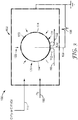
- a roll-to-roll vacuum processing chamber 102 includes a rotatable drum-like cylindrical electrode 104 powered by a radio frequency (RF) source 106 and a grounded center electrode 108.
- RF radio frequency
- the electrode 104 may optionally be cooled.
- a web of polymeric film 110 proceeds around a first arrangement of rollers 112 and then traverses an outer surface 114 of the rotatable drum-like electrode 104.
- the interior of the chamber 102 may be at atmospheric pressure or be maintained under vacuum, and in some embodiments the interior of the chamber 102 may be filled with an inert gas such as nitrogen, argon.
- the fluorocarbon or oxyfluorocarbon gaseous reactant stream 116 can include one or a mixture of gases, and suitable gases include, but are not limited to, CF 4 , C 2 F 6 , C 3 F 8 , C 4 F 10 , and C 6 F 14 , C 6 F 12 O, and combinations thereof.
- An optional second reactive or non-reactive gaseous stream 118 may also be introduced into the chamber 102, and the second gaseous stream includes a non-fluorinated compound such as hydrogen, helium, oxygen, fluorine, argon, carbon monoxide, carbon dioxide, nitrogen dioxide, steam, and combinations thereof.
- the second gaseous stream 118 is oxygen or a gas containing oxygen.
- the rotatable drum-like cylindrical electrode 104 is energized and set in motion such that a portion 120 of the film web 110 moves around the exterior 114 of the electrode and a plasma 122 is generated within the chamber 102. As the film 110 moves over the surface 114, the portion 120 of the film 110 is exposed to the plasma 122, which causes the reactants in the first gaseous stream 116 and the optional second gaseous stream 118 to react on the exposed surface 123 of the film web 110 to form a copolymeric organofluorine release coating layer thereon. A portion 124 of the film web 110 including the release coating layer 132 thereon traverses a second set of rollers 130 and then may be removed from the chamber 102 for further processing.
- the flow rates of the first gaseous stream 116 and the optional second gaseous stream 118 are selected to produce a release coating layer 132 with a desired combination of release characteristics for a selected application.
- the release coating layer 132 includes 5 atomic at% to 15 at% oxygen and 30 at% to 50 at% fluorine.
- the flow rates of the first gaseous stream 116 and the optional second gaseous stream 118 are selected to produce a release coating layer 132 including oxygen at 0.25 at% to 2.5 at% in fluoroether form.
- the first gaseous stream 116 includes a fluorocarbon C x F y and the second gaseous stream 118 includes oxygen, and the reactant gases are introduced into the chamber 102 at a C x F y :O ratio of from 4:1 to 1:1, 3:2 to 2:3, at 4 parts C x F y to 1 part oxygen, or at 3 parts C x F y to 2 parts oxygen, to provide a release coating layer 132 with excellent release properties.
- Plasma fluorochemical thin film coatings were deposited using the plasma treatment system described in U.S. Pat. No. 5,888,594 (David et al. ) with some modifications.
- the width of the drum electrode was increased to 108 cm (42.5 inches) and the separation between the two compartments within the plasma system was removed so that all the pumping was carried out by means of turbo-molecular pumps.
- Plasma was turned on at a power of 3000 joules per second (watts) by applying radio frequency power to the drum and the drum rotation initiated so that the film was transported at a speed of 3.048 meters per minute (10 feet per minute (ft/min)) normally, or at different line speeds as indicated in specific examples below.
- sheets of substrate film were taped onto the cylindrical electrode, and treated for a specified amount of time as indicated in the examples below.
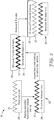
- the roll-to-roll vacuum coater is illustrated schematically in FIG. 4 . It was a dual drum sputter system with 5 sputter positions and an organic multi-layer system that used electron gun (e-gun) curing. For oxide deposition, argon and oxygen were introduced to the sputter deposition zone using mass flow controller through gas manifolds on each side of the sputter cathode. For organic vapor deposition, acrylate monomer was evaporated with an atomizer at elevated temperature and introduced onto the web and crosslinked using electron gun (e-gun) curing.
- e-gun electron gun
- Aluminum was coated onto 152 mm by 152 mm substrates by magnetron physical vapor deposition.
- the films were sputtered from a 76.2 mm round aluminum target in a batch coater.
- the substrate was placed on a substrate holder set up inside a vacuum chamber with a sputtering metal target located at a height of 228.6 mm above the substrate holder.
- sputter gas of argon was admitted inside the chamber and total pressure of the chamber was adjusted to 0.67 Pascals (5 millitorr).
- Sputtering was initiated using a DC power supply at a constant power level of 500 joules per second (0.5 kilowatts).
- Peel test was performed following the test method of ASTM D 3330/ D 3330M - 04 using an IMASS Peel Tester SP-101A (IMASS, Hingham, MA, USA).
- a strip of 5.08 cm (2 inch) wide sample was attached to the testing machine with a double-sided tape with the coated side facing up.
- a strip of 2.54 cm (1 inch) #8403 tape was then laminated to the sample using a roller.
- a clamping rod was attached to one end of the #8403 tape and the peel test was conducted at a speed of 228.6 cm/min (90 inch/min). The peel force is reported as an average of multiple samples.
- a strip of 5.08 cm (2 inch) wide coated sample was attached to a table with a double-sided tape with the coating side facing up.
- a strip of Scotch tape was then laminated to the upper surface of the sample using a roller. The Scotch tape was then peeled off from the sample. The surface of the sample and the tape were then visually inspected to determine the releasing properties.
- Samples were coated with fluorocarbon plasma coating with different levels of O 2 flow rate using the roll-to-roll plasma coating apparatus shown schematically in FIG. 3 .
- the surfaces of the samples were examined using X-ray Photoelectron Spectroscopy (XPS) (also known as Electron Spectroscopy for Chemical Analysis (ESCA)).
- XPS X-ray Photoelectron Spectroscopy
- ESCA Electron Spectroscopy for Chemical Analysis
- This technique provided an analysis of the outermost 3 to 10 nanometers (nm) of the specimen surface.
- the photoelectron spectra provided information about the elemental and chemical (oxidation state and/or functional group) concentrations present on a solid surface. It was sensitive to all elements in the periodic table except hydrogen and helium with detection limits for most species in the 0.1 to 1 atomic % concentration range.
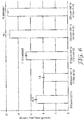
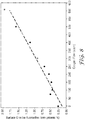
- Perfluoroether species were found on the surfaces of the samples and their atomic % was determined and plotted versus O 2 flow rate in FIG. 8 .
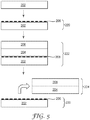
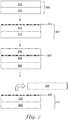
- a two mil PET film 202 was coated with plasma-deposited perfluorohexane in the presence of oxygen using a roll-to-roll plasma coating apparatus.
- the plasma coater was operated at a line speed of 3.048 meters per minute (mpm) (10 feetper minute (fpm)) with a power of 3000 joules per second (W), resulting in the formation of a perfluoroalkyl ether release coating 206.
- Gas flow rates of perfluorohexane (C 6 F 14 ) and oxygen (O 2 ) in the plasma coater are provided in Table 2 for each example and are given as standard cubic centimeters per minute (sccm).
- the resulting release-coated PET film 220 was then placed in a roll-to-roll vacuum coater of FIG. 4 where a layer 204 of SR833S was vapor deposited and cured using an electron beam, followed by deposition of a layer of tin-doped indium oxide (ITO) 208.
- the SR833S acrylate monomer was introduced into the vacuum chamber via a thermal evaporator. The monomer vapor passed through a slit die mounted near the coating drum and condensed on the substrate as it passed by the vapor coating station. The condensed monomer was carried into the cure zone and polymerized using the electron beam.
- the electron beam high voltage was -7.1 kV and the grid current was 9.0 mA.
- the resulting acrylate thickness was 1.0 micron.
- the ITO deposition used a ceramic sputter target.
- the process gases were argon and O 2 with a process pressure of 0.4 Pascals (3.0 mTorr).
- the sputter power was 3000 joules per second (3.0 kW) and the line speed was 1.219 mpm (4.0 fpm).
- the resulting conductive ITO film 222 had a sheet resistivity of 200 ohms/sq.
- the release force of the combined SR833S-ITO layers 224 from the release-coated PET 220 was tested by a peel tester against 2.54 cm (one inch) wide #8403 tape.
- the average release force for each example is presented in Table 2.
- Table 2 Gas flow rates used to fabricate perfluoroalkyl ether release coatings and peel force values for multilayer constructions comprising them.
- Example Gas flow rates Peel force Grams per cm (grams per inch)
- Example 1 500 sccm C 6 F 14 4.11 (10.45)
- Example 2 400 sccm C 6 F 14 +100 sccm O 2 3.07 (7.8)
- Example 3 300 sccm C 6 F 14 +200 sccm O 2 5.34 (13.57)
- Example 4 200 sccm C 6 F 14 +300 sccm O 2 7.36 (18.7)
- Example 5 250 sccm C 6 F 14 +250 sccm O 2 7.59 (19.27)
- a layer 304 of SR833S was deposited and polymerized on a 50 microns (2 mil) thick PET film substrate 302 using a roll-to-roll vacuum coater of FIG. 4 to form a construction 305.
- the SR833S acrylate monomer was introduced into the vacuum chamber via a thermal evaporator. The monomer vapor passed through a slit die mounted near the coating drum and condensed on the substrate as it passed by. The condensed monomer was carried into the cure zone and polymerized using an electron beam. The electron beam high voltage was -7.1 kV and the grid current was 9.0 mA. The resulting acrylate thickness of the layer 304 was 1.0 micron.
- the coated PET film construction 305 was then transferred to a plasma coater illustrated in FIG. 3 , where plasma deposited perfluorohexane in the presence of oxygen was applied at 3.048 mpm (10 fpm) with a power of 3000 joules per second (W) to generate a perfluoroalkyl ether release coating 306 on the surface of the polymerized acrylate 304 and form a release construction 307.
- the conditions used for each Example and Comparative Example are provided in Table 3.
- a layer of aluminum 310 was then deposited on the release coating 306 using a batch deposition coater according to the conditions provided in Table 3. Scotch tape was laminated to the aluminum layer 310 of each multilayer construct and the aluminum layer 310 was separated from the release construction 307. The release performance was evaluated using the procedure provided in the Release Test . The rating of releasing performance and processing conditions are provided in Table 3. Table 3: Release coating deposition conditions, aluminum metallization conditions, and release results.
Landscapes
- Chemical & Material Sciences (AREA)
- Engineering & Computer Science (AREA)
- Organic Chemistry (AREA)
- Chemical Kinetics & Catalysis (AREA)
- Medicinal Chemistry (AREA)
- Polymers & Plastics (AREA)
- Health & Medical Sciences (AREA)
- Life Sciences & Earth Sciences (AREA)
- Wood Science & Technology (AREA)
- Physics & Mathematics (AREA)
- Plasma & Fusion (AREA)
- Materials Engineering (AREA)
- Mechanical Engineering (AREA)
- Laminated Bodies (AREA)
- Physical Vapour Deposition (AREA)
Applications Claiming Priority (2)
| Application Number | Priority Date | Filing Date | Title |
|---|---|---|---|
| US201662357167P | 2016-06-30 | 2016-06-30 | |
| PCT/US2017/037642 WO2018005109A1 (en) | 2016-06-30 | 2017-06-15 | Fluorocarbon release coating |
Publications (2)
| Publication Number | Publication Date |
|---|---|
| EP3478779A1 EP3478779A1 (en) | 2019-05-08 |
| EP3478779B1 true EP3478779B1 (en) | 2021-10-06 |
Family
ID=59337853
Family Applications (1)
| Application Number | Title | Priority Date | Filing Date |
|---|---|---|---|
| EP17739761.9A Not-in-force EP3478779B1 (en) | 2016-06-30 | 2017-06-15 | Fluorocarbon release coating |
Country Status (5)
| Country | Link |
|---|---|
| US (1) | US10967399B2 (enExample) |
| EP (1) | EP3478779B1 (enExample) |
| JP (1) | JP2019521020A (enExample) |
| CN (1) | CN109415584B (enExample) |
| WO (1) | WO2018005109A1 (enExample) |
Families Citing this family (5)
| Publication number | Priority date | Publication date | Assignee | Title |
|---|---|---|---|---|
| US11950372B2 (en) | 2018-06-28 | 2024-04-02 | 3M Innovation Properties | Methods of making metal patterns on flexible substrate |
| US10723069B2 (en) | 2018-11-01 | 2020-07-28 | Origin Laboratories, Inc. | Method for build separation from a curing interface in an additive manufacturing process |
| US11104075B2 (en) | 2018-11-01 | 2021-08-31 | Stratasys, Inc. | System for window separation in an additive manufacturing process |
| FR3126608B1 (fr) * | 2021-09-03 | 2023-09-08 | Seb Sa | Element de cuisson revetu par un film polymerique fluore antiadhesif pelable |
| WO2025093967A1 (en) | 2023-10-31 | 2025-05-08 | 3M Innovative Properties Company | Hydrophobic surface modification of polishing pads |
Citations (5)
| Publication number | Priority date | Publication date | Assignee | Title |
|---|---|---|---|---|
| US5674621A (en) * | 1996-01-29 | 1997-10-07 | Eastman Kodak Company | Fuser members with an outermost layer of a fluorinated diamond like carbon |
| US20050176230A1 (en) * | 2004-02-06 | 2005-08-11 | Eastman Kodak Company | Providing fluorocarbon layers on conductive electrodes in making electronic devices such as OLED devices |
| EP1816231A1 (en) * | 2004-11-02 | 2007-08-08 | Asahi Glass Company, Limited | Fluorocarbon film and process for producing the same |
| WO2010078071A1 (en) * | 2008-12-30 | 2010-07-08 | 3M Innovative Properties Company | Antireflective articles and methods of making the same |
| US20140091379A1 (en) * | 2012-10-01 | 2014-04-03 | Applied Materials, Inc. | Fluorocarbon coating having low refractive index |
Family Cites Families (14)
| Publication number | Priority date | Publication date | Assignee | Title |
|---|---|---|---|---|
| JPS62111739A (ja) * | 1985-11-11 | 1987-05-22 | 株式会社クラレ | 多層シ−ト状構造物及びその製造方法 |
| US4781942A (en) | 1985-12-19 | 1988-11-01 | Hughes Aircraft Company | Process for the photochemical vapor deposition of siloxane polymers |
| JPH0675287B2 (ja) * | 1987-10-07 | 1994-09-21 | 富士写真フイルム株式会社 | 磁気記録媒体 |
| US4873140A (en) | 1988-04-27 | 1989-10-10 | Minnesota Mining And Manufacturing Company | Articles having low adhesion articles having coatings thereon |
| JP2547651B2 (ja) * | 1989-05-22 | 1996-10-23 | 日本板硝子株式会社 | 磁気記録媒体 |
| JPH08279134A (ja) * | 1995-04-04 | 1996-10-22 | Kao Corp | 磁気記録媒体 |
| US5811183A (en) | 1995-04-06 | 1998-09-22 | Shaw; David G. | Acrylate polymer release coated sheet materials and method of production thereof |
| US5888594A (en) | 1996-11-05 | 1999-03-30 | Minnesota Mining And Manufacturing Company | Process for depositing a carbon-rich coating on a moving substrate |
| US7018713B2 (en) | 2003-04-02 | 2006-03-28 | 3M Innovative Properties Company | Flexible high-temperature ultrabarrier |
| TW201200345A (en) | 2010-06-25 | 2012-01-01 | Carnehammer Lars Bertil | Surface treatment of rubber using low pressure plasma |
| US8852693B2 (en) | 2011-05-19 | 2014-10-07 | Liquipel Ip Llc | Coated electronic devices and associated methods |
| GB2516978B (en) | 2013-08-09 | 2016-06-08 | Innovia Films Ltd | Process for manufacturing a release liner |
| US20170008143A1 (en) * | 2014-01-24 | 2017-01-12 | 3M Innovative Properties Company | Abrasive material having a structured surface |
| WO2017180502A1 (en) | 2016-04-15 | 2017-10-19 | 3M Innovative Properties Company | Preparation of electrical circuits by adhesive transfer |
-
2017
- 2017-06-15 EP EP17739761.9A patent/EP3478779B1/en not_active Not-in-force
- 2017-06-15 CN CN201780040576.2A patent/CN109415584B/zh not_active Expired - Fee Related
- 2017-06-15 JP JP2018568960A patent/JP2019521020A/ja active Pending
- 2017-06-15 US US16/311,437 patent/US10967399B2/en active Active
- 2017-06-15 WO PCT/US2017/037642 patent/WO2018005109A1/en not_active Ceased
Patent Citations (5)
| Publication number | Priority date | Publication date | Assignee | Title |
|---|---|---|---|---|
| US5674621A (en) * | 1996-01-29 | 1997-10-07 | Eastman Kodak Company | Fuser members with an outermost layer of a fluorinated diamond like carbon |
| US20050176230A1 (en) * | 2004-02-06 | 2005-08-11 | Eastman Kodak Company | Providing fluorocarbon layers on conductive electrodes in making electronic devices such as OLED devices |
| EP1816231A1 (en) * | 2004-11-02 | 2007-08-08 | Asahi Glass Company, Limited | Fluorocarbon film and process for producing the same |
| WO2010078071A1 (en) * | 2008-12-30 | 2010-07-08 | 3M Innovative Properties Company | Antireflective articles and methods of making the same |
| US20140091379A1 (en) * | 2012-10-01 | 2014-04-03 | Applied Materials, Inc. | Fluorocarbon coating having low refractive index |
Also Published As
| Publication number | Publication date |
|---|---|
| EP3478779A1 (en) | 2019-05-08 |
| CN109415584A (zh) | 2019-03-01 |
| JP2019521020A (ja) | 2019-07-25 |
| CN109415584B (zh) | 2022-06-03 |
| US20190184422A1 (en) | 2019-06-20 |
| WO2018005109A1 (en) | 2018-01-04 |
| US10967399B2 (en) | 2021-04-06 |
Similar Documents
| Publication | Publication Date | Title |
|---|---|---|
| EP3478779B1 (en) | Fluorocarbon release coating | |
| TWI488741B (zh) | A molded body, a manufacturing method thereof, an electronic device member, and an electronic device | |
| JP5090197B2 (ja) | 積層体の製造方法、バリア性フィルム基板、デバイスおよび光学部材 | |
| TWI613075B (zh) | 具有封裝阻隔膜之光伏打裝置 | |
| TW201412765A (zh) | 尿素(多)-(甲基)丙烯酸酯(多)-矽烷組合物及含彼之物件 | |
| WO2004061155A1 (en) | High rate deposition of titanium dioxide | |
| CN1525912A (zh) | 铟锡氧化物的透明导电层状镀层 | |
| JPWO2005100014A1 (ja) | 透明ガスバリア性積層フィルム | |
| TWI464066B (zh) | 積層體 | |
| US12384807B2 (en) | Fluorinated photoinitiators and fluorinated (co)polymer layers made using the same | |
| CN111025434A (zh) | 防反射玻璃 | |
| CN103732394A (zh) | 阻气膜及器件 | |
| JP4059480B2 (ja) | 積層体およびその製造方法 | |
| JP3855307B2 (ja) | 透明導電性フィルムおよびその製造法 | |
| JP4260907B2 (ja) | フィルム積層体 | |
| WO2015115510A1 (ja) | ガスバリアー性フィルム及びその製造方法 | |
| JP4214878B2 (ja) | 積層フィルムの製造方法 | |
| WO2025013860A1 (ja) | 反射防止フィルム | |
| JP2007136800A (ja) | ガスバリア性積層フィルム、およびそれを用いた画像表示素子 | |
| CN108290376B (zh) | 气体阻隔性膜 | |
| US20240043989A1 (en) | Metallic Nanohole Arrays on Nanowells with Controlled Depth and Methods of Making the Same | |
| Wang | Ultrathin fluoropolymer films deposited on a polyimide (kapton®) surface by RF magnetron sputtering of poly (tetrafluoroethylene) | |
| WO2007013220A1 (ja) | 透明導電性フィルム、透明導電性シート、及びタッチパネル | |
| JP5332403B2 (ja) | ガスバリア性積層フィルム | |
| JPS61279004A (ja) | 導電性積層体 |
Legal Events
| Date | Code | Title | Description |
|---|---|---|---|
| STAA | Information on the status of an ep patent application or granted ep patent |
Free format text: STATUS: UNKNOWN |
|
| STAA | Information on the status of an ep patent application or granted ep patent |
Free format text: STATUS: THE INTERNATIONAL PUBLICATION HAS BEEN MADE |
|
| PUAI | Public reference made under article 153(3) epc to a published international application that has entered the european phase |
Free format text: ORIGINAL CODE: 0009012 |
|
| STAA | Information on the status of an ep patent application or granted ep patent |
Free format text: STATUS: REQUEST FOR EXAMINATION WAS MADE |
|
| 17P | Request for examination filed |
Effective date: 20190124 |
|
| AK | Designated contracting states |
Kind code of ref document: A1 Designated state(s): AL AT BE BG CH CY CZ DE DK EE ES FI FR GB GR HR HU IE IS IT LI LT LU LV MC MK MT NL NO PL PT RO RS SE SI SK SM TR |
|
| AX | Request for extension of the european patent |
Extension state: BA ME |
|
| DAV | Request for validation of the european patent (deleted) | ||
| DAX | Request for extension of the european patent (deleted) | ||
| STAA | Information on the status of an ep patent application or granted ep patent |
Free format text: STATUS: EXAMINATION IS IN PROGRESS |
|
| PUAG | Search results despatched under rule 164(2) epc together with communication from examining division |
Free format text: ORIGINAL CODE: 0009017 |
|
| 17Q | First examination report despatched |
Effective date: 20191212 |
|
| B565 | Issuance of search results under rule 164(2) epc |
Effective date: 20191212 |
|
| RIC1 | Information provided on ipc code assigned before grant |
Ipc: B05D 1/00 20060101ALI20191209BHEP Ipc: C08J 7/04 20060101ALI20191209BHEP Ipc: B05D 7/04 20060101ALI20191209BHEP Ipc: C09D 127/12 20060101AFI20191209BHEP |
|
| GRAP | Despatch of communication of intention to grant a patent |
Free format text: ORIGINAL CODE: EPIDOSNIGR1 |
|
| STAA | Information on the status of an ep patent application or granted ep patent |
Free format text: STATUS: GRANT OF PATENT IS INTENDED |
|
| INTG | Intention to grant announced |
Effective date: 20210429 |
|
| GRAS | Grant fee paid |
Free format text: ORIGINAL CODE: EPIDOSNIGR3 |
|
| GRAA | (expected) grant |
Free format text: ORIGINAL CODE: 0009210 |
|
| STAA | Information on the status of an ep patent application or granted ep patent |
Free format text: STATUS: THE PATENT HAS BEEN GRANTED |
|
| AK | Designated contracting states |
Kind code of ref document: B1 Designated state(s): AL AT BE BG CH CY CZ DE DK EE ES FI FR GB GR HR HU IE IS IT LI LT LU LV MC MK MT NL NO PL PT RO RS SE SI SK SM TR |
|
| REG | Reference to a national code |
Ref country code: GB Ref legal event code: FG4D |
|
| REG | Reference to a national code |
Ref country code: CH Ref legal event code: EP Ref country code: AT Ref legal event code: REF Ref document number: 1436219 Country of ref document: AT Kind code of ref document: T Effective date: 20211015 |
|
| REG | Reference to a national code |
Ref country code: DE Ref legal event code: R096 Ref document number: 602017047143 Country of ref document: DE |
|
| REG | Reference to a national code |
Ref country code: IE Ref legal event code: FG4D |
|
| REG | Reference to a national code |
Ref country code: LT Ref legal event code: MG9D |
|
| REG | Reference to a national code |
Ref country code: NL Ref legal event code: MP Effective date: 20211006 |
|
| REG | Reference to a national code |
Ref country code: AT Ref legal event code: MK05 Ref document number: 1436219 Country of ref document: AT Kind code of ref document: T Effective date: 20211006 |
|
| PG25 | Lapsed in a contracting state [announced via postgrant information from national office to epo] |
Ref country code: RS Free format text: LAPSE BECAUSE OF FAILURE TO SUBMIT A TRANSLATION OF THE DESCRIPTION OR TO PAY THE FEE WITHIN THE PRESCRIBED TIME-LIMIT Effective date: 20211006 Ref country code: LT Free format text: LAPSE BECAUSE OF FAILURE TO SUBMIT A TRANSLATION OF THE DESCRIPTION OR TO PAY THE FEE WITHIN THE PRESCRIBED TIME-LIMIT Effective date: 20211006 Ref country code: FI Free format text: LAPSE BECAUSE OF FAILURE TO SUBMIT A TRANSLATION OF THE DESCRIPTION OR TO PAY THE FEE WITHIN THE PRESCRIBED TIME-LIMIT Effective date: 20211006 Ref country code: BG Free format text: LAPSE BECAUSE OF FAILURE TO SUBMIT A TRANSLATION OF THE DESCRIPTION OR TO PAY THE FEE WITHIN THE PRESCRIBED TIME-LIMIT Effective date: 20220106 Ref country code: AT Free format text: LAPSE BECAUSE OF FAILURE TO SUBMIT A TRANSLATION OF THE DESCRIPTION OR TO PAY THE FEE WITHIN THE PRESCRIBED TIME-LIMIT Effective date: 20211006 |
|
| PG25 | Lapsed in a contracting state [announced via postgrant information from national office to epo] |
Ref country code: IS Free format text: LAPSE BECAUSE OF FAILURE TO SUBMIT A TRANSLATION OF THE DESCRIPTION OR TO PAY THE FEE WITHIN THE PRESCRIBED TIME-LIMIT Effective date: 20220206 Ref country code: SE Free format text: LAPSE BECAUSE OF FAILURE TO SUBMIT A TRANSLATION OF THE DESCRIPTION OR TO PAY THE FEE WITHIN THE PRESCRIBED TIME-LIMIT Effective date: 20211006 Ref country code: PT Free format text: LAPSE BECAUSE OF FAILURE TO SUBMIT A TRANSLATION OF THE DESCRIPTION OR TO PAY THE FEE WITHIN THE PRESCRIBED TIME-LIMIT Effective date: 20220207 Ref country code: PL Free format text: LAPSE BECAUSE OF FAILURE TO SUBMIT A TRANSLATION OF THE DESCRIPTION OR TO PAY THE FEE WITHIN THE PRESCRIBED TIME-LIMIT Effective date: 20211006 Ref country code: NO Free format text: LAPSE BECAUSE OF FAILURE TO SUBMIT A TRANSLATION OF THE DESCRIPTION OR TO PAY THE FEE WITHIN THE PRESCRIBED TIME-LIMIT Effective date: 20220106 Ref country code: NL Free format text: LAPSE BECAUSE OF FAILURE TO SUBMIT A TRANSLATION OF THE DESCRIPTION OR TO PAY THE FEE WITHIN THE PRESCRIBED TIME-LIMIT Effective date: 20211006 Ref country code: LV Free format text: LAPSE BECAUSE OF FAILURE TO SUBMIT A TRANSLATION OF THE DESCRIPTION OR TO PAY THE FEE WITHIN THE PRESCRIBED TIME-LIMIT Effective date: 20211006 Ref country code: HR Free format text: LAPSE BECAUSE OF FAILURE TO SUBMIT A TRANSLATION OF THE DESCRIPTION OR TO PAY THE FEE WITHIN THE PRESCRIBED TIME-LIMIT Effective date: 20211006 Ref country code: GR Free format text: LAPSE BECAUSE OF FAILURE TO SUBMIT A TRANSLATION OF THE DESCRIPTION OR TO PAY THE FEE WITHIN THE PRESCRIBED TIME-LIMIT Effective date: 20220107 Ref country code: ES Free format text: LAPSE BECAUSE OF FAILURE TO SUBMIT A TRANSLATION OF THE DESCRIPTION OR TO PAY THE FEE WITHIN THE PRESCRIBED TIME-LIMIT Effective date: 20211006 |
|
| REG | Reference to a national code |
Ref country code: DE Ref legal event code: R097 Ref document number: 602017047143 Country of ref document: DE |
|
| PG25 | Lapsed in a contracting state [announced via postgrant information from national office to epo] |
Ref country code: SM Free format text: LAPSE BECAUSE OF FAILURE TO SUBMIT A TRANSLATION OF THE DESCRIPTION OR TO PAY THE FEE WITHIN THE PRESCRIBED TIME-LIMIT Effective date: 20211006 Ref country code: SK Free format text: LAPSE BECAUSE OF FAILURE TO SUBMIT A TRANSLATION OF THE DESCRIPTION OR TO PAY THE FEE WITHIN THE PRESCRIBED TIME-LIMIT Effective date: 20211006 Ref country code: RO Free format text: LAPSE BECAUSE OF FAILURE TO SUBMIT A TRANSLATION OF THE DESCRIPTION OR TO PAY THE FEE WITHIN THE PRESCRIBED TIME-LIMIT Effective date: 20211006 Ref country code: EE Free format text: LAPSE BECAUSE OF FAILURE TO SUBMIT A TRANSLATION OF THE DESCRIPTION OR TO PAY THE FEE WITHIN THE PRESCRIBED TIME-LIMIT Effective date: 20211006 Ref country code: DK Free format text: LAPSE BECAUSE OF FAILURE TO SUBMIT A TRANSLATION OF THE DESCRIPTION OR TO PAY THE FEE WITHIN THE PRESCRIBED TIME-LIMIT Effective date: 20211006 Ref country code: CZ Free format text: LAPSE BECAUSE OF FAILURE TO SUBMIT A TRANSLATION OF THE DESCRIPTION OR TO PAY THE FEE WITHIN THE PRESCRIBED TIME-LIMIT Effective date: 20211006 |
|
| PGFP | Annual fee paid to national office [announced via postgrant information from national office to epo] |
Ref country code: DE Payment date: 20220518 Year of fee payment: 6 |
|
| PLBE | No opposition filed within time limit |
Free format text: ORIGINAL CODE: 0009261 |
|
| STAA | Information on the status of an ep patent application or granted ep patent |
Free format text: STATUS: NO OPPOSITION FILED WITHIN TIME LIMIT |
|
| 26N | No opposition filed |
Effective date: 20220707 |
|
| PG25 | Lapsed in a contracting state [announced via postgrant information from national office to epo] |
Ref country code: AL Free format text: LAPSE BECAUSE OF FAILURE TO SUBMIT A TRANSLATION OF THE DESCRIPTION OR TO PAY THE FEE WITHIN THE PRESCRIBED TIME-LIMIT Effective date: 20211006 |
|
| PG25 | Lapsed in a contracting state [announced via postgrant information from national office to epo] |
Ref country code: SI Free format text: LAPSE BECAUSE OF FAILURE TO SUBMIT A TRANSLATION OF THE DESCRIPTION OR TO PAY THE FEE WITHIN THE PRESCRIBED TIME-LIMIT Effective date: 20211006 |
|
| PG25 | Lapsed in a contracting state [announced via postgrant information from national office to epo] |
Ref country code: MC Free format text: LAPSE BECAUSE OF FAILURE TO SUBMIT A TRANSLATION OF THE DESCRIPTION OR TO PAY THE FEE WITHIN THE PRESCRIBED TIME-LIMIT Effective date: 20211006 |
|
| REG | Reference to a national code |
Ref country code: CH Ref legal event code: PL |
|
| REG | Reference to a national code |
Ref country code: BE Ref legal event code: MM Effective date: 20220630 |
|
| GBPC | Gb: european patent ceased through non-payment of renewal fee |
Effective date: 20220615 |
|
| PG25 | Lapsed in a contracting state [announced via postgrant information from national office to epo] |
Ref country code: LU Free format text: LAPSE BECAUSE OF NON-PAYMENT OF DUE FEES Effective date: 20220615 Ref country code: LI Free format text: LAPSE BECAUSE OF NON-PAYMENT OF DUE FEES Effective date: 20220630 Ref country code: IE Free format text: LAPSE BECAUSE OF NON-PAYMENT OF DUE FEES Effective date: 20220615 Ref country code: FR Free format text: LAPSE BECAUSE OF NON-PAYMENT OF DUE FEES Effective date: 20220630 Ref country code: CH Free format text: LAPSE BECAUSE OF NON-PAYMENT OF DUE FEES Effective date: 20220630 |
|
| PG25 | Lapsed in a contracting state [announced via postgrant information from national office to epo] |
Ref country code: IT Free format text: LAPSE BECAUSE OF FAILURE TO SUBMIT A TRANSLATION OF THE DESCRIPTION OR TO PAY THE FEE WITHIN THE PRESCRIBED TIME-LIMIT Effective date: 20211006 Ref country code: GB Free format text: LAPSE BECAUSE OF NON-PAYMENT OF DUE FEES Effective date: 20220615 Ref country code: BE Free format text: LAPSE BECAUSE OF NON-PAYMENT OF DUE FEES Effective date: 20220630 |
|
| P01 | Opt-out of the competence of the unified patent court (upc) registered |
Effective date: 20230530 |
|
| REG | Reference to a national code |
Ref country code: DE Ref legal event code: R119 Ref document number: 602017047143 Country of ref document: DE |
|
| PG25 | Lapsed in a contracting state [announced via postgrant information from national office to epo] |
Ref country code: HU Free format text: LAPSE BECAUSE OF FAILURE TO SUBMIT A TRANSLATION OF THE DESCRIPTION OR TO PAY THE FEE WITHIN THE PRESCRIBED TIME-LIMIT; INVALID AB INITIO Effective date: 20170615 |
|
| PG25 | Lapsed in a contracting state [announced via postgrant information from national office to epo] |
Ref country code: MK Free format text: LAPSE BECAUSE OF FAILURE TO SUBMIT A TRANSLATION OF THE DESCRIPTION OR TO PAY THE FEE WITHIN THE PRESCRIBED TIME-LIMIT Effective date: 20211006 Ref country code: DE Free format text: LAPSE BECAUSE OF NON-PAYMENT OF DUE FEES Effective date: 20240103 Ref country code: CY Free format text: LAPSE BECAUSE OF FAILURE TO SUBMIT A TRANSLATION OF THE DESCRIPTION OR TO PAY THE FEE WITHIN THE PRESCRIBED TIME-LIMIT Effective date: 20211006 |
|
| PG25 | Lapsed in a contracting state [announced via postgrant information from national office to epo] |
Ref country code: MT Free format text: LAPSE BECAUSE OF FAILURE TO SUBMIT A TRANSLATION OF THE DESCRIPTION OR TO PAY THE FEE WITHIN THE PRESCRIBED TIME-LIMIT Effective date: 20211006 |
|
| PG25 | Lapsed in a contracting state [announced via postgrant information from national office to epo] |
Ref country code: TR Free format text: LAPSE BECAUSE OF FAILURE TO SUBMIT A TRANSLATION OF THE DESCRIPTION OR TO PAY THE FEE WITHIN THE PRESCRIBED TIME-LIMIT Effective date: 20211006 |